Search Results: "gt"

30 March 2016

Colin Watson: Re-signing PPAs

Julian has written about their efforts to strengthen security in APT, and shortly before that notified us that Launchpad s signatures on PPAs use weak SHA-1 digests. Unfortunately we hadn t noticed that before; GnuPG s defaults tend to result in weak digests unless carefully tweaked, which is a shame. I started on the necessary fixes for this immediately we heard of the problem, but it s taken a little while to get everything in place, and I thought I d explain why since some of the problems uncovered are interesting in their own right. Firstly, there was the relatively trivial matter of using SHA-512 digests on new signatures. This was mostly a matter of adjusting our configuration, although writing the test was a bit tricky since PyGPGME isn t as helpful as it could be. (Simpler repository implementations that call gpg from the command line should probably just add the --digest-algo SHA512 option instead of imitating this.) After getting that in place, any change to a suite in a PPA will result in it being re-signed with SHA-512, which is good as far as it goes, but we also want to re-sign PPAs that haven t been modified. Launchpad hosts more than 50000 active PPAs, though, a significant percentage of which include packages for sufficiently recent Ubuntu releases that we d want to re-sign them for this. We can t expect everyone to push new uploads, and we need to run this through at least some part of our usual publication machinery rather than just writing a hacky shell script to do the job (which would have no idea which keys to sign with, to start with); but forcing full reprocessing of all those PPAs would take a prohibitively long time, and at the moment we need to interrupt normal PPA publication to do this kind of work. I therefore had to spend some quality time working out how to make things go fast enough. The first couple of changes (1, 2) were to add options to our publisher script to let us run just the one step we need in careful mode: that is, forcibly re-run the Release file processing step even if it thinks nothing has changed, and entirely disable the other steps such as generating Packages and Sources files. Then last week I finally got around to timing things on one of our staging systems so that we could estimate how long a full run would take. It was taking a little over two seconds per archive, which meant that if we were to re-sign all published PPAs then that would take more than 33 hours! Obviously this wasn t viable; even just re-signing xenial would be prohibitively slow. The next question was where all that time was going. I thought perhaps that the actual signing might be slow for some reason, but it was taking about half a second per archive: not great, but not enough to account for most of the slowness. The main part of the delay was in fact when we committed the database transaction after processing each archive, but not in the actual PostgreSQL commit, rather in the ORM invalidate method called to prepare for a commit. Launchpad uses the excellent Storm for all of its database interactions. One property of this ORM (and possibly of others; I ll cheerfully admit to not having spent much time with other ORMs) is that it uses a WeakValueDictionary to keep track of the objects it s populated with database results. Before it commits a transaction, it iterates over all those alive objects to note that if they re used in future then information needs to be reloaded from the database first. Usually this is a very good thing: it saves us from having to think too hard about data consistency at the application layer. But in this case, one of the things we did at the start of the publisher script was:
def getPPAs(self, distribution):
    """Find private package archives for the selected distribution."""
    if (self.isCareful(self.options.careful_publishing) or
            self.options.include_non_pending):
        return distribution.getAllPPAs()
    else:
        return distribution.getPendingPublicationPPAs()
def getTargetArchives(self, distribution):
    """Find the archive(s) selected by the script's options."""
    if self.options.partner:
        return [distribution.getArchiveByComponent('partner')]
    elif self.options.ppa:
        return filter(is_ppa_public, self.getPPAs(distribution))
    elif self.options.private_ppa:
        return filter(is_ppa_private, self.getPPAs(distribution))
    elif self.options.copy_archive:
        return self.getCopyArchives(distribution)
    else:
        return [distribution.main_archive]
That innocuous-looking filter means that we do all the public/private filtering of PPAs up-front and return a list of all the PPAs we intend to operate on. This means that all those objects are alive as far as Storm is concerned and need to be considered for invalidation on every commit, and the time required for that stacks up when many thousands of objects are involved: this is essentially accidentally quadratic behaviour, because all archives are considered when committing changes to each archive in turn. Normally this isn t too bad because only a few hundred PPAs need to be processed in any given run; but if we re running in a mode where we re processing all PPAs rather than just ones that are pending publication, then suddenly this balloons to the point where it takes a couple of seconds. The fix is very simple, using an iterator instead so that we don t need to keep all the objects alive:
from itertools import ifilter
def getTargetArchives(self, distribution):
    """Find the archive(s) selected by the script's options."""
    if self.options.partner:
        return [distribution.getArchiveByComponent('partner')]
    elif self.options.ppa:
        return ifilter(is_ppa_public, self.getPPAs(distribution))
    elif self.options.private_ppa:
        return ifilter(is_ppa_private, self.getPPAs(distribution))
    elif self.options.copy_archive:
        return self.getCopyArchives(distribution)
    else:
        return [distribution.main_archive]
After that, I turned to that half a second for signing. A good chunk of that was accounted for by the signContent method taking a fingerprint rather than a key, despite the fact that we normally already had the key in hand; this caused us to have to ask GPGME to reload the key, which requires two subprocess calls. Converting this to take a key rather than a fingerprint gets the per-archive time down to about a quarter of a second on our staging system, about eight times faster than where we started. Using this, we ve now re-signed all xenial Release files in PPAs using SHA-512 digests. On production, this took about 80 minutes to iterate over around 70000 archives, of which 1761 were modified. Most of the time appears to have been spent skipping over unmodified archives; even a few hundredths of a second per archive adds up quickly there. The remaining time comes out to around 0.4 seconds per modified archive. There s certainly still room for speeding this up a bit. We wouldn t want to do this procedure every day, but it s acceptable for occasional tasks like this. I expect that we ll similarly re-sign wily, vivid, and trusty Release files soon in the same way.

NOKUBI Takatsugu: GAME-ON the historical videogame exhibition

I attended GAME-ON last weedkend at Miraikan, The National Museum of Emerging Science and Innovation in Tokyo. There are many historical videogame hardware and software, and the bland-new PSVR exibition. DEC PDP-1 DisplayI can see the real DEC PDP-1 hardware. Unfortunately it is only haredware, not worked. And also PONG is exibited.
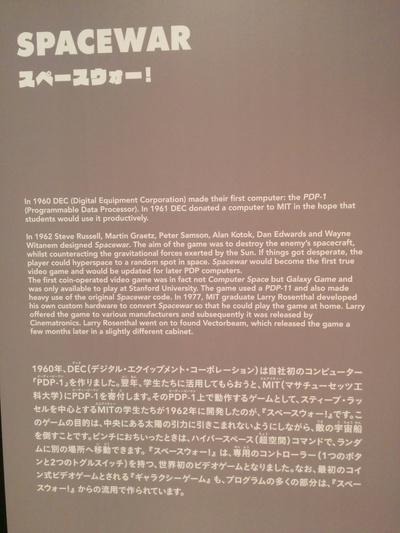
SPACEWAR description

SPACEWAR description

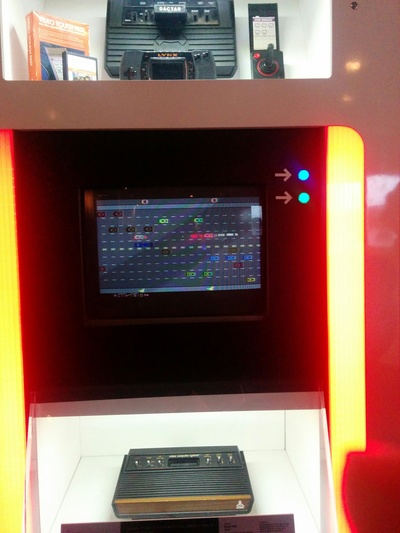
There are many old hardware Atari 2600, Commodore 64, Spectrum, and so on. Apple IIe Atari 2600/VCS Commodore 64 Spectrum Almost exhibition with English description, and officials can talk English, if you feel interested, go Miraikan until 30th May.

Patrick Matth i: Current jessie-backports packaging work in march

Hey, I have uploaded some new already accepted packages to jessie-backports: I hope you enjoy the current versions in Debian 8. :-)

29 March 2016

Vincent Fourmond: Release 0.14.1 of ctioga2

With the (relatively, sorry) recent switch to ruby2.3 as default Ruby version, I realized that my plotting program ctioga2 crashed with ruby 2.3 (due to a rather ugly lazy hack). I have just fixed this in release 0.14.1. Update as usual with:
~ gem update ctioga2
If you're not using Ruby 2.3, you probably don't need to update soon, though. Enjoy !

Michal Čihař: Weekly phpMyAdmin contributions 2016-W12

Last week we've finally released phpMyAdmin 4.6.0. That also means that 4.5.5 is out of maintenance now (however 4.4.15 and 4.0.10 are still supported if you're stuck with older PHP or MySQL versions for some reason). The biggest focus was spent on handling incoming issues and checking if they are still present in 4.6.0 what in most cases proven not to be true. Handled issues:

Filed under: English phpMyAdmin 0 comments

Rog rio Brito: Partially switching to Chromium

In the interest of being as brief as possible (just ask for details if you want to know more or if you think that it would help), I have started, against my preferences, to start using chromium from Debian instead of Firefox (aka, Iceweasel). The reason? I have a slow computer (a Core 2 Duo T7250). My main computer. My workhorse. There are some sites that even with an empty profile and a vanilla Firefox build right from Mozilla Foundation cause Firefox to generate a very heavy CPU load. I briefly reported this via Twitter to one (but not the only!) of the sites in question and to Firefox Site Compatibility. What do I see? Many CSS and redraw events (thanks to Firefox's profiling tools). In fact, as many events that Firefox alone is able to completely take over 1 (of the 2) cores that I have, with just that single tab open. I don't see those problems with Chromium, unfortunately (or, at least, they are not that perceptible to my computer's CPU). So, before I go on and formally file a bug report, I would love to confirm if other people see the same problems that I am seeing. Do you also see something similar? Your input is highly welcome!

28 March 2016

Rhonda D'Vine: Ich bin was ich bin

As my readers probably are well aware, I wrote my transgender coming out poem Mermaids over 10 years ago, to make it clear to people how I define, what I am and how I would hope they could accept me. I did put it publicly into my blog so I could point people to it. And I still do so regularly. It still comes from the bottom of my heart. And I am very happy that I got the chance to present it in a Poetry Slam last year, it was even recorded and uploaded to YouTube. There is just one thing that I was also told over the time every now and then by some people that I would have liked to understand what's going on: Why is it in English, my English isn't that good. My usual response was along the lines of that the events that triggered me writing it were in an international context and I wanted to make sure that they understood what I wrote. At that time I didn't realize that I am cutting out a different group of people from being able to understand what's going on inside me. So this year there was a similar event: the Flawless Poetry Slam which touched the topics of Feminist? Queer? Gender? Rolemodels? - Let's talk about it. I took that as motivation to finally write another text on the topic, and this time in German. Unfortunately though I wasn't able to present it that evening, I wasn't drawn for the lineup. But, I was told that there was another slam going on just last wednesday, so I went there ... and made it onto the stage! And this is the text that I presented there. I am uncertain how well online translators work for you, but I hope you get the core points if you don't understand German:
Ich bin was ich bin
F nf Worte mit wahrem Sinn:
Ich bin was ich bin Du denkst: "Mann im Rock?
Das ist ja wohl l cherlich,
der ist sicher schwul." "Fingernagellack?
Na da schau ich nicht mehr hin,
wer will das schon seh'n." Jedoch liegst du falsch,
Mit all deinen Punkten, denn:
Ich bin was ich bin. Ich bin Transgender
Und erlebe mich selber,
ich bin eine Frau. "Haha, eine Frau?
Wem willst du das weismachen?
Heb mal den Rock hoch!" Und wie ist's bei dir?
Was ist zwischen den Beinen?
Geht mich das nichts an? Warum fragst du mich?
Da ist's dann in Ordnung?
Oder vielleicht nicht? Ich bin was ich bin
F nf Worte mit ernstem Sinn:
Ich bin was ich bin Ich steh weiblich hier
Und das hier ist mein K rper
Mein Geschlecht ist's auch Oberfl chlichkeit
Das ist mein gr tes Problem
Schl gt mir entgegen Wenn ich mich ffne
Verst ndnis fast berall
Es wird akzeptiert Doch gelegentlich
und das schmerzt mich am meisten
sagt doch mal wer "er" Von Fremden? Egal
Doch hab ich mich ge ffnet
Ist es eine Qual "Ich seh dich als Mann"
Da ist, was es transportiert
Akzeptanz? Dahin Meine Pronomen
Wenn ihr ber mich redet
sind sie, ihr, ihres Ich leb was ich leb
F nf Worte mit tiefem Sinn:
Ich bin was ich bin "Doch, wie der erst spricht!
Ich meinte, wie sie denn spricht!
Das ist nicht normal." Ich schreib hier Haikus:
Japanische Gedichtsform
Mit fixem Versmars Sind f nf, sieben, f nf
Silben in jeder Zeile
Haikus sind simpel Probier es mal aus
Transportier eine Message
Es macht auch viel Spa Wortwahl ist wichtig
Ein guter Thesaurus hilft
Sei kurz und pr gnant Ich sag was ich sag
F nf Worte mit klugem Sinn:
Ich bin was ich bin Doch ich schweife ab
Verst ndnis fast berall?
Wird es akzeptiert? Erstaunlicherweise
Doch ich bin auch was and'res
Und hier geht's bergab Eine Sache gibt's
Die erw h'n ich besser nicht
f r die steck ich ein "Deshalb bin ich hier"
So der Titel eines Lieds
verfasst von Thomas D "Wenn ich erkl re
warum ich mich wie ern hr"
So weit komm ich nicht Man erw hnt Vegan
Die Intoleranz ist da
Man ist unten durch "Mangelerscheinung!"
"Das Essen meines Essens!"
Akzeptanz ade Hab 'ne Theorie:
Vegan sein: 'ne Entscheidung
Transgender sein nicht Mensch f hlt sich dann schlecht
dass bei sich selbst die Kraft fehlt
und greift damit an "Ich k nnte das nicht"
Ich verurteile dich nicht
Iss doch was du willst Ich zwing es nicht auf
Aber R cksicht w r schon fein
Statt nur Hohn und Schm h Ich ess was ich ess
F nf Worte zum nachdenken:
Ich bin was ich bin
Hope you get the idea. The audience definitely liked it, the jury wasn't so much on board but that's fine, it's five random people and it's mostly for fun anyway. Later that night though some things happened that didn't make me feel so comfortable anymore. I went to the loo, waiting in line with the other ladies, a bit later the waitress came along telling me "the men's room is over there". I told her that I'm aware of that and thanked her, which got her confused and said something along the lines of "so you are both, or what?" but went away after that. Her tone and response wasn't really giving me much comfort, though none of the other ladies in the line did look strangely.
But the most disturbing event after that was to find out about North Carolina signed the bathroom bill making it illegal for trans people to use the bathroom for their gender and insisting on using the one for the gender they were assigned at birth. So men like James Sheffield are now forced to go to the lady's restroom, or face getting arrested. Brave new world. :/ So, enjoy the text and don't get too wound up by stupid laws and hope for time to fix people's discriminatory minds for fixing issues that already are regulated: Assaults are assaults and are already banned. Arguing with people might get assaulted and thus discriminating trans people is totally missing the point, by miles.

/personal permanent link Comments: 2 Flattr this

Lucy Wayland: Stuffed Butternut Squash

This is a fusion recipe from a rather bland just stuff it with ricotta recipe I saw, David Scott s The Peniless Vegetarian , and my own mutations on those themes. I can t give you exact quantities, just make a little more than you will make the hollowed mound (grin), and the rest will make an excellent pasta sauce. Ingredients For an average sized butternut squash, you will need:
1 onion (I prefer red)
3 cloves of garlic
1 capsicum pepper (I prefer green, my ex- preferred red)
Some red lentils
Optional green or brown lentils for texture and flavour. I used some puy
The lentil quantity is hard to estimate, but I ratio 4 red to 1 optional.
Roughly one handful of chopped mushrooms i.e. when chopped, it is one handful
1 tin tinned tomatoes
Some tomato puree
A generous amout of garam masala garam masala is what brings out the flavout in lentils
Some paprike
Optional chilli if using chilli, I recommend fresh of course.
Optional Balsamic vinegar
Optional Marmite Preperation of the Squash
1. Cut the butternut squash in half, length ways. This is very hard, you will need a good large knife, and may require you jumping up and down into the air. This is the second most hard of the procedure. 2. For each half, scoop out the seeds, and pare back the bowl till it is no longer overly fibrous. Discard this, or find a use for the seeds. 3. For each half, scoop a channel of the softer flesh up from the baisin up near the top. This has to be done by feel, is hard and thankless work. Also experimentation required. Reserve this flesh. Preperation of the Filling This is just basically a nice lentil sauce that can be used with pasta, rice, toast etc. Important: this is not a stir fry, but a largish, heavy bottom pan is recommended. 1. Finely peel then chopp the onions and the garlic. Chopp the chillis if used (I am a chilli gal). Please observe Chilli Protocol[0] 2. Wash and chop the pepper and mushrooms. Not finely diced, but not crudite-sized slices. Remember that peppers shrivel down a little, mushrooms a lot. 3. Start frying the onions for a while in some oil (I prefer olive, but others are acceptible), until they just about to go translucent. Then add the garlic and optional chillis until the garlic is just cooking nicely. 4. Add the spices, turn over until all the containts of the pan are covered, and cook for another 30 seconds or so. Then add the tinned tomato, and then add half a can of cold water water which rinsed the tin out with. Stir this around, and make sure it is now at just at a simmer or pre-simmer. 5. Add the lentils. You want 0.5-1 cm of water above the lentils when you have added and stirred. Let these cook and expand for about 5 mins, stirring all the while, all the lentils will stick to the bottom. 6. Add the pepper, mushroom, reserved squash flesh, and optional dash of balsamic vinegar, and half a tea spoon of marmite. Cook and stir until the pepper goes soft. This is the hard part. Add boiling water if really too thick, or some tomato puree if too thin. There is no hard science to this, you want at the end of 10 minutes or so something resembling the thickness in texture of a stiff bolognaise sauce. Assembly
1. Have a baking tray. Whether you prefer to grease, line with foil, or line with baking parchment is up to you. I prefer baking parchment. 2. Stuff those two halves of butternut squash with that sauce you made. It should make a mound of about 1cm about the level. If you feel extravagent, and are not vegan, sprinkle a little grated cheese on top. 3. Place in a pre-heated oven of 200oC. Cooking time should be about 20 mins, but larger ones take longer. The acid test is to briefly take them out, and prod the lower side with a fork. It should go through the skin with little resistance. When ready, serve. It s really a dish in itself, but some people might like a bit of salad, or maybe a light green risotto.

Andreas Metzler: exim4 stable update - testing requested

I have prepared an update for exim4, targeted at stable and would appreciate some testing / second eyes. https://people.debian.org/~ametzler/exim-dsa/
git repo on alioth Changes: Please send your feedback to ametzler(at)debian.org or exim4(at)packages.debian.org.

Lars Wirzenius: Obnam user survey, 2016

In January and February of 2016 I ran an Obnam user survey. I'm not a statistician, but here is my analysis of the results. Executive summary: Obnam is slow, buggy, and the name is bad. But they'd like to buy stickers and t-shirts. Method I wrote up a long list of questions about things I felt were of interest to me. I used Google Forms to collect responses, and exported them as a CSV file, and analysed based on that. I used Google Forms, even though it is not free software, as it was the easiest service I got to work that also seemed it'd be nice for people to use. I could have run the survey using Ikiwiki, but it wouldn't have been nearly as nice. I could have found and hosted some free software for this, but that would have been much more work. Most questions had free form text responses, and this was both good and bad. It was good, because many of the responses included things I could never have expected. It was bad, because it took me a lot more time and effort to process those. I think next time I'll keep the number of free text responses down. For some of the questions, I hand-processed the responses to a more or less systematic form, in order to count things with a bit of code. For others, I did not, and show the full list of responses (I'm lazy, we don't need a survey to determine that). The responses See http://code.liw.fi/obnam/survey-2016.html for the responses, after hand-processing. For the questions for which it makes sense, a script has tabulated the various responses and calculated percentages. I haven't produced graphs, as I don't know how to do that easily. (Maybe next time I'll enlist the help of statisticians.) Conclusions

Joey Hess: type safe multi-OS Propellor

Propellor was recently ported to FreeBSD, by Evan Cofsky. This new feature led me down a two week long rabbit hole to make it type safe. In particular, Propellor needed to be taught that some properties work on Debian, others on FreeBSD, and others on both. The user shouldn't need to worry about making a mistake like this; the type checker should tell them they're asking for something that can't fly.
-- Is this a Debian or a FreeBSD host? I can't remember, let's use both package managers!
host "example.com" $ props
    & aptUpgraded
    & pkgUpgraded
As of propellor 3.0.0 (in git now; to be released soon), the type checker will catch such mistakes. Also, it's really easy to combine two OS-specific properties into a property that supports both OS's:
upgraded = aptUpgraded  pickOS  pkgUpgraded
type level lists and functions The magick making this work is type-level lists. A property has a metatypes list as part of its type. (So called because it's additional types describing the type, and I couldn't find a better name.) This list can contain one or more OS's targeted by the property:
aptUpgraded :: Property (MetaTypes '[ 'Targeting 'OSDebian, 'Targeting 'OSBuntish ])
pkgUpgraded :: Property (MetaTypes '[ 'Targeting 'OSFreeBSD ])
In Haskell type-level lists and other DataKinds are indicated by the ' if you have not seen that before. There are some convenience aliases and type operators, which let the same types be expressed more cleanly:
aptUpgraded :: Property (Debian + Buntish)
pkgUpgraded :: Property FreeBSD
Whenever two properties are combined, their metatypes are combined using a type-level function. Combining aptUpgraded and pkgUpgraded will yield a metatypes that targets no OS's, since they have none in common. So will fail to type check. My implementation of the metatypes lists is hundreds of lines of code, consisting entirely of types and type families. It includes a basic implementation of singletons, and is portable back to ghc 7.6 to support Debian stable. While it takes some contortions to support such an old version of ghc, it's pretty awesome that the ghc in Debian stable supports this stuff. extending beyond targeted OS's Before this change, Propellor's Property type had already been slightly refined, tagging them with HasInfo or NoInfo, as described in making propellor safer with GADTs and type families. I needed to keep that HasInfo in the type of properties. But, it seemed unnecessary verbose to have types like Property NoInfo Debian. Especially if I want to add even more information to Property types later. Property NoInfo Debian NoPortsOpen would be a real mouthful to need to write for every property. Luckily I now have this handy type-level list. So, I can shove more types into it, so Property (HasInfo + Debian) is used where necessary, and Property Debian can be used everywhere else. Since I can add more types to the type-level list, without affecting other properties, I expect to be able to implement type-level port conflict detection next. Should be fairly easy to do without changing the API except for properties that use ports. singletons As shown here, pickOS makes a property that decides which of two properties to use based on the host's OS.
aptUpgraded :: Property DebianLike
aptUpgraded = property "apt upgraded" (apt "upgrade"  requires  apt "update")
pkgUpgraded :: Property FreeBSD
pkgUpgraded = property "pkg upgraded" (pkg "upgrade")
    
upgraded :: Property UnixLike
upgraded = (aptUpgraded  pickOS  pkgUpgraded)
     describe  "OS upgraded"
Any number of OS's can be chained this way, to build a property that is super-portable out of simple little non-portable properties. This is a sweet combinator! Singletons are types that are inhabited by a single value. This lets the value be inferred from the type, which came in handy in building the pickOS property combinator. Its implementation needs to be able to look at each of the properties at runtime, to compare the OS's they target with the actial OS of the host. That's done by stashing a target list value inside a property. The target list value is inferred from the type of the property, thanks to singletons, and so does not need to be passed in to property. That saves keyboard time and avoids mistakes. is it worth it? It's important to consider whether more complicated types are a net benefit. Of course, opinions vary widely on that question in general! But let's consider it in light of my main goals for Propellor:
  1. Help save the user from pushing a broken configuration to their machines at a time when they're down in the trenches dealing with some urgent problem at 3 am.
  2. Advance the state of the art in configuration management by taking advantage of the state of the art in strongly typed haskell.
This change definitely meets both criteria. But there is a tradeoff; it got a little bit harder to write new propellor properties. Not only do new properties need to have their type set to target appropriate systems, but the more polymorphic code is, the more likely the type checker can't figure out all the types without some help. A simple example of this problem is as follows.
foo :: Property UnixLike
foo = p  requires  bar
  where
    p = property "foo" $ do
        ...
The type checker will complain that "The type variable metatypes1 is ambiguous". Problem is that it can't infer the type of p because many different types could be combined with the bar property and all would yield a Property UnixLike. The solution is simply to add a type signature like p :: Property UnixLike Since this only affects creating new properties, and not combining existing properties (which have known types), it seems like a reasonable tradeoff. things to improve later There are a few warts that I'm willing to live with for now... Currently, Property (HasInfo + Debian) is different than Property (Debian + HasInfo), but they should really be considered to be the same type. That is, I need type-level sets, not lists. While there's a type level sets library for hackage, it still seems to require a specific order of the set items when writing down a type signature. Also, using ensureProperty, which runs one property inside the action of another property, got complicated by the need to pass it a type witness.
foo = Property Debian
foo = property' $ \witness -> do
    ensureProperty witness (aptInstall "foo")
That witness is used to type check that the inner property targets every OS that the outer property targets. I think it might be possible to store the witness in the monad, and have ensureProperty read it, but it might complicate the type of the monad too much, since it would have to be parameterized on the type of the witness. Oh no, I mentioned monads. While type level lists and type functions and generally bending the type checker to my will is all well and good, I know most readers stop reading at "monad". So, I'll stop writing. ;) thanks Thanks to David Miani who answered my first tentative question with a big hunk of example code that got me on the right track. Also to many other people who answered increasingly esoteric Haskell type system questions. Also thanks to the Shuttleworth foundation, which funded this work by way of a Flash Grant.

27 March 2016

Lunar: Reproducible builds: week 48 in Stretch cycle

What happened in the reproducible builds effort between March 20th and March 26th:

Toolchain fixes
  • Sebastian Ramacher uploaded breathe/4.2.0-1 which makes its output deterministic. Original patch by Chris Lamb, merged uptream.
  • Rafael Laboissiere uploaded octave/4.0.1-1 which allows packages to be built in place and avoid unreproducible builds due to temporary build directories appearing in the .oct files.
Daniel Kahn Gillmor worked on removing build path from build symbols submitting a patch adding -fdebug-prefix-map to clang to match GCC, another patch against gcc-5 to backport the removal of -fdebug-prefix-map from DW_AT_producer, and finally by proposing the addition of a normalizedebugpath to the reproducible feature set of dpkg-buildflags that would use -fdebug-prefix-map to replace the current directory with . using -fdebug-prefix-map. As succesful result of lobbying at LibrePlanet 2016, the --clamp-mtime option will be featured in the next Tar release. This option is likely to be used by dpkg-deb to implement deterministic mtimes for packaged files.

Packages fixed The following packages have become reproducible due to changes in their build dependencies: augeas, gmtkbabel, ktikz, octave-control, octave-general, octave-image, octave-ltfat, octave-miscellaneous, octave-mpi, octave-nurbs, octave-octcdf, octave-sockets, octave-strings, openlayers, python-structlog, signond. The following packages became reproducible after getting fixed: Some uploads fixed some reproducibility issues, but not all of them: Patches submitted which have not made their way to the archive yet:
  • #818742 on milkytracker by Reiner Herrmann: sorts the list of source files.
  • #818752 on tcl8.4 by Reiner Herrmann: sort source files using C locale.
  • #818753 on tk8.6 by Reiner Herrmann: sort source files using C locale.
  • #818754 on tk8.5 by Reiner Herrmann: sort source files using C locale.
  • #818755 on tk8.4 by Reiner Herrmann: sort source files using C locale.
  • #818952 on marionnet by ceridwen: dummy out build date and uname to make build reproducible.
  • #819334 on avahi by Reiner Herrmann: ship upstream changelog instead of the one generated by gettextize (although duplicate of #804141 by Santiago Vila).

tests.reproducible-builds.org i386 build nodes have been setup by converting 2 of the 4 amd64 nodes to i386. (h01ger)

Package reviews 92 reviews have been removed, 66 added and 31 updated in the previous week. New issues: timestamps_generated_by_xbean_spring, timestamps_generated_by_mangosdk_spiprocessor. Chris Lamb filed 7 FTBFS bugs.

Misc. On March 20th, Chris Lamb gave a talk at FOSSASIA 2016 in Singapore. The very same day, but a few timezones apart, h01ger did a presentation at LibrePlanet 2016 in Cambridge, Massachusetts. Seven GSoC/Outreachy applications were made by potential interns to work on various aspects of the reproducible builds effort. On top of interacting with several applicants, prospective mentors gathered to review the applications. Huge thanks to Linda Naeun Lee for the new hackergotchi visible on Planet Debian.

Bits from Debian: Debian Project Leader elections 2016

It's that time of year again for the Debian Project: the elections of its Project Leader! Neil McGovern who has held the office for the last year will not be seeking reelection. Debian Developers will have to choose between voting for the only candidate running Mehdi Dogguy or None Of The Above. If None Of The Above wins the election then the election procedure is repeated, many times if necessary. Mehdi Dogguy was a candidate for the DPL position last year, finishing second with a close amount of votes to the winner Neil McGovern. We are in the middle of the campaigning period that will last until April 2nd. The candidate and Debian contributors are expected to engage in debates and discussions on the debian-vote mailing list. The voting period starts on April 3rd, and during the following two weeks, Debian Developers will vote to choose the person who will guide the project for one year. The results will be published on April 17th with the term for new the project leader starting immediately that same day.

Chris Lamb: Generating dynamic Python tests using metaclasses

One common testing anti-pattern is a single testcase that loops over multiple yet independent inputs:
from django.test import TestCase
class MyTests(TestCase):
    def test_all(self):
        for x in (
            'foo',
            'bar',
            'baz',
            # etc.
        ):
            self.assertEqual(test(x), None)

Whilst this code style typically occurs in an honourable attempt to avoid a DRY violation, these tests:
  1. Can only report the first failure
  2. Prevent individual inputs from being tested independently
  3. Are typically slower than their neighbours, or a performance hotspot generally
  4. Do not allow for parallel computation, a feature recently added to Django 1.9

(Note that whilst foo, bar, etc. are defined statically above for simplicity, the values could be determined dynamically by, for example, iterating over the filesystem.)
If you have such tests, consider splitting them out using a metaclass like so:
class MyTestsMeta(type):
    def __new__(cls, name, bases, attrs):
        for x in (
            'foo',
            'bar',
            'baz',
        ):
            attrs['test_%s' % x] = cls.gen(x)
        return super(MyTestsMeta, cls).__new__(cls, name, bases, attrs)
    @classmethod
    def gen(cls, x):
        # Return a testcase that tests  x .
        def fn(self):
            self.assertEqual(test(x), None)
        return fn
class MyTests(TestCase):
    __metaclass__ = MyTestsMeta
This has the effect of replacing the single testcase with individual test_foo, test_bar & test_baz testcases. Each test can then be run separately:
$ ./manage.py test myproject.myapp.tests.MyTests.test_baz
Creating test database for alias 'default'...
.
----------------------------------------------------------------------
Ran 1 test in 0.039s
OK
Destroying test database for alias 'default'...
... or we can test them all in parallel:
$ ./manage.py test myproject.myapp.tests.MyTests --parallel
Creating test database for alias 'default'...
.
----------------------------------------------------------------------
Ran 3 tests in 0.065s
OK
Destroying test database for alias 'default'...


You must ensure that the tests have unique names to avoid cases masking each other. In the above example we could simply use the input string itself, but if you have no obvious candidate you could try using Python's enumerate method to generate a unique, if somewhat opaque, suffix:
for idx, x in enumerate((
    'foo',
    'bar',
    'baz',
)):
    attrs['test_%d' % idx] = cls.gen(x)

One alternative approach to a metaclass is to generate the test methods and use setattr, to bind them to the TestCase class. However, using a metaclass:
  1. Is cleaner and/or more "Pythonic"
  2. Avoids a number of subtle pitfalls with parameter binding
  3. Prevents your TestCase class from being polluted with loop variables, etc.
  4. Can be composed or abstracted into reusable testing components


Note that you can still use setUp and all the other unittest.TestCase and django.test.TestCase methods as before:
from .utils import MyBaseTestCase # custom superclass
class MyTestsMeta(type):
    # <snip>
    @classmethod
    def gen(cls, x):
        def fn(self):
            self.assertRedirects(...)
        return fn
class MyTests(MyBaseTestCase):
    __metaclass__ = MyTestsMeta
    def setUp(self):
        super(MyTests, self).setUp()
        # Code here is run before every test
    def test_other(self):
        # Test some other functionality here


UPDATE: Stu Cox asked: Do you even need the metaclass, or could you do this with __new__ straight on the TestCase? Curiously, unittest does not initialise classes in the typical way if you do not explicitly define at least one test_ method.

26 March 2016

Dirk Eddelbuettel: Rcpp 0.12.4: And another one

The fourth update in the 0.12.* series of Rcpp has now arrived on the CRAN network for GNU R, and has just been pushed to Debian as well. This follows four days of idleness in the incoming/ directory: Word is that the tireless CRAN maintainers were traveling and only covering simpler packages. The 0.12.4 release follows the 0.12.0 release from late July, the 0.12.1 release in September, the 0.12.2 release in November, and the 0.12.3 release in January -- making it the eight release at the steady bi-montly release frequency. As before, this release is more of a maintenance release addressing a number of small bugs, nuisances or documentation issues without adding any major new features. Rcpp has become the most popular way of enhancing GNU R with C or C++ code. As of today, 615 packages on CRAN depend on Rcpp for making analytical code go faster and further. That is up by more than sixty packages from the last release in January! As during the last few releases, we have new first-time contributors. Kirill Mueller extended Nullable<> to const objects. James "coatless" Balamuta helped with a much-needed update to the Rcpp FAQ concerning recommendations for OS X installations. Colin Gillespie corrected another (small) vignette issue. Contributions from the rest of the gang as well as by-now regular contributors such as Nathan or Dan are detailed below.

Changes in Rcpp version 0.12.4 (2016-03-22)
  • Changes in Rcpp API:
    • New accessors as() and clone() were added to the Nullable class (Dan in PR #423 closing #421)
    • The Nullable<>::operator SEXP() and Nullable<>::get() now also work for const objects (Kirill Mueller in PR #417).
    • A subsetting error was fixed (Qiang via #432 closing #431).
  • Changes in Rcpp Sugar:
    • Added new Sugar function median() (Nathan in PR #425 closing #424)
    • Added new Sugar function cbind() (Nathan in PR #447 closing #407)
  • Changes in Rcpp Attributes:
    • A plugin for C++14 was added (Dan in PR #427)
  • Changes in Rcpp Documentation:
    • An entry was added to the Rcpp-FAQ vignette describing the required packages for vignette building (#422).
    • Use on OS X was further detailed (James Balamuta in #433 with further review by Bob Rudis).
    • An entry was added concerning the hard-code limit of arguments to some constructor and function (cf #435).
    • The Rcpp-FAQ vignette now contains a table of content.
    • Typos and indentation were corrected in the Rcpp Sugar vignette (#445 by Colin Gillespie).
Thanks to CRANberries, you can also look at a diff to the previous release. As always, even fuller details are on the Rcpp Changelog page and the Rcpp page which also leads to the downloads page, the browseable doxygen docs and zip files of doxygen output for the standard formats. A local directory has source and documentation too. Questions, comments etc should go to the rcpp-devel mailing list off the R-Forge page.

This post by Dirk Eddelbuettel originated on his Thinking inside the box blog. Please report excessive re-aggregation in third-party for-profit settings.

Jonathan McDowell: Dr Stoll: Or how I learned to stop worrying and love the GPL

[I wrote this as part of BelFOSS but I think it s worth posting here.] My Free Software journey starts with The Cuckoo s Egg. Back in the early 90s a family friend suggested I might enjoy reading it. He was right; I was fascinated by the world of interconnected machines it introduced me to. That helped start my involvement in FidoNet, but it also got me interested in Unix. So when I saw a Linux book at the Queen s University bookshop (sadly no longer with us) with a Slackware CD in the back I had to have it. The motivation at this point was to have a low cost version of Unix I could run on the PC hardware I already owned. I had no knowledge of the GNU Project before this point, and as I wasn t a C programmer I had no interest in looking at the source code. I spent some time futzing around with it and that partition (I was dual booting with DOS 6.22) fell into disuse. It wasn t until I d learnt some C and turned up to university, which provided me with an internet connection and others who were either already using Linux or interested in doing so, that I started running a Linux box full time. Once I was doing that I became a lot more interested in the Open Source side of the equation. Rather than running a closed operating system that even the API for wasn t properly specified (or I wouldn t have needed my copy of Undocumented DOS) I had the complete source to both the underlying OS and all the utilities that it was using. For someone doing a computer science degree this was invaluable. Minix may have been the OS discussed in the OS Design module I studied, but Linux was a much more feature complete option that I was running on my desktop and could also peer under the hood of. In my professional career I ve always welcomed the opportunities to work with Open Source. A long time ago I experienced a particularly annoying issue when writing a device driver under QNX. The documentation didn t seem to match the observed behaviour of the subsystem I was interfacing with. However due to licensing issues only a small number of people in the organisation were able to actually look at the QNX source. So I ended up wasting a much more senior engineer s time with queries like I think it s actually doing x, y and z instead of a, b and c; can you confirm? . Instances where I can look directly at the source code myself make me much more productive. Commercial development also started to make me more understanding of the Free Software nature of the code I was running. It wasn t just the ability to look at the code which was useful, but also the fact there was no need to reinvent the wheel. Need a base OS to build an appliance on? Debian ensures that the main component is Free for all usage. No need to worry about rolling your own compilers, base libraries etc. From a commercial perspective that allows you to concentrate on the actual product. And when you hit problems, the source is available and you can potentially fix it yourself or at least more easily find out if there s been a fix for that issue released (being able to see code development in version control systems rather than getting a new upstream release with a whole heap on unrelated fixes in it really helps with that). I had thus progressed from using FLOSS because it was free-as-in-beer, to appreciating the benefits of Open Source in my own learning and employment experiences, to a deeper understanding of the free-as-in-speech benefits that could be gained. However at this point I was still thinking very much from a developer mindset. Even my thoughts about how users can benefit from Free Software were in the context of businesses being able to easily switch suppliers or continue to maintain legacy software because they had the source to their systems available. One of the major factors that has helped me to see beyond this is the expansion of the Internet of Things (IoT). With desktop or server software there is by and large a choice about what to use. This is not the case with appliances. While manufacturers will often produce a few revisions of software for their devices, usually eventually there is a newer and shiny model and the old one is abandoned. This is problematic for many reasons. For example, historically TVs have been long lived devices (I had one I bought second hand that happily lasted me 7+ years). However the smart capabilities of the TV I purchased in 2012 are already of limited usefulness, and LG have moved on to their current models. I have no intention of replacing the device any time soon, so have had to accept it is largely acting as a dumb display. More serious is the lack of security updates. For a TV that doesn t require a network connection to function this is not as important, but the IoT is a trickier proposition. For example Matthew Garrett had an awful experience with some intelligent light bulbs, which effectively circumvented any home network security you might have set up. The manufacturer s defence? No longer manufactured or supported. It s cases like these that have slowly led me to a more complete understanding of the freedom that Free Software truly offers to users. It s not just about cost free/low cost software. It s not just about being able to learn from looking at the source to the programs you are running. It s not even about the freedom to be able to modify the programs that we use. It s about giving users true Freedom to use and modify their devices as they see fit. From this viewpoint it is much easier to understand the protections against Tivoization that were introduced with GPLv3, and better appreciate the argument sometimes made that the GPL offers more freedom than BSD style licenses.

Ben Hutchings: Depression vs fever

There was a connection I meant to draw, and then forgot to do before publishing my last entry. In severe cases of depression, ECT may still be used as a last resort, and is often effective. I had the idea that the lesser shock to the brain of a high fever might somehow have an effect on less serious depression. It doesn't seem terribly likely, though, and we never did find a thermometer to check just how high my temperature was.

Gunnar Wolf: Yes! I can confirm that...

I am very very (very very very!) happy to confirm that... This year, and after many years of not being able to, I will cross the Atlantic. To do this, I will take my favorite excuse: Attending DebConf! So, yes, this image I am pasting here is as far as you can imagine from official promotional material. But, having bought my plane tickets, I have to start bragging about it ;-) In case it is of use to others (at least, to people from my general geographic roundabouts), I searched for plane tickets straight from Mexico. I was accepting my lack of luck, facing an over-36-hour trip(!!) and at very high prices. Most routes were Mexico- central_europe -Arab Emirates-South Africa... Great for collecting frequent-flier miles, but terrible for anything else. Of course, requesting a more logical route (say, via Sao Paulo in Brazil) resulted in a price hike to over US$3500. Not good. I found out that Mexico-Argentina tickets for that season were quite agreeable at US$800, so I booked our family vacation to visit the relatives, and will fly from there at US$1400. So, yes, in a 48-hr timespan I will do MEX-GRU-ROS, then (by land) Rosario to Buenos Aires, then AEP-GRU-JNB-CPT. But while I am at DebConf, Regina and the kids will be at home with the grandparents and family and friends. In the end, win-win with just an extra bit of jetlag for me ;-) I *really* expect flights to be saner for USians, Europeans, and those coming from further far away. But we have grown to have many Latin Americans, and I hope we can all meet in CPT for the most intense weeks of the year! See you all in South Africa!

25 March 2016

Daniel Pocock: With Facebook, everybody can betray Jesus

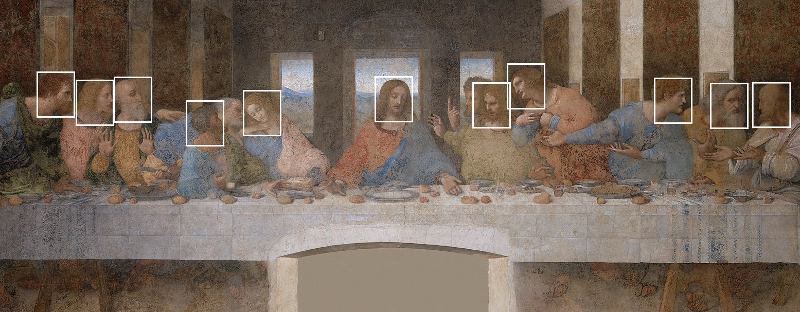
It's Easter time again and many of those who are Christian will be familiar with the story of the Last Supper and the subsequent betrayal of Jesus by his friend Judas. If Jesus was around today and didn't immediately die from a heart attack after hearing about the Bishop of Bling (who spent $500,000 just renovating his closet and flew first class to visit the poor in India), how many more of his disciples would betray him and each other by tagging him in selfies on Facebook? Why do people put the short term indulgence of social media ahead of protecting privacy in the long term? Is this how you treat your friends?

Sean Whitton: A standing desk that looks a bit like it's made of LEGO bricks

Making a big difference to my neck and back pain after just a week!

Next.

Previous.