Kees Cook: yay for barriers
 I find it surreal to have people guessing at my motivations when they could just ask me. On top of all that, I find it weird that people spend so much time with in-fighting. I just want my system not to suck.
Some time ago (during in the Ubuntu Karmic development cycle maybe in September 2009), I started having giant problems with my build system. All I/O would start to stall, wait times would surge, and usually my entire system would just go unresponsive with the disk light on solid. This scared the crap out of me, and it wasn t entirely obvious what was triggering it. No one else seemed to be seeing it. I managed to start tracking things using latencytop , and saw stuff like liferea going crazy. As I eliminated more and more things, I eventually settled on it being a problem with umount, and I reported an Ubuntu bug. It seemed to look like an upstream bug that no one else but the reporter could reproduce either.
Since no one else was seeing this issue, and it seemed related to LVM snapshots, I migrated off of snapshots, and started using aufs overlays for my builds. For a while, it seemed like things went away. It didn t, and I started hitting it again. I opened a new (now famous) bug in Ubuntu, since now snapshots weren t in the picture, and I didn t want to confuse the earlier history. I managed to find a relatively minimal test-case too. A few other people commenting on the bug were seeing the problem now too, but it was less pronounced for them.
As an aside, this wasn t a just wait a few seconds longer kind of issue on my system. A single umount would last 30-40 minutes. And when I m doing parallel builds of security updates, this would turn into my system being unavailable for hours at a stretch.
Since none of the kernel developers I was in contact with were able to track down the root cause, I asked Ted Ts o in email if he could just quickly peek in on this for me, since I figured he d be in a good position to confirm or deny it. I didn t want to start wasting upstream time with this if it wasn t reproducible (see earlier upstream kernel bug). To my great relief, Ted found a few minutes to check it, and was able to immediately confirm it and give me a viable work-around ( sync; umount ) for the time being. I confirmed the work-around, and went off to do other things.
A while later, Ted came back to deliver a bit of a rant, the purpose of which was not clear to me, but I ultimately ignored it I didn t seem directed at me. I just wanted my system operating normally, and he d done me a favor to check in on it and got me a work-around.
More time passes, and I eventually get caught in another I/O-wait melt-down. On investigation, it seemed that the in-kernel work-around in the Ubuntu kernel totally back-fired on me in some cases, rendering even the user-space work-around useless. After investigating the Ubuntu-specific work-around, I re-read Ted s rant in the course of researching what had happened during this bug s triage.
It seemed that Ted was basically saying:
this is an upstream problem
RedHat hasn t run into it and he didn t know why I figured I should confirm for myself if Fedora was affected, so downloaded and installed Fedora to double-check there. Since I was able to reproduce it there, I opened an upstream bug, linking back to the original Ubuntu bug, and then went to open a bug in the Fedora tracker, linking back to upstream. And it seems to be these actions that everyone has jumped on. I will now bore you with the reality of my motivations: I wanted to fix the bug so no one would end up experiencing the same pain I d been through over the last 6 months. The bug was, from my perspective, a serious issue. Since I d managed to reproduce it in another distro, it was my duty as a Free Software developer to report it to them. And, in what I felt was an unambiguous gesture, I made sure to include the link to the upstream kernel bug. Reproducing it in Ubuntu, in Fedora, and with a stock kernel had me confident that it was an upstream issue. While Ted did correctly suspect the issue was upstream, I really didn t want to just open an upstream bug and have it be ignored. I wanted some additional proof of reproduction, which I got when I tested it on Fedora. So, I m rather saddened that so many people spent so much time questioning my motivations, making fun of Canonical, or doing anything other than trying to just simply solve this problem. I m totally disinterested in inter-distro fighting. Instead, I continue to assume we re all on the same team, fighting a philosophical battle against close-source software. And in that regard, I think it s still true. If I ignore the rants and jeering, I come away thankful for all the people that spent time trying reproduce the issue at Canonical, at RedHat, and in the larger community. I m hugely thankful that Ted made some time to let me know I wasn t crazy, and there was actually a problem. I m thankful for having some work-arounds, and I m thankful that the root cause was eventually ferreted out, with some possible solutions. I m even thankful that some people on the LWN thread saw that, far from malicious, I was trying to be helpful with the bug. I just wanted my filesystem not to eat my computer. And I was hoping other people could maybe help me, since I m not a filesystem expert. The drama around this bug is pathetic, and now by talking about it for almost 1000 words, I m just as guilty.
 I spent last week at the


 Conference Management systems are web applications designed to make the lives of conference organisers easier. They usually include features such as registration, payment, paper submission and review, scheduling and publishing of announcements.

 Some students of the


 I ve been reading about
 Today I strapped a kayack on a car (badly) and gingerly drove it out to the
country, stopping for Greek food enroute. Now at my
 I didn't write much about running stuff since
 A scandal has been brewing in Latvia over the last half year and yesterday the activity spiked shocking the media and some IT people in the country. I ll go back and explain what happened first, what is happening now and why this could have a heavy impact on IT and journalists in Latvia.
At the end of last year, there were rumours that the IT system of Latvia s Internal Revenue System was hacked and millions of documents had been downloaded by multiple organizations. Shortly thereafter more details on the glaring security hole became public (after it was closed).
There is a full electronic interface to give all reports to the IRS electronically (at http://eds.vid.gov.lv) and as part of that system you could also view and export monthly report summaries about your organization into XML and PDF files. After the system checked that you are authorized to access the report, you were redirected to the URL to actually download the report by report ID (as a single param in a GET request). Unfortunately, report IDs were predicable and the script that gave the reports for download did not check if you were authorized to get that report. It did not even check if were logged into the system.
There were suspicions that the authorization was disabled on purpose to allow to leak data on purpose, but apparently it was an error of forgetting to disable debug code in production environment.
The error was discovered only because the firewall administrator noticed an unexplained stable increase of traffic, especially during night hours when typically the traffic fully stopped. Apparently a single hacker (who later identified himself as Neo to the press) discovered the flaw and wrote a script to just try all possible report ids and get as much data out as possible. This had been going on for months, before someone noticed.
After the flaw was discovered and a bit of time passed, Neo made his first move he published the list of top salaries in a governmental company, that clearly showed that the top leadership of this company failed to cut their salary by 40%, like everyone elses during harsh budget cuts of 2009. He stripped the names and ids of the specific employees, but named the company which made it pretty easy to figure out who was who.
The society was outraged that the top managers in a government owned company failed to comply with the strict pay cut that everyone else in government had to endure. But after a few weeks the outrage subsided and no action followed from the government or law enforcement.
Neo continued to release documents detailing salaries of top managers in different Latvian government companies. And each time after short outrage, nothing happened. Neo gave an interview where he said that he was disappointed in the passivity of the Latvian people in face of such blatant injustices.
After a few month Neo went silent, promising to return before parliamentary elections this fall.
However, this week a new development shocked everyone in the middle of the night two police SWAT teams went into action: one detained Ilm rs Poik ns, a researcher in artificial intelligence at the University of Latvia s Computer Science department and another raided the home of a Latvian TV journalist Ilze Nagle who interviewed Neo. Poik ns confessed of being Neo the next day and was released (with travel restrictions, pending trial) today.
Politicians reacted immediately opposition demanded the resignation of the Interior Minister over such blatant disregard of freedom of press and another politician (who is also a famous lawyer) Aleksejs Loskutovs volunteered to defend Neo pro-bono (on Twitter, no less). Almost all Latvian online media have the arrest of Neo and the raid on the home of a journalist as main stories of the day.
As a legal titbit, we also know that Neo is being charged with breaking statutes 145 and and 244p2 of the criminal law. Statute 145 is hard to find applicable in this situation as talks about actions done by people authorized (..) to access [private] information . Statute 244p2 will also be hard to pin down as it mentions influencing system resources of (an IT system) and if such action caused severe harm . It looks like the first part talks about at least a DoS attack (which did not happen in this case) and also there was no measurable harm from these leaks.
Also Neo was careful to strip all personally identifying information (such as names, social security numbers and addresses of the employees in question), so it will be hard to pin him on that. Also no actual breaking or other modification of an IT system occurred. And no specialized software was used beyond a trivial script such as :
 I've been a little quieter than usual recently, having spent more time outdoors putting cute people in front of the camera. However that said I've still been doing some things. Most interestingly I've given away my first ever project.
The collection of small scripts known as xen-tools (which was initially a sleazy hack to go with a small
 Contratulations to Bob Finch and Nathan Dalrymple for becoming our
first customers to fly a rocket using a
 So. I was wondering, which nice distro specific tools do exist in debian/gnome or in $other/kde that debian/kde is missing?
We have
 A mini-meme that has been spreading round the IT team at my workplace is
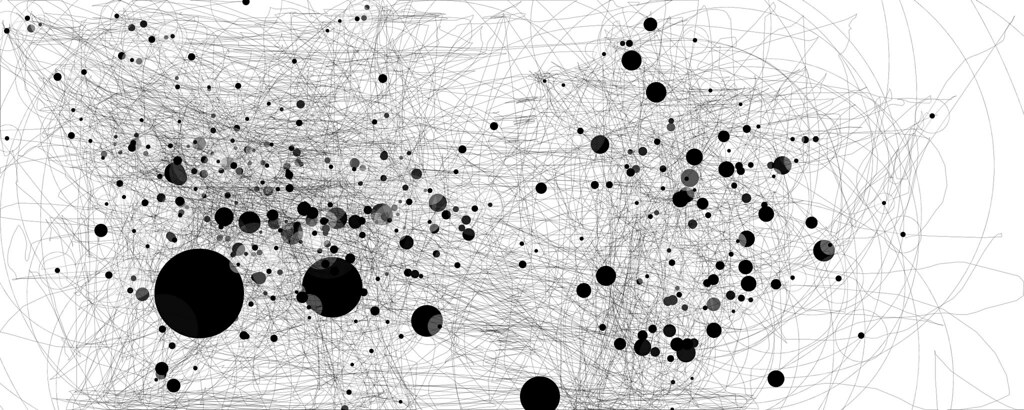


 It has been a while since the last update for
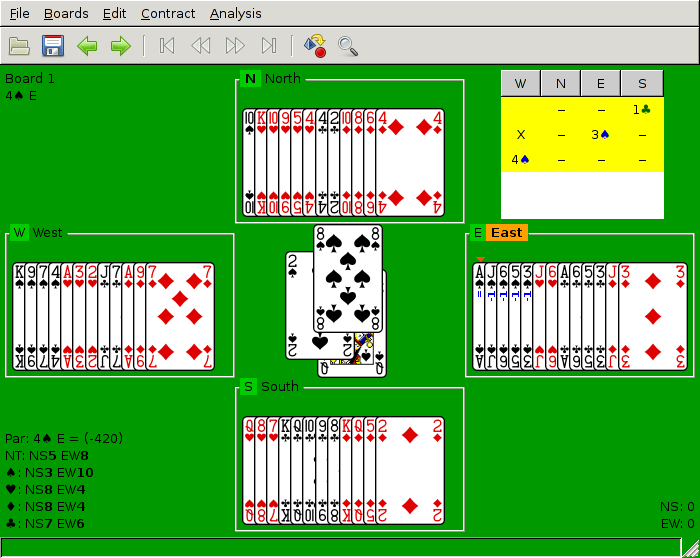 More on the technical side, the GUI has been switched to use GtkBuilder which
comes with Gtk so there is no external library needed anymore (previously
libglade). The looks are pretty much the same as before, though.
The previous version 0.9 had added windows support via mingw. I would still
appreciate if people could test it and tell me which bits I need to improve.
