Search Results: "spa"

14 December 2007

Martin F. Krafft: Surveys on the console

As part of my research, I may have to conduct a survey among Debian contributors. The word "survey" usually elicits frowns because surveys are often misconducted. MJ has taken the time to draft up some advice to surveyors. Problems with surveys generally fall into one of two categories: content and presentation. I'll refrain from making statements about content (Wikipedia has some stuff on questionaire construction) and instead concentrate on presentation in the following. Commonly in the digital age, surveys are administered via a web page or e-mail. In my recent Ph.D. transfer report, I identified a number of shortcomings with these approaches: Asking Debian contributors to click radio buttons on a web page is a bit like expecting a mountain biking champion to ride a tricycle across a paddock: painful, if not offensive. Furthermore, web surveys can only be taken while on-line, when most of us have better things to do. E-mail surveys address some of these problems, but create new ones: answers cannot be constrained to a domain (think multiple-choice), character set and formatting issues make evaluation difficult, and it's impossible to prevent users from attaching comments or modifying responses. In thinking about the issue, I came up with a third means to administer a survey: a console tool. Think of a Debian package which provides a console application controlled by a study-specific data file. The data file specifies the questions and their answer domains, and the tool presents those to the participant. Since most of Debian happens on the console anyway, such an approach to surveys seems more appropriate. Interaction with the survey tool would be as easy as pressing the 2 or 4 keys to select one of the multiple choices, and the tool would immediately move on to the next question (and not wait for the user to hit enter). Obviously, n and p should allow navigation back and forth across the set, and c would spawn a text editor to give the user a chance to attach a comment to his/her current response, in which s/he might criticise the question or provide additional information. Finally, the tool should be able to pick up where it left off, should the user chose to exit/suspend the survey for now. Integration with debconf or another interface abstraction is also worth consideration. There is more to it: people change their minds and should thus be able to amend responses. With their consent, it might be valuable to track such changes and inquire about their motivations. As I was thinking about how to realise this, I suddenly arrived at version control: use Git as a backend storage. The set of cool features this would enable seems to be endless: it works off-line and can be used to track aforementioned changes, but also offers the possibility to create a squashed result in case the participant prefers to submit only the final result. Furthermore, it's a trivial change between anonymous submissions, and submissions authenticated by a GPG signature. In addition, the survey tool should be able to display questions according to previous responses (control flow). For instance, if the survey determines that a given user is a contributor to the bug tracking system, but not a project member, it wouldn't make sense to ask when s/he received his/her Debian account. Furthermore, questions could be dynamically creatable from context, so that the survey can drill into depth depending on previous responses, rather than asking the same questions to all participants. I am currently applying for funding to outsource the development of such a tool. If you are interested in coding it up and getting paid for it, speak to me. Here are some more specifications to keep in mind before jumping on: These are likely to be incomplete, but should convey the basic picture. Feedback is always welcome! NP: Oceansize: Frames Update: James Andrewartha pointed me to purity, which asks multiple-choice questions on the console. It has the kind of interface which I envision. Also, Chris Lamb suggested this personality survey as a base line. Well, actually he just suggested I look into it.

Julien Blache: Dear bloody spammer^W^WAndrea Infurna

Spamming every @*.debian.org email address you can find to advertise your new website related to free software is not a good idea. At all. If you know this person IRL, please make heavy use of the cluebat on him. kthxbye.

John Goerzen: A Clarification

You may remember my post Monday in which I told Mother Nature to "bring it on".

I would like to clarify that remark at this time. I would have preferred Mother Nature to interpret this in the President Bush sense of "please don't hurt us", rather than the "let's just knock out power to the entire plains region". A nice little romantic power outage Tuesday evening would have been nice.

We lost power at 3:10 on Tuesday according to my workstation's logs. It's still out, and our rural electric cooperative is estimating it will be another week until it's back, though that's better than the Dec. 22 date the state's much larger for-profit utility is giving people. We were lucky enough to be able to find a generator to rent on Wednesday morning. $35 a day isn't cheap. But on the other hand, we don't have a flooded basement due to not pumping out the sump pump, our food isn't spoiled, and our pipes aren't frozen.

At work, our Internet connection went down Tuesday morning. We use a fixed wireless connection, and this was the first time our ISP's radios have been tested in ice. Some antenna designs performed flawlessly. Then there were the antennas we had. 80% packet loss or worse. It wasn't safe to get up on the roof to deice them until Wednesday afternoon, and even then we couldn't get all the ice off. Finally today the connection was back to normal.

That two weeks after someone -- yes -- dug through Sprint/Embarq's apparent only fiber-optic link into town. Took down all long-distance calling into or out of the town, most cell towers, as well as all access to 911 (since dispatch is in another town) for about 8 hours. If we had still be using wired T1s, we would have been out of service with Internet as well.

All told, 200,000 households or business customers of the state's largest utility have been without power. Dozens of other utilities have also had significant outages. Ours alone lost 700 power poles and there are substations in need of repair all over the eastern part of the state. And we weren't even the hardest hit.

On the generator, we can generally pick any three of refrigerator, server, workstation, or furnace to run. So sometime warm, I'll upload the pictures I've taken so far. We have one nice CFL-powered electric lamp we're using, flashlights, and a kerosene lamp. It's amazing how after just a few days of this, we're starting to want to go to bed earlier. Or perhaps that was because I haven't had the chance to get a lot of sleep lately...

When we look out the house to the east, we see pitch black. Normally we can see some yard lights in the distance. Not this week. Nothing at all to the east. To the west, we can see yard lights tantalizingly close -- only 2 miles away, fed from a different location. Ah, the joys of being at the very end of a utility's network.

All this despite the fact that this storm wasn't really all that bad. The roads were never really terrible, and there weren't as many trees down as there were in the ice storm of 2005.

I heard a comment on the news today from an Iowa Republican who had followed the GOP debate yesterday. She mentioned that Romney made a comment like "Well, guess there's no global warming in Iowa with an ice storm like this, huh?" She pointed out that if Iowa was still as chilly as it used to, it would have been a snow storm instead of an ice storm. I agree.

13 December 2007

Sune Vuorela: Extramadamadura day 1

Debian-KDE && Debian-i18n meeting in extremadura. I’m attending. Yay. Flight: on time for once, but apparantly Iberia has added one extra row of seats, so very little space.
Bus ride: okay. but still a 3-4 hour bus ride.
Beds/bedrooms: Is working.
Breakfast: Crap.
Network: Heavily firewalled, but ssh works on port 22. Extremely laggy, connections dropped, …. In general, crap.
Lunch: Quite okay. Probably because the standard lunch got cancelled, so we got better lunch.
Dining schedules: Completely weird.
The people: Debian people quite nice.
Why does so few spanish people speak english? Except the network, I am kind of satisfied.

Martin F. Krafft: Delaying mail delivery

My current mailfilter has two features which increase my day-to-day productivity:
  1. a "tickler," which is a reminder system inspired by the tickler file component of David Allen's Getting Things Done action management method: I can submit emails and notes to the tickler along with a timestamp in the future, and the tickler delivers the mail (or note) to my inbox when the timestamp has passed.
  2. the ability to delay certain types of mail (e.g. Debian mail is held until the weekend, while news items and the like are only delivered at night).
My current implementations work alright, but they're brittle and crap. What's worse is that the two features could be combined and handled by one and the same tool, but I implemented them differently for now: The tickler consists of a Maildir, to which I can submit mails, either by mailing a note to a specific email address (currently broken, thus not linked from here), or by adding a tickle stamp (X-Tickle header) to a message with this script, saving it to the local tickler mailbox and asking offlineimap to shove it to the server. On this server, the tickler queue is regularly scanned by a script, which resubmits mail whose timestamp has expired to my mailfilter, where it is treated somewhat specially as a resubmitted mail. After almost three months with this setup, I can identify the following shortcomings: When I implemented the delay queue, I knew of these problems and went a different way: delayed mail is stored in a Maildir and a (msgid, timestamp, filename) tuple is inserted into an sqlite3 database on the mail server. This script regularly processes the queue. If I just sent you the chills, at least we have the same taste. There are numerous problems with this approach, the foremost being that Maildir filenames are not guaranteed to be constant: mails jump between the new and cur directories, and tags, such as seen are encoded in the filename (thus, symlinks also cannot be used). My script now uses an ugly heuristic, which at least makes it work. I should investigate whether inodes could be used instead as I think those wouldn't change throughout the lifetime of a mail, at least while it's not moved between folders. I initially considered just dumping messages to files and encoding the timestamp in the files' mtime, but then I would not be able to access the queue with mutt in case I needed to fetch a delayed mail prematurely, or if I wanted to synchronise the queue with offlineimap as well. The past few days, I've been condensing experiences from both approaches and am working out a new technique to combine both features. In essence, I think the database/index approach is the best, if I can figure out a way to uniquely identify mail message files, ideally across folders. Assuming I can use inodes for that, delayed mail would then be stored into the delayed Maildir and an (inode, timestamp) tuple saved into the database. Tickler mail would be stored along with all other mail in my store Maildir and would get a similar entry in the database. This approach solves some problems and leaves others. Assuming I synchronise the store Maildir remotely (which I do), then I can easily fathom making modifications via IMAP which causes orphan records in the database (if only IMAP would allow me to store key=value pairs for mails ). Furthermore, I'd have to submit mails to the tickler by bouncing them to an email address, and deleting the local copy, unless I want duplicates. If now the mail is somehow dropped, I've lost mail. Still unhappy about all of this, still searching for a better implementation, I'd appreciate any feedback! NP: Luminous Flesh Giants: Duma I Upadek

Philipp Kern: Up-to-date Debian Keyring

First of all cheers to James for a new keyring upload. If I knew that I would have updated my subkey expiry once again before, heh. And the changes mail is not yet available anyway, maybe it was too large? Neither the PTS, nor d-d-changes lists it (yet?). It's shown in "Latest version" in the PTS, though. Michal, I've got a simple script in /usr/local/sbin/update-debian-keyring which I run once in a while, as the keyring in the archive is outdated more often than not:
#!/bin/sh
rsync -az --progress keyring.debian.org::keyrings/keyrings/debian-keyring.gpg /usr/share/keyrings/debian-keyring.gpg
Now this won't solve the who-uploads "problem" completely as the Debian Maintainer keyring is still missing. As far as I know it is not rsync-able (as it's not managed by the keyring powers but on ftp-master) and probably not even directly wget-able. At least the imported GPG blob is not put into the pool, just the source package is. It's available as a file for DDs in merkel.debian.org:/srv/ftp.debian.org/keyrings/debian-maintainers.gpg, though. Update: buxy told me that the keyring upload was done by noodles, not troup. Sorry about that, but I was unable to check that.

Alastair McKinstry: CoRoT: Reporting on the 20th

So, SpaEurope blog reports, with independent confirmation at Dynamics of Cats, that the CoRoT team is ready to do a press release and conference on the 20th December. Now to go convince my PhD Supervisor to hold off 'til after christmas for the Lit. Review. I suspect he will be devasated to have a hole open in his calendar right in the middle of a week when (undergrad) students are away, and all he has on his Todo list is his own research ... Tags , , ,

Benjamin Mako Hill: SPARC Innovator

SPARC, the Scholarly Publishing and Academic Resources Coalition -- a large alliance of academic and research libraries and other organizations working on open access scholarly publishing issues -- just recognized me as a SPARC Innovator. The award/recognition is given semi-annually to honor contributions to the open access movement. I'm being singled out in part for my work on Overpriced Tags and for other OA work and advocacy. I'm sharing the stage with several friends -- all of whom are students active in the Free Culture movement. SPARC seems to see this set of innovator awards as an opportunity to recognize the contributions of the next generation of activists. I'm honored to be counted among them!

Gunnar Wolf: Supertheory of supereverything

First time I had read the Bible
It had stroke me as unwitty
I think it may started rumor
That the Lord ain't got no humor Put me inside SSC
Let's test superstring theory
Oh yoi yoi accelerate the protons
stir it twice and then just add me, 'cause I don't read the Bible
I don't trust disciple
Even if they're made of marble
Or Canal Street bling From the maelstrom of the knowledge
Into the labyrinth of doubt
Frozed underground ocean
melting - nuking on my mind Yes give me Everything Theory
Without Nazi uniformity
My brothers are protons
My sisters are neurons
Stir it twice, it's instant family! I don't read the Bible
I don't trust disciple
Even if they're made of marble
Or Canal Street bling My brothers are protons
My sisters are neurons
Stir it twice dlja prekrastnih dam... Do you have sex maniacs
Or schizophrenics
Or astrophysicists in your family
Was my grandma anti anti
Was my grandpa bounty bounty
Hek-o-hek-o-hej-o
They ask me in embassy! 'Cause I don't read the Bible
I don't trust disciple
Even if they're made of marble
Or Canal Street bling And my grandma she was anti!
And my grandpa he was bounty!
And stir it twice
And then just add me!
Partypartypartypartypartyparty
now afterparty...
That's the Supertheory of Supereverything, by the gypsy-punk Gogol Bordello. I was really surprised to find their Super Taranta! at a local music shop. Of course, five minutes later, we were heading home with our shiny and oh-so-very-green purchase. Highly recommendable!BTW, does anybody else think that Eugene Hutz is Larry Wall's evil twin? (No, and I don't only mean it because of their choices in background colors)

12 December 2007

Francesco P. Lovergine: Beamers

I ask myself again and again: why it is always a challenge using a laptop with a beamer? It is not rocket science, but I always find problems due to lack of sync with certain beamers and certain laptops combinations. If you are lucky, you can see an image, but probably some parts of the screen (and of your slides) are invisible. It happens also under Windows, but it happens too many times under Linux.
Lately, I'm finding difficult to use my Thinkpad X31 under that respect, even if I always managed to use it without great issues until some months ago. Does it need a macumba before use?

Biella Coleman: Less is More, Comments

Since most of the readers of this blog come from Debian Planet where you can’t really see if there are comments, I thought I would link to the comments from my recebt blog post on blogging as many make some nice points. Additionally, here is a link to Joe Reagle’s post aptly entitled blog anxieties where he places a tripartite religious framework to understand the life cycle of a blog. I also agree with Alisa who notes that blogging is as much about the writer as is the reader (and I tend to post stuff for the sake of remembering, archiving etc) but I still think that the issue of overabundance is huge for I am as much a a consumer as I am a producer of blogs. I love reading people’s blogs but I just can’t keep up if they do it too often. Tenured Radical also paid a visit and well, if you have not checked out her blog, she is a fantastic, fantastic writer/thinker and what I like about her blog most is that she weaves together just the right ratio of personal and public (for lack of better words). What I mean is that she tells her stories from the vantage point of her experiences, of her position etc. I can imagine a real person behind the posts, which is always part of the fun of blog reading, a form of imagination that frankly is not there with mainstream news and journalism.

Uwe Hermann: Checking the ink level of your printer with ink / libinklevel / qink

qink screenshot Very nice tool I recently discovered: ink, a small tool using libinklevel, used to query the ink level of your printer (USB or parallel). In my case this is an Epson Stylus DX4200 (which works very nicely and out of the box btw). Installation:
$ apt-get install ink
Usage:
$ ink -p usb
ink v0.4.1 © 2007 Markus Heinz
EPSON Stylus DX4200
Cyan:                          76%
Magenta:                       76%
Yellow:                        76%
Photoblack:                    72%
Graphical ink level display:
$ apt-get install qink
Another nice tool built upon libinklevel is called qink, which is a QT-based GUI which displays the same information graphically (see screenshot). A list of printers supported by libinklevel is available.

Biella Coleman: Musical Helping Hands

It is nearly the end of the semester and in order to do all the test-making magic and grading I had to do before I am re-swamped with a stack of new papers (on the 17th of December to be exact), I spent the weekend put, grading every last response papers that I had my students write throughout the semester. When I finished those, I proceeded to get sick with the cold that seems to keep recirculating among faculty and students. Today I had to shift attention to my apartment, which, out of neglect had been turned upside down and inside out, to tidy up some before a slew of guests arrive tomorrow night. To get through the weekend and the cleaning-spree, I had a lot of help from my friends, mostly in the form of Daft Punk (in specific, their Alive album), and then when I wanted something more mellow, Damian Jurado took over (Medication and Ohio are two of my favorites), but then the song that really did the most to get me into that special zone was TV on the Radio’s aaaaaaaaamazing Wolf Like Me. Generally speaking, you can’t go wrong with wolf songs, can you? but this one takes the cake. Now to sleep off this cold…

Alastair McKinstry: Waiting for CoRoT

So, the CoRoT team apparently had a meeting in Paris on Monday. I've been waiting with baited breath (and intermittent internet access, for assorted reasons) for the results of a "Press Conference", that according to the blogosphere rumour mill, and a (started by a breathless interim report) was going to rewrite the sciences of exoplanets and stellar seismology. There were rumours of special editions of Nature (or Science, or A & A), Earth-mass planets (possible according to the apparent spec. of CoRoT). This mattered to me as I'm finishing up a literature review for a PhD and the work is on exoplanets, and depends a lot on stellar variation. CoRoT could rewrite large sections of my conclusions. So, it looks like I finish my review and just have to be patient while they release their results in the proper peer-reviewed manner. But it would probably be a good idea for the CoRoT team to set up a blog, as Rumour Central, to respond to mentions and rumours about their project that appear on the 'net. Kudos, for example, to Wesley Traub for taking the time to answer my questions aboout Darwin/TPF in this manner. Tags , , ,

11 December 2007

Adrian von Bidder: KDE 4

So much for KDE 4 ... after a lengty downgrade and package picking session (Yay! for dependency handling in Debian!) I'm now back to the trusted KDE 3.5.x (mostly x == 8) and will wait until KDE4 hits testing (which would be after lenny, I guess.) KDE 4 sort of worked - but I'd not call this &ldqupbeta%rdquo; at this stage, and apparently the KDE people joined the use-as-much-screen-surface-as-possible-for-funky-stuff crowd, leaving less space for actual application content than before. I hope the final versions can at least be configured to be smaller. I hoped the Live CD would be somewhat more complete than what's currently in experimental, but unfortunately, KDE wouldn't even start for me :-/ (Admittedly, I didn't fool around with it very long, so maybe it might have worked with some magic word.

Jordi Mallach: Black screens in Alacant

Six months ago, a political group in Spain made a big fuss and noise when the Government of Venezuela closed down the anti-chavist RCTV TV station, and waved the flag of freedom of speech, called the democratically elected government a regime , and called their president a dictator . On Sunday night, these very same people, following orders from the leaders of the Valencian government or should I say regime , drove up to the top of the Carrasqueta peak in Xixona, in the South of the Valencian Country, and protected by the winter's darkness, proceeded to force open two locks, broke into ACPV's property and unplugged and precincted the equipment which had been broadcasting the signal of TV3 and the rest of the public Catalan TV channels to the South of our land, for the last 21 years. Although this wasn't unexpected it is probably one of the biggest attacks to freedom of speech, choice and plurality since democracy was restored in the state. The political benefit PP is planning to obtain from this attack is clear: pleasing the regional right-wing cavemen who think we have nothing to do with the Catalan culture just 2 months away from some very decisive elections will probably give them a handful of extra votes. There are also economical interests involved, like having right-wing media groups control even more digital TV channels that they already do, but that's really anecdotic now. Two nights ago, it was the South. In a matter of days, the antennas in the Bartolo, in the North of the Valencian territory, will also be unplugged, blackening the screens of thousands of Valencians who think they have the right to watch decent quality TV in their mother tongue. Thank you, fascists.

Chris Lamb: Claws Mail transparent subject rewriting

I use Claws-Mail (née Sylpheed-Claws) for my email. One nice feature I found a couple of months ago was subject-line rewriting: A number of mailing lists I subscribe to add a totally obnoxious prefix on each outgoing message. I’ve yet to think of a good reason to do this - I can only assume it’s for far less capable mail clients. Or something. This results in much cleaner message list. You can probably do this in procmail, but having it in the presentation layer has the advantage that the rewrite is non-destructive - pressing Reply constructs a subject line from the original.

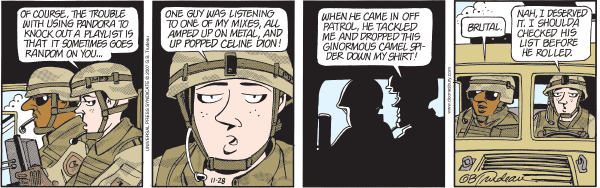
Adam Rosi-Kessel: Doonesbury on Pandora

A sign of cultural permeation: both Doonesbury and my father have discovered Pandora.
Technorati Tags: ,

9 December 2007

Evan Prodromou: 18 Frimaire CCXVI

Chris Messina wrote an interesting post on his blog about his OpenID Shitlist, Hitlist and Wishlist for 2008. (I'm going to briefly try to remember if using the word "shit" is cause for alarm on Planet Debian, and then I'm going to ignore the problem and move on.) I think it's a good post and it really identifies some of the key players that are helping and failing in the OpenID space. I got a shout-out for Wikitravel and for the MediaWiki OpenID extension, which yay for me. I think Chris was probably a little unfair about Wikimedia's lack of support. The site is moving very slowly towards a unified login for all its wikis, which is a really difficult task to make happen. OpenID is slated for installation some time after that, so it's going to be a while. But I hope that it will be useful for Wikipedians. My main impression from this blog post, however, is that OpenID's day in the sun might be over. That's not a bad thing -- usually the hard work gets done after the cameras are turned off. Zealots like myself tend to think that if only the world knew about our latest-greatest idea or technology, they'd fall right into line and adopt it immediately. But my experience has been that things work a lot slower than that, and I'd guess that OpenID is probably going to have a similar adoption curve. In thinking about opening up the Social Web, it's probably good to compare the opening of the Web Web in the mid-1990s. At the time, most Americans who were "online" were subscribed to a proprietary network like AOL, Compuserve, Delphi or MSN. (I'm not sure how things were in the rest of the world... Similar? Worse?) Many of these services either walled their users from the Internet entirely, or made it a one-way interaction. AOLers could read stuff from the rest of the Web, for example, but others couldn't see what AOL folks were doing. That system looked impenetrable; after all, AOL was paying millions of dollars to make great content and manage forums and the like, and why would they give that away to Internet leeches for free? But eventually it came apart because the Web became more interesting than the on-line services. (I personally think the watershed was the Ate my balls meme, but others might differ. I just kind of picture hundreds of thousands of AOLers calling up technical support asking to see the Mr. T pictures, and that's what finally broke things down.) Today, on-line service "walled gardens" are a negligible part of the on-line world -- those that still exist are more or less big ISPs. I think that the parallel with the Social Web is probably pretty apt. Today, Google, Facebook and Digg are reluctant to open up their identity silos to a distributed social Web. Their main asset today is their collection of identities and the relationships between them -- why give away the crown jewels? My guess is that it's not going to be until a mature, standardized and distributed Social Web exists outside the walls of the big social-networking players that we'll see them really willing to sit down at the table and come to the party. Of course, by that time, it'll be a moot point. But that just means there's a nice big fat market for somebody smart to take advantage of. tags:

Jeff Licquia: Rest In Peace, CompUSA

I’m very surprised about the popularity of an old post of mine, regarding my experiences with CompUSA. It continues to collect horror story comments, the last one coming less than three weeks ago. While any company has its detractors (especially any company dealing directly with the public), it seems odd to me that people continue to be motivated enough to post to my blog, of all places, their tales of woe. For me, life has been very CompUSA-less of late. Indianapolis now has a Fry’s, one of only two east of the Mississippi as of this writing, and for someone in the relatively tech-starved Midwest, it is a godsend. (People from the west coast: please stifle your laughter as best you can.) And evidently enough of these horror stories have been passed around that they felt the need to close over half their stores in February. The Indy store was spared that time, but not for long.
The electronics retailer decided to finish what it had started earlier this year, announcing that it would sell or close the remainder of its stores in the US after the holiday season. The company, controlled by Mexican retail management company Grupo Sanborns since 1999, has been sold to Gordon Brothers Group, a restructuring firm that will be responsible for selling off the remainder of its assets.
In an abstract sense, less competition in the electronic retail business isn’t ever good. But it’s arguable that we’ve never had so much competition in the electronic retail business if you count the Internet stores that have sprung up all over. And I’m certainly happy to see an outfit that will slander people for profit go belly-up.

Next.

Previous.