Raphael Geissert: A bashism a week: substrings (dynamic offset and/or length)
Last week I talked about the substring expansion bashism and left writing a portable replacement of dynamic offset and/or length substring expansion as an exercise for the readers.
The following was part of the original blog post, but it was too long to have everything in one blog post. So here is one way to portably replace said code.
Let's consider that you have the file name foo_1.23-1.dsc of a given Debian source package; you could easily find its location under the pool/ directory with the following non-portable code:
Which can be re-written with the following, portable, code:
Now, in the Debian archive source packages with names with the lib prefix are further split, so the code would need to take that into consideration if file is libbar_3.2-1.dsc.
Here's a non-portable way to do it:
While here's one portable way to do it:
The idea is to compute the number of interrogation marks needed and use them where needed. Here are two functions that can replace substring expansion as long as values are not negative (which are also supported by bash.)
Note that it uses local variables to avoid polluting global variables. Local variables are not required by POSIX:2001.
Enough about substrings!
Remember, if you rely on non-standard behaviour or feature make sure you document it and, if feasible, check for it at run-time.
The following was part of the original blog post, but it was too long to have everything in one blog post. So here is one way to portably replace said code.
Let's consider that you have the file name foo_1.23-1.dsc of a given Debian source package; you could easily find its location under the pool/ directory with the following non-portable code:
file=foo_1.23-1.dsc
echo $ file:0:1 /$ file%%_* /$file
Which can be re-written with the following, portable, code:
file=foo_1.23-1.dsc
echo $ file%$ file#? /$ file%%_* /$file
Now, in the Debian archive source packages with names with the lib prefix are further split, so the code would need to take that into consideration if file is libbar_3.2-1.dsc.
Here's a non-portable way to do it:
file=libbar_3.2-1.dsc
if [ lib = "$ file:0:3 " ]; then
    length=4
else
    length=1
fi

# Note the use of a dynamic length:
echo $ file:0:$length /$ file%%_* /$file
While here's one portable way to do it:
file=libbar_3.2-1.dsc
case "$file" in
    lib*)
        length=4
    ;;
    *)
        length=1
    ;;
esac

length_pattern=
while [ 0 -lt $length ]; do
    length_pattern="$ length_pattern ?"
    length=$(($length-1))
done

echo $ file%$ file#$length_pattern /$ file%%_* /$file
The idea is to compute the number of interrogation marks needed and use them where needed. Here are two functions that can replace substring expansion as long as values are not negative (which are also supported by bash.)
genpattern()
    local pat=
    local i="$ 1:-0 "

    while [ 0 -lt $i ]; do
        pat="$ pat ?"
        i=$(($i-1))
    done
    printf %s "$pat"


substr()
    local str="$ 1:- "
    local offset="$ 2:-0 "
    local length="$ 3:-0 "

    if [ 0 -lt $offset ]; then
        str="$ str#$(genpattern $offset) "
        length="$(($ #str  - $length))"
    fi

    printf %s "$ str%$ str#$(genpattern $length) "
Note that it uses local variables to avoid polluting global variables. Local variables are not required by POSIX:2001.
Enough about substrings!
Remember, if you rely on non-standard behaviour or feature make sure you document it and, if feasible, check for it at run-time.

 I gave a presentation at


 A new relase 0.10.3 of

 Update: This isn't actually that much better than letting them
access the private key, since nothing is stopping the user from
running their own SSH agent, which can be run under strace. A better
solution is in the works. Thanks Timo Juhani Lindfors and Bob Proulx
for both pointing this out.
At


 Some time ago, the
 Also this year the

 On the next two days at the booth we chatted and discussed with visitors and other exhibitors a wide variety of questions, including 'When will be (the next Debian version) released?' and 'Are there installation disks available?'. The answers was as always 'When we are ready and we will have reached the quality-level we defined', 'No we don't have installation medias, as they are always outdated. Do you have an USB-dongle with you?'.
Merchandising was requested by visitors as always, but we just had some leftovers of fosdem, brought by Axel.
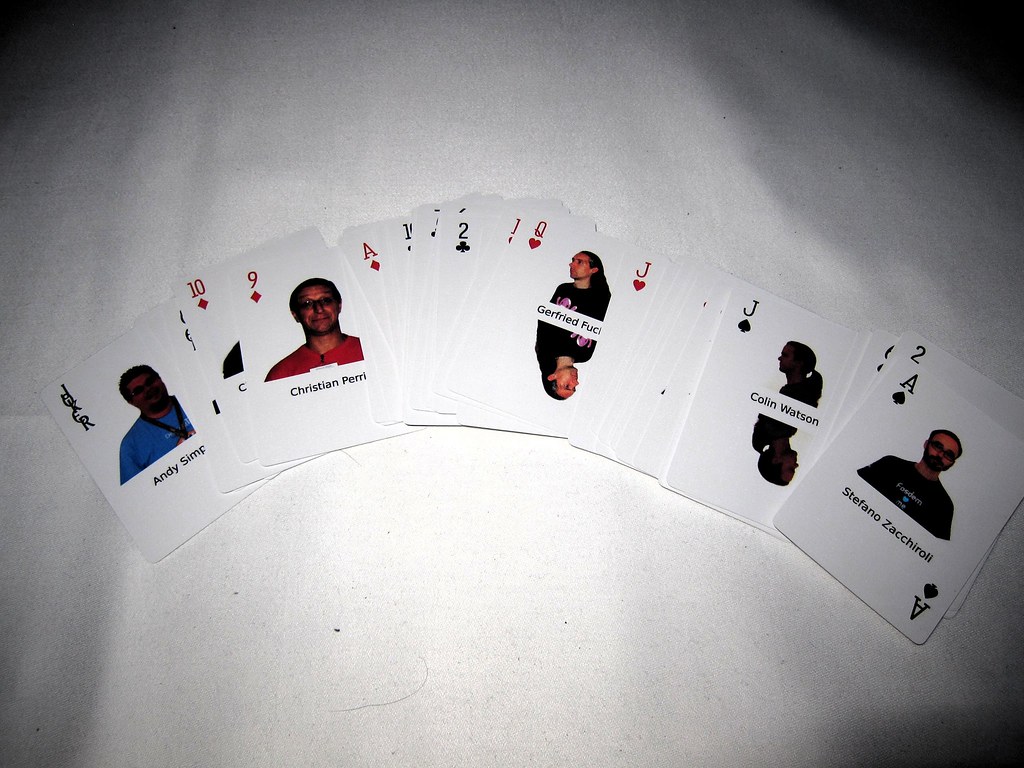
 Many thanks to Florian Baumann, Jan Dittberner, Andreas Tille, Christian Hoffmann, Axel Beckert, Markus Rekkenbeil, Daniel Schier, Jonas Genannt, Jan H rsch and kurio for taking care and running the booth, which worked out this year extreme smoothly from my point of view. Likewise as the last years a special thanks to