Search Results: "ina"

5 August 2011

Dirk Eddelbuettel: New Rcpp master classes scheduled for New York and San Francisco

Together with Revolution Analytics, I will be offering two more one-day classes on the Rcpp package for seamless integration of R and C++. The format will follow the workshop Romain and I gave during the tutorial day preceding this year's R/Finance conference. The style will once again be hands-on, with copious concrete examples and solid coverage of most aspects of Rcpp and related packages such as RInside, RcppArmadillo and others. The eight-hour schedule contains about six hours of instruction, split into four sessions of around ninety minutes. This leaves ample time for both lunch and coffee breaks, and for informal discussions and Q+A. Two one-day classes will be offered: The first in New York on Saturday, September 28, 2011 and the second one two weeks later in San Franciso on Saturday, October 8, 2011. Please see the official course page for more details, concrete location info and maps as well as registration details. Feel free to contact me at the usual email address with questions.

4 August 2011

John Goerzen: Please. Stop. Removing. Features.

apt-get dist-upgrade is getting a little less fun these days. It s not because of a problem with Debian or with apt-get. It s because of things upstream authors are doing. It seems that upstreams, for some reason, like to remove features from new versions of software. The two recent examples to bite me are the removal of the Gnome Terminal features to play the bell through sound card rather than the console speaker, and the recent upgrade to gtkpod the best iPod music manager out there which removed the ability to actually, well, play music. Wha ? Earlier examples where when Gnome removed the ability to type a filename in the Open dialog box (remember that? thankfully reverted eventually.) KDE 4 was infamous for this too, with maybe thousands of instances (and they broke Amarok so badly that it didn t actually play music from my devices either.) I don t understand this. The Gnome people somehow thought that they knew better than I what options I might want, I guess. But I am totally baffled about gtkpod. All it ever did was call xmms (or something like it such as qmmp) with appropriate arguments to play a file. Simple, configurable, and supremely useful. Probably just a few lines of code. And even that is gone. There is a post by Ingo Molnar complaining that perhaps Gnome and KDE are trying to mimic the Apple and Google result without internalizing the process. Perhaps. It all seems so baffling to me though. Updated: rewrote introduction.

Raphaël Hertzog: My Debian activities in July 2011

This is my monthly summary of my Debian related activities. If you re among the people who made a donation to support my work (170 , thanks everybody!), then you can learn how I spent your money. Otherwise it s just an interesting status update on my various projects. This month passed by very quickly since I attended both the Libre Software Meeting / RMLL and the DebConf. Libre Software Meeting / RMLL I attended only 3 days out of the 6 but that was a deliberate choice since I was also attending DebConf for a full week later in the month. During those 3 days I helped with the Debian booth that was already well taken care of by Fr d ric Perrenot and Arnaud Gambonnet. Unfortunately we did not have any goodies to sell. We (as in Debian France) should do better in this regard next time. One of the talks I attended presented EnVenteLibre. This website started as an online shop for two French associations (Ubuntu-fr, Framasoft). They externalize all the logistic to a company and only have to care about ordering goodies and delivering to the warehouse of the logistic company. They can also take some goodies from the warehouse and ship them for a conference, etc. We discussed a bit to see how Debian France could join, they are even ready to study what can be done to operate at the international level (that would be interesting for Debian with all the local associations that we have throughout the world). Back to the LSM, while I had 3 good days in Strasbourg, it seems to mee that the event is slowly fading out it s far from being an international event and the number of talks doesn t make for a better quality. BTW, do you remember that Debconf 0 and Debconf 1 were associated to this event while it was in Bordeaux? dpkg-source improvements During my time in Strasbourg (and in particular the travel to go there and back!) I implemented some changes to 3.0 (quilt) source format. It will now fail to build the source package if there are upstream changes that are not properly recorded in a quilt patch:

dpkg-source: info: local changes detected, the modified files are:
 2ping-1.1/README
dpkg-source: info: you can integrate the local changes with dpkg-source --commit
dpkg-source: error: aborting due to unexpected upstream changes, see /tmp/2ping_1.1-1.diff.cki8YB
As the error message hints, there s a new --commit command supported by dpkg-source that will generate the required quilt patch to fix this. In the processe you will have to submit a name and edit the patch header (pre-formatted with DEP3 compatible fields). You can get back the old behavior with the --auto-commit option. Build flags changes Ever since we adopted the Ubuntu changes to let dpkg-buildpackage set some build related environment variables (see #465282), many Debian people expressed their concerns with this approach both because it broke some packages and because those variables are not set if you execute debian/rules directly. In the end, the change was not quickly reverted and we fixed the package that this change broke. Despite this we later decided that the correct approach to inject build flags would be a new interface: dpkg-buildflags. Before changing dpkg-buildpackage to no longer set the compilation flags, I wanted to ensure dpkg-buildflags had some decent coverage in the archive (to avoid breaking too many packages again). My criteria was that CDBS and dh (of debhelper) should be using it. With the recent debhelper change (see #544844) this has been reached so I changed dpkg-buildpackage accordingly. Makefile snippets provided by dpkg At the same time, I also wanted an easy way for maintainers not using dh or CDBS to be able to fix their package easily and go back to injecting the compilation flags in the environment but doing it from the rules files. Starting with the next version of dpkg, this will be possible with something like this:
DPKG_EXPORT_BUILDFLAGS = 1
include /usr/share/dpkg/default.mk
Without DPKG_EXPORT_BUILDFLAGS the variables are not exported in the environment and have no effect unless you use them somewhere. More than build flags, this will also provide a bunch of other variables that can be useful in a rules files: all the variables provided by dpkg-architecture, vendor related variables/macro and some basic package information (mainly version related). dpkg-buildflags improvements Given the renewed importance that dpkg-buildflags will take now that dpkg-buildpackage no longer sets the corresponding environment variables, I thought that I could give it some love by fixing all the open issues and implementing some suggestions I got. I also had a chat with a few members of the technical committee to discuss how hardening build flags could be enabled in Debian and this also resulted in a few ideas of improvements. In the end, here are the main changes implemented: Will all those changes, the complete set of compilation flags can be returned by dpkg-buildflags (before it would only return the default flags and it was expected that the Debian packaging would add whatever else is required afterwards). Now the maintainer just has to use the new environment variables to ensure the returned values correspond to what the package needs. DebConf: rolling and hardening build flags I spent a full week in DebConf (from Sunday 24th to Sunday 31th) and as usual, it s been a pleasure to meet again all my Debian friends. It s always difficult to find a good balance between attending talks, working in the hacklab and socializing but I m pretty happy with the result. I did not have any goal when I arrived, except managing the Rolling Bof (slides and video here) but all the discussions during talks always lead to a growing TODO list. This year was no exception. The technical committee BoF resulted in some discussions of some of the pending issues, in particular one that interests me: how to enable hardening build flags in Debian (see #552688). We scheduled another discussion on the topic for Tuesday and the outcome is that dpkg-buildflags is the proper interface to inject hardening build flags provided that it offers a mean to drop unwanted flags and a practical way to inject them in the ./configure command line. Given this I got to work and implemented those new features and worked with Kees Cook to prepare a patch that enables the hardening build flags by default. It s not ready to be merged but it s working already (see my last update in the bug log). A few words about the Rolling BoF too. The room was pretty crowded: as usual the topic generates lots of interest. My goal with the BoF was very limited, I wanted to weigh the importance of the various opinions expressed in the last gigantic discussion on debian-devel. It turns out a vast majority of attendants believe that testing is already usable. But when you ask them if we must advertise it more, answers are relatively mixed. When asked if we can sustain lots of testing/rolling users, few people feel qualified to reply but those that do tend to say yes. More dpkg work Lots of small things done: Package Tracking System and DEHS Christoph Berg recently wrote a replacement for DEHS because the latter was not really reliable and not under control of the QA team. This is a centralized system that uses the watch files to detect new upstream versions of the software available in Debian. I updated the Package Tracking System to use this new tool instead of DEHS. The new thing works well but we re still lacking the mail notifications that DEHS used to send out. If someone wants to contribute it, that would be great! Misc packaging work I did some preliminary work to update the WordPress package to the latest upstream version (3.2). I still have to test the resulting package, replacing upstream shipped copies of javascript/PHP libraries is always a risk and unfortunately all of them had some changes in the integration process. I also updated nautilus-dropbox to version 0.6.8 released upstream. I also uploaded the previous version (that was in testing at that time) to squeeze-backports. So there s now an official package in all the Debian distributions (Squeeze, Wheezy, Sid and Experimental)! Thanks See you next month for a new summary of my activities.

No comment Liked this article? Click here. My blog is Flattr-enabled.

Blars Blarson: debconf11

DebConf 11 -- Banja Luka, Bosnia and Herzegovina I'm writing this on my way back from my fifth DebConf, waiting in the Frankfurt Airport for my flight to Munich then another wait for a flight back to Los Angeles. DebConf is the annual convention of Debian Developers and other interested in how Debian Linux (or Debian BSD) works, and want to help make it better. Debian is an international volunteer project, and Debconf is held each year in a different city, normally not on the same Continent two years in a row. Only one so far has been held in the United States, last year Debconf 10 was in New York City. (Mexico and Canada have also hosted Debconfs.) DebConf is a week long conference, with one day designated as "Debian Day" with more introductory level talks, frequently in the local language, and local people are invited to learn about Debian. The rest of DebConf is held in English. This year had over 350 attendees from a couple of dozen countries. Unlike most computer conferences, DebConf is free to attend. (Professional and Corporate memberships are available for those who would like to financially support DebConf.) If you apply early enough, you can request help paying for food, lodging, and travel as well, but such support is limited and you have to justify it. This is all make possible by our generous sponsors, who include some major corporations who use Debian. This year DebConf was held in Banja Luka, Bosnia and Herzegovina. The Bosnian bid won partially based on the generous support of the Bosnian government, not only financial and letting us use one of their buildings for the conference, but also help with getting visas and other such aid. (Visas are not required from the US or most of Europe, but they are from some other countries.) I arrived on Saturday about 24 hours after I left home, starting with too little sleep. I actually managed to eat dinner before passing out in my hotel bed. The hotel room I had in Hotel Vidovic (accent on the c) was nicer than any I have stayed at in Europe (although I always chose by price), and the conference price was less than half what a similar room goes for at a US hotel. There was a nice breakfast buffet included in the hotel cost. (Hot omelets and sausages as well as the usual cold cuts, cheese, fruit, juice, coffee, tea, cereal, yogurt, etc.) The in-room ethernet connection worked all the time except one morning, although it was not particularly fast. The hotel is relatively new, the Lift (elevator) had a date of 2005 on it and I suspect that is when the building was constructed. Sunday was Debian Day, and I went to a couple of sessions before deciding to take a nap in the afternoon. My nap wound up being from 3pm to after 11pm, sleeping through dinner. I was awake for an hour or so checking my email, and then slept till 4am. That was the morning I made it to breakfast before 7am. This was the first time I ate breakfast at normal breakfast hours for a full week for many years. After breakfast Monday, I spent several hours at the front desk helping give out badges, conference bags, and t-shirts. Lunches and dinners were in the Hotel Bosna, across the street from venue. For lunches we were served soup, salad, a plate of food, and desert. For dinners there was a buffet. The food served at Bosna was fairly good, but repetitive from day to day. (I've had much worse hotel food in the US for much more money.) Tuesday was more or less a repeat of Monday, with me opening the front desk by myself and not nearly as many new arrivals. The sessions varied of course, and I played "Debconf Experimental 5-card Mao". (Mao is a card game, popular in Cambridge and at DebConf.) Wednesday was the Day Trip. One day at DebConf is dedicated to socializing while seeing some of the local culture of the hosting city/country. This year there was an option of rafting (with some white water) or visiting a historical monastery and hiking to a waterfall with several grain mills powered by diverted water. This is the first time I had seen one actually grinding grain. (It's mainly a historical tourist attraction, but I don't know what happens to the flower made.) We then met at the rafting location for a BBQ lunch. Apparently there was some miscommunicaiton and the rafting place was not prepared for 70 or 80 people who wished to go rafting, so some did not get to raft until after lunch, and I'm not sure all that wanted to did. Dinner was back at Bosna. Thursday was another normal conference day, with the new wrinkle of distributing food tickets since Bosna was not willing/able to follow our instructions on who should be allowed to eat at Debconf expense. Those who wished to dine with the other Debconf attendees could purchase the tickets from the front desk, although this was not well publicised and few people took us up on it. The special "Conference Dinner" was Thursday night. This was held at a restaurant on the 14th floor of a building a few blocks away, and was a fancier buffet. There didn't seem to be much difference between the first and second course, and they ran out of desert before many people got any. This one was not as memorable as the one in Mexico, but that one was for the wrong reasons, including an unplanned indoor waterfall. After the dinner I played Mao again, this time till 2am. Friday was the only day I did not arrive at the venue in time for the first session (10am). Saturday I opened the front desk by myself again. In the afternoon was the "Debbugs Skills Exchange" that was requested by several people, so Collin Watson, Ian Jackson and I gave some information about it and Don Armstrong (who has done most of the recent coding on debbugs) participated via voip. (Debbugs is software for the Debian Bug Tracking System, often called the BTS.) Collin and Ian are emeritus members of the BTS team, and not active in it, while I am handling the spam filtering and haven't done much with the rest of the BTS. This was in the small "Meeting Room" (rather than the Auditorium or the round room) so we don't have to worry about video archives of it being available. (All the sessions is the two main rooms were streamed live on the internet, and will be edited and archived on http://meetings-archive.debian.net/pub/debian-meetings/2011/debconf11/.) We created a mini intro to the BTS document at that session that should be cleaned up and published. Less than two hours after that talk, the conference was over and teardown was started. As usual, the teardown and cleanup of what we had set up over several days was done is several hours, with many people helping. Sunday was leaving day. I was one of the people on the 11am charter bus to Zagreb DebConf arranged. The two such charter busses were an excellent idea, since the normal busses and trains would not have been able to manage that many extra passengers. This actually took longer than the planned 4 hours due to the long lines at the border crossing on Sunday afternoon. Both Bosnia and Croatia check passports both coming and leaving, so it is checked on both sides of the river that is the border between the countries. The check is pretty cursory unless you are from a country that needs a visa. I then had a plane flight to Frankfurt, and am currently in the middle of my 11 hour layover here. After that I fly to Munich early in the morning, have an 8 hour layover, and fly to Los Angeles. This schedule was in order to get flights at something resembling reasonable cost when I did it. From what I saw of Banja Luka, it's a nice place to visit, although most of the people do not speak English. Vegetarians may have a hard time finding meals, and sometimes they try to serve fish to them. (Assuming vegetarian means "no meat".) Transportation to Banja Luka is a bit hard, there are only six or so flights per week to the local airport, and one of the airlines is not on the international ticket sites. Most DebConf attendees flew to Zagreb then took busses, trains, vans, or taxis to Banja Luka (a 2.5-5 hour ride depending on border lines, road construction, etc.). The weather was rainy off and on throughout Debconf, but the day of the Day trip the rain held off until most of us were back and we had a lovely day. Temperatures were warm but not overly hot, and I never needed my jacket. There are many large alarm clocks in Banja Luka, (such as the one pictured here, across the street from the venue) but there doesn't seem to be a way to change the time setting or put them on snooze.

Diego Escalante Urrelo: GUADEC Hispana in Sevilla

Sevilla is located in the (one of the many actually) oh-boy-is-that-really-the-temperature region of Spain. It has been historically significative for its financial, artistic and cultural value. But it s most important role has been that of hosting lots of GNOME activity. The 3rd ever GUADEC was held here, those cool Emergya guys who are working on a11y live here, and the even more awesome Sugus ETSII group helping with the conference setup and beer availability who helped organize the GNOME 3 launch party in Sevilla.

Foto de familia de la Guadec-es8

GUADEC Hispana group picture by Ana Rey (from GUADEC_ES8 set) Not as huge as GUADEC, but certainly as much fun as it, GUADEC Hispana lets the Spanish speaking community get closer together, get bugs fixed and only as a side effect get a bit drunk. A big thank to Ana, Juanje, V ctor, the Sugus team and all the local people that contributed. Also, of course, thanks to our GNOME loving (and loved) companies: Emergya, Igalia and OpenShine. And don t forget Escuela T cnica Superior de Ingenier a Inform tica who hosted the event. Beer time now. See ya at Berlin.

Petter Reinholdtsen: How is booting into runlevel 1 different from single user boots?

Wouter Verhelst have some interesting comments and opinions on my blog post on the need to clean up /etc/rcS.d/ in Debian and my blog post about the default KDE desktop in Debian. I only have time to address one small piece of his comment now, and though it best to address the misunderstanding he bring forward:
Currently, a system admin has four options: [...] boot to a single-user system (by adding 'single' to the kernel command line; this runs rcS and rc1 scripts)
This make me believe Wouter believe booting into single user mode and booting into runlevel 1 is the same. I am not surprised he believe this, because it would make sense and is a quite sensible thing to believe. But because the boot in Debian is slightly broken, runlevel 1 do not work properly and it isn't the same as single user mode. I'll try to explain what is actually happing, but it is a bit hard to explain. Single user mode is defined like this in /etc/inittab: "~~:S:wait:/sbin/sulogin". This means the only thing that is executed in single user mode is sulogin. Single user mode is a boot state "between" the runlevels, and when booting into single user mode, only the scripts in /etc/rcS.d/ are executed before the init process enters the single user state. When switching to runlevel 1, the state is in fact not ending in runlevel 1, but it passes through runlevel 1 and end up in the single user mode (see /etc/rc1.d/S03single, which runs "init -t1 S" to switch to single user mode at the end of runlevel 1. It is confusing that the 'S' (single user) init mode is not the mode enabled by /etc/rcS.d/ (which is more like the initial boot mode). This summary might make it clearer. When booting for the first time into single user mode, the following commands are executed: "/etc/init.d/rc S; /sbin/sulogin". When booting into runlevel 1, the following commands are executed: "/etc/init.d/rc S; /etc/init.d/rc 1; /sbin/sulogin". A problem show up when trying to continue after visiting single user mode. Not all services are started again as they should, causing the machine to end up in an unpredicatble state. This is why Debian admins recommend rebooting after visiting single user mode. A similar problem with runlevel 1 is caused by the amount of scripts executed from /etc/rcS.d/. When switching from say runlevel 2 to runlevel 1, the services started from /etc/rcS.d/ are not properly stopped when passing through the scripts in /etc/rc1.d/, and not started again when switching away from runlevel 1 to the runlevels 2-5. I believe the problem is best fixed by moving all the scripts out of /etc/rcS.d/ that are not required to get a functioning single user mode during boot. I have spent several years investigating the Debian boot system, and discovered this problem a few years ago. I suspect it originates from when sysvinit was introduced into Debian, a long time ago.

John Goerzen: Complete.Org Migrated To Different Continent, 15 minutes downtime

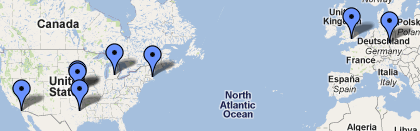
It s time to change locations for my server. I ve been with CoreNetworks for almost 5 years. They provide a good value, with fully dedicated servers a lot cheaper than most places, and good support to boot targeting people that can handle root on their own box. I m switching, though, to Hetzner Online (of Germany), primarily because I am needing more than 1GB RAM, and they can provide a 2GB box for less than I pay now for 1GB. I asked for feedback on Google+, and got positive feedback. Today, I migrated from one machine to another, copying a dozen or two GB of data, and only had about 15 minutes downtime. I was able to do this without console access to the source machine, though console access wasn t really required for either. This will work with any basic Linux install on the destination, or it could be prepared directly from a rescue environment. Before I explain how I did it, I thought it was interesting to think of the different places that the machine that was known as complete.org has lived over the years. Here s a map (click for detail): Here s the general process. First, well in advance of the move, crank the TTL on the domains way down. This way, old IPs won t be cached for very long once the system moves. Next, start rsyncing data from the old machine to the new. Do not yet shut down daemons on the old. Shut down as much as you can on the new. You ll want to focus on static data, such as /home. /usr is a good candidate as well. /var if you are selective databases may be a good candidate, or may not. The idea is to seed the destination with data so that when we do the real rsync, most of the data will be there; it will have to tidy things up after daemons are stopped, and update some things, but the bulk of the work should be done. Next, start preparing some exclude lists for the final rsync, which will copy an entire machine to the other. You will likely want to exclude files such as /etc/fstab, /etc/network/interfaces, /etc/resolv.conf, /etc/hosts, /etc/default/grub, /sys/*, /proc/*, /dev/*, and the like. I used rsync -v -P -a -H -A -X -S numeric-ids delete-after. Now, start editing config files for the new IP, but do it on the old server (these will be synced over to the new one). Start with the bind config files, and touch anything else that needs it maybe Apache configs, whatever. Next, get ready to do the final sync. In an ideal environment, we d just shut both machines down to single-user mode, but that s not going to quite cut it here. Use ps and shut down all daemons except sshd and udev on the destination. Yes, including even syslog. This is to prevent anything actively accessing the disk during the rsync, and also to prevent any issues with clients accessing server daemons that aren t ready yet. Now, on the source machine, reload bind. This will start answering DNS queries with the new machine s IP, and should also propagate the changes to your secondary DNS. Next, kill off all the daemons on the source machine, except for ssh and bind. You might want to set /etc/nologin to prevent regular users from logging in on ssh, if you have them. Now rsync things over to the new machine. Do any final tweaking over there (merging in /etc/hosts maybe, dealing with the udev rules.d persistent net thing, etc.). Reboot the new server and you should be up and running.

3 August 2011

Andrew Pollock: [life] Zoe at 15 months

Boy, the last three months have been very eventful, developmentally. First off, about 2 weeks after she turned 1, Zoe started walking in earnest. Within about 2 weeks of that there was no stopping her. It's funny to think she's only been walking for under 3 months and yet she's very stable on her feet. Secondly, she developed a mild egg allergy. Sarah was giving her some scrambled eggs (one egg's worth) for lunch one day, and she mixed in some cream cheese, and Zoe absolutely scoffed it all down, so she scrambled another egg and she scoffed that down too. She then broke out in some hives around her mouth and Sarah noticed that she was coughing a bit and a little wheezy when she put her down for her afternoon nap. Upon subsequent consultation with her paediatrician and a blood test, the allergy was confirmed and we now have to avoid eggs and Zoe was prescribed an Epi Pen Jr. We went and saw an allergist as a followup, and he did some skin tests that showed eggs were the only thing she's allergic to. He said her allergy was very mild in the grand scheme of things, and we're going to do another skin test when she's 2 to see if she's grown out of it. Eggs in baked goods are generally okay, as the offending protein is denatured at high temperatures. She's more allergic to the egg whites (1.56, which is in the "moderate" range) than the egg yolks (0.55, which is in the "low" range). Egg allergies are apparently something that one does eventually out grow, so that's a good thing. We'd also been keeping her off gluten and dairy because of a strong correlation between them and rather disgusting bowel motions. We've successfully reintroduced gluten with no adverse effects, and we've just started her back on cow's milk. We of course had our epic trip to the Grand Canyon, which Zoe handled absolutely marvelously. That was closely followed by a weekend down in LA, which was a bit more of a disaster as Sarah and I both came down with a 24 hour stomach bug that Zoe had had during the week. There's nothing quite like languishing in a non-childproofed hotel room, feeling like death, with a full of beans toddler busy running around jamming her fingers in drawers. Fortunately we were able to use a babysitter for a few hours respite, but it did rather completely mess up our plans for the weekend. Zoe did handle the drive to and from LA very well though. Zoe's been doing Saturday morning swim classes at the YMCA, which I've taken her to. I don't think she's enjoyed them as much as the indoor ones she did at the Sutton Swim School, where she went with Sarah previously, and I definitely don't feel like the classes are as structured. Unfortunately we just finished an 8 week session, and the next one filled up before we got a chance to book, so we're hoping to get back into something at the Sutton Swim School once an opening comes up. I might do something ad hoc with her on Saturdays at the Rinconada Pool in Palo Alto in the meantime. Zoe has also started going to regular daycare on Thursdays, so Sarah gets a day to focus on her University study. It's a home daycare that isn't too far away, and our friend's daughter goes there too, so there's someone she knows. The first few times Zoe got pretty upset when she was dropped off, but she barely makes a whimper now when Sarah drops her off. She's also usually down to one nap a day now. She has four teeth, top and bottom, with one molar definitely through and another three starting to make an appearance. I just bought an iBert safe-T-seat for my bike, because I've been itching to get out on the bike with Zoe on the weekends when I'm looking after her so Sarah can get some more study done. The weather is currently nice, and I've just learned about a bike trail that cuts across the bay in front of Moffett Field, so I'm keen to check that out. Apparently there's geese out there. I did my first decent ride with her last Sunday to the Mountain View Farmer's Markets and back. Zoe seemed to be okay with it. The helmet we got her drew a lot of comments from people at the markets. She's very much in the "point and grunt" stage at the moment. What's really cool is she'll nod or shake her head in response to yes/no questions. It's so cool when you can ask her a question and she solemnly nods her head in response. Often in the morning Sarah takes her to the park around the back of our home, and so now Zoe's gotten into that habit, so she'll scratch around at the front door and they head over there. The other day, Sarah opened the front door and she took off in the direction of the park, so Sarah just followed her to see where she went. Sure enough, she made her way over to the park. Tonight, Zoe fetched me my shoes and then dragged me over by the hand to the front door to demand that I take her out for a walk. She's also really getting into books now. She actively seeks out books, and has a bit of a flick through them, or brings one over and climbs into our laps, or backs up and sits in our laps if we're sitting on the floor, to have us read them to her. She's now strong enough to hold her bottle herself at bedtime, so I sit with her in my lap in the glider and read a story to her while she has her bedtime bottle. It's indescribably wonderful. She seems to understand quite a large array of words. We can go "Where's your <insert object here> and she'll look around the living room and generally find the item we're talking about. She also seems to understand questions about breakfast, lunch, going to the park, going to the bathroom, having a bath, etc as she seems to respond appropriately. In the speech department, I haven't really counted the words, but she's not saying a huge number of words. This morning, apparently she yelled "MAMA! MAMA! PARK!". "Park" being a new word for her. We bought an annual membership to the Children's Discovery Museum in San Jose, and we've probably taken her there half a dozen times or so since getting the membership. She particularly loves the water area. We finally got around to getting our back yard landscaped and made generally fit for a small child to run around in. Sarah's planted a butterfly garden in one corner, so hopefully once that's established we'll have some fun things for Zoe to watch from the window. I'm looking forward to planting some bulbs in the autumn. I expect the next 3 months will be more of the same. We've got some more overseas travel coming up, but a lot of relatives will be around, so hopefully we'll get a bit of downtime to ourselves. Zoe and I on my bike

Robert Millan: Recent improvements with Debian GNU/kFreeBSD

Debian GNU/kFreeBSD was first released with Squeeze in last february. The technology preview label indicated, among other things, that it had a number of limitations when compared with what users would expect: missing features, incomplete functionality, etc. But it has seen many noteworthy improvements since then. Here are some that I would like to mention:

2 August 2011

Russ Allbery: Git Debian packaging notes revised

It's a new month, so as usual for the beginning of the month I'm hoping to be a bit better about regularly updating, and ideally with more than just software release announcements and book reviews. Sadly, today has not been a good day for concentration despite a good early start, but I did manage to finally get through a long-delayed revision of my page of notes on using Git for Debian packaging. The revision drops the idea of using a separate debian branch to track Debian-specific changes so that master could be a pure feature branch. While appealing for its conceptual purity, this ended up confusing people horribly and was extra work for no apparent benefit. There are also a variety of other revisions to bring things up to date and a few new minor tips. Unfortunately, I haven't yet had a chance to write up how to maintain the upstream branch as a merge between the upstream Git repository and the released tarball, an idea from Sam Hartman that I'm now using very successfully for the openafs package, but at least now there's a pointer to it. I'm not really sure what to do with the initial part of that page that offers an introduction to Git. I've now written about three of these in separate places, and I'm still unconvinced of how much they actually help. And there are a ton of tools and basic techniques that I use all the time in Git that aren't mentioned in there (like git pull --rebase --stat, which I aliased to git update, or the whole concept of aliases, or how this all plays with 3.0 source packages). I've left the basic instructions for now, but I think at some point I may cede the tutorial aspect to other sites and just collect neat tricks that aren't part of the basic workflow that everyone describes.

1 August 2011

Nathan Handler: Google Summer of Code Report #4

Due to the midterm evaluation, this report will cover a span of 4 weeks. As a result, it will be quite a bit longer than my previous reports. One of the first things I did after my last report was create a FAQ for the project. At first, the FAQ was a plain text file living only in the git repository. Then, it moved to being maintained on the Debian wiki with a cronjob pulling it into my local repository for me to commit and push. Finally, the cronjob moved to wagner. The FAQ is not actually committed to the git repository, but it is available in the dextools instance running on wagner or on the wiki. There is also now a basic README file that is part of the git repository that simply points people to the FAQ on the wiki (so people who branch the repository can easily find the documentation). For those of you who have been reading my other reports and/or testing the dashboard, you have probably noticed the problems I was having getting the text boxes sized properly. After spending countless hours researching and testing different solutions, we finally decided to give up on this for the time being. Therefore, all of the size attributes have been removed from the text inputs, and the background color has been reset to its default value. This means that we will no longer experience the issue of very wide text boxes and a horizontally stretched table. However, it also means that long strings will get cut-off when displayed in a text input. Since my initial mockup design at the start of the summer, I have had the rows of the table zebra-striped. Based on some feedback from Paul Wise (pabs), I changed this so that the row colors are based on the status of the task. Open tasks are red, closed tasks are green, and in progress tasks are yellow. This makes it much easier to quickly see the progress of the project and find tasks you are interested in. My original dashboard consisted of one main dex.html file. This file used some javascript to pull in each project s task list. We felt that a much more common use case would involve a user only interested in one particular project. As a result, they would not be likely to use the select boxes to change projects. This ultimately led to me creating standalone dex.html dashboards for each project. These per-project dashboards were identical to the original dex.html, except they did not include the select boxes at the top for changing projects. Eventually, I decided to completely get rid of the original dex.html dashboard. That file now consists of a simple list of links to all of the projects sorted by distribution. Another advantage of this change is that it is much easier to link to a specific project. For example, you might now link to /projects/dex-ubuntu-ancient-patches/dex.html (you can get the URL by simply copying it from the address bar). Another advantage is that you can now link directly to a specific project s graphs (just append #graph). Another feature that I am still working on is per-project documentation. From the start, we wanted to make it easy for new contributors to get involved in DEX. One way we can do this is by having clear documentation about what the project is and how to deal with tasks. I decided that the easiest approach would be to have this documentation live on the wiki. This allows users to use the familiar wiki markup language to format their text, and it gives us all of the other benefits a wiki provides. Documentation will live at /DEX/<distribution>/ <project>. The dashboard will then take care of pulling in this documentation and displaying it at the top of the proper page. For a while, I was thinking that it would be necessary to filter the HTML produced by the wiki to prevent malicious code from ending up on the dashboard. However, after playing around for a bit, I think that it should be pretty safe to just use the HTML as-is (if someone spams the wiki, we can always revert the change). I am currently finishing up some of the code to handle this, and it should be live sometime this week (a partially working version is live on wagner). There are also two new checkboxes at the top of each dashboard. These allow users to add completed tasks and/or tasks with completed bugs. This is useful for projects that are close to being complete, as it allows users to quickly view the few remaining tasks. This feature was requested by several people, and I am glad to finally be able to implement it for them. There is also a second graph on each page. This graph is a bar graph that shows the number of tasks each person has completed. It gets the people from the assignee column for the project, and it only counts tasks with a status of Complete . The graph is updated whenever the getbugs.py script runs to update the task listing (currently every 10 minutes). The bars are sorted from tallest to shortest. The idea behind this graph is to recognize the people working on a project. The form processing script has not worked on wagner. This was mainly due to a permission issue. Thanks to a hint from Rapha l Hertzog, I was able to use setfacl to fix this. The form can now be submitted, and it should successfully save all changes made via the web form. This involved some updates to support the per-project dex.html files. The form processing script will also ignore any status that is not complete , in progress , or incomplete , which prevents people from messing up the dashboard by submitting invalid information. Finally, the script will now try to use the HTTP_REFERER header to send the user back to the correct page. If this header is not set, the user will be sent back to the main dex.html index page. Sorting the table has been partially broken since I started including text inputs. I finally got this issue resolved, and I should now be able to sort by text inputs, select boxes, or anything else I might end up including in the table. You can test this by clicking on any header in the table. I will probably add a tiny image to make it more clear which header is being used to sort the table. By default, it is sorted based on the status and then the task name. The status column now has a select box for setting the status. Since the row coloring is done via javascript, the minute you change the status in the select box, the row color will change to reflect the new status. Keep in mind, for the time being, any change you make via the web form will be lost if you do not hit the Submit button at the top of the form. That covers most of the dashboard changes that have taken place since my last report. However, there were also some other changes that are worth noting. Matt Zimmerman, my original mentor, settled down from his traveling and resumed serving as my mentor for the project. I would like to thank Stefano Zacchiroli for all of his help this summer. I look forward to working with him more in the future. I have also started using the issue tracker feature on alioth for dextools. Right now, it is mainly being used to help me keep track of bugs and features that I need to deal with. I am hoping that as dextools starts to be used by more people that they will also help report issues on the tracker. This issue tracker is a good source of information for people interested in knowing what I will be working on in the future. I will briefly talk about some of the more important features that I will be working on. The first issue is one that I have already touched upon in this report. I want to sort out the per-project documentation. This is rather important, as it will most likely be utilized by all projects using the dashboard. It is also essential if we are to get new contributors involved in DEX projects. Second, I want to setup some method for backing up the projects/ directory on wagner. This directory is not maintained in the git repository, and it contains all of the information submitted via the web form and generated by the scripts. My current plan is to have this directory maintained in its own VCS. Every time getbugs.py runs or the form is submitted, a new commit will be made. This will allow us to easily revert any changes (spam) made to the dashboard. Since we do not foresee the dashboard being the target of much abuse, any user will be able to modify data via the web form. I also want to add the ability for users to create new projects and task via the web. I envision this as a separate form where they enter the distribution name, project name, a list of BTS bug numbers, and a list of any additional tasks. The script will then take care of applying the necessary usertag to the bugs and/or creating a tasks file in the projects directory for the non-bts tasks. Doing this will make starting a new project trivial, and will eliminate the need for VCS access to create projects that do not utilize BTS bugs. Finally, I want to eliminate the need for the user to hit the Submit button to save their changes. Any change the user makes should be submitted and saved instantly using AJAX. This will also help eliminate some confusion that was caused by the row color instantly changing when the status is changed. Some users thought that the color change meant that the change was saved when it really was not. Matt asked me the other day what features I think need to get added before the dashboard is really ready for public use. While the features and issues I mentioned above will help make the dashboard easier to use, the dashboard is still perfectly usable without them. There are only a few more weeks left in the Google Summer of Code 2011. By that time, all of these features and bugs should be sorted out, and we should be able to properly announce the dashboard and make it available for use on all DEX projects. That does not mean that the dashboard will be done . Instead, it will probably result in many new bugs and feature requests being submitted. However, at that point, I will make a very strong effort to keep the dashboard stable and to prevent data loss. I am looking forward to the finally finishing up this project and seeing it used by the DEX team. As always, if you are interested in helping out with DEX or dextools, my code is available in a git repository on alioth. There is also the new issue tracker where you can report bugs and request new features. Finally, you can join the debian-derivatives mailing list, join #debian-derivatives on OFTC, or contact me directly via email or on IRC (nhandler).</project></distribution>

Iustin Pop: New harddrives WD RE4

I've recently exchanged my old RE3 harddrives (500GB) with new RE4 (non-green power) 2TB harddrives. Here is some data gathered if anyone is interested (I usually look for this kind of information before buying). Smart information:
smartctl 5.41 2011-06-09 r3365 [x86_64-linux-3.0.0-ruru0] (local build)
Copyright (C) 2002-11 by Bruce Allen, http://smartmontools.sourceforge.net
=== START OF INFORMATION SECTION ===
Model Family:     Western Digital RE4 Serial ATA
Device Model:     WDC WD2003FYYS-02W0B0
Serial Number:    WD-XXXXXXXXXXXX
LU WWN Device Id: X XXXXXX XXXXXXXXX
Firmware Version: 01.01D01
User Capacity:    2,000,398,934,016 bytes [2.00 TB]
Sector Size:      512 bytes logical/physical
Device is:        In smartctl database [for details use: -P show]
ATA Version is:   8
ATA Standard is:  Exact ATA specification draft version not indicated
Local Time is:    Thu Jul 28 20:31:24 2011 CEST
SMART support is: Available - device has SMART capability.
SMART support is: Enabled
=== START OF READ SMART DATA SECTION ===
SMART overall-health self-assessment test result: PASSED
General SMART Values:
Offline data collection status:  (0x80) Offline data collection activity
                                        was never started.
                                        Auto Offline Data Collection: Enabled.
Self-test execution status:      (   0) The previous self-test routine completed
                                        without error or no self-test has ever
                                        been run.
Total time to complete Offline
data collection:                (28860) seconds.
Offline data collection
capabilities:                    (0x7b) SMART execute Offline immediate.
                                        Auto Offline data collection on/off support.
                                        Suspend Offline collection upon new
                                        command.
                                        Offline surface scan supported.
                                        Self-test supported.
                                        Conveyance Self-test supported.
                                        Selective Self-test supported.
SMART capabilities:            (0x0003) Saves SMART data before entering
                                        power-saving mode.
                                        Supports SMART auto save timer.
Error logging capability:        (0x01) Error logging supported.
                                        General Purpose Logging supported.
Short self-test routine
recommended polling time:        (   2) minutes.
Extended self-test routine
recommended polling time:        ( 255) minutes.
Conveyance self-test routine
recommended polling time:        (   5) minutes.
SCT capabilities:              (0x303f) SCT Status supported.
                                        SCT Error Recovery Control supported.
                                        SCT Feature Control supported.
                                        SCT Data Table supported.
SMART Attributes Data Structure revision number: 16
Vendor Specific SMART Attributes with Thresholds:
ID# ATTRIBUTE_NAME          FLAG     VALUE WORST THRESH TYPE      UPDATED  WHEN_FAILED RAW_VALUE
  1 Raw_Read_Error_Rate     0x002f   100   253   051    Pre-fail  Always       -       0
  3 Spin_Up_Time            0x0027   100   253   021    Pre-fail  Always       -       0
  4 Start_Stop_Count        0x0032   100   100   000    Old_age   Always       -       4
  5 Reallocated_Sector_Ct   0x0033   200   200   140    Pre-fail  Always       -       0
  7 Seek_Error_Rate         0x002e   100   253   000    Old_age   Always       -       0
  9 Power_On_Hours          0x0032   100   100   000    Old_age   Always       -       0
 10 Spin_Retry_Count        0x0032   100   253   000    Old_age   Always       -       0
 11 Calibration_Retry_Count 0x0032   100   253   000    Old_age   Always       -       0
 12 Power_Cycle_Count       0x0032   100   100   000    Old_age   Always       -       3
192 Power-Off_Retract_Count 0x0032   200   200   000    Old_age   Always       -       2
193 Load_Cycle_Count        0x0032   200   200   000    Old_age   Always       -       1
194 Temperature_Celsius     0x0022   120   116   000    Old_age   Always       -       32
196 Reallocated_Event_Count 0x0032   200   200   000    Old_age   Always       -       0
197 Current_Pending_Sector  0x0032   200   200   000    Old_age   Always       -       0
198 Offline_Uncorrectable   0x0030   100   253   000    Old_age   Offline      -       0
199 UDMA_CRC_Error_Count    0x0032   200   253   000    Old_age   Always       -       0
200 Multi_Zone_Error_Rate   0x0008   100   253   000    Old_age   Offline      -       0
SMART Error Log Version: 1
No Errors Logged
SMART Self-test log structure revision number 1
No self-tests have been logged.  [To run self-tests, use: smartctl -t]
SMART Selective self-test log data structure revision number 1
     SPAN  MIN_LBA  MAX_LBA  CURRENT_TEST_STATUS
        1        0        0  Not_testing
        2        0        0  Not_testing
        3        0        0  Not_testing
        4        0        0  Not_testing
        5        0        0  Not_testing
Selective self-test flags (0x0):
      After scanning selected spans, do NOT read-scan remainder of disk.
If Selective self-test is pending on power-up, resume after 0 minute delay.
hdparm information:
ATA device, with non-removable media
powers-up in standby; SET FEATURES subcmd spins-up.
        Model Number:       WDC WD2003FYYS-02W0B0
        Serial Number:      WD-XXXXXXXXXXXX
        Firmware Revision:  01.01D01
        Transport:          Serial, SATA 1.0a, SATA II Extensions, SATA Rev 2.5, SATA Rev 2.6
Standards:
        Supported: 8 7 6 5
        Likely used: 8
Configuration:
    Logical         max     current
    cylinders       16383   16383
    heads           16      16
    sectors/track   63      63
    --
    CHS current addressable sectors:   16514064
    LBA    user addressable sectors:  268435455
    LBA48  user addressable sectors: 3907029168
    Logical/Physical Sector size:           512 bytes
    device size with M = 1024*1024:     1907729 MBytes
    device size with M = 1000*1000:     2000398 MBytes (2000 GB)
    cache/buffer size  = unknown
    Nominal Media Rotation Rate: 7200
Capabilities:
    LBA, IORDY(can be disabled)
    Queue depth: 32
    Standby timer values: spec'd by Standard, with device specific minimum
    R/W multiple sector transfer: Max = 16  Current = 0
    Advanced power management level: 128
    Recommended acoustic management value: 128, current value: 254
    DMA: mdma0 mdma1 mdma2 udma0 udma1 udma2 udma3 udma4 udma5 *udma6
                 Cycle time: min=120ns recommended=120ns
    PIO: pio0 pio1 pio2 pio3 pio4
                 Cycle time: no flow control=120ns  IORDY flow control=120ns
Commands/features:
        Enabled Supported:
           *    SMART feature set
                Security Mode feature set
           *    Power Management feature set
           *    Write cache
           *    Look-ahead
           *    Host Protected Area feature set
           *    WRITE_BUFFER command
           *    READ_BUFFER command
           *    NOP cmd
           *    DOWNLOAD_MICROCODE
           *    Advanced Power Management feature set
           *    Power-Up In Standby feature set
           *    SET_FEATURES required to spinup after power up
                SET_MAX security extension
           *    Automatic Acoustic Management feature set
           *    48-bit Address feature set
           *    Device Configuration Overlay feature set
           *    Mandatory FLUSH_CACHE
           *    FLUSH_CACHE_EXT
           *    SMART error logging
           *    SMART self-test
           *    General Purpose Logging feature set
           *    WRITE_ DMA MULTIPLE _FUA_EXT
           *    64-bit World wide name
           *    IDLE_IMMEDIATE with UNLOAD
           *    WRITE_UNCORRECTABLE_EXT command
           *     READ,WRITE _DMA_EXT_GPL commands
           *    Segmented DOWNLOAD_MICROCODE
           *    Gen1 signaling speed (1.5Gb/s)
           *    Gen2 signaling speed (3.0Gb/s)
           *    Native Command Queueing (NCQ)
           *    Phy event counters
           *    Idle-Unload when NCQ is active
           *    NCQ priority information
           *    DMA Setup Auto-Activate optimization
           *    Software settings preservation
           *    SMART Command Transport (SCT) feature set
           *    SCT Long Sector Access (AC1)
           *    SCT LBA Segment Access (AC2)
           *    SCT Error Recovery Control (AC3)
           *    SCT Features Control (AC4)
           *    SCT Data Tables (AC5)
                unknown 206[12] (vendor specific)
                unknown 206[13] (vendor specific)
Security:
    Master password revision code = 65534
            supported
    not     enabled
    not     locked
    not     frozen
    not     expired: security count
            supported: enhanced erase
    294min for SECURITY ERASE UNIT. 294min for ENHANCED SECURITY ERASE UNIT.
Logical Unit WWN Device Identifier: XXXXXXXXXXXXXXXX
    NAA             : X
    IEEE OUI        : XXXXXX
    Unique ID       : XXXXXXXXX
Checksum: correct
Using fio running on all three drives in read mode results in a nice ~420 MiB/s average throughput at the start of the disk, not bad. This is the zone bandwidth graph: Bandwidth graph and the IOPS graph: IOPS graph The IOPS doesn't compare with either a 10K drive nor any SSD, but the bandwidth is not that bad for a mechanical harddrive.

31 July 2011

Christian Perrier: [running] Debconf running: New-York record partly broken

OK, I'll also blog about other DebConf activities, but I was just working on my sports software of choice and just summarized my running activities here in Banja Luka (it's 22h45 last day of Debconf). I finally broke my record of last year (where I ran 112 kilometers) by running 115 kilometers. However, that was in 12 days while I was only 10 full days in New-York. So that record is only partially broken. These 115km were run in 12h09', which leads to a pace of 9.5km/h or 6'18"/km or 10'13"/mile (hello, Dirk). Fairly slow, indeed. However, this or that may better explain..:-). The cumulated positive slope for these 115km has been around 2000 meters! Specifically, I had great fun today when No l and I decided to make a final round in the hills close to the Banj Brdo. For that 12km run, we shared a taxi to the start of the Banj Brdo road, to avoid 2km of boring run in Banja Luka streets, then made our way to nearly each and every path we could find. Of course, that should soon lead to a very well mapped area on Openstreetmap. As usual, when a DebConf ends, the area is much better maped than it was before it. Here, the city was too well mapped by local OSMers, so we had to go to the mountains..:-). On this sunny Saturday, doing what I call a real trail run, with mud, slopes, scratching vegetation, rocks.....was an incredibly great pleasure. Sharing this with No l was also great. Hopefully, running in Managua next year will be as much fun (but maybe really tricky because of the heat). See you there!

30 July 2011

Christian Perrier: [running] Debconf running: New-York record partly broken

OK, I'll also blog about other DebConf activities, but I was just working on my sports software of choice and just summarized my running activities here in Banja Luka (it's 22h45 last day of Debconf). I finally broke my record of last year (where I ran 112 kilometers) by running 115 kilometers. However, that was in 12 days while I was only 10 full days in New-York. So that record is only partially broken. These 115km were run in 12h09', which leads to a pace of 9.5km/h or 6'18"/km or 10'13"/mile (hello, Dirk). Fairly slow, indeed. However, this or that may better explain..:-). The cumulated positive slope for these 115km has been around 2000 meters! Specifically, I had great fun today when No l and I decided to make a final round in the hills close to the . For that 12km run, we shared a taxi to the start of the Banj Brdo road, to avoid 2km of boring run in Banja Luka streets, then made our way to nearly each and every path we could find. Of course, that should soon lead to a very well mapped area on Openstreetmap. As usual, when a DebConf ends, the area is much better maped than it was before it. Here, the city was too well mapped by local OSMers, so we had to go to the mountains..:-). On this sunny Saturday, doing what I call a real trail run, with mud, slopes, scratching vegetation, rocks.....was an incredibly great pleasure. Sharing this with No l was also great. Hopefully, running in Managua next year will be as much fun (but maybe really tricky because of the heat). See you there!

Vincent Bernat: Plot benchmark results with matplotlib

In the past week, I ran a lot of benchmarks using a Spirent Avalanche which is an appliance providing performance testing of network related products (a load balancer, a router, a web server, ). The reporting module does not provide a lot of flexibility and the plots are not the most beautiful ones. Fortunately, the results are also exported as CSV. matplotlib is a python plotting library which produces great figures without making things hard when they should be easy. It is a good replacement for GNU Plot and you don t need a lot of Python knowledge to use it. The documentation includes a fine user s guide that should get you started in less than 20 minutes.

Quick introduction You can use matplotlib from IPython to experiment:
$ ipython -pylab
Python 2.6.7 (r267:88850, Jul 10 2011, 08:11:54) 
Type "copyright", "credits" or "license" for more information.
  Welcome to pylab, a matplotlib-based Python environment.
  For more information, type 'help(pylab)'.
> In [1]: plot([1,1,4,5,10,11])
When you are ready, you can build a simple Python script:
#!/usr/bin/env python
from matplotlib.pylab import *
plot([1,1,4,5,10,11])
savefig("my-plot.pdf")

Grabbing results from CSV Data are contained into a file named realtime.csv. It contains the raw data as well as some general information about the benchmark (test name, description, paramaters ). We need to skip those. Fortunately, csv2rec() allows to load data from a CSV file into a record array and skip the first rows if necessary.
from matplotlib.pylab import *
import sys, os
import gzip
skip = 0
for line in gzip.open(sys.argv[1]):
    if line.startswith("Seconds Elapsed,"):
        break
    skip = skip + 1
ava = csv2rec(gzip.open(sys.argv[1]),skiprows=skip)
Now, the Elapsed seconds column can be accessed with ava['elapsed_seconds'].

General structure I need 4 plots:
  • successful, unsuccesful and attempted transactions per second,
  • minimum, average and maximum response time per page,
  • Avalanche CPU usage,
  • incoming and outgoing bandwidth.
The most important plot is the first one. The second one is less important and the last ones are here only to check we did not hit some bottleneck during the benchmark. We want to produce a page like this: General structure matplotlib allows to plot subfigures. We create 4 subfigures sharing the same X axis (which the number of seconds elapsed since the beginning of the benchmark). We save the result to PDF.
# Create the figure (A4 format)
figure(num=None, figsize=(8.27, 11.69), dpi=100)
ax1 = subplot2grid((4, 2), (0, 0), rowspan=2, colspan=2)
# [...]
ax2 = subplot2grid((4, 2), (2, 0), colspan=2, sharex=ax1)
# [...]
ax3 = subplot2grid((4, 2), (3, 0), sharex=ax1)
# [...]
ax4 = subplot2grid((4, 2), (3, 1), sharex=ax1)
# [...]
# Save to PDF
savefig("%s.pdf" % TITLE)

Bandwidth plot Let s start with the easiest plot: bandwidth usage.
# Plot 4: Bandwidth
ax4 = subplot2grid((4, 2), (3, 1), sharex=ax1)
plot(ava['seconds_elapsed'], ava['incoming_traffic_kbps']/1000.,
     'b-', label='Incoming traffic')
plot(ava['seconds_elapsed'], -ava['outgoing_traffic_kbps']/1000.,
     'r-', label='Outgoing traffic')
grid(True, which="both", linestyle="dotted")
ylabel("Mbps", fontsize=7)
xticks(fontsize=7)
yticks(fontsize=7)
Here, in the suplot positioned in (3,1), we plot the number of seconds elapsed versus the incoming traffic with a blue line (b-). We also plot the seconds elapsed versus the outgoing traffic with a red line (r-). Here is the result: Bandwidth plot Most functions of matplotlib are exposed as a method of the object they refer to and as a global function. In the latest case, the function is applied to the latest created figure or plotting area. For example, plot() is called a function and therefore refer to the plotting area ax4. We could have written ax4.plot() instead.

CPU plot The average CPU utilization data available in the CSV file needs to be normalized. We assume the Avalanche to be mostly idle on start. The plotting part is pretty similar to our previous case.
# CPU
max = np.max(ava['average_cpu_utilization'])
order = 10**np.floor(np.log10(max))
max = np.ceil(max/order)*order
cpu = (max - ava['average_cpu_utilization'])*100/max
# Plot 3: CPU
ax3 = subplot2grid((4, 2), (3, 0), sharex=ax1)
plot(ava['seconds_elapsed'],
     cpu,
     'r-', label="Avalanche CPU")
grid(True, which="both", linestyle="dotted")
ylabel("Avalanche CPU%", fontsize=7)
xticks(fontsize=7)
yticks(fontsize=7)

Response time We would like to plot response time. We have three corresponding metrics: minimum response time, average response time, maximum response time. Because those metrics start from 0 ms up to several seconds, a logarithmic scale is used:
# Plot 2: response time
ax2 = subplot2grid((4, 2), (2, 0), colspan=2, sharex=ax1)
plot(ava['seconds_elapsed'], ava['minimum_response_time_per_page_msec'],
     'b-', label="Minimum response time")
plot(ava['seconds_elapsed'], ava['maximum_response_time_per_page_msec'],
     'r-', label="Maximum response time")
plot(ava['seconds_elapsed'], ava['average_response_time_per_page_msec'],
     'g-', linewidth=2, label="Average response time")
legend(loc='upper left', fancybox=True, shadow=True, prop=dict(size=8))
grid(True, which="major", linestyle="dotted")
yscale("log")
ylabel("Response time (msec)", fontsize=9)
xticks(fontsize=9)
yticks(fontsize=9)
This is also the first graphic with a legend. Response time plot

Transactions per second The most important plot is the number of transactions per second.
# Plot 1: TPS
ax1 = subplot2grid((4, 2), (0, 0), rowspan=2, colspan=2)
plot(ava['seconds_elapsed'], ava['desired_load_transactionssec'],
     '-', color='0.7', label="Desired Load")
plot(ava['seconds_elapsed'], ava['successful_transactionssecond'],
     'g:', label="Successful")
plot(ava['seconds_elapsed'], smooth(ava['successful_transactionssecond']),
     'g-', linewidth=2)
plot(ava['seconds_elapsed'], ava['attempted_transactionssecond'],
     'b-', label="Attempted")
plot(ava['seconds_elapsed'], ava['aborted_transactionssecond'],
     'k-', label="Aborted")
plot(ava['seconds_elapsed'][:-1], ava['unsuccessful_transactionssecond'][:-1],
     'r-', label="Unsuccessful")
legend(loc='upper left', fancybox=True, shadow=True, prop=dict(size=10))
grid(True, which="both", linestyle="dotted")
ylabel("Transactions/s")
The number of successful transactions is plotted twice: when the benchmarked equipment becomes overloaded, we get a lot of noise in this metric and it can be difficult to read. Therefore, we plot a smoothed version with the help of NumPy:
import numpy as np
def smooth(x, win=4):
    s = np.r_[x[win-1:0:-1],x,x[-1:-win:-1]]
    w = np.ones(win, 'd')
    y = np.convolve(w/w.sum(),s,mode='valid')
    return y[(win-1)/2:-(win-1)/2]
np.r_() is just here to extend our data by the size of the window. np.ones() build a weight vector of the size of the window. If the window is 4, we get [0.25, 0.25, 0.25, 0.25]. We use this vector to apply a convolution to the original data. Here is the result: Transactions plot The original data is a green dotted line while the smoothed one is a green thick line. What about the three annotations? matplotlib allows to put annotations on a figure. Here is how this is done:

# Noticeable points
count = 0
def highlight(index, reason):
    global count
    if index and index > 0:
        x,y = (ava['seconds_elapsed'][index],
               smooth(ava['successful_transactionssecond'])[index])
        plot([x], [y], 'ko')
        annotate('%d TPS\n(%s)' % (y,reason), xy=(x,y),
                 xytext=(20, -(count+4.7)*22), textcoords='axes points',
                 arrowprops=dict(arrowstyle="-",
                 connectionstyle="angle,angleA=0,angleB=80,rad=10"),
                 horizontalalignment='left',
                 verticalalignment='bottom',
                 fontsize=8)
        count = count + 1
highlight(np.argmax(smooth(ava['successful_transactionssecond'])), "Max TPS")
highlight(np.argmax(cpu > 99), "CPU>99%")
highlight(np.argmax(ava['average_response_time_per_page_msec'] > 500), ">500ms")
highlight(np.argmax(ava['average_response_time_per_page_msec'] > 100), ">100ms")
np.argmax() returns the index of the first maximum value. The trick here is that when I write ava['average_response_time_per_page_msec'] > 100, I get an array with 1 when the value is more than 100 and 0 otherwise. Therefore, np.argmax() will return the first index where the value is superior to 100 ms. The highlight() function will add a point (plot([x], [y], 'ko')) on the smoothed successful transactions par second plot and add an annotation with some fancy arrow. Look at this benchmark of nginx as SSL termination for a complete output of this script.

Tim Retout: Lessons

Some things I have learnt this week at DebConf: I have quietly resolved to spend more time doing things that I enjoy, that maximise the use of my skills, and which help other people; and spend less time on the opposite. So far, I have tidied up various outstanding commitments that were weighing on my mind, and offered mdbtools for adoption. I started doing some RC bug NMUs again, because on a good day they hit all three of my criteria. Some ideas are already forming in my mind of other things to do, so I shall never be short of tasks.

Petter Reinholdtsen: What should start from /etc/rcS.d/ in Debian? - almost nothing

In the Debian boot system, several packages include scripts that are started from /etc/rcS.d/. In fact, there is a bite more of them than make sense, and this causes a few problems. What kind of problems, you might ask. There are at least two problems. The first is that it is not possible to recover a machine after switching to runlevel 1. One need to actually reboot to get the machine back to the expected state. The other is that single user boot will sometimes run into problems because some of the subsystems are activated before the root login is presented, causing problems when trying to recover a machine from a problem in that subsystem. A minor additional point is that moving more scripts out of rcS.d/ and into the other rc#.d/ directories will increase the amount of scripts that can run in parallel during boot, and thus decrease the boot time. So, which scripts should start from rcS.d/. In short, only the scripts that _have_ to execute before the root login prompt is presented during a single user boot should go there. Everything else should go into the numeric runlevels. This means things like lm-sensors, fuse and x11-common should not run from rcS.d, but from the numeric runlevels. Today in Debian, there are around 115 init.d scripts that are started from rcS.d/, and most of them should be moved out. Do your package have one of them? Please help us make single user and runlevel 1 better by moving it. Scripts setting up the screen, keyboard, system partitions etc. should still be started from rcS.d/, but there is for example no need to have the network enabled before the single user login prompt is presented. As always, things are not so easy to fix as they sound. To keep Debian systems working while scripts migrate and during upgrades, the scripts need to be moved from rcS.d/ to rc2.d/ in reverse dependency order, ie the scripts that nothing in rcS.d/ depend on can be moved, and the next ones can only be moved when their dependencies have been moved first. This migration must be done sequentially while we ensure that the package system upgrade packages in the right order to keep the system state correct. This will require some coordination when it comes to network related packages, but most of the packages with scripts that should migrate do not have anything in rcS.d/ depending on them. Some packages have already been updated, like the sudo package, while others are still left to do. I wish I had time to work on this myself, but real live constrains make it unlikely that I will find time to push this forward.

Chris Lamb: Optimising directory navigation with multiple terminals

This simple shell snippet has saved me countless keystrokes and mental context switches. It works on the assumption that most tasks are based in or around a single directory such as a Git working tree.
s()  
        pwd > ~/.saved_dir
 
i()  
        cd "$(cat ~/.saved_dir)"
 
I typically use it like this:
$ cd /srv/long/path/that/is/tricky/to/autocomplete
$ ls
one   two   three
$ s
(Switch to another terminal tab or GNU Screen window, etc.)
$ pwd
/home/lamby
$ i
$ pwd
/srv/long/path/that/is/tricky/to/autocomplete
$ ls
one   two   three
This saves me having to navigate or even think about navigating to the deeply nested directory.

Mike Hommey: -feliminate-dwarf2-dups FAIL

DWARF-2 is a format to store debugging information. It is used on many ELF systems such as GNU/Linux. With the way things are compiled, there is a lot of redundant information in the DWARF-2 sections of an ELF binary. Fortunately, there is an option to gcc that helps dealing with the redundant information and downsizes the DWARF-2 sections of ELF binaries. This option is -feliminate-dwarf2-dups. Unfortunately, it doesn t work with C++. With -g alone, libxul.so is 468 MB. With -g -feliminate-dwarf2-dups, it is 1.5 GB. FAIL. The good news is that as stated in the message linked above, -gdwarf-4 does indeed help reducing debugging information size. libxul.so, built with -gdwarf-4 is 339 MB. This however requires gcc 4.6 and a pretty recent gdb.

29 July 2011

Jaldhar Vyas: hello_minix-i386.deb

NEW YORK, Jul 29, 2011 PreventaConf The crowd of thousands gathered here to attend PreventaConf 2011 were abuzz over the unveiling of the culmination of 3 years of aimless arsing about^ww^w concentrated development which has led to the porting of dpkg to the MINIX 3 operating system. dselect on Minix Women fainted, men wept openly, medical personnel were kept busy dealing with the many instances of heart seizure, multisensory hallucination and spontaneous combustion which accompanied this momentous event. Much remains to be done. Still this is a major milestone of which the Debian Minix developers are justifiably proud.

Next.

Previous.