Search Results: "ed"

7 March 2016

Holger Levsen: 20160307-TorDevMeeting and InternetFreedomFestival

Some impressions from the TorDevMeeting and the Internet Freedom Festival (IFF) in Valencia Overheard at the Tor Dev meeting in Valencia, from people speaking about online identities: "You were on top of the list of the people I thought were you." It was really good to be there as my plan to meet people and work on torbrowser-launcher issues worked out nicely: in total seven bugs got fixed upstream and resulted in an torbrowser-launcher upload to sid after the meeting. So now only three bugs are open in sid and it's clear how to fix #811499 in stable so that torbrowser-launcher doesn't stop working on May 3rd 2016. So yay. At the IFF we also had a small reproducible builds Debian meeting, where I took these raw notes: (please ask for clarifications, how to help or correct me if you think other things are blockers right now as well!) Too bad IFF was not really well known in advance amongst some local free software advocates, I hope this improves next year!

Laura Arjona Reina: More involved in the Debian Publicity team

More than 6months since I am Debian Developer and I m learning new things every day and trying to organize my time better to accomplish all the things I would like to do.
In September I became publicity delegate (and we joined Press+Publicity into the Publicity team). We continued discussing how the team works, and hopefully revitalizing it.
I became more active in the IRC channel, installed quassel in my home server and then I could read all the backlog too.
I ve tried to contribute more to Debian Project News (less than I d like), to bits.debian.org and to the social networks (Pump.io and GNU Social).
Since November I ve been failing to call for meeting but finally on 2016/02/29 we had it. I hope to resume semi-regular meetings each 1-2 months.
At the beginning of the year I helped to handle all the news and announcements about the loss of Ian Murdock. It has been hard work but I feel that I could turn some of the sadness into something useful for others. There is still work to be done: parse the condolence emails and setup a website to publish them.
About bits.debian.org, DPN and announcements, I ve learned how to perform the parts of the work that require membership permissions (building the blog, actually publishing the announcement, sending the DPN/announcement mail to the corresponding lists). Not without mistakes, but I guess no matter how much you care, sometimes things happen, and then you learn and then things get better and you too.
Some things I discovered Some clarifications
  • I ve written hard word 4 times in this post (well, 5 now!) but that does not mean I don t want to do those tasks. I feel going out of my comfort zone and that s ok, needed to learn and experience. I m having a good time in Debian in the last months, as always!
  • We re 4 people delegated and more team members and contributors, so anybody could think: Publicity is well covered, let s go to do other things in Debian . It s perfectly ok if you want to do other things in Debian, but please consider combining your contributions with some minutes for the publicity team. Aiming to be the universal operating system, our community and target audience is big and diverse and we d like to show that diversity to the world. The more we are, the merrier!
Comments?
You can comment about this blog post in this pump.io thread.

Filed under: My experiences and opinion Tagged: Communities, Contributing to libre software, Debian, Developer motivations, English, Free Software

Ritesh Raj Sarraf: Laptop Mode Tools 1.69 Released

Today is an auspicious day. For those who know (or follow) the Hindu religion will be familiar; Today is Maha Shivaratri On this day, It is great delight for me to be able to release Laptop Mode Tools, version 1.69 This release adds on many bug fixes and some enhancements. There is a new module (disabled by default) for cpuhotplug. The release tarball also includes a basic PolicyKit file for convenience, that packagers can use for the Laptop Mode Tools Graphical Configuration Interface. Apart from the policykit file, the graphical invocation script has been slightly fine tuned to work under pkexec and sudo. Some defaults have been tuned based on user requests - This should improve in situations where your External USB Mouse/Keyboard used to suspend after idle time periods. In January this year, I had the pleasure of meeting Bart Samwel in person at his office in Amsterdam. For those who don't know, Bart started off Laptop Mode Tools around 2004, and I took over maintenance around 2008. Meeting in person has been a delight, especially with the ones you work over email for years; This is something I cherished last year at Debconf 15 too. IMPORTANT:- Until now, Laptop Mode Tools project was hosted on Bart's webserver. Now, as you read, the homepage and mailing lists have changed. I'd urge all users to subscribe to the new mailing list and update their bookmarks. Homepage: https://github.com/rickysarraf/laptop-mode-tools/wiki Mailing List: https://groups.google.com/d/forum/laptop-mode-tools Note: For users who are not comfortable with creating a google a/c for mailing list subscription, you should still be able to subscribe with your personal email address. Please follow the steps in the mentioned homepage. Since last couple releases, I've also been providing RPM packages for Opensuse Tumbleweed and Fedora. The same should be available on the github release page. The Debian package will follow shortly in the Debian repository. Thank you and a Happy Maha Shivaratri. Har Har Mahadev.
1.69 - Mon Mar  7 17:44:42 IST 2016
    * Wait for all forked modules to complete
    * Add new module: cputhotplug
    * CPU online/offine is reverse here
    * Fix shell syntax
    * Install policykit file
    * Detach polling daemon from main process
    * Do NOT touch speed if throttling is not set
    * Restore to MAX speed when back to AC Power
    * Fix manpage about DISABLE_ETHERNET_ON_BATTERY setting
    * Update documentation about ENABLE_LAPTOP_MODE_ON_AC setting
    * Change powersaving default for USB class devices
    * Drop usbhid from default (black)list
    * Add usb keyboard driver to the list default list
    * Be consistent with passing args to LMT from different invokers
    * Honor device plug/unplug events on a per device basis;
      like how Chromium initially submitted this patch
    * Also be consistent with option in the event parser
    * Update links in README.md
    * Update new github homepage location
    * Add lmt-config-gui shell script

Categories:

Keywords:

Like:

Hideki Yamane: Debian meeting in Tokyo (2016 March)

5th March, we've held Debian (Debian meeting) in Tokyo. (Cybozu, Inc.) kindly provides their office for meeting, thanks for folks in Cybozu.


This time, three talks were given:

    • Kentaro is "groonga"(an open-source fulltext search engine and column store) upstream author and package maintainer in Debian and Fedora. This talk is about his experience how to use Debian "porterbox" for non-DDs.
  • "Porting Debian to tilegx" by @wskoka
    • About his experience porting Debian to tilegx architecture, multicore processor family by Tilera. He is not porting expert ("I'm sale person", he said :), but did try&error and now apt is working on that machine.
  • "Introduction to Debian Ports" by John Paul Adrian Glaubitz
    • Adrian comes from Germany(!) and gave a talk about debian-ports.


During break time, did some discussion, GPG keysigning and enjoyed coffee and sweets provided by Cybozu, thanks!

And thanks for all participates!

Dirk Eddelbuettel: Rblpapi 'Release Candidate' 0.3.2.5

We have a made numerous changes to Rblpapi since the previous release 0.3.2 in early December. You can see the commits, or look at the ChangeLog or NEWS.Rd to get an indea of the changes. We have new functions, improved internals, bug fixes and more. In order to facilitate more widespread testing, I have just placed source and (Windows) binaries in the ghrr drat repo from which you can install the new version simply via
drat:::add("ghrr")          # if you have drat installed
install.packages("Rblpapi") # uses the drat version b/c higher version number than release
Alternatively you can also do
drat:::add("ghrr")          # if you have drat installed
update.packages()           # refresh all packages against all repos
We would appreciate wider testing, and feedback / bug reports / ... via the issue tracker. PRs with unit test suggestions would also be most welcome -- we now use RUnit and run the tests if a file ~/.R/rblpapiOptions.R exists which sets the options() values for automatic connection (see help(blpConnect)) as well as the blpUnitTests=TRUE option. This is needed to 'opt-in' as standard test setups at [Travis])(https://travis-ci.org/) or CRAN will not have access to a Bloomberg terminal.

This post by Dirk Eddelbuettel originated on his Thinking inside the box blog. Please report excessive re-aggregation in third-party for-profit settings.

6 March 2016

Joerg Jaspert: New ftpsync release

It took nearly a year, but today a new ftpsync version got released. Most of the work for this release was done by weasel, with one new feature submitted by waldi, my work was mostly style fixes and a bit of documentation. And of course the release now. If you run a mirror, you will find the new version at the usual place, that is the project/ftpsync/ subdirectory. You may also want to subscribe to the debian mirrors mailinglist, as the mirror team will post more information about changes in ftpsync there.

Enrico Zini: Live preview of Markdown documentation

At work, to simplify build dependencies of DB-All.e we decided to port the documentation from LaTeX to Markdown. Shortly after starting with the porting I resented not having a live preview of my work. I guess I got addicted to it with staticsite. Actually, staticsite does preview interlinked Markdown files. I wonder if GitHub supports cross-linking between Markdown files in the same repo? It does, and incidentally it uses the same syntax as staticfile. It shouldn't take long to build a different front-end on top of the staticsite engine just for this purpose. Indeed it didn't take long: here it is: mdpreview. So, as you are editing the README.md of your project, you can now run mdpreview in the project directory, and you get live preview on your browser. If your README.md links to other documentation in your project, those links will work, too. mdpreview uses the same themes as staticsite, so you can even tweak its appearance. And if you need to render the documentation and put it online somewhere, then staticsite can render it for you. I experimented with it splitting staticsite's documentation into several parts, a I had great fun with it. So, you want live preview of your project's Markdown documentation? mdpreview When you are happy with it you can commit it to GitHub and it will show just fine. You want it to show on your website instead? Build it with staticsite. I'm considering merging staticsite and mdpreview somehow. Maybe mdpreview could just be a different command line front-end to staticsite's functionality. That's food for though for the next days. Would you prefer to preview something else instead of Markdown? There is actually nothing markup specific in staticsite, so you can take this file as inspiration and implement support for the markup language of your choice in this whole toolchain. Except maybe for GitHub's website: that doesn't run on staticsite (yet).

Jaldhar Vyas: 7DRL 2016

It's time once again for the annual 7 Day Roguelike Challenge. I know I said I wasn't going to take part again until I properly finished one of my previous entries but I've thought of an interesting and novel game mechanic that I'm eager to try out so what the hell. If you are interested in following my progress, I will blog about it here starting from Monday and (hopefully successfully) finishing on the following Sunday. Of course the best part of it is coming up with names. Here are this years choices:
  • letsen[terthe]crypt
  • Make Narnia Great Again
  • Thane of Groans
  • I Am The Black Wizards

Thorsten Glaser: mksh R52c, paxmirabilis 20160306 released; PA4 paper size PDF manpages

The MirBSD Korn Shell R52c was published today as bugfix-accumulating release of low upto medium importance. Thanks to everyone who helped squashing all those bugs; this includes our bug reporters who always include reproducer testcases; you re wonderful! MirCPIO was also resynchronised from OpenBSD, to address the CVE-2015- 1193,1194 test cases, after a downstream (wow there are so many?) reminded us of it; thanks!
This is mostly to prevent extracting ../foo either directly or from a symlink(7) from actually ending up being placed in the parent directory. As such the severity is medium-high. And it has a page now initially just a landing page / stub; will be fleshed out later. Uploads for both should make their way into Debian very soon (these are the packages mksh and pax). Uploading backports for mksh (jessie and wheezy-sloppy) have been requested by several users, but none of the four(?) DDs asked about sponsoring them even answered at all, and the regular (current) sponsors don t have experience with bpo, so SOL I ve also tweaked a bug in sed(1), in MirBSD. Unfortunately, this means it now comes with the GNUism -i too: don t use it, use ed(1) (much nicer anyway) or perlrun(1) -p/-n Finally, our PDF manpages now use the PA4 paper size instead of DIN ISO A4, meaning they can be printed without cropping or scaling on both A4 and US-american letter paper. And a from the last announcement: we now use Gentium and Inconsolata as body text and monospace fonts, respectively. (And propos, the website ought to be more legible due to text justification and better line spacing now.) I managed to hack this up in GNU groff and Ghostscript, thankfully. (LaTeX too) Currently there are PDF manpages for joe (jupp), mksh, and cpio/pax/tar. And we had Gr nkohl today! Also, new console-setup package in the WTF APT repository since upstream managed to do actual work on it (even fixed some bugs). Read its feed if interested, as its news will not be repeated here usually. (That means, subscribe as there won t be many future reminders in this place.) The netboot.me service appears to be gone. I ll not remove our images, but if someone knows what became of it drop us a message (IRC or mailing list will work just fine). PS: This was originally written on 20160304 but opax refused to be merged in time Happy Birthday, gecko2! In the meantime, the Street Food festival weekend provided wonderful food at BaseCamp, and headache prevented this from being finished on the fifth. Update 06.03.2016: The pax changes were too intrusive, so I decided to only backport the fixes OpenBSD did (both those they mentioned and those silently included), well, the applicable parts of them, anyway, instead. There will be a MirCPIO release completely rebased later after all changes are merged and, more importantly, tested. Another release although not set for immediate future should bring a more sensible (and mksh-like) buildsystem for improved portability (and thus some more changes we had to exclude at first). I ve also cloned the halfwidth part of the FixedMisc [MirOS] font as FixedMiscHW for use with Qt5 applications, xfonts-base in the WTF APT repo. (Debian #809979) tl;dr: mksh R52c (bugfix-only, low-medium); mircpio 20160306 (security backport; high) with future complete rebase (medium) upstream and in Debian. No mksh backports due to lacking a bpo capable sponsor. New console-setup in WTF APT repo, and mksh there as usual. xfonts-base too. netboot.me gone?

5 March 2016

Antonio Terceiro: Debian Ruby Sprint 2016 - day 5: More Reproducible Builds, Retrospective, and A Little Bit of Tourism

Earlier today I was made aware by Holger of the results of our reproducibility efforts during the sprint. I would like to thank Lunar for pinging us about the issue, and Holger for pointing me to updated results. The figure below depicts a stacked area chart where the X axis is time and the green area is reproducible packages. Red is packages that fail to build, and Orange are unreproducible packages I was able to book accommodation for the sprint attendees very close to both my place and the sprint venue, what was very useful but also had this downside of them not being able to see much of city. As the final day of the sprint was getting closer, we decided to have a different lunch to allow them to see one of the most famous local landmarks, the botanical gardens. So we headed down to the botanical gardens, grabbed a few items for lunch at the park coffee shop, and set out to visit this very beautiful place. I have to say that there is the place were I usually take every visitor I have. We were joined by Gioavani who had just arrived for the the MiniDebconf on the following weekend. The final lists of accomplishments of the day was again very impressive
  • r10k 2.1.1-2
  • run massive update on team repositories
    • bump Standards-Version
    • fix Vcs-* fields
    • drop version in gem2deb build-dependency
    • set debhelper compatibility level to 9
    • update the default ruby-tests.rake
  • day 4 report
  • uploaded ruby-faraday-middleware-multi-json 0.0.6-2
  • uploaded ruby-powerpack 0.1.1-2
  • uploaded ruby-contracts 0.13.0-1
  • uploaded ruby-chef-config 12.7.2-1 (NEW)
  • uploaded ruby-foreigner #808530 and asked it removal from the NEW queue (was already ROMed)
  • filled for RM ruby-opengraph-parser (#816752)
  • new how-can-i-help version developed and uploaded
  • uploaded ruby-romkan to unstable (from exp)
  • uploaded ruby-rinku to unstable (from exp)
  • uploaded ruby-ole to unstable (from exp)
  • uploaded ruby-net-ldap to unstable (from exp)
  • uploaded ruby-rack-mobile-detect to unstable (from exp)
  • uploaded gem2deb 0.28 to help with reproducible builds: filenames are now sorted
  • uploaded rails 2:4.2.5.2-2 with packaging improvements
    • run unit tests during the build and on CI
    • apply upstream patch to fix ActiveRecord breakage under Ruby 2.3
  • pushed a ton of tags for existing uploads
  • merged improvements to the team master repository
    • review/cleanup the contents of the repository
    • improved helper scripts to automate the workflow (upload, build, new-upstream, etc)
  • followed up on ruby2.3 transition, filed #816698 against subversion because of ftbfs on mips, mipsel
  • put ruby-cocoon into a better state
  • uploaded ruby-plist
  • gem2deb: gem2tgz will now create foo.gemspec (easier to patch) instead of metadata.yml
  • gemwatch: ditto
  • close #794139 jekyll bug (unreproducible)
  • close #798934 ruby-ffi-rzmq bug (unreproducible)
  • closed ftbfs #816586 #800057 #784699 as unreproducible
  • reassigned #760952 #680297 to ruby2.3 (from ruby2.2)
  • investigated how to list packages with non-buildd-binary uploads
  • ScottK has removed ruby2.1 from unstable!
By the end of the afternoon I asked everyone to fill out a simple retrospective list, what we can use later to make future sprints better and better. Below are the results we got. What was good:
  • restricted room hours actually made for a nice rhythm (did not apply for a long time )
  • very good food
  • very cheap food!
  • longer period makes the effort of travel more worthwhile
  • many participants and longer sprint than usual allowing more work to be done
  • good preparation with clear goals, make the sprint usefull
  • patience with the less experienced participants
  • RFS very fast
  • Ant nio is an excellent host
  • You all are so helpful
  • great dinners
What could be better:
  • room too close to the street, too much vehicle noise, but sometimes nice music
  • more coffee ^W meat
  • could know more portugues so ordering food would have been easier
  • debian infra could have not been down during the sprint
The night ended at Bar do Alem o ( The German s Bar ). Both their beer and their food are very good, but I don t have enough elements to vouch for their authenticity. :) We were joined by Giovani (who we also met earlier in the botanic gardens), and by Paulo and Daniel who are organizing the MiniDebconf. And that is the end of this year s Debian Ruby team sprint. I hope we do it all over again next year.

Dirk Eddelbuettel: gunsales 0.1.1

A minor update to our recently released gunsales package is now on the CRAN network. The changes are completely internal and deal with automagic discovery of the X-13ARIMA-SEATS program via our associated x13binary package. More precisely, we let Solaris and the Windows old-release builds fail more gracefully. Others, ie current Windows builds, OS X and Linux, are entirely unaffected in their functionality. For simplicity, all examples now have an \dontrun wrapper, and the vignette makes its code conditional on the platform it is running on. Courtesy of CRANberries, there is also a diffstat report for the most recent release.

This post by Dirk Eddelbuettel originated on his Thinking inside the box blog. Please report excessive re-aggregation in third-party for-profit settings.

Lunar: Reproducible builds: week 44 in Stretch cycle

What happened in the reproducible builds effort between February 21th and February 27th:

Toolchain fixes Didier Raboud uploaded pyppd/1.0.2-4 which makes PPD generation deterministic. Emmanuel Bourg uploaded plexus-maven-plugin/1.3.8-10 which sorts the components in the components.xml files generated by the plugin. Guillem Jover has implemented stable ordering for members of the control archives in .debs. Chris Lamb submitted another patch to improve reproducibility of files generated by cython.

Packages fixed The following packages have become reproducible due to changes in their build dependencies: dctrl-tools, debian-edu, dvdwizard, dymo-cups-drivers, ekg2, epson-inkjet-printer-escpr, expeyes, fades, foomatic-db, galternatives, gnuradio, gpodder, gutenprint icewm, invesalius, jodconverter-cli latex-mk, libiio, libimobiledevice, libmcrypt, libopendbx, lives, lttnganalyses, m2300w, microdc2, navit, po4a, ptouch-driver, pxljr, tasksel, tilda, vdr-plugin-infosatepg, xaos. The following packages became reproducible after getting fixed: Some uploads fixed some reproducibility issues, but not all of them:

tests.reproducible-builds.org The reproducibly tests for Debian now vary the provider of /bin/sh between bash and dash. (Reiner Herrmann)

diffoscope development diffoscope version 50 was released on February 27th. It adds a new comparator for PostScript files, makes the directory tests pass on slower hardware, and line ordering variations in .deb md5sums files will not be hidden anymore. Version 51 uploaded the next day re-added test data missing from the previous tarball. diffoscope is looking for a new primary maintainer.

Package reviews 87 reviews have been removed, 61 added and 43 updated in the previous week. New issues: captures_shell_variable_in_autofoo_script, varying_ordering_in_data_tar_gz_or_control_tar_gz. 30 new FTBFS have been reported by Chris Lamb, Antonio Terceiro, Aaron M. Ucko, Michael Tautschnig, and Tobias Frost.

Misc. The release team reported on their discussion about the topic of rebuilding all of Stretch to make it self-contained (in respect to reproducibility). Christian Boltz is hoping someone could talk about reproducible builds at the openSUSE conference happening June 22nd-26th in N rnberg, Germany.

Mart n Ferrari: Serendipity

So I was reading G+, and saw there a post by Bernd Zeimetz about some "marble machine". Which turns out to be a very cool device that is programmed to play a single tune, and it is just mesmerising to watch: So, naturally, I click through to see if there is more music made with this machine. It turns out the machine has been on the making for a while, and the first complete song (the one embedded above) was released only a few days ago. It is obviously porn for nerds, and Wired had already posted an article about it. So instead I found a band called like the machine: Wintergatan, which sounds pretty great. It took me a while to realise the guy who built the machine is one of the members of the band. They even have a page collecting all the videos about the machine. After a while, and noticing the suggestions from Youtube, I realise that two of the members of Wintergatan were previously in Detektivbyr n, which is another band I love, and about which I wrote a post on this very blog, 7.5 years ago!1. So the sad news is that Detektivbyran disbanded, the good news is that this guy keeps making great music, now with insane machines. I only discovered Detektivbyran in the first place thanks to an article the -now sadly defunct- Coilhouse Magazine. I find this 8-year long loop that closes unexpectedly during a late-night idle browsing session pretty amusing.

  1. I keep telling my friends that I was a hipster before it was cool to do so...
Comment

4 March 2016

Daniel Pocock: Machine Learning for Hackers with Debian and Ubuntu

Data Science and Machine Learning are hot topics at the moment. Many people are considering how to extend their skills into these areas and many solutions have appeared, including full online degrees, free online courses combined with free software and for those who prefer hard copy, a staggering choice of books on the topic. One of those books is O'Reilly's Machine Learning for Hackers by John Myles White and Drew Conway. The book uses R to demonstrate a series of techniques for analysis and prediction. The book offers a great opportunity to simultaneously get an introduction to basic machine learning techniques and also an introduction to the increasingly popular R platform. On page 11 they list all the major R packages needed to run their examples (available on Github). I had a look over this list to see how many could be installed on a Debian system using apt-get and found that about half of them were already present. Five of them and one dependency, however, were not already available so I've whipped up packages for them and they are now in jessie-backports for all users of the current stable release. If you are following the exercises in this book, you can get all the software you need with one convenient command:
$ sudo apt-get install -t jessie-backports \
  r-cran-ggplot2 r-cran-lme4 r-cran-rcurl \
  r-cran-reshape r-cran-xml r-cran-arm \
  r-cran-glmnet r-cran-igraph r-cran-lubridate \
  r-cran-rjsonio r-cran-tm
Thanks to all those who already packaged other parts of R and backported the relevant packages. Note that the RJSONIO package's authors have not provided a valid free software license so it is in non-free. It is there to support people using the book but I would encourage people to use RJSON for any new projects as it does have a valid license.

Antonio Terceiro: Debian Ruby Sprint 2016 - day 4: Steady Progress, Deferred Spring Cleaning, and Capital Sins

As the day 4 of the Debian Ruby team sprint in Curitiba unfolded, we have now fixed a total of more than 70 build failure bugs, managed to almost finish the Ruby 2.3 transition to be good to migrate into testing, and bootstrapped some documentation that will help new contributors get up to speed with Ruby packaging faster. We have also requested the removal of several packages that are either severely outdated, abandoned upstream, beyond repair, utterly wrong, or in some cases, all of the above. The full list of work items finished yesterday is:
  • filed for RM ruby-rubysl-test-unit (no rdeps, duplicates ruby-test-unit)
  • filed for RM ruby-literati (no rdeps left)
  • uploaded ruby-certificate-authority 0.1.6-2
  • uploaded ruby-pdf-reader 1.4 (Closes: FTBFS #795763)
  • uploaded ruby-http 1.0.2-1 (Closes: #795752)
  • raise severity of FTBFS bugs with ruby2.3
  • day 3 report
  • NMU pcs and upload to DELAYED/2 to remove dependency on ruby-monkey-lib and build-dependency on ruby2.1-dev
  • upload ruby-parslet (Closes: #795046)
  • initial documentation of packaging workflow with updated helper scripts in the team repo https://wiki.debian.org/Teams/Ruby/Workflow
  • ask for the removal of ruby-rspec-longrun
  • ruby-opengraph-parser upstream bug; upstream unresponsive; asked uploader about removal (no rdeps)
  • fix ruby-celluloid-io for ruby2.3
  • fixed ruby-buff-extension to work on ruby2.3
  • uploaded newer ruby-varia-model upstream to work with newer ruby-hashie
  • ask for the removal of mdpress
  • uploaded ruby-buff-config, ruby-semverse, ruby-buff-ruby-engine, ruby-buff-ignore, ruby-buff-shell-out to remove spork
  • filed for RM spork (obsolete, broken)
  • filed for RM ruby-gsl on failing archs
  • upload ruby-solve (Closes: #816359, thanks zeha!)
  • update ruby-standalone to work properly with ruby2.3 (needs to remove the rake binary)
  • upload ruby-memfs
  • ruby-rack (1.6.4-3) (ROM ruby-memcache-client)
  • ruby-parslet 1.7.1-1 #795046
  • upload ruby-listen
  • upload ruby-clockwork
  • upload ruby-bio with a patch to avoid transient FTBFS because of undefined class names
  • fixed ruby-fakeweb ftbfs
  • cleaned up old repositories on git.d.o
  • investigated PET status (appears to somewhat work, but mostly decaying)
  • uploaded ruby-ogginfo
  • upload ruby-libxml (agan!)
  • upload racc 1.4.14-1
  • upload ruby-sidekiq-cron
  • how-can-i-help updated
  • racc 1.4.14-1 (not ruby-racc ;-))
We also managed to flirt with 2 capital sins. For those who care about these things, which I don t (but I still care about you), I guess 2 out of 7 still means we are good? :-) I few people that I will not name complained that they hadn t had enough steak on the previous night, so we set out to visit a traditional all-you-can-eat Brazilian steakhouse ( churrascaria ). I made a reservation at Jardins Grill and there you have gluttony. I am pretty sure that not enough steak wasn t an issue last night. You can see how happy, despite being full to almost the point of being sick, everyone was. A disjunct set of people, who I will also not name, were very disappointed to find out that the ruby-tinder package has absolutely nothing to do with Tinder but were still very active on the later. Maybe Friday night we will have to split the group into a lust-free family party and a Tinder party.

Enrico Zini: Praise of component reuse

I farm bits and pieces out to the guys who are much more brilliant than I am. I say, "build me a laser", this. "Design me a molecular analyzer", that. They do, and I just stick 'em together. (Seth Brundle, "The Fly")
When I decided to try and turn siterefactor into staticsite, I decided that I would go ahead only for as long as it could be done with minimal work, writing code in the most straightforward way on top of existing and stable components. I am pleased by how far that went. Python-Markdown It works fast enough, already comes with extensions for most of what I needed, and can be extended in several ways. One of the extension methods is a hook for manipulating the ElementTree of the rendered document before serializing it to HTML, which made it really easy to go and process internal links in all <a href= and <img src= attributes. To tell an internal link from an external link I just use the standard python urlparse and see if the link has a scheme or a netloc component. If it does not, and if it has a path, then it is an internal link. This also means that I do not need to invent new Markdown syntax for internal references, avoiding the need for remembering things like [text]( < relref "blog/post.md" > ) or [text]( filename /blog/post.md). In staticsite, it's just [text](/blog/post.md) or [text](post.md) if the post is nearby. This feels nicely clean to me: if I wanted to implement fancy markdown features, I could do it as Python-Markdown extensions and submit them upstream. If I wanted to implement fancy interlinking features, I could do it with a special url scheme in links. For example, it would be straigtforward to implement a ssite: url scheme that expanded the url with elements from staticsite's settings using a call to python's string.format (ssite: SETTING_NAME /bar maybe?), except I do not currently see any use cases for extending internal linking from what it is now. Jinja2 Jina2 is a template engine that I already knew, it is widely used, powerful and pleasant to use, both on the templating side and on the API's side. It is not HTML specific, so I can also use it to generate Atom, RSS2, "dynamic" site content, and even new site Markdown pages. Implementing RSS and Atom feeds was just a matter of writing and testing these Jinja2 macros and then reusing them anywhere. toml, yaml, json No need to implement my own front matter parsing. Also, reusing the same syntax as Hugo allows me to just link to its documentation. python-slugify I found python-slugify so I did not bother writing a slug-generating function. As a side effect, now things works better than I would even have thought to implement, including transliteration of non-ascii characters:
$ ./ssite new example --noedit --title "Cos  parl  Enrico"
/enrico-dev/staticsite/example/site/blog/2016/cosi-parlo-enrico.md
(I just filed an RFP) python-livereload Implementing ssite serve which monitors the file system and autoreloads when content changes and renders everything on the fly, took about an hour. Most of that hour went into implementing rendering pages on demand. Then I discovered that it autoreloads even when I edit staticsite's source code. Then I discovered that it communicates with the browser and even automatically triggers a page refresh. I can keep vim on half my screen and a browser in the other half, and I get live preview for free every time I save, without ever leaving the editor. Bootstrap I already use Bootstrap at work, so creating the default theme templates with it took about 10 minutes. This morning I tried looking at my website using my mobile phone, and I pleasantly saw it automatically turning into a working mobile version of itself. Pygments Python-Markdown uses Pygments for syntax highlighting, and it can be themed just by loading a .css. So, without me really doing anything, even staticsite's syntax highligthing is themable, and there's even a nice page with a list of themes to choose from. Everything else... Command line parsing? Straight argparse. Logging? python's logging support. Copying static resource files? shutil.copy2. Parsing dates? dateutil.parser. Timing execution? time.perf_counter. Timezone handling? pytz. Building the command to run an editor? string.format. Matching site pages? fnmatch.translate. ...and then some. If I ever decide to implement incremental rendering, how do I implement tracking which source files have changed? Well, for example, how about just asking git?

Mike Gabriel: My FLOSS activities in February 2016

February 2016 has been a very active month regarding me contributing to the FLOSS world.
  • Finalizing MATE uploads to Debian with regards to the Beta 1 Freeze of Ubuntu 16.04
  • Work on RDP related packages in Debian
  • Work on Debian Edu related packages
  • Work on Debian LTS
  • Work on nx-libs (NX v3)
Honouring my Sponsors I am happy to share that this month's FLOSS work has been sponsored by various sponsors.
  • Work on the packages mate-dock-applet, topmenu-gtk and getting GIR-support back into libwnck has been sponsored by Martin Wimpress, the main driving force (AFAIK) behind Ubuntu MATE [1].
  • Work on Debian LTS has been sponsored by the various Debian LTS sponsors proxied through Freexian SARL (thanks to Raphael Hertzog for organizing the paid LTS contributors team via his company) [2].
  • Work on nx-libs has been sponsored by the Qindel Group [3].
Thanks to all people and companies sponsoring my work on FLOSS projects. This month's MATE uploads to Debian With regards to the Beta 1 Freeze date of Ubuntu 16.04 LTS (18th Feb 2016), Martin Wimpress, Vangelis Mouhtsis and I performed quite some work on Debian MATE. Uploads to Debian unstable:
  • caja 1.12.4-2 [4]
  • mate-menu 5.6.8-1 [5]
  • mate-panel 1.12.2-1 [6]
  • mate-dock-applet 0.67-3 (NEW) [7]
  • mate-polkit 1.12.0-3 [8]
  • eom 1.12.2-1 [9]
  • pluma 1.12.2-1 [10]
  • topmenu-gtk 0.2.1+git20151210.8c6108f-2 (NEW) [11]
  • mate-tweak 3.5.7-1 (latest upload on 2nd of March) [12]
The Debian MATE Packaging Team also took over maintenance of the GTK-2+ legacy package libwnck [13]. The first upload introducing some major changes and package clean-ups caused a slight wave [14] because of a missing dependency in libwnck-dev (that fell victim to some clean-ups in debian/control). Those issues have been addressed immediately and have now been settled. The main reason for working on a legacy package like libwnck was the need for having gir1.2-wnck-1.0 (back) in Debian. The new MATE dock applet requires the libwnck GIR package to be present at runtime. One of the novelties in Ubuntu MATE 16.04 LTS will be the option to adapt the look and feel of the MATE desktop to how a Unity-based desktop looks like. Martin Wimpress is giving intense work to providing a dock applet and topmenu support as one alternative among the various Ubuntu MATE desktop experiences provided. The alternative desktop layouts can be configured with the MATE Tweak tool. Work on RDP related packages Work on FreeRDP 1.1 as currently in Debian I finally managed to give some priority (and thus time) to fixing various issues in the freerdp package in Debian [15]. Many people had provided patches and solutions to open issues and I tried to honour as many of those, as possible. Please note that I had to disable the GStreamer support in FreeRDP for the recent uploads, as the currently used Git snapshot of FreeRDP only supports GStreamer 0.10's API whereas the security team is in the process of having gstreamer0.10-* packages removed from the Debian stretch/unstable archives. Work on FreeRDP 2.0, coming to Debian soon Furthermore, Bernhard Miklautz is currently working on a freerdp2 package, which will bring the latest Git snapshot of FreeRDP upstream into Debian (and also re-introduce GStreamer support, based on GStreamer 1.0). Bernhard invested a lot of time on pushing the current HEAD of FreeRDP upstream [16] towards a FreeRDP 2.x version. Starting with FreeRDP 2.x it will be possible to install different FreeRDP versions on one system without file naming conflicts. For March 2016, I have doing the final freerdp2 reviewing on my todo list (possibly together with H ctor Or n Mart nez who is highly interested in the RDP backend support in Wayland/Weston), so that we can provide first uploads to Debian experimental sometime the coming month. The packaging progress is continuously discussed on the #freerdp channel on Freenode and can also be viewed on Github [17]. Review of revised XRDP package Recently, Dominik George from Teckids e.V. [18] contacted me about reviewing their effort of updating the Debian package xrdp, which currently is in ITA state [19]. Feedback has been provided and I am waiting for a ping from his side so that I can take some (ideally) final looks at the package and sponsor the upload. Work on Debian Edu related packages This month, I spent a couple of hours of work on several Debian Edu related tasks, some of them induced by problems at local school sites we support.
  • Fix the gosa package in Debian unstable [20]
  • Document a switch-over to systemd-networkd for Debian Edu jessie notebooks [21]
  • Help out in fixing outstanding issues in ldap2bind [22]
  • Upload a new shutdown-at-night package version to Debian unstable [23]
  • Fix some icon issues in the italc package [24]
  • Take a first glance at packaging terminal-quest [25]
  • Playing with the Lego Mindstorm (NXT) tools
Work on Debian LTS My 8h-portion of work for the Debian LTS Project, I performed at the very end of February. With the Debian squeeze LTS EOL date on 29th February, I saw to finalizing my personal open todos regarding Debian squeeze LTS, which basically was getting two CVE issues fixed in the lxc package [26]. The rest of the work hours has been spent on helping out the Security Team of Debian with open CVE issues in Debian wheezy packages:
  • Providing a .debdiff for gosa in Debian wheezy (addressing CVE-2015-8771 and CVE-2014-9760)
  • Investigating an open issue in smarty3 (CVE-2014-8350) and providing a recommendation on how to handle that (which is: pick the latest smarty3 3.1.21-1 from Debian jessie and provide that to users of Debian wheezy)
  • Taking a first look at pdns regarding a fix for CVE-2014-7210 in Debian wheezy
The gosa .debdiff has been approved by a member of the Security Team, the upload will happen today. With my LTS frontdesk hat on (during week 9 / 2016) I also spent some time providing help regarding SVN checkout problems and raised a couple of questions on how to coordinate the work phase between the Debian squeeze LTS EOL and the official launch of the Debian wheezy LTS project phase [27]. Work on nx-libs At the end of February, I finally managed to propose a way of dropping the libNX_Xrender.so bundled library from the nx-libs code base. I filed a PR [28] against nx-libs that proposes its removal and provides a patch for using X.Org's libXrender.so version. As a preview for nx-libs work in March 2016... I have started with removing the complete libNX_X11.so library from nx-libs and using X.Org's X11 client library. This will introduce a code removal of around 160.000 lines of code to nx-libs. More to come on this later... light+love,
Mike [1] http://ubuntu-mate.org/
[2] https://www.freexian.com/
[3] http://www.qindel.com/ [4] (caja)
https://lists.debian.org/debian-devel-changes/2016/02/msg00468.html
https://lists.debian.org/debian-devel-changes/2016/02/msg02080.html
https://lists.debian.org/debian-devel-changes/2016/02/msg02086.html
https://lists.debian.org/debian-devel-changes/2016/02/msg02183.html [5] (mate-menu)
https://lists.debian.org/debian-devel-changes/2016/02/msg00469.html [6] (mate-panel)
https://lists.debian.org/debian-devel-changes/2016/02/msg01900.html [7] (mate-dock-applet)
https://lists.debian.org/debian-devel-changes/2016/02/msg01935.html
https://lists.debian.org/debian-devel-changes/2016/02/msg02481.html
https://lists.debian.org/debian-devel-changes/2016/02/msg03097.html [8] (mate-polkit)
https://lists.debian.org/debian-devel-changes/2016/02/msg01936.html
https://lists.debian.org/debian-devel-changes/2016/02/msg02395.html [9] (eom)
https://lists.debian.org/debian-devel-changes/2016/02/msg02073.html [10] (pluma)
https://lists.debian.org/debian-devel-changes/2016/02/msg02128.html [11] (topmenu-gtk)
https://lists.debian.org/debian-devel-changes/2016/02/msg02399.html
https://lists.debian.org/debian-devel-changes/2016/02/msg02501.html [12] (mate-tweak)
https://lists.debian.org/debian-devel-changes/2016/02/msg03086.html [13] (libwnck)
https://lists.debian.org/debian-devel-changes/2016/02/msg01248.html
https://lists.debian.org/debian-devel-changes/2016/02/msg01404.html
https://lists.debian.org/debian-devel-changes/2016/02/msg01825.html [14] https://bugs.debian.org/cgi-bin/bugreport.cgi?bug=814585
https://bugs.debian.org/cgi-bin/bugreport.cgi?bug=814588
https://bugs.debian.org/cgi-bin/bugreport.cgi?bug=814697 [15] (freerdp)
https://lists.debian.org/debian-devel-changes/2016/02/msg02487.html
https://lists.debian.org/debian-devel-changes/2016/02/msg02630.html [16] https://github.com/FreeRDP/FreeRDP
[17] https://github.com/bmiklautz/debian-freerdp2 [18] https://www.teckids.org/ [19] https://bugs.debian.org/cgi-bin/bugreport.cgi?bug=719624 [20] (gosa)
https://lists.debian.org/debian-devel-changes/2016/02/msg01554.html
https://lists.debian.org/debian-devel-changes/2016/02/msg01954.html [21] https://sunweavers.net/blog/node/34 [22] (ldap2zone)
https://lists.debian.org/debian-devel-changes/2016/02/msg01966.html
https://lists.debian.org/debian-devel-changes/2016/02/msg01967.html [23] (shutdown-at-night)
https://lists.debian.org/debian-devel-changes/2016/02/msg03605.html [24] (italc)
https://lists.debian.org/debian-devel-changes/2016/02/msg01944.html [25] https://bugs.debian.org/cgi-bin/bugreport.cgi?bug=815948 [26] (lxc, Debian squeeze LTS)
https://lists.debian.org/debian-lts-changes/2016/02/msg00037.html [27] https://lists.debian.org/debian-lts/2016/02/msg00155.html
(The thread continues in March 2016) [28] https://github.com/ArcticaProject/nx-libs/pull/93

Arturo Borrero Gonz lez: How are we training to climb Mulhacen

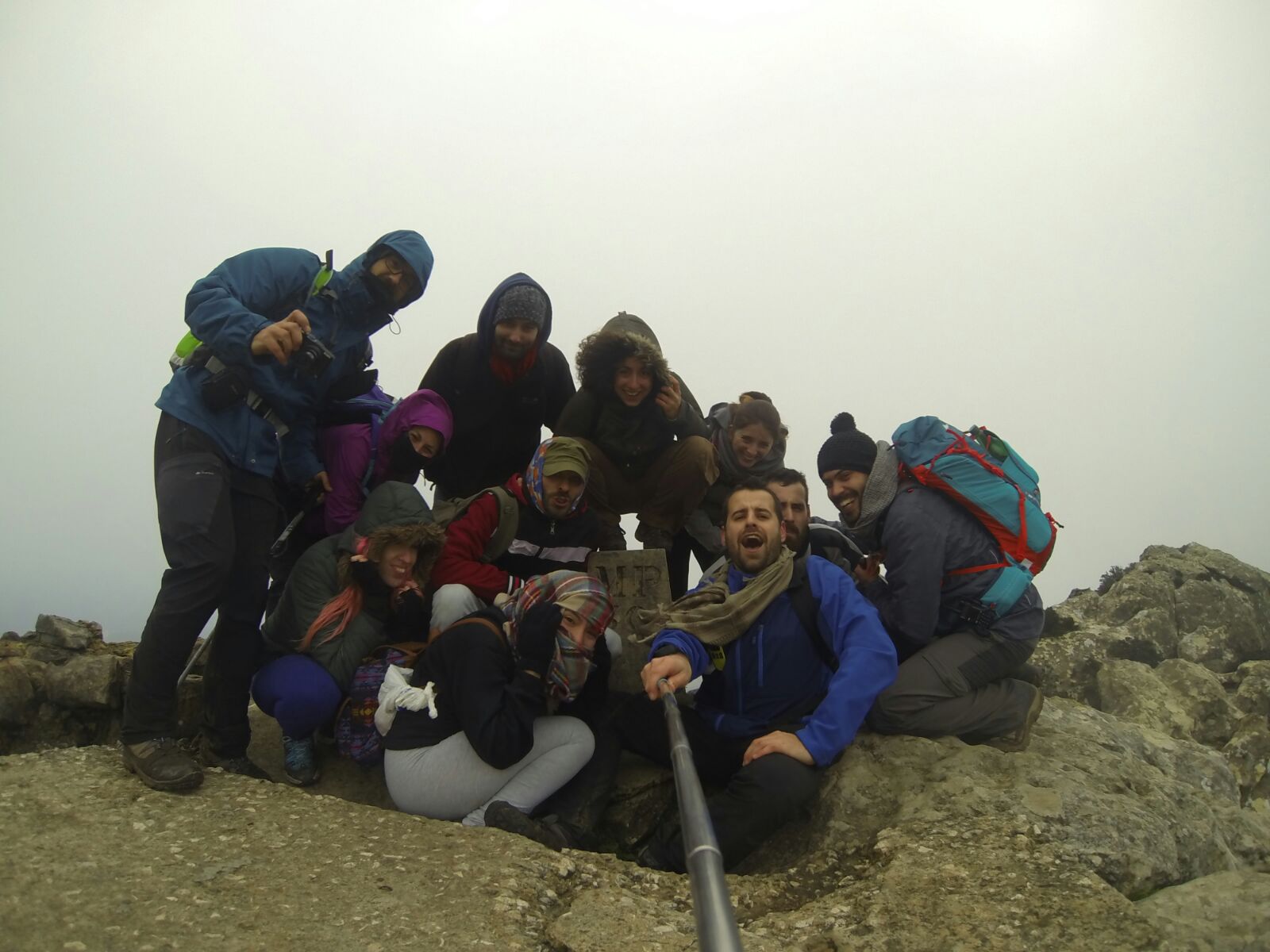
Alcazaba, Punta de la Cornisa and Mulhac n 3.479 m

I have been in some adventures with a group of friends for a couple of years now. We call ourselves Los Extraviaos (a quick translation to english is perhaps The Wanderers).

We like nature adventures. During summer we use to do water adventures (like rivers trekking, waterfall climbing, snorkeling, canyoning, rafting, kayaking and so on). During winter and spring, we use to do trekking, hiking and mountaineering (low altitudes, keep reading).

For this sport season, one of our main milestones is to climb the second most prominent mountain in Spain: Mulhacen, with 3.479 m over sea level, during summer (June).
From an alpinist point of view, this isn't a very big deal, since most of the mountain's snow and ice is completely melted and the altitude is not that high.
However, from our amateur mountaineering point of view we will be taking a lot of kilometres to walk and a lot of elevation gain uphill (almost 1.600 m), which is in fact a thing to take into account.
Anyway, Mulhacen is considered 'high mountaineering' and all cautions should be taken both during preparation/training and during the climbing of the mountain itself.

To train our bodies and minds we are climbing lower mountains. We have climbed 3 or 4 already, and will continue to climb more in upcoming moths until we go to Mulhacen.
Also, it's important to climb mountains in different weather conditions. We need to train how to overcome wind, snow, storm, cold, night situations. The way we learn most is facing new, challenging situations.

We started by going to the summit of 'El Aljibe', 1.094 m over sea level, with about 500 m elevation gain uphill during 13 km.
This time, the weather was very windy. A video of the summit moment:


A pic of the group:


Next was the 'Torrecilla' peak. The summit is at 1.919 m over sea level, with about 900 m elevation gain uphill during 15 km.
This time we faced a snowy trekking.
Here a music video of that day:


The Torrecilla peak is in fact challenging with snow, so we went a second time, with even more snow and wind:


This second time we faced winds of 70km/h which, due to wind-chill, resulted in a very cold day.

We also went to Sierra de Grazalema Natural Park, in a hard trekking under snowfall:


This time we walked about 15 km with about 500m elevation gain uphill, while enjoying this kind of environment:


What's next: more mountains! We plan to reach 2.069 m over sea level next week in 'La Maroma' and keep doing steep trekking in upcoming months until we go in June to Mulhacen.

It should be very funny to do some FLOSS contribution from the summit of a mountain. Do you know of someone who did that?

3 March 2016

Simon Richter: Why sysvinit?

As most distributions have switched to systemd as default "init", some people have asked why we actually keep sysvinit around, as it's old and crusty, and systemd can do so much more. My answer is: systemd and sysvinit solve entirely different problems, and neither can ever replace the other fully. The big argument in favour of systemd is integration: when you keep everything in one process, it is easy to make sure that components talk to each other. That is nice, but kind of misses the point: integration could be done via IPC as well, and systemd uses a lot of it to separate privileges anyway. The tighter integration comes from something else: the configuration format. Where sysvinit uses a lot of shell scripts ("imperative" format), systemd uses explicit keywords ("descriptive" format), and this is the important design decision here: descriptive formats cannot do anything unanticipated, neither good nor bad. This is important for UI programmers: if there is a button that says "if I close the lid switch, suspend the laptop", then this needs to be connected to functionality that behaves this way, and this connection needs to work in both directions, so the user will find the active setting there when opening the dialog. So, we need to limit ourselves to a closed set of choices, so the UI people can prepare translations. This is the design tradeoff systemd makes: better integration in exchange for less flexibility. Of course, it is simple to allow "custom" actions everywhere, but that starts to break the "well-integrated" behaviour. There is an old blog post from Joey Hess about how to implement a simple alarm clock, using systemd, and this shows both how powerful and how limited the system is. On one hand, the single line WakeSystem=true takes care of the entire dependency chain attached to making sure the system is actually on -- when the system is going to suspend mode, some program needs to determine that there are scheduled jobs that should wake up the system, determined which of these is the next one, program the wakeup time into the hardware and only then allow the suspend to continue. On the other hand, the descriptive framework already breaks down in this simple example, because the default behaviour of the system is to go to sleep if the lid switch is closed, and the easiest way to fix this is to tell systemd to ignore the lid switch while the program is running. The IPC permissions disallow scheduled user jobs from setting this, so a "custom" action is taken that sets up the "ignore the lid switch" policy, changes to an unprivileged user, and runs the actual job. So, it is possible to get back flexibility, but this is traded for integration: while the job is running, any functionality that the "suspend laptop when the lid is closed" button had, is broken. For something simple as a switch on a personal laptop that breaks if the user configures something that is non-standard, that is acceptable. However, the keywords in the service unit files, the timer files, etc. are also part of a descriptive framework, and the services using them expect that the things they promise are kept by the framework, so there is a limit to how many exceptions you can grant. SystemV init really comes from the other direction here. Nothing is promised to init scripts but a vague notion that they will be run with sufficient privileges. There is no dependency tracking that ensures that certain services will always start before others, just priorities. You can add a dependency system like insserv if you like and make sure that all the requirements for it to work (i.e. services declaring their dependencies) are given, and there is a safe fallback of not parallelizing so we can always play it safe. Because there is so little promised to scripts, writing them becomes a bit tedious -- all of them have a large case statement where they parse the command line, all of them need to reimplement dropping privileges and finding the PID of a running process. There are lots of helpers for the more common things, like the LSB standard functions for colorful and matching console output, and Debian's start-stop-daemon for privilege and PID file handling, but in the end it remains each script's responsibility. Systemd will never be able to provide the same flexibility to admins while at the same time keeping the promises made in the descriptive language, and sysvinit will never reach the same amount of easy integration. I think it is fairly safe to predict both of these things, and I'd even go a step further: if any one of them tried, I'd ask the project managers what they were thinking. The only way to keep systems as complex as these running is to limit the scope of the project. With systemd, the complexity is kept in the internals, and it is important for manageability that all possible interactions are well-defined. That is a huge issue when writing adventure games, where you need to define interaction rules for each player action in combination with each object, and each pair of objects that can be combined with the "Use" action. Where adventure games would default to "This doesn't seem to work." or "I cannot use this.", this would not be a helpful error message when we're trying to boot, so we really need to cut down on actions and object types here. Sysvinit, on the other hand, is both more extreme in limiting the scope to very few actions (restart, wait, once) and only one object type (process that can be started and may occasionally terminate) in the main program, and a lot more open in what scripts outside the main program are allowed to do. The prime example for this is that the majority of configuration takes place outside the inittab even -- a script is responsible for the interface that services are registered by dropping init scripts into specific directories, and scripts can also create additional interfaces, but none of this is intrinsic to the init system itself. Which system is the right choice for your system is just that: your choice. You would choose a starting point, and customize what is necessary for your computer to do what you want it to do. Here's the thing: most users will be entirely happy with fully uncustomized systemd. It will suspend your laptop if you close the lid, and even give your download manager veto power. I fully support Debian's decision to use systemd as the default init for new installs, because it makes sense to use the default that is good for the vast majority of users. However, my opening statement still stands: systemd can never support all use cases, because it is constrained by its design. Trying to change that would turn it into an unmaintainable mess, and the authors are right in rejecting this. There are use cases that define the project, and use cases that are out of scope. This is what we need sysvinit for: the bits that the systemd project managers rightfully reject, but that are someone's use case. Telling these users to get lost would be extremely bad style for the "universal operating system." For example, if someone needs a service that asks a database server for a list of virtual machines to start, runs each in its private network namespace that is named after replacing part of the virtual machine name with the last two octets of the host machine's IP address, then binds a virtual Ethernet device into the network namespace and sets up a NAT rule that allows devices to talk to the public Internet and a firewall rule to stop VMs from talking to each other. Such a beast would live outside of systemd's world view. You can easily start it, but systemd would not know how to monitor it (as long as there is some process still running, is that a good sign), not know how to shut down one instance, not know how to map processes to instances and so on. SystemV init has the advantage here that none of these things are defined by the system, and as long as my init script has some code to handle "status", I can easily check up on my processes with the same interface I'd use for everything else. This requires me to have more knowledge of how the init system works, that is true, however I'd also venture that the learning curve for sysvinit is shallower. If you know shell scripting, you can understand what init scripts do, without memorizing special rules that govern how certain keywords interact, and keeping track of changes to these rules as the feature set is expanded. That said, I'm looking at becoming the new maintainer of the sysvinit package so we can continue to ship it and give our users a choice, but I'd definitely need help, as I only have a few systems left that won't run properly with systemd because of its nasty habit to keep lots of code in memory where sysvinit would unload it after use (by letting the shell process end), and these don't make good test systems. The overall plan is to set up a CI system that
  • tests sysvinit -> systemd transition
  • tests systemd -> sysvinit transition
  • tests debootstrap with systemd
  • tests debootstrap with sysvinit
  • tests whether service start works for a list of services, so we can catch regressions
  • scans packages that have systemd unit files for init scripts, and vice versa
Ideally, I'd like to reach a state where we can actually ensure that the default configuration is somewhat similar regardless of which init system we use, and that it is possible to install with either (this is a nasty regression in jessie: bootstrapping a foreign-architecture system broke). This will take time, and step one is probably looking at bugs first -- I'm grateful for any help I can get here, primarily I'd like to hear about regressions via bug reports. tl;dr: as a distribution, we need both systemd and sysvinit. If you suggest that systemd can replace sysvinit, I will probably understand that you think that the systemd maintainers don't know project management. I'm reluctantly looking at becoming the official maintainer because I think it is important to keep around.

Simon Richter: UI Design is Hard, Let's Go Shopping

As I have a few hours of downtime on the train, I'm working on one of my favourite KiCad features again: the pin table. This silently appeared in the last KiCad release -- when you have a schematic component open in the editor, there is a new icon, currently on the right of the toolbar, that brings up a table of all pins. Currently, I have the pin number, name and type in the table (as well as the coordinates on the grid, but that's probably not that useful). For the release, this table is read-only, but can at least be useful for proofreading: left mouse click on a column header sorts (as would be expected), and right mouse click on a column header creates a grouping (i.e. all pins that have the same value in this column are collapsed into a single row). The latter is entirely unintuitive, but I have no idea how to show the user that this option exists at all. The good old DirectoryOpus on Amiga had a convention that buttons that had right-click functionality had an earmark to indicate that a "backside" exists, but that is a fairly obscure UI pattern, and would be hard to reproduce across all platforms. I could make the right click drop down a menu instead of immediately selecting this column for grouping -- at least this way it would be explained what is happening, but advanced users may get annoyed at the extra step. I could add a status bar with a hint, but that will always cost me screen space, and this only papers over the issue. I could add a menu with sorting/grouping options, which would allow novice and intermediate users to find the function, but that still does not hint at the shortcut, and the functions to set the sorting would have to be disabled on Linux because wxGTK cannot set the sort column from a program. For editing, another problem turns up in the collapsed rows: what should editing do when we are basically editing multiple pins at once. The most useful mapping would be:
  • Editing the pin numbers adds and removes pins. The column is displayed and interpreted as a comma-separated list of pins, so going to edit mode and adding ",5" at the end is an obvious way to quickly create a pin with the number 5.
  • Editing the pin name would ask for confirmation if not all the pins had the same name before, and then set the same name for all.
  • Editing the pin type would do the same -- set the same type for all, possibly after confirmation.
However, I'd like to later on introduce multiple-function pins, which would add multiple (partially) exclusive pin names per pin number, which would change the semantics:
  • As before, editing the pin number adds and removes pins.
  • Editing the pin name adds and removes functions
  • Having commas in both the pin name and pin number is legal if e.g. we've collapsed on pin type (so all the outputs are in one line), but editing either of them now will create a broken state.
At the moment, I'm mostly inclined to have separate modes for "grouped by pin number" and "grouped by pin name" -- these modes could be switched by the current grouping column, but that is neither intuitive, nor does it provide a full solution (because grouping by pin type is also supported). Time to look at the use cases:
  • I want to quickly enter pins from tables. There are two major cases here:
    1. I have pins with the same function, e.g. Vcc or GND. I'd like to enter these as "1,5,17GNDp".
    2. I have pins with multiple configurations. I'd like to enter these via "3IO3,DIFFIO4+,CONF_DONEb,b,o".
  • When I'm done entering data, I want a quick overview whether the data entered is complete.
  • For existing components, I want to quickly check and correct data.
At 32C3, I've implemented a quick completeness check, consisting of a summary line that collapses the pin number column into a comma-separated list of ranges (where a range is defined as consecutive numbers in the last group of digits). I wonder if there is a group of developers with an UI focus who are happy about solving problems like these...

Next.

Previous.