Search Results: "uli"

4 March 2012

Gregor Herrmann: RC bugs 2012/09

as usual, here's my RCBW report. like in the last weeks, a mixture of NMUs and mails to the BTS, grabbing and writing patches, ...

3 March 2012

Julian Andres Klode: hardlink 0.2 RC1 released

I have just released version 0.2 RC1 of my hardlink program. Compared to the 0.1.X series, the program has been rewritten in C, as Python was to memory-hungry for people with millions of files. The new program uses almost the same algorithm and has almost completely the same bugs as the old version. The code should be portable to all UNIX-like platforms supporting nftw(). I have tested the code on Debian, FreeBSD 9, and Minix 3.2. For storing path names, it uses a flexible array member on C99 compilers, a zero-length-array on GNU compilers, and a array of length 1 on all other compilers (which should work everywhere as far as I heard). The new version may have slightly different behaviour compared to 0.1.2 when regular expressions are specified on the command-line, as a result of the switch from Python s regular expression engine to PCRE (if compiled with PCRE support, you can also use POSIX extended regular expressions if you like). The code is significantly faster than the old code (in situations where it s not I/O bound), and uses much less memory than the old one. Per file, we now store a <tt>struct stat</tt>, a pointer, an int, a char, and the filename; as well as three pointers for a binary search tree (which uses tsearch()). It should also be compatible to Red Hat s original hardlink tool now command-line-wise, there is at least a -c option now. The history and the name conflict are interesting, but probably nothing for this post. We re even less resistant against changing trees than Fedora s tool (and derived) currently, but should otherwise be better (and far more complicated and feature-packed). And we don t require mmap(), but use fread() instead. There was no real performance difference in testing. And we are not GPL-licensed, but use the MIT/Expat license. The package is currently entering Debian experimental for testing purposes. If you have used hardlink previously, or are just curious, give it try. And the makefile is now compatible with the various BSD makes out there, if that s interesting for you. Link to website: http://jak-linux.org/projects/hardlink/
Filed under: General

1 March 2012

Mike Hommey: Introducing faulty.lib

TL;DR link: faulty.lib is on github. Android applications are essentially zip archives, with the APK extension instead of ZIP. While most of Android is java, and java classes are usually loaded from a ZIP archive (usually with the JAR extension), Android applications using native code need to have native libraries on the file system. These native libraries are found under /data/data/$appid/lib, where $appid is the package name, as defined in the AndroidManifest.xml file. So, when Android installs an application, it puts that APK file under /data/app. Then, if the APK contains native libraries under a lib/$ABI subdirectory (where $ABI is armeabi, armeabi-v7a or x86), it also decompresses the files and places them under /data/data/$appid/lib. This means native libraries are actually stored twice on internal flash: once compressed and once decompressed. This is why Chrome for Android takes almost 50MB of internal flash space after installation. Firefox for Android used to have that problem, and we decided we should stop doing that. Michael Wu thus implemented a custom dynamic linker, which would load most of Firefox libraries directly off the APK. This involves decompressing the zipped data somewhere in memory, and doing ld.so s job to make the library usable (please note that on Android, ld.so is actually named linker). There were initially circumstances under which we would decompress into a file and reuse it the next time Firefox starts, but we subsequently removed that possibility (except for debugging purpose) because it ended up being slower than decompressing each time (thanks to internal flash being so slow). Anyways, in order to do ld.so s job, our custom linker was directly derived from Android s system linker, with many tweaks. This custom linker has done its job quite well for some time, now, but has been recently replaced, see further below. Considering Firefox can t do anything useful involving Gecko until its libraries are loaded, in practice, this means Firefox can t display a web page faster than completely decompressing the libraries. Or can it? Just don t sit down cause I ve moved your chair We know that a lot of code and data is not used during Firefox startup. Based on that knowledge, we started working on only loading the necessary bits. The core of the idea is, when a library is requested to be loaded, to reserve anonymous memory for its decompressed size, and that s all. That memory is protected such that any access to it triggers a segmentation fault. When a segmentation fault happens, the required bits are decompressed, and execution is resumed where it was before the segmentation fault. The original prototype was decompressing from a normal zip deflated stream, which means it was impossible to seek in it. So, if an access was made at the end of the library, it was necessary to decompress the whole library. With some nasty binary reordering, and some difficulty, it was possible to avoid accessing the end of the library, but the approach is very much fragile. It only takes an unexpected code path to make things much slower than they should be. Consequently, for the past months, I ve been working on improving the original idea and, with some assistance from Julian Seward, implemented the scheme with seekable compressed streams. Instead of letting the zip archive creation tool deflate libraries, we store specially crafted files. Essentially, files are cut in small chunks, and each chunk is compressed individually. This means a less efficient compression, but it also means random access to chunks is possible. However, instead of stacking on top of our existing custom linker, I started over, from the ground up. First, because it needed a serious clean up (a good part of linker.c is leftovers from the Android linker that we don t use, and APKOpen.cpp is a messy mix of JNI stubs, library decompression handling (which in itself was also a mess) and Gecko initialization code) and most importantly, because it relied on some Android system linker internals and thus required binary compatibility with the system linker. Which, according to Google engineers that contacted us a few months ago, was going to break in what we now know will be called Android Jelly Bean. The benefit of the clean slate approach is that the new code is not tied to Gecko at all and was designed to work on Android as well as on desktop Linux systems (which made debugging much much easier). We re thus releasing the code as a separate project: faulty.lib. It is licensed under the Mozilla Public License version 2.0. Please feel free to try, contribute, and/or fork it. This dynamic linker is not meant to completely follow standard ELF rules (most notably for symbol resolution), and as a result does some assumptions. It s also still work in progress, with some obvious optimizations pending (like, avoiding to resolve the same symbols again and again during relocations), and some features missing (for example, symbol versioning). The next blog post will give some information about how to build Firefox for Android to benefit from on-demand decompression. I will also detail a few of the tricks involved in this dynamic linker in subsequent blog posts.

26 February 2012

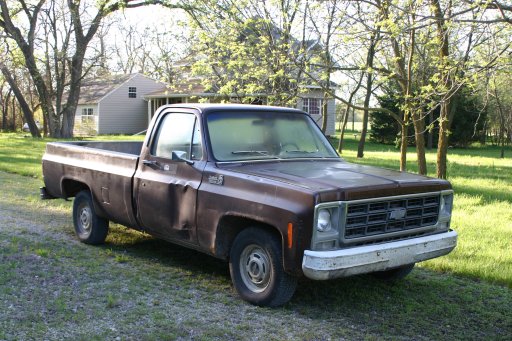
John Goerzen: Timelessness of an Old Pickup

Our society is one that is pretty well defined by timeliness. TV programs start at a precise time, down to the second. Schools have elaborate timekeeping systems. Even church services are carefully timed. We know how fast we re going, and our GPS or phones tell us when we ll get there. And we re pretty confident that we will, in fact, get there. Somehow this doesn t apply to our pickup. This pickup, in case you re wondering, is a thing of stories, shall we say. After a particularly frustrating experience with it one week (oh yes, the battle extended several days), I likened it to the Greek gods. And Terah had a good laughing fit when I began a sentence with The reason there s a towel connecting the brake pedal to the steering wheel But I guess the thrifty side of me won out, and somewhere along the line, I relented. My brother fixed up the carburetor. I got it a new battery. The flat tire is repaired. The starter broke, and I got it replaced. And I even got an oil change. Fancy, I know. So today, when I needed to take some backbreaking junk off the yard, I was hoping the pickup would work. I hadn t driven it in months, and any manner of catastrophe could have struck it in that time. So I was mildly relieved when it started on the 6th try. That is, quite seriously, quite the improvement, and shows how skilled a mechanic my brother is. The speedometer, of course, isn t working. The odometer stupidly reads 21531 or something like that (it was only a 5-digit odometer, broke long ago, so who knows how many miles it really has.) And I like to keep things like grease and heavy ancient air conditioners (one of the things I was hauling) away from my watch, so I wasn t wearing it. The result: I have no idea what time it is, how fast I m going, when I ll get there, IF I ll get there, or all those things. I set out, and made it a good half mile before it died as I was rounding a corner at the bottom of the hill. Always a great place for a finicky old stick-shift vehicle to die, right? Anyhow, a few random adjustments to the choke later, and the thing sputtered then roared (and I do mean roared) back to life. A little lurching up the hill and I was back on my way. Now, I was stuck there in the middle of the road, but it was a country road, so I d have probably had a good hour to get it fixed before worrying about blocking anybody s way. My first stop: my great uncle s place. He has a scrap metal for charity project going on. He is looking for old motors, air conditioners, dehumidifiers, etc. He takes them apart, separates out the metals, sells them, and donates the result to MCC, a world relief agency. I knew I had an old dehumidifier in the basement, and thought I remembered seeing an old window air conditioner in the elevator. That thing is probably the single heaviest object I have ever moved without help. I have a bandaid to prove it. It was way too heavy to carry, so I kind of rolled it, side to side, from the side of the elevator on to the pickup. If you were watching, you d have heard me making struggling noises, followed by BANG rattle rattle rattle pause struggling noises . BANG rattle rattle rattle as I rolled it along the ground, and waited for the internal bits to settle after each quarter turn. So anyway, eventually I got it to the pickup, and then had the sickening realization: I have no way to get this thing up there. Oops. I eventually placed it on top of an old tire rim, balanced it there as I knelt down, and somehow still not quite sure how managed to lift the entire thing a few feet until I could get some leverage to shove it onto the pickup. I later commented to my dad that it was a Chrysler brand air conditioner, somewhat to my surprise, and he said that it was probably my great-grandpa s. That was a surprise. Anyhow, back to the pickup. I drove down the few miles to my great grandpa s place, not really knowing how fast I was going. I smelled the familiar smells of the old pickup: exhaust fumes, oil on hot surfaces it shouldn t be on, a touch of hot antifreeze. You never have any doubt about whether the engine is running. It was sort of nice to not know, or particularly care, how fast I was going, or what time it was. Sometimes I d idly wonder, but you know, it didn t really matter and there wasn t a thing I could do about it anyhow. I got to uncle s place, unloaded the junk sorta dropped the air conditioner off the back of the pickup with a terrific BANG, then rolled it all the way to his trailer and got back in. On to town. I hadn t put gas in the pickup in a few years, and I suspected it was getting low. (The gas gauge, you guessed it, doesn t work right either.) Plus we had some large recyclables built up and it was time to get rid of them. And for that, I had to drive on the highway a ways. The speed limit there is 65MPH. I have no idea how fast I was going, but it wasn t 65. Maybe it was 45. I got passed a lot, but nobody looked particularly surprised that a pickup that looks like mine wasn t going 65. Partway there, I smelled a different smoke smell. Not an oil smoke, but more of a grassy or wood smoke. Hmm, I thought. That s odd. Hope it s not coming from the pickup. I didn t really see smoke anywhere else, so I just drove on until I couldn t smell it anymore. I unloaded the recyclables, then went to the gas station. As the pump readout neared $50, I decided: 1) the gas tank really was pretty empty, and 2) I just can t put more gas in it anymore. That would be more than the truck s worth. So I drove home. The drive home was into the wind. My face got pretty cold I always drive with the windows open to prevent carbon monoxide poisoning (remember the fumes?) I got home and prepared to pack up the pickup close the windows, replace the bungee cord holding the brake pedal up, etc. I then thought I d have a look under the hood to see if there was anything, well, on fire. Nope, but there was a packrat nest that fell down as soon as the wind hit it. Source of grassy-smelling smoke identified. It s amazing what difference simple lack of knowledge makes sometimes. Not knowing what time it is or how fast I m going means I don t have to worry about those things. I wonder how society has changed simply because accurate and cheap watches are available. I kind of like driving the old truck. It s a bit of an adventure, a bit of a challenge, a bit of randomness, and a bit of an escape from the normal and predictable. Not a bad deal for a $75 vehicle.

24 February 2012

Julien Danjou: 10 years as a Debian developer

Ten years ago, I joined the Debian project as a developer. At that time, I was 18 and in my first year at university, hanging out with the TuxFamily system administrators, which included 3 french Debian developers (sjg, igenibel and creis). I was learning Debian packaging while working on VHFFS, and decided to package one or two non-yet-packaged software for Debian. My friends pushed me into the NM process, and less than 2 months later I was a Debian developer. One have to admit that back in the days, the NM process was really fast if you were able to reply to the questions quickly. :-) I think I became the youngest developer among Debian's ones. That was my first steps in a Free Software project, and it was really exciting. In 10 years, I've been doing a lot of different things for Debian. Sure, I've been using it all the years long, but let's recap a bit what I did, from what I recall. My first Debian only project was apt-build around 2003, and later rebuildd in 2007. I built the Xen packaging team in 2005, I've been a Stable Release Manager for a year in 2006, and did heavy bug squashing to release Etch that same year. I also was an Application Manager in 2006 and managed the application of 2 Debian developers (Jose Parrella and Dami n Viano). I admit I've been less active in Debian after 2007, mainly because I was busy working on awesome, GNU Emacs and others software. Since 2011, I joined the OpenStack packaging team and I'm working on OpenStack on a (almost) daily basis. I don't know how many packages I touched, managed or updated, but that should be one or two hundreds. I still maintain 53 of them. After all, the adventure has been really pleasant, and I had the chance to work with and meet fabulous and smart people. I always liked this project and what it's trying to do. After all these years, I'm definitively staying! See you in another 10 years, folks! :)

22 February 2012

Bartosz Fe&#324;ski: [B]ack[U]p and [R]estore [P]rogram

One of the most popular backup solution under Linux is Bacula, but it s quite complicated to setup. The same for Amanda.
Since my last sponsored upload we ve got another alternative in Debian. It s called burp. Let s enumerate its features as of version 1.3.0: Sounds good and this project is only 1 year old! Author claims that setup is much easier than with Bacula. Let s find out is that truth ;) Since we ve got this software in Debian installing it on unstable is as simple as apt-get install burp .
Both client and server came from the same binary package. Now let s configure server side. Well in fact we just have to run it, so just change RUN=no to RUN=yes in /etc/default/burp and launch it using /etc/init.d/burp start . Now the client side. If the client is on the same machine then you re ready. Yes you re ready! Let s do our first backup:
backup ~ # burp -a b
2012-02-22 17:53:03: burp[30584] Listing configured paths:
2012-02-22 17:53:03: burp[30584] include: /home
2012-02-22 17:53:03: burp[30584] Listing starting paths:
2012-02-22 17:53:03: burp[30584] /home
2012-02-22 17:53:03: burp[30584] before client
2012-02-22 17:53:03: burp[30584] begin client
2012-02-22 17:53:03: burp[30584] auth ok
2012-02-22 17:53:03: burp[30584] Compression level: 9
2012-02-22 17:53:03: burp[30584] do backup client
2012-02-22 17:53:03: burp[30584] Phase 1 begin (file system scan)
 
ddwdffffddffdfdfdddfffffdddfffffffdfffdfdfffffdfdfdffdddddfffddff 64
[...a lot of output...]
 
2012-02-22 17:53:03: burp[30584] Phase 1 end (file system scan)
2012-02-22 17:53:03: burp[30584] Phase 2 begin (send file data)
 
ffffffffffffffffffffffffffffffffffffffffffffffffffffffffffffffff 64
[...a lot of output...]
 
--------------------------------------------------------------------------------
Start time: 2012-02-22 17:53:03
  End time: 2012-02-22 17:53:07
Time taken: 00:04
                             New   Changed Unchanged     Total    Scanned
                       --------------------------------------------------
                Files:       100         0         -       100        100
          Directories:         -         -         -         -         76
           Soft links:         -         -         -         -          1
          Grand total:       100         0         -       100        177
                       --------------------------------------------------
 
             Warnings:             1
 
      Bytes estimated:      17628946 (16.81 MB)
      Bytes in backup:      17628946 (16.81 MB)
       Bytes received:             0
           Bytes sent:      17628946 (16.81 MB)
--------------------------------------------------------------------------------
2012-02-22 17:53:07: burp[30584] Phase 2 end (send file data)
2012-02-22 17:53:07: burp[30584] backup finished ok
2012-02-22 17:53:07: burp[30584] after client
backup ~ #
Yes. By default it is so extremely simple! Of course this way we can make backup of /home (that s default) to /var/spool/burp (also default location) but you can easily change this.
For the simplest scenario (backing up laptop to remote server) all I had to change was server = 127.0.0.1 in /etc/burp/burp.conf on the client side. Burp comes with handy tool called burp_ca and it simplifies setting up encrypted backups. In fact there is step by step howto in documentation.
Other options are quite self explanatory and well documented in both client and server config files that came with the package. Happy backuping!

21 February 2012

Francois Marier: Putting a limit on Apache and PHP memory usage

A little while ago, we ran into memory problems on mahara.org. It turned out to be due to the GD library having issues with large (as in height and width, not file size) images.

What we discovered is that the PHP memory limit (which is set to a fairly low value) only applies to actual PHP code, not C libraries like GD that are called from PHP. It's not obvious what PHP libraries are implemented as external C calls, which fall outside of the control of the interpreter, but anything that sounds like it's using some other library is probably not in PHP and is worth looking at.

To put a cap on the memory usage of Apache, we set process limits for the main Apache process and all of its children using ulimit.

Unfortunately, the limit we really wanted to change (resident memory or "-m") isn't implemented in the Linux kernel. So what we settled on was to limit the total virtual memory that an Apache process (or sub-process) can consume using "ulimit -v".

On a Debian box, this can be done by adding this to the bottom of /etc/default/apache2:
ulimit -v 1048576
for a limit of 1GB of virtual memory.

You can ensure that it works by setting it first to a very low value and then loading one of your PHP pages and seeing it die with some kind of malloc error.

I'm curious to know what other people do to prevent runaway Apache processes.

12 February 2012

Jose Luis Rivas Contreras: Express Sessions with connect-redis + Socket.IO in CoffeeScript

If you are working with Socket.IO and Express Framework while developing your applications you must know they work together so Socket.IO will listen on the same port that your HTTP/S server and will serve the requests by that way, but Socket.IO doesn t works on the same paradigm where you pass a middleware to the route and you could get authentication on this manner. Instead, you must configure Socket.IO with a global authorization method or a handshake authorization manner. Since in my applications I serve cookies already where I save session info and this is already stored in Redis with help of the module connect-redis then I should be able to get this info onto Socket.IO authorization method and with this allow only to authorized users to get info from my websockets. I found how to do it with the default session-store in-memory from Express, and adapted that so it could work with Redis. Here s the snippet: <script src="https://gist.github.com/1805743.js"> </script><noscript>You don t have JavaScript enabled, check it out at gist.github.com </noscript> Hope anyone can found it useful!

9 February 2012

Lior Kaplan: Debian packaging for beginners @ FOSDEM

After not attending FOSDEM for a few years, this year I decided to attend and also give a talk about Debian packaging for beginners , a replay of a talk given by Gergely Nagy in Debconf11 (video). As the per distribution devrooms were replaced a few years ago with the cross-distributions rooms, I thought it might be a good chance to have this kind of introduction talk to help people started contributing to Debian (or derived distributions). The talk wasn t meant to replace reading the documentation (new maintainer s guide, developer s references and the debian policy), but it s a good start for those who want some hands-on experience. The idea is to start with a just the upstream directory and progress trough the various errors and warnings we get during the build process using dpkg-buildpackage. The outcome is of course very basic, but enough to get people ready to do things on their own, including various QA tests on the package (e.g. lintian and debdiff). The presentation covers the important points of the 3 main files in the debian directory: control, changelog and rules. It addition it holds some information about the various tools one can used to test the packages. I hope to make another version of the presentation to be more standalone than just having the main points during the talk itself.
Filed under: Debian GNU/Linux, FOSDEM

30 January 2012

Jordi Mallach: GNOME Shell 3.2 in wheezy: a retrospective

When you read this, GNOME Shell 3.2 will (hopefully!) have finally transitioned to Debian s testing suite. Planet GNOME readers might think Debian now has outdated versions of software even in their development versions, or the distribution s development marches at glacial pace. Wheezy GNOME users will finally have a Shell that matches the rest of their GNOME components, something that works with the Shell extensions website and much less problems and limitations compared to 3.0.2. The reality is that GNOME 3.2 s packaging was quite ready back when it was released in late September, but a number of not-so-desirable situations held GNOME Shell from transitioning to testing until today, four months later. So, what happened? TL;DR: transitioning from GNOME 2 GNOME 3 is not so easy if you want to keep testing in a sane state, and when you need to deal with dozens of indirectly related packages, for more than 10 architectures but it shouldn t take nearly a full year, either Let s go back to the last months of 2010. Debian squeeze is in very deep freeze, and the release team and many Debian developers are focusing on squashing as many release critical bugs as they can, in order to make Debian 6.0 the great release it ended up being. The GNOME project has recently delayed the big launch of GNOME 3.0 again, until March 2011; Debian has already settled on GNOME 2.28 for its release, although it will end up cherry-picking many updates from the 2.30 release modules. With most of the stabilization work being done, many Debian GNOME team members were at that time working on packaging very early versions of what would end up being GNOME 3.0 technology: GTK+3.0, GNOME Shell, Mutter and some brave users even tried to use it via the experimental archive. On February 6th, Debian 6.0 was released, and soon after, on April 6th, GNOME made a huge step forward with the much anticipated release of GNOME 3.0. At that time, Debian developers were busy breaking unstable as much as they could, as it s tradition on the weeks following a major release, and the Debian GNOME team was able to start moving some GNOME 3.0 libraries (those which were parallel-installable with their GTK+2.0 versions) to unstable. However, moving the bulk of GNOME 3.0 to unstable wasn t so easy. When you start doing that, you need to be sure you re ready to have all affected packages in a transitionable state as soon as possible, to minimise the chances of blocking transitions of unrelated packages via the dependencies they pick up with rebuilds. All the packages involved in a transition need to be ready to go in the same testing run , for all supported architectures. When you re dealing with dozens of GNOME source packages at the same time, many of which introduce new libraries, or worse, introduce incompatible APIs that affect many more unrelated packages, things get hairy, and you need a plan. So, Joss outlined what a sane approach to this monster transition could look like. The amount of work to do was what we call fun on #debian-gnome. In a nutshell, we had to deal with quite a few transitions, starting with having a newer version of libnotify in unstable, and a pre-requisite for that was making sure all the packages using libnotify1 were ready to use the source-incompatible libnotify4, and this meant preparing patches and NMUs for many of our packages, as well as many others not under our control. Before starting a controlled transition like this one, we had to get an ACK from the release team, who was busy enough handling other huge transitions like Perl 5.12, so by the time we got our own slot, we were well into Summer. With libnotify done in August, it was time to get our hands dirty with more exciting stuff, like getting Nautilus in testing. This meant bumping a soname and requiring all packages providing Nautilus extensions to migrate to GTK+3.0, or drop the extension entirely, as you can t mix GTK+2.0 and GTK+3.0 symbols in the same process. However, in GNOME 3.0, automounting code had moved from Nautilus to gnome-settings-daemon, so in order to not break filesystem automounting in testing for an unreasonable amount of time, both Nautilus and g-s-d needed to go in at the same time. The fun thing is that g-s-d dragged glib2.0, gvfs, gnome-control-center, gdm3, gnome-media, gnome-session and gnome-panel into the equation, so this transition needed extra planning and a lot more work than initially expected: migrating all nautilus extensions, plus ensuring all Panel applets had migrated to GTK+3.0 and the new libpanel-applet-4 interface. In short, this was the monster transition we were trying to avoid. By the time all this mess was sorted out, GNOME 3.2 had been released, and for what users said, it was a lot better than 3.0. We still had no more than a few bits and pieces of 3.0 in testing, and we were working hard to get 3.0 in wheezy. With all the excitement around 3.2, at times it was difficult to explain outsiders why we were beating a dead 3.0 horse Going back to our huge transition, it was just a matter of time before all the packages would be built and be ready to enter, on the same run, in testing. A few weeks later, in early November and after several rounds of mass-bug-filings, fixing unrelated FTBFS, many NMUs, package removal requests and dealing with any possible problem that could block our transition, everything seemed to be set, and our release team magicians had everything in place for the big magic to happen. However, our first clash with the rest of Debian happened a few hours before our victory, in the form of an unannounced ruby-gnome2 upload which resetted the count for everyone. It was fun to see the release team trying all sorts of black magic in an attempt to mitigate the damage. Fortunately, after a few tries they managed to fool britney (the script that handles package transitions from unstable to testing) somehow, and the hardest part of the job was done with just one day of delay. At last, the core of GNOME 3 was in testing, and testing users found soon after. The rest of the week saw a cascade of hate posts against GNOME 3 in Planet Debian, and personally I didn t find that especially motivating to keep on working on the rest of GNOME bits. With experimental clear of GNOME 3.0 stuff, we finally were able to focus on packaging whatever GNOME 3.2 components were not already done, and preparing for what should be a plain simple transition of GNOME 3.0 to 3.2. After our share of wait for a transition slot, as Perl 5.14, ICU and OpenSSL were in the line before us, and after dealing with a minor tracker 0.12 transition, we were ready for our next episode: evolution-data-server. At first sight, we thought this would be a lot easier, but it still got a bit hairy due to evo-data-server massive soname bumps. We were given our slot just before Christmas, after a few weeks of wait for others to finish their migration rounds, and most of the pack entered wheezy a few days before the new year. No rejoicing, though, as GNOME Shell 3.2 didn t make it. First, we discovered it was FTBFS on kFreeBSD architectures, as NetworkManager had been promoted from optional to required, for apparently no good reason, leaving the BSD world in the cold, including our exotic GNU/kFreeBSD architectures. Now, let s clarify that I m a supporter of the Debian kFreeBSD architectures and was really happy to see it accepted as a technology preview in squeeze. However, as you know, GNOME Shell currently requires hardware acceleration to run, a requirement hardly met in kFreeBSD, unless you re using a DRI1 X driver. We seriously doubted anyone had ever ran a GNOME 3 session on kfreebsd-*. However, if it didn t build, it was a blocker bug for GNOME Shell. We considered creating different meta-packages for kFreeBSD architectures, to conclude it d be a mess, so our awesome Michael Biebl ended up cooking up a patch that restored the ability to build the Shell without NetworkManager support. With this out of our way, we just needed to upload Michael s fix and watch the buildds do their part of the job. Or maybe not? Enter Iceweasel 9. In parallel, and with incredible bad timing, Iceweasel 9.0 was uploaded to Debian the very same day it was released by Mozilla. Again, it greeted us with a nasty surprise: yet another mozjs API change, which made gjs FTBFS, which meant our kFreeBSD fixes would be unusable until someone who knew Gjs internals well enough bit the bullet and worked around the new API changes. Again, Michael Biebl tried to be our saviour, but unfortunately wasn t able to fix all the problems, so we tried to focus on plan B. Mozilla had released a fork of the mozjs that is included in Firefox, so that embedders would have a bit less of a hard time with these recurrent API changes. This was based on Firefox 4, and was already being packaged by Ubuntu. Gjs would build using this older version just fine, so we just needed to get it in Debian as soon as possible. We just needed to find a sucke^Wvolunteer that would be inclined to maintain the beast. Only after a few weeks we managed to get Chris Coulson, the Ubuntu packager, to maintain the package directly through the Debian archive via package syncs. However, his package had only been auto-compiled in the three Ubuntu architectures, that is amd64, armel and i386. It s late January 2012, and we ve been fighting this war for 10 months. After getting some help from Michael to get the new package in shape for Debian standards, we were excited to sponsor it for Chris. Duh, after a few days in the NEW fridge, it was rejected by the ftp-masters. The license statement was missing quite a few details, so I went ahead and sacrificed a few hours of my copious free time to get this sorted out. A few days later, mozjs was accepted, but the result was horrible. It was very red. mozjs didn t build on half of our targets. Mike Hommey was quick to file a bug and point us to the most obvious fuckups. As he had dealt with this in the past as the Iceweasel maintainer, all of these issues were fixed and patches were ready to be applied verbatim or with minimal changes to our sources. With mozjs finally built successfully (although with severe problems on ia64), we were finally able to rebuild Gjs against it, upload GNOME Shell with our kFreeBSD fixes and wait until today for this mess to be over. Whew. I can t say I ve enjoyed all the stages of this ride. Some bumps on the road were clearly there to test our patience, but it has helped me get back in touch with non-leaf GNOME packaging, which was all I was doing for a while due to being super-busy lately with studies. It also reminds me of the privilege of working side by side with some awesome people, not only Joss, Michael, Sjoerd, Laurent or Gustavo, to name just a few Debian GNOME team members, but also the receptive release team members like Julien or Cyril, and NEW-processing record-breaking ftp-master Luca. Without them, we might be trying to figure out the Nautilus transition since last Summer. We really hope GNOME 3.4 will be a piece of cake compared to this. ;)

Pau Garcia i Quiles: HTML5 for everything?

Apparently HTML5 applications are the best thing after sliced bread. HTML5 is the first platform any mobile vendor supports: iPhone, Android, Windows Phone, BlackBerry, Symbian. All of them. Windows 8 is said to promote HTML5 as the preferred application development solution. I used to look kindly at that. But about a month ago I started to get worried: is HTML5 good for everything? Long-lived applications In military, industrial, warehouse management, medical, etc is not rare that bespoke applications are developed and stay in use for many years (and I really mean many: 10, 20 or even more!) with barely an update. It s not rare that those applications only receive very small updates once very 5 years. Those applications, not Angry Birds, are what keeps the world running: troops know what supplies they can count on, iPhones are manufactured, FedEx is able to deliver your package and your doctor is able to check your health. But now that everybody seems to be moving to HTML5 webapps, what happens when my warehouse management application is a webapp and the additions in the newest browsers make the webapp no longer work? Are vain upgrades the future? Say my webapp is released in 2014 and it works fine with Firefox 14.0 and Chrome 26.0, the newest browsers when I release the application in 2014. Fast-forward to 2020 and Firefox 14.0 and Chrome 26.0 do not even install on Windows 10 computer! What s the solution? Should the customer pay for a huge update and redesign to make it work with Firefox 27.1 and Chrome 41.0 in 2020? A virtual machine with Windows 8 and Firefox 14.0? A portable Mozilla Firefox 14.0 on Windows 10 in 2020 to be able to use that line-of-business application that only requires a small update once or twice every 5 years? How are the virtual machine and/or Portable Firefox 14.0 different from or better than a fat client? What s the advantage? I d say none! Native applications usually do not have that kind of problems because APIs are much more stable. You can still run Win16 applications on Windows 7! You don t believe me? We may soon be developing for 76 browsers! While HTML5 may be fine for applications which are updated very often, it makes me feel very uneasy to see it used in environments where applications will be rarely updated, such as SCADAs, warehouse management, control system, medical records, etc. A solution is needed It looks like that choice of technology is going to make those applications much more expensive in the medium and long term, paying for adaptations to new browsers (sorry, I resist to call update or upgrade to something that adds zero value other than being able to run on a newer browser). Or maybe it s about time to define actual HTML5 profiles . ACID3 seems to be too weak of a profile: two very different browsers may pass ACID3 yet a webapp would work with one browser and fail with the other due to bugs, missing features/added features, etc. Something needs to be done.

27 January 2012

Rapha&#235;l Hertzog: People Behind Debian: Josselin Mouette, founder of the Debian GNOME team

Josselin Mouette is one the leaders of the pkg-gnome team, he takes sound technical decisions and doesn t fear writing code to work-around upstream issues. He deserves kudos for the work he has put into packaging GNOME over the years. He can also be very sarcastic (sometimes he even enjoys participating to flamewars on debian lists), and there are quite a few topics where we have long agreed to disagree. But this kind of diversity is also what makes Debian a so interesting place Read on to learn more about the pkg-gnome team, its plans for Wheezy, Josselin s opinion on the GNOME 3 switch, and much more. Raphael: Who are you? Josselin: I am a 31 years old Linux systems engineer. I started in life with physics, which I studied at the ENS Lyon. I started a thesis on experimental and numerical models for optoelectronics, but when it became clear that research was not for me, I abandoned it and accepted a job at the CEA, which holds the largest computing center in Europe. Working on these machines has been the most awesome job ever (except for it being near Paris). After that I worked a bit on system monitoring technologies. I am married, currently living in Lyon, and working for EDF (the French historical electricity company) on scientific workstations using Debian. EDF is using Debian on more than a thousand workstations and holds the fastest Debian supercomputer in the world (200 Tflops), which makes it another obvious place for Debian developers. Raphael: How did you start contributing to Debian? Josselin: I discovered Debian in 1999 while studying at the ENS, which is one of the biggest nests of Debian developers while being a small place, it is producing almost one Debian developer per year on average. After wondering for a while what it could be useful for, hacking on a slink snapshot made me think that it was for, well, everything except for gaming. Later, in 2002, when I was working on optoelectronics computing codes, I started to package them for Debian in order to make them easier to install, for us as well as other labs over the world. I started the NM process, and it was going smoothly but also going to take time. However, at that moment, the frozen-bubble game went out and made quite some buzz. Since I knew a guy who knew the game s developer, he asked me to package it. The package found 3 sponsors in a very short time and was fast-tracked into the archive at a speed that was unseen before. After which the NM process was completed very quickly. At that time, I was a heavy WindowMaker user, but I didn t like the direction the project was taking (actually, I wonder if there was one). GNOME was starting to become attractive, but its packaging in Debian was very ineffective, with many inconsistent packages maintained by people who didn t ever talk to each other some of them didn t speak English, and some of them didn t talk at all. Together with awesome people, among which Jordi Mallach, Gustavo Noronha Silva, JHM Dassen, Ross Burton and S bastien Bacher, we started the GNOME team in 2003, introducing consistent packaging practices, and initiating synchronized uploads. Releasing a completely integrated GNOME 2.8 in sarge was a considerable achievement; proving (together with the Perl team) that a team was the best way to maintain large package sets changed the way people work on Debian.
Proving [ ] that a team was the best way to maintain large package sets changed the way people work on Debian.
Raphael: You re one of the most active contributors of the team which is packaging GNOME for Debian. What would you suggest to a new contributor who would like to help the team? Josselin: There are several ways to contact the team, but the recommended one has always been IRC. We hang on #debian-gnome on the OFTC network, so just come around and ask for us. The real question is what you want to do in the team. Of course, most new volunteers want to help packaging the latest and greatest version of GNOME into unstable as soon as possible, but unless they already have Debian background, this is not the easiest task. Since there are already people working on this, the big packages are usually waiting on dependencies. I used to direct newcomers towards bug triage, but it is a tedious task and I m now convinced that our huge bug backlog will never be dealt with. The most useful thing to do for newcomers now is probably to find a GNOME or GNOME-related package that needs improvement or is lagging behind, and simply try to work on it. You can also come and fix the bugs you find annoying. Find a patch on the GNOME bugzilla, or cook it yourself, propose it, and if it s worthy enough you ll soon get commit access.
Our huge bug backlog will never be dealt with.
At this point I feel worth mentioning that if no one answers in 10 minutes, it doesn t mean that no one will answer in 2 hours, so please stay on the channel after asking. Raphael: There s been some controversy about GNOME 3 and the direction that the project is taking. What s your personal stance on GNOME 3? And what s the position of the pkg-gnome team? Josselin: The controversy is not new to GNOME 3, but the large-scale changes made with it have put it more prominently. The criticism usually boils down to a few categories:
  1. General lack of configurability
  2. Strange design decisions
  3. Red Hat centric development
  4. Hardware requirements
  5. Change resistance
The lack of configuration options has been an ongoing criticism since GNOME 2.0 has decided to rip off most of them. Of course, when the control center was redesigned again for 3.0, there was a surge of horrified exclamations from people who missed their favorite buttons. On this topic, I fully concur with GNOME developers. The configuration option that is useful for you is not necessarily useful for someone else. Of course, sometimes developers go a bit too far, but the general direction is right. At work, we found that only a minority of users actually configure anything on their desktops: they just want something that works to launch their applications. Apple and Google have sold millions of devices by making them the simplest possible and without any configuration. Design decisions are, on the contrary, individual decisions, and each of them, while having reasons behind it, can be questioned. I remember seeing a lot of complaints when the OK and Cancel buttons were reversed in dialog boxes, something that nobody questions anymore. GNOME Shell is full of such changes; some are easy to get accustomed with, some others just make eyebrows raise. The most obvious example is the user menu in GNOME 3.2, which contains an entry to configure your Google account, but no entry to shutdown the computer. Both decisions were taken independently, each of them with (good or bad) reasons, but the result is simply ridiculous. The default configuration in Debian will contain an extension to make it a bit better, but on the whole we don t intend to diverge from the upstream design, on which a lot of good work has been done.
On the whole we don t intend to diverge from the upstream design, on which a lot of good work has been done.
Point 3 is more complex. Red Hat being the company spending the most on GNOME, it is obvious that their employees work on making things work for their distribution. An example is the recurring discussions about relying on system services that are currently only implemented by systemd. Since there is a lot of (mostly unjustified) resistance against systemd in Debian, and since it won t work on kFreeBSD anyway, someone needs to develop an alternative implementation of these services for upstart and sysvinit. Everything is in place for someone else to do the job but it has to be done, and this can be frustrating. Especially since it can also be hard to integrate changes needed for other distributions . Hardware requirements are mostly a consequence of the previous criticism: there s hardware that most distributions just don t want to bother supporting. We ve seen it in squeeze with the introduction of a hard dependency on PulseAudio. The Debian GNOME team (together with the Gentoo maintainers) made this dependency optional, carrying heavy patches, in order to cover the cases where it does not work. Now that it has gained more maturity, making this effort obsolete, the new tendency is to require 3D acceleration. For various reasons, it is not available to everyone . On this matter, the position of the Debian GNOME team has always been to support as much different configurations as possible with reasonable effort. Thanks to efforts from the incredible Vincent Untz, upstream supports a so-called fallback mode , which is the GNOME panel from 2.x with a lot of its bugs fixed. We intend to support this mode for as long as reasonably possible in Debian, possibly even after upstream ends up dropping it. However, other applications are going to require 3D because GStreamer is moving to clutter too, affecting video playback performance on non-accelerated systems . For epiphany this is not a problem; only embedded video will be affected. But for totem, this is a major issue; because of that we will probably keep totem 3.0 in wheezy. Finally, there is a natural human tendency to dislike change (I have it too), and it applies a lot to desktop users habits. Needless to say a change of such a scale as introducing GNOME Shell can trigger reactions. However, I don t think it is reasonable, because of this resistance, to keep gnome-panel 2.x in Debian. This would be a lot of work on obsolete technology, and would prevent the upcoming removal of a lot of deprecated libraries. This time is much better spent improving gnome-panel 3.x in Debian and keeping the fallback mode great. One of the change that was made in Debian was to make it easier to find, being available as GNOME Classic directly from the login manager, instead of having to find it in an obscure configuration panel. In all cases, I would recommend to actually try GNOME Shell for a few hours before ditching it. I had never been accustomed to a new environment as quickly ever before.
In all cases, I would recommend to actually try GNOME Shell for a few hours before ditching it.
Having seen several of my GDM patches reverted without a warning, I know we are not finished with carrying patches in Debian packages.
Scientific workstations are a non-trivial example, since there is a measurable effect of using 3D in the window manager on heavy 3D applications.
On the other hand, on accelerated systems, this feature should end up improving performance a lot. Raphael: What are your plans for Debian Wheezy? Josselin: The first goal of the GNOME team is, of course, to provide again a great desktop environment to work on. For wheezy it will probably be based on GNOME 3.4. There also needs to be some work on package management interfaces. Upstream bases everything on PackageKit, but it is not as featureful as the aptdaemon Ubuntu technology. If I have time, I would also like to improve HTTP proxy support, since currently it is based on a stack of terrible hacks. Raphael: If you could spend all your time on Debian, what would you work on? Josselin: Obviously I would like to make GNOME in Debian even better. That would imply working on underneath dependencies (what we now like to call plumbing) to make sure everything is working great. This would also imply working more as GNOME upstream to make it more suitable for our needs. I would also work on large-scale improvements on the distribution, like conditional recommends which I d love to see implemented , or automatic build-dependency generation. I would also work on the installer to make it better for desktops machines. The idea is to automatically install language packs, or glues between two packages when both packages are installed. Raphael: What s the biggest problem of Debian? Josselin: The obvious answer is the same as the one most people you interviewed before gave: not enough members in core teams. A lot of developers join Debian to work on a small number of pet packages, and don t necessarily want to be involved with existing teams. It is probably still not obvious enough that the primary way to start contributing to Debian is to join an existing team. But if there is one thing that is preventing Debian from gaining more momentum now, it is a completely different one: the too short support timeframe. 3 years is really not enough for corporate users. One year to migrate from one version to another is too short, and it is not possible to skip a release. It is definitely possible to change that with reasonable effort: the long-term support after 3 years doesn t have to cover the same perimeter as the short-term one. For example, we could upgrade the kernel to the version in the current stable release, and stop fixing all non-remote security holes. The important thing is to cover the most basic needs: companies are ready to take the risk of having less support if it allows skipping a version, but not the risk of having no support at all. And even more important is to say that you do something. Red Hat says they support a release for 10 years, but of course after 5 years the supported perimeter is extremely small.
3 years [of support] is really not enough for corporate users.
Long-term support will not magically fix all problems in Debian, but it will bring more corporate users into the picture. And with corporate users come paid Debian developers, who can work on critical pieces of the system. Debian was built on the synergy between individuals and companies, and in recent years perhaps as a reaction against what happened with Ubuntu we ve kind of forgot the latter. A lot of individuals have joined the project, and they are actively working, for example, on shortening the release cycle, which goes against the interest of professionals. We should embrace again such users and developers, and that means adapting to the current needs of larger entities. Raphael: You re the maintainer of python-support, a packaging helper that was competing with python-central. Both helpers are now deprecated in favor of dh_python2. Does this mean that the situation of Python in Debian is now sane? Or are there remaining problems? Josselin: dh_python2 (and the Python3 version, dh_python3) has a sane enough design. It fixes a lot of issues in python-central and also python-support, at the expense of somehow reduced functionality for developers. However, just like the previous tools, it merely works around design mistakes in the Python interpreter. For example it is not possible to split binary modules, pure-Python modules and byte-compiled modules in different directory trees, like Perl does although PEP 3147 introduces a way to do so. There is still no sane and standardized way to deal with module versions. There is no difference made between the module (which is a part of language semantics) and the file containing it (an information which depends on the implementation). Developers heavily rely on introspection features and make assumptions based on the implementation, that make it impossible to work around problems with module files. Such problems are not restricted to Python. Those who fought against Ruby gems could tell even worse stories. While introducing GObject introspection packages in Debian (they can be used in JavaScript and Python to provide modules based on GObject libraries), I was pleased to see a clear distinction between file and module, but I was again struck by the fact you are not forced to declare API versions in your Python/JS code. In all cases, there is no reliable way to detect runtime dependencies in a given Python or JavaScript file, which leaves the maintainer to declare them by hand, and of course, often be wrong about them. Add to that the fact that most errors cannot be detected before runtime. For all these reasons, and while still being fond of Python for scripts and prototyping, I ve become really skeptical of using purely interpreted languages to write real applications. Some GNOME developers are moving away from Python and JavaScript, mostly towards Vala; I can only approve of that move and hope the same happens to other projects. Raphael: Is there someone in Debian that you admire for their contributions? Of course there is the never-sleeping, never-stopping, Michael Biebl who can upload a whole GNOME release in a single week-end. But there are a lot of awesome people who make Debian something that simply works. I could talk about Cyril Brulebois from the X strike force, Julien Cristau from the release team, Sjoerd Simons for his sound advice and work on plumbing, Luca Falavigna who is so fast at processing NEW, to quote only a few of those I work with frequently. And of course, Jordi and Sam for their humor.
Thank you to Josselin for the time spent answering my questions. I hope you enjoyed reading his answers as I did. Note that you can find older interviews on http://wiki.debian.org/PeopleBehindDebian.

Subscribe to my newsletter to get my monthly summary of the Debian/Ubuntu news and to not miss further interviews. You can also follow along on Identi.ca, Google+, Twitter and Facebook .

8 comments Liked this article? Click here. My blog is Flattr-enabled.

24 January 2012

Julian Andres Klode: Managing system package selections using custom meta packages

Over the last years, I have developed a variety of metapackages for managing the package selections of the systems I administrate. The meta packages are organized like this:
jak-standard
Standard packages for all systems
jak-desktop
Standard packages for all desktop systems (GNOME 3 if possible, otherwise GNOME 2)
jak-printing
Print support
jak-devel
Development packages
jak-machine-<X>
The meta package defining the computer X
Each computer has a jak-machine-X package installed. This package is marked as manually installed, all other packages are marked as automatically installed. The machine packages have the attribute XB-Important: yes set in debian/control. This creates an Important: yes field. This field is not official, but APT recognizes it and does not remove those packages (the same field is set for the APT package by APT when building the cache, as APT should not be removed either by APT). It seems to work a bit like Essential, with the exception that non-installed packages are not installed automatically on dist-upgrade. The meta packages are created using seed files similar to Ubuntu. In contrast to Ubuntu, I m not using germinate to create the packages from the seeds, but a custom dh_germinate_lite that simply takes a seed file and creates the correct substvars. It s faster than germinate and really simplistic. It also does not handle Recommends currently. The whole result can be seen on http://anonscm.debian.org/gitweb/?p=users/jak/jak-meta.git. Maybe that s useful for some people. And if you happen to find some packages in the seeds that are deprecated, please let me know. Oh, and yes, some packages (such as the letterman one) are internal software not publically available yet [letterman is a simple GUI for creating letters using LaTeX]. While I m at it, I also built Ubuntu s version of wine1.2 for i386 squeeze. It can be found in
deb http://people.debian.org/~jak/debian/ squeeze main (it still needs a few changes to be correct though, I ll upload a jak2 build soon). I also built updated sun-java6 packages for my parents (mostly needed due to the plugin, some websites do not work with the IcedTea one), but can t share the binaries due to licensing requirements. I may push out a source repository, though, so others can build those packages themselves. I ll let you know once that s done.
Filed under: Debian, General

21 January 2012

Lior Kaplan: PHP 5.4 @ Debian

PHP 5.4.0 is around the corner, with RC6 released this weekend. With the courtesy of Ond ej Sur it s already available in experimental. Earlier this week, Raphael Geissert, tested some PHP extensions with the new version and reported 16 bugs (severity: important) against those who failed to build with PHP 5.4. As they will become RC bugs when 5.4.0 will enter unstable (probably around mid February), I preferred to handle them sooner than later. The result is 3 patches sent (one already uploaded) and 5 NMUs done. During the process I poked through a lot of upstream SCMs. In the way I found out a trivial change was done in PECL s SVN two years ago for all the extensions located there, which got me suspicious regarding some extensions we have. For non PECL hosted extensions, I had to track if and when a fix was done and use it for building or do a trivial fix myself. Packages using the 3.0 (quilt) source format were extremely easy to fix, and I was quite happy it generally went fast. In general I m a passive subscriber to the Debian PHP Maintainers mailing list, and finally could help actually and not just reply emails. For me it s also doing some Debian work after a few months of focusing on the coming LibreOffice 3.5 release. update [26/1/2012]: From the 16 issues, only 2 aren t fixed already or will be on the next upstream release. As their upstreams are dead, this is in the hands or the debian people, at least till they ll FTBFS on unstable (instead of experimental).
Filed under: Debian GNU/Linux, PHP

16 January 2012

Yves-Alexis Perez: Advocating people for hardware sponsoring

Our Dear Project Leader, Stefano Zacchiroli, regularly mentions the fact that there's an amount of Debian money available for hardware sponsoring of Debian developers, but it seems that not much people benefit from it. Each time I saw one of this reminder, I wonder if I should apply, and the anser is usually no. The fact is that I don't think any new laptop or desktop to do my Debian stuff, and the last time I bought a box (my x201s last summer) it was not really specifically for Debian tasks so I didn't dare to ask (not to mention the fact I bought it because I did have the money to do so). And I think this is mostly the problem. I might be wrong, but I think that most people which could benefit from this just don't dare asking or don't estimate themselves eligible for it. When I saw Ben Hutchings post, where the first thing he says is about how hardware is expensive, I thought hey, he should get some Debian money for buying new hardware: building kernel is really time consuming and having multiple powerful cores, more ram and fast disks/SSDs really helps . Turns out that Ben just didn't really want to spend too much money there, but the case still stands. We also see from time to time people saying they'll be offline for a while because of broken laptop or something like that. Once again, maybe those people wouldn't mind some help from the Debian project, and maybe they just don't think about asking, or they don't dare. So thinking about it a bit more, I think I wouldn't dare asking money for myself, but maybe I could dare asking money for other people (this is a bit like the flattr posts by Rapha l Hertzog, where he incited people to give money to projects he liked). If I'm not alone in this case, maybe those Debian developers who think some of their peers would benefit some hardware could drop them a mail with leader@ on copy, to propose just that. No need for huge publicity on that (in order to not embarass people), though the transparency rules still apply when it comes to Debian money.

What do you think? It's not really a formal proposal (thus the post on my blog and not a mail to -project), but if that fits you, then nobody prevents you to start yourself. And if you consider it a bad idea, well, nothing forces you to do anything.

14 January 2012

Ben Hutchings: Installing Debian GNU/Linux and Windows dual-boot under UEFI

I thought it was about time to get a faster machine for... well, mostly for compiling kernels faster, but I'm sure I will find other applications for it. I was originally intending to upgrade my laptop (Thinkpad T61, 1.8 GHz Core 2 Duo) but it seems that in the 3 years since I bought it second-hand laptop prices have not dropped in line with Moore's law. So instead I decided to upgrade (well, replace most of) a desktop PC. The last time I got a new desktop at home was in 2002. It has an Athlon XP, PATA drives and a huge CRT monitor. It has had some upgrades since then (DVD writer, more RAM, slightly faster CPU, replacement fan and PSU). Obviously it was time to replace motherboard, CPU and RAM. Not so obviously, the PSU needed changing again as modern CPUs apparently need more 12V electrons (?!). The DVD writer was salvageable via a USB adapter and its local HD is currently a laptop drive (the only spare SATA HD I had). The monitor is of course reusable, though the firmware setup program doesn't entirely agree with it. Windows Yes, I do sometimes run Windows. It's for games, and also seems to be needed for streaming video with stupid DRM. On the assumption that Windows is less likely to play nice with an existing installation, I tried installing it first. The firmware appear to allow me to boot the DVD in either BIOS or UEFI mode, so I selected the UEFI option. This worked so far as loading the initramfs (or whatever the Windows equivalent is) but then Windows was lacking a driver to access the DVD. This stumped me for a day or so until I realised I had plugged the drive into a USB 3 (XHCI) port. Apparently Windows 7 SP1 still doesn't include an XHCI driver in the installer (but neither does Debian 6.0.3 - we should fix that). The installation was mostly uneventful after this. The Windows installer includes a reasonably capable partition editor. Debian Installation of files was entirely uneventful. The installer correctly detected the GPT (GUID partition table) created by Windows. However, it was not able to install a boot loader. Currently it only includes support for the LILO and GRUB-PC boot loaders that run under BIOS. After much experimentation and cursing, I found instructions for installing Debian Squeeze on XServe 3.1 by Jan Peter Alexander Rajagukguk, which put me on the right track. It seems that the grub-install script for GRUB-EFI in squeeze (and maybe other parts of the package) doesn't actually work. However. JP's direction to build GRUB from source is no longer necessary. Here's what I did (minus the mis-steps):
  1. Boot the installer in rescue mode and open a shell on the installed system:
    # # We start in dash, so switch to bash.
    # exec bash
    # mkdir -p /boot/efi
    # # Mount the EFI boot partition by UUID.
    # # It's probably called sda1 now, but is subject to change.
    # ls -l /dev/disk/by-uuid
    ...
    # echo >>/etc/fstab 'UUID=efi-boot-uuid /boot/efi vfat defaults 0 0'
    # mount /boot/efi
    # # Enable unstable sources, but use stable by default
    # echo >>/etc/apt/apt.conf 'APT::Default-Release "squeeze";'
    # echo >>/etc/apt/sources.list 'deb http://cdn.debian.net/debian/ sid main'
    # apt-get update
    ...
    # # Install unstable grub-efi-amd64
    # apt-get install -t unstable grub-efi-amd64
    ...
    # # Install GRUB to the EFI partition.  The '--removable' options
    # # inhibits setting EFI variables, which won't work because we booted
    # # through BIOS emulation.  Instead, it installs as the default boot
    # # loader.
    # grub-install --bootloader-id=GRUB --removable
    # # On the AMI/ASUS firmware, you cannot select a new bootloader
    # # directly but can invoke a 'shell'.  So I made GRUB the shell:
    # cp /boot/efi/boot/grub/grub.efi /boot/efi/shellx64.efi
    # exit
    
  2. Reboot and select GRUB as the boot loader if necessary. In my case I had to enter the setup program and select 'EFI shell'. Debian should now boot from the hard drive.
  3. Add a non-volatile boot option for GRUB (and make it the default):
    # apt-get install efibootmgr
    ...
    # modprobe efivars
    # efibootmgr -c -l '\efi\grub\grubx64.efi' -L GRUB
    

Lior Kaplan: Israel to recognize software patents

The Israeli patent registrar have reverted previous ruling regarding patents on software and published a draft for the procedures to accept such patents. The procedures are open to public comments for the next 30 days. Two years ago the patent registrar have started to consider revising the the issue and got many position papers (e.g. Hamakor s papter). At the end he decided not to accept patents on software. De facto, at least one such patent (US patent 7,596,609) was accepted to be valid in Israel after that ruling. Now that the rulings is reverted, I guess will see many more software patents granted here. I wonder about the implications on the local software market hopefully it won t stagnate due to patent wars such as the ones we see every now and then in the US.
Filed under: Software Patents

8 January 2012

Gregor Herrmann: RC bugs 2012/01

new year, old hobby: trying to fix an RC bug per day, & reporting about it. here's the first episode of 2012:

4 January 2012

Lior Kaplan: FOSDEM 2012

I'm going to FOSDEM, the Free and Open Source Software Developers' European Meeting See you there
Filed under: Debian GNU/Linux, FOSDEM, LibreOffice

3 January 2012

Julien Danjou: Google Calendar notifications using pynotify

I use Google Calendar to manage my calendars, and I really missed something to warn me whenever I have an appointment with an alert set. So here is an example of a Python program to do such a thing. It is written using the Google Data APIs Python client library and pynotify. I'll detail the code here, so you can build your own and adapt it to your needs. First, we need to import GTK+ and pynotify, and initialize it.
import gtk
import pynotify
pynotify.init(sys.argv[0])
Then, we need to import gdata Calendar API and connect to the calendar. I'll use the simple email/password way to login, which is clearly not the best, but it's also the simplest. Feel free to use OAuth 2.0. :-)
calendar_service = gdata.calendar.service.CalendarService()
calendar_service.email = 'mygooglelogin'
calendar_service.password = 'mygooglepassword'
calendar_service.ProgrammaticLogin()
Now we're ready to request stuff and notify! First, request the events from the default calendar.
feed = calendar_service.GetCalendarEventFeed()
Now we can iterate over feed and do various checks.
for event in feed.entry:
    # If the event status is not confirmed, go to the next event.
    if event.event_status.value != "CONFIRMED":
        continue
    # Now iterate over all the event dates (usually it has one)
    for when in event.when:
        # Parse start and end time
        try:
            start_time = datetime.datetime.strptime(when.start_time.split(".")[0], "%Y-%m-%dT%H:%M:%S")
            end_time = datetime.datetime.strptime(when.end_time.split(".")[0], "%Y-%m-%dT%H:%M:%S")
        except ValueError:
            # ValueError happens on parsing error. Parsing errors
            # usually happen for "all day" events since they have
            # not time, but we do not care about this events.
            continue
        now = datetime.datetime.now()
        # Check that the event hasn't already ended
        if end_time > now:
            # Check each alert
            for reminder in when.reminder:
                # We handle only reminders with method "alert"
                # and whose start time minus the reminder delay has passed
                if reminder.method == "alert" \
                        and start_time - datetime.timedelta(0, 60 * int(reminder.minutes)) < now:
                    # Build the notification
                    notification = pynotify.Notification(summary=event.title.text,
                                                         message=event.content.text)
                    # Set an icon from the GTK+ stock icons
                    notification.set_icon_from_pixbuf(gtk.Label().render_icon(gtk.STOCK_DIALOG_INFO,
                                                                              gtk.ICON_SIZE_LARGE_TOOLBAR))
                    notification.set_timeout(0)
                    # Show the notification
                    notification.show()
Running this program, you should see a notification if an appointment has an alert to be raised at that time. This should be enough to start to build something. If you don't want to program this into Python, you might want to take a look at gcalcli.

Next.

Previous.