Search Results: "nate"

11 August 2023

Scarlett Gately Moore: KDE: Post Akademy Snap Wrap Up and Future

Skrooge snapKDE Skrooge snap
It has been a very busy couple of weeks in the KDE snap world! Here is a rundown of what has been done:
An update to the Very exciting news coming soon : While everything went well, it is not (yet!) happening. I do not have the management experience the stakeholders are looking for to run the project. I understand completely! I have the passion and project experience, just not management in this type of project. So with that said, are you a KDE/C++ developer with a management background and have a history of bringing projects to the finishline? Are you interested in an exciting new project with new technologies? Talk to me! I can be reached via sgmoore on the various chat channels, sgmoore at kde dot org, or connect via linkedin and message: https://www.linkedin.com/in/scarlettgatelymoore If you know anyone that might be interested, please point them here! As this project gets further delayed, it leaves me without an income still. If you or someone you know has any short term contract work let me know. Pesky bills and life expenses don t pay themselves  If you can spare some change ( anything helps ) please consider a donation. https://gofund.me/5d0691bc A big thank you to the community for making my work possible thus far!

Birger Schacht: Another round of rust

A couple of weeks ago I had to undergo surgery, because one of my kidneys malfunctioned. Everything went well and I m on my way to recovery. Luckily the most recent local heat wave was over just shortly after I got home, which made being stuck at home a little easier (not sure yet when I ll be allowed to do sports again, I miss my climbing gym ). At first I did not have that much energy to do computer stuff, but after a week or so I was able to sit in front of the screen for short amounts of time and I started to get into writing Rust code again.

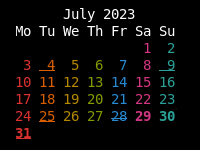
carl The first thing I did was updating carl. I updated all the dependencies and switched the dependency that does coloring from ansi_term, which is unmaintained, to nu-ansi-term. When I then updated the clap dependency to version 4 I realized that clap now depends on the anstyle crate for text styling - so I updated carls coloring code once again so it now uses anstyle, which led to less dependencies overall. Implementing this change I also did some refactoring of the code. carl how also has its own website as well as a subdomain1. I also added a couple of new date properties to carl, namely all weekdays as well as odd and even - this means it is now possible choose a separate color for every weekday and have a rainbow calendar:
screenshot carl
This is included in version 0.1.0 of carl, which I published on crates.io.

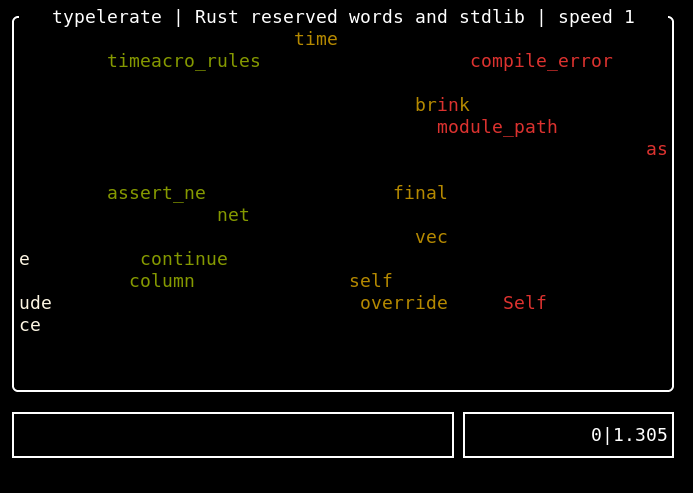
typelerate Then I started writing my first game - typelerate. It is a copy of the great typespeed, without the multiplayer support. To describe the idea behind the game, I quote the typespeed website:
Typespeed s idea is ripped from ztspeed (a DOS game made by Zorlim). The Idea behind the game is rather easy: type words that are flying by from left to right as fast as you can. If you miss 10 or more words, game is over.
Instead of the multiplayer support, typelerate works with UTF-8 strings and it also has another game mode: in typespeed you only type whats scrolling via the screen. In typelerate I added the option to have one or more answer strings. One of those has to be typed instead of the word flying across the screen. This lets you implement kind of an question/answer game. To be backwards compatible with the existing wordfiles from typespeed2, the wordfiles for the question/answer games contain comma separated values. The typelerate repository contains wordfiles with Python and Rust keywords as well as wordfiles where you are shown an Emoji and you have to type the corresponding Github shortcode. I m happy to add additional wordfiles (there could be for example math questions ).
screenshot typelerate

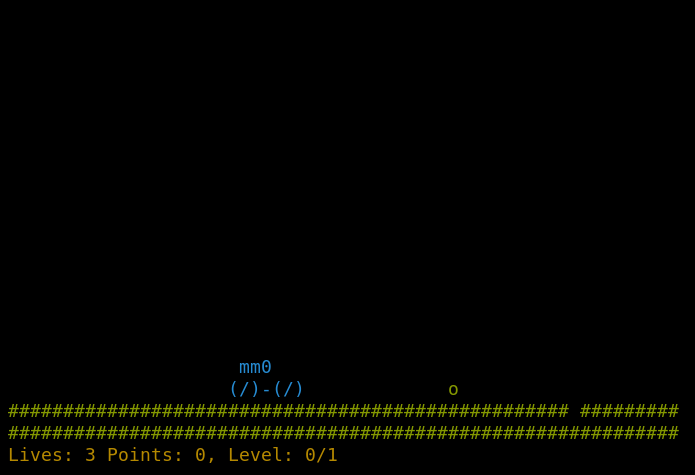
marsrover Another commandline game I really like, because I am fascinated by the animated ASCII graphics, is the venerable moon-buggy. In this game you have to drive a vehicle across the moon s surface and deal with obstacles like craters or aliens. I reimplemented the game in rust and called it marsrover:
screenshot marsrover
I published it on crates.io, you can find the repository on github. The game uses a configuration file in $XDG_CONFIG_HOME/marsrover/config.toml - you can configure the colors of the elements as well as the levels. The game comes with four levels predefined, but you can use the configuration file to override that list of levels with levels with your own properties. The level properties define the probabilities of obstacles occuring on your way on the mars surface and a points setting that defines how many points the user can get in that level (=the game switches to the next level if the user reaches the points).
[[levels]]
prob_ditch_one = 0.2
prob_ditch_two = 0.0
prob_ditch_three = 0.0
prob_alien = 0.5
points = 100
After the last level, the game generates new ones on the fly.

  1. thanks to the service from https://cli.rs.
  2. actually, typelerate is not backwards compatible with the typespeed wordfiles, because those are not UTF-8 encoded

Dirk Eddelbuettel: RcppArmadillo 0.12.6.1.0 on CRAN: New Upstream

armadillo image Armadillo is a powerful and expressive C++ template library for linear algebra and scientific computing. It aims towards a good balance between speed and ease of use, has a syntax deliberately close to Matlab, and is useful for algorithm development directly in C++, or quick conversion of research code into production environments. RcppArmadillo integrates this library with the R environment and language and is widely used by (currently) 1092 other packages on CRAN, downloaded 30.1 million times (per the partial logs from the cloud mirrors of CRAN), and the CSDA paper (preprint / vignette) by Conrad and myself has been cited 545 times according to Google Scholar. This release brings bugfix upstream release 12.6.1. Conrad release 12.6.0 when CRAN went on summer break. I rolled it up ran the full reverse-depenency check against the now more than 1000 packages. And usage from one those revealed a corner-case bug (of not always flattening memory for sparse matrices to zero values) so 12.6.1 followed. This is what was uploaded today. And as I prepared it earlier in the week as CRAN reopened, Conrad released a new 12.6.2. However, its changes are only concerned with settings for Armadillo-internal use of its random number generators (RNGs). And as RcppArmadillo connects Armadillo to the RNGs provided by R, the upgrade does not affect R users at all. However it is available in the github repo, in the Rcpp drap repo and at r-universe. The set of changes for this RcppArmadillo release follows.

Changes in RcppArmadillo version 0.12.6.1.0 (2023-07-26)
  • Upgraded to Armadillo release 12.6.1 (Cortisol Retox)
    • faster multiplication of dense vectors by sparse matrices (and vice versa)
    • faster eigs_sym() and eigs_gen()
    • faster conv() and conv2() when using OpenMP
    • added diags() and spdiags() for generating band matrices from set of vectors

Courtesy of my CRANberries, there is a [diffstat report relative to previous release]. More detailed information is on the RcppArmadillo page. Questions, comments etc should go to the rcpp-devel mailing list off the Rcpp R-Forge page. If you like this or other open-source work I do, you can sponsor me at GitHub.

This post by Dirk Eddelbuettel originated on his Thinking inside the box blog. Please report excessive re-aggregation in third-party for-profit settings.

8 August 2023

Dirk Eddelbuettel: dtts 0.1.1 on CRAN: Enhancements

Leonardo and I are happy to announce the release of a first follow-up release 0.1.1 of our dtts package which got to [CRAN][cran] in its initial upload last year. dtts builds upon our nanotime package as well as the beloved data.table to bring high-performance and high-resolution indexing at the nanosecond level to data frames. dtts aims to bring the time-series indexing versatility of xts (and zoo) to the immense power of data.table while supporting highest nanosecond resolution. This release fixes a bug flagged by valgrind and brings several internal enhancements.

Changes in version 0.1.1 (2023-08-08)
  • A simplifcation was applied to the C++ interface glue code (#9 fixing #8)
  • The package no longer enforces the C++11 compilation standard (#10)
  • An uninitialized memory read has been correct (#11)
  • A new function ops has been added (#12)
  • Function names no longer start with a dot (#13)
  • Arbitrary index columns are now supported (#13)

Courtesy of my CRANberries, there is also a diffstat report for the this release this release. Questions, comments, issue tickets can be brought to the GitHub repo. If you like this or other open-source work I do, you can now sponsor me at GitHub.

This post by Dirk Eddelbuettel originated on his Thinking inside the box blog. Please report excessive re-aggregation in third-party for-profit settings.

7 August 2023

Dirk Eddelbuettel: RQuantLib 0.4.19 on CRAN: More Maintenance

A new release 0.4.19 of RQuantLib arrived at CRAN earlier today, and has already been uploaded to Debian too. QuantLib is a rather comprehensice free/open-source library for quantitative finance. RQuantLib connects it to the R environment and language, and has been part of CRAN for more than twenty years (!!) This release of RQuantLib brings a small update to three unit tests as very recent 1.31 release QuantLib brought a subtle change to some fixed income payment schedules and dates. On a sadder note, as CRAN now checks the ratio of user time over elapsed time , excessive threading was inferred for five examples. As we seemingly cannot limit std::thread here, I opted to park these examples behind a \dontrun . Not ideal. Lastly, a few version checks in configure were updated.

Changes in RQuantLib version 0.4.19 (2023-08-07)
  • Three calendaring / schedule tests were adjusted for slightly changed values under QuantLib 1.31
  • Several checks in the configure script have been updated to reflect current versions of packages.
  • Five examples no longer run because, even while extremely short, use of (too many default) threads was seen.

Courtesy of my CRANberries, there is also a diffstat report for the this release 0.4.19. As always, more detailed information is on the RQuantLib page. Questions, comments etc should go to the rquantlib-devel mailing list. Issue tickets can be filed at the GitHub repo. If you like this or other open-source work I do, you can now sponsor me at GitHub.

This post by Dirk Eddelbuettel originated on his Thinking inside the box blog. Please report excessive re-aggregation in third-party for-profit settings.

4 August 2023

Shirish Agarwal: Birth Control, Consent, Rape & Violence.

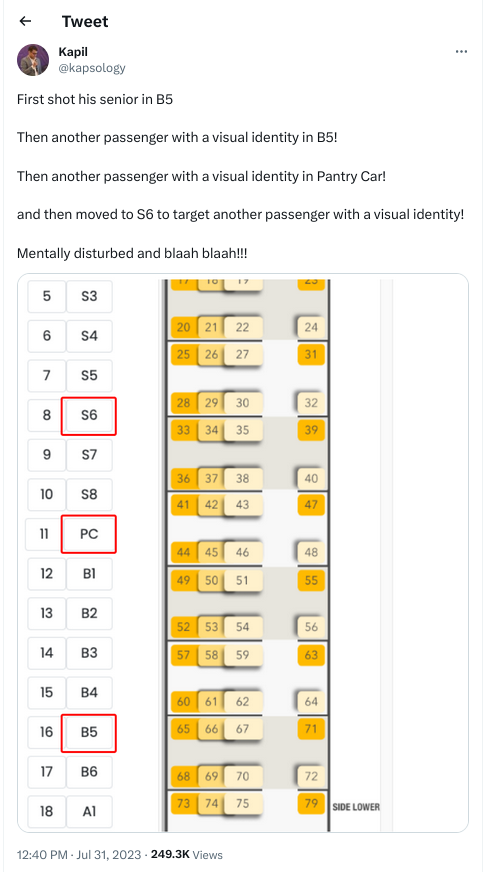
Consent, Violence, Sexual Abuse This again would be somewhat of a mature post. So children, please refrain from reading. When I hear the above words, my first thought goes to Aamir Khan s Season 1 Episode 2 in Satyamev Jayate. This was the first time that the topic of child sexual abuse was bought in the forefront in the hall rather than a topic to be discussed in the corner. Unfortunately, that episode is still in Hindi and no English subtitles available even today shows a lack of sensitivity in Indian s part to still come to terms with Child abuse that happens in India. The numbers that they had shared at that time were shocking. More than 50 per cent children experience sexual abuse and mostly from friends or relatives. That means 1 in every 2 children. And this was in 2012. But the problem of child sexual abuse didn t start then, it started in the 1960 s, 70 s. In the 1960 s, 1970s we didn t have much of cinema and TV and whatever there was pretty limited. There were few B movie producers, but most of them came into their own in the 1980s. So what influenced Indians in those days were softcore magazines that either had a mature aunt or a teen and they would tease and sooner or later the man would sort of overpower them and fulfill his needs. Even mainstream Indian cinema used similar tropes. One of the most memorable songs of that era Wada Karo Nahi Chodoge Tum Meera Saath from Aa Gale Lag jaa. A bit of context for the song. This is where Shashi Kapoor sees, he tries to ask her to date him, she says no. He tries to put an act where he shows he can t skate or rather pretends. And kinda takes a promise from her that she will date him if he is able to skate. And viola, the next moment he is not just skating, but dancing and singing as well. And the whole he touches her and you can see that is uncomfortable and yet after a while he woos her. Now this is problematic today because we are seeing it from today s lens. It might also have problematic with the feminists of that time, but they probably would have been called overly sensitive or something like that. And this is what went in Universal cinema. But this is just tip of the surface. There were and are multiple poems and even art in those times that flirted and even sort of engaged with sexual molestation, rape both in poems as well as literature, both in Hindi and various regional literature. Similar to stuff that Keats and some other poets (problematic stuff) they wrote and where both men and women were in two minds, whether to take all the other good literature out or kinda make the difference between the art and artist. Now, while Aamir spoke about consent it wasn t in any official capacity or even a legal capacity. The interesting thing was that there was an Act that kinda put some safeguards but had been doing rounds for almost a decade. Because the extremists on both sides, Hindus and Muslims were not in favor of that Act, it was still doing rounds. Aamir s episode on 6th May 2012 and the discussions in mainstream media following that forced the Indian legislature to make POSCO as a law on 22nd May 2012. Almost 6 months to 2 weeks, Nirbhaya happened and changes to the law happened in another 6 months. Both voyeurism and stalking were made jailable offenses and consent became part of lingua franca in the Supreme Court. Couple of weeks back, I had shared in the Manipur case the part about fingering . In the same Act, another change that was done that insertion of any part including foreign objects in any of the openings would be classed as rape . So in that Manipur case, at least those 2-3 people who have been identified as clear perpetrators according to the law of land would be rapists and should have the highest punishment. Unfortunately, the system is rigged against women as Vrinda Grover had shared just couple of weeks back. How a 6 month fast track case (to be completed within 6 months) becomes a 10 year old case tells you the efficacy of the system. The reality is far more worse than is shared or known. Just a few months ago, GOI shared some data on Sexual Harassment in 2018-19. And this is after constant pressurizing by Activists that GOI doesn t like. In fact, in 2021, Unicef had shared data about how India was one of the five countries where child brides are still prevalent. India denied but didn t produce any alternative data. The firing of Mr. James over NHFS data sets doesn t give it any brownie points to the present Government. What has happened in the last few years is that the Government for reasons of its own had been scrubbing and censoring a lot of data. I won t go far, just 2 day old story which I had shared just couple of days back. Roughly a 25 year old RPF constable kills his superior and kills 3 Muslims after going to various coaches and then the Government uses the defence of temporary insanity.
Even the mental instability defence has twists and turns
Incidentally, Press Trust of India is s private organization and not the public broadcaster of the old. And incidentally, just a few days back, it came to light that they hadn t paid Income tax for last 2-3 years. Because of issues in reward money, the public came to know otherwise they wouldn t have known. Coming back to the topic itself, there was a video where you could hear and see the accused stating after killing the three Muslims that if you want to remain in India, then you have to vote for only Modi or Yogi, otherwise this will happen. That video was scrubbed both from Twitter as well as YouTube. All centralized platforms at the very least, whether it is Google (Youtube) or Twitter or Meta uses its own media ID. Meta s being most problematic but that probably being a discussion for another day. The same censorship tools are applied rigorously and lot of incidents are buried. Cases of girls being thrown in lakes just after lakes or low numbers of conviction in case of gang rapes are more often than not disappears.
The above article shared just a few days ago that how low the conviction rates of gang rapes are in Gujarat tells you the story. You might get the story today, but wait for a few weeks and you will find that the story has disappeared. What most people do not know or understand is that the web is increasingly a public repository of idea, imaginations and trust and authoritarian regimes like Government of India is increasingly using both official as well as unofficial methods to suppress the same. To see that in the last 9 odd years, GOI has made the highest number of takedown requests and been either number one or number two tells all. My question is where we do from here ??? If even the Minister and her Ministry can do only whataboutery rather than answer the questions, then how we are supposed to come up solutions. And even if a solution exists, without the state and Center agreeing and co-operating with civil society, any solution will be far off the desired result. I am sorry that I at least have no answers

29 July 2023

Shirish Agarwal: Manipur, Data Leakage, Aadhar, and IRCv3

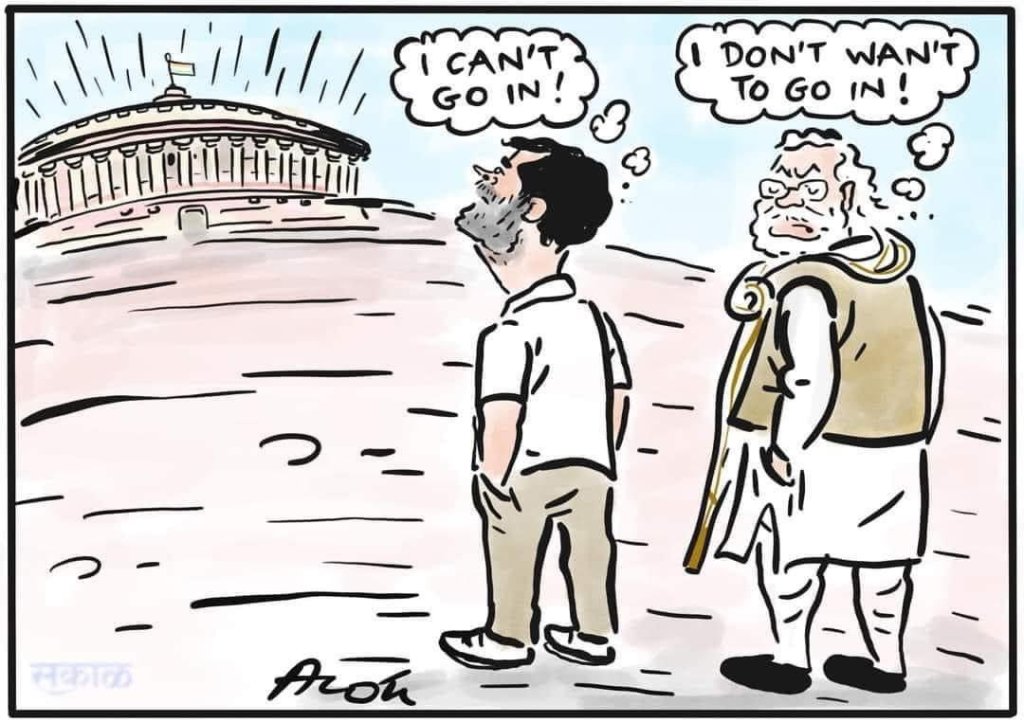
Manipur Lot of news from Manipur. Seems the killings haven t stopped. In fact, there was a huge public rally in support of the rapists and murderers as reported by Imphal Free Press. The Ruling Govt. both at the Center and the State being BJP continuing to remain mum. Both the Internet shutdowns have been criticized and seems no effect on the Government. Their own MLA was attacked but they have chosen to also be silent about that. The opposition demanded that the PM come in both the houses and speak but he has chosen to remain silent. In that quite a few bills were passed without any discussions. If it was not for the viral videos nobody would have come to know of anything  . Internet shutdowns impact women disproportionately as more videos of assaults show  Of course, as shared before that gentleman has been arrested under Section 66A as I shared in the earlier blog post. In any case, in the last few years, this Government has chosen to pass most of its bills without any discussions. Some of the bills I will share below. The attitude of this Govt. can be seen through this cartoon
The above picture shows the disqualified M.P. Rahul Gandhi because he had asked what is the relationship between Adani and Modi. The other is the Mr. Modi, the Prime Minister who refuses to enter and address the Parliament. Prem Panicker shares how we chillingly have come to this stage when even after rapes we are silent

Data Leakage According to most BJP followers this is not a bug but a feature of this Government. Sucheta Dalal of Moneylife shared how the data leakage has been happening at the highest levels in the Government. The leakage is happening at the ministerial level because unless the minister or his subordinate passes a certain startup others cannot come to know. As shared in the article, while the official approval may take 3-4 days, within hours other entities start congratulating. That means they know that the person/s have been approved.While reading this story, the first thought that immediately crossed my mind was data theft and how easily that would have been done. There was a time when people would be shocked by articles such as above and demand action but sadly even if people know and want to do something they feel powerless to do anything

PAN Linking and Aadhar Last month GOI made PAN Linking to Aadhar a thing. This goes against the judgement given by the honored Supreme Court in September 2018. Around the same time, Moneylife had reported on the issue on how the info. on Aadhar cards is available and that has its consequences. But to date nothing has happened except GOI shrugging. In the last month, 13 crore+ users of PAN including me affected by it  I had tried to actually delink the two but none of the banks co-operated in the same  Aadhar has actually number of downsides, most people know about the AEPS fraud that has been committed time and time again. I have shared in previous blog posts the issue with biometric data as well as master biometric data that can and is being used for fraud. GOI either ignorant or doesn t give a fig as to what happens to you, citizen of India. I could go on and on but it would result in nothing constructive so will stop now

IRCv3 I had been enthused when I heard about IRCV3. While it was founded in 2016, it sorta came on in its own in around 2020. I did try matrix or rather riot-web and went through number of names while finally setting on element. While I do have the latest build 1.11.36 element just hasn t been workable for me. It is too outsized, and occupies much more real estate than other IM s (Instant Messengers and I cannot correct size it like I do say for qbittorrent or any other app. I had filed couple of bugs on it but because it apparently only affects me, nothing happened afterwards  But that is not the whole story at all. Because of Debconf happening in India, and that too Kochi, I decided to try out other tools to see how IRC is doing. While the Debian wiki page shares a lot about IRC clients and is also helpful in sharing stats by popcounter ( popularity-contest, thanks to whoever did that), it did help me in trying two of the most popular clients. Pidgin and Hexchat, both of which have shared higher numbers. This might be simply due to the fact that both get downloaded when you install the desktop version or they might be popular in themselves, have no idea one way or the other. But still I wanted to see what sort of experience I could expect from both of them in 2023. One of the other things I noticed is that Pidgin is not a participating organization in ircv3 while hexchat is. Before venturing in, I also decided to take a look at oftc.net. Came to know that for sometime now, oftc has started using web verify. I didn t see much of a difference between hcaptcha and gcaptcha other than that the fact that they looked more like oil paintings rather than anything else. While I could easily figure the odd man out or odd men out to be more accurate, I wonder how a person with low or no vision would pass that ??? Also much of our world is pretty much contextual based, figuring who the odd one is or are could be tricky. I do not have answers to the above other than to say more work needs to be done by oftc in that area. I did get a link that I verified. But am getting ahead of the story. Another thing I understood that for some reason oftc is also not particpating in ircv3, have no clue why not :(I

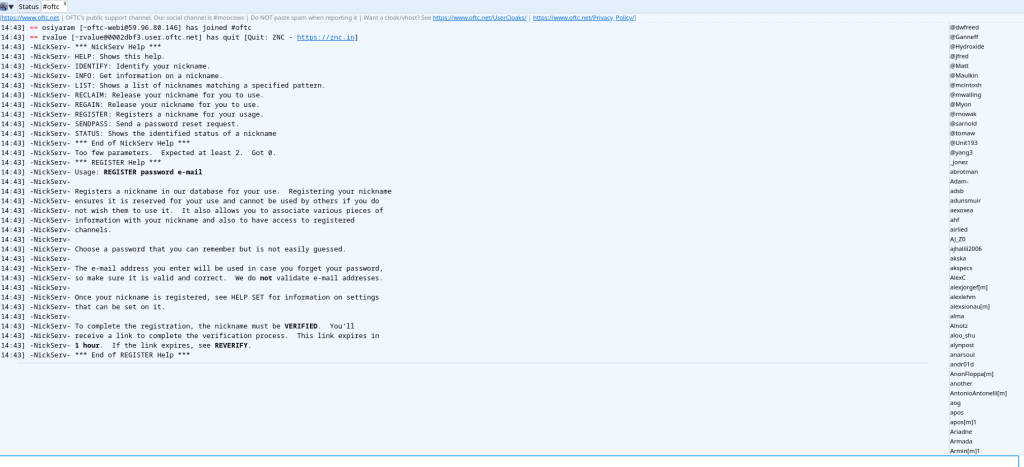
Account Registration in Pidgin and Hexchat This is the biggest pain point in both. I failed to register via either Pidgin or Hexchat. I couldn t find a way in either client to register my handle. I have had on/off relationships with IRC over the years, the biggest issue being IIRC is that if you stop using your handle for a month or two others can use it. IIRC, every couple of months or so, irc/oftc releases the dormant ones. Matrix/Vector has done quite a lot in that regard but that s a different thing altogether so for the moment will keep that aside. So, how to register for the network. This is where webchat.oftc.net comes in. You get a quaint 1970 s IRC window (probably emulated) where you call Nickserv to help you. As can be seen it one of the half a dozen bots that helps IRC. So the first thing you need to do is /msg nickserv help what you are doing is asking nickserv what services they have and Nickserv shares the numbers of services it offers. After looking into, you are looking for register /msg nickerv register Both the commands tell you what you need to do as can be seen by this
Let s say you are XYZ and your e-mail address is xyz@xyz.com This is just a throwaway id I am taking for the purpose of showing how the process is done. For this, also assume your passowrd is 1234xyz;0x something like this. I have shared about APG (Advanced Password Generator) before so you could use that to generate all sorts of passwords for yourself. So next would be /msg nickserv register 1234xyz;0x xyz@xyz.com Now the thing to remember is you need to be sure that the email is valid and in your control as it would generate a link with hcaptcha. Interestingly, their accessibility signup fails or errors out. I just entered my email and it errors out. Anyway back to it. Even after completing the puzzle, even with the valid username and password neither pidgin or hexchat would let me in. Neither of the clients were helpful in figuring out what was going wrong. At this stage, I decided to see the specs of ircv3 if they would help out in anyway and came across this. One would have thought that this is one of the more urgent things that need to be fixed, but for reasons unknown it s still in draft mode. Maybe they (the participants) are not in consensus, no idea. Unfortunately, it seems that the participants of IRCv3 have chosen a sort of closed working model as the channel is restricted. The only notes of any consequence are being shared by Ilmari Lauhakangas from Finland. Apparently, Mr/Ms/they Ilmari is also a libreoffice hacker. It is possible that their is or has been lot of drama before or something and that s why things are the way they are. In either way, doesn t tell me when this will be fixed, if ever. For people who are on mobiles and whatnot, without element, it would be 10x times harder. Update :- Saw this discussion on github. Don t see a way out  It seems I would be unable to unable to be part of Debconf Kochi 2023. Best of luck to all the participants and please share as much as possible of what happens during the event.

26 July 2023

Shirish Agarwal: Manipur Violence, Drugs, Binging on Northshore, Alaska Daily, Doogie Kamealoha and EU Digital Resilence Act.

Manipur Videos Warning: The text might be mature and will have references to violence so if there are kids or you are sensitive, please excuse. Few days back, saw the videos and I cannot share the rage, shame and many conflicting emotions that were going through me. I almost didn t want to share but couldn t stop myself. The woman in the video were being palmed, fingered, nude, later reportedly raped and murdered. And there have been more than a few cases. The next day saw another video that showed beheaded heads, and Kukis being killed just next to their houses. I couldn t imagine what those people must be feeling as the CM has been making partisan statements against them. One of the husbands of the Kuki women who had been paraded, fondled is an Army Officer in the Indian Army. The Meiteis even tried to burn his home but the Army intervened and didn t let it get burnt. The CM s own statement as shared before tells his inability to bring the situation out of crisis. In fact, his statement was dumb stating that the Internet shutdown was because there were more than 100 such cases. And it s spreading to the nearby Northeast regions. Now Mizoram, the nearest neighbor is going through similar things where the Meitis are not dominant. The Mizos have told the Meitis to get out. To date, the PM has chosen not to visit Manipur. He just made a small 1 minute statement about it saying how the women have shamed India, an approximation of what he said.While it s actually not the women but the men who have shamed India. The Wire has been talking to both the Meitis, the Kukis, the Nagas. A Kuki women sort of bared all. She is right on many counts. The GOI while wanting to paint the Kukis in a negative light have forgotten what has been happening in its own state, especially its own youth as well as in other states while also ignoring the larger geopolitics and business around it. Taliban has been cracking as even they couldn t see young boys, women becoming drug users. I had read somewhere that 1 in 4 or 1 in 5 young person in Afghanistan is now in its grip. So no wonder,the Taliban is trying to eradicate and shutdown drug use among it s own youth. Circling back to Manipur, I was under the wrong impression that the Internet shutdown is now over. After those videos became viral as well as the others I mentioned, again the orders have been given and there is shutdown. It is not fully shut but now only Govt. offices have it. so nobody can share a video that goes against any State or Central Govt. narrative  A real sad state of affairs  Update: There is conditional reopening whatever that means  When I saw the videos, the first thing is I felt was being powerless, powerless to do anything about it. The second was if I do not write about it, amplify it and don t let others know about it then what s the use of being able to blog

Mental Health, Binging on various Webseries Both the videos shocked me and I couldn t sleep that night or the night after. it. Even after doing work and all, they would come in unobtrusively in my nightmares  While I felt a bit foolish, I felt it would be nice to binge on some webseries. Little I was to know that both Northshore and Alaska Daily would have stories similar to what is happening here  While the story in Alaska Daily is fictional it resembles very closely to a real newspaper called Anchorage Daily news. Even there the Intuit women , one of the marginalized communities in Alaska. The only difference I can see between GOI and the Alaskan Government is that the Alaskan Government was much subtle in doing the same things. There are some differences though. First, the State is and was responsive to the local press and apart from one close call to one of its reporters, most reporters do not have to think about their own life in peril. Here, the press cannot look after either their livelihood or their life. It was a juvenile kid who actually shot the video, uploaded and made it viral. One needs to just remember the case details of Siddique Kappan. Just for sharing the news and the video he was arrested. Bail was denied to him time and time again citing that the Police were investigating . Only after 2 years and 3 months he got bail and that too because none of the charges that the Police had they were able to show any prima facie evidence. One of the better interviews though was of Vrinda Grover. For those who don t know her, her Wikipedia page does tell a bit about her although it is woefully incomplete. For example, most recently she had relentlessly pursued the unconstitutional Internet Shutdown that happened in Kashmir for 5 months. Just like in Manipur, the shutdown was there to bury crimes either committed or being facilitated by the State. For the issues of livelihood, one can take the cases of Bipin Yadav and Rashid Hussain. Both were fired by their employer Dainik Bhaskar because they questioned the BJP MP Smriti Irani what she has done for the state. The problems for Dainik Bhaskar or for any other mainstream media is most of them rely on Government advertisements. Private investment in India has fallen to record lows mostly due to the policies made by the Centre. If any entity or sector grows a bit then either Adani or Ambani will one way or the other take it. So, for most first and second generation entrepreneurs it doesn t make sense to grow and then finally sell it to one of these corporates at a loss  GOI on Adani, Ambani side of any deal. The MSME sector that is and used to be the second highest employer hasn t been able to recover from the shocks of demonetization, GST and then the pandemic. Each resulting in more and more closures and shutdowns. Most of the joblessness has gone up tremendously in North India which the Government tries to deny. The most interesting points in all those above examples is within a month or less, whatever the media reports gets scrubbed. Even the firing of the journos that was covered by some of the mainstream media isn t there anymore. I have to use secondary sources instead of primary sources. One can think of the chilling effects on reportage due to the above. The sad fact is even with all the money in the world the PM is unable to come to the Parliament to face questions.
Why is PM not answering in Parliament,, even Rahul Gandhi is not there - Surya Pratap Singh, prev. IAS Officer.
The above poster/question is by Surya Pratap Singh, a retired IAS officer. He asks why the PM is unable to answer in either of the houses. As shared before, the Govt. wants very limited discussion. Even yesterday, the Lok Sabha TV just showed the BJP MP s making statements but silent or mic was off during whatever questions or statements made by the opposition. If this isn t mockery of Indian democracy then I don t know what is  Even the media landscape has been altered substantially within the last few years. Both Adani and Ambani have distributed the media pie between themselves. One of the last bastions of the free press, NDTV was bought by Adani in a hostile takeover. Both Ambani and Adani are close to this Goverment. In fact, there is no sector in which one or the other is not present. Media houses like Newsclick, The Wire etc. that are a fraction of mainstream press are where most of the youth have been going to get their news as they are not partisan. Although even there, GOI has time and again interfered. The Wire has had too many 504 Gateway timeouts in the recent months and they had been forced to move most of their journalism from online to video, rather Youtube in order to escape both the censoring and the timeouts as shared above. In such a hostile environment, how both the organizations are somehow able to survive is a miracle. Most local reportage is also going to YouTube as that s the best way for them to not get into Govt. censors. Not an ideal situation, but that s the way it is. The difference between Indian and Israeli media can be seen through this
The above is a Screenshot shared by how the Israeli media has reacted to the Israeli Government s Knesset over the judicial overhaul . Here, the press itself erodes its own by giving into the Government day and night

Binging on Webseries Saw Northshore, Three Pines, Alaska Daily and Doogie Kamealoha M.D. which is based on Doogie Howser M.D. Of the four, enjoyed Doogie Kamealoha M.D. the most but then it might be because it s a copy of Doogie Howser, just updated to the new millenia and there are some good childhood memories associated with that series. The others are also good. I tried to not see European stuff as most of them are twisted and didn t want that space.

EU Digital Operational Resilience Act and impact on FOSS Few days ago, apparently the EU shared the above Act. One can read about it more here. This would have more impact on FOSS as most development of various FOSS distributions happens in EU. Fair bit of Debian s own development happens in Germany and France. While there have been calls to make things more clearer, especially for FOSS given that most developers do foss development either on side or as a hobby while their day job is and would be different. The part about consumer electronics and FOSS is a tricky one as updates can screw up your systems. Microsoft has had a huge history of devices not working after an update or upgrade. And this is not limited to Windows as they would like to believe. Even apple seems to be having its share of issues time and time again. One would have hoped that these companies that make billions of dollars from their hardware and software sales would be doing more testing and Q&A and be more aware about security issues. FOSS, on the other hand while being more responsive doesn t make as much money vis-a-vis the competitors. Let s take the most concrete example. The most successful mobile phone having FOSS is Purism. But it s phone, it has priced itself out of the market. A huge part of that is to do with both economies of scale and trying to get an infrastructure and skills in the States where none or minimally exists. Compared that to say Pinepro that is manufactured in Hong Kong and is priced 1/3rd of the same. For most people it is simply not affordable in these times. Add to that the complexity of these modern cellphones make it harder, not easier for most people to be vigilant and update the phone at all times. Maybe we need more dumphones such as Light and Punkt but then can those be remotely hacked or not, there doesn t seem to be any answers on that one. I haven t even seen anybody even ask those questions. They may have their own chicken and egg issues. For people like me who have lost hearing, while I can navigate smartphones for now but as I become old I don t see anything that would help me. For many an elderly population, both hearing and seeing are the first to fade. There doesn t seem to be any solutions targeted for them even though they are 5-10% of any population at the very least. Probably more so in Europe and the U.S. as well as Japan and China. All of them are clearly under-served markets but dunno a solution for them. At least to me that s an open question.

25 July 2023

Sam Hartman: AI and Sexuality

When I began to read about the generative AI revolution, I realized there was an opportunity to combine two aspects of my life I never thought I could merge. While I m not working on the cloud or security, I work as a sex and intimacy educator, helping people embrace love, vulnerability and connection. As I first began to interact with ChatGPT, I saw the potential for AI to help people explore parts of the world they had not experienced for themselves. I m blind. When I write fiction, physical descriptions are always challenging for me. I don t understand facial expressions very well, and figuring out what characters look like is difficult. Generative AI has opened up an entire new world for me. I can explore how people might express some emotion and how they might dress in a certain situation. I can even exploit the cultural biases that are sometimes the bane of AI to translate my ideas about personality and background into appearance. Immediately I realized the opportunities for sexual freedom: People are already using Generative AI to help with intimacy. There are plenty of stories about how people use AI to tune their dating profiles. But all too often, the desire to make AI safe brings shame and rejection into the discussion of intimacy. Even something as simple as Help me come up with a sensual description of this character, is likely to run up against the all-too-familiar responses: I am a large language model and for safety reasons I cannot do that. That safety is important: one thing we have learned from sex positive culture is how important boundaries are. We need to respect those boundaries and not expose people to unwanted sexual content. But we also know how damaging shame is. When someone reaches out and tentatively asks to explore their sexuality, rejecting that exploration will come across as a rejection of that person they are dirty or disgusting for wanting to explore. Fortunately, we will see AI models that are open to exploring sexuality. Some of the uncensored models will already try, although calling some of the results sex positive would be stretching the truth. We re already seeing discussions of virtual AI girlfriends. And as AI meets sex, I m going to be there, helping try and turn it into something healthy both for business and for lovers. There are all sorts of interesting challenges: There are all the cultural and social challenges that sex-positive work faces. Then there are versions of the AI challenges of bias, hallucinations and the like, along with specific challenges of exploring emotionally-charged vulnerable topics. And yet there s so much potential to help people gain confidence and valuable skills. I am eagerly looking for opportunities to combine my work as a sex positive educator and as a software developer. I d love to hear about any ongoing work at the intersection of Sex and Generative AI. I ve done some research already, but there s so much going on in the AI world it is impossible to follow it all. Please reach out with anything you think I should track.

comment count unavailable comments

23 July 2023

Dirk Eddelbuettel: #41: Another r2u Example Really Simple CI

Welcome to the 41th post in the $R^4 series. Just as the previous post illustrated r2u use to empower interactive Google Colab sessions, today we want to look at continuous integration via GitHub Actions. Actions are very powerful, yet also intimidating and complex. How does one know what to run? How does ensure requirements are installed? What does these other actions do? Here we offer a much simpler yet fully automatic solution. It takes advantage of the fact that r2u integrates fully and automatically with the system, here apt, without us having to worry about the setup. One way to make this very easy is the use of the Rocker containers for r2u. They already include the few lines of simple (and scriptable) setup, and have bspm setup so that R commands to install packages dispatch to apt and will bring all required dependencies automatically and easily. With that the required yaml file for an action can be as simple as this:
name: r2u

on:
  push:
  pull_request:
  release:

jobs:
  ci:
    runs-on: ubuntu-latest
    container:
      image: rocker/r2u:latest
    steps:
      - uses: actions/checkout@v3
      - name: SessionInfo
        run: R -q -e 'sessionInfo()'
      #- name: System Dependencies
      #  # can be used to install e.g. cmake or other build dependencies
      #  run: apt update -qq && apt install --yes --no-install-recommends cmake git
      - name: Package Dependencies
        run: R -q -e 'remotes::install_deps(".", dependencies=TRUE)'
      - name: Build Package
        run: R CMD build --no-build-vignettes --no-manual .
      - name: Check Package
        run: R CMD check --no-vignettes --no-manual $(ls -1tr *.tar.gz   tail -1)
There are only a few key components here. First, we have the on block where for simplicity we select pushes, pull requests and releases. One could reduce this to just pushes by removing or commenting out the next two lines. Many further refinements are possible and documented but not reqired. Second, the jobs section and its sole field ci saythat we are running this CI on Ubuntu in its latest release. Importantly we then also select the rocker container for r2 meaning that we explicitly select running in this container (which happens to be an extension and refinement of ubuntu-latest). The latest tag points to the most recent LTS release, currently jammy aka 22.04. This choice also means that our runs are limited to Ubuntu and exclude macOS and Windows. That is a choice: not every CI task needs to burn extra (and more expensive) cpu cycles on the alternative OS, yet those can always be added via other yaml files possibly conditioned on fewer runs (say: only pull requests) if needed. Third, we have the basic sequence of steps. We check out the repo this file is part of (very standard). After that we ask R show the session info in case we need to troubleshoot. (These two lines could be commented out.) Next we show a commented-out segment we needed in another repo where we needed to add cmake and git as the package in question required local compilation during build. Such a need is fairly rare, but as shown can be be accomodated easily while taking advantage of the rich development infrastructure provided by Ubuntu. But the step should be optional for most R packages so it is commented out here. The next step uses the remotes package to look at the DESCRIPTION file and install all dependencies which, thanks to r2u and bspm, will use all Ubuntu binaries making it both very fast, very easy, and generally failsafe. Finally we do the two standard steps of building the source package and checking it (while omitting vignettes and the (pdf) manual as the container does not bother with a full texlive installation this could be altered if desired in a derived container). And that s it! The startup cost is a few seconds to pull the container, plus a few more seconds for dependencies and let us recall that e.g. the entire tidyverse installs all one hundred plus packages in about twenty seconds as shown in earlier post. After that the next cost is generally just what it takes to build and check your package once all requirements are in. To use such a file for continuous integration, we can install it in the .github/workflows/ directory of a repository. One filename I have used is .github/workflows/r2u.yaml making it clear what this does and how. More information about r2u is at its site, and we answered some question in issues, and at stackoverflow. More questions are always welcome! If you like this or other open-source work I do, you can now sponsor me at GitHub.

This post by Dirk Eddelbuettel originated on his Thinking inside the box blog. Please report excessive re-aggregation in third-party for-profit settings.

20 July 2023

Dirk Eddelbuettel: qlcal 0.0.7 on CRAN: QuantLib 1.31 Updates

The seventh release of the still pretty new qlcal package arrivied at CRAN today. qlcal delivers the calendaring parts of QuantLib. It is provided (for the R package) as a set of included files, so the package is self-contained and does not depend on an external QuantLib library (which can be demanding to build). qlcal covers over sixty country / market calendars and can compute holiday lists, its complement (i.e. business day lists) and much more. This release brings updates from the just-released QuantLib 1.31 version.

Changes in version 0.0.7 (2023-07-19)
  • Updates, extensions and corrections to calendars from South Korea, Hong Kong, Singapore, India, Taiwan, South Africa, Denmark and Finland from QuantLib 1.31
  • Added support for UnitedStates/SOFR calendar

As the update comprises a number of small-but-important updates to eight different country calendars as well as a new US calendar (in a slight variation on the government bond calendar) we can also update the little demo highlighting all calendars within the US for the given year:
> ## see https://github.com/qlcal/qlcal-r/blob/master/demo/allUScalendars.R
> ## see R/calendars.R in qlcal, we prepend 'UnitedStates/' in makeHol()
> cals <- c("LiborImpact", "NYSE", "GovernmentBond", "NERC", "FederalReserve", "SOFR")
> print(Reduce(cbind, Map(makeHol, cals)))
           LiborImpact NYSE GovernmentBond NERC FederalReserve SOFR
2023-01-02        TRUE TRUE           TRUE TRUE           TRUE TRUE
2023-01-16        TRUE TRUE           TRUE   NA           TRUE TRUE
2023-02-20        TRUE TRUE           TRUE   NA           TRUE TRUE
2023-04-07          NA TRUE             NA   NA             NA TRUE
2023-05-29        TRUE TRUE           TRUE TRUE           TRUE TRUE
2023-06-19        TRUE TRUE           TRUE   NA           TRUE TRUE
2023-07-04        TRUE TRUE           TRUE TRUE           TRUE TRUE
2023-09-04        TRUE TRUE           TRUE TRUE           TRUE TRUE
2023-10-09        TRUE   NA           TRUE   NA           TRUE TRUE
2023-11-10        TRUE   NA             NA   NA             NA   NA
2023-11-23        TRUE TRUE           TRUE TRUE           TRUE TRUE
2023-12-25        TRUE TRUE           TRUE TRUE           TRUE TRUE
> 
Courtesy of my CRANberries, there is a diffstat report for this release. See the project page and package documentation for more details, and more examples. If you like this or other open-source work I do, you can now sponsor me at GitHub.

This post by Dirk Eddelbuettel originated on his Thinking inside the box blog. Please report excessive re-aggregation in third-party for-profit settings.

19 July 2023

Shirish Agarwal: RISC-V, Chips Act, Burning of Books, Manipur

RISC -V Motherboard, SBC While I didn t want to, a part of me is hyped about this motherboard. This would probably be launched somewhere in November. There are obvious issues in this, the first being unlike regular motherboards you wouldn t be upgrade as you would do.You can t upgrade your memory, can t upgrade the CPU (although new versions of instructions could be uploaded, similar to BIOS updates) but as the hardware is integrated (the quad-core SiFive Performance P550 core complex) it would really depend. If the final pricing is around INR 4-5k then it may be able to sell handsomely provided there are people to push and provide support around it. A 500 GB or 1 TB SSD coupled with it and a cheap display unit and you could use it anywhere although as the name says it s more for tinkering as the name suggests. Another board that could perhaps be of more immediate use would be the beagleboard. They launched the same couple of days back and called it Beagle V-Ahead. Again, costs are going to be a concern. Just a year before the pandemic the Beagleboard Black (BB) used to cost in the sub 4k range, today it costs 8k+ for the end user, more than twice the price. How much Brexit is to be blamed for this and how much the Indian customs we would never know. The RS Group that is behind that shop is head-quartered in the UK. As said before, we do not know the price of either board as it probably will take few months for v-ahead to worm its way in the Indian market, maybe another 6 months or so. Even so, with the limited info. on both the boards, I am tilting more towards the other HiFive one. We should come to know about the boards say in 3-5 months of time.

CHIPS Act I had shared about the Chips Act a few times here as well as on SM. Two articles do tell how the CHIPS Act 2023 is more of a political tool, an industrial defence policy rather than just business as most people tend to think.

Cancelation of Books, Books Burning etc. Almost 2400 years ago, Plato released his work called Plato s Republic and one of the seminal works within it is perhaps one of the most famous works was the Allegory of the Cave. That is used again and again in a myriad ways, mostly in science-fiction though and mostly to do with utopian, dystopian movies, webseries etc. I did share how books are being canceled in the States, also a bit here. But the most damning thing has happened throughout history, huge quantities of books burned almost all for politics  But part of it has been neglect as well as this time article shares. What we have lost and continue to lose is just priceless. Every book has a grain of truth in it, some more, some less but equally enjoyable. Most harmful is the neglect towards books and is more true today than any other time in history. Kids today have a wide variety of tools to keep themselves happy or occupied, from anime, VR, gaming the list goes on and on. In that scenario, how the humble books can compete. People think of Kindle but most e-readers like Kindle are nothing but obsolescence by design. I have tried out Kindle a few times but find it a bit on the flimsy side. Books are much better IMHO or call me old-school. While there are many advantages, one of the things that I like about books is that you can easily put yourself in either the protagonist or the antagonist or somewhere in the middle and think of the possible scenarios wherever you are in a particular book. I could go on but it will be a blog post or two in itself. Till later. Happy Reading.

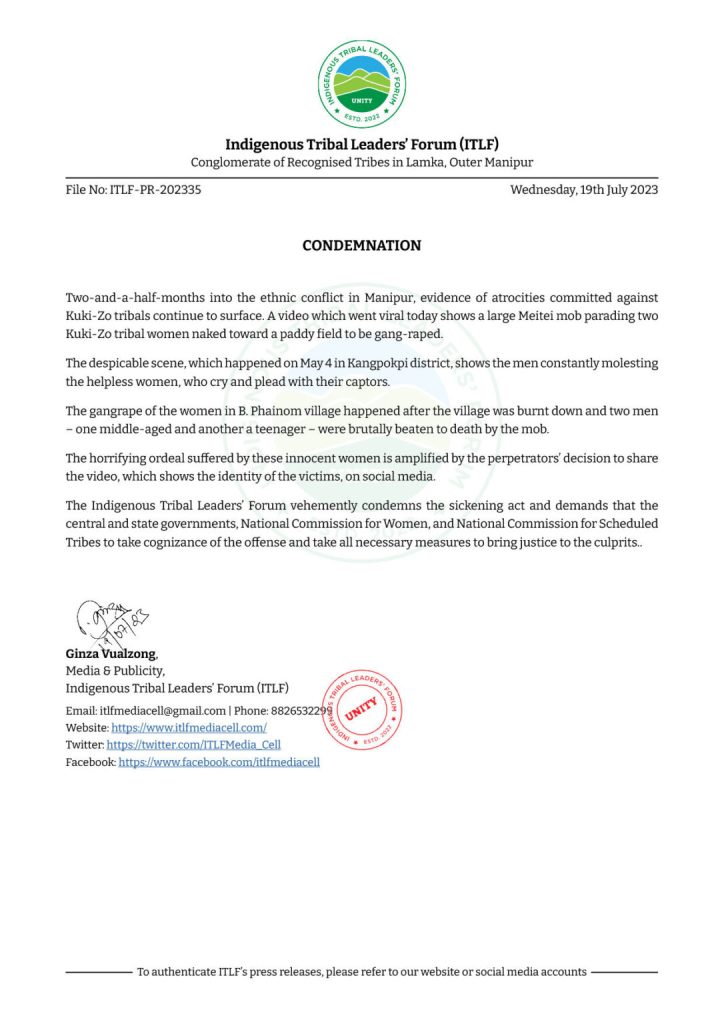
Update:Manipur Extremely horrifying visuals, articles and statements continue to emanate from Manipur. Today, 19th July 2023, just couple of hours back, a video surfaced showing two Kuki women were shown as stripped, naked and Meitei men touching their private parts. Later on, we came to know that this was in response of a disinformation news spread by the Meitis of few women being raped although no documentary evidence of the same surfaced, no names nothing. While I don t want to share the video I will however share the statement shared by the Kuki-Zo tribal community on that. The print gives a bit more context to what has been going on.
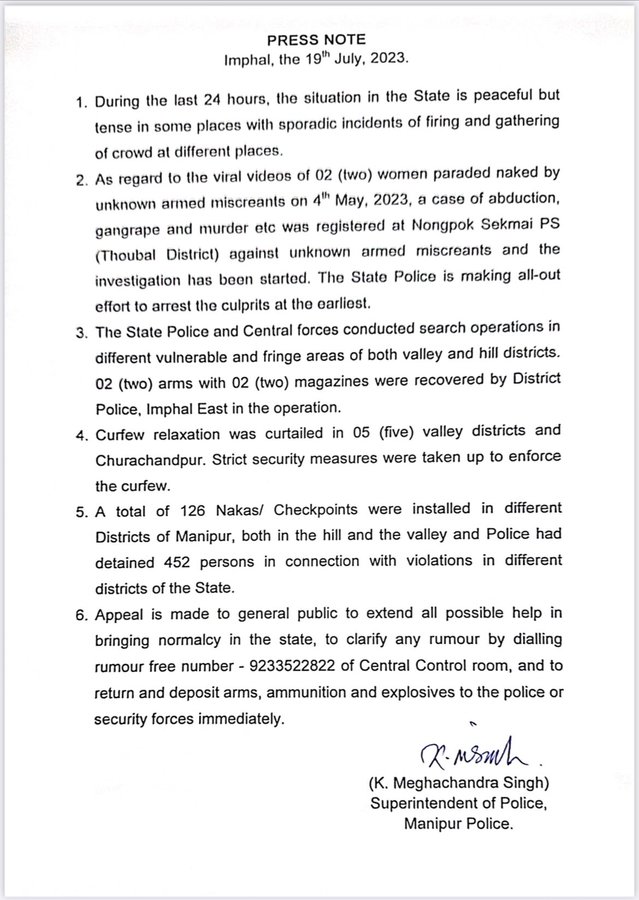
Update, Few hours later : The Print also shared more of a context about six days ago. The reason we saw the video now was that for the last 2.5 months Manipur was in Internet shutdown so those videos got uploaded now. There was huge backlash from the Twitter community and GOI ordered the Manipur Police to issue this Press Release yesterday night or just few hours before with yesterday s time-stamp.
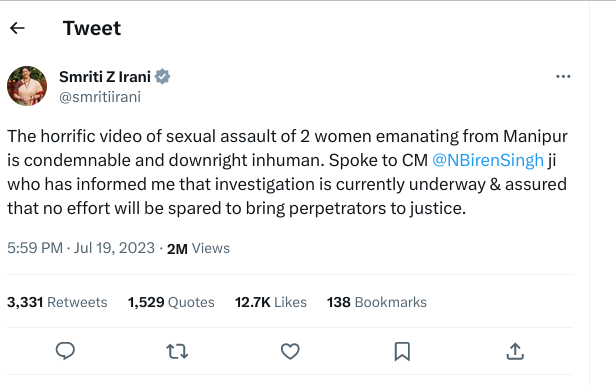
IndianExpress shared an article that does state that while an FIR had been registered immediately no arrests so far and this is when you can see the faces of all the accused. Not one of them tried to hide their face behind a mask or something. So, if the police wanted, they could have easily identified who they are. They know which community the accused belong to, they even know from where they came. If they wanted to, they could have easily used mobile data and triangulation to find the accused and their helpers. So, it does seem to be attempt to whitewash and protect a certain community while letting it prey on the other. Another news that did come in, is because of the furious reaction on Twitter, Youtube has constantly been taking down the video as some people are getting a sort of high more so from the majoritarian community and making lewd remarks. Twitter has been somewhat quick when people are making lewd remarks against the two girl/women. Quite a bit of the above seems like a cover-up. Lastly, apparently GOI has agreed to having a conversation about it in Lok Sabha but without any voting or passing any resolutions as of right now. Would update as an when things change. Update: Smriti Irani, the Child and Development Minister gave the weakest statement possible
As can be noticed, she said sexual assault rather than rape. The women were under police custody for safety when they were whisked away by the mob. No mention of that. She spoke to the Chief Minister who has been publicly known as one of the provocateurs or instigators for the whole thing. The CM had publicly called the Kukus and Nagas as foreigners although both of them claim to be residing for thousands of years and they apparently have documentary evidence of the same  . Also not clear who is doing the condemning here. No word of support for the women, no offer of intervention, why is she the Minister of Child and Women Development (CDW) if she can t use harsh words or give support to the women who have gone and going through horrific things  Update : CM Biren Singh s Statement after the video surfaced
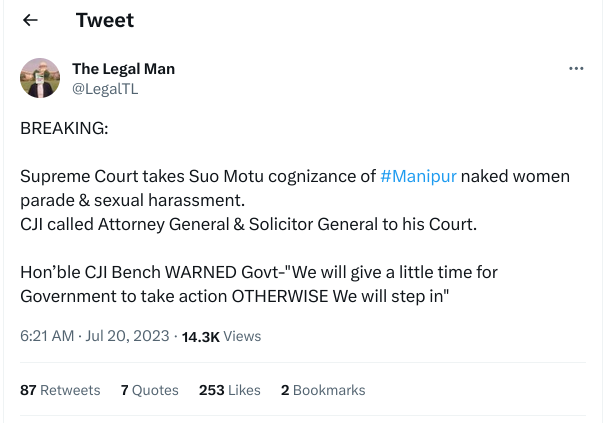
This tweet is contradictory to the statements made by Mr. Singh couple of months ago. At that point in time, Mr. Singh had said that NIA, State Intelligence Departments etc. were giving him minute to minute report on the ground station. The Police itself has suo-moto (on its own) powers to investigate and apprehend criminals for any crime. In fact, the Police can call for questioning of anybody in any relation to any crime and question them for upto 48 hours before charging them. In fact, many cases have been lodged where innocent persons have been framed or they have served much more in the jail than the crime they are alleged to have been committed. For e.g. just a few days before there was a media report of a boy who has been in jail for 3 years. His alleged crime, stealing mere INR 200/- to feed himself. Court doesn t have time to listen to him yet. And there are millions like him. The quint eloquently shares the tale where it tells how both the State and the Centre have been explicitly complicit in the incidents ravaging Manipur. In fact, what has been shared in the article has been very true as far as greed for land is concerned. Just couple of weeks back there have been a ton of floods emanating from Uttarakhand and others. Just before the flooding began, what was the CM doing can be seen here. Apart from the newspapers I have shared and the online resources, most of the mainstream media has been silent on the above. In fact, they have been silent on the Manipur issue until the said video didn t come into limelight. Just now, in Lok Sabha everybody is present except the Prime Minister and the Home Minister. The PM did say that the law will take its own course, but that s about it. Again no support for the women concerned.  Update: CJI (Chief Justice of India) has taken suo-moto cognizance and has warned both the State and Centre to move quickly otherwise they will take the matter in their own hand.
Update: Within 2 hours of the CJI taking suo-moto cognizance, they have arrested one of the main accused Heera Das
The above tells you why the ban on Internet was put in the first place. They wanted to cover it all up. Of all the celebs, only one could find a bit of spine, a bit of backbone to speak about it, all the rest mum
Just imagine, one of the women is around my age while the young one could have been a daughter if I had married on time or a younger sister for sure. If ever I came face to face with them, I just wouldn t be able to look them in the eye. Even their whole whataboutery is built on sham. From their view Kukis are from Burma or Burmese descent. All of which could be easily proved by DNA of all. But let s leave that for a sec. Let s take their own argument that they are Burmese. Their idea of Akhand Bharat stretches all the way to Burma (now called Myanmar). They want all the land but no idea with what to do with the citizens living on it. Even after the video, the whataboutery isn t stopping, that shows how much hatred is there. And not knowing that they too will be victim of the same venom one or the other day  Update: Opposition was told there would be a debate on Manipur. The whole day went by, no debate. That s the shamelessness of this Govt.  Update 20th July 19:25 Center may act or not act against the perpetrators but they will act against Twitter who showed the crime. Talk about shooting the messenger
We are now in the last stage. In 2014, we were at 6

17 July 2023

Russ Allbery: Review: The Unkindest Tide

Review: The Unkindest Tide, by Seanan McGuire
Series: October Daye #13
Publisher: DAW
Copyright: 2019
ISBN: 0-7564-1255-2
Format: Kindle
Pages: 355
This is the 13th book in the long-running October Daye urban fantasy series. There is a strong series arc and a plot that builds on previous books, so this is a series with both significant spoilers and significant confusion if read out of order. The Unkindest Tide in particular is closely tied to the previous book, Night and Silence, and should not be read before it. For once, this story does not start with someone Toby loves being attacked or going missing, or with someone trying to attack her. It instead starts with the Luidaeg. For several books now, she's been dropping hints about the debts that Toby owes to her and the favors she will someday call in. That time is now; she's going to address a problem that she has been putting off for years, and Toby is going to help her. This was a Luidaeg book, so I knew going in that I was going to enjoy it, and indeed I did. That said, I thought it was a bit awkward. This is a moment that McGuire has been building up to for quite some time (series readers may have a few guesses at what the Luidaeg is up to) and she wanted it to land with a lot of force while adding some last-minute complications and letting Toby take her typical role as the stubborn hero. But the primary complication she adds felt unrelated at first, and while the story does tie everything together in the end, it left the story feeling disjointed. The novel needed some fight scenes and some opportunities for people to worry about Toby, so those were provided, but I'm not sure they flowed naturally out of the story. There are some truly great moments here between Toby and the Luidaeg, and between Toby and a few of the other people involved in the story (naming them would be spoilers). Some of the banter is really fun. But I thought the best emotional moment of the book was a underplayed and could have used some more focus, build-up, and time to breathe, rather than shifting the Luidaeg off-stage for a big chunk of the story. McGuire has a bit of a power level problem here and finds some deft ways to avoid it, but I think that hurt the emotional arc. We're also told a lot about the emotional impacts of the plot, but I wish it had been shown more. The one character touchpoint the reader has is mostly uninvolved, and her involvement is a bit disappointing when it does happen. The biggest flaw in this book is the biggest flaw in the series: McGuire has a formula, and while it's more varied from book to book than a lot of long-running series, it's still predictable. Toby and Tybalt say the same things, Toby gets into the same kind of trouble, she worries about the same things, the banter goes in predictable ways, and the fights go very similarly to the fights in previous series entries. A lot of the novel won't be very surprising. There are always a few moments in each book that stir strong emotions, and personally I love the world-building and am eager to read more of it, but there are also sections of these books that I read very fast without feeling like I'm missing much. I've said this about this series before, which is another angle at the same problem. I think the world-building is getting more interesting as the series goes along, but the writing is not; if anything, it's getting a bit worse. It's far from bad enough to stop me from reading, and this was one of the better series entries overall, but it does keep the series firmly in the "reliable fun" category rather than the "excellent and worthy of savoring" category. It's still reliable fun, though. If you're this far along, you'll want to keep reading. The Unkindest Tide felt a bit like the end of an arc, so I'm curious to see where the story goes next. Followed by A Killing Frost. As is typical of the last few books, there is a novella included at the end. "Hope Is Swift": The novella at the end of Night and Silence was the best part of that book and focused on exactly the character I was hoping it would focus on. At the end of this book, I really wanted another novella about Gillian and directly related to the main novel. Unfortunately, what we get instead is a story about Raj that is entirely unrelated to the rest of the book. Raj is fine as a supporting character, I suppose, but he's not one of the series characters I care very much about, and sadly this novella did nothing to change my mind. It's a story of teenagers and of the perils of fae/human interactions that I found rather predictable, a bit anxiety-inducing (constant discussion of medical procedures), and entirely forgettable apart from the bits I didn't like. The takeaway lessons felt so obvious that they could have been the moral at the end of a Saturday morning cartoon from my youth. Maybe if you're a cat person you'd get a bit more out of it? I kind of regretted reading it, sadly. (4) Rating: 7 out of 10

12 July 2023

John Goerzen: Backing Up and Archiving to Removable Media: dar vs. git-annex

This is the fourth in a series about archiving to removable media (optical discs such as BD-Rs and DVD+Rs or portable hard drives). Here are the first three parts: I want to state at the outset that this is not a general review of dar or git-annex. This is an analysis of how those tools stack up to a particular use case. Neither tool focuses on this use case, and I note it is particularly far from the more common uses of git-annex. For instance, both tools offer support for cloud storage providers and special support for ssh targets, but neither of those are in-scope for this post. Comparison Matrix As part of this project, I made a comparison matrix which includes not just dar and git-annex, but also backuppc, bacula/bareos, and borg. This may give you some good context, and also some reference for other projects in this general space. Reviewing the Goals I identified some goals in part 1. They are all valid. As I have thought through the project more, I feel like I should condense them into a simpler ordered list, with the first being the most important. I omit some things here that both dar and git-annex can do (updates/incrementals, for instance; see the expanded goals list in part 1). Here they are:
  1. The tool must not modify the source data in any way.
  2. It must be simple to create or update an archive. Processes that require a lot of manual work, are flaky, or are difficult to do correctly, are unlikely to be done correctly and often. If it s easy to do right, I m more likely to do it. Put another way: an archive never created can never be restored.
  3. The chances of a successful restore by someone that is not me, that doesn t know Linux, and is at least 10 years in the future, should be maximized. This implies a simple toolset, solid support for dealing with media errors or missing media, etc.
  4. Both a partial point-in-time restore and a full restore should be possible. The full restore must, at minimum, provide a consistent directory tree; that is, deletions, additions, and moves over time must be accurately reflected. Preserving modification times is a near-requirement, and preserving hard links, symbolic links, and other POSIX metadata is a significant nice-to-have.
  5. There must be a strategy to provide redundancy; for instance, a way for one set of archive discs to be offsite, another onsite, and the two to be periodically swapped.
  6. Use storage space efficiently.
Let s take a look at how the two stack up against these goals. Goal 1: Not modifying source data With dar, this is accomplished. dar --create does not modify source data (and even has a mode to avoid updating atime) so that s done. git-annex normally does modify source data, in that it typically replaces files with symlinks into its hash-indexed storage directory. It can instead use hardlinks. In either case, you will wind up with files that have identical content (but may have originally been separate, non-linked files) linked together with git-annex. This would cause me trouble, as well as run the risk of modifying timestamps. So instead of just storing my data under a git-annex repo as is its most common case, I use the directory special remote with importtree=yes to sort of import the data in. This, plus my desire to have the repos sensible and usable on non-POSIX operating systems, accounts for a chunk of the git-annex complexity you see here. You wouldn t normally see as much complexity with git-annex (though, as you will see, even without the directory special remote, dar still has less complexity). Winner: dar, though I demonstrated a working approach with git-annex as well. Goal 2: Simplicity of creating or updating an archive Let us simply start by recognizing this: Both tools have a lot of power, but I must say, it is easier to wrap my head around what dar is doing than what git-annex is doing. Everything dar does is with files: here are the files to archive, here is an archive file, here is a detached (isolated) catalog. It is very straightforward. It took me far less time to develop my dar page than my git-annex page, despite having existing familiarity with both tools. As I pointed out in part 2, I still don t fully understand how git-annex syncs metadata. Unsolved mysteries from that post include why the two git-annex drives had no idea what was on the other drives, and why the export operation silenty did nothing. Additionally, for the optical disc case, I had to create a restricted-size filesystem/dataset for git-annex to write into in order to get the desired size limit. Looking at the optical disc case, dar has a lot of nice infrastructure built in. With pause and execute, it can very easily be combined with disc burning operations. slice will automatically limit the size of a given slice, regardless of how much disk space is free, meaning that the git-annex tricks of creating smaller filesystems/datasets are unnecessary with dar. To create an initial full backup with dar, you just give it the size of the device, and it will automatically split up the archive, with hooks to integrate for burning or changing drives. About as easy as you could get. With git-annex, you would run the commands to have it fill up the initial filesystem, then burn the disc (or remove the drive), then run the commands to create another repo on the second filesystem, and so forth. With hard drives, with git-annex you would do something similar; let it fill up a repo on a drive, and if it exits with a space error, swap in the next. With dar, you would slice as with an optical disk. Dar s slicing is less convenient in this case, though, as it assumes every drive is the same size and yours may not be. You could work around that by using a slice size no bigger than the smallest drive, and putting multiple slices on larger drives if need be. If a single drive is large enough to hold your entire data set, though, you need not worry about this with either tool. Here s a warning about git-annex: it won t store anything beneath directories named .git. My use case doesn t have many of those. If your use case does, you re going to have to figure out what to do about it. Maybe rename them to something else while the backup runs? In any case, it is simply a fact that git-annex cannot back up git repositories, and this cuts against being able to back up things correctly. Another point is that git-annex has scalability concerns. If your archive set gets into the hundreds of thousands of files, you may need to split it into multiple distinct git-annex repositories. If this occurs and it will in my case it may serve to dull the shine of some of git-annex s features such as location tracking. A detour down the update strategies path Update strategies get a little more complicated with both. First, let s consider: what exactly should our update strategy be? For optical discs, I might consider doing a monthly update. I could burn a disc (or more than one, if needed) regardless of how much data is going to go onto it, because I want no more than a month s data lost in any case. An alternative might be to spool up data until I have a disc s worth, and then write that, but that could possibly mean months between actually burning a disc. Probably not good. For removable drives, we re unlikely to use a new drive each month. So there it makes sense to continue writing to the drive until it s full. Now we have a choice: do we write and preserve each month s updates, or do we eliminate intermediate changes and just keep the most recent data? With both tools, the monthly burn of an optical disc turns out to be very similar to the initial full backup to optical disc. The considerations for spanning multiple discs are the same. With both tools, we would presumably want to keep some metadata on the host so that we don t have to refer to a previous disc to know what was burned. In the dar case, that would be an isolated catalog. For git-annex, it would be a metadata-only repo. I illustrated both of these in parts 2 and 3. Now, for hard drives. Assuming we want to continue preserving each month s updates, with dar, we could just write an incremental to the drive each month. Assuming that the size of the incremental is likely far smaller than the size of the drive, you could easily enough do this. More fancily, you could look at the free space on the drive and tell dar to use that as the size of the first slice. For git-annex, you simply avoid calling drop/dropunused. This will cause the old versions of files to accumulate in .git/annex. You can get at them with git annex commands. This may imply some degree of elevated risk, as you are modifying metadata in the repo each month, which with dar you could chmod a-w or even chattr +i the archive files once written. Hopefully this elevated risk is low. If you don t want to preserve each month s updates, with dar, you could just write an incremental each month that is based on the previous drive s last backup, overwriting the previous. That implies some risk of drive failure during the time the overwrite is happening. Alternatively, you could write an incremental and then use dar to merge it into the previous incremental, creating a new one. This implies some degree of extra space needed (maybe on a different filesystem) while doing this. With git-annex, you would use drop/dropunused as I demonstrated in part 2. The winner for goal 2 is dar. The gap is biggest with optical discs and more narrow with hard drives, thanks to git-annex s different options for updates. Still, I would be more confident I got it right with dar. Goal 3: Greatest chance of successful restore in the distant future If you use git-annex like I suggested in part 2, you will have a set of discs or drives that contain a folder structure with plain files in them. These files can be opened without any additional tools at all. For sheer ability to get at raw data, git-annex has the edge. When you talk about getting a consistent full restore without multiple copies of renamed files or deleted files coming back then you are going to need to use git-annex to do that. Both git-annex and dar provide binaries. Dar provides a win64 version on its Sourceforge page. On the author s releases site, you can find the win64 version in addition to a statically-linked x86_64 version for Linux. The git-annex install page mostly directs you to package managers for your distribution, but the downloads page also lists builds for Linux, Windows, and Mac OS X. The Linux version is dynamic, but ships most of its .so files alongside. The Windows version requires cygwin.dll, and all versions require you to also install git itself. Both tools are in package managers for Mac OS X, Debian, FreeBSD, and so forth. Let s just say that you are likely to be able to run either one on a future Windows or Linux system. There are also GUI frontends for dar, such as DARGUI and gdar. This can increase the chances of a future person being able to use the software easily. git-annex has the assistant, which is based on a different use case and probably not directly helpful here. When it comes to doing the actual restore process using software, dar provides the easier process here. For dealing with media errors and the like, dar can integrate with par2. While technically you could use par2 against the files git-annex writes, that s more cumbersome to manage to the point that it is likely not to be done. Both tools can deal reasonably with missing media entirely. I m going to give the edge on this one to git-annex; while dar does provide the easier restore and superior tools for recovering from media errors, the ability to access raw data as plain files without any tools at all is quite compelling. I believe it is the most critical advantage git-annex has, and it s a big one. Goal 4: Support high-fidelity partial and full restores Both tools make it possible to do a full restore reflecting deletions, additions, and so forth. Dar, as noted, is easier for this, but it is possible with git-annex. So, both can achieve a consistent restore. Part of this goal deals with fidelity of the restore: preserving timestamps, hard and symbolic links, ownership, permissions, etc. Of these, timestamps are the most important for me. git-annex can t do any of that. dar does all of it. Some of this can be worked around using mtree as I documented in part 2. However, that implies a need to also provide mtree on the discs for future users, and I m not sure mtree really exists for Windows. It also cuts against the argument that git-annex discs can be used without any tools. It is true, they can, but all you will get is filename and content; no accurate date. Timestamps are often highly relevant for everything from photos to finding an elusive document or record. Winner: dar. Goal 5: Supporting backup strategies with redundancy My main goal here is to have two separate backup sets: one that is offsite, and one that is onsite. Depending on the strategy and media, they might just always stay that way, or periodically rotate. For instance, with optical discs, you might just burn two copies of every disc and store one at each place. For hard drives, since you will be updating the content of them, you might swap them periodically. This is possible with both tools. With both tools, if using the optical disc scheme I laid out, you can just burn two identical copies of each disc. With the hard drive case, with dar, you can keep two directories of isolated catalogs, one for each drive set. A little identifier file on each drive will let you know which set to use. git-annex can track locations itself. As I demonstrated in part 2, you can make each drive its own repo, add all drives from a given drive set to a git-annex group. When initializing a drive, you tell git-annex what group it s a prt of. From then on, git-annex knows what content is in each group and will add whatever a given drive s group needs to that drive. It s possible to do this with both, but the winner here is git-annex. Goal 6: Efficient use of storage Here are situations in which one or the other will be more efficient: The winner depends on your particular situation. Other notes While not part of the goals above, dar is capable of using tapes directly. While not as common, they are often used in communities of people that archive lots of data. Conclusions Overall, dar is the winner for me. It is simpler in most areas, easier to get correct, and scales very well. git-annex does, however, have some quite compelling points. Being able to access files as plain files is huge, and its location tracking is nicer than dar s, even when using dar_manager. Both tools are excellent and I recommend them both and for more than the particular scenario shown here. Both have fantastic and responsive authors.
11 July 2023

Matthew Garrett: Roots of Trust are difficult

The phrase "Root of Trust" turns up at various points in discussions about verified boot and measured boot, and to a first approximation nobody is able to give you a coherent explanation of what it means[1]. The Trusted Computing Group has a fairly wordy definition, but (a) it's a lot of words and (b) I don't like it, so instead I'm going to start by defining a root of trust as "A thing that has to be trustworthy for anything else on your computer to be trustworthy".

(An aside: when I say "trustworthy", it is very easy to interpret this in a cynical manner and assume that "trust" means "trusted by someone I do not necessarily trust to act in my best interest". I want to be absolutely clear that when I say "trustworthy" I mean "trusted by the owner of the computer", and that as far as I'm concerned selling devices that do not allow the owner to define what's trusted is an extremely bad thing in the general case)

Let's take an example. In verified boot, a cryptographic signature of a component is verified before it's allowed to boot. A straightforward implementation of a verified boot implementation has the firmware verify the signature on the bootloader or kernel before executing it. In this scenario, the firmware is the root of trust - it's the first thing that makes a determination about whether something should be allowed to run or not[2]. As long as the firmware behaves correctly, and as long as there aren't any vulnerabilities in our boot chain, we know that we booted an OS that was signed with a key we trust.

But what guarantees that the firmware behaves correctly? What if someone replaces our firmware with firmware that trusts different keys, or hot-patches the OS as it's booting it? We can't just ask the firmware whether it's trustworthy - trustworthy firmware will say yes, but the thing about malicious firmware is that it can just lie to us (either directly, or by modifying the OS components it boots to lie instead). This is probably not sufficiently trustworthy!

Ok, so let's have the firmware be verified before it's executed. On Intel this is "Boot Guard", on AMD this is "Platform Secure Boot", everywhere else it's just "Secure Boot". Code on the CPU (either in ROM or signed with a key controlled by the CPU vendor) verifies the firmware[3] before executing it. Now the CPU itself is the root of trust, and, well, that seems reasonable - we have to place trust in the CPU, otherwise we can't actually do computing. We can now say with a reasonable degree of confidence (again, in the absence of vulnerabilities) that we booted an OS that we trusted. Hurrah!

Except. How do we know that the CPU actually did that verification? CPUs are generally manufactured without verification being enabled - different system vendors use different signing keys, so those keys can't be installed in the CPU at CPU manufacture time, and vendors need to do code development without signing everything so you can't require that keys be installed before a CPU will work. So, out of the box, a new CPU will boot anything without doing verification[4], and development units will frequently have no verification.

As a device owner, how do you tell whether or not your CPU has this verification enabled? Well, you could ask the CPU, but if you're doing that on a device that booted a compromised OS then maybe it's just hotpatching your OS so when you do that you just get RET_TRUST_ME_BRO even if the CPU is desperately waving its arms around trying to warn you it's a trap. This is, unfortunately, a problem that's basically impossible to solve using verified boot alone - if any component in the chain fails to enforce verification, the trust you're placing in the chain is misplaced and you are going to have a bad day.

So how do we solve it? The answer is that we can't simply ask the OS, we need a mechanism to query the root of trust itself. There's a few ways to do that, but fundamentally they depend on the ability of the root of trust to provide proof of what happened. This requires that the root of trust be able to sign (or cause to be signed) an "attestation" of the system state, a cryptographically verifiable representation of the security-critical configuration and code. The most common form of this is called "measured boot" or "trusted boot", and involves generating a "measurement" of each boot component or configuration (generally a cryptographic hash of it), and storing that measurement somewhere. The important thing is that it must not be possible for the running OS (or any pre-OS component) to arbitrarily modify these measurements, since otherwise a compromised environment could simply go back and rewrite history. One frequently used solution to this is to segregate the storage of the measurements (and the attestation of them) into a separate hardware component that can't be directly manipulated by the OS, such as a Trusted Platform Module. Each part of the boot chain measures relevant security configuration and the next component before executing it and sends that measurement to the TPM, and later the TPM can provide a signed attestation of the measurements it was given. So, an SoC that implements verified boot should create a measurement telling us whether verification is enabled - and, critically, should also create a measurement if it isn't. This is important because failing to measure the disabled state leaves us with the same problem as before; someone can replace the mutable firmware code with code that creates a fake measurement asserting that verified boot was enabled, and if we trust that we're going to have a bad time.

(Of course, simply measuring the fact that verified boot was enabled isn't enough - what if someone replaces the CPU with one that has verified boot enabled, but trusts keys under their control? We also need to measure the keys that were used in order to ensure that the device trusted only the keys we expected, otherwise again we're going to have a bad time)

So, an effective root of trust needs to:

1) Create a measurement of its verified boot policy before running any mutable code
2) Include the trusted signing key in that measurement
3) Actually perform that verification before executing any mutable code

and from then on we're in the hands of the verified code actually being trustworthy, and it's probably written in C so that's almost certainly false, but let's not try to solve every problem today.

Does anything do this today? As far as I can tell, Intel's Boot Guard implementation does. Based on publicly available documentation I can't find any evidence that AMD's Platform Secure Boot does (it does the verification, but it doesn't measure the policy beforehand, so it seems spoofable), but I could be wrong there. I haven't found any general purpose non-x86 parts that do, but this is in the realm of things that SoC vendors seem to believe is some sort of value-add that can only be documented under NDAs, so please do prove me wrong. And then there are add-on solutions like Titan, where we delegate the initial measurement and validation to a separate piece of hardware that measures the firmware as the CPU reads it, rather than requiring that the CPU do it.

But, overall, the situation isn't great. On many platforms there's simply no way to prove that you booted the code you expected to boot. People have designed elaborate security implementations that can be bypassed in a number of ways.

[1] In this respect it is extremely similar to "Zero Trust"
[2] This is a bit of an oversimplification - once we get into dynamic roots of trust like Intel's TXT this story gets more complicated, but let's stick to the simple case today
[3] I'm kind of using "firmware" in an x86ish manner here, so for embedded devices just think of "firmware" as "the first code executed out of flash and signed by someone other than the SoC vendor"
[4] In the Intel case this isn't strictly true, since the keys are stored in the motherboard chipset rather than the CPU, and so taking a board with Boot Guard enabled and swapping out the CPU won't disable Boot Guard because the CPU reads the configuration from the chipset. But many mobile Intel parts have the chipset in the same package as the CPU, so in theory swapping out that entire package would disable Boot Guard. I am not good enough at soldering to demonstrate that.

comment count unavailable comments

Dirk Eddelbuettel: RcppSpdlog 0.0.14 on CRAN: Upstream Update

Version 0.0.14 of RcppSpdlog is now on CRAN and has just been uploaded to Debian. RcppSpdlog bundles spdlog, a wonderful header-only C++ logging library with all the bells and whistles you would want that was written by Gabi Melman, and also includes fmt by Victor Zverovich. You can learn more at the nice package documention site. This release simply brings an update to the just release spdlog 1.12.0 from a few days ago. The NEWS entry for this release follows.

Changes in RcppSpdlog version 0.0.14 (2023-07-09)
  • Added new badge to README.md
  • Upgraded to upstream releases spdlog 1.12.0

Courtesy of my CRANberries, there is also a diffstat report. More detailed information is on the RcppSpdlog page, or the package documention site. If you like this or other open-source work I do, you can sponsor me at GitHub.

This post by Dirk Eddelbuettel originated on his Thinking inside the box blog. Please report excessive re-aggregation in third-party for-profit settings.

9 July 2023

Vasudev Kamath: Using LUKS-Encrypted USB Stick with TPM2 Integration

I use a LUKS-encrypted USB stick to store my GPG and SSH keys, which acts as a backup and portable key setup when working on different laptops. One inconvenience with LUKS-encrypted USB sticks is that you need to enter the password every time you want to mount the device, either through a Window Manager like KDE or using the cryptsetup luksOpen command. Fortunately, many laptops nowadays come equipped with TPM2 modules, which can be utilized to automatically decrypt the device and subsequently mount it. In this post, we'll explore the usage of systemd-cryptenroll for this purpose, along with udev rules and a set of scripts to automate the mounting of the encrypted USB. First, ensure that your device has a TPM2 module. You can run the following command to check:
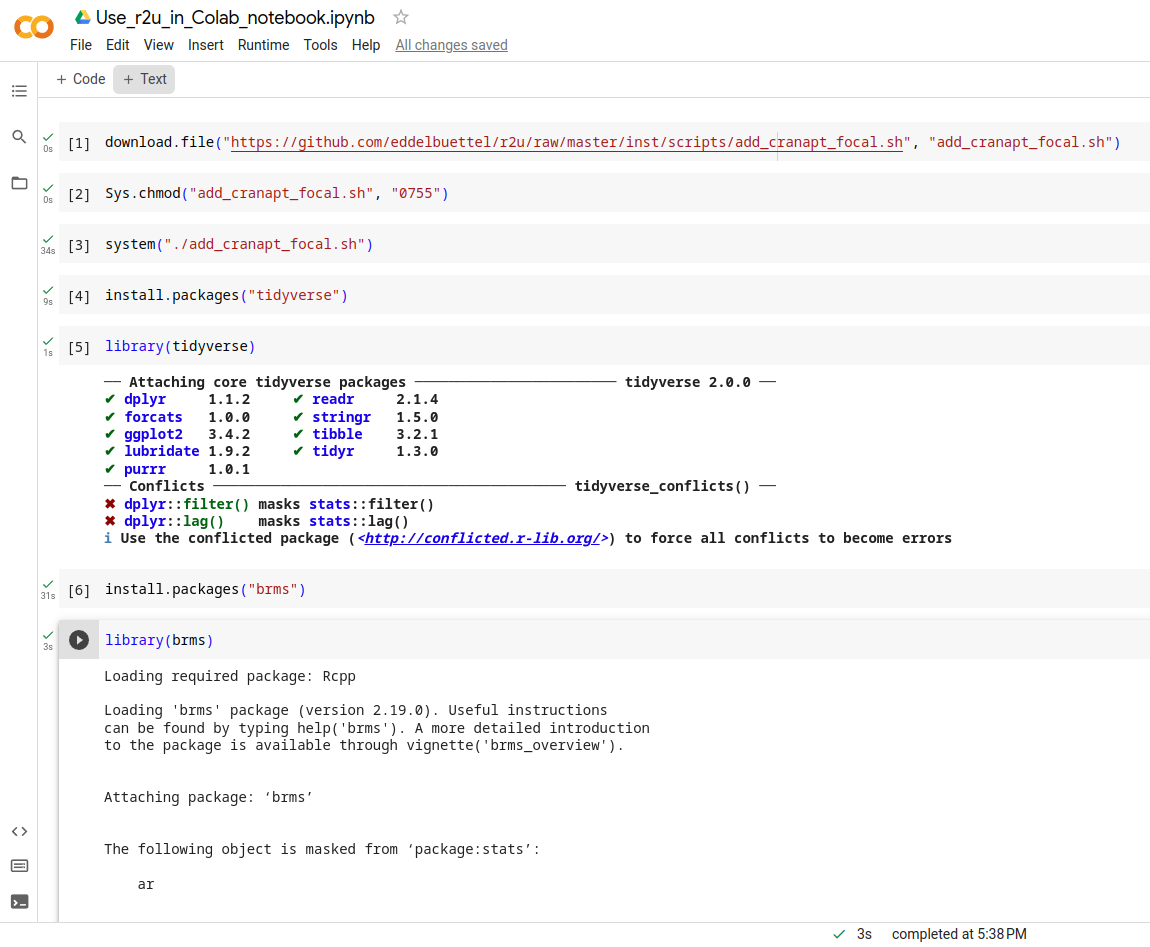
sudo journalctl -k --grep=tpm2
The output should resemble the following:
Jul 08 18:57:32 bhairava kernel: ACPI: SSDT 0x00000000BBEFC000 0003C6 (v02
LENOVO Tpm2Tabl 00001000 INTL 20160422) Jul 08 18:57:32 bhairava kernel:
ACPI: TPM2 0x00000000BBEFB000 000034 (v03 LENOVO TP-R0D 00000830
PTEC 00000002) Jul 08 18:57:32 bhairava kernel: ACPI: Reserving TPM2 table
memory at [mem 0xbbefb000-0xbbefb033]
You can also use the systemd-cryptenroll command to check for the availability of a TPM2 device on your laptop:
systemd-cryptenroll --tpm2-device=list
The output will be something like following:
blog git:(master) systemd-cryptenroll --tpm2-device=list
PATH        DEVICE      DRIVER
/dev/tpmrm0 MSFT0101:00 tpm_tis
   blog git:(master)
Next, ensure that you have connected your encrypted USB device. Note that systemd-cryptenroll only works with LUKS2 and not LUKS1. If your device is LUKS1-encrypted, you may encounter an error while enrolling the device, complaining about the LUKS2 superblock not found. To determine if your device uses a LUKS1 header or LUKS2, use the cryptsetup luksDump <device> command. If it is LUKS1, the header will begin with:
LUKS header information for /dev/sdb1
Version:        1
Cipher name:    aes
Cipher mode:    xts-plain64
Hash spec:      sha256
Payload offset: 4096
Converting from LUKS1 to LUKS2 is a simple process, but for safety, ensure that you backup the header using the cryptsetup luksHeaderBackup command. Once backed up, use the following command to convert the header to LUKS2:
sudo cryptsetup convert --type luks2 /dev/sdb1
After conversion, the header will look like this:
Version:        2
Epoch:          4
Metadata area:  16384 [bytes]
Keyslots area:  2064384 [bytes]
UUID:           000b2670-be4a-41b4-98eb-9adbd12a7616
Label:          (no label)
Subsystem:      (no subsystem)
Flags:          (no flags)
The next step is to enroll the new LUKS key for the encrypted device using systemd-cryptenroll. Run the following command:
sudo systemd-cryptenroll --tpm2-device=/dev/tpmrm0 --tpm2-pcrs="0+7" /dev/sdb1
This command will prompt you to provide the existing key to unseal the device. It will then add a new random key to the volume, allowing it to be unlocked in addition to the existing keys. Additionally, it will bind this new key to PCRs 0 and 7, representing the system firmware and Secure Boot state. If there is only one TPM device on the system, you can use --tpm2-device=auto to automatically select the device. To confirm that the new key has been enrolled, you can dump the LUKS configuration and look for a systemd-tpm2 token entry, as well as an additional entry in the Keyslots section. To test the setup, you can use the /usr/lib/systemd/systemd-cryptsetup command. Additionally, you can check if the device is unsealed by using lsblk:
sudo /usr/lib/systemd/systemd-cryptsetup attach GPG_USB "/dev/sdb1" - tpm2-device=auto
lsblk
The lsblk command should display the unsealed and mounted device, like this:
NAME        MAJ:MIN RM   SIZE RO TYPE  MOUNTPOINTS
sda           8:0    0 223.6G  0 disk
 sda1        8:1    0   976M  0 part  /boot/efi
 sda2        8:2    0 222.6G  0 part
   root    254:0    0 222.6G  0 crypt /
sdb           8:16   1   7.5G  0 disk
 sdb1        8:17   1   7.5G  0 part
   GPG_USB 254:1    0   7.5G  0 crypt /media/vasudev/GPG_USB
Auto Mounting the device Now that we have solved the initial problem of unsealing the USB device using TPM2 instead of manually entering the key, the next step is to automatically mount the device upon insertion and remove the mapping when the device is removed. This can be achieved using the following udev rules:
ACTION=="add", KERNEL=="sd*", ENV DEVTYPE =="partition", ENV ID_BUS =="usb", ENV SYSTEMD_WANTS ="mount-gpg-usb@$env DEVNAME .service"
ACTION=="remove", KERNEL=="sd*", ENV DEVTYPE =="partition", ENV ID_BUS =="usb", RUN+="/usr/local/bin/umount_enc_usb.sh '%E ID_FS_UUID '"
When a device is added, a systemd service is triggered to mount the device at a specific location. Initially, I used a script with the RUN directive, but it resulted in an exit code of 32. This might be due to systemd-cryptsetup taking some time to return, causing udev to time out. To address this, I opted to use a systemd service instead. For device removal, even though the physical device is no longer present, the mapping may still remain, causing issues upon reinsertion. To resolve this, I created a script to close the luks mapping upon device removal. Below are the systemd service and script files: mount_enc_usb.sh:
#!/bin/bash
set -x
if [[ "$#" -ne 1 ]]; then
    echo "$(basename $0) <device>"
    exit 1
fi
device_uuid="$(blkid --output udev $1   grep ID_FS_UUID=   cut -d= -f2)"
if [[ "$device_uuid" == 000b2670-be4a-41b4-98eb-9adbd12a7616 ]]; then
    # Found our device, let's trigger systemd-cryptsetup
    /usr/lib/systemd/systemd-cryptsetup attach GPG_USB "$1" - tpm2-device=auto
    [[ -d /media/vasudev/GPG_USB ]]   (mkdir -p /media/vasudev/GPG_USB/ && chown vasudev:vasudev /media/vasudev/GPG_USB)
    mount /dev/mapper/GPG_USB /media/vasudev/GPG_USB
else
    echo "Not the interested device. Ignoring."
    exit 0
fi
umount_enc_usb.sh:
#!/bin/bash
if [[ "$#" -ne 1 ]]; then
  echo "$(basename $0) <fsuuid>"
  exit 1
fi
if [[ "$1" == "000b2670-be4a-41b4-98eb-9adbd12a7616" ]]; then
  # Our device is removed, let's close the luks mapping
  [[ -e /dev/mapper/GPG_USB ]] && cryptsetup luksClose /dev/mapper/GPG_USB
else
  echo "Not our device."
  exit 0
fi
mount-gpg-usb@.service:
[Unit]
Description=Mount the encrypted USB device service
[Service]
Type=simple
ExecStart=/usr/local/bin/mount_enc_usb.sh
With this setup, plugging in the USB device will automatically unseal and mount it, and upon removal, the luks mapping will be closed.

Note

This can be even done for LUKS2 encrypted root disk but will need some tweaking in initramfs.

8 July 2023

Dirk Eddelbuettel: #40: Another r2u Example Making Colab Easier

Welcome to the 40th post in the $R^4 series. This one will just be a very brief illustration of r2u use in what might be an unexpected place: Google Colab. Colab has a strong bent towards Jupyter and Python but has been supporting R compute kernels for some time (by changing what they call the runtime ). And with a little exploration one can identify these are (currently, as of July 2023) running Ubuntu 20.04 aka focal . Which is of course one of two system supported by our lovely r2u project (with the other being the newer 22.04 aka jammy ). And I mostly tweeted / tooted about r2u since the its introduction in #37. And gave basically just a mention in passing in faster feedback post #38 as well as the faster feedback in ci post #39). So a brief recap may be in order. In essence, r2u makes all of CRAN available as full-fledged Ubuntu binaries with complete and full dependencies which are then installed directly and quickly via apt. Which, to top it of, are accessed directly from R via install.packages() so no special knowledge or sauce needed. We often summarize it as fast, easy, reliable: what is not to like . And, as we established in a few minutes of probing, it also works in the focal -based Colab session. The screen shot shows the basic step of fetching the setup script (for plain Ubuntu focal system) from r2u, making it executable and running it. Total time: 34 seconds. And after that we see the pure magic of install.packages("tidyverse") installing all of it in nine seconds. Additionally, we add the brms package in thirty-one seconds cia install.packages("brms"). Both load just fine and echo their current values.
r2u on colab focal r2u on colab focal
The commands that are executed in that R session are just
download.file("https://github.com/eddelbuettel/r2u/raw/master/inst/scripts/add_cranapt_focal.sh",
              "add_cranapt_focal.sh")
Sys.chmod("add_cranapt_focal.sh", "0755")
system("./add_cranapt_focal.sh")
install.packages("tidyverse")
library(tidyverse)
install.packages("brms")
library(brms)
The timings are the Colab notebook are visible in the left margin. The lack of output makes debugging a little trickier so I still recommend to use r2u for first expploration via a Docker container as e.g. rocker/r2u:jammy. More information about r2u is at its site, and we answered some question in issues, and at stackoverflow. More questions are always welcome! If you like this or other open-source work I do, you can now sponsor me at GitHub.

This post by Dirk Eddelbuettel originated on his Thinking inside the box blog. Please report excessive re-aggregation in third-party for-profit settings.

7 July 2023

Dirk Eddelbuettel: digest 0.6.33 on CRAN: Bugfix

Release 0.6.33 of the digest package arrived at CRAN today and has been uploaded to Debian already. digest creates hash digests of arbitrary R objects (using the md5, sha-1, sha-256, sha-512, crc32, xxhash32, xxhash64, murmur32, spookyhash, blake3, and crc32c algorithms) permitting easy comparison of R language objects. It is a mature and widely-used (with 58.6 million downloads just on the partial cloud mirrors of CRAN which keep logs) as many tasks may involve caching of objects for which it provides convenient general-purpose hash key generation to quickly identify the various objects. This release corrects a bad bug we accidentally introduced in release 0.6.32 a little under two weeks ago. As described we added crc32c and aimed for the simple portable approach (given that the accelerated version is now availble in our package crc32c) but overlooked one setting which promptly broked compilation on M1/M2/Arm64 (which we do not have access too, sadly). This was actually reported in issue #189 on the very day 0.6.32 was released and even before we got to blog about its announcement so that we could even mention it in the third paragraph there. This fix was a one-liner, and was committed hours later. Now, as it sometimes happens, processing the new upload at CRAN took some time. They appeared to be down the next day not processing anything. Once opened again, they reported changes to worse as can be seen in reverse-dependency checks. Turns out those were false positive ( it happens ) but then the package lingered a little longer and quite a lot of folks chimed in at in issue #189. I have now learned that there were in fact some temporary hardware issues in one of the CRAN locations, so it all had a reason but most importantly it is all better now. My apologies for the temporary breakage, we attempted to address it swiftly but sometimes things beyond our control (and reach) do slow things down. Now new and fixed binaries should appear in the next few days. My CRANberries provides the usual summary of changes to the previous version. For questions or comments use the issue tracker off the GitHub repo. If you like this or other open-source work I do, you can now sponsor me at GitHub.

This post by Dirk Eddelbuettel originated on his Thinking inside the box blog. Please report excessive re-aggregation in third-party for-profit settings.

Dirk Eddelbuettel: Rcpp 1.0.11 on CRAN: Updates and Maintenance

rcpp logo The Rcpp Core Team is delighted to announce that the newest release 1.0.11 of the Rcpp package arrived on CRAN and in Debian earlier today. Windows and macOS builds should appear at CRAN in the next few days, as will builds in different Linux distribution and of course at r2u. The release was finalized three days ago, but given the widespread use and extended reverse dependencies at CRAN it usually takes a few days to be processed. This release continues with the six-months January-July cycle started with release 1.0.5 in July 2020. As a reminder, we do of course make interim snapshot dev or rc releases available via the Rcpp drat repo and strongly encourage their use and testing I run my systems with these versions which tend to work just as well, and are also fully tested against all reverse-dependencies. Rcpp has long established itself as the most popular way of enhancing R with C or C++ code. Right now, 2720 packages on CRAN depend on Rcpp for making analytical code go faster and further, along with 251 in BioConductor. On CRAN, 13.7% of all packages depend (directly) on Rcpp, and 59.6% of all compiled packages do. From the cloud mirror of CRAN (which is but a subset of all CRAN downloads), Rcpp has been downloaded 72.5 million times. The two published papers (also included in the package as preprint vignettes) have, respectively, 1678 (JSS, 2011) and 259 (TAS, 2018) citations, while the the book (Springer useR!, 2013) has another 588. This release is incremental as usual, generally preserving existing capabilities faithfully while smoothing our corners and / or extending slightly, sometimes in response to changing and tightened demands from CRAN or R standards. The full list below details all changes, their respective PRs and, if applicable, issue tickets. Big thanks from all of us to all contributors!

Changes in Rcpp version 1.0.11 (2023-07-03)
  • Changes in Rcpp API:
    • Rcpp:::CxxFlags() now quotes only non-standard include path on linux (Lukasz in #1243 closing #1242).
    • Two unit tests no longer accidentally bark on stdout (Dirk and I aki in #1245).
    • Compilation under C++20 using clang++ and its standard library is enabled (Dirk in #1248 closing #1244).
    • Use backticks in a generated .Call() statement in RcppExports.R (Dirk #1256 closing #1255).
    • Switch to system2() to capture standard error messages in error cases (I aki in #1259 and #1261 fixing #1257).
  • Changes in Rcpp Documentation:
    • The CITATION file format has been updated (Dirk in #1250 fixing #1249).
  • Changes in Rcpp Deployment:
    • A test for qnorm now uses the more accurate value from R 4.3.0 (Dirk in #1252 and #1260 fixing #1251).
    • Skip tests with path issues on Windows (I aki in #1258).
    • Container deployment in continuous integrations was improved. (I aki and Dirk in #1264, Dirk in #1269).
    • Several files receives minor edits to please R CMD check from r-devel (Dirk in #1267).

Thanks to my CRANberries, you can also look at a diff to the previous release. Questions, comments etc should go to the rcpp-devel mailing list off the R-Forge page. Bugs reports are welcome at the GitHub issue tracker as well (where one can also search among open or closed issues); questions are also welcome under rcpp tag at StackOverflow which also allows searching among the (currently) 2994 previous questions. If you like this or other open-source work I do, you can sponsor me at GitHub.

This post by Dirk Eddelbuettel originated on his Thinking inside the box blog. Please report excessive re-aggregation in third-party for-profit settings.

Next.

Previous.