Some years ago I came across a really peculiar newsgroup post. It was not about technicalities of any sort. It was about history. A beautifully written history of computers. From the Turing machine to the Free Software world, the original author managed to capture all the important events of the computer revolution with a great deal of humor. Re-posting it here, it is just brilliant.
The Gospel of Tux (v1.0)
In the beginning Turing created the Machine.
And the Machine was crufty and bodacious, existing in theory only. And von Neumann looked upon the Machine, and saw that it was crufty. He divided the Machine into two Abstractions, the Data and the Code, and yet the two were one Architecture. This is a great Mystery, and the beginning of wisdom.
And von Neumann spoke unto the Architecture, and blessed it, saying, Go forth and replicate, freely exchanging data and code, and bring forth all manner of devices unto the earth. And it was so, and it was cool. The Architecture prospered and was implemented in hardware and software. And it brought forth many Systems unto the earth.
The first Systems were mighty giants; many great works of renown did they accomplish. Among them were Colossus, the codebreaker; ENIAC, the targeter; EDSAC and MULTIVAC and all manner of froody creatures ending in AC, the experimenters; and SAGE, the defender of the sky and father of all networks. These were the mighty giants of old, the first children of Turing, and their works are written in the Books of the Ancients. This was the First Age, the age of Lore.
Now the sons of Marketing looked upon the children of Turing, and saw that they were swift of mind and terse of name and had many great and baleful attributes. And they said unto themselves, Let us go now and make us Corporations, to bind the Systems to our own use that they may bring us great fortune. With sweet words did they lure their customers, and with many chains did they bind the Systems, to fashion them after their own image. And the sons of Marketing fashioned themselves Suits to wear, the better to lure their customers, and wrote grave and perilous Licenses, the better to bind the Systems. And the sons of Marketing thus became known as Suits, despising and being despised by the true Engineers, the children of von Neumann.
And the Systems and their Corporations replicated and grew numerous upon the earth. In those days there were IBM and Digital, Burroughs and Honeywell, Unisys and Rand, and many others. And they each kept to their own System, hardware and software, and did not interchange, for their Licences forbade it. This was the Second Age, the age of Mainframes.
Now it came to pass that the spirits of Turing and von Neumann looked upon the earth and were displeased. The Systems and their Corporations had grown large and bulky, and Suits ruled over true Engineers. And the Customers groaned and cried loudly unto heaven, saying, Oh that there would be created a System mighty in power, yet small in size, able to reach into the very home! And the Engineers groaned and cried likewise, saying, Oh, that a deliverer would arise to grant us freedom from these oppressing Suits and their grave and perilous Licences, and send us a System of our own, that we may hack therein! And the spirits of Turing and von Neumann heard the cries and were moved, and said unto each other, Let us go down and fabricate a Breakthrough, that these cries may be stilled.
And that day the spirits of Turing and von Neumann spake unto Moore of Intel, granting him insight and wisdom to understand the future. And Moore was with chip, and he brought forth the chip and named it 4004. And Moore did bless the Chip, saying, Thou art a Breakthrough; with my own Corporation have I fabricated thee. Thou thou art yet as small as a dust mote, yet shall thou grow and replicate unto the size of a mountain, and conquer all before thee. This blessing I give unto thee: every eighteen months shall thou double in capacity, until the end of the age. This is Moore s Law, which endures unto this day.
And the birth of 4004 was the beginning of the Third Age, the age of Microchips. And as the Mainframes and their Systems and Corporations had flourished, so did the Microchips and their Systems and Corporations. And their lineage was on this wise:
Moore begat Intel. Intel begat Mostech, Zilog and Atari. Mostech begat 6502, and Zilog begat Z80. Intel also begat 8800, who begat Altair; and 8086, mother of all PCs. 6502 begat Commodore, who begat PET and 64; and Apple, who begat 2. (Apple is the great Mystery, the Fruit that was devoured, yet bloomed again.) Atari begat 800 and 1200, masters of the game, who were destroyed by Sega and Nintendo. Xerox begat PARC. Commodore and PARC begat Amiga, creator of fine arts; Apple and PARC begat Lisa, who begat Macintosh, who begat iMac. Atari and PARC begat ST, the music maker, who died and was no more. Z80 begat Sinclair the dwarf, TRS-80 and CP/M, who begat many machines, but soon passed from this world. Altair, Apple and Commodore together begat Microsoft, the Great Darkness which is called Abomination, Destroyer of the Earth, the Gates of Hell.
Now it came to pass in the Age of Microchips that IBM, the greatest of the Mainframe Corporations, looked upon the young Microchip Systems and was greatly vexed. And in their vexation and wrath they smote the earth and created the IBM PC. The PC was without sound and colour, crufty and bodacious in great measure, and its likeness was a tramp, yet the Customers were greatly moved and did purchase the PC in great numbers. And IBM sought about for an Operating System Provider, for in their haste they had not created one, nor had they forged a suitably grave and perilous License, saying, First we will build the market, then we will create a new System, one in our own image, and bound by our Licence. But they reasoned thus out of pride and not wisdom, not forseeing the wrath which was to come.
And IBM came unto Microsoft, who licensed unto them QDOS, the child of CP/M and 8086. (8086 was the daughter of Intel, the child of Moore). And QDOS grew, and was named MS-DOS. And MS-DOS and the PC together waxed mighty, and conquered all markets, replicating and taking possession thereof, in accordance with Moore s Law. And Intel grew terrible and devoured all her children, such that no chip could stand before her. And Microsoft grew proud and devoured IBM, and this was a great marvel in the land. All these things are written in the Books of the Deeds of Microsoft.
In the fullness of time MS-DOS begat Windows. And this is the lineage of Windows: CP/M begat QDOS. QDOS begat DOS 1.0. DOS 1.0 begat DOS 2.0 by way of Unix. DOS 2.0 begat Windows 3.11 by way of PARC and Macintosh. IBM and Microsoft begat OS/2, who begat Windows NT and Warp, the lost OS of lore. Windows 3.11 begat Windows 95 after triumphing over Macintosh in a mighty Battle of Licences. Windows NT begat NT 4.0 by way of Windows 95. NT 4.0 begat NT 5.0, the OS also called Windows 2000, The Millenium Bug, Doomsday, Armageddon, The End Of All Things.
Now it came to pass that Microsoft had waxed great and mighty among the Microchip Corporations; mighter than any of the Mainframe Corporations before it had it waxed. And Gates heart was hardened, and he swore unto his Customers and their Engineers the words of this curse:
Children of von Neumann, hear me. IBM and the Mainframe Corporations bound thy forefathers with grave and perilous Licences, such that ye cried unto the spirits of Turing and von Neumann for deliverance. Now I say unto ye: I am greater than any Corporation before me. Will I loosen your Licences? Nay, I will bind thee with Licences twice as grave and ten times more perilous than my forefathers. I will engrave my Licence on thy heart and write my Serial Number upon thy frontal lobes. I will bind thee to the Windows Platform with cunning artifices and with devious schemes. I will bind thee to the Intel Chipset with crufty code and with gnarly APIs. I will capture and enslave thee as no generation has been enslaved before. And wherefore will ye cry then unto the spirits of Turing, and von Neumann, and Moore? They cannot hear ye. I am become a greater Power than they. Ye shall cry only unto me, and shall live by my mercy and my wrath. I am the Gates of Hell; I hold the portal to MSNBC and the keys to the Blue Screen of Death. Be ye afraid; be ye greatly afraid; serve only me, and live.
And the people were cowed in terror and gave homage to Microsoft, and endured the many grave and perilous trials which the Windows platform and its greatly bodacious Licence forced upon them. And once again did they cry to Turing and von Neumann and Moore for a deliverer, but none was found equal to the task until the birth of Linux.
These are the generations of Linux:
SAGE begat ARPA, which begat TCP/IP, and Aloha, which begat Ethernet. Bell begat Multics, which begat C, which begat Unix. Unix and TCP/IP begat Internet, which begat the World Wide Web. Unix begat RMS, father of the great GNU, which begat the Libraries and Emacs, chief of the Utilities. In the days of the Web, Internet and Ethernet begat the Intranet LAN, which rose to renown among all Corporations and prepared the way for the Penguin.
And Linus and the Web begat the Kernel through Unix. The Kernel, the Libraries and the Utilities together are the Distribution, the one Penguin in many forms, forever and ever praised.
Now in those days there was in the land of Helsinki a young scholar named Linus the Torvald. Linus was a devout man, a disciple of RMS and mighty in the spirit of Turing, von Neumann and Moore. One day as he was meditating on the Architecture, Linus fell into a trance and was granted a vision. And in the vision he saw a great Penguin, serene and well-favoured, sitting upon an ice floe eating fish. And at the sight of the Penguin Linus was deeply afraid, and he cried unto the spirits of Turing, von Neumann and Moore for an interpretation of the dream.
And in the dream the spirits of Turing, von Neumann and Moore answered and spoke unto him, saying, Fear not, Linus, most beloved hacker. You are exceedingly cool and froody. The great Penguin which you see is an Operating System which you shall create and deploy unto the earth. The ice-floe is the earth and all the systems thereof, upon which the Penguin shall rest and rejoice at the completion of its task. And the fish on which the Penguin feeds are the crufty Licensed codebases which swim beneath all the earth s systems. The Penguin shall hunt and devour all that is crufty, gnarly and bodacious; all code which wriggles like spaghetti, or is infested with blighting creatures, or is bound by grave and perilous Licences shall it capture. And in capturing shall it replicate, and in replicating shall it document, and in documentation shall it bring freedom, serenity and most cool froodiness to the earth and all who code therein.
Linus rose from meditation and created a tiny Operating System Kernel as the dream had foreshewn him; in the manner of RMS, he released the Kernel unto the World Wide Web for all to take and behold. And in the fulness of Internet Time the Kernel grew and replicated, becoming most cool and exceedingly froody, until at last it was recognised as indeed a great and mighty Penguin, whose name was Tux. And the followers of Linus took refuge in the Kernel, the Libraries and the Utilities; they installed Distribution after Distribution, and made sacrifice unto the GNU and the Penguin, and gave thanks to the spirits of Turing, von Neumann and Moore, for their deliverance from the hand of Microsoft. And this was the beginning of the Fourth Age, the age of Open Source.
Now there is much more to be said about the exceeding strange and wonderful events of those days; how some Suits of Microsoft plotted war upon the Penguin, but were discovered on a Halloween Eve; how Gates fell among lawyers and was betrayed and crucified by his former friends, the apostles of Media; how the mercenary Knights of the Red Hat brought the gospel of the Penguin into the halls of the Corporations; and even of the dispute between the brethren of Gnome and KDE over a trollish Licence. But all these things are recorded elsewhere, in the Books of the Deeds of the Penguin and the Chronicles of the Fourth Age, and I suppose if they were all narrated they would fill a stack of DVDs as deep and perilous as a Usenet Newsgroup.
Now may you code in the power of the Source; may the Kernel, the Libraries and the Utilities be with you, throughout all Distributions, until the end of the Epoch. Amen.
 Periodic Calendar
, a GPL ed GUI application, coded in Java that helps keeping track of women menstrual cycles and predict fertility periods, has just entered Debian. This information can be used as supportive either for conception or contraception planning.
This program (
pcalendar in Debian) is by far more complete than
mencal (a simple menstruation calendar that can be run in the console) or
cycle (a windowed calendar that can calculate stuff based on the length of the cycle or on statistics of previous periods), and provides support for BBT and sympto-thermal methods, which have the highest reliability in fertility periods prediction. User can thus choose any subset of the features to be used or even fall to the generic calendar method (which if used alone is very unreliable).

Keep in mind, though, that -as the authors of the program insist on- Periodic Calendar is NOT an equal substitute to the fertility planning consultants or doctors, and methods used are not 100% effective. It s a useful program, anyway.
I ve also translated the program into Spanish, made some cute icons and added MIME support so that data files can be easily open from the desktop.

Many people in the united states seem to have the opinion, that the
"public is willing to give up most of their privacy" in particular when
dealing with online services such as Facebook. I believe in his
keynote
at ECML-PKDD, Albert-L szl Barab si of Harvard University expessed such
a view, that this data will just become more and more available. I'm not sure
if it was him or someone else (I believe it was someone else) that essentially
claimed "privacy is irrelevant". Another popular opinion is that "it's only
old people caring for privacy".
However, just like politics, these things tend to oscillate from one
extreme to another. For example, the recent years in Europe, conservative
parties were winning one election after another. Now in France, the socialist
parties have just won the senate, the conservative parties in Germany are
losing in one state after the other and so on. And this will change back again,
too. Democracy also lives from changing roles in government, as this drives
both progress and fights corruption.
We might be seeing the one extreme in the united states right now, where
people are readily giving away their location and interests for free access to
a web site. This can swing back any time.
In Germany, one of the government parties - the liberal democrats, FDP -
just dropped out of the Berlin city government, down to 1.8% of voters. Yes,
this is the party the German foreign minister, Guido Westerwelle is from. The
pirate party
[en.wikipedia.org] - much of their program is about privacy, civil rights,
copyright reforms and the internet - which didn't even participate in the
previous elections since they were was founded just 5 years ago jumped to
8.9%, scoring higher than the liberal democrats did in the previous elections.
In 2009 they scored a surprising high 2% in the federal elections - current
polls see them anywhere from 4% to 7% at the federal level, so they
will probably get seats in parliament in 2013. (There are also other reasons
why the liberal democrats have been losing voters so badly, though! Their
current numbers indicate they might drop out of parliament in 2013.)
The Greens in Germany, which are also very much oriented towards privacy
and civil rights, are also on the rise, and in march just became the second
strongest party and senior partner in the governing coalition of
Baden-W rttemberg, which historically was a heartland of the
conservatives.
So don't assume that privacy is irrelevant nowadays. The public opinion
can swing quickly. In particular in democratic systems that have room for
more than two parties - so probably not in the united states - such topics
can actually influence elections a lot. Within 30 years, the Greens now
frequently reach values of 20% in federal polls and up to 30% in some
states. It doesn't look as if they are going to go away soon.
Also don't assume that it's just old people caring about privacy
- in Germany, in particular the pirate party and the Greens are very much
favored by the young people. The typical voter for the pirates is less than
30 years old, male, has a higher education and works in the media or
internet business.
In Germany, much of the protest for more privacy - and against the
too readily data collection by companies such as Facebook and Google - is
driven by the young internet-users and -workers. I believe this will be
similar in other parts of Europe - there are other pirate parties all over
Europe. And this can happen to the united states any time, too.
Electronic freedom - e.g. pushed by the
Electronic Frontier Foundation, but also
the open source movement - does have quite a history in the united states.
But in particular open source has made such a huge progress the last decade,
these movements in the US could just be a bit out of breath right now. I'm
sure they will come back with a strong push against the privacy invasions
we're seeing right now. And that can likely take down a giant like Facebook,
too. So don't bet on people continuing to give up their privacy!
I have recently been working on a project that requires a 12V supply. Ordinarily this is no problem my selection of bench supplies are generally more than a match for anything I throw at them.
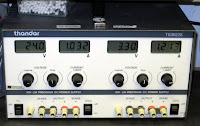
This project however needed a little more "oomph" than usual, specifically 200W more. Funnily enough a precision variable output bench supply capable of supplying 20A are rare and *very* expensive beasties.
So we turn to a fixed output supply, after all I will want to run my project without hogging my bench supplies anyway. These can be bought from various electronics suppliers like Farnell from around the 50 mark and Chinese imports from Ebay sellers start around the 20 mark.
All very well and good but that is money I was not planning on spending and possibly a month of waiting for an already badly delayed project. So I decided to Convert an old ATX PSU into a 12V source. This is not a new idea and a quick search revealed many suitable guides online. I had a quick skim, decided I did understand the general idea and ploughed ahead.
Wikipedia has a very useful page on the
ATX standard complete with pinout diagrams and colour codes. The pile of grey box ATX supplies available on my shelf was examined and one was helpfully labelled with a sticker proclaiming 22A@12V and we had a winner.
Opening the case of the donor 450W CIT branded supply revealed a mostly empty enclosure with the usual basic switching arrangement. I removed most of the wire loom aside from two of each output voltage (3.3V, 5V and 12V i figured the other voltages might be useful in future) and three commons, the 3.3V and 5V sense lines were also kept. Each of these pairs were cut to length and leads were wired to 4mm sockets.
The "PWR_EN" line was wired via a toggle switch to ground so the output can be switched on and off easily. The 5V standby and a 5V output line were wired to a green/red bi-colour LED (via 270 current limit resistors) to give indication that mains is present and when the output is on.
Holes were drilled for four 4mm sockets an indicator LED and a switch. The connectors and switches were all mounted in the PSU casework. I plugged it all in, put an 8.2 load resistor on the 5V line with an ammeter in line and a voltmeter across the 12V rail.

I turned the mains on and the LED lit up green (5V standby worked) and when I flicked the output switch the LED turned orange, the 12V line went to 12V and the expected 0.6A flowed through the load resistor.
Basically, Success!
I have since loaded the supply up to the 200W operating load and nothing unexpected has happened so I am happy. Seems converting an ATX PSU is a perfectly good way of getting a 200W 12V supply and I can recommend it for anyone as cheap as me willing to put an hour or so into such a project.

So, this story begins in January 2001, when I applied in the Debian New
Maintainer Process.
I wanted to maintain Geneweb, which I was using to publish my
genealogy research results. And I wanted to keep it up-to-date while
upstream was doing a quite fast development.
Moreover, I quickly noticed that Geneweb had big trouble in respecting
the way data is organized on a Debian system, and respect the FHS. How
to have weveral users able to publish their data on the same server
without compromizing the overall system security, etc.
Upstream development didn't really care about that. Daniel de
Rauglaudre is an excellent genealogist and developer but he was not
interested in making Geneweb clean "the Debian way". For instance, at
that time, it wasn't easy to setup a server, where genealogy databases
could be published without having to manually launch a daemon in user
mode at each reboot.
Arranging this was indeed my first contribution. I contributed a few
patches to make it easier to turn Geneweb into something
FHS-compliant...and I developed init scripts and an organization
allowing one to have shared databases after system reboots.
That was rapidly a great introduction to Debian maintainer scripts and
even security-related challenges. And all this....because I needed it.
Basically, in 2001, the geneweb package adopted the organization it still has in Debian
and Ubuntu, 10 years later:
- daemon optionnally launched at boot time, listening on a
configurable port
- daemon running with an unprivileged account
- local group of users allowed to "publish" their data by putting
files in /var/lib/geneweb (should now be moved to /srv, I guess)
- related maintenance of this with debconf (including keeping local
modifications made *out* of debconf, which is sometimes neglected by
maintainers)
While doing so, I was going through the New Maintainer Process. The
Debian developer who had signed my key was Sam Tardieu, of of those
longstanding "Freenix" dudes I was sometimes hanging around.
I don't remember who did write my advocacy.
Michael Mattice was my first Application Manager. Interestingly, here
are the three first questions he asked my as part of the Policy and
Procedures check :
-
Firstly, can you explain the key points of the Social Contract and DFSG?
-
Donald Knuth, author of TeX, insists that no-one has the right to
modify the source code of TeX, and that any changes must be made using "change files" (a sort of patch file). Furthermore, any
modification of TeX which produces something which fails the "trip test" (a regression test suite) may not be called TeX. So how come TeX (in the guise of tetex-*)
is in main?
-
What is Debian's (current) approach to non-free software? Why?
-
Debian was offered a Debian-specific license to package a certain
piece of software (I forget which). Would we put it in main?
Mike actually asked the questions on February 17th and I probably
answered immediately. Unfortunately it seems that I lost my answers.
Maybe they are in some archive somewhere. Would be interesting to see
how I ended giving an answer about the TeX exception.:-)
Immediately, Mike moved to the Tasks and Skills step and checked my geneweb
and lifelines packages (I already prepared a package for that other genealogy
software). From my records, he found a few lintian warnings, which I
probably made my best to fix, then later on, on March 12th, he
answered me that thigns were OK and he was marking the T&S step as
passed...handing things over to the NM database, asking me what
username I wanted on debian.org (obviously, you know what I answered
to this!).
Then nothing happened..:-)
I was not that impatient, but finally, around June 27th, I politely
mailed NM Frontdesk (I guess) to get news...and I got a very quick
answer by Martin Michlmayr. Martin was indeed worried about the
situation (he told me I was on his radar....fun as, many years later,
as many DDs, Martin probably went on mine because of pending localization work..:-))
Finally, Martin decided he was not entirely happy with the (maybe too
short) processing for P&P and proposed me (very politely, you know
how Martin is!) to do it again. So, some more questions...:-)
Here, I have the answers. Really fun ro read. Hang on, pure bubulle
style, very verbose!
- Q: Do you know (and can you explain) the difference between free
speech and free beer? Is Debian mainly about free speech or free
beer? My answer: Free speech means that one is able to say what one
wants, without any constraint. No one can tell you what you should
say. Mozilla is free software. A free beer, on the other hand, is a
beer that you don't be charged for. You may drink a free beer but maybe cannot be free to choose the beer you want to
drink...:-). Internet Explorer is a free beer. By chance, we
french-speaking people have two different words for this (libre and
gratuit). Some people have even adopted "libre software " for being
used instead of "free software".
- Q: The e-mail client pine is in non-free. Can you tell me the difference between main, contrib and non-free?
My answer (typos and horrible English not corrected...):
Packages in main are OK with Debian Free Software Guidelines (which defin
what is considered "free" by Debian) and all other requirements of the
Debian Policy. Packages in contrib are OK witgh DFSG bu may break some other constraints.
For instance, they may be wrappers for non-free packages (the old netscape
wrappers were good examples. The setiathome package is also another example
as it requires the download of the setiathome client which is not free,
because source code is not available). Very buggy packages may also be
placed into contrib instead of main (a QA requirement). Pakages in non-free are not conform to DFSG. Simply speaking they are not
"free software" as defined by DFSG. Some of them because their licence
prohibits redistribution, or redistribution of derived work (the french
package of Bernard Gaulle fot Latex could fall there).
- Q: Do you agree to uphold the Social Contract and the DFSG? Answer:
Yes I do (wow! I'm back 16 years down to my wedding day...:-))
(Doh, already kidding with fellow DDs)
- Q: If you are accepted as a Debian developer, you will get accounts on the Debian machines. Have you read the Debian Machine Usage
Policies (DMUP) at http://www.debian.org/devel/dmup ? Do you accept
them? My answer: I did read the DMUP and I fully accept them.
- Q: What are Non-Maintainer Uploads (NMUs) and when would you do an NMU?
Answer: This is an update for a package which is done by someone who is *not* the
official package maintainer (I guess I give the correct english definition :
I read the translated dev. reference....). First of all, a NMU should
be done after trying to get in contact with the
official package maintainer. I don't know if this is the awaited answer, but
this point looks important to me. This is the only way for verifying that
(s)he is not working on the same problem. NMU's are the most welcome during freeze phases when they correct bugs rated
"severe" of higher. They are also welcome when they come from Debian
Security Manager(s) for correcting security-related bugs. Another NMU
source are those which are needed for ports to work. As a recent, and probably not very experienced package manager, I would
probably be very prident with NMU's anyway...:-)
- Q: Tell me 3 different methods to close a bug in the BTS. Answer:
Well, If I have properly understood Dev. Reference, there are two
recommended methods and a third which is discouraged :
- properly use the debian/changelog file (by adding "Closes: Bug#xxxxx"
statements in it). The bug will automagically be closed by the archive
maintenance software
- by mail by sending the .changes file to xxxxx-done@bugs.debian.org,
xxxxx being the bug number
- by sending a "close" command to control@bugs.debian.org
The latter should never be used, says Dev. Reference. I must admit that I
don't know why it is still mentioned. There is certainly a good reason.
I'm not aware of another method...
- Q: What would you do if a bug was reported against your package and you are not able to fix it yourself?
Answer: First, I would double check with upstream author(s) if this cannot be fixed
by him/her/them.... Then, I would probably ask for help and/or advice in debian-qa if the bug is
critical, grave or serious. If it is normal, I would ask on debian-devel or
maybe think more about possible solutions.... If the bug still cannot be fixed and is "severe" or higher, I would either
consider orphaning it (not being able to fix it may mean that I do not have
the skills for maintaining it properly) or having it adopted by someone
else. I don't think there is a unique answer there. The key point for
me is certainly "ask for help in debian-qa". (OK, not the best
answer ever...)
- Q: You've just heard about this great program and would like to package
> it, what would you do? Answer:
First, check on the WNPP page. The purpose here is avoiding having two
people working on the same package. Then, assuming no on,e works on it, open a bug against wnpp speudo-package
with a copy to debian-devel. The "bug" should include a short description of
the package and what I intend to do for packaging. The URL for downloading
sources for the program should be given. The subject of the bug report is
normalized. The bug report should be of the "wishlist" class. When the new package is ready and uploaded for the first time, it should
include the appropriate statement for closing the wnpp bug.
- Q: Do you know what 'lintian' is? Why is it useful? Answer: It is a set of tools for making automatic checks of packages. It may detect
some bugs, common errors, Debian Policy violations and so on. This is a very
useful tools for polishing packages. For instance, in my "geneweb" unofficial package, the last remaining lintian
report is about the creation of a /var/geneweb directory which violates
Debian Policy.
- Q: What does version 3.4-2.1 mean? What Debian control file would you
put this in? (Hint: NMU). Answer:
This is the Debian package of version 3.4 of program "foo". The current
package version in the distribution was -2 and someone made a NMU of this
package. This would be put in debian/changelog
- Q: You have a package in contrib, why would it have to go there? What
could you do (in theory at least) to get it into main? Answer:
The package in consistent with DFSG but other constraints are not respected.
The most probable reason is being dependent of "non-free" packages (there
may be other reasons but none comes to my mind at this time....). In that
case, I should try to make it independent of these packages. For instance,
trying to replace a "Depends: netscape-base" line by a "Depends:
www-browser" line...if it may be done, of course!
- Q: If you had a file in your package which usualy gets changed by a
user for local settings, how doyou make sure your next version of the
package doesn't overwrite it? Answer:
By putting its name into the debian/conffiles line. By the way, I guess
you're meaning "changed by a local system administrator for local settings"
here, don't you? (hey, answering a question with another one, good
trick, man...)
- Q: What would you do if you wanted to retire from the project and let other developers maintainer your packages?
Answer: The correct term is "orphan" the package.
Make a bug report against wnpp (with a normalised subject starting
with O, see Dev. Ref). The bug severity is "normal". If this is an important package
for the distribution, the bug should be of "important" severity and the bug
report should have a subject beginning with RFA (Request For Azdoption). In
that case, an announce in debian-devel is also asked. In both cases, a new package should be uploaded with Debian QA Group as
maintainer.
What a bunch of questions..:-). Reading my answers ten years after, I
see that some answers are somehow naive but, after all, they're not so
bad. I really remember spending hours in writing them (my English was
somehow more shaky at that time)
The last question was: "Please tell me about about yourself and what
you intend to do for Debian".
Here, Martin opened a big can of worms..:-)
So, you'll learn about this in the next episode..:-)
The third in my serious about my family s recent visit to Mexico see also
part 1 and
part 2.
Shopping in Mexico was probably the thing I was least prepared for. I probably had the biggest wins of the trip shopping, and also the biggest fails (though they weren t all that significant).
It seems to me that shopping is all about serendipity. You almost have to be good at impulse buying. I normally try hard to resist impulse purchases, preferring to research and compare carefully before making a decision. That attitude didn t serve me well in Mexico, and when I was able to overcome it, I got some great purchases.
Around here, some of the best places to shop are the ones that have been in business for decades. Anderson Office Supply in Newton, KS, for instance, has been around for over 100 years, and has in stock, even everything from a ribbon for my
slightly obscure 1940s typewriter to local history books.
Moler s Camera in Wichita often meets or beats the online stores prices, and has better service.
But in Mexico the best places seemed to be packed into a large crowded shopping area, or a dusty stand along a road, or a guy selling stuff on a plaza somewhere.
Here is Guadalajara s market (San Juan de Dios):
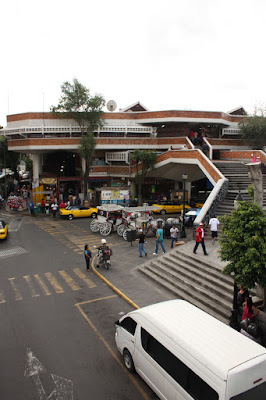
It s an incredible open-air market. We spent quite some time there, even ate lunch, and yet I m sure we saw only a small fraction of what they had. It was a cramped place, with small booths and tiny aisles, but all sorts of interesting things. Although I did appreciate walking quickly past the raw pork and fish corner. Terah bought some genuine extract of vanilla there, at a good price.
Some of the street vendors were selling what I think were butterfly toys they had some sort of launcher that would launch them in the air, and they d flutter and float down to the ground. We saw them mainly in Guadalajara Centro on our first day, and I (unwisely, it turns out) thought, Hmm, a plastic toy our boys would love it, but I don t want to buy it on our first day. Besides, I m sure we ll see them all over or online. Wrong on both counts. So there s one of my fails.
My greatest win came on the road back from Guachimontones (an ancient pyramid site). Every so often along that country road, there would be a vendor with a table selling something or other. I saw some paintings out my window, thought neat , but and here you can see how terrible an impulse buyer I am didn t actually put together that we should turn around and look at them until 10 minutes later after a bathroom stop for Jacob. We went back, and I picked out a beautiful painting on canvas of those pyramids at sunset. And the charge: 200 pesos (about $17 USD). Incredible and incredibly cheap, and there is a great place on my wall for it. The vendor was also the artist. I am kicking myself for only buying one. (No photo yet as it was too big to practically transport by plane.)
Another memorable purchase was this one:

This was another roadside find. We were driving through Ajijic, and I noted a rug vendor along the side of the road. I had walked past a rug vendor in the Guadalajara market, so I was keeping my eye out. I made a note to stop there on our way back out of Ajijic. So we did. This is a rug made in the Zapotec tradition, all hand-made, with natural dyes and wool. It was 550 pesos (about $46 USD), which I considered to also be a pretty good deal for what it was. I have no idea how many hours went into creating it, but I m sure it was many.
My luck in shops wasn t so good. We visited Tlaquepaque, which had lots of shops selling beautiful things. But the prices there were higher than I d pay for similar things back home. Tonala s shops were too inconveniently located to be practical with what were then tired boys, so we didn t go in there.
I m not used to shopping without planning, and perhaps am not very good at it. On the other hand, I really enjoyed making those two purchases, and only regret not buying another 200-peso painting! Maybe next time I m in Mexico, I ll even buy something on the first day there. Terah will be so proud..
For the story, due to license reasons, the version of Java packaged in Linux distributions is not the same as the one released on the
official website.
Each time a new version of Java
is was released, Sun/Oracle people
are were publishing a other distro specific release available on a
dedicated website.
Since I have been maintaining sun-java6 packages for a year and half, I am following the rhythm releases (security is one of the reasons).
A few days ago, I pinged on Twitter
Dalibor Topic, who is, AFAIK, the person in charge of this at Oracle, he replied with a blog post
Retiring the DLJ.
The main information from this blog post is:
[...] further Oracle JDK 6 (or Oracle JDK 7) releases on Linux and Solaris will not be provided under the DLJ [...]
Basically, that means that Linux distributions will not be able to package new releases of the proprietary JVM/JDK (including the latest update -27). The only release available in the Linux distro will be the OpenJDK.
While I am glad to see Oracle pushing the free JDK, I am a bit concern by this sudden decision. There are still bugs (for example, with fonts, applets or other
others issues) present in the OpenJDK which does not happen in the sun-java6 packages.
And also, as
Andrew John Hughes said on Twitter, the Oracle proprietary JVM just lost one of the two freedoms it had (free to redistribute the software)...
Moreover, many people are still using the proprietary JVM. For example,
Debian popularity contest or
Ubuntu Popularity Contest reports 836864 installations of sun-java6-jre against 749731 of openjdk-6-jre.
The bottom line is, if you are aware of bugs present only in OpenJDK, please report them (on the Debian bug tracker, launchpad or as a comment of this blog post). We will report them upstream to make sure OpenJDK is as good as sun-java6.
Edit: comments closed due to the spams... Drop me an email on
sylvestre@debian.org. I will push them.
In May I gave a talk for
LUV about the basics of creating video on Linux. As part of the research for that I investigated which cameras were good for such use. I determined that
720p was a good enough resolution, as nothing that does
1080p was affordable and
1080i is lower quality. One thing to note is that 854*480 and 850*480 are both common resolutions for mobile phones and either of those resolutions can be scaled up to full screen on a 1920*1080 monitor without looking too blocky. So it seems that anything that s at least 850*480 will be adequate by today s standards. Of course as Dell is selling a 27 inch monitor that can do 2560*1440 resolution for a mere $899 in the near future 720p will be the minimum that s usable.
Cheap Digital Video Cameras
The cameras I suggested at the time of my talk (based on what was on offer in Melbourne stores) were the
Panasonic Lumix DMC-S3 which has 4*optical zoom for $148 from Dick Smith [1] and the
Olympus MJU 5010 which has 5*optical zoom camera for $168 (which is now $128) from Dick Smith [2]. Both of them are compact cameras that do 720p video. They are fairly cheap cameras but at the time I couldn t find anything on offer that had significantly better specs for video without being unreasonably expensive (more than $600).
Update: In the comments Chris Samuel pointed out that
Kogan has a FullHD digital video camera for $289 [13]. That s a very tempting offer.
More Expensive Digital Video Cameras
Teds Cameras has a good range of Digital Video Cameras (including wearable cameras, and cameras that are designed to be attached to a helmet, surfboard, or car) [3]. These are specifically designed as video cameras rather than having the video function be an afterthought.
Ted sells the Sony Handycam HDR-CX110 which does 1080p video, 3MP photos, and 25* optical zoom for $450 [4].
They also sell the pistol-style Panasonic HX-WA10 which is waterproof to 3M, does 1080p video, 11MP pictures, and 5* optical zoom for $500 [5].
For my use I can t justify the extra expense of the digital video cameras (as opposed to digital cameras that can take video), I don t think that they offer enough. So a cheap $128 Olympus MJU 5010 is what I will probably get if I buy a device for making video. I can afford to replace a $128 camera in a year or two but a device that costs $500 or more needs to last a bit longer. I expect that in a year or two I will be able to buy something that does 1080p for $200.
Features to look for in Great Digital Cameras
The other option when buying a camera is to buy something that is designed to be a great camera. It seems that
RAW file capture [6] is a requirement for good photography. RAW files don t just contain uncompressed data (which is what I previously thought) but they have raw sensor data which may not even be in a cartesian grid. There is some processing of the data that can be best done with raw sensor data (which may be in a hexagonal array) and which can t be done properly once it s been converted to a cartesian array of pixels. Image Magick can convert RAW files to JPEG or TIFF. I haven t yet investigated the options on Linux for processing a RAW file in any way other than just generating a JPEG. A client has several TB of RAW files and has found Image Magick to be suitable for converting them so it should do.
The next issue is the
F number [7]. A brief summary of the F number is that it determines the inverse-square of the amount of light that gets to the CCD which determines the possible shutter speed. For example a camera set to F1 would have a 4* faster shutter speed than a camera set to F2. The F rating of a camera (or lens for interchangeable lens cameras) is a range on many good cameras (or lenses for detachable lens cameras), if you want to take long exposure shots then you increase the F number proportionally. A casual scan of some web sites indicates that anything less than F3 is good, approaching F1 is excellent, and less than F1 is rare. But you don t want to only use low F numbers, having a higher F number gives a larger
Depth of Field, that means that the distance between the nearest and furthest objects that appear to be in focus is greater. So increasing the F number and using a flash can result in more things being in focus than using a low F number without a flash.
Another important issue is the
focal length, cheap cameras are advertised as having a certain optical zoom which apparently isn t quite how things work. The magnification apparently varies depending on the distance to the object. Expensive cameras/lenses are specified with the range of focal lengths which can be used to calculate the possible magnification.
According to DPReview.com Optical zoom = maximum focal length / minimum focal length, so a 28mm-280mm lens would be 10* optical zoom [8]. Finally it seems to be that the specified focal length of cameras is usually in 35mm equivalent. So a lens described as 280mm won t be 28cm long, it will be some fraction of that based on the size of the
CCD as a proportion of the
35mm film standard (which is 36*24mm for the image/CCD size).
Update: In the comments Aigars Mahinovs said: Don t bother too much with the zoom. The view of a normal person is equivalent to 50mm lens (in 35mm film equivalent). Anything under 24mm is for landscapes and buildings it is for sights where you would actually have to move your head to take in the view. Zooms are rarely useful. Something in 85-100mm range is perfectly fine to capture a bird or a person some distance away or some interesting piece of landscape, but anything more and you are in the range of silly stuff for capturing portraits of football players from the stands or for paparazzi photos. And the more zoom is in the lens the crappier the lens optics will be (or more expensive, or both) that is why the best optics are prime lenses with no zoom at all and just one specific optical length each. For example almost all my Debconf photos of the last two years are taken with one lens Canon 35mm f/2.0 (a 50mm equivalent on my camera) and only the group shots are taken with a lens that is equivalent to 85mm.
So I guess if I was going to get an interchangeable lens camera then I could get fixed focus lenses for things that are close and far away and one with a small zoom range for random other stuff. Of course that would get me way outside my budget unless I got some good deals on the second hand market. Also having a camera that can fit into a pocket is a real benefit, and the ability to rapidly get a camera out and take a picture is important!
A final item is the so-called
ISO Number which specifies how fast the film is. A higher number means that a photograph can be taken with less light but that the quality will generally be lower. It seems that you have a trade-off between a low F number (and therefore low Depth of Field), good lighting (maybe a flash), a long exposure time (blurry if the subject or camera isn t still) and a grainy picture from a high ISO number.
Comparing Almost-Affordable Great Digital Cameras
I visited
Michaels camera store in Melbourne [9] and asked for advice about affordable cameras that support RAW capture (every DSLR does but I don t want to pay for a DSLR). The first option they suggested was the
Samsung EX1 that does 10MP, F1.8-F2.4 with a 24-72mm equivalent focal range (3* optical zoom), and 640*480 video [10] for $399.
The next was a
Nikon P7000 that does 10MP, F2.8-5.6 with 7* optical zoom (28-200mm equivalent), and 720p video [11] for $599.
The final option they had was the
Canon G12 that does 10MP, F2.8-4.5 with 5* optical zoom (28-140mm equivalent), and 720p video [12] for $599.
3* optical zoom isn t really enough, and $599 is a bit too much for me, so it seems that RAW format might not be an option at this time.
Conclusion
I can t get what I want for great photography at this time, there seems to be nothing that meets my minimum desired feature set and costs less than $550. A client who s a professional photographer is going to lend me an old DSLR that he has hanging around for some photography I want to do on the weekend.
I am also considering buying a Olympus MJU 5010 for making videos and general photography, it s better than anything else I own at this time and $128 is no big deal.
Please let me know if I made any errors (as opposed to gross simplifications) in the above summary of the technical issues, also let me know if there are other things to consider. I will eventually buy a camera that can capture RAW images.

Everyone loves stats, ok well at least
I do. I was doing some research with regards to package maintenance within the
Debian distribution and since the results might be interesting for someone else there we are.
On 19th of August 2011 there have been:
- 16935 unique source packages in Debian/sid
- 9977 packages with Vcs-* field in Debian/sid
- 6957 packages without a Vcs-* field in Debian/sid
Therefore ~59% of all packages in Debian/sid are officially managed with a version control system (VCS). Now, which VCS do those packages use?
- Svn: 4939
- Git: 4377
- Darcs: 284
- Bzr: 247
- Hg: 61
- Cvs: 31
- Arch: 28
- Mtn: 10
I ve retrieved the numbers from the
Ultimate Debian Database (UDD). Sadly there s a bug in UDD regarding the Vcs-Type information, see
#637524. Therefore I ve extracted a list of 80 packages where a Vcs-Browser header is available but the Vcs-Type entry is empty in UDD. 29 packages of them are managed inside CVS but don t appear as such in UDD, so I manually corrected the number for CVS in the numbers above. The remaining 51 packages have a Vcs-Browser field set but lack the according Vcs-* entry, some of them pointing to upstream VCS instead of the according Debian package repository, some of them result in 404 errors, etc. As a result I ve reported bugs where applicable (#638466, #638468, #638469, #638470, #638471, #638472, #638474, #638475, #638476, #638477, #638479, #638482, #638486, #638488, #638493, #638497, #638501, #638475, #638475, #638502, #638503, #638505, #638506, #638508, #638509, #638510, #638511, #638512, #638513, #638516, #638518, #638519, #638520, #638522, #638523, #638524, #638525, #638526, #638527, #638528, #638529, #638530, #638516, #638531).
Disclaimer: I found Debian s
Statistics wiki page and
Zack s VCS usage stats after starting to play with my own stats.
AFAICT Zack s slightly higher numbers are the result of looking at multiple versions for the same source packages, as you ll see when comparing numbers from
UDD s sources_uniq view (which I used) with either 1) UDD s sources table, 2) source table count from
projectb or 3) Package count from http://$DEBIAN_MIRROR/debian/dists/unstable/ main,contrib,non-free /source/Sources.bz2.
Conclusion: 9316 packages are officially managed with Subversion and Git as of today, representing ~94% of the VCS managed packages. This means ~55% of all the Debian (source) packages are available through either a Git or Subversion repository and that s actually the number I was originally interested in.
Thanks to Alexander Wirt, Christian Hofstaedter, Gerfried Fuchs, J rg Jaspert and Michael Renner for hints in forming up the final stats results.

Another year, another Debconf and now it is passed. Pictures are processes and all are now
uploaded. We are still missing 25 names in the
Debconf 11 group photo. With 265 people and 86 Mpix it is the highest resolution image we have had so far (Spain image had a bit more pixels, but a lot of them were outside the actual photo) and the largest number of people (Edinburgh photo had 248 people). The video team produced hundreds of gigabytes of footage, we had very interesting talks and debates and sometimes the AdHoc meeting room on the side was overcrowded with people in BoFs that were not on the initial schedule. It has been a very special kind of conference. As it always is.

As always, there were also some problems. I did not read the debconf-team mailing list, but I hear there was plenty of fun discussions to be had in the run-up to the event, some information on getting to the venue was not quite clear (that was quickly fixed as first people arriving to Debcamp were documenting their experience), the organizational dance with the food tickets was more elaborate than usually, both the day trip and the formal dinner were more self-driven than expected, vegetarian complaint level was about the same as usual (which is considered high by some) and the wireless in the hotel was very weak, also Saturday weddings are quite loud and run very late apparently.
To compensate for that we had: very sunny Debcamp, cheap beer (!!!), great quality accommodations, very good looking venue, good network at the venue (after initial scalability issues with the wireless), good food (that did sometimes run out, though), short distances to all locations, oh and did I mention cheep beer?
What do we learn from this for next year? I am told that Debconf12 team has already had some meetings specifically to identify and learn from some shortcomings and strengths of this years conference. However, I think everyone of us might have an idea or two to add to the mix as well. For example, I think that BoF rooms are great and we should expand and solidify on that concept: take a page from unconference playbook have a board on-site where people can book slots for their BoF in one of the two rooms for tomorrow. Not far in advance and without moderation requirement of penta scheduling. In the evening the stickers can be taken down and tomorrows BoFs can be added to the schedule at that point, so the people can see online what is going on.
Also I think that we need some kind of coverage of the BoF room(s) from the video team. Even if that is in a form of a single self-service omnidirectional microphone where people could just walk into the room, press a single button and the audio would start streaming and recording.
In addition we could have a screen with the IRC channel of the room projected onto a screen on a side of the stage, to simplify getting questions off the channel. Recording that channel (as a text log) could also be useful.
It feels like post-conference assembly of the talk lists, presentations, links to the relevant recordings, photos, chat logs, ideas, comments, for every talk is very problematic in penta, should we perhaps just use wiki for that?
Any other ideas?
And to finish off some more personal travel-inspired rambling. After visiting Paris, Zagreb, Banja Luka and (very shortly) Vienna on this trip it was very interesting to see similarities and draw some parallels, especially with the added context of Berlin and Riga. The similarities in city planning, street shops, brands and the way people go about their lives in these capitals are quite remarkable. I would even say that a trend can be seen where capitols of countries/regions that had troubles in the past (Bosnia more recently; Riga, Zagreb and East Berlin a bit more into the past) are now moving from their different pasts and converging towards the vision of the European capitol city living we see in cities like Paris. If you look at individual pieces you can even recognise milestones along this route and see when specific cities reach them (possibly in a different order than others). With that in mind you can even try to predict what might come next, like looking at Banja Luka and thinking that they might reach the point of upgrading their buses in the next 2-3 years, or comparing Riga and Zagreb we can see that Riga needs to soon choose a street and close it to car traffic to have more caf s, beer gardens and shops concentrated in that area. Or looking at Paris we might find a compelling idea, like clustering a lot of businesses of the same type (such as kitchen design) in the same street, so the customers know where they can go to have all the best choices available within a block.
All in all this years Debconf for me was one with the most diverse experiences and the one that felt closest to home. I hope to see you all good people again next year!
P.S. I do hope that Debconf12 dates are nailed down in the next 2 months, so we can start talking to air plane companies for group discounts immediately.

Much of my academic research involves statistics and crunching through
big datasets. To do this, I use computer clusters like
Amazon's
EC2 and a cluster at the
Harvard MIT Data Center. I will
frequently kick of a job to run overnight on the full HMDC cluster of
~100 computers. Some of my friends do so nearly every night on similar
clusters. Like many researchers and engineers, it costs me nothing to
kick off a big job. That said, computers consume a lot of energy so I
did a little back-of-the-envelope calculation to figure out what the
cost in terms of resources might add up to.
An overnight job that uses a 100 computer cluster might use 800
computer-hours. Although power efficiency varies hugely between
computers, most statistical analysis is CPU intensive and should come
close to maximizing power consumption. According to a few sources
[e.g.,
1 2 3], 200 watts might be a conservative estimate
of much a modern multi-CPU server will draw under high load and won't
include other costs like cooling. Using this estimate, the overnight
job on 100 machines would easily use 160 kilowatt hours (kWh) of
energy.
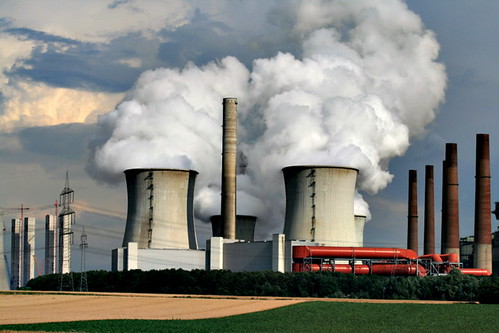
In Massachusetts, most of our power comes from coal.
This page
suggests that an efficient coal plant will generate 2,460 kWh for each
ton of coal. That means that one overnight job would use
59 kg (130
lbs) of coal. In the process, you would also create 153 kg (338 lb)
of CO2 and a bit under half a kilogram (about 1 lb) of nitrogen oxides
and sulfur dioxide each. It's a
very rough estimate but it certainly
generates some pressure to make sure the research counts!
Of course, I've written some free software that runs on many thousands
of computers and servers. How many tons of coal are burnt to support
laziness or a lack of optimization in my software? What is the coal
cost of choosing to write a program in a less efficient, but easier to
write, higher-level programming languages like Python or Ruby instead
of writing a more efficient version in C?

If a single man can display so much hatred
think only of how much love we all can display together.
Stine Renate H heim
I wrote a
Norwegian post explaining my experience at Ut ya. I had taken this blog for dead, and had entirely forgotten that it was syndicated on Planet Debian. I don t want to let Google Translate make this disaster any worse than it is the translation of bullets into balls being particularly bad so the international attention the massacre has garnered in consideration, I am writing an English translation of my experiences. I feel somehow duty-bound to make people aware of what happened, but I don t want to get into anything else but a sober description of the events and some very brief reflections. There are many details I have chosen to omit.
Others have written their experiences of the events at Ut ya. I wanted to write mine down as well, and get it out there . Partly, I want to write this down because I m unsure if I will remember all the details at a later point in time, although I think I d prefer it if I couldn t. I m also writing this because people are asking about my experiences and it s much better to have an URL to give them, lest I have to keep going through the same spiel over and over again.
Our former Prime Minister and current labour movement demigod
Gro Harlem Brundtland had recently left the island. I had been the cameraman for a video interview of her talking about Ut ya, and I was in the media group room encoding the video into a file suitable for YouTube, when someone else in the room startled and said that Twitter was full of messages about a loud explosion in Oslo. As the newspapers brought us information about the extent of the damages, a consensus arose that an informational meeting was in order. As soon as the current round of talks finished, we were gathered into the main hall.
The meeting was duly held, and after the statement was made that a TV feed would be made available, I took it upon myself as the local alpha geek to make it happen. Of course, the situation caused both the wireless network and the GPRS networks to become totally unusable. As I was waiting for someone to set up a password, I took the opportunity to face the consequences of having eaten two bits of a microwavable dish called Hold-It the local equivalent of a Hot Pocket and went to the toilet.
As I was in there, I first heard agitated shouting, then screams, then gunshots coming from just outside the toilets. More than anything else, it sounded like a toy gun. I was convinced that someone was making a joke in incredibly bad taste and I stormed out of the booth with the intent of halting it. As I tore the door open, I saw two of my comrades hiding in a recessed corner. Their facial expressions left absolutely no doubt that this was no toy. They signalled for me to get back in the booth. I closed the door, did a mental double-take in utter, complete confusion, and opened it again. They were still signalling. Had they not stood there, I would have run straight into the gunman; they saved my life. I looked out into the hallway, and I made eye contact with a young boy lying in a pool of blood. He was motioning for me to help him. I heard more gunshots from inside the building and retreated back inside.
As I was trying to think through my next move, I realized that the decidedly insubstantial wood-fiber door would not resist any kind of bullets. I made my way out into the hallway, with the intent of escaping outside. At that point, I was of course not aware that there was an intention to kill as many as possible, so I thought that the open spaces outside would be a place of relative safety. Of course, this proved to be wrong and my life was probably saved a second time by one of the caf volunteers taking me into a hard-to-spot employee s bathroom.
We sat there for ninety minutes. Always ready to make a run for it, ready for just about anything. A peculiar group dynamic arose with these two people with whom I had barely previously spoken. We came to share a strange sense of common destiny and gallows humour. One of them had seen the shooter and described the police uniform. I perceived it to be realistic that we were the only ones aware of the wounded outside the toilet. I tried to reach the emergency services, but all their lines were busy; the terror attack in Oslo had probably clogged their lines. I finally got through to the fire services, who could inform me that the police did know about the situation and were on their way. This was to take 90 minutes and by the time we evacuated, the young boy outside my door had perished. The despair I first saw in his eyes as I passed him, fleeing from one room to the other and the empty, blank stare as we left, are burned into me and they are images I will never in my life forget.
Finally, the real police arrived. We walked out. I chose the path through the minor conference hall something I now regret. The sight was simply beyond my capacity to describe fully, and so terrifying that I barely remember the sight only the terror it struck in me. There were several people bunched up in a corner, a big amorphous heap of bodies. Some were conscious and yelled at me not to do anything that could startle the police, others lay still. Their bodies were all covered in blood, and a thick pool of blood extended at least a half-metre in all directions around them. The policeman across the hall was screaming orders at me, but he was screaming so loudly that I couldn t make out his words at first.
We were first moved into the camp newspaper s offices. There were about eight of us there, I think, in addition to one girl who lay wounded. Towards the end she was drifting in and out of consciousness. We covered her with sweaters to keep her warm and one of us tried to at least temper her bleeding. The bullet had missed her heart, but by the entry wound it was clear that it was not by far. I do not know who this girl was or how she is now. I sat behind and never saw her face. The wounded were evacuated first. I don t remember how long we remained; I had lost all concept of time.
In spite of protests from the group who knew him, one kid was put in handcuffs. At the time I didn t understand why, and the policeman seemed to say something almost to the effect that there was no reason for it at all. I didn t see when they undid his cuffs, but I remember thinking that this treatment made a terrible experience even worse for him. I tried my best to comfort him but knew it would be little help. Later, when things stabilised a little, we were told that he was handcuffed because he had come from an unsecured area. The police was extremely good at carefully explaining what was happening and why; this was a big help and I am grateful for it.
Eventually we were moved out into the main corridor of the building, where we joined up into a group of about fifty. Only when I saw the two people who saved my life did any emotion other than mild confusion arise. I broke down shivering in tears in one of their arms. After a few seconds, I came back to my senses and realised that this was not the time. I quickly gathered myself, got the shaking under control, and sat down. We were given some chocolate and soda from the kiosk. I remember making an offhand remark that an inability to find joy in free candy was a sure sign of a bad situation. We all laughed out loud. Gallows humour is a coping mechanism, but in retrospect one almost feels guilty for it.
We were shown out in a single file with hands above our heads. I remember an intense concern that someone would slip in the steep, muddy slope and create a misunderstanding. Outside, there were more bodies. Some under improvised covers a tarpaulin from the waffle stand, the deflated bouncy castle but some simply lay there.
Everyone I met displayed a courage, a mental discipline and unity of purpose far beyond anything one would ever wish to expect from people this young. Everyone conducted themselves with an attitude that could almost be described as stiff upper lip .
Safely across the fjord we were offered blankets. I was asked if I was aware of any injuries, and asked to lift my shirt and show my abdominal region. We were shown into the bus which took us to the hotel used by the survivors and their family. I simply cannot describe in any words the relief I felt when I was able to embrace my living comrades. It was completely unlike anything I had ever felt before in my life. The euphoric feeling was tempered only by the realisation that there would be many I could never see again, comrades whom I had taken great pride in calling my friends, with futures in the service of all mankind, futures I had previously found such great joy in pondering and guessing about. The feeling which continues to upset me the most, is the feeling that so many of my comrades left behind grieving families and friends. Torn away senselessly.
I do not know how much more than this relatively sober account of the events on Ut ya I can muster. I would, however, like to offer some reflections.
First of all, from the bottom of my heart, I want to thank the police who saved the lives of so many still on the island, the holidaymakers who took aboard swimmers into their boats and the rescue services staffed primarily by volunteers who have spared no effort in trying to soften the blow as much as they can. The opportunity to spend time with those comrades who underwent the same experience as myself has also been an immeasurable aid. I was also so relieved to find my very closest friend among the survivors, which has also been an indescribable help.
If I can name a single positive in this tragedy: Had he arrived with his automatic weapon fifteen or twenty minutes prior, he would have arrived during the informational meeting, at a time when the major hall was absolutely jam-packed the death toll would be many times what it ended up being. I am agonisingly aware of the meager comfort this provides to those who have been bereft of their closest, but I do find some solace in this.
We cannot sweep under a rug that this was without question! a political attack on the labour movement. But it is thankfully also an attack which has been perceived by everyone as an attack on the Norwegian society, and on a symbol of the wide recruitment to the participatory democracy which lies at our very national soul. I cannot thank the Norwegian people, and indeed the people in other nations who have offered their condolences, enough for their shows of support and shared grief. It really has been a tremendous help to me knowing that so many people feel with us.
I also want to thank from the bottom of my heart the rock-steadiness of everyone in both the national and local wings of the Labour Party and Labour Youth in supporting us, and the political milieu in general for their resolute steadfastness saving me from losing yet more that I cherish; our freedoms in a participatory democracy.
Our Party has lost many of its very brightest youngsters. Personally I feel an angry spite, a deep restless urge to get the wheels of society going again. I want to show his kind that we will not be broken. We re stronger than that. I will not be frightened into silence and passivity. I want to remember the dead, and honor them by carrying on our common work.
I want to end this with a request to everyone who reads this, echoing a statement I read by one of my good friends and comrades: Please, don t let me see any messages of hatred, wishes for the death penalty, anything like that. If anyone should be of the belief that anything will improve by murdering this sad little person, they would be profoundly wrong. All attention now should be plowed into caring for those victims and their relatives who did not share my luck, and
not giving an audience to a perpetrator who wants one.
Tore Sinding Bekkedal
 another weekly report about RC bugs I've fixed, this time mostly by applying
patches from ubuntu:
 There's loads of music on



 I thought it would be a good idea to get some fresh blood into Debian, so my wife and I decided to "create" Melissa. Melissa was born on Monday 25th at 00:47h and was 54cm large and weighed 4200 gram. Of course she already has her first Debian shirt ;).

