Search Results: "ean"

5 January 2024

Valhalla's Things: Random Sashiko + Crazy Quilt Pocket

Posted on January 5, 2024
Tags: madeof:atoms
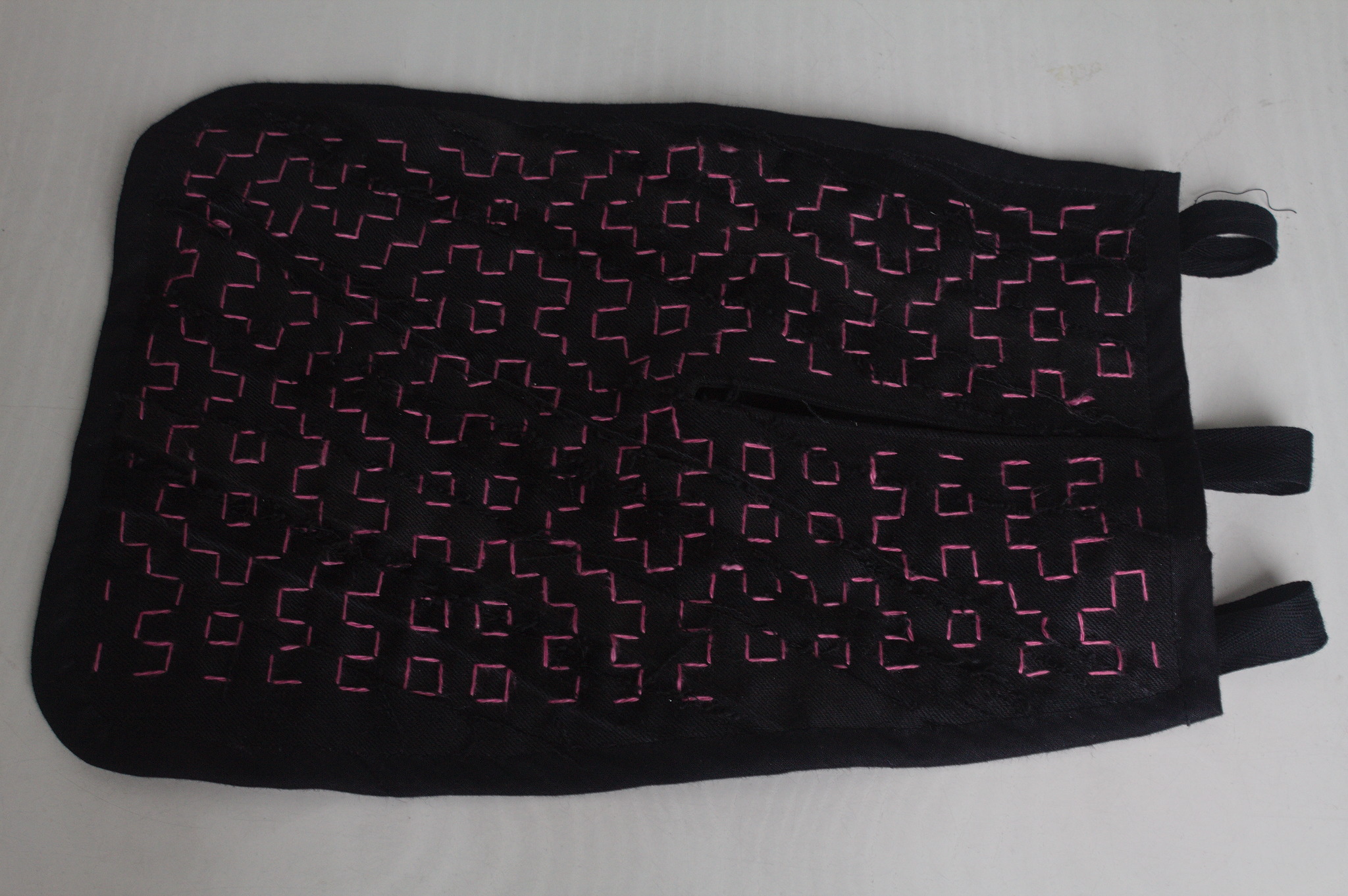
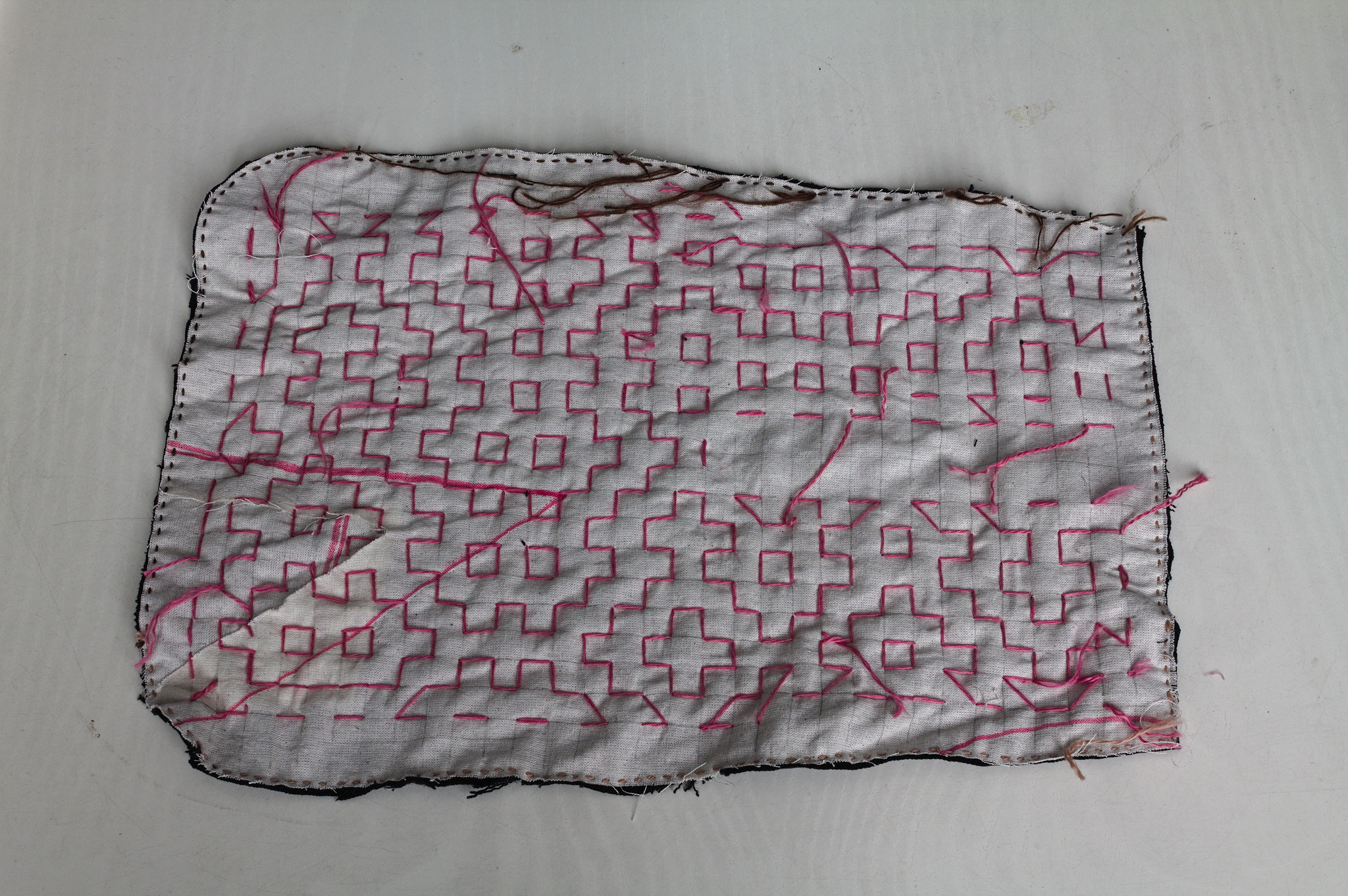
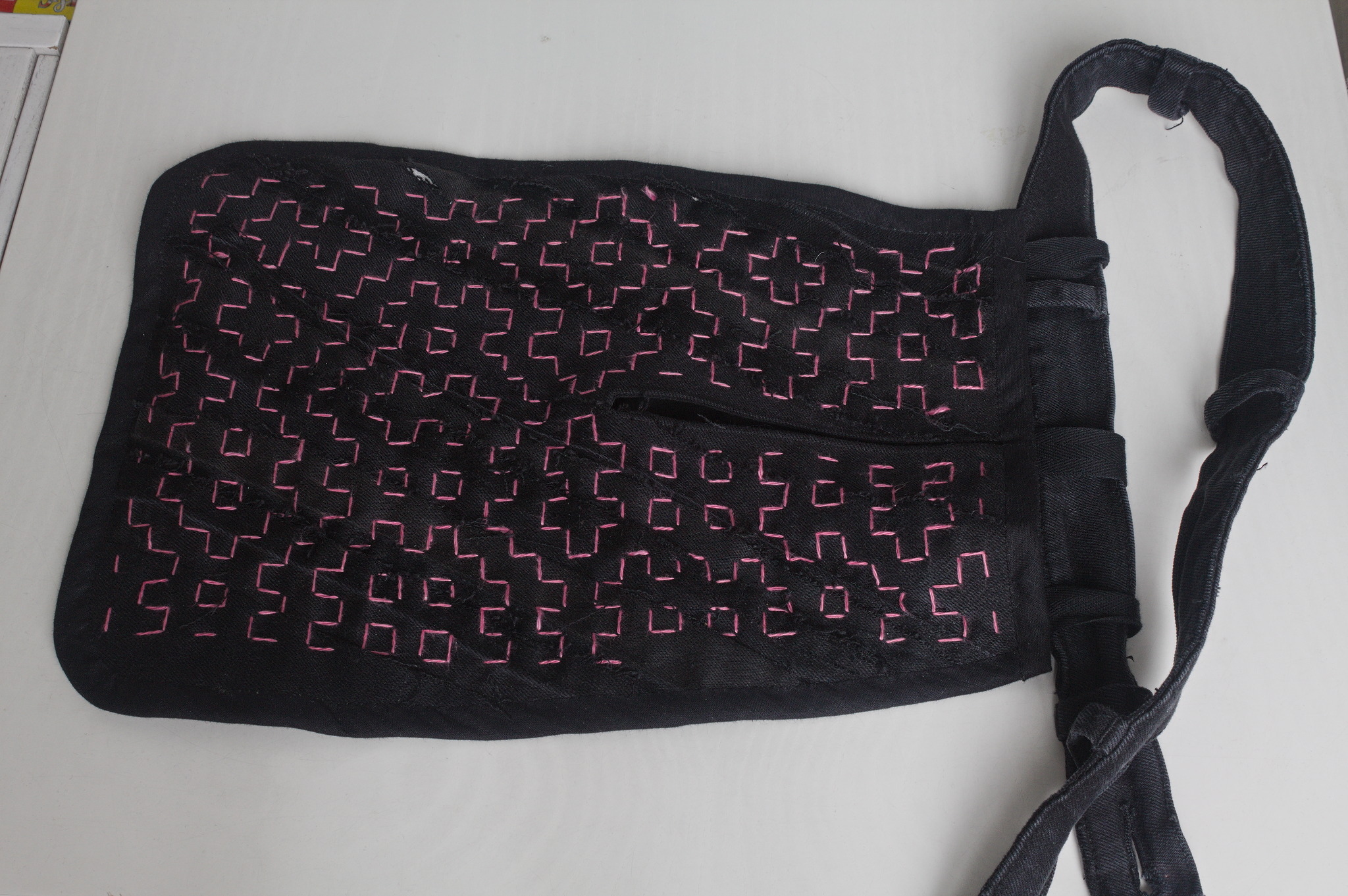
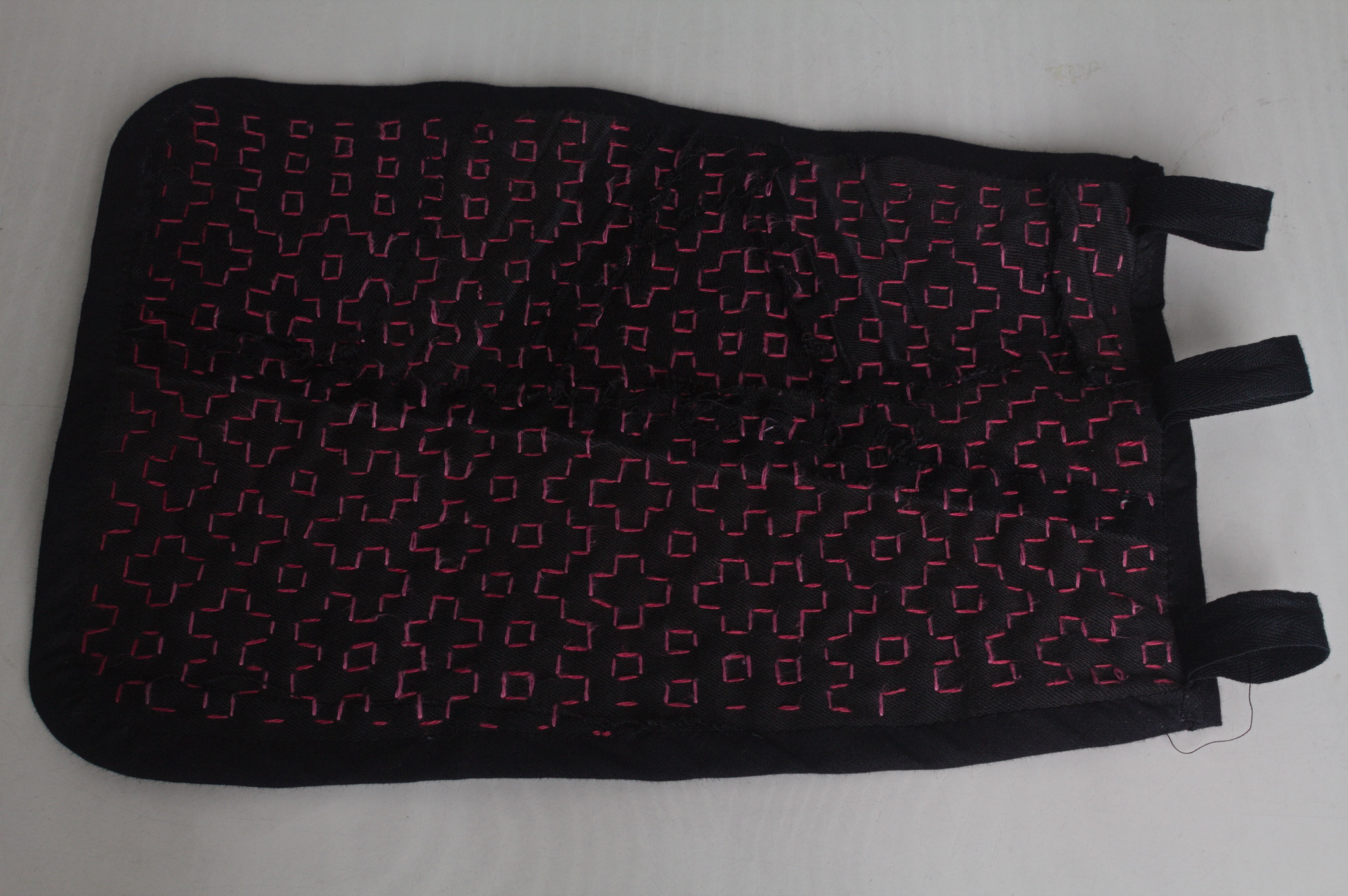
A 18th century pocket in black jeans with a random pattern of pink running stitches forming squares and other shapes. The unfinished edges of the pieces of jeans can be seen, running more or less diagonally. Lately I ve seen people on the internet talking about victorian crazy quilting. Years ago I had watched a Numberphile video about Hitomezashi Stitch Patterns based on numbers, words or randomness. Few weeks ago I had cut some fabric piece out of an old pair of jeans and I had a lot of scraps that were too small to do anything useful on their own. It easy to see where this can go, right? The wrong side of a pocket piece, showing a light coloured fabric with a grid drawn in pencil, a line of small stitches all around the edges and a mess of thread ends left hanging. I cut a pocket shape out of old garment mockups (this required some piecing), drew a square grid, arranged scraps of jeans to cover the other side, kept everything together with a lot of pins, carefully avoided basting anything, and started covering everything in sashiko / hitomezashi stitches, starting each line with a stitch on the front or the back of the work based on the result of:
import random
random.choice(["front", "back"])
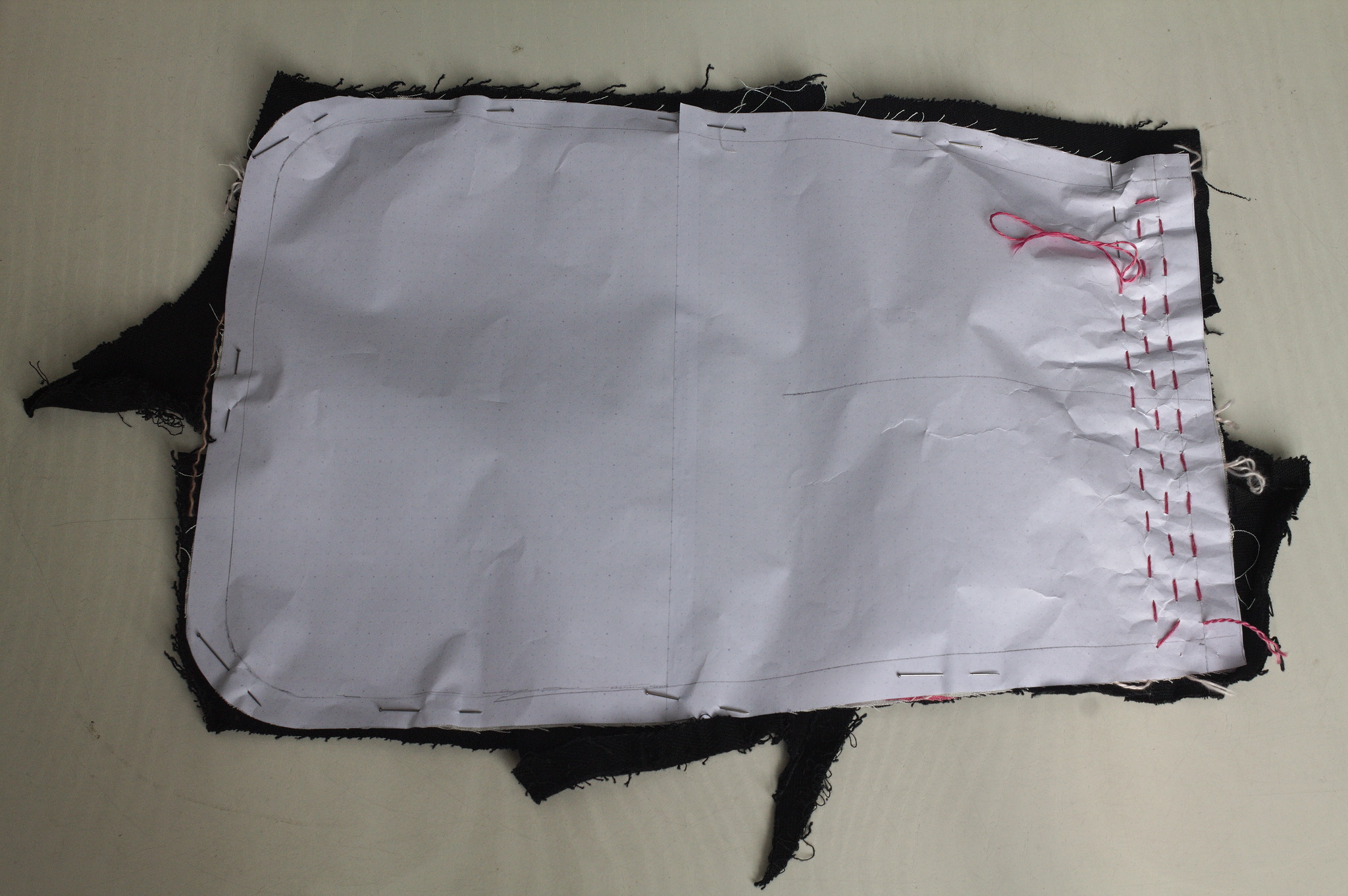
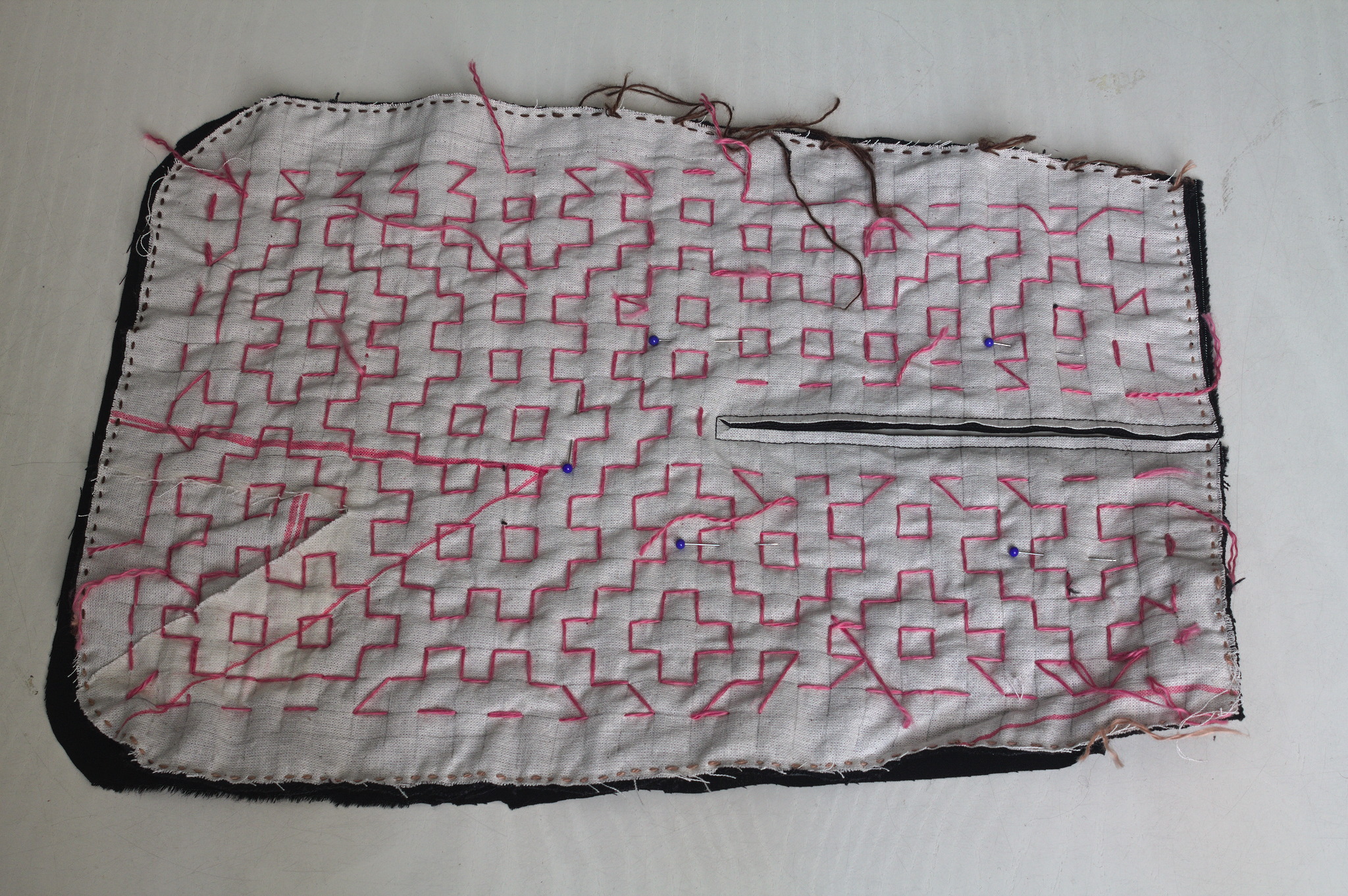
The wrong side of the other pocket piece, with just three lines of stitching and a piece of paper to mark the pattern. There are bits of jeans peeking out of the sides. For the second piece I tried to use a piece of paper with the square grid instead of drawing it on the fabric: it worked, mostly, I would not do it again as removing the paper was more of a hassle than drawing the lines in the first place. I suspected it, but had to try it anyway. The front of the pocket seen from the wrong side, with a machine seam around the lit, whose end has been cut in a triangle so that it can be turned. Then I added a lining from some plain black cotton from the stash; for the slit I put the lining on the front right sides together, sewn at 2 mm from the marked slit, cut it, turned the lining to the back side, pressed and then topstitched as close as possible to the slit from the front. The finished pocket attached to a belt made from the waistband of a pair of jeans (with button, buttonhole and belt loops still attached) whose raw edges (left when unpicking away the jeans) have been sewn shut by hand. I bound everything with bias tape, adding herringbone tape loops at the top to hang it from a belt (such as one made from the waistband of one of the donor pair of jeans) and that was it. The back of the pocket, showing another random pattern in two different shades of pink for the vertical and horizontal lines of stitching. I like the way the result feels; maybe it s a bit too stiff for a pocket, but I can see it work very well for a bigger bag, and maybe even a jacket or some other outer garment.

3 January 2024

John Goerzen: Live Migrating from Raspberry Pi OS bullseye to Debian bookworm

I ve been getting annoyed with Raspberry Pi OS (Raspbian) for years now. It s a fork of Debian, but manages to omit some of the most useful things. So I ve decided to migrate all of my Pis to run pure Debian. These are my reasons:
  1. Raspberry Pi OS has, for years now, specified that there is no upgrade path. That is, to get to a newer major release, it s a reinstall. While I have sometimes worked around this, for a device that is frequently installed in hard-to-reach locations, this is even more important than usual. It s common for me to upgrade machines for a decade or more across Debian releases and there s no reason that it should be so much more difficult with Raspbian.
  2. As I noted in Consider Security First, the security situation for Raspberry Pi OS isn t as good as it is with Debian.
  3. Raspbian lags behind Debian often times by 6 months or more for major releases, and days or weeks for bug fixes and security patches.
  4. Raspbian has no direct backports support, though Raspberry Pi 3 and above can use Debian s backports (per my instructions as Installing Debian Backports on Raspberry Pi)
  5. Raspbian uses a custom kernel without initramfs support
It turns out it is actually possible to do an in-place migration from Raspberry Pi OS bullseye to Debian bookworm. Here I will describe how. Even if you don t have a Raspberry Pi, this might still be instructive on how Raspbian and Debian packages work.

WARNINGS Before continuing, back up your system. This process isn t for the neophyte and it is entirely possible to mess up your boot device to the point that you have to do a fresh install to get your Pi to boot. This isn t a supported process at all.

Architecture Confusion Debian has three ARM-based architectures:
  • armel, for the lowest-end 32-bit ARM devices without hardware floating point support
  • armhf, for the higher-end 32-bit ARM devices with hardware float (hence hf )
  • arm64, for 64-bit ARM devices (which all have hardware float)
Although the Raspberry Pi 0 and 1 do support hardware float, they lack support for other CPU features that Debian s armhf architecture assumes. Therefore, the Raspberry Pi 0 and 1 could only run Debian s armel architecture. Raspberry Pi 3 and above are capable of running 64-bit, and can run both armhf and arm64. Prior to the release of the Raspberry Pi 5 / Raspbian bookworm, Raspbian only shipped the armhf architecture. Well, it was an architecture they called armhf, but it was different from Debian s armhf in that everything was recompiled to work with the more limited set of features on the earlier Raspberry Pi boards. It was really somewhere between Debian s armel and armhf archs. You could run Debian armel on those, but it would run more slowly, due to doing floating point calculations without hardware support. Debian s raspi FAQ goes into this a bit. What I am going to describe here is going from Raspbian armhf to Debian armhf with a 64-bit kernel. Therefore, it will only work with Raspberry Pi 3 and above. It may theoretically be possible to take a Raspberry Pi 2 to Debian armhf with a 32-bit kernel, but I haven t tried this and it may be more difficult. I have seen conflicting information on whether armhf really works on a Pi 2. (If you do try it on a Pi 2, ignore everything about arm64 and 64-bit kernels below, and just go with the linux-image-armmp-lpae kernel per the ARMMP page) There is another wrinkle: Debian doesn t support running 32-bit ARM kernels on 64-bit ARM CPUs, though it does support running a 32-bit userland on them. So we will wind up with a system with kernel packages from arm64 and everything else from armhf. This is a perfectly valid configuration as the arm64 like x86_64 is multiarch (that is, the CPU can natively execute both the 32-bit and 64-bit instructions). (It is theoretically possible to crossgrade a system from 32-bit to 64-bit userland, but that felt like a rather heavy lift for dubious benefit on a Pi; nevertheless, if you want to make this process even more complicated, refer to the CrossGrading page.)

Prerequisites and Limitations In addition to the need for a Raspberry Pi 3 or above in order for this to work, there are a few other things to mention. If you are using the GPIO features of the Pi, I don t know if those work with Debian. I think Raspberry Pi OS modified the desktop environment more than other components. All of my Pis are headless, so I don t know if this process will work if you use a desktop environment. I am assuming you are booting from a MicroSD card as is typical in the Raspberry Pi world. The Pi s firmware looks for a FAT partition (MBR type 0x0c) and looks within it for boot information. Depending on how long ago you first installed an OS on your Pi, your /boot may be too small for Debian. Use df -h /boot to see how big it is. I recommend 200MB at minimum. If your /boot is smaller than that, stop now (or use some other system to shrink your root filesystem and rearrange your partitions; I ve done this, but it s outside the scope of this article.) You need to have stable power. Once you begin this process, your pi will mostly be left in a non-bootable state until you finish. (You did make a backup, right?)

Basic idea The basic idea here is that since bookworm has almost entirely newer packages then bullseye, we can just switch over to it and let the Debian packages replace the Raspbian ones as they are upgraded. Well, it s not quite that easy, but that s the main idea.

Preparation First, make a backup. Even an image of your MicroSD card might be nice. OK, I think I ve said that enough now. It would be a good idea to have a HDMI cable (with the appropriate size of connector for your particular Pi board) and a HDMI display handy so you can troubleshoot any bootup issues with a console.

Preparation: access The Raspberry Pi OS by default sets up a user named pi that can use sudo to gain root without a password. I think this is an insecure practice, but assuming you haven t changed it, you will need to ensure it still works once you move to Debian. Raspberry Pi OS had a patch in their sudo package to enable it, and that will be removed when Debian s sudo package is installed. So, put this in /etc/sudoers.d/010_picompat:
pi ALL=(ALL) NOPASSWD: ALL
Also, there may be no password set for the root account. It would be a good idea to set one; it makes it easier to log in at the console. Use the passwd command as root to do so.

Preparation: bluetooth Debian doesn t correctly identify the Bluetooth hardware address. You can save it off to a file by running hcitool dev > /root/bluetooth-from-raspbian.txt. I don t use Bluetooth, but this should let you develop a script to bring it up properly.

Preparation: Debian archive keyring You will next need to install Debian s archive keyring so that apt can authenticate packages from Debian. Go to the bookworm download page for debian-archive-keyring and copy the URL for one of the files, then download it on the pi. For instance:
wget http://http.us.debian.org/debian/pool/main/d/debian-archive-keyring/debian-archive-keyring_2023.3+deb12u1_all.deb
Use sha256sum to verify the checksum of the downloaded file, comparing it to the package page on the Debian site. Now, you ll install it with:
dpkg -i debian-archive-keyring_2023.3+deb12u1_all.deb

Package first steps From here on, we are making modifications to the system that can leave it in a non-bootable state. Examine /etc/apt/sources.list and all the files in /etc/apt/sources.list.d. Most likely you will want to delete or comment out all lines in all files there. Replace them with something like:
deb http://deb.debian.org/debian/ bookworm main non-free-firmware contrib non-free
deb http://security.debian.org/debian-security bookworm-security main non-free-firmware contrib non-free
deb https://deb.debian.org/debian bookworm-backports main non-free-firmware contrib non-free
(you might leave off contrib and non-free depending on your needs) Now, we re going to tell it that we ll support arm64 packages:
dpkg --add-architecture arm64
And finally, download the bookworm package lists:
apt-get update
If there are any errors from that command, fix them and don t proceed until you have a clean run of apt-get update.

Moving /boot to /boot/firmware The boot FAT partition I mentioned above is mounted at /boot by Raspberry Pi OS, but Debian s scripts assume it will be at /boot/firmware. We need to fix this. First:
umount /boot
mkdir /boot/firmware
Now, edit fstab and change the reference to /boot to be to /boot/firmware. Now:
mount -v /boot/firmware
cd /boot/firmware
mv -vi * ..
This mounts the filesystem at the new location, and moves all its contents back to where apt believes it should be. Debian s packages will populate /boot/firmware later.

Installing the first packages Now we start by installing the first of the needed packages. Eventually we will wind up with roughly the same set Debian uses.
apt-get install linux-image-arm64
apt-get install firmware-brcm80211=20230210-5
apt-get install raspi-firmware
If you get errors relating to firmware-brcm80211 from any commands, run that install firmware-brcm80211 command and then proceed. There are a few packages that Raspbian marked as newer than the version in bookworm (whether or not they really are), and that s one of them.

Configuring the bootloader We need to configure a few things in /etc/default/raspi-firmware before proceeding. Edit that file. First, uncomment (or add) a line like this:
KERNEL_ARCH="arm64"
Next, in /boot/cmdline.txt you can find your old Raspbian boot command line. It will say something like:
root=PARTUUID=...
Save off the bit starting with PARTUUID. Back in /etc/default/raspi-firmware, set a line like this:
ROOTPART=PARTUUID=abcdef00
(substituting your real value for abcdef00). This is necessary because the microSD card device name often changes from /dev/mmcblk0 to /dev/mmcblk1 when switching to Debian s kernel. raspi-firmware will encode the current device name in /boot/firmware/cmdline.txt by default, which will be wrong once you boot into Debian s kernel. The PARTUUID approach lets it work regardless of the device name.

Purging the Raspbian kernel Run:
dpkg --purge raspberrypi-kernel

Upgrading the system At this point, we are going to run the procedure beginning at section 4.4.3 of the Debian release notes. Generally, you will do:
apt-get -u upgrade
apt full-upgrade
Fix any errors at each step before proceeding to the next. Now, to remove some cruft, run:
apt-get --purge autoremove
Inspect the list to make sure nothing important isn t going to be removed.

Removing Raspbian cruft You can list some of the cruft with:
apt list '~o'
And remove it with:
apt purge '~o'
I also don t run Bluetooth, and it seemed to sometimes hang on boot becuase I didn t bother to fix it, so I did:
apt-get --purge remove bluez

Installing some packages This makes sure some basic Debian infrastructure is available:
apt-get install wpasupplicant parted dosfstools wireless-tools iw alsa-tools
apt-get --purge autoremove

Installing firmware Now run:
apt-get install firmware-linux

Resolving firmware package version issues If it gives an error about the installed version of a package, you may need to force it to the bookworm version. For me, this often happened with firmware-atheros, firmware-libertas, and firmware-realtek. Here s how to resolve it, with firmware-realtek as an example:
  1. Go to https://packages.debian.org/PACKAGENAME for instance, https://packages.debian.org/firmware-realtek. Note the version number in bookworm in this case, 20230210-5.
  2. Now, you will force the installation of that package at that version:
    apt-get install firmware-realtek=20230210-5
    
  3. Repeat with every conflicting package until done.
  4. Rerun apt-get install firmware-linux and make sure it runs cleanly.
Also, in the end you should be able to:
apt-get install firmware-atheros firmware-libertas firmware-realtek firmware-linux

Dealing with other Raspbian packages The Debian release notes discuss removing non-Debian packages. There will still be a few of those. Run:
apt list '?narrow(?installed, ?not(?origin(Debian)))'
Deal with them; mostly you will need to force the installation of a bookworm version using the procedure in the section Resolving firmware package version issues above (even if it s not for a firmware package). For non-firmware packages, you might possibly want to add --mark-auto to your apt-get install command line to allow the package to be autoremoved later if the things depending on it go away. If you aren t going to use Bluetooth, I recommend apt-get --purge remove bluez as well. Sometimes it can hang at boot if you don t fix it up as described above.

Set up networking We ll be switching to the Debian method of networking, so we ll create some files in /etc/network/interfaces.d. First, eth0 should look like this:
allow-hotplug eth0
iface eth0 inet dhcp
iface eth0 inet6 auto
And wlan0 should look like this:
allow-hotplug wlan0
iface wlan0 inet dhcp
    wpa-conf /etc/wpa_supplicant/wpa_supplicant.conf
Raspbian is inconsistent about using eth0/wlan0 or renamed interface. Run ifconfig or ip addr. If you see a long-named interface such as enx<something> or wlp<something>, copy the eth0 file to the one named after the enx interface, or the wlan0 file to the one named after the wlp interface, and edit the internal references to eth0/wlan0 in this new file to name the long interface name. If using wifi, verify that your SSIDs and passwords are in /etc/wpa_supplicant/wpa_supplicant.conf. It should have lines like:
network= 
   ssid="NetworkName"
   psk="passwordHere"
 
(This is where Raspberry Pi OS put them).

Deal with DHCP Raspberry Pi OS used dhcpcd, whereas bookworm normally uses isc-dhcp-client. Verify the system is in the correct state:
apt-get install isc-dhcp-client
apt-get --purge remove dhcpcd dhcpcd-base dhcpcd5 dhcpcd-dbus

Set up LEDs To set up the LEDs to trigger on MicroSD activity as they did with Raspbian, follow the Debian instructions. Run apt-get install sysfsutils. Then put this in a file at /etc/sysfs.d/local-raspi-leds.conf:
class/leds/ACT/brightness = 1
class/leds/ACT/trigger = mmc1

Prepare for boot To make sure all the /boot/firmware files are updated, run update-initramfs -u. Verify that root in /boot/firmware/cmdline.txt references the PARTUUID as appropriate. Verify that /boot/firmware/config.txt contains the lines arm_64bit=1 and upstream_kernel=1. If not, go back to the section on modifying /etc/default/raspi-firmware and fix it up.

The moment arrives Cross your fingers and try rebooting into your Debian system:
reboot
For some reason, I found that the first boot into Debian seems to hang for 30-60 seconds during bootstrap. I m not sure why; don t panic if that happens. It may be necessary to power cycle the Pi for this boot.

Troubleshooting If things don t work out, hook up the Pi to a HDMI display and see what s up. If I anticipated a particular problem, I would have documented it here (a lot of the things I documented here are because I ran into them!) So I can t give specific advice other than to watch boot messages on the console. If you don t even get kernel messages going, then there is some problem with your partition table or /boot/firmware FAT partition. Otherwise, you ve at least got the kernel going and can troubleshoot like usual from there.

Jacob Adams: Fixing My Shell

For an embarassingly long time, my shell has unnecessarily tried to initialize a console font in every kind of interactive terminal. This leaves the following error message in my terminal:
Couldn't get a file descriptor referring to the console.
It even shows up twice when running tmux! Clearly I ve done something horrible to my configuration, and now I ve got to clean it up.

How does Shell Initialization Work? The precise files a shell reads at start-up is somewhat complex, and defined by this excellent chart 1: Shell Startup Flowchart For the purposes of what I m trying to fix, there are two paths that matter.
  • Interactive login shell startup
  • Interactive non-login shell startup
As you can see from the above, trying to distinguish these two paths in bash is an absolute mess. zsh, in contrast, is much cleaner and allows for a clear distinction between these two cases, with login shell configuration files as a superset of configuration files used by non-login shells.

How did we get here? I keep my configuration files in a config repository. Some time ago I got quite frustrated at this whole shell initialization thing, and just linked everything together in one profile file:
.mkshrc -> config/profile
.profile -> config/profile
This appears to have created this mess.

Move to ZSH I ve wanted to move to zsh for a while, and took this opportunity to do so. So my new configuration files are .zprofile and .zshrc instead of .mkshrc and .profile (though I m going to retain those symlinks to allow my old configurations to continue working). mksh is a nice simple shell, but using zsh here allows for more consistency between my home and $WORK environments, and will allow a lot more powerful extensions.

Updating my Prompt ZSH prompts use a totally different configuration via variable expansion. However, it also uses the PROMPT variable, so I set that to the needed values for zsh. There s an excellent ZSH prompt generator at https://zsh-prompt-generator.site that I used to get these variables, though I m sure they re in the zsh documentation somewhere as well. I wanted a simple prompt with user (%n), host (%m), and path (%d). I also wanted a % at the end to distinguish this from other shells.
PROMPT="%n@%m%d%% "

Fixing mksh prompts This worked but surprisingly mksh also looks at PROMPT, leaving my mksh prompt as the literal prompt string without expansion. Fixing this requires setting up a proper shrc and linking it to .mkshrc and .zshrc. I chose to move my existing aliases script to this file, as it also broke in non-login shells when moved to profile. Within this new shrc file we can check what shell we re running via $0:
if [ "$0" = "/bin/zsh" ]   [ "$0" = "zsh" ]   [ "$0" = "-zsh" ]
I chose to add plain zsh here in case I run it manually for whatever reason. I also added -zsh to support tmux as that s what it presents as $0. This also means you ll need to be careful to quote $0 or you ll get fun shell errors. There s probably a better way to do this, but I couldn t find something that was compatible with POSIX shell, which is what most of this has to be written in to be compatible with mksh and zsh2. We can then setup different prompts for each:
if [ "$0" = "/bin/zsh" ]   [ "$0" = "zsh" ]   [ "$0" = "-zsh" ]
then
	PROMPT="%n@%m%d%% "
else
	# Borrowed from
	# http://www.unixmantra.com/2013/05/setting-custom-prompt-in-ksh.html
	PS1='$(id -un)@$(hostname -s)$PWD$ '
fi

Setting Console Font in a Better Way I ve been setting console font via setfont in my .profile for a while. I m not sure where I picked this up, but it s not the right way. I even tried to only run this in a console with -t but that only checks that output is a terminal, not specifically a console.
if [ -t 1 ]
then
	setfont /usr/share/consolefonts/Lat15-Terminus20x10.psf.gz
fi
This also only runs once the console is logged into, instead of initializing it on boot. The correct way to set this up, on Debian-based systems, is reconfiguring console-setup like so:
dpkg-reconfigure console-setup
From there you get a menu of encoding, character set, font, and then font size to configure for your consoles.

VIM mode To enable VIM mode for ZSH, you simply need to set:
bindkeys -v
This allows you to edit your shell commands with basic VIM keybinds.

Getting back Ctrl + Left Arrow and Ctrl + Right Arrow Moving around one word at a time with Ctrl and the arrow keys is broken by vim mode unfortunately, so we ll need to re-enable it:
bindkey "^[[1;5C" forward-word
bindkey "^[[1;5D" backward-word

Why did it show up twice for tmux? Because tmux creates a login shell. Adding:
echo PROFILE
to profile and:
echo SHRC
to shrc confirms this with:
PROFILE
SHRC
SHRC
For now, profile sources shrc so that running twice is expected. But after this exploration and diagram, it s clear we don t need that for zsh. Removing this will break remote bash shells (see above diagram), but I can live without those on my development laptop. Removing that line results in the expected output for a new terminal:
SHRC
And the full output for a new tmux session or console:
PROFILE
SHRC
So finally we re back to a normal state! This post is a bit unfocused but I hope it helps someone else repair or enhance their shell environment. If you liked this4, or know of any other ways to manage this I could use, let me know at fixmyshell@tookmund.com.
  1. This chart comes from the excellent Shell Startup Scripts article by Peter Ward. I ve generated the SVG from the graphviz source linked in the article.
  2. Technically it has be compatible with Korn shell, but a quick google seems to suggest that that s actually a subset of POSIX shell.
  3. I use oh-my-zsh at $WORK but for now I m going to simplify my personal configuration. If I end up using a lot of plugins I ll reconsider this.
  4. Or if you ve found any typos or other issues that I should fix.

2 January 2024

Matthew Garrett: Dealing with weird ELF libraries

Libraries are collections of code that are intended to be usable by multiple consumers (if you're interested in the etymology, watch this video). In the old days we had what we now refer to as "static" libraries, collections of code that existed on disk but which would be copied into newly compiled binaries. We've moved beyond that, thankfully, and now make use of what we call "dynamic" or "shared" libraries - instead of the code being copied into the binary, a reference to the library function is incorporated, and at runtime the code is mapped from the on-disk copy of the shared object[1]. This allows libraries to be upgraded without needing to modify the binaries using them, and if multiple applications are using the same library at once it only requires that one copy of the code be kept in RAM.

But for this to work, two things are necessary: when we build a binary, there has to be a way to reference the relevant library functions in the binary; and when we run a binary, the library code needs to be mapped into the process.

(I'm going to somewhat simplify the explanations from here on - things like symbol versioning make this a bit more complicated but aren't strictly relevant to what I was working on here)

For the first of these, the goal is to replace a call to a function (eg, printf()) with a reference to the actual implementation. This is the job of the linker rather than the compiler (eg, if you use the -c argument to tell gcc to simply compile to an object rather than linking an executable, it's not going to care about whether or not every function called in your code actually exists or not - that'll be figured out when you link all the objects together), and the linker needs to know which symbols (which aren't just functions - libraries can export variables or structures and so on) are available in which libraries. You give the linker a list of libraries, it extracts the symbols available, and resolves the references in your code with references to the library.

But how is that information extracted? Each ELF object has a fixed-size header that contains references to various things, including a reference to a list of "section headers". Each section has a name and a type, but the ones we're interested in are .dynstr and .dynsym. .dynstr contains a list of strings, representing the name of each exported symbol. .dynsym is where things get more interesting - it's a list of structs that contain information about each symbol. This includes a bunch of fairly complicated stuff that you need to care about if you're actually writing a linker, but the relevant entries for this discussion are an index into .dynstr (which means the .dynsym entry isn't sufficient to know the name of a symbol, you need to extract that from .dynstr), along with the location of that symbol within the library. The linker can parse this information and obtain a list of symbol names and addresses, and can now replace the call to printf() with a reference to libc instead.

(Note that it's not possible to simply encode this as "Call this address in this library" - if the library is rebuilt or is a different version, the function could move to a different location)

Experimentally, .dynstr and .dynsym appear to be sufficient for linking a dynamic library at build time - there are other sections related to dynamic linking, but you can link against a library that's missing them. Runtime is where things get more complicated.

When you run a binary that makes use of dynamic libraries, the code from those libraries needs to be mapped into the resulting process. This is the job of the runtime dynamic linker, or RTLD[2]. The RTLD needs to open every library the process requires, map the relevant code into the process's address space, and then rewrite the references in the binary into calls to the library code. This requires more information than is present in .dynstr and .dynsym - at the very least, it needs to know the list of required libraries.

There's a separate section called .dynamic that contains another list of structures, and it's the data here that's used for this purpose. For example, .dynamic contains a bunch of entries of type DT_NEEDED - this is the list of libraries that an executable requires. There's also a bunch of other stuff that's required to actually make all of this work, but the only thing I'm going to touch on is DT_HASH. Doing all this re-linking at runtime involves resolving the locations of a large number of symbols, and if the only way you can do that is by reading a list from .dynsym and then looking up every name in .dynstr that's going to take some time. The DT_HASH entry points to a hash table - the RTLD hashes the symbol name it's trying to resolve, looks it up in that hash table, and gets the symbol entry directly (it still needs to resolve that against .dynstr to make sure it hasn't hit a hash collision - if it has it needs to look up the next hash entry, but this is still generally faster than walking the entire .dynsym list to find the relevant symbol). There's also DT_GNU_HASH which fulfills the same purpose as DT_HASH but uses a more complicated algorithm that performs even better. .dynamic also contains entries pointing at .dynstr and .dynsym, which seems redundant but will become relevant shortly.

So, .dynsym and .dynstr are required at build time, and both are required along with .dynamic at runtime. This seems simple enough, but obviously there's a twist and I'm sorry it's taken so long to get to this point.

I bought a Synology NAS for home backup purposes (my previous solution was a single external USB drive plugged into a small server, which had uncomfortable single point of failure properties). Obviously I decided to poke around at it, and I found something odd - all the libraries Synology ships were entirely lacking any ELF section headers. This meant no .dynstr, .dynsym or .dynamic sections, so how was any of this working? nm asserted that the libraries exported no symbols, and readelf agreed. If I wrote a small app that called a function in one of the libraries and built it, gcc complained that the function was undefined. But executables on the device were clearly resolving the symbols at runtime, and if I loaded them into ghidra the exported functions were visible. If I dlopen()ed them, dlsym() couldn't resolve the symbols - but if I hardcoded the offset into my code, I could call them directly.

Things finally made sense when I discovered that if I passed the --use-dynamic argument to readelf, I did get a list of exported symbols. It turns out that ELF is weirder than I realised. As well as the aforementioned section headers, ELF objects also include a set of program headers. One of the program header types is PT_DYNAMIC. This typically points to the same data that's present in the .dynamic section. Remember when I mentioned that .dynamic contained references to .dynsym and .dynstr? This means that simply pointing at .dynamic is sufficient, there's no need to have separate entries for them.

The same information can be reached from two different locations. The information in the section headers is used at build time, and the information in the program headers at run time[3]. I do not have an explanation for this. But if the information is present in two places, it seems obvious that it should be able to reconstruct the missing section headers in my weird libraries? So that's what this does. It extracts information from the DYNAMIC entry in the program headers and creates equivalent section headers.

There's one thing that makes this more difficult than it might seem. The section header for .dynsym has to contain the number of symbols present in the section. And that information doesn't directly exist in DYNAMIC - to figure out how many symbols exist, you're expected to walk the hash tables and keep track of the largest number you've seen. Since every symbol has to be referenced in the hash table, once you've hit every entry the largest number is the number of exported symbols. This seemed annoying to implement, so instead I cheated, added code to simply pass in the number of symbols on the command line, and then just parsed the output of readelf against the original binaries to extract that information and pass it to my tool.

Somehow, this worked. I now have a bunch of library files that I can link into my own binaries to make it easier to figure out how various things on the Synology work. Now, could someone explain (a) why this information is present in two locations, and (b) why the build-time linker and run-time linker disagree on the canonical source of truth?

[1] "Shared object" is the source of the .so filename extension used in various Unix-style operating systems
[2] You'll note that "RTLD" is not an acryonym for "runtime dynamic linker", because reasons
[3] For environments using the GNU RTLD, at least - I have no idea whether this is the case in all ELF environments

comment count unavailable comments

31 December 2023

Chris Lamb: Favourites of 2023

This post should have marked the beginning of my yearly roundups of the favourite books and movies I read and watched in 2023. However, due to coming down with a nasty bout of flu recently and other sundry commitments, I wasn't able to undertake writing the necessary four or five blog posts In lieu of this, however, I will simply present my (unordered and unadorned) highlights for now. Do get in touch if this (or any of my previous posts) have spurred you into picking something up yourself

Books

Peter Watts: Blindsight (2006) Reymer Banham: Los Angeles: The Architecture of Four Ecologies (2006) Joanne McNeil: Lurking: How a Person Became a User (2020) J. L. Carr: A Month in the Country (1980) Hilary Mantel: A Memoir of My Former Self: A Life in Writing (2023) Adam Higginbotham: Midnight in Chernobyl (2019) Tony Judt: Postwar: A History of Europe Since 1945 (2005) Tony Judt: Reappraisals: Reflections on the Forgotten Twentieth Century (2008) Peter Apps: Show Me the Bodies: How We Let Grenfell Happen (2021) Joan Didion: Slouching Towards Bethlehem (1968)Erik Larson: The Devil in the White City (2003)

Films Recent releases

Unenjoyable experiences included Alejandro G mez Monteverde's Sound of Freedom (2023), Alex Garland's Men (2022) and Steven Spielberg's The Fabelmans (2022).
Older releases (Films released before 2022, and not including rewatches from previous years.) Distinctly unenjoyable watches included Ocean's Eleven (1960), El Topo (1970), L olo (1992), Hotel Mumbai (2018), Bulworth (1998) and and The Big Red One (1980).

Petter Reinholdtsen: VLC bittorrent plugin still going strong, new upload 2.14-4

The other day I uploaded a new version of the VLC bittorrent plugin to Debian, version 2.14-4, to fix a few packaging issues. This plugin extend VLC allowing it to stream videos directly from a bittorrent source using both torrent files and magnet links, as easy as using a HTTP or local file source. I believe such protocol support is a vital feature in VLC, allowing efficient streaming from sources such at the 11 million movies in the Internet Archive. Bittorrent is one of the most efficient content distribution protocols on the Internet, without centralised control, and should be used more. The new version is now both in Debian Unstable and Testing, as well as Ubuntu. While looking after the package, I decided to ask the VLC upstream community if there was any hope to get Bittorrent support into the official VLC program, and was very happy to learn that someone is already working on it. I hope we can see some fruits of that labour next year, but do not hold my breath. In the mean time we can use the plugin, which is already installed by 0.23 percent of the Debian population according to popularity-contest. It could use a new upstream release, and I hope the upstream developer soon find time to polish it even more. It is worth noting that the plugin store the downloaded files in ~/Downloads/vlc-bittorrent/, which can quickly fill up the user home directory during use. Users of the plugin should keep an eye with disk usage when streaming a bittorrent source. As usual, if you use Bitcoin and want to show your support of my activities, please send Bitcoin donations to my address 15oWEoG9dUPovwmUL9KWAnYRtNJEkP1u1b.

30 December 2023

Valhalla's Things: I've been influenced

Posted on December 30, 2023
Tags: madeof:atoms
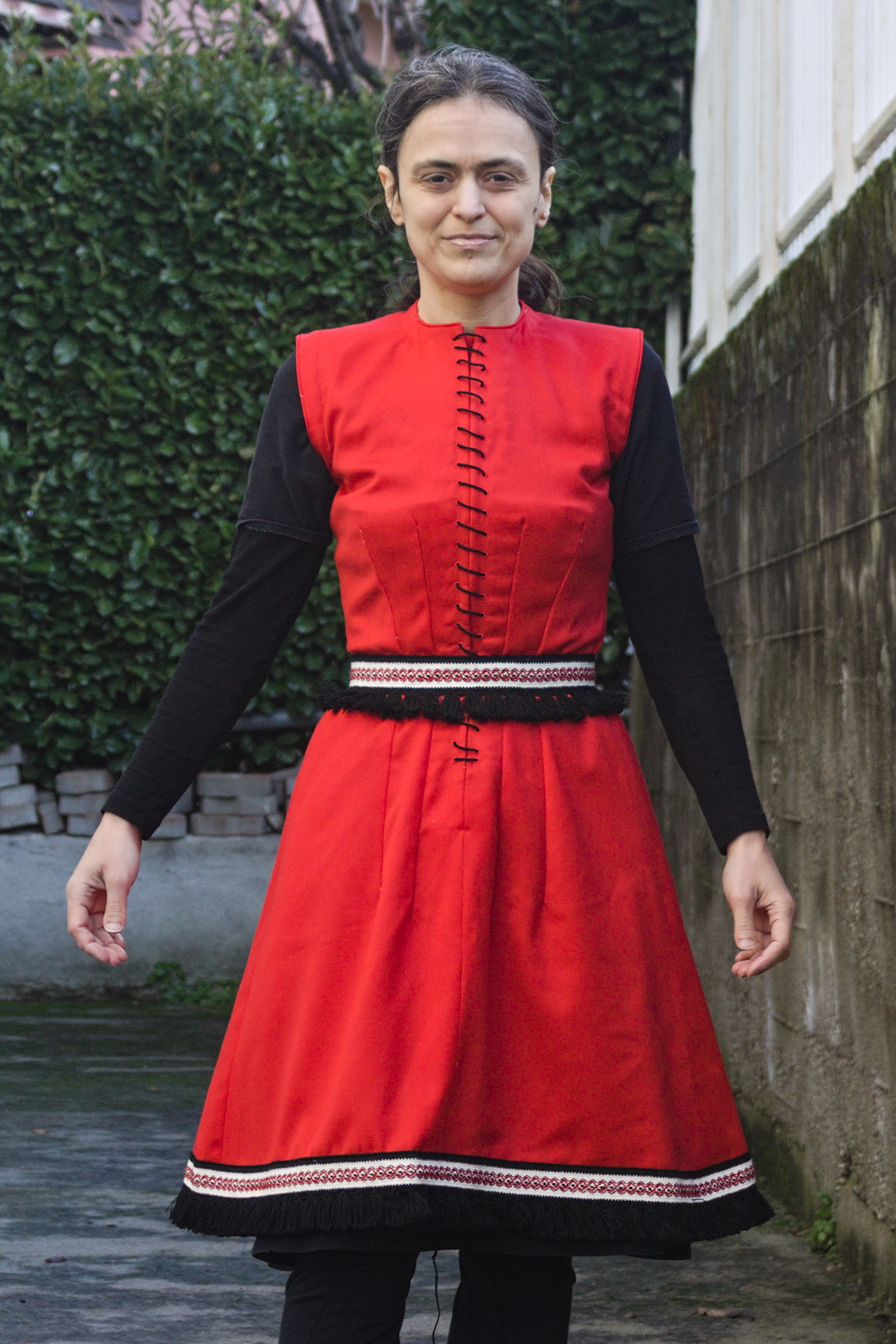
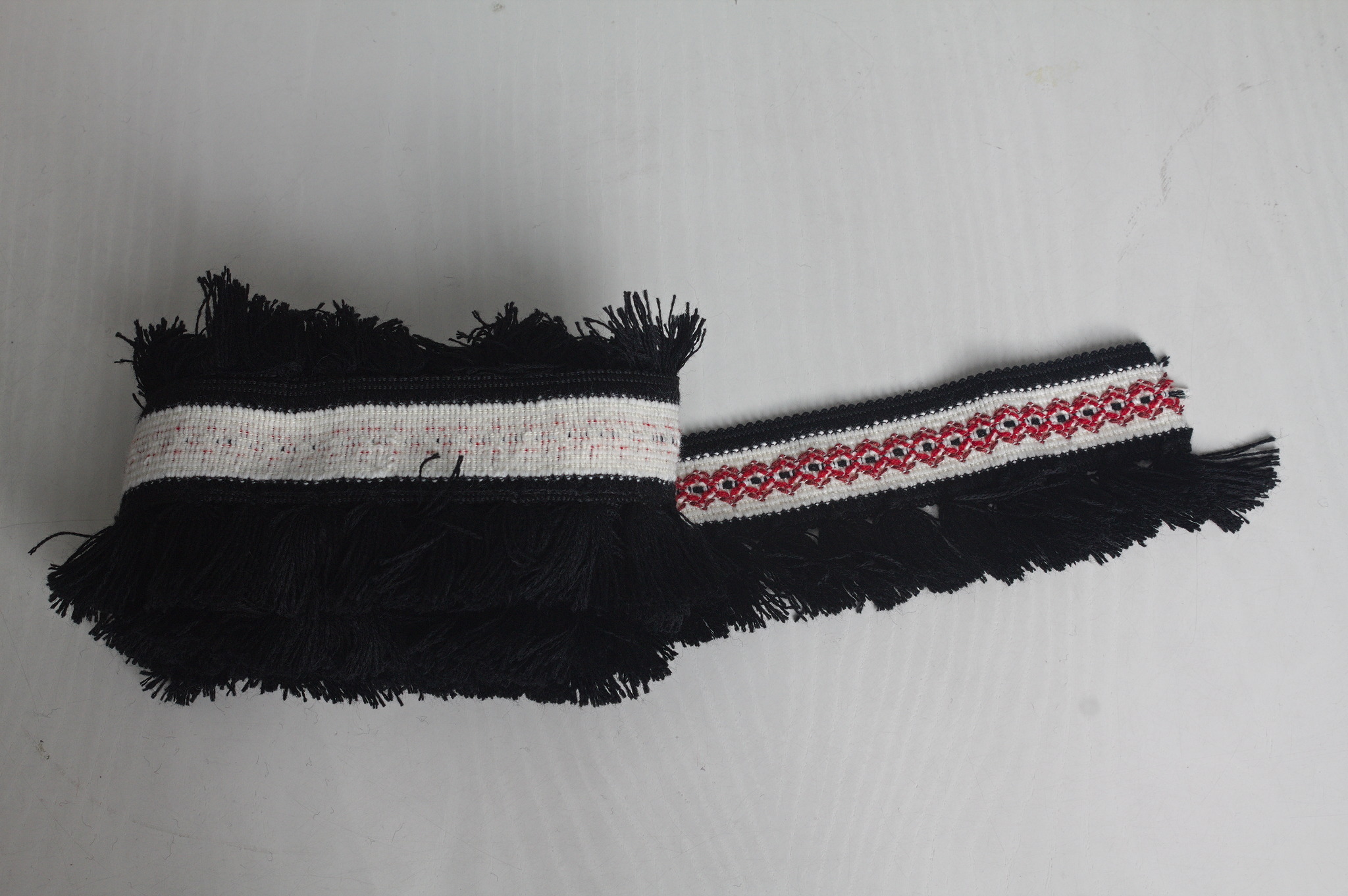
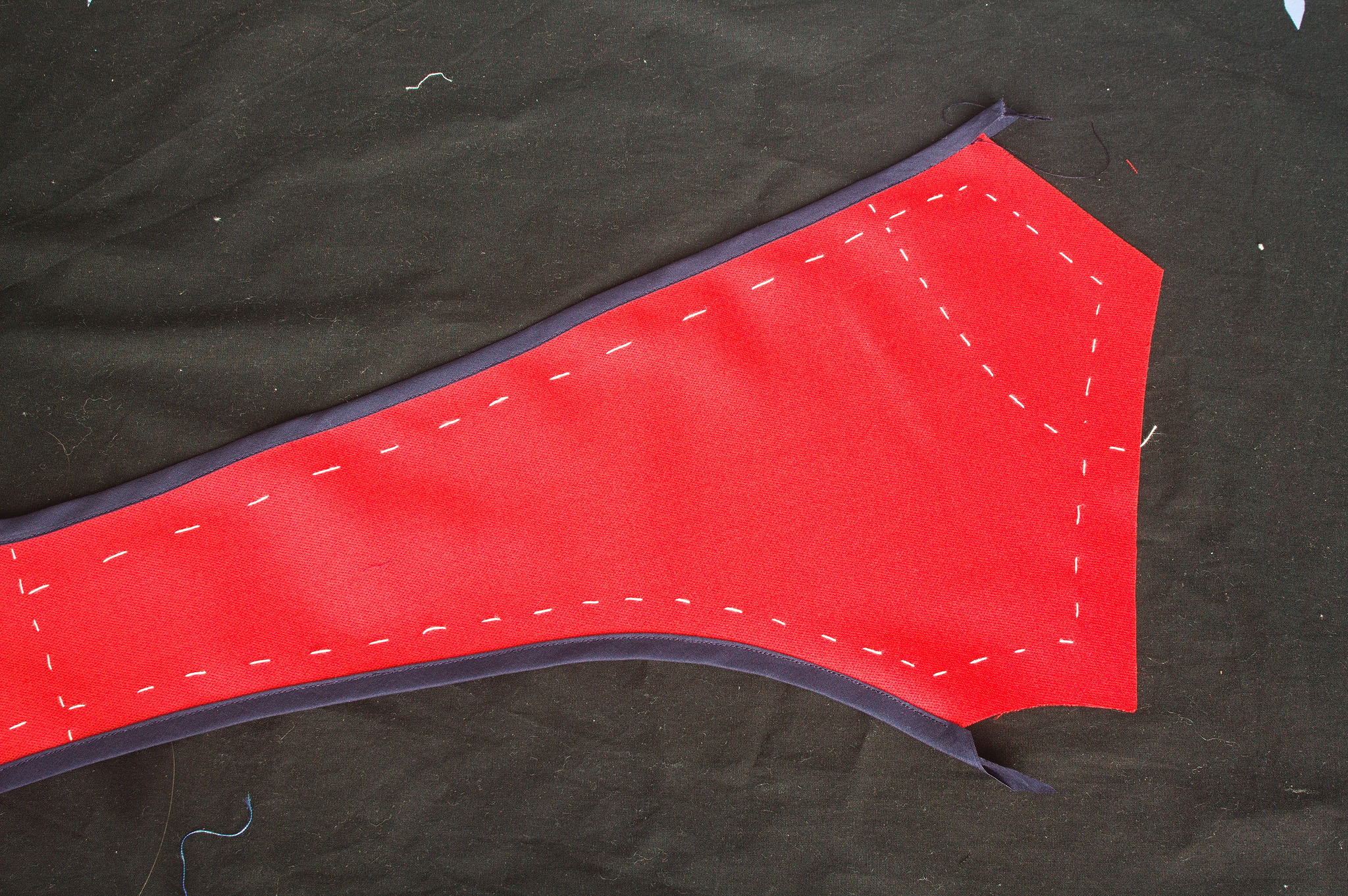
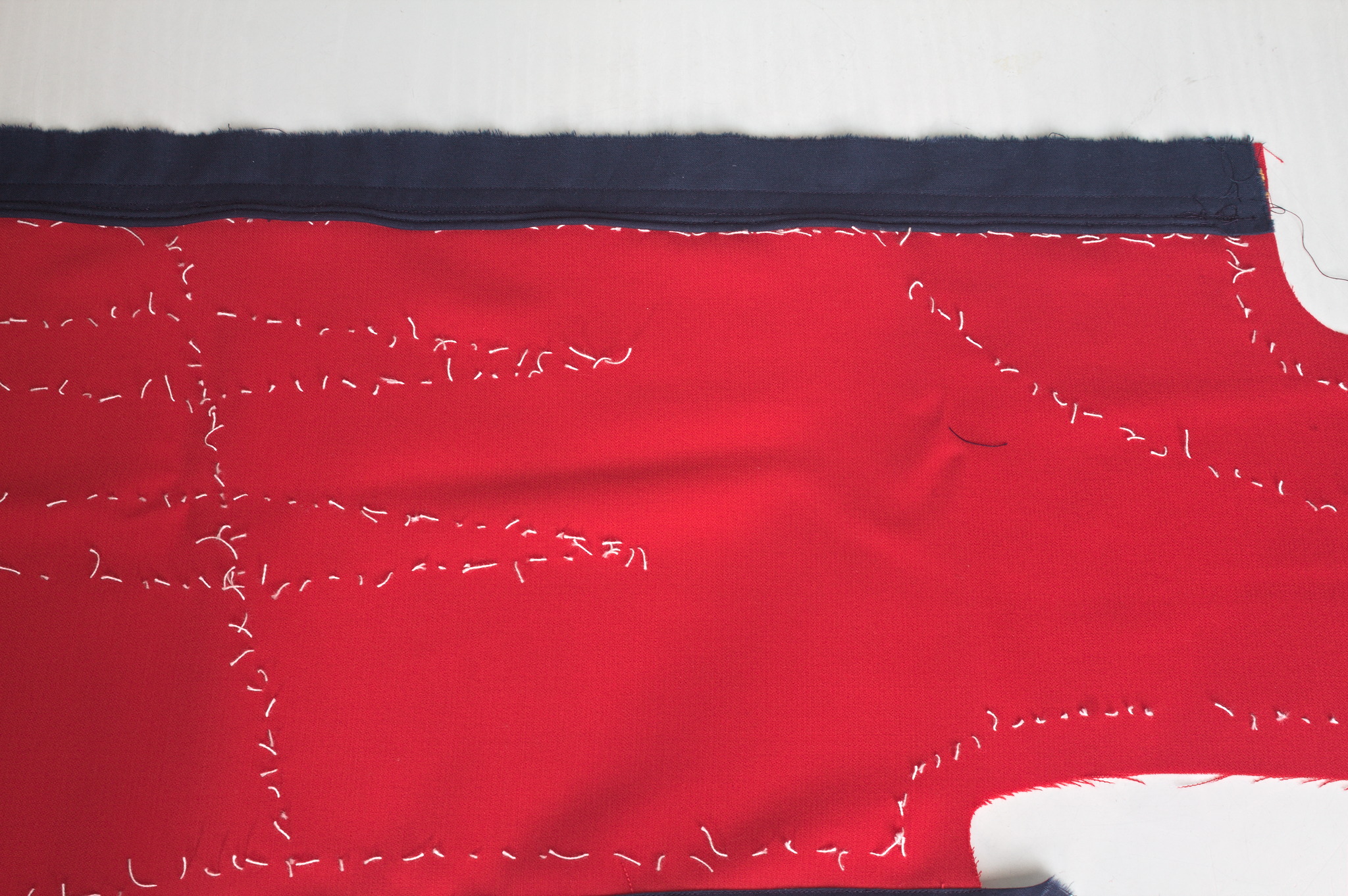
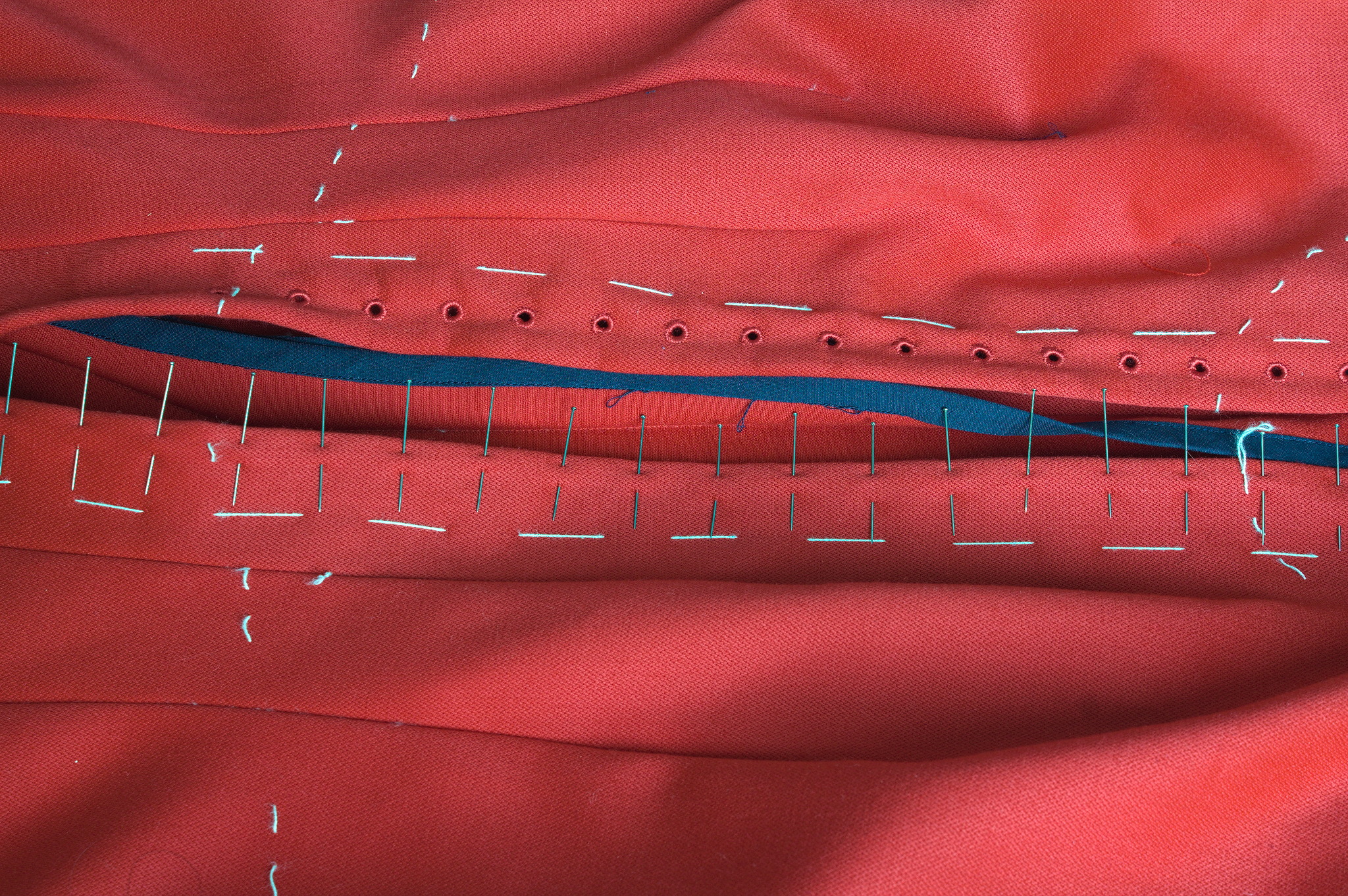
A woman wearing a red sleeveless dress; from the waist up it is fitted, while the skirt flares out. There is a white border with red embroidery and black fringe at the hem and a belt of the same material at the waist. By the influencers on the famous proprietary video platform1. When I m crafting with no powertools I tend to watch videos, and this autumn I ve seen a few in a row that were making red wool dresses, at least one or two medieval kirtles. I don t remember which channels they were, and I ve decided not to go back and look for them, at least for a time. A woman wearing a red shirt with wide sleeves, a short yoke, a small collar band and 3 buttons in the front. Anyway, my brain suddenly decided that I needed a red wool dress, fitted enough to give some bust support. I had already made a dress that satisfied the latter requirement and I still had more than half of the red wool faille I ve used for the Garibaldi blouse (still not blogged, but I will get to it), and this time I wanted it to be ready for this winter. While the pattern I was going to use is Victorian, it was designed for underwear, and this was designed to be outerwear, so from the very start I decided not to bother too much with any kind of historical details or techniques. A few meters of wool-imitation fringe trim rolled up; the fringe is black and is attached to a white band with a line of lozenge outlines in red and brown. I knew that I didn t have enough fabric to add a flounce to the hem, as in the cotton dress, but then I remembered that some time ago I fell for a piece of fringed trim in black, white and red. I did a quick check that the red wasn t clashing (it wasn t) and I knew I had a plan for the hem decoration. Then I spent a week finishing other projects, and the more I thought about this dress, the more I was tempted to have spiral lacing at the front rather than buttons, as a nod to the kirtle inspiration. It may end up be a bit of a hassle, but if it is too much I can always add a hidden zipper on a side seam, and only have to undo a bit of the lacing around the neckhole to wear the dress. Finally, I could start working on the dress: I cut all of the main pieces, and since the seam lines were quite curved I marked them with tailor s tacks, which I don t exactly enjoy doing or removing, but are the only method that was guaranteed to survive while manipulating this fabric (and not leave traces afterwards). A shaped piece of red fabric with the long edges bound in navy blue bias tape and all the seamlines marked with basting thread. While cutting the front pieces I accidentally cut the high neck line instead of the one I had used on the cotton dress: I decided to go for it also on the back pieces and decide later whether I wanted to lower it. Since this is a modern dress, with no historical accuracy at all, and I have access to a serger, I decided to use some dark blue cotton voile I ve had in my stash for quite some time, cut into bias strip, to bind the raw edges before sewing. This works significantly better than bought bias tape, which is a bit too stiff for this. A bigger piece of fabric with tailor's tacks for the seams and darts; at the top edge there is a strip of navy blue fabric sewn to a wide seaming allowance, with two rows of cording closest to the center front line. For the front opening, I ve decided to reinforce the areas where the lacing holes will be with cotton: I ve used some other navy blue cotton, also from the stash, and added two lines of cording to stiffen the front edge. So I ve cut the front in two pieces rather than on the fold, sewn the reinforcements to the sewing allowances in such a way that the corded edge was aligned with the center front and then sewn the bottom of the front seam from just before the end of the reinforcements to the hem. The front opening being worked on: on one side there are hand sewn eyelets in red silk that matches the fabric, on the other side the position for more eyelets are still marked with pins. There is also still basting to keep the folded allowance in place. The allowances are then folded back, and then they are kept in place by the worked lacing holes. The cotton was pinked, while for the wool I used the selvedge of the fabric and there was no need for any finishing. Behind the opening I ve added a modesty placket: I ve cut a strip of red wool, a strip of cotton, folded the edge of the strip of cotton to the center, added cording to the long sides, pressed the allowances of the wool towards the wrong side, and then handstitched the cotton to the wool, wrong sides facing. This was finally handstitched to one side of the sewing allowance of the center front. I ve also decided to add real pockets, rather than just slits, and for some reason I decided to add them by hand after I had sewn the dress, so I ve left opening in the side back seams, where the slits were in the cotton dress. I ve also already worn the dress, but haven t added the pockets yet, as I m still debating about their shape. This will be fixed in the near future. Another thing that will have to be fixed is the trim situation: I like the fringe at the bottom, and I had enough to also make a belt, but this makes the top of the dress a bit empty. I can t use the same fringe tape, as it is too wide, but it would be nice to have something smaller that matches the patterned part. And I think I can make something suitable with tablet weaving, but I m not sure on which materials to use, so it will have to be on hold for a while, until I decide on the supplies and have the time for making it. Another improvement I d like to add are detached sleeves, both matching (I should still have just enough fabric) and contrasting, but first I want to learn more about real kirtle construction, and maybe start making sleeves that would be suitable also for a real kirtle. Meanwhile, I ve worn it on Christmas (over my 1700s menswear shirt with big sleeves) and may wear it again tomorrow (if I bother to dress up to spend New Year s Eve at home :D )
  1. yep, that s YouTube, of course.

29 December 2023

Ulrike Uhlig: How do kids conceive the internet? - part 4

Read all parts of the series Part 1 // Part 2 // Part 3 // Part 4 I ve been wanting to write this post for over a year, but lacked energy and time. Before 2023 is coming to an end, I want to close this series and share some more insights with you and hopefully provide you with a smile here and there. For this round of interviews, four more kids around the ages of 8 to 13 were interviewed, 3 of them have a US background these 3 interviews were done by a friend who recorded these interviews for me, thank you! As opposed to the previous interviews, these four kids have parents who have a more technical professional background. And this seems to make a difference: even though none of these kids actually knew much better how the internet really works than the other kids that I interviewed, specifically in terms of physical infrastructures, they were much more confident in using the internet, they were able to more correctly name things they see on the internet, and they had partly radical ideas about what they would like to learn or what they would want to change about the internet! Looking at these results, I think it s safe to say that social reproduction is at work and that we need to improve education for kids who do not profit from this type of social and cultural wealth at home. But let s dive into the details.

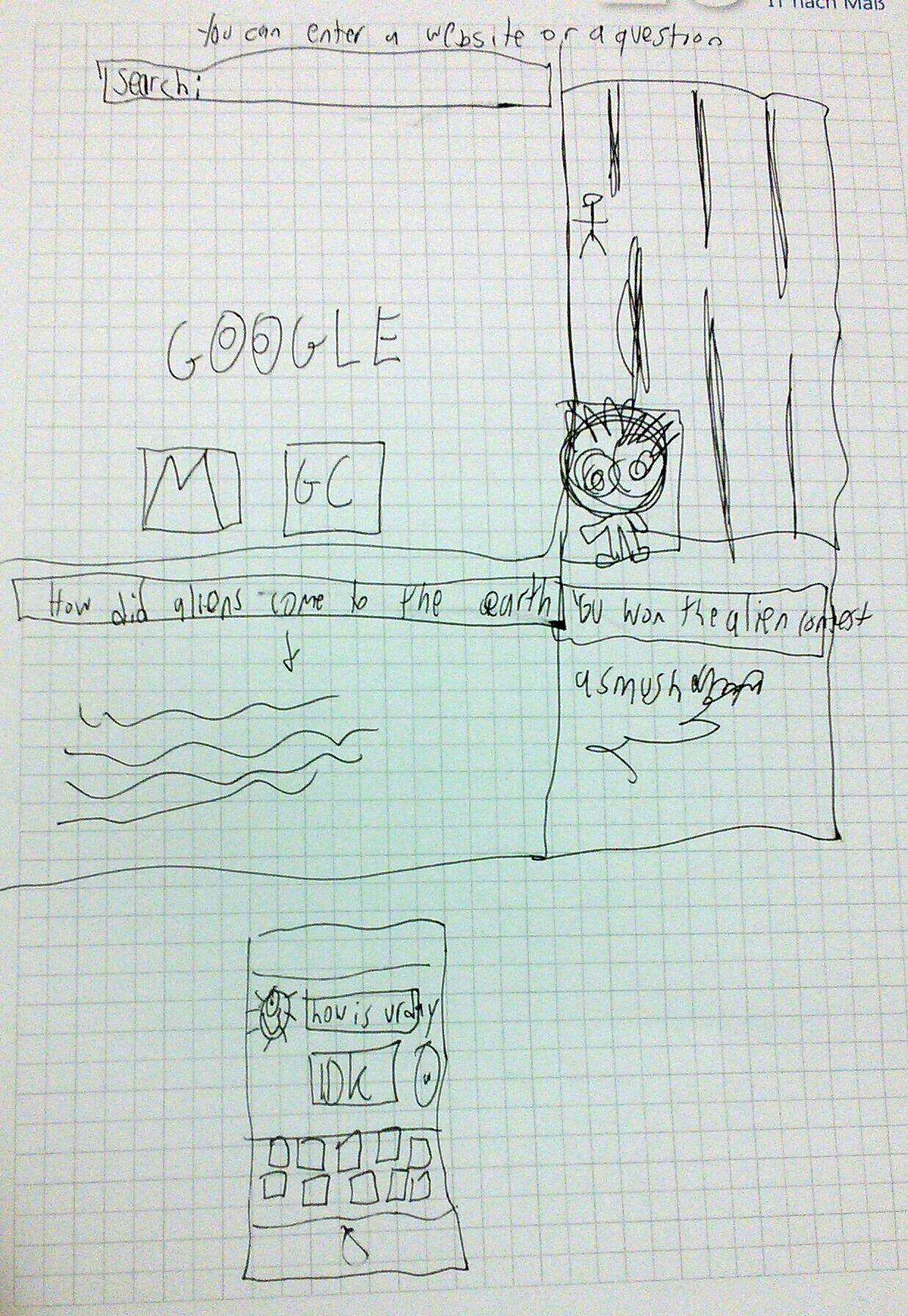
The boy and the aliens (I ll be mostly transribing the interview, which was short, and which I find difficult to sum up because some of the questions are written in a way to encourage the kids to tell a story, and this particular kid had a thing going on with aliens.) He s a 13 year old boy living in the US. He has his own computer, which technically belongs to his school but can be used by him freely and he can also take it home. He s the first kid saying he s reading the news on the internet; he does not actually use social media, besides sometimes watching TikTok. When asked: Imagine that aliens land and come to you and say: We ve heard about this internet thing you all talk about, what is it? What do you tell them? he replied:
Well, I mean they re aliens, so I don t know if I wanna tell them much.
(Parents laughing in the background.) Let s assume they re friendly aliens.
Well, I would say you can look anything up and play different games. And there are alien games. But mostly the enemies are aliens which you might be a little offended by. And you can get work done, if you needed to spy on humans. There s cameras, you can film yourself, yeah. And you can text people and call people who are far away
And what would be in a drawing that would explain the internet? Google, an alien using Twitch, Google search results, and the interface of an IM software on an iPhone drawn by a 13 year old boy And here s what he explains about his drawing:
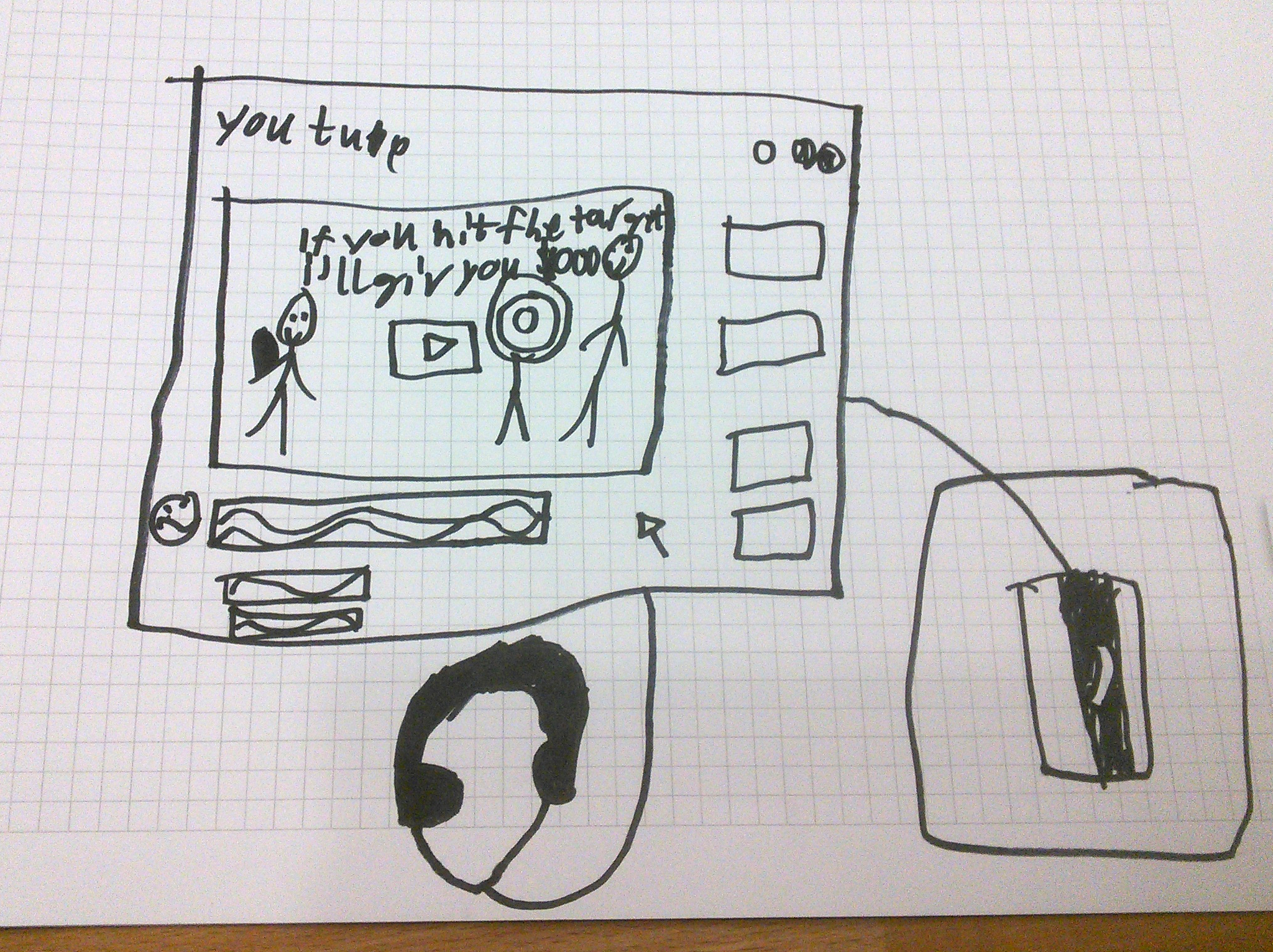
First, I would draw what I see when you open a new tab, Google.
On the right side of the drawing we see something like Twitch.
I don t wanna offend the aliens, but you can film yourself playing a game, so here is the alien and he s playing a game.
And then you can ask questions like: How did aliens come to the Earth? And the answer will be here (below). And there ll be different websites that you can click on.
And you can also look up Who won the alien contest? And that would be Usmushgagu, and that guy won the alien contest.
Do you think the information about alien intergalactic football is already on the internet?
Yeah! That s how fast the internet is.
On the bottom of the drawing we see an iPhone and an instant messaging software.
There s also a device called an iPhone and with it you can text your friends. So here s the alien asking: How was ur day? and the friend might answer IDK [I don t know].
Imagine that a wise and friendly dragon could teach you one thing about the internet that you ve always wanted to know. What would you ask the dragon to teach you about?
Is there a way you don t have to pay for any channels or subscriptions and you can get through any firewall?
Imagine you could make the internet better for everyone. What would you do first?
Well you wouldn t have to pay for it [paywalls].
Can you describe what happens between your device and a website when you visit a website?
Well, it takes 0.025 seconds. [ ] It s connecting.
Wow, that s indeed fast! We were not able to obtain more details about what is that fast thing that s happening exactly

The software engineer s kid This kid identifies as neither boy nor girl, is 10 years old and lives in Germany. Their father works as a software engineer, or in the words of the child:
My dad knows everything.
The kid has a laptop and a mobile phone, both with parental control they don t think that the controlling is fair. This kid uses the internet foremostly for listening to music and watching prank channels on Youtube but also to work with Purple Mash (a teaching platform for the computing curriculum used at their school), finding 3d printing models (that they ask their father to print with them because they did not manage to use the printer by themselves yet). Interestingly, and very differently from the non-tech-parent kids, this kid insists on using Firefox and Signal - the latter is not only used by their dad to tell them to come downstairs for dinner, but also to call their grandmother. This kid also shops online, with the help of the father who does the actual shopping for them using money that the kid earned by reading books. If you would need to explain to an alien who has landed on Earth what the internet is, what would you tell them?
The internet is something where you search, for example, you can look for music. You can also watch videos from around the world, and you can program stuff.
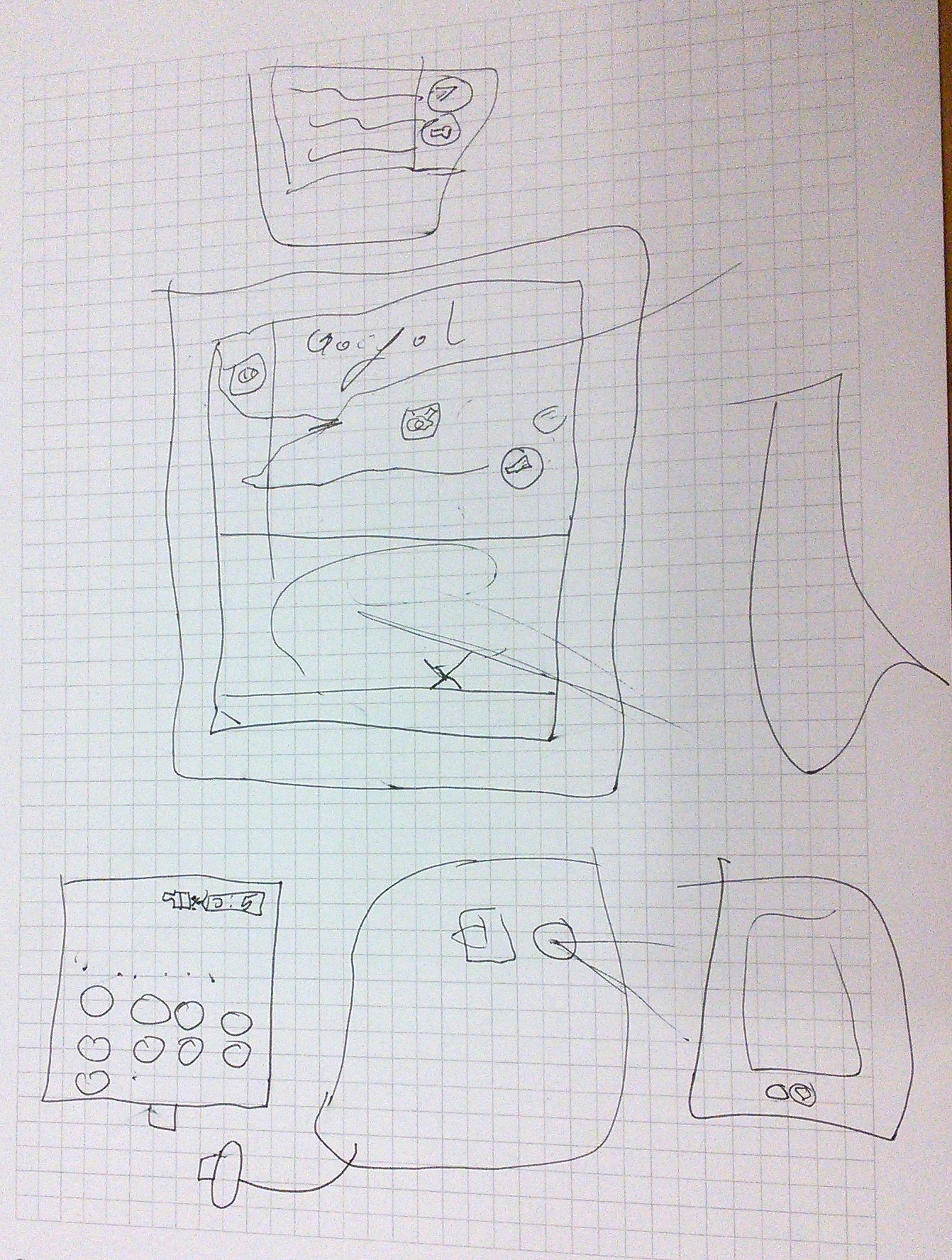
Like most of the kids interviewed, this kid uses the internet mostly for media consumption, but with the difference that they also engage with technology by way of programming using Purple Mash. drawing of the internet by a 10 year old showing a Youtube prank channel, an external device trackpad, and headphones In their drawing we see a Youtube prank channel on a screen, an external trackpad on the right (likely it s not a touch screen), and headphones. Notice how there is no keyboard, or maybe it s folded away. If you could ask a nice and friendly dragon anything you d like to learn about the internet, what would it be?
How do I shutdown my dad s computer forever?
And what is it that he would do to improve the internet for everyone? Contrary to the kid living in the US, they think that
It takes too much time to load stuff!
I wonder if this kid experiences the internet as being slow because they use the mobile network or because their connection somehow gets throttled as a way to control media consumption, or if the German internet infrastructure is just so much worse in certain regions If you could improve the internet for everyone, what would you do first? I d make a new Firefox app that loads the internet much faster.

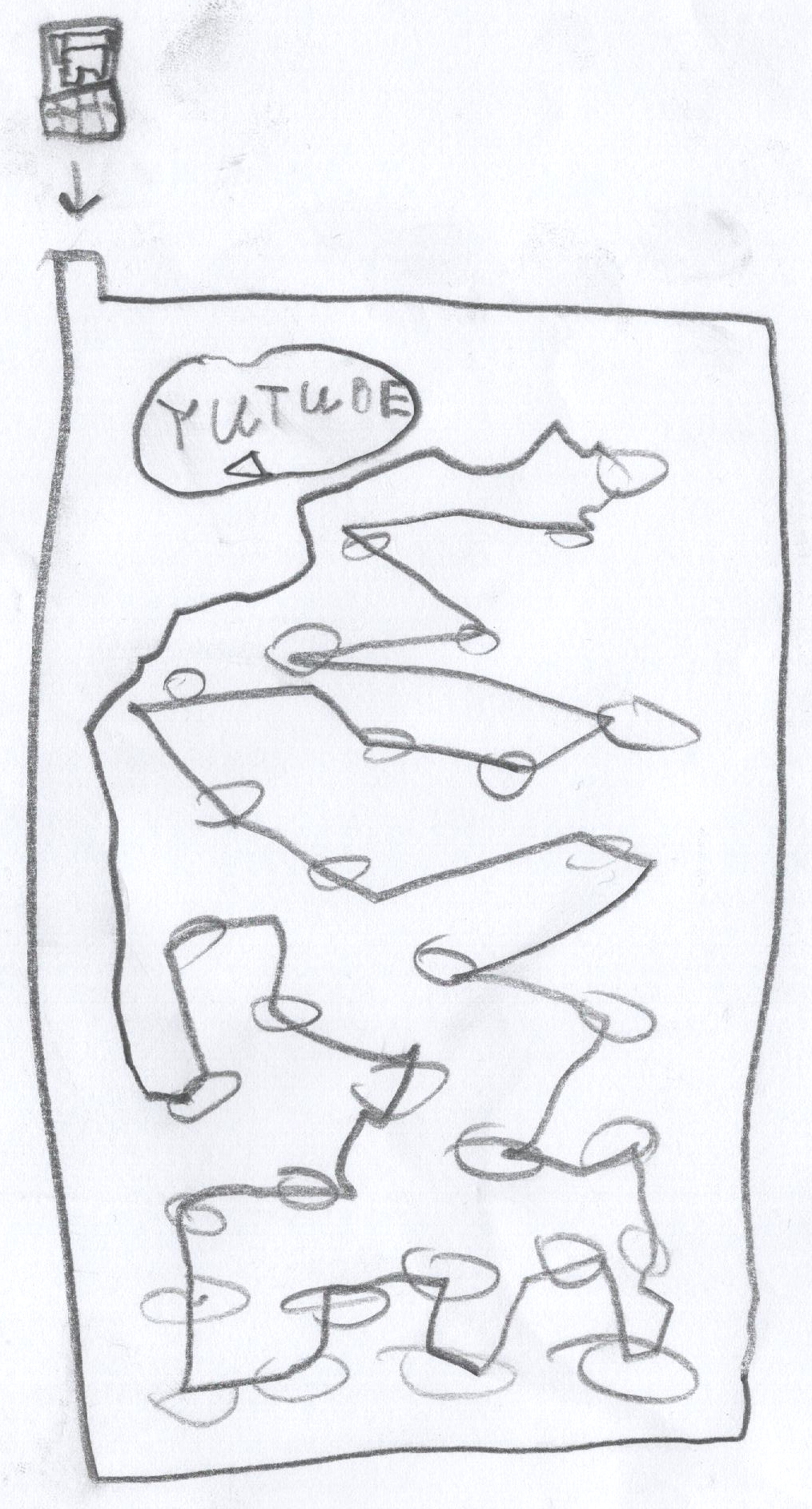
The software engineer s daughter This girl is only 8 years old, she hates unicorns, and her dad is also a software engineer. She uses a smartphone, controlled by her parents. My impression of the interview is that at this age, kids slightly mix up the internet with the devices that they use to access the internet. drawing of the internet by an 8 year old girl, Showing Google and the interface to call and text someone In her drawing, we see again Google - it s clearly everywhere - and also the interfaces for calling and texting someone. To explain what the internet is, besides the fact that one can use it for calling and listening to music, she says:
[The internet] is something that you can [use to] see someone who is far away, so that you don t need to take time to get to them.
Now, that s a great explanation, the internet providing the possibility for communication over a distance :) If she could ask a friendly dragon something she always wanted to know, she d ask how to make her phone come alive:
that it can talk to you, that it can see you, that it can smile and has eyes. It s like a new family member, you can talk to it.
Sounds a bit like Siri, Alexa, or Furby, doesn t it? If you could improve the internet for everyone, what would you do first? She d have the phone be able to decide over her free time, her phone time. That would make the world better, not for the kids, but certainly for the parents.

The antifascist kid This German boy s dad has a background in electrotechnical engineering. He s 10 years old and he told me he s using the internet a lot for searching things for example about his passion: the firefighters. For him, the internet is:
An invisible world. A virtual world. But there s also the darknet.
He told me he always watches that German show on public TV for kids that explains stuff: Checker Tobi. (In 2014, Checker Tobi actually produced an episode about the internet, which I d criticize for having only male characters, except for one female character: a secretary Google, a nice and friendly woman guiding the way through the huge library that s the internet ) This kid was the only one interviewed who managed to actually explain something about the internet, or rather about the hypertextual structure of the web. When I asked him to draw the internet, he made a drawing of a pin board. He explained:
Many items are attached to the pin board, and on the top left corner there s a computer, for example with Youtube and one can navigate like that between all the items, and start again from the beginning when done.
hypertext structure representing the internet drawn by a kid When I asked if he knew what actually happens between the device and a website he visits, he put forth the hypothesis of the existence of some kind of
Waves, internet waves - all this stuff somehow needs to be transmitted.
What he d like to learn:
How to get into the darknet? How do you become a Whitehat? I ve heard these words on the internet, the internet makes me clever.
And what would he change on the internet if he could?
I want that right wing extreme stuff is not accessible anymore, or at least, that it rains turds ( Kackw rste ) whenever people watch such stuff. Or that people are always told: This video is scum.
I suspect that his father has been talking with him about these things, and maybe these are also subjects he heard about when listening to punk music (he told me he does), or browsing Youtube.

Future projects To me this has been pretty insightful. I might share some more internet drawings by adults in the future, which I think are also really interesting, as they show very different things depending on the age of the person. I ve been using the information gathered to work on a children s book which I hope to be able to share with you next year.

Russ Allbery: Review: The Afterward

Review: The Afterward, by E.K. Johnston
Publisher: Dutton Books
Copyright: February 2019
Printing: 2020
ISBN: 0-7352-3190-7
Format: Kindle
Pages: 339
The Afterward is a standalone young adult high fantasy with a substantial romance component. The title is not misspelled. Sir Erris and her six companions, matching the number of the new gods, were successful in their quest for the godsgem. They defeated the Old God and destroyed Him forever, freeing King Dorrenta from his ensorcellment, and returned in triumph to Cadrium to live happily ever after. Or so the story goes. Sir Erris and three of the companions are knights. Another companion is the best mage in the kingdom. Kalanthe Ironheart, who distracted the Old God at a critical moment and allowed Sir Erris to strike, is only an apprentice due to her age, but surely will become a great knight. And then there is Olsa Rhetsdaughter, the lowborn thief, now somewhat mockingly called Thief of the Realm for all the good that does her. The reward was enough for her to buy her freedom from the Thief's Court. It was not enough to pay for food after that, or enough for her to change her profession, and the Thief's Court no longer has any incentive to give her easy (or survivable) assignments. Kalanthe is in a considerably better position, but she still needs a good marriage. Her reward paid off half of her debt, which broadens her options, but she's still a debt-knight, liable for the full cost of her training once she reaches the age of nineteen. She's mostly made her peace with the decisions she made given her family's modest means, but marriages of that type are usually for heirs, and Kalanthe is not looking forward to bearing a child. Or, for that matter, sleeping with a man. Olsa and Kalanthe fell in love during the Quest. Given Kalanthe's debt and the way it must be paid, and her iron-willed determination to keep vows, neither of them expected their relationship to survive the end of the Quest. Both of them wish that it had. The hook is that this novel picks up after the epic fantasy quest is over and everyone went home. This is not an entirely correct synopsis; chapters of The Afterward alternate between "After" and "Before" (and one chapter delightfully titled "More or less the exact moment of"), and by the end of the book we get much of the story of the Quest. It's not told from the perspective of the lead heroes, though; it's told by following Kalanthe and Olsa, who would be firmly relegated to supporting characters in a typical high fantasy. And it's largely told through the lens of their romance. This is not the best fantasy novel I've read, but I had a fun time with it. I am now curious about the intended audience and marketing, though. It was published by a YA imprint, and both the ages of the main characters and the general theme of late teenagers trying to chart a course in an adult world match that niche. But it's also clearly intended for readers who have read enough epic fantasy quests that they will both be amused by the homage and not care that the story elides a lot of the typical details. Anyone who read David Eddings at an impressionable age will enjoy the way Johnston pokes gentle fun at The Belgariad (this book is dedicated to David and Leigh Eddings), but surely the typical reader of YA fantasy these days isn't also reading Eddings. I'm therefore not quite sure who this book was for, but apparently that group included me. Johnston thankfully is not on board with the less savory parts of Eddings's writing, as you might have guessed from the sapphic romance. There is no obnoxious gender essentialism here, although there do appear to be gender roles that I never quite figured out. Knights are referred to as sir, but all of the knights in this story are women. Men still seem to run a lot of things (kingdoms, estates, mage colleges), but apart from the mage, everyone on the Quest was female, and there seems to be an expectation that women go out into the world and have adventures while men stay home. I'm not sure if there was an underlying system that escaped me, or if Johnston just mixed things up for the hell of it. (If the latter, I approve.) This book does suffer a bit from addressing some current-day representation issues without managing to fold them naturally into the story or setting. One of the Quest knights is transgender, something that's revealed in a awkward couple of paragraphs and then never mentioned again. Two of the characters have a painfully earnest conversation about the word "bisexual," complete with a strained attempt at in-universe etymology. Racial diversity (Olsa is black, and Kalanthe is also not white) seemed to be handled a bit better, although I am not the reader to notice if the discussions of hair maintenance were similarly awkward. This is way better than no representation and default-white characters, to be clear, but it felt a bit shoehorned in at times and could have used some more polish. These are quibbles, though. Olsa was the heart of the book for me, and is exactly the sort of character I like to read about. Kalanthe is pure stubborn paladin, but I liked her more and more as the story continued. She provides a good counterbalance to Olsa's natural chaos. I do wish Olsa had more opportunities to show her own competence (she's not a very good thief, she's just the thief that Sir Erris happened to know), but the climax of the story was satisfying. My main grumble is that I badly wanted to dwell on the happily-ever-after for at least another chapter, ideally two. Johnston was done with the story before I was. The writing was serviceable but not great and there are some bits that I don't think would stand up to a strong poke, but the characters carried the story for me. Recommended if you'd like some sapphic romance and lightweight class analysis complicating your Eddings-style quest fantasy. Rating: 7 out of 10

28 December 2023

Simon Josefsson: Validating debian/copyright: licenserecon

Recently I noticed a new tool called licenserecon written by Peter Blackman, and I helped get licenserecon into Debian. The purpose of licenserecon is to reconcile licenses from debian/copyright against the output from licensecheck, a tool written by Jonas Smedegaard. It assumes DEP5 copyright files. You run the tool in a directory that has a debian/ sub-directory, and its output when it notices mismatches (this is for resolv-wrapper):
# sudo apt install licenserecon
jas@kaka:~/dpkg/resolv-wrapper$ lrc
Parsing Source Tree ....
Running licensecheck ....
d/copyright       licensecheck
BSD-3-Clauses     BSD-3-clause     src/resolv_wrapper.c
BSD-3-Clauses     BSD-3-clause     tests/dns_srv.c
BSD-3-Clauses     BSD-3-clause     tests/test_dns_fake.c
BSD-3-Clauses     BSD-3-clause     tests/test_res_query_search.c
BSD-3-Clauses     BSD-3-clause     tests/torture.c
BSD-3-Clauses     BSD-3-clause     tests/torture.h
jas@kaka:~/dpkg/resolv-wrapper$ 
Noticing one-character typos like this may not bring satisfaction except to the most obsessive-compulsive among us, however the tool has the potential of discovering more serious mistakes. Using it manually once in a while may be useful, however I tend to forget QA steps that are not automated. Could we add this to the Salsa CI/CD pipeline? I recently proposed a merge request to add a wrap-and-sort job to the Salsa CI/CD pipeline (disabled by default) and learned how easy it was to extend it. I think licenserecon is still a bit rough on the edges, and I haven t been able to successfully use it on any but the simplest packages yet. I wouldn t want to suggest it is added to the normal Salsa CI/CD pipeline, even if disabled. If you maintain a Debian package on Salsa and wish to add a licenserecon job to your pipeline, I wrote licenserecon.yml for you. The simplest way to use licenserecon.yml is to replace recipes/debian.yml@salsa-ci-team/pipeline as the Salsa CI/CD configuration file setting with debian/salsa-ci.yml@debian/licenserecon. If you use a debian/salsa-ci.yml file you may put something like this in it instead:
---
include:
  - https://salsa.debian.org/salsa-ci-team/pipeline/raw/master/recipes/debian.yml
  - https://salsa.debian.org/debian/licenserecon/raw/main/debian/licenserecon.yml
Once you trigger the pipeline, this will result in a new job licenserecon that validates debian/copyright against licensecheck output on every build! I have added this to the libcpucycles package on Salsa and the pipeline contains a new job licenserecon whose output currently ends with:
$ cd $ WORKING_DIR /$ SOURCE_DIR 
$ lrc
Parsing Source Tree ....
Running licensecheck ....
No differences found
Cleaning up project directory and file based variables
If upstream releases a new version with files not matching our debian/copyright file, we will detect that on the next Salsa build job rather than months later when somebody happens to run the tools manually or there is some license conflict. Incidentally licenserecon is written in Pascal which brought back old memories with Turbo Pascal back in the MS-DOS days. Thanks Peter for licenserecon, and Jonas for licensecheck making this possible!

Russ Allbery: Review: Nettle & Bone

Review: Nettle & Bone, by T. Kingfisher
Publisher: Tor
Copyright: 2022
ISBN: 1-250-24403-X
Format: Kindle
Pages: 242
Nettle & Bone is a standalone fantasy novel with fairy tale vibes. T. Kingfisher is a pen name for Ursula Vernon. As the book opens, Marra is giving herself a blood infection by wiring together dog bones out of a charnel pit. This is the second of three impossible tasks that she was given by the dust-wife. Completing all three will give her the tools to kill a prince. I am a little cautious of which T. Kingfisher books I read since she sometimes writes fantasy and sometimes writes horror and I don't get along with horror. This one seemed a bit horrific in the marketing, so I held off on reading it despite the Hugo nomination. It turns out to be just on the safe side of my horror tolerance, with only a couple of parts that I read a bit quickly. One of those is the opening, which I am happy to report does not set the tone for the rest of the book. Marra starts the story in a wasteland full of disease, madmen, and cannibals (who, in typical Ursula Vernon fashion, turn out to be nicer than the judgmental assholes outside of the blistered land). She doesn't stay there long. By chapter two, the story moves on to flashbacks explaining how Marra ended up there, alternating with further (and less horrific) steps in her quest to kill the prince of the Northern Kingdom. Marra is a princess of a small, relatively poor coastal kingdom with a good harbor and acquisitive neighbors. Her mother, the queen, has protected the kingdom through arranged marriage of her daughters to the prince of the Northern Kingdom, who rules it in all but name given the mental deterioration of his father the king. Marra's eldest sister Damia was first, but she died suddenly and mysteriously in a fall. (If you're thinking about the way women are injured by "accident," you have the right idea.) Kania, the middle sister, is next to marry; she lives, but not without cost. Meanwhile, Marra is sent off to a convent to ensure that there are no complicating potential heirs, and to keep her on hand as a spare. I won't spoil the entire backstory, but you do learn it all. Marra is a typical Kingfisher protagonist: a woman who is way out of her depth who persists with stubbornness, curiosity, and innate decency because what else is there to do? She accumulates the typical group of misfits and oddballs common in Kingfisher's quest fantasies, characters that in the Chosen One male fantasy would be supporting characters at best. The bone-wife is a delight; her chicken is even better. There are fairy godmothers and a goblin market and a tooth extraction that was one of the creepiest things I've read without actually being horror. It is, in short, a Kingfisher fantasy novel, with a touch more horror than average but not enough to push it out of the fantasy genre. I think my favorite part of this book was not the main quest. It was the flashback scenes set in the convent, where Marra has the space (and the mentorship) to develop her sense of self.
"We're a mystery religion," said the abbess, when she'd had a bit more wine than usual, "for people who have too much work to do to bother with mysteries. So we simply get along as best we can. Occasionally someone has a vision, but [the goddess] doesn't seem to want anything much, and so we try to return the favor."
If you have read any other Kingfisher novels, much of this will be familiar: the speculative asides, the dogged determination, the slightly askew nature of the world, the vibes-based world-building that feels more like a fairy tale than a carefully constructed magic system, and the sense that the main characters (and nearly all of the supporting characters) are average people trying to play the hands they were dealt as ethically as they can. You will know that the tentative and woman-initiated romance is coming as soon as the party meets the paladin type who is almost always the romantic interest in one of these books. The emotional tone of the book is a bit predictable for regular readers, but Ursula Vernon's brain is such a delightful place to spend some time that I don't mind.
Marra had not managed to be pale and willowy and consumptive at any point in eighteen years of life and did not think she could achieve it before she died.
Nettle & Bone won the Hugo for Best Novel in 2023. I'm not sure why this specific T. Kingfisher novel won and not any of the half-dozen earlier novels she's written in a similar style, but sure, I have no objections. I'm glad one of them won; they're all worth reading and hopefully that will help more people discover this delightful style of fantasy that doesn't feel like what anyone else is doing. Recommended, although be prepared for a few more horror touches than normal and a rather grim first chapter. Content warnings: domestic abuse. The dog... lives? Is equally as alive at the end of the book as it was at the end of the first chapter? The dog does not die; I'll just leave it at that. (Neither does the chicken.) Rating: 8 out of 10

27 December 2023

David Bremner: Added a derived backend for org export

See web-stacker for the background. yantar92 on #org-mode pointed out that a derived backend would be a cleaner solution. I had initially thought it was too complicated, but I have to agree the example in the org-mode documentation does pretty much what I need. This new approach has the big advantage that the generation of URLs happens at export time, so it's not possible for the displayed program code and the version encoded in the URL to get out of sync.
;; derived backend to customize src block handling
(defun my-beamer-src-block (src-block contents info)
  "Transcode a SRC-BLOCK element from Org to beamer
         CONTENTS is nil.  INFO is a plist used as a communication
         channel."
  (let ((attr (org-export-read-attribute :attr_latex src-block :stacker)))
    (concat
     (when (or (not attr) (string= attr "both"))
       (org-export-with-backend 'beamer src-block contents info))
     (when attr
       (let* ((body  (org-element-property :value src-block))
              (table '(? ?\n ?: ?/ ?? ?# ?[ ?] ?@ ?! ?$ ?& ??
                         ?( ?) ?* ?+ ?, ?= ?%))
              (slug (org-link-encode body table))
              (simplified (replace-regexp-in-string "[%]20" "+" slug nil 'literal)))
         (format "\n\\stackerlink %s " simplified))))))
(defun my-beamer-export-to-latex
    (&optional async subtreep visible-only body-only ext-plist)
  "Export current buffer as a (my)Beamer presentation (tex).
    See org-beamer-export-to-latex for full docs"
  (interactive)
  (let ((file (org-export-output-file-name ".tex" subtreep)))
    (org-export-to-file 'my-beamer file
      async subtreep visible-only body-only ext-plist)))
(defun my-beamer-export-to-pdf
    (&optional async subtreep visible-only body-only ext-plist)
  "Export current buffer as a (my)Beamer presentation (PDF).
  See org-beamer-export-to-pdf for full docs."
  (interactive)
  (let ((file (org-export-output-file-name ".tex" subtreep)))
    (org-export-to-file 'my-beamer file
      async subtreep visible-only body-only ext-plist
      #'org-latex-compile)))
(with-eval-after-load "ox-beamer"
  (org-export-define-derived-backend 'my-beamer 'beamer
    :translate-alist '((src-block . my-beamer-src-block))
    :menu-entry '(?l 1 ((?m "my beamer .tex" my-beamer-export-to-latex)
                        (?M "my beamer .pdf" my-beamer-export-to-pdf)))))
An example of using this in an org-document would as below. The first source code block generates only a link in the output while the last adds a generated link to the normal highlighted source code.
* Stuff
** Frame
#+attr_latex: :stacker t
#+NAME: last
#+BEGIN_SRC stacker :eval no
  (f)
#+END_SRC
#+name: smol-example
#+BEGIN_SRC stacker :noweb yes
  (defvar x 1)
  (deffun (f)
    (let ([y 2])
      (deffun (h)
        (+ x y))
      (h)))
  <<last>>
#+END_SRC
** Another Frame 
#+ATTR_LATEX: :stacker both
#+begin_src smol :noweb yes
  <<smol-example>>
#+end_src

Bits from Debian: Statement about the EU Cyber Resilience Act

Debian Public Statement about the EU Cyber Resilience Act and the Product Liability Directive The European Union is currently preparing a regulation "on horizontal cybersecurity requirements for products with digital elements" known as the Cyber Resilience Act (CRA). It is currently in the final "trilogue" phase of the legislative process. The act includes a set of essential cybersecurity and vulnerability handling requirements for manufacturers. It will require products to be accompanied by information and instructions to the user. Manufacturers will need to perform risk assessments and produce technical documentation and, for critical components, have third-party audits conducted. Discovered security issues will have to be reported to European authorities within 25 hours (1). The CRA will be followed up by the Product Liability Directive (PLD) which will introduce compulsory liability for software. While a lot of these regulations seem reasonable, the Debian project believes that there are grave problems for Free Software projects attached to them. Therefore, the Debian project issues the following statement:
  1. Free Software has always been a gift, freely given to society, to take and to use as seen fit, for whatever purpose. Free Software has proven to be an asset in our digital age and the proposed EU Cyber Resilience Act is going to be detrimental to it. a. As the Debian Social Contract states, our goal is "make the best system we can, so that free works will be widely distributed and used." Imposing requirements such as those proposed in the act makes it legally perilous for others to redistribute our work and endangers our commitment to "provide an integrated system of high-quality materials with no legal restrictions that would prevent such uses of the system". (2) b. Knowing whether software is commercial or not isn't feasible, neither in Debian nor in most free software projects - we don't track people's employment status or history, nor do we check who finances upstream projects (the original projects that we integrate in our operating system). c. If upstream projects stop making available their code for fear of being in the scope of CRA and its financial consequences, system security will actually get worse rather than better. d. Having to get legal advice before giving a gift to society will discourage many developers, especially those without a company or other organisation supporting them.
  2. Debian is well known for its security track record through practices of responsible disclosure and coordination with upstream developers and other Free Software projects. We aim to live up to the commitment made in the Debian Social Contract: "We will not hide problems." (3) a.The Free Software community has developed a fine-tuned, tried-and-tested system of responsible disclosure in case of security issues which will be overturned by the mandatory reporting to European authorities within 24 hours (Art. 11 CRA). b. Debian spends a lot of volunteering time on security issues, provides quick security updates and works closely together with upstream projects and in coordination with other vendors. To protect its users, Debian regularly participates in limited embargos to coordinate fixes to security issues so that all other major Linux distributions can also have a complete fix when the vulnerability is disclosed. c. Security issue tracking and remediation is intentionally decentralized and distributed. The reporting of security issues to ENISA and the intended propagation to other authorities and national administrations would collect all software vulnerabilities in one place. This greatly increases the risk of leaking information about vulnerabilities to threat actors, representing a threat for all the users around the world, including European citizens. d. Activists use Debian (e.g. through derivatives such as Tails), among other reasons, to protect themselves from authoritarian governments; handing threat actors exploits they can use for oppression is against what Debian stands for. e. Developers and companies will downplay security issues because a "security" issue now comes with legal implications. Less clarity on what is truly a security issue will hurt users by leaving them vulnerable.
  3. While proprietary software is developed behind closed doors, Free Software development is done in the open, transparent for everyone. To retain parity with proprietary software the open development process needs to be entirely exempt from CRA requirements, just as the development of software in private is. A "making available on the market" can only be considered after development is finished and the software is released.
  4. Even if only "commercial activities" are in the scope of CRA, the Free Software community - and as a consequence, everybody - will lose a lot of small projects. CRA will force many small enterprises and most probably all self employed developers out of business because they simply cannot fulfill the requirements imposed by CRA. Debian and other Linux distributions depend on their work. If accepted as it is, CRA will undermine not only an established community but also a thriving market. CRA needs an exemption for small businesses and, at the very least, solo-entrepreneurs.

Information about the voting process: Debian uses the Condorcet method for voting. Simplistically, plain Condorcets method can be stated like so : "Consider all possible two-way races between candidates. The Condorcet winner, if there is one, is the one candidate who can beat each other candidate in a two-way race with that candidate." The problem is that in complex elections, there may well be a circular relationship in which A beats B, B beats C, and C beats A. Most of the variations on Condorcet use various means of resolving the tie. Debian's variation is spelled out in the constitution, specifically, A.5(3) Sources: (1) CRA proposals and links & PLD proposals and links (2) Debian Social Contract No. 2, 3, and 4 (3) Debian Constitution

David Bremner: Generating links to a web IDE from org-beamer

The Emacs part is superceded by a cleaner approach I the upcoming term I want to use KC Lu's web based stacker tool. The key point is that it takes (small) programs encoded as part of the url. Yesterday I spent some time integrating it into my existing org-beamer workflow. In my init.el I have
(defun org-babel-execute:stacker (body params)
  (let* ((table '(? ?\n ?: ?/ ?? ?# ?[ ?] ?@ ?! ?$ ?& ??
                    ?( ?) ?* ?+ ?, ?= ?%))
         (slug (org-link-encode body table))
         (simplified (replace-regexp-in-string "[%]20" "+" slug nil 'literal)))
    (format "\\stackerlink %s " simplified)))
This means that when I "execute" the block below with C-c C-c, it updates the link, which is then embedded in the slides.
#+begin_src stacker :results value latex :exports both
  (deffun (f x)
    (let ([y 2])
      (+ x y)))
  (f 7)
#+end_src
#+RESULTS:
#+begin_export latex
\stackerlink %28deffun+%28f+x%29%0A++%28let+%28%5By+2%5D%29%0A++++%28%2B+x+y%29%29%29%0A%28f+7%29 
#+end_export
The \stackerlink macro is probably fancier than needed. One could just use \href from hyperref.sty, but I wanted to match the appearence of other links in my documents (buttons in the margins). This is based on a now lost answer from stackoverflow.com; I think it wasn't this one, but you get the main idea: use \hyper@normalise.
\makeatletter
% define \stacker@base appropriately
\DeclareRobustCommand* \stackerlink \hyper@normalise\stackerlink@ 
\def\stackerlink@#1 %
  \begin tikzpicture [overlay]%
    \coordinate (here) at (0,0);%
    \draw (current page.south west  - here)%
    node[xshift=2ex,yshift=3.5ex,fill=magenta,inner sep=1pt]%
     \hyper@linkurl \tiny\textcolor white stacker \stacker@base?program=#1 ; %
  \end tikzpicture 
\makeatother

Russ Allbery: Review: A Study in Scarlet

Review: A Study in Scarlet, by Arthur Conan Doyle
Series: Sherlock Holmes #1
Publisher: AmazonClassics
Copyright: 1887
Printing: February 2018
ISBN: 1-5039-5525-7
Format: Kindle
Pages: 159
A Study in Scarlet is the short mystery novel (probably a novella, although I didn't count words) that introduced the world to Sherlock Holmes. I'm going to invoke the 100-year-rule and discuss the plot of this book rather freely on the grounds that even someone who (like me prior to a few days ago) has not yet read it is probably not that invested in avoiding all spoilers. If you do want to remain entirely unspoiled, exercise caution before reading on. I had somehow managed to avoid ever reading anything by Arthur Conan Doyle, not even a short story. I therefore couldn't be sure that some of the assertions I was making in my review of A Study in Honor were correct. Since A Study in Scarlet would be quick to read, I decided on a whim to do a bit of research and grab a free copy of the first Holmes novel. Holmes is such a part of English-speaking culture that I thought I had a pretty good idea of what to expect. This was largely true, but cultural osmosis had somehow not prepared me for the surprise Mormons. A Study in Scarlet establishes the basic parameters of a Holmes story: Dr. James Watson as narrator, the apartment he shares with Holmes at 221B Baker Street, the Baker Street Irregulars, Holmes's competition with police detectives, and his penchant for making leaps of logical deduction from subtle clues. The story opens with Watson meeting Holmes, agreeing to split the rent of a flat, and being baffled by the apparent randomness of Holmes's fields of study before Holmes reveals he's a consulting detective. The first case is a murder: a man is found dead in an abandoned house, without a mark on him although there are blood splatters on the walls and the word "RACHE" written in blood. Since my only prior exposure to Holmes was from cultural references and a few TV adaptations, there were a few things that surprised me. One is that Holmes is voluble and animated rather than aloof. Doyle is clearly going for passionate eccentric rather than calculating mastermind. Another is that he is intentionally and unabashedly ignorant on any topic not related to solving mysteries.
My surprise reached a climax, however, when I found incidentally that he was ignorant of the Copernican Theory and of the composition of the Solar System. That any civilized human being in this nineteenth century should not be aware that the earth travelled round the sun appeared to be to me such an extraordinary fact that I could hardly realize it. "You appear to be astonished," he said, smiling at my expression of surprise. "Now that I do know it I shall do my best to forget it." "To forget it!" "You see," he explained, "I consider that a man's brain originally is like a little empty attic, and you have to stock it with such furniture as you chose. A fool takes in all the lumber of every sort that he comes across, so that the knowledge which might be useful to him gets crowded out, or at best is jumbled up with a lot of other things so that he has a difficulty in laying his hands upon it. Now the skilful workman is very careful indeed as to what he takes into his brain-attic. He will have nothing but the tools which may help him in doing his work, but of these he has a large assortment, and all in the most perfect order. It is a mistake to think that that little room has elastic walls and can distend to any extent. Depend upon it there comes a time when for every addition of knowledge you forget something that you knew before. It is of the highest importance, therefore, not to have useless facts elbowing out the useful ones."
This is directly contrary to my expectation that the best way to make leaps of deduction is to know something about a huge range of topics so that one can draw unexpected connections, particularly given the puzzle-box construction and odd details so beloved in classic mysteries. I'm now curious if Doyle stuck with this conception, and if there were any later mysteries that involved astronomy. Speaking of classic mysteries, A Study in Scarlet isn't quite one, although one can see the shape of the genre to come. Doyle does not "play fair" by the rules that have not yet been invented. Holmes at most points knows considerably more than the reader, including bits of evidence that are not described until Holmes describes them and research that Holmes does off-camera and only reveals when he wants to be dramatic. This is not the sort of story where the reader is encouraged to try to figure out the mystery before the detective. Rather, what Doyle seems to be aiming for, and what Watson attempts (unsuccessfully) as the reader surrogate, is slightly different: once Holmes makes one of his grand assertions, the reader is encouraged to guess what Holmes might have done to arrive at that conclusion. Doyle seems to want the reader to guess technique rather than outcome, while providing only vague clues in general descriptions of Holmes's behavior at a crime scene. The structure of this story is quite odd. The first part is roughly what you would expect: first-person narration from Watson, supposedly taken from his journals but not at all in the style of a journal and explicitly written for an audience. Part one concludes with Holmes capturing and dramatically announcing the name of the killer, who the reader has never heard of before. Part two then opens with... a western?
In the central portion of the great North American Continent there lies an arid and repulsive desert, which for many a long year served as a barrier against the advance of civilization. From the Sierra Nevada to Nebraska, and from the Yellowstone River in the north to the Colorado upon the south, is a region of desolation and silence. Nor is Nature always in one mood throughout the grim district. It comprises snow-capped and lofty mountains, and dark and gloomy valleys. There are swift-flowing rivers which dash through jagged ca ons; and there are enormous plains, which in winter are white with snow, and in summer are grey with the saline alkali dust. They all preserve, however, the common characteristics of barrenness, inhospitality, and misery.
First, I have issues with the geography. That region contains some of the most beautiful areas on earth, and while a lot of that region is arid, describing it primarily as a repulsive desert is a bit much. Doyle's boundaries and distances are also confusing: the Yellowstone is a northeast-flowing river with its source in Wyoming, so the area between it and the Colorado does not extend to the Sierra Nevadas (or even to Utah), and it's not entirely clear to me that he realizes Nevada exists. This is probably what it's like for people who live anywhere else in the world when US authors write about their country. But second, there's no Holmes, no Watson, and not even the pretense of a transition from the detective novel that we were just reading. Doyle just launches into a random western with an omniscient narrator. It features a lean, grizzled man and an adorable child that he adopts and raises into a beautiful free spirit, who then falls in love with a wild gold-rush adventurer. This was written about 15 years before the first critically recognized western novel, so I can't blame Doyle for all the cliches here, but to a modern reader all of these characters are straight from central casting. Well, except for the villains, who are the Mormons. By that, I don't mean that the villains are Mormon. I mean Brigham Young is the on-page villain, plotting against the hero to force his adopted daughter into a Mormon harem (to use the word that Doyle uses repeatedly) and ruling Salt Lake City with an iron hand, border guards with passwords (?!), and secret police. This part of the book was wild. I was laughing out-loud at the sheer malevolent absurdity of the thirty-day countdown to marriage, which I doubt was the intended effect. We do eventually learn that this is the backstory of the murder, but we don't return to Watson and Holmes for multiple chapters. Which leads me to the other thing that surprised me: Doyle lays out this backstory, but then never has his characters comment directly on the morality of it, only the spectacle. Holmes cares only for the intellectual challenge (and for who gets credit), and Doyle sets things up so that the reader need not concern themselves with aftermath, punishment, or anything of that sort. I probably shouldn't have been surprised this does fit with the Holmes stereotype but I'm used to modern fiction where there is usually at least some effort to pass judgment on the events of the story. Doyle draws very clear villains, but is utterly silent on whether the murder is justified. Given its status in the history of literature, I'm not sorry to have read this book, but I didn't particularly enjoy it. It is very much of its time: everyone's moral character is linked directly to their physical appearance, and Doyle uses the occasional racial stereotype without a second thought. Prevailing writing styles have changed, so the prose feels long-winded and breathless. The rivalry between Holmes and the police detectives is tedious and annoying. I also find it hard to read novels from before the general absorption of techniques of emotional realism and interiority into all genres. The characters in A Study in Scarlet felt more like cartoon characters than fully-realized human beings. I have no strong opinion about the objective merits of this book in the context of its time other than to note that the sudden inserted western felt very weird. My understanding is that this is not considered one of the better Holmes stories, and Holmes gets some deeper characterization later on. Maybe I'll try another of Doyle's works someday, but for now my curiosity has been sated. Followed by The Sign of the Four. Rating: 4 out of 10

25 December 2023

Russ Allbery: Review: The Blackwing War

Review: The Blackwing War, by K.B. Spangler
Series: Deep Witches #1
Publisher: A Girl and Her Fed Books
Copyright: March 2021
ISBN: blackwing-war
Format: Kindle
Pages: 284
The Blackwing War is the first book of a projected space opera series. I previously reviewed Stoneskin, which was intended as a prelude to this series. In theory you can start here, but I would read Stoneskin first. Tembi is a Witch, which means she can ask the Deep to do things for her. At the start of the book, those things mostly involve disarming bombs. The galaxy is in the middle of a genocidal war between the well-equipped and all-but-officially supported Sagittarius Armed Forces, also known as the Blackwings, and the Sabenta resistance movement. To settle the galaxy, humans fiddled with their genes to adapt themselves to otherwise-hostile planets. The Blackwings take exception, in the tradition of racist humans throughout history, and think it's time to purify human bloodlines again. Both sides are using bombs. The Deep is the brilliant idea of this series. It seems to exist everywhere simultaneously, it's alive, it adores teleporting things, and it's basically a giant cosmic puppy. Humans are nearly incomprehensible to the Deep, and it's nearly incomprehensible to humans, but it somehow picks out specific humans who can (sort of) understand it and whom it gets attached to and somehow makes immortal. These are the Witches, and they have turned the Deep into the logistical backbone of human civilization. Essentially all commerce and travel is now done through Deep teleportation, requested by a Witch and coordinated by Lancaster, the Witches' governing council. The exception is war. Lancaster is strictly neutral; it does not take sides, even in the face of an ongoing genocide, and it refuses to transport military ships, any type of weapons, or even war refugees. Domino, Lancaster's cynically manipulative leader, is determined to protect its special privileges and position at all costs. Tembi is one of the quasi-leaders of a resistance against that position, but even they are reluctant to ask the Deep to take sides in a war. To them, the Deep is a living magical creature that they are exploiting, and which also tends to be a bundle of nerves. Using it as a weapon feels like a step too far. That's how the situation lies at the start of this book when, after a successful bomb defusing, the Deep whisks Tembi away to watch an unknown weapon blow up a moon. A lot of this book consists of Tembi unraveling a couple of mysteries, starting with the apparent experimental bomb and then expanding to include the apparent drugging and disappearance of her former classmate. The low-grade war gets worse throughout, leaving Tembi torn between the justifications for Lancaster's neutrality and her strong sense of basic morality. The moments when Tembi gets angry enough or impatient enough to take action are the best parts, but a lot of this book is quite grim. Do not expect all to be resolved in a happy ending. There is some catharsis, but The Blackwing War is also clearly setup for a longer series. Tembi is a great character and the Deep is even better. I thoroughly enjoyed reading about both of them, and Tembi's relationship with the Deep is a delight. Usually I get frustrated by baffling incomprehensibility as a plot devices, but Spangler pulls it off as well as I've seen it done. But unfortunately, this book is firmly in the "gets worse before it will get better" part of the overall story arc, and the sequels have not yet appeared. The Blackwing War ends on a cliffhanger that portends huge changes for the characters and the setting, and if I had the next book to rush into, I wouldn't mind the grimness as much. As is, it was a somewhat depressing reading experience despite its charms, and despite a somewhat optimistic ending (that I doubt will truly resolve anything). I think the world-building elements were a touch predictable, and I wish Spangler wouldn't have her characters keep trying to justify Domino's creepy, abusive, and manipulative actions. But the characters are so much fun, and the idea of the Deep as a character is such a delight, that I am hooked on this series regardless. Recommended, although I will (hopefully) be able to recommend it more heartily once at least one sequel has been published. Content warnings: genocide, racism, violent death. Rating: 7 out of 10

22 December 2023

Gunnar Wolf: Pushing some reviews this way

Over roughly the last year and a half I have been participating as a reviewer in ACM s Computing Reviews, and have even been honored as a Featured Reviewer. Given I have long enjoyed reading friends reviews of their reading material (particularly, hats off to the very active Russ Allbery, who both beats all of my frequency expectations (I could never sustain the rythm he reads to!) and holds documented records for his >20 years as a book reader, with far more clarity and readability than I can aim for!), I decided to explicitly share my reviews via this blog, as the audience is somewhat congruent; I will also link here some reviews that were not approved for publication, clearly marking them so. I will probably work on wrangling my Jekyll site to display an (auto-)updated page and RSS feed for the reviews. In the meantime, the reviews I have published are:

Russ Allbery: Review: Wintersmith

Review: Wintersmith, by Terry Pratchett
Series: Discworld #35
Publisher: Clarion Books
Copyright: 2006
Printing: 2007
ISBN: 0-06-089033-9
Format: Mass market
Pages: 450
Wintersmith is the 35th Discworld novel and the 3rd Tiffany Aching novel. You could probably start here, since understanding the backstory isn't vital for following the plot, but I'm not sure why you would. Tiffany is now training with Miss Treason, a 113-year-old witch who is quite different in her approach from Miss Level, Tiffany's mentor in A Hat Full of Sky. Miss Level was the unassuming and constantly helpful glue that held the neighborhood together. Miss Treason is the judge; her neighbors are scared of her and proud of being scared of her, since that means they have a proper witch who can see into their heads and sort out their problems. On the surface, they're quite different; part of the story of this book is Tiffany learning to see the similarities. First, though, Miss Treason rushes Tiffany to a strange midnight Morris Dance, without any explanation. The Morris Dance usually celebrates the coming of spring and is at the center of a village party, so Tiffany is quite confused by seeing it danced on a dark and windy night in late autumn. But there is a hole in the dance where the Fool normally is, and Tiffany can't keep herself from joining it. This proves to be a mistake. That space was left for someone very different from Tiffany, and now she's entangled herself in deep magic that she doesn't understand. This is another Pratchett novel where the main storyline didn't do much for me. All the trouble stems from Miss Treason being maddeningly opaque, and while she did warn Tiffany, she did so in that way that guarantees a protagonist of a middle-grade novel will ignore. The Wintersmith is a boring, one-note quasi-villain, and the plot mainly revolves around elemental powers being dumber than a sack of hammers. The one thing I will say about the main plot is that the magic Tiffany danced into is entangled with courtship and romance, Tiffany turns thirteen over the course of this book, and yet this is not weird and uncomfortable reading the way it would be in the hands of many other authors. Pratchett has a keen eye for the age range that he's targeting. The first awareness that there is such a thing as romance that might be relevant to oneself pairs nicely with the Wintersmith's utter confusion at how Tiffany's intrusion unbalanced his dance. This is a very specific age and experience that I think a lot of authors would shy away from, particularly with a female protagonist, and I thought Pratchett handled it adroitly. I personally found the Wintersmith's awkward courting tedious and annoying, but that's more about me than about the book. As with A Hat Full of Sky, though, everything other than the main plot was great. It is becoming obvious how much Tiffany and Granny Weatherwax have in common, and that Granny Weatherwax recognizes this and is training Tiffany herself. This is high-quality coming-of-age material, not in the traditional fantasy sense of chosen ones and map explorations, but in the sense of slowly-developing empathy and understanding of people who think differently than you do. Tiffany, like Granny Weatherwax, has very little patience with nonsense, and her irritation with stupidity is one of her best characteristics. But she's learning how to blunt it long enough to pay attention, and to understand how people she doesn't like can still be the right people for specific situations. I particularly loved how Granny carries on with a feud at the same time that Tiffany is learning to let go of one. It's not a contradiction or hypocrisy; it's a sign that Tiffany is entitled to her judgments and feelings, but has to learn how to keep them in their place and not let them take over. One of the great things about the Tiffany Aching books is that the villages are also characters. We don't see that much of the individual people, but one of the things Tiffany is learning is how to see the interpersonal dynamics and patterns of village life. Somehow the feelings of irritation and exasperation fade once you understand people's motives and see more sides to their character. There is a lot more Nanny Ogg in this book than there has been in the last few, and that reminded me of how much I love her character. She has a completely different approach than Granny Weatherwax, but it's just as effective in different ways. She's also the perfect witch to have around when you've stumbled into a stylized love story that you don't want to be a part of, and yet find oddly fascinating. It says something about the skill of Pratchett's characterization that I could enjoy a book this much while having no interest in the main plot. The Witches have always been great characters, but somehow they're even better when seen through Tiffany's perspective. Good stuff; if you liked any of the other Tiffany Aching books, you will like this as well. Followed by Making Money in publication order. The next Tiffany Aching novel is I Shall Wear Midnight. Rating: 8 out of 10

21 December 2023

Russell Coker: Links December 2023

David Brin wrote an insightful blog post about the latest round of UFO delusion [1]. There aren t a heap of scientists secretly working on UFOs. David Brin wrote an informative and insightful blog post about rich doomsday preppers who want to destroy democracy [2]. Cory Doctorow wrote an interesting article about how ChatGPT helps people write letters and how that decreases the value of the letter [3]. What can we do to show that letters mean something? Hand deliver them? Pay someone to hand deliver them? Cory concentrates on legal letters and petitions but this can apply to other things too. David Brin wrote an informative blog post about billionaires prepping for disaster and causing the disaster [4]. David Brin wrote an insightful Wired article about ways of dealing with potential rogue AIs [5]. David Brin has an interesting take on government funded science [6]. Bruce Schneier wrote an insightful article about AI Risks which is worth reading [7]. Ximion wrote a great blog post about how tp use AppStream metadata to indicate what type of hardware/environment is required to use an app [8]. This is great for the recent use of Debian on phones and can provide real benefits for more traditional uses (like all those servers that accidentally got LibreOffice etc installed). Also for Convergence it will be good to have the app launcher take note of this, when your phone isn t connected to a dock there s no point offering to launch apps that require a full desktop screen. Russ Albery wrote an interesting summary of the book Going Infinite about the Sam Bankman-Fried FTX fiasco [9]. That summary really makes Sam sound Autistic. Cory Doctorow wrote an insightful article Microincentives and Enshittification explaining why Google search has to suck [10]. Charles Stross posted the text of a lecture he gave titles We re Sorry We Created the Torment Nexus [11] about sci-fi ideas that shouldn t be implemented. The Daily WTF has many stories of corporate computer stupidity, but The White Appliphant is one of the most epic [12]. The Verge has an informative article on new laws in the US and the EU to give a right to repair and how this explains the sudden change to 7 year support for Pixel phones [13].

Russ Allbery: Review: The Box

Review: The Box, by Marc Levinson
Publisher: Princeton University Press
Copyright: 2006, 2008
Printing: 2008
ISBN: 0-691-13640-8
Format: Trade paperback
Pages: 278
The shipping container as we know it is only about 65 years old. Shipping things in containers is obviously much older; we've been doing that for longer than we've had ships. But the standardized metal box, set on a rail car or loaded with hundreds of its indistinguishable siblings into an enormous, specially-designed cargo ship, became economically significant only recently. Today it is one of the oft-overlooked foundations of global supply chains. The startlingly low cost of container shipping is part of why so much of what US consumers buy comes from Asia, and why most complex machinery is assembled in multiple countries from parts gathered from a dizzying variety of sources. Marc Levinson's The Box is a history of container shipping, from its (arguable) beginnings in the trailer bodies loaded on Pan-Atlantic Steamship Corporation's Ideal-X in 1956 to just-in-time international supply chains in the 2000s. It's a popular history that falls on the academic side, with a full index and 60 pages of citations and other notes. (Per my normal convention, those pages aren't included in the sidebar page count.) The Box is organized mostly chronologically, but Levinson takes extended detours into labor relations and container standardization at the appropriate points in the timeline. The book is very US-centric. Asian, European, and Australian shipping is discussed mostly in relation to trade with the US, and Africa is barely mentioned. I don't have the background to know whether this is historically correct for container shipping or is an artifact of Levinson's focus. Many single-item popular histories focus on something that involves obvious technological innovation (paint pigments) or deep cultural resonance (salt) or at least entertaining quirkiness (punctuation marks, resignation letters). Shipping containers are important but simple and boring. The least interesting chapter in The Box covers container standardization, in which a whole bunch of people had boring meetings, wrote some things done, discovered many of the things they wrote down were dumb, wrote more things down, met with different people to have more meetings, published a standard that partly reflected the fixations of that one guy who is always involved in standards discussions, and then saw that standard be promptly ignored by the major market players. You may be wondering if that describes the whole book. It doesn't, but not because of the shipping containers. The Box is interesting because the process of economic change is interesting, and container shipping is almost entirely about business processes rather than technology. Levinson starts the substance of the book with a description of shipping before standardized containers. This was the most effective, and probably the most informative, chapter. Beyond some vague ideas picked up via cultural osmosis, I had no idea how cargo shipping worked. Levinson gives the reader a memorable feel for the sheer amount of physical labor involved in loading and unloading a ship with mixed cargo (what's called "breakbulk" cargo to distinguish it from bulk cargo like coal or wheat that fills an entire hold). It's not just the effort of hauling barrels, bales, or boxes with cranes or raw muscle power, although that is significant. It's also the need to touch every piece of cargo to move it, inventory it, warehouse it, and then load it on a truck or train. The idea of container shipping is widely attributed, including by Levinson, to Malcom McLean, a trucking magnate who became obsessed with the idea of what we now call intermodal transport: using the same container for goods on ships, railroads, and trucks so that the contents don't have to be unpacked and repacked at each transfer point. Levinson uses his career as an anchor for the story, from his acquisition of Pan-American Steamship Corporation to pursue his original idea (backed by private equity and debt, in a very modern twist), through his years running Sea-Land as the first successful major container shipper, and culminating in his disastrous attempted return to shipping by acquiring United States Lines. I am dubious of Great Man narratives in history books, and I think Levinson may be overselling McLean's role. Container shipping was an obvious idea that the industry had been talking about for decades. Even Levinson admits that, despite a few gestures at giving McLean central credit. Everyone involved in shipping understood that cargo handling was the most expensive and time-consuming part, and that if one could minimize cargo handling at the docks by loading and unloading full containers that didn't have to be opened, shipping costs would be much lower (and profits higher). The idea wasn't the hard part. McLean was the first person to pull it off at scale, thanks to some audacious economic risks and a willingness to throw sharp elbows and play politics, but it seems likely that someone else would have played that role if McLean hadn't existed. Container shipping didn't happen earlier because achieving that cost savings required a huge expenditure of capital and a major disruption of a transportation industry that wasn't interested in being disrupted. The ships had to be remodeled and eventually replaced; manufacturing had to change; railroad and trucking in theory had to change (in practice, intermodal transport; McLean's obsession, didn't happen at scale until much later); pricing had to be entirely reworked; logistical tracking of goods had to be done much differently; and significant amounts of extremely expensive equipment to load and unload heavy containers had to be designed, built, and installed. McLean's efforts proved the cost savings was real and compelling, but it still took two decades before the shipping industry reconstructed itself around containers. That interim period is where this history becomes a labor story, and that's where Levinson's biases become somewhat distracting. In the United States, loading and unloading of cargo ships was done by unionized longshoremen through a bizarre but complex and long-standing system of contract hiring. The cost savings of container shipping comes almost completely from the loss of work for longshoremen. It's a classic replacement of labor with capital; the work done by gangs of twenty or more longshoreman is instead done by a single crane operator at much higher speed and efficiency. The longshoreman unions therefore opposed containerization and launched numerous strikes and other labor actions to delay use of containers, force continued hiring that containers made unnecessary, or win buyouts and payoffs for current longshoremen. Levinson is trying to write a neutral history and occasionally shows some sympathy for longshoremen, but they still get the Luddite treatment in this book: the doomed reactionaries holding back progress. Longshoremen had a vigorous and powerful union that won better working conditions structured in ways that look absurd to outsiders, such as requiring that ships hire twice as many men as necessary so that half of them could get paid while not working. The unions also had a reputation for corruption that Levinson stresses constantly, and theft of breakbulk cargo during loading and warehousing was common. One of the interesting selling points for containers was that lossage from theft during shipping apparently decreased dramatically. It's obvious that the surface demand of the longshoremen unions, that either containers not be used or that just as many manual laborers be hired for container shipping as for earlier breakbulk shipping, was impossible, and that the profession as it existed in the 1950s was doomed. But beneath those facts, and the smoke screen of Levinson's obvious distaste for their unions, is a real question about what society owes workers whose jobs are eliminated by major shifts in business practices. That question of fairness becomes more pointed when one realizes that this shift was massively subsidized by US federal and local governments. McLean's Sea-Land benefited from direct government funding and subsidized navy surplus ships, massive port construction in New Jersey with public funds, and a sweetheart logistics contract from the US military to supply troops fighting the Vietnam War that was so generous that the return voyage was free and every container Sea-Land picked up from Japanese ports was pure profit. The US shipping industry was heavily government-supported, particularly in the early days when the labor conflicts were starting. Levinson notes all of this, but never draws the contrast between the massive support for shipping corporations and the complete lack of formal support for longshoremen. There are hard ethical questions about what society owes displaced workers even in a pure capitalist industry transformation, and this was very far from pure capitalism. The US government bankrolled large parts of the growth of container shipping, but the only way that longshoremen could get part of that money was through strikes to force payouts from private shipping companies. There are interesting questions of social and ethical history here that would require careful disentangling of the tendency of any group to oppose disruptive change and fairness questions of who gets government support and who doesn't. They will have to wait for another book; Levinson never mentions them. There were some things about this book that annoyed me, but overall it's a solid work of popular history and deserves its fame. Levinson's account is easy to follow, specific without being tedious, and backed by voluminous notes. It's not the most compelling story on its own merits; you have to have some interest in logistics and economics to justify reading the entire saga. But it's the sort of history that gives one a sense of the fractal complexity of any area of human endeavor, and I usually find those worth reading. Recommended if you like this sort of thing. Rating: 7 out of 10

Next.

Previous.