Review: The Empress of Salt and Fortune, by Nghi Vo
Series:
Singing Hills Cycle #1
Publisher:
Tordotcom
Copyright:
March 2020
ISBN:
1-250-75029-6
Format:
Kindle
Pages:
119
Cleric Chih is a record-keeper and historian from the Singing Hills abbey.
They have come to Lake Scarlet with their neixin, the hoopoe Almost
Brilliant, because the magical imperial lock placed on the site by the
Empress In-yo has just been lifted. They hope to be one of the first to
catalog what may be found there, but are surprised to encounter an old
woman named Rabbit. Along with a catalog of objects will come a catalog
of stories.
Empress In-yo came from the north, a political bride for Emperor Sung.
She was exiled to Lake Scarlet, to a compound her attendants called
Thriving Fortune as a bitter joke. This is the site that Cleric Chih is
cataloging. The old woman named Rabbit was one of the empress's
attendants. Cleric Chih slowly draws out her stories, often sparked by an
object found in the compound and described in the chapter epigraphs.
The Empress of Salt and Fortune is a short fantasy novella set in a
slightly modified version of China. In-yo comes from a recognizably
Mongolian north, but it's colder and has mammoths. Anh, the analogue of
China, uses magic to ensure that winter never comes. The court politics,
though, seem largely unchanged from our world. The empress from the north
had one important duty: delivery of an heir. Once that was done, the
empire had no more need for her.
That was, as foreshadowed at the start of the novella, not the end of
In-yo or Rabbit's story.
This is a lovely, layered, and subtle story that was a bit too subtle for
my mood when I was reading it. It is the type of story that understates
the emotions of the characters and rewards close reading and paying
attention. I was not paying enough attention and missed a few significant
character developments, which in this concise and careful of a story is
not advisable. If you read this, learn from my experience, take it slow,
and don't expect major plot events to be signaled in neon.
The center of this story is careful and ruthless use of power in a world
that is attempting to deny you any, and the sacrifices that one makes to
reach that power anyway. Both the empress and Rabbit play bad hands with
great effectiveness, taking advantage of the ways in which they're
underestimated. It's a sharp and difficult and quietly angry story with a
good emotional payoff that doesn't deliver a typical ending. I like
stories in which characters make difficult decisions with their eyes wide
open, and then refuse to second-guess them or feel bad about the expected
consequences.
If you like stories about decisive women using and bypassing systems that
were stacked against them, you will probably enjoy this novella.
The Empress of Salt and Fortune won the 2021 Hugo for best novella,
but there is not a lot of fantasy here. It's mostly in the background and
setting of a political and character story, and I'm not sure any of it was
essential to the plot. What it does have is memorable characters and
concise and effective storytelling. We may be living through the golden
age of the novella, at least in the science fiction and fantasy world.
Chih is a quiet and careful questioner who knows the value of patience and
creating space. They don't get much opportunity for characterization in
this novella, but what hints we get of their order's approach are
intriguing. It appears that this series of novellas will be following
Chih rather than the other branches of the story. That will likely keep
me reading.
Followed by When the Tiger Came Down the Mountain.
Rating: 7 out of 10
I have a Kindle. I ve spent a lot of time saying this sheepishly it s Amazon, it s proprietary, DRM is bad, etc, etc. It was a very thoughtful gift from my parents, taking into account things like my travel schedule, preference for traveling lighter, love of reading, and small apartment.
I wanted to share some observations from my experience owning a Kindle.
I don t like to read for school on it. I really markup the papers I read for school, underlining things, notes in the margins, flipping back and forth between pages, cross-referencing things. (Note: My greatest grad school investment has probably been getting a solid printer.) The Kindle doesn t work well for this.
I don t like buying ebooks. I don t inherently mind buying ebooks in general. I own some. I don t want to pay $15 for a DRMed ebook though. It feels too much like renting a book. I find organizing ebooks tedious, while organizing my physical books joyful. I ve bought ebooks from non-Amazon sites, taken advantage of Tor.com s Book of the Month Club, and some other things.
I love borrowing ebooks. Borrowing ebooks from the library is the absolute best. I love it. It s convenient, I have a huge range of books I can read, and between my phone and the Kindle, I can get one or add it to a To Read queue the moment I think about it, rather than forgetting on-and-off for months.
It connects me to my parents. Because the Kindle is connected to my parents Amazon account, I get to see what they read. It s like a little social network with just my family. We have similar tastes in books (for some part anyway), and it s cool to also get some recommendations when I m in a rush or on the train and don t have time to actually ask for them.
In a lot of ways my Kindle is an extension of the public library system. It allows me to connect with it (and the books I want to read). It feels very scifi to me having a personal device that connects to this seemingly endless public store of cool stuff.
I've been using Vim as my main text editor for 18 years, but for most of that
time I've been using something very close to the default configuration: my
vimrc contained not much more than preferences for indentation and how to
visually indicate white space characters like tabs.
Last but not least, I've used a single colour scheme for most of that time:
Zenburn.
In 20151 I started exploring a few Vim plugins2. To manage
them, I started by choosing a plugin manager,
Pathogen3. Recently I
noticed that the plugin's author, Tim Pope, now recommends new users just use
Vim's built in package management instead. I got curious about Tim Pope's
other plugins: He has written a great deal of them.
Given I've spent most of two decades with a barely-configured Vim, you can
imagine that I don't want to radically alter the way it works, and so I did
not expect to want to use a lot of plugins. The utility of a plugin would have
to outweight the disadvantages of coming to rely on one. But when browsing
Tim's plugins, time and time again, I found myself reacting to description
with How did I manage without this?. And so, I've ended up installing all
of the following, all by Tim Pope:
vim-rsi - readline key mappings in a few sensible places
vim-sleuth Figure out whitespace preferences (tabs, indentation level) from the current buffer
vim-speeddating handle dates (YYYY-MM-DD) properly with the increment/decrement functions (<C-A>, <C-X>)
vim-surround mappings to manage "pairs" of characters nicely (e.g. brackets, quotes)
vim-unimpaired pairs of complementary mappings, e.g. short mappings for :cnext and :cprevious
vim-vinegar quality-of-live improvements to netrw, Vim's built-in file browser
I had to look this up, probably because I started at redhat
I have opinions about Plugins, what supporting them means
architecturally for your application, the interaction with Open
Source, and stuff like that, perhaps for another post.
To try out Vim plugins the first thing you need to figure out is how to manage
them (install, activate, configure). Vim grew a Plugin manager in version 8
(2016). Prior to that, people wrote third-party ones. For this reason there is
a frankly absurd number of Plugin managers, including: Vim's own; Vim Plug;
Vundle; Dein; Volt and Pathogen.
Our project funding work continues with an active bid on the work of packaging a recent gradle in Debian. This month the bidder has been estimating the scope of the entire project.
The Grow Your Ideas project page also has some ambitious initiatives that may evolve into a funded project. The project ideas on that page range from a new wiki for Debian, a more efficient reimbursement process, and the implementation of PPAs for Debian.
We continue to looking forward to hearing about Debian project proposals from various Debian stakeholders. This month has seen work on a survey that will go out to Debian Developers to gather feedback on what they think should be the priorities for funding in the project.
Learn more about the rationale behind this initiative in this article.
Debian LTS contributors
In November 13 contributors were paid to work on Debian LTS, their reports are available below. If you re interested in participating in the LTS or ELTS teams, we welcome participation from the Debian community. Simply get in touch with Jeremiah if you are interested in participating.
Adrian Bunk did 62h out of 56h assigned for November and 6h from October.
Jeremiah Foster is coordinating/managing the LTS team did 29h (out of 10h assigned and 10h from October for LTS administration), and spent 9 hours on Projects funded directly through the project funding program.
Lee Garrett did 9 hours out 60 assigned and carried over 51h into December
Utkarsh Gupta did 30 (out of 40h assigned), thus carrying over 10h to December.
Evolution of the situation
In November we released 31 DLAs.
The security tracker currently lists 23 packages with a known CVE and the dla-needed.txt file has 16 packages needing an update.
Thanks to our sponsors
Sponsors that joined recently are in bold.
Two weeks ago I decided to make myself a combined birthday and Christmas present and upgrade my coffee gear.
I ve got my first espresso machine back in 2013, it was a cheap Saeco Philips Poemia, which made reasonably
drinkable coffee, but not being able to make good coffee made me increasingly unhappy about it. However,
since it worked, I wasn t motivated enough to change anything until it stopped working. One day the nut holding
the shower screen broke, and I couldn t replace it.
Having no coffee machine is arguably worse than having a mediocre one, so I started looking for a new one in the budget
range. Having spent about two months reading reviews for all sorts of manual espresso machines, I realised the best
thing I can probably do for the money I was willing to spend at the time was to buy a second-hand Gaggia Classic.
Which is what I did: I paid 260 to a person who apparently decided they prefer to press a button to get their espresso
rather than have to prepare it themselves.
My first attempts at making espresso weren t very much successful, as my hand grinder couldn t produce the right grind for
espresso (without using pressurised baskets), so I quickly upgraded it to the 50 De Longhi electric grinder, which was much
better for espresso.
Gaggia Classic 2015 and De Longhi grinder
This setup has worked for me for nearly 4 years, but over the time the Gaggia started malfunctioning.
See, this particular Gaggia Classic is the 2015 model, which resulted in the overhaul of the design after Gaggia was acquired by
Philips. They replaced the boiler, changed the exterior design a bit, and importantly for me replaced the fully metal group
head with the metal and plastic version typically found in cheap espresso machines like my old Poemia.
The Gaggia Classic 2015 group head
The trouble with this one is that the plastic bit (barely seen on the picture, but it s inserted into the notches on the sides
of the group head) is that it gets damaged over the time, especially when the portafilter is inserted very tightly. The more
damaged it gets, the tigher it is necessary to insert the portafilter to avoid leakage, the more damaged it gets and so on.
At one point, the Gaggia was leaking water every time I was making coffee, affecting the quality of the brew and making a mess
in the kitchen. I made a mistake and removed the plastic bit only to realise it cannot be purchased separately and nobody knows
how to put it back once it s been removed; I ended up paying more than a hundred euro to replace the group head as a whole.
Once I ve got the Gaggia back, I became too conscious of the potential damage I can make by overengaging the portafilter, I decided
it s probably the time to get a new coffee machine.
Gaggia Classic 2015 vs 2019
The makers of Gaggia listened to the critics and undid the 2015 changes to the Gaggia Classic design, reverting to the previous one
and fixing it they basically merged the fixes many of the owners of the old Gaggia did themselves. The group head is now without
any plastic, so I don t have to worry that much about damaging it accidentally.
A friend pointed out that my grinder is probably not good enough and recommended a couple of models to me; I checked
Kev s Coffee Blog and found a grinder, Sage Dose Control Pro,
which was available on sale in my local shop for a reasonable price.
I ve also got a portafilter holder to make tamping more comfortable I used to tamp against an edge of the sink:
The final setup:
Gaggia Classic 2019 and Sage BCG600 Dose Control Pro
What I learnt from this is that the grinder does indeed make a huge difference. I am now able to consistently produce brews I would only occasionally
get with the old De Longhi grinder. There is one downside to the new grinder.
Happy with my new purchase, I went to read this review and thought to myself: lucky me, my grinder is absolutely quiet! And then I realised that
the noise in my kitchen is not, in fact, produced by the fridge, but the grinder. Well, a cheap switched plug solved the issue completely (I wish
sockets here each had a switch like they usually to in the UK!)
Debian security is pretty good, but there s always scope for improvement. Here are some ideas that I think could be used to improve things.
A security wizard , basically a set of scripts with support for plugins that will investigate your system and look for things that can be improved. It could give suggestions on LSMs that could be used, sysctl settings, lists of daemons running as root that possibly don t need root privs, etc. Plugins could be for different daemons, so there could be a plugin for Apache that looks for potential issues with Apache configuration. It wouldn t be possible to cover everything, but it would be possible to cover many common cases. It appears that we used to have a harden package to do some of these things which disappeared. It appears that the only remnant of that is the hardening-runtime package.
Kali Linux [1] is a distribution designed for penetration testing, I recently tried out many of it s features and I was very impressed. While I don t think that the aim should be to copy all Kali features into Debian there are probably some that are worthy of inclusion. Most Kali features run well in a VM, but the Wifi penetration testing tools need access to the hardware, so they could be a good candidate for inclusion in Debian (license permitting).
We have a Securing Debian Manual [2] that is really good. It s a little out of date and needs some contributions, it also needs to be better known.
The Security Management page of the Debian wiki [3] has links to a number of pages about improving system security. It needs some updates, it doesn t have a link to a page about SE Linux so there s some work for me to do there.
Can training help people? I would be happy to run some Debian SE Linux training sessions over Matrix or Jitsi. We can probably find people to offer training on other aspects of Linux security that are implemented in Debian if there is an audience. I don t think that I and other DDs (Debian Developers) can train everyone, but we could train people who then go on to run other training sessions and make the session notes etc available under the GPL.
There would also be some benefits to training other DDs as probably no-one has a good overview of all the security features that are supported.
Any other ideas? Feel free to comment here or start a thread on a public mailing list. If you start a mailing list discussion please email me or comment here with the URL if it s a list that I m not on so I can track it via the archives. This post was inspired by a discussion on a private list of a related topic. I think it s better to have a public discussion instead.
The first time I applied for grad school it was a bit of a lark. I was serious about it, I wanted to go, I had goals, and I am happy to be here now. However, it was a little fun. I took a white paper and crisped it up with the help of some friends who read it and provided comments. I wrote a personal statement, got some letters of recommendation, and generally felt pretty good about the process. It wasn t stressful.
The second time I applied to grad school it was a slog. For several weeks I gave up most of my free time to application writing and when I wasn t working on applications I thought about how I ought to be doing something about it. Applications are due while you re coming up on the end of your semester or end of the year push at work or both! There just isn t enough time for everything. I think even applying for grad school qualifies you to attend.
Here are some things I learned in the application process. Note, I haven t gotten in anywhere (yet), so we ll see how it pans out.
You have to do a lot of research.
This changes by field, school, and even individual faculty preference. Some possible mentors / advisors like to talk with prospective students ahead of time. On two of my applications I was explicitly asked who I spoke with in the department. On others I was asked to list faculty (in order of preference even!) that I would be interested in working with. Some schools requested in essays to list faculty. In general, it s considered important to explain why a particular school: what about that school attracts you? What resources do they have that you want to take advantage of? What research that they are doing interests you?
Faculty profiles and department websites are useful for this, but far from complete. A co-worker suggested I contact someone who, based on their profile, I shared no research interests with. However, we talked and it turns out we had things in common! In general, colleagues, peers, other academics, and friends were the best resource I had for investigating schools and potential faculty.
I also went to some Q&A sessions / office hours run by schools / departments / labs. Some really cool people wrote blog posts and / or Tweets soliciting grad students. These are great.
Sometimes the people you want to work with aren t taking grad students.
Most schools I looked at did not maintain lists of who is taking on grad students starting in the fall, but I think two did. Sometimes I contacted people and got back Sorry, not taking on anyone this year. Try $OtherProfessor. This was actually really helpful! But, it s a downer to learn you re not going to get to work with one of your academic heroes because the timing is wrong.
It s expensive and waivers might not help.
Most applications in the US cost about $100 (USD). In some fields it s recommended you apply to 8-10 schools. That s a lot of money. I think everywhere I applied had a waiver you could apply for, but I generally didn t qualify. Some waivers require you to submit days to weeks ahead of the deadline. Others require that you participate in certain professional organizations, student organizations, or live locally to the school. These might be less useful than you were hoping.
Everyone says your writing sample matters, but only five people will read it.
This is what I was told anyway. I was told that my writing sample (which was 20 pages!) will probably only be read by faculty who are thinking of taking me on as an advisee. Someone else might pick it up and read it out of curiosity. I was told stories about how the right writing sample turned eh, maybe candidates into enthusiastic yeses.
Everyone says letters of recommendation matter and it s extremely frustrating.
My recommenders are all amazing people I have so much respect and admiration for it s wild. They re people I want to be like in my academic career. They also all got their letters in the day they were due. I had a moment where I genuinely thought I was just not going to go to grad school because of how close the deadline was.
I ve been told that a great letter matters a lot, but meh letters don t hold you back as much as it sounds like they will. I ve been told that where a recommender is affiliated matters a lot.
My personal statement radically changed based on school / program.
Two of the schools I applied to had very specific requirements for their personal statements. Other schools wanted me to mostly talk about my research interests. One school had a 350 word personal statement, but a 1,000 word research statement. I wrote a research statement and a personal statement and then used them as the basis for what I submitted to different schools. Each application ended up with something pretty different, and not just because I talked about why each program was exciting to me in different ways.
I also applied to different kinds of programs, and presented myself a differently depending on the program s focus and the faculty. For the more social science heavy programs I emphasized the empirical research I did, while for others I leaned more heavily on my philosophical background and theoretical interests.
Oh, also, I was told to not use contractions. Getting rid of them in all my materials was super tedious.
Diversity Statements are becoming more common.
A few of my schools had diversity statements either required or optional. The purpose of these, I was told, is not to play some sort of marginalization Olympics, but to show that you can talk about diversity (and equity and inclusion, etc) without being offensive. It s just as valid to write about your own disability as the disability of a parent (though, ask their permission first).
Triple check what s required.
I made spreadsheets about what each school required. For example, some people wanted official transcripts, some unofficial. Some places required essays rather than generic personal statements, and I needed to build in enough time to manage that.
Ask your friends to help.
I hate asking for help, but applying for grad school made me shameless. I asked anyone I could to read over materials, proofread, or just talk with me about what I was writing. People picked up on things like you used the word technology five times in this one sentence and it looks real weird.
Some schools have projects where current grad students will even look over materials!
As a follow on to a previous blog entry of mine, Free and Open, I feel it
worthwhile to do my bit to dismantle the pseudo-science and over
simplification in the idea that gender is binary at a biological level.
TL;DR: Science simply does not support binary sexes or binary genders.
Truth is a bit more complicated.
There is certainty and there are binary answers in mathematics. Things
get less definitive in physics, certainly as soon as quantum is
broached. Processes become more of an equilibrium between states in
chemistry, never wholly one or the other. Yes, there is the oddity of
absolute zero but no experiment has yet achieved that fully. It is
accurate to describe physics as a development of applied mathematics
and to view chemistry as applied physics. Biology, at the biochemical
level, is applied chemistry. The sciences build on each other, "on the
shoulders of giants", but at each level, some certainty is lost, some
amount of uncertainty is expanded and measurements become
probabilities, proportions and percentages.
Biology is dependent on biochemistry - chemistry is how a biological
change results in a different organism. Physics is how that chemical
change occurs - temperature, pressure and physical states are inherent
to all chemical changes.
Outside laboratory constraints, few chemical reactions, especially in
organic chemistry, produce one and only one result from two or more
known reagents.
In biology, everyone is familiar with genetic mutations but a genetic
mutation only happens because a biochemical reaction (hydrogen bonding
of nucleobases) does not always produce the expected result. Every cell
division, every viral infection, there is a finite probability that a
change will occur. It might be a small number but it is never zero and
can never be dismissed. This is obvious in the current Covid pandemic -
genetic mutations result in new variants. Some variants are inviable,
some variants produce no net change in the way that the viral particles
infect adjacent cells. Sometimes, a mutation happens that changes
everything. These mutations are not mistakes - these are simply changes
with undetermined outcomes. Genetic changes are the foundation of
biodiversity and variety is what allows lifeforms of all kinds to
survive changes in environmental factors and/or changes in prevalent
diseases.
It is precisely the same in humans, particularly in one of the
principle spheres of human life that involves replicating genetic
material - the creation of gametes for sexual reproduction. Every
single time any DNA is copied, there is a finite chance that a
different base will be put in place compared to the original. Copying
genetic material is therefore non-binary. Given precisely the same
initial conditions, the result is not always predictable and the range
of how the results vary from one to another increases with every
iteration.
Let me stress that - at the molecular level, no genetic operation in
any biological lifeform has a truly binary result. Repeat that
operation sufficiently often and an unexpected result WILL inevitably
occur. It is a mathematical certainty that genetic changes will arise
by attempting precisely the same genetic operation enough times.
Genetic changes are fundamental to how lifeforms survive changing
conditions. Life would likely have died out a long time ago on this
planet if every genetic operation was perfect. Diversity is life.
Similarity leads to extinction.
Viral load is interesting at this point. Someone can be infected with a
virus, including coronavirus, by encountering a small number of viral
particles. Some viruses, it may be a few hundred, some viruses may need
a few thousand particles to infect a vulnerable host. But here's the
thing, for that host to be at risk of infecting another host, the virus
needs the host to produce billions upon billions of copies of the virus
by taking over the genetic machinery within a huge number of cells in
the host. This, as is accepted with Covid, is before the virus has been
copied enough times to produce symptoms in the host. Before those
symptoms become serious, billions more copies will be made. The numbers
become unimaginable - and that is within a single host, let alone the
265 million (and counting) hosts in the current Covid19 pandemic. It's
also no wonder that viral infections cause tiredness, the infection is
diverting huge resources to propagating itself - before even
considering the activity of the immune system.
It is idiocy of the highest order to expect all those copies to be
identical. The rise of variants is inevitable - indeed essential - in
all spheres of biology. A single viral particle is absolutely no threat
of any kind - it must first get inside and then copy the genetic
information in a host cell. This is where the complexity lies in the
definition of life itself. A virus can be considered a lifeform but it
is only able to reproduce using another, more complex, lifeform. In
truth, a viral particle does not and cannot mutate. The infected host
mutates the virus. The longer it takes that host to clear the
infection, the more mutations that host will create and then
potentially spread to others.
Now apply this to the creation of gametes in humans. With seven billion
humans, the amount of copying of genetic material is not as large as
the pandemic but it is still easy for everyone to understand that
children do not merely combine the DNA of both parents. Changes happen.
Human sexual reproduction is not as simple as 1 + 1 = 2. Sometimes, the
copying of the genetic material produces an unexpected result. Sexual
reproduction itself is non-binary. Sexual reproduction is not easy or
simple for lifeforms to adopt - the diversity which results from the
non-binary operations are exactly why so many lifeforms invest so much
energy in reproducing in this way.
Whilst many genetic changes in humans will be benign or beneficial, I d
like to take an example of a genetic disorder that results from the
non-binary nature of sex. Humans can be born with the XY phenotype -
i.e. at a genetic level, the individual has the same combination of
chromosomes as another XY individual but there are changes within the
genes in those chromosomes. We accept this, some children of blonde
parents do not have blonde hair, etc. There are also genetic changes
where an XY phenotype is not binary. Some people, who at a genetic
level would be almost identical to another person who is genetically
male, have a genetic mutation which makes it impossible for the cells
of that individual to respond to androgens (testosterone). (See
Androgen insensitivity syndrome). Genetically, that individual has an X
and a Y chromosome, just like many other individuals. However, due to a
change in how the genes on those chromosomes were copied, that
individual is biologically incapable of constructing the secondary
sexual characteristics of a male. At a genetic level, the individual
has the XY phenotype of a male. At the physical level, the individual
has all the sexual characteristics of a female and none of the sexual
characteristics of a male. The gender of that individual is not binary.
Treatment is centred on supporting the individual and minimising some
risks from the inactive genes on the Y chromosome.
Human sexual reproduction is non-binary. The results of any sexual
reproduction in humans will not always produce the binary option of
male or female. It is a lie to claim that human gender is binary. The
science is in plain view and cannot be ignored.
Identifying as non-binary is not a "cop out" - it can be a biological,
genetic, scientific fact.
Human sexuality and gender are malleable. Where genetic changes result
in symptoms, these can be ameliorated by treatment with human sex
hormones, like oestrogen and testosterone. There are valid medical uses
for anabolic steroids and hormone replacement therapies to help
individuals who, at a genetic level, have non-binary gender. These
treatments can help align the physical outer signs with the personality
and identity of the individual, whether with or without surgery. It is
unacceptable to abandon such people to suffer life long discrimination
and harassment by imposing a binary definition that has no basis in
science.
When a human being has an XY phenotype, that human being is not
necessarily male. That individual will be on a spectrum from female
(left unaffected by sex hormones in the womb, the foetus will be
female, even with an X and a Y chromosome), to various degrees of male.
So, at a genetic, biological level, it is a scientific fact that human
beings do not have binary gender. There is no evidence that this is new
to the modern era, there is no scientific basis for thinking that
copying of genetic material was somehow perfectly reliable in earlier
history, or that such mutations are specific to homo sapiens. Changes
in genetic material provide the diversity to fight infections and adapt
to changing environmental factors. Species have and will continue to go
extinct if this diversity is absent.
With that out of the way, it is no longer a stretch to encompass other
aspects of human non-binary genders beyond the known genetic syndromes
based on changes in the XY phenotype. Science has not uncovered all of
the ways that genes affect personality, behaviour, or identity.
How other, less studied, genetic changes affect the much more subtle
human facets, especially anything to do with consciousness, identity,
personality, sexuality and behaviour, is guesswork. All of these facets
can and likely are being affected by genetic factors as well as
environmental factors in an endless range of permutations. Personality
traits are a beautiful and largely unknowable blend of genes and
environment. Genetic information has a finite probability of changes at
each and every iteration. Environmental factors are more akin to chaos
theory. The idea that the results will fit into binary constructs is
laughable.
Human society puts huge emphasis on societal norms. Individuals who do
not fit into those norms suffer discrimination. The norms themselves
have evolved over time as a response to various influences on human
civilisation but most are not based on science. It is up to all humans
in that society to call out discrimination, to call for changes in the
accepted norms and support those who are marginalised. It is a
precarious balance, one that humans rarely get right, but it must be
based on an acceptance that variation is the natural state. Artificial
constraints, like binary genders, must be dismantled because human
beings and human sexual reproduction are not binary.
To those who think, "well it is for 99%", think again about Covid. 99%
(or closer to 98%) of infected humans recover without notable after
effects. That has still crippled the nations of the globe and humbled
all those who tried to deny it. Five million human beings are dead
because "most infected people recover".
Just because something only affects a proportion of human beings does
not invalidate the suffering of those humans and the discrimination
that those humans will face.
Societal norms are not necessarily correct. Religious and other
influences typically obscure and ignore scientific fact and undermine
human kindness.
The scientific truth of life on this planet is that gender is not
binary.
The more complex the lifeform, the more factors will affect where on
the spectrum any one individual will appear.
Just because we do not yet fully understand how genes affect human
personality and sexuality, does not invalidate the science that
variation is the natural order.
My previous blog about diversity is not just about male vs female, one
nationality vs another, one ethnicity compared to another. Diversity is
diverse. Diversity requires accepting that every facet of humanity is
subject to variation. That leads to tension at times, it is inevitable.
Tension against societal norms, tension against discrimination, tension
around those individuals who would abuse the tolerance of others for
their own gratification or from their own ignorance.
None of us are perfect, none of us have any of this fully sorted and
all of us will make mistakes. Personally, I try to respect those around
me. I will use whatever pronouns and other conventions that the person
requests, from their perspective and not mine. To do otherwise is to
deny the natural order and to deny the science.
Celebrate all diversity, it is the very stuff of life.
Final comments:
The discussions around (typically female) bathroom facilities often
miss the point. The concern is not about individuals who describe
themselves as non-binary. The concern is about individuals who are
fully certain of their own sexuality and who act as sexual predators
for their own gratification. These people are acting out a lie for
their own ends. The problem people are the predators, so stop blaming
the victims who are just as at risk as anyone else who identifies as
female. Maybe the best people to spot such predators are those who are
non-binary, who have had to pretend to fit into societal norms. Just as
travel can be a good antidote to racism, openness and discussion can be
a tool to undermine the lies of sexual predators and reassure those who
are justifiably fearful. There can never be a biological binary test of
gender, there can never be any scientific justification for binary
division of facilities.
Humanity itself is not binary, even life itself has blurry borders
around comas, suspended animation and locked-in syndrome. Legal
definitions of human death vary around the world.
The only common thread I have ever found is: Be kind to each other.
If you find anything above objectionable, then I can only suggest that
you reconsider the science and learn to be kind to your fellow humans.
None of us are getting out of this alive.
My degree is in pharmaceutical sciences and I practised community and
hospital pharmacy for 20 years before moving into programming. I have
direct experience of supporting people who were prescribed hormones to
transition their physical characteristics to match their personal
identity. I had a Christian upbringing but my work showed me that those
religious norms were incompatible with being kind to others, so I
rejected religion and I now consider myself a secular humanist.
Advent of Code 2021Advent of Code, for those not in the know,
is a yearly Advent calendar (since 2015) of coding puzzles many people
participate in for a plenary of reasons ranging from speed coding to code
golf with stops at learning a new language or practicing already known
ones.
I usually write boring C++, but any language and then some can be used.
There are reports of people implementing it in hardware, solving them by
hand on paper or using Microsoft Excel
so, after solving a puzzle the easy way yesterday, this time
I thought: CHALLENGE ACCEPTED! as I somehow remembered an old 2008
article about solving Sudoku with aptitude
(Daniel Burrows via archive.org as the blog is long gone)
and the good same old a package management system that can solve [puzzles] based on package dependency rules is not something that I think would be useful or worth having (Russell Coker).
Day 8 has a rather lengthy
problem description and can reasonably be approached in a bunch of
different way. One unreasonable approach might be to massage the
problem description into Debian packages and let apt help me solve the
problem (specifically Part 2, which you unlock by solving Part 1. You
can do that now, I will wait here.)
Be warned: I am spoiling Part 2 in the following, so solve it yourself
first if you are interested.
I will try to be reasonable consistent in naming things in the following
and so have chosen: The input we get are lines like acedgfb cdfbe gcdfa fbcad dab cefabd cdfgeb eafb cagedb ab cdfeb fcadb cdfeb cdbaf.
The letters are wires mixed up and connected to the segments of the
displays: A group of these letters is hence a digit (the first 10)
which represent one of the digits 0 to 9 and (after the pipe) the four
displays which match (after sorting) one of the digits which means
this display shows this digit. We are interested in which digits are
displayed to solve the puzzle. To help us we also know which segments
form which digit, we just don't know the wiring in the back.
So we should identify which wire maps to which segment!
We are introducing the packages wire-X-connects-to-Y for this which
each provide & conflict1 with the virtual packages segment-Y and
wire-X-connects.
The later ensures that for a given wire we can only pick one segment and
the former ensures that not multiple wires map onto the same segment.
As an example: wire a's possible association with segment b is
described as:
Note that we do not know if this is true! We generate packages for
all possible (and then some) combinations and hope dependency resolution
will solve the problem for us. So don't worry, the hard part will be
done by apt, we just have to provide all (im)possibilities!
What we need now is to translate the 10 digits (and 4 outputs) from
something like acedgfb into digit-0-is-eight and not, say
digit-0-is-one. A clever solution might realize that a one consists
only of two segments so a digit wiring up seven segments can not be
a 1 (and must be 8 instead), but again we aren't here to be clever:
We want apt to figure that out for us! So what we do is simply making
every digit-0-is-N (im)possible choice available as a package and
apply constraints: A given digit-N can only display one number and
each N is unique as digit so for both we deploy Provides
& Conflicts again.
We also need to reason about the segments in the digits: Each of the
digit packages gets Depends on wire-X-connects-to-Y where X is each
possible wire (e.g. acedgfb) and Y each segment forming the digit
(e.g. cf for one). The different choices for X are or'ed together,
so that either of them satisfies the Y.
We know something else too through: The segments which are not used by
the digit can not be wired to any of the Xs. We model this with
Conflicts on wire-X-connects-to-Y.
As an example: If digit-0s acedgfb would be displaying a one
(remember, it can't) the following package would be installable:
Repeat such stanzas for all 10 possible digits for digit-0 and then
repeat this for all the other nine digit-N. We produce pretty much the
same stanzas for display-0(-is-one), just that we omit the second
Provides & Conflicts from above (digit-is-one) as in the display
digits can be repeated. The rest is the same (modulo using display
instead of digit as name of course).
Lastly we create a package dubbed solution which depends on all 10
digit-N and 4 display-N all of them virtual packages apt will have
to choose an installable provider from and we are nearly done!
The resulting Packages file2 we can give to apt while requesting to
install the package solution and it will spit out not only the display
values we are interested in but also which number each digit represents
and which wire is connected to which segment. Nifty!
$ ./skip-aoc 'acedgfb cdfbe gcdfa fbcad dab cefabd cdfgeb eafb cagedb ab   cdfeb fcadb cdfeb cdbaf'
[ ]
The following additional packages will be installed:
  digit-0-is-eight digit-1-is-five digit-2-is-two digit-3-is-three
  digit-4-is-seven digit-5-is-nine digit-6-is-six digit-7-is-four
  digit-8-is-zero digit-9-is-one display-1-is-five display-2-is-three
  display-3-is-five display-4-is-three wire-a-connects-to-c
  wire-b-connects-to-f wire-c-connects-to-g wire-d-connects-to-a
  wire-e-connects-to-b wire-f-connects-to-d wire-g-connects-to-e
[ ]
0 upgraded, 22 newly installed, 0 to remove and 0 not upgraded.
We are only interested in the numbers on the display through, so grepping
the apt output (-V is our friend here) a bit should let us end up with
what we need as calculating3 is (unsurprisingly) not a strong suit of
our package relationship language so we need a few shell commands to
help us with the rest.
$ ./skip-aoc 'acedgfb cdfbe gcdfa fbcad dab cefabd cdfgeb eafb cagedb ab   cdfeb fcadb cdfeb cdbaf' -qq
5353
I have written the skip-aoc script as a testcase for apt,
so to run it you need to place it in
/path/to/source/of/apt/test/integration and built apt first, but that
is only due to my laziness. We could write a standalone script
interfacing with the system installed apt directly and in any apt
version since
~2011.
To hand in the solution for the puzzle we just need to run this on each
line of the input (~200 lines) and add all numbers together. In other
words: Behold this beautiful shell one-liner:
parallel -I ' ' ./skip-aoc ' ' -qq < input.txt paste -s -d'+' - bc
(You may want to run parallel with -P to properly grill your CPU as
that process can take a while otherwise and it still does anyhow as
I haven't optimized it at all the testing framework does a lot of
pointless things wasting time here, but we aren't aiming for the
leaderboard so )
That might or even likely will fail through as I have so far omitted a
not unimportant detail: The default APT resolver is not able to solve
this puzzle with the given problem description we need another solver!
Thankfully that is as easy as installing apt-cudf (and with it aspcud)
which the script is using via --solver aspcud to make apt hand over the
puzzle to a "proper" solver (or better: A solver who is supposed to be
good at "answering set" questions). The buildds are using this for
experimental and/or backports builds and also for installability checks
via dose3 btw, so you might have encountered it before.
Be careful however: Just because aspcud can solve this puzzle doesn't
mean it is a good default resolver for your day to day apt. One of the
reasons the default resolver has such a hard time solving this here is
that or-groups have usually an order in which the first is preferred over
every later option and so fort. This is of no concern here as all these
alternatives will collapse to a single solution anyhow, but if there are
multiple viable solutions (which is often the case) picking the "wrong"
alternative can have bad consequences. A classic example would be
exim4 postfix nullmailer. They are all MTAs
but behave very different. The non-default solvers also tend to lack
certain features like keeping track of auto-installed packages or
installing Recommends/Suggests. That said, Julian is working on
another solver
as I write this which might deal with more of these issues.
And lastly: I am also relatively sure that with a bit of massaging the
default resolver could be made to understand the problem, but I can't
play all day with this maybe some other day.
Disclaimer: Originally posted in the daily megathread
on reddit, the version here is just slightly better understandable as
I have hopefully renamed all the packages to have more conventional
names and tried to explain what I am actually doing.
No cows were harmed in this improved version, either.
If you would upload those packages somewhere, it would be good
style to add Replaces as well, but it is of minor concern for apt
so I am leaving them out here for readability.
We have generated 49 wires, 100 digits, 40 display and 1 solution
package for a grant total of 190 packages. We are also making use of
a few purely virtual ones, but that doesn't add up to many packages
in total. So few packages are practically childs play for apt given it
usually deals with thousand times more. The instability for those
packages tends to be a lot better through as only 22 of 190 packages
we generated can (and will) be installed. Britney will hate you if
your uploads to Debian unstable are even remotely as bad as this.
What we could do is introduce 10.000 packages which denote every
possible display value from 0000 to 9999. We would then need to
duplicate our 10.190 packages for each line (namespace them) and then
add a bit more than a million packages with the correct dependencies
for summing up the individual packages for apt to be able to display
the final result all by itself. That would take a while through as at
that point we are looking at working with ~22 million packages with
a gazillion amount of dependencies probably overworking every solver
we would throw at it a bit of shell glue seems the better option for
now.
This article was written by David Kalnischkies on apt-get a life and republished here by pulling it from a syndication feed. You should check there for updates and more articles about apt and EDSP.
One might think, this blog is exclusively about weirdlanguage behavior and yelling at computers Well, welcome to another episode of Jackass!
Today's opponent is Ruby, or maybe minitest , or maybe Mocha. I'm not exactly sure, but it was a rather amusing exercise and I like to share my nightmares ;)
It all started with the classical "you're using old and unmaintained software, please switch to something new".
The first attempt was to switch from the ci_reporter_minitest plugin to the minitest-ci plugin. While the change worked great for Foreman itself, it broke the reporting in Katello - the tests would run but no junit.xml was generated and Jenkins rightfully complained that it got no test results.
While investigating what the hell was wrong, we realized that Katello was already using a minitest reporting plugin: minitest-reporters. Loading two different reporting plugins seemed like a good source for problems, so I tried using the same plugin for Foreman too.
Guess what? After a bit of massaging (mostly to disable the second minitest-reporters initialization in Katello) reporting of test results from Katello started to work like a charm. But now the Foreman tests started to fail. Not fail to report, fail to actually run. WTH
The failure was quite interesting too:
test/unit/parameter_filter_test.rb:5:in  block in <class:ParameterFilterTest>':
  Mocha methods cannot be used outside the context of a test (Mocha::NotInitializedError)
Yes, this is a single test file failing, all others were fine.
The failing code doesn't look problematic on first glance:
The failing line (5) is mock('Example').tap and for some reason Mocha thinks it's not initialized here.
This certainly has something to do with how the various reporting plugins inject themselves, but I really didn't want to debug how to run two reporting plugins in parallel (which, as you remember, didn't expose this behavior). So the only real path forward was to debug what's happening here.
Calling the test on its own, with one of the working reporter was the first step:
Wait, what? #<Mocha::Mock: >? Shouldn't this read more like ParameterFilterTest:: as it happens for every single other test in our test suite? It definitely should! That's actually great, as it tells us that there is really something wrong with the test and the change of the reporting plugin just makes it worse.
What comes next is sheer luck. Well, that, and years of experience in yelling at computers.
We use let(:klass) to define an object called klass and this object is a Mocha::Mock that we'll use in our tests later. Now klass is a very common term in Ruby when talking about classes and needing to store them mostly because one can't use class which is a keyword. Is something else in the stack using klass and our let is overriding that, making this whole thing explode?
It was! The moment we replaced klass with klass1 (silly, I know, but there also was a klass2 in that code, so it did fit), things started to work nicely.
I really liked Tomer's comment in the PR: "no idea why, but I am not going to dig into mocha to figure that out."
Turns out, I couldn't let (HAH!) the code rest and really wanted to understand what happened there.
What I didn't want to do is to debug the whole Foreman test stack, because it is massive.
So I started to write a minimal reproducer for the issue.
All starts with a Gemfile, as we need a few dependencies:
And a test! I took the liberty to replace ActiveSupport::TestCase with Minitest::Test, as the test won't be using any Rails features and I wanted to keep my environment minimal.
Wait, I didn't change anything and it's already failing?! Fuck! I mean, cool!
But the test isn't minimal yet. What can we reduce? let is just a fancy, lazy def, right? So instead of let(:klass) we should be able to write def class and achieve a similar outcome and drop that Minitest::Spec.
$ bundle exec rake testTESTOPTS=-v
/home/evgeni/Devel/minitest-wtf/test/parameter_filter_test.rb:5:in klass': Mocha methods cannot be used outside the context of a test (Mocha::NotInitializedError) from /home/evgeni/Devel/minitest-wtf/vendor/bundle/ruby/3.0.0/gems/railties-6.1.4.1/lib/rails/test_unit/reporter.rb:68:in format_line' from /home/evgeni/Devel/minitest-wtf/vendor/bundle/ruby/3.0.0/gems/railties-6.1.4.1/lib/rails/test_unit/reporter.rb:15:in record' from /home/evgeni/Devel/minitest-wtf/vendor/bundle/ruby/3.0.0/gems/minitest-5.10.3/lib/minitest.rb:682:in block in record' from /home/evgeni/Devel/minitest-wtf/vendor/bundle/ruby/3.0.0/gems/minitest-5.10.3/lib/minitest.rb:681:in each' from /home/evgeni/Devel/minitest-wtf/vendor/bundle/ruby/3.0.0/gems/minitest-5.10.3/lib/minitest.rb:681:in record' from /home/evgeni/Devel/minitest-wtf/vendor/bundle/ruby/3.0.0/gems/minitest-5.10.3/lib/minitest.rb:324:in run_one_method' from /home/evgeni/Devel/minitest-wtf/vendor/bundle/ruby/3.0.0/gems/minitest-5.10.3/lib/minitest.rb:311:in block (2 levels) in run' from /home/evgeni/Devel/minitest-wtf/vendor/bundle/ruby/3.0.0/gems/minitest-5.10.3/lib/minitest.rb:310:in each' from /home/evgeni/Devel/minitest-wtf/vendor/bundle/ruby/3.0.0/gems/minitest-5.10.3/lib/minitest.rb:310:in block in run' from /home/evgeni/Devel/minitest-wtf/vendor/bundle/ruby/3.0.0/gems/minitest-5.10.3/lib/minitest.rb:350:in on_signal' from /home/evgeni/Devel/minitest-wtf/vendor/bundle/ruby/3.0.0/gems/minitest-5.10.3/lib/minitest.rb:337:in with_info_handler' from /home/evgeni/Devel/minitest-wtf/vendor/bundle/ruby/3.0.0/gems/minitest-5.10.3/lib/minitest.rb:309:in run' from /home/evgeni/Devel/minitest-wtf/vendor/bundle/ruby/3.0.0/gems/minitest-5.10.3/lib/minitest.rb:159:in block in __run' from /home/evgeni/Devel/minitest-wtf/vendor/bundle/ruby/3.0.0/gems/minitest-5.10.3/lib/minitest.rb:159:in map' from /home/evgeni/Devel/minitest-wtf/vendor/bundle/ruby/3.0.0/gems/minitest-5.10.3/lib/minitest.rb:159:in __run' from /home/evgeni/Devel/minitest-wtf/vendor/bundle/ruby/3.0.0/gems/minitest-5.10.3/lib/minitest.rb:136:in run' from /home/evgeni/Devel/minitest-wtf/vendor/bundle/ruby/3.0.0/gems/minitest-5.10.3/lib/minitest.rb:63:in block in autorun'rake aborted!
Oh nice, this is even better! Instead of the mangled class name, we now get the very same error the Foreman tests aborted with, plus a nice stack trace! But wait, why is it pointing at railties? We're not loading that! Anyways, lets look at railties-6.1.4.1/lib/rails/test_unit/reporter.rb, line 68
defformat_line(result)klass=result.respond_to?(:klass)?result.klass:result.class"%s#%s = %.2f s = %s"%[klass,result.name,result.time,result.result_code]end
Heh, this is touching result.klass, which we just messed up. Nice!
But quickly back to railties What if we only add that to the Gemfile, not full blown Rails?
Yepp, same failure. Also happens with require => false added to the line, so it seems railties somehow injects itself into rake even if nothing is using it?! "Cool"!
By the way, why are we still pinning minitest to < 5.11? Oh right, this was the original reason to look into that whole topic. And, uh, it's pointing at klass there already! 4 years ago!
So lets remove that boundary and funny enough, now tests are passing again, even if we use klass!
Minitest 5.11 changed how Minitest::Test is structured, and seems not to rely on klass at that point anymore. And I guess Rails also changed a bit since the original pin was put in place four years ago.
I didn't want to go another rabbit hole, finding out what changed in Rails, but I did try with 5.0 (well, 5.0.7.2) to be precise, and the output with newer (>= 5.11) Minitest was interesting:
It's leaking Minitest::Result as klass now, instead of Mocha::Mock. So probably something along these lines was broken 4 years ago and triggered this pin.
What do we learn from that?
klass is cursed and shouldn't be used in places where inheritance and tooling might decide to use it for some reason
inheritance is cursed - why the heck are implementation details of Minitest leaking inside my tests?!
tooling is cursed - why is railties injecting stuff when I didn't ask it to?!
dependency pinning is cursed - at least if you pin to avoid an issue and then forget about said issue for four years
Last week I attended the UK Systems Research
2021 conference in County Durham, my first
conference in nearly two years (since FOSDEM 2020,
right on the cusp of the Pandemic). The Systems conference community
is very pleasant and welcoming and so when I heard it was going to
take place "physically" again this year I was so keen to attend I
decided to hedge my bets and submit two talk proposals. I wasn't
expecting them both to be accepted
As well as the regular talks (more on those in another post) there is
a tradition for people to give short, impromptu lightning talks after
dinner on the second night. I've given two of these before, and I'd
been considering whether to offer to one this time or not, but with
two talks to deliver (and finish writing) I wasn't sure. Usually
people talk about something interesting that they have been doing
besides their research or day-jobs, but the last two years have been
somewhat difficult and I didn't really think I had a topic to talk
about. Then I wondered if that was a topic in itself
During the first day of the conference (and especially one I'd got
past one of my talks) I started to outline a lightning talk idea and
it seemed to come out well enough that I thought I'd give it a go.
Unusually I therefore had something written down and I was surprised
how well it was received, so I thought I'd share it. Here it is:
I was anticipating the lightning talks and being cajoled into talking
about something. I've done it twice before. So I've been racking my
brains to figure out if I've done anything interesting enough to talk
about.
in 2018 I talked about some hack I'd made to the classic computer game
Doom from 1993. I've done several hacks to Doom that I could probably
talk about except I've become a bit uncomfortable about increasingly
being thought of as "that doom guy". I'd been reflecting on why it was
that I continued to mess about with that game in the first place and I
realised it was a form of expression: I was treating Doom like a canvas.
I've spent most of my career thinking about what I do in the frame of
either science or engineering. I suffer from the creative urge and I've
often expressed (and sated) that through my work. And that's possible
because there's a craft in what we do.
In 2019 I talked about a project I'd embarked on to resurrect my
childhood computer, a Commodore Amiga 500, in order to rescue my
childhood drawings and digital paintings. (There's the artistic thing
again). I'd achieved that and I have ambitions to do some more Amiga
stuff but again that's a work in progress and there's nothing much to
talk about.
In recent years I've been thinking more and more about art and became
interested in the works and writings of people like Grayson Perry,
Laurie Anderson and Brian Eno. I first learned about Eno through his
music but he's also a visual artist. and a music producer. As a producer
in the 70s he co-invented a system to try and break out of writer's
block called "oblique strategies": A deck of cards with oblique
suggestions written on them. When you're stuck, you pull a card and it
might help you to reframe what you are working on and think about it in
a completely different way.
I love this idea and I think we should use more things like that in
software engineering at least.
So back to casting about for something to talk about. What have I been
doing in the last couple of years? Frankly, surviving - I've just about
managed to keep doing my day job, and keep working on the PhD, at home
with two young kids and home schooling and the rest of it. Which is an
achievement but makes for a boring lightning talk. But I'd like to say
that for anyone here who might have been worrying similarly: I think
surviving is more than enough.
I'll close on the subject of thinking like an artist and not an
engineer. I brought some of the Oblique Strategies deck with me and I
thought I'd draw a card to perhaps help you out of a creative dilemma if
you're in one. And I kid you not, the first card I drew was this one:
It s been over 20 months since the first COVID lockdown kicked in here in Northern Ireland and I started working from home. Even when the strict lockdown was lifted the advice here has continued to be If you can work from home you should work from home . I ve been into the office here and there (for new starts given you need to hand over a laptop and sort out some login details it s generally easier to do so in person, and I ve had a couple of whiteboard sessions that needed the high bandwidth face to face communication), but day to day is all from home.
Early on I commented that work had taken over my study. This has largely continued to be true. I set my work laptop on the stand on a Monday morning and it sits there until Friday evening, when it gets switched for the personal laptop. I have a lovely LG 34UM88 21:9 Ultrawide monitor, and my laptops are small and light so I much prefer to use them docked. Also my general working pattern is to have a lot of external connections up and running (build machine, test devices, log host) which means a suspend/resume cycle disrupts things. So I like to minimise moving things about.
I spent a little bit of time trying to find a dual laptop stand so I could have both machines setup and switch between them easily, but I didn t find anything that didn t seem to be geared up for DJs with a mixer + laptop combo taking up quite a bit of desk space rather than stacking laptops vertically. Eventually I realised that the right move was probably a desktop machine.
Now, I haven t had a desktop machine since before I moved to the US, realising at the time that having everything on my laptop was much more convenient. I decided I didn t want something too big and noisy. Cheap GPUs seem hard to get hold of these days - I m not a gamer so all I need is something that can drive a ~ 4K monitor reliably enough. Looking around the AMD Ryzen 7 5700G seemed to be a decent CPU with one of the better integrated GPUs. I spent some time looking for a reasonable Mini-ITX case + motherboard and then I happened upon the ASRock DeskMini X300. This turns out to be perfect; I ve no need for a PCIe slot or anything more than an m.2 SSD. I paired it with a Noctua NH-L9a-AM4 heatsink + fan (same as I use in the house server), 32GB DDR4 and a 1TB WD SN550 NVMe SSD. Total cost just under 650 inc VAT + delivery (and that s a story for another post).
A desktop solves the problem of fitting both machines on the desk at once, but there s still the question of smoothly switching between them. I read Evgeni Golov s article on a simple KVM switch for 30. My monitor has multiple inputs, so that s sorted. I did have a cheap USB2 switch (all I need for the keyboard/trackball) but it turned out to be pretty unreliable at the host detecting the USB change. I bought a UGREEN USB 3.0 Sharing Switch Box instead and it s turned out to be pretty reliable. The problem is that the LG 32UM88 turns out to have a poor DDC implementation, so while I can flip the keyboard easily with the UGREEN box I also have to manually select the monitor input. Which is a bit annoying, but not terrible.
The important question is whether this has helped. I built all this at the end of October, so I ve had a month to play with it. Turns out I should have done it at some point last year. At the end of the day instead of either sitting at work for a bit longer, or completely avoiding the study, I m able to lock the work machine and flick to my personal setup. Even sitting in the same seat that disconnect , and the knowledge I won t see work Slack messages or emails come in and feeling I should respond, really helps. It also means I have access to my personal setup during the week without incurring a hit at the start of the working day when I have to set things up again. So it s much easier to just dip in to some personal tech stuff in the evening than it was previously. Also from the point of view I don t need to setup the personal config, I can pick up where I left off. All of which is really nice.
It s also got me thinking about other minor improvements I should make to my home working environment to try and improve things. One obvious thing now the winter is here again is to improve my lighting; I have a good overhead LED panel but it s terribly positioned for video calls, being just behind me. So I think I m looking some sort of strip light I can have behind the large monitor to give a decent degree of backlight (possibly bouncing off the white wall). Lots of cheap options I m not convinced about, and I ve had a few ridiculously priced options from photographer friends; suggestions welcome.
A World Without Email is the latest book by computer science
professor and productivity writer Cal Newport. After a detour to comment
on the drawbacks of social media in Digital Minimalism, Newport is back to writing about focus and
concentration in the vein of Deep Work.
This time, though, the topic is workplace structure and collaborative
process rather than personal decisions.
This book is a bit hard for me to review because I spoiled myself for the
contents by listening to a lot of Newport's podcast, where he covers the
same material. I therefore didn't enjoy it as much as I otherwise would
have because the ideas were familiar. I recommend the book over the
podcast, though; it's tighter, more coherent, and more comprehensive.
The core contention of this book is that knowledge work (roughly, jobs
where one spends significant time working on a computer processing
information) has stumbled into a superficially tempting but inefficient
and psychologically harmful structure that Newport calls the hyperactive
hive mind. This way of organizing work is a local maxima: it feels
productive, it's flexible and very easy to deploy, and most minor changes
away from it make overall productivity worse. However, the incentive
structure is all wrong. It prioritizes quick responses and coordination
overhead over deep thinking and difficult accomplishments.
The characteristic property of the hyperactive hive mind is free-flowing,
unstructured communication between co-workers. If you need something from
someone else, you ask them for it and they send it to you. The "email" in
the title is not intended literally; Slack and related instant messaging
apps are even more deeply entrenched in the hyperactive hive mind than
email is. The key property of this workflow is that most collaborative
work is done by contacting other people directly via ad hoc, unstructured
messages.
Newport's argument is that this workflow has multiple serious problems,
not the least of which is that it makes us miserable. If you have read
his previous work, you will correctly expect this to tie into his concept
of deep work. Ad hoc, unstructured communication creates a constant
barrage of unimportant small tasks and interrupts, most of which require
several asynchronous exchanges before your brain can stop tracking the
task. This creates constant context-shifting, loss of focus and
competence, and background stress from ever-growing email inboxes, unread
message notifications, and the semi-frantic feeling that you're forgetting
something you need to do.
This is not an original observation, of course. Many authors have
suggested individual ways to improve this workflow: rules about how often
to check one's email, filtering approaches, task managers, and other
personal systems. Newport's argument is that none of these individual
approaches can address the problem due to social effects. It's all well
and good to say that you should unplug from distractions and ignore
requests while you concentrate, but everyone else's workflow assumes that
their co-workers are responsive to ad hoc requests. Ignoring this social
contract makes the job of everyone still stuck in the hyperactive hive
mind harder. They won't appreciate that, and your brain will not be able
to relax knowing that you're not meeting your colleagues' expectations.
In Newport's analysis, the necessary solution is a comprehensive redesign
of how we do knowledge work, akin to the redesign of factory work that
came with the assembly line. It's a collective problem that requires a
collective solution. In other industries, organizing work for efficiency
and quality is central to the job of management, but in knowledge work
(for good historical reasons) employees are mostly left to organize their
work on their own. That self-organization has produced a system that
doesn't require centralized coordination or decisions and provides a lot
of superficial flexibility, but which may be significantly inferior to a
system designed for how people think and work.
Even if you find this convincing (and I think Newport makes a good case),
there are reasons to be suspicious of corporations trying to make people
more productive. The assembly line made manufacturing much more
efficient, but it also increased the misery of workers so much that
Henry Ford had to offer substantial raises to retain workers. As one of
Newport's knowledge workers, I'm not enthused about that happening to my
job.
Newport recognizes this and tries to address it by drawing a distinction
between the workflow (how information moves between workers) and the work
itself (how individual workers solve problems in their area of expertise).
He argues that companies need to redesign the former, but should leave the
latter to each worker. It's a nice idea, and it will probably work in
industries like tech with substantial labor bargaining power. I'm more
cynical about other industries.
The second half of the book is Newport's specific principles and
recommendations for designing better workflows that don't rely on
unstructured email. Some of this will be familiar (and underwhelming) to
anyone who works in tech; Newport recommends ticket systems and thinks
agile, scrum, and kanban are pointed in the right direction. But there
are some other good ideas in here, such as embracing specialization.
Newport argues (with some evidence) that the drastic reduction in
secretarial jobs, on the grounds that workers with computers can do the
same work themselves, was a mistake. Even with new automation, this
approach increased the range of tasks required in every other job. Not
only was this a drain on the time of other workers, it caused more context
switching, which made everyone less efficient and undermined work quality.
He argues for reversing that trend: where the work cannot be automated,
hire more support workers and more specialized workers in general, stop
expecting everyone to be their own generalist admin, and empower support
workers to create better systems rather than using the hyperactive hive
mind model to answer requests.
There's more here, ranging from specifics of how to develop a structured
process for a type of work to the importance of enabling sustained
concentration on a task. It's a less immediately actionable book than
Newport's previous writing, but I welcome the partial shift in focus to
more systemic issues. Newport continues to be relentlessly apolitical,
but here it feels less like he's eliding important analysis and more like
he thinks the interests of workers and good employers are both served by
the approach he's advocating.
I will warn that Newport leans heavily on evolutionary psychology in his
argument that the hyperactive hive mind is bad for us. I think he has
some good arguments about the anxiety that comes with not responding to
requests from others, but I'm not sure intrusive experiments on
spectacularly-unusual remnant hunter-gatherer groups, who are treated like
experimental animals, are the best way of making that case. I realize
this isn't Newport's research, but I think he could have made his point
with more directly relevant experiments.
He also continues his obsession with the superiority of in-person
conversation over written communication, and while he has a few good
arguments, he has a tendency to turn them into sweeping generalizations
that are directly contradicted by, well, my entire life. It would be nice
if he were more willing to acknowledge that it's possible to express deep
emotional nuance and complex social signaling in writing; it simply
requires a level of practice and familiarity (and shared vocabulary)
that's often missing from the workplace.
I was muttering a lot near the start of this book, but thankfully those
sections are short, and I think the rest of his argument sits on a
stronger foundation.
I hope Newport continues moving in the direction of more systemic
analysis. If you enjoyed Deep Work, you will probably find A
World Without Email interesting. If you're new to Newport, this is not a
bad place to start, particularly if you have influence on how
communication is organized in your workplace. Those who work in tech will
find some bits of this less interesting, but Newport approaches the topic
from a different angle than most agile books and covers a broader range if
ideas.
Recommended if you like reading this sort of thing.
Rating: 7 out of 10
I ve just started a Samsung tablet downloading a 770MB update, the description says:
Overall stability of your device has been improved
The security of your device has been improved
Technically I have no doubt that both those claims are true and accurate. But according to common understanding of the English language I think they are both misleading.
By stability improved they mean fixed some bugs that made it unstable and no technical person would imagine that after a certain number of such updates the number of bugs will ever reach zero and the tablet will be perfectly reliable. In fact if you should consider yourself lucky if they fix more bugs than they add. It s not THAT uncommon for phones and tablets to be bricked (rendered unusable by software) by an update. In the past I got a Huawei Mate9 as a warranty replacement for a Nexus 6P because an update caused so many Nexus 6P phones to fail that they couldn t be replaced with an identical phone [1].
By security improved they usually mean fixed some security flaws that were recently discovered to make it almost as secure as it was designed to be . Note that I deliberately say almost as secure because it s sometimes impossible to fix a security flaw without making significant changes to interfaces which requires more work than desired for an old product and also gives a higher probability of things going wrong. So it s sometimes better to aim for almost as secure or alternatively just as secure but with some features disabled.
Device manufacturers (and most companies in the Android space make the same claims while having the exact same bugs to deal with, Samsung is no different from the others in this regards) are not making devices more secure or more reliable than when they were initially released. They are aiming to make them almost as secure and reliable as when they were released. They don t have much incentive to try too hard in this regard, Samsung won t suffer if I decide my old tablet isn t reliable enough and buy a new one, which will almost certainly be from Samsung because they make nice tablets.
As a thought experiment, consider if car repairers did the same thing. Getting us to service your car will improve fuel efficiency , great how much more efficient will it be than when I purchased it?
As another thought experiment, consider if car companies stopped providing parts for car repair a few years after releasing a new model. This is effectively what phone and tablet manufacturers have been doing all along, software updates for stability and security are to devices what changing oil etc is for cars.
A vote has been proposed in
Debian to change the formal procedure in Debian by which General
Resolutions (our name for "votes") are proposed. The original proposal
is based on a text by Russ
Allberry, which changes a number
of rules to be less ambiguous and, frankly, less weird.
One thing Russ' proposal does, however, which I am absolutely not in
agreement with, is to add a absolutly hard time limit after three weeks.
That is, in the proposed procedure, the discussion time will be two
weeks initially (unless the Debian Project Leader chooses to reduce it,
which they can do by up to one week), and it will be extended if more
options are added to the ballot; but after three weeks, no matter where
the discussion stands, the discussion period ends and Russ' proposed
procedure forces us to go to a vote, unless all proposers of ballot
options agree to withdraw their option.
I believe this is a big mistake. I think any procedure we come up with
should allow for the possibility that we may end up with a situation
where everyone agrees that extending the discussion time a short time
is a good idea, without necessarily resetting the whole discussion time
to another two weeks (modulo a decision by the DPL).
At the same time, any procedure we come up with should try to avoid the
possibility of process abuse by people who would rather delay a vote ad
infinitum than to see it voted upon. A hard time limit certainly does
that; but I believe it causes more problems than it solves.
I think insted that it is necessary for any procedure to allow for the
discussion time to be extended as long as a strong enough consensus
exists that this would be beneficial.
As such, I have
proposed
an amendment to Russ' proposal (a full version of my proposed
constitution can be seen on
salsa)
that hopefully solves these issues in a novel way: it allows anyone to
request an extension to the discussion time, which then needs to be
sponsored according to the same rules as a new ballot option. If the
time extension is successfully created, those who supported the
extension can then also no longer propose any new ones. Additionally,
after 4 weeks, the proposed procedure allows anyone to object, so that 4
weeks is probably the practical limit -- although the possibility exists
if enough support exists to extend the discussion time (or not enough to
end it). The full rules involve slightly more than that (I don't like to
put too much formal language in a blog post), but they're not too
complicated, I think.
That proposal has received a number of seconds, but after a week it
hasn't yet reached the constitutional requirement for the option to be
on the ballot.
So, I guess this is a public request for more support to my proposal. If
you're a Debian Developer and you agree with me that my proposed
procedure is better than the alternative, please step forward and let
yourself be heard.
Thanks!
Review: A Psalm for the Wild-Built, by Becky Chambers
Series:
Monk & Robot #1
Publisher:
Tordotcom
Copyright:
July 2021
ISBN:
1-250-23622-3
Format:
Kindle
Pages:
160
At the start of the story, Sibling Dex is a monk in a monastery in Panga's
only City. They have spent their entire life there, love the buildings,
know the hidden corners of the parks, and find the architecture beautiful.
They're also heartily sick of it and desperate for the sound of crickets.
Sometimes, a person reaches a point in their life when it becomes
absolutely essential to get the fuck out of the city.
Sibling Dex therefore decides to upend their life and travel the outlying
villages doing tea service. And they do. They commission an ox-bike
wagon, throw themselves into learning cultivation and herbs, experiment
with different teas, and practice. It's a lot to learn, and they don't
get it right from the start, but Sibling Dex is the sort of person who
puts in the work to do something well. Before long, they have a new life
as a traveling tea monk.
It's better than living in the City. But it still isn't enough.
We don't find out much about the moon of Panga in this story. Humans live
there and it has a human-friendly biosphere with recognizable species, but
it is clearly not Earth. The story does not reveal how humans came to
live there. Dex's civilization is quite advanced and appears to be at
least partly post-scarcity: people work and have professions, but money is
rarely mentioned, poverty doesn't appear to be a problem, and Dex, despite
being a monk with no obvious source of income, is able to commission the
construction of a wagon home without any difficulty. They follow a
religion that has no obvious Earth analogue.
The most fascinating thing about Panga is an event in its history. It
previously had an economy based on robot factories, but the robots became
sentient. Since this is a Becky Chambers story, the humans reaction was
to ask the robots what they wanted to do and respect their decision. The
robots, not very happy about having their whole existence limited to human
design, decided to leave, walking off into the wild. Humans respected
their agreement, rebuilt their infrastructure without using robots or
artificial intelligence, and left the robots alone. Nothing has been
heard from them in centuries.
As you might expect, Sibling Dex meets a robot. Its name is Mosscap, and
it was selected to check in with humans. Their attempts to understand
each other is much of the story. The rest is Dex's attempt to find what
still seems to be missing from life, starting with an attempt to reach a
ruined monastery out in the wild.
As with Chambers's other books, A Psalm for the Wild-Built contains
a lot of earnest and well-meaning people having thoughtful conversations.
Unlike her other books, there is almost no plot apart from those
conversations of self-discovery and a profile of Sibling Dex as a
character. That plus the earnestness of two naturally introspective
characters who want to put their thoughts into words gave this story an
oddly didactic tone for me. There are moments that felt like the moral of
a Saturday morning cartoon show (I am probably dating myself), although
the morals are more sophisticated and conditional. Saying I disliked the
tone would be going too far, but it didn't flow as well for me as
Chambers's other novels.
I liked the handling of religion, and I loved Sibling Dex's efforts to
describe or act on an almost impossible to describe sense that their life
isn't quite what they want. There are some lovely bits of description,
including the abandoned monastery. The role of a tea monk in this
imagined society is a neat, if small, bit of world-building: a bit like a
counselor and a bit like a priest, but not truly like either because of
the different focus on acceptance, listening, and a hot cup of tea. And
Dex's interaction with Mosscap over offering and accepting food is a
beautiful bit of characterization.
That said, the story as a whole didn't entirely gel for me, partly because
of the didactic tone and partly because I didn't find Mosscap or the
described culture of the robots as interesting as I was hoping that I
would. But I'm still invested enough that I would read the sequel.
A Psalm for the Wild-Built feels like a prelude or character
introduction more than a complete story. When we leave the characters,
they're just getting started. You know more about the robots (and Sibling
Dex) at the end than you did at the beginning, but don't expect much in
the way of resolution.
Followed by A Prayer for the Crown-Shy, scheduled for 2022.
Rating: 7 out of 10
After recovering from my latest email
crash
(previously,
previously), I had to figure out
which tool I should be using. I had many options but I figured I would
start with a popular one (mbsync).
But I also evaluated OfflineIMAP which was resurrected from the Python
2 apocalypse, and because I had used it before, for a long time.
Read on for the details.
Benchmark setup
All programs were tested against a Dovecot 1:2.3.13+dfsg1-2 server,
running Debian bullseye.
The client is a Purism 13v4 laptop with a Samsung
SSD 970 EVO 1TB NVMe drive.
The server is a custom build with a AMD
Ryzen 5 2600 CPU, and a RAID-1 array made of two NVMe drives (Intel
SSDPEKNW010T8 and WDC WDS100T2B0C).
The mail spool I am testing against has almost 400k messages and takes
13GB of disk space:
The baseline we are comparing against is SMD (syncmaildir) which
performs the sync in about 7-8 seconds locally (3.5 seconds for each
push/pull command) and about 10-12 seconds remotely.
Anything close to that or better is good enough. I do not have recent
numbers for a SMD full sync baseline, but the setup
documentation
mentions 20 minutes for a full sync. That was a few years ago, and the
spool has obviously grown since then, so that is not a reliable
baseline.
A baseline for a full sync might be also set with rsync, which copies
files at nearly 40MB/s, or 317Mb/s!
As an extra curiosity, here's the performance with tar, pretty
similar with rsync, minus incremental which I cannot be bothered to
figure out right now:
Interesting that rsync manages to almost beat a plain tar on file
transfer, I'm actually surprised by how well it performs here,
considering there are many little files to transfer.
(But then again, this maybe is exactly where rsync shines: while
tar needs to glue all those little files together, rsync can just
directly talk to the other side and tell it to do live
changes. Something to look at in another article maybe?)
Since both ends are NVMe drives, those should easily saturate a
gigabit link. And in fact, a backup of the server mail spool achieves
much faster transfer rate on disks:
anarcat@marcos:~$ tar fc - Maildir   pv -s 13G > Maildir.tar
15,0GiO 0:01:57 [ 131MiB/s] [===================================] 115%
That's 131Mibyyte per second, vastly faster than the gigabit
link. The client has similar performance:
anarcat@angela:~(main)$ tar fc - Maildir   pv -s 17G > Maildir.tar
16,2GiO 0:02:22 [ 116MiB/s] [==================================] 95%
So those disks should be able to saturate a gigabit link, and they are
not the bottleneck on fast links. Which begs the question of what is
blocking performance of a similar transfer over the gigabit link, but
that's another question altogether, because no sync program ever
reaches the above performance anyways.
Finally, note that when I migrated to SMD, I wrote a small
performance
comparison that
could be interesting here. It show SMD to be faster than OfflineIMAP,
but not as much as we see here. In fact, it looks like OfflineIMAP
slowed down significantly since then (May 2018), but this could be due
to my larger mail spool as well.
mbsync
The isync (AKA mbsync) project is written in C and supports
syncing Maildir and IMAP folders, with possibly multiple replicas. I
haven't tested this but I suspect it might be possible to sync between
two IMAP servers as well. It supports partial mirorrs, message flags,
full folder support, and "trash" functionality.
Complex configuration file
I started with this .mbsyncrc configuration file:
SyncState *
Sync New ReNew Flags
IMAPAccount anarcat
Host imap.anarc.at
User anarcat
PassCmd "pass imap.anarc.at"
SSLType IMAPS
CertificateFile /etc/ssl/certs/ca-certificates.crt
IMAPStore anarcat-remote
Account anarcat
MaildirStore anarcat-local
# Maildir/top/sub/sub
#SubFolders Verbatim
# Maildir/.top.sub.sub
SubFolders Maildir++
# Maildir/top/.sub/.sub
# SubFolders legacy
# The trailing "/" is important
#Path ~/Maildir-mbsync/
Inbox ~/Maildir-mbsync/
Channel anarcat
# AKA Far, convert when all clients are 1.4+
Master :anarcat-remote:
# AKA Near
Slave :anarcat-local:
# Exclude everything under the internal [Gmail] folder, except the interesting folders
#Patterns * ![Gmail]* "[Gmail]/Sent Mail" "[Gmail]/Starred" "[Gmail]/All Mail"
# Or include everything
Patterns *
# Automatically create missing mailboxes, both locally and on the server
#Create Both
Create slave
# Sync the movement of messages between folders and deletions, add after making sure the sync works
#Expunge Both
Long gone are the days where I would spend a long time reading a
manual page to figure out the meaning of every option. If that's your
thing, you might like this one. But I'm more of a "EXAMPLES
section" kind of person now, and I somehow couldn't find a sample file
on the website. I started from the Arch wiki one but it's
actually not great because it's made for Gmail (which is not a usual
Dovecot server). So a sample config file in the manpage would be a
great addition. Thankfully, the Debian packages ships one in
/usr/share/doc/isync/examples/mbsyncrc.sample but I only found that
after I wrote my configuration. It was still useful and I recommend
people take a look if they want to understand the syntax.
Also, that syntax is a little overly complicated. For example, Far
needs colons, like:
Far :anarcat-remote:
Why? That seems just too complicated. I also found that sections are
not clearly identified: IMAPAccount and Channel mark section
beginnings, for example, which is not at all obvious until you learn
about mbsync's internals. There are also weird ordering issues: the
SyncState option needs to be before IMAPAccount, presumably
because it's global.
Using a more standard format like .INI or TOML could improve that
situation.
Stellar performance
A transfer of the entire mail spool takes 56 minutes and 6 seconds,
which is impressive.
It's not quite "line rate": the resulting mail spool was 12GB (which
is a problem, see below), which turns out to be about 29Mbit/s and
therefore not maxing the gigabit link, and an order of magnitude
slower than rsync.
The incremental runs are roughly 2 seconds, which is even more
impressive, as that's actually faster than rsync:
===> multitime results
1: mbsync -a
            Mean        Std.Dev.    Min         Median      Max
real        2.015       0.052       1.930       2.029       2.105
user        0.660       0.040       0.592       0.661       0.722
sys         0.338       0.033       0.268       0.341       0.387
Those tests were performed with isync 1.3.0-2.2 on Debian
bullseye. Tests with a newer isync release originally failed because
of a corrupted message that triggered bug 999804 (see
below). Running 1.4.3 under valgrind works around the bug, but adds a
50% performance cost, the full sync running in 1h35m.
Once the upstream patch is applied, performance with 1.4.3 is fairly
similar, considering that the new sync included the register folder
with 4000 messages:
That is ~13GB in ~60 minutes, which gives us 28.3Mbps. Incrementals
are also pretty similar to 1.3.x, again considering the double-connect
cost:
===> multitime results
1: mbsync -a
            Mean        Std.Dev.    Min         Median      Max
real        2.500       0.087       2.340       2.491       2.629
user        0.718       0.037       0.679       0.711       0.793
sys         0.322       0.024       0.284       0.320       0.365
Those tests were all done on a Gigabit link, but what happens on a
slower link? My server uplink is slow: 25 Mbps down, 6 Mbps up. There
mbsync is worse than the SMD baseline:
===> multitime results
1: mbsync -a
Mean        Std.Dev.    Min         Median      Max
real        31.531      0.724       30.764      31.271      33.100
user        1.858       0.125       1.721       1.818       2.131
sys         0.610       0.063       0.506       0.600       0.695
That's 30 seconds for a sync, which is an order of magnitude slower
than SMD.
Great user interface
Compared to OfflineIMAP and (ahem) SMD, the mbsync UI is kind of neat:
anarcat@angela:~(main)$ mbsync -a
Notice: Master/Slave are deprecated; use Far/Near instead.
C: 1/2  B: 204/205  F: +0/0 *0/0 #0/0  N: +1/200 *0/0 #0/0
(Note that nice switch away from slavery-related terms too.)
The display is minimal, and yet informative. It's not obvious what
does mean at first glance, but the manpage is useful at least for
clarifying that:
This represents the cumulative progress over channels,
boxes, and messages affected on the far and near side,
respectively. The message counts represent added messages,
messages with updated flags, and trashed messages,
respectively. No attempt is made to calculate the totals in
advance, so they grow over time as more information is
gathered. (Emphasis mine).
In other words:
C 2/2: channels done/total (2 done out of 2)
B 204/205: mailboxes done/total (204 out of 205)
F: changes on the far side
N: +10/200 *0/0 #0/0: changes on the "near" side:
+10/200: 10 out of 200 messages downloaded
*0/0: no flag changed
#0/0: no message deleted
You get used to it, in a good way. It does not, unfortunately, show up
when you run it in systemd, which is a bit annoying as I like to see
a summary mail traffic in the logs.
Interoperability issue
In my notmuch setup, I have bound key
S to "mark spam", which basically assigns the tag spam to the
message and removes a bunch of others. Then I have a
notmuch-purge script which moves that message to the spam folder,
for training purposes. It basically does this:
When using the more efficient default UID mapping scheme, it is
important that the MUA renames files when moving them between
Maildir fold ers. Mutt always does that, while mu4e needs to be
configured to do it:
(setq mu4e-change-filenames-when-moving t)
So it seems I would need to fix my script. It's unclear how the
paths should be renamed, which is unfortunate, because I would need to
change my script to adapt to mbsync, but I can't tell how just from
reading the above.
(A manual fix is actually to rename the file to remove the U= field:
mbsync will generate a new one and then sync correctly.)
Fortunately, someone else already fixed that issue: afew, a
notmuch tagging script (much puns, such hurt), has a move mode
that can rename files correctly, specifically designed to deal
with mbsync. I had already been told about afew, but it's one more
reason to standardize my notmuch hooks on that project, it looks like.
Update: I have tried to use afew and found it has significantperformance issues. It also has a completely different paradigm
to what I am used to: it assumes all incoming mail has a new and
lays its own tags on top of that (inbox, sent, etc). It can only
move files from one folder at a time (see this bug) which
breaks my spam training workflow. In general, I sync my tags into
folders (e.g. ham, spam, sent) and message flags (e.g. inbox
is F, unread is "not S", etc), and afew is not well suited for
this (although there are hacks that try to fix this). I have
worked hard to make my tagging scripts idempotent, and it's something
afew doesn't currently have. Still, it would be better to have
that code in Python than bash, so maybe I should consider my options
here.
Stability issues
The newer release in Debian bookworm (currently at 1.4.3) has
stability issues on full sync. I filed bug 999804 in Debian about
this, which lead to a thread on the upstream mailing list. I have
found at least three distinct crashes that could be double-free bugs
"which might be exploitable in the worst case", not a reassuring
prospect.
The thing is: mbsync is really fast, but the downside of that is that
it's written in C, and with that comes a whole set of security
issues. The Debian security tracker has only three CVEs on
isync, but the above issues show there could be many more.
Reading the source code certainly did not make me very comfortable
with trusting it with untrusted data. I considered sandboxing it with
systemd (below) but having systemd run as a --user process makes
that difficult. I also considered using an apparmor profile but
that is not trivial because we need to allow SSH and only some parts
of it...
Thankfully, upstream has been diligent at addressing the issues I have
found. They provided a patch within a few days which did fix the sync
issues.
Update: upstream actually took the issue very seriously. They not only
got CVE-2021-44143 assigned for my bug report, they also
audited the code and found several more issues collectively identified
as CVE-2021-3657, which actually also affect 1.3 (ie. Debian
11/bullseye/stable). Somehow my corpus doesn't trigger that issue, but
it was still considered serious enough to warrant a CVE. So one the
one hand: excellent response from upstream; but on the other hand: how
many more of those could there be in there?
Automation with systemd
The Arch wiki has instructions on how to setup mbsync as a
systemd service. It suggests using the --verbose (-V) flag which
is a little intense here, as it outputs 1444 lines of messages.
I have used the following .service file:
[Unit]
Description=Mailbox synchronization service
ConditionHost=!marcos
Wants=network-online.target
After=network-online.target
Before=notmuch-new.service
[Service]
Type=oneshot
ExecStart=/usr/bin/mbsync -a
Nice=10
IOSchedulingClass=idle
NoNewPrivileges=true
[Install]
WantedBy=default.target
Note that we trigger notmuch through systemd, with the Before and
also by adding mbsync.service to the notmuch-new.service file:
[Unit]
Description=notmuch new
After=mbsync.service
[Service]
Type=oneshot
Nice=10
ExecStart=/usr/bin/notmuch new
[Install]
WantedBy=mbsync.service
An improvement over polling repeatedly with a .timer would be to
wake up only on IMAP notify, but neither imapnotify nor
goimapnotify seem to be packaged in Debian. It would also not
cover for the "sent folder" use case, where we need to wake up on
local changes.
Password-less setup
The sample file suggests this should work:
Add BatchMode, restrict to IdentitiesOnly, provide a password-less
key just for this, add compression (-C), find the Dovecot imap
binary, and you get this:
It's a bit noisy, however. dovecot/imap doesn't have a "usage" to
speak of, but even the source code doesn't hint at a way to disable
that Error message, so that's unfortunate. That socket is owned by
root:dovecot so presumably Dovecot runs the imap process as
$user:dovecot, which we can't do here. Oh well?
Interestingly, the SSH setup is not faster than IMAP.
With IMAP:
===> multitime results
1: mbsync -a
Mean Std.Dev. Min Median Max
real 2.367 0.065 2.220 2.376 2.458
user 0.793 0.047 0.731 0.776 0.871
sys 0.426 0.040 0.364 0.434 0.476
With SSH:
===> multitime results
1: mbsync -a
Mean Std.Dev. Min Median Max
real 2.515 0.088 2.274 2.532 2.594
user 0.753 0.043 0.645 0.766 0.804
sys 0.328 0.045 0.212 0.340 0.393
Basically: 200ms slower. Tolerable.
Migrating from SMD
The above was how I migrated to mbsync on my first workstation. The
work on the second one was more streamlined, especially since the
corruption on mailboxes was fixed:
install isync, with the patch:
dpkg -i isync_1.4.3-1.1~_amd64.deb
copy all files over from previous workstation to avoid a full
resync (optional):
rsync -a --info=progress2 angela:Maildir/ Maildir-mbsync/
rename all files to match new hostname (optional):
find Maildir-mbsync/ -type f -name '*.angela,*' -print0 rename -0 's/\.angela,/\.curie,/'
add to .ssh/authorized_keys on the server, like this:
command="/usr/lib/dovecot/imap",restrict ssh-ed25519 AAAAC...
move old files aside, if present:
mv Maildir Maildir-smd
move new files in place (CRITICAL SECTION BEGINS!):
mv Maildir-mbsync Maildir
run a test sync, only pulling changes:
mbsync --create-near --remove-none --expunge-none --noop anarcat-register
if that works well, try with all mailboxes:
mbsync --create-near --remove-none --expunge-none --noop -a
if that works well, try again with a full sync:
mbsync register
mbsync -a
reindex and restore the notmuch database, this should take ~25
minutes:
notmuch new
pv notmuch.dump notmuch restore
enable the systemd services and retire the smd-* services:
systemctl --user enable mbsync.timer notmuch-new.service
systemctl --user start mbsync.timer
rm ~/.config/systemd/user/smd*
systemctl daemon-reload
During the migration, notmuch helpfully told me the full list of those
lost messages:
[...]
Warning: cannot apply tags to missing message: CAN6gO7_QgCaiDFvpG3AXHi6fW12qaN286+2a7ERQ2CQtzjSEPw@mail.gmail.com
Warning: cannot apply tags to missing message: CAPTU9Wmp0yAmaxO+qo8CegzRQZhCP853TWQ_Ne-YF94MDUZ+Dw@mail.gmail.com
Warning: cannot apply tags to missing message: F5086003-2917-4659-B7D2-66C62FCD4128@gmail.com
[...]
Warning: cannot apply tags to missing message: mailman.2.1316793601.53477.sage-members@mailman.sage.org
Warning: cannot apply tags to missing message: mailman.7.1317646801.26891.outages-discussion@outages.org
Warning: cannot apply tags to missing message: notmuch-sha1-000458df6e48d4857187a000d643ac971deeef47
Warning: cannot apply tags to missing message: notmuch-sha1-0079d8e0c3340e6f88c66f4c49fca758ea71d06d
Warning: cannot apply tags to missing message: notmuch-sha1-0194baa4cfb6d39bc9e4d8c049adaccaa777467d
Warning: cannot apply tags to missing message: notmuch-sha1-02aede494fc3f9e9f060cfd7c044d6d724ad287c
Warning: cannot apply tags to missing message: notmuch-sha1-06606c625d3b3445420e737afd9a245ae66e5562
Warning: cannot apply tags to missing message: notmuch-sha1-0747b020f7551415b9bf5059c58e0a637ba53b13
[...]
As detailed in the crash report,
all of those were actually innocuous and could be ignored.
Also note that we completely trash the notmuch database because it's
actually faster to reindex from scratch than let notmuch slowly
figure out that all mails are new and all the old mails are
gone. The fresh indexing took:
nov 19 15:08:54 angela notmuch[2521117]: Processed 384679 total files in 23m 41s (270 files/sec.).
nov 19 15:08:54 angela notmuch[2521117]: Added 372610 new messages to the database.
While a reindexing on top of an existing database was going twice as
slow, at about 120 files/sec.
Current config file
Putting it all together, I ended up with the following configuration file:
SyncState *
Sync All
# IMAP side, AKA "Far"
IMAPAccount anarcat-imap
Host imap.anarc.at
User anarcat
PassCmd "pass imap.anarc.at"
SSLType IMAPS
CertificateFile /etc/ssl/certs/ca-certificates.crt
IMAPAccount anarcat-tunnel
Tunnel "ssh -o BatchMode=yes -o IdentitiesOnly=yes -i ~/.ssh/id_ed25519_mbsync -o HostKeyAlias=shell.anarc.at -C anarcat@imap.anarc.at /usr/lib/dovecot/imap"
IMAPStore anarcat-remote
Account anarcat-tunnel
# Maildir side, AKA "Near"
MaildirStore anarcat-local
# Maildir/top/sub/sub
#SubFolders Verbatim
# Maildir/.top.sub.sub
SubFolders Maildir++
# Maildir/top/.sub/.sub
# SubFolders legacy
# The trailing "/" is important
#Path ~/Maildir-mbsync/
Inbox ~/Maildir/
# what binds Maildir and IMAP
Channel anarcat
Far :anarcat-remote:
Near :anarcat-local:
# Exclude everything under the internal [Gmail] folder, except the interesting folders
#Patterns * ![Gmail]* "[Gmail]/Sent Mail" "[Gmail]/Starred" "[Gmail]/All Mail"
# Or include everything
#Patterns *
Patterns * !register !.register
# Automatically create missing mailboxes, both locally and on the server
Create Both
#Create Near
# Sync the movement of messages between folders and deletions, add after making sure the sync works
Expunge Both
# Propagate mailbox deletion
Remove both
IMAPAccount anarcat-register-imap
Host imap.anarc.at
User register
PassCmd "pass imap.anarc.at-register"
SSLType IMAPS
CertificateFile /etc/ssl/certs/ca-certificates.crt
IMAPAccount anarcat-register-tunnel
Tunnel "ssh -o BatchMode=yes -o IdentitiesOnly=yes -i ~/.ssh/id_ed25519_mbsync -o HostKeyAlias=shell.anarc.at -C register@imap.anarc.at /usr/lib/dovecot/imap"
IMAPStore anarcat-register-remote
Account anarcat-register-tunnel
MaildirStore anarcat-register-local
SubFolders Maildir++
Inbox ~/Maildir/.register/
Channel anarcat-register
Far :anarcat-register-remote:
Near :anarcat-register-local:
Create Both
Expunge Both
Remove both
Note that it may be out of sync with my live (and private)
configuration file, as I do not publish my "dotfiles" repository
publicly for security reasons.
OfflineIMAP
I've used OfflineIMAP for a long time before switching to SMD. I
don't exactly remember why or when I started using it, but I do
remember it became painfully slow as I started using notmuch, and
would sometimes crash mysteriously. It's been a while, so my memory is
hazy on that.
It also kind of died in a fire when Python 2 stop being
maintained. The main author moved on to a different project,
imapfw which could serve as a framework to build IMAP clients,
but never seemed to implement all of the OfflineIMAP features and
certainly not configuration file compatibility. Thankfully, a new team
of volunteers ported OfflineIMAP to Python 3 and we can now test that
new version to see if it is an improvement over mbsync.
Crash on full sync
The first thing that happened on a full sync is this crash:
Copy message from RemoteAnarcat:junk:
 ERROR: Copying message 30624 [acc: Anarcat]
  decoding with 'X-EUC-TW' codec failed (AttributeError: 'memoryview' object has no attribute 'decode')
Thread 'Copy message from RemoteAnarcat:junk' terminated with exception:
Traceback (most recent call last):
  File "/usr/share/offlineimap3/offlineimap/imaputil.py", line 406, in utf7m_decode
    for c in binary.decode():
AttributeError: 'memoryview' object has no attribute 'decode'
The above exception was the direct cause of the following exception:
Traceback (most recent call last):
  File "/usr/share/offlineimap3/offlineimap/threadutil.py", line 146, in run
    Thread.run(self)
  File "/usr/lib/python3.9/threading.py", line 892, in run
    self._target(*self._args, **self._kwargs)
  File "/usr/share/offlineimap3/offlineimap/folder/Base.py", line 802, in copymessageto
    message = self.getmessage(uid)
  File "/usr/share/offlineimap3/offlineimap/folder/IMAP.py", line 342, in getmessage
    data = self._fetch_from_imap(str(uid), self.retrycount)
  File "/usr/share/offlineimap3/offlineimap/folder/IMAP.py", line 908, in _fetch_from_imap
    ndata1 = self.parser['8bit-RFC'].parsebytes(data[0][1])
  File "/usr/lib/python3.9/email/parser.py", line 123, in parsebytes
    return self.parser.parsestr(text, headersonly)
  File "/usr/lib/python3.9/email/parser.py", line 67, in parsestr
    return self.parse(StringIO(text), headersonly=headersonly)
  File "/usr/lib/python3.9/email/parser.py", line 56, in parse
    feedparser.feed(data)
  File "/usr/lib/python3.9/email/feedparser.py", line 176, in feed
    self._call_parse()
  File "/usr/lib/python3.9/email/feedparser.py", line 180, in _call_parse
    self._parse()
  File "/usr/lib/python3.9/email/feedparser.py", line 385, in _parsegen
    for retval in self._parsegen():
  File "/usr/lib/python3.9/email/feedparser.py", line 298, in _parsegen
    for retval in self._parsegen():
  File "/usr/lib/python3.9/email/feedparser.py", line 385, in _parsegen
    for retval in self._parsegen():
  File "/usr/lib/python3.9/email/feedparser.py", line 256, in _parsegen
    if self._cur.get_content_type() == 'message/delivery-status':
  File "/usr/lib/python3.9/email/message.py", line 578, in get_content_type
    value = self.get('content-type', missing)
  File "/usr/lib/python3.9/email/message.py", line 471, in get
    return self.policy.header_fetch_parse(k, v)
  File "/usr/lib/python3.9/email/policy.py", line 163, in header_fetch_parse
    return self.header_factory(name, value)
  File "/usr/lib/python3.9/email/headerregistry.py", line 601, in __call__
    return self[name](name, value)
  File "/usr/lib/python3.9/email/headerregistry.py", line 196, in __new__
    cls.parse(value, kwds)
  File "/usr/lib/python3.9/email/headerregistry.py", line 445, in parse
    kwds['parse_tree'] = parse_tree = cls.value_parser(value)
  File "/usr/lib/python3.9/email/_header_value_parser.py", line 2675, in parse_content_type_header
    ctype.append(parse_mime_parameters(value[1:]))
  File "/usr/lib/python3.9/email/_header_value_parser.py", line 2569, in parse_mime_parameters
    token, value = get_parameter(value)
  File "/usr/lib/python3.9/email/_header_value_parser.py", line 2492, in get_parameter
    token, value = get_value(value)
  File "/usr/lib/python3.9/email/_header_value_parser.py", line 2403, in get_value
    token, value = get_quoted_string(value)
  File "/usr/lib/python3.9/email/_header_value_parser.py", line 1294, in get_quoted_string
    token, value = get_bare_quoted_string(value)
  File "/usr/lib/python3.9/email/_header_value_parser.py", line 1223, in get_bare_quoted_string
    token, value = get_encoded_word(value)
  File "/usr/lib/python3.9/email/_header_value_parser.py", line 1064, in get_encoded_word
    text, charset, lang, defects = _ew.decode('=?' + tok + '?=')
  File "/usr/lib/python3.9/email/_encoded_words.py", line 181, in decode
    string = bstring.decode(charset)
AttributeError: decoding with 'X-EUC-TW' codec failed (AttributeError: 'memoryview' object has no attribute 'decode')
Last 1 debug messages logged for Copy message from RemoteAnarcat:junk prior to exception:
thread: Register new thread 'Copy message from RemoteAnarcat:junk' (account 'Anarcat')
ERROR: Exceptions occurred during the run!
ERROR: Copying message 30624 [acc: Anarcat]
  decoding with 'X-EUC-TW' codec failed (AttributeError: 'memoryview' object has no attribute 'decode')
Traceback:
  File "/usr/share/offlineimap3/offlineimap/folder/Base.py", line 802, in copymessageto
    message = self.getmessage(uid)
  File "/usr/share/offlineimap3/offlineimap/folder/IMAP.py", line 342, in getmessage
    data = self._fetch_from_imap(str(uid), self.retrycount)
  File "/usr/share/offlineimap3/offlineimap/folder/IMAP.py", line 908, in _fetch_from_imap
    ndata1 = self.parser['8bit-RFC'].parsebytes(data[0][1])
  File "/usr/lib/python3.9/email/parser.py", line 123, in parsebytes
    return self.parser.parsestr(text, headersonly)
  File "/usr/lib/python3.9/email/parser.py", line 67, in parsestr
    return self.parse(StringIO(text), headersonly=headersonly)
  File "/usr/lib/python3.9/email/parser.py", line 56, in parse
    feedparser.feed(data)
  File "/usr/lib/python3.9/email/feedparser.py", line 176, in feed
    self._call_parse()
  File "/usr/lib/python3.9/email/feedparser.py", line 180, in _call_parse
    self._parse()
  File "/usr/lib/python3.9/email/feedparser.py", line 385, in _parsegen
    for retval in self._parsegen():
  File "/usr/lib/python3.9/email/feedparser.py", line 298, in _parsegen
    for retval in self._parsegen():
  File "/usr/lib/python3.9/email/feedparser.py", line 385, in _parsegen
    for retval in self._parsegen():
  File "/usr/lib/python3.9/email/feedparser.py", line 256, in _parsegen
    if self._cur.get_content_type() == 'message/delivery-status':
  File "/usr/lib/python3.9/email/message.py", line 578, in get_content_type
    value = self.get('content-type', missing)
  File "/usr/lib/python3.9/email/message.py", line 471, in get
    return self.policy.header_fetch_parse(k, v)
  File "/usr/lib/python3.9/email/policy.py", line 163, in header_fetch_parse
    return self.header_factory(name, value)
  File "/usr/lib/python3.9/email/headerregistry.py", line 601, in __call__
    return self[name](name, value)
  File "/usr/lib/python3.9/email/headerregistry.py", line 196, in __new__
    cls.parse(value, kwds)
  File "/usr/lib/python3.9/email/headerregistry.py", line 445, in parse
    kwds['parse_tree'] = parse_tree = cls.value_parser(value)
  File "/usr/lib/python3.9/email/_header_value_parser.py", line 2675, in parse_content_type_header
    ctype.append(parse_mime_parameters(value[1:]))
  File "/usr/lib/python3.9/email/_header_value_parser.py", line 2569, in parse_mime_parameters
    token, value = get_parameter(value)
  File "/usr/lib/python3.9/email/_header_value_parser.py", line 2492, in get_parameter
    token, value = get_value(value)
  File "/usr/lib/python3.9/email/_header_value_parser.py", line 2403, in get_value
    token, value = get_quoted_string(value)
  File "/usr/lib/python3.9/email/_header_value_parser.py", line 1294, in get_quoted_string
    token, value = get_bare_quoted_string(value)
  File "/usr/lib/python3.9/email/_header_value_parser.py", line 1223, in get_bare_quoted_string
    token, value = get_encoded_word(value)
  File "/usr/lib/python3.9/email/_header_value_parser.py", line 1064, in get_encoded_word
    text, charset, lang, defects = _ew.decode('=?' + tok + '?=')
  File "/usr/lib/python3.9/email/_encoded_words.py", line 181, in decode
    string = bstring.decode(charset)
Folder junk [acc: Anarcat]:
 Copy message UID 30626 (29008/49310) RemoteAnarcat:junk -> LocalAnarcat:junk
Command exited with non-zero status 100
5252.91user 535.86system 3:21:00elapsed 47%CPU (0avgtext+0avgdata 846304maxresident)k
96344inputs+26563792outputs (1189major+2155815minor)pagefaults 0swaps
That only transferred about 8GB of mail, which gives us a transfer
rate of 5.3Mbit/s, more than 5 times slower than mbsync. This bug is
possibly limited to the bullseye version of offlineimap3 (the
lovely 0.0~git20210225.1e7ef9e+dfsg-4), while the current sid
version (the equally gorgeous 0.0~git20211018.e64c254+dfsg-1) seems
unaffected.
Tolerable performance
The new release still crashes, except it does so at the very end,
which is an improvement, since the mails do get transferred:
 *** Finished account 'Anarcat' in 511:12
ERROR: Exceptions occurred during the run!
ERROR: Exception parsing message with ID (<20190619152034.BFB8810E07A@marcos.anarc.at>) from imaplib (response type: bytes).
 AttributeError: decoding with 'X-EUC-TW' codec failed (AttributeError: 'memoryview' object has no attribute 'decode')
Traceback:
  File "/usr/share/offlineimap3/offlineimap/folder/Base.py", line 810, in copymessageto
    message = self.getmessage(uid)
  File "/usr/share/offlineimap3/offlineimap/folder/IMAP.py", line 343, in getmessage
    data = self._fetch_from_imap(str(uid), self.retrycount)
  File "/usr/share/offlineimap3/offlineimap/folder/IMAP.py", line 910, in _fetch_from_imap
    raise OfflineImapError(
ERROR: Exception parsing message with ID (<40A270DB.9090609@alternatives.ca>) from imaplib (response type: bytes).
 AttributeError: decoding with 'x-mac-roman' codec failed (AttributeError: 'memoryview' object has no attribute 'decode')
Traceback:
  File "/usr/share/offlineimap3/offlineimap/folder/Base.py", line 810, in copymessageto
    message = self.getmessage(uid)
  File "/usr/share/offlineimap3/offlineimap/folder/IMAP.py", line 343, in getmessage
    data = self._fetch_from_imap(str(uid), self.retrycount)
  File "/usr/share/offlineimap3/offlineimap/folder/IMAP.py", line 910, in _fetch_from_imap
    raise OfflineImapError(
ERROR: IMAP server 'RemoteAnarcat' does not have a message with UID '32686'
Traceback:
  File "/usr/share/offlineimap3/offlineimap/folder/Base.py", line 810, in copymessageto
    message = self.getmessage(uid)
  File "/usr/share/offlineimap3/offlineimap/folder/IMAP.py", line 343, in getmessage
    data = self._fetch_from_imap(str(uid), self.retrycount)
  File "/usr/share/offlineimap3/offlineimap/folder/IMAP.py", line 889, in _fetch_from_imap
    raise OfflineImapError(reason, severity)
Command exited with non-zero status 1
8273.52user 983.80system 8:31:12elapsed 30%CPU (0avgtext+0avgdata 841936maxresident)k
56376inputs+43247608outputs (811major+4972914minor)pagefaults 0swaps
"offlineimap  -o " took 8 hours 31 mins 15 secs
This is 8h31m for transferring 12G, which is around 3.1Mbit/s. That is
nine times slower than mbsync, almost an order of magnitude!
Now that we have a full sync, we can test incremental
synchronization. That is also much slower:
===> multitime results
1: sh -c "offlineimap -o   true"
            Mean        Std.Dev.    Min         Median      Max
real        24.639      0.513       23.946      24.526      25.708
user        23.912      0.473       23.404      23.795      24.947
sys         1.743       0.105       1.607       1.729       2.002
That is also an order of magnitude slower than mbsync, and
significantly slower than what you'd expect from a sync process. ~30
seconds is long enough to make me impatient and distracted; 3 seconds,
less so: I can wait and see the results almost immediately.
Integrity check
That said: this is still on a gigabit link. It's technically
possible that OfflineIMAP performs better than mbsync over a slow
link, but I Haven't tested that theory.
The OfflineIMAP mail spool is missing quite a few messages as well:
anarcat@angela:~(main)$ find Maildir-offlineimap -type f -type f -a \! -name '.*'   wc -l
381463
anarcat@angela:~(main)$ find Maildir -type f -type f -a \! -name '.*'   wc -l
385247
... although that's probably all either new messages or the
register folder, so OfflineIMAP might actually be in a better
position there. But digging in more, it seems like the actual
per-folder diff is fairly similar to mbsync: a few messages missing
here and there. Considering OfflineIMAP's instability and poor
performance, I have not looked any deeper in those discrepancies.
Other projects to evaluate
Those are all the options I have considered, in alphabetical order
fdm: fetchmail replacement, IMAP/POP3/stdin/Maildir/mbox,NNTP
support, SOCKS support (for Tor), complex rules for delivering to
specific mailboxes, adding headers, piping to commands,
etc. discarded because no (real) support for keeping mail on the
server, and written in C
interimap: syncs two IMAP servers, apparently faster than
doveadm and offlineimap, but requires running an IMAP server
locally, Perl
isync/mbsync: TLS client certs and SSH tunnels, fast,
incremental, IMAP/POP/Maildir support, multiple mailbox, trash and
recursion support, and generally has good words from multiple
Debian and notmuch people (Arch tutorial), written in C,
review above
mail-sync: notify support, happens over any piped transport
(e.g. ssh), diff/patch system, requires binary on both ends,
mentions UUCP in the manpage, mentions rsmtp which is a nice name
for rsendmail. not evaluated because it seems awfully complex to
setup, Haskell
nncp: treat the local spool as another mail server, not really
compatible with my "multiple clients" setup, Golang
offlineimap3: requires IMAP, used the py2 version in the past,
might just still work, first sync painful (IIRC), ways to tunnel
over SSH, review above, Python
Most projects were not evaluated due to lack of time.
Conclusion
I'm now using mbsync to sync my mail. I'm a little disappointed by
the synchronisation times over the slow link, but I guess that's on
par for the course if we use IMAP. We are bound by the network speed
much more than with custom protocols. I'm also worried about the C
implementation and the crashes I have witnessed, but I am encouraged
by the fast upstream response.
Time will tell if I will stick with that setup. I'm certainly curious
about the promises of interimap and mail-sync, but I have ran out of
time on this project.
My syncmaildir (SMD) setup failed
me one too many times
(previously,
previously). In an attempt to migrate
to an alternative mail synchronization tool, I looked into using my
IMAP server again, and found out my mail spool was in a pretty bad
shape. I'm comparing mbsync and offlineimap in the next
post but this post talks about how
I recovered the mail spool so that tools like those could correctly
synchronise the mail spool again.
The latest crash
On Monday, SMD just started failing with this error:
nov 15 16:12:19 angela systemd[2305]: Starting pull emails with syncmaildir...
nov 15 16:12:22 angela systemd[2305]: smd-pull.service: Succeeded.
nov 15 16:12:22 angela systemd[2305]: Finished pull emails with syncmaildir.
nov 15 16:14:08 angela systemd[2305]: Starting pull emails with syncmaildir...
nov 15 16:14:11 angela systemd[2305]: smd-pull.service: Main process exited, code=exited, status=1/FAILURE
nov 15 16:14:11 angela systemd[2305]: smd-pull.service: Failed with result 'exit-code'.
nov 15 16:14:11 angela systemd[2305]: Failed to start pull emails with syncmaildir.
nov 15 16:16:14 angela systemd[2305]: Starting pull emails with syncmaildir...
nov 15 16:16:17 angela smd-pull[27178]: smd-client: ERROR: Network error.
nov 15 16:16:17 angela smd-pull[27178]: smd-client: ERROR: Unable to get any data from the other endpoint.
nov 15 16:16:17 angela smd-pull[27178]: smd-client: ERROR: This problem may be transient, please retry.
nov 15 16:16:17 angela smd-pull[27178]: smd-client: ERROR: Hint: did you correctly setup the SERVERNAME variable
nov 15 16:16:17 angela smd-pull[27178]: smd-client: ERROR: on your client? Did you add an entry for it in your ssh
nov 15 16:16:17 angela smd-pull[27178]: smd-client: ERROR: configuration file?
nov 15 16:16:17 angela smd-pull[27178]: smd-client: ERROR: Network error
nov 15 16:16:17 angela smd-pull[27188]: register: smd-client@localhost: TAGS: error::context(handshake) probable-cause(network) human-intervention(avoidable) suggested-actions(retry)
nov 15 16:16:17 angela systemd[2305]: smd-pull.service: Main process exited, code=exited, status=1/FAILURE
nov 15 16:16:17 angela systemd[2305]: smd-pull.service: Failed with result 'exit-code'.
nov 15 16:16:17 angela systemd[2305]: Failed to start pull emails with syncmaildir.
What is frustrating is that there's actually no network error
here. Running the command by hand I did see a different message, but
now I have lost it in my backlog. It had something to do with a
filename being too long, and I gave up debugging after a while. This
happened suddenly too, which added to the confusion.
In a fit of rage I started this blog post and experimenting with
alternatives, which led me down a lot of rabbit holes.
Reviewing my previous mail crash
documentation, it seems most
solutions involve talking to an IMAP server, so I figured I would just
do that. Wanting to try something new, i gave isync (AKA
mbsync) a try. Oh dear, I did not expect how much trouble just
talking to my IMAP server would be, which wasn't not isync's fault,
for what that's worth. It was the primary tool I used to debug things,
and served me well in that regard.
Mailbox corruption
The first thing I found out is that certain messages in the IMAP spool
were corrupted. mbsync would stop on a FETCH command and Dovecot
would give me those errors on the server side.
"wrong W value"
nov 16 15:31:27 marcos dovecot[3621800]: imap(anarcat)<3630489><wAmSzO3QZtfAqAB1>: Error: Mailbox junk: Maildir filename has wrong W value, renamed the file from /home/anarcat/Maildir/.junk/cur/1454623938.M101164P22216.marcos,S=2495,W=2578:2,S to /home/anarcat/Maildir/.junk/cur/1454623938.M101164P22216.marcos,S=2495:2,S
nov 16 15:31:27 marcos dovecot[3621800]: imap(anarcat)<3630489><wAmSzO3QZtfAqAB1>: Error: Mailbox junk: Deleting corrupted cache record uid=1582: UID 1582: Broken virtual size in mailbox junk: read(/home/anarcat/Maildir/.junk/cur/1454623938.M101164P22216.marcos,S=2495,W=2578:2,S): FETCH BODY[] got too little data: 2540 vs 2578
At least this first error was automatically healed by Dovecot (by
renaming the file without the W= flag). The problem is that the
FETCH command fails and mbsync exits noisily. So you need to
constantly restart mbsync with a silly command like:
while ! mbsync -a; do sleep 1; done
"cached message size larger than expected"
nov 16 13:53:08 marcos dovecot[3520770]: imap(anarcat)<3594402><M5JHb+zQ3NLAqAB1>: Error: Mailbox Sent: UID=19288: read(/home/anarcat/Maildir/.Sent/cur/1224790447.M898726P9811V000000000000FE06I00794FB1_0.marvin,S=2588:2,S) failed: Cached message size larger than expected (2588 > 2482, box=Sent, UID=19288) (read reason=mail stream)
nov 16 13:53:08 marcos dovecot[3520770]: imap(anarcat)<3594402><M5JHb+zQ3NLAqAB1>: Error: Mailbox Sent: Deleting corrupted cache record uid=19288: UID 19288: Broken physical size in mailbox Sent: read(/home/anarcat/Maildir/.Sent/cur/1224790447.M898726P9811V000000000000FE06I00794FB1_0.marvin,S=2588:2,S) failed: Cached message size larger than expected (2588 > 2482, box=Sent, UID=19288)
nov 16 13:53:08 marcos dovecot[3520770]: imap(anarcat)<3594402><M5JHb+zQ3NLAqAB1>: Error: Mailbox Sent: UID=19288: read(/home/anarcat/Maildir/.Sent/cur/1224790447.M898726P9811V000000000000FE06I00794FB1_0.marvin,S=2588:2,S) failed: Cached message size larger than expected (2588 > 2482, box=Sent, UID=19288) (read reason=)
nov 16 13:53:08 marcos dovecot[3520770]: imap-login: Panic: epoll_ctl(del, 7) failed: Bad file descriptor
This second problem is much harder to fix, because dovecot does not
recover automatically. This is Dovecot complaining that the cached
size (the S= field, but also present in Dovecot's metadata files)
doesn't match the file size.
I wonder if at least some of those messages were corrupted in the
OfflineIMAP to syncmaildir migration
because part of that procedure is to run the strip_header script
to remove content from the emails. That could easily have broken
things since the files do not also get renamed.
Workaround
So I read a lot of the Dovecot documentation on the maildir
format, and wrote an extensive fix script for those two
errors. The script worked and mbsync was able to sync the entire mail
spool.
And no, rebuilding the index files didn't work. Also tried
doveadm force-resync -u anarcat which didn't do anything.
In the end I also had to do this, because the wrong cache values were
also stored elsewhere.
service dovecot stop ; find -name 'dovecot*' -delete; service dovecot start
This would have totally broken any existing clients, but thankfully
I'm starting from scratch (except maybe webmail, but I'm hoping it
will self-heal as well, assuming it only has a cache and not a full
replica of the mail spool).
Incoherence between Maildir and IMAP
Unfortunately, the first mbsync was incomplete as it was missing about
15,000 mails:
anarcat@angela:~(main)$ find Maildir -type f -type f -a \! -name '.*'   wc -l
384836
anarcat@angela:~(main)$ find Maildir-mbsync/ -type f -a \! -name '.*'   wc -l
369221
As it turns out, mbsync was not at fault here either: this was yet
more mail spool corruption.
It's actually 26 folders (out of 205) with inconsistent sizes, which can
be found with:
for folder in * .[^.]* ; do
  printf "%s\t%d\n" $folder $(find "$folder" -type f -a \! -name '.*'   wc -l );
done
The special \! -name '.*' bit is to ignore the mbsync metadata,
which creates .uidvalidity and .mbsyncstate in every folder. That
ignores about 200 files but since they are spread around all folders,
which was making it impossible to review where the problem was.
Here is what the diff looks like:
Misfiled messages
It's a bit all over the place, but we can already notice some huge
differences between mailboxes, for example in the Archives
folders. As it turns out, at least 12,000 of those missing mails were
actually misfiled: instead of being in the
Maildir/.Archives.2012/cur/ folder, they were directly in
Maildir/.Archives.2012/. This is something that doesn't matter for
SMD (and possibly for notmuch? it does matter, notmuch suddenly
found 12,000 new mails) but that definitely matters to Dovecot and
therefore mbsync...
After moving those files around, we still have 4,000 message missing:
anarcat@angela:~(main)$ find Maildir-mbsync/  -type f -a \! -name '.*'   wc -l
381196
anarcat@angela:~(main)$ find Maildir/  -type f -a \! -name '.*'   wc -l
385053
The problem is that those 4,000 missing mails are harder to
track. Take, for example, .Archives.2011, which has a single message
missing, out of 3,582. And the files are not identical: the checksums
don't match after going through the IMAP transport, so we can't use a
tool like hashdeep to compare the trees and find why any single
file is missing.
"register" folder
One big chunk of the 4,000, however, is a special folder called
register in my spool, which I am syncing separately (see Securing
registration email for details on that setup). That actually
covers 3,700 of those messages, so I actually have a more modest 300
messages to figure out, after (easily!) configuring mbsync to sync
that folder separately:
 @@ -30,9 +33,29 @@ Slave :anarcat-local:
  # Exclude everything under the internal [Gmail] folder, except the interesting folders
  #Patterns * ![Gmail]* "[Gmail]/Sent Mail" "[Gmail]/Starred" "[Gmail]/All Mail"
  # Or include everything
 -Patterns *
 +#Patterns *
 +Patterns * !register  !.register
  # Automatically create missing mailboxes, both locally and on the server
  #Create Both
  Create slave
  # Sync the movement of messages between folders and deletions, add after making sure the sync works
  #Expunge Both
 +
 +IMAPAccount anarcat-register
 +Host imap.anarc.at
 +User register
 +PassCmd "pass imap.anarc.at-register"
 +SSLType IMAPS
 +CertificateFile /etc/ssl/certs/ca-certificates.crt
 +
 +IMAPStore anarcat-register-remote
 +Account anarcat-register
 +
 +MaildirStore anarcat-register-local
 +SubFolders Maildir++
 +Inbox ~/Maildir-mbsync/.register/
 +
 +Channel anarcat-register
 +Master :anarcat-register-remote:
 +Slave :anarcat-register-local:
 +Create slave
"tmp" folders and empty messages
After syncing the "register" messages, I end up with the measly
little 160 emails out of sync:
anarcat@angela:~(main)$ find Maildir-mbsync/  -type f -a \! -name '.*'   wc -l
384900
anarcat@angela:~(main)$ find Maildir/  -type f -a \! -name '.*'   wc -l
385059
Argh. After more digging, I have found 131 mails in the tmp/
directories of the client's mail spool. Mysterious! On the server
side, it's even more files, and not the same ones. Possible that
those were mails that were left there during a failed delivery of some
sort, during a power failure or some sort of crash? Who knows. It
could be another race condition in SMD if it runs while mail is being
delivered in tmp/...
The first thing to do with those is to cleanup a bunch of empty files
(21 on angela):
find .[^.]*/tmp -type f -empty -delete
As it turns out, they are all duplicates, in the sense that
notmuch can easily find a copy of files with the same message ID in
its database. In other words, this hairy command returns nothing
find .[^.]*/tmp -type f   while read path; do
  msgid=$(grep -m 1  -i ^message-id "$path"   sed 's/Message-ID: //i;s/[<>]//g');
  if notmuch count --exclude=false  "id:$msgid"   grep -q 0; then
    echo "$path <$msgid> not in notmuch" ;
  fi;
done
... which is good. Or, to put it another way, this is safe:
find .[^.]*/tmp -type f -delete
Poof! 314 mails cleaned on the server side. Interestingly, SMD doesn't
pick up on those changes at all and still sees files in tmp/
directories on the client side, so we need to operate the same twisted
logic there.
notmuch to the rescue again
After cleaning that on the client, we get:
anarcat@angela:~(main)$ find Maildir/  -type f -a \! -name '.*'   wc -l
384928
anarcat@angela:~(main)$ find Maildir-mbsync/  -type f -a \! -name '.*'   wc -l
384901
Ha! 27 mails difference. Those are the really sticky, unclear ones. I
was hoping a full sync might clear that up, but after deleting the
entire directory and starting from scratch, I end up with:
anarcat@angela:~(main)$ find Maildir -type f -type f -a \! -name '.*'   wc -l
385034
anarcat@angela:~(main)$ find Maildir-mbsync -type f -type f -a \! -name '.*'   wc -l
384993
That is: even more messages missing (now 37). Sigh.
Thankfully, this is something notmuch can help with:
it can index all files by Message-ID (which I learned is
case-insensitive, yay) and tell us which messages don't make it
through.
Considering the corruption I found in the mail spool, I wouldn't be
the least surprised those messages are just skipped by the IMAP
server. Unfortunately, there's nothing on the Dovecot server logs that
would explain the discrepancy.
Here again, notmuch comes to the rescue. We can list all message IDs
to figure out that discrepancy:
That's 29 messages. Oddly, it doesn't exactly match the find output:
anarcat@angela:~(main)$ find Maildir-mbsync -type f -type f -a \! -name '.*'   wc -l
385204
anarcat@angela:~(main)$ find Maildir -type f -type f -a \! -name '.*'   wc -l
385241
That is 10 more messages. Ugh. But actually, I know what those are:
more misfiled messages (in a .folder/draft/ directory, bizarrely, so
the totals actually match.
In the notmuch output, there's a lot of stuff like this:
Those are messages without a valid Message-ID. Notmuch (presumably)
constructs one based on the file's checksum. Because the files differ
between the IMAP server and the local mail spool (which is
unfortunate, but possibly inevitable), those do not match. There are
exactly the same number of those on both sides, so I'll go ahead and
assume those are all accounted for.
What remains is:
ie. 21 missing from mbsync, and, surprisingly, 2 missing from the
original mail spool.
Further inspection also showed they were all messages with some sort
of "corruption": no body and only headers. I am not sure that is a
legal email format in the first place. Since they were mostly spam or
administrative emails ("You have been unsubscribed from mailing
list..."), it seems fairly harmless to ignore those.
Conclusion
As we'll see in the next article,
SMD has stellar performance. But that comes at a huge cost: it
accesses the mail storage directly. This can (and has) created
significant problems on the mail server. It's unclear exactly why
those things happen, but Dovecot expects a particular storage format
on its file, and it seems unwise to bypass that.
In the future, I'll try to remember to avoid that, especially since
mechanisms like SMD require special server access (SSH) which, in the
long term, I am not sure I want to maintain or expect.
In other words, just talking with an IMAP server opens up a lot more
possibilities of hosting than setting up a custom synchronisation
protocol over SSH. It's also safer and more reliable, as we have
seen. Thankfully, I've been able to recover from all the errors I
could find, but it could have gone differently and it would have been
possible for SMD to permanently corrupt significant part of my mail
archives.
In the end, however, the last drop was just another weird bug which,
ironically, SMD mysteriously recovered from on its own while I was
writing this documentation and migrating away from it.
In any case, I recommend SMD users start looking for alternatives. The
project has been archived upstream, and the Debian package has
been orphaned. I have seen significant mail box corruption,
including entire mail spool destruction, mostly due to incorrect
locking code. I have filed a release-critical bug in Debian
to make sure it doesn't ship with Debian bookworm.
Alternatives like mbsync provide fast and reliable transport,
including over SSH. See the next
article for further discussion of
the alternatives.
 I've been using Vim as my main text editor for 18 years, but for most of that
time I've been using something very close to the default configuration: my


 Gaggia Classic 2015 and De Longhi grinder
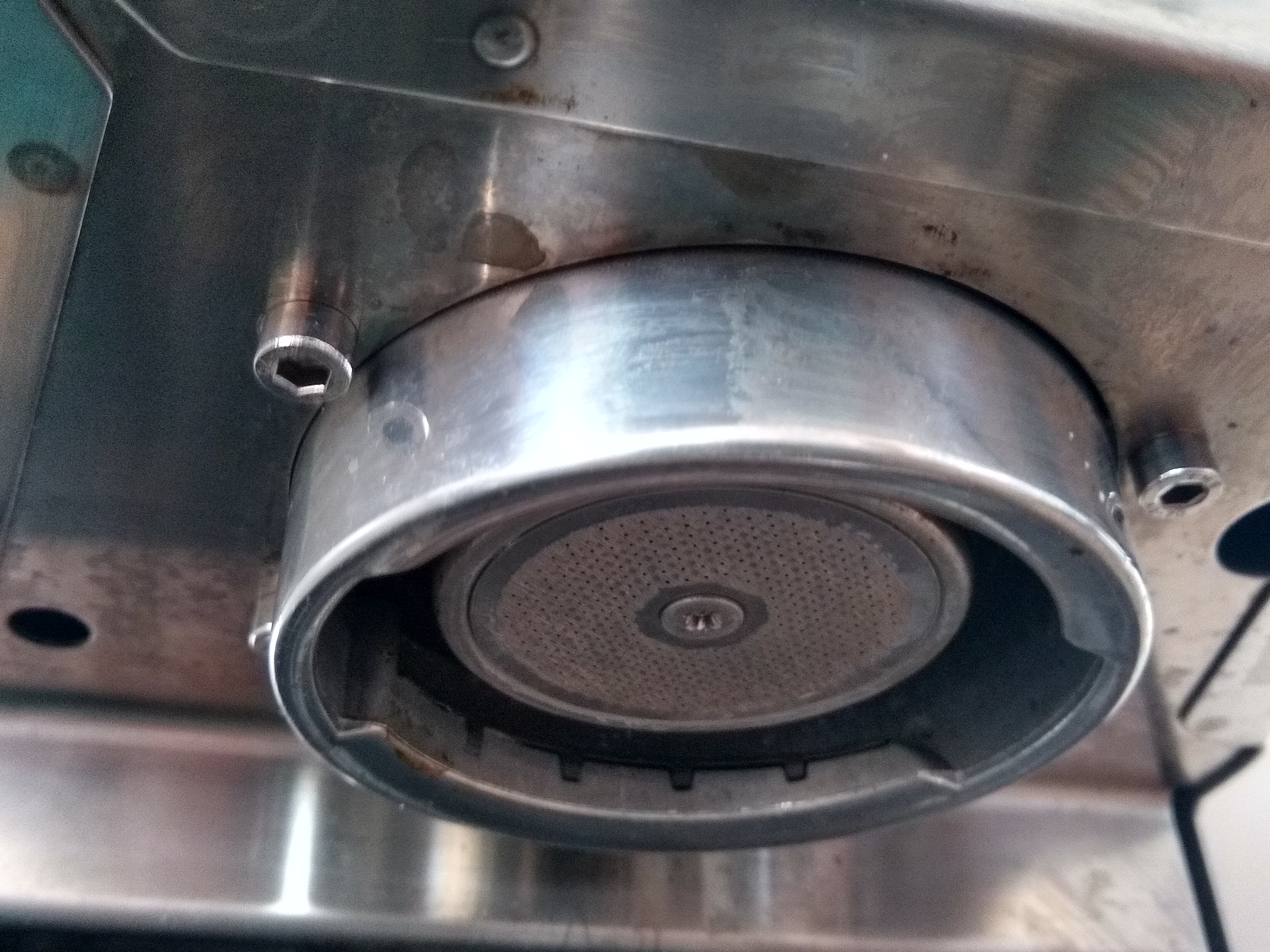 The Gaggia Classic 2015 group head
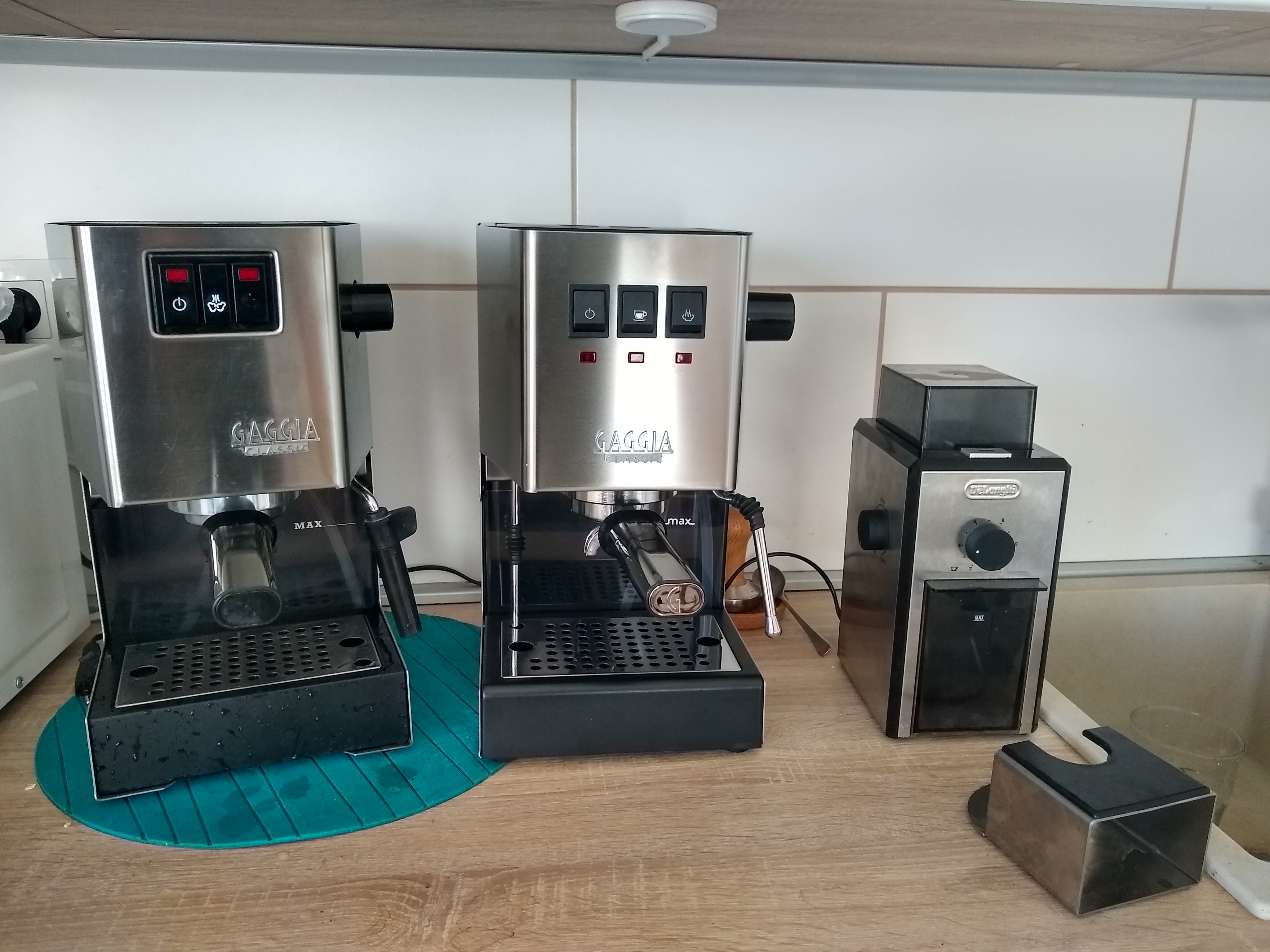 Gaggia Classic 2015 vs 2019

 Gaggia Classic 2019 and Sage BCG600 Dose Control Pro
 Happy with my new purchase, I went to read this review and thought to myself: lucky me, my grinder is absolutely quiet! And then I realised that
the noise in my kitchen is not, in fact, produced by the fridge, but the grinder. Well, a cheap switched plug solved the issue completely (I wish
sockets here each had a switch like they usually to in the UK!)

 As a follow on to a previous blog entry of mine,
 Updated my raspberry pi to bullseye and no longer connects to network. Seems like eth0 got renamed.
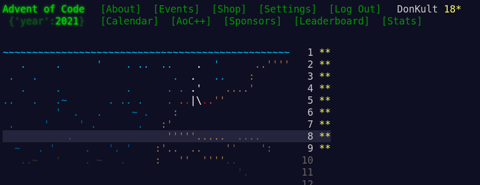

](https://jmtd.net/log/lightning/tweet.jpg)


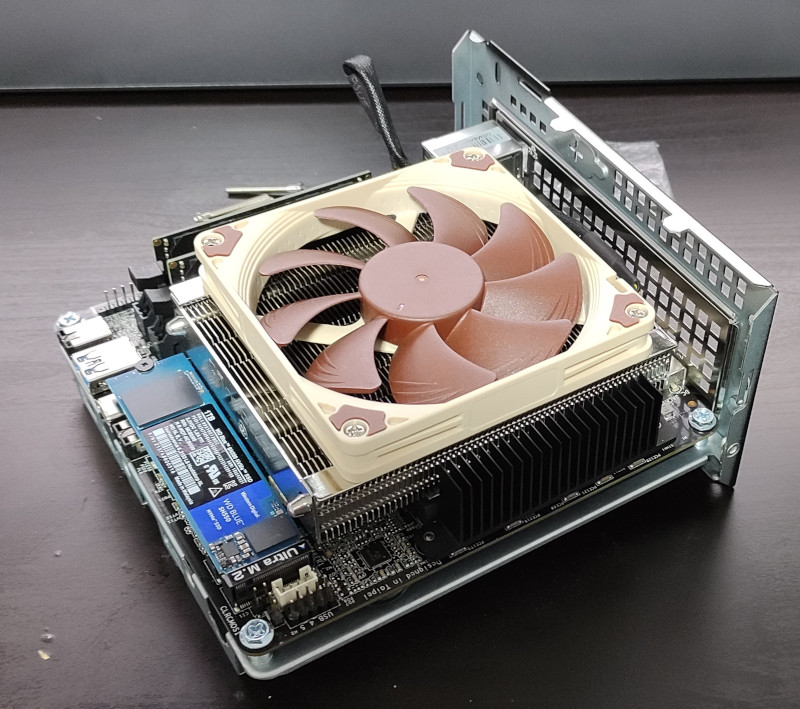 It s been over 20 months since the first COVID lockdown kicked in here in Northern Ireland and I started working from home. Even when the strict lockdown was lifted the advice here has continued to be If you can work from home you should work from home . I ve been into the office here and there (for new starts given you need to hand over a laptop and sort out some login details it s generally easier to do so in person, and I ve had a couple of whiteboard sessions that needed the high bandwidth face to face communication), but day to day is all from home.
 A