Marie is a royal bastardess, a product of rape no less, and entirely out
of place in the court in Westminster, where she landed after being kicked
off her mother's farm. She had run the farm since her mother's untimely
death, but there was no way that her relatives would let her inherit. In
court, Marie is too tall, too ugly, and too strange, raised by women who
were said to carry the blood of the fairy M lusine. Eleanor of
Aquitaine's solution to her unwanted house guest is a Papal commission.
Marie is to become the prioress of an abbey.
I am occasionally unpleasantly reminded of why I don't read very much
literary fiction. It's immensely frustrating to read a book in which the
author cares about entirely different things than the reader, and where
the story beats all land wrong.
This is literary historical fiction set in the 12th century. Marie is
Marie de France,
author of the lais about courtly love that are famous primarily due to
their position as early sources for the legends of King Arthur. The lais
are written on-screen very early in this book, but they disappear without
any meaningful impact on the story. Matrix is, instead, about
Shaftesbury Abbey and what it becomes during Marie's time as prioress and
then abbess, following the theory that Marie de France was
Mary of
Shaftesbury.
What I thought I was getting in this book, from numerous reviews and
recommendations, was a story of unexpected competence: how a wild,
unwanted child of seventeen lands at a dilapidated and starving abbey,
entirely against her will, and then over the next sixty years transforms
it into one of the richest abbeys in England. This does happen in this
book, but Groff doesn't seem to care about the details of that
transformation at all.
Instead, Matrix takes the mimetic fiction approach of detailed and
precise description of a few characters, with all of their flaws and
complexities, and with all of the narrative's attention turned to how they
are feeling and what they are seeing. It is also deeply, fully committed
to a Great Man (or in this case a Great Woman) view of history.
Marie is singular. The narrative follows her alone, she makes all the
significant decisions, and the development of the abbey is determined by
her apparently mystical visions. (In typical mimetic fashion, these are
presented as real to her, and the novel takes no position on whether that
reality is objective.) She builds spy networks, maneuvers through local
and church politics, and runs the abbey like her personal kingdom. The
tiny amount of this that is necessarily done by other people is attributed
to Marie's ability to judge character. Other people's motives are simply
steamrolled over and have no effect.
Maddeningly, essentially all of this happens off-screen, and Groff is
completely uninterested in the details of how any of it is accomplished.
Marie decides to do something, the narrative skips forward a year, and it
has happened. She decides to build something, and then it's built. She
decides to collect the rents she's due, the novel gestures vaguely at how
she's intimidating, and then everyone is happily paying up. She builds
spy networks; who cares how? She maneuvers through crises of local and
church politics that are vaguely alluded to, through techniques that are
apparently too uninteresting to bother the reader with.
Instead, the narrative focuses on two things: her deeply dysfunctional,
parasocial relationship with Eleanor, and her tyrannical relationship with
the other nuns. I suspect that Groff would strongly disagree with my
characterization of both of those narratives, and that's the other half of
my problem with this book.
Marie is obsessed with and in love with Eleanor, a completely impossible
love to even talk about, and therefore turns to courtly love from afar as
a model into which she can fit her feelings. While this is the setup for
a tragedy, it's a good idea for a story. But what undermined it for me is
that Marie's obsession seems to be largely physical (she constantly dwells
on Eleanor's beauty), and Eleanor is absolutely horrible to her in every
way: condescending, contemptuous, dismissive, and completely uninterested.
This does change a bit over the course of the book, but not enough to
justify the crush that Marie maintains for this awful person through her
entire life.
And Eleanor is the only person in the book who Marie treats like an equal.
Everyone else is a subordinate, a daughter, a charge, a servant, or a
worker. The nuns of the abbey prosper under her rule, so Marie has ample
reason to justify this to herself, but no one else's opinions or beliefs
matter to her in any significant way. The closest anyone can come to
friendship is to be reliably obedient, perhaps after some initial
objections that Marie overrules. Despite some quite good characterization
of the other nuns, none of the other characters get to do anything.
There is no delight in teamwork, sense of healthy community, or
collaborative problem-solving. It's just all Marie, all the time,
imposing her vision on the world both living and non-living through sheer
force of will.
This just isn't entertaining, at least for me. The writing might be
beautiful, the descriptions detailed and effective, and the research
clearly extensive, but I read books primarily for characters, I read
characters primarily for their relationships, and these relationships are
deeply, horribly unhealthy. They are not, to be clear, unrealistic
(although I do think there's way too much chosen one in Marie and way too
many problems that disappear off-camera); there are certainly people in
the world with dysfunctional obsessive relationships, and there are
charismatic people who overwhelm everyone around them. This is just not
what I want to read about.
You might think, with all I've said above, that I'm spoiling a lot of the
book, but weirdly I don't think I am. Every pattern I mention above is
well-established early in the novel. About the only thing that I'm
spoiling is the hope that any of it is somehow going to change, a hope
that I clung to for rather too long.
This is a great setup for a book, and I wish it were written by a fantasy
author instead of a literary author. Perhaps I'm being too harsh on
literary fiction here, but I feel like fantasy authors are more likely to
write for readers who want to see the growth sequence. If someone is
going to change the world, I want to see how they changed the
world. The mode of fantasy writing tends to think that what people do
(and how they do it) is as interesting or more interesting than what they
feel or what they perceive.
If this idea, with the exact same level of (minor) mysticism and historic
realism, without added magic, were written by, say, Guy Gavriel Kay or
Nicola Griffith, it would be a far different and, in my opinion, a much
better book. In fact, Hildis
part of this book written by Nicola Griffith, and it is a much
better book.
I have seen enough people rave about this book to know that this is a
personal reaction that is not going to be shared by everyone, or possibly
even most people. My theory is that this is due to the different reading
protocols between literary fiction readers and fantasy readers. I put
myself in the latter camp; if you prefer literary fiction, you may like
this much better (and also I'm not sure you'll find my book reviews
useful). I may be wrong, though; maybe there are fantasy readers who
would like this. I will say that the sense of place is very strong and
the writing has all the expected literary strengths of descriptiveness and
rhythm.
But, sadly, this was not at all my thing, and I'm irritated that I wasted
time on it.
Rating: 4 out of 10
Besides several bugfixes, the latest version now supports using higher
compression levels and logging to syslog facility. I also finished packaging
and official packages are now available,
If you ve done anything in the Kubernetes space in recent years, you ve most likely come across the words Service Mesh . It s backed by a set of mature technologies that provides cross-cutting networking, security, infrastructure capabilities to be used by workloads running in Kubernetes in a manner that is transparent to the actual workload. This abstraction enables application developers to not worry about building in otherwise sophisticated capabilities for networking, routing, circuit-breaking and security, and simply rely on the services offered by the service mesh.In this post, I ll be covering Linkerd, which is an alternative to Istio. It has gone through a significant re-write when it transitioned from the JVM to a Go-based Control Plane and a Rust-based Data Plane a few years back and is now a part of the CNCF and is backed by Buoyant. It has proven itself widely for use in production workloads and has a healthy community and release cadence.It achieves this with a side-car container that communicates with a Linkerd control plane that allows central management of policy, telemetry, mutual TLS, traffic routing, shaping, retries, load balancing, circuit-breaking and other cross-cutting concerns before the traffic hits the container. This has made the task of implementing the application services much simpler as it is managed by container orchestrator and service mesh. I covered Istio in a prior post a few years back, and much of the content is still applicable for this post, if you d like to have a look.Here are the broad architectural components of Linkerd:The components are separated into the control plane and the data plane.The control plane components live in its own namespace and consists of a controller that the Linkerd CLI interacts with via the Kubernetes API. The destination service is used for service discovery, TLS identity, policy on access control for inter-service communication and service profile information on routing, retries, timeouts. The identity service acts as the Certificate Authority which responds to Certificate Signing Requests (CSRs) from proxies for initialization and for service-to-service encrypted traffic. The proxy injector is an admission webhook that injects the Linkerd proxy side car and the init container automatically into a pod when the linkerd.io/inject: enabled is available on the namespace or workload.On the data plane side are two components. First, the init container, which is responsible for automatically forwarding incoming and outgoing traffic through the Linkerd proxy via iptables rules. Second, the Linkerd proxy, which is a lightweight micro-proxy written in Rust, is the data plane itself.I will be walking you through the setup of Linkerd (2.12.2 at the time of writing) on a Kubernetes cluster.Let s see what s running on the cluster currently. This assumes you have a cluster running and kubectl is installed and available on the PATH.
On most systems, this should be sufficient to setup the CLI. You may need to restart your terminal to load the updated paths. If you have a non-standard configuration and linkerd is not found after the installation, add the following to your PATH to be able to find the cli:
export PATH=$PATH:~/.linkerd2/bin/
At this point, checking the version would give you the following:
$ linkerd version
Client version: stable-2.12.2
Server version: unavailable
Setting up Linkerd Control PlaneBefore installing Linkerd on the cluster, run the following step to check the cluster for pre-requisites:
kubernetes-api
--------------
  can initialize the client
  can query the Kubernetes API
kubernetes-version
------------------
  is running the minimum Kubernetes API version
  is running the minimum kubectl version
pre-kubernetes-setup
--------------------
  control plane namespace does not already exist
  can create non-namespaced resources
  can create ServiceAccounts
  can create Services
  can create Deployments
  can create CronJobs
  can create ConfigMaps
  can create Secrets
  can read Secrets
  can read extension-apiserver-authentication configmap
  no clock skew detected
linkerd-version
---------------
  can determine the latest version
  cli is up-to-date
Status check results are
All the pre-requisites appear to be good right now, and so installation can proceed.The first step of the installation is to setup the Custom Resource Definitions (CRDs) that Linkerd requires. The linkerd cli only prints the resource YAMLs to standard output and does not create them directly in Kubernetes, so you would need to pipe the output to kubectl apply to create the resources in the cluster that you re working with.
$ linkerd install --crds   kubectl apply -f -
Rendering Linkerd CRDs...
Next, run  linkerd install   kubectl apply -f -  to install the control plane.
customresourcedefinition.apiextensions.k8s.io/authorizationpolicies.policy.linkerd.io created
customresourcedefinition.apiextensions.k8s.io/httproutes.policy.linkerd.io created
customresourcedefinition.apiextensions.k8s.io/meshtlsauthentications.policy.linkerd.io created
customresourcedefinition.apiextensions.k8s.io/networkauthentications.policy.linkerd.io created
customresourcedefinition.apiextensions.k8s.io/serverauthorizations.policy.linkerd.io created
customresourcedefinition.apiextensions.k8s.io/servers.policy.linkerd.io created
customresourcedefinition.apiextensions.k8s.io/serviceprofiles.linkerd.io created
Next, install the Linkerd control plane components in the same manner, this time without the crds switch:
$ linkerd install   kubectl apply -f -
namespace/linkerd created
clusterrole.rbac.authorization.k8s.io/linkerd-linkerd-identity created
clusterrolebinding.rbac.authorization.k8s.io/linkerd-linkerd-identity created
serviceaccount/linkerd-identity created
clusterrole.rbac.authorization.k8s.io/linkerd-linkerd-destination created
clusterrolebinding.rbac.authorization.k8s.io/linkerd-linkerd-destination created
serviceaccount/linkerd-destination created
secret/linkerd-sp-validator-k8s-tls created
validatingwebhookconfiguration.admissionregistration.k8s.io/linkerd-sp-validator-webhook-config created
secret/linkerd-policy-validator-k8s-tls created
validatingwebhookconfiguration.admissionregistration.k8s.io/linkerd-policy-validator-webhook-config created
clusterrole.rbac.authorization.k8s.io/linkerd-policy created
clusterrolebinding.rbac.authorization.k8s.io/linkerd-destination-policy created
role.rbac.authorization.k8s.io/linkerd-heartbeat created
rolebinding.rbac.authorization.k8s.io/linkerd-heartbeat created
clusterrole.rbac.authorization.k8s.io/linkerd-heartbeat created
clusterrolebinding.rbac.authorization.k8s.io/linkerd-heartbeat created
serviceaccount/linkerd-heartbeat created
clusterrole.rbac.authorization.k8s.io/linkerd-linkerd-proxy-injector created
clusterrolebinding.rbac.authorization.k8s.io/linkerd-linkerd-proxy-injector created
serviceaccount/linkerd-proxy-injector created
secret/linkerd-proxy-injector-k8s-tls created
mutatingwebhookconfiguration.admissionregistration.k8s.io/linkerd-proxy-injector-webhook-config created
configmap/linkerd-config created
secret/linkerd-identity-issuer created
configmap/linkerd-identity-trust-roots created
service/linkerd-identity created
service/linkerd-identity-headless created
deployment.apps/linkerd-identity created
service/linkerd-dst created
service/linkerd-dst-headless created
service/linkerd-sp-validator created
service/linkerd-policy created
service/linkerd-policy-validator created
deployment.apps/linkerd-destination created
cronjob.batch/linkerd-heartbeat created
deployment.apps/linkerd-proxy-injector created
service/linkerd-proxy-injector created
secret/linkerd-config-overrides created
Kubernetes will start spinning up the data plane components and you should see the following when you list the pods:
kubernetes-api
--------------
  can initialize the client
  can query the Kubernetes API
kubernetes-version
------------------
  is running the minimum Kubernetes API version
  is running the minimum kubectl version
linkerd-existence
-----------------
  'linkerd-config' config map exists
  heartbeat ServiceAccount exist
  control plane replica sets are ready
  no unschedulable pods
  control plane pods are ready
  cluster networks contains all pods
  cluster networks contains all services
linkerd-config
--------------
  control plane Namespace exists
  control plane ClusterRoles exist
  control plane ClusterRoleBindings exist
  control plane ServiceAccounts exist
  control plane CustomResourceDefinitions exist
  control plane MutatingWebhookConfigurations exist
  control plane ValidatingWebhookConfigurations exist
  proxy-init container runs as root user if docker container runtime is used
linkerd-identity
----------------
  certificate config is valid
  trust anchors are using supported crypto algorithm
  trust anchors are within their validity period
  trust anchors are valid for at least 60 days
  issuer cert is using supported crypto algorithm
  issuer cert is within its validity period
  issuer cert is valid for at least 60 days
  issuer cert is issued by the trust anchor
linkerd-webhooks-and-apisvc-tls
-------------------------------
  proxy-injector webhook has valid cert
  proxy-injector cert is valid for at least 60 days
  sp-validator webhook has valid cert
  sp-validator cert is valid for at least 60 days
  policy-validator webhook has valid cert
  policy-validator cert is valid for at least 60 days
linkerd-version
---------------
  can determine the latest version
  cli is up-to-date
control-plane-version
---------------------
  can retrieve the control plane version
  control plane is up-to-date
  control plane and cli versions match
linkerd-control-plane-proxy
---------------------------
  control plane proxies are healthy
  control plane proxies are up-to-date
  control plane proxies and cli versions match
Status check results are
Everything looks good.Setting up the Viz ExtensionAt this point, the required components for the service mesh are setup, but let s also install the viz extension, which provides a good visualization capabilities that will come in handy subsequently. Once again, linkerd uses the same pattern for installing the extension.
$ linkerd viz install   kubectl apply -f -
namespace/linkerd-viz created
clusterrole.rbac.authorization.k8s.io/linkerd-linkerd-viz-metrics-api created
clusterrolebinding.rbac.authorization.k8s.io/linkerd-linkerd-viz-metrics-api created
serviceaccount/metrics-api created
clusterrole.rbac.authorization.k8s.io/linkerd-linkerd-viz-prometheus created
clusterrolebinding.rbac.authorization.k8s.io/linkerd-linkerd-viz-prometheus created
serviceaccount/prometheus created
clusterrole.rbac.authorization.k8s.io/linkerd-linkerd-viz-tap created
clusterrole.rbac.authorization.k8s.io/linkerd-linkerd-viz-tap-admin created
clusterrolebinding.rbac.authorization.k8s.io/linkerd-linkerd-viz-tap created
clusterrolebinding.rbac.authorization.k8s.io/linkerd-linkerd-viz-tap-auth-delegator created
serviceaccount/tap created
rolebinding.rbac.authorization.k8s.io/linkerd-linkerd-viz-tap-auth-reader created
secret/tap-k8s-tls created
apiservice.apiregistration.k8s.io/v1alpha1.tap.linkerd.io created
role.rbac.authorization.k8s.io/web created
rolebinding.rbac.authorization.k8s.io/web created
clusterrole.rbac.authorization.k8s.io/linkerd-linkerd-viz-web-check created
clusterrolebinding.rbac.authorization.k8s.io/linkerd-linkerd-viz-web-check created
clusterrolebinding.rbac.authorization.k8s.io/linkerd-linkerd-viz-web-admin created
clusterrole.rbac.authorization.k8s.io/linkerd-linkerd-viz-web-api created
clusterrolebinding.rbac.authorization.k8s.io/linkerd-linkerd-viz-web-api created
serviceaccount/web created
server.policy.linkerd.io/admin created
authorizationpolicy.policy.linkerd.io/admin created
networkauthentication.policy.linkerd.io/kubelet created
server.policy.linkerd.io/proxy-admin created
authorizationpolicy.policy.linkerd.io/proxy-admin created
service/metrics-api created
deployment.apps/metrics-api created
server.policy.linkerd.io/metrics-api created
authorizationpolicy.policy.linkerd.io/metrics-api created
meshtlsauthentication.policy.linkerd.io/metrics-api-web created
configmap/prometheus-config created
service/prometheus created
deployment.apps/prometheus created
service/tap created
deployment.apps/tap created
server.policy.linkerd.io/tap-api created
authorizationpolicy.policy.linkerd.io/tap created
clusterrole.rbac.authorization.k8s.io/linkerd-tap-injector created
clusterrolebinding.rbac.authorization.k8s.io/linkerd-tap-injector created
serviceaccount/tap-injector created
secret/tap-injector-k8s-tls created
mutatingwebhookconfiguration.admissionregistration.k8s.io/linkerd-tap-injector-webhook-config created
service/tap-injector created
deployment.apps/tap-injector created
server.policy.linkerd.io/tap-injector-webhook created
authorizationpolicy.policy.linkerd.io/tap-injector created
networkauthentication.policy.linkerd.io/kube-api-server created
service/web created
deployment.apps/web created
serviceprofile.linkerd.io/metrics-api.linkerd-viz.svc.cluster.local created
serviceprofile.linkerd.io/prometheus.linkerd-viz.svc.cluster.local created
A few seconds later, you should see the following in your pod list:
The viz components live in the linkerd-viz namespace.You can now checkout the viz dashboard:
$ linkerd viz dashboard
Linkerd dashboard available at:
http://localhost:50750
Grafana dashboard available at:
http://localhost:50750/grafana
Opening Linkerd dashboard in the default browser
Opening in existing browser session.
The Meshed column indicates the workload that is currently integrated with the Linkerd control plane. As you can see, there are no application deployments right now that are running.Injecting the Linkerd Data Plane componentsThere are two ways to integrate Linkerd to the application containers:1 by manually injecting the Linkerd data plane components 2 by instructing Kubernetes to automatically inject the data plane componentsInject Linkerd data plane manuallyLet s try the first option. Below is a simple nginx-app that I will deploy into the cluster:
Back in the viz dashboard, I do see the workload deployed, but it isn t currently communicating with the Linkerd control plane, and so doesn t show any metrics, and the Meshed count is 0:Looking at the Pod s deployment YAML, I can see that it only includes the nginx container:
Let s directly inject the linkerd data plane into this running container. We do this by retrieving the YAML of the deployment, piping it to linkerd cli to inject the necessary components and then piping to kubectl apply the changed resources.
Back in the viz dashboard, the workload now is integrated into Linkerd control plane.Looking at the updated Pod definition, we see a number of changes that the linkerd has injected that allows it to integrate with the control plane. Let s have a look:
At this point, the necessary components are setup for you to explore Linkerd further. You can also try out the jaeger and multicluster extensions, similar to the process of installing and using the viz extension and try out their capabilities.Inject Linkerd data plane automaticallyIn this approach, we shall we how to instruct Kubernetes to automatically inject the Linkerd data plane to workloads at deployment time.We can achieve this by adding the linkerd.io/inject annotation to the deployment descriptor which causes the proxy injector admission hook to execute and inject linkerd data plane components automatically at the time of deployment.
This annotation can also be specified at the namespace level to affect all the workloads within the namespace. Note that any resources created before the annotation was added to the namespace will require a rollout restart to trigger the injection of the Linkerd components.Uninstalling LinkerdNow that we have walked through the installation and setup process of Linkerd, let s also cover how to remove it from the infrastructure and go back to the state prior to its installation.The first step would be to remove extensions, such as viz.
FTP master
This month I accepted 484 and rejected 55 packages. The overall number of packages that got accepted was 492.
Debian LTS
This was my hundredth month that I did some work for the Debian LTS initiative, started by Raphael Hertzog at Freexian. Woohoo, There is a party. (yes I am old). Unfortunately there are already 101 completed month listed in the debian-lts-announce archive, so I seem to have counted wrong once. *sigh*, yes I am old.
This month my all in all workload has been 14h.
During that time I uploaded:
[DLA 3168-1] openvswitch security update for one CVE
[graphicsmagick] debdiff for Bullseye sent to security team (update as DLA or via PU?)
[graphicsmagick] prepared upload for Buster
[libvncserver] debdiff for Buster and Bullseye sent to maintainer (no upload yet :-()
I also started to work on virglrenderer.
Last but not least I took care of NEW packages on security-master.
Debian ELTS
This month was the fifty first ELTS month.
During my allocated time I uploaded:
[ELA-719-1] graphicsmagick security update of Jessie and Stretch for one CVE
[ELA-720-1] bluez security update of Jessie and Stretch for three CVEs
marked two CVEs of curl as not-affected for Jessie and Stretch
checked that all patches for dpdk need to be backported, unfortunately that was beyond my capabilities
I also started to work on snapd.
Last but not least I finally managed to become familiar with the git workflow and imported several packages to the salsa repository.
Debian Astro
This month I uploaded new upstream versions or improved packaging of:
I also uploaded a new package pysqm. This software supports the Sky Quality Meters made by Unihedron. I was kindly given an SQM-LU for USB and SQM-LE with network adapter. I plan to put a working Python3 version of the old PySQM software into Debian, package the UDM (Unihedron Device Manager) and finally check the support within Indi.
Debian IoT
This month I uploaded new upstream versions or improved packaging of:
Debian Mobcom
This month I finished the transition of the Osmocom packages, except osmo-mgw and osmo-msc seem to have problems. I have no idea how I can solve this, so help is appreciated.
Other stuff
This month I uploaded new packages:
Found the reason podman build was failing as normal user.
dbus-user-session was missing and podman wasn't able to connect to systemd user session.
This resulted in trying to use cgroupfs instead of systemd for managing cgroups and other things also broke.
Someone recently asked what yak shaving means and, because I am a
professional at this pastime, I figured I would share my most recent
excursion in the field.
As a reminder, "yak shaving" describes a (anti?) pattern by which you
engage in more and more (possibly useless) tasks that lead you further
and further away from your original objective.
The path I took through the yak heard is this:
i wondered if i can use my home network to experiment with another
VPN software (e.g. Wireguard instead of IPsec)
I wasn't happy with that, so i tried an IPv6 tunnel
that broke after a few minutes, so i went on to try deploying
Wireguard with Puppet), which involved reviewing about 4
different Puppet modules
while I was there, I might as well share those findings with the
community, so I publish that as a blog post
someone else mentions that Nebula (from Slack) is a thing,
but after investigation, it's not well packaged in Debian, so
didn't test it, but add it to the blog post
now that I found the right Puppet module, I tried to deploy
it with Puppet's g10k, which requires me to input a checksum
I got lazy and figured if i would put the checksum wrong, it would
tell me what the right checksum was, but it didn't: instead it
silently succeeded instead of failing, which seemed really bad
then I looked upstream for such a bug report and saw that the
Debian package was many versions behind and, because I'm on
the Golang packaging team, I figured I would just do the
upgrade myself
... but then tried to readd it to Debian CI instead,
which didn't work
At that point, I had given up, after shaving a 12th yak. Thankfully, a
kind soul provided a working test suite and I was able to roll
back all those parenthesis and:
test the g10k package and confirm it works (and checks the
checksums)
Also notice the 8th yak, above, which might be a security issue. I
wasn't able to confirm it, because g10k does some pretty aggressive
caching, and I could "reproduce" it in the sense that the checksum
wasn't checked if it exists in the cache. So it might have just been
that I had actually already deployed the module before adding the
checksum... but I still had that distressing sentiment:
<anarcat> there's a huge yak breathing down my neck with "CVE" written in large red letters on the side
<anarcat> i'm trying to ignore it, it stinks like hell
Hopefully it's nothing to worry about. Right? Riiight.
Oh. And obviously, writing this blog post is the sugar on top, the one
last yak that is self-documented here.
A new version 0.1.4 of the tint package arrived at CRAN today. tint provides a style not unlike Tufte for use in html and pdf documents created from markdown. The github repo shows several examples in its README, more as usual in the package documentation.
This is the first release in over two years and it brings a few incremental changes which are described in detail below. The trigger was an email from CRAN desiring compacted pdf files inside the package sources. Which, coincidentally, was made a default about a year ago in the build.r script from littler I use to make packages. But as we had not updated tint this has not reached CRAN. So there.
The set of changes follows, which includes a helpful contributed PR for which we are always thankful. I also improved table rendering, most other changes are packaging mechanics.
Changes in tint version 0.1.4 (2022-11-01)
Added continuous integration at GitHub using run.sh
Non-margin reference in html mode now have an improved display (David Selby and Dirk in #47)
The LaTeX package array is now installed for improved table support (Dirk addressing #48)
Minor updates made the package directory and README.md
GitHub Actions were updated to checkout version 3.
Our local Debian user group gathered on Sunday October 30th to chat, work on
Debian and do other, non-Debian related hacking :) This time around, we met at
EfficiOS's1 offices. As you can see from the following
picture, it's a great place and the view they have is pretty awesome. Many
thanks for hosting us!
This was our 4th meeting this year and once again, attendance was great: 10
people showed up to work on various things.
Following our bi-monthly schedule, our next meeting should be in December, but
I'm not sure it'll happen. December can be a busy month here and I will have to
poke our mailing list to see if people have the spoons for an event.
This time around, I was able to get a rough log of the Debian work people did:
pollo:
This is the 22nd Discworld novel and follows Interesting Times in internal continuity. Like some of the other
Rincewind novels, it stands alone well enough that you could arguably
start reading here, but I have no idea why you'd want to.
When we last saw Rincewind, he was being magically yanked out of the
Agatean Empire. The intent was to swap him with a cannon and land him
back in Ankh-Morpork, but an unfortunate expansion of the spell to three
targets instead of two meant that a kangaroo had a very bad day. Ever
since then, Rincewind has been trying to survive the highly inhospitable
land of FourEcks (XXXX), so called because no one in Ankh-Morpork knows
where it is.
The faculty at the Unseen University didn't care enough about Rincewind to
bother finding him until the Librarian fell sick. He's feverish and
miserable, but worse, he's lost control of his morphic function, which
means that he's randomly turning into other things and is unable to take
care of the books. When those books are magical, this is dangerous. One
possible solution is to stabilize the Librarian's form with a spell, but
to do that they need his real name. The only person who might know it is
the former assistant librarian: Rincewind.
I am increasingly convinced that one of the difficulties in getting people
hooked on Discworld is that the series starts with two Rincewind books,
and the Rincewind books just aren't very good.
The fundamental problem is that Rincewind isn't a character, he's a gag.
Discworld starts out as mostly gags, but then the characterization
elsewhere gets deeper, the character interactions become more complex, and
Pratchett adds more and more philosophy. That, not the humor, is what I
think makes these books worth reading. But none of this applies to
Rincewind. By this point, he's been the protagonist of six novels, and
still the only thing I know about him is that he runs away from
everything. Other than that, he's just sort of... there.
In the better Rincewind novels, some of the gap is filled by Twoflower,
the Luggage, Cohen the barbarian, the Librarian (who sadly is out of
commission for most of this book), or the Unseen University faculty. But
they're all supporting characters. Most of them are also built around a
single (if better) gag. As a result, the Rincewind books tend more
towards joke collections than the rest of Discworld. There isn't a
philosophical or characterization through line to hold them together.
The Last Continent is, as you might have guessed, a parody of
Australia. And by that I mean it's a mash-up of Crocodile Dundee,
Mad Max, The Adventures of Priscilla, Queen of the Desert,
and every dad joke about Australia that you've heard. Pratchett loves
movie references and I do not love movie references, so there's always
part of his books that doesn't click for me, but this one was just Too
Much. Yes, everything in Australia is poisonous. Yes, Australians talk
funny. Oh look, there's another twist on a Crocodile Dundee quote.
Yes, yes, that's a knife. Gah. The Rincewind sections were either
confusing (there's some sort of drug-trip kangaroo god because reasons) or
cliched and boring. Sometimes both.
The second plot, following the Unseen University faculty in their inept
attempts to locate Rincewind, is better. Their bickering is still a bit
one-trick and works better in the background of stronger characters (such
as Death and Susan), but Pratchett does make
their oblivious overconfidence entertaining. It's enough to sustain half
of the book, but not enough to make up for the annoyances of the Rincewind
plot.
To his credit, I think Pratchett was really trying to say something
interesting in this novel about Discworld metaphysics. There are bits in
the Australian plot that clearly are references to Aboriginal beliefs,
which I didn't entirely follow but which I'm glad were in there. The
Unseen University faculty showing up in the middle of a creation myth and
completely misunderstanding it was a good scene. But the overall story
annoyed me and failed to hold my interest.
I don't feel qualified to comment on the Priscilla scenes, since
I've never seen the movie and have only a vague understanding of its role
in trans history. I'm not sure his twists on the story quite worked, but
I'm glad that Pratchett is exploring gender; that wasn't as common when
these books were written.
Overall, though, this was forgettable and often annoying. There are a few
great lines and a few memorable bits in any Pratchett book, including this
one, but the Rincewind books just aren't... good. Not like the rest of
the series, at least. I will be very happy to get back to the witches in
the next book.
Followed in publication order by Carpe Jugulum, and later
thematically by The Last Hero.
Rating: 5 out of 10
I've been a fan of the products manufactured by Schiit Audio for a while
now. They are affordable (for high-end audio gear), sound great, are made in
the USA1 and I think their industrial design looks great.
I first started with one of their classic "Schiit Stack"2, but
eventually upgraded to the Modi Multibit (I wanted the TOSLINK input), added a
physical EQ (the Loki) and eventually got a Sys when I bought a
Vidar speaker amp.
The original Schiit Stack being 2 devices high was pretty manageable as-is.
With my current 4-high stack though, things became unstable and I had to resort
to finding a way to bolt them together.
Mooching from a friend with a 3D printer, I printed this clever mount
from Thingiverse. It worked well enough, but was somewhat imperfect for multiple
reasons:
The plastic tabs had a tendency of breaking in two when the
screws where tight enough for the stack to feel solid.
The plastic wasn't really rigid enough to support the 4 devices properly and
the stack, being back-heavy from the cables, was unstable and tipped over
easily.
Due to the plastic tabs being fragile, it was pretty much impossible to
disassemble the stack.
This last issue was what killed this solution for me. When I tried to replace my
Modi 2 by the Modi Multibit, the mount pretty much crumbled away. Sadly, my
friend warped a bunch of pieces on his 3D printer while trying to print ABS and
I couldn't have him print me replacement parts either.
After a while, I grew tired of having these four devices laying around my desk
and wasting valuable space. I had tasted the 4-stack and knew how better things
could be!
That's when I realised the solution was to ditch 3D printing altogether, use
aluminum framing extrusions and build my own stack out of metal.
This was my first time working with aluminium frame extrusions and I had tons
of fun! I specced the first version using 10mm x 10mm rails from
McMaster-Carr, but discovered they do not ship to residential addresses in
Canada...
After looking at local options, I then decided to use 15mm x 15mm
rails from Misumi. I went with this option since the rails are still
small enough not to be an eyesore, but also because this system uses M3 screws,
which the Schiit mini series also uses, making assembly much easier.
I choose to make the assembled stack quite a bit taller than the previous one
made with 3D printed plastic, as I found the headphone amp got pretty hot
during the summer and I wanted to provide better airflow.
If you are interested in replicating this stack, here are the parts I used, all
from Misumi:
I didn't order any since I had some already, but you'll also need M3 screws,
namely:
16 x M3-10 screws, to replace the ones in the Schiit devices
16 x M3-6 screws, for the aluminium framing brackets
You can also cheap out and use only M3-10 screws (as I did), but you'll have to
use the extra nuts you ordered as spacers.
For the curious ones, the cabling is done this way:
The Vidar is not part of the actual stack, as it's a 600W amp that weights 10kg
:D.
The last thing I think I want to change in this setup is the cables. The ones I
have are too long for the stack. Shorter ones would reduce the wasted space in
the back and make the whole thing more elegant.
As in, designed, manufactured and assembled in the USA, from parts,
transformers and boards made in the USA. I find this pretty impressive.
In my home lab(s), I have a handful of machines spread around a few
points of presence, with mostly residential/commercial cable/DSL
uplinks, which means, generally, NAT. This makes monitoring those
devices kind of impossible. While I do punch holes for SSH, using jump
hosts gets old quick, so I'm considering adding a virtual private
network (a "VPN", not a VPN service) so that all machines can
be reachable from everywhere.
I see three ways this can work:
a home-made Wireguard VPN, deployed with Puppet
a Wireguard VPN overlay, with Tailscale or equivalent
IPv6, native or with tunnels
So which one will it be?
Wireguard Puppet modules
As is (unfortunately) typical with Puppet, I found multiple different
modules to talk with Wireguard.
The voxpupuli module seems to be the most promising. The
abaranov module is more popular and has more contributors, but
it has more open issues and PRs.
More critically, the voxpupuli module was written after the abaranov
author didn't respond to a PR from the voxpupuli author trying to
add more automation (namely private key management).
It looks like setting up a wireguard network would be as simple as
this on node A:
This configuration come from this pull request I sent to the
module to document how to use that fact.
Note that the addresses used here are examples that shouldn't be
reused and do not confirm to RFC5737 ("IPv4 Address Blocks
Reserved for Documentation", 192.0.2.0/24 (TEST-NET-1),
198.51.100.0/24 (TEST-NET-2), and 203.0.113.0/24 (TEST-NET-3)) or
RFC3849 ("IPv6 Address Prefix Reserved for Documentation",
2001:DB8::/32), but that's another story.
(To avoid boostrapping problems, the resubmit-facts configuration
could be used so that other nodes facts are more immediately
available.)
One problem with the above approach is that you explicitly need to
take care of routing, network topology, and addressing. This can get
complicated quickly, especially if you have lots of devices, behind
NAT, in multiple locations (which is basically my life at home,
unfortunately).
Concretely, basic Wireguard only support one peer behind
NAT. There are some workarounds for this, but they generally imply
a relay server of some sort, or some custom registry, it's
kind of a mess. And this is where overlay networks like Tailscale come
in.
Tailscale
Tailscale is basically designed to deal with this problem. It's
not fully opensource, but pretty close, and they have an interesting
philosophy behind that. The client is opensource, and there
is an opensource version of the server side, called
headscale. They have recently (late 2022) hired the main headscale
developer while promising to keep supporting it, which is pretty
amazing.
Tailscale provides an overlay network based on Wireguard, where each
peer basically has a peer-to-peer encrypted connexion, with automatic
key rotation. They also ship a multitude of applications and features
on top of that like file sharing, keyless SSH access, and so on. The
authentication layer is based on an existing SSO provider, you
don't just register with Tailscale with new account, you login with
Google, Microsoft, or GitHub (which, really, is still Microsoft).
The Headscale server ships with many features out of that:
Neither project (client or server) is in Debian (RFP 972439 for
the client, none filed yet for the server), which makes deploying this
for my use case rather problematic. Their install instructions
are basically a curl bash but they also provide packages for
various platforms. Their Debian install instructions are
surprisingly good, and check most of the third party checklist
we're trying to establish. (It's missing a pin.)
There's also a Puppet module for tailscale, naturally.
What I find a little disturbing with Tailscale is that you not only
need to trust Tailscale with authorizing your devices, you also
basically delegate that trust also to the SSO provider. So, in my
case, GitHub (or anyone who compromises my account there) can
penetrate the VPN. A little scary.
Tailscale is also kind of an "all or nothing" thing. They have
MagicDNS, file transfers, all sorts of things, but those things
require you to hook up your resolver with Tailscale. In fact,
Tailscale kind of assumes you will use their nameservers, and have
suffered great lengths to figure out how to do that. And
naturally, here, it doesn't seem to work reliably; my resolv.conf
somehow gets replaced and the magic resolution of the ts.net domain
fails.
(I wonder why we can't opt in to just publicly resolve the ts.net
domain. I don't care if someone can enumerate the private IP addreses
or machines in use in my VPN, at least I don't care as much as
fighting with resolv.conf everywhere.)
Because I mostly have access to the routers on the networks I'm on, I
don't think I'll be using tailscale in the long term. But it's pretty
impressive stuff: in the time it took me to even review the Puppet
modules to configure Wireguard (which is what I'll probably end up
doing), I was up and running with Tailscale (but with a broken DNS,
naturally).
(And yes, basic Wireguard won't bring me DNS either, but at least I
won't have to trust Tailscale's Debian packages, and Tailscale, and
Microsoft, and GitHub with this thing.)
IPv6
IPv6 is actually what is supposed to solve this. Not NAT port
forwarding crap, just real IPs everywhere.
The problem is: even though IPv6 adoption is still growing, it's
kind of reaching a plateau at around 40% world-wide, with Canada
lagging behind at 34%. It doesn't help that major ISPs in Canada
(e.g. Bell Canada, Videotron) don't care at all about IPv6
(e.g. Videotron in betasince 2011). So we can't rely on
those companies to do the right thing here.
The typical solution here is often to use a tunnel like HE's
tunnelbroker.net. It's kind of tricky to configure, but once
it's done, it works. You get end-to-end connectivity as long as
everyone on the network is on IPv6.
And that's really where the problem lies here; the second one of
your nodes can't setup such a tunnel, you're kind of stuck and that
tool completely breaks down. IPv6 tunnels also don't give you the kind
of security a VPN provides as well, naturally.
The other downside of a tunnel is you don't really get peer-to-peer
connectivity: you go through the tunnel. So you can expect higher
latencies and possibly lower bandwidth as well. Also, HE.net doesn't
currently charge for this service (and they've been doing this for a
long time), but this could change in the future (just like
Tailscale, that said).
Concretely, the latency difference is rather minimal, Google:
--- ipv6.l.google.com ping statistics ---
10 packets transmitted, 10 received, 0,00% packet loss, time 136,8ms
RTT[ms]: min = 13, median = 14, p(90) = 14, max = 15
--- google.com ping statistics ---
10 packets transmitted, 10 received, 0,00% packet loss, time 136,0ms
RTT[ms]: min = 13, median = 13, p(90) = 14, max = 14
In the case of GitHub, latency is actually lower, interestingly:
--- ipv6.github.com ping statistics ---
10 packets transmitted, 10 received, 0,00% packet loss, time 134,6ms
RTT[ms]: min = 13, median = 13, p(90) = 14, max = 14
--- github.com ping statistics ---
10 packets transmitted, 10 received, 0,00% packet loss, time 293,1ms
RTT[ms]: min = 29, median = 29, p(90) = 29, max = 30
That is because HE.net peers directly with my ISP and Fastly (which
is behind GitHub.com's IPv6, apparently?), so it's only 6 hops
away. While over IPv4, the ping goes over New York, before landing
AWS's Ashburn, Virginia datacenters, for a whopping 13 hops...
I managed setup a HE.net tunnel at home, because I also need IPv6
for other reasons (namely debugging at work). My first attempt at
setting this up in the office failed, but now that I found the
openwrt.org guide, it worked... for a while, and I was able to
produce the above, encouraging, mini benchmarks.
Unfortunately, a few minutes later, IPv6 just went down again. And the
problem with that is that many programs (and especially
OpenSSH) do not respect the Happy Eyeballs protocol (RFC
8305), which means various mysterious "hangs" at random times on
random applications. It's kind of a terrible user experience, on top
of breaking the one thing it's supposed to do, of course, which is to
give me transparent access to all the nodes I maintain.
Even worse, it would still be a problem for other remote nodes I might
setup where I might not have acess to the router to setup the
tunnel. It's also not absolutely clear what happens if you setup the
same tunnel in two places... Presumably, something is smart enough to
distribute only a part of the /48 block selectively, but I don't
really feel like going that far, considering how flaky the setup is
already.
Other options
If this post sounds a little biased towards IPv6 and Wireguard, it's
because it is. I would like everyone to migrate to IPv6 already, and
Wireguard seems like a simple and sound system.
I'm aware of many other options to make VPNs. So before anyone jumps
in and says "but what about...", do know that I have personnally
experimented with:
ipsec, specifically strongswan: hard to configure
(especially configure correctly!), harder even to debug, otherwise
really nice because transparent (e.g. no need for special subnets),
used at work, but also considering a replacement there because it's
a major barrier to entry to train new staff
OpenVPN: mostly used as a client for [VPN service][]s like
Riseup VPN or Mullvad, mostly relevant for client-server
configurations, not really peer-to-peer, shared secrets or TLS,
kind of an hassle to maintain, see also SoftEther for an
alternative implementation
All of those solutions have significant problems and I do not wish to
use any of those for this project.
Also note that Tailscale is only one of many projects laid over
Wireguard to do that kind of thing, see this LWN review for
others (basically NetbBird, Firezone, and Netmaker).
Future work
Those are options that came up after writing this post, and might
warrant further examination in the future.
Meshbird, a "distributed private networking" with little
information about how it actually works other than "encrypted with
strong AES-256"
Nebula, "A scalable overlay networking tool with a focus on
performance, simplicity and security", written by Slack people to
replace IPsec, docs, runs as an overlay for Slack's 50k
node network, only packaged in Debian experimental, lagging behind
upstream (1.4.0, from May 2021 vs upstream's 1.6.1 from September
2022), requires a central CA, Golang, I'm in "wait and see" mode
for now
ouroboros: "peer-to-peer packet network prototype", sounds and
seems complicated
QuickTUN is interesting because it's just a small wrapper
around NaCL, and it's in Debian... but maybe too obscure for my own
good
unetd: Wireguard-based full mesh networking from OpenWRT, not
in Debian
vpncloud: "high performance peer-to-peer mesh VPN over UDP
supporting strong encryption, NAT traversal and a simple
configuration", sounds interesting, not in Debian
Conclusion
Right now, I'm going to deploy Wireguard tunnels with Puppet. It seems
like kind of a pain in the back, but it's something I will be able to
reuse for work, possibly completely replacing strongswan.
I have another Puppet module for IPsec which I was planning to
publish, but now I'm thinking I should just abort that and replace
everything with Wireguard, assuming we still need VPNs at work in the
future. (I have a number of reasons to believe we might not need any
in the near future anyways...)
Shantaram
I know I have been quite behind in review of books but then that s life. First up is actually not as much as a shocker but somewhat of a pleasant surprise. So, a bit of background before I share the news. If you have been living under a rock, then about 10-12 years ago a book called Shantaram was released. While the book is said to have been released in 2003/4 I got it in my hand around 2008/09 or somewhere around that. The book is like a good meal, a buffet. To share the synopsis, Lin a 20 something Australian guy gets involved with a girl, she encourages him to get into heroin, he becomes a heroin user. And drugs, especially hard drugs need constant replenishment, it is a chemical thing. So, to fund those cravings, he starts to steal, rising to rob a bank and while getting away shoots a cop who becomes dead. Now either he surrenders or is caught is unclear, but he is tortured in the jail. So one day, he escapes from prison, lands up at home of somebody who owes him a favor, gets some money, gets a fake passport and lands up in Mumbai/Bombay as it was then known. This is from where the actual story starts. And how a 6 foot something Australian guy relying on his street smartness and know how the transformation happens from Lin to Shantaram. Now what I have shared is perhaps just 5% of the synopsis, as shared the real story starts here.
Now the good news, last week 4 episodes of Shantaram were screened by Apple TV. Interestingly, I have seen quite a number people turning up to buy or get this book and also sharing it on Goodreads. Now there seems to have been some differences from the book to TV. Now I m relying on 10-12 year back memory but IIRC Khaderbhai, one of the main characters who sort of takes Lin/Shantaram under his wing is an Indian. In the series, he is a western or at least looks western/Middle Eastern to me. Also, they have tried to reproduce 1980s in Mumbai/Bombay but dunno how accurate they were My impression of that city from couple of visits at that point in time where they were still more tongas (horse-ridden carriages), an occasional two wheelers and not many three wheelers. Although, it was one of the more turbulent times as lot of agitation for worker rights were happening around that time and a lot of industrial action. Later that led to lot of closure of manufacturing in Bombay and it became more commercial. It would be interesting to know whether they shot it in actual India or just made a set somewhere in Australia, where it possibly might have been shot. The chawl of the book needs a bit of arid land and Australia has lots of it.
It is also interesting as this was a project that had who s who interested in it for a long time but somehow none of them was able to bring the project to fruition, the project seems to largely have an Australian cast as well as second generations of Indians growing in Australia. To take names, Amitabh Bacchan, Johnny Depp, Russel Crowe each of them wanted to make it into a feature film. In retrospect, it is good it was not into a movie, otherwise they would have to cut a lot of material and that perhaps wouldn t have been sufficient. Making it into a web series made sure they could have it in multiple seasons if people like it. There is a lot between now and 12 episodes to even guess till where it would leave you then. So, if you have not read the book and have some holidays coming up, can recommend it. The writing IIRC is easy and just flows. There is a bit of action but much more nuance in the book while in the web series they are naturally more about action. There is also quite a bit of philosophy between him and Kaderbhai and while the series touches upon it, it doesn t do justice but then again it is being commercially made.
Read the book, see the series and share your thoughts on what you think. It is possible that the series might go up or down but am sharing from where I see it, may do another at the end of the season, depending on where they leave it and my impressions.
Update A slight update from the last blog post. Seems Rishi Sunak seems would be made PM of UK. With Hunt as chancellor and Rishi Sunak, Austerity 2.0 seems complete. There have been numerous articles which share how austerity gives rises to fascism and vice-versa. History gives lot of lessons about the same. In Germany, when the economy was not good, it was all blamed on the Jews for number of years. This was the reason for rise of Hitler, and while it did go up by a bit, propaganda by him and his loyalists did the rest. And we know and have read about the Holocaust. Today quite a few Germans deny it or deny parts of it but that s how misinformation spreads. Also Hitler is looked now more as an aberration rather than something to do with the German soul. I am not gonna talk more as there is still lots to share and that actually perhaps requires its own blog post to do justice for the same.
The Pyramid by Henning Mankell
I had actually wanted to review this book but then the bomb called Shantaram appeared and I had to post it above. I had read two-three books before it, but most of them were about multiple beheadings and serial killers. Enough to put anybody into depression. I do not know if modern crime needs to show crime and desperation of and to such a level. Why I and most loved and continue to love Sherlock Holmes as most stories were not about gross violence but rather a homage to the art of deduction, which pretty much seems to be missing in modern crime thrillers rather than grotesque stuff.
In that, like a sort of fresh air I read/am reading the Pyramid by Henning Mankell. The book is about a character made by Monsieur Henning Mankell named Kurt Wallender. I am aware of the series called Wallender but haven t yet seen it. The book starts with Wallender as a beat cop around age 20 and on his first case. He is ambitious, wants to become a detective and has a narrow escape with death. I wouldn t go much into it as it basically gives you an idea of the character and how he thinks and what he does. He is more intuitive by nature and somewhat of a loner. Probably most detectives IRL are, dunno, have no clue. At least in the literary world it makes sense, in real world think there would be much irony for sure. This is speculation on my part, who knows.
Back to the book though. The book has 5 stories a sort of prequel one could say but also not entirely true. The first case starts when he is a beat cop in 1969 and he is just a beat cop. It is a kind of a prequel and a kind of an anthology as he covers from the first case to the 1990s where he is ending his career sort of.
Before I start sharing about the stories in the book, I found the foreword also quite interesting. It asks questions about the interplay of the role of welfare state and the Swedish democracy. Incidentally did watch couple of videos about a sort of mixed sort of political representation that happens in Sweden. It uses what is known as proportional representation. Ironically, Sweden made a turn to the far right this election season. The book was originally in Swedish and were translated to English by Ebba Segerberg and Laurie Thompson.
While all the stories are interesting, would share the last three or at least ask the questions of intrigue. Of course, to answer them you would need to read the book
So the last three stories I found the most intriguing.
The first one is titled Man on the Beach. Apparently, a gentleman goes to one of the beaches, a sort of lonely beach, hails a taxi and while returning suddenly dies. The Taxi driver showing good presence of mind takes it to hospital where the gentleman is declared dead on arrival. Unlike in India, he doesn t run away but goes to the cafeteria and waits there for the cops to arrive and take his statement. Now the man is in his early 40s and looks to be fit. Upon searching his pockets he is found to relatively well-off and later it turns out he owns a couple of shops. So then here are the questions ?
What was the man doing on a beach, in summer that beach is somewhat popular but other times not so much, so what was he doing there?
How did he die, was it a simple heart attack or something more? If he had been drugged or something then when and how?
These and more questions can be answered by reading the story Man on the Beach .
2. The death of a photographer Apparently, Kurt lives in a small town where almost all the residents have been served one way or the other by the town photographer. The man was polite and had worked for something like 40 odd years before he is killed/murdered. Apparently, he is murdered late at night. So here come the questions
a. The shop doesn t even stock any cameras and his cash box has cash. Further investigation reveals it is approximate to his average takeout for the day. So if it s not for cash, then what is the motive ?
b. The body was discovered by his cleaning staff who has worked for almost 20 years, 3 days a week. She has her own set of keys to come and clean the office? Did she give the keys to someone, if yes why?
c. Even after investigation, there is no scandal about the man, no other woman or any vices like gambling etc. that could rack up loans. Also, nobody seems to know him and yet take him for granted till he dies. The whole thing appears to be quite strange. Again, the answers lie in the book.
3. The Pyramid Kurt is sleeping one night when the telephone rings. The scene starts with a Piper Cherokee, a single piston aircraft flying low and dropping something somewhere or getting somebody from/on the coast of Sweden. It turns and after a while crashes. Kurt is called to investigate it. Turns out, the plane was supposed to be destroyed. On crash, both the pilot and the passenger are into pieces so only dental records can prove who they are. Same day or a day or two later, two seemingly ordinary somewhat elderly women, spinsters, by all accounts, live above the shop where they sell buttons and all kinds of sewing needs of the town. They seem middle-class. Later the charred bodies of the two sisters are found :(. So here come the questions
a.Did the plane drop something or pick something somebody up ? The Cherokee is a small plane so any plane field or something it could have landed up or if a place was somehow marked then could be dropped or picked up without actually landing.
b. The firefighter suspects arson started at multiple places with the use of petrol? The question is why would somebody wanna do that? The sisters don t seem to be wealthy and practically everybody has bought stuff from them. They weren t popular but weren t also unpopular.
c. Are the two crimes connected or unconnected? If connected, then how?
d. Most important question, why the title Pyramid is given to the story. Why does the author share the name Pyramid. Does he mean the same or the original thing? He could have named it triangle. Again, answers to all the above can be found in the book.
One thing I also became very aware of during reading the book that it is difficult to understand people s behavior and what they do. And this is without even any criminality involved in. Let s say for e.g. I die in some mysterious circumstances, the possibility of the police finding my actions in last days would be limited and this is when I have hearing loss. And this probably is more to do with how our minds are wired. And most people I know are much more privacy conscious/aware than I am.
Japan s Hikikomori
Japan has been a curious country. It was more or less a colonizer and somewhat of a feared power till it dragged the U.S. unnecessarily in World War 2. The result of the two atom bombs and the restitution meant that Japan had to build again from the ground up. It is also in a seismically unstable place as they have frequent earthquakes although the buildings are hardened/balanced to make sure that vibrations don t tear buildings apart. Had seen years ago on Natgeo a documentary that explains all that. Apart from that, Japan was helped by the Americans and there was good kinship between them till the 1980s till it signed the Plaza Accord which enhanced asset price bubbles that eventually burst. Something from which they are smarting even today. Japan has a constitutional monarchy. A somewhat history lesson or why it exists even today can be found here. Asset price bubbles of the 1980s, more than 50 percent of the population on zero hour contracts and the rest tend to suffer from overwork. There is a term called Karoshi that explains all. An Indian pig-pen would be two, two and a half times larger than a typical Japanese home. Most Japanese live in micro-apartments called konbachiku . All of the above stresses meant that lately many young Japanese people have become Hikikomori. Bloomberg featured about the same a couple of years back. I came to know about it as many Indians are given the idea of Japan being a successful country without knowing the ills and issues it faces. Even in that most women get the wrong end of the short stick i.e. even it they manage to find jobs, it would be most back-breaking menial work. The employment statistics of Japan s internal ministry tells its own story.
If you look at the data above, it seems that the between 2002 and 2019, the share of zero hour contracts has increased while regular work has decreased. This also means that those on the bottom of the ladder can no longer afford a home. There is and was a viral video called Lost in Manboo that went viral few years ago. It is a perfect set of storms. Add to that the Fukushima nuclear incident about which I had shared a few years ago. While the workers are blamed but all design decisions are taken by the management. And as was shown in numerous movies, documentaries etc. Interestingly, and somewhat ironically, the line workers knew the correct things to do and correct decisions to take unlike the management. The shut-ins story is almost a decade or two decades old. It is similar story in South Korea but not as depressive as the in Japan. It is somewhat depressive story but needed to be shared. The stories shared in the bloomberg article makes your heart ache
Backpacks
In and around 2015, I had bought a Targus backpack, very much similar to the Targus TSB194US-70 Motor 16-inch Backpack. That bag has given me a lot of comfort over the years but now has become frayed the zip sometimes work and sometimes doesn t. Unlike those days there are a bunch of companies now operating in India. There are eight different companies that I came to know about, Aircase, Harrisons Sirius, HP Oddyssey, Mokobara, Artic Hunter, Dell Pro Hybrid, Dell Roller Backpack and lastly the Decathlon Quechua Hiking backpack 32L NH Escape 500 . Now of all the above, two backpacks seem the best, the first one is Harrisons Sirius, with 45L capacity, I don t think I would need another bag at all. The runner-up is the Decathlon Quecha Hiking Backpack 32L. One of the better things in all the bags is that all have hidden pockets for easy taking in and out of passport while having being ant-theft. I do not have to stress how stressful it is to take out the passport and put it back in. Almost all the vendors have made sure that it is not a stress point anymore. The good thing about the Quecha is that they are giving 10 years warranty, the point to be asked is if that is does the warranty cover the zip. Zips are the first thing that goes out in bags.That actually has what happened to my current bag. Decathlon has a store in Wakad, Pune while I have reached out to the gentleman in charge of Harrisons India to see if they have a reseller in Pune. So hopefully, in next one week I should have a backpack that isn t spilling with things all over the place, whichever I m able to figure out.
This is my report from the Netfilter Workshop 2022. The event was held on 2022-10-20/2022-10-21 in Seville, and the venue
was the offices of Zevenet. We started on Thursday with Pablo Neira (head of the project) giving a short
welcome / opening speech. The previous iteration of this event was in virtual fashion in 2020, two years ago.
In the year 2021 we were unable to meet either in person or online.
This year, the number of participants was just eight people, and this allowed the setup to be a bit more informal.
We had kind of an un-conference style meeting, in which whoever had something prepared just went ahead and opened
a topic for debate.
In the opening speech, Pablo did a quick recap on the legal problems the Netfilter project had a few years ago, a
topic that was settled for good some months ago, in January 2022. There were no news in this front,
which was definitely a good thing.
Moving into the technical topics, the workshop proper, Pablo started to comment on the recent developments to
instrument a way to perform inner matching for tunnel protocols. The current implementation supports VXLAN, IPIP,
GRE and GENEVE. Using nftables you can match packet headers that are encapsulated inside these protocols.
He mentioned the design and the goals, that was to have a kernel space setup that allows adding more protocols by just
patching userspace. In that sense, more tunnel protocols will be supported soon, such as IP6IP, UDP, and ESP.
Pablo requested our opinion on whether if nftables should generate the matching dependencies. For example,
if a given tunnel is UDP-based, a dependency match should be there otherwise the rule won t work as expected. The
agreement was to assist the user in the setup when possible and if not, print clear error messages.
By the way, this inner thing is pure stateless packet filtering. Doing inner-conntracking is an open topic
that will be worked on in the future.
Pablo continued with the next topic: nftables automatic ruleset optimizations. The times of linear ruleset evaluation
are over, but some people have a hard time understanding / creating rulesets that leverage maps, sets, and
concatenations. This is where the ruleset optimizations kick in: it can transform a given ruleset to be more optimal
by using such advanced data structures. This is purely about optimizing the ruleset, not about validating
the usefulness of it, which could be another interesting project.
There were a couple of problems mentioned, however. The ruleset optimizer can be slow, O(n!) in worst case. And the
user needs to use nested syntax. More improvements to come in the future.
Next was Stefano Brivio s turn (Red Hat engineer). He had been involved lately in a couple of migrations to
nftables, in particular libvirt and KubeVirt. We were pointed to https://libvirt.org/firewall.html, and Stefano walked us
through the 3 or 4 different virtual networks that libvirt can create. He evaluated some options to generate efficient
rulesets in nftables to instrument such networks, and commented on a couple of ideas: having a null
matcher in nftables set expression. Or perhaps having kind of subsets, something similar to a view in a SQL
database. The room spent quite a bit of time debating how the nft_lookup API could be extended to support such new
search operations.
We also discussed if having intermediate facilities such as firewalld could provide the abstraction levels that
could make developers more comfortable. Using firewalld also may have the advantage that coordination between different
system components writing ruleset to nftables is handled by firewalld itself and developers are freed of the
responsibility of doing it right.
Next was Fernando F. Mancera (Red Hat engineer). He wanted to improve error reporting when deleting table/chain/rules
with nftables. In general, there are some inconsistencies on how tables can be deleted (or flushed). And there seems
to be no correct way to make a single table go away with all its content in a single command.
The room agreed in that the commands destroy table and delete table should be defined consistently, with
the following meanings:
destroy: nuke the table, don t fail if it doesn t exist
delete: delete the table, but the command will fail if it doesn t exist
This topic diverted into another: how to reload/replace a ruleset but keep stateful information (such as counters).
Next was Phil Sutter (Netfilter coreteam member and Red Hat engineer). He was interested in discussing options to
make iptables-nft backward compatible. The use case he brought was simple: What happens if a container running
iptables 1.8.7 creates a ruleset with features not supported by 1.8.6. A later container running 1.8.6 may fail to
operate.
Phil s first approach was to attach additional metadata into rules to assist older iptables-nft in decoding and
printing the ruleset. But in general, there are no obvious or easy solutions to this problem. Some people are
mixing different tooling version, and there is no way all cases can be predicted/covered. iptables-nft already
refuses to work in some of the most basic failure scenarios.
An other way to approach the issue could be to introduce some kind of support to print raw expressions in
iptables-nft, like -m nft xyz. Which feels ugly, but may work. We also explored playing with the semantics of
release version numbers. And another idea: store strings in the nft rule userdata area with the equivalent
matching information for older iptables-nft.
In fact, what Phil may have been looking for is not backwards but forward compatibility. Phil was undecided which path
to follow, but perhaps the most common-sense approach is to fall back to a major release version bump (2.x.y)
and declaring compatibility breakage with older iptables 1.x.y.
That was pretty much it for the first day. We had dinner together and went to sleep for the next day.
The second day was opened by Florian Westphal (Netfilter coreteam member and Red Hat engineer). Florian has been
trying to improve nftables performance in kernels with RETPOLINE mitigations enabled. He commented that several
workarounds have been collected over the years to avoid the performance penalty of such mitigations.
The basic strategy is to avoid function indirect calls in the kernel.
Florian also described how BPF programs work around this more effectively. And actually, Florian tried translating
nf_hook_slow() to BPF. Some preliminary benchmarks results were showed, with about 2% performance improvement in
MB/s and PPS. The flowtable infrastructure is specially benefited from this approach. The software
flowtable infrastructure already offers a 5x performance improvement with regards the classic forwarding path, and the
change being researched by Florian would be an addition on top of that.
We then moved into discussing the meeting Florian had with Alexei in Zurich. My personal opinion was that
Netfilter offers interesting user-facing interfaces and semantics that BPF does not. Whereas BPF may be more performant
in certain scenarios. The idea of both things going hand in hand may feel natural for some people. Others also
shared my view, but no particular agreement was reached in this topic. Florian will probably continue exploring options
on that front.
The next topic was opened by Fernando. He wanted to discuss Netfilter involvement in Google Summer of Code and Outreachy.
Pablo had some personal stuff going on last year that prevented him from engaging in such projects. After all, GSoC is
not fundamental or a priority for Netfilter. Also, Pablo mentioned the lack of support from others in the project for
mentoring activities. There was no particular decision made here. Netfilter may be present again in such initiatives
in the future, perhaps under the umbrella of other organizations.
Again, Fernando proposed the next topic: nftables JSON support. Fernando shared his plan of going over all features
and introduce programmatic tests from them. He also mentioned that the nftables wiki was incomplete and couldn t be
used as a reference for missing tests. Phil suggested running the nftables python test-suite in JSON mode, which
should complain about missing features. The py test suite should cover pretty much all statements and variations on
how the nftables expression are invoked.
Next, Phil commented on nftables xtables support. This is, supporting legacy xtables extensions in nftables.
The most prominent problem was that some translations had some corner cases that resulted in a listed ruleset that
couldn t be fed back into the kernel. Also, iptables-to-nftables translations can be sloppy, and the resulting
rule won t work in some cases. In general, nft list ruleset nft -f may fail in rulesets created by iptables-nft
and there is no trivial way to solve it.
Phil also commented on potential iptables-tests.py speed-ups. Running the test suite may take very long time
depending on the hardware. Phil will try to re-architect it, so it runs faster. Some alternatives had been
explored, including collecting all rules into a single iptables-restore run, instead of hundreds of individual
iptables calls.
Next topic was about documentation on the nftables wiki. Phil is interested in having all nftables
code-flows documented, and presented some improvements in that front. We are trying to organize all
developer-oriented docs on a mediawiki portal, but the extension was not active yet. Since I worked at the
Wikimedia Foundation, all the room stared at me, so at the end I kind of committed to exploring and enabling the
mediawiki portal extension. Note to self: is this perhaps https://www.mediawiki.org/wiki/Portals ?
Next presentation was by Pablo. He had a list of assorted topics for quick review and comment.
We discussed nftables accept/drop semantics. People that gets two or more rulesets from different software are
requesting additional semantics here. A typical case is fail2ban integration. One option is quick accept (no further
evaluation if accepted) and the other is lazy drop (don t actually drop the packet, but delay decision until the
whole ruleset has been evaluated). There was no clear way to move forward with this.
A debate on nft userspace memory usage followed. Some people are running nftables on low end devices with very
little memory (such as 128 MB). Pablo was exploring a potential solution: introducing struct constant_expr, which
can reduce 12.5% mem usage.
Next we talked about repository licensing (or better, relicensing to GPLv2+). Pablo went over a list of files in the
nftables tree which had diverging licenses. All people in the room agreed on this relicensing effort. A mention to
the libreadline situation was made.
Another quick topic: a bogus EEXIST in nft_rbtree. Pablo & Stefano to work in a patch.
Next one was conntrack early drop in flowtable. Pablo is studying use cases for some legitimate UDP unidirectional
flows (like RTP traffic).
Pablo and Stefano discussed pipapo not being atomic on updates. Stefano already looked into it, and one of the ideas
was to introduce a new commit API for sets.
The last of the quick topics was an idea to have a global table in nftables. Or some global items, like sets. Folk
in the community keep asking for this. Some ideas were discussed, like perhaps adding a family agnostic family. But
then there would be a challenge: nftables would need to generate byte code that works in any of the hooks.
There was no immediate way of addressing this. The idea of having templated tables/sets circulated again as a way
of reusing data across namespaces/families.
Following this, a new topic was introduced by Stefano. He wanted to talk about nft_set_pipapo, documentation, what
to do next, etc. He did a nice explanation of how the pipapo algorithm works for element inserts, lookups, and
deletion. The source code is pretty well documented, by the way. He showed performance measurements of
different data types being stored in the structure. After some lengthly debate on how to introduce changes without
breaking usage for users, he declared some action items: writing more docs, addressing problems with non-atomic
set reloads and a potential rework of nft_rbtree.
After that, the next topic was kubernetes & netfilter , also by Stefano. Actually, this topic was very similar
to what we already discussed regarding libvirt. Developers want to reduce packet matching effort, but also often
don t leverage nftables most performant features, like sets, maps or concatenations.
Some Red Hat developers are already working on replacing everything with native nftables & firewalld integrations.
But some rules generators are very bad. Kubernetes (kube-proxy) is a known case. Developers simply won t learn how
to code better ruleset generators. There was a good question floating around: What are people missing on first
encounter with nftables?
The Netfilter project doesn t have a training or marketing department or something like that. We cannot
force-educate developers on how to use nftables in the right way. Perhaps we need to create a set of dedicated
guidelines, or best practices, in the wiki for app developers that rely on nftables. Jozsef Kadlecsik
(Netfilter coreteam) supported this idea, and suggested going beyond: such documents should be written exclusively
from the nftables point of view: stop approaching the docs as a comparison to the old iptables semantics.
Related to that last topic, next was Laura Garc a (Zevenet engineer, and venue host). She shared the same information
as she presented in the Kubernetes network SIG in August 2020. She walked us through nftlb and
kube-nftlb, a proof-of-concept replacement for kube-proxy based on nftlb that can outperform it.
For whatever reason, kube-nftlb wasn t adopted by the upstream kubernetes community.
She also covered latest changes to nftlb and some missing features, such as integration with nftables egress.
nftlb is being extended to be a full proxy service and a more robust overall solution for service abstractions.
In a nutshell, nftlb uses a templated ruleset and only adds elements to sets, which is exactly the right usage
of the nftables framework. Some other projects should follow its example. The performance numbers are impressive,
and from the early days it was clear that it was outperforming classical LVS-DSR by 10x.
I used this opportunity to bring a topic that I wanted to discuss. I ve seen some SRE coworkers talking about
katran as a replacement for traditional LVS setups. This software is a XDP/BPF based solution for load
balancing. I was puzzled about what this software had to offer versus, for example, nftlb or any other
nftables-based solutions. I commented on the highlighs of katran, and we discussed the nftables equivalents.
nftlb is a simple daemon which does everything using a JSON-enabled REST API. It is already
packaged into Debian, ready to use, whereas katran feels more like a collection of steps that you
need to run in a certain order to get it working. All the hashing, caching, HA without state sharing, and backend
weight selection features of katran are already present in nftlb.
To work on a pure L3/ToR datacenter network setting, katran uses IPIP encapsulation. They can t just mangle the
MAC address as in traditional DSR because the backend server is on a different L3 domain. It turns out nftables
has a nft_tunnel expression that can do this encapsulation for complete feature parity. It is only available in
the kernel, but it can be made available easily on the userspace utility too.
Also, we discussed some limitations of katran, for example, inability to handle IP fragmentation, IP options, and
potentially others not documented anywhere. This seems to be common with XDP/BPF programs, because handling all
possible network scenarios would over-complicate the BPF programs, and at that point you are probably better off by
using the normal Linux network stack and nftables.
In summary, we agreed that nftlb can pretty much offer the same as katran, in a more flexible way.
Finally, after many interesting debates over two days, the workshop ended. We all agreed on the need for extending
it to 3 days next time, since 2 days feel too intense and too short for all the topics worth discussing.
That s all on my side! I really enjoyed this Netfilter workshop round.
Review: A Spaceship Repair Girl Supposedly Named Rachel, by Richard Roberts
Publisher:
Mystique Press
Copyright:
2022
ISBN:
1-63789-763-4
Format:
Kindle
Pages:
353
Rachel had snuck out of the house to sit on the hill, to write and draw in
rare peace and quiet, when a bus fell out of the sky like a meteor and
plowed into the ground in front of her. This is quickly followed by a
baffling encounter with a seven-foot-tall man with a blunderbuss, two
misunderstandings and a storytelling lie, and a hurried invitation to get
into the bus and escape before they're both infected by math. That's how
Rachel discovers that she's able to make on-the-fly repairs to
bicycle-powered spaceships, and how she ends up at the Lighthouse of
Ceres.
The title comes from Rachel's initial hesitation to give her name, which
propagates through the book to everyone she meets as certainty that Rachel
isn't really her name. I enjoyed this running gag way more than I
expected to.
I don't read enough young adult and middle-grade books to be entirely
clear on the boundaries, but this felt very middle-grade. It has a
headlong plot, larger-than-life characters, excitingly imaginative scenery
(such as a giant space lighthouse dwarfing the asteroid that it's attached
to), a focus on friendship, and no romance. This is, to be clear, not a
complaint. But it's a different feel than my normal fare, and there were
a few places where I was going one direction and the book went another.
The conceit of this book is that Earth is unique in the solar system in
being stifled by the horrific weight of math, which infects anyone who
visits and makes the routine wonders of other planets impossible. Other
planets have their own styles and mythos (Saturn is full of pirates, the
inhabitants of Venus are space bunnies with names like Passionfruit Nectar
Ecstasy), but throughout the rest of the solar system, belief, style, and
story logic reign supreme. That means Rachel's wild imagination and
reflexive reliance on tall tales makes her surprisingly powerful.
The first wild story she tells, to the man who crashed on earth, shapes
most of the story. She had written in her sketchbook that it was the
property of the Witch Queen of Eloquent Verbosity and Grandiose
Ornamentation, and when challenged on it, says that she stole it to cure
her partner. Much to her surprise, everyone outside of Earth takes this
completely seriously. Also much to her surprise, her habit of sketching
spaceships and imaginative devices makes her a natural spaceship mechanic,
a skill in high demand.
Some of the story is set on Ceres, a refuge for misfits with hearts of
gold. That's where Rachel meets Wrench, a kobold who is by far my
favorite character of the book and the one relationship that I thought had
profound emotional depth. Rachel's other adventures are set off by the
pirate girl Violet (she's literally purple), who is the sort of
plot-provoking character that I think only works in middle-grade fiction.
By normal standards, Violet's total lack of respect for other people's
boundaries or consent would make her more of a villain. Here, while it
often annoys Rachel, it's clear that both Rachel and the book take
Violet's steamroller personality in good fun, more like the gentle
coercion between neighborhood friends trying to pull each other into
games. I still got rather tired of Violet, though, which caused me a few
problems around the middle of the book.
There's a bit of found family here (some of it quite touching), a lot of
adventures, a lot of delightful spaceship repair, and even some more
serious plot involving the actual Witch Queen of Charon. There is a bit
of a plot arc to give some structure to the adventures, but this is not
the book to read if you're looking for complex plotting or depth. I
thought the story fell apart a bit at the tail end, with a conflict that
felt like it was supposed to be metaphorical and then never resolved for
me into something concrete. I was expecting Rachel to eventually have to
do more introspection and more direct wrestling with her identity, but the
resolution felt a bit superficial and unsatisfying.
Reading this as an adult, I found it odd but fun. I wanted more from the
ending, and I was surprised that Roberts does not do more to explain to
the reader why Rachel does not regret leaving Earth and her family behind.
It feels like something Rachel will have to confront eventually, but this
is not the book for it. Instead we get some great friendships (some of
which I agreed with wholeheartedly, and some of which I found annoying)
and an imaginative, chaotic universe that Rachel takes to like a fish to
water. The parts of the story focused on her surprising competence (and
her delight in her own competence) were my favorites.
The book this most reminds me of is Norton Juster's
The Phantom Tollbooth. It is, to be
clear, nowhere near as good as The Phantom Tollbooth, which is a
very high bar, and it's not as focused on puns. But it has the same sense
of internal logic and the same tendency to put far more weight on belief
and stories than our world does, and to embrace the resulting chaos.
I'm not sure this will be anyone's favorite book (although I'm also not
the target age), but I enjoyed reading it. It was a great change of pace
after Nona the Ninth. Recommended if
you're in the mood for some space fantasy that doesn't take itself
seriously.
Rating: 7 out of 10
An new version 0.2.4 of the random-number generator tester RDieHarder (based on the DieHarder suite developed / maintained by Robert Brown with contributions by David Bauer and myself along with other contributors) is now on CRAN.
This release comes ten months after the previous release 0.2.3. It is once more related to R and requested CRAN changes as clang-15 brings additional warnings concerning -Wstrict-prototyping. This make use of C more solid, but it was a metric ton of work (see pull request #8).
Thanks to CRANberries, you can also look at the most recent diff.
If you like this or other open-source work I do, you can now sponsor me at GitHub.
Recently I have been looking at how to control and collect data
from a handful IP cameras using Linux. I both wanted to change their
settings and to make their imagery available via a free software
service under my control. Here is a summary of the tools I found.
First I had to identify the cameras and their protocols. As far as
I could tell, they were using some SOAP looking protocol and their
internal web server seem to only work with Microsoft Internet Explorer
with some proprietary binary plugin, which in these days of course is
a security disaster and also made it impossible for me to use the
camera web interface. Luckily I discovered that the SOAP looking
protocol is actually following the
ONVIF specification, which seem to be supported by a lot of IP
cameras these days.
Once the protocol was identified, I was able to find what appear to
be the most popular way to configure ONVIF cameras, the free software
Windows tool named
ONVIF Device
Manager. Lacking any other options at the time, I tried
unsuccessfully to get it running using Wine, but was missing a dotnet
40 library and I found no way around it to run it on Linux.
The next tool I found to configure the cameras were a non-free Linux Qt
client ONVIF
Device Tool. I did not like its terms of use, so did not spend
much time on it.
To collect the video and make it available in a web interface, I
found the Zoneminder tool in Debian. A recent version was able to
automatically detect and configure ONVIF devices, so I could use it to
set up motion detection in and collection of the camera output. I had
initial problems getting the ONVIF autodetection to work, as both
Firefox and Chromium refused
the inter-tab communication being used by the Zoneminder web
pages, but managed to get konqueror to work. Apparently the "Enhanced
Tracking Protection" in Firefox cause the problem. I ended up
upgrading to the Bookworm edition of Zoneminder in the process to try
to fix the issue, and believe the problem might be solved now.
In the process I came across the nice Linux GUI tool
ONVIF Viewer
allowing me to preview the camera output and validate the login
passwords required. Sadly its author has grown tired of maintaining
the software, so it might not see any future updates. Which is sad,
as the viewer is sightly unstable and the picture tend to lock up.
Note, this lockup might be due to limitations in the cameras and not
the viewer implementation. I suspect the camera is only able to
provide pictures to one client at the time, and the Zoneminder feed
might interfere with the GUI viewer. I have
asked for the tool to be
included in Debian.
Finally, I found what appear to be very nice Linux free software
replacement for the Windows tool, named
libonvif. It
provide a C library to talk to ONVIF devices as well as a command line
and GUI tool using the library. Using the GUI tool I was able to change
the admin passwords and update other settings of the cameras. I have
asked for the package to be
included in Debian.
As usual, if you use Bitcoin and want to show your support of my
activities, please send Bitcoin donations to my address
15oWEoG9dUPovwmUL9KWAnYRtNJEkP1u1b.
Update 2022-10-20: Since my initial publication of
this text, I got several suggestions for more free software Linux
tools. There is a
ONVIF python library (already
requested into Debian) and
a python 3
fork using a different SOAP dependency. There is also
support for
ONVIF in Home Assistant, and there is an alternative to Zoneminder
called Shinobi. The latter
two are not included in Debian either. I have not tested any of these
so far.
I first installed Ubuntu when Ubuntu 6.06 LTS Dapper Drake was released. I was brand new to Linux. This was Ubuntu s first LTS release; the very first release of Ubuntu was only a year and a half before. I was impressed by how usable and useful the system was. It soon became my primary home operating system and I wanted to help make it better.
On October 15, 2009, I was helping test the release candidates ISOs for the Ubuntu 9.10 release. Specifically, I tested Edubuntu. Edubuntu has since been discontinued but at the time it was an official Ubuntu flavor preloaded with lots of education apps. One of those education apps was Moodle, an e-learning platform.
When testing Moodle, I found that a default installation would make Moodle impossible to use locally. I figured out how to fix this issue. This was really exciting: I finally found an Ubuntu bug I knew how to fix. I filed the bug report.
This was very late in the Ubuntu 9.10 release process and Ubuntu was in the Final Freeze state. In Final Freeze, every upload to packages included in the default install need to be individually approved by a member of the Ubuntu Release Team. Also, I didn t have upload rights to Ubuntu. Jordan Mantha (LaserJock), an Edubuntu maintainer, sponsored my bug fix upload.
I also forwarded my patch to Debian.
While trying to figure out what wasn t working with Moodle, I stumbled across a packaging bug. Edubuntu provided a choice of MySQL or PostgreSQL for the system default database. MySQL was the default, but if PostgreSQL were chosen instead, Moodle wouldn t work. I figured out how to fix this bug too a week later. Jordan sponsored this upload and Steve Langasek from the Release Team approved it so it also was able to be fixed before 9.10 was released.
Although the first bug was new to 9.10 because of a behavior change in a low-level dependency, this PostgreSQL bug existed in stable Ubuntu releases. Therefore, I prepared Stable Release Updates for Ubuntu 9.04 and Ubuntu 8.04 LTS.
Afterwards
Six months later, I was able to attend my first Ubuntu Developer Summit. I was living in Bahrain (in the Middle East) at the time and a trip to Belgium seemed easier to me than if I were living in the United States where I usually live. This was the Ubuntu Developer Summit where planning for Ubuntu 10.10 took place. I like to believe that I helped with the naming since I addedMaverick to the wiki page where people contribute suggestions.
I did not apply for financial sponsorship to attend and I stayed in a budget hotel on the other side of Brussels. The event venue was on the outskirts of Brussels so there wasn t a direct bus or metro line to get there. I rented a car. I didn t yet have a smartphone and I had a LOT of trouble navigating to and from the site every day. I learned then that it s best to stay close to the conference site since a lot of the event is actually in the unstructured time in the evenings. Fortunately, I managed to arrive in time for Mark Shuttleworth s keynote where the Unity desktop was first announced. This was released in Ubuntu 10.10 in the Ubuntu Netbook Remix and became the default for Ubuntu Desktop in Ubuntu 11.04.
Ubuntu s switch to Unity provided me with a huge opportunity. In April 2011, GNOME 3.0 was released. I wanted to try it but it wasn t yet packaged in Ubuntu or Debian. It was suggested that I could help work on packaging the major new version in a PPA. The PPA was convenient because I was able to get permission to upload there easier than being able to upload directly to Ubuntu. My contributions there then enabled me to get upload rights to the Ubuntu Desktop packages later that year.
At a later Ubuntu Developer Summit, it was suggested that I start an official Ubuntu flavor for GNOME. So along with Tim Lunn (darkxst), I co-founded Ubuntu GNOME. Years later, Canonical stopped actively developing Unity; instead, Ubuntu GNOME was merged into Ubuntu Desktop.
Along the way, I became an Ubuntu Core Developer and a Debian Developer. And in January 2022, I joined Canonical on the Desktop Team. This all still feels amazing to me. It took me a long time to be comfortable calling myself a developer!
Conclusion
My first Ubuntu bugfix was 13 years ago this week. Because Ubuntu historically uses alphabetical adjective animal release names, 13 years means that we have rolled around to the letter K again! Later today, we begin release candidate ISO testing for Ubuntu 22.10 Kinetic Kudu .
I encourage you to help us test the release candidates and report bugs that you find. If you figure out how to fix a bug, we still sponsor bug fixes. If you are an Ubuntu contributor, I highly encourage you to attend an Ubuntu Summit if you can. The first Ubuntu Summit in years will be in 3 weeks in Prague, but the intent is for the Ubuntu Summits to be recurring events again.
Dowry
Few days back, had posted about the movie Raksha Bandhan and whatever I felt about it. Sadly, just couple of days back, somebody shared this link. Part of me was shocked and part of me was not. Couple of acquaintances of mine in the past had said the same thing for their daughters. And in such situations you are generally left speechless because you don t know what the right thing to do is. If he has shared it with you being an outsider, how many times he must have told the same to their wife and daughters? And from what little I have gathered in life, many people have justified it on similar lines. And while the protests were there, sadly the book was not removed. Now if nurses are reading such literature, how their thought process might be forming, you can tell :(. And these are the ones whom we call for when we are sick and tired :(. And I have not taken into account how the girls/women themselves might be feeling. There are similar things in another country but probably not the same, nor the same motivations though although feeling helplessness in both would be a common thing.
But such statements are not alone. Another gentleman in slightly different context shared this as well
The above is a statement shared in a book recommended for CTET (Central Teacher s Eligibility Test that became mandatory to be taken as the RTE (Right To Education) Act came in.). The statement says People from cold places are white, beautiful, well-built, healthy and wise. And people from hot places are black, irritable and of violent nature.
Now while I can agree with one part of the statement that people residing in colder regions are more fair than others but there are loads of other factors that determine fairness or skin color/skin pigmentation. After a bit of search came to know that this and similar articulation have been made in an idea/work called Environmental Determinism . Now if you look at that page, you would realize this was what colonialism is and was all about. The idea that the white man had god-given right to rule over others. Similarly, if you are fair, you can lord over others. Seems simplistic, but yet it has a powerful hold on many people in India. Forget the common man, this thinking is and was applicable to some of our better-known Freedom fighters. Pune s own Bal Gangadhar Tilak The Artic Home to the Vedas. It sort of talks about Aryans and how they invaded India and became settled here. I haven t read or have access to the book so have to rely on third-party sources. The reason I m sharing all this is that the right-wing has been doing this myth-making for sometime now and unless and until you put a light on it, it will continue to perpetuate . For those who have read this blog, do know that India is and has been in casteism from ever. They even took the fair comment and applied it to all Brahmins. According to them, all Brahmins are fair and hence have god-given right to lord over others. What is called the Eton boy s network serves the same in this casteism. The only solution is those idea under limelight and investigate. To take the above, how does one prove that all fair people are wise and peaceful while all people black and brown are violent. If that is so, how does one count for Mahatma Gandhi, Martin Luther King Junior, Nelson Mandela, Michael Jackson the list is probably endless. And not to forget that when Mahatma Gandhiji did his nonviolent movements either in India or in South Africa, both black and brown people in millions took part. Similar examples of Martin Luther King Jr. I know and read of so many non-violent civl movements that took place in the U.S. For e.g. Rosa Parks and the Montgomery Bus Boycott. So just based on these examples, one can conclude that at least the part about the fair having exclusive rights to being fair and noble is not correct.
Now as far as violence goes, while every race, every community has had done violence in the past or been a victim of the same. So no one is and can be blameless, although in light of the above statement, the question can argumentated as to who were the Vikings? Both popular imagination and serious history shares stories about Vikings. The Vikings were somewhat nomadic in nature even though they had permanent settlements but even then they went on raids, raped women, captured both men and women and sold them at slaves. So they are what pirates came to be, but not the kind Hollywood romanticizes about. Europe in itself has been a tale in conflict since time immemorial. It is only after the formation of EU that most of these countries stopped fighting each other From a historical point perspective, it is too new. So even the part of fair being non-violent dies in face of this evidence. I could go on but this is enough on that topic.
Railways and Industrial Action around the World.
While I have shared about Railways so many times on this blog, it continues to fascinate me that how people don t understand the first things about Railways. For e.g. Railways is a natural monopoly. What that means is and you can look at all and any type of privatization around the world, you will see it is a monopoly. Unlike the road or Skies, Railways is and would always be limited by infrastructure and the ability to have new infrastructure. Unlike in road or Skies (even they have their limits) you cannot run train services on a whim. At any particular point in time, only a single train could and should occupy a stretch of Railway network. You could have more trains on one line, but then the likelihood of front or rear-end collisions becomes a real possibility. You also need all sorts of good and reliable communications, redundant infrastructure so if one thing fails then you have something in place. The reason being a single train can carry anywhere from 2000 to 5000 passengers or more. While this is true of Indian Railways, Railways around the world would probably have some sort of similar numbers.It is in this light that I share the below videos.
To be more precise, see the fuller video
Now to give context to the recording above, Mike Lynch is the general secretary at RMT. For those who came in late, both UK and the U.S. have been threatened by railway strikes. And the reason for the strikes or threat of strikes is similar. Now from the company perspective, all they care is to invest less and make the most profits that can be given to equity shareholders. At the same time, they have freezed the salaries of railway workers for the last 3 years. While the politicians who were asking the questions, apparently gave themselves raise twice this year. They are asking them to negotiate at 8% while inflation in the UK has been 12.3% and projected to go higher. And it is not only the money. Since the 1980s when UK privatized the Railways, they stopped investing in the infrastructure. And that meant that the UK Railway infrastructure over period of time started getting behind and is even behind say Indian Railways which used to provide most bang for the buck. And Indian Railways is far from ideal. Ironically, most of the operators on UK are nationalized Railways of France, Germany etc. but after the hard Brexit, they too are mulling to cut their operations short, they have too There is also the EU Entry/Exit system that would come next year.
Why am I sharing about what is happening in UK Rail, because the Indian Government wants to follow the same thing, and fooling the public into saying we would do it better. What inevitably will happen is that ticket prices go up, people no longer use the service, the number of services go down and eventually they are cancelled. This has happened both in Indian Railways as well as Airlines. In fact, GOI just recently announced a credit scheme just a few days back to help Airlines stay afloat. I was chatting with a friend who had come down to Pune from Chennai and the round-trip cost him INR 15k/- on that single trip alone. We reminisced how a few years ago, 8 years to be precise, we could buy an Air ticket for 2.5k/- just a few days before the trip and did it. I remember doing/experiencing at least a dozen odd trips via air in the years before 2014. My friend used to come to Pune, almost every weekend because he could afford it, now he can t do that. And these are people who are in the above 5-10% of the population. And this is not just in UK, but also in the United States. There is one big difference though, the U.S. is mainly a freight carrier while the UK Railway Operations are mostly passenger based. What was and is interesting that Scotland had to nationalize their services as they realized the Operators cannot or will not function when they were most needed. Most of the public even in the UK seem to want a nationalized rail service, at least their polls say so. So, it would definitely be interesting to see what happens in the UK next year.
In the end, I know I promised to share about books, but the above incidents have just been too fascinating to not just share the news but also share what I think about them. Free markets function good where there is competition, for example what is and has been happening in China for EV s but not where you have natural monopolies. In all Railway privatization, you have to handover the area to one person, then they have no motivation. If you have multiple operators, then there would always be haggling as to who will run the train and at what time. In either scenario, it doesn t work and raises prices while not delivering anything better
I do take examples from UK because lot of things are India are still the legacy of the British. The whole civil department that was created in 1953 is/was a copy of the British civil department at that time and it is to this day.
P.S. Just came to know that the UK Chancellor Kwasi Kwarteng was just sacked as UK Chancellor. I do commend Truss for facing the press even though she might be dumped a week later unlike our PM who hasn t faced a single press conference in the last 8 odd years.
https://www.youtube.com/watch?v=oTP6ogBqU7of
The difference in Indian and UK politics seems to be that the English are now asking questions while here in India, most people are still sleeping without a care in the world.
Another thing to note Minidebconf Palakkad is gonna happen 12-13th November 2022. I am probably not gonna go but would request everyone who wants to do something in free software to attend it. I am not sure whether I would be of any use like this and also when I get back, it would be an empty house. But for people young and old, who want to do anything with free/open source software it is a chance not to be missed. Registration of the same closes on 1st of November 2022. All the best, break a leg
Just read this, beautifully done.
The Guile bindings for GnuTLS has been part of GnuTLS since spring 2007 when Ludovic Court s contributed it after some initial discussion. I have been looking into getting back to do GnuTLS coding, and during a recent GnuTLS meeting one topic was Guile bindings. It seemed like a fairly self-contained project to pick up on. It is interesting to re-read the old thread when this work was included: some of the concerns brought up there now have track record to be evaluated on. My opinion that the cost of introducing a new project per language binding today is smaller than the cost of maintaining language bindings as part of the core project. I believe the cost/benefit ratio has changed during the past 15 years: introducing a new project used to come with a significant cost but this is no longer the case, as tooling and processes for packaging have improved. I have had similar experience with Java, C# and Emacs Lisp bindings for GNU Libidn as well, where maintaining them centralized slow down the pace of updates. Andreas Metzler pointed to a similar conclusion reached by Russ Allbery.
There are many ways to separate a project into two projects; just copying the files into a new git repository would have been the simplest and was my original plan. However Ludo mentioned git-filter-branch in an email, and the idea of keeping all git history for some of the relevant files seemed worth pursuing to me. I quickly found git-filter-repo which appears to be the recommend approach, and experimenting with it I found a way to filter out the GnuTLS repo into a small git repository that Guile-GnuTLS could be based on. The commands I used were the following, if you want to reproduce things.
I debated with myself back and forth whether to include some files that would be named the same in the new repository but would share little to no similar lines, for example configure.ac, Makefile.am not to mention README and NEWS. Initially I thought it would be nice to preserve the history for all lines that went into the new project, but this is a subjective judgement call. What brought me over to a more minimal approach was that the contributor history and attribution would be quite strange for the new repository: Should Guile-GnuTLS attribute the work of the thousands of commits to configure.ac which had nothing to do with Guile? Should the people who wrote that be mentioned as contributor of Guile-GnuTLS? I think not.
The next step was to get a reasonable GitLab CI/CD pipeline up, to make sure the project builds on some free GNU/Linux distributions like Trisquel and PureOS as well as the usual non-free distributions like Debian and Fedora to have coverage of dpkg and rpm based distributions. I included builds on Alpine and ArchLinux as well, because they tend to trigger other portability issues. I wish there were GNU Guix docker images available for easy testing on that platform as well. The GitLab CI/CD rules for a project like this are fairly simple.
To get things out of the door, I tagged the result as v3.7.9 and published a GitLab release page for Guile-GnuTLS that includes OpenPGP-signed source tarballs manually uploaded built on my laptop. The URLs for these tarballs are not very pleasant to work with, and discovering new releases automatically appears unreliable, but I don t know of a better approach.
To finish this project, I have proposed a GnuTLS merge request to remove all Guile-related parts from the GnuTLS core.
Doing some GnuTLS-related work again felt nice, it was quite some time ago so thank you for giving me this opportunity. Thoughts or comments? Happy hacking!
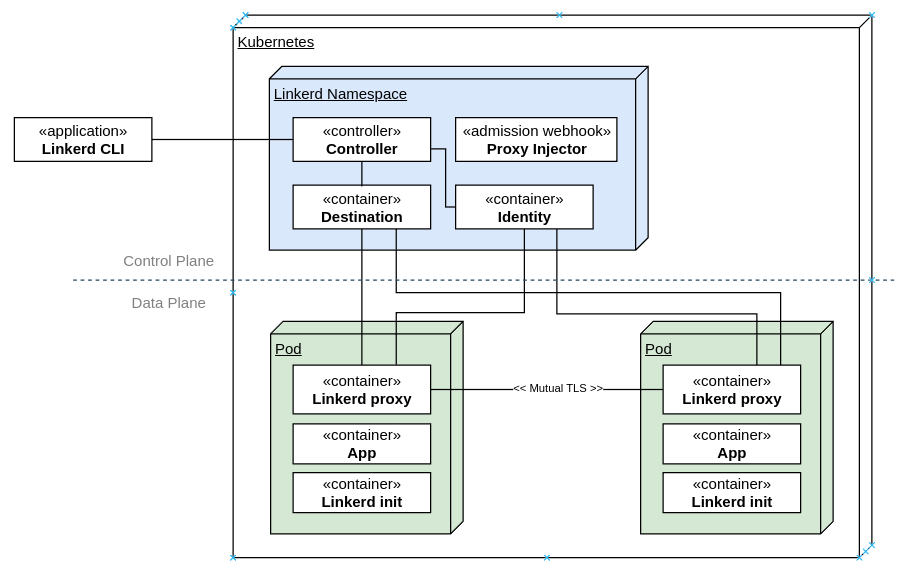
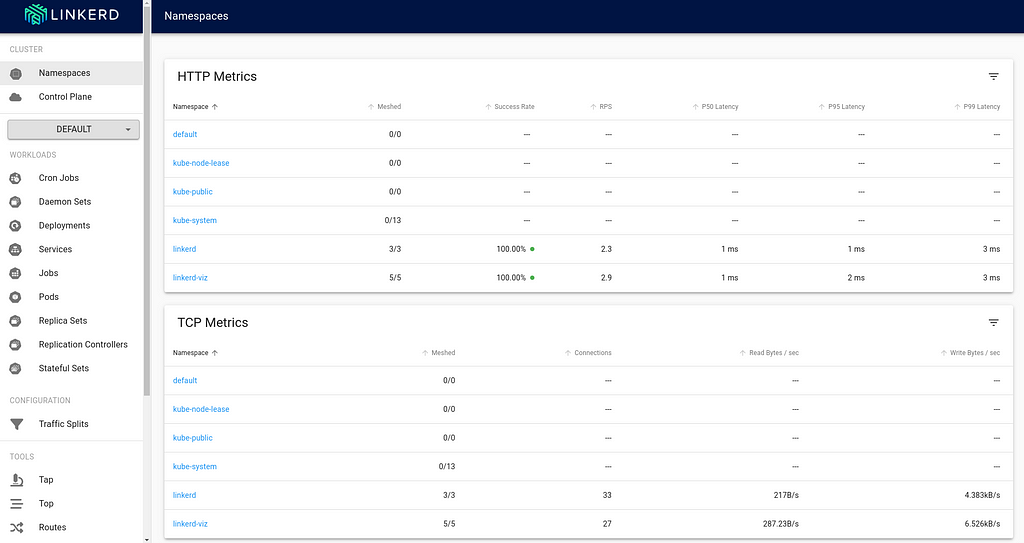
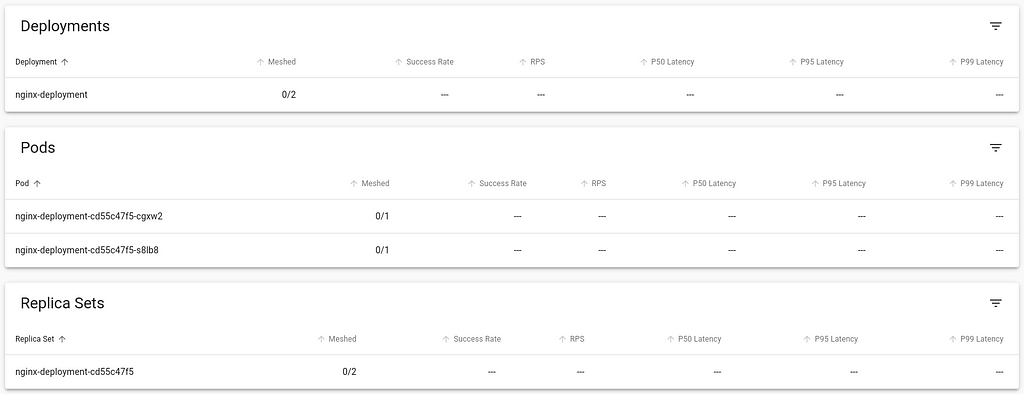
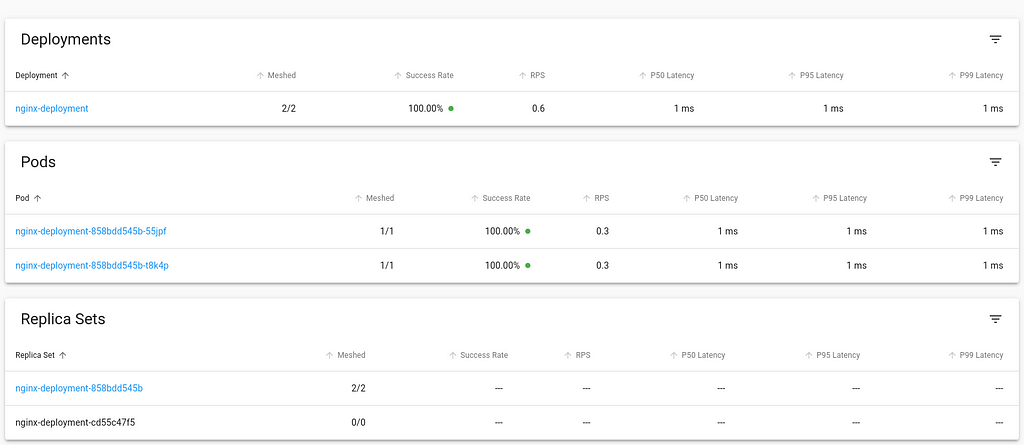
 Found the reason podman build was failing as normal user.
dbus-user-session was missing and podman wasn't able to connect to systemd user session.
This resulted in trying to use cgroupfs instead of systemd for managing cgroups and other things also broke.
 A new version 0.1.4 of the
 Our local Debian user group gathered on Sunday October 30th to chat, work on
Debian and do other, non-Debian related hacking :) This time around, we met at
 This was our 4th meeting this year and once again, attendance was great: 10
people showed up to work on various things.
Following our bi-monthly schedule, our next meeting should be in December, but
I'm not sure it'll happen. December can be a busy month here and I will have to
poke our mailing list to see if people have the spoons for an event.
This time around, I was able to get a rough log of the Debian work people did:
pollo:
 This was my first time working with aluminium frame extrusions and I had tons
of fun! I specced the first version using
 For the curious ones, the cabling is done this way:

 My impression of that city from couple of visits at that point in time where they were still more tongas (horse-ridden carriages), an occasional two wheelers and not many three wheelers. Although, it was one of the more turbulent times as lot of agitation for worker rights were happening around that time and a lot of
 So the last three stories I found the most intriguing.
The first one is titled Man on the Beach. Apparently, a gentleman goes to one of the beaches, a sort of lonely beach, hails a taxi and while returning suddenly dies. The Taxi driver showing good presence of mind takes it to hospital where the gentleman is declared dead on arrival. Unlike in India, he doesn t run away but goes to the cafeteria and waits there for the cops to arrive and take his statement. Now the man is in his early 40s and looks to be fit. Upon searching his pockets he is found to relatively well-off and later it turns out he owns a couple of shops. So then here are the questions ?
What was the man doing on a beach, in summer that beach is somewhat popular but other times not so much, so what was he doing there?
How did he die, was it a simple heart attack or something more? If he had been drugged or something then when and how?
These and more questions can be answered by reading the story Man on the Beach .
2. The death of a photographer Apparently, Kurt lives in a small town where almost all the residents have been served one way or the other by the town photographer. The man was polite and had worked for something like 40 odd years before he is killed/murdered. Apparently, he is murdered late at night. So here come the questions
a. The shop doesn t even stock any cameras and his cash box has cash. Further investigation reveals it is approximate to his average takeout for the day. So if it s not for cash, then what is the motive ?
b. The body was discovered by his cleaning staff who has worked for almost 20 years, 3 days a week. She has her own set of keys to come and clean the office? Did she give the keys to someone, if yes why?
c. Even after investigation, there is no scandal about the man, no other woman or any vices like gambling etc. that could rack up loans. Also, nobody seems to know him and yet take him for granted till he dies. The whole thing appears to be quite strange. Again, the answers lie in the book.
3. The Pyramid Kurt is sleeping one night when the telephone rings. The scene starts with a Piper Cherokee, a single piston aircraft flying low and dropping something somewhere or getting somebody from/on the coast of Sweden. It turns and after a while crashes. Kurt is called to investigate it. Turns out, the plane was supposed to be destroyed. On crash, both the pilot and the passenger are into pieces so only dental records can prove who they are. Same day or a day or two later, two seemingly ordinary somewhat elderly women, spinsters, by all accounts, live above the shop where they sell buttons and all kinds of sewing needs of the town. They seem middle-class. Later the charred bodies of the two sisters are found :(. So here come the questions
a.Did the plane drop something or pick something somebody up ? The Cherokee is a small plane so any plane field or something it could have landed up or if a place was somehow marked then could be dropped or picked up without actually landing.
b. The firefighter suspects arson started at multiple places with the use of petrol? The question is why would somebody wanna do that? The sisters don t seem to be wealthy and practically everybody has bought stuff from them. They weren t popular but weren t also unpopular.
c. Are the two crimes connected or unconnected? If connected, then how?
d. Most important question, why the title Pyramid is given to the story. Why does the author share the name Pyramid. Does he mean the same or the original thing? He could have named it triangle. Again, answers to all the above can be found in the book.
One thing I also became very aware of during reading the book that it is difficult to understand people s behavior and what they do. And this is without even any criminality involved in. Let s say for e.g. I die in some mysterious circumstances, the possibility of the police finding my actions in last days would be limited and this is when I have hearing loss. And this probably is more to do with how our minds are wired. And most people I know are much more privacy conscious/aware than I am.

 This is my report from the Netfilter Workshop 2022. The event was held on 2022-10-20/2022-10-21 in Seville, and the venue
was the offices of
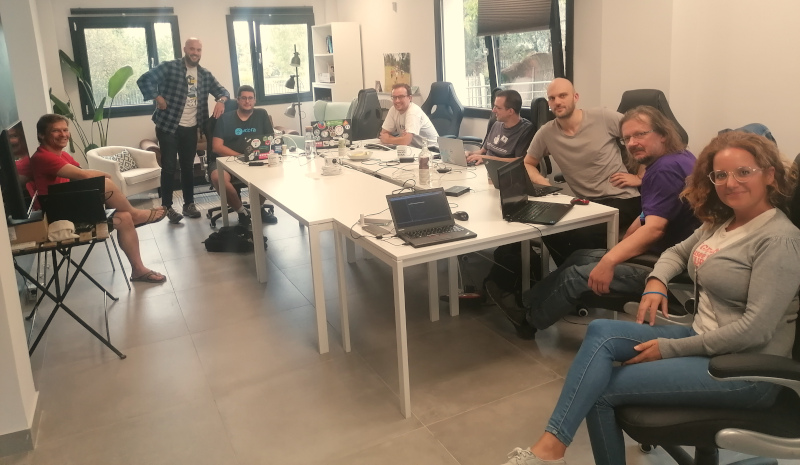 The second day was opened by Florian Westphal (Netfilter coreteam member and Red Hat engineer). Florian has been
trying to improve nftables performance in kernels with RETPOLINE mitigations enabled. He commented that several
workarounds have been collected over the years to avoid the performance penalty of such mitigations.
The basic strategy is to avoid function indirect calls in the kernel.
Florian also described how BPF programs work around this more effectively. And actually, Florian tried translating
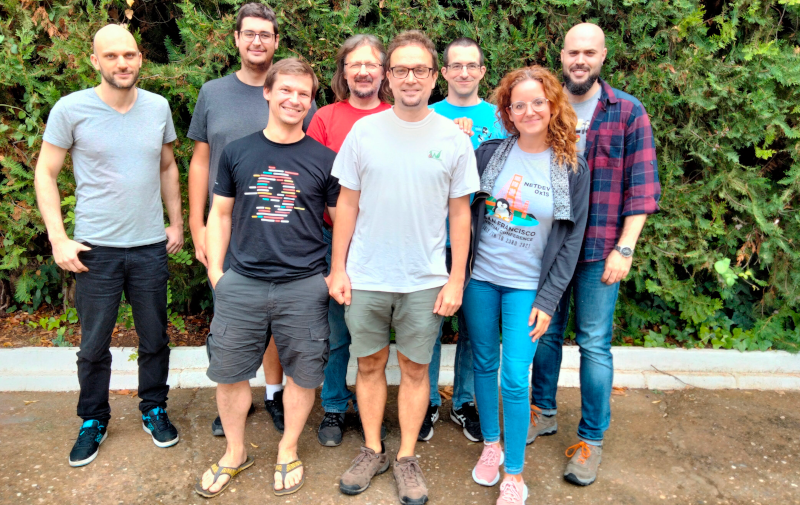 Finally, after many interesting debates over two days, the workshop ended. We all agreed on the need for extending
it to 3 days next time, since 2 days feel too intense and too short for all the topics worth discussing.
That s all on my side! I really enjoyed this Netfilter workshop round.
