Search Results: "spa"

27 February 2008

Wouter Verhelst: Beid screencast

My FOSDEM talk didn't go entirely as planned. I tried to run a demo of the beid packages, but unfortunately they decided to play up again. This isn't the first time; they sometimes have this. It has something to do with OpenSC or OpenCT, I believe, but it's hard to figure out what, exactly. When I got back at the office with the machine that failed to work properly, and tried again, it did work. Heisenbugs suck. Pun intended. Anyway, since things work now, I prepared a screencast showing off what I wanted to show during the talk; it takes about 8 minutes. I was going to edit the talk to hide the spammer who was DoS'ing my mailserver just as I was trying to send an email out, and perhaps to hide away the long waits at times; but I didn't find an easy way to do so, and I got tired looking. If you're interested, have a look. Also, the screencast doesn't include any sound. This is because I couldn't find any piece of equipment on which istanbul would produce correct imagery (it appears to be buggy on powerpc), where the hardware was fast enough to capture and encode both a video at 1024x768 resolution and sound from the sound card (ruling out "anything", the machine on which I tried to do the presentation at FOSDEM), and on which the microphone would actually work (ruling out the amd64 box that was standing nearby). Since I could at least create a correct movie on the last machine, I just forgot about the sound. Instead, I tried to make the screencast show what was going on, by pointing at important tidbits with my mouse pointer. Which kindof worked, but was not ideal. Oh well.

26 February 2008

Russell Coker: Chilled Memory Attacks

In 1996 Peter Gutmann wrote a paper titled “Secure Deletion of Data from Magnetic and Solid-State Memory” [1]. In that paper he mentions the fact that the contents of RAM last longer at lower temperatures and suggests that data could be retained for weeks at a temperature of -60C or lower (while 140C causes rapid data loss). The paper also addresses issues of data recovery from hard drives, but given that adequate CPU power for encryption is available recovering data from a disk shouldn’t be an issue unless thee attacker can get the key to decrypt it or crack the algorithm - so disk recovery is not a hot issue at the moment. Recently some researchers at Princeton University have published a paper describing in detail how to chill RAM to make it keep its data after a power cycle and even after being installed in a different computer [2]. This attracted a lot of attention, while Peter’s paper described the theoretical concept (in great detail) the Princeton group showed how to implement the attack using materials that are commonly available. Most of the analysis of this misses some fundamental points. Any suggestion that you can wipe the RAM on power failure or on boot misses the point entirely. If an attacker can chill a DIMM and then remove it from the system then there is no chance for it to be wiped. Maybe if you had security on the PC case to detect case opening (some servers have a basic version of this) such things would do a little good, but it shouldn’t be difficult to bypass in most cases. Another common flawed analysis is to suggest that this is no big deal because sniffing the memory bus has been possible for years. While it has always been possible for government agencies and companies who design motherboards to sniff the bus, for most potential attackers it has been overly difficult. When considering the effectiveness of a security system you should first consider what your threat model is. Who is going to attack you and what resources will they be willing and able to devote to the attack? An organisation that is prepared to use expensive equipment and highly trained people to break your encryption probably has other methods of gaining access to your secret data that are easier and cheaper. The research from Princeton suggests that I could perform such attacks with my spare time and with equipment that is very cheap. I’ve been idly considering doing this to an old PC just for fun! Therefore I have to assume that everyone who has the same amount of skill and money as me can potentially compromise my data if they capture one of my machines. It is still most likely that if anyone steals my laptop they will want to sell it and use the money to buy drugs. I don’t think that I have any data that is anywhere near valuable enough to justify a targeted mugging. But my procedures (in terms of changing passwords etc) in the case of my laptop being stolen now need to be scaled up due to the ease in which data might be compromised. The best way of dealing with this would be to have the decryption keys locked inside the CPU (stored in registers or memory that’s locked in the CPU cache). The possibility of getting a modern CPU to operate at any temperature approaching -60C is laughable, and the CPU is a well contained package that can operate on its own and is difficult to attack. This would make things significantly more difficult for an attacker while requiring little effort (in fact it might be possible to lock data in the CPU cache already in which case a software change is all that is required). Update: A comment by Mike made a good point about CPU cooling. Toms Hardware performed an overclocking experiment (from 3.2GHz to 5.25GHz) and used liquid nitrogen cooling [3]. It might be possible to cool a CPU core to -60C in a reasonably small amount of time. But I still believe that it would raise the bar enough to make it worth doing. Update2: Thanks Jaime for the spelling advice.

25 February 2008

Sergio Talens-Oliag: Still Alive

Today I've noticed that my last post was on August and I've decided that I'm going to try to keep this blog alive. Since this summer I've left the University and now I only have two jobs... my daily work and my son; I believe that things are going better at a personal level, but the truth is that lately I have near zero time to devote to Debian and Free Software in general. As I don't want to leave the FLOSS world and I'm still able to do some sysadmin related tasks at work and at home I've decided that I'll try to reserve some time for blogging about them. I'm also thinking about starting a blog and a wiki in Spanish, mainly to be able to publish some of the documents I write at work about our installations, the advantage for me is that I can publish them with a little revision and that is much faster than translating them into English. Anyway, before creating new blogs my first task is to finish my home server migration; I'm moving all the services that were running on my old PowerBook (PowerPC @ 400Mhz, 378MB of RAM, 10 GB HD) to my other PowerBook (PowerPC @ 1Ghz, 768MB of RAM, 60GB HD), as I haven't used it for ages and I still use a lot the old machine. On the move I plan to change a lot of things, the machine is going to run multiple vservers and I plan to change a lot of the software I was using, always trying to simplify the maintenance and/or get more performance from the new machine: I'll try to blog about this new installation once it is done.

Sune Vuorela: Fosdem2008

First time ever I have been at a conference and attending so few talks. Needed to talk to sooo many people. But anyways, it was quite interesting to put some faces of the people I kind of work with. Especially my favourite kde upstream people. So many keys to sign, but I guess I am finally thru it. If you are expecting a signature from me and haven’t got one yet, please check your spam filters and/or try poke me. I guess I will keep my paper notes a couple of days before ditching them. Beer event was bigger this year, but still too crowded. Fosdem is also quite crowded - so crowded that I missed some talks because of it. But anyway, see you next year - probably.

Julian Andres Klode: pristine-deb - git-buildpackage s pristine-tar support


Reading about the idea of pristine-deb, I actually noticed that using ar -rc file.deb debian-binary control.tar.gz data.tar.gz does not work, due to timestamps and other differences. I am currently working on a pristine-deb program which will workaround all these issues. It will be able to work with git repositories like pristine-tar and uses pristine-tar for control.tar.gz and data.tar.gz. I may also add a function to decompress all compressed files (like changelog.gz) and uses pristine-gz to compress this file again before adding it to the tarball. This may save some additional space. BTW, git-buildpackage now supports pristine-tar. Simply enable it with “pristine-tar = True” in gbp.conf. Thank you Guido Guenther, for adding these patches.

24 February 2008

Jaldhar Vyas: The 2008 Things Jaldhar Discovered Last Year That Everyone Else Knew About Already Awards

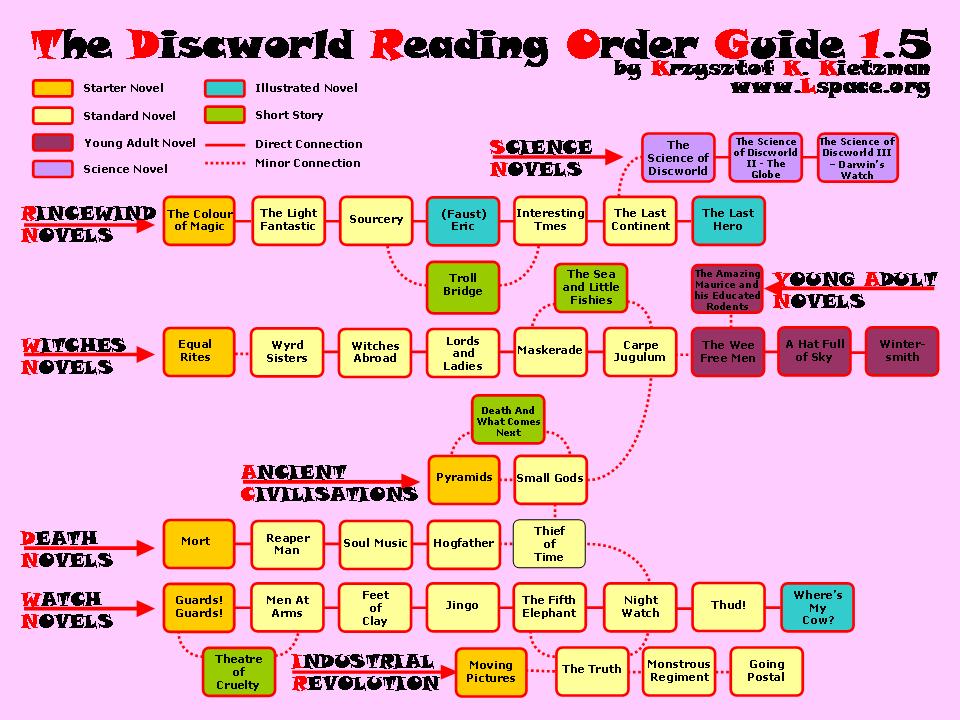
And the Golden Sombrero goes to... Another awards show took place today but nobody is paying any attention to that. All of Hollywoods elite can be found at the King Plaza Buffet in Jersey City for the 80th annual Things Jaldhar Discovered Last Year That Every Else Knew About Already Awards. (Known in the industry as "the Golden Sombreros") Here is a list of the winners. Game: Hungry Hungry Hippos This game is awesome! But don't play with three year olds. They cheat. Book: Discworld series by Terry Prachett When The Color Of Magic came out in 1983, I dismissed it as merely "The Hichhikers Guide to Mordor" but last year I read it again and this time it grew on me. Since then I've been steadily reading the whole series since June at an average of one a week. Music: Rammstein Smell the umlauts! I have no idea what they are actually going on about but this is what Metal is supposed to sound like. Mental Condition: Oedipus Complex All of sudden last October or so, my son started screaming and crying whenever I got anywhere near my wife and he would cling to her like the proverbial limpet. Then three months later, just as suddenly, he stopped. Very strange, not to mention creepy. Linux command: grep --color=auto Everyone knows GNU ls can be colorized but did you know the same is true of GNU grep? I didn't. Why wasn't I informed of this earlier? L. Ron Hubbard Lifetime Achievement Award: Coke Zero I used to drink way more Coke than was good for me so I decided to give it up. Diet sodas don't taste very good so I was resigned to not drinking soda at all. Luckily for me Coke Zero has no calories or sodium but does have caffeine and a taste like actual Coca-Cola. Perfect!

Mike Hommey: Testing the crazy idea

So, MadCoder had doubts about the crazy idea, so I took a little time to do a test with a package I maintain, namely, xulrunner. First, take all the deb files in the history of the package (at least, everything that is available on snapshot.debian.net today).
wget -O - -q http://snapshot.debian.net/archive/pool/x/xulrunner/binary-amd64/Packages.gz gzip -cd > list
awk '/^Filename:/ print $2 ' list xargs -I wget http://snapshot.debian.net/archive/
Next, commit all these in a different repo per package name :
perl -e 'use Dpkg::Version qw(vercmp); sub v my $f = $_[0]; $f =~ s/.*_(.*)_.*/$1/; $f print sort vercmp(v($a), v($b)); map s/^Filename: .*\///; $_ grep /^Filename:/ ;’ list while read f; do
    pkg=$ f%_*_*
    [ ! -d $pkg ] && mkdir $pkg && ( cd $pkg ; git init )
    cd $pkg
    ar -x ../$f
    mkdir data control
    tar -C data -zxf data.tar.gz
    tar -C control -zxf control.tar.gz
    git add data control
    git commit -q -m $f
    rm -rf data control data.tar.gz control.tar.gz debian-binary
    cd ..
done
Finally, evaluate sizes for each package, respectively, of all .deb files, their content imported in git (only the .git directory, including the index ; some space could be gained removing it), and the “optimized” git repository (after git gc, without modifying delta depth or window size, which may even improve the result)
awk '/^Package:/ print $2 ' list sort -u while read p; do
    du -c --si $ p _*.deb tail -1
    du -s --si $p
    cd $p; git gc ; cd ..
    echo
done
17M total
16M libmozjs0d
4.7M libmozjs0d
34M total
31M libmozjs0d-dbg
14M libmozjs0d-dbg
4.7M total
7.1M libnspr4-0d
1.3M libnspr4-0d
9.2M total
12M libnspr4-0d-dbg
2.8M libnspr4-0d-dbg
25M total
28M libnss3-0d
4.6M libnss3-0d
81M total
61M libnss3-0d-dbg
21M libnss3-0d-dbg
15M total
16M libnss3-tools
3.1M libnss3-tools
288M total
265M libxul0d
146M libxul0d
2.0G total
1.8G libxul0d-dbg
1.1G libxul0d-dbg
5.1M total
6.8M python-xpcom
1.1M python-xpcom
2.5M total
5.6M spidermonkey-bin
861k spidermonkey-bin
13M total
14M xulrunner
2.0M xulrunner
3.3M total
5.9M xulrunner-gnome-support
979k xulrunner-gnome-support
So these packages, stored in git, take between 15 and roughly 50 percent of the .deb size, which may be a nice improvement. Il would be interesting to know how these numbers evolve with time. Some files, such as the changelog.Debian.gz files, would also benefit from being stored in plain text instead of gzipped form. Note git gc took a while and a lot of memory for libxul0d-dbg. Also note these don’t include delta files that would be necessary to recreate the original .deb file, but this shouldn’t make a huge difference.

Sam Hocevar: Bits from the DPL: FTP assistants, marketing team, init scripts, elections

Not going to FOSDEM Hello, dear developers. I suppose many of you are currently at FOSDEM, but unfortunately I could not attend the event this year. Here are some news for you anyway! FTP assistants I am very pleased to let you know that yesterday Peter Palfrader (weasel) added Kalle Kivimaa (killer) and Thomas Viehmann (tviehmann) to the list of FTP assistants. I still hope that more people can be added soon to this team, but this is definitely good news. Marketing team At the various conferences I attended I have paid much attention to how other distributions and FOSS projects were promoting their work, and despite us often having t-shirts, stickers and posters like the others, we really miss a few things which would make Debian as appealing as other, dynamic projects. I would like to set up a Debian Marketing Team, whose work would be to organise all the promotional stuff (logos, t-shirt designs, wallpapers, etc.) so that the project can officially endorse good designs, and to make the ultimate decision on visual stuff such as CD covers, splash screens, etc. This team would have official DPL delegation, but I hope that it can also work with non-Debian-developers, as many packaging teams already do, because the non-DDs know better than us how to draw people to Debian. So please let me know if you are interested, even if you are not a DD, and especially if you are not a programmer! I also would like to spend some Debian money on a contest, similar to the FreeBSD logo contest, to create a friendly mascot for the Debian project (in a similar way to the Linux penguin or the GNU gnu) that we can use where the logo is not enough. More on this in a few days. Development news Last month Petter Reinholdtsen (pere) gave some news about his project of improving the init system. This is almost as simple as adding LSB headers to your init scripts, and work is advancing towards this goal, though not as quickly as desirable. If your packages have init scripts, or if you wish to help, I urge you to have a look at the proposal so that we can have it in Lenny. DPL elections The new DPL term is in almost 2 months, but campaign starts next month. I have already stated that I would not run again, and haven't changed my mind. As many, many Debian developers are attending FOSDEM, I hope you can use some real-life meeting time to discuss the people you think would make good DPLs and tell them. Maybe they haven't thought of running (or re-running). Being DPL does have an impact on your real life. If you are still wondering whether to run, or have any personal questions, feel free to ask me, I'll gladly share my experience.

Mike Hommey: Crazy ideas

I often have a bunch of somewhat crazy ideas, and I don’t have any time available to test or implement them, which is sad. So just in case these crazy ideas would scratch someone’s itch, I’m going to throw them in the wild. I’ve been using git for a few months, now, and used it not only for source code management, but for efficient storage, too. *VERY* efficient. I’ll have to write about that some day. Anyways, while installing pristine-tar, today, I just thought it would be neat to have an equivalent pristine-deb, to store deb files efficiently. I’m pretty sure someone else thought about this possibility, but it’s still better that such ideas come to the ears (eyes, actually) of someone that could implement them. Such a pristine-deb tool could be used to… store packages from snapshot.debian.net. That would reduce the amount of space required for the archive dramatically, IMHO. I’m pretty sure old packages are not requested that much, so they could be generated on-the-fly from a CGI script placed as a GET action, so that urls wouldn’t change. The same could probably be applied to archive.debian.org. It could even save enough space that archive.debian.org could host snapshot.debian.net. But that depends on the average package content and its average evolution, which I have absolutely no idea about. Update: It would also be interesting to have the .diff.gz files in there, too ; it would obviously allow to have an easy view of the contents, such as copyright files, changelogs, and other bits of information available on packages.debian.org. Update 2: Actually, pristine-deb would as easy as storing 2 pristine-tars (one for control.tar.gz and one for data.tar.gz), and a debian-binary file. The .deb can be aggregated with
ar -rc file.deb debian-binary control.tar.gz data.tar.gz

22 February 2008

Bastian Blank: Broken DVDs

Today I got another broken DVD. It is the special edition of The Shawshank Redemption. It is rather new and libdvdread just chokes on it. At least the old one does, while the version in sid is able to read them, thanks to a small patch. The DVD exploits a feature of the standard. The filesystem on it (UDF) provides a size for the info files (VTS_XX_0.IFO) and the corresponding backup file (VTS_XX_0.BUP). This sizes are void, only the offsets within the files matters. The sizes are just too small and libdvdread checked that while reading them. Thanks to the patch, libdvdread now updates its internal knowledge while parsing the file. With the fix it is possible to play the DVD, at least with mplayer. But I want to play it on my machine without optical drive. I used dvdbackup to read other DVDs but it simply failed this time. This DVD also have broken backup files. They have different sizes, sometimes they even look empty, and contents than the real ones. With the corrent amount of force (just ignoring them) and some magic (#467075) dvdbackup copies something to disk which is playable with mplayer (libdvdread) and totem (libdvdnav). Okay, nothing is complete. This DVD contains another title set which seems to be never referenced. It have a completely bogus info file and a 1GB menu VOB. As I have a copy now, I'm away, watching a really great movie.

Marc 'Zugschlus' Haber: Bounce from BTS to BTS

Sometimes a bug report is a labyrinth. #348046 is an example of this. It is a horrible mess of at least three different issues with half of the original participants having become unresponsive. I would like to pull the issues apart into different bug reports to be able to deal with them (and their probably unresponsive submitters) individually. Obviously, cloning and renaming is not an option since this copies the mess. So, it would probably be desireable to download the bug mbox and to bounce individual messages to new bugs (that have been created before), but the BTS recognizes the dupes and bins them. Blars has helped me by looking at BTS mail log, so it was clear that removing the X-Loop, X-Debian-PR, X-Spam, Resent- and Received headers from the mbox before loading it into mutt to do the actual bouncing works fine. A command line to do this:
rm -f mboxout; mboxbug formail -d -I Received -I X-Debian-PR -I X-Loop -I X-Spam -I Resent -s >> mboxout
After trying this in “production”, one needs to send one message per BTS pulse, or one will totally mess up the order of the messages. That’s a real pity and an annoyance.

21 February 2008

David Nusinow: Two Fun Things

1. After several years of it sitting on my shelf, I finally read Kernighan and Pike's "The Practice of Programming". I was always a little intimidated by this slender little book. I felt like it was full of wisdom that I couldn't really absorb at the right pace. Now that I've spent some time working on more challenging code and trying to come to grips with at the least the basics of more advanced computing concepts it was the right time to read it. I can't recommend it highly enough, it really is packed with wisdom. I've got Kernighan's "Software Tools" on the way, and I'll post a proper review of this at some point since it's not as well known.

2. I decided to spend a little bit of time poking at the almost-but-not-quite-dead language Dylan. I'd remembered being curious about this language back from when I was a serious Mac child in the mid 90's, since Apple was hinting that it would be the future. While the Gwydion Dylan implementation was removed from Debian, there's binaries for both it and the OpenDylan implementation that can be downloaded and run on both Sid and Ubuntu.

What I can grasp of the language is interesting. It's sorta like what little I know of scheme, except that it's got an object system that is apparently like CLOS from Common LISP, which I also don't know. Most notably though, is that even though Dylan is considered a LISP it doesn't look like one at all. There's no parentheses except what you'd expect, and things are infix rather than prefix, so it looks more like algol-derived languages like C. It's strikingly easy to read, and while the object system is very different from C++-style, it's fairly easy to grasp because it relies on familiar concepts like multiple dispatch to work. It's optionally typed, which is something I've been after (give me safety when I want it, but don't force me!) and provides all sorts of cool things like closures. Additionally, it does allow hygienic macros, which are apparently LISP's claim to power and fame, although I don't understand such things yet even in Dylan. Despite all this, the language appears to be relatively simple, which seems nice. It seems to be a very well designed language that was allowed to languish in obscurity because Apple abandoned it*.

Unfortunately the implementations aren't really all there yet. I ran in to obscure compiler bugs in gwydion writing something as simple as quicksort, and gwydion doesn't really have much of a standard library yet, although it can apparently bind to C quite well and fairly easily (this is something I haven't tried). In addition, there's OpenDylan, which is even less there on Linux, because it was an opened commercial compiler (derived from the original Apple one I believe) and it's had fewer people working on it. It seems to have a very large library, but documentation is sparse on it and I haven't had any time to really go after it. I've really been using gwydion exclusively, although I'd love to see OpenDylan get up to speed. While I have no time to really work on anything outside of X right now, this seems like a good language that deserves some attention.

* This is a familiar story to all of us who lived through Apple's mid-90's

Simon Richter: Lazyweb: not hogging the event loop

I'm (again) writing a library that is supposed to be cross-platform, but needs sort of an event loop, which I'd rather leave in the main program and just give them a bunch of file descriptors to watch and a timeout. Problem is, file descriptors are platform dependent. There are a few approaches to this. The mighty ASIO simply annexes the entire loop, and just tells people to hook into it if they need anything -- it works, but on the downside you get threads for free when you didn't want or need them. Simply spawning a new thread for everyone isn't a solution either, as it requires me to do lots of synchronised inter-thread communication -- and on Windows, file handles are thread affine, so I cannot even call into the same library from different threads. I will probably go with ASIO for this project, but I'm fairly certain that there are better solutions out there.

Miriam Ruiz: FOSDEM 08: There I go!

I'm going to FOSDEM From Valladolid (VLL) to Charleroi Brussels (CRL)
Fri, 22-Feb-08; Flight FR1912, Depart VLL at 17:25, Arrive to CRL at 19:35
From Charleroi Brussels (CRL) to Valladolid (VLL)
Sun, 24-Feb-08; Flight FR1911, Depart CRL at 15:00, Arrive to VLL at 17:00 I hope not to have problems with the flight this time! See you all there!

Russell Coker: Athlon Memory Problems

I had an old Compaq Athlon 1GHz system that seemed to be broken. It would display random things on the screen from the BIOS and fail the boot, it looked like a motherboard problem. Fortunately before I gave it away (I give away all my broken machines to members of my local LUG who want spare parts) I remembered that the machine uses main memory for video. I removed and reinstalled one of the DIMMs and it then worked perfectly, presumably it was making a poor contact. The next task was to put it back in service, I had a bunch of spare RAM and I decided to upgrade it to 768M (it previously had 384M). With the new RAM it would fail to boot, sometimes it would give a kernel message “soft lockup detected“, and sometimes it would just hang. The hangs typically occurred when running the initramfs (the first non-kernel code). I tested this with a Fedora install (what the machine used to run when it had 384M), a Debian install (the aim was to use a hard drive with Debian installed for the new purpose of the machine), and with CentOS and Debian installation CDs. The CentOS and Debian installation CDs got a little further but still crashed. Memtest86+ however reported all the RAM as good. I then tried reducing the RAM to 256M which worked perfectly. It seemed that increasing RAM above 384M would cause the problem. The next thing I tried was the mem= kernel option. As a first experiment I tried mem=400m which worked perfectly. I then tried mem=759m which allowed the boot process to proceed a little further but it still crashed. The system supposedly has 760M available (8M used for video). Further testing revealed that mem=750m seemed to work well. Being cautious (and not short of RAM) I have configured the machine to use mem=740m, and it is now working well.

20 February 2008

Neil Williams: emdebian-tools 0.8.2 in Emdebian

Although an interim release, there are a number of new features in 0.8.2 that are worth noting.

  1. emrecent - possible candidate for a rename to emdput, this script started off just as a review tool for recent builds (hence the current name). Finds recent .changes files in the Emdebian working directory, collates them, provides a viewer for the debc -a $ARCHcontents using whiptail or zenity along with error logging. If the default zenity frontend is installed, you can still select to use whiptail (e.g. when over an SSH connection) using the -w option to emrecent. Further checks are run using the second script:

  2. emdebcheck - a local Emdebian version of the debcheck that runs on the Debian archive using edos-debcheck to highlight non-installable packages before an upload breaks the archive. This isn't such a problem in Debian but Emdebian needs to build installer images and similar tools from packages in unstable so an installability check is very useful. Certain packages are expected to be non-installable due to dependencies that are removed in Emdebian so emrecent supports a --skip option to omit the emdebcheck run for such builds.

  3. emsource --status now reports errors logged by emrecent or emdebcheck.

  4. Unpacking support in emsandbox - EXPERIMENTAL!. debootstrap --foreign puts a higher-than-necessary burden on the host device when running the default --second-stage - not just in CPU workload but in the amount of free space required to copy and unpack all the .deb files. The original debootstrap tarball contains the downloaded .deb archives and only a few packages are actually unpacked manually. Unpacking support in emsandbox adds a handler using dpkg to unpack ALL .deb files in .$BUILDPLACE/var/cache/apt/archives/ using dpkg -e and dpkg -x, creates a suitable status file for dpkg and removes the .deb packages for a smaller tarball. The result is (almost) a foreign filesystem image that can be copied directly onto the host device. The remaining tasks are only:
    • /sbin/ldconfig
    • /usr/bin/dpkg --configure -a
    . Depending on how well this works in real situations, unwrap could become the default handler for debootstrap --second-stage --foreign in emdebian-tools. Unpack support is enabled via the debootstrap suite scripts which define the package set, the first_stage_install and the (much reduced) second_stage, replacing the sequence of install commands with a single function provided by emdebian-tools. See /usr/lib/emdebian-tools/emdebian.gpe for an example.


In common with all previous interim Emdebian releases, 0.8.2 has been uploaded to the Emdebian tools repository already added to your apt sources when installing emdebian-tools so apt will be able to upgrade seamlessly.
(0.8.0 introduced a check in emsetup to ensure that the latest version has actually been installed.)
Once features have stabilised (probably after testing at Fosdem), I'll upload 0.9.0 to Debian unstable, as usual, or maybe one or two more interim releases to Emdebian.

MJ Ray: SPI Meeting Wed 20 Feb 1900Z irc.oftc.net/#spi

The notice for the February meeting was posted on Monday. Late again - it's meant to be a week's notice, according to this. I'm disappointed that the current SPI board still hasn't got basic member communications working, even as the year end approaches. Is a default cron-job mail (like we use at TTLLP ) so difficult to set up? Anyway, one of the few interesting items on the agenda is
"Decision on new board member"
but I've not applied for the post for three reasons. Firstly, on reflection, enough SPI members placed me as last choice (which I think is mostly based on old mud-slinging, but it still happened) in its last election that I don't think being appointed would give me a strong enough mandate for the changes I want (more transparency, consultation and work towards meeting the Better Business Bureau standards). Secondly, I'm finding that my Cooperatives-SW board post is taking more time this year. Finally, I hope to be appointed to a representative post in another organisation soon and it's nearly always better to work where I'm obviously wanted. I've asked if the applications of any candidates for the SPI board post will be posted for member review somewhere (because members are supposed to oversee the board, but how can that happen if we don't see basic info on them?) and for there to be a members Q+A during the meeting, but I don't know whether there's more than one candidate or whether the Q+A will happen. Members are a bit in the dark on this one. Again. I hope to see some other SPI members online about 1900Z tonight (20 Feb). I should actually be online during this one, for a change.

19 February 2008

John Goerzen: Registrar Dynadot Conspires to Help Take Down Wikileaks?

Yesterday, Wired ran a story on the Cayman Islands bank that got Wikileaks.org blocked. This story said, in part:

When the bank's lawyers indicated they would be filing a suit, she asked them to tell her where so that Wikileaks could find an attorney in the appropriate jurisdiction to represent it. She says the lawyers refused to tell her. Two and a half weeks later, the bank filed a restraining order against Dynadot and Wikileaks in San Francisco. Wikileaks received notice only a few hours before the case went to a judge who accepted the agreement between Dynadot and the bank.


(emphasis mine)

Now, Dynadot and this Cayman Islands bank apparently had an agreement to block wikileaks.org already. Not only did Dynadot effectively take wikileaks.org down, but also they "lock(ed) the wikileaks.org domain name to prevent transfer of the domain name to a different domain registrar." The U.S. Disctrict Court for Northern California issued this injunction without ever giving Wikileaks a chance to respond. The bank only filed the request against Dynadot. Apparently Wikileaks received notification that this was going to happen only 6 hours before the hearing (an incredibly short time in legal terms), nowhere near enough time to prepare a case.

Now, the reason I post this is because I have looked at Dynadot as a registrar before. They have good prices and a whois privacy service that makes sense: where you remain the owner of record, making it easier if you need to transfer the domain or prove your ownership of it.

But before signing up, I read their AUP carefully. Among many alarming things, I noticed this paragraph:

You further agree that Dynadot, in its sole discretion and without liability to You for any resulting loss or damages, may take immediate corrective action, including, but not limited to, removal of all or a portion of Your domain services and/or deletion, suspension, cancellation, termination, or other interruption of domain services or Your customer account with Dynadot, at any time during the term of this Agreement, in the event of notice of any possible violation of this Agreement by You or Your end users, or if such service or account is used in association with morally objectionable activities, or for any reason whatsoever. In such cases, any and all fees paid to Dynadot will be non-refundable and ineligible for account credit.


So, I thought I would write to them about it. Here is an excerpt from their response:

We always conduct an investigation before taking action against a domain. We will give you a chance to respond to the complaints.


From Wired's story, it doesn't look like that really happened. The US Government has already issued advisories about Cayman Islands banks, and it is unclear (to me at least) what law Wikileaks broke, or how Dynadot could find their actions of exposing fraud "morally objectionable". What's more, collaborating with the bank to get a takedown order written, but not talking to Wikileaks, seems to go against their statements to me (assuming again that the Wired story is accurate).
Here is my entire mail. You may also find archive.org's copy of the AUP from last July to be helpful. (I wrote the email in November, and they've added some sections since then, so the section numbers don't necessarily match up)

Subject: Re: SITE: Questions about your AUP
From: Dynadot Info <info@dynadot.com>
Date: Sat, 3 Nov 2007 13:42 -0800
To: jgoerzen@complete.org

Hello,
Thank you for your email. Responses are below.
Best Regards,
Dynadot Staff
--------------------------------------------------
DYNADOT... $8.99 domain names... $1/mo. web hosting
http://www.dynadot.com
Hi,
I currently have several domains being hosted with Gandi.  I have long been looking for someone that can provide a level of privacy for my whois data in a sane way.  I think Dynadot is the first I've seen that looks like it can do that and still be affordable.
In preparation to transfer over a first test domain, I read your AUP and frankly am quite troubled by what I saw.  I hope that you can allay my fears.
In section 4 of part 2, the last paragraph states that Dynadot "for any reason whatsoever" may delete, cancel, or terminate my domain services or customer account.  It also lists "notice of possible violation" as a justification for that.  That makes me even more nervous -- any random person could send you an email claiming something nefarious is happing with my domain name, and I'm agreeing to just let you delete it because of that?

We always conduct an investigation before taking action against a domain. We will give you a chance to respond to the complaints. 
A very similar clause appears in section 7 of part 1 ("cancellation of services").  It goes on to cast a very broad net around objectionable material and says that Dynadot decides what's objectionable.  Now, if you go to my website at www.complete.org or blog at changelog.complete.org, you'll see I'm an upstanding netizen.  But the AUP says that things that "are designed to or effectively... embarrass" third parties could get my domain cancelled.  So if I post a review of Vista that says I think Microsoft did a poor job of engineering, would my account be yanked if one of their engineers complained?  What if I (legally!) linked to a Comedy Central sketch using real TV footage to mock George W. Bush or Hillary Clinton?

The cases you described above would never happen with us. Complaining about Microsoft or making fun of George Bush are protected free speech. The service agreement is designed to give us some flexibility in dealing with customers that break the law. 
I'm particularly concerned about this because apparently DynaDot felt it worthwhile to try to take down the website of someone that found a security hole: http://www.jhuskisson.com/friends/dynadot-fights-back-bans-nick-from-everything
While I wouldn't condone step-by-step cracking instructions in most cases, this is concerning to me.

He was posting a step by step guide to hacking our website, which is illegal. The hack did not work, but we noticed an upsurge in strange activity in our logs, so we requested the hacking guide be taken down. 
Finally, item (i) under the Domain Privacy Service section says that you could immediately reveal all my information upon the receipt of merely a *claim* (not even a court order), even if it's invalid.  But I thought that NOT doing this was what you were saying made your service better, over at http://www.dynadot.com/resource/article/qa.html?aid=0

Once again we need to build some flexibility into our service agreement to deal with people who use their domains for criminal activity. Otherwise we could be liable for the damages that they cause to others. So far, we have never dropped anyones privacy except in the few cases we were forced to by a FBI subpoena.
I know this is a long message, and I appreciate your time.  I really do want to use your service, but -- no offense intended -- I want to make sure I'm not dealing with scammers first, and from reading the AUP, I'm not so sure!

No offence taken. I will email our counsel to see if we can tighten up the agreement a bit. 
-- John Goerzen

18 February 2008

MJ Ray: Finance & Business / Phone spammers: Home Energy Saver

I just had a call from a foreign-sounding call center worker saying she was from "Home Energy Saver" and offering advice on getting grants for loft and cavity wall insulation.

At first, I thought she was from the Energy Saving Trust, but when she said they were "calling all home-owners in the county of Bristol" (we're not and surely the EST would know that) and said we hadn't had any grants in the last 10 years (we've had two in the last 18 months), then I smelt a rat.  I asked for their telephone number and their company registration number and she would give neither.  I pointed out that the number she'd called was listed on TPS and she said they're allowed to call TPS numbers.  Like hell.  I hung up.  1471 said "we do not have the caller's number" - typical for overseas call centres.

Anyone else had a call from these phone-spammers?  Who are they really?

Remi Vanicat: Who is playing with my cpufreq parameter?

I’ve a problem for some time: something seem to be changing my cpu frequency behind my back, and I don’t know what is doing it. It happen when the computer is doing cpu intensive mostly non interactive thing, as watching certain .avi with some codec. The change of cpufreq is relay a problem because then the cpu became to slow to decode the film at the speed I need to see it. So, what happen ?
If I use the ondemand governor, it seem that it will eventually believe that I do not demand cpu anymore, slow down to 800Mhz, and one cannot look at the film anymore…
If I use the userspace governor, setting the frequency to the max available value, well, the frequency will eventually change to something smaller. It will even lower the max frequency… Worst still, cpufreq setting won’t change to what I want if I ask for it:
# cpufreq-info && echo && cpufreq-set --max 2GHz && cpufreq-set -f 2GHz && LC_ALL=C cpufreq-info
cpufrequtils 002: cpufreq-info (C) Dominik Brodowski 2004-2006
Report errors and bugs to linux@brodo.de, please.
analyzing CPU 0:
  driver: powernow-k8
  CPUs which need to switch frequency at the same time: 0
  hardware limits: 800 MHz - 2.00 GHz
  available frequency steps: 2.00 GHz, 1.80 GHz, 1.60 GHz, 800 MHz
  available cpufreq governors: userspace, powersave, ondemand, conservative, performance
  current policy: frequency should be within 800 MHz and 1.20 GHz.
                  The governor "userspace" may decide which speed to use
                  within this range.
  current CPU frequency is 800 MHz (asserted by call to hardware).
cpufrequtils 002: cpufreq-info (C) Dominik Brodowski 2004-2006
Report errors and bugs to linux@brodo.de, please.
analyzing CPU 0:
  driver: powernow-k8
  CPUs which need to switch frequency at the same time: 0
  hardware limits: 800 MHz - 2.00 GHz
  available frequency steps: 2.00 GHz, 1.80 GHz, 1.60 GHz, 800 MHz
  available cpufreq governors: userspace, powersave, ondemand, conservative, performance
  current policy: frequency should be within 800 MHz and 1.20 GHz.
                  The governor "userspace" may decide which speed to use
                  within this range.
  current CPU frequency is 800 MHz (asserted by call to hardware).
Not only my setting have been changed, But they won’t change back to what I want. I have to wait sometime, before demanding cpufreq-set to change my setting if I want them obeyed.

Next.

Previous.