
Would MTAs please stop sending hi-bit7 messages
to other MTAs which do not advertise
8BITMIME! Recode it
to QP or BASE64, damnit! The receiving MTA is entitled to strip the
set bit7, which kinda makes things hard to read (while I
know how
to deal with
blvde Stra_e, the advent of UTF-8 makes that
blC6de StraC?e, introduces C0 control characters and makes
typographic quotation marks into NUL-containing octet sequences (as
their UTF-8 representation contains 0x80 octets) which let every
sensible MDA terminate the line there). I even filed in the Debian
BTS against the BTS (might be Drexim's fault, though).
Would MUAs
please default to Quoted-Printable!
And mail hosters should use the same server when retrying delivery,
to benefit greylisting. Or at least publish a list of outgoing IPv4
addresses they use for sending. Or use IPv6. Oh, and
STARTTLS,
while we are on my wishlist.
It's a sad day when the percentage of correctly encoded eMail
messages in my INBOX is smaller than that of my Spambox...
Lintian uses some small scripts to collect data from packages. In daily talk, they are usually referred to as collection scripts. Lintian uses files to track the status of collection scripts between runs. Consider the following directory listing on lintian.d.o:
$ ls -al laboratory/binary/eclipse/.*-*
-rw-r--r-- 1 user group  45 Jul 18 01:21 laboratory/binary/eclipse/.ar-info-1
-rw-r--r-- 1 user group  45 Jul 18 01:21 laboratory/binary/eclipse/.bin-pkg-control-1
-rw-r--r-- 1 user group  45 Jul 18 01:21 laboratory/binary/eclipse/.changelog-file-1
-rw-r--r-- 1 user group  45 Jul 18 01:21 laboratory/binary/eclipse/.copyright-file-1
-rw-r--r-- 1 user group  45 Jul 18 01:21 laboratory/binary/eclipse/.debian-readme-1
-rw-r--r-- 1 user group  45 Jul 18 01:21 laboratory/binary/eclipse/.doc-base-files-1
-rw-r--r-- 1 user group  45 Jul 18 01:21 laboratory/binary/eclipse/.fields-1
[...]
This example shows that a bunch of collections scripts have been run for the eclipse binary package. Each of these files contain the version of Lintian that created them (or last wrote them) and a timestamp.
Why the interest in these files? Let us go a bit back in time to the 15th of June 2011. That was the day where Lintian 2.5.1 was uploaded to unstable. That version of Lintian had 17 collection scripts[1] for binary packages. So every binary package would have 17 files and there are over 35 000 binary packages in the Debian archive.
Ouch, so that makes about 595 000 files if we use this on all binary packages on the archive. The size of each of those files are about 45 bytes, so that is a total of 25.5 MB for all of these files[2]. So other than the inode abuse , this is not too bad. A little
du -h should confirm this
$ du -h laboratory/binary/eclipse/.*-*
4.0K    laboratory/binary/eclipse/.ar-info-1
4.0K    laboratory/binary/eclipse/.bin-pkg-control-1
4.0K    laboratory/binary/eclipse/.changelog-file-1
4.0K    laboratory/binary/eclipse/.copyright-file-1
4.0K    laboratory/binary/eclipse/.debian-readme-1
4.0K    laboratory/binary/eclipse/.doc-base-files-1
4.0K    laboratory/binary/eclipse/.fields-1
[...]
Whaaa oh the file system uses a block-size of 4K bytes, so I guess we have to pay a full block for these files. Let s see what that gives, 595 000 times 4 kB is 2.27 GB
Oops!
That was in the (not too distant) past. About a month later (12th of July), the code creating these files are refactored into:
sub _mark_coll_finished
    my ($self, $collname, $collver) = @_;
    # In the "old days" we would also write the Lintian version and the time
    # stamp in these files, but since we never read them it seems like overkill.
    #  - for the timestamp we could use the mtime of the file anyway
    return touch_file "$self-> base_dir /.$collname-$collver";
This turns out to be a very space-saving change if we ask
du -h:
$ du -h laboratory/binary/lintian/.*-*
0       laboratory/binary/lintian/.ar-info-1
0       laboratory/binary/lintian/.bin-pkg-control-1
0       laboratory/binary/lintian/.changelog-file-1
0       laboratory/binary/lintian/.copyright-file-1
0       laboratory/binary/lintian/.debian-readme-1
0       laboratory/binary/lintian/.doc-base-files-1
[...]
Existing files are not emptied, so we still have some old non-empty files left on lintian.d.o. Nevertheless that was the "nice story" about "the side effect of being lazy sometimes reduces space waste"[3].
But we have another "number" problem. If you grep for "Too many links" in the lintian.log from lintian.d.o you should see:
$ grep -i "too many links" logs/lintian.log
mkdir: cannot create directory  /srv/lintian.debian.org/laboratory/binary/aces3': Too many links
mkdir: cannot create directory  /srv/lintian.debian.org/laboratory/binary/boinc-cgi-stripchart': Too many links
mkdir: cannot create directory  /srv/lintian.debian.org/laboratory/binary/libbrailleutils-java': Too many links
mkdir: cannot create directory  /srv/lintian.debian.org/laboratory/binary/libbrailleutils-java-doc': Too many links
mkdir: cannot create directory  /srv/lintian.debian.org/laboratory/binary/libclippoly0': Too many links
mkdir: cannot create directory  /srv/lintian.debian.org/laboratory/binary/libclippoly-dev': Too many links
mkdir: cannot create directory  /srv/lintian.debian.org/laboratory/binary/xul-ext-cookie-monster': Too many links
mkdir: cannot create directory  /srv/lintian.debian.org/laboratory/binary/cucumber': Too many links
[...]
$ grep -i "too many links" logs/lintian.log   wc -l
3274
In the Lintian Laboratory every package is unpacked in a directory based on its type and name (as hinted in the output above). The problem is that ext3 has a limit of the amount sub-directories a directory can have[4]. This limit is just shy of 32 000 and (as a reminder) Debian has over 35 000 binary packages. So a lot of packages are currently not checked on lintian.d.o (
#641468).
The current feature branch for #641468 already solves the directory limit issue (by using a "mirror-like" pool layout). It also removes the need for "1 file per completed collection" by writing this information in the existing "per entry" status file.
I hope we can get the branch merged into master within 2-3 weeks, though there are still a few issues that needs to be worked out before then.
Footnotes:
[1] Actually it had 18 collections, but one of them are "auto-removed" so it is better not to include it in this case.
[2] Content alone - metadata like permissions and such is ignored.
[3] I admit it was more luck than intention!
[4] The limit comes from the "32 000 hardlink per inode" limitation.


We use SugarCRM at work and I've complained about its not-very-RESTy
REST interface. John Mertic a (the?) SugarCRM Community Manager asked
me about what problems I'd had (apart from its lack of RESTfulness)
and I said I'd write a blog post about it.
In our case, the REST interface is used to integrate Sugar and RT so
we get a link in both interfaces to jump from opportunities to the
corresponding RT ticket (and back again). This should be a fairly
trivial exercise or so you would think.
The problems, as I see it are:
- Not REST-y.
- Exposes the database tables all the way through the REST interface
- Lack of useful documentation forcing the developer to cargo cult and
guess
- Annoying data structures
- Forced pagination
My first gripe is the complete lack of REST in the URLs. Everything
is just sent to
https://sugar/service/v2/rest.php. Usually a POST,
but sometimes a GET. It's not documented what to use where.
The POST parameters we send when logging in are:
method=>"login"
input_type=>"JSON"
response_type=>"JSON"
rest_data=>json($params)
$params is a hash as follows:
user_auth =>
            user_name => $USERNAME,
            password => $PW,
            version => "1.2",
 ,
application => "foo",
Nothing seems to actually care about the value of
application, nor
about the
user_auth.version value. The password is the md5 of the
actual password, hex encoded. I'm not sure why it is, as this adds
absolutely no security, but it is. This is also not properly
documented.
This gives us a JSON object back with a somewhat haphazard selection
of attributes (reformatted here for readability):
     "id":"<hex session id>,
     "module_name":"Users",
     "name_value_list":
             "user_id":
                     "name":"user_id",
                     "value":"1"
              ,
             "user_name":
                     "name":"user_name",
                     "value":"<username>"
              ,
             "user_language":
                     "name":"user_language",
                     "value":"en_us"
              ,
             "user_currency_id":
                     "name":"user_currency_id",
                 "value":"-99"
              ,
             "user_currency_name":
                     "name":"user_currency_name",
                     "value":"Euro"
What is the
module_name? No real idea. In general, when you get
back an
id and a
module_name field, it tells you that the id
exists is an object that exists in the context of the given module.
Not here, since the session id is not a user.
The worst here is the
name_value_list concept which is used all over
the REST interface. First, it's not a list, it's a hash. Secondly, I
have no idea what would be wrong by just using keys directly in the
top level object, so the object would have looked somewhat like:
     "id":"<hex session id>,
     "user_id": 1,
     "user_name": "<username>,
     "user_language":"en_us",
     "user_currency_id": "-99",
     "user_currency_name": "Euro"
Some people might argue that since you can have custom field names
this can cause clashes. Except, it can't, since they're all suffixed
with
_c.
So we're now logged in and can fetch all opportunities. This we do by
posting:
method=>"get_entry_list",
input_type=>"JSON",
response_type=>"JSON",
rest_data=>to_json([
            $sid,
            $module,
            $where,
            "",
            $next,
            $fields,
            $links,
            1000
])
$sid is our session id from the login$module is "Opportunities"$where is opportunities_cstm.rt_id_c IS NOT NULL. Yes, that's
right. An SQL fragment right there and you have to know that you'll
join the opportunities_cstm and opportunities tables because we
are using a custom field. I find this completely crazy.$next starts out at 0 and we're limited to 1000 entries at a time.
There is, apparently, no way to say "just give me all you have".$fields is an array, in our case consisting of id, name,
description, rt_id_c and rt_status_c. To find out the field
names, look at the database schema or poke around in the SugarCRM
studio.$links is to link records together. I still haven't been able to
make this work properly and just do multiple queries.- 1000 is the maximum number of records. No, you can't say -1 and get
everything.
Why this is a list rather than a hash? Again, I don't know. A hash
would make more sense to me.
The resulting JSON looks like:
    "result_count" : 16,
    "relationship_list" : [],
    "entry_list" : [

          "name_value_list" :
             "rt_status_c" :
                "value" : "resolved",
                "name" : "rt_status_c"
              ,
             [ ]
           ,
          "module_name" : "Opportunities",
          "id" : "<entry_uuid>"
        ,
       [ ]
    ],
    "next_offset" : 16
Now,
entry_list actually is a list here, which is good and all, but
there's still the annoying
name_value_list concept.
Last, we want to update the record in Sugar, to do this we do:
method=>"set_entry",
input_type=>"JSON",
response_type=>"JSON",
rest_data=>to_json([
    $sid,
    "Opportunities",
    $fields
])
$fields is not a
name_value_list, but instead is:
    "rt_status_c" : "resolved",
    "id" : "<status text>"
Why this works and my attempts at using a proper
name_value_list
didn't work? I have no idea.
I think that pretty much sums it up. I'm sure there are other
problems in there (such as the over 100 lines of support code for the
about 20 lines of actual code that does useful work), though.
Some years ago I came across a really peculiar newsgroup post. It was not about technicalities of any sort. It was about history. A beautifully written history of computers. From the Turing machine to the Free Software world, the original author managed to capture all the important events of the computer revolution with a great deal of humor. Re-posting it here, it is just brilliant.
The Gospel of Tux (v1.0)
In the beginning Turing created the Machine.
And the Machine was crufty and bodacious, existing in theory only. And von Neumann looked upon the Machine, and saw that it was crufty. He divided the Machine into two Abstractions, the Data and the Code, and yet the two were one Architecture. This is a great Mystery, and the beginning of wisdom.
And von Neumann spoke unto the Architecture, and blessed it, saying, Go forth and replicate, freely exchanging data and code, and bring forth all manner of devices unto the earth. And it was so, and it was cool. The Architecture prospered and was implemented in hardware and software. And it brought forth many Systems unto the earth.
The first Systems were mighty giants; many great works of renown did they accomplish. Among them were Colossus, the codebreaker; ENIAC, the targeter; EDSAC and MULTIVAC and all manner of froody creatures ending in AC, the experimenters; and SAGE, the defender of the sky and father of all networks. These were the mighty giants of old, the first children of Turing, and their works are written in the Books of the Ancients. This was the First Age, the age of Lore.
Now the sons of Marketing looked upon the children of Turing, and saw that they were swift of mind and terse of name and had many great and baleful attributes. And they said unto themselves, Let us go now and make us Corporations, to bind the Systems to our own use that they may bring us great fortune. With sweet words did they lure their customers, and with many chains did they bind the Systems, to fashion them after their own image. And the sons of Marketing fashioned themselves Suits to wear, the better to lure their customers, and wrote grave and perilous Licenses, the better to bind the Systems. And the sons of Marketing thus became known as Suits, despising and being despised by the true Engineers, the children of von Neumann.
And the Systems and their Corporations replicated and grew numerous upon the earth. In those days there were IBM and Digital, Burroughs and Honeywell, Unisys and Rand, and many others. And they each kept to their own System, hardware and software, and did not interchange, for their Licences forbade it. This was the Second Age, the age of Mainframes.
Now it came to pass that the spirits of Turing and von Neumann looked upon the earth and were displeased. The Systems and their Corporations had grown large and bulky, and Suits ruled over true Engineers. And the Customers groaned and cried loudly unto heaven, saying, Oh that there would be created a System mighty in power, yet small in size, able to reach into the very home! And the Engineers groaned and cried likewise, saying, Oh, that a deliverer would arise to grant us freedom from these oppressing Suits and their grave and perilous Licences, and send us a System of our own, that we may hack therein! And the spirits of Turing and von Neumann heard the cries and were moved, and said unto each other, Let us go down and fabricate a Breakthrough, that these cries may be stilled.
And that day the spirits of Turing and von Neumann spake unto Moore of Intel, granting him insight and wisdom to understand the future. And Moore was with chip, and he brought forth the chip and named it 4004. And Moore did bless the Chip, saying, Thou art a Breakthrough; with my own Corporation have I fabricated thee. Thou thou art yet as small as a dust mote, yet shall thou grow and replicate unto the size of a mountain, and conquer all before thee. This blessing I give unto thee: every eighteen months shall thou double in capacity, until the end of the age. This is Moore s Law, which endures unto this day.
And the birth of 4004 was the beginning of the Third Age, the age of Microchips. And as the Mainframes and their Systems and Corporations had flourished, so did the Microchips and their Systems and Corporations. And their lineage was on this wise:
Moore begat Intel. Intel begat Mostech, Zilog and Atari. Mostech begat 6502, and Zilog begat Z80. Intel also begat 8800, who begat Altair; and 8086, mother of all PCs. 6502 begat Commodore, who begat PET and 64; and Apple, who begat 2. (Apple is the great Mystery, the Fruit that was devoured, yet bloomed again.) Atari begat 800 and 1200, masters of the game, who were destroyed by Sega and Nintendo. Xerox begat PARC. Commodore and PARC begat Amiga, creator of fine arts; Apple and PARC begat Lisa, who begat Macintosh, who begat iMac. Atari and PARC begat ST, the music maker, who died and was no more. Z80 begat Sinclair the dwarf, TRS-80 and CP/M, who begat many machines, but soon passed from this world. Altair, Apple and Commodore together begat Microsoft, the Great Darkness which is called Abomination, Destroyer of the Earth, the Gates of Hell.
Now it came to pass in the Age of Microchips that IBM, the greatest of the Mainframe Corporations, looked upon the young Microchip Systems and was greatly vexed. And in their vexation and wrath they smote the earth and created the IBM PC. The PC was without sound and colour, crufty and bodacious in great measure, and its likeness was a tramp, yet the Customers were greatly moved and did purchase the PC in great numbers. And IBM sought about for an Operating System Provider, for in their haste they had not created one, nor had they forged a suitably grave and perilous License, saying, First we will build the market, then we will create a new System, one in our own image, and bound by our Licence. But they reasoned thus out of pride and not wisdom, not forseeing the wrath which was to come.
And IBM came unto Microsoft, who licensed unto them QDOS, the child of CP/M and 8086. (8086 was the daughter of Intel, the child of Moore). And QDOS grew, and was named MS-DOS. And MS-DOS and the PC together waxed mighty, and conquered all markets, replicating and taking possession thereof, in accordance with Moore s Law. And Intel grew terrible and devoured all her children, such that no chip could stand before her. And Microsoft grew proud and devoured IBM, and this was a great marvel in the land. All these things are written in the Books of the Deeds of Microsoft.
In the fullness of time MS-DOS begat Windows. And this is the lineage of Windows: CP/M begat QDOS. QDOS begat DOS 1.0. DOS 1.0 begat DOS 2.0 by way of Unix. DOS 2.0 begat Windows 3.11 by way of PARC and Macintosh. IBM and Microsoft begat OS/2, who begat Windows NT and Warp, the lost OS of lore. Windows 3.11 begat Windows 95 after triumphing over Macintosh in a mighty Battle of Licences. Windows NT begat NT 4.0 by way of Windows 95. NT 4.0 begat NT 5.0, the OS also called Windows 2000, The Millenium Bug, Doomsday, Armageddon, The End Of All Things.
Now it came to pass that Microsoft had waxed great and mighty among the Microchip Corporations; mighter than any of the Mainframe Corporations before it had it waxed. And Gates heart was hardened, and he swore unto his Customers and their Engineers the words of this curse:
Children of von Neumann, hear me. IBM and the Mainframe Corporations bound thy forefathers with grave and perilous Licences, such that ye cried unto the spirits of Turing and von Neumann for deliverance. Now I say unto ye: I am greater than any Corporation before me. Will I loosen your Licences? Nay, I will bind thee with Licences twice as grave and ten times more perilous than my forefathers. I will engrave my Licence on thy heart and write my Serial Number upon thy frontal lobes. I will bind thee to the Windows Platform with cunning artifices and with devious schemes. I will bind thee to the Intel Chipset with crufty code and with gnarly APIs. I will capture and enslave thee as no generation has been enslaved before. And wherefore will ye cry then unto the spirits of Turing, and von Neumann, and Moore? They cannot hear ye. I am become a greater Power than they. Ye shall cry only unto me, and shall live by my mercy and my wrath. I am the Gates of Hell; I hold the portal to MSNBC and the keys to the Blue Screen of Death. Be ye afraid; be ye greatly afraid; serve only me, and live.
And the people were cowed in terror and gave homage to Microsoft, and endured the many grave and perilous trials which the Windows platform and its greatly bodacious Licence forced upon them. And once again did they cry to Turing and von Neumann and Moore for a deliverer, but none was found equal to the task until the birth of Linux.
These are the generations of Linux:
SAGE begat ARPA, which begat TCP/IP, and Aloha, which begat Ethernet. Bell begat Multics, which begat C, which begat Unix. Unix and TCP/IP begat Internet, which begat the World Wide Web. Unix begat RMS, father of the great GNU, which begat the Libraries and Emacs, chief of the Utilities. In the days of the Web, Internet and Ethernet begat the Intranet LAN, which rose to renown among all Corporations and prepared the way for the Penguin.
And Linus and the Web begat the Kernel through Unix. The Kernel, the Libraries and the Utilities together are the Distribution, the one Penguin in many forms, forever and ever praised.
Now in those days there was in the land of Helsinki a young scholar named Linus the Torvald. Linus was a devout man, a disciple of RMS and mighty in the spirit of Turing, von Neumann and Moore. One day as he was meditating on the Architecture, Linus fell into a trance and was granted a vision. And in the vision he saw a great Penguin, serene and well-favoured, sitting upon an ice floe eating fish. And at the sight of the Penguin Linus was deeply afraid, and he cried unto the spirits of Turing, von Neumann and Moore for an interpretation of the dream.
And in the dream the spirits of Turing, von Neumann and Moore answered and spoke unto him, saying, Fear not, Linus, most beloved hacker. You are exceedingly cool and froody. The great Penguin which you see is an Operating System which you shall create and deploy unto the earth. The ice-floe is the earth and all the systems thereof, upon which the Penguin shall rest and rejoice at the completion of its task. And the fish on which the Penguin feeds are the crufty Licensed codebases which swim beneath all the earth s systems. The Penguin shall hunt and devour all that is crufty, gnarly and bodacious; all code which wriggles like spaghetti, or is infested with blighting creatures, or is bound by grave and perilous Licences shall it capture. And in capturing shall it replicate, and in replicating shall it document, and in documentation shall it bring freedom, serenity and most cool froodiness to the earth and all who code therein.
Linus rose from meditation and created a tiny Operating System Kernel as the dream had foreshewn him; in the manner of RMS, he released the Kernel unto the World Wide Web for all to take and behold. And in the fulness of Internet Time the Kernel grew and replicated, becoming most cool and exceedingly froody, until at last it was recognised as indeed a great and mighty Penguin, whose name was Tux. And the followers of Linus took refuge in the Kernel, the Libraries and the Utilities; they installed Distribution after Distribution, and made sacrifice unto the GNU and the Penguin, and gave thanks to the spirits of Turing, von Neumann and Moore, for their deliverance from the hand of Microsoft. And this was the beginning of the Fourth Age, the age of Open Source.
Now there is much more to be said about the exceeding strange and wonderful events of those days; how some Suits of Microsoft plotted war upon the Penguin, but were discovered on a Halloween Eve; how Gates fell among lawyers and was betrayed and crucified by his former friends, the apostles of Media; how the mercenary Knights of the Red Hat brought the gospel of the Penguin into the halls of the Corporations; and even of the dispute between the brethren of Gnome and KDE over a trollish Licence. But all these things are recorded elsewhere, in the Books of the Deeds of the Penguin and the Chronicles of the Fourth Age, and I suppose if they were all narrated they would fill a stack of DVDs as deep and perilous as a Usenet Newsgroup.
Now may you code in the power of the Source; may the Kernel, the Libraries and the Utilities be with you, throughout all Distributions, until the end of the Epoch. Amen.

Woodchuck and FrOSCon
At the end of August, I attended FrOSCon in Bonn again, after skipping it last year. The evening before FrOSCon however, I visited
Neal Walfield, his wife Isabel and their little son Noam in D sseldorf. Besides having a great time and a lovely dinner, I was most impressed by their collection of Maemo devices (they had at least two N770s, an N900 and, to my jealousy, an N950) which Neal is doing research on these days. He works on
woodchuck, which is a project investigating how to improve data availability on mobile devices and our conversation prompted him to implement
ATP Woodchuck, which makes smarter decisions when to run APT upgrade on your Maemo device then the standard updater. As part of the research, they also run a
user behaviour study which I joined, where one installs a client which records various data off your N900 and sends them anonymized (he seems to be doing a
good job at that) to figure out how people use their mobile devices and hopefully enhance the experience. So if you have a N900, you should consider
joining the study so they get better data.
The next day, I picked up Martin Michlmayr nearby and we headed for FrOSCon. I was quite impressed by the Makerbot at the Tarent booth, but I still don't know what they are really doing and why they had it on display... In the afternoon, I attended a couple of talks in the PostgreSQL developer room and a talk about a big OpenVPN deployment, before ending the day with the excellent as always social event barbeque. On Sunday, I went to quite a few talks, but I thought that two of them were particularly interesting:
Michael "Monty" Widenius of MySQL gave a talk titled
"Why going open source will improve your product" about starting businesses on an open source project, or how business can/should open-source their product. Besides a detailed discussion about the various forms of Open Source licenses and the Open-Core model, he proposed the idea of "Business Source" (see slide 20 of his
presentation), where a startup would distribute the source code under a non-commercial (but otherwise open-source) license with the explicit guarantee that the license would be changed to a true FLOSS license at some defined point in the future, giving the company a head start to develop and nurture their project. I asked whether this has been already implemented in practise and how the community could be sure that e.g. lawyers after a hostile takeover would not just remove that part of the copyright notice, as long as a true distribution under a FLOSS license has not happened yet. Monty wasn't aware of any real-word cases, and he did not seem to be concerned about this and said the original intent would be clear in a possible court case. This was the first time I heard about this approach, I wonder how other people think about it, whether it would work in practise and be a useful thing to have?
Second, I attended a talk by
Gregor Geiermann, a Ph.D. student in linguistics on
"Perceptions of rudeness in Free Software communities". He conducted an
online survey about the perceived rudeness of several forum thread posts on Ubuntu Forums. Survey participants were first asked a couple of generic questions about their gender, nationality etc. and were then presented with a series of posts. For each post, they were asked to rate how rude they thought it was on a scale of 1 to 5 and they also had the possibility to highlight the parts of the post they considered rude as well as add comments. He presented a neat web application for analyzing the results, which makes it possible to select different groups (he did male vs. female and Americans vs. Germans in the talk) and have their overall rudeness ratings as well as the highlighted texts visualized as different shades of blue. Comments can be easily accessed. There were quite a few interesting differences e.g. in how Germans perceived rudeness compared to Americans (RTFM comments were considered less rude by Germans for example, IIRC). In response to my question, he said he intended to release the web application as open source and this might be an interesting tool for FLOSS projects to analyze how their public communication channels are perceived by various groups. Unfortunately, I cannot find any other resources about this on the web as of today, so I should try to contact him about it at some point.

The MeeGo community is frustrated with the news of the MeeGo brand being abandoned. Some are understandably angry or otherwise not happy about how Linux Foundation, Intel handled the
Tizen announcement and community in general - or more like how they didn't handle it at all.Last week
Openmind 2011 happened to be arranged in Tampere on the very same day as Tizen announcement came alive. It was good in the way that it lead to the fact that
Nomovok's CEO Pasi Nieminen was able to initiate the "
Reigniting MeeGo" session not just by talking vague things about future, but actually about the process which led to Tizen and the unfortunately brief initial PR about it. Pasi is intense on emphasizing the quality and role of
Qt in Tizen as well, even though officially Tizen is all about HTML5 and apparently from Samsung's part at least EFL is provided as a native toolkit. However, the promise of Tizen compared to MeeGo is reportedly that the toolkit is not specified in compliancy documents, so HTML5 with WAC is the main/only "3rd party apps" layer whereas others can be offered case-by-case. This means that unlike before, the underlying system can be built on top of practically any distribution (theoretically) and using whatever toolkits and other techniques wanted. Obviously the "
Nordic System Integrators" are probably all very keen of using Qt to produce more of
Nokia N9 quality user experiences in various products.
Taking the corporate hat off, I as a community member am also puzzled. The only reason I was not completely blown by the news was that I didn't yet manage to get involved in MeeGo community on a daily basis, since I'm involved with a dozen communities already. Instead I've been more like scratching the surface with MeeGo Network Finland meetings, IRC activity, OBS usage for building a few apps for MeeGo Harmattan and MeeGo proper etc. But I can somewhat understand how people like Jarkko Moilanen from meego-fi feel. They have given a _lot_ to the MeeGo community and brand, all taken away without hearing or pre-notice.
So where to now for MeeGo community? Tizen is one obvious choice. However, for all the talks that even I started this post with, Tizen is still vaporware today, and the dislike of how community is being treated might make it easy to consider other options. Also, if Tizen's reference implementation has lesser meaning, it might also mean less to actually be "in" the Tizen community than in MeeGo. I met Jos Poortvliet at Openmind, and he
invited people to openSUSE. There is a lot of common ground with MeeGo and openSUSE - strong OBS usage, RPM packaging, community side focused on KDE and therefore Qt.
I would like to now point similarly to
Debian! If one is tired about corporate interests and not listening to community, there is no match for Debian's 15+ years history, purely volunteer based, trust based organization, and first of all scope. While openSUSE has traditionally focused on desktop (even though like Jos pointed out they are open to all new contributions and projects), Debian has always had the "universal" scope, ie. no boundaries besides producing free software operating system for various purposes. There are over 10 architectures maintained at the moment, including the ARM (different ports for ARMv4 and hard-float ARMv7) and x86 from MeeGo world. There are even alternative kernels to Linux, mainly the GNU/kFreeBSD port. There are multiple relevant plans and projects like the
Smartphones wiki area, most noticeably
Debian on Neo FreeRunner. I have run
Debian on my primary mobile phone for over 2.5 years, although now in the recent months I've had dual-SIM in my Nokia N950 as well (Debian not yet running on Nokia N950 or Nokia N9 - but it can and will be done!).
What Debian may lack in both good and bad is corporate funding, if you don't count the still quite respectful contributions from Ubuntu to Debian (it's in Ubuntu's interests to contribute as much possible back to Debian, so that the delta remains small). For each and every aspect, it needs a volunteer - there are a thousand volunteer Debian Developers, and at least a double of that of people without the official DD status but who still maintain a package or two among the 25000+ packages in Debian. That means also that one my find it more lucrative to join a project that has paid people to do some of the "boring parts", more of fancy web tools, including for bug handling and build systems like the OBS (which I do love by the way). On the other hand, there is no other project in my opinion where what you do really matters as much.
To find out more about Debian from MeeGo perspective, please see the recent mailing list post
Mobile UXes - From the DebConf11 BoF to the stars where I wrote most of the MeeGo (CE) part when I was asked to and known of my MeeGo involvement.
Last but not certainly least, there is the
Mer project - originally "maemo reconstructed", ie. making Nokia's "not really distro" into a real distro by filling in the void places. Now it's obviously MeeGo reconstructed, and they aim to be
the MeeGo they always wanted MeeGo to be! Read the post for details from Carsten Munk and other key Mer people. They share the love for Qt, and want the core to be as lean as possible. They also aim to incorporate the most community like aspect from MeeGo -
MeeGo CE - as the reference vendor in Mer. They also aim to be Tizen compliant - and when Tizen comes alive, I wouldn't see why the Tizen reference implementation couldn't be used for saving resources. Maybe Nomovok and/or others could offer the Qt maintaining part.
So, it might be that Tizen itself is enough for most people's needs. The key point however in this post is not to fall in agony if one corporate based project takes big turns - it has happened before, it will happen in the future. There are always enough political and business reasons from some points of view to do Big Changes. But the wider community is out there, always, and it's bigger than you think. You should consider where you want to contribute by asking yourself why you are/were part of for example the MeeGo community. Aaron Seigo from KDE asked us all this question in the Openmind MeeGo Reignited session, and I think it's good to repeat.

I ve been a long-time user of GNU Screen, as almost every person I know that spend a lot of time in a terminal.
I must admit I was happy, I really was. I was used to my workflow with 4 terminals 8 25 and a bunch of screens, with several nested-screens. I used awesome-wm before, so definitely I felt I wasn t using all the space in my laptop screen (my laptop is a ThinkPad X61, so 1024 768 in a 12 inches-screen) but that was OK, after all my workflow was, well, good.
Until 2 days ago, I was told to try tmux, in fact, I was told
and why are you using screen? use tmux . As a daily-user of Screen my first reaction was
I m used to ,
I can use it as I want , and a lot of excuses for just not trying something new. But then I made a little research (on Google, of course). In about 30 minutes I ended up with a multiplexer working as I wanted and as I never got Screen to work. Finally I was using just a terminal and using all the space available in my tiny-laptop-screen and plus: saving a lot of bandwidth with my permanent
SSH connection (a really big plus now that I m living with a capped link to the net with a GSM-modem).

I changed the Ctrl-b shortcut to Ctrl-a (b is too far for using it with only one hand), configured so I could use nested tmux es like screen when I push Ctrl-a a, activated visual monitoring and even got to use the tmux s buffer along with my X11 buffer when I press Ctrl-a >!!
It s all in my
~/.tmux.conf, use it at will. Later I will make a screencast about using tmux, so more people can get a working tmux easily.
ATM, I m even more happy than I was with GNU Screen, so, any other recommendation, people?

A continuation of my
intermittent series on Emdebian and prompted by a query from
Paul Wise, I thought I'd cover some of the uses to which a device running Emdebian can be put. It is a bit long this one...
So, yes, there are general purpose computers which could run Emdebian but there are common features amongst general purpose computers:
- Lots of different tasks must be supported - lots of different packages installed, each user could quite easily use a distinct set of packages from another user.
- Multi-user support - even if any one machine is only used by one person, a general purpose computer must have support for adding another user - not just a system user, a real user with a login, shell, possibly bookmarks and browser history etc.
- Connectivity - general purpose computers (and that includes mobile phones) must connect to a variety of other computers to be at all useful.
- Multi-modal data input - there needs to be support for a mouse and a keyboard or touchscreen and just as likely, software support for accessibility interfaces like an on screen keyboard and switch inputs.
- Storage for user data - the system admin can't know how much data users are going to add and if it is general purpose, it's probably going to support media players, image viewers, even office software. The data files managed and written by such software tend to be large and tend to accumulate into large collections. This means that a general purpose machine cannot anticipate the full storage requirements, so has to allow plenty of room for user data storage. If there's so much storage space available, why use an OS which is primarily designed to take up less space? Just use the full version, Debian.
Now compare with the common features of special purpose or single-purpose computers:
- Single task only - a splash screen (without support for removal) covers all the boot information, the single task starts as a daemon and if the user quits the task, the task initiates a shutdown, not quit. Every effort is made to prevent the task from exposing the underlying OS, including auto-restarts if it does crash.
- Single-user support - indeed, user is not the typical user. user in this case is a non-login user without a shell, created by the postinst of the task package purely to support running the task without root privileges (because if the task doesn't need privileges, it shouldn't retain privileges).
- Single mode input - don't expect these machines to support 105 key keyboards. You'll be lucky to have 5 keys which are really just buttons. The button won't just enter 'J' into the machine, it will fire off a command to charge your bank or start a drill or shutdown a malfunctioning service. (Each button will often be multi-functional as well, depending on context). Some devices will replace the mouse with a touchscreen but many are fitted in places where touchscreens simply won't survive, where keys have to be able to withstand being submerged in water (or oil) for hours. Many machines simply won't have mouse support at all. Many will not have any typical external connectors. Indeed, units which go into dirty or wet environments certainly won't have standard external connectors of any kind. Think boats and factories. Internal battery packs with custom hot-fit replacements, buttons encased in 4mm of clear plastic, screens viewable only through protective mesh / filters.
- Restricted connectivity - if the task doesn't need networking, no networking hardware is fitted. If the task doesn't need USB, no USB hardware is fitted. If the task doesn't need serial connections, there will probably be an internal serial connector but also a Warranty void if removed sticker. Don't expect an RS232 inside the case either, this will be a flat cable connector which you'll need to attach to a breakout board which correctly connects the cable wires to the RS232 port pins. That mapping is not standardised (why would it? only service engineers are approved to use it.)
- Constrained user data - the task is in complete control and determines what the user can view, store and access. Storage can be expensive and a power drain, so if the task doesn't need Gb of storage, don't fit the machine with Gb of storage. Profit.
So what are these mysterious single-use computers running Emdebian? It's hard to tell because the task has no particular reason to tell the user anything about the OS. Perhaps a different way to phrase the same question would be: Why use a general purpose OS for a special purpose computer?.
- Single task does not mean single process - doing one thing can involve doing a couple of different things behind the scenes, so a multi-tasking kernel and userspace is extremely useful in providing a responsive machine without wasting money on unnecessarily powerful hardware. Multithreading support is also valuable.
- Software reuse makes good business sense - why write a single-usage operating system when the device needs a multi-tasking OS anyway and suitable ones already exist?
- Minimal software - no point packaging Xorg or GNOME when the user interface is a tiny QVGA framebuffer and the device only has 128Mb of RAM. By all means get the core system (cairo, pango, Qt, gettext, dpkg) from Emdebian but the actual code which performs the task of the device will generally be bespoke and, yes, that generally means proprietary, closed source, utterly non-free. This is where GNU/Linux wins over iOS and Windows - the graphical software is trivially separated from the core software and tested as such. If your device has only monochrome text output (and plenty of those still exist), what possible reason is there to use a graphical toolkit? Use the multi-tasking support of the OS to handle inter-process communication and understand the licensing - job done. Again, these devices have deliberately limited storage capacity, the smaller the OS, the lower the cost of the device, within certain constraints.
- Debugging compatibility - this is the big one. It's hard debugging the task software on device with the differences in architecture and connectivity. Why not use the same packages on the same OS on the development machines as on the devices? All the power and all the screen resources to properly investigate bugs, simple way to provide an emulator for translation support and other activities (like user interface training). There will always be bugs which have to be debugged on device - timing issues, hardware issues - but why not make at least a proportion of the likely bugs easier to fix by using binary compatible libraries on both the big desktop machines and the small devices?
This is why Emdebian Grip is popular for these machines - because Emdebian Grip is binary compatible with the equivalent Debian suite and when a bug appears in the high level user interface, it is much easier to debug that on the desktop than on device. Debian stable is a fantastic OS for commercial development - the stability of the OS makes detection of interface bugs much easier. It is rare that developers have to investigate whether bugs in their UI come down to a bug in the underlying OS. That saves time.
The machines themselves? I'm sure others can come up with other examples but these are some which come to my mind (no particular order):
- Control interfaces - solar power controllers, robot controllers - anywhere that a low power board can monitor responses from other machines and do something intelligent about reported errors. Temperature limit responses, pressure limit responses, encoding all of those in assembly or VHDL is hard, so use a system which provides for more creative result handling.
- Electric car charging points - very simple user interface, single task which doesn't complicate things by expecting the user to tap on something to start the main application - just process the card details, charge the customer and provide power.
- Similarlyelectronic point of sale devices - EPOS. The staff on the shop floor don't want to be waiting for an X server to start up and then using a menu. The device starts up and runs one task (checking barcodes, printing labels, counting stock), if the task is shutdown, the machine shuts down.
- Communication aids - my area, a machine which presents a simple UI on non-standard framebuffer hardware, lots of audio output but little other connectivity. Resilience is very important, so solid state is vital but why provide more solid state storage than the device can actually needs?
Anywhere where the device simply needs to DoTheRightThing in a variety of unpredictable circumstances, you're going to need a general purpose OS to gather the data and produce the right result. Anywhere where the device has only a single task, you're going to want to not provide access to the rest of the system. There's no point providing "general purpose access" when the device doesn't have "general purpose hardware". There's no point fitting general purpose hardware if the device does not use it. That is a waste of money, a waste of resources and causes unnecessary delays if one component or other becomes unobtainable or changes behaviour. Limit your exposure to hardware bugs and get the product out to the user more quickly and more reliably, everyone is happy. Fit non-standard hardware and you can fit custom hardware which better matches the profile of the device usage - why use standard speakers capable of CD quality across a vast frequency range when the device only makes very very loud alert noises which can be done at lower sample rates and with narrow range, high amplitude, speakers.
There are all sorts of estimates for the number of computers now in the average Western home. It's worth noting that the vast majority of those computers are not PCs or laptops or even game consoles and routers - all instances of general purpose machines with general purpose access / connectivity. A lot of the computers in your home are embedded in machines like white goods, media controllers (set top boxes and the like). Some of these will still use low level firmware written entirely in assembly or COBOL. More complex ones already have a general purpose OS inside yet constrain that OS with a simple, user-friendly interface which is tailored to the hardware actually fitted. It might be cool to connect to your set top box over Bluetooth but really, is that actually going to sell more units? Only if there are other high-end services written for the device which the average customer won't want to see pushing up the price of the base unit. Some machines (particularly in automotive uses) will need to be using Real Time operating systems and Safety Critical operating systems but even some of those are based on general purpose systems - just old versions which have been thoroughly tested.
Finally, consider that for a lot of these devices, the customer is not you. The customer is another business who then put the device into something else which is installed into a factory production line which produces something which goes into creating a consumer product you find in Tesco or on Amazon or bundled in with another service like your TV/broadband contract. There is absolutely no reason for these devices to provide general purpose computing to you, even if the device itself is part of something else which can provide such services.

Today, German politicians decided, that Germany be liable for up
to 211 billion Euros for the debts of other EU countries. Or, put
differently: the politicians put the money of the current and
future generations on the line for a country that lived way above
its capabilities for too many years.
When the EU was founded, it was explicitly stated that no
country needs ever be liable for any other. I understand that
politics is hard, and letting Greece (and others) fall down might
carry heavy, unforeseen consequences. Also, I understand that the
Greek people are mostly innocent in all this and that the fault
lies with their politicians and other corrupt entities in the
nation.
However, what s happening these days is beyond the
comprehensible.
If I were in a non-Germany EU country, I d rejoice and continue
making debts. It is likely that this won t be the last time that
our politicians cave in to pressure by other nations who have a
lesser understanding of budgeting and saving.
Since I am German, I can only shake my head, look to Berlin and
ask myself whether this is the final straw that broke the camel s
back. How the heck do the people over there ever want to regain the
trust of their people? Politics has become the game of pleasing
each other, who cares about the people? And the German politicians
are (once again, remember credit default swaps?) at the forefront
of this stupidity.
To me, there is only one solution to Greece s debts: make sure
that what happened can never happen again, and then cut the debts,
or slice them in half. Let the banks carry the weight, for it was
them who gave out the loans too liberally. And if this forces a
bank or two to default, let it happen, for fuck s sake. The
consequences might be dire, but they ll subside. And that s surely
better than trying to pretend that we can keep juggling this
heavily inflated financial system.
Instead, the executives, elected to carry the trust of the
people, are setting precedents for other countries to follow
Greece, for it is likely that they wil be bailed out. By us. That
is not the way to teach anyone the basics of economy: you can only
spend as much as you earn, without exceptions. Debts will only come
around to hurt you. I could puke.
NP:
Godspeed You Black Emperor!:
F# A#

Hope a few of my readers got it from the title of this blog post.
And maybe many others didn't. So let's talk about "Stop Making Sense".
You're warned: nothing to do with free software...or running, this
time. This is all about music.
Music from the 80's.
"Stop Making Sense" is indeed, in my opinion, one of the best achieved
musical movie. It is simple: it features a gig by the Talking Heads,
back in 1983, when this band was among the most innovative ones that
ever appeared in the late 70's.
And I finally managed to take time to actually buy the DVD and see it
again as I didn't see it since 1985.
For many people, Talking Heads is the incredible person that's David
Byrne. That's certainly true for some parts (and this is what lead to
their split in 1991), but the movie really gives credit to all members
of the band, either the "regular" ones (Tina Weymouth, Chris Frantz,
Jerry Harrison) or the tour musicians (Bernie Worrell, Alex Weir,
Steven Scales, Lynn Mabry, Edna Holt).
The construction of the movie is simple: it just starts with Byrne
bringing a music box on an empty stage, with his acoustic guitar and
playing an incredible tense "Psycho Killer" (there are so many
different version of that mythical piece but this one is among the
best). Then Tina joins for a not-so-often played "Heaven" and brings
her so inimitable bass line (I count Tina among my very favourite bass
player, immediately after Tony Levin). At the end of the piece, the
crew quietly brings a full drum set, then Chris Frantz joins, smiling
as ever, and the rhythm increases with "Thank you for sending me an
angel".
Then Jerry Harrison joins, to make the original Heads line-up for a
really funky "Found a Job", where Jerry shows that he was THE Heads
lead guitar (and Tina is still keeping the foundations so strong).
Continuing the increasing tension, the rest of the musicians join for
Slippery People, then Burning Down the House ("Who's got a
match?"). All this culmminates in a crazy joggin on stage during "Life
During Wartime" and Byrne performing incredible and stellar movements
on stage. THis one surely makes the band entirely exhausted. How can
they survive this?
The few next songs are a little bit less stunning (oh, well, "Making
Flippy Floppy" still features a dream bass line)...until
a really special "Once in a Lifetime" that...has just to be seen (SAME
AS IT EVER WAS), then
a break
where....the Tom Tom Club (namely Chris, Tina and the rest of the
band) perform a giant "Genius of Love", so funky.
All this is indeed meant for Byrne to prepare for his top appearance,
in "Girlfriend is Better", in a giant suit, that makes his head over
his long neck yet more...strange. This leads to a crazy "Take me to
the River" which has always been the top of the Heads shows during the
80's and a tireless encore on "Crosseyed and Painless".
The movie ends up and you nearly never had a breath. So, yes, if you
think you enjoy the Heads music and have never seen that movie, just
try doing it once. That's how music was in the 80's..and, doh, these
folks were so good! By the way, all parts of the movie can be seen on
YouTube in case you just want to see what *I* enjoy.
Ah, and yes I share the love of the Heads with Danese "we never meet
often enough" Cooper, by the
way. We once made a promise ourselves to sing Psycho Killer in karaoke
if we're happy (and drunk) enough to meet again before we're too old for
this..:-).

There's something brewing, moving in Jalisco (a state in Mexico's West, where our second largest city, Guadalajara, is located). And it seems we have an opportunity to participate, hopefully to be taken into account for the future.
Ten days ago, I was contacted by phone by the staff of
UDG Noticias, for an interview on the Universidad de Guadalajara radio station. The topic? Electronic voting. If you are interested in what I said there, you can
get the interview from my webpage.
I held some e-mail contact with the interviewer, and during the past few days, he sent me some links to notes in the
La Jornada de Jalisco newspaper, and asked for my opinion on them: On September 23,
a fellow UNAM researcher, C sar Astudillo, claims the experience in three municipalities in Jalisco prove that e-voting is viable in the state, and today (September 26),
third generation of an electronic booth is appearingly invulnerable.
Of course, I don't agree with the arguments presented (and I'll reproduce the mails I sent to UDG Noticias about it before my second interview just below They are in Spanish, though). However, what I liked here is that it
does feel like a dialogue. Their successive texts seem to answer to my questioning.
So, even though I cannot yet claim this is a real dialogue (it would be much better to be able to sit down face to face and have a fluid conversation), it feels very nice to actually be listened to from the other side!
My answer to the first note:
El tema de las urnas electr nicas sigue dando de qu hablar por ac en Jalisco... nosotros en Medios UDG hemos presentado distintas voces como la del Dr. Gabriel Corona Armenta, que est a favor del voto electr nico, del Dr. Luis Antonio Sobrado, magistrado presidente del tribunal supremo de elecciones de Costa Rica, quien nos habl sobre los 20 MDD que les cuesta implementar el sistema por lo que no lo han logrado hasta el momento, pudimos hablar hasta argentina con Federico Heinz y su rotunda oposici n al voto electr nico y por supuesto la entrevista que le realizamos a usted.
Sin embargo este d a La Jornada Jalisco publica la siguiente nota
http://www.lajornadajalisco.com.mx/2011/09/23/index.php?section=politica...
nos gustar a saber cu l es su punto de vista al respecto,
quedo a la espera de su respuesta
Hola,
Pues... Bueno, s que el IFE hizo un desarrollo muy interesante y bien hecho hace un par de a os, dise ando desde cero las urnas que propon an emplear, pero no se instrumentaron fuera de pilotos (por cuesti n de costos, hasta donde entiendo). Se me hace triste y peligroso que el IEPC de Jalisco est proponiendo, teniendo ese antecedente, la compra de tecnolog a prefabricada, y confiando en lo que les ofrece un proveedor.
Se me hace bastante iluso, directamente, lo que propone el t tulo: comicios en tres municipios prueban la viabilidad del voto electr nico en todo el estado . Pong moslo en estos t rminos: El que no se caiga una choza de l mina con estructura de madera demuestra que podemos construir rascacielos de l mina con estructura de madera?
Ahora, un par de p rrafos que me llaman la atenci n de lo que publica esta nota de La Jornada:
la propuesta de realizar la elecci n en todo el estado con urnas electr nicas que desea llevar a cabo el Instituto Electoral y de Participaci n Ciudadana (IEPC) es viable, pues los comicios realizados en tres municipios son pruebas suficientes para demostrar que la urna es fiable
y algunos p rrafos m s adelante,
Cu ntas experiencias m s se necesitan para saber si es confiable, 20, 30, no lo s (...) Pero cuando se tiene un diagn stico real, efectivo y serio de cu ndo t cnicamente procede, se puede tomar la decisi n
Como lo menciono en mi art culo... No podemos confundir a la ausencia de evidencia con la evidencia de ausencia. Esto es, que en un despliegue menor no haya habido irregulares no significa que no pueda haberlas. Que haya pa ses que operan 100% con urnas electr nicas no significa que sea el camino a seguir. Hay algunas -y no pocas- experiencias de fallas en diversos sentidos de urnas electr nicas, y eso demuestra que no puede haber confianza en las implementaciones. Aunque el equipo nos saliera gratis (que no es el caso), hay que invertir recursos en su resguardo y mantenimiento. Aunque se generara un rastro impreso verificado por el votante (que s lo ha sido el caso en una peque a fracci n de las estacione de votaci n), nada asegura que los resultados reportados por el equipo sean siempre consistentes con la realidad. El potencial para mal uso que ofrecen es demasiado.
Saludos,
And to September 26th:
Disculpe que lo molestemos otra vez, pero este d a fue publicada otra nota m s sobre el tema de las Urnas electr nicas en Jalisco donde se asegura que la urna es invulnerable.
http://www.lajornadajalisco.com.mx/2011/09/26/index.php?section=politica...
nos podr a conceder unos minutos para hablar con usted, como la vez pasada, v a telef nica sobre el caso espec fico de Jalisco, en referencia a estas notas publicadas recientemente? si es posible podr a llamarle este d a a las 2 pm?
Quedo a la espera de su respuesta agradeci ndole su ayuda, apreciamos mucho esta colaboraci n que est haciendo con nosotros
Hola,
( )
Respecto a esta nota: Nuevamente, ausencia de evidencia no es evidencia de ausencia. Se le permite a un peque o segmento de personas jugar con una m quina. Significa eso que fue una prueba completa, exhaustiva? No, s lo que ante un jugueteo casual no pudieron encontrar fallos obvios y graves.
Un verdadero proceso que brindara confianza consistir a en (como lo hicieron en Brasil - Y resultaron vulnerables) convocar a la comunidad de expertos en seguridad en c mputo a hacer las pruebas que juzguen necesarias teniendo un nivel razonable de acceso al equipo.
Adem s, la seguridad va m s all de modificar los resultados guardados. Un par de ejemplos que se me ocurren sin darle muchas vueltas:
- Qu pasa si meto un chicle a la ranura lectora de tarjeta magn tica?
- Qu pasa si golpeo alguna de las teclas lo suficiente para hacerla un poquito menos sensible sin destruirla por completo? (o, ya entrados en gastos, si la destruyo)
La negaci n de servicio es otro tipo de ataque con el cual tenemos que estar familiarizados. No s lo es posible modificar el sentido de la votaci n, sino que es muy f cil impedir que la poblaci n ejerza su derecho. Qu har an en este caso? Bueno, podr an caer de vuelta a votaci n sobre papel - Sobre hojas de un block, probablemente firmadas por cada uno de los funcionarios, por ejemplo. Pero si un atacante bloque la lectura de la tarjeta magn tica, que es necesaria para que el presidente de casilla la marque como cerrada, despoj de su voto a los usuarios.
S , se tienen los votos impresos (que, francamente, me da mucho gusto ver que esta urna los maneja de esta manera). El conteo es posible, aunque un poco m s inc modo que en una votaci n tradicional (porque hay que revisar cu les son los que est n marcados como invalidados - no me queda muy claro c mo es el escenario del elector que vot por una opci n, se imprimi otra, y el resultado fue corregido y marcado como tal)... Pero es posible.
Sin embargo, y para cerrar con esta respuesta: Si hacemos una corrida de prueba, en circunstancias controladas, obviamente no se notar n los much simos fallos que una urna electr nica puede introducir cuando los "chicos malos" son sus programadores. Podemos estar seguro que este marcador Atlas-Chivas-Cruz Azul tenga el mismo ndice de fiabilidad como una elecci n de candidatos reales, uno de los cuales puede haberle pagado a la empresa desarrolladora para manipular la elecci n?
Y a n si el proceso fuera perfecto, indican aqu que est n _intentando_ licitar estas urnas (y nuevamente, si lo que menciona esta nota es cierto, son de las mejores urnas disponibles, y han atendido a muchos de los se alamientos - Qu bueno!)... Para qu ? Qu nos van a dar estas urnas, qu va a ganar la sociedad? Mayor rapidez? Despreciable - Media hora de ganancia. A cambio de cu nto dinero? Mayor confiabilidad? Me queda claro que no, siendo que no s lo somos cuatro trasnochados los que ponemos su sistema en duda, sino que sus mismos proponentes apuntan a la duda generalizada.
La frase con la que cierra la nota se me hace digna para colgar un ep logo: "en ese futuro quiz no tan distante la corrupci n tambi n ocurre y sta se debe siempre al factor humano". Y el factor humano sigue ah . Las urnas electr nicas son programadas por personas, por personas falibles. Sin importar del lado que est n, recordar n la pol mica cuando se hizo p blico que la agregaci n de votos en el 2006 fue supervisada por la empresa Hildebrando, propiedad del cu ado del entonces candidato a la presidencia Felipe Calder n. Qu evita que caigamos en un escenario similar, pero ampliamente distribu do? Y aqu hay que referirnos a la sentencia de la Suprema Corte de Alemania: En dicho pa s, las votaciones electr nicas fueron declaradas anticonstitucionales porque s lo un grupo de especialistas podr an auditarlas. Una caja llena de papeles con la evidencia clara del sentido del voto de cada participante puede ser comprendida por cualquier ciudadano. El c digo que controla a las urnas electr nicas, s lo por un peque o porcentaje de la poblaci n.
 Today I was wondering that I had almost no new mail in my inbox in the morning. After a while I decided to have a look into the server logfiles . so I learned that postfix wasn t able to deliver mails via lmtp cause of:


 another weekly report about RC bugs I've fixed, this time mostly by applying
patches from ubuntu:
 Just a quick note to remind everyone that the
 There's loads of music on
 I've never had a dog of my own since I grew up, but there have always been
dogs in my life.

 Session reuse is one of the most important mechanism to
 To avoid a full
 Two mechanisms can be used to accomplish an abbreviated handshake:
 It is difficult to get extensive results this way since you need to
install a lot of browsers to get something valuable. Surprisingly,
Android 2.3.4 browser (as shipped by Cyanogen Mod) does not support
any session resume.
Another way to check if a browser supports session resume is to use a
sniffer and to spot Client Hello messages. If a client tries to
resume a session, it will use an appropriate session identifier or
send a ticket. A simple
 The program will try to establish five consecutive
 Continuing on my
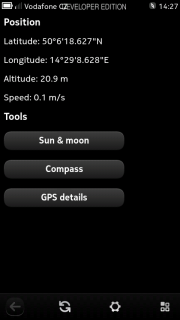
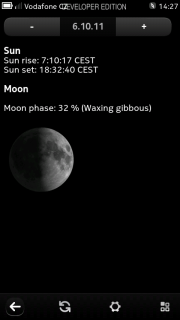
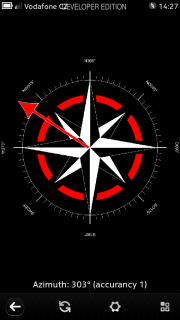
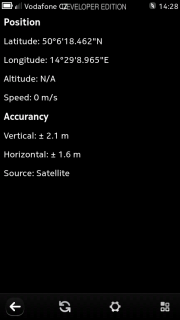 PS: Some numbers look weird (altitude and speed), though I'm pretty sure this is what phone reports me.