Search Results: "mak"

10 June 2011

Christian Perrier: Bug #630000

"kinneko" reported the Debian bug #630000 on Friday June 10th, against.....debian-installer (first time this is against a package I participate to). First time, also, that we don't know the exact real name of the person reporting the bug. Bug #620000 was reported as of March 29th. That again makes 2.5 months for 10,000 bugs, roughly the same time than 610000-620000. And now I need to decide about reassigning that bug report as it either pertains to the D-I "netcfg" component...or to busybox (the DHCP client in D-I is provided by busybox).

Raphaël Hertzog: People behind Debian: Philipp Kern, Stable Release Manager

Philipp is a Debian developer since 2005 and a member of the release team since 2008. Since he took the responsibility of Stable Release Manager, the process has evolved for the best. I asked him to explain how the release team decides what s fit for stable or not. His work on the buildd infrastructure is also admirable but I ll let him describe that. My questions are in bold, the rest is by Philipp. Who are you? I m a 24 year old Computer Science student, living in Karlsruhe, Germany. As a student assistant I m currently in two jobs: one is taking care of getting our university IPv6 network in shape, or rather generally getting fringe technologies into the network. The second is taking care of a s390x machine in the basement which my faculty got sponsored recently. In my spare time I tend my Debian duties and I m active in the student council (Fachschaft) as a sys-admin, software developer and until recently as treasurer. I got accepted as a Debian Developer in 2005. I m only really active since I was invited to join the Release Team in early 2008 after I contributed rewrites of some scripts that got lost in a disk crash of ftp-master. In late 2008 I also took on wanna-build/buildd duties. What s your notable achievement within Debian? For one I worked on the deployment of a single buildd/sbuild combination over all of our buildds and I rebased it on the sbuild in the archive several times already. All buildds basically look the same on all architectures, with only few variations. The chroots are now also created in a mostly predictable manner. Then we finally got build autosigning after years of constant poking. However the policy decision to allow it was made by the ftp-masters anyway, for which I m grateful, as it eases the workload of the buildd maintainers, the Security Team and the Release Team quite a bit. On the release side there s the integration of volatile into the proper structures of Debian. But there I m guilty for choosing the bad name squeeze-updates is, in comparision with security s squeeze/updates. Let s see if we can improve that for wheezy. The policy for stable updates have changed over time. Can you summarize what kind of updates are allowed nowadays? All the changes that were made to the policy were driven by the aim to keep stable (and to some lesser degree oldstable) usable throughout its lifetime. I have to admit that we got slightly more liberal in what we accept since I took over. The previous stable update policy included the fixes of critical bugs that break the system in interesting ways and security fixes. We also opened up the possibility of including important fixes for annoying bugs on a case-by-case basis. The whole don t update that much part of the stable release management is rooted in let s don t change the behaviour of a running system and let s have as few regressions as possible . We currently try to counter that with a review process that only allows self-contained fixes that were tested in unstable first, if applicable. In the future I d also like to have a feedback process that includes the users of the packages to report problems more early. In fact that s also why we now send calls for testing to debian-stable-announce one week in advance (see this mail as an example). So stable is updated through point releases that happen roughly every two months for stable and roughly every four for oldstable. They are accompanied by announcements and new CD/DVD sets. To be able to push some updates with less delay to our users and to avoid that they have to pick them from proposed-updates, there is stable-updates. The current policy for this suite is available in this post on debian-devel-announce. It boils down to everything urgent like tzdata, regression fixes and volatile packages. We noticed that some packages in stable just weren t useful anymore when they got updated through volatile. Hence those are folded into stable, too. We also relaxed the rules a bit so that leaf packages like clive, that rely on external websites not to change their URLs, can be updated too. If somebody wonders what happened to the and a half releases Those were intended to mark the inclusion of new hardware support (mostly by including a co-installable new kernel version). This kind of flag point release is thankfully no longer needed because our marvellous kernel team now backports certain hardware drivers to the kernel version in stable. They have some trouble soliciting test feedback for them, though. It would be cool if more people using stable could respond to their calls for testing. What are your plans for Debian Wheezy? Luckily the wanna-build/buildd side isn t much dependent on release cycles. The stable release management also just takes care of what gets dumped on them by the testing RMs. ;-) The near-term goals are certainly: Apart from that my work is mainly squashing the bugs on buildd.debian.org for the wanna-build part, so if you want something fixed, you need to report it, I m afraid. You have several roles within Debian, in particular stable release manager and member of the wanna-build team. Which role do you enjoy more and why? So the regular duties of the SRM, apart from setting up policies, are reviewing requests for uploads to proposed-updates, accepting them, chasing builds and scheduling point releases. It s mainly steady work. As for the Release Team it s working in a fabulous team where everyone s doing an awesome job. For me the wanna-build role is holding the things together and fixing up stuff that breaks while the world continues to evolve. And occassionally taking a stab at the ftp-masters. So rather different. My heart is probably siding with the buildd side because it s infrastructure but release work is fun, too. What s the biggest problem of Debian? Mainly that we re not quick in picking up new technologies and that we got slow on innovation. Distro-wide changes are usually a very big effort to coordinate and to finally complete. I guess people should be able to push fixes for release goals more eagerly into the archive. Also it seems to me that many DDs are actually disengaging from the release process, especially during the freeze but also before, which makes me a bit sad. However I m still not sure how we could counter that. As we re all volunteers you can t suddenly make others love the idea of releasing something together, I guess. Do you have wishes for Debian Wheezy? It s getting old, but there s certainly multiarch. Also a usable Python 3 is something I d really appreciate. Is there someone in Debian that you admire for their contributions? Peter Palfrader did an awesome job of getting a nicely working team together for DSA and got many tasks as automated as they are now. It s a pleasure to work with them and setting up a new buildd is, for example, a real breeze. He also developed a sane archive snapshot service, kudos for that.
Thank you to Philipp for the time spent answering my questions. I hope you enjoyed reading his answers as I did. Subscribe to my newsletter to get my monthly summary of the Debian/Ubuntu news and to not miss further interviews. You can also follow along on Identi.ca, Twitter and Facebook.

3 comments Liked this article? Click here. My blog is Flattr-enabled.

8 June 2011

Francois Marier: Sample Python application using Libgearman

Gearman is a distributed queue with several language bindings.

While Gearman has a nice Python implementation (python-gearman) of the client and worker, I chose to use the libgearman bindings (python-libgearman) directly since they are already packaged for Debian (as python-gearman.libgearman).

Unfortunately, these bindings are not very well documented, so here's the sample application I wished I had seen before I started.

Using the command-line toolsBefore diving into the Python bindings, you should make sure that you can get a quick application working on the command line (using the gearman-tools package).

Here's a very simple worker which returns verbatim the input it receives:
gearman -w -f myfunction cat
and here is the matching client:
gearman -f myfunction 'test'
You can have have a look at the status of the queues in the server by connecting to gearmand via telnet (port 4730) and issuing the status command.

Using the Python libgearman bindingsOnce your gearman setup is working (debugging is easier with the command-line tools), you can roll the gearman connection code into your application.

Here's a simple Python worker which returns what it receives:
#!/usr/bin/python

from gearman import libgearman

def work(job):
workload = job.get_workload()
return workload

gm_worker = libgearman.Worker()
gm_worker.add_server('localhost')
gm_worker.add_function('myfunction', work)

while True:
gm_worker.work()
and a matching client:
#!/usr/bin/python

from gearman import libgearman

gm_client = libgearman.Client()
gm_client.add_server('localhost')

result = gm_client.do('myfunction', 'test')
print result
This should behave in exactly the same way as the command-line examples above.

Returning job errorsIf you want to expose to the client errors in the processing done by the worker, modify the worker like this:
#!/usr/bin/python

from gearman import libgearman

def work(job):
workload = job.get_workload()
if workload == 'fail':
job.send_fail()
return workload

gm_worker = libgearman.Worker()
gm_worker.add_server('localhost')
gm_worker.add_function('myfunction', work)

while True:
gm_worker.work()
and the client this way:
#!/usr/bin/python

from gearman import libgearman

gm_client = libgearman.Client()
gm_client.add_server('localhost')

result = gm_client.do('myfunction', 'fail')
print result
LicenseThe above source code is released under the following terms:
CC0
To the extent possible under law, Francois Marier has waived all copyright and related or neighboring rights to this sample libgearman Python application. This work is published from: New Zealand.

Lars Wirzenius: Living off freedom

I was laid off a couple of months ago, and have been thinking about what I want to do next. Actually, I've mostly been writing code for my pet projects, but earning a living again is occasionally on my mind. I would, very much, like to earn a living while deveoping interesting free software that I would like to use myself. There's a bunch of options available: In this blog entry, I want to think about that last option. Here's I imagine it would work: I would post a list of things I would like to do, estimates of how much work they'd be, and a hourly price. People would tell me how many hours of work they'd like to pay for. I would then do the work, send everyone their bill, and they'd pay it. In the ideal world, this would be an awesome way to fund development. I could, for example, write some automated tools for system testing of Debian, to help with release management, or I could finish Obnam. And that's just two things I'm already working on: there's no end of things I would like to develop, if I didn't need to worry about my next meal. However, this is not without problems. To start with, it might look like I'm trying to blackmail the world: "pay me, or this software won't be written". That's not a problem in the general case, but it'd easily look like that if the work would be to, say, maintain Debian packages. As a Debian developer, I should keep my packages in good shape whether someone is paying me or not. I would need to be careful to keep things ethical here. Another problem would be the issue of being realistic: would there be enough people willing to pay me, and how long would that last? That partly depends on the pricing. Although my needs are fairly modest, I do live in a country that is fairly expensive to live in. If I started doing this, it'd be easy for someone in a country it is cheaper to live in to compete on price (and they might well be better than I am, too). Then again, since there's no end of things to do, perhaps we could both make a living. Would you pay someone to develop free software by the hour? How much? How often? What should the software do?

Neil Williams: TDeb processing...

Just added a TDeb test build branch for multistrap to test out the changes in the next version of the emdebian-tdeb binary package - specifically:

Move em_installtdeb into the emdebian-grip-server package so that the emdebian-tdeb package can be slimmed down to only contain what will become useful for other maintainers to use in their debian/rules files and for translators when the time comes to implement DEP-4. CDBS rules / patches to follow... bug reports against dpkg and debhelper to follow ...

DEP-4 itself is being restarted and refreshed but with some problems on alioth currently, I'm going to (try and) keep the document up to date via SGML and people.debian.org.

The changes are now in Emdebian SVN and I'm starting testing with my own packages first. Multistrap for PO and po4a-build testing, dpkg-cross for debconf testing, some others for testing with build systems other than CDBS, then the discussions will restart on debian-devel and I'll upload the TDeb support scripts to unstable.

There are a variety of things which need to happen before these scripts become useful, including:

Why is the package called emdebian-tdeb? Simple - that's where the scripts have lived until now and the hope is that dpkg-gentdeb can migrate into dpkg-dev and dh_gentdeb into debhelper - eventually.

By all means play with the scripts and follow the example multistrap branch above to see what kind of changes might be needed in your own packages. I'll post again when I've worked out the changes needed in packages like dpkg-cross which only need TDebs for debconf support. (This is the easiest mode of TDeb usage but it's also the most useful during a release cycle - maintainers make a single change and then a nominated i18n boss-person - take a guess who - can update the all your debconf translations in one upload without a binary build - eventually possibly not even needing any bug reports, just a simple email advance warning.

What I've got to work on still is how the generation of an updated TDeb creates a new debian diff / debian.tar.gz to accompany the upload. For that I need XC-Package-Type: tdeb support in dpkg....

Sample output from the viewpoint of a translator updating a package already converted to support a TDeb:


neil@sylvester:tdeb-test$ dpkg-gentdeb -t
Set the changelog message to version 2.1.15+t0 first, closing any relevant bugs!
dch -v 2.1.15+t0
neil@sylvester:tdeb-test$ dch -v 2.1.15+t0 TDeb test
neil@sylvester:tdeb-test$ dpkg-gentdeb -t
Building TDeb update: 2.1.15+t0
(192 entries)
Discard doc/pod/1/da/multistrap (65 of 177 strings; only 36.72% translated; need 50%).
Discard doc/pod/1/da/device-table.pl (5 of 19 strings; only 26.31% translated; need 50%).
Processing untranslated files for pod/multistrap (1) . . .
Processing untranslated files for device-table.pl (1) . . .
Processing de translations for pod/multistrap (1). . .
Processing de translations for device-table.pl (1). . .
Processing fr translations for pod/multistrap (1). . .
Processing fr translations for device-table.pl (1). . .
Processing pt translations for pod/multistrap (1). . .
Processing pt translations for device-table.pl (1). . .
dpkg-gencontrol -pmultistrap-tdeb -Pdebian/multistrap-tdeb -cdebian/control
dpkg --build debian/multistrap-tdeb ../multistrap-tdeb_2.1.15+t0_all.tdeb
dpkg-deb: building package multistrap-tdeb' in ../multistrap-tdeb_2.1.15+t0_all.tdeb'.
neil@sylvester:tdeb-test$ dpkg -c ../multistrap-tdeb_2.1.15+t0_all.tdeb
drwxr-xr-x root/root 0 2011-06-08 21:06 ./
drwxr-xr-x root/root 0 2011-06-08 21:06 ./usr/
drwxr-xr-x root/root 0 2011-06-08 21:06 ./usr/share/
drwxr-xr-x root/root 0 2011-06-08 21:06 ./usr/share/locale/
drwxr-xr-x root/root 0 2011-06-08 21:06 ./usr/share/locale/pt/
drwxr-xr-x root/root 0 2011-06-08 21:06 ./usr/share/locale/pt/LC_MESSAGES/
-rw-r--r-- root/root 6427 2011-06-08 21:06 ./usr/share/locale/pt/LC_MESSAGES/multistrap.mo
drwxr-xr-x root/root 0 2011-06-08 21:06 ./usr/share/locale/vi/
drwxr-xr-x root/root 0 2011-06-08 21:06 ./usr/share/locale/vi/LC_MESSAGES/
-rw-r--r-- root/root 6963 2011-06-08 21:06 ./usr/share/locale/vi/LC_MESSAGES/multistrap.mo
drwxr-xr-x root/root 0 2011-06-08 21:06 ./usr/share/locale/fr/
drwxr-xr-x root/root 0 2011-06-08 21:06 ./usr/share/locale/fr/LC_MESSAGES/
-rw-r--r-- root/root 6789 2011-06-08 21:06 ./usr/share/locale/fr/LC_MESSAGES/multistrap.mo
drwxr-xr-x root/root 0 2011-06-08 21:06 ./usr/share/locale/da/
drwxr-xr-x root/root 0 2011-06-08 21:06 ./usr/share/locale/da/LC_MESSAGES/
-rw-r--r-- root/root 16311 2011-06-08 21:06 ./usr/share/locale/da/LC_MESSAGES/multistrap.mo
drwxr-xr-x root/root 0 2011-06-08 21:06 ./usr/share/man/
drwxr-xr-x root/root 0 2011-06-08 21:06 ./usr/share/man/pt/
drwxr-xr-x root/root 0 2011-06-08 21:06 ./usr/share/man/pt/man1/
-rw-r--r-- root/root 33963 2011-06-08 21:06 ./usr/share/man/pt/man1/multistrap.1
-rw-r--r-- root/root 4471 2011-06-08 21:06 ./usr/share/man/pt/man1/device-table.pl.1
drwxr-xr-x root/root 0 2011-06-08 21:06 ./usr/share/man/vi/
drwxr-xr-x root/root 0 2011-06-08 21:06 ./usr/share/man/fr/
drwxr-xr-x root/root 0 2011-06-08 21:06 ./usr/share/man/fr/man1/
-rw-r--r-- root/root 33969 2011-06-08 21:06 ./usr/share/man/fr/man1/multistrap.1
-rw-r--r-- root/root 4708 2011-06-08 21:06 ./usr/share/man/fr/man1/device-table.pl.1
drwxr-xr-x root/root 0 2011-06-08 21:06 ./usr/share/man/da/
drwxr-xr-x root/root 0 2011-06-08 21:06 ./usr/share/man/da/man1/


I'm also going to DebConf11


On the RoadTrip! all the way hrough France, Belgium, Netherlands, Germany, Austria, Slovenia, Croatia, Bosnia-Herzegovina (Banja Luka) in an MX5.

I've got a lot of things to talk to people about @ DebConf this year... you won't be able to tell if I'm just buying you a beer or trying to badger you about your packages!! Just note that TDebs have been already agreed (in terms of how TDebs work in the archive) with ftp-master at a previous meeting in Extremadura and I'm being badgered by a Release Manager and an ex-DPL to get TDebs implemented real soon now, so it is going to happen and hopefully in time for Wheezy - it's just a matter of fixing the bugs. The quicker everyone has a look at the new scripts (which have been completed re-written and immensely simplified since I first tried a dumb conversion of em_installtdeb) and the likely changes needed in packages, the quicker I can get the bugs out of the scripts.

More documentation to follow, I'll be updating the SGML whenever practical and the actual DEP just as soon as I get commit access back.

Cosimo Alfarano: OpenNI in Debian

The world of augmented reality is quite fashinating.

I recently got interested into Natural Interaction due to the popularity of Microsoft's Kinect and decided to package OpenNI for Debian.

OpenNI is a framework aiming to making natural interaction transparent to the user/developer, publishing a unified API and abstracting the access to different sensors and modules. Currently it supports some Asus sensors and there is a branch on github supporting also Kinect (which is the one we're packaging).

Some cool projects are already using OpenNI: ROS, PointClouds and OpenCV come to my mind immediately.

We'are working on OpenNI package in the Multimedia Maintainers group on Alioth, the package is still not ready to be uploaded to unstable and upstream has some major problems like the lack of SONAME in its produced library, so some communication with upstream is needed but for preliminary use the packages are in a decent state: OpenNI, PrimeSense Sensor, NITE (non-free).

NITE is a closed source module set for advanced body and scene recognition, unfortunately PrimeSense didn't opensource them, thus I decided to use the same approach of flashplugin-nonfree and write a downloader.

For the sake of completeness, unstable already has libfreenect which purpose is similar but specifically oriented to Kinect.

I am studying both and really hope that in the next future some open source project will make (at least) skeleton and hand recognition available under an open license. People are already working on it, according to Google.

Lars Wirzenius: Test driven distribution development

Disclaimer: There is a huge discussion going on right now in the debian-devel mailing list, about different ways to rearrange how Debian development happens, and maybe to provide a Debian users with an additional release. This blog entry is not a comment on that discussion, which I am ignoring. The discussion did, however, prompt a dent about "test driven development". That prompted a short exchange of thoughts with Tom Marble, and this blog post is a cleaned up version of my part in that discussion.
Currently Debian development happens roughly like this: all packages are uploaded to a part of the Debian archive called unstable. Once they've been in use for a while without serious problems, they get automatically copied into another part called testing. Every year or two, testing is frozen and any remaining problems are fixed, after which all of testing gets copied into yet another part of the archive called stable, and that's the actual release. There is a little bit of automatic testing, but only a little. Almost all testing is done by people, by them using unstable or testing on their usual computers. If they have problems, they report them. Contrast this with development using Test Driven Development, or TDD, and other modern development methodologies. Here's a rough summary of what I do when I write (much) of my software. In addition, I measure coverage to make sure all parts of the code gets tested. I usually aim for 100% coverage, except for those parts that very hard or quite pointless to test. (That's easier to achieve than you'd think, but that's the topic of another blog post.) This all sounds like a lot of bureaucratic nonsense, but what I get out of this is this: once all tests pass, I have a strong confidence that the software works. As soon as I've added all the features I want to have for a release, I can push a button to push it out. (Well, actually there's a little bit more to it.) This does mean I never have bugs in my software. Of course I do. However, there's a lot fewer of them. In fact, there's so few of them, after tests pass, that I would almost be happy to make an automatic release after every successful run of "make check". Another aspect of the way I do development is distributed version control. The relevant feature is powerful branching and merging. Most things I develop happen in short-lived single-purpose branches: whenever I start work on a feature or bugfix, I create a branch for it. (Unless I'm feeling particularly lazy, which happens more often than you'd think.) When I've finished the feature, or fixed the bug, I merge the branch back into the trunk branch. This way, the trunk is always in releaseable state. It might not have all the features I want for the next release, but the features that are there, do work. The branch probably has bugs, but if I've written tests that are good enough, I know the software works well enough. Or that's the idea. Sometimes things go wrong. Then I write more tests and the next time goes better. (It doesn't have to be perfect, as long as it gets better every time.) See the contrast between automatic tests with good coverage, and the Debian style of relying on user feedback? There's no need to wait for user feedback with automatic tests. This speeds up development, makes releasing easier, but most importantly takes away any reason to fear making changes, even big changes. Automatic tests and good test coverage are easy achieve in small projects. For a system as huge as Debian, good test coverage is quite hard to achieve. The thing about automatic tests, though, is that even a little bit of it is helpful, and after you have a few tests, it gets easier to add more. The first test is the hardest to get done, since you need to set up all the infrastructure for it. Debian does do a bit of automatic testing already. (See lintian, piuparts, autopkgtest, edos, etc.) I don't want to belittle that, but I think we could do better. Here's what I would love to see: Since full test coverage is going to be impossible for Debian, some subset should be targeted. Perhaps something like this would suffice to start with: These tests would not guarantee that a set of changes would not break Debian, but they would give a high confidence that at least basic stuff would still work after the changes. Now, obviously implementing all of this I'm dreaming of (it is just past midnight, after all) is going to be impossible. There's way too much work to do, there's not enough tools for writing tests, and it would require too much computing power to run, and so on and so forth. But it's late, and I've had a bad day, and I might as well dream of something nice. Anyway, anyone interested in these things should perhaps help drive DEP8.

7 June 2011

Vincent Bernat: Mobile browsing & content optimization

Since my laptop features WWAN connectivity, I purchased a 3G mobile broadband plan from SFR, a French mobile phone company. I took the cheapest one available: 250 MB per month for 10 .

Optimizing transparent proxy by SFR While browsing, I was curious about the fact that there were multiple accesses to non-public IP, like 10.141.0.4. I was browsing the mobile version of Le Monde, a French daily newspaper. I enabled Chromium developer tools and watched what happened in the Network tab. All images were served from IP like 10.141.0.4. Looking at the HTML source code, I discovered that <img> tags were rewritten to point to those images. The smaller one were identical to the original one but the larger ones (more than 50 KB) were of reduced quality (and therefore reduced size). <img> tags were not the only one to be rewritten. <style> and <script> tags that were pointing to external resources (with a src attribute) were also rewritten to include the CSS or the javascript inline. Before:
<script src="http://s1.lemde.fr/js/lib/jquery/1.5.1/jquery.js"></script>
After:
<script oldSrc="http://s1.lemde.fr/js/lib/jquery/1.5.1/jquery.js" NG="replaced">
/*!
 * jQuery JavaScript Library v1.5.1
 *
 * Copyright 2011, John Resig
 * Dual licensed under the MIT or GPL Version 2 licenses.
 * http://jquery.org/license
 * [...] */
</script>
This means that each page that includes jQuery, a popular javascript library, as an external resource, will be turned into a page that includes the whole jQuery code which is about 85 KB. Each page will weight more than 85 KB instead of relying on an external and cacheable resource. Nowadays, most browsers support HTTP keep-alive which allows to serve multiple resources into a single request. There are two cases:
  1. If the resource is served from the same server as the HTML page, keep-alive would enable to get almost the same result without hindering the cache: the browser would first request the HTML page, then the javascript resource into the same TCP connection. There is a small penalty of about 100 ms to let the browser request the second resource. The browser may decide to open another connection because the initial document is not loaded yet. Some browsers may even negotiate this additional connection before needing it. In this case, it can use this idle connection at no cost. Otherwise, we may fall in the second case.
  2. If the resource is served from another server (like in the example above) or if the browser does not have an idle connection ready for reuse, it would download the resource in parallel with the help of another connection. It will only costs about 300 ms of additional time due to the establishment of a new TCP connection with the server. Those 300 ms are a very small price to pay compared to the 2 seconds needed to download 85 KB for each page. Moreover, other static resources will likely be downloaded from the same server and therefore, this is 300 ms the first time and about 100 ms for additional resources (round-trip time for a new HTTP request into the same TCP connection).
UPDATED: In a previous version of this article, I confused pipelining and keep-alive mechanisms. While keep-alive allows to reuse an existing connection to download a new resource, only one request at a time by connection could be issued. Pipelining allows to push additional requests in the same TCP connection without waiting for answers. As noted by ric Daspet in a comment, pipelining is disabled for most browsers. However, keep-alive is well supported. Searching on the web for oldSrc and NG="replaced", I find very little information about what is used. It seems that such a feature may also break some scripts, like TinyMCE, trying to get additional resources relative to the path where the script is installed. It appears that SFR is using a product from Flash Networks called Harmony Gateway. I have asked SFR more info about this and if it was possible to disable the use of this feature but got no answer so far. I have retried a bit later and there was no rewriting for Javascript and CSS. Images were still degraded and served by a special server. The next day, my requests did not travel through a transparent proxy anymore (no more Via header in answers). Each try was done at a different location. The proxies may be installed at some locations only and configured differently. Another explanation is that SFR silently disabled this functionality for my account. If it was done correctly, such an accelerator service could be be proposed as an opt-out option since most users would appreciate faster page downloads. If you care about network neutrality, you can disable this option. Of course, it needs to be properly advertised, for example as a free option in your mobile plan.

Setting up our own optimizing proxy Google provides mod_pagespeed as a solution to optimize a website on the fly. This is an Apache module. It is targeted at optimizing your own website but since Apache can act as a regular proxy, it seems possible to enable mod_pagespeed for any website. That s pretty easy to setup if you don t mind using a precompiled version of mod_pagespeed. Download mod_pagespeed. I have downloaded the 64bit version for Debian.
# touch /etc/default/mod-pagespeed
# dpkg -i ~/download/mod-pagespeed-beta_current_amd64.deb
Selecting previously deselected package mod-pagespeed-beta.
(Reading database ... 277699 files and directories currently installed.)
Unpacking mod-pagespeed-beta (from .../mod-pagespeed-beta_current_amd64.deb) ...
dpkg: dependency problems prevent configuration of mod-pagespeed-beta:
 mod-pagespeed-beta depends on apache2.2-common; however:
  Package apache2.2-common is not installed.
dpkg: error processing mod-pagespeed-beta (--install):
 dependency problems - leaving unconfigured
Errors were encountered while processing:
 mod-pagespeed-beta
# apt-get install -f
[...]
Unpacking apache2.2-common (from .../apache2.2-common_2.2.19-1_amd64.deb) ...
Processing triggers for man-db ...
Setting up apache2.2-common (2.2.19-1) ...
[...]
# apt-get install apache2-mpm-worker
[...]
Unpacking apache2-mpm-worker (from .../apache2-mpm-worker_2.2.19-1_amd64.deb) ...
Setting up apache2-mpm-worker (2.2.19-1) ...
Starting web server: apache2.
# a2enmod proxy_http
Considering dependency proxy for proxy_http:
Enabling module proxy.
Enabling module proxy_http.
To to activate the new configuration, you need to run:
  /etc/init.d/apache2 restart
Then, we modify /etc/apache2/mods-enabled/proxy.conf:
ProxyRequests On
<Proxy *>
    AddDefaultCharset off
    Order deny,allow
    Deny from all
    Allow from 127.0.0.1
</Proxy>
Of course, this makes little sense to run the proxy on your laptop since you don t want to download the non-optimized content over your WWAN link. You need to run it on another server and therefore allow your laptop to access it. Also, we need to modify /etc/apache2/mods-enabled/pagespeed.conf to add the directive ModPagespeedDomain * to let mod_pagespeed rewrite any page. You should restart Apache after that. Now, check if the proxy is working:
$ curl -six http://localhost:80 http://www.lemonde.fr/   grep ^X-Mod-Pagespeed
X-Mod-Pagespeed: 0.9.17.7-716
All is working! Let s try a very simple site, like Debian Backports. It features one HTML file and two CSS files: Debian Backports website without pagespeed We downloaded a total of 8 KB (compression included). Let s use our proxy and try again: Debian Backports website with pagespeed mod_pagespeed succeeds in reducing the size of the HTML file and combined the CSS files. Moreover, it minified the resulting CSS file. There seems to be a bug in Chromium that display incorrect transfert sizes (including in the timeline representation) when using a proxy. I have checked with Wireshark that the overall quantity transferred was about 8 KB. The gain is very thin here but you can imagine that you will get better results on larger sites. mod_pagespeed seems to handle well most sites. However, it only optimizes pages that already are in its cache. The first time you grab a page, you will get the unoptimized version. I don t know if it is the expected behaviour.

Lars Wirzenius: TDDD systest tool proof of concept

Continuing my earlier musings about test driven distro development, and the tools that would require. I imagine something like this: We might also want this scenario: There might be other scenarios that would be useful to test as well. Even from these two, it's clear there's a need for at least three separate tools: I've written a rudimentary version of the first tool: vmdebootstrap. I've since learned there's a bunch of others that might also work. There's room for more: someone should write (or find) a tool to make a snapshot of a real system and create a VM image that mimicks it, for example. Anyway, for now, I'll assume that one of the existing tools is good enough to get started. For the second tool, I wrote a quick-and-dirty proof-of-concept thing, see systest.py. Here's a sample of how it might be used:
liw@havelock$ ./systest -v --target 192.168.122.139 --user tomjon
test 1/6: cat
test 2/6: only-ssh-port
ERROR: Assertion failed: ['22/tcp', '139/tcp', '445/tcp'] != ['22/tcp']
[status 1]
liw@havelock$ ./systest -v --target 192.168.122.139 --user tomjon \
    cat ping6-localhost ping-localhost simple-dns-lookup ssh-login
test 1/5: cat
test 2/5: ping6-localhost
test 3/5: ping-localhost
test 4/5: simple-dns-lookup
test 5/5: ssh-login
liw@havelock$ 
The first run failed, because the VM I'm testing against has some extra ports open. Some of the tests will require logging into the machine, via ssh, and for that one needs to specify the user to use. systool may overlap heavily on system monitoring tools, and possibly the production implementation should be based on those. I think it's best to design such a tool for the more general purpose of testing whether a system currently works rather than as an integrated part of a more specific larger tool. This lets the tool be useful for other things than just testing specific things about Debian. (The production implementation would then need to not have all the tests hardcoded, of course. SMOP.) The third tool I have not spent a lot of time on yet. One thing at a time. Given these tools, one would then need to decide how to use them. The easiest way would be to use them like lintian and piuparts: run them frequently on whatever packages happen to be in testing or unstable or experimental, and put links to the test reports to the PTS, and hope that people fix things. That is the easiest way to start things. Once there's a nice set of test cases and scenarios, it may be interesting to think about more aggressive ways: for example, preventing packages from migrating to testing unless the test suite passes with them. If the tests do not pass, one of four things is broken: If things are set up properly, the last one should be rare. The other three always require manual inspection: it is not possible to automatically know whether the test itself, or the code it tests, is at fault. it is, however, enough to know that something is wrong. If the tests are written well, they should be robust enough to not be the culprits very often. (Someone wanting to make a rolling distrbution, or even better, making a monthly mini-release, might benefit from this sort of automated testing.)

John Goerzen: Back from Joplin

I m just back from spending a few days volunteering with the tornado recovery effort in Joplin, MO. The biggest image that remains in my mind is of the first time I saw a person picking through a large pile of rubble. The person was standing on top of what used to be a house. Now it was a pile of wood, glass, carpet, siding, and roofing material. I m sure there was hope for finding some treasure or other maybe a photo album or videos of children. In any case, it made me feel so lucky, even unfairly lucky, to have not had to go through that. This scene was repeated several times, but mostly the houses that devastated appeared abandoned by the time we were there, now two weeks after the event. But I heard stories, and lots of them. The victims of the storm, who were perhaps trying to rebuild that part of their house that got smashed by a tree or a pickup, or trying to get their intact belongings out before abandoning the house, or whatever, were mostly surprisingly upbeat. They were working out in 95-degree heat, many without electricity, running water, or sewer service. Almost every person I met that suffered a loss from the tornado wanted to tell their story. Many also told of their plans for the future, which were full of hope and even upbeat. These were people doing a hard job in terrible conditions and still showing hope. Another testament to the disaster was the most unusual set of vehicles you ve ever seen parked at any hotel you can care to think of, for at least an hour-and-a-half radius in the direction I came from. Besides the usual cars and minivans, there might be FEMA vehicles, electric company trucks, Red Cross vans, construction trucks of every kind, police and law enforcement from all over, etc. There was quite obviously an influx of people helping out in Joplin. My primary task there was to provide communications support for the effort as an amateur radio operator. Amateurs (or hams ) are something of a volunteer first responder of sorts during times of crisis; most of us own and are very familiar with operating equipment that can communicate over very long distances without the need for any on-site infrastructure. Amateur radio was the only method of communication for some Joplin hospitals in the immediate aftermath. The communications emergency is over, but the response isn t. I was assigned to work with the Salvation Army. They were doing a lot of things in Joplin, and had hundreds of volunteers working with them. I don t think I even know what many of them were doing I do know they had set up several warehouses across the city working with donating clothing, food, etc. The part I was involved with was primarily the canteen operation. The SA sent in food service trucks from several parts of the country. These trucks would roam up and down the streets in the damaged area, trying to get past every single street several times a day. Anybody that we could see would be offered food and water. No strings attached, no questions asked. This included homeowners, electric line workers, construction crews, sanitation workers, and quite a few nonprofit groups that sent well-meaning and useful volunteers into the area but didn t think to provide them with a large supply of water due to sending them into an area without any. Oops. In any case, with extreme heat and no running water, conditions were dangerous. The canteens also knew of certain at-risk families that were living in homes that were mostly intact in the disaster areas, and made a special point to check in on them. They also generally looked to make sure that people looked like they were healthy. Each canteen also had a counselor on board that would visit with people while we quickly prepared their meal they all seemed to welcome that. Amateur Radio s Role The operation of this size had quite a logistics challenge. I d hear of things like an unexpected need of 70 lunches, or a semi showing up with donations before there was space, or an unexpected but very welcome donation of a large quantity of ice cream without a place to store it (so the canteen trucks, which have freezers, needed to pick it up quickly). That s where us hams came in. Each canteen had an amateur radio operator on board. Each major location also had a ham stationed there, and the head of operations also often had a shadow a ham that would follow him around wherever he went to relay messages back and forth. We also had hams with pickups (with radios in them, of course) that could transport things around the city to places that needed them, hams at headquarters managing all the communication and generally investigating questions that didn t have immediately obvious answers, etc. Radios were used instead of cellphones for a few reasons. One big one is that everybody on the operation can hear what everyone else s needs are, since it s a group communications situation rather than one-to-one. It s easy to give a general alert to everyone ( come get your ice cream now please! ) and people that have suggestions can chime in. This came in extremely handy more than once. Also, it frees the people doing other jobs from having to spend time chasing someone s voicemail, finding phone numbers, etc; that gets delegated to us in some cases. I heard from the head of canteen operations, for whom this was the first disaster he d worked that had amateur radio support, how wonderful it was to have this going on. I also heard a secondhand report that some police officers that were also amateurs had listened to our operation and reported that we sound more professional than 911 dispatch and do a better job. On Sunday I was assigned to a canteen. This meant I didn t have a lot of radio traffic to pass, so although I had it in my ear all day, I wasn t actively talking on the radio very much. So I rode in back, helping hand out water, carry meals to people, and so forth. On Saturday, I was the shadow for the head of operations. That was a difficult task, because he barely ever moved at a pace slower than a run, sometimes would abruptly zip out somewhere, etc. But it was also enlightening and vital. He was a real get it done sort of guy, and was the key to quite a few things. Having someone available to relay questions to and from him was a good thing. And today I worked as a transport person and at headquarters. Due to not having a pickup there, I didn t actually get called on much to transport things, but in general between jobs the whole time I d act as a runner if needed, or simply try to figure out the details of how things were run for next time. I wound up taking net control (being the control operator at headquarters, and generally managing communications so that people don t talk over each other and such) for about an hour. So I got to do a little of just about every amateur radio task. Thoughts I am thankful for the opportunity to go, and the good feeling of helping people in need the first I ve ever had the chance to do that in a disaster. It s a good feeling to have a skill that is useful and appreciated. Sometimes it felt like handing out food and water is something pretty small in the scheme of things. But on the other hand, it gives people a chance to have contact with someone that cares, an opportunity to have people that can notice problems drive by a few times a day, and an opportunity to help meet people s basic needs. And sometimes in a fluid situation, there might be more volunteers than are needed, so I did spend some time sitting waiting for the next task. But overall, I m convinced that the work I helped facilitate was a good thing and provided a good and needed service in Joplin. This has been quite the experience and I m sure it s changed me too, though I don t yet know how.

6 June 2011

Thorsten Glaser: synchronise environment between two shells

(First posting to Pl net Commandline! Tag: pcli) Vutral asked in IRC how to synchronise two shells environment while they re running. As you may know, POSIX systems cannot change a process environment vector after it has been started, only the process itself can. Well, the shell can, and we ll use a variety of things for this. This trick assumes you have $HISTFILE set to the same pathname in both shells (obviously, they run under the same user). It uses export -p to render the current list of exported variables, then transforms the list from newline-separated to a single big one-line export statement.
Then it transforms all remaining newlines (which will be part of a single-quoted string, since that s mksh(1) s export format) into the sequence '$'\n'' which means: terminate current single-quoted string, append $'\n' and open up a new single-quoted string immediately; concatenate these three.
Now, $'\n' is just a fancy way of saying newline, and part of mksh because David Korn (yes, the Korn in Korn Shell) strongly suggested to me that this functionality be included but, as we can see here, it pays off.
Finally, the so transformed string is prepended by unset \$(export); which, when executed, will cause the shell to unset (and unexport) all currently exported variables. The shell parameters that are not exported, i.e. not in the environment, are not affected by this code (except for $x and $nl, but whatever).
This string is then passed to read -s (plus -r and clearing IFS to enable raw mode), which means, read into the parameter $REPLY (which we conveniently don t use but it s trashed too, thus) but store into history at the same time. Ah hah! Now, the persistent history feature comes into effect! After running the below statement in the source shell, switch into the terminal running the destination shell, press Enter once on the empty line (Ctrl-U to empty it if it wasn t), then Cursor-Up ( ) to recall voil , an insanely large line with the previously created string sorta expanded and press Enter again to run it. Now your set of exported parameters is the exact same (minus if you exported IFS, nl, x or REPLY) as in the source shell.

I ve added extra spaces and a linewrap below, this is really just one big line:

nl=$'\n'; x=$(export -p); x=$ x//$ nl export/ ; IFS= read -rs <<<"unset \\\$(export);$ x//$nl/\'\$\'\\\\n\'\' "

Of course, this makes a nice function, for your ~/.mkshrc or somesuch.

Ingo Juergensmann: Apache and SNI - problems with some clients

Never change a running system. Old but true saying, but sometimes there's no other chance. Until a few days ago I was happy with SSL vhosts running with a single SSL certificate. Then I needed to add another SSL certificate for another site with several subdomains like svn.site-A.de, trac.site-A.de and www.site-A.de. With Apache2 running on Squeeze it's possible to make use of Server Name Indication (SNI) mechanism in order to be able to use multiple SSL certs on a single IP based vhost setup. Well, it works for some client software, but apparently it does not work well with korganizer or Firefox Sync plugin nor with Cyberduck on OS X. Here's an example config:
SSLEngine on
SSLCipherSuite ALL:!ADH:!EXPORT56:RC4+RSA:+HIGH:+MEDIUM:+LOW:+SSLv2:+EXP:+eNULL
SSLCertificateFile /etc/apache2/ssl/site-A-cert.pem
SSLCertificateKeyFile /etc/apache2/ssl/site-A-key.pem
SSLOptions StrictRequire
SSLProtocol -all +TLSv1 +SSLv3
SSLCipherSuite HIGH:MEDIUM:!aNULL:+SHA1:+MD5:+HIGH:+MEDIUM
SSLVerifyClient none
SSLProxyEngine off
This is identical to all SSL vhosts on my system. The funny thing is now that it works for two sites (site A and site B) while it doesn't work for site C. In Firefox Sync plugin I get an error that the connection couldn't be established while on Cyberduck (a webdav client for OS X) I get a requester stating that I get cert for site A on site C. Pointing the browse to the appropriate URL I get the correct cert for site C on site C. Is there anything I miss with SNI setup in Apache?

Vincent Bernat: Ready for World IPv6 day?

On June 8, 2011, will be World IPv6 Day. Major web companies like Google, Yahoo! and Facebook will serve their content through IPv6. While some of them already provide IPv6 content, you either need to use a special URL or get your connection from some selected providers, known to provide working IPv6 connection (the selection is done through DNS).

What s World IPv6 Day about? World IPv6 Day is mostly about major content providers and network operators. End users are not expected to take any special actions. The content will be provided for one day on IPv6 and IPv4 without any special trick to circumvent broken IPv6 setup. If you have an IPv4 only connectivity, all will continue to work (this day is not about switching Internet to IPv6 only). If you have a working IPv6 connectivity of any kind, you will use it to access content. However, if you have a broken IPv6 connectivity, you will find yourself isolated during one day until you solve the problem. You can check your connectivity and determine if you will run into trouble on World IPv6 Day. The main point of this day is to check if IPv6 native content can be provided to anybody without leaving out a large part of the users (the ones with a broken connectivity) which is reason why we don t already have IPv6 native content everywhere. Google explains it this way:
We continuously conduct detailed measurements on the quality of IPv6 connectivity, and our latest results show that making Google services generally available over IPv6 at this time would lead to connection problems and increased latency for a small number of users. User experience is very important to us, and we do not want to impact users on networks that do not yet fully support IPv6. We will continue to re-evaluate the situation as the IPv6 Internet evolves.
While content provider are invited to provide IPv6 content, network operator are expected to troubleshoot their customers problem (and they cannot withdraw themselves from this operation since the main change is done by content providers). If they can enable IPv6 connectivity, that would be great too but this is not mandatory. UPDATED: It s a shame but Microsoft s participation to World IPv6 day is a fix to prefer IPv4 over IPv6. Moreover, this fix will be reverted a few days later. Let s hope that network operators don t follow the lead by not setting up DNS hijacking to remove AAAA record.

What can I do? Even if you are neither a network operator nor a major player in web content publishing, it is expected that World IPv6 Day will also be the playground for most IPv6 related things.

As a user Check if your ISP provides native IPv6 connectivity. This can be an opt-in option. For example, in France, Free allows its users to enable native IPv6 connectivity if they choose the appropriate option. That s easy to do and you get IPv6 in a matter of minutes. If your ISP does not provide native IPv6 connectivity, you can try to bug them about this. This is unlikely to work. You can also get IPv6 through a tunnel broker like SixXS (create an account and apt-get install aiccu) or Hurricane Electric. Wikipedia has a list of IPv6 tunnel brokers. Don t rely on any other transition mechanism, they are unreliable.

As a service provider If you host yourself some services, like your web page or your own mail server, you can enable IPv6 connectivity for those as well. Get an IPv6 connectivity for your services, either native or through a tunnel broker. Then, enable IPv6 on each service you provide. Check that they are listening on IPv6 with ss -6l. All the tips below are meant for very simple setup. Ensure that net.ipv6.bindv6only is set to 0. Here is what I have done:
  • Enable SSH access through IPv6. With the default configuration of OpenSSH, this is already done. Check your ListenAddress directive if you have one.
  • Serve Web content through IPv6. I am using Nginx as a web server and you can mix IPv4 and IPv6 in the same virtual host. Setting up IPv6 is easy. Ensure that IPv6 support is compiled in (nginx -V) use listen [::]:80 instead of listen 80. Apache is equally easy to configure and should even work out of the box since the Listen 80 directive will listen to both IPv4 and IPv6 by default. lighttpd also supports IPv6. An easy way to get started is to use server.use-ipv6 = "enable".
  • Enable IPv6 in Postfix, Dovecot, BIND. For all of those, this works out of the box. Nowadays, most daemons will work fine with IPv6 without any special configuration since they will listen to :: by default which means any IPv4 or IPv6 address as long as net.ipv6.bindv6only is set to 0. Unfortunately, there is still some daemons that do not support IPv6.
  • Add appropriate AAAA record to your DNS because providing IPv6 services is of little use if your users (including you) cannot access them without typing the appropriate IP address. You may also want to provide a NS record reachable through IPv6.
  • Update your monitoring to use IPv6 as well. If you advertise IPv6 service and only IPv4 is working, most IPv6 client will be unable to access them.
  • Adapt your firewall. In Linux, Netfilter handles IPv4 and IPv6 separately. You need to ensure you setup a correct firewall for IPv6 as you have done with IPv4.
Here is a minimal firewall that you can adapt:
 1
 2
 3
 4
 5
 6
 7
 8
 9
10
11
12
13
14
15
16
17
18
19
20
21
22
23
24
ip6tables -A INPUT -m state --state ESTABLISHED,RELATED -j ACCEPT
ip6tables -A OUTPUT -m state --state ESTABLISHED,RELATED -j ACCEPT
for chain in INPUT OUTPUT; do
  ip6tables -A $chain -m rt --rt-type 0 -j DROP
  ip6tables -A $chain -p icmpv6 --icmpv6-type neighbor-solicitation \
     -m hl --hl-eq 255 -j ACCEPT
  ip6tables -A $chain -p icmpv6 --icmpv6-type neighbor-advertisement \
     -m hl --hl-eq 255 -j ACCEPT
  ip6tables -A $chain -m state --state NEW \
     -p icmpv6 --icmpv6-type echo-request -j ACCEPT
done
ip6tables -A INPUT -i lo -j ACCEPT
ip6tables -A OUTPUT -o lo -j ACCEPT
# Put your rules here!
ip6tables -N REJECT_ALL
ip6tables -A REJECT_ALL -p tcp -j REJECT --reject-with tcp-reset
ip6tables -A REJECT_ALL -p udp -j REJECT --reject-with icmp6-adm-prohibited
ip6tables -A REJECT_ALL -j DROP
for chain in INPUT OUTPUT FORWARD; do
    ip6tables -A $chain -j LOG --log-prefix "$chain-reject: "
    ip6tables -A $chain -j REJECT_ALL
done

Debian status There is still a long way for full IPv6 support of all applications in Debian but it is a release goal since Etch. This is not an easy task since adding IPv6 support on some software can be really difficult. DSA also enabled IPv6 support on many servers used by the Debian project including the main web server, the main mirror, the security mirror and the name servers. You should be able to use Debian with an IPv6 only access.

5 June 2011

Jurij Smakov: Dear Lenovo ...

Let me explain something to you: jacking up prices for your laptops by 10% on June 1st and simultaneously declaring an "incredible, 5-days only, 10% off sale on all Thinkpads" on your website is not how your sell more laptops. That's how you make your potential customers recognize that they are probably better off looking elsewhere for their next laptop. Specifically, I'm talking about an Intel-based Thinkpad Edge 11 with 4GB RAM, which was listed at 663 EUR on lenovo.ie before June 1st, but is now, during the "promotion", is listed at 736 EUR. Notably, even after the discount, it still works out to be more expensive than what Amazon UK has to offer, at 552 GBP for the same laptop (NVY5EUK).
Russell Coker: Rallying for a Carbon Tax 5th June

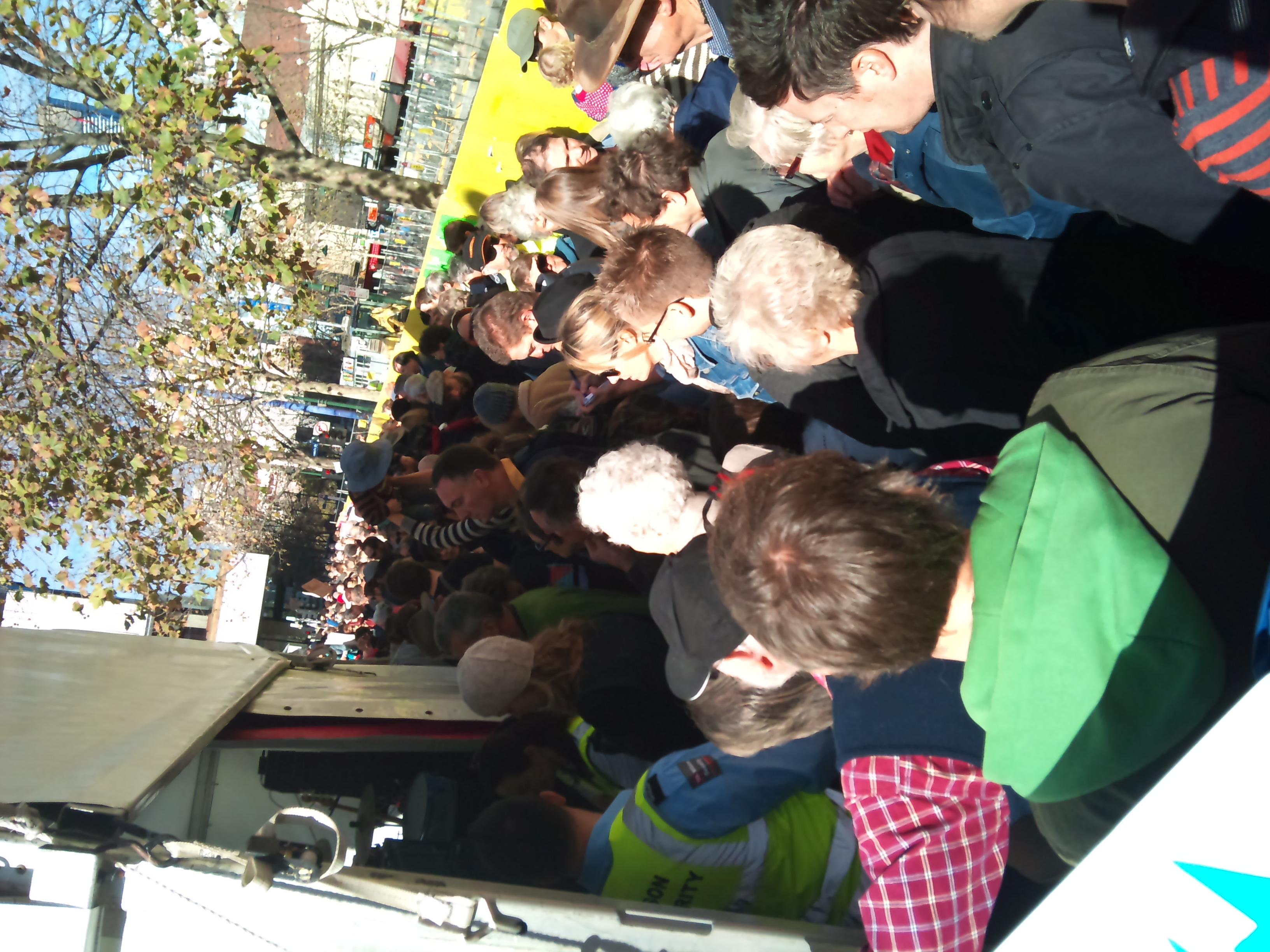
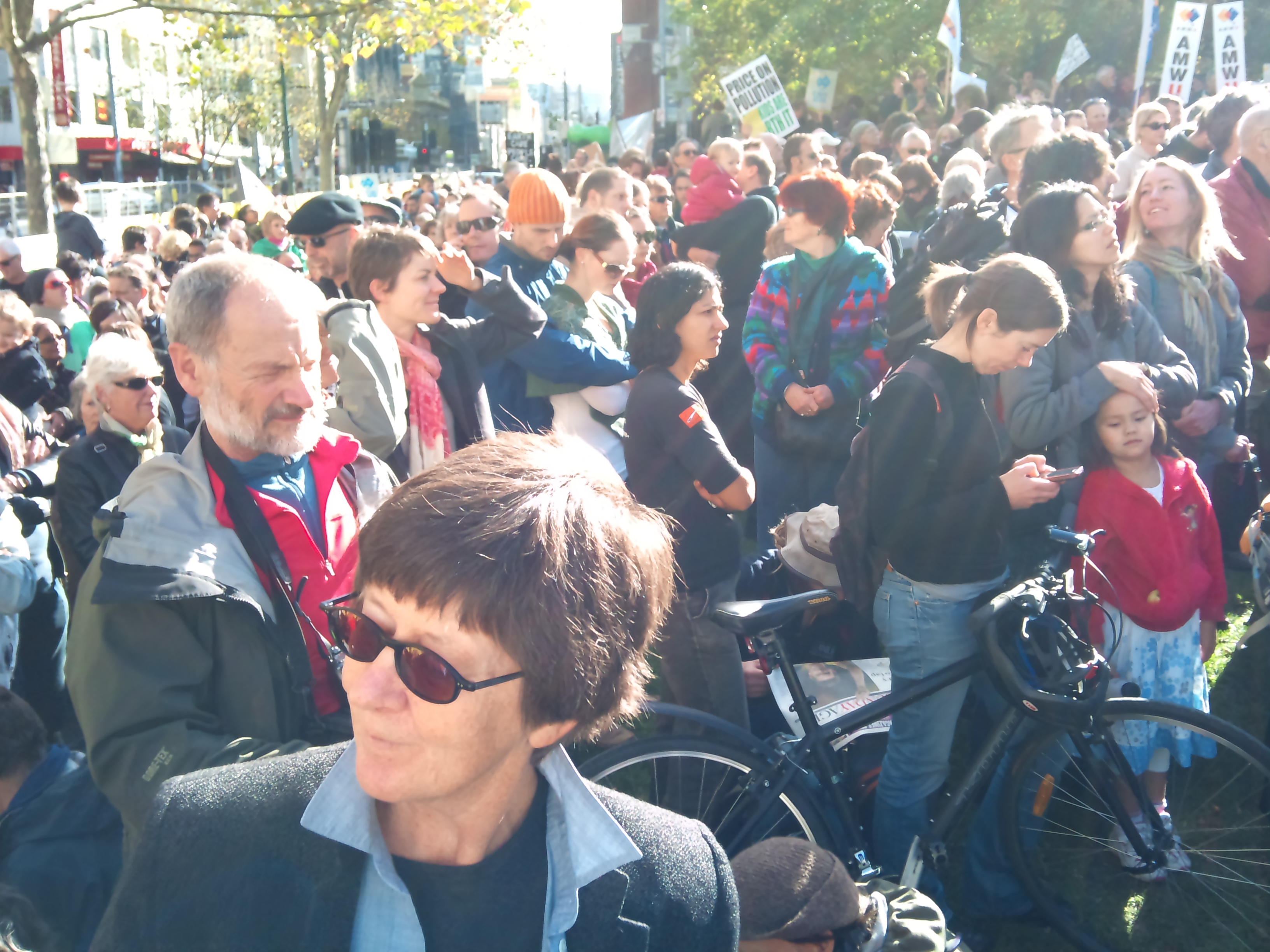
It s not that common to have a rally in favor of creating a new tax, but today I attended the Melbourne rally in favor of a carbon tax [1], it was the second such event this year. The rally was held in front of the state library, there is a reasonable size park there and it s a great place for a few hundred people, and a few thousand can squeeze in there without any problem. But according to the best estimates 10,000 people attended and the venue was obviously a bad choice as all available space was used and the crowd was so great that it wasn t much fun to be there. This was a great contrast to the previous rally in favor of a carbon tax which had maybe about 8,000 people attend and a much larger area [2]. The state library is a great place to hold a small or medium size rally where people can see it, but if you are going to get 10,000 people you need a bigger venue as the exits were partially blocked by road work I m sure that the local government wouldn t have given a permit if so many people were expected. Usually the city center is very quiet on a Sunday afternoon, but this afternoon everything was packed. An extra 10,000 people really makes a difference although admittedly sunny weather would have helped. Australia wide there were apparently about 100,000 people attending similar rallies, that s 0.5% of the population of the country! The aim of the rally was to advocate a large enough tax on coal, oil, and other energy sources that emit CO2 to provide an economic incentive to minimise use and use alternate energy sources where possible. Currently billions of dollars are being given to polluting industries, instead those industries should be taxed and the money raised given to compensate needy people. looking north Looking North towards where I entered. looking east Two pictures from slightly different angles that are roughly East from where I was standing in the center of the crowd. looking east through the bandlooking south Pictures looking east through the band when people were starting to leave and looking south towards the exit I chose while on the way out.

Niels Thykier: Status on Lintian and Vendor Profiles

During the past week I finally got around to give the Vendor Profiles branch some attention. I suspect the most exciting change is that I got support for non-overridable tags. Along with making --ftp-master-rejects an alias for the ftp-master profile. This means that you will get the same behavior from Lintian and from the ftp-master auto-reject mechanism. The only issue is that the overrides are silently ignored. We also made dropped the default profile symlink in favor of using dpkg-vendor to find the best profile. This causes a slight conflict with solving #626476. I have asked the dpkg maintainers if that part of the libdpkg-perl API is stable enough for us to use. Finally I fixed an issue where profiles would ignore all display settings (--display-info etc.) and just show all tags (except experimental tags). Beyond the vendor profile branch, there are also a number of interesting changes applied in the master branch. Together with some people from #debian-python (ScottK and jwilk as I recall), I prepared some python related goodies. Particularly we fixed a false-positive missing-python-build-dependency with python3 and marked dh_pycentral and dh_python as deprecated. On a related note, we have also removed the tag uses-dh-python-with-no-pycompat. Based on feedback from Eric Lavarde, we redefined the classpath-contains-relative-path tag. It now only emits the bad parts of the Classpath and relative entries are allowed in they exists or point to /usr/share/java/$file.jar and there is a strong libX-java dependency. While the change breaks overrides, according to lintian.d.o we do not have any yet. The next release will feature a check for non-empty dependency_libs fields in la files and a fix to a flaw in logic for architecture dependent overrides. We will be reducing our dependency of dpkg-dev to a Suggests (#626476). Currently the xz-utils is in the pseudo-essential set, but it may not stay that way. So in the future you may need to explicitly install xz-utils for Lintian to support .xz source packages. Last, but not least, if you have felt that the lintianrc file has been rather useless to you, then you are not alone. I have made a prototype patch to improve the situation and hopefully soon you get to specify default options in your lintianrc.

Sune Vuorela: Five is a four letter word

and it starts with f While looking at the future of the KDE Platform Frameworks here in Randa, Switzerland, a lot of interesting things has been found in kdelibs and kdepimlibs that no one knew what was there for. On the good side, there is also lots of cool stuff, that of course most people knows about and uses And a lot of great larger solutions for solving different real life problems And lots of other cool stuff And we have currently nice things in the required runtime components for every app built using kdelibs

4 June 2011

Christian Perrier: [life] [running] April/May update

My last update about running activities is dated back to Paris Marathon (April 10th). Time for a new update, then. After a very busy end March-early April, with that crazy succession of 55km Ecotrail and 42km Paris marathon with only two weeks between both, I needed a kind of "break". Moreover, I had another goal set with the 35m trail race named "Trail des Cerfs", on May 15th, in my neighbourhood. So, end of April was a little bit quieter. Still, one week after Paris marathon, I completed a very hard trail run in Seine Valley: only 18km, but about 600-700m positive slope. That was indeed a good moutain-style run (yes, in Seine valley....) and a good way to check that I recovered quite well. Later on, I slowed down a little with even a Sunday (24th) where I *didn't run at all*..:-).. Just a few short uns during the week and a short Saturday run. Well, that was indeed Easter Sunday and Monday is a holiday in France, so I ran an half-marathon on 25th...:-)...on a loop where I already have some references, the fastest being 1h46. This time it was 1h52'...but, well, that was two weeks after a marathon... Still, a small pain at the back of my ankle decided me to stop running long distances until May 15th. So, I only did short trainings up to no more than 12km, even during my stay in Germany for SambaXP. As a consequence, I was very well for the 35km (600m positive slope) Trail des Cerfs, which I completed in 3h31', 168th out of 328 runners. More interestingly, I completed it in negative split with a much faster second half, ending up at about 12km/h. For seomthing that (given the slope and the nature of the paths) is comparable to a marathon, that's very promising. The rest of May was spent quietly with a standard training and progressively resuming longer distances. I originally planned to do my spring solo marathon on May 28th in Versailles Castle park, but I stopped at km28 and completed the distance two days after with a 14km run..:-)... Stopping was wiser as I was feeling that the last loop would have been a great pain. That was indeed the first time I give up on a marathon. I prefer this to happen for a non official race, after all! June will not see any "big goal". I might be running one race somewhere in my neighbourhood but the point will mostly be accumulating kilometers before summer. Summer (which includes DebConf that makes training a little bit more hectic) will not see any race, probably (unless I find one in banja Luka!) but more some specific preparation for Berlin marathon. Here, the "safe" target for me is, first, breaking my record. I'm probably not ready for 3h30 and even 3h35 might be difficult. It seems that I'm now reaching a barrier where progress becomes harder. Before Berlin, I'll run the Bois d'Arcy half-marathon, two weeks before. Last year, I managed to set a very good mark, there, with 1h37. Not sure that i'll try to break this only two weeks before Berlin. After Berlin? We'll see, but my last big goal of the year will be the 67km "Le Puy-Firminy" night race, in November (no web site, this is indeed a "small" local race). Yet another adventure beyond marathon distances, in the unknown...

Russell Coker: Leaving Three

In February I started the process of moving my phone and my wife s phone to Virgin from Three [1]. The reason is that Three didn t offer any good phones on affordable contracts, the cheapest that was suitable was a HTC Desire HD which would have cost me $55 per month, while I could justify spending that for my own phone (which is used for responding to SMS from Nagios to fix client servers) I didn t have the budget to spend that much on my wife s phone too and I really want us to have the same type of phone for ease of support. So I chose Virgin who offers the Sony Ericsson Xperia X10 for as little as $29 per month I chose a $39 per month deal that included 1500MB of data transfer and also had three months free which makes it effectively $34.12 per month. When using previous phones that weren t particularly smart I had also carried a Netbook and a 3G modem with me most of the time. Now that I have a phone that is a ssh client I don t need that so I tried to cancel the contract today. Three allows you to do almost everything over the Internet except cancel a contract their web site doesn t even give a phone number to call for that purpose. This must keep their support people busy, Vodaphone (which has just merged with Three) has recently had a horrible security breach because their sales booths used public Internet access for all customer data [2]. Also there is currently a law suit against Vodafone for poor network performance and misleading claims about service areas [3]. My experience with Three performance has been reasonably good apart from the fact that they advertised 3G service in Bendigo and provided none. As Three are apparently desperate to retain customers they offered me free service for 6 months if I don t close the account now. So I have a SIM that supports 1G of 3G data transfer per month for no charge until December (worth $90). What can I do with it? I don t own a 3G modem as I gave that to my parents (who are quite happy with pre-paid 3G net access via Three) and the phones that I have which can be used for tethering are a little slow (usable for ssh and basic web access but not for Youtube etc). Is there a way of selling such a SIM? Note that my name is still on the contract and any excess data or roaming fees will be billed to me so I can t just put it on ebay. I guess that one thing I can do is to use the SIM for receiving phone calls. For example if a friend was visiting from another country and wanted to receive calls without paying roaming fees I could lend them a phone. Any ideas?

Rudy Godoy: GSoC: Status report 01

Hello, this is the official project report for the Debian GSoC admins and everyone. It s been few days since the official coding phase started. Most of the time I ve been figuring out the details regarding integration of non-x86 images to the Eucalyptus IaaS and working on the ARM image, as you ll learn later. I m also in the process of starting to design the set of tools we ll be delivering as part of the project. The project s goal is to be a useful resource for Debian developers and porters. I ve joined some porters list in order to learn what are the things they are struggling with and how the project can help to address them. I ll be starting a wiki page with such topics. Bonding period:
Bonding period has been more fruitful than I expected. As mentioned in my previous post, Steffen and I got in touch with the Eucalyptus team, since they show their early interest on the project. We are coordinating cooperation between our teams. Besides my mentor and I defined to start working on the ARM image. Coordination went OK. We ll be having meetings every two weeks. Project Status:
Resuming Dominique s work I began working on the ARM image. Aur lien s work was a great resource. Currently I have a working and updated Debian testing ARM image using the versatile kernel that can be used under qemu-arm. I m currently making tests and figuring out the next phase which is cloudify it. Over this weekend I expect to finish on that side and then began on the design and implementation of the tools that will be the project s result.
Until now I haven t faced much issues, but the Eucalyptus part since the docs are targeting x86 and amd_64 archs. However I think I can run qemu-arm on top. I ll talk to them about the idea.
Future plans: week 3: - Finish tests with the ARM image. - Design the base tool-set, thinking integration with dpkg-buildpackage and qemubuilder. week 4-8: - Write the necessary code. mid-term evaluation. Other bits: Latest days have been quite busy for me, since I m still have to attend class, my semester ends in five weeks. This week was quite overwhelming with media , my University published an article (Spanish) about me and the program. I m the third student of the CS school participating in GSoC, in the past we had Gentoo Project and KDE students. Later, a local Cable TV program interview me on the same matter, it went fine. I managed to talk about Debian and what we do (we get free Advertising yay!) :) also about Google s Summer of Code program and invited students to participate both in FLOSS projects and the program. Still don t know if they have put it on air, I think it will be next week.

Next.

Previous.