Matthew Garrett: The current state of boot security
 I gave a presentation at 32C3 this week. One of the things I said was "If any of you are doing seriously confidential work on Apple laptops, stop. For the love of god, please stop." I didn't really have time to go into the details of that at the time, but right now I'm sitting on a plane with a ridiculous sinus headache and the pseudoephedrine hasn't kicked in yet so here we go.
The basic premise of my presentation was that it's very difficult to determine whether your system is in a trustworthy state before you start typing your secrets (such as your disk decryption passphrase) into it. If it's easy for an attacker to modify your system such that it's not trustworthy at the point where you type in a password, it's easy for an attacker to obtain your password. So, if you actually care about your disk encryption being resistant to anybody who can get temporary physical possession of your laptop, you care about it being difficult for someone to compromise your early boot process without you noticing.
There's two approaches to this. The first is UEFI Secure Boot. If you cryptographically verify each component of the boot process, it's not possible for a user to compromise the boot process. The second is a measured boot. If you measure each component of the boot process into the TPM, and if you use these measurements to control access to a secret that allows the laptop to prove that it's trustworthy (such as Joanna Rutkowska's Anti Evil Maid or my variant on the theme), an attacker can compromise the boot process but you'll know that they've done so before you start typing.
So, how do current operating systems stack up here?
Windows: Supports UEFI Secure Boot in a meaningful way. Supports measured boot, but provides no mechanism for the system to attest that it hasn't been compromised. Good, but not perfect.
Linux: Supports UEFI Secure Boot[1], but doesn't verify signatures on the initrd[2]. This means that attacks such as Evil Abigail are still possible. Measured boot isn't in a good state, but it's possible to incorporate with a bunch of manual work. Vulnerable out of the box, but can be configured to be better than Windows.
Apple: Ha. Snare talked about attacking the Apple boot process in 2012 - basically everything he described then is still possible. Apple recently hired the people behind Legbacore, so there's hope - but right now all shipping Apple hardware has no firmware support for UEFI Secure Boot and no TPM. This makes it impossible to provide any kind of boot attestation, and there's no real way you can verify that your system hasn't been compromised.
Now, to be fair, there's attacks that even Windows and properly configured Linux will still be vulnerable to. Firmware defects that permit modification of System Management Mode code can still be used to circumvent these protections, and the Management Engine is in a position to just do whatever it wants and fuck all of you. But that's really not an excuse to just ignore everything else. Improving the current state of boot security makes it more difficult for adversaries to compromise a system, and if we ever do get to the point of systems which aren't running any hidden proprietary code we'll still need this functionality. It's worth doing, and it's worth doing now.
[1] Well, except Ubuntu's signed bootloader will happily boot unsigned kernels which kind of defeats the entire point of the exercise
[2] Initrds are built on the local machine, so we can't just ship signed images
 I didn t know Ian Murdock but the news about his passing left me with a very strange and sad feeling, because he started the project that creates the tool that I use every day in my work, and everyday in my communication with my family and friends, and everyday for anything computer related It s like if somebody puts a treasure in your hands and you got distracted looking at it and when you head up to look at the person and say Thank you , he s gone
And, in the last years, Debian for me is not just my favorite tool , I ve been slowly getting involved in the community, known some people here and there, been able to put some work to try to improve some small parts, been able to work with other people as a team, and I ve been touched many times admiring how the Debianers work, how they talk and write, how they behave to each other and to the ones that reach the community for first time, and to the world, since most of the communication and work is public I ve felt myself helped, welcomed, encouraged, empowered. Not only in my computer related skills or the improved capabilities of my humble hardware. I ve felt myself helped, welcomed, encouraged and empowered in important areas of my life (understanding other points of view, caring about the ones that don t speak aloud, enjoying diversity and becoming flexible to make it flourish, making friends ). And I like to think that I try to emulate that and help, welcome, encourage, empower others too I m learning.
Thanks Ian, for this alive and growing treasure that is Debian (the OS, the community), and thanks Debian, for the past, present and future miracles.

 Here is my monthly update covering a large part of what I have been doing in the free software world (

 My monthly report covers a large part of what I have been doing in the free software world. I write it for
 Amb el cor compungit, Debian lamenta la p rdua d'Ian Murdock, ferm
partidari del programari lliure i de codi obert, pare, fill i l'"ian"
a Debian.
L'Ian va comen ar el projecte Debian l'agost de 1993, i va publicar les
primeres versions m s tard el mateix any. Debian es convertiria en el
sistema operatiu universal pel m n, que funciona en tot tipus de
dispositius, des de sistemes encastats fins a l'estaci especial.
L'Ian es va centrar en crear una distribuci i una cultura de comunitat
que fessin el correcte, ticament o t cnica. Publicar quan estigui a
punt i la ferma posici sobre la llibertat de programari s n les regles
d'or en el m n del programari lliure i de codi obert.
La seva devoci per fer el correcte va guiar la seva feina, tant a
Debian com els seg ents anys, sempre treball per assolir el millor
futur possible.
El somni de l'Ian est viu, la comunitat de Debian continua
incre blement activa, amb milers de desenvolupadors que treballen
innumerables hores per proporcionar un sistema operatiu segur i fiable.
Els pensaments de la comunitat de Debian s n amb la fam lia de l'Ian en
aquests moments tant durs.
La seva fam lia ens ha demanat privacitat en aquests moments dif cils i
volem respectar-ho. Des de Debian i des de la comunitat de Linux en
general podem enviar mostres de condol a in-memoriam-ian@debian.org;
seran guardades i arxivades.
 Linux kernel modules often have options that can be set. Here's how to make
use of them on Debian-based systems, using the
 As of a few minutes ago, the old weblog on
 In my old flat I had a couple of simple radio-controlled switches,
which allowed me to toggle power to a pair of standing lamps - one at
each side of the bed. This was very lazy, but also really handy and
I've always been curious about automation..
When it comes to automation there seems to be three main flavours:

 24 Dec. 63
Dear Uncle Ron and Aunt Helen,
It has been quite awhile since I have written you folks. I am not too much of one for writing,
and when I do write, I keep putting it off, and putting it off; and the next thing you know,
the weeks turn into months and then the months into years.
I haven't sent any Christmas cards, so at this time I'll offer my best wishes for the season
to you.
It is Christmas Eve and I am working tonight. I will also work New Year's eve and day. It
really doesn't seem like Christmas here, and there isn't that much to do in the evening's;
So I'm just as well off working.
As I had mentioned, I had intended to send you some coins from Korea but I believe that I
put them in with a package that I had sent to Mom and told her to give them to you. In any
event, here are some in this box.
The Korean coin with the 10 on it is 10 Won, and worth about $.0769. The large copper coin
is Japanese ( 10 Yen) and about 2.8
Wait! I was wrong on the Korean coins.They are 10 Hwan which is the old money. When they
Changed to Won, they made 10 Hwan equal to 1 Won. (Sounds confusing and tongue-tying,
doesn't it?) So these 10 copper pieces with the 10 on them altogether are only worth 7 /
The Viet Namese coins with the former president Diem picture on them are soon being
taken out of circulation. ( Since he was overthrown and killed, they are going to
replace the money also.) The small pieces marked 1 dong are 1 piastre; also called one
Viet Namese dollar. 1 piastre is about .7 .
I also recall sending some coins home in my hold baggage. I'll tell Mom to look for
them and give them to you.
Now that I look back on it, the year I spent in Korea wasn't bad. It was difficult at
first having to work for an arrogant Jew boss, but after a few months I got out of his
office and was on my own working directly for the army people ( U.S.) The country of
Korea isn't too bad. As you can see on the coins they were in the year 4294 last year.
It is surprising for a civilization to be that far along in years and still live under
very primitive conditions. Going from Korea to Japan is like going from the dark ages
into the future science fiction world. Those people are really progressing in Japan.
I spent several days in Japan after I left Korea. Then I went to Honolulu for almost
a month. Then I went back to Japan for Leave for 3 weeks and then down here to Viet
Nam in October. They were building like crazy in Japan to get ready for the Olympics.
Working 4 hours a day, 7 days a week on construction. You could drive into Tokyo
early in the evening and return late in the night and find the road you had gone in
on was now completely torn away. And downtown Tokyo is vey nice. Lots of modern
building and just about any modern gadget you can think of.
I really like their cooking also. Their Kobe Beef is excellent. In this beef, the
cattle are pampered from the time they are born until they are slaughtered. They
massage them, feed them beer, and let them live a lazy life. I would really like
to work a year or two in Japan. The hot baths and big tubs are also great. Only
it is almost impossible to stand the hot temperatures that they can. Westerners
always have to add quite a lot of cold water before they can get in the tub.
The Viet Namese people are much dirtier than the Japanese or Koreans. They don't
have any hot baths here in Viet Nam. In fact, the majority of hotels ( built by
the French) don't even have hot water in them. The Korean houses don't look like
much from the outside, but inside they are spotlessly clean. The older Japanese
buildings look nic efrom the outside and are also clean inside.
I am here in the town of Nha Trang. It is a small town on the coast of the
China Sea. I like it here. My hotel is less than a hundred yards from the
beach. We are now in the winter season also, but it just got a little cooler
from having winds the past few weeks. This afternoon as we came to work there
were all sorts of people in swimming.
Lobster is also plentiful here and I eat quite a bit of it. Most of the
restaurant make a creamed corn soup with lots of chunks of crab meat in it.
This is very good.
Being out here in Nha Trang, we missed the coup d'etat. Things were quiet
here and the only way we knew what was happening was to listen to the radio
and talk to our co-workers of our radio system in Saigon. When they lifted
martial law and the curfew in Saigon, it took them several days later to
follow suit here.
There seems to be a noticed improvement since the coup. The people in
general seem much happier and there appears to be much more general activity
going on.
Well, I guess that's about it for now. I think I may have some Korean Won
notes back in my room and I'll check and enclose them if I can find them.
Say hello to Ira & family when you see them, and also to Aunt Marie if she
is still there with you.
'Bye for now
Your nephew
PS The Viet Namese coins with 50 XU on them are piastres.


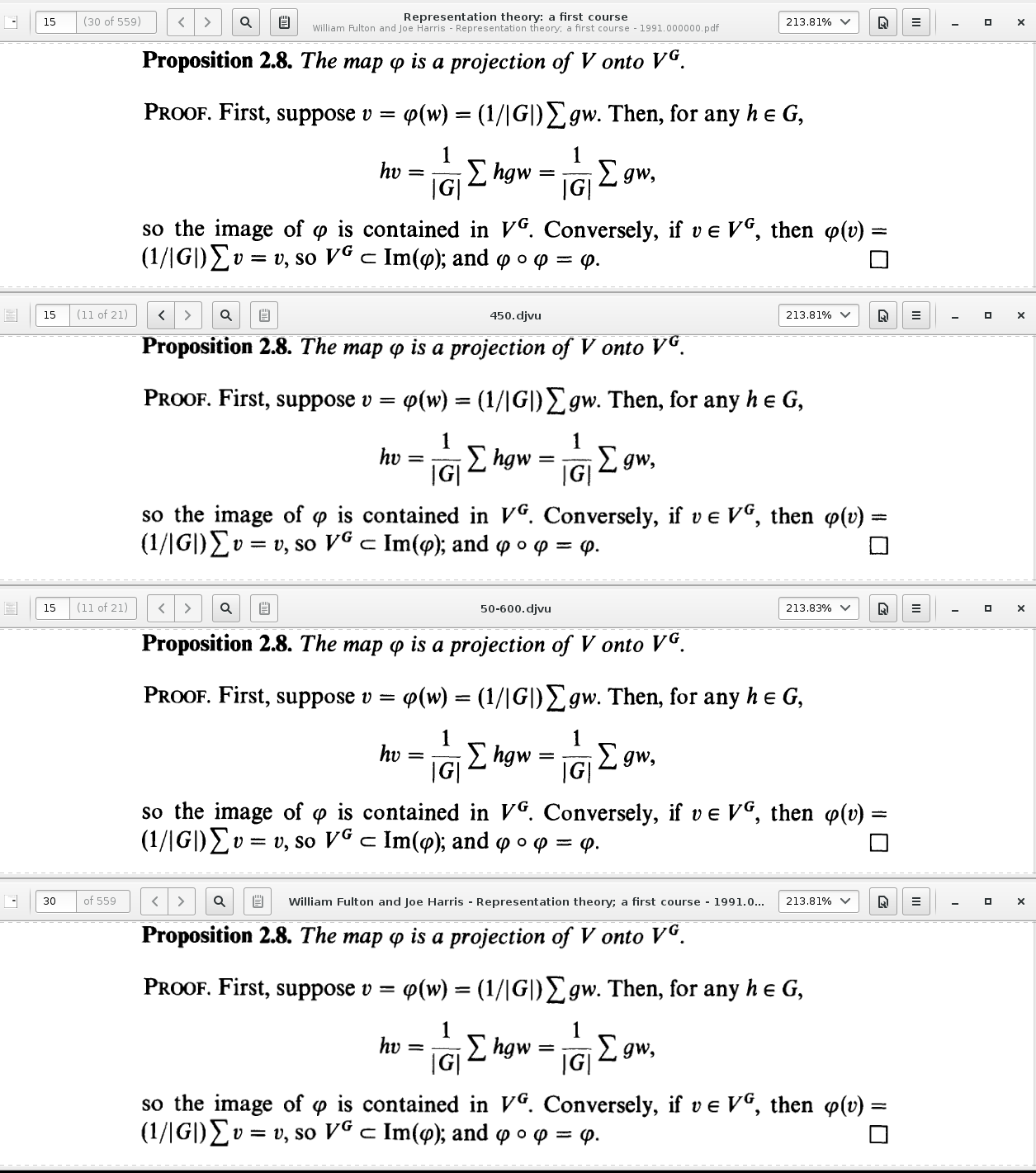
 Today I was wondering about converting a pdf made from scan of a book
into djvu, hopefully to reduce the size, without too much loss of
quality. My initial experiments with
 initramfs-tools version 0.121~rc2 and dracut version 044+3-2 have
moved most of what was in their main binary packages into a 'core'
package (dracut-core, initramfs-tools-core), leaving only automation
hooks in the main package. The core packages can be coinstalled
without conflicts and without creating any initramfs images at
installation time.
If you're been wondering how they compare but were afraid to break
your system by overwriting your current working initramfs, now is
the time to try the other option.
Testing dracut, for initramfs-tools users


