Search Results: "mak"

13 June 2011

Russell Coker: Parsing Daemontools/Multilog dates in Shell Script

I run some servers that use the DJB Daemontools to manage their daemons [1]. This is something I would have changed years ago if given a chance because DJB software always seems to do things in a different way to other Unix software and causes pain. Unfortunately when you have a lot of semi-embedded systems that have intermittent net access it s really not easy to change things, and having staff who aren t computer experts who have been trained to use certain DJB software makes it even more difficult. Daemontools uses multilog [2] to manage it s logging, this gives dates of the format @400000004deedcea1e4a18d4. While DJB has written a tool to parse this it s not always convenient, and I don t want to install DJB software on every system that might be used for reading logs (among other things DJB software is not included in any popular distribution). George Bernard Shaw says that All progress depends on the unreasonable man [3], of course he never participated in a large-scale software development project. In the modern age progress usually depends on people who can work with others, which is why DJB software doesn t get used much for every DJB program there is a similar program written by someone else that works about equally well on it s own and is more than 10* more popular because of better interoperability. So I wrote the following script to convert DJB dates to regular dates. It takes a DJB format date as the first command-line parameter as I generally just paste the relevant date into a different window. At some future time I may write a program to parse an entire log file and convert all the dates but I haven t had a need for it yet. I think that I ve done the hardest work involved in writing such a parser so someone else can use this as a starting point if they have such a need. #!/bin/bash
set -e
DATE=$(echo $1 cut -c 10-17)
SECS=$(echo -e ibase=16\\n$(echo $DATE tr "[a-z]" "[A-Z]") bc)
exec date -d "1970-01-01 $SECS sec utc"

Jonathan Wiltshire: StartSSL: finally, a trustworthy certifier*

Matt Brown writes about StartCom, the Israeli issuer providing basic SSL certificates for nothing. In fact I ve been using StartSSL certificates for about three years now, but I get them issued to Level 2 verification which incurs a fee. (It s more expensive now than when I was first validated, but still good value.) StartCom are the only issuer I ve ever dealt with who work like this. They validate the individual, using: This makes me trust them far more than other issuers, who don t bother with any meaningful validation at all. Their approach is to establish identity, then allow you to: Although this doesn t make up for trust (the presence of an SSL certificate doesn t guarantee the data you send is safe upon arrival) it does make me much happier to see a CA taking proper verification measures instead of just handing out certificates at random and it s much cheaper for me too, being verified once and then issuing as many certificates as I need. Highly recommended. *that is, more trustworthy
Comments
StartSSL: finally, a trustworthy certifier* is a post from: jwiltshire.org.uk Flattr

Christian Perrier: So, what happened with Kikithon?

I mentioned this briefly yesterday, but now I'll try to summarize the story of a great surprise and a big moment for me. All this started when my wife Elizabeth and my son Jean-Baptiste wanted to do something special for my 50th birthday. So, it indeed all started months ago, probably early March or something (I don't yet have all the details). Jean-Baptiste described this well on the web site, so I won't go again into details, but basically, this was about getting birthday wishes from my "free software family" in, as you might guess, as many languages as possible. Elizabeth brought the original idea and JB helped her by setting up the website and collecting e-mail addresses of people I usually work with: he grabbed addresses from PO files on Debian website, plus some in his own set of GPG signatures and here we go. And then he started poking dozens of you folks in order to get your wishes for this birthday. Gradually, contributions accumulated on the website, with many challenges for them: be sure to get as many people as possible, poking and re-poking all those FLOSS people who keep forgetting things... It seems that poking people is something that's probably in the Perrier's genes! And they were doing all this without me noticing. As usually in Debian, releasing on time is a no-no. So, it quickly turned out that having everything ready by April 2nd wouldn't be possible. So, their new goal was offering this to me on Pentecost Sunday, which was yesterday. And...here comes the gift. Aha, this looks like a photo album. Could it be a "50 years of Christian" album? But, EH, why is that pic of me, with the red Debconf5 tee-shirt (that features a world map) and a "bubulle" sign, in front of the book? But, EH EH EH, what the .... are doing these word by H0lger, then Fil, then Joey doing on the following pages? And only then, OMG, I discover the real gift they prepared. 106, often bilingual, wishes from 110 people (some were couples!). 18 postcards (one made of wood). 45 languages. One postcard with wishes from nearly every distro representatives at LinuxTag 2011. Dozens of photos from my friends all around the world. All this in a wonderful album. I can't tell what I said. Anyway, JB was shooting a video, so...we'll see. OK, I didn't cry...but it wasn't that far and emotion was really really intense. Guys, ladies, gentlemen, friends....it took me a while to realize what you contributed to. It took me the entire afternoon to realize the investment put by Elizabeth and JB (and JB's sisters support) into this. Yes, as many of you wrote, I have an awesome family and they really know how to share their love. I also have an awesome virtual family all around the world. Your words are wholeheartedly appreciated and some were indeed much much much appreciated. Of course, I'll have the book in Banja Luka so that you can see the result. I know (because JB and Elizabeth told me) that many of you were really awaiting to see how it would be received (yes, that includes you, in Germany, who I visited in early May!!!). Again, thank you so much for this incredible gift. Thank you Holger Levsen, Phil Hands, Joey Hess, Lior Kaplan, Martin Michlmayr, Alberto Gonzalez Iniesta, Kenshi "best friend" Muto, Praveen Arimbrathodiyil, Felipe Augusto van de Wiel, Ana Carolina Comandulli (5 postcards!), Stefano Zacchiroli (1st contribution received by JB, of course), Gunnar Wolf, Enriiiiiico Zini, Clytie Siddall, Frans Pop (by way of Clytie), Tenzin Dendup, Otavio Salvador, Neil McGovern, Konstantinos Margaritis, Luk Claes, Jonas Smedegaard, Pema Geyleg, Meike "sp tzle queen" Reichle, Alexander Reichle-Schmehl, Torsten Werner, "nette BSD" folks, CentOS Ralph and Brian, Fedora people, SUSE's Jan, Ubuntu's Lucia Tamara, Skolelinux' Paul, Rapha l Hertzog, Lars Wirzenius, Andrew McMillan (revenge in September!), Yasa Giridhar Appaji Nag (now I know my name in Telugu), Amaya Rodrigo, St phane Glondu, Martin Krafft, Jon "maddog" Hall (and God save the queen), Eddy Petri or, Daniel Nylander, Aiet Kolkhi, Andreas "die Katze geht in die K che, wunderbar" Tille, Paul "lets bend the elbow" Wise, Jordi "half-marathon in Banja Luka" Mallach, Steve "as ever-young as I am" Langasek, Obey Arthur Liu, YAMANE Hideki, Jaldhar H. Vyas, Vikram Vincent, Margarita "Bronx cross-country queen" Manterola, Patty Langasek, Aigars Mahinovs (finding a pic *with* you on it is tricky!), Thepittak Karoonboonyanan, Javier "nobody expects the Spanish inquisition" Fern ndez-Sanguino, Varun Hiremath, Moray Allan, David Moreno Garza, Ralf "marathon-man" Treinen, Arief S Fitrianto, Penny Leach, Adam D. Barrat, Wolfgang Martin Borgert, Christine "the mentee overtakes the mentor" Spang, Arjuna Rao Chevala, Gerfried "my best contradictor" Fuchs, Stefano Canepa, Samuel Thibault, Eloy "first samba maintainer" Par s, Josip Rodin, Daniel Kahn Gillmor, Steve McIntyre, Guntupalli Karunakar, Jano Gulja , Karolina Kali , Ben Hutchings, Matej Kova i , Khoem Sokhem, Lisandro "I have the longest name in this list" Dami n Nicanor P rez-Meyer, Amanpreet Singh Alam, H ctor Or n, Hans Nordhaugn, Ivan Mas r, Dr. Tirumurti Vasudevan, John "yes, Kansas is as flat as you can imagine" Goerzen, Jean-Baptiste "Piwet" Perrier, Elizabeth "I love you" Perrier, Peter Eisentraut, Jesus "enemy by nature" Climent, Peter Palfrader, Vasudev Kamath, Miroslav "Chicky" Ku e, Mart n Ferrari, Ollivier Robert, Jure uhalev, Yunqiang Su, Jonathan McDowell, Sampada Nakhare, Nayan Nakhare, Dirk "rendez-vous for Chicago marathon" Eddelbuettel, Elian Myftiu, Tim Retout, Giuseppe Sacco, Changwoo Ryu, Pedro Ribeoro, Miguel "oh no, not him again" Figueiredo, Ana Guerrero, Aur lien Jarno, Kumar Appaiah, Arangel Angov, Faidon Liambotis, Mehdi Dogguy, Andrew Lee, Russ Allbery, Bj rn Steensrud, Mathieu Parent, Davide Viti, Steinar H. Gunderson, Kurt Gramlich, Vanja Cvelbar, Adam Conrad, Armi Be irovi , Nattie Mayer-Hutchings, Joerg "dis shuld be REJECTed" Jaspert and Luca Capello. Let's say it gain:

Maximilian Attems: Easy way to void() your Debian support

Craig Small gives a very bad advice on his recent post Debian Linux on HP DV6-6023TX. As soon as one loads such a binary graphics driver your Linux kernel is marked as tainted. Due to be running a proprietary module your box may behave strangely and is certainly not debuggable. Be aware that in such a case you are no longer running a free and open OS. What he actually wants is a very recent 3.0 linux image from experimental and to google for vga switcheroo, which leads to the following commit with explanations for /sys/kernel/debug/vgaswitcheroo/switch: vga_switcheroo: initial implementation (v15).

Joachim Breitner: 401 page family book published

Over the course of the last five years, some relatives of me and I have been working on a family book which lists all descendants of my grandgrandgrandgrandfather Isaak Riehm, born 1799, and his wife Charlotte. My task was everything related to maintaining the data, running the infrastructure and generating the final book. In the end, we have collected biographical details, often with the person s live story, of 703 descendants, 285 partners and 416 parents-in-law. Together with an extensive preface the book now has a respectable size of 401 pages, includes 144 pictures and maps and over 200 copies have been printed and sold through the family.

The book cover
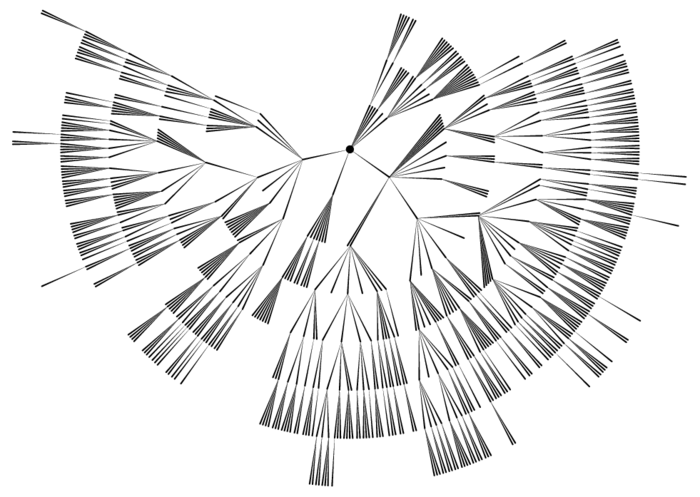
Although I do not think that the details of the lives of my family is very interesting for the general public, or even suitable for general release, I do want to show the fruit of our work. Therefore, I have created a stripped-down on-line version that only covers the first four generations. I bundled the book body with the cover and the end sheets into one complete PDF file (caution, large: 54MB, and of course in German). Some nifty embellishments of the book that I especially like are the abstract looking descendant fan in the front-end and back-end sheets, the separating bars between the persons which indicate the livespan of that person between 1799 and 2011 and the maps of the birth places and Isaak s travel destinations in the preface. Now to the technical details: Naturally, I used only Free Software in the genesis of the work (The cover is an exception, as it was not created by me). The most important is definitely gramps, a free genealogy system that held all our data. It is written in python and extensible with plug-ins, so I was able to create a custom report that takes the data relevant for us, filters for people who have agreed to appear in the book, and then generate LaTeX code that typesets the book, ready to be printed. I learned a great deal of LaTeX for this project, which uses over 30 different packages and required me to create a font of my own (which, as a side product, lead to a publication in the Linux-Magazin). For the maps I found the Generic Mapping Tools (GMT) and the freely available data for that of great use. I still had to manually collect the coordinates for all the places I wanted to show up in the map. Here, I relied mostly on Wikipedia. The fan which appears in the end sheets is laid out using a Haskell program (naturally, I have to use Haskell somewhere).
The front-end sheet
Of course, generating the book is only one side of the story; first, the data has to be collected and edited. For that, I wrote a plug-in to gramps that creates forms for each person. These forms contain the current known data and are used to correct and extend our knowledge. One variant of the form, created using LaTeX, was printed and mailed by snail-mail around the country and beyond, for those who are not reachable by mail. The other variant is an HTML form, hosted on a password-protected web site. Changes to that form cause the server to send an e-mail with a description of the changes (and only the changes, not the fields that are left untouched) to the mailing list of our team. There, the changes can be reviewed, e.g. for spelling and stylistic issues, and finally I copy n pasted them into gramps. These parts are implemented in python as well. Since genealogical data is never complete or up-to-date, I have set up a password-protected mediawiki based web site for the book where we collect corrections and additions to the data in the book. We have never anticipated that it would be so much work and that it would take us so long to finish this project, but we pulled it through and we are very happy with the result. Also, the reception has been very good and it was definitely a success. At this point I d like to express my gratitude to the hundreds of Free Software developers out there whose code we used and without whom it would not have been possible publish the book in the current form at all! Update: Due to some requests, I am making the code that I wrote available. You can download the tarball. Note that the code is a big mess and will not be usable right away. I guess if you can get the code to run and actually adjust to your needs, then you can as well write it yourself. Nevertheless it might be useful as inspiration or reference.

Russell Coker: Evil Psychologists

Last year the Psychologist and Baptist minister George Rekers who is famous for anti-homosexuality pseudo-science was discovered to be hiring gay escorts from Rentboy.com. Lots of LULZ there. But the story didn t end there. It turns out that George Rekers did some research on a child who ended up committing suicide as an adult, and the circumstantial evidence suggests that George s actions are directly related to the suicide [1]. The Rentboy.com affair doesn t seem so funny now. The Box Turtle Bulletin has a series of articles about Kirk Andrew Murphy s suicide and the roles of George Rekers and Richard Green in all of this [2], the articles are well written and generally appear to be well researched I recommend reading the articles if you can stomach them (lots of nasty stuff is described). The section answering the question of who s responsible for the mistreatment of Kirk Andrew Murphy [3] where they describe the use of ABA (AKA the Lovaas Technique) is interesting. Ivar Lovaas worked with George Rekers in such research and published a paper with him. The term ABA gets an immediate hostile reaction in the Autism community, but until now I hadn t realised why so many people hate it so much. It seems that to some extent I made the classic mistake of misjudging the reports of Autistic people who are unable to present their case well (as opposed to the psychologists who can present any position very well even if it s utterly insane). In the past I had the impression that ABA wasn t inherently bad, it was just implemented in a bad way in some cases now it seems that ABA was designed in an evil way right from the start. There is one massive problem with the Box Turtle analysis, he says Behavioral analysts don t dig around much into people s feelings, fears, dreams, family relationships or childhood memories. Indeed, in cases like autism, Lovaas s specialty, those avenues of exploration would be irrelevant . It could be that Jim Burroway (the Box Turtle writer) is merely quoting someone else without attribution, but even so saying that the feelings, fears, and dreams of a group of people are irrelevant is just awful, a statement that denies the humanity of a group of people can t be quoted without further explanation. In his article about ABA Jim refers to childhood Autism as a condition for which there is no hope for interior change [4]. I m not sure if he s just saying that Autistic children are incapable of learning or whether it s all Autistic people, in either case it s nonsense in terms of science and nasty as well. Generally I expect that members of various minority groups will show more sympathy to each other than they receive from the general population. Jim s posts are a great disappointment. I understand that he would be rather stressed about the horrible things that George Rekers et al did, but even so he should be able to avoid that sort of thing. Jim is obviously a very talented writer and can do better. One might think that Jim s posts use the word Autism to refer only to the people who are non-verbal (or in other ways less capable than the huge number of Autistic people who work for companies like Google and IBM). But that s no excuse either. You can find blogs and essays written by non-verbal Autistic people that describe their experiences if you care to search for them. It s obvious that they are people too and deserve to be treated as people not objects. Abusing Autistic children to try and make them impersonate NT children is no less evil than abusing children who don t fit gender norms.

12 June 2011

Clint Adams: Debian on the DreamPlug, Part II

If you have debootstrapped the internal microSD card, the vendor-supplied U-Boot config should serve you adequately. To boot off of a USB stick, however, interrupt the boot sequence (if you don't have a JTAG/serial board at this point, go buy one immediately), and enter the following commands:
setenv x_bootcmd_kernel fatload usb 1:1 0x6400000 uImage
setenv x_bootargs_root root=/dev/sdc2 rootdelay=10
saveenv
reset
If you just want to testboot once, and don't want to make it permanent, omit the saveenv. If you do want to make it permanent, consider removing the superfluous pings from the bootcmd, but be careful to escape semicolons and dollar signs instead of zealously copying and pasting. If you haven't bothered putting a FAT partition with uImage on the USB stick, omit the setenv x_bootcmd_kernel line. Once you've booted Debian, you may wish to natively-debootstrap or copy your new partition to /dev/sda2 (which is what Linux will call the ext3 partition of your microSD card). To then return to fully booting off of microSD so you can repurpose the USB stick,
setenv x_bootcmd_kernel fatload usb 0:1 0x6400000 uImage
setenv x_bootargs_root root=/dev/sda2 rootdelay=10
saveenv
reset
Enjoy.

Matt Brown: Using StartCom Free SSL certificates with Cyrus imapd

A stumbled across Start Com a few months ago, an Israeli company that run a Certificate Authority (CA) called StartSSL with a root certificate in all the modern browsers and operating systems. Best of all they don t participate in the cartel run by the rest of the SSL certificate industry and offer domain validated certificates at the price it costs them to issue them nothing. I had the first opportunity to use their services today when I needed an SSL cert to secure the IMAP server I run for my parents and I was very pleased with the experience. The web interface is a bit weird and you have to jump through some strange hoops, but to save paying more money to the SSL certificate cartel it seemed more than worthwhile. Like most CAs these days the certificate which signs your server certificate is not the actual root certificate included in your operating system or browser, but an intermediate CA certificate which is in turn signed by the root certificate. This means that you have to ensure that your server includes the intermediate CA certificate alongside the server certificate so the client can validate the entire path back to the root. Unlike Apache which explicitly allows you to specify a certificate chain file, the openssl methods used by Cyrus 2.2 only seem to recognise a single CA certificate in the file pointed to by tls_ca_file. All as not lost however, as the openssl libraries are actually quite smart and will automagically determine which intermediate certs they need to bundle into the handshake if you install them appropriately under /etc/ssl/certs (at least on Debian). The trick is that you have to install the intermediate CA cert into a file named after the hash of the certificate, like so:

# wget http://www.startssl.com/certs/sub.class1.server.ca.pem -O /etc/ssl/certs/startcom-class1-intermediate.pem
# hash=$(openssl x509 -hash -noout -in /etc/ssl/certs/startcom-class1-intermediate.pem)
# ln -s ./startcom-class1-intermediate.pem /etc/ssl/certs/$ hash .0
# ls -l /etc/ssl/certs/$ hash .0
lrwxrwxrwx 1 root root 34 2011-06-13 07:43 /etc/ssl/certs/ea59305e.0 -> ./startcom-class1-intermediate.pem
Then in imapd.conf:

tls_cert_file: /etc/ssl/certs/your-server-cert.pem
tls_key_file: /etc/ssl/private/your-server-key.key
tls_ca_file: /etc/ssl/certs/startcom-ca.pem
Voila. Works everywhere I ve tried so far. Start Com Highly Recommended. I ll be using them for any future SSL certificate purchases (e.g. EV certs) that I need to make.

Christian Perrier: Kikithon - THANK YOU

So, I just got this surprise by my beloved ones. I'm a little bit too moved right now to write down something coherent but, at least I would like to say THANK YOU to all those of you who contributed to it. And, yes, I'll have the book with me at DC11, so you can admire Elizabeth's work for collecting all these tiny bits of friendship from all around the world...and JB's commitment to make all this happen with her. He's sitting close to me right now and joins me for these thanks. You made my day, ladies and gentlemen. Bubulle

Kai Wasserb ch: r[36]00g: S3TC support on amd64 (especially for Wine)

I already blogged about S3TC support with Wine, but back then I wrote about problems to get that working on amd64 without a proprietary driver. Now I've figured out a way to get it working on amd64 with the free radeon drivers (Gallium versions). It's actually pretty simple, as most things are, once you figured it out. For 64 bit applications, you just need a recent Mesa version and the package libtxc-dxtn0. If you're using a card supported by the r600g driver, you first need a version of the Mesa package, which is build with the Gallium version of the r600 driver (the classic driver should work too, but I haven't tested that), like my unofficial Mesa packages (those packages were built for testing r600g, see this e-mail to debian-x). r600g users also need to set R600_S3TC_ENABLE=1, otherwise the driver won't attempt to load libtxc-dxtn0. For 32 bit applications (like Windows games run with Wine) the initial setup is a little bit more involved: in addition to the above you also need to update a few libraries under /usr/lib32: namely Mesa and libdrm (if you use my Mesa packages you need a i386 copy of libffi too). The quick and dirty approach is to download the i386 packages for libgl1-mesa-dri, libgl1-mesa-glx, libglu1-mesa, libdrm2, libdrm-intel1, libdrm-radeon1 and (if you use my Mesa build) libffi5. Unpack the packages (dpkg-deb -x) and move the files under /path/to/unpack/dir/usr/lib to /usr/lib32. Alternatively you can also build a new ia32-libs package (make sure you change the source.list file of ia32-libs to use at least testing as a base, otherwise you'll end up with basically the same versions as are in the current package). No matter how you updated your drivers you now need the 32 bit version of libtxc-dxtn0. debian-multimedia.org offers a packaged version. After installing all the previous packages, Wine should be able to display (most) S3TC-using programs (in case you use the r600g driver, make sure you have R600_S3TC_ENABLE=1 set). If you're using my Mesa builds you can drop the LIBGL_DRIVERS_PATH=/usr/lib32/dri part again from your Wine invocation. Please note, that there might be some S3TC-using applications with graphical glitches, when using the above method, as the support for S3TC in r600g is still marked as WIP.

Christian Perrier: Developers per country (June 2011) - 3rd take

See comments at the end about this 3rd version This is time again for yet another bubulle game: counting the number of developers per country. I already published such analysis in 2010 and 2009. So, here we are with the June 2011 version, sorted by the ratio of *active* developers per million population for each country.
Act: number of active developers
Dev: total number of developers
A/M: number of active devels per million pop.
D/M: number of devels per million pop.
2009: rank in 2009
2010: rank in 2010
June 2011: rank now
Code Name Population Act Dev Dev Act/Million Dev/Million 2009 2010 June 2011
fi Finland 5374781 21 31 3,91 5,77 1 1 1
ch Switzerland 7866500 21 26 2,67 3,31 2 2 2
mq Martinique 397730 1 1 2,51 2,51

3
no Norway 4964500 12 15 2,42 3,02 5 4 4
nz New Zealand 4393500 10 15 2,28 3,41 4 3 5
ie Ireland 4470700 10 13 2,24 2,91 13 9 6
se Sweden 9354462 19 35 2,03 3,74 3 6 7
lu Luxemburg 511840 1 1 1,95 1,95 8 5 8
de Germany 81802000 155 221 1,89 2,7 7 7 9
at Austria 8404252 15 25 1,78 2,97 6 8 10
fr France 63136180 91 119 1,44 1,88 12 12 11
au Australia 22632213 31 57 1,37 2,52 9 10 12
be Belgium 11007020 15 17 1,36 1,54 10 11 13
uk United-Kingdom 62008048 67 106 1,08 1,71 14 14 14
nl Netherlands 16674600 18 37 1,08 2,22 11 13 15
dk Denmark 5564219 6 10 1,08 1,8 17 17 16
ca Canada 34480000 27 57 0,78 1,65 15 15 17
hr Croatia 4429078 3 3 0,68 0,68 20 18 18
es Spain 46030109 31 51 0,67 1,11 16 16 19
lt Lithuania 3225346 2 2 0,62 0,62 28 19 20
cz Czech Rep 10540748 6 6 0,57 0,57 21 20 21
it Italy 60605053 33 47 0,54 0,78 23 22 22
bg Bulgaria 7351254 4 4 0,54 0,54 25 23 23
il Israel 7602400 4 6 0,53 0,79 24 24 24
us USA 308745538 162 364 0,52 1,18 19 21 25
hu Hungary 9979000 5 11 0,5 1,1 18 25 26
lv Latvia 2245357 1 1 0,45 0,45 26 26 27
uy Uruguay 3494382 1 2 0,29 0,57 22 27 28
jp Japan 127960000 33 46 0,26 0,36 30 28 29
pl Poland 38186860 9 13 0,24 0,34 29 29 30
cr Costa Rica 4253897 1 1 0,24 0,24 31 30 31
pt Portugal 10647763 2 4 0,19 0,38 27 32 32
sk Slovakia 5429763 1 1 0,18 0,18 32 31 33
gr Greece 11305118 2 3 0,18 0,27 33 38 34
ar Argentina 40091359 7 9 0,17 0,22 34 33 35
sv El Salvador 6134000 1 1 0,16 0,16

36
tw Taiwan 23061689 3 3 0,13 0,13 37 34 37
br Brazil 190732694 20 21 0,1 0,11 36 35 38
by Belarus 9648533 1 1 0,1 0,1 35 36 39
mg Madagascar 20653556 2 2 0,1 0,1 44 37 40
cu Cuba 11239363 1 1 0,09 0,09
38 41
kr South Korea 48758000 4 6 0,08 0,12 39 39 42
ec Ecuador 14790608 1 1 0,07 0,07
40 43
cl Chile 17224200 1 2 0,06 0,12 42 41 44
ro Romania 21466174 1 2 0,05 0,09 45 43 45
co Colombia 45925397 2 3 0,04 0,07 41 44 46
ru Russia 142905200 6 7 0,04 0,05 43 42 47
za South Africa 49991300 2 9 0,04 0,18 38 48 48
my Malaysia 27565821 1 1 0,04 0,04

49
ve Venezuela 29105632 1 1 0,03 0,03 40 45 50
pe Peru 29496000 1 1 0,03 0,03 46 46 51
tr Turkey 73722988 2 2 0,03 0,03 47 47 52
mx Mexico 112322757 2 2 0,02 0,02 49 49 53
th Thailand 63878267 1 2 0,02 0,03 50 50 54
eg Egypt 80085862 1 3 0,01 0,04 51 51 55
in India 1210193422 8 8 0,01 0,01 52 52 56
cn China 1339724852 7 11 0,01 0,01 53 53 57
ua Ukraine 45888000 0 0 0 0 48 53 58


896 1450 61,79%


A few interesting facts: v2 comment: This is the second version of this blog post. I have been pointed that the population I was using for "Ireland" is indeed the population of the entire island, so Republic of Ireland (Eire) plus Northern Ireland (Ulster). We may guess that people listing "IE" as their country are citizens of the Republic of Ireland, so the population to use is that of this part of the island. As a consequence, Ireland is bumped up to 6th rank instead of 9th. v3 comment: Doh. Since I'm doing this survey, I was always adding people using "sv" as country to Sweden. This is a quite common mistake and it was happening in the past. But now, there is only ONE developer who uses "sv" as country, this is Rene Mayorga and he definitely lives in El Salvador, not Sweden. As a consequence, Sweden lost one developer (but keeps its rank) and El Salvador now appears at rank 36. It is not a "new" country as Rene is DD for quite some time.

11 June 2011

Christian Perrier: Developers per country (June 2011) - 2nd take

See comment at the end about this 2nd version This is time again for yet another bubulle game: counting the number of developers per country. I already published such analysis in 2010 and 2009. So, here we are with the June 2011 version, sorted by the ratio of *active* developers per million population for each country.
Act: number of active developers
Dev: total number of developers
A/M: number of active devels per million pop.
D/M: number of devels per million pop.
2009: rank in 2009
2010: rank in 2010
June 2011: rank now
Code Name Population Act Dev Dev Act/Million Dev/Million 2009 2010 June 2011
fi Finland 5374781 21 31 3,91 5,77 1 1 1 1
ch Switzerland 7866500 21 26 2,67 3,31 2 2 2 2
mq Martinique 397730 1 1 2,51 2,51

3 3
no Norway 4964500 12 15 2,42 3,02 5 4 4 4
nz New Zealand 4393500 10 15 2,28 3,41 4 3 5 5
ie Ireland 4470700 10 13 2,24 2,91 13 9 6 6
se Sweden 9354462 20 36 2,14 3,85 3 6 7 7
lu Luxemburg 511840 1 1 1,95 1,95 8 5 8 8
de Germany 81802000 155 221 1,89 2,7 7 7 9 9
at Austria 8404252 15 25 1,78 2,97 6 8 10 10
fr France 63136180 91 119 1,44 1,88 12 12 11 11
au Australia 22632213 31 57 1,37 2,52 9 10 12 12
be Belgium 11007020 15 17 1,36 1,54 10 11 13 13
uk United-Kingdom 62008048 67 106 1,08 1,71 14 14 14 14
nl Netherlands 16674600 18 37 1,08 2,22 11 13 15 15
dk Denmark 5564219 6 10 1,08 1,8 17 17 16 16
ca Canada 34480000 27 57 0,78 1,65 15 15 17 17
hr Croatia 4429078 3 3 0,68 0,68 20 18 18 18
es Spain 46030109 31 51 0,67 1,11 16 16 19 19
lt Lithuania 3225346 2 2 0,62 0,62 28 19 20 20
cz Czech Rep 10540748 6 6 0,57 0,57 21 20 21 21
it Italy 60605053 33 47 0,54 0,78 23 22 22 22
bg Bulgaria 7351254 4 4 0,54 0,54 25 23 23 23
il Israel 7602400 4 6 0,53 0,79 24 24 24 24
us USA 308745538 162 364 0,52 1,18 19 21 25 25
hu Hungary 9979000 5 11 0,5 1,1 18 25 26 26
lv Latvia 2245357 1 1 0,45 0,45 26 26 27 27
uy Uruguay 3494382 1 2 0,29 0,57 22 27 28 28
jp Japan 127960000 33 46 0,26 0,36 30 28 29 29
pl Poland 38186860 9 13 0,24 0,34 29 29 30 30
cr Costa Rica 4253897 1 1 0,24 0,24 31 30 31 31
pt Portugal 10647763 2 4 0,19 0,38 27 32 32 32
sk Slovakia 5429763 1 1 0,18 0,18 32 31 33 33
gr Greece 11305118 2 3 0,18 0,27 33 38 34 34
ar Argentina 40091359 7 9 0,17 0,22 34 33 35 35
tw Taiwan 23061689 3 3 0,13 0,13 37 34 36 36
br Brazil 190732694 20 21 0,1 0,11 36 35 37 37
by Belarus 9648533 1 1 0,1 0,1 35 36 38 38
mg Madagascar 20653556 2 2 0,1 0,1 44 37 39 39
cu Cuba 11239363 1 1 0,09 0,09
38 40 40
kr South Korea 48758000 4 6 0,08 0,12 39 39 41 41
ec Ecuador 14790608 1 1 0,07 0,07
40 42 42
cl Chile 17224200 1 2 0,06 0,12 42 41 43 43
ro Romania 21466174 1 2 0,05 0,09 45 43 44 44
co Colombia 45925397 2 3 0,04 0,07 41 44 45 45
ru Russia 142905200 6 7 0,04 0,05 43 42 46 46
za South Africa 49991300 2 9 0,04 0,18 38 48 47 47
my Malaysia 27565821 1 1 0,04 0,04

48 48
ve Venezuela 29105632 1 1 0,03 0,03 40 45 49 49
pe Peru 29496000 1 1 0,03 0,03 46 46 50 50
tr Turkey 73722988 2 2 0,03 0,03 47 47 51 51
mx Mexico 112322757 2 2 0,02 0,02 49 49 52 52
th Thailand 63878267 1 2 0,02 0,03 50 50 53 53
eg Egypt 80085862 1 3 0,01 0,04 51 51 54 54
in India 1210193422 8 8 0,01 0,01 52 52 55 55
cn China 1339724852 7 11 0,01 0,01 53 53 56 56
ua Ukraine 45888000 0 0 0 0 48 53 57 57


896 1450 61,79%


A few interesting facts: This is the second version of this blog post. I have been pointed that the population I was using for "Ireland" is indeed the population of the entire island, so Republic of Ireland (Eire) plus Northern Ireland (Ulster). We may guess that people listing "IE" as their country are citizens of the Republic of Ireland, so the population to use is that of this part of the island. As a consequence, Ireland is bumped up to 6th rank instead of 9th.

Christian Perrier: Developers per country (June 2011)

This is time again for yet another bubulle game: counting the number of developers per country. I already published such analysis in 2010 and 2009. So, here we are with the June 2011 version, sorted by the ratio of *active* developers per million population for each country.
Act: number of active developers
Dev: total number of developers
A/M: number of active devels per million pop.
D/M: number of devels per million pop.
2009: rank in 2009
2010: rank in 2010
June 2011: rank now
Code Name Population Act Dev Dev Act/Million Dev/Million 2009 2010 June 2011
fi Finland 5374781 21 31 3,91 5,77 1 1 1
ch Switzerland 7866500 21 26 2,67 3,31 2 2 2
mq Martinique 397730 1 1 2,51 2,51

3
no Norway 4964500 12 15 2,42 3,02 5 4 4
nz New Zealand 4393500 10 15 2,28 3,41 4 3 5
se Sweden 9354462 20 36 2,14 3,85 3 6 6
lu Luxemburg 511840 1 1 1,95 1,95 8 5 7
de Germany 81802000 155 221 1,89 2,7 7 7 8
at Austria 8404252 15 25 1,78 2,97 6 8 9
ie Ireland 6197100 10 13 1,61 2,1 13 9 10
fr France 63136180 91 119 1,44 1,88 12 12 11
au Australia 22632213 31 57 1,37 2,52 9 10 12
be Belgium 11007020 15 17 1,36 1,54 10 11 13
uk United-Kingdom 62008048 67 106 1,08 1,71 14 14 14
nl Netherlands 16674600 18 37 1,08 2,22 11 13 15
dk Denmark 5564219 6 10 1,08 1,8 17 17 16
ca Canada 34480000 27 57 0,78 1,65 15 15 17
hr Croatia 4429078 3 3 0,68 0,68 20 18 18
es Spain 46030109 31 51 0,67 1,11 16 16 19
lt Lithuania 3225346 2 2 0,62 0,62 28 19 20
cz Czech Rep 10540748 6 6 0,57 0,57 21 20 21
it Italy 60605053 33 47 0,54 0,78 23 22 22
bg Bulgaria 7351254 4 4 0,54 0,54 25 23 23
il Israel 7602400 4 6 0,53 0,79 24 24 24
us USA 308745538 162 364 0,52 1,18 19 21 25
hu Hungary 9979000 5 11 0,5 1,1 18 25 26
lv Latvia 2245357 1 1 0,45 0,45 26 26 27
uy Uruguay 3494382 1 2 0,29 0,57 22 27 28
jp Japan 127960000 33 46 0,26 0,36 30 28 29
pl Poland 38186860 9 13 0,24 0,34 29 29 30
cr Costa Rica 4253897 1 1 0,24 0,24 31 30 31
pt Portugal 10647763 2 4 0,19 0,38 27 32 32
sk Slovakia 5429763 1 1 0,18 0,18 32 31 33
gr Greece 11305118 2 3 0,18 0,27 33 38 34
ar Argentina 40091359 7 9 0,17 0,22 34 33 35
tw Taiwan 23061689 3 3 0,13 0,13 37 34 36
br Brazil 190732694 20 21 0,1 0,11 36 35 37
by Belarus 9648533 1 1 0,1 0,1 35 36 38
mg Madagascar 20653556 2 2 0,1 0,1 44 37 39
cu Cuba 11239363 1 1 0,09 0,09
38 40
kr South Korea 48758000 4 6 0,08 0,12 39 39 41
ec Ecuador 14790608 1 1 0,07 0,07
40 42
cl Chile 17224200 1 2 0,06 0,12 42 41 43
ro Romania 21466174 1 2 0,05 0,09 45 43 44
co Colombia 45925397 2 3 0,04 0,07 41 44 45
ru Russia 142905200 6 7 0,04 0,05 43 42 46
za South Africa 49991300 2 9 0,04 0,18 38 48 47
my Malaysia 27565821 1 1 0,04 0,04

48
ve Venezuela 29105632 1 1 0,03 0,03 40 45 49
pe Peru 29496000 1 1 0,03 0,03 46 46 50
tr Turkey 73722988 2 2 0,03 0,03 47 47 51
mx Mexico 112322757 2 2 0,02 0,02 49 49 52
th Thailand 63878267 1 2 0,02 0,03 50 50 53
eg Egypt 80085862 1 3 0,01 0,04 51 51 54
in India 1210193422 8 8 0,01 0,01 52 52 55
cn China 1339724852 7 11 0,01 0,01 53 53 56
ua Ukraine 45888000 0 0 0 0 48 53 57


896 1450 61,79%


A few interesting facts:

Nathan Handler: Google Summer of Code Update #3

Last week was a rather slow week. I did some work on allowing the dashboard to store and process information that does not come from the BTS. This exposed a few issues with the way we were storing and presenting information. After talking to Matt, we decided that the dashboard should deal with task objects. These tasks would contain basic information such as a name, person assigned to it, status, and possibly a link to a bug. This means that we would be able to start up a new DEX project by simply choosing a project name and creating a basic text file containing a list of tasks (package names, patches, bugs, etc). I also have been trying to get a hold of some people who participated in the last DEX project. I am interested in getting some more feedback about what went well, problems they encountered, and tools that might have made things easier. I am also talking to some people who are currently working on starting up new DEX projects to try and make dextools align with as many workflows as possible. If you fall into either of these categories, I would really appreciate it if you contact me. There is also a new wiki page that I created so that it is easier for people who are not interested in me or the Google Summer of Code to quickly see what dextools is about and monitor its progress. I will be adding more information over the next few days. Currently, I am continuing to work on the dashboard and talking to people about their DEX experiences. I have also begun working on some scripts to generate graphs that will go on the dashboard. These graphs will allow us to quickly check our progress on different projects. They will also allow us to see and acknowledge individuals working on the tasks. I will add more information about these graphs to this blog and to the dextools wiki page.

Kenshi Muto: Squeeze amd64 d-i images with Linux kernel 2.6.38.bpo

This is first release of backported Debian-installer for Debian GNU/Linux 6.0, Squeeze. You can download it from the place. Update #1: I updated images, as revision 0614. It is based on Debian 6.0.1 + firmware netinst. So, you don't need to make a memory stick to insert additional firmwares. Plus, this image includes new DHCP client which is fixed an interacting problem with some DHCP servers. Notice: This ISO image doesn't include non-free firmware. You can take it from Debian official page (please see Debian squeeze installation information and look Section 2.2, Installation Guide). WPA support isn't implemented yet. Enjoy!

10 June 2011

Neil Williams: Putting the magic smoke back into the ring main

Haven't been in my new home that long and through a long chain of contacts, my neighbour was finally able to contact me. (Just goes to show that having Debian friends nearby who like board games turns out to make some things JustWork.)
So, when I got the message and got home the flat was fine - just with no electrical power. Murphy's Law ensured that my laptop was also low on power, as was my mobile phone and my landline is cordless and the router was, naturally, not working. My communication options were suddenly rather limited.

The 50yr old wiring in this block finally surrendered the magic smoke and caused a fire downstairs (mostly melted insulation) before it disconnected. I got home around 1pm, electricians to fix the problem arrived about 5pm and haven't finished quite yet. (It's now 12:11am). A relatively large hole in the lawn was dug (a hard task in itself seeing as this area is officially in a drought and the ground is like iron), two junction boxes rebuilt, new connection made from downstairs to upstairs, the work just went on and on.

I'll get some accurate details when I manage to speak to my brother - I do a little bit of hardware but I deal in 1W or a few hundred mA, when a 80A cable melts I'm just a bit out of my depth. I've not seen a fuse that size since I left school.

Thanks to those Debian and non-Debian people who helped me actually contact the relevant people today. I was due to get so many things done today, instead I got through the worry to end up incredibly bored - it turns out to be surprisingly difficult to find things to do when there is no mains power, all the batteries in mobile devices are flat and it's too dark to read.
:-(

Nathan Handler: Google Summer of Code Update #2

I ve been spending the past few days working on a dashboard for DEX. I ve been using Python, javascript, and jquery to create this dashboard (partially as a learning exercise). Earlier today, I started thinking that a visual mockup of the dashboard might be helpful, as it will allow me to create and revise a design based on feedback without having to touch the code. At this point, I had already written a fair bit of code and had a rough but working early version of a dashboard coded. So for the first mockup, I simply created it to match my code. DEX Dashboard Thanks to the generosity of the folks at Balsamiq, I was able to get myself a free key to create the mockup above. As I mentioned earlier, this is what the code currently looks like, not what it will look like. Next, I m going to be spending some time revising that mockup so I have a visual goal to work towards. I also will be cleaning up the code that I currently have and making it available in a public VCS.

Nathan Handler: Google Summer of Code Report #1

Here is my first official Google Summer of Code report. As I still had classes, the first week of coding was rather slow. However, after my first phone call with my mentor, Matt Zimmerman, things started to pick up. I spent most of my time working on a dashboard/portal for the Debian Derivatives Exchange (DEX). We decided that the best approach to this would be to store as little information ourselves as possible. Instead, we will try to pull most of our information from other sources, such as Debian s BTS. The main advantage to this is that package maintainers do not need to change any of their workflows, but they still get to benefit from DEX s work. Currently, I have a python script that gets a list of usertags and bugs for debian-derivatives@lists.debian.org from the BTS. This script will end up getting run by cron. It stores the information it gets in static HTML files. Finally, JQuery and Javascript are used to present the final dashboard to the user. I created a mockup showing how this looks. I also have a functioning website that looks and acts like the mockup, but the code is not publicly available yet (see below). DEX uses Alioth to host its git branches and website. I have spent some time trying to familiarize myself with the recent changes that have taken place on Alioth, as well as trying to figure out the best way to store and execute my script to generate the website. So far, it looks like people are still deciding on the best way to handle having websites that are updated from VCS hooks (due to things being split between vasks and wagner). I will continue to look into this, and might try using an alternate host until things settle down. Next, I plan to work on updating the dashboard to provide a way to edit, store, and display certain extra fields of information. This is necessary for certain pieces of information that are not appropriate for adding to bugs and in a few other cases. I will also be taking some time to talk to a few people who were active contributors to the last DEX project. This will allow me to learn more about their experience, find out what changes they feel should be made to make things run smoother, and get feedback on my current Summer of Code work. Finally, although I have been posting updates on my Summer of Code work to my blog [2][3], Matt thinks that having all of this information in one place will be useful. As a result, I will be creating another wiki page about the project that will contain all of the information people need to know. This page will be updated as the summer progresses. I am also hoping to have my code available in a public VCS by the time of my next progress update so that people can check it out and provide feedback. In addition to the dashboard, I will be working on creating a few other tools to assist with the creation and tracking of new DEX projects. I will also be coming up with a way to generate graphs to visually allow us to track our progress on projects versus time as well as show the work done by people at the individual level. This last task is part of a goal to get more people involved in the DEX project. While we may only be a few weeks into the actual Google Summer of Code, I have already learned a lot of new things. I am looking forward to working more with Matt and other members of the community over the course of the summer.

Gunnar Wolf: Reading revolutions: Online digital text and implications for reading in academe A (very informal) review

It's been a long time since I last took some time to read First Monday A great online publication, if you are not familiar with it, that I would categorize (and no, I'm not probably well-informed in it to be authoritative) as dealing with social, psychological aspects of the cultural shifts the online world has brought upon us (often dealing with topics related to Free Software communities, the reason I first met the publication). Firstmonday is an Open Access champion from early on. It follows an approachable but academic format (this means, it is peer-reviewed, its articles give extensive lists of references, and the articles are not the short reads we have got used to finding on the net, but, quoting from their audience profile, English is not the first language of many First Monday readers; A large percentage of First Monday readers are not a part of academia; Cultures, educational backgrounds, and fields of study vary greatly among First Monday readers.) This means, it's at least a great publication for me to follow :) Anyway After a long time not following it, I have just read Reading revolutions: Online digital text and implications for reading in academe, by Barry W. Cull; First Monday, Volume 16, Number 6 - 6 June 2011 Nice, interesting read. As I was planning on telling about the article to a couple of friends more into the subjects than myself, I'll comment+quote some bits on it. Before going any further: The article makes several references to Maryanne Wolf. No relation to her I'm not lulling my (two? are you both still reading?) readers towards her work ;-) The article talks about the differences social, even dips into some physiological aspects that the activity of reading is sustaining due to the shift from an activity done mainly from books (or other similar printed material) to the computer screen. Of course, we all know from our own experience many of the basic traits Shorter attention spans, a different reading pattern (skimming instead of reading; browsing through several related items instead of in-depth reading a single text as a knowledge unit). The article begins with an overview of reading and humankind. Cull quotes Maryanne Wolf's phrase, despite the fact that it took our ancestors about 2,000 years to develop an alphabetic code, children are regularly expected to crack this code in about 2,000 days . An interesting point I never thaught of is the start of reading as a purely mental activity, detaching reason from verbalization, ~1200 years ago:
Interestingly, these early scribes first did their work by reading out loud to themselves. Not until the ninth century did monastic regulations begin requiring silent reading. By the thirteenth century the practice of men reading silently and alone became commonplace. This shift to silent reading was a profound change, one that Darnton suggested involved a greater mental adjustment than the shift to printed text
. One last important point in this older history, that I'm quoting because I know I'll need the reference later on for one of my texts is about reading as a social activity Yes, also related to the quietness I just mentioned:
Interestingly, with the democratization of the printed text, there was a return to reading aloud. Reading was a solitary silent process only for the educated elite who could afford to buy books. For the rest of the population, as Darnton pointed out, reading was a social activity which took place in workshops, barns, and taverns [and] while children played, women sewed, and men repaired tools.
After this introduction (obviously one of the most interesting parts to me), Cull gives numbers showing how reading is evolving (in the USA and Canada), and quotes some prediction on how the future will end up adapting. Of course, I live in a place with a very different society, so I cannot comment much. Then he confronts some studies regarding specifically leisure reading, as it is a much more trustable factor than just literacy (in a world as highly literate as ours is, many people only read when they have to and have never or very seldom experienced the pleasure of reading just for the sake of it), bringing into the discussion the Internet (and computers in general) usage patterns. I found also very interesting the next section, regarding the pattern changes many libraries are facing now, specially academic/research-oriented libraries:
For several millennia, right up until just two decades ago, the central role of a library was to collect and house physical texts: from clay tablets, to scrolls, to printed books (Battles, 2003; Manguel, 2006). While printed text remains essential to most academic libraries, today s libraries have also become a core conduit via which researchers access scholarly texts online. Just within the last few years, Canadian academic libraries, in a situation similar to libraries throughout the Western world, have reached an interesting tipping point librarians now spend the majority of their collections budgets on electronic instead of printed texts.
( )
Libraries are convinced that digital text, now in its infancy, is likely to have a long future. Not only do they purchase electronic texts, but most academic libraries have also become publishers of electronic texts, whether they are digitizing large portions of their book holdings, or focusing on scanning a relatively small number of archival documents from their unique special collections.
And yes, doing some work with our Institute's library, I can confirm this trend. About e-books: I have got quite into that topic since the Kindle won my heart (and my money!) half a year ago. The little device completly changed my reading habits, I have read lots more since I carry it. And yes, I have never considered a full tablet-like device The article talks long about the difference, about the disadvantage that multitasking means to the human brain (oh, do I suffer from it!) I liked this snippet, quoting Steve Jobs a couple of years ago, regarding an Apple e-book reader question:
When Apple was rumoured to be working on an e book reader a few years ago, CEO Steve Jobs expressed his lack of interest: It doesn t matter how good or bad the product is, the fact is that people don t read anymore, he reportedly said, continuing by stating that 40 percent of the people in the U.S. read one book or less last year. The whole conception is flawed at the top because people don t read anymore (Markoff, 2008). Nicholas Carr (2010) has summed up Apple s involvement in the tablet phenomenon this way: Jobs is no dummy. As a text delivery system, the iPad is perfectly suited to readers who don t read anymore .
The issue for me is, I do enjoy reading, but I am an information addict. I know that if I have parallel information flows, my attention will surely dilute between them. Of course, as I read this article on-screen, it was hard for me to take the needed discipline not to be distracted by IMs or IRC highlights during the whole reading (which was also as an excercise for myself ;-) ). I am surprised to see this on student preferences (and even more surprised to see this data comes from my university):
In a study of students at the Universidad Nacional Aut noma de M xico (UNAM), the majority of students preferred print, and 63 percent reported that they could bear reading a document on a computer screen for no more than one hour (Ram rez Leyva, 2003). When it comes to course textbooks, a marked student preference for paper over e books has recently been found (Woody, 2010).
As we approach the end, it talks about another important topics I have often tried (and often failed) to communicate to my users: That of paratext, the meaning of the different texts, covers, items, layouts, etc. that are not part of the text itself but do shape the way we face it. To some of us, this seems obvious. To others, it is so hard to understand It closes with two more topics I will refer to. One is the permanent connectivity. All the time, more people are connected virtually all of their waking time. This affects not only learning habits but priorities. Will this near constant access to information interfere with students desire to comprehend and remember information, necessary to the educational process of turning it into knowledge? Author and university business school lecturer Don Tapscott recently suggested that students might not have to stress about the details those you can check Finally, regarding the continuity and ellaboration found in texts that are each time more common He quotes Maryanne Wolf:
I am worried about kids who are immersed in digital culture. They will get to college and they will have been Twittering so much that they won t have the patience to read those really long cognitively convoluted and complex sentences. They may not have developed those rich networks which are required in order to read at a high level of sophistication. The effort is what we are going to lose. They are becoming not so much a lazy reader, but an atrophied reader
As you can see, not only this post is meant to tell my couple-of-interested-friends to read the article, but it's mainly meant as a mental placeholder for myself. I will be surely refering to some of these items.

Next.

Previous.