Search Results: "mt"

1 April 2016

Jonathan Dowland: April Fools

I'm not a big fan of April Fools' day, but this year I decided to try one. My modest contribution: a Pull Request for Chocolate Doom titled Bring back the classic Doom "hit enter" behaviour:
When playing PWADs with classic Doom, you always got the "this game has been modified" banner and had to hit enter to continue. If you played a lot of PWADs, you got used to hitting enter regularly. It became a core part of the Doom-playing experience. Even if you used one of those lovely launchers that came on the shovelware CDs which streamlined the PWAD choosing experience, you always had to hit the enter key. This commit restores this classic behaviour and allows those who still have the muscle-memory "hit enter" behaviour permanently burned into their nervous systems to finally be at peace. TODO for a future commit: the coloured top-line of text (red for 1.666, blue for 1.9 iirc)
Some feedback from IRC:
<Linguica> its funny because its nearly indistinguishable from real chocolate doom feature requests <jmickle> i actually first thought "huh, kinda surprised this isn't in already <ryan> best chocolate-doom feature yet! ;)

27 March 2016

Lunar: Reproducible builds: week 48 in Stretch cycle

What happened in the reproducible builds effort between March 20th and March 26th:

Toolchain fixes
  • Sebastian Ramacher uploaded breathe/4.2.0-1 which makes its output deterministic. Original patch by Chris Lamb, merged uptream.
  • Rafael Laboissiere uploaded octave/4.0.1-1 which allows packages to be built in place and avoid unreproducible builds due to temporary build directories appearing in the .oct files.
Daniel Kahn Gillmor worked on removing build path from build symbols submitting a patch adding -fdebug-prefix-map to clang to match GCC, another patch against gcc-5 to backport the removal of -fdebug-prefix-map from DW_AT_producer, and finally by proposing the addition of a normalizedebugpath to the reproducible feature set of dpkg-buildflags that would use -fdebug-prefix-map to replace the current directory with . using -fdebug-prefix-map. As succesful result of lobbying at LibrePlanet 2016, the --clamp-mtime option will be featured in the next Tar release. This option is likely to be used by dpkg-deb to implement deterministic mtimes for packaged files.

Packages fixed The following packages have become reproducible due to changes in their build dependencies: augeas, gmtkbabel, ktikz, octave-control, octave-general, octave-image, octave-ltfat, octave-miscellaneous, octave-mpi, octave-nurbs, octave-octcdf, octave-sockets, octave-strings, openlayers, python-structlog, signond. The following packages became reproducible after getting fixed: Some uploads fixed some reproducibility issues, but not all of them: Patches submitted which have not made their way to the archive yet:
  • #818742 on milkytracker by Reiner Herrmann: sorts the list of source files.
  • #818752 on tcl8.4 by Reiner Herrmann: sort source files using C locale.
  • #818753 on tk8.6 by Reiner Herrmann: sort source files using C locale.
  • #818754 on tk8.5 by Reiner Herrmann: sort source files using C locale.
  • #818755 on tk8.4 by Reiner Herrmann: sort source files using C locale.
  • #818952 on marionnet by ceridwen: dummy out build date and uname to make build reproducible.
  • #819334 on avahi by Reiner Herrmann: ship upstream changelog instead of the one generated by gettextize (although duplicate of #804141 by Santiago Vila).

tests.reproducible-builds.org i386 build nodes have been setup by converting 2 of the 4 amd64 nodes to i386. (h01ger)

Package reviews 92 reviews have been removed, 66 added and 31 updated in the previous week. New issues: timestamps_generated_by_xbean_spring, timestamps_generated_by_mangosdk_spiprocessor. Chris Lamb filed 7 FTBFS bugs.

Misc. On March 20th, Chris Lamb gave a talk at FOSSASIA 2016 in Singapore. The very same day, but a few timezones apart, h01ger did a presentation at LibrePlanet 2016 in Cambridge, Massachusetts. Seven GSoC/Outreachy applications were made by potential interns to work on various aspects of the reproducible builds effort. On top of interacting with several applicants, prospective mentors gathered to review the applications. Huge thanks to Linda Naeun Lee for the new hackergotchi visible on Planet Debian.

21 March 2016

Lunar: Reproducible builds: week 47 in Stretch cycle

What happened in the reproducible builds effort between March 13th and March 19th 2016:

Toolchain fixes
  • Petter Reinholdtsen uploaded naturaldocs/1.51-1.1 which makes the output reproducible. Original patch by Chris Lamb.
  • Damyan Ivanov uploaded libpdf-api2-perl/2.025-2 which will make internal font ID reproducible.
  • Christian Hofstaedtler uploaded ruby2.3/2.3.0-5 which sets gzip embedded mtime field to fixed value for rdoc-generated compressed javascript data.

Packages fixed The following packages have become reproducible due to changes in their build dependencies: diction, doublecmd, ruby-hiredis, vdr-plugin-epgsearch. The following packages became reproducible after getting fixed: Some uploads fixed some reproducibility issues, but not all of them: Patches submitted which have not made their way to the archive yet:
  • #818128 on nethack by Reiner Herrmann: implement support for SOURCE_DATE_EPOCH, set LC_ALL to C, and ensure deterministic build order when running parallel builds.
  • #818111 on debian-keyring by Satyam Zode: fix the order of files in md5sums.
  • #818067 on ncurses by Niels Thykier: strip trailing whitespaces introduced when using dash as system shell.
  • #818230 on aircrack-ng by Reiner Herrmann: build assembly code as a separate .o file.
  • #818419 on mutt by Daniel Shahaf: use C locale when listing files to be put in README.Patches.
  • #818430 on ruby-coveralls by Dhole: ensure UTC is used as the timezone when generating the documentation.
  • #818686 on littlewizard by Reiner Herrmann: use the C locale in the script for iterating over the files.
  • #818704 on strigi by Reiner Herrmann: sort keys when traversing hashes in makecode.pl.

Package reviews 44 reviews have been removed, 40 added and 5 updated in the previous week. Chris Lamb has reported 16 FTBFS.

13 March 2016

Antoine Beaupr : State of Mapping on the Debian Desktop

TL;DR: Mapbox Studio classic is not as good as Tilemill, Mapbox studio is very promising, but you still need to signup for access, and kosmtik seems to be working right now. Use kosmtik and help getting it in Debian.

The requirement I have been following the development of fascinating tools from the Development seed people, now seemingly all focused on the Mapbox brand. They created what seemed to me a revolutionary desktop tool called Tilemill. Tilemill allowed you to create custom map stylesheets on your desktop to outline specific areas or patterns or "things". My interest was to create outdoor maps - OSM has pretty good biking maps, but no generic outdoor tiles out there (I need stuff for skiing, canoeing, biking)... Mapbox has Mapbox outdoors but that's a paid plan as well. Oh and there's a place to download Garmin data files especially made for outdoors as well, and that could be loaded in Qmapshack, but they don't have coverage in Canada at all. Besides, I would like to print maps, I know, crazy... So I have been looking forward to seeing Tilemill packaged in Debian given how annoying it is to maintain Node apps (period). Unfortunately, by the time Debian people figured out all the Node dependencies, the Tilemill project stopped and has been stalled since 2012. It seems the Mapbox people have now been working on other products, and in the meantime, the community, scratching their heads, just switched to other projects.

Overview of alternatives I wrote this long post to the Debian bugtrackers to try to untangle all of this, but figured this would be interesting to a wider community than the narrow group of people working on Javascript packages, so I figured I would send this on Debian planet. So Here's a summary of what happened so far, after Tilemill development stopped. Hang on to your tiles boys and girls, there's a lot going on!

Mapbox Studio classic Mapbox people have released a new product in September 2014 named Mapbox studio classic. The code is still freely available and seems to be a fork of tilemill. Mapbox classic still has releases on github, last one is from November 2015. It looks like Mapbox studio classic has some sort of Mapbox.com lock-in, and there are certainly new copyright issues, if only with the bundled fonts, but it could probably be packaged after addressing those issues. There is an ITP for Mapbox Studio classic as well.

Mapbox Studio Then there's Mapbox Studio, which is a full rewrite of Mapbox Studio classic. You need to "signup" somehow to get access, even though parts of the code are free, namely the Mapbox GL studio project. It is an interesting project because it aims to make all this stuff happen in a web browser, which means it "should" work everywhere. Unfortunately for us, it means it doesn't work anywhere without a signup form, so that's out for me at least. There is an [ITP for Mapbox-studio][] yet it is unclear to me what that one means because the source code to Mapbox-studio doesn't seem to be available, as far as i can tell (and the ITP doesn't say either). That is actually the ITP for Mapbox studio classic.

Kosmtik The Openstreetmap-carto developers have mostly switched to kosmtik instead of Mapbox. Kosmtik is another Node desktop app that seems fairly lightweight and mostly based on plugins. Ross has an ITP for kosmtik. The package is waiting on other node dependencies to be uploaded (yes, again).

The future of Tilemill And there's still this RFP for tilemill, which should probably be closed now because the project seems dead and plenty of alternatives exist. I wonder if node some dependencies that were packaged for Tilemill actually now need to be removed from Debian, because they have become useless leaf packages... I am leaving the Tilemill RFP open for someone to clean that up.

CartoCSS Oh, and finally one could mention another Mapbox project, Carto, a command line CSS tools that implements some sort of standard CSS language that all those tools end up using to talk to Mapnik, more or less. There are no RFPs for that.

11 March 2016

Wouter Verhelst: File not found on exec

cat hello.c
#include <stdio.h>
int main(void)  
    printf("Hello World!\n");
    return 0;
 
A simple, standard, C program. Compiling and running it shouldn't produce any surprises... except when it does.
./hello
bash: ./hello: No such file or directory
The first time I got that, it was quite confusing. So, strace to the rescue -- I thought. But nope:
strace ./hello
execve("./hello", ["./hello"], [/* 14 vars */]) = -1 ENOENT (No such file or directory)
(output trimmed) No luck there. What's going on? No, it's not some race condition whereby the file is being removed. A simple ls -l will show it's there, and that it's executable. So what? When I first encountered this, I was at a loss. Eventually, after searching for several hours, I figured it out and filed it under "surprising things with an easy fix". And didn't think of it anymore for a while, because once you understand what's going on, it's not that complicated. But I recently realized that it's not that obvious, and I've met several people who were at a loss when encountering this, and who didn't figure it out. So, here goes: If you tell the kernel to run some application (i.e., if you run one of the exec system calls), it will open the binary and try to figure out what kind of application it's dealing with. It may be a script with a shebang line (in which case the kernel calls the appropriate interpreter), or it may be an ELF binary, or whatever. If it is an ELF binary, the kernel checks if the architecture of the binary matches the CPU we're running on. If that's the case, it will just execute the instructions in the binary. If it's not an ELF binary, or if the architecture doesn't match, it will fall back on some other mechanism (e.g., the binfmt_misc subsystem could have some emulator set up to run binaries for the architecture in question, or may have been set up to run java on jar files, etc). Eventually, if all else fails, the kernel will return an error:
./hello: cannot execute binary file: Exec format error
"Exec format error" is the error message for ENOEXEC, the error code which the kernel returns if it determines that it cannot run the given binary. This makes it fairly obvious what's wrong, and why. Now assume the kernel is biarch -- that is, it runs on an architecture which can run binaries for two CPU ISAs; e.g., this may be the case for an x86-64 machine, where the CPU can run binaries for that architecture as well as binaries for the i386 architecture (and its 32-bit decendants) without emulation. If the kernel has the option to run 32-bit x86 binaries enabled at compile time (which most binary distributions do, these days), then running i386 ELF binaries is possible, in theory. As far as the kernel is concerned, at least. So, the kernel maps the i386 binary into memory, and jumps to the binary's entry point. And here is where it gets interesting: When the binary in question uses shared libraries, the kernel not only needs to open this binary itself, but also the runtime dynamic linker (RTDL). It is then the job of the RTDL to map the shared libraries into memory for the process to use, before jumping to its code. But what if the RTDL isn't installed? Well, then the kernel won't find it. The RTDL is just this file, so that means it will produce an ENOENT error code -- the error message for which is "No such file or directory". And there you have it. The solution is simple, and the explanation too; but still, even so, it can be a bit baffling: the system tells you "the file isn't there", without telling you which file it's missing. Since you passed it only one file, it's reasonable for you to believe the missing file is the binary you're asking the system to execute. But usually, that's not the problem: the problem is that the file containing the RTDL is not installed, which is just a result of you not having enabled multiarch. Solution:
dpkg --add-architecture <target architecture>
apt update
apt install libc6:<target architecture>
Obviously you might need to add some more libraries, too, but that's not usually a problem.

10 March 2016

Lunar: Reproducible builds: week 45 in Stretch cycle

What happened in the reproducible builds effort between February 28th and March 5th:

Toolchain fixes
  • Antonio Terceiro uploaded gem2deb/0.27 that forces generated gemspecs to use the date from debian/changelog.
  • Antonio Terceiro uploaded gem2deb/0.28 that forces generated gemspecs to have their contains file lists sorted.
  • Robert Luberda uploaded ispell/3.4.00-5 which make builds of hashes reproducible.
  • C dric Boutillier uploaded ruby-ronn/0.7.3-4 which will make the output locale agnostic. Original patch by Chris Lamb.
  • Markus Koschany uploaded spring/101.0+dfsg-1. Fixed by Alexandre Detiste.
Ximin Luo resubmitted the patch adding the --clamp-mtime option to Tar on Savannah's bug tracker. Lunar rebased our experimental dpkg on top of the current master branch. Changes in the test infrastructure are required before uploading a new version to our experimental repository. Reiner Herrmann rebased our custom texlive-bin against the latest uploaded version.

Packages fixed The following 77 packages have become reproducible due to changes in their build dependencies: asciidoctor, atig, fuel-astute, jekyll, libphone-ui-shr, linkchecker, maven-plugin-testing, node-iscroll, origami-pdf, plexus-digest, pry, python-avro, python-odf, rails, ruby-actionpack-xml-parser, ruby-active-model-serializers, ruby-activerecord-session-store, ruby-api-pagination, ruby-babosa, ruby-carrierwave, ruby-classifier-reborn, ruby-compass, ruby-concurrent, ruby-configurate, ruby-crack, ruby-css-parser, ruby-cucumber-rails, ruby-delorean, ruby-encryptor, ruby-fakeweb, ruby-flexmock, ruby-fog-vsphere, ruby-gemojione, ruby-git, ruby-grack, ruby-htmlentities, ruby-jekyll-feed, ruby-json-schema, ruby-listen, ruby-markerb, ruby-mathml, ruby-mini-magick, ruby-net-telnet, ruby-omniauth-azure-oauth2, ruby-omniauth-saml, ruby-org, ruby-origin, ruby-prawn, ruby-pygments.rb, ruby-raemon, ruby-rails-deprecated-sanitizer, ruby-raindrops, ruby-rbpdf, ruby-rbvmomi, ruby-recaptcha, ruby-ref, ruby-responders, ruby-rjb, ruby-rspec-rails, ruby-rspec, ruby-rufus-scheduler, ruby-sass-rails, ruby-sass, ruby-sentry-raven, ruby-sequel-pg, ruby-sequel, ruby-settingslogic, ruby-shoulda-matchers, ruby-slack-notifier, ruby-symboltable, ruby-timers, ruby-zip, ticgit, tmuxinator, vagrant, wagon, yard. The following packages became reproducible after getting fixed: Some uploads fixed some reproducibility issues, but not all of them: Patches submitted which have not made their way to the archive yet:
  • #816209 on elog by Reiner Herrmann: use printf instead of echo which is shell-independent.
  • #816214 on python-pip by Reiner Herrmann: removes timestamp from generated Python scripts.
  • #816230 on rows by Reiner Herrmann: tell grep to always treat the input as text.
  • #816232 on eficas by Reiner Herrmann: use printf instead of echo which is shell-independent.
Florent Daigniere and bancfc reported that linux-grsec was currently built with GRKERNSEC_RANDSTRUCT which will prevent reproducible builds with the current packaging.

tests.reproducible-builds.org pbuilder has been updated to the last version to be able to support Build-Depends-Arch and Build-Conflicts-Arch. (Mattia Rizzolo, h01ger) New package sets have been added for Subgraph OS, which is based on Debian Stretch: packages and build dependencies. (h01ger) Two new armhf build nodes have been added (thanks Vagrant Cascadian) and integrated in our Jenkins setup with 8 new armhf builder jobs. (h01ger)

strip-nondeterminism development strip-nondeterminism version 0.016-1 was released on Sunday 28th. It will now normalize the POT-Creation-Date field in GNU Gettext .mo files. (Reiner Herrmann) Several improvements to the packages metadata have also been made. (h01ger, Ben Finney)

Package reviews 185 reviews have been removed, 91 added and 33 updated in the previous week. New issue: fileorder_in_gemspec_files_list. 43 FTBFS bugs were reported by Chris Lamb, Martin Michlmayr, and gregor herrmann.

Misc. After merging the patch from Dhiru Kholia adding support for SOURCE_DATE_EPOCH in rpm, Florian Festi opened a discussion on the rpm-ecosystem mailing list about reproducible builds. On March 4th, Lunar gave an overview of the general reproducible builds effort at the Internet Freedom Festival in Valencia.

7 March 2016

Holger Levsen: 20160307-TorDevMeeting and InternetFreedomFestival

Some impressions from the TorDevMeeting and the Internet Freedom Festival (IFF) in Valencia Overheard at the Tor Dev meeting in Valencia, from people speaking about online identities: "You were on top of the list of the people I thought were you." It was really good to be there as my plan to meet people and work on torbrowser-launcher issues worked out nicely: in total seven bugs got fixed upstream and resulted in an torbrowser-launcher upload to sid after the meeting. So now only three bugs are open in sid and it's clear how to fix #811499 in stable so that torbrowser-launcher doesn't stop working on May 3rd 2016. So yay. At the IFF we also had a small reproducible builds Debian meeting, where I took these raw notes: (please ask for clarifications, how to help or correct me if you think other things are blockers right now as well!) Too bad IFF was not really well known in advance amongst some local free software advocates, I hope this improves next year!

Ritesh Raj Sarraf: Laptop Mode Tools 1.69 Released

Today is an auspicious day. For those who know (or follow) the Hindu religion will be familiar; Today is Maha Shivaratri On this day, It is great delight for me to be able to release Laptop Mode Tools, version 1.69 This release adds on many bug fixes and some enhancements. There is a new module (disabled by default) for cpuhotplug. The release tarball also includes a basic PolicyKit file for convenience, that packagers can use for the Laptop Mode Tools Graphical Configuration Interface. Apart from the policykit file, the graphical invocation script has been slightly fine tuned to work under pkexec and sudo. Some defaults have been tuned based on user requests - This should improve in situations where your External USB Mouse/Keyboard used to suspend after idle time periods. In January this year, I had the pleasure of meeting Bart Samwel in person at his office in Amsterdam. For those who don't know, Bart started off Laptop Mode Tools around 2004, and I took over maintenance around 2008. Meeting in person has been a delight, especially with the ones you work over email for years; This is something I cherished last year at Debconf 15 too. IMPORTANT:- Until now, Laptop Mode Tools project was hosted on Bart's webserver. Now, as you read, the homepage and mailing lists have changed. I'd urge all users to subscribe to the new mailing list and update their bookmarks. Homepage: https://github.com/rickysarraf/laptop-mode-tools/wiki Mailing List: https://groups.google.com/d/forum/laptop-mode-tools Note: For users who are not comfortable with creating a google a/c for mailing list subscription, you should still be able to subscribe with your personal email address. Please follow the steps in the mentioned homepage. Since last couple releases, I've also been providing RPM packages for Opensuse Tumbleweed and Fedora. The same should be available on the github release page. The Debian package will follow shortly in the Debian repository. Thank you and a Happy Maha Shivaratri. Har Har Mahadev.
1.69 - Mon Mar  7 17:44:42 IST 2016
    * Wait for all forked modules to complete
    * Add new module: cputhotplug
    * CPU online/offine is reverse here
    * Fix shell syntax
    * Install policykit file
    * Detach polling daemon from main process
    * Do NOT touch speed if throttling is not set
    * Restore to MAX speed when back to AC Power
    * Fix manpage about DISABLE_ETHERNET_ON_BATTERY setting
    * Update documentation about ENABLE_LAPTOP_MODE_ON_AC setting
    * Change powersaving default for USB class devices
    * Drop usbhid from default (black)list
    * Add usb keyboard driver to the list default list
    * Be consistent with passing args to LMT from different invokers
    * Honor device plug/unplug events on a per device basis;
      like how Chromium initially submitted this patch
    * Also be consistent with option in the event parser
    * Update links in README.md
    * Update new github homepage location
    * Add lmt-config-gui shell script

Categories:

Keywords:

Like:

5 March 2016

Lunar: Reproducible builds: week 44 in Stretch cycle

What happened in the reproducible builds effort between February 21th and February 27th:

Toolchain fixes Didier Raboud uploaded pyppd/1.0.2-4 which makes PPD generation deterministic. Emmanuel Bourg uploaded plexus-maven-plugin/1.3.8-10 which sorts the components in the components.xml files generated by the plugin. Guillem Jover has implemented stable ordering for members of the control archives in .debs. Chris Lamb submitted another patch to improve reproducibility of files generated by cython.

Packages fixed The following packages have become reproducible due to changes in their build dependencies: dctrl-tools, debian-edu, dvdwizard, dymo-cups-drivers, ekg2, epson-inkjet-printer-escpr, expeyes, fades, foomatic-db, galternatives, gnuradio, gpodder, gutenprint icewm, invesalius, jodconverter-cli latex-mk, libiio, libimobiledevice, libmcrypt, libopendbx, lives, lttnganalyses, m2300w, microdc2, navit, po4a, ptouch-driver, pxljr, tasksel, tilda, vdr-plugin-infosatepg, xaos. The following packages became reproducible after getting fixed: Some uploads fixed some reproducibility issues, but not all of them:

tests.reproducible-builds.org The reproducibly tests for Debian now vary the provider of /bin/sh between bash and dash. (Reiner Herrmann)

diffoscope development diffoscope version 50 was released on February 27th. It adds a new comparator for PostScript files, makes the directory tests pass on slower hardware, and line ordering variations in .deb md5sums files will not be hidden anymore. Version 51 uploaded the next day re-added test data missing from the previous tarball. diffoscope is looking for a new primary maintainer.

Package reviews 87 reviews have been removed, 61 added and 43 updated in the previous week. New issues: captures_shell_variable_in_autofoo_script, varying_ordering_in_data_tar_gz_or_control_tar_gz. 30 new FTBFS have been reported by Chris Lamb, Antonio Terceiro, Aaron M. Ucko, Michael Tautschnig, and Tobias Frost.

Misc. The release team reported on their discussion about the topic of rebuilding all of Stretch to make it self-contained (in respect to reproducibility). Christian Boltz is hoping someone could talk about reproducible builds at the openSUSE conference happening June 22nd-26th in N rnberg, Germany.

1 March 2016

Thorsten Alteholz: My Debian Activities in February 2016

FTP assistant This month I marked 364 package for accept and rejected 66. Due to the help of lamby, the length of the NEW queue dropped mostly below 50, so there is no need for complaints anymore :-) . I also sent 22 emails to maintainers asking questions. Squeeze LTS This was my twentieth month that I did some work for the Squeeze LTS initiative, started by Raphael Hertzog at Freexian. This month more people started to contribute and my workload dropped down to 11.25h. Altogether I uploaded those DLAs: This month I was also involved in embargoed uploads and could do an upload on my own (DLA 433-1). Now Squeeze LTS is officially done. I leave it with mixed feelings. On the one hand it became more and more difficult to backport patches for the latest version to the old software. On the other hand I could learn a lot of stuff about the methods other maintainers used some years ago. Yes, although not always visible at first sight, over the years there are lots of improvements on how packages can be handled in Debian. So, let us start with Wheezy now Other stuff On the way to pump.io, grunt and some other cool stuff, I uploaded: Yes, sometimes this npm2deb makes it really easy to create a package. In order to fix FTBFSs, errors from DebCI or whatever might fail these days, I also uploaded new versions of: Today I could see the first fruits of my labor. Some packages, I did not touch, migrated to testing because some of their dependencies were finally able to migrate as well.

Ritesh Raj Sarraf: Linux Power Savings 2016

Having moved to a new place, now at times, I also have to deal with power outages. As heat increases, the power outages will be much longer and more frequent. So much, that UPS and Power Inverters run out. Such are ideal times to measure idle power consumption for my laptop. Here's what my default (and idle) OS looks like. It should be standard to most "typical" users. Some minor odds could be apport, dnsmasq, and maybe, tor. Also, thanks to systemd, there are some native services which are now converted to socket activation based ones. There's also Laptop Mode Tools for userspace power savings. But huge thanks to Intel's work in making the kernel more power efficient. With things like Runtime PM and Intel P-State, we can now define, default and aggressive power-savings modes, helping conserve more power. We still have challenges with things like binary-only drivers; and also stock GPL drivers but with an external firmware blob. There have been many instances when my previous machines (which had both) ran into severe power drain. The challenge with power savings is that it is not just the job of the kernel. All components, kernel and userspace, need to be made aware of, and work in unison. Otherwise, one ill behaving web browser tab can be the cause of power drain. P-State driver seems to already be doing some scale down of CPU resources. And with CGroups maturing moe I think we'll eventually have all Desktop Environments making use of it.
systemd-+-ModemManager-+- gdbus 
                        - gmain 
         -NetworkManager-+- gdbus 
                          - gmain 
         -accounts-daemon-+- gdbus 
                           - gmain 
         -agetty
         -apport-notifyd
         -atd
         -avahi-daemon---avahi-daemon
         -bluetoothd
         -colord-+- gdbus 
                  - gmain 
         -cron
         -dbus-daemon
         -dnsmasq
         -evolution-+- book-client-dbu 
                     - dconf worker 
                     -7*[ evolution ]
                     - gdbus 
                     - gmain 
         -gdm3-+-gdm-session-wor-+-gdm-x-session-+-Xorg
                                                  -gnome-session-b-+-gnome-settings--+- dconf worker 
                                                                                      - gdbus 
                                                                                      - gmain 
                                                                                      - pool 
                                                                                      - threaded-ml 
                                                                    -gnome-shell-+-ibus-daemon-+-ibus-dconf-+- dconf worker 
                                                                                                             - gdbus 
                                                                                                             - gmain 
                                                                                                -ibus-engine-sim-+- gdbus 
                                                                                                                  - gmain 
                                                                                                - gdbus 
                                                                                                - gmain 
                                                                                  - JS GC Helper 
                                                                                  - JS Sour~ Thread 
                                                                                  - dconf worker 
                                                                                  - gdbus 
                                                                                  - gmain 
                                                                                  - threaded-ml 
                                                                    - dconf worker 
                                                                    - gdbus 
                                                                    - gmain 
                                                  - gdbus 
                                                  - gmain 
                                  - gdbus 
                                  - gmain 
                -gdm-session-wor-+-gdm-x-session-+-Xorg
                                                  -gnome-session-b-+-evolution-alarm-+- cal-client-dbus 
                                                                                      - dconf worker 
                                                                                      - evolution-alarm 
                                                                                      - gdbus 
                                                                                      - gmain 
                                                                    -gnome-settings--+- dconf worker 
                                                                                      - gdbus 
                                                                                      - gmain 
                                                                                      - pool 
                                                                                      - threaded-ml 
                                                                    -gnome-shell-+-2*[redshift-+- gdbus ]
                                                                                                - gmain ]
                                                                                  - JS GC Helper 
                                                                                  - JS Sour~ Thread 
                                                                                  - dconf worker 
                                                                                  - gdbus 
                                                                                  - gmain 
                                                                                  - threaded-ml 
                                                                    -parcimonie
                                                                    -parcimonie-appl-+- gdbus 
                                                                                      - gmain 
                                                                    -python3---libinput-debug-
                                                                    -ssh-agent
                                                                    -tracker-extract-+- dconf worker 
                                                                                      - gdbus 
                                                                                      - gmain 
                                                                                      -10*[ pool ]
                                                                    -tracker-miner-a-+- gdbus 
                                                                                      - gmain 
                                                                    -tracker-miner-f-+- dconf worker 
                                                                                      - gdbus 
                                                                                      - gmain 
                                                                    -tracker-miner-u-+- gdbus 
                                                                                      - gmain 
                                                                    - dconf worker 
                                                                    - gdbus 
                                                                    - gmain 
                                                  - gdbus 
                                                  - gmain 
                                  - gdbus 
                                  - gmain 
                - gdbus 
                - gmain 
         -geoclue-+- gdbus 
                   - gmain 
         -gnome-keyring-d-+- gdbus 
                           - gmain 
                           - timer 
         -gpg-agent
         -gsd-printer-+- gdbus 
                       - gmain 
         -ibus-daemon-+-ibus-dconf-+- dconf worker 
                                    - gdbus 
                                    - gmain 
                       -ibus-engine-sim-+- gdbus 
                                         - gmain 
                       - gdbus 
                       - gmain 
         -ibus-x11-+- gdbus 
                    - gmain 
         -iio-sensor-prox-+- gdbus 
                           - gmain 
         -inetd---leafnode
         -libvirtd---15*[ libvirtd ]
         -lvmetad
         -master-+-pickup
                  -qmgr
                  -tlsmgr
         -mcelog
         -minissdpd
         -mount.ntfs
         -onboard-+- dconf worker 
                   - gdbus 
                   - gmain 
         -packagekitd-+- gdbus 
                       - gmain 
         -polkitd-+- gdbus 
                   - gmain 
         -2*[pulseaudio-+-gconf-helper]
                         - alsa-sink-ALC23 ]
                         - alsa-sink-HDMI  ]
                         - alsa-sink-pcspe ]
                         - alsa-source-ALC ]
         -rtkit-daemon---2*[ rtkit-daemon ]
         -systemd-+-(sd-pam)
                   -at-spi-bus-laun-+-dbus-daemon
                                     - dconf worker 
                                     - gdbus 
                                     - gmain 
                   -at-spi2-registr-+- gdbus 
                                     - gmain 
                   -dbus-daemon
                   -dconf-service-+- gdbus 
                                   - gmain 
                   -goa-daemon-+- dconf worker 
                                - gdbus 
                                - gmain 
                   -goa-identity-se-+- gdbus 
                                     - gmain 
                                     - pool 
                   -gvfs-afc-volume-+- gdbus 
                                     - gmain 
                                     - gvfs-afc-volume 
                   -gvfs-goa-volume-+- gdbus 
                                     - gmain 
                   -gvfs-gphoto2-vo-+- gdbus 
                                     - gmain 
                   -gvfs-mtp-volume-+- gdbus 
                                     - gmain 
                   -gvfs-udisks2-vo-+- gdbus 
                                     - gmain 
                   -gvfsd-+- gdbus 
                           - gmain 
                   -gvfsd-fuse-+- gdbus 
                                - gmain 
                                - gvfs-fuse-sub 
                                -2*[ gvfsd-fuse ]
                   -gvfsd-metadata-+- gdbus 
                                    - gmain 
                   -mission-control-+- dconf worker 
                                     - gdbus 
                                     - gmain 
         -systemd-+-(sd-pam)
                   -at-spi-bus-laun-+-dbus-daemon
                                     - dconf worker 
                                     - gdbus 
                                     - gmain 
                   -at-spi2-registr-+- gdbus 
                                     - gmain 
                   -dbus-daemon
                   -gconfd-2
         -systemd-+-(sd-pam)
                   -at-spi-bus-laun-+-dbus-daemon
                                     - dconf worker 
                                     - gdbus 
                                     - gmain 
                   -at-spi2-registr-+- gdbus 
                                     - gmain 
                   -dbus-daemon
                   -dconf-service-+- gdbus 
                                   - gmain 
                   -evolution-addre-+-2*[evolution-addre-+- dconf worker ]
                                                          - evolution-addre ]
                                                          - gdbus ]
                                                          - gmain ]
                                     - dconf worker 
                                     - evolution-addre 
                                     - gdbus 
                                     - gmain 
                   -evolution-calen-+-evolution-calen-+- dconf worker 
                                                       - evolution-calen 
                                                       - gdbus 
                                                       - gmain 
                                                       -6*[ pool ]
                                     -evolution-calen-+- book-client-dbu 
                                                       - dconf worker 
                                                       - evolution-calen 
                                                       - gdbus 
                                                       - gmain 
                                                       - pool 
                                     -2*[evolution-calen-+- dconf worker ]
                                                          - evolution-calen ]
                                                          - gdbus ]
                                                          - gmain ]
                                     - dconf worker 
                                     - evolution-calen 
                                     - gdbus 
                                     - gmain 
                   -evolution-sourc-+- dconf worker 
                                     - gdbus 
                                     - gmain 
                   -gconfd-2
                   -gnome-shell-cal-+- cal-client-dbus 
                                     - dconf worker 
                                     - gdbus 
                                     - gmain 
                                     - gnome-shell-cal 
                   -gnome-terminal--+-bash---pstree
                                     -bash
                                     - dconf worker 
                                     - gdbus 
                                     - gmain 
                   -goa-daemon-+- dconf worker 
                                - gdbus 
                                - gmain 
                   -goa-identity-se-+- gdbus 
                                     - gmain 
                                     - pool 
                   -gpaste-daemon-+- dconf worker 
                                   - gdbus 
                                   - gmain 
                   -gvfs-afc-volume-+- gdbus 
                                     - gmain 
                                     - gvfs-afc-volume 
                   -gvfs-goa-volume-+- gdbus 
                                     - gmain 
                   -gvfs-gphoto2-vo-+- gdbus 
                                     - gmain 
                   -gvfs-mtp-volume-+- gdbus 
                                     - gmain 
                   -gvfs-udisks2-vo-+- gdbus 
                                     - gmain 
                   -gvfsd-+- gdbus 
                           - gmain 
                   -gvfsd-burn-+- gdbus 
                                - gmain 
                   -gvfsd-dnssd-+- gdbus 
                                 - gmain 
                   -gvfsd-fuse-+- gdbus 
                                - gmain 
                                - gvfs-fuse-sub 
                                -2*[ gvfsd-fuse ]
                   -gvfsd-metadata-+- gdbus 
                                    - gmain 
                   -gvfsd-network-+- dconf worker 
                                   - gdbus 
                                   - gmain 
                   -gvfsd-trash-+- gdbus 
                                 - gmain 
                   -mission-control-+- dconf worker 
                                     - gdbus 
                                     - gmain 
                   -nautilus-+-gedit
                              - dconf worker 
                              - gdbus 
                              - gmain 
                   -tracker-store-+- dconf worker 
                                   - gdbus 
                                   - gmain 
                                   -4*[ pool ]
         -systemd-journal
         -systemd-logind
         -systemd-network
         -systemd-timesyn--- sd-resolve 
         -systemd-udevd
         -thermald--- thermald 
         -tor
         -udisksd-+- cleanup 
                   - gdbus 
                   - gmain 
                   - probing-thread 
         -upowerd-+- gdbus 
                   - gmain 
         -wpa_supplicant
So I used the standard power measurement tool, powertop. Below is a screenshot of PowerTop claiming 9 - 10 hours of possible battery backup. This is idle state. "Idle" would mean when the user is not interacting with the machine. When under basic usage (email, web), the actual battery backup I've sensed is somewhere around 6-7 hrs, which is still good from what we got a couple years ago. There's one oddity in the screenshot though. The estimated power consumption reported is 4.55W, where as, the power consumption of just the wifi card is reported 6.17W. That too, when the wifi was disconnected. This reminded me of the bug report against PowerTop, which is now more than 2 years old. We've still not concluded in that bug report, so if anyone can shed some light on PowerTop's reporting, please do share it in the bug report. Note: Please ignore the terminal's title in the screenshot. That is wrong and I've not bothered to figure out why it is displaying the title name constructed from an outdated session, which is already terminated.

Categories:

Keywords:

Like:

Stein Magnus Jodal: February contributions

The following is a short summary of my open source work in February, just like in previous months.

Debian

Mopidy
  • Released Mopidy-Spotify 2.3.1: Works around search being broken in libspotify by using the Spotify Web API for the search functionality, and nothing else.
  • Wrapped up and released Mopidy 2.0 release. This was a quite large release that ports to GStreamer 1.x and adds support for gapless playback. It was uploaded to Debian in time to be part of Ubuntu 16.04 LTS.
  • Released Mopidy-Spotify 3.0.0: A couple of small compatibility fixes to work with Mopidy 2.x and GStreamer 1.x.
  • Updates to packages not in Debian, only at apt.mopidy.com:
    • Uploaded mopidy-spotify-tunigo 1.0.0-0mopidy1. Far down the chain, it depends on libspotify, which is not in Debian.
    • Uploaded mopidy-spotify 2.0.0-0mopidy1.
  • Updated homebrew-mopidy with lots of new releases:
    • Mopidy 2.0.0
    • Mopidy-Dirble 1.3.0
    • Mopidy-SoundCloud 2.0.2
    • Mopidy-Spotify 2.3.0, 2.3.1 and 3.0.0
    • python-backports-abc 0.4
    • python-backports-ssl-match-hostname 3.5.0.1
    • python-certifi 2015.11.20.1
    • python-cffi 1.5.0 and 1.5.2
    • python-requests 2.9.1
    • python-singledispatch 3.4.0.3
    • python-six 1.10.0
    • python-tornado 4.3
  • Rebased my feature/py3-compat branch on top of Mopidy 2.0.
  • Planned breaking changes for Mopidy 3.0: unbundling of Mopidy.js, removal of deprecated core APIs, model APIs, audio APIs and removal of the http/static_dir config.
  • Planned breaking changes to modernize Mopidy.js: change default calling convention to by-position-or-by-name, replace When.js with ES6 Promise, replace Bane.js with EventEmitter, and replace Buster.js with Karma+Mocha.

Comics
  • Started working on the upgrade to Django 1.8. Most deps are upgraded. The major remaining pieces is to upgrade django-registration from 0.8 to 2.0 and to replace the years-old vendored copy of django-invitation (singular) with django-invitations (plural).

29 February 2016

Chris Lamb: Free software activities in February 2016

Here is my monthly update covering a large part of what I have been doing in the free software world (previously):
Debian
  • Updated travis.debian.net a hosted script to easily test and build Debian packages on the Travis CI continuous integration platform to support:
    • Automatic bumping of the version number in debian/changelog based on TRAVIS_BUILD_NUMBER. (#14)
    • Security repositories. Thanks to Stefan Jenkner for the initial pull request. These are additionally now enabled by default. (#15)
    • The backports repositories. (#13)
  • Applied #812830 and #812830 from James Clark to the Debian Archive Kit to improve the interface of various webpages it generates.
  • Updated the SSL certificate for try.diffoscope.org, a hosted version of the diffoscope in-depth and content-aware diff utility. Thanks to Bytemark for sponsoring the hardware.
  • Worked on my slides for Reproducible Builds - fulfilling the original promise of free software, to be presented at FOSSASIA '16.
My work in the Reproducible Builds project was also covered in more depth in Lunar's weekly reports (#40, #41, #42, #43)
LTS

This month I have been paid to work 18 hours on Debian Long Term Support (LTS). In that time I did the following:
  • "Frontdesk" duty for the week of 22nd 28th, triaging CVEs, etc.
  • Proofread announcements, etc. for the upcoming migration to wheezy-lts.
  • Issued DLA 417-1 for xdelta3 to fix a buffer overflow that allowed arbitrary code execution from input files.
  • Issued DLA 420-1 for libmatroska, correcting a heap information leak.
  • Issued DLA 428-1 for websvn fixing a cross-site scripting vulnerability.
  • Issued DLA 429-1 for pixman fixing a buffer overflow issue.
  • Issued DLA 430-1 & DLA 431-1 for libfcgi and libfcgi-perl respectfully, fixing a remote denial-of-service (DoS) vulnerability.

Uploads
  • redis (2:3.0.7-2) Correcting my SOURCE_DATE_EPOCH reproducibility patch as the conditional was accidentally inverted. Thanks to Reiner Herrmann (deki).
  • disque (1.0~rc1-5) Making the parallel SOURCE_DATE_EPOCH patch change and additionally tidying the packaging after introducing procps as a build-dependency.


RC bugs


I also filed 137 FTBFS bugs against aac-tactics, angular.js, astyle, bcftools, blacs-mpi, bogofilter, boxes, caldav-tester, ccdproc, ckeditor, coq-float, cqrlog, dasher, django-recurrence, dspdfviewer, eclipse-egit, ess, etcd, felix-latin, fio, flexml, funny-manpages, gap-atlasrep, garmin-plugin, gitlab, gnome-mines, graphicsmagick, haskell-nettle, healpy, hg-git, hunspell, hwloc, ijs, ipset, janest-core-extended, jpathwatch, kcompletion, kcompletion, keyrings.alt, kodi-pvr-hts, kodi-pvr-vdr-vnsi, libcommons-compress-java, libgnome2-wnck-perl, libkate, liblrdf, libm4ri, libnet-server-mail-perl, libsis-jhdf5-java, libspectre, libteam, libwnck, libwnckmm, libxkbcommon, lombok, lombok-patcher, mako, maven-dependency-analyzer, mopidy-mpris, mricron, multcomp, netty-3.9, numexpr, ocaml-textutils, openimageio, openttd-openmsx, osmcoastline, osmium-tool, php-guzzle, php-net-smartirc, plexus-component-metadata, polari, profitbricks-client, pyentropy, pynn, pyorbital, pypuppetdb, python-aioeventlet, python-certifi, python-hglib, python-kdcproxy, python-matplotlib-venn, python-mne, python-mpop, python-multipletau, python-pbh5tools, python-positional, python-pydot-ng, python-pysam, python-snuggs, python-tasklib, r-cran-arm, r-cran-httpuv, r-cran-tm, rjava, ros-geometry-experimental, ros-image-common, ros-pluginlib, ros-ros-comm, rows, rr, ruby-albino, ruby-awesome-print, ruby-default-value-for, ruby-fast-gettext, ruby-github-linguist, ruby-gruff, ruby-hipchat, ruby-omniauth-crowd, ruby-packetfu, ruby-termios, ruby-thinking-sphinx, ruby-tinder, ruby-versionomy, ruby-zentest, sbsigntool, scikit-learn, scolasync, sdl-image1.2, signon-ui, sisu-guice, sofa-framework, spykeutils, ssreflect, sunpy, tomcat-maven-plugin, topmenu-gtk, trocla, trocla, tzdata, verbiste, wcsaxes, whitedune, wikidiff2, wmaker, xmlbeans, xserver-xorg-input-aiptek & zeroc-icee-java.

FTP Team

As a Debian FTP assistant I ACCEPTed 107 packages: androguard, android-platform-dalvik, android-platform-development, android-platform-frameworks-base, android-platform-frameworks-native, android-platform-libnativehelper, android-platform-system-core, android-platform-system-extras, android-platform-tools-base, android-sdk-meta, apktool, armci-mpi, assertj-core, bart, bind9, caja, caldav-tester, clamav, class.js, diamond, diffoscope, django-webpack-loader, djangocms-admin-style, dnsvi, esptool, fuel-astute, gcc-6-cross, gcc-6-cross-ports, gdal, giella-core, gnupg, golang-github-go-ini-ini, golang-github-tarm-serial, gplaycli, gradle-jflex-plugin, haskell-mountpoints, haskell-simple, hurd, iceweasel, insubstantial, intellij-annotations, jetty9, juce, keyrings.alt, leptonlib, libclamunrar, libdate-pregnancy-perl, libgpg-error, libhtml5parser-java, libica, libvoikko, linux, llvm-toolchain-3.8, lombok-patcher, mate-dock-applet, mate-polkit, mono-reference-assemblies, mxt-app, node-abab, node-array-equal, node-array-flatten, node-array-unique, node-bufferjs, node-cors, node-deep-extend, node-original, node-setimmediate, node-simplesmtp, node-uglify-save-license, node-unpipe, oar, openjdk-8, openjdk-9, pg8000, phantomjs, php-defaults, php-random-compat, php-symfony-polyfill, pnetcdf, postgresql-debversion, pulseaudio-dlna, pyconfigure, pyomo, pysatellites, python-fuelclient, python-m3u8, python-pbh5tools, python-qtpy, python-shellescape, python-tunigo, pyutilib, qhull, r-cran-rjsonio, r-cran-tm, reapr, ruby-fog-dynect, scummvm-tools, symfony, talloc, tesseract, twextpy, unattended-upgrades, uwsgi, vim-command-t, win-iconv, xkcdpass & xserver-xorg-video-ast. I additionally REJECTed 4 packages.

Norbert Preining: Debian/TeX Live full update 20160223

Only one week has passed since the last Debian/TeX Live update, and there is already a new one? The explanation is simple: consolidation of packages and preparation for 2016. The update comprises of uploads of texlive-base, texlive-lang, texlive-extra, texlive-bin, musixtex, pmx, m-tx, xmltex, jadetex. Besides the usual changes it brings a merge back in of several hitherto separately packaged packages. Debian - TeX Live 2015 The details are as follows: Furthermore, since some packages ship binaries, texlive-bin has been updated to build the new binaries, too. Lots of changes, but in the long run I see less work and better upgrades. Especially keeping the music-related packages uptodate was a bit a pain, and using the standard TeX Live update mechanisms looks much more promising. And, not to forget, a few more new and updated packages: New packages bibletext, cochineal, hyphen-occitan, libertinegc, lroundrect, miama, mparrows, scrlttr2copy, visualpstricks. Updated packages animate, babel-friulan, babel-russian, bxjscls, caption, celtic, cmtiup, crimson, crossrefware, droit-fr, dvips, fibeamer, fira, fithesis, forest, geschichtsfrkl, gost, hobby, hyperxmp, hyphen-base, hyph-utf8, inconsolata, ipaex-type1, mcf2graph, media9, reledmac, roundrect, showhyphens, spath3, splitindex, unicode-data. Enjoy.

Daniel Silverstone: Kicad hacking - Intra-sheet links and ERC

This is a bit of an odd posting since it's about something I've done but is also here to help me explain why I did it and thus perhaps encourage some discussion around the topic within the Kicad community...
Recently (as you will know if you follow this blog anywhere it is syndicated) I have started playing with Kicad for the development of some hardware projects I've had a desire for. In addition, some of you may be aware that I used to work for a hardware/software consultancy called Simtec, and there I got to play for a while with an EDA tool called Mentor Designview. Mentor was an expensive, slow, clunky, old-school EDA tool, but I grew to understand and like the workflow. I spent time looking at gEDA and Eagle when I wanted to get back into hardware hacking for my own ends; but neither did I really click with. On the other hand, a mere 10 minutes with Kicad and I knew I had found the tool I wanted to work with long-term. I designed the beer'o'meter project (a flow meter for the pub we are somehow intimately involved with) and then started on my first personal surface-mount project -- SamDAC which is a DAC designed to work with our HiFi in our study at home. As I worked on the SamDAC project, I realised that I was missing a very particular thing from Mentor, something which I had low-level been annoyed by while looking at other EDA tools -- Kicad lacks a mechanism to mark a wire as being linked to somewhere else on the same sheet. Almost all of the EDA tools I've looked at seem to lack this nicety, and honestly I miss it greatly, so I figured it was time to see if I could successfully hack on Kicad. Kicad is written in C++, and it has been mumble mumble years since I last did any C++, either for personal hacking or professionally, so it took a little while for that part of my brain to kick back in enough for me to grok the codebase. Kicad is not a small project, taking around ten minutes to build on my not-inconsiderable computer. And while it beavered away building, I spent time looking around the source code, particularly the schematic editor eeschema. To skip ahead a bit, after a couple of days of hacking around, I had a proof-of-concept for the intra-sheet links which I had been missing from my days with Mentor, and some ERC (electrical rules checking) to go alongside that to help produce schematics without unwanted "sharp corners". In total, I added: I forked the Kicad mirror on Github and pushed my own branch with this work to my Kicad fork. All of this is meant to allow schematic capture engineers to more clearly state their intentions regarding what they are drawing. The intra-sheet link could be thought of like a no-connect element, except instead of saying "this explicitly goes nowhere" we're saying "this explicitly goes somewhere else on this sheet, you can go look for it". Obviously, people who dislike (or simply don't want to use) such intra-sheet link elements can just disable that ERC tickybox and not be bothered by them in the least (well except for the toolbar button and menu item I suppose). Whether this work gets accepted into Kicad, or festers and dies on the vine, it was good fun developing it and I'd like to illustrate how it could help you, and why I wrote it in the first place:

A contrived story
Note, while this story is meant to be taken seriously, it is somewhat contrived, the examples are likely electrical madness, but please just think about the purpose of the checks etc.
To help to illustrate the feature and why it exists, I'd like to tell you a somewhat contrived story about Fred. Fred is a schematic capture engineer and his main job is to review schematics generated by his colleagues. Fred and his colleagues work with Kicad (hurrah) but of late they've been having a few issues with being able to cleanly review schematics. Fred's colleagues are not the neatest of engineers. In particular they tend to be quite lazy when it comes to running busses, which are not (for example) address and data busses, around their designs and they tend to simply have wires which end in mid-space and pick up somewhere else on the sheet. All this is perfectly reasonable of course, and Kicad handles it with aplomb. Sadly it seems quite error prone for Fred's workplace. As an example, Fred's colleague Ben has been designing the power supply for a particular board. As with most power supplies, plenty of capacitors are needed to stabilise the regulators and smooth the output. In the example below, the intent is that all of the capacitors are on the FOO net. Contrived problem example 1 Sadly there's a missing junction and/or slightly misplaced label in the upper section which means that C2 and C3 simply don't join to the FOO net. This could easily be missed, but the ERC can't spot it at all since there's more than one thing on each net, so the pins of the capacitors are connected to something. Fred is very sad that this kind of problem can sometimes escape notice by the schematic designer Ben, Fred himself, and the layout engineer, resulting in boards which simply do not work. Fred takes it upon himself to request that the strict wiring checks ERC is made mandatory for all designs, and that the design engineers be required to use intra-sheet link symbols when they have signals which wander off to other parts of the sheet like FOO does in the example. Without any further schematic changes, strict wiring checks enabled gives the following points of ERC concern for Ben to think about: Contrived problem example 2 As you can see, the ERC is pointing at the wire ends and the warnings are simply that the wires are dangling and that this is not acceptable. This warning is very like the pin-not-connected warnings which can be silenced with an explicit no-connect schematic element. Ben, being a well behaved and gentle soul, obeys the design edicts from Fred and seeks out the intra-sheet link symbols, clearing off the ERC markers and then adding intra-sheet links to his design: Contrived problem example 3 This silences the dangling end ERC check, which is good, however it results in another ERC warning: Contrived problem example 4 This time, the warning for Ben to deal with is that the intra-sheet links are pointless. Each exists without a companion to link to because of the net name hiccough in the top section. It takes Ben a moment to realise that the mistake which has been made is that a junction is missing in the top section. He adds the junction and bingo the ERC is clean once more: Contrived problem example 5 Now, this might not seem like much gain for so much effort, but Ben can now be more confident that the FOO net is properly linked across his design and Fred can know, when he looks at the top part of the design, that Ben intended for the FOO net to go somewhere else on the sheet and he can look for it.

Why do this at all? Okay, dropping out of our story now, let's discuss why these ERC checks are worthwhile and why the intra-sheet link schematic element is needed.
Note: This bit is here to remind me of why I did the work, and to hopefully explain a little more about why I think it's worth adding to Kicad...
Designers are (one assumes) human beings. As humans we (and I count myself here too) are prone to mistakes. Sadly mistakes are often subtle and could easily be thought of as deliberate if the right thought processes are not followed carefully when reviewing. Anyone who has ever done code review, proofread a document, or performed any such activity, will be quite familiar with the problems which can be introduced by a syntactically and semantically valid construct which simply turns out to be wrong in the greater context. When drawing designs, I often end up with bits of wire sticking out of schematic sections which are not yet complete. Sadly if I sleep between design sessions, I often lose track of whether such a dangling wire is meant to be attached to more stuff, or is simply left because the net is picked up elsewhere on the sheet. With intra-sheet link elements available, if I had intended the latter, I'd have just dropped such an element on the end of the wire before I stopped for the day. Also, when drawing designs, I sometimes forget to label a wire, especially if it has just passed through a filter or current-limiting resistor or similar. As such, even with intra-sheet link elements to show me when I mean for a net to go bimbling off across the sheet, I can sometimes end up with unnamed nets whose capacitors end up not used for anything useful. This is where the ERC comes in. By having the ERC complain if a wire dangles -- the design engineer won't forget to add links (or check more explicitly if the wire is meant to be attached to something else). By having junctions which don't actually link anything warned about, the engineer can't just slap a junction blob down on the end of a wire to silence that warning, since that doesn't mean anything to a reviewer later down the line. By having the ERC warn if a net has exactly one intra-sheet link attached to it, missing net names and errors such as that shown in my contrived example above can be spotted and corrected. Ultimately this entire piece of work is about ensuring that the intent of the design engineer is captured clearly in the schematic. If the design engineer meant to leave that wire dangling because it's joining to another bit of wire elsewhere on the sheet, they can put the intra-sheet links in to show this. The associated ERC checks are there purely to ensure that the validation of this intent is not bypassed accidentally, or deliberately, in order to make the use of this more worthwhile and to increase the usefulness of the ERC on designs where signals jump around on sheets where wiring them up directly would just create a mess.

24 February 2016

Norbert Preining: Switching from iOS to Android

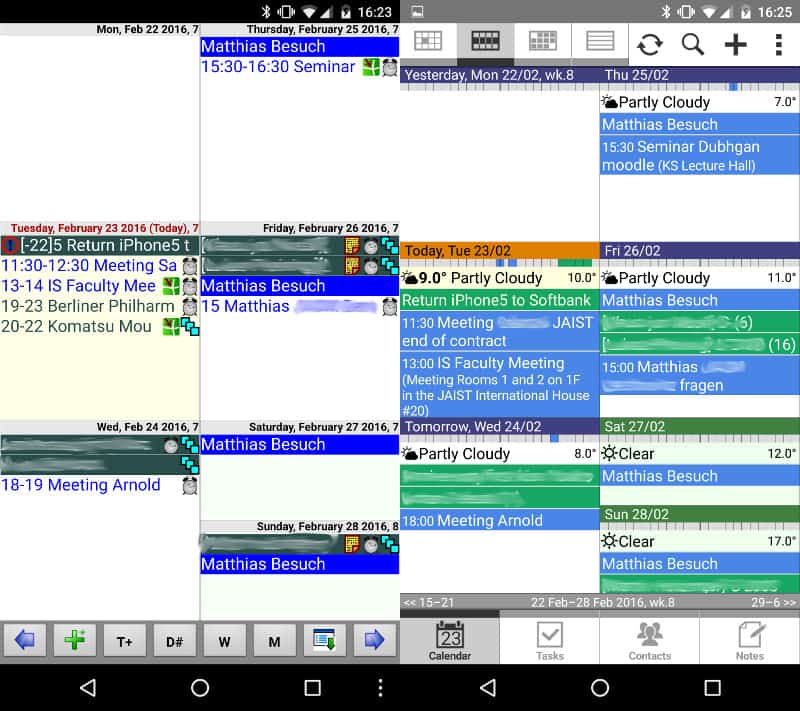
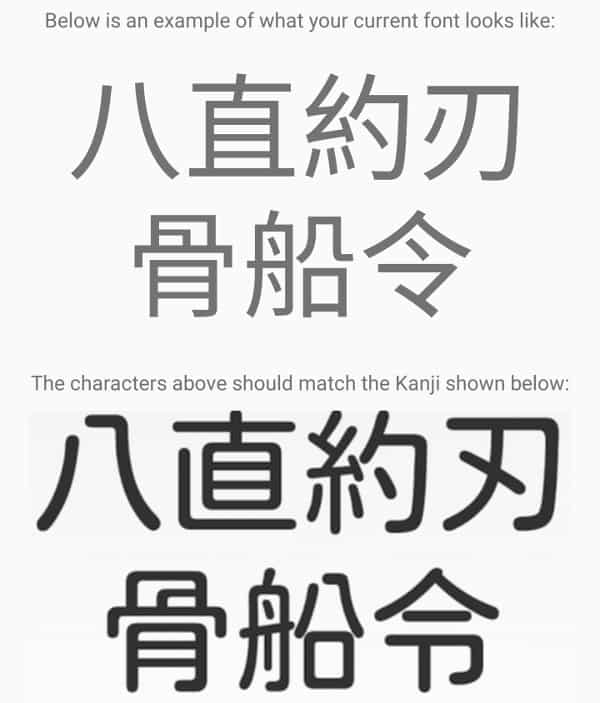
This article starts a series of blogs on my ventures into Android land after having used iOS devices for 6 years. I have never been a strong believer in the Apple ecosystem, and my trials to convince myself to MacBooks and MacPros always ended with installing Linux on them, so I guess I wasn t really the ideal target for iOS. Thus, my iOS devices were also permanently in jailbroken state, otherwise I would feel amputated. But as much as I disliked the lock-in and closed environment of the iOS world, it was from the user perspective surprisingly well done and smooth. So it was with a certain level of tension when I finally switched to Linux^WAndroid. android-ios If you don t want to read on, here the preliminary conclusion: Why didn t I do it earlier! But before we go into details, let me start with my background: History of my devices Originally I was a big opponent of smart phones and preferred the Unix-way, one device for one thing. So I had a normal phone and (various) Palm devices (Tungsten X, Tungsten C, and above all my beloved Handera TRGpro). I loved the Palm world and considered it superior to the then smart phone world, until I came to Japan, where the challenge of a proper input method for Japanese and proper Japanese support posed a big hurdle. The Palm devices had a stick and written input fields, but Japanese input was practically impossible and a huge pain. Searching for a word in Japanese was more hurdle then looking it up in a printed dictionary. In addition, I needed a phone in Japan, so I plunged into the smart phone world and got myself a iPhone (3g). What a world did open for me: easy typing of Japanese, dictionaries, on-the-fly translation, woooow! And above all, I discovered my most beloved and till now one of my most important programs: Flashcards Deluxe. Thanks, and I have to say to 80% thanks to this program my Japanese learning speed has accelerated considerably. There is nothing more important for me than getting drilled in a systematic way. But I derail, anyway, having Flashcard Deluxe on the iPhone within rather short time I had about 10000 or more flashcards created, and moving on to a different architecture (Android) was for quite some time practically impossible without loosing years of statistics and learning, so I renewed my contract after 2 years together with a iPhone 4s. Another two years passed, and these years brought an Android version of Flashcards Deluxe, as well as Dropbox syncing, so I had no excuse anymore to remain in iOS land, wouldn t it be for an iPhone 5s that was passed to me near the end of my forth year, so I again extended the contract for two years. Finally, after 6 years of iPhone devices, this January I finally decided it is time to switch to Android. After lots of thinking, comparing, and requesting advice from good friends with more experience in the smart phone market I went for a Google Nexus 6p. Google Nexus 6p I will not repeat the specs of this phone as they are widely available on the net. My original plan was a Samsung S6, but after consultation with an expert I decided for an original Google phone for better security support. That left me with the option between a Nexus 5x and 6p, and due to prize differences (prizes of mobiles are ridiculously strange in Japan) I went for the 6p instead of the 5x. One point that made the decision for this slight too big device easy was the fact that it uses a great AMOLED display. Moving the data Since I was using Google Calendar and Google Contacts already on the iPhone, moving to the Android phone was far less a hassle than I thought. My contacts and events showed up without a hiccup. Most of the usual apps are nowadays available on both iOS and Android, so the most difficult thing was remembering all the passwords to log into the applications again (SNS like G+, FB, Twitter etc). The same is more or less true for messengers of all kinds (Line, WhatsApp, Threema, etc), but here one is advised to check with the respective web site first to make sure one does not loose all of the important data. Line for example is a stupid ***** that deletes all previous chats on the old phone and does not make them available on the new one. WhatsApp can be converted with a special conversion program. Threema, too allows for transfer of ids. Move of applications After that came the hunt for replacement applications for those that are not available as is on Android: Mail At first like probably everyone I used the shipped GMail program. It might be good for Google Mail accounts, but for anything else it is just a real pain. Thus, I have searched a bit and finally settled (for now) for K-9 Mail: it is open source, open development, feature rich, and more a hackers type email program, perfectly suited to me. There is a commercial variant called K@-Mail that says that it improves the user interface and some usability items as well as features, but I didn t see much of an advantage over the original version (which is completely free) and in fact some of my accounts didn t work at all. So I remain with K9 Mail and I think this is a good decision. Calendar Managing Calendars is one of the most important task for me. I have been a fervent supporter of DateBk4, DateBk 5, and DateBk 6 on the original Palm series, and when I left the Palm World it was with great pain that I had to loose DateBk. Not only because it was a simply fantastic calendar program that allowed me to keep track of all my climbing routes, festivities, in a much more advanced way than any other Calendering application, but also because the programmer of the DateBk series is running the Dewar Wildlife Trust, a Gorilla rescue group and a lot of the money he makes from the app sales is going to rescue Gorillas. With the switch to iOS this option was gone, and I first used the built-in calendar application (which is so weak) and later and for long time Pocket Informant Pro. This is a very good program and probably the only one that can compete with DateBk with respect to functionality and usefulness. During the time of me being locked in in iOS I realized that the world has moved on and a new version of DateBk series for Java was developed, called Pimlical. First only available on Windows, it became later available also on Android and Linux, too. The following screen shot puts Pimlical on the left, and Pocket Informant on the right. I will write a more detailed comparison in future, in short: PInformant is more streamlined and polished, Pimlical has more configuration option. Practically everything can be adjusted to one s need, and in addition there is also a Desktop application that sync either with Google and the phone, or only with the phone if you want to live off the grid. pimlical-pinformant So nowadays on Android I have both Pocket Informant Pro as well as Pimlical, but after a short time I have now switched practically exclusively to Pimlical. Notes Here there is pain HUGE PAIN!!! iOS has an excellent applications for notes, called simply Notebooks. This little pearl was my work horse for everything (more or less) memorable. From poems and song texts to bus time tables, from PDF to GIFs, from MarkDown to HTML, everything could be saved into Notebooks, displayed, edited, ordered. And above all it had automatic background sync with Dropbox. So I could drop new files into the respective sub-folder of my Dropbox folder and could be sure I have the files available on my phone when I leave for a trip. And there is a huge bag of features that I haven t even tapped into! Android is unfortunately not on the list of supported architectures of Notebooks. So I searched far and wide, and without any success. There are all kind of notes, flash colors, overly simple, fast and slow, stylish and plain, but none of them did even provide half of the features of Notebooks. None, not even half. I still hope I might find the ultimate notes application, or even better would be an Android version of the original Notebooks application (but this is not high on the developers todo list), but for now I am in despair The Rest As I said, most apps are nowadays available on both platforms, so there is not much more to do than download the respective Android app and log in again. That worked very nice across practically all apps. Things I don t like (i.e., which are broken!) on Android Although a very convenient system and perfectly made to fit my taste, there are some things that are a huge pain (and a big shame on Google to not being able to fix that for long time!): Japanese fonts when the device is in English interface language In case you are a foreigner living in Japan and want your Android phone in English, but still read emails, news, etc in Japanese, then Android provides you with the worst, namely Chinese fonts: chinese-japanese-mix This is a well known problem and I have blogged about fixing the very same problem on Linux (Debian), and the solution is a simple reshuffling in the fontconfig configuration files. There is even an application for it in the Google store, Kanji Fix, but it needs a rooted device (which I haven t done till now my failure!). I can only hope that Google fixes this completely stupid problem in a future version. The Me problem Another of these beasty problems: The Android Contacts application has an entry for Me , which unfortunately, no idea why, cannot be linked with my normal me in the list of contacts. There are reports all over the Internet, strange suggestions, and no real solution. Again, a simple thing that should work but doesn t. Invisible Images folder in MTP mode A more annoying problem is that the camera folder under Photos does not show up when connecting the device in MTP mode to my computer, and as consequence me being unable to copy photos from the device to my computer. The solution I am using at the moment is moving the photos with a file manager to a new folder which is visible during MTP communcation, and copy the photos from there. But this, too, should be something trivial, but alas, despite a lot of posts on the internet I couldn t find a proper solution. Google Music As written somewhere else, Google Music has switched from 5 star system to up/down system, which is a huge pain and PITA. Things I do like (or I discovered) on Android There are some things I haven t been used/tried on iOS they might be possible which I really like: Yubikey Neo support I will write about this in a different blog, but nowadays I have my GPG keys on an hardware token (Yubikey Neo) and the application OpenKeychain on Android works nicely with both K9 Mail and via NFC with my Yubikey. That is a great tool! Bluetooth streaming Bluetooth on iOS devices was always a bit broken for me, so connecting my phone to my old car radio I needed radio transmitter that was connected to the cable port of the iPhone. With Android I use a Bluetooth Radio device (receives data via bluetooth, and sends music out via radio waves for a car stereo to receive them). Now if my monthly data limit wouldn t be that low  Debian on Android Yes, you can have a full Debian system running in your terminal on Android. There are several applications providing this feature, and I am rather surprised how smooth it works. Conclusion My preliminary conclusion is that the switch to Android at this time was perfectly timed, and from the technological side I should have done much earlier. In future blogs I will discuss particular instances of this transition in more details. If you have any suggestion for me, in particular for a good notes taking application, please let me know!
17 February 2016

Riku Voipio: Ancient Linux swag

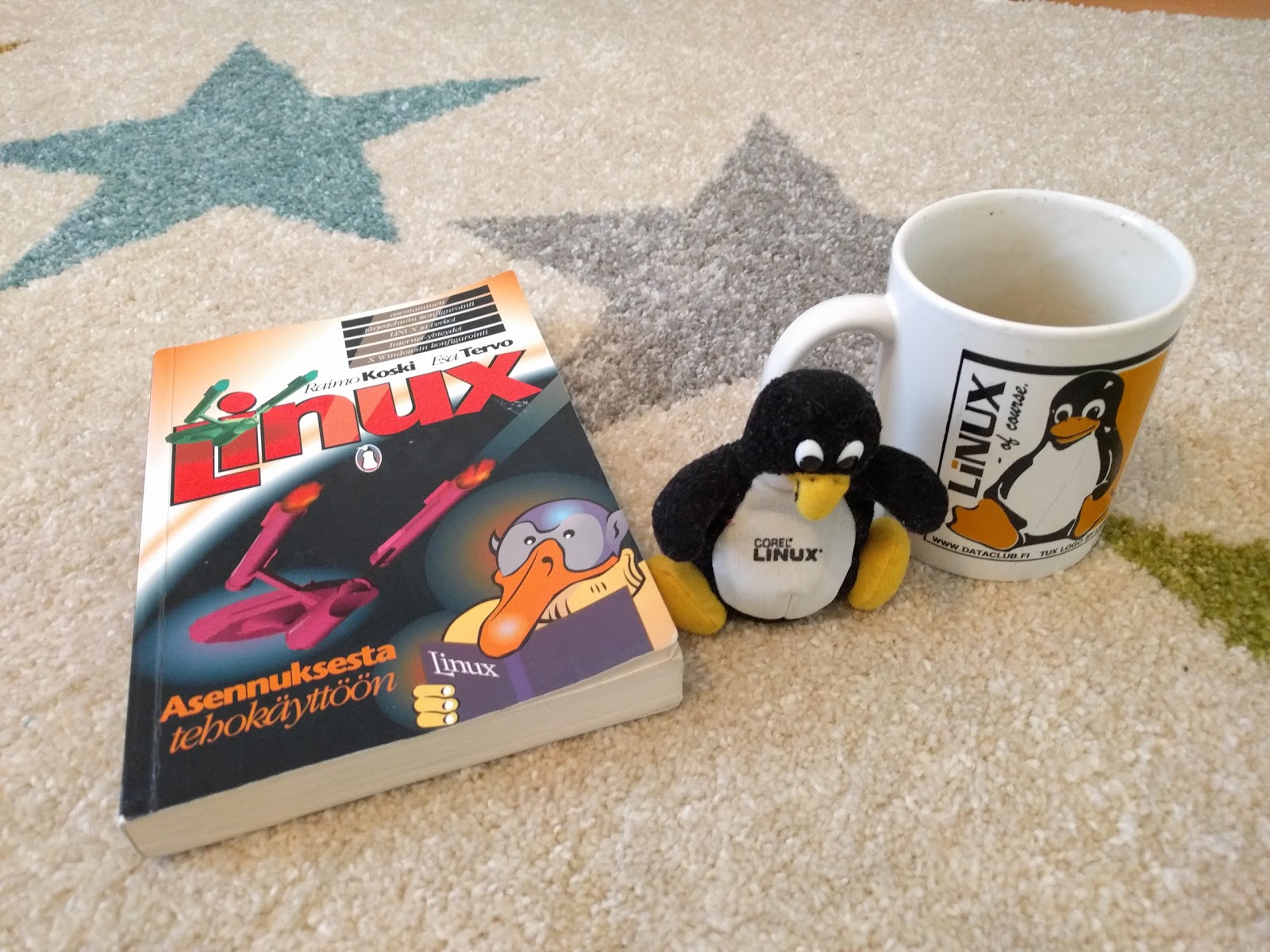
Since I've now been using Linux for 20 years, I've dug up some artifacts from the early journey.
  1. First the book, from late 1995. This from before Tux, so the penguin in the cover is just a co-incidence. The book came with a slackware 3.0 CD, which was my entrance to Linux. Today, almost all of the book is outdated - slackware and lilo install? printing with lpr? mtools and dosemu? ftp, telnet with SLIP dialup? Manually configuring XFree86 and fvwm? How I miss those times!* The only parts of the book are still valid are: shell and vi guides. I didn't read latter, and instead imported my favorite editor from dos FTE.
  2. Fast forward some years, into my first programming job. Ready to advertise the Linux revolution, I bought the mug on right. Nobody else would have a Tux mug, so nobody would accidentally take my mug from the office dishwasher. That only worked for my first work place (a huge and nationally hated IT consultant house). The next workplace, a mobile gaming startup (in 2001, I was there before it was trendy!) - and there was already plenty of Linux mugs when I joined...
  3. While today it may be hard to imagine, those days using Microsoft office tools was mandatory. That leads to the third memorabilia in the picture. Wordperfect for Linux existed for a brief while, and in the box (can you imagine, software came in physical boxes?) came a Tux plush.
* Wait no, I don't miss those times at all

Antoine Beaupr : My free software activities, february 2016

Debian Long Term Support (LTS) This is my third month working on Debian LTS, started by Raphael Hertzog at Freexian. This month was my first month working on the frontdesk duty and did a good bunch of triage. I also performed one upload and reviewed a few security issues.

Frontdesk duties I spent some time trying to get familiar with the frontdesk duty. I still need to document a bit of what I learned, which did involve asking around for parts of the process. The following issues were triaged:
  • roundcube in squeeze was happily not vulnerable to CVE-2015-8794 and CVE-2015-8793, as the code affected was not present. roundcube is also not shipped with jessie but the backport is vulnerable
  • the php-openid vulnerability was actually just a code sample, a bug report comment clarified all of CVE-2016-2049
  • ffmpeg issues were closed, as it is not supported in squeeze
  • libxml2 was marked as needing work (CVE-2016-2073)
  • asterisk was triaged for all distros before i found out it is also unsupported in squeeze (CVEs coming up, AST-2016-001, AST-2016-001, AST-2016-001)
  • libebml and libmatroska were marked as unsupported, although an upload of debian-security-support will be necessary to complete that work (bug #814557 filed)

Uploads and reviews I only ended up doing one upload, of the chrony package (CVE-2016-1567), thanks to the maintainer which provided the patch. I tried my best trying to sort through the issues with tiff (CVE-2015-8668 and CVE-2015-7554), which didn't have obvious fixes available. OpenSUSE seem to have patches, but it is really hard to find them through their issue trackers, which were timing out on me. Hopefully someone else can pick that one up. I also tried and failed to reproduce the cpio issue (CVE-2016-2037), which, at the time, didn't have a patch for a fix. This ended up being solved and Santiago took up the upload. I finally spent some time trying to untangle the mess that is libraw, or more precisely, all the packages that embed dcraw code instead of linking against libraw. Now I really feel even more strongly for the Debian policy section 4.13 which states that Debian packages should not ship with copies of other packages code. It made it really hard to figure out which packages were vulnerable, especially because it was hard to figure out which versions of libraw/dcraw were actually vulnerable to the bug, but also just plain figure out which packages were copying code from libraw. I wish I had found out about secure-testing/data/embedded-code-copies earlier... Still, it was interesting to get familiar with codesearch.debian.net to try to find copies of the vulnerable code, which was not working so well. Kudos to darktable 2.0 for getting rid of their embedded copy of libraw, by the way - it made it completely not vulnerable to the issue, the versions in stretch and sid not having the code at all and older versions having non-vulnerable copies of the code.

Issues with VMs again I still had problems running a squeeze VM - not wanting to use virtualbox because of the overhead, I got lost for a bit trying to use libvirt and KVM. A bunch of issues crept up: using virt-manager would just fail on startup with an error saying interface mtu value is improper, which is a very unhelpful error message (what is a proper value??) - and, for the record, the MTU on eth0 and wlan0 is the fairly standard 1500, while lo is at 65536 bytes, nothing unusual there as far as I know. Then the next problem was actually running a VM - I still somewhat expected to be able to boot off a chroot, something I should definitely forget about it seems like (boot loader missing? not sure). I ended up calling virt-install with the live ISO image I was previously using:
virt-install --virt-type kvm --name squeeze-amd64 --memory 512 --cdrom ~/iso/Debian/cdimage.debian.org_mirror_cdimage_archive_6.0.10_live_amd64_iso_hybrid_debian_live_6.0.10_amd64_gnome_desktop.iso --disk size=4 --os-variant debiansqueeze
At least now I have an installed squeeze VM, something I didn't get to do in Virtualbox (mostly because I didn't want to wait through the install, because it was so slow). Finally, I still have trouble getting a commandline console on the VM: somehow, running virtsh console squeeze-amd64 doesn't give me a login terminal, and worse, it actually freezes the terminal that I can actually get on virt-viewer squeeze-amd64, which definitely sounds like a bug. I documented a bit more of that setup in the Debian wiki KVM page so hopefully this will be useful for others.

Other free software work I continued my work on improving timetracking with ledger in my ledger-timetracking git repository, which now got a place on the new plaintextaccounting.org website, which acts as a portal for ledger-like software projects and documentation.

Darktable 2.0 I had the pleasure of trying the new Darktable 2.0 release, which only recently entered Debian. I built a backport for jessie, which works beautifully: much faster thumbnail rendering, no dropping of history when switching views... The new features are great, but I also appreciate how they are being very conservative in their approach. Darktable is great software: I may have trouble approaching the results other are having with lightroom and snapseed, but those are proprietary software that I can't use anyways. I also suspect that I just don't have enough of a clue of what I'm doing to get the results I need in Darktable. Maybe with hand-holding, one day, I will surpass the results I get with the JPEGs from my Canon camera. Until then, I turned off RAW exports in my camera to try and control the explosion of disk use I saw since I got that camera:
41M     2004
363M    2005
937M    2006
2,2G    2007
894M    2008
800M    2009
1,8G    2010
1,4G    2011
9,8G    2012
31G     2013
26G     2014
9,8G    2015
The drop in 2015 is mostly due to me taking less pictures in the last year, for some reason...

Markdown mode hacks I ended up writing some elisp for the markdown mode. It seems I am always writing links like [text](link) which seems more natural at first, but then the formatting looks messier, as paragraph wrapping is all off because of the long URLs. So I always ended up converting those links, which was a painful series of keystrokes. So I made a macro, and while I'm a it, why not rewrite it as a lisp function. Twice. Then I was told by the markdown-mode.el developers that they had already fixed that (in the 2.1 version, not in Debian jessie) and that the C-c C-a r key binding actually recognized existing links and conveniently converted them. I documented my adventures in bug #94, but it seems I wrote this code for nothing else than re-learning Emacs lisp, which was actually quite fun.

More emacs hacking Another thing I always wasted time doing by and is "rename file and buffer". Often, you visit a file but it's named wrong. My most common case is a .txt file that i rename to .mdwn. I would then have to do:
M-x rename-file <ret> newfile
M-x rename-buffer <ret> newfile
C-x C-s <ret> newfile
Really annoying. Turns out that set-visited-file-name actually does most of the job, but doesn't actually rename the file, which is really silly. So I wrote this small function instead:
(defun rename-file-and-buffer (newfname)
  "combine rename-file and rename-buffer
set-visited-file-name does most of the job, but unfortunately
doesn't actually rename the file. rename-file does that, but
doesn't rename the buffer. rename-buffer only renames the buffer,
which is pretty pointless.
only operates on current buffer because set-visited-file-name
also does so and we don't bother doing excursions around.
"
  (interactive "GRename file and bufer: ")
  (let ((oldfname (buffer-file-name)))
    (set-visited-file-name newfname nil t)
    (rename-file oldfname newfname)
    )
  )
Not bound to any key, really trivial, but doing this without that function is really non-trivial, especially since set-visited-file-name needs special arguments to not mark the file as modified.

IRC packages updates I updated the Sopel IRC bot package to the latest release, 6.3.0. They have finally switched to Requests, but apart from that, no change was necessary. I am glad to finally see SNI support working everywhere in the bot! I also update the Charydbis IRC server package to the latest 3.5.0 stable release. This release is great news, as I was able to remove 5 of the 7 patches I was dragging along the Debian package. The previous Charybdis stable release was over 3 years old, as 3.4.2 was released in (December) 2012! I spend a good chunk of time making the package reproducible. I filed a bug upstream and eventually made a patch to make it possible to hardcode a build timestamp, which seems to have been the only detectable change in the reproducible build infrastructure. Charybdis had been FTBS for a while in sid now, and the upload should fix that as well. Unfortunately, Charybdis still doesn't build with hardening flags - but hopefully a future update of the package should fix that. It is probably because CFLAGS are not passed around properly. There's really interesting stuff going on in the IRC world. Even though IRC is one of the oldest protocols still in operation (1988, even before the Web, but after SMTP and the even more venerable FTP), it is still being actively developed, with a working group drafting multiple extensions to the IRCv3 protocol defined in RFC 1459. For example, IRCv3.3 includes a Strict Transport Security extension, which tries to ensure users use encrypted channels as much as possible, through warnings and STARTTLS support. Charybdis goes even further by proposing a reversal of the +S ("secure channel" flag) where all channels are secure by default, and you need to deliberately mark a channel as insecure with the +U flag if you actually want to allow users on an clear-text connection to join the channel. A transition mechanism is also proposed.

Miscellaneous bug reports En vrac... I fell face-first in this amazing game that is endless-sky. I made a small pull request on the documentation, a bug report and a feature request. I forwarded a bug report, originally filed against monkeysign, to the pyqrencode maintainers. I filed a usability bug against tails-installer, which just entered Debian, mostly usability issues. I discovered the fim image viewer, which re-entered Debian recently. It seemed perfect to adjust my photos-import workflow, so I added it to my script, to be able to review photos prior to importing them into Darktable and git-annex.

16 February 2016

Norbert Preining: Debian/TeX Live 2015.20160215-1

About one month has passed and here is the usual updated of TeX Live packages for Debian. While I am not really calling for testers at the moment, building of preliminary packages for TeX Live 2016 has begone. The binaries are already uploaded to experimental, and arch=all packages for experimental will follow soon. Debian - TeX Live 2015 As with the last time, here is the list of new and updated pacakges with (auto-generated) links to the package pages on CTAN. New packages adtrees, babel-occitan, crimson, emisa, glossaries-extra, gloss-occitan, libertinus, luatex-def, mynsfc, nihbiosketch, signchart, smartunits, tikz-feynman, uhrzeit, xduthesis. Updated packages achemso, acro, animate, apnum, archaeologie, babel, babel-french, babel-greek, babel-macedonian, bangorcsthesis, biblatex-bookinarticle, biblatex-gost, biblatex-manuscripts-philology, br-lex, caption, chemgreek, chemmacros, chemnum, cmtiup, csplain, csquotes, ctanify, ctex, cweb, datatool, datetime2, datetime2-english, delimseasy, droit-fr, dvips, erewhon, exsheets, fibeamer, fira, fontspec, forest, geschichtsfrkl, glossaries, graphics, greek-fontenc, greektonoi, hyph-utf8, inconsolata, isodoc, l2tabu, l3build, l3experimental, l3kernel, l3packages, latex, latex-bin, latex-make, leadsheets, leaflet, luaotfload, luatexja, mathastext, mcf2graph, mcmthesis, media9, metrix, mhchem, ndsu-thesis, newpx, newtx, ocgx2, pas-tableur, pdftex, pdfx, pict2e, pst-perspective, pstricks, pstricks-add, ptex, quran, ran_toks, realscripts, schemata, showhyphens, siunitx, sr-vorl, sttools, tempora, tetex, tex4ht, texfot, texlive-scripts, thinsp, thuthesis, tkz-orm, tools, uantwerpendocs, ulthese, unicode-data, uptex, xassoccnt, xcjk2uni, xebaposter, xecjk, xetex, xetexko, xltxtra, xpinyin, zhnumber, zhspacing. Enjoy.

9 February 2016

Ingo Juergensmann: Letsencrypt - when your blog entries don't show up on Planet Debian

Recently there is much talk on Planet Debian about LetsEncrypt certs. This is great, because using HTTPS everywhere improves security and gives the NSA some more work to decrypt the traffic. However, when you enabled your blog with a LetsEncrypt cert, you might run into the same problem as I: your new article won't show up on Planet Debian after changing your feed URI to HTTPS. The reason seems to be quite simple: planet-venus, which is the software behind Planet Debian seems to have problems with SNI enabled websites. When following the steps outlined in the Debian Wiki, you can check this by yourself:
INFO:planet.runner:Fetching https://blog.windfluechter.net/taxonomy/term/2/feed via 5
ERROR:planet.runner:HttpLib2Error: Server presented certificate that does not match host blog.windfluechter.net: 'subjectAltName': (('DNS', 'abi94oesede.de'), ('DNS', 'www.abi94oesede.de')), 'notBefore': u'Jan 26 18:05:00 2016 GMT', 'caIssuers': (u'http://cert.int-x1.letsencrypt.org/',), 'OCSP': (u'http://ocsp.int-x1.letsencrypt.org/',), 'serialNumber': u'01839A051BF9D2873C0A3BAA9FD0227C54D1', 'notAfter': 'Apr 25 18:05:00 2016 GMT', 'version': 3L, 'subject': ((('commonName', u'abi94oesede.de'),),), 'issuer': ((('countryName', u'US'),), (('organizationName', u"Let's Encrypt"),), (('commonName', u"Let's Encrypt Authority X1"),)) via 5
I've filed bug #813313 for this. So, this might explain why your blog post doesn't appear on Planet Debian. Currently there seem 18 sites to be affected by this cert mismatch.
Kategorie:

Next.

Previous.