Search Results: "hug"

17 July 2014

Tiago Bortoletto Vaz: HOPE X ical for schedule

As Adirondack (train line MTL-NYC) is not Internet-friendly for RSS feeds I can't profit of my ~11h travelling to check this huge schedule in the way I want to, (= having a timetable view including room, description and speakers). HOPE X has just released a pdf and a xls (wtf??), but these contain only titles and room. So I've coded an ics generator to process their feed. The result file is available at http://acaia.ca/hopex.ics and should be up to date with the original RSS.

16 July 2014

Juliana Louback: Become an Open-source Contributor Video Conference

A couple weeks ago I was contacted by Yehuda Korotkin through one of the Debian mailing lists. Yehuda is a tech professor at one of Israel s leading colleges for women. He proposed a video conference to present the open source community to his class and explain how they can contribute to open source projects. I volunteered to participate and last Monday (July 14th 2014) we had our virtual meeting, which I hope was the first of many. Shauna G. also participated from Boston, making it a Israel - USA - Brazil meetup. Pretty impressive, eh? The conference was hosted on Google Hangouts, the video is available for viewing here. Run time is around 2.5 hours so to save you time I ve kindly posted a summary of the conference! To be frank, I look ghastly half the time so I d much prefer that you read this post. First there was a Q&A period which was more of a discussion panel, followed by a hands-on session where the girls made their first contribution to an open source project. Here s the gist of it: Q&A Hands on For the practical part of our conference, Yehuda s students contributed to Jscommunicator s Issue #5 which requests i18n support for major languages. JSCommunicator is a SIP communication tool developed in HTML and JavaScript, currently supporting audio/video calls and SIP SIMPLE instant messaging. First we set up Github in their local machines and forked the Jscommunicator repo. We learned the basic git commands needed to push changes to their remote repositories and to create a pull requests. This is explained in further detail here. At the end of the conference with nearly an hour overtime due to my tendency to be overly verbose, Yehuda s class made their first contribution with a Hebrew translation for Jscommunicator! All in all, it was great to virtually meet Yehuda and his epic students who all seemed very clever engineers. I m looking forward to our next meetup once I gain some time-management skills.

11 July 2014

Steve Kemp: A partial perl-implementation of Redis

So recently I got into trouble running Redis on a host, because the data no-longer fits into RAM. As an interim measure I fixed this by bumping the RAM allocated to the guest, but a real solution was needed. I figure there are three real alternatives: Looking around I found a couple of Redis-alternatives, but I was curious to see how hard it would be to hack something useful myself, as a creative solution. This evening I spotted Protocol::Redis, which is a perl module for decoding/encoding data to/from a Redis server. Thinking "Ahah" I wired this module up to AnyEvent::Socket. The end result was predis - A perl-implementation of Redis. It's a limited implementation which stores data in an SQLite database, and currently has support for: It isn't hugely fast, but it is fast enough, and it should be possible to use alternative backends in the future. I suspect I'll not add sets/hashes, but it could be done if somebody was keen.

1 July 2014

Russ Allbery: Review: Ancillary Justice

Review: Ancillary Justice, by Ann Leckie
Series: Imperial Radch #1
Publisher: Orbit
Copyright: 2013
ISBN: 0-316-24662-X
Format: Trade paperback
Pages: 416
As Ancillary Justice opens, Breq is on an icy planet trying to track down a person who has gone rather thoroughly to ground. As her search continues, the reader slowly learns the context of that search, which is only the latest step of a long and quixotic exercise in private determination. She was set on her path by events twenty years previous, told in interleaved flashbacks, that have left her greatly diminished and thrust outside of any of the context of her over thousand years of life. Breq was Justice of Toren, a starship and AI that possessed thousands of ancillaries, human bodies slaved to her mind. Now only this one remains, and nothing exists of her former life other than this goal. It's always hard to write a review of a book that I loved this much. I want to find some way to grab the reader and shake them and say "you have to read this!" without giving away any of the delicious details. That's particularly difficult with Ancillary Justice, since one of the delights of this book is the slow unfolding of not only the plot but the background and motivations behind the plot. There is so much beneath the surface of Breq's methodical intent, and discovering all the nuances is utterly delightful. This is also a book that is very deeply concerned with identity, and which does one of the best jobs I've seen in science fiction of showing a non-human first-person protagonist: close enough to human to permit identification and comprehension, but far enough away for delightful sparks of unexpected insight or thought-provoking difference. Breq is a ship, and AIs are central to this story, so the comparison that comes immediately to mind is with Iain M. Banks. Leckie's role for ship AIs is much different than the structure of Banks's Culture, but I think this is still an apt comparison. Like Banks, Leckie is writing large-scale space opera dominated by a meddling empire that follows some familiar human patterns but not others. Banks's Culture takes a less direct approach with its meddling; the Radch has a more Roman attitude towards preventative conquest and citizenship. But both deal with large-scale issues of politics, culture, and conquest. Both also write excellent AIs, but I think Leckie is more successful than Banks at giving her AIs inhuman properties and creating a sense of eerie alienness that sometimes fades almost entirely and sometimes comes sharply to the surface. The first-person perspective helps considerably there. But where Ancillary Justice truly shined for me is in the interpersonal relationships, and in the insight they provided into character and motive. At the start of the book, Breq finds a drug addict dying in the cold and rescues her, bringing her along on her search for lack of a better option. Breq's relationship with Seivarden is complex, difficult for both of them, badly asymmetric at the start, and develops into something brilliant. At the start of the book, Seivarden is easy to dislike, and Breq's tone is refreshingly bracing and forthright. But through the course of the book Seivarden grows into something much more, in a way that I found both believable and incredibly compelling. And Leckie does this without falling into any of the typical relationship patterns, without introducing artificial romance (or, indeed, any romance at all, which is an excellent choice here), and without compromising the personalities of either character. It's masterfully done. One of the most amazing things about this book to me is that it's a first novel. I never would have guessed that from reading it. It's beautifully paced, the characterization is deep and compelling, and Leckie avoids any sign of the typical first-novel problem of stuffing the book with too much Stuff. Ancillary Justice is a capable and confident novel that builds a compelling world and even more compelling characters. I liked it more than I like most of the Culture novels, which is saying quite a lot, but Leckie offers much of the same scope with deeper and more personal characterization and a tighter plot. I haven't yet remarked on one aspect of this book that every other review seems to remark on: its treatment of gender. The Radch do not recognize or care about gender distinctions, and therefore Breq struggles throughout the book with proper gender labeling in much the same way that a native English speaker tends to struggle with grammatical gender when learning a Romance language, except with more social consequences. Leckie has chosen to represent this in the novel by having Breq refer to everyone uniformly as "she." This has its pluses and minuses: it still supports a binary gender concept where a gender-neutral pronoun might not, but given all the negative reaction this book got just for using "she," a gender-neutral pronoun might be a bridge too far for a lot of readers. I thought it created a nice bit of alienation, a way of forcing the reader to look at gender markers from the outside and a way to point out how arbitrary many of them are. It was also interesting to see how surprised I was at various points in the book when it became obvious that some person Breq had been calling "she" in the first-person narration turned out, from story context, to probably be male. That said, I think this part of the book is overblown in reviews. It's often the first thing people mention, but while it was a nice side bit of world-building, I don't think it's that central to the story. I'm particularly baffled by the handful of people who complained about it, since it's not intrusive and it quickly fades into the background apart from occasional necessary shifts of mental image. (It does create the impression of a world containing only women, but I found that a nice change from the more common impression in space opera of a world containing only men.) Ancillary Justice has already won the Nebula and Arthur C. Clarke awards and tied for the BSFA award for best novel, and I'm happy to report that it deserves all of those. I haven't yet read all of the other Hugo nominees, but it's hard to imagine a world in which it won't top my ballot. This is a fantastic novel, by far the best thing I've read so far this year. I'm delighted that it's the first book of a trilogy, since I'm not done with either the world or the characters yet, but it stands well on its own and reaches a satisfying conclusion. I recommend it to everyone, but particularly to anyone who likes Banks, intelligent ships, or who is looking for thoughtful and complex space opera. Followed by Ancillary Sword. Rating: 10 out of 10

30 June 2014

Russ Allbery: Review: The Knowledge

Review: The Knowledge, by Lewis Dartnell
Publisher: Penguin
Copyright: 2014
ISBN: 0-698-15165-8
Format: Kindle
Pages: 328
The cover pitch for The Knowledge is that technological civilization has collapsed. A war, an asteroid, a pandemic, or some other catastrophic event has ended life as we know it. Survivors have recovered enough to stabilize the population, but all the industry and infrastructure that supports the modern world has been crippled and the knowledge lost. What do they need to know to rebuild the world? (The subtitle, How to Rebuild Our World from Scratch, is deceptive. Dartnell spends a lot of time talking about what could be scavenged from the ruins after an event like a pandemic that leaves buildings and tools intact.) This brief description may bring several incorrect ideas to mind, so a few clarifications are in order. First, this is not a book about how to survive an apocalypse, or how to stabilize society afterwards. Dartnell skips over anything related to basic survival or politics, and this book would only be of limited interest to preppers. Rather, it is focused on the key concepts and key processes that underlie much of what makes up our civilization, and how those processes can be bootstrapped and recreated, hopefully much more quickly than the thousands of years they took to develop the first time around. Second, as much as I think Dartnell would have liked it to be, The Knowledge is not an instruction manual. There's just too much involved in modern machinery, metallurgy, chemistry, and other necessary science and engineering. What it is instead is a tour of the most important ideas, basic processes, and approaches that can lead to creation of an industrial economy. This means it's also a tour of the most critical technology and discoveries that we rely on for day-to-day living. Each idea presented here is a bare sketch, and would require extensive research and experimentation to put into practice. The Knowledge is not a scientific encyclopedia. Rather, it's a collection of signposts and suggested directions along with some suggestions about sequencing, with special emphasis on the ideas that were unintuitive or surprising, or which took humans much longer to stumble across than would have been necessary. I will say up front that I am quite dubious about the stated goal of this book. I'm not sure if it would be of significant assistance to people who found themselves in the circumstances that Dartnell postulates, and I'm also not sure it would be as difficult as Dartnell supposes to reconstruct these details from a good library, although the point is well-taken that most modern industrial techniques would be unavailable to a civilization starting from scratch and many historic techniques are no longer practiced and therefore not well-documented. But this book does not have to succeed at its stated goal to be worth reading. The Knowledge provides a fascinating insight into the way our current capabilities developed, other paths that development could have followed, and what building blocks are vital for the industry that we rely on. If you are like me, the first thing The Knowledge will remind you of is Minecraft, particularly with some of the mods (such as TerraFirmaCraft) that add more realistic detail to the technological bootstrapping. It's a treasure trove for anyone who might be working on that sort of mod or game. Dartnell tries to cover as much of the spectrum of technology as possible, from farming through medicine, from basic materials to industrial chemistry, and from electrical power through transportation. Each chapter necessarily covers only the highlights, the most vital technologies and the early priorities, and many of those are relatively vague pointers. But that's enough for a fascinating orientation. It's also full of memorable trivia: the huge variety of uses to which wood can be put, the difficulty in re-establishing production of industrial acids, the shelf life of gasoline, the global seed vault within the Arctic Circle, and the importance of a long-threaded screw for a lathe, just to name a few examples. In short, The Knowledge may or may not be a practical aid in rebuilding the world, but it's a lot of fun to read and full of tidbits that are fun to think about or pass on to others. It's also a great orientation in applied technology. The Knowledge is particularly fascinating if you have any interest in the simplified recreation of technological and industrial processes, such as in Minecraft and similar games. For authors of Minecraft mods who are aiming for realism, it might even be required reading. I'd love to see more mods based heavily on the approaches described in this book. The Knowledge also conveys, better than any book or course I've seen, an intuitive feel for the amazing complexity and ingenuity underlying industrial technology. I pre-ordered a copy of this book as soon as I heard about it, and I was not disappointed. Despite my certainty that I would be one of the early casualties in any general social collapse, I thoroughly enjoyed reading it, and would like to read it again at some point. Recommended, albeit with the caveat that I do not have the background required to verify any of the facts in this book, and am assuming that Dartnell has done his research properly. Rating: 9 out of 10

27 June 2014

Russ Allbery: Review: Due Diligence

Review: Due Diligence, by David Roodman
Publisher: Center for Global Development
Copyright: 2012
ISBN: 1-933286-48-2
Format: Trade paperback
Pages: 335
Due Diligence: An Impertinent Inquiry into Microfinance is a detailed analysis of the effects, philosophy, approaches, and merits of microfinance as an institution and as, increasingly, a charitable focus of the developed world. The author, David Roodman, was a senior fellow at the Center for Global Development at the time of writing this book, and is an expert in microfinance and economic development. This book starts as an overview and a history of the spectrum of microfinance institutions (something I found very valuable, since I knew very little about microfinance prior to Kiva's popularity), and then attempts a critical, data-driven analysis of whether, to what extent, and by which measures microfinance is successful. The most common aspect of microfinance, made popular and prominent by Kiva among others, is microcredit: small loans to people in developing countries. The underlying theory of microcredit is that lack of financial services handicaps prospective entrepreneurs and business owners in the third world, preventing them from growing businesses, funding expansion, and moving out of poverty. By extending relatively small amounts of credit to these people, or so the theory goes, they can better smooth out the uncertainties of day-to-day life and get the necessary capital to expand small local business. Microcredit is not the only type of microfinance, though, and Roodman's careful discussion of that point was one of the most informative parts of this book for me. It can also come in the form of microsavings tiny bank accounts or small-scale savings plans or microinsurance. Roodman makes a very interesting argument that these three forms of microfinance form two opposing continuums. Microcredit is the easiest to provide and microinsurance is the hardest, for many reasons he discusses including some that were surprising to me, but microinsurance is arguably the most helpful and beneficial to the individual poor and microcredit is the least. The opening history and survey does an excellent job showing the range of techniques and approaches used in microfinance, and showing the challenges of providing it. I had some vague understanding of the logistical challenges in serving areas far away from traditional infrastructure. I had much less understanding of the fascinating array of techniques in use, both inside and outside what's become the microfinance industry. Some of these techniques are brilliant examples of human economic creativity and skill at balancing incentives with risk protection. There are a much wider variety of approaches and instruments available than the individual or group loans that one typically sees on a site like Kiva, all with different trade-offs in group size, flexibility, rigidity, risk, and complexity. This book is well worth reading just to get a feel for the huge array of financial arrangements possible outside of the traditional banking structures that most readers of this review are used to. Another question Roodman answers thoroughly is why microfinance is so focused on microcredit. My vague unease with that was strengthened by reading David Graeber's Debt, which among many other things makes clear some of the social perils and power imbalances in lending. Due Diligence both crystallized that discomfort and explained why alternatives are difficult. Both microsavings and microinsurance necessarily involve considerably more regulation (which has both advantages and complexity), since they involve taking and safeguarding people's money and promising service in the future. Lenders require less trust; lenders instead extend trust and assume that risk themselves, and are in a position to do so. Microinsurance is also harder to explain and harder to target, although it is potentially the most helpful financial instrument when well-targeted. And microcredit can absorb huge influxes of capital from the outside, lending it out in a region, while both microsavings and microinsurance are necessarily built on the money already in the local economy and are inherently more resistant to external involvement. (I'm of the opinion this is a significant feature, but it makes it far harder for them to catch on as a charitable trend.) The heart of the book is a hard look at whether microfinance, and particularly microcredit, works. Roodman attempts this analysis for three different definitions of working: lifting people out of poverty (the most commonly claimed success), giving people more freedom and control over their lives even if their poverty level does not change in absolute terms, and developing the local economy. Sadly for charities like Kiva, microcredit does surprisingly poorly on the first two metrics. There is still little clear data, and the degree to which data from one region is applicable to a different region is highly debatable, but what evidence we have does not support the theory that microcredit lifts people out of poverty. In fact, the more intense the microcredit, the more likely it appears to be that credit pathologies common in the developed world, such as taking out loans from one organization to pay off loans from another, spirals of debt that is unlikely to ever be repaid, and aggressive debt collection methods, turn up in microcredit as well. The vision of the entrepreneur who succeeds through new-found access to capital is largely a myth. Indeed, the current packaging and presentation of loans to distant charities in developed countries means that even the supposed purpose of the loans is dubious. Loans are almost always presented as being for some sort of business activity, since that's what external charities want to fund, but money is fungible and the funds are more often used for all the things people normally need to use funds for: weddings, funerals, food for the family in hard times, paying off other loans to relatives, and other daily expenses. On the empowerment front, microcredit fairs little better, and here I particularly appreciated Roodman's clear-eyed and honest portrayal of common microcredit practices and their benefits for the creditors. For example, microcredit makes much of loaning to women, and presents this as a story of female empowerment. Roodman argues that there is some reality behind that, but it's also clear that microcredit organizations loan to women because women are more likely to repay not due to any inherent gender trait, but because women are easier to intimidate and shame into repaying. Similarly, the much-vaunted group loans, usually presented as a way for the community to support each other and teach each other financial skills, are most common in the poorest regions because they represent an outsourcing of costs. The main risk to the lender is that poor people have no such thing as credit histories, and detailed investigations of someone's trustworthiness is expensive. Groups are jointly liable and therefore will police themselves and check each other's reliability at no cost to the lender. Groups will also use intimidation tactics and even violence against members who don't or can't repay their share, without the lender having to get involved or have any responsibility for those tactics. Roodman takes a philosophical tone on this topic, noting several times that services for the very poor are generally of low quality and finance is no exception. I'm less inclined to be philosophical; after reading this book, I find it very hard to support group loans. This leaves economic development as the most compelling argument left for microcredit. This is weak tea for people like myself who wanted to believe in the transformative power of microcredit, but Roodman does a solid job explaining why it's still important. There is a great deal to be said for the perspective that only industrialization actually lifts people out of poverty on any substantial scale, and therefore the most useful type of aid is aid that somehow contributes towards industrialization. Building a native financial industry could arguably be such a step. And there seems to be some real merit and lasting effect to having a richer and more capable set of local financial institutions. However, here, it's not at all clear that external money helps. In fact, there's quite a bit of evidence that external money hurts, since it pushes microfinance institutions to find ways of using that money and pleasing external donors instead of building their infrastructure and capabilities as financial institutions. The earlier institutions, such as the Grameen Bank, seem to have done a better job at being local institutions woven into the local economy than have the later organizations that are largely supported by western donors. Roodman makes a good case for the usefulness of microfinance as a part of economic development, but it comes with a strong argument against too much external funding, and particularly against the practice of developed world donors funding specific loans. I came away from this book feeling like I had a much better understanding of the core problems and techniques of financial services for the poor, and with a strong desire to see more microsavings than microcredit. The two are closer in nature than I had expected, and Roodman's analysis of the similarities was fascinating, but microsavings seems less vulnerable to some of the credit pathologies. There is also some statistical evidence that microsavings does provide some modest reductions in poverty, while the evidence for microcredit is much less compelling. Sadly, from the perspective of a resident of the developed world such as myself who would very much like to help, neither microsavings nor effective microcredit seems likely to benefit from my contributions, and particularly not in the form of a site like Kiva. The end of this book is a long appendix that reprints multiple blog posts on related topics, including additional discussion of the problems with the Kiva model. Effectively, Kiva is a way for people like myself to subsidize microcredit organizations. It's not at all clear that subsidies are needed, and there's some reason to believe that they encourage negative and destructive behavior. The way they are marketed involves a certain amount of lying, or at least distortion, on the part of multiple actors in the microcredit picture. And they're a distraction from microsavings, and from microcredit based on loaning out savings from within the same local economy, both of which seem to have considerably more positive properties. Due Diligence is a book with a somewhat narrow target audience. It will appeal primarily to people with an interest in economics, particularly development economics, or who are evaluating microfinance charities or analyzing their support of groups like Kiva. But within that context, this is an excellent book, and I recommend it to your attention. Roodman is clear, thorough, and fair within my ability to measure that, and while no one book can be the final word on a topic, he adds considerable data and thoughtful analysis. If you are a supporter of Kiva, like I was, I fear you'll find this book rather discouraging. But it's better to have the information than not, and I found it a good reminder of the inherent drawbacks of loans and debt. There is, sadly, nothing magical about microcredit that removes those problems. Rating: 9 out of 10

18 June 2014

Matthias Klumpp: Tanglu 2 (Bartholomea annulata) status update #1

bartholomea-annulata

Bartholomea annulata (c) Kevin Bryant

It is time for a new Tanglu update, which has been overdue for a long time now! Many things happened in Tanglu development, so here is just a short overview of what was done in the past months. Infrastructure Debile The whole Tanglu distribution is now built with Debile, replacing Jenkins, which was difficult to use for package building purposes (although Jenkins is great for other things). You can see the Tanglu builders in action at buildd.tg.o. The migration to Debile took a lot of time (a lot more than expected), and blocked the Bartholomea development at the beginning, but now it is working smoothly. Many thanks to all people who have been involved with making Debile work for Tanglu, especially Jon Severinsson. And of course many thanks to the Debile developers for helping with the integration, Sylvestre Ledru and of course Paul Tagliamonte. Archive Server Migration Those who read the tanglu-announce mailinglist know this already: We moved the main archive server stuff at archive.tg.o to to a new location, and to a very powerful machine. We also added some additional security measures to it, to prevent attacks. The previous machine is now being used for the bugtracker at bugs.tg.o and for some other things, including an archive mirror and the new Tanglu User Forums. See more about that below :-) Transitions There is huge ongoing work on package transitions. Take a look at our transition tracker and the staging migration log to get a taste of it. Merging with Debian Unstable is also going on right now, and we are working on merging some of the Tanglu changes which are useful for Debian as well (or which just reduce the diff to Tanglu) back to their upstream packages. Installer Work on the Tanglu Live-Installer, although badly needed, has not yet been started (it s a task ready for taking by anyone who likes to do it!) however, some awesome progress has been made in making the Debian-Installer work for Tanglu, which allows us to perform minimal installations of the Tanglu base systems and allows easier support of alternative Tanglu falvours. The work on d-i also uncovered a bug which appeared with the latest version of findutils, which has been reported upstream before Debian could run into it. This awesome progress was possible thanks to the work of Philip Mu kovac and Thomas Funk (in really hard debug sessions).
Tanglu ForumsTanglu Users We finally have the long-awaited Tanglu user forums ready! As discussed in the last meeting, a popular demand on IRC and our mailing lists was a forum or Stackexchange-like service for users to communicate, since many people can work better with that than with mailinglists. Therefore, the new English TangluUsers forum is now ready at TangluUsers.org. The forum software is in an alpha version though, so we might experience some bugs which haven t been uncovered in the testing period. We will watch how the software performs and then decide if we stick to it or maybe switch to another one. But so far, we are really happy with the Misago Forums, and our usage of it already led to the inclusion of some patches against Misago. It also is actively maintained and has an active community. Misc Thingstanglu logo pure KDE We will ship with at least KDE Applications 4.13, maybe some 4.14 things as well (if we are lucky, since Tanglu will likely be in feature-freeze when this stuff is released). The other KDE parts will remain on their latest version from the 4.x series. For Tanglu 3, we might update KDE SC 4.x to KDE Frameworks 5 and use Plasma 5 though. GNOME Due to the lack manpower on the GNOME flavor, GNOME will ship in the same version available in Debian Sid maybe with some stuff pulled from Experimental, where it makes sense. A GNOME flavor is planned to be available. Common infrastructure We currently run with systemd 208, but a switch to 210 is planned. Tanglu 2 also targets the X.org server in version 1.16. For more changes, stay tuned. The kernel release for Bartholomea is also not yet decided. Artwork Work on the default Tanglu 2 design has started as well any artwork submissions are most welcome! Tanglu joins the OIN The Tanglu project is now a proud member (licensee) of the Open Invention Network (OIN), which build a pool of defensive patents to protect the Linux ecosystem from companies who are trying to use patents against Linux. Although the Tanglu community does not fully support the generally positive stance the OIN has about software patents, the OIN effort is very useful and we agree with it s goal. Therefore, Tanglu joined the OIN as licensee.
And that s the stuff for now! If you have further questions, just join us on #tanglu or #tanglu-devel on Freenode, or write to our newly created forum! You can, as always, also subscribe to our mailinglists to get in touch.

11 June 2014

Daniel Pocock: Protest or Uber marketing stunt?

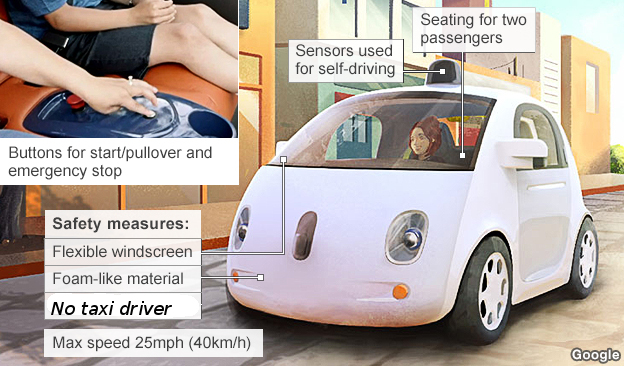
London's taxi "strike" today has been so successful that Uber claims to have had an 850% increase in new customer registrations this week. Well, that is a big success if you believe the strike may have been a guerrilla marketing tactic organised by Uber itself. No sympathy Personally, I have no sympathy for the taxi drivers. There is no city I have ever visited where I haven't encountered at least one taxi driver who tried to overcharge me. Honest drivers who give their customers value for money have less to fear from new technology than those who are unscrupulous. When I broke a leg a few years ago and was getting about on crutches for 6 weeks we decided to go out for dinner one night. This was the first time I went anywhere after having a long stint in hospital followed by a period of time I was confined to the house. The taxi driver deliberately skipped two turns leading directly to the restaurant, went another 1km past it and then followed a small street that winds back and forth and eventually demanded I pay him double what the fare should have been. This is exactly the type of abusive and despicable practice that is being eradicated by Uber's live GPS mapping technology. Although not every driver behaves so shamefully, this type of abuse of the weak or vulnerable is replicated in one way or another the world over. For example, in Melbourne, Australia, wheelchair taxis that have worked out they can make more money collecting families with suitcases at the airport leave genuine wheelchair users without a ride. Will Google be targeted next week? Google has just announced a step-change in plans to build their own self driving cars. Will Google offices around the world, including London be targetted by these crude blockades too? Political protest or anti-competitive mischief? Why were taxi drivers not arrested for their protest today? Given that the roads are the place where taxis and their competitors do business, can this blockade really be considered a political protest or is it an anti-competitive practice in blatant disregard of the law? Weapons of mass destruction Before even having breakfast you could probably find 10,000 cyclists in central London willing to sign a petition declaring taxis are a weapon of mass destruction. Once again, while there are honest drivers, there is a more than trivial number of taxi drivers who are a genuine danger to the lives of cyclists, scooters, motorcycles and occasionally pedestrians. I have personally experienced one of these thugs ramming my bicycle from behind (his hard-nosed insurer eventually paid up but without admitting liability). The police who attended the incident even told me they had seen so many accidents like this they wouldn't dare cycle themselves. The web is full of examples that appear to show malicious and criminal behavior by taxi drivers, thanks to Youtube and helmet cams: Will hotels protest about AirBNB? Now the taxi drivers have had their chance to cause mayhem, will hotel operators be next? What could they do though? Will they seek out AirBNB apartments and try to obstruct them somehow? Making mischief outside somebody's home is not a good way to make a point. Chances are, they would be prosecuted or served with restraining orders. So why do the taxi drivers get to jam up whole cities and get away with it? The Uber taxi meter loophole Will the courts decide that the Uber app is a taxi meter? This is actually a tough question. Even if courts rule against apps that perform live metering, Uber could simply remove all metering functions from the app itself and perform the metering calculations in the cloud. The app would just send start and finish locations to the cloud and the cloud would send a message back to the phone confirming the charge. The phone is then nothing more than a communication and positioning device. Remember the elevator man? When the automobile was first invented, laws were made requiring every car to be accompanied through public streets by a man carrying a flag. That job, like many others, no longer exists. elevator attendant In the good old days, every elevator had a man or woman who would sit on a stool and press buttons to operate the doors and motors. Some up-market department stores and hotels still have an elevator man to add a touch of nostalgia. The vast majority, however, have eliminated these jobs thanks to automatic elevators. Now, even aircraft can land automatically on a ship at sea. Look at all those people manning the deck in the video and contemplate how many of them might potentially be out of a job too in 50 years time as Terminator-style automated battleships patrol the seas. Technology, like the Terminator, is not going to stop.

6 June 2014

Rhonda D'Vine: No Portland

This year's debconf in portland will happen without me being there. As much as I would love to be at home again, I won't be able to afford it. As much as I'd liked to help to keep portland weird, a discussion led to the feeling that I'm not welcome there and along that lines made me miss the deadline for sponsorship request due to not being very motivated to push for it because of that. And without sponsorship I won't be able to afford it, given that I need to save up for my upcoming move. This also means I won't be able to host the Poetry Night. I hope that someone will be picking up that ball and continue it. Personally I am more motivated than ever to start writing again, given that there is currently a Bus Bim Slam (Bus Tram Slam) happening over here in Vienna and I try to attend as much stations as possible, and there will be a Diary Slam during this year's FemCamp Vienna.
I'm indifferent on whether the Debconf Poetry Night should be recorded or not. On the one hand it would be great to see people performing, on the other hand it might shy away certain personal poems that one wouldn't want to have out in the wild. Whoever picks it up, think about that part. I wish everyone luck in Portland, and I'm looking forward to yet another great job by the video team so I can follow a few talks from at home. It sort of breaks my heart to not be able to hug you lot this year, and I wish you a great conference. We'll meet again next year in Heidelberg!

/debian permanent link Comments: 3 Flattr this

Gunnar Wolf: What defines an identity?

I must echo John Sullivan's post: GPG keysigning and government identification. John states some very important reasons for people everywhere to verify the identities of those parties they sign GPG keys with in a meaningful way, and that means, not just trusting government-issued IDs. As he says, It's not the Web of Amateur ID Checking. And I'll take the opportunity to expand, based on what some of us saw in Debian, on what this means. I know most people (even most people involved in Free Software development not everybody needs to join a globally-distributed, thousand-people-strong project such as Debian) are not that much into GPG, trust keyrings, or understand the value of a strong set of cross-signatures. I know many people have never been part of a key-signing party. I have been to several. And it was a very interesting experience. Fun, at the beginning at least, but quite tiring at the end. I was part of what could very well constitute the largest KSP ever in DebConf5 (Finland, 2005). Quite awe-inspiring We were over 200 people, all lined up with a printed list on one hand, our passport (or ID card for EU citizens) in the other. Actwally, we stood face to face, in a ribbon-like ring. And, after the basic explanation was given, it was time to check ID documents. And so it began. The rationale of this ring is that every person who signed up for the KSP would verify each of the others' identities. Were anything fishy to happen, somebody would surely raise a voice of alert. Of course, the interaction between every two people had to be quick More like a game than like a real check. "Hi, I'm #142 on the list. I checked, my ID is OK and my fingerprint is OK." "OK, I'm #35, I also printed the document and checked both my ID and my fingerprint are OK." The passport changes hands, the person in front of me takes the unique opportunity to look at a Mexican passport while I look at a Somewhere-y one. And all is fine and dandy. The first interactions do include some chatter while we grab up speed, so maybe a minute is spent Later on, we all get a bit tired, and things speed up a bit. But anyway, we were close to 200 people That means we surely spent over 120 minutes (2 full hours) checking ID documents. Of course, not all of the time under ideal lighting conditions. After two hours, nobody was checking anything anymore. But yes, as a group where we trust each other more than most social groups I have ever met, we did trust on others raising the alarm were anything fishy to happen. And we all finished happy and got home with a bucketload of signatures on. Yay! One year later, DebConf happened in Mexico. My friend Martin Krafft tested the system, perhaps cheerful and playful in his intent but the flaw in key signing parties such as the one I described he unveiled was huge: People join the KSP just because it's a social ritual, without putting any thought or judgement in it. And, by doing so, we ended up dilluting instead of strengthening our web of trust. Martin identified himself using an official-looking ID. According to his recount of the facts, he did start presenting a German ID and later switched to this other document. We could say it was a real ID from a fake country, or that it was a fake ID. It is up to each person to judge. But anyway, Martin brought his Transnational Republic ID document, and many tens of people agreed to sign his key based on it Or rather, based on it plus his outgoing, friendly personality. I did, at least, know perfectly well who he was, after knowing him for three years already. Many among us also did. Until he reached a very dilligent person, Manoj, that got disgusted by this experiment and loudly denounced it. Right, Manoj is known to have strong views, and using fake IDs is (or, at least, was) outside his definition of fair play. Some time after DebConf, a huge thread erupted questioning Martin's actions, as well as questioning what do we trust when we sign an identity document (a GPG key). So... We continued having traditional key signing parties for a couple of years, although more carefully and with more buzz regarding these issues. Until we finally decided to switch the protocol to a better one: One that ensures we do get some more talk and inter-personal recognition. We don't need everybody to cross-sign with everyone else A better trust comes from people chatting with each other and being able to actually pin-point who a person is, what do they do. And yes, at KSPs most people still require ID documents in order to cross-sign. Now... What do I think about this? First of all, if we have not ever talked for at least enough time for me to recognize you, don't be surprised: I won't sign your key or request you to sign mine (and note, I have quite a bad memory when it comes to faces and names). If it's the first conference (or social ocassion) we come together, I will most likely not look for key exchanges either. My personal way of verifying identities is by knowing the other person. So, no, I won't trust a government-issued ID. I know I will be signing some people based on something other than their name, but hey I know many people already who live pseudonymously, and if they choose for whatever reason to forgo their original name, their original name should not mean anything to me either. I know them by their pseudonym, and based on that pseudonym I will sign their identities. But... *sigh*, this post turned out quite long, and I'm not yet getting anywhere ;-) But what this means in the end is: We must stop and think what do we mean when we exchange signatures. We are not validating a person's worth. We are not validating that a government believes who they claim to be. We are validating we trust them to be identified with the (name,mail,affiliation) they are presenting us. And yes, our signature is much more than just a social rite It is a binding document. I don't know if a GPG signature is legally binding anywhere (I'm tempted to believe it is, as most jurisdictions do accept digital signatures, and the procedure is mathematically sound and criptographically strong), but it does have a high value for our project, and for many other projects in the Free Software world. So, wrapping up, I will also invite (just like John did) you to read the E-mail self-defense guide, published by the FSF in honor of today's Reset The Net effort.

4 June 2014

Russell Coker: Android Device Service Life

In recent years Android devices have been the most expensive things I ve purchased apart from airline tickets and other travel/holiday expenses. As they are expensive I d like to use them for as long as possible to get the most value for money. Also as I give my devices to relatives when they no longer work for me I d like to avoid having relatives hassling me about their phone not working as desired. So I ve been thinking about the features that I need to make it possible to use a phone or tablet for a long time. RAM The way Android works is that when an application in the foreground requests more memory background applications may be closed to free some memory. Android doesn t use swap by default, there is some documentation on how to enable it (and it s not difficult to figure out for anyone who has used Linux before) but generally it s not done. If you run a larger application the chances of apps closing in the background (causing delays when you switch back to them and possibly a loss of context if the app is buggy and doesn t preserve all state) are increased. As a general trend apps tend to get bigger to provide more features and also because users who own newer bigger devices don t complain as much about memory use. Also to make things worse new versions of Android tend to use more RAM. So a phone that runs well can suddenly start performing badly when you upgrade to a new version of Android (which incidentally usually can t be reversed) and upgrade to new versions of apps (which can t be reversed through the Google Play Store). The Sony Ericsson Xperia X10 was a very nice phone when it was released, it ran Android 2.1 very quickly. When I upgraded the Xperia X10s that my wife and I used to Android 2.3 (which was necessary to have the phone run as a Wifi access point) performance dropped considerably. The Android upgrade combined with newer larger apps means that those phones are barely usable now. 384M of RAM was plenty in early 2011 when I first used the Xperia X10 but it s not nearly enough now. Recently 2G of RAM has been the minimum for a mid-range or high-end phone. It seems difficult to imagine a new Android feature as compelling as the addition of Wifi access point support in Android 2.3 that would drive an upgrade to a future memory hogging version of the OS. It also seems difficult to imagine Android apps needing enough memory to destroy the performance of a phone with 2G of RAM. But then I couldn t imagine the 384M in an Xperia X10 becoming inadequate or the 512M in a Samsung Galaxy S becoming barely usable either. Storage Until fairly recently storage in an Android device was divided into USB attached storage (a VFAT filesystem that could be directly mounted on a PC) and a Linux filesystem that was used for all internal operations of the phone. On such devices it typically wasn t possible to change partition sizes without a lot more skill than most users possess and most of the storage space was reserved for USB attachment. If you only had a few Android apps and lots of photos, movies, etc then this worked well. But if you wanted to install larger Android apps then you would have big problems. Even with Android 4.x devices (which all seem to have a single filesystem) you can easily run out of space. Modern games often take several hundred megs of storage. Games that take 500M+ for the Android package install (which also requires the same amount of temporary space for installation and upgrade) are common. Sometimes games download data files after they have been installed for a total size approaching 2G (such as The Sims Freeplay). When I bought a Nexus 4 for my wife I got the version with 8G of storage because paying an extra $50 for the 16G version seemed unreasonable. 8G was fine for my wife, but when she got a new phone I gave the Nexus 4 to a relative who wanted to play The Sims and other big games. That relative isn t so happy about having a limited number of games on their phone and I have to fix it when storage space runs out and things start aborting (when storage runs out the Google App Store program aborts and uses lots of space for temporary files). I recently bought a tablet with 32G of storage and filled 16G on the first day (tablets are good for watching
TV and TV shows are big). Fortunately the tablet in question has a SD socket so that when space becomes a problem in a year or two I can buy an SD card and keep using it. An unfortunate recent decision by Google was to prevent apps from being run from a SD card. So even if you have a device with a SD socket you still need to have enough internal storage for all apps and their private data. At 500M+ for a modern game that means a device with 8G of storage (which includes space for the OS) will be lucky to get 8 games installed. If you want to use a phone to it s full capacity (playing various media files, games, etc) then it seems that the minimum storage capacity would be 8G of internal storage and a SD socket. For a device without an SD socket (such as the Nexus 5 with 16G or 32G of storage) your future use will be limited. 32G is probably enough for a phone given that you can recode movies to use less space (the FullHD screen on the Nexus 5 is nice but 720p movies will probably look good enough). But the larger screens of tablets demand better video quality so the Nexus tablets are probably a bad choice due to lack of storage space. Screen Size and Resolution I have previously written about the sizes of devices and how they may be used by people of various ages [1]. That should be of use for anyone who plans to use their old phone as an educational device for their children (which appears to be very common). But apart from that I can t think of any reason why size would suddenly make an old phone obsolete. Only young children will have their hands change size in any significant way. Resolution also shouldn t be a huge problem, the 480*854 screen on the Xperia X10 is fairly good for a 4 screen. While a higher resolution makes text more readable at a small size for most users the availability of a higher resolution screen isn t going to make their old phone obsolete. CPU The only Android devices I owned that appeared to develop CPU speed issues late in life were the Xperia X10 phones, and that might be more due to RAM limits and the OS upgrade. All the other devices were either obviously slow at purchase time or are still performing well now. CPU speed may make it difficult or impossible to play new games, but shouldn t affect other uses of a phone or tablet. Conclusion It seems to me that if you want to use an Android device for more than 2 years then storage capacity should be a major factor in choosing which device to purchase. It seems that lack of storage space is in many cases the main factor that makes older devices annoying or impossible to use.

2 June 2014

Russ Allbery: Review: Debt

Review: Debt, by David Graeber
Publisher: Melville House
Copyright: 2011, 2012
Printing: October 2012
ISBN: 1-61219-129-0
Format: Trade paperback
Pages: 453
You probably remember this story from introductory economics. Originally, people exchanged things through barter. I needed grain but had a cow. You had a farm but needed milk. I gave you milk for your grain. But this was tedious and awkward, and required finding the right combination of people who needed something the other person had on hand. Then, people invented money: small objects with an agreed-upon value that you could keep and use later when you needed something else. In other words, both a medium of exchange and a store of value. And that improved matters for a long time, although war-torn societies or societies that collapsed (the supposed "Dark Ages" often raises its head) would sometimes "revert to barter" for some period of time until things were stable enough for currency to reappear. Following that story was usually some story about the emergence of money based on credit: goldsmith shops that started a side business in storing other people's coins and giving them receipts, leading to the receipts trading like the coins since the shops were trustworthy, and from there into the Bank of England and eventually the fractional reserve banking system, fiat money, and all the modern machinery of finance. All of this was dated from the early Enlightenment and the development of modern finance in Europe. It's a very neat story, and it makes a great deal of intuitive sense. That barter system does feel like what you'd have to do without money, but one can immediately see how obnoxious and limiting it would be. These stories play into our intuitive sense of history: people started with emergent properties of the physical world (different people have different goods and different skills and want to exchange them) and then develop layers of abstraction on top of them, eventually leading to the sophistication of modern societies. However, David Graeber is not an economist. He's an anthropologist: the profession devoted to understanding how people actually do things rather than how we've reconstructed our history based on our modern perspective. And, as he points out, engagingly and comprehensively, in chapter two of Debt, there is no evidence that this story about economic history has anything whatsoever to do with reality. And quite a bit of evidence that it does not. As best as we've been able to determine, not only is there no society in the world that deals with routine, day-to-day needs like grain and milk through barter, there never has been such a society in human history. Instead, history and anthropology shows that credit is, in a sense, older than currency: the earliest recorded economic transactions were built on a rich system of credit, but in the form of purchases from shopkeepers on credit, or credit clearinghouses through the local government or temple. Those credit records were often denominated in some standardized commodity so many cattle or bushels of grain that could create the impression that the economy worked on barter. But the anthropological evidence indicates that this was more an accounting technique than a practical currency. People rarely brought the named commodity to the temple to pay off some debt. Rather, there was an agreed conversion from various other goods to that standardized commodity, and its primary purpose was consistent bookkeeping. Specie minted coins appear to come later, and wax and wane throughout history depending on local circumstance. For example, Europe did not "revert to barter" after the collapse of the Roman Empire, but the inhabitants did stop using specie and returned to a system of credit and record-keeping... records that continued to be denominated in Roman currency, even though few people still used the actual coins. That's one fascinating observation with which Graeber begins this book. The other is the question of why we have such a strong social and moral belief that people must pay their debts. This moral belief is ever-present in discussions about the 2008 financial collapse, and more broadly in discussions about the modern economy, but it's not as obvious of a belief as it might appear on the surface. After all, the banking and investment system is founded on the principle that not everyone will repay their debts, and therefore lenders receive a risk premium based on the likelihood that the debt won't be repaid. But, despite building the possibility of non-repayment into the system, debt forgiveness or intentional default is almost unthinkable and considered a huge moral problem. To this, Graeber brings the perspective of historical anthropology: human societies have struggled with the problems of debt and repayment from the beginning of recorded history, and have attempted a wide variety of solutions to those problems, including massive debt forgiveness. The jubilee described in the Bible was not novel; rather, it reflected a common practice to keep abuses of debt under control in ancient Sumer. The subtitle of Debt is The First 5,000 Years, and this book is a historical survey. But Graeber puts off the history to first lay an intellectual groundwork for our understanding of debt, and I found that preliminary discussion extremely valuable. Most memorable was the way Graeber divides human economic relationships into communism (in the old sense, not the political sense), exchange, and hierarchy. Capitalism has consumed our economic analysis to such a degree that exchange is the only economic basis that gets much discussion, but the other two are both obvious and pervasive once Graeber points them out. Human civilization could not exist without all three. And Graeber also points out one aspect of exchange-based economics that had not previously occurred to me: it's the economic relationship that one creates with strangers. Debt has the unique characteristic that it can be discharged, at which point the relationship ceases. This has far more complex and far-reaching moral and social implications than one might initially realize, and Graeber did a wonderful job opening my eyes to some of the subtleties. Debt is clearly a scholarly work, but Graeber's writing is clear and engaging. I found most of this book to be surprisingly easy reading. The hardest going was Graeber's discussion of societies that use a form of currency to arrange relationships between people (marriages, births, and deaths, primarily), but not day-to-day economic transactions. I suspect this area is closer to Graeber's areas of personal research and field work, which resulted in more technical detail. I'm still not sure I completely grasp the principles that Graeber was trying to communicate. But I was struck by the observation of alienation's role in turning a human being into a commodity, and how that links with debt's role as the economic transaction one has with strangers. Graeber covers slavery only glancingly, but makes some memorable points about the use of violence to rip someone out of their social context, and how that is necessary in human cultures before humans can be reduced to a commodity. There's a lot here, and I've only scratched the surface. I haven't mentioned, for example, the fascinatingly elegant theory that coining money and then requiring taxes be paid in the same money is a simple and highly effective way of funding armies, an explanation for specie that is largely unproven but that I find more compelling than the ones I've previously heard. Approaching debt from an anthropological instead of economic perspective is surprisingly enlightening. Debt is primarily a historical and cultural discussion rather than a set of proposed solutions, but Graeber does effectively show that debt as a moral obligation is not an unquestionable moral stance, but rather has a long history as one side of a two-sided political debate. I also came away from this book more conscious of the social implications and costs of debt-structured interactions, and wanting to push more of the language of debt out of my day-to-day dealings. Graeber is well known as one of the supporters of Occupy Wall Street, and Debt, while a well-defended academic work, certainly does advocate a position. But the academic analysis is more prominent than the advocacy, and I found his positions well-defended and well-argued. I do need to give the caveat that I don't have the anthropological background to distinguish the statements from Graeber that are well-established common knowledge in anthropology from the ones that are more controversial, and I would be a bit leery of taking this book as the final word on the topic. But it fully deserves its popularity and reputation as a thought-provoking and valuable contribution to the conversation. It's another book that I want to re-read someday to digest further, and the sort of book whose observations keep occurring to me in subsequent discussions or news stories. If you're at all interested in the way in which we construct the morality around economics and debt, I think this is a book that you should read. It's thoughtful, challenging, and surprising, and it passes my acid test for books of this sort with flying colors: after reading it, you realize that many things are more complicated, more historical, and less novel than you had originally thought. Highly recommended. Rating: 9 out of 10

1 June 2014

Russ Allbery: Spring haul post

Sorry about the lack of posting recently. Work has been rather problematic, and also very distracting, and on my time away from work I've been relaxing rather than writing. Didn't even get reviews written while on vacation. I am still hoping to catch up on reviews, however. In the meantime, I have been reading some, and buying more books. Here's a new haul list. Elizabeth Bear Steles of the Sky (sff)
Katherine Boo Behind the Beautiful Forevers (non-fiction)
John Chu The Water That Falls on You from Nowhere (sff)
Lewis Dartnell The Knowledge (non-fiction)
David Lochbaum, et al. Fukushima (non-fiction)
Ben Goldacre Bad Pharma (non-fiction)
Mira Grant Parasite (sff)
Thomas Olde Heuvelt The Ink Readers of Doi Saket (sff)
Mary Robinette Kowal The Lady Astronaut of Mars (sff)
Madeline Miller The Song of Achilles (historical)
Edmund S. Morgan American Slavery, American Freedom (non-fiction)
Richard Rhodes The Making of the Atomic Bomb (non-fiction)
Lee Smolin The Trouble with Physics (non-fiction)
Charles Stross Equoid (sff)
Charles Stross Neptune's Brood (sff) This is a bit of a grab-bag, including a variety of non-fiction that I had recommended to me by various people. I also picked up the remaining Hugo nominees for best novel that won't be in the voter packet, and the short fiction from Tor.com that was nominated and was available for free from Amazon for the Kindle. I read The Knowledge while I was on vacation, and it's in my large backlog of pending reviews.

19 May 2014

Matthew Garrett: The desktop and the developer

I was at the OpenStack Summit this week. The overwhelming majority of OpenStack deployments are Linux-based, yet the most popular laptop vendor (by a long way) at the conference was Apple. People are writing code with the intention of deploying it on Linux, but they're doing so under an entirely different OS.

But what's really interesting is the tools they're using to do so. When I looked over people's shoulders, I saw terminals and a web browser. They're not using Macs because their development tools require them, they're using Macs because of what else they get - an aesthetically pleasing OS, iTunes and what's easily the best trackpad hardware/driver combination on the market. These are people who work on the same laptop that they use at home. They'll use it when they're commuting, either for playing videos or for getting a head start so they can leave early. They use an Apple because they don't want to use different hardware for work and pleasure.

The developers I was surrounded by aren't the same developers you'd find at a technical conference 10 years ago. They grew up in an era that's become increasingly focused on user experience, and the idea of migrating to Linux because it's more tweakable is no longer appealing. People who spend their working day making use of free software (and in many cases even contributing or maintaining free software) won't run a free software OS because doing so would require them to compromise on things that they care about. Linux would give them the same terminals and web browser, but Linux's poorer multitouch handling is enough on its own to disrupt their workflow. Moving to Linux would slow them down.

But even if we fixed all those things, why would somebody migrate? The best we'd be offering is a comparable experience with the added freedom to modify more of their software. We can probably assume that this isn't a hugely compelling advantage, because otherwise it'd probably be enough to overcome some of the functional disparity. Perhaps we need to be looking at this differently.

When we've been talking about developer experience we've tended to talk about the experience of people who are writing software targeted at our desktops, not people who are incidentally using Linux to do their development. These people don't need better API documentation. They don't need a nicer IDE. They need a desktop environment that gives them access to the services that they use on a daily basis. Right now if someone opens an issue against one of their bugs, they'll get an email. They'll have to click through that in order to get to a webpage that lets them indicate that they've accepted the bug. If they know that the bug's already fixed in another branch, they'll probably need to switch to github in order to find the commit that contains the bug number that fixed it, switch back to their issue tracker and then paste that in and mark it as a duplicate. It's tedious. It's annoying. It's distracting.

If the desktop had built-in awareness of the issue tracker then they could be presented with relevant information and options without having to click through two separate applications. If git commits were locally indexed, the developer could find the relevant commit without having to move back to a web browser or open a new terminal to find the local checkout. A simple task that currently involves multiple context switches could be made significantly faster.

That's a simple example. The problem goes deeper. The use of web services for managing various parts of the development process removes the need for companies to maintain their own infrastructure, but in the process it tends to force developers to bounce between multiple websites that have different UIs and no straightforward means of sharing information. Time is lost to this. It makes developers unhappy.

A combination of improved desktop polish and spending effort on optimising developer workflows would stand a real chance of luring these developers away from OS X with the promise that they'd spend less time fighting web browsers, leaving them more time to get on with development. It would also help differentiate Linux from proprietary alternatives - Apple and Microsoft may spend significant amounts of effort on improving developer tooling, but they're mostly doing so for developers who are targeting their platforms. A desktop environment that made it easier to perform generic development would be a unique selling point.

I spoke to various people about this during the Summit, and it was heartening to hear that there are people who are already thinking about this and hoping to improve things. I'm looking forward to that, but I also hope that there'll be wider interest in figuring out how we can make things easier for developers without compromising other users. It seems like an interesting challenge.

comment count unavailable comments

18 May 2014

Benjamin Mako Hill: Installing GNU/Linux on a 2014 Lenovo Thinkpad X1 Carbon

I recently bought a new Lenovo X1 Carbon. It is the new second-generation, type 20A7 laptop, based on Intel s Haswell microarchiteture with the adaptive keyboard. It is the version released in 2014. I also ordered the Thinkpad OneLink Dock which I have returned for the OneLink Pro Dock which I have not yet received. The system is still very new, challenging, and different, but seems to support GNU/Linux reasonably well if you are willing to run a bleeding edge version and/or patch your kernel and if you are not afraid to spend an afternoon or two tweaking things. What follows are my installation notes for Debian testing (jessie) when I installed it in early May 2014. My general impressions about the laptop as a GNU/Linux system and overall are at the end of this write-up.
System Description The X1 Carbon I ordered included the 512GB SSD, the 14.0 inch WQHD (2560 1440) 260 nit touchscreen, and the maximum 8GB of memory. I believe the rest is not particularly negotiable but includes a 720p HD Camera, a 45.2Wh battery, and an Intel Dual Band Wireless 7260AC with Bluetooth 4.0. For those that are curious Here is the output of lspci on the system:
00:00.0 Host bridge: Intel Corporation Haswell-ULT DRAM Controller (rev 0b)
00:02.0 VGA compatible controller: Intel Corporation Haswell-ULT Integrated Graphics Controller (rev 0b)
00:03.0 Audio device: Intel Corporation Haswell-ULT HD Audio Controller (rev 0b)
00:14.0 USB controller: Intel Corporation Lynx Point-LP USB xHCI HC (rev 04)
00:16.0 Communication controller: Intel Corporation Lynx Point-LP HECI #0 (rev 04)
00:16.3 Serial controller: Intel Corporation Lynx Point-LP HECI KT (rev 04)
00:19.0 Ethernet controller: Intel Corporation Ethernet Connection I218-LM (rev 04)
00:1b.0 Audio device: Intel Corporation Lynx Point-LP HD Audio Controller (rev 04)
00:1c.0 PCI bridge: Intel Corporation Lynx Point-LP PCI Express Root Port 6 (rev e4)
00:1c.1 PCI bridge: Intel Corporation Lynx Point-LP PCI Express Root Port 3 (rev e4)
00:1d.0 USB controller: Intel Corporation Lynx Point-LP USB EHCI #1 (rev 04)
00:1f.0 ISA bridge: Intel Corporation Lynx Point-LP LPC Controller (rev 04)
00:1f.2 SATA controller: Intel Corporation Lynx Point-LP SATA Controller 1 [AHCI mode] (rev 04)
00:1f.3 SMBus: Intel Corporation Lynx Point-LP SMBus Controller (rev 04)
BIOS/Firmware The BIOS firmware is non-free and proprietary as it the case with all ThinkPads and nearly all laptops. According to this thread there is a bug in the default BIOS that means that suspend to RAM is broken in GNU/Linux. You can get updated BIOS at the Lenovo s ThinkPad X1 Carbon (Type 20A7, 20A8) Drivers and software page by looking in the the BIOS section. Honestly, the easiest approach is probably to download the Windows BIOS Update utility (documentation is here) which you can use to run the BIOS update from within Windows before you install GNU/Linux. If that s not an option (e.g., if you ve already installed GNU/Linux) the best method is to download the bootable CD ISO from the same page. Of course, since the X1 Carbon has no optical media, you have to find another way to boot the CD image. I struggled to get the ISO to boot from USB using the usually reliable dd method. This message suggest that the issue had to do with the El Torito wrapper:
I had to dump the eltorito image from the ISO they provide, after that I was able to dd the resulting image to a flash drive and the bios update went well, no cdrom needed.
I updated to version 1.13 of the BIOS which fixes the suspend/resume bug. By the time you read this, there may be newer versions that fix other things so check the Lenovo website.
Installing Debian I installed Debian testing using the March 19, 2014 Alpha 1 release of the Debian Installer for Jessie (currently testing). I installed in graphical mode. With the WQHD screen, everything was extremely tiny but it worked flawlessly. I downloaded the amd64 net install image from the normal place and installed the rest of the system using the built-in Ethernet port which required no firmware or extra drivers. I did the normal dd if=FILENAME.iso of=/dev/sdX method of getting the installer onto the a USB stick to boot. I turned off restricted boot in BIOS first. In general, the latest version of the Debian installation guide is always a good source of guidance on installing Debian. I used the Debian installer wizard to partition and selected Use entire disk and partition it for LVM and encrypted data which kept the UEFI partitions around. The system installed with no errors or issues and booted up normally afterward. The grub menu is hilariously narrow on the WQHD screen. If you want to use the built-in wireless and/or Bluetooth, you will need to install the non-free iwlwifi firmware package. It is very lame that we still have to do this to use hardware we have purchased.
What Works and Doesn t The following stuff works the first time I booted into the GNOME 3 desktop and logged in:
  • The WQHD 2560 1440 screen
  • The touchscreen
  • Both the TrackPoint and the touchpad
  • Built-in e1000e Ethernet using the dongle
  • The keyboard plus the adaptive row of F1-F12 keys.
  • External monitor using the full HDMI or mini-DisplayPort connectors
  • Audio (both speakers and microphone)
  • The camera/webcam
The following stuff works if you install non-free firmware:
  • Internal Wireless
  • Bluetooth 4.0
The following stuff works with qualifications:
  • Suspend to RAM Works once you have updated the firmware.
  • The adaptive keyboard The F1-F12 keys work but the button that theoretically lets you switch to different sets of function buttons (e.g., volume, brightness) does nothing.
  • Disabling the touchpad There is a BIOS option to disable the touchpad. It works in Windows and does nothing at all in GNU/Linux.
I have not tried:
  • The fingerprint reader
Disabling the touchpad As a long-term ThinkPad user, I love the TrackPoint pointing stick. If you plan on using this, the built-in touchpad is incredibly aggravating because it is very easy to brush against it while using the TrackPoint. In BIOS, there is an option to disable the touchpad. Although this works in Windows, it does absolutely nothing in GNU/Linux. Part of the issue is that, unlike the older X1 Carbon and other ThinkPads, there are no TrackPoint buttons. Instead of buttons, there are regions at the top of the touchpad which are configured, in software, to act like buttons. If you want to be able to click, the touchpad can never be truly turned off. This is not problem unique to the Haswell X1 Carbon and a number of people have been struggling with this issue on other Lenovo laptops. Essentially, what you need to do is configure your touchpad so that the buttons are where you want them and so that it ignores any input for the purposes of cursor movement. There are a few ways of doing this but this answer from an askubuntu.com question has the solution I ended up using:

Open file /usr/share/X11/xorg.conf.d/50-synaptics.conf for edit.

Find Section InputClass which the following line is Identifier Default clickpad buttons .

Edit option for SoftButtonAreas to values 64% 0 1 42% 36% 64% 1 42%, this is size of the right and middle button.

Enable option AreaBottomEdge and change value to 1, this will disable touchpad movement.

If everything done right, your class should looks like:

Section "InputClass"
     Identifier "Default clickpad buttons"
     MatchDriver "synaptics"
     Option "SoftButtonAreas" "64% 0 1 42% 36% 64% 1 42%"
     Option "AreaBottomEdge" "1"
EndSection
Essentially, the first Option line will create a middle button that is 32% of the width and 42% of the height, and a right button that is 32% of the width and 42% of the height. The synaptics manpage (man synpatics) will give you more detail on the general way this works. Of course, something does feel very wrong about editing a file in /usr/share.
Fixing the Adaptive Keyboard The most wild feature of the laptop is the adaptive keyboard strip. The strip is a back-lit LCD that looks almost like E Ink screen and acts as a touchscreen keyboard. The default mode gives you the F1-F12 keys. If you press the keys (since they aren t buttons, you just put your finger on top of them) they act like normal F-keys. You can Ctrl-Alt-F1, etc., to switch to virtual terminals out of the box. There are four modes: Function (i.e., normal F-keys), Home, Web, and Chat. The last three overlap quite a bit (e.g., they all have brightness and volume). You can play with an example on the Lenovo homepage. In Windows, switching programs will apparently change these keys so that an appropriate set of buttons is shown for the application you are using. You can also change these keys manually with a big Fn button at the far left of the adaptive keyboard strip. As I write this this, released kernels do not support the adaptive keyboard Fn button which means you cannot use anything other than the F-keys out of the box. I believe it also means that resuming from suspend to RAM breaks these keys. That said, Shuduo Sang from Canonical has released several versions of a patch to to the thinkpad_acpi kernel module which adds support for the Home mode. The other modes (web and chat) do not seem to be supported. The latest version of the patch is on on the Linux Kernel Mailing List and the relevant commits are:
330947b save and restore adaptive keyboard mode for suspend and,resume
3a9d20b support Thinkpad X1 Carbon 2nd generation's adaptive keyboard
Although this is not supported in Debian testing at the time of writing, a bug was filed in Debian and quickly fixed by Ben Hutchings in Debian kernel version 3.14.2-1 which is currently in sid/unstable. As a result, if you install the latest version kernel from Debian unstable (3.14.2-1 or later), the adaptive keyboard just works. If you aren t using Debian and if kernel you are using does not have support, you might be patching your kernel.
General Impressions As I have described in my interview with The Setup, I have been a user of ThinkPad X-series laptops for many years. This is my sixth X-series ThinkPad. Overall, I quite like the hardware! Once things mature a little bit, I think that this will be a great laptop for running GNU/Linux. That said, I ordered the laptop without realizing that the X1 Carbon had gone through a major revision! The keyboard was quite a suprise. I think that changing a system so radically without changing the model name/number is a very bad move on Lenovo s part. There are two remaining issues with the system I m still struggling with: (1) the keyboard layout is freaky and weird, and (2) the super high resolution screen breaks many things. The quality of the keyboard itself is great and worthy of the ThinkPad name. That said, there are two ways in which it is strange. The first is the adaptive keyboard strip. Overall, it works surprisingly well and I think it is a clever idea. My sense is that the strip is more annoying in Windows because it changes out from under you all the time. In GNU/Linux, only manual changing of modes is supported. This, in my opinion, is a feature. I do miss the real feedback you get from pressing keys but for F-keys and volume-keys that I don t use often this isn t too important. On the downside, I have realized several times that I had been holding down a button for several seconds and not noticed. The more annoying issue with the keyboard is the way that the other keys have moved around. Getting rid of the CapsLock is wonderful! How has this taken so long? Replacing it with a split Home and End keys is nuts. I ve remapped the Home and End to put Control back where it should be. My right Control to now Home but I still don t have an End key. The split Backspace and Delete is not a problem for me. The tilde/apostrophe is in a very bad place. There is no Insert, Print Screen/SysRq, Scroll Lock, Pause/Break or NumLock. They are all just gone. Surprisingly, I haven t missed any of them. The second issue is the 2560 1440 resolution on the 14 inch screen. I use a 27 inch external monitor with the same native resolution laptop but, by my arithmetic, the pixel density on the laptop is 210 DPI instead 109 DPI on the external monitor. The result is the scaling problem and it s a huge pain that seems mostly unsolved on any operating system. Fonts and widgets that look good on the laptop look huge on my external monitor. Stuff that looks good on my external monitor looks minuscule on the laptop. I routinely move windows between my laptop screen and my large monitor. Until I find a display system that can handle this kind of scaling effectively, this requires changing font size and zooming all the time. At the moment, I m shrinking and expanding my font size using the built in hot keys in Emacs, Gnome Terminal, and Firefox/Iceweasel. I love the high resolution screen but the current situation is crazy-making. Finally, this setup will not get you into the Church of Emacs and it s not about to find its way onto the FSF s list of endorsed hardware. For one, I paid the Windows tax. Beyond that, there is the non-free BIOS and the need for non-free firmware to use the wireless and Bluetooth. This is standard for ThinkPads but it isn t getting any easier to swallow. There are alternatives in the form of Gluglug s X60 laptops running CoreBoot, Lemote Yeelong laptops, Bunnie Huang s Novena and others that are better in these regards. I am very excited for these projects but, for a number of reasons, these just weren t an option for the laptop I use for my research computing.

15 May 2014

Russell Coker: Mobile Phones and Cognitive Costs

I previously wrote about the case for a Basic Income in Australia [1]. Since then I read an interesting article by Rutger Bregman in the Dutch site The Correspondent discussing the benefit that such Basic Income schemes have given in various places [2], he makes a great case for giving a Basic Income to poor people. However I believe that it should be provided to everyone. I believe that government payments shouldn t be means tested because the proportion of the population who earn more than the cutoff is usually very small (IE it doesn t save much money), because the money will be recovered from wealthy people in tax, and because the bureaucracy involved in determining who is eligible involves spending tax money to pay bureaucrats and costing everyone time in dealing with the process. The concept of an Attention Economy has been getting some interest recently. But discussions of it seem to be mostly concerned with the needs of fairly wealthy people, how to advertise to them, how to filter out unwanted ads for them, etc. But the costs in attention can be even worse for people on low incomes or social security because they have many attention costs that could be solved by money. Many common essential purchases (EG soap, basic foods, and purely functional clothes) can become difficult decisions if saving a few dollars is important. The amount of thought involved in buying such items can result in someone who s not well off having little energy to concentrate on other things. I think that to have an effective social security system we need to consider how much cognitive effort is being required of people who are receiving benefits. Last month I wrote yet another review of mobile phone plans in Australia [3]. Every time I do this it takes a significant amount of time because the Telcos devise overly complex plans to make it difficult to compare their offerings. It seems that they aim to make their offerings somewhat competitive if you can interpret them but confusing enough to allow many (most?) of their customers to pay needlessly high bills. I could just pick a random telco and pay whatever it takes, spending an extra $10 or $20 per month isn t such a big deal for me. Even though I advise a number of my relatives on the cheapest phone plan it s probably only barely saving enough money to be worth the effort, a major motivation for me is being stubborn and not wanting telcos to rip people off. The Importance of Mobile Phones A mobile phone seems to be essential for most people. Mobile phones are used for making medical appointments and for applying for work, so in almost every case some of the financial assistance paid to a job seeker or person on a disability pension will go towards mobile phone costs. The aims of the social security benefits seem to clearly involve a phone service. Given that most people who receive social security payments spend some of that money on mobile phone bills the government has a direct financial interest in not having such money wasted on needlessly expensive phone plans. As we also don t want to have people on social security spending time and attention trying to find the best phone plan it makes sense to have the government help manage this process. Good communications is regarded as essential to education and economic development. A huge amount of taxpayer money was spent on the NBN (and then wasted by Tony Abbott when he cancelled the original plans) for these benefits. Good phone access is also an issue of personal safety. While it is possible to call emergency services from a mobile phone that doesn t have a valid SIM there are probably few people who keep a spare phone charged for that purpose. Also there are a variety of issues that can impact life or health which can best be resolved by calling friends or relatives. Free Phones I think that the best solution to these problems is for the government to directly pay mobile phone bills. If we are going to have a Basic Income then the government should make the base payment for mobile phone calls for every resident, if not then the government should make the base payment for everyone who receives any form of social security payment. Obviously the amount of data that could be transferred over a 3G network is greatly in excess of the amount that any plans allow and offering true unlimited calling leads to people using mobile phones as baby-monitors, so some limits are necessary. But the government could cheaply pay for a phone plan that exceeds the requirements of most people and then allow anyone who wants more data or calls to pay extra. Which Plan? The cheapest all-inclusive mobile phone plan in recent times was Kogan who charged $299 per annum for 6G of data per month and unlimited calls. The cheapest current offer for unlimited calls seems to be Lebara s $30 per month offer which includes 2G of data. My observation is that people who use 3G Internet just for phone use (as opposed to tethering a laptop or providing home Internet), who use a home Wifi network for installing Android programs and don t play Ingress tend to use a lot less than 1G of data per month. I would use between 400M and 700M per month if I wasn t playing Ingress and didn t use my phone as a Wifi access point. In terms of call volume, 600 minutes a month should be enough to cover the basic needs of most people judging by the number of plans on offer with limits smaller than that. As a current Lebara offer is $30 per month for unlimited calls and 2G of data (and there are similar offers from other telcos), it should be possible for a telco to offer 600 minutes of calls and 1G of data for less than $15 per month. When the government is paying (no bad debts) and many of the users will use much less than the quota such a plan should be profitable at $10 per month or less. Implementation The way to implement this would be to start with a tender that has a hard requirement for the minimum amount of service provided. This would include the number of minutes per month for calls, the number of SMS sent, and the amount of data transfer. To avoid excessive billing (a standard telco scam) there should be a requirement that fees for extra use not exceed some small multiple of the base rate, for example if the government was paying $10 for 600 minutes of calls and 1G of data the excess usage charges could be capped at 3 cents per meg and 5 cents per minute (3* the base rate) which would be profitable for the telco but not a scam. If the telcos act in a market driven competitive manner they will compete to provide the most attractive offerings for $10 per month. If the build cost of the NBN had been invested at government bond rates (for any of the rates used for current bonds) then it would pay for the mobile phone bills for every resident forever, so the cost of providing phones for everyone is in the range of government telecommunications programs. If people who are working were to pay an extra $10 in tax and people who are on social security had their benefits reduced by $10 then that would be a great deal if it saved them the $20 or more that most people spend on a basic phone plan. Government Phone Delays A friend who s a single mother pays for an unlimited mobile phone plan because calls to the social security office are usually kept on hold for more than an hour. It s likely that she could save money over the course of a year by paying for a cheaper plan and just dealing with the occasional big bill, but she needs to budget carefully and feels that she can t take that risk. It seems stupid that government phone delays (partly caused by cutting funds for staff) cause increased expenses for people who are receiving social security payments. If the government implemented a smart queuing system that allowed them to call people back instead of making them wait on hold then it would save money overall. So there are obviously other ways that the government can save money on phone calls and time for everyone.

14 May 2014

Francesca Ciceri: A month with Mozilla

Random thoughts of a new contributor I've started to contribute to Mozilla - and particularly to the Firefox Desktop QA team - at the end of March, in order to apply for the OPW with Mozilla as Bug Wrangler.
While being already part of the Free Software world as contributor clearly helps, it's always difficult to find your way at first in such a big project, no matter how helpful the people you're working with are. It's about trying to understand how the project is organized and who works on what, what is expected from you as contributor and the specific style of interaction and contribution accepted in the project. So, here's a couple of thought about it: the necessary disclaimer is that I'm a long-time Debian contributor meaning that, inevitably, Debian is my reference model. Also, everything I'm writing here regards only the specific part of the project I've been working in: Desktop QA and Bugmastering. Documentation The first thing that I noticed is the huge amount of documentation. Everything is very well documented and while this is definitely a plus in my book, it's sometimes difficult to keep track of all this resources. AFAICT, there are basically three main sources of documentation:
  1. the wiki
  2. the Mozilla Developer Network
  3. the site of the QA team
Some of the documents on these three different places are sometimes similar, making them redundant and it's difficult to remember where you read what. At least for me. My workaround has been to bookmark pages as a mad woman, and also to make a list on my wikipage of the pages I found more useful.
My top five of useful pages? Here we go!
  1. a bug's life: lifecycle of bugs in BMO
  2. Tyler's BMO survival guide (parts 1, 2 and 3)
  3. Tyler's Triage Guidelines
  4. on reducing testcases
  5. bug verification walkthrough
And speaking of triage, special shout-out for the most useful addon ever for Mozilla triagers/testers: Nightly Tester Tools. Community interaction For someone coming from Debian, where everything is done via public mailing lists and/or IRC chans, Mozilla was a bit of a cultural shock. The mailing lists are not very much used, at least in the QA community (or I'm not subscribed to the right ones ;)). As for IRC, while there are many channels, they are not very active: meetings and important discussions are held using a proprietary videoconference software (Vidyo), and are mostly restricted to employees (but other people can join if they have a guest URL). On the other hand, every time I asked for help - even the most stupid question - on IRC, I got a useful reply. And thanks to the folks on #testdays and #qa (especially petruta and Aleksej) I was able to speed up the learning process and understand how things work in the project. So, while I'd like to see more public meetings, it's also true that the community is working well on interaction among contributors. Community outreach This is where I think Debian could borrow a couple of ideas. Mozilla basically got me hooked thanks to their Bugdays: every Monday and Wednesday are - respectively - dedicated to Triage and Verification of bugs. The events are open to everyone, the wikipages for the events provide a good tutorial explaining the workflow in detail, and if you have any doubts there are always people willing to help you on the dedicated IRC chan. Every bug worked on during these events is also tagged: so that later it's possible to check how successful the day was in terms of participation. Bugzilla and the triaging/verification workflow About Bugzilla I can only say that I like it. I like how flexible is for search queries, I like the possibility to have custom tags on the whiteboard (as the [bugday-xxxxxx] one) and the smart way to interact among people in the bug without making the bug go stale (ie, mostly the needinfo feature). But beside the software used as BTS, I must admit that I really like the workflow and the whole concept of triaging in Mozilla. The granularity of rights (everyone, canconfirm, editbugs) and the clear procedure for a permission upgrade; the presence of a team constantly working on cleaning the incoming bugs, regardless of the product/component, to make easier for the developers the filtering and the resolution as well; the attention to details of the verification process: each bug marked as Resolved Fixed need to be Verified, to be sure that it's been actually fixed... All these things are really impressive. This, obviously, is something that can be done inside an upstream project where there are people doing paid work, and where the products are not too many. I cannot see how this kind of QA process can be applied to bugs against an entire OS.
But there are some things we (as in Debian) could take inspiration from. Organizing regular Bugdays, for instance. Creating a team of triagers to help both with incoming and with very old bugs. And this, again, is a kind of work that can be done by everyone, not only coding contributors: meaning that an additional effect would be to increase the diversity in the contributors pool. As a side note: I'll start my OPW internship next Monday, and will spend three months playing with bugs and learning how to be a Bug Wrangler! \o/\o/

9 May 2014

Rhonda D'Vine: Rhonda's Free Hugging Guidelines

Recently I was wearing my Free Hugs shirt to different Free Software meetings, and I came up with the idea if we are advocating the Free in Software specificly, why not come up with Free Hugging Guidelines, too. So here they are, from now on considered to be named the RFHG.
  1. Free Redistribution Your hugs may not restrict any party from passing on the hugs they received from you.
  2. Source Code The hugs must be possible to be perceived and understandable in complete. You are not allowed to use any special techniques that can not be perceived.
  3. Derived Works Your hugs must be allowed to be modified, and must allow the modified forms of your hugs to be distributed under the same terms as they received them.
  4. Integrity of The Author's Source Code While you are allowed to pass on the hugs in modified form, you are not allowed to modify the DNA of the original person you received the hugs from. Genetic modification is out of the scope of the RFHG.
  5. No Discrimination Against Persons or Groups While we acknowledge that you might not feel willing to hug everyone, you must apply rules that do not distinquish by rules which would violate The Universal Declaration of Human Rights. Furthermore, you have the right to not hug a person if you are not in the mood for it. Please refrain from wearing any Free Hugs markers at those times though.
  6. No Discrimination Against Fields of Endeavor The hugs can not be restricted to be used in a specific field of endeavor. For example, you may not restrict the hugs from being passed on only in times of sorrow.
  7. Distribution of Hugs The rights attached to the hugs must apply to all to whom the hugs are redistributed without the need for execution of an additional license by those parties.
  8. Hugs Must Not Be Specific to Rhonda The rights attached to the hugs must not depend on the hugs being related to Rhonda. If the hugs are extracted from Rhonda and used or distributed without Rhonda nearby but otherwise within the terms of the hug's permissions, all parties to whom the hugs are distributed should have the same rights as those that are granted in conjunction with Rhonda.
  9. Hugs Must Not Contaminate Other People If you are contagious (e.g. got the flu, or worse) you have to apply appropriate counter measures to not transfer your illness with your hugs.
  10. Example Hugs This Group Hug modification and of course the Free Hugs Campaign are great examples of what we consider Free.
One last note: If you feel like it you don't have to wait until I wear my Free Hugs shirt again. I am fine with receiving (or giving) hugs like almost always. Surprise me. I at least know then that you read the RFHG. :) Like always, enjoy!

/personal permanent link Comments: 3 Flattr this

6 May 2014

Steve Kemp: New emacs?

The recent flurry of activity with neovim have made me wonder if there could be something similar for the other editor, emacs. If you poke around recent GNU Emacs releases you'll come across random signs that the code carries a lot of baggage:
/usr/share/emacs/23.4/etc/MACHINES
There are special considerations for a variety of this system which is known as the Yellow Dog [GNU/]Linux' Yellow Dog [GNU/]Linux has been dead for many years now.
/etc/emacs/site-start.d/50dictionaries-common.el
Contains references to skipping stuff that runs under Emacs 19, 20, 21, & 22.
None of these are huge things, and the core code of Emacs is a pleasure to read in many places, but it does make you think, or not, whichever the case may be it is all good :) (I do all "real work" in emacs. I write all outgoing emails in vim, and use it for git/mercurial commit messsages, otherwise the only time I use it is for random one-line edits over slow links.)

5 May 2014

Steve Kemp: Sometimes it is surprising how stable systems are

Yesterday I received an automated alert from my kvm-hosting host-machine, informing me that one of the drives in the RAID-pair had failed. This particular machine has been up and running since 2009, and according to my outage log this is the first downtime in three years. (The uptime was over 1000 days, which seems to confirm that pretty nicely.) I like reliable systems, and sometimes it's worth remembering just how well they can work. In other news I'm currently continuing to chase a new job. The companies I've approached, or which have approached me, are being a little slow in replying which is a shame, but I'm not hugely concerned .. yet. I'm going to give things another week, or so, and then add a banner to the Debian-Administration website, and see if that results in anything interesting. In the meantime I've got some wood, and a new mitre saw, and I will be spending the remainder of today working on my new desk. Doing physical things is always fun, and right now especially.

Next.

Previous.