Search Results: "ghe"

26 January 2012

Russell Coker: Links January 2012

Cops in Tennessee routinely steal cash from citizens [1]. They are ordered to do so and in some cases their salary is paid from the cash that they take. So they have a good reason to imagine that any large sum of money is drug money and take it. David Frum wrote an insightful article for NY Mag about the problems with the US Republican Party [2]. TreeHugger.com has an interesting article about eco-friendly features on some modern cruise ships [3]. Dan Walsh describes how to get the RSA SecureID PAM module working on a SE Linux system [4]. It s interesting that RSA was telling everyone to turn off SE Linux and shipping a program that was falsely marked as needing an executable stack and which uses netstat instead of /dev/urandom for entropy. Really the only way RSA could do worse could be to fall victim to an Advanced Persistent Attack :-# The Long Now has an interesting summary of a presentation about archive.org [5]. I never realised the range of things that archive.org stores, I will have to explore that if I find some spare time! Jonah Lehrer wrote a detailed and informative article about the way that American high school students receive head injuries playing football[6]. He suggests that it might eventually be the end of the game as we know it. Fran ois Marier wrote an informative article about optimising PNG files [7], optipng is apparently the best option at the moment but it doesn t do everything you might want. Helen Keeble wrote an interesting review of Twilight [8]. The most noteworthy thing about it IMHO is that she tries to understand teenage girls who like the books and movies. Trying to understand young people is quite rare. Jon Masters wrote a critique of the concept of citizen journalism and described how he has two subscriptions to the NYT as a way of donating to support quality journalism [9]. The only comment on his post indicates a desire for biased news (such as Fox) which shows the reason why most US media is failing at journalism. Luis von Ahn gave an interesting TED talk about crowd-sourced translation [10]. He starts by describing CAPTCHAs and the way that his company ReCAPTCHA provides the CAPTCHA service while also using people s time to digitise books. Then he describes his online translation service and language education system DuoLingo which allows people to learn a second language for free while translating text between languages [11]. One of the benefits of this is that people don t have to pay to learn a new language and thus poor people can learn other languages great for people in developing countries that want to learn first-world languages! DuoLingo is in a beta phase at the moment but they are taking some volunteers. Cory Doctorow wrote an insightful article for the Publishers Weekly titles Copyrights vs Human Rights [12] which is primarily about SOPA. Naomi Wolf wrote an insightful article for The Guardian about the Occupy movement, among other things the highest levels of the US government are using the DHS as part of the crackdown [13]. Naomi s claim is that the right-wing and government attacks on the Occupy movement are due to the fact that they want to reform the political process and prevent corruption. John Bohannon gave an interesting and entertaining TED talk about using dance as part of a presentation [14]. He gave an example of using dancerts to illustrate some concepts related to physics and then spoke about the waste of PowerPoint. Joe Sabia gave an amusing and inspiring TED talk about the technology of storytelling [15]. He gave the presentation with live actions on his iPad to match his words, a difficult task to perform successfully. Thomas Koch wrote an informative post about some of the issues related to binary distribution of software [16]. I think the problem is evenm worse than Thomas describes. Related posts:
  1. Links January 2011 Halla Tomasdottir gave an interesting TED talk about her financial...
  2. Links January 2010 Magnus Larsson gave an interesting TED talk about using bacteria...
  3. Links January 2009 Jennifer 8 Lee gave an interesting TED talk about the...

22 January 2012

Kees Cook: fixing vulnerabilities with systemtap

Recently the upstream Linux kernel released a fix for a serious security vulnerability (CVE-2012-0056) without coordinating with Linux distributions, leaving a window of vulnerability open for end users. Luckily: Still, it s a cross-architecture local root escalation on most common installations. Don t stop reading just because you don t have a local user base attackers can use this to elevate privileges from your user, or from the web server s user, etc. Since there is now a nearly-complete walk-through, the urgency for fixing this is higher. While you re waiting for your distribution s kernel update, you can use systemtap to change your kernel s running behavior. RedHat suggested this, and here s how to do it in Debian and Ubuntu: In this case, the systemtap script is changing the argument containing the size of the write to zero bytes ($count = 0), which effectively closes this vulnerability. UPDATE: here s a systemtap script from Soren that doesn t require the full debug symbols. Sneaky, put can be rather slow since it hooks all writes in the system. :)

2012, Kees Cook. This work is licensed under a Creative Commons Attribution-ShareAlike 3.0 License.
Creative Commons License

17 January 2012

Michal Čihař: ColorHug has arrived

Yesterday, I've unpacked new toy - ColorHug. It came in small packet with CD (which is unfortunately not that useful as it should be), mini USB cable and a letter from Richard Hughes. First attempt to use was of course just connect and make it work :-). The basic access works out of the box:
$ /usr/lib/colorhug-client/colorhug get-firmware-version
1.0.3
$ /usr/lib/colorhug-client/colorhug get-hardware-version
Hardware Version 1
$ /usr/lib/colorhug-client/colorhug get-serial-number
000019
Unfortunately calibration with colord does not yet work out of the box on Debian due to bug 655888. Hopefully it will be fixed soon and it will work nicer. For now you have to rebuild Argyll with Colorhug support (with extra pain caused by Debian package using different build system than upstream). I won't provided binary packages as I pretty much gave up after effort to build clean packages from same sources on i386 and amd64, which always failed on patched autoconf based build system. Side note: I somehow hoped that I won't hit new (in meaning that I don't know them) open source projects which do not use some version control. Unfortunately Argyll CMS is one of such projects... After this update (and restarting GNOME), when connecting ColorHug, the Gnome Color Manager pops up and man can calibrate the screen. The biggest problem is to make ColorHug hold on desired place on screen, if it is not close enough to screen, you will get really bad results. The first result is of course far from being perfect, but colors are definitely better than without calibration or with ICC profile shipped with notebook.

Filed under: Debian English Photography 0 comments Flattr this!

4 January 2012

Russell Coker: Autism and a Child Beauty Contest

Fenella Wagener wrote an article for the Herald Sun about an Autistic girl who won the best personality award from the controversial new Australian children s beauty pageant [1]. The girl s mother is complaining that an Autistic girl shouldn t win a prize for personality and is critizing the pageant organisers. A beauty contest involves queuing, being quiet, appearing on stage, wearing cosmetics and unusual/uncomfortable clothes. It probably also involves having someone else assist with dressing and applying cosmetics (being touched by another person). These are all things which tend to be difficult or impossible for Autistic kids. So any girl who can get on stage wearing make-up can probably do whatever is required to avoid being obviously excluded from a personality prize. As any such prize has to be largely subjective I don t think it would ever be possible to prove that someone was the correct choice for the winner, it would merely be possible to prove that some candidates excluded themselves. But whether the girl deserved to win isn t the real issue here. I think that beauty pageants should be restricted to adults, merely entering a child in such a contest is bad enough, but making nasty public statements about a child is horrible. If other children made a Facebook page claiming that the girl in question didn t deserve to win a best personality prize it would probably be reported as cyber-bullying. I don t think that publishing the name or photo of the girl in question is in the public interest either. Many news sites that have picked up the story have shown the same lack of journalistic ethics so now the girl has some high traffic sites with her name linked to this story, it seems unlikely that anything good she might do in the near future will get a higher ranking for her name in search engines. So any time she searches for her name on Google (which most people do regularly) she will be reminded that her mother thinks she has some sort of defective personality because she is Autistic. High school is generally bad for almost everyone on the Autism Spectrum. Presumably any parent who would abuse their child by allowing such an article to be published would also send them to a regular school (as opposed to Home Schooling which is probably the only good option for Autistic kids in Australia). I m sure that the standard practice at every high school nowadays is that the kids all use Google to discover things to tease each other about. So in a few years the Herald Sun article will probably be the basis of a high school bullying campaign. The girl in question is only 9, so she s got another 6 or 7 years before she can legally leave her mother. In Australia 16 is the minimum legal age to live without parents and the police won t forcibly return runaway children who are almost 16. The Journalistic Code of Ethics Here is a link to the Australian Media Alliance code of Journalistic Ethics [2]. Section 8 includes Never exploit a person s vulnerability or ignorance of media practice . I think that publishing the name and photograph of a 9yo girl in a way that is likely to lead to bullying in a few years is a clear example of exploiting a vulnerable person. The code of ethics has a guidance clause which says Only substantial advancement of the public interest or risk of substantial harm to people allows any standard to be overridden . Even if it was a proven fact that a beauty pageant was issuing awards to unqualified children there would not be any substantial advancement of the public interest in publishing that. Beauty Contests are Evil The Australian has an article about the same beauty contest by Caroline Overington which quotes adolescent and child psychotherapist Collett Smart calling for government intervention [3]. Catherine Manning has written a good article explaining some of the reasons for opposing child beauty pageants [4]. The American Psychological Association has published a report on the Sexualization of Girls [5], they have lots of references to psychological research which gives a variety of reasons for opposing child beauty contests. IMHO each of the reasons alone should be sufficient to convince people that child beauty pageants are bad. Finally the pictures of contestants who are less than 10yo but made up to look like they are 20+ are rather disturbing. Related posts:
  1. Child Abuse and Censorship In Australia we are currently in the middle of a...
  2. Autism Awareness and the Free Software Community It s Autism Awareness Month April is Autism Awareness month, there...
  3. Autism, Food, etc James Purser wrote Stop Using Autism to Push Your Own...

3 January 2012

Jon Dowland: instagr/am/bient

Via Boing Boing, I stumbled across an excellent audio/visual project called instagr/am/bient: 25 ambient pieces of music inspired by 25 photos on the instagram photo service. The original upload featured a high-resolution PDF of the pictures, with MP3 audio and low-quality embedded copies of each picture as each track's artwork. I was a little disappointed about this, as I thought the tracks would be best appreciated next to the higher-quality picture that inspired them. So, I fixed it: Instagr/am/bient (HD images) This was possible thanks the liberal licensing of the original, but also two excellent pieces of software: pdfimages (from the poppler-utils package) and eyeD3, which made it not just possible but trivial. See also the 9.5M accompanying PDF. I do like what people are creating with instagram; I also like the "tumble-blog" approach to sharing similar images. I occasionally rotate the indexpics on my site; perhaps I should do so more often, and publish the new ones on my blog, too.

31 December 2011

Russell Coker: Links December 2011

Barry Ritholtz wrote an insightful post quoting Federal Reserve Bank of Kansas City President Thomas Hoenig, who warns that the nation s biggest banks are putting the U.S. capitalist society at risk [1]. Big banks oppose capitalism. Glenn Greenwald has written an insightful article for Salon about the modern definition of American excellence being the killing of supposedly bad people without any due process [2]. Mazuma Mobile buys used mobile phones [3]. They can send a post-pack to ship your old mobile to them. This is good for the environment and also saves some money. Sam Varghese has written an informative article about the Trans Pacific Partnership Agreement that will probably end up benefiting US corporations at the expense of Australian citizens [4]. Cory Doctorow has written an informative article for The Guardian about the BBC DRM plans[5]. He received information that was denied in a FOI request which shows how poor the BBC case is and how bad the Ofcom oversight is. Sam Harris has written an insightful blog post about self-defense [6]. He also has many other posts that are worth reading. Aparna Roa gave an interesting TED presentation about her robotic art [7].

27 December 2011

Christoph Berg: Generating symbols files from a series of .deb files

PostgreSQL's libpq5 package got its symbols file somewhere around version 8.4, so the symbols in there were all marked with version "8.4~" or greater. As I'm working on pgapt.debian.net aiming at providing packages for all upstream-supported PG versions (currently 8.3 and up), this made packages incompatible with 8.3's libpq5. There didn't seem to be a ready program to feed a series of .deb files which would then run dpkg-gensymbols and build a symbols file, so I wrote this shell script:
#!/bin/sh
set -eu
[ -d tmp ]   mkdir tmp
i=1
for pkg in "$@" ; do
    echo "$pkg"
    test -e "$pkg"
    name=$(dpkg-deb -I "$pkg"   perl -lne 'print $1 if /^ Package: (.+)/')
    version=$(dpkg-deb -I "$pkg"   perl -lne 'print $1 if /^ Version: (.+)/')
    out=$(printf "tmp/%03d_%s" $i "$version")
    dpkg-deb -x "$pkg" "$out"
    dpkg-gensymbols -P"$out" -p"$name" -v"$version" \
        $ oldsymbols:+-I"$oldsymbols"  -O"$out.symbols"   \
        tee "$out.symbols.diff"
    test -s "$out.symbols.diff"   rm "$out.symbols.diff"
    oldsymbols="$out.symbols"
    rm -rf "$out"
    i=$(expr $i + 1)
done
To use it, do the following: The highest-numbered *.symbols file in tmp/ will then have symbol information for all packages. I then did some manual post-processing like s/~rc1-1/~/ to get nice (and backportable) version numbers. Another nice trick (pointed out by jcristau) is to replace the lowest version number of that package (8.2~ here, where libpq changed SONAME) by 0 which will make dpkg-shlibdeps omit the >= version part. (Most packages depending on libpq5 will profit from that.) I'm still pondering whether this script is non-trivial enough add to devscripts. (The people I asked so far only made comments about the mkdir call...)

16 December 2011

Julien Danjou: My OpenStack work

Like I already wrote here last week, I've been heavily working on OpenStack for the last weeks. My first assignment was to package OpenStack for Debian. The packages already present in unstable were mainly done by Thomas Goirand, who based its work on the one done in Ubuntu. Therefore, the packages where not in a very good shape for Debian. Today Ghe Rivero and I (members of the OpenStack Debian packaging team) managed to push the OpenStack Essex 2 milestone into unstable with great success. You can now test and deploy OpenStack Essex 2 very easily! Packaging OpenStack made me write several patches, mainly related to packaging, patches which were all accepted and merged by upstream. This is nice because most of the OpenStack Debian packages lost their debian/patches directories now! Finally, I've finished to implement one blueprint I really missed: the ability to boot from an ISO image using libvirt. The code still needs a review, but it should be included in the Essex 3 milestone if everything's right.

15 December 2011

Martin F. Krafft: The rating agencies' circus

This is not about any real or alleged might of (private) rating agencies you know, the ones roughening up the financial markets these days. Given the recent influx of news about downgrades of banks and nations, I simply start to wonder what will happen when the triple-A category empties out (which it will the last few nations will be ejected as a consequence of currency explosions (CHF) and forced bailouts of others (EU). Will the whole circus start anew? And if so, why do we even pay any attention?? Gosh do I wish that people started to form their own opinions again. NP: Fila Brazillia: Power Clown

13 December 2011

Bastian Venthur: How to get a list of manually installed packages (and remove the other ones)

The Good Every other year or so I feel the need to clean up my Debian system and remove the installed packages I m not interested in anymore. I remember there was a nice aptitude pattern to search for packages which I have manually installed (i.e. which were not installed to satisfy a dependency). Ideally I would then go through the (presumably short) list of packages and remove the ones I don t need any more. Since I always forget the aptitude pattern to search for those packages, I google for something like list of manually installed packages and find a solution like: aptitude search ~i !~M . Although this solution is not wrong, it is not quite what I was looking for. Sure, it will find you all packages which are installed and not installed to satisfy a dependency, but it also contains packages of priorities: required, important and standard which you usually don t want to deinstall. So the actual solution should also exclude those packages.
aptitude search '~i !~M !~pstandard !~pimportant !~prequired'
The above line will do the trick and present you a list of packages which are: installed and not dragged in to satisfy a dependency and not of priority standard, important or required. If you where only interested in the solution of the quest of getting a list of all manually installed packages you can stop reading here. The Bad If you re running your system for longer than, say, a few weeks you will probably notice that the list is very long and contains much more packages than you actually installed manually. You will probably notice a lot of libs and other packages in this list and wonder why they aren t marked auto as they should since you didn t install them on purpose. Unfortunately I don t have an answer for that question. I m using aptitude exclusively to install packages and rely on the fact that aptitude does install the dependencies automatically and more importantly: also removes them if not needed any more. But it seems like something is broken in aptitude (or somewhere else) and packages simply lose their auto status instead of being removed and thus stay on your system forever if you don t manually clean your system. The Ugly To solve that issue I started aptitude and filtered the package tree with the above pattern (press l in aptitude and enter ~i !~M !~pstandard !~pimportant !~prequired). Now the package view shows only packages which are safe to remove since they are not of of priority standard or higher and manually installed by you. Now I navigate with the cursor to the list of installed packages an mark all of them as auto by pressing M. For each package in this list, aptitude will try to find an installed package which depends on that package and mark that package auto. The remaining packages which no other packages depend on, aptitude will mark for deletion. If you now press g one time, aptitude will show you which packages will be removed. I then go through that list and mark every single of the remaining packages I really want on my system with + as manually installed. After I m done I proceed by pressing g again which will remove all remaining packages. In my case nearly 600 packages (1GB) where removed. Bugreport! I assume there is a bug in aptitude or some related package which sometimes(!) removes a packages auto status instead of removing it. Unfortunately I did not find a way to reproduce that (except that it obviously does happen). If someone could find a way to reproduce that problem, one could fill a bugreport and help to get that bug fixed. Right now, a Debian system suffers (like many other operating systems) from a slow but steadily growing bloat of installed software. In my case 600 packages with 1GB accumulated over one or two years.

9 December 2011

Russell Coker: Some OWS Stuff

There is an interesting interview with Richard Wilkinson on ted.com about the damage to society that is caused by excessive inequality [1]. The conclusion is interesting, it seems that one part of the solution is to send the message that excessive greed is anti-social. The demonstrations against the greedy 1% seem likely to do some good in this regard. He also has a TED talk about this in which he shows that even the rich don t benefit from great inequality [2]. If nothing else the links between great inequality and high rates of mental illness and murder should convince people that they don t want to live in such a society. Buying Cameras Some of the radio news reports have claimed that some of the people in OWS camps in Australia are somehow unworthy because they have smart-phones and digital cameras. They seem to believe that people have to demonstrate great poverty to have standing to complain. The problem here is that owning a mobile phone is essential to getting employment in many industries, so the vast majority of people who are old enough to work but not near retirement age just have to own a mobile phone. Once you have decided to use a phone if you are going to use it a lot (which you probably will if living in a tent in a public place) then being on a contract usually makes economic sense. As the cheapest contracts include a free Android phone that means almost everyone who is old enough to be allowed out alone at night and young enough to be willing to sleep rough for a cause will have such a phone. A related complaint is about people owning good cameras. One reason for this is the fact that the huge number of cameras deters the police from using excessive force that s a good justification for spending money on a good camera. But then a good camera doesn t cost much nowadays, the specs on $100 cameras are quite impressive and a camera that costs $400 new will have features that are useful for professional photographers and cameras are even cheaper on ebay. In Australia social security payments for a single person who is out of work are as much as $486.80 per fortnight [3]. Therefore someone who is living on social security could buy a great camera if they saved up two weeks of social security payments or buy a similar camera on ebay for one week s worth of payments. When at a protest the widespread use of cameras is essential for protection against police brutality. It s worth saving up for a camera. But really they are missing the point, OWS is about representing ~99% of the population. Even people on the average income are suffering because of the greed of the rich. Is Australia such a Great Place? There have been claims that Australia is such a great place that OWS protests are not needed, supposedly we have a very egalitarian society. The ABS data shows that the level of inequality as expressed by numbers isn t that great when restricted to just income if you restrict the analysis to the top 20% [4]. The mean gross household income per week is $340 for the lowest quintile and $2,380 for the highest quintile giving a ratio of 1:7.0. But when you look at total household net worth it s $27,400 vs $1,720,700 a ratio of 1:62.8! The ratio for the richest 1% would surely be a lot greater but a quick search of abs.gov.au didn t turn up any statistics on them. Also Richard Wilkinson s analysis puts Australia quite close to the US. If the people who are in the top 1% earned their money, paid taxes, and didn t pervert the political process then there wouldn t be any OWS protests. The corruption in the political process and rent seeking by corporations isn t as bad here as it is in the US, but it s bad enough that we need some serious changes. Emily Manuel wrote an interesting article for Tiger Beatdown about the need for an Occupy movement in Australia [5]. Her description of the political problems in Australia is quite clear. But I wasn t convinced by her analysis which suggested that Australia is different from the US in any significant way. Really Comparing Income To properly compare income it doesn t make sense to compare a ratio of money earned, or disposable income which is often misleading due to disagreements about what is considered disposable. It s really about which of the things that you want to do can be achieved on your income. One possible way of comparing it is based on Maslow s hierarchy of human needs. The poorest 20% of households in Australia have a gross income of $340 per week. The ABS shows that the average of private rental prices in the 8 capital cities (where most of the population lives) is $218 per week [6]. Obviously the poorest households can t afford an average rent unless you have lots of people packed in one house. No matter how you look at the numbers it s going to be difficult for low income people to pay for rent and food. That puts them on the bottom level of Maslow s higherarchy. It seems to me that the benefits of increased income diminish and it becomes more of a contest to be richer than other people. Owning an old car is a significant benefit over having no car. Owning a new car has some real benefits over an old car. Luxury cars usually have safety features before they are introduced to cheaper cars, but apart from that the benefit of owning a luxury car is small. Owning multiple Rolls-Royces doesn t seem to provide any real benefit, someone who would want to do that would probably be better served by hiring a good psychologist. Update: In a comment Brendan Scott cited The Theory of the Leisure Class by Thorstein Veblen. That s a great point, and I ll have to read that book! I still maintain that owning two Rolls Royces is a symptom of psychological problems, people who can sort out such problems won t feel the need to try and prove that they have more money than others. Charles Stross has an interesting article about wealth disparity etc [7]. Being a sci-fi author he also explores what life might be like after Drexler boxes satisfy most of our current materiel needs. The Age has an informative article by Suzy Freeman-Greene contrasting the OWS protests in Melbourne which were broken up by police to the Catholic anti-abortion protests that have been going on for more than 20 years [8]. It seems that corporations aren t the only large organisations that are pwning democracy!

8 December 2011

Dirk Eddelbuettel: Rcpp talk at Seattle RUG

Thanks to Zach and the Seattle R User Group for the invitation. Earlier this evening I gave a talk about R, C++ and our Rcpp package, focussing on the why, how, what, who, and "one more thing" higher-level aspects of extending R. This was supposed to be an hour long, and with the examples at the end went a little over, butat least nobody started to snore. The slides are now up at the top of my presentations page.

6 December 2011

John Goerzen: Snapshots of Life

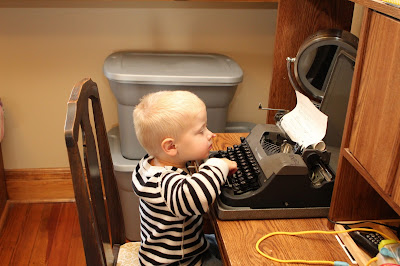
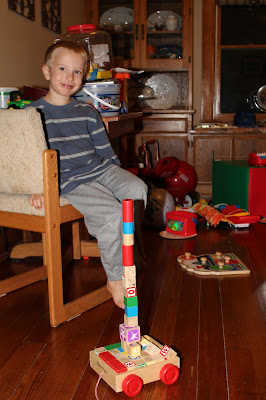
It s been busy lately, and I haven t had the time to blog. With the change in job, various travel, and settling into a new routine, I ve not done as much writing of late. But life marches on, and before memories grow too fleeting, I think I should share a few. We recently changed the arrangements for the boys. Instead of them each having their own room in which they sleep and sometimes play, we purchased a bunk bed. Oliver graduated from his crib to the lower bunk, and Jacob has the higher bunk. This has, predictably, created a few opportunities for behavior issues. Overall, it s going well, and they appreciate their new, more open, play room. Both boys sleep with their stuffed animals. Jacob calls his my friends . He still likes his butterfly, which he has had since he was an infant. He sometimes talks about how much he loves his friends, and how they like to get hugs, and how they are happy. Jacob continues to enjoy reading. He has a toy low-res camera and he even recorded a video of himself reading Brown Bear, Brown Bear. Oliver s vocabulary is coming alive and is fun to watch. Jacob has taken to trying to teach Oliver how to say things. One day, Jacob saw a number like 451 on the side of a train, producing a conversation like this: Oliver, can you say four hundred and fifty-one? Four dred iffy on! You got it!!! YAY! Today as I was walking past Oliver s train track on the floor, he grabbed me by the hand, had me sit down, and kept holding on to make sure I d stay right where he wanted me as he pointed and talked all about his trains. Aww. One cold and windy Saturday morning, the boys were getting restless. What to do, we thought? I decided to bring out one of the manual typewriters from my collection. Oliver loved watching it do things as he pressed buttons. Jacob enjoyed spelling mom . New problem: boys fighting over how long each one s turn at the typewriter is. This has gone on for a month now. Ahh, winter. A few weeks ago, Jacob informed us that he built an antenna out of blocks. He was REALLY proud of it, and even, incredibly, insisted I take his picture with it! I m pleased to have a 5-year-old that calls this structure an antenna instead of a skyscraper or tower or some such thing ;-) We took a train trip to Portland, OR, recently. That s about 2.5 days on the train each way. It went pretty well we had quite a bit of excitement though it got a little long for the boys at times. One evening, Jacob excitedly noted that the sky was almost really dark blue, just like my song! Wow. That was a song he made up in New York in summer 2010. Jacob enjoyed collecting leaves as we walked around in Portland. He would then stash his pile of leaves outside the door of whatever building we d enter, then hope to find them still there when we got back out. It usually worked out OK for him.

20 November 2011

Gregor Herrmann: RC bugs 2011/46

as expected this week was characterised by fixing bugs around the perl 5.14 transition. besides that I've also uploaded a couple of NMUs with patches kindly provided in the BTS by some tireless bug fixers.

3 November 2011

John Goerzen: Greece part 4: Food and Shopping

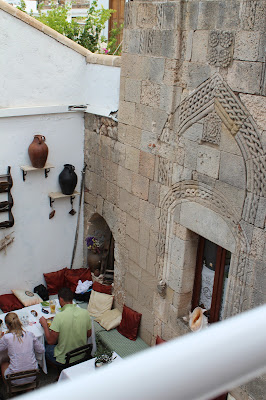
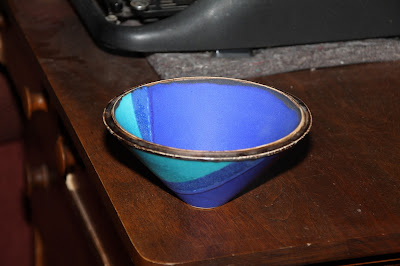
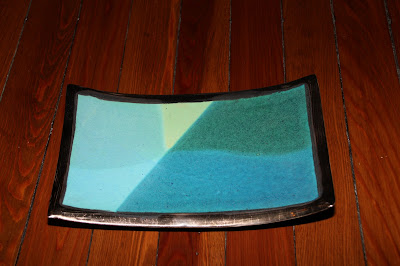
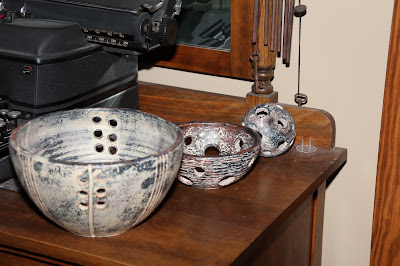
See also parts 1, 2, and 3. I am a person that enjoys food that s different from what s at home, and Rhodes didn t disappoint. Terah and I used to live close to an excellent Greek restaurant in Indianapolis, so we were already familiar in some way with the food. But there isn t any Greek restaurant at all in the Wichita area, so we missed it. Our favorite restaurant on Rhodes was Kalypso of Lindos. Everything there was just excellent, starting with the saganaki, one of my favorite Greek appetizers. I had yogurt with honey there for dessert both times we visited, a surprisingly tasty desert. Like many restaurants in Lindos, Kalypso had the option of eating on the rooftop, or at ground level. We ate on the roof, which had a nice view of the Lindos Acropolis. Being outdoors, there were sometimes cats around. This kitten enjoyed playing games with my shoestrings for awhile. Kalypso is at a 17th century captain s house. Here s a view of it from the rooftop: We, of course, had the chance to eat at quite a few different places during our visit, and I d go on way too long if I mentioned them all. Terah particularly enjoyed the gelaterie.gr ice cream shop in the square in Rhodes. We liked our lunch at Maria s Taverna in Lindos and enjoyed chatting with the staff there. I recently talked about shopping in Mexico, and perhaps learned a thing or two from that. I won t say we never buy them, but in general we don t buy souvenirs like t-shirts, plastic things made in China, etc. We prefer to buy local. Those items tend to be higher quality, more interesting, and we like to support the local economy. We also don t have lots of room for things, so we try to choose carefully. So it was something of a surprise to Terah, and perhaps even to me, when I suggested we go shopping one day. Terah typically enjoys shopping a lot more than I do. Anyhow, off we went to Lindos. One of the first things that had caught our eye in Lindos was the shop selling glass. But it wasn t just any glass; it appeared to be made with some sort of layered process, and has a distinctly three-dimensional feel to it. As you move around, it looks like the background shifts. We wound up with this item, which was made in Athens: By the time we visited Lindos specifically for shopping, we had a good feel for when the busy times of day were, so we could avoid them. It gave us the opportunity to visit with people and when they weren t busy, many shopkeepers liked to chat. I enjoy hearing people s stories and we heard several. One ceramics shop the Musa Shop -caught Terah s eye. They had such incredible and beautiful pieces outside that we just had to go in. We wound up with two pieces from there, both in shades of blue: Both remind me of the Aegean Sea and the deep blue sky of Rhodes. And then, as we were walking along, I pointed inside a shop and said to Terah, Hey, those look different. We went in, and eventually wound up buying these: The appearance, and even feel, of them is unlike anything I d seen. Quite interesting. And seeing those particular items in the Lakis Place shop led to making some new friends I ll write about it in the next post.

28 October 2011

Russell Coker: Desktop Equivalent Augmented Reality

Augmented reality is available on all relatively modern smart phones. I ve played with it on my Android phone but it hasn t delivered the benefits that I hoped, there is a game where you can walk through a virtual maze which didn t work for me, and a bunch of programs which show me the position of stars, pizza restaurants, and other things which are cool but not really useful. It has been proven that larger screen size can make a surprising difference in productivity for increasing monitor size. The general concept seems to be that ideally everything you are thinking about at one time should be on the screen at once. I m not aware of any research comparing phones to desktop monitors but it is obvious that some tasks become extremely difficult or nearly impossible when attempted on the tiny screen of a phone. One significant example is coding. One noteworthy thing about coding is that the amount of typing is often quite small when compared to the amount of time spent looking at code, so the lack of good keyboard options on phones isn t always a serious problem. The iPhone 4 has a resolution of 640*960 which seems to be the best available phone resolution (with 480*854 being the highest resolution that is available in many phones). The Dell Streak at 5 inches seemed to have the largest screen in a phone, but they have stopped selling them. It seems that the largest screen available in a phone is about 4.2 inches. Probably the minimum that would be considered usable for development would be a resolution of about 1280*1024 and a screen size of about 14 inches, while opinion will vary a lot about this I think that the vast majority of programmers will agree that the bigger tablet computers and Netbooks (at about 10 inches and something like 1366*768 resolution) are well below the minimum size. It seems to me that a possible solution to this problem involves using augmented reality to provide a virtual desktop that is significantly larger and which has a significantly higher resolution. The advantage of augmented reality over merely scrolling is that it should allow faster and more reliable seeking for the section of virtual desktop that is of interest, and seek speed is probably the bottleneck with small monitors. One problem for this would be turning corners when on public transport, but the camera button could be used to reset the current phone position to be the middle of the viewing area, if the process of resetting the angle is fast enough it wouldn t be a great distraction. I don t think that a mobile phone will ever be a great device for software development and I don t think that the places where a serious computer isn t available are good places to work. But sometimes I get inspiration for tracking down a difficult bug when on the move and it would be really good to be able to read the code immediately. I won t have any time to work on such things myself. I m just publishing the idea in case someone who likes it happens to have a lot of spare time

23 October 2011

Gregor Herrmann: RC bugs 2011/42

this week my activities were split between some freshly-reported pkg-perl bugs, & looking at some of the older RC bugs. for most of the ones in the latter category I found again ready-to-be-applied patches, many of them from Ubuntu again. details:

22 October 2011

Vincent Sanders: I do not want anything NASty to happen

I have a lot of digital data to store, like most people I have photos, music, home movies, email and lots of other random data. Being a programmer I also tend to have huge piles of source code and builds lying about. If all that was not enough I work from home so I have copious mountains of work data too.

Many years ago I decided I wanted a single robust, backed up, file server for all of this. So I slapped together a machine from leftovers stuffed some drives in a software RAID array, served over NFS and CIFS and never looked back.

Over time the hardware has changed and the system upgraded but the basic approach of a custom built server has remained. When I needed a build engine to churn out hundreds of kernels a day for the ARM Linux autobuilder the system was expanded to cope and mid 2009 the current instantiation was created.

Current full height tower fileserverThe current system is a huge tower case (courtesy of Mark Hymers) containing a Core 2 Quad 2.33GHz (8 threads) with 8Gigabytes of memory and 13 drives across four SATA controllers split into several RAID arrays. Despite buying new drives at higher capacities I have tended to keep the old drives around for extra storage resulting in what you see here.

I recently looked at the power usage of this monster and realised I was paying a lot of money to spin rust which was simply uneconomic. Seriously, why did I have six sub 200Gigabyte drives running when a single 2T to replace them would pay for itself in power saved in under a month! In addition I no longer required the compute power available either, most definitely time for a downsize!

Several friends suggested a HP micro server might be just the thing. After examining and evaluating some other options (Thecus and QNAP NAS) I decided the HP route was most definitely the best value for money.

The HP Proliant micro server is a dual core Athlon II 1.3GHz system with a Gigabyte of memory, space for four SATA hard drives and a single 5 inch bay for an optical drive. All this in a roughly 250mm on a side cube.

My HP proliant microserverI went out and bought the server from ebuyer for 235 with free shipping and 100 cashback. I Immediately sent off the cash back paperwork so I would not forget(what an odd way to get discount) so total cost for the unit was 135. I then used Crucial to select a suitable memory upgrade to take the total to 2 Gigabytes of RAM for 14

The final piece of the solution was the drives for the storage. I decided the best capacity to cost ratio could be had from 2 TB drives and with four bays available would give a raw capacity of 8 TB or more usefully for this discussion 7.8 TiB

I did an experiment with 3x1 TB 7200 RPM drives from the existing server and determined that The overall system would not really benefit enough to justify the 50% price premium of 7200 RPM drives over 5400 RPM devices. I ended up getting four Samsung Spinpoint F4EG 2 TB drives for 230.

I also bought a black LG DVD-RW drive for 16 I would have also required a SATA data cable and a molex to SATA power cable if I had not already got them.

My HP microserver with the front door openPutting the components together was really simple. The internal layout and design of the enclosure mean it is easy to work with and has the feel of build quality I usually associate with HP and IBM server kit not something this small and inexpensive.

The provided documentation is good but unnecessary as most operations are obvious. They even provide the bolts to attach all the drives along with a wrench in the lockable front door, how thoughtful is that!

I then installed the system with Debian squeeze from the optical drive. Principally because I happened to have a network installer CD to hand although the BIOS does have network boot capability.

I used the installer to put the whole initial system together and did not have to resort to the command line even once, very impressed with how far D-I has come.

After asking several people for advice the general consensus was that I should create two partitions on each drive one for a RAID 1 /boot and one for a RAID 5 LVM area.

I did have to perform the entire install a second time because there is a gotcha with GUID Partition Table, RAID 1 boot drives and GRUB. You must have a small "BIOS" partition on the front of the drive or GRUB cannot install in the MBR and your system will not boot!

The partition layout I ended up with looks like:
Model: ATA SAMSUNG HD204UI (scsi)
Disk /dev/sda: 2000GB
Sector size (logical/physical): 512B/512B
Partition Table: gpt

Number Start End Size File system Name Flags
1 17.4kB 32.0MB 32.0MB bios_grub
3 32.0MB 1000MB 968MB raid
2 1000MB 2000GB 1999GB raid

The small Gigabyte partition was configured as a RAID 1 across all four drives and formatted with ext2 and mount point of /boot. The large space was configured as RAID 5 across all four drives with LVM on top. Logical volumes were allocated formatted ext3 (on advice from seevral people about ext4 instability they had observed) for 50 GiB root, 4 GiB swap and 1 TiB home space.

The normal Debian install proceeded and after the post install reboot I was presented with a login prompt. Absolutely no surprises at all no additional drivers required and a correctly running system.

Over the next few days I did the usual sysadmin stuff, rsynced data from the old fileserver including creating logical volumes for the various arrays from the old server none of which presented much of a problem. The 5.5TiB Raid 5 did however take a day or so to sync!

I used the microservers eSATA port to attach external drives I use for backup purposes which has also not been an issue so far.

I am currently running both the new and old systems for a few days and rsyncing data to the microserver until I am sure of it. Actually I will make the switch this weekend and shut the old system down and leave it till next weekend before I scrub the old drives.

Before I made it live I decided to run some benchmarks and gather some data just for interest.
Bonnie (Version 1.96) was run in the root logical volume (I repeated the tests in other volumes, there is sub 1% variation) the test used a 4GiB size and 16 files

Sequential OutputSequential InputRandom SeeksSequential CreateRandom Create
Per ChrBlockRewritePer ChrBlockCreateReadDeleteCreateReadDelete
/sec378K41M37M2216K330M412.811697+++++1833014246+++++14371
%CPU9711891301524+++2829+++22
Latency109ms681ms324ms116ms93389 s250ms29021 s814 s842 s362 s51 s61 s

Does not seem to be any notable issues there, the write speeds are a little lower than I might like but that is the cost of RAID 5 and 5400 RPM drives.

The rsync operations used to sync up the live data seem to manage just short of 20MiB/s for the home partition comprising of 250GiB in two and a half million files with the expected mix of file sizes. The video partition managed 33MiB/s on 1TiB of data in nine thousand files.

The bonnie tests were performed accessing the server over NFS with 24GiB size and 16 files.
Sequential OutputSequential InputRandom SeeksSequential CreateRandom Create
Per ChrBlockRewritePer ChrBlockCreateReadDeleteCreateReadDelete
/sec1733K29M19M4608K106M358.3146537142402157640821529
%CPU98249310108109997
Latency10894 s23242ms69159ms49772 s224ms250ms148ms24821 s157ms108ms2074 s719ms

or alternatively as percentages against the previous direct access values

Sequential OutputSequential InputRandom SeeksSequential CreateRandom Create
Per ChrBlockRewritePer ChrBlockCreateReadDeleteCreateReadDelete
/sec4646851213328712+++1311+++10
CPU1011850104347133+++3231+++31
Latency925121324893227795093049186462983440661178688

Not that that tells us much aside from that write is a bit slower over the network, read is gigabit network bandwidth limited and latency of disc over the network is generally poorer than direct.

In summary the total cost was 395 for a complete ready to use system with 5.5TiB of RAID 5 storage which can be NFS served at nearly 900Mbit/s. Overall I am happy with the result, my only real issue is the write performance is a little disappointing but it is good enough for what I need.

21 October 2011

Russell Coker: Dedicated vs Virtual Servers

A common question about hosting is whether to use a dedicated server or a virtual server. Dedicated Servers If you use a dedicated server then you will face the risk of problems which interrupt the boot process. It seems that all the affordable dedicated server offerings lack any good remote management, so when the server doesn t boot you either have to raise a trouble ticket with the company running the Data-Center (DC) or use some sort of hack. Hetzner is a dedicated server company that I have had good experiences with [1], when a server in their DC fails to boot you can use their web based interface (at no extra charge or delay) to boot a Linux recovery environment which can then be used to fix whatever the problem may be. They also charge extra for hands-on support which could be used if the Linux recovery environment revealed no errors but the system just didn t work. This isn t nearly as good as using something like IPMI which permits remote console access to see error messages and more direct control of rebooting. The up-side of a dedicated server is performance. Some people think that avoiding virtualisation improves performance, but in practice most virtual servers use virtualisation technologies that have little overhead. A bigger performance issue than the virtualisation overhead is the fact that most companies running DCs have a range of hardware in their DC and your system (whether a virtual server or a dedicated server) will be on a random system from their DC. I have observed hosting companies to give different speed CPUs and for dedicated servers different amounts of RAM for the same price. I expect that the disk IO performance also varies a lot but I have no evidence. As long as the hosting company provides everything that they offered before you sign the contract you can t complain. It s worth noting that CPU performance is either poorly specified or absent in most offers and disk IO performance is almost never specified. One advantage of dedicated servers in this regard is that you get to know the details of the hardware and can therefore refuse certain low spec hardware. The real performance benefit of a dedicated server is that disk IO performance won t be hurt by other users of the same system. Disk IO is the real issue as CPU and RAM are easy to share fairly but disk performance is difficult to share and is also a significant bottleneck on many servers. Dedicated servers also have a higher minimum price due to the fact that a real server is being used which involves hardware purchase and rack space. Hetzner s offers which start at E29 per month are about as cheap as it s possible to get. But it appears that the E29 offer is for an old server new hardware starts at E49 per month which is still quite cheap. But no dedicated server compares to the virtual servers which can be rented for prices less than $10 per month. Virtual Servers A virtual server will typically have an effective management interface. You should expect to get web based access to the system console as well as ssh console access. If console access is not sufficient to recover the system then there is an option to boot from a recovery device. This allows you to avoid many situations that could potentially result in down-time and when things go wrong it allows you to recover faster. Linode is an example of a company that provides virtual servers and provides a great management interface [2]. It would take a lot of work with performance monitoring and graphing tools to give the performance overview that comes for free with the Linode interface. Disk IO performance can suck badly on virtual servers and it can happen suddenly and semi-randomly. If someone else who is using a virtual server on the same hardware is the target of a DoS attack then your performance can disappear. Performance for CPU is generally fairly reliable though. So a CPU bound server would be a better fit on the typical virtual server options than a disk IO bound server. Virtual servers are a lot cheaper at the low end so if you don t need the hardware capabilities of a minimal dedicated server (with 1G of RAM for Hetzner and a minimum of 8G of RAM for some other providers) then you can save a lot of money by getting a virtual server. Finally the options for running a virtual machine under a virtual machine aren t good, AFAIK the only options that would work on a commercial VPS offering are QEMU (an x86 CPU instruction emulator), Hercules (a S/370 S/390, and Z series IBM mainframe emulator), and similar CPU emulators. Please let me know if there are any other good options for running a virtual machine on a VPS. Now while these emulators are apparently good for debugging OS development they aren t something that are generally useful for running a virtual machine. I knew someone who ran his important servers under Hercules so that x86 exploits couldn t be used for attacking them, but apart from that CPU emulation isn t generally useful for servers. Summary If you want to have entire control of the hardware or if you want to run your own virtual machines that suit your needs (EG one with lots of RAM and another with lots of disk space) then a dedicated server is required. If you want to have minimal expense or the greatest ease of sysadmin use then a virtual server is a better option. But the cheapest option for virtual hosting is to rent a server from Hetzner, run Xen on it, and then rent out DomUs to other people. Apart from the inevitable pain that you experience if anything goes wrong with the Dom0 this is a great option. As an aside, if anyone knows of a reliable company that offers some benefits over Hetzner then please let me know. What I would Like to See There is no technical reason why a company like Linode couldn t make an offer which was a single DomU on a server taking up all available RAM, CPU, and disk space. Such an offer would be really compelling if it wasn t excessively expensive. That would give Linode ease of management and also a guarantee that no-one else could disrupt your system by doing a lot of disk IO. This would be really easy for Linode (or any virtual server provider) to implement. There is also no technical reason why a company like Linode couldn t allow their customers to rent all the capacity of a physical system and then subdivide it among DomUs as they wish. I have a few clients who would be better suited by Linode DomUs that are configured for their needs rather than stock Linode offerings (which never seem to offer the exact amounts of RAM, disk, or CPU that are required). Also if I had a Linode physical server that only had DomUs for my clients then I could make sure that none of them had excessive disk IO that affected the others. This would require many extra features in the Linode management web pages, so it seems unlikely that they will do it. Please let me know if there is someone doing this, it s obvious enough that someone must be doing it. Update: A Rimuhosting employee pointed out that they offer virtual servers on dedicated hardware which meets this criteria [3]. Rimuhosting allows you to use their VPS management system for running all the resources in a single server (so no-one else can slow your VM down) and also allow custom partitioning of a server into as many VMs as you desire.

Next.

Previous.