Scarlett Gately Moore: KDE Applications 25.04 Snaps and Kubuntu Plucky Puffin 25.04 Released!
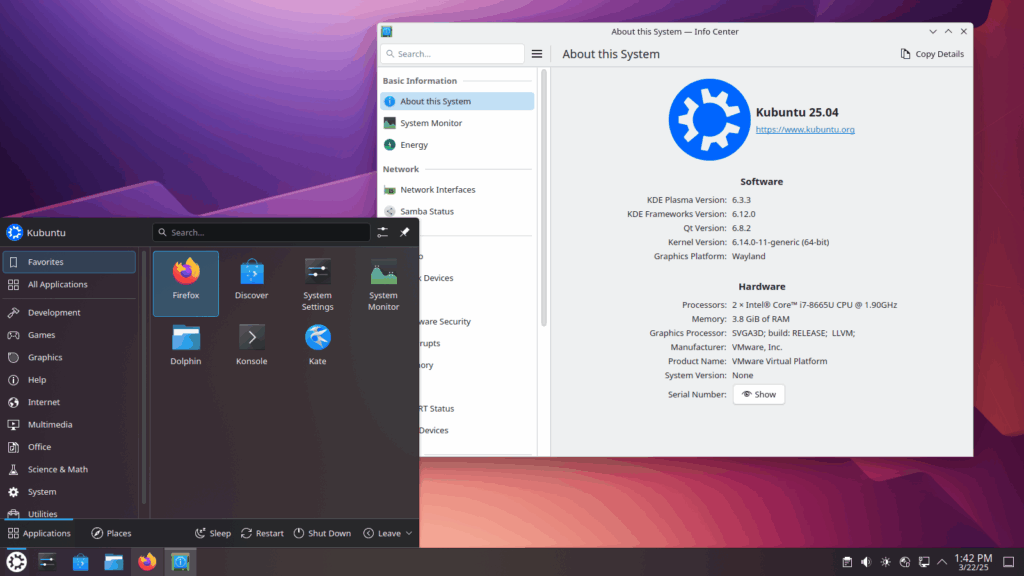
 https://kde.org/announcements/gear/25.04.0
Which can be downloaded here: https://snapcraft.io/publisher/kde !
 https://kde.org/announcements/gear/25.04.0
Which can be downloaded here: https://snapcraft.io/publisher/kde !
 Last year I intended to write an update on my use of hledger, but that was
waylaid for various reasons and I need to revisit how (if) I'm using it, so
that's put off for longer. I do want to mention one contribution I made
upstream: a dark theme for
the UI, and some unfinished work on consistent
colours.
Consistent terminal colours are an interesting issue: the most common terminal
colour modes (8 and 256) use indexing into a palette, but the definition of the
colours is ambiguous: the 8-colour palette is formally specified by ANSI as
names (red, green, etc.); the 256-colour palette is effectively defined by
xterm (a useful chart)
but I'm not sure all terminal emulators that support it have chosen the same
colour values.
A consequence of indexed-colour is that the end-user may redefine what the
colour values are. Whether this is a good thing or a bad thing depends on
your point of view. As an end-user, it's attractive to be able to tune the
colour scheme; but as a software author, it means you have no real idea
what your users are going to see, and matters like ensuring contrast are
impossible.
Some terminals support 24-bit "true" colour, in which the colours are
specified as an RGB triplet. Using these mean the software author can
be reasonably sure all users will see the same thing (for a fungible
definition of "same"), at the cost of user configurability. However,
since it's less well supported, we start having to worry about fallback
behaviour.
In the case of
hledger-ui, which provides several colour schemes, that's
probably OK, because the user configurability is achieved by choosing one of
the schemes. (or writing your own, in extremis). However, the dark theme I
contributed uses the 8-colour palette, in common with the other themes, and
my explorations into using predictable colours are unfinished.

 After careful consideration, I ve decided to embark on a new chapter in my professional journey. I ve left my position at AWS to dedicate at least the next six months to developing open source software and strengthening digital ecosystems. My focus will be on contributing to Linux distributions (primarily Debian) and other critical infrastructure components that our modern society depends on, but which may not receive adequate attention or resources.
Best way to reach me is by e-mail otto at debian.org. You can also book a 15-minute chat with me for a quick introduction.
Today I submitted my PhD thesis, 8 years since I started (give or
take). Next step, Viva.
Normal service may resume shortly
 Another new (stable) release of the AsioHeaders
package arrived at CRAN just
now. Asio provides a
cross-platform C++ library for network and low-level I/O programming. It
is also included in Boost but
requires linking when used as part of Boost. This standalone version of Asio is a header-only C++
library which can be used without linking (just like our BH package with parts of
Boost).
The update last
week, kindly prepared by Charlie Gao, had overlooked /
not covered one other nag discovered by CRAN. This new release, based on
the current stable upstream release, does that.
The short NEWS entry for AsioHeaders follows.
Thanks to my CRANberries, there is a diffstat report for this release. Comments and suggestions about AsioHeaders are welcome via the issue tracker at the GitHub repo.Changes in version 1.30.2-0 (2025-04-15
This post by Dirk Eddelbuettel originated on his Thinking inside the box blog. If you like this or other open-source work I do, you can now sponsor me at GitHub.
 Fun with -fsanitize=undefined and Picolibc
Both GCC and Clang support the -fsanitize=undefined flag which
instruments the generated code to detect places where the program
wanders into parts of the C language specification which are either
undefined or implementation defined. Many of these are also common
programming errors. It would be great if there were sanitizers for
other easily detected bugs, but for now, at least the undefined
sanitizer does catch several useful problems.
Supporting the sanitizer
The sanitizer can be built to either trap on any error or call
handlers. In both modes, the same problems are identified, but when
trap mode is enabled, the compiler inserts a trap instruction and
doesn't expect the program to continue running. When handlers are in
use, each identified issue is tagged with a bunch of useful data and
then a specific sanitizer handling function is called.
The specific functions are not all that well documented, nor are the
parameters they receive. Maybe this is because both compilers provide
an implementation of all of the functions they use and don't really
expect external implementations to exist? However, to make these useful in an
embedded environment, picolibc needs to provide a complete set of
handlers that support all versions both gcc and clang as the
compiler-provided versions depend upon specific C (and C++) libraries.
Of course, programs can be built in trap-on-error mode, but that makes
it much more difficult to figure out what went wrong.
Fixing Sanitizer Issues
Once the sanitizer handlers were implemented, picolibc could be
built with them enabled and all of the picolibc tests run to uncover
issues within the library.
As with the static analyzer adventure from last year, the vast bulk of
sanitizer complaints came from invoking undefined or
implementation-defined behavior in harmless ways:
else clause in the
overflow check. This inserts an extra branch instruction, which is
annoying.lsl, which
does this:
    #define lsl(__x,__s) ((sizeof(__x) == sizeof(char)) ?                   \
                          (__typeof(__x)) ((unsigned char) (__x) << (__s)) :  \
                          (sizeof(__x) == sizeof(short)) ?                  \
                          (__typeof(__x)) ((unsigned short) (__x) << (__s)) : \
                          (sizeof(__x) == sizeof(int)) ?                    \
                          (__typeof(__x)) ((unsigned int) (__x) << (__s)) :   \
                          (sizeof(__x) == sizeof(long)) ?                   \
                          (__typeof(__x)) ((unsigned long) (__x) << (__s)) :  \
                          (sizeof(__x) == sizeof(long long)) ?              \
                          (__typeof(__x)) ((unsigned long long) (__x) << (__s)) : \
                          __undefined_shift_size(__x, __s))
>> operator on
signed integers as arithmetic shift. Also fortunately, C hasn't made
this undefined, so the program itself doesn't end up undefined.
The trouble with arithmetic right shift is that it is not equivalent
to right shift of unsigned values. Here's what Per Vognsen came up
with using standard C operators:
    int
    __asr_int(int x, int s)
        return x < 0 ? ~(~x >> s) : x >> s;
    #define asr(__x,__s) ((sizeof(__x) == sizeof(char)) ?           \
                          (__typeof(__x))__asr_char(__x, __s) :       \
                          (sizeof(__x) == sizeof(short)) ?          \
                          (__typeof(__x))__asr_short(__x, __s) :      \
                          (sizeof(__x) == sizeof(int)) ?            \
                          (__typeof(__x))__asr_int(__x, __s) :        \
                          (sizeof(__x) == sizeof(long)) ?           \
                          (__typeof(__x))__asr_long(__x, __s) :       \
                          (sizeof(__x) == sizeof(long long)) ?      \
                          (__typeof(__x))__asr_long_long(__x, __s):   \
                          __undefined_shift_size(__x, __s))
for (ix = -1022, i = hx << 11; i > 0; i <<= 1)
    ix -= 1;
hx += n << 20;
if (hx >> 20 <= 0)
    /* do sub-normal things */
n, is a signed value and so
that shift is replaced with the lsl macro. The test value needs to
compute the correct the sign bit, so we replace this with the asr
macro.
Because the right shift operation is not undefined, we only use our
fancy macro above when the undefined behavior sanitizer is enabled. On
the other hand, the lsl macro should have zero cost and covers
undefined behavior, so it is always used.
Actual Bugs Found!
The goal of this little adventure was both to make using the undefined
behavior sanitizer with picolibc possible as well as to use the
sanitizer to identify bugs in the library code. I fully expected that
most of the effort would be spent masking harmless undefined behavior
instances, but was hopeful that the effort would also uncover real
bugs in the code. I was not disappointed. Through this work, I found
(and fixed) eight bugs in the code:
int range rather than long.wchar_t was unsigned. p = malloc(sizeof(*p) * c);
 This topic came up at a customer of mine in September 2024, when working on Debian/trixie support. Since then I wanted to blog about it to make people aware of this new OpenSSH feature and behavior. I finally found some spare minutes at Debian s BSP in Vienna, so here we are. :)
Some of our Q/A jobs failed to run against Debian/trixie, in the debug logs we found:
debug1: kex_exchange_identification: banner line 0: Not allowed at this timeThis Not allowed at this time pointed to a new OpenSSH feature. OpenSSH introduced options to penalize undesirable behavior with version 9.8p1, see OpenSSH Release Notes, and also sshd source code. FTR, on the SSH server side, you ll see messages like that:
Apr 13 08:57:11 grml sshd-session[2135]: error: maximum authentication attempts exceeded for root from 10.100.15.42 port 55792 ssh2 [preauth]
Apr 13 08:57:11 grml sshd-session[2135]: Disconnecting authenticating user root 10.100.15.42 port 55792: Too many authentication failures [preauth]
Apr 13 08:57:12 grml sshd-session[2137]: error: maximum authentication attempts exceeded for root from 10.100.15.42 port 55800 ssh2 [preauth]
Apr 13 08:57:12 grml sshd-session[2137]: Disconnecting authenticating user root 10.100.15.42 port 55800: Too many authentication failures [preauth]
Apr 13 08:57:13 grml sshd-session[2139]: error: maximum authentication attempts exceeded for root from 10.100.15.42 port 55804 ssh2 [preauth]
Apr 13 08:57:13 grml sshd-session[2139]: Disconnecting authenticating user root 10.100.15.42 port 55804: Too many authentication failures [preauth]
Apr 13 08:57:13 grml sshd-session[2141]: error: maximum authentication attempts exceeded for root from 10.100.15.42 port 55810 ssh2 [preauth]
Apr 13 08:57:13 grml sshd-session[2141]: Disconnecting authenticating user root 10.100.15.42 port 55810: Too many authentication failures [preauth]
Apr 13 08:57:13 grml sshd[1417]: drop connection #0 from [10.100.15.42]:55818 on [10.100.15.230]:22 penalty: failed authentication
Apr 13 08:57:14 grml sshd[1417]: drop connection #0 from [10.100.15.42]:55824 on [10.100.15.230]:22 penalty: failed authentication
Apr 13 08:57:14 grml sshd[1417]: drop connection #0 from [10.100.15.42]:55838 on [10.100.15.230]:22 penalty: failed authentication
Apr 13 08:57:14 grml sshd[1417]: drop connection #0 from [10.100.15.42]:55854 on [10.100.15.230]:22 penalty: failed authentication
This feature certainly is useful and has its use cases. But if you f.e. run automated checks to ensure that specific logins aren t working, be careful: you might hit the penalty feature, lock yourself out but also consecutive checks then don t behave as expected. Your login checks might fail, but only because the penalty behavior kicks in. The login you re verifying still might be working underneath, but you don t actually check for it exactly. Furthermore legitimate traffic from systems which accept connections from many users or behind shared IP addresses, like NAT and proxies could be denied. To disable this new behavior, you can set PerSourcePenalties no in your sshd_config, but there are also further configuration options available, see PerSourcePenalties and PerSourcePenaltyExemptList settings in sshd_config(5) for further details.


 Nextcloud is an open-source software suite that
enables you to set up and manage your own cloud storage and collaboration
platform. It offers a range of features similar to popular cloud services
like Google Drive or Dropbox but with the added benefit of complete control
over your data and the server where it s hosted.
I wanted to have a look at Nextcloud and the steps to setup a own instance
with a PostgreSQL based database together with NGinx as the webserver to
serve the WebUI. Before doing a full productive setup I wanted to play
around locally with all the needed steps and worked out all the steps within
KVM machine.
While doing this I wrote down some notes to mostly document for myself what
I need to do to get a Nextcloud installation running and usable. So this
manual describes how to setup a Nextcloud installation on Debian 12 Bookworm
based on NGinx and PostgreSQL.
php on a Debian Bookworm system
would pull in the depending meta package php8.2. This package itself would
then pull also the package libapache2-mod-php8.2 as an dependency which
then would pull in also the apache2 webserver as a depending package. This
is something I don t wanted to have as I want to use NGinx that is already
installed on the system instead.
To get this we need to explicitly exclude the package libapache2-mod-php8.2
from the list of packages which we want to install, to achieve this we have
to append a hyphen - at the end of the package name, so we need to use
libapache2-mod-php8.2- within the package list that is telling apt to
ignore this package as an dependency. I ended up with this call to get all
needed dependencies installed.
$ sudo apt install php php-cli php-fpm php-json php-common php-zip \
  php-gd php-intl php-curl php-xml php-mbstring php-bcmath php-gmp \
  php-pgsql libapache2-mod-php8.2-
$ php -v
PHP 8.2.28 (cli) (built: Mar 13 2025 18:21:38) (NTS)
Copyright (c) The PHP Group
Zend Engine v4.2.28, Copyright (c) Zend Technologies
    with Zend OPcache v8.2.28, Copyright (c), by Zend Technologies
php.ini file:
$ sudo vi /etc/php/8.2/fpm/php.ini
max_execution_time = 300
memory_limit = 512M
post_max_size = 128M
upload_max_filesize = 128M
$ sudo systemctl restart php8.2-fpm
$ sudo apt install postgresql postgresql-contrib postgresql-client
$ sudo -i -u postgres
$ psql -version
psql (15.12 (Debian 15.12-0+deb12u2))
\q.
postgres=# \q
postgres@host:~$ exit
$ sudo -u postgres psql -c "CREATE USER nextcloud_user PASSWORD '1234';"
$ sudo -u postgres psql -c "CREATE DATABASE nextcloud_db WITH OWNER nextcloud_user ENCODING=UTF8;"
$ psql -h localhost -U nextcloud_user -d nextcloud_db
or
$ psql -h 127.0.0.1 -U nextcloud_user -d nextcloud_db
\q.$ wget https://download.nextcloud.com/server/releases/latest.zip
/var/www/html with the following command:
$ sudo unzip latest.zip -d /var/www/html
/var/www/html/nextcloud directory to www-data.
$ sudo chown -R www-data:www-data /var/www/html/nextcloud
$ sudo openssl req -x509 -nodes -days 365 -newkey rsa:2048 -keyout nextcloud.key -out nextcloud.crt
$ sudo cp nextcloud.crt /etc/ssl/certs/ && sudo cp nextcloud.key /etc/ssl/private/
$ sudo certbot --nginx -d nextcloud.your-domain.com
You will need to adjust the path to the key and certificate in the next
step!
$ sudo vi /etc/nginx/sites-available/nextcloud.conf
# /etc/nginx/sites-available/nextcloud.conf
upstream php-handler
    #server 127.0.0.1:9000;
    server unix:/run/php/php8.2-fpm.sock;


# Set the  immutable  cache control options only for assets with a cache
# busting  v  argument

map $arg_v $asset_immutable
    "" "";
    default ", immutable";


server
    listen 80;
    listen [::]:80;
    # Adjust this to the correct server name!
    server_name nextcloud.local;

    # Prevent NGinx HTTP Server Detection
    server_tokens off;

    # Enforce HTTPS
    return 301 https://$server_name$request_uri;


server
    listen 443      ssl http2;
    listen [::]:443 ssl http2;
    # Adjust this to the correct server name!
    server_name nextcloud.local;

    # Path to the root of your installation
    root /var/www/html/nextcloud;

    # Use Mozilla's guidelines for SSL/TLS settings
    # https://mozilla.github.io/server-side-tls/ssl-config-generator/
    # Adjust the usage and paths of the correct key data! E.g. it you want to use Let's Encrypt key material!
    ssl_certificate /etc/ssl/certs/nextcloud.crt;
    ssl_certificate_key /etc/ssl/private/nextcloud.key;
    # ssl_certificate /etc/letsencrypt/live/nextcloud.your-domain.com/fullchain.pem;
    # ssl_certificate_key /etc/letsencrypt/live/nextcloud.your-domain.com/privkey.pem;

    # Prevent NGinx HTTP Server Detection
    server_tokens off;

    # HSTS settings
    # WARNING: Only add the preload option once you read about
    # the consequences in https://hstspreload.org/. This option
    # will add the domain to a hardcoded list that is shipped
    # in all major browsers and getting removed from this list
    # could take several months.
    #add_header Strict-Transport-Security "max-age=15768000; includeSubDomains; preload" always;

    # set max upload size and increase upload timeout:
    client_max_body_size 512M;
    client_body_timeout 300s;
    fastcgi_buffers 64 4K;

    # Enable gzip but do not remove ETag headers
    gzip on;
    gzip_vary on;
    gzip_comp_level 4;
    gzip_min_length 256;
    gzip_proxied expired no-cache no-store private no_last_modified no_etag auth;
    gzip_types application/atom+xml text/javascript application/javascript application/json application/ld+json application/manifest+json application/rss+xml application/vnd.geo+json application/vnd.ms-fontobject application/wasm application/x-font-ttf application/x-web-app-manifest+json application/xhtml+xml application/xml font/opentype image/bmp image/svg+xml image/x-icon text/cache-manifest text/css text/plain text/vcard text/vnd.rim.location.xloc text/vtt text/x-component text/x-cross-domain-policy;

    # Pagespeed is not supported by Nextcloud, so if your server is built
    # with the  ngx_pagespeed  module, uncomment this line to disable it.
    #pagespeed off;

    # The settings allows you to optimize the HTTP2 bandwidth.
    # See https://blog.cloudflare.com/delivering-http-2-upload-speed-improvements/
    # for tuning hints
    client_body_buffer_size 512k;

    # HTTP response headers borrowed from Nextcloud  .htaccess
    add_header Referrer-Policy                   "no-referrer"       always;
    add_header X-Content-Type-Options            "nosniff"           always;
    add_header X-Frame-Options                   "SAMEORIGIN"        always;
    add_header X-Permitted-Cross-Domain-Policies "none"              always;
    add_header X-Robots-Tag                      "noindex, nofollow" always;
    add_header X-XSS-Protection                  "1; mode=block"     always;

    # Remove X-Powered-By, which is an information leak
    fastcgi_hide_header X-Powered-By;

    # Set .mjs and .wasm MIME types
    # Either include it in the default mime.types list
    # and include that list explicitly or add the file extension
    # only for Nextcloud like below:
    include mime.types;
    types
        text/javascript js mjs;
        application/wasm wasm;


    # Specify how to handle directories -- specifying  /index.php$request_uri
    # here as the fallback means that NGinx always exhibits the desired behaviour
    # when a client requests a path that corresponds to a directory that exists
    # on the server. In particular, if that directory contains an index.php file,
    # that file is correctly served; if it doesn't, then the request is passed to
    # the front-end controller. This consistent behaviour means that we don't need
    # to specify custom rules for certain paths (e.g. images and other assets,
    #  /updater ,  /ocs-provider ), and thus
    #  try_files $uri $uri/ /index.php$request_uri
    # always provides the desired behaviour.
    index index.php index.html /index.php$request_uri;

    # Rule borrowed from  .htaccess  to handle Microsoft DAV clients
    location = /
        if ( $http_user_agent ~ ^DavClnt )
            return 302 /remote.php/webdav/$is_args$args;


    location = /robots.txt
        allow all;
        log_not_found off;
        access_log off;


    # Make a regex exception for  /.well-known  so that clients can still
    # access it despite the existence of the regex rule
    #  location ~ /(\. autotest ...)  which would otherwise handle requests
    # for  /.well-known .
    location ^~ /.well-known
        # The rules in this block are an adaptation of the rules
        # in  .htaccess  that concern  /.well-known .

        location = /.well-known/carddav   return 301 /remote.php/dav/;
        location = /.well-known/caldav    return 301 /remote.php/dav/;

        location /.well-known/acme-challenge      try_files $uri $uri/ =404;
        location /.well-known/pki-validation      try_files $uri $uri/ =404;

        # Let Nextcloud's API for  /.well-known  URIs handle all other
        # requests by passing them to the front-end controller.
        return 301 /index.php$request_uri;


    # Rules borrowed from  .htaccess  to hide certain paths from clients
    location ~ ^/(?:build tests config lib 3rdparty templates data)(?:$ /)    return 404;
    location ~ ^/(?:\. autotest occ issue indie db_ console)                  return 404;

    # Ensure this block, which passes PHP files to the PHP process, is above the blocks
    # which handle static assets (as seen below). If this block is not declared first,
    # then NGinx will encounter an infinite rewriting loop when it prepend  /index.php
    # to the URI, resulting in a HTTP 500 error response.
    location ~ \.php(?:$ /)
        # Required for legacy support
        rewrite ^/(?!index remote public cron core\/ajax\/update status ocs\/v[12] updater\/.+ ocs-provider\/.+ .+\/richdocumentscode(_arm64)?\/proxy) /index.php$request_uri;

        fastcgi_split_path_info ^(.+?\.php)(/.*)$;
        set $path_info $fastcgi_path_info;

        try_files $fastcgi_script_name =404;

        include fastcgi_params;
        fastcgi_param SCRIPT_FILENAME $document_root$fastcgi_script_name;
        fastcgi_param PATH_INFO $path_info;
        fastcgi_param HTTPS on;

        fastcgi_param modHeadersAvailable true;         # Avoid sending the security headers twice
        fastcgi_param front_controller_active true;     # Enable pretty urls
        fastcgi_pass php-handler;

        fastcgi_intercept_errors on;
        fastcgi_request_buffering off;

        fastcgi_max_temp_file_size 0;


    # Serve static files
    location ~ \.(?:css js mjs svg gif png jpg ico wasm tflite map ogg flac)$
        try_files $uri /index.php$request_uri;
        # HTTP response headers borrowed from Nextcloud  .htaccess
        add_header Cache-Control                     "public, max-age=15778463$asset_immutable";
        add_header Referrer-Policy                   "no-referrer"       always;
        add_header X-Content-Type-Options            "nosniff"           always;
        add_header X-Frame-Options                   "SAMEORIGIN"        always;
        add_header X-Permitted-Cross-Domain-Policies "none"              always;
        add_header X-Robots-Tag                      "noindex, nofollow" always;
        add_header X-XSS-Protection                  "1; mode=block"     always;
        access_log off;     # Optional: Don't log access to assets


    location ~ \.woff2?$
        try_files $uri /index.php$request_uri;
        expires 7d;         # Cache-Control policy borrowed from  .htaccess
        access_log off;     # Optional: Don't log access to assets


    # Rule borrowed from  .htaccess
    location /remote
        return 301 /remote.php$request_uri;


    location /
        try_files $uri $uri/ /index.php$request_uri;
$ ln -s /etc/nginx/sites-available/nextcloud.conf /etc/nginx/sites-enabled/
administrator or similar, that user will become administrative access
rights in Nextcloud!
$install_folder/config/config.php.
Means here in the example within this post you would need to modify
/var/www/html/nextcloud/config/config.php to control or change the
database connection.
---%<---
    'dbname' => 'nextcloud_db',
    'dbhost' => 'localhost', #(Or your remote PostgreSQL server address if you have.)
    'dbport' => '',
    'dbtableprefix' => 'oc_',
    'dbuser' => 'nextcloud_user',
    'dbpassword' => '1234', #(The password you set for database user.)
--->%---
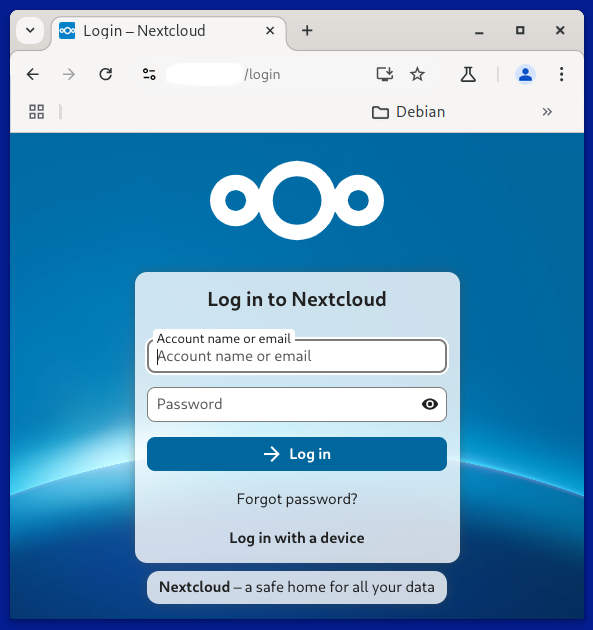
/var/www/html/nextcloud/data.
$ sudo mv /var/www/html/nextcloud/data /var/nextcloud_data
$ sudo chown -R www-data:www-data /var/nextcloud_data
$ sudo chown -R www-data:www-data /var/www/html/nextcloud/
$ sudo vi /var/www/html/nextcloud/config/config.php
  ---%<---
     'datadirectory' => '/var/nextcloud_data'
  --->%---
$ sudo systemctl restart nginx
trusted_domains
accordingly.
$ sudo vi /var/www/html/nextcloud/config/config.php
  ---%<---
    'trusted_domains' =>
    array (
      0 => 'domain.your-domain.com',
      1 => 'domain.other-domain.com',
    ),
  --->%---
.ocdata might occur
.ocdata is not found inside the data directory
$ sudo touch /var/nextcloud_data/.ocdata
$ sudo chown -R www-data:www-data /var/nextcloud_data/
$ sudo -i -u postgrespsql\l\c nextclouddbALTER USER nextcloud_user WITH PASSWORD 'new_password';\qsudo vi /var/www/html/nextcloud/config/config.php
---%<---
    'dbname' => 'nextcloud_db',
    'dbhost' => 'localhost', #(or your PostgreSQL server address)
    'dbport' => '',
    'dbtableprefix' => 'oc_',
    'dbuser' => 'nextcloud_user',
    'dbpassword' => '1234', #(The password you set for nextcloud_user.)
--->%---
 Welcome to the third report in 2025 from the Reproducible Builds project. Our monthly reports outline what we ve been up to over the past month, and highlight items of news from elsewhere in the increasingly-important area of software supply-chain security. As usual, however, if you are interested in contributing to the Reproducible Builds project, please visit our Contribute page on our website.
Table of contents:
 Roland Clobus announced on our mailing list this month that all the major desktop variants (ie. Gnome, KDE, etc.) can be reproducibly created for Debian bullseye, bookworm and trixie from their (pre-compiled) binary packages.
Building reproducible Debian live images does not require building from reproducible source code, but this is still a remarkable achievement. Some large proportion of the binary packages that comprise these live images can (and were) built reproducibly, but live image generation works at a higher level. (By contrast, full or end-to-end reproducibility of a bootable OS image will, in time, require both the compile-the-packages the build-the-bootable-image stages to be reproducible.)
Nevertheless, in response, Roland s announcement generated significant congratulations as well as some discussion regarding the finer points of the terms employed: a full outline of the replies can be found here.
The news was also picked up by Linux Weekly News (LWN) as well as to Hacker News.
xz backdoor
 Julien Malka aka luj published an in-depth blog post this month with the highly-stimulating title How NixOS and reproducible builds could have detected the xz backdoor for the benefit of all .
Starting with an dive into the relevant technical details of the XZ Utils backdoor, Julien s article goes on to describe how we might avoid the
xz catastrophe in the future by building software from trusted sources and building trust into untrusted release tarballs by way of comparing sources and leveraging bitwise reproducibility, i.e. applying the practices of Reproducible Builds.
The article generated significant discussion on Hacker News as well as on Linux Weekly News (LWN).
 Linux Weekly News (LWN) contributor Joe Brockmeier has published a detailed round-up on how Fedora change aims for 99% package reproducibility. The article opens by mentioning that although Debian has been working toward reproducible builds for more than a decade , the Fedora project has now:
progressed far enough that the project is now considering a change proposal for the Fedora 43 development cycle, expected to be released in October, with a goal of making 99% of Fedora s package builds reproducible. So far, reaction to the proposal seems favorable and focused primarily on how to achieve the goal with minimal pain for packagers rather than whether to attempt it.The Change Proposal itself is worth reading:
Over the last few releases, we [Fedora] changed our build infrastructure to make package builds reproducible. This is enough to reach 90%. The remaining issues need to be fixed in individual packages. After this Change, package builds are expected to be reproducible. Bugs will be filed against packages when an irreproducibility is detected. The goal is to have no fewer than 99% of package builds reproducible.Further discussion can be found on the Fedora mailing list as well as on Fedora s Discourse instance.
 Python developer Brett Cannon reported on Fosstodon that PEP 751 was recently accepted. This design document has the purpose of describing a file format to record Python dependencies for installation reproducibility . As the abstract of the proposal writes:
This PEP proposes a new file format for specifying dependencies to enable reproducible installation in a Python environment. The format is designed to be human-readable and machine-generated. Installers consuming the file should be able to calculate what to install without the need for dependency resolution at install-time.The PEP, which itself supersedes PEP 665, mentions that there are at least five well-known solutions to this problem in the community .
 SimpleX Chat is a privacy-oriented decentralised messaging platform that eliminates user identifiers and metadata, offers end-to-end encryption and has a unique approach to decentralised identity. Starting from version 6.3, however, Simplex has implemented reproducible builds for its server components. This advancement allows anyone to verify that the binaries distributed by SimpleX match the source code, improving transparency and trustworthiness.
 Aman Sharma of the KTH Royal Institute of Technology of Stockholm, Sweden published a paper on Build and Runtime Integrity for Java (PDF). The paper s abstract notes that Software Supply Chain attacks are increasingly threatening the security of software systems and goes on to compare build- and run-time integrity:
Build-time integrity ensures that the software artifact creation process, from source code to compiled binaries, remains untampered. Runtime integrity, on the other hand, guarantees that the executing application loads and runs only trusted code, preventing dynamic injection of malicious components.Aman s paper explores solutions to safeguard Java applications and proposes some novel techniques to detect malicious code injection. A full PDF of the paper is available.
 In addition, Hamed Okhravi and Nathan Burow of Massachusetts Institute of Technology (MIT) Lincoln Laboratory along with Fred B. Schneider of Cornell University published a paper in the most recent edition of IEEE Security & Privacy on Software Bill of Materials as a Proactive Defense:
The recently mandated software bill of materials (SBOM) is intended to help mitigate software supply-chain risk. We discuss extensions that would enable an SBOM to serve as a basis for making trust assessments thus also serving as a proactive defense.A full PDF of the paper is available.
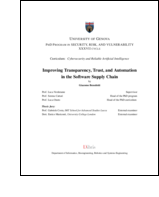 Lastly, congratulations to Giacomo Benedetti of the University of Genoa for publishing their PhD thesis. Titled Improving Transparency, Trust, and Automation in the Software Supply Chain, Giacomo s thesis:
addresses three critical aspects of the software supply chain to enhance security: transparency, trust, and automation. First, it investigates transparency as a mechanism to empower developers with accurate and complete insights into the software components integrated into their applications. To this end, the thesis introduces SUNSET and PIP-SBOM, leveraging modeling and SBOMs (Software Bill of Materials) as foundational tools for transparency and security. Second, it examines software trust, focusing on the effectiveness of reproducible builds in major ecosystems and proposing solutions to bolster their adoption. Finally, it emphasizes the role of automation in modern software management, particularly in ensuring user safety and application reliability. This includes developing a tool for automated security testing of GitHub Actions and analyzing the permission models of prominent platforms like GitHub, GitLab, and BitBucket.
In Debian this month:
debian-repro-status version 0.2.1-1 which fixes an issue related to querying architecture-independent packages. In addition, Holger Levsen identified three issues surrounding outputs to standard output and standard error [ ] as well as a request for summarised [ ] and machine-readable [ ].
sbuild version 0.88.5 with a change relevant to reproducible builds: specifically, the build_as_root_when_needed functionality still supports older versions of dpkg(1). [ ]
tempdir_in_cython_cythonize was identified by Chris Lamb as well.
 The IzzyOnDroid Android APK repository reached another milestone in March, crossing the 40% coverage mark specifically, more than 42% of the apps in the repository is now reproducible
Thanks to funding by NLnet/Mobifree, the project was also to put more
time into their tooling. For instance, developers can now run easily their own verification builder in less than 5 minutes . This currently supports Debian-based systems, but support for RPM-based systems is incoming. Future work in the pipeline, including documentation, guidelines and helpers for debugging.
Fedora developer Zbigniew J drzejewski-Szmek announced a work-in-progress script called
fedora-repro-build which attempts to reproduce an existing package within a Koji build environment. Although the project s README file lists a number of fields will always or almost always vary (and there are a non-zero list of other known issues), this is an excellent first step towards full Fedora reproducibility (see above for more information).
 Lastly, in openSUSE news, Bernhard M. Wiedemann posted another monthly update for his work there.
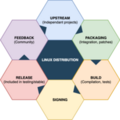 Fenrisk, a cybersecurity risk-management company, has published a lengthy overview of Supply Chain Attacks on Linux distributions. Authored by Maxime Rinaudo, the article asks:
[What] would it take to compromise an entire Linux distribution directly through their public infrastructure? Is it possible to perform such a compromise as simple security researchers with no available resources but time?
 diffoscope is our in-depth and content-aware diff utility that can locate and diagnose reproducibility issues. This month, Chris Lamb made the following changes, including preparing and uploading versions
290, 291, 292 and 293 and 293 to Debian:
file(1) version 5.46 now returns XHTML document for .xhtml files such as those found nested within our .epub tests. [ ].aar files as APK files, at least for the sake of diffoscope. [ ]file(1) and update our quine-related testcase. [ ]st_size metadata entry for directories as it is essentially arbitrary and introduces unnecessary or even spurious changes. [ ]
 Once again, there were a number of improvements made to our website this month, including:
SOURCE_DATE_EPOCH that calls out to Python to the SOURCE_DATE_EPOCH documentation. [ ]
 The Reproducible Builds project operates a comprehensive testing framework running primarily at tests.reproducible-builds.org in order to check packages and other artifacts for reproducibility. In March, a number of changes were made by Holger Levsen, including:
debrebuild. [ ]debian-repro-status at the end of the chroot-install tests. [ ][ ]README.infrastructure file. [ ]
sphinxcontrib-googleanalytics.hx.yaramod.font-manager.python-moto.jenkins-job-builder.isync.python-pytest-shell-utilities.oss4.#reproducible-builds on irc.oftc.net.
rb-general@lists.reproducible-builds.org
 Dear Debian community,
this is bits from DPL for March (sorry for the delay, I was waiting
for some additional input).
Conferences
In March, I attended two conferences, each with a distinct motivation.
I joined FOSSASIA to address the imbalance in geographical developer
representation. Encouraging more developers from Asia to contribute to
Free Software is an important goal for me, and FOSSASIA provided a
valuable opportunity to work towards this.
I also attended Chemnitzer Linux-Tage, a conference I have been part of
for over 20 years. To me, it remains a key gathering for the German Free
Software community a place where contributors meet, collaborate, and
exchange ideas.
I have a remark about submitting an event proposal to both FOSDEM and
FOSSASIA:
Cross distribution experience exchange
As Debian Project Leader, I have often reflected on how other Free Software distributions address challenges we all face. I am interested in discussing how we can learn from each other to improve our work and better serve our users. Recognizing my limited understanding of other distributions, I aim to bridge this gap through open knowledge exchange. My hope is to foster a constructive dialogue that benefits the broader Free Software ecosystem. Representatives of other distributions are encouraged to participate in this BoF whether as contributors or official co-speakers. My intention is not to drive the discussion from a Debian-centric perspective but to ensure that all distributions have an equal voice in the conversation.This event proposal was part of my commitment from my 2024 DPL platform, specifically under the section "Reaching Out to Learn". Had it been accepted, I would have also attended FOSDEM. However, both FOSDEM and FOSSASIA rejected the proposal. In hindsight, reaching out to other distribution contributors beforehand might have improved its chances. I may take this approach in the future if a similar opportunity arises. That said, rejecting an interdistribution discussion without any feedback is, in my view, a missed opportunity for collaboration. FOSSASIA Summit The 14th FOSSASIA Summit took place in Bangkok. As a leading open-source technology conference in Asia, it brings together developers, startups, and tech enthusiasts to collaborate on projects in AI, cloud computing, IoT, and more. With a strong focus on open innovation, the event features hands-on workshops, keynote speeches, and community-driven discussions, emphasizing open-source software, hardware, and digital freedom. It fosters a diverse, inclusive environment and highlights Asia's growing role in the global FOSS ecosystem. I presented a talk on Debian as a Global Project and led a packaging workshop. Additionally, to further support attendees interested in packaging, I hosted an extra self-organized workshop at a hacker caf , initiated by participants eager to deepen their skills. There was another Debian related talk given by Ananthu titled "The Herculean Task of OS Maintenance - The Debian Way!" To further my goal of increasing diversity within Debian particularly by encouraging more non-male contributors I actively engaged with attendees, seeking opportunities to involve new people in the project. Whether through discussions, mentoring, or hands-on sessions, I aimed to make Debian more approachable for those who might not yet see themselves as contributors. I was fortunate to have the support of Debian enthusiasts from India and China, who ran the Debian booth and helped create a welcoming environment for these conversations. Strengthening diversity in Free Software is a collective effort, and I hope these interactions will inspire more people to get involved. Chemnitzer Linuxtage The Chemnitzer Linux-Tage (CLT) is one of Germany's largest and longest-running community-driven Linux and open-source conferences, held annually in Chemnitz since 2000. It has been my favorite conference in Germany, and I have tried to attend every year. Focusing on Free Software, Linux, and digital sovereignty, CLT offers a mix of expert talks, workshops, and exhibitions, attracting hobbyists, professionals, and businesses alike. With a strong grassroots ethos, it emphasizes hands-on learning, privacy, and open-source advocacy while fostering a welcoming environment for both newcomers and experienced Linux users. Despite my appreciation for the diverse and high-quality talks at CLT, my main focus was on connecting with people who share the goal of attracting more newcomers to Debian. Engaging with both longtime contributors and potential new participants remains one of the most valuable aspects of the event for me. I was fortunate to be joined by Debian enthusiasts staffing the Debian booth, where I found myself among both experienced booth volunteers who have attended many previous CLT events and young newcomers. This was particularly reassuring, as I certainly can't answer every detailed question at the booth. I greatly appreciate the knowledgeable people who represent Debian at this event and help make it more accessible to visitors. As a small point of comparison while FOSSASIA and CLT are fundamentally different events the gender ratio stood out. FOSSASIA had a noticeably higher proportion of women compared to Chemnitz. This contrast highlighted the ongoing need to foster more diversity within Free Software communities in Europe. At CLT, I gave a talk titled "Tausend Freiwillige, ein Ziel" (Thousand Volunteers, One Goal), which was video recorded. It took place in the grand auditorium and attracted a mix of long-term contributors and newcomers, making for an engaging and rewarding experience. Kind regards Andreas.

This post is an unpublished review for La cultura libre como libertad positiva
Please note: This review is not meant to be part of my usual contributions to ACM's Computing Reviews . I do want, though, to share it with people that follow my general interests and such stuff.This article was published almost a year ago, and I read it just after relocating from Argentina back to Mexico. I came from a country starting to realize the shock it meant to be ruled by an autocratic, extreme right-wing president willing to overrun its Legislative and bent on destroying the State itself not too different from what we are now witnessing on a global level. I have been a strong proponent and defender of Free Software and of Free Culture throughout my adult life. And I have been a Socialist since my early teenage years. I cannot say there is a strict correlation between them, but there is a big intersection of people and organizations who aligns to both sides And rtica (and Mariana Fossatti) are clearly among them. Freedom is a word that has brought us many misunderstanding throughout the past many decades. We will say that Freedom can only be brought hand-by-hand with Equality, Fairness and Tolerance. But the extreme-right wing (is it still bordering Fascism, or has it finally embraced it as its true self?) that has grown so much in many countries over the last years also seems to have appropriated the term, even taking it as their definition. In English (particularly, in USA English), liberty is a more patriotic term, and freedom is more personal (although the term used for the market is free market); in Spanish, we conflate them both under libre. Mariana refers to a third blog, by Rolando Astarita, where the author introduces the concepts positive and negative freedom/liberties. Astarita characterizes negative freedom as an individual s possibility to act without interferences or coertion, and is limited by other people s freedom, while positive freedom is the real capacity to exercise one s autonomy and achieve self-realization; this does not depend on a person on its own, but on different social conditions; Astarita understands the Marxist tradition to emphasize on the positive freedom. Mariana brings this definition to our usual discussion on licensing: If we follow negative freedom, we will understand free licenses as the idea of access without interference to cultural or information goods, as long as it s legal (in order not to infringe other s property rights). Licensing is seen as a private content, and each individual can grant access and use to their works at will. The previous definition might be enough for many, but she says, is missing something important. The practical effect of many individuals renouncing a bit of control over their property rights produce, collectively, the common goods. They constitute a pool of knowledge or culture that are no longer an individual, contractual issue, but grow and become social, collective. Negative freedom does not go further, but positive liberty allows broadening the horizon, and takes us to a notion of free culture that, by strengthening the commons, widens social rights. She closes the article by stating (and I ll happily sign as if they were my own words) that we are Free Culture militants not only because it affirms the individual sovereignty to deliver and receive cultural resources, in an intellectual property framework guaranteed by the state. Our militancy is of widening the cultural enjoying and participation to the collective through the defense of common cultural goods ( ) We want to build Free Culture for a Free Society. But a Free Society is not a society of free owners, but a society emancipated from the structures of economic power and social privilege that block this potential collective .
The 26th edition of the Debian annual conference will be held in Brest,
France, from July 14th to July 20th, 2025. The main conference will be
preceded by DebCamp, from July 7th to July 13th. We invite everyone
interested to register for the event to attend DebConf25 in person. You can
also submit a talk or event proposal if you're interested in presenting your
work in Debian at DebConf25.
Registration can be done by creating an account on the DebConf25
website and clicking on "Register" in the
profile section.
As always, basic registration is free of charge. If you are attending
the conference in a professional capacity or as a representative of your
company, we kindly ask that you consider registering in one of our paid
categories. This helps
cover the costs of organizing the event while also supporting subsidizing
other community members attendance. The last day to register with guaranteed
swag is 9th June.
We encourage eligible individuals to apply for a diversity
bursary. Travel, food, and accommodation bursaries are
available. More details can be found on the bursary information
page. The last day to apply
for a bursary is April 14th. Applicants should receive feedback on their
bursary application by April 25th.
The call for proposals for talks, discussions and other activities is also
open. To submit a proposal, you need to create an account on the website and
click the "Submit Talk Proposal" button in the profile section. The last day
to submit and have your proposal considered for the main conference schedule,
with video coverage guaranteed, is May 25th.
DebConf25 is also looking for sponsors; if you are interested or think
you know of others who would be willing to help, please get in touch with
sponsors@debconf.org.
All important dates can be found on the link
here.
See you in Brest!
A new release of the AsioHeaders
package arrived at CRAN earlier
today. Asio provides a
cross-platform C++ library for network and low-level I/O programming. It
is also included in Boost but
requires linking when used as part of Boost. This standalone version of Asio is a header-only C++
library which can be used without linking (just like our BH package with parts of
Boost).
This update brings a new upstream version which helps the three
dependent packages using AsiooHeaders to
remain compliant at CRAN, and
has been prepared by Charlie
Gao. Otherwise I made some routine updates to packaging since the
last release in late 2022.
The short NEWS entry for AsioHeaders follows.
Thanks to my CRANberries, there is a diffstat report for this release. Comments and suggestions about AsioHeaders are welcome via the issue tracker at the GitHub repo.Changes in version 1.28.2-1 (2025-04-08)
This post by Dirk Eddelbuettel originated on his Thinking inside the box blog. If you like this or other open-source work I do, you can now sponsor me at GitHub.

debvm uploaded, by Helmut Grohne
debvm is a command line tool for
quickly creating a Debian-based virtual machine for testing purposes. Over time,
it accumulated quite a few minor issues as well as CI failures. The most
notorious one was an ARM32 failure present since August. It was diagnosed down
to a glibc bug by Tj and Chris Hofstaedtler
and little has happened since then. To have debvm work somewhat, it now
contains a workaround for this situation. Few changes are expected to be
noticeable, but related tools such as apt, file, linux, passwd, and
qemu required quite a few adaptations all over the place. Much of the
necessary debugging was contributed by others.
unstable./usr-move fallout though little was actually
attributable. He also NMUed systemd unsuccessfully.Next.
