Search Results: "mak"

20 July 2011

Aigars Mahinovs: Paris preDebConf11

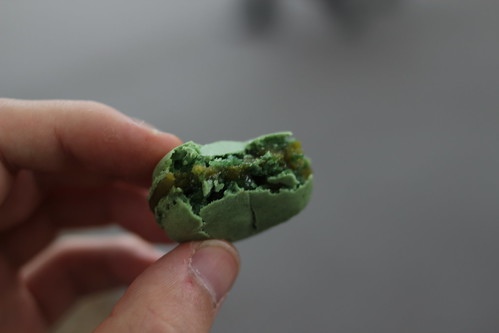
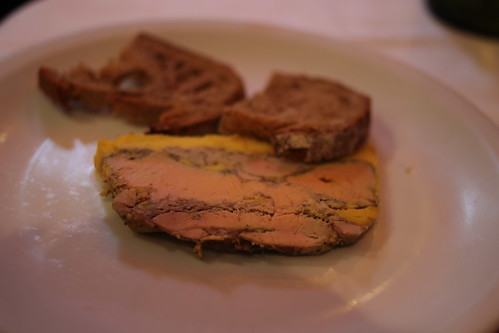
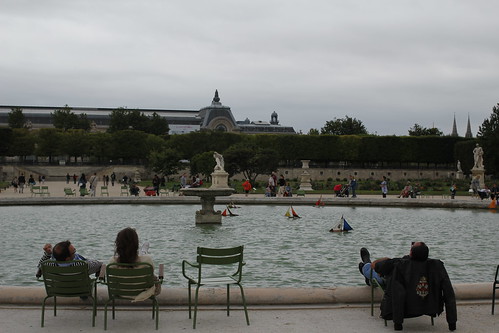
Before arriving to DebConf11, I arranged my flights so that I had a day and a night in Paris as I have not been there before. So after checking out of my work apartment in Tampere, going to work there with all the things from that apartment, then flying back to Riga, going to a midnight screening of the last Potter movie and finally getting back home around 2am, I quickly checked that I have everything needed for the conference and went off to sleep only to wake up at 8am again, pack everything (into a single carry-on bag, after a year of experience travelling by air weekly and watching Up in the Air twice) and be off to the plain to Paris. The CDG airport is quite huge, even compared to something like JFK it feels bigger and more concrete. And yet so dark and lacking interesting features that the only photo I got from it was this IMG_4710 I then used the B line train to get to my hotel(9.1 ), drop my stuff there and another metro ticket (1.7 ) to go to Arc de Triomphe (M tro Charles de Gaulle-Etoile), went up there and walked the length of the Champs-Elys es right up to the Louvre. Then I walked to the river, crossed it to a small island to see the Notre Dame and then went back following the other bank of the river Seine seing both some more normal non-touristy streets of central Paris and also some other magnificent buildings, like Les Invalides and ending up at the Eifel tower. It was a rather easy walk that was only spoiled by some rain in the end so I did not get to take some night photos of the Eiffel tower as I wanted. But the experience still was breathtaking. The scale of the buildings was impressive. The pervasive gold-gilded decorations do expand on the splendour and the same time the full access to all the previously-royal places brings them down to people. The city looks well built and the planning mostly makes sense, especially if you are on foot. Car drivers might have a different opinion about it considering the maze of roads and traffic circles and underpasses I saw in central Paris. It is often said that Riga is a mini-Paris. Mostly, that is said in Riga. But walking the back streets of Paris I can see where that comes from the architecture, the street design, the small cafes and some cobblestone roads and some historical buildings with a few modern building thrown into the mix, and a tower too. Visually Riga does look like Paris a lot, but for the feeling, I still think that Riga feels more like Berlin with its mix of eastern and western Europe. I had one incident when some girl in front of Louvre started to ask me to sign something, gesturing to show that she was mute, it looked like a donation racket, but I did not get to find it out in detail as a swift security guard appeared and started running for the girl, who immediately took off running along with several friends. I guess the guards know them very well. On a more positive note, in one of many confetterie shops I noticed the macaron sweets that my friend advertised loudly some time ago, so I decided to buy and try some. They cost 7 for a box of 6. The taste was very, very sweet. Basically it tastes like froffed up and then frozen sugar made into cookie form with a cream layer between two cookies. IMG_4806 So basically it is like an Oreo cookie, but much, much, much more tender, airy and sweet. The two of the 6 cookies were partly crushed while I tenderly carried them for 5 minutes in their box while searching for a place to sit down and eat them. IMG_4815 After that I also had a proper dinner in a restaurant that was not too near the touristy paths, but still it was a bit lacking. The starter was quite nice I mean it is hard to screw up cutting off a piece of foie gras (basically a piece of liver paste with a layer of extra geese fat), but the main dish was disappointing I ordered a medium rare steak. First of all it came with a side of fries, that in itself was an insult to Paris, baked potatoes would have fit much better with this dish. And despite the main part of the steak being very nicely done to medium rare, the cut was done badly and the edges of the steak had sinew that was too chewy to eat or even cut normally. Other interesting things I liked about Paris:
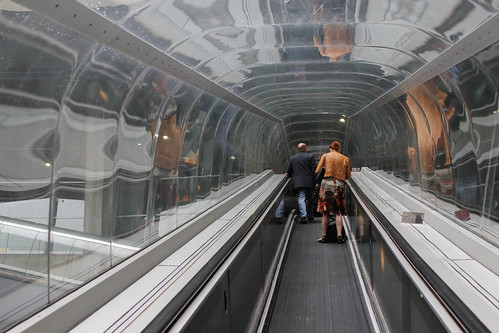
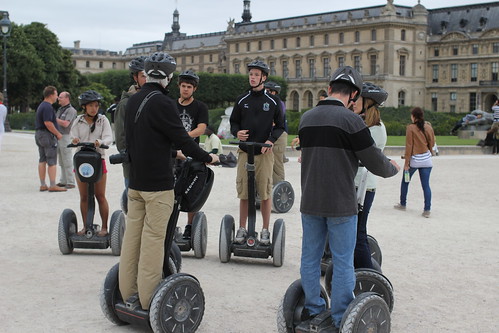
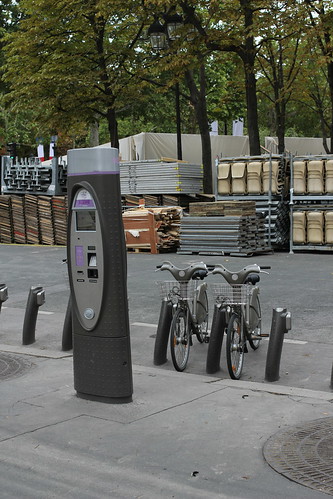
* high street shops of fashion labels and car manufacturers, that showed off the concept cars and also sold small branded accessories, such as Mercedes Benz key chains IMG_4723 * Statues some made of stone, some of iron, some covered in gold, everywhere and made with great quality IMG_4768 * Bicycle rentals, I mostly saw the locals using them IMG_4754 * Segway tourists IMG_4773 * And countless classic postcard shots of very recognizable architecture IMG_4738 The Eiffel tower was immensely impressive. It towers over everything around, especially because there simply is nothing high enough around it. It would not have been so impressive in the middle of New York, for example. The age and openness of the construction makes you really feel the massiveness of this marvel of functional architecture. But in the end Paris also looks like a great city to just kick back and relax in IMG_4770 P.S. I am amazed that when I put a link to a Flickr image (such as http://www.flickr.com/photos/aigarius/5950187165/in/set-72157627230456160 in a separate paragraph in my WordPress article text, something along the way translates them into proper linked images with a reasonable size. Progress is amazing.



19 July 2011

Steve Langasek: Fallacy of coincidence

On the bus heading to the airport to go to DebConf 11, I chanced to sit down beside an older Croatian gentleman. If I've ever met another Croatian living in Portland before now, they did not have occasion to make themselves known to me. He spoke highly of Tito at some length, and of Tito's success at holding the Russians at bay in the 1960s when the rest of the Communist block was being held there by the thumb of the Russian military. If I've ever met another person living anywhere who approved of Tito, they've not had occasion to make that opinion known to me either. Wacky experiences like that are why I love Portland's mass transit network.

Olivier Berger: Migrating mail from Evolution local storage to Evolution + local Imap (dovecot with Maildir) 1/X

I ve been fed up with Evolution being so buggy and slow, which was making managing my mail ever more painful as time passes. Still, one of the advantages of Evolution over other MUAs is the vfolders feature, which I ve been using intensively for years. Would there be some alternate way of managing my mail ? I ve been reading about notmuch s progress in becoming a very powerful mail management / retrieval tool (it could very well replace the vfolder feature of Evolution), but unfortunately, it is not (yet) integrated with Evolution. Others have documented their mail setup, and it seems that I could achieve a middle ground solution by migrating all my mail folders, currently stored inside Evolution s local storage, into Maildir folders managed by a local dovecot IMAP server. Evolution would still be my MUA, but it would store my mail inside Maildirs through dovecot. I ve been told that Evolution may be less buggy with IMAP than with local folders, which could solve my main annoyances. Also, it would make it possible to index mail with notmuch, as it supports the Maildir storage format. I ve then decided to take the opportunity of a holiday period to start the migration attempt. I ll document it in another post.

Matthew Palmer: Static Comments in Jekyll

When I recently switched my blog over to Jekyll as my blog/site generation platform, one of the driving forces was implementing comments. I ve been a comment-free blogger for years, but I ve just decided to change my opinions on things and see what happens. (Turns out: you get some cool comments. And a lot of spam.) However, the standard advice when it comes to handling comments with Jekyll is use Disqus (or, very occasionally, some other Insert-Javascript-Here cloud commenting service). Not being one to stand for the conventional wisdom, and given that I m allergic to the cloud , I decided to go a different way an all-static comment handling system for Jekyll. First off, you need a way to render comments inside Jekyll. This was disturbingly easy with Jekyll s plugin system. With around 30 lines of Ruby, it was done. It simply reads a pile of YAML files from a _comments directory, and adds them to the individual blog post objects in the templating system, which can then be iterated over when rendering a post. Obviously, you need to also adjust your blog post templates to suit. This is fairly straightforward; just render each of page.comments in a list. Adding a comment submission form is also necessary, and similarly trivial. The only moving part in this whole system is the bit of code that handles comment form submissions. The simplest way to handle it, which is what I ve gone with, is a few lines of PHP that writes the contents of the form out as YAML and e-mails it to me. Although I m not a fan of PHP for web applications, this is sort of job is where PHP excels it s ubiquitous, trivial to deploy, and easy to understand (in small doses). Using a CGI or anything larger (like, say, a sinatra app) would be massive overkill. Since I m still a control freak at heart, I m hand-moderating all comments by the simple expedient of having all blog comments e-mailed to me1, and I have to import them into the blog and re-upload. Mutt makes this trivial; I ve got a script that I trigger by pressing C (for comment) that pipes the message to formail to strip the RFC2822 header, then drops the rest into my blog s _comments directory. A quick rake upload and they re published. If you re not as obsessive as me about hand-moderating your comments, it wouldn t be hard to write a slightly different PHP script that commits the comment directly to a git repo2 and re-renders the site. All you d have to do when you wanted to make a new post is merge those new comment commits from the live git repo and go to work. This would then be a completely static site (with all the performance benefits that implies) with immediate-gratification comments. So, if you re suspicious of the cloud, or just want to be the cool kid whose blog comments load even when people have turned cookies off, check out my Jekyll static comments plugin.
  1. A side-bonus of running all my blog comments through my e-mail is that all of the comment spam gets handled through my existing spam filter, so there s no new complexities. The stuff that bogofilter is really sure is spam just goes straight to /dev/null, while the slightly-less-sure stuff goes into an IMAP folder I ignore except when I m extra-super-bored. Interestingly, bogofilter was already pre-trained and ready to go on my blog spam it caught most of the spam straight away, with no additional training from me, and after being trained on two examples, it s now going great guns auto-flushing the one persistent spammer who hammers one particular old post a couple of times a day with link farms.
  2. I d strongly recommend having some sort of anti-spam setup before you blindly render the comments onto your site, lest your comments list looks like complete balls within a matter of days.

18 July 2011

John Goerzen: Pooh, Books, and Dads

If I think back to fond memories of being with my dad during my childhood, there s one thing that always comes back first. It s those late summer evenings outside. Dad often had outdoor projects going on of some sort. I d go out there hanging around, maybe chatting, maybe playing with cats, or maybe doing something of my own. Dad often had an old AM radio sitting around and would be listening to a baseball game while working. As it got darker, lights would come on, and the bugs would start flying near them. Sometimes dad would be working just inside the barn, and the bugs would start flying in there, while some light poured out the big front door. There s something about that scratchy AM signal, the evening slowly getting darker, the slow pace of the baseball game, and just being around dad and a peripheral part of whatever he was doing that stirs a wonderfully fond recollection in me. I don t remember the specifics of any one of those times, nor do I really remember how often it happened, but it does stick with me. We ve had a routine in our house, starting early enough that neither of our boys know anything different, where right before bed, I read a book and sing a song to each of them individually. Last November, I was looking for some books to challenge Jacob a little more than what we had been reading. I found The Complete Winnie the Pooh used for $4 on Amazon. This contains the original A. A. Milne stories, not the Disney series. It had a few line drawings, but there were many pages without any. It s 352 pages and written in a rather dated form of British English. So for all these reasons, I wasn t sure if Jacob would like it. But it was $4 so I bought it. And Jacob was hooked. Each evening, we start bedtime with looking at the map of the 100-acre forest, just inside the cover. He gets to pick out 4 things for me to describe, and then we turn to our story. We usually read somewhere between 2 and 5 pages at bedtime, depending on how well he got ready without wasting time. And then we sing. A. A. Milne has his Pooh character make up songs throughout the book. They are printed with words only, no tune, so I make up a tune for them as we go. Jacob has taken to requesting these songs for his bedtime song as well. Jacob always gets to choose his bedtime story, and sometimes he chooses a different one but about 75% of the time, it s been Pooh. A few weeks ago, he started noticing that we were almost to the end. He got very concerned, asking what we d do next. I suggested a different book, which he didn t like. Then I pointed out that we could restart the Pooh stories from the beginning, which was exciting for him. Last night, we finished the book. The very last story was an interesting one, suggesting Christopher Robin growing up and no longer having imaginary adventures with the animals, but making Pooh promise to always be there for him. I don t think Jacob caught onto that meaning, though. When we finished it, we had this conversation: Jacob: Dad, is that the end? Me: Yes. Jacob, getting a big smile: Yay! So can we start back at the beginning tomorrow? Me: Sure! Jacob then gave a clap, shouted Yay! again, and was a very happy boy. Sometimes I wonder what our boys will remember in 25 years of their fun times with me. I don t know if Jacob will remember all the days reading about the animals in the 100-acre wood when he was 4, or maybe he ll remember watching train and combine videos, or playing radio hide-and-seek, or maybe something entirely different. But I have no doubt that I will remember sitting on the couch in his room, holding him on my lap, and reading a 350-page book to a loving 4-year-old. As Pooh aptly put it, Sometimes, the smallest things take up the most room in your heart.

Benjamin Mako Hill: Quiet Room

At the Copenhagen airport, Mika and I found the quiet room. It was a soft, well lit, room designed for prayer and reflection. During the hour I was in it, the only other visitor was a child cracking open the doorway to peer in. The room had a guest book with hundreds of messages left by other travelers over the last couple years. People praised the airport administrators for providing the room, made suggestions, and complained about the room, the airport, and the country's shortcomings. They talked about themselves, their travels, their happiness and unhappiness with departing or returning home, and their thoughts about the world. I spend a lot of time in airports but only rarely speak to my fellow travelers. It's amazing how little I know about the thousands of people waiting in line with me, sitting near me on the plane, and sharing in the long, lonely, and often stressful experience of moving between countries and continents. The guest book provided a rare window into these people in what is normally the anonymous and depersonalized non-place of airports. In the quiet room, I could -- for the first time -- hear some of these fellow travelers speak.

Stefano Zacchiroli: arrived at debconf11

debconf riding is again After ~1650 km of motorbike riding from Paris, yesterday evening I've arrived at DebConf11, after having shared the part of the trip from Geneva to Banja Luka with my good friend gismo. DebConf11 motorbike trip DebConf11 motorbike trip DebConf11 motorbike trip DebConf11 motorbike trip DebConf11 motorbike trip The venue looks great. It's full of nice spots for impromptu chats, beers, and the like, which I love. I had a good lengthy recovery sleep and I'm ready for the usual DebConf fun to begin. Plan for today is simple: dismantle DPL backlog accumulated during the trip and in the frantic 10-15 days before it. If you are at the conference and willing to discuss, chat, or simply share a beer: do not hesitate! For something less informal, Neil is also organizing an in person "ask the leader" session here; feel free to propose questions to him and make me have a hard time answering them. See you around.

Jelmer Vernooij: Summer of Code 2011

The Samba team is once again participating in the Summer of Code this year. This year we have 4 students working on various projects related to Samba. This year I am mentoring Dhananjay Sathe, who is improving the GTK+ frontends for Samba. In particular, he is making it possible to manage shares and users of a remote Samba or Windows machine. Dhananjay is also blogging about his progress.

Benjamin Mako Hill: Die Technikmafia

Marcus Rohwetter has recently published a very detailed article about Antifeatures in the German monthly magazine Zeit Wissen. Although I've only read the article through automatic translation -- unfortunately, I don't read German -- I'm hugely honored that Rohwetter has taken the time to engage with the idea so deeply and to help translate the argument for a much broader community than the free software community I come from and am best able to speak to. A lot of what I've been trying to do in the last year or so is to figure out how to speak more effectively about the politics of technology control to audiences of non-technologists. Indeed, that's the whole point of the antifeatures concept. I deeply appreciate the help of Rohwetter, and others, in that project.

17 July 2011

Cyril Brulebois: Thoughts on multiple webcams

Keeping an eye on something with a webcam is really easy: just a matter of setting up for example (c)vlc to multicast from /dev/videoX to the network, and done. Example:
# Streaming:
cvlc v4l2:///dev/video0 --no-audio --sout "#transcode vcodec=mp2v,vb=3072 :std access=udp,mux=ts,dst=224.0.0.1 "
# Playing, possibly on a remote machine:
vlc udp://@224.0.0.1:1234
Notes: Possible problems: Where to go from here:

Wouter Verhelst: Mechlin to Banja Luka in statistics

I decided to go to DebConf11 by car. Not willing to do this alone, I asked for volunteers to join me in my car trip. One such volunteer showed up, and the car trip happened. Now, since I remembered to push the correct buttons on my dashboard after I completely fueled up the car and checked the tire tension and other things, I am now proud to be able to present you with the following statistics on this trip:
  1. Total distance travelled: 1466.8 km
  2. Average driving speed: 95.9 km/h [0]
  3. Total number of kilometers wasted on 'oh, crap, we forgot something': 10 (approx) [1][2]
  4. Total amount of fuel used: 81.3l
  5. Average fuel consumption rate: 5.5l/100km [3]
  6. Total amount of kilometers spent behind the wheel by Jeremy: 50 (approx)
  7. Total amount of kilometers spent behind the wheel by Wouter: the rest.[4]
  8. Time of departure: 2011-07-16 21:00
  9. Time of departure after point three and making sure we had everything: 2011-07-16 22:00
  10. Time of arrival: 2011-07-17 15:15 (approx) [5]
  11. Outside temperature at departure: 12 celcius
  12. Outside temperature at arrival: 35 celcius
  13. Longest (voluntary) break: 1 hour (approx; breakfast, tanking, bathroom visit, watching the sun rise)
  14. Longest (involuntary) break: 45 minutes (approx; customs check) [6]
  15. Last fueling stop: 4 AM.
  16. Amount of kilometers left to go before the car said bleep, you need to tank soon: less than one.
  17. Most tense moment: on crossing the slovenia->croatia border, confusing the border police officer ("no, I'm Wouter, that is Jeremy" yes, we both had photo-ID), who then promptly holds on to our documents, asks the car's papers, and tells us to please park over there and wait a moment while he gets us to be handled by guy in a somewhat more military-looking uniform.[7]
  18. Biggest "uh-oh" moment: after crossing the croatia->bosnia and herzegovina border, watching the very, very, very, very, very[8] long line of trucks queueing to cross the border. In the other direction. And then realizing that you probably need to go through that very same queue on the way back
  19. Largest single toll fee: 15 [9]
  20. Last bit of time spent asleep before this trip: the minutes surrounding 2011-07-16 05:00:00 [10]
  21. Time wasted writing this blog post when I really should've gone to bed instead: 45 minutes
  22. Time now: 21:02:54
But it was fun. And that's all that matters. Those who've shown up at debconf already, or who will arrive soon: see you tomorrow. Those who will arrive later: see you soon. And those who won't arrive: better luck next time, I hope. [0] this includes times when the car isn't moving with the engine running, but not times when the car is turned off, locked, alone and forgotten, in the rain, while those idiots who were supposed to be its drivers were inside having a drink.
[1] Which is surprisingly little. Usually I manage to need more.
[2] Jeremy forgot his^Wa Debian banner. I forgot something, I can't recall what. I decided to bring some CD's to enjoy during the trip, and a 3.5mm audio connection cable which we end up not using
[3] According to the dash. I'm too tired right now to check it. Also see the next two points. [4] This could incorrectly be interpreted as a criticism on Jeremy. It's not his fault that I only told him a day before we left that I have a manual transmission. And in fact, if anything, I'm unhappy with the fact that I even had to hand him the wheel for those 50 km. I would've loved to be able to say "I went all the way from Mechlin to Banja Luka, all by myself".
[5] I forgot to check the clock, to be honest.
[6] What, you think I have a chronometer?
[7] The last four points could really have been written as two. Figuring out which goes with which is left as an exercise to the reader.
[8] very, very, very
[9] 7-day Slovenian road tax vignet
[10] Once I wake up, I hardly ever manage to fall asleep again. Esecially if it's light outside.

Lars Wirzenius: rm is too slow

Some weeks ago I noticed that one of my backup servers was not removing the old backup generations it was making. It had over 18 months worth of daily backups, done with rsync and "cp -al". This is not the world's greatest backup system, but that's entirely irrelevant for this rant. The cron job that would do that did not exist: I had forgotten to enable it. So I ran it by hand. Then fixed it, when I noticed it was buggy, and didn't remove any old generations prior to 2010. After that I removed years-old backups of machines that haven't existed for years. Disk usage:
       Size  Used Avail Use% 
before 5.4T  2.6T  2.6T  51% 
after  5.4T  892G  4.3T  18% 
Inodes:
          Inodes    IUsed     IFree IUse%
before 732577792 77645915 654931877   11%
after  732577792 16871789 715706003    3%
That's about 61 million files removed, over the course of three weeks, of which the machine was down due to crashes for about one week. It should not take two weeks to copy a couple of terabytes (it's less than two megabytes per second). It should definitely not take two weeks to delete it. Almost all the time it was up, it was removing files. There were a couple of times when it finished one run and was idle until I woke up and started the next run. Say a day in total. Why is "sudo rm -rf" on a large directory tree, or set of large directory trees, so slow? I suspect part of the problem is that the system call API is beautiful, but simplistic: you need to call unlink or rmdir on every file separately, and that means doing an inode lookup separately for each file. Having a system call to delete everything in a directory would have a chance of removing things more efficiently, I suspect. However, since I've not done any profiling, nor even analyzed the relevant source code in the kernel, I might be entirely wrong. I wonder if anyone else needs to remove large directory trees frequently? I do that a lot, because of my backup software development hobby. But I may be in a unique position, and nobody else would benefit from fast removal. (I'll note that my backup server is using ext3, and that ext4 is much faster at removing files, particularly large files, but it's still not fast enough.)

Daniel Baumann: Debian Live Autobuilds

Right now I am sitting in the train to the airport for going to DebCamp/DebConf 11 in Banja Luka, Bosnia and Herzegovina. During DebCamp amongst other things I am going to work on finishing up the last bits on getting daily/weekly Debian Live autobuilds back for wheezy. This spring Jimmy Kaplowitz offered to help with the task of overseeing the debian-live autobuilder and to coordinate necessary bits with cdimage.debian.org. Having them on cdimage.d.o became recently possible as Steve McIntyre offered to make a VM available for us (live-build requires root privileges, and naturally, you would not want to let that run on the host system itself, that is why in the past it was not possible to build them on cdimage.d.o). The remaining issues are, and this is why the autobuilds are not yet back since spring, that live-build still needs two things: a couple of tweeks for wheezy, and the autobuild stuff need to be properly integrated into live-build itself. That will happen as an additional binary package live-build-cron with a bunch of debconf questions, so that everyone and his dog can setup a debian-live autobuild server on his own machine. The initial upload (which will not yet work, do not bother to try) was uploaded to experimental this week and cleared the new queue, now looking forward to get this all finished up and resulting in a live-build uploaded to unstable by the end of the week. In the second week, Jimmy arrives, I will be introducing him to live-build and the various little things to watch for and hopefully manage to persuade him to take over the autobuilds maintenance. Having all images that are based on packages solely from the stable/testing/unstable archives moved to cdimage.d.o is freeing up ressources on live.debian.net which did the job in the past since etch. Ben Armstrong volunteered to help with overseeing the live.d.n instance of live-build-cron that will build more then once per day images for si, with the only difference that they will not use live-* from the archive but the latest snapshots from our git snapshots repository. This will be a big help for the development as eventually we will be autotesting these images for various things. Last but not least, thanks to both Jimmy and Ben for all your kindness, patience and help with this during the last couple of months. We have interesting times ahead.

Thorsten Glaser: mksh R40b; joe 3.1jupp16 and 2.8jupp2 released

mksh R40b (nowadays with filled in user s caveats (for R40, too!) and packager s upgrade hints) has just been released. This is a should-have upgrade, fixing a number of admittedly some obscure bugs, changing things begun in R40, improving upon others. Thanks to the PLD Linux guys for spotting all these errors; thanks to them and phpnet.org both for adopting mksh so well. I have also fixed a bug in nroff(1) which will lead to an even nicer looking HTML manpage mksh(1) (after the next rebuild and upload of a MirBSD snapshot scheduled RSN). jupp 3.1.16 took on the task of merging Debian joe changes (aiming at an upload). I also split the jupprc file into three versions (2.8 generic/DOS, 3.1+jupp and 3.7/Unix) because of the differences in the baseline executables making rc files partially mutually incompatible (think Insert key), annoyingly warning (think syntax, hmsg), or less usable (joe s new menu system). jupp 2.8.2 is a companion to jupp 3.1.16 mostly because of the new help window character map Binaries for jupp should be updated RSN too. Considering Banja Luka is arriving quickly, the r in RSN should be taken with a few grains of salt. I ve also scheduled working on the pcc Debian package for the next future; updating lynx and maybe others like OpenSSH in MirBSD is also due; cvs(1) will receive more of my time, but before the next Upload I d like to fix LP#12230 once verified. Builds for Debian/m68k are also still running. I note I did in fact not manage to make a new base image, yet (but 2.6.39 kernels miss a patch, anyway, so waiting for 3.0 is ok). It s still using gcc-4.4 because nobody tests gcc-4.6 and gcj-4.6 FTBFS due to SIGSEGV, but that s ok in my books. rsyslog is broken but sysklogd works. The #ksh Freenode page finally got a well-deserved link to Planet Commandline. Throw more my way! Acronyms and translations, too. (Got Norwegian and Rumanian covered in the meantime. No idea whether any RTL languages will work in that beast. But I m young and need the money) Since I m writing a wlog entry anyway let me thank Gunnar for a nice summary on the current Free Culture discussion; my comments on Nina s site seem to be eaten, but let me support it fully, although, of course, I normally use a copycenter style licence, which is specifically written for general works of authorship under copyright law, not limited to software. I did in fact have that in mind. Maybe some people will like it (it s less than one Kibibyte long) either generally or just for their everyday random musings (they can then keep CC-BY-SA for the big works if they so desire). Wouter, grass background makes green headlines illegible. I ve never liked, and never installed manually, cups either. (Benny tells me that Apple s new version refuses to talk with a non-Apple cups, kinda defeating the whole idea I think.) Port 9100 is JetDirect (probably with an HP in front and some subset of trailing) and just nice. (Being able to talk ESC/P with your printer like print '\033K\x07\0\x3E\x81\x99\xA5\xA5\x81\x3E' >/dev/lpa too rocks though, IMHO. Yes, mine can, and I still can. /dev/lpa is BSD.)

Kai, thanks for your vimrc lines:

	:highlight TrailWhitespace ctermbg=red guibg=red
	:match TrailWhitespace /\s\+$\  \+\ze\t/
 

Automatic removal is harmful, though I just fell into the trap since jupprc contains needed whitespace at EOL but manual removal (bound to ^K] in jupp) rocks. And I like that your solution uses such strong a colour vim users are the single most represented offender group for actually leaving the redundant whitespace at EOL there, and it should hurt their eyes. (Sadly there is some vehement disagreement preventing them from inclusion in grml-etc-core but that s why I re-post them here.) Ah, and jupp can of course display whitespace visibly (although it uses / , replacing the arrow with if no UTF-8, not ), accessible with ^Ov. Steve, want to put up a checklist for sites? We can crowdsource the testing to maybe get some interesting results Some other people would get more comments if they were idling in IRC (Freenode) or allow comments on their blog, specifically without too high an entrance barrier OpenID is ok, but many other things, and ECMAscript, are not; but I can t really say that loud because our wlog is static HTML compiled from a flat plaintext data source so it doesn t allow such either. I often forget what I wanted to add if I can t get it out quickly enough (especially at work). Sowwy Me like the cat picture postings (Amayita, Tiago, Gracias!).

16 July 2011

Matthew Palmer: MySQL replication and crash recovery

The question was recently asked, How do I perform crash recovery on a MySQL master/slave database cluster? Because replication is async, a transaction that has been committed to the master may not be able to leave the master before the crash happens. The short answer is, you don t. Asynchronous replication, by it s very nature, is prone to these sorts of issues, and MySQL doesn t make life easier in general by using query replay. Some of the issues aren t massive: for instance, if a slave crashes, the master will keep replication logs for the slave until it comes back up (as long as the slave comes back before the master decides some of the replogs are too old and starts deleting them, of course), so as long as you can live without a master for a while, you can recover and continue along your merry way. Promoting a slave to be a master, on the other hand, is a situation frought with peril. Here, you ve just got to hope hope that your chosen slave is consistent with the master s state at death (because it s async, you have no guarantees about that), and that all the other slaves have the same ideas about what counts as the current state of the data. If your newly-promoted slave managed to apply an update that another slave didn t, that slave will be out of sync with reality (until such time as the now-dead master comes back and replays all those queries hahahaha). To even guarantee that any slaves have a consistent view of the data as compared to the new master, you ve got to rereplicate everything from the new master, because MySQL s where are you up to? counter is master-specific. I ve heard people who have to deal with this sort of thing these days say that the Maatkit tools are handy for dealing with various issues of this type (monitoring, repairing the database when it gets inconsistent). However, I prefer to keep right the hell away from MySQL replication altogether, after a year of having to gently coax an insane MySQL tree replication setup to do the right thing for any extended period, and watching a group of DBAs at Engine Yard go slowly insane. My preferred alternatives are: Never discount the value of the Jaws approach to scaling ( we re gonna need a bigger boat^Wmachine ) hardware is so ridiculously cheap, relative to the clueful sysadmin time needed to make (and keep) MySQL replication running, that you really need to be at the huge end of town (where other scaling issues are going to bite you in the arse first) before spending too much time on your database is worth the investment. Even then, you ll get more bang for your buck from: than you ever will from the constant, mind-numbing grind that is keeping MySQL replication going.
  1. The term comes from a time when a colleague near-screamed This slave cluster keeps fucking me! at a particularly intransigent set of MySQL slaves.

15 July 2011

Jon Dowland: puppet packages

Puppet lets you install packages on your system, like this:
package   'foo': ensure => installed  
You can also ask it to make sure that the package is kept up-to-date:
package   'foo': ensure => latest  
What does "latest" mean? How does this interact with a mixed repository sources.list on Debian? It turns out that both ensure => installed and ensure => latest honour pinning. For example: if you have a stable system; sid in your sources.list and pinning set up; either of the above will install stable's version of foo. I think ensure => latest is less useful than it might initially appear. If you install a package foo and use ensure => latest, but foo depends on packages bar and baz, it will only ensure that foo is up-to-date, not bar or baz. Similarly any other packages that you have not installed with puppet will not be kept up-to-date unless you name them explicitly. If you want to automatically take all updates from your distributor, you need to use another mechanism to do so.

Guillaume Mazoyer: Travel to DebConf 11

internet.pngMy flights tickets are booked so I guess:

DC11_banner.png
I m really happy to go to Banja Luka. This will be my first DebConf and not my last I hope. I ll be there to meet incredible people that make Debian what it is but I will also give a talk with Tom Marble and Sylvestre Ledru about my Google Summer of Code project at Debian. This talk should be the 2011-07-30 at 15:00:00.

Dirk Eddelbuettel: MCMC and faster Gibbs Sampling using Rcpp

Sanjog Misra, who uses Rcpp for Monte Carlo Markov Chain (MCMC) analyses in quantitative marketing, kindly set me a short example of Rcpp use. The example is based on a blog post by Darren Wilkinson which itself discusses and compares the suitability of R, Python, Java or C for MCMC analysis, using the Gibbs sampler as a concrete example. Darren's post is worth checking out: he stresses the rather pragmatic aspects of how fast and/or easy it is to write the code, rather than just the mere runtime. As such, he is not too concerned with a speed advantage of Python over R which he sees at a factor of around 2.4, leaving him to continue to prototype in R. Similarly, with C 'only' being faster than Java by a factor of two, he prefers Java for the numerically more demanding parts. We do of course advocate the use of Rcpp to combine the best aspects of R and C++, respectively. This Gibbs sampler example provides a nice backdrop. So working with Darren's example, consider the same Gibbs sampler for a bivariate distribution (and apologies for the lack of latex typesetting on my blog)
f(x,y) = k x^2 exp( -x y^2 - y^2 + 2y - 4x)
where the conditional distributions are
f(x y) = (x^2)*exp(-x*(4+y*y))               ## a Gamma density kernel
f(y x) = exp(-0.5*2*(x+1)*(y^2 - 2*y/(x+1))  ## a Gaussian kernel
Sanjog then spotted and corrected a small error in the variance expression in Darren's derivation; this is now acknowledged on Darren's website. Full details are in the R script now committed in SVN. The R code for the Gibbs sample can therefore be written as follows below. Note that this uses thinning to minimize serial correlation in the conditional densities--which renders the computation more demanding as 'N times thin' draws have to be generated:
## Here is the actual Gibbs Sampler
## This is Darren Wilkinsons R code (with the corrected variance)
## But we are returning only his columns 2 and 3 as the 1:N sequence
## is never used below
Rgibbs <- function(N,thin)  
    mat <- matrix(0,ncol=2,nrow=N)
    x <- 0
    y <- 0
    for (i in 1:N)  
        for (j in 1:thin)  
            x <- rgamma(1,3,y*y+4)
            y <- rnorm(1,1/(x+1),1/sqrt(2*(x+1)))
         
        mat[i,] <- c(x,y)
     
    mat
 
A second variant can be computed using the R bytecode compiler which appeared with the recent release of R 2.13.0 (and which we analysed in this blog post from April). This is as easy as
## We can also try the R compiler on this R function
RCgibbs <- cmpfun(Rgibbs)
Thanks to Rcpp and the inline package, we can also write a C++ variant that can be built and launched from R with ease. The C++ code is assigned to an R text variable gibbscode. (And we used to typeset such code on the blog as a character string, ie in a faint red color---but have now switched to highlight it as if it were freestanding C++ code. It really is passed as a single string to R which then uses the cxxfunction() to compile, link and load a C++ function built around the code. See previous posts on the inline package for more.)
## Now for the Rcpp version -- Notice how easy it is to code up!
gibbscode <- '

  using namespace Rcpp;   // inline does that for us already
  // n and thin are SEXPs which the Rcpp::as function maps to C++ vars
  int N   = as<int>(n);
  int thn = as<int>(thin);
  int i,j;
  NumericMatrix mat(N, 2);
  RNGScope scope;         // Initialize Random number generator
  // The rest of the code follows the R version
  double x=0, y=0;
  for (i=0; i<N; i++)  
    for (j=0; j<thn; j++)  
      x = ::Rf_rgamma(3.0,1.0/(y*y+4));
      y = ::Rf_rnorm(1.0/(x+1),1.0/sqrt(2*x+2));
     
    mat(i,0) = x;
    mat(i,1) = y;
   
  return mat;             // Return to R
'
# Compile and Load
RcppGibbs <- cxxfunction(signature(n="int", thin = "int"),
                         gibbscode, plugin="Rcpp")
It is noteworthy how the code logic is essentially identical between the basic R version, and the C++ version. Two nested loops control draws of x from a Gamma distribution, conditional on y, as well as draws of y from a Normal, conditional on x. Add a small amount of parameter passing to obtain the parameters N and thin, allocation of a results matrix and setup of the random number generator state to remain consistent with R, as well as a return of the matrix---and that is all. As Darren's code uses the GNU GSL in its C variant, I also became interested in seeing how a C/C++ hybrid variant using our RcppGSL package would fare. The code is below.
gslgibbsincl <- '
  #include <gsl/gsl_rng.h>
  #include <gsl/gsl_randist.h>
  using namespace Rcpp;  // just to be explicit
'
gslgibbscode <- '
  int N = as<int>(ns);
  int thin = as<int>(thns);
  int i, j;
  gsl_rng *r = gsl_rng_alloc(gsl_rng_mt19937);
  double x=0, y=0;
  NumericMatrix mat(N, 2);
  for (i=0; i<N; i++)  
    for (j=0; j<thin; j++)  
      x = gsl_ran_gamma(r,3.0,1.0/(y*y+4));
      y = 1.0/(x+1)+gsl_ran_gaussian(r,1.0/sqrt(2*x+2));
     
    mat(i,0) = x;
    mat(i,1) = y;
   
  gsl_rng_free(r);
  return mat;           // Return to R
'
## Compile and Load
GSLGibbs <- cxxfunction(signature(ns="int", thns = "int"),
                        body=gslgibbscode, includes=gslgibbsincl,
                        plugin="RcppGSL")
This code is similar to the version using just Rcpp, but we need to allocate space for the GSL random generator object (and later release that memory allocation), and we do of course call the GSL functions. This also necessitates declaring the function using the two header files listed as arguments for the include argument of cxxfunction(). So how is the performance? The script (now committed in Rcpp's SVN repo as examples/RcppGibbs/RcppGibbs.R, and also part of the next release) creates the output below when running in non-interactive mode (whereas interactive mode creates a few charts too):
edd@max:~/svn/rcpp/pkg/Rcpp/inst/examples/RcppGibbs$ r RcppGibbs.R
Replication # 1 complete 
Replication # 2 complete 
Replication # 3 complete 
Replication # 4 complete 
                    N=1000 N=5000 N=10000 N=20000
Elasped Time (R)     0.124  2.650  10.511  41.773
Elasped Time (RC)    0.081  1.916   7.594  30.280
Elapsed Time (Rcpp)  0.003  0.076   0.306   1.221
Elapsed Time (Rgsl)  0.002  0.049   0.196   0.784
SpeedUp Rcomp.       1.530  1.380   1.380   1.380
SpeedUp Rcpp        41.330 34.870  34.350  34.210
SpeedUp GSL         62.000 54.080  53.630  53.280
               test replications elapsed  relative user.self sys.self
4  GSLGibbs(N, thn)           10   7.845  1.000000      7.84        0
3 RcppGibbs(N, thn)           10  12.218  1.557425     12.22        0
2   RCgibbs(N, thn)           10 312.296 39.808286    311.98        0
1    Rgibbs(N, thn)           10 420.953 53.658764    420.59        0
The first block is a hand-computed comparison using four sets of parameters; the second block uses the excellent rbenchmark package to compare ten runs at twenty-thousand draws. We see a nominal increase in performance due to the bytecode compiler, saving roughly 38 percent which seems appropriate given that the R code mostly controls the loops; actual work in undertaken in the already compiled RNG functions. The Rcpp variant is about 34 times faster than the pure R code. Sanjog reported higher increases on his OS X machines (and Darren's post echos a similar order of magnitude). However, on my i7 running Linux I always obtained an improvement in the mid- to high thirties. That is certainly already a rather pleasant result. What surprised and stunned me at first was that the GSL solution scores an improvement of around 53 times (close to the factor of 60 reported by Darren). A closer look at the code (shown above) makes it clear that there are very few compute-intensive operations outside of the RNG draws. I validated this further with a second study timing just one million draws each from a Gaussian and Gamma using R via Rcpp, and using the GSL. It turns out that the R code is about 2.5 times slower for random draws from the Gamma distribution than the GSL. Inspection of the source code---in files src/nmath/rgamma.c for R and randist/gamma.c for the GSL shows why. R uses a much more complex (and presumably more precise) algorithm. I may follow up with Martin Maechler to see if we can illustrative the numerical benefits of this more expensive approach---this blog entry is getting long enough already. So to sum up: Gibbs sampling is a somewhat resource-heavy Monte Carlo Markov Chain method for investigating multivariate distributions. R excels at quick and simple explorations, albeit at somewhat slower execution speed. The Rcpp package can help by providing easy means to accelerate simulations by a significant factor. The example discussed here is now in SVN repository for Rcpp and will be part of the next release.

Updated 2011-07-16: Darren has just updated his comparison; fixed two typos here too.

14 July 2011

Kai Wasserb ch: Vim: automatically delete whitespaces and CRs

Yesterday's blog entry garnered a lot of attention and some responses (in the form of e-mails, which is totally fine). Two of them deserve, as far as I'm concerend, their own little entry in the mini-series I kicked off. So, here we go: First up was reader Sylvain "ythier" Hitier, who suggested adding
set list lcs=eol: ,tab: -,trail: 
to your .vimrc and making use of the :list option. The above line will highlight tabulators, trailing whitespaces and the end of a line. And it'll allow you to differentiate the three.
A warning though: you would want to deactivate this, in case you want to do copy and pasting with your mouse. [UPDATE] Sylvain just sent me a little key binding for C&P he's using to toggle the highlighting:
function CutPaste()
  setlocal paste! nu! list!
endfunction
map <F10> :call CutPaste()
[/UPDATE] The second really nice idea came by courtesy of Thilo Six to my attention:
" automatically delete trailing whitespace & Dos-returns     2
fun! <SID>MyDeleteTrailingWhitespace()
  if ! &bin
    let l:l = line(".")
    let l:c = col(".")
    silent! :%s/[\r \t]\+$//
    call histdel("search", -1)
    call cursor(l:l, l:c)
  endif
endfun
autocmd BufWritePre,FileWritePre * call <SID>MyDeleteTrailingWhitespace()
The above snippet will automatically delete trailing whitespace and carriage returns as added by a lot of Windows programs.
Again a little warning: the function is executed automatically, so be sure you have only replacements included in the regular expression you really want to get deleted! Thanks a lot for all the input I've received!

Jamie McClelland: GnuCash with python bindings

Hats off to the GnuCash developers and the Parit Worker Collective for the python bindings to GnuCash. If there is any doubt that free software makes life easier it's being able to write your own accounting import scripts while reading the original source code. I had to re-compile Debian's version of GnuCash because it doesn't have the python bindings enabled by default. As root:
apt-get build-dep gnucash
apt-get install python-dev
As a non privileged user:
apt-get source gnucash
cd gnucash-N.N.N # varies depending on your version)
Then, edit debian/rules and add --enable-python-bindings to the dhautoconfigure command. I replaced the line:
--enable-locale-specific-tax
With the lines:
--enable-locale-specific-tax \
--enable-python-bindings
Then, update the change log with:
dch
Built the new package:
dpkg-buildpackage -rfakeroot -uc -b
I then wrote a python module. It logs into the server running our members database, runs a script to export tab delimited lists, and then imports them into our gnucash xml file. It's far from perfect (I'm fairly new to python). Also - I have sheepishly inserted code that searches for certain values by accessing the gnucash file directly (via python's xml handling modules). I couldn't figure out how to do the search I needed with they available python methods, although it may very well be there and I just couldn't figure it out. If anyone is interested in using it for a template:
#!/usr/bin/python
import sys 
import os
import time
import csv
import warnings
from xml.dom.minidom import parse
from gnucash import Session,  GncNumeric
from gnucash.gnucash_business import Customer, Invoice, Entry, BillTerm
from decimal import Decimal
import datetime
import tempfile
import subprocess
def main(argv = None):
  if argv is None:
    argv = sys.argv
  path = os.environ['MFPL_GNUCASH_PATH']
  if not os.path.exists(path):
    print """Path (%s) does not exist. Please set 
    MFPL_GNUCASH_PATH environment variable\n""" % path
    return 1 
  if os.path.exists(path + '.LCK'):
    print """Lock file exists. Is GNUCash running?\n"""
    return 1 
  command = argv[1]
  import_file = None
  if 2 in argv:
    if argv[2] == '--from-file':
      if argv[3]:
        if os.path.exists(argv[3]):
          file_path = argv[3]
          import_file = open(file_path,'r')
        else:
          print "Can't find file to import: %s" % argv[3]
          return 1
      else:
        print "Please pass path to file if using --from-file"
        return 1
    else:
      print "I didn't understand the argument: %s" %s
  # download import file if not provided
  if import_file == None:
    import_file = get_data(command)
  # The file might be gzipped, so
  # open and save it 
  s = get_gnucash_session(path) 
  s.save()
  s.end()
  # Wait a second, so we can create a backup
  # without a name collision
  time.sleep(1)
  # Open for real now...
  s = get_gnucash_session(path) 
  xml_dom = parse(path) 
  if command == "members":
    ret = import_members_from_file(s, xml_dom, import_file)
  if command == "invoices":
    ret = import_invoices_from_file(s, xml_dom, import_file)
  s.save()
  s.end()
  return ret
def get_data(command):
  import_file = tempfile.NamedTemporaryFile()   
  if command == 'members':
    remote_cmd = 'acc-member-list'
  else:
    remote_cmd = 'acc-invoice-list'
  args = [ '/usr/bin/ssh', 'mayfirst@hay.mayfirst.org', '/home/mayfirst/bin/' + remote_cmd ]
  subprocess.call(args,stdout = import_file)
  return import_file
def import_invoices_from_file(s, xml_dom, csvfile):
  dialect = 'excel-tab'
  csvfile.seek(0)
  reader = csv.reader(csvfile, dialect)
  nodes = xml_dom.getElementsByTagName('gnc:GncCustomer')
  already_entered = 0
  entered = 0
  for row in reader:
    member_id = row[0]
    invoice_id = row[1]
    invoice_date = row[2]
    invoice_amount = row[3]
    invoice_desc = row[4]
    if not member_id.isdigit():
      # header line or not coded to a member?
      continue
    member_id = int(member_id)
    invoice_id = int(invoice_id)
    if invoice_exists(xml_dom, invoice_id):
      # print "Already entered %s (%s)" % (invoice_date,invoice_id)
      already_entered += 1
    else:
      if not member_exists(xml_dom, "No Name McGoo - fix me" , member_id):
        print "Skipping member id %s, invoice id %s - member doesn't exist" % (member_id, invoice_id)
      else:
        invoice_enter(s, member_id, invoice_id, invoice_date, invoice_amount, invoice_desc )
        entered += 1
  print "Invoices entered from last two months: %s (%s already existed)" % (entered, already_entered)
  return True
def get_guid_from_member_id(nodes,member_id):
  member_id = pad_number(member_id)
  for node in nodes:
    for child in node.childNodes:
      if child.nodeName == 'cust:guid':
        guid = child.childNodes[0].data
      if child.nodeName == 'cust:id':
        if member_id == child.childNodes[0].data:
          return guid   
def import_members_from_file(s, dom, csvfile):
  dialect = 'excel-tab'
  csvfile.seek(0)
  reader = csv.reader(csvfile, dialect)
  already_entered = 0
  entered = 0
  for row in reader:
    member = row[0]
    member_id = row[1]
    if not member_id.isdigit():
      # header line?
      continue
    member_id = int(member_id)
    if member_exists(dom, member, member_id):
      #print "Already entered %s (%s)" % (member, member_id)
      already_entered += 1
    else:
      member_enter(s, member, member_id )
      entered += 1
  print "Members entered from last two months: %s (%s already existed)" % (entered, already_entered)
  return True
def get_gnucash_session(path):
  with warnings.catch_warnings():
    warnings.simplefilter("ignore")
    return Session(path, is_new = False)
def member_enter(s, member, member_id):
  print "Entering %s with id %s" % (member, member_id)
  book = s.book
  root = book.get_root_account()
  commod_table = book.get_table()
  USD = commod_table.lookup('CURRENCY', 'USD')
  member_id = pad_number(member_id)
  new_customer = Customer(book, member_id, USD, member)
def invoice_enter(s, member_id, invoice_id, invoice_date, invoice_amount, invoice_desc):
  book = s.book
  root = book.get_root_account()
  commod_table = book.get_table()
  USD = commod_table.lookup('CURRENCY', 'USD')
  invoice_id = pad_number(invoice_id)
  member_id = pad_number(member_id)
  invoice_date_object = datetime.datetime.strptime(invoice_date, "%Y-%m-%d %H:%M:%S") 
  member = book.CustomerLookupByID(member_id)
  assert( member != None )
  assert( isinstance(member, Customer) )
  assets = root.lookup_by_name("Assets")
  recievables = assets.lookup_by_name("Recievables")
  income = root.lookup_by_name("Membership Dues")
  invoice = Invoice(book, invoice_id, USD, member, invoice_date_object )
  invoice_value = gnc_numeric_from_decimal(Decimal(invoice_amount))
  invoice_entry = Entry(book, invoice)
  invoice_entry.SetDescription(invoice_desc)
  invoice_entry.SetQuantity( GncNumeric(1) )
  invoice_entry.SetInvAccount(income)
  invoice_entry.SetInvPrice(invoice_value)
  invoice_entry.SetDate(invoice_date_object)
  invoice_entry.SetDateEntered(invoice_date_object)
  print "Entering invoice %s %s %s" % (invoice_id, invoice_date, invoice_amount)
  invoice.PostToAccount(recievables, invoice_date_object, invoice_date_object, "", True)
def pad_number(num):
  return "%(number)06d" %   'number': num  
def member_exists(dom, member, member_id):
  member_id = pad_number(member_id)
  for node in dom.getElementsByTagName('gnc:GncCustomer'):
    for child in node.childNodes:
      if child.nodeName == 'cust:name':
        for grandchild in child.childNodes:
          if member == grandchild.data:
            return True
      if child.nodeName == 'cust:id':
        for grandchild in child.childNodes:
          if member_id == grandchild.data:
            return True
  return False
def invoice_exists(dom, invoice_id):
  invoice_id = pad_number(invoice_id)
  for node in dom.getElementsByTagName('gnc:GncInvoice'):
    for child in node.childNodes:
      if child.nodeName == 'invoice:id':
        for grandchild in child.childNodes:
          if invoice_id == grandchild.data:
            return True
  return False
def gnc_numeric_from_decimal(decimal_value):
    sign, digits, exponent = decimal_value.as_tuple()
    # convert decimal digits to a fractional numerator
    # equivlent to
    # numerator = int(''.join(digits))
    # but without the wated conversion to string and back,
    # this is probably the same algorithm int() uses
    numerator = 0
    TEN = int(Decimal(0).radix()) # this is always 10
    numerator_place_value = 1
    # add each digit to the final value multiplied by the place value
    # from least significant to most sigificant
    for i in xrange(len(digits)-1,-1,-1):
        numerator += digits[i] * numerator_place_value
        numerator_place_value *= TEN
    if decimal_value.is_signed():
        numerator = -numerator
    # if the exponent is negative, we use it to set the denominator
    if exponent < 0 :
        denominator = TEN ** (-exponent)
    # if the exponent isn't negative, we bump up the numerator
    # and set the denominator to 1
    else:
        numerator *= TEN ** exponent
        denominator = 1
    return GncNumeric(numerator, denominator)
if __name__ == "__main__":
  sys.exit(main())

Next.

Previous.