Search Results: "ron"

12 December 2008

Peter Makholm: Automatic reporting of worktime

Some time ago I used gtimelog to keep track of my working time. I added an entry when I arrived in the morning and an entry when I left work in the evening. But quite often I forgot to add an entry and after a while I stopped keeping track of how much I worked. Tracking login and logout times could be confusing, but normally I turn my work station off when I m leaving work. So if I keep track of it s uptime during a week I (almost) have my working hours. Fortunately Linux already keeps track of this with the wtmp file. So I just have to parse this and presto my working hours for the last week
makholm@makholm:~$ worktime "00:00 a week ago" "00:00 today"
Fri Dec  5 08:19 - worked 07:36
Mon Dec  8 07:05 - worked 09:03
Tue Dec  9 09:10 - worked 00:01
Tue Dec  9 09:11 - worked 08:40
Wed Dec 10 07:33 - worked 08:33
Thu Dec 11 07:04 - worked 02:51
Thu Dec 11 10:43 - worked 06:12
                          -----
             total worked 43:00
makholm@makholm:~$
A simple cron script called monday morning should provide me with a weekly mail reporting how much I ve worked the week before. The worktime script is quite simple and uses Sys::Utmp to parse wtmp. Update: improved version

11 December 2008

Junichi Uekawa: iPod Touch Remote.

iPod Touch Remote. Craft a webserver application on your MacBook. Create a web page with two buttons, up and down. Using Xtest, handle up button with a PgUp key, and down button with a PgDn key. Connect to your webserver using iPodTouch, and voila, you have a iPodTouch remote controlling your presentation. Prepare your MacBook with avahi so that you can connect with random wireless environment. The up/down picture is not good, looking for better contributions. Source available from git clone git://git.debian.org/git/tokyodebian/monthly-report.git, utils/ipodtouchremote

Russell Coker: Please Turn off Your Spam Protection

Hi, I’d like to send an email from a small domain that you’ve never heard of or from a big ISP that’s known for being slack about spam (*), I can’t send the mail to you because of your anti-spam measures. I think that this is unfair, it’s discrimination, and you are cutting off your nose to spite your face in rejecting my mail. So please reconfigure your mail server now and accept more spam in your inbox, my message is important enough to justify the extra time you will spend manually deleting mail and the risk of accidentally deleting legitimate mail while deleting heaps of spam (I am in fact more important than you). By not accepting my mail you are being an asshole. I only receive a dozen spam messages a day and I don’t mind it, without even knowing you or having bothered to do a web search to see how well your email address is known I’m sure that you don’t receive any more spam than me and therefore you too can turn off most anti-spam measures and manually sort through the spam. You don’t really have a problem with spam, you are just paranoid, I’m sure that you installed your anti-spam measures before receiving any spam and then never bothered to check the hit rates. My sys-admin knows that one of the DNSBLs has an old entry from when his server was broken, but he won’t request that it be removed - so you can change your server because my sys-admin doesn’t want to click on a URL that you sent him. The RFC-ignorant.org service is used and run by ignorant people - I know this without even reading their web site to discover how it works. The above is a summary of a number of complaints that I have received about my anti-spam measures. I’ve para-phrased them so that they make sense, I have not actually had someone directly say “I’m more important than you so you should just accept more spam”, but the implication is quite clear. Now there are some legitimate reasons for requesting that anti-spam measures be reduced. In the distant past almost everyone had working reverse DNS entries which matched the forward entries and it was common to reject mail from systems that didn’t have valid DNS. Nowadays there are many big ISPs that delegate IP address space without permitting reverse DNS entries, and there are companies that have one department in charge of IP addresses (who don’t have a clue about reverse DNS) and another department running mail servers (who are cluefull). So the environment has changed to make reverse DNS checks a non-viable anti-spam measure. Requesting that people remove such checks is reasonable. Anti-spam measures that attack innocent third parties are bad. Sending “warnings” about viruses has made no sense for many years as all modern viruses fake the sender address, an employee of one company once admitted to me that they were sending out anti-virus “warning” messages as a way of sending unsolicited advertising to random people (I reported them as a spam source). Some time ago on a routine upgrade of ClamAV I accidentally copied in a default configuration file that made it send such warnings - I was grateful when someone informed me of my mistake so that I could fix it. Challenge-response is another technology that causes harm to others. I think it makes a lot of sense for mailing lists (every modern list server will confirm subscription requests), while it does result in sending unwanted mail to innocent third parties (every time a new virus becomes prevalent I receive a number of confirmation messages from list servers), but it’s not something that I will use on a regular email account (but I am prepared to do paid work implementing CR for other people). Requesting that manually implemented blocks be removed is quite reasonable. Occasionally I find that mail from one of my servers is blocked because a previous owner of the IP address space did bad things. In such a situation it is quite reasonable to provide an assurance that the new owner takes abuse issues seriously and to request that the block be removed. Requesting that I make any change to my system without making a minimal effort to get your broken mail server fixed is totally unreasonable. If the system administrator is not prepared to click on a URL to get their system removed from a black-list or if the user is unwilling to report the problem to the sysadmin then I will probably be unwilling to make any change to my system. The only exceptions to this rule are for clients, colleagues, and for people who use mail services that are large and unresponsive to users (IE the users don’t directly pay). I recently made a white-list entry for a large European ISP that is used by a Debian Developer for their work, as the ISP is known to be unresponsive to requests and mail related to Debian work is important to me I added a white-list entry. One thing I am planning to do is to document my anti-spam measures and then allow people the opportunity of suggesting new anti-spam measures that I haven’t tried yet if they want me to turn off any of my current protections. (*) I’m not aware of any big ISP that takes strong measures against spamming customers and customers whose computers are trojaned. I am aware of one having done it in the past, but I suspect that they may have ceased doing so after their brush with bankruptcy. I suspect that many ISPs simply rate-limit their customers connections to the outbound mail relays and hope that they don’t get enough infected customers at any time to get themselves listed as a spam source.

Martin F. Krafft: Healthy home-order food in Zurich

If you re looking to set up a business in Zurich but lack an idea, here s one almost guaranteed to be successful or well, at least it fills a niche: Healthy home-order food. I d be your first customer, and quite a regular one too, if you delivered to my door freshly cooked, (ethnically) diverse meals with lots of vegetables, at reasonable prices, of course. I m happy to cook fancy dishes for guests, but cooking for the purpose of having something enjoyable to eat alone is just not my thing at all. I sometimes wish it were And before you wonder about my quest for healthy foods: yes, I wouldn t mind losing a bit of weight, but I am certainly not crazy about it. It s more that I ve simply developed a strong liking for vegetables, and quite like not suffering from a heavy stomach after a meal. NP: AC/DC: Ballbreaker

10 December 2008

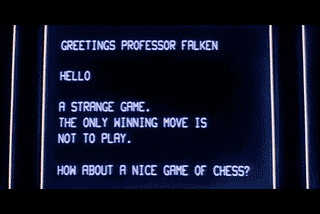
Biella Coleman: The Only Winning Move is Not To Play


nice-game-chess, originally uploaded by the biella.
Today I wrapped up both of my classes. Usually the end of class/semester represents and is experienced as nothing short of pure, unadulterated joy and at both ends of the stick (student and professors alike experience similar emotions :-). Like my students, I am pretty beat and more than ready for a break. But I have to admit, I experienced the end of my hacker class with a tinge of sadness. This is the third time I have taught this class and each time, it seems like it becomes harder and harder to contain the class conversation and I enjoy them through and through. The last few classes were brimming with talk, which is what should exactly happen because by the last month students are walking/talking on a foundation built over the course of many weeks. There is not much I would have changed about the syllabus (most of the readings were great-to-stellar) nor the class. But if there is one thing I am sorry about it is that we never watched War Games. The last time I taught the class, I was able to arrange various movie sessions and we watched War Games, Tron, and Sneakers (among a few others) and the students not only learned something about hacker media representations but did a little out-of-class bonding with the movies and lots of food. Since space is such an issue at NYU, I decided not to forage or hunt for a suitable room (I have since found a connection who I think can hook me up with a room). But by missing War Games, we missed an important event in the history of hackerdom. The movie undoubtedly led to many a kids asking for a modem for xmas and I am sure led to a spike in hacking and phreaking 9 months later (or however long it takes for a kid to plead for a modem, get it, learn some new tricks etc). It is also the case that while it helped usher in the image of the hacker as nefarious computer trickster, David Lightman was also a pretty cool, cute, and likable kid. Not a nerd but a geek. It perhaps represents the glimmerings of the transformation of the negative nerd into the positive geek (oh and the list keeps the list of girl geeks growing ), signaling the spread of the computer into mainstream society. So next time I teach the class, there will certainly be more movies, War Games on the top of the list so that we can learn that “the only winning move is not to play.”

Russell Coker: More about Australian Internet Censorship

As the Australian government wants to show how well they understand technology, they have started a blog about the “Digital Economy” [1]. So far they have hundreds of comments, most of which just tell them that their censorship ideas are wrong. In what may be related news, Barack Obama has announced details of some of his plans [2]. He will spend money on improving net access (something that the Australian government could learn from) and on improving schools (which will probably be about as effective as putting lipstick on a pig). I really hope that we don’t have someone in his administration deciding that improving schools requires censoring the Internet for the entire population (people tend to turn their brains off when it’s time to think about the children). He is also allocating money to road building (a stupid idea when cars are becoming increasingly expensive and world fuel supplies are running out - he should be building train and tram lines). But his idea about improving the energy efficiency of federal buildings is a really good idea, that will lead the development of technology that everyone can use to increase efficiency. He also wants to “modernise” the health-care system by moving to electronic medical records - this seems unlikely but I guess that all spending on IT is somehow good for those of us who are involved in the computer industry. One of his advisors has realised that there are economic benefits to really fixing the health-care system, so there is some hope that it will get fixed [3]. The FLOSS Manuals project has released a document about circumventing censorship systems [4], I expect that many people will be using them before the government even gets their Chinese-style filter installed (if they ever do).

Michal Čihař: Gammu test version 1.21.94

New Gammu testing release has just born. The largest changes are in vCard handler. It now supports photos in vCard and should properly handle error states which previously would lead to crash. This also leads to changed API for encoding/decoding vCard/vCalendar/vNote entries. Rest of changes is usual amount of bug fixes. Full list of changes: You can download from usual place: http://cihar.com/gammu/, Debian users will find packages in experimental soon.

Russell Coker: New version of Bonnie++ and Violin Memory

I have just released version 1.03e of my Bonnie++ benchmark [1]. The only change is support for direct IO in Bonnie++ (via the -D command-line parameter). The patch for this was written by Dave Murch of Violin Memory [2]. Violin specialise in 2RU storage servers based on DRAM and/or Flash storage. One of their products is designed to handle a sustained load of 100,000 write IOPS (in 4K blocks) and 200,000 read IOPS per second for it’s 10 year life (but it’s not clear whether you could do 100,000 writes AND 200,000 reads in a second). The only pricing information that they have online is a claim that flash costs less than $50 per gig, while that would be quite affordable for dozens of gigs and not really expensive for hundreds of gigs, as they are discussing a device with 4TB capacity it sounds rather expensive - but of course it would be a lot cheaper than using hard disks if you need that combination of capacity and performance. I wonder how much benefit you would get from using a Violin device to manage the journals for 100 servers in a data center. It seems that 1000 writes per second is near the upper end of the capacity of a 2RU server for many common work-loads, this is of course just a rough estimation based on observations of some servers that I run. If the main storage was on a SAN then using data journaling and putting the journals on a Violin device seems likely to improve latency (data is committed faster and the application can report success to the client sooner) while also reducing the load on the SAN disks (which are really expensive). Now given that their price point is less than $50 per gig, it seems that a virtual hosting provider could provide really fast storage to their customers for a quite affordable price. $5 per month per gig for flash storage in a virtual hosting environment would be an attractive option for many people. Currently if you have a small service that you want hosted a virtual server is the best way to do it, and as most providers offer little information on the disk IO capacity of their services it seems quite unlikely that anyone has taken any serious steps to prevent high load from one customer from degrading the performance of the rest. With flash storage you not only get a much higher number of writes per second, but one customer writing data won’t seriously impact read speed for other customers (with hard drive one process that does a lot of writes can cripple the performance of processes that do reads). The experimental versions of Bonnie++ have better support for testing some of these usage scenarios. One new feature is measuring the worst-case latency of all operations in each section of the test run. I will soon release Bonnie++ version 1.99 which includes direct IO support, it should show some significant benefits for all usage cases involving Violin devices, ZFS (when configured with multiple types of storage hardware), NetApp Filers, and other advanced storage options. For a while I have been dithering about the exact feature list of Bonnie++ 2.x. After some pressure from a contributor to the OpenSolaris project I have decided to freeze the feature list at the current 1.94 level plus direct IO support. This doesn’t mean that I will stop adding new features in the 2.0x branch, but I will avoid doing anything that can change the results. So in future benchmark results made from Bonnie++ version 1.94 can be directly compared to results that will be made from version 2.0 and above. There is one minor issue, new versions of GCC have in the past made differences to some of the benchmark results (the per-character IO test was the main one) - but that’s not my problem. As far as I am concerned Bonnie++ benchmarks everything from the compiler to the mass storage device in terms of disk IO performance. If you compare two systems with different kernels, different versions of GCC, or other differences then it’s up to you to make appropriate notes of what was changed. This means that the OpenSolaris people can now cease using the 1.0x branch of Bonnie++, and other distributions can do the same if they wish. I have just uploaded version 1.03e to Debian and will request that it goes in Lenny - I believe that it is way too late to put 1.9x in Lenny. But once Lenny is released I will upload version 2.00 to Debian/Unstable and that will be the only version supported in Debian after that time.

MJ Ray: Environmental Policies and Computing

I’ve not written about this for a while, but I’ve just started seeing Apple’s Greenwash adverts, so I went and found the latest Greenpeace electronics report which says:
“Apple’s score increases slightly to 4.3 points, but the company drops to 14th position. Apple scores well for putting products on the market whose key components are free of brominated flame retardants (BFRs) and PVC vinyl plastic [...] All Apple products should be free of these substances by the end of 2008, which will challenge other PC makers to follow their lead. [...] Apple scores poorly on most e-waste criteria, except for reporting a recycling rate in 2006 of 18% as a percentage of sales 7 years ago. It does slightly better on energy criteria for disclosing the carbon footprint of every model of product although not exactly what is being evaluated in the criterion.”
I feel that it’s hard to push the large electronics companies by direct action and purchasing decisions (although I will continue to try). Regulations must be introduced too and now the EC has issued a Code of Conduct on Data Centres Energy Efficiency [TreeHugger report]. TTLLP has been slowly getting out of data centres for the last few years - between the toxic e-waste in servers and rising energy costs, with most of our competitors ignoring both of them, it was too hard to do the right thing and be profitable. I think the market is ready for a step-change to green data centres and we can’t do that alone. Expect a new TTLLP-branded venture early next year… Finally, tomorrow, on 11 December, our governments will decide Europe’s response to climate change for the next 12 years. Take 2 minutes to tell them to keep global warming below 2 C.

9 December 2008

Gerfried Fuchs: Better backports.org Support

Since last weekend backports.org has two more services supporting tracking of what's going on. I will list them in chronological order: Tracking of Security issues in backports packages: This was one of the many topics that was discussed at the Security Team meeting in Essen at the end of last month and Florian Weimer implemented a first version of tracking security issues within backports.org. It currently compares the backported version against the one fixed for unstable, so at the moment it still has some false-positives (e.g. libspf2 because the fix was taken from lenny-security), but this is still a big step forward and helpful to track outstanding issues here, too. Diffs between etch-backports and lenny: Something similar was available at some other places before but strangely got discontinued. In here you can see which packages in backports are older (meaning only debian revision difference), outdated (newer upstream version in lenny) newer (backported from unstable?), have a wrong version schema or are not available in lenny (propably even removed from unstable). It will hopefully help people to get their backports in sync. At least it's an indicator of how well the packages are tracked. Hope you consider them already as useful as myself, even though there is obvious space for improvements. But they are both quite helpful already in their current state so that shouldn't hinder you from using them. :)

Lucas Nussbaum: The Project membership procedures GR

So, the call for vote on the “Project membership procedures” GR was sent. Since I took part in the discussions that lead to that GR, I feel obliged to explain my point of view. What this GR isn’t about
This GR isn’t about the merits of Joerg Jaspert’s proposal. I personally don’t think that the changes he wants to implement are what we need in Debian, but even if I fully agreed with those changes, I would still disagree with the process that led to those changes. Also, this GR isn’t about Joerg Jaspert himself. I deeply respect him and his awesome work for Debian. And I’m sure that this vote could have been triggered by decisions announced by someone else. What this GR is about
I think that the question we are asked to vote on is:
Some people in Debian have a special role, and special privileges. Does it allow them to change important aspects of our project, without the approval of all the other developers?
Or, put differently:
Where is our limit between Doocracy and Democracy?
I’m all for listening to developers who contribute(d) a lot. I think that most people, when skimming through posts in a big thread on -devel@, will look for posts from people who did a lot of work for Debian, or who usually post interesting ideas. However, that doesn’t mean that those people should feel empowered to decide changes to important parts of our project, without first discussing those changes with all other developers, and making sure that those changes are consensual. So, I hope that we will send a clear message that says: you are very welcome to propose changes, but please make sure that they are properly discussed within the developers before they are implemented. Joerg’s initial mail on d-d-a, with a few s/decision/proposal/, and a final question phrased like “Any comments? Suggestions? Other ideas?”, could have been the start of an interesting discussion about how we can integrate non-developing contributors in Debian. And if too many developers disagreed, we could have had an opinion poll (it would be great to have an infrastructure for running polls inside Debian, like what Jeroen did three times a long time ago), or even a GR, like we did for Debian Maintainers. For this actual vote, there are two similar options on the ballot (choices 1 and 2, respectively “amendment text A” and the original text on the vote page). I proposed this amendement (choice 1) because the original text is unclear, and mixes several different questions, forcing voters to answer several (secondary) questions at once, like: The amendment aims at going straight to the point. And yes, it is only asking the DAMs, but if the developers ask the DAMs not to do something, and the DAMs do it anyway, we clearly have a bigger problem. I believe that the way those decisions were announced was a mistake (that unfortunately none of the people involved have been willing to admit), not that the DAMs are trying to take-over Debian, so there’s no need for a stronger wording.

Wouter Verhelst: The advantages of a home-grown comment system

A while ago, I was investigating the possibility to move blog backend to something else; something like, say, drupal, so that I wouldn't have to maintain it too much myself. For those who care, this blog is a very strange contraption based on subversion, blosxom, php, and a postres backend for the comments. I've now dropped that migration thought, for a very simple reason: comment spam. A while back, the spammers had found my blog, and started placing comments using a bot. They might think that these comments will eventually show up on my website, but that's wrong; I always moderate away spam. First, they posted a few comments. I changed a few details about the form, and the bots (who only went to the POST URL, never checking whether the form they requested was unchanged) failed miserably. Then, they posted loads and loads of comments, in a weird attempt to overrun me with comments. One psql run and one DELETE statement later, those comments were gone -- and one minor form change later, the bots failed miserably, again. This went on for a few months, until the stupid spammer finally understood that he was wasting loads of his time in trying to post something on a website that wasn't ever going to enable his comments, anyway. Or so I thought. You see, the thing they're really after is my pagerank. In itself, grep.be is nothing special -- but planet.grep.be is, and apparently some of that pagerank score trickles to the other grep.be subdomains. Or, at least, that's what the spammers seem to think, in case it isn't (I wouldn't know). When the comment spam on my blog had been silent for a few weeks, I found that the spammers had found my gallery installation, and had posted some several thousand comments there. One DELETE statement later they were gone, but a few hours later some of them were back. I don't know the gallery source code well enough to pull the same trick here (disable comments until manual moderation), and unless I want to do something like using a CAPTCHA on my gallery site (I don't) or disabling comments altogether (I don't, either), I'll just have to resort to removing these comments from the database. At least by doing that, I can remove them all in one go. And at least the spammers are easily recognizable. For now. Perhaps I'll have to look into changing gallery's source code after all... or, perhaps, just use something else. Sigh. Stupid spammers

Josselin Mouette: RubyGem is from Mars, apt-get is from Earth

There is again some ongoing debate about Ruy gems and how to integrate them cleanly into the operating system. Let s put aside the fact such tools are useful on Windows and MacOS which don t have decent packaging systems. This is not a reason to dictate stupid requirements for other operating systems. Still, even without that, gems, eggs and the like are great tools for development; tools that developers can t work without today. They allow to easily setup a development environment with everything needed, at the latest versions. However they were not meant for integration and production environments, and will never be suitable for them. We re living in another world indeed: a world where servers must be up 24/7, where security issues flood your inbox every day, where you need dozens of servers running the very same software. This world is the Earth. Python eggs and Ruby gems were designed for the same target audience and with similar requirements; as such, they share the same deficiencies when it comes to other audiences:
  1. They replace the operating system s packaging tool. This is very nice to not wait for the packagers when you want the latest development version, but you lose track of what is actually installed. In production, you need to know exactly what s installed and at what version. You also need to know what you will need to update in case of a security issue.
  2. They install packages automatically on the system. This is really the biggest WTF; there are some reasons to do that to begin with, but they are all wrong.
  3. They use a specific file format. This requirement comes mostly from the Windows world, and it really makes no sense on Unix. It makes it much harder to integrate complex applications using components in different languages.
  4. They ship all files at the same place, happily violating the FHS and making it even harder to integrate with other things.
Python tools (setuptools and easy_install) have shifted their philosophy and brought a few small improvements which allow us to easily work around issues 1-3. These tools now include all you need to build a development environment in any directory that will not have an impact on the system packaging, making a clear distinction between the two targets. Furthermore, the metadata is shipped separately and can safely be included in a distribution package. Similarly, modules will not be installed automatically on your system. I have yet to see such a move from Ruby developers. However, what we are still missing is something along the lines of dh_make_perl: starting from a CPAN module, it will generate a clean and working Debian package in a few minutes. There have been some similar attempts for Python, but nothing as efficient. And I am certainly guilty of not having done something in this area, as one of the most knowledgeable of issues we encounter while packaging Python modules. As a note, I should add the underlying issue behind all of this is still the same: the NIH syndrome. Developers are reinventing the wheel, engine and transmission. Which is not that bad per se, but by not looking at existing solutions for the problem of making a car move, they are inventing a square wheel, a steam-powered engine and a superconductor-powered magnetic transmission. For example, while trying to fix the 4th of items listed earlier and they are really willing to fix it and several more general issues, setuptools developers forgot to look at the existing solutions: Certainly, the existing tools are everything but perfect, and not necessarily suitable for Ruby and Python, but some of the design ideas behind them are clearly the good solutions to some of the issues of software development and integration. Adapting these ideas to radically different languages is going to take more time than just throwing other layers of symlink farms.

8 December 2008

Gunnar Wolf: Apt-get and gems: Different planets, right. But it must not be the war of the worlds!

Thanks to some unexplained comments on some oldish entries on my blog, I found -with a couple of days of delay- Rubigem is from Mars, Apt-get is from Venus, in Pelle's weblog. And no, I have not yet read the huge amount of comments generated from it... Still, I replied with the following text - And I am leaving this blog post in place to remind me to further extend my opinions later on.
Wow... Quite a bit of comments. And yes, given that the author wrote a (very well phrased and balanced) post, I feel obliged to reply. But given that he refered to me first, I'll just skip the chatter for later - I'm tired this time of day ;-)
Pelle, I agree with you - This problem is because we are from two very different mindsets. I have already said so - http://www.gwolf.org/soft/debian+rails is a witness to that point.
But I do not think the divide is between sysadmins and developers. I am a developer that grew from the sysadmin stance, but that's not AFAICT that much the fact in Debian.
Thing is, in a distribution, we try to cater for common users. I have a couple of Rails apps under development that I expect to be able to package for Debian, and I think can be very useful for the general public.
Now, how is the user experience when you install a desktop application, in whatever language/framework it is written? You don't care what the platform is - you care that it integrates nicely with your environment. Yes, the webapp arena is a bit more difficult - but we have achieved quite a bit of advance in that way. Feel like using a PHP webapp? Just install it, and it's there. A Python webapp? Same thing. A Perl webapp? As long as you don't do some black magic (and that's one of the main factors that motivated me away from mod_perl), the same: Just ask apt-get to install it and you are set.
But... What about installing a Rails application? From a package manager? For a user who does not really care about what design philosophy you followed, who might not even know what a MVC pattern is?
Thing is, distributions aim at _users_. And yes, I have gradually adopted a user's point of view. I very seldom install anything not available as a .deb - and if I do, I try to keep it clean enough so I can package it for my personal use later on.
Anyway... I will post a copy of this message in my blog (http://gwolf.org/), partly as a reminder to come back here and read the rest of the buzz. And to go to the other post referenced here. And, of course, I invite other people involved in Ruby and Debian to continue sharing this - I am sure I am not the only person (or, in more fairness, that Debian's pkg-ruby-extras team is not the only team) interested in bridging this huge divide and get to a point we can interact better - And I am sure that among the Rubyists many people will also value having their code usable by non-developers as well.

Tiago Bortoletto Vaz: gnome-subtitles 0.8 almost there


I ve finished the first working package for gnome-subtitles 0.8 in Debian, since it adopted SubLib as a separated project: http://svn.debian.org/wsvn/pkg-cli-libs/packages/sublib/
http://svn.debian.org/wsvn/pkg-cli-apps/packages/gnome-subtitles/ The main question for me now is about waiting a signing key from upstream or suggesting him to adopt mine in order to get the assembly strongnamed for Debian. Actually I need some reviewing, considering I m totally ignorant about mono stuff and it s my first library in Debian. ps: thanks guys from #debian-mono for teaching me that Chicken has nothing to do with us even currently providing the csc binary :) Posted in english Tagged: debian gnu linux

Anand Kumria: Coughing up blood

Normally, those would not be the search terms I would plug into Google, first thing in the morning. But they were appropriate, today. Because that was what was happening. When I was younger, I used to have asthma and, as part of that, I would invariably contract bronchitis periodicially. Over the past years, even though my asthma has receeded, I would still get bronchitis at the interface between seasons. It did not matter if the season change was hot to cool, or cool to hot. Whatever the change, I would get it. I've been used to this. It is, in it's own way, comforting. I can watch the seasons change, and notice that are changing earlier. It's like I have an in-built global warming detector! This latest bout came on about 3 weeks ago. So, as usual, I thought nothing of it, bought my normal supply of strepsils and went about my life. It was not until I was doing some training, and was left exhausted and wondering why that I decided to head to the doctor. He could not hear anything wrong with my lungs. We did a few peak flow tests; my best of 3 being 250. Typical values for a health person are 600+. His conclusion: Your asthma has recurred. . A week later and I am still short of breath, but also coughing up blood. So after some searching on the interwebs, it appears that this can be normal with excessive coughing. And that the best ways to control excessive coughing are: codine1 (paracetamol / panadol) and chocolate 2 So, I've been indulging myself in both. I'm off to get a chest X-Ray just in case this is more serious and the blood re-appears tomorrow. But now you know that chocolate is good for you (and your cough).

Phil Hands: HTTPS VirtualHosts

Until a couple of weeks ago, I was under the impression that one could only have a single HTTPS site per IP address, but it seems I was wrong. The procedure is described here on the CACert wiki. In short, you need multiple SubjectAltName fields on your server's certificate, such that all the VirtualHost names that you want to work are either directly mentioned, or will match via wildcards. The page above includes a link to a nice script that generates a key and CSR (Certificate Signing Request) ready to be pasted into CAcert's Server Certificate page. Note: the CN is pretty much ignored by some browsers, so you'll want to put the machine's main name as one of the SubjectAltNames as well. BTW if you get a warning like:
  [warn] _default_ VirtualHost overlap on port 443, the first has precedence
you probably need to add
  NameVirtualHost *:443
to your /etc/apache2/sites-enabled/ssl before the <VirtualHost *:443> line. Of course, this glosses over the details of doing things like setting your name and address in the certificate, but since CAcert will strip all that out anyway, it only matters if you wanted to get it signed by someone else. Even so, this should get you started -- you can always edit those details into the csr script.

7 December 2008

Jeff Bailey: Winter time!

When moving here, we figured out that it would cost us around $5k(USD) to ship everything we owned, versus the idea of spending something in that neighbourhood to simply replace everything we owned with stuff worth having. Much of what we had we got in 2001 when, unemployed, diverted to a weird city, and stuck far away from home we scraped by to buy for our tiny one-room apartment in Toronto.

So today was the Sears trip - the day to buy living room furniture, dining room furniture, and kitchen appliances. We went to Sears and it was a bit chilly. We left Sears to apparently a -27C wind chill, dusted snow blowing across the parking lot and 50km/h wind gusts.

We were *almost* dressed well enough for it, too. =)

Anyhow, the furniture comes on Wednesday afternoon and sometime after that we'll start inviting people over. Y'know, somewhere after we have somewhere to sit.

Biella Coleman: Nerds, Geeks, and Nerd/Geek Grrrls

I have not sat behind the helm of teaching for very long but I already have a few tricks up my sleeve. One of them is that I assign some of my favorite readings at the end of the semester so as to counter the downtrodden and tepid spirit and mood (not to mention attention) of my students, which drops precipitously with each passing day. Let’s face it post Thanksgiving, we are all a little tired and I try to find the readings, which uplift, intrigue, and challenge cherished assumptions about marriage and sex. So far it seems to pay off and I often can tell because the conversational pitch and excitement in class is high and the student writings are good, great, even exceptional, which, again, is hard to produce/induce this late in the semester. Readers of this blog would probably be most interested in one of these lively readings, Ben Nugent’s American Nerd (and it might be interesting to hear how the European Nerd story would diverge or converge with this one). One of my students, an audio geek and Free Culture President/Free Software junkie, by the name of John Randall produced a very nice little response (not research) paper on the Nugent reading as well as a short piece by Sarah Seltzer from Bitch Magazine
The(Girl) Geek Stands Alone (and thanks to Joe> for cluing me into this piece). Seltzer piece basically argues, in her own words, the following:
Imagine this scene from a comedy: a group of female friends sit around smoking a bowl and working on the Wikipedia page for Lord of the Rings. Their fashion sense is decidedly iconoclastic and several sport thick-rimmed glasses. Without a trace of self-consciousness, they have a hilariously ribald discussion on the relative traits of elves and orcs.
Awesome as it is, you’ll never see this scene onscreen. No mainstream movie or TV series would dare group so many female nerds together, or celebrate them so unabashedly
So John’s whole response paper is here and here is the pdf. In the paper, he makes a number of excellent points but what I loved most about it was his very geeky move at the end of the paper to prove Sarah (somewhat wrong) by listing all the girl geeks that do and have appeared in mainstream (and not-so mainstream) entertainment venues/shows, etc. They are as follows and in his own words:
I will now showcase my own geekiness through my knowledge of geeky female characters. Why? Because I can. But also because I want to demonstrate that if you look hard enough for representations of female geekyiness in pop culture, you will find plenty. Moreover, if you pick the right ones, you can make them support your argument about gender relations, whatever that argument might be. Some of these charters and personalities are hardly gendered, some are hyper-sexual. Some are incredibly attractive but completely asexual. Some undergo a transformation into/out of geekiness, while others to not. Some are powerful, while some are powerless. Some (most?) celebrate their geekiness, others are tortured by it. They are all geeks take your pick: Aeon Flux, a sexy geek who’s technological gadgets give her super powers (Comic drawings then Charlize TheronAeon Flux) Wonder Woman, attractive pilot of an invisible plane Lara Croft, a female Indiana Jones in short shorts, wielding guns and cracking computer codes (CGI and then Angelina Jolie in Tomb Raider) She-Ra, who was way smarter than He-Man (Masters of the Universe cartoons) Gadget Hackwrench, beautiful chipmonk technician for Chip and Dale (Rescue Rangers cartoon) Velma, featuring eyeglasses, awkwardness and brains (Scooby Doo), Hermonie Granger, a geek who is temporarily rejected because she is a geek, remains a geek, and finds love and happiness (Harry Potter) Barbarella, who, through comic strips and a 1968 film, helped introduce science fiction and sex to young women (Barbarella) La Femme Nikita, a skillful, savvy, and very feminine girl who doubles as a covert spy Kate Libby, aka ‘Acid Burn’, uber-sexualized hacker (played by Angelina Jolie in Hackers) Kathryn Janeway, smart and powerful captain of the USS Voyager (Star Trek Voyager) Starbuck (Battlestar Galactica), Dana Scully, FBI agent with encyclopedic media knowledge. The bizzare subtex of non-realized sexual tension was part of the magic The X-Files. Willow Rosenberg, geeky sidekick turned geeky supervillian (Alyson Hannigan in buffy the Vampire Slayer) Michelle Flaherty, hyper-sexual band geek (Alyson Hannigan in American Pie series) Dr Ellie Sattler, heroniene scientist (Jurrasic Park) Ellie, scientis hero (played by both Jenna Malone and Jodi Foster in Carl Sagan’s Contact) Dawn Wiener (Heather Matarazzo in Welcome to the Dollhouse Enid and Rebecca (Thora Birch and Scarlett Johanson in Ghost World) just about every charater ever played by Jenna Malone (Donie Darko, The Dangerous Lives of Altar Boys, The United States of Leland, Saved!, etc) half of the charaters played within the last decade by Jodi Foster (Panic Room, The Dangerous Lives of Altar Boys, Flightplan, The Addams Family half of the charaters played by Christina Ricci (Mermaids, The Addams Family, Little Red Riding Hood, The Ice Storm, Buffalo ‘66, Prozac Nation, Pumpkin, Speed Racer) half of the characters played by Natalie Portman (The Professional, Mars Attacks!, Star Wars, V for Vendette, The Darjeeling Limited, Mr. Magorium’s Wonder Emporium, Garden State) Molly Ringwald. characters played by Molly Ringwald. Rock musician Ani DiFranco and geeky Riot Grrls everywhere. Sarah Vowell, NPR commentator celebrating her geeky life. Voiceover for geeky cartoon characters. Rachel Maddow, for being Rachel Maddow.
First, awesome list, though he forgot a few (like one of my favorites, Bionic Woman and a more recent one, Juno) and it is nice to have it in one compact place. But, I have to say, I still agree to some degree with Sarah Setlzer, though I also agree with John. On the one hand there are representations and it is as important just to strut this stuff publicly as it is to claim that there is not enough female geeky representations in mainstream media. This is what John has done quite nicely. One the other hand, as he himself says ” if you look hard enough for representations of female geekyiness in pop culture, you will find plenty.” I think those words, “if you look hard enough” also speaks volumes of the continued disparity that does exist. One should not have to look “hard,” and the only blockbusters, so to speak, which feature a female geek, is Tomb Raider, which for being so hyper-sexualized is not so geeky to me, no matter how good she is with the gadgets. That said, what I find so important, and have emphasized in different contexts, is the need for what I think of simultaneous positive and negative form of critique, the former being about pointing to already exisitng examples to get people jazzed and excited and to put things in perspective. The later form of critique, negative critique, identifies a lack, a void to fill, just the type of excellent commentary in the Seltzer piece… But now for the most important question, who has John overlooked?

Muammar El Khatib: Simple Life + Debian + Science

Two days ago, I arrived from Choron which is one of the most beautiful beaches of Venezuela. There, It was held the "II Congreso de Fisicoqu mica Te rica y Computacional" (Congress of Theoretical and Computational Physical Chemistry). The congress was really nice because it was a meeting which included quantum chemists from Venezuela and from another countries. I went there in a bus that was assigned by La Universidad del Zulia for me and other attendees. What does this have to do with the title of this post? Well, I had the chance to share time with people (my co-workers) that in some way they live the life in a simpler way than me. For example, they don't care using Linux, Windows, or Mac. They don't care listening to Salsa or whatever other music. They don't care using semi-empirical methods or Ab Initio ones. They don't care studying organic compounds or inorganic ones... So I had a reflexion: should I have to be a little bit more flexible with my points of view? Should I stop being that critic with every field that I study or I am part of? By the moments, looking at what I have been able to achieve being how I am, I think I shouldn't turn. But I accept it was good to see and share time with people that live life a little bit simpler (and I am aware that I have to improve some stuff about me).

There was a poster section where there were lots of interesting Physical Chemistry works that are being carried out in different parts of Venezuela. My poster was related to the linear and non-linear optical response of the nitrogen basis of DNA, RNA and their tautomers in Gaseous phase . It was interesting to see that most of the computational calculus servers, Grids, and clusters were running Debian instead of systems based on Red Hat which have been for long time widely used in the world of sciences in Venezuela :-) I hope to see more and more laboratories of my country using Debian with the pass of the time. However, the implementation of Debian has increased a lot in this field. In the laboratory that I am part of, almost all the machines uses Debian as environment to carry out quantum calculus.

Next.

Previous.