Search Results: "ag"

11 January 2016

Thadeu Lima de Souza Cascardo: GNU on Smartphones (part II)

Some time ago, I wrote how to get GNU on a smartphone. This is going to be a long discussion on why and how we should work on more operating systems for more devices. On Android So, why should we bother if we already have Android, some might ask? If it's just because of some binary blobs, one could just use Replicant, right? Well, one of the problems is that Android development is done in hiding, and pushed downstream when a new version is launched. There is no community behind that anyone can join. Replicant ends up either following it or staying behind. It could do a fork and have its own innovations. And I am all for it. But the lack of manpower for supporting devices and keeping up with the latest versions and security fixes already takes most of the time for the one or two developers involved. Also, Android has a huge modularity problem, that I will discuss further below. But it's hard to replace many components in the system, unless you replace them all. And that also causes the problem that applications can hardly share extra components. I would rather see Debian running on my devices and supporting good environments and frameworks for all kinds of devices, like phones, tablets, TVs, cars, etc. It's developed by a community I can join, it allows a diverse set of frameworks and environments, and it's much easier to replace single components on such a system. On Copyleft Hardware I get it. Hardware is not free or libre. Its design is. I love the concept of copyleft hardware, where one applies the copyleft principles to a hardware design. Also, there is the concept of Hardware that Respects Your Freedom, that is, one that allows you to use it with only free software. Note that RYF hardware is not necessarily copyleft hardware. In fact, most of the time, the original vendor has not helped at all, and it required reverse engineering efforts by other people to be able to run free software on those systems. My point here is that we should not prevent people from running free software on hardware that does not RYF or that is not copyleft. We should continue the efforts of reverse engineering and of pushing hardware vendors to not only ship free software for their hardware, but also release their design under free licenses. But in the meantime, we need to make free software flourish in the plethora of devices on the hands of so many people around the world. On Diversity I won't go into details on this post about two things. One topic I love is retrocomputing and how Linux supported so many devices, and how many free or quasi-free operating systems ran on so many of them in the past. I could mention ucLinux, Familiar, PDAs, Palmtops, Motorolas, etc. But I will leave it to another time and go from Openmoko and Maemo forward. The other topic is application scalability. Even Debian with so many software available does not ship all free software there is available. And it doesn't support all third-party services out there. How can we solve that? It has to do with platforms, protocols, open protocols, etc. I will not go into that today. Because I believe that either way, it's healthy for our society to have diversity. I believe we should have other operating systems available for our devices. Even if application developers will not develop for all of them. That is already the case today. There are other ways to fix that, when that needs fixing. Sometimes, it's sufficient that you can have your own operating system on your device, that you can customize it, enhance it and share it with friends. And also, that would allow for innovation. It would make possible that some other operating system would have enough market share on some other niche. Other than Android and iOS, for example. But that requires that we can support that operating system on different devices. And that is the scalability that I want to talk about. How to support more devices with less effort. Options But before I go into that, let me write more about the alternatives we have out there. And some of the history around it. Openmoko Openmoko developed a set of devices that had some free design. And it has some free operating systems running on top. The community developed a lot of their own as well. Debian could (still can) run on it. There is SHR, which uses FSO, a mobile middleware based on D-Bus. It even spawned other devices to be developed, like GTA04, a successor board, that can be shipped inside a Neo Freerunner case. Maemo, Moblin, Meego and Tizen I remember the announcement of Nokia N770. During FISL in 2005, I even criticized a lot, because it shipped with proprietary drivers. And applications. But it was the first time we heard of Maemo. It was based on Debian and GNOME. The GNOME Mobile initiative was born from that, I believe, but died later on. But with the launch of N900, and later events, like the merge of Moblin with Maemo, to create Meego, we all had an operating system that was based on community developed components, that had some community participation, and was much more like the systems we were used to. You could run gcc on N900. You could install Das U-Boot and have other operating systems running there. But Nokia has gone a different path. Intel has started Tizen with Samsung. There is so much legacy there, that could still be developed upon. I am just sad that Jolla decided to put proprietary layers on top of that, to create SailfishOS. But we still have Mer, Nemo. But it looks like Cordia is gone. At least, (http://cordiahd.org) seems to have been registered by a domain seller. Not to forget, Neo900, a project to upgrade the board, in the same vein as GTA04. FirefoxOS and Ubuntu What can I say about FirefoxOS and Ubuntu Phone? In summary, I think we need more than Web, and Canonical has a history of not being too community oriented as we'd like. I won't go too much here in what I think about the Web as a platform. But I think we need a system that has more options for platforms. I haven't participated in projects directed by Mozilla either, so I can't say much about that. Ubuntu Phone should be a system more like what we are used to. But Canonical is going to set the directions to the project, it's not a community project. Nonetheless, I think they add to the diversity, and users should be able to try them, or their free parts or versions. But there are challenges there, that I think need to be discussed. So, both of these systems are based on Android. They don't use Dalvik or the application framework. But they use what is below that, which means device drivers in userspaces, like RIL, for the modem drivers, and EGL, for graphics drivers. The reason they do that is to build on top of all the existing vendor support for Android. If a SOC and phone vendor already supports Android, there should be not much needed to do to support FirefoxOS or Ubuntu Phone. In practice, this has not benefited the users or the projects. Porting should be as simple as getting a generic FirefoxOS or Ubuntu Phone image and run it on top of your Android or CyanogenMod port. Porting usually requires doing all the same work as porting Android. Even though one should be able to take advantage of existing ports, it still requires doing a lot of integration work and building an entire image, most of the time, including the upper layers, that should be equal in all devices. This process should require at most creating a new image based on other images and loading it on the device. I will discuss more about this below. I can't forget to mention the Matchstick TV project. It is based on FirefoxOS. I think it would have much more changes to succeed if it was easier for testers to have images available for all of their gadgets capable of running some form of Android. Replicant And then we have Replicant. It has a lot of the problems Android has. Even so, it's a tremendously important project. First, it offers a free version of Android, removing all proprietary pieces. This is very good for the community. But more than that, it tries to free the devices beyond that. What the project has been done is reverse engineer some of the pieces, mostly the modem drivers. That allows other projects to build upon that work, and support those modems. Without that, there is no telephony or celullar data available on any of these devices. Not without proprietary software, that is. They also have been working on free bootloaders, which is another important step for a completely free system. Next steps There are many challenges here, but I believe we should work on a set of steps that make it more palatable and produce intermediary results that can be used by users and other projects. One of the goals should be good modularity. The ability to replace some pieces with the least trouble necessary. The update of a single framework library should be just a package install, instead of building the entire framework again. If there is ABI breakage, users should still be able to have access to binaries (and accompanying source code) and only need to update the library and its reverse dependencies. If one layer does not have these properties, at least it should be possible to update this big chunk without interfering with the other layers. One example is FirefoxOS and Ubuntu Phone. Even if there is a big image with all system userspace and middleware, the porting, install and upgrade process should allow the user to keep the applications and to leverage porting already done by similar projects. Heck, these two projects should be able to share porting efforts without any trouble. So what follows is a quick discussion on Android builds, then suggestions on how to approach some of the challenges. On Android build The big problem with Android build is its non-modularity. You need to build the world and more to get a single image in the end. Instead of packages that could be built independently, that generated modular package images, that could be bundled in a single system image. Better yet would be the ability to pick only those components that matter. Certainly, portability would be just as interesting, being able to build certain components on top a GNU system with GNU libc. At times, it seems like this is done by design, to make it difficult for "fragmentation" and competition. Basically, making it difficult to exercise the freedom to modify the software and share your modifications with others. Imagine the possibilities of being able to: There are some dangers in promoting the use of Android like this. Since it promotes proprietary drivers, relying on such layers instead of better community oriented layers means giving an advantage to the first. So, the best plan would be to replace those layers, when they are used, for things like ofono and Wayland, for example. But, in the meantime, making it easier for users to experiment with FirefoxOS, Ubuntu Phone, Matchstick TV, Replicant on other devices, without resorting to building the entire Android system, would be a very nice thing. It is possible that there are some challenges with respect to API and ABI. That these layers are too intermingled that some changes present in one port would prevent FirefoxOS to run on top of it without changes in either of the layers. I can't confirm that is the case, but can't deny the possibility. Rooting One of the challenges we have that may have trouble in scaling is rooting devices. Unfortunately, most of the devices are owned by the vendor or carrier, not the user. The user is prevented from replacing software components in the system, by removing its permissions from replacing most of the files in the filesystem, or writing to block devices, or change boot parameters or write to the storage devices. Fortunately, there are many documents, guides, howtos, and whatnots out there instructing on how to root a lot of devices. In some cases, it depends on software bugs that can be patched by the users as instructed by vendors. Certainly, favoring devices that are built to allow rooting, hacking, etc, is a good thing. But we should still help those users out there who do not have such devices, and allow them to run free software on them. Booting Then, comes booting, which is a large discussion on its own, and also related to rooting, or how to allow users to replace their software. First, we have the topic of bootloaders, which are usually not free, and embedded in the chip, not on external storage. So, there are those pieces of the bootloader which we can replace more easily and those that we are not, because they would require changing a piece of ROM, for example. Das U-Boot would be one of the preferred options for a system. It supports a lot of hardware platforms out there, a lot of storage devices and filesystems, network booting, USB and serial booting, and a lot of other things. Porting is not an easy task, but it is possible. Meanwhile, using the bootloaders that ship with the system, when possible, would allow a path where other pieces of the system would be free. One of the challenges here is building single images that could boot everywhere. The lack of a single ARM boot environment is a curse and a blessing. It makes it hard to have this single boot image, but, on the other hand, it has allowed so much of the information for such systems to be free, to be embedded in copyleft software, instead of having blobs executed by our free systems, like ACPI encourages. Device trees have pushed this portability issue from the kernel to the bootloaders. Possibily encouraging vendors to now hide and copyright this information in the form of proprietary device trees. But it has made it easier for single images. In practice, we still need to see a lot of devices out there supporting this single kernel scenario. And this mechanism only brings us the possibility of a single kernel. We still need to ship bootable images that have pieces of bootloaders that are not as portable. This has caused lots of operating systems out there to be built for a single board. Or to support just a small set of boards. I struggle with the concept. Why are we not able to mix device-specific pieces with generic pieces and get a resulting image that will boot on our choice of board? Why does every project need to do all the porting work again, repeating the efforts? Or have one entier ISO image for every supported board? Check how Geexbox does it, for an example. Fortunately, I see Debian going in a good direction. Here, one can see how it instructs the user to combine a system-dependent part with a system-independent part. Installation Which brings us to the installation challenge. We should make this easy and also customizable by the user. Every project might have its own method, and that is part of the diversity that we should allow. The great challenge here is handling rooting and booting for the user. But it's also possible to leave that as separate efforts, as it would be nice to have good installers as we have in the desktop and server environments. Linux Linux is one of the most ported kernels out there. Of course, it would be healthy to the diversity I propose that other kernels and systems out there should work on those mobile devices. NetBSD, for example, has a reputation of being very portable and ported to many platforms. And GNU runs on many of them, either together with the original systems, or as the main system on top of other kernels, as proven by the Debian GNU/kFreeBSD port, which uses GNU libc. But, though I would love to see HURD running directly on those devices, Linux and its derivatives are already running on them. Easier to tackle is to get Linux-libre running on those systems. But though this looks like one of the easier tasks at hand, it is not. If you run a derivative version from Linux, provided by the vendor, things should go smooth. But most of the time, the vendor does not provide patches upstream, and leave their fork to rot, if you are lucky, in the earlier 3.x series. And some times, there is not even source code available. There are vendors out there who do not respect the GPL and that is one of the reasons why GPL enforcement is important. I take this opportunity to call attention to the work of Software Freedom Conservancy and its current efforts to raise funds to continue their work. Running an existing binary version of Linux on your device with a free userspace is part of the strategy of replacing pieces one at a time while allowing for good diversity and reaching more users. Drivers Then we have the matter of drivers. And in this case, it's not only Linux drivers, but drivers running in userspace. Though others exist, there are two important and common cases, which are modem and graphics drivers, both of which are usually provided by Android frameworks, and that other systems try to leverage, instead of using alternatives that are more community friendly. In the case of modem drivers, Android uses its RIL. Besides not using a Radio or Modem at all, there are two strategies for free versions. One is using free versions of the drivers for RIL. That's what Replicant does, because, well, it uses the other Android subsystems after all. The other one is using a system that is developed by the community. ofono is one that, even though it's an Intel iniative, looks more community governed or open to community participation than any Android subsystem ever was. As for Graphics, Canonical even built its Mir project with the goal of being able to use Android GPU drivers. Luckily, there has been a lot of reverse engineering efforts out there for a lot of those GPUs shipped with ARM SoCs. Then, we can use Mesa, Wayland and X.org. Other option, until then, is just using a framebuffer driver, possibly one that does not need any initialization, depending on one done by the bootloader, for example. Middleware and Shells Plasma Active, that I just found out now is Plasma Mobile, looks like a great system. Built by folks behind KDE, we can expect great freedom to come from it. Unfortunately, it suffers from what we have been discussing here, which is lack of good device support, or shipping images that run on top of single devices, without leveraging the porting that has come before of other systems. Fortunately, that is just what I want to accomplish with this effort. FSO, that I mentioned before, is a good middleware, that we should try to run on top of these devices. Running GNOME or Unity shell, and use rpm or deb based systems, that's all part of the plan on diversity. You could use systemd, or System V init systems, whatever gives you the kicks. It's not an easy task, since there are so many new things on these new kinds of devices. Besides touch, there is telephony, which as I mentioned, would be a good task for ofono. As for TV sets or dongles, I would love to see OpenFlint, created by the Matchstick TV guys, flourish out there and allow me to flint stuff from my mobile phone running Debian into my TV dongle running Debian. Project So, is there a project out there you can start contributing to? Well, I pointed out a lot of them. All of them make part of this plan. Contributing to reverse engineering GPUs, or to Plasma Mobile, ofono, GNOME, Linux-libre, bootloaders, Debian, and so many other projects. My plans are to contribute in the scope of Debian and make sure it works well on top of semi-liberated devices, and make sure there is a nice user interface and good applications when using either GNOME or Plasma. Integrating ofono is a good next step, but I am running ahead of myself. Right now, I don't think there is need for an integrated effort. If you think otherwise, please let me know. If you are doing something in this direction, I would love to know. Paul Wise reminded me to point out to the Debian Mobile, where I will probably contribute any documentation and other relevant results. Thanks There are some many people to thank, but I would like to remember Ian Murdock, who created Debian, one of the projects who inspires me the most. I think the best way to handle his passing is to celebrate what he has helped create, and move forward, taking more free software to more people in an easy and modular way. I have been wanting to write something like this for a long time, so I thank Chris Webber for inspiring me on doing it.

Alessio Treglia: Filling old bottles with new wine

They are filling old bottles with new wine! This is what the physicist Werner Heisenberg heard exclaiming by his friend and colleague Wolfgang Pauli who, criticizing the approach of the scientists of the time, believed that they had been forcibly glued the notion of quantum on the old theory of the planetary-model of Bohr s atom. Faced with the huge questions introduced by quantum physics, Pauli instead began to observe the new findings from a different point of view, from a new level of reality without the constraints imposed by previous theories.

Newton himself, once he theorized the law of the gravitational field, failing to place it in any of the physical realities of the time, he merely

<Read More...>

Keith Packard: Altos1.6.2

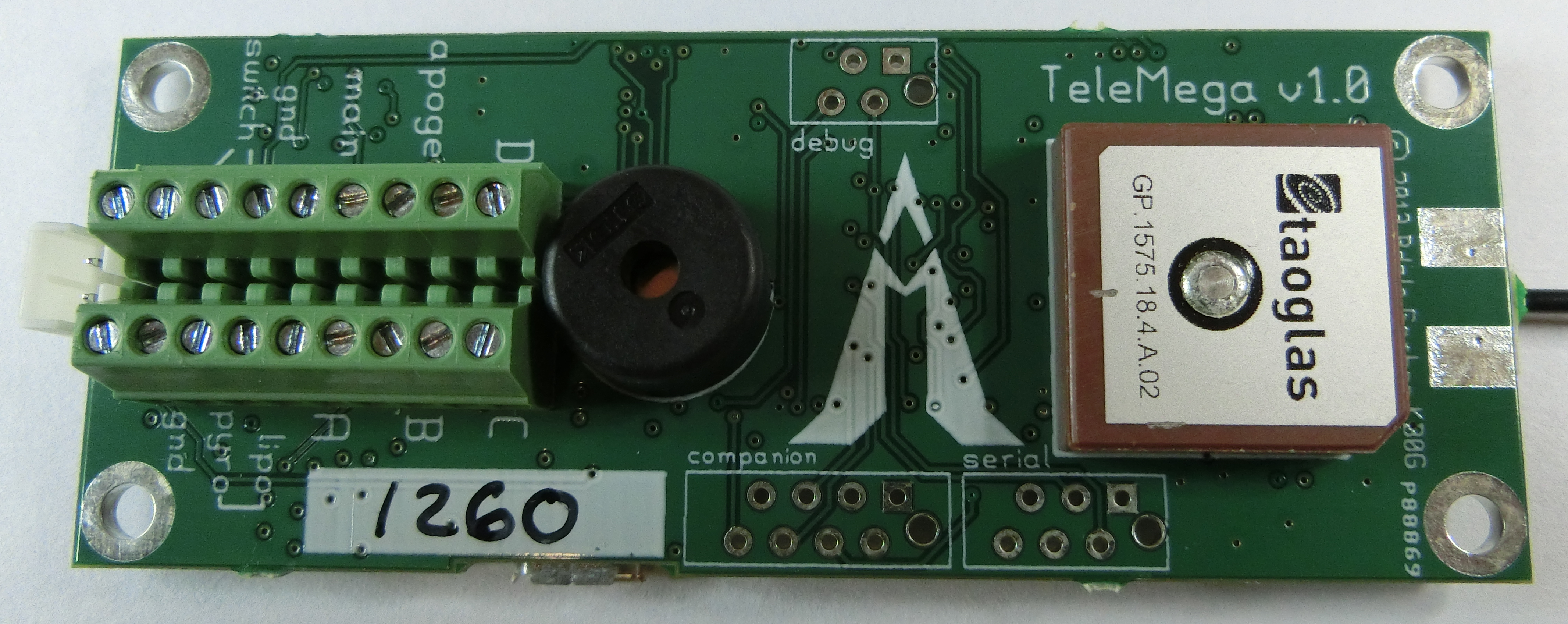
AltOS 1.6.2 TeleMega v2.0 support, bug fixes and documentation updates Bdale and I are pleased to announce the release of AltOS version 1.6.2. AltOS is the core of the software for all of the Altus Metrum products. It consists of firmware for our cc1111, STM32L151, STMF042, LPC11U14 and ATtiny85 based electronics and Java-based ground station software. This is a minor release of AltOS, including support for our new TeleMega v2.0 board, a small selection of bug fixes and a major update of the documentation AltOS Firmware TeleMega v2.0 added The updated six-channel flight computer, TeleMega v2.0, has a few changes from the v1.0 design: None of these change the basic functionality of the device, but they do change the firmware a bit so there's a new package. AltOS Bug Fixes We also worked around a ground station limitation in the firmware: AltosUI and TeleGPS applications A few minor new features are in this release Documentation I spent a good number of hours completely reformatting and restructuring the Altus Metrum documentation.
Ben Hutchings: Debian LTS work, December 2015

In December I carried over 15 hours from October/November and was assigned another 15 hours of work by Freexian's Debian LTS initiative. I worked a total of 20 hours despite the holidays. I uploaded a security and bug fix update to linux-2.6 early in December, and sent DLA-360-1. I also backported several more security fixes, released in the new year. I sent several of the fixes to Willy Tarreau for inclusion in Linux 2.6.32-longterm. I prepared an update to sudo to fix CVE-2015-5602. This turned out not to have been properly fixed upstream, so I finished the job and am now in the process of backporting and uploading fixes for all suites. I reviewed the packages affected by CVE-2015-8614 and the upstream fix in claws-mail, and found that that was also incomplete. This resulted in another CVE ID being issued. I had another week in the front desk role, over the new year, and triaged about 20 new issues. About half of them affected packages supported in squeeze-lts. Updated: I also found a bug in the contact-maintainers script used by the LTS front desk. It used apt-cache show to find out the maintainers of a source package, which may result in outdated information particularly if you configure APT to fetch squeeze sources in order to work on LTS! I modified the script to grab maintainer information out of the RDF description provided by packages.qa.debian.org (not yet implemented on tracker.debian.org). I feel there ought to be an easier way to do this, but at least I learned something about RDF.

Dirk Eddelbuettel: Rcpp 0.12.3: Keep rollin'

The third update in the 0.12.* series of Rcpp arrived on the CRAN network for GNU R earlier today, and has been pushed to Debian. It follows the 0.12.0 release from late July, the 0.12.1 release in September, and the 0.12.2 release in November making it the seventh release at the steady bi-montly release frequency. This release is somewhat more of a maintenance release addressing a number of small bugs and nuisances without adding any new features. Rcpp has become the most popular way of enhancing GNU R with C or C++ code. As of today, 553 packages on CRAN depend on Rcpp for making analytical code go faster and further. That is up by more than fourty packages from the last release in November. Once again, we have new first-time contributors. Kazuki Fukui corrected an issue he encountered when having CLion re-formatted some code for him. Joshua Pritikin corrected a constructor initialization. Of course, we also had several pull reports from regular contributors -- see below for a detailed list of changes extracted from the NEWS file.

Changes in Rcpp version 0.12.3 (2016-01-10)
  • Changes in Rcpp API:
    • Const iterators now CharacterVector now behave like regular iterators (PR #404 by Dan fixing #362).
    • Math operators between matrix and scalars type have been added (PR #406 by Qiang fixing #365).
    • A missing std::hash function interface for Rcpp::String has been addded (PR #408 by Qiang fixing #84).
  • Changes in Rcpp Attributes:
    • Avoid invalid function names when generating C++ interfaces (PR #403 by JJ fixing #402).
    • Insert additional space around & in function interface (PR #400 by Kazuki Fukui fixing #278).
  • Changes in Rcpp Modules:
    • The copy constructor now initialized the base class (PR #411 by Joshua Pritikin fixing #410)
  • Changes in Rcpp Repository:
    • Added a file Contributing.md providing some points to potential contributors (PR #414 closing issue #413)
Thanks to CRANberries, you can also look at a diff to the previous release. As always, even fuller details are on the Rcpp Changelog page and the Rcpp page which also leads to the downloads page, the browseable doxygen docs and zip files of doxygen output for the standard formats. A local directory has source and documentation too. Questions, comments etc should go to the rcpp-devel mailing list off the R-Forge page.

This post by Dirk Eddelbuettel originated on his Thinking inside the box blog. Please report excessive re-aggregation in third-party for-profit settings.

10 January 2016

Carl Chenet: Feed2tweet 0.2: power of the command line sending your Feed RSS to Twitter

Feed2tweet is a self-hosted Python app to send you RSS feed to Twitter. A long descriptions about why and how to use it is available in my last post about it. Feed2tweet is in production for Le Journal du hacker, a French Hacker News-style FOSS website. logo-journal-du-hacker Feed2tweet 0.2 brings a lot of new command line options, contributed by Antoine Beaupr @theanarcat. Taking a short extract of the Feed2tweet 0.2 changelog: Lots of issues from the previous project was also fixed. Using Feed2tweet? Send us bug reports/feature requests/push requests/comments about it!

Vasudev Kamath: Managing Virtual Network Devices with systemd-networkd

I've been using bridge networking and tap networking for containers and virtual machines on my system. Configuration for bridge network which I use to connect containers was configured using /etc/network/interfaces file as shown below.
auto natbr0
iface natbr0 inet static
   address 172.16.10.1
   netmask 255.255.255.0
   pre-up brctl addbr natbr0
   post-down brctl delbr natbr0
   post-down sysctl net.ipv4.ip_forward=0
   post-down sysctl net.ipv6.conf.all.forwarding=0
   post-up sysctl net.ipv4.ip_forward=1
   post-up sysctl net.ipv6.conf.all.forwarding=1
   post-up iptables -A POSTROUTING -t mangle -p udp --dport bootpc -s 172.16.0.0/16 -j CHECKSUM --checksum-fill
   pre-down iptables -D POSTROUTING -t mangle -p udp --dport bootpc -s 172.16.0.0/16 -j CHECKSUM --checksum-fill
Basically I setup masquerading and IP forwarding when network comes up using this, so all my containers and virtual machines can access internet. This can be simply done using systemd-networkd with couple of lines, yes couple of lines. For this to work first you need to enable systemd-networkd.
systemctl enable systemd-networkd.service
Now I need to write 2 configuration file for the above bridge interface under /etc/systemd/network. One file is natbr0.netdev which configures the bridge and the natbr0.network which configures IP address and other stuff for the bridge interface.
#natbr0.netdev
[NetDev]
Description=Bridge interface for containers/vms
Name=natbr0
Kind=bridge
#natbr0.network
[Match]
Name=natbr0
[Network]
Description=IP configuration for natbr0
Address=172.16.10.1/16
IPForward=yes
IPMasquerade=yes
The IPForward in above configuration is actually redundant, when I set IPMasquerade it automatically enables IPForward. So these configuration is equivalent of what I did in my interfaces file. It also avoids me doing additional iptables usage to add masquerading rules. This pretty much simplifies handling of virtual network devices. There are many other things which can you do with systemd-networkd, like running a DHCPServer on the interface and many other things. I suggest you to read manual pages on systemd.network(5) and systemd.netdev(5). systemd-networkd allows you configure all type of virtual networking devices and actual network interfaces. I've not myself used it to handle actual network interfaces yet.

Andrew Shadura: Public transport map of Managua

Holger Levsen writes about the public transport map of Managua, Nicaragua, which is, according to him, the first detailed map of Managua s bus network:
If you haven t been to Managua, you might not be able to immediatly appreciate the usefulness of this. Up until now, there has been no map nor timetable for the bus system, which as you can see now easily and from far away, is actually quite big and is used by 80% of the population in a city, where the streets still have no names.
Having had a look at the map they produced, I have to admit I quite liked it: MapaNica.net, Rutas de Managua y Ciudad Sandino MapaNica, the community behind said map, are raising funds to make lives of locals easier by publishing a printed version of the map and distributing it. They have already raised more than $3300 of their $7500 goal. Every further donation will help them print more maps. Please go to support.mapanica.net and support their initiative!

Holger Levsen: 20160110-support-mapanica-net

Please support the public transportation map of Manugua Some of you might remember DebConf12 in Managua, Nicaragua and the very friendly and helpful locals, who recently contacted me to tell me about their new project, so that I share this on planet Debian: A local community of openstreet map enthusiasts, of which some were involved in DebConf12, has collected for the first time detailed information about Managua's bus network! To bring their efforts further, they will now print these maps on paper, so that even more people can use them in their daily lives. If you haven't been to Managua, you might not be able to immediatly appreciate the usefulness of this. Up until now, there has been no map nor timetable for the bus system, which as you can see now easily and from far away, is actually quite big and is used by 80% of the population in a city, where the streets still have no names. If this made you curious (or just brought back happy memories from 2012) please go to http://support.mapanica.net and donate some money - their campaign is running for 3 more weeks and currently they have already raised 3300 USD, enough to print some maps, but 4200 USD short of their goal. Every further donation will help to print some more maps, even something as little as 20 USD or EUR will help people in their real lives to better understand the beast of Managua's bus route network.

Juliana Louback: NLP: Viterbi Named-Entity Tagger

During my MSc program, I was lucky to squeeze into Michael Collin s NLP class. We used his Coursera course as part of the program, which I d highly recommend. Recently I decided to review my NLP studies and I believe the best way to learn or relearn a subject is to teach it. This is one in a series of 4 posts with a walk-through of the algorithms we implemented during the course. I ll provide links to my code hosted on Github. Disclaimer: Before taking this NLP course, the only thing I knew about Python was that it s the one without curly brackets . I learned Python on the go while implementing these algorithms. So if I did anything against Python code conventions or flat-out heinous, I apologize and thank you in advance for your understanding. Feel free to write and let me know.

The Concept To quote Wikipedia, Named-entity recognition (I ve always known it as tagging) is a subtask of information extraction that seeks to locate and classify elements in text into predefined categories such as the names of persons, organizations, locations, expressions of times, quanitites, monetary values, percentages, etc. For example, the algorithm receives as input some text Bill Gates founded Microsoft in 1975. and outputs Bill Gates[person] founded Microsoft[organization] in 1975[date]. Off the top of my head, some useful applications are document matching (ex. a document containing Gates[person] may not be on the same topic as one containing gates[object]) and query searches. I m sure there are lots more, if you check out Collin s Coursera course he may discuss this in greater depth.

The Requirements Development data: The file ner_dev.dat provided by prof. Michael Collins has a series of sentences separated by an empty line, one word per line. Training data: The file ner_train.dat provided by prof. Michael Collins has a series of sentences separated by an empty line, one word and tag per line, speparated by a space. Word-tag count data: The file ner.counts has the format [count] [type of tag] [label] [word]. The tags used are RARE, O, I-MISC, I-PER, I-ORG, I-LOC, B-MISC, B-PER, B-ORG, B-LOC. The tag O means it s not an NE. This file is generated by count_freqs.py, a script provided by prof. Michael Collins. Run count_freqs.py on the training data ner_train.dat

The Algorithm Python code: viterbi.py Usage: python viterbi.py ner.counts ngram.counts [input_file] > [output_file] Summary: The Viterbi algorithm finds the maximum probability path for a series of observations, based on emission and transition probabilities. In a Markov Process, emission is the probability of an output given a state and transition is the probability of transitioning to the state given the previous states. In our case, the emission parameter e(x y) = the probability of the word being x given you attributed tag y. If your training data had 100 counts of person tags, one of which is the word London (I know a guy who named his kid London), e( London person ) = 0.01. Now with 50 counts of location tags, 5 of which are London , e( London location ) = 0.1 which clearly trumps 0.01. The transition parameter q(yi yi-1, yi-2) = the probability of putting tag y in position i given it s two previous tags. This is calculated by Count(trigram)/Count(bigram). For each word in the development data, he Viterbi algorithm will associate a score for a word-tag combo based on the emission and transition parameters it obtained from the training data. It does this for every possible tag and sees which is more likely. Clearly this won t be 100% correct as natural language is unpredictable, but you should get pretty high accuracy. Optional Preprocessing Re-label words in training data with frequency < 5 as RARE - This isn t required, but useful. Re-run count_freqs.py if used. Python code: label_rare.py Usage: python label_rare.py [input_file] Pseudocode:
  1. Uses Python Counter to obtain word counts in [input_file]; removes all word-count pairs with count < 5, store remaining pairs in a dictionary named rare_words.
  2. Iterates through each line in [input file], checks if word is in rare words dictionary, if so, replaces word with RARE.
Step 1. Get Count(y) and Count(x~y) Python code: emission_counts.py Pseudocode:
  1. Iterate through each line in ner.counts file and store each word-label-count combo in a dictionary count_xy and update the dictionary of count_y. For example count_xy[Peter][I-PER] returns the number of times the word Peter was labeled I-PER in the training data and count_y[I-PER] the total number of I-PER tags. The dictionary count_y contains 8 items, one for each label ( RARE , O, I-MISC, I-PER, I-ORG, I-LOC, B-MISC, B-PER, B-ORG, B-LOC);
  2. Return count_xy, count_y
Step 2. Get bigram and trigram counts Python code: transition_counts.py Pseudocode:
  1. Iterate through each line in the n-gram_counts file
  2. If the line contains 2-GRAM add an item to the bigram_counts dictionary using the bigram (two space-separated labels following the tag type 2-gram ) as key, count as value. This dictionary will contain Count(yi-2,yi-1).
  3. If the line contains 3-GRAM , add an item to the trigram_counts dictionary using the trigram as key, count as value. This dictionary will contain Count(yi-2, yi-1, yi).
  4. Return dictionaries of bigram and trigram counts.
Step 3. Viterbi (For each line in the [input_file]):
  1. If the word was seen in training data (present in the count_xy dictionary), for each of the possible labels for the word:
  2. Calculate emission = count_xy[word][label] / float(count_y[label]
  3. Calculate transition = trigram_counts[trigram])/float(bigram_counts[bigram] Note: yi-2 = *, yi-1 = * for the first round
  4. Set probability = emission x transition
  5. Update max(probability) and arg max if needed. 2 If the word was not seen in the training data:
  6. Calculate emission = count xy[RARE][label] / float(count y[label].
  7. Calculate q(yi yi-1, yi-2) = trigram counts[trigram])/float(bigram counts[bigram]. Note: yi-2 = , yi-1 = for the first round
  8. Set probability = emission transition
  9. Update max(probability) if needed, arg max = RARE
  10. Write arg max and log(max(probability)) to output file.
  11. Update yi-2, yi-1.
  12. Update yi-2, yi-1.
Evaluation Prof. Michael Collins provided an evaluation script eval_ne_tagger.py to verify the output of your Viterbi implementation. Usage: python eval_ne_tagger.py ner_dev.key [output_file]

Alessio Treglia: A WordPress Plugin to list posts in complex nested websites

List all posts by Authors, nested Categories and Titles is a WordPress Plugin I wrote to fix a menu issue I had during a complex website development. It has been included in the official WordPress Plugin repository. The Plugin is particularly suitable to all multi-nested categories and multi-authors websites handling a large number of posts and complex nested category layout (i.e.: academic papers, newpapers articles, etc). This plugin allows the user to place a shortcode into any page and get rid of a long and nested menu/submenu to show all site s posts. A selector in the page will allow the reader to select grouping by Category/Author/Title. You can also manage to install a tab plugin (i.e.: Tabby Responsive Tabs) and arrange each group on its specific tab. Output grouped by Category will look like:

CAT1
    post1                       AUTHOR
    SUBCAT1
        post2                   AUTHOR
        post3                   AUTHOR
        SUBCAT2
            post4               AUTHOR
            ...
            ...
while in the Author grouping mode, it is:
AUTHOR1
  post1               [CATEGORY]
  post2               [CATEGORY]
AUTHOR2
  post1               [CATEGORY]
  post2               [CATEGORY]
.....
The plugin installs a new menu ACT List Shortcodes in Admin->Tools. The tool is a helper to automatically generate the required shortcode. It will parse the options and display the string to be copied and pasted into any page. The Plugin is holding a GPL2 license and it can be downloaded from its page on WP Plugins. wordpress-logo

Scott Kitterman: Debian LTS Work December 2015

This was my eighth month as a Freexian sponsored LTS contributor. I was assigned 8 hours for the month of December. It s also the month in which I (re)learned an important lesson.

I decided to take another run at backporting the security fixes for Quassel. Unlike the first time, I was successful at getting the fixes backported. Then I ran into another problem: the changes took advantage of new features in c++11 such as std::function. I made an attempt to change things away from c++11 with my limited c++ foo and after running head first into a brick wall several times finally consulted with the upstream author of the original fixes. He let me know that while the problematic code is in fact present in the quassel versions in squeeze and wheezy, it s not actually possible to trigger the security issue and that the CVEs should not actually apply to those versions. That s my report of a singularly unproductive and unpleasant 8 hours. Next time I ask upstream first if there s any doubt. I shouldn t assume they only care about current/recent releases.

9 January 2016

Norbert Preining: Kobo firmware 3.19.5761 mega update (KSM, nickel patch, ssh, fonts)

Since 3.18.0 there have been two new firmwares for the Kobo eInk devices. For the very recently released firmware release 3.19.5761 I have updated my collection of patches and features. As with previous mega-package, I prepared updates for all three hardwares, Mark4 (Glo), Mark5 (Aura), and Mark6 (GloHD), but only the one for Mark6 is tested by myself. Kobo Logo Changes since last release: Included patches from the Metazoa firmware patches: Custom reading footer style, My 15 line spacing values, Custom left & right margins, Brightness fine control, Search in Library by default, Custom page refresh options (1,2,3, ,12), Fix three KePub fullScreenReading bugs, Always display chapter name on navigation menu. Other things that are included are as usual: koreader, pbchess, coolreader, the ssh part of kobohack, and some side-loaded fonts. For details on the respective parts please see the previous post Download Mark6 Kobo GloHD firmware: Kobo 3.19.5761 for GloHD Mega update: Kobo-3.19.5761-combined/Mark6/KoboRoot.tgz Mark5 Aura firmware: Kobo 3.19.5761 for Aura Mega update: Kobo-3.19.5761-combined/Mark5/KoboRoot.tgz Mark4 Kobo Glo, Aura HD firmware: Kobo 3.19.5761 for Glo and AuraHD Mega update: Kobo-3.19.5761-combined/Mark4/KoboRoot.tgz Enjoy.

Daniel Pocock: Comments about people with mental illness

A quote:
As the Buddha said 2500 years ago... we're all out of our fucking minds. (Albert Ellis)
There have been a few occasions over the last year where people suffering mental illnesses have been the subject of much discussion. In March 2015 there was the tragic loss of Germanwings flight 9525. It was discovered that the co-pilot, Andreas Lubitz, had been receiving treatment for mental illness. Under strict privacy laws, nobody at his employer, the airline, had received any information about the diagnosis or treatment. During the summer, the private mailing list for a large online community discussed the mental illness of a contributor to a project. Various people expressed opinions that appeared to be generalizations about all those with mental illness. Some people hinted the illness was a lie to avoid work while others speculated about options for treatment. Nobody involved mentioned having any medical expertise. It is ironic that on the one hand, we have the dramatic example of an aircraft crashing at the hands of somebody who is declared unfit to work but working anyway and on the other hand when somebody else couldn't do something, the diagnosis is being disputed by people who find it inconvenient or don't understand it. More recently, there has been openly public discussion about whether another developer may have had mental illness. Once again, there doesn't appear to be any evidence from people with any medical expertise or documentation whatsoever. Some of the comments appear to be in the context of a grudge or justifying some other opinion. What's worse, some comments appear to suggest that mental illness can be blamed for anything else that goes wrong in somebody's life. If somebody is shot and bleeds to death, do you say low blood pressure killed him or do you just say he was shot? Likewise, if somebody is subject to some kind of bullying and abused, does this have no interaction with mental illness? In fact, Google reveals an enormous number of papers from experts in this field suggesting that mental illness can arise or be exacerbated by bad experiences. Although it may not have been clear at that point in time, when we look back at Alan Turing's death today, suicide was not a valid verdict and persecution was a factor. Statistics tell us that 1 in 4 people experience a mental health problem in the UK each year. In the USA it is 26% of the adult population, each year. These may be long term conditions or they may be short term conditions. They may arise spontaneously or they may be arising from some kind of trauma, abuse or harassment in the home, workplace or some other context. For large online communities, these statistics imply it is inevitable that some participants will be suffering from mental illness and others will have spouses, parents or children suffering from such conditions. These people will be acutely aware of the comments being made publicly about other people in the community. Social interaction also relates to the experience of mental illness, people who are supported by their community and society are more likely to recover while those who feel they are not understood or discriminated against may feel more isolated, compounding their condition. As a developer, I wouldn't really like the idea of doctors meddling with my code, so why is it that some people in the IT and business community are so happy to meddle around in the domain of doctors, giving such strong opinions about something they have no expertise in? Despite the tragic loss of life in Germanwings 9525, observing some of these other discussions that have taken place reminds me why Germany and some other countries do have such strict privacy laws for people who seek medical treatment. (You can Follow or Tweet about this blog on Twitter)

Iain R. Learmonth: Trust

This is not a new world, this is simply an extension of the old one. I'm not going to write here about sweeping changes that are happening now, but changes that have been taking place in plain sight for many decades. No one has flipped a switch, only tweaked and tuned variables here and there to lead us down this path. I'd like to reflect on where we are now but there is no way I could describe how it is we got here, the journey was far too complex and filled with ommissions, half-truths and outright lies. It's likely we will never know what has brought us here. I live in Scotland, a country that is a part of the United Kingdom and a member of the European Union. We have a Scottish Government, although certain matters are still handled by the UK Government. The European Government also handles some matters and these can take effect across the entire European Union. I do not feel that I can hold trust in any of these bodies anymore. The European Convention on Human Rights was, for me at least, a beacon of hope. A series of fundamental rights guaranteed to be upheld for every person within the European Union. A series of fundamental rights that has been ignored by governments repeatedly: This is not an exhaustive list, just select cross-sections of our recent history. It is important to remember that in each of these cases, it took a citizen to take the case to the European Court of Human Rights. These rights were violated by the UK government until the actions were challenged, the legislation that allowed them was currently enacted into UK law without regard for the ECHR. It should also be noted that the ban on prisoners voting is still in effect in the UK. We've learnt that the ECHR is not an effective safeguard against the abuse of powers by government. The UK government also sees the Human Rights Act as a problem, although at least scrapping it has been delayed for now. Much of these breaches of human rights are justified by the government as in the interest of the runaway train known as "national security". I have recently had direct contact with one aspect of this during my journey home from 32c3. You can read about my experiences with airport security here and here. My experiences at these airports angered me for a number of reasons. The first of which was that I was asked to expose my genitals as part of the routine screening, which I do not believe to be proportionate at all. At Luton, I was at the point where I was intending to leave the airport and take the train instead before I was allowed to excercise my right to opt-out of the nude body scanner. Since these incidents, I have conducted some research into these scanners and started an article on the Open Rights Group wiki. While the security officer at Luton had tried to tell me that the radio waves used could not penetrate clothing, they in fact can and this is the entire purpose of them. While the security officer at Luton told me that the machines did not generate an image, they are in fact doing exactly that, even if that image is processed by computer vision algorithms as opposed to being viewed by a human reviewer. A leaflet by the Department for Transport, made available on the Aberdeen Airport website, also states that no image is created, and yet this is exactly how the scanners work. I have never seen this leaflet printed and available in the airport itself, although I admit I do not fly regularly and may have missed it. That said, it does not provide a true representation of the scan process and I would go as far to say it contains an outright lie. In a document published by the UK Government titled "Response to the consultation on the use of security scanners in an aviation security environment", they state:

"nearly all passengers, if they fully understand the procedures, would be unlikely to opt for [the alternative of a private search]"
Even with this display of confidence that they believe the public are happy with the invasion of privacy brought by the security scanners, they have still chosen to not fully inform the public in the way in which the scanner operates. It is the lies that anger me the most. We claim to live in a democracy and you cannot have a democracy without transparency. It is not too late for the Government to earn back my trust, but for now, they haven't given me good reason to believe anything they produce. If you have read this article and you would like to support efforts for change in the United Kingdom, please consider joining the Open Rights Group and perhaps getting involved in their work.

Guido G nther: Debian Fun in December 2015

Debian LTS December was the eighth month I contributed to Debian LTS under the Freexian umbrella. It was a bit of a funny month since most of the time most open CVEs were already taken care of by other team members (which is nice) but it resulted in me not releasing a single DLA which feels weird. Nevertheless in total I spent nine hours working on: On unpaid time I introduced some usertags for tracking our non DLA related activities (although it seems I'm currently the only user). Other Debian stuff

Dirk Eddelbuettel: digest 0.6.9

A new release, now at version number 0.6.9, of the digest package is now on CRAN. I also just prepared the Debian upload. This release is very large part the work of Thierry Onkelinx who added stable sha1 support in a new function sha1(). Here, stable means that numerically equivalent numbers (in the sense of the semi-famous R FAQ entry 7.31) result in identical hashes. This is useful for hashing results from numerical analysis---where the representation may differ bitwise between, say, 32 and 64-bit platforms. We started to write a little more about this in a (at this very point still rather unfinished) little vignette. We also had a nice pull request from fellow Rcpp hacker Qiang Kou who updated the code to use XLENGTH so that large vectors can be supported. CRANberries provides the usual summary of changes to the previous version.

This post by Dirk Eddelbuettel originated on his Thinking inside the box blog. Please report excessive re-aggregation in third-party for-profit settings.

Jan Wagner: New blogging engine

Exactly 3 years after I moved on from Wordpress to Octopress I thought it's time for something new. Some of you might have noticed that I've not much blogged in the past. A new Octopress version was promised a year ago. While I've liked writing in Markdown, the deployment workflow was horribly broken and keeping Octopress up to date was impossible. I blogged so seldom that I needed to consult the documentation every time in the recent days. After looking into several projects, Ghost seems most promising. And the good news: it has a split-screen Markdown editor with integrated live preview. The Ghost Logo There are several migration scripts out there, but I only found one which was able to also export tags. The import into Ghost worked like a charm.

8 January 2016

Jonathan Dowland: Game boxes

a big pile of computer game boxes computer game boxes
My brother and I found these whilst tidying up the stuff that we've left at our parent's house. What on earth should we do with them? I have a small number of older game boxes (Doom, Doom 2, Civ 2, etc.) which I use as drawer dividers (both the lid and the 'seat' of the box), but most of these are newer designs, more like a box of cereal, with their openings at the top, so they can't be used as such. (and there's only so many drawer dividers that you need...) This is loosely related to my stalled Amiga floppy disk recovery project, which hasn't made any progress since I last wrote about it.

Norbert Preining: WordPress 4.4 and older themes how to break backward compatibility

Since quite some time I was wondering why my blog suddenly does not display a title in the browser bar. Hmm, Of course I thought I broke something, but it turned out that this is a feature of a recent WordPress update. Mentioned in a blog entry on the development or should I say, hidden there so that nobody knows about it the changes stirred quite some reactions, not the least because a lot, if not all older themes, are suddenly broken. Congratulations WordPress developer to this great move. wordpress-breaks-themes So what has happened? Many themes use the wp_title function to ship out title tags. After a short period of deprecation WordPress developers instantiated the function, but in a way that it doesn t work with older themes. Perfect. To quote from the kind of annoucement:
This latest change makes the new API (almost) feature complete and theme authors are discouraged from using wp_title() in the future. If it was decided to add a UI to let users choose the make up of their document title, or another improvement to how title generation works, we now have a forward compatible way to handle these things. To upgrade themes from using wp_title() to declaring theme support for core s title-tag without breaking backwards compatibility with WordPress 4.0 and older, theme authors can check if the callback function exists and add a shiv in case it does not:
Well, thanks for putting this well hidden in a development blog. Furthermore, one needs to read the following code quite carefully, otherwise one overlooks that it is necessary to delete the calls to wp_title. Fortunately, on blog of the Theme Review Team the this post was found, which explains what has to be done: Indeed, that worked. Since I am already a child theme the changes were minimal, once one found them. Coming from a TeX world, things like backward compatibility in other products always strike me as funny

Next.

Previous.