After attending the 2024 LibreOffice conference in Luxembourg, I visited Paris in October 2024.
If you are wondering whether I needed another visa to cross the border into France I didn t! Further, they are both also EU members, which means you don t need to go through customs either. Thus, crossing the Luxembourg-France border is no different from crossing Indian state borders - like going from Rajasthan to Uttar Pradesh.
I took a TGV train from Luxembourg Central Station, which was within walking distance from my hostel. The train took only 2 hours and 20 minutes to cover the 300 km distance to Paris. It departed from Luxembourg at 10:00 AM and reached Paris at 12:20 PM. The ride was smooth and comfortable, arriving on time. It gave me an opportunity to see the countryside of France. I booked the train ticket online a couple of days prior through the Omio website.
TGV train I rode from Luxembourg to Paris
I planned the first day with my friend Joenio, whom I met upon arriving in Paris Gare de l Est station, along with his wife Mari. We went to my hostel (which was within walking distance from the station) to store my luggage, but we were informed that we needed to wait for a couple of hours before I could check in. Consequently, we went to an Italian restaurant nearby for lunch, where I ordered pasta. My hostel was unbelievably cheap by French standards (25 euros per night) that Joenio was shocked when he learned about it.
Pasta I had in Paris
Walking in the city, I noticed it had separate cycling tracks and wide footpaths, just like Luxembourg. The traffic was also organized. For instance, there were traffic lights even for pedestrian crossings, unlike India, where crossing roads can be a nightmare. Car drivers stopping for pedestrians is a big improvement over what I am used to in India. The weather was also pleasant. It was a bit on the cooler side - around 15 degrees Celsius - and I had to wear a jacket.
A cycling track in Paris
After lunch, we returned to my hostel for my check-in at around 3 o clock. Then, we went to the Luxembourg Museum (Mus e du Luxembourg in French) as Joenio had booked tickets for an exhibition of paintings by the Brazilian painter Tarsila do Amaral. To reach there, we took a subway train from Gare du Nord station. The Paris subway charges 2.15 euros irrespective of the distance (or number of stations) traveled, as opposed to other metro systems I have used.
We reached the museum at around 4 o clock. I found the paintings beautiful, but I would have appreciated them much more if the descriptions were in English.
Luxembourg Museum
Afterward, we went to a beautiful garden just behind the museum. It served as a great spot to relax and take pictures. Following this, we walked to the Pantheon - a well-known attraction in the city. It is a church built a couple of centuries ago. It has a dome-shaped structure at the top, recognizable from far away.
A shot of the park near to the Luxembourg Museum
Pantheon, one of the attractions of Paris.
Then we went to Notre Dame after having evening snacks and coffee at a nearby bakery. The Notre Dame was just over a kilometer from the Pantheon, so we took a walk. We also crossed the beautiful Seine river. On the way, I sampled a cr pe, a signature dish of France. The shop was named Cr perie and had many varieties of Cr pe. I took the one with eggs and Emmental cheese. It was savory and delicious.
Photo with Joenio and Mari
Notre Dame, another tourist attraction of Paris.
By the time we reached Notre Dame, it was 07:30 PM. I learned from Joenio that Notre Dame was closed and being renovated due to a fire a couple of years ago, so we just sat around and clicked photos. It is a catholic cathedral built in French Gothic architecture (I read that on Wikipedia ;)). I read on Wikipedia that it is located on an island named le de la Cit and I didn t even realize we are on an island.
At night, we visited the most well-known attraction of Paris, The Eiffel Tower. We again took the subway, alighting at the Bir-Hakeim station, followed by a short walk. We reached the Eiffel Tower at 9 o clock. It was lit bright yellow. There was not much to do there, so we just clicked photos and hung out. After that, I came back to my hostel.
My photo with Eiffel Tower in the background
Next day, I roamed around the city by walking mostly. France is known for its bakeries, so I checked out a couple of local bakeries. I had espresso a couple of times and sampled croissant, pain au chocolat and lemon meringue tartlet.
Items at a bakery in Paris. Items from left to right are: Chocolate Twist, Sugar briochette, Pain au Chocolat, Croissant with almonds, Croissant, Croissant with chocolate hazlenut filling.
Here are some random shots:
The Paris subway
Inside a Paris subway
A random building and road in Paris
A shot near Seine river
A view of Seine river
On the third day, I had my flight for India. Thus, I checked out of the hostel early in the morning, took an RR train from Gare du Nord station to reach the airport. It costs 11.8 euros.
I heard some of my friends had bad experiences in France. Thus, I had the impression that I would not feel welcomed. Furthermore, I have encountered language problems in my previous Europe trip to Albania and Kosovo. Likewise, I learned a couple of French words, like how to say thank you and good morning, which went a long way.
However, I didn t have bad experiences in Paris, except for one instance in which I asked my hostel s reception about my misplaced watch and the person at the reception asked me to be polite by being rude. She said, Excuse me! You don t know how to say Good Morning?
Overall, I enjoyed my time in Paris and would like to thank Joenio and Mari for joining me. I would also like to thank Sophie, who gave me a map of Paris.
Let s end this post here. I ll meet you in the next one!
Credits: Thanks to contrapunctus for reviewing this post before publishing
Apt in Trixie (Debian 13) has the annoying function to tell you
"Notice: Some sources can be modernized. Run 'apt modernize-sources' to do so." ... every single time you run apt update. Not cool for logs and log monitoring.
And - of course - if you had the option to do this, you ... would have run the indicated apt modernize-sources command to convert your sources.list to "deb822 .sources format" files already. So an information message once or twice would have done.
Well, luckily you can help yourself:
apt -o APT::Get::Update::SourceListWarnings=false will keep apt shut up. This could go into an alias or your systems management tool / update script.
Alternatively add
# Keep apt shut about preferring the "deb822" sources file format
APT::Get::Update::SourceListWarnings "false";
to /etc/apt/apt.conf.d/10quellsourceformatwarnings .
This silences the notices about sources file formats (not only the deb822 one) system-wide.
That way you can decide when you can / want to migrate to the new, more verbose, apt sources format yourself.
As a followup of my post about the use of argocd-autopilot
I m going to deploy various applications to the cluster using Argo CD from the same
repository we used on the previous post.
For our examples we are going to test a solution to the problem we had when we updated a ConfigMap used by the
argocd-server (the resource was updated but the application Pod was not because there was no change on the
argocd-server deployment); our original fix was to kill the pod manually, but the manual operation is something we
want to avoid.
The proposed solution to this kind of issues on the
helm documentation is to add
annotations to the Deployments with values that are a hash of the ConfigMaps or Secrets used by them, this way if
a file is updated the annotation is also updated and when the Deployment changes are applied a roll out of the pods is
triggered.
On this post we will install a couple of controllers and an application to show how we can handle Secrets with
argocd and solve the issue with updates on ConfigMaps and Secrets, to do it we will execute the following tasks:
Deploy the Reloader controller to our cluster. It is a tool that watches
changes in ConfigMaps and Secrets and does rolling upgrades on the Pods that use them from Deployment,
StatefulSet, DaemonSet or DeploymentConfig objects when they are updated (by default we have to add some
annotations to the objects to make things work).
Deploy a simple application that can use ConfigMaps and Secrets and test that the Reloader controller does its
job when we add or update a ConfigMap.
Install the Sealed Secrets controller to manage secrets inside our
cluster, use it to add a secret to our sample application and see that the application is reloaded automatically.
Creating the test project for argocd-autopilotAs we did our installation using argocd-autopilot we will use its structure to manage the applications.
The first thing to do is to create a project (we will name it test) as follows:
  argocd-autopilot project create test
INFO cloning git repository: https://forgejo.mixinet.net/blogops/argocd.git
Enumerating objects: 18, done.
Counting objects: 100% (18/18), done.
Compressing objects: 100% (16/16), done.
Total 18 (delta 1), reused 0 (delta 0), pack-reused 0
INFO using revision: "", installation path: "/"
INFO pushing new project manifest to repo
INFO project created: 'test'
Now that the test project is available we will use it on our argocd-autopilot invocations when creating
applications.
Installing the reloader controllerTo add the reloader application to the test project as a kustomize application and deploy it on the tools
namespace with argocd-autopilot we do the following:
  argocd-autopilot app create reloader \
    --app 'github.com/stakater/Reloader/deployments/kubernetes/?ref=v1.4.2' \
    --project test --type kustomize --dest-namespace tools
INFO cloning git repository: https://forgejo.mixinet.net/blogops/argocd.git
Enumerating objects: 19, done.
Counting objects: 100% (19/19), done.
Compressing objects: 100% (18/18), done.
Total 19 (delta 2), reused 0 (delta 0), pack-reused 0
INFO using revision: "", installation path: "/"
INFO created 'application namespace' file at '/bootstrap/cluster-resources/in-cluster/tools-ns.yaml'
INFO committing changes to gitops repo...
INFO installed application: reloader
That command creates four files on the argocd repository:
One to create the tools namespace:bootstrap/cluster-resources/in-cluster/tools-ns.yaml
The kustomization.yaml file for the test project (by default it includes the same configuration used on the
base definition, but we could make other changes if needed):apps/reloader/overlays/test/kustomization.yaml
The config.json file used to define the application on argocd for the test project (it points to the folder
that includes the previous kustomization.yaml file):apps/reloader/overlays/test/config.json
We can check that the application is working using the argocd command line application:
  argocd app get argocd/test-reloader -o tree
Name:               argocd/test-reloader
Project:            test
Server:             https://kubernetes.default.svc
Namespace:          tools
URL:                https://argocd.lo.mixinet.net:8443/applications/test-reloader
Source:
- Repo:             https://forgejo.mixinet.net/blogops/argocd.git
  Target:
  Path:             apps/reloader/overlays/test
SyncWindow:         Sync Allowed
Sync Policy:        Automated (Prune)
Sync Status:        Synced to  (2893b56)
Health Status:      Healthy
KIND/NAME                                          STATUS  HEALTH   MESSAGE
ClusterRole/reloader-reloader-role                 Synced
ClusterRoleBinding/reloader-reloader-role-binding  Synced
ServiceAccount/reloader-reloader                   Synced           serviceaccount/reloader-reloader created
Deployment/reloader-reloader                       Synced  Healthy  deployment.apps/reloader-reloader created
 ReplicaSet/reloader-reloader-5b6dcc7b6f                  Healthy
   Pod/reloader-reloader-5b6dcc7b6f-vwjcx                 Healthy
Adding flags to the reloader serverThe runtime configuration flags for the reloader server are described on the project
README.md
file, in our case we want to adjust three values:
We want to enable the option to reload a workload when a ConfigMap or Secret is created,
We want to enable the option to reload a workload when a ConfigMap or Secret is deleted,
We want to use the annotations strategy for reloads, as it is the recommended mode of operation when using argocd.
To pass them we edit the apps/reloader/overlays/test/kustomization.yaml file to patch the pod container template, the
text added is the following:
patches:# Add flags to reload workloads when ConfigMaps or Secrets are created or deleted-target:kind:Deploymentname:reloader-reloaderpatch: -- op: addpath: /spec/template/spec/containers/0/argsvalue:- '--reload-on-create=true'- '--reload-on-delete=true'- '--reload-strategy=annotations'
After committing and pushing the updated file the system launches the application with the new options.
The dummyhttp applicationTo do a quick test we are going to deploy the dummyhttp web server using an
image generated using the following Dockerfile:
# Image to run the dummyhttp application <https://github.com/svenstaro/dummyhttp># This arg could be passed by the container build command (used with mirrors)ARG OCI_REGISTRY_PREFIX# Latest tested version of alpineFROM $ OCI_REGISTRY_PREFIX alpine:3.21.3# Tool versionsARG DUMMYHTTP_VERS=1.1.1# Download binaryRUN ARCH="$(apk --print-arch)"&&\
VERS="$DUMMYHTTP_VERS"&&\
URL="https://github.com/svenstaro/dummyhttp/releases/download/v$VERS/dummyhttp-$VERS-$ARCH-unknown-linux-musl"&&\
wget "$URL"-O"/tmp/dummyhttp"&&\
install /tmp/dummyhttp /usr/local/bin &&\
rm-f /tmp/dummyhttp
# Set the entrypoint to /usr/local/bin/dummyhttpENTRYPOINT [ "/usr/local/bin/dummyhttp" ]
The kustomize base application is available on a monorepo that contains the following files:
A Deployment definition that uses the previous image but uses /bin/sh -c as its entrypoint (command in the
k8s Pod terminology) and passes as its argument a string that runs the eval command to be able to expand
environment variables passed to the pod (the definition includes two optional variables, one taken from a
ConfigMap and another one from a Secret):
Deploying the dummyhttp application from argocdWe could create the dummyhttp application using the argocd-autopilot command as we ve done on the reloader case,
but we are going to do it manually to show how simple it is.
First we ve created the apps/dummyhttp/base/kustomization.yaml file to include the application from the previous
repository:
And finally we add the apps/dummyhttp/overlays/test/config.json file to configure the application as the
ApplicationSet defined by argocd-autopilot expects:
Patching the applicationNow we will add patches to the apps/dummyhttp/overlays/test/kustomization.yaml file:
One to add annotations for reloader (one to enable it and another one to set the roll out strategy to restart to
avoid touching the deployments, as that can generate issues with argocd).
Another to change the ingress hostname (not really needed, but something quite reasonable for a specific project).
After committing and pushing the changes we can use the argocd cli to check the status of the application:
  argocd app get argocd/test-dummyhttp -o tree
Name:               argocd/test-dummyhttp
Project:            test
Server:             https://kubernetes.default.svc
Namespace:          default
URL:                https://argocd.lo.mixinet.net:8443/applications/test-dummyhttp
Source:
- Repo:             https://forgejo.mixinet.net/blogops/argocd.git
  Target:
  Path:             apps/dummyhttp/overlays/test
SyncWindow:         Sync Allowed
Sync Policy:        Automated (Prune)
Sync Status:        Synced to  (fbc6031)
Health Status:      Healthy
KIND/NAME                           STATUS  HEALTH   MESSAGE
Deployment/dummyhttp                Synced  Healthy  deployment.apps/dummyhttp configured
 ReplicaSet/dummyhttp-55569589bc           Healthy
   Pod/dummyhttp-55569589bc-qhnfk          Healthy
Ingress/dummyhttp                   Synced  Healthy  ingress.networking.k8s.io/dummyhttp configured
Service/dummyhttp                   Synced  Healthy  service/dummyhttp unchanged
 Endpoints/dummyhttp
 EndpointSlice/dummyhttp-x57bl
As we can see, the Deployment and Ingress where updated, but the Service is unchanged.
To validate that the ingress is using the new hostname we can use curl:
  curl -s https://dummyhttp.lo.mixinet.net:8443/
404 page not found
  curl -s https://test-dummyhttp.lo.mixinet.net:8443/
 "c": "", "s": ""
Adding a ConfigMapNow that the system is adjusted to reload the application when the ConfigMap or Secret is created, deleted or
updated we are ready to add one file and see how the system reacts.
We modify the apps/dummyhttp/overlays/test/kustomization.yaml file to create the ConfigMap using the
configMapGenerator as follows:
After committing and pushing the changes we can see that the ConfigMap is available, the pod has been deleted and
started again and the curl output includes the new value:
  kubectl get configmaps,pods
NAME                             READY   STATUS        RESTARTS   AGE
configmap/dummyhttp-configmap   1      11s
configmap/kube-root-ca.crt      1      4d7h
NAME                            DATA   AGE
pod/dummyhttp-779c96c44b-pjq4d   1/1     Running       0          11s
pod/dummyhttp-fc964557f-jvpkx    1/1     Terminating   0          2m42s
  curl -s https://test-dummyhttp.lo.mixinet.net:8443   jq -M .

  "c": "Default Test Value",
  "s": ""
Using helm with argocd-autopilotRight now there is no direct support in argocd-autopilot to manage applications using helm (see the issue
#38 on the project), but we want to use a chart in our
next example.
There are multiple ways to add the support, but the simplest one that allows us to keep using argocd-autopilot is to
use kustomize applications that call helm as described
here.
The only thing needed before being able to use the approach is to add the kustomize.buildOptions flag to the
argocd-cm on the bootstrap/argo-cd/kustomization.yaml file, its contents now are follows:
bootstrap/argo-cd/kustomization.yaml
apiVersion:kustomize.config.k8s.io/v1beta1configMapGenerator:-behavior:mergeliterals:# Enable helm usage from kustomize (see https://github.com/argoproj/argo-cd/issues/2789#issuecomment-960271294)-kustomize.buildOptions="--enable-helm"-repository.credentials=- passwordSecret:key: git_tokenname: autopilot-secreturl: https://forgejo.mixinet.net/usernameSecret:key: git_usernamename: autopilot-secretname:argocd-cm# Disable TLS for the Argo Server (see https://argo-cd.readthedocs.io/en/stable/operator-manual/ingress/#traefik-v30)-behavior:mergeliterals:-"server.insecure=true"name:argocd-cmd-params-cmkind:Kustomizationnamespace:argocdresources:-github.com/argoproj-labs/argocd-autopilot/manifests/base?ref=v0.4.19-ingress_route.yaml
On the following section we will explain how the application is defined to make things work.
Installing the sealed-secrets controllerTo manage secrets in our cluster we are going to use the
sealed-secrets controller and to install it we are going to use its
chart.
As we mentioned on the previous section, the idea is to create a kustomize application and use that to deploy the
chart, but we are going to create the files manually, as we are not going import the base kustomization files from a
remote repository.
As there is no clear way to override helm Chart values using
overlays we are going to use a generator to create the helm configuration from an external resource and include it
from our overlays (the idea has been taken from this repository,
which was referenced from a comment
on the kustomize issue #38 mentioned earlier).
The sealed-secrets applicationWe have created the following files and folders manually:
apps/sealed-secrets/
  helm
    chart.yaml
    kustomization.yaml
  overlays
      test
          config.json
          kustomization.yaml
          values.yaml
The helm folder contains the generator template that will be included from our overlays.
The kustomization.yaml includes the chart.yaml as a resource:
apps/sealed-secrets/helm/kustomization.yaml
And the chart.yaml file defines the HelmChartInflationGenerator:
apps/sealed-secrets/helm/chart.yaml
apiVersion:builtinkind:HelmChartInflationGeneratormetadata:name:sealed-secretsreleaseName:sealed-secretsname:sealed-secretsnamespace:kube-systemrepo:https://bitnami-labs.github.io/sealed-secretsversion:2.17.2includeCRDs:true# Add common values to all argo-cd projects inlinevaluesInline:fullnameOverride:sealed-secrets-controller# Load a values.yaml file from the same directory that uses this generatorvaluesFile:values.yaml
For this chart the template adjusts the namespace to kube-system and adds the fullnameOverride on the
valuesInline key because we want to use those settings on all the projects (they are the values expected by the
kubeseal command line application, so we adjust them to avoid the need to add additional parameters to it).
We adjust global values as inline to be able to use a the valuesFile from our overlays; as we are using a generator
the path is relative to the folder that contains the kustomization.yaml file that calls it, in our case we will need
to have a values.yaml file on each overlay folder (if we don t want to overwrite any values for a project we can
create an empty file, but it has to exist).
Finally, our overlay folder contains three files, a kustomization.yaml file that includes the generator from the
helm folder, the values.yaml file needed by the chart and the config.json file used by argocd-autopilot to
install the application.
The kustomization.yaml file contents are:
apps/sealed-secrets/overlays/test/kustomization.yaml
apiVersion:kustomize.config.k8s.io/v1beta1kind:Kustomization# Uncomment if you want to add additional resources using kustomize#resources:#- ../../basegenerators:-../../helm
The values.yaml file enables the ingress for the application and adjusts its hostname:
apps/sealed-secrets/overlays/test/values.yaml
Once we commit and push the files the sealed-secrets application is installed in our cluster, we can check it using
curl to get the public certificate used by it:
That invocation needs to have access to the cluster to do its job and in our case it works because we modified the chart
to use the kube-system namespace and set the controller name to sealed-secrets-controller as the tool expects.
If we need to create the secrets without credentials we can connect to the ingress address we added to retrieve the
public key:
Or, if we don t have access to the ingress address, we can save the certificate on a file and use it instead of the URL.
The sealed version of the secret looks like this:
This file can be deployed to the cluster to create the secret (in our case we will add it to the argocd application),
but before doing that we are going to check the output of our dummyhttp service and get the list of Secrets and
SealedSecrets in the default namespace:
  curl -s https://test-dummyhttp.lo.mixinet.net:8443   jq -M .

  "c": "Default Test Value",
  "s": ""

  kubectl get sealedsecrets,secrets
No resources found in default namespace.
Now we add the SealedSecret to the dummyapp copying the file and adding it to the kustomization.yaml file:
Once we commit and push the files Argo CD creates the SealedSecret and the controller generates the Secret:
  kubectl apply -f /tmp/dummyhttp-sealed-secret.yaml
sealedsecret.bitnami.com/dummyhttp-secret created
  kubectl get sealedsecrets,secrets
NAME                                        STATUS   SYNCED   AGE
sealedsecret.bitnami.com/dummyhttp-secret            True     3s
NAME                      TYPE     DATA   AGE
secret/dummyhttp-secret   Opaque   1      3s
If we check the command output we can see the new value of the secret:
Using sealed-secrets in production clustersIf you plan to use sealed-secrets look into its
documentation to understand how it manages the
private keys, how to backup things and keep in mind that, as the documentation
explains, you can rotate
your sealed version of the secrets, but that doesn t change the actual secrets.
If you want to rotate your secrets you have to update them and commit the sealed version of the updates (as the
controller also rotates the encryption keys your new sealed version will also be using a newer key, so you will be doing
both things at the same time).
Final remarksOn this post we have seen how to deploy applications using the argocd-autopilot model, including the use of helm
charts inside kustomize applications and how to install and use the sealed-secrets controller.
It has been interesting and I ve learnt a lot about argocd in the process, but I believe that if I ever want to use it
in production I will also review the native helm support in argocd using a separate repository to manage the
applications, at least to be able to compare it to the model explained here.
Welcome to post 47 in the $R^4 series!
r2u provides Ubuntu binaries for all CRAN packages for the R system. It started three years
ago, and offers for Linux users on Ubuntu what windows and macOS users
already experience: fast, easy and reliable installation of
binary packages. But by integrating with the system package
manager (which is something that cannot be done on those other operating
systems) we can fully and completely integrate it with underlying
system. External libraries are resolved as shared libraries and handled
by the system package manager. This offers fully automatic installation
both at the initial installation and all subsequent upgrades. R users just say, e.g.,
install.packages("sf") and spatial libraries
proj, gdal, geotiff (as well as
several others) are automatically installed as dependencies in the
correct versions. And they remain installed along with sf
as the system manager now knows of the dependency.
Work on r2u began as
a quick weekend experiment in March 2022, and by May 4 a first release
was marked in the NEWS file after a
few brave alpha testers kicked tires quite happily. This makes today the
third anniversary of that first release, and marks a good time to review
where we are. This short post does this, and stresses three aspects:
overall usage, current versions, and new developments.
Steadily
Growing Usage at 42 Million Packages Shipped
r2u ships from two
sites. Its main repository is at the University of Illinois campus
providing ample and heavily redundant bandwidth. We remain very grateful
for the sponsorship from Atlas. It also still ships from
my own server though that may be discontinued or could be spotty as it
is on retail fiber connectivity. As we have access to the both sets of
server logs, we can tabulate and chart usage. As of yesterday, total
downloads were north of 42 million with current weekly averages around
500 thousand. These are quite staggering numbers for what started as a
small hobby project, and are quite humbling.
Usage is driven by deployment in continuous integration (as for
example the Ubuntu-use at GitHub makes this both an easy and obvious
choice), cloud computing (as it is easy to spin up Ubuntu instances, it
is as easy to add r2u
via four simple commands or one short script), explorative use (for
example on Google Colab) or of course in general laptop, desktop, or
server settings.
Current Versions
Since r2u began, we
added two Ubuntu LTS releases,
three annual R releases as well
as multiple BioConductor
releases. BioConductor support is
on a best-efforts basis motivated primarily to support the CRAN packages having dependencies.
It has grown to around 500 packages and includes the top-250 by
usage.
Right now, current versions R
4.5.0 and BioConductor 3.21, both
released last month, are supported.
New Development: arm64
A recent change is the support of the arm64 platform. As discussed in
the introductory
post, it is a popular and increasingly common CPU choice seen
anywhere from the Raspberry Pi 5 and it Cortex CPU to in-house cloud
computing platforms (called, respectively, Graviton at AWS and Axiom at
GCS), general server use via Ampere CPUs, Cortex-based laptops that
start to appears and last but not least on the popular M1 to M4-based
macOS machines. (For macOS, one key appeal is in use of lighterweight
Docker use as these M1 to M4 cpus can run arm64-based containers without
a translation layer making it an attractive choice.)
This is currently supported only for the noble aka 24.04 release.
GitHub Actions, where we compile these packages, now also supports
jammy aka 22.04 but it may not be worth it to expand there as the
current latest release is available. We have not yet added BioConductor support but may do so.
Drop us a line (maybe via an issue) if this of
interest.
With the provision of arm64 binaries, we also started to make heavier
use of GitHub Actions. The BioConductor 3.21 release binaries
were also created there. This makes the provision more transparent as
well as the configuration repo
as well as the two builder repos (arm64, bioc) are
public, as is of course the main r2u repo.
Summing Up
This short post summarised the current state of r2u along with some recent
news. If you are curious, head over to the r2u site and try it, for
example in a rocker/r2u container.
About 90% of my Debian contributions this month were
sponsored by Freexian.
You can also support my work directly via
Liberapay.
Request for OpenSSH debugging help
Following the OpenSSH work described below, I have an open
report about the sshd server sometimes
crashing when clients try to connect to it. I can t reproduce this myself,
and arm s-length debugging is very difficult, but three different users have
reported it. For the time being I can t pass it upstream, as it s entirely
possible it s due to a Debian patch.
Is there anyone reading this who can reproduce this bug and is capable of
doing some independent debugging work, most likely involving bisecting
changes to OpenSSH? I d suggest first seeing whether a build of the
unmodified upstream 10.0p2 release exhibits the same bug. If it does, then
bisect between 9.9p2 and 10.0p2; if not, then bisect the list of Debian
patches. This would be extremely helpful, since at the moment it s a bit
like trying to look for a needle in a haystack from the next field over by
sending instructions to somebody with a magnifying glass.
OpenSSH
I upgraded the Debian packaging to OpenSSH
10.0p1 (now designated
10.0p2
by upstream due to a mistake in the release process, but they re the same
thing), fixing CVE-2025-32728. This also
involved a diffoscope bug report due to
the version number change.
I enabled the new --with-linux-memlock-onfault configure option to protect
sshd against being swapped out, but this turned out to cause test failures
on riscv64, so I disabled it again there. Debugging this took some time
since I needed to do it under emulation, and in the process of setting up a
testbed I added riscv64 support to
vmdb2.
In coordination with the wtmpdb
maintainer, I enabled the new Y2038-safe native wtmpdb support in OpenSSH,
so wtmpdb last now reports the correct tty.
I fixed a couple of packaging bugs:
dput-ng
Since we added dput-ng integration to
Debusine
recently, I wanted to make sure that it was in good condition in trixie, so
I fixed dput-ng: will FTBFS during trixie support
period. Previously a similar bug had been
fixed by just using different Ubuntu release names in tests; this time I
made the tests independent of the current supported release data returned by
distro_info, so this shouldn t come up again.
We also ran into dput-ng: override doesn t override profile
parameters, which needed somewhat more
extensive changes since it turned out that that option had never worked. I
fixed this after some discussion with Paul Tagliamonte to make sure I
understood the background properly.
man-db
I released man-db
2.13.1. This just
included various small fixes and a number of translation updates, but I
wanted to get it into trixie in order to include a contribution to increase
the MAX_NAME constant,
since that was now causing problems for some pathological cases of manual
pages in the wild that documented a very large number of terms.
debmirror
I fixed one security bug: debmirror prints credentials with
progress.
Python team
I upgraded these packages to new upstream versions:
I dropped a stale build-dependency from
python-aiohttp-security that kept it out
of testing (though unfortunately too late for the trixie freeze).
I fixed or helped to fix various other build/test failures:
I packaged python-typing-inspection,
needed for a new upstream version of pydantic.
I
documented
the architecture field in debian/tests/autopkgtest-pkg-pybuild.conf
files.
I fixed other odds and ends of bugs:
Review: The Book That Held Her Heart, by Mark Lawrence
Series:
Library Trilogy #3
Publisher:
ACE
Copyright:
2025
ISBN:
0-593-43799-3
Format:
Kindle
Pages:
367
The Book That Held Her Heart is the third and final book of the
Library fantasy trilogy and a direct sequel to The Book That Broke the World. Lawrence provides a much-needed
summary of the previous volumes at the start of this book (thank you to
every author who does this!), but I was still struggling a bit with the
blizzard of character names. I recommend reading this series entry in
relatively close proximity to the other two.
At the end of the previous book, and following some rather horrific
violence, the cast split into four groups. Three of those are pursuing
different resolutions to the moral problem of the Library's existence. The
fourth group opens the book still stuck with the series villains, who were
responsible for the over-the-top morality that undermined my enjoyment of
The Book That Broke the World. Lawrence follows all four groups in
interwoven chapters, maintaining that complex structure through most of
this book. I thought this was a questionable structural decision that made
this book feel choppy, disconnected, and unnecessarily confusing.
The larger problem, though, is that this is the payoff book, the book
where we find out if Lawrence is equal to the tricky ethical questions
he's raised and the world-building masterpiece that
The Book That Wouldn't Burn kicked off.
The answer, unfortunately, is "not really." This is not a total failure;
there are some excellent set pieces and world-building twists, and the
characters remain likable and enjoyable to read about (although the
regrettable sidelining of Livira continues). But the grand finale is
weirdly conservative and not particularly grand, and Lawrence's answer to
the moral questions he raised is cliched and wholly unsatisfying.
I was really hoping Lawrence was going somewhere more interesting than
"Nazis bad." I am entirely sympathetic to this moral position, but so is
every other likely reader of this series, and we all know how that story
goes. What a waste of a compelling setup.
Sadly, "Nazis bad" isn't even a metaphor for the black-and-white morality
that Lawrence first introduced at the end of the previous book. It's a
literal description of the main moral thrust of this book. Lawrence
introduces yet another new character and timeline so that he can write
about thinly-disguised Nazis persecuting even more thinly-disguised Jews,
and this conflict is roughly half this book. It's also integral to the
ending, which uses obvious, stock secular sainthood as a sort of trump
card to resolve ideological conflicts at the heart of the series.
This is one of the things I was worried about after I read the
short stories that Lawrence published between
the volumes of this series. All of them were thuddingly trite, which did
not make me optimistic that Lawrence would find a sufficiently interesting
answer to his moral trilemma to satisfy the high expectations created by
the build-up. That is, I am sad to report, precisely the failure mode of
this book. The resolution of the moral question of the series is arguably
radical within the context of the prior world-building, but in a way that
effectively reduces it to the boring, small-c conservative bromides of
everyday reality. This is precisely the opposite of why I read fantasy,
and I did not find Lawrence's arguments for it at all convincing. Neither,
I think, did Lawrence, given that the critical debate takes place off
camera so that he could avoid having to present the argument.
This is, unfortunately, another series where the author's reach exceeded
their grasp. The world-building of The Book That Wouldn't Burn is a
masterpiece that created one of the most original and compelling settings
that I have read in fantasy for a long time, but unfortunately Lawrence
did not have an equally original plan for how to use the setting. This is
a common problem and I'm not going to judge it too harshly; it's much
harder to end a series than it is to start one. I thought the occasional
flashes of brilliance was worth the journey, and they continue into this
book with some elaborations on the Library's mythic structure that are
going to stick in my mind.
You can sense the story slipping away from the hoped-for conclusion as you
read, though. The story shifts more and more away from the setting and the
world-building and towards character stories, and while Lawrence's
characters are fine, they're not that novel. I am happy to read about
Clovis and Arpix, but I can read variations of that story in a lot of
places. Livira never recovers her dynamism and drive from the first book,
and there is much less beneath Yute's thoughtful calm than I was hoping to
find. I think Lawrence knows that the story was not entirely working
because the narrative voice becomes more strident as the morality becomes
less interesting. I know of only one fantasy author who can make this type
of overbearing and freighted narrative style work, and Lawrence is sadly
not Guy Gavriel Kay.
This is not a bad book. It is an enjoyable adventure story on its own
terms, with some moments of real beauty and awe and a handful of memorable
characters, somewhat undermined by a painfully obvious and unoriginal
moral frame. It's only a disappointment in the context of what came before
it, and it is far from the first series conclusion that doesn't quite live
up to the earlier volumes. I'm glad that I read it, and the series as a
whole, and I do appreciate that Lawrence brought the whole series to a
firm and at least somewhat satisfying conclusion in the promised number of
volumes. But I do wish the series as a whole had been as special as the
first book.
Rating: 6 out of 10
The subtitle of Paper Soldiers is "How the Weaponization of the
Dollar Changed the World Order," which may give you the impression that
this book is about US use of the dollar system for political purposes such
as sanctions. Do not be fooled like I was; this subtitle is, at best,
deceptive. Coverage of the weaponization of the dollar is superficial and
limited to a few chapters. This book is, instead, a history of the strong
dollar policy told via a collection of hagiographies of US Treasury
Secretaries and written with all of the skeptical cynicism of a poleaxed
fawn.
There is going to be some grumbling about the state of journalism in this
review.
Per the author's note, Saleha Mohsin is the Bloomberg News beat reporter
for the US Department of the Treasury. That is, sadly, exactly what this
book reads like: routine beat reporting. Mohsin asked current and former
Treasury officials what they were thinking at various points in history
and then wrote down their answers without, so far as I can tell,
considering any contradictory evidence or wondering whether they were
telling the truth. Paper Soldiers does contain extensive notes
(those plus the index fill about forty pages), so I guess you could do the
cross-checking yourself, although apparently most of the interviews for
this book were "on background" and are therefore unattributed. (Is this
weird? I feel like this is weird.) Mohsin adds a bit of utterly
conventional and uncritical economic framing and casts the whole project
in the sort of slightly breathless and dramatized prose style that infests
routine news stories in the US.
I find this style of book unbelievably frustrating because it represents
such a wasted opportunity. To me, the point of book-length journalism is
precisely to not write in this style. When you're trying to crank
out two or three articles a week covering current events, I understand why
there isn't always space or time to go deep into background, skepticism,
and contrary opinions. But when you expand that material into a book,
surely the whole point is to take the time to do some real reporting. Dig
into what people told you, see if they're lying, talk to the people who
disagree with them, question the conventional assumptions, and show your
work on the page so that the reader is smarter after finishing your book
than they were before they started. International political economics is
not a sequence of objective facts. It's a set of decisions made in pursuit
of economic and political theories that are disputed and arguable, and I
think you owe the reader some sense of the argument and, ideally, some
defensible position on the merits that is more than a transcription of
your interviews.
This is... not that.
It's a power loop that the United States still enjoys today: trust in
America's dollar (and its democratic government) allows for cheap debt
financing, which buys health care built on the most advanced research
and development and inventions like airplanes and the iPhone. All of
this is propelled by free market innovation and the superpowered
strength to keep the nation safe from foreign threats. That investment
boosts the nation's economic, military, and technological prowess,
making its economy (and the dollar) even more attractive.
Let me be precise about my criticism. I am not saying that every
contention in the above excerpt is wrong. Some of them are probably
correct; more of them are at least arguable. This book is strictly about
the era after Bretton Woods, so using airplanes as an example invention is
a bizarre choice, but sure, whatever, I get the point. My criticism is
that paragraphs like this, as written in this book, are not introductions
to deeper discussions that question or defend that model of economic and
political power. They are simple assertions that stand entirely
unsupported. Mohsin routinely writes paragraphs like the above as if they
are self-evident, and then immediately moves on to the next anecdote about
Treasury dollar policy.
Take, for example, the role of the US dollar as the world's reserve
currency, which roughly means that most international transactions are
conducted in dollars and numerous countries and organizations around the
world hold large deposits in dollars instead of in their native currency.
The conventional wisdom holds that this is a great boon to the US economy,
but there are also substantive critiques and questions about that
conventional wisdom. You would never know that from this book; Mohsin
asserts the conventional wisdom about reserve currencies without so much
as a hint that anyone might disagree.
For example, one common argument, repeated several times by Mohsin, is
that the US can only get away with the amount of deficit spending and
cheap borrowing that it does because the dollar is the world's reserve
currency. Consider two other countries whose currencies are clearly not
the international reserve currency: Japan and the United Kingdom. The
current US debt to GDP ratio is about 125% and the current interest rate
on US 10-year bonds is about 4.2%. The current Japanese debt to GDP ratio
is about 260% and the current interest rate on Japanese 10-year bonds is
about 1.2%. The current UK debt to GDP ratio is 160% and the current
interest rate on UK 10-year bonds is 4.5%. Are you seeing the dramatic
effects of the role of the dollar as reserve currency? Me either.
Again, I am not saying that this is a decisive counter-argument. I am not
an economist; I'm just some random guy on the Internet who finds
macroeconomics interesting and reads a few newsletters. I know the
Japanese bond market is unusual in ways I'm not accounting for. There may
well be compelling arguments for why reserve currency status matters
immensely for US borrowing capacity. My point is not that Mohsin is wrong;
my point is that you have to convince me and she doesn't even try.
Nowhere in this book is a serious effort to view conventional wisdom with
skepticism or confront it with opposing arguments. Instead, this book is
full of blithe assertions that happen to support the narrative the author
was fed by a bunch of former Treasury officials and does not appear to
question in any way. I want books like this to increase my understanding
of the world. To do that, they need to show me multiple sides of debates
and teach me how to evaluate evidence, not simply reinforce a superficial
conventional wisdom.
It doesn't help that whatever fact-checking process this book went through
left some glaring errors. For example, on the
Plaza Accord:
With their central banks working in concert, enough dollars were
purchased on the open market to weaken the currency, making American
goods more affordable for foreign buyers.
I don't know what happened after the Plaza Accord (I read books like this
to find out!), but clearly it wasn't that. This is utter nonsense. Buying
dollars on the open market would increase the value of the dollar,
not weaken it; this is basic supply and demand that you learn in the first
week of a college economics class. This is the type of error that makes me
question all the other claims in the book that I can't easily check.
Mohsin does offer a more credible explanation of the importance of a
reserve currency late in the book, although it's not clear to me that she
realizes it: The widespread use of the US dollar gives US government
sanctions vast international reach, allowing the US to punish and coerce
its enemies through the threat of denying them access to the international
financial system. Now we're getting somewhere! This is a more believable
argument than a small and possibly imaginary effect on government
borrowing costs. It is clear why a bellicose US government, particularly
one led by advocates of a unitary executive theory that elevates the US
president to a status of near-emperor, want to turn the dollar into a
weapon of international control. It's much less obvious how comfortable
the rest of the world should be with that concentration of power.
This would be a fascinating topic for a journalistic non-fiction book.
Some reporter should dive deep into the mechanics of sanctions and ask
serious questions about the moral, practical, and diplomatic consequences
of this aggressive wielding of US power. One could give it a title like
Paper Soldiers that reflected the use of banks and paper currency
as foot soldiers enforcing imperious dictates on the rest of the world.
Alas, apart from a brief section in which the US scared other countries
away from questioning the dollar, Mohsin does not tug at this thread.
Maybe someone should write that book someday.
As you will have gathered by now, I think this is a bad book and I do not
recommend that you read it. Its worst flaw is one that it shares with far
too much mainstream US print and TV journalism: the utter credulity of the
author. I have the old-fashioned belief that a journalist should be more
than a transcriptionist for powerful people. They should be skeptical,
they should assume public figures may be lying, they should look for
ulterior motives, and they should try to bring the reader closer to some
objective truths about the world, wherever they may lie.
I have no solution for this degradation of journalism. I'm not even sure
that it's a change. There were always reporters eager to transcribe the
voice of power into the newspaper, and if we remember the history of
journalism differently, that may be because we have elevated the rare
exceptions and forgotten the average. But after watching too many
journalists I once respected start parroting every piece of nonsense
someone tells them, from NFTs to UFOs to the existential threat of AI,
I've concluded that the least I can do as a reader is to stop rewarding
reporters who cannot approach powerful subjects with skepticism,
suspicion, and critical research.
I failed in this case, but perhaps I can serve as a warning to others.
Rating: 3 out of 10
I wanted an all-in-one unit which meant a built-in keyboard. I was keen on analogue oscillators,
partly for the sound, but mostly to ensure that most of the controls were immediately accessible.
The Minilogue-XD has two analogue oscillators and an analogue filter. It also has some useful,
pure digital stuff: post-effects (chorus, flanger, echo, etc.); and a third, digital oscillator.
The digital oscillator is programmable. There's an SDK,
shared between the Minilogue-XD and some other Korg synths (at least the Prologue and NTS-1).
There's a cottage industry of independent musicians writing and selling digital patches, e.g.
STRING User Oscillator.
Here's an example of a drone programmed using the SDK for the NTS-1:
Eventually I expect to have fun exploring the SDK, but for now I'm keeping it firmly away from
computers (hence the Zoom R8 multitrack recorder in the above image: more on that in a future
blog post). The Korg has been gathering dust whilst I was writing up, but now
I hope to find some time to play.
The first install of a Gentoo kernel needs to be somewhat manual if you want to optimize the kernel for the (virtual) system it boots on.
In part 1 I laid out how to improve the subsequent emerges of sys-kernel/gentoo-sources with a small drop in script to build the kernel as part of the ebuild.
Since end of last year Gentoo also supports a less manual way of emerging a kernel:
The following kernel blends are available:
sys-kernel/gentoo-kernel (the Gentoo kernel you can configure and compile locally - typically this is what you want if you run Gentoo)
sys-kernel/gentoo-kernel-bin (a pre-compiled Gentoo kernel similar to what genkernel would get you)
sys-kernel/vanilla-kernel (the upstream Linux kernel, again configurable and locally compiled)
So a quick walk-through for the gentoo-kernel variant:
1. Set up the correct package USE flags
We do not want an initrd and we want our own config to be re-used so:
4. Update grub and reboot
Unfortunately this ebuild does not update grub, so we have to run grub-mkconfig manually. This can again be automated via a post_pkg_postinst() script. See the step 7 below.
But for now, let's do it manually:
grub-mkconfig -o/boot/grub/grub.cfg # All fine? Time to reboot the machine: reboot
5. (Optional) Prepare for the next kernel build
Run etc-update and merge the new kernel config entries into your savedconfig.
The kernel should auto-build once new versions become available via portage.
Again the etc-update can be automated if you feel that is sufficiently safe to do in your environment. See step 7 below for details.
6. (Optional) Remove the old kernel sources
If you want to switch from the method based on gentoo-sources to the gentoo-kernel one, you can remove the kernel sources:
emerge -C"=sys-kernel/gentoo-sources-5*"
Be sure to update the /usr/src/linux symlink to the new kernel sources directory from gentoo-kernel, e.g.:
This may be a good time for a bit more house-keeping: Clean up a bit in /usr/src/ to remove old build artefacts, /boot/ to remove old kernels and /lib/modules/ to get rid of old kernel modules.
7. (Optional) Further automate the ebuild
In part 1 we automated the kernel compile, install and a bit more via a helper function for post_pkg_postinst().
We can do the similarly for what is (currently) missing from the gentoo-kernel ebuilds:
Create /etc/portage/env/sys-kernel/gentoo-kernel with the following:
The upside of gentoo-kernel over gentoo-sources is that you can put "config override files" in /etc/kernel/config.d/. That way you theoretically profit from config improvements made by the upstream developers. See the Gentoo distribution kernel documentation for a sample snippet. I am fine with savedconfig for now but it is nice that Gentoo provides the flexibility to support both approaches.
Netatalk 3.1.9 has been released with two interesting fixes / amendments:
FIX: afpd: fix "admin group" option
NEW: afpd: new options "force user" and "force group"
Here are the full release notes for 3.1.9 for your reading pleasure.
Due to upstream now differentiating between SysVinit and systemd packages I've followed that for simplicity's sake and built libgcrypt-only builds.
If you need the openssl-based tools continue to use the 3.1.8 openssl build until you have finished your migration to a safer password storage.
Be sure to read the original blog post if you are new to Netatalk3 on Debian Jessie!
You'll get nowhere if you install the .debs below and don't know about the upgrade path. So RTFA.
Team Cancel:  3019 signers from 1415 individual commit authors
Team Support: 6853 signers from 5418 individual commit authors
Git shortlog (Top 10):
rms_cancel.git (Last update: 2021-08-16 00:11:15 (UTC))
  1230  Neil McGovern
   251  Joan Touzet
    99  Elana Hashman
    73  Molly de Blanc
    36  Shauna
    19  Juke
    18  Stefano Zacchiroli
    17  Alexey Mirages
    16  Devin Halladay
    14  Nader Jafari
rms_support.git (Last update: 2021-09-29 07:14:39 (UTC))
  1821  shenlebantongying
  1585  nukeop
  1560  Ivanq
  1057  Victor
   880  Job Bautista
   123  nekonee
   101  Victor Gridnevsky
    41  Patrick Spek
    25  Borys Kabakov
    17  KIM Taeyeob
(data as of 2021-10-01)
Technical info:
Signers are counted from their "Signed / Individuals" sections. Commits are counted with git shortlog -s.
Team Cancel also has organizational signatures with Mozilla, Suse and X.Org being among the notable signatories.
The 16 original signers of the Cancel petition are added in their count.
Neil McGovern, Juke and shenlebantongying need .mailmap support as they have committed with different names.
Further reading:
18.04.2021 Debian General Resolution
The Debian General Resolution (GR) vote of the developers has concluded to not issue a public statement at all, see
https://www.debian.org/vote/2021/vote_002#outcome for the results.
It is better to keep quiet and seem ignorant than to speak up and remove all doubt.
See Quote Investigator for the many people that rephrased these words over the centuries.
They still need to be recalled more often as too many people in the FLOSS community have forgotten about that wisdom...
01.10.2021 Final stats
It seems enough dust has settled on this unfortunate episode of mob activity now. Hence I stopped the cronjob that updated the stats above regularly. Team Support has kept adding signature all the time while Team Cancel gave up very soon after the FSF decided to stand with Mr. Stallman. So this battle was decided within two months. The stamina of the accused and determined support from some dissenting web devs trumped the orchestrated outrage of well known community figures and their publicity power this time. But history teaches us that does not mean the war is over. There will a the next opportunity to call for arms. And people will call. Unfortunately.
01.11.2024 Team Cancel is opening a new round; Team Support responds with exposing the author of "The Stallman report"
I hate to be right. Three years later than the above:
An anonymous member of team Cancel has published https://stallman-report.org/[local pdf mirror, 504kB] to "justify our unqualified condemnation of Richard Stallman". It contains a detailed collection of quotes that are used to allege supporting (sexual) misconduct. The demand is again that Mr. Stallman "step[s] down from all positions at the FSF and the GNU project". Addressing him: "the scope and extent of your misconduct disqualifies you from formal positions of power within our community indefinitely".
Team Support has not issues a rebuttal (yet?) but has instead identified the anonymous author as Drew "sircmpwn" DeVault, a gifted software developer, but also a vocal and controversial figure in the Open Source / Free Software space. Ironically quite similar to Richard "rms" Stallman. Their piece is published at https://dmpwn.info/[local pdf mirror, 929kB]. They also allege a proximity of Mr. DeVault to questionable "Lolita" anime preferences and societal positions to disqualify him.
I've long said that the main tools in the Open Source security space, OpenSSL and GnuPG (gpg), are broken and only a complete re-write will solve this. And that is still pending as nobody came forward with the funding. It's not a sexy topic, so it has to get really bad before it'll get better.
Gpg has a UI that is close to useless.
That won't substantially change with more bolted-on improvements.
Now Robert J. Hansen and Daniel Kahn Gillmor had somebody add ~50k signatures (read 1, 2, 3, 4 for the g l ory details) to their keys and - oops - they say that breaks gpg.
But does it?
I downloaded Robert J. Hansen's key off the SKS-Keyserver network.
It's a nice 45MB file when de-ascii-armored (gpg --dearmor broken_key.asc ; mv broken_key.asc.gpg broken_key.gpg).
Now a friendly:
$ /usr/bin/time-v gpg --no-default-keyring--keyring ./broken_key.gpg --batch--quiet--edit-key 0x1DCBDC01B44427C7 clean save quit
pub rsa3072/0x1DCBDC01B44427C7 erzeugt: 2015-07-16 verf llt: niemals Nutzung: SC Vertrauen: unbekannt G ltigkeit: unbekannt sub ed25519/0xA83CAE94D3DC3873 erzeugt: 2017-04-05 verf llt: niemals Nutzung: S sub cv25519/0xAA24CC81B8AED08B erzeugt: 2017-04-05 verf llt: niemals Nutzung: E sub rsa3072/0xDC0F82625FA6AADE erzeugt: 2015-07-16 verf llt: niemals Nutzung: E [ unbekannt ](1). Robert J. Hansen <rjh@sixdemonbag.org> [ unbekannt ](2) Robert J. Hansen <rob@enigmail.net> [ unbekannt ](3) Robert J. Hansen <rob@hansen.engineering>
User-ID "Robert J. Hansen <rjh@sixdemonbag.org>": 49705 Signaturen entfernt User-ID "Robert J. Hansen <rob@enigmail.net>": 49704 Signaturen entfernt User-ID "Robert J. Hansen <rob@hansen.engineering>": 49701 Signaturen entfernt
pub rsa3072/0x1DCBDC01B44427C7 erzeugt: 2015-07-16 verf llt: niemals Nutzung: SC Vertrauen: unbekannt G ltigkeit: unbekannt sub ed25519/0xA83CAE94D3DC3873 erzeugt: 2017-04-05 verf llt: niemals Nutzung: S sub cv25519/0xAA24CC81B8AED08B erzeugt: 2017-04-05 verf llt: niemals Nutzung: E sub rsa3072/0xDC0F82625FA6AADE erzeugt: 2015-07-16 verf llt: niemals Nutzung: E [ unbekannt ](1). Robert J. Hansen <rjh@sixdemonbag.org> [ unbekannt ](2) Robert J. Hansen <rob@enigmail.net> [ unbekannt ](3) Robert J. Hansen <rob@hansen.engineering>
Command being timed: "gpg --no-default-keyring --keyring ./broken_key.gpg --batch --quiet --edit-key 0x1DCBDC01B44427C7 clean save quit" User time(seconds): 3911.14 System time(seconds): 2442.87 Percent of CPU this job got: 99% Elapsed (wall clock)time(h:mm:ss or m:ss): 1:45:56 Average shared text size(kbytes): 0 Average unshared data size(kbytes): 0 Average stack size(kbytes): 0 Average total size(kbytes): 0 Maximum resident setsize(kbytes): 107660 Average resident setsize(kbytes): 0 Major (requiring I/O) page faults: 1 Minor (reclaiming a frame) page faults: 26630 Voluntary context switches: 43 Involuntary context switches: 59439 Swaps: 0 File system inputs: 112 File system outputs: 48 Socket messages sent: 0 Socket messages received: 0 Signals delivered: 0 Page size(bytes): 4096 Exit status: 0
And the result is a nicely useable 3835 byte file of the clean public key.
If you supply a keyring instead of --no-default-keyring it will also keep the non-self signatures that are useful for you (as you apparently know the signing party).
So it does not break gpg. It does break things that call gpg at runtime and not asynchronously. I heard Enigmail is affected, quelle surprise.
Now the main problem here is the runtime. 1h45min is just ridiculous. As Filippo Valsorda puts it:
Someone added a few thousand entries to a list that lets anyone append to it.
GnuPG, software supposed to defeat state actors, suddenly takes minutes to process entries.
How big is that list you ask? 17 MiB. Not GiB, 17 MiB. Like a large picture.
https://dev.gnupg.org/T4592
If I were a gpg / SKS keyserver developer, I'd
speed this up so the edit-key run above completes in less than 10 s (just getting rid of the lseek/read dance and deferring all time-based decisions should get close)
(ideally) make the drop-sig import-filter syntax useful (date-ranges, non-reciprocal signatures, ...)
clean affected keys on the SKS keyservers (needs coordination of sysops, drop servers from unreachable people)
only accept new keys and new signatures on keys extending the strong set (rather small change to the existing codebase)
That way another key can only be added to the keyserver network if it contains at least one signature from a previously known strong-set key.
Attacking the keyserver network would become at least non-trivial. And the web-of-trust thing may make sense again.
Updates
09.07.2019
GnuPG 2.2.17 has been released with another set of quickly bolted together fixes:
   gpg: Ignore all key-signatures received from keyservers.  This
    change is required to mitigate a DoS due to keys flooded with
    faked key-signatures.  The old behaviour can be achieved by adding
    keyserver-options no-self-sigs-only,no-import-clean
    to your gpg.conf.  [#4607]
   gpg: If an imported keyblocks is too large to be stored in the
    keybox (pubring.kbx) do not error out but fallback to an import
    using the options "self-sigs-only,import-clean".  [#4591]
   gpg: New command --locate-external-key which can be used to
    refresh keys from the Web Key Directory or via other methods
    configured with --auto-key-locate.
   gpg: New import option "self-sigs-only".
   gpg: In --auto-key-retrieve prefer WKD over keyservers.  [#4595]
   dirmngr: Support the "openpgpkey" subdomain feature from
    draft-koch-openpgp-webkey-service-07. [#4590].
   dirmngr: Add an exception for the "openpgpkey" subdomain to the
    CSRF protection.  [#4603]
   dirmngr: Fix endless loop due to http errors 503 and 504.  [#4600]
   dirmngr: Fix TLS bug during redirection of HKP requests.  [#4566]
   gpgconf: Fix a race condition when killing components.  [#4577]
Bug T4607 shows that these changes are all but well thought-out.
They introduce artificial limits, like 64kB for WKD-distributed keys or 5MB for local signature imports (Bug T4591) which weaken the web-of-trust further.
I recommend to not run gpg 2.2.17 in production environments without extensive testing as these limits and the unverified network traffic may bite you. Do validate your upgrade with valid and broken keys that have segments (packet groups) surpassing the above mentioned limits. You may be surprised what gpg does. On the upside: you can now refresh keys (sans signatures) via WKD. So if your buddies still believe in limiting their subkey validities, you can more easily update them bypassing the SKS keyserver network. NB: I have not tested that functionality. So test before deploying.
10.08.2019
Christopher Wellons (skeeto) has released his pgp-poisoner tool. It is a go program that can add thousands of malicious signatures to a GNUpg key per second. He comments "[pgp-poisoner is] proof that such attacks are very easy to pull off. It doesn't take a nation-state actor to break the PGP ecosystem, just one person and couple evenings studying RFC 4880. This system is not robust." He also hints at the next likely attack vector, public subkeys can be bound to a primary key of choice.
Review: Sixteen Ways to Defend a Walled City, by K.J. Parker
Series:
Siege #1
Publisher:
Orbit
Copyright:
April 2019
ISBN:
0-316-27080-6
Format:
Kindle
Pages:
349
Sixteen Ways to Defend a Walled City is... hm, honestly, I'm not
sure what the genre of this novel is. It is a story about medieval
engineering and siege weapons in a Rome-inspired secondary world that so
far as I can tell is not meant to match ours. There is not a hint of
magic. It's not technically a fantasy, but it's marketed like a fantasy,
and it's not historical fiction nor is it attempting to be alternate
history. The most common description is a fantasy of logistics, so I guess
I'll go with that, as long as you understand that the fantasy here is of
the non-magical sort.
K.J. Parker is a pen name for Tom Holt.
Orhan is Colonel-in-Chief of the Engineers for the Robur empire, even
though he's a milkface, not a blueskin like a proper Robur. (Both of those
racial terms are quite offensive.) He started out as a slave, learned a
trade, joined the navy as a shipwright, and worked his way up the ranks
through luck and enemy action. He's canny, practical, highly respected by
his men, happy to cheat and steal to get material for his projects and
wages for his people, and just wants to build literal bridges. Nice,
sturdy bridges that let people get from one place to another the short
way.
When this book opens, Orhan is in Classis trying to requisition some rope.
He is saved from discovery of his forged paperwork by pirates burning down
the warehouse that held all of the rope, and then saved from the pirates
by the sorts of coincidences that seem to happen to Orhan all the time. A
few subsequent discoveries about what the pirates were after, and news of
another unexpected attack on the empire, make Orhan nervous enough that he
takes his men to do a job as far away from the City at the heart of the
empire as possible. It's just his luck to return in time to find
slaughtered troops and to have to sneak his men into a City already under
siege.
Sixteen Ways to Defend a Walled City is told in the first person by
Orhan, with an internal justification that the reader only discovers at
the end of the book. That means your enjoyment of this book is going to
depend a lot on how much you like Orhan's voice. This mostly worked for
me; his voice is an odd combination of chatty, self-deprecating, and
brusque, and it took a bit for me to get used to it, but I came around.
This book is clearly competence porn nearly all the fun of this book is
seeing what desperate plan Orhan will come up with next so it helps that
Orhan does indeed come across as competent.
The part that did not work for me was the morality. You would think from
the title that would be straightforward: The City is under siege, people
want to capture it and kill everyone, Orhan is on the inside, and his job
is to keep them out. That would have been the morality of simplistic
military fiction, but most of the appeal was in watching the
problem-solving anyway.
That's how the story starts, but then Parker started dropping hints of
more complexity. Orhan is a disfavored minority and the Robur who run the
empire are racist assholes, even though Orhan mostly gets along with the
ones who work with him closely. Orhan says a few things that make the
reader wonder whether the City warrants defending, and it becomes less
clear whether Orhan's loyalties were as solid as they appeared to be.
Parker then offers a few moral dilemmas and has Orhan not follow them in
the expected directions, making me wonder where Parker was going with the
morality of this story.
And then we find out that the answer is nowhere. Parker is going nowhere.
None of that setup has a payoff, and the ending is deeply unsatisfying and
arguably pointless.
I am not sure this is an objective analysis. This is one of those books
where I would not be surprised to see someone else praise its realism.
Orhan is in some ways a more likely figure than the typical hero of a
book. He likes accomplishing things, he's a cheat and a liar when that
serves his purposes, he's loyal to the people he considers friends in a
way that often doesn't involve consulting them about what they want, and
he makes decisions mostly on vibes and stubbornness. Both his cynicism and
his idealism are different types of masks; beneath both, he's an
incoherent muddle. You could argue that we're all that sort of muddle,
deep down, and the consistent idealists are the unrealistic (and
frightening) ones, and I think Parker may be attempting exactly that
argument. I know some readers like this sort of fallibly human
incoherence.
But wow did I ever loathe this ending because I was not reading this book
for a realistic psychological profile of an average guy. I was here for
the competence porn, for the fantasy of logistics, for the experience of
watching someone have a plan and get shit done. Apparently that extends to
needing him to be competent at morality as well, or at least think about
it as hard as he thinks about siege weapons.
One of the reasons why I am primarily a genre reader is that I don't read
books for depressing psychological profiles. There are enough of those in
the news. I read books to spend some time in a world better than mine,
where things work out the way that they are supposed to, or at least in a
way that's satisfying.
The other place where this book interfered with my vibes is that it's
about a war, and a lot of Orhan's projects are finding more efficient ways
to kill people. Parker takes a "war is hell" perspective, and Orhan gets
deeply upset at the graphic sights of mangled human bodies that are the
frequent results of his plans. I feel weird complaining about this because
yes, it's good to be aware of the horrific things that we do to other
people in wars, but man, I just wanted to watch some effective project
management. I want to enjoy unexpected lateral thinking, appreciate the
friendly psychological manipulation involved in getting a project to
deliver on deadline, and watch someone solve logistical problems.
Battlefields provide an endless supply of interesting challenges, but then
Parker feels compelled to linger on the brutal consequences of Orhan's
ideas and now I'm depressed and sickened rather than enjoying myself.
I really wanted to like this book, and for a lot of the book I did, but
that ending was a bottomless pit that sucked away all my enjoyment and
retroactively made the rest of the book feel worse. I so wanted Parker to
be going somewhere clever and surprising, and the disappointment when none
of that happened was intense. This is probably an excessively negative
reaction, and I will not be surprised when other people get along with
this book better than I did, but not only will I not be recommending it,
I'm now rather dubious about reading any more Parker.
Followed by How to Rule an Empire and Get Away With It.
Rating: 5 out of 10
There is a thread of opinion in some Free Software communities, that we shouldn t be doing politics , and instead should just focus on technology.
But that s impossible. This approach is naive, harmful, and, ultimately, self-defeating, even on its own narrow terms.
Today I m talking about small-p politics
In this article I m using politics in the very wide sense: us humans managing our disagreements with each other.
I m not going to talk about culture wars, woke, racism, trans rights, and so on. I am not going to talk about how Free Software has always had explicitly political goals; or how it s impossible to be neutral because choosing not to take a stand is itself to take a stand.
Those issues are all are important and Free Software definitely must engage with them. Many of the points I make are applicable there too. But those are not my focus today.
Today I m talking in more general terms about politics, power, and governance.
Many people working together always entails politics
Computers are incredibly complicated nowadays. Making software is a joint enterprise. Even if an individual program has only a single maintainer, it fits into an ecosystem of other software, maintained by countless other developers. Larger projects can have thousands of maintainers and hundreds of thousands of contributors.
Humans don t always agree about everything. This is natural. Indeed, it s healthy: to write the best code, we need a wide range of knowledge and experience.
When we can t come to agreement, we need a way to deal with that: a way that lets us still make progress, but also leaves us able to work together afterwards. A way that feels OK for everyone.
Providing a framework for disagreement is the job of a governance system. The rules say which people make which decisions, who must be consulted, how the decisions are made, and, how, if any, they can be reviewed.
This is all politics.
Consensus is great but always requiring it is harmful
Ideally a discussion will converge to a synthesis that satisfies everyone, or at least a consensus.
When consensus can t be achieved, we can hope for compromise: something everyone can live with. Compromise is achieved through negotiation.
If every decision requires consensus, then the proponents of any wide-ranging improvement have an almost insurmountable hurdle: those who are favoured by the status quo and find it convenient can always object. So there will never be consensus for change. If there is any objection at all, no matter how ill-founded, the status quo will always win.
This is where governance comes in.
Governance is like backups: we need to practice it
Governance processes are the backstop for when discussions, and then negotiations, fail, and people still don t see eye to eye.
In a healthy community, everyone needs to know how the governance works and what the rules are. The participants need to accept the system s legitimacy. Everyone, including the losing side, must be prepared to accept and implement (or, at least not obstruct) whatever the decision is, and hopefully live with it and stay around.
That means we need to practice our governance processes. We can t just leave them for the day we have a huge and controversial decision to make. If we do that, then when it comes to the crunch we ll have toxic rows where no-one can agree the rules; where determined people bend the rules to fit their outcome; and where afterwards people feel like the whole thing was horrible and unfair.
So our decisionmaking bodies and roles need to be making decisions, as a matter of routine, and we need to get used to that.
First-line decisionmaking bodies should be making decisions frequently. Last-line appeal mechanisms (large-scale votes, for example) are naturally going to be exercised more rarely, but they must happen, be seen as legitimate, and their outcomes must be implemented in full.
Governance should usually be routine and boring
When governance is working well it s quite boring.
People offer their input, and are heard. Angles are debated, and concerns are addressed. If agreement still isn t reached, the committee, or elected leader, makes a decision.
Hopefully everyone thinks the leadership is legitimate, and that it properly considered and heard their arguments, and made the decision for good reasons.
Hopefully the losing side can still get their work done (and make their own computer work the way they want); so while they will be disappointed, they can live with the outcome.
Many human institutions manage this most of the time. It does take some knowledge about principles of governance, and ideally some experience.
Governance means deciding, not just mediating
By making decisions I mean exercising their authority to rule on an actual disagreement: one that wasn t resolved by debate or negotiation. Governance processes by definition involve deciding, not just mediating. It s not governance if we re advising or cajoling: in that case, we re back to demanding consensus. Governance is necessary precisely when consensus is not achieved.
If the governance systems are to mean anything, they must be able to (over)rule; that means (over)ruling must be normal and accepted.
Otherwise, when the we need to overrule, we ll find that we can t, because we lack the collective practice.
To be legitimate (and seen as legitimate) decisions must usually be made based on the merits, not on participants status, and not only on process questions.
On the autonomy of the programmer
Many programmers seem to find the very concept of governance, and binding decisionmaking, deeply uncomfortable.
Ultimately, it means sometimes overruling someone s technical decision. As programmers and maintainers we naturally see how this erodes our autonomy.
But we have all seen projects where the maintainers are unpleasant, obstinate, or destructive. We have all found this frustrating. Software is all interconnected, and one programmer s bad decisions can cause problems for many of the rest of us. We exasperate, why won t they just do the right thing . This is futile. People have never just ed and they re not going to start just ing now. So often the boot is on the other foot.
More broadly, as software developers, we have a responsibility to our users, and a duty to write code that does good rather than ill in the world. We ought to be accountable. (And not just to capitalist bosses!)
Governance mechanisms are the answer.
(No, forking anything but the smallest project is very rarely a practical answer.)
Mitigate the consequences of decisions retain flexibility
In software, it is often possible to soften the bad social effects of a controversial decision, by retaining flexibility. With a bit of extra work, we can often provide hooks, non-default configuration options, or plugin arrangements.
If we can convert the question from how will the software always behave into merely what should the default be , we can often save ourselves a lot of drama.
So it is often worth keeping even suboptimal or untidy features or options, if people want to use them and are willing to maintain them.
There is a tradeoff here, of course. But Free Software projects often significantly under-value the social benefits of keeping everyone happy. Wrestling software even crusty or buggy software is a lot more fun than having unpleasant arguments.
But don t do decisionmaking like a corporation
Many programmers experience of formal decisionmaking is from their boss at work. But corporations are often a very bad example.
They typically don t have as much trouble actually making decisions, but the actual decisions are often terrible, and not just because corporations goals are often bad.
You get to be a decisionmaker in a corporation by spouting plausible nonsense, sounding confident, buttering up the even-more-vacuous people further up the chain, and sometimes by sabotaging your rivals. Corporate senior managers are hardly ever held accountable typically the effects of their tenure are only properly felt well after they ve left to mess up somewhere else.
We should select our leaders more wisely, and base decisions on substance.
If you won t do politics, politics will do you
As a participant in a project, or a society, you can of course opt out of getting involved in politics.
You can opt out of learning how to do politics generally, and opt out of understanding your project s governance structures. You can opt out of making judgements about disputed questions, and tell yourself there s merit on both sides .
You can hate politicians indiscriminately, and criticise anyone you see doing politics.
If you do this, then you are abdicating your decisionmaking authority, to those who are the most effective manipulators, or the most committed to getting their way. You re tacitly supporting the existing power bases. You re ceding power to the best liars, to those with the least scruples, and to the people who are most motivated by dominance. This is precisely the opposite of what you wanted.
If enough people won t do politics, and hate anyone who does, your discussion spaces will be reduced to a battleground of only the hardiest and the most toxic.
If you don t see the politics, it s still happening
If your governance systems don t work, then there is no effective redress against bad or even malicious decisions. Your roleholders and subteams are unaccountable power centres.
Power radically distorts every human relationship, and it takes great strength of character for an unaccountable power centre not to eventually become an unaccountable toxic cabal.
So if you have a reasonable sized community, but don t see your formal governance systems working people debating things, votes, leadership making explicit decisions that doesn t mean everything is fine, and all the decisions are great, and there s no politics happening.
It just means that most of your community have given up on the official process. It also probably means that some parts of your project have formed toxic and unaccountable cabals. Those who won t put up with that will leave.
The same is true if the only governance actions that ever happen are massive drama. That means that only the most determined victim of a bad decision, will even consider using such a process.
Conclusions
Respect and support the people who are trying to fix things with politics.
Be informed, and, where appropriate, involved.
If you are in a position of authority, be willing to exercise that authority. Do more than just mediating to try to get consensus.
Having setup an ATOM Echo Voice Satellite and hooked it up to Home Assistant we now need to actually do something with the captured audio. Home Assistant largely deals with voice assistants using the Wyoming Protocol, which describes itself as essentially JSONL + PCM audio. It works nicely in terms of meaning everything can exist as separate modules that then just communicate over network sockets, and there are a whole bunch of Python implementations of the pieces necessary.
The first bit I looked at was speech to text; how do I get what I say to the voice satellite into something that Home Assistant can try and parse? There is a nice self contained speech recognition tool called whisper.cpp, which is a low dependency implementation of inference using OpenAI s Whisper model. This is wrapped up for Wyoming as part of wyoming-whisper-cpp. Here we get into something that unfortunately seems common in this space; the repo contains a forked copy of whisper.cpp with enough differences that I couldn t trivially make it work with regular whisper.cpp. That means missing out on new development, and potential improvements (the fork appears to be at v1.5.4, upstream is up to v1.7.5 at the time of writing). However it was possible to get up and running easily enough.
[I note there is a Wyoming Whisper API client that can use the whisper.cpp server, and that might be a cleaner way to go in the future, especially if whisper.cpp ends up in Debian.]
I stated previously I wanted all of this to be as clean an installed on Debian stable as possible. Given most of this isn t packaged, that s meant I ve packaged things up as I go. I m not at the stage anything is suitable for upload to Debian proper, but equally I ve tried to make them a reasonable starting point. No pre-built binaries available, just Salsa git repos. https://salsa.debian.org/noodles/wyoming-whisper-cpp in this case. You need python3-wyoming from trixie if you re building for bookworm, but it doesn t need rebuilt.
You need a Whisper model that s been converts to ggml format; they can be found on Hugging Face. I ve ended up using the base.en model. I found small.en gave more accurate results, but took a little longer, when doing random testing, but it doesn t seem to make much of a difference for voice control rather than plain transcribing.
[One of the open questions about uploading this to Debian is around the use of a prebuilt AI model. I don t know what the right answer is here, and whether the voice infrastructure could ever be part of Debian proper, but the current discussion on the interpretation of the DFSG on AI models is very relevant.]
I run this in the same container as my Home Assistant install, using a systemd unit file dropped in /etc/systemd/system/wyoming-whisper-cpp.service:
It needs the Wyoming Protocol integration enabled in Home Assistant; you can Add Entry and enter localhost + 10030 for host + port and it ll get added. Then in the Voice Assistant configuration there ll be a whisper.cpp option available.
Text to speech turns out to be weirdly harder. The right answer is something like Wyoming Piper, but that turns out to be hard on bookworm. I ll come back to that in a future post. For now I took the easy option and used the built in Google Translate option in Home Assistant. That needed an extra stanza in configuration.yaml that wasn t entirely obvious:
media_source:
With this, and the ATOM voice satellite, I could now do basic voice control of my Home Assistant setup, with everything except the text-to-speech piece happening locally! Things such as Hey Jarvis, turn on the study light work out of the box. I haven t yet got into defining my own phrases, partly because I know some of the things I want ( What time is it? ) are already added in later Home Assistant versions than the one I m running.
Overall I found this initially complicated to setup given my self-imposed constraints about actually understanding the building blocks and compiling them myself, but I ve been pretty impressed with the work that s gone into it all. Next step, running a voice satellite on a Debian box.
Another short status update of what happened on my side last month.
Notable might be the Cell Broadcast support for Qualcomm SoCs, the
rest is smaller fixes and QoL improvements.
phosh
Beyond Pain is a science fiction dystopian erotic romance novel and
a direct sequel to Beyond Control.
Following the romance series convention, each book features new
protagonists who were supporting characters in the previous book. You
could probably start here if you wanted, but there are significant
spoilers here for earlier books in the series. I read this book as part of
the Beyond Series Bundle (Books 1-3), which is what the sidebar
information is for.
Six has had a brutally hard life. She was rescued from an awful situation
in a previous book and is now lurking around the edges of the Sector Four
gang, oddly fascinated (as are we all) with their constant sexuality and
trying to decide if she wants to, and can, be part of their world. Bren is
one of the few people she lets get close: a huge bruiser who likes cage
fights and pain but treats Six with a protective, careful respect that she
finds comforting. This book is the story of Six and Bren getting to the
bottom of each other's psychological hangups while the O'Kanes start
taking over Six's former sector.
Yes, as threatened, I read another entry in the dystopian erotica series
because I keep wondering how these people will fuck their way into a
revolution. This is not happening very quickly, but it seems obvious that
is the direction the series is going.
It's been a while since I've reviewed one of these, so here's another
variation of the massive disclaimer: I think erotica is harder to review
than any other genre because what people like is so intensely personal and
individual. This is not even an attempt at an erotica review. I'm both
wholly unqualified and also less interested in that part of the book,
which should lead you to question my reading choices since that's a good
half of the book.
Rather, I'm reading these somewhat for the plot and mostly for the vibes.
This is not the most competent collection of individuals, and to the
extent that they are, it's mostly because the men (who are, as a rule,
charismatic but rather dim) are willing to listen to the women. What they
are good at is communication, or rather, they're good about banging their
heads (and other parts) against communication barriers until they figure
out a way around them. Part of this is an obsession with consent that goes
quite a bit deeper than the normal simplistic treatment. When you spend
this much time trying to understand what other people want, you have to
spend a lot of time communicating about sex, and in these books that means
spending a lot of time communicating about everything else as well.
They are also obsessively loyal and understand the merits of both
collective action and in making space for people to do the things that
they are the best at, while still insisting that people contribute when
they can. On the surface, the O'Kanes are a dictatorship, but they're run
more like a high-functioning collaboration. Dallas leads because Dallas is
good at playing the role of leader (and listening to Lex), which is
refreshingly contrary to how things work in the real world right now.
I want to be clear that not only is this erotica, this is not the sort of
erotica where there's a stand-alone plot that is periodically interrupted
by vaguely-motivated sex scenes that you can skim past. These people use
sex to communicate, and therefore most of the important exchanges in the
book are in the middle of a sex scene. This is going to make this novel,
and this series, very much not to the taste of a lot of people, and I
cannot be emphatic enough about that warning.
But, also, this is such a fascinating inversion. It's common in media for
the surface plot of the story to be full of sexual tension, sometimes to
the extent that the story is just a metaphor for the sex that the
characters want to have. This is the exact opposite of that: The sex is a
metaphor for everything else that's going on in the story. These people
quite literally fuck their way out of their communication problems, and
not in an obvious or cringy way. It's weirdly fascinating?
It's also possible that my reaction to this series is so unusual as to not
be shared by a single other reader.
Anyway, the setup in this story is that Six has major trust issues and
Bren is slowly and carefully trying to win her trust. It's a classic
hurt/comfort setup, and if that had played out in the way that this story
often does, Bren would have taken the role of the gentle hero and Six the
role of the person he rescued. That is not at all where this story goes.
Six doesn't need comfort; Six needs self-confidence and the ability to
demand what she wants, and although the way Beyond Pain gets her
there is a little ham-handed, it mostly worked for me. As with
Beyond Shame, I felt like the moral of the story is that the O'Kane
men are just bright enough to stop doing stupid things at the last
possible moment. I think Beyond Pain worked a bit better than the
previous book because Bren is not quite as dim as Dallas, so the reader
doesn't have to suffer through quite as many stupid decisions.
The erotica continues to mostly (although not entirely) follow traditional
gender roles, with dangerous men and women who like attention. Presumably
most people are reading these books for the sex, which I am wholly
unqualified to review. For whatever it's worth, the physical descriptions
are too mechanical for me, too obsessed with the precise structural
assemblage of parts in novel configurations. I am not recommending (or
disrecommending) these books, for a whole host of reasons. But I think the
authors deserve to be rewarded for understanding that sex can be
communication and that good communication about difficult topics is
inherently interesting in a way that (at least for me) transcends the
erotica.
I bet I'm going to pick up another one of these about a year from now
because I'm still thinking about these people and am still curious about
how they are going to succeed.
Followed by Beyond Temptation, an interstitial novella. The next
novel is Beyond Jealousy.
Rating: 6 out of 10
After thinking about multi-stage Debian rebuilds I wanted to implement the idea. Recall my illustration:
Earlier I rebuilt all packages that make up the difference between Ubuntu and Trisquel. It turned out to be a 42% bit-by-bit identical similarity. To check the generality of my approach, I rebuilt the difference between Debian and Devuan too. That was the debdistreproduce project. It only had to orchestrate building up to around 500 packages for each distribution and per architecture.
Differential reproducible rebuilds doesn t give you the full picture: it ignore the shared package between the distribution, which make up over 90% of the packages. So I felt a desire to do full archive rebuilds. The motivation is that in order to trust Trisquel binary packages, I need to trust Ubuntu binary packages (because that make up 90% of the Trisquel packages), and many of those Ubuntu binaries are derived from Debian source packages. How to approach all of this? Last year I created the debdistrebuild project, and did top-50 popcon package rebuilds of Debian bullseye, bookworm, trixie, and Ubuntu noble and jammy, on a mix of amd64 and arm64. The amount of reproducibility was lower. Primarily the differences were caused by using different build inputs.
Last year I spent (too much) time creating a mirror of snapshot.debian.org, to be able to have older packages available for use as build inputs. I have two copies hosted at different datacentres for reliability and archival safety. At the time, snapshot.d.o had serious rate-limiting making it pretty unusable for massive rebuild usage or even basic downloads. Watching the multi-month download complete last year had a meditating effect. The completion of my snapshot download co-incided with me realizing something about the nature of rebuilding packages. Let me below give a recap of the idempotent rebuilds idea, because it motivate my work to build all of Debian from a GitLab pipeline.
One purpose for my effort is to be able to trust the binaries that I use on my laptop. I believe that without building binaries from source code, there is no practically feasible way to trust binaries. To trust any binary you receive, you can de-assemble the bits and audit the assembler instructions for the CPU you will execute it on. Doing that on a OS-wide level this is unpractical. A more practical approach is to audit the source code, and then confirm that the binary is 100% bit-by-bit identical to one that you can build yourself (from the same source) on your own trusted toolchain. This is similar to a reproducible build.
My initial goal with debdistrebuild was to get to 100% bit-by-bit identical rebuilds, and then I would have trustworthy binaries. Or so I thought. This also appears to be the goal of reproduce.debian.net. They want to reproduce the official Debian binaries. That is a worthy and important goal. They achieve this by building packages using the build inputs that were used to build the binaries. The build inputs are earlier versions of Debian packages (not necessarily from any public Debian release), archived at snapshot.debian.org.
I realized that these rebuilds would be not be sufficient for me: it doesn t solve the problem of how to trust the toolchain. Let s assume the reproduce.debian.net effort succeeds and is able to 100% bit-by-bit identically reproduce the official Debian binaries. Which appears to be within reach. To have trusted binaries we would only have to audit the source code for the latest version of the packages AND audit the tool chain used. There is no escaping from auditing all the source code that s what I think we all would prefer to focus on, to be able to improve upstream source code.
The trouble is about auditing the tool chain. With the Reproduce.debian.net approach, that is a recursive problem back to really ancient Debian packages, some of them which may no longer build or work, or even be legally distributable. Auditing all those old packages is a LARGER effort than auditing all current packages! Doing auditing of old packages is of less use to making contributions: those releases are old, and chances are any improvements have already been implemented and released. Or that improvements are no longer applicable because the projects evolved since the earlier version.
See where this is going now? I reached the conclusion that reproducing official binaries using the same build inputs is not what I m interested in. I want to be able to build the binaries that I use from source using a toolchain that I can also build from source. And preferably that all of this is using latest version of all packages, so that I can contribute and send patches for them, to improve matters.
The toolchain that Reproduce.Debian.Net is using is not trustworthy unless all those ancient packages are audited or rebuilt bit-by-bit identically, and I don t see any practical way forward to achieve that goal. Nor have I seen anyone working on that problem. It is possible to do, though, but I think there are simpler ways to achieve the same goal.
My approach to reach trusted binaries on my laptop appears to be a three-step effort:
Encourage an idempotently rebuildable Debian archive, i.e., a Debian archive that can be 100% bit-by-bit identically rebuilt using Debian itself.
Construct a smaller number of binary *.deb packages based on Guix binaries that when used as build inputs (potentially iteratively) leads to 100% bit-by-bit identical packages as in step 1.
How to go about achieving this? Today s Debian build architecture is something that lack transparency and end-user control. The build environment and signing keys are managed by, or influenced by, unidentified people following undocumented (or at least not public) security procedures, under unknown legal jurisdictions. I always wondered why none of the Debian-derivates have adopted a modern GitDevOps-style approach as a method to improve binary build transparency, maybe I missed some project?
If you want to contribute to some GitHub or GitLab project, you click the Fork button and get a CI/CD pipeline running which rebuild artifacts for the project. This makes it easy for people to contribute, and you get good QA control because the entire chain up until its artifact release are produced and tested. At least in theory. Many projects are behind on this, but it seems like this is a useful goal for all projects. This is also liberating: all users are able to reproduce artifacts. There is no longer any magic involved in preparing release artifacts. As we ve seen with many software supply-chain security incidents for the past years, where the magic is involved is a good place to introduce malicious code.
To allow me to continue with my experiment, I thought the simplest way forward was to setup a GitDevOps-centric and user-controllable way to build the entire Debian archive. Let me introduce the debdistbuild project.
Debdistbuild is a re-usable GitLab CI/CD pipeline, similar to the Salsa CI pipeline. It provide one build job definition and one deploy job definition. The pipeline can run on GitLab.org Shared Runners or you can set up your own runners, like my GitLab riscv64 runner setup. I have concerns about relying on GitLab (both as software and as a service), but my ideas are easy to transfer to some other GitDevSecOps setup such as Codeberg.org. Self-hosting GitLab, including self-hosted runners, is common today, and Debian rely increasingly on Salsa for this. All of the build infrastructure could be hosted on Salsa eventually.
The build job is simple. From within an official Debian container image build packages using dpkg-buildpackage essentially by invoking the following commands.
sed -i 's/ deb$/ deb deb-src/' /etc/apt/sources.list.d/*.sources
apt-get -o Acquire::Check-Valid-Until=false update
apt-get dist-upgrade -q -y
apt-get install -q -y --no-install-recommends build-essential fakeroot
env DEBIAN_FRONTEND=noninteractive \
    apt-get build-dep -y --only-source $PACKAGE=$VERSION
useradd -m build
DDB_BUILDDIR=/build/reproducible-path
chgrp build $DDB_BUILDDIR
chmod g+w $DDB_BUILDDIR
su build -c "apt-get source --only-source $PACKAGE=$VERSION" > ../$PACKAGE_$VERSION.build
cd $DDB_BUILDDIR
su build -c "dpkg-buildpackage"
cd ..
mkdir out
mv -v $(find $DDB_BUILDDIR -maxdepth 1 -type f) out/
The deploy job is also simple. It commit artifacts to a Git project using Git-LFS to handle large objects, essentially something like this:
if ! grep -q '^pool/**' .gitattributes; then
    git lfs track 'pool/**'
    git add .gitattributes
    git commit -m"Track pool/* with Git-LFS." .gitattributes
fi
POOLDIR=$(if test "$(echo "$PACKAGE"   cut -c1-3)" = "lib"; then C=4; else C=1; fi; echo "$DDB_PACKAGE"   cut -c1-$C)
mkdir -pv pool/main/$POOLDIR/
rm -rfv pool/main/$POOLDIR/$PACKAGE
mv -v out pool/main/$POOLDIR/$PACKAGE
git add pool
git commit -m"Add $PACKAGE." -m "$CI_JOB_URL" -m "$VERSION" -a
if test "$ DDB_GIT_TOKEN:- " = ""; then
    echo "SKIP: Skipping git push due to missing DDB_GIT_TOKEN (see README)."
else
    git push -o ci.skip
fi
That s it! The actual implementation is a bit longer, but the major difference is for log and error handling.
You may review the source code of the base Debdistbuild pipeline definition, the base Debdistbuild script and the rc.d/-style scripts implementing the build.d/ process and the deploy.d/ commands.
There was one complication related to artifact size. GitLab.org job artifacts are limited to 1GB. Several packages in Debian produce artifacts larger than this. What to do? GitLab supports up to 5GB for files stored in its package registry, but this limit is too close for my comfort, having seen some multi-GB artifacts already. I made the build job optionally upload artifacts to a S3 bucket using SHA256 hashed file hierarchy. I m using Hetzner Object Storage but there are many S3 providers around, including self-hosting options. This hierarchy is compatible with the Git-LFS .git/lfs/object/ hierarchy, and it is easy to setup a separate Git-LFS object URL to allow Git-LFS object downloads from the S3 bucket. In this mode, only Git-LFS stubs are pushed to the git repository. It should have no trouble handling the large number of files, since I have earlier experience with Apt mirrors in Git-LFS.
To speed up job execution, and to guarantee a stable build environment, instead of installing build-essential packages on every build job execution, I prepare some build container images. The project responsible for this is tentatively called stage-N-containers. Right now it create containers suitable for rolling builds of trixie on amd64, arm64, and riscv64, and a container intended for as use the stage-0 based on the 20250407 docker images of bookworm on amd64 and arm64 using the snapshot.d.o 20250407 archive. Or actually, I m using snapshot-cloudflare.d.o because of download speed and reliability. I would have prefered to use my own snapshot mirror with Hetzner bandwidth, alas the Debian snapshot team have concerns about me publishing the list of (SHA1 hash) filenames publicly and I haven t been bothered to set up non-public access.
Debdistbuild has built around 2.500 packages for bookworm on amd64 and bookworm on arm64. To confirm the generality of my approach, it also build trixie on amd64, trixie on arm64 and trixie on riscv64. The riscv64 builds are all on my own hosted runners. For amd64 and arm64 my own runners are only used for large packages where the GitLab.com shared runners run into the 3 hour time limit.
What s next in this venture? Some ideas include:
Optimize the stage-N build process by identifying the transitive closure of build dependencies from some initial set of packages.
Create a build orchestrator that launches pipelines based on the previous list of packages, as necessary to fill the archive with necessary packages. Currently I m using a basic /bin/sh for loop around curl to trigger GitLab CI/CD pipelines with names derived from https://popcon.debian.org/.
Create and publish a dists/ sub-directory, so that it is possible to use the newly built packages in the stage-1 build phase.
Produce diffoscope-style differences of built packages, both stage0 against official binaries and between stage0 and stage1.
Create the stage-1 build containers and stage-1 archive.
Review build failures. On amd64 and arm64 the list is small (below 10 out of ~5000 builds), but on riscv64 there is some icache-related problem that affects Java JVM that triggers build failures.
Provide GitLab pipeline based builds of the Debian docker container images, cloud-images, debian-live CD and debian-installer ISO s.
Provide integration with Sigstore and Sigsum for signing of Debian binaries with transparency-safe properties.
Implement a simple replacement for dpkg and apt using /bin/sh for use during bootstrapping when neither packaging tools are available.
Here s my 67th monthly but brief update about the activities I ve done in the F/L/OSS world.
Debian
This was my 76th month of actively contributing to Debian.
I became a DM in late March 2019 and a DD on Christmas 19! \o/
There s a bunch of things I do, both, technical and non-technical. Here s what I did:
Updating Matomo to v5.3.1.
Lots of bursary stuff for DC25. We rolled out the results for the first batch.
Helping Andreas Tille with and around FTP team bits.
Mentoring for newcomers.
Moderation of -project mailing list.
Ubuntu
This was my 51st month of actively contributing to Ubuntu.
I joined Canonical to work on Ubuntu full-time back in February 2021.
Whilst I can t give a full, detailed list of things I did (there s so much and some of it might not be public yet!), here s a quick TL;DR of what I did:
Jon, VP of Engineering, asked me to lead the Canonical Release team - that was definitely not something I saw coming. :)
We re now doing Ubuntu monthly releases for the devel releases - I ll be the tech lead for the project.
Preparing for the May sprints - too many new things and new responsibilities. :)
Debian (E)LTS
Debian Long Term Support (LTS) is a project to extend the lifetime of all Debian stable releases to (at least) 5 years. Debian LTS is not handled by the Debian security team, but by a separate group of volunteers and companies interested in making it a success.
And Debian Extended LTS (ELTS) is its sister project, extending support to the stretch and jessie release (+2 years after LTS support).
This was my 67th month as a Debian LTS and 54th month as a Debian ELTS paid contributor.
Due to DC25 bursary work, Ubuntu 25.04 release, and other travel bits, I only worked for 2.00 hours for LTS and 4.50 hours for ELTS.
I did the following things:
[ELTS] Had already backported patches for adminer for the following CVEs:
As the same CVEs are affected LTS, we decided to release for LTS first and then for ELTS but since I had no hours for LTS, I decided to do a bit more of testing for ELTS to make sure things don t regress in buster.
Will prepare LTS (and also s-p-u, sigh) updates this month and get back to ELTS thereafter.
[LTS] Started to prepare the LTS update for adminer for the same CVEs as for ELTS:
Haven t fully backported the patch yet but this is what I intend to do for this month (now that I have hours :D).
[LTS] Partially attended the LTS meeting on Jitsi. Summary here.
Partially because I was fighting SSO auth issues with Jitsi. Looks like there were some upstream issues/activity and it was resulting in gateway crashes but all good now.
I was following the running notes and keeping up with things as much as I could. :)
After some days of effort, I am happy to report that
the great
interactive application firewall OpenSnitch got a new version in
Trixie, now with the Linux kernel based ebpf sniffer included for better
accuracy. This new version made it possible for me to finally track
down the rule required to avoid a deadlock when using it on a machine
with the user home directory on NFS. The problematic connection
originated from the Linux kernel itself, causing the /proc based
version in Debian 12 to fail to properly attribute the connection and
cause the OpenSnitch daemon to block while waiting for the Python GUI,
which was unable to continue because the home directory was blocked
waiting for the OpenSnitch daemon. A classic deadlock reported
upstream for a more permanent solution.
I really love the control over all the programs and web pages
calling home that OpenSnitch give me. Just today I discovered a
strange connection to sb-ssl.google.com when I pulled up a PDF passed
on to me via a Mattermost installation. It is some times hard to know
which connections to block and which to go through, but after running
it for a few months, the default rule set start to handle most regular
network traffic and I only have to have a look at the more unusual
connections.
If you would like to know more about what your machines programs
are doing, install OpenSnitch today. It is only a apt install
opensnitch away. :)
I hope to get the 1.6.9 version in experimental into Trixie before
the archive enter hard freeze. This new version should have no
relevant changes not already in the 1.6.8-11 edition, as it mostly
contain Debian patches, but will give it a few days testing to see if
there are any surprises. :)
As usual, if you use Bitcoin and want to show your support of my
activities, please send Bitcoin donations to my address
15oWEoG9dUPovwmUL9KWAnYRtNJEkP1u1b.
 TGV train I rode from Luxembourg to Paris
 Pasta I had in Paris
 A cycling track in Paris
 Luxembourg Museum
 A shot of the park near to the Luxembourg Museum
 Pantheon, one of the attractions of Paris.
 Photo with Joenio and Mari
 Notre Dame, another tourist attraction of Paris.
 My photo with Eiffel Tower in the background
 Items at a bakery in Paris. Items from left to right are: Chocolate Twist, Sugar briochette, Pain au Chocolat, Croissant with almonds, Croissant, Croissant with chocolate hazlenut filling.
 The Paris subway
 Inside a Paris subway
 A random building and road in Paris
 A shot near Seine river
 A view of Seine river
 Apt in Trixie (Debian 13) has the annoying function to tell you
"Notice: Some sources can be modernized. Run 'apt modernize-sources' to do so." ... every single time you run
 As a followup of my post about the use of
 Welcome to post 47 in the
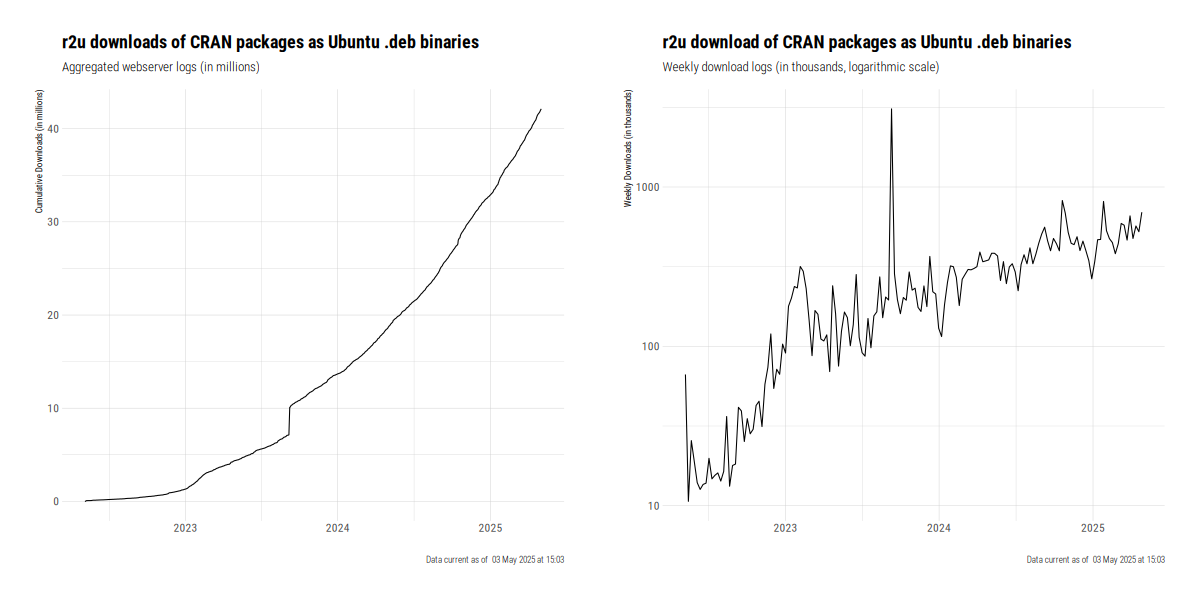 Usage is driven by deployment in continuous integration (as for
example the Ubuntu-use at GitHub makes this both an easy and obvious
choice), cloud computing (as it is easy to spin up Ubuntu instances, it
is as easy to add
 About 90% of my Debian contributions this month were


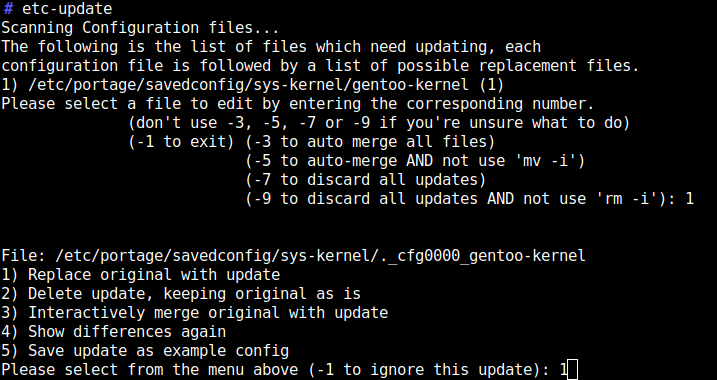 The kernel should auto-build once new versions become available via portage.
Again the

 Having setup an
 Another short status update of what happened on my side last month.
Notable might be the Cell Broadcast support for Qualcomm SoCs, the
rest is smaller fixes and QoL improvements.