Search Results: "ghe"

7 April 2012

Wouter Verhelst: New toy

A while back, I was thinking. Playing the flute or whistling on a bottle is the exact same technique; but, in my opinion, the sound that comes from a bottle has some interesting overtones, making for a nice sound. Since the material of which an instrument is made is in large part responsible for the overtones that it produces (apart from the technique used by the musician), I wondered if nobody had ever come up with the idea of making a flute in glass. Turns out that, of course, this has already happened. In fact, the modern concert flute wouldn't have been possible without one Claude Laurent, a Parisian instrument maker who received a patent for "a new [method of] making flutes from crystal"; part of his patent described a method of attaching the valves to the instrument. It was this method which was used by Theobald Boehm when he invented the fingering system that defines the modern concert flute. The price of an intact Laurent flute today is, of course, beyond my budget; and it doesn't look like there are any glass flutes being made that use the Boehm system. But that doesn't mean there aren't any glass flutes being made anymore; indeed, a short look around the Internet quickly turned up Hall Crystal Flutes, a family-owned business from Rochester in the US state of Washington. As the price was not too insane (49 USD for the instrument, plus almost the same amount for shipping it to Belgium), I ordered one of their piccolos in C. Last wednesday, a woman from the post office rang my doorbell, with a pakage containing the new instrument. Unfortunately, however, it had a customs tax of slightly more than what was in my wallet at the time, which meant I could only fetch it from the post office the next day. At least I could pay in plastic there. After having had it for a few days, I can make a few observations: I've been playing a few diddlies on it for the past few days, and it's been fun so far. We'll see where this leads us.

1 April 2012

Raphaël Hertzog: My Debian Activities in March 2012

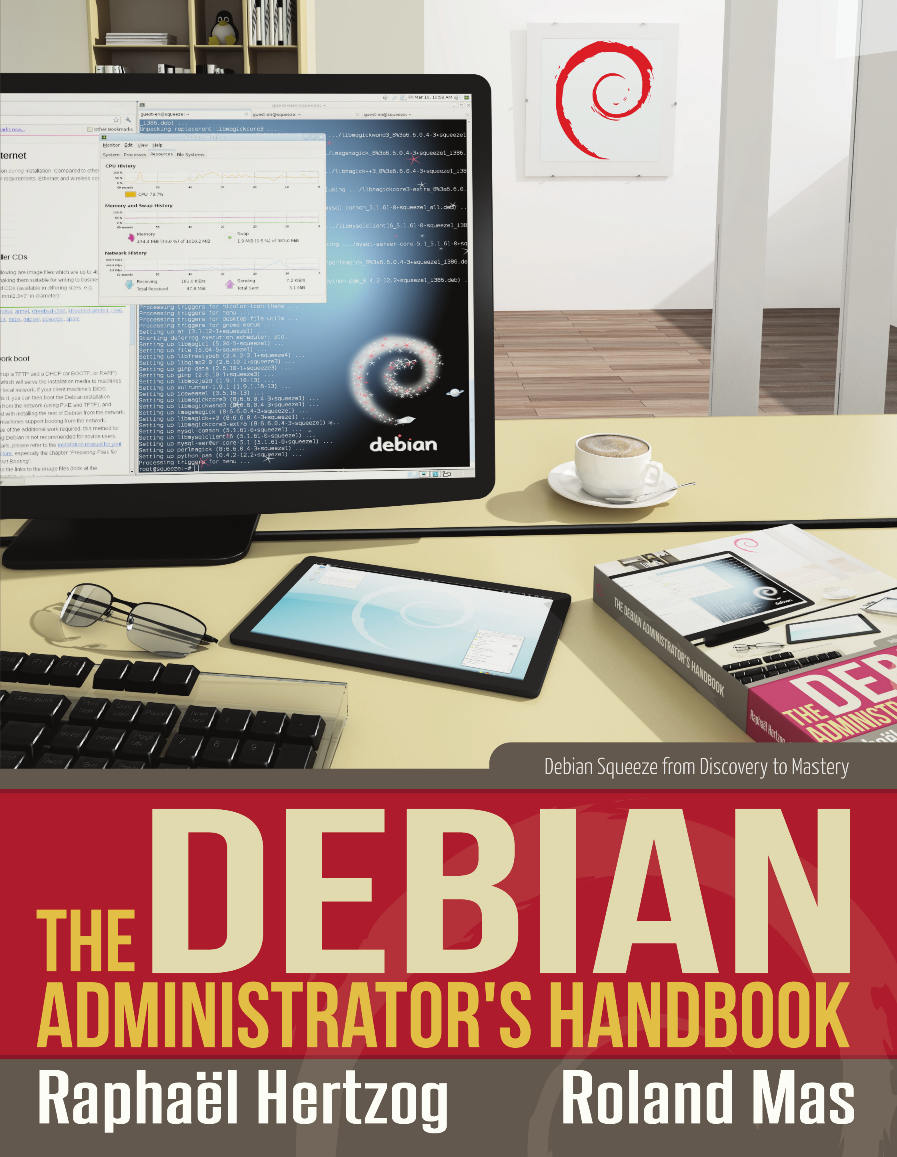
This is my monthly summary of my Debian related activities. If you re among the people who made a donation to support my work (227.83 , thanks everybody!), then you can learn how I spent your money. Otherwise it s just an interesting status update on my various projects. Dpkg Thanks to Guillem, dpkg with multiarch support is now available in Debian sid. The road has been bumpy, and it has again been delayed multiple times even after Guillem announced it on debian-devel-announce. Finally, the upload happened on March 19th. I did not appreciate his announce because it was not coordinated at all, and had I been involved from the start, we could have drafted it in a way that sounded less scary for people. In the end, I provided a script so that people can verify whether they were affected by one of the potential problems that Guillem pointed out. While real, most of them are rather unlikely for typical multiarch usage. Bernhard R. Link submitted a patch to add a new status command to dpkg-buildflags. This command would print all the information required to understand which flags are activated and why. It would typically be called during the build process by debian/rules to keep a trace of the build flags configuration. The goal is to help debugging and also to make it possible to extract that information automatically from build logs. I reviewed his patch and we made several iterations, it s mostly ready to be merged but there s one detail where Bernhard and I disagree and I solicited Guillem s opinion to try to take a decision. Unfortunately neither Guillem nor anyone else chimed in. On request of Alexander Wirt, I uploaded a new backport of dpkg where I dropped the DEB_HOST_MULTIARCH variable from dpkg-architecture to ensure multi-arch is never accidentally enabled in other backports. One last thing that I did not mention publicly at all yet, is that I contacted Lennart Poettering to suggest an improvement to the /etc/os-release file that he s trying to standardize across distributions. It occurred to me that this file could also replace our /etc/dpkg/origins/default file (and not only /etc/debian_version) provided that it could store ancestry information. After some discussions, he documented new official fields for that file (ID_LIKE, HOME_URL, SUPPORT_URL, BUG_REPORT_URL). Next step for me is to improve dpkg-vendor to support this file (as a fallback or as default, I don t know yet). Packaging I packaged quilt 0.60 (we re now down to 9 Debian-specific patches, from a whopping 26 in version 0.48!) and zim 0.55. In prevision of the next upstream version of Publican, I asked the Perl team to package a few Perl modules that Publican now requires. Less than two weeks after, all of them were in Debian Unstable. Congrats and many thanks to the Perl team (and Salvatore Bonaccorso in particular, which I happen to know because we were on the same plane during last Debconf!). On a side note, being the maintainer of nautilus-dropbox became progressively less fun over the last months, in particular because the upstream authors tried to override some of the (IMO correct) packaging decisions that I made and got in touch with Ubuntu community managers to try to have their way. Last but not least, I keep getting duplicates of a bug that is not in my package but in the official package and that Dropbox did not respond to my query. Book update The translation is finished and we re now reviewing the whole book. It takes a bit more time than expected because we re trying to harmonize the style and because it s difficult to coordinate the work of several volunteer reviewers. The book cover is now almost finalized (click on it to view it in higher definitions): We also made some progress on the interior design for the paperback. Unfortunately, I have nothing to show you yet. But it will be very nice and made with just a LaTeX stylesheet tailored for use with dblatex. The liberation fundraising slowed down with only 41 new supporters this month but it made a nice bump anyway thanks to a generous donation of 1000 EUR by Offensive security, the company behind Backtrack Linux. They will soon communicate on this, hopefully it will boost the operation. It would be really nice if we managed to raise the remaining 3000 EUR in the few weeks left until the official release of the book! The work on my book dominated the month and explains my relative inactivity on other fronts. I worked much more than usual, and my wife keeps telling me that I look tired and that I should go in bed earlier but I see the end of the tunnel: if everything goes well, the book should be released in a few weeks and I will be able to switch back to a saner lifestyle. Thanks See you next month for a new summary of my activities.

One comment Liked this article? Click here. My blog is Flattr-enabled.

Petter Reinholdtsen: Debian Edu interview: Wolfgang Schweer

Germany is a core area for the Debian Edu and Skolelinux user community, and this time I managed to get hold of Wolfgang Schweer, a valuable contributor to the project from Germany. Who are you, and how do you spend your days? I've studied Mathematics at the university 'Ruhr-Universit t' in Bochum, Germany. Since 1981 I'm working as a teacher at the school "Westfalen-Kolleg Dortmund", a second chance school. Here, young adults is given the opportunity to get further education in order to do the school examination 'Abitur', which will allow to study at a university. This second chance is of value for those who want a better job perspective or failed to get a higher school examination being teens. Besides teaching I was involved in developing online courses for a blended learning project called 'abitur-online.nrw' and in some other information technology related projects. For about ten years I've been teacher and coordinator for the 'abitur-online' project at my school. Being now in my early sixties, I've decided to leave school at the end of April this year. How did you get in contact with the Skolelinux/Debian Edu project? The first information about Skolelinux must have come to my attention years ago and somehow related to LTSP (Linux Terminal Server Project). At school, we had set up a network at the beginning of 1997 using Suse Linux on the desktop, replacing a Novell network. Since 2002, we used old machines from the city council of Dortmund as thin clients (LTSP, later Ubuntu/Lessdisks) cause new hardware was out of reach. At home I'm using Debian since years and - subscribed to the Debian news letter - heard from time to time about Skolelinux. About two years ago I proposed to replace the (somehow undocumented and only known to me) system at school by a well known Debian based system: Skolelinux. Students and teachers appreciated the new system because of a better look and feel and an enhanced access to local media on thin clients. The possibility to alter and/or reset passwords using a GUI was welcomed, too. Being able to do administrative tasks using a GUI and to easily set up workstations using PXE was of very high value for the admin teachers. What do you see as the advantages of Skolelinux/Debian Edu? It's open source, easy to set up, stable and flexible due to it's Debian base. It integrates LTSP out-of-the-box. And it is documented! So it was a perfect choice. Being open source, there are no license problems and so it's possible to point teachers and students to programs like OpenOffice.org, ViewYourMind (mind mapping) and The Gimp. It's of high value to be able to adapt parts of the system to special needs of a school and to choose where to get support for this. What do you see as the disadvantages of Skolelinux/Debian Edu? Nothing yet. Which free software do you use daily? At home (Debian Sid with Gnome Desktop): Iceweasel, LibreOffice, Mutt, Gedit, Document Viewer, Midnight Commander, flpsed (PDF Annotator). At school (Skolelinux Lenny): Iceweasel, Gedit, LibreOffice. Which strategy do you believe is the right one to use to get schools to use free software? Some time ago I thought it was enough to tell people about it. But that doesn't seem to work quite well. Now I concentrate on those more interested and hope to get multiplicators that way.

Gregor Herrmann: RC bugs 2012/13

due to some new incoming RC bugs, this week was more devoted to fixing bugs in "our" (= the Debian Perl Group's) packages. here's the list:

30 March 2012

Michal Čihař: phpMyAdmin in GSoC 2012

You have probably noticed that phpMyAdmin is again participating in Google Summer of Code 2012. This year we don't want to bring dozens of new features like we did in past year, but rather to improve quality and maintainability of existing code. This is all in sync with our plan for phpMyAdmin 4.0. So if you are student interested in improving phpMyAdmin and have knowledge of PHP (especially with some refactoring experiences), you would be welcome to join us. More information is available in our applicant guide. PS: Please note that for removal of frames we already have few applications right now, so you might want to focus some other parts to have higher chance to get accepted.

Filed under: English Phpmyadmin 2 comments Flattr this!

24 March 2012

John Goerzen: German: Suprisingly Hilarious for a 2-Year-Old

The other night, I was tucking the boys into bed. I occasionally use a few German words with them (I don t know all that many myself, but hey). They d been rather bored with it, so I had dropped it for a few months. I said to Oliver, Gute Nacht, Oliver. That means good night in German. Oliver laughed. I said it a few more times. He laughed some more. Jacob peeked down from his top bunk to see what the fun was, and pretty soon was getting into it also. Apparently I m quite the comedian, because when I said Auf Wiedersehen, Oliver burst out laughing uncontrollably. Finally he d say, Say it again! AGAIN!! And I would, and he d laugh and laugh some more. And then, I happened to say tsch ss. Jacob loved that one. He said it over and over, much to Oliver s delight. Finally I closed the door, and heard the laughter still going on behind me, as Jacob would yell out a mangled German word, and Oliver would fill the room with laughter. I was a little surprised, but figured it d end there. Not so much. The next night, I tucked them into bed like usual. I left their room, and about 10 seconds later, I heard frantic yelling from the boys room. I went back in, and poor Oliver was so upset he couldn t even say what he wanted. I finally figured out he was pleading, DAD! Say gute Nacht again! So we went through some German words again, and I left the boys much relieved. Phew. The next night, I almost repeated my horrid mistake of no German at bedtime, but Jacob stopped me before I left their room. Dad! You forgot to say tsch ss! So I did, with the boys prompting me on what words they wanted to hear. Then Jacob started asking me how to say these things in other languages. He was rather disappointed, and I think also didn t really believe me, when I only knew a few of those phrases in Spanish and French. Though he was surprised that I could come up with them in Greek. (Kali sp ra / good evening) was a hit. By this point, another day or two later, Jacob says tsch ss when I leave. Oliver wishes me gute Nacht at breakfast time. We ll have to work on that one. So, if you ever walk in the door at our house some morning, don t be surprised if our 2-year-old wishes you good night, our 5-year-old says goodbye, and they both start laughing.

21 March 2012

Steve Kemp: My code makes it into GNU Screen, and now you can use it. Possibly.

Via Axel Beckert I learned today that GNU Screen is 25 years old, and although development is slow it has not ceased. Back in 2008 I started to post about some annoyances with GNU Screen. At the time I posted a simple patch to implement the unbindall primitive. I posted some other patches and fixed a couple of bugs, but although there was some positive feedback initially over time that ceased completely. Regretably I didn't have the feeling there was the need to maintain a fork properly, so I quietly sighed, cried, and ceased. In 2009 my code was moved upstream into the GNU Screen repository (+documentation update). We're now in 2012. It looks like there might be a stable release of GNU Screen in the near future, which makes my code live "for real", but in the meantime the recent snapshot upload to Debian Experimental makes it available to the brave. 2008 - 2012. Four years to make my change visible to end-users. If I didn't use screen every day, and still have my own local version, I'd have forgotten about that entirely. Still I guess this makes today a happy day! Wheee! ObQuote: "Thanks. For a while there I thought you were keeping it a secret. " - Escape To Victory

19 March 2012

Petter Reinholdtsen: Debian Edu interview: John Ingleby

Debian Edu / Skolelinux users are spread all across the globe. The second inteview after the Squeeze release was publised is with John Ingleby, a teacher and long time Linux user in United Kingdom. Who are you, and how do you spend your days? I teach ICT part time at the Rudolf Steiner School in Kings Langley, near London, UK. Previously I worked as a technical author/trainer while my children attended the school, and I also contributed to the Schoolforge UK community with the aim of encouraging UK schools to adopt free/open source software. Five or six years ago we had about 50 schools interested in some way, but we weren't able to convert many of them into sustainable installations. How did you get in contact with the Skolelinux/Debian Edu project? Skolelinux had two representatives at an early Edubuntu meeting in London which I attended. However at that time our school network had just been installed using CentOS, LTSP 4 and GNOME. When LTSP 5 came along we switched to Edubuntu thin client servers so now we have a mixed environment which includes Windows PCs and student laptops, as well as their MacBooks and iPads. However, the proprietary systems have always been rather problematic, and we never built a GUI for the LDAP server, so when I discovered Skolelinux is configured for all these things we decided to try it. What do you see as the advantages of Skolelinux/Debian Edu? By far the biggest advantage is the Debian Edu community. Apart from that I have always believed in the same "sustainable computing" goals that Skolelinux is built on: installing Linux on computers which would otherwise be thrown away, to provide a reliable, secure and low-cost IT environment for schools. From my own experience I know that a part-time person can teach and manage a network of about 25 Linux computers, but it would take much more of my time if we had proprietary software everywhere. What do you see as the disadvantages of Skolelinux/Debian Edu? As a newcomer I'm just finding out who's who in the community and how you're organised, and what your procedures are for dealing with various things such as editing manual pages and so-on. The only English language mailing list seems to be for developers as well as users, so my inbox needs heavy pruning each day! Which free software do you use daily? Besides the software already mentioned at school we use Samba, OpenLDAP, CUPS, Nagios and Dansguardian for the network, and on the desktops we have LibreOffice, Firefox, GIMP and Inkscape. At home I use Ubuntu and an Android 4 eePad Transformer (but I'm not sure if that counts...) Which strategy do you believe is the right one to use to get schools to use free software? That's a tough question! For very many years UK schools installed and taught only proprietary software, so that at the highest levels the notion of "computer" means simply "proprietary office applications". However, schools today are experiencing budget constraints, and many are having to think hard about upgrading Windows XP. At the same time, we have students showing teachers how to use iPads, MacBooks and Android, so the choice of operating system is no longer quite so automatic. What is more, our government at last realised that we need people with programming skills, so they're putting coding back in the curriculum! And it's encouraging that the first 10,000 Raspberry Pi units sold out in 2 hours. I don't really know what strategy is going to get UK schools to use free software, but building an active community of Skolelinux/Debian Edu users in this country has to be part of it.

18 March 2012

Gregor Herrmann: RC bugs 2012/10-11

since I was travelling in the pre-ultimate week for a few days, there was no report about my RC bugs fixing activities. so here we go with an overview covering two weeks:

9 March 2012

Gunnar Wolf: Reflections on Mexico's bandwidth

Around two years ago, the OECD presented a study on residential bandwitdth available per country that triggered quite a bit of debate all over the world I have seen at least criticism to it in Mexico, in the USA and in Australia. It's very easy to take a simplified view of a statistic and bitch on how sorry the state of our country is. In our case, the outcry was that Mexico was the lowest of all of the OECD countries, and I have seen this repeated on so many topics that it what surprises me is that people keep getting surprised at it! OECD does not represent the 200 countries in this world (only the top 30, and the meaning of "top" is not unambiguous). I found this graph that helps me illustrate this point: Residential Internet speed comparison per country (2010) While that graphic is part of a report illustrating how sorry the USA should be for their low position, it shows the OECD member countries. And yes, the only country Mexico could be compared in general terms from those in the list is Turkey. Coherently, they are located at positions 28 and 30. But what prompted me into writing this post? That some weeks ago I was reading a viewpoint article at the Communications of the ACM magazine: What gets measured gets done: Stop focusing on irrelevant broadband metrics, by Scott Wallsten (might be behind a paywall for you If you are interested, I can share a copy with you, just ask me by email). Wallsten's article contains the following graph: Measured and advertised download speeds (in kbps) I found it pretty telling that, although Mexico sits at the extreme of the graph (and the height of our bar makes it very hard to get a real value out of this particular rendering), our ISPs join a very select group of countries (Sweden, Germany, Belgium, Luxembourg and Ireland, in my very subjective measure) by delivering what they promise. In 2010, the dominant broadband offering was 1Mbps, although higher options have long existed. I always got basically the 100% of what my ISP (Telmex) has promised, even though I have always had the cheapest package available. Some months ago, I got a call announcing we were being pushed 5x into the future, and starting right then, I had a 5Mbps connection. And although I didn't really expect it to be true, I have had a clean 6Mbps (yes, 6 instead of 5) connection. So, that's it. This post contains no hidden truths, but just what grabbed my attention from a series of data points :-)
AttachmentSize
Residential Internet speed comparison per country (2010)397.15 KB
Measured and advertised download speeds (in kbps)252.86 KB

5 March 2012

Benjamin Mako Hill: Unhappy Birthday Hall of Shame

/copyrighteous/images/no_happy_bday.png I roll my eyes a little when I think that Unhappy Birthday is the document I have written that has been read by the most people. The page -- basically a website encouraging people to rat on their friends for copyright violation for singing Happy Birthday in public -- has received millions of page views and has generated tons of its own media (including a rather memorable interview of CBC's WireTap). At the bottom of the page I am listed, by name and email, as the "copyrighteous spokesman" for the initiative. And since the page has been online, I have received hate mail about it. Constantly. Since the email only goes to me, I thought it might be fun to share some of these publicly. All these messages are quoted verbatim but I have not included the senders' names. Be warned: the language is often salty. This email is years old now but it is probably still my favorite:
Atrocity and strife run rampant in this world. Babies are abandoned in dumpsters. Teachers molest students. Impoverished Indonesians make sneakers for pennies while the spoiled jackhole in the 30-second commercial makes millions for sinking a three-pointer and smirking at the camera. Forms of religion are interpreted as to compel people to strap explosives to their chest and board buses full of innocents. Boss Tweeds embezzle and get severance pay while John Q. Workingman gets put out on the street when the corporation goes belly up. Out of all these indignities and countless others I haven't the time to mention, why do you make it your personal crusade to assist in the flagrant persecution of family restaurants for partaking in the time-honored tradition of singing "Happy Birthday"? God forbid these foul brigands bend copyright law in order to bring a smile to somebody's face. Food for thought...without the accompanying song.
Many others strike a defiant, if less poetic, tone:
Good luck! There are millions of us who refuse to accept the ridiculous "copyright" on Happy Birthday. If Time Warner were an ethical company rather than a greedy megacorp they would do something truly special and release it into the public domain. There are some things in this world more important than money.
Quite a few people notice that my last name is Hill and suspect that I must be related to the Hill sisters who originally penned the song. I'm not, to my knowledge, although since Time Warner bought the rights, it's not clear it would matter:
I am writing to just let you know how disappointed I am that a large corporation and others (like the HILL family) are making $2 million plus for a song that was created over 100 years ago with noone knowing who created the lyrics! None of us at our place of employment could believe this and we certainly won't encourage people to send money to ASCAP. It is a shame that ASCAP license fees aren't used to pay more to up-and-coming artists who I'm sure need this money alot more than Time Warner. We all plan to sing Happy Birthday MORE now in public places and if anyone asks if it is copyrighted we will say "of course not". Maybe this way the song will not die out completely as more and more other "birthday" songs are being sung. It would also be nice if your website cited whose opinion is writing the piece and your obvious conflict of interest.
Or another:
Is it a coincidence that your last name is the same as the last name of the authors of the song "Happy Birthday?" You seem to have a personal monetary motive for your work with the "grassroots project" you call Unhappy Birthday, and if you do not, your concern is misplaced all the same. Whom do you imagine your campaign serves? And do you realize whom it harms? I do not question the illegality of performing the copyrighted song publicly. And you are correct that most of the public is not even aware that the song is under copyright. I think the harm done to Time Warner and its associates by such public performances is far outweighed by the joy created when the much-loved happy tune is shared. I urge you to ask yourself why you think the immortal Hill sisters wrote the song in the first place. It was not to put more money Time Warner's pocket. It was, I would argue, for the sake of the song itself and the happiness it brings when performed (publicly or otherwise). Please consider siding with the children and the artists; let the lawsuits alone.
Some people suspect the site may be satire, but include insults and and attacks just in case it isn't:
I'm trying to figure out if your Unhappy Birthday site is meant to be in jest. If so Rofl, and congrats on a hilarious site. If you're actually serious, then fuck you Nazi cunts and your corporate butt buddies. Thank you for your time.
Or these two alternatives (each were separate emails):
If this is a joke then it's rather funny. However if this website is serious then you're a fucking idiot. Get a life!!!! if it is a form of protest, then THANK YOU! if it is not, then screw you all!
One memorable piece of mail was from someone who knew of me from my activities in the free software and free culture communities and had a hard time reconciling my work there with the high protectionist website:
I was quiet surprised to see your name and email address at the bottom of the home page of the site Unhappy Birthday. The site claims that you are their spokesman. Is this correct? I do not understand... You have all this Open Source/ Free Software background and then this site that defends one of the most controversial copyright issues??? Do you really mean this? Do you want to help Time Warner?
I've also received probably half a dozen mails that offer some sort of support! For example, this person liked the website -- and even wanted to buy one of our t-shirts -- but objected to our logo:
I was going to buy one of your products from your Unhappy Birthday Shop at CafePress but there's a problem. I hate emblems that uses human skulls in them. Being a member of ASCAP I really do support your cause but I can't buy a product that I would never wear.
And many people are simply confused asking something like this one:
So I saw the unhappy birthday site and I'm just a little confused. Is this a joke or a serious thing?
I usually reply and explain that I have tried to ensure that the site describes the legal situation around Happy Birthday honestly and correctly. That said, the vast majority of messages I receive are unequivocal. Like this email that I received last week addressed to "you anti-free speech fascists":
         __
        /  \


 __  __      __
/  \/  \    /  \
                \
                  
                 /
                 \
                  /
\                /
                 
                 
Half an hour later, the author followed up with a English version of the same message, set to the tune of happy birthday. You might think that getting insulted and flipped off by confused people on the Internet might get me down. It doesn't! I made Unhappy Birthday because I thought that the fact that something as important to our culture as Happy Birthday could be owned was outrageous. Every piece of hate mail means that somebody else -- almost always somebody who isn't a "copyfighter" or a free culture geek -- is now upset about the current state of copyright too. Sure, Unhappy Birthday makes me a tiny bit sad about people's ability to recognize satire. But it makes me really happy about people's ability to get very annoyed at what they think is the outrageous control of our culture through copyright. When more people are as mad as the the people I've quoted above, we will be able to change copyright into something less outrageous to all of us.

29 February 2012

Antonio Terceiro: Thesis submitted

Last Friday, after 5 long years, I have finally submitted my PhD thesis. It was quite a relief, more or less as if an elephant was taken off my back. An English title for my thesis would be Structural Complexity Characterization in Software Systems. Here is an abstract:
This thesis proposes a theory to characterize structural complexity in software systems. This theory aims to identify (i) the contribution of several factors to the structural complexity variation and (ii) the effects of structural complexity in software projects. Possible factors in the structural complexity variation include: human factors, such as general experience of the developers and their familiarity with the different parts of the system; factors related to the changes performed on the system, such as size variation and change diffusion; and organizational factors, such as the maturity of the software development process and the communication structure of the project. Effects of structural complexity include higher effort, and consequently higher cost, in software comprehension and maintenance activities. To test the validity of the proposed theory, four empirical studies were performed, mining data from free software project repositories. We analyzed historical data from changes performed in 13 systems from different application domains and written in different programming languages. The results of these studies indicated that all the factors studied influenced the structural complexity variation significantly in at least one of the projects, but different projects were influenced by different sets of factors. The models obtained were capable of describing up to 93% of the structural complexity variation in the projects analyzed. Keywords: Structural Complexity, Software Maintainance, Human factors in Software Engineering, Mining Software Repositories, Theories in Software Engineering, Empirical Software Engineering, Free/Open Source Software Projects.
Those who read Portuguese can check out the actual thesis text as a PDF file. Most of the studies discussed in the thesis are presented in English in papers I have published during the last years. My defense is going to be on March 23rd. If you happen to be at Salvador at that day, please feel cordially invited.

27 February 2012

Jon Dowland: American Psycho

American Psycho is a novel by Bret Easton Ellis. It's a first person stream-of-consciousness novel about a mid-to-late twenties Wall Street banker during the late-eighties-early-nineties. Patrick Bateman is a vain, self-obsessed pleasure-seeker, surrounded by a gaggle of similarly self-obsessed bankers and socialites. Bateman and his friends idle away their days thinking about what restaurants to secure dinner bookings; which nightclubs to be seen at; where to score cocaine and pick up women. They compete with one another on points of dress etiquette, and the relative degree of luxury demonstrated by their attire. They are all relatively interchangeable: the reader could be excused for mixing the identi-kit bankers up, and indeed they are frequently confused for each other, and other people, throughout the novel. Bateman describes in vivid detail nearly every item of clothing worn by both his male and female associates, describing both their cut and which fashion house they have come from, occasionally passing judgement. The murders are typically described with the same vivid detail as his more public activities. As well as a yuppie, Bateman is a psychotic, and probably a serial killer: there is a small amount of ambiguity, partially due to the frequent confusions of identity between the various male banker characters in the book. It's possible that Bateman has fantasised his killer side, or embellished it. He's clearly an unreliable narrator. It takes a relatively long time before this aspect of his personality emerges. It's also possible that he is a killer, but the people he kills are so interchangeable that nobody notices, or cares. There is a passage towards the end of the book that strays into Hollywood action-thriller levels of absurdity, possibly the only moment in the book where you have difficulty believing that the events could have occurred as described. Bateman tries repeatedly to talk to people about his crimes, but never succeeds in holding people's attention, or being taken seriously. This particular theme reaches a particularly amusing climax. Reportedly Ellis wrote the novel without the violent scenes and later added them in. I can believe that. The novel is carefully constructed to manipulate the reader in a way I've never been aware of before. The everyday and the horrific mesh to make the whole seem very consistent and lucid. There is a small surreal element woven into the story which is so subtle and downplayed that you can't withdraw into the safety of "this is a fantasy". Similar scenes recur over and over: heading to a restaurant. Heading to a club. Sex. Murder. Ellis uses repetition to lull you into a false sense of security before hitting you hard with an about-face, mid-sentence, like a movie jump-cut. This book has the dubious distinction of being the second novel ever to have made me feel physically queezy after reading a passage (and I was reading the other book in a car, which may have been a contributing factor). The book has been criticised for the level of violence meted out against women. Numerically, Bateman describes a roughly even number of male and female murders. However his female victims are dispatched with a shockingly higher level of planned sadism: most of his male victims are opportunistic rather than planned. Some critics theorise that the even male/female victim count is a deliberate pre-emption on the part of the author from criticism for the violence against women. I don't quite see the argument, here: Bateman is not a sympathetic character. He's a monster, and the fact he's a sexist monster is only one unpleasant facet of many. To me, the disdain and hatred shown towards homeless people was a far more prevalent problem, not least because it wasn't limited to murders, or even Bateman: many of the other characters are cruel towards them. What would this book be, without the murder? Quite similar to a number of Ellis' other stories, if their blurbs are anything to go by: explorations of the emptiness of the lives of privileged, upper class contemporary Americans. Is the psychopathy central to the story? I think so. The contrast between the corporate and the murderous is at the core. Would I recommend this novel? I'd hesitate to do so to anyone with a nervous disposition: otherwise, it has left a lasting impression and a desire to discuss it further, which you can take as praise. There's a good critical review at the M/C Journal.

18 February 2012

Biella Coleman: Montreal, first impressions

frozenlights When I told people of my plans to move to Montreal, it usually prompted one of two reactions: one was some version of joyful envy, many people exclaiming breathlessly Montreal is one of my favorite cities, one person once even clutching my arm and told me as he looked me straight in the eye: you are so lucky, there is no city quite like Montreal in North America. The second reaction came off as a thinly veiled mixture of disdain and disbelief usually peppered with many reallys: oh wow, really, really you would really leave NYC? I am pretty certain they really were thinking something along the lines of what a fool, how dare she leave a great job, a great university, a world class city (the only city to live) for some Canadian mid-sized city, which is like tundra for a good chunk of the year? The decision to move weighed heavily on me, if for no other reason I had a choice to stay or to go and I honestly have not had a choice, a decision to make about where to go since I got accepted to graduate school (and even then the choice was more obvious than this one). So over a month into my move what is my verdict? In a word, win. I don t miss NYC at all though I get why some people cannot leave the place and know that despite some oddities and difficulties of living in Montreal, it fits my tastes and needs much better than NYC which dwarfed me in so many ways. I never felt I could enjoy it, I grew tired of the cramped living quarters, the noise ate at my soul, and I simply felt more overwhelmed by the fact that I could not even get a handle on the neighborhoods in my vicinity, much less all the other hoods in the area. Instead of dogging NYC anymore, I think I will spend a little time on first impressions, as they will soon be lost to the familiarity borne with time and experience. In essence Montreal is chock full of life but rather intimate, a quirky city with lots of charm but some grit and lacking the way over designed and done feel of cities like Portland. Here are some of quirks: 1. The Hawt Metro: I fell in love with the Metro when I first rode it a few years ago. I just love the powder blue color of the cars and the super sweet 1960s aesthetic of many stations. Even better and unlike NYC, they are just clean and quiet. The downside? The temperatures approximates a sauna during the winter and while you would think this is a good thing, when you are layered with the clothing necessary to survive outside (re: long underwear along with Canada-coat, gloves, hat, and scarf), it is hooooooot down there and you feel like you need to pass out. 2. Spend money, get free stuff: In many establishments you get free stuff (like blueberries or some like sports bar) when you spend over a certain amount of money, like 70 bucks. Quirky local tradition. 3. The culture of negotiation and the kick ass standard lease: Housing is amazing here. There is plenty of it, there are many different styles, and it is rather fun exploring all the different hoods that make up the city. Problem is too that lots of apartments have weird problems and issues and I had to steer clear of anything that could even possibly have mold. I spent weeks day in day out looking for a place, desperate to move out of my corporate apartment very nicely provided by the university but still not my ideal living situation. Finally found a place that fit all my needs in the perfect location and I took it to only find out that places are priced to negotiate and I was faced with the decision to negotiate or not. Sort of did, was not thrilled about it (thinking that I might lose the place) but it sort of worked and I scored the place. If price is up to haggling, the lease on the other hand, is standard (you can buy one at your local bodega ). It is the law to use it and it is like a no nonsense, straightforward lease, which is very protective of renters. 4. Montreal is known for its exceptional food but you know Poutine is just plain gross: Food here is good and I can tell that I will get a handle of restaurants in a way that felt impossible in NYC. The gluten free religion seems to be spreading, thankfully. There are many little Fruiterias! to get your fruits veggies which I am still exploring and right around my house is a crazy supermarket that is so cheap, which is weird because consumer goods generally ain t cheap in Montreal like they are in the states but this place is a gem and everyone agrees (and almost impossible to notice from the street!). Now Poutine is disgusting. Ok it did not help that the first night I went out to eat it, I was still under the clutches of Noro virus, and I think it re-activated the nausea that had been zapped by some strong medicine and the hospital, the day before, which brings me to the next point, the health care system. 5. Healthcare, I had to use it way too early: So last week I came down with the Noro virus and you usually wait it out as it runs through you quickly but I was dehydrated before I even started to vomit to for 8 hours straight, at which point severely tired and so nauseous (I was yelling to make it stop), I went to the hospital. Now I had talked to lot of people about the healthcare system in Montreal as it seems good, really great but a bit over taxed, especially compared to where I had lived in Edmonton where it was like a magic fairy tale dream. I had heard of two things: the care is excellent but the facilities are shocking and the wait times unless dire can be atrociously long. So facilities, yea they are kinda shocking, somewhat shabby but who cares, so long as the care is good, no? Packaging is irrelevant so long as the goods are derived. Before going I was scared of the long wait times (and also the taxi took me by mistake to Montreal General Hospital was looked too much like a HUGE version of the creepy buildings in The Shining for me, and I was supposed to go to Jewish General so left for there). The wait time: nearly none, somewhat as shocking as the facilities first looked to me. I think it was a combination of the time I arrived, with the fact that my lounge was parched and yellowish-gross (sorry, it was gross), indicating I was dehydrated, oh and I was crying bit hysterically, for despite my high threshold for pain, nausea terrorizes me. I was covered by insurance and since I did not yet have my McGill health cards (it takes three months to qualify for the local stuff), I did pay and the price was laughably cheap compared to what I would pay in NYC for the same treatment. 6. Now for my favorite, snow so nice, ice oh Christ: Well this winter has been, by all accounts, weak and warm, the spirit of winter barely making its way from the underworld to the outerworld. But even though it is has been more idle than full throttle, I still got a pretty accurate taste of what winter is like, with a few days of 20- c temps, and having to walk a number of times on a layer of frozen ice that makes it feel like a very dangerous mini-ice age in the making. IMAG0028-1 I do rather love the quiet snow falling and just love love sprinting through the snow with my dog, Roscoe, who has taken a liking for prancing in the white stuff and looks awful cute with his winter man s ice beard. After a sizable snowfall, it is clear they city does not toy with the snow removal although the sidewalk snow plows do look somewhat like very large and dangerous but kinda cute toys. But let s be frank, winters are hard, so hard that I think I would go mad if I had to stay through the entire thing, being born and raised in the tropics So the fact that I am writing this from the southern hemisphere in the height of summer gives me the assurance I can handle the rest of the snow, ice, ice and snow upon my return.

Benjamin Mako Hill: Advice for Prospective Doctoral Students

There is tons of advice on the Internet (e.g., on the academic blogs I read) for prospective doctoral students. I am very happy with my own graduate school choices but I feel that I basically got lucky. Few people are saying the two things I really wish someone had told me before I made the decision to get a PhD: Most People Getting Doctorates Probably Shouldn't In most fields, the only thing you need a PhD for is to become a professor -- and even this requirement can be flexible. You can have almost any job in any company or non-profit without a PhD. You can teach without a PhD. You can write books without a PhD. You can do research and work in thinktanks without a PhD. You don't even always need a PhD to grant PhDs to other people: two of my advisors at the Media Lab supervised PhD work but did not have doctorates themselves! Becoming a tenured professor is more difficult without a doctorate, but it is not impossible. There are grants and jobs outside of universities that require doctorates, but not nearly as many as most people applying for PhDs programs think. Getting a doctorate can even hurt: If you want to work in a company or non-profit, you are usually better off with 4-6 years of experience doing the kind of work you want to do than with the doctorate and the less relevant experience of getting one. Starting salaries for people with doctorates are often higher than for people with masters degrees. But salaries for people with masters degrees and 5 years of experience are even higher -- and that's before you take into account the opportunity costs of working for relatively low graduate student wages for half a decade. PhD take an enormous amount of time and, in most programs, you spend a huge amount of this time doing academic busy work, teaching, applying for grants or fellowships, and writing academic papers that very few people read. These are skills you'll need to be a successful professor. They are useful skills for other jobs too, but not as useful as the experience of actually doing those other jobs for the time it takes to get the degree. Evaluating Graduate Programs If you are still convinced you need a doctorate, or any graduate degree for that matter, you will need to pick a program. Plenty of people will offer advice on how to pick the right program and trying to balance all the complicated and contradictory advice can be difficult. Although I love my program and advisors, I've known many less happy students. Toward that end, there are two pieces of meta-advice that I wish everybody was told before they applied:
  1. Find recent graduates of the program you are considering, and the faculty advisor(s) you are planning on working with, and look at where they are now. Are these ex-students doing the kind of work that you want to do? Are they at great programs at great universities? Chances are good that a PhD program and its faculty will prepare future students to be like, and do work like, the students they have trained in the past. Programs that consistently make good placements are preparing their students well, supporting them, making sure they have the resources necessary to do good work, and helping their students when they are on the job market. A program whose students do poorly, or just end doing work that isn't like the kind you want to do, will probably fail you too.

  2. If recent graduates seem to be generally successful and doing the kind of work you want to do, find one who looks most like the kind of academic you want to become and talk to them about their experience. Chances are, your faculty advisors will overlap with theirs and your experience will be similar. Ex-students can tell you the strengths of weaknesses of the program you are considering and what to watch out for. If they had a horrible experience, there's a decent chance you will too, and they will tell you so.

Doing these two things means you don't have to worry about trying to think of all the axes on which you want to evaluate a program or pour through admissions material which is only tangentially connected to the reality you'll live for a long time. What matters most is the outcomes, of course, because you're be living the rest of your life for a lot longer than you'll be in the PhD program.

12 February 2012

Matthew Garrett: Some things you may have heard about Secure Boot which aren't entirely true

Talking about Secure Boot again, I'm afraid. One of the things that's made discussion of this difficult is that, while the specification isn't overly complicated, some of the outcomes aren't obvious at all until you spend a long time thinking about it. So here's some clarification on a few points.
Secure Boot provides no additional securityUntrue. Attacks against the pre-boot environment are real and increasingly common - this is a recent proof of concept, and this has been seen in the wild. Once something has got into the MBR, all bets are off. It can modify your bootloader or kernel, inserting its own code to return valid results whenever any kind of malware checker scans for it. The only way to reliably identify it is to either move the disk to another system or to cold boot off verified media. By restricting pre-OS code to something that's been signed, Secure Boot does provide enhanced security.
Secure Boot is just another name for Trusted BootUntrue. Trusted Boot requires the ability to measure the entire boot process, which gives the OS the ability to figure out everything that's been run before OS startup. The root of trust is in the hardware and a TPM is required. Secure Boot is simply a way to limit the applications that are run before the OS. Once booted, there is no way for the OS to identify what was previously booted, or even if the system was booted securely.
Microsoft are just requiring that vendors implement the specificationUntrue. Quoting from the Windows 8 Hardware Certification Requirements:

MANDATORY: No in-line mechanism is provided whereby a user can bypass Secure Boot failures and boot anyway Signature verification override during boot when Secure Boot is enabled is not allowed. A physically present user override is not permitted for UEFI images that fail signature verification during boot. If a user wants to boot an image that does not pass signature verification, they must explicitly disable Secure Boot on the target system.

Section 27.7.3.3 of version 2.3.1A of the UEFI spec explicitly permits implementations to provide a physically present user override. Whether this is a good thing or not is obviously open to argument, but the fact remains that Microsoft forbid behaviour that the specification permits.
Secure Boot can be used to implement DRMUntrue. The argument here is that Secure Boot can be used to restrict the software that a machine can run, and so can limit a system to running code that implements effective copy protection mechanisms. This isn't the case. For that to be true, there would need to be a mechanism for the OS to identify which code had been run in the pre-OS environment. There isn't. The only communication channel between the firmware and the OS is via a single UEFI variable called "SecureBoot", which may be either "1" or "0". Additionally, the firmware may provide a table to the OS containing a list of UEFI executables that failed to authenticate. It is not required to provide any information about the executables that authenticated correctly.

In both these cases, the OS is required to trust the firmware. If the firmware has been compromised in any way (such as the user turning off Secure Boot), the data provided by the firmware can be trivially modified and the OS told that everything is fine. As long as machines exist where users are permitted to disable Secure Boot, Secure Boot is not any kind of DRM scheme.
Secure Boot provides physical securityUntrue. Secure Boot does not in any way claim to improve security against attackers who have physical access, for the same reasons as the DRM case. The OS has no way to determine that the firmware's behaviour has been modified. A physically-present attacker can simply disable Secure Boot and install a piece of malware that lies to the OS about platform security. The "Evil Maid" attack still exists.
Secure Boot only defines the interaction between the firmware and the bootloader. It doesn't specify any higher policyMisleading. It's true that Secure Boot only specifies the authentication of pre-OS code. However, if you implement Secure Boot it's because you want to ensure that only authenticated code has run before your OS. If there is any way for unauthenticated code to touch the hardware before your OS starts, you can't ensure that. If an authenticated Linux kernel is booted and then loads an unsigned driver, that unsigned driver can fabricate a fake UEFI environment and then launch Windows from it. Windows would falsely believe that it has booted securely. If that authenticated Linux kernel were widely distributed, attackers could use it as an attack vector for Windows. The logical response from Microsoft would be to blacklist that kernel.

The inevitable outcome of implementing Secure Boot is that every component that can touch hardware must be signed. Anyone who implements Secure Boot without requiring that is adding no additional security whatsoever.
Only machines that want to boot Windows need to carry Microsoft's keysAgain, misleading. Microsoft only require one signing key to be installed, and the Windows bootloader will be signed with a key that chains back to this one. However, the bootloader is not the only component that must be signed. Any drivers that are carried on ROMs on plug-in cards must also be signed. One approach here would have been for all hardware vendors to have their own keys. This would have been unscalable - any shipped machine would have to carry keys for every vendor who produces PCI cards. If a machine carried an nvidia key but not an AMD one, swapping a geforce for a radeon would have resulted in the firmware graphics driver failing to load. Instead, Microsoft are providing a signing service. Vendors will be able to sign up for WHQL membership and have their UEFI drivers signed by Microsoft.

This leads to the problem. The Authenticode format used for signing UEFI objects only allows for a single signature. If a driver is signed by Microsoft, it can't be signed by anybody else. Therefore, if a system vendor wants to support off-the-shelf PCI devices with Microsoft-signed drivers, the system must carry Microsoft's key. If the same key is used as the root of trust for the driver signing and for the bootloader signing, that also means that the system will boot Windows.
This is only a problem for clients, not serversNot strictly true. While Microsoft's current requirements don't mandate the presence of Secure Boot on server hardware, if present it must be enabled and locked down as it is for clients. It's not valid for servers to ship with disabled Secure Boot support, or for it to be shipped in a mode allowing users to make automated policy modifications at OS install time.
Secure Boot is required by NISTThis is one that I've heard from multiple people working on Secure Boot. It's amazingly untrue. The document they're referring to is NIST SP800-147, which is a document that describes guidelines for firmware security - that is, what has to be done to ensure that the firmware itself is secure. This includes making sure that the OS can't overwrite the firmware and that firmware updates must be signed. It says absolutely nothing about the firmware only running signed software. Secure Boot depends upon the firmware being trusted, so these guidelines are effectively a required part of Secure Boot. But Secure Boot is not within the scope of SP800-147 at all.
It's easy for Linux to implement Secure BootMisleading. From a technical perspective, sure. From a practical perspective, not at all. I wrote about the details here.
It's only a problem for hobbyist Linux, not the real Linux marketUntrue. It's unclear whether even the significant Linux vendors can implement Secure Boot in a way that meets the needs of their customers and still allows them to boot on commodity hardware. A naive implementation removes many of the benefits of Linux for enterprise customers, such as the ability to use local modifications to micro-optimise systems for specific workloads. One of the key selling points of Linux is the ability to make use of local expertise when adapting the product for your needs. Secure Boot makes that more difficult.

ConclusionMuch reporting on the issues surrounding Secure Boot so far has been inaccurate, leading to misunderstandings about the (genuine) benefits and the (genuine) drawbacks. Any useful discussion must be based around an accurate understanding of the specification rather than statements from analysts with no real understanding of the Linux market or security.

comment count unavailable comments

Iustin Pop: perf stats for doing nothing

Perf stats for "doing nothing" I've recently discovered the perf Linux tool. I heard that oprofile was deprecated and that there is a new tool, and I noted down to try it sometime. Updated: more languages, fixed typos, more details, some graphs. Apologies if this shows twice in your feed. The problem with perf stats is that I hate bloat, or even perceived bloat. Even when it doesn't affect me in any way, the concept of wasted cycles makes me really sad. You probably can guess where this is going I said, well, let's see what perf says about a simple "null" program. Surely doing nothing should be just a small number of instructions, right? Note: I think that perf also records kernel-side code, because the lowest I could get was about ~50K instructions for starting a null program in assembler that doesn't use libc and just executes the syscall asm instruction. However, these ~50K instructions are noise the moment you start to use more high-level languages. Yes, this is expected, but the I was still shocked. And there's lots of delta between languages I'd expected to behave somewhat identical. Again, this is not important in the real world. At all. They are just numbers, and probably the noise (due to short runtime) has lots of influence on the resulting numbers. And I might have screwed up the measurements somehow. Test setup Each program was the equivalent of 'exit 0' in the appropriate form for the language. During the measurements, the machine was as much as possible idle (single-user mode, measurements run at real-time priority, etc.). For compiled languages, -O2 was used. For scripts, a simple #!/path/to/interpreter (without options, except in the case of Python, see below) was used. Each program/script was run 500 times (perf's -r 500) and I've checked that the variations were small ( 0.80% on the metrics I used). You can find all the programs I've used at http://git.k1024.org/perf-null.git/, the current tests are for the tag version perf-null-0.1. The raw data for the below tables/graphs is at log-4. Results Compiled languages
Language Cycles Instructions
asm 63K 51K
c-dietlibc 74K 57K
c-libc-static 177K 107K
c-libc-shared 506K 300K
c++-static 178K 107K
c++-dynamic 1,750K 1,675K
haskell-single 2,229K 1,338K
haskell-threaded 2,629K 1,522K
ocaml-bytecode 3,271K 2,741K
ocaml-native 1,042K 666K
Going from dietlibc to glibc doubles the number of instructions, and for libc going from static to dynamic linking again roughly doubles it. I didn't manage to compile a program dynamically-linked against dietlibc. C++ is interesting. Linked statically, it is in the same ballpark as C, but when linked dynamically, it executes an order of magnitude (!) more instructions. I would guess that the initialisation of the standard C++ library is complex? Haskell, which has a GC and quite a complex runtime, executes slightly less instructions than C++, but uses more cycles. Not bad, given the capabilities of the runtime. The two versions of the Haskell program are with the single-threaded runtime and with the multi-threaded one; not much difference. A fully statically-linked Haskell binary (not recommended usually) goes below 1M instructions, but not by much. OCaml is a very nice surprise. The bytecode runtime is a bit slow to startup, but the (native) compiled version is quite fast to start: only 2 number of instructions and cycles compared to C, for an advanced language. And twice as fast as Haskell . Nice! Shells
Language Cycles Instructions
dash 766K 469K
bash 1,680K 1,044K
mksh 1,258K 942K
mksh-static 504K 322K
So, dash takes ~470K instructions to start, which is way below the C++ count and a bit higher than the C one. Hence, I'd guess that dash is implemented in C . Next, bash is indeed slower on startup than dash, and by slightly more than 2 (both instructions and cycles). So yes, switching /bin/sh from bash to dash makes sense. I wasn't aware of mksh, so thanks for the comments. It is, in the static variant, more efficient that dash, by about 1.5 . However, the dynamically linked version doesn't look too great (dash is also dynamically linked; I would guess a statically-linked dash "beats" mksh-static). Text processing I've added perl here (even though it's a 'full' language) just for comparison; it's also in the next section.
Language Cycles Instructions
mawk 849K 514K
gawk 1,363K 980K
perl 2,946K 2,213K
A normal spread. I knew the reason why mawk is Priority: required is that it's faster than gawk, but I wouldn't have guessed it's almost twice as fast. Interpreted languages Here is where the fun starts
Language Cycles Instructions
lua 5.1 1,947K 1,485K
lua 5.2 1,724K 1,335K
lua jit 1,209K 803K
perl 2,946K 2,213K
tcl 8.4 5,011K 4,552K
tcl 8.5 6,888K 6,022K
tcl 8.6 8,196K 7,236K
ruby 1.8 7,013K 6,128K
ruby 1.9.3 35,870K 35,022K
python 2.6 -S 11,752K 10,247K
python 2.7 -S 11,438K 10,198K
python 3.2 -S 29,003K 27,409K
pypy -S 21,106K 10,036K
python 2.6 25,143K 21,989K
python 2.7 47,325K 50,217K
python 2.7 -O 47,341K 50,185K
python 3.2 113,567K 124,133K
python 3.2 -O 113,424K 124,133K
pypy 90,779K 68,455K
The numbers here are not quite what I expected. There's a huge delta between the fastest (hi Lua!) and the slowest (bye Python!). I wasn't familiar with Lua, so I tested it thanks to the comments. It is, I think, the only language which actually improves from one version to the next (bonus points), and where the JIT version also make is faster. In context, lua jit starts faster than C++. Perl is the one that goes above C++'s instructions count, but not by much. From the point of view of the system, a Perl 'hello world' is only about 1.3 -1.6x slower than a C++ one. Not bad, not bad. Next category is composed of TCL and Ruby, both of which had older versions 2-3 slower than Perl, but whose most recent versions are even more slower. TCL has an almost constant slowdown across versions (5M, 6.9M, 8.2M cycles), but Ruby seems to have taken a significant step backwards: 1.9.3 is 5 slower than 1.8. I wonder why? As for TCL, I didn't expect it to be slower to startup than Perl; good to know. Last category is Python. Oh my. If you run perf stat python -c 'pass' you get some unbelievable numbers, like 50M instructions to do, well, nothing. Yes, it has a GC, yes, it does import modules at runtime, but still On closer investigation, the site module and the imports it does do eat a lot of time. Running a simpler python -S brings it back to a more reasonable 10M instructions, which is in-line with the other interpreted languages. However, even with the -S taken into account, Python also slows down across versions: a tiny improvement from 2.6 to 2.7, but (like Ruby) a 3 slowdown from 2.7 to 3.2. Trying the optimised version (-O) doesn't help at all. Trying pypy, which was based on Python 2.7, makes it around 2 slower to startup (both with and without -S). So in the interpreted languages, it seems only Lua is trying to improve, the rest of the languages are piling up bloat with every version. Note: I should have tried multiple perl versions too. Java Java is in its own category; you guess why , right? GCJ was version 4.6, whereas by java below I mean OpenJDK Runtime Environment (IcedTea6 1.11) (6b24-1.11-4).
Language Cycles Instructions
null-gcj 97,156K 74,576K
java -jamvm 85,535K 80,102K
java -server 147,174K 136,803K
java -zero 132,967K 124,977K
java -cacao 229,799K 205,312K
Using gcj to compile to native code (not sure whether that's native-native or something else) results in a binary that uses less than 100M cycles to start, but the jamvm VM is faster than that (85M cycles). Not bad for java! Python 3.2 is slower to startup yes, I think the world has gone crazy. However, the other VMs are a few times slower: server (the default one) is ~150M cycles, and cacao is ~230M cycles. Wow. The other thing about java is that it was the only one that couldn't be put nicely in a file that you just exec (there is binfmt_misc indeed, but that doesn't allow different Java classes to use different Java VMs, so I don't count this), as opposed to every single other thing I tested here. Someone didn't grow on Unix? Comparative analysis Since there are almost 4 orders of magnitude difference between all the things tested here, a graph of cycles or instructions is not really useful. However, cycles/instruction, branches percentage and branches miss-predicted percentage can be. Hence first the cycles/instructions: Cycles/instruction Pypy is jumping out of the graph here, with the top value of over 2 cycles/instruction. Lua JIT is also bigger than Lua non-JIT, so maybe there's something to this (mostly joking, two data points don't make a series). On the other hand, Python wins as best cycles/instruction (0.91). Lots of ILP, to get below 1? Java gets, irrespective of VM, consistently near 1.0-1.1. C++ gets very different numbers between static linking (1.666) and dynamic linking (1.045), whereas C has basically identical numbers. mksh also has a difference between dynamic and static linking. Hmm Ruby, TCL and Python have consistent values across versions. And that's about what I can see from that graph. Next up, percentage of branches out of total instructions and percentage of branches missed: Branch statistics Note that the two lines shouldn't really be on the same graph; for the branch %, the 100% is the total instructions count, but for the branch miss %, the 100% is the total branch count. Anyway. There are two low-value outliers: So it seems the gcj libraries are well optimised? I'm not familiar enough with this topic, but on the graph it does indeed stand out. On the other end, mksh-static has a high branch miss percentage: 11.60%, which jumps clearly ahead of all the others; this might be why it has a high cycles/instruction count, due to all the stalls in misprediction; one has to wonder why it confuses the branch predictor? I find it interesting that the overall branch count is very similar across languages, both when most of the cost is in the kernel (e.g. asm) and when the user-space cost heavily over-weighs the kernel (e.g. Java). The average is 20.85%, minimum is 17.46%, max 22.93%, standard deviation (if I used gnumeric correctly) is just 0.01. This seems a bit suspicious to me . On the other hand, the mispredicted branches percentage varies much more: from a measly 2.82% to 11.60% (5x difference). Summary So to recap, counting just instructions: Overall, you get roughly three orders of magnitude slower startup between a plain C program using dietlibc and Python. And all, to do basically nothing. On the other hand, I learned some interesting things while doing it, so it wasn't quite for nothing .

5 February 2012

Russell Coker: Reliability of RAID

ZDNet has an insightful article by Robin Harris predicting the demise of RAID-6 due to the probability of read errors [1]. Basically as drives get larger the probability of hitting a read error during reconstruction increases and therefore you need to have more redundancy to deal with this. He suggests that as of 2009 drives were too big for a reasonable person to rely on correct reads from all remaining drives after one drive failed (in the case of RAID-5) and that in 2019 there will be a similar issue with RAID-6. Of course most systems in the field aren t using even RAID-6. All the most economical hosting options involve just RAID-1 and RAID-5 is still fairly popular with small servers. With RAID-1 and RAID-5 you have a serious problem when (not if) a disk returns random or outdated data and says that it is correct, you have no way of knowing which of the disks in the set has good data and which has bad data. For RAID-5 it will be theoretically possible to reconstruct the data in some situations by determining which disk should have it s data discarded to give a result that passes higher level checks (EG fsck or application data consistency), but this is probably only viable in extreme cases (EG one disk returns only corrupt data for all reads). For the common case of a RAID-1 array if one disk returns a few bad sectors then probably most people will just hope that it doesn t hit something important. The case of Linux software RAID-1 is of interest to me because that is used by many of my servers. Robin has also written about some NetApp research into the incidence of read errors which indicates that 8.5% of consumer disks had such errors during the 32 month study period [2]. This is a concern as I run enough RAID-1 systems with consumer disks that it is very improbable that I m not getting such errors. So the question is, how can I discover such errors and fix them? In Debian the mdadm package does a monthly scan of all software RAID devices to try and find such inconsistencies, but it doesn t send an email to alert the sysadmin! I have filed Debian bug #658701 with a patch to make mdadm send email about this. But this really isn t going to help a lot as the email will be sent AFTER the kernel has synchronised the data with a 50% chance of overwriting the last copy of good data with the bad data! Also the kernel code doesn t seem to tell userspace which disk had the wrong data in a 3-disk mirror (and presumably a RAID-6 works in the same way) so even if the data can be corrected I won t know which disk is failing. Another problem with RAID checking is the fact that it will inherently take a long time and in practice can take a lot longer than necessary. For example I run some systems with LVM on RAID-1 on which only a fraction of the VG capacity is used, in one case the kernel will check 2.7TB of RAID even when there s only 470G in use! The BTRFS Filesystem The btrfs Wiki is currently at btrfs.ipv5.de as the kernel.org wikis are apparently still read-only since the compromise [3]. BTRFS is noteworthy for doing checksums on data and metadata and for having internal support for RAID. So if two disks in a BTRFS RAID-1 disagree then the one with valid checksums will be taken as correct! I ve just done a quick test of this. I created a filesystem with the command mkfs.btrfs -m raid1 -d raid1 /dev/vg0/raid? and copied /dev/urandom to it until it was full. I then used dd to copy /dev/urandom to some parts of /dev/vg0/raidb while reading files from the mounted filesystem that worked correctly although I was disappointed that it didn t report any errors, I had hoped that it would read half the data from each device and fix some errors on the fly. Then I ran the command btrfs scrub start . and it gave lots of verbose errors in the kernel message log telling me which device had errors and where the errors are. I was a little disappointed that the command btrfs scrub status . just gave me a count of the corrected errors and didn t mention which device had the errors. It seems to me that BTRFS is going to be a much better option than Linux software RAID once it is stable enough to use in production. I am considering upgrading one of my less important servers to Debian/Unstable to test out BTRFS in this configuration. BTRFS is rumored to have performance problems, I will test this but don t have time to do so right now. Anyway I m not always particularly concerned about performance, I have some systems where reliability is important enough to justify a performance loss. BTRFS and Xen The system with the 2.7TB RAID-1 is a Xen server and LVM volumes on that RAID are used for the block devices of the Xen DomUs. It seems obvious that I could create a single BTRFS filesystem for such a machine that uses both disks in a RAID-1 configuration and then use files on the BTRFS filesystem for Xen block devices. But that would give a lot of overhead of having a filesystem within a filesystem. So I am considering using two LVM volume groups, one for each disk. Then for each DomU which does anything disk intensive I can export two LVs, one from each physical disk and then run BTRFS inside the DomU. The down-side of this is that each DomU will need to scrub the devices and monitor the kernel log for checksum errors. Among other things I will have to back-port the BTRFS tools to CentOS 4. This will be more difficult to manage than just having an LVM VG running on a RAID-1 array and giving each DomU a couple of LVs for storage. BTRFS and DRBD The combination of BTRFS RAID-1 and DRBD is going to be a difficult one. The obvious way of doing it would be to run DRBD over loopback devices that use large files on a BTRFS filesystem. That gives the overhead of a filesystem in a filesystem as well as the DRBD overhead. It would be nice if BTRFS supported more than two copies of mirrored data. Then instead of DRBD over RAID-1 I could have two servers that each have two devices exported via NBD and BTRFS could store the data on all four devices. With that configuration I could lose an entire server and get a read error without losing any data! Comparing Risks I don t want to use BTRFS in production now because of the risk of bugs. While it s unlikely to have really serious bugs it s theoretically possible that as bug could deny access to data until kernel code is fixed and it s also possible (although less likely) that a bug could result in data being overwritten such that it can never be recovered. But for the current configuration (Ext4 on Linux software RAID-1) it s almost certain that I will lose small amounts of data and it s most probable that I have silently lost data on many occasions without realising. Related posts:
  1. Some RAID Issues I just read an interesting paper titled An Analysis of...
  2. ECC RAM is more useful than RAID A common myth in the computer industry seems to be...
  3. Software vs Hardware RAID Should you use software or hardware RAID? Many people claim...

30 January 2012

Colin Watson: APT resolver bugs

I've managed to go for eleven years working on Debian and nearly eight on Ubuntu without ever needing to teach myself how APT's resolver works. I get the impression that there's a certain mystique about it in general (alternatively, I'm just the last person to figure this out). Recently, though, I had a couple of Ubuntu upgrade bugs to fix that turned out to be bugs in the resolver, and I thought it might be interesting to walk through the process of fixing them based on the Debug::pkgProblemResolver=true log files. Breakage with Breaks The first was Ubuntu bug #922485 (apt.log). To understand the log, you first need to know that APT makes up to ten passes of the resolver to attempt to fix broken dependencies by upgrading, removing, or holding back packages; if there are still broken packages after this point, it's generally because it's got itself stuck in some kind of loop, and it bails out rather than carrying on forever. The current pass number is shown in each "Investigating" log entry, so they start with "Investigating (0)" and carry on up to at most "Investigating (9)". Any packages that you see still being investigated on the tenth pass are probably something to do with whatever's going wrong. In this case, most packages have been resolved by the end of the fourth pass, but xserver-xorg-core is causing some trouble. (Not a particular surprise, as it's an important package with lots of relationships.) We can see that each breakage is:
Broken xserver-xorg-core:i386 Breaks on xserver-xorg-video-6 [ i386 ] < none > ( none )
This is a Breaks (a relatively new package relationship type introduced a few years ago as a sort of weaker form of Conflicts) on a virtual package, which means that in order to unpack xserver-xorg-core each package that provides xserver-xorg-video-6 must be deconfigured. Much like Conflicts, APT responds to this by upgrading providing packages to versions that don't provide the offending virtual package if it can, and otherwise removing them. We can see it doing just that in the log (some lines omitted):
Investigating (0) xserver-xorg-core [ i386 ] < 2:1.7.6-2ubuntu7.10 -> 2:1.11.3-0ubuntu8 > ( x11 )
  Fixing xserver-xorg-core:i386 via remove of xserver-xorg-video-tseng:i386
Investigating (1) xserver-xorg-core [ i386 ] < 2:1.7.6-2ubuntu7.10 -> 2:1.11.3-0ubuntu8 > ( x11 )
  Fixing xserver-xorg-core:i386 via remove of xserver-xorg-video-i740:i386
Investigating (2) xserver-xorg-core [ i386 ] < 2:1.7.6-2ubuntu7.10 -> 2:1.11.3-0ubuntu8 > ( x11 )
  Fixing xserver-xorg-core:i386 via remove of xserver-xorg-video-nv:i386
OK, so that makes sense - presumably upgrading those packages didn't help at the time. But look at the pass numbers. Rather than just fixing all the packages that provide xserver-xorg-video-6 in a single pass, which it would be perfectly able to do, it only fixes one per pass. This means that if a package Breaks a virtual package which is provided by more than ten installed packages, the resolver will fail to handle that situation. On inspection of the code, this was being handled correctly for Conflicts by carrying on through the list of possible targets for the dependency relation in that case, but apparently when Breaks support was implemented in APT this case was overlooked. The fix is to carry on through the list of possible targets for any "negative" dependency relation, not just Conflicts, and I've filed a patch as Debian bug #657695. My cup overfloweth The second bug I looked at was Ubuntu bug #917173 (apt.log). Just as in the previous case, we can see the resolver "running out of time" by reaching the end of the tenth pass with some dependencies still broken. This one is a lot less obvious, though. The last few entries clearly indicate that the resolver is stuck in a loop:
Investigating (8) dpkg [ i386 ] < 1.15.5.6ubuntu4.5 -> 1.16.1.2ubuntu5 > ( admin )
Broken dpkg:i386 Breaks on dpkg-dev [ i386 ] < 1.15.5.6ubuntu4.5 -> 1.16.1.2ubuntu5 > ( utils ) (< 1.15.8)
  Considering dpkg-dev:i386 29 as a solution to dpkg:i386 7205
  Upgrading dpkg-dev:i386 due to Breaks field in dpkg:i386
Investigating (8) dpkg-dev [ i386 ] < 1.15.5.6ubuntu4.5 -> 1.16.1.2ubuntu5 > ( utils )
Broken dpkg-dev:i386 Depends on libdpkg-perl [ i386 ] < none -> 1.16.1.2ubuntu5 > ( perl ) (= 1.16.1.2ubuntu5)
  Considering libdpkg-perl:i386 12 as a solution to dpkg-dev:i386 29
  Holding Back dpkg-dev:i386 rather than change libdpkg-perl:i386
Investigating (9) dpkg [ i386 ] < 1.15.5.6ubuntu4.5 -> 1.16.1.2ubuntu5 > ( admin )
Broken dpkg:i386 Breaks on dpkg-dev [ i386 ] < 1.15.5.6ubuntu4.5 -> 1.16.1.2ubuntu5 > ( utils ) (< 1.15.8)
  Considering dpkg-dev:i386 29 as a solution to dpkg:i386 7205
  Upgrading dpkg-dev:i386 due to Breaks field in dpkg:i386
Investigating (9) dpkg-dev [ i386 ] < 1.15.5.6ubuntu4.5 -> 1.16.1.2ubuntu5 > ( utils )
Broken dpkg-dev:i386 Depends on libdpkg-perl [ i386 ] < none -> 1.16.1.2ubuntu5 > ( perl ) (= 1.16.1.2ubuntu5)
  Considering libdpkg-perl:i386 12 as a solution to dpkg-dev:i386 29
  Holding Back dpkg-dev:i386 rather than change libdpkg-perl:i386
The new version of dpkg requires upgrading dpkg-dev, but it can't because of something wrong with libdpkg-perl. Following the breadcrumb trail back through the log, we find:
Investigating (1) libdpkg-perl [ i386 ] < none -> 1.16.1.2ubuntu5 > ( perl )
Broken libdpkg-perl:i386 Depends on perl [ i386 ] < 5.10.1-8ubuntu2.1 -> 5.14.2-6ubuntu1 > ( perl )
  Considering perl:i386 1472 as a solution to libdpkg-perl:i386 12
  Holding Back libdpkg-perl:i386 rather than change perl:i386
Investigating (1) perl [ i386 ] < 5.10.1-8ubuntu2.1 -> 5.14.2-6ubuntu1 > ( perl )
Broken perl:i386 Depends on perl-base [ i386 ] < 5.10.1-8ubuntu2.1 -> 5.14.2-6ubuntu1 > ( perl ) (= 5.14.2-6ubuntu1)
  Considering perl-base:i386 5806 as a solution to perl:i386 1472
  Removing perl:i386 rather than change perl-base:i386
Investigating (1) perl-base [ i386 ] < 5.10.1-8ubuntu2.1 -> 5.14.2-6ubuntu1 > ( perl )
Broken perl-base:i386 PreDepends on libc6 [ i386 ] < 2.11.1-0ubuntu7.8 -> 2.13-24ubuntu2 > ( libs ) (>= 2.11)
  Considering libc6:i386 -17473 as a solution to perl-base:i386 5806
  Added libc6:i386 to the remove list
Investigating (0) libc6 [ i386 ] < 2.11.1-0ubuntu7.8 -> 2.13-24ubuntu2 > ( libs )
Broken libc6:i386 Depends on libc-bin [ i386 ] < 2.11.1-0ubuntu7.8 -> 2.13-24ubuntu2 > ( libs ) (= 2.11.1-0ubuntu7.8)
  Considering libc-bin:i386 10358 as a solution to libc6:i386 -17473
  Removing libc6:i386 rather than change libc-bin:i386
So ultimately the problem is something to do with libc6; but what? As Steve Langasek said in the bug, libc6's dependencies have been very carefully structured, and surely we would have seen some hint of it elsewhere if they were wrong. At this point ideally I wanted to break out GDB or at the very least experiment a bit with apt-get, but due to some tedious local problems I hadn't been able to restore the apt-clone state file for this bug onto my system so that I could attack it directly. So I fell back on the last refuge of the frustrated debugger and sat and thought about it for a bit. Eventually I noticed something. The numbers after the package names in the third line of each of these log entries are "scores": roughly, the more important a package is, the higher its score should be. The function that calculates these is pkgProblemResolver::MakeScores() in apt-pkg/algorithms.cc. Reading this, I noticed that the various values added up to make each score are almost all provably positive, for example:
         Scores[I->ID] += abs(OldScores[D.ParentPkg()->ID]);
The only exceptions are an initial -1 or -2 points for Priority: optional or Priority: extra packages respectively, or some values that could theoretically be configured to be negative but weren't in this case. OK. So how come libc6 has such a huge negative score of -17473, when one would normally expect it to be an extremely powerful package with a large positive score? Oh. This is computer programming, not mathematics ... and each score is stored in a signed short, so in a sufficiently large upgrade all those bonus points add up to something larger than 32767 and everything goes haywire. Bingo. Make it an int instead - the number of installed packages is going to be on the order of tens of thousands at most, so it's not as though it'll make a substantial difference to the amount of memory used - and chances are everything will be fine. I've filed a patch as Debian bug #657732. I'd expected this to be a pretty challenging pair of bugs. While I certainly haven't lost any respect for the APT maintainers for dealing with this stuff regularly, it wasn't as bad as I thought. I'd expected to have to figure out how to retune some slightly out-of-balance heuristics and not really know whether I'd broken anything else in the process; but in the end both patches were very straightforward.

26 January 2012

Ond&#345;ej &#268;ert&iacute;k: When double precision is not enough

I was doing some finite element (FE) calculation and I needed the sum of the lowest 7 eigenvalues of a symmetric matrix (that comes from the FE assembly) to converge to at least 1e-8 accuracy (so that I can check calculation done by some other solver of mine, that calculates the same but doesn't use FE). In reality I wanted the rounded value to 8 decimal digits to be correct, so I really needed 1e-9 accuracy (but it's ok if it is let's say 2e-9, but not ok if it is 9e-9). With my FE solver, I couldn't get it to converge more than to roughly 5e-7 no matter how hard I tried. Now what?

When doing the convergence, I take a good mesh and keep increasing "p" (the polynomial order) until it converges. For my particular problem, it is fully converged for about p=25 (the solver supports the order up to 64). Increasing "p" further will not increase the accuracy anymore, and the accuracy stays at the level 5e-7 for the sum of the lowest 7 eigenvalues. For optimal meshes, it converges at p=25, for not optimal meshes, it converges for higher "p", but in all cases, it doesn't get below 5e-7.

I know from experience, that for simpler problems, the FE solver can easily converge to 1e-10 or more using double precision. So I know it is doable, now the question is what the problem is: there
are a few possible reasons:

When using the same solver for simpler potential, it converged nicely to 1e-10. So this suggests there is no bug in the assembly or solver itself. It is possible that the quadrature is not accurate enough, but again, if it converges for simple problem, it's probably not it. So it seems it is the ill conditioned matrix, that causes this. So I printed the residuals (that I simply calculated in Fortran using the matrix and the eigenvectors returned by LAPACK), and it only showed 1e-9. For simpler problems, it can go to 1e-14 easily. So that must be it. How do we fix it?

Obviously by making the matrix less ill conditioned, which is caused by the mesh for the problem (the ratio of the longest/shortest elements is 1e9) but for my problem I really needed such a mesh. So the other option is to increase the real number accuracy.

In Fortran all real variables are defined as real(dp), where dp is an integer defined at a single place in the project. There are several ways to define it, but it's value is 8 for gfortran and it means double precision.So I increased it to 16 (quadruple precision), recompiled. Now the whole program calculates in quadruple precision (more than 30 significant digits). I had to recompile LAPACK using the "-fdefault-real-8" gfortran option, that promotes all double precision numbers to quadruple precision, and I used the "d" versions (double precision, now promoted to quadruple) of LAPACK routines.

I rerun the calculation ---- and suddenly LAPACK residuals are around 1e-13, and the solver converges to 1e-10 easily (for the sum of the lowest 7 eigenvalues). Problem solved.

Turning my Fortran program to quadruple precision is as easy as changing one variable and recompiling. Turning LAPACK to quadruple precision is easy with a single gfortran flag (LAPACK uses the old f77 syntax for double precision, if it used real(dp), then I would simply change it as for my program). The whole calculation got at least 10x slower with quadruple. The reason is that gfortran runtime uses the libquadmath library, that simulates quadruple precision (as current CPUs only support double precision natively).

I actually discovered a few bugs in my program (typically some constants in older code didn't use the "dp" syntax, but had the double precision hardwired). Fortran warns about all such cases, when the real variables have incompatible precision.

It is amazing how easy it is to work with different precision in Fortran (literally just one change and recompile). How could this be done with C++? This wikipedia page suggests, that "long double" is only 80bit in most cases (quadruple is 128bit), but gcc offers __float128, so it seems I would have to manually change all "double" to "__float128" in the whole C++ program (this could be done with a single "sed" command).

Next.

Previous.