Here s my (twenty-third) monthly but brief update about the activities I ve done in the F/L/OSS world.
Debian
This was my 32nd month of actively contributing to Debian.
I became a DM in late March 2019 and a DD on Christmas 19! \o/
Tough month but I mostly spent on it churning through the immense backlog. But that
somewhat backfired and I have even more backlog than ever. :D
Anyway, I did the following stuff in Debian:
Ubuntu
This was my 7th month of actively contributing to Ubuntu.
Now that I ve joined Canonical to work on Ubuntu full-time, there s a bunch of things I do! \o/
I mostly worked on different things, I guess. But mostly on packaging keylime and some Google Agents upload(s) and SRU(s). Also did a lot of reviewing, et al.
I was too lazy to maintain a list of things I worked on so there s no concrete list atm. Maybe I ll get back to this section later or will start to list stuff from next month onward, as I ve been doing before. :D
Debian (E)LTS
Debian Long Term Support (LTS) is a project to extend the lifetime of all Debian stable releases to (at least) 5 years. Debian LTS is not handled by the Debian security team, but by a separate group of volunteers and companies interested in making it a success.
And Debian Extended LTS (ELTS) is its sister project, extending support to the Jessie release (+2 years after LTS support).
This was my twenty-third month as a Debian LTS and eleventh month as a Debian ELTS paid contributor.
I was assigned 23.75 hours for LTS and 40.00 hours for ELTS and worked on the following things:
(however, I only worked for 23.75h on ELTS work, thereby, carrying the rest to next month)
Noticed that there s a fallout of CVE-2021-3185, where an update was issued for gst-plugins-bad1.0, however, not for gst-plugins-bad0.10.
Thanks to Sylvain s script, this came up and I prepped an update for that.
Started to work on libjdom1-java s regression.
Other (E)LTS Work:
Front-desk duty from 26-07 until 01-08 and from 30-08 until 05-09 for both LTS and ELTS.
Mark CVE-2021-39240/haproxy as not-affected for stretch and jessie.
Mark CVE-2021-39241/haproxy as not-affected for stretch and jessie.
Mark CVE-2021-39242/haproxy as not-affected for stretch and jessie.
Mark CVE-2021-33582/cyrus-imapd as no-dsa for stretch.
Mark CVE-2020-18771/exiv2 as no-dsa for exiv2 for stretch.
Mark CVE-2020-18899/exiv2 as no-dsa for exiv2 for stretch.
Mark CVE-2021-38171/ffmpeg as postponed for stretch.
Mark CVE-2021-40330/git as no-dsa for stretch and jessie.
Mark CVE-2020-19481/gpac as ignored for stretch.
Mark CVE-2021-40491/inetutils as no-dsa for stretch.
Mark CVE-2021-36370/mc as no-dsa for stretch and jessie.
Mark CVE-2021-35368/modsecurity-crs as no-dsa for stretch.
Mark CVE-2021-23434/node-object-path as end-of-life for stretch.
Mark CVE-2021-32610/php-pear as no-dsa for stretch.
Mark CVE-2017-9525/systemd-cron as no-dsa for stretch.
Mark CVE-2021-37701/node-tar as end-of-life for stretch.
Mark CVE-2021-37712/node-tar as end-of-life in stretch.
Mark CVE-2021-3750/qemu as postponsed for jessie.
Mark CVE-2021-27511/prototypejs as postponsed for jessie.
Mark CVE-2021-23437/pillow as postponed for stretch and jessie.
Auto EOL ed gpac, cacti, openscad, cgal, cyrus-imapd-2.4, libsolv, mosquitto, atomicparsley, gtkpod, node-tar, libapache2-mod-auth-openidc, neutron, inetutils and linux for jessie.
Drop cpio from ela-needed; open issues don t warrant an ELA.
Attended monthly Debian LTS meeting.
Answered questions (& discussions) on IRC (#debian-lts and #debian-elts).
I'm guessing the last glasses will be through the dishwasher (again) and Pepper the dog can settle down without having to cope with so many people.For those who don't know - Steve and his wife Jo (Sledge and Randombird) hold a barbeque in their garden every August Bank Holiday weekend [UK Bank Holiday on the last Monday in August]. The barbeque is not small - it's the dominating feature in the suburban garden, brick built, with a dedication stone, lights, electricity. The garden is small, generally made smaller by forty or so Debian friends and allies standing and sitting around. People are talking, arguing, hugging people they've not seen for (literal) years and putting the world to rights. This is Debian central point - with large quantities of meat and salads, an amount of beer/alcohol and "Cambridge gin" and general goodwill. This year was more than usually atmospheric because for some of us it was the first time with a large group of people in a while. Side conversations abound: for me it was learning something about the high energy particle physics community, how to precision build helicopters, fly quadcopters and precision 3D print anything, the maths of Isy counting crochet stitches to sew together randomly sized squares ... and, of course, obligatory things like how random is random and what's good enough entropy. And a few sessions of the game of our leader. This is also a place for stuff to get done: I was unashamedly using this to upgrade the storage in my laptop while there were sensible engineers around. A corner of the table, a RattusRattus and it was quickly sorted - then a discussion around the internals of Thinkpads as he took his apart. Then getting a full install - Gb Ethernet to the Debian mirror in the cupboard six feet away is faster bandwidth than a jumbo jet full of tapes. Then getting mail to work again - it's handy when the mailserver owner is next to you, having come in from the garden to help, and finally IRC. And not just me: "You need a GPG key signed - there's three DPLs here, there's a release manager - but you've just missed one of the DAMs." plus an in-depth GPG how-to session on the other side of the table.I was the luckiest one with the most comfortable bed in the house overnight but I couldn't stay for last night. Thanks once again to all involved but especially Steve and Jo who do this for the love of it, and the fun, and the community and the family. Oh, and thanks to Lenovo - not just for being a platinum sponsor of Debconf but also for providing the official laptop of this and most Debian occasions
Aug 28, 2021, I gave a short talk about "Latest topics about fabre.debian.net" at DebConf21.
You can see the presentation slide here:
slide.rabbit-shocker.org
Short talk explanation is here:
debconf21.debconf.org
In this talk, I've explained mainly 3 topics
Domain migration to debian.net subdomain - fabre.debian.net
I've sent a pre-recorded video in advance, it is ok, but there is trouble with the mic during the session. :-(
The recorded video will be available on the talk detail page soon.
Like each month, have a look at the work funded by Freexian s Debian LTS offering.
Debian project funding
In July, we put aside 2400 EUR to fund Debian projects. We haven t received proposals of projects to fund in the last months, so we have scheduled a discussion during Debconf to try to to figure out why that is and how we can fix that. Join us on August 26th at 16:00 UTC on this link.
We are pleased to announce that Jeremiah Foster will help out to make this initiative a success : he can help Debian members to come up with solid proposals, he can look for people willing to do the work once the project has been formalized and approved, and he will make sure that the project implementation keeps on track when the actual work has begun.
We re looking forward to receive more projects from various Debian teams! Learn more about the rationale behind this initiative in this article.
Debian LTS contributors
In July, 12 contributors have been paid to work on Debian LTS, their reports are available:
Abhijith PA did 5.0h (out of 7h assigned and 3h remaining), thus carrying over 5h to August.
Emilio Pozuelo Monfort did not report back about their work so we assume they did nothing (out of 39.75h assigned plus 11h from June), thus is carrying over 50.75h for August.
Holger Levsen s work was coordinating/managing the LTS team, he did 3.5h (out of 12h assigned) and gave back 8.5h to the pool.
Markus Koschany did 30h (out of 30h assigned and 30h from June), thus carrying over 30h to August.
Ola Lundqvist did nothing (out of 12h assigned plus 20h from June), thus is carrying over 32h for August.
Roberto C. S nchez did 13.5h (out of 32h assigned and 20h from June), and gave back 38.5h to the pool.
Evolution of the situation
In July we released 30 DLAs. Also we were glad to welcome Neil Williams and Lee Garrett who became active contributors.
The security tracker currently lists 63 packages with a known CVE and the dla-needed.txt file has 17 packages needing an update.
We would like to thank Holger Levsen for the years of work where he managed/coordinated the paid LTS contributors. Jeremiah Foster will take over his duties.
Thanks to our sponsors
Sponsors that joined recently are in bold.
Review: The Galaxy, and the Ground Within, by Becky Chambers
Series:
Wayfarers #4
Publisher:
Harper Voyager
Copyright:
April 2021
ISBN:
0-06-293605-0
Format:
Kindle
Pages:
325
The name of the planet Gora is the Hanto word for useless. It's a
bone-dry, resource-poor planet with nothing to recommend it except that it
happened to be conveniently located between five other busy systems and
had well-established interspacial tunnels. Gora is therefore a transit
hub: a place lots of people visit for about half a day while waiting for a
departure time, but where very few people stay. It is the interstellar
equivalent of an airport.
Ouloo is a Laru, a species physically somewhat similar to a giant dog.
She is the owner of the Five-Hop One-Stop in a habitat dome on Gora, where
she lives with her child (who is not yet old enough to choose a gender).
On the day when this novel begins, she's expecting three ships to dock:
one Aeluon, one Quelin, and, to Ouloo's significant surprise and moderate
discomfort, an Akarak. But apart from that, it's a normal day.
A normal day, that is, until maintenance work on the solar satellite array
leads to a Kessler syndrome collision cascade that destroys most of the
communication satellites and makes it unsafe to leave the surface of the
planet. Ouloo and her guests are stuck with each other for longer than
they expected.
In a typical SF novel, you would expect the characters to have to fix the
satellite cascade, or for it to be a sign of something more nefarious.
That is not the case here; the problem is handled by the Goran
authorities, the characters have no special expertise, and there is no
larger significance to the accident. Instead, the accident functions as
storm in a very old story-telling frame: three travelers and their host
and her child, trapped together by circumstance and forced to entertain
each other until they can go on their way.
Breaking from the formula, they do not do that primarily by telling
stories to each other, although the close third-person narration that
moves between the characters reveals their backgrounds over the course of
the book. Instead, a lot of this book is conversation, sometimes prompted
by Ouloo's kid Tupo (who I thought was a wonderfully-written tween,
complete with swings between curiosity and shyness, random interests,
occasionally poor impulse control, and intense but unpredictable learning
interest). That leads to some conflict (and some emergencies), but,
similar to Record of a Spaceborn Few,
this is more of a character study book than a things-happen book.
An interesting question, then, is why is this story science fiction? A
similar story could be written (and has been, many times) with human
travelers in a mundane inn or boarding house in a storm. None of the
aliens are all that alien; despite having different body shapes and
senses, you could get more variation from a group of university students.
And even more than with Chambers's other books, the advanced technology is
not the point and is described only enough to provide some background
color and a bit of characterization.
The answer, for me, is that the cognitive estrangement of non-human
characters relieves my brain of the baggage that I bring to human
characters and makes it easier for me to empathize with the characters as
individuals rather than representatives of human archetypes. With human
characters, I would be fitting them into my knowledge of history and
politics, and my reaction to each decision the characters make would be
influenced by the assumptions prompted by that background. I enjoy the
distraction of invented worlds and invented histories in part because
they're simplified compared to human histories and therefore feel more
knowable and less subtle. I'm not trying to understand the political
angle from which the author is writing or wondering if I'm missing a
reference that's important to the story.
In other words, the science fiction setting gives the narrator more power.
The story tells me the important details of the background; there isn't
some true history lurking beneath that I'm trying to ferret out. When
that's combined with interesting physical differences, I find myself
imagining what it would be like to be the various aliens, trying to insert
myself into their worlds, rather than placing them in a historical or
political context. That puts me in a curious and empathetic mindset, and
that, in turn, is the best perspective from which to enjoy Chambers's
stories.
The characters in this story don't solve any large-scale problems. They
do make life decisions, some quite significant, but only on a personal
scale. They also don't resolve all of their suspicions and disagreements.
This won't be to everyone's taste, but it's one of the things I most
enjoyed about the book: it shows a small part of the lives of a collection
of average individuals, none of whom are close to the levers of power and
none of whom are responsible for fixing their species or galactic
politics. They are responsible for their own choices, and for how their
lives touch the lives of others. They can make the people they encounter
happier or sadder, they can chose how to be true to their own principles,
and they can make hard choices without right answers.
When I describe a mainstream fiction book that way, I often find it
depressing, but I came away from The Galaxy, and the Ground Within
feeling better about the world and more open-hearted towards other people.
I'm not sure what Chambers does to produce that reaction, so I'm not sure
if it will have the same effect on other people. Perhaps part of it is
that while there is some drama, her characters do not seek drama for its
own sake, none of the characters are villains, and she has a way of
writing sincerity that clicks with my brain.
There is a scene, about two-thirds of the way through the book, where the
characters get into a heated argument about politics, and for me this is
the moment where you will either love this book or it will not work for
you. The argument doesn't resolve anything, and yet it's one of the most
perceptive, accurate, and satisfying portrayals of a political argument
among normal people that I've seen in fiction. It's the sort of
air-clearing conversation in which every character is blunt with both
their opinion and their emotions rather than shading them for politeness.
Those positions are not necessarily sophisticated or deeply philosophical,
but they are deeply honest.
"And you know what? I truly don't care which of them is right so long
as it fixes everything. I don't have an... an ideology. I don't know
the right terms to discuss these things. I don't know the science
behind any of it. I'm sure I sound silly right now. But I just want
everyone to get along, and to be well taken care of. That's it. I
want everybody to be happy and I do not care how we get there." She
exhaled, her broad nostrils flaring. "That's how I feel about it."
I am not Ouloo, but I think she represents far more people than fiction
normally realizes, and I found something deeply satisfying and revealing
in seeing that position presented so clearly in the midst of a heated
argument.
If you like what Chambers does, I think you will like this book. If it's
not for you, this is probably not the book that will change your mind,
although there is a bit less hand-wavy technology to distract the people
whom that distracts. The Galaxy, and the Ground Within didn't have
the emotional resonance that Record of a Spaceborn Few had for me,
or the emotional gut punch of A Closed and
Common Orbit. But I loved every moment of reading it.
This will apparently be the last novel in the Wayfarers universe, at least
for the time being. Chambers will be moving on to other settings
(starting with A Psalm for the Wild-Built).
Rating: 8 out of 10
So today is the day when a new Debian release comes out!
Congratulations to everybody, and thanks a lot mainly to the Release
Team. Lots of very hard work was put into making Debian 11 Bullseye
a reality!
My very personal way to celebrate this was to do a somewhat different
Debian install at home. Why different? Well, I have quite a bit of
old, older and frankly elderly laptops at home. And as many of you
know, I have done more than my fair share of Raspberry Pi
installs I have played and worked with
assorted ARM machines at least since 2013, and I cannot consider
myself a newbie with them by any means.
But this is the first time I installed Debian on a mass-market,
decently-specced ARM64-based laptop. Yes, I know the Pinebook has been
there like for ages, but it really does feel like a computer to show
off and not to use seriously (and I ve seen probably too many people
fiddling with it, unable to get $foo to work). So I got myself a used
Lenovo Yoga
C630. Yes,
a discontinued product it seems Lenovo was not able to properly
market this machine, and it had a pretty short shelf life the
machine was available for samples in late 2018 and for general sale in
2019! The specs are quite decent:
Snapdraon SDM850 AArch64 8-core CPU. Runs at frequencies between 300
and 2840 MHz.
8GB RAM
128GB SSD drive
FHD (1920x1080) 13 screen
1.2Kg weight
Battery life! The supposed capacity of a brand-new system is 22
hours. I don t expect a second-hand computer to achieve that. But
I ve been using the system for ~10hr today without a connection, and
it still has 22.5% battery!
Installing it via an almost-standard debian-installeris
almost straightforward does require the installer to know
what he is doing but is not too different from a regular Debian
install. The
AArch64 laptops
project has done
quite a feat in getting a d-i image ready to be inserted as a USB
drive, and comprehensive instructions to help through the process. The
shipped scripts even reap the Windows partition for the firmware
images! I have reduced Windows to 25GB, but having only a 128GB drive,
it still is a little bit too much.. I guess I ll blow it away sooner
rather than later. The installer image has a regular GNOME install,
which works beautifully, but I promptly replaced it with i3, as it s
fundamental for me to work happily.
Of course, the computer has quirks, more than I d expect from a
regular x86 system, but well within what I expected to achieve during
my first day with it. The issues I have most noted are:
No HDMI support via the USB-C displayport. While I don t expect to
go to conferences or even classes in the next several months, I hope
this can be fixed before I do. It s a potential important issue for
me.
I haven t been able to get the sound working. Steev (thanks a
lot for all the info and hardware you sent my way!) prepared a 5.12
kernel package that should result in working sound. It hasn t
worked. I haven t really debugged it, of course.
Sound now works! I was missing the loading of the relevant DTBs. It
was just a matter of running /usr/local/bin/install-dtbs.py
/usr/lib/linux-image-5.12.19-custom/ /boot/efi/dtb. And this should
remain handy, as I ll have to do so for every new kernel I install
(hint, hint: It should be called from /etc/kernel/postinst.d or
something like that. I should check and propose a patch!)
Fingerprint reader. Just a novelty I don t really need; my fingers
know how to quickly type a long-ish password. But it s a cool item
(-:
I have seen some seemingly random cases where the trackpad freezes
after coming back from suspension. Touchscreen mouse support still
works (but, of course, sucks and should be used only for
backup). Will definitively look into it.
There are some cases where i3status panics and
dies. i3status is a
package as simple as can be, so I ll also definitively try and debug
what is going wrong.
Switched away from i3status (details follow )
The video output is quite slow. The default install used Wayland,
which gets in the way of many of my needed use cases (mainly, screen
grabbing/sharing), so I switched to xserer-xorg; according to the
logs, I m using the framebuffer device.Will later see if there is support for the Qualcomm Adreno
630GPU. Still, it manages to run some OpenGL xscreensaver hacks at
30FPS, ~40% load But urxvt is dismally slow.
Emilio prompted me to give Wayland a shot, specially in this kind of
hardware. While I still have to wrap my head around some of the
changes it introduces, I am mostly there. I m using
Sway instead of my good ol i3, which I love
under X, and it feels very much at home. I have some re-learning to
do at the stitches between protocols.
Of course, more quirks will surely appear with use. And I ll start
trying to address some of them.
So Happy Bullseye! Happy Debian 11! Enjoy a great release! \o/
If I have seen further, it is by standing on the shoulders of Giants Issac Newton, 1675. Although it should be credited to 12th century Bernard of Chartres. You will know why I have shared this, probably at the beginning of Civil Aviation history itself.
Comments on the BBI court case which happened in Kenya, then and the subsequent appeal.
I am not going to share much about the coverage of the BBI appeal as Gautam Bhatia has shared quite eloquently his observations, both on the initial case and the subsequent appeal which lasted 5 days in Kenya and was shown all around the world thanks to YouTube. One of the interesting points which stuck with me was that in Kenya, sign language is one of the official languages. And in fact, I was able to read quite a bit about the various sign languages which are there in Kenya. It just boggles the mind that there are countries that also give importance to such even though they are not as rich or as developed as we call developed economies. I probably might give more space and give more depth as it does carry some important judicial jurisprudence which is and which will be felt around the world. How does India react or doesn t is probably another matter altogether But yes, it needs it own space, maybe after some more time.
Report on Standing Committee on IP Regulation in India and the false promises.
Again, I do not want to take much time in sharing details about what the report contains, as the report can be found here. I have uploaded it on WordPress, in case of an issue. An observation on the same subject can be found here. At least, to me and probably those who have been following the IP space as either using/working on free software or even IP would be aware that the issues shared have been known since 1994. And it does benefit the industry rather than the country. This way, the rent-seekers, and monopolists win. There is ample literature that shared how rich countries had weak regulation for decades and even centuries till it was advantageous for them to have strong IP. One can look at the history of Europe and the United States for it. We can also look at the history of our neighbor China, which for the last 5 decades has used some provision of IP and disregarded many others. But these words are of no use, as the policies done and shared are by the rich for the rich.
Fighting between two State Borders
Ironically or because of it, two BJP ruled states Assam and Mizoram fought between themselves. In which 6 policemen died. While the history of the two states is complicated it becomes a bit more complicated when one goes back into Assam and ULFA history and comes to know that ULFA could not have become that powerful until and unless, the Marwaris, people of my clan had not given generous donations to them. They thought it was a good investment, which later would turn out to be untrue. Those who think ULFA has declined, or whatever, still don t have answers to this or this.
Interestingly, both the Chief Ministers approached the Home Minister (Mr. Amit Shah) of BJP. Mr. Shah was supposed to be the Chanakya but in many instances, including this one, he decided to stay away. His statement was on the lines of you guys figure it out yourself.
There is a poem that was shared by the late poet Rahat Indori. I am sharing the same below as an image and will attempt to put a rough translation.
kisi ke baap ka hindustan todi hain Rahat Indori
Poets, whether in India or elsewhere, are known to speak truth to power and are a bit of a rebel. This poem by Rahat Indori is provocatively titled Kisi ke baap ka Hindustan todi hai , It challenges the majoritarian idea that Hindustan/India only belongs to the majoritarian religion. He also challenges as well as asserts at the same time that every Indian citizen, regardless of whatever his or her religion might be, is an Indian and can assert India as his home. While the whole poem is compelling in itself, for me what hits home is in the second stanza
:Lagegi Aag to aayege ghat kayi zad me, Yaha pe sirf hamara makan todi hai
The meaning is simple yet subtle, he uses Aag or Fire as a symbol of hate sharing that if hate spreads, it won t be his home alone that will be torched. If one wants to literally understand what he meant, I present to you the cult Russian movie No Escapes or Ogon as it is known in Russian.
If one were to decipher why the Russian film doesn t talk about climate change, one has to view it from the prism of what their leader Vladimir Putin has said and done over the years. As can be seen even in there, the situation is far more complex than one imagines. Although, it is interesting to note that he decried Climate change as man-made till as late as last year and was on the side of Trump throughout his presidency. This was in 2017 as well as perhaps this. Interestingly, there was a change in tenor and note just a couple of weeks back, but that could be only politicking or much more. Statements that are not backed by legislation and application are usually just a whitewash. We would have to wait to see what concrete steps are taken by Putin, Kremlin, and their Duma before saying either way.
Civil Aviation and the broad structure
Civil Aviation is a large topic and I would not be able to do justice to it all in one article/blog post. So, for e.g. I will not be getting into Aircraft (Boeing, Airbus, Comac etc., etc.) or the new electric aircraft as that will just make the blog post long. I will not be also talking about cargo or Visa or many such topics, as all of them actually would and do need their own space. So this would be much more limited to Airports and to some extent airlines, as one cannot survive without the other. The primary reason for doing this is there is and has been a lot of myth-making in India about Civil Aviation in general, whether it has to do with Civil Aviation history or whatever passes as of policy in India.
A little early history
Man has always looked at the stars and envisaged himself or herself as a bird, flying with gay abandon. In fact, there have been many paintings, sculptors who imagined how we would fly. The Steam Engine itself was invented in 82 BCE. But the attempt to fly was done by a certain Monk called Brother Elmer of Malmesbury who attempted the same in 1010., shortly after the birth of the rudimentary steam engine The most famous of all would be Leonardo da Vinci for his amazing sketches of flying machines in 1493. There were a couple of books by Cyrano de Bergerac, apparently wrote two books, both sadly published after his death. Interestingly, you can find both the book and the gentleman in the Project Gutenberg archives. How much of M/s Cyrano s exploits were his own and how much embellished by M/S Curtis, maybe a friend, a lover who knows, but it does give the air of the swashbuckling adventurer of the time which many men aspired to in that time. So, why not an author???
L Autre Monde: ou les tats et Empires de la Lune (Comical History of the States and Empires of the Moon) and Les tats et Empires du Soleil (The States and Empires of the Sun). These two French books apparently had a lot of references to flying machines. Both of them were authored by Cyrano de Bergerac. Both of these were sadly published after his death, one apparently in 1656 and the other one a couple of years later.
By the 17th century, while it had become easy to know and measure the latitude, measuring longitude was a problem. In fact, it can be argued and probably successfully that India wouldn t have been under British rule or UK wouldn t have been a naval superpower if it hadn t solved the longitudinal problem. Over the years, the British Royal Navy suffered many blows, one of the most famous or infamous among them might be the Scilly naval disaster of 1707 which led to the death of 2000 odd British Royal naval personnel and led to Queen Anne, who was ruling over England at that time via Parliament and called it the Longitude Act which basically was an open competition for anybody to fix the problem and carried the prize money of 20,000. While nobody could claim the whole prize, many did get smaller amounts depending upon the achievements.
The best and the nearest who came was John Harrison who made the first sea-watch and with modifications, over the years it became miniaturized to a pocket-sized Marine chronometer although, I doubt the ones used today look anything in those days. But if that had not been invented, we surely would have been freed long ago. The assumption being that the East India Company would have dashed onto rocks so many times, that the whole exercise would have been futile. The downside of it is that maritime trade routes that are being used today and the commerce would not have been. Neither would have aircraft or space for that matter, or at the very least delayed by how many years or decades, nobody knows. If one wants to read about the Longitudinal problem, one can get the famous book Longitude .
In many mythologies, including Indian and Arabian tales, in which we had the flying carpet which would let its passengers go from one place to the next. Then there is also mention of Pushpak Vimana in ancient texts, but those secrets remain secrets. Think how much foreign exchange India could make by both using it and exporting the same worldwide. And I m being serious. There are many who believe in it, but sadly, the ones who know the secret don t seem to want India s progress. Just think of the carbon credits that India could have, which itself would make India a superpower. And I m being serious.
Western Ideas and Implementation.
Even in the late and early 18th century, there were many machines that were designed to have controlled flight, but it was only the Wright Flyer that was able to demonstrate a controlled flight in 1903. The ones who came pretty close to what the Wrights achieved were the people by the name of Cayley and Langley. They actually studied what the pioneers had done. They looked at what Otto Lilienthal had done, as he had done a lot of hang-gliding and put a lot of literature in the public domain then.
Furthermore, they also consulted Octave Chanute. The whole system and history of the same are a bit complicated, but it does give a window to what happened then. So, it won t be wrong to say that whatever the Wright Brothers accomplished would probably not have been possible or would have taken years or maybe even decades if that literature and experiments, drawings, etc. in the commons were not available. So, while they did experimentation, they also looked at what other people were doing and had done which was in public domain/commons.
They also did a lot of testing, which gave them new insights. Even the propulsion system they used in the 1903 flight was a design by Nicolaus Otto. In fact, the Aircraft would not have been born if the Chinese had not invented kites in the early sixth century A.D. One also has to credit Issac Newton because of the three laws of motion, again without which none of the above could have happened. What is credited to the Wilbur brothers is not just they made the Kitty Hawk, they also made it commercial as they sold it and variations of the design to the American Air Force and also made a pilot school where pilots were trained for warfighting. 119 odd pilots came out of that school. The Wrights thought that air supremacy would end the war early, but this turned out to be a false hope.
Competition and Those Magnificent Men and their flying machines
One of the first competitions to unlock creativity was the English Channel crossing offer made by Daily Mail. This was successfully done by the Frenchman Louis Bl riot. You can read his account here. There were quite a few competitions before World War 1 broke out. There is a beautiful, humorous movie that does dedicate itself to imagining how things would have gone in that time. In fact, there have been two movies, this one and an earlier movie called Sky Riders made many a youth dream. The other movie sadly is not yet in the public domain, and when it will be nobody knows, but if you see it or even read it, it gives you goosebumps.
World War 1 and Improvements to Aircraft
World War 1 is remembered as the Great War or the War to end all wars in an attempt at irony. It did a lot of destruction of both people and property, and in fact, laid the foundation of World War 2. At the same time, if World War 1 hadn t happened then Airpower, Plane technology would have taken decades. Even medicine and medical techniques became revolutionary due to World War 1. In order to be brief, I am not sharing much about World War 1 otherwise that itself would become its own blog post. And while it had its heroes and villains who, when, why could be tackled perhaps another time.
The Guggenheim Family and the birth of Civil Aviation
If one has to credit one family for the birth of the Civil Aviation, it has to be the Guggenheim family. Again, I would not like to dwell much as much of their contribution has already been noted here.
There are quite a few things still that need to be said and pointed out. First and foremost is the fact that they made lessons about flying from grade school to college and afterward till college and beyond which were in the syllabus, whereas in the Indian schooling system, there is nothing like that to date. Here, in India, even in Engineering courses, you don t have much info. Unless until you go for professional Aviation or Aeronautical courses and most of these courses cost a bomb so either the very rich or the very determined (with loans) only go for that, at least that s what my friends have shared. And there is no guarantee you will get a job after that, especially in today s climate.
Even their fund, grants, and prizes which were given to people for various people so that improvements could be made to the United States Civil Aviation. This, as shared in the report/blog post shared, was in response to what the younger child/brother saw as Europe having a large advantage both in Military and Civil Aviation. They also made several grants in several Universities which would not only do notable work during their lifetime but carry on the legacy researching on different aspects of Aircraft.
One point that should be noted is that Europe was far ahead even then of the U.S. which prompted the younger son. There had already been talks of civil/civilian flights on European routes, although much different from what either of us can imagine today. Even with everything that the U.S. had going for her and still has, Europe is the one which has better airports, better facilities, better everything than the U.S. has even today. If you look at the lists of the Airports for better value of money or facilities, you would find many Airports from Europe, some from Asia, and only a few from the U.S. even though they are some of the most frequent users of the service. But that debate and arguments I would have to leave for perhaps the next blog post as there is still a lot to be covered between the 1930s, 1950s, and today. The Guggenheims archives does a fantastic job of sharing part of the story till the 1950s, but there is also quite a bit which it doesn t. I will probably start from that in the next blog post and then carry on ahead.
Lastly, before I wind up, I have to share why I felt the need to write, capture and share this part of Aviation history. The plain and simple reason being, many of the people I meet either on the web, on Twitter or even in real life, many of them are just unaware of how this whole thing came about. The unawareness in my fellow brothers and sisters is just shocking, overwhelming. At least, by sharing these articles, I at least would be able to guide them or at least let them know how it all came to be and where things are going and not just be so clueless. Till later.
The Last Battle is the seventh and final book of the
Chronicles of Narnia in every reading order. It ties together (and
spoils) every previous Narnia book, so you do indeed want to read it last
(or skip it entirely, but I'll get into that).
In the far west of Narnia, beyond the Lantern Waste and near the great
waterfall that marks Narnia's western boundary, live a talking ape named
Shift and a talking donkey named Puzzle. Shift is a narcissistic asshole
who has been gaslighting and manipulating Puzzle for years, convincing the
poor donkey that he's stupid and useless for anything other than being
Shift's servant. At the start of the book, a lion skin washes over the
waterfall and into the Cauldron Pool. Shift, seeing a great opportunity,
convinces Puzzle to retrieve it.
The king of Narnia at this time is Tirian. I would tell you more about
Tirian except, despite being the protagonist, that's about all the
characterization he gets. He's the king, he's broad-shouldered and
strong, he behaves in a correct kingly fashion by preferring hunting
lodges and simple camps to the capital at Cair Paravel, and his close
companion is a unicorn named Jewel. Other than that, he's another
character like Rilian from The Silver
Chair who feels like he was taken from a medieval Arthurian story.
(Thankfully, unlike Rilian, he doesn't talk like he's in a medieval
Arthurian story.)
Tirian finds out about Shift's scheme when a dryad appears at Tirian's
camp, calling for justice for the trees of Lantern Waste who are being
felled. Tirian rushes to investigate and stop this monstrous act, only to
find the beasts of Narnia cutting down trees and hauling them away for
Calormene overseers. When challenged on why they would do such a thing,
they reply that it's at Aslan's orders.
The Last Battle is largely the reason why I decided to do this
re-read and review series. It is, let me be clear, a bad book. The plot
is absurd, insulting to the characters, and in places actively offensive.
It is also, unlike the rest of the Narnia series, dark and depressing for
nearly all of the book. The theology suffers from problems faced by
modern literature that tries to use the Book of Revelation and related
Christian mythology as a basis. And it is, most famously, the site of one
of the most notorious authorial betrayals of a character in fiction.
And yet, The Last Battle, probably more than any other single book,
taught me to be a better human being. It contains two very specific
pieces of theology that I would now critique in multiple ways but which
were exactly the pieces of theology that I needed to hear when I first
understood them. This book steered me away from a closed, judgmental, and
condemnatory mindset at exactly the age when I needed something to do
that. For that, I will always have a warm spot in my heart for it.
I'm going to start with the bad parts, though, because that's how the book
starts.
MAJOR SPOILERS BELOW.
First, and most seriously, this is a
second-order
idiot plot. Shift shows up with a donkey wearing a lion skin (badly),
only lets anyone see him via firelight, claims he's Aslan, and starts
ordering the talking animals of Narnia to completely betray their laws and
moral principles and reverse every long-standing political position of the
country... and everyone just nods and goes along with this. This is the
most blatant example of a long-standing problem in this series: Lewis does
not respect his animal characters. They are the best feature of his
world, and he treats them as barely more intelligent than their
non-speaking equivalents and in need of humans to tell them what to do.
Furthermore, despite the assertion of the narrator, Shift is not even
close to clever. His deception has all the subtlety of a five-year-old
who doesn't want to go to bed, and he offers the Narnians absolutely
nothing in exchange for betraying their principles. I can forgive Puzzle
for going along with the scheme since Puzzle has been so emotionally
abused that he doesn't know what else to do, but no one else has any
excuse, especially Shift's neighbors. Given his behavior in the book,
everyone within a ten mile radius would be so sick of his whining,
bullying, and lying within a month that they'd never believe anything he
said again. Rishda and Ginger, a Calormene captain and a sociopathic cat
who later take over Shift's scheme, do qualify as clever, but there's no
realistic way Shift's plot would have gotten far enough for them to get
involved.
The things that Shift gets the Narnians to do are awful. This is by far
the most depressing book in the series, even more than the worst parts of
The Silver Chair. I'm sure I'm not the only one who struggled to
read through the first part of this book, and raced through it on re-reads
because everything is so hard to watch. The destruction is wanton and
purposeless, and the frequent warnings from both characters and narration
that these are the last days of Narnia add to the despair. Lewis takes
all the beautiful things that he built over six books and smashes them
before your eyes. It's a lot to take, given that previous books would
have treated the felling of a single tree as an unspeakable catastrophe.
I think some of these problems are due to the difficulty of using
Christian eschatology in a modern novel. An antichrist is obligatory, but
the animals of Narnia have no reason to follow an antichrist given their
direct experience with Aslan, particularly not the aloof one that Shift
tries to give them. Lewis forces the plot by making everyone act stupidly
and out of character. Similarly, Christian eschatology says everything
must become as awful as possible right before the return of Christ, hence
the difficult-to-read sections of Narnia's destruction, but there's no
in-book reason for the Narnians' complicity in that destruction. One can
argue about whether this is good theology, but it's certainly bad
storytelling.
I can see the outlines of the moral points Lewis is trying to make about
greed and rapacity, abuse of the natural world, dubious alliances,
cynicism, and ill-chosen prophets, but because there is no explicable
reason for Tirian's quiet kingdom to suddenly turn to murderous resource
exploitation, none of those moral points land with any force. The best
moral apocalypse shows the reader how, were they living through it, they
would be complicit in the devastation as well. Lewis does none of that
work, so the reader is just left angry and confused.
The book also has several smaller poor authorial choices, such as the
blackface incident. Tirian, Jill, and Eustace need to infiltrate Shift's
camp, and use blackface to disguise themselves as Calormenes. That alone
uncomfortably reveals how much skin tone determines nationality in this
world, but Lewis makes it far worse by having Tirian comment that he
"feel[s] a true man again" after removing the blackface and switching to
Narnian clothes.
All of this drags on and on, unlike Lewis's normally tighter pacing, to
the point that I remembered this book being twice the length of any other
Narnia book. It's not; it's about the same length as the rest, but it's
such a grind that it feels interminable. The sum total of the bright
points of the first two-thirds of the book are the arrival of Jill and
Eustace, Jill's one moment of true heroism, and the loyalty of a single
Dwarf. The rest is all horror and betrayal and doomed battles and abject
stupidity.
I do, though, have to describe Jill's moment of glory, since I complained
about her and Eustace throughout The Silver Chair. Eustace is
still useless, but Jill learned forestcraft during her previous adventures
(not that we saw much sign of this previously) and slips through the
forest like a ghost to steal Puzzle and his lion costume out from the
under the nose of the villains. Even better, she finds Puzzle and the
lion costume hilarious, which is the one moment in the book where one of
the characters seems to understand how absurd and ridiculous this all is.
I loved Jill so much in that moment that it makes up for all of the
pointless bickering of The Silver Chair. She doesn't get to do
much else in this book, but I wish the Jill who shows up in The Last
Battle had gotten her own book.
The end of this book, and the only reason why it's worth reading, happens
once the heroes are forced into the stable that Shift and his
co-conspirators have been using as the stage for their fake Aslan. Its
door (for no well-explained reason) has become a door to Aslan's Country
and leads to a reunion with all the protagonists of the series. It also
becomes the frame of Aslan's final destruction of Narnia and judging of
its inhabitants, which I suspect would be confusing if you didn't already
know something about Christian eschatology. But before that, this
happens, which is sufficiently and deservedly notorious that I think it
needs to be quoted in full.
"Sir," said Tirian, when he had greeted all these. "If I have read the
chronicle aright, there should be another. Has not your Majesty two
sisters? Where is Queen Susan?"
"My sister Susan," answered Peter shortly and gravely, "is no longer a
friend of Narnia."
"Yes," said Eustace, "and whenever you've tried to get her to come and
talk about Narnia or do anything about Narnia, she says 'What
wonderful memories you have! Fancy your still thinking about all
those funny games we used to play when we were children.'"
"Oh Susan!" said Jill. "She's interested in nothing nowadays except
nylons and lipstick and invitations. She always was a jolly sight too
keen on being grown-up."
"Grown-up indeed," said the Lady Polly. "I wish she would grow
up. She wasted all her school time wanting to be the age she is now,
and she'll waste all the rest of her life trying to stay that age.
Her whole idea is to race on to the silliest time of one's life as
quick as she can and then stop there as long as she can."
There are so many obvious and dire problems with this passage, and so many
others have written about it at length, that I will only add a few points.
First, I find it interesting that neither Lucy nor Edmund says a thing.
(I would like to think that Edmund knows better.) The real criticism
comes from three characters who never interacted with Susan in the series:
the two characters introduced after she was no longer allowed to return to
Narnia, and a character from the story that predated hers. (And Eustace
certainly has some gall to criticize someone else for treating Narnia as a
childish game.)
It also doesn't say anything good about Lewis that he puts his rather
sexist attack on Susan into the mouths of two other female characters.
Polly's criticism is a somewhat generic attack on puberty that could
arguably apply to either sex (although "silliness" is usually reserved for
women), but Jill makes the attack explicitly gendered. It's the attack of
a girl who wants to be one of the boys on a girl who embraces things that
are coded feminine, and there's a whole lot of politics around the
construction of gender happening here that Lewis is blindly reinforcing
and not grappling with at all.
Plus, this is only barely supported by single sentences in
The Voyage of the Dawn Treader and
The Horse and His Boy and directly
contradicts the earlier books. We're expected to believe that Susan the
archer, the best swimmer, the most sensible and thoughtful of the four
kids has abruptly changed her whole personality. Lewis could have made me
believe Susan had soured on Narnia after the attempted kidnapping (and,
although left unstated, presumably eventual attempted rape) in The
Horse and His Boy, if one ignores the fact that incident supposedly
happens before Prince Caspian where
there is no sign of such a reaction. But not for those reasons, and not
in that way.
Thankfully, after this, the book gets better, starting with the Dwarfs,
which is one of the two passages that had a profound influence on me.
Except for one Dwarf who allied with Tirian, the Dwarfs reacted to the
exposure of Shift's lies by disbelieving both Tirian and Shift, calling a
pox on both their houses, and deciding to make their own side. During the
last fight in front of the stable, they started killing whichever side
looked like they were winning. (Although this is horrific in the story, I
think this is accurate social commentary on a certain type of cynicism,
even if I suspect Lewis may have been aiming it at atheists.) Eventually,
they're thrown through the stable door by the Calormenes. However, rather
than seeing the land of beauty and plenty that everyone else sees, they
are firmly convinced they're in a dark, musty stable surrounded by refuse
and dirty straw.
This is, quite explicitly, not something imposed on them. Lucy rebukes
Eustace for wishing Tash had killed them, and tries to make friends with
them. Aslan tries to show them how wrong their perceptions are, to no
avail. Their unwillingness to admit they were wrong is so strong that
they make themselves believe that everything is worse than it actually is.
"You see," said Aslan. "They will not let us help them. They have
chosen cunning instead of belief. Their prison is only in their own
minds, yet they are in that prison; and so afraid of being taken in
that they cannot be taken out."
I grew up with the US evangelical version of Hell as a place of eternal
torment, which in turn was used to justify religious atrocities in the
name of saving people from Hell. But there is no Hell of that type in
this book. There is a shadow into which many evil characters simply
disappear, and there's this passage. Reading this was the first time I
understood the alternative idea of Hell as the absence of God instead of
active divine punishment. Lewis doesn't use the word "Hell," but it's
obvious from context that the Dwarfs are in Hell. But it's not something
Aslan does to them and no one wants them there; they could leave any time
they wanted, but they're too unwilling to be wrong.
You may have to be raised in conservative Christianity to understand how
profoundly this rethinking of Hell (which Lewis tackles at greater length
in The Great Divorce) undermines the system of guilt and fear
that's used as motivation and control. It took me several re-readings and
a lot of thinking about this passage, but this is where I stopped
believing in a vengeful God who will eternally torture nonbelievers, and
thus stopped believing in all of the other theology that goes with it.
The second passage that changed me is Emeth's story. Emeth is a devout
Calormene, a follower of Tash, who volunteered to enter the stable when
Shift and his co-conspirators were claiming Aslan/Tash was inside. Some
time after going through, he encounters Aslan, and this is part of his
telling of that story (and yes, Lewis still has Calormenes telling stories
as if they were British translators of the Arabian Nights):
[...] Lord, is it then true, as the Ape said, that thou and Tash are
one? The Lion growled so that the earth shook (but his wrath was not
against me) and said, It is false. Not because he and I are one, but
because we are opposites, I take to me the services which thou hast
done to him. For I and he are of such different kinds that no service
which is vile can be done to me, and none which is not vile can be
done to him. Therefore if any man swear by Tash and keep his oath for
the oath's sake, it is by me that he has truly sworn, though he know
it not, and it is I who reward him. And if any man do a cruelty in my
name, then, though he says the name Aslan, it is Tash whom he serves
and by Tash his deed is accepted. Dost thou understand, Child? I
said, Lord, thou knowest how much I understand. But I said also (for
the truth constrained me), Yet I have been seeking Tash all my days.
Beloved, said the Glorious One, unless thy desire had been for me,
thou wouldst not have sought so long and so truly. For all find what
they truly seek.
So, first, don't ever say this to anyone. It's horribly condescending
and, since it's normally said by white Christians to other people, usually
explicitly colonialist. Telling someone that their god is evil but since
they seem to be a good person they're truly worshiping your god is only
barely better than saying yours is the only true religion.
But it is better, and as someone who, at the time, was wholly
steeped in the belief that only Christians were saved and every follower
of another religion was following Satan and was damned to Hell, this
passage blew my mind. This was the first place I encountered the
idea that someone who followed a different religion could be saved, or
that God could transcend religion, and it came with exactly the context
and justification that I needed given how close-minded I was at the time.
Today, I would say that the Christian side of this analysis needs far more
humility, and fobbing off all the evil done in the name of the Christian
God by saying "oh, those people were really following Satan" is a total
moral copout. But, nonetheless, Lewis opened a door for me that I was
able to step through and move beyond to a less judgmental, dismissive, and
hostile view of others.
There's not much else in the book after this. It's mostly Lewis's
charmingly Platonic view of the afterlife, in which the characters go
inward and upward to truer and more complete versions of both Narnia and
England and are reunited (very briefly) with every character of the
series. Lewis knows not to try too hard to describe the indescribable,
but it remains one of my favorite visions of an afterlife because it makes
so explicit that this world is neither static or the last, but only the
beginning of a new adventure.
This final section of The Last Battle is deeply flawed, rather
arrogant, a little bizarre, and involves more lectures on theology than
precise description, but I still love it. By itself, it's not a bad
ending for the series, although I don't think it has half the beauty or
wonder of the end of The Voyage of the Dawn Treader. It's a shame
about the rest of the book, and it's a worse shame that Lewis chose to
sacrifice Susan on the altar of his prejudices. Those problems made it
very hard to read this book again and make it impossible to recommend.
Thankfully, you can read the series without it, and perhaps most readers
would be better off imagining their own ending (or lack of ending) to
Narnia than the one Lewis chose to give it.
But the one redeeming quality The Last Battle will always have for
me is that, despite all of its flaws, it was exactly the book that I
needed to read when I read it.
Rating: 4 out of 10
After a very long porting journey,
Launchpad is finally running on Python 3 across
all of our systems.
I wanted to take a bit of time to reflect on why my emotional responses to
this port differ so much from those of some others who ve done large ports,
such as the Mercurial
maintainers.
It s hard to deny that we ve had to burn a lot of time on this, which I m
sure has had an opportunity cost, and from one point of view it s
essentially running to stand still: there is no single compelling feature
that we get solely by porting to Python 3, although it s clearly a
prerequisite for tidying up old compatibility code and being able to use
modern language facilities in the future. And yet, on the whole, I found
this a rewarding project and enjoyed doing it.
Some of this may be because by inclination I m a maintenance programmer and
actually enjoy this sort of thing. My default view tends to be that
software version upgrades may be a pain but it s much better to get that
pain over with as soon as you can rather than trying to hold back the tide;
you can certainly get involved and try to shape where things end up, but
rightly or wrongly I can t think of many cases when a righteously indignant
user base managed to arrange for the old version to be maintained in
perpetuity so that they never had to deal with the new thing (OK, maybe Perl
5 counts here).
I think a more compelling difference between Launchpad and Mercurial,
though, may be that very few other people really had a vested interest in
what Python version Launchpad happened to be running, because it s all
server-side code (aside from some client libraries such as
launchpadlib, which were ported
years ago). As such, we weren t trying to do this with the internet having
Strong Opinions at us. We were doing this because it was obviously the only
long-term-maintainable path forward, and in more recent times because some
of our library dependencies were starting to drop support for Python 2 and
so it was obviously going to become a practical problem for us sooner or
later; but if we d just stayed on Python 2 forever then fundamentally hardly
anyone else would really have cared directly, only maybe about some indirect
consequences of that. I don t follow Mercurial development so I may be
entirely off-base, but if other people were yelling at me about how late my
project was to finish its port, that in itself would make me feel more
negatively about the project even if I thought it was a good idea. Having
most of the pressure come from ourselves rather than from outside meant that
wasn t an issue for us.
I m somewhat inclined to think of the process as an extreme version of
paying down technical debt. Moving from Python 2.7 to 3.5, as we just did,
means skipping over multiple language versions in one go, and if similar
changes had been made more gradually it would probably have felt a lot more
like the typical dependency update treadmill. I appreciate why not everyone
might want to think of it this way: maybe this is just my own rationalization.
Reflections on porting to Python 3
I m not going to defend the Python 3 migration process; it was pretty rough
in a lot of ways. Nor am I going to spend much effort relitigating it here,
as it s already been done to death elsewhere, and as I understand it the
core Python developers have got the message loud and clear by now. At a
bare minimum, a lot of valuable time was lost early in Python 3 s lifetime
hanging on to flag-day-type porting strategies that were impractical for
large projects, when it should have been providing for bilingual
strategies (code that runs in both Python 2 and 3 for a transitional period)
which is where most libraries and most large migrations ended up in
practice. For instance, the early advice to library maintainers to maintain
two parallel versions or perhaps translate dynamically with 2to3 was
entirely impractical in most non-trivial cases and wasn t what most people
ended up doing, and yet the idea that 2to3 is all you need still floats
around Stack Overflow and the like as a result. (These days, I would
probably point people towards something more like Eevee s porting
FAQ
as somewhere to start.)
There are various fairly straightforward things that people often suggest
could have been done to smooth the path, and I largely agree: not removing
the u'' string prefix only to put it back in 3.3, fewer gratuitous
compatibility breaks in the name of tidiness, and so on. But if I had a
time machine, the number one thing I would ask to have been done differently
would be introducing type annotations in Python 2 before Python 3 branched
off. It s true that it s technically
possible
to do type annotations in Python 2, but the fact that it s a different
syntax that would have to be fixed later is offputting, and in practice it
wasn t widely used in Python 2 code. To make a significant difference to
the ease of porting, annotations would need to have been introduced early
enough that lots of Python 2 library code used them so that porting code
didn t have to be quite so much of an exercise of manually figuring out the
exact nature of string types from context.
Launchpad is a complex piece of software that interacts with multiple
domains: for example, it deals with a database, HTTP, web page rendering,
Debian-format archive publishing, and multiple revision control systems, and
there s often overlap between domains. Each of these tends to imply
different kinds of string handling. Web page rendering is normally done
mainly in Unicode, converting to bytes as late as possible; revision control
systems normally want to spend most of their time working with bytes,
although the exact details vary; HTTP is of course bytes on the wire, but
Python s WSGI interface has some string type
subtleties.
In practice I found myself thinking about at least four string-like types
(that is, things that in a language with a stricter type system I might well
want to define as distinct types and restrict conversion between them):
bytes, text, ordinary native strings (str in either language, encoded to
UTF-8 in Python 2), and native strings with WSGI s encoding rules. Some of
these are emergent properties of writing in the intersection of Python 2 and
3, which is effectively a specialized language of its own without coherent
official documentation whose users must intuit its behaviour by comparing
multiple sources of information, or by referring to unofficial porting
guides: not a very satisfactory situation. Fortunately much of the
complexity collapses once it becomes possible to write solely in Python 3.
Some of the difficulties we ran into are not ones that are typically thought
of as Python 2-to-3 porting issues, because they were changed later in
Python 3 s development process. For instance, the email module was
substantially improved in around the 3.2/3.3 timeframe to handle Python 3 s
bytes/text model more correctly, and since Launchpad sends quite a few
different kinds of email messages and has some quite picky tests for exactly
what it emits, this entailed a lot of work in our email sending code and in
our test suite to account for that. (It took me a while to work out whether
we should be treating raw email messages as bytes or as text; bytes turned
out to work best.) 3.4 made some tweaks to the implementation of
quoted-printable encoding that broke a number of our tests in ways that took
some effort to fix, because the tests needed to work on both 2.7 and 3.5.
The list goes on. I got quite proficient at digging through Python s git
history to figure out when and why some particular bit of behaviour had changed.
One of the thorniest problems was parsing HTTP form data. We mainly rely on
zope.publisher for this, which
in turn relied on
cgi.FieldStorage; but
cgi.FieldStorage is badly broken in some
situations on Python 3. Even if that
bug were fixed in a more recent version of Python, we can t easily use
anything newer than 3.5 for the first stage of our port due to the version
of the base OS we re currently running, so it wouldn t help much. In the
end I fixed some minor issues in the
multipart module (and was kindly
given co-maintenance of it) and converted zope.publisher to use
it. Although
this took a while to sort out, it seems to have gone very well.
A couple of other interesting late-arriving issues were around
pickle. For most things
we normally prefer safer formats such as JSON, but there are a few cases
where we use pickle, particularly for our session databases. One of my
colleagues pointed out that I needed to remember to tell pickle to stick
to protocol
2,
so that we d be able to switch back and forward between Python 2 and 3 for a
while; quite right, and we later ran into a similar problem with
marshal too. A more
surprising problem was that datetime.datetime objects pickled on Python 2
require special care when unpickling
on Python 3; rather than the approach that ended up being implemented and
documented
for Python 3.6, though, I preferred a custom
unpickler,
both so that things would work on Python 3.5 and so that I wouldn t have to
risk affecting the decoding of other pickled strings in the session database.
General lessons
Writing this over a year after Python 2 s end-of-life date, and certainly
nowhere near the leading edge of Python 3 porting work, it s perhaps more
useful to look at this in terms of the lessons it has for other large
technical debt projects.
I mentioned in my previous article that
I used the approach of an enormous and frequently-rebased git branch as a
working area for the port, committing often and sometimes combining and
extracting commits for review once they seemed to be ready. A port of this
scale would have been entirely intractable without a tool of similar power
to git rebase, so I m very glad that we finished migrating to git in 2019.
I relied on this right up to the end of the port, and it also allowed for
quick assessments of how much more there was to land. git
worktree was also helpful, in that I
could easily maintain working trees built for each of Python 2 and 3 for comparison.
As is usual for most multi-developer projects, all changes to Launchpad need
to go through code review, although we sometimes make exceptions for very
simple and obvious changes that can be self-reviewed. Since I knew from the
outset that this was going to generate a lot of changes for review, I
therefore structured my work from the outset to try to make it as easy as
possible for my colleagues to review it. This generally involved keeping
most changes to a somewhat manageable size of 800 lines or less (although
this wasn t always possible), and arranging commits mainly according to the
kind of change they made rather than their location. For example, when I
needed to fix issues with / in Python 3 being true division rather than
floor division, I did so in one
commit
across the various places where it mattered and took care not to mix it with
other unrelated changes. This is good practice for nearly any kind of
development, but it was especially important here since it allowed reviewers
to consider a clear explanation of what I was doing in the commit message
and then skim-read the rest of it much more quickly.
It was vital to keep the codebase in a working state at all times, and
deploy to production reasonably often: this way if something went wrong the
amount of code we had to debug to figure out what had happened was always
tractable. (Although I can t seem to find it now to link to it, I saw an
account a while back of a company that had taken a flag-day approach instead
with a large codebase. It seemed to work for them, but I m certain we
couldn t have made it work for Launchpad.)
I can t speak too highly of Launchpad s test suite, much of which originated
before my time. Without a great deal of extensive coverage of all sorts of
interesting edge cases at both the unit and functional level, and a
corresponding culture of maintaining that test suite well when making new
changes, it would have been impossible to be anything like as confident of
the port as we were.
As part of the porting work, we split out a couple of substantial chunks of
the Launchpad codebase that could easily be decoupled from the core: its
Mailman integration and its code import
worker. Both of these had substantial
dependencies with complex requirements for porting to Python 3, and
arranging to be able to do these separately on their own schedule was
absolutely worth it. Like disentangling balls of wool, any opportunity you
can take to make things less tightly-coupled is probably going to make it
easier to disentangle the rest. (I can see a tractable way forward to
porting the code import worker, so we may well get that done soon. Our
Mailman integration will need to be rewritten, though, since it currently
depends on the Python-2-only Mailman 2, and Mailman 3 has a different architecture.)
Python lessons
Our database layer was already in pretty good
shape for a port, since at least the modern bits of its table modelling
interface were already strict about using Unicode for text columns. If you
have any kind of pervasive low-level framework like this, then making it be
pedantic at you in advance of a Python 3 port will probably incur much less
swearing in the long run, as you won t be trying to deal with quite so many
bytes/text issues at the same time as everything else.
Early in our port, we established a standard set of
__future__ imports
and started incrementally converting files over to them, mainly because we
weren t yet sure what else to do and it seemed likely to be helpful.
absolute_import was definitely reasonable (and not often a problem in our
code), and print_function was annoying but necessary. In hindsight I m
not sure about unicode_literals, though. For files that only deal with
bytes and text it was reasonable enough, but as I mentioned above there were
also a number of cases where we needed literals of the language s native
str type, i.e. bytes in Python 2 and text in Python 3: this was
particularly noticeable in WSGI contexts, but also cropped up in some other
surprising
places. We
generally either omitted unicode_literals or used six.ensure_str in such
cases, but it was definitely a bit awkward and maybe I should have listened
more to people telling me it might be a bad idea.
A lot of Launchpad s early tests used
doctest, mainly in the
style
where you have text files that interleave narrative commentary with
examples. The development team later reached consensus that this was best
avoided in most cases, but by then there were far too many doctests to
conveniently rewrite in some other form. Porting doctests to Python 3 is
really annoying. You run into all the little changes in how objects are
represented as text (particularly u'...' versus '...', but plenty of
other cases as well); you have next to no tools to do anything useful like
skipping individual bits of a doctest that don t apply; using __future__
imports requires the rather obscure approach of adding the relevant names to
the doctest s globals in the relevant DocFileSuite or DocTestSuite;
dealing with many exception tracebacks requires something like
zope.testing.renormalizing;
and whatever code refactoring tools you re using probably don t work
properly. Basically, don t have done that. It did all turn out to be
tractable for us in the end, and I managed to avoid using much in the way of
fragile doctest extensions aside from the aforementioned
zope.testing.renormalizing, but it was not an enjoyable experience.
Regressions
I know of nine regressions that reached Launchpad s production systems as a
result of this porting work; of course there were various other regressions
caught by CI or in manual testing. (Considering the size of this project, I
count it as a resounding success that there were only nine production
issues, and that for the most part we were able to fix them quickly.)
Equality testing of removed database objects
One of the things we had to do while porting to Python 3 was to
implement
the __eq__, __ne__, and __hash__ special methods for all our database
objects. This was quite conceptually fiddly, because doing this requires
knowing each object s primary key, and that may not yet be available if
we ve created an object in Python but not yet flushed the actual INSERT
statement to the database (most of our primary keys are auto-incrementing
sequences). We thus had to take care to flush pending SQL statements in
such cases in order to ensure that we know the primary keys.
However, it s possible to have a problem at the other end of the object
lifecycle: that is, a Python object might still be reachable in memory even
though the underlying row has been DELETEd from the database. In most
cases we don t keep removed objects around for obvious reasons, but it can
happen in caching code, and buildd-manager
crashed as a result (in
fact while it was still running on Python 2). We had to take extra
care
to avoid this problem.
Debian imports crashed on non-UTF-8 filenames
Python 2 has some unfortunate
behaviour around passing
bytes or Unicode strings (depending on the platform) to shutil.rmtree, and
the combination of some porting
work
and a particular source package in Debian that contained a non-UTF-8 file
name caused us to run into this. The
fix
was to ensure that the argument passed to shutil.rmtree is a str
regardless of Python version.
We d actually run into something
similar
before: it s a subtle porting gotcha, since it s quite easy to end up
passing Unicode strings to shutil.rmtree if you re in the process of
porting your code to Python 3, and you might easily not notice if the file
names in your tests are all encoded using UTF-8.
lazr.restful ETags
We eventually got far enough along that we could switch one of our four
appserver machines (we have quite a number of other machines too, but the
appservers handle web and API requests) to Python 3 and see what happened.
By this point our extensive test suite had shaken out the vast majority of
the things that could go wrong, but there was always going to be room for
some interesting edge cases.
One of the Ubuntu kernel team reported that they were seeing an increase in
412 Precondition
Failed errors in some
of their scripts that use our webservice API. These can happen when you re
trying to modify an existing resource: the underlying protocol involves
sending an If-Match header with the ETag that the client thinks the
resource has, and if this doesn t match the ETag that the server calculates
for the resource then the client has to refresh its copy of the resource and
try again. We initially thought that this might be legitimate since it can
happen in normal operation if you collide with another client making changes
to the same resource, but it soon became clear that something stranger was
going on: we were getting inconsistent ETags for the same object even when
it was unchanged. Since we d recently switched a quarter of our appservers
to Python 3, that was a natural suspect.
Our lazr.restful package provides the framework for our webservice API,
and roughly speaking it generates ETags by serializing objects into some
kind of canonical form and hashing the result. Unfortunately the
serialization was dependent on the Python version in a few ways, and in
particular it serialized lists of strings such as lists of bug tags
differently: Python 2 used [u'foo', u'bar', u'baz'] where Python 3 used
['foo', 'bar', 'baz']. In lazr.restful 1.0.3 we switched to using
JSON
for this, removing the Python version dependency and ensuring consistent
behaviour between appservers.
Memory leaks
This problem took the longest to solve. We noticed fairly quickly from our
graphs that the appserver machine we d switched to Python 3 had a serious
memory leak. Our appservers had always been a bit leaky, but now it wasn t
so much a small hole that we can bail occasionally as the boat is sinking rapidly :
(Yes, this got in the way of working out what was going on with ETags for
a while.)
I spent ages messing around with various attempts to fix this. Since only
a quarter of our appservers were affected, and we could get by on 75%
capacity for a while, it wasn t urgent but it was definitely annoying.
After spending some quality time with
objgraph, for
some time I thought traceback reference
cycles
might be at fault, and I sent a number of fixes to various upstream projects
for those (e.g.
zope.pagetemplate).
Those didn t help the leaks much though, and after a while it became clear
to me that this couldn t be the sole problem: Python has a cyclic garbage
collector that will eventually collect reference cycles as long as there are
no strong references to any objects in them, although it might not happen
very quickly. Something else must be going on.
Debugging reference leaks in any non-trivial and long-running Python program
is extremely arduous, especially with ORMs that naturally tend to end up
with lots of cycles and caches. After a while I formed a hypothesis that
zope.server might be keeping a
strong reference to something, although I never managed to nail it down more
firmly than that. This was an attractive theory as we were already in the
process of migrating to Gunicorn for
other reasons anyway, and Gunicorn also has a convenient
max_requests
setting that s good at mitigating memory leaks. Getting this all in place
took some time, but once we did we found that everything was much more stable:
This isn t completely satisfying as we never quite got to the bottom of the
leak itself, and it s entirely possible that we ve only papered over it
using max_requests: I expect we ll gradually back off on how frequently we
restart workers over time to try to track this down. However,
pragmatically, it s no longer an operational concern.
Mirror prober HTTPS proxy handling
After we switched our script servers to Python 3, we had several reports of
mirror probing
failures. (Launchpad
keeps lists of Ubuntu archive and image mirrors, and probes them every so
often to check that they re reasonably complete and up to date.) This only
affected HTTPS mirrors when probed via a proxy server, support for which is
a relatively recent feature in Launchpad and involved some code that we
never managed to unit-test properly: of course this is exactly the code that
went wrong. Sadly I wasn t able to sort out that gap, but at least the
fix
was simple.
Non-MIME-encoded email headers
As I mentioned above, there were substantial changes in the email package
between Python 2 and 3, and indeed between minor versions of Python 3. Our
test coverage here is pretty good, but it s an area where it s very easy to
have gaps. We noticed that a script that processes incoming email was
crashing on messages with headers that were non-ASCII but not
MIME-encoded (and
indeed then crashing again when it tried to send a notification of the
crash!). The only examples of these I looked at were spam, but we still
didn t want to crash on them.
The
fix
involved being somewhat more careful about both the handling of headers
returned by Python s email parser and the building of outgoing email
notifications. This seems to be working well so far, although I wouldn t be
surprised to find the odd other incorrect detail in this sort of area.
Failure to handle non-ISO-8859-1 URL-encoded form input
Remember how I said that parsing HTTP form data was thorny? After we
finished upgrading all our appservers to Python 3, people started reporting
that they couldn t post Unicode comments to
bugs, which turned out
to be only if the attempt was made using JavaScript, and was because I
hadn t quite managed to get URL-encoded form data working properly with
zope.publisher and multipart. The current standard describes the
URL-encoded format for form data as in many ways an aberrant
monstrosity ,
so this was no great surprise.
Part of the problem was some very strange
choices in
zope.publisher dating back to 2004 or earlier, which I attempted to clean
up and simplify.
The rest was that Python 2 s urlparse.parse_qs unconditionally decodes
percent-encoded sequences as ISO-8859-1 if they re passed in as part of a
Unicode string, so multipart needs to work around
this on Python 2.
I m still not completely confident that this is correct in all situations,
but at least now that we re on Python 3 everywhere the matrix of cases we
need to care about is smaller.
Inconsistent marshalling of Loggerhead s disk cache
We use Loggerhead for providing web
browsing of Bazaar branches. When we upgraded one of its two servers to
Python 3, we immediately noticed that the one still on Python 2 was failing
to read back its revision information cache, which it stores in a database
on disk. (We noticed this because it caused a deployment to fail: when we
tried to roll out new code to the instance still on Python 2, Nagios checks
had already caused an incompatible cache to be written for one branch from
the Python 3 instance.)
This turned out to be a similar problem to the pickle issue mentioned
above, except this one was with marshal, which I didn t think to look for
because it s a relatively obscure module mostly used for internal purposes
by Python itself; I m not sure that Loggerhead should really be using it in
the first place. The fix was
relativelystraightforward,
complicated mainly by now needing to cope with throwing away unreadable
cache data.
Ironically, if we d just gone ahead and taken the nominally riskier path of
upgrading both servers at the same time, we might never have had a problem here.
Intermittent bzr failures
Finally, after we upgraded one of our two Bazaar codehosting servers to
Python 3, we had a
report of intermittent
bzr branch hangs. After some digging I found this in our logs:
Traceback (most recent call last):...
File "/srv/bazaar.launchpad.net/production/codehosting1-rev-20124175fa98fcb4b43973265a1561174418f4bd/env/lib/python3.5/site-packages/twisted/conch/ssh/channel.py", line 136, in addWindowBytesself.startWriting()
File "/srv/bazaar.launchpad.net/production/codehosting1-rev-20124175fa98fcb4b43973265a1561174418f4bd/env/lib/python3.5/site-packages/lazr/sshserver/session.py", line 88, in startWritingresumeProducing()
File "/srv/bazaar.launchpad.net/production/codehosting1-rev-20124175fa98fcb4b43973265a1561174418f4bd/env/lib/python3.5/site-packages/twisted/internet/process.py", line 894, in resumeProducingforpinself.pipes.itervalues():builtins.AttributeError: 'dict' object has no attribute 'itervalues'
I d seen this before in our git hosting service: it was a bug in Twisted s
Python 3 port, fixed after
20.3.0 but unfortunately after the last release that supported Python 2, so
we had to backport that patch. Using the same backport dealt with this.
Onwards!
Debian packages:
triaged bugs for reintroduced packages
Debian servers:
debug lists mail issue,
debug lists subscription issue
Debian wiki:
unblock IP addresses,
approve accounts
Communication
Respond to queries from Debian users and contributors on the mailing lists and IRC
Sponsors
The microsoft-authentication-library-for-python and purple-discord work was sponsored by my employer.
All other work was done on a volunteer basis.
Here is my monthly update covering what I have been doing in the free software world during July 2021 (previous month):
As part of my role of being the assistant Secretary of the Open Source Initiative and a board director of Software in the Public Interest I attended their respective monthly meetings. As outlined in last months posts, however, my term on the OSI board has been slightly extended due to the discovery of a vulnerability in OSI's recent election as a result, the 2021 election is currently being re-run.
Reproducible Builds
One of the original promises of open source software is that distributed peer review and transparency of process results in enhanced end-user security. However, whilst anyone may inspect the source code of free and open source software for malicious flaws, almost all software today is distributed as pre-compiled binaries. This allows nefarious third parties to compromise systems by injecting malicious code into ostensibly secure software during the various compilation and distribution processes. The motivation behind the Reproducible Builds effort is to ensure no flaws have been introduced during this compilation process by promising identical results are always generated from a given source, thus allowing multiple third-parties to come to a consensus on whether a build was compromised.
This month, I:
Updated the Lintian static analysis tool to check for Python tracebacks in manual pages, usually caused by failing help2man calls and the cause of avoidable reproducibility issues. (#984778 filed against the heudiconv package is a good example of the problem.) [...]
3.2.5-2 (to Debian experimental) Don't symlink /usr/bin/django-admin to django-admin.py. Instead, ship the script generated by the Python entry_points system, otherwise we introduce a confusing django-admin.py-related deprecation message when using django-admin (ie. without the .py extension). (#991098)
It was discovered that there was a potential an entity-expansion issue in libjdom1-java, a lightweight and fast library for using XML. Attackers could have caused a denial of service via a
specially-crafted HTTP request. I therefore issued DLA 2712-1 to address this problem.
Issued DLA 2717-1 and ELA 460-1 for the redis key-value database system to address several integer overflow issues. Some BITFIELD commands were affected, although only on 32-bit systems. The issue was also addressed in Debian sid and experimental too.
July ended up being a very busy month for me catching up on all sorts of
things that I'd been putting off for too long, so posts have been a bit
scarce recently. So have book reviews; I'm hoping to sneak one in before
the end of the month tomorrow, and have a small backlog.
But for tonight, here's another list of random books, mostly new releases,
that caught my eye.
Katherine Addison The Witness for the Dead (sff)
Olivia Atwater Half a Soul (sff)
Lloyd Biggle, Jr. The Still, Small Voice of Trumpets (sff)
Judson Brewer Unwinding Anxiety (nonfiction)
Eliot Brown & Maureen Farrell The Cult of We (nonfiction)
Becky Chambers A Psalm for the Wild-Built (sff)
Susanna Clarke Piranesi (sff)
Eve L. Ewing Ghosts in the Schoolyard (nonfiction)
Michael Lewis The Premonition (nonfiction)
Courtney Milan The Duke Who Didn't (romance)
Kit Rocha Deal with the Devil (sff)
Tasha Suri The Jasmine Throne (sff)
Catherynne M. Valente The Past is Red (sff)
Quite a variety of things recently. Of course, I'm currently stalled on a
book I'm not enjoying very much (but want to finish anyway since I like
reviewing all award nominees).
Two weeks ago, I had the pleasure to play with Foremans Kerberos integration and iron out a few long standing kinks.
It all started with a user reminding us that Kerberos authentication is broken when Foreman is deployed on CentOS 8, as there is no more mod_auth_kerb available. Given mod_auth_kerb hasn't seen a release since 2013, this is quite understandable. Thankfully, there is a replacement available, mod_auth_gssapi. Even better, it's available in CentOS 7 and 8 and in Debian and Ubuntu too!
So I quickly whipped up a PR to completely replace mod_auth_kerb with mod_auth_gssapi in our installer and successfully tested that it still works in CentOS 7 (even if upgrading from a mod_auth_kerb installation) and CentOS 8.
Yay, the issue at hand seemed fixed. But just writing a post about that would've been boring, huh?
Well, and then I dared to test the same on Debian
Turns out, our installer was using the wrong path to the Apache configuration and the wrong username Apache runs under while trying to setup Kerberos, so it could not have ever worked. Luckily Ewoud and I were able to fix that too. And yet the installer was still unable to fetch the keytab from my FreeIPA server
Let's dig deeper! To fetch the keytab, the installer does roughly this:
Well, yeah, the principal looks kinda weird (no realm) and the interwebs say for "kinit: Cannot determine realm for host":
Kerberos cannot determine the realm name for the host. (Well, duh, that's what it said?!)
Make sure that there is a default realm name, or that the domain name mappings are set up in the Kerberos configuration file (krb5.conf)
And guess what, all of these are perfectly set by ipa-client-install when joining the realm
But there must be something, right? Looking at the principal in the error, it's missing both the domain of the host and the realm.
I was pretty sure that my DNS and config was right, but what about gethostname(2)?
# hostname
foreman
Bingo! Let's see what happens if we force that to be an FQDN?
# hostname foreman.example.com
# kinit -k
NO ERRORS! NICE!
We're doing science here, right? And I still have the CentOS 8 box I had for the previous round of tests.
What happens if we set that to have a shortname? Nothing. It keeps working fine.
And what about CentOS 7? VMs are cheap. Well, that breaks like on Debian, if we force the hostname to be short. Interesting.
Is it a version difference between the systems?
Debian 10 has krb5 1.17-3+deb10u1
CentOS 7 has krb5 1.15.1-50.el7
CentOS 8 has krb5 1.18.2-8.el8
So, something changed in 1.18?
Looking at the krb5 1.18 changelog the following entry jumps at one:
Expand single-component hostnames in host-based principal names when DNS canonicalization is not used, adding the system's first DNS search path as a suffix.
Given Debian 11 has krb5 1.18.3-5 (well, testing has, so lets pretend bullseye will too), we can retry the experiment there, and it shows that it works with both, short and full hostname.
So yeah, it seems krb5 "does the right thing" since 1.18, and before that gethostname(2)must return an FQDN.
I've documented that for our users and can now sleep a bit better. At least, it wasn't DNS, right?!
Btw, freeipa won't be in bulsseye, which makes me a bit sad, as that means that Foreman won't be able to automatically join FreeIPA realms if deployed on Debian 11.
I'm creating a program that uses the web browser for its user interface, and
I'm reasonably sure I'm not the first person doing this.
Normally such a problem would listen to a port on localhost, and tell the
browser to connect to it. Bonus points for
listening to a randomly allocated free port,
so that one does not need to involve some amount of luck to get the program
started.
However, using a local port still means that any user on the local machine can
connect to it, which is generally a security issue.
A possible solution would be to use AF_UNIX Unix Domain Sockets, which are
supported by various web servers, but as far as I understand not currently by
browsers. I checked Firefox and Chrome,
and they currently seem to fail to even acknowledge the use case.
I'm reasonably sure I'm not the first person doing this, and yes, it's intended
as an understatement.
So, dear Lazyweb, is there a way to securely use a browser as a UI for a
user's program, without exposing access to the backend to other users in the
system?
Access token in the URL
Emanuele Di Giacomo suggests to add an access
token to the URL that gets passed to the browser.
This would work to protect access on localhost: even if the application cannot
use HTTPS, other users cannot see packets that go through the local interface,
so both the access token and the session cookie that one could send afterwards
would be protected.
Network namespaces
I thought about isolating server and browser in a private network namespace
with something like unshare(1), but it seems to require root.
Johannes Schauer Marin Rodrigues wrote to correct that:
It's possible to unshare the network namespace by first unsharing the user
namespace and thus becoming root which is possible without being root since
#898446 got fixed.
For example you can run this as the normal user:
lxc-usernsexec -- lxc-unshare -s NETWORK -- ip addr
If you don't want to depend on lxc, you can write a wrapper in Perl or Python.
I have a Perl implementation of that in mmdebstrap.
Firewalling
Martin Schuster wrote to suggest another option:
I had the same issue. My approach was "weird", but worked:
Block /outgoing/ connections to the port, unless the uid is correct.
That might be counter-intuitive, but of course all connections
/to/ localhost will be done /from/ localhost also.
Something like:
iptables -A OUTPUT -p tcp -d localhost --dport 8123 -m owner --uid-owner joe -j ACCEPTiptables -A OUTPUT -p tcp -d localhost --dport 8123 -j REJECT
BBI Kenya and live Supreme Court streaming on YT
The last few weeks have been unrelenting as all sorts of news have been coming in, mostly about the downturn in the Economy, Islamophobia in India on the rise, Covid, and electioneering. However, in the last few days, Kenya surpassed India in live-streaming proceeds in a Court of Appeals about BBI or Building Bridges Initiative. A background filler article on the topic can be found in BBC. The live-streaming was done via YT and if wants to they can start from
https://www.youtube.com/watch?v=JIQzpmVKvro
One can also subscribe to K24TV which took the initiative of sharing the proceedings with people worldwide. If K24TV continues to share SC proceedings of Kenya, that would add to the soft power of Kenya. I will not go into the details of the case as Gautam Bhatia who has been following the goings-on in Kenya is a far better authority on the subject. In fact, just recently he shared about another Kenyan judgment from a trial which can be seen here. He has shared the proceedings and some hot takes on the Twitter thread started by him. Probably after a couple of weeks or more when he has processed what all has happened there, he may also share some nuances although many of his thoughts would probably go to his book on Comparative Constitutional Law which he hopes to publish maybe in 2021/2022 or whenever he can. Such televised proceedings are sure to alleviate the standing of Kenya internationally. There has been a proposal to do similar broadcasts by India but with surveillance built-in, so they know who is watching. The problems with the architecture and the surveillance built-in have been shared by Srinivas Kodali or DigitalDutta quite a few times, but that probably is a story for another day.
Uttar Pradesh Population Control BillHindus comprise 83% of Indian couples with more than two child children
The U.P. Population Bill came and it came with lot of prejudices. One of the prejudices is the idea that Muslims create or procreate to have the most children. Even with data is presented as shared above from NFHS National Family Health Survey which is supposed to carry our surveys every few years did the last one around 4 years back. The analysis from it has been instrumental not only in preparing graphs as above but also sharing about what sort of death toll must have been in rural India. And as somebody who have had the opportunity in the past, can vouch that you need to be extremely lucky if something happens to you when you are in a rural area.
Even in places like Bodh Gaya (have been there) where millions of tourists come as it is one of the places not to be missed on the Buddhism tourist circuit, the medical facilities are pretty underwhelming. I am not citing it simply because there are too many such newspaper reports from even before the pandemic, and both the State and the Central Govt. response has been dismal. Just a few months back, they were recalled. There were reports of votes being bought at INR 1000/- (around $14) and a bottle or two of liquor. There used to be a time when election monitoring whether national or state used to be a thing, and you had LTO s (Long-time Observers) and STO s (Short-Term Observers) to make sure that the election has been neutral. This has been on the decline in this regime, but that probably is for another time altogether. Although, have to point out the article which I had shared a few months ago on the private healthcare model is flawed especially for rural areas. Instead of going for cheap, telemedicine centers that run some version of a Linux distro. And can provide a variety of services, I know Kerala and Tamil Nadu from South India have experimented in past but such engagements need to be scaled up. This probably will come to know when the next time I visit those places (sadly due to the virus, not anytime soonish.:( ) .
Going back to the original topic, though, I had shared Hans Rosling s famous Ted talk on population growth which shows that even countries which we would not normally associate with family planning for e.g. the middle-east and Africa have also been falling quite rapidly. Of course, when people have deeply held prejudices, then it is difficult. Even when sharing China as to how they had to let go of their old policy in 2016 as they had the thing for leftover men . I also shared the powerful movie So Long my Son. I even shared how in Haryana women were and are trafficked and have been an issue for centuries but as neither suits the RW propaganda, they simply refuse to engage. They are more repulsed by people who publish this news rather than those who are actually practicing it, as that is culture . There is also teenage pregnancy, female infanticide, sex-selective abortion, etc., etc. It is just all too horrible to contemplate.
Personal anecdote I know a couple, or they used to be a couple, where the gentleman wanted to have a male child. It was only after they got an autistic child, they got their DNA tested and came to know that the gentleman had a genetic problem. He again forced and had another child, and that too turned out to be autistic. Finally, he left the wife and the children, divorced them and lived with another woman. Almost a decade of the wife s life was ruined. The wife before marriage was a gifted programmer employed at IBM. This was an arranged marriage. After this, if you are thinking of marrying, apart from doing astrology charts, also look up DNA compatibility charts. Far better than ruining yours or the women s life. Both the children whom I loved are now in heaven, god bless them
If one wants to, one can read a bit more about the Uttar Pradesh Population bill here. The sad part is that the systems which need fixing, nobody wants to fix. The reason being simple. If you get good health service by public sector, who will go to the private sector. In Europe, AFAIK they have the best medical bang for the money. Even the U.S. looks at Europe and hopes it had the systems that Europe has but that again is probably for another day.
South Africa and India long-lost brothers.
As had shared before, after the 2016 South African Debconf convention, I had been following South Africa. I was happy when FeesMustFall worked and in 2017 the then ANC president Zuma declared it in late 2017. I am sure that people who have been regular visitors to this blog know how my position is on student loans. They also must be knowing that even in U.S. till the 1970s it had free education all the way to be a lawyer and getting a lawyer license. It is only when people like Thurgood Marshall, Martin Luther King Jr., and others from the civil rights movement came out as a major force that the capitalists started imposing fees. They wanted people who could be sold to corporate slavery, and they won. Just last week, Biden took some steps and canceled student loans and is working on steps towards broad debt forgiveness.
Interestingly, NASA has an affirmative diversity program for people from diverse backgrounds, where a couple of UC (Upper Caste) women got the job. While they got the job, the RW (Right-Wing) was overjoyed as they got jobs on merit . Later, it was found that both the women were the third or fourth generation of immigrants in U.S.
NASA Federal Equal Opportunity Policy Directive NPD 3713 2H
Going back to the original question and topic, while there has been a concerning spate of violence, some calling it the worst sort of violence not witnessed since 1994. The problem, as ascertained in that article, is the same as here in India or elsewhere.
Those, again, who have been on my blog know that merit 90% of the time is a function of privilege and there is a vast amount of academic literature which supports that.
If, for a moment, you look at the data that is shared in the graph above which shows that 83% of Hindus and 13% of Muslims have more than 2 children, what does it show, it shows that 83+13 = 96% of the population is living in insecurity. The 5% are the ones who have actually consolidated more power during this regime rule in India. Similarly, from what I understood living in Cape Town for about a month, it is the Dutch Afrikaans as they like to call themselves and the immigrants who come from abroad who have enjoyed the fruits of tourism and money and power while the rest of the country is dying due to poverty. It is the same there, it is the same here. Corruption is also rampant in both countries, and the judiciary is virtually absent from both communities in India and SA. Interestingly, South Africa and India have been at loggerheads, but I suspect that is more due to the money and lobbying power by the Dutch. Usually, those who have money power, do get laws and even press on their side, and it is usually the ruling party in power. I cannot help but share about the Gupta brothers and their corruption as I came to know about it in 2016. And as have shared that I m related to Gupta s on my mother s side, not those specific ones but Gupta as a clan. The history of the Gupta dynasty does go back to the 3rd-4th century.
Equally interesting have been Sonali Ranade s series of articles which she wrote in National Herald, the latest on exports which is actually the key to taking India out of poverty rather than anything else. While in other countries Exporters are given all sort of subsidies, here it is being worked as how to give them less. This was in Economic times hardly a week back Export incentive schemes being reduced
I can t imagine the incredible stupidity done by the Finance Minister. And then in an attempt to prove that, they will attempt to present a rosy picture with numbers that have nothing to do with reality.
Interestingly enough, India at one time was a major exporter of apples, especially from Kashmir. Now instead of exporting, we are importing them from Afghanistan as well as Belgium and now even from the UK. Those who might not want to use the Twitter link could use this article. Of course, what India got out of this trade deal is not known. One can see that the UK got the better deal from this. Instead of investing in our own capacity expansion, we are investing in increasing the capacity of others. This is at the time when due to fuel price hike (Central taxes 66%) demand is completely flat. And this is when our own CEA (Chief Economic Adviser) tells us that growth will be at the most 6-7% and that too in 2023-2024 while currently, the inflation rate is around 12%. Is it then any wonder that almost 70% are living on Govt. ration and people in the streets of Kolkata, Assam, and other places have to sell kidneys to make sure they have some money for their kids for tomorrow. Now I have nothing against the UK but trade negotiation is an art. Sadly, this has been going on for the last few years. The politicians in India fool the public by always telling of future trade deals. Sadly, as any businessman knows, once you have compromised, you always have to compromise. And the more you compromise, the more you weaken the hand for any future trade deals. IIT pupil tries to sell kidney to repay loan, but no takers for Dalit organ.
The above was from yesterday s Times of India. Just goes to show how much people are suffering. There have been reports in vernacular papers of quite a few people from across regions and communities are doing this so they can live without pain a bit.
Almost all the time, the politicians are saved as only few understand international trade, the diplomacy and the surrounding geopolitics around it. And this sadly, is as much to do with basic education as much as it is to any other factor
Suli Deals
About a month back on the holy day of Ramzan or Ramadan as it is known in the west, which is beloved by Muslims, a couple of Muslim women were targeted and virtually auctioned. Soon, there was a flood and a GitHub repository was created where hundreds of Muslim women, especially those who have a voice and fearlessly talk about their understanding about issues and things, were being virtually auctioned. One week after the FIR was put up, to date none of the people mentioned in the FIR have been arrested. In fact, just yesterday, there was an open letter which was published by livelaw. I have saved a copy on WordPress just in case something does go wrong. Other than the disgust we feel, can t say much as no action being taken by GOI and police.
IT Rules 2021 and Big Media
After almost a year of sleeping when most activists were screaming hoarsely about how the new IT rules are dangerous for one and all, big media finally woke up a few weeks back and listed a writ petition in Madras High Court of the same. Although to be frank, the real writ petition was filed In February 2021, classical singer, performer T.M. Krishna in Madras High Court. Again, a copy of the writ petition, I have hosted on WordPress. On 23rd June 2021, a group of 13 media outlets and a journalist have challenged the IT Rules, 2021.
The Contention came from Digital News Publishers Association which is made up of the following news companies: ABP Network Private Limited, Amar Ujala Limited, DB Corp Limited, Express Network Pvt Ltd, HT Digital Streams Limited, IE Online Media Services Pvt Ltd, Jagran Prakashan Limited, Lokmat Media Private Limited, NDTV Convergence Limited, TV Today Network Limited, The Malayala Manorama Co (P) Ltd, Times Internet Limited, and Ushodaya Enterprises Private Limited. All the above are heavyweights in the markets where they operate. The reason being simple, when these media organizations came into being, the idea was to have self-regulation, which by and large has worked. Now, the present Govt. wants each news item to be okayed by them before publication. This is nothing but blatant misuse of power and an attempt at censorship. In fact, the Tamil Nadu BJP president himself made a promise of the same. And of course, what is true and what is a lie, only GOI knows and will decide for the rest of the country. If somebody remembers Joseph Goebbels at this stage, it is merely a coincidence. Anyways, 3 days ago Supreme Court on 14th July the Honorable Supreme Court asked the Madras High Court to transfer all the petitions to SC. This, the Madras High Court denied as cited/shared by Meera Emmanuel, a reporter who works with barandbench. The Court says nothing doing, let this happen and then the SC can entertain the motion of doing it that level. At the same time, they would have the benefit of Madras High Court opinion as well. It gave the center two weeks to file a reply. So, either of end-week of July or latest by August first week, we might be able to read the Center s reply on the same. The SC could do a forceful intervention, but it would lead to similar outrage as has been witnessed in the past when a judge commented that if the SC has to do it all, then why do we need the High Courts, district courts etc. let all the solutions come from SC itself. This was, admittedly, frustration on the part of the judge, but due in part to the needless intervention of SC time and time again. But the concerns had been felt around all the different courts in the country.
Sedition Law
A couple of days ago, the Supreme Court under the guidance of Honorable CJI NV Ramanna, entertained the PIL filed by Maj Gen S G Vombatkere (Retd.) which asked simply that the sedition law which was used in the colonial times by the British to quell dissent by Mahatma Gandhi and Bal Gangadhar Tilak during the Indian freedom struggle. A good background filler article can be found on MSN which tells about some recent cases but more importantly how historically the sedition law was used to quell dissent during India s Independence. Another article on MSN actually elaborates on the PIL filed by Maj Gen S. G. Vombatkere. Another article on MSN tells how sedition law has been challenged and changed in 10 odd countries. I find it equally sad and equally hilarious that the Indian media whose job is to share news and opinion on this topic is being instead of being shared more by MSN. Although, I would be bereft of my duty if I did not share the editorial on the same topic by the Hindu and Deccan Chronicle. Also, an interesting question to ask is, are there only 10 countries in the world that have sedition laws? AFAIK, there are roughly 200 odd countries as recognized by WTO. If 190 odd countries do not have sedition laws, it also tells a lot about them and a lot about the remaining 10. Also, it came to light that police are still filing laws under sec66A which was declared null and void a few years ago. It was replaced with section 124A if memory serves right and it has more checks and balances.
Danish Siddiqui, Pulitzer award-winning and death in Afghanistan
Before I start with Danish Siddiqui, let me share an anecdote that I think I have shared on the blog years ago about how photojournalists are. Again, those who know me and those who follow me know how much I am mad both about trains and planes (civil aviation). A few months back, I had shared a blog post about some of the biggest railway systems in the world which shows that privatization of Railways doesn t necessarily lead to up-gradation of services but definitely leads to an increase in tariff/fares. Just had a conversation couple of days ago on Twitter and realized that need to also put a blog post about civil aviation in India and the problems it faces, but I digress.
This was about a gentleman who wanted to take a photo of a particular train coming out of a valley at a certain tunnel at two different heights, one from below and one from above the train. This was several years ago, and while I did share that award-winning photograph then, it probably would take me quite a bit of time and effort to again look it up on my blog and share.
The logistics though were far more interesting and intricate than I had first even thought of. We came around a couple of days before the train was supposed to pass that tunnel and the valley. More than half a dozen or maybe more shots were taken throughout the day by the cameras. The idea was to see how much light was being captured by the cameras and how much exposure was to be given so that the picture isn t whitened out or is too black.
Weather is the strangest of foes for a photojournalist or even photographers, and the more you are in nature, the more unpredictable it is and can be. We were also at a certain height, so care had to be taken in case light rainfall happens or dew falls, both not good for digital cameras.
And dew is something which will happen regardless of what you want. So while the two days our gentleman cameraman fiddled with the settings to figure out correct exposure settings, we had one other gentleman who was supposed to take the train from an earlier station and apprise us if the train was late or not.
The most ideal time would be at 0600 hrs. When the train would enter the tunnel and come out and the mixture of early morning sun rays, dew, the flowers in the valley, and the train would give a beautiful effect. We could stretch it to maybe 0700 hrs.
Anything after that would just be useless, as it wouldn t have the same effect. And of all this depended on nature. If the skies were to remain too dark, nothing we could do about it, if the dewdrops didn t fall it would all be over.
On the day of the shoot, we were told by our compatriot that the train was late by half an hour. We sank a little on hearing that news. Although Photoshop and others can do touch-ups, most professionals like to take as authentic a snap as possible. Everything had been set up to perfection. The wide-angle lenses on both the cameras with protections were set up. The tension you could cut with a knife. While we had a light breakfast, I took a bit more and went in the woods to shit and basically not be there. This was too tensed up for me. Returned an hour to find everybody in a good mood. Apparently, the shoot went well. One of the two captured it for good enough. Now, this is and was in a benign environment where the only foe was the environment. A bad shot would have meant another week in the valley, something which I was not looking forward to. Those who have lived with photographers and photojournalists know how self-involved they can be in their craft, while how grumpy they can be if they had a bad shoot. For those, who don t know, it is challenging to be friends with such people for a long time. I wish they would scream more at nature and let out the frustrations they have after a bad shoot. But again, this is in a very safe environment.
Now let s cut to Danish Siddiqui and the kind of photojournalism he followed. He followed a much more riskier sort of photojournalism than the one described above. Krittivas Mukherjee in his Twitter thread shared how reporters in most advanced countries are trained in multiple areas, from risk assessment to how to behave in case you are kidnapped, are in riots, hostage situations, etc. They are also trained in all sorts of medical training from treating gunshot wounds, CPR, and other survival methods. They are supposed to carry medical equipment along with their photography equipment. Sadly, these concepts are unknown in India. And even then they get killed. Sadly, he attributes his death to the thrill of taking an exclusive photograph. And the gentleman s bio reads that he is a diplomat. Talk about tone-deafness
On another completely different level was Karen Hao who was full of empathy as she shared the humility, grace, warmth and kinship she describes in her interaction with the photojournalist. His body of work can be seen via his ted talk in 2020 where he shared a brief collage of his works. Latest, though in a turnaround, the Taliban have claimed no involvement in the death of photojournalist Danish Siddiqui. This could be in part to show the Taliban in a more favorable light as they do and would want to be showcased as progressive, even though they are forcing that all women within a certain age become concubines or marry the fighters and killing the minority Hazaras or doing vile deeds with them. Meanwhile, statements made by Hillary Clinton almost a decade, 12 years ago have come back into circulation which stated how the U.S. itself created the Taliban to thwart the Soviet Union and once that job was finished, forgot all about it. And then in 2001, it landed back in Afghanistan while the real terrorists were Saudi. To date, not all documents of 9/11 are in the public domain. One can find more information of the same here. This is gonna take probably another few years before Saudi Arabia s whole role in the September 11 attacks will be known.
Last but not the least, came to know about the Pegasus spyware and how many prominent people in some nations were targeted, including in mine India. Will not talk more as it s already a big blog post and Pegasus revelations need an article on its own.
Like each month, have a look at the work funded by Freexian s Debian LTS offering.
Debian project funding
In June, we put aside 5775 EUR to fund Debian projects for which we re looking forward to receive more projects from various Debian teams! Learn more about the rationale behind this initiative in this article.
Debian LTS contributors
In June, 12 contributors have been paid to work on Debian LTS, their reports are available:
Abhijith PA did 18.0h (out of 14h assigned and 19h from May), thus carrying over 15h to July.
Utkarsh Gupta did not report back about their work so we assume they did nothing (out of 40h assigned), thus is carrying over 40h for July.
Evolution of the situation
In June we released 30 DLAs. As already written last month we are looking for a Debian LTS project manager and team coordinator. Finally, we would like to remark once again that we are constantly looking for new contributors. Please contact Holger if you are interested!
The security tracker currently lists 41 packages with a known CVE and the dla-needed.txt file has 23 packages needing an update.
Thanks to our sponsors
Sponsors that joined recently are in bold.
Installing a new laptop
New is a 2nd hand Thinkpad T470p laptop that I intend to duel boot with windows. I have been a Debian user for over 20 years, I use windows at work for the proprietary EDA Altium , but I have never had a windows installation on my laptop. This machine will to be different it is the first laptop that I have owned that has sufficient GPU to realistically run Altium.. I will try it in a VM later (if that works it will be my preferred choice), but for now I want to try a duel boot system.
So where to start?
Step one Debian wiki
https://wiki.debian.org/DimentionedDualBoot/Windows
My laptop was purchased from a dealer / refurbisher. This means that they had confirmed that the hardware was functional, wiped it down and then installed a clean copy of Windows on the whole system. What it doesn t mean is that the system was set for UEFI boot and that the EFI partition is set correctly .
I turned on UEFI and made sure that Legacy BIOS mode was disabled.
Next I re-installed Windows, making sure to leave enough disk space for may later Debian install. (if you already have UEFI / secure boot enabled then you could skip the reinstall and instead re-size your disk)
Eeew! Windows now wants to show me adverts, it doesn t give me the option to never show me ads, but at least I could insist that it doesn t display tailored ads based on the obvious snooping of my web browsing habits just another reason to use Debian.
Now to install Debian
I want an encrypted file system, and because I want to dual boot I can t just follow the guided installation in the Debian installer. So I shall detail what I did here. Indeed I took several attempts at this and eventually asked for help as I had still messed up (I thought I was doing it correctly but had missed out a step)
First the boiler plate DI
Download your prefered Debian installation media (I am using Bullseye AMD64 netinst beta), and drop this directly onto a USB memory stick (dd)
Put the USB stick in the laptop and select this as the boot device (on my thinkpad the boot device menu is F12)
I chose the graphical installation option, but only because it was less key strokes to select
Select your prefered Locale
UI language (English)
Enter your location (United Kingdom)
and keyboard layout (British English)
Next DI comes up with a whole host of missing firmware for the detected WiFi I can safely ignore this as I have a network cable plugged in (select No). If I want to enable WiFi I could choose to add media with the firmware at this stage or add it later.
I have a network cable plugged in and DI finds and configures my network setup (IPv6 and v4 with DHCP)
I enter a hostname (I chose to name my machines after lizards this will be called skink)
I am asked for a domain name (I have koipond.org.uk configured)
You are then asked for some account details
I do not enter a root password as I want the root account login disabled
But I do provide my details for a user account
Now for the interesting bit Partitioning the disk(s)
Select MANUAL disk partitioning
I have the following partitions:
/dev/nvmen0p1 1.0MB FREE SPACE #1 536.9 MB B K ESP 400.0 GB FREE SPACE #3 16.8 MB Microsoft reserved partition #4 111.6 GB ntfs Basic data partition 335.4 kB FREE SPACE
Create an partition for /boot
Select the 400GB free space
Create a new partition
Enter enough space of /boot (>100MB I select 500 MB)
place this at the beginning of the disk
Name it (boot)
Use as ext2 we don t want journaling here
Mount point /boot
Set up encrypted volumes
We need to write the new partition table to disk before we can continue
Create encrypted volumes
select the large remaining area of free space
name it (skink)
write disk configuration
finish
let the system overwrite the partition with random
enter a passphrase for the disk
Set up LVM (inside the encrypted volume)
Select Configure Logical Volume Manager
Write changes to disk (we do this a lot)
Create volume group
Give it a name (VG-Skink)
Select the encrypted partition
Create logical volume (swap)
Select the volume group to use (VG-Skink)
Enter a name (LV-Swap)
Enter size of swap (32G)
Create logical volume (system)
Select the volume group to use (VG-Skink)
Enter a name (LV-System)
Enter size of swap (remaining space)
Finish
Set use
Select your LVM VG for swap
Use as: Swap area
Done Setting up partition
Select your LVM VG for system
Use as: Ext4 journaling file system
Mount point: / the root filing system
Mount options: I select discard (trim function as this makes a considerable improvement to the disk performance and life)
I now have the following partitions:
LVM VG VG-Skink #1 32 GB f swap swap LVM VG VG-System #1 367.5 GB f ext4 / Encrypted volume #1 399.5 GB K lvm /dev/nvmen0p1 1.0MB FREE SPACE #1 536.9 MB B K ESP #2 500.2 MB F ext2 /boot #5 399.2 GB K crypto skink #3 16.8 MB Microsoft reserved partition #4 111.6 GB ntfs Basic data partition 335.4 kB FREE SPACE
Finish partitioning and write changes to disk
Write the changes to disk
Boiler plate debian install continues
The system will install a base system
Configure package manager Select nearest mirror (I run a local mirror so select enter information manually)
Yes I do want to take part in popcon (Debian uses this as a guide to how many instances of each package are installed I select this for anything other than test installs)
Software Selection
I will have a desktop environment and I currently use KDE
I would like an ssh server to be installed
I want the standard system utilities
Sit back and wait a for the system to install
Well that didn t take very long Damn this new laptop is quick. I suspect that is nvme solid state storage, no longer limited to SATA bus speeds (and even that wasn t slow)
Back in the days of Etch, I converted this blog from Drupal to
ikiwiki. I remember being very excited about this brand
new concept of static web sites derived from content stored in a version
control system.
And now over a decade later I ve moved to hugo.
I feel some loyalty to ikiwiki and Joey Hess for opening my eyes to the static
web site concept. But ultimately I grew tired of splitting my time and energy
between learning ikiwiki and hugo, which has been my tool of choice for new
projects. When I started getting strange emails that I suspect had something to
do with spammers filling out ikiwiki s commenting registration system, I choose
to invest my time in switching to hugo over debugging and really understanding
how ikiwiki handles user registration.
I carefully reviewed anarcat s blog on converting from ikiwiki to
hugo and learned
about a lot of ikiwiki features I am not using. Wow, it s times like these that
I m glad I keep it really simple. Based on the various ikiwiki2hugo python
scripts I studied, I eventually wrote a far simpler
one
tailored to my needs.
Also, in what could only be called a desperate act of procrastination combined
with a touch of self-hatred (it s been a rough week) I rejected all the
commenting options available to me and choose to implement my own in
PHP.
What?!?! Why would anyone do such a thing?
I refer you to my previous sentence about desperate procrastination. And
also I know it s fashionable to hate PHP, but honestly as the first
programming language I learned, there is something comforting and familiar
about it. And, on a more objective level, I can deploy it easily to just about
any hosting provider in the world. I don t have to maintain a unicorn service
or a nodejs service and make special configuration entries in my web
configuration. All I have to do is upload the php files and I m done.
Well, I m sure I ll regret this decision.
Special thanks to Alexander Bilz for the
anatole hugo theme. I choose it via a
nearly random click to avoid the rabbit hole of choosing a theme. And, by luck,
it has turned out quite well. I only had to override the commento partial theme
page to hijack it for my own commenting system s use.


 Aug 28, 2021, I gave a short


 So today is the day when a new Debian release comes out!
Congratulations to everybody, and thanks a lot mainly to the Release
Team. Lots of very hard work was put into making Debian 11 Bullseye
a reality!
My very personal way to celebrate this was to do a somewhat different
Debian install at home. Why different? Well, I have quite a bit of
old, older and frankly elderly laptops at home. And as many of you
know, I have done more than
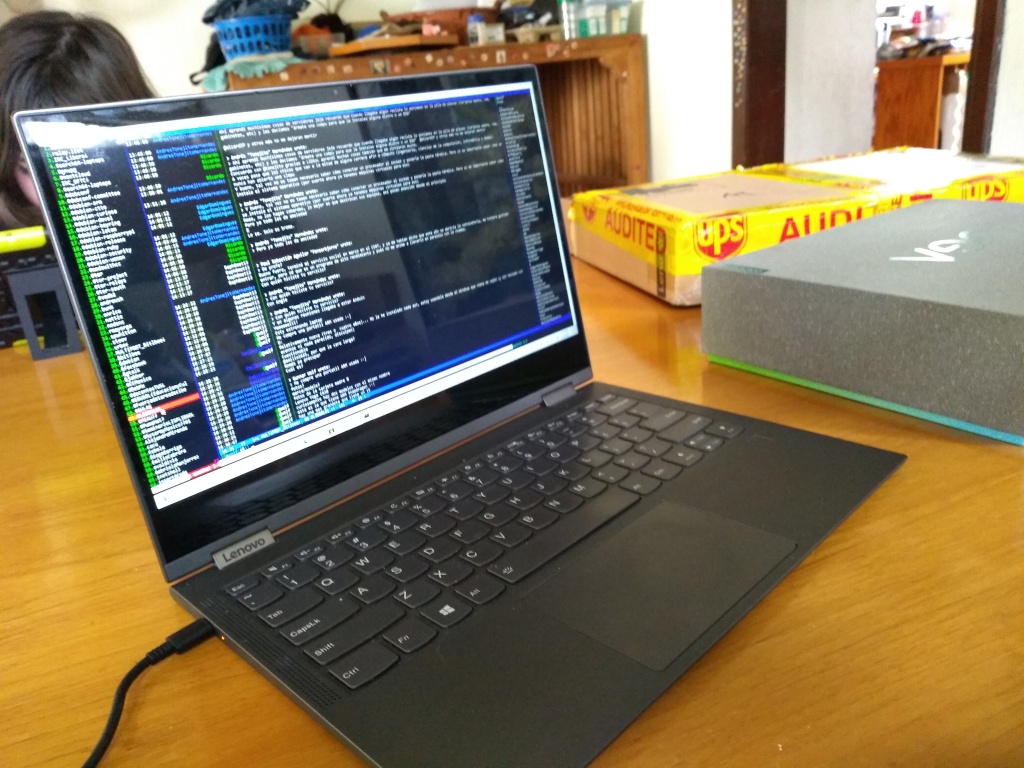
 If I have seen further, it is by standing on the shoulders of Giants Issac Newton, 1675. Although it should be credited to 12th century Bernard of Chartres. You will know why I have shared this, probably at the beginning of Civil Aviation history itself.
 But yes, it needs it own space, maybe after some more time.

 After a
 (Yes, this got in the way of working out what was going on with
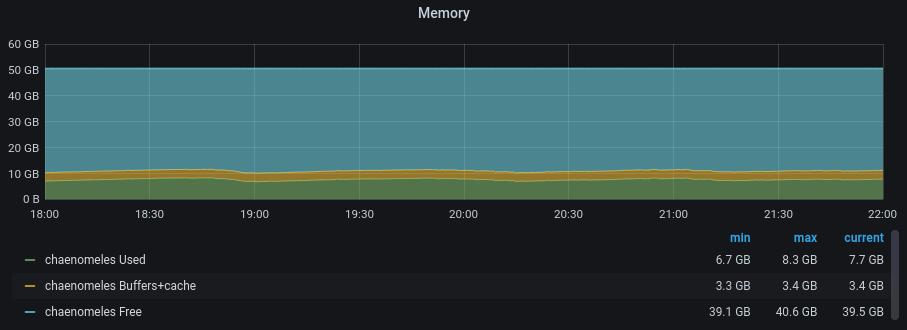 This isn t completely satisfying as we never quite got to the bottom of the
leak itself, and it s entirely possible that we ve only papered over it
using
 Here is my monthly update covering what I have been doing in the free software world during July 2021 (


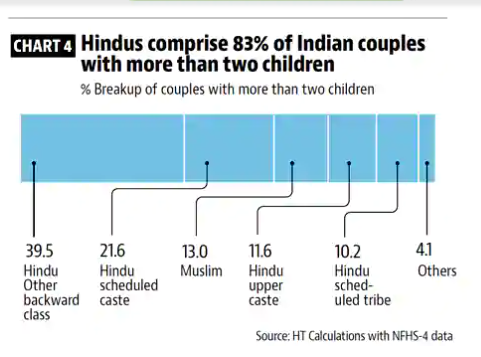 Hindus comprise 83% of Indian couples with more than two child children
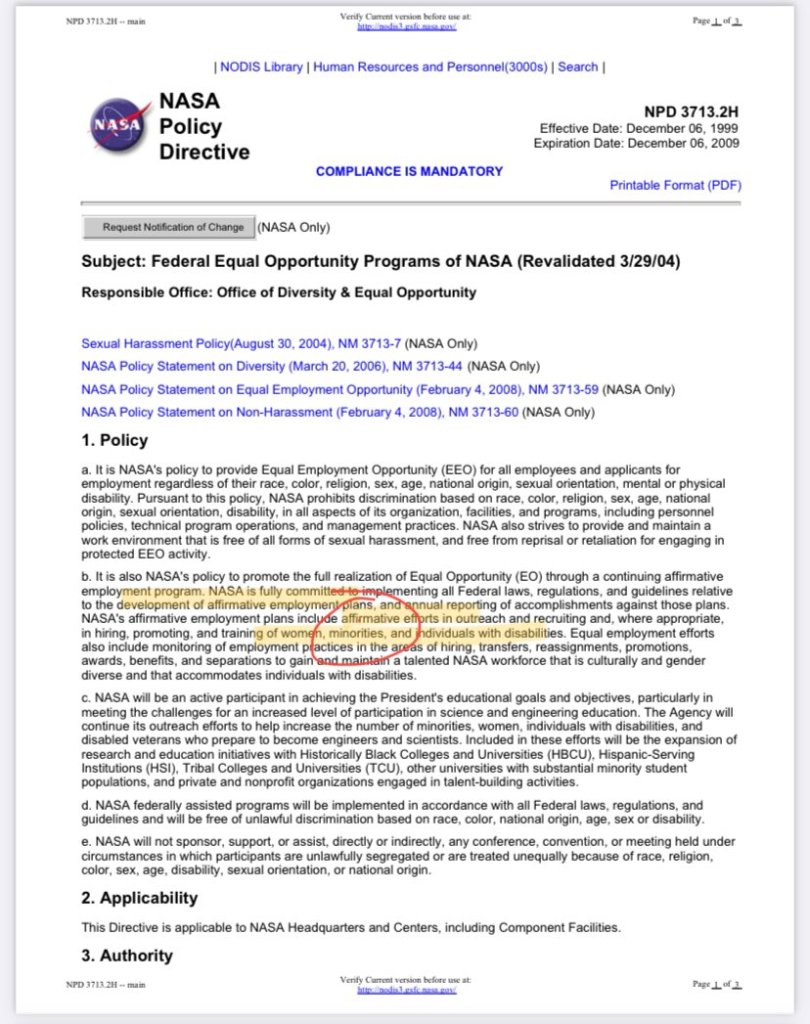

 Installing a new laptop
New is a 2nd hand Thinkpad T470p laptop that I intend to duel boot with windows.