Hail is a gunrunner, an outlaw and criminal, someone who knows how to
survive violence and navigate by personal loyalty. That world knows her
as Cressen Stone. What her colleagues don't know is that she's also an
Imperial Princess. Hailimi Mercedes Jaya Bristol left that world twenty
years earlier in secret pursuit of her father's killer and had no
intention of returning. But her sisters are dead, her mother's health is
failing, and two Imperial Trackers have been sent to bring her back to her
rightful position as heir.
I'm going to warn up-front that the first half of this novel was rough to
the point of being unreadable. Wagers tries much too hard to establish
Hail as a reluctant heroine torn between her dislike of royal protocols
and her grief and anger at the death of her sisters. The result is
excessively melodramatic and, to be frank, badly written. There are a lot
of passages like this:
His words slammed into me, burning like the ten thousand volts of a
Solarian Conglomerate police Taser.
(no, there's no significance to the Solarian Conglomerate here), or, just
three paragraphs later:
The air rushed out of my lungs. Added grief for a niece I'd never
known. One more log on the pyre set to burn my freedom to ashes. The
hope I'd had of getting out of this mess was lost in that instant, and
I couldn't do anything but stare at Emmory in abject shock.
Given how much air rushes out of Hail's lungs and how often she's struck
down with guilt or grief, it's hard to believe she doesn't have brain
damage.
Worse, Hail spends a great deal of the first third of the book whining,
which given that the book is written in first person gets old very
quickly. Every emotion is overwritten and overstressed as Hail rails
against obvious narrative inescapability. It's blatantly telegraphed from
the first few pages that Hail is going to drop into the imperial palace
like a profane invasion force and shake everything up, but the reader has
to endure far too long of Hail being dramatically self-pitying about the
plot. I almost gave up on this book in irritation (and probably should
have).
And then it sort of grew on me, because the other thing Wagers is doing
(also not subtly) is a story trope for which I have a particular
weakness: The fish out of water who nonetheless turns out to be the person
everyone needs because she's systematically and deliberately kind and
thoughtful while not taking any shit. Hail left Pashati young and
inexperienced, with a strained relationship with her mother and a habit of
letting her temper interfere with her ability to negotiate palace
politics. She still has the temper, but age, experience, and confidence
mean that she's decisive and confident in a way she never was before. The
second half of this book is about Hail building her power base and winning
loyalty by being loyal and decent. It's still not great writing, but
there's something there I enjoyed reading.
Wagers's setting is intriguing, although it makes me a bit nervous. The
Indranan Empire was settled by colonists of primarily Indian background.
The court trappings, mythology, and gods referenced in Behind the
Throne are Hindu-derived, and I suspect (although didn't confirm) that
the funeral arrangements are as well. Formal wear (and casual wear) for
women is a sari. There's a direct reference to the goddess Lakshimi (not
Lakshmi, which Wikipedia seems to indicate is the correct spelling,
although transliteration is always an adventure).
I was happy to see this, since there are more than enough SF novels out
there that seem to assume only western countries go into space. But I'm
never sure whether the author did enough research or has enough personal
knowledge to pull off the references correctly, and I personally wouldn't
know the difference.
The Indranan Empire is also matriarchal, and here Wagers goes for an
inversion of sexism that puts men in roughly the position women were in
the 1970s. They can, in theory, do most jobs, but there are many things
they're expected not to do, there are some explicit gender lines in power
structures, and the role of men in society is a point of political
conflict. It's skillfully injected as social background, with a
believable pattern of societal prejudice that doesn't necessarily apply to
specific men in specific situations. I liked that Wagers did this without
giving the Empire itself any feminine-coded characteristics. All admirals
are women because the characters believe women are obviously better
military leaders, not because of some claptrap about nurturing or caring
or some other female-coded reason from our society.
That said, this gender role inversion didn't feel that significant to the
story. The obvious "sexism is bad, see what it would be like if men were
subject to it" message ran parallel to the main plot and never felt that
insightful to me. I'm therefore not sure it was successful or worth the
injection of sexism into the reading experience, although it certainly is
different from the normal fare of space empires.
I can't recommend Behind the Throne because a lot of it just isn't
very good. But I still kind of want to because I sincerely enjoyed the
last third of the book, despite some lingering melodrama. Watching Hail
succeed by being a decent, trustworthy, loyal, and intelligent person is
satisfying, once she finally stops whining. The destination is probably
not worth the journey, but now that I've finished the first book, I'm
tempted to grab the second.
Followed by After the Crown.
Rating: 6 out of 10
The people who are pro-Government and in this case pro-Corporate do not have any success stories that they can share. Hence, most of the time the arguments are that the other are bad. For e.g. quite a few people argue that we don t need farmers, we can just order from restaurant. They have completely disassociated the idea that even then you need farmers as unless the farmers put the seed in, till the soil and wait for the rains or have irrigation you won t get ripe vegetables which then has to be taken out, and somehow sold to the wholesaler from where it comes to the restaurant and then to your plate. Sadly, even the farm-to-fork infographics are so depressingly sad, you want to look away. If you see the infographic you see it is just not non-veg but also vegetarian food grains which go under lot of questionable practices. Even, with such scenarios that is done by corporations our people want to go ahead. I will share stories from other countries which tell how they are doing more.
The Soldier-Farmer
Another sad part of these protests have been soldiers who have been returning their medals. The ones who oppose have the gall to say they should return the cash rewards they got. So just like farmers, seems soldiers also do not need money to survive. They are supposed to live only on air and water. This is after the present Govt. has reduced their pensions after retirement and that too without any discussion
GOI pensions to ex-servicemen
Now I nor anybody else would have minded if these conditions were shared going forward rather than doing it retrospectively. People who usually go to the army are not in it for money but for the adventure and glory they bring. But they do also have a family and have a family responsibility. In most other countries, the soldier and his families are well-looked after. If you know that even after you die, the Government would look after your family, you will do your best. Unfortunately, many veterans in India themselves are asked to help by many war widows as the widows don t get family pensions. The proposal naturally has left many miffed. In fact many of the veterans who used to advise people to join the armed forces now advise young people to pursue civilian life and careers. This is when Indian Army has been ironically having shortage of officers from well over a decade and stresses felt by Army personnel also known for a long time.
Even under this nationalistic Government, if it cannot take care of its soldiers, then forget about others.
India Defence Spending vis-a-vis other countries.
Now it is nobody s argument that India needs to improve its tooth-to-tail ratio but this is the wrong way to go about it. I would probably talk about that some other time as that totally needs its whole place.
Even OROP, which was the mandate of this Government hasn t had been done in full as there are quite a few cases in the Supreme Court. Almost all the cases have been heard and only decisions have to be given which the SC for whatever reason doesn t want to give. They just keep changing the date of the hearing. Nowadays, in many suits/cases, the SC asks for fresh hearings even though all the old records are there. This is a newish phenomena which is being observed in SC. Why is it being done? Your guess is as good as mine. One thing for sure has changed, the SC which used to be citizen-focussed or enabler of human rights and used to be held as a beacon for judicial activism has changed but these are other topics which need their own space.
Update 16/12/2020 The SC recommends setting up a committee to discuss farmer issues. And this is nothing new. This is called death by committee. When there is already so much literature on the subject, including the works done by Swaminathan Commission. There has been 6 reports which do look at farmer issues in a holistic manner. This is the Supreme Court giving an escape route to GOI. They also have abstained from having a whole session citing Covid. This is when the ruling Govt. is putting a massive 1000 crore on a new building on which the SC has put on hold. And even then the GOI went ahead and did a Bhoomi-Pujan (traditional ceremony when making a new construction from scratch.)
Naturally due to the double whammy of both the pension reforms and now the laws to make corporate farming more aggressive has left a deep impact on the soldier-farmer that the state does not think or feel for him.
Even the United States farm-aid eloquently describes how corporate farming has made independent farmers suffer. You read that, and it seems it is as the state of our farmers here in India. Even their average land-holding has dropped a bit. I have shared about the state of farmers in India, in twoblog posts previously. And it is not just farm owners who have had it bad, even farm workers in U.S. The issue may look to be about the pandemic but goes far deeper.
The Israeli Model
The Israelis have always used collective farming and do have a large share in farming there. The old model called Kibbutz is what made Israelis self-sufficient in food and water and actually are world-leaders where they export their services to other nations on the same thing.
France
Just like many other countries, France also seems to have favored farmer co-operatives. Almost 75% of all farmers are in co-operatives.
Italy
The country world-famous for its wines and cheese are made by its co-operatives. In fact co-ops are the buzzword it seems in Italy, more so in Northern Italy.
Asian economies
Even Asian economies, especially East Asian economies by and large have been turning to co-operatives.
Brazil
Now Brazil is almost 40% more than India. In fact, in most of the indices, Brazil beats India handsomely. So one would be forgiven to think that Brazil must have corporate farming. But nothing could be further from the truth. The only downer is that they have high crime in some areas. Otherwise, they are in many ways better than India. In fact, I was surprised a few years ago to learn about Mercsour. I would have to admit though I learned much about Brazil when Debian was holding a debconf about a year back. Otherwise, I had known about the country for number of years but apart from its carnival and samba, hadn t known much about it. I did come to know that most of Latin America also loves spices as much as Indians do. They show that love by using hot sauces. I do one day wanna try one of their sauces to see what makes it tick. I do know they like to barbecuevegetables as much as barbecuing non-veg food. This is going a bit OT but then that s the foodie in me Conclusion
I could have shared more countries which have chosen the co-operative way rather than corporate farming and that is simply because they know what is best for their people and what is best even politically. The new farm laws are neither grounded in farmer s welfare nor anything else. The Govt. has been trying to undermine the farmers for years together. In fact, Madhya Pradesh has openly said that they will not allow farmers from other states to sell in their state. Although, even before these laws there was nothing to restrict the farmer from selling his produce anywhere in the country. Angering the farmers is not good politics as was found sometime back but guessing some lessons need to be re-learned.
One comment though, on social media I have seen many people especially youngsters having no real understanding of what inflation is all about. For e.g. if you ask them how come we are having a sort of record inflation in a technical recession (there has been a contraction, actually) and you see them putting themselves into bigger and bigger ditches. This does explain in part why the BJP wins in elections. If you do more rhetoric, which BJP is good as, rather than educating people than you are bound to win. You don t need plans, you don t need a vision, just rhetoric will do. What more evidence is needed when the economy is and was in a worse shape even before the pandemic and BJP won. I would probably write about that as that again needs lot of background and understanding as well as related terms.
Like many other people, I first became aware of Anne Helen Petersen's
journalism when her Buzzfeed article
"How Millennials Became the Burnout Generation" went viral. Can't
Even is the much-awaited (at least by me) book-length expansion of that
thesis: The United States is, as a society, burning out, and that burnout
is falling on millennials the hardest. We're not recognizing the symptoms
because we think burnout looks like something dramatic and flashy. But
for most people burnout looks less like a nervous breakdown and more like
constant background anxiety and lack of energy.
Laura, who lives in Chicago and works as a special ed teacher, never
wants to see her friends, or date, or cook she's so tired, she just
wants to melt into the couch. "But then I can't focus on what I'm
watching, and end up unfocused again, and not completely relaxing,"
she explained. "Here I am telling you I don't even relax right! I
feel bad about feeling bad! But by the time I have leisure time, I
just want to be alone!"
Petersen explores this idea across childhood, education, work, family, and
parenting, but the core of her thesis is the precise opposite of the
pervasive myth that millennials are entitled and lazy (a persistent
generational critique that Petersen points out was also leveled at their
Baby Boomer parents in the 1960s and 1970s). Millennials aren't slackers;
they're workaholics from childhood, for whom everything has become a
hustle and a second (or third or fourth) job. The struggle with
"adulting" is a symptom of the burnout on the other side of exhaustion,
the mental failures that happen when you've forced yourself to keep going
on empty so many times that it's left lingering damage.
Petersen is a synthesizing writer who draws together the threads of other
books rather than going deep on a novel concept, so if you've been reading
about work, psychology, stress, and productivity, many of the ideas here
will be familiar. But she's been reading the same authors that I've been
reading (Tressie McMillan Cottom,
Emily Guendelsberger, Brigid Schulte, and even Cal Newport), and
this was the book that helped me pull those analyses together into a
coherent picture.
That picture starts with the shift of risk in the 1970s and 1980s from
previously stable corporations with long-lasting jobs and retirement
pensions onto individual employees. The corresponding rise in precarity
and therefore fear led to a concerted effort to re-establish a feeling of
control. Baby Boomers doubled down on personal responsibility and
personal capability, replacing unstructured childhood for their kids with
planned activities and academic achievement. That generation, in turn,
internalized the need for constant improvement, constant grading, and
constant achievement, accepting an implied bargain that if they worked
very hard, got good grades, got into good schools, and got a good degree,
it would pay off in a good life and financial security.
They were betrayed. The payoff never happened; many millennials graduated
into the Great Recession and the worst economy since World War II. In
response, millennials doubled down on the only path to success they were
taught. They took on more debt, got more education, moved back in with
their parents to cut expenses, and tried even harder.
Even after watching our parents get shut out, fall from, or simply
struggle anxiously to maintain the American Dream, we didn't reject
it. We tried to work harder, and better, more efficiently, with more
credentials, to achieve it.
Once one has this framework in mind, it's startling how pervasive the
"just try harder" message is and how deeply we've internalized it. It is
at the center of the time management literature: Getting Things Done focuses almost entirely on individual
efficiency. Later time management work has become more aware of the
importance of pruning the to-do list and doing fewer things, but addresses
that through techniques for individual prioritization.
Cal Newport is more aware than most that
constant busyness and multitasking interacts poorly with the human brain,
and has taken a few tentative steps towards treating the problem as
systemic rather than individual, but his focus is still primarily on
individual choices. Even when tackling a problem that is clearly
societal, such as the monetization of fear and outrage on social media,
the solutions are all individual: recognize that those platforms are bad
for you, make an individual determination that your attention is being
exploited, and quit social media through your personal force of will.
And this isn't just productivity systems. Most of public discussion of
environmentalism in the United States is about personal energy
consumption, your individual carbon footprint, household recycling, and
whether you personally should eat meat. Discussions of monopoly and
monopsony become debates over whether you personally should buy from
Amazon. Concerns about personal privacy turn into advocacy for using an
ad blocker or shaming people for using Google products. Articles about
the growth of right-wing extremism become exhortations to take
responsibility for the right-wing extremist in your life and argue them
out of their beliefs over the dinner table. Every major systemic issue
facing society becomes yet another personal obligation, another place we
are failing as individuals, something else that requires trying harder,
learning more, caring more, doing more.
This advice is well-meaning (mostly; sometimes it is an intentional and
cynical diversion), and can even be effective with specific problems. But
it's also a trap. If you're feeling miserable, you just haven't found the
right combination of time-block scheduling, kanban, and bullet journaling
yet. If you're upset at corporate greed and the destruction of the
environment, the change starts with you and your household. The solution
is in your personal hands; you just have try a little harder, work a
little harder, make better decisions, and spend money more ethically
(generally by buying more expensive products). And therefore, when we're
already burned out, every topic becomes another failure, increasing our
already excessive guilt and anxiety.
Believing that we're in control, even when we're not, does have
psychological value. That's part of what makes it such a beguiling trap.
While drafting this review, I listened to Ezra Klein's interview with
Robert Sapolsky on poverty and stress, and one of the points he made is
that, when mildly or moderately bad things happen, believing you have
control is empowering. It lets you recast the setback as a larger
disaster that you were able to prevent and avoid a sense of futility. But
when something major goes wrong, believing you have control is actively
harmful to your mental health. The tragedy is now also a personal
failure, leading to guilt and internal recrimination on top of the effects
of the tragedy itself. This is why often the most comforting thing we can
say to someone else after a personal disaster is "there's nothing you
could have done."
Believing we can improve our lives if we just try a little harder does
work, until it doesn't. And because it does work for smaller things, it's
hard to abandon; in the short term, believing we're at the mercy of forces
outside our control feels even worse. So we double down on
self-improvement, giving ourselves even more things to attempt to do and
thus burning out even more.
Petersen is having none of this, and her anger is both satisfying and
clarifying.
In writing that article, and this book, I haven't cured anyone's
burnout, including my own. But one thing did become incredibly clear.
This isn't a personal problem. It's a societal one and it will not
be cured by productivity apps, or a bullet journal, or face mask skin
treatments, or overnight fucking oats. We gravitate toward those
personal cures because they seem tenable, and promise that our lives
can be recentered, and regrounded, with just a bit more discipline, a
new app, a better email organization strategy, or a new approach to
meal planning. But these are all merely Band-Aids on an open wound.
They might temporarily stop the bleeding, but when they fall off, and
we fail at our new-found discipline, we just feel worse.
Structurally, Can't Even is half summaries of other books and
essays put into this overall structure and half short profiles and quotes
from millennials that illustrate her point. This is Petersen's typical
journalistic style if you're familiar with her other work. It gains a lot
from the voices of individuals, but it can also feel like argument from
anecdote. If there's a epistemic flaw in this book, it's that Petersen
defends her arguments more with examples than with scientific study. I've
read enough of the other books she cites, many of which do go into the
underlying studies and statistics, to know that her argument is
well-grounded, but I think Can't Even works better as a roadmap and
synthesis than as a primary source of convincing data.
The other flaw that I'll mention is that although Petersen tries very hard
to incorporate poorer and non-white millennials, I don't think the effort
was successful, and I'm not sure it was possible within the structure
of this book. She frequently makes a statement that's accurate and
insightful for millennials from white, middle-class families, acknowledges
that it doesn't entirely apply to, for example, racial minorities, and
then moves on without truly reconciling those two perspectives. I think
this is a deep structural problem: One's experience of American life
is very different depending on race and class, and the phenomenon that
Petersen is speaking to is to an extent specific to those social classes
who had a more comfortable and relaxing life and are losing it.
One way to see the story of the modern economy is that white people are
becoming as precarious as everyone else already was, and are reacting by
making the lives of non-white people yet more miserable. Petersen is
accurately pointing to significant changes in relationships with
employers, productivity, family, and the ideology of individualism, but
experiencing that as a change is more applicable to white people than
non-white people. That means there are, in a way, two books here: one
about the slow collapse of the white middle class into constant burnout,
and a different book about the much longer-standing burnout of being
non-white in the United States and our systemic failure to address the
causes of it. Petersen tries to gesture at the second book, but she's not
the person to write it and those two books cannot comfortably live between
the same covers. The gestures therefore feel awkward and forced, and
while the discomfort itself serves some purpose, it lacks the insight that
Petersen brings to the rest of the book.
Those critiques aside, I found Can't Even immensely clarifying.
It's the first book that explained to me in a way I understood what's so
demoralizing and harmful about Instagram and its allure of cosplaying as a
successful person. It helped me understand how productivity and
individual political choices fit into a system that emphasizes individual
action as an excuse to not address collective problems. And it also gave
me a strange form of hope, because if something can't go on forever, it
will, at some point, stop.
Millennials have been denigrated and mischaracterized, blamed for
struggling in situations that set us up to fail. But if we have the
endurance and aptitude and wherewithal to work ourselves this deeply
into the ground, we also have the strength to fight. We have little
savings and less stability. Our anger is barely contained. We're a
pile of ashes smoldering, a bad memory of our best selves.
Underestimate us at your peril: We have so little left to lose.
Nothing will change without individual people making different decisions
and taking different actions than they are today. But we have gone much
too far down the path of individual, atomized actions that may produce
feelings of personal virtue but that are a path to ineffectiveness and
burnout when faced with systemic problems. We need to make different
choices, yes, but choices towards solidarity and movement politics rather
than personal optimization.
There is a backlash coming. If we let it ground itself in personal
grievance, it could turn ugly and take a racist and nationalist direction.
But that's not, by in large, what millennials have done, and that makes me
optimistic. If we embrace the energy of that backlash and help shape it
to be more inclusive, just, and fair, we can rediscover the effectiveness
of collective solutions for collective problems.
Rating: 8 out of 10
It s been over 6 years since my last post comparing 3G data plans in Australia.
I m currently using Aldi Mobile [1]. They have a $15 package which gives 3G of data and unlimited calls and SMS in Australia for 30 days, and a $25 package that gives 20G of data and unlimited international calls to 15 unspecified countries (presumably the US and much of the EU). It s on the Telstra network so has good access all around Australia. I m on the grandfathered $20 per 30 days plan which gives me more than 3G of data (not sure how much but I need more than 3G) while costing less than the current offer of $25.
Unlimited National + Unlimited International SMS + 100mins International talk
In the above table I put Aldi at the top because Telstra has the best network. If you want to use a mobile phone anywhere in Australia then Telstra is the best choice. If you only care about city areas then the other networks are usually good enough. The rest of the services are in order of price, cheapest first. For every service I only mentioned the offerings that are price competitive.
I didn t list the offerings that are larger than these. There are offerings of 300G/year or more, but most people don t need them. Every service in this table has more expensive offerings with more data.
Please inform me in the comments of any services I missed.
After an unexpectedly short discussion on debian-project, we re moving forward with this new initiative. The Debian security team submitted a project proposal requesting some improvements to tracker.debian.org, and since nobody of the security team wants to be paid to implement the project, we have opened a request for bids to find someone to implement this on a contractor basis.
If you can code in Python following test-driven development and know the Django framework, feel free to submit a bid! Ideally you have some experience with the security tracker too but that s not a strong requirement.
About the project
If you haven t read the discussion on debian-project, Freexian is putting aside part of the money collected for Debian LTS to use it to fund generic Debian development projects. The goal is two-fold:
First, the LTS work necessarily had an impact on other Debian teams that made the project possible (security team, DSA, buildd, ftpmasters, debian-www mainly) and we wanted to be able to give back to those teams by funding improvements to their infrastructure.
We have always allowed paid contributors to go beyond just preparing security updates for the LTS release. They can pick tasks that improve the LTS project at large (we try to collect such tasks here: https://salsa.debian.org/lts-team/lts-extra-tasks/-/issues) but they should not go over 25% of their allocated monthly hours so this limits their ability to tackle bigger projects and we would like to be able to tackle bigger projects that can have a meaningful impact on the LTS project and/or Debian in general.
We have tried to formalize a process to follow from project submission up to its implementation in this salsa project: https://salsa.debian.org/freexian-team/project-funding https://salsa.debian.org/freexian-team/project-funding/-/blob/master/Rules-LTS.md
We highly encourage the above-mentioned Debian teams to make proposals. A member of those teams can implement the project and be paid for it. Or they can decide to let someone else implement it (we expect some of the paid LTS contributors to be willing to implement such projects), and just play the reviewer role driving the person doing the work in the right direction. Contrary to Google s Summer of code and other similar projects, we put the focus on the results (and not in recruiting new volunteers), so we expect to work with experienced persons to implement the project. But if the reviewer is happy to be a mentor and spend more time, then it s OK for us too. The reviewer is (usually) not a paid position.
If you re not among those teams, but if you have a project that can have a positive impact on Debian LTS (even if only indirectly in the distant future), feel free to try your chance and to submit a proposal.
While our last release has matured for quite a little time, there raised demands within our community for a new release. The development has settled this fall and @sni was already using master for a while in production, so we thought about to release. Anyway Debian Freeze is coming, let's cut a new upstream release! The last question was: Who should cut the release?
The last releases was done by @JeremyHolger, but these days everybody is short on time. Fortunately Holger has documented the whole release process very well, so I jumped on the band wagon and slipped into the release wizard role.
Surprisingly it seems I was able to fix all faults I've done in the release process (beside using the 2.2 link in the release announcement mail) and kicked the release of monitoring-plugins 2.3 successfully.
Grab the new Monitoring Plugins release while it's hot (and give the new check_curl a try)!
Hopefully monitoring-plugins 2.3 will hit Debian experimental soon.
If you're familiar with linguistics as a field of scientific study (as
opposed to the tool-based fields of grammar or writing advice), you'll be
familiar with the dichotomy between written and spoken language. We may
spend more time thinking about written language since it is central to
most types of education and carries much of the intellectual and social
weight of society. Linguists, however, see spoken language as more
fundamental, since speech is wired into our brains and universal in human
societies. Written language is a recent and somewhat artificial
invention.
One also learns from linguistics that spoken language does not follow many
of the rules of written language that we painstakingly memorized in
school. In casual speech, people split infinitives, speak in partial and
run-on sentences, ignore nit-picking pronoun case rules, and rarely notice
or care about the difference between less and fewer. Spoken language does
have rules, but they're more subtle and nuanced than the grammar rules we
learn in school. (I think the real fun of linguistics is separating the
rules that native speakers follow effortlessly from the artificial rules
used as education markers.) This is, in part, because nearly all spoken
language is informal, whereas nearly all written language is formal.
Enter the Internet, and enter this book. For the first time in human
history we have both an explosion of informal writing and easy
availability of that writing to linguists for study.
Informal writing is not entirely new, of course. We've had personal
letters for nearly as long as we've had writing, not to mention private
notes, diaries, and other writing intended for tiny audiences. But
consider who wrote private letters and, on top of that historical filter,
whose private letters were preserved for linguistic research. Until
relatively recently, only the upper classes were literate and had access
to the infrastructure to write and send letters. Someone's letters or
private notes were unlikely to be preserved unless they were someone
famous and important, and thus often well-educated and more likely to take
a more formal tone in writing.
If you compare this to the Internet-driven blizzard of work and personal
email, SMS conversations, chatrooms, and social media posts, the
difference is obvious in both volume and level of informality. We're all
on the Internet, we all read and write with a frequency that would be
staggering to the average person from even fifty years ago, and while one
may take a bit of additional care with a tricky email to one's manager,
the SMS message to one's friend is as informal of a use of language as a
conversation over coffee.
Gretchen McCulloch is a professional linguist and Because Internet
is about exactly this phenomenon: the new conventions of informal writing,
how it has changed and evolved, and the new subtleties and shortcuts we've
invented to make written communication easier. That goes beyond words and
grammar to encompass punctuation, emoji and emoticons, memes and reaction
gifs, and even the subtleties of timing, whitespace, and the construction
of virtual places via our choices in how and where we write.
This topic is my catnip, so it's not surprising I love this book. I've
been heavily involved with online communities that communicate in writing
since 1993 (making me, in McCulloch's classification, an Old Internet
Person; each wave of introduction to the Internet has its own conventions
that can be in conflict with later waves). I've now spent more than half
my life carrying out most of my social activity and most of my closest
friendships primarily in writing, so I found a lot of satisfaction in a
linguistic study that takes that seriously rather than treating it as a
curiosity. But, even better, I was amazed at how much I didn't know, in
part because I am from a specific wave. I have a deep intuition for the
Usenet conventions, but not as good of an understanding of the ones from
AIM and LiveJournal one wave later (the Full Internet People). And I had
a lot to learn about the conventions of the Instagram and Snapchat cluster
(the Post Internet People, who have never known life without the
Internet).
One of the things that struck me while reading this book is how most of
the language innovations that McCulloch describes are addressing the old
complaint that written communication is inferior to face-to-face
conversation because it lacks emotional nuance. My knee-jerk reply is
that, no, written communication is full of emotional nuance and the
complainer is just bad at reading it, but that's somewhat unfair. A
better statement of the problem is that there is not a standardized
language for emotional nuance in written communication, in part because
it's so new in human history. Most humans are extremely good at reading
facial expressions and body language for emotional cues, and those
physical expressions are largely subconscious, reliable, and similar among
different people (particularly within a culture; one can get in trouble
with body language variations across cultures). This is not true of
writing. With friends I've talked to over chat for twenty-five years, I
can read volumes about their emotional state in a couple of short lines of
text. But with strangers, despite decades of Internet communications, I
will still misread cues and misinterpret simple intentions.
The other standard response to this complaint is that it is possible to
put extensive emotional nuance into formal writing. Just get better at
writing! This is true, but unhelpful. There's a reason why we give book
contracts to people who are very good at investing formal writing with
emotional nuance. It's difficult, time-consuming, and requires a great
deal of practice. That may be appropriate for formal, paid writing, but
it won't do for informal writing, which by definition needs to be as
effortless as possible.
It's therefore unsurprising that once millions of people were using the
Internet regularly for informal writing, they started adding new
mechanisms, shortcuts, and conventions for emotional nuance. The
standardization is growing, but conventions still vary widely between
waves of Internet users. One of the most fascinating parts of this book
for me was McCulloch's explanation of why periods (and, to a lesser
extent, capital letters) in short chat messages are perceived by younger
users as harsh or passive-aggressive. I still have the formal writing
mindset of treating proper capitalization and punctuation as a point of
pride, but McCulloch makes an excellent argument for letting go of my
biases and understanding how and why language is changing.
The realization I had while reading this is that many of the changes that
look like sloppiness or laziness to someone trained in formal writing have
the effect of giving language greater dynamic range. If one always uses
periods uniformly, the period becomes meaningless except as a sentence
boundary (which is redundant with newlines in most short informal chat
messages). If one normally doesn't use it, and then suddenly starts using
it, the period can carry semantic weight. It can convey a snippy tone of
voice, a note of annoyance, or other subtle shades of meaning.
I still use periods in most of my Slack messages because habits are hard
to break, but I'm remembering to leave them off some of the time and
paying more attention to what emotional weight they're carrying when
present. Because Internet is therefore the rare book that meets
the bar of changing my day-to-day behavior.
"lol" is another excellent example that McCulloch spends some time on. It
started life as LOL, an abbreviation for "laughing out loud," and that's
still how it's stuck in my head. But, as McCulloch explains, it no longer
means that to newer waves of Internet users. It now carries a far more
complicated and nuanced meaning that has very little to do with physical
laughter and that doesn't easily translate to a single word or sentence.
I went from being mildly irritated by and mildly superior towards the
ubiquitous "lol" to realizing that it's a fascinating new word that
carries primarily emotional nuance and that I don't understand well enough
to read or use properly (yet).
One more example of the type of analysis McCulloch brings to this book:
emoji. The tendency when talking about emoji is to treat them as rebuses
(pictures that stand in for a word, or at least a specific concept). They
are sometimes used that way, but McCulloch argues that they more often
function in the same role that gestures play in informal speech, including
the gestures that have no simple name and no independent meaning outside
of the context of the words being said at the same time. This seems
obvious in retrospect, but before reading Because Internet I had
never thought about what a gesture is, what function it plays in speech,
and how that could be translated into informal written communication.
If you're as interested in this area as I am, this is great stuff. I'd
seen several mentions of this book go past on Twitter and kept holding off
because I had lots of things to read and was worried it would only cover
the superficial things I already knew as a long-time Internet user who has
listened to a few lectures on linguistics. That was not the case at all.
I learned so much from this book and had a delightful time reading it. If
you're also interested in these topics, recommended.
Rating: 9 out of 10
Issues with Farm Laws
While I have written about the farm laws a bit sometime back. The issue is still in the nation s eye and that is due to the policies which have been done. I have been reading up on it quite a bit and also have been seeing what has been happening in here and now. The problems are with the three bills themselves which I have shared as below
Click to access farmers-produce-trade-and-commerce-promotion-and-facilation-bill.pdfClick to access farmers-empowerment-and-protection-bill.pdfClick to access essential-commodities-bill-2020.pdfBiggest issue with the laws
While there are many issues with the laws themselves but for me the biggest issue is that the fundamental right of the farmer to get justice via civil courts has been railroaded. From the laws itself. Standard disclaimer not a lawyer, please consult one for any issues per-se.
Farmers-produce-trade-and-commerce (promotion and facilitation-bill) 2020
Page 4 Chapter 3 Section 8 (1)8. (1) In case of any dispute arising out of a transaction between the farmer and a trader under section 4, the parties may seek a mutually acceptable solution through conciliation by filing an application to the Sub-Divisional Magistrate who shall refer such dispute to a Conciliation Board to be appointed by him for facilitating the binding settlement of the dispute.
(2) Every Board of Conciliation appointed by the Sub-Divisional Magistrate under sub-section (1), shall consist of a chairperson and such members not less than two and not more than four, as the Sub-Divisional Magistrate may deem fit.10
(5) If the parties to the transaction under sub-section (1) are unable to resolve the dispute within thirty days in the manner set out under this section, they may approach the Sub-Divisional Magistrate concerned who shall be the Sub-Divisional Authority for settlement of such dispute.
(8) Any party aggrieved by the order of the Sub-Divisional Authority may prefer an appeal before the Appellate Authority (Collector or Additional Collector nominated by the Collector) within thirty days of such order who shall dispose of the appeal within thirty days from the date of filing of such appeal.
10. (1) Any person aggrieved by an order under section 9 may, prefer an appeal within sixty days from the date of such order, to an officer not below the rank of Joint Secretary to the Government of India to be nominated by the Central Government for this purpose:
Page 6 of the bill. 13. No suit, prosecution or other legal proceedings shall lie against the Central Government or the State Government, or any officer of the Central Government or the State Government or any other person in respect of anything which is in good faith done or intended to be done under this Act or of any rules or orders made thereunder.
Page 7 of the bill, 15. No civil court shall have jurisdiction to entertain any suit or proceedings in respect of any matter, the cognizance of which can be taken and disposed of by any authority empowered by or under this Act or the rules made thereunder.
Now the same laws have been reiterated for the farmers (Empowerment and Protection) Agreement on Price Assurance and Farm Services Bill, 2020.
The problem is that too much power is being put into the hands of the executive. All the three, whether it is SDM (Sub-Divisional Magistrate) , the Appellate Authority or the Government Secretary directly are subservient to the whims and fancies of the Central Govt. They after all get their salaries from the Govt. itself. So there will be no independent oversight to any injustices done to the farmer.
The third bill i.e. the Essential Commodities Bill, 2020 does away with stock limits on traders and big players like Adani and Ambani. This means that both these players can take and keep produce at their end thereby forcing consumers like you and me who at the retail end would have to pay higher prices for fruits and vegetables while from the producer they will take at the lowest price possible.
While I have shared is just one of the points. That is the reason why even the Supreme Court bar association which almost never takes part in politics has been forced to take sides with the farmers. In many ways, one is forced to remember the Emergency
Update 11/12/20 Came across this article on the wire which tells how everybody s rights, not just the farmer s rights are being shod over. I think it depicts correctly the signs of time to come. While arguing on SM, also came to know about Article 300 (1), thanks to Sachin Kumar which shows multiple instances where Government was sued because somebody was working in official capacity and did mistakes, malafide or otherwise and it was the state who was made to pay.
FWIW, today farmers from Maharashtra, my state arrived at Delhi border where they were also kept at bay. I did come across an infographic which shows how the various states have fared. Most tellingly, is the state of Bihar. It was in 2006 (one of the most backward states) where APMC was taken off. While others have tried to paint a flattering picture of Bihar, they have failed to share that in the interim 15 odd years, there hasn t been any sort of infrastructure created for farmers which is the reason it is still the lowest earner. These are the last available figures we have about the farmer s income. From 2014 to 2020 there hasn t been any update.
Situation Assessment Survey of Agricultural Household 2013 Copyright GOI,
This concludes just one portion of the bill. I will take other parts of the bill. I may dwell on some other parts as and when I have the time. A cartoon which depicts the current issue
I stand with farmers Copyright Sanitary Panels Too much democracy Amitabh Kant
Yesterday, the Niti Aayog chief Amitabh Kant remarked that we are too much of a democracy at an event called for Atmanirbhar Bharat which is basically a coinage for import substitution. Whether this is desirable or not I have argued and if needed will re-argue the same later as well. What is and was interesting were the gentleman s context, the media reactions and our overall Democracy Index which has been going downhill for quite some years. Now the gentleman who is the Niti Aayog chief and who is supposed to have the ear of the Prime Minister had opined it in an event organized by Swarajya Magazine (a far-right magazine) known to be Islamophobic and all things undemocratic. It has been a target of defundthehate campaign and with good reason. But that s a different story altogether. His full statement was as below
Tough reforms are very difficult in the Indian context, as we are too much of a democracy but the government has shown courage and determination in pushing such reforms across sectors, including mining, coal, labour and agriculture. Niti Aayog chief. The upper quotation remarks and the statement has been from the article in Indian Express which I have linked to. I have archived it as a pdf just in case the link goes dead. Yesterday, after the statement became viraled, tweets of media houses which shared the tweet suddenly become unavailable. Seems too much democracy, became too little democracy all of a sudden. I think Mr. Amitabh Kant didn t visualize as the opposition as well as most people who are on Twitter to share their opinion on the same. Few examples
Too much Democracy copyright Satish Acharya
Too much democracy Illustration and Copyright Alok
Sterlite protest 13 dead, 100 injured Copyright Business Standard too much democracy
Erosion of Democracy V-dem institute Copyright The Hindu Web Team
The last one requires a bit more information. This comes from V-Dem Institute which is an independent research institute based out of Department of Political Science, University of Gothenburg, Sweden. I am gonna leave the methods they use for another day as the blog post itself has become rather big/large.
Apart from that is the Economists own Democracy Index -2019
Click to access democracy-index-2019.pdf
Now for many people, both the V-Dem report and the Economist Index are some sort of attack against India. Doesn t matter that in V-Dem 200+ countries have been taken a variety of indicators and data or the Economist which has data from 150+- countries. Somehow India is supposed to be bigger than all these countries, they do think that other countries data specifically our neighbor China or any other neighbor, those are all accurate. How the dissonance is, has to be gauged from statements of various people.
Update 11/12/20 Sadly, the newest V-Dem report marks India as getting into authoritarianism.
Gag on Press and Media owners
I had shared about the gag on the press especially with respect to western media or reports or anything. This news made its way to straitstimes which normally covers a wide-range of stories covering East Asia vis-a-vis India/South-East Asia. What has also been a big worry that most of the media has been in the hands of a few people. Caravan ran a story on the same in 2016, it has been four years, god only knows what the current situation might be. Any wonder that there is dearth of investigative journalism in India.
India media ownership 2016 Copyright Caravan
Incidentally, a reporter called Akarshan Uppal, who is a reporter on a channel called IBN24 had showecased just few days back how Adani has got land which was shot down for land change use in 2017 to 2020 around 100 acres. There seem to be very less details as to how the land was acquired, whose land it was etc. etc. The reporter was supposedly following a story on drugs on which he was attacked and is now lying in hospital.
Akarshan Uppal Reporter, IBN24 Copyright IBN24
While it would take a whole article/blog post to talk about either Adani or Ambani, in the recent case, the land that has been taken over by Adani is 100 acres and there are private rail lines. And all of this was secret till few days back. The place where these massive godowns/silos have been made are Panipat s Jondhan Kalan and Naultha villages in Haryana. This is Adani AgiLogistics. Almost 7 odd companies have registered and come up in the last couple of years. As can be seen, almost all have come up within the last 2-3 years. Seems to be a lot of coincidence, isn t it?
Personal Anecdote on Data Collection and child marriages in India.
Around 1995 -96 when Internet had started to become a thing in India, there had been quite a few non-profits which were working on various issues. One of those which I initially came in contact with and which I found to be a bit absurd was non-profit which was working in the field of women against Violence. Now it is and was not the concept or the idea which was absurd to me, it was what these women were doing. Instead of the traditional ways in which you counsel women and try and figure out issues, these women were collecting data points from newspapers and magazines. This was way way before data science became a thing in India. They had their own structure where a story about violence against women which would be above the fold would be 5 points, the one below 2.5 points, in inner pages, it would be less and less. Patriarchy at that time was so strong, even today is but at that time it was such, that it felt a waste of time. I did consult them but never said that but did privately feel the above. In hindsight, they were doing the right thing and yet even today crimes against women goes unreported and is suppressed by both State and Central Governments as well as NCRB (National Crime Records Bureau).
Interestingly, just few days back, the case against M.J. Akbar by Priya Ramani had taken a back seat and the defamation case by M.J. Akbar was taken forward. Even then, Priya Ramani s counsel s arguments were such that the court wound up in half an hour when they were expecting to do a whole day hearing. The next hearing would be happening today which I will look at in few hours from now. Why Priya Ramani was singled out rather than other tweets may probably be because she is an NRI and most NRI s usually do not want to be part of the bureaucratic Indian court system. This is also the reason that most companies from outside India especially those who are into startups prefer to change ownership, IPR etc. to their own or any country outside India which does make a loss to the exchequer. But this again is a story for another day.
At the end, while I did not want to end on a negative note, it seems in many ways status-quo remains. For e.g. 2 years back, a BJP candidate (part of the ruling dispensation) had made a controversy saying that if they win the police won t interfere in child marriages. This is and was in Rajasthan where they have been trying to eradicate it forever. Till date, neither the NHRC (National Human Rights Commission) nor NCW (National Commission for Women) has taken cognizance of the statement. This is our state of democracy.
As is normal for these days: I post a quick update on how we're doing.Working through the test suite: RattusRattus, Sledge, Isy, Schweer and I. We've been joined by somebody new - jlsantos - who has done his first test for us :)A couple of changes: there's now a different automatic partitioning layout. /boot has been resized to ~500MB - to allow for more than one kernel but also the other initramfs files. The filesystem size allocated for a swap partition is now 1GB by default.We're doing fairly well - one hardware failure on an old laptop replaced by a newer model from Sledge's stock - everybody cheerful and all working well.Separately, there was a quiet release of Bullseye Alpha3 last night - that has had minimal testing - as ever, we're not yet near the release of Bullseye yet.
The Linux Foundation has published its annual report today. LWN calls it glossy and yeah, boy, it is shiny.
So shiny that people that work in the publishing industry immediately see this has been produced with the Adobe toolchain which - unfortunately - is one of the big suites of software not yet available for Linux.
Checking the PDF file metadata reveals the keywords "open source, open standards, open hardware, open data". That is what the Linux Foundation is about. Good stuff.
The PDF producer meta data for the annual report PDF has been set to "Linux kernel 0.12.1 for Workgroups" and the PDF creator meta data element to "Sharp Zaurus XR-5000 (Maemo5) Edition". Somebody thought to better hide the real data and had some tongue-in-cheek ideas. Kudos.
But nicer would have been to use Open Source software to produce the report, not?
Running strings 2020-Linux-Foundation-Annual-Report_113020.pdf grep Adobe wc -l gives us 1229 lines and confirms the suspicion of the toolchain.
A stale /Title (Annual Report 2020) /Producer (macOS Version 10.15.7 \(Build 19H15\) Quartz PDFContext) has been forgotten in the document to tell us about the platform.
So, ladies and gentlemen, the Linux Foundation 2020 annual report has been produced on a Mac.
Running Adobe Creative Cloud on MacOS Catalina 10.15.7.
Which is proprietary software. Its kernel (and some userland pieces) are based on BSD. Not Linux.
The image on the front page also struck me as a bit odd ... using a ballpoint pen on the laptop screen?
Unbranded laptop.
Unbranded cup in the foreground.
Kid in the background not paying attention to his tablet.
All of that cries stock image so loud it hurts.
Google currently finds ~560 uses of the picture and any editorial use nicely tells us that it is Dragana Gordic / Shutterstock.
The image is "Smiling mom working at home with her child on the sofa while writing an email. Young woman working from home, while in quarantine isolation during the Covid-19 health crisis".
See the Daily Mail for a wonderful example of the working mum in context. I hope, if her laptop had been powered on, it would have run Linux. I mean, what else would still run on an old white MacBook with an Intel "Core 2 Duo" processor from 2008?
Continue reading "No dog food today - the Linux Foundation annual report"
In previous blog posts I talked about QEMU s qcow2 file format and how to make it faster. This post gives an overview of how the data is structured inside the image and how that affects performance, and this presentation at KVM Forum 2017 goes further into the topic.
This time I will talk about a new extension to the qcow2 format that seeks to improve its performance and reduce its memory requirements.
Let s start by describing the problem.
Limitations of qcow2
One of the most important parameters when creating a new qcow2 image is the cluster size. Much like a filesystem s block size, the qcow2 cluster size indicates the minimum unit of allocation. One difference however is that while filesystems tend to use small blocks (4 KB is a common size in ext4, ntfs or hfs+) the standard qcow2 cluster size is 64 KB. This adds some overhead because QEMU always needs to write complete clusters so it often ends up doing copy-on-write and writing to the qcow2 image more data than what the virtual machine requested. This gets worse if the image has a backing file because then QEMU needs to copy data from there, so a write request not only becomes larger but it also involves additional read requests from the backing file(s).
Because of that qcow2 images with larger cluster sizes tend to:
grow faster, wasting more disk space and duplicating data.
increase the amount of necessary I/O during cluster allocation,
reducing the allocation performance.
Unfortunately, reducing the cluster size is in general not an option because it also has an impact on the amount of metadata used internally by qcow2 (reference counts, guest-to-host cluster mapping). Decreasing the cluster size increases the number of clusters and the amount of necessary metadata. This has direct negative impact on I/O performance, which can be mitigated by caching it in RAM, therefore increasing the memory requirements (the aforementioned post covers this in more detail).
Subcluster allocation
The problems described in the previous section are well-known consequences of the design of the qcow2 format and they have been discussed over the years.
I have been working on a way to improve the situation and the work is now finished and available in QEMU 5.2 as a new extension to the qcow2 format called extended L2 entries.
The so-called L2 tables are used to map guest addresses to data clusters. With extended L2 entries we can store more information about the status of each data cluster, and this allows us to have allocation at the subcluster level.
The basic idea is that data clusters are now divided into 32 subclusters of the same size, and each one of them can be allocated separately. This allows combining the benefits of larger cluster sizes (less metadata and RAM requirements) with the benefits of smaller units of allocation (less copy-on-write, smaller images). If the subcluster size matches the block size of the filesystem used inside the virtual machine then we can eliminate the need for copy-on-write entirely.
So with subcluster allocation we get:
Sixteen times less metadata per unit of allocation, greatly reducing the amount of necessary L2 cache.
Much faster I/O during allocating when the image has a backing file, up to 10-15 times more I/O operations per second for the same cluster size in my tests (see chart below).
Smaller images and less duplication of data.
This figure shows the average number of I/O operations per second that I get with 4KB random write requests to an empty 40GB image with a fully populated backing file.
Things to take into account:
The performance improvements described earlier happen during allocation. Writing to already allocated (sub)clusters won t be any faster.
If the image does not have a backing file chances are that the allocation performance is equally fast, with or without extended L2 entries. This depends on the filesystem, so it should be tested before enabling this feature (but note that the other benefits mentioned above still apply).
Images with extended L2 entries are sparse, that is, they have holes and because of that their apparent size will be larger than the actual disk usage.
It is not recommended to enable this feature in compressed images, as compressed clusters cannot take advantage of any of the benefits.
Images with extended L2 entries cannot be read with older versions of QEMU.
How to use this?
Extended L2 entries are available starting from QEMU 5.2. Due to the nature of the changes it is unlikely that this feature will be backported to an earlier version of QEMU.
In order to test this you simply need to create an image with extended_l2=on, and you also probably want to use a larger cluster size (the default is 64 KB, remember that every cluster has 32 subclusters). Here is an example:
And that s all you need to do. Once the image is created all allocations will happen at the subcluster level.
More information
This work was presented at the 2020 edition of the KVM Forum. Here is the video recording of the presentation, where I cover all this in more detail:
You can also find the slides here.
Acknowledgments
This work has been possible thanks to Outscale, who have been sponsoring Igalia and my work in QEMU.
And thanks of course to the rest of the QEMU development team for their feedback and help with this!
Another month worth of updates on KDE/Plasma in Debian has accumulated, so here we go. The highlights are: Plasma 5.19.5 based on Qt 5.15 is in Debian/unstable and testing, Plasma 5.20.4 is waiting to be uploaded soon to experimental, and my own builds at OBS have been updated to Plasma 5.20.4, Frameworks 5.76, Apps 20.08.3.
OBS packages
The OBS packages as usual follow the latest release, and currently ship KDE Frameworks 5.76, KDE Apps 20.08.3, and new, Plasma 5.20.4. The package sources are as usual (only the other-dep has disappeared, these packages are now all in Debian proper), for Debian/unstable:
deb https://download.opensuse.org/repositories/home:/npreining:/debian-kde:/frameworks/Debian_Unstable/ ./
deb https://download.opensuse.org/repositories/home:/npreining:/debian-kde:/plasma520/Debian_Unstable/ ./
deb https://download.opensuse.org/repositories/home:/npreining:/debian-kde:/apps2008/Debian_Unstable/ ./
deb https://download.opensuse.org/repositories/home:/npreining:/debian-kde:/other/Debian_Unstable/ ./
and the same with Testing instead of Unstable for Debian/testing.
The latest update to 5.20.4 will probably need one or two install cycles due to missing Replaces. The reason is that the packages in OBS have been synced with the work we have done for the official Debian packages, and thus some files have moved between packages.
Debian main packages
After a few hiccups, the whole Plasma 5.19.5 stack has landed in Debian/testing, and we are working on an upload of 5.20.4 to Debian/experimental. This takes a bit, because we want to add infrastructure to automatically force all packages to be upgraded only together, so that there is no mix between old and new packages. This has shown quite some problems during the upgrade from 5.17 to 5.19 in testing. Also, I don t think Debian needs to do something else than everybody else by allowing to mix Plasma released.
That said, I hope that we have an upload of 5.20 to experimental soon, followed by testing and an upload to unstable, so that it can migrate to testing in time for the freeze of Bullseye. Getting 5.20.5 into Bullseye is possible, but not guaranteed, not too much time between the release of 5.20.5 and proper freeze in Debian. But we will see.
Enjoy.
Truth, Untruths and Education in India.
I read this somewhat disturbing and yet pretty raw truth from foreign affairs. It took me quite a few days to not only digest but also say yes and see the same situation playing out in India. I have been seeing the discourse on Twitter and while a part of it is the equivalent of road rage, a huge part is a disconnect to not acknowledge and be civil. We may come to different conclusions from the same data but being civil seems to be difficult for a lot of people. One part is of course ego, where nobody wants to lose, but more than that are the plain comprehension issues. Most of the literature, good literature is unfortunately based in English.
And while we can have differing opinions of what constitutes good literature, for me it s books like Battle of Belonging,The:On Nationalism, Patriotism, and What it Means Shashi Tharoor. From what little I have understood, the book makes the case of civic nationalism which is far more inclusive than the narrow confines of patriotism. Now this begs the question when you have such books and many books which do tell you about different aspects of social, political and knowledge, why are so many people prone to disinformation in India similar to U.S. and probably other countries as well. One of the biggest reasons per-se is lack of education and quality education. When the number of graduates is less than five percent how do you expect that population to be able to take decisions in their economic self-interest? So sadly the understanding is ingrained from WhatsApp and there is no need to check from alternate sources. And just like Mr. Trump followers, they believe those versions to be the unvarnished truth. I do understand that no truth is immutable except for life and death. All others are imperfect unless it is validated by some sort of scientific validation behind it. At the same time, these truths may themselves be invalidated if a stronger scientific evidence establishes itself. This is the reason why hypothesis and facts themselves are challenged again and again. Sharing couple of examples below.
Nationalization of Banking, RERA and RCEP
Most of the people want freedom of the banks i.e. private banking don t really know that private banking existed at a time in free India before they were nationalized and these banks failed at surprisingly regular intervals. Now it isn t as if this fact is hidden but it is not as popular as maybe some other facts or ideas. Now the Government in the center obviously doesn t want to share these facts as they want corporates in banking. And if that fact is known by many people it will be a huge setback to their plans. RBI failures have been to many to count. Even recent legislations like RERA and others which were supposed to bring relief to millions of potential homeowners has become a pawn in the hands of builders and this has been known.
One of the interesting points of RCEP which is not so much in public domain is that RCEP would have a mere 4.5% duty on most products which will go down to 1.5% over a 20 year period. Now with India staying out of it, we have done two things. We have said that we will not be competitive even after 20 years of this which is the more damning part. And we will not take part in the growth that other countries will have due to this.
Contempt Proceedings against Comic Artist because she has an opinion on SC
The fall in SC and constitutional values grows day by day. The AG today consented to have contempt proceedings against a comic artist saying she insulted the SC. Gone are the days when an artist made fun of the PM, and she gave him a Padam Shri (one of the highest civilian honors) for his contributions. Then, even dissent or being cynical was looked as being a contribution to the national effort rather than today. This is the reason why India has been continuously falling in the Global Freedom of Expression Index. I have seen censoring many a time here. I, myself has been locked out of Wikipedia many times. Can you imagine, being locked out of Wikipedia which is perhaps one of the more neutral sites on the web. And then there was this wikibio thing, such a sad thing to happen. Guessing this is the future of the Indian interweb. Stick figure by Sanitary Panels on SC
The goblins are at war, a messy multi-sided war also involving humans,
elves, and orcs. The war was not exactly their idea, although the humans
would claim otherwise. Goblins kept moving farther and farther into the
wilderness to avoid human settlements, and then they ran out of
wilderness, and it wasn't clear what else to do. For the Nineteenth
Infantry, the war is a confusing business, full of boredom and screaming
and being miserable and following inexplicable orders. And then they run
into a wizard.
Wizards in this world are not right in the head, and by not right I mean
completely psychotic. That's the only way that you get magical powers.
Wizards are therefore incredibly dangerous and scarily unpredictable, so
when the Whinin' Nineteenth run into a human wizard who shoots blue out of
his mouth, making him stop shooting blue out of his mouth becomes a high
priority. Goblins have only one effective way of stopping things: charge
at them and hit them with something until they stop. Wizards have things
like emergency escape portals. And that's how the entire troop of nine
goblins ended up far, far behind enemy lines.
Sings-to-Trees's problems, in contrast, are rather more domestic. At the
start of the book, they involve, well:
Sings-to-Trees had hair the color of sunlight and ashes, delicately
pointed ears, and eyes the translucent green of new leaves. His shirt
was off, he had the sort of tanned muscle acquired from years of
healthy outdoor living, and you could have sharpened a sword on his
cheekbones.
He was saved from being a young maiden's fantasy unless she was a
very peculiar young maiden by the fact that he was buried up to the
shoulder in the unpleasant end of a heavily pregnant unicorn.
Sings-to-Trees is the sort of elf who lives by himself, has a healthy
appreciation for what nursing wild animals involves, and does it anyway
because he truly loves animals. Despite that, he was not entirely
prepared to deal with a skeleton deer with a broken limb, or at least with
the implications of injured skeleton deer who are attracted by magical
disturbances showing up in his yard.
As one might expect, Sings-to-Trees and the goblins run into each other
while having to sort out some problems that are even more dangerous than
the war the goblins were unexpectedly removed from. But the point of this
novella is not a deep or complex plot. It pushes together a bunch of
delightfully weird and occasionally grumpy characters, throws a challenge
at them, and gives them space to act like fundamentally decent people
working within their constraints and preconceptions. It is, in other
words, an excellent vehicle for Ursula Vernon (writing as T. Kingfisher)
to describe exasperated good-heartedness and stubbornly determined
decency.
Sings-to-Trees gazed off in the middle distance with a vague, pleasant
expression, the way that most people do when present at other people's
minor domestic disputes, and after a moment, the stag had stopped
rattling, and the doe had turned back and rested her chin trustingly
on Sings-to-Trees' shoulder.
This would have been a touching gesture, if her chin hadn't been made
of painfully pointy blades of bone. It was like being snuggled by an
affectionate plow.
It's not a book you read for the twists and revelations (the resolution is
a bit of an anti-climax). It's strength is in the side moments of
characterization, in the author's light-hearted style, and in descriptions
like the above. Sings-to-Trees is among my favorite characters in all of
Vernon's books, surpassed only by gnoles and a few characters in
Digger.
The Kingfisher books I've read recently have involved humans and magic and
romance and more standard fantasy plots. This book is from seven years
ago and reminds me more of Digger. There is less expected plot
machinery, more random asides, more narrator presence, inhuman characters,
no romance, and a lot more focus on characters deciding moment to moment
how to tackle the problem directly in front of them. I wouldn't call it a
children's book (all of the characters are adults), but it has a bit of
that simplicity and descriptive focus.
If you like Kingfisher in descriptive mode, or enjoy Vernon's descriptions
of D&D campaigns on Twitter, you are probably going to like this. If you
don't, you may not. I thought it was slight but perfect for my mood at
the time.
Rating: 7 out of 10
Farmer Protests
While I was hoping to write about RCEP exclusively, just today farmer protests have happened against three farm laws which had been passed by our Govt. about a month ago without consulting anybody. The bills benefit only big business houses at the cost of farmers. This has been amply shared by an open letter to one of the biggest business house which will benefit the most.
Now while that is a national experience and what it tells, let me share, some experience from the State I come from, Maharashtra. About 4-5 years back Maharashtra delisted fruit and vegetables from the APMC market. But till date, the APMC market is working, why, the reasons are many. However, what it did was it forced the change to sugarcane, a water guzzling crop much more than previously. This has resulted in lowering the water table in Maharashtra and put them more into debt trap and later they had to commit suicide.
Now let us see why the Punjab farmers have been so agitated that they are walking all the way to Delhi. They are right now, somewhere between Haryana-Delhi border. The reason is that because even their experiments with contract farming have not been good. This is why they are struggling to go to Delhi to make their collective voices heard and get the farm bills rolled back. Even the farmers from Gujarat were sued, but because of elections were put back, the intentions though are clear. This has also happened in Uttar Pradesh and for sugarcane and that too by Bajaj Company. At the end of the day, the laws made by the Govt. leaves our farmer at the mercy of big corporations. It is preposterous to believe that the farmer, with their small land holdings will be able to stand up to the Corporation. Add to that, they cannot go to Court. It is the SDM (Sub-Divisonal Magistrate) who will decide on the matters and has the last word. If this is allowed, in a couple of years there will be only few farmers or corporations who would have large hand-holdings, and they would be easily co-opted by the Government in power.
Just in A gentleman who turned off water cannon being shot at farmers has been charged for murder
Currently, the Government procures rice in vast quantities and the farmers are assured at least some basic income, in the states of Punjab and Haryana
Procurement of Rice by Various States
Recently there was also an article in Indian Express which shares the farmer s apprehensions and does share that it s a complex problem with no easy solutions. The solution can only be dialogue between the two parties. This was also shared by Vivek Kaul, who is far more knowledgable than me on the subject and made a long read on the subject.
The Canada Way
Recently, while sparring on the Internet, came to know of the Canada way. Here, the Government makes the farmer a corporation and the Government helps them. But the Canada way seems to largely work as the Canadian Government owns the majority of the lands in question. And yes, Indians have benefited from it but that is also due to a. the currency differential between Canadian dollar and Indian Rupee and the 99-year land lease. There may be other advantages that the Canadian Government bestows and that is the reason possibly that most Punjabi farmers go to Canada and UK to farm.
While looking at it, I also came across the situation in the United States and it seems the situation there seems to be becoming even more grim.
RCEP
RCEP stands for Regional Comprehensive Economic Partnership. We were supposed to be part of this partnership. Now why didn t we join, for two reasons, our judicial infrastructure is the worst. It took 8 years to decide on a tax retrospective case (Vodafone) and that too finally outside India. And that decision, by no means an end. The other thing is all those who have joined RCEP have lesser duties, tariffs then India. What this means is that they are much more competitive than India. While there is fear that perhaps that China may take over its assets as it has done with few countries around the world, the opportunity for those countries was too good to pass up even with the dangers. But, then even India has taken loans from the Asian Infrastructure Investment (AIIB) Bank where China is the biggest shareholder. So it doesn t make sense to be insecure on that front. And again, it is up to India or any other sovereign country to decide to take loans from some country, some multilateral organization or any other way and on what terms.
What China has done and doing is similar to what IMF (being used primarily by the United States) had done in its past. The only difference is that time it was the United States, now it is China. America co-opted Governments, and got assets, China doing the same, no difference in tactics, more or less the same.
There has also been a somewhat interesting paper which discusses how the RCEP may unfold in different circumstances. In short, it tells that the partners will benefit, some more than others. It also does compare the RCEP to CPTPP (The Comprehensive and Progressive Agreement for Trans-Pacific Partnership). While the study is a bit academic in nature as the United States has walked out and the new president-elect Joe Biden hasn t made any moves and is unlikely to make any moves as there is deep divide and resentment about multilateral trade partnerships domestically within the United States. This news and understanding was quite shocking to me as it shows that unlike the United States of the past, which was supposed to be a beacon of capitalism and seemed to enjoy capitalism, it seems to be an opportunist only. There is also this truth that under Biden, there is only so many things on which he would need and can spend his political capital on.
Statistica Chart of differences between Republicans and Democrats
As can be seen, economy at least for the democrats, this time around is pretty far round the corner. He has a host of battles and would have to choose which to fight and which to ignore.
In the end, we are left to our own devices. At the moment, India does not know when it s economy will recover
PTI News, Nov 27, 2020
There has been another worrying bit of news, now all newspapers will need to get some sort of permission, certification from Govt. of India about any news of the world. This is harking back on the 1970 s, 1980 s era
I had been thinking of doing a blog post on RCEP which China signed with 14 countries a week and a day back but this new story has broken and is being viraled a bit on the interwebs, especially twitter and is pretty much in our domain so thought would be better to do a blog post about it. Also, there is quite a lot packed so quite a bit of unpacking to do.
Whitehat, Greyhat and Blackhat
For those of you who may not, there are actually three terms especially in computer science that one comes across. Those are white hats, grey hats and black hats. Now clinically white hats are like the fiery angels or the good guys who basically take permissions to try and find out weakness in an application, program, website, organization and so on and so forth. A somewhat dated reference to hacker could be Sandra Bullock (The Net 1995) , Sneakers (1992), Live Free or Die Hard (2007) . Of the three one could argue that Sandra was actually into viruses which are part of computer security but still she showed some bad-ass skills, but then that is what actors are paid to do Sneakers was much more interesting for me because in that you got the best key which can unlock any lock, something like quantum computing is supposed to do. One could equate both the first movies in either as a White hat or a Grey hat . A Grey hat is more flexible in his/her moral values, and they are plenty of such people. For e.g. Julius Assange could be described as a Grey hat, but as you can see and understand those are moral issues.
A black hat on the other hand is one who does things for profit even if it harms the others. The easiest fictitious examples are all Die Hard series, all of them except the 4th one, all had bad guys or black hats. The 4th also had but is the odd one out as it had Matthew Farell (Justin Long) as a Grey hat hacker. In real life Kevin Mitnick, Kevin Poulsen, Robert Tappan Morris, George Hotz, Gary McKinnon are some examples of hackers, most of whom were black hats, most of them reformed into white hats and security specialists. There are many other groups and names but that perhaps is best for another day altogether.
Now why am I sharing this. Because in all of the above, the people who are using and working with the systems have better than average understanding of systems and they arguably would be better than most people at securing their networks, systems etc. but as we shall see in this case there has been lots of issues in the company.
WhiteHat Jr. and 300 Million Dollars
Before I start this, I would like to share that for me this suit in many ways seems to be similar to the suit filed against Krishnaraj Rao . Although the difference is that Krishnaraj Rao s case/suit is that it was in real estate while this one is in education although many things are similar to those cases but also differ in some obvious ways. For e.g. in the suit against Krishnaraj Rao, the plaintiff s first approached the High Court and then the Supreme Court. Of course Krishnaraj Rao won in the High Court and then in the SC plaintiff s agreed to Krishnaraj Rao s demands as they knew they could not win in SC. In that case, a compromise was reached by the plaintiff just before judgement was to be delivered.
In this case, the plaintiff have directly approached the Delhi High Court. The charges against Mr. Poonia (the defendant in this case) are very much similar to those which were made in Krishnaraj Rao s suit hence won t be going into those details. They have claimed defamation and filed a 20 crore suit. The idea is basically to silence any whistle-blowers.
Fictional Character Wolf Gupta
The first issue in this case or perhaps one of the most famous or infamous character is an unknown. While he has been reportedly hired by Google India, BJYU, Chandigarh. This has been reported by Yahoo News. I did a cursory search on LinkedIn to see if there indeed is a wolf gupta but wasn t able to find any person with such a name. I am not even talking the amount of money/salary the fictitious gentleman is supposed to have got and the various variations on the salary figures at different times and the different ads.
If I wanted to, I could have asked few of the kind souls whom I know are working in Google to see if they can find such a person using their own credentials but it probably would have been a waste of time. When you show a LinkedIn profile in your social media, it should come up in the results, in this case it doesn t. I also tried to find out if somehow BJYU was a partner to Google and came up empty there as well. There is another story done by Kan India but as I m not a subscriber, I don t know what they have written but the beginning of the story itself does not bode well.
While I can understand marketing, there is a line between marketing something and being misleading. At least to me, all of the references shared seems misleading at least to me.
Taking down dissent
One of the big no-nos at least from what I perceive, you cannot and should not take down dissent or critique. Indians, like most people elsewhere around the world, critique and criticize day and night. Social media like twitter, mastodon and many others would not exist in the place if criticisms are not there. In fact, one could argue that Twitter and most social media is used to drive engagements to a person, brand etc. It is even an official policy in Twitter. Now you can t drive engagements without also being open to critique and this is true of all the web, including of WordPress and me . What has been happening is that whitehatjr with help of bjyu have been taking out content of people citing copyright violation which seems laughable.
When citizens critique anything, we are obviously going to take the name of the product otherwise people would have to start using new names similar to how Tom Riddle was known as Dark Lord , Voldemort and He who shall not be named . There have been quite a few takedowns, I just provide one for reference, the rest of the takedowns would probably come in the ongoing suit/case.
Whitehat Jr. ad showing investors fighting Now a brief synopsis of what the ad. is about. The ad is about a kid named Chintu who makes an app. The app. Is so good that investors come to his house and right in the lawn and start fighting each other. The parents are enjoying looking at the fight and to add to the whole thing there is also a nosy neighbor who has his own observations. Simply speaking, it is a juvenile ad but it works as most parents in India, as elsewhere are insecure.
Jihan critiquing the whitehatjr ad
Before starting, let me assure that I asked Jihan s parents if it s ok to share his ad on my blog and they agreed. What he has done is broken down the ad and showed how juvenile the ad is and using logic and humor as a template for the same. He does make sure to state that he does not know how the product is as he hasn t used it. His critique was about the ad and not the product as he hasn t used that.
The Website
If you look at the website, sadly, most of the site only talks about itself rather than giving examples that people can look in detail. For e.g. they say they have few apps. on Google play-store but no link to confirm the same. The same is true of quite a few other things. In another ad a Paralympic star says don t get into sports and get into coding. Which athlete in their right mind would say that? And it isn t that we (India) are brimming with athletes at the international level. In the last outing which was had in 2016, India sent a stunning 117 athletes but that was an exception as we had the women s hockey squad which was of 16 women, and even then they were overshadowed in numbers by the bureaucratic and support staff. There was criticism about the staff bit but that is probably a story for another date.
Most of the site doesn t really give much value and the point seems to be driving sales to their courses. This is pressurizing small kids as well as teenagers and better who are in the second and third year science-engineering whose parents don t get that it is advertising and it is fake and think that their kids are incompetent. So this pressurizes both small kids as well as those who are learning, doing in whatever college or educational institution . The teenagers more often than not are unable to tell/share with them that this is advertising and fake. Also most of us have been on a a good diet of ads. Fair and lovely still sells even though we know it doesn t work.
This does remind me of a similar fake academy which used very much similar symptoms and now nobody remembers them today. There used to be an academy called Wings Academy or some similar name. They used to advertise that you come to us and we will make you into a pilot or an airhostess and it was only much later that it was found out that most kids were doing laundry work in hotels and other such work. Many had taken loans, went bankrupt and even committed suicide because they were unable to pay off the loans due to the dreams given by the company and the harsh realities that awaited them. They were sued in court but dunno what happened but soon they were off the radar so we never came to know what happened to those million of kids whose life dreams were shattered.
Security
Now comes the security part. They have alleged that Mr. Poonia broke into their systems. While this may be true, what I find funny is that with the name Whitehat, how can they justify it? If you are saying you are white hat you are supposed to be much better than this. And while I have not tried to penetrate their systems, I did find it laughable that the site is using an expired https:// certificate. I could have tried further to figure out the systems but I chose not to. How they could not have an automated script to get the certificate fixed is beyond me, this is known as certificate outage and is very well understood in the industry. There are tools like Let s Encrypt and Certbot (both EFF) and many others. But that is their concern, not mine.
Comparison
A similar offering would be unacademy but as can be seen they neither try to push you in any way and nor do they make any ridiculous claims. In fact how genuine unacademy is can be gauged from the fact that many of its learning resources are available to people to see on YT and if they have tools they can also download it. Now, does this mean that every educational website should have their content for free, of course not. But when a channel has 80% 90% of it YT content as ads and testimonials then they surely should give a reason to pause both for parents and students alike. But if parents had done that much research, then things would not be where they are now.
Allegations
Just to complete, there are allegations by Mr. Poonia with some screenshots which show the company has been doing a lot of bad things. For e.g. they were harassing an employee at night 2 a.m. who was frustrated and working in the company at the time. Many of the company staff routinely made sexist and offensive, sexual abusive remarks privately between themselves for prospective women who came to interview via webcam (due to the pandemic). There also seems to be a bit of porn on the web/mobile server of the company as well. There also have been allegations that while the company says refund is done next day, many parents who have demanded those refunds have not got it. Now while Mr. Poonia has shared some quotations of the staff while hiding the identities of both the victims and the perpetrators, the language being used in itself tells a lot. I am in two minds whether to share those photos or not hence atm choosing not to. Poonia has also contended that all teachers do not know programming, and they are given scripts to share. There have been some people who did share that experience with him
Suruchi Sethi
From the company s side they are alleging he has hacked the company servers and would probably be using the Fruit of the poisonous tree argument which we have seen have been used in many arguments.
Conclusion
Now that lies in the eyes of the Court whether the single bench chooses the literal meaning or use the spirit of the law or the genuine concerns of the people concerned. While in today s hearing while the company asked for a complete sweeping injunction they were unable to get it. Whatever may happen, we may hope to see some fireworks in the second hearing which is slated to be on 6.01.2021 where all of this plays out. Till later.
Twice this week I was asked how it can be okay to work on free software when there are issues like climate change and racial injustice. I have a few answers for that.
You can work on injustice while working on free software.
A world in which all technology is just cannot exist under capitalism. It cannot exist under racism or sexism or ableism. It cannot exist in a world that does not exist if we are ravaged by the effects of climate change. At the same time, free software is part of the story of each of these. The modern technology state fuels capitalism, and capitalism fuels it. It cannot exist without transparency at all levels of the creation process. Proprietary software and algorithms reinforce racial and gender injustice. Technology is very guilty of its contributions to the climate crisis. By working on making technology more just, by making it more free, we are working to address these issues. Software makes the world work, and oppressive software creates an oppressive world.
You can work on free software while working on injustice.
Let s say you do want to devote your time to working on climate justice full time. Activism doesn t have to only happen in the streets or in legislative buildings. Being a body in a protest is activism, and so is running servers for your community s federated social network, providing wiki support, developing custom software, and otherwise bringing your free software skills into new environments. As long as your work is being accomplished under an ethos of free software, with free software, and under free software licenses, you re working on free software issues while saving the world in other ways too!
Not everyone needs to work on everything all the time.
When your house in on fire, you need to put out the fire. However, maybe you can t help put out the first. Maybe You don t have the skills or knowledge or physical ability. Maybe your house is on fire, but there s also an earthquake and a meteor and a airborn toxic event all coming at once. When that happens, we have to split up our efforts and that s okay.
This post is hard to write, both in the emotional sense but also in the I would
have written a shorter letter, but I didn t have the time sense. Hence, please
assume the best of intentions when reading it it is not my intention to make
anyone feel bad about their contributions, but rather to provide some insight
into why my frustration level ultimately exceeded the threshold.
Debian has been in my life for well over 10 years at this point.
A few weeks ago, I have visited some old friends at the Z rich Debian meetup
after a multi-year period of absence. On my bike ride home, it occurred to me
that the topics of our discussions had remarkable overlap with my last visit. We
had a discussion about the merits of systemd, which took a detour to respect in
open source communities, returned to processes in Debian and eventually
culminated in democracies and their theoretical/practical failings. Admittedly,
that last one might be a Swiss thing.
I say this not to knock on the Debian meetup, but because it prompted me to
reflect on what feelings Debian is invoking lately and whether it s still a good
fit for me.
So I m finally making a decision that I should have made a long time ago: I am
winding down my involvement in Debian to a minimum.
What does this mean?
Over the coming weeks, I will:
transition packages to be team-maintained where it makes sense
remove myself from the Uploaders field on packages with other maintainers
orphan packages where I am the sole maintainer
I will try to keep up best-effort maintenance of the
manpages.debian.org service and the
codesearch.debian.net service, but any help
would be much appreciated.
For all intents and purposes, please treat me as permanently on vacation. I will
try to be around for administrative issues (e.g. permission transfers) and
questions addressed directly to me, permitted they are easy enough to answer.
Why?
When I joined Debian, I was still studying, i.e. I had luxurious amounts of
spare time. Now, over 5 years of full time work later, my day job taught me a
lot, both about what works in large software engineering projects and how I
personally like my computer systems. I am very conscious of how I spend the
little spare time that I have these days.
The following sections each deal with what I consider a major pain point, in no
particular order. Some of them influence each other for example, if changes
worked better, we could have a chance at transitioning packages to be more
easily machine readable.
Change process in Debian
The last few years, my current team at work conducted various smaller and larger
refactorings across the entire code base (touching thousands of projects), so we
have learnt a lot of valuable lessons about how to effectively do these
changes. It irks me that Debian works almost the opposite way in every regard. I
appreciate that every organization is different, but I think a lot of my points
do actually apply to Debian.
In Debian, packages are nudged in the right direction by a document called the
Debian Policy, or its programmatic
embodiment, lintian.
While it is great to have a lint tool (for quick, local/offline feedback), it is
even better to not require a lint tool at all. The team conducting the change
(e.g. the C++ team introduces a new hardening flag for all packages) should be
able to do their work transparent to me.
Instead, currently, all packages become lint-unclean, all maintainers need to
read up on what the new thing is, how it might break, whether/how it affects
them, manually run some tests, and finally decide to opt in. This causes a lot
of overhead and manually executed mechanical changes across packages.
Notably, the cost of each change is distributed onto the package maintainers in
the Debian model. At work, we have found that the opposite works better: if the
team behind the change is put in power to do the change for as many users as
possible, they can be significantly more efficient at it, which reduces the
total cost and time a lot. Of course, exceptions (e.g. a large project abusing a
language feature) should still be taken care of by the respective owners, but
the important bit is that the default should be the other way around.
Debian is lacking tooling for large changes: it is hard to programmatically
deal with packages and repositories (see the section below). The closest to
sending out a change for review is to open a bug report with an attached
patch. I thought the workflow for accepting a change from a bug report was too
complicated and started mergebot, but only Guido
ever signaled interest in the project.
Culturally, reviews and reactions are slow. There are no deadlines. I literally
sometimes get emails notifying me that a patch I sent out a few years ago (!!)
is now merged. This turns projects from a small number of weeks into many years,
which is a huge demotivator for me.
Interestingly enough, you can see artifacts of the slow online activity manifest
itself in the offline culture as well: I don t want to be discussing systemd s
merits 10 years after I first heard about it.
Lastly, changes can easily be slowed down significantly by holdouts who refuse
to collaborate. My canonical example for this is rsync, whose maintainer refused
my patches to make the package use debhelper purely out of personal preference.
Granting so much personal freedom to individual maintainers prevents us as a
project from raising the abstraction level for building Debian packages, which
in turn makes tooling harder.
How would things look like in a better world?
As a project, we should strive towards more unification. Uniformity still
does not rule out experimentation, it just changes the trade-off from easier
experimentation and harder automation to harder experimentation and easier
automation.
Our culture needs to shift from this package is my domain, how dare you
touch it to a shared sense of ownership, where anyone in the project can
easily contribute (reviewed) changes without necessarily even involving
individual maintainers.
Fragmented workflow and infrastructure
Debian generally seems to prefer decentralized approaches over centralized
ones. For example, individual packages are maintained in separate repositories
(as opposed to in one repository), each repository can use any SCM (git and svn
are common ones) or no SCM at all, and each repository can be hosted on a
different site. Of course, what you do in such a repository also varies subtly
from team to team, and even within teams.
In practice, non-standard hosting options are used rarely enough to not justify
their cost, but frequently enough to be a huge pain when trying to automate
changes to packages. Instead of using GitLab s API to create a merge request,
you have to design an entirely different, more complex system, which deals with
intermittently (or permanently!) unreachable repositories and abstracts away
differences in patch delivery (bug reports, merge requests, pull requests,
email, ).
Wildly diverging workflows is not just a temporary problem either. I
participated in long discussions about different git workflows during DebConf
13, and gather that there were similar discussions in the meantime.
Personally, I cannot keep enough details of the different workflows in my
head. Every time I touch a package that works differently than mine, it
frustrates me immensely to re-learn aspects of my day-to-day.
After noticing workflow fragmentation in the Go packaging team (which I
started), I tried fixing this with the workflow changes
proposal, but did not
succeed in implementing it. The lack of effective automation and slow pace of
changes in the surrounding tooling despite my willingness to contribute time and
energy killed any motivation I had.
Old infrastructure: package uploads
When you want to make a package available in Debian, you upload GPG-signed files
via anonymous FTP. There are several batch jobs (the queue daemon, unchecked,
dinstall, possibly others) which run on fixed schedules (e.g. dinstall runs
at 01:52 UTC, 07:52 UTC, 13:52 UTC and 19:52 UTC).
Depending on timing, I estimated that you might wait for over 7 hours (!!)
before your package is actually installable.
What s worse for me is that feedback to your upload is asynchronous. I like to
do one thing, be done with it, move to the next thing. The current setup
requires a many-minute wait and costly task switch for no good technical
reason. You might think a few minutes aren t a big deal, but when all the time I
can spend on Debian per day is measured in minutes, this makes a huge difference
in perceived productivity and fun.
The last communication I can find about speeding up this process is ganneff s
post from 2008.
How would things look like in a better world?
Anonymous FTP would be replaced by a web service which ingests my package and
returns an authoritative accept or reject decision in its response.
For accepted packages, there would be a status page displaying the build
status and when the package will be available via the mirror network.
Packages should be available within a few minutes after the build completed.
Old infrastructure: bug tracker
I dread interacting with the Debian bug
tracker. debbugs is a piece of software
(from 1994) which is only used by Debian and the GNU project these days.
Debbugs processes emails, which is to say it is asynchronous and cumbersome to
deal with. Despite running on the fastest machines we have available in Debian
(or so I was told when the subject last came up), its web interface loads very
slowly.
Notably, the web interface at bugs.debian.org is read-only. Setting up a working
email setup for
reportbug(1)
or manually dealing with attachments is a rather big hurdle.
For reasons I don t understand, every interaction with debbugs results in many
different email threads.
Aside from the technical implementation, I also can never remember the different
ways that Debian uses pseudo-packages for bugs and processes. I need them rarely
enough to establish a mental model of how they are set up, or working memory of
how they are used, but frequently enough to be annoyed by this.
How would things look like in a better world?
Debian would switch from a custom bug tracker to a (any) well-established
one.
Debian would offer automation around processes. It is great to have a
paper-trail and artifacts of the process in the form of a bug report, but the
primary interface should be more convenient (e.g. a web form).
Old infrastructure: mailing list archives
It baffles me that in 2019, we still don t have a conveniently browsable
threaded archive of mailing list discussions. Email and threading is more widely
used in Debian than anywhere else, so this is somewhat
ironic. Gmane used to paper over this
issue, but Gmane s availability over the last few years has been spotty, to say
the least (it is down as I write this).
I tried to contribute a threaded list archive, but our listmasters didn t seem
to care or want to support the project.
Debian is hard to machine-read
While it is obviously possible to deal with Debian packages programmatically,
the experience is far from pleasant. Everything seems slow and cumbersome. I
have picked just 3 quick examples to illustrate my point.
debiman needs help from
piuparts in analyzing the
alternatives mechanism of each package to display the manpages of
e.g. psql(1). This
is because maintainer scripts modify the alternatives database by calling shell
scripts. Without actually installing a package, you cannot know which changes it
does to the alternatives database.
pk4 needs to maintain its own cache to look up
package metadata based on the package name. Other tools parse the apt database
from scratch on every invocation. A proper database format, or at least a binary
interchange format, would go a long way.
Debian Code Search wants to ingest new
packages as quickly as possible. There used to be a
fedmsg instance for Debian, but it no
longer seems to exist. It is unclear where to get notifications from for new
packages, and where best to fetch those packages.
Complicated build stack
See my Debian package build tools post. It
really bugs me that the sprawl of tools is not seen as a problem by others.
Developer experience pretty painful
Most of the points discussed so far deal with the experience in developing
Debian, but as I recently described in my post Debugging experience in
Debian , the experience when
developing using Debian leaves a lot to be desired, too.
I have more ideas
At this point, the article is getting pretty long, and hopefully you got a rough
idea of my motivation.
While I described a number of specific shortcomings above, the final nail in the
coffin is actually the lack of a positive outlook. I have more ideas that seem
really compelling to me, but, based on how my previous projects have been going,
I don t think I can make any of these ideas happen within the Debian project.
I intend to publish a few more posts about specific ideas for improving
operating systems here. Stay tuned.
Lastly, I hope this post inspires someone, ideally a group of people, to improve
the developer experience within Debian.
I measured how long the most popular Linux distribution s package manager take
to install small and large packages (the
ack(1p) source code search Perl script
and qemu, respectively).
Where required, my measurements include metadata updates such as transferring an
up-to-date package list. For me, requiring a metadata update is the more common
case, particularly on live systems or within Docker containers.
All measurements were taken on an Intel(R) Core(TM) i9-9900K CPU @ 3.60GHz
running Docker 1.13.1 on Linux 4.19, backed by a Samsung 970 Pro NVMe drive
boasting many hundreds of MB/s write performance. The machine is located in
Z rich and connected to the Internet with a 1 Gigabit fiber connection, so the
expected top download speed is 115 MB/s.
See Appendix C for details on the measurement method and command
outputs.
Measurements
Keep in mind that these are one-time measurements. They should be indicative of
actual performance, but your experience may vary.
ack (small Perl program)
distribution
package manager
data
wall-clock time
rate
Fedora
dnf
114 MB
33s
3.4 MB/s
Debian
apt
16 MB
10s
1.6 MB/s
NixOS
Nix
15 MB
5s
3.0 MB/s
Arch Linux
pacman
6.5 MB
3s
2.1 MB/s
Alpine
apk
10 MB
1s
10.0 MB/s
qemu (large C program)
distribution
package manager
data
wall-clock time
rate
Fedora
dnf
226 MB
4m37s
1.2 MB/s
Debian
apt
224 MB
1m35s
2.3 MB/s
Arch Linux
pacman
142 MB
44s
3.2 MB/s
NixOS
Nix
180 MB
34s
5.2 MB/s
Alpine
apk
26 MB
2.4s
10.8 MB/s
(Looking for older measurements? See Appendix B (2019).
The difference between the slowest and fastest package managers is 30x!
How can Alpine s apk and Arch Linux s pacman be an order of magnitude faster
than the rest? They are doing a lot less than the others, and more efficiently,
too.
Pain point: too much metadata
For example, Fedora transfers a lot more data than others because its main
package list is 60 MB (compressed!) alone. Compare that with Alpine s 734 KB
APKINDEX.tar.gz.
Of course the extra metadata which Fedora provides helps some use case,
otherwise they hopefully would have removed it altogether. The amount of
metadata seems excessive for the use case of installing a single package, which
I consider the main use-case of an interactive package manager.
I expect any modern Linux distribution to only transfer absolutely required
data to complete my task.
Pain point: no concurrency
Because they need to sequence executing arbitrary package maintainer-provided
code (hooks and triggers), all tested package managers need to install packages
sequentially (one after the other) instead of concurrently (all at the same
time).
In my blog post Can we do without hooks and
triggers? , I outline that hooks and
triggers are not strictly necessary to build a working Linux distribution.
Thought experiment: further speed-ups
Strictly speaking, the only required feature of a package manager is to make
available the package contents so that the package can be used: a program can be
started, a kernel module can be loaded, etc.
By only implementing what s needed for this feature, and nothing more, a package
manager could likely beat apk s performance. It could, for example:
skip archive extraction by mounting file system images (like AppImage or snappy)
use compression which is light on CPU, as networks are fast (like apk)
skip fsync when it is safe to do so, i.e.:
package installations don t modify system state
atomic package installation (e.g. an append-only package store)
automatically clean up the package store after crashes
Conclusion
As per the current landscape, there is no
distribution-scoped package manager which uses images and leaves out hooks and
triggers, not even in smaller Linux distributions.
I think that space is really interesting, as it uses a minimal design to achieve
significant real-world speed-ups.
I have explored this idea in much more detail, and am happy to talk more about
it in my post Introducing the distri research linux distribution".
Appendix A: related work
There are a couple of recent developments going into the same direction:
NixOS s Nix takes a little over 5s to fetch and unpack 15 MB.
% docker run -t -i nixos/nix
39e9186422ba:/# time sh -c 'nix-channel --update && nix-env -iA nixpkgs.ack'
unpacking channels...
created 1 symlinks in user environment
installing 'perl5.32.0-ack-3.3.1'
these paths will be fetched (15.55 MiB download, 85.51 MiB unpacked):
  /nix/store/34l8jdg76kmwl1nbbq84r2gka0kw6rc8-perl5.32.0-ack-3.3.1-man
  /nix/store/9df65igwjmf2wbw0gbrrgair6piqjgmi-glibc-2.31
  /nix/store/9fd4pjaxpjyyxvvmxy43y392l7yvcwy1-perl5.32.0-File-Next-1.18
  /nix/store/czc3c1apx55s37qx4vadqhn3fhikchxi-libunistring-0.9.10
  /nix/store/dj6n505iqrk7srn96a27jfp3i0zgwa1l-acl-2.2.53
  /nix/store/ifayp0kvijq0n4x0bv51iqrb0yzyz77g-perl-5.32.0
  /nix/store/w9wc0d31p4z93cbgxijws03j5s2c4gyf-coreutils-8.31
  /nix/store/xim9l8hym4iga6d4azam4m0k0p1nw2rm-libidn2-2.3.0
  /nix/store/y7i47qjmf10i1ngpnsavv88zjagypycd-attr-2.4.48
  /nix/store/z45mp61h51ksxz28gds5110rf3wmqpdc-perl5.32.0-ack-3.3.1
copying path '/nix/store/34l8jdg76kmwl1nbbq84r2gka0kw6rc8-perl5.32.0-ack-3.3.1-man' from 'https://cache.nixos.org'...
copying path '/nix/store/czc3c1apx55s37qx4vadqhn3fhikchxi-libunistring-0.9.10' from 'https://cache.nixos.org'...
copying path '/nix/store/9fd4pjaxpjyyxvvmxy43y392l7yvcwy1-perl5.32.0-File-Next-1.18' from 'https://cache.nixos.org'...
copying path '/nix/store/xim9l8hym4iga6d4azam4m0k0p1nw2rm-libidn2-2.3.0' from 'https://cache.nixos.org'...
copying path '/nix/store/9df65igwjmf2wbw0gbrrgair6piqjgmi-glibc-2.31' from 'https://cache.nixos.org'...
copying path '/nix/store/y7i47qjmf10i1ngpnsavv88zjagypycd-attr-2.4.48' from 'https://cache.nixos.org'...
copying path '/nix/store/dj6n505iqrk7srn96a27jfp3i0zgwa1l-acl-2.2.53' from 'https://cache.nixos.org'...
copying path '/nix/store/w9wc0d31p4z93cbgxijws03j5s2c4gyf-coreutils-8.31' from 'https://cache.nixos.org'...
copying path '/nix/store/ifayp0kvijq0n4x0bv51iqrb0yzyz77g-perl-5.32.0' from 'https://cache.nixos.org'...
copying path '/nix/store/z45mp61h51ksxz28gds5110rf3wmqpdc-perl5.32.0-ack-3.3.1' from 'https://cache.nixos.org'...
building '/nix/store/m0rl62grplq7w7k3zqhlcz2hs99y332l-user-environment.drv'...
created 49 symlinks in user environment
real	0m 5.60s
user	0m 3.21s
sys	0m 1.66s
Debian s apt takes almost 10 seconds to fetch and unpack 16 MB.
% docker run -t -i debian:sid
root@1996bb94a2d1:/# time (apt update && apt install -y ack-grep)
Get:1 http://deb.debian.org/debian sid InRelease [146 kB]
Get:2 http://deb.debian.org/debian sid/main amd64 Packages [8400 kB]
Fetched 8546 kB in 1s (8088 kB/s)
[ ]
The following NEW packages will be installed:
  ack libfile-next-perl libgdbm-compat4 libgdbm6 libperl5.30 netbase perl perl-modules-5.30
0 upgraded, 8 newly installed, 0 to remove and 23 not upgraded.
Need to get 7341 kB of archives.
After this operation, 46.7 MB of additional disk space will be used.
[ ]
real	0m9.544s
user	0m2.839s
sys	0m0.775s
Arch Linux s pacman takes a little under 3s to fetch and unpack 6.5 MB.
% docker run -t -i archlinux/base
[root@9f6672688a64 /]# time (pacman -Sy && pacman -S --noconfirm ack)
:: Synchronizing package databases...
 core            130.8 KiB  1090 KiB/s 00:00
 extra          1655.8 KiB  3.48 MiB/s 00:00
 community         5.2 MiB  6.11 MiB/s 00:01
resolving dependencies...
looking for conflicting packages...
Packages (2) perl-file-next-1.18-2  ack-3.4.0-1
Total Download Size:   0.07 MiB
Total Installed Size:  0.19 MiB
[ ]
real	0m2.936s
user	0m0.375s
sys	0m0.160s
Alpine s apk takes a little over 1 second to fetch and unpack 10 MB.
NixOS s Nix takes almost 34s to fetch and unpack 180 MB.
% docker run -t -i nixos/nix
83971cf79f7e:/# time sh -c 'nix-channel --update && nix-env -iA nixpkgs.qemu'
unpacking channels...
created 1 symlinks in user environment
installing 'qemu-5.1.0'
these paths will be fetched (180.70 MiB download, 1146.92 MiB unpacked):
[ ]
real	0m 33.64s
user	0m 16.96s
sys	0m 3.05s
Debian s apt takes over 95 seconds to fetch and unpack 224 MB.
% docker run -t -i debian:sid
root@b7cc25a927ab:/# time (apt update && apt install -y qemu-system-x86)
Get:1 http://deb.debian.org/debian sid InRelease [146 kB]
Get:2 http://deb.debian.org/debian sid/main amd64 Packages [8400 kB]
Fetched 8546 kB in 1s (5998 kB/s)
[ ]
Fetched 216 MB in 43s (5006 kB/s)
[ ]
real	1m25.375s
user	0m29.163s
sys	0m12.835s
Arch Linux s pacman takes almost 44s to fetch and unpack 142 MB.
% docker run -t -i archlinux/base
[root@58c78bda08e8 /]# time (pacman -Sy && pacman -S --noconfirm qemu)
:: Synchronizing package databases...
 core          130.8 KiB  1055 KiB/s 00:00
 extra        1655.8 KiB  3.70 MiB/s 00:00
 community       5.2 MiB  7.89 MiB/s 00:01
[ ]
Total Download Size:   135.46 MiB
Total Installed Size:  661.05 MiB
[ ]
real	0m43.901s
user	0m4.980s
sys	0m2.615s
Alpine s apk takes only about 2.4 seconds to fetch and unpack 26 MB.
% docker run -t -i alpine
/ # time apk add qemu-system-x86_64
fetch http://dl-cdn.alpinelinux.org/alpine/v3.10/main/x86_64/APKINDEX.tar.gz
fetch http://dl-cdn.alpinelinux.org/alpine/v3.10/community/x86_64/APKINDEX.tar.gz
[ ]
OK: 78 MiB in 95 packages
real	0m 2.43s
user	0m 0.46s
sys	0m 0.09s
Appendix B: measurement details (2019)
ack
You can expand each of these:
Fedora s dnf takes almost 30 seconds to fetch and unpack 107 MB.
% docker run -t -i nixos/nix
39e9186422ba:/# time sh -c 'nix-channel --update && nix-env -i perl5.28.2-ack-2.28'
unpacking channels...
created 2 symlinks in user environment
installing 'perl5.28.2-ack-2.28'
these paths will be fetched (14.91 MiB download, 80.83 MiB unpacked):
  /nix/store/57iv2vch31v8plcjrk97lcw1zbwb2n9r-perl-5.28.2
  /nix/store/89gi8cbp8l5sf0m8pgynp2mh1c6pk1gk-attr-2.4.48
  /nix/store/gkrpl3k6s43fkg71n0269yq3p1f0al88-perl5.28.2-ack-2.28-man
  /nix/store/iykxb0bmfjmi7s53kfg6pjbfpd8jmza6-glibc-2.27
  /nix/store/k8lhqzpaaymshchz8ky3z4653h4kln9d-coreutils-8.31
  /nix/store/svgkibi7105pm151prywndsgvmc4qvzs-acl-2.2.53
  /nix/store/x4knf14z1p0ci72gl314i7vza93iy7yc-perl5.28.2-File-Next-1.16
  /nix/store/zfj7ria2kwqzqj9dh91kj9kwsynxdfk0-perl5.28.2-ack-2.28
copying path '/nix/store/gkrpl3k6s43fkg71n0269yq3p1f0al88-perl5.28.2-ack-2.28-man' from 'https://cache.nixos.org'...
copying path '/nix/store/iykxb0bmfjmi7s53kfg6pjbfpd8jmza6-glibc-2.27' from 'https://cache.nixos.org'...
copying path '/nix/store/x4knf14z1p0ci72gl314i7vza93iy7yc-perl5.28.2-File-Next-1.16' from 'https://cache.nixos.org'...
copying path '/nix/store/89gi8cbp8l5sf0m8pgynp2mh1c6pk1gk-attr-2.4.48' from 'https://cache.nixos.org'...
copying path '/nix/store/svgkibi7105pm151prywndsgvmc4qvzs-acl-2.2.53' from 'https://cache.nixos.org'...
copying path '/nix/store/k8lhqzpaaymshchz8ky3z4653h4kln9d-coreutils-8.31' from 'https://cache.nixos.org'...
copying path '/nix/store/57iv2vch31v8plcjrk97lcw1zbwb2n9r-perl-5.28.2' from 'https://cache.nixos.org'...
copying path '/nix/store/zfj7ria2kwqzqj9dh91kj9kwsynxdfk0-perl5.28.2-ack-2.28' from 'https://cache.nixos.org'...
building '/nix/store/q3243sjg91x1m8ipl0sj5gjzpnbgxrqw-user-environment.drv'...
created 56 symlinks in user environment
real	0m 14.02s
user	0m 8.83s
sys	0m 2.69s
Debian s apt takes almost 10 seconds to fetch and unpack 16 MB.
% docker run -t -i debian:sid
root@b7cc25a927ab:/# time (apt update && apt install -y ack-grep)
Get:1 http://cdn-fastly.deb.debian.org/debian sid InRelease [233 kB]
Get:2 http://cdn-fastly.deb.debian.org/debian sid/main amd64 Packages [8270 kB]
Fetched 8502 kB in 2s (4764 kB/s)
[ ]
The following NEW packages will be installed:
  ack ack-grep libfile-next-perl libgdbm-compat4 libgdbm5 libperl5.26 netbase perl perl-modules-5.26
The following packages will be upgraded:
  perl-base
1 upgraded, 9 newly installed, 0 to remove and 60 not upgraded.
Need to get 8238 kB of archives.
After this operation, 42.3 MB of additional disk space will be used.
[ ]
real	0m9.096s
user	0m2.616s
sys	0m0.441s
Arch Linux s pacman takes a little over 3s to fetch and unpack 6.5 MB.
% docker run -t -i archlinux/base
[root@9604e4ae2367 /]# time (pacman -Sy && pacman -S --noconfirm ack)
:: Synchronizing package databases...
 core            132.2 KiB  1033K/s 00:00
 extra          1629.6 KiB  2.95M/s 00:01
 community         4.9 MiB  5.75M/s 00:01
[ ]
Total Download Size:   0.07 MiB
Total Installed Size:  0.19 MiB
[ ]
real	0m3.354s
user	0m0.224s
sys	0m0.049s
Alpine s apk takes only about 1 second to fetch and unpack 10 MB.
% docker run -t -i alpine
/ # time apk add ack
fetch http://dl-cdn.alpinelinux.org/alpine/v3.10/main/x86_64/APKINDEX.tar.gz
fetch http://dl-cdn.alpinelinux.org/alpine/v3.10/community/x86_64/APKINDEX.tar.gz
(1/4) Installing perl-file-next (1.16-r0)
(2/4) Installing libbz2 (1.0.6-r7)
(3/4) Installing perl (5.28.2-r1)
(4/4) Installing ack (3.0.0-r0)
Executing busybox-1.30.1-r2.trigger
OK: 44 MiB in 18 packages
real	0m 0.96s
user	0m 0.25s
sys	0m 0.07s
qemu
You can expand each of these:
Fedora s dnf takes over a minute to fetch and unpack 266 MB.
% docker run -t -i nixos/nix
39e9186422ba:/# time sh -c 'nix-channel --update && nix-env -i qemu-4.0.0'
unpacking channels...
created 2 symlinks in user environment
installing 'qemu-4.0.0'
these paths will be fetched (262.18 MiB download, 1364.54 MiB unpacked):
[ ]
real	0m 38.49s
user	0m 26.52s
sys	0m 4.43s
Debian s apt takes 51 seconds to fetch and unpack 159 MB.
% docker run -t -i debian:sid
root@b7cc25a927ab:/# time (apt update && apt install -y qemu-system-x86)
Get:1 http://cdn-fastly.deb.debian.org/debian sid InRelease [149 kB]
Get:2 http://cdn-fastly.deb.debian.org/debian sid/main amd64 Packages [8426 kB]
Fetched 8574 kB in 1s (6716 kB/s)
[ ]
Fetched 151 MB in 2s (64.6 MB/s)
[ ]
real	0m51.583s
user	0m15.671s
sys	0m3.732s
Arch Linux s pacman takes 1m2s to fetch and unpack 124 MB.
% docker run -t -i archlinux/base
[root@9604e4ae2367 /]# time (pacman -Sy && pacman -S --noconfirm qemu)
:: Synchronizing package databases...
 core       132.2 KiB   751K/s 00:00
 extra     1629.6 KiB  3.04M/s 00:01
 community    4.9 MiB  6.16M/s 00:01
[ ]
Total Download Size:   123.20 MiB
Total Installed Size:  587.84 MiB
[ ]
real	1m2.475s
user	0m9.272s
sys	0m2.458s
Alpine s apk takes only about 2.4 seconds to fetch and unpack 26 MB.
% docker run -t -i alpine
/ # time apk add qemu-system-x86_64
fetch http://dl-cdn.alpinelinux.org/alpine/v3.10/main/x86_64/APKINDEX.tar.gz
fetch http://dl-cdn.alpinelinux.org/alpine/v3.10/community/x86_64/APKINDEX.tar.gz
[ ]
OK: 78 MiB in 95 packages
real	0m 2.43s
user	0m 0.46s
sys	0m 0.09s
Technology must be transparent in order to be knowable. Technology must be knowable in order for us to be able to consent to it in good faith. Good faith informed consent is necessary to preserving our (digital) autonomy.
Let s now look at this in reverse, considering first why informed consent is necessary to our digital autonomy.
Let s take the concept of our digital autonomy as being one of the highest goods. It is necessary to preserve and respect the value of each individual, and the collectives we choose to form. It is a right to which we are entitled by our very nature, and a prerequisite for building the lives we want, that fulfill us. This is something that we have generally agreed on as important or even sacred. Our autonomy, in whatever form it takes, in whatever part of our life it governs, is necessary and must be protected.
One of the things we must do in order to accomplish this is to build a practice and culture of consent. Giving consent saying yes is not enough. This consent must come from a place of understand to that which one is consenting. Informed consent is consenting to the unknowable. (1)
Looking at sexual consent as a parallel, even when we have a partner who discloses their sexual history and activities, we cannot know whether they are being truthful and complete. Let s even say they are and that we can trust this, there is a limit to how much even they know about their body, health, and experience. They might not know the extent of their other partners experience. They might be carrying HPV without symptoms; we rarely test for herpes.
Arguably, we have more potential to definitely know what is occurring when it comes to technological consent. Technology can be broken apart. We can share and examine code, schematics, and design documentation. Certainly, lots of information is being hidden from us a lot of code is proprietary, technical documentation unavailable, and the skills to process these things is treated as special, arcane, and even magical. Tracing the resource pipelines for the minerals and metals essential to building circuit boards is not possible for the average person. Knowing the labor practices of each step of this process, and understanding what those imply for individuals, societies, and the environments they exist in seems improbable at best.
Even though true informed consent might not be possible, it is an ideal towards which we must strive. We must work with what we have, and we must be provided as much as possible.
A periodic conversation that arises in the consideration of technology rights is whether companies should build backdoors into technology for the purpose of government exploitation. A backdoor is a hidden vulnerability in a piece of technology that, when used, would afford someone else access to your device or work or cloud storage or whatever. As long as the source code that powers computing technology is proprietary and opaque, we cannot truly know whether backdoors exist and how secure we are in our digital spaces and even our own computers, phones, and other mobile devices.
We must commit wholly to transparency and openness in order to create the possibility of as-informed-as-possible consent in order to protect our digital autonomy. We cannot exist in a vacuum and practical autonomy relies on networks of truth in order to provide the opportunity for the ideal of informed consent. These networks of truth are created through the open availability and sharing of information, relating to how and why technology works the way it does.
(1) Heintzman, Kit. 2020.
 The people who are pro-Government and in this case pro-Corporate do not have any success stories that they can share. Hence, most of the time the arguments are that the other are bad. For e.g. quite a few people argue that we don t need farmers, we can just order from restaurant. They have completely disassociated the idea that even then you need farmers as unless the farmers put the seed in, till the soil and wait for the rains or have irrigation you won t get ripe vegetables which then has to be taken out, and somehow sold to the wholesaler from where it comes to the restaurant and then to your plate. Sadly, even the farm-to-fork infographics are so depressingly
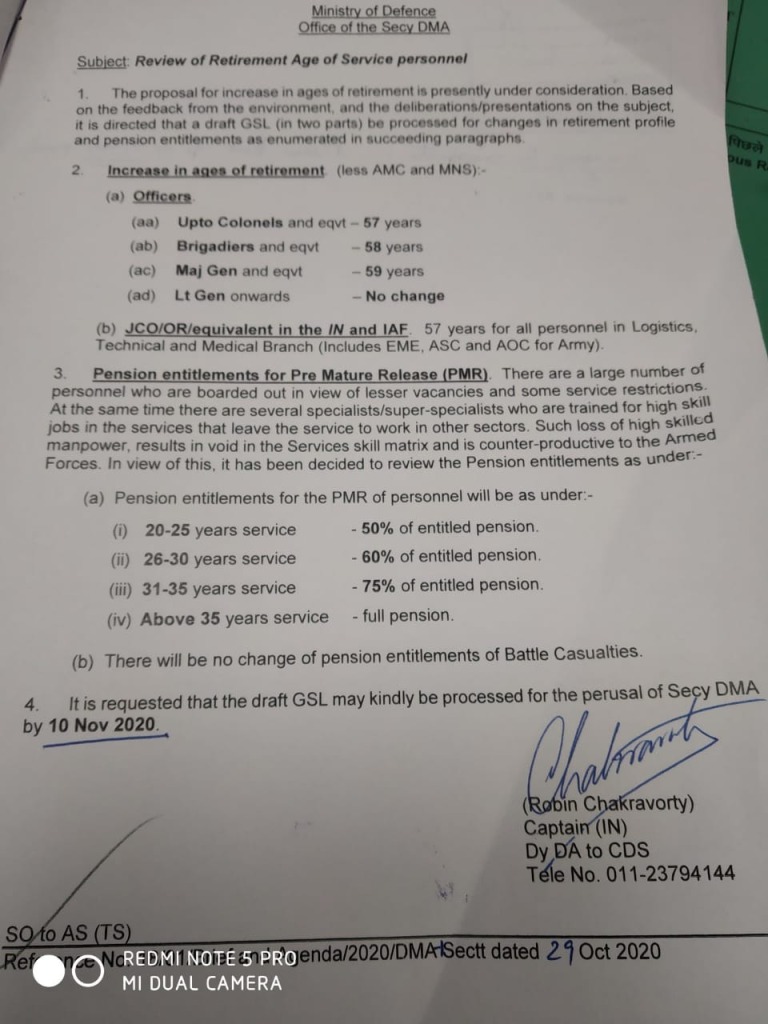
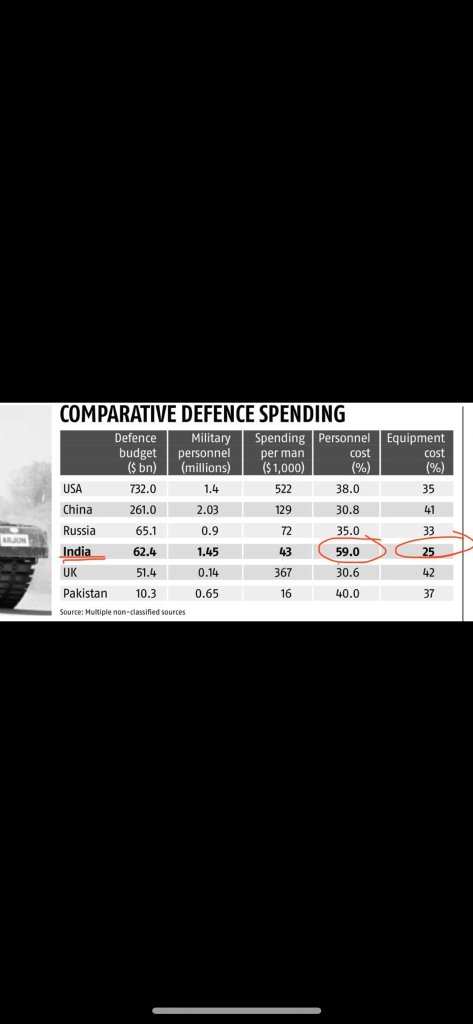


 After an unexpectedly short
 While our last release has matured for quite a little time, there
 Update 11/12/20 Came across this article on the wire which tells how everybody s


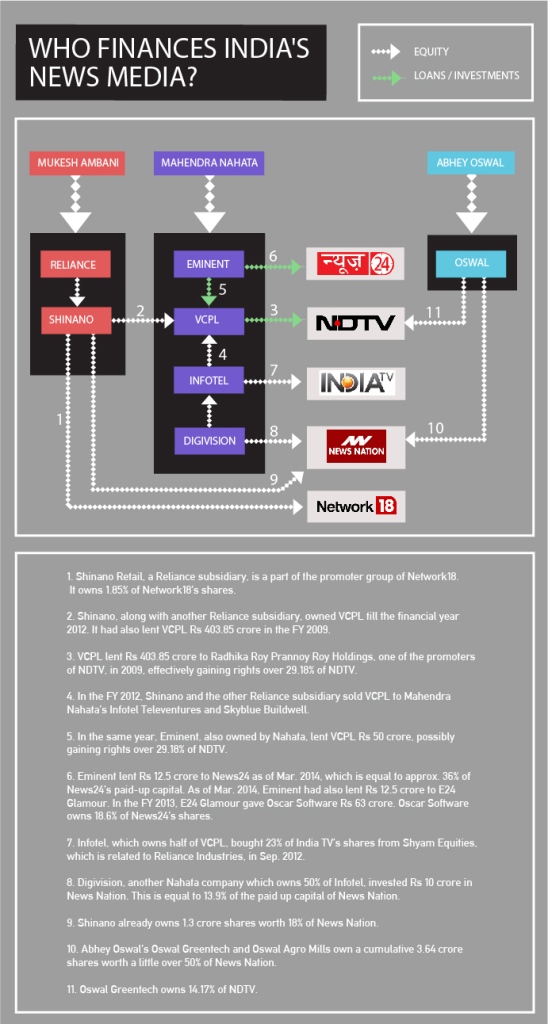
 Akarshan Uppal Reporter, IBN24 Copyright IBN24
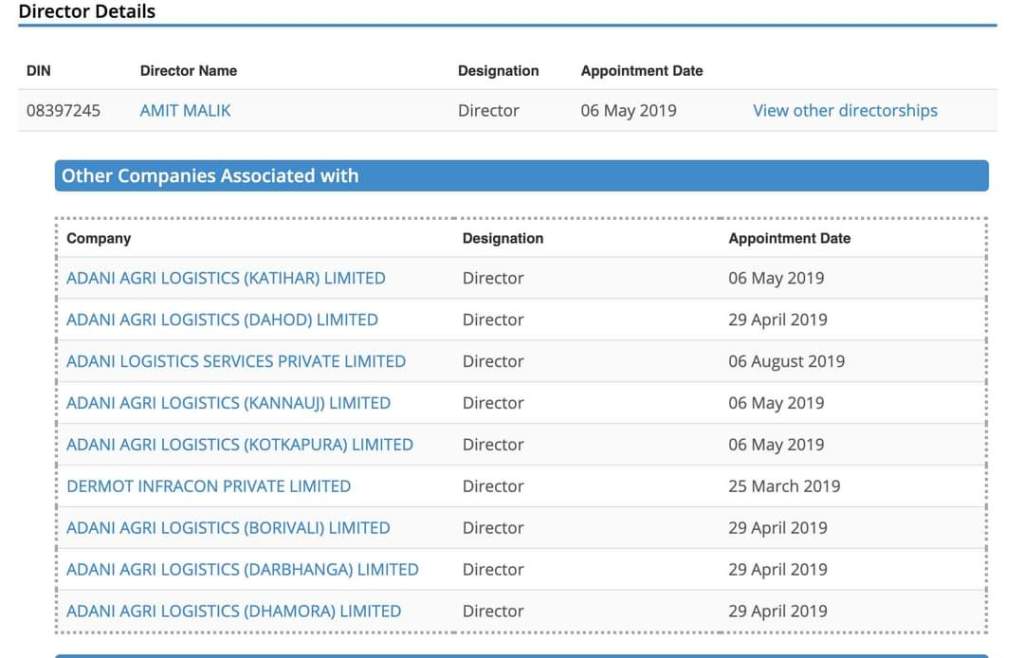
 The Linux Foundation has published its
 The PDF producer meta data for the annual report PDF has been set to "Linux kernel 0.12.1 for Workgroups" and the PDF creator meta data element to "Sharp Zaurus XR-5000 (Maemo5) Edition". Somebody thought to better hide the real data and had some tongue-in-cheek ideas. Kudos.
But nicer would have been to use Open Source software to produce the report, not?
Running

 In previous blog posts I talked about QEMU s qcow2 file format and how to make it faster.
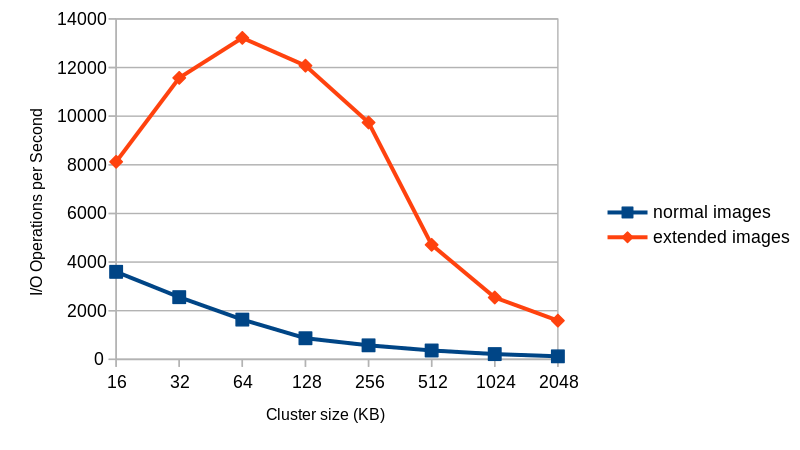

 Another month worth of updates on KDE/Plasma in Debian has accumulated, so here we go. The highlights are: Plasma 5.19.5 based on Qt 5.15 is in Debian/unstable and testing, Plasma 5.20.4 is waiting to be uploaded soon to experimental, and my own builds at OBS have been updated to Plasma 5.20.4, Frameworks 5.76, Apps 20.08.3.
 OBS packages
The OBS packages as usual follow the latest release, and currently ship KDE Frameworks 5.76, KDE Apps 20.08.3, and new, Plasma 5.20.4. The package sources are as usual (only the


 PTI News, Nov 27, 2020
