Search Results: "angel"

11 February 2013

Vasudev Kamath: CDBS Packaging : copyright file support

One of the thing CDBS provides is support for verifying / generating debian/copyright file. This feature will be help full if new files show up in newer releases. It can also be helpful to generate the first version of copyright file. But don't blindly follow this feature, you need to cross verify the things it generates. To use this feature add the following line to your debian/rules file first
include /usr/share/cdbs/1/rules/utils.mk 
 
Now create a file called debian/copyright_hints using touch command
touch debian/copyright_hints
Now run the following command to allow CDBS to do its magic and generate a new file called debian/copyright_newhints
DEB_MAINTAINER_MODE=1 fakeroot debian/rules build
As you see we set the variable DEB_MAINTAINER_MODE which means this is feature to help the maintainer rather than targeted for automatic builds. So if there is no new things added to the new release you should see something like this in the build log.
Scanning upstream source for new/changed copyright notices...
licensecheck -c '.*' -r --copyright -i '^debian/(changelog copyright( _hints _newhints))' -l '99999' *   /usr/lib/cdbs/licensecheck2dep5 > debian/co$
yright_newhints
19 combinations of copyright and licensing found.
No new copyright notices found - assuming no news is good news...
In case there are new files added you should get output similar to below
Scanning upstream source for new/changed copyright notices...
licensecheck -c '.*' -r --copyright -i '^debian/(changelog copyright( _hints _newhints))' -l '99999' *   /usr/lib/cdbs/licensecheck2dep5 > debian/co$
yright_newhints
0 combinations of copyright and licensing found.
Format: http://www.debian.org/doc/packaging-manuals/ 
Upstream-Name: FIXME
Upstream-Contact: FIXME
Source: FIXME
Disclaimer: Autogenerated by CDBS
...
To fix the situation please do the following:
  1) Fully compare debian/copyright_hints with debian/copyright_newhints
  2) Update debian/copyright as needed
  3) Replace debian/copyright_hints with debian/copyright_newhints
So as the last 3 points says you need to compare your copyright_hints and the newly generated file by CDBS copyright_newhints for difference and update the debian/copyright as required and replace the existing debian/copyright_hints with debian/copyright_newhints. Tips
  1. This feature can be used to generate the copyright file for the first time you need a copyright file with only debian/* copyright in it.
  2. If you are using it to generate copyright file for the first time be sure to cross verify the things mentioned in the file than just blindly copy pasting.
  3. If there are binary files like images are involved in your project be sure to clean up those from your copyright_hints before trying to build the package. Because of too much of binary cruft in any files means dpkg-source will be angry at you :-).
Last but not the least, I know CDBS provides some really cool features which we will explore with next few posts but always keep in mind this quote by Jonas. (Of course don't ask me to prove that Jonas did say it as there is no pgp signature of him with quote to verify ;-) )
CDBS is tool to help packagers and does not involve any magic.

7 February 2013

Joey Hess: Sydney nostalgia

Sydney opera house viewed from a ferry Last Saturday, when the bus from Canberra pulled into Sydney's central station, I found myself feeling curiously nostalgic for this city, and particularly this bustling and somewhat seedy[1] neighborhood of Haymarket and Redfern. glowing angels in Kimber lane I only spent 5 days in Sydney, but living in a shared house there, walking up to Central every day, and returning to the outskirts of the Haymarket every evening to slurp noodles or other asian food, I got into a routine. And got a sense of the place that goes perhaps a bit beyond the tourist sights. Manly beach panorama Perhaps if I'd had more time I would have found a decent coffee shop that had both free wifi and abundant seating. They seem scarce in Sydney. I instead often got on the ferry to Manly when I wanted some sit down and code time. Cliffside Protect Our Water Dragons sign
One time when I was exploring the headlands above Manly beach, I noticed this sign.
Then I ran into this guy. Click him for an amusing video.
lizard Anyway, Sydney is on my very short list of cities I'd actually enjoy spending some more time in some day, along with San Francisco, Vancouver, Oslo, and London.
[1] Depending on what's inside all the "VIP lounges" and "Thai massage parlours" on every corner that I did not explore, perhaps thoroughly seedy?

5 February 2013

John Goerzen: The Superbowl Pirate Bus

I ll forgive you for not noticing the bus full of pirates at the Superbowl. Because, well, unless you saw my 6-year-old, you have a pretty good excuse for missing it. I ll give you the Goerzen Superbowl play-by-play, just to make sure you re caught up. It involved pirates, cops, tractors, cookies, a card game, and yes, even troubles with HDMI. We were invited to a Superbowl party, and were going to bring a party snack. The boys love to help cook, and I try to give them choices. I started naming off potential snacks, starting with healthy options. They listened attentively, until I mentioned cookies. COOKIES! ***COOKIES!*** Yes, cookies! This reaction was, I must say, not exactly a surprise. Then I asked them what KIND of cookies. Jacob immediately knew what he wanted, so of course Oliver took a minute to come up with something else. No matter; we could make two kinds of cookies. Jacob, of course, picked a kind of cookie that needs cherries, while Oliver picked one that needs chocolate chips. Thus they both had opportunities to have a small taste of ingredients while we prepared the batter. And so make cookies we did. Plus a loaf of bread. Anyhow, once we got to the party, Jacob and Oliver saw a huge tub of Legos and were at it in a flash. One of Jacob s friends was pretending everything was a tractor, but it wasn t long before Jacob started in on his evening s project: building the largest bus he could build. He was pleased when he got 4 lego people into it. Even more happy when he got 10 into it. And by the time he figured out how to get 35 into it, he was quite proud of himself indeed. Oliver, meanwhile, in classic little brother fashion, tried to corner the market on surplus lego people. He appears to have the hardline negotiation skill down already, and perhaps is appreciating the value of artificial scarcity in the lego market <grin> Eventually the bus seemed to hit the limits of engineering and joint strength, and Jacob gave up for a little while. He had a cookie and some carrots, commented on the exciting game of Uno going on, ( Who is the loudest? All of them! ), brought me some carrots, and periodically commented that The ball team is ahead of the SF team. Sure is. They have more points! (This from the BAL and SF text on the screen.) And then he went back to playing. And here s where the pirates come in. Jacob s new bus had a lego flag that he decided was a pirate flag. So the bus was a pirate bus. He built a platform out the back for them to use to steal things . So his pirate bus went around the lego area, stealing this from one pile, stealing that from another, until it got almost as long as his first bus. Pretty soon, along came a police boat to chase the pirates. But the police boat appeared to suffer a humorous series of logistical failures and never could quite disrupt the pirates. But never mind that, for little brother Oliver was getting bored with the lego mountain he was building and decided it would be more fun if he would disrupt the pirates. An opinion that Jacob quite strongly disagreed with. When it was time to go, Jacob tried to extract a promise from the party hosts to not let anyone take apart the pirate bus until next time we would be there. Then this morning, Jacob and I had a discussion about pirates. Dad, are pirates real? Yes, Jacob, they are. Do they steal things? Yes, but they are far away. There are no pirates here. Are there pirates in Kansas? No. There are some pirates in Africa though. Oh. What state is Africa in? Africa is so far away that it isn t even in a state. You d have to take a boat or a plane to get there. Or a train! Nope, a train couldn t get across the ocean. It s too wide! They d build a bridge! It s too wide for a bridge. It s more than a thousand miles! WOW a thousand miles! Great! OK dad, it s time for me to get on that school bus!

25 January 2013

Josselin Mouette: So(lusOS) I herd U liek mudslingingz?

After this announcement about the future of GNOME in Debian, I received several requests to look at SolusOS and their Consort fork of GNOME. On the paper, this doesn t look like a too bad idea, since they only forked gnome-panel and metacity, the two key components that are no longer maintained upstream. Still, starting a plain fork at the very moment when the former maintainer decided to give the key to anyone who wanted to, looked like a very destructive way of acting. Even if the fork gains momentum (which remains speculative), the amount of effort to rename packages makes you think twice before such a switch. I decided to go talk about it with them on IRC nevertheless. Mind you, they work on a GNOME fork and a Debian derivative, but deliberately use their own IRC server (you ll soon understand why). Just in case you would want to cooperate with SolusOS, you d have to use their infrastructure. It is an euphemism to say that the conversation didn t go well. This could have ended there, but thankfully for your already widening eyes, Ikey (the charming person I had the opportunity to discuss with) made the log public, in an attempt at public shaming that would soon gather his followers, chanting out loud how the revolutionary SolusOS would quickly replace every other Linux distribution. (As a side note, of the hundreds of such claims that were made public in the last 10 years, only one came true, and it was from a billionnaire who hired dozens of developers. Just saying.) Then you can understand why the specific IRC server: it is to K-line people who don t behave with enough deference to Ikey, because kickban is not enough. This log and the claims made in the comments look very ironical, if only for presenting a person working in a team of 10+ on the most popular desktop on one of the most popular desktop distributions, as a beggar. Even more ironical when it is the person who spent the most time on making GNOME Classic available and working nicely for wheezy. So when a dozen kids go chanting that Consort is so much better than GNOME and will replace it, while it just re-does the work I already did, let me at least smile. So what is SolusOS, after all? If you want to see where this story is going, there s a place that tells you: the consortium and consort-panel repositories. Here you will find interesting things: I ve stopped looking there. We re facing an ego issue, but not something that can improve the desktop for our users. In the end, I m sorry for those who genuinely thought we could do better by sharing some maintenance load with SolusOS, but it doesn t look like a big loss anyway.

24 January 2013

Hideki Yamane: net-snmp package

Current net-snmp package maintainers are busy, so now I'm trying to update it. One of maintainers Jochen Friedrich kindly checked my experimental package (thank!), and point MIB files should be removed to upload to Debian out (at least).

Anyway, current changelog is here (a little bit long). If you want to try it, get dsc file and build it.


net-snmp (5.7.2~dfsg-1~0.1) UNRELEASED; urgency=low
* Non-maintainer upload.
* New upstream version 5.7.2 (Closes: #557348, #631063, #684388, #599929,
#673197, #581185, #558356, #568550, #514842, #445608, #557186, #411858,
#428824, #611837)
* debian/control
- set "Standards-Version: 3.9.4"
- set "Build-Depends: debhelper (>= 9)" to enable hardening
- set "Build-Depends: automake", instead of automake1.9
- drop "Build-Depends: python-central", use dh_python2 by default, instead
- remove duplicational "Priority:" and "Section:" fields
- make it "Multi-Arch" enable
- add description for non-free snmp-mibs-downloader for users' convinience
(Closes: #561124)
- add "Build-Depends: libmysqld-dev" to support MySQL
- add "Build-Depends: dh-autoreconf"
- use python-all (2.6.6-3~) instead of python-all-dev (>= 2.5.4-1~), python
(>=2.3.5-7) for Build-Depends
- add "Build-Depends: python2.7-dev"
- s/libsnmp-python/python-netsnmp/ as Python Policy compliant (Closes: #661899)
* debian/compat
- set 9
* debian/*.install
- split into *.manpages
* debian/fixman: drop it.
* debian/*.manpages (Closes: #505149)
- remove unnecessary"snmp" from tail of all man pages
* debian/libsnmp-base.install
- move /usr/share/mibs to /usr/share/snmp/mibs (probably, previous setting
was just wrong...)
- install all mibs/*.txt
* debian/libsnmp-dev.install
- change from "usr/lib/*" to "usr/lib/*/*" to deal with Multi-Arch
* debian/libsnmp30.install
- change from "usr/lib/*.so" to "usr/lib/*/*.so" to deal with Multi-Arch
* debian/snmp.dirs: remove it since unnecessary
* debian/snmpd.dirs: remove lintian overrides direcotry, add /etc/snmp
* debian/libsnmp-dev.dirs: add it
* debian/libsnmp-perl.examples: add it since dh_installexamples target in
previous debian/rules doesn't work correctly.
* debian/patches
- remove all *.README files
- add fix_typo_in_snmpd.conf.patch (Closes: #603593)
Thanks to Slavko <linux@slavino.sk>
- add fix_logging_option.patch (Closes: #616437)
- add fix_snmpcheck_perl_path.patch to provide snmpcheck (Closes: #44373)
- add net-snmp-config_multi-arch.patch to enable Multi-Arch
- add fix_regular_expression.patch enable to build under Multi-Arch
- add to snmptranslate.1.patch fix lintian "hyphen-used-as-minus-sign"
warnings
- add fix_spelling_error.patch to fix typo
- adjust and refresh 03_makefiles.patch
- drop 25_duplicate_iftable.patch and 44_nlist_kvm.patch since it cannot be
applied to current code.
- drop 32_mnttab_path.patch since it was merged to upstream as
configure.d/config_os_misc4
- drop 56_manpage.patch since most of patches are merged, and others are
unnecessary because upstream files are disappeared.
- refresh 61_vacm_missing_dependency_check.patch
- drop 63_fix_shell.patch since it was merged to upstream
- reapplied 64_missing_lib.patch since upstream source has been changed.
- drop 65_CVE-2012-2141.patch since it was merged to upstream
- drop 66_formatstrings.patch since almost merged to upstream, some of
code are changed in upstream and become unnecessary.
- move 08_defaultconfig.patch to debian/snmptrapd.conf
* debian/rules
- enable hardening
(TODO: building perl module would be failed without -pie)
- specify LDFLAGS to enable hardening
- add "--with autotools-dev,autoreconf"
- export DEB_BUILD_MAINT_OPTIONS to enable hardening
- drop "dh --with python-central" (Closes: #616913)
- drop "include /usr/share/python/python.mk"
- remove "$(PYVERS:%=debian/python-install-stamp-%)"
- move exist python targets under override_dh_install
- remove unnecessary .PHONY lines
- enable tests by removing no instructions with dh_auto_test line
- set DEB_HOST_MULTIARCH to enable Multi-Arch
- enable install snmpcheck
- don't specify to copy files but install them by using .install file
(mostly)
- enable mysql support
- enable AES support (Closes: #447705)
- don't make symlink for /usr/share/doc/libsnmp-perl since other are okay
but it has examples files.
- snmpd doc files link to libsnmp (Closes: #453124)
- adjust dh_strip for dbg package.
- adjust dh_clean target
- remove override_dh_auto_build since LD_RUN_PATH is clearly specified
during building perl modules
- add mibII/mta_sendmail to build modules (Closes: #641608)
* debian/clean
- most listed files are cared by autotools-dev, so removed.
* debian/snmp.conf: fix typo (Closes: #623499, #647468)
* debian/snmpd.init
- force remove pid files (Closes: #528104)

-- Hideki Yamane <henrich@debian.org> Wed, 18 Jul 2012 13:39:41 +0900

And if I can put it to Debian, then I hope someone will maintain it...

22 January 2013

John Goerzen: Today is Pretend St. Patrick s Day!

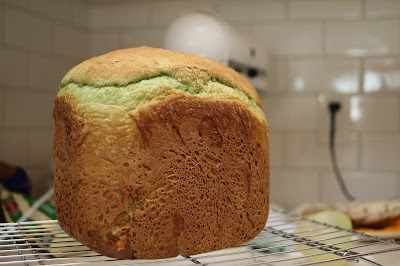
Today in the USA is Martin Luther King, Jr., day. But sometimes these holidays get confusing for a 6-year-old. I asked Jacob the other day if he knew what holiday was coming up. He thought about it for a second, then declared it would be St. Patrick s Day. He was excited because St. Patrick s Day is green. When he realized that it was really MLK Day, he was disappointed. That day isn t green. So I said, Jacob, how about we celebrate pretend St. Patrick s Day on Monday? His face lit up, he got a huge smile, and said, Oh yes! Great idea, dad! Oliver got all excited about it too. I was already planning on us doing some cooking, and thankfully had green food coloring already. So I sort of discarded my plans so each meal could have something green in it. When the boys woke up this morning, I wished each of them Happy Pretend St. Patrick s Day! We all wore green. Jacob put his shirt on backwards so the side with more green would be facing front. For breakfast, our green dish was green crepes with a succotash (based on baby lima beans and corn) filling. The boys were excited to discover that the crepes could be green on one side, and green and a little brown on the other. Jacob was unsure of the succotash idea, but after having a few bites, declared it excellent . After breakfast, we made bread. They loved watching the green food coloring disperse in the water. We checked on how green the dough looked periodically. We watched how it was rising and whether it was staying green. And we checked in on it backing, as the crust turned from green to brown. We discussed green bread over and over. Important questions were asked and answers were attempted. And then, of course, the moment of truth removing the loaf from the pan. The boys jabbered excitedly that there was some green peeking out. While we waited for it to cool, we went out to the creek. The creek is dry this year, so we got to walk in it. Jacob used his stick to make a line behind him. I asked him, Is that a line so we can find our way back? Oh! Uhm. Yes! And then he added arrows so we d know which way to go. Jacob stopped every 20 or so feet to collect pretend train tickets from Oliver and me. Oliver eventually grew tired of this, so Jacob started collecting Oliver s ticket from me. They climbed on some trees, managed to find some mud, drew outlines of train cars in the dirt, and then followed Jacob s line back down the creek bed. They pointed out any green things they saw. Then we went back to the house, took off our warm coats, and cut into the bread. Can you imagine the excitement? I hadn t realized green is a flavor, but it must have been somehow, because those boys absolutely loved this green bread. When we got out the jam, Jacob realized that it was red on the green bread, and that now his bread was Christmas-colored. All sorts of green bread discoveries were made, but the best among them was that if you hold a slice of green bread up to the bright sun, the sun makes it glow green and it looks like a stained-glass window. Sometimes a few drops of food coloring can add a ton of excitement to a day.

19 January 2013

Dirk Eddelbuettel: Sing The Truth at Symphony Center

Just back in from an amazing concert at the Chicago Symphony Center. Vocalists Angelique Kidjo, Dianne Reeves and Lizz Wright supported by all-star band of Geri Allen on piano, Romero Lubambo on electric and acoustic guitar, James Genus on electric bass guitar, Munyungo Jackson on percussion and Terri Lyne Carrington on drums (and musical director). The concert alternates between solos and joint pieces with more joy and soul than I heard in a long time. Great evening.

18 January 2013

Russ Allbery: Review: Soulless

Review: Soulless, by Gail Carriger
Series: Parasol Protectorate #1
Publisher: Orbit
Copyright: October 2009
ISBN: 0-316-07165-X
Format: Kindle
Pages: 357
Alexia Tarabotti is a spinster in London society in the time of Queen Victoria. She is possessed of a hopelessly overwrought and society-focused mother, two half-sisters whose only thoughts are for fashion and gossip, a mixed Italian heritage, an unpopular body shape and complexion, and a secret. In a world in which vampire hives, werewolf packs, and the occasional ghost are out of hiding and openly participating in society, and where the Bureau of Unnatural Registry (headed by a particularly intimidating werewolf who is also an earl) keeps track of the undead, Alexia is something still rarer, and not entirely acceptable. She is preternatural, able to draw the supernatural out of the undead with a touch. She has no soul. In Carriger's Victorian urban fantasy, laced with a gentle helping of steampunk, vampires, werewolves, and ghosts all have similar conditions. All three are undead; even the change for werewolves happens after normal death. But the change doesn't happen to everyone killed by the corresponding type of undead. The requirements are quite exacting and include the quantity of soul in the person being changed. Only those with a surfeit of soul, too much to stay dead, can be successfully changed. Vampires and werewolves both are surrounded by hopeful humans, called drones and clavigers respectively, who hope to be transformed and gain immortality. But no one can tell in advance how much soul someone has. Alexia is the precise opposite of the undead. Rather than a surfeit of soul, she has none at all, a condition inherited from her father but unknown to the rest of her family. Her kind, the preternatural, make up the vampire and werewolf hunters of legend, called soul-suckers, curse-breakers, and exorcists by the supernatural set. She's viewed with great suspicion by most, but with fascination by some for her ability to revert them to humanity with physical contact. Not that this has been helpful in finding a husband, or, really, for much of anything else in her life. Soulless opens with Alexia being accousted by a rogue vampire in the library, where she went for refuge from a private ball. Not only does he not know who she is, despite every hive in the area telling all of their new vampires about her, but he doesn't seem to even know what a preternatural is, and she has to kill him with her parasol. That is the first unusual occurance in an escalating mystery involving new vampires appearing from nowhere, loner vampires and werewolves disappearing, and a truly prodigious use of chloroform. Not to mention quite a few encounters with Lord Maccon, Earl of Woolsey, the Alpha werewolf who runs the Bureau of Unnatural Registry. The start of Soulless feels a bit uneven and stilted until the story gets moving and the reader gets used to Carriger's voice. It's written in the style of a comedy of manners and takes delight in long words and a semi-formal style. For example:
The vampire recovered his equanimity quickly enough. He reared away from Alexia, knocking over a nearby tea trolley. Physical contact broken, his fangs reappeared. Clearly not the sharpest of prongs, he then darted forward from the neck like a serpent, diving in for another chomp. "I say!" said Alexia to the vampire. "We have not even been introduced!"
Sometimes this works. Sometimes it doesn't. The frequency with which it works seemed to me to increase as the book went along. The best thing this book has going for it is the character of Alexia Tarabotti. Rather than the typical kick-ass female protagonist of a modern urban fantasy novel, Alexia is not cynical, battle-hardened, or courageously sarcastic. Her attitude for most of the book is something closer to bemusement crossed with exasperation. She sees herself as an outsider, has largely given up on fitting into any sort of proper society, and has little use for the expectations of her family. But she's still embedded within her culture, still shocked (at least momentarily) by breaches in etiquette, and quite able to fit in, if a bit uncomfortably. Her delightfully logical tone and constant open-minded self-analysis is what made this book for me. The plot is fairly straightforward (and has a bit too much anti-science flavor for me). The romance angle, which is reasonably obvious from early on in the book, was entertaining mostly in Alexia's combination of thoughtful analysis (based in part on her father's extensive and not entirely acceptable library) and runaway physical reactions, although I thought the latter was slightly overdone. But all the elements of the story improve noticably towards the end of the book. I was unenthused by the halfway point, but by the time I finished Soulless, I decided I would probably read the sequel. This is more in the enjoyably fun reading pile than a book that I would go to great effort to acquire, and it has a somewhat rocky start, but I enjoyed it and would mildly recommend it. Followed by Changeless. Rating: 7 out of 10

9 January 2013

Daniel Kahn Gillmor: universally accessible storage for the wary user

A friend wrote me a simple question today. My response turned out to be longer than i expected, but i hope it's useful (and maybe other people will have better suggestions) so i thought i'd share it here too: Angela Starita wrote:
I'd like to save my work in a location where I can access it from any computer. I'm wary of using the mechanisms provided by Google and Apple. Can you suggest another service?
Here's my reply: I think you're right to be wary of the big cloud providers, who have a tendency to inspect your data to profile you, to participate in arbitrary surveillance regimes, and to try to sell your eyeballs to advertisers. Caveat: You have to trust the client machine too But it's also worth remembering that the network service provider is not the only source of risk. If you really mean "accessing your data from any computer", that means the computer you're using to access the data can do whatever it wants with it. That is, you need to trust both the operator of these "cloud" services, *and* the administrator/operating system of the client computer you're using to access your data. For example, if you log into any "secure" account from a terminal in a web caf , that leaves you vulnerable to the admins of the web caf (and, in the rather-common case of sloppily-administered web terminals, vulnerable to the previous user(s) of the terminal as well). Option 0: Portable physical storage One way to have your data so that you can access it from "any computer" is to not rely on the network at all, but rather to carry a high-capacity MicroSD card (and USB adapter) around with you (you'll probably want to format the card with a widely-understood filesystem like FAT32 instead of NTFS or HFS+ or ext4, which are only understood by some of the major operating systems, but not all). Here is some example hardware: Almost every computer these days has either a microSD slot or a USB port, while some computers are not connected to the network. This also means that you don't have to rely on someone else to manage servers that keep your data available all the time. Note that going the microSD route doesn't remove the caveat about needing to trust the client workstation you're using, and it has another consideration: You'd be responsible for your own backup in the case of hardware failure. You're responsible for your own backup in the case of online storage too, of course -- but the better online companies are probably better equipped than most of us to deal with hardware failure. OTOH, they're also susceptible to some data loss scenarios that we aren't as individual humans (e.g. the company might go bankrupt, or get bought by a competitor who wants to terminate the service, or have a malicious employee who decides to take revenge). Backup of a MicroSD card isn't particularly hard, though: just get a USB stick that's the same size, and regularly duplicate the contents of the MicroSD card to the USB stick. One last consideration is storage size -- MicroSD cards are currently limited to 32GB or 64GB. If you have significantly more data than that, this approach might not be possible, or you might need to switch to a USB hard disk, which would limit your ability to use the data on computers that don't have a USB port (such as some smartphones). Option 1: Proprietary service providers If you don't think this portable physical storage option is the right choice for you, here are a couple proprietary service providers who offer some flavor of "cloud" storage while claiming to not look at the contents of your data: I'm not particularly happy with either of those, though, in part because the local client software they want you to run is proprietary, so there's no way to verify that they are actually unable to access the contents of your data. But i'd be a lot happier with either wuala or spideroak than i would be with google drive, dropbox, or iCloud. Option 2: What i really want I'm much more excited about the network-accessible, free-software, privacy-sensitive network-based storage tool known as git-annex assistant. The project is spearheaded by Joey Hess, who is one of the most skilled and thoughtful software developers i know of. "assistant" (and git-annex, from which it derives) has the advantage of being pretty agnostic about the backend service (many plugins for many different cloud providers) and allows you to encrypt your data locally before sending it to the remote provider. This also means you can put your encrypted data in more than one provider, so that if one of the providers fails for some reason, you can be relatively sure that you have another copy available. But "assistant" won't be ready for Windows or Android for several months (builds are available for Linux and Mac OS X now), so i don't know if it meets the criterion for "accessible from any computer". And, of course, even with the encryption capabilities, the old caveat about needing to trust the local client machine still applies.

7 January 2013

Russ Allbery: faq2html 1.31 and VCS migrations

faq2html is my version of that script that so many different people have written: a tool to convert text files into HTML for the web. This script is specifically tuned to the way that I format text files and has a lot of special logic to deal with my eccentricities, so I have no idea how well it would work for anyone else. This release adds a new -l option, which says to add a subheading to the HTML output giving the last modified date based on the file modification timestamp. Previously, these subheadings were only added in some situations and based on RCS/CVS-style Id keywords in the file. Since I'm converting my personal repositories to Git, that was going to stop working. You can get the current version of faq2html from my web tools distribution page. With this update, I was able to convert my FAQs repository from Subversion to Git, which means that I only have one personal repository left in Subversion (PGP::Sign, which I will probably convert to Git shortly). That leaves a few CVS repositories, and therein lies a problem. There are a few places where I'm still using CVS for a conventional package or for some random files, and those can move to Git without much trouble whenever I get around to it. But most of my remaining use of CVS is for storing individual scripts that, if I distribute them at all, I distribute individually. And, for that, CVS seems to have a lot of advantages that are hard to implement with Git: I'm not at all sure what I'm going to do about this. Some of my scripts currently maintained in CVS, such as all the AFS tools, should move into larger packages that are more conventionally distributed, with a separate README file and similar machinery, and I'm slowly in the process of doing that. But many of my scripts are small programs that don't fit into any larger whole and don't warrant that sort of treatment. Honestly, I'm moderately tempted to just keep using CVS for scripts, since everything newer goes to repository-wide instead of per-file version numbers (for exceptionally good reasons when working on a unified piece of software, rather than a conglomeration of individual scripts), and I'm unenthused about writing my own machinery using Git hooks and smart Git log and diff parsing. But the CVS command-line interface is awful and the CVS repository format is even worse. If there are any brilliant ideas that I'm missing, I'd be interested in hearing about them in email (or other blog posts on Planet Debian or somewhere else I read). If I come up with some solution or get any great advice, I'll post a follow-up.

4 January 2013

Russ Allbery: cl2xhtml 1.10

cl2xhtml converts GNU ChangeLog files to XHTML for (hopefully) pretty web display. After making the most recent Term::ANSIColor release, I noticed that it didn't support the multi-author ChangeLog convention. This is not in the GNU standards, but it's become conventional to note changes by multiple authors with the syntax:
2013-01-03  Some Author <author@example.com>
            Another Person <person@example.com>
        * file.c: Some change.
cl2xhtml now understands that syntax, including with more than two authors, and turns it into a list of authors on the HTML page separated with commas and "and" as needed. You can get the latest version of cl2xhtml from my web tools page.

29 December 2012

Mike Hommey: Firefox in Debian?

Got your attention? Don t hold your breath, we re not there yet, but we re a step closer: it s now possible to build Firefox from the Iceweasel package, since version 17.0.1-2 in experimental as of writing, 18.0~b6-1 from the iceweasel-beta repository, or 19.0~a2+20121228042015-1 from the iceweasel-aurora repository. Before letting you know how you can get yourself a packaged Firefox based on the Iceweasel source, I ll remind you that redistribution of Firefox packages requires a trademark license from Mozilla, so please keep the packages you build for yourself for now. That being said, now it s clear that such Firefox packages are not official, you can still test them for yourself. First download the Iceweasel source version of your liking, and extract it, then rename all source files from iceweasel_* to firefox_* (rename s/iceweasel/firefox/ iceweasel_* should do it). Edit debian/changelog so that the first line reads:
firefox (x.y.z-r) distribution; urgency=low
instead of:
iceweasel (x.y.z-r) distribution; urgency=low
and run the following command:
$ debian/rules debian/control
Now you re all set. You can build the package the usual way. Note there are a few differences between the xulrunner packages you get from building Iceweasel vs. from building Firefox that need to be addressed, and a few other details to sort out.

John Goerzen: Milk, Cookies, and Delight

Sometimes an attic is all it takes to delight children. This afternoon, the boys and I made cookies. Jacob has been talking about setting out milk and cookies for Santa Claus for several days, and of course the fact that we had made cookies reminded him of this as I figured it would. So after the boys got into their pajamas and all ready for bed, we set out milk and cookies for Santa. The boys have always known that Santa is pretend, but love the stories and traditions anyhow. Never mind that Christmas was 3 days ago, and they ve already opened their presents. It s SANTA! It s magic! It doesn t matter! I asked Jacob, Would you like me to pretend to be Santa tonight? A big grin, then Oh yes, dad! Do it! So after I read them their bedtime story, sang them a song (Jacob chose a Latin hymn that s my boy!), and tucked them into bed, I pretended to be Santa. I went back downstairs. I drank the milk and ate the cookies. Then I went to my small future present stash, selected a few small items, and put them under the tree. I gave it a few minutes. Then I crept up to the attic. I snuck along the wood floors quietly, until I was above the boys room. Then I jumped. And I scraped a wood chair along the floor. And then I yelled out HO HO HO! Merry Christmas! I had a brief conversation with Rudolph, then made some sliding noises. I was silent for a few seconds, then made some more noise and said, Wow, Rudolph, Jacob and Oliver left some great milk and cookies! Let s go deliver the rest of our presents! And made some vague sleigh taking off from the roof of a house noises. I crept back down the stairs. I put my ear to the outside of the closed door to the boys bedroom. I heard Jacob excitedly jabbering, He said milk and cookies! He liked them! He really liked them! Ooo butterfly, he was here! (Butterfly is a stuffed, er, butterfly that he sleeps with.) I gave it a minute or two, then I went in. Jacob, did you hear something? Yes! What was it? Well, it was a loud thud! I sat straight up like this. [ he demonstrates ] Then I heard ho ho ho ! And milk and cookies ! And I was excited like this! [ more demonstrations ] What do you think happened? I don t know! Dad, what did you do? I told him. It only increased his delight. Did it sound like Santa s sleight landing? (annoyed) No, dad. It sounded like a crash. (brightening) And then Santa coming down the chimney with presents! Oh, it is so exciting! (We don t have a chimney) It was still magical, even though he knew exactly what happened. For his part, Oliver slept through it all. He will still discover the empty plate, empty cup, and slightly less empty area underneath the tree. And neither boy knows about the thank you note from Santa yet. I anticipate smiles in the morning!

26 December 2012

Rudy Godoy: s3tools Simple Storage Service for non-Amazon providers

One of the nicest developments in the cloud arena is the increasing adoption of standards, this of course will impact on maturity and market confidence on such technologies. Amazon, as one of the pioneers, made a good choice on their offering design by making their API implementation public. Now, vendors such as Eucalyptus private/hybrid cloud offering and many other providers can leverage and build upon the specs to offer compatible services without the hassle for their customers to learn a new technology/tool. I ve bare-metal servers siting on Connectria s data-center. A couple of months ago I ve learned about their new cloud storage offering. Since I m working a lot on cloud lately I checked the service. It s was nice to learn they are not re-inventing the wheel but instead implementing Amazon s Simple Storage Service (S3) de-facto standard for cloud storage. Currently there are many S3-compatible tools available both FLOSS and freeware/closed source (Connectria provides a nice list of them). I ve been using s3tools, which is already available in the Debian archive, to interact with S3-compatible services. Usage is pretty straightforward. For my use case I intend to store copies of certain files on my provider s S3 service. I ll need to create buckets to be able to store files. For the ones not very familiar with S3 terminology buckets can be seen as containers or folders (in the desktop paradigm). First thing to do is configure your keys and credentials for accessing S3 from your provider. I do recommend you to use the --configure option to create the $HOME/.s3cfg file because it will put all the available options for a standard S3 service, leaving you the work of just tweaking them based on your needs. You can go and create the file all by yourself if you prefer, of course.
$ sudo aptitude install s3cmd
$ s3cmd --configure
Enter new values or accept defaults in brackets with Enter.
Refer to user manual for detailed description of all options.
Access key and Secret key are your identifiers for Amazon S3
Access Key:
...
You ll be required to enter the access key and the secret key. You ll be asked for a encryption password (use only if you plan to use this feature). Finally, the software will test the configuration against Amazon s service. Since this is not our case it will fail. Tell the configuration instead to not retry configuration and say Y to Save configuration. Now, edit the $HOME/.s3cfg file and set the address for your private/third-party S3 provider. This is done here:
host_base = s3.amazonaws.com
host_bucket = %(bucket)s.s3.amazonaws.com
Change s3.amazonaws.com to your provider s address and the host_bucket configuration also. For my case I had to use:
host_base = rs1.connectria.com
host_bucket = %(bucket)s.rs1.connectria.com
Now, save the file and test the service by listing the available buckets (of course there is none yet).
$ s3cmd ls
If you don t get an error then the tool is properly configured. Now you can create buckets, put files, list, etc.
$ s3cmd mb s3://testbucket
Bucket 's3://testbucket/' created
$ s3cmd put testfile.txt s3://testbucket
testfile.txt -> s3://testbucket/testfile.txt [1 of 1]
8331 of 8331 100% in 1s 7.48 kB/s done
$ s3cmd ls s3://testbucket
2012-12-26 22:09 8331 s3://testbucket/testfile.txt

Gunnar Wolf: Brazilian electronic booths hacked in a real election Surprised, anyone?

Doing my regular news scan, I stumbled across this: Hacker reveals in Rio how he rigged an election (in Portuguese; you can try the Google-translated version). Why am I reposting this? Because, even after the reported studies by Diego Aranha and the information disclosure exploited by Sergio Freitas, Brazil is still portrayed as the biggest example on how electronic voting can be 100% secure and tamper-proof. Well, in this case, Rangel (his full name ahs not yet been disclosed), a 19 year old hacker, not only demonstrated how elections could be rigged, but admitted on doing so together with a small group, and even pointed at who was benefitted from this. Rangel's attack was done during the transmission phase After ~50% of the electoral results had been sent over the Oi network. And yes, the provider will most likely close the hole that was pointed at, but this basically shows (again!) that no system can be 100% tamperproof, and that the more electronic devices are trusted for fundamental democratic processes, the more we as a society will be open to such attacks. The security-minded among us will not doubt even for a second that, as this attack was crafted, new attacks will continue to be developed. And while up to some years ago the attack surface was quite smaller (i.e. booths didn't have a communications phase, just stored the votes, and communication was done by personal means), earlier booths have been breached as well. And so will future booths be breached. So, the news of this attack are indeed very relevant for the field. The presentation I am quoting was held around two weeks ago And December will surely dillute attention from this topic. Anyway, I will look for further details on the mechanism that was used, as well as to the process that follows in the TSE (Supreme Electoral Tribunal). I hope we have news to talk about soon!

23 December 2012

John Goerzen: Glockenklang, Forever

Jacob (and Oliver too, somewhat) has taken quite the interest in Christmas music this year. Perhaps it s singing in the choir at school, or perhaps it s just him getting older, but in any case, Christmas music fascinates him. And no song more than Jingle Bells. I have recordings of it by several artists in different styles, and he has his favorites and often wants to hear them again and again. The other night at supper, he said, Dad, can you sing Jingle Bells in German? Kind of a random question. I normally try to keep books and devices of all sorts away from the table, but my son had just asked me to sing. In German. I don t believe that had ever happened before, so I wasn t going to say no! I got my tablet, pulled up Google, and found some German lyrics. Not exactly a translation, but it fit the tune, so that s what counts. So I started singing, and when I got to the chorus, and sang Oh, Glockenklang, Glockenklang both boys bust up laughing. They thought Glockenklang was a hilarious word, and loved to hear it. Oliver requests I sing Glockenklang every so often now. He has this eager anticipation when he does it, as if he knows I m going to be hilarious so much so that he almost starts laughing before I even say a word. Then yesterday at breakfast, Jacob requested more German songs. I finally got a couple of hymn books (one of which, Gesangbuch mit Noten, really is a German songbook). I sang some songs in German for the boys, while they enjoyed their blueberry crepes. Sadly Stille Nacht and O du fr hliche did not prove as hilarious as Glockenklang, but they got impatient as I looked through the idnex between each song, saying Dad, just sing more German! Don t look at those pages! So I guess it was a hit. I m not sure where this sudden fascination with German music came from, but it appears to be leaving me hungry. While driving around, Oliver requested I sing Glockenklang in the car. I said yes, despite not remembering even one German word to that song except for, well, Glockenklang. So I just filled in with some random German words I do know. Fortunately, they didn t seem to have memorized the rest of it either. The other day, we went to the annual Christmas concert at the local high school. It was perfect for the boys various styles of music, an interesting old auditorium, nobody was going to care if they weren t perfectly quiet, and the price was right, too. The band played first, and both boys sat there, paying great attention, soaking it all in. They loved the cymbal crashes and Jacob seemed to dream of playing the chimes and bells. At one point, I whispered to Jacob that I could feel the timpani on the wood floor in the auditorium, and he tried it, and made his Hmm, I just learned something interesting! reaction. As is tradition, the concert concluded with singing the Hallelujah Chorus and anyone in the audience that wants to sing is invited on stage to join the choir. I remember being in high school for that concert, and after practicing it in school, the great fun of being joined by many powerful voices from the community all around me on the risers. So this time, while my parents stayed with the boys, I was one of the many that went up to join the choir. It was no less thrilling all these years later. Ending with Forever and ever, Hallelujah, Hallelujah. Hallelujah! , and feeling it, right then, put a huge smile on my face.

Cyril Brulebois: d-i hacking recipe #3: Debugging debconf

Problem #3: How to find out what s going on with debconf? Slightly longer version: As reported in #679327, the grub prompt during the installation process is entitled Configuring man-db , which isn t exactly great. Given man-db is a known dpkg trigger, I suspected this would be the reason for the broken title, and here s how I debugged it. For starters, using d-i basically means asking a lot of questions, which is implemented using the debconf mechanism. One should note that two implementations are available:
  1. the historic implementation, in Perl: debconf
  2. the C reimplementation: cdebconf
d-i uses cdebconf udebs, but joy begins when packages get installed in /target: debconf is used there. We ll see why that matters. Recipe #3: Set DEBCONF_DEBUG=developer and read logs!
  1. Both implementations support the DEBCONF_DEBUG environment variable. The installer supports passing that as a kernel parameter; example from the syslinux prompt: select the Graphical install entry, press Tab , remove -- quiet and put DEBCONF_DEBUG=developer there instead.
  2. Let s look at /var/log/syslog; there s a tail -f on it in VT4, but one can run grep and friends on it in VT2 or VT3. There, one can see what happens at the debconf level (the debconf protocol is documented in debconf-devel(7)). Tiny excerpt (timestamps removed for clarity):
    frontend: --> GET preseed/early_command
    frontend: <-- 0
     
    frontend: --> GET debian-installer/framebuffer
    frontend: <-- 0 true
     
    debconf: --> GET debconf/language
    debconf: <-- 0 en
    debconf: --> SET debconf/language en
    debconf: Setting debconf/language to en
    debconf: <-- 0 value set
    debconf: --> GET debconf/priority
    debconf: <-- 0 high
    debconf: --> GET rescue/enable
    debconf: <-- 0 false
    
  3. The interesting point was titles, right? So let s look at the last TITLE occurrences:
    debconf: --> SETTITLE debian-installer/main-menu-title
    debconf: --> SETTITLE debian-installer/grub-installer/title
    in-target: debconf (developer): ----> TITLE Configuration de man-db
    debconf: --> TITLE Configuration de man-db
    in-target: debconf (developer): <-- TITLE Configuration de man-db
    in-target: debconf (developer): ----> TITLE Configuration de man-db
    in-target: debconf (developer): ----> TITLE Configuration de grub-pc
    debconf: --> TITLE Configuration de grub-pc
    in-target: debconf (developer): <-- TITLE Configuration de grub-pc
    in-target: debconf (developer): ----> TITLE Configuration de grub-pc
    in-target: debconf (developer): ----> TITLE Configuration de man-db
    debconf: --> TITLE Configuration de man-db
    in-target: debconf (developer): <-- TITLE Configuration de man-db
    in-target: debconf (developer): ----> TITLE Configuration de man-db
    in-target: debconf (developer): ----> TITLE Configuration de grub-pc
    debconf: --> TITLE Configuration de grub-pc
    in-target: debconf (developer): <-- TITLE Configuration de grub-pc
    in-target: debconf (developer): ----> TITLE Configuration de grub-pc
    debconf: --> SETTITLE debian-installer/grub-installer/title
    
    Bad news: the last one is about grub, so the title should be correct, right?
  4. At this point, it might be the Gtk frontend behaving strangely. It s shipped in cdebconf-gtk-udeb, built from the cdebconf source. Let s look:
    • src/modules/frontend/gtk/ui.c has cdebconf_gtk_update_frontend_title(), which does what the function name suggests.
    • src/modules/frontend/gtk/di.c has cdebconf_gtk_di_run_dialog(), which calls the first function.
    • src/modules/frontend/gtk/progress.c has cdebconf_gtk_show_progress() (also calls the first function), which comes with the following comments:
      /** Show the progress widgets.
        *
        * This will actually add the widgets to the corresponding containers.
        * The main title saved when starting the PROGRESS operation will be restored
        * from the value saved when START was called.  This is needed when GO is
        * called during a PROGRESS operation.
      
    Now that s something! Even if the last entry is about grub, some previous value could be restored and could be the reason for the bad behaviour (that is easily confirmed by adding some debug_printf() calls on fe->title in cdebconf, thanks to an extra "debug.h" include). Maybe that s what needs fixing!
  5. Now it s time to take a step back. A d-i environment is nice, but testing things can easily become a burden. Taking a random wheezy or sid chroot, and installing/removing a tiny package shipping a manpage should be enough to run into the man-db trigger. Exporting DEBCONF_DEBUG=developer there too, let s either install or remove x11-apps (the trigger does the same job, and the debconf trace is the same), here s the output:
    Processing triggers for man-db ...
    debconf (developer): frontend started
    debconf (developer): frontend running, package name is man-db
    debconf (developer): starting /var/lib/dpkg/info/man-db.config configure /usr/share/man
    debconf (developer): <-- VERSION 2.0
    debconf (developer): --> 0 2.0
    debconf (developer): <-- INPUT medium man-db/install-setuid
    debconf (developer): --> 30 question skipped
    debconf (developer): <-- GO
    debconf (developer): --> 0 ok
    debconf (developer): starting /var/lib/dpkg/info/man-db.postinst triggered /usr/share/man
    debconf (developer): <-- VERSION 2.0
    debconf (developer): --> 0 2.0
    debconf (developer): <-- GET man-db/auto-update
    debconf (developer): --> 0 true
    
    Even if one didn t know about the cdebconf/debconf thing, the frontend started bit in the d-i syslog would have been the key: it s only found in debconf, in the frontend script. That one has several ways to determine the package being acted on, and it finally calls:
    debug developer => "frontend running, package name is $package";
    $frontend->default_title($package) if length $package;
    
    Tada, that s likely to be the issue.
  6. Tweaking that frontend script, it s easy to make sure that the code path for this use case is:
    elsif ($ARGV[0]=~m!^.*/(.*?)\.(?:postinst postrm prerm)$!)  
            $package=$1;
     
    
    Since $ARGV[1] is the action being passed to the maintainer script, one can intercept the triggered action, and avoid emitting a title update in this case; I ve therefore reassigned #679327 to the debconf package, and proposed a patch implementing that, which Joey Hess seems to find reasonable.
In my message to the bug report I wrote I actually tested it in a d-i environment, and made sure the issue had gone away. How I did that will likely be described in the next d-i hacking recipe.

22 December 2012

Bartosz Fe&#324;ski: Two full-time days to work on Debian

My current employer as a benefit offers two days of paid volunteer time every calendar year. In September I decided to devote this time for Debian project. It wasn t easy to convince HR and my manager (hi Gloria ;) ) that such activity can be considered as volunteering but I eventually did it! So last Thursday and Friday were days I could spent working on my packages and other stuff related to Debian ;) Let s talk about effects. 5 packages updated, 16 bugs closed, more than 50 lintian warnings/errors solved. Here goes changelogs from updated packages:
calcurse (3.1.2-1) unstable; urgency=low
* The Akamai Technologies paid volunteer days release.
* Package made from scratch (this was funny experience):
- uses new quilt source format
- uses new copyright format
- uses debhelper compatibility level 9 w/hardening options
- uses the newest Standards-Version
* New upstream version:
- supports UTF8 (Closes: #558671)
- hopefully fixes problem with accented characters (Closes: #466010) -- Bartosz Fenski <fenio> Thu, 20 Dec 2012 13:51:08 +0100 httpie (0.3.1-1) unstable; urgency=low * The Akamai Technologies paid volunteer days release.
* Includes manual page (Closes: #673067)
Courtesy of Khalid El Fathi <khalid>. Thanks!
* New upstream version. (Closes: #693810)
- handles binary transfers properly (Closes: #689974) -- Bartosz Fenski <fenio> Thu, 20 Dec 2012 14:27:59 +0100 skipfish (2.10b-1) unstable; urgency=low * The Akamai Technologies paid volunteer days release.
* New upstream version.
* Bumped Standards-Version (no changes needed).
* Various path fixes because of upstream changes.
* Added new libpcre3-dev build dependency.
* Totally rewritten copyright file to comply with new copyright standard. -- Bartosz Fenski <fenio> Thu, 20 Dec 2012 14:59:36 +010 ipcalc (0.41-3) unstable; urgency=low * The Akamai Technologies paid volunteer days release.
* ACK previous NMU, thanks Christopher!
* Documents some missing features in the manpage (Closes: #588143)
Thanks Tanguy Ortolo <tanguy>!
* Fixes other minor problems in manpage (Closes: #688148)
* Description now says it's tool IPv4 only (Closes: #628955)
* Fixes lack of </table> tag when printing supernets (Closes: #600251)
* The following changes are courtesy of Jari Aalto <jari.aalto>:
- Remove deprecated dpatch and upgrade to packaging format "3.0 quilt".
- Update to Standards-Version to 3.9.3 and debhelper to 9.
- Add build-arch and build-indep targets; use dh_prep in rules file.
- Patch 03: update with "quilt refresh" to make it apply cleanly.
Thanks to these changes (Closes: #670737) -- Bartosz Fenski <fenio> Fri, 21 Dec 2012 12:30:11 +0100 netw-ib-ox-ag (5.39.0-1) unstable; urgency=low * The Akamai Technologies paid volunteer days release.
* New upstream version.
* Uses Homepage header. (Closes: #615219, #615294, #615321, #615436, #645522)
* Bumped Standards-Version (no changes needed).
* Switch to dpkg-source 3.0 (quilt) format)
* Fixes FTBFS on s390x and sparc64 (Closes: #639493)
* Fixes 29 (sic!) lintian warnings/errors thus many small changes
in packaging scripts.
-- Bartosz Fenski <fenio> Fri, 21 Dec 2012 15:38:29 +0200
Despite this I did something else. I sent end of the world joke-mail to debian-mentors mailing list stating (ignore the fact that my own server marked me as spammer; fixed already ;P) that I m going to review and try to upload every package that will be send to me during end-of-the-world day.
That action was quite successful although no package has been uploaded yet. I reviewed 4 of them and two more are yet to come. So it looks that these two days sponsored by Akamai motivated me enough to spent few more days or even months and help other people to contribute to Debian. Thank you Akamai!

John Goerzen: Faces

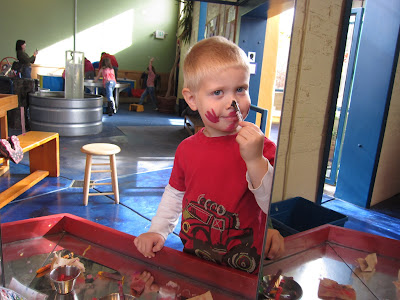
A couple of weeks ago, I walked in to a nice, sit-down restaurant, with a smile on my face. It s the kind of restaurant with folded cloth napkins on the tables. Table for three, please as Jacob and Oliver were with me. This much isn t unusual. I have periodically taken them out to eat for quite some time, and they enjoy it. But there were a few unusual things about this particular day. I suppose the main one is that they had just been doing this. Yes, painting your own face can be a lot of fun. And also serious business. The boys and I were in Santa Fe, NM on a train trip. It had been a year since their last train trip, and that s longer than they are typically used to. I d taken Jacob on a train trip with just the two of us before, but this was the first trip with just the two boys and me. And one of the places we visited was the excellent Santa Fe Children s Museum. It may be the best children s museum I ve ever seen. Not the largest, or the flashiest, but that s part of the reason I say best . They had chimes (and many other percussive instruments to produce different pitches, including mounted hubcaps and varying length wooden planks). They had a great magnets table with washers and nuts, so children can build their own bridges, stairs, etc. using magnetism. A giant bubble table, tunnels to crawl in outside, etc. A great place. And, apparently, the thing they were really known for I did not know this in advance is the paint your own face station. Jacob and Oliver really got into it. Oliver informed me he was a lion and I heard ROAR! ROAR! periodically all afternoon. Jacob asked me to help paint a J, and the spirals, on his cheeks. After some careful thought, he informed me that he was spiral man . Next to the paint your own face area was a clean your own face area. Most kids were being helped to clean their own face by their parents on their way out. Jacob and Oliver protested that plan, so I figured, if they want to enjoy painted faces all day, why not? And this, of course, led into lunch with self-painted faces. Nobody at the restaurant commented, but the owner had a huge grin when he saw them. (It was a Mediterranean place, and I m sure the owner would have commented had there not been a language barrier.) Incidentally, the boys became quite the fans of souvlaki. Later, as we walked around Santa Fe Plaza and another museum, they drew smiles all over the place. Several kind people asked them, Did you enjoy the children s museum? Yes, everyone in Santa Fe seemed to know precisely where kids with painted faces had been that day. Santa Fe is an amazing and beautiful city. It was warm and friendly, and the architecture and layout was fun to see and pedestrian-friendly. We walked past the Cathedral Basilica of St. Francis of Assisi several times, and went in once. For some reason I could never fully explain, I could often smell their incense even a block or two away. It added to the crisp wintry feel of the plaza. The point of the trip wasn t Santa Fe, though. It was Jacob and Oliver on Amtrak, which is the thing they were really most excited about of course. They were excited as usual, and despite the fact that the train comes through this area only at around 3AM, were plenty excited to be on the train. And, in fact, didn t fall asleep again until about 5 due to the excitement (though they did an excellent job of being quiet). Of course, 6AM was morning so they were wide awake by then. Jacob had been planning what he d eat on the train for days already, and had announced he would be having French toast for breakfast and pizza at lunch. He was a bit disappointed to see that French toast wasn t on the menu this time, but pancakes saved the day. While waiting for the dining car to open at 6:30, we went to the lounge car for awhile. I had brought along various things for them to do on the train, of course, and among them was a notebook and some markers. Jacob loved drawing suns and stars, and sometimes writing short notes. He gave notes to several friendly people that happened to be visiting with us on the train. Oliver enjoyed it too, but he was more intrigued by the cheap set of multi-colored post-it notes. There were two happy, and somewhat tired, boys getting off that train in the middle of the night when we returned.

21 December 2012

Dirk Eddelbuettel: Rcpp 0.10.2

Relase 0.10.2 of Rcpp provides the second update to the 0.10.* series, and has arrived on CRAN and in Debian. It brings another great set of enhancements and extensions, building on the recent 0.10.0 and 0.10.1 releases. The new Rcpp attributes were rewritten to not require Rcpp modules (as we encountered on issue with exceptions on Windows when built this way), code was reorganized to significantly accelerate compilation and a couple of new things such as more Rcpp sugar goodies, a new timer class, and a new string class were added. See below for full details. We also tested this fairly rigorously by checking about two thirds of the over 90 CRAN packages depending on Rcpp (and the remainder required even more package installs which we did not do as this was already taking about 12 total cpu hours to test). We are quite confident that no changes are required (besides one in our own RcppClassic package which we will update. The complete NEWS entry for 0.10.2 is below; more details are in the ChangeLog file in the package and on the Rcpp Changelog page.
Changes in Rcpp version 0.10.2 (2012-12-21)
  • Changes in Rcpp API:
    • Source and header files were reorganized and consolidated so that compile time are now significantly lower
    • Added additional check in Rstreambuf deletetion
    • Added support for clang++ when using libc++, and for anc icpc in std=c++11 mode, thanks to a patch by Yan Zhou
    • New class Rcpp::String to facilitate working with a single element of a character vector
    • New utility class sugar::IndexHash inspired from Simon Urbanek's fastmatch package
    • Implementation of the equality operator between two Rcomplex
    • RNGScope now has an internal counter that enables it to be safely used multiple times in the same stack frame.
    • New class Rcpp::Timer for benchmarking
  • Changes in Rcpp sugar:
    • More efficient version of match based on IndexHash
    • More efficient version of unique base on IndexHash
    • More efficient version of in base on IndexHash
    • More efficient version of duplicated base on IndexHash
    • More efficient version of self_match base on IndexHash
    • New function collapse that implements paste(., collapse= "" )
  • Changes in Rcpp attributes:
    • Use code generation rather than modules to implement sourceCpp and compileAttributes (eliminates problem with exceptions not being able to cross shared library boundaries on Windows)
    • Exported functions now automatically establish an RNGScope
    • Functions exported by sourceCpp now directly reference the external function pointer rather than rely on dynlib lookup
    • On Windows, Rtools is automatically added to the PATH during sourceCpp compilations
    • Diagnostics are printed to the console if sourceCpp fails and C++ development tools are not installed
    • A warning is printed if when compileAttributes detects Rcpp::depends attributes in source files that are not matched by Depends/LinkingTo entries in the package DESCRIPTION
Thanks to CRANberries, you can also look at a diff to the previous release 0.10.1. As always, even fuller details are on the Rcpp Changelog page and the Rcpp page which also leads to the downloads, the browseable doxygen docs and zip files of doxygen output for the standard formats. A local directory has source and documentation too. Questions, comments etc should go to the rcpp-devel mailing list off the R-Forge page

Next.

Previous.