Search Results: "will"

11 May 2012

Andrew Pollock: [life] Zoe at 24 months

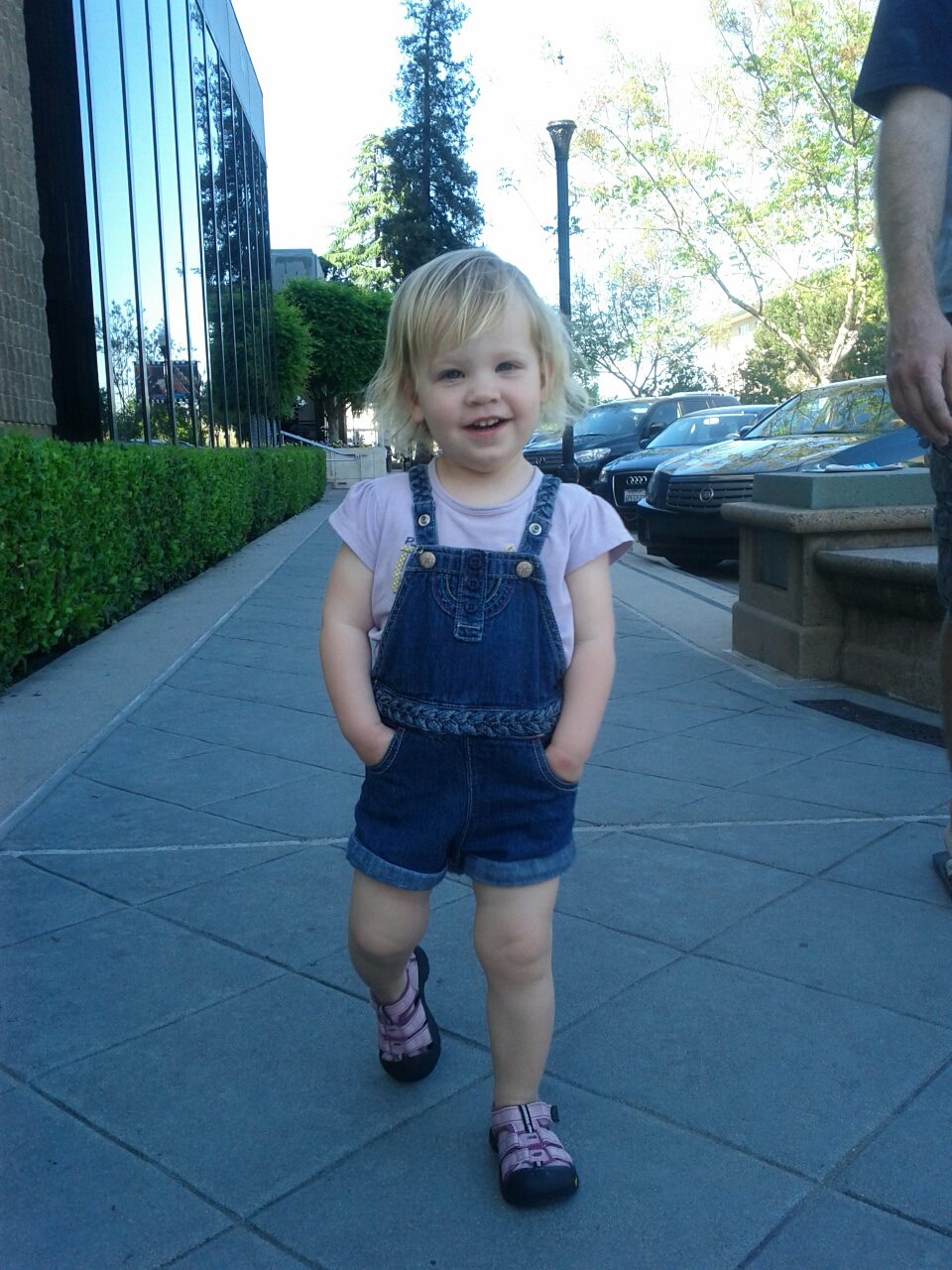
Once again, another 3 months have flown by. Honestly, it's been a total blur. What on earth has happened since February? Well, heaps more travel of course. There was the trip to New Orleans, which I already wrote about. The other big trip we did was to Washington D.C. for a week, which I'm yet to write up. We stayed with friends in Alexandria for the week. Unfortunately, Zoe came down with conjunctivitis before Sarah's very eyes on the flight over (I'd been in North Carolina for work the week before, so they flew without me and I flew up to D.C. to meet them). She also developed an ear infection and a general cough/cold. Fortunately, we caught it all pretty much as soon as it happened, and spent Easter Sunday at an Urgent Care in Virginia getting antibiotics for her, but her sleep was not so great the whole time we were in D.C. Other than that, we've just been doing the normal stuff. Swimming classes have continued (she's very confident in the water now). Her speech continues developing well. Toilet training is continuing to go very well. There haven't been very many accidents at all. She's really loving the "new" day care. It was definitely the right thing to do to move her. Physically, she's in the 80th percentile for height and the 50th percentile for weight, so I guess she's currently tracking to be on the tall and thin side of things. We had another birthday party in the park behind our home, and this year the weather was much nicer, so we had people hanging around until about 7pm, and a good time was had by all. Zoe even successfully blew out her candle on the first attempt. Her two-year molars still haven't come through. They seem to go through various stages of giving her a lot of grief, and then they stop messing with her sleep. I was beginning to think we'd never get back to an uninterrupted night's sleep ever again. It's still a bit hit and miss, but she usually settles down again fairly quickly if she does wake up, and doesn't always require intervention from us. I've arrived at the theory that the "terrible twos" are largely the fault of trying to cut these two year molars. Her tantrums are so much worse when her teeth are actively giving her trouble. If she's had a good night's sleep and her teeth aren't driving her crazy, she's still pretty well behaved. If she's been awake half the night and her teeth are hurting during the day, she can be quite difficult. We seem to be currently at a point where they're not causing too much trouble at night, but she'll chew on her fingers like crazy if given the chance during the day. I think seasonal allergies are also messing with her a bit. After she got over the cold she came down with in Washington D.C., she's still had a runny nose and a bit of a cough, but I don't think she's actually "sick" I think it's more related to allergies. She passed on whatever she had to me, and since I've recovered from it I'm also not feeling quite right. I read somewhere that pollen counts are off the charts this year due to the weird weather, and Sarah's having a bit of a hard time as well, so I think we're all going to just have to ride it out with the judicious use of antihistamines. Speaking of allergies, it's about time to re-test her for her egg allergy. We'll have to try that at a point when she's not regularly taking antihistamines for seasonal allergies, so it might be a while yet before we can do that. I guess the next big development will be graduating from the crib to a toddler bed. I'm not in any hurry to do that though, so as long as she's not escaping the crib, her sleeping arrangements can stay the way they are. It'd be nice if she can cut her teeth first and then once she's sleeping properly, we can try converting the crib into a toddler bed. Zoe walking down Castro Street in Mountain View

10 May 2012

Lars Wirzenius: Obnam 0.28 (backup program)

I've just released version 0.28 of Obnam, my backup application. The relevant part of NEWS:

Jo Shields: Sleeping with the enemy: my life with Windows Phone

In my last blog post about smartphones, I urged the universe at large to help maintain a variety of ecosystems, to help foster competition and originality amongst vendors and the same day I hit publish, WebOS was killed. Apparently the universe hates me. Since then, a few things have changed. My main phone since the day of its release was the HP Pre 3, running WebOS and whilst I still have a soft spot for the OS, the Pre 3 was simply too buggy for me to use full time. The main issue is that I use my phone as an MP3 player in the car but the Pre 3 would pause playback at the end of a track every half dozen tracks or so making it impossible to drive the 85 miles to work without needing to root around in the armrest and poke a touchscreen. Not something I really want to do whilst moving and ultimately too big a papercut to deal with. So, come the new year, I moved on to my next device, a Nokia N9 running MeeGo Harmattan. Ultimately, this was an even bigger failure for me than the Pre 3 was, and I lasted maybe two weeks with it before giving up and going back to the HP. Beyond massive usability errors in the software (especially the braindead unkillable pop-up demanding Internet access, even when none is available), the worst for me was how it handled the MP3 player task. My usual way of working is to have the phone hooked up to the stereo with a 3.5mm jack, and the car switches to headset Bluetooth profile to handle calls this is pretty common on cars too old to support A2DP profile (Stereo music-capable headphones). WebOS and Android are fine with this but not the N9. The N9, instead, will output all audio through the last connected audio device, regardless of how much that might not be helpful. Get in car, start music playing, plug in cable, start engine and it plays audio for about three seconds before the Bluetooth connects, and it switches to outputting music via the Headset bluetooth profile (not something that my car can do). Unplug and replug the cable, and music works but incoming calls are silent until I disconnect the 3.5mm jack, as it outputs the headset audio through the headphone socket. I just couldn t deal with this big a step back from WebOS as far as my workflow goes, and gave up. So, where next? Well, a funny thing happened a co-worker with generally very good instincts regarding consumer electronics usability told me that his housemate had just bought a Nokia Lumia 800 Windows phone (the WP7-based cousin to the N9) and loved it. Enough that said co-worker was considering getting one himself. This was a very strange thing to hear, especially from an iPhone owner, about a Microsoft product. I d been generally interested in WP7 on an academic level for a while, but to hear that degree of praise of the actual product was interesting. Also interesting, and roughly simultaneous, was seeing Sajid Anwar s reverse engineering of the proprietary Zune file transfer protocol go from theory into an actual set of libmtp patches. So if the capability to use Banshee to transfer music on is here or near and it can t be as braindead as Harmattan when it comes to headphone/bluetooth behaviour, then why not jump ship and squeeze a handset out of Orange? About a week after my co-worker replaced his iPhone with a Lumia 800, I bought one too. So where to begin? Well, I ll begin at the start: WP7 is a joy to use. It really just is. It s the first mobile OS to try something radically different in the UI department for years. Everyone else these days (especially Android) builds iPhone rip-offs to varying degrees, and even the iPhone interface has a lot in common with the old old OLD interfaces found on the dumb Nokia phones of the 1990s. WP7 has an interface which provides just the right level of passively visible information and interactivity, and manages to do it with an elegance that no Android home screen filled with widgets will ever manage. The uncluttered screens are easy to read, and the Metro usability paradigms are trivial to pick up and learn. Without a doubt I d recommend WP7 to friends and family from a usability perspective, and the Microsoft engineers and designers responsible for cooking up the WP7 interface are worthy of praise. And I m not the only one saying this Apple co-founder Steve Woz Wozniak recently came out with a similar line. That s the good. There s also some bad, make no mistake. I m going to cover all the reasons WP7 sucks over several paragraphs. But overall, a smartphone is a device which I expect to suck the question is how bad the suck is, and whether it gets in the way of me using the device for what I need at the time. Moreso than MeeGo, moreso than Android, and even WebOS (and I m still a big WebOS fan), WP7 has more good points than bad points. But there s still some room for improvement, and some room for caution and since I know there are a few Microsoft folks following me on Twitter, I m going to go over my prescription for continued platform success. Oh, one more thing before I start: I know WP7 isn t Free Software. As an end user, I really don t care about that. I just want something that works something I didn t get from WebOS and Harmattan, both of which are primarily Free Software stacks. I m not saying there s a causal relationship there, or that a mobile OS can t be both Free Software and good just that as an end user, my favourite platform right now is non-Free. Take from that whatever you like. It s also vitally important, as Free Software folks, never to lose sight of what the other players in the market are up to. If you can t objectively assess why people are using a proprietary option by using it & recognising its good points (i.e. what to steal & what to improve) then you can t hope to win over users. So. WP7 s downsides in detail. In-place updates. Seriously guys, even Apple can manage this now. Why can t Windows Phone? I understand that making backups is smart and all updates come with a mandatory backup but I really shouldn t be tied to a PC to update a post-PC device. Also, those backups are useless, since they cannot be restored onto replacement devices in the case of failure or theft, so fix that too. Update all the things. An iPhone sold in June 2009 still has access to the latest iOS releases. Android phones are notorious for shipping with an outdated version of the OS, then getting at most one major update over the phone s lifetime (usually the device is abandoned by its manufacturer within months of release). Which camp does Microsoft want to align with, there? Every Windows phone 7 device released should receive Windows Phone 8, even with some features disabled. Anything less is punishing every existing customer, in the hope that you ll attract new ones not a winning strategy for a fringe platform whose biggest evangelists are its users. Fix IMAP. IMAP isn t hard. Yet WP7 never seems to work properly with a subset of my mail, never showing the message body & just saying Downloading forever. Fix it. Bing sucks. Bing s search results are terrible. Either do something to make them bearable, or allow me to pick which search engine I get when I hit the search button. A Google live tile isn t the same thing. Make killing apps easier. I know you stole the WebOS card view for multitasking (hold the back button) please also steal the WebOS ability to close apps. I don t want to have to go into an app and bash back repeatedly until it quits. This is particularly annoying for Internet Explorer. Make reinstalling apps easier. If I want to install every app I previously had installed on a new device, without restoring a backup, this should be easy. There are third party apps which try to plug this gap. Find a way to support copyleft. I d like to port a few C# apps to WP7, but because they re LGPL, I can t. The code s copyright holders would have no issue with their code being on WP7, as long as end users have a mechanism to replace the libraries, so why not find a way to allow this? e.g. when compiling an app, let me mark a library as user-replaceable , then allow for some mechanism where an end user can replace those assemblies with their own version. Let me use multiple Google calendars. WP7 only lets me add/see appointments on my default Google calendar. I want to add/see things on my wife s calendar, which is shared with me. WebOS can do this. MTP-Z is the devil. I do not need or want encrypted end to end communication between my PC and my camera device, to transfer a photo off. I do not need or want encrypted end to end communication between my PC and my MP3 player to transfer a photo on. Let s be honest, the only reason for MTP-Z is to enforce DRM on Zune-rented music tracks and honestly, there s no good reason to require MTP-Z for *all* communications if all you want to do is protect one folder or file extension. Now, since MTP-Z theoretically forces me to use Zune for many tasks better handled by other apps, now I get to write multiple criticisms of Zune s desktop app and as long as MTP-Z is enforced, every Zune failing is a Windows Phone failing too. Zune: Support Windows codec infrastructure, and transcode where needed. Windows Media Player can play Ogg Vorbis files. No, not out of the box, but if one installs the required codecs. Zune should support the same files as WMP if you want to ensure people don t try to copy files to a portable device which are not supported on that device, then you should have an API in place to allow for pluggable seamless transcoding of files as required Banshee allows me to do this (e.g. to copy files I have as .flac to devices which do not support it). Zune: Search my tracks, not the web. Zune s searching is terrible it doesn t do as-you-type searches, and when I hit enter, matches from my collection are given a tiny little space compared to matches from the Zune music store. Let me easily pick the track I feel like listening to, don t make it a chore Zune: Let s solve metadata together. I absolutely love how nicely the Zune app on desktop and on phone shifts as appropriate to the currently playing artist (e.g. changing the lock screen to an image of the artist in question). However, Zune doesn t make it obvious how to set an album s metadata to support this, and it s particularly frustrating when it s a minor difference of spelling causing a track not to get the nice treatment e.g. UNKLE versus U.N.K.L.E. . Either start making heavy use of audio fingerprinting services like MusicBrainz to fill in metadata, or allow me to search for fully supported artists when filling in track metadata Zune: Random playlists are useless on devices. I like smart playlists. In Banshee, I have one to pick 12GB of random tracks, which I can sync to my phone. I can t do this with Zune. If I try to just sync all my random music to my phone, it errors out due to lack of space. If I have a random playlist, the random selection changes multiple times during a sync resetting the sync, wiping out half the tracks that were transferred on, and starting again. As a result, the sync goes on for literally hours, never ending up with more than a gig or so of tracks on the phone. Random playlists should be freezable, so I can transfer them to my device in peace, then get a new random selection when I want. So, that s my list of miserable failure and it s still a less painful list than any other mobile OS I ve used. Perhaps one day Android will approach being usable, perhaps Blackberry s BBX will actually appeal to human beings rather than corporate IT managers, and perhaps Mozilla s delightfully named Boot to Gecko will get some traction. Who knows. All I know is, My Lumia 800 is the best phone I think I ve ever owned, and it s important for anyone working in the mobile space to understand why.

Michal Čihař: Weblate 1.0

After few weeks of heavy testing, Weblate 1.0 has been released today. Compared to 0.9 there are just minor changes and bug fixes. The most important thing is that Weblate should be now really ready to use :-). Full list of changes for 1.0: You can find more information about Weblate on it's website, the code is hosted on Github. If you are curious how it looks, you can try it out on demo server. You can login there with demo account using demo password or register your own user. Ready to run appliances can be found in SUSE Studio Gallery. Weblate is also being used https://l10n.cihar.com/ as official translating service for phpMyAdmin, Gammu, Weblate itself and others. If you are free software project which would like to use Weblate, I'm happy to help you with set up or even host Weblate for you (this will be decided case by case as my hosting space is limited).

Filed under: English Phpmyadmin Suse Weblate 0 comments Flattr this!

Raphaël Hertzog: The Debian Administrator s Handbook is available

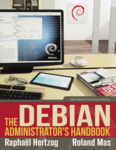
The Debian Administrator's Handbook CoverI am so glad that we managed to complete this project. Roland and I have spent countless hours on this book since December, both for the translation itself and also for all the things that we tend to forget: a nice book cover, a great book layout for the print version, coordinating the work of reviewers, registering as an editor to get an ISBN, etc. I think I will come back to this in a future article because some parts of the story are interesting. In the mean time, enjoy the DFSG-free Debian Administrator s Handbook: Check out the official announce (there s a discount for early buyers of the paperback).

12 comments Liked this article? Click here. My blog is Flattr-enabled.

DebConf team: Submit your greatest ideas as a DebConf12 talk (read: Call for Papers reminder) (Posted by Gunnar Wolf)

DebConf12 is drawing closer and closer! Have you ever been to a DebConf? You will surely agree with us: It s a life-changing event! It s one of the greatest geek gatherings in the world! It s something you can t afford on missing out! It s wait.. Oh, sorry, I had my spam mode set to highest. But still, that does not make it any less true. And one third of May has already passed. This means that the first deadlines are just around the corner: next Tuesday (15-may), sponsored registration will close, so make sure to register before it s too late. But wait wasn t this about the call for papers? Right, that s not the point of my post, I wandered off again. I m sorry, I just visited Managua last weekend (Holger will soon tell you about our visit), and it s impossible to keep the mind off the excitement. I wanted to ask you to share your greatest, latest ideas or projects. DebConf is about many things But one of its most important features is its rich set of talks, usually with very high and interesting contents in the technical, social, organizational levels Or several of them at once. As always, you will be able to submit talks until a day before you present it. However, it s best for your intended audience to know bits about your proposed topic, possibly even to share some information beforehand, so that the exposition can be as smooth as possible and the interaction during the talk even more And this is specially true for BoF sessions. However, we do have one advertised deadline: Talks submitted up to June 1st will be considered to be pre-scheduled. This means, to be part of the officially announced program, and have guaranteed coverage of our (always great) video team. DebConf Tracks But maybe you don t feel comfortable presenting a topic. Or you are, but you think it would be important to have several thematically related talks be grouped together. And if you are interested in this group of talks, you will probably know who would be more interesting to invite to present the topics - And will be able to prod them to do so. You can request to coordinate a track. That will ensure you get a contiguous block of timeslots for the talks you schedule, and do a great contribution to DebConf. To add your track, please mail talks@debconf.org. Please, specially if you do so in the few days following May 9, send me a copy to gwolf@gwolf.org, as it seems the alias is not yet set up. Tutorials and mentoring This year, we will have a high number of very motivated attendees from the many countries in the Central American region who want to get started in helping Debian, but have not yet found how to do it. Usually we would see local communities as prime material for DebianDay However, many of them are more interested in getting hands-on tutorials and be mentored into contributing to Debian. So, if you are part of a team working on a given aspect of Debian, or want to get people involved into your project, register it in the Tutorials and mentoring track. See you all soon, very soon, in tropical Managua for the hottest DebConf ever! (oh For those who remember days long past in Helsinki: There is even a sauna! ;-) And it s GREAT)

7 May 2012

Vipin Nair: Introduction

Hi, I am Vipin. I am a generalist in the technology field, interested in everything from algorithm design to data visualization. I am a Free software advocate and only use FOSS tools unless absolutely required, one notable exception being Chrome. I run Debian as my primary(only) operating system and will be contributing to Debian this summer as a Google Summer of Code student. I will be developing a web interface to present the data collected by the Team Activity Metrics project. More on this later :) After a brief stint with tumblr and wordpress I have finally found a good blogging tool where I am in complete control of every minute detail of my blog and which fits in my workflow perfectly. I am not a ruby guy, which is probably one of the reasons why I had not tried Jekyll earlier but when Jaseem started his blog on github, it looked great and I ventured in. The design of this blog is inspired by those of Jaseem Abid and Dustin Curtis and I do recommend that you read them, they have some great articles. If you are getting started with Jekyll, the best way to do so would be by reading some existing open source code, assuming you have a top level overview of how things work. Read the documentation if you can t figure it out yourself. Trust me, the hacker in you will love it :) Blogs are great place to learn new stuff and whenever I am stuck, a quick search does lead me to articles lucidly explaining stuff I am looking for and I do think I can contribute to this learning process by writing articles that could benefit someone. Do share it if you find it good, I certainly do not mind getting slashdotted! Having said that, if you find flaws in my writings please do drop in a line as a comment or reach me on twitter. Do not flame me, educate me. I ll learn something new and your karma gets a boost :) Happy Hacking!

Lars Wirzenius: Quality of discussion in free software development

The Online Photographer has a meta-article on some discussion in the photography world. Summary: someone wrote an opinion piece on one site, and people on the discussion forum of another site got his name wrong, possibly repeatedly. And the quality of the discussion went down from there. The quality of the discourse of free software development is frequently of some concern. Debian has a reputation as being a host to, er, particularly vigorous discussions. That reputation is not unwarranted, but, I think, we've improved a lot since 2005. The problem is hardly restricted to Debian, however. How can we improve this? I don't know. As a community, I'm not even sure we agree what the problems are. Here's my list. Insults, personal attacks, and other such outrageously bad behavior is uncommon. It crosses the line so clearly it becomes easy to deal with; I don't think handling this needs much attention. What can we do about this? I'm not sure. I have, for the time being, abandonded Debian mailing lists as a way to influence what goes on in the project, but that's just a way for me to clear some space in my head and time in my day to actually do things. My pet hypothetical solution of the day is that mailing lists might raise the quality of the debates by limiting the number of messages written by each person per day in each thread. This might, I think, induce people to write with more thought and put more effort into making each message count.

Cyril Brulebois: Debian XSF News #12

Time for a DXN#11 follow-up.
  1. The recent xserver-xorg-input-synaptics rc4 upload solved a lot of issues, but the 1.6.0 release (just uploaded) should fix some more. Enjoy!
  2. I ve also uploaded a new xorg-server, merging from upstream server-1.12-branch to get many XI2.2 bug fixes, along with an infinite loop bug fix (also seen with synaptics).
  3. Many drivers can no longer work on ia64 due to the recent changes, so we requested they be removed, which happened promptly!
  4. All XSF-maintained packages build happily against X server 1.12, meaning users can get back to running apt-get dist-upgrade blindly without having to fear the consequences. Pro tip: when you see something like xserver-xorg go away during a dist-upgrade, think twice before confirming!
  5. xf86-input-mtrack was recently fixed; xf86-video-glamo and xf86-video-msm fail to build (#671028, #671806), so they stay uninstallable for now. Thankfully nothing appears to depend on them, so they can be temporarily removed from testing if needs be.
  6. In the meanwhile, xserver-xorg-video-intel 2.19 was released. It will probably land into experimental first, until the new server and its drivers make it into testing.
  7. Andreas Beckmann asked me to mention the status of the binary drivers, so here is my take about them: fglrx still doesn t support X server 1.12 (LOL!). The other, big fat blobby driver is installable, and supposed to work.

6 May 2012

Stefano Zacchiroli: overlapping bits from the DPL for April 2012

Just posted to d-d-a, here is the monthly report about my DPL activities.
Dear project members,
last bits of the past DPL term and first bits of the current term, all in one. Here is a report of what has happened in DPL land last April. Highlight: call for DPL helpers Before the report, though, let me point out that your friendly neighborhood DPL could use some help. As discussed during campaign, there are some intrinsic transparency and scalability limits in the DPL institution, when run by a single person. Before trying something new to fix that, I'd like to give a last try to an old "tactic": calling for help. If you're considering running for DPL or if you're simply interested in the job the DPL does and willing to help with that, please let me know. Ideally, if I find a group of people I'm happy to work with, I'd like to set up periodic IRC meetings with all "DPL helpers" to publicly discuss items in the DPL agenda and share the work-load. Ongoing discussions A big topic of last month has been the proposal by Francesca Ciceri to publish a diversity statement for the Debian Project. After a lively discussion on -project, we reached consensus on a text, and I've been happy to help with that. To finalize statement publication we now need to vote on it with a GR. I've helped drafting a corresponding GR proposal that has already been posted to -vote by Francesca. A final one, looking for seconds, will be posted there soon. Wrapping up March discussions on a revenue sharing agreement with DuckDuckGo, I've announced my intention to finalize the agreement and have done so shortly thereafter. The Iceweasel maintainer has deployed the corresponding search engine query string and other web browser maintainers could do the same, if they want to. In April I've also spent some time to move forward the long running conflict on Python maintenance, reported to the tech-ctte more than 2 years ago. With the help of people on the -python mailing list, I've now submitted to the tech-ctte an up to date list of potential maintenance teams. I hope the tech-ctte now have all the information needed to come to a decision. Speaking of which, I'm also discussing with tech-ctte members the possibility of having periodic ctte meetings; the idea is to ensure that outstanding issues are periodically reassessed, improving the reliability of tech-ctte decision times. I've also discussed at length with members of the pkg-multimedia-maintainers team the relationships with the unofficial debian-multimedia.org (d-m.o) repository, that have been a cause of tension for Debian multimedia users and maintainers for quite some time. On behalf of the team and of the Project I've now reached out to the d-m.o maintainer, hoping to come to some sort of amicable agreement on which packages belong where. Hardware replacement As anticipated in last report, I've started approving hardware purchases to implement the yearly hardware replacement plan prepared by DSA. During April I've approved requests to buy servers to replace the machines running the bugs-master, bugs-mirror, and UDD services. The total expected expenditure is about 15'000 USD. Communication I've delivered my classic Debian "18^W 19 years" talk at UNIVPM, a polytechnic university in center Italy; slides are available. I've then been contacted by people from the European Synchrotoron in Grenoble who, beside having recently migrated their infrastructure to Debian, are looking into organizing a workshop on Debian usage for large science facilities. I've been happy to help out providing a list of potential topics and speakers for the event. Also as anticipated last month, the Debian Project has been present at the OpenStack summit. Loic Dachary has represented Debian at the event and provided a nice report about his experience there. Speaking of which, I've also coordinated a news release about the availability of cloud technologies in Wheezy, taking the chance to point out the relationships between what Debian stands for and the ability to deploy your own private cloud. Sprints April has been a rather calm month on the sprint front, with the notable exception of the I18n team who is organizing a sprint for June in Paris. Miscellanea Thanks for reading thus far,
HDH! (Happy Debian Hacking)
PS the boring day-to-day activity log for April is available at master:/srv/leader/news/bits-from-the-DPL.txt.201204

Russell Coker: A Quick Review of the Mac Mini with OS/X Lion compared to Linux

A client just lent me a new Mac Mini with OS/X Lion to play with. I think it s interesting to compare it with regular PCs running Linux. Hardware The Mac Mini is tiny. It s volume can be compared to that of a laptop. The entire outside apart from the base is made from aluminium which helps dissipate heat, it s not as effective as copper but a lot better than plastic. The ports on the system are sound input/output, 4*USB, Ethernet, Firewire, Thunderbolt (replacement for Firewire), SDXC, and HDMI. It ships with a HDMI to DVI-D adapter which is convenient if you have an older monitor (or if you have a recent monitor but no HDMI cable as I do). To open the case you unscrew the bottom, this is much like opening a watch. Also like opening a watch it s not particularly easy to screw it back on tightly, I will probably return the Mac Mini without managing to completely screw the base in. The hardware is very stylish and intricately designed, what we expect from Apple. It s also quiet. In every way it s a much better system than the workstation I m using to write this blog post. The difference of course is that this workstation was free and the Mac Mini cost just over $1000 including the RAM upgrade. A Mac Mini could be a decent Linux workstation and if I see one about to be recycled I ll be sure to grab it! Installation The Mac OS comes pre-installed so I didn t get to do a full installation. When I first booted it up it asked me if I wanted to migrate the configuration from an existing server, I don t know how well this works as I don t have a second Mac system but the concept is a good one. Maybe having full support for such a migration process would be a good release goal for a Linux distribution. After determining that the installation is a fresh one I was asked for a mac.com email address or other form of registration. I skipped this step as I don t have such an email address, but it could be useful. Red Hat has Kickstart to allow configuration of an OS install based on a file from a server (via NFS or HTTP). Debian supports preseeding to take OS configuration options from a file at install time [1] and the same option can be used for later stages of OS autoconfiguration. One thing that would be really useful is to allow the user to enter a URL for configuration data for an individual account or for all accounts, so someone with an account on one workstation could upload the configuration (which would be either encrypted or sanitised to not have secret data) and then download it when first logging in to a new system. I can easily take a tar archive of my home directory to a new system, but people like my parents don t have the skill to do that. One of the final stages of system configuration was to identify the keyboard. The system asked me to press the key to the right of the left shift key and then the key to the left of the right shift key and then offered me three choices of keyboard. That was an interesting way of reducing the list of possible keyboards offered to the user and thus preventing the user from selecting one that is grossly incorrect. Cloud Storage When first logging in I was asked for an iCloud [2] login. iCloud doesn t seem like a service that should be trusted, it s based in the US and has been designed to facilitate access by government agencies. Ubuntu One [3] is a similar service that is run by a more reputable organisation, but the data is still stored by Amazon (a US corporation) which seems like a security risk. Ubuntu One isn t in Debian (which is strange as Ubuntu is based on Debian) so it was too much effort for me to determine whether it encrypts data in a way that protects the users against US surveillance. The cost of Ubuntu One storage is $4 per month with music streaming. A better option is to use a self-hosted OwnCloud installation for a private or semi-private cloud [4]. A cheap server from someone like Hetzner (E49 per month for 3TB of RAID-1 storage) [5] is a good option for OwnCloud hosting. A cheap Hetzner server is about $US64 per month (at current conversion rates) which is equivalent to about 16 users of Ubuntu One for music streaming. So if 20 people shared a Hetzner server they could save money when compared to Ubuntu One while also getting a lot more storage. I ve got about 300G of unused disk space on the Hetzner server that hosts my blog and when the system is migrated to a newer Hetzner server with 3TB disks it will have 2.5TB of unused space, I could store a lot of cloud data in that! The main features of iCloud and Ubuntu One seem to be distribution of random data files (anything you wish), streaming music to various playing systems, and copying pictures from phones as soon as they are taken. These are all great features but it s a pity that they don t appear to support distributed document storage. Apple Pages apparently allows documents to be immediately saved to the cloud. I d like to be able to save a file with Libre Office at home and then access it from my netbook using the cloud, of course that would require encryption for secret files but that s not so hard to do. One advantage with such distributed storage is that when combined with offline-IMAP for email it would almost entirely remove the need for backups of the desktop systems I maintain for my relatives. I could have all their pictures and documents go to the cloud and all their email stay on the server so if their desktop PC dies I could just give them a new PC and get it all back from the cloud! OwnCloud supports replication, so if I got two servers I would be covered against a server failure. But I think that for a small server with less than a dozen users it s probably better to just take some down-time when things go wrong and do regular backups to an array of cheap SATA disks. App Store Apple has an App Store in the OS. The use of such a store on a desktop OS is a new thing for me. It s basically the same as the Android Market (Google Play) but on the desktop. I think that there is a real scope for an organisation such as Canonical to provide such a market service for Linux. I think that there is a lot of potential for apps to be sold for less than $10 to a reasonable number of Linux users. A small payment would be inconvenient for the seller if they have to interact with the customer in any way and also inconvenient for the buyer if they are entering all their credit card details into a web site for the sale. But for repeat sales with one company being an intermediary it would be convenient for everyone. A market program for a desktop Linux system could provide a friendly interface to selecting free apps from repositories (for Debian, Ubuntu, Fedora, or other distributions) and also have the same interface used for selecting paid applications. Conclusion This isn t much of a review of Apple OS/X or the Mac Mini. Thinking about ways of implementing the best features of Lion on Linux is a lot more interesting. I admire Apple in the same way that I admire sharks, they are really good at what they do but they don t care about my best interests any more than a hungry shark cares about me. Update I got the currency conversion wrong in the first version of this article. It seems that to save money via a shared Hetzner server instead of Ubuntu One about 20 users would be needed instead of 10. But that s still not too many and would still give a lot more storage. It would be a little more difficult to arrange though, probably anyone who is seriously into computers knows 10 people who would want to share such a service (including people like their parents who want things to just work and don t understand what s happening). But getting 20 people would be more difficult. Related posts:
  1. Xen and SE Linux EWeek review of RHEL5 The online magazine EWeek has done a review of RHEL5....
  2. Servers vs Phones Hetzner have recently updated their offerings to include servers with...
  3. Modern Laptops Suck One of the reasons why I m moving from a laptop...

5 May 2012

Clint Adams: IronyFest 2012

I attended a hackfest for the alleged purpose of furthering data transparency and other such entertainment. I expected a full-blown circus of idiocy based on the lead-up: instructions to sign up to websites for the purpose of Centralizing things, downloading iPhone SDKs, and other blatant evidence of Not Actually Getting It At All. Imagine my surprise when I get to the registration desk and they offer me a photography opt-out. Now everyone knows that privacy opt-outs don't work; either they're ineffective or they are effective at a cost far greater than anyone should pay, but I appreciated the gesture anyway. So I received a badge advertising my first name and the fact that I was unwilling to be photographed. Spoiler alert: I was photographed at least six times. I have now cleverly changed my hairstyle so that no one can recognize me. After people had arrived and rubbed elbows and consumed things, the grand dignitaries took the stage for spectacles of egoism so great that relativity made Dan Kaminsky look almost like a humble and reasonable human being. This was succeeded by some organizing, coding, and ridiculousness. The group I landed in contained two employees of the advertising industry and one of the U.S. government. There was also someone I refer to as "ultracompetent astronut". Some things that were apparent: people

Ritesh Raj Sarraf: Cancer cure drugs now more affordable

Now these are the kind of moves that needs to happen more often. Whether this will cause a negative impact on the overall market, and the further invention of drugs (including patent control), but the affordability of the medicatoin to an average citizen is a great move.The typical Chemotherapy can be on an average of 22 times. When summed up with the dosage (somewhere around 250 mg IIRC), the cost comes to approx: (22/4) * 15000 = 82k, which now, will be affordable at 27k.I guess the price slash is only for India and am not sure what the impact to the global market will look like.Quoting the article: http://www.moneycontrol.com/news/business/cipla-drug-price-cut-not-to-hurt-revenue-much-say-analysts_700380.html

Cipla cut price of its kidney cancer drug Sorafenib, which is sold under brand name Nexavar by multi-national Bayer to Rs 6,840 for a month's supply, from around Rs 28,000 earlier. Its lung cancer drug Gestinib, which is sold under brand name Iressa by AstraZeneca will cost Rs 4,250, versus Rs 10,200 earlier, and price of Temozolamide used to treat brain tumour, has been reduced by Rs 15,000 to Rs 5,000.

India's Patent Office recently issued a compulsory licence allowing Natco to make a generic copy of Sorafenib, on the payment of a royalty to Bayer, which sells the drug at around Rs 2 lakh.

Domestic sales account for 46-47% of Cipla's total sales and of that the cancer drugs portfolio is a very small portion, so these price cuts are unlikely to have any major impact on its revenue, Hitesh Mahida of Fortune Equity Brokers told moneycontrol.com

"Cipla's idea seems to be to create disruption in the market, increase its market share..." the analyst says.

Swiss pharma major Roche had earlier this year signed a manufacturing deal with India's Emcure Pharma so that its anti-cancer drugs Herceptin and MabThera could be made in India at affordable prices. Analysts say Cipla's move to slash prices could in future deter some MNCs from launching their drugs in India at all, but some may also look at doing deals like the one struck by Roche.

Meanwhile, shares of pharma major Cipla surged over 3% on Friday after brokerage CLSA upgraded the stock to "outperform" from "underperform," saying, Cipla would be strongest beneficiaries of a weakening rupee.

The rupee has been sliding sharply against the US dollar in recent days and hit over four month low of around Rs 53.78 earlier in trade.

"We expect improving margins over the coming quarters on back of a weak rupee and a low base. We expect strong operating profit growth over coming quarters led by margin expansion and high margin product supplies," CLSA's Hemant Bakhru said.

The US Food and Drugs Administration has approved Meda's drug Dymista for allergic rhinitis and the product is widely expected to reach USD 300-500 million in annual sales over the coming years. The analyst says Cipla being a partner, will benefit through product supplies over a longer term.

"Apart from approval (outside North America) related milestone payment (US$5m), we expect gradual increase in Cipla s sales from product related supplies to Meda. Assuming Cipla supplies product at 10-15% of sales, it could earn US$50-75m at peak sales," Bakhru said.

Additionally, a low base in domestic formulations could result in reasonable India growth, he adds.

Cipla shares were up 2.8% at Rs 326.60 on NSE in noon trade.

Keywords:

Russell Coker: Liberty and Mobile Phones

I own two mobile phones at the moment, I use a Samsung Galaxy S running Cyanogenmod [1] (Android 2.3.7) for most things, and I have a Sony Ericsson Xperia X10 running Android 2.1 that I use for taking photos, some occasional Wifi web browsing, and using some applications. Comparing Android Hardware The hardware for the Xperia X10 is better than that of the Galaxy S in many ways. It has a slightly higher resolution (480*854 vs 480*800), a significantly better camera (8.1MP with a flash vs 5MP without), and a status LED which I find really handy (although some people don t care about it). The only benefit of the Galaxy S hardware is that it has 16G of internal storage (of which about 2G can be used for applications) and 512M of RAM while the Xperia X10 has 1G of internal storage and 384M of RAM. These are significant issues, I have had applications run out of RAM on the Xperia X10 and I have been forced to uninstall applications to make space. Overall I consider the Xperia X10 to be a significantly better piece of hardware as I am willing to trade off some RAM and internal storage to get a better resolution screen and a better camera. The problem is that Sony Ericsson have locked down their phones as much as possible and they don t even give users the option of making a useful backup they inspired my post about 5 principles of backups [2]. The fact that the Galaxy S allows installing CyanogenMod which then gives me the liberty to do whatever I want with my phone is a massive feature. It outweighs the hardware benefits of the Sony Ericsson phones over Samsung phones prior to the Galaxy Nexus and Galaxy Note. For an individual user the ability to control their own hardware is a feature. Such an ability wouldn t be much use if there wasn t a community of software developers, so if you buy an Android phone that isn t supported by CyanogenMod or another free Android distribution then whether it is locked probably won t matter to you. But for any popular Android phone that s sold on the mass market it seems that if it s not locked then it will get a binary distribution of Android in a reasonable amount of time. Comparing with Apple It seems that Apple is the benchmark for non-free computing at the moment. The iPhone is locked down and Apple takes steps to re-lock phones that can be rooted as opposed to the Android vendors who ship phones and then don t bother to update the firmware for any reason. The Apple app market is more expensive and difficult to enter and if an app isn t in the market then you have to pay if you want to install it on a small number of development/test phones. This compares to Android where the Google market is cheaper and easier to enter and anyone can distribute an app outside the market and have people use it. But for an individual this doesn t necessarily cause any problems. I have friends and clients who use iPhones and are very happy with them. In terms of software development it s a real benefit to have a large number of systems running the same software. As Apple seems to have higher margins and larger volume than any other phone vendor as well as shipping only one phone at any time (compared to every other phone vendor which seems to ship at least 3 different products for different use cases) they are in a much better economic position to get the software development right. As far as I can tell the hardware and software of the iPhone is of very high quality. The iPad (which has a similar market position) is also a quality product. The fact that the Apple app market is more difficult to enter (both in terms of Apple liking the application and the cost of entry) also has it s advantages, I get the impression that the general quality of iPhone apps is quite high as opposed to Android where there are a lot of low quality apps and many more fraudulent apps than there should be. The lack of choice in Apple hardware (one phone and one tablet) is a disadvantage for the user. There is no option for a phone with a slide-out keyboard, a large screen (for the elderly and people with fat fingers), or any of the other features that some Android phones have. The lack of a range of sizes for the iPad is also a disadvantage. But it seems that Apple has produced hardware that is good enough for most users so there aren t many complaints about a lack of choice. It seems to me that the biggest disadvantage of the closed Apple ecosystem is for society in general. Anyone who wants to write a mobile app to do something which might be considered controversial would probably think twice about whether to develop for the iPhone/iPad as Apple could remove the app at a whim which would waste all the software development work that was invested in writing the app. Google seem to have much less interest in removing apps from their store and if they do remove an app then with some inconvenience it can be distributed on the web without involving them so the work won t be wasted. How Much Freedom Should a Vendor Provide? The Apple approach of locking everything down is clearly working for them at the moment. The Samsung approach of taking the Google prescribed code and allowing users to replace it is good for the users and works well. The Sony Ericsson approach of taking the Google code, adding some proprietary code, and then locking the phone down is bad for the users and I think it will be bad for Sony Ericsson. People are more likely to tell others about negative experiences and negative reviews are more likely to be noticed than positive reviews. So while many people are reasonably happy with Sony Ericsson products (until they find themselves unable to restore from a backup) it s still not a good situation for Sony Ericsson marketing. It seems that there are benefits to hardware vendors for being really open and for locking their users in properly. But being somewhat open isn t a good choice, particularly for a vendor that ships poor quality proprietary apps such as the Sony Ericsson ones. In terms of application distribution Google isn t as nice as they appear. The Skyhook case revealed that Google will do whatever it takes to prevent apps that compete with Google apps from being installed by default [3]. Google is also trying to make money from DRM sales via Youtube which it denies to rooted phones [4]. Again it seems to me that the best options here are being more open than Google is and being as closed as Apple. Google might gain some useful benefits from applying DRM (even though everyone with technical knowledge knows that it doesn t work) but the Skyhook shenanigans have got to be costing Google more than it s worth. How to make Android devices more Free The F-droid market is an alternative to the Google App market which only has free software [5]. On it s web site there are links to download the source for the applications, including the source and binaries for old versions. In the Google App market if an upgrade breaks your system then you just lose, with F-droid you can revert to the old version. A self-hosted OwnCloud installation for a private or semi-private cloud [6] can be used as an alternative to the Google Music store as well as for hosting any other data that you want to store online. The Open Street Map for Android (Osmand) project provides an alternative to the Google Map service [7]. Osmand allows you to download all the vector data for the regions you will ever visit so it can run without Internet access. But it doesn t have the ability to search for businesses and the search for an address functionality is clunky and doesn t accept plain text, which among other things precludes pasting data that s copied from email or SMS. While Osmand provides some important features that Google Maps will probably never provide, it doesn t provide some of the most used features of Google Maps so uninstalling Google Maps isn t a good option at the moment. The K9mail project provides a nice IMAP client for Android [8]. Use K9 with a mail server that you run and you won t need to use Gmail. There are alternatives to all the Google applications. It seems that apart from the lack of commercial data and search ability in Osmand an Android device that is used for many serious purposes wouldn t lack much if it had no Google apps. Google seems to be going too far in controlling Android. Escaping from their control and helping others to do the same seems to be good for society and good for the users who don t need apps which are only available in proprietary form. Related posts:
  1. Dual SIM Phones vs Amaysim vs Contract for Mobile Phones Currently Dick Smith is offering two dual-SIM mobile phones for...
  2. My Ideal Mobile Phone Based on my experience testing the IBM Seer software on...
  3. Old Mobile Phones as Toys In the past I have had parents ask for advice...

4 May 2012

Michal Čihař: Ready for Weblate 1.0

I think Weblate is really ready to be released as 1.0 release. It runs pretty stable on https://l10n.cihar.com, I got some bug reports from others, but these were quickly fixed and now nobody complains. The issue tracker lists few improvements which I plan after 1.0 which will help in user experience and performance, but I see nothing what would be needed right now. So I'm ready to release (even before deadline I have set to this milestone). Anyway you're welcome to give it some testing and complain if anything is broken. One area where I desperately need feedback are checks, which probably still miss variations for some languages.

Filed under: English Weblate 0 comments Flattr this!

John Goerzen: Geeky plan: Solar power supply IN THE CAR

From the might be geeky dept For an upcoming car trip, we have to take my wife s car (long story). I will be taking two large lead-acid batteries in the trunk hooked up to a solar panel in the rear window area and, of course, some electronics in the front seat. Why, you ask? While she drives, I will be working via tethered 3G (conveniently reducing the number of vacation days the trip requires). This is Kansas, so signals are weak sometimes. I have an external antenna that hooks up to a signal booster. So I ll be running a laptop, cellphone in draw lots of power mode , and a cellphone booster at minimum. Measurements suggest that this combination could easily put me in range of the typical 10A limit of dash electronics. (And doesn t even include the nice to haves of GPS, my handheld radio, and the amplifier for it.) My car has a direct high-current link from the battery to the trunk to support the 100W amateur radio mounted there. It is pretty easy to tap into it and add a cable that runs to the passenger seat to run all this stuff. Terah s car doesn t. So, I thought, what s the easy solution? Well, my solar power system, of course! If I charge up a couple of the large batteries beforehand (just pop them and a few panels in the sun for a day), then put the batteries in the trunk, it will probably power my electronics for a whole day (enough for the trip we have planned), and I have already cabled them up to support the kind of current draw I ll have. I ll have to recharge the batteries at the destination, of course, so I ll bring along a panel (no need to bring more than one since there will be plenty of time to charge). Once I m planning to take a panel along, I figured I might as well put it under the rear window so it can actually help charge the batteries as we go. The current drain will, of course, be larger than the 1A or so it can put out, but hey, who else drives down the interstate with an active solar panel in their car? I can actually split the load between the batteries and the vehicle system too, so I do not need a continuous 10A draw on the batteries. The sad part about this is I will probably never surpass a temporary battery system with a solar panel in terms of geeky travel.

3 May 2012

Gintautas Miliauskas: Online Haskell typechecker

Last weekend I put up haskellonline.org, which is basically a thin web frontend over ghc, the Haskell compiler. It is limited to one Haskell module, but it makes the experience of studying Haskell much more pleasurable by running the typechecker in the background as you type. Plus, it is web-based - no local installation necessary!

The thing about Haskell is that it has a fabulous type system which can weed out a broad class of bugs at compile time. However, the usual interfaces with the compiler leave a lot to be desired. Vim + ghci in a terminal of course works, but I have already been spoilt by IDEs, and the "Alt-Tab; Up; Enter; wait; Alt-Tab + jump to line manually" dance does not appeal to me at all. Emacs integration might be better, but I do not know emacs well, and it is never a good idea to start learning two things at the same time.

Note: I suspect that many of the problems I encountered were due to the fact that I use MacOSX.

I have looked a few of the existing IDEs, but that did not go well. EclipseFP did not offer any benefits over a text editor at all. I found a blog post saying that implied that it would work better with a newer version of GHC. Cue a few hours of reinstalling GHC and compiling Haskell packages, and I got the system set up, but that made the situation even worse. Eclipse would simply crash on startup every time until I wiped the configuration directory clean. So much for EclipseFP.

I also tried Leksah. At least it did not crash, nevertheless, I found it quite unwieldy, especially for learning purposes. The autocompletion is broken in annoying ways. For example, if you type "f a = a<enter>", Leksah will autocomplete the second "a" into "as". It took me a while to discover an error in my program that was due to this autocorrection mechanism.

Leksah does have a "compile in background" mode, which was admittedly a source of inspiration for haskellonline.org, but the implementation is subpar. It simply invokes the compiler and simply redirects the output to a display pane on the window. As you write code, the text in the pane constantly scrolls, which is very distracting. The implementation is also buggy. Occasionally errors are interleaved with status output:


There is also tryhaskell.org, but it does not work not nearly as well for Haskell as its cousins trypython.org and tryruby.org do for Python and Ruby, respectively. All are limited to evaluating expressions, but in Python/Ruby that actually gets you a long way, while nontrivial Haskell programs are complex static structures that are unwieldy without a persistent text editor.

Despite all the trouble, which, again, probably has to do with my choice of MacOSX, these issues do not detract from the beauty of Haskell as a language. If you are interested, I can heartily recommend learnyouahaskell.com as very good reading material, and Tony Morris's course exercises (in combination with haskellonline.org) for practice.

Wouter Verhelst: Debconf

... is drawing closer again, and today I've booked my flights. I'll be arriving in the early evening on the 1st, and leaving again on the 15th. The flights will be Brussels->London->Miami->Managua, which unfortunately means I'll have to deal with US border control, but hey. Also, in order to avoid having to get up at early-o-clock on the morning of the 1st, I'll be flying from Brussels to London on an afternoon flight on the 30th, which means I'll have an evening to spare in London. While I've been there a few times before, it's not a city that I've ever actually visited; my previous three visits were limited to Heathrow, King's Cross (IIRC; could be another train station) and driving through the city on my way from (and to) Steve's barbecue last summer. If anyone will be there as well that night and would like to meet for beer and/or keysigning, I'd be interested.

Gunnar Wolf: Co-starring: Debian Tour Managua 2012!

As stated in the 2012-04-30 edition of the Debian Project News, this weekend I will be meeting Holger Levsen (who has been there for over a week now) in Managua, Nicaragua, as part of the Debian Tour 2012, a set of talks meant to raise awareness and interest on Debian between the Nicaraguan (+Central American) user groups, university students, companies and government. Not all of the planned activities are present in the Debian Tour webpage. I know I will be giving my talk on Debian in the Free Software projects' universe, this Saturday at Universidad Centro Americana (UCA). Besides this, we will be meeting on Monday with the UCA staff to discuss some DebConf-specific issues. Sunday? Well, I hope^Wfully trust we will have interesting activities as well :)

Rudy Godoy: FLISOL Puno

Past Saturday April 28 I attended to the FLISOL 2012 Puno hosted at the Casa de la Cultura in downtown Puno. It was a great experience to deliver a talk after a while, the second speech since I enrolled into the UCSP s Computer and Engineering Faculty to get my Computer Science BS degree. Puno is really a nice city with a great landscape for those like me who enjoy the sun, lakes, wonderful mountains and, as it s name says, the Andes plane 3860m above sea level. Pretty high and very cold at night indeed but a lovely place. FLISOL is short for Latin American Free Software Installation Festival that just aged 12 this year. In my talk I wanted to describe the motivations behind the Free Software movement origins. I specially remarked the fact that the movement doesn t look for technical excellence, even though this is something we thrive for, rather than preserving a common set of guidelines for protecting assets we do value such software and freedom. Later I discussed about how Debian have become a key actor in the free software ecosystem. Primarily as a huge software library, second as a building block for specialized distributions (such as Ubuntu) and third, but not the last, as a facilitator for new developments and contributions to the ecosystem, and I mentioned here the Debian GNU/Hurd project. Through such topics I explained what we do, why we do it and why they may want to contribute. There was a good reception from the audience and there were many questions on the subjects I elaborated on. I was impressed to see many Debian users, some of them power users , and even tried to help one to configure his obscure Xorg settings on his laptop (didn t succeed because lack of connectivity, will send him testing CDs eventually). I d like to thank to the organization who made a great job. The team, nearly 30 students from Universidad Nacional del Altiplano plus local activists, started working in February collecting funds and managed to gather more than 330 attendees during the almost 10 hours of the event. Also special thanks for the coffee machine that was available!

Next.

Previous.