Search Results: "ina"

24 January 2012

C.J. Adams-Collier: SOPA response from Representative Rick Larsen, WA 2nd District

Below is an email I received from Representative Rick Larsen s office. I don t recall ever having identifying myself as PVT Adams-Collier in any communications with his office, though I could have done so at some point. Maybe. I also don t recall contacting his office directly concerning SOPA. I blogged a few things and mentioned him on facebook a couple of times, though. It is good to know that I don t always have to go directly to my representative to have my voice heard. For those playing along at home, I think the best course of action would be for producers to perform searches for their work on peer-to-peer file sharing search engines such as http://thepiratebay.org/ and http://scrapetorrent.com/. If producers find that their work is being distributed in a way which is contrary to their wishes, I advise the producer or their agent to contact the individuals operating seeds with high share ratio in order to ensure that they perform AAA before accepting new peers into the swarm. Those seed operators who refuse to negotiate reasonable AAA terms should be issued C&D orders, and legal action should be taken, should they fail to comply with the request. [edit 2012-01-24T05:27:44] It would probably be wise to impose a minimum fee of $5 for seed operators per content package they distribute. This will encourage them to pass this fee on to their subscribers in a legal and responsible manner. I recommend that it be distributed in the same fair and concise way in which the tickets are distributed for toll violations on the Tacoma Narrows Bridge. Ask me how I know. This will provide content producers a valuable distribution channel which is closely in touch with the consumers of the producers media. I believe that if the producer puts forth effort in good faith to develop and maintain relationships with key distribution points, we will see a situation where both content producers and consumers get what they want. The authorization phase of the AAA system could charge a Payment Card Industry or bitcoin account a reasonable fee. My employer produces content delivery appliances which would serve quite well the role of AAA gateway. For an example of this use case in action (sans account billing), I recommend contacting seeding participants of the Debian CD/DVD swarms. I will proxy such requests if there is interest. An alternative might be a tool developed for the online gaming community with a strange name: http://www.evenbalance.com/

Dear Pvt. Adams-Collier: Thank you for contacting me about the Stop Online Piracy Act (SOPA) and the Protect IP Act (PIPA). I wanted to update you on my views on this important issue. I am opposed to SOPA and PIPA in their current forms. I believe that these bills create unacceptable threats to free speech and free access to the internet. I have heard from many of you in Northwest Washington who are deeply concerned about the potential impacts of SOPA and PIPA. Online piracy is a serious problem that costs U.S. businesses billions of dollars. Government agencies must be empowered to stop and prosecute intellectual property thieves. But in doing so we cannot undermine freedom of speech or jeopardize the free flow of information on the internet. I will work with my colleagues to see that any final anti-online piracy legislation protects the internet and does not encroach on free speech rights. Please be assured that I will keep your thoughts in mind should I have the opportunity to vote on any legislation that would impact online piracy and internet freedom on the House floor. Again, thank you for contacting me. I encourage you to contact me in the future about this or any other issue of importance to you. Sincerely, Rick Larsen
United States Representative
Washington State, 2nd District
[edit 2012-01-24T05:28:09] Sincerely, C.J. Adams-Collier
San Juan County Democratic Central Committee (*whew*) PCO
San Juan County, Washington State, Orcas 3 District

Lior Kaplan: RTL status for Libre Office 3.5.0

As LibreOffice is approaching its final 3.5.0 release, I d like to sum up the RTL status for RC1. So far, 6 RTL related bugs were resolved in the 3.5 cycle (#32530, #34222, #40950, #43790, #43793, #44078), and a few minor issues reported directly to the developer s mailing list got quick responses. Most importantly, the new features of page break and header/footer not only support RTL but actually looks good. During the LibreOffice conference I was suggested to help with these features, providing feedback, and I m glade the needed attention was given to it. Besides that, a few l10n and translation issues were solved in the process of doing the Hebrew translation (which also reflects on other RTL languages). At a few cases, these issue because a general l10n issues which affects all the languages. In general, I found the core developers responsive to mails about RTL support. I m sure the talk about RTL problems during the conference helped, as well as being more active in the project and having more personal acquaintance with the developers. That s being said, RTL support for LibreOffice still has problems, which I hope will be pushed during the 3.5.x cycles (full list at Bug 43808, the rtl meta bug). As to get some focus regarding was is to be done, I m listing the top problems:
  1. #44657 RTL UI: Horizontal scrollbar in calc main window is broken
  2. #33302 brackets inverted in rtl text (mac only)
  3. #37692 RTL list numbering reverses its direction
  4. #42070 - RTL support in broken in presenter Console extension
  5. #32531 - Incorrect cursor key movement between table cells of different directionality
  6. #104515 - RTL UI: moving active embedded object to the left moves it to the right (reported for OO.org, but verified in LibO)
  7. #37128 - Writer saves text alignment of RTL paragraph not according to the ODF specification
I hoped to have the first two done for 3.5.0, but didn t succeed in getting them fixed. Will keep trying
Filed under: i18n & l10n, Israeli Community, LibreOffice

23 January 2012

Neil Williams: Emdebian Grip automated dependency resolution

The script isn't fully automated yet, I'm running it manually and watching for errors, but I do now have a simple script (~100 lines of perl) which runs edos-debcheck against each of the supported Emdebian architectures for unstable-grip and picks out those packages which are missing from the subset of packages which Emdebian monitors for Grip.

I was hoping to make these scripts into a normal Debian package but there are some limitations in that the scripts need to assume various pieces of Debian infrastructure. e.g. I started off using rsync to pull in the Packages files (along with Release and Sources) because apt has annoying behaviours with multiple architectures. (Emdebian Grip processes 7 architectures simultaneously on blavet.debian.org). Peter Palfrader kindly arranged for a local mirror to be available and now the entire Packages processing can be done using symlinks. Much, much better.

Actual package movement data comes directly from dak via projectb - something else which makes packaging these scripts for use on non debian.org boxes a bit hard.

Once again, I am indebted to the EDOS team (please, please keep working on edos-debcheck - it hasn't had uploads recently) because I tried to get this working with germinate but failed. (Colin - I'll be looking to borrow some of your time to work out what was going wrong.)

The dependency resolution script now means that I can meet release team requirements that when foo is updated in sid to depend on libbar2 but Emdebian Grip only has libbar1, the scripts will automatically pick up libbar2 and add it to Emdebian Grip. The current sid version gets pulled in and (the theory goes) will migrate into testing-grip as an almost automatically valid candidate. Processing of the dependency can happen within hours of the updated version of foo arriving in Emdebian Grip but as long as it happens within a few days I think everyone will be fine with it.

I've got a sync script too which can periodically run across the entire suite and check for packages which have slipped the net. I'll have to see how often that needs to run but once a week doesn't sound too painful.

Processing for Emdebian Grip is very fast. Most of the time is taken uploading:

2012-01-23 22:24:42 add sid-grip deb main armhf libfltk-images1.3 1.3.0-5em1
2012-01-23 22:24:52 add sid-grip deb main i386 libfltk-images1.3 1.3.0-5em1
2012-01-23 22:25:07 add sid-grip deb main mips libfltk-images1.3 1.3.0-5em1
2012-01-23 22:25:25 add sid-grip deb main powerpc libfltk-images1.3 1.3.0-5em1
2012-01-23 22:26:00 add sid-grip deb main amd64 libstdc++6-4.5-dev 4.5.3-12em1
2012-01-23 22:26:34 add sid-grip deb main armel libstdc++6-4.5-dev 4.5.3-12em1


(It was a lot longer, comparatively, when I was having to rsync and then dget instead of just read from the local filesystem.)

I've also been working on an init script which will gradually work through the subset of packages by order of Priority - approximately what a new architecture (like armhf) would do. Note that Emdebian Grip supports armhf already. The only slight concern is whether the init script needs to be throttled back to not flood the queues with hundreds of uploads an hour (which it could end up doing, at least for the first 24 hours).

Logs of package movements are available: http://www.emdebian.org/grip/logs.php

Packages can be searched too: http://www.emdebian.org/grip/search.php

More on Emdebian Integration on the Debian wiki: http://wiki.debian.org/EmdebianIntegration

Now all I need is a fix for #655919 :-) FTP team?

22 January 2012

Kees Cook: fixing vulnerabilities with systemtap

Recently the upstream Linux kernel released a fix for a serious security vulnerability (CVE-2012-0056) without coordinating with Linux distributions, leaving a window of vulnerability open for end users. Luckily: Still, it s a cross-architecture local root escalation on most common installations. Don t stop reading just because you don t have a local user base attackers can use this to elevate privileges from your user, or from the web server s user, etc. Since there is now a nearly-complete walk-through, the urgency for fixing this is higher. While you re waiting for your distribution s kernel update, you can use systemtap to change your kernel s running behavior. RedHat suggested this, and here s how to do it in Debian and Ubuntu: In this case, the systemtap script is changing the argument containing the size of the write to zero bytes ($count = 0), which effectively closes this vulnerability. UPDATE: here s a systemtap script from Soren that doesn t require the full debug symbols. Sneaky, put can be rather slow since it hooks all writes in the system. :)

2012, Kees Cook. This work is licensed under a Creative Commons Attribution-ShareAlike 3.0 License.
Creative Commons License

Jon Dowland: The Crying Tree

Somebody bought The Crying Tree by Naseem Rakha for Sarah as a present and she asked me to read it so we could talk about it, so I did. It's a novel about a family tragedy, Southern-state U.S.A. and the death penalty. A little boy is shot dead, a man is arrested for the crime and faces the death penalty. The book chronicles what happens to the family and to the killer during the 19 years or so that passes before the execution takes place. The book could be accused of having an anti-capital punishment agenda, but I have no problem with that. At least until about half-way through the book, the plot and happenings follow the synopsis with little in the way of surprise, but then there's a twist. I felt that the twist diminished the message of the book. Without trying to spoil what happens, I felt that you didn't need the core details of the story to be varied or expanded upon or U-turned to push that agenda. In my opinion, it's perfectly possible for someone to construct a story about a killer who faces death, who was unambiguously guilty of the crime they are charged with, and still leave the reader feeling remorse for the killer, and questioning the justice meted out. In fact I thought Rakha was doing a fine job of just that. However, a twist (or twists) occur, and the facts are called into question, and so you ask even further questions about the practise of killing criminals, in my view redundantly. It's a good book and worth a read, regardless of what your position is on the issue. It does a great job of describing the unbearable pain of losing a child, but also of the power of forgiveness for the victims.
Jon Dowland: bugs

[pic]
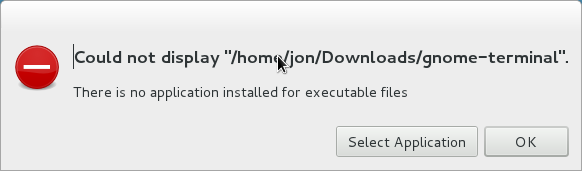
Bugs I've hit in GNOME 3, in the last 5 minutes: I didn't set out to bug-hunt this morning, I'm actually trying to get some work done. Whilst this is a particularly bad case of stacked-bugs, it's unfortunately, pretty representative of what it's like to try and use a Linux desktop at the moment. Every day I go through a similar experience. I've just had to give up and log out and back in again. The shell path bug above has re-surfaced in a new session. Great. I'm waiting on a delayed laptop at work. I'm very tempted to cancel the order and just use a Mac Air instead (we have one spare). It seems I'm walking the inevitable path of F/OSS desktop frustration and the end for many people seems to be the Mac perhaps I should spare myself the pain of the journey. In the mean time, It's bye-bye to GNOME and off to Xfce for me.

21 January 2012

Lior Kaplan: PHP 5.4 @ Debian

PHP 5.4.0 is around the corner, with RC6 released this weekend. With the courtesy of Ond ej Sur it s already available in experimental. Earlier this week, Raphael Geissert, tested some PHP extensions with the new version and reported 16 bugs (severity: important) against those who failed to build with PHP 5.4. As they will become RC bugs when 5.4.0 will enter unstable (probably around mid February), I preferred to handle them sooner than later. The result is 3 patches sent (one already uploaded) and 5 NMUs done. During the process I poked through a lot of upstream SCMs. In the way I found out a trivial change was done in PECL s SVN two years ago for all the extensions located there, which got me suspicious regarding some extensions we have. For non PECL hosted extensions, I had to track if and when a fix was done and use it for building or do a trivial fix myself. Packages using the 3.0 (quilt) source format were extremely easy to fix, and I was quite happy it generally went fast. In general I m a passive subscriber to the Debian PHP Maintainers mailing list, and finally could help actually and not just reply emails. For me it s also doing some Debian work after a few months of focusing on the coming LibreOffice 3.5 release. update [26/1/2012]: From the 16 issues, only 2 aren t fixed already or will be on the next upstream release. As their upstreams are dead, this is in the hands or the debian people, at least till they ll FTBFS on unstable (instead of experimental).
Filed under: Debian GNU/Linux, PHP

Joey Hess: olduse.net 1982

Hard to believe I've consumed all of 1981's Usenet posts now on olduse.net, and it's been running for 7 months already.
Last night, there was a "very long" post, describing nearly every node on usenet in 1982. There had been a warning about this post the day before, since it would take many sites half an hour to download at 300 baud. It was handily formatted as a shell script, which created per-node files. So, I ran this code nobody has run since 1982. It worked. I got files. I tossed them on the olduse.net wiki, and used some ikiwiki code TOVA contracted me to write just a few months ago, to make clickable links on my usenet map. usenet map The map data was contributed in another post a while back. By 1982, usenet is getting nearly impossible to map with 1982 technology of ascii art. I enjoyed throwing graphviz, git, wikis, and the web at it. So, we have a collaboration across time, me and "Mark" and a lot of people who described their usenet nodes and piles of technology that make creating a mashup easy. Awesome!
I blog about stuff I find on the olduse.net blog. It's an open blog; Koldfront also blogs there, and we welcome other bloggers. Some of the highlights for me have included: As the space shuttle program is winding down, reading the excitement about the first shuttle flights, and the play-by-play coverage of a launch, posted to net.columbia by a high school student borrowing his dad's account. (A usegroup name that's hard to read without remembering its fate). The announcements of the Motorola M68k, the IBM PC, and the CD-ROM. world ipv6 launch Reading the TCP-IP digest, and Postel's plans for launching IPv4 soon, while the world IPv6 launch is being planned now. (The nay-sayers are especially fun to read. Including the guy who was concerned about the address space size, in 1981!) Learning that nethack ascention tales have a history streching back 30 years, to rogue, and that the stories back then had much the same flavor as they do today. Various celebrity sightings. Dennis Ritchie teaching C and Unix. Bill Joy talking vi. RMS talking .. nuclear politics? The general development of usenet. B-news being rolled out, groups proliferating, many first inklings of what will be major problems and developments in 5 or 10 years. A shift in tone is already apparent, by now usenet is not only about announcements, there are already some flames. oldusenet in a period terminal Still 9 years to go!

Andrew Pollock: [debian] Bits from the ISC DHCP Maintainer

I really should write these a bit more often. Wow, I can't believe it was over 4 years ago that I started having occasional face to face meetings with the ISC DHCP folks. The entire ISC DHCP team (of 5) was in town for an all-hands meeting, and Larissa Shapiro, the Product Manager for DHCP (and BIND) suggested it would be a good opportunity for another catch up. Given the current (bad) state of DHCP 4.2 in unstable, I thought this was an excellent idea, and so we all had lunch on Tuesday. I pretty much set the agenda, and it was The general state of 4.2.2 in Debian In a nutshell, it's a bit of a mess. We've got release critical bugs, build failures, the whole cat and kaboodle. It makes me very sad, because 4.2.2 was the first 4.2 series that I had a chance to upload, and I was very excited to do so, because it contains the hotly desired LDAP patches merged upstream. Unfortunately, it's also got the beginnings of the BIND/DHCP merger that's going to be BIND 10, and that is all a bit of a mess. It's directly responsible for the kFreeBSD FTBFS and the introduction of the RFCs, which are both keeping 4.2.2 out of testing. I gave the ISC folks a high-level overview of how Debian development works, and the normal progression of packages from unstable to testing to stable, and the release process and whatnot, and impressed upon them the implications of the current release critical bugs. I also showed them how Ubuntu development fitted into the picture. Finally, I showed them the popcon statistics for DHCP. I think they found it useful. FTBFS issues on kFreeBSD This was a good segue to #643569. The issue is actually with the embedded BIND sources. I'd already forwarded this bug upstream when it first happened, but I don't know what had happened to it. They seemed to act as if this was the first they'd heard of it. I'm hoping that they can get this fixed in 4.2.3, which is due around the end of the quarter. Embedded BIND sources Since we were already talking about an issue caused by the embedded BIND sources, we moved on to talking about #645760 and the existence of the embedded BIND sources in general. It should be pretty straightforward for them to strip the RFCs out of the source. They've already done it in the past for the DHCP sources, so I'm also hopeful that this will get resolved in 4.2.3. The issue of the embedded BIND sources is apparently a bit more complicated, although the day before our meeting, Michael Gilbert filed #643569 and #645760, so I hope that the ISC folks can take a look at these patches and see if it's feasible to adopt them. Patches for GNU/Hurd Finally we talked about #616290, which I know is near and dear to the GNU/Hurd porters' hearts. We probably spent the most time talking about this. The DHCP developers have concerns about accepting a patch for an OS that they do absolutely no testing on, and also questioned the viability of the OS in general. They stressed that they're fairly thin in numbers relative to what they have on their plate to achieve this year, and so pushed back pretty firmly on accepting the current patch. I relayed the frustration that the Hurd folks were having about a lack of dialogue around the patch (most of the interaction has been via an ISC support person). There was actually a bit of a split between the developers, with one of them appreciating that the Hurd was unlikely to go anywhere as a platform without a working DHCP client, so in some regards, they were condemning the platform by taking the position they were taking. They're going to go away and take another look at the patch and try to come back with some actionable feedback on what needs to change to make it more acceptable to them, so we'll see what comes of this. I'm not particularly optimistic that anything acceptable to the GNU/Hurd folks is likely to happen any time soon, but maybe if the patch gets cleaned up a bit more, I'll just bite the bullet and start applying it to the Debian package. BIND 10 One of the guys is more involved in BIND 10 than DHCP, and asked if I could help out with the packaging of a build dependency for BIND 10. It seemed like #578387 was languishing so I offered to pick it up. I've not packaged a library before, mainly because the library packaging guide has scared me off it (I feel I lack the deep C fu that seems necessary), but I figured that this would be a good learning opportunity, so I'm going to dive in.

Bartosz Feński: Unlock your X without password

Yep it s pretty simple. Just press CTRL+ALT+* (from numerical keyboard). Peter Hutterer, an X.org developer, posted an interesting article about this. And the link to the original blog entry about it.

20 January 2012

Benjamin Mako Hill: Internet Immortality

Kim Jong-Il is gone. That said, he continues to live on, looking at things, on the popular blog Kim Jong-Il Looking At Things which continues to be updated with new content from the archives. It is now joined by Kim Jong-Un Looking At Things. I think I agree with Jo o Rocha, creator of the original, that the younger Kim seems to be missing some hard-to-pin-down quality that made the original work well.

19 January 2012

Obey Arthur Liu: State of the Aptitude (week 12)

Hi folks!

We're almost done for the official Summer of Code program and I thought that I couldn't let it end without another update, so here we are (you may thank Daniel Burrows for additional poking).

The Gtk+ interface for Aptitude is making great progress. The product is not final yet but already implements many of the planned ideas, with others to come.
Here are the screenies:


So, let's see the tasks presented in my previous update:

In some more details: we are now much closer to the final interface. Some things are not done yet, for example, notification bars la Iceweasel (or is it Firefox ?) are in the works for unobtrusive notifications about important things and a little guidance.

We are much more reliable now. We eliminated lots of memory management problems that resulted from, mmh, imperfect coding discipline. We also lock the interface when important backend stuff reload to prevent the user from shooting himself in the foot when triggering an install when the APT cache is reloading for example.. The backend refactoring took a sizable part of this second term but it was worth it. The code is now much cleaner and uses no more (at least much fewer) ugly unscalable hacks.

One very important feature of Aptitude is the ability to easily display all kinds of dependencies and navigate through them by hyperlinking. It's now working in the Gtk+ interface as well. Feel free to click on whatever looks like a package or a package version.

We now support the powerful Aptitude package searching syntax. Daniel Burrows is talking with Enrico Zini to bring the power of apt-xapian-index to Aptitude: autocompletion! lightning fast full-text searches! tag clouds! ponies!

There is still a lot to be done. I'm not going away after the GSoC program. I'm here to stay, for Aptitude and Debian. Daniel Burrows has been very helpful and supportive. The Debian community is as awesome as I knew it before participating in the program.

Daniel Burrows is planning to merge the Gtk+ interface into the main branch in September and packages may appear into Experimental. With the very interesting evolutions of the upcoming Adept-3, Lenny+1 will show very interesting changes in the area of packages managers.

Now for you. I need you to test my interface. All necessary instructions are on the development trac : http://dev.graffit.net/aptitude/trac.

Obey Arthur Liu: Aptitude 0.5.0 (aka Aptitude-gtk) released

Long time no post. Anyway, I have some good news.

The Gtk code for Aptitude has been merged some time ago into the main development trunk and we now have a release in Experimental.


For those that don't know about it, here's what it's all about : "The new frontend is is an effort to bring some of the design principles of the curses frontend to a GUI environment, while also exploiting the unique features a GUI gives us and exploring ways to deal with changes in the environment in the nine years since aptitude was first designed."

I had a very good time this summer working on Aptitude with Daniel Burrows in the Google Summer of Code program and I'm very glad we now have a real release. This version is by no means final or perfect but it's a good start.

Head for the blog post from Daniel for some other informations : [Daniel Burrows]

Obey Arthur Liu: FOSDEM 2009

Are you going?

I was also entertaining the idea of giving a lightning talk in the Debian room (not as part of the general lightning talks) about aptitude-gtk. I certainly don't feel like talking for a whole hour talk or what. I don't have that much interesting stuff to say. Maybe we could do it with other 2008 european GSoCers. That could be useful as we didn't do much publicity-wise (see) in a timely maneer.

Certainly I should write a mail about that to the soc-coordination list about this or ramble about it on the planet. :) Oh, I'll get around it.

So any Debian GSoCers going to FOSDEM ?

Obey Arthur Liu: Google Summer of Code 2009 at Debian needs you


In case you've been living under a rock these past years, I shouldn't have to tell you what this is about :). Well, just in case.
The Google Summer of Code (GSoC) is an international program that offers student developers stipends to write code for various open source software projects. Debian has participated since 2006, mentoring dozens of students on Debian projects.

The important part of the 2009 edition of the Google Summer of Code is going to start next week with the Organizations application period (March 9th). By that time, we should have listed a reasonable number of ideas on the dedicated wiki page.

We will try this year to improve on the performance of the previous years, starting first with more and more dedicated manpower. If you have some time to spare to help manage our Summer of Code bid this year, we can make it a much better experience for the students and for Debian.

Help is immediately needed in many areas. Some examples:

By mid-March, we will need:

Further in the spring:

In the summer:

As you can see, there is much work ahead. It's time to pitch out your favorite pet project :)
Remember! The Summer of Code has become a prominent outreach forum for open source organizations. It puts a spotlight on each of them to provide a well-rounded and deep experience of open source development.

Right now, you can help with the Wiki, join us on IRC on #debian-soc on OFTC or join the mailing-list at soc-coordination on alioth.

The short "flyers-friendly" URL for the Summer of Code at Debian is : <http://wiki.debian.org/gsoc>. Publicize it!

See you this summer!

18 January 2012

John Sullivan: Sent to the ACLU today

I was on the brink of mindlessly clicking through the ACLU action center as usual to send an email opposing SOPA. But then I read their boilerplate text, and ended up cancelling the letter to my rep and instead sending this quick note to the ACLU:
Your SOPA suggested letter text supports current copyright law, and also backhandedly supports PIPA (the Senate version of the bill). This is far too weak of a position. As a donor, I ask you to take a stronger position that current copyright law unjustly restricts free speech, and that no further enforcement measures should be instituted until that fundamental problem is addressed. At least take on BOTH of these bills strongly. Most of the significant Internet is blacked out today to oppose both bills -- why would you cede so much ground to copyright maximalists? We have the support to oppose and defeat both bills.
For reference, here was their text:
While I believe it's important to protect copyrighted material online, the language of the Stop Online Piracy Act (SOPA) is flawed and will lead to the blocking of lawful content. Unlike the Senate version of the bill, SOPA eliminates the concept of sites 'dedicated to infringing activity' and enables law enforcement to target all sites that contain some infringing content -- no matter how trivial. The potential for impact on non-infringing content is much greater under SOPA than under other versions of this bill. Sites with user-generated content, like YouTube, Twitter, and Facebook, would be especially vulnerable, as one small piece of infringing content could lead to blocking the entire site. Even though proposed changes would narrow the amount of lawful content impacted, the changes don't go far enough. It is still likely that search engines will end up blocking access to perfectly legal online content. Congress should focus not just on the goal of protecting copyright owners, but also protecting the speech rights of consumers and providers who are reading and producing wholly non-infringing content. Congress must eliminate the collateral damage to protected non-infringing content. Only in that way will Congress truly achieve its goal of protecting authors while respecting the constitutional right to free speech.
Maybe I'm overreacting, but I dislike it when good organizations take weak positions unnecessarily. Usually this is not a problem with the ACLU, for me. It doesn't help that I keep seeing this meme everywhere in the anti-SOPA/PIPA conversation: "I agree we need to do something about piracy, but not this..." I don't think we need to do anything to fix violations of an extraordinarily unjust law until the law itself is fixed. I don't find that to be a very radical position.

MJ Ray: SOPA: Lash Out is better than Black Out

Once again, lawmakers are considering a stupid protectionist measure and this time it s the US, so it has some effects outside the US too. Once again, some websites have taken themselves offline and caused great inconvenience to their supporters. This is really annoying. Protesting about threats to take websites offline by taking websites offline is as stupid as protesting against a ban on kissing by not kissing. It just demonstrates that you can do without your websites/kisses if you must. I feel it s much better to use websites to distribute information and call people to action, like this epetition for UK citizens and residents, or by asking your associations and suppliers to oppose these measures and their supporters. Wikipedia is probably a bit to blame. Although it called its action a blackout, it wasn t one and there were still many ways to access its information. In fact, if you use NoScript, the banner didn t even display and there s only a line on the front page to say anything is happening. The one that really annoyed me was identi.ca, which even turned off its API so clients just started spewing errors everywhere (I returned to my desk to a stack of retry questions). That stopped some of my websites from distributing a link to the anti-SOPA epetition because they read from my identi.ca stream how much other anti-SOPA activism was hindered? I ve been told that Evan held a vote, but I didn t see it, so I didn t vote and I don t know the turnout or anything. How many people voted for the blackout because they use other sites like twitter more anyway? Banners: yes; Blackouts: no.

Ross Burton: Volunteers Needed!

Those lovely people over at Flickr have finally bitten the bullet and are turning off FlickrAuth in the summer, meaning that all applications that use the Flickr API need to use OAuth. This is something I totally agree with, whilst FlickrAuth works and was clearly an important influence on OAuth, it's a single-service protocol when OAuth has managed to get massive adoption and a huge developer base. The problem I've got is libsocialweb, which has a Flickr module that allows both fetching of your contact's recent photos and uploading images. This uses FlickrAuth so at the end of July will suddenly stop working. I've got enough on my plate at the moment and would love for more people to understand how the entire social spagetti works, so this is a call for a volunteer to work on this, for which I'll obviously be available to offer any guidance and mentoring required. There are two ways of approaching this, the easy way and the slightly harder way. The easy way is to update libsocialweb to use an OAuthProxy instead of a FlickrProxy, and update the module metadata so that Bisho uses the generic OAuth flow instead of a Flickr-specific flow. This should be fairly simple and needs to happen soon so that any distributions that are using libsocialweb don't break in the summer. The harder way is to add Flickr support to gnome-online-accounts, using the Twitter service as an example, and then port the Flickr service in libsocialweb to use gnome-online-accounts to authenticate. I've a proof of concept for the librest-goa integration which will be a useful starting point. This is more of a proof of concept for libsocialweb, we've been looking at moving away from Bisho but haven't done anything substantial yet. Ideally both of these happen, so the current code will continue to work in the future and the GOA work demonstrates how GOA and libsocialweb would work together. So, anyone interested?

Michal &#268;iha&#345;: ColorHug in openSUSE 12.1

Finally I've also find time to test ColorHug on openSUSE 12.1. For my experiences on Debian check previous blog post. Unfortunately on openSUSE calibration is also not that easy. First of all, you have to install patched argyll CMS from multimedia:color_management repository. You can also install gnome-color-management (and colord), but for some reasons they did not offer me any screen for calibration, so I gave up on this and tried manual calibration using Argyll. After looking into documentation, it seems to be pretty straightforward:
$ dispcal -y l -o /tmp/L220x
Place instrument on test window.
Hit Esc or Q to give up, any other key to continue:
Display adjustment menu:
Press 1 .. 7
1) Black level (CRT: Offset/Brightness)
2) White point (Color temperature, R,G,B, Gain/Contrast)
3) White level (CRT: Gain/Contrast, LCD: Brightness/Backlight)
4) Black point (R,G,B, Offset/Brightness)
5) Check all
6) Measure and set ambient for viewing condition adjustment
7) Continue on to calibration
8) Exit
Doing check measurements
  Current Brightness = 190.74
  Target 50% Level  = 36.14, Current = 47.98, error =  6.2%
  Target Near Black =  1.91, Current =  4.11, error =  1.2%
  Current white = x 0.3424, y 0.3179, VDT 5910K DE 2K 18.3
  Target black = x 0.3424, y 0.3179, Current = x 0.3123, y 0.2711, error = 18.06 DE
Press 1 .. 7
1) Black level (CRT: Offset/Brightness)
2) White point (Color temperature, R,G,B, Gain/Contrast)
3) White level (CRT: Gain/Contrast, LCD: Brightness/Backlight)
4) Black point (R,G,B, Offset/Brightness)
5) Check all
6) Measure and set ambient for viewing condition adjustment
7) Continue on to calibration
8) Exit
Commencing device calibration
The instrument can be removed from the screen.
$ dispwin -I /tmp/L220x.icc 
$ dispwin -L
It turned out, that the change after calibration are quite minor here. This is sort of thing I've expected from past experiences with editing photos here, but anyway, now I trust results here even more :-).

Filed under: English Photography Suse 0 comments Flattr this!

Matthew Garrett: Why UEFI secure boot is difficult for Linux

I wrote about the technical details of supporting the UEFI secure boot specification with Linux. Despite me pretty clearly saying that this was ignoring issues of licensing and key distribution and the like, people are now using it to claim that Linux could support secure boot with minimal effort. In a sense, they're right. The technical implementation details are fairly straightforward. But they're not the difficult bit.
Secure boot requires that all code that can touch hardware be trustedRight now, if you can run unstrusted code before the OS then you can subvert the OS. Secure boot gives you a mechanism for making sure you only run trusted code, which protects against that. So your UEFI drivers have to be signed, your bootloader has to be signed, and your bootloader must only load a signed kernel. If you've only booted trusted code then you know that your OS is safe. But, unlike trusted boot, secure boot provides no way for you to know that only trusted code was executed. That has to be ensured by OS policy.

This doesn't sound like too much of a problem. But it is. Imagine we have a signed Linux bootloader and a signed Linux kernel, and that these signatures are made with a globally trusted key. These will boot on any hardware using secure boot. Now imagine that an attacker writes a kernel module that sets up a fake UEFI environment, stops the kernel from running code and then executes the Windows bootloader - kind of like kexec, but a little more fiddly. The Windows bootloader believes that it's performing a secure boot, but in fact everything that it believes is trustworthy is the attacker's fake UEFI code. The user's encryption passphrase is logged, the Windows kernel is modified to hide the Linux code and despite everything looking fine your credit card details are on their way to China. In this scenario, the signed Linux kernel is simply used as a malware loader. The only sign that anything is wrong is that boot will be slightly slowed down.

Signing the kernel isn't enough. Signed Linux kernels must refuse to load any unsigned kernel modules. Virtualbox on Linux? Dead. Nvidia binary driver on Linux? Dead. All out of tree kernel modules? Utterly, utterly dead. Building an updated driver locally? Not going to happen. That's going to make some people fairly unhappy.

(The same applies to Windows, of course. Windows 7 allows you to disable driver integrity checks. Windows 8 will have to forbid that when the system's using secure boot)
LicensingGPLv3 has various requirements for signing keys to be available. Microsoft's new requirement that systems support the installation of user keys would let users boot their own modified bootloaders, so that may end up being sufficient to satisfy the license. But we're then beholden on Microsoft - if they remove that requirement then users lose that freedom, and suddenly we're in an awkward licensing situation. There are ongoing conversations about exactly what we're able to do here, but it's not a solved problem.
Key distributionThe UEFI spec doesn't describe or mandate a central certifying authority. Microsoft require that everyone carry their key. We could generate our own, but we have much less sway with vendors. There's no way to guarantee that all hardware vendors will generate our key. And, obviously, if we generate a key, we can't just hand the private half out to others. That means that it becomes impossible for people to produce derivative versions of Linux distributions without getting their own key. The kind of identity verification that would be required for getting such a key is likely to be expensive, and also fairly likely to require that the distribution have a legally registered company in order to facilitate the identity verification. Think Extended Validation certificates, not Startssl Free. Hobbyist Linux distributions will be a thing of the past.
Doesn't custom mode fix this?Microsoft's certification requirements now state that all systems must support a custom mode, implying that it will be possible for a user to install their own keys. Linux vendors would then be able to ship with their own keys on the install media and impose their own policies. Everyone's happy. It's not really good enough, though. People have spent incredible amounts of time and effort making it easy to install Linux by doing little more than putting a CD in a drive. Asking them to go into the firmware and reconfigure things adds an extra barrier that restricts the ability to install Linux to more technically skilled users. And it's even worse than that. This is the full description of the requirement for custom mode:
  1. It shall be possible for a physically present user to use the Custom Mode firmware setup option to modify the contents of the Secure Boot signature databases and the PK.
  2. If the user ends up deleting the PK then, upon exiting the Custom Mode firmware setup, the system will be operating in Setup Mode with Secure Boot turned off.
  3. The firmware setup shall indicate if Secure Boot is turned on, and if it is operated in Standard or Custom Mode. The firmware setup must provide an option to return from Custom to Standard Mode which restores the factory defaults.

There's a few things missing from this, namely:

So no, custom mode doesn't make everything ok. Custom mode with a mandated UI and a documented key format would be much closer, but it wouldn't solve the problem of unattended automated installs.
SummaryWe can write the code required to support secure boot on Linux in a minimal amount of time - in fact, most of it's now done. But significant practical problems remain, and so far we have no workable solutions for any of them.

comment count unavailable comments

Next.

Previous.