Search Results: "sto"

8 November 2010

Julien Danjou: Google Maps for Emacs: moving, caching and home

Last week, I worked on my Google Maps for Emacs extension. I've introduced a new format handling for locations which include the longitude and latitude. The initial format was just a string describing the location, which was obviously too limited. It now prints coordinates of the different elements when the mouse is over the map, with other information. It also center the map on M-x google-maps and set a default zoom level. This is something which was not set because it's not a good idea to set center coordinates in order to see all points on the map automatically. But you can still remove the centering by pressing "C". On the other hand, setting it automatically allows to move the map easily, and I think that what most users want to do. I've also added a "place my home on the map" feature, accessible by pressing "h" on any map. That adds a marker according to the location set in Emacs using the calendar- variables. This feature is also available under Org by pressing C-u C-c M-l, which shows the location of your appointment with your home on the map too. Finally, you also get caching so it does not request images you already seen, which makes the moving nicer and faster to use, and prompt history. Flattr this

Joachim Breitner: A Solution to the Configuration Problem in Haskell

On the drive back home from BelHac I thought about the configuration problem in Haskell: The issue is finding a convenient way to work with values that are initialized once and used in many places all over the code. Assume you have a large module of pure code that, using many custom functions and combinators, parses some data structure. Later you noticed that somewhere far down in the parser, you need to react differently depending on some user preferences say, his preferred language. The usual solution is to add a new parameter to that function and, in consequence, to each and every function that calls or might call directly or indirectly this function. This is often very inconvenient. Other solutions include: The solution I thought of and implemented uses Template Haskell, the Haskell library to modify code at compile time, to turn the style you prefer to write in (pure code that uses configuration values as if they were global constants) into the style that is semantically correct (pure code with configuration values as an additional parameter). I uploaded the resulting code as seal-module to hackage and added plenty of comments and examples to the SealModule module ( are comments according to ohcount). I refrain from copying that into this blog post, so if you are curious, please continue reading there.

Raphaël Hertzog: 5 reasons why a Debian package is more than a simple file archive

Folder with gearsYou re probably manipulating Debian packages everyday, but do you know what those files are? This article will show you their bowels Surely they are more than file archives otherwise we would just use TAR archives (you know those files ending with .tar.gz). Let s have a look! 1. It s two TAR file archives in an AR file archive! A .deb file is actually an archive using the AR format, you can manipulate it with the ar command. This archive contains 3 files, you can check it yourself, download any .deb file and run ar t on it:
$ ar t gwibber_2.31.91-1_all.deb
debian-binary
control.tar.gz
data.tar.gz
debian-binary is a text file indicating the version of the format of the .deb file, the current version is 2.0 .
$ ar p gwibber_2.31.91-1_all.deb debian-binary
2.0
data.tar.gz contains the real files of the package, the content of that archive gets installed in your root directory when you run dpkg --unpack . But the most interesting part which truly makes .deb files more than a file archive is the last file. control.tar.gz contains meta-information used by the package manager. What are they?
$ ar p gwibber_2.31.91-1_all.deb control.tar.gz   tar tzf -
./
./postinst
./prerm
./preinst
./postrm
./conffiles
./md5sums
./control
2. It contains meta-information defining the package and its relationships The control file within the control.tar.gz archive is the most fundamental file. It contains basic information about the package like its name, its version, its description, the architecture it runs on, who is maintaining it and so on. It also contains dependency fields so that the package manager can ensure that everything needed by the package is installed before-hand. If you want to learn more about those fields, you can check Binary control files in the Debian Policy. Those information end up in /var/lib/dpkg/status once the package is installed. 3. It contains maintainer scripts so that everything can just work out of the box At various steps of the installation/upgrade/removal process, dpkg is executing the maintainer scripts provided by the package: Note that this description is largely simplified. In fact the scripts are executed on many other occasions with different parameters. There s an entire chapter of the Debian Policy dedicated to this topic. But you might find this wiki page easier to grasp: http://wiki.debian.org/MaintainerScripts. While this looks scary, it s a very important feature. It s required to cope with non-backwards compatible upgrades, to provide automatic configuration, to create system users on the fly, etc. 4. Configuration files are special files Unpacking a file archive overwrites the previous version of the files. This is the desired behavior when you upgrade a package, except for configuration files. You prefer not to loose your customizations, don t you? That s why packages can list configuration files in the conffiles file provided by control.tar.gz. That way dpkg will deal with them in a special way. 5. You can always add new meta-information And in fact many tools already exploit the possibility to provide supplementary files in control.tar.gz: Once installed, those files are kept by dpkg in /var/lib/dpkg/info/package.* along with maintainer scripts.
If you want to read more articles like this one, click here to subscribe to my free newsletter. You can also follow me on Identi.ca, Twitter and Facebook.

19 comments Liked this article? Click here. My blog is Flattr-enabled.

Joey Hess: chop chop

I've always loathed cheap particle board and peg bookcases, and when I broke one while reorgaising the living room at the Hollow today, I finally found a good use for them. They're great fun to chop up with an axe, and make for a very hot fire in the stove later. I released git-annex 0.03 today. The main improvements are being able to configure the backend to use on a per-extension basis in .gitattributes, a fsck subcommand that will find dangling annexed content, and bugfixes, including massive memory use savings. The big feature under development next is an idea Josh Triplett and I batted around; a way to checkout annexed files to edit their contents. Today I also got the radio working well here. Set up a car radio with a 40 foot wire for an antenna, and I finally got it almost static free. Pity that running a nslu2 on the same power circuit causes interference, so I am not able to use that to feed in music via the radio's AUX jack yet, which is the eventual plan. And the radio's powered USB outlet is wasted, I had hoped to run the nslu2 from that. Seems I can run the radio for 9 hours and still have plenty of solar power, even this time of year. Wish it were colder..

7 November 2010

Jonathan McDowell: New laptop: Acer Aspire TimelineX 1830T

I blogged back in August about my frustration in finding a new laptop that had everything I was looking for. I'd figured I would eventually end up with the Toshiba R700, given my positive experiences with the R200. The lack of stock proved a problem, and the differing specs between the US and UK models also annoying. I started trying to source the Sony and finally found the HD model in stock from Vizik, but the helpful people there talked themselves out of a sale by saying the Full HD was too much for 13" (they also failed to have a 3G Full HD model).

I'd only brought the EEE 901 to the US with me, so after a month of that as my only machine at home I was starting to get a bit fed up; the keyboard is too small for constant use and it crawls when subjected to my normal usage patterns rather than just used as a lightweight network terminal. So it became obvious I was going to have to compromise on what I wanted. And if I was doing that I wanted something a lot cheaper, as I thought I may potentially want to upgrade sooner than usual.

In the end I've gone with an Acer Aspire TimelineX 1830T. It cost about a third of what the more fully featured laptops I was looking at were going for, which was a considerable bonus. The 2 things I ended up compromising on were the SSD and 3G support. And the name; I wasn't entire sure about what the build quality would be like.

As it turned out I needn't have worried; it appears to be perfectly well constructed - no noticeable flex while typing, solid enough, yet still fairly light. The keyboard is pleasant to use (admittedly I'm coming from the EEE, but it's a good size and responsive enough for me). I'm a bit uncertain about the touchpad, which has no physical separation from the rest of the case, but it's been ok so far. I miss the multitouch of the EEE, but it looks like there are some patches for Synaptics multitouch flying around that might eventually lead to useful support. I've ended up with a Core i5 470UM at 1.33GHz - what I ordered was the i5-430UM at 1.2GHz (and that's what the box/label on the laptop said), but I'm not complaining at the slight speed bump. It's fine for my needs. The 1366x768 screen is lovely, even in 11.6". Bright, if sometimes a little too shiny..

Installing was of course fun; it reminded me of when I got the R200 - neither the wifi nor wired interfaces were supported by the Debian installer, even from testing. I found a patch to get the (Atheros) LAN working (and have filed #599771 about potentially getting the support into squeeze's kernel) and that got me up and going. The wifi is a Broadcom BCM43225; too new for the old Free driver and the recently released Broadcom Free code causes the machine to instantly crash (I understand it has some SMP issues). So I'm stuck with the binary blob wl driver from broadcom-sta for now. I have hopes the Broadcom driver will improve though; it seems to be getting active love in the staging tree. The graphics are Intel, so well supported. And I'm getting at least 4 hours of battery life out of it, which I think could be improved with some tweaking.

So, er, yeah. Not what I set out looking for, but considerably cheaper and actually seems to meet my needs pretty well - it had its first weekend away trip this weekend and performed admirably; not too heavy in my hand luggage, decent battery life and no worries about it being too flimsy to survive. I'm still surprised it's an Acer...

Adnan Hodzic: Ubuntu Developer Summit (UDS-N) Debianized Summary

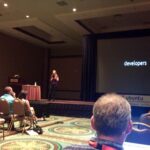
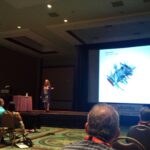
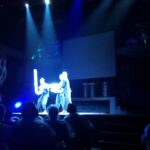
Last week I was on my first Ubuntu Developer Summit (UDS-N), I wanted to attended this summit for couple of reasons: 1. Developer, I m part of Debian Java, working on Eclipse IDE, and as you re developing Debian, you re automatically developing Ubuntu, no? Nerd 2. DebConf11 main organizer, I really wanted to see how it s all done on corporate level, for instance we re going with hotels instead of student dorms and so on. 3. Migration to Linux infrastructure, make contacts and have some talks on this topic, because after DebConf11 in Bosnia a lot of institution will most probably open doors to open solutions such as Linux. I went to this summit without any expectations or plans, just said I ll play it by ear. This years UDS was held in Orlando, Florida before Orlando I was planning to stay in NYC for couple of days, therefor my whole plan was to get to NYC, then Orlando then head back home Smile I Heart NYC I spent couple of days here with my cousins and friends, as always NYC never fails to surprise me, and I ll always stop by even if it s only for couple of days Wink I wanted to meet up with couple of Debian people as well, but unfortunately my schedule was too tight so Caribe Royale, Orlando Please note that this whole trip was crazy (in a good way) starting from Sarajevo; on my flight from NYC to Orlando I see a guy that s sitting in front of me is wearing Canonical Landscape tshirt, I approach him and it turns he was Jamu Kakar working on Landscape. Since my luggage was late we had conversations from Debian over Ubuntu to Java to everything pretty much. While we were still at the airport, we bump into two more people going to UDS. As we got to hotel, same moment we walked out of cab there he was Jorge Castro, was he there just to smoke a cigarette or whatever doesn t even matter, what matters is that even before walking into hotel building I knew where reception, my tower and bar was, everything I needed to know at that moment High Five! Hotel where everything was held was Caribe Royale and even though I looked at their website I thought there was no way it s all going to be that nice, to my delight it was exact replica. Place is All-Suite Hotel and Convention Center , which meant that both accomodation, venue and everything else was in one place which is Yes 15 minutes later after I checked in, I was at a bar talking to Jim Baker about Java, Jython and Python, exact things I wanted to talk about at that given moment. What I said in these last couple of paragraphs sounds pretty cool eh? Well to me this whole UDS was just like this, everybody was so accessible and open for discussion, from Jono Bacon walking around offering candy to UDS reception staff Michelle, Marianna and others who were always there whether you had a complaint, problem or a praise. I really should stop mentioning names, because I ll forget somebody, and since it s just not fair because I had a feeling everybody was just there for you, whatever it was you needed. Ubuntu Developer Summit (UDS-N) Ubuntu, Debian, DebConf, differences? Even though I said I ll play it by ear, from very beginning I thought I d be complete outsider, being part of Debian and all. Quite contrary, I was everything but outsider, and even more there was plenty of Debian people there, including current DPL Stefano Zacchiroli, Colin Watson, Riku Voipio just to name few. There was also a Debian Healt Check plenary. But overall, there are differences between DebConf and UDS. One of the things is that you can attend UDS remotely I m not sure how much is this doable on DebConf, but then again vast differences are that UDS is filled with BOF s (as we would call it in Debian) meetings of different teams, I attended a lot of these, and most of them end with some kind of conclusion. While each day there was (only?) an hour of lectures on various topics, which on DebConf we would characterize maybe even as speed talks . However, everything was high paced, and it all ended up on You think that s a problem? How do you think we could solve it? . I had a feeling even if I didn t say something out loud that someone would hear me and approach me to discuss it. Everything was straight forward, all in goal to resolve certain issue or a problem, which I absolutely loved. Clap Fun It wasn t all work, even though Orlando doesn t seem to be my kind of city from what I saw, it s way too magical for my taste Party There was a lot of places where you could go to enjoy yourself. Good people at Canonical even offered me free ticket to Disney World, there was a lot of destinations to visit and transpiration was also organized by Canonical. Unfortunately I missed the notorious UDS party on Friday because I had to head home early, but possibly I ll make it next year Razz Even though, hotel was that great and to be honest you didn t have to leave to look for party. My favorite was Universal City Walk, one night I decided to go to see Blue Man Group, best part of it was that I got pulled up on stage by one of the members and was part of one of the acts! ROTFL This is definitely something everyone should see during his life, one moment you re laughing like a lunatic, while other moment you re just having goose bumps from the performance itself. Amazing stuff. After all I wrote here along with the pictures, is there even anything else I need to say? Smile I believe that even if I didn t play it by ear, this whole trip would exceed all my expectations in every possible sense. Because that s really what happened, those three reasons I was going to UDS for? Far more happened than that. All I can say in the end is that I ll move closer to having a part in Ubuntu development, and yea, I ll try to be regular on UDS from now on Smile See you in Budapest? If all these photos weren t enough, you can find official group photo as well as personal set of photos can be found on: UDS-N photos by 2010 Sean Sosik-Hamor




Ritesh Raj Sarraf: Icedove

My recent experience with Mozilla ThuderBird, IceDove. With KDE 4.x, the KDE team took a radical step of ripping apart most of the stuff and rethinking many of the designs. Quite a bold move. Many people appreciated KDE's efforts to start afresh while others moved away from KDE. For some reasons, I decided to stick to KDE. Maybe it was because of the awesome flexibility KDE provided provides to customize the DE to one's personal taste. Or maybe because I was too used to the KDE way of doing things. I stayed with KDE while 4.0 was released and stayed with it up till very recently. I started to lose my patience with the PIM Suite. I know the PIM team is also going to some very radical changes which will bring very innovative stuff later. But, at the moment, the KDE PIM suite is very broken. Broken not in the first impress, but broken when you regularly use it. It leaks memory like anything and keeps doing lots and lots of I/O. I hope some day the KDE team decides that they do need a core team, a core team that could take care of important tasks, making sure that the imporatant tasks are Continuously Usable. It takes time to earn the reputation but it takes a lot lesser time to lose it. Anyways, having been a KDE (PIM) user for long, I had been bearing the PIM torments up until, I recently saw a colleague using IceDove. There was a time when the Mozilla suite was in itself terribly slow. But things seem to have changed a lot. Both, the browser and the PIM suite, have improved a lot lot in terms of functionality and performance. Performance is very important. What good is a feature if its performance is terrible and it hinders the usability. Some of the things that really impressed me were: Indexing: Nepomuk might be good one day but that day is yet to be seen. I patiently wait for that day to come. Well, don't have much choice. Have been patiently waiting for it since KDE 4.0 was released. KDE has great ideas with Nepomuk which is good. But realisticly, what all do you want to see indexed ? There has to be a realistic line drawn. The browsers already have indexing for the history. Amarok, the player, also does indexing. It can tell you when your last favorite song was played. For pictures, I have the awesome KPhotoAlbum that cannot be beaten by anything. But above all, the most important thing to index is your conversation. Those emails that you send daily. And indexing is no good if you can't find the information you need, later. IceDove has filled that place. It does an excellent indexing (in terms of performance) and presents a very user intuitive way to narrowing it down to, when looking for a particular information. Organization: The other great thing about KDE PIM is its ability to break down its applications into small parts and glue them together into a new, well integrated application. Yes, Kontact. It is used to be the best PIM application. Used common libraries to make the suite more efficient than the rest. But all this was used to be. Today, kpart itself might be Kontact's problem. We have different applications glued together that if built with a common design, could have benefited a lot more. Take for example: kmail, knode and akregator. They are all very important parts of the PIM suite. Yet all three are different. The only thing common amonst them is is that they are available from the same Kontact shell. kmail has a different navigation. akregator has very nice aggregated folders but the same cannot be available in knode and kmail. knode, while still okay, has been rotting for some time. So it was time to see how IceDove performed when testing it up against this Use Case. The good thing about IceDove is is that it has one single uniform interface to most of the PIM needs. I can use the same window and the same interface for all my rss feeds, my emails and my leafnode newsgroups. That has a big benefit in itself. I have only 1 integrated interface to look at and only 1 interactive method to learn. There aren't different keystrokes for different applications. All is one in IceDove. And I think one of the main reasons for Mozilla's success is its plugin architecture. It is very difficult to satisfy everyone's needs. In the same way, it is very difficult for one group of developer's to be able to innovate differently. This is where Mozilla rocked. They provided a solid foundation with basic standard interface and let new fresh minds to do the rest of the innovation. Turns out it has worked well. So, with my PIM needs satisfied, I thought KDE was serving as nothing but just a mere shell. So, now was the right time to do the thing I always thought of doing. Switch to GNOME. GNOME looks elegant at first look but that is it. I wanted to take a screenshot of an application to report a bug. I fired up PrntSc key to let the screen capture utility pop-up. It did not have the opiton to select just the application window. Hmmm! Time to return back to KDE and use the Mozilla PIM suite and hope the KDE PIM team learns and does the right thing.

6 November 2010

Adrian von Bidder: Some Gigabytes

For some reason, 60G of free space on my notebook suddenly turned into 60G of movies. Bownian motion, perhaps. Unfortunately, in this particular case, I absolutely don't like to let a movie (or book, for that matter) unfinished, so I watched Fear and Loathing in Las Vegas (directed by Terry Gilliam, starring Johnny Depp; so far, so good) from start to finish. After the first half hour I started wondering if the plot is going to start. The reptile party in the hotel lobby was a short entertaining interlude, but to the end, no plot manifests. I'm left wondering what this was all about. Quantum of Solace on the other hand is good entertainment. Probably not one of the best, but still worth watching if you like her majesty's secret agent. Going back to movies I've seen before is something I like to do as well, so having another evening in company with the unforgettable Leon (the professional) was time well spent. I didn't give up on Terry Gilliam yet and met The Fisher King. While the story is completely different, it does feel a bit similar to 12 Monkeys in terms of set design and atmosphere. Speaking of Terry Gilliam: I'm curious how his current attempt at The Man Who Killed Don Quixote turns out; so far I've only seen him losing this movie in the documentary about the aborted last attempt: Lost in La Mancha. On the funny side, Dogma and especially The Wedding Crashers were worth watching. If you have to pick one, it's the latter one. Dogma feels a bit forced in some places. Returning back to the opening theme: seeing Inland Empire was another evening that left me confused. The main story is interesting enough, but I have to admit that I just couldn't follow where all the other sub plots tie in, or if they even are supposed to. And I'm not only talking about the rabbit family (those felt a bit like the Middle of the Film in The Meaning of Life and were quite in order.)

Joey Hess: howto: create your own time zone

Tomorrow I won't have to deal with it getting dark at a soul-crushing 5:30 pm. Nor will I have to wake up blearily an hour early in the spring. Instead I will be enjoying my new, custom time zone. It's "JEST", for "Joey's Eastern (non)Standard Time", and in JEST, there is no spring forward or fall back stress. The folly of daylight savings time (Ben Franlin's best prank ever) really becomes apparent when you have solar power. It's bad enough that the sun is setting at 6:30 without compounding that by an hour. By keeping my clock set so the sun sets in midwinter at 6 pm, I will maximise what little light there is, and minimise time spent using batteries in the dark. Of course, it helps that I'm my own boss, and that most of the people I work with are probably not in a nearby timezone anyway, and that most things are done asynchronously. Since JEST is an hour ahead of local time here in the winter, I will, at worst, tend to be running early. So I only have to change my clocks one time -- and by "change", I mean create a custom timezone in Linux. Here's how to do that.
  1. Make a custom timezone file. The standard one for North America is a bewildering 3000 lines of special cases, conflicting legistlation, and historical weirdness, but I only need one: echo "Zone JEST -4:00 - JEST" > JEST.zone
  2. Compile and install it to somewhere; I put it in ~/.zoneinfo zic JEST.zone -d ~/.zoneinfo
  3. Set TZ to use it. Also TZDIR if it's not in the system directory. export TZDIR=~/.zoneinfo TZ=JEST
Update: Turns out it was easier than I thought, just setting TZ=FOO+4 will make date display a timezone "FOO" that is 4 hours behind GMT. So all I need is to set TZ=JEST+4 Result:
date: Sat Oct 30 21:43:39 JEST 2010
date -R: Sat, 30 Oct 2010 21:43:39 -0400
Previously:

Josselin Mouette: Is HP run by a bunch of idiots?

My wife has been pestering me for months to get a replacement for our dead Epson inkjet printer (which didn t last long, mind you). To avoid the nightmare of printer support, which, unless you buy a high-end professional printer which does everything plus the coffee, is usually somewhere between disaster and works sometimes , we spent a long time on manufacturers websites to choose wisely the model. We chose the HP Laserjet P1102, which, according to HP, has a full support level and is even part of their recommended models. Yet, after plugging it in, it took me quite some time to understand why it would behave as a brick instead of a printer. First, I thought it was a bug in hplip. Then, I soon discovered that the printer advertised itself as a storage device instead of a printer. What, a buggy firmware? Thanks to a random question on Launchpad I discovered it s not a bug, it s a feature. It s named HP Smart Install and it turns out it s yet another stupid idea to support OSes that are too dumb to detect your printers automatically: the printer advertises itself as a CD drive, until you install the driver that will make it switch back to being a printer. What happens to those who don t want this feature that turns your printer into a 10 kg, read-only USB drive? Well, HP has a solution in the Smart Install FAQ:
25. Can I turn HP Smart Install off or on?
Yes. You can use the HP Smart Install utility to disable/enable HP Smart Install. The utility is stored on the software CD, in the UTIL folder. SIUtility.exe is for 32-bit operating systems and SIUtility64.exe is for 64-bit operating systems.
Bunch of idiots. If I buy a 100 printer, it s not so that I have to buy a 100 operating system just to activate it.

Russell Coker: Unparliamentary Language and Free Software

I ve just read the Wikipedia page about Unparliamentary Language [1]. I recommend that everyone read it, if only for the amusement value, among other things it links to incidents where elected representatives acted in a way that would be expected of primary school children. The general concept of having rules about Unparliamentary Language is that MPs are permitted to say anything in Parliament without the risk of being sued or prosecuted, but certain things are inappropriate the most common example is directly accusing another MP of lying. One of the main aims of rules against Unparliamentary Language is to prevent attacks on the honor of another member. Having just witnessed a mailing list discussion go widely off track when a free software project was denigrated, it seems to me that we could do with some similar guidelines for mailing list discussions. The aim would be not to just prevent excessive attacks on the honor of other members but to also protect the honor of the free software projects. So for example one might recommend not using a particular program because of design decisions which seem dubious or a bad security history, but saying it s crap would be considered to be inappropriate. Not that rejecting a program based on design decisions or a history of security flaws would be uncontroversial, but at least that gives objective issues to discuss so if there is a debate it will educate some of the lurkers. Note that I m not claiming to be better than other people in this regard, I ve described software as crap on more than a few occasions. But I will try to avoid such things in future. Finally does anyone have a good suggestion for a Free Software equivalent to the term Unparliamentary Language ? It seems that to a large extent the support of certain ideas depends on having a catchy name and I can t think of one.

5 November 2010

Craig Small: Book: Surface Detail

Oh yes, another Iain M. Banks story is out and I had to read it right away. I wasn't disappointed either.

It's another one of his Sci Fi books in the world, or worlds of The Culture. I wasn't disappointed and it was interesting to see him flesh out more of his universe in this book. Like a lot of his books, there are several sub-threads within the main story with no real obvious connection between them all.

Transferring your "mind state" from the grey mushy stuff you have in your head into a computer isn't new in this series. Even the concept of the dead "living" in a computer is not that unique. What has been introduced is the "hells". A computer simulation of hell where people who go against some societies rules end up if they're bad enough.

Now some civilizations think this is great, it keeps their population on the straight and narrow. As they know there really is a hell for them if they break whatever rules they have on the planet. Other civilizations think they are abhorrent and want to shut them down.

Hence the "virtual wars" where the two sides fight in simulators, winner gets to keep the hells running or shut them down, depending who you are. But now one side is thinking of taking it outside the simulation, to attacking in "the real".

And this change to "the real" and the political mess that makes is the main story. There are plenty of twists as you'd expect. A lot of decisions made where you're not sure if the "right" thing was done but more importantly it was a very enjoyable read.

One thing, if you are the sort of person who reads the last page first, do not do it on this book! The surprise on the last line was worth it.

Vincent Sanders: Keeping kindling dry

I, along with a great number of people I know, now posses a 3rd generation Kindle. It seems Amazon have found a feature set and price point which makes this device a winning solution.

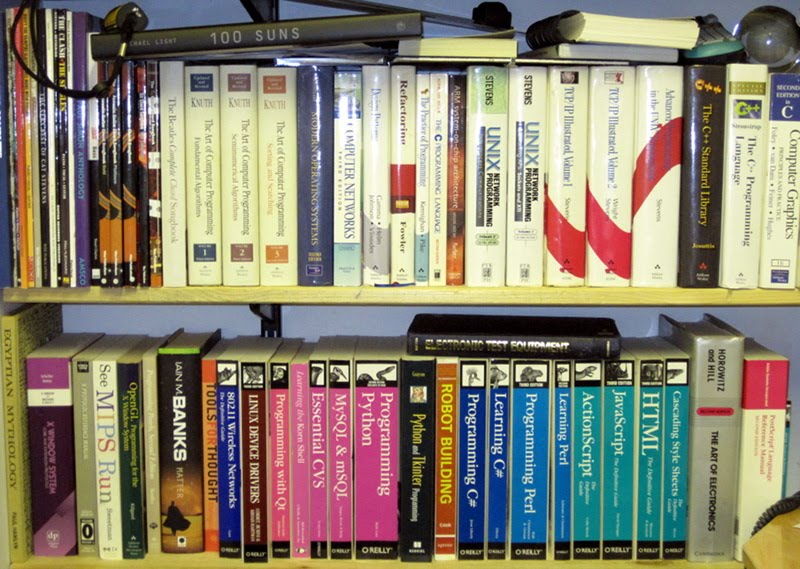
My bookshelf complete with covered kindle
I did look at a huge number of alternatives like the Sony PRS600 and others but they were all more expensive than the 110 for the Kindle and did not have enough features to make a compelling argument for spending more.

Yes it has DRM. Yes it "only" supports PDF, MOBI and mp3. Yes it will not win any style or usability awards. But I went into this eyes open the device is "good enough".

The device lets me read books from a reasonable display. The integration with amazon.com is so seamless it poses a serious danger to my bank account. I should expand on that last point :-) Amazon have got the whole spending money for a book thing executed so well that you do not think twice about a couple of pounds here and there, this soon adds up. I have set myself a rigid budget.

My main complaints are really just niggles:

  • Another different USB connector! Wahh, I thought everyone had agreed on mini USB? seems that I now have to have yet another lead for micro USB

  • The commercial book selection is a bit limited and missing a surprising number of popular titles. Some of this appears to be the publishers and authors simply clinging to their old business model. I fear some of them might not survive and early indications are they are behaving like the music industry did...Guys you are selling an infinite good a scarcity model is going to fail!

  • The price of some of the books is absurd...they are asking hardback prices for the electronic edition! Seriously? how on earth can that possibly be justified? I can see that a hardback book with its print run could cost 5 per physical item (going from hulu print on demand prices as a worst case) plus shipping and stocking fees. So how can you possibly justify charging the same price for a pile of bits where none of that applies? Also the pile of bits cannot be lent or sold, not impressed.

  • eBook formatting is generally dreadful. I do not know who is mastering these books but they need to do a better job. If they tried to pull this in the physical editions they would get a seriously large number of returns.

  • I still have to pay for whispernet delivery fees even though, because its the wi-fi model, I am providing the bandwidth myself. I can see that differentiating between 3G and wi-fi delivery is a bit hard for them though.
However my one and only real complaint with the offering as a whole is the astronomical asking price for the leather cover. The cover is currently 25% of the price of the kindle itself! ( 30 cover 110 kindle) which is just silly. It is a pretty nice cover and the clever clip attachment means it does offer an integrated solution to protecting your kindle, but not 30 nice.

Kindle in a sock cover
So my lovely wife (her kindle was bought with the cover) made me a sock for mine. This is great for casual round the house usage to stop me scuffing the screen but was a bit lightweight for protecting the kindle when out and about.

One day last week I had an idea. I would make my own protective cover by crafting something I had wanted to do for ages. And the (unoriginal I am sure) project of a hollowed out book for housing my kindle was implemented.


My hollowed out book kindle cover
A quick Google later and I had a set of plausible instructions to follow. I used possibly the most out of date book ever (published 1981) on electronic test equipment, partly because it was a ex library sell off book which cost 10pence back in 1995 but mainly because it was the right size to just enclose the kindle without adding to much size.

I learnt a couple of things doing this:
  • Do not let your pva (white) glue mix get too runny, you want it fluid enough to be easily absorbed but not watery - this is important because otherwise the paper absorbs too much water and crinkles
  • Do not use a book where the binding has gone bad already and select a "clean" book. The spine of this book was yellowed and cracking before I started. This means the book spine simply cracks open at the hollowed out bit and it is very obvious.
  • Work out where the "solid" part at the back is going to be and treat that separately so you get a nice solid base at the back of the hole. In mine its not all stuck together and is a bit wavy. Do be sure you left enough depth for the kindle though.
  • Take your time and be careful with the glue, it is amazing how obvious even a simple splash of glue in the wrong place is. Use a small brush for this a paint brush is fast but sloppy.
  • Measure carefully and cut only a few pages at a time, it takes a bit longer but looks much better. Also I did not drill the corners of my hole which means they are a little scruffy.
  • Use the sharpest thinnest knife you can, this really helps. I started with a small stanley knife but switching to my hobby scalpel gave much better results.
  • If you have some, use woodworking clamps to clamp a bit of timber (I had some offcuts of shelving) around the book to compress it while the glue dries. Do not clamp the spine if you can avoid it. This method ensures:
    1. Heavy things do not fall off the book while it dries.
    2. An even strong pressure is applied.
    3. The book does not warp or bend while the glue dries
All in all I kinda like the results and I think I will try again with a more modern book where the spine is not so broken to begin with.

Dominique Dumont: Test CPANPLUS install on a Debian system

Hello I m a Perl author working on a Debian unstable system. The great thing about Debian is that a lot of Perl modules are available though Debian packages. I follow Debian way of life to the point that I no longer install my modules (under development) with sudo make install (or its Module::Build equivalent). I ve often been bitten by weird test errors due to old version of module lingering in /usr/local. Now, I always create Debian package of my modules under development with dh-make-perl. This way, I avoid installing Perl module in /usr/local and my developement versions are cleaned up when actual package are availalble through Debian unstable. () This method has an unfortunate side effect: I never test installation the CPAN way. And Config::Model did fail to install with CPANPLUS. Now here s a way to create a barebone Debian chroot with cowbuilder to test CPANPLUS installation. First create a new chroot: $ sudo cowbuilder --create --distribution sid

Loging into this chroot (the bindmount option is necessary for cpanp to work correctly) : $ sudo cowbuilder --login --bindmounts /dev

In the chroot: Run cpan to configure CPAN: # cpan

Hit return to configure CPAN automatically. Then install your module: # cpanp i Config::Model

Or, if your module is not yet uploaded: # cpanp i http://<path-to-tar.gz>

Once you quit, the chroot is restored to its barebone state. Et voila. I tested full installation with dependencies the CPAN way without mucking up my system. Many thanks to Christian Kuelker of Cipux project for his comments that enable me to improve Config::Model All the best

Rapha&#235;l Hertzog: Managing distribution-specific patches with a common source package

In the comments of the article explaining how to generate different dependencies on Debian and Ubuntu with a common source package, I got asked if it was possible to apply a patch only in some distribution. And indeed it is. The source package format 3.0 (quilt) has a neat feature for this. Instead of unconditionally using debian/patches/series to look up patches, dpkg-source first tries to use debian/patches/vendor.series (where vendor is ubuntu, debian, etc.). Note that dpkg-source does not stack patches from multiple series file, it uses a single series file, the first that exists. So what s the best way to use this? Debian should always provide debian/patches/series, they are supposed to provide the default set of patches to use. Any derivative cooperating with Debian can maintain their own series files within the common VCS repository used for package maintenance. They can drop Debian-specific patches (say branding patches for example), and they can add their own on top of the remaining Debian patches. It s worth noting that it s the job of the maintainers to keep both series files in sync when needed. dpkg-source offers no way to have stacked series files (or dependencies between them). If you want to use quilt to edit an alternate series file, you can temporarily set the QUILT_SERIES environment variable to vendor.series . Just make sure to start from a clean state, i.e. no patches applied. Otherwise quilt will be confused by the sudden mismatch between the series file and its internal data (stored in the .pc directory).
Found it useful? Click here to see how you can encourage me to provide more articles like this one.

Flattr this Share/Bookmark No comment Support my work

4 November 2010

Julien Danjou: Icon category support in Org-mode

My latest patch for Org mode has been accepted by Carsten today. It adds support for custom category icons in all views, like agenda or todo. You just need to configure org-agenda-category-icon-alist and it will work out of the box. Flattr this

Christoph Berg: Cool Unix Features: column -t

/etc/fstab files tend to be an unreadable mess of unaligned fields.
# /etc/fstab: static file system information.
#
# <file system> <mount point>   <type>  <options>       <dump>  <pass>
proc            /proc           proc    defaults        0       0
/dev/mapper/benz-root /               ext3    errors=remount-ro 0       1
/dev/sda1       /boot           ext3    defaults        0       2
/dev/mapper/benz-home /home           ext3    defaults        0       2
/dev/mapper/benz-swap_1 none            swap    sw              0       0
newton:/home        /nfs        nfs defaults,soft,intr,users    0 0
/dev/scd0       /media/cdrom0   udf,iso9660 user,noauto     0       0
Let's remove some whitespace in the third line:
#<filesystem> <mountpoint>   <type>  <options>       <dump>  <pass>
And then pipe everything from line 3 to the end through column -t:
# /etc/fstab: static file system information.
#
#<filesystem>            <mountpoint>   <type>       <options>                 <dump>  <pass>
proc                     /proc          proc         defaults                  0       0
/dev/mapper/benz-root    /              ext3         errors=remount-ro         0       1
/dev/sda1                /boot          ext3         defaults                  0       2
/dev/mapper/benz-home    /home          ext3         defaults                  0       2
/dev/mapper/benz-swap_1  none           swap         sw                        0       0
newton:/home             /nfs           nfs          defaults,soft,intr,users  0       0
/dev/scd0                /media/cdrom0  udf,iso9660  user,noauto               0       0
Thanks to SP8472 for bringing this to my attention.

Jaldhar Vyas: All Hail Aqua Buddha!

My fellow Republicans and I got a nice early Diwali present on Tuesday. ~65 seats in the House ~6 in the senate, ~18 governorships and control of ~20 state legislatures. (Some races haven't been formally called yet.) A few disappointments though. no majority in the Senate and Harry Reid and Barney Frank were not defeated. Still overall its an election to celebrate. Here are a few thoughts. The Election System Is An Embarassment Once again there are several races where the outcome is in doubt because of technical problems with voting. Whatever politics we have, can we agree that it is damn stupid that we still can't get something as simple as counting ballots right? Prediction: The 2012 Republican presidential candidate will come from the Tea Party. While I may be a Republican, I am also a Cosmopolitan East Coast Elitist so the Tea Party didn't move me much. There were a couple of cases (NY and DE atleast) where their candidates were subpar and cost us victory but the best of the new Republicans also came out of this movement. I would rather vote for one of them than Romney, Huckabee, McCain, Gingrich etc. (With the exception of Sarah Palin who is just too polarizing I'm afraid.) The Tea Party itself will subside in a few years as all populist movements do. (Ask the Hope'n'changers.) Young People Are Dumb Part of leftist mythology is the idea that one day "the kids" are going to rise up against the mean old corporate overlords. It ain't going to happen. There was a huge upsurge in first time voters in 2008 but that was because Obama was a novelty act not because they had suddenly discovered the merits of Keynesianism. Now Obama is old and busted so they won't vote anymore. (Not until they have kids and a mortgage sometime in the future.) They'll spend time make cool ironic signs for the Rally to Promote Comedy Central but even the prospect of legalizing pot won't get them to the polling booths in sufficient numbers to defeat the oldies. Why? Because young people are dumb. Prediction: War With Iran If you're President Obama what do you do now? Bipartisanship? Yeah right. Look at what happened to Rep. Cao of Louisiana, the only Republican to vote for Obamacare and one of only two GOP congressmen to lose on Tuesday. Obama actively campaigned for his challenger. Any of the new Republicans who try and compromise with the President will end up under the bus sooner or later as they well know. The President could go full retard with the socialism (progressivism, liberalism whatever. It's all the same.) All his initiatives will be shot down but he can claim to be a martyr to the party of No. (Who will be joined in the Senate by Lieberman and whatever centrist Democrats who are up for reelection in 2012.) But this seems to be the path to a one-term presidency to me. Maybe that's what he wants. He could retire comfortably to the deanship of some Ivy League law school and make a lucrative killing on the rubber chicken circuit. But lets assume he wants to get back in the White House in 2012. One way to get back in touch with the voters is to start getting serious about foreign policy which has either been a joke (Remember the reset button?) a travesty or just copied from the Bush administration. In particular the Obama administration has completely failed in stopping Iran from gaining nuclear technology, sponsoring terrorism in Iraq, Afghanistan and Lebanon, and oppressing its own people. War with Iran would enhance his standing with Conservatives (hey it works for me!) most liberals would go along with it and the extreme Code Pink type loonies can safely be ignored. I say it happens before November 2012.

3 November 2010

Andrew McMillan: Something a little different

During my recent trip to Massachusetts for CalConnect XIX I passed back via New York, surfing a few nights on the couch at the Washington Cube Garden1. This was just enough time for my new Davis VantagePro2 to arrive by UPS ground (phew!) causing me much consternation, as the box was about twice as wide as I expected it to be. On opening it I discovered that the reason for the size was the physical dimensions of the rain gauge, leading me to realise that I had actually bought exactly what I wanted: a high quality weather station. Also leading me to wonder how the hell I was going to get it halfway around the world with me the next day. Unfortunately that extra wide carrying case was in no way going to fit inside my suitcase. Fortunately it came with a handle. And those wonderful people at Air New Zealand gave me a Koru Gold upgrade for a 50th birthday present, so it was time to put it to the test... Travelling on the subway out to JFK was it's own little adventure, but I made it out to terminal 5 and wandered around a bit before concluding I needed to be in terminal 7. Once I was in the right place I found the fancy people's check in counter and the nice lady there was only too happy for me to carry it to New Zealand, though she did aver that perhaps the security scanners would be dubious. Not a hitch there though: I guess they're used to letting everything through that's not specifically denied, so weather stations are fine because nobody would be silly enough to even think of doing that... Being Koru Gold really helped at this point though, because it enabled me to queue jump use the priority boarding line when getting onto the plane, and every airline in the US seems to have gone all-out for this "checked baggage costs more" approach, so the planes all fly with empty baggage holds and totally overstuffed overhead lockers. If this progresses I shouldn't wonder that the planes will get so top-heavy they roll over, but through the miracles of priority boarding I was able to commandeer all the locker space I needed before anyone else had even made it past row 40. I confess that I was a little worried that it wouldn't be quite such plain sailing getting through LAX. I mean we all know what reputation this delightful little exit port has. In the event it was totally anitclimactic. If it has a handle on it, and it's about the same size and shape as a largish carryon then it's fine. There have been no recorded stabbings with wind vanes anyway - at least on aeroplanes - so clearly they are perfectly safe. Finally back in my country of birth, thinking I was home free, I breathed a sigh of relief transferred my bags and nipped off to the Koru lounge for a much needed shower and change of clothes after I snuck the station through another scanner. By now the handle had broken, so it was looking decidedly more 'box' like and less 'carryon' like, and when I eventually rolled up at the gate with my boarding pass the attendant made a valiant attempt to relieve me of it, but she was too slow and I danced around her and swanned up the gangway to take my seat. I was slow, this time, having missed the first boarding call, and all overhead lockers were crammed full. There was no seat in front of me to put the weather station under. Fortunately a nearby cupboard proved fit for purpose and it was secreted there and we were underway. At this point the guy two seats over said "didn't I see that weather station in New York?". Of course being bright yellow does make it a little conspicuous I guess, and I'm not renowned for my own inconspicuousness myself. So that's how I got my new weather station home, and you can see right away that doing things the easy way would never even occur to me. Possibly this is why I run Linux: there just isn't enough challenge when you run a different operating system. On Windows someone has always written a program for your new weather station, and a Mac user wouldn't be seen dead with it because it's black and beige and comes in a bright yellow box! So now I had to find some code to write. I looked around and very rapidly discovered that some software called vproweather was available, which would happily talk to my weather station and download the data from it, write web pages, stuff it into a MySQL database and so forth. All, obviously, far too easy, so I thought aha! I could convert that to PostgreSQL, and then I would be happy and relax with the thought of a job well done. So I downloaded the code in question an impressive several hundred kb of C code, cranked open a text editor and started to crawl through it and see where I could add the magic pixie dust to make it work with PostgreSQL. But it was not to be. My eyes glazed over or scales fell from them or something, and I realised that this particular edifice was beyond my help. Back to square one. I downloaded the Vantage Serial Protocol docs from the Davis Instruments website did some quick googling and decided I should write a module to talk this protocol. And I should write it in Perl (it was a Thursday, and Perl always seems more sensible on a Thursday, and not because of Douglas Adams, either). I beavered away into the night. Rain threatened, so I raced outside and installed the new weather station on the roof in the hopes that it's magnificent rain collector would collect. I raced back inside and was able to count the first (and so far, only) tip of the bucket. And so I now release upon the world Davis::VantagePro my first perl module. Well, the first one I care to share with the world, anyway. I have stressed it with very little testing, lumbered it with no planning or design whatsoever and so I feel it only fair that I should cast it upon the world with very little thought for it's survival or existential goals.

1 I seem to recall one night we came up with some fantastic names for Micah & Biella's Washington Square apartment, but I couldn't remember any of the good ones and had to slap a new one on there. I should also mention my stay at the Acetarium in Boston, which was a fabulous few days, but it would pad this blog post needlessly, and I've already done that.

Christoph Berg: Cool Unix Features: df -T

Just discovered (thanks to XTaran): df -T -- show file system type.
$ df -Th
Filesystem    Type    Size  Used Avail Use% Mounted on
/dev/mapper/benz-root
              ext3    6.6G  4.9G  1.4G  79% /
tmpfs        tmpfs    1.6G     0  1.6G   0% /lib/init/rw
udev         tmpfs    1.6G  228K  1.6G   1% /dev
tmpfs        tmpfs    1.6G     0  1.6G   0% /dev/shm
/dev/sda1     ext3    236M   21M  203M  10% /boot
/dev/mapper/benz-home
              ext3    135G   82G   53G  61% /home
newton:/home   nfs    459G  145G  291G  34% /nfs

Next.

Previous.