Search Results: "sto"

24 November 2010

Matthew Garrett: Viewsonic and the GPL

Somebody linked me to this reddit story about the fact that Viewsonic appear to be engaging in the currently fashionable trend of shipping Android devices without providing any source. This one's more interesting though, in that Viewsonic appear to be entirely happy to publicly state that they have no intention of following their license obligations. I've pulled the kernel image for the device and confirmed that it contains code that's not present in the generic Android Tegra tree, so I don't think they have a leg to stand on here.

So of the companies I'm currently complaining about (Fusion Garage, Barnes and Noble, Viewsonic): One is in Singapore and two are based in the US. Chinese companies may be the current easy target when it comes to complaining about GPL violations, but the truth is that companies in countries with stronger IP enforcement are also either blissfully ignorant or feel that the risk of failing to follow their license obligations is low. This isn't a sustainable position. We've got three real choices here - do nothing, start lawsuits or start educating companies. The third is probably the most productive in the long run, though I wouldn't absolutely rule out the second if we don't get anywhere. I'm currently exploring the education possibilities. We'll see what happens next.

23 November 2010

Matthew Garrett: Barnes and Noble response

<quote>"We are working on consolidating and will be distributing the open sourcecode in the coming weeks."</quote>

So, Barnes and Noble's release process doesn't include them ensuring that they have the source code that they're legally obliged to be able to provide to customers - even after they'd screwed this up once before. Their negligence leaves them open to potential litigation[1], so if you're a shareholder you probably ought to be asking questions about their corporate responsibility.

[1] No, I don't plan to sue them

Russell Coker: Links November 2010

Guy Deutscher wrote an interesting article for the New York Times about how language shapes how we think [1]. The example of people who have no language construct for self-sentered directions and how they describe things is particularly interesting.TED published an interesting interview with Shaffi Mather the founder of India s first organised ambulance service (with differential pricing based on ability to pay) [2]. He also talks about founding schools in small towns and his BribeBusters.com company.World Changing has an interesting article about a legislative change in California that allows car-sharing of personal vehicles [3]. The concept is that if you own a car that you don t use most of the time (as is usually the case) then you can contract with a car-share company to share it to others when you don t need it. This saves the car share company from the capital expense of owning cars and thus allows them to place cars in remote locations that wouldn t otherwise be financially viable (IE the street in front of random people who sign up). The person who owns the car may get about $2 per hour for the time when it s rented. The car owner gets to specify when the car may be available.Charles Stross wrote an entertaining and informative rant about Steam-Punk [4]. He cites Michael Moorcock s informative essay about Starship Troopers and other right-wing apologist themes in sci-fi [5] as well as China Mieville s essay about politics and The Lord of the Rings [6].Glenn Greenwald wrote an informative article about the New York Times defending torture by the US military [7]. I have unsubscrubed from the @Times mailout and will avoid citing NYT articles wherever possible. I sent the URL for Glenn s article to the NYT feedback address but I don t expect them to take any notice.Fate Of the World is a new computer game that s in beta where you have a simulation of the next 200 years of climate change [8]. It s currently in beta for Windows only, they hope to have a Mac version in March and have no stated plans for Linux support.Cory Doctorow wrote an interesting article for Locus about Sci-Fi fans and cosmopolitanism taking the best option after consideration rather than doing what s locally fashionable [9]. He uses the term Martian to refer to some of the viewpoints, but it seems to me that Vulcan would be more appropriate.The Wall St Journal has an interesting article about people who manufacture drugs that aren t yet illegal, every time one drug gets banned they market a new one [10]. This is yet another example of the War on Drugs doing more harm than good, instead of taking drugs which have well known effects (that can be treated by hospitals) people are taking weird new drugs and no-one knows what will happen to them.Mieke Meijer in the Netherlands has invented a new product known as newspaper wood [11], it involves gluing paper together to create a form of chip-board that keeps the layers of paper distinct to give a result like wood grain. The World Changing commentary suggests that this could give a heirloom quality to objects made with it, while I m dubious about that I think that the surface would be pleasing to look at in a kitchen or office environment.Ze Frank gave an interesting TED talk about unusual social projects that he s run on the Internet [12]. This includes an attempt to reconcile Red and Blue voters after the 2008 US presidential election, the creation of inspirational songs, and remixing the Whip Somebody s Ass song. This is really worth watching!The Chronicle Review has an interesting article by someone who is paid to complete academic assignments for other people [13]. The scope of cheating that is claimed is profound. Naturally we have to take claims by someone who admits acting unethically with a grain of salt, but if there is any truth to this then it s a serious matter. I m surprised that no-one has made a serious attempt to catch the customers of such people.David Brin (the famous sci-fi author) gave an interesting short lecture about the future of humanity [14]. He promotes the Lifeboat Foundation (of which he is a director) and describes his concern about the Fermi Paradox.Shimon Schocken gave an inspiring TED talk about his work rehabilitating juvenile prisoners through taking them mountain-bike riding [15]. This shows that anyone can do great things to help other people, he got this idea when riding past a prison, convinced the prison governor that it was a good idea and then started doing it.Conrad Wolfram gave an insightful TED talk about math education [16]. His claim is that the entire mathematical education system is wrong in it s focus on hand calculation, instead the aim should be to teach children how to use computers to solve problems which is what is mostly done in the real world.

Jo Shields: Always twirling, twirling, twirling towards Freedom

I ve never quit a job before. Well, not a real job. Quitting PC World was more than easy, it was practically required for my soul not to leave my body. Quitting Waitrose was, well, it was a freaking supermarket job. And Southampton football stadium I just stopped turning up after one girl fainted in the kitchen from heat exhaustion. But a real, proper handing in of notice is something new in no small part because I ve been in the same place since my first job as a new graduate. Not that I m ungrateful, mind. Looking after big iron at the University of Oxford has been pretty awesome more blinky lights than you can shake a stick at but there comes a time when you need to think about your career, and move on to pastures new. I m fairly sure six and a bit years is WELL past that point. When I started looking at work, I had only a few mandatory criteria a sysadmin job, working with Free Software, without any significant decrease to my monthly income. Beyond that well, in this economy, who am I to argue? What I hadn t accounted for, however, was a job whose awesomeness can t be contained. A job with a dedicated Free Software company whose entire staff roster, top to bottom, is filled with the most talented, smart, and generally awesome people you could hope to work with. Such a job would be a fevered dream, the mere ramblings of a madman. Yet, somehow, for the second time running, I find myself in an enviable job, working exclusively on Free Software. Being able to show off root access to a box with 256 cores and a tibibyte of RAM is pretty cool. But you know what s even cooler? A job where I never need to worry about openSUSE 10.1 administration ever again. A job where several of my colleagues are fellow Debian Developers, with all the prestige and knowledge that comes with such a title. And somehow, by rolling proverbial twenties, I find myself in that position. I am very, VERY proud to say that from the start of January, I ll be joining Collabora Ltd as their new Systems Manager.

Mike Hommey: Improving libxul startup I/O by hacking the ELF format

If you have been following this blog during the past months, you might have gathered that I ve been focusing on I/O patterns on library initialization, more specifically libxul.so. The very patterns there s not much to do about, except enduring them, or hacking ld.so and/or the toolchain. The latter is not necessarily easy, and won t benefit everyone until all linux distros use an improved glibc and/or toolchain. This could take years before any actual result would reach end users. But with a little creativity, one can overcome these limitations and improve the situation today. Here is a summary of my recent hacks. Backwards static initializers As Taras showed in the past, static initializers are executed in reverse order. It turns out it is an unfortunate design choice in gcc, and it also turns out not to impact all ELF binary files. As far as I know there are currently two different implementations of the static initializers call loop, one provided by gcc, and one provided by ld.so. In the gcc case, the compiler creates a .ctors section, starting with 0xffffffff, ending with 0x00000000, and filled with pointers to the various static initializer functions, in ascending order. The compiler also injects an initializer function, called from .init, going through this .ctors section, starting from the end (__do_global_ctors_aux in crtend.o). A similar .dtors section is created for functions to run when the library is unloaded, and the pointers in it are called in ascending order. There is actually no importance in the order in which .ctors and .dtors are executed. All that matters is that they are executed in reverse order from each other, because that limits the risks of bad ordering. It is only unfortunate that .ctors was chosen to be the one backwards. In the ld.so case, the compiler creates a .init_array section, filled with pointers to the various static initializer functions, in ascending order. It also stores the location and the size of this section in the PT_DYNAMIC ELF header. At runtime, ld.so itself reads this information and executes the static initializers in ascending orders. A similar .fini_array section is created for functions to run when the library in unloaded, and ld.so goes through it in descending order. The .init_array section is newer, and for backwards compatibility reasons, is not used on systems that have been using the .ctors approach forever. On the other hand, some newer ABIs, such as arm EABI, uses the new facility, which means they are not victim of backwards static initialization. I however wonder if backwards compatibility is still needed, considering how long .init_array support has been around (more than 11 years, according to glibc git repository). While we could obviously bug the gcc maintainers to revert their .ctors execution order, or ditch .ctors support on glibc systems, which means we wouldn t get any immediate global benefit, we can also just revert the .ctors section content. Please note the source code out there doesn t take care of reverting the .dtors section accordingly, because it is currently empty in libxul.so. Relocations As I mentioned in an earlier post, relocations are what make it possible to load libraries at arbitrary locations. Unfortunately, a great number of relocations means awful I/O patterns: ld.so reads and applies them one by one, and while the kernel reads ahead by 128 KB chunks, when your relocation section exceeds that amount by more than an order of magnitude, it means I/O goes back and forth a lot between the relocation section and where the relocations take place. There are two classes of relocations: REL and RELA. In both cases, there are several types of relocations, some of which require an addend. The difference between both classes is in REL relocations, the addend is stored at the offset the relocation takes place, and in RELA relocations, the addend is stored in the relocation entry. It means that RELA relocations effectively waste space, as the addend ends up actually being stored twice: it is also stored at the offset the relocation takes place, like with REL relocations, though it could technically be nulled out, there ; in any case, the space is wasted. REL relocations thus take 2 words of storage, and RELA relocations, 3. On x86, the ELF ABI only uses REL relocations, and words are 32 bits, making each relocation take 8 bytes ; on x86-64, the ELF ABI only uses RELA relocations, and words are 64 bits, thus making each relocation take 24 bytes, 3 times that of x86 relocations. On ARM, both may be used, but apparently the compiler and the linker only use REL relocations. These words of storage are used to store 3 or 4 bits of informations: The linker splits relocations in two main categories: those for dynamic linking at startup and those for procedure linkage table (PLT) resolution at runtime. Here is what the repartition look like on libxul.so (taken from the mozilla-central nightly from Nov, the 22nd):
dynamic relocations PLT relocations
Architecture number size (bytes) number size (bytes)
x86 231,836 1,854,688 3,772 30,176
x86-64 235,893 5,661,432 3,773 90,528
So, PLT relocations are quite negligible, and dynamic relocations are just huge, especially on x86-64. Compared to the binary size, it s pretty scary:
Architecture libxul.so size relocations size %
x86 21,869,684 1,884,864 8.61%
x86-64 29,629,040 5,751,984 19.41%
Let me remind you that not only do we need to read these relocations at startup (at least the dynamic ones, but the PLT ones are just negligible), but we only read them by chunks, and need to read other data in between. Of the many existing types of relocations, only a few are actually used in dynamic libraries. Here is a summary of those in use in libxul.so:
x86 relocation type number x86-64 relocation type number
dynamic relocations
R_386_TLS_DTPMOD32 1 R_X86_64_DTPMOD64 1
R_386_GLOB_DAT 213 R_X86_64_GLOB_DAT 238
R_386_32 27,643 R_X86_64_64 27,611
R_386_RELATIVE 203,979 R_X86_64_RELATIVE 208,043
PLT relocations
R_386_JUMP_SLOT 3,772 R_X86_64_JUMP_SLOT 3,773
The above types can be separated in two distinct categories: In the second category, it means we are wasting all the bits for the symbol reference in each entry: 24 on x86 and 32 on x86-64. Unfortunately, the vast majority of the relocations in libxul.so are from that category. At this point, this is how much waste we identified:
description num. entries waste per entry (bytes) total % of relocation size
x86
Relocation without symbol ref. 203,980 3 611,937 32.46%
x86-64
Duplicated addend 239,666 8 1,917,328 33.33%
Relocation type encoded on 32 bits 239,666 3 718,998 12.49%
Relocation without symbol ref. 208,044 4 832,176 14.46%
Total 3,468,502 60.30%
On top of that, one could argue that we don t need 24 or 32 bits for symbol reference (which is the entry number in the symbol table), and that we re really far from requiring 64 bits for r_offset on 64 bits systems, as libxul.so is far from being bigger than 4GB. Anyways, that means we have room for improvement here, and it means that the ELF format, especially on 64 bits systems with RELA relocations, really doesn t help with big programs or libraries with a lot of relocations. (For that matter, the mach-o format used on OS-X has some kind of similar issues ; I don t know for the DLL format) Another interesting data point is looking at how relocations r_offset are following each other, once relocations are reordered (to avoid too much symbol resolution, they are actually grouped by symbol). It turns out 206,739 relocations r_offset are at 4 bytes from the previous one on x86 (i.e. strictly following it), and 210,364 at 8 bytes from the previous on x86-64. The main reason why this happens is that most relocations are happening in pointer tables, and libxul.so has lots of them: And when I say libxul.so has lots of them, that s not an understatement: there are 184,320 relocations due to vtables (function tables you get when using virtual methods in C++) on x86 and 184,098 on x86-64. That s respectively 78.23% and 76.81% of the total number of relocations. Interestingly, while most of these relocations are R_*_RELATIVE, 26,853 are R_386_32, and 26,829 are R_X86_64_64. Except for a very few, these non relative relocations are for the __cxa_pure_virtual symbol, which is a dummy function that does nothing, used for pure virtual methods, such as the following:
class Abstract
public:
virtual void pure_virtual() = 0;
;
As for the remaining relative relocations, there are a few pointer tables responsible for several thousand relocations, such as JSString::length2StringTable, gEntries, GkAtoms_info, Html5Atoms_info, kUnixCharsets, nsIDOMCSS2Properties_properties, etc. Packing relocations While they are not detrimental to most binaries, we saw that relocations can have a bad effect on startup I/O for big binaries. Reducing how much space they take would have a direct impact on these startup I/Os. One way to do so is obviously to reduce the number of relocations. But as we saw above, the vast majority are due to vtables. While reducing vtables would be a nice goal, it s a long way before this can have a significant impact on the relocations number. So another possible way is to try to avoid wasting so much space in relocations. The main problem is that relocations are applied by ld.so, and that, as mentioned in the introduction, while we can hack ld.so to do what we want, it won t work everywhere before a long time. Moreover, it s difficult to test various implementations, and binary compatibility needs to be guaranteed once something is applied in the upstream libc. The idea I started to test a few weeks ago, is to effectively apply relocations by hand instead of relying on ld.so doing it. Considering the first thing ld.so does with a library after applying relocations is to call its DT_INIT function, the idea was to replace the dynamic relocations we can with a new DT_INIT function we would inject that d apply those relocations, while storing them in a more efficient manner. The function would obviously need to call the original DT_INIT function once done. Some parts of the PT_DYNAMIC section also obviously need to be adjusted accordingly. The first iteration I tested a few weeks ago helped validating the idea, but didn t change much of the binary: the dynamic relocation section still was taking all the space it took before, though its content was mostly empty (we ll see further below how efficient even the current dumb format is). Once the theory that an injected DT_INIT function could apply the relocations without breaking everything, I went on to implement a program that would actually strip the ELF binary. I won t get too much into the gory details, but it required PT_LOAD splitting, thus program headers growth, which means moving the following sections, then removing a huge part of the relocations, shrinking the relocations section, injecting our code and the packed relocations as sections, and moving the remaining sections after these new sections, to avoid empty space, but still respecting the proper offsets for both PT_LOAD and the code itself. So far, I only took care of the R_*_RELATIVE relocations. Some but not all other relocations could be taken care of, too, but everything involving symbol resolution from other libraries would be really difficult to handle from the injected code. The relocations are currently stored with a quite dumb format: As we only take care of one type of relocations, we can skip any information about the type. Also, the addend already being stored at r_offset, we just strip it from RELA relocations ; the binary being far from 4GB big, 32 bits is enough on 64 bits systems too. We also saw that a lot of relocations were next to the following ones, so instead of storing r_offset for each one, storing some kind of range is more efficient. As I ve so far been focusing on getting something that actually works more than on getting something really efficient, I only tested this format, but the results are already nice:
x86 x86-64
before
dynamic relocations (bytes) 1,854,688 5,661,432
libxul.so size 21,869,684 29,629,040
after
dynamic relocations (bytes) 222,856 668,400
injected code size 129 84
packed relative relocations (bytes) 224,816 228,568
libxul.so size 20,464,836 (-6.42%) 24,865,520 (-16.07%)
Getting rid of the __cxa_pure_virtual relocations would help getting this even further down, and an even better storage format could be used, too. Gathering new startup coverage data should be interesting as well. The code is available via mercurial. Please note the Makefile deeply sucks, and that the code is in the middle of its third refactoring. Anyways, once you get the code to compile, you just need to run test-x86 or test-x64 depending on your architecture, from the build directory, and give it the libxul.so file as an argument. It will create a libxul.so.new file that you can use to replace libxul.so. You may successfully use the tool on other libraries, but chances are you ll bump into an assert(), or in the worst case, that the resulting library ends up broken. The tool might work on PIE executables, but most probably not on other executables. If you wonder, Chrome is not PIE. It s not even relocatable (which means ASLR won t work with it) ; or at least the x86-64 binaries I just got aren t. More possible ELF hacking The code I wrote to pack relocations allows to do various tricks on ELF files, and it opens various opportunities, such as: Some of the above could probably be done with linker scripts, but using linker scripts is unnecessarily over complicated: as soon as you start using a linker script to fiddle with sections, you need to reimplement the entire default linker script (the one you can see with ld --verbose). And it s not guaranteed to work (Taras told me he had a hard time failing to align the .bss section). And as far as I know, you can t use the same thing depending whether you use ld or gold (AIUI, gold doesn t support the whole ld linker script syntax).

Biella Coleman: An unlikely story about a pit bull attack, free software, and a New York Times reporter

If I told you that in the last two days, I have been caught in a vortex of coincidence, a vortex composed of pit bulls, free software, diaspora (the software), mold, and a New York Times reporter, I bet you would think not likely. So the story started on Jet Blue, which offers snacks, lots of them, and Direct TV. Since I don t have TV I kinda go on a binge, watching all sorts of shows as I make my way home. I watched a pretty distributing but interesting documentary on Jim Jones on CNN and a show on Animal Planet on pit bulls and parolees. When I rolled into my my current digs in northern Manhattan (I am currently banished from my downtown apt due to mold, but that is a whole other story), there was a dinner party well underway. At some point in the evening prompted by me, we talked pit bulls as my friends want to get one but their family has issued a threat of disavowal if they do. The next morning, I was scoping out the website for the Animal Planet show as I was intrigued by it and frankly I kinda like pit bulls (maybe less now although I think they are unfairly maligned). Five minutes into pursuing the site, I hear screeches from hell. It sounds like a woman is being attacked. And she is. A woman right outside of my window was being attacked by a pit bull. So I am staying with a friend, an open source developer, Karl Fogel and good soul that he is, he runs out to help the lady (since I have been subject to 5 weeks of sickness due to mold or so that is what we think it is was enough for me; I could not stomach the idea of getting bit so I played the role of concerned spectator). It took minutes upon minutes, really just too many minutes to get the pit bull off, even a brick pounded against his head failed (apparently, a cigarette or match held to the throat does the trick, which I found out later). Eventually, the dog was extracted, a huge team of cops showed up, the dog was whisked away, the victim taken to the hospital, and life returned to calm and quiet. So the next day, I was being interviewed by a New York Times reporter Jim Dwyer who wrote a story about Diaspora for the New York Times back in the summer, helping to propel it from relative obscurity to near insta-fame (one of the Diaspora developers, Max, was my student). We were running out of time (I had another appointment) so I asked him if he lived in northern Manhattan as that is what his bio page indicates. He confirmed, I explained I was up there and that we could meet up there later to finish up. He inquired what part, I told him roughly where I was, he remarked he was near there, and so naturally I told him about the crazy pit bull attack I witnessed from my window as I can t shut my trap when it comes to things like that. Well yes you know what is coming next next: he was there, helping Karl (and others) deal with the pit bull attack. He lives nearby and heard the shrieks of agony and came out to aid. All and all it was pretty horrific. He also met Karl in so far as Karl gave him his phone number and email just in case he was needed as a witness (Karl had to dash off to catch a plane). Well, the funny thing, or as you also might guess: Jim, who is doing some more writing on tech, free software etc, should really talk to Karl given his key role in the community, so they already met, although under odd and terrible circumstances. I am not sure if I am more wigged out by the fact that I was reading about pit bulls when the attack happened or whether the reporter I was interviewed by was there along side with a free software developer he really needs to interview. Whatever the case, I kinda hope the vortex of coincidence now leaves me to hit someone else (sans any horrible attack). Or else, as Karl noted in the blog comments, I will have to be very careful about what shows I watch:
Amen to that! Enough with the coincidence vortex. As I said to Biella in IRC later: Do us a favor don t watch any shows about nuclear attacks on New York, okay

Russell Coker: A First Digital Camera

I ve just been asked for advice on buying a digital camera. I m not an expert on cameras but I have a good general knowledge of technology and I m sure that the readers of my blog will correct me rapidly if I make any serious mistakes. ;)Types of CameraThe Wikipedia Page about Digital Cameras is worth reading [1].Here are the types of camera that are useful as a stand-alone camera (IE not camera phones or industrial cameras):I suggest that people not start out a hobby of digital photography with a DSLR or other interchangeable lens camera. I think that it s best to start out with simple gear that s cheap if you decide that digital photography is not your thing then you have wasted less money, and if you really get into it then you ll be able to make a more informed choice about an expensive camera after getting some experience.A spare cheap compact camera can be useful even if you own a more expensive camera. There are times when you don t want the bulk of a DSLR or Bridge Camera and when you have a risk of theft or accidental damage such that you don t want to take an expensive camera. People who are really serious about photography apparently take a camera everywhere, you could have a compact camera in your front pocket for fast pictures and a bulky camera in your backpack for when you have time to prepare a quality shot. So buying a cheap camera and then buying an expensive one a few months later would not be wasting money!As the person who asked for advice has never owned a digital camera before I ll focus on cheap compact cameras for the rest of this post.Pixels and LensesCameras are typically advertised with the resolution in Megapixels described in bold. Presumably most people search for the camera with the highest resolution. The first thing to beware of is cameras that don t have hardware which is capable of taking a picture of the stated resolution, they use interpolation to generate a higher resolution image. There are probably some cameras with interpolation that are OK and provide a decent picture at a low price, but generally I recommend avoiding all cameras that do interpolation.Optical zoom is a very important feature. Often pictures have to be cropped to remove unwanted background, if you zoom in appropriately you can avoid cropping and make better use of the available resolution. Beware of cameras that advertise things such as advanced zoom , anything that doesn t exactly say optical zoom is using digital zoom IE interpolation. I suggest not considering a compact camera unless it can do at least 4* optical zoom, with 5* or better being preferable.The physical size of the lens is important. A bigger lens allows better pictures in adverse lighting and also allows a faster shutter speed to give better photos of moving objects and better photos when you are moving. Generally you can get a rough idea of the potential that a camera has by just glancing at the lens, if it s the size of a lens in a mobile phone then the pictures won t be that great. If it is on a telescopic mount and it s wide then the result will be better. When buying a lens for a DSLR or other detachable lens camera you should be able to read specifications of the lens which indicate it s size. For compact cameras the specifications of the lens are usually available from the vendor and often available from review sites but generally aren t included in adverts by retailers. If you are comparing cameras in the store looking at them seems like the best option.The ratio of the lens area to the number of pixels determines how much light is received by the sensors for each pixel. So when there are two cameras that are essentially identical apart from the number of megapixels the one with the highest number isn t necessarily better in all situations. A 12MP camera might not give a better result than a 10MP camera, a monitor described as Full HD has a resolution of 1920*1080 which is 2MP. A 5MP camera is useful to allow cropping but if the aim is to display pictures on current monitors then anything much bigger than 5MP is probably wasted at this time and 10MP will provide pictures that can use the capabilities of monitors that are developed for a while.PrintingSome printers that are affordable for home use might require something like a 7MP camera to print a picture at A4 or Letter size at the highest quality. Professional printing will probably require something even greater. But if your intended use of a digital camera doesn t involve printing the pictures, or only rarely involves printing them at A4 or Letter size then you don t need a high resolution for printing. I expect that there are some available printers that can use paper at sizes such as B3 which might require a 20MP camera for best quality. But if the aim of the printing is to put a picture on your wall (the most common case) then even if it s not at the ideal resolution then probably no-one will notice the difference you can t see the pixels from a few meters away.If the aim of the camera is to photograph professional artwork for the purpose of selling it on the Internet then a high resolution camera really isn t desired. You want to offer pictures on the Internet which aren t good enough to be usefully printed.VideoThe capabilities for recording video can vary significantly between different cameras in the same range. If you don t care about video then that s fine, but if video matters to you then you have to read the specs. It s also worth considering digital video cameras, I have previously summarised the available digital video cameras although I m sure that there have been some new models since then [3]. A good (expensive) digital camera will have video functionality that compares well to most digital video cameras but it will cost a lot more.Choosing a Compact CameraThere are many compact cameras in the $100 to $150 price range. Ted s has the Samsung Digimax ES65 for $99.95 which has 10MP and 5* optical zoom. This seems like a good deal. Practice with a cheap camera could easily allow you to make a better choice when buying a more expensive camera that saves you more than $100 so it seems unlikely that you will have any great regrets about buying a $100 camera.Buying from the specs is a bad idea, I recommend testing a camera in the store before buying every store that you want to buy from allows this. But don t expect that quality pictures in the store means much, the people who run the camera stores usually set them up with good lighting so that pictures will tend to turn out well. The aim of an in-store test is not to discover what the camera does well, but to discover what (if anything) it does badly. Also it s useful to test the ergonomics of the camera before buying, discover whether you would be happy to hold the camera for an hour.It s a good idea to ask the staff at a camera store for advice, but don t rely on such advice. My experience is that they tend not to ask what the prospective customer plans to do with the camera and this significantly limits the quality of their recommendations.ConclusionMake your first digital camera a cheap compact camera that doesn t cost much more than $100. Make sure it has at least 4* optical zoom with 5* being preferred. Don t worry too much about the number of megapixels, anything more than 5 will do. Test the camera in the store to look for any obvious reasons that make it unsuitable for your use. If you want video then be prepared to pay a little more as the cheapest cameras have a low resolution for video.

22 November 2010

Sergio Talens-Oliag: The Freaky Wall (Part 1: Why?)

This post and the next to come are about a project I'm doing at work that I've called The Freaky Wall. The project has its origins on the idea that using multiples technologies is better for security; almost all the servers I use are running Debian GNU/Linux and use iptables locally, so when I decided that we had to build new firewalls at work I thought it was a good idea to look at different technologies, that is, a different kernel and firewalling tools. As I wanted to avoid iptables and the Linux kernel my first idea was to go after the free BSD systems (FreeBSD, OpenBSD or NetBSD), and soon realized that pf (the OpenBSD Packet Filter) was the way to go; it has a clean syntax and includes advanced features like CARP and pfsync that allow me to build redundant firewalls. Before going after the standard systems I looked at pfSense a firewall appliance built on top of FreeBSD that uses a PHP interface to do everything. At first it seemed that it was going to be a good option, but soon I felt that I wasn't in control of what the system was doing and I had to change the PHP code to do trivial things (I wanted to configure IP aliases on a CARP interface and it was not possible with the web interface, while it is trivial to do using the standard system configuration files), so I left the idea of using it. The second option was to use OpenBSD directly, as it is the system were pf has been developed. Soon I saw that I was going to be able to do what I wanted with the system, but I missed the Debian's way of installing and upgrading the system and the list of packages available. For different reasons the firewall project was left in a limbo for a little while and when I went back to it I already had to upgrade my test systems to a new OpenBSD release; after reading a little bit about how to upgrade and not liking the idea of doing it I remembered that jordi suggested that if we only want the kernel and the firewall tools the Debian GNU/kFreeBSD port could be an option instead of OpenBSD or FreeBSD. Before trying to install the Debian GNU/kFreeBSD system I saw Robert's post about a Debian installer with ZFS support and I decided to start with it, as the use of ZFS will allow us to use software RAID-1 and snapshots, something we have on almost all our Linux servers (we use software RAID for redundancy and LVM snapshots to be able to do our backups at any time of the day with consistent data, but that is for another post). On my next post I'll explain how I did the initial installation with ZFS, and after that I'll explain the changes I did to the kernel and some of the packages to be able to build a firewall as described on the Firewalling with PF document (that is, I needed pfctl, pflogd, a tcpdump with pflog support, the pf's ftp-proxy, etc.) and on the last document I'll explain how I've configured the firewalls The Debian Way .

Matthew Garrett: Fusion Garage GPL update

Fusion Garage have put up a website containing the source code for the kernel, bootloader and some miscellaneous tools (including their recovery system). As far as I can tell (by inspection - I haven't tried building binaries) it corresponds to what they were distributing, which is excellent. On the other hand, that's all the source they've provided. The pkgs.tgz binary they're providing is the binary packages shipped with the Joojoo, missing their source code. Many of these appear to simply be Ubuntu packages with the gpg signatures stripped, which is a GPL violation though not a terribly interesting one (GPLv2 only allows you to point at someone else's repositories if (a) you're not distributing commercially, (b) they gave you a written offer for the source code and (c) you pass on that written offer - however the source is out there, so it's not something I'm personally terribly upset about). In some other cases, there do seem to be genuine differences. udev, for instance, has a bunch of customisation. And finally there are packages that don't appear in Ubuntu at all, but which do contain GPLed or LGPLed material (such as webkit).

So, the take-home message is that even when given 6 months to provide source code, Fusion Garage are unable to adhere to the licenses of software they distribute. Don't give them any of your money, since unless they magically get significantly better it'll probably end up being spent on defending lawsuits.

Petter Reinholdtsen: Migrating Xen virtual machines using LVM to KVM using disk images

Most of the computers in use by the Debian Edu/Skolelinux project are virtual machines. And they have been Xen machines running on a fairly old IBM eserver xseries 345 machine, and we wanted to migrate them to KVM on a newer Dell PowerEdge 2950 host machine. This was a bit harder that it could have been, because we set up the Xen virtual machines to get the virtual partitions from LVM, which as far as I know is not supported by KVM. So to migrate, we had to convert several LVM logical volumes to partitions on a virtual disk file. I found a nice recipe to do this, and wrote the following script to do the migration. It uses qemu-img from the qemu package to make the disk image, parted to partition it, losetup and kpartx to present the disk image partions as devices, and dd to copy the data. I NFS mounted the new servers storage area on the old server to do the migration.
#!/bin/sh
# Based on
# http://searchnetworking.techtarget.com.au/articles/35011-Six-steps-for-migrating-Xen-virtual-machines-to-KVM
set -e
set -x
if [ -z "$1" ] ; then
    echo "Usage: $0 <hostname>"
    exit 1
else
    host="$1"
fi
if [ ! -e /dev/vg_data/$host-disk ] ; then
    echo "error: unable to find LVM volume for $host"
    exit 1
fi
# Partitions need to be a bit bigger than the LVM LVs.  not sure why.
disksize=$( lvs --units m   grep $host-disk   awk ' sum = sum + $4  END   print int(sum * 1.05)  ')
swapsize=$( lvs --units m   grep $host-swap   awk ' sum = sum + $4  END   print int(sum * 1.05)  ')
totalsize=$(( ( $disksize + $swapsize ) ))
img=$host.img
#dd if=/dev/zero of=$img bs=1M count=$(( $disksize + $swapsize ))
qemu-img create $img $ totalsize MMaking room on the Debian Edu/Sqeeze DVD
parted $img mklabel msdos
parted $img mkpart primary linux-swap 0 $disksize
parted $img mkpart primary ext2 $disksize $totalsize
parted $img set 1 boot on
modprobe dm-mod
losetup /dev/loop0 $img
kpartx -a /dev/loop0
dd if=/dev/vg_data/$host-disk of=/dev/mapper/loop0p1 bs=1M
fsck.ext3 -f /dev/mapper/loop0p1   true
mkswap /dev/mapper/loop0p2
kpartx -d /dev/loop0
losetup -d /dev/loop0
The script is perhaps so simple that it is not copyrightable, but if it is, it is licenced using GPL v2 or later at your discretion. After doing this, I booted a Debian CD in rescue mode in KVM with the new disk image attached, installed grub-pc and linux-image-686 and set up grub to boot from the disk image. After this, the KVM machines seem to work just fine.

20 November 2010

Petter Reinholdtsen: Lenny->Squeeze upgrades, apt vs aptitude with the Gnome and KDE desktop

I'm still running upgrade testing of the Lenny Gnome and KDE Desktop, but have not had time to spend on reporting the status. Here is a short update based on a test I ran 20101118. I still do not know what a correct migration should look like, so I report any differences between apt and aptitude and hope someone else can see if anything should be changed. This is for Gnome: Installed using apt-get, missing with aptitude
apache2.2-bin aptdaemon at-spi baobab binfmt-support browser-plugin-gnash cheese-common cli-common cpp-4.3 cups-pk-helper dmz-cursor-theme empathy empathy-common finger freedesktop-sound-theme freeglut3 gconf-defaults-service gdm-themes gedit-plugins geoclue geoclue-hostip geoclue-localnet geoclue-manual geoclue-yahoo gnash gnash-common gnome gnome-backgrounds gnome-cards-data gnome-codec-install gnome-core gnome-desktop-environment gnome-disk-utility gnome-screenshot gnome-search-tool gnome-session-canberra gnome-spell gnome-system-log gnome-themes-extras gnome-themes-more gnome-user-share gs-common gstreamer0.10-fluendo-mp3 gstreamer0.10-tools gtk2-engines gtk2-engines-pixbuf gtk2-engines-smooth hal-info hamster-applet libapache2-mod-dnssd libapr1 libaprutil1 libaprutil1-dbd-sqlite3 libaprutil1-ldap libart2.0-cil libatspi1.0-0 libboost-date-time1.42.0 libboost-python1.42.0 libboost-thread1.42.0 libchamplain-0.4-0 libchamplain-gtk-0.4-0 libcheese-gtk18 libclutter-gtk-0.10-0 libcryptui0 libcupsys2 libdiscid0 libeel2-data libelf1 libepc-1.0-2 libepc-common libepc-ui-1.0-2 libfreerdp-plugins-standard libfreerdp0 libgail-common libgconf2.0-cil libgdata-common libgdata7 libgdl-1-common libgdu-gtk0 libgee2 libgeoclue0 libgexiv2-0 libgif4 libglade2.0-cil libglib2.0-cil libgmime2.4-cil libgnome-vfs2.0-cil libgnome2.24-cil libgnomepanel2.24-cil libgnomeprint2.2-data libgnomeprintui2.2-common libgnomevfs2-bin libgpod-common libgpod4 libgtk2.0-cil libgtkglext1 libgtksourceview-common libgtksourceview2.0-common libmono-addins-gui0.2-cil libmono-addins0.2-cil libmono-cairo2.0-cil libmono-corlib2.0-cil libmono-i18n-west2.0-cil libmono-posix2.0-cil libmono-security2.0-cil libmono-sharpzip2.84-cil libmono-system2.0-cil libmtp8 libmusicbrainz3-6 libndesk-dbus-glib1.0-cil libndesk-dbus1.0-cil libopal3.6.8 libpolkit-gtk-1-0 libpt-1.10.10-plugins-alsa libpt-1.10.10-plugins-v4l libpt2.6.7 libpython2.6 librpm1 librpmio1 libsdl1.2debian libservlet2.4-java libsrtp0 libssh-4 libtelepathy-farsight0 libtelepathy-glib0 libtidy-0.99-0 libxalan2-java libxerces2-java media-player-info mesa-utils mono-2.0-gac mono-gac mono-runtime nautilus-sendto nautilus-sendto-empathy openoffice.org-writer2latex openssl-blacklist p7zip p7zip-full pkg-config python-4suite-xml python-aptdaemon python-aptdaemon-gtk python-axiom python-beautifulsoup python-bugbuddy python-clientform python-coherence python-configobj python-crypto python-cupshelpers python-cupsutils python-eggtrayicon python-elementtree python-epsilon python-evolution python-feedparser python-gdata python-gdbm python-gst0.10 python-gtkglext1 python-gtkmozembed python-gtksourceview2 python-httplib2 python-louie python-mako python-markupsafe python-mechanize python-nevow python-notify python-opengl python-openssl python-pam python-pkg-resources python-pyasn1 python-pysqlite2 python-rdflib python-serial python-tagpy python-twisted-bin python-twisted-conch python-twisted-core python-twisted-web python-utidylib python-webkit python-xdg python-zope.interface remmina remmina-plugin-data remmina-plugin-rdp remmina-plugin-vnc rhythmbox-plugin-cdrecorder rhythmbox-plugins rpm-common rpm2cpio seahorse-plugins shotwell software-center svgalibg1 system-config-printer-udev telepathy-gabble telepathy-mission-control-5 telepathy-salut tomboy totem totem-coherence totem-mozilla totem-plugins transmission-common xdg-user-dirs xdg-user-dirs-gtk xserver-xephyr zip
Installed using apt-get, removed with aptitude
arj bluez-utils cheese dhcdbd djvulibre-desktop ekiga eog epiphany-extensions epiphany-gecko evolution-exchange fast-user-switch-applet file-roller gcalctool gconf-editor gdm gedit gedit-common gnome-app-install gnome-games gnome-games-data gnome-nettool gnome-system-tools gnome-themes gnome-utils gnome-vfs-obexftp gnome-volume-manager gnuchess gucharmap guile-1.8-libs hal libavahi-compat-libdnssd1 libavahi-core5 libavahi-ui0 libbind9-50 libbluetooth2 libcamel1.2-11 libcdio7 libcucul0 libcurl3 libdirectfb-1.0-0 libdmx1 libdvdread3 libedata-cal1.2-6 libedataserver1.2-9 libeel2-2.20 libepc-1.0-1 libepc-ui-1.0-1 libexchange-storage1.2-3 libfaad0 libgadu3 libgalago3 libgd2-noxpm libgda3-3 libgda3-common libggz2 libggzcore9 libggzmod4 libgksu1.2-0 libgksuui1.0-1 libgmyth0 libgnome-desktop-2 libgnome-pilot2 libgnomecups1.0-1 libgnomeprint2.2-0 libgnomeprintui2.2-0 libgpod3 libgraphviz4 libgtk-vnc-1.0-0 libgtkhtml2-0 libgtksourceview1.0-0 libgtksourceview2.0-0 libgucharmap6 libhesiod0 libicu38 libisccc50 libisccfg50 libiw29 libjaxp1.3-java-gcj libkpathsea4 liblircclient0 libltdl3 liblwres50 libmagick++10 libmagick10 libmalaga7 libmozjs1d libmpfr1ldbl libmtp7 libmysqlclient15off libnautilus-burn4 libneon27 libnm-glib0 libnm-util0 libopal-2.2 libosp5 libparted1.8-10 libpisock9 libpisync1 libpoppler-glib3 libpoppler3 libpt-1.10.10 libraw1394-8 libsdl1.2debian-alsa libsensors3 libsexy2 libsmbios2 libsoup2.2-8 libspeexdsp1 libssh2-1 libsuitesparse-3.1.0 libsvga1 libswfdec-0.6-90 libtalloc1 libtotem-plparser10 libtrackerclient0 libvoikko1 libxalan2-java-gcj libxerces2-java-gcj libxklavier12 libxtrap6 libxxf86misc1 libzephyr3 mysql-common rhythmbox seahorse sound-juicer swfdec-gnome system-config-printer totem-common totem-gstreamer transmission-gtk vinagre vino w3c-dtd-xhtml wodim
Installed using aptitude, missing with apt-get
gstreamer0.10-gnomevfs
Installed using aptitude, removed with apt-get
[nothing]
This is for KDE: Installed using apt-get, missing with aptitude
autopoint bomber bovo cantor cantor-backend-kalgebra cpp-4.3 dcoprss edict espeak espeak-data eyesapplet fifteenapplet finger gettext ghostscript-x git gnome-audio gnugo granatier gs-common gstreamer0.10-pulseaudio indi kaddressbook-plugins kalgebra kalzium-data kanjidic kapman kate-plugins kblocks kbreakout kbstate kde-icons-mono kdeaccessibility kdeaddons-kfile-plugins kdeadmin-kfile-plugins kdeartwork-misc kdeartwork-theme-window kdeedu kdeedu-data kdeedu-kvtml-data kdegames kdegames-card-data kdegames-mahjongg-data kdegraphics-kfile-plugins kdelirc kdemultimedia-kfile-plugins kdenetwork-kfile-plugins kdepim-kfile-plugins kdepim-kio-plugins kdessh kdetoys kdewebdev kdiamond kdnssd kfilereplace kfourinline kgeography-data kigo killbots kiriki klettres-data kmoon kmrml knewsticker-scripts kollision kpf krosspython ksirk ksmserver ksquares kstars-data ksudoku kubrick kweather libasound2-plugins libboost-python1.42.0 libcfitsio3 libconvert-binhex-perl libcrypt-ssleay-perl libdb4.6++ libdjvulibre-text libdotconf1.0 liberror-perl libespeak1 libfinance-quote-perl libgail-common libgsl0ldbl libhtml-parser-perl libhtml-tableextract-perl libhtml-tagset-perl libhtml-tree-perl libio-stringy-perl libkdeedu4 libkdegames5 libkiten4 libkpathsea5 libkrossui4 libmailtools-perl libmime-tools-perl libnews-nntpclient-perl libopenbabel3 libportaudio2 libpulse-browse0 libservlet2.4-java libspeechd2 libtiff-tools libtimedate-perl libunistring0 liburi-perl libwww-perl libxalan2-java libxerces2-java lirc luatex marble networkstatus noatun-plugins openoffice.org-writer2latex palapeli palapeli-data parley parley-data poster psutils pulseaudio pulseaudio-esound-compat pulseaudio-module-x11 pulseaudio-utils quanta-data rocs rsync speech-dispatcher step svgalibg1 texlive-binaries texlive-luatex ttf-sazanami-gothic
Installed using apt-get, removed with aptitude
amor artsbuilder atlantik atlantikdesigner blinken bluez-utils cvs dhcdbd djvulibre-desktop imlib-base imlib11 kalzium kanagram kandy kasteroids katomic kbackgammon kbattleship kblackbox kbounce kbruch kcron kdat kdemultimedia-kappfinder-data kdeprint kdict kdvi kedit keduca kenolaba kfax kfaxview kfouleggs kgeography kghostview kgoldrunner khangman khexedit kiconedit kig kimagemapeditor kitchensync kiten kjumpingcube klatin klettres klickety klines klinkstatus kmag kmahjongg kmailcvt kmenuedit kmid kmilo kmines kmousetool kmouth kmplot knetwalk kodo kolf kommander konquest kooka kpager kpat kpdf kpercentage kpilot kpoker kpovmodeler krec kregexpeditor kreversi ksame ksayit kshisen ksig ksim ksirc ksirtet ksmiletris ksnake ksokoban kspaceduel kstars ksvg ksysv kteatime ktip ktnef ktouch ktron kttsd ktuberling kturtle ktux kuickshow kverbos kview kviewshell kvoctrain kwifimanager kwin kwin4 kwordquiz kworldclock kxsldbg libakode2 libarts1-akode libarts1-audiofile libarts1-mpeglib libarts1-xine libavahi-compat-libdnssd1 libavahi-core5 libavc1394-0 libbind9-50 libbluetooth2 libboost-python1.34.1 libcucul0 libcurl3 libcvsservice0 libdirectfb-1.0-0 libdjvulibre21 libdvdread3 libfaad0 libfreebob0 libgd2-noxpm libgraphviz4 libgsmme1c2a libgtkhtml2-0 libicu38 libiec61883-0 libindex0 libisccc50 libisccfg50 libiw29 libjaxp1.3-java-gcj libk3b3 libkcal2b libkcddb1 libkdeedu3 libkdegames1 libkdepim1a libkgantt0 libkleopatra1 libkmime2 libkpathsea4 libkpimexchange1 libkpimidentities1 libkscan1 libksieve0 libktnef1 liblockdev1 libltdl3 liblwres50 libmagick10 libmimelib1c2a libmodplug0c2 libmozjs1d libmpcdec3 libmpfr1ldbl libneon27 libnm-util0 libopensync0 libpisock9 libpoppler-glib3 libpoppler-qt2 libpoppler3 libraw1394-8 librss1 libsensors3 libsmbios2 libssh2-1 libsuitesparse-3.1.0 libswfdec-0.6-90 libtalloc1 libxalan2-java-gcj libxerces2-java-gcj libxtrap6 lskat mpeglib network-manager-kde noatun pmount tex-common texlive-base texlive-common texlive-doc-base texlive-fonts-recommended tidy ttf-dustin ttf-kochi-gothic ttf-sjfonts
Installed using aptitude, missing with apt-get
dolphin kde-core kde-plasma-desktop kde-standard kde-window-manager kdeartwork kdebase kdebase-apps kdebase-workspace kdebase-workspace-bin kdebase-workspace-data kdeutils kscreensaver kscreensaver-xsavers libgle3 libkonq5 libkonq5-templates libnetpbm10 netpbm plasma-widget-folderview plasma-widget-networkmanagement xscreensaver-data-extra xscreensaver-gl xscreensaver-gl-extra xscreensaver-screensaver-bsod
Installed using aptitude, removed with apt-get
kdebase-bin konq-plugins konqueror

Jon Dowland: music players: from old to new

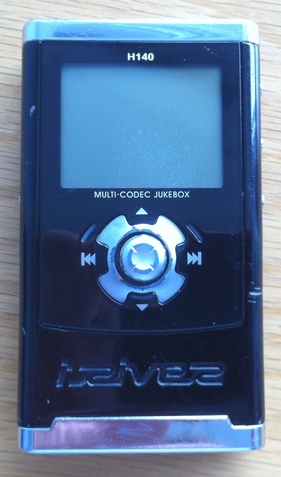
the iRiver music player
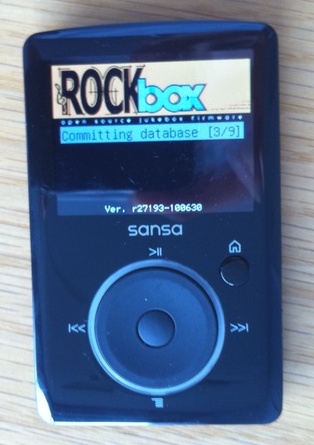
About six years ago, I spent a chunk of my very first salary on a portable music player, the iRiver H140, a relatively bulky and large hard-disk based player, with a capacity of 40G. Uniquely for music players before or since, the iRiver features both digital and analogue line ins and outs. It also has (more common) recording facilities and an FM tuner, the latter of which I used a great deal (and rules out just about all the iPods). This remarkable player has lasted nearly six years of moderate daily use. For the majority of that time, I've ran the rockbox open source firmware on the player, which has provided me with really wide codec support and excellent recording facilities. In the last month I finally had to replace the iRiver. I bought a Sansa Fuze player, featuring 8G of flash storage and a microsd expansion slot. The Fuze is also capable of running rockbox. This year, 32G microsd cards have arrived. Adding one of those brings the capacity of the new player right back up to 40G. For those who are curious: yes, a Sandisk 32G microsd does work in the Fuze, at least with rockbox, for playback. At the moment, rockbox cannot write to storage on the Fuze, so you need to either use the original firmware or an external reader/writer to manipulate the contents of the microsd. However, I am not sure how well the original firmware can handle the 32G. Whenever I boot it, I see a "refreshing your media" message which lasts longer than my patience. I will write an update once I've established further the degree of support.
the fuze player
I kept a canonical copy of my music library on a desktop computer and used rsync to keep the iRiver up-to-date. I can use almost exactly the same procedure for the new player (with some small changes to cope with the split-storage) I now have a 40G player running rockbox exactly as I had before, albeit at a fraction of the size and weight (and cost: approximately half as expensive), and with a nicer display including colours, album art, etc. They both can even play doom (although the controls are even more awkward than iPhone Doom).

Petter Reinholdtsen: Gnash buildbot slave and Debian kfreebsd

Answering the call from the Gnash project for buildbot slaves to test the current source, I have set up a virtual KVM machine on the Debian Edu/Skolelinux virtualization host to test the git source on Debian/Squeeze. I hope this can help the developers in getting new releases out more often. As the developers want less main-stream build platforms tested to, I have considered setting up a Debian/kfreebsd machine as well. I have also considered using the kfreebsd architecture in Debian as a file server in NUUG to get access to the 5 TB zfs volume we currently use to store DV video. Because of this, I finally got around to do a test installation of Debian/Squeeze with kfreebsd. Installation went fairly smooth, thought I noticed some visual glitches in the cdebconf dialogs (black cursor left on the screen at random locations). Have not gotten very far with the testing. Noticed cfdisk did not work, but fdisk did so it was not a fatal problem. Have to spend some more time on it to see if it is useful as a file server for NUUG. Will try to find time to set up a gnash buildbot slave on the Debian Edu/Skolelinux this weekend.

19 November 2010

Michal &#268;iha&#345;: New phpMyAdmin features - schema export

Next article highlighting some new features which will come in phpMyAdmin 3.4 is about relations export. This feature is not much known anyway, so if you have not seen it in phpMyAdmin, just try it out on our demo server or configure phpMyAdmin configuration storage in your copy. In previous versions, it was possible to export database relational schema into PDF format. The 3.4 release comes with modular system for exporting schema adding SVG, Dia, EPS or Microsoft Visio. Especially SVG and EPS are useful for embedding schema into other documents. Simple schema exported to SVG This feature was implemented by Muhammad Adnan during Google Summer of Code 2010.

Filed under: Phpmyadmin 0 comments Flattr this!

18 November 2010

Matthew Garrett: Sigh.

About this time last year, I spent a while talking about how Barnes and Noble were failing in their GPL obligations. It took them about two months to release some source code that didn't actually correspond to the hardware - they finally provided it in March, more than three months after shipping the device.

The Nook Color is now shipping. Guess what Barnes and Noble aren't providing yet?

The flood of generic Chinese Android devices with no source code makes it very easy to think that GPL adherence is something that's only problematic with devices sourced from countries with poor records in IP enforcement. In reality, it's a problem everywhere. Barnes and Noble are a US company and the contractors for the Nook were based in Canada. They're aware enough to include the GPL notice in their documentation, but not concerned enough to make sure that they actually posses the source code that they're legally obliged to provide.

I'm glad to see that the Linux Foundation are providing resources to ensure compliance, but it's likely that this is going to continue being a problem until we start engaging in more visible efforts to educate companies about their legal obligations. The idea that a company like Barnes and Noble would ship copies of Windows without paying the appropriate license fees is pretty implausible, but they seem perfectly happy to engage in for-profit copyright violation if nobody's going to chase them down. It'll be interesting to see if this trend continues, or if we start making a sincere effort to remind vendors of their obligations.

In other GPL violation news - Fusion Garage have promised me that they'll provide the source code to their GPLed components on Monday. Given that the device has been end of lifed this is obviously pretty inept. Investors should realise that they're putting money into a company that has knowingly been engaging in criminal behaviour for over 6 months. We'll see how they manage compliance for their Android devices.

Michal &#268;iha&#345;: New phpMyAdmin features - user preferences

The upcoming 3.4 release will bring lot of new functionality. Some of that has been developed by core members, but many contributions were made thanks to Google Summer of Code program, where five students were working on improving phpMyAdmin. If you want to try new features, you can do that on the phpMyAdmin demo server. And I will introduce them in series of blog posts. One of long requested features was ability to change configuration for each user. And phpMyAdmin now has it. If you have configured the phpMyAdmin configuration storage, settings are permanently stored in the database, otherwise in session and optionally in web storage in your browser. You can configure any aspect of phpMyAdmin not affecting security or server performance, like confirming DROP queries, default export settings, user interface tweaks and so on. New phpMyAdmin preferences page This feature was implemented by Piotr Przybylski during Google Summer of Code 2010.

Filed under: Phpmyadmin 0 comments Flattr this!

Andrew Pollock: [tech] Avoiding Pouslbo like the plague

I got a fair bit of feedback from my latest post about the Boxee Box, none of it particularly favourable about the GMA500/Poulsbo chipset, so regretfully, I won't be buying a Boxee Box. Too bad, it looked cute, and was cheap. A David H rdeman dropped me an email, and brought to my attention the ASRock Core 100HT-BD I was nearly going to buy the wrong thing off Amazon (there's also an NVIDIA ION-based variant), but I found a non-BluRay variant on NewEgg for about $100 less than the BluRay version. It's certainly more expensive than something like a Boxee Box, but hey, if it's going to work... I think if I had the choice, I'd get an SSD for it, but I can see how this goes with a rotating disk. The current MythTV box has a rotating disk in it (just not for storage of recorded content) and it seems sufficiently quiet. The other nice thing about this box is it has VGA and HDMI, so I can totally try this thing out on the current TV before replacing it. Now the question is, do I place an order today...?

Rapha&#235;l Hertzog: 4 tips to maintain a 3.0 (quilt) Debian source package in a VCS

Most Debian packages are managed with a version control system (VCS) like git, subversion, bazaar or mercurial. The particularities of the 3.0 (quilt) source format are not without consequences in terms of integration with the VCS. I ll give you some tips to have a smoother experience. All the samples given in the article assume that you use git as version control system. 1. Add .pc to the VCS ignore list .pc is the directory used by quilt to store its internal data (list of applied patches, backup of modified files). It s also created by dpkg-source so that quilt knows that the patches are in debian/patches (and not in patches which is the default directory used by quilt). For that reason, the directory is kept even if you unapply all the patches. However you don t want to store this directory in your repository, so it s best to put it in the VCS ignore list. With git you simply do:

$ echo ".pc" >>.gitignore
$ git add .gitignore
$ git commit -m "Ignore quilt dir"
The .gitignore file is ignored by dpkg-source, so you re not adding any noise to the generated source package. 2. Unapply patches after the build If you store upstream sources with non-applied patches (most people do), and if you don t build packages in a temporary build directory, then you probably want to unapply the patches after the build so that your repository is again in a clean status. You can do this by adding unapply-patches to debian/source/local-options:
$ echo "unapply-patches" >>debian/source/local-options
$ git add debian/source/local-options
$ git commit -m "Unapply patches after build"
svn-buildpackage always builds in a temporary directory so the repository is left exactly like it was before the build, this option is thus useless. git-buildpackage can also be told to build in a temporary directory with --git-export-dir=../build-area/ (the directory ../build-area/ is the one used by svn-buildpackage, so this option makes git-buildpackage behave like svn-buildpackage in that respect). 3. Manage your quilt patches as a git branch Instead of using quilt to manage the Debian-specific patches, it s possible to use git itself. git-buildpackage comes with gbp-pq ( Git-BuildPackage Patch Queue ): it can export the quilt serie in a git branch that you can manipulate like you want. Each commit represents a patch, so you want to rebase that branch to edit intermediary commits. Check out the upstream documentation of this tool to learn how to work with it. There s an alternative tool as well: git-dpm. Its website explains the principle very well. It s a more complicated than gbp-pq but it has the advantage of keeping the history of all branches used to generate the quilt series of all Debian releases. You might want to read a review made by Sam Hartman, it explains the limits of this tool. 4. Document how to review the changes One of the main benefit of this new source format is that it s easy to review changes because upstream changes are kept as separate patches properly documented (ideally using the DEP-3 format). With the tools above, the commit message becomes the patch header. Thus it s important to write meaningful commit messages. This works well as long as your workflow considers the Debian patches as a branch that you rebase on top of the upstream sources at each release. Some maintainers don t like this workflow and prefer to have the Debian changes applied directly in the packaging branch. They switch to a new upstream version by merging it in their packaging branch. In that case, it s difficult to generate a quilt serie out of the VCS. Instead, you should instruct dpkg-source to store all the changes in a single patch (which is then similar to the good old .diff.gz) and document in the header of that patch how the changes can be better reviewed, for example in the VCS web interface. You do the former with the --single-debian-patch option and the latter by writing the header in debian/source/patch-header:
$ echo "single-debian-patch" >> debian/source/local-options
$ cat >debian/source/patch-header <<END
This patch contains all the Debian-specific
changes mixed together. To review them
separately, please inspect the VCS history
at http://git.debian.org/?=collab-maint/foo.git
<put details="details" here="here" more="more">
END
Subscribe to this blog by RSS, by email or on Facebook.

11 comments Liked this article? Click here. My blog is Flattr-enabled.

John Goerzen: The TSA: Stupid, Owned, or Complicit?

I have long been in Bruce Schneier s camp, thinking that the TSA is a joke: nothing but security theater. A few recent examples come to mind: I don t get it. They have been completely reactionary since they began. They have a complete failure of institutional imagination. Something happens, and then a new rule comes out to prevent the thing that everybody is now expecting. And what happens about the thing that people aren t expecting yet? Nothing. So we now have to take off our shoes because one guy tried to use them for something nefarious. OK, fine, but the next guy is probably going to try something other than shoes. Which is why, I m sure, many people are pointing out that the TSA is over-reliant on technology and device detection and completely underemphasizing evildoer detection as, we are repeatedly reminded, the Israelis excel at. The TSA s attempt to remedy that was foolish at best, and, according to a recent report, not grounded in science. Which is why I am heartened that, almost a decade after 9/11, Americans are starting to let go of their fear and be ready to reclaim some sense of intelligence at the security line. The fact that politicians think there is something to be gained by being tough on TSA s invasive screening procedures, rather than risk looking soft on terrorism, is evidence of this. So, what I haven t yet worked out is this: What gives, TSA? Are they: (Note: this criticism is directed mostly at the upper levels of TSA management; I do not believe the people most of us see have the ability to change the system, even if they wanted to.) One final word: I also get annoyed at all the people that grouse at the TSA checking 80-year-olds as thoroughly as everyone else. An 80-year-old could be wearing a hidden device just as much as anyone else could, and if we don t check them, then someday they probably will. The key is to be smart about who we check carefully. Use data, behavioral analysis, simple questioning, etc it works, and is a lot better than exempting people under 13 and over 80 from screening on arbitrary grounds. Also, it might help anyone with a blurry groin. And it might just save a bunch of us from getting cancer.

Axel Beckert: Useful but Unknown Unix Tools

Most of my talks are either talks about commandline basics (Commandline Helpers about GNU Coreutils and Findutils usage; Understanding Shell Quoting) or collections of small tips and tricks, e.g. about SSH, History Expansion, or commandline tools. Valentin Haenel called this second type of talks nugget talks . I like that term. My newest talk (German only so far, next occasion at the LUGS meeting in Zurich on 16th of December 2010) is such a nugget talk and is about useful but unknown tools. While preparing that talk I noticed that the amount of neat but less known tools I collected for possible inclusion into that talk would be enough for a whole day or so. I noticed that I ll never be able to give a talk about all that stuff. To not letting these tips rot in that file uncommented, I decided that I ll write (more or less) short blog postings about these tools, similar to and inspired by Myon s blog postings about Cool Unix Features as well as the no more existing or at least broken Debian Package of the Day and Debian Package a Day. While Myon mostly posted long-time but still unknown features, my postings will mostly cover useful but unknown packages available in Debian and most debian-derived distributions like grml and Ubuntu. Some postings may also just highlight some features of common tools or packages like e.g. GNU Coreutils. You can subscribe to these tips via RSS or just view all of them in your web browser at http://noone.org/blog/English/Computer/Debian/CoolTools/.

Next.

Previous.