Russ Allbery: Review: The Thrilling Adventures of Lovelace and Babbage
| Publisher: | Pantheon |
| Copyright: | 2015 |
| ISBN: | 0-307-90827-5 |
| Format: | Hardcover |
| Pages: | 317 |
| Publisher: | Pantheon |
| Copyright: | 2015 |
| ISBN: | 0-307-90827-5 |
| Format: | Hardcover |
| Pages: | 317 |
A few weeks ago, I was offered the opportunity to give a guest talk in the
Romanian Association for Better Software.
RABS is a group of people interested in improving the trade, and regularly hold
events where invited speakers give presentations on a wide array of topics. The
speakers are usually pretty high-profile, so this is quite a responsibility! To
make things more interesting, much of the target audience works on enterprise
software, under Windows platforms. Definitely outside my comfort zone!
Considering all this, we decided the topic was going to be about Site
Reliability Engineering (SRE), concentrating on some aspects of it which I
believe could be useful independently of the kind of company you are working
for.
I finally gave the talk last Monday, and the audience seemed to enjoy it, so I am going to post here my notes, hopefully some other people will like it too.
[..] engineering that emphasizes dependability in the life-cycle management of a product.This is, historically, a branch of engineering that made possible to build devices that will work as expected even when their components were inherently unreliable. It focused on improving component reliability, establishing minimum requirements and expectations, and a heavy usage of statistics to predict failures and understand underlying problems. SRE started as a concept at Google about 12 years ago, when Ben Treynor joined the company and created the SRE team from a group of 7 production engineers. There is no good definition of what Site Reliability Engineering means; while the term and some of its ideas are clearly inspired in the more traditional RE, he defines SRE with these words1:
Fundamentally, it's what happens when you ask a software engineer to design an operations function.
A new release rfoaas is now on CRAN following up on the recent upstream release 0.1.8 of FOAAS.
The rfoaas package provides an interface for R to the most excellent FOAAS service--which provides a modern, scalable and RESTful web service for the frequent need to tell someone to f$#@ off.
Release 0.1.8 brings over a handfull new access points relative to the previous release 0.1.6: bday(), family_(), shutup(), zayn(), dalton(), dosomething(), retard(), and thumbs(). One of these may make a fine addition for beloved post-test comments in testthat:
R> library(rfoaas)
R> dosomething("Fix", "function", "testthat")
[1] "Fix the fucking function! - testthat"
R>
We did not make a release following version 0.1.7 of FOAAS: my testing revealed somewhat less consistent results for the language / i18n filter added in 0.1.6. So I filed issue ticket #95, but as it still lingers unanswered, I consider this feature to be unsupported for now; the tests for the language filter were disabled for now as well.
As usual, CRANberries provides a diff to the previous CRAN release. Questions, comments etc should go to the GitHub issue tracker.
This post by Dirk Eddelbuettel originated on his Thinking inside the box blog. Please report excessive re-aggregation in third-party for-profit settings.
| Series: | Vows and Honor #2 |
| Publisher: | DAW |
| Copyright: | January 1989 |
| ISBN: | 0-88677-454-3 |
| Format: | Mass market |
| Pages: | 318 |
The 12 member nations of the Trans-Pacific Partnership pact have
agreed to prohibit demands that companies reveal software source
code*, a step that appears aimed at curbing efforts by China to
gain access to this sensitive information, The Yomiuri Shimbun
has learned.
Source code is the confidential information for software and is
a blueprint embedded in many commonly used products, such as
vehicles, mobile phones and home appliances. Source code is
usually tightly guarded because it conatins commands that make
using the software easier.
China requires foreign companies operating there to hand over
source code, a move that has sparked sharp criticism from many
countries. Observers believe the decision by TPP participants
to ban demands to reveal this code is intended to restrain
China's move.
The TPP's electronic commerce chapter in principle prohibits the
12 member nations from demanding access to source code for
mass-produced software. According to the Economy, Trade and
Industry Ministry, the Japan-Mongolia economic partnership
agreement signed in February contains a stipulation banning
demands for such information, but there are very few other
examples around the world.
Japan, the United States and other nations that are home to many
information technology companies want to make the stipulation
effectively a global standard, and they are considering whether
to incorporate such a condition in economic partnership
agreements that will be inked in the future.
Source code is an important corporate secret for development
firms.
*Source code A software program written in a language a computer
understands. As well as containing expert details about the
unique functions of the product, the software is essential for
fixing glitches and making improvements. Hackers have attempted
to access source code because gaining this information would make
it easier to create viruses that could exploit any software
defects. In the software business, it is rarely made public, as
it is considered a corporate secret.
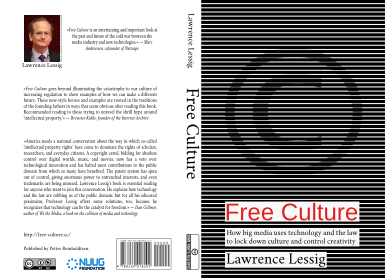
The Norwegian Bokm l version will be available for purchase in a
few days. I also plan to publish a French version in a few weeks or
months, depending on the amount of people with knowledge of French to
join the translation project. So far there is only one active
person, but the French book is almost completely translated but
need some proof reading.
The book is also available in PDF, ePub and MOBI formats from
my
github project page. Note the ePub and MOBI versions have some
formatting problems I believe is due to bugs in the docbook tool
dbtoepub (Debian BTS issues
#795842
and
#796871),
but I have not taken the time to investigate. I recommend the PDF and
ePub version for now, as they seem to show up fine in the viewers I
have available.
After the translation to Norwegian Bokm l was complete, I was able
to secure some sponsoring from
the NUUG Foundation to
print the book. This is the reason their logo is located on the back
cover. I am very grateful for their contribution, and will use it to
give a copy of the Norwegian edition to members of the Norwegian
Parliament and other decision makers here in Norway.
| Series: | Chronicles of Tornor #1 |
| Publisher: | Berkley |
| Copyright: | February 1979 |
| Printing: | November 1982 |
| ISBN: | 0-425-06195-7 |
| Format: | Mass market |
| Pages: | 226 |
The wind blew. Like some night creature caught in a trap, Col Istor's banner flapped on its pole. Ryke wondered where his wolfhound was. Sheltering, he hoped, in some warm and windless corner. He thrust his hands beneath his armpits to warm them. He entered the kitchen, nodding at the guard who stood there, and went toward the scullery. The kitchenboys huddled together in sleep like dogs in front of the oven. He stepped over their legs. The iron pots on the walls vibrated softly.That's a paragraph chosen at random from the start of the book and should give you a good feel for the style. I think I would have liked this novel better if it had followed anyone other than Ryke. Not only did I not care for him and his simplistic loyalties, he's the least interesting character in this story. Everyone else Col, Errel, Sorren, Van, and others is more complex and more thoughtful than he is, and I think many of them would have made a better protagonist. He spends much of the center part of the book being suspicious and closed and incurious, which means the reader can only guess at what's going on between the other characters. I can't really recommend this book, but the writing is solid and it has some interesting properties for late 1970s fantasy, including both a frank look at the role of women in this society and same-sex relationships. If your taste in fantasy leans towards the gritty and realistic, you might like it more than I did. I may try the later books of the series in the hope that they have more interesting protagonists. Followed by Dancers of Arun. Rating: 6 out of 10
Yesterday we have released CafeOBJ 1.5.4 with a long list of changes, and many more internal changes. Documentation pages have been updated with the latest reference manual (PDF, Html) as well as some new docs on CITP (in Japanese for now) and tutorials.
To quote from our README:
CafeOBJ is a new generation algebraic specification and programming language. As a direct successor of OBJ, it inherits all its features (flexible mix-fix syntax, powerful typing system with sub-types, and sophisticated module composition system featuring various kinds of imports, parameterised modules, views for instantiating the parameters, module expressions, etc.) but it also implements new paradigms such as rewriting logic and hidden algebra, as well as their combination.Changes Changes since the last release are as follows
It is now official: KDE will be present again at FOSDEM in the 2016 edition, on the 30th and 31st of January, 2016.
Talks will take place at the Desktops DevRoom, on Sunday the 31st, but not exclusively: in past years, there were Qt and KDE-related talks at the mobile devroom, lightning talks, distributions, open document editors and more.
KDE will be sharing the room with other desktop environments, as usual: Gnome, Unity, Enlightenment, Razor, etc. Representatives from those communities will be helping me in managing and organizing the devroom: Christophe Fergeau, Michael Zanetti, Philippe Caseiro and J rome Leclanche.
I would like to extend the invitation to any other free/open source desktop environment and/or related stuff. Check last year s schedule for an example. Closed-source shops (Microsoft, Apple, Oracle, etc) are ALSO invited, provided that you will talk about something related to open source.
We will publish the Call for Talks for the Desktops DevRoom 2016 soon. Stay tuned.
In the meanwhile, you can subscribe to the Desktops DevRoom mailing list to be informed of important and useful information, and talk about FOSDEM and specific issues of the Desktops DevRoom.
| Publisher: | Houghton Mifflin Harcourt |
| Copyright: | 2014 |
| ISBN: | 0-544-27299-4 |
| Format: | Hardcover |
| Pages: | 295 |
With the disclamer that I don't really know much about
orchestration,
I have added support for something resembling it to Propellor.
Until now, when using propellor to manage a bunch of hosts, you
updated them one at a time by running propellor --spin $somehost,
or maybe you set up a central git repository, and a cron job to run
propellor on each host, pulling changes from git.
I like both of these ways to use propellor, but they only go so far...
master = host "master.example.com"
& concurrently conducts alotofhosts
master = host "master.example.com"
& conducts webservers
before conducts dnsserver
master = host "master.example.com"
& concurrently conducts [sub1, sub2]
before conducts dnsserver
sub1 = "master.subnet1.example.com"
& concurrently conducts webservers
& conducts loadbalancers
sub2 = "master.subnet2.example.com"
& conducts dockerservers
vpscreate h = cmdProperty "vpscreate" [hostName h]
before conducts h
conducts property can be used with any
of propellor's property combinators, like before etc,
to express all kinds of scenarios.
The conducts property works in combination with an orchestrate function
to set up all the necessary stuff to let one host ssh into another and run
propellor there.
main = defaultMain (orchestrate hosts)
hosts =
[ master
, webservers
, ...
]
The orchestrate function does a bunch of stuff:
Making it as easy as possible to make calls to other people and to receive calls from other people for somebody who chooses only to use genuinely Free Software, open standards, a free choice of service providers and a credible standard of privacy.If you agree with this or if you feel you can propose a more precise statement, please come and share your thoughts on the Free RTC email list. The value of a mission statement should not be underestimated. With the right mission statement, it should be possible to envision what the future will look like if we succeed and also if we don't. With the vision of success in mind, it should be easier for developers and the wider free software community to identify the steps that must be taken to make progress.
At DebConf14 in Portland, Oregon, USA, next year s DebConf team presented
their conference plans and announced the conference dates:
DebConf15 will take place from 15
to 22 August 2015 in Heidelberg, Germany. On the Open Weekend on 15/16
August, we invite members of the public to participate in our wide offering of
content and events, before we dive into the more technical part of the
conference during following week. DebConf15 will also be preceeded by DebCamp,
a time and place for teams to gather for intensive collaboration.
A set of slides
from a quick show-case during the DebConf14 closing ceremony provide a quick overview of
what you can expect next year. For more in-depth information, we invite you to watch the
video recording of the full session, in which the team provides detailed information on the preparations so far,
location and transportation to the venue at Heidelberg, the
different rooms and areas at the Youth Hostel (for accommodation,
hacking, talks, and social activities), details about the infrastructure
that are being worked on, and the plans around the conference schedule.
We invite everyone to join us in organising this conference. There are
different areas where your help could be very valuable, and we are always looking
forward to your ideas. Have a look at
our wiki page, join our
IRC channels and subscribe to our mailing lists.
We are also contacting
potential sponsors from all around the globe. If you know any organisation
that could be interested, please consider handing them our sponsorship
brochure or contact the fundraising
team with any leads.
Let s work together, as every year, on making the best DebConf ever!
(Unfortunately, I don't even dare hoping to run a decent operating system like Debian on those devices, if only because of the exotic chipsets that require all sorts of nasty hacks to run...)The machine is a SmartRG SR630n (specs). I am linking to third party site, because the SmartRG site doesn't seem to know about their own product (!). I paid extra for this device to get one that would do both Wifi and VoIP, so i could replace two machines: my current Soekris net5501 router and a Cisco ATA 186 phone adapter that seems to mysteriously defy the challenges of time. (I don't remember when I got that thing, but it's at least from 2006.) Unfortunately, it seems that SmartRG are running a custom, proprietary Linux distribution. According to my ISP,
init is a complete rewrite
that reads an XML config file (and indeed it's the format of the
backup files) and does the configuration through a shared memory
scheme (!?). According to DSL reports, the device seems to be
running a Broadcom 63168 SOC (system on a chip) that is
unsupported in Linux. There are some efforts to write drivers for
those from scratch, but they have been basically stalled for years
now.
Here are more details on the sucker:
/dev/mtdblock0 with ncSee this other good explanation of Stinger.Which means this machine is now yet another closed box sitting on the internet without firmware upgrades, totally handicapped. I will probably end up selling it back for another machine that has OpenWRT support for their VDSL modems. But there are very few such machines, and with a lot of those, VDSL support is often marked as "spotty" or "in progress". Some machines are supported but are basically impossible to find. There's the Draytek modems are also interesting because, apparently, some models run OpenWRT out of the box too, which is a huge benefit. This is because they use the more open Lantiq SOC. Which are probably not going to support Stinger lines. Still, there are some very interesting projects out there... The Omnia is one I am definitely interested in right now. I really like their approach... But then they don't have a VDSL chipset in there (I asked for one, actually). And the connectors are only mini-PCIe, which makes it impossible to connect a VDSL PCI card into it. I could find a single VDSL2 PCI card online, and it could be supported, but only the annex B is available, not the annex A, and it seems the network is using "annex A" according to the ADSL stats i had in 2015-05-28-anarcat-back-again. With such a card, I could use my existing Soekris net5501 router, slam a DSL card into it, and just use the SmartRG as a dumb wifi router/phone adapter. Then it will remain to see how supported are those VDSL cards in FreeBSD (they provide Linux source code, so that's cool). And of course, all this assumes the card works with the "Stinger" mode, which is probably not the case anyways. Besides, I have VDSL2 here, not the lowly ADSL2+. By the way, Soekris keeps on pushing new interesting products out: their net6501, with 2 extra Gig-E cards could be a really interesting high-end switch, all working with free software tools. A friend has a SmartRG 505n modem, which looks quite similar, except without the ATA connectors. And those modems are the ones that Teksavvy recommends ("You may use a Cellpipe 7130 or Sagemcom F@ST 2864 in lieu of our SmartRG SR505N for our DSL 15/10, DSL 25 or DSL 50 services."). Furthermore, Teksavvy provides a firmware update for the 505n - again, no idea if it works with the 630n. Of course, the 505n doesn't run OpenWRT either. So, long story short, again I got screwed by my ISP: I thought i would get a pretty hackable device, "running Linux" that my ISP said over the phone. I got weeks of downtime, no refund, and while i got a better line (more reliable, higher bandwidth), my costs doubled. And I have yet another computing device to worry about: instead of simplifying and reducing waste, I actually just added crap on top of my already cluttered desk. Next time, maybe I'll tell you about how my ISP overbilled me, broke IPv6 and drops large packets to the floor. I haven't had a response from them in months now... hopefully they will either answer and fix all of this (doubtful) or I'll switch to some other provider, probably Teksavvy. Many thanks to the numerous people in the DSL reports Teksavvy forum that have amazing expertise. They are even building a map of Bell COs... Thanks also to Taggart for helping me figure out how the firmware images work and encouraging me to figure out how my machine works overall.
Note: all the information shared here is presented in the spirit of the fair use conditions of copyright law.

| Series: | Vows and Honor #1 |
| Publisher: | DAW |
| Copyright: | July 1988 |
| ISBN: | 0-88677-414-4 |
| Format: | Mass market |
| Pages: | 302 |
Next.