Search Results: "ina"

29 March 2012

Kurt Roeckx: Getting frustrated by Google

I recently started working on a webshop called e-webshops which mainly sells e-books. If I want to attract customers there are various things to do so that people can actually find you. So I started using various services from Google, looking at my results in queries and things like that, and noticed that some queries didn't return the expected results. One of the problems is that I can spell and a lot people can't, and Google doesn't consider the words to be synonyms. The proper way to spell e-book in Dutch is either e-boek (preferred) or e-book, but lots of people write it as ebook (or eBook). I of course use the preferred spelling everywhere. So what do I do? I contact Google asking them to make them synonyms. Almost 2 weeks later I get a mail back from someone that doesn't seem to be getting what I'm asking for, so I reply back. Finally after an other month I get a mail back pointing me to a blog post, which suggest posting it to a forum or tweeting about it. I don't think either form is good way to contact a company about such a thing, which is why I contacted them by email in the first place. I have strong doubts that the right people would actually read all the forum posts. How hard can it be to forward an email to the right people? At the same time I have various other problems with Google, like things that don't work as advertised, broken documentation links, incorrect documentation, no way to contact them about the topic you want and you need to select a random other one, asking me to rate a help page I visited that day and then give an obviously broken URL, and a whole bunch more.

28 March 2012

Andrew Pollock: [life/americania] Four days in New Orleans

Sarah's Mum had accrued too much annual leave and had to take some time off work, so Sarah did some (very mild) arm twisting and convinced her to come over for 3 weeks, and do a 5 day cruise to Mexico out of New Orleans. Unfortunately, my annual leave situation wasn't quite so abundant, and I had a lot going on at work, so regretfully I didn't join them on the cruise, and instead went to New Orleans for a four day weekend when they returned. From all reports, the cruise was very good. Zoe handled it well, although she did say "home" a lot. One of the two stops in Mexico was to check out some Mayan ruins, which looked awesome from the photos. The other stop involved a dolphin encounter. I was incredibly envious of all that they got to do, and would have loved to have gone with them, as I've never been on a cruise ship either. I can also report that no cats were lost during this bachelor stint. I had a night flight on the Wednesday evening to get there, which was scheduled to get in at around midnight, and I'd booked a motel room near the airport for that night, and we'd booked a vacation rental home for Thursday to Sunday nights. Unfortunately, my flight ended being delayed something like 2.5 hours, so I didn't get into New Orleans until around 2am. The house we rented did the trick nicely. It was a small "shotgun" duplex in what looked like a nice neighbourhood. It was advertised as being close to the street car line, but they were doing some work on the tracks, so the street car didn't seem to be running as far down the line as it usually did, so it ended up being a bit more of a trek to get to it. It was also extremely slow, and there was a marathon on the Sunday, which closed everything down for a long time, making it a generally pretty unreliable form the transport. We ended up renting a car for Saturday and Sunday, which was something of a saga in itself, as Enterprise didn't have any cars at the location we'd booked one, so after a couple of hours cooling our heels there (Zoe was incredibly well-behaved, all things considered), they shuttled us over to another location and we ended up with a minivan instead of a compact, which for the same price, allayed our concerns about being able to transport all of our luggage to the airport on Monday morning. We had a very early morning flight on Monday morning to come back, which got into SFO at around 9am, and I went directly to work from there. Thursday We all arrived at the house, separately. It ended up taking them 2 hours to disembark the ship when it came back into port, with Customs taking an eternity to process everyone. I think we went exploring the local area that afternoon, and took a street car into the city to check out Bourbon Street, having a Cajun dinner at Remoulade. Friday In the morning, we went to check out Lafayette Cemetery Number 2. Sarah took Zoe back to the house for a nap, and Sarah's Mum and I continued back to explore the French Quarter some more, walking down the length of Royal Street (which was vastly different from Bourbon Street, just one block over). We had lunch at the French Market. The cemetery was interesting, as pretty much all of the graves were these huge above ground tombs, that seemed to have multiple family members interred in them. Apparently the cemetery filled up quite quickly courtesy of a Yellow Fever outbreak. After lunch, Sarah's Mum and I continued wandering around the French Quarter. We went and took a look at the Mississippi River, and I had an encounter with a grifter who was so good at his job I couldn't bring myself to argue with him over the $20 he diddled me out of. We tried to get to the Civil War Museum, but it closed at 4pm. We looked at the Robert E. Lee Monument, which seemed to be draped in drunks, and then I think we rendezvoused with Sarah and Zoe back on Canal Street for dinner at The Court of Two Sisters (which apparently we were under-dressed for, as Sarah and her Mum said we were getting a lot of dirty looks from other patrons). Saturday On Saturday morning, we had the aforementioned car rental experience from hell, and by the time we had the car it was lunchtime, so Zoe napped in the car after lunch on the way out to Oak Alley Plantation, where we were introduced to the delightful beverage known as the mint julep, and took a tour of the house and wandered the grounds. Sunday On Sunday, Sarah and her Mum did a swamp tour, and Zoe and I went to the zoo. As I said earlier, there was a marathon that completely closed down Saint Charles Avenue, which is where the street cars run, so after walking down to where the street cars started operating (which ended up being most of the way down South Carrollton Avenue), the driver informed me that the street cars were queuing up at the corner of South Carrollton and Saint Charles, and I should get off her street car and get on the one at the front of the queue. I did this, but the driver of the front street car informed me that she wouldn't be leaving for an hour and half. At this point, I started considering a bus instead. Zoe and I went to check out the Mississippi River, which was quite close to where we were, and then I went back, and despite a street car having left (without any passengers) the driver of the current street car couldn't tell me when she'd be leaving, so I started walking down Saint Charles Avenue. Unfortunately, Zoe's going through a phase where she wants to be carried everywhere, so I was lugging her all over the place on my hip. Sarah didn't take a stroller with her, and instantly regretted it. Lesson learned. Eventually we managed to get onto a bus, which dropped us off at Audubon Park, which had Audubon Zoo at the other end of it. There was a playground near the Saint Charles Avenue end of the park, so Zoe had a bit of a play on that, and then we continued through the park to the zoo. Mercifully, the zoo had dodgy strollers for rent, and there was no way in the world I wasn't going to rent one of them, so that made getting around with Zoe a lot easier on my back. We had a really good time at the zoo. There was some sort of a music festival on in the parklands within the zoo grounds, and that included a jumping castle, which Zoe expressed a desire to have a go on. She had a fabulous time on it. I think she probably spent about 15 minutes in there, without any tears. I was very impressed. I took a brief video of some of her antics. It was getting close to Zoe's nap time, and she was getting tired, but fortunately Sarah and her Mum were able to pick us up from the zoo after their swamp tour and Zoe got to nap back at the house. Monday We had a very early start. Unfortunately, our flight (with United) was a couple of days after United and Continental officially merged, and despite having checked in online, we had to queue up with everyone else (for an extended period of time) to drop off our checked luggage. Then there was a 45 minute line for security screening. We pulled the "toddler going to melt down" card and jumped to the head of the line, but Sarah's Mum had to wait. The flight ended up being delayed because people were stuck in the security line. Overall impressions of New Orleans Fabulous architecture. There were so many gorgeous houses on Saint Charles Avenue and the surrounding area. I'd have loved to do an architecture tour. Crap (but cheap) public transport. $3 gets you a day pass. The street cars are cute, but slow and unpredictable. The drivers were remarkably unhelpful. The buses were okay. Great food. Zoe seemed to have a liking for the spicy stuff. I gave her some fresh alligator jerky, and after some initial coughing and spluttering at the spiciness of it, she came back for more. Post-Katrina recovery. We really only saw a very small part of the city, but there were still some houses with boarded up windows, and some vacant blocks where buildings had been demolished, but largely you'd not have been able to tell that large parts of the city had been underwater, from casual inspection. I really enjoyed the trip, even though it was brief, I feel like I got a good feel for the place. We were there just after Mardi Gras, and there were still beads everywhere. Draped all over fences. Over power lines. Trees on the parade route were absolutely covered in beads. I'd have loved to have been there for Mardi Gras. My friend Brandon, who is an excellent street photographer, took some great photos that capture some of it. Photos from Sarah's cruise and our time in New Orleans are here.

Roland Mas: FusionForge news, March 2012

The winter has been busy everywhere, and not much happened in FusionForge land. However, this is over, and we've started pushing again, with a focus on making our next 5.2 release ready. We've started a stabilisation branch and set up Jenkins jobs to run our various testsuites on it. Packages built from that branch have also been uploaded to the "experimental" suite in Debian (they need a manual approval before they actually appear there, but that shouldn't take too long). They should be installable and working even on Debian Squeeze (stable), although they focus mostly on Wheezy (testing). My personal goal is to have a solid 5.2 release and include it in Wheezy so it can be part of an official Debian system. What this all means is that we welcome tests and reports of breakage; users of 5.1 or earlier versions in particular are encouraged to test upgrades (in virtual machines or development environments, obviously, if the production server is sensitive). We also welcome translators; there are many new plugins, which means many new translatable strings. We'll probably do release candidates before the final release; I'll announce them here (in addition to the fusionforge.org website). Stay tuned!

27 March 2012

Anand Kumria: An apology.

And a personal reboot. <article> All my life, so far, I've always prided myself on not having any regrets. I've told people that if I had to live my life over again, I would not change how I had acted or anything I had done. Over the last few days I've come to regret my actions. They have caused me to hurt a dear friend and, then, ultimately lose them. It all stems with not being honest. To my friend. And to myself. By not telling myself the truth about how I feel, or what I want, it has meant I have not told others the truth either. They have then acted on what I said, and when I've changed my tune or wanted more (or less), they are rightly upset. I wish I could say that this was a new thing. Like some kind of habit I picked up because it was shiny. Unfortunately as I review my life, and the various people who have come into and out of it, I can see that my inability to be truthful has been mostly constant. To be unable to articulate my needs has caused various amounts of pain to others. Sometimes that pain has come back to me, as with my friend, magnified. Other times I have escaped it. This is a personal apology from me to all that I've hurt. Some of those people are (now) deceased. Some of them no longer talk to me / interact with me at all. For what it is worth. Sorry. For those of you who are still with me, on this journey, thank you for putting up with how I have been in the past. The journey is not over but I hope the rest of it will be more truthful and, ultimately, less hurtful. Anand </article>

26 March 2012

Kees Cook: keeping your process unprivileged

One of the prerequisites for seccomp filter is the new PR_SET_NO_NEW_PRIVS prctl from Andy Lutomirski. If you re not interested in digging into creating a seccomp filter for your program, but you know your program should be effectively a leaf node in the process tree, you can call PR_SET_NO_NEW_PRIVS (nnp) to make sure that the current process and its children can not gain new privileges (like through running a setuid binary). This produces some fun results, since things like the ping tool expect to gain enough privileges to open a raw socket. If you set nnp to 1 , suddenly that can t happen any more. Here s a quick example that sets nnp, and tries to run the command line arguments:
#include <stdio.h>
#include <unistd.h>
#include <sys/prctl.h>
#ifndef PR_SET_NO_NEW_PRIVS
# define PR_SET_NO_NEW_PRIVS 38
#endif
int main(int argc, char * argv[])
 
        if (prctl(PR_SET_NO_NEW_PRIVS, 1, 0, 0, 0))  
                perror("prctl(NO_NEW_PRIVS)");
                return 1;
         
        return execvp(argv[1], &argv[1]);
 
When it tries to run ping, the setuid-ness just gets ignored:
$ gcc -Wall nnp.c -o nnp
$ ./nnp ping -c1 localhost
ping: icmp open socket: Operation not permitted
So, if your program has all the privs its going to need, consider using nnp to keep it from being a potential gateway to more trouble. Hopefully we can ship something like this trivial nnp helper as part of coreutils or similar, like nohup, nice, etc.

2012, Kees Cook. This work is licensed under a Creative Commons Attribution-ShareAlike 3.0 License.
Creative Commons License

25 March 2012

Christian Perrier: [life] [running] Ecotrail: done!

Everything is here. Indeed not: one can't write about the feeling you get when climbing the Old Lady stairs after 78 kilometers suffering in the woods. I was close to resigning at km55 when cramps were showing up and my left ankle (which I twisted a week before) was nothing but a big ball of pain. And I finally managed to put the head lamp and resume running in the now desert woods of western Paris. Given the probably very high rate of resigns in this race (cause by an unusual heat), this is already a great result. Now...recovering....and looking forward to the next goal: Caen marathon in early June.

24 March 2012

Neil Williams: Multiarch and debi

If you're in the habit of doing sudo debi at the end of a build, it's worth noting a complication with Multiarch.

Sometimes, it's tempting to rebuild (and install) a shared library with a few untested changes, however, if (like me), you have multiarch packages installed, this can cause a surprise:


dpkg: error processing ../libqof2_0.8.4-2_amd64.deb (--unpack):
trying to overwrite shared '/usr/share/doc/libqof2/changelog.Debian.gz', which is different from other instances of package libqof2:amd64


Bumping the changelog doesn't help:


dpkg: error processing libqof2:amd64 (--install):
package libqof2:amd64 0.8.4-3 cannot be configured because libqof2:armel is at a different version (0.8.4-2)
dpkg: error processing libqof2:armel (--install):
package libqof2:armel 0.8.4-2 cannot be configured because libqof2:amd64 is at a different version (0.8.4-3)


The fix for this is, of course, to remove libqof2:armel and all it's reverse dependencies and the packages can't be put back until you've built an armel version of your changes.

The way to backout the test change is a bit longwinded, depending on the complexity of your library:


sudo apt-get --reinstall install libqof2:amd64=0.8.4-2 libqof-dev:amd64=0.8.4-2 libqof2-backend-qsf:amd64=0.8.4-2 libqof2-backend-sqlite:amd64=0.8.4-2 libqof2-dbg:amd64=0.8.4-2 libqof2:armel=0.8.4-2


Hmm. I think a helper tool could be needed in the medium term here.

This also means that cross-building Emdebian Crush packages from a Wheezy / Wheezy+1 base is again looking as if it will need to happen inside a chroot, albeit with problems for the packages which are dependencies of the build tools (or the cross toolchain) itself, as the Crush packages will inevitably contain modified files. (For example, Emdebian Policy differs from Debian Policy by requiring - not forbidding - compression of debian/copyright.)

Cross-building packages which are intended to be binary compatible with Debian without conversion (including cross-built packages to use on top of Emdebian Grip) shouldn't be too affected. You just need to ensure that where the package exists in two or more versions, all installed architectures are built before any architecture is installed.

This is an additional burden compared to the world of dpkg-cross but it is key to how Multiarch allows cross-building to use sensible dependency resolution.

So, what I think we'll need is an enhancement to debi which can be passed an architecture (possibly an architecture list), debi then looks for both the native arch and the requested architecture(s), fails> if the .changes file for the extra architecture(s) isn't found or proceeds to install all packages for the native arch and arch-dependent packages for the second architecture in the same dpkg operation. As a further enhancement, debi might be able to check dpkg --print-foreign-architectures, check the output of $package:$arch against dpkg -l and either complain or automatically use the Multiarch support to look for the relevant .changes files. debi may even want to check the package (as it's working in the package top directory usually) for Multiarch support before accepting the architecture list option.

Think I need to do some reading of the debi source and see if a patch is workable...

John Goerzen: German: Suprisingly Hilarious for a 2-Year-Old

The other night, I was tucking the boys into bed. I occasionally use a few German words with them (I don t know all that many myself, but hey). They d been rather bored with it, so I had dropped it for a few months. I said to Oliver, Gute Nacht, Oliver. That means good night in German. Oliver laughed. I said it a few more times. He laughed some more. Jacob peeked down from his top bunk to see what the fun was, and pretty soon was getting into it also. Apparently I m quite the comedian, because when I said Auf Wiedersehen, Oliver burst out laughing uncontrollably. Finally he d say, Say it again! AGAIN!! And I would, and he d laugh and laugh some more. And then, I happened to say tsch ss. Jacob loved that one. He said it over and over, much to Oliver s delight. Finally I closed the door, and heard the laughter still going on behind me, as Jacob would yell out a mangled German word, and Oliver would fill the room with laughter. I was a little surprised, but figured it d end there. Not so much. The next night, I tucked them into bed like usual. I left their room, and about 10 seconds later, I heard frantic yelling from the boys room. I went back in, and poor Oliver was so upset he couldn t even say what he wanted. I finally figured out he was pleading, DAD! Say gute Nacht again! So we went through some German words again, and I left the boys much relieved. Phew. The next night, I almost repeated my horrid mistake of no German at bedtime, but Jacob stopped me before I left their room. Dad! You forgot to say tsch ss! So I did, with the boys prompting me on what words they wanted to hear. Then Jacob started asking me how to say these things in other languages. He was rather disappointed, and I think also didn t really believe me, when I only knew a few of those phrases in Spanish and French. Though he was surprised that I could come up with them in Greek. (Kali sp ra / good evening) was a hit. By this point, another day or two later, Jacob says tsch ss when I leave. Oliver wishes me gute Nacht at breakfast time. We ll have to work on that one. So, if you ever walk in the door at our house some morning, don t be surprised if our 2-year-old wishes you good night, our 5-year-old says goodbye, and they both start laughing.

Pablo Lorenzzoni: Annoyed by F10 key in gnome-terminal?

I am one of those people that like to map Fx keys to special functions. After all, that s what F-unction keys are for, right? So, one of the first things I do once I have to configure a new Desktop is disable F10-capture by gnome-terminal. It has been working flawlessly, until I begin using GNOME3. No matter what, F10 was still being captured. I found that this is a bug and that adding the following:
@binding-set NoKeyboardNavigation  
	unbind "<shift>F10"
 
 
*  
	gtk-key-bindings: NoKeyboardNavigation
 
to ~/.config/gtk-3.0/gtk.css serves as a workaround. Hope this helps people with the same problem.

23 March 2012

Rapha&#235;l Hertzog: People behind Debian: J rg Jaspert, FTPmaster, Debian Account Manager, and more

Photo by Wouter Verhelst

J rg is a very active contributor within Debian, and has been for a long time. This explains why he holds so many roles (FTPmaster and Debian Account Manager being the 2 most important ones) Better known as Ganneff (his IRC nick), he s not exactly the typical hacker. He has no beard and used to drink milk instead of beers. :-) Check out his interview to learn more about some of the numerous ways one can get involved in Debian, managing its infrastructure and without having to be a packager. Raphael: Who are you? J rg: My name is J rg Jaspert and I m 35 years old working for a small company doing system administration and consulting work for our customers. I m married for a little while now and sometime soon a little Ganneff will be crawling out of my wife. (Whoever didn t think of the movie Alien now is just boring). Raphael: How did you start contributing to Debian? J rg: I started using Debian somewhere around 2000, 2001. Before that I had the misfortune to try SuSE and RedHat, both with a user experience that let me fully understand why people think Linux is unusable. (Due to my work I m in the unfortunate situation to have to use RedHat on two machines. Funny how they are still utter crap and worse than bad toys). And all of this lets get a Linux running here came up because I was trying to find a replacement for my beloved OS/2 installation, which I had for some years. So after I got Debian installed, good old Potato, I got myself active on our mailing lists, starting with the German user one. A bit later I replied to a question if someone can help as staff for a Debian booth somewhere. It was the most boring event I ever visited (very nice orga, unfortunately no visitors), but I got a few important things there: The software I packaged, found me a sponsor and voila, maintainer I was. Some more packages got added and at some point my sponsor turned out to be my advocate. The NM process run around 2 months, and mid April 2002 I got THE MAIL. Raphael: Some Debian developers believe that you have too many responsibilities within Debian (DAM, FTPMaster, Debconf, Partners, Planet Debian, Mirrors, ). Do you agree that it can be problematic, and if yes, are you trying to scale down? J rg: It s DebConf, tssk. And yes, I do have some extra groups and roles. And you even only list some, leaving out all I do outside Debian. But simply counting number of roles is a plain stupid way to go. Way more interesting is how much work is behind a role and how many other people are involved. And looking at those you listed I don t see any I am a SPOF. Let s look at those you listed: DAM: Here I did start out assisting James to get the huge backload down which had accumulated over time. Nowadays I am merely the one with the longest term as DAM. Christoph Berg joined in April 2008 and Enrico Zini followed during October 2010, both very active. Especially Enrico, lately with the redesign of the NM webpages. FTPMaster: The basic outline of the FTPMaster history is similar to the DAM one. I joined as an assistant, after the oh-so-famous Vancouver meeting in 2004. Together with Jeroen, we both then got the backload down which had accumulated there. He did most of the removals while I had a fun time cleaning up NEW. And we both prepared patches for the codebase. And in 2007, as the last action as DPL, Sam made me FTPMaster. Since then I haven t been alone either. In fact we have much more rotation in the team than ever before, which is a good thing. Today we are 3 FTPMasters, 4 FTP Assistants and 1 Trainee. Though we always like new blood and would welcome more volunteers. DebConf: I am very far outside the central DebConf team. I am not even a delegate here. Currently I am merely an admin, though there are 4 others with the same rights on the DebConf machines. I ve not taken any extra jobs this year, nor will I. Probably for next year again, but not 2012. Planet: I am one of three again, but then Planet is mostly running itself. Debian developers can just edit the config, cron is doing the work, not much needed here. Occasional cleanups, every now and then a mail to answer, done. In short: No real workload attached. Mirrors: My main part here is the ftpsync scriptset. Which is a small part of the actual work. The majority of it, like checking mirrors, getting them to fix errors, etc. is done by Simon Paillard (and since some time, Raphael Geissert is active there too, you might have heard about his http.debian.net). Having said that, there is stuff I could have handled better or probably faster. There always is. Right now I have 2 outstanding things I want to do a (last) cleanup on and then give away. Raphael: You got married last year. I know by experience that entertaining a relationship and/or a family takes time. How do you manage to combine this with your Debian involvement? J rg: Oh well, I first met my wife at the International Conference on OpenSource 2009 in Taiwan. So OpenSource, Debian and me being some tiny wheel in the system wasn t entirely news to her. And in the time since then she learned that there is much more behind when you are in a community like Debian, instead of just doing it for work. Even better that she met Debian people multiple times already, and knows with who I am quarreling Also, she is currently attending a language school having lots of homework in the evening. Gives me time for Debian stuff. :) How that turns out with the baby I have no idea yet. I do want to train it to like pressing the M key, so little-Ganneff can deal with NEW all on its own (M being Manual reject), but it might take a day or twenty before it gets so far. :) Raphael: Thanks to the continuous work of many new volunteers, the NEW queue is no longer a bottleneck. What are the next challenges for the FTPmaster team? J rg: Bad link, try this one. :) Also, no longer sounds like its recent. It s not, it s just that people usually recognize the negative only and not the positive parts. Well, there are a few challenges actually. The first one, even if it sounds simple, is an ongoing one: We need Debian Developers willing to do the work that is hidden behind those simple graphs. Yes, we are currently having a great FTP Team doing a splendid work in keeping that queue reasonably small this is a/THE sisyphean task per excellence. There will always be something waiting for NEW, even if you just cleaned the queue, you turn around and there is something else back in already. Spreading this workload to more people helps not burning one out. So if one or more of the readers is interested, we always like new volunteers. You simply need to be an uploading DD and have a bit of free time. For the rest we do have training procedures in place. Another one is getting the multi-archive stuff done. The goal is to end up with ONE host for all our archives. One dak installation. But separate overrides, trees, mirrors, policies and people (think RMs, backports team, security team). While this is halfway easy to think of in terms of merging backports into main it gets an interesting side note when you think of merging security into main . The security archive does have information that is limited to few people before public release of a security announce, and so we must make sure our database isn t leaking information. Or our filesystem layer handling. Or logs. Etc. Especially as the database is synced in (near) realtime to a DD accessible machine. And the filesystem data too, just a little less often. There is also a discussion about a good way to setup a PPA for Debian service. We do have a very far developed proposal here how it should work, and I really should do the finishing touches and get it to the public. Might even get a GSoC project on it. So far for some short to middle term goals. If you want to go really long term, I do think that we should get to the point where we get rid of the classical view of a source package being one (or more) tarballs plus the Debian changes. Where a new version requires the full upload of one or more of those parts of the source package. I don t know exactly where it should end up. Sure, stuff like one central DVCS, maintainers push there, the archive generates the source tarballs and prepares the mirrors do sound good for a quick glance. But there are lots of trouble and pitfalls and probably some dragons hidden here. Raphael: The Debian repositories are managed by DAK (Debian Archive Kit) which is not packaged. Thus Debian users pick tools like reprepro to manage their package repositories. Is that how things should be? J rg: Oh, Mark Hymers wants to do a package again. More power to him if he does, though yes, DAK is not exactly a quick-and-easy thing to install. But nowadays it is a trillion times easier than the past thanks to Mark s work people can now follow the instructions, scripts and whatever they find inside the setup directory. Still, it really depends on the archive size you are managing. A complex tool like dak does not make sense for someone who wants to publish one or a dozen of his own packages somewhere. Thats just like doing a finger amputation with a chainsaw it certainly works and is fun for the one with the chainsaw but you probably end up a little overdoing it. I myself am using dpkg-scan[packages sources] from a shell script but also mini-dinstall in places (never got friend with reprepro when I looked at it). Works, and for the few dozen packages those places manage it is more than enough. Also, using dak forces you into some ways of behaviour that are just what Debian wants but might not be what a user wants. Like inability to overwrite an existing file. One of the reasons why mentors.debian.net won t work with dak. Or the use of a postgres database. Or that of gpg. Sure, if you end up having more than just a dozen packages, if you have many suites and also movement between them, then dak is sure a thing to look at. And how should things be : however the user and admins of that certain install of reprepro, mini-dinstall, dak, whatever want it. This is not one-tool-for-all land :) Raphael: What is the role of Debian Account Managers (DAM)? Do you believe that DAMs have a responsibility to shape Debian by defining limits in terms of who can join and what can be done within Debian? J rg: Quote from https://lists.debian.org/debian-devel-announce/2010/10/msg00010.html:
The Debian Account Managers (DAM) are responsible for maintaining the list of members of the Debian Project, also known as Debian Developers. DAMs are authoritative in deciding who is a member of the Debian Project and can take subsequent actions such as approving and expelling Project members.
Now, aside from this quote, my OWN PERSONAL OPINION, without wearing anything even vaguely resembling a DAM hat: DAM is the one post that is entitled to decide who is a member or not. Usually that is in the way of joining (or not), which is simple enough. But every now and then this also means acting on a request to do something about whatever behaviour of a Debian Project member. I hate that (and i think one can easily replace I with WE there). But it s our job. We usually aren t quick about it. And we don t act on our own initiative when we do, we always have (numerous) other DDs complain/appeal/talk/whatever to us first. The expulsion procedure , luckily not invoked that often, does guarantee a slow process and lots of input from others. Are we the best for it? Probably not, we are just some people out of a thousand who happen to have a very similar hobby Debian. We aren t trained in dealing with the situations that can come up. But we are THE role inside Debian that is empowered to make such decisions, so naturally it ends up with us. Raphael: You did a lot of things for Debian over the years. What did bring you the most joy? Are there things that you re still bitter about? J rg: The most joy? Hrm, without being involved in Debian and SPI I would never have met my wife.
Or my current job. Or a GR against me. Not many running around with that badge, though I m still missing my own personal Serious problems with Mr. Jaspert thread. Bad you all.
Or visited so many places. Think of all the DebConfs, QA meetings, BSPs and whatever events.
Or met so many people.
Or learned so many things I would never even have come near without being DD. Raphael: Is there someone in Debian that you admire for their contributions? J rg: Yes.
Thank you to J rg for the time spent answering my questions. I hope you enjoyed reading his answers as I did. Note that older interviews are indexed on wiki.debian.org/PeopleBehindDebian.

Subscribe to my newsletter to get my monthly summary of the Debian/Ubuntu news and to not miss further interviews. You can also follow along on Identi.ca, Google+, Twitter and Facebook.

One comment Liked this article? Click here. My blog is Flattr-enabled.

22 March 2012

Julien Danjou: xpyb 1.3 released

It took a while to get it out, but finally, 3 years after the latest release (1.2), the version of 1.3 of xpyb (the XCB Python bindngs) is out. This version has a lot of improvement, and major bug fixes (memory corruption and memory leak were tracked down and fixed). One amazing feature that is now shipped with that release, is my code to export the xpyb API to other Python modules, allowing to draw with Pycairo in Python using XCB. Here is an example of a Python program that draws a spiral in a window using xpyb and Pycairo. You need xpyb >= 1.3 and Pycairo >= 1.10 to make this works.
import cairo
import xcb
from xcb.xproto import *
WIDTH, HEIGHT = 600, 600
def draw_spiral(ctx, width, height):
    """Draw a spiral with lines!"""
    wd = .02 * width
    hd = .02 * height
    width -= 2
    height -= 2
    ctx.move_to (width + 1, 1-hd)
    for i in range(9):
    ctx.rel_line_to (0, height - hd * (2 * i - 1))
    ctx.rel_line_to (- (width - wd * (2 *i)), 0)
    ctx.rel_line_to (0, - (height - hd * (2*i)))
    ctx.rel_line_to (width - wd * (2 * i + 1), 0)
    ctx.set_source_rgb (0, 0, 1)
    ctx.stroke()
# Connect to the X server
conn = xcb.connect()
# Get the X server setup
setup = conn.get_setup()
# Generate X ID for our X "objects"
window = conn.generate_id()
pixmap = conn.generate_id()
gc = conn.generate_id()
# Create a new window
conn.core.CreateWindow(setup.roots[0].root_depth, window,
                       # Parent is the root window
                       setup.roots[0].root,
                       0, 0, WIDTH, HEIGHT, 0, WindowClass.InputOutput,
                       setup.roots[0].root_visual,
                       CW.BackPixel   CW.EventMask,
                       [ setup.roots[0].white_pixel, EventMask.ButtonPress   EventMask.EnterWindow   EventMask.LeaveWindow   EventMask.Exposure ])
# Create a pixmap: it will be used to draw with cairo
conn.core.CreatePixmap(setup.roots[0].root_depth, pixmap, setup.roots[0].root,
                       WIDTH, HEIGHT)
# We just need a GC to copy later the pixmap on the window, so create one
# very simple
conn.core.CreateGC(gc, setup.roots[0].root, GC.Foreground   GC.Background,
                   [ setup.roots[0].black_pixel, setup.roots[0].white_pixel ])
# Create a cairo surface
surface = cairo.XCBSurface (conn, pixmap,
                            setup.roots[0].allowed_depths[0].visuals[0], WIDTH, HEIGHT)
# Create a cairo context with that surface
ctx = cairo.Context(surface)
# Paint everything in white
ctx.set_source_rgb (1, 1, 1)
ctx.set_operator (cairo.OPERATOR_SOURCE)
ctx.paint()
# Draw our spiral
draw_spiral (ctx, WIDTH, HEIGHT)
# Map the window on the screen so it gets visible
conn.core.MapWindow(window)
# Flush all X requests to the X server
conn.flush()
while True:
    try:
        event = conn.wait_for_event()
    except xcb.ProtocolException, error:
        print "Protocol error %s received!" % error.__class__.__name__
        break
    except:
        break
    # ExposeEvent are received when we need to refresh the content of the
    # window, so we copy the content of the pixmap (where cairo drew) in the
    # window
    if isinstance(event, ExposeEvent):
        conn.core.CopyArea(pixmap, window, gc, 0, 0, 0, 0, WIDTH, HEIGHT)
    # You click, I quit.
    elif isinstance(event, ButtonPressEvent):
        break
    conn.flush()
Seeing the complexity it is to draw something simple with this technology, I somehow understand why nobody bothered to release or use the code during the last 3 years. But hey, now that it's out, you can build the next Python based desktop environment with bleeding edge technologies. :-)

Don Armstrong: Introducing Sweavealike

I use R a lot. It's one of the primary tools I use in my day job as a scientist analyzing large datasets. If you use LaTeX with R (as I often do), you probably use Sweave to interleave R output and figures with your text describing those figures using the noweb method of literate programming. Sweavealike is a plugin for IkiWiki that tries to do some of the useful things for IkiWiki that sweave does for R and LaTeX. You use it like the following:
[[!sweavealike  echo=1 code="""
a <- 1
a <- a + 10
print(a)
"""]]
which produces this result when run:
> a <- 1
> a <- a + 10
> print(a)
[1] 11
You can also generate figures with it:
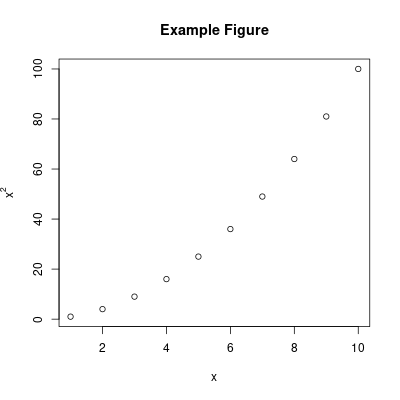
[[!sweavealike  fig=1 echo=1 results="hide" code="""
plot(1:10,(1:10)^2,xlab="x",ylab=expression(x^2),main="Example Figure")
"""]]
> plot(1:10,(1:10)^2,xlab="x",ylab=expression(x^2),main="Example Figure")
The plugin itself uses the neat Statistics::R perl module to handle all of the heavy lifting. I personally plan on using this plugin to help write some more entries in my learning R series of posts that I'm beginning to work on. Hopefully I'll find and fix most of the bugs as I embark on that process so anyone else who uses the plugin won't, but feel free to e-mail me if something isn't working as it should. Finally, you shouldn't run this plugin on a publicly editable IkiWiki instance, because that would be a trivial local user exploit as R can run arbitrary code, read and write to arbitrary files, exhaust all memory, etc.

David Welton: I'm not good enough to work on open source software

Actually, that's not true - I've produced plenty of open source software over the years. However, in a sense, it is true: only the very best actually get paid to work on open source software full time, and I'm not one of them. People like Linus Torvalds. People like Guido van Rossum, although even he supposedly divides his time, and does not work on Python full-time. Think about that. Python is a hugely popular programming language used by many companies and individuals who get a lot of value out of it. But the creator doesn't even work on it full-time. Now, that's just one example - perhaps Guido enjoys the things that Google sends his way to work on outside of Python in any event - but I think it's representative of open source in general. Back to me: I've produced some small bits of open source code that other people find useful. Several people have even built products on Hecl that make money. But I'm not good enough to work on open source full time - I'm not one of those famous, brilliant coders who is so good that someone will find a way to pay them to work on stuff that gets given away for free. I am, however, a good enough programmer to work on people's proprietary code, and have never had too much trouble finding someone with a project they're happy to pay me for. Why is that? Because it's so much easier to funnel money back into a proprietary project. If people like the product and buy it, the company gets money, which can be used to pay the developers. With open source, millions of people might use it and get a lot of value from it, but the developer has no right to receive any of that back as cash, which he or she can use to pay for things like food and rent. So, I can code tolerably well, and I could conceivably contribute more open source code, but instead I spend my time working on proprietary code because it pays the bills. Clearly, when I can, I use open source software in these endeavors, and contribute back whenever I can, but the "secret sauce" remains closed. That's a pair of hands lost to the creation of more open source. I know I'm not alone in this, either - tons of people work on mostly proprietary projects the world over, but relatively few people get paid to work on open source code full time. So when I read about people debating the utility of copyright bring up the existence of open source as some sort of counterexample, it irritates me a bit. The right level of protection and enforcement of copyright is a complex debate that I'm not going to get into here. What I want to point out is "that which is not seen". Sure, open source exists. But how much more of it would exist it there were more money to fund work on it? How much open source software remains an idea in the developers head that does not get realized for lack of time? People often criticize the "Linux desktop" despite its extraordinary strides in recent years. Well, how much farther along would it be if there were more people paid to work on the 'boring stuff', like usability testing? Ubuntu and Redhat pay a few people to do that kind of stuff, but how many more people do Microsoft and Apple have for that kind of work? That's not to say that open source "doesn't work" or some such nonsense. It obviously works quite well, but it really shines where the currency is code, not money. Developers can and do give back lots, in terms of code, bug reports, suggestions, documentation, and so on to open source projects, which make them better for all involved. Where open source doesn't seem to work quite as well are in small, fast-moving, consumer-oriented products. My guess is that 99% of iPhone users could care less about the source code for their apps, but on the other hand, a large portion of the Emacs user base more than likely has written at least a few lines of Elisp. In any event, the point isn't to beat up on open source software, but to counter this idea that "intellectual property" is in no way shape or form necessary because the existence of open source software somehow "proves" that "things will get made just the same". Yes, maybe they will, but in lower quantities than consumers might find desirable. After all, most of us aren't good enough to work on open source software.

Pablo Lorenzzoni: GNOME 3 is like Vim.

You might know that I am testing GNOME 3. So far, so good. I was a little annoyed by the not-obvious and undocumented have-to-add-user-to-pulse-and-pulse-access procedure and the keyboard-shortcut-settings-bad-design-bug, but now sound works and my usual shortcuts are in-place I found myself liking the environment, but not sure about why I was liking it. I was always a minimalist user. At one time I convinced myself X11 (or Xorg) served as a terminal multiplexer but now, GNOME 3 is changing that with its unobstructiveness (is there such a word?). One thing that might be selling GNOME 3 to me is that it resembles Vim, my beloved text-editor and multipurpose IDE. Just think about the Overview mode as a command-mode in Vim. While working in Vim, I focus in one thing at a time, and everytime I want to do some meta thing, I Escape to the command-mode. It s just the same in GNOME 3: Overview let me do meta things and gives me the whole power of the Desktop in one screen. I am not sure I am going to keep GNOME 3 But thinking it s like Vim is a compelling argument.

Russell Coker: Links March 2012

Washington s Blog has an informative summary of recent articles about corporate psychopaths [1]. Including the fact that some banks deliberately hire psychopaths. Anu Partanen wrote an insightful article for The Atlantic about the difference between Finnish and American education systems [2]. It seems that Finland has achieved great educational success by aiming for equality with no private schools and giving the teachers and principals enough responsibility to do the job properly. Ramona Pierson gave an interesting TED talk about how she recovered from being run over by a drunk driver with the help of the residents of a senior citizens home [3]. Quyen Nguyen gave a very interesting TED talk about the use of fluorescent dyes in cancer surgery [4]. They can make cancer glow one color and nerves glow with a different color which makes it a much easier task to remove ALL the cancer without cutting the smaller nerves. James Fallows wrote an interesting article for The Atlantic about the experience of having his wife s Gmail account cracked [5]. She stored EVERYTHING in her Gmail account so this was a lot worse for her than for the typical Geek who doesn t use such accounts for storing much. James describes what the attacker did, how they did it, and what needed to be done to recover. When running a mail server it s worth considering what you would do to help a user who was attacked in that way. Charles Stross has written an interesting blog post trying to predict some future psychological and social changes [6]. Matthew Wright of Beyond Zero Emissions has written an informative article about how solar panels on home roofs save everyone money [7]. Mikko Hypponen gave an interesting TED talk about different types of online attack and how they can affect us [8]. Among other things he describes how online attacks can result in people dying. Scott Rickard gave an interesting TED talk about using maths to create SONAR pings without repitition and also the worst music ever created [9]. I found it entertaining to watch Michael Lindel (the director of chamber music for the New York Symphony) play the music, he obviously didn t enjoy that performance. Sheena Iyengar gave an interesting TED talk about the way people make choices [10]. It s useful for anyone who is going to prepare a set of options for someone else to choose from. ASD Aid is a project that uses Lego to encourage kids on the Autism Spectrum to socialise [11]. They have training manuals for using Lego in therapy. Unfortunately they have not been supported by the Lego corporation. Bilal Bomani gave an interesting and informative TED talk about NASA research into renewable aviation fuel [12]. The most interesting thing to me was the way that they were aiming for a sustainable lifecycle that didn t use resources that coule be used for food and which required minimal input once it was started. Alain de Botton gave an interesting TED talk about Atheism 2.0 [13]. He suggests that we adopt some ideas from religious organisations including lectures (sermons), celebrations, and rituals. It s interesting to think of a technology conference as a pilgrimage. Homaro Cantu and Ben Roche from Moto restaurant in Chicago gave an interesting talk about some of the unusual foods that they have produced [14]. If I visit the US again I will try and go to Chicago to eat there! Related posts:
  1. Links March 2009 Cory Doctorow has written a column for The Guardian titled...
  2. Links February 2012 Sociological Images has an interesting article about the attempts to...
  3. Links January 2012 Cops in Tennessee routinely steal cash from citizens [1]. They...

Richard Hartmann: Svalbard

Svalbard The things you find when cleaning out a disk; preparing for re-installation of your laptop on a larger disk once the laptop comes back from repair... I thought I had posted this in early January, but apparently not. As it would be a shame to just throw this away, here goes: I am sitting in the Oslo airport, waiting for boarding back home to start. Seeing the sun after a week of darkness still feels strange. Inital trouble It's been a very interesting week, starting with our trip to Oslo in the other direction. We spent New Year's Eve in Oslo, timing our forced overnight stay before reaching Svalbard to coincide with something interesting. The close timing of our travel meant that there was exactly one flight to Oslo we could take. Never having heard of Air Baltic before and finding out that they are a discount airline, my gut feeling told me to be be wary. I refuse to fly with those airlines on principle, not wanting to support their business model while hurting airlines with decent treatment of customers. Unfortunately, I was forced to book with them in this case. As it turns out, my gut was right. More on that below. Our plane was late in landing and my luggage was lost. As it was New Year's Eve, the staff at Oslo airport understandably wanted to be home, not at work. Still, getting them to file a report was tedious and finding out days later that the report was incomplete was, well, not good. The express train from the airport to Oslo central station had closed early without any advance notice or local signs, presumably because of NYE. The gates were simply closed and that's that. We figured out how the bus system worked, got our tickets from a vending machine, saw the one bus to central station drive away, and proceeded to wait in the outside waiting area; at least we had a front spot in the queue. While we don't get cold easily, it was funny to see Norwegians in thin clothes stand around in the biting wind, apparently being comfortable. A young mother with a baby, who didn't anticipate being forced to wait outside at -15C, as opposed to just sitting down in a train, had no warm clothes for her son; something that was fixed by wrapping him in spare clothes from Ilona's luggage. After waiting for about thirty minutes for the next bus to appear, it parked twenty or thirty meters away from the designated parking spot. The rough queue disintegrated and if not for Ilona's leaving me with luggage and backpacks and storming off to fight the masses, said mother with baby and ourselves would have waited for another thirty minutes. More than hundred people were left stranded at the airport to celebrate there or on the bus. Meh. We hurried, by taxi, from central station to hotel to harbour and arrived about five minutes to twelve. NYE itself was nice. We stood on top of the opera house and watched a rather impressive show of fireworks through the thickening mists. Norwegian fireworks pack lot more punch than German ones; you actually feel your clothes shake when they go off. Getting to Longyearbyen The flight from Troms to Longyearbyen had free in-flight Wi-Fi and flying over the edge of satellite coverage demonstrated how far we were from everywhere else rather impressively. Arriving at Longyearbyen, I fixed the lost luggage claim with the help of an extremely nice woman working at the airport. She confirmed that Air Baltic is legally required to reimburse me after an arcane system based on a virtual IMF currency to the tune of about 1.500. That may sound like a lot, but seeing as I had most of my scuba gear with me, that's not even half of what my luggage was worth. I was forced to get by New Years with what I had on my body and went shopping the next day when I could buy at least a few things. I got by with spending about 180 by going for non-fitting bargain bin clothes, wanting to reduce impact on Air Baltic. Shortly after that, my luggage arrived, unannounced. Air Baltic refused to reimburse me even though they are legally required to, again the airport staff confirmed this. But unless I sue in the country of destination, Norway, I won't see any money. Long story short: Avoid Air Baltic if possible. They will break the law to cheat you out of money when they have a reasonable expectation of getting away with it. Update: Yep, seems they got away with it unless I take legal measures. You have been warned. Longyearbyen itself was very nice. We started off with a short, guided taxi tour around the city, seeing literally everything of it as there's not a lot of Longyearbyen to start with. Dogsledding Next day, as noted earlier, we went shopping and spent the "evening" with dogsledding which turned out to be tons of fun. We helped with harnessing the dogs which is somewhat cumbersome as the dogs are so eager to burn off their energy that they want to run all over the place, not being put into a harness and snapped onto the pull-line. Never having been dogsledding before I was a bit wary, but riding over not too rough terrain is almost trivial once you get the hang of it; listen to what the musher in front of you yells and emulate the same shouts with your own dogs. If the dogs become too fast, step onto the brake pad which simply drives spikes into the snow. If the dogs slow down while going uphill, skate with one foot to help them. That's it for speed. As the dogs are following the musher's sled anyway, steering the dogs was not a concern. Fun fact: The musher used a laser pointer to steer his dogs; simple, efficient, and presumably fun. We learned, by demonstration, that sledding dogs can eat snow, take a leak, and take a dump while running at full speed and pretty much all at the same time. The dogs are left either in cages or on long chains far away from the city as they tend to bark and howl a lot. We were surprised to learn that, even when there are seals left to hang dry as dog food nearby, there are no problems with bear attacks. Apparently even the extremely aggressive and hungry one year old males will not go near dogs. Still, while out in the ice and snow, our guide carefully flooded all crevices and cliff bases to root out female bears with young ones early. They hide their children from the wind and they will attack, dogs and all, if we get too close. That's why our musher carried rifle in his sled and flare gun on his body. Snowmobile The next "morning", we drove around by snowmobile. This turned out to be extremely boring as it was a curated trip with over half a dozen snowmobiles in our group; a stark contrast to our two-sled tour the day before. The last time I went snowmobiling, we raced each other up and down a two-star black (i.e. steep, bumpy, and curvy) ski slope, jumping several meters when racing over larger bumps and crossing streets, so riding single file at 30 km/h was... anticlimatic. Again, the guide had rifle and flare gun with him. We spent the afternoon and evening walking around the city. Ice bears, part I As the ice caves and the glacier were still closed, we decided to have another walk around the city. Having planned make it a quick tour, we lost track of time due to lack of sun and ended up walking around for seven hours. A note about that trip.. If you are alone with your wife, unarmed, climbing up a very steep and slippery mountainside over a sheet of ice with deep snow underneath and loose rocks in between, and then start shining around with your flashlight under the stilts of an abandoned mine that looks like in a horror movie, the correct answer to "What are you doing?" is never ever "Looking for ice bears". Even if it's the truth, this is not an acceptable answer. I crawled up the last part on all fours, camera and tripod in hand while Ilona stayed about two dozen meters below the mines' entrance, refusing to go another step towards the mine. As soon I made it up the creaky and shaky, for a lack of a better word, let's call it ladder, she forced me to come down again. Bleh, but I guess I deserved that. Armed photographer Next day, we got final confirmation that we would not be allowed to rent snowmobiles to explore the hinterland on our own and that other for some, and I quote, "crazy Russians", no one would even attempt to cross over to Barentsburg. Thus, we ended up renting a car for the ~20 kilometers of total road length. That turned out to be a great idea as it allowed us to get away from the light and take some very nice long exposures. It was then that I got a rental rifle, as well. There is a law against leaving the town unarmed and I was not about to test my luck too much. Turns out that, as part of Germany's WWII reparations, Norway received our all hand guns and as they still function perfectly when dirty and in cold climate which makes them still popular in Svalbard, today. The Karabiner 98 Kurz which I received is built incredibly well. It's somewhat scary inasmuch every detail is designed to make this weapon ready to fire. If you hurry or are inexperienced, you will end up with an unlocked and loaded rifle after putting in the bolt. Putting the safety in and not chambering a bullet takes conscious effort and knowledge of the weapon. This is in stark contrast to other weapons I had the chance to dissect, which all defaulted to being safe. Even other military weapons such as the AK74 and the M4A1 are inherently more secure, designed to be locked and safe. The Mauser K98... not so much. As an aside, they didn't bother to remove the Reichsadler and Swastika from the rifle, contending themselves with striking out the German registration number and stamping the rifle with a Norwegian one. I guess Norwegians don't really "care" about these signs as much as we Germans do. In a way, that's a good thing I guess, at least as long as it's an indication of indifference towards the sign, not one of forgetting or ignoring the underlying issues. Still, I was very glad to have rented the rifle. While Ilona tended to stay in the running car with heat and lights on, I went out and away from the car. Even when standing near a street, a medium snow storm will make you appreciate the four powerful arguments against being eaten by a random bear which are at the ready over your shoulder. We even went to the shooting range so I could get some practice. The procedure is very trusting, as is anything in Longyearbyen. After accessing the interior of one of the houses in a particular way which I won't specify here, you simply switch on the floodlights, put up the red flag, position a target and write your name into the guest book. Once you're done shooting, toss a few coins into the bowl next to the guest book, remove the targets and flag, turn off the lights, close the door and that's that. Unfortunately, the way in was under a few meters of snow so I couldn't get in any practice shots. Ice bears, part II Later, as I was standing on a wind-polished slate of ice taking pictures of the Seed Vault (located here), I heard an ice bear roar behind (i.e. to the north of) me. I consciously remember hearing the bear, I consciously remember facing the other way around, half-crouched, rifle raised in the direction of the roar. I also consciously remember smacking the safety off and chambering a bullet after having regained control of my body. I do not remember spinning around on a wind-polished slate of ice, so treacherous I hand to balance with my arms and didn't even lift my feet when walking over it, without losing balance or footing, nor do I remember crouching and raising the gun. Evolution really is amazing; no matter what primal chord that roar struck, it certainly saved a ton of people over the years. In my case, thankfully, there was no bear to be seen down the slope. There may be no sun or anything, but the snow reflects the starlight so you tend to see surprisingly far and as I was on on the mountainside and the roar came from down from the coast, and as I had my rifle, I decided to finish the photo session while keeping the slope in close view. In hindsight, I am still glad I decided to do that as the shots came out rather nice. Next day, we drove out to Mine 12, the farthest you can away from Longyearbyen. The dump truck transporting coal alternated between driving a full load of coal back to the city and being its own snowplow. One quick trip to get coal, one slow and empty trip to plow away snow, rinse, repeat. If not for that, our 4WD would never have made it all the way up to the mine. Neither snow storms in North America nor around the Alps prepared me for what people on Longyearbyen consider normal wind in their backyard. This is where the word wind-swept was invented. The main reason that Svalbard is inhabited at all, other than the Gulf Stream, is coal. We have been told that the coal up there is of extremely high quality and while I can't say much about that, I can say that it's hard as stone. This is nice as it does not smear when you get coal all over yourself. Just shake out your jacket and pants and you are good as new. On our way back, we met two locals who had just prepared the glacier and ice caves for tourists. Had I known that in advance, I would have tried to go with them to take pictures completely away from all artificial light. Oh well, can't have everything. Speaking of not being able to have everything, the outdoor hot tub in our hotel which integrated ice bar and BBQ grill was still under several meters of snow so we couldn't use that, either. Finally, the few divers who are in Longyearbyen didn't have time to take me onto a trip while I was there. As I already missed my opportunity to dive the Arctic circle when the one diver on Gr msey happened to be on the mainland and barely missing it by diving Str tan instead, this was kind of a bummer. On the plus side, this has given me a goal to pursue and achieve. Random notes For the rest of my notes, I will resort to a largely unsorted list of bullet points as there's just too much to talk about in prose. All in all, it was well worth it. PS: If you know anyone working with Google Maps, ask them to consider improving their coverage of the Arctic. This is a real pity. As is the rest of the Arctic and the fact that Google Earth cheats you out of the North and South Pole by stretching adjacent tiles into and over them.

21 March 2012

Craig Small: Back Online

I d have to say (in fact I often do) that Telstra sucks. This is the very large anonymous telco that supposedly provides a telecommunications service. Alternatively they also force me to have a phone line because it is far cheaper to buy a line and phone service instead of just a line. My website, email and pretty much everything else has been offline for almost exactly 2 days and this being the third time in 8 days it has happened. The service interruption impacts at least a large chunk if not all of the suburb I live in so you d think the second time they d look into it more, but apparently not. They don t even have technical staff oncall on Sundays either apparently. The weird thing about when I called up was they didn t know about the fault. If it was a single line that would be fine but a large bit of an exchange go and they don t know about it? It seems a little too casual to me as it wouldn t be that difficult to have some sort of alarming. I just hope that perhaps someone knew but their call centre doesn t get that information pushed down to it. I have a few sponsored debian packages that now need working on and uploading so that s what I ll be getting into once I get some more time. procps is almost ready as well with the final minor patches to be integrated.

Axel Beckert: Tools for CLI Road Warriors: Remote Shells

Most of my private online life happens on netbooks and besides the web browser, SSH is my most used program especially on netbooks. Accordingly I also have hosts on the net to which I connect via SSH. My most used program there is GNU Screen. So yes, for things like e-mail, IRC, and Jabber I connect to a running screen session on some host with a permanent internet connection. On those hosts there is usually one GNU Screen instance running permanently with either mutt or irssi (which is also my Jabber client via a Bitlbee gateway). But there are some other less well-known tools which I regard as useful in such a setup. The following two tools can both be seen as SSH for special occassions. autossh I already blogged about autossh, even twice, so I ll just recap the most important features here: autossh is a wrapper around SSH which regularily checks via two tunnels connect to each other on the remote side if the connection is still alive, and if not, it kills the ssh and starts a new one with the same parameters (i.e. tunnels, port forwardings, commands to call, etc.). It s quite obvious that this is perfect to be combined with screen s -R and -d options. I use autossh so often that I even adopted its Debian package. mosh Since last week there s a new kid in town^WDebian Unstable: mosh targets the same problems as autossh (unreliable networks, roaming, suspending the computer, etc.) just with a completely different approach which partially even obsoletes the usage of GNU Screen or tmux: While mosh uses plain SSH for authentication, authorization and key exchange the final connection is an AES-128 encrypted UDP connection on a random port and is independent of the client s IP address. This allows mosh to have the following advantages: The connection stays even if you re switching networks or suspending your netbook. So if you re just running a single text-mode application you don t even need GNU Screen or tmux. (You still do if you want the terminal multiplexing feature of GNU Screen or tmux.) Another nice feature, especially on unreliable WLAN connections or laggy GSM or UMTS connections is mosh s output prediction based on its input (i.e. what is typed). Per line it tries to guess which server reaction a key press would cause and if it detects a lagging connection, it shows the predicted result underlined until it gets the real result from the server. This eases writing mails in a remote mutt or chatting in a remote irssi, especially if you noticed that you made a typo, but can t remember how many backspaces you would have to type to fix it. Mosh needs to be installed on both, client and server, but the server is only activated via SSH, so it has no port open unless a connection is started. And despite that (in Debian) mosh is currently just available in Unstable, the package builds fine on Squeeze, too. There s also an PPA for Ubuntu and of course you can also get the source code, e.g. as git checkout from GitHub. mosh is still under heavy development and new features and bug fixes get added nearly every day. Thanks to Christine Spang for sponsoring and mentoring Keith s mosh package in Debian.

20 March 2012

Andreas Barth: Traveling to DebConf 11 - in Sarajevo

Sarajevo gave a rainy look the next morning. That wasn't too bad, as I was able to walk around a bit without it being too crowded. Incidently I also saw the corner where Franz Ferdinand was shot in 1914, which started the first world war - Europe has many links beyond todays state borders, in good and bad times. It's not like transeuropean politics (or communications) are something too new.
Bazar in Sarajevo
Franz Ferdinand was shot here in 1914
Trolley buses
River, tram and city
nice building hidden by cars - should our cities be dominated that way?
more of the old city After having spent the morning exploring the old part of Sarajevo and along the river, I used the time after hotel checkout to use the tram link and take a few more pictures. I arrived at the train station as planned, but the train I wanted to take didn't go that day (in spite of checking it within the hotel in the morning). So, I ended with another bus trip (this time unplanned) to Banja Luca. Again, bus trips are worse than train trips - one cannot move in the vehicle, and there are delays for every stop. The events in Banja Luca are discussed elsewhere, so nothing about that here (except that DebConf was great - I enjoyed it very much).

Russell Coker: An Introduction to Android

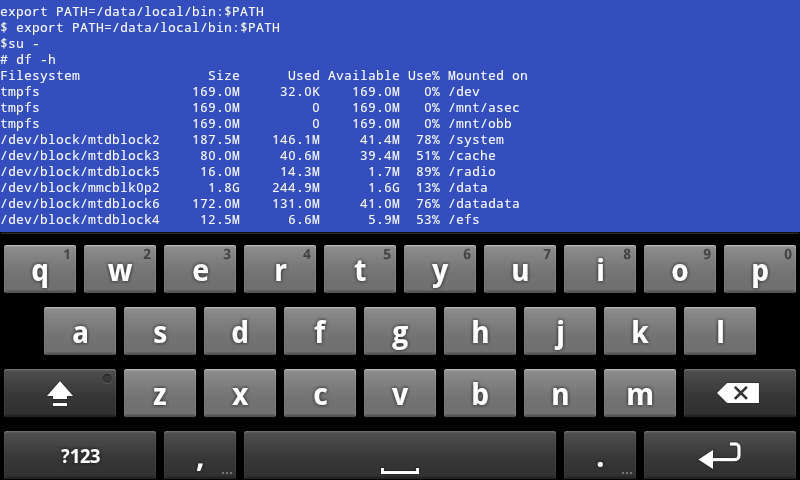
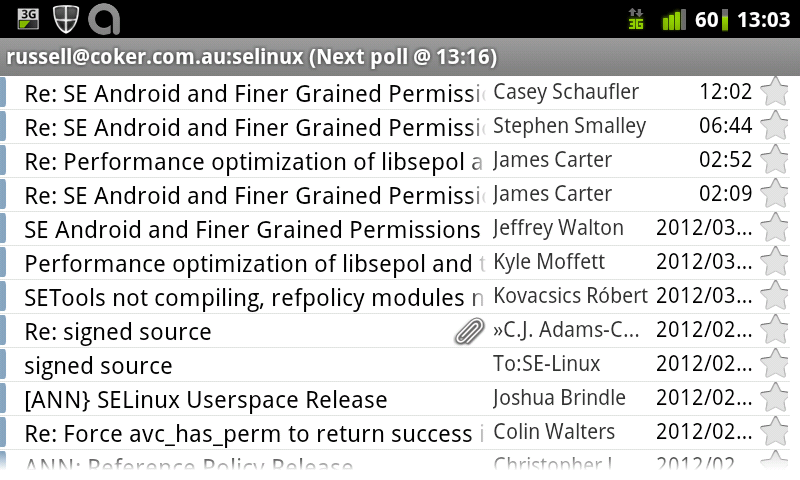
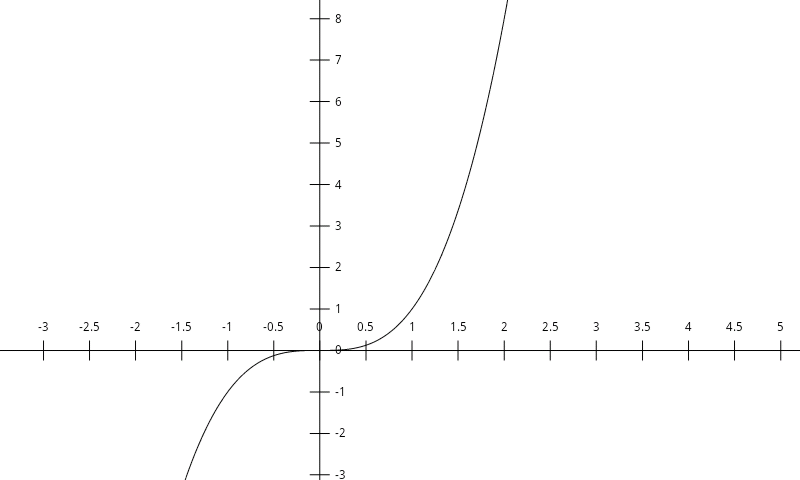
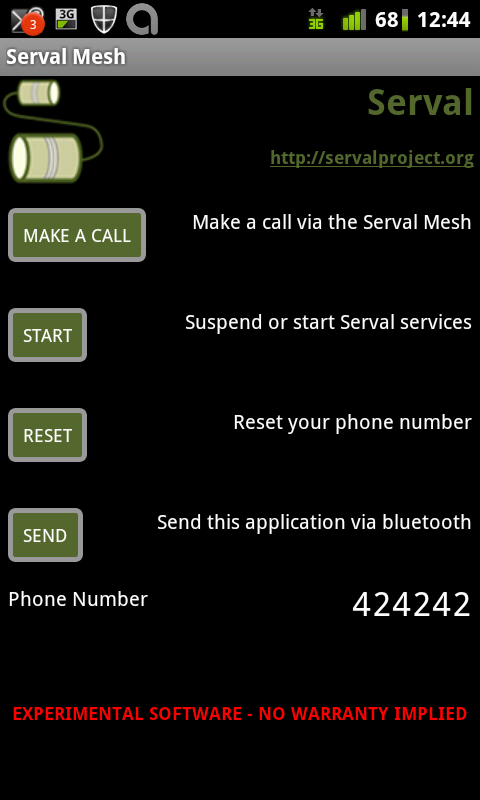
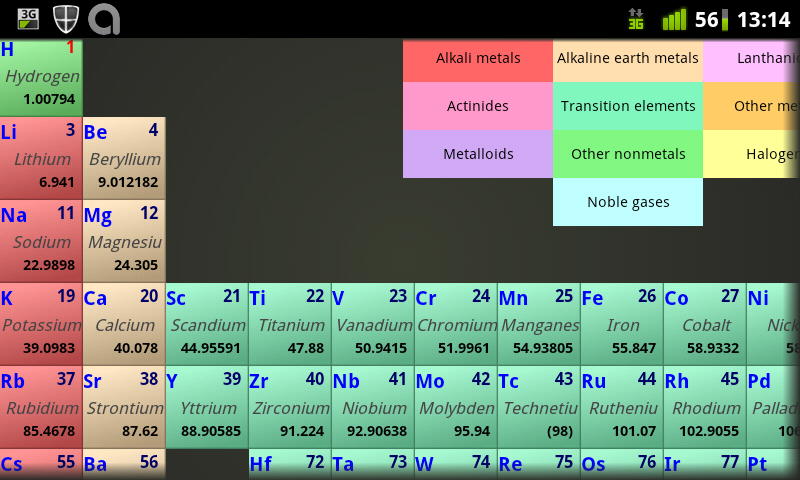
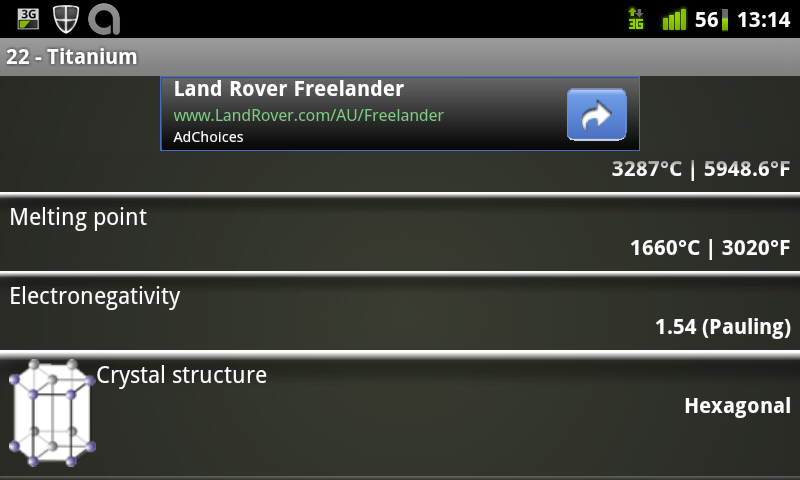
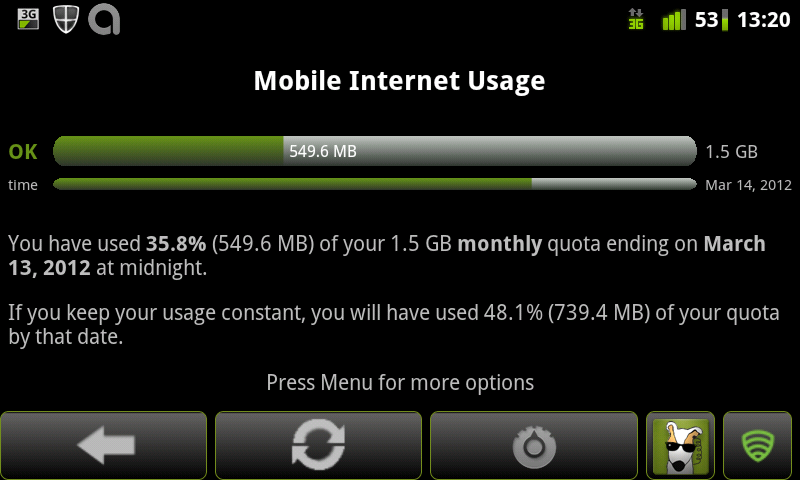
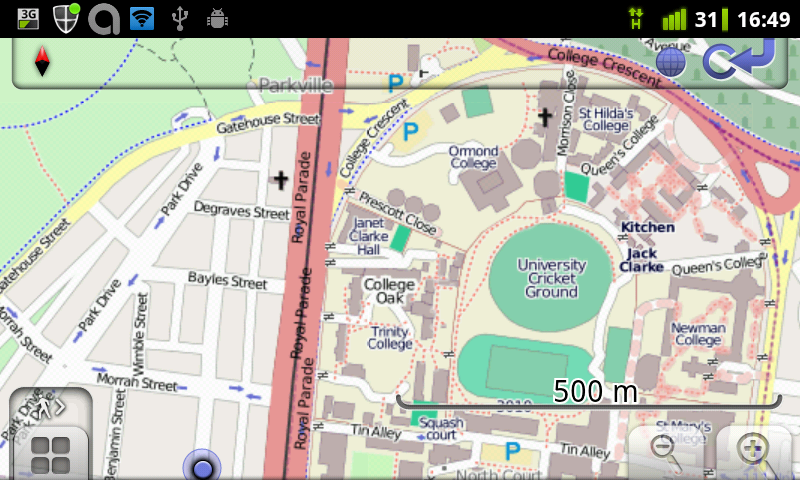
I gave a brief introductory talk about Android at this month s LUV meeting. Here are the slides with a brief description. All the screen-shots were made on a Samsung Galaxy S running Cyanogenmod version 7.1 [1] (Android version 2.3.7). With that build of Cyanogenmod you can press the power button for about 1.5 seconds to get a menu which gives an option to take a screen shot. The aim of the talk was to give an overview of what Android can do. I also gave some random commentary about Android such as explaining why it doesn t make a good phone. Most of the pictures in this post have links to the Android applications in question. Essential and Important Apps picture of root shell access running df I started by explaining why having root access to your system is really important, including the issue of backing up an Android phone [2]. Cyanogenmod includes a terminal program which allows you to run su - . Running a shell as root isn t generally that useful, what you really want is to be able to run programs such as Titanium Backup which can only work properly if given root access. When you run an OS that allows root access you can run su - at a terminal prompt and you can also have an application use a GUI to request root access. I recommend rooting and modding an Android phone immediately after buying it. However that takes some time which is somewhat equivalent to money and is a significant hidden cost to purchasing an Android phone. picture of 3g watchdog bandwidth monitor The business models of telephone companies seem to involve hidding users for unexpected fees and extra fees for excess bandwidth can be really expensive. 3G Watchdog is one app that can monitor bandwidth and disable data transfers if too much is used. Onavo is an alternative that allows tracking data use on a per-application basis, but it only runs on Android 2.3.x while 3G Watchdog works on Android 2.1. Official EBay app searching for Samsung Android phones EBay has an official app which is handy for searching for items. So far I ve only used it to get price estimates and have used a PC for buying. K9 viewing my SE Linux mailing list email K9 seems to be the best MUA for Android. The MUA that ships with Android 2.1 isn t nearly as good and K9 is good enough that I didn t even bother testing the MUA from Cyanogenmod. The above picture shows a list of mail in my SE Linux folder. graph by opticron grapher The Opticron Grapher is a good graphing calculator. I won t claim it s the best because I didn t seriously test such programs, but for the basic tests I ve done it has worked well. Google map of LUV location The Google Maps client comes with every Android system, the above shows the location of the LUV meeting. Open Street Map location of the LUV meeting Osmand is an Android client for the Open Street Map project. Here is the web site for the Open Street Map project [3]. One significant advantage of OSM over the Google Maps is that OSM is free, the data is all contributed by users like Wikipedia. Another significant advantage is that you can download as much data as you need to your phone, for example the entire dataset for Australia is about 200M. Storing 200M of data on your phone is no big deal when you consider the availability of phones with more than 16G of storage and the ability to use a map when offline is a real benefit. So far I ve used Osmand while waiting for a train at an underground station and I plan to use it to track my progress the next time I m on a cruise. serval mesh networking and VOIP Serval is a mesh networking application for Android that supports VOIP phone calls and distributing messages and files. It s designed to be used in disaster areas, but there are lots of other potential uses of the technology. The Serval Project blog has an article about the presentation they gave at LCA 2012 [4]. periodic table
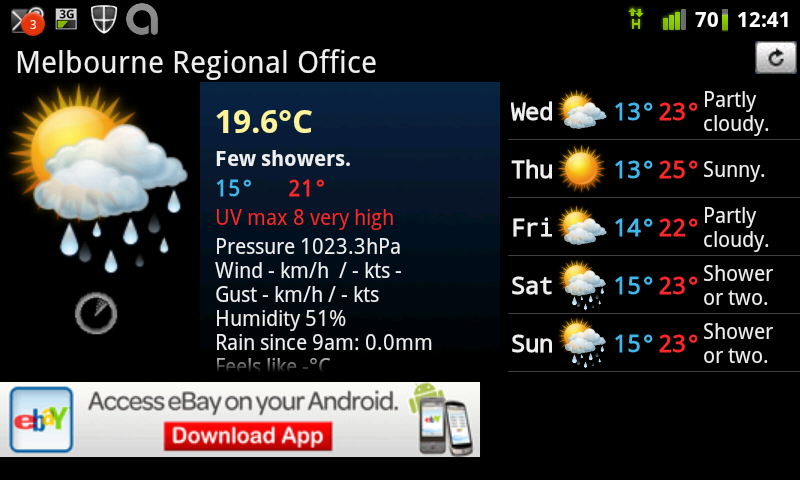
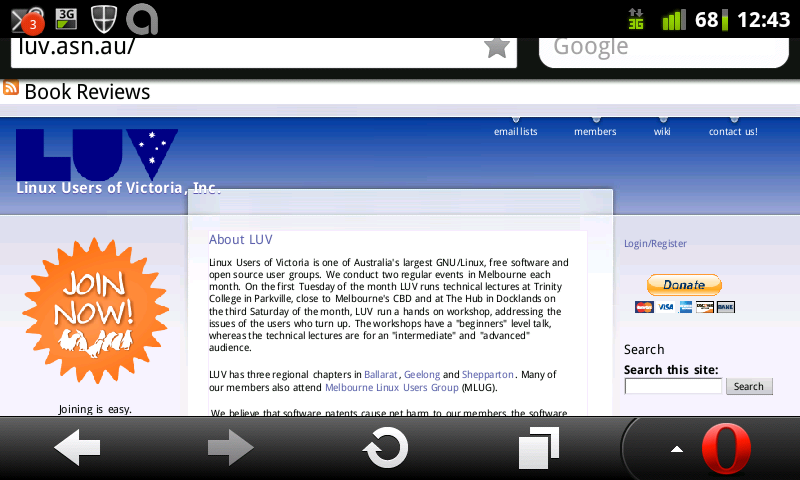
details about Titanium Periodic Droid is my favorite Periodic Table viewing program. tomfusion Au Weather forecast app The Tomfusion AU Weather forecast app seemed to be better than the one from the BoM last time I checked. It s probably the best weather app for Australia. screen-shot of LUV web site
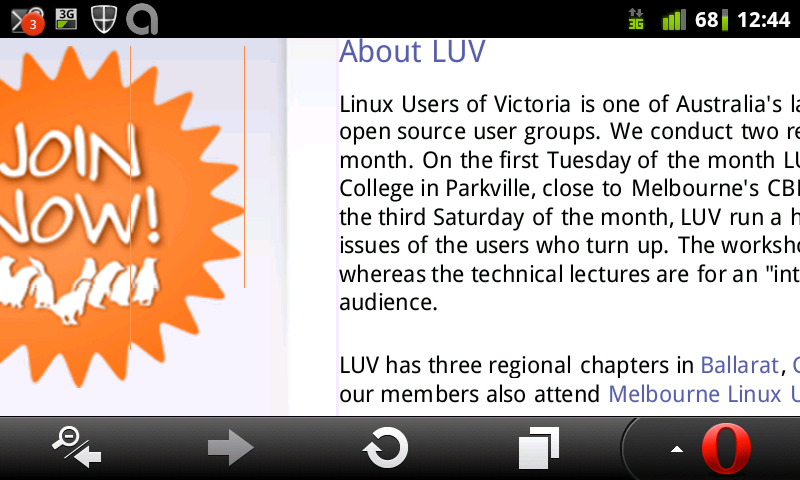
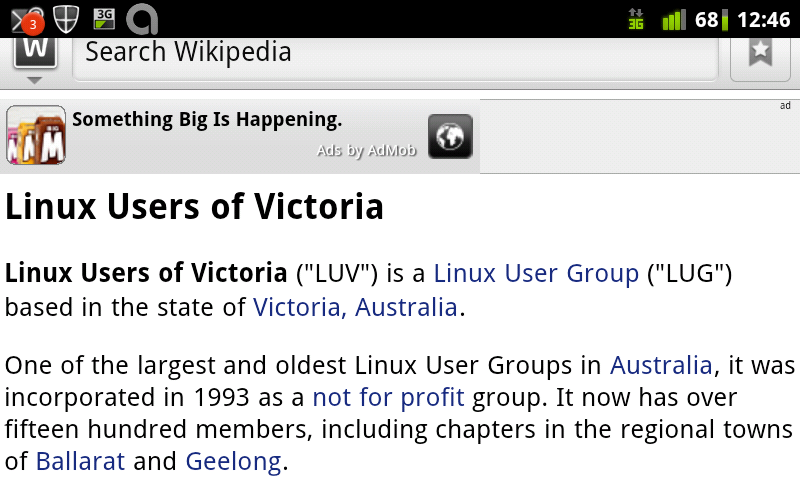
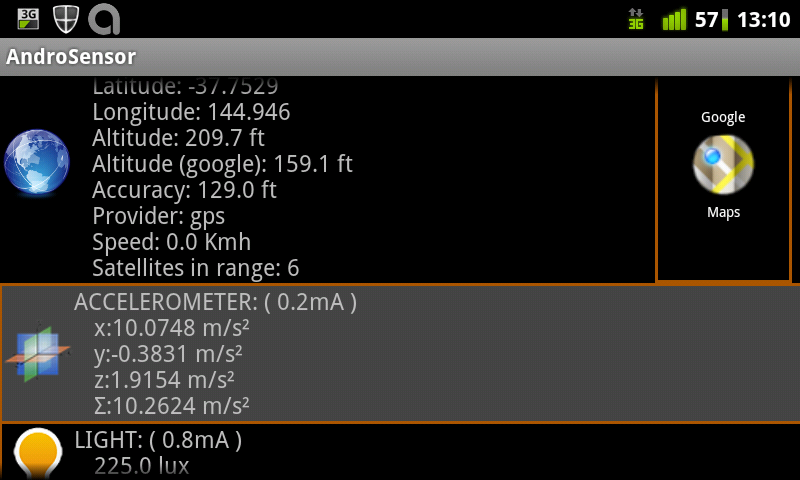
LUV web site zoomed in The Opera Mini browser is often faster than other browsers because it uses a compressing proxy run by Opera. It s not so good for privacy though LUV page on Wikipedia I have been using Wapedia for browsing Wikipedia. Since giving the talk I discovered the Official Wikipedia browser from the Wikimedia foundation [5] which is a better fit for my needs and I ve uninstalled Wapedia. As an aside modern phones have 16G of storage or more and could easily have a copy of the entire English text of Wikipedia on internal storage. It would be good if someone like Jason King (who is known for work on stand-alone DVD images for Wikipedia) was to write an Android program to do this. Handy Apps Androsensor showing GPS, accelleration, and light intensity
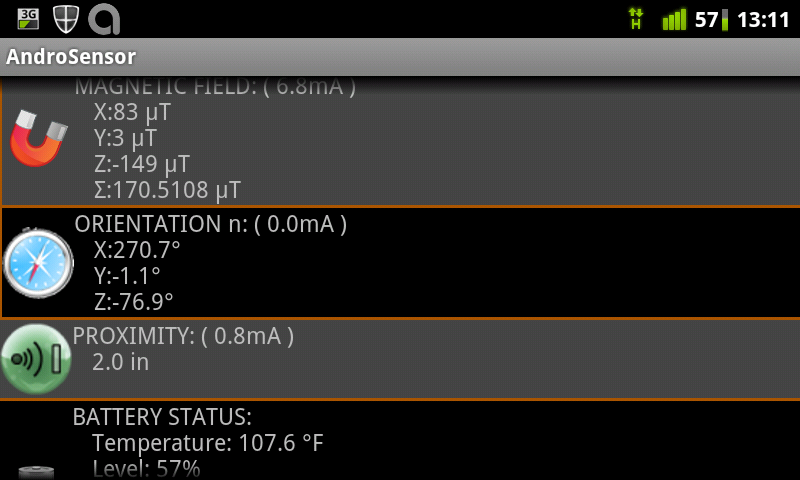
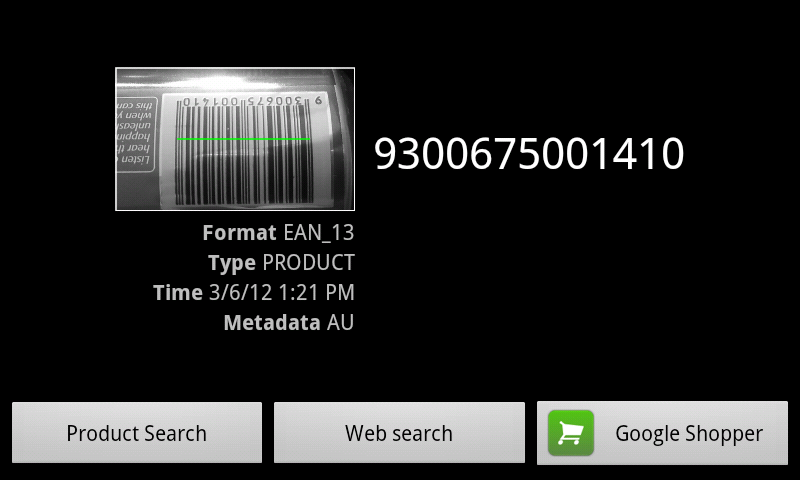
Androsensor showing magnetic field, orientation, and battery Androsensor is a program to display output from most (all?) of the sensors on your phone. The results aren t as accurate as one would hope, for example Earth s gravity is 9.81m/s^2 not the 10.26m/s^2 my phone registered. But they are a useful indication. picture of Coke can, scanning the barcode
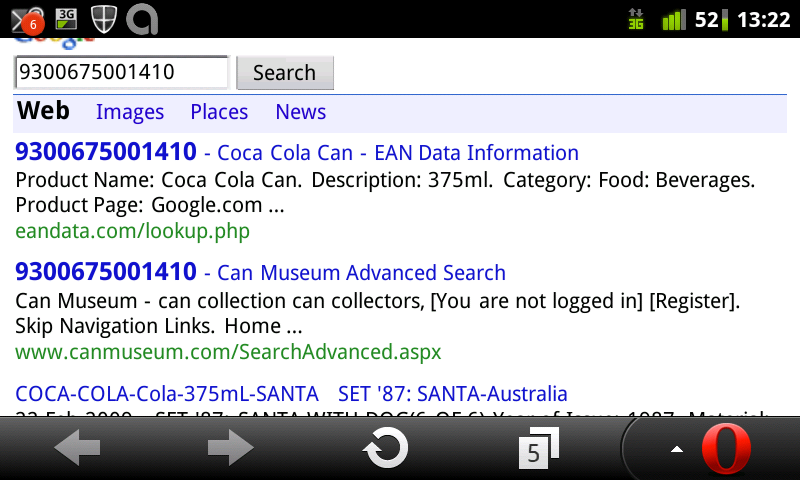
Google search on Coke can barcode
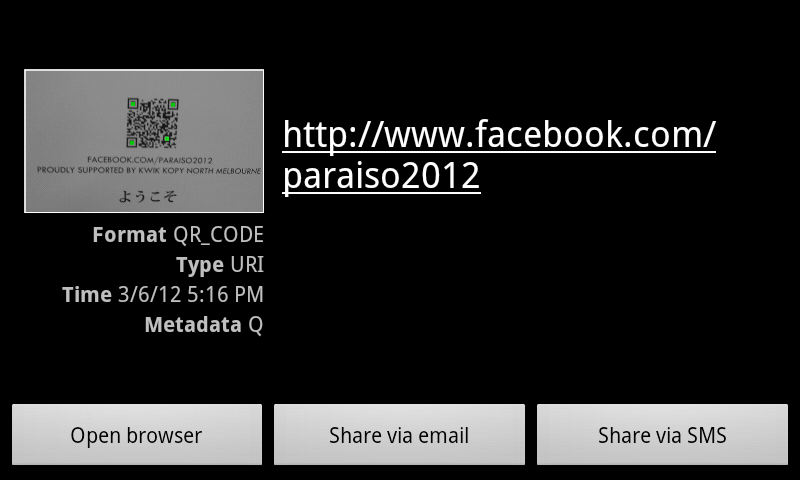
QR Code lookup of Facebook page The Zxing Barcode scanner is one of many programs that will scan barcodes with the camera in an Android phone. It can launch a Google search on a product code or open a URL from a
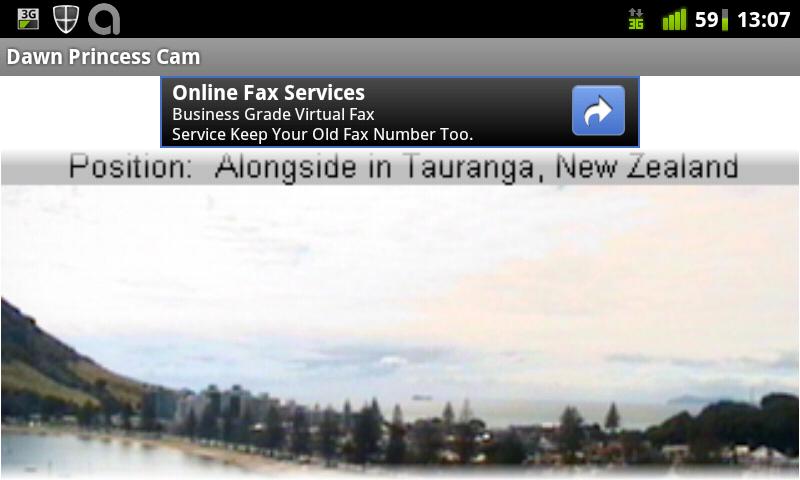
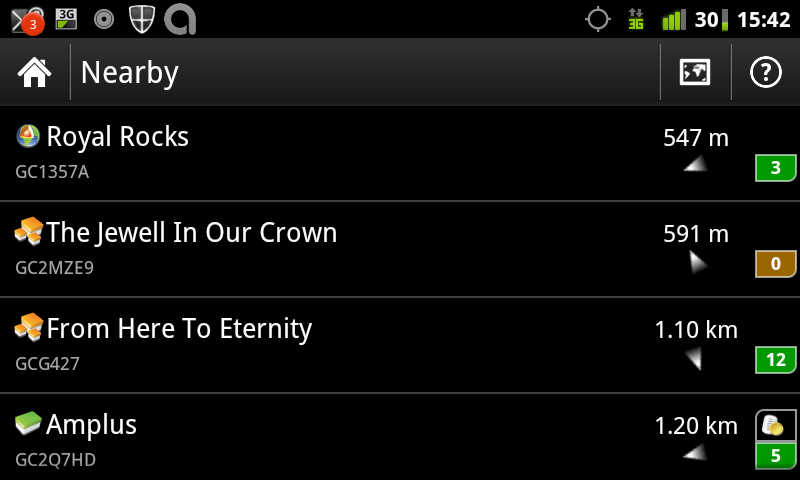
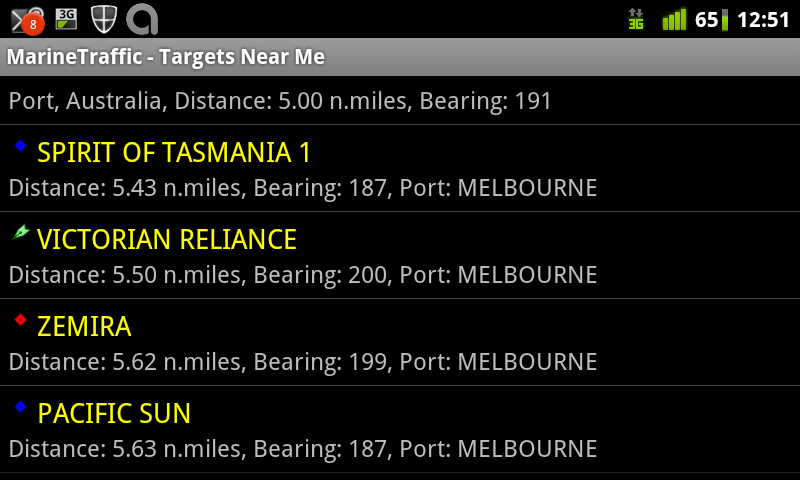
QR Code. The above pictures show it scanning a Coke can (the can and other background was displayed on the full screen before the screen capture program activated), doing a Google search on the can barcode, and looking up a QR code that was on an advertisment outside the LUV venue. picture from the bridge of the Dawn Princess in Tauranga NZ Cruise Cams allows you to download pictures from cruise ships. Some cruise ships have several cameras on different parts of the ship uploading pictures regularly so that people around the world can see what s happening. list of geo-caches near the park where I prepared most of my notes The c:geo opensource program allows you to get information on Geocaches and see a compass or map showing the location. This program has been getting an increasing number of features to do everything you might want to do related to Geocaching. The above picture shows some caches that are close to where I made the screen-shot, in a park a couple of Km from the meeting location. picture of Google Sky Map in the direction of Andromeda The Google Sky map uses augmented reality techniques to display stars in the direction that your phone is pointing along with their names and the names of the constellations. Marine Traffic showing ships near me
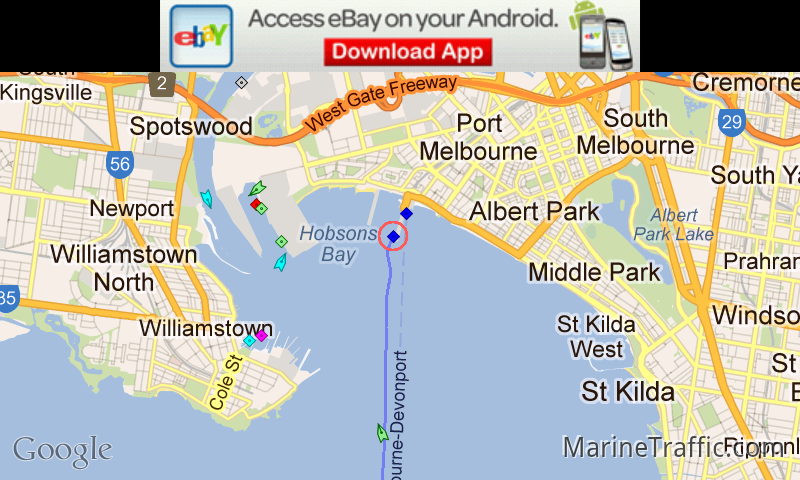
Marine Traffic showing the Pacific Sun highlighted on a Google Map
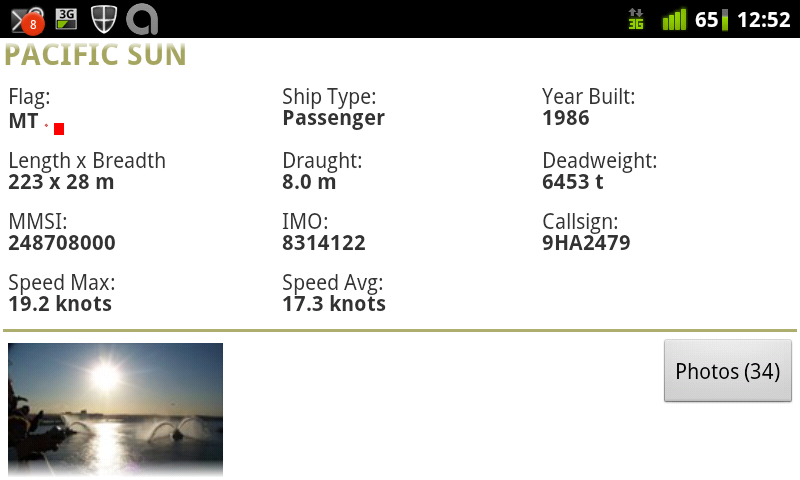
Marine Traffic showing details of the Pacific Sun
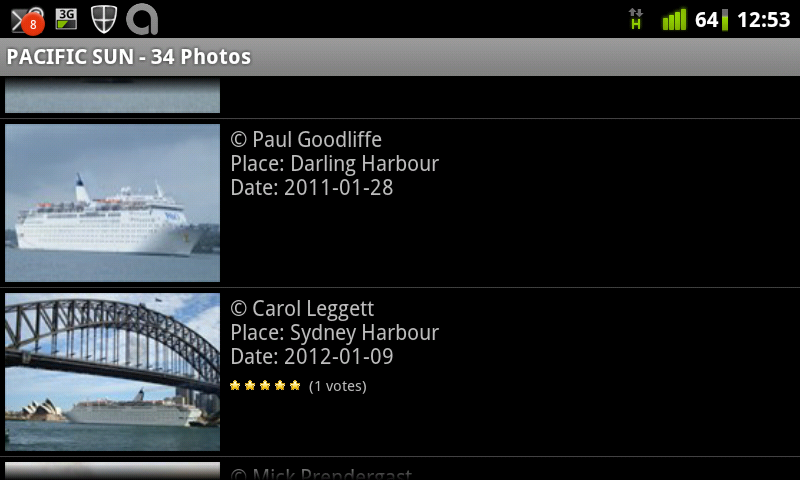
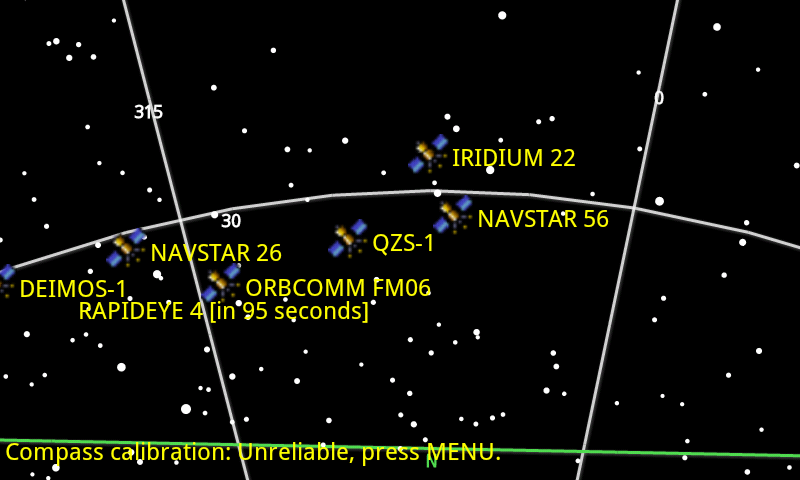
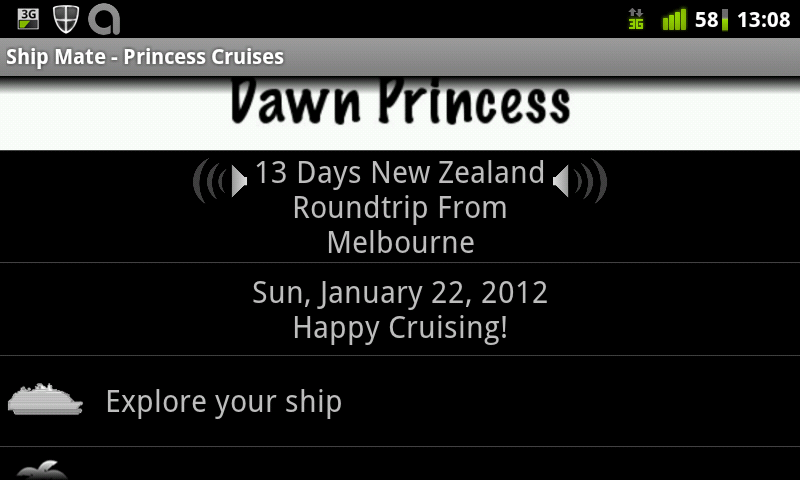
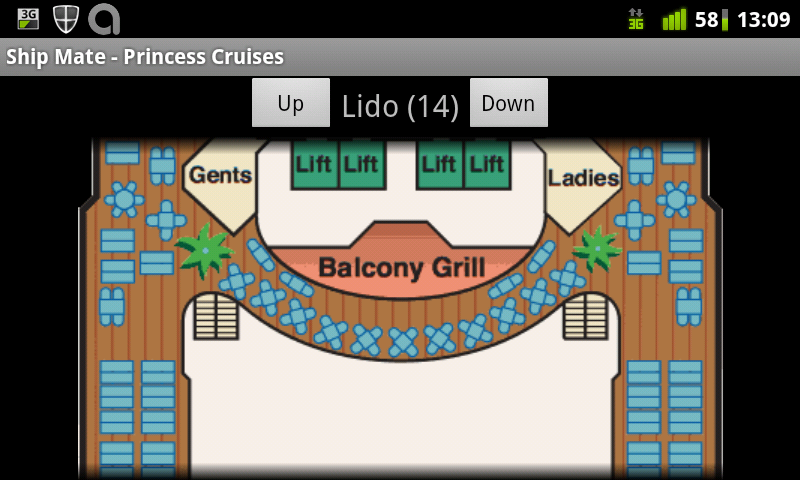
Photos of the Pacific sun taken by fans and shown by Marine Traffic The Marine Traffic program shows the locations of ships as well as lots of information about them. The above pictures show me discovering that the Pacific Sun was nearby, viewing it s location on Google Maps, seeing the details, and then viewing fan pictures. The developer s web site allows viewing all the same data without an Android phone [6]. Anyone can join the project by buying an Automatic Identification System (AIS) receiver and configuring a PC to take data from AIS and send it to the MarineTraffic.com servers. As an aside they seem to be missing coverage in western Victoria, so it would be good if someone near Apollo Bay or Warrnambool could install an AIS receiver and help out. Satellite map from Satellite AR Satellite AR uses augmented reality to show the location of satellites and other things in spare. Unfortunately the screen capture process turned off the camera as I had a sign advertising fast food positioned in an amusing location in the background. Shipmate overview of Dawn Princess
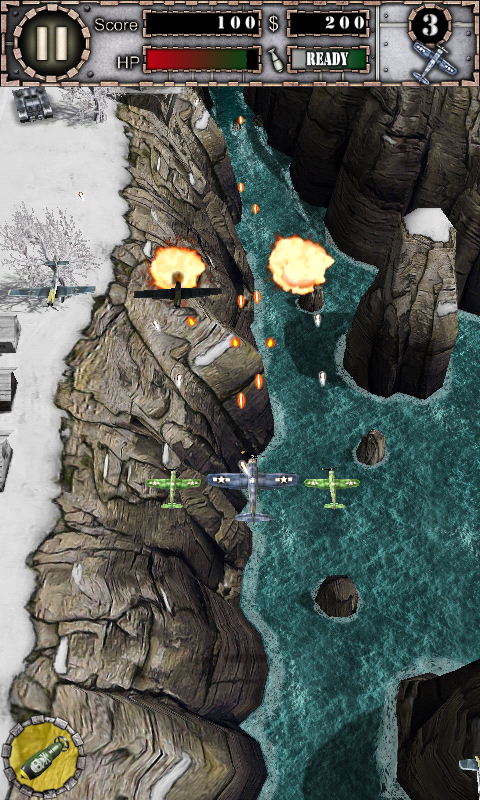
Shipmate map of Dawn Princess Shipmate publishes a set of programs giving information on cruise ships, they have one program for each cruise line. Above is the program for the Princess cruise line, the above pictures give information on the Dawn Princess. Unfortunately the program wasn t usable without net access when I tried to use it on a cruise ship. Games Air Attack HD game, clone of 1942 Air Attack HD is an entertaining game that demonstrates the capability of Android phones to run action games. Like many Android games it has a free version and paid versions if you want more. picture of Angry Birds Angry Birds is one of the most well known games for touch-screen devices. It has also spawned a huge line of merchandise. Labyrinth Lite
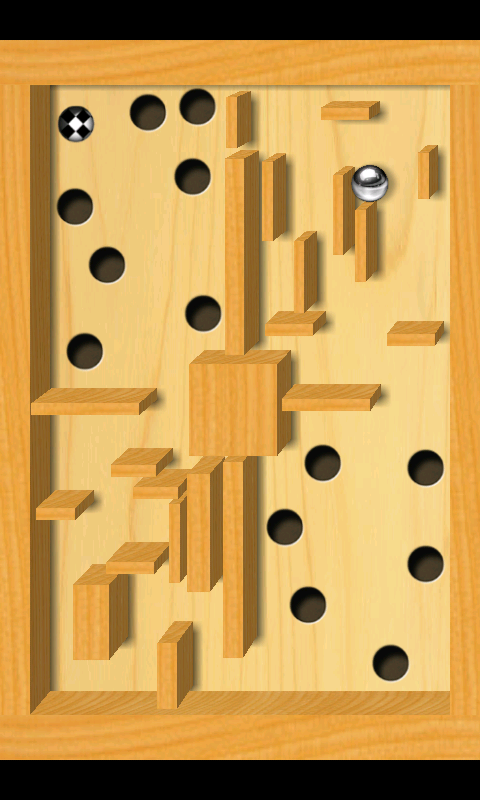
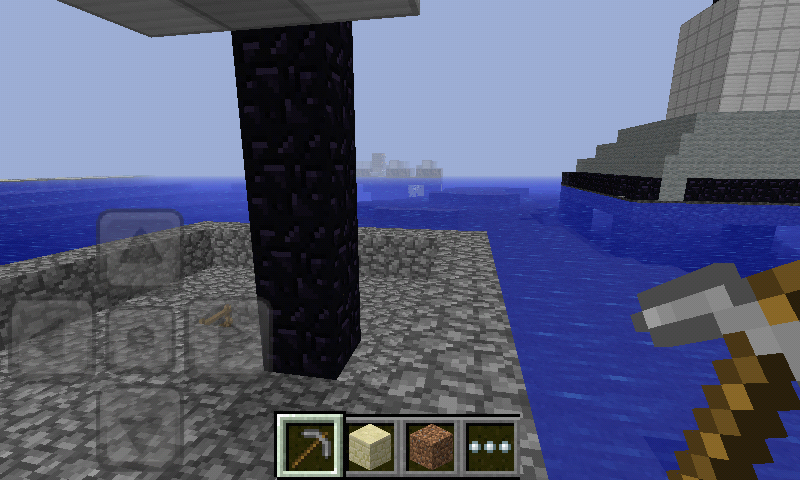
Labyrinth Lite from a different angle Labyrinth Lite is one of the many Android games based on the old mechanical game where you tilt a toy to roll a ball-bearing through a maze. It s free and is better than most of the free games in that genre. Minecraft Pocket Edtion Minecraft Pocket Edition allows you to play Minecraft on your phone. The demo version doesn t allow saving the game, you have to buy the game for about $5 if you want to do that. It also lacked the full features of the game last time I checked, it didn t have monsters. Paradise Island overview
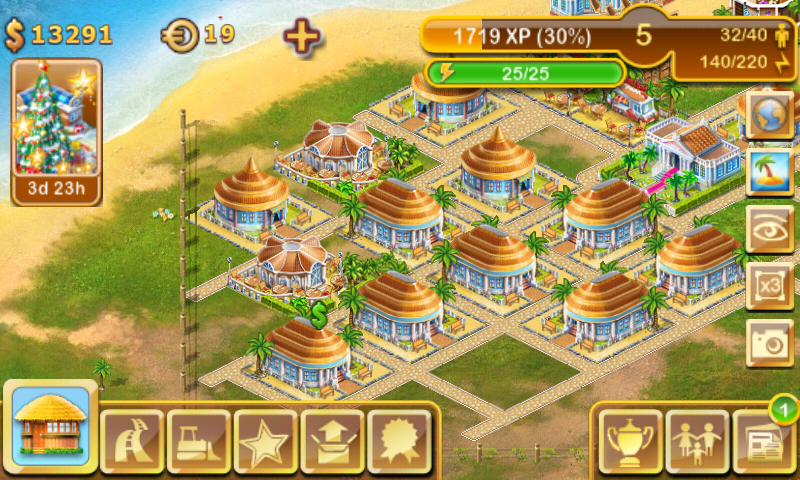
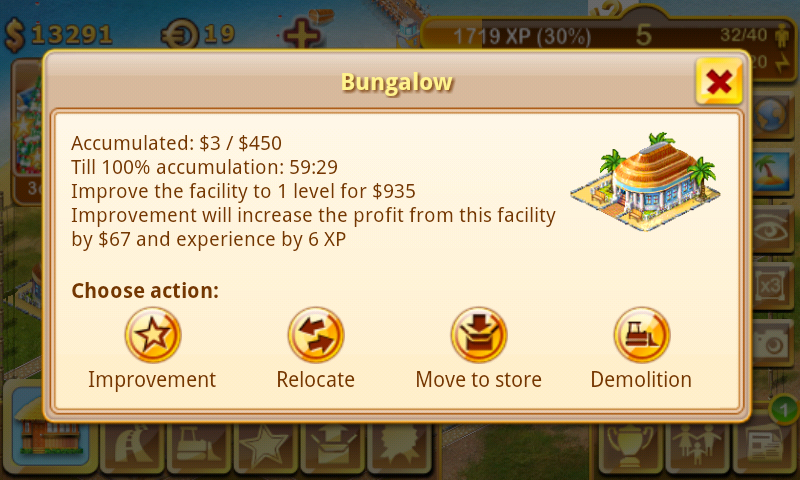
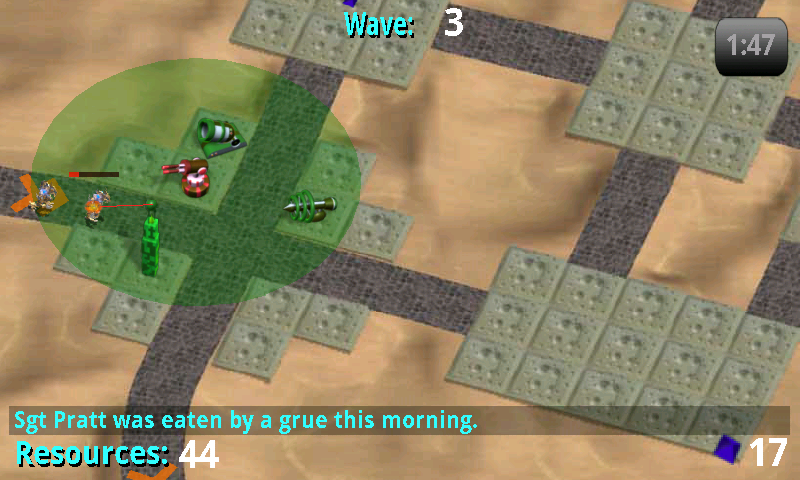
Paradise Island details of Bungalow Paradise Island is one of many business simulation games for Android. It s more playable than most and has very detailed graphics, but the down-side is that it s a memory hog and will crash if you don t have enough RAM. It s one of the games that are free to download but encourage you to pay money to level up, for some players it s probably a very expensive game. Tower Raiders 2, Pratt was eaten by a Grue Tower Raiders 2 is one of the better tower defense games for Android. Related posts:
  1. Choosing an Android Phone My phone contract ends in a few months, so I m...
  2. Galaxy S vs Xperia X10 and Android Network Access Galaxy S Review I ve just been given an indefinite loan...
  3. Standardising Android Don Marti wrote an amusing post about the lack of...

Next.

Previous.