My newsletter Le Courrier du hacker (3,800 subscribers, 176 issues) is 3 years old and Mailchimp costs were becoming unbearable for a small project ($50 a month, $600 a year), with still limited revenues nowadays. Switching to the Open Source Mailtrain plugged to the AWS Simple Email Service (SES) will dramatically reduce the associated costs.
First things first, thanks a lot to Pierre-Gilles Leymarie for his own article about switching to Mailtrain/SES. I owe him (and soon you too) so much. This article will be a step-by-step about how to set up Mailtrain/SES on a dedicated server running Linux.
What s the purpose of this article?
Mailchimp is more and more expensive following the growth of your newsletter subscribers and you need to leave it. You can use Mailtrain, a web app running on your own server and use the AWS SES service to send emails in an efficient way, avoiding to be flagged as a spammer by the other SMTP servers (very very common, you can try but you have been warned against
Prerequisites
You will need the following prerequisites :
An AWS account with admin rights
Full control over the domain name you use to send your newsletter
A baremetal or virtual Linux Debian server you have the root access to
NodeJS installed (8x and 10x are ok with Mailtrain)
A MySQL/MariaDB instance with the root access to
Redis 3x (not 5) if you want to use Redis (not mandatory)
Steps
This is a fairly straightforward setup if you know what you re doing. In the other case, you may need the help of a professional sysadmin.
You will need to complete the following steps in order to complete your setup:
Configure AWS SES
Configure your server by:
configuring your database
install Mailtrain
configuring your web server
Configure your Mailtrain setup
Configure AWS SES
Verify your domain
You need to configure the DKIM to certify that the emails sent are indeed from your own domain. DKIM is mandatory, it s the de-facto standard in the mail industry.
Ask to verify your domain
Ask AWS SES to verify a domain
Generate the DKIM settings
Generate the DKIM settings
Use the DKIM settings
Now you have your DKIM settings and Amazon AWS is waiting for finding the TXT field in your DNS zone.
Configure your DNS zone to include DKIM settings
I can t be too specific for this section because it varies A LOT depending on your DNS provider. The keys is: as indicated by the previous image you have to create one TXT record and two CNAME records in your DNS zone. The names, the types and the values are indicated by AWS SES.
If you don t understand what s going here, there is a high probabiliy you ll need a system administrator to apply these modifications and the next ones in this article.
Am I okay for AWS SES ?
As long as the word verified does not appear for your domain, as shown in the image below, something is wrong. Don t wait too long, you have a misconfiguration somewhere.
AWS SES pending verification
When your domain is verified, you ll also receive an email to inform you about the successful verification.
SMTP settings
The last step is generating your credentials to use the AWS SES SMTP server. IT is really straightforward, providing the STMP address to use, the port, and a pair of username/password credentials.
AWS SES SMTP settings and credentials
Just click on Create My SMTP Credentials and follow the instructions. Write the SMTP server address somewhere and store the file with credentials on your computer, we ll need them below.
Configure your server
As we said before, we need a baremetal server or a virtual machine running a recent Linux.
Configure your MySQL/MariaDB database
We create a user mailtrain having all rights on a new database mailtrain.
MariaDB [(none)]> create database mailtrain;
Query OK, 1 row affected (0.00 sec)
MariaDB [(none)]> CREATE USER 'mailtrain' IDENTIFIED BY 'V3rYD1fF1cUlTP4sSW0rd!';
Query OK, 0 rows affected (0.01 sec)
MariaDB [(none)]> GRANT ALL PRIVILEGES ON mailtrain.* TO 'mailtrain'@localhost IDENTIFIED BY 'V3rYD1fF1cUlTP4sSW0rd!';
Query OK, 0 rows affected (0.00 sec)
MariaDB [(none)]> FLUSH PRIVILEGES;
Query OK, 0 rows affected (0.00 sec)
MariaDB [(none)]> show databases;
+--------------------+
  Database
+--------------------+
  information_schema
  mailtrain
  mysql
  performance_schema
+--------------------+
6 rows in set (0.00 sec)
MariaDB [(none)]> Bye
Configure your web server
I use Nginx and I ll give you the complete setup for it, including generating Let s Encrypt.
Configure Let s Encrypt
You need to stop Nginx as root:
systemctl stop nginx
Then get the certificate only, I ll give the Nginx Vhost configuration:
certbot certonly -d mailtrain.toto.com
Install Mailtrain
On your server create the following directory:
mkdir -p /var/www/
cd /var/www
wget https://github.com/Mailtrain-org/mailtrain/archive/refs/tags/v1.24.1.tar.gz
tar zxvf v1.24.1.tar.gz
Modify the file /var/www/mailtrain/config/production.toml to use the MySQL settings:
Now Mailtrain is launched and should be running. Yeah I know it s ugly to launch like this (root process in a screen, etc) you can improve security with the following commands:
To register the following systemd unit and to launch the new Mailtrain daemon, use the following commands (do not forget to kill your screen session if you used it before):
Now Mailtrain is running under the classic user mailtrain of the mailtrain system group.
Configure the Nginx Vhost configuration for your domain
Here is my configuration for the Mailtrain Nginx Vhost:
This Nginx vhost will redirect all http requests coming to the Mailtrain process running on the 3000 port. Now it s time to setup Mailtrain!
Setup Mailtrain
You should be able to access your Mailtrain at https://mailtrain.toto.com
Mailtrain is quite simple to configure, Here is my mailer setup. Mailtrain just forwards emails to AWS SES. We only have to plug Mailtrain to AWS SES.
Mailtrain mailer setup
The hostname is provided by AWS SES in the STMP Settings section. Use the 465 port and USE TLS option. Next is providing your AWS SES username and password you generated above and stored somewhere on your computer.
One of the issues I encountered is the AWS SES rate limit. Send too many emails too fast will get you flagged as a spammer.
So I had to throttle Mailtrain. Because I m a lazy man, I asked Pierre-Gilles Leymarie his setup. Quite easier than determining myself the good one. Here is my setup. Works fine for my soon-to-be 4k subscribers. The idea is: if your AWS SES lets you know you send too fast then just slow down.
Mailtrain to throttle sending emails to AWS SES
Conclusion
That s it! You re ready! Almost. You need an HTML template for your newsletter and a list of subscribers. Buf if you re not new in the newsletter field, fleeing Mailchimp because of their expensive prices, you should have them both already.
After sending almost ten issues with this setup, I m really happy with it. Open/click rates are the same.
When leaving Mailchimp, do not leave any list of subscribers because they ll charge you $8 for a 0 to 500 contacts, that s crazy expensive!
About the author
Memo on using a KVM switch with my Debian desktop and ChromeBox.
KVM these days mean Kernel virtualization things but before it used to mean KVM switch; where PS/2 and DSUB15 pin was a popular interface. These days it's USB + HDMI; USB-C with dP alt mode would make connections simpler including power supply, but that doesn't exist as much.
This ends up 3 cables each for PC and display, with 2 USB cables and 1 HDMI cable per endpoint.
I bought a cheap manual switcher.
Automatic switcher can be annoying especially when
suspend-resume case, there's no rational behavior,
especially when I want to wake devices through keyboard.
Having a wired remote control was good because although the
device itself is compact, the 9 or so cables running out of
it is bulky and I moved it under my desk to hide it from my
view.
Sometimes suspending / resume causes issues with the USB
hub, it's recognized as SuperTop USB Hub, and from Linux
kernel it seems like hub is disconnected and reconnected,
however on reinitialization sometimes USB hub fails to be
initialized.
That results in keyboard not working, but re-connecting the
USB cable fixes the issue.
Sound is recorded via USB mixer, and played back via HDMI
audio, video is recorded via USB camera. These things didn't
exist back in the old KVM days, maybe they used audio
cables.
The Population Issue and its many facets
Another couple of weeks passed. A Lot of things happening, lots of anger and depression in folks due to handling in pandemic, but instead of blaming they are willing to blame everybody else including the population. Many of them want forced sterilization like what Sanjay Gandhi did during the Emergency (1975). I had to share So Long, My son . A very moving tale of two families of what happened to them during the one-child policy in China. I was so moved by it and couldn t believe that the Chinese censors allowed it to be produced, shot, edited, and then shared worldwide. It also won a couple of awards at the 69th Berlin Film Festival, silver bear for the best actor and the actress in that category. But more than the award, the theme, and the concept as well as the length of the movie which was astonishing. Over a 3 hr. something it paints a moving picture of love, loss, shame, relief, anger, and asking for forgiveness. All of which can be identified by any rational person with feelings worldwide.
Girl child
What was also interesting though was what it couldn t or wasn t able to talk about and that is the Chinese leftover men. In fact, a similar situation exists here in India, only it has been suppressed. This has been more pronounced more in Asia than in other places. One big thing in this is human trafficking and mostly women trafficking. For the Chinese male, that was happening on a large scale from all neighboring countries including India. This has been shared in media and everybody knows about it and yet people are silent. But this is not limited to just the Chinese, even Indians have been doing it. Even yesteryear actress Rupa Ganguly was caught red-handed but then later let off after formal questioning as she is from the ruling party. So much for justice.
What is and has been surprising at least for me is Rwanda which is in the top 10 of some of the best places in equal gender. It, along with other African countries have also been in news for putting quite a significant amount of percentage of GDP into public healthcare (between 20-10%), but that is a story for a bit later. People forget or want to forget that it was in Satara, a city in my own state where 220 girls changed their name from nakusha or unwanted to something else and that had become a piece of global news. One would think that after so many years, things would have changed, the only change that has happened is that now we have two ministries, The Ministry of Women and Child Development (MoWCD) and The Ministry of Health and Welfare (MoHFW). Sadly, in both cases, the ministries have been found wanting, Whether it was the high-profile Hathras case or even the routine cries of help which given by women on the twitter helpline. Sadly, neither of these ministries talks about POSH guidelines which came up after the 2012 gangrape case. For both these ministries, it should have been a pinned tweet. There is also the 1994 PCPNDT Act which although made in 1994, actually functioned in 2006, although what happens underground even today nobody knows .
On the global stage, about a decade ago, Stephen J. Dubner and Steven Levitt argued in their book Freakonomics how legalized abortion both made the coming population explosion as well as expected crime rates to be reduced. There was a huge pushback on the same from the conservatives and has become a matter of debate, perhaps something that the Conservatives wanted. Interestingly, it hasn t made them go back but go forward as can be seen from the Freakonomics site.
Climate Change
Another topic that came up for discussion was repeatedly climate change, but when I share Shell s own 1998 Confidential report titled Greenhouse effect all become strangely silent. The silence here is of two parts, there probably is a large swathe of Indians who haven t read the report and there may be a minority who have read it and know what already has been shared with U.S. Congress. The Conservative s argument has been for it is jobs and a weak we need to research more . There was a partial debunk of it on the TBD podcast by Matt Farell and his brother Sean Farell as to how quickly the energy companies are taking to the coming change.
Health Budget
Before going to Covid stories. I first wanted to talk about Health Budgets. From the last 7 years the Center s allocation for health has been between 0.34 to 0.8% per year. That amount barely covers the salaries to the staff, let alone any money for equipment or anything else. And here by allocation I mean, what is actually spent, not the one that is shared by GOI as part of budget proposal. In fact, an article on Wire gives a good breakdown of the numbers. Even those who are on the path of free markets describe India s health business model as a flawed one. See the Bloomberg Quint story on that. Now let me come to Rwanda. Why did I chose Rwanda, I could have chosen South Africa where I went for Debconf 2016, I chose because Rwanda s story is that much more inspiring. In many ways much more inspiring than that South Africa in many ways. Here is a country which for decades had one war or the other, culminating into the Rwanda Civil War which ended in 1994. And coincidentally, they gained independence on a similar timeline as South Africa ending Apartheid in 1994. What does the country do, when it gains its independence, it first puts most of its resources in the healthcare sector. The first few years at 20% of GDP, later than at 10% of GDP till everybody has universal medical coverage.
Coming back to the Bloomberg article I shared, the story does not go into the depth of beyond-expiry date medicines, spurious medicines and whatnot. Sadly, most media in India does not cover the deaths happening in rural areas and this I am talking about normal times. Today what is happening in rural areas is just pure madness. For last couple of days have been talking with people who are and have been covering rural areas. In many of those communities, there is vaccine hesitancy and why, because there have been whatsapp forwards sharing that if you go to a hospital you will die and your kidney or some other part of the body will be taken by the doctor. This does two things, it scares people into not going and getting vaccinated, at the same time they are prejudiced against science. This is politics of the lowest kind. And they do it so that they will be forced to go to temples or babas and what not and ask for solutions. And whether they work or not is immaterial, they get fixed and property and money is seized. Sadly, there are not many Indian movies of North which have tried to show it except for oh my god but even here it doesn t go the distance. A much more honest approach was done in Trance . I have never understood how the South Indian movies are able to do a more honest job of story-telling than what is done in Bollywood even though they do in 1/10th the budget that is needed in Bollywood. Although, have to say with OTT, some baggage has been shed but with the whole film certification rearing its ugly head through MEITY orders, it seems two steps backward instead of forward. The idea being simply to infantilize the citizens even more. That is a whole different ball-game which probably will require its own space.
Vaccine issues
One good news though is that Vaccination has started. But it has been a long story full of greed by none other than GOI (Government of India) or the ruling party BJP. Where should I start with. I probably should start with this excellent article done by Priyanka Pulla. It is interesting and fascinating to know how vaccines are made, at least one way which she shared. She also shared about the Cutter Incident which happened in the late 50 s. The response was on expected lines, character assassination of her and the newspaper they published but could not critique any of the points made by her. Not a single point that she didn t think about x or y. Interestingly enough, in January 2021 Bharati Biotech was supposed to be share phase 3 trial data but hasn t been put up in public domain till May 2021. In fact, there have been a few threads raised by both well-meaning Indians as well as others globally especially on twitter to which GOI/ICMR (Indian Council of Medical Research) is silent. Another interesting point to note is that Russia did say in its press release that it is possible that their vaccine may not be standard (read inactivation on their vaccines and another way is possible but would take time, again Brazil has objected, but India hasn t till date.)
What also has been interesting is the homegrown B.1.617 lineage or known as double mutant . This was first discovered from my own state, Maharashtra and then transported around the world. There is also B.1.618 which was found in West Bengal and is same or supposed to be similar to the one found in South Africa. This one is known as Triple mutant . About B.1.618 we don t know much other than knowing that it is much more easily transferable, much more infectious. Most countries have banned flights from India and I cannot fault them anyway. Hell, when even our diplomats do not care for procedures to be followed during the pandemic then how a common man is supposed to do. Of course, now for next month, Mr. Modi was supposed to go and now will not attend the G7 meeting. Whether, it is because he would have to face the press (the only Prime Minister and the only Indian Prime Minister who never has faced free press.) or because the Indian delegation has been disinvited, we would never know.
A good article which shares lots of lows with how things have been done in India has been an article by Arundhati Roy. And while the article in itself is excellent and shares a bit of the bitter truth but is still incomplete as so much has been happening. The problem is that the issue manifests in so many ways, it is difficult to hold on. As Arundhati shared, should we just look at figures and numbers and hold on, or should we look at individual ones, for e.g. the one shared in Outlook India. Or the one shared by Dr. Dipshika Ghosh who works in Covid ICU in some hospital
Dr. Dipika Ghosh sharing an incident in Covid Ward
Interestingly as well, while in the vaccine issue, Brazil Anvisa doesn t know what they are doing or the regulator just isn t knowledgeable etc. (statements by various people in GOI, when it comes to testing kits, the same is an approver.)
ICMR/DGCI approving internationally validated kits, Press release.
Twitter
In the midst of all this, one thing that many people have forgotten and seem to have forgotten that Twitter and other tools are used by only the elite. The reason why the whole thing has become serious now than in the first phase is because the elite of India have also fallen sick and dying which was not the case so much in the first phase. The population on Twitter is estimated to be around 30-34 million and people who are everyday around 20 odd million or so, which is what 2% of the Indian population which is estimated to be around 1.34 billion. The other 98% don t even know that there is something like twitter on which you can ask help. Twitter itself is exclusionary in many ways, with both the emoticons, the language and all sorts of things. There is a small subset who does use Twitter in regional languages, but they are too small to write anything about. The main language is English which does become a hindrance to lot of people.
Censorship
Censorship of Indians critical of Govt. mishandling has been non-stop. Even U.S. which usually doesn t interfere into India s internal politics was forced to make an exception. But of course, this has been on deaf ears. There is and was a good thread on Twitter by Gaurav Sabnis, a friend, fellow Puneite now settled in U.S. as a professor.
Gaurav on Trump-Biden on vaccination of their own citizens
Now just to surmise what has been happened in India and what has been happening in most of the countries around the world. Most of the countries have done centralization purchasing of the vaccine and then is distributed by the States, this is what we understand as co-operative federalism. While last year, GOI took a lot of money under the shady PM Cares fund for vaccine purchase, donations from well-meaning Indians as well as Industries and trade bodies. Then later, GOI said it would leave the states hanging and it is they who would have to buy vaccines from the manufacturers. This is again cheap politics. The idea behind it is simple, GOI knows that almost all the states are strapped for cash. This is not new news, this I have shared a couple of months back. The problem has been that for the last 6-8 months no GST meeting has taken place as shared by Punjab s Finance Minister Amarinder Singh. What will happen is that all the states will fight in-between themselves for the vaccine and most of them are now non-BJP Governments. The idea is let the states fight and somehow be on top. So, the pandemic, instead of being a public health issue has become something of on which politics has to played. The news on whatsapp by RW media is it s ok even if a million or two also die, as it is India is heavily populated. Although that argument vanishes for those who lose their dear and near ones. But that just isn t the issue, the issue goes much more deeper than that
Oxygen:12% Remedisivir:12% Sanitiser:12% Ventilator:12% PPE:18% Ambulances 28%
Now all the products above are essential medical equipment and should be declared as essential medical equipment and should have price controls on which GST is levied. In times of pandemic, should the center be profiting on those. States want to let go and even want the center to let go so that some relief is there to the public, while at the same time make them as essential medical equipment with price controls. But GOI doesn t want to. Leaders of opposition parties wrote open letters but no effect. What is sad to me is how Ambulances are being taxed at 28%. Are they luxury items or sin goods ? This also reminds of the recent discovery shared by Mr. Pappu Yadav in Bihar. You can see the color of ambulances as shared by Mr. Yadav, and the same news being shared by India TV news showing other ambulances. Also, the weak argument being made of not having enough drivers. Ideally, you should have 2-3 people, both 9-1-1 and Chicago Fire show 2 people in ambulance but a few times they have also shown to be flipped over. European seems to have three people in ambulance, also they are also much more disciplined as drivers, at least an opinion shared by an American expat.
Pappu Yadav, President Jan Adhikar Party, Bihar May 11, 2021
What is also interesting to note is GOI plays this game of Health is State subject and health is Central subject depending on its convenience. Last year, when it invoked the Epidemic and DMA Act it was a Central subject, now when bodies are flowing down the Ganges and pyres being lit everywhere, it becomes a State subject. But when and where money is involved, it again becomes a Central subject. The States are also understanding it, but they are fighting on too many fronts.
Snippets from Karnataka High Court hearing today, 13th March 2021
One of the good things is most of the High Courts have woken up. Many of the people on the RW think that the Courts are doing Judicial activism . And while there may be an iota of truth in it, the bitter truth is that many judges or relatives or their helpers have diagnosed and some have even died due to Covid. In face of the inevitable, what can they do. They are hauling up local Governments to make sure they are accountable while at the same time making sure that they get access to medical facilities. And I as a citizen don t see any wrong in that even if they are doing it for selfish reasons. Because, even if justice is being done for selfish reasons, if it does improve medical delivery systems for the masses, it is cool. If it means that the poor and everybody else are able to get vaccinations, oxygen and whatever they need, it is cool. Of course, we are still seeing reports of patients spending in the region of INR 50k and more for each day spent in hospital. But as there are no price controls, judges cannot do anything unless they want to make an enemy of the medical lobby in the country. A good story on medicines and what happens in rural areas, see no further than Laakhon mein ek.
Allahabad High Court hauling Uttar Pradesh Govt. for lack of Oxygen is equal to genocide, May 11, 2021
The censorship is not just related to takedown requests on twitter but nowadays also any articles which are critical of the GOI s handling. I have been seeing many articles which have shared facts and have been critical of GOI being taken down. Previously, we used to see 404 errors happen 7-10 years down the line and that was reasonable. Now we see that happen, days weeks or months. India seems to be turning more into China and North Korea and become more anti-science day-by-day
Fake websites
Before going into fake websites, let me start with a fake newspaper which was started by none other than the Gujarat CM Mr. Modi in 2005 .
Gujarat Satya Samachar 2005 launched by Mr. Modi.
And if this wasn t enough than on Feb 8, 2005, he had invoked Official Secrets Act
Mr. Modi invoking Official Secrets Act, Feb 8 2005 Gujarat Samachar
The headlines were In Modi s regime press freedom is in peril-Down with Modi s dictatorship. So this was a tried and tested technique. The above information was shared by Mr. Urvish Kothari, who incidentally also has his own youtube channel.
Now cut to 2021, and we have a slew of fake websites being done by the same party. In fact, it seems they started this right from 2011. A good article on BBC itself tells the story. Hell, Disinfo.eu which basically combats disinformation in EU has a whole pdf chronicling how BJP has been doing it. Some of the sites it shared are
Times of New York Manchester Times Times of Los Angeles Manhattan Post Washington Herald and many more.
The idea being take any site name which sounds similar to a brand name recognized by Indians and make fool of them. Of course, those of who use whois and other such tools can easily know what is happening. Two more were added to the list yesterday, Daily Guardian and Australia Today. There are of course, many features which tell them apart from genuine websites. Most of these are on shared hosting rather than dedicated hosting, most of these are bought either from Godaddy and Bluehost. While Bluehost used to be a class act once upon a time, both the above will do anything as long as they get money. Don t care whether it s a fake website or true. Capitalism at its finest or worst depending upon how you look at it. But most of these details are lost on people who do not know web servers, at all and instead think see it is from an exotic site, a foreign site and it chooses to have same ideas as me. Those who are corrupt or see politics as a tool to win at any cost will not see it as evil. And as a gentleman Raghav shared with me, it is so easy to fool us. An example he shared which I had forgotten. Peter England which used to be an Irish brand was bought by Aditya Birla group way back in 2000. But even today, when you go for Peter England, the way the packaging is done, the way the prices are, more often than not, people believe they are buying the Irish brand. While sharing this, there is so much of Naom Chomsky which comes to my mind again and again
Caste Issues
I had written about caste issues a few times on this blog. This again came to the fore as news came that a Hindu sect used forced labor from Dalit community to make a temple. This was also shared by the hill. In both, Mr. Joshi doesn t tell that if they were volunteers then why their passports have been taken forcibly, also I looked at both minimum wage prevailing in New Jersey as a state as well as wage given to those who are in the construction Industry. Even in minimum wage, they were giving $1 when the prevailing minimum wage for unskilled work is $12.00 and as Mr. Joshi shared that they are specialized artisans, then they should be paid between $23 $30 per hour. If this isn t exploitation, then I don t know what is.
And this is not the first instance, the first instance was perhaps the case against Cisco which was done by John Doe. While I had been busy with other things, it seems Cisco had put up both a demurrer petition and a petition to strike which the Court stayed. This seemed to all over again a type of apartheid practice, only this time applied to caste. The good thing is that the court stayed the petition.
Dr. Ambedkar s statement if Hindus migrate to other regions on earth, Indian caste would become a world problem given at Columbia University in 1916, seems to be proven right in today s time and sadly has aged well. But this is not just something which is there only in U.S. this is there in India even today, just couple of days back, a popular actress Munmun Dutta used a casteist slur and then later apologized giving the excuse that she didn t know Hindi. And this is patently false as she has been in the Bollywood industry for almost now 16-17 years. This again, was not an isolated incident. Seema Singh, a lecturer in IIT-Kharagpur abused students from SC, ST backgrounds and was later suspended. There is an SC/ST Atrocities Act but that has been diluted by this Govt. A bit on the background of Dr. Ambedkar can be found at a blog on Columbia website. As I have shared and asked before, how do we think, for what reason the Age of Englightenment or the Age of Reason happened. If I were a fat monk or a priest who was privileges, would I have let Age of Enlightenment happen. It broke religion or rather Church which was most powerful to not so powerful and that power was more distributed among all sort of thinkers, philosophers, tinkers, inventors and so on and so forth.
Situation going forward
I believe things are going to be far more complex and deadly before they get better. I had to share another term called Comorbidities which fortunately or unfortunately has also become part of twitter lexicon. While I have shared what it means, it simply means when you have an existing ailment or condition and then Coronavirus attacks you. The Virus will weaken you. The Vaccine in the best case just stops the damage, but the damage already done can t be reversed. There are people who advise and people who are taking steroids but that again has its own side-effects. And this is now, when we are in summer. I am afraid for those who have recovered, what will happen to them during the Monsoons. We know that the Virus attacks most the lungs and their quality of life will be affected. Even the immune system may have issues. We also know about the inflammation. And the grant that has been given to University of Dundee also has signs of worry, both for people like me (obese) as well as those who have heart issues already. In other news, my city which has been under partial lockdown since a month, has been extended for another couple of weeks. There are rumors that the same may continue till the year-end even if it means economics goes out of the window.There is possibility that in the next few months something like 2 million odd Indians could die
The above is a conversation between Karan Thapar and an Oxford Mathematician Dr. Murad Banaji who has shared that the under-counting of cases in India is huge. Even BBC shared an article on the scope of under-counting. Of course, those on the RW call of the evidence including the deaths and obituaries in newspapers as a narrative . And when asked that when deaths used to be in the 20 s or 30 s which has jumped to 200-300 deaths and this is just the middle class and above. The poor don t have the money to get wood and that is the reason you are seeing the bodies in Ganges whether in Buxar Bihar or Gajipur, Uttar Pradesh. The sights and visuals makes for sorry reading Pandit Ranjan Mishra son on his father s death due to unavailability of oxygen, Varanasi, Uttar Pradesh, 11th May 2021.
For those who don t know Pandit Ranjan Mishra was a renowned classical singer. More importantly, he was the first person to suggest Mr. Modi s name as a Prime Ministerial Candidate. If they couldn t fulfil his oxygen needs, then what can be expected for the normal public.
Conclusion
Sadly, this time I have no humorous piece to share, I can however share a documentary which was shared on Feluda . I have shared about Feluda or Prodosh Chandra Mitter a few times on this blog. He has been the answer of James Bond from India. I have shared previously about The Golden Fortress . An amazing piece of art by Satyajit Ray. I watched that documentary two-three times. I thought, mistakenly that I am the only fool or fan of Feluda in Pune to find out that there are people who are even more than me. There were so many facets both about Feluda and master craftsman Satyajit Ray that I was unaware about. I was just simply amazed. I even shared few of the tidbits with mum as well, although now she has been truly hooked to Korean dramas. The only solace from all the surrounding madness. So, if you have nothing to do, you can look up his books, read them and then see the movies. And my first recommendation would be the Golden Fortress. The only thing I would say, do not have high hopes. The movie is beautiful. It starts slow and then picks up speed, just like a train. So, till later.
Update The Mass surveillance part I could not do justice do hence removed it at the last moment. It actually needs its whole space, article. There is so much that the Govt. is doing under the guise of the pandemic that it is difficult to share it all in one article. As it is, the article is big
This is another post about EVM/IMA which has it s main purpose providing useful web search results for problems. However if reading it on a planet feed inspires someone to play with EVM/IMA then that s good too, it s interesting technology.
When using EVM/IMA in the Linux kernel if dmesg has errors like op=appraise_data cause=missing-HMAC the missing-HMAC means that the error code in the kernel source is INTEGRITY_NOLABEL which has a comment No security.evm xattr . You can check for the xattr on a file with the following command (this example has the security.evm xattr):
# getfattr -d -m - /etc/fstab
getfattr: Removing leading '/' from absolute path names
# file: etc/fstab
security.evm=0sAwICqGOsfwCAvgE9y9OP74QxJ/I+3eOSF2n2dM51St98z/7LYHFd9rfGTvssvhTSYL9G8cTdRAH8ozggJu7VCzggW1REoTjnLcPeuMJsrMbW3DwVrB6ldDmJzyenLMjnIHmRDDeK309aRbLVn2ueJZ07aMDcSr+sxhOOAQ/GIW4SW8L1AKpKn4g=
security.ima=0sAT+Eivfxl+7FYI+Hr9K4sE6IieZ+
security.selinux="system_u:object_r:etc_t:s0"
If dmesg has errors like op=appraise_data cause=invalid-HMAC the invalid-HMAC means that the error code in the kernel source is INTEGRITY_FAIL which has a comment Invalid HMAC/signature .
These errors are from the evm_verifyxattr() function in Linux kernel 5.11.14.
The error evm: HMAC key is not set means that the evm key is not initialised, this means the key needs to be loaded into the kernel and EVM is initialised by the command echo 1 > /sys/kernel/security/evm (or possibly some equivalent from a utility like evmctl). When the key is loaded the kernel gives the message evm: key initialized and after that /sys/kernel/security/evm is read-only. If there is something wrong with the key the kernel gives the message evm: key initialization failed , it seems that the way to determine if your key is good is to try writing 1 to /sys/kernel/security/evm and see what happens. After that the command cat /sys/kernel/security/evm should return 3 .
The Gentoo wiki has good documentation on how to create and load the keys which has to be done before initialising EVM [1]. I ll write more about that in another post.
Update: I just learned on IRC that checking with shellcheck would have told me everything, including the usage of arrays, and the linked page even mentions ffmpeg how stupid to reinvent the wheel again and again Thanks to pabs for telling me!
It has hit me several times, and searching the internet gives lots of suggestions: How to pass and argument containing quotes to another program from a bash program.
My case was a script that automatized video processing using ffmpeg, and I needed to call ffmpeg with arguments like
ffmpeg ... --filter_complex "some arg with spaces" ...
My first (failed) shot at doing this in the shell script was:
filterarg='--filter_complex "some arg with spaces"'
...
ffmpeg $someargs $filterarg ...
which, as most bash gurus will know, will fail. Solutions are using eval that are complicated.
Recently I realized a much simpler method using bash arrays: Assume the program show_arguments just prints the arguments passed in, maybe something like (again in bash):
#!/bin/bash
for i in "$@" ; do
  echo "=== $i"
done
The program under consideration would be in the broken version:
#!/bin/bash
# Variant 1 - NOT WORKING
myargs='-filter_complex "arg with space"'
show_arguments $myargs
This would give
=== -filter_complex
=== "arg
=== with
=== space"
which is not what we want.
The solution is to stuff the arguments into an array, and expand that as arguments.
#!/bin/bash
# Variant 2 - WORKING
declare -a myargs
myargs=(-filter_complex "arg with space")
show_arguments "$ myargs[@] "
which, correctly, would give
=== -filter_complex
=== arg with space
Now I only need to remember that trick for the next time it bites me!
I have uploaded most of my Machine Learning lecture to YouTube.
The slides are in English, but the audio is in German.
Some very basic contents (e.g., a demo of standard k-means clustering) were left out from this advanced class,
and instead only a link to recordings from an earlier class were given. In this class, I wanted to focus
on the improved (accelerated) algorithms instead. These are not included here (yet).
I believe there are some contents covered in this class you will find nowhere else (yet).
The first unit is pretty long (I did not split it further yet). The later units are shorter recordings.
ML F1: Principles in Machine Learning
Today ist May, 1st. In about two weeks on May, 15th WhatsApp will put their changed Terms of Service into action and when you don t accept their rules you won t be able to use WhatsApp any longer.
Early this year there was already a strong movement away from WhatsApp towards other solutions. Mainly to Signal, but also some other services like the Fediverse gained some new users. And also XMPP got their fair share of new users.
So, what to do about the WhatsApp ToS change then? Shall we go all to Signal? Surely not. Signal is another vendor lock-in silo. It s centralistic and recent development plans want to implement some crypto payment system. Even Bruce Schneier thinks that this is a bad idea.
Other alternatives often named include Matrix/Element or XMPP. Today, Don di Dislessia in the (german) Fediverse asked about power consumption of the Fediverse incl. Matrix and XMPP and how much renewable energy is being used. Of course this is no easy answer to this question, but I tried my best at least for my own server.
Here are my findings and conclusions
Power
screenshot showing power consumption of server
Currently my server in the colocation is using about 93W in average with 6c Xeon E5-2630L, 128 GB RAM, 4x 2 TB WD Red + 1 Samsung 960pro NVMe. The server is 7 years old. When I started with that server the power consumption was about 75W, but back then there were far less users on the server. So, 20W more over the past year
Users
I m running my Friendica node on Nerdica.net since 2013. Over the years it became one of the largest Friendica servers in the Fediverse, for some time it was the largest one. It has currently like 700 total users and 180 monthly active users. My Mastodon instance on Nerdculture.de has about 1000 total users and about 300 monthly active users.
Since last year I also run a Matrix-Synapse server. Although I invited my family I m in fact the only active user on that server and have joined some channels.
My XMPP server is even older than my Friendica node. For long time I had like maybe 20 users. Now I setup a new website and added some domains like hookipa.net and xmpp.social the user count increased and currently I have like 130 users on those two domains and maybe like 50 monthly active users. Also note that all my Friendica and Mastodon users can use XMPP with their accounts, but won t be counted the same way as on native users on ejabberd, because the auth backend is different.
So, let s assume I do have like 2000 total users and 500 monthly active users.
CPU, Database Sizes and Disk I/O
Let s have a look about how many resources are being used by those users.
Database Sizes:
Friendica (MariaDB): 31 GB for 700 users
Mastodon (PostgreSQL): 15 GB for 1000 users
Matrix-Synapse (PostgreSQL): 5 GB for 1 user
XMPP (PostgreSQL): 0.4 GB for 200 users
CPU times according to xentop:
Webserver VM (Matrix, Friendica & Mastodon): 13410130 s / 130%
XMPP VM: 944275 s / 5.4%
Friendica does use the largest database and causes most disk I/O on NVMe, but it s difficult to differentiate between the load between the web apps on the webserver. So, let s have a quick look on an simple metric:
Number of lines in webserver logfile:
Friendica: 11575 lines
Matrix: 8174 lines
Mastodon: 3212 lines
These metrics correlate to some degree with the database I/O load, at least for Friendica. If you take into account the number of users, things look quite different.
Conclusion
Overall, and my personal impression, is that Matrix is really bad in regards of resource usage. Given that I m the only active user it uses exceptionally many resources. When you also consider that Matrix is using a distributed database for its chat rooms, you can assume that the resource usage is multiplied across the network, making things even worse.
Friendica is using a large database and many disk accesses, but has a fairly large user base, so it seems ok, but of course should be improved.
Mastodon seems to be quite good, considering the database size, the number of log lines and the user count.
XMPP turns out to be the most efficient contestant in this comparison: it uses much less CPU cycles and database disk I/O.
Of course, Mastdon/Friendica are different services than XMPP or Matrix. So, coming back to the initial question about alternatives to WhatsApp, the answer for me is: you should prefer XMPP over Matrix alone for reasons of saving resources and thus reducing power consumption. Less power consumption also means a smaller ecological footprint and fewer CO2 emissions for your communication with your family and friends.
XMPP is surely not the perfect replacement for WhatsApp, but I think it is the best thing to recommend. As said above, I don t think that Signal is an viable option. It s just another proprierary silo with all the problems that come with it. Matrix is a resource hog and not a messenger but a MS Teams replacement. Element as the main Matrix client is laggy and not multi-account/multi-server capable. Other Matrix clients do support multiple accounts but are not as feature-complete as Element. In the end the Matrix ecosystem will suffer from the same issues as XMPP did already a decade ago. But XMPP has learned to deal with it.
Also XMPP is proceeding fast in the last years and it has solved many problems many people are still complaining about. Sure, there still some open issues. The situation on IOS is still not as good as on Android with Conversations, but it is fairly close to it.
There are many efforts to improve XMPP. There is Quicksy IM, which is a service that will use your phone number as Jabber ID/JID and is thus comparable to Signal which uses phone numbers as well as unique identifier. But Quicksy is compatible with XMPP standards. Snikket is another new XMPP ecosystem aiming at smaller groups hosting their own server by simply installing a Docker container and setup some basic SRV records in the DNS. Or there is Mailcow, a Docker based mailserver setup that added XMPP server in their setup as well, so you can have the same mail and XMPP address. Snikket even got EU based funding for implementing XMPP Account Portability which also will improve the decentralization even further. Additionally XMPP helps vaccination in Canada and USA with vaxbot by Monal.
Be smart and use ecofriendly infrastructure.
The Tor Project now has a status page which shows the state of
our major services.
You can check status.torprojet.org for news about major outages
in Tor services, including v3 and v2 onion services, directory
authorities, our website (torproject.org), and the
check.torproject.org tool. The status page also displays outages
related to Tor internal services, like our GitLab instance.
This post documents why we launched
status.torproject.org, how the service was
built, and how it works.
Why a status page
The first step in setting up a service page was to realize we needed
one in the first place. I surveyed internal users at the end of
2020 to see what could be improved, and one of the suggestions that
came up was to "document downtimes of one hour or longer" and
generally improve communications around monitoring. The latter is
still on the sysadmin roadmap, but a status page seemed like a
good solution for the former.
We already have two monitoring tools in the sysadmin team: Icinga
(a fork of Nagios) and Prometheus, with Grafana
dashboards. But those are hard to understand for users. Worse, they
also tend to generate false positives, and don't clearly show users
which issues are critical.
In the end, a manually curated dashboard provides important usability
benefits over an automated system, and all major organisations have
one.
Picking the right tool
It wasn't my first foray in status page design. In another life, I had
setup a status page using a tool called Cachet. That was already
a great improvement over the previous solutions, which were to use
first a wiki and then a blog to post updates. But Cachet is a complex
Laravel app, which also requires a web browser to update. It
generally requires more maintenance than what we'd like, needing silly
things like a SQL database and PHP web server.
So when I found cstate, I was pretty excited. It's basically a
theme for the Hugo static site generator, which means that it's a
set of HTML, CSS, and a sprinkle of Javascript. And being based on
Hugo means that the site is generated from a set of Markdown
files and the result is just plain HTML that can be hosted on any web
server on the planet.
Deployment
At first, I wanted to deploy the site through GitLab CI, but at
that time we didn't have GitLab pages set up. Even though we do have
GitLab pages set up now, it's not (yet) integrated with our
mirroring infrastructure. So, for now, the source is hosted and built
in our legacy git and Jenkins services.
It is nice to have the content hosted in a git repository: sysadmins can just
edit Markdown in the git repository and push to deploy changes, no web browser
required. And it's trivial to setup a local environment to preview changes:
hugo serve --baseUrl=http://localhost/
firefox https://localhost:1313/
Only the sysadmin team and gitolite administrators have access to the
repository, at this stage, but that could be improved if
necessary. Merge requests can also be issued on the GitLab
repository and then pushed by authorized personnel later on,
naturally.
Availability
One of the concerns I have is that the site is hosted inside our normal mirror
infrastructure. Naturally, if an outage occurs there, the site goes down. But
I figured it's a bridge we'll cross when we get there. Because it's so easy to
build the site from scratch, it's actually trivial to host a copy of the site
on any GitLab server, thanks to the .gitlab-ci.yml file shipped (but not
currently used) in the repository. If push comes to shove, we can just publish
the site elsewhere and point DNS there.
And, of course, if DNS fails us, then we're in trouble, but that's the
situation anyway: we can always register a new domain name for the status page
when we need to. It doesn't seem like a priority at the moment.
Comments and feedback are welcome!
I read this book as part of the Beyond Series Bundle (Books 1-3),
which is what the sidebar information is for.
Noelle is a child of Eden, the rich and technologically powerful city of a
post-apocalyptic world. As the daughter of a councilman, she had
everything she wanted except the opportunity to feel. Eden's religious
elite embrace a doctrine of strict Puritanism: Even hugging one's children
was frowned upon, let alone anything related to sex. Noelle was too
rebellious to settle for that, which is why this book opens with her
banished from Eden, ejected into Sector Four. The sectors are the city
slums, full of gangs and degenerates and violence, only a slight step up
from the horrific farming communes. Luckily for her, she literally
stumbles into one of the lieutenants of the O'Kane gang, who are just as
violent as their reputations but who have surprising sympathy for a
helpless city girl.
My shorthand distinction between romance and erotica is that romance mixes
some sex into the plot and erotica mixes some plot into the sex.
Beyond Shame is erotica, specifically BDSM erotica. The forbidden
sensations that Noelle got kicked out of Eden for pursuing run strongly
towards humiliation, which is tangled up in the shame she was taught to
feel about anything sexual. There is a bit of a plot surrounding the
O'Kanes who take her in, their leader, some political skulduggery that
eventually involves people she knows, and some inter-sector gang warfare,
but it's quite forgettable (and indeed I've already forgotten most of it).
The point of the story is Noelle navigating a relationship with Jasper
(among others) that involves a lot of very graphic sex.
I was of two minds about reviewing this. Erotica is tricky to review,
since to an extent it's not trying to do what most books are doing. The
point is less to tell a coherent story (although that can be a bonus) than
it is to turn the reader on, and what turns the reader on is absurdly
personal and unpredictable. Erotica is arguably more usefully marked with
story codes
(which in this case would be something like MF, MMFF, FF, Mdom, Fdom, bd,
ds, rom, cons, exhib, humil, tattoos) so that the reader has an idea
whether the scenarios in the story are the sort of thing they find hot.
This is particularly true of BDSM erotica, since the point is arousal from
situations that wouldn't work or might be downright horrifying in a
different sort of book. Often the forbidden or taboo nature of the scene
is why it's erotic. For example, in another genre I would complain about
the exaggerated and quite sexist gender roles, where all the men are
hulking cage fighters who want to control the women, but in male-dominant
BDSM erotica that's literally the point.
As you can tell, I wrote a review anyway, primarily because of how I came
to read this book. Kit Rocha (which is a pseudonym for the writing team
of Donna Herren and Bree Bridges) recently published Deal with the
Devil, a book about mercenary librarians in a post-apocalyptic future.
Like every right-thinking person, I immediately wanted to read a book
about mercenary librarians, but discovered that it was set in an existing
universe. I hate not starting at the beginning of things, so even though
there was probably no need to read the earlier books first, I figured out
Beyond Shame was the first in this universe and the bundle of the
first three books was only $2.
If any of you are immediately hooked by mercenary librarians but are
back-story completionists, now you know what you'll be getting into.
That said, there are a few notable things about this book other than it
has a lot of sex. The pivot of the romantic relationship was more
interesting and subtle than most erotica. Noelle desperately wants a man
to do all sorts of forbidden things to her, but she starts the book unable
to explain or analyze why she wants what she wants, and both Jasper and
the story are uncomfortable with that and unwilling to leave it alone.
Noelle builds up a more coherent theory of herself over the course of the
book, and while it's one that's obviously designed to enable lots of
erotic scenes, it's not a bad bit of character development.
Even better is Lex, the partner (sort of) of the leader of the O'Kane gang
and by far the best character in the book. She takes Noelle under her
wing from the start, and while that relationship is sexualized like nearly
everything in this book, it also turns into an interesting female
friendship that I would have also enjoyed in a different genre. I liked
Lex a lot, and the fact she's the protagonist of the next book might keep
me reading.
Beyond Shame also has a lot more female gaze descriptions of the
men than is often the case in male-dominant BDSM. The eye candy is fairly
evenly distributed, although the gender roles are very much not. It even
passes the Bechdel
test, although it is still erotica and nearly all the conversations end
up being about sex partners or sex eventually.
I was less fond of the fact that the men are all dangerous and violent and
the O'Kane leader frequently acts like a controlling, abusive psychopath.
A lot of that was probably the BDSM setup, but it was not my thing. Be
warned that this is the sort of book in which one of the (arguably) good
guys tortures someone to death (albeit off camera).
Recommendations are next to impossible for erotica, so I won't try to give
one. If you want to read the mercenary librarian novel and are dubious
about this one, it sounds like (although I can't confirm) that it's a bit
more on the romance end of things and involves a lot fewer group orgies.
Having read this book, I suspect it was entirely unnecessary to have done
so for back-story. If you are looking for male-dominant BDSM,
Beyond Shame is competently written, has a more thoughtful story
than most, and has a female friendship that I fully enjoyed, which may
raise it above the pack.
Rating: 6 out of 10
I wrote for LWN for about two years. During that
time, I wrote (what seems to me an impressive) 34
articles, but I always had a pile of ideas in the back of my
mind. Those are ideas, notes, and scribbles lying around. Some were
just completely abandoned because they didn't seem a good fit for LWN.
Concretely, I stored those in branches in a git repository, and used
the branch name (and, naively, the last commit log) as indicators of
the topic.
This was the state of affairs when I left:
remotes/private/attic/novena                    822ca2bb add letter i sent to novena, never published
remotes/private/attic/secureboot                de09d82b quick review, add note and graph
remotes/private/attic/wireguard                 5c5340d1 wireguard review, tutorial and comparison with alternatives
remotes/private/backlog/dat                     914c5edf Merge branch 'master' into backlog/dat
remotes/private/backlog/packet                  9b2c6d1a ham radio packet innovations and primer
remotes/private/backlog/performance-tweaks      dcf02676 config notes for http2
remotes/private/backlog/serverless              9fce6484 postponed until kubecon europe
remotes/private/fin/cost-of-hosting             00d8e499 cost-of-hosting article online
remotes/private/fin/kubecon                     f4fd7df2 remove published or spun off articles
remotes/private/fin/kubecon-overview            21fae984 publish kubecon overview article
remotes/private/fin/kubecon2018                 1edc5ec8 add series
remotes/private/fin/netconf                     3f4b7ece publish the netconf articles
remotes/private/fin/netdev                      6ee66559 publish articles from netdev 2.2
remotes/private/fin/pgp-offline                 f841deed pgp offline branch ready for publication
remotes/private/fin/primes                      c7e5b912 publish the ROCA paper
remotes/private/fin/runtimes                    4bee1d70 prepare publication of runtimes articles
remotes/private/fin/token-benchmarks            5a363992 regenerate timestamp automatically
remotes/private/ideas/astropy                   95d53152 astropy or python in astronomy
remotes/private/ideas/avaneya                   20a6d149 crowdfunded blade-runner-themed GPLv3 simcity-like simulator
remotes/private/ideas/backups-benchmarks        fe2f1f13 review of backup software through performance and features
remotes/private/ideas/cumin                     7bed3945 review of the cumin automation tool from WM foundation
remotes/private/ideas/future-of-distros         d086ca0d modern packaging problems and complex apps
remotes/private/ideas/on-dying                  a92ad23f another dying thing
remotes/private/ideas/openpgp-discovery         8f2782f0 openpgp discovery mechanisms (WKD, etc), thanks to jonas meurer
remotes/private/ideas/password-bench            451602c0 bruteforce estimates for various password patterns compared with RSA key sizes
remotes/private/ideas/prometheus-openmetrics    2568dbd6 openmetrics standardizing prom metrics enpoints
remotes/private/ideas/telling-time              f3c24a53 another way of telling time
remotes/private/ideas/wallabako                 4f44c5da talk about wallabako, read-it-later + kobo hacking
remotes/private/stalled/bench-bench-bench       8cef0504 benchmarking http benchmarking tools
remotes/private/stalled/debian-survey-democracy 909bdc98 free software surveys and debian democracy, volunteer vs paid work
Wow, what a mess! Let's see if I can make sense of this:
Attic
Those are articles that I thought about, then finally rejected, either
because it didn't seem worth it, or my editors rejected it, or I just
moved on:
novena: the project is ooold now, didn't seem to fit a LWN
article. it was basically "how can i build my novena now" and "you
guys rock!" it seems like the MNT Reform is the brain child of
the Novena now, and I dare say it's even cooler!
secureboot: my LWN editors were critical of my approach, and
probably rightly so - it's a really complex subject and I was
probably out of my depth... it's also out of date now, we did
manage secureboot in Debian
wireguard: LWN ended up writingextensive coverage, and
I was biased against Donenfeld because of conflicts in a previous
project
Backlog
Those were articles I was planning to write about next.
dat: I already had written Sharing and archiving data sets with
Dat, but
it seems I had more to say... mostly performance issues, beaker, no
streaming, limited adoption... to be investigated, I guess?
packet: a primer on data communications over ham radio, and the
cool new tech that has emerged in the free software world. those
are mainly notes about Pat, Direwolf, APRS and so
on... just never got around to making sense of it or really using
the tech...
performance-tweaks: "optimizing websites at the age of http2",
the unwritten story of the optimization of this website with HTTP/2
and friends
serverless: god. one of the leftover topics at Kubecon, my notes
on this were thin, and the actual subject, possibly even
thinner... the only lie worse than the cloud is that there's no
server at all! concretely, that's a pile of notes about
Kubecon which I wanted to sort
through. Probably belongs in the attic now.
Fin
Those are finished articles, they were published on my website and
LWN, but the branches were kept because previous drafts had private
notes that should not be published.
backups-benchmarks: review of backup software through performance
and features, possibly based on those benchmarks, maybe based
on this list from restic although they refused
casync. benchmark articles are hard though, especially when
you want to "cover them all"... I did write a silly Attic vs
Bup back when those programs existed (2014), in a related
note...
ideas/on-dying: "what happens when a hacker dies?" rather grim
subject, but a more and more important one... joeyh has ideas
again, phk as well, then there's a protocol for dying
(really grim)... then there are site policies like GitHub,
Facebook, etc... more in the branch, but that one I can't help but
think about now that family has taken a bigger place in my life...
ideas/openpgp-discovery: OpenPGP discovery mechanisms (WKD, etc),
suggested by Jonas Meurer (somewhere?), only links to
Mailveloppe, LEAP, WKD (or is it WKS?), another
standard, probably would need to talk about OpenPGP CA now
and how Debian and Tor manage their keyrings... pain in the back.
ideas/password-bench: bruteforce estimates for various password
patterns compared with RSA key sizes, spinoff of my smartcard
article, in
the crypto-bench, look at this shiny graph, surely that
must mean an article, right?
ideas/prometheus-openmetrics: "Evolving the Prometheus exposition
format into a standard", seems like this happened
ideas/telling-time: telling time to users is hard. xclock vs
ttyclock, etc. maybe gameclock and undertime as well? syncing time
is hard, but it turns out showing it is non trivial as
well... basically turning this bug report into an article. for
some reason I linked to this meme, derived from this
meme, presumably a premonition of my stupid idea of writing
undertime TIMEZONES!
ideas/wallabako: "talk about wallabako, read-it-later + kobo
hacking", that's it, not even a link to the project!
A lot of those branches were actually just an empty commit, with the
commitlog being the "pitch", more or less. I'd send that list to my
editors, sometimes with a few more links (basically the above), and
they would nudge me one way or the other.
Sometimes they would actively discourage me to write about something,
and I would do it anyways, send them a draft, and they would patiently
make me rewrite it until it was a decent article. This was especially
hard with the terminal emulatorseries, which took forever to
write and even got my editors upset when they realized I had never
installed Fedora (I ended up installing it, and I was proven wrong!)
Stalled
Oh, and then there's those: those are either "ideas" or "backlog" that
got so far behind that I just moved them out of the way because I was
tired of seeing them in my list.
stalled/bench-bench-bench benchmarking http benchmarking tools, a
horrible mess of links, copy-paste from terminals, and ideas about
benchmarking... some of this trickled out into this benchmarking
guide at Tor, but not much more than the list of tools
stalled/debian-survey-democracy: "free software surveys and
Debian democracy, volunteer vs paid work"... A long standing
concern of mine is that all Debian work is supposed to be
volunteer, and paying explicitly for work inside Debian has
traditionally been frowned upon, even leading to serious drama and
dissent (remember Dunc-Tank)? back when I was writing for LWN,
I was also doing paid work for Debian LTS. I also learned
that a lot (most?) Debian Developers were actually being paid by
their job to work on Debian. So I was confused by this apparent
contradiction, especially given how the LTS project has been mostly
accepted, while Dunc-Tank was not... See also this talk at Debconf
16. I had hopes that this study would show the "hunch"
people have offered (that most DDs are paid to work on Debian) but
it seems to show the reverse (only 36% of DDs, and 18% of all
respondents paid). So I am still confused and worried about the
sustainability of Debian.
What do you think?
So that's all I got. As people might have noticed here, I have much
less time to write these days, but if there's any subject in there I
should pick, what is the one that you would find most interesting?
Oh! and I should mention that you can write to LWN! If you think
people should know more about some Linux thing, you can get paid to
write for it! Pitch it to the editors, they won't bite. The worst
that can happen is that they say "yes" and there goes two years of
your life learning to write. Because no, you don't know how to write,
no one does. You need an editor to write.
That's why this article looks like crap and has a smiley.
I had a twitter fight few days back with a gentleman and the article is a result of that fight. Sadly, I do not know the name of the gentleman as he goes via a psuedo name and then again I ve not taken permission from him to quote him in either way. So I will just state the observations I was able to make from the conversations we had. As people who read this blog regularly would know, I am and have been against Railway Privatization which is happening in India. And will be sharing some of the case studies from other countries as to how it panned out for them.
UK Railways
How Privatization Fails : Railways
The Above video is by a gentleman called Shaun who basically shared that privatization as far as UK is concerned is nothing but monopolies and while there are complex reasons for the same, the design of the Railways is such that it will always be a monopoly structure. At the most what you can do is have several monopolies but that is all that can happen. The idea of competition just cannot happen. Even the idea that subsidies will be less or/and trains will run on time is far from fact. Both of thesefacts have been checked and found to be truthful by fullfact.org. It is and argued that UK is small and perhaps it doesn t have the right conditions. It is probably true but still we do deserve to have a glance at the UK railway map.
UK railway map with operators
The above map is copyrighted to Map Marketing where you could see it today . As can be seen above most companies had their own specified areas. Now if you had looked at the facts then you would have seen that UK fares have been higher. In fact, an oldish article from Metro (a UK publication) shares the same. In fact, UK nationalized its railways effectively as many large rail operators were running in red. Even Scotland is set to nationalised back in March 2022. Remember this is a country which hasn t seen inflation go upwards of 5% in nearly a decade. The only outlier was 2011 where they indeed breached the 5% mark. So from this, what we see is Private Gains and Private Gains Public Losses perhaps seem fit. But then maybe we didn t use the right example. Perhaps Japan would be better. They have bullet trains while UK is still thinking about it. (HS2).
Japanese Railway
Below is the map of Japanese Railway
Railway map of Japan with private ownership courtesy Wikimedia commons
Japan started privatizing its railway in 1987 and to date it has not been fully privatized. And on top of it, amount as much as 24 trillion of the long-term JNR debt was shouldered by the government at the expense of taxpayers of Japan while also reducing almost 1/4th of it employees. To add to it, while some parts of Japanese Railways did make profits, many of them made profits by doing large-scale non-railway business mostly real estate of land adjacent to railway stations. In many cases, it seems this went all the way up to 60% of the revenue. The most profitable has been the Shinkansen though. And while it has been profitable, it has not been without safety scandals over the years, the biggest in recent years was the 2005 Amagasaki derailment. What was interesting to me was the Aftermath, while the Wikipedia page doesn t share much, I had read at the time and probably could be found how a lot of ordinary people stood up to the companies in a country where it is a known fact that most companies are owned by the Yakuza. And this is a country where people are loyal to their corporation or company no matter what. It is a strange culture to west and also here in India where people change jobs on drop of hat, although nowadays we have record unemployment. So perhaps Japan too does not meet our standard as it doesn t do competition with each other but each is a set monopoly in those regions. Also how much subsidy is there or not is not really transparent.
U.S. Railways
Last, but not the least I share the U.S. Railway map. This is provided by A Mr. Tom Alison on reddit on channel maporn. As the thread itself is archived and I do not know the gentleman concerned, nor have taken permission for the map, hence sharing the compressed version
U.S. Railway lines with the different owners
Now the U.S. Railways is and has always been peculiar as unlike the above two the U.S. has always been more of a freight network. Probably, much of it has to do that in the 1960 s when oil was cheap, the U.S. made zillions of roadways and romanticized the road trip and has been doing it ever since. Also the creation of low-cost airlines definitely didn t help the railways to have more passenger services, in fact the opposite.
There are and have been smaller services and attempts of privatization in both New Zealand and Australia and both have been failures. Please see papers in that regard. My simple point is this, as can be seen above, there have been various attempts at privatization of railways and most of them have been a mixed bag. The only one which comes close to what we think as good is Japanese but that also used a lot of public debt which we don t know what will happen on next. Also for higher-speed train services like a bullet train or whatever, you need to direct, no hair pen bends. In fact, a good talk on the topic is the TBD podcast which while it talks about hyperloop, the same questions is and would be asked if were to do in India. Another thing to be kept in mind is that the Japanese have been exceptional builders and this is because they have been forced to. They live in a seismically active zone which made Fukushima disaster a reality but at the same time, their buildings are earthquake-resistant.
Standard Disclaimer The above is a simplified version of things. I could have added in financial accounts but that again has no set pattern. For e.g. some Railways use accrual, some use cash and some use hybrid. I could have also shared in either the guage or electrification but all have slightly different standards, although uniguage is something that all Railways aspire for and electrification is again something that all Railways want although in many cases it just isn t economically feasible.
Indian Railways
Indian Railways itself recently made the move from Cash to Accrual couple of years back. In-between for a couple of years, it was hybrid. The sad part is and was you can now never measure against past performance in the old way because it is so different. Hence, whether the Railways will be making a loss or a profit, we would come to know only much later. Also, most accountants don t know the new system well, so it is gonna take more time, how much unknown. Sadly, what GOI did a few years back is merge the Railway budget into the Union Budget. Of course, the excuse they gave is too many pressures of new trains, while the truth is, by doing this, they decreased transparency about the whole thing. For e.g. for the last few years, the only state which had significant work being done is in U.P. (Uttar Pradesh) and a bit in Goa, although that is has been protested time and again. I being from the neighborly state of Maharashtra , and have been there several times. Now it does feels all like a dream, going to Goa :(.
Covid news
Now before I jump on the news, I should share the movie Virus (2019) which was made by the talented Aashiq Abu. Even though, am not a Malayalee, I still have enjoyed many of his movies simply because he is a terrific director and Malayalam movies, at least most of them have English subtitles and lot of original content.. Interestingly, unlike the first couple of times when I saw it a couple of years back. The first time I saw it, I couldn t sleep a wink for a week. Even the next time, it was heavy. I had shared the movie with mum, and even she couldn t see it in one go. It is and was that powerful Now maybe because we are headlong in the pandemic, and the madness is all around us. There are two terms that helped me though understand a great deal of what is happening in the movie, the first term was altered sensorium which has been defined here. The other is saturation or to be more precise oxygen saturation . This term has also entered the Indian twitter lexicon quite a bit as India has started running out of oxygen. Just today Delhi High Court did an emergency hearing on the subject late at night. Although there is much to share about the mismanagement of the center, the best piece on the subject has been by Miss Priya Ramani. Yup, the same lady who has won against M.J. Akbar and this is when Mr. Akbar had 100 lawyers for this specific case. It would be interesting to see what happens ahead.
There are however few things even she forgot in her piece, For e.g. reverse migration i.e. from urban to rural migration started again. Twoarticles from different entities sharing a similar outlook.Sadly, the right have no empathy or feeling for either the poor or the sick. Even the labor minister Santosh Gangwar s statement that around 1.04 crores were the only people who walked back home. While there is not much data, however some work/research has been done on migration to cites that the number could be easily 10 times as much. And this was in the lockdown of last year. This year, again the same issue has re-surfaced and migrants learning lessons started leaving cities. And I m ashamed to say I think they are doing the right thing. Most State Governments have not learned lessons nor have they done any work to earn the trust of migrants. This is true of almost all state Governments. Last year, just before the lockdown was announced, me and my friend spent almost 30k getting a cab all the way from Chennai to Pune, how much we paid for the cab, how much we bribed the various people just so we could cross the state borders to return home to our anxious families. Thankfully, unlike the migrants, we were better off although we did make a loss. I probably wouldn t be alive if I were in their situation as many didn t. That number is still in the air undocumented deaths Vaccine issues
Currently, though the issue has been the Vaccine and the pricing of the same. A good article to get a summation of the issues outlined has been shared on Economist. Another article that goes to the heart of the issue is at scroll. To buttress the argument, the SII chairman had shared this few weeks back
Adar Poonawala talking to Vishnu Som on Left, right center, 7th April 2021.
So, a licensee manufacturer wants to make super-profits during the pandemic. And now, as shared above they can very easily do it. Even the quotes given to nearby countries is smaller than the quotes given to Indian states
Prices of AstraZeneca among various states and countries.
The situation around beds, vaccines, oxygen, anything is so dire that people could go to any lengths to save their loved ones. Even if they know if a certain medicine doesn t work. For e.g. Remdesivir, 5 WHO trials have concluded that it doesn t increase mortality. Heck, even AIIMS chief said the same. But both doctors and relatives desperation to cling on hope has made Remdesivir as a black market drug with unoffical prices hovering anywhere between INR 14k/- to INR30k/- per vial. One of the executives of a top firm was also arrested in Gujarat. In Maharashtra, the opposition M.P. came to the rescue of the officials of Bruick pharms in Mumbai.
Sadly, this strange affliction to the party in the center is also there in my extended family. At one end, they will heap praise on Mr. Modi, at the same time they can t get wait to get fast out of India. Many of them have settled in horrors of horror Dubai, as it is the best place to do business, get international schools for the young ones at decent prices, cheaper or maybe a tad more than what they paid in Delhi or elsewhere. Being an Agarwal or a Gupta makes it easier to compartmentalize both things. Ease of doing business, 5 days flat to get a business registered, up and running. And the paranoia is still there. They won t talk on the phone about him because they are afraid they may say something which comes back to bite them. As far as their decision to migrate, can t really blame them. If I were 20-25 yeas younger and my mum were in a better shape than she is, we probably would have migrated as well, although would have preferred Europe than anywhere else.
Internet Freedom and Aarogya Setu App.
Internet Freedom had shared the chilling effects of the Aarogya Setu App. This had also been shared by FSCI in the past, and recently had their handle being banned on Twitter. This was also apparent in a legal bail order which the high court judge gave. While I won t go into the merits and demerits of the bail order, it is astounding for the judge to say that the accused, even though he would be on bail install an app. so he can be surveilled. And this is a high court judge, such a sad state of affairs. We seem to be putting up new lows every day when it comes to judicial jurisprudence. One interesting aspect of the whole case was shared by Aishwarya Iyer. She shared a story that she and her team worked on quint which raises questions on the quality of the work done by Delhi Police. This is of course, up to Delhi Police to ascertain the truth of the matter because unless and until they are able to tie in the PMO s office in for a leak or POTUS s office it hardly seems possible. For e.g. the dates when two heads of state can meet each other would be decided by the secretaries of the two. Once the date is known, it would be shared with the press while at the same time some sort of security apparatus would kick in place. It is incumbent, especially on the host to take as much care as he can of the guest. We all remember that World War 1 (the war to end all wars) started due to the murder of Archduke Ferdinand.
As nobody wants that, the best way is to make sure that a political murder doesn t happen on your watch. Now while I won t comment on what it would be, it would be safe to assume that it would be z+ security along with higher readiness. Especially if it as somebody as important as POTUS. Now, it would be quite a reach for Delhi Police to connect the two dates. They either will have to get creative with the dates or some other way. Otherwise, with practically no knowledge in the public domain, they can t work in limbo. In either case, I do hope the case comes up for hearing soon and we see what the Delhi Police says and contends in the High Court about the same. At the very least, it would be irritating for them to talk of the dates unless they can contend some mass conspiracy which involves the PMO (and would bring into question the constant vetting done by the Intelligence dept. of all those who work in PMO). And this whole case is to kind of shelter to the Delhi riots which happened in which majorly the Muslims died but their deaths lay unaccounted till date
Conclusion
In Conclusion, I would like to share a bit of humor because right now the atmosphere is humorless, both with authoritarian tendencies of the Central Govt. and the mass mismanagement of public health which they now have left to the state to do as they fit. The peice I am sharing is from arre, one of my goto sites whenever I feel low.
I ve mostly had the preference of controlling my data rather than depend on someone else. That s one reason why I still believe email to be my most reliable medium for data storage, one that is not plagued/locked by a single entity. If I had the resources, I d prefer all digital data to be broken down to its simplest form for storage, like email format, and empower the user with it i.e. their data.
Yes, there are free services that are indirectly forced upon common users, and many of us get attracted to it. Many of us do not think that the information, which is shared for the free service in return, is of much importance. Which may be fair, depending on the individual, given that they get certain services without paying any direct dime.
New age communication
So first, we had email and usenet. As I mentioned above, email was designed with fine intentions. Intentions that make it stand even today, independently.
But not everything, back then, was that great either. For example, instant messaging was very closed and centralised then too. Things like: ICQ, MSN, Yahoo Messenger; all were centralized. I wonder if people still have access to their ICQ logs.
Not much has chagned in the current day either. We now have domination by: Facebook Messenger, Google Whatever the new marketing term they introdcue, WhatsApp, Telegram, Signal etc. To my knowledge, they are all centralized.
Over all this time, I m yet to see a product come up with good (business) intentions, to really empower the end user. In this information age, the most invaluable data is user activity. That s one data everyone is after. If you decline to share that bit of free data in exchange for the free services, mind you, that that free service like Facebook, Google, Instagram, WhatsApp, Truecaller, Twitter; none of it would come to you at all. Try it out.
So the reality is that while you may not be valuating the data you offer in exchange correctly, there s a lot that is reaped from it. But still, I think each user has (and should have) the freedom to opt in for these tech giants and give them their personal bit, for free services in return. That is a decent barter deal. And it is a choice that one if free to choose
Retaining my data
I m fond of keeping an archive folder in my mailbox. A folder that holds significant events in the form of an email usually, if documented. Over the years, I chose to resort to the email format because I felt it was more reliable in the longer term than any other formats.
The next best would be plain text.
In my lifetime, I have learnt a lot from the internet; so it is natural that my preference has been with it. Mailing Lists, IRCs, HOWTOs, Guides, Blog posts; all have helped. And over the years, I ve come across hundreds of such content that I d always like to preserve.
Now there are multiple ways to preserving data. Like, for example, big tech giants. In most usual cases, your data for your lifetime, should be fine with a tech giant. In some odd scenarios, you may be unlucky if you relied on a service provider that went bankrupt. But seriously, I think users should be fine if they host their data with Microsoft, Google etc; as long as they abide by their policies.
There s also the catch of alignment. As the user, you should ensure to align (and transition) with the product offerings of your service provider. Otherwise, what may look constant and always reliable, will vanish in the blink of an eye. I guess Google Plus would be a good example. There was some Google Feed service too. Maybe Google Photos in the near decade future, just like Google Picasa in the previous (or current) decade.
History what is
On the topic of retaining information, lets take a small drift. I still admire our ancestors. I don t know what went in their mind when they were documenting events in the form of scriptures, carvings, temples, churches, mosques etc; but one things for sure, they were able to leave a fine means of communication. They are all gone but a large number of those events are evident through the creations that they left. Some of those events have been strong enough that further rulers/invaders have had tough times trying to wipe it out from history. Remember, history is usually not the truth, but the statement to be believed by the teller. And the teller is usually the survivor, or the winner you may call.
But still, the information retention techniques were better.
I haven t visited, but admire whosoever built the Kailasa Temple, Ellora, without which, we d be made to believe what not by all invaders and rulers of the region. But the majestic standing of the temple, is a fine example of the history and the events that have occured in the past.
Ellora Temple - The majectic carving believed to be carved out of a single stone
Dominance has the power to rewrite history and unfortunately that s true and it has done its part. It is just that in a mere human s defined lifetime, it is not possible to witness the transtion from current to history, and say that I was there then and I m here now, and this is not the reality.
And if not dominance, there s always the other bit, hearsay. With it, you can always put anything up for dispute. Because there s no way one can go back in time and produce a fine evidence.
There s also a part about religion. Religion can be highly sentimental. And religion can be a solid way to get an agenda going. For example, in India - a country which today consitutionally is a secular country, there have been multiple attempts to discard the belief, that never ever did the thing called Ramayana exist. That the Rama Setu, nicely reworded as Adam s Bridge by who so ever, is a mere result of science. Now Rama, or Hanumana, or Ravana, or Valmiki, aren t going to come over and prove that that is true or false. So such subjects serve as a solid base to get an agenda going. And probably we ve even succeeded in proving and believing that there was never an event like Ramayana or the Mahabharata. Nor was there ever any empire other than the Moghul or the British Empire.
But yes, whosoever made the Ellora Temple or the manymanymore of such creations, did a fine job of making a dent for the future, to know of what the history possibly could also be.
Enough of the drift
So, in my opinion, having events documented is important. It d be nice to have skills documented too so that it can be passed over generations but that s a debatable topic. But events, I believe should be documented. And documented in the best possible ways so that its existence is not diminished.
A documentation in the form of certain carvings on a rock is far more better than links and posts shared on Facebook, Twitter, Reddit etc. For one, these are all corporate entities with vested interests and can pretext excuse in the name of compliance and conformance.
So, for the helpless state and generation I am in, I felt email was the best possible independent form of data retention in today s age. If I really had the resources, I d not rely on digital age. This age has no guarantee of retaining and recording information in any reliable manner. Instead, it is just mostly junk, which is manipulative and changeable, conditionally.
Email and RSS
So for my communication, I like to prefer emails over any other means. That doesn t mean I don t use the current trends. I do. But this blog is mostly about penning my desires. And desire be to have communication over email format.
Such is the case that for information useful over the internet, I crave to have it formatted in email for archival.
RSS feeds is my most common mode of keeping track of information I care about. Not all that I care for is available in RSS feeds but hey such is life. And adaptability is okay.
But my preference is still RSS.
So I use RSS feeds through a fine software called feed2imap. A software that fits my bill fairly well.
feed2imap is:
An rss feed news aggregator
Pulls and extracts news feeds in the form of an email
Can push the converted email over pop/imap
Can convert all image content to email mime attachment
In a gist, it makes the online content available to me offline in the most admired email format
In my mail box, in today s day, my preferred email client is Evolution. It does a good job of dealing with such emails (rss feed items). An image example of accessing the rrs feed item through it is below
RSS News Item through Evolution
The good part is that my actual data is always independent of such MUAs. Tomorrow, as technology - trends - economics evolve, something new would come as a replacement but my data would still be mine.
Mobile trends
Trends have shown. Data mobility is a commodity expectation now. As such, I wanted to have something fill in that gap for me. So that I could access my information - which I ve preferred in a format - easily in today s trendy options.
I tried multiple options on my current preferred platform of choice for mobiles, i.e. Android. Finally I came across Aqua Mail, which fits in most of my requirements.
Aqua Mail does
Connect to my laptop over imap
Can sync the requested folders
Can sync requested data for offlince accessibility
Can present the synchronized data in a quite flexible and customizable manner, to match my taste
Has a very extensible User Interface, allowing me to customize it to my taste
Pictures can do a better job of describing my english words.
Aqua Mail Message List Interface
Aqua Mail Message View Normal
Aqua Mail Message View Zoomed - Fit to Screen
All of this done with no dependence on network connectivity, post the sync. And all information is stored is best possible simple format.
Armadillo is a powerful and expressive C++ template library for linear algebra aiming towards a good balance between speed and ease of use with a syntax deliberately close to a Matlab. RcppArmadillo integrates this library with the R environment and language and is widely used by (currently) 852 other packages on CRAN.
This new release brings us the just release Armadillo 10.4.0. Upstream moves at a speed that is a little faster than the cadence CRAN likes. We release RcppArmadillo 0.10.2.2.0 on March 9; and upstream 10.3.0 came out shortly thereafter. We aim to accomodate CRAN with (roughly) monthly (or less frequent) releases) so by the time we were ready 10.4.0 had just come out.
As it turns, the full testing had a benefit. Among the (currently) 852 CRAN packages using RcppArmadillo, two were failing tests. This is due to a subtle, but important point. Early on we realized that it would be beneficial if the standard R control over random-number creation and seeding affected Armadillo too, which Conrad accomodated kindly with an optional RNG interface which RcppArmadillo supplies. With recent changes he made, the R side saw normally-distributed draws (via the Armadillo interface) changed, which lead to the two changes. All hail unit tests. So I mentioned this to Conrad, and with the usual Chicago-Brisbane time difference late my evening a fix was in my inbox. The CRAN upload was then halted as I had missed that due to other changes he had made random draws from a Gamma would now call std::rand() which CRAN flags. Another email to Brisbane, another late (one-line) fix back and all was good. We still encountered one package with an error but flagged this as internal to that package s setup, so Uwe let RcppArmadillo onto CRAN, I contacted that package s maintainer who was very receptive and a change should be forthcoming. So with all that we have 0.10.4.0.0 on CRAN giving us Armadillo 10.4.0.
The full set of changes follows. As Armadillo 10.3.0 was not uploaded to CRAN, its changes are included too.
Changes in RcppArmadillo version 0.10.4.0.0 (2021-04-12)
Upgraded to Armadillo release 10.4.0 (Pressure Cooker)
faster handling of triangular matrices by log_det()
added log_det_sympd() for log determinant of symmetric positive matrices
added ARMA_WARN_LEVEL configuration option, to control the degree of emitted warning messages
reduced the default degree of warning messages, so that failed decompositions, failed saving/loading, etc, no longer emit warnings
Apply one upstream corrections for arma::randn draws when using alternative (here R) generator, and arma::randg.
Changes in RcppArmadillo version 0.10.3.0.0 (2021-03-10)
Upgraded to Armadillo release 10.3 (Sunrise Chaos)
faster handling of symmetric positive definite matrices by pinv()
expanded .save() / .load() for dense matrices to handle coord_ascii format
for out of bounds access, element accessors now throw the more nuanced std::out_of_range exception, instead of only std::logic_error
Host to Kanchenjunga, the world s third-highest mountain peak and the endangered Red Panda, Sikkim is a state in northeastern India. Nestled between Nepal, Tibet (China), Bhutan and West Bengal (India), the state offers a smorgasbord of cultures and cuisines. That said, it s hardly surprising that the old spice route meanders through western Sikkim, connecting Lhasa with the ports of Bengal. Although the latter could also be attributed to cardamom (kali elaichi), a perennial herb native to Sikkim, which the state is the second-largest producer of, globally. Lastly, having been to and lived in India, all my life, I can confidently say Sikkim is one of the cleanest & safest regions in India, making it ideal for first-time backpackers.
Brief History
17th century: The Kingdom of Sikkim is founded by the Namgyal dynasty and ruled by Buddhist priest-kings known as the Chogyal.
1890: Sikkim becomes a princely state of British India.
1947: Sikkim continues its protectorate status with the Union of India, post-Indian-independence.
1973: Anti-royalist riots take place in front of the Chogyal's palace, by Nepalis seeking greater representation.
1975: Referendum leads to the deposition of the monarchy and Sikkim joins India as its 22nd state.
Languages
Official: English, Nepali, Sikkimese/Bhotia and Lepcha
Though Hindi and Nepali share the same script (Devanagari), they are not mutually intelligible. Yet, most people in Sikkim can understand and speak Hindi.
Ethnicity
Nepalis: Migrated in large numbers (from Nepal) and soon became the dominant community
Bhutias: People of Tibetan origin. Major inhabitants in Northern Sikkim.
Lepchas: Original inhabitants of Sikkim
Food
Tibetan/Nepali dishes (mostly consumed during winter)
Thukpa: Noodle soup, rich in spices and vegetables. Usually contains some form of meat. Common variations: Thenthuk and Gyathuk
Momos: Steamed or fried dumplings, usually with a meat filling.
Saadheko: Spicy marinated chicken salad.
Gundruk Soup: A soup made from Gundruk, a fermented leafy green vegetable.
Sinki : A fermented radish tap-root product, traditionally consumed as a base for soup and as a pickle. Eerily similar to Kimchi.
While pork and beef are pretty common, finding vegetarian dishes is equally easy.
Staple: Dal-Bhat with Subzi. Rice is a lot more common than wheat (rice) possibly due to greater carb content and proximity to West Bengal, India s largest producer of Rice.
Good places to eat in Gangtok
Hamro Bhansa Ghar, Nimtho (Nepali)
Taste of Tibet
Dragon Wok (Chinese & Japanese)
Buddhism in Sikkim
Bayul Demojong (Sikkim), is the most sacred Land in the Himalayas as per the belief of the Northern Buddhists and various religious texts.
Sikkim was blessed by Guru Padmasambhava, the great Buddhist saint who visited Sikkim in the 8th century and consecrated the land.
However, Buddhism is said to have reached Sikkim only in the 17th century with the arrival of three Tibetan monks viz. Rigdzin Goedki Demthruchen, Mon Kathok Sonam Gyaltshen & Rigdzin Legden Je at Yuksom. Together, they established a Buddhist monastery.
In 1642 they crowned Phuntsog Namgyal as the first monarch of Sikkim and gave him the title of Chogyal, or Dharma Raja.
The faith became popular through its royal patronage and soon many villages had their own monastery.
Today Sikkim has over 200 monasteries.
Major monasteries
Rumtek Monastery, 20Km from Gangtok
Lingdum/Ranka Monastery, 17Km from Gangtok
Phodong Monastery, 28Km from Gangtok
Ralang Monastery, 10Km from Ravangla
Tsuklakhang Monastery, Royal Palace, Gangtok
Enchey Monastery, Gangtok
Tashiding Monastery, 35Km from Ravangla
Reaching Sikkim
Gangtok, being the capital, is easiest to reach amongst other regions, by public transport and shared cabs.
About 20 minutes from Siliguri and 4 hours from Gangtok.
Reserved cabs cost about INR 3000. Shared cabs from INR 350.
By Road:
NH10 connects Siliguri to Gangtok
If you can t find buses plying to Gangtok directly, reach Siliguri and then take a cab to Gangtok.
Sikkim Nationalised Transport Div. also runs hourly buses between Siliguri and Gangtok and daily buses on other common routes. They re cheaper than shared cabs.
Wizzride also operates shared cabs between Siliguri/Bagdogra/NJP, Gangtok and Darjeeling. They cost about the same as shared cabs but pack in half as many people in luxury cars (Innova, Xylo, etc.) and are hence more comfortable.
The easiest & most economical way to explore North Sikkim is the 3D/2N package offered by shared-cab drivers.
This includes food, permits, cab rides and accommodation (1N in Lachen and 1N in Lachung)
The accommodation on both nights are at homestays with bare necessities, so keep your hopes low.
In the spirit of sustainable tourism, you ll be asked to discard single-use plastic bottles, so please carry a bottle that you can refill along the way.
Zero Point and Gurdongmer Lake are snow-capped throughout the year
3D/2N Shared-cab Package Itinerary
Day 1
Gangtok (10am) - Chungthang - Lachung (stay)
Day 2
Pre-lunch : Lachung (6am) - Yumthang Valley [12,139ft] - Zero Point - Lachung [15,300ft]
Post-lunch : Lachung - Chungthang - Lachen (stay)
Day 3
Pre-lunch : Lachen (5am) - Kala Patthar - Gurdongmer Lake [16,910ft] - Lachen
Post-lunch : Lachen - Chungthang - Gangtok (7pm)
This itinerary is idealistic and depends on the level of snowfall.
Some drivers might switch up Day 2 and 3 itineraries by visiting Lachen and then Lachung, depending upon the weather.
Areas beyond Lachen & Lachung are heavily militarized since the Indo-China border is only a few miles away.
East Sikkim
Zuluk and Silk Route
Time needed: 2D/1N
Zuluk [9,400ft] is a small hamlet with an excellent view of the eastern Himalayan range including the Kanchenjunga.
Was once a transit point to the historic Silk Route from Tibet (Lhasa) to India (West Bengal).
The drive from Gangtok to Zuluk takes at least four hours. Hence, it makes sense to spend the night at a homestay and space out your trip to Zuluk
Tsomgo Lake and Nathula
Time Needed : 1D
A Protected Area Permit is required to visit these places, due to their proximity to the Chinese border
Located on the Indo-Tibetan border crossing of the Old Silk Route, it is one of the three open trading posts between India and China.
Plays a key role in the Sino-Indian Trade and also serves as an official Border Personnel Meeting(BPM) Point.
May get cordoned off by the Indian Army in event of heavy snowfall or for other security reasons.
West Sikkim
Time needed: 3N/1N
Hostels at Pelling : Mochilerro Ostillo
Itinerary
Day 1: Gangtok - Ravangla - Pelling
Leave Gangtok early, for Ravangla through the Temi Tea Estate route.
Spend some time at the tea garden and then visit Buddha Park at Ravangla
Head to Pelling from Ravangla
Day 2: Pelling sightseeing
Hire a cab and visit Skywalk, Pemayangtse Monastery, Rabdentse Ruins, Kecheopalri Lake, Kanchenjunga Falls.
Day 3: Pelling - Gangtok/Siliguri
Wake up early to catch a glimpse of Kanchenjunga at the Pelling Helipad around sunrise
Head back to Gangtok on a shared-cab
You could take a bus/taxi back to Siliguri if Pelling is your last stop.
Darjeeling
In my opinion, Darjeeling is lovely for a two-day detour on your way back to Bagdogra/Siliguri and not any longer (unless you re a Bengali couple on a honeymoon)
Once a part of Sikkim, Darjeeling was ceded to the East India Company after a series of wars, with Sikkim briefly receiving a grant from EIC for gifting Darjeeling to the latter
Post-independence, Darjeeling was merged with the state of West Bengal.
Reach Darjeeling by noon and check in to your Hostel. I stayed at Hideout.
Spend the evening visiting either a monastery (or the Batasia Loop), Nehru Road and Mall Road.
Grab dinner at Glenary whilst listening to live music.
Day 2:
Wake up early to catch the sunrise and a glimpse of Kanchenjunga at Tiger Hill. Since Tiger Hill is 10km from Darjeeling and requires a permit, book your taxi in advance.
Alternatively, if you don t want to get up at 4am or shell out INR1500 on the cab to Tiger Hill, walk to the Kanchenjunga View Point down Mall Road
Next, queue up outside Keventers for breakfast with a view in a century-old cafe
Get a cab at Gandhi Road and visit a tea garden (Happy Valley is the closest) and the Ropeway. I was lucky to meet 6 other backpackers at my hostel and we ended up pooling the cab at INR 200 per person, with INR 1400 being on the expensive side, but you could bargain.
Get lunch, buy some tea at Golden Tips, pack your bags and hop on a shared-cab back to Siliguri. It took us about 4hrs to reach Siliguri, with an hour to spare before my train.
If you ve still got time on your hands, then check out the Peace Pagoda and the Darjeeling Himalayan Railway (Toy Train). At INR 1500, I found the latter to be too expensive and skipped it.
Tips and hacks
Download offline maps, especially when you re exploring Northern Sikkim.
Food and booze are the cheapest in Gangtok. Stash up before heading to other regions.
In rural areas and some cafes, you may get to try Rhododendron Wine, made from Rhododendron arboreum a.k.a Gurans. Its production is a little hush-hush since the flower is considered holy and is also the National Flower of Nepal.
If you don t want to invest in a new jacket, boots or a pair of gloves, you can always rent them at nominal rates from your hotel or little stores around tourist sites.
Check the weather of a region before heading there. Low visibility and precipitation can quite literally dampen your experience.
Keep your itinerary flexible to accommodate for rest and impromptu plans.
Shops and restaurants close by 8pm in Sikkim and Darjeeling. Plan for the same.
Carry
a couple of extra pairs of socks (woollen, if possible)
a pair of slippers to wear indoors
a reusable water bottle
an umbrella
a power bank
a couple of tablets of Diamox. Helps deal with altitude sickness
extra clothes and wet bags since you may not get a chance to wash/dry your clothes
a few passport size photographs
Shared-cab hacks
Intercity rides can be exhausting. If you can afford it, pay for an additional seat.
Call shotgun on the drives beyond Lachen and Lachung. The views are breathtaking.
Return cabs tend to be cheaper (WB cabs travelling from SK and vice-versa)
Cost
My median daily expenditure (back when I went to Sikkim in early March 2021) was INR 1350.
This includes stay (bunk bed), food, wine and transit (shared cabs)
In my defence, I splurged on food, wine and extra seats in shared cabs, but if you re on a budget, you could easily get by on INR 1 - 1.2k per day.
For a 9-day trip, I ended up shelling out nearly INR 15k, including 2AC trains to & from Kolkata
Note : Summer (March to May) and Autumn (October to December) are peak seasons, and thereby more expensive to travel around.
Souvenirs and things you should buy
Buddhist souvenirs :
Colourful Prayer Flags (great for tying on bikes or behind car windshields)
Miniature Prayer/Mani Wheels
Lucky Charms, Pendants and Key Chains
Cham Dance masks and robes
Singing Bowls
Common symbols: Om mani padme hum, Ashtamangala, Zodiac signs
Debian has work-in-progress packages for Kubernetes, which work well enough enough for a testing and learning environement. Bootstraping a cluster with the kubeadm deployer with these packages is not that hard, and is similar to the upstream kubeadm documentation
Install necessary packages in a VMInstall a throwaway VM with Vagrant.
Install kubernetes binaries. This will install kubelet, the system service which will manage the containers, and kubectl the user/admin tool to manage the cluster.
Although it is not technically mandatory, we will use kubeadm, the most popular installer to create a Kubernetes cluster. Kubeadm is not packaged in Debian, we have to download an upstream binary.
finally we need to help kubelet find the components needed for container networking
echo 'KUBELET_EXTRA_ARGS="--cni-bin-dir=/usr/lib/cni"' sudo tee /etc/default/kubelet
Create a clusterInitialize a cluster with kubeadm: this will download container images for the Kubernetes control plane (= the brain of the cluster), and start the containers via the kubelet service. Yes a good part of Kubernetes itself run in containers.
sudo kubeadm init --pod-network-cidr=10.244.0.0/16 ... ... Your Kubernetes control-plane has initialized successfully!
To start using your cluster, you need to run the following as a regular user:
After a dozen of seconds your node should be in ready status.
kubectl get nodes
NAME      STATUS   ROLES                  AGE   VERSION
testing   Ready    control-plane,master   16m   v1.20.5
Deploy a test applicationOur node is now in Ready status, but we cannot run application on it, since we only have a master node, an administrative node which by default cannot run user applications.
curl 192.168.121.63:30000
...
Thank you for using nginx.
NotesI will try to get this blog post in a Debian Wiki article, or maybe in the kubernetes-node documentation. Blog posts deprecate and disappear, wiki and project docs live longer.
Previously: v5.8
Linux v5.9 was released in October, 2020. Here s my summary of various security things that I found interesting:
seccomp user_notif file descriptor injection
Sargun Dhillon added the ability for SECCOMP_RET_USER_NOTIF filters to inject file descriptors into the target process using SECCOMP_IOCTL_NOTIF_ADDFD. This lets container managers fully emulate syscalls like open() and connect(), where an actual file descriptor is expected to be available after a successful syscall. In the process I fixed a couple bugs and refactored the file descriptor receiving code.
zero-initialize stack variables with Clang
When Alexander Potapenko landed support for Clang s automatic variable initialization, it did so with a byte pattern designed to really stand out in kernel crashes. Now he s added support for doing zero initialization via CONFIG_INIT_STACK_ALL_ZERO, which besides actually being faster, has a few behavior benefits as well. Unlike pattern initialization, which has a higher chance of triggering existing bugs, zero initialization provides safe defaults for strings, pointers, indexes, and sizes. Like the pattern initialization, this feature stops entire classes of uninitialized stack variable flaws.
common syscall entry/exit routines
Thomas Gleixner created architecture-independent code to do syscall entry/exit, since much of the kernel s work during a syscall entry and exit is the same. There was no need to repeat this in each architecture, and having it implemented separately meant bugs (or features) might only get fixed (or implemented) in a handful of architectures. It means that features like seccomp become much easier to build since it wouldn t need per-architecture implementations any more. Presently only x86 has switched over to the common routines.
SLAB kfree() hardening
To reach CONFIG_SLAB_FREELIST_HARDENED feature-parity with the SLUB heap allocator, I added naive double-free detection and the ability to detect cross-cache freeing in the SLAB allocator. This should keep a class of type-confusion bugs from biting kernels using SLAB. (Most distro kernels use SLUB, but some smaller devices prefer the slightly more compact SLAB, so this hardening is mostly aimed at those systems.)
new CAP_CHECKPOINT_RESTORE capability
Adrian Reber added the new CAP_CHECKPOINT_RESTORE capability, splitting this functionality off of CAP_SYS_ADMIN. The needs for the kernel to correctly checkpoint and restore a process (e.g. used to move processes between containers) continues to grow, and it became clear that the security implications were lower than those of CAP_SYS_ADMIN yet distinct from other capabilities. Using this capability is now the preferred method for doing things like changing /proc/self/exe.
debugfs boot-time visibility restriction
Peter Enderborg added the debugfs boot parameter to control the visibility of the kernel s debug filesystem. The contents of debugfs continue to be a common area of sensitive information being exposed to attackers. While this was effectively possible by unsetting CONFIG_DEBUG_FS, that wasn t a great approach for system builders needing a single set of kernel configs (e.g. a distro kernel), so now it can be disabled at boot time.
more seccomp architecture support
Michael Karcher implemented the SuperH seccomp hooks, Guo Ren implemented the C-SKY seccomp hooks, and Max Filippov implemented the xtensa seccomp hooks. Each of these included the ever-important updates to the seccomp regression testing suite in the kernel selftests.
stack protector support for RISC-V
Guo Ren implemented -fstack-protector (and -fstack-protector-strong) support for RISC-V. This is the initial global-canary support while the patches to GCC to support per-task canaries is getting finished (similar to the per-task canaries done for arm64). This will mean nearly all stack frame write overflows are no longer useful to attackers on this architecture. It s nice to see this finally land for RISC-V, which is quickly approaching architecture feature parity with the other major architectures in the kernel.
new tasklet API
Romain Perier and Allen Pais introduced a new tasklet API to make their use safer. Much like the timer_list refactoring work done earlier, the tasklet API is also a potential source of simple function-pointer-and-first-argument controlled exploits via linear heap overwrites. It s a smaller attack surface since it s used much less in the kernel, but it is the same weak design, making it a sensible thing to replace. While the use of the tasklet API is considered deprecated (replaced by threaded IRQs), it s not always a simple mechanical refactoring, so the old API still needs refactoring (since that CAN be done mechanically is most cases).
x86 FSGSBASE implementation
Sasha Levin, Andy Lutomirski, Chang S. Bae, Andi Kleen, Tony Luck, Thomas Gleixner, and others landed the long-awaited FSGSBASE series. This provides task switching performance improvements while keeping the kernel safe from modules accidentally (or maliciously) trying to use the features directly (which exposed an unprivileged direct kernel access hole).
filter x86 MSR writes
While it s been long understood that writing to CPU Model-Specific Registers (MSRs) from userspace was a bad idea, it has been left enabled for things like MSR_IA32_ENERGY_PERF_BIAS. Boris Petkov has decided enough is enough and has now enabled logging and kernel tainting (TAINT_CPU_OUT_OF_SPEC) by default and a way to disable MSR writes at runtime. (However, since this is controlled by a normal module parameter and the root user can just turn writes back on, I continue to recommend that people build with CONFIG_X86_MSR=n.) The expectation is that userspace MSR writes will be entirely removed in future kernels.
uninitialized_var() macro removed
I made treewide changes to remove the uninitialized_var() macro, which had been used to silence compiler warnings. The rationale for this macro was weak to begin with ( the compiler is reporting an uninitialized variable that is clearly initialized ) since it was mainly papering over compiler bugs. However, it creates a much more fragile situation in the kernel since now such uses can actually disable automatic stack variable initialization, as well as mask legitimate unused variable warnings. The proper solution is to just initialize variables the compiler warns about.
function pointer cast removals
Oscar Carter has started removing function pointer casts from the kernel, in an effort to allow the kernel to build with -Wcast-function-type. The future use of Control Flow Integrity checking (which does validation of function prototypes matching between the caller and the target) tends not to work well with function casts, so it d be nice to get rid of these before CFI lands.
flexible array conversions
As part of Gustavo A. R. Silva s on-going work to replace zero-length and one-element arrays with flexible arrays, he has documented the details of the flexible array conversions, and the various helpers to be used in kernel code. Every commit gets the kernel closer to building with -Warray-bounds, which catches a lot of potential buffer overflows at compile time.
That s it for now! Please let me know if you think anything else needs some attention. Next up is Linux v5.10.
TLDR: Freexian s success means that we have resources to invest into Debian projects. Plainly offering money has not worked so far, so I am looking to hire a project manager whose work would be to help spend that money in useful ways. At the same time, Freexian needs to adapt to cope with the growth: with new employees, with new infrastructure and a new offering. I want to give an idea of where we are headed, to try to inspire persons that share our values and our desire to improve Debian. Read on if you are interested.
Note: The original text has been split into 4 blog posts that will be published over a few days.
Introduction
Freexian is an IT service company specialized in Debian. We provide technical support by email on Debian, we create and maintain Debian packages requested by our customers, we also help organizations run an entire Debian derivative (Kali Linux being the most notable one).
On top of this, it runs the commercial part of the Debian LTS service : Freexian invoices many sponsors that need long term support, and uses the money to pay Debian contributors (about 12 currently) to make sure that Debian releases are supported for 5 years instead of 3. With the Extended LTS service, we push that further to 7 years, however only for a smaller subset of packages and in a repository that is hosted outside of debian.org.
Freexian s purpose
When I created Freexian, it was out of a desire to be paid to work on Debian, and to be able to contribute during work time to the project that was so important to me. That goal has been met a long time ago.
But ultimately what I strive to achieve for Debian is not entirely aligned with the work that Freexian s customers are requesting. That s why, in the long term projects of Freexian, I always kept find a business model that can fund the Debian projects that I would like to do , as well as if that model works for me, build something so that other can benefit from it too . The first occasion to experiment something appeared when Debian discussed Long Term Support and when I stepped up to setup a commercial offer to pay Debian contributors.
Step 1: Paying Debian contributors for LTS work
When we started the Debian LTS service, I voluntarily opted to use an hourly rate that was rather high so that any Debian developer regardless of their geographical location, could participate and not earn (much) less than what they would have from working on other tasks. This choice did imply paying a very high rate for some countries, but I didn t see that as a problem, quite the contrary: if a Debian developer can earn enough money to cover their cost of living with 15h of Debian LTS, and then spend the rest of their month contributing on Debian, all the better! I m not sure if anyone made this choice, but that was a dream of my younger self
From a personal standpoint, the launch of Debian LTS has meant less free time, more administrative work, new duties to coordinate a team of paid contributors, more communication with many Debian-using companies, and many new opportunities too! This ultimately resulted in the launch of Extended LTS and PHP LTS, both of which have been rather successful so far.
Step 2: Funding Debian projects
With the growth of the Debian LTS service, and given that we have reached the required funding level, we decided to put a small share of the revenues aside and use that to fund useful Debian projects, typically in areas that were affected by our Debian LTS work. This effort was fully formalized in the project-funding git repository. We announced this process in November 2020, and we have kept mentioning it in our monthly LTS reports ever since, but so far only a single project has benefited from this.
This is really the dream offer that I wish had existed when I was younger and was still struggling to get enough customers: hence I don t really understand this lack of interest. You can find some discussions over the reasons why this offer has not (yet) found its target audience in this debian-vote thread.
I was hoping that spending money would be easy, but I now realize I was wrong! I m positive that I could find dozens of useful projects to fund, but I just don t have the time for this extra effort on top of my regular Freexian duties. I still really want to put this money to good use, which is why I m looking into some solutions.
This article is to be continued in another upcoming post, stay tuned!
I wrote this blog post with Kaylea Champion and a version of this post was originally posted on the Community Data Science Collective blog.
Critical software we all rely on can silently crumble away beneath us. Unfortunately, we often don t find out software infrastructure is in poor condition until it is too late. Over the last year or so, I have been supporting Kaylea Champion on a project my group announced earlier to measure software underproduction a term we use to describe software that is low in quality but high in importance.
Underproduction reflects an important type of risk in widely used free/libre open source software (FLOSS) because participants often choose their own projects and tasks. Because FLOSS contributors work as volunteers and choose what they work on, important projects aren t always the ones to which FLOSS developers devote the most attention. Even when developers want to work on important projects, relative neglect among important projects is often difficult for FLOSS contributors to see.
Given all this, what can we do to detect problems in FLOSS infrastructure before major failures occur? Kaylea Champion and I recently published a paper laying out our new method for measuring underproduction at the IEEE International Conference on Software Analysis, Evolution and Reengineering (SANER) 2021 that we believe provides one important answer to this question.
Conceptual diagram showing how our conception of underproduction relates to quality and importance of software.
In the paper, we describe a general approach for detecting underproduced software infrastructure that consists of five steps: (1) identifying a body of digital infrastructure (like a code repository); (2) identifying a measure of quality (like the time to takes to fix bugs); (3) identifying a measure of importance (like install base); (4) specifying a hypothesized relationship linking quality and importance if quality and importance are in perfect alignment; and (5) quantifying deviation from this theoretical baseline to find relative underproduction.
To show how our method works in practice, we applied the technique to an important collection of FLOSS infrastructure: 21,902 packages in the Debian GNU/Linux distribution. Although there are many ways to measure quality, we used a measure of how quickly Debian maintainers have historically dealt with 461,656 bugs that have been filed over the last three decades. To measure importance, we used data from Debian s Popularity Contest opt-in survey. After some statistical machinations that are documented in our paper, the result was an estimate of relative underproduction for the 21,902 packages in Debian we looked at.
One of our key findings is that underproduction is very common in Debian. By our estimates, at least 4,327 packages in Debian are underproduced. As you can see in the list of the most underproduced packages again, as estimated using just one more measure many of the most at risk packages are associated with the desktop and windowing environments where there are many users but also many extremely tricky integration-related bugs.
These 30 packages have the highest level of underproduction in Debian according to our analysis.
We hope these results are useful to folks at Debian and the Debian QA team. We also hope that the basic method we ve laid out is something that others will build off in other contexts and apply to other software repositories.
Paper Citation: Kaylea Champion and Benjamin Mako Hill. 2021. Underproduction: An Approach for Measuring Risk in Open Source Software. In Proceedings of the IEEE International Conference on Software Analysis, Evolution and Reengineering (SANER 2021). IEEE.
Contact Kaylea Champion (kaylea@uw.edu) with any questions or if you are interested in following up.
Free speech and censorship are critically important issues. And, using them to
defend Richard Stallman's return to the Free Software Foundation (FSF)
board is just plain wrong.
Richard Stallman resigned from the Board in 2019 after he sent an email in
defense of Marvin Minsky (Minsky is accused of raping one of Jeffreys Epstein's
victims).
Stallman's fateful email, however, is just one piece of the reason for why he
should not be on the board. The full
story
is about his history of abuse toward women and is extensive.
On March 21st, 2021, Stallman announced he is back on the
board.
There are profound reasons why any movement interested in equitable and open
participation would want to publicly distance themselves from Stallman.
However, the long form defenses of Stallman, including a note from Nadine
Strossen, the former executive director of the ACLU, quoted in this
defense, persist.
Many of the arguments defending Richard Stallman (including the one from
Strossen) are grounded in a belief that Stallman is being punished for his
unpopular political views, which deserve to be defended on the grounds of
freedom of expression.
That's wrong.
Stallman should be kicked off the board because he has a long history of
abusing his position to hit on women, which, when combined with his public
opinions on under-age sex and his defense of Minsky, send a strong signal that
the FSF does not care about the participation of women.
Being on a board of directors is a privilege, not a right. Being removed from a
board is not a punnishment. And being criticized and removed from a board
because your behavior and public statements are an obstacle to building an
inclusive and equitable movement is what every board should strive to do.
If we are going to make this an issue about free expression, it should be about
all the political expression lost to the free software movement because
Stallman's unequal behavior toward women excluded an enormous number of
talented individuals.
Review: JavaScript: The Definitive Guide, by David Flanagan
Publisher:
O'Reilly
Copyright:
May 2020
ISBN:
1-4919-5202-4
Format:
Trade paperback
Pages:
665
JavaScript: The Definitive Guide has been frequently revised for
new versions of JavaScript and therefore has multiple editions. This
review is of the seventh edition, first published in May of 2020.
Reviews of programming language books are challenging since people learn
languages in different ways. A short calibration for my preferences may
therefore be useful.
I'm both an experienced programmer in multiple languages (C, Perl, Python,
and some Java and Ruby professionally; Rust, some PHP, and a few minor
languages as a hobby) and I specialized in software theory in college. I
therefore like to learn languages comparatively and am comfortable with a
lot of up-front syntax and discussion of the unique properties of the
language. Introductory programs and practical exercises doesn't matter as
much to me; I'm happy to hold the syntax in my head until enough of the
language has been introduced to write simple programs.
For me, this book is excellent. It's one of the best language manuals
that I've read, and that requires some work because JavaScript is a
sprawling mess with odd corners, deprecated features, and alternate
implementations of core constructs. Flanagan takes the syntax-first,
comprehensive approach that I prefer, working methodically through the
language (defining your own functions aren't introduced until chapter
eight) and discussing all of the quirks as he goes. I felt like I
thoroughly understood each portion of the language before moving on.
And this book is tight. Some comprehensive language introductions
sprawl, but the benefit of seven editions of iteration is a book that has
been honed to the most direct and effective explanation of each concept.
The section on type conversions with operators, for example, was so good
that I was able to immediately understand the unintuitive result of
[1] + 2 (the string '12'), despite this being one of the
most confusing parts of the language. The sections on JavaScript's
prototype-based object type system and its three concurrency models
(callbacks, promises, and async/await) were equally good. I came away
feeling like I not only understood promises and callback chains but had a
feel for how the same code would look when written in the different
systems.
The drawback in this approach is that if you instead want a language
reference that only tells you the parts of the language that you should
use and leaves out the legacy weirdness and obscure corners for later (or
never), this may not be the book for you. Flanagan labels the obsolete
constructs, but he's meticulous about explaining the entire language,
including such things as new Boolean or var variables that
no one should use. This is what I wanted; I prefer to have a thorough
grounding in language primitives so that it doesn't surprise me. But it
can be a lot to juggle and prune in your head.
JavaScript is a language used in some very different domains. The
approach Flanagan takes to that is to spend as long as possible on the
core language that's usable both in the browser and on the server (while
marking the pieces, such as the module system, that are markedly different
between Node and browsers). He then puts two monster chapters at the back
of the book that cover JavaScript in web browsers and JavaScript as
implemented by Node. Both are more of overviews than orientations, since
a comprehensive manual for either is probably as long again as this book,
but they were more than adequate for my purposes. (I bogged down a bit in
the web browser chapter, in part because I didn't have an immediate use
for most of the material.) Flanagan wisely defers to
MDN as the reference manual
for the JavaScript APIs available in web browsers.
I thought Flanagan also hit the right balance of explanation to examples,
and did a good job controlling the length of the examples. Most of the
code excerpts are short and to the point. The longer ones have a high
level of explanatory power per line, since Flanagan uses them to pull
together multiple concepts and show how they interact. I was particularly
impressed with the example that closes the chapter on web browsers, which
uses <canvas>, ImageData, generators, promises, web workers,
and other areas of the language Flanagan previously explained to implement
a Mandelbrot set explorer in eleven pages of code. I think that's the
longest example in the book, and it's well worth it.
This sort of introduction will always have limitations. Flanagan provides
a brief orientation to the ecosystem surrounding JavaScript in the last
chapter, but most JavaScript programmers will be working with packaging
tools and frameworks that could themselves be the topic of another book
and that he doesn't have room to cover. JavaScript, even more than most
languages, is commonly used via a heavy layer of supporting libraries and
abstractions, so you will probably not be able to tackle a practical
JavaScript project using solely the material in this book. But if you're
the sort of programmer who wants to start with a solid syntactical and
conceptual understanding of the language core before starting on more
applied topics, I've rarely seen it done better than this book.
If you want a quick-start guide that will get you writing code quickly and
is opinionated about what parts of the language you should learn, this may
not be the book for you. But if you're comfortable with comprehensive
detail in your language guides, this was exactly what I was looking for.
Recommended.
Rating: 9 out of 10
 Prerequisites
You will need the following prerequisites :
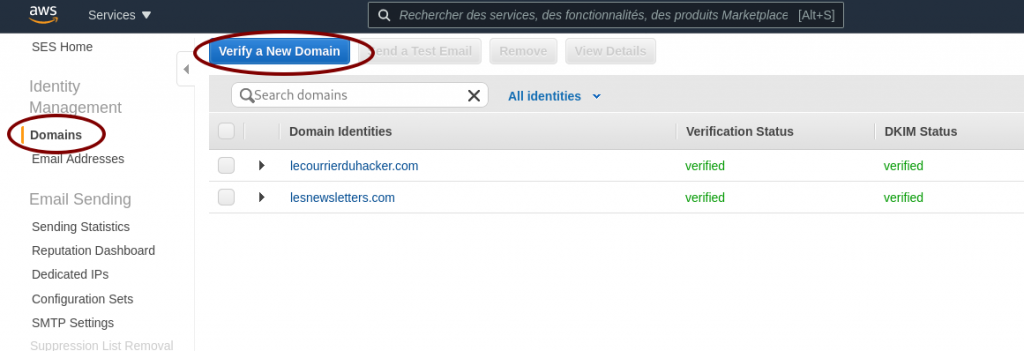 Ask AWS SES to verify a domain
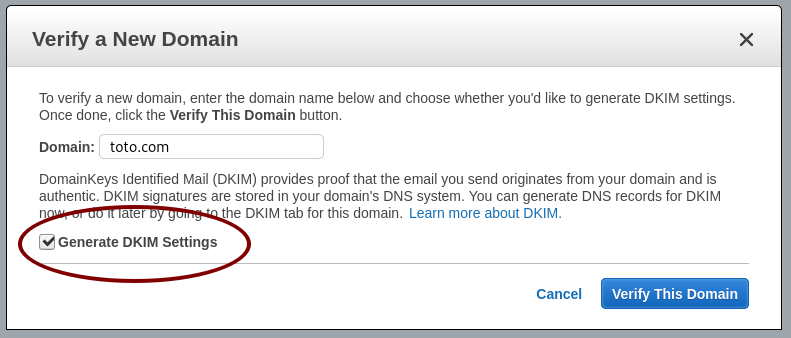 Generate the DKIM settings
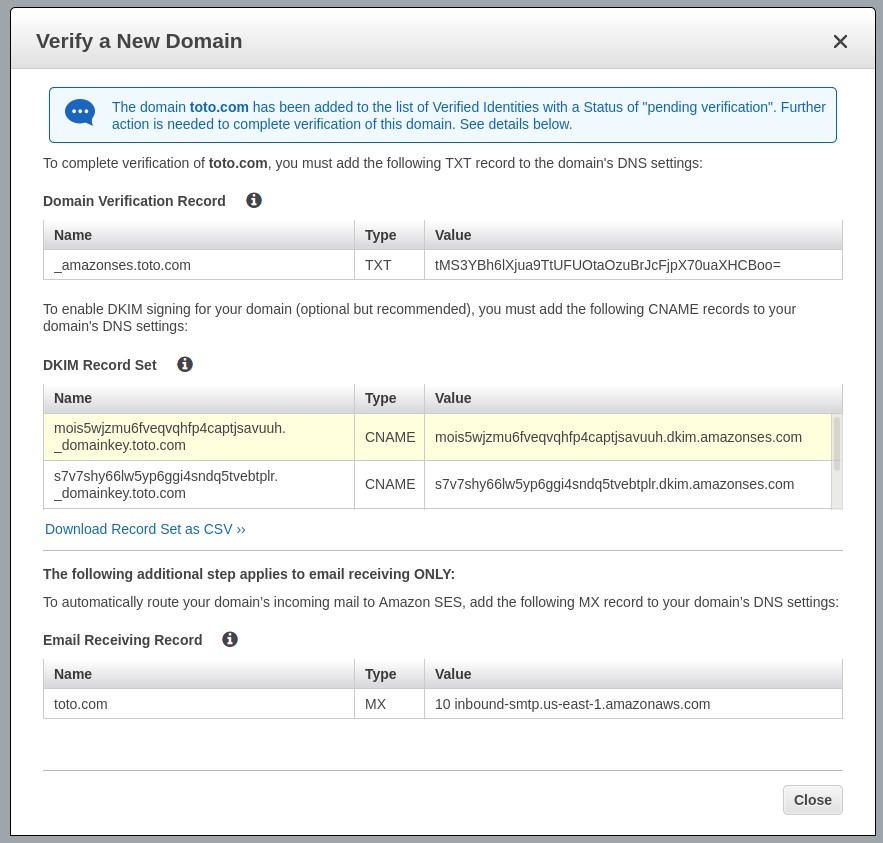
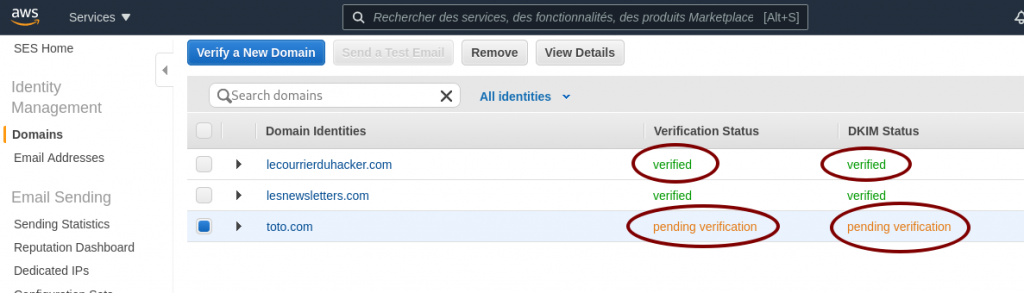 AWS SES pending verification
 AWS SES SMTP settings and credentials
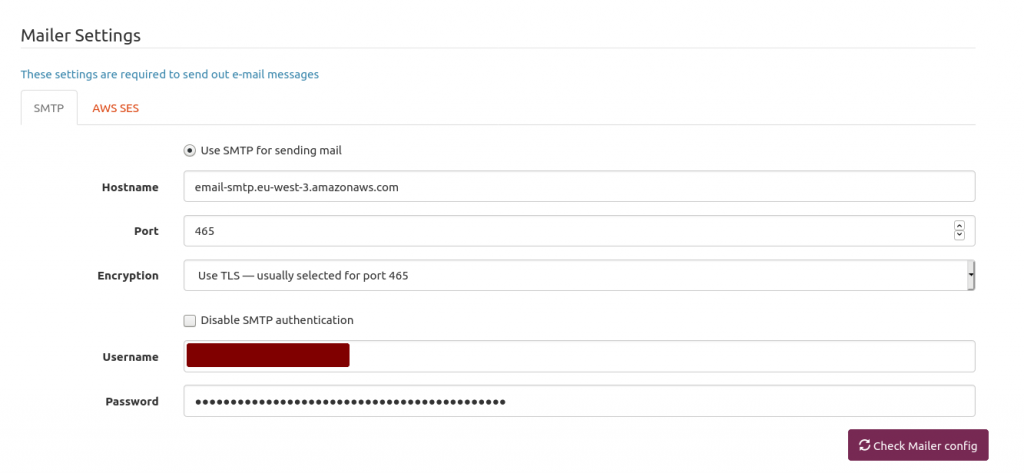 Mailtrain mailer setup
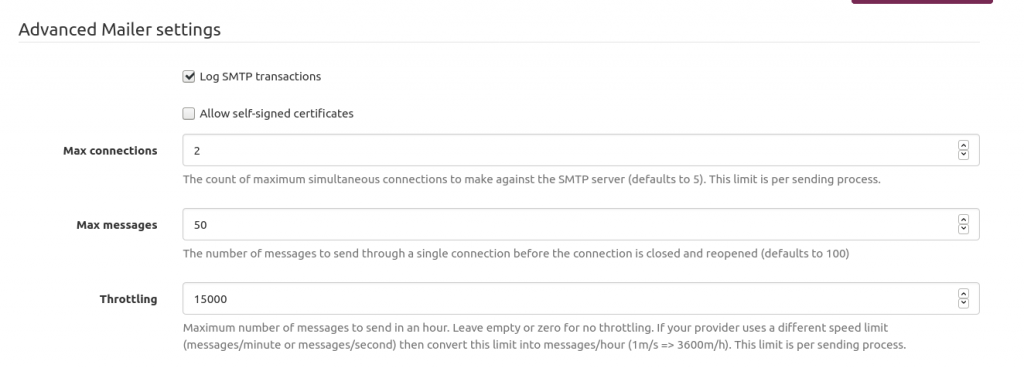 Mailtrain to throttle sending emails to AWS SES
 Memo on using a KVM switch with my Debian desktop and ChromeBox.
KVM these days mean Kernel virtualization things but before it used to mean KVM switch; where PS/2 and DSUB15 pin was a popular interface. These days it's USB + HDMI; USB-C with dP alt mode would make connections simpler including power supply, but that doesn't exist as much.
This ends up 3 cables each for PC and display, with 2 USB cables and 1 HDMI cable per endpoint.
I bought a cheap manual switcher.
Automatic switcher can be annoying especially when
suspend-resume case, there's no rational behavior,
especially when I want to wake devices through keyboard.
Having a wired remote control was good because although the
device itself is compact, the 9 or so cables running out of
it is bulky and I moved it under my desk to hide it from my
view.
Sometimes suspending / resume causes issues with the USB
hub, it's recognized as SuperTop USB Hub, and from Linux
kernel it seems like hub is disconnected and reconnected,
however on reinitialization sometimes USB hub fails to be
initialized.
That results in keyboard not working, but re-connecting the
USB cable fixes the issue.
Sound is recorded via USB mixer, and played back via HDMI
audio, video is recorded via USB camera. These things didn't
exist back in the old KVM days, maybe they used audio
cables.

 .
On the global stage, about a decade ago, Stephen J. Dubner and Steven Levitt argued in their book

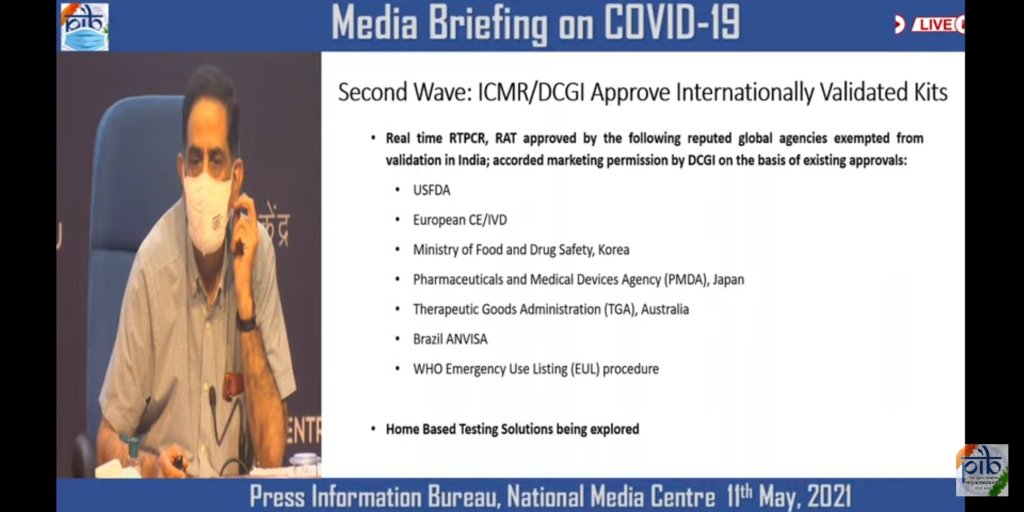
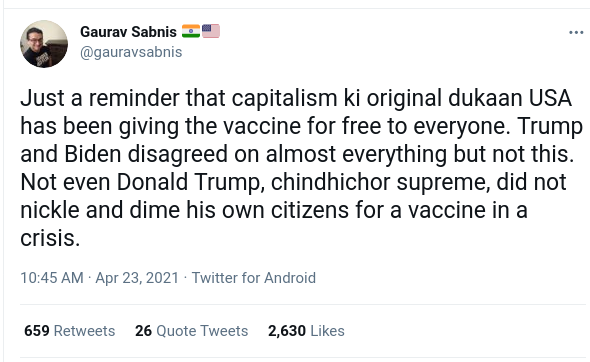
 Pappu Yadav, President Jan Adhikar Party, Bihar May 11, 2021


 Update: I just learned on IRC that checking with
 I have uploaded most of my Machine Learning lecture to YouTube.
The slides are in English, but the audio is in German.
Some very basic contents (e.g., a demo of standard k-means clustering) were left out from this advanced class,
and instead only a link to recordings from an earlier class were given. In this class, I wanted to focus
on the improved (accelerated) algorithms instead. These are not included here (yet).
I believe there are some contents covered in this class you will find nowhere else (yet).
The first unit is pretty long (I did not split it further yet). The later units are shorter recordings.
ML F1: Principles in Machine Learning
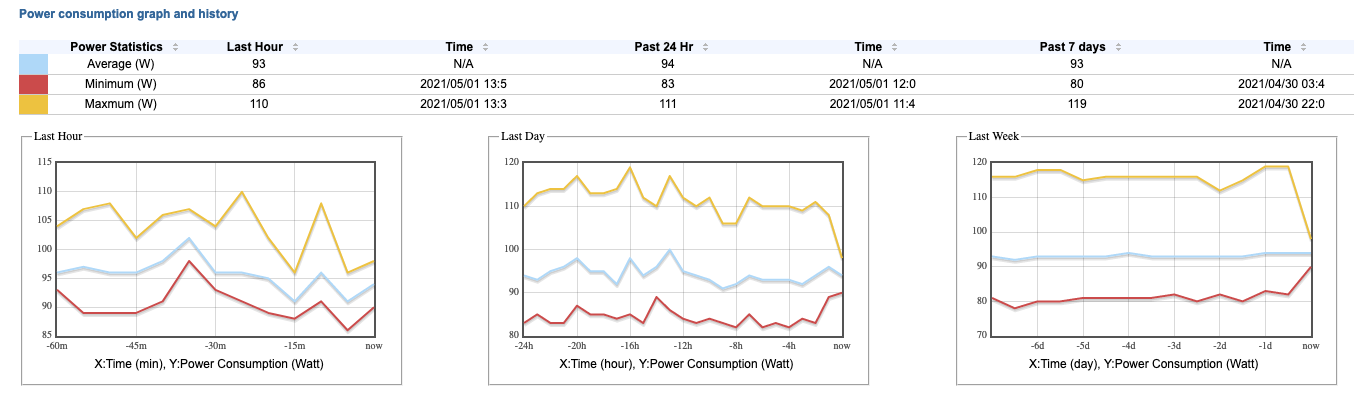 screenshot showing power consumption of server

 UK railway map with operators
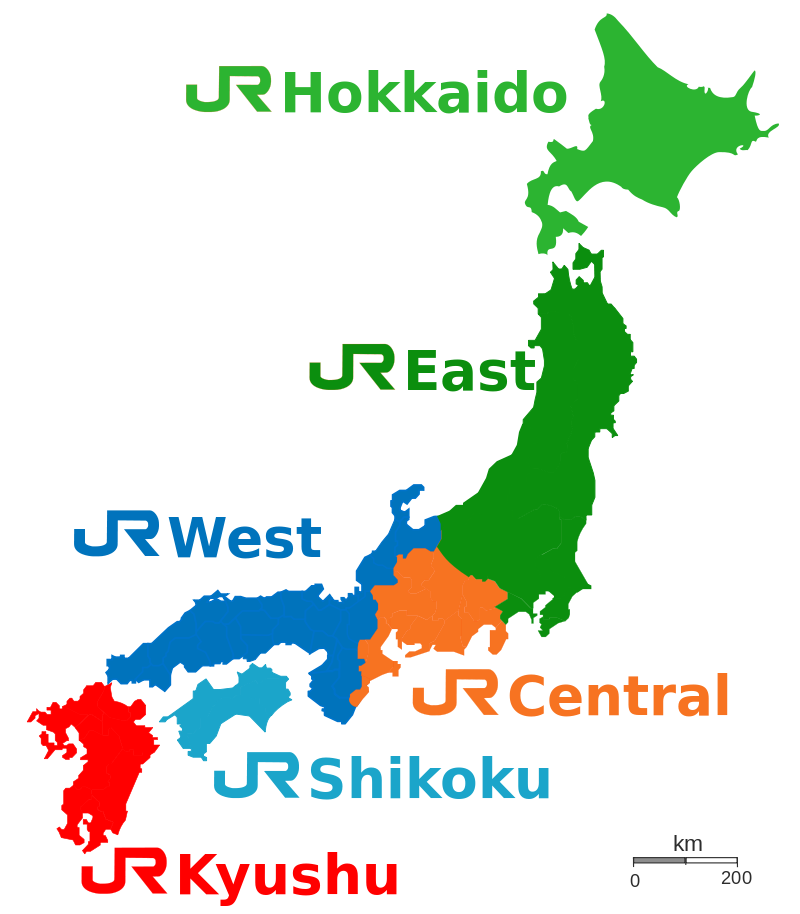 Railway map of Japan with private ownership courtesy Wikimedia commons
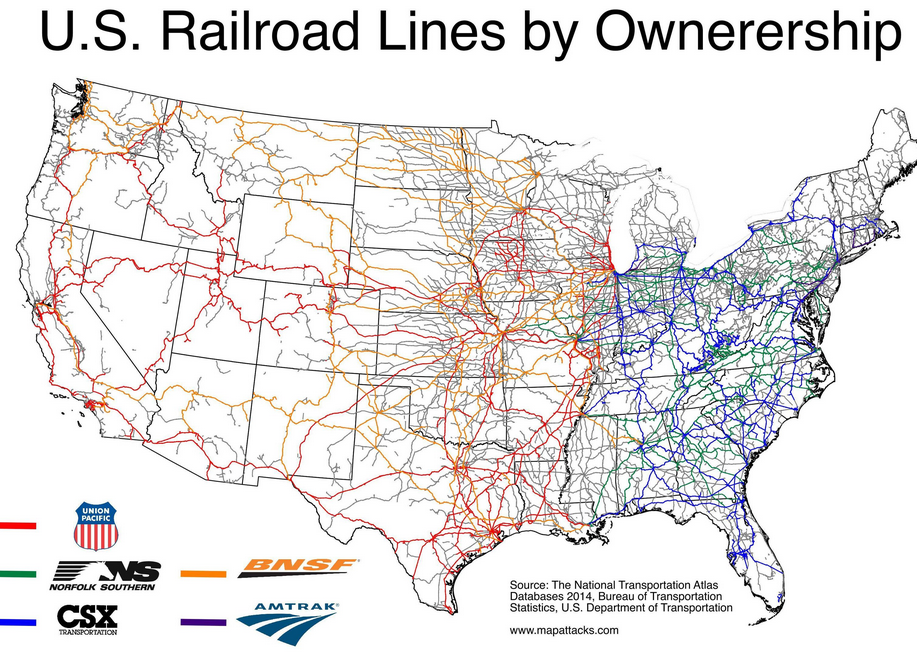


 I ve mostly had the preference of controlling my data rather than depend on someone else. That s one reason why I still believe email to be my most reliable medium for data storage, one that is not plagued/locked by a single entity. If I had the resources, I d prefer all digital data to be broken down to its simplest form for storage, like email format, and empower the user with it i.e. their data.
Yes, there are free services that are indirectly forced upon common users, and many of us get attracted to it. Many of us do not think that the information, which is shared for the free service in return, is of much importance. Which may be fair, depending on the individual, given that they get certain services without paying any direct dime.













 Debian has work-in-progress packages for Kubernetes, which work well enough enough for a testing and learning environement. Bootstraping a cluster with the
 Previously:

 TLDR: Freexian s success means that we have resources to invest into Debian projects. Plainly offering money has not worked so far, so I am looking to hire a project manager whose work would be to help spend that money in useful ways. At the same time, Freexian needs to adapt to cope with the growth: with new employees, with new infrastructure and a new offering. I want to give an idea of where we are headed, to try to inspire persons that share our values and our desire to improve Debian. Read on if you are interested.
Note: The original text has been split into 4 blog posts that will be published over a few days.
Introduction