Search Results: "tg"

16 January 2014

Andrew Pollock: [life] And now for something completely different...

After 8 years, February 6 will be my last day with Google. The hardest pill to swallow with the end of my marriage was the reduction in my time with Zoe. It was one thing to lose my wife, but to lose 50% of my daughter as well has been, and will continue to be, a struggle for me. 2014 is the last year before Zoe starts in Prep (Queensland's school grade before "one"). This is my last opportunity to be able to have a big chunk of time with her before she gets swallowed up by the school system. It's ridiculous to be sticking her in full-time long day care if I have an alternative. And I do have an alternative. I'm in the fortunate financial position of not having a mortgage, or any debt to speak of, and a modest amount of savings. I shall be Daddy Day Care. It had always been my career goal in life to be a stay at home Dad. I'd wanted to have another child and be the one to stay at home and look after the kids, and allow Sarah to resume her career. Obviously none of that worked out, but there's no reason why I can't be a stay at home Dad for at least this year. Zoe's at a wonderful age now. We can have a lot of fun together this year. She's going to be in a 5 day a fortnight Kindergarten program (Monday, Tuesday and every other Wednesday) between 8:20am to 2:30pm, so I'm planning on using one of those days for Debian contributions, one of those days for exploring some of the crazy startup ideas I have rattling around in my head, and every second Wednesday to keep the home tidy. It's going to be a fun, different year for Zoe and I, and I'm so looking forward to it. I'm planning on doing lots of activities from Play at Home Mom, doing lots of baking and we'll be doing Science Friday's. If anyone knows where I can get a toddler-sized lab coat, drop me a line. I'm hoping I can make time to write up our activities for posterity as well.

11 January 2014

Debian Sysadmin Team: Peter Palfrader: The Debian DNS universe

Abstract I recently moved our primary nameserver from orff.debian.org, which is an aging blade in Greece, to a VM on one of our ganeti clusters. In the process, I rediscovered a lot about our DNS infrastructure. In this post, I will describe the many sources of information and how they all come together.

Introduction The Domain Name System is the hierarchical database and query protocol that is in use on the Internet today to map hostnames to IP addresses, to map the reverse thereof, to lookup relevant servers for certain services such as mail, and a gazillion other things. Management and authority in the DNS is split into different zones, subtrees of the global tree of domain names. Debian currently has a bit over a score of zones. The two most prominents clearly are debian.org and debian.net. The rest is made up of debian domains in various other top level domains and reverse zones, which are utilized in IP address to hostname mappings.

Types and sources of information The data we put into DNS comes from a wide range of different systems:
  • Classical zonefiles maintained in git. This represents the core of our domain data. It maps services like blends.debian.org to static.debian.org or specifies the servers responsible for accepting mail to @debian.org addresses. It also is where all the ftp.CC.debian.org entries are kept and maintained together with the mirror team.
  • Information about debian.org hosts, such as master, is maintained in Debian's userdir LDAP, queryable using LDAP1.
    • This includes first and foremost the host's IP addresses (v4 and v6).
    • Additionally, we store the server responsible for receiving a host's mail in LDAP (mXRecord LDAP attribute, DNS MX record type).
    • LDAP also has some specs on computers, which we put into each host's HINFO record, mainly because we can and we are old-school.
    • Last but not least, LDAP also has each host's public ssh key, which we extract into SSHFP records for DNS.
  • LDAP also has per-user information. Users of debian infrastructure can attach limited DNS elements as dnsZoneEntry attributes to their user2.
  • The auto-dns system (more on that below).
  • Our puppet also is a source of DNS information. Currently it generates only the TLSA records that enable clients to securely authenticate certificates used for mail and HTTPS, similar to how SSHFP works for authenticating ssh host keys.

Debian's auto-dns and geo setup We try to provide the best service we can. As such, our goal is that, for instance, user access to www or bugs should always work. These services are, thus, provided by more than one machine on the Internet. However, HTTP did not specify a requirement for clients to re-try a different server if one of those in a set is unavailable. This means for us that when a host goes down, it needs to be removed from the corresponding DNS entry. Ideally, the world wouldn't have to wait for one of us to notice and react before they can have their service in a working manner. Our solution for this is our auto-dns setup. We maintain a list of hosts that are providing a service. We monitor them closely. Whenever a server goes away or comes back we automatically rebuild the zone that contains the element. This setup also lets us reboot servers cleanly since one of the things we monitor is "is there a shutdown running", we can, simply by issuing a shutdown -r 30 kernel-update, de-rotate the machine in question from DNS. Once the host is back it'll automatically get re-added to the round-robin zone entry. The auto-dns system produces two kinds of output:
  • In service-mode it generates a file with just the address records for a specific service. This snippet is then included in its zone using a standard bind $INCLUDE directive. Services that work like this include bugs and static (service definition for static).
  • In zone-mode, auto-dns produces zonefiles. For each service it produces a set of zonefiles, one for each out of a set of different geographic regions. These individual zonefiles are then transferred using rsync to our GEO-IP enabled nameservers. This enables us to give users a list of security mirrors closer to them and thus hopefully faster for them.

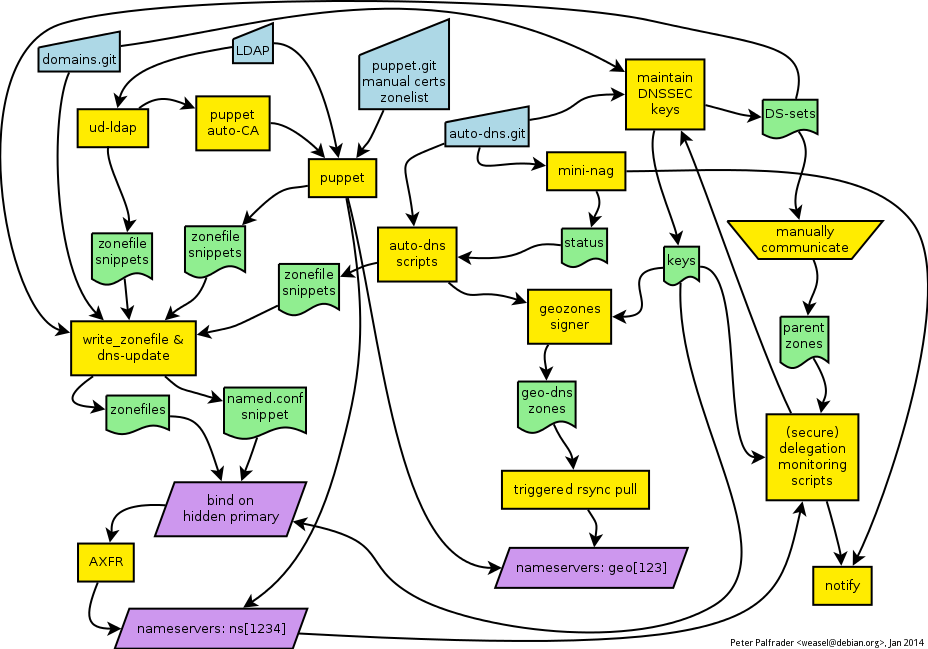
Tying it all together The Debian DNS Rube Goldberg Machine. Figure 1: The Debian DNS Rube Goldberg Machine. Once all the individual pieces of source information have been collected, the dns-update and write_zonefile scripts from our dns-helpers repository take over the job of building complete zonefiles and a bind configuration snippet. Bind then loads the zones and notifies its secondaries. For geozones, the zonefiles are already produced by auto-dns' build-zones and those are pulled from the geo nameservers via rsync over ssh, after an ssh trigger.

and also DNSSEC All of our zones are signed using DNSSEC. We have a script in dns-helpers that produces, for all zones, a set of rolling signing keys. For the normal zones, bind 9.9 takes care of signing them in-process before serving the zones to its secondaries. For our geo-zones we sign them in the classical dnssec-signzone way before shipping them. The secure delegation status (DS set in parent matches DNSKEY in child) is monitored by a set of nagios tests, from both [dsa-nagios] and dns-helpers. Of these, manage-dnssec-keys has a dual job: not only will it warn us if an expiring key is still in the DSset, it can also prevent it from getting expired by issuing timly updates of the keys metadata.

Relevant Git repositories -- Peter Palfrader

  1. ldapsearch -h db.debian.org -x -ZZ -b dc=debian,dc=org -LLL 'host=master'
  2. ldapsearch -h db.debian.org -x -ZZ -b dc=debian,dc=org -LLL 'dnsZoneEntry=*' dnsZoneEntry

6 January 2014

Vincent Sanders: NetSurf Developer Workshop Redux

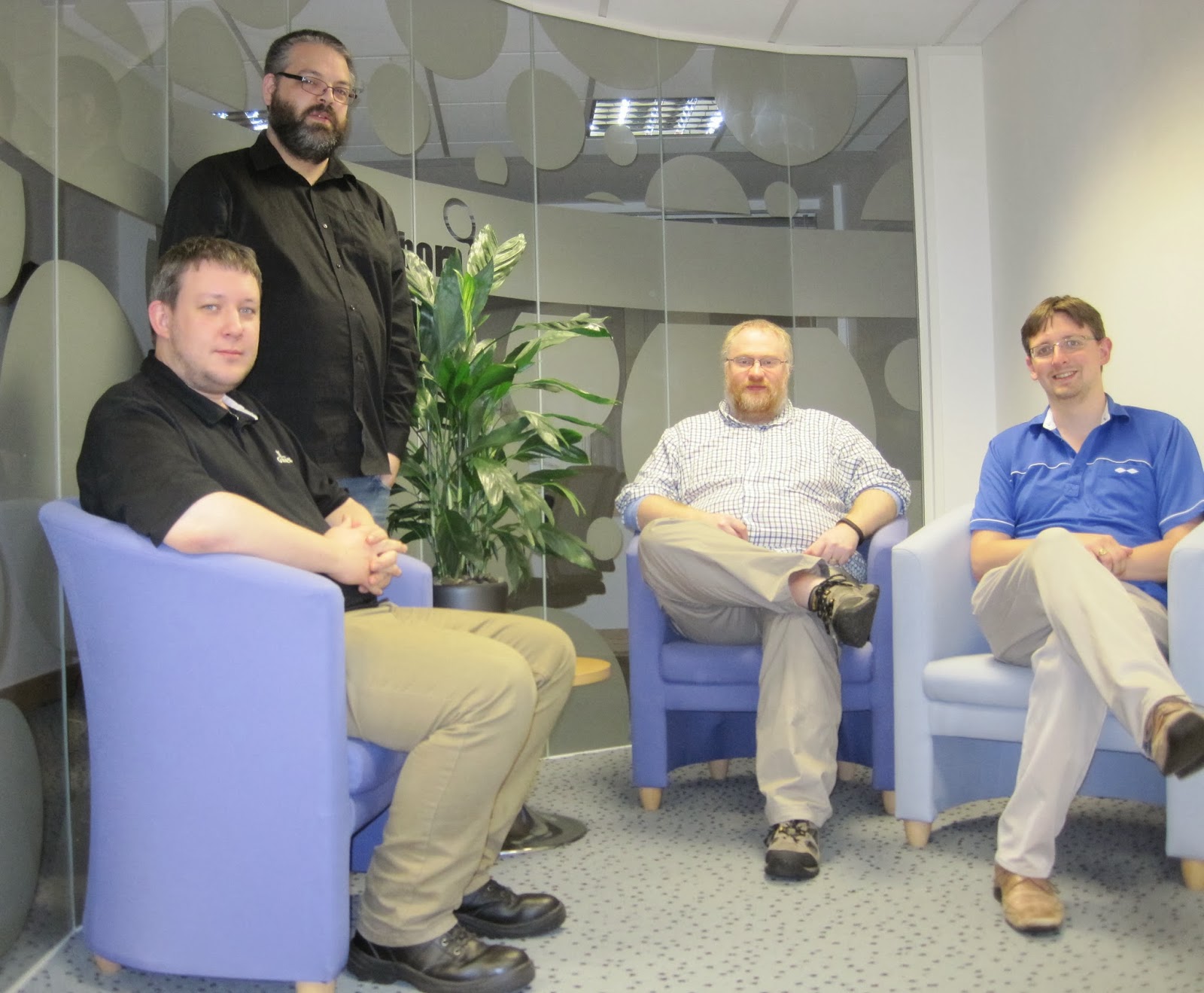
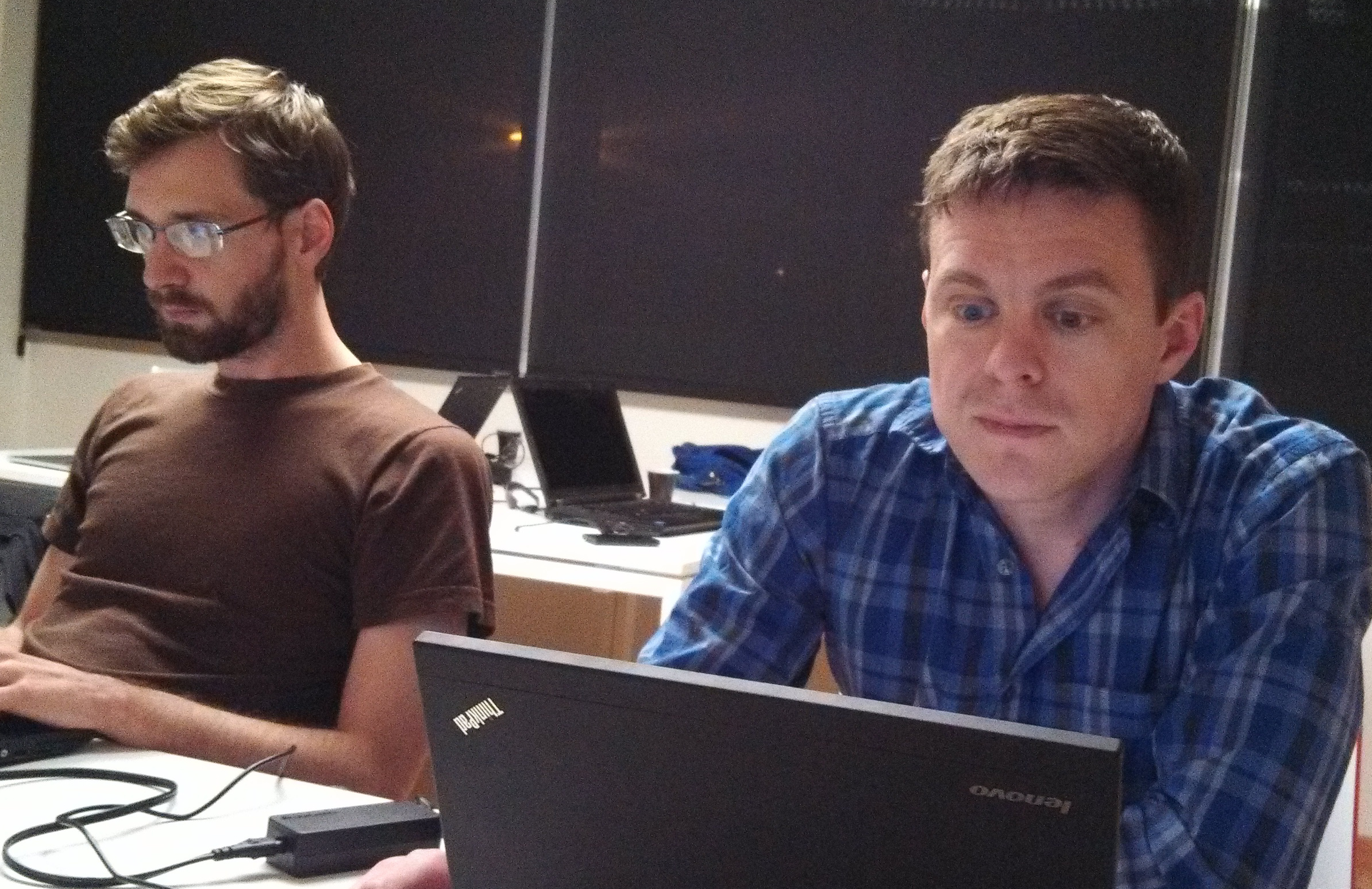
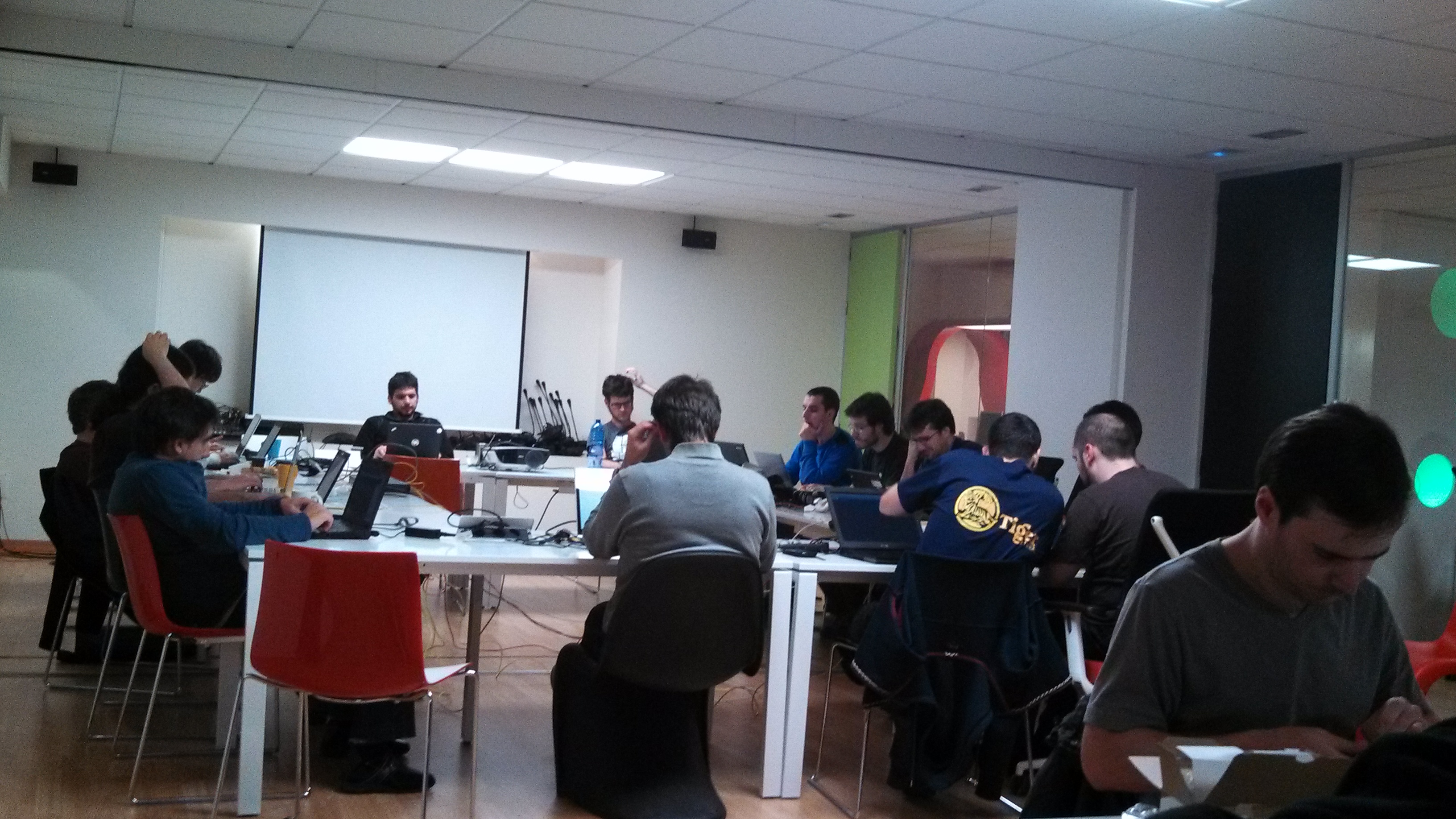
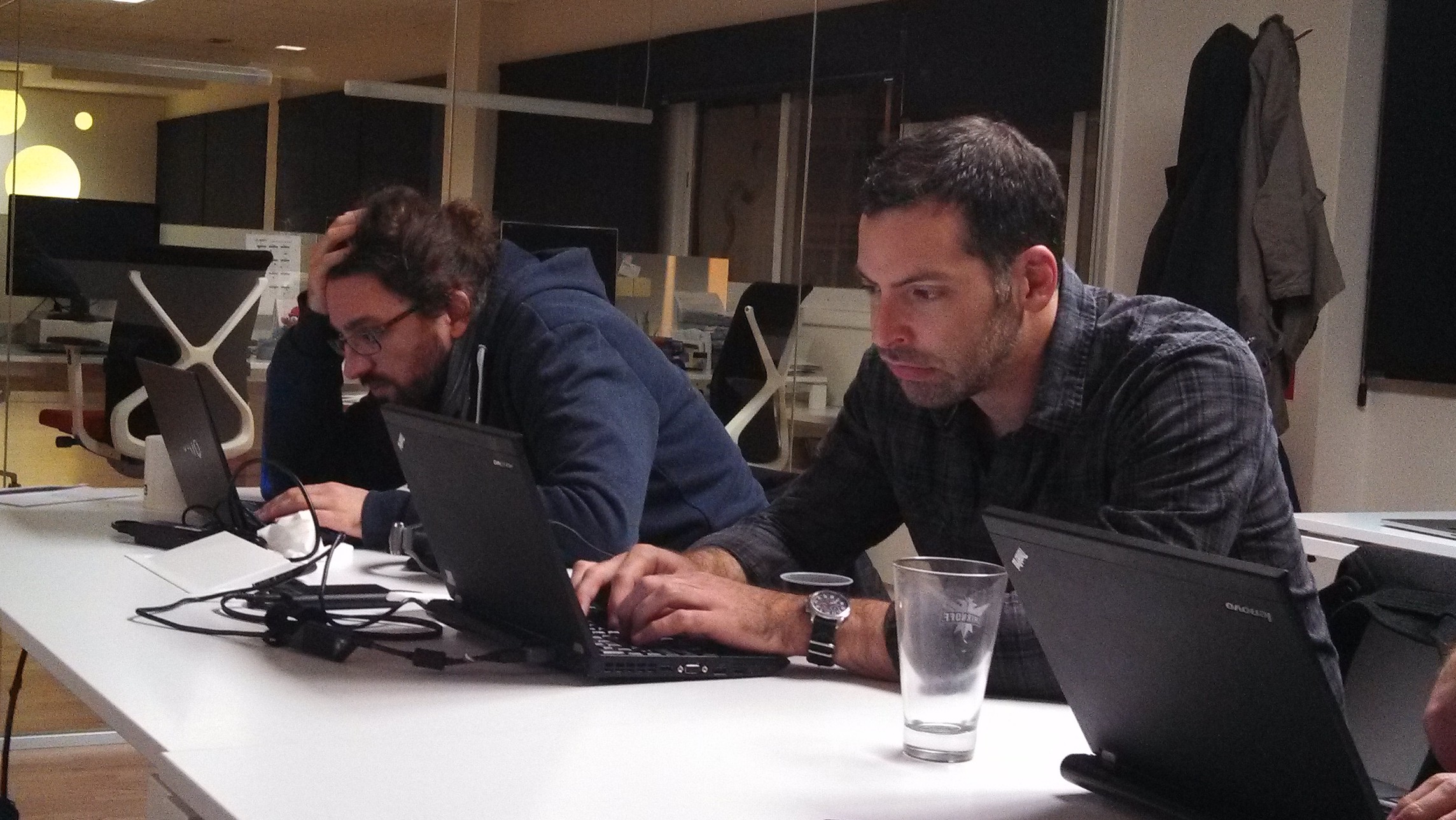
The NetSurf Developers bringing you alternative LOLcat viewing software since 2002Once again the NetSurf developers congregated in Cambridge at the Collabora offices where we were made welcome in a nice environment for the event.

Five developers managed to attend from around the UK Rob Kendrick, Vincent Sanders, Daniel Silverstone, John-Mark Bell and Michael Drake. We also had Chris Young and Fran ois Revol providing some bug fixes remotely.

This was the first time we had all met since the previous event towards the end of 2012 and we took full advantage of this to discuss a pretty extensive agenda in addition to the practical programming tasks.

From Friday lunchtime through to Sunday evening we managed 30 hours of work consisting of over 70 commits to over 100 files.

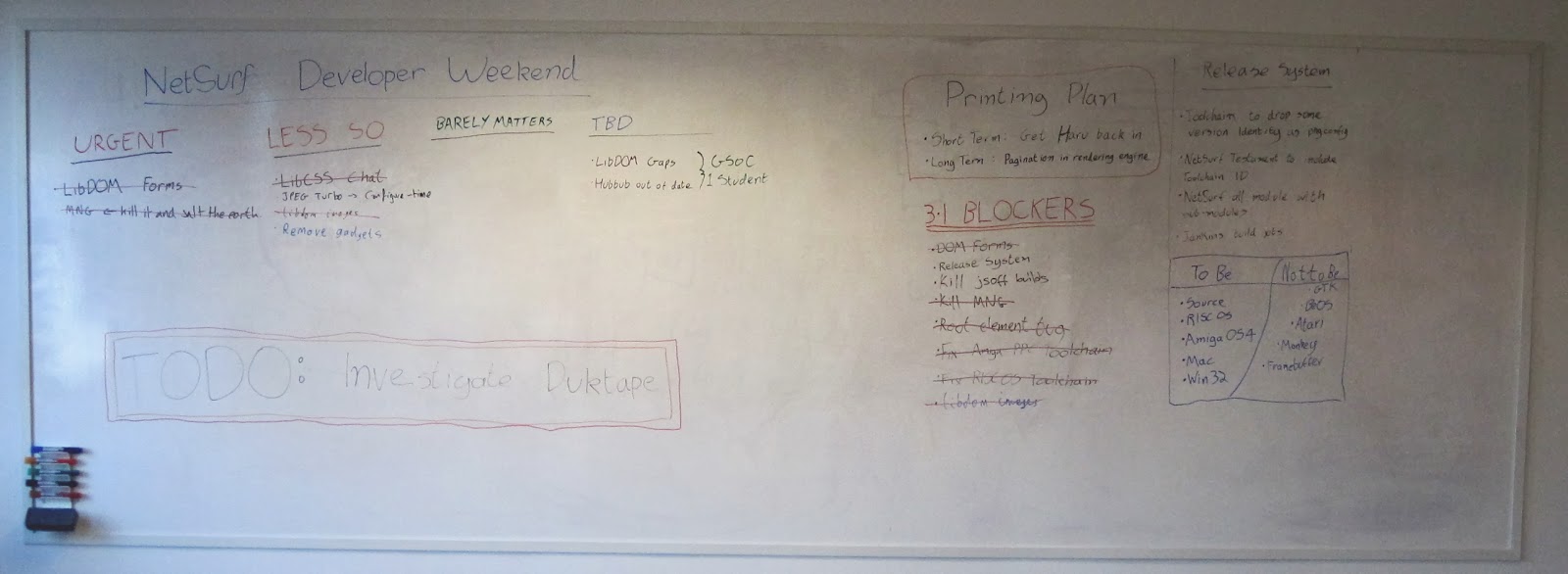
The whiteboard of our notes

Our main focus was working towards a 3.1 release which is scheduled for early April. Along with the source the release will have binary builds for RISC OS, AmigaOS, Windows and Mac OS X (x86 and ppc). Although the NetSurf project will not be directly releasing binaries for the GTK and Framebuffer frontends we will be ensuring the Debian packages are updated which is our prefered method of distribution for those targets.

We analysed the 3.0 release and formulated an improved process for the future. The 3.1 release will be generated automatically by the CI system ensuring constant results and removing the problems we encountered previously.

A set of release blocking issues was derived which we used as a task list during the workshop.The majority of these were completed including:
DOM based forms
Web forms are a feature Netsurf has supported for a long time and their implementation has not kept up with the rest of the browser. This is a long standing problem area which has resulted in numerous strange bugs with form submission. With this change the form system has been reworked to correctly operate directly from the DOM resulting in the squashing of a large number of bugs and a much improved user experience.

DOM based image loading
Up to now image fetching was performed only during the rendering of a page. With this change when the image link is placed into the DOM during the page parse it is scheduled to be fetched, this should give an improved user experience as images should be available earlier in a pages render.

Removal of MNG support
NetSurf has supported MNG since the 1.0 release, indeed the MNG library used to provide the PNG support too though we have long ago transitioned to libPNG. Alas the web has moved on and MNG has been largely forgotten, the libMNG library that performs the image decoding is old and generally unsupported specifically lacking security updates.

The build issues with libMNG (lack of pkg-config, reliance on libcms1 etc.) were causing maintenance issues in code nobody was actually using (there were crash bugs discovered during its removal!). Because of these issues it was decided to join the vast majority of browsers and remove support for this format.
The developers also addressed several issues with toolchain construction and a number of annoying usability bugs.

Plans for how to improve printing support we made. Initially we intend to fix the existing haru based pdf generation using this to print via pdf and in future have correct css styled page paginated printing render output.

The perennial issue of javascript was discussed however, while efforts to improve the existing support are ongoing, our usage of the spidermonkey library continues to raise various challenges including platform support and API changes between versions.

Due to these issues it has been suggested that we might add support for using the duktape JS engine instead, initial results are promising but given the size of the task of implementing an additional javascript engine binding further investigation is necessary before making a commitment.

Amongst the other discussions the group has also agreed that we will once again apply to be a GSoC organisation for a single student with some very focused projects:
  • Improving our HTML5 parser (hubbub)
  • Improving the DOM library implementing missing functionality.
While neither of these projects are as fashionable as some of our previous proposals they are well defined enough that as a group we believe we could offer enough support to the student to make their experience a pleasurable one and get the resulting code reviewed and merged promptly.

This event was very successful with a great deal achieved, the project is much more likely to be in a good shape to release 3.1 by April now and the meeting has given the developers a much welcomed boost.

I would like to extend the groups thanks to Robert McQueen for letting us use the Collabora offices, Dor e Carrier for organising all the administrative things and to Vivek Dasmohapatra for coming out on his Sunday afternoon to let us back in after locking ourselves out.


Julien Danjou: Databases integration testing strategies with Python

The Ceilometer project supports various database backend that can be used as storage. Among them are MongoDB, SQLite MySQL, PostgreSQL, HBase, DB2 All Ceilometer's code is unit tested, but when dealing with external storage services, one cannot be sure that the code is really working. You could be inserting data with an incorrect SQL statement, or in the wrong table. Only having the real database storage running and being used can tell you that.
Over the months, we developed integration testing on top of our unit testing to validate that our storage drivers are able to deal with real world databases. That is not really different from generic integration testing. Integration testing is about plugging all the pieces of your software all together and running. In what I call "database integration testing", the pieces will be both your software and the database system that you are going to rely on. The only difference here is that one of the module is not coming from the application itself but is an external project. The type of database that you use (RDBMS, NoSQL ) does not matter. Taking a step back, what I will describe here could also apply to a lot of other different software modules, even something that would not be a database sytem at all. Writing tests for integration Presumably, your Python application has unit tests. In order to test against a database back-end, you need to write a few specific classes of tests that will use the database subsystem for real. For example:
import unittest
import os
import sqlalchemy

class TestDB(unittest.TestCase):
def setUp(self):
url = os.getenv("DB_TEST_URL")
if not url:
self.skipTest("No database URL set")
self.engine = sqlalchemy.create_engine(url)

This code will try to fetch the database URL to use from an environment variable, and then will rely on SQLAlchemy to create a database connection.
import unittest
import os
import sqlalchemy

import myapp

class TestDB(unittest.TestCase):
def setUp(self):
url = os.getenv("DB_TEST_URL")
if not url:
self.skipTest("No database URL set")
self.engine = sqlalchemy.create_engine(url)

def test_foobar(self):
self.assertTrue(myapp.store_integer(self.engine, 42))

You can then add as many tests as you want using the connection stored in self.engine. If no test database URL is, the tests will be skipped; however that decision is up to you. You may want to have these tests always run and fail if they can't be run. In the setUp() method, you may also need to do more work, like create a database and delete a database.
import unittest
import os
import sqlalchemy

class TestDB(unittest.TestCase):
def setUp(self):
url = os.getenv("DB_TEST_URL")
if not url:
self.skipTest("No database URL set")
self.engine = sqlalchemy.create_engine(url)
self.connection = self.engine.connect()
self.connection.execute("CREATE DATABASE testdb")

def tearDown(self):
self.connection.execute("DROP DATABASE testdb")

This will make sure that the database you need is clean and ready to be used to testing. Launching modules, a.k.a. databases
The main problem we encountered when building integration testing with databases, is to find a way to start them. Most users are used to start them system-wide with some sort of init script, but when running sandboxed tests, that is not really a good option. Browsing the documentation of each storage allowed us to find a way to start them in foreground and control them "interactively" via a shell script. The following is a script that you can use to run Python tests using nose and is heavily inspired by the one we wrote for Ceilometer.
#!/bin/bash
set -e

clean_exit()
local error_code="$?"
kill -9 $(jobs -p) >/dev/null 2>&1 true
rm -rf "PGSQL_DATA"
return $error_code


check_for_cmd ()
if ! which "$1" >/dev/null 2>&1
then
echo "Could not find $1 command" 1>&2
exit 1
fi


wait_for_line ()
while read line
do
echo "$line" grep -q "$1" && break
done < "$2"
# Read the fifo for ever otherwise process would block
cat "$2" >/dev/null &


check_for_cmd mongod

trap "clean_exit" EXIT

# Start PostgreSQL process for tests
PGSQL_DATA= mktemp -d /tmp/PGSQL-XXXXX
PGSQL_PATH= pg_config --bindir
PGSQL_PATH /initdb $ PGSQL_DATA
mkfifo $ PGSQL_DATA /out
$ PGSQL_PATH /postgres -F -k $ PGSQL_DATA -D $ PGSQL_DATA &> $ PGSQL_DATA /out &
# Wait for PostgreSQL to start listening to connections
wait_for_line "database system is ready to accept connections" $ PGSQL_DATA /out
export DB_TEST_URL="postgresql:///?host=$ PGSQL_DATA &dbname=template1"

# Run the tests
nosetests

If you use tox to automatize your test run, you can use this scripts (I call it run-test.sh) in your tox.ini file.
[testenv]
commands = toxinidir /run-tests.sh posargs

Most databases are able to be run in some sort of standalone mode where you can connect to them using a either a Unix domain socket, or a fixed port. Here are the snippet used in Ceilometer to run with MongoDB and MySQL:
# Start MongoDB process for tests
MONGO_DATA=$(mktemp -d /tmp/MONGODB-XXXXX)
MONGO_PORT=29000
mkfifo $ MONGO_DATA /out
mongod --maxConns 32 --nojournal --noprealloc --smallfiles --quiet --noauth --port $ MONGO_PORT --dbpath "$ MONGO_DATA " --bind_ip localhost &>$ MONGO_DATA /out &
# Wait for Mongo to start listening to connections
wait_for_line "waiting for connections on port $ MONGO_PORT " $ MONGO_DATA /out
export DB_TEST_URL="mongodb://localhost:$ MONGO_PORT /testdb"

# Start MySQL process for tests
MYSQL_DATA=$(mktemp -d /tmp/MYSQL-XXXXX)
mkfifo $ MYSQL_DATA /out
mysqld --datadir=$ MYSQL_DATA --pid-file=$ MYSQL_DATA /mysql.pid --socket=$ MYSQL_DATA /mysql.socket --skip-networking --skip-grant-tables &> $ MYSQL_DATA /out &
# Wait for MySQL to start listening to connections
wait_for_line "mysqld: ready for connections." $ MYSQL_DATA /out
export DB_TEST_URL="mysql://root@localhost/testdb?unix_socket=$ MYSQL_DATA /mysql.socket&charset=utf8"

The mechanism is always the same. We create a fifo with mkfifo, and then run the database daemon with the output redirected to that fifo. We then read from it until we find a line stating the the database is ready to be used. At that point, we can continue and start running the tests. You have to read continuously from the fifo, otherwise the process writing to it will block. We redirect the output to /dev/null, but you could also redirect it to a different log file, or not at all. One step further: using parallelism and scenarios The described approach is quite simple, as it only support one database type. When using an abstraction layer, such as SQLAlchemy, it would be a good idea to run all these tests against different RDBMS, such as MySQL and PostgreSQL for example. The snippet above allows to run both RDBMS in parallel, but the classic approach of unit tests does not allow that. Using one scenario for each database backend would be a great idea. To that end, you can use the testscenarios library.
import unittest
import os
import sqlalchemy
import testscenarios

load_tests = testscenarios.load_tests_apply_scenarios

class TestDB(unittest.TestCase):
scenarios = [
('mysql', dict(database_connection=os.getenv("MYSQL_TEST_URL")),
('postgresql', dict(database_connection=os.getenv("PGSQL_TEST_URL")),
]

def setUp(self):
if not self.database_connection:
self.skipTest("No database URL set")
self.engine = sqlalchemy.create_engine(self.database_connection)
self.connection = self.engine.connect()
self.connection.execute("CREATE DATABASE testdb")

def tearDown(self):
self.connection.execute("DROP DATABASE testdb")

$ python -m subunit.run test_scenario   subunit2pyunit
test_scenario.TestDB.test_foobar(mysql)
test_scenario.TestDB.test_foobar(mysql) ... ok
test_scenario.TestDB.test_foobar(postgresql)
test_scenario.TestDB.test_foobar(postgresql) ... ok

---------------------------------------------------------
Ran 2 tests in 0.061s

OK

To speed up tests run, you could also run the test in parallel. It can be intesting as you'll be able to spread the workload among a lot of different CPUs. However, note that it can require a different database for each test or a locking mechanism to be in place. It's likely that your tests won't be able to work altogether at the same time on only one database. (Both usage of scenarios and parallelism in testing will be covered in The Hacker's Guide to Python, in case you wonder.)
The Hacker's Guide to Python
A book I'm writing that will be launched soon, talking about designing Python applications, state of the art, and various Python tips. If you want to be the first to hear about the launch, subscribe now.

21 December 2013

Kees Cook: DOM scraping

For a long time now I ve used mechanize (via either Perl or Python) for doing website interaction automation. Stuff like playing web games, checking the weather, or reviewing my balance at the bank. However, as the use of javascript continues to increase, it s getting harder and harder to screen-scrape without actually processing DOM events. To do that, really only browsers are doing the right thing, so getting attached to an actual browser DOM is generally the only way to do any kind of web interaction automation. It seems the thing furthest along this path is Selenium. Initially, I spent some time trying to make it work with Firefox, but gave up. Instead, this seems to work nicely with Chrome via the Chrome WebDriver. And even better, all of this works out of the box on Ubuntu 13.10 via python-selenium and chromium-chromedriver. Running /usr/lib/chromium-browser/chromedriver2_server from chromium-chromedriver starts a network listener on port 9515. This is the WebDriver API that Selenium can talk to. When requests are made, chromedriver2_server spawns Chrome, and all the interactions happen against that browser. Since I prefer Python, I avoided the Java interfaces and focused on the Python bindings:
#!/usr/bin/env python
import sys
from selenium import webdriver
from selenium.common.exceptions import NoSuchElementException
from selenium.webdriver.common.keys import Keys
caps = webdriver.DesiredCapabilities.CHROME
browser = webdriver.Remote("http://localhost:9515", caps)
browser.get("https://bank.example.com/")
assert "My Bank" in browser.title
try:
    elem = browser.find_element_by_name("userid")
    elem.send_keys("username")
    elem = browser.find_element_by_name("password")
    elem.send_keys("wheee my password" + Keys.RETURN)
except NoSuchElementException:
    print "Could not find login elements"
    sys.exit(1)
assert "Account Balances" in browser.title
xpath = "//div[text()='Balance']/../../td[2]/div[contains(text(),'$')]"
balance = browser.find_element_by_xpath(xpath).text
print balance
browser.close()
This would work pretty great, but if you need to save any state between sessions, you ll want to be able to change where Chrome stores data (since by default in this configuration, it uses an empty temporary directory via --user-data-dir=). Happily, various things about the browser environment can be controlled, including the command line arguments. This is configurable by expanding the desired capabilities variable:
caps = webdriver.DesiredCapabilities.CHROME
caps["chromeOptions"] =  
        "args": ["--user-data-dir=/home/user/somewhere/to/store/your/session"],
     
A great thing about this is that you get to actually watch the browser do its work. However, in cases where this interaction is going to be fully automated, you likely won t have a Xorg session running, so you ll need to wrap the WebDriver in one (since it launches Chrome). I used Xvfb for this:
#!/bin/bash
# Start WebDriver under fake X and wait for it to be listening
xvfb-run /usr/lib/chromium-browser/chromedriver2_server &
pid=$!
while ! nc -q0 -w0 localhost 9515; do
    sleep 1
done
the-chrome-script
rc=$?
# Shut down WebDriver
kill $pid
exit $rc
Alternatively, all of this could be done in the python script too, but I figured it s easier to keep the support infrastructure separate from the actual test script itself. I actually leave the xvfb-run call external too, so it s easier to debug the browser in my own X session. One bug I encountered was that the WebDriver s cache of the browser s DOM can sometimes get out of sync with the actual browser s DOM. I didn t find a solution to this, but managed to work around it. I m hoping later versions fix this. :)

2013, Kees Cook. This work is licensed under a Creative Commons Attribution-ShareAlike 3.0 License.
Creative Commons License

20 December 2013

Lars Wirzenius: Configuring gitano

I recently set up a Gitano instance as http://git.liw.fi/. Gitano is a very nice git server, which adds user and group management and access control in front of git itself, and keeps all configuration in git, where it's traceable and auditable nicely. It's also a command line based thing, rather than a slow, resource-hungry web application, and so much more to my liking. Daniel, the Gitano upstream, has a "gitano-all" source tree for creating an unofficial Gitano Debian package, which includes cgit, a fast git web interface. This is not ever going to be accepted in Debian, of course, but it makes it easier to install Gitano on your server. This hanky-panky is needed because Gitano and cgit both use libgit2, and that's a library without a stable API at this time. This makes is difficult to package for Debian. cgit seems to embed other such projects as well. Anyway, once you've installed the Gitano software (and cgit, if you want that), there's the matter of setting up a Gitano instance. Each Gitano instance is its own Unix user, accessed over ssh. Thus, one machine can host any number of Gitano instances, and they'll be nicely isolated from each other by normal Unix setup. Each instance manages its own set of Gitano users and group, which only exist within that instance. Users are identified by ssh public keys: there are no passwords. Here's my slightly edited checklist for setting up a Gitano instance. It assumes Gitano and cgit and their dependencies are installed. Setup Gitano itself: Setup a git daemon for public git repositories:
git stream tcp nowait nobody /usr/bin/git 
git daemon --inetd 
--interpolated-path=/home/git/repos/%D /home/git/repos
Setup cgit and Apache:
# CGIT stuff
DirectoryIndex /cgi-bin/cgit/cgit.cgi
Alias /cgit.png /usr/share/cgit/htdocs/cgit.png
Alias /cgit.css /usr/share/cgit/htdocs/cgit.css
<Directory "/home/git/repos">
    Options FollowSymlinks Indexes
    Allow from all
    AllowOverride none
    Order allow,deny
</Directory>
# Enable caching of up to 1000 output entriess
cache-size=1000
# Specify some default clone prefixes
clone-prefix=git://testgit
# Specify the css url
css=/cgit.css
# Specify the logo url
logo=/cgit.png
# Show extra links for each repository on the index page
enable-index-links=1
# Show number of affected files per commit on the log pages
enable-log-filecount=1
# Show number of added/removed lines per commit on the log pages
enable-log-linecount=1
# Set the title and heading of the repository index page
root-title=testgit
root-desc=Lars's test git repositories
# Allow download of tar.gz, tar.bz2 and zip-files
snapshots=tar.gz
#source-filter=/usr/lib/cgit/filters/syntax-highlighting.sh
remove-suffix=1
enable-git-config=1
strict-export=git-daemon-export-ok
scan-path=/home/git/repos
##
## List of common mimetypes
##
mimetype.git=image/git
mimetype.html=text/html
mimetype.jpg=image/jpeg
mimetype.pdf=application/pdf
mimetype.png=image/png
mimetype.svg=image/svg+xml
Finally, you should review, and possibly alter, Gitano access control rules. Some Gitano commands: Happy hacking. PS. I wrote a yarn test suite for my Gitano ACL, which may be interesting if you're new to Gitano.

11 December 2013

Gustavo Noronha Silva: WebKitGTK+ hackfest 5.0 (2013)!

For the fifth year in a row the fearless WebKitGTK+ hackers have gathered in A Coru a to bring GNOME and the web closer. Igalia has organized and hosted it as usual, welcoming a record 30 people to its office. The GNOME foundation has sponsored my trip allowing me to fly the cool 18 seats propeller airplane from Lisbon to A Coru a, which is a nice adventure, and have pulpo a feira for dinner, which I simply love! That in addition to enjoying the company of so many great hackers.
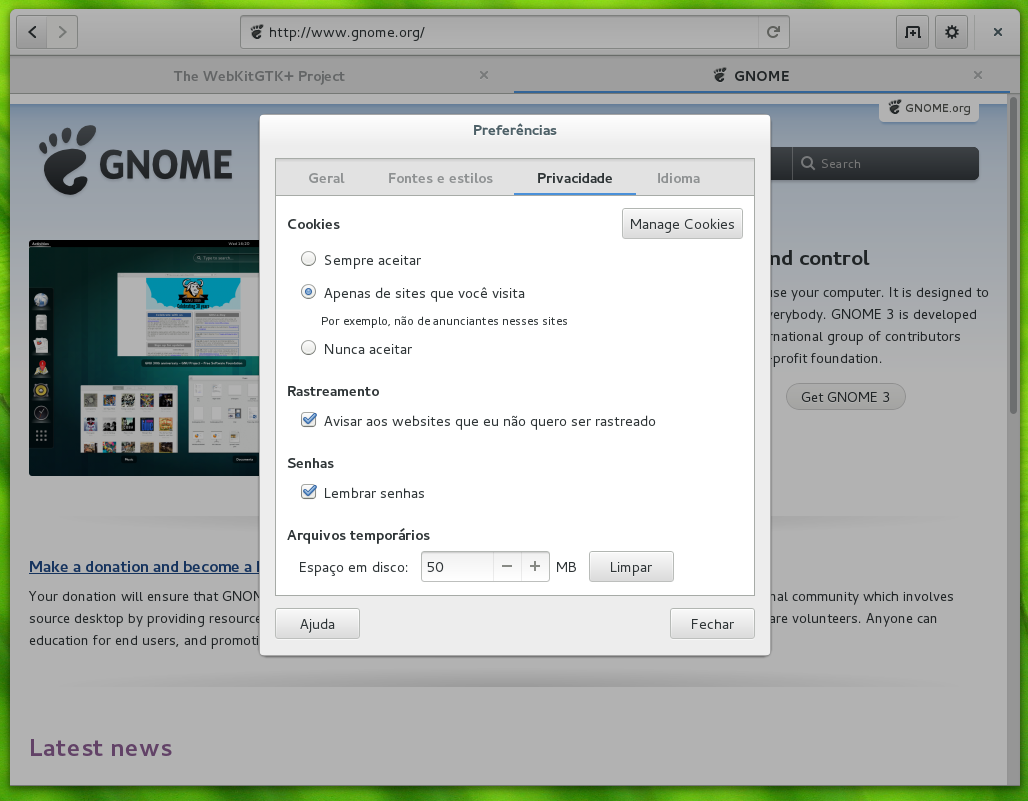
Web with wider tabs and the new prefs dialog

Web with wider tabs and the new prefs dialog

The goals for the hackfest have been ambitious, as usual, but we made good headway on them. Web the browser (AKA Epiphany) has seen a ton of little improvements, with Carlos splitting the shell search provider to a separate binary, which allowed us to remove some hacks from the session management code from the browser. It also makes testing changes to Web more convenient again. Jon McCan has been pounding at Web s UI making it more sleek, with tabs that expand to make better use of available horizontal space in the tab bar, new dialogs for preferences, cookies and password handling. I have made my tiny contribution by making it not keep tabs that were created just for what turned out to be a download around. For this last day of hackfest I plan to also fix an issue with text encoding detection and help track down a hang that happens upon page load.
Martin Robinson and Dan Winship hack

Martin Robinson and Dan Winship hack

Martin Robinson and myself have as usual dived into the more disgusting and wide-reaching maintainership tasks that we have lots of trouble pushing forward on our day-to-day lives. Porting our build system to CMake has been one of these long-term goals, not because we love CMake (we don t) or because we hate autotools (we do), but because it should make people s lives easier when adding new files to the build, and should also make our build less hacky and quicker it is sad to see how slow our build can be when compared to something like Chromium, and we think a big part of the problem lies on how complex and dumb autotools and make can be. We have picked up a few of our old branches, brought them up-to-date and landed, which now lets us build the main WebKit2GTK+ library through cmake in trunk. This is an important first step, but there s plenty to do.
Hackers take advantage of the icecream network for faster builds

Hackers take advantage of the icecream network for faster builds

Under the hood, Dan Winship has been pushing HTTP2 support for libsoup forward, with a dead-tree version of the spec by his side. He is refactoring libsoup internals to accomodate the new code paths. Still on the HTTP front, I have been updating soup s MIME type sniffing support to match the newest living specification, which includes specification for several new types and a new security feature introduced by Internet Explorer and later adopted by other browsers. The huge task of preparing the ground for a one process per tab (or other kinds of process separation, this will still be topic for discussion for a while) has been pushed forward by several hackers, with Carlos Garcia and Andy Wingo leading the charge.
Jon and Guillaume battling code

Jon and Guillaume battling code

Other than that I have been putting in some more work on improving the integration of the new Web Inspector with WebKitGTK+. Carlos has reviewed the patch to allow attaching the inspector to the right side of the window, but we have decided to split it in two, one providing the functionality and one the API that will allow browsers to customize how that is done. There s a lot of work to be done here, I plan to land at least this first patch durign the hackfest. I have also fought one more battle in the never-ending User-Agent sniffing war, in which we cannot win, it looks like.
Hackers chillin' at A Coru a

Hackers chillin at A Coru a

I am very happy to be here for the fifth year in a row, and I hope we will be meeting here for many more years to come! Thanks a lot to Igalia for sponsoring and hosting the hackfest, and to the GNOME foundation for making it possible for me to attend! See you in 2014!

2 December 2013

Thorsten Glaser: Neo900

I ve did something I surely will (financially) regret, next year, and designated the Neo900 to be the successor to my PocketPC, due to the latter having only 64 MiB RAM and Geocaching applications being quite hungry. It s got a lovely hardware keyboard, a pen display like the PocketPC (as opposed to the wishy-washy displays that Android and iPhone have), not only GPS but also GLONASS, fully free software with mostly free firmware (I m okay with that, mostly), a Ctrl key (useful in ssh and locally and my text editor; ^I is Tab, so it s useful in shell, too), WLAN, UMTS (I don t think I need LTE and would rather it have the more RAM), USB host (OTG), and lots of other nice features. In short, it s a tinkerable device: one I can not only hack at, but also hack on. Since I use a dumbphone for mobile phone anyway (pro: separate battery from the toy PocketPC/Smartphone we re talking two+ weeks of battery time when using it here, and easier use and less bugs, and a reliable fallback when I tinker too much ), this is perfect for me. I m reposting this in the wlog mostly because it s an interesting technical and OSS project, and because if 1000 people want one it will get less expensive for all of us (while here shameless plug any sponsors willing to contribute some EUR so I don t ruin myself with this, in exchange for services of some kind?). I ll probably run Debian on it (unless it goes systemd), maybe in a chroot if the native OS has functionality needed that I can t simply put into packages; they say Maemo has much better power management, but considering most use will have GPS, GLONASS and backlight on, battery isn t going to last long anyway or maybe even native I ve been wanting to know what this freesmartphone stuff my m68k (Atari VM) buildd has been happily compiling, anyway and some sort of Geocaching application (ideally a cross between something online, CacheWolf and an offline OSM (with most of Europe, but uninteresting tags stripped) and possibly access to the GS Live API but nevertheless supporting TC, NC, OC, gpsgames too), and my usual mksh(1), GNU screen, jupp(1), lynx(1), ssh(1) toolchain.) Delivery is expected for mid to end of 2014, but once it s there I ll keep you informed

30 November 2013

Gunnar Wolf: On errors in exams - Short rant

Blogging from a phone... first time ever. I don't want to forget some specifics for this :) I have just completed an exam to try to enter a postgraduate program (I'll talk more about it once it becomes real ). The exam is administered by CENEVAL, the same evaluation agency Where I presented my graduation equivalency exam some years ago - Only this exam is for all of the postgraduate studies on many national universities and is thus basically just a psychometric test. The exam had 162 questions, all to be filled in a optical reader sheet, on five subjects: mathematical reasoning, Spanish grammar and comprehension, Project management, Computers and technology, And English reading and understanding. It was all in all a fun exam to take, mostly due to the math reasoning part. But... on the Subject I Know I am an expert, I have to complain (and intend to find a easy to do so formally). First, I spotted two absolute mistakes (and answered based on What I knew others would, but knowing the answer is wrong technically). One was a subtlety, on how and why have hard drives should be defragmented (and part of my quip is that it's an obsolete habit, but besides, the answers were all erroneous), but a second one was... just wrong. It asked on what should not be part of an "Internet link" (can only guess they meant An URL). The 4 options were valid parts of a URL - including one very seldom used by most people, but very often by many of us: the @ sign. Anyway, answered it, but my other main gripe is that most of the section was in specific use of Office software. Not only In Office-like, which would be bad enough to begin with, but on specific ways of using Mainly Excel And PowerPoint. Syntax issues, or the name of the menu under which to look for specific functions.
Anyway, I will wait the stipulated 10 days for the exam to be rated, but will anyway look die a way to contact the very opaque and secretive CENEVAL. Not to demand to be better treated, but to try to correct those known mistakes and errors.

29 November 2013

Tanguy Ortolo: Mutt: encrypt all messages sent to known PGP users

GnuPG logo This is one thing I have wanted to do for a long time: configure Mutt to encrypt all messages sent to addresses for which I have a valid public key. Well, here is an awk-based script to generate that configuration. (Yes, I know, a similar script was already written. But I did not see it at first, and I find mine more readable. :-) )Code
#! /bin/sh
set -e
# Specific hooks set global configuration values for Mutt, which are not
# reset for new messages, so a default hook is needed to set the default
# value (do not try encrypting all messages).
printf "send-hook . unset crypt_autoencrypt\n\n"
cat <<EOF
# This group contains all known PGP users, and can be used to define
# hooks, for instance to encrypt all messages sent to PGP users, or to
# add a specific signature to promote PGP usage to non-PGP users.
EOF
# Generate a machine-readable list of known keys
gpg2 --batch --with-colons --list-keys \
      awk -- '
        BEGIN  
            FS = ":"
            # A flag that indicates whether or not we are in a public
            # key with usable encryption capability
            usable = 0
         
        # Detect beginning of public keys with usable encryption
        # capability
        $1 == "pub" && $12 ~ /E/   usable = 1  
        # Detect beginning of public keys without usable encryption
        # capability
        $1 == "pub" && $12 !~ /E/   usable = 0  
        
        # Only consider user IDs from public keys with usable encryption
        # capability and with regular, marginal, full or ultimate
        # validity (n, m, f or u in the second field)
        usable && $1 == "uid" && $2 ~ /[nmfu]/ && $10 ~ /@/  
            # Remove everything before and after the email address in
            # brackets
            sub(/^[^<]*</, "", $10)
            sub(/>[^>]*$/, "", $10)
            # Finally print the email address
            print $10
         ' \
      sort -u \
       
        # Group addresses by ten to reduce the number of Mutt commands
        finished=0
        while [ $finished -ne 1 ]
        do
            addresses=""
            for i in 0 1 2 3 4 5 6 7 8 9
            do
                if read address
                then
                    addresses="$addresses $address"
                else
                    finished=1
                    break
                fi
            done
            # Add PGP users' addresses to a pgp-users group
            printf "group -group pgp-users -addr %s\n" \
                "$addresses"
        done
     
# Build a hook to try encrypting messages sent to PGP users
printf "\n# Encrypt all messages sent to known PGP users\n"
printf "send-hook \"%%C pgp-users\" set crypt_autoencrypt\n" \
printf "\n# Add a specific signature to promote PGP usage to non-PGP users\n"
printf "#send-hook \"!%%C pgp-users\" set signature=~/.signature.use-pgp\n"
Usage Script usage This script generates uses GnuPG to print a list of all known keys, takes only valid ones, and uses them to build a series of configuration instructions for Mutt, that define hooks that are triggered when you write a message to them. This configuration has to be written to your Mutt configuration file:
$ bin/gen-pgp-hooks.sh >> ~/.muttrc
Or better (far better, in fact), to a dedicated configuration file you will refer to in your main one:
$ bin/gen-pgp-hooks.sh > ~/.muttrc.crypt-recipients
$ echo "source ~/.muttrc.crypt-recipients" >> ~/.muttrc
You may want to adapt this script to it directly writes to that file rather than having to redirect it. Also, remember to run it when you refresh your public keyring or add new keys to it. Mutt usage These hooks will make Mutt try to encrypt all messages you send to at least one known PGP user. That means it will try it even for messages you send to a PGP user and to non-PGP ones. In these cases, it will not find keys for all the recipient, and ask you which key to use; as you have none, you will have to quit that prompt by typing ^G, and manually disable encryption by accessing the PGP options menu with the key p.

21 November 2013

Michael Banck: 21 Nov 2013

PostgreSQL talk at Linux-Stammtisch

Next Wednesday (November 27th), the Munich Linux-Stammtisch is happening again. This time the topic will be Open-Source databases. Mathias Brandstetter will present MySQL and I will give a talk about PostgreSQL.

So if you are from or around Munich and using/interested in PostgreSQL in particular or databases in general, come around! The Stammtisch is in the Maximiliansst berl at Hofbr ukeller, starting from 19:00. As a Brotzeit is sponsored for attendees, you need to sign up either at the Xing page or here.

20 November 2013

Matt Zimmerman: Scaling Human Systems: Management

This is part 6 in a series on organizational design and growth.
The change from a business that the owner-entrepreneur can run with helpers to a business that requires management is a sweeping change. [...] One can compare the two kinds of business to two different kinds of organism: the insect, which is held together by a tough, hard skin, and the vertebrate animal, which has a skeleton. Land animals that are supported by a hard skin cannot grow beyond a few inches in size. To be larger, animals must have a skeleton. Yet the skeleton has not evolved out of the hard skin of the insect; for it is a different organ with different antecedents. Similarly, management becomes necessary when an organization reaches a certain size and complexity. But management, while it replaces the hard-skin structure of the owner-entrepreneur, is not its successor. It is, rather, its replacement. Peter Drucker
What it means Management is the art of enabling people to cooperate in achieving shared goals. I ve written elsewhere about what management is not. Management is a multifaceted discipline which is centered on people and the environment in which they work. Why it s important In very small organizations, management can be comparatively easy, and happen somewhat automatically, especially between people who have worked together before. But as organizations grow, management becomes a first-class concern, requiring dedicated practice and a higher degree of skill. Without due attention to management, coordination becomes excessively difficult, working systems are outgrown and become strained, and much of the important work described in this series just won t happen. Management is part of the infrastructure of the organization, and specifically the part which enables it to adapt and change as it grows. Old Status Quo People generally just do stuff , meaning there is little conscious understanding of the system in which people are working. If explicit managers exist, their jobs are poorly understood. Managers themselves may be confused or uncertain about what their purpose is, particularly if they are in such a role for the first time. The organization itself has probably developed more through accretion than deliberate design. New Status Quo People work within systems which help coordinate their work. These systems are consciously designed, explicitly communicated, and changed as often as necessary. Managers guide and coordinate the development and continuous improvement of these systems. The role of managers in the organization is broadly understood, and managers receive the training, support and coaching they need to be successful. Behaviors that help Obstacles that stand in our way

19 November 2013

Luca Falavigna: Cross-architecture Linux containers in Debian

I wanted to create a Deb-o-Matic environment to testbuild packages for a different architecture. Taking inspiration on St phane s excellent blog post, I tried to replicate the creation of a cross-architecture Linux container in Debian. Here are the steps I made: Load binfmt_misc module:
# modprobe binfmt_misc Install the required packages:
# apt-get install lxc debootstrap rsync qemu-user-static binfmt-support Mount the cgroup virtual filesystem:
# mkdir /cgroup
# echo "none /cgroup cgroup defaults 0 0" >> /etc/fstab
# mount -a
I needed a specific template to create a cross-architecture container. I used the excellent one by Laurent Vivier. Download it, rename it as lxc-cross-debian, mark it executable, and store it under /usr/share/lxc/templates. Create the cross-architecture container, an armhf one in this case:
# lxc-create -t cross-debian -n debian-armhf -- --arch armhf --suite sid --interpreter-path /usr/bin/qemu-arm-static After a while, the container was created and I enjoyed my brand new armhf test machine :)

11 November 2013

Daniel Pocock: Outreach Program for Women applications

The deadline for Outreach Program for Women applications is very imminent and a range of applications have now appeared on the OPW wiki It is great to see Debian has attracted a diverse range of women who all appear to have coding experience. Code samples have been submitted in Java, C++ and Python among other things and they come from a range of locations around the globe, including Brazil, the UK, Iran and India. Experience counts Looking through the records of some of these applications, it is interesting to see a range of experience and connections in industry and the wider open source family:
  • translator for O'Reilly
  • IBM internship
  • Linux module programming
  • Working alongside one of the Mercurial contributors in a previous role
Funding needed Recent emails from the OPW organisors and DPL have highlighted the need to raise more funding to ensure that Debian can offer OPW internships to the selected applicants. Solving the biggest problem of GSoC 2014 Many of these applicants are students and will be eligible for GSoC 2014. According to the Google FAQ, even students who graduate in 2014 are eligible as long as they are enrolled in a course on the cut-off date 21 April 2014 One of the biggest challenges facing GSoC mentors is the selection of students who are capable of completing good work and have a long term interest in open source. One of the best ways to overcome that challenge is to start forming relationships with potential GSoC students well in advance and get to know them as they make small contributions over an extended period of time. The interest that these candidates have expressed in Debian and OPW suggests that some of them may well be suitable for Debian to help them get onto this track for the next GSoC. Not only will this make the GSoC 2014 selection process easier but it may help us to select more GSoC candidates with a long term outlook. Women in science, engineering and the wider business world More news items have appeared recently about women in science and engineering and other leadership roles:

In the early 1950s, Morgan was the only female analyst among 900 rocket scientists at North American Aviation. She was also one of the few without a college degree.

"What I saw a thousand times during the downturn was, 'We'd like to give her that opportunity, but we need to go with the sure thing - we can't afford diversity right now,'" - Sallie Krawcheck, former chief executive at Merrill Lynch

7 November 2013

Matt Zimmerman: Management: a rant

You keep using that word. I do not think it means what you think it means. -Inigo Montoya
Having worked in full-time management positions for some years now, I am increasingly convinced that management is widely misunderstood as a role, as a discipline and as a field, and that this makes a lot of lives more difficult and stressful than necessary. It is the subject of much speculation and misbelief, and I ve chosen a few of my favorite examples to deconstruct here. Misbelief #1: management is what managers do I ve noticed a trend among a certain class of companies, whose employees will tell anyone who will listen that there is no management in their organization, they never plan to have any, and neither should you. I think these statements are respectively a lie, a na ve belief, and a piece of bad advice. Usually, these companies are just a few years old and relatively small, most of the people in the company have been there for less than a year, and the speaker is trying to persuade us what a unique and innovative company they work for because nobody there is a manager . They invariably have not read The Tyranny of Structurelessness. Management is the practice of enabling people to effectively cooperate. A manager is someone whose job is to do that. It s that simple. It usually involves tasks such as sharing information, agreeing on a course of action, dividing up work, and figuring out what to do when there s a problem. They re things that every team needs to do, whether anyone is designated a manager or not. Teams can function without managers, but they can t function properly without management. Someone (or everyone) has to do the work to make cooperation possible. Modern management is a specialized discipline, which draws on a broad range of skills in communication, psychology, empathy, problem-solving, leadership, and more. These skills aren t unique to managers, but it often makes sense to designate certain people to do more of the management work, on behalf of the team. By devoting more of their time and attention to it, they free other members of the team to focus on other tasks. They can act as a coordinator to help the team stay in sync, and by focusing on this job, they may be able to do a better job of it, and acquire a higher level of skill through practice and study. But it remains an inherently collaborative practice. Misbelief #2: management is about telling people what to do There are many different varieties of management, each of which is oriented toward a particular type of team or organization. Factories are managed differently from design studios, large companies are managed differently from small companies, and every team has its own distinct management style which arises from the unique group of people involved. Some managers are specialists in a particular type of management, while others are more generalists. The telling people what to do style of management is called command and control . It s characterized by authority, hierarchy, and strict adherence to protocol. It s widely employed by military organizations, and by the managers we see in television and film. It has some advantages and disadvantages, which I won t discuss here. My point is that it is just one example, but this example is used to represent the general concept of management. Self-organization, where no one in particular is responsible for group decisions, is another, quite different, style of management. Small, self-organizing teams are capable of amazing feats of productivity. They re less difficult to manage because they re comparatively simple, and so simple tools and techniques work well. Everyone can be fully aware of what everyone else is doing, and new information propagates quickly throughout the team. But as the team or organization grows, it will often outgrow this way of working, and needs to adapt. There is no single management approach which works universally well. Misbelief #3: management is a promotion You know the story. When an employee is successful within their area of expertise, someone will eventually offer them a management role as a reward for their good work. This is utter nonsense. Management is not a promotion: it s a career change. It means starting over as a beginner in a new discipline and learning from the ground up. Domain expertise is important, as a manager needs to understand the work of the other people on their team, but it is no longer paramount. The team, the human system, becomes their focus. When organizations fail to provide career advancement within a discipline, people may turn to management as the only way to get promoted , only to discover that they are completely unprepared for this new field, and often their new job when they realize what they ve gotten into. If someone were promoted from a position as a financial analyst to a new job as a biochemist with no training or expertise, we would probably find this bizarre. But this is analogous to what happens to new managers all the time, and has become almost standard practice in many organizations and industries. So what? Management is misunderstood. So are science, engineering, and many other fields. What does it matter?
People leave managers not companies in the end, turnover is mostly a manager issue, - Marcus Buckingham & Curt Coffman, First, Break All the Rules
This mythology leads to massive organizational dysfunction, making it harder for everyone to do their jobs. It virtually guarantees incompetent management, which is a scourge on anyone who is exposed to it. It ruins days, weeks, jobs and careers. It leads talented people to leave companies, and it drives them out of their chosen professions. I recommend that we stop denigrating and ignoring management, and start doing a better job of it.

30 October 2013

Daniel Kahn Gillmor: getting to TLS (STARTTLS HOWTO)

Many protocols today allow you to upgrade to TLS from within a cleartext version of the protocol. This often falls under the rubric of "STARTTLS", though different protocols have different ways of doing it. I often forget the exact steps, and when i'm debugging a TLS connection (e.g. with tools like gnutls-cli) i need to poke a remote peer into being ready for a TLS handshake. So i'm noting the different mechanisms here. lines starting with C: are from the client, lines starting with S: are from the server. many of these are (roughly) built into openssl s_client, using the -starttls option. Sometimes this doesn't work because the handshake needs tuning for a given server; other times you want to do this with a different TLS library. To use the techniques below with gnutls-cli from the gnutls-bin package, just provide the --starttls argument (and the appropriate --port XXX argument), and then hit Ctrl+D when you think it's ok to start the TLS negotiation. SMTP The polite SMTP handshake (on port 25 or port 587) that negotiates a TLS upgrade looks like:
C: EHLO myhostname.example
S: [...]
S: 250-STARTTLS
S: [...]
S: 250 [somefeature]
C: STARTTLS
S: 220 2.0.0 Ready to start TLS
<Client can begin TLS handshake>
IMAP The polite IMAP handshake (on port 143) that negotiates a TLS upgrade looks like:
S: OK [CAPABILITY IMAP4rev1 [...] STARTTLS [...]] [...]
C: A STARTTLS
S: A OK Begin TLS negotiation now
<Client can begin TLS handshake>
POP The polite POP handshake (on port 110) that negotiates a TLS upgrade looks like:
S: +OK POP3 ready
C: STLS
S: +OK Begin TLS 
<Client can begin TLS handshake>
XMPP The polite XMPP handshake (on port 5222 for client-to-server, or port 5269 for server-to-server) that negiotiates a TLS upgrade looks something like (note that the domain requested needs to be the right one):
C: <?xml version="1.0"?><stream:stream to="example.net"
C:  xmlns="jabber:client" xmlns:stream="http://etherx.jabber.org/streams" version="1.0">
S: <?xml version='1.0'?>
S: <stream:stream
S:  xmlns:db='jabber:server:dialback'
S:  xmlns:stream='http://etherx.jabber.org/streams'
S:  version='1.0'
S:  from='example.net'
S:  id='d34edc7c-22bd-44b3-9dba-8162da5b5e72'
S:  xml:lang='en'
S:  xmlns='jabber:server'>
S: <stream:features>
S: <dialback xmlns='urn:xmpp:features:dialback'/>
S: <starttls xmlns='urn:ietf:params:xml:ns:xmpp-tls'/>
S: </stream:features>
C: <starttls xmlns="urn:ietf:params:xml:ns:xmpp-tls" id="1"/>
S: <proceed xmlns='urn:ietf:params:xml:ns:xmpp-tls'/>
<Client can begin TLS handshake>
NNTP RogerBW (in the comments below) points out that NNTP has TLS support:
C: CAPABILITIES
S: [...]
S: STARTTLS
S: [...]
S: .
C: STARTTLS
S: 382 Continue with TLS negotiation
PostgreSQL I got mail from James Cloos suggesting how to negotiate an upgrade to TLS over the PostgreSQL RDBMS. He points to the protocol docs, and in particular, to multiple protocol flow documents, and SSLRequest and StartupMessage chunks of the protocol spec (and clarification that data is sent in network byte order). It won't work in a text-mode communication, but it's worth noting here anyway: The client starts by sending these eight octets:
0x00 0x00 0x00 0x08 0x04 0xD2 0x16 0x2F
and the server replies with 'S' for secure or 'N' for not. If the reply is S, TLS negotiation follows. The message represents int32(8) specifying that there are 8 octets and int16(1234),int16(5678). All sent in network order. (The non-TLS case starts with a similar message with int16(3),int16(0) for protocol version 3.0. Starttls is essentially pg protocol version 1234.5678.) what else? I don't know (but would like to) how to do: If you know other mechanisms, or see bugs with the simple handshakes i've posted above, please let me know either by e-mail or on the comments here. Other interesting notes: RFC 2817, a not-widely-supported mechanism for upgrading to TLS in the middle of a normal HTTP session.Tags: gnutls, imap, pop, postgresql, smtp, starttls, tls, xmpp

Joey Hess: license monads

This could have been a blog post about toothbrushes for monkeys, which I seem to have dreamed about this morning. But then I was vaguely listening to the FAIFCast in the car, and I came up with something even more esoteric to write about! License monads would allow separating parts of code that are under different licenses, in a rigorous fashion. For example, we might have two functions in different license monads:
foo :: String -> GPL String
bar :: Char -> BSD Char
Perhaps foo needs to use bar to calculate its value. It can only do so if there's a way to lift code in the BSD monad into the GPL monad. Which we can legally write, since the BSD license is upwards-compatable with the GPL:
liftGPL :: BSD a -> GPL a
On the other hand, there should be no way provided to lift the GPL monad into the BSD monad. So bar cannot be written using code from foo, which would violate foo's GPL license. Perhaps the reason I am thinking about this is that the other day I found myself refactoring some code out of the git-annex webapp (which is AGPL licensed) and into the git-annex assistant (which is GPL licensed). Which meant I had to relicense that code. Luckily that was easy to do legally speaking, since I am the only author of the git-annex webapp so far, and own the whole license of it. (Actually, it's only around 3 thousand lines of code, and another thousand of html.) It also turned out to be easy to do the refactoring, technically speaking because looking at the code, I realized I had accidentially written it in the wrong monad; all the functions were in the webapp's Handler monad, but all of them used liftAnnex to actually do their work in the Annex monad. If that had not been the case, I would not have been able to refactor the code, at least not without entirely rewriting it. It's as if I had accidentially written:
foo :: String -> GPL String
foo = mapM (liftGPL . bar)
Which can be generalized to:
foo :: String -> BSD String
foo = mapM bar
I don't think that license monads can be realistically used in the current world, because lawyers and math often don't mix well. Lawyers have, after all, in the past written laws re-defining pi to be 3. Still, license monads are an interesting way to think about things for myself. They capture how my code and licenses are structured and allow me to reason about it on a more granular level than the licences of individual files. (I have a vague feeling someone else may have written about this idea before? Perhaps I should have been blogging about monkey toothbrushes after all...)

28 October 2013

Matthias Klumpp: Tanglu update & release plans

Long time with no article about Tanglu! This was mainly because we were busy with the project itself, improving various aspects of the distribution. So, here is a new summary on what has been done and what you can expect from the first release ;-) Tanglu QA We further improved the automatic archive QA. There is now qa.tanglu.org, which constantly monitors the number of uninstallable or unbuildable packages in the Tanglu suites. It also provides tanglu-platform-smallstatus information on the metapackage generator, which helps us in finding out which packages are available on the live-cds. Furthermore, information about the staging->devel migration process is provided, to answer the question why a package does not migrate (this still needs some improvements, but it is being worked on). We also use some code from Ubuntu to monitor package versions in Debian and upstream, which helps to see if others have released newer versions of software shipped with Tanglu. This already resulted in many improvements: The Tanglu Aequorea suite does not contain unbuildable packages (at least not due to build-dependency changed), and all live-cds are working well. We will soon migrate the archive to a new server, which frees some server capacities we can use for automated QA and things like automatic live-CD building. Live-CDs, Installer, Alpha-Releases We currently don t do Alpha-Releases of Tanglu, but we create Live-CD snapshots of Tanglu, which are available at releases.tanglu.org (or mirror1, mirror2). These snapshots still have issues and are just early previews. They also ship without and installer, we are still working on that part. Please note that CD more or less means DVD or USB-Stick right now (and this won t change the expected image size will be around 800MB). Release Planning I am happy to announce that we will do a release this year, most likely in December. But what can you expect from the release? KDE 4.11kde-konqui We will ship with KDE 4.11, which will be the only desktop we officially support so far. The reason is simply lack of manpower we could promise to support more, but that would just be not realistic for the small team. So we focus on KDE (Plasma Shells) right now, and try to make it awesome. Also, the team consists mostly of KDE people right now, which contributed to that decision ;-) . If you want to try Tanglu, right now the KDE live-images are the best to try it out. GNOME 3.8 gnome-logoWe will also provide images with GNOME. The problem with GNOME is, that the GNOME team does not have enough manpower to maintain the whole desktop or to upgrade it to the latest version (it is essentially just me looking at it from time to time). So GNOME will be available in a preview state. We invite everyone with GNOME knowledge to join the project and help improving Tanglu-GNOME GNOMErs, we want you! systemd >= 204 We ship with systemd by default, which works nicely so far, although more testing needs to be done. The logind service will be used to replace ConsoleKit, if we manage to get everything in place and working in time (if there are issues, we might switch back to CK for one release). There are some plans to use a higher systemd version, due to some improvements made there, but if this will be done is still unclear (Debian will most likely stick to 204 for some time, because with systemd > 205, running it as pid 1 will be mandatory to use logind (and Debian is just in the process to decide which init-system we will use there)). Systemd will run in SysVInit compatibility mode for most of the available services. This will improve in later Tanglu releases. Of course, systemd is usable, even if not every init-script has been converted to a service file. It just has an impact on startup times, so Tanglu will not be the distributions with the fastest startup times (yet ;-) ). Debian Package Mixdebian_logo1 Tanglu consists mostly of packages from Debian Testing (Jessie), but we take full advantage of the Debian archive, so you will also find package versions from Unstable or even Experimental (where it made sense). A very small portion of packages has also been merged with Ubuntu. Although stuff has been changed, the incompatibilities with Debian are almost zero, so if you are installing Tanglu, it will currently feel like an more up-to-date Debian Testing with some extras. Still, the differences are large enough that upgrading a Debian system to Tanglu might result in some issues. Installer Right now, the installer is a major field of work. Tanglu will most likely ship with the Debian-Installer, because it is the easiest thing to do right now. For later releases, it is planned to also offer the Ubiquity installer (the thing Ubuntu uses), or a new installer with a similar UI and concept. Other Cool Things266px-Wayland_Logo Tanglu will ship with a fully working Qt5 (which is currently being tested and updated) and the latest version of Wayland/Weston as a preview for developers to play around with. We also ship with Perl 5.18 and Haskell GHC 7.6, as well as with GCC 4.8 as default compiler (although the whole distribution does not yet compile with GCC 4.8). We might ship with Linux 3.12, but this also depends on other things. The Linux kernel build will be the same as in Debian. There might be more things to come :-) Please do always keep in mind that Tanglu is a new project, so the first release might still have some teething problems but we re working on it. The Aequorea release will be supported one to two more months after the next release is out. Tanglu Policy I started to draft a Tanglu policy, which defines stuff like the procedures to become a Tanglu project member and/or developer, some basic values of the distribution, decision making processes etc. This work is at a very early stage right now, and will need lots of feedback later. But as soon as it is done, joining the project will be easier and what Tanglu is will be well-defined. The policy will also include a Code-of-Conduct as an additional document from the start. We need help! ;-) First of all, thanks to everyone working on Tanglu! You are amazing! Also, many thanks to every Debian developer or contributor who helped a lot in setting the project up and contributed knowledge. And of course, thanks to everyone else who contributed by creating awesome artwork, helped with code, TangluTanglu Logo (big) archive mirrors, buildd-servers or by testing the distribution and providing feedback! (given the state the aequorea suite was in at the beginning, testing was a really frustrating activity but people still did it!) So, if you would like to help, just find us on #tanglu-devel on Freenode or join the tg-devel mailinglist. We also really need some people taking care of the Tanglu website and updating it with some recent information from time to time, so people can see what is going on. Before we have the Tanglu policy finished and the Tanglu members and developers directory in place (a software which allows us to track all registered developers and gives them an @tanglu.org mailalias), the start might be a bit confusing, but we do our best to make it easy for new people to join. The best way is asking people. Tanglu is still created by an incredibly small team, which has a large task to accomplish. Help is welcome :-)



21 October 2013

Aigars Mahinovs: Moved to Mezzanine

After my server that has hosted my blog for some years had given out its last breath (second motherboard failure), I decited it was time for a change. And not just server change, but also change in the blog engine itself. As I now focus on Python and Django almost exclusively at work, it felt logical to use some kind of Django-based blog or CMS. I tried django-cms and mezzanine and ... Mezzanine is so fast and simple, that I simply stopped looking. After simply following the tutorial and creating a skeleton project, I had a ready-to go site with all the CMS features, incuding a blog. I just had to change a few settings to have the blog module be the home page of the site, change site settings for the title and Google Analytics settings and such and tweak the theme a bit to my liking. This was my first real exposure to a Bootstrap design. I must say - it is very simple to understand and modify if your needs fit within its limits. For example, I wanted to remove the left sidebar and expand the main content block to fill that. All I had to do was to remove the div element with class "left-sidebar span-2" and change the class of the main content part from "span-7" to "span-9". To do that I simply copied the templates/base.html file from mezzanine default templates and modified it. The information from django-debug-toolbar showed me what files were used in rendering the page. But the feature that really got me hooked was the Wordpress import. Using a simple management command I was able to feed into Mezzanine instance the XML export file from Wordpress. It created blog posts, categories, comments, static pages and even redirects from Wordpress permalinks to Mezzanine permalinks. It was not flawless - there were a few issues: After that was done it was a relatively straightforward process of picking up the code and data and deploying it to a Django-friendly hosting service. There is a plenty of good competition out there, most now offer a simple one-click Django installation, so I just created a simple Django skeleton via their web interface and then replace what they generated with my app while keeping their settings as local_settings.py . I should probably write a bit more details about the process. After I create a custom fabric file for this. It is quite a strange feeling to have a Mezzanine blog that responds faster from a shared server half a continent away, compared to a Wordpress on dedicated server in the same room There are a few features that I am still missing - most notably draft post autosave. That has bitten me hard while writing this post :P Also a Twitter digest post feature. But on the bright side - that is a great motivation to write such features, preferably in a portable way that other people can use too :)

Next.

Previous.