Search Results: "nion"

22 July 2013

Daniel Pocock: Winning at any cost

It's not every day that a student messing around with keystroke loggers comes to fame through slashdot. Nonetheless, systematically rigging an election and getting sentenced to 12 months in a dorm with bars has helped raise 22 year old Matthew Weaver's profile well above that of the average script kiddie. Now let's stop and reflect on poor Weaver's future. You may be thinking that with an exchange program like this on his academic record he won't be so popular with employers. Given that he was busted by campus security rather than the FBI he won't even attract the interest of those companies who hire ex-hackers. So where could he go? How is it done in Australia? Not too long ago, when I was a student myself, one of our prominent universities was subjected to a very similar scam. Four members of the Tin Tin for NUS ticket at La Trobe University were implicated in stuffing the ballot the old fashioned way. The incidents even share the characteristics of chronic stupidity: just as Weaver had been caught voting for himself 259 times from the same IP address in a campus computer lab, team Tin Tin had tried to hand their bag of manipulated postal votes directly to the deputy returning officer rather than discretely posting them through the internal mail. According to an official report by the Deputy Returning Officer, Karsten Haley, all four candidates were charged with Dishonest Conduct and Interfering with Ballot Papers. Unfortunately, the report notes that

La Trobe University SRC Electoral Regulations do not empower the Returning Officer or Deputy to enforce charges or disciplinary procedures and the charges were never faced by the accused.
Given the seriousness of the matter, Haley did not give up his attempts to hold them to account. He escalated it to the Dean of the college and then to the University Secretary. He reports that "their disinterest was extraordinary" and that nobody would involve the police. Young Labor suspended Just over a year later, in 1997, the ALP's youth division for the state of Victoria, Young Labor, was suspended after attempts to rig the ballot to elect the Young Labor leadership team. The guilty parties were never publicly named. Nobody was formally suspended or expelled and this simply left them with more time on their hands to invest their energy in other elections. The suspension of Victorian Young Labor remained in effect for a number of years. The specific allegations about the Young Labor ballot suggest that those people particularly keen to win had printed fake student cards and given them to stooges who would impersonate other Young Labor members who had not attended to vote in person. Where are they now? It is no co-incidence that these students were (and still are) members of Labor Unity, a powerful faction within Australia's ruling Labor Party, the ALP. Most political organisations would presumably express concern about these allegations. The ALP does things differently. One of the students who withdrew his nomination in La Trobe, Mr Larocca, subsequently became Mayor in the City of Moreland, one of the ALP's strongholds. Even more remarkably from an outsider's viewpoint, another of these figures, Stephen Donnelly, is currently employed as the Assistant State Secretary of the ALP in Victoria. Communications like this newsletter reveal that he is one of the key figures in the party's pre-selection process. He has recently been appointed to direct the ALP's 2013 federal election campaign for the state of Victoria. Another co-incidence On the same weekend that Weaver was in the news for his antics, Donnelly's latest employer, the ALP's Victorian branch, was conducting pre-selection ballots to choose candidates for the upcoming federal election. So it's no surprise that Monday's newspaper headlines report fresh allegations of voting irregularities. Sadly, I've seen some of Labor Unity's bad behavior first hand. About 10 years ago I was living in South Melbourne, which is in the federal electoral district of Melbourne Ports. A young female friend of mine, a member of the local Elwood branch of the ALP, had spent election day handing out brochures for an ALP candidate in a marginal seat rather than assisting the controversial local ALP candidate, Michael Danby. A few days later I was witness to an incident where Danby aggressively confronted this young woman and demanded to know why he hadn't seen her handing out his own leaflets on polling day. He stood within centimeters of her and was literally looking down on her as he demanded some kind of apology to sooth his bruised ego. She looked terrified and barely responded. Within moments one of his handlers approached and physically moved Danby away from this young woman, I dare to think where things would have gone otherwise. Eye for talent Remarkably, at the same time, the infamous Stephen Donnelly had started shadowing Danby in his movements about the district. Fresh out of university, his talents had been recognised by Danby and he was employed in Danby's office, enabling him to continue honing his skills on a full-time basis with a tax-payer funded salary. What a remarkable contrast to the story of Weaver. Can anybody imagine a US congressman collecting Weaver from the prison gates and deploying him to an office on Capitol Hill? The biggest bankruptcy in student history Around the same time, Donnelly's Student Unity, the student arm of Labor Unity were successful in taking over the student union of my own campus, the University of Melbourne. Not long after I graduated I heard that they had been accused of skimming off $1 million from catering providers and a high-risk $46 million property transaction that put the organisation into liquidation. Unlike Mr Weaver, who's scheme at Cal State barely got off the ground, none of those involved in the Melbourne University incident has faced criminal proceedings. One ALP figure, Andrew Landeryou, spent several months in Costa Rica while wanted for questioning in the Supreme Court. His wife has just been endorsed for a seat in the Senate with support from various Labor Unity figures including Danby. The Gillard questions In 1996, around the same time that Donnelly & Co. were romping around student unions learning the tricks of the political trade, a lawyer quietly departed from the firm Slater and Gorden after an internal investigation into a property transaction linked to a union slush fund. Like Donnelly, this lawyer's next move was to take employment in the office of a Labor Party MP. More recently she was backed by Labor Unity to become Prime Minister. The union slush fund remains under investigation, frustrated by the disappearance of documents. The $60 million heist Recently I blogged about Gillard and Abbott, leaders of the two main political parties in Australia, agreeing to take $60 million of taxpayer money to fund their parties' campaigns in the upcoming federal election, giving themselves an obscenely unfair unadvantage over all other contestants. Where would that money end up? In the case of the ALP, does it appear likely that figures like the Victorian ALP's federal campaign director, Mr Donnelly, would be involved in the expenditure? National shame With this background, it becomes easier to understand the quality (or lack of it) in Australia's national leadership. When you consider that the generation responsible for the La Trobe incident, the Young Labor suspension and the MUSU bankruptcy are now growing into positions of greater responsibility in the ALP it leaves me feeling the quality of leadership is only going to get a lot worse before it starts getting better. For example, the recent incident where coloured people were fed to the sharks has nothing to do with the worldwide refugee crisis and everything to do with maintaining the dumbed-down level of political discourse that Labor Unity thugs and their followers can cope with. Real issues like climate change and energy policy, for example, appear to be beyond the pay grade of Australia's political class Ranjini - coloured, indefinite detention It is startling that up to her own recent demise, Gillard herself had repeatedly begged the public to stop asking questions about her own past and remember that Labor politicians are innocent until proven guilty - yet she had a pregnant coloured woman thrown into a concentration camp on unfounded fears about "national security". No evidence has ever been presented that poor Ranjini committed a crime, but the houses bought with money from trade unions, transactions handled through Gillard's own office, seem to be as solid as bricks and mortar. If only poor Matthew Weaver had been an Australian, how much further would his star have risen? Update: please sign the petition at change.org asking La Trobe university to re-examine the report and refer it formally to the police. If you are concerned about the plight of poor Ranjini and other people subject to Australia's domestic rendition program, please take a moment to see Letters for Ranjini

15 July 2013

Joey Hess: guesting on GitMinutes

Last Friday, I spent and hour and a half clamping a landline phone to the side of my head, while also wearing a headset. I was recording an interview on the GitMinutes podcast about git-annex. I've been listening to GitMinutes for a while, ever since I heard git-annex was mentioned on it. Actually, I think it's come up in 4 or 5 interviews on the podcast. Most notably with core git dev Peff King, who had some interesting things to say, for sure. I responded to that in my interview, and we covered quite a wide amount of stuff in reasonable depth in just over an hour. Thomas is quite a good host and great at drawing stuff out, and it's nice to not need to worry about going into too much technical depth. (Although I didn't get a chance to explain the automatic union merging used to maintain the git-annex branch.) This is the first podcast I've been in, and I've always worried about audio quality if I was in one. That is, I'd want it to be really good, and probably end up annoying the host. ;) For this one, we settled on using my land line call, which went through some Skype thing to get the Europe, and mixing in a local recording I made with a not too great headset. I think the result is pretty good, considering. You can listen to the whole thing here, if you dare! (1 hour 8 minutes) http://episodes.gitminutes.com/2013/07/gitminutes-16-joey-hess-on-git-annex.html (Special bonus guest: The songbird that lives on my porch.)
git-annex fundraising campaign update: Initial goal reached in a mere seven hours. I will be developing git-annex fulltime for at least the next three months! Gone to stretch goal. Also it made the top of Hacker News: thread

13 July 2013

Michael Stapelberg: Survey answers part 3: systemd is not portable and what this means for our ports

This blog post is the third of a series of posts dealing with the results of the Debian systemd survey. I intend to give a presentation at DebConf 2013, too, so you could either read my posts, or watch the talk, or both :-). The second-biggest concern in the survey results was that systemd is not portable to non-Linux systems, for example Debian GNU/kFreeBSD or Debian GNU/HURD. For convenience, I will from now on write kFreeBSD when I really mean all non-Linux ports. systemd not being portable is not an arbitrary decision Some people seem to think that the systemd upstream is just hostile to users of other operating systems when they hear that systemd is not portable. However, keep in mind that Lennart, Kay and other contributors have considerable experience with writing portable software such as Avahi and PulseAudio. The decision to only support Linux in systemd was thus not taken lightly. systemd s design requires many kernel features and certain semantics (e.g. procfs is not enough, /proc/$PID/exe needs to be supported), which are currently only available on Linux. Point 15 of Lennart s blog post 0pointer.de/blog/projects/the-biggest-myths.html contains an incomplete list of these features. Maintaining portable code increases complexity Since systemd is written in C, the canonical way to write portable code is by using conditional compilation, for example with ifdef statements. That makes the code harder to understand and reason about, but more importantly it blows up the test matrix. It also requires any new change to be tested on all supported systems, which is not feasible for most contributors. I think everybody agrees keeping complexity low is a good thing. What are the implications for our non-Linux ports? We, the Debian project, have two realistic options in my point of view:
  1. We stay with sysvinit, the least common denominator, forever.
  2. We use a modern init system such as systemd on Debian GNU/Linux.
In case we go with the first option, Debian will diverge more and more from virtually every other Linux distribution. This also means we are stuck with the limited features and capabilities that sysvinit has. A modern operating system needs to be able to adapt to a changing environment and the once static world in which sysvinit was developed has become much more dynamic. In our opinion, the only reasonable choice is the latter option: use systemd on Debian GNU/Linux. How will this work? For individual maintainers, this means they need to support two init systems. Luckily, systemd service files are usually really simple, but there still is additional maintenance work such as testing whether your service actually starts when using systemd. We think this maintenance overhead is justified due to the advantages a modern init system brings. Of course, not every maintainer can arrange it to install systemd and test his/her package. You are invited to contact us at pkg-systemd-maintainers@lists.alioth.debian.org at any time and we can help you out. Furthermore, automation can be introduced (and we have a proof of concept) to make it easier to spot mistakes and perform some simple tests, such as whether the service can be started. A concern that was voiced is that as sysvinit usage decreases, the init scripts would bit-rot and stop working at some point. If that happens, we rely on the users to file appropriate bug reports. This is no different from the situation today it is not feasible for maintainers to test every single combination of features all the time. Ports are different and that diversity is good The FreeBSD kernel and the Linux kernel are different, and each kernel provides distinct features that the other kernel does not have. As an example, Linux provides cgroups, which are heavily used by systemd. The FreeBSD kernel in turn offers the packet filter pf , which is not available on Linux. There certainly is value in having common infrastructure. But there also is value in providing the best features that each platform has to offer in case of Linux, that is clearly systemd as an init system IMO. Conclusion systemd is not portable because it relies on features only the Linux kernel provides an example is cgroups, which systemd uses to track processes in a reliable way. Not embracing these features and staying with sysvinit indefinitely is not a viable option if Debian wants to remain relevant for today s demands. In the short term, the migration to systemd will cause additional maintenance effort for individual package maintainers, but it will pay off in the long term.

Charles Plessy: Dpkg triggers soon in Debian's policy manual.

Dpkg provides a mechanism to execute again the postint script of a package in some conditions triggered by the installation of another package. The description of this mechanism is scattered between two manual pages, dpkg-trigger (1) and deb-triggers (5), and the file /usr/share/doc/dpkg-dev/triggers.txt.gz. To provide a broader overview and to promote the use of triggers, we will add a section for them in the Debian Policy. The work is well advanced and tracked in the bug number 582109. The most recent version of the patch is available following this link. There needs only one more seconding opinion for this patch to be accepted. Seconds are not personal opinions, but are given when one thinks that a proposal reflects the consensus in Debian (see the process to change the Policy). If after inspecting this patch you feel qualified to second it, this will be welcome. Of course, other comments to improve or amend the patch are also welcome.

9 July 2013

Brett Parker: It's been a looong time since the last blog post...

So, does anyone have any clue what's happened, because I'm at a loss. Apparently I didn't blog about the loss of my Dad back in December, he was found in Union Canal on the 13th December 2012, with his dinner in a carrier bag and his bike. The 'official' date of death is the 13th December 2012, but as far as we can work out (and I'm fairly sure on it), he died between 1930 and 2030 on the 12th. I was on the phone to him at 1930, and I was trying to call him back at 2030 on leaving a pub and wandering back in to town, apparently I wasn't the only one trying to call him, but we all put it down to him being out of signal at the time, until I got a call from my brother on the 13th at just gone midday, saying that the police had been round to tell him they'd found Dad in the canal that morning. The funeral was held on the 22nd January 2013, with a large turnout of friends and family, it was a good send off for the old chap, and we made damned sure that it was an even better wake - The Brewery Tap did a fantastic job for us, and all that turned up (ok, with some exceptions, but we can block them out!) were fantastic. The boy knew more people than we could possibly imagine, and most of them turned up to either the funeral, the wake or both. Still miss him, don't expect that to change anytime soon, if only because I used to talk to him most evenings after work between the train station and the pub, and I really miss being able to talk shit with him and being able to relate. Next week we should finally have the Certificate of Representation so that we can actually empty his canal boat ready to sell, at which point it's likely to go back down to Wilton Marina to be sold off. It's not a bad little boat, but it was his sanctuary, and none of us feel comfortable keeping it. In other news, work has been slightly a bit busy since then, and I'm still playing a bit of catchup from missing fair chunks of January (though, I was mostly still working from home when I could!). I'm sure other stuff must have happened... Oh, yeah, I got older, but obviously no wiser. I went and visited The Brewery Tap for Father's Day (that was a good day, 7 hours trains for 5 hours in the pub, but well worth it). Coming up: Cambridge Visitations! The August Bank Holiday Debian Party in Cambridge - now, that I am looking forward to!

Wouter Verhelst: Mark groet 's morgens de dingen

Or, Mark greeting the things in the morning
Dag ventje met de fiets op de vaas met de bloem Hi little guy with the bike on the vase with the flower
ploem ploem ploum ploum
Dag stoel naast de tafel Hi chair besides the table
Dag brood op de tafel Hi bread on the table
Dag visserke-vis met de pijp Hi fishery-man with the pipe
en and
Dag visserke-vis met de pet Hi fishery-man with the hat
goeiendag good day
Daa-ag vis Bye-ee fish
Dag lieve vis Bye dear fish
Dag klein visselijn mijn Bye my little fishery-fish
The above is one of Paul van Ostaijen's poems, and is, in my opinion, one of his finest. I tried translating it to English so that my non-Dutch-speaking readers could appreciate it (Dutch-speaking readers will most likely already know it anyway), but it's almost impossible to properly translate it. In this poem, van Ostaijen invents a few words that aren't part of the Dutch language proper. A good example is 'visserke-vis'. The first part, 'visserke', is (now) a dialect diminutive of 'visser', which translates to "fisherman" (though it is likely that in Van Ostaijen's days, 'visserke' wasn't considered to be a dialect word). The second part, 'vis', is just Dutch for 'fish'. A literal translation would thus be 'fishereman-fish' On the other hand, given the relative similarity of both words, it is conceivable that Van Ostaijen is just playing with the sound of those words here (he does that later in the poem, anyway), and as such, it's not entirely clear whether he's talking about a fish with a pipe and a had, or about a fisherman with a pipe and a hat. It could be both. His use of the word 'Dag' adds to confusion. In Dutch, the word 'Dag' can be used as a greeting when seeing people for the first time in the morning, but it can also be used as a greeting when leaving people in the evening. Since this is used near the end of the poem, I translated it by using its second meaning; but it's also possible that Van Ostaijen is just playing with us. Of that final line, I should add that the size of the letters is not my doing; Van Ostaijen's original version contained this. In fact, he is known for his expressionistic way of using letters, and some of his other poems go into extremes with that; his wikipedia entry has a nice example. The final verse of the poem sounds pretty well, but defies all grammar. In proper grammar, the verse would read "Dag mijn klein visje". Van Ostaijen turns 'visje' into 'visselijn' so that it rhymes on 'mijn', and puts 'mijn' at the end. Whereas it's still possible to figure out a meaning of the first part of 'visserke-vis', this certainly isn't possible with 'visselijn'. It just isn't a word; all you can make of it is that he's talking about a fish. This certainly contradicts the idea that he was talking about a fisherman earlier. All in all, "Mark groet 's morgens de dingen" is a very funny poem; it describes a man or a boy who does nothing else than say hello to objects when he gets up in the morning; and though it's necessary to explain the language if you don't speak Dutch to fully appreciate it, the idea that there's much more to be found behind the words is most likely wrong. This is just silly amusement.

5 July 2013

Francesca Ciceri: #debcraft: DIY projects to show your Debian love

The next August 16th, Debian will turn 20.
What are you planning to do to to celebrate?
Being a DIY geek, I decided to create some craft projects dedicated to the Universal Operating System. I'll publish them, one per week, on this blog with a detailed tutorial, released under a CC:BY-SA 3.0 license. If you have an original project dedicated to Debian (from cookies and cakes to knitted socks, from beaded earrings to handpainted mugs, from plushies to pottery, from glass arts to lettering and so on) join me!
Post a tutorial about your project on your blog (or if you don't have one, send me a mail and you'll publish it here as guest post) with the hashtag #debcraft and a free (as in freedom) license. Bonus points for project using recycled material :). Ready to start? Below my first one: swirl charms from plastic bottles.
please, do try this at home a couple of finished swirl This is a little tutorial on how to create swirl charms for keyrings from plastic bottles.
The project is really easy and quick to realize, the materials very common and the result quite pretty.
I found out that there are tons of tutorial in the Internet about how to make jewelry from PET bottles, and I'll surely give them a try (earrings, in particular, seem a good idea).
If you want some inspiration, I suggest you to check out the amazing work of Turkish artist Gulnur Ozdaglar who creates ethereal jewelry and everyday objects from plastic bottles.
"What is PET bottle?
A domesticated bottle kept for companionship or amusement."
Gulnur Ozdaglar
What you will need tools and materials needed In the pic there's also a soda can, because I thought it could be a good material too.
After some tests, I decided that soda cans would probably need some resin to make the edges less sharp and avoid cuts, so I think I'll experiment a bit more with them. Step 1 step 1: cut the swirl from plastic First of all, you'll need to cut out the swirl from the bottle.
I cut it in the upper part of the bottle, using a paper swirl as guide to cut the swirl shape as regular as I could. Step 2 step 2: melt the edges As the edges of the cut are a bit raw, I decided to lightly melt them with the lighter: be careful as if the plastic melt too much it will ruin our nice swirl. Also, remember to open a window while doing it: it's not a lot of melting but better safe than sorry. Step 3 step 3: punch a hole for the jumpring With a pin or a needle punch a hole in the upper part of the swirl, where the jumpring will be set to connect the swirl with the keychain ring. Now you need to decide which type of swirl do: for the painted one, follow step 4a; for the transparent one with the red embroidery, follow step 4b. Step 4a step 4a: paint the swirl Paint your swirl red, or of your favourite colour (I experimented a bit here, having lots of nail polish, and made also a purple one). Step 4b step 4b: punch more holes and sew with red thread With a pin or a needle, punch a series of holes, in the middle of the swirl, following the swirl shape.
Then embroider it using backstitch. Step 5 step 5: add the jumpring Add the jumpring, if you have a ready made one.
If not, use a pair of cutters to cut a little bit of metal wire and the pliers to create a ring with it, insert in the hole and close it. Step 6 step 6: add the metal keyring Connect the jumpring and the metal keyring. Congratulations: you now have a swirl shaped keycharm!

24 June 2013

Daniel Pocock: Private WANs may be less secure than VPNs

The latest round of Snowden revelations concern a British GCHQ program dubbed "Mastering the Internet (MTI)". The program involves, among other things, tapping the world's under-sea fibre-optic cables and systematically monitoring all communications. One of the most significant facts that appears is the benefit of using IPsec and VPNs over the public Internet instead of trusting un-encrypted traffic to pass over private WAN connections. The definition of a private WAN connection is quite broad: many ISPs in the UK, for example, use the British Telecom OpenReach platform to tunnel DSL connections back to their data centers and offer virtual WANs to their business customers. Can any wifi be trusted? It should be assumed that all Wifi networks can be compromised at-will by a sophisticated attacker. This is another situation where VPNs may be part of the solution: even WPA2 secured wifi segments should be treated as untrusted public Internet networks and not bridged or routed onto any private subnets. Users with devices on a wifi network should be forced to use a VPN over wifi connection, even when the wifi is within the same building as the private network. Tor may be compromised by an attacker with this much data As I've mentioned in previous blogs with a focus on real-time communications there is no such thing as perfect privacy. Simply encrypting data with IPsec does not prevent the attacker knowing the volume of data transmitted or the time it was transmitted. Using a service like Tor for onion-routing provides some benefit. However, an attacker with sufficient infiltration of many points in the network may be able to deduce the real origins of a data transfer over Tor using some combination of packet sizes and timestamps. "Mastering the Internet (MTI)" may have sufficient coverage to achieve that. Tor could overcome this by putting dummy data into the network and adding fragmentation, but such schemes may add latency, reduce throughput and require significant effort to upgrade existing users. Gaining intelligence from encrypted data VoIP signals are typically compressed using some type of codec. These are dedicated, lossy compression schemes optimised for voice signals. Some codecs use a fixed compression ratio. Other codecs use a variable compression ratio (VBR): a simple example involves sending shorter packets to indicate a period of silence. Encrypting these packets prevents an attacker seeing what is inside them but the attacker can easily detect the lengths of the packets. Researchers have demonstrated that statistical techniques can be applied to VBR dataflows to identify syllables used in speech and then make a hypothesis about what has been said. (This would be an interesting hack to try and reproduce by collecting data with tcpdump and analysing it with R) Identifying phrases in encrypted VoIP using statistical analysis In many cases like those described, it is necessary to go beyond default encryption settings and put extra dummy data or frame padding into the data flow to gain a more fool-proof level of privacy. Simply connecting VoIP phones to an IPsec network doesn't automatically make them secure. The rise of the free-software VPN Even if the default configurations are not always universally resilient to every type of attack, many free software prodcuts provide an excellent building block for VPNs. Having the source code and specifications on hand, free software developers can then innovate to mix-and-match different technologies or add random data flows to mask the real activity on the network. In a recent hosting migration project, I successfully used the rather trivial VPN package tinc to bridge the ethernet segments between virtual machines in the old and new networks. This allowed virtual machines to be moved one-by-one over a period of a week. This is a remarkably simple solution that can protect the integrity of communications on a private subnet. A more comprehensive solution is strongSwan which provides support for industry-standard IPsec in various topologies. They now offer a full IPsec client for Android phones (hopefully it will be made available on f-droid: using a Google account to access Google Play may result in Google accidentally helping you "back up" your settings, including credentials, to their cloud, undermining the privacy of the system) An IPsec VPN can be deployed to all hosts on a network: then they can use opportunistic encryption for any type of communication without needing to worry about the underlying network. Furthermore, it is possible to add smart cards to further boost VPN security while using free software for the whole solution. For those interested in looking beyond Linux solutions, the *BSD range of operating systems, particularly OpenBSD provide a compelling alternative. This paper about OpenBSD's iked, which is also available on other platforms as OpenIKEd is very recent and provides a thorough overview of it's current status. One notable limitation is that their MOBIKE support is not yet complete. Many older VPNs likely to need an ugprade When I first started deploying Linux VPNs in the 90s the market was favourable for any type of Linux VPN. In extreme cases (which were surprisingly common at the time) companies accustomed to paying $20,000 per month for a leased line would happily pay a flat fee of $100,000 to purchase a VPN that was cobbled together using less than $10,000 of commodity hardware and some free software. Many of the first generation of these VPNs were built using RSA key lengths and algorithms no longer considered secure, such as DES. Some of these solutions (or products derived from them) may still remain in use today: managers may be slightly embarrassed to put aside their $100,000 VPN and replace it with a $50 router that is more secure. While that is the more extreme example, there are many intermediate solutions out there in the field. There are clear opportunities here to upgrade users to free software solutions.

23 June 2013

Ben Armstrong: Tutorial: wheezy live iso-hybrid with persistence on USB

As of wheezy, Debian no longer offers for download any prebuilt hdd (formerly known as usb-hdd) live images, which, in squeeze, were necessary if you wanted to use persistence. The good news is, since the new wheezy iso-hybrid images use xorisso, you can copy an image to a USB key and repartition it to add a persistence partition. Unfortunately, the filesystem itself is read-only, so you have to manually append the persistence boot parameter each time you boot the image. If that doesn t bother you, you can skip this whole tutorial and just follow the instructions in live-manual for adding a persistence partition and you re all set. This tutorial explains how to extract the contents of a wheezy iso-hybrid live image to a USB key and modify it to boot with this parameter permanently enabled. I am writing it solely as a workaround and do not endorse this as a means to customize Debian Live images in general. I would love to help make a more convenient, supported way to accomplish the same thing for a future release. Meanwhile, the supported and recommended way to make any change to a Debian Live image is to build it from scratch using live-build, as described in live-manual. A simplified Debian Live Images Autobuilder web service is available that works well for many common customizations, if you prefer. Please use one of these methods if you want to do this, or other customizations in the supported way. Otherwise, read on. Prerequisites Identify the USB key device Caution: Always double-check the device you are writing to is the correct one to avoid losing precious data. There are two things to do to protect yourself. The first is, don t write the USB key as root. The second is, first use ls -l /dev/disk/by-id to identify which device is the target USB key.
lrwxrwxrwx 1 root root  9 Jun 22 11:58 
usb-SanDisk_Cruzer_Contour_0000184CA87406BC-0:0 -> ../../sdb
As you can see, my SanDisk Cruzer Countour is /dev/sdb. For the rest of the tutorial, I ll be referring to this device as /dev/sdX to avoid unfortunate cut-and-paste disasters. When you follow along, make sure you substitute the correct device for your USB key on your system. Initialize the USB key Start by plugging in the key and unmounting any automounted partitions to ensure nothing is accessing the device, e.g.
$ umount /dev/sdX1
Now make changes to the partition table. Use parted because it may be run as an ordinary user and has some advanced capabilities beyond more basic tools like fdisk.
$ /sbin/parted
WARNING: You are not superuser.  Watch out for permissions.
GNU Parted 2.3
Using /dev/sdX
Welcome to GNU Parted! Type 'help' to view a list of commands.
(parted) print devices
/dev/sdX (8221MB)
(parted) select                                                           
New device?  [/dev/sdX]?                                                  
Using /dev/sdX
(parted)
Note that when run as an ordinary user, if you only have one removable drive (which may include mp3 players, cameras, e-readers) plugged in, parted immediately selects that device. But just to be sure, use print devices to list the devices and select to if you need to select a different one, as shown above. Repartition the USB key Once you ve verified you have the correct device, start repartitioning. Write a new partition table with mklabel msdos to wipe out all of the old partitions on it. You may skip this step and adapt the remaining instructions if there are partitions you need to keep. This is your last chance to bail if the device is wrong, so make sure it is the correct one before proceeding.
(parted) mklabel msdos
Warning: The existing disk label on /dev/sdX will be destroyed and all data
on this disk will be lost. Do you want to continue?
Yes/No? y
Error: Partition(s) 1, 2, 3, 4, 5, 6, 7, 8, 9, 10, 11, 12, 13, 14, 15, 16 on
/dev/sdX have been written, but we have been unable to inform the kernel of
the change, probably because it/they are in use.  As a result, the old
partition(s) will remain in use.  You should reboot now before making further
changes.
Ignore/Cancel? i
(parted)
The error is normal, and appears when you run parted as an ordinary user, so it is OK each time it appears to press i to ignore it. For the rest of this tutorial I will omit these errors from the output for brevity. Make three partitions, a fat32 partition for the image itself that is 5% larger than the size of the ISO, a 1G ext4 partition for persistence, and an extra fat32 partition for the rest of the space. Put the extra partition first so that other OSes you might use the key with will be able to use it. Use relative positioning from the end of the device to make it easy to put all of the rest of the space in the first partition. Finally, flag the live image partition bootable.
(parted) mkpart primary fat32 1 -1897M
(parted) mkpart primary ext4 -1897M -897M
(parted) mkpart primary fat32 -897M -0
(parted) set 3 boot on
(parted) quit
Information: You may need to update /etc/fstab.
Unplug the USB key and plug it in again so that the kernel will re-read the updated partition table. If there were old filesystems on the key that were automounted, unmount them again. Now we re ready to make the new filesystems.
$ umount /dev/sdX1
$ /sbin/mkdosfs -nEXTRA /dev/sdX1
mkdosfs 3.0.16 (01 Mar 2013)
$ /sbin/mkfs.ext4 -q -Lpersistence /dev/sdX2
$ /sbin/mkdosfs -nLXDE /dev/sdX3
mkdosfs 3.0.16 (01 Mar 2013)
Make the USB key bootable Use install-mbr to install an MBR on the key and syslinux to install the bootloader to boot into your live image partition.
$ /sbin/install-mbr /dev/sdX
$ syslinux -i /dev/sdX3
Mount the partitions Unplug the key and plug it in again so the new partitions will be automounted. Observe where the partitions are mounted with df.
$ df
...
/dev/sdX1        6204568         4   6204564   1% /media/EXTRA
/dev/sdX3         831888         4    831884   1% /media/LXDE
/dev/sdX2         944120      1204    894124   1% /media/persistence
Extract the ISO contents to the key To continue preparing this key as an unprivileged user, use p7zip to extract the ISO. You may alternatively mount the ISO loopback and extract it that way, but you must be root to do that.
$ cd /media/LXDE
$ 7z x ~/debian-live-7.0.0-amd64-lxde-desktop.iso
...
Extracting  live/filesystem.packages-remove
...
When live/filesystem.squashfs is extracted (right after live/filesystem.packages-remove) it will take the longest time of all of the files to extract, as it contains the whole live filesystem. Be patient and eventually it and all other files on the image will finish extracting.
...
Everything is Ok
Folders: 245
Files: 370
Size:       892183367
Compressed: 895483904
Modify the bootloader configuration files The syslinux bootloader configuration directory and files within it are named isolinux when installed on an ISO. You need to rename the directory and two files changing isolinux to syslinux so the bootloader will find them on your fat32 live image partition.
$ mv isolinux syslinux
$ mv syslinux/isolinux.cfg syslinux/syslinux.cfg
$ mv syslinux/isolinux.bin syslinux/syslinux.bin
Enable full persistence Next, append persistence to the live boot parameters and turn on full persistence by putting / union in a persistence.conf file in the persistence partition.
$ sed -i 's/\(append boot=.*\)$/\1 persistence/' syslinux/live.cfg
$ cd /media/persistence
$ echo / union > persistence.conf
Reboot into the live system Now your USB key is ready to boot with full persistence enabled. Have fun!

22 June 2013

Benjamin Mako Hill: Iceowl s Awesome New Icon

If you re a Debian user, you are probably already familiar with some of the awesome icons for IceWeasel (rebranded Mozilla Firefox), IceDove (rebranded Mozilla Thunderbird) and IceApe (rebranded Mozilla SeaMonkey).

iceweasel_icon-200pxicedove_icon-200px iceape_icon-200px I was pretty ambivalent about the decision to rebrand Firefox until I saw some of proposed the IceWeasel icons which in my humble opinion were just too cute, and awesome, to pass up.

iceweasel-old Until very recently however, IceOwl (rebranded Mozilla Sundbird) had no such awesome icon. Quite a while ago, I filed bug #658664 in Debian complaining that iceowl does not include awesome icy owl icons. I wrote:

I was extremely disappointed when I installed Iceowl and discovered that it does not ship with an awesome logo or icons showing a picture of an IceOwl. Instead, it seems to be represented by picture of a (boring) paper calendar which is very generic and not awesome at all. IceWeasel, IceDove, and IceApe each include extremely awesome logos/icons that have really cool looking white illustrations of icy weasels, doves, and apes. IceOwl needs a similarly awesome logo to use as its icon. This bug seems particularly egregious because owls actually live in icy climates and come in white versions! For example: https://commons.wikimedia.org/wiki/File:Snowy_Owl_-_Schnee-Eule.jpg While illustrators need to imagine what an ice ape or ice weasel might look like, there is no such need for imagination in the case of an ice owl! As far as I m concerned, this bug should be release critical. Hopefully, someone will upload a patch quickly!
Finally, after many months of all of us suffering in silence, Nick Morrott came along and fixed the bug with the creation of this new, incredibly awesome, icy owl logo!

iceowl_icon-350px

19 June 2013

Daniel Pocock: Australia's war on brains (and immigration)

Some weeks ago, our Prime Minister was slashdotted when she suspended her usual racist attacks on refugees to attack foreign IT workers and the companies that employ them with absurd accusations of "rorts" and "stealing" jobs. Today, she's introduced new laws in the parliament aiming to further bastardization of intelligent, skilled and educated workers and anybody who associates with them, including Australian employers. Unwarranted attention on a minority of IT workers This is not just some random bill before the parliament. There are just two weeks left before the parliament concludes and an election campaign begins. It is clear that what we are seeing now is the Real Julia coming though, choosing to make the small minority of foreign workers in our country at the center of people's thoughts as they go to vote in September. A debt of gratitude to foreign workers These verses from our national anthem, Advance Australia Fair say a lot about how Australia became what it is today:
For those who've come across the seas

We've boundless plains to share;

With courage let us all combine

To Advance Australia Fair.
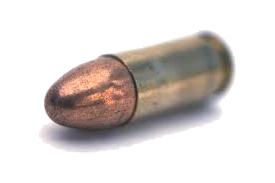
The last 200 years of Australia's history has been a story of immigration. It is not something to be afraid of: our forefathers celebrated it. Foreign workers: why Australia needs you Australia has had some appalling flops in IT and engineering: There is no doubt in my mind that additional foreign workers would have made a positive contribution to all of these problems or can do so in the future. The sun never sets on IT Every day, I collaborate with dozens of IT specialists all over the world through the virtual workplace that is the Internet, particularly in the free and open source software community. Many of these people, I've never even met and in most cases I don't even know where they are, where they were born or what is the colour of their skin. Those details wouldn't make any difference to the way that we work in IT today. How many IT managers have time to waste dealing with more real world bureaucracy when they've experienced online, global productivity? How many IT workers feel demotivated by having to explain trivial details about their personal life to a Government bureaucrat who doesn't understand their skills and just looks at their colour? If you think about it, any immigration officer who really understands IT wouldn't be an immigration officer. They would be working in IT themselves. Immigration officers, who don't understand IT, are now going to be further empowered to bully companies away from employing some talented workers on the basis of race or nationality. Hiring managers will be intimidated into these prejudiced and biased decisions by delays, processing fees and invasive demands for sensitive documents about business planning and recruitment strategies. Australia's immigration system already has a horrendous reputation. Any visa application seems to take more than a year: no small company can keep a job position vacant that long. Families can't plan their children's schooling. Other life events come and go. There are exhorbitant fees, 1000% higher than in other western countries. Fewer and fewer self-respecting skilled workers are willing to put their spouses and children through the degrading medical examinations. Judging the impact of poor immigration policy While the economic impact of this immigration mess on industry is hard to quantify with an exact figure, we can take some insight from the education system. As the visa system has been hijacked by racists over the last 10 years, there has been a dramatic fall in participation (and revenues) from foreign students. In one year, enrolments (and revenue) fell 30%. This is not just bad for the balance sheets of the universities, it also means that in a future where commerce is global, Australians are more and more isolated and inexperienced culturally. IT workers and their employers have plenty of choices: Australia's close neighbor, Singapore, is one of them. Visas are granted in 2 weeks, no degrading medical exam required, low taxes and tropical sunshine all year round. Many companies that find it impractical to deal with Australia's bureaucracy end up moving their best Australian workers to places like Singapore to be part of a global team. This can't be good for the workforce that is left behind without jobs. The training delusion Government officials continue to rant and rave about companies failing to train Australian workers. The new laws supposedly force companies to "fix" this problem and train Australian workers. This, too, is a delusion: employers are not to blame. Some of the best Australian workers are already long gone to places like Singapore, London and the US. With talented foreign workers denied the opportunity to come and fill the void, there is less opportunity for skills to be acquired by more junior workers in Australian workplaces. It is also extremely difficult for more junior workers to get a foot in the door in the international job market and the primary reason for this is the Australian Government's failure to fund university programs beyond a bachelor's degree. Compare this to Europe and the US where all competent graduates are funded through to a Masters or PhD program. The bottom line is that more junior workers are denied the opportunity to get the best training either at home or abroad and in both cases it's not the foreign workers that can be blamed: it's the Government's own fault. Why do we need skilled foreign workers when Australians can win Nobel Prizes? The Australian press recently went into a frenzy when an Australian won the Nobel Prize for physics. There was a catch though: he's a migrant from the United States (just don't tell the Prime Minister). Dr. Schmidt migrated to Australia 20 years ago when the immigration system was not the same as today. Today, future Nobel Prize winners are being shown a brick wall - maybe we even have one of them rotting away in our death camps or left in the sea for sharks to eat. The BBC recently revealed that Britain's successor to Stephen Hawking may be a young girl who migrated from India - it is chilling to imagine where a child like this may be hidden away under Australia's immigration system. Bureaucracy leads to fraud and exploitation It's been clearly demonstrated that wherever you have elaborate, artificial systems of bureaucracy it leads to inefficiency, it suppresses innovation and in the worst cases it enables fraud and exploitation. The typical examples usually involve police in some third-world African nation setting up road blocks and collecting fees from travellers who want to pass the queues. This type of opportunism has also been found in Australia's immigration system, with one Federal politician already directly implicated and jailed for his role in a visa racket. Gillard's own bullet man A Queensland pensioner made international headlines recently when he was caught sending bullets in the mail to the Prime Minister. His demands were clear: stop immigration. While most world leaders refuse to let nutcases like this dictate their actions, Gillard appears to have been transcribing his racist letters directly into these newest immigration laws. It is a sad reality that Australian politics regularly seeks to appeal to the worst instincts in people like bullet man. The ultimate political failure When politicians stoop to the level of demonizing immigrants it is usually a clue that the politicians themselves are past their use-by dates and out of fresh policy ideas. When former French president Sarkozy tried to play the racist card in his campaign for re-election, it bit him in the bum and he was swept from power by the socialists. As always in politics, there is an element of hypocrisy at work: neither our Head of Government (the Prime Minister) nor our Head of State (the Queen) was born in Australia. Gillard was born in Wales and migrated to Australia as a child. If Australians don't vote for her in September, will she be given 28 days notice to pack her bags and go back home'? From the frying pan and into the fire Tony Abbott, Australia's would-be Prime Minister contemplating his colleague's statements on bestiality The scariest thing is that if Australians see through this racist charade and refuse to vote for it, we could end up with something equally obnoxious: the other major political party is now gaining worldwide attention for their campaign linking gay marriage and homosexuals to bestiality. Which prejudice is the lesser evil: racism or homophobia?

17 June 2013

Matthew Palmer: Thought for the day

When the Syrian Electronic Army hacked The Onion s twitter account, what did they do to cause panic and mayhem? Post real news stories?

Lars Wirzenius: If it quacks like a duck: what is a backup?

The purpose of a backup is to allow you to recover from a disaster with reasonable cost and effort. If you delete a file you shouldn't have, or make changes that you shouldn't have, backups are meant to save you from having to re-create the file, or undo a large amount of steps. Speaking very broadly, any copy of your live data is a backup, but this is a uselessly broad definition. For example, if you use an automatic synchronisation system such as Dropbox or git-annex, to keep your live data in sync between two computers, you could pretend they're backups of each other. However, unless the synchronisation also allows you to keep a history of file versions, it's not a very good backup. If you delete your precious file on one computer, and it gets then deleted on the other computer as well, automatically, perhaps in seconds, then the backup is not of much use. Another common assumption is that a RAID array works as a backup. RAID is an excellent technology that allows you to combine several hard disks so that they protect you against loss of data in case of disk failure. If one disk fails, the others have enough data to re-create the data on the failed disk, using either full copies (RAID-1) or error correction codes (RAID-5, RAID-6). This is not a backup. It doesn't protect you against accidental file deletions. There is also no backup history. A version control system is very much like a backup. It stores copies of many of the versions of your project. However, in most version control systems it's fairly easy to make changes that lose history. Ask anyone who has used git reset to change the tip of the master branch to undo a wrong commit or merge, and then accidentally force-pushed that to the server. This is arguably a normal, if uncommon use of the version control system. A good backup system will protect you from you own mistakes, when you do the kinds of things you're expected to do. Version control systems also rarely capture all your data. When you were five, and made some stuff on the family computer, and saved it on a floppy, and then drew a cute little picture of yourself on the floppy to make it clear to everyone it was your floppy, and not anyone else's, certainly not your bully of your brother's, and your mother kept the floppy for decades because of the cute picture, then that is also not a backup. You didn't even know your Mom had kept it. A reasonable backup is one from which you can restore a working copy of your data, when you need to, without too much effort or expense, compared to the disaster you're experiencing. If the disaster is that you deleted a one-page draft outline of the book you want to write someday, the disaster is not very severe. The cost of restoring should be low. If the disaster is that your plans to become the supreme emperor of the world, and make all people your slaves, are in a spreadsheet on your laptop, and your minions accidentally drove a car over your laptop, and you had accidentally not used a Thinkpad as your laptop, the disaster is quite severe. Unless you recover the spreadsheet, you'll never be able to tell apart the buttons to launch the Moon rocket, to self-destruct your HQ, and to switch channels on your TV, and all your work will be in vain, and you'll never, ever, ever convince the pretty girl with red hair living in the house opposite that she should be interested in you. Also, you'll never be able to move away from your parent's house. So, quite severe. It will be acceptable to go to quite some effort and expense to recover that spreadsheet. It's better if you don't need to, but you will, if you have to. Your backup should also be reasonably up to date. Backing up every Christmas is a fine family tradition, but if you don't make a backup also on Easter, Midsummer, and Aunt Agatha's birthday sometime in September was it, or maybe October, you'll risk losing a whole year's worth of work. A year is a long time, and you might never be able to re-do all the work. Personally, I backup my personal laptop every day to a file server at home, and less often to an online backup server. My work laptop gets backed up once an hour to the company file server, which gets backed up to two backup servers about once a day. You need to balance the risk of losing data and work, and the expense and effort to back up your data. How much is a day's work worth to you, or your employer? How much does a backup system cost? In the next episode, I'll ponder on how many backups are enough.

Gunnar Wolf: Cultural objects/goods: When a superhero is too famous for his own good

I found the following news item; if you can read Spanish, you will most probably prefer the original version in the Proceso magazine's site. The subject? The federal police (PGR) and army arrest 17 artisans for making money out of Spiderman. The following translation is mine. Done past midnight, and being quite tired, and translated so this news item can reach a broader audience. All errors are mine (except those carried out by the security forces, that is).

June 13, 2013 Cuernavaca, Morelos. Policement from the General Republic Attorney (Procuradur a General de la Rep blica, PGR) and the Army entered and searched the "3 de mayo" neighbourhood, in the municipality of Emiliano Zapata, detaining 17 ceramist artisans that sold candies, dolls and pi atas shaped like Spiderman. This search was done on the evening of last Wednesday, around 16:00. Federal ministerial policement and army soldiers closed a street with several informal stores and detained workers taht were selling this Marvel Comics character, following said company's denounce. As a result for this operation, 17 artisants were detained, although the same day five of them were freed. The policemen also seized 12 bags of candies, pi atas, ceramics and wooden figures of the superhero. PGR closed down 11 stores where ceramics with this same figure was being sold, accusing the detainees of plagiarizing Spiderman's image, protected under the copyright law. The 12 that remained under detention were put at the Federal Justice's disposal, which prompted that this Thursday, around 10AM, hundreds of sellers of "3 de mayo" went out to PGR's building to demand their friends' freedom, who are facing a bail of up to 200,000 pesos (~USD$18,000). Outraged because they said they were treated as if they were part of a drug ring, hundreds of artisans closed intermitently Avenida Cuauhn huac, where the PGR representation in Morelos state is located. The artisans' pressure helped for the amount of the bail to be lowered from MX$200,000 to MX$16,000, and so they were set free. Francisco Fern ndez Flores, president of the Ceramists Association, criticized the operation because, he said, it was as strong as if they were "drug dealers". The artisans explained that they don't even make the Spiderman figures, they are made by the interns of the Centro Estatal de Reinserci n Social de Atlacholoaya (prision), located in the Xochitepec municipality, who offered them to the ceramists so they could be sold. "The Atlacholoaya inmates do them, we buy them to support them, and turns out we are the delinquents now", said Miriam Monroy, sister of one of the detainees. This information was contradicted by Jes s Valencia Valencia, responsible for Morelos' state prision system, who assured that in said prision no ceramics are done. Fern ndez Flores insisted though that from within the prision they are being offered pi atas, candies and "piggy banks" with Spiderman's shape. Jos Luis Pozo, vicepresident of the Ceramists Union, said that to avoid more such federal operations for copyright breaches, they have committed not to produce or commercialize Marvel superhero figures, and any other characters the authority demands. "We do commit to, from now on, those products singled out to us will not be commercialized", he said. Pozo said that the PGR operation caused losses not just to the detained producers and salesmen, but to over 200 ceramists that had to close their stores in solidarity with their friends. Acording to the artisans, the products were a success until the PGR came, seized the products and detained the salesmen.
And yes, the copyright insanity does not stop. Spiderman is by today a clear part of popular culture. Marvel brilliantly succeeded in creating such a popular icon that everybody recognizes, that everybody identifies with And that everybody should be able to recreate. We are not talking about brand protection. Marvel does not, and will never, commercialize pi atas, ceramics or wooden toys. And even if they were plastic-cast While Spiderman is still under the protection of copyright, as the Berne Convention defines it (and of course, as the much stricter Mexican laws agree), that does not mean that any and every product resembling a Spiderman should be protected. Many ceramists and pi ata makers will create unique pieces of art Ok, handicraft. But reading the copyright law more strictly, Spiderman is more treated as a trademark than as a copyright. And it is a trademark that should be declared as having passed on to the public domain.

13 June 2013

Daniel Pocock: Skype Scandal and the Jedi Council

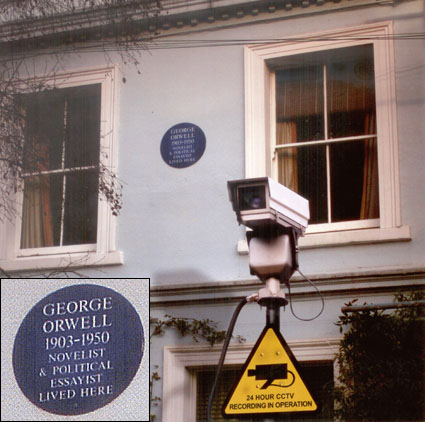
Normally Skype isn't mentioned by name on this blog, but today I'm making an exception. When a new scandal broke out in the Australian Army today, one of the first questions asked was how does it compare to the Skype Scandal which had everybody talking (and blushing) in 2011. A concise military reply direct from the General: "I'd say it's worse than the Skype matter" (the original Skype Scandal cadets are going on trial in six weeks) Jedi Council brings cultural change in the Army: from Skype to email Since the original scandal, there have been plenty of PR-orchestrated headlines about cultural change in the Army. Sadly, it seems that several ranking officers believed that was a cue to simply start using email instead of live feeds Operating under the operational code name Jedi Council, they've apparently been swapping annotated images of female colleagues and members of the public service. A more detailed account summarises it: "They were calling themselves the Jedi Council but they were doing the exact opposite of what Jedis are supposed to do" While the Skype scandal involved cadets behaving much like college kids elsewhere, this latest scandal involves the officer corp, the most senior officer implicated is allegedly a Lieutenant Colonel. Senior ranking officers like this have given many years of dedicated service to the country. They are widely respected and the vast majority of officers in these positions are unlikely to ever be implicated in such a scandal. Officers are in leadership roles, it should be no surprise if they have top secret security clearances. After the revelation that Australia has a direct and high-volume data sharing arrangement with the US Government (and in turn Facebook, Google, etc), there are all kinds of questions about whether a couple of rogue officers have access to pursue their private Jedi Council project using tools like PRISM and Boundless Informant. It's already been confirmed that they were keeping their own Jedi database of their victim's names, phone numbers, home addresses and various clothing measurements and if they are already emailing these photos about on Defence computers, does it seem improbable that they would be using PRISM or other sources to cross-reference their data? Behavior described as systematic and predatory It can't be ruled out that some defence computer systems may have direct access to NSA copies of images from those invasive airport body scanners - like these pictures that were not supposed to exist. Just like the British undercover cops stealing the identities of dead children and fully engaging with impressionable young women from environment campaign groups, there are a long list of possible abuses when the security state is over-empowered. While this latest Army example involves private pursuits, it is not hard to imagine many other permutations: perhaps a couple of rogue Government employees making unauthorised use of PRISM data for a commercial objective and gaining the upper hand on private sector competitors who have no such data feed. 100% trust? In every organisation there will always be a few people bending the rules. It's human nature, if it wasn't that way, we'd all be robots (or drones). The Army and the Catholic Church tend to be hammered a lot more in the public eye when these transgressions are discovered although statistically their crime rates are no higher than average. The bottom line is that no organisation is perfect and people have to take some responisbility to object to the excessive growth of the security state and keep our data to ourselves as you just never know who you can trust.

12 June 2013

Daniel Pocock: When conspiracy theories come true

In a blog attempting to join the dots between Australia's intelligence services and the US PRISM program, I speculated that Australia has had extensive access to data harvested by PRISM. My hunch has just been exposed rather dramatically today: Top secret data center under construction to house all our secrets. "There has been no discussion of the project in Senate estimates committee hearings, and the public reports of Parliament's joint committee on intelligence and security make no reference to it." The news story also suggests that the relationship is bi-directional, with data harvested from Australian ISPs cross referenced against US databases from Facebook and Google. From a human rights perspective, the implications of this data sharing are much more dramatic than the NSA just snooping on US citizens within the US. While Australia often tries to portray the image that it is a safe and happy country, it has a dark side. Police are kept busy investigating politicians and Government officials: Prime Minister and her associates connected to a union slush fund, the central bank's banknote printing agency's chief executive and 8 colleagues on conspiracy charges and even a senator on good old fashioned shoplifting and assault charges Exporting PRISM data to a human rights backwater As an Australian, my own rights and those of my family are more heavily protected and respected living in Europe than if I lived in my country of birth. Australia does not have a bill of rights like the US (where PRISM data is harvested) or the European Convention of Human Rights. Once US data is exported to Australia, it can be used to support sinister programs like the indefinite detention of coloured people in sinister desert camps. Just this week, the Government left over 50 bodies of poor refugees for the sharks to eat. For someone with such a lack of a conscience, can you imagine them thinking twice about using PRISM data for unscrupulous purposes? Is US PRISM data at greater risk? Despite the stench of corruption and lip service to human rights, is there any hard evidence that PRISM data will be at greater risk if allowed into the hands of Australians? Death by SMS One former Australian official (having dual-citizenship with Sri Lanka) is accused of facilitating war crimes in the Sri Lankan civil war. At present he is Sri Lanka's ambassador at the UN, giving him the benefit of diplomatic immunity. When he was working for Australia, how much data did he have access to? Isn't it ludicrous that in the name of stopping terrorism, data may have been collected and handed to war criminals on a silver platter? Behind enemy lines Like James Bond in reverse, an Australian official was exposed unofficially engaging in a relationship with a Vietnamese spy colonel. In addition to the $20 million in bribery to win a bank note printing contract, is data being used as a tool to leverage trade negotiations, officially or otherwise? If an Australian official with top-secret clearance ends up under the control of a foreign agent, what is the risk that they would be exploited to obtain PRISM data? Defence minister resignation in Chinese spy scandal In 2009 Australia's defence minister was identified having close links to a Chinese-Australian business woman including all the usual little luxuries: first class flights, apartment rental and joint business deals with family members. He subsequently resigned. Little details were made public. How much PRISM data was directly available to political officials like the defence minister? Disappearing Prime Ministers The disappearance of a serving Prime Minister, Harold Holt, during the cold war remains an unsolved mystery to this day. People continue to ask was he swept out to sea or voluntarily whisked away in a Chinese or Soviet nuclear submarine. While Australia has traditionally had strong ties to Britain and the US, there have been exceptions to the rule. Fortunately this all happened before PRISM and Harold Holt red submarine rumours are no more well-founded than the UFO theories of his abduction. Where did all the data go? As the music industry has found out the hard way, digital data can be copied at will with the originator having no control. The revelations that Britain and Australia are in on the PRISM shenanigans only confirms that this data is seen as a new form of currency for exchange in geo-political posturing. While used weapons take decades to work their way down the chain, data can spread at the speed of light.
8 June 2013

Michael Stapelberg: Survey answers part 1: systemd has too many dependencies, or it is bloated, or it does too many things, or is too complex

This blog post is the first of a series of posts dealing with the results of the Debian systemd survey. I intend to give a presentation at DebConf 2013, too, so you could either read my posts, or watch the talk, or both :-). The top concern shared by most people is:
systemd has too many dependencies, or it is bloated, or it does too many things, or is too complex
Now this concern actually has a lot of different facets, and I am trying to share my opinion on each of them. systemd has too many dependencies First, let s start with too many dependencies , because that is easy to check and reason about. I have created a document which lists all dependencies of the systemd binary itself (pid 1) and all the binaries which are currently shipped by the systemd Debian package. If you don t want to take my word for granted, please read that document. Have you read the document? Very nice! As you can see, the systemd binary itself has 10 dependencies (excluding libc). Now, the question is, what is bad about dependencies? Why do people list dependencies as a top concern?
  1. Cyclic dependencies. When you hear that your init system depends on DBus, you might argue that there is a cyclic dependency here, because DBus needs to be started by the init system. However, systemd does NOT depend on dbus-daemon (!) to boot your machine. Instead of using the system bus, it uses a private UNIX socket. Therefore, systemd uses DBus merely as a serialization format for IPC between its different processes. Only when you want to access systemd via its API as a user (non-root), you actually use the system bus. Since we are talking about DBus: DBus provides a well-tested serialization format and IPC mechanism so that systemd doesn t have to reinvent the wheel and instead benefits from wide support within languages.
  2. Complicated code. I feel like there is the implicit assumption that lots of dependencies correlate with complicated code that is easy to break. I encourage you to have a look at systemd s source code: look for the places where specific libraries are used, e.g. enforce_user which uses libcap. You ll notice that the code is not complex and usage of the libraries is clear.
  3. Software dragging in lots of library packages. The libraries which systemd uses are already in widespread use (e.g. DBus, udev, selinux, libcap, pcre, ). On a typical Debian installation, only very few of them will be dragged in by systemd, if at all. As an example, on a fresh Debian Wheezy installation, less than 10 packages will end up on your machine when running apt-get install systemd .
  4. More memory use. The Linux kernel maps libraries into memory only once, no matter how many processes use them. As stated in the dependency list, on machines where the libraries are not already loaded, systemd brings in about 500 KiB of additional memory-mapped libraries in the worst case. On the machines we have these days, this is a reasonable cost to pay for all the benefits systemd gets us. This holds true on embedded systems with only a few MiB of RAM and especially on typical workstations with 8+ GiB of RAM.
systemd is bloated Now, let s talk about bloat. Again, this is a point which has many facets. I d like to quote the Wikipedia definition of software bloat:
Software bloat is a process whereby successive versions of a computer program become perceptibly slower, use more memory or processing power, or have higher hardware requirements than the previous version whilst making only dubious user-perceptible improvements.
The first part of the definition certainly does not match systemd it is measurably faster than sysvinit. As for memory usage: systemd s RSS is 1.8 MiB, whereas sysvinit uses 0.8 MiB. As I argued on the More memory use point in the dependencies section, I think the additional resource cost is well worth the benefits. Also note that systemd s features are NOT all implemented in the binary which is PID 1. As explained in the dependency list, systemd consists of many cleanly separated binaries. So if a new version of systemd gathers an additional feature, this does not mean that your PID 1 will be bigger. While systemd runs on any hardware, it has an indirect hardware requirement: it requires some Linux kernel features (which are all enabled in Debian kernels). That might rule out usage of systemd on really old embedded hardware where you don t have a chance to update the kernel. While it is sad that those machines cannot profit from systemd, switching to systemd as a default has no downside either: Debian continues to support sysvinit for quite some time, so these machines will continue to work even with upcoming Debian versions. systemd does too many things The Wikipedia definition continues:
[ ] perceived bloat can occur from the software servicing a large, diverse marketplace with many differing requirements. Most end users will feel they only need some limited subset of the available functions and will regard the others as unnecessary bloat, even if people with different requirements do use them.
I think the last part of the Wikipedia definition applies to systemd: it does service a large and diverse marketplace . That marketplace is the entirety of existing software which is started by an init system. Also, systemd can be used on a wide range of hardware (embedded devices, tablets, phones, notebooks, desktops, servers) which requires different features. As an example: on a desktop system you typically don t care strongly about a watchdog feature, but on embedded or servers that feature is very handy. Similarly, on a tablet, forward secure sealing of logfiles is not as important as on a server. Therefore, I can understand if you feel that you don t need many of the features systemd provides. But please think of other users and maintainers who are very happy with systemd s benefits. Also note that while systemd supports many things (in separate binaries!), you don t have to use them all. It still makes sense to ship them all in the same package. Take coreutils as another example in that area. The binaries belong together, even though you most likely haven t used all of them (e.g. od, pr, ptx, :-)). systemd is too complex The remaining concern is that systemd is too complex. In my experience, complexity is often inherent to a specific area and one cannot simply make it go away. Instead, there are different models of how that complexity is represented. Think of the monolithic Linux kernel versus the MINIX microkernel. The latter has a very small amount of lines of source in the kernel, but puts the complexity into userspace. The former uses a different approach with more source in the kernel. The arguments between both camps show that neither is clearly right or clearly wrong. In a way, sysvinit represents the MINIX model: it has a small core (the init binary itself), but a lot of complexity in shell scripts and external programs. The fact that solutions are copied from one init script to another leads to lots of subtle errors and makes code reuse really hard. systemd however has more source code in the binaries, but requires only very simple, descriptive, textual configuration instead of complex init scripts. To me, it seems preferable to have the complexity in a single place instead of distributed across lots of people and projects. Conclusion In a way, you are right. systemd centralizes complexity from tons of init scripts into a single place. However, it therefore makes it very easy for maintainers to write service files (equivalent of an init script) and provides a consistent and reliable interface for service management. Furthermore, it is different than sysvinit, and different solutions often seem complex at first. While systemd consumes more resources than sysvinit, it uses them to make more information available about services; its finer-grained service management requires more state-keeping, but in turn offers you more control over your services.

Daniel Pocock: Rendition link to PRISM

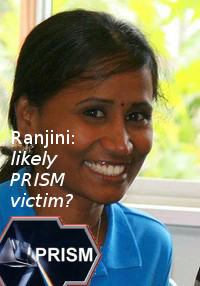
The Guardian is reporting that Britain's GCHQ first started getting produtive with PRISM early 2012. It was about the same time that their buddies down under, ASIO revised their earlier assessment of a refugee, Ranjini, and scooped her up in Australia's domestic rendition program. This may be more than a notable co-incidince, because it adds further support to the hypothesis that Ranjini is a victim of Big Data and PRISM. If ASIO first gained access to PRISM at the same time as GCHQ, then they may have used some tenuous PRISM data to form their revised assessment of her suitability for a visa. Making such inferences, and using them as the basis for a cruel program of indefinite detention is a gross violation of human rights and goes far beyond the claim that PRISM is about catching real terrorists. I've previously mentioned the systematic persecution of coloured people in my own country. Like many honest people, I'm utterly ashamed of it. The Government also has similar programs for indigineous people (they cooked one aboriginal elder alive on our national holiday) and they've also toyed with outlawing homosexuality. Having seen first hand some of the prejudiced, Government-sanctioned evil that exists in Australia, it's not hard to imagine small-minded members of the public service using PRISM data to target these classes of people for an unhealthy dose of bastardisation. Ranjini was ripped away from her husband by the rendition program and dumped in Sydney's Villawood death camp. Twenty-four hours after the gestapo got their hands on her, it was discovered she was pregnant - her child, an Australian citizen, was recently born and confined to the same concentration camp. Ranjini has racked up more than 12 months in captivity now, most of it while pregnant, and the Government has still not made any official charges against this woman. They say they can't comment on her case for fear of revealing their sources: once again, they don't want to talk about programs like PRISM that they share with the US. Maybe she just had one of the wrong people in her facebook friends list? That is not the sort of evidence that can be used to convict somebody in court, especially if the Government wants to avoid public questioning about their access to a close ally's secret database. Various rapists and murderers have made multiple court appearances in the last 12 months, tried and convicted in accordance with the procedures of justice. Ranjini has not been brought into a court room even once because the spooks don't want to reveal their sinister sources like PRISM.
Potential PRISM victim Ranjini
Australia's close ties with the US Australia has had particularly close ties with the US for many years and just as the British GCHQ has been linked to PRISM, it seems Australia's ASIO is also in on the act. For those not familiar with the depth of this alliance, it is worth checking up on Pine Gap, the ECHELON program and the recent exposure (by Wikileaks) of one of our senators with unauthorised US spy connections - he quietly resigned for family reasons'. Pine Gap
Pine Gap, Australia This is not to say that the US is universally bad or that the strategic alliance is undesirable: rather, it is simply to demonstrate the strength of these links and the real risk that data-sharing is used for inappropriate purposes. While many of us in a technical field treat large volumes of data from a very theoretical perspective, it is worth remembering that in the wrong hands, data can be very dangerous and there are real human victims.

4 June 2013

Keith Packard: dri3 extension

Completing the DRI3 Extension This week marks a pretty significant milestone for the glorious DRI3000 future. The first of the two new extensions is complete and running both full Gnome and KDE desktops. DRI3 Extension Overview The DRI3 extension provides facilities for building direct rendering libraries to work with the X window system. DRI3 provides three basic mechanisms:
  1. Open a DRM device.
  2. Share kernel objects associated with X pixmaps. The direct rendering client may allocate kernel objects itself and ask the X server to construct a pixmap referencing them, or the client may take an existing X pixmap and discover the underlying kernel object for it.
  3. Synchronize access to the kernel objects. Within the X server, Sync Fences are used to serialize access to objects. These Sync Fences are exposed via file descriptors which the underlying driver can use to implement synchronization. The current Intel DRM driver passes a shared page containing a Linux Futex.
Opening the DRM Device Ideally, the DRM application would be able to just open the graphics device and start drawing, sending the resulting buffers to the X server for display. There s work going on to make this possible, but the current situation has the X server in charge of blessing the file descriptors used by DRM clients. DRI2 does this by having the DRM client fetch a magic cookie from the kernel and pass that to the X server. The cookie is then passed to the kernel which matches it up with the DRM client and turns on rendering access for that application. For DRI3, things are much simpler the DRM client asks the X server to pass back a file descriptor for the device. The X server opens the device, does the magic cookie dance all by itself (at least for now), and then passes the file descriptor back to the application.
 
    DRI3Open
    drawable: DRAWABLE
    driverType: DRI3DRIVER
    provider: PROVIDER
       
    nfd: CARD8
    driver: STRING
    device: FD
 
    Errors: Drawable, Value, Match
    This requests that the X server open the direct rendering
    device associated with drawable, driverType and RandR
    provider. The provider must support SourceOutput or SourceOffload.
    The direct rendering library used to implement the specified
    'driverType' is returned in 'driver'. The file
    descriptor for the device is returned in 'device'. 'nfd' will
    be set to one (this is strictly a convenience for XCB which
    otherwise would need request-specific information about how
    many file descriptors were associated with this reply).
Sharing Kernel Pixel Buffers An explicit non-goal of DRI3 is support for sharing buffers that don t map directly to regular X pixmaps. So, GL ancillary buffers like depth and stencil just don t apply here. The shared buffers in DRI3 are regular X pixmaps in the X server. This provides a few obvious benefits over the DRI2 scheme: In the kernel, the buffers are referenced by DMA-BUF handles, which provides a nice driver-independent mechanism.
  1. Lifetimes are easily managed. Without being associated with a separate drawable, it s easy to know when to free the Pixmap.
  2. Regular X requests apply directly. For instance, copying between buffers can use the core CopyArea request.
To create back- and fake-front- buffers for Windows, the application creates a kernel buffer, associates a DMA-BUF file descriptor with that and then sends the fd to the X server with a pixmap ID to create the associated pixmap. Doing it in this direction avoids a round trip.
 
    DRI3PixmapFromBuffer
    pixmap: PIXMAP
    drawable: DRAWABLE
    size: CARD32
    width, height, stride: CARD16
    depth, bpp: CARD8
    buffer: FD
 
    Errors: Alloc, Drawable, IDChoice, Value, Match
    Creates a pixmap for the direct rendering object associated
    with 'buffer'. Changes to pixmap will be visible in that
    direct rendered object and changes to the direct rendered
    object will be visible in the pixmap.
    'size' specifies the total size of the buffer bytes. 'width',
    'height' describe the geometry (in pixels) of the underlying
    buffer. 'stride' specifies the number of bytes per scanline in
    the buffer. The pixels within the buffer may not be arranged
    in a simple linear fashion, but 'size' will be at least
    'height' * 'stride'.
    Precisely how any additional information about the buffer is
    shared is outside the scope of this extension.
    If buffer cannot be used with the screen associated with
    drawable, a Match error is returned.
    If depth or bpp are not supported by the screen, a Value error
    is returned.
To provide for texture-from-pixmap, the application takes the pixmap ID and passes that to the X server which returns the a file descriptor for a DMA-BUF which is associated with the underlying kernel buffer.
 
    DRI3BufferFromPixmap
    pixmap: PIXMAP
       
    depth: CARD8
    size: CARD32
    width, height, stride: CARD16
    depth, bpp: CARD8
    buffer: FD
 
    Errors: Pixmap, Match
    Pass back a direct rendering object associated with
    pixmap. Changes to pixmap will be visible in that
    direct rendered object and changes to the direct rendered
    object will be visible in the pixmap.
    'size' specifies the total size of the buffer bytes. 'width',
    'height' describe the geometry (in pixels) of the underlying
    buffer. 'stride' specifies the number of bytes per scanline in
    the buffer. The pixels within the buffer may not be arranged
    in a simple linear fashion, but 'size' will be at least
    'height' * 'stride'.
    Precisely how any additional information about the buffer is
    shared is outside the scope of this extension.
    If buffer cannot be used with the screen associated with
    drawable, a Match error is returned.
Tracking Window Size Changes When Eric Anholt and I first started discussing DRI3, we hoped to avoid needing to learn about the window size from the X server. The thought was that the union of all of the viewports specified by the application would form the bounds of the drawing area. When the window size changed, we expected the application would change the viewport. Alas, this simple plan isn t sufficient here a few GL functions are not limited to the viewport. So, we need to track the actual window size and monitor changes to it. DRI2 does this by delivering invalidate events to the application whenever the current buffer isn t valid; the application discovers that this event has been delivered and goes to as the X server for the new buffers. There are a couple of problems with this approach:
  1. Any outstanding DRM rendering requests will still draw to the old buffers.
  2. The Invalidate events must be captured before the application sees the related ConfigureNotify event so that the GL library can react appropriately.
The first problem is pretty intractable within DRI2 the application has no way of knowing whether a frame that it has drawn was delivered to the correct buffer as the underlying buffer object can change at any time. DRI3 fixes this by having the application in control of buffer management; it can easily copy data from the previous back buffer to the new back buffer synchronized to its own direct rendering. The second problem was solved in DRI2 by using the existing Xlib event hooks; the GL library directly implements the Xlib side of the DRI2 extension and captures the InvalidateBuffers events within that code, delivering those to the driver code. The problem with this solution is that Xlib holds the Display structure mutex across this whole mess, and Mesa must be very careful not to make any Xlib calls during the invalidate call. For DRI3, I considered placing the geometry data in a shared memory buffer, but my future plans for the Present extension led me to want an X event instead (more about the Present extension in a future posting). An X ConfigureNotify event is sufficient for the current requirements to track window sizes accurately. However, there s no easy way for the GL library to ensure that ConfigureNotify events will be delivered to the application other application code may (and probably will) adjust the window event mask for its own uses. I considered adding the necessary event mask tracking code within XCB, but again, knowing that the Present extension would probably need additional information anyhow, decided to create a new event instead. Using an event requires that XCB provide some mechanism to capture those events, keep them from the regular X event stream, and deliver them to the GL library. A further requirement is that the GL library be absolutely assured of receiving notification about these events before the regular event processing within the application will see a core ConfigureNotify event. The method I came up with for XCB is fairly specific to my requirements. The events are always XGE events, and are tagged with a special event context ID , an XID allocated for this purpose. The combination of the extension op-code, the event type and this event context ID are used to split off these events to custom event queues using the following APIs:
/**
 * @brief Listen for a special event
 */
xcb_special_event_t *xcb_register_for_special_event(xcb_connection_t *c,
                                                    uint8_t extension,
                                                    uint16_t evtype,
                                                    uint32_t eid,
                                                    uint32_t *stamp);
This creates a special event queue which will contain only events matching the specified extension/type/event-id triplet.
/**
 * @brief Returns the next event from a special queue
 */
xcb_generic_event_t *xcb_check_for_special_event(xcb_connection_t *c,
                                                 xcb_special_event_t *se);
This pulls an event from a special event queue. These events will not appear in the regular X event queue and so applications will never see them. There s one more piece of magic here the stamp value passed to xcbregisterforspecialevent. This pointer refers to a location in memory which will be incremented every time an event is placed in the special event queue. The application can cheaply monitor this memory location for changes and known when to check the queue for events. Within GL, the value used is the existing dri2 stamp value. That is checked at the top of the rendering operation; if it has changed, the drawing buffers will be re-acquired. Part of the buffer acquisition process is a check for special events related to the window. For now, I ve placed these events in the DRI3 extension. However, they will move to the Present extension once that is working.
 
    DRI3SelectInput
    eventContext: DRI3EVENTID
    window: WINDOW
    eventMask: SETofDRI3EVENT
 
    Errors: Window, Value, Match, IDchoice
    Selects the set of DRI3 events to be delivered for the
    specified window and event context. DRI3SelectInput can
    create, modify or delete event contexts. An event context is
    associated with a specific window; using an existing event
    context with a different window generates a Match error.
    If eventContext specifies an existing event context, then if
    eventMask is empty, DRI3SelectInput deletes the specified
    context, otherwise the specified event context is changed to
    select a different set of events.
    If eventContext is an unused XID, then if eventMask is empty
    no operation is performed. Otherwise, a new event context is
    created selecting the specified events.
The events themselves look a lot like a configure notify event:
 
    DRI3ConfigureNotify
    type: CARD8         XGE event type (35)
    extension: CARD8        DRI3 extension request number
    length: CARD16          2
    evtype: CARD16          DRI3_ConfigureNotify
    eventID: DRI3EVENTID
    window: WINDOW
    x: INT16
    y: INT16
    width: CARD16
    height: CARD16
    off_x: INT16
    off_y: INT16
    pixmap_width: CARD16
    pixmap_height: CARD16
    pixmap_flags: CARD32
 
    'x' and 'y' are the parent-relative location of 'window'.
Note that there are a couple of odd additional fields offx, offy, pixmapwidth, pixmapheight and pixmap_flags are all place-holders for what I expect to end up in the Present extension. For now, in DRI3, they should be ignored. Synchronization The DRM application needs to know when various X requests related to its buffers have finished. In particular, when performing a buffer swap, the client wants to know when that completes, and be able to block until it has. DRI2 does this by having the application make a synchronous request from the X server to get the names of the new back buffer for drawing the next frame. This has two problems:
  1. The synchronous round trip to the X server isn t free. Other running applications may cause fairly arbitrary delays in getting the reply back from the X server.
  2. Synchronizing with the X server doesn t ensure that GPU operations are necessarily serialized between the application and the X server.
What we want is a serialization guarantee between the X server and the DRM application that operates at the GPU level. I ve written a couple of times (dri3k first steps and Shared Memory Fences) about using X Sync extension Fences (created by James Jones and Aaron Plattner) for this synchronization and wanted to get a bit more specific here. With the X server, a Sync extension Fence is essentially driver-specific, allowing the hardware design to control how the actual synchronization is performed. DRI3 creates a way to share the underlying operating system object by passing a file descriptor from application to the X server which somehow references that device object. Both sides of the protocol need to tacitly agree on what it means.
 
    DRI3FenceFromFD
    drawable: DRAWABLE
    fence: FENCE
    initially-triggered: BOOL
    fd: FD
 
    Errors: IDchoice, Drawable
    Creates a Sync extension Fence that provides the regular Sync
    extension semantics along with a file descriptor that provides
    a device-specific mechanism to manipulate the fence directly.
    Details about the mechanism used with this file descriptor are
    outside the scope of the DRI3 extension.
For the current GEM kernel interface, because all GPU access is serialized at the kernel API, it s sufficient to serialize access to the kernel itself to ensure operations are serialized on the GPU. So, for GEM, I m using a shared memory futex for the DRI3 synchronization primitive. That does not mean that all GPUs will share this same mechanism. Eliminate the kernel serialization guarantee and some more GPU-centric design will be required. What about Swap Buffers? None of the above stuff actually gets bits onto the screen. For now, the GL implementation is simply taking the X pixmap and copying it to the window at SwapBuffers time. This is sufficient to run applications, but doesn t provide for all of the fancy swap options, like limiting to frame rate or optimizing full-screen swaps. I ve decided to relegate all of that functionality to the as-yet-unspecified Present extension. Because the whole goal of DRI3 was to get direct rendered application contents into X pixmaps, the Present extension will operate on those X objects directly. This means it will also be usable with non-DRM applications that use simple X pixmap based double buffering, a class which includes most existing non-GL based Gtk+ and Qt applications. So, I get to reduce the size of the DRI3 extension while providing additional functionality for non direct-rendered applications. Current Status As I said above, all of the above functionality is running on my systems and has booted both complete KDE and Gnome sessions. There have been some recent DMA-BUF related fixes in the kernel, so you ll need to run the latest 3.9.x stable release or a 3.10 release candidate. Here s references to all of the appropriate git repositories: DRI3 protocol and spec:
git://people.freedesktop.org/~keithp/dri3proto      master
XCB protocol
git://people.freedesktop.org/~keithp/xcb/proto.git  dri3
XCB library
git://people.freedesktop.org/~keithp/xcb/libxcb.git dri3
xshmfence library:
git://people.freedesktop.org/~keithp/libxshmfence.git   master
X server:
git://people.freedesktop.org/~keithp/xserver.git    dri3
Mesa:
git://people.freedesktop.org/~keithp/mesa.git       dri3
Next Steps Now it s time to go write the Present extension and get that working. I ll start coding and should have another posting here next week.

1 June 2013

Daniel Pocock: Democracy down-under is not democracy

This weekend we have the AGM of a local community organisation. Like many organisations I am involved in, there will be a democratic process of decision making, board election and a low-budget social activity afterwards. We take it for granted that democracy is a good thing. In my own country, Australia, people are supposedly happier than they've ever been, no doubt people will suggest that our democracy is part of the recipe for success. While this example is from Australia, it could well happen anywhere. While everybody was slapping themselves on the back about our officially confirmed contentment, the politicians tried to slip something under the radar. With elections expected in September, the press exposed a secret deal between the two biggest political parties, raiding the public piggy bank for $60 million to prop up their campaign accounts. There is even a leaked copy of a letter confirming the deal. It was to be voted through parliament in a stitch-up within 48 hours after the happiness' announcement. Why would these two big political parties engage in a such a gross conspiracy? Weren't they already content with their whopping big pay increases that put our Prime Minister on a bigger salary than the US president or the UK Prime Minister? Well, you don't have to look hard to find out what this special funding was all about: Not long ago, the post office at the University of Melbourne where Wikileaks operates a post-office box was mysteriously shut down. While that may seem like it could just be a co-incidence on it's own, it's worth considering in the wider context: the Wikileaks party is one of the most widely recognised names in Australian politics right now. The party's leader, like the new pope, is seen as somebody who puts his principles ahead of his own comfort, living a humble life in exile while our politicians romp around with prostitutes paid for with stolen money. Whatever you think of Wikileaks or Mr Assange's private life, they are not the only example here. There are other democratic movements in our country that are equally frightening for those who are currently drunk on power. One of the independent MPs holding the balance of power is a former Lieutenant Colonel in Australia's spy agency who was ridiculed by a prior Government and forced out of his job when he exposed the sham of the Iraq war. Neither of the major political parties wants to continue being held accountable by someone who has shown such strong principles against their campaign of death and deception. That $60 million welfare payment to big political parties was intended to be something akin to a weapon of mass destruction, obliterating independent representatives out of the parliament. More recently, the same independent MP has been equally vigorous in his campagin to break the scourge of our mafia-style gambling industry with it's cosy links to Australian politicians. Now it is starting to become obvious just how scary democracy can be. Motivated by the spectacle of a few independents holding our incumbent politicians to account, other Australians have also volunteered to get in on the act and try their hand at running the country. One of Australia's richest men, Clive Palmer has found that even with his enormous wealth (and having started planning more than a year before the election), his plans to form a political party are dampened by the fact that it can't be registered with a proper name to be listed on the ballot paper and all the candidates have to be listed under his name, Palmer, or their own names, barely distinguishable from the independent candidates. This discriminatory approach to the creation of political parties clearly favours the two big incumbent groups. Now it is a lot clearer why existing politicians needed an extra $60 million war chest: like Lance Armstrong's illegal doping program, it was intended to keep themselves ahead of the pack. It all goes to show that people should not take democracy for granted: constant vigilence and involvement is needed to hold leaders to account or replace them when they deviate.
AttachmentSize
piggy-bank.jpg32.83 KB

Next.

Previous.