I recently had to setup some Linux workstations with 802.1x authentication (described as Ethernet authentication ) to connect to a smart switch. The most useful web site I found was the Ubuntu help site about 802.1x Authentication [1]. But it didn t describe exactly what I needed so I m writing a more concise explanation.
The first thing to note is that the authentication mechanism works the same way as 802.11 wireless authentication, so it s a good idea to have the wpasupplicant package installed on all laptops just in case you need to connect to such a network.
The first step is to create a wpa_supplicant config file, I named mine /etc/wpa_supplicant_SITE.conf. The file needs contents like the following:
The first difference between what I use and the Ubuntu example is that I m using eap=PEAP , that is an issue of the way the network is configured, whoever runs your switch can tell you the correct settings for that. The next difference is that I m using auth=CHAP and the Ubuntu example has auth=PAP . The difference between those protocols is that CHAP has a challenge-response and PAP just has the password sent (maybe encrypted) over the network. If whoever runs the network says that they don t store unhashed passwords or makes any similar claim then they are almost certainly using CHAP.
Change USERNAME and PASS to your user name and password.
wpa_supplicant -c /etc/wpa_supplicant_SITE.conf -D wired -i eth0
The above command can be used to test the operation of wpa_supplicant.
Above is the output of a successful test with wpa_supplicant. I replaced the MAC of the switch with 00:01:02:03:04:05. Strangely it doesn t like CHAP but is automatically selecting MSCHAPV2 and working, maybe anything other than PAP would do.
auto eth0
iface eth0 inet dhcp
  wpa-driver wired
  wpa-conf /etc/wpa_supplicant_SITE.conf
Above is a snippet of /etc/network/interfaces that works with this configuration.
Author: ceridwen
I now have working test environments set up for null (no container,
build on the host system), schroot,
and qemu. After fixing some bugs,
null and qemu now pass all their tests!
schroot still has a permission error related to disorderfs. Since the
same code works for null and qemu and for schroot when disorderfs is
disabled, it's something specific to disorderfs and/or its combination
with schroot. The following is debug output that shows ls for the
build directory on the testbed before and after the mock build, and
stat for both the build directory and the mock build artifact
itself. The first control run, without disorderfs, succeeds:
test.py: DBG: testbed command ['ls', '-l', '/tmp/autopkgtest.5oMipL/control/'], kind short, sout raw, serr raw, env []
total 20
drwxr-xr-x 2 user user 4096 Jul 15 23:43 __pycache__
-rwxr--r-- 1 user user 2340 Jun 28 18:43 mock_build.py
-rwxr--r-- 1 user user  175 Jun  3 15:42 mock_failure.py
-rw-r--r-- 1 user user  252 Jun 14 16:06 template.ini
-rwxr-xr-x 1 user user 1600 Jul 15 23:18 tests.py
test.py: DBG: testbed command exited with code 0
test.py: DBG: testbed command ['sh', '-ec', 'cd /tmp/autopkgtest.5oMipL/control/ ;\n python3 mock_build.py ;\n'], kind short, sout raw, serr pipe, env ['LANG=en_US.UTF-8', 'HOME=/nonexistent/first-build', 'VIRTUAL_ENV=~/code/reprotest/.tox/py35', 'PATH=~/code/reprotest/.tox/py35/bin:/usr/local/sbin:/usr/local/bin:/usr/sbin:/usr/bin:/sbin:/bin:/usr/games:/usr/local/games:/snap/bin', 'PYTHONHASHSEED=559200286', 'TZ=GMT+12']
test.py: DBG: testbed command exited with code 0
test.py: DBG: testbed command ['ls', '-l', '/tmp/autopkgtest.5oMipL/control/'], kind short, sout raw, serr raw, env []
total 20
drwxr-xr-x 2 user user 4096 Jul 15 23:43 __pycache__
-rw-r--r-- 1 root root    0 Jul 18 15:06 artifact
-rwxr--r-- 1 user user 2340 Jun 28 18:43 mock_build.py
-rwxr--r-- 1 user user  175 Jun  3 15:42 mock_failure.py
-rw-r--r-- 1 user user  252 Jun 14 16:06 template.ini
-rwxr-xr-x 1 user user 1600 Jul 15 23:18 tests.py
test.py: DBG: testbed command exited with code 0
test.py: DBG: testbed command ['stat', '/tmp/autopkgtest.5oMipL/control/'], kind short, sout raw, serr raw, env []
  File: '/tmp/autopkgtest.5oMipL/control/'
  Size: 4096        Blocks: 8          IO Block: 4096   directory
Device: 56h/86d Inode: 1351634     Links: 3
Access: (0755/drwxr-xr-x)  Uid: ( 1000/    user)   Gid: ( 1000/    user)
Access: 2016-07-18 15:06:31.105915342 -0400
Modify: 2016-07-18 15:06:31.089915352 -0400
Change: 2016-07-18 15:06:31.089915352 -0400
 Birth: -
test.py: DBG: testbed command exited with code 0
test.py: DBG: testbed command ['stat', '/tmp/autopkgtest.5oMipL/control/artifact'], kind short, sout raw, serr raw, env []
  File: '/tmp/autopkgtest.5oMipL/control/artifact'
  Size: 0           Blocks: 0          IO Block: 4096   regular empty file
Device: fc01h/64513d    Inode: 40767795    Links: 1
Access: (0644/-rw-r--r--)  Uid: (    0/    root)   Gid: (    0/    root)
Access: 2016-07-18 15:06:31.089915352 -0400
Modify: 2016-07-18 15:06:31.089915352 -0400
Change: 2016-07-18 15:06:31.089915352 -0400
 Birth: -
test.py: DBG: testbed command exited with code 0
test.py: DBG: sending command to testbed: copyup /tmp/autopkgtest.5oMipL/control/artifact /tmp/tmpw_mwks82/control_artifact
schroot: DBG: executing copyup /tmp/autopkgtest.5oMipL/control/artifact /tmp/tmpw_mwks82/control_artifact
schroot: DBG: copyup_shareddir: tb /tmp/autopkgtest.5oMipL/control/artifact host /tmp/tmpw_mwks82/control_artifact is_dir False downtmp_host /var/lib/schroot/mount/jessie-amd64-ac94881d-ae71-4f24-a004-1847889d5d52//tmp/autopkgtest.5oMipL
schroot: DBG: copyup_shareddir: tb(host) /var/lib/schroot/mount/jessie-amd64-ac94881d-ae71-4f24-a004-1847889d5d52/tmp/autopkgtest.5oMipL/control/artifact is not already at destination /tmp/tmpw_mwks82/control_artifact, copying
test.py: DBG: got reply from testbed: ok
That last bit indicates that copy command for the build artifact from
the testbed to a temporary directory on the host succeeded. This is the
debug output from the second run, with disorderfs enabled:
test.py: DBG: testbed command ['ls', '-l', '/tmp/autopkgtest.5oMipL/disorderfs/'], kind short, sout raw, serr raw, env []
total 20
drwxr-xr-x 2 user user 4096 Jul 15 23:43 __pycache__
-rwxr--r-- 1 user user 2340 Jun 28 18:43 mock_build.py
-rwxr--r-- 1 user user  175 Jun  3 15:42 mock_failure.py
-rw-r--r-- 1 user user  252 Jun 14 16:06 template.ini
-rwxr-xr-x 1 user user 1600 Jul 15 23:18 tests.py
test.py: DBG: testbed command exited with code 0
test.py: DBG: testbed command ['sh', '-ec', 'cd /tmp/autopkgtest.5oMipL/disorderfs/ ;\n umask 0002 ;\n linux64 --uname-2.6 python3 mock_build.py ;\n'], kind short, sout raw, serr pipe, env ['LC_ALL=fr_CH.UTF-8', 'CAPTURE_ENVIRONMENT=i_capture_the_environment', 'HOME=/nonexistent/second-build', 'VIRTUAL_ENV=~/code/reprotest/.tox/py35', 'PATH=~/code/reprotest/.tox/py35/bin:/usr/local/sbin:/usr/local/bin:/usr/sbin:/usr/bin:/sbin:/bin:/usr/games:/usr/local/games:/snap/bin/i_capture_the_path', 'LANG=fr_CH.UTF-8', 'PYTHONHASHSEED=559200286', 'TZ=GMT-14']
test.py: DBG: testbed command exited with code 0
test.py: DBG: testbed command ['ls', '-l', '/tmp/autopkgtest.5oMipL/disorderfs/'], kind short, sout raw, serr raw, env []
total 20
drwxr-xr-x 2 user user 4096 Jul 15 23:43 __pycache__
-rw-r--r-- 1 root root    0 Jul 18 15:06 artifact
-rwxr--r-- 1 user user 2340 Jun 28 18:43 mock_build.py
-rwxr--r-- 1 user user  175 Jun  3 15:42 mock_failure.py
-rw-r--r-- 1 user user  252 Jun 14 16:06 template.ini
-rwxr-xr-x 1 user user 1600 Jul 15 23:18 tests.py
test.py: DBG: testbed command exited with code 0
test.py: DBG: testbed command ['stat', '/tmp/autopkgtest.5oMipL/disorderfs/'], kind short, sout raw, serr raw, env []
  File: '/tmp/autopkgtest.5oMipL/disorderfs/'
  Size: 4096        Blocks: 8          IO Block: 4096   directory
Device: 58h/88d Inode: 1           Links: 3
Access: (0755/drwxr-xr-x)  Uid: ( 1000/    user)   Gid: ( 1000/    user)
Access: 2016-07-18 15:06:31.201915291 -0400
Modify: 2016-07-18 15:06:31.185915299 -0400
Change: 2016-07-18 15:06:31.185915299 -0400
 Birth: -
test.py: DBG: testbed command exited with code 0
test.py: DBG: testbed command ['stat', '/tmp/autopkgtest.5oMipL/disorderfs/artifact'], kind short, sout raw, serr raw, env []
  File: '/tmp/autopkgtest.5oMipL/disorderfs/artifact'
  Size: 0           Blocks: 0          IO Block: 4096   regular empty file
Device: 58h/88d Inode: 7           Links: 1
Access: (0644/-rw-r--r--)  Uid: (    0/    root)   Gid: (    0/    root)
Access: 2016-07-18 15:06:31.185915299 -0400
Modify: 2016-07-18 15:06:31.185915299 -0400
Change: 2016-07-18 15:06:31.185915299 -0400
 Birth: -
test.py: DBG: testbed command exited with code 0
test.py: DBG: sending command to testbed: copyup /tmp/autopkgtest.5oMipL/disorderfs/artifact /tmp/tmpw_mwks82/experiment_artifact
schroot: DBG: executing copyup /tmp/autopkgtest.5oMipL/disorderfs/artifact /tmp/tmpw_mwks82/experiment_artifact
schroot: DBG: copyup_shareddir: tb /tmp/autopkgtest.5oMipL/disorderfs/artifact host /tmp/tmpw_mwks82/experiment_artifact is_dir False downtmp_host /var/lib/schroot/mount/jessie-amd64-ac94881d-ae71-4f24-a004-1847889d5d52//tmp/autopkgtest.5oMipL
schroot: DBG: copyup_shareddir: tb(host) /var/lib/schroot/mount/jessie-amd64-ac94881d-ae71-4f24-a004-1847889d5d52/tmp/autopkgtest.5oMipL/disorderfs/artifact is not already at destination /tmp/tmpw_mwks82/experiment_artifact, copying
schroot: DBG: cleanup...
schroot: DBG: execute-timeout: schroot --run-session --quiet --directory=/ --chroot jessie-amd64-ac94881d-ae71-4f24-a004-1847889d5d52 --user=root -- rm -rf -- /tmp/autopkgtest.5oMipL
rm: cannot remove '/tmp/autopkgtest.5oMipL/disorderfs': Device or resource busy
schroot: DBG: execute-timeout: schroot --quiet --end-session --chroot jessie-amd64-ac94881d-ae71-4f24-a004-1847889d5d52
Unexpected error:
Traceback (most recent call last):
  File "~/code/reprotest/reprotest/lib/VirtSubproc.py", line 708, in mainloop
    command()
  File "~/code/reprotest/reprotest/lib/VirtSubproc.py", line 646, in command
    r = f(c, ce)
  File "~/code/reprotest/reprotest/lib/VirtSubproc.py", line 584, in cmd_copyup
    copyupdown(c, ce, True)
  File "~/code/reprotest/reprotest/lib/VirtSubproc.py", line 469, in copyupdown
    copyupdown_internal(ce[0], c[1:], upp)
  File "~/code/reprotest/reprotest/lib/VirtSubproc.py", line 494, in copyupdown_internal
    copyup_shareddir(sd[0], sd[1], dirsp, downtmp_host)
  File "~/code/reprotest/reprotest/lib/VirtSubproc.py", line 408, in copyup_shareddir
    shutil.copy(tb, host)
  File "/usr/lib/python3.5/shutil.py", line 235, in copy
    copyfile(src, dst, follow_symlinks=follow_symlinks)
  File "/usr/lib/python3.5/shutil.py", line 114, in copyfile
    with open(src, 'rb') as fsrc:
PermissionError: [Errno 13] Permission denied: '/var/lib/schroot/mount/jessie-amd64-ac94881d-ae71-4f24-a004-1847889d5d52/tmp/autopkgtest.5oMipL/disorderfs/artifact'
ls shows that the artifact is created in the right place. However,
when reprotest tries to copy it from the testbed to the host, it gets
a permission error. The traceback is coming from virt/schroot, and
it's a Python open() call that's failing. Note that the permissions
are wrong for the second run, but that's expected because my schroot
is stable so the umask bug isn't fixed yet; and that the rm error
from disorderfs not being unmounted early enough (see below). I
expect to see the umask test fail, though, not a crash in every test
where the build succeeds.
After a great deal of effort, I isolated the bug that was causing the
process to hang not to my code or autopkgtest's code, but to
CPython and
contextlib. It's supposed to be
fixed in CPython 3.5.3, but for now I've worked around the problem by
monkey-patching the patch provided in the latter issue onto
contextlib.
Here is my current to-do list:
Fix PyPi not installing the virt/ scripts correctly.
Move the disorderfs unmount into the shell script. (When the virt/
scripts encounter an error, they try to delete a temporary
directory, which fails if disorderfs is mounted, so the script needs
to unmount it before that happens.)
Find and fix the schroot/disorderfs permission error bug.
Convert my notes on setting up for the tests into something useful
for users.
Write scripts to synch version numbers and documentation.
Fix the headers in the autopkgtest code to conform to reprotest
style.
Add copyright information for the contextlib monkey-patch and the
autopkgtest files I've changed.
And here are the questions I'd like to resolve before the second release:
Is there any other documentation that's essential? Finishing the
documentation will come later.
Should I release before finishing the rest of the variation? This
will slow down the release of the first version with something
resembling full fuctionality.
Do I need to write a chroot test now? Given the duplication with
schroot, I'm unconvinced this is worthwhile.
It's been four years since I last wrote about music players. In the
meantime of my Sansa Fuzes broke, and the third does not have great rockbox
support. I've also been using a Sansa Clip+ (a leaving present from my last
job, thanks again!) and a Sansa Clip Zip. Unfortunately Sandisk's newer Sansa
devices (Sport, Jam - the only ones still in production) are not supported by
Rockbox.
The Clips have been very reliable and sturdy players, but I have missed the
larger display of the Fuze. Since I've been exploring HD audio
I've also been interested in something with an A/D converter that can handle it.
I also still wish to carry my entire music library around with me, which limits
my options.
I decided to try an iPod. The older iPods had a Wolfson-manufacturered ADC
which had a good reputation and supported (in headline terms at least) 24/48.
The iPod colour (aka "4th gen") and subsequent models have a large colour
display. The click-wheel interface is also very nice. Apple have now
discontinued the "classic" iPod and their second hand value has greatly
increased, but I managed to get an older 5th generation model ("video", with a
base capacity of 30G) whilst trading in some unwanted DVDs. The case was
scratched to heck but a replacement was readily and cheaply available from
auction sites.
Rockbox support in these iPods is pretty good, and you can mod the hardware to
support CF or SD cards with kits such as the iFlash
kits by Tarkan Akdam, which I picked up, along with
a new 128G SD card.
Unfortunately I have found writing to the iPod to be very poor with Rockbox,
but it's fine for playback, and booting the iPod in OF or DFU mode is very easy
and works reliably.
Whilst Rockbox on the iPod works pretty well, installing it is far harder than
on the Sandisk Sansa devices. The difficulty in my case is because rockbox
requires a PC-formatted iPod to install, and I had a Mac-formatted one. I
couldn't find a way to convert the iPod to PC format using a Mac. I tried doing
so on a PC but for some reason the PC wasn't playing ball so I gave up after a
few hours. In the end I assembled the filesystem by hand using dd(1) and
dumps of partition tables from other people's iPods, via a Linux machine. This
was enough to convince iTunes on Mac to restore it's hidden partition and boot
software without reverting back to a Mac disklabel format.
Many people have now heard of the EFF-backed free certificate authority Let's Encrypt. Not only is it free of charge, it has also introduced a fully automated mechanism for certificate renewals, eliminating a tedious chore that has imposed upon busy sysadmins everywhere for many years.
These two benefits - elimination of cost and elimination of annual maintenance effort - imply that server operators can now deploy certificates for far more services than they would have previously.
The TLS chapter of the RTC Quick Start Guide has been updated with details about Let's Encrypt so anybody installing SIP or XMPP can use Let's Encrypt from the outset.
For example, somebody hosting basic Drupal or Wordpress sites for family, friends and small community organizations can now offer them all full HTTPS encryption, WebRTC, SIP and XMPP without having to explain annual renewal fees or worry about losing time in their evenings and weekends renewing certificates manually.
Even people who were willing to pay for a single certificate for their main web site may have snubbed their nose at the expense and ongoing effort of having certificates for their SMTP mail server, IMAP server, VPN gateway, SIP proxy, XMPP server, WebSocket and TURN servers too. Now they can all have certificates.
Early efforts at SIP were doomed without encryption
In the early days, SIP messages would be transported across the public Internet in UDP datagrams without any encryption. SIP itself wasn't originally designed for NAT and a variety of home routers were created with "NAT helper" algorithms that would detect and modify SIP packets to try and work through NAT. Sadly, in many cases these attempts to help actually clash with each other and lead to further instability. Conversely, many rogue ISPs could easily detect and punish VoIP users by blocking their calls or even cutting their DSL line. Operating SIP over TLS, usually on the HTTPS port (TCP port 443) has been an effective way to quash all of these different issues.
While the example of SIP is one of the most extreme, it helps demonstrate the benefits of making encryption universal to ensure stability and cut out the "man-in-the-middle", regardless of whether he is trying to help or hinder the end user.
Is one certificate enough?
Modern SIP, XMPP and WebRTC require additional services, TURN servers and WebSocket servers. If they are all operated on port 443 then it is necessary to use different hostnames for each of them (e.g. turn.example.org and ws.example.org. Each different hostname requires a certificate. Let's Encrypt can provide those additional certificates too, without additional cost or effort.
The future with Let's Encrypt
The initial version of the Let's Encrypt client, certbot, fully automates the workflow for people using popular web servers such as Apache and nginx. The manual or certonly modes can be used for other services but hopefully certbot will evolve to integrate with many other popular applications too.
Currently, Let's Encrypt's certbot tool issues certificates to servers running on TCP port 443 or 80. These are considered to be a privileged ports whereas any port over 1023, including the default ports used by applications such as SIP (5061), XMPP (5222, 5269) and TURN (5349), are not privileged ports. As long as certbot maintains this policy, it is generally necessary to either run a web server for the domain associated with each certificate or run the services themselves on port 443. There are other mechanisms for domain validation and various other clients supporting different subsets of them. Running the services themselves on port 443 turns out to be a good idea anyway as it ensures that RTC services can be reached through HTTP proxy servers who fail to let the HTTP CONNECT method access any other ports.
Many configuration tasks are already scripted during the installation of packages on a GNU/Linux distribution (such as Debian or Fedora) or when setting up services using cloud images (for example, in Docker or OpenStack). Due to the heavily standardized nature of Let's Encrypt and the widespread availability of the tools, many of these package installation scripts can be easily adapted to find or create Let's Encrypt certificates on the target system, ensuring every service is running with TLS protection from the minute it goes live.
If you have questions about Let's Encrypt for RTC or want to share your experiences, please come and discuss it on the Free-RTC mailing list.
Background: I ve been relearning Rust (more about that in a separate post, some time later), and in doing so, I chose to implement the low-level parts of git (I ll touch the why in that separate post I just promised).
Disclaimer: It s friday. This is not entirely(?) a serious post.
So, I was looking at Documentation/technical/index-format.txt, and saw:
32-bit number of index entries.
What? The index/staging area can t handle more than ~4.3 billion files?
There I was, writing Rust code to write out the index.
(For people familiar with the byteorder crate and wondering what NetworkOrder is, I have a use byteorder::BigEndian as NetworkOrder)
And the Rust compiler rightfully barfed:
error: mismatched types:
 expected  u32 ,
    found  usize  [E0308]
And there I was, wondering: mmmm should I just add as u32 and silently truncate or hey what does git do?
And it turns out, git uses an unsigned int to track the number of entries in the first place, so there is no truncation happening.
Then I thought but what happens when cache_nr reaches the max?
Well, it turns out there s only one obvious place where the field is incremented.
What?Holy coffin nails, Batman! No overflow check?
Wait a second, look 3 lines above that:
So it s an array of pointers, assuming 64-bits pointers, that s ~34.3 GB. But, all those cache_nr entries are in memory too. How big is a cache entry?
struct cache_entry
        struct hashmap_entry ent;
        struct stat_data ce_stat_data;
        unsigned int ce_mode;
        unsigned int ce_flags;
        unsigned int ce_namelen;
        unsigned int index;     /* for link extension */
        unsigned char sha1[20];
        char name[FLEX_ARRAY]; /* more */
 ;
So, 4 ints, 20 bytes, and as many bytes as necessary to hold a path. And two inline structs. How big are they?
struct hashmap_entry
        struct hashmap_entry *next;
        unsigned int hash;
 ;
struct stat_data
        struct cache_time sd_ctime;
        struct cache_time sd_mtime;
        unsigned int sd_dev;
        unsigned int sd_ino;
        unsigned int sd_uid;
        unsigned int sd_gid;
        unsigned int sd_size;
 ;
So all in all, we re looking at 1 + 2 + 2 + 5 + 4 32-bit integers, 1 64-bits pointer, 2 32-bits padding, 20 bytes of sha1, for a total of 92 bytes, not counting the variable size for file paths.
The average path length in mozilla-central, which only has slightly over 140 thousands of them, is 59 (including the terminal NUL character).
Let s conservatively assume our crazy repository would have the same average, making the average cache entry 151 bytes.
But memory allocators usually allocate more than requested. In this particular case, with the default allocator on GNU/Linux, it s 156 (weirdly enough, it s 152 on my machine).
156 times 4.3 billion 670 GB. Plus the 34.3 from the array of pointers: 704.3 GB. Of RAM. Not counting the memory allocator overhead of handling that. Or all the other things git might have in memory as well (which apparently involves a hashmap, too, but I won t look at that, I promise).
I think one would have run out of memory before hitting that integer overflow.
Interestingly, looking at Documentation/technical/index-format.txt again, the on-disk format appears smaller, with 62 bytes per file instead of 92, so the corresponding index file would be smaller. (And in version 4, paths are prefix-compressed, so paths would be smaller too).
But having an index that large supposes those files are checked out. So let s say I have an empty ext4 file system as large as possible (which I m told is 2^60 bytes (1.15 billion gigabytes)). Creating a small empty ext4 tells me at least 10 inodes are allocated by default. I seem to remember there s at least one reserved for the journal, there s the top-level directory, and there s lost+found ; there apparently are more. Obviously, on that very large file system, We d have a git repository. git init with an empty template creates 9 files and directories, so that s 19 more inodes taken. But git init doesn t create an index, and doesn t have any objects. We d thus have at least one file for our hundreds of gigabyte index, and at least 2 who-knows-how-big files for the objects (a pack and its index). How many inodes does that leave us with?
The Linux kernel source tells us the number of inodes in an ext4 file system is stored in a 32-bits integer.
So all in all, if we had an empty very large file system, we d only be able to store, at best, 2^32 22 files And we wouldn t even be able to get cache_nr to overflow.
while following the rules. Because the index can keep files that have been removed, it is actually possible to fill the index without filling the file system. After hours (days? months? years? decades?*) of running
seq 0 4294967296 while read i; do touch $i; git update-index --add $i; rm $i; done
One should be able to reach the integer overflow. But that d still require hundreds of gigabytes of disk space and even more RAM.
At the rate it was possible to add files to the index when I tried (yeah, I tried), for a few minutes, and assuming a constant rate, the estimate is close to 2 years. But the time spent reading and writing the index file increases linearly with its size, so the longer it d run, the longer it d take.
Ok, it s actually much faster to do it hundreds of thousand files at a time, with something like:
At the rate the first million files were added, still assuming a constant rate, it would take about a month on my machine. Considering reading/writing a list of a million files is a thousand times faster than reading a list of a billion files, assuming linear increase, we re still talking about decades, and plentiful RAM. Fun fact: after leaving it run for 5 times as much as it had run for the first million files, it hasn t even done half more
One could generate the necessary hundreds-of-gigabytes index manually, that wouldn t be too hard, and assuming it could be done at about 1 GB/s on a good machine with a good SSD, we d be able to craft a close-to-explosion index within a few minutes. But we d still lack the RAM to load it.
So, here is the open question: should I report that integer overflow?
Wow, that was some serious procrastination.
Edit: Epilogue: Actually, oops, there is a separate integer overflow on the reading side that can trigger a buffer overflow, that doesn t actually require a large index, just a crafted header, demonstrating that yes, not all integer overflows are equal.
There is increasing demand for SMS notifications about monitoring alerts, trading notifications, flight delays and other events. Various companies are offering SMS transmission services to meet this demand and many of them aggressively pushing their own proprietary interfaces to the SMS world rather than using the more open and widely supported SMPP.
There is good reason for this: if users write lots of of scripts to access the REST API of an SMS service, the users won't be able to change their service provider without having to change all their code. Well, that is good if you are an SMPP vendor but not if you are their customer. If an SMS gateway company goes out of business or has a system meltdown, the customers linked to their REST API will have a much bigger effort to migrate to a new provider than those using SMPP.
The HTTP REST APIs offered by many vendors hide some details of the SMS protocol and payload. At first glance, this may feel easier. In fact, this leads to unpredictable results when delivering messages to users in different countries and different character sets/languages. It is better to start with SMPP from the beginning and avoid discovering those pitfalls later. The SMS Router free/open source software project helps overcome the SMPP learning curve by using APIs you are already familiar with.
More troublesome for large organizations, some of the REST APIs offered by SMS gateways want to make callbacks to your own servers: this means your servers need public IP addresses accessible from the Internet. In some organizations that can take months to organize. SMPP works over one or more outgoing TCP connections initiated from your own server(s) and doesn't require any callback connections from the SMPP gateway.
SMS Router lets SMS users have the best of both worlds: the flexibility of linking to any provider who supports SMPP and the convenience of putting messages into the system using any of the transports supported by an Apache Camel component. Popular examples include camel-jms (JMS) for Java and J2EE users, STOMP for scripting languages, camel-mail (SMTP and IMAP) for email integration and camel-sip (SIP) or camel-xmpp (XMPP) for chat/instant messaging systems. If you really want to, you can also create your own in-house HTTP REST API too using camel-restlet for internal applications. In all these cases, SMS Router always uses standard SMPP to reach any gateway of your choice.
Architecture overview
SMS Router is based on Apache Camel. Multiple instances can be operated in parallel for clustering, load balancing and high availability. It can be monitored using JMX solutions such as JMXetric.
The SMPP support is based on the camel-smpp component which is in turn based on the jSMPP library, which comprehensively implements the SMPP protocol in Java. camel-smpp can be used with minimal configuration but for those who want to, many SMPP features can be tweaked on a per-message basis using various headers.
The SMPP gateway settings can be configured and changed at will using the sms-router.properties file. The process doesn't require any other files or databases at runtime.
The SMS Router is ready-to-run with one queue for sending messages and another queue for incoming messages. The routing logic can be customized by editing the RouteBuilder class to use other Camel components or any of Camel's wide range of functions for inspecting, modifying and routing messages. For example, you can extend it to failover to multiple SMPP gateways using Camel's load-balancer pattern.
SMS Router based projects are already used successfully in production, for example, the user registration mechanism for the Lumicall secure VoIP app for Android.
Getting started
See the README for instructions. Feel free to ask questions about this project on the Camel users mailing list.
Disclaimer
SMS is not considered secure, the SMS Router developers and telecommunications industry experts discourage the use of this technology for two-factor authentication. Please see the longer disclaimer in the README file and my earlier blog about SMS logins: an illusion of security. The bottom line: if your application is important enough to need two-factor authentication, do it correctly using smart cards or tokens. There are many popular free software projects based on these full cryptographic solutions, for example, the oath-toolkit and dynalogin.
At least a little much more time lst month for helping to improve the operating system we're working on.
I've worked on a couple of package updates, mostly they are for PAPT, DPMT, Debian Science, or pkg-go (in order of completion):
python-jsontest/1.2-1 (needed for the Pyinfra tests)
Sponsored Uploads:
dwarfutils/20160507+git20160523.9086738-1 (new shared library and several CVE fixes)
dwarfutils/20160507+git20160523.9086738-2
dwarfutils/20160613-1 (closed #827382, patched for reproducible builds)
dwarfutils/20160613-2 (closed #827921, now co-installable with libdw-dev)
dwarfutils/20160613-3 (upload to unstable)
squirrel3/3.1-3 (closed #828963)
Again some further ahead with these ones.
My "new package of the month" is going to be Theano. I'm still working on the introduction, it'll come hereafter very soon.
How strip-nondeterminism is Python and thus unsuitable for the openSUSE base system
Mozilla awarded $77k to work on reproducible builds for Tails.
The goal is to enable anyone (given sufficient technical skills and
hardware resources) to rebuild from source a given Tails release, in
order to independently verify that it matches the ISO image that
was published. A substantial part of this work will be done in Debian:
for example, to make the side-effects of some packages'
post-installation scripts deterministic. On the longer term, this
work should benefit other projects that want to make their own
builds reproducible (e.g. operating system images for the cloud and
embedded systems, operating system installation media, other Live
systems).
Ceridwen announced reprotest's arrival in the NEW queue and discussed autopkgtest's layout.
Toolchain fixes
Anton Gladky uploaded an NMU of python-setuptools, which sorts entries in native_libs.txt files (#825857).
Other upstream fixes
Emil Velikov searched on IRC for hints on how to guarantee unique values during
build to invalidate
shader caches in Mesa, when also no
VCS information
is available. A possible solution is a timestamp, which is unique enough for
local builds, but can still be reproducible by allowing it to be overwritten
with SOURCE_DATE_EPOCH.
Packages fixed
The following 9 packages have become reproducible due to changes in their
build dependencies:
ccliblibrun-parts-perlllvm-toolchain-snapshotpython-cryptopython-openidr-bioc-shortreadr-bioc-variantannotationruby-hdfeos5sqlparse
The following packages have become reproducible after being fixed:
Quote of the week
"My builds are so reproducible, they fail exactly every second time."
Johannes Ziemke (@discordianfish)
Misc.
This week's edition was written by Chris Lamb (lamby), Reiner Herrmann and Holger Levsen and reviewed by a bunch of Reproducible builds folks on IRC.
A quiet place in which to get away and code is all I was looking for when I
moved here. I found much more, but that's still the essence of the place.
On returning home from the beach, I've just learned that after
several years renting this house, I will soon have to leave, or buy it.
The house is an EarthShip,
tucked away in its own private holler (as we say here in the Appalachian
Mtns of Tennessee), below a mountain that is National Forest, two
miles down back roads from a river.
A wonderful place to relax and code, but
developing only free software for twenty years
doesn't quite stretch to being able to afford buying this kind of place.
But, I got to thinking of times friends were able to visit me here.
Grilling over wood fires with friends from Debian. Steep hikes and river
swims. Sharing dialup bandwidth between our Linux laptops. A bunch of us
discussing Haskell in the living room at midnight. And too, I've many times
talked about the place with someone who got a gleam in their eye, imagining
themselves living there.
And then there's my Yurt, my relief valve before
I moved here. And a great spot I like to visit on an old logging road above
a creek.
Could we put all this together somehow? Might a handful of my friends
be able to contribute somewhere in the range of $10 thousand to buy in?
Interested? Want more details? Have ideas?
Visit the Hacker Holler website
and get in touch.
(Limited to folks I've met in person or spent a lot of time online with.)
Last week, I posted about python-sense,
and API wrapper for the internal Sense API. I wrote this so that I could
pull data about myself into my own databases, allowing me to use that
information for myself.
One way I'm doing this is by pulling my room data into an
InfluxDB database, letting me run time series
queries against my environmental data.
I'm able to run this on a cron, automatically loading data from the Sense
API into my Influx database. I can then use that with something like
Grafana, to check out what my room looks like over
time.
Tonight I've dreamt I was inside https://wl.widelands.org/, as a barbarian being invaded by the atlanteans.
I've had the same thing happening to me a few times with Battle for Wesnoth http://wesnoth.org/
Mayyybe it is a sign that lately I've been playing it too much, but I'm quite happy with the fact that free software / culture is influencing my dreams.
Thanks to everybody who is involved into Free Culture for creating enough content so that this can happen.
Support appending arbitrary text in the Compose textarea to the subject via a context menu. (#4)
Avoid brittle parsing of the page and use the Javascript API instead. (diff)
Updated my Strava Enhancement Suite, a Chrome extension that improves and fixes annoyances in the web interface of the Strava cycling and running tracker:
Merge support from Jeff Schuler to support "Flyby" activity defaults. (#50)
Correctly fallback to the default value after introducing a new value. (diff)
Started work on packaging lute-tab, but upstream was unwilling to relicense to a DFSG-friendly license so the enterprise was aborted.
Updated the SSL certificate for try.diffoscope.org, a hosted version of the diffoscope in-depth and content-aware diff utility. Thanks to Bytemark for sponsoring the hardware.
Started on the slides for the Reproducible Builds talk at DebConf16.
Nick Tierney asked on Twitter about rmarkdown and metropolis about whether folks had used RMarkdown-driven LaTeX Beamer presentations. And the answer is a firm hell yeah. I have been using mtheme (and/or a local variant I called 'm2') as well as the newer (renamed) release mtheme for the last year or two for all my RMarkdown-based presentations as you can see from my presentations page.
And earlier this year back I cleaned this up and wrote myself local Ubuntu packages which are here on Launchpad. I also have two GitHub repos for the underlying .deb package code: - the pkg-latex-metropolis package for the LaTeX part (which is also in TeXlive in an older version) - the pkg-fonts-fira for the underlying (free) font (and this sadly cannot build on launchpad as it needs a download step).
To round things up, I now also created a public 'sample' repo on GitHub. It is complete for all but the custom per-presenteation header.tex that modifies colours, add local definitions etc as needed for each presentation.
With that, Happy Canada Day (tomorrow, though) -- never felt better to be part of something Glorious and Free, and also free of Brexit, Drumpf and other nonsense.
I bought some awful WiFi lightbulbs a few months ago. The short version: they introduced terrible vulnerabilities on your network, they violated the GPL and they were also just bad at being lightbulbs. Since then I've bought some other Internet of Things devices, and since people seem to have a bizarre level of fascination with figuring out just what kind of fractal of poor design choices these things frequently embody, I thought I'd oblige.
Today we're going to be talking about the KanKun SP3, a plug that's been around for a while. The idea here is pretty simple - there's lots of devices that you'd like to be able to turn on and off in a programmatic way, and rather than rewiring them the simplest thing to do is just to insert a control device in between the wall and the device andn ow you can turn your foot bath on and off from your phone. Most vendors go further and also allow you to program timers and even provide some sort of remote tunneling protocol so you can turn off your lights from the comfort of somebody else's home.
The KanKun has all of these features and a bunch more, although when I say "features" I kind of mean the opposite. I plugged mine in and followed the install instructions. As is pretty typical, this took the form of the plug bringing up its own Wifi access point, the app on the phone connecting to it and sending configuration data, and the plug then using that data to join your network. Except it didn't work. I connected to the plug's network, gave it my SSID and password and waited. Nothing happened. No useful diagnostic data. Eventually I plugged my phone into my laptop and ran adb logcat, and the Android debug logs told me that the app was trying to modify a network that it hadn't created. Apparently this isn't permitted as of Android 6, but the app was handling this denial by just trying again. I deleted the network from the system settings, restarted the app, and this time the app created the network record and could modify it. It still didn't work, but that's because it let me give it a 5GHz network and it only has a 2.4GHz radio, so one reset later and I finally had it online.
The first thing I normally do to one of these things is run nmap with the -O argument, which gives you an indication of what OS it's running. I didn't really need to in this case, because if I just telnetted to port 22 I got a dropbear ssh banner. Googling turned up the root password ("p9z34c") and I was logged into a lightly hacked (and fairly obsolete) OpenWRT environment.
It turns out that here's a whole community of people playing with these plugs, and it's common for people to install CGI scripts on them so they can turn them on and off via an API. At first this sounds somewhat confusing, because if the phone app can control the plug then there clearly is some kind of API, right? Well ha yeah ok that's a great question and oh good lord do things start getting bad quickly at this point.
I'd grabbed the apk for the app and a copy of jadx, an incredibly useful piece of code that's surprisingly good at turning compiled Android apps into something resembling Java source. I dug through that for a while before figuring out that before packets were being sent, they were being handed off to some sort of encryption code. I couldn't find that in the app, but there was a native ARM library shipped with it. Running strings on that showed functions with names matching the calls in the Java code, so that made sense. There were also references to AES, which explained why when I ran tcpdump I only saw bizarre garbage packets.
But what was surprising was that most of these packets were substantially similar. There were a load that were identical other than a 16-byte chunk in the middle. That plus the fact that every payload length was a multiple of 16 bytes strongly indicated that AES was being used in ECB mode. In ECB mode each plaintext is split up into 16-byte chunks and encrypted with the same key. The same plaintext will always result in the same encrypted output. This implied that the packets were substantially similar and that the encryption key was static.
Some more digging showed that someone had figured out the encryption key last year, and that someone else had written some tools to control the plug without needing to modify it. The protocol is basically ascii and consists mostly of the MAC address of the target device, a password and a command. This is then encrypted and sent to the device's IP address. The device then sends a challenge packet containing a random number. The app has to decrypt this, obtain the random number, create a response, encrypt that and send it before the command takes effect. This avoids the most obvious weakness around using ECB - since the same plaintext always encrypts to the same ciphertext, you could just watch encrypted packets go past and replay them to get the same effect, even if you didn't have the encryption key. Using a random number in a challenge forces you to prove that you actually have the key.
At least, it would do if the numbers were actually random. It turns out that the plug is just calling rand(). Further, it turns out that it never calls srand(). This means that the plug will always generate the same sequence of challenges after a reboot, which means you can still carry out replay attacks if you can reboot the plug. Strong work.
But there was still the question of how the remote control works, since the code on github only worked locally. tcpdumping the traffic from the server and trying to decrypt it in the same way as local packets worked fine, and showed that the only difference was that the packet started "wan" rather than "lan". The server decrypts the packet, looks at the MAC address, re-encrypts it and sends it over the tunnel to the plug that registered with that address.
That's not really a great deal of authentication. The protocol permits a password, but the app doesn't insist on it - some quick playing suggests that about 90% of these devices still use the default password. And the devices are all based on the same wifi module, so the MAC addresses are all in the same range. The process of sending status check packets to the server with every MAC address wouldn't take that long and would tell you how many of these devices are out there. If they're using the default password, that's enough to have full control over them.
There's some other failings. The github repo mentioned earlier includes a script that allows arbitrary command execution - the wifi configuration information is passed to the system() command, so leaving a semicolon in the middle of it will result in your own commands being executed. Thankfully this doesn't seem to be true of the daemon that's listening for the remote control packets, which seems to restrict its use of system() to data entirely under its control. But even if you change the default root password, anyone on your local network can get root on the plug. So that's a thing. It also downloads firmware updates over http and doesn't appear to check signatures on them, so there's the potential for MITM attacks on the plug itself. The remote control server is on AWS unless your timezone is GMT+8, in which case it's in China. Sorry, Western Australia.
It's running Linux and includes Busybox and dnsmasq, so plenty of GPLed code. I emailed the manufacturer asking for a copy and got told that they wouldn't give it to me, which is unsurprising but still disappointing.
The use of AES is still somewhat confusing, given the relatively small amount of security it provides. One thing I've wondered is whether it's not actually intended to provide security at all. The remote servers need to accept connections from anywhere and funnel decent amounts of traffic around from phones to switches. If that weren't restricted in any way, competitors would be able to use existing servers rather than setting up their own. Using AES at least provides a minor obstacle that might encourage them to set up their own server.
Overall: the hardware seems fine, the software is shoddy and the security is terrible. If you have one of these, set a strong password. There's no rate-limiting on the server, so a weak password will be broken pretty quickly. It's also infringing my copyright, so I'd recommend against it on that point alone.
As some of the world knows full well by now, I've been noodling with Go
for a few years, working through its pros, its cons, and thinking a lot
about how humans use code to express thoughts and ideas. Go's got a lot of
neat use cases, suited to particular problems, and used in the right place,
you can see some clear massive wins.
I've started writing Debian tooling in Go, because it's a pretty natural fit.
Go's fairly tight, and overhead shouldn't be taken up by your operating system.
After a while, I wound up hitting the usual blockers, and started to build up
abstractions. They became pretty darn useful, so, this blog post is announcing
(a still incomplete, year old and perhaps API changing) Debian package for Go.
The Go importable name is pault.ag/go/debian. This contains a lot of utilities
for dealing with Debian packages, and will become an edited down "toolbelt"
for working with or on Debian packages.
Module Overview
Currently, the package contains 4 major sub packages. They're a changelog
parser, a control file parser, deb file format parser, dependency parser
and a version parser. Together, these are a set of powerful building blocks
which can be used together to create higher order systems with reliable
understandings of the world.
changelog
The first (and perhaps most incomplete and least tested) is a changelog file
parser.. This provides the
programmer with the ability to pull out the suite being targeted in the
changelog, when each upload was, and the version for each. For example, let's
look at how we can pull when all the uploads of Docker to sid took place:
funcmain()resp,err:=http.Get("http://metadata.ftp-master.debian.org/changelogs/main/d/docker.io/unstable_changelog")iferr!=nilpanic(err)allEntries,err:=changelog.Parse(resp.Body)iferr!=nilpanic(err)for_,entry:=rangeallEntriesfmt.Printf("Version %s was uploaded on %s\n",entry.Version,entry.When)
The output of which looks like:
Version 1.8.3~ds1-2 was uploaded on 2015-11-04 00:09:02 -0800 -0800
Version 1.8.3~ds1-1 was uploaded on 2015-10-29 19:40:51 -0700 -0700
Version 1.8.2~ds1-2 was uploaded on 2015-10-29 07:23:10 -0700 -0700
Version 1.8.2~ds1-1 was uploaded on 2015-10-28 14:21:00 -0700 -0700
Version 1.7.1~dfsg1-1 was uploaded on 2015-08-26 10:13:48 -0700 -0700
Version 1.6.2~dfsg1-2 was uploaded on 2015-07-01 07:45:19 -0600 -0600
Version 1.6.2~dfsg1-1 was uploaded on 2015-05-21 00:47:43 -0600 -0600
Version 1.6.1+dfsg1-2 was uploaded on 2015-05-10 13:02:54 -0400 EDT
Version 1.6.1+dfsg1-1 was uploaded on 2015-05-08 17:57:10 -0600 -0600
Version 1.6.0+dfsg1-1 was uploaded on 2015-05-05 15:10:49 -0600 -0600
Version 1.6.0+dfsg1-1~exp1 was uploaded on 2015-04-16 18:00:21 -0600 -0600
Version 1.6.0~rc7~dfsg1-1~exp1 was uploaded on 2015-04-15 19:35:46 -0600 -0600
Version 1.6.0~rc4~dfsg1-1 was uploaded on 2015-04-06 17:11:33 -0600 -0600
Version 1.5.0~dfsg1-1 was uploaded on 2015-03-10 22:58:49 -0600 -0600
Version 1.3.3~dfsg1-2 was uploaded on 2015-01-03 00:11:47 -0700 -0700
Version 1.3.3~dfsg1-1 was uploaded on 2014-12-18 21:54:12 -0700 -0700
Version 1.3.2~dfsg1-1 was uploaded on 2014-11-24 19:14:28 -0500 EST
Version 1.3.1~dfsg1-2 was uploaded on 2014-11-07 13:11:34 -0700 -0700
Version 1.3.1~dfsg1-1 was uploaded on 2014-11-03 08:26:29 -0700 -0700
Version 1.3.0~dfsg1-1 was uploaded on 2014-10-17 00:56:07 -0600 -0600
Version 1.2.0~dfsg1-2 was uploaded on 2014-10-09 00:08:11 +0000 +0000
Version 1.2.0~dfsg1-1 was uploaded on 2014-09-13 11:43:17 -0600 -0600
Version 1.0.0~dfsg1-1 was uploaded on 2014-06-13 21:04:53 -0400 EDT
Version 0.11.1~dfsg1-1 was uploaded on 2014-05-09 17:30:45 -0400 EDT
Version 0.9.1~dfsg1-2 was uploaded on 2014-04-08 23:19:08 -0400 EDT
Version 0.9.1~dfsg1-1 was uploaded on 2014-04-03 21:38:30 -0400 EDT
Version 0.9.0+dfsg1-1 was uploaded on 2014-03-11 22:24:31 -0400 EDT
Version 0.8.1+dfsg1-1 was uploaded on 2014-02-25 20:56:31 -0500 EST
Version 0.8.0+dfsg1-2 was uploaded on 2014-02-15 17:51:58 -0500 EST
Version 0.8.0+dfsg1-1 was uploaded on 2014-02-10 20:41:10 -0500 EST
Version 0.7.6+dfsg1-1 was uploaded on 2014-01-22 22:50:47 -0500 EST
Version 0.7.1+dfsg1-1 was uploaded on 2014-01-15 20:22:34 -0500 EST
Version 0.6.7+dfsg1-3 was uploaded on 2014-01-09 20:10:20 -0500 EST
Version 0.6.7+dfsg1-2 was uploaded on 2014-01-08 19:14:02 -0500 EST
Version 0.6.7+dfsg1-1 was uploaded on 2014-01-07 21:06:10 -0500 EST
control
Next is one of the most complex, and one of the oldest parts of go-debian,
which is the control file parser
(otherwise sometimes known as deb822). This module was inspired by the way
that the json module works in Go, allowing for files to be defined in code
with a struct. This tends to be a bit more declarative, but also winds up
putting logic into struct tags, which can be a nasty anti-pattern if used too
much.
The first primitive in this module is the concept of a Paragraph, a struct
containing two values, the order of keys seen, and a map of string to string.
All higher order functions dealing with control files will go through this
type, which is a helpful interchange format to be aware of. All parsing of
meaning from the Control file happens when the Paragraph is unpacked into
a struct using reflection.
The idea behind this strategy that you define your struct, and let the Control
parser handle unpacking the data from the IO into your container, letting you
maintain type safety, since you never have to read and cast, the conversion
will handle this, and return an Unmarshaling error in the event of failure.
Additionally, Structs that define an anonymous member of control.Paragraph
will have the raw Paragraph struct of the underlying file, allowing the
programmer to handle dynamic tags (such as X-Foo), or at least, letting
them survive the round-trip through go.
The default decoder
contains an argument, the ability to verify the input control file using an
OpenPGP keyring, which is exposed to the programmer through the
(*Decoder).Signer() function. If the passed argument is nil, it will not
check the input file signature (at all!), and if it has been passed, any
signed data must be found or an error will fall out of the NewDecoder call.
On the way out, the opposite happens, where the struct is introspected,
turned into a control.Paragraph, and then written out to the io.Writer.
Here's a quick (and VERY dirty) example showing the basics of reading and
writing Debian Control files with go-debian.
packagemainimport("fmt""io""net/http""strings""pault.ag/go/debian/control")typeAllowedPackagestructPackagestringFingerprintstringfunc(a*AllowedPackage)UnmarshalControl(instring)errorin=strings.TrimSpace(in)chunks:=strings.SplitN(in," ",2)iflen(chunks)!=2returnfmt.Errorf("Syntax sucks: '%s'",in)a.Package=chunks[0]a.Fingerprint=chunks[1][1:len(chunks[1])-1]returnniltypeDMUAstructFingerprintstringUidstringAllowedPackages[]AllowedPackage control:"Allow" delim:"," funcmain()resp,err:=http.Get("http://metadata.ftp-master.debian.org/dm.txt")iferr!=nilpanic(err)decoder,err:=control.NewDecoder(resp.Body,nil)iferr!=nilpanic(err)fordmua:=DMUAiferr:=decoder.Decode(&dmua);err!=niliferr==io.EOFbreakpanic(err)fmt.Printf("The DM %s is allowed to upload:\n",dmua.Uid)for_,allowedPackage:=rangedmua.AllowedPackagesfmt.Printf(" %s [granted by %s]\n",allowedPackage.Package,allowedPackage.Fingerprint)
Output (truncated!) looks a bit like:
...
The DM Allison Randal <allison@lohutok.net> is allowed to upload:
   parrot [granted by A4F455C3414B10563FCC9244AFA51BD6CDE573CB]
...
The DM Benjamin Barenblat <bbaren@mit.edu> is allowed to upload:
   boogie [granted by 3224C4469D7DF8F3D6F41A02BBC756DDBE595F6B]
   dafny [granted by 3224C4469D7DF8F3D6F41A02BBC756DDBE595F6B]
   transmission-remote-gtk [granted by 3224C4469D7DF8F3D6F41A02BBC756DDBE595F6B]
   urweb [granted by 3224C4469D7DF8F3D6F41A02BBC756DDBE595F6B]
...
The DM     <aelmahmoudy@sabily.org> is allowed to upload:
   covered [granted by 41352A3B4726ACC590940097F0A98A4C4CD6E3D2]
   dico [granted by 6ADD5093AC6D1072C9129000B1CCD97290267086]
   drawtiming [granted by 41352A3B4726ACC590940097F0A98A4C4CD6E3D2]
   fonts-hosny-amiri [granted by BD838A2BAAF9E3408BD9646833BE1A0A8C2ED8FF]
   ...
...
deb
Next up, we've got the deb module. This contains code to handle reading
Debian 2.0 .deb files. It contains a wrapper that will parse the control
member, and provide the data member through the
archive/tar interface.
Here's an example of how to read a .deb file, access some metadata, and
iterate over the tar archive, and print the filenames of each of the
entries.
dependency
The dependency package provides an interface to parse and compute
dependencies. This package is a bit odd in that, well, there's no other
library that does this. The issue is that there are actually two different
parsers that compute our Dependency lines, one in Perl (as part of dpkg-dev)
and another in C (in dpkg).
To date, this has resulted in me filing
threedifferentbugs.
I also found a broken package in the
archive,
which actually resulted in another bug being (totally accidentally)
already fixed.
I hope to continue to run the archive through my parser in hopes of finding
more bugs! This package is a bit complex, but it basically just returns what
amounts to be an AST
for our Dependency lines. I'm positive there are bugs, so file them!
funcmain()dep,err:=dependency.Parse("foo bar, baz, foobar [amd64] bazfoo [!sparc], fnord:armhf [gnu-linux-sparc]")iferr!=nilpanic(err)anySparc,err:=dependency.ParseArch("sparc")iferr!=nilpanic(err)for_,possi:=rangedep.GetPossibilities(*anySparc)fmt.Printf("%s (%s)\n",possi.Name,possi.Arch)
Gives the output:
foo (<nil>)
baz (<nil>)
fnord (armhf)
version
Right off the bat, I'd like to thank
Michael Stapelberg for letting me graft this
out of dcs and into the go-debian package.
This was nearly entirely his work (with a one or two line function I added
later), and was amazingly helpful to have. Thank you!
This module implements Debian version comparisons and parsing, allowing for
sorting in lists, checking to see if it's native or not, and letting the
programmer to implement smart(er!) logic based on upstream (or Debian)
version numbers.
This module is extremely easy to use and very straightforward, and not worth
writing an example for.
Final thoughts
This is more of a "Yeah, OK, this has been useful enough to me at this point
that I'm going to support this" rather than a "It's stable!" or even
"It's alive!" post. Hopefully folks can report bugs and help iterate on
this module until we have some really clean building blocks to build
solid higher level systems on top of. Being able to have multiple libraries
interoperate by relying on go-debian will be a massive ease.
I'm in need of more documentation, and to finalize some parts of the older
sub package APIs, but I'm hoping to be at a "1.0" real soon now.
Elsa Bike Trophy 2016 my first bike race!
So today, after two months of intermittent training using Zwift and
some actual outside rides, I did my first bike race. Not of 2016,
not of 2000+, but like ever.
Which is strange, as I learned biking very young, and I did like to
bike. But as it turned out, even though I didn't like running as a
child, I did participate in a number of running events over the years,
but no biking ones.
The event
Elsa Bike Trophy is a
mountain bike event cross-country, not downhill or anything crazy; it
takes part in Estavayer-le-Lac, and has two courses - one 60Km with
1'791m altitude gain, and a smaller one of 30Km with 845m altitude
gain. I went, of course, for the latter. 845m is more than I ever did
in a single ride, so it was good enough for a first try. The web page
says that this smaller course est nerveux, technique et ne laisse
que peu de r pit . I choose to think that's a bit of an exaggeration,
and that it will be relatively easy (as I'm not too skilled
technically).
The atmosphere there was like for the running races, with the
exception of bike stuff being sold, and people on very noisy
rollers. I'm glad for my trainer which sounds many decibels quieter
The long race started at 12:00, and the shorter one at 12:20. While
waiting for the start I had to concerns in mind: whether I'm able to
do the whole course (endurance), and whether it will be too cold (the
weather kept moving towards rain). I had a small concern about the
state of the course, as it was not very nice weather recently, but a
small one.
And then, after one hour plus of waiting, go!
Racing, with a bit of "swimming"
At first thing went as expected. Starting on paved roads, moving
towards the small town exit, a couple of 14% climbs, then more flat
roads, then a nice and hard 18% short climb (I'll never again complain
about < 10%!), then entering the woods. It became quickly apparent
that the ground in the forest was in much worse state than I
feared. Much worse as in a few orders of magnitude.
In about 5 minutes after entering the tree cover, my reasonably clean,
reasonably light bike became a muddy, heavy monster. And the pace that
until then went quite OK became walking pace, as the first rider that
didn't manage to keep going up because the wheel turned out of the
track blocked the one behind him, which had to stop, and repeat until
we were one line (or two, depending on how wide the trail was) of
riders walking their bikes up. While on dry ground walking your bike
up is no problem, or hiking through mud with good hiking shoes is also
no problem, walking up with biking shoes is a pain. Your foot slides
and you waste half of your energy "swimming" in the mud.
Once the climb is over, you get on the bike, and of course the pedals
and cleats are full of heavy mud, so it takes a while until you can
actually clip in. Here the trail version of SPD was really useful, as
I could pedal reasonably well without being clipped-in, just had to be
careful and push too hard.
Then maybe you exit the trail and get on paved road, but the wheels
are so full of mud that you still are very slow (and accelerate very
slowly), until the shed enough of the mud to become somewhat more
"normal".
After a bit of this "up through mud, flat and shedding mud", I came
upon the first real downhill section. I would have been somewhat
confident in dry ground, but I got scared and got off my bike. Better
safe than sorry was the thing for now.
And after this is was a repetition of the above: climb, sometimes
(rarely) on the bike, most times pushing the bike, fast flat sections
through muddy terrain where any mistake of controlling the bike can
send the front wheel flying due to the mud being highly viscous, slow
flat sections through very liquid mud where it definitely felt like
swimming, or any dry sections.
My biggest fear, uphill/endurance, was unfounded. The most gains I
made were on the dry uphills, where I had enough stamina to
overtake. On flat ground I mostly kept order (i.e. neither being
overtaken nor overtaking), but on downhill sections, I lost lots of
time, and was overtaken a lot. Still, it was a good run.
And then, after about 20 kilometres out of the 30, I got tired enough
of getting off the bike, on the bike, and also tired mentally and not
being careful enough, that I stopped getting off the bike on
downhills. And the feeling was awesome! It was actually much much
easier to flow through the mud and rocks and roots on downhill, even
when it was difficult (for me) like 40cm drops (estimated), than doing
it on foot, where you slide without control and the bike can come
crashing down on you. It was a liberating feel, like finally having
overcome the mud. I was soo glad to have done a one-day training
course with
Swiss Alpine Adventure,
as it really helped. Thanks Dave!
Of course, people were still overtaking me, but I also overtook some
people (who were on foot; he he, I wasn't the only one it seems). And
being easier, I had some more energy so I was able to push a bit
harder on the flats and dry uphill sections.
And then the remaining distance started shrinking, and the last
downhill was over, I entered through familiar roads the small town, a
passer-by cries "one kilometre left", I push hard (I mean, hard as I
could after all the effort), and I reach the finish.
Oh, and my other concern, the rain? Yes it did rain somewhat, and I
was glad for it (I keep overheating); there was a single moment I felt
cold, when exiting a nice cosy forest into a field where the wind was
very strong headwind, of course.
Lessons learned
I did learn a lot in this first event.
indoor training sessions only help with endurance (but they do good
on this); they don't help with technique, and most importantly, they
don't teach how to handle the bike in inclement weather; biking to
work on paved road also doesn't help.
nevertheless, indoor training does help with endurance
mud guards ; before the race, I thought they'll help; during the
race, I cursed at the extra weight and their seemingly uselessness;
after the race, after I saw how other people looked, I realised that
indeed they helped a lot I was only dirty on my legs, mostly below
the knee, but not on my upper body. Unsure whether I will use the
again.
a drop seat is not needed if your seat is set in-between, but sure
damn would have been more easy with one
installing your GPS on your handle-bar with elastic bands in a
section of non-constant diameter is a very bad idea, as it lives in
an unstable equilibrium: any move towards the thinner section makes
the mount very loose, and you have to lose time fixing it.
Results
So, how did I do after all? As soon as I reached the finish and
recovered my items, among which the phone, I checked the datasport
page: I was rank 59/68 in my category. Damn, I hoped (and thought) I
would do better. Similar % in the overall ranking for this distance.
That aside, it was mighty fun. So much fun I'd do it again tomorrow! I
forgot the awesome atmosphere of such events, even in the back of the
rankings.
And then, after I reach drive home and open on my workstation the
datasport page, I get very confused: the overall number of
participants was different. And the I realised: not everybody finished
the race when I first checked (d'oh)! Final ranking: 59 out of 84 in
my category,
and 247/364 in the
overall 30km rankings. That
makes it 70% and 67% respectively, which matches somewhat with my
usual running results a few years back (but a bit worse). It is in any
case better than what I thought originally, yay!
Also, Strava activity for some more statistics (note that my Garmin
says it was not 800+ meters of altitude ):
I'd embed a Veloviewer nice 3D-map but I can't seem to get the embed
option, hmm
TODO: train more endurance, train more technique, train in more
various conditions!
As nearly anyone who's worked with me will attest to, I've long since
touted nedbat's talk
Pragmatic Unicode, or, How do I stop the pain?
as one of the most foundational talks, and required watching for all programmers.
The reason is because netbat hits on something bigger - something more
fundamental than how to handle Unicode -- it's how to handle data which is
relative.
For those who want the TL;DR, the argument is as follows:
Facts of Life:
Computers work with Bytes. Bytes go in, Bytes go out.
Relative Data
I've started to think more about why we do the things we do when we write
code, and one thing that continues to be a source of morbid schadenfreude
is watching code break by failing to handle Unicode right. It's hard! However,
watching what breaks lets you gain a bit of insight into how the author
thinks, and what assumptions they make.
When you send someone Unicode, there are a lot of assumptions that have to be
made. Your computer has to trust what you (yes, you!) entered into your web
browser, your web browser has to pass that on over the network (most of the
time without encoding information), to a server which reads that bytestream,
and makes a wild guess at what it should be. That server might save it to a
database, and interpolate it into an HTML template in a different encoding
(called Mojibake), resulting
in a bad time for everyone involved.
Everything's awful, and the fact our computers can continue to display
text to us is a goddamn miracle. Never forget that.
When it comes down to it, when I see a byte sitting on a page, I don't know
(and can't know!) if it's Windows-1252, UTF-8, Latin-1, or EBCDIC. What's
a poem to me is terminal garbage to you.
Over the years, hacks have evolved. We have
magic numbers,
and plain ole' hacks to just guess based on the content. Of course, like
all good computer programs, this has lead to its fair share of hilarious
bugs,
and there's nothing stopping files from (validly!) being multiple things at the
same time.
Like many things, it's all in the eye of the beholder.
Timezones
Just like Unicode, this is a word that can put your friendly neighborhood
programmer into a series of profanity laden tirades. Go find one in the wild,
and ask them about what they think about timezone handling bugs they've seen.
I'll wait. Go ahead.
Rants are funny things. They're fun to watch. Hilarious to give. Sometimes
just getting it all out can help. They can tell you a lot about the true
nature of problems.
It's funny to consider the isomorphic nature of Unicode rants and Timezone
rants.
I don't think this is an accident.
U n i c o d e timezone Sandwich
Ned's Unicode Sandwich applies -- As early as we can, in the lowest level
we can (reading from the database, filesystem, wherever!), all datetimes
must be timezone qualified with their correct timezone. Always. If you mean
UTC, say it's in UTC.
Treat any unqualified datetimes as "bytes". They're not to be trusted.
Never, never, never trust 'em. Don't
process any datetimes until you're sure they're in the right timezone.
This lets the delicious inside of your datetime sandwich handle timezones
with grace, and finally, as late as you can, turn it back into bytes
(if at all!). Treat locations as tzdb entries, and qualify datetime
objects into their absolute timezone (EST, EDT, PST, PDT)
It's not until you want to show the datetime to the user again should you
consider how to re-encode your datetime to bytes. You should think about
what flavor of bytes, what encoding -- what timezone -- should I be
encoding into?
TEST
Just like Unicode, testing that your code works with datetimes is important.
Every time I think about how to go about doing this, I think about that
one time that mjg59 couldn't book a flight
starting Tuesday from AKL, landing in HNL on Monday night, because
United couldn't book the last leg to SFO. Do you ever assume dates only go
forward as time goes on? Remember timezones.
Construct test data, make sure someone in New Zealand's
+13:45 can correctly talk with
their friends in
Baker Island's -12:00,
and that the events sort right.
Just because it's Noon on New Years Eve in England doesn't mean it's not
1 AM the next year in New Zealand. Places a few miles apart may go on Daylight
savings different days. Indian Standard Time is not even aligned on the hour
to GMT (+05:30)!
Test early, and test often. Memorize a few timezones, and challenge
your assumptions when writing code that has to do with time. Don't use
wall clocks to mean monotonic time. Remember there's a whole world out there,
and we only deal with part of it.
It's also worth remembering, as Andrew Pendleton
pointed out to me, that it's possible that a datetime isn't even unique for a
place, since you can never know if 2016-11-06 01:00:00 in America/New_York
(in the tzdb) is the first one, or second one. Storing EST or EDT along
with your datetime may help, though!
Pitfalls
Improper handling of timezones can lead to some interesting things, and failing
to be explicit (or at least, very rigid) in what you expect will lead to an
unholy class of bugs we've all come to hate. At best, you have confused
users doing math, at worst, someone misses a critical event, or our
security code fails.
I recently found what I regard to be a pretty bad
bug in apt (which David has prepared a
fix
for and is pending upload, yay! Thank you!), which boiled down to documentation
and code expecting datetimes in a timezone, but accepting any timezone, and
silently treating it as UTC.
The solution is to hard-fail, which is an interesting choice to me (as a vocal
fan of timezone aware code), but at the least it won't fail by
misunderstanding what the server is trying to communicate, and I do understand
and empathize with the situation the apt maintainers are in.
Final Thoughts
Overall, my main point is although most modern developers know how to deal
with Unicode pain, I think there is a more general lesson to learn -- namely,
you should always know what data you have, and always remember what it is.
Understand assumptions as early as you can, and always store them with the data.
For developing complex, real-world Docker images, there are a number of tools
that can make life easier.
The first thing to realise is that the Dockerfile format is severely limited.
At work, we have eventually outgrown it and it has been replaced with a
structured YAML document that is processed into a Dockerfile by a tool called
dogen. There are several
advantages to this, but I'll point out two: firstly, having data about the
image available in a structured format makes automatically deriving technical
documentation very easy. Secondly, some of the quirks of Dockerfiles, such as
the ADD command respecting the environment's umask, are worked around in the
dogen tool.
We have a large suite of integration tests that we run against images to make
sure that we haven't introduced regressions during their development. The core
of this is the Container Testing
Framework, which
makes use of the Behave system.
Each command that is run in a Dockerfile generates a new docker image layer.
In practice, this can mean a real-world image has a great number of layers
underneath it. Docker-dot-com have resisted introducing layer squashing into
their tools, but with both hard limits for layers in some of the storage
backends, and performance issues for most of the rest, this is a very real
issue. Marek Goldmann wrote a squashing tool
that we use to control the number of intermediate layers that are introduced by
our images.
Finally, even with tools like dogen and ctf, we would like to be able to
have more sophisticated tools than shell scripts for configuring images, both
at image build time and container run time. We want to do this without
introducing extra dependencies inside the images which will not otherwise be
used for their operation.
Ansible could be a solution for
this, but there are practical issues with relying on it for runtime
configuration in our situation. For that reason David
Becvarik is designing and implementing Container
Configuration Tool, or cct, a
framework for performing configuration of containers written in Python.
I have been using mutt for about half a year already and I m very happy with it.
The previous email client I used was Thunderbird (with the Enigmail extension to
handle GPG). There were two main reasons that made me switch.
The first one was that I often would like to check my email while I m offline,
and it seems that Thunderbird is not very good at this. Sometimes not all my
email would have been downloaded (just the headers), and I also found it
frustrating that after marking more than 50 emails as read while offline, they
would be marked as unread again once I went back online. With mutt I m using
mbsync (which apparently is faster than offlineimap) to sync my email to a local
folder with a cron job. I couldn t be happier.
The other issue was that I like having many filters, and it was tedious to
customize filters in Thunderbird: there s no way to copy a filter and modify
it, and there s a limit in the combinations of ANDs and ORs for fields. I m
using procmail now, which allows me save the filter configuration in plaintext
and define patterns with more flexibility.
The setup for mutt took several weeks, but I never felt that I couldn t
accomplish what I wanted (unlike in Thunderbird). I m using mutt with several
python and bash scripts that I wrote.
But the reason for this post is an issue that I believe happens in every email
client (or should I say, MUA, to be more precise). I ve seen it happening to
people using both Thunderbird and mutt, and I bet it has happened in other
cases: sending an email to someone for which you have their GPG key unencrypted
unwillingly. I ve seen this happening in email replies with several
participants: after a few encrypted messages are exchanged, someone replies in
the clear, quoting all the previous messages. I tried to avoid this by
configuring mutt to encrypt and sign by default, forcing me to set sign only
manually before sending every email that I can t send encrypted (I d like to
send all my emails encrypted, but not everybody has a GPG key :( ).
So what happened? I got so used to sending many unencrypted emails that I would
press P S (PGP setting, Sign only) before sending emails as a reflex act. And
I sent an email unencrypted to a friend for which I have his GPG key :(
So I thought: It s a very rare case to want to send an unencrypted email to
someone for which you have their GPG key. I think extensions like Enigmail
should give you a warning when this happens, to alert you about it. In my case,
I solved it with a python script that inspects the email, and, if it s
unencrypted and the recipient/s is/are in your GPG keyring it warns you about it
and returns an error. The script stores a temporary file with the Message-ID so
that if you run it again with the same email it will properly send the email
without returning an error.
Now, I only needed to configure mutt to use this script as the sendmail command:
per_account:set sendmail = "$HOME/bin/check-mail-gpg /usr/bin/msmtp -a $my_email"
And here goes the python script check-mail-gpg:
#! /usr/bin/python3
import os
import sys
import subprocess
import email.parser
from email.header import decode_header
from email.utils import parseaddr
STATUS_FILE = '/tmp/check-mail-gpg.tmp'
def dec(header):
    head = decode_header(header)
    if len(head) == 1 and head[0][1] == None:
        return head[0][0]
    else:
        return ''.join([h.decode(enc) if enc else h.decode('ascii') \
                for (h,enc) in head])
def send_mail(mail):
    print('Calling external email client to send the email...')
    #return -1 # testing mode
    p = subprocess.Popen(sys.argv[1:], stdin=subprocess.PIPE)
    p.stdin.write(mail.encode('utf-8'))
    p.stdin.close()
    return p.wait()
def main():
    mail = sys.stdin.read()
    heads = email.parser.Parser().parsestr(mail, headersonly=True)
    content = heads['Content-Type'].split(';')[0].strip()
    print('Content is:', content)
    if content == 'multipart/encrypted':
        print('Ok: encrypted mail, we can return now...')
        sys.exit(send_mail(mail))
    addrs = [parseaddr(addr) for addr in heads['To'].split(',')]
    print('Found emails:', addrs)
    gpg_cnt = 0
    for name, addr in addrs:
        print('Looking for', addr, 'in the keyring...')
        res = subprocess.call(['gpg', '--list-keys', addr],
                stdout=subprocess.DEVNULL, stderr=subprocess.DEVNULL)
        if res == 0:
            gpg_cnt += 1
    if gpg_cnt == 0:
        print('Ok: no email found in the gpg keyring, we can return now...')
        sys.exit(send_mail(mail))
    if not os.path.exists(STATUS_FILE):
        open(STATUS_FILE, 'w').close()
    msg_id = heads['Message-ID']
    msg_id_prev = ''
    with open(STATUS_FILE, 'r') as f:
        msg_id_prev = f.read()
    if msg_id.strip() == msg_id_prev.strip():
        sys.exit(send_mail(mail))
    else:
        with open(STATUS_FILE, 'w') as f:
            f.write(msg_id)
        print('Alert: trying to send an unencrypted email to', addrs,
                ', for which some gpg keys were found in the keyring!')
        print('Try again if you are sure to send this message unencrypted.')
        sys.exit(1)
if __name__ == '__main__':
    main()
Update
I ve been told about the option crypt_opportunistic_encrypt in mutt, which
provides a feature very similar to what I was looking for. This option will
automatically enable encryption when the recipient has a GPG key in your
keyring.
From mutt s man page:
3.41. crypt_opportunistic_encrypt
Type: boolean Default: no
Setting this variable will cause Mutt to automatically enable and disable
encryption, based on whether all message recipient keys can be located by
mutt.
When this option is enabled, mutt will determine the encryption setting each
time the TO, CC, and BCC lists are edited. If $edit_headers is set, mutt will
also do so each time the message is edited.
While this is set, encryption settings can t be manually changed. The pgp or
smime menus provide an option to disable the option for a particular message.
If $crypt_autoencrypt or $crypt_replyencrypt enable encryption for a message,
this option will be disabled for the message. It can be manually re-enabled in
the pgp or smime menus. (Crypto only)


 iPod with rockbox
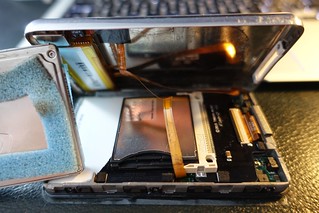 open iPod with iFlash

 Currently, Let's Encrypt's certbot tool issues certificates to servers running on TCP port 443 or 80. These are considered to be a
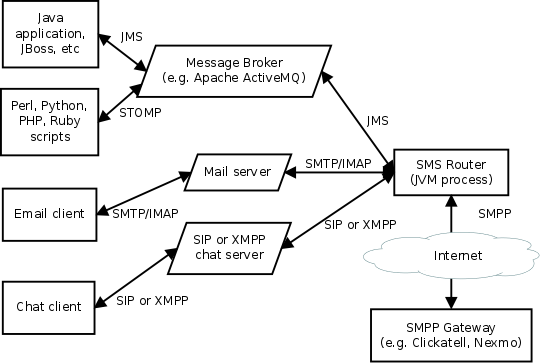

 A quiet place in which to get away and code is all I was looking for when I
moved here. I found much more, but that's still the essence of the place.
On returning home from the beach, I've just learned that after
several years renting this house, I will soon have to leave, or buy it.
 The house is an
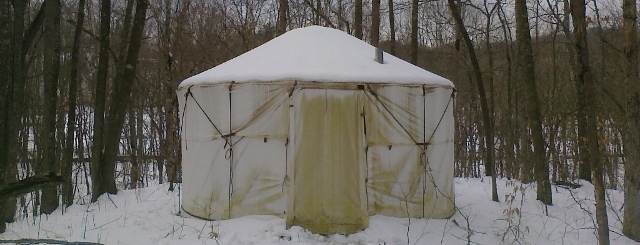

 Last week, I posted about


 I bought some