Search Results: "eric"

5 June 2015

Simon McVittie: Why polkit (or, how to mount a disk on modern Linux)

I've recently found myself explaining polkit (formerly PolicyKit) to one of Collabora's clients, and thought that blogging about the same topic might be useful for other people who are confused by it; so, here is why udisks2 and polkit are the way they are. As always, opinions in this blog are my own, not Collabora's. Privileged actions Broadly, there are two ways a process can do something: it can do it directly (i.e. ask the kernel directly), or it can use inter-process communication to ask a service to do that operation on its behalf. If it does it directly, the components that say whether it can succeed are the Linux kernel's normal permissions checks (DAC), and if configured, AppArmor, SELinux or a similar MAC layer. All very simple so far. Unfortunately, the kernel's relatively coarse-grained checks are not sufficient to express the sorts of policies that exist on a desktop/laptop/mobile system. My favourite example for this sort of thing is mounting filesystems. If I plug in a USB stick with a FAT filesystem, it's reasonable to expect my chosen user interface to either mount it automatically, or let me press a button to mount it. Similarly, to avoid data loss, I should be able to unmount it when I'm finished with it. However, mounting and unmounting a USB stick is fundamentally the same system call as mounting and unmounting any other filesystem - and if ordinary users can do arbitrary mount system calls, they can cause all sorts of chaos, for instance by mounting a filesystem that contains setuid executables (privilege escalation), or umounting a critical OS filesystem like /usr (denial of service). Something needs to arbitrate: you can mount filesystems, but only under certain conditions . The kernel developer motto for this sort of thing is mechanism, not policy : they are very keen to avoid encoding particular environments' policies (the sort of thing you could think of as business rules ) in the kernel, because that makes it non-generic and hard to maintain. As a result, direct mount/unmount actions are only allowed by privileged processes, and it's up to user-space processes to arrange for a privileged process to make the desired mount syscall. Here are some other privileged actions which laptop/desktop users can reasonably expect to just work , with or without requiring a sysadmin-like (root-equivalent) user: In environments that use a MAC framework like AppArmor, actions that would normally be allowed can become privileged: for instance, in a framework for sandboxed applications, most apps shouldn't be allowed to record audio. This prevents carrying out these actions directly, again resulting in the only way to achieve them being to ask a service to carry out the action. Ask a system service to do it On to the next design, then: I can submit a request to a privileged process, which does some checks to make sure I'm not trying to break the system (or alternatively, that I have enough sysadmin rights that I'm allowed to break the system if I want to), and then does the privileged action for me. You might think I'm about to start discussing D-Bus and daemons, but actually, a prominent earlier implementation of this was mount(8), which is normally setuid root:
% ls -l /bin/mount
-rwsr-xr-x 1 root root 40000 May 22 11:37 /bin/mount
If you look at it from an odd angle, this is inter-process communication across a privilege boundary: I run the setuid executable, creating a process. Because the executable has the setuid bit set, the kernel makes the process highly privileged: its effective uid is root, and it has all the necessary capabilities to mount filesystems. I submit the request by passing it in the command-line arguments. mount does some checks - specifically, it looks in /etc/fstab to see whether the filesystem I'm trying to mount has the user or users flag - then carries out the mount system call. There are a few obvious problems with this: Ask a system service to do it, via D-Bus or other IPC To avoid the issues of setuid, we could use inter-process communication in the traditional sense: run a privileged daemon (on boot or on-demand), make it listen for requests, and use the IPC channel as our privilege boundary. udisks2 is one such privileged daemon, which uses D-Bus as its IPC channel. D-Bus is a commonly-used inter-process system; one of its intended/designed uses is to let user processes and system services communicate, especially this sort of communication between a privileged daemon and its less-privileged clients. People sometimes criticize D-Bus as not doing anything you couldn't do yourself with some AF_UNIX sockets. Well, no, of course it doesn't - the important bit of the reference implementation and the various interoperable reimplementations consists of a daemon and some AF_UNIX sockets, and the rest is a simple matter of programming. However, it's sufficient for most uses in its problem space, and is usually better than inventing your own. The advantage of D-Bus over doing your own thing is precisely that you are not doing your own thing: good IPC design is hard, and D-Bus makes some structural decisions so that fewer application authors have to think about them. For instance, it has a central hub daemon (the dbus-daemon, or message bus ) so that n communicating applications don't need O(n ) sockets; it uses the dbus-daemon to provide a total message ordering so you don't have to think about message reordering; it has a distributed naming model (which can also be used as a distributed mutex) so you don't have to design that; it has a serialization format and a type system so you don't have to design one of those; it has a framework for activating" run-on-demand daemons so they don't have to use resources initially, implemented using a setuid helper and/or systemd; and so on. If you have religious objections to D-Bus, you can mentally replace D-Bus with AF_UNIX or something and most of this article will still be true. Is this OK? In either case - exec'ing a privileged helper, or submitting a request to a privileged daemon via IPC - the privileged process has two questions that it needs to answer before it does its work: It needs to make some sort of decision on the latter based on the information available to it. However, before we even get there, there is another layer: In the setuid model, there is a simple security check that you can apply: you can make /bin/mount only executable by a particular group, or only executable by certain AppArmor profiles, or similar. That works up to a point, but cannot distinguish between physically-present and not-physically-present users, or other facts that might be interesting to your local security policy. Similarly, in the IPC model, you can make certain communication channels impossible, for instance by using dbus-daemon's ability to decide which messages to deliver, or AF_UNIX sockets' filesystem permissions, or a MAC framework like AppArmor. Both of these are quite coarse-grained checks which don't really understand the finer details of what is going on. If the answer to "is this safe? is something of the form maybe, it depends on... , then they can't do the right thing: they must either let it through and let the domain-specific privileged process do the check, or deny it and lose potentially useful functionality. For instance, in an AppArmor environment, some applications have absolutely no legitimate reason to talk to udisks2, so the AppArmor policy can just block it altogether. However, once again, this is a coarse-grained check: the kernel has mechanism, not policy, and it doesn't know what the service does or why. If the application does need to be able to talk to the service at all, then finer-grained access control (obeying some, but not all, requests) has to be the service's job. dbus-daemon does have the ability to match messages in a relatively fine-grained way, based on the object path, interface and member in the message, as well as the routing information that it uses itself (i.e. the source and destination). However, it is not clear that this makes a great deal of sense conceptually: these are facts about the mechanics of the IPC, not facts about the domain-specific request (because the mechanics of the IPC are all that dbus-daemon understands). For instance, taking the udisks2 example again, dbus-daemon can't distinguish between an attempt to adjust mount options for a USB stick (probably fine) and an attempt to adjust mount options for /usr (not good). To have a domain-specific security policy, we need a domain-specific component, for instance udisks2, to get involved. Unlike dbus-daemon, udisks2 knows that not all disks are equal, knows which categories make sense to distinguish, and can identify which categories a particular disk is in. So udisks2 can make a more informed decision. So, a naive approach might be to write a function in udisks2 that looks something like this pseudocode:
may_i_mount_this_disk (user, disk, mount options)   boolean
 
    if (user is root   user is root-equivalent)
        return true;
    if (disk is not removable)
       return false;
    if (mount options are scary)
       return false;
    if (user is in  manipulate non-local disks  group)
        return true;
    if (user is not logged-in locally)
       return false;
    # https://en.wikipedia.org/wiki/Multiseat_configuration
    if (user is not logged-in on the same seat where the disk is
            plugged in)
       return false;
    return true;
 
Delegating the security policy to something central The pseudocode security policy outlined above is reasonably complicated already, and doesn't necessarily cover everything that you might want to consider. Meanwhile, not every system is the same. A general-purpose Linux distribution like Debian might run on server/mainframe systems with only remote users, personal laptops/desktops with one root-equivalent user, locked-down corporate laptops/desktops, mobile devices and so on; these systems should not necessarily all have the same security policy. Another interesting factor is that for some privileged operations, you might want to carry out interactive authorization: ask the requesting user to confirm that the action (which might have come from a background process) should take place (like Windows' UAC), or to prove that the person currently at the keyboard is the same as the person who logged in by giving their password (like sudo). We could in principle write code for all of this in udisks2, and in NetworkManager, and in systemd, ... - but that clearly doesn't scale, particularly if you want the security policy to be configurable. Enter polkit (formerly PolicyKit), a system service for applying security policies to actions. The way polkit works is that the application does its domain-specific analysis of the request - in the case of udisks2, whether the device to be mounted is removable, whether the mount options are reasonable, etc. - and converts it into an action. The action gives polkit a way to distinguish between things that are conceptually different, without needing to know the specifics. For instance, udisks2 currently divides up filesystem-mounting into org.freedesktop.udisks2.filesystem-mount, org.freedesktop.udisks2.filesystem-mount-fstab, org.freedesktop.udisks2.filesystem-mount-system and org.freedesktop.udisks2.filesystem-mount-other-seat. The application also finds the identity of the user making the request. Next, the application sends the action, the identity of the requesting user, and any other interesting facts to polkit. As currently implemented, polkit is a D-Bus service, so this is an IPC request via D-Bus. polkit consults its database of policies in order to choose one of several results: So how does polkit decide this? The first thing is that it reads the machine-readable description of the actions, in /usr/share/polkit-1/actions, which specifies a default policy. Next, it evaluates a local security policy to see what that says. In the current version of polkit, the local security policy is configured by writing JavaScript in /etc/polkit-1/rules.d (local policy) and /usr/share/polkit-1/rules.d (OS-vendor defaults). In older versions such as the one currently shipped in Debian unstable, there was a plugin architecture; but in practice nobody wrote plugins for it, and instead everyone used the example local authority shipped with polkit, which was configured via files in /etc/polkit-1/localauthority and /etc/polkit-1/localauthority.d. These policies can take into account useful facts like: For instance, gnome-control-center on Debian installs this snippet:
polkit.addRule(function(action, subject)  
        if ((action.id == "org.freedesktop.locale1.set-locale"  
             action.id == "org.freedesktop.locale1.set-keyboard"  
             action.id == "org.freedesktop.hostname1.set-static-hostname"  
             action.id == "org.freedesktop.hostname1.set-hostname"  
             action.id == "org.gnome.controlcenter.datetime.configure") &&
            subject.local &&
            subject.active &&
            subject.isInGroup ("sudo"))  
                    return polkit.Result.YES;
             
 );
which is reasonably close to being pseudocode for active local users in the sudo group may set the system locale, keyboard layout, hostname and time, without needing to authenticate . A system administrator could of course override that by dropping a higher-priority policy for some or all of these actions into /etc/polkit-1/rules.d. Summary

1 June 2015

Russ Allbery: Review: Hild

Review: Hild, by Nicola Griffith
Series: Hild #1
Publisher: Farrar, Straus and Giroux
Copyright: 2013
ISBN: 0-374-28087-8
Format: Hardcover
Pages: 539
Hild was born in seventh-century Britain, daughter of Hereric (would-be king of Daria) and Breguswith. Born, her mother said, to be a light to the land. This much is documented by the Venerable Bede, in The Ecclesiastical History of the English Nation, along with Hild's later rise to become one of the most powerful abbesses in British history. But nearly all of Hild's early life is a cipher. Hild fills in some of that gap with fiction. Specifically, it takes Hild from a child of three, learning her father has been killed, to a young woman, an advisor of Edwin king. It's a coming of age story in part, following her maturation both physically and mentally, her training in when to speak and how, and the dangers of being close to royalty in a fractious, political, and war-torn land. It's also the story of endless maneuvering and care, initially by her mother Breguswith and then by Hild herself sometimes in opposition to her mother, sometimes in alliance as her mother attempts to make a safe place for her daughter and herself in a treacherous court of shifting dangers. But Hild is also a story about Britain. It's a novel about how it felt and how it sounded. How it was organized, primarily among the high-born but with snippets of perspective from the lower classes. And it's a story about women: about weaving, about medicine, about friendships and partnerships and alliances among women, about the politics of marriage and childbirth, but also about the places women held and made in a time when surviving official history is all about the men. Hild is a painstakingly-researched, sprawling, lush, and sensual immersion in a part of history that gets little formal attention: after the Romans, before what we think of as medieval, before England as a country. I've been waiting for a new Nicola Griffith novel for quite a while, since Always in 2007. Hild doesn't disappoint, but it's also different than Griffith's previous writing. It has less of the strong narrative drive and clarity of either her SF or Aud Torvingen stories. Instead, the goal of Hild is to immerse and transport you, to help you feel the shape of Hild's world, to understand her days and tasks, her dreams and dangers. Like all of Griffith's work, it's beautifully written. Griffith puts description at the fore, in the sharp eyes of an observant girl who loves the outdoors, and who has been taught to watch for signs of weather and tools of healing. From early on, Hild's mother sets her up as a seer and prophetess as a way of establishing her value to war leaders and kings, and while some of it is drama and cryptic words, so much of it is careful observation, networks of information-gathering, and sharp deduction about the motives and politics of surrounding kings. Hild is very good at what she does because she has a sharp, quick mind that has been carefully trained, and because she has the aid of her mother's networks and then aid in building her own. Griffith does a wonderful job showing the reader what Hild sees, how she appreciates the world both for its own beauty and for the information she can gather from it, and how to build influence by navigating tense and dangerous moments: waiting for just the right moment and the right word, and taking sudden, impulsive risks and accepting their consequences. Unfortunately for me, this setting is also rich in complex politics and numerous actors, with older and unfamiliar names, and I got lost. Constantly. That's the drawback to immersion: Griffith doesn't hold the reader's hand. We get Hild's thoughts and analysis, and the reader has to keep up. Sometimes I did; sometimes I didn't. There's a dizzying flurry of names here, both personal and place, and while there is a map and a single family tree, neither helped me as much as I wanted them to. At several points, I found myself skimming through the latest shift in the balance between various petty kings because, while I knew I'd seen all the names before, they had come adrift from their context in the story. That was my major frustration with this book. It was all interesting enough that I would have kept thumbing back to a detailed dramatis personae, and indeed I kept checking the family tree, but there just wasn't enough detail there. Even better would have been a brief factual history of the political and military conflicts Hild was living through, keyed by chapter. Hild is startlingly intelligent, leaping from insight to insight, which is wonderful for building character, but which occasionally leaves the reader scrambling to catch up with the connections between her thoughts. I felt like, had I the broader context, I could have understood her insight more readily. All this information is likely available, since Griffith is playing off of documented history, but I'm not the sort of reader who likes doing Internet research while engrossed in a book. So, that's the downside, at least for me. But this book has many strengths, even if you're lost much of the time. Hild as written by Griffith is a fascinating character, full of sharp edges and difficult moods and a powerful belief in what she feels is right. Griffith is at the height of her writing ability when describing Hild making hard choices and taking on burdens that seem too large for her to bear. There are two sections of the book, where Hild is forced by circumstances to lead men in violence, that I think are two of the best bits of writing Griffith has ever published not just because of those scenes themselves, but because of the aftermath, the lingering echos, the way that they shape and inform everything Hild does afterwards. The mingling of reward and loss, maturation and trauma, the sense that the world has shifted both inside and out and it's nearly impossible to say whether the change is for the better or worse. Griffith also knows when not to say too much, and while I found that frustrating for the politics, it does wonders for the characters. Hild's complex and fraught relationship with Gwaldus is the best example. We never know exactly what Gwaldus is thinking; Hild can only guess, and at times one is fairly sure that she guesses wrong. But that doesn't lead to sudden revelations, where the characters finally understand each other. Instead, they both adjust, they maneuver around each other, they find space and understanding where they can, and sometimes they just close off. This book is full of relationships like this: loves that are too complicated for words, bonds that are too dangerous to acknowledge, and characters who can't relax even though they wish the best for each other. At times, it's exhausting reading, but it gives Hild a tension that one wouldn't expect from a sprawling novel full of description and scene-building. Hild is clearly the first book of a series, and leaves quite a lot unresolved. If you want closure in relationships and in politics, there's a lot here that you may find frustrating. And if, like me, you struggle to keep names and politics straight, you're probably going to get lost. But it's well worth the effort for the description, for Hild's thought processes, and for a few haunting scenes that I will be replaying in my head for a very long time. Expect to take your time with this, and wait until you're in the mood for immersion and puzzling out context as you go, but recommended. I suspect it would be even better on a second reading. Rating: 8 out of 10

27 May 2015

Vincent Bernat: Live patching QEMU for VENOM mitigation

CVE-2015-3456, also known as VENOM, is a security vulnerability in QEMU virtual floppy controller:
The Floppy Disk Controller (FDC) in QEMU, as used in Xen [ ] and KVM, allows local guest users to cause a denial of service (out-of-bounds write and guest crash) or possibly execute arbitrary code via the FD_CMD_READ_ID, FD_CMD_DRIVE_SPECIFICATION_COMMAND, or other unspecified commands.
Even when QEMU has been configured with no floppy drive, the floppy controller code is still active. The vulnerability is easy to test1:
#define FDC_IOPORT 0x3f5
#define FD_CMD_READ_ID 0x0a
int main()  
    ioperm(FDC_IOPORT, 1, 1);
    outb(FD_CMD_READ_ID, FDC_IOPORT);
    for (size_t i = 0;; i++)
        outb(0x42, FDC_IOPORT);
    return 0;
 
Once the fix installed, all processes still have to be restarted for the upgrade to be effective. It is possible to minimize the downtime by leveraging virsh save. Another possibility would be to patch the running processes. The Linux kernel attracted a lot of interest in this area, with solutions like Ksplice (mostly killed by Oracle), kGraft (by Red Hat) and kpatch (by Suse) and the inclusion of a common framework in the kernel. The userspace has far less out-of-the-box solutions2. I present here a simple and self-contained way to patch a running QEMU to remove the vulnerability without requiring any sensible downtime. Here is a short demonstration:

Proof of concept First, let s find a workaround that would be simple to implement through live patching: while modifying running code text is possible, it is easier to modify a single variable.

Concept Looking at the code of the floppy controller and the patch, we can avoid the vulnerability by not accepting any command on the FIFO port. Each request would be answered by Invalid command (0x80) and a user won t be able to push more bytes to the FIFO until the answer is read and the FIFO queue reset. Of course, the floppy controller would be rendered useless in this state. But who cares? The list of commands accepted by the controller on the FIFO port is contained in the handlers[] array:
static const struct  
    uint8_t value;
    uint8_t mask;
    const char* name;
    int parameters;
    void (*handler)(FDCtrl *fdctrl, int direction);
    int direction;
  handlers[] =  
      FD_CMD_READ, 0x1f, "READ", 8, fdctrl_start_transfer, FD_DIR_READ  ,
      FD_CMD_WRITE, 0x3f, "WRITE", 8, fdctrl_start_transfer, FD_DIR_WRITE  ,
    /* [...] */
      0, 0, "unknown", 0, fdctrl_unimplemented  , /* default handler */
 ;
To avoid browsing the array each time a command is received, another array is used to map each command to the appropriate handler:
/* Associate command to an index in the 'handlers' array */
static uint8_t command_to_handler[256];
static void fdctrl_realize_common(FDCtrl *fdctrl, Error **errp)
 
    int i, j;
    static int command_tables_inited = 0;
    /* Fill 'command_to_handler' lookup table */
    if (!command_tables_inited)  
        command_tables_inited = 1;
        for (i = ARRAY_SIZE(handlers) - 1; i >= 0; i--)  
            for (j = 0; j < sizeof(command_to_handler); j++)  
                if ((j & handlers[i].mask) == handlers[i].value)  
                    command_to_handler[j] = i;


    /* [...] */
 
Our workaround is to modify the command_to_handler[] array to map all commands to the fdctrl_unimplemented() handler (the last one in the handlers[] array).

Testing with gdb To check if the workaround works as expected, we test it with gdb. Unless you have compiled QEMU yourself, you need to install a package with debug symbols. Unfortunately, on Debian, they are not available, yet3. On Ubuntu, you can install the qemu-system-x86-dbgsym package after enabling the appropriate repositories. The following function for gdb maps every command to the unimplemented handler:
define patch
  set $handler = sizeof(handlers)/sizeof(*handlers)-1
  set $i = 0
  while ($i < 256)
   set variable command_to_handler[$i++] = $handler
  end
  printf "Done!\n"
end
Attach to the vulnerable process (with attach), call the function (with patch) and detach of the process (with detach). You can check that the exploit is not working anymore. This could be easily automated.

Limitations Using gdb has two main limitations:
  1. It needs to be installed on each host to be patched.
  2. The debug packages need to be installed as well. Moreover, it can be difficult to fetch previous versions of those packages.

Writing a custom patcher To overcome those limitations, we can write a customer patcher using the ptrace() system call without relying on debug symbols being present.

Finding the right memory spot Before being able to modify the command_to_handler[] array, we need to know its location. The first clue is given by the symbol table. To query it, use readelf -s:
$ readelf -s /usr/lib/debug/.build-id/09/95121eb46e2a4c13747ac2bad982829365c694.debug   \
>   sed -n -e 1,3p -e /command_to_handler/p
Symbol table '.symtab' contains 27066 entries:
   Num:    Value          Size Type    Bind   Vis      Ndx Name
  8485: 00000000009f9d00   256 OBJECT  LOCAL  DEFAULT   26 command_to_handler
This table is usually stripped out of the executable to save space, like shown below:
$ file -b /usr/bin/qemu-system-x86_64   tr , \\n
ELF 64-bit LSB shared object
 x86-64
 version 1 (SYSV)
 dynamically linked
 interpreter /lib64/ld-linux-x86-64.so.2
 for GNU/Linux 2.6.32
 BuildID[sha1]=0995121eb46e2a4c13747ac2bad982829365c694
 stripped
If your distribution provides a debug package, the debug symbols are installed in /usr/lib/debug. Most modern distributions are now relying on the build ID4 to map an executable to its debugging symbols, like the example above. Without a debug package, you need to recompile the existing package without stripping debug symbols in a clean environment5. On Debian, this can be done by setting the DEB_BUILD_OPTIONS environment variable to nostrip. We have now two possible cases:
  • the easy one, and
  • the hard one.

The easy case On x86, here is the standard layout of a regular Linux process in memory6: Memory layout of a regular process on x86 The random gaps (ASLR) are here to prevent an attacker from reliably jumping to a particular exploited function in memory. On x86-64, the layout is quite similar. The important point is that the base address of the executable is fixed. The memory mapping of a process is also available through /proc/PID/maps. Here is a shortened and annotated example on x86-64:
$ cat /proc/3609/maps
00400000-00401000         r-xp 00000000 fd:04 483  not-qemu [text segment]
00601000-00602000         r--p 00001000 fd:04 483  not-qemu [data segment]
00602000-00603000         rw-p 00002000 fd:04 483  not-qemu [BSS segment]
[random gap]
02419000-0293d000         rw-p 00000000 00:00 0    [heap]
[random gap]
7f0835543000-7f08356e2000 r-xp 00000000 fd:01 9319 /lib/x86_64-linux-gnu/libc-2.19.so
7f08356e2000-7f08358e2000 ---p 0019f000 fd:01 9319 /lib/x86_64-linux-gnu/libc-2.19.so
7f08358e2000-7f08358e6000 r--p 0019f000 fd:01 9319 /lib/x86_64-linux-gnu/libc-2.19.so
7f08358e6000-7f08358e8000 rw-p 001a3000 fd:01 9319 /lib/x86_64-linux-gnu/libc-2.19.so
7f08358e8000-7f08358ec000 rw-p 00000000 00:00 0
7f08358ec000-7f083590c000 r-xp 00000000 fd:01 5138 /lib/x86_64-linux-gnu/ld-2.19.so
7f0835aca000-7f0835acd000 rw-p 00000000 00:00 0
7f0835b08000-7f0835b0c000 rw-p 00000000 00:00 0
7f0835b0c000-7f0835b0d000 r--p 00020000 fd:01 5138 /lib/x86_64-linux-gnu/ld-2.19.so
7f0835b0d000-7f0835b0e000 rw-p 00021000 fd:01 5138 /lib/x86_64-linux-gnu/ld-2.19.so
7f0835b0e000-7f0835b0f000 rw-p 00000000 00:00 0
[random gap]
7ffdb0f85000-7ffdb0fa6000 rw-p 00000000 00:00 0    [stack]
With a regular executable, the value given in the symbol table is an absolute memory address:
$ readelf -s not-qemu   \
>   sed -n -e 1,3p -e /command_to_handler/p
Symbol table '.dynsym' contains 9 entries:
   Num:    Value          Size Type    Bind   Vis      Ndx Name
    47: 0000000000602080   256 OBJECT  LOCAL  DEFAULT   25 command_to_handler
So, the address of command_to_handler[], in the above example, is just 0x602080.

The hard case To enhance security, it is possible to load some executables at a random base address, just like a library. Such an executable is called a Position Independent Executable (PIE). An attacker won t be able to rely on a fixed address to find some helpful function. Here is the new memory layout: Memory layout of a PIE process on x86 With a PIE process, the value in the symbol table is now an offset from the base address.
$ readelf -s not-qemu-pie   sed -n -e 1,3p -e /command_to_handler/p
Symbol table '.dynsym' contains 17 entries:
   Num:    Value          Size Type    Bind   Vis      Ndx Name
    47: 0000000000202080   256 OBJECT  LOCAL  DEFAULT   25 command_to_handler
If we look at /proc/PID/maps, we can figure out where the array is located in memory:
$ cat /proc/12593/maps
7f6c13565000-7f6c13704000 r-xp 00000000 fd:01 9319  /lib/x86_64-linux-gnu/libc-2.19.so
7f6c13704000-7f6c13904000 ---p 0019f000 fd:01 9319  /lib/x86_64-linux-gnu/libc-2.19.so
7f6c13904000-7f6c13908000 r--p 0019f000 fd:01 9319  /lib/x86_64-linux-gnu/libc-2.19.so
7f6c13908000-7f6c1390a000 rw-p 001a3000 fd:01 9319  /lib/x86_64-linux-gnu/libc-2.19.so
7f6c1390a000-7f6c1390e000 rw-p 00000000 00:00 0
7f6c1390e000-7f6c1392e000 r-xp 00000000 fd:01 5138  /lib/x86_64-linux-gnu/ld-2.19.so
7f6c13b2e000-7f6c13b2f000 r--p 00020000 fd:01 5138  /lib/x86_64-linux-gnu/ld-2.19.so
7f6c13b2f000-7f6c13b30000 rw-p 00021000 fd:01 5138  /lib/x86_64-linux-gnu/ld-2.19.so
7f6c13b30000-7f6c13b31000 rw-p 00000000 00:00 0
7f6c13b31000-7f6c13b33000 r-xp 00000000 fd:04 4594  not-qemu-pie [text segment]
7f6c13cf0000-7f6c13cf3000 rw-p 00000000 00:00 0
7f6c13d2e000-7f6c13d32000 rw-p 00000000 00:00 0
7f6c13d32000-7f6c13d33000 r--p 00001000 fd:04 4594  not-qemu-pie [data segment]
7f6c13d33000-7f6c13d34000 rw-p 00002000 fd:04 4594  not-qemu-pie [BSS segment]
[random gap]
7f6c15c46000-7f6c15c67000 rw-p 00000000 00:00 0     [heap]
[random gap]
7ffe823b0000-7ffe823d1000 rw-p 00000000 00:00 0     [stack]
The base address is 0x7f6c13b31000, the offset is 0x202080 and therefore, the location of the array is 0x7f6c13d33080. We can check with gdb:
$ print &command_to_handler
$1 = (uint8_t (*)[256]) 0x7f6c13d33080 <command_to_handler>

Patching a memory spot Once we know the location of the command_to_handler[] array in memory, patching it is quite straightforward. First, we start tracing the target process:
/* Attach to the running process */
static int
patch_attach(pid_t pid)
 
    int status;
    printf("[.] Attaching to PID %d...\n", pid);
    if (ptrace(PTRACE_ATTACH, pid, NULL, NULL) == -1)  
        fprintf(stderr, "[!] Unable to attach to PID %d: %m\n", pid);
        return -1;
     
    if (waitpid(pid, &status, 0) == -1)  
        fprintf(stderr, "[!] Error while attaching to PID %d: %m\n", pid);
        return -1;
     
    assert(WIFSTOPPED(status)); /* Tracee may have died */
    if (ptrace(PTRACE_GETSIGINFO, pid, NULL, &si) == -1)  
        fprintf(stderr, "[!] Unable to read siginfo for PID %d: %m\n", pid);
        return -1;
     
    assert(si.si_signo == SIGSTOP); /* Other signals may have been received */
    printf("[*] Successfully attached to PID %d\n", pid);
    return 0;
 
Then, we retrieve the command_to_handler[] array, modify it and put it back in memory7.
static int
patch_doit(pid_t pid, unsigned char *target)
 
    int ret = -1;
    unsigned char *command_to_handler = NULL;
    size_t i;
    /* Get the table */
    printf("[.] Retrieving command_to_handler table...\n");
    command_to_handler = ptrace_read(pid,
                                     target,
                                     QEMU_COMMAND_TO_HANDLER_SIZE);
    if (command_to_handler == NULL)  
        fprintf(stderr, "[!] Unable to read command_to_handler table: %m\n");
        goto out;
     
    /* Check if the table has already been patched. */
    /* [...] */
    /* Patch it */
    printf("[.] Patching QEMU...\n");
    for (i = 0; i < QEMU_COMMAND_TO_HANDLER_SIZE; i++)  
        command_to_handler[i] = QEMU_NOT_IMPLEMENTED_HANDLER;
     
    if (ptrace_write(pid, target, command_to_handler,
           QEMU_COMMAND_TO_HANDLER_SIZE) == -1)  
        fprintf(stderr, "[!] Unable to patch command_to_handler table: %m\n");
        goto out;
     
    printf("[*] QEMU successfully patched!\n");
    ret = 0;
out:
    free(command_to_handler);
    return ret;
 
Since ptrace() only allows to read or write a word at a time, ptrace_read() and ptrace_write() are wrappers to read or write arbitrary large chunks of memory8. Here is the code for ptrace_read():
/* Read memory of the given process */
static void *
ptrace_read(pid_t pid, void *address, size_t size)
 
    /* Allocate the buffer */
    uword_t *buffer = malloc((size/sizeof(uword_t) + 1)*sizeof(uword_t));
    if (!buffer) return NULL;
    /* Read word by word */
    size_t readsz = 0;
    do  
        errno = 0;
        if ((buffer[readsz/sizeof(uword_t)] =
                ptrace(PTRACE_PEEKTEXT, pid,
                       (unsigned char*)address + readsz,
                       0)) && errno)  
            fprintf(stderr, "[!] Unable to peek one word at address %p: %m\n",
                    (unsigned char *)address + readsz);
            free(buffer);
            return NULL;
         
        readsz += sizeof(uword_t);
      while (readsz < size);
    return (unsigned char *)buffer;
 

Putting the pieces together The patcher is provided with the following information:
  • the PID of the process to be patched,
  • the command_to_handler[] offset from the symbol table, and
  • the build ID of the executable file used to get this offset (as a safety measure).
The main steps are:
  1. Attach to the process with ptrace().
  2. Get the executable name from /proc/PID/exe.
  3. Parse /proc/PID/maps to find the address of the text segment (it s the first one).
  4. Do some sanity checks:
    • check there is a ELF header at this location (4-byte magic number),
    • check the executable type (ET_EXEC for regular executables, ET_DYN for PIE), and
    • get the build ID and compare with the expected one.
  5. From the base address and the provided offset, compute the location of the command_to_handler[] array.
  6. Patch it.
You can find the complete patcher on GitHub.
$ ./patch --build-id 0995121eb46e2a4c13747ac2bad982829365c694 \
>         --offset 9f9d00 \
>         --pid 16833
[.] Attaching to PID 16833...
[*] Successfully attached to PID 16833
[*] Executable name is /usr/bin/qemu-system-x86_64
[*] Base address is 0x7f7eea912000
[*] Both build IDs match
[.] Retrieving command_to_handler table...
[.] Patching QEMU...
[*] QEMU successfully patched!

  1. The complete code for this test is on GitHub.
  2. An interesting project seems to be Katana. But there are also some insightful hacking papers on the subject.
  3. Some packages come with a -dbg package with debug symbols, some others don t. Fortunately, a proposal to automatically produce debugging symbols for everything is near completion.
  4. The Fedora Wiki contains the rationale behind the build ID.
  5. If the build is incorrectly reproduced, the build ID won t match. The information provided by the debug symbols may or may not be correct. Debian currently has a reproducible builds effort to ensure that each package can be reproduced.
  6. Anatomy of a program in memory is a great blog post explaining in more details how a program lives in memory.
  7. Being an uninitialized static variable, the variable is in the BSS section. This section is mapped to a writable memory segment. If it wasn t the case, with Linux, the ptrace() system call is still allowed to write. Linux will copy the page and mark it as private.
  8. With Linux 3.2 or later, process_vm_readv() and process_vm_writev() can be used to transfer data from/to a remote process without using ptrace() at all. However, ptrace() would still be needed to reliably stop the main thread.

20 May 2015

Norbert Preining: Shishiodoshi or Us and They On the perceived exclusivity of Japanese

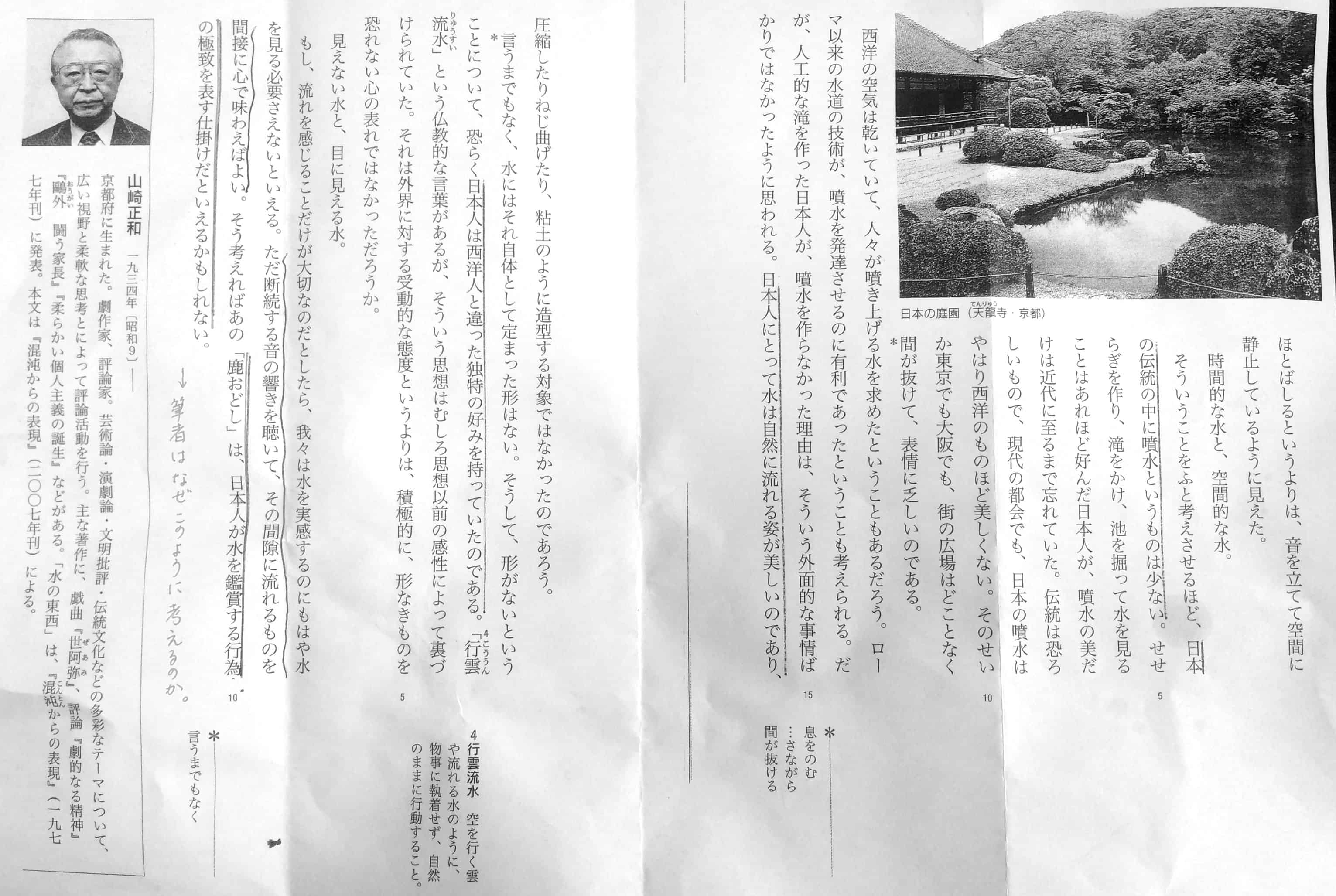
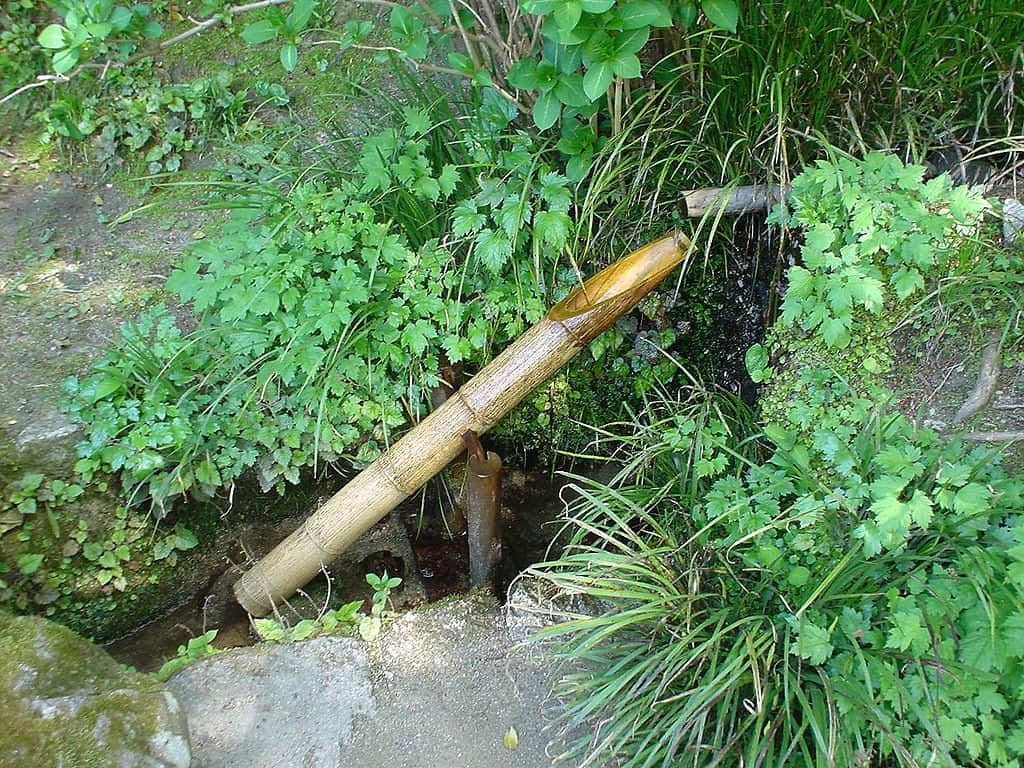
The other day I received from my Japanese teacher an interesting article by Yamazaki Masakazu comparing garden styles, and in particular the attitude towards and presentation of water in Japanese and European gardens (page 1, page 2). The author s list of achievements is long, various professorships, dramatist, literature critique, recognized as Person of Cultural Merit, just to name a view. I was looking forward to an interesting and high quality article! The article itself introduces the reader to Shishiodoshi, one of the standard ingredients of a Japanese garden: It is a device where water drips into a bamboo tube that is also a seesaw. At some point the water in the bamboo tube makes the seesaw switch over and the water pours out, after which the seesaw returns to the original position and a new cycle begins. Shishiodoshi The author describes his feelings and thoughts about the shishiodoshi, in particular connects human life (stress and relieve, cycles), the flow of time, and some other concepts with the shishiodoshi. Up to here it is a wonderful article providing interesting insights into the way the author thinks. Unfortunately, then the author tries to underline his ideas by comparing the Japanese shishiodoshi with European style water fountains, describing the former with all favorable properties and full of deep meaning, while the latter is qualified as beautiful and nice, but bare of any deeper meaning. I don t go into details that the whole comparison is anyway a bad one, as he is comparing Baroque style fountains, a very limited period, and furthermore ignores the fact that water fountains are not genuinely European (isn t there one in the Kenrokuen, one of the three most famous gardens in Japan!?), nor does he consider any other water-installation that might be available. What really destroys the in principle very nice article is the tone: The general tone of the article then can be summarized into: The shishiodoshi is rich on meaning, connects to the life of humans, instigates philosophical reflections, represents nature, the flow of time etc. The water fountain is beautiful and gorgeous, but that is all. I don t think that this separation, or this negative undertone, was created on purpose by the author. A person of his stature is supposedly above this level of primitive comparison. I believe that it is nothing else but a consequence of upbringing and the general attitude that permeates the whole society with this feeling of separateness. Us and They Repeatedly providing sentences like Japanese people and Western people have different tastes.. ( ). About 10 times in this short article expressions like Japanese and Westerner appear, leaving the reader with a bitter taste of an author that considers first the Japanese a people (what about Ainu, Ryukyu, etc?), and second that the Japanese are exclusive in the sense that they are set apart from the rest of the world in their way of thinking, living, being. What puzzles me is that this is not only a singular opinion, but a very general straight in the Japanese media, TV, radio, newspaper, books. Everyone considers Japan and Japanese as something that is fundamentally and profoundly different from everyone else in the world. There is We the Japanese (and that doesn t mean nationality of passport, but blood line!), and there are They the Rest or, as the way of writing and and description on many occasion suggestions, They the Barbarians . A short anecdote will underly this: One of the favorite TV talk show / pseudo-documentary style is about Japanese living abroad. That day a lady married in Paris was interviewed. What followed was a guided tour through Paris showing: Dirt in the gutter, street cleaning cars, waste disposal places. Yes, that was all. Just about the dirt . Of course, at length the (unfortunately only apparent) cleanliness of Japanese cities and neighborhoods are mentioned and shown to remind everyone how wonderful Japan is and how dirty the Barbarians. I don t want to say that I consider Japan more dirty than most other countries just the visible part is clean, the moment you step a bit aside and around the corner, there are the worst trash just thrown away without consideration. Anyway. To return to the topic of Us and They I consider us all humans, first and foremost, and nationality, birthplace, and all that are just by chance. I do NOT reject cultural differences, they are here, of course. But cultural differences are one thing, separating one self and one s perceived people from the rest of the world is another. Conclusion I repeat, I don t think that the author had any ill intentions, but it would have been nicer if the article wouldn t make such a stark distinction. He could have written about Shishiodoshi and water fountains without using the Us They categorization. He could have compared other water installations, could have discussed the long tradition of small ponds in European gardens, just to name a few things. But the author choose to highlight differences instead of commonalities. It is the Us against Them feeling that often makes life in Japan for a foreigner difficult. Japanese are not special, Austrians, too, are not special, nor are Americans, Russians, Tibetans, or any other nationality. No nationality is special, we are all humans. Maybe at some point this will arrive also in the Japanese society and thinking.
Email this to someonePrint this pageShare on FacebookShare on Google+Tweet about this on TwitterShare on LinkedInFlattr the author

19 May 2015

Gunnar Wolf: Feeling somewhat special

Today I feel more special than I have ever felt. Or... Well, or something like that. Thing is, there is no clear adjective for this But I successfully finished my Specialization degree! Yes, believe it or not, today I can formally say I am Specialist in Informatic Security and Information Technologies (Especialista en Seguridad Inform tica y Tecnolog as de la Informaci n), as awarded by the Higher School of Electric and Mechanic Engineering (Escuela Superior de Ingenier a Mec nica y El ctrica) of the National Polytechnical Institute (Instituto Polit cnico Nacional). In Mexico and most Latin American countries, degrees are usually incorporated to your name as if they were a nobiliary title. Thus, when graduating from Engineering studies (pre-graduate universitary level), I became "Ingeniero Gunnar Wolf". People graduating from further postgraduate programs get to introduce themselves as "Maestro Foobar Baz" or "Doctor Quux Noox". And yes, a Specialization is a small posgraduate program (I often say, the smallest possible posgraduate). And as a Specialist... What can I brag about? Can say I am Specially Gunnar Wolf? Or Special Gunnar Wolf? Nope. The honorific title for a Specialization is a pointer to null, and when casted into a char* it might corrupt your honor-recognizing function. So I'm still Ingeniero Gunnar Wolf, for information security reasons. So that's the reason I am now enrolled in the Masters program. I hope to write an addenda to this message soonish (where soonish 18 months) saying I'm finally a Maestro. As a sidenote, many people asked me: Why did I take on the specialization, which is a degree too small for most kinds of real work recognition? Because it's been around twenty years since I last attended a long-term scholar program as a student. And my dish is quite full with activities and responsabilities. I decided to take a short program, designed for 12 months (I graduated in 16, minus two months that the university was on strike... Quite good, I'd say ;-) ) to see how I fared on it, and only later jumping on the full version. Because, yes, to advance my career at the university, I finally recognized and understood that I do need postgraduate studies. Oh, and what kind of work did I do for this? Besides the classes I took, I wrote a thesis on a model for evaluating covert channels for establishing secure communications.

Ritesh Raj Sarraf: Lenovo Yoga 2 13 with Debian

I recently acquired a Lenovo Yoga 2 13. While, at the time, the Yoga 3 was available, I decided to go for Yoga 2 13. The Yoga 3 comes with the newer Core M Broadwell family, which, in my opinion, doesn't really bring any astounding benefits. The Yoga 2 13 comes in mulitple variants worldwide. Infact these hardware variations have different effets when run under Linux. My varaint of Yoga 2 13 is:
CPU: Intel(R) Core(TM) i7-4510U CPU @ 2.00GHz
RAM: 8 GiB - Occupying 2 slots
Memory Controller Information
        Supported Interleave: One-way Interleave
        Current Interleave: One-way Interleave
        Maximum Memory Module Size: 8192 MB
        Maximum Total Memory Size: 16384 MB
       
Handle 0x0006, DMI type 6, 12 bytes
Handle 0x0007, DMI type 6, 12 bytes
The usual PCI devices:
rrs@learner:~$ lspci
00:00.0 Host bridge: Intel Corporation Haswell-ULT DRAM Controller (rev 0b)
00:02.0 VGA compatible controller: Intel Corporation Haswell-ULT Integrated Graphics Controller (rev 0b)
00:03.0 Audio device: Intel Corporation Haswell-ULT HD Audio Controller (rev 0b)
00:14.0 USB controller: Intel Corporation 8 Series USB xHCI HC (rev 04)
00:16.0 Communication controller: Intel Corporation 8 Series HECI #0 (rev 04)
00:1b.0 Audio device: Intel Corporation 8 Series HD Audio Controller (rev 04)
00:1c.0 PCI bridge: Intel Corporation 8 Series PCI Express Root Port 4 (rev e4)
00:1d.0 USB controller: Intel Corporation 8 Series USB EHCI #1 (rev 04)
00:1f.0 ISA bridge: Intel Corporation 8 Series LPC Controller (rev 04)
00:1f.2 SATA controller: Intel Corporation 8 Series SATA Controller 1 [AHCI mode] (rev 04)
00:1f.3 SMBus: Intel Corporation 8 Series SMBus Controller (rev 04)
01:00.0 Network controller: Realtek Semiconductor Co., Ltd. RTL8723BE PCIe Wireless Network Adapter
17:37          
And the storage devices
Device Model:     WDC WD5000M22K-24Z1LT0-SSHD-16GB
Device Model:     KINGSTON SM2280S3120G
Storage

The drive runs into serious performance problems when its SSHD's NCQ (mis)feature is under use in Linux <= 4.0.

[28974.232550] ata2.00: configured for UDMA/133
[28974.232565] ahci 0000:00:1f.2: port does not support device sleep
[28983.680955] ata1.00: exception Emask 0x10 SAct 0x7fffffff SErr 0x400100 action 0x6 frozen
[28983.681000] ata1.00: irq_stat 0x08000000, interface fatal error
[28983.681027] ata1: SError:   UnrecovData Handshk  
[28983.681052] ata1.00: failed command: WRITE FPDMA QUEUED
[28983.681082] ata1.00: cmd 61/40:00:b8:84:88/05:00:0a:00:00/40 tag 0 ncq 688128 out
                        res 40/00:3c:78:a9:88/00:00:0a:00:00/40 Emask 0x10 (ATA bus error)
[28983.681152] ata1.00: status:   DRDY  
[28983.681171] ata1.00: failed command: WRITE FPDMA QUEUED
[28983.681202] ata1.00: cmd 61/40:08:f8:89:88/05:00:0a:00:00/40 tag 1 ncq 688128 out
                        res 40/00:3c:78:a9:88/00:00:0a:00:00/40 Emask 0x10 (ATA bus error)
[28983.681271] ata1.00: status:   DRDY  
[28983.681289] ata1.00: failed command: WRITE FPDMA QUEUED
[28983.681316] ata1.00: cmd 61/40:10:38:8f:88/05:00:0a:00:00/40 tag 2 ncq 688128 out
                        res 40/00:3c:78:a9:88/00:00:0a:00:00/40 Emask 0x10 (ATA bus error)
[28983.681387] ata1.00: status:   DRDY  
[28983.681407] ata1.00: failed command: WRITE FPDMA QUEUED
[28983.681435] ata1.00: cmd 61/40:18:78:94:88/05:00:0a:00:00/40 tag 3 ncq 688128 out
                        res 40/00:3c:78:a9:88/00:00:0a:00:00/40 Emask 0x10 (ATA bus error)
[28983.697642] ata1.00: status:   DRDY  
[28983.697643] ata1.00: failed command: WRITE FPDMA QUEUED
[28983.697646] ata1.00: cmd 61/40:c8:38:65:88/05:00:0a:00:00/40 tag 25 ncq 688128 out
                        res 40/00:3c:78:a9:88/00:00:0a:00:00/40 Emask 0x10 (ATA bus error)
[28983.697647] ata1.00: status:   DRDY  
[28983.697648] ata1.00: failed command: WRITE FPDMA QUEUED
[28983.697651] ata1.00: cmd 61/40:d0:78:6a:88/05:00:0a:00:00/40 tag 26 ncq 688128 out
                        res 40/00:3c:78:a9:88/00:00:0a:00:00/40 Emask 0x10 (ATA bus error)
[28983.697651] ata1.00: status:   DRDY  
[28983.697652] ata1.00: failed command: WRITE FPDMA QUEUED
[28983.697656] ata1.00: cmd 61/40:d8:b8:6f:88/05:00:0a:00:00/40 tag 27 ncq 688128 out
                        res 40/00:3c:78:a9:88/00:00:0a:00:00/40 Emask 0x10 (ATA bus error)
[28983.697657] ata1.00: status:   DRDY  
[28983.697658] ata1.00: failed command: WRITE FPDMA QUEUED
[28983.697661] ata1.00: cmd 61/40:e0:f8:74:88/05:00:0a:00:00/40 tag 28 ncq 688128 out
                        res 40/00:3c:78:a9:88/00:00:0a:00:00/40 Emask 0x10 (ATA bus error)
[28983.697662] ata1.00: status:   DRDY  
[28983.697663] ata1.00: failed command: WRITE FPDMA QUEUED
[28983.697666] ata1.00: cmd 61/40:e8:38:7a:88/05:00:0a:00:00/40 tag 29 ncq 688128 out
                        res 40/00:3c:78:a9:88/00:00:0a:00:00/40 Emask 0x10 (ATA bus error)
[28983.697667] ata1.00: status:   DRDY  
[28983.697668] ata1.00: failed command: WRITE FPDMA QUEUED
[28983.697672] ata1.00: cmd 61/40:f0:78:7f:88/05:00:0a:00:00/40 tag 30 ncq 688128 out
                        res 40/00:3c:78:a9:88/00:00:0a:00:00/40 Emask 0x10 (ATA bus error)
[28983.697672] ata1.00: status:   DRDY  
[28983.697676] ata1: hard resetting link
[28984.017356] ata1: SATA link up 6.0 Gbps (SStatus 133 SControl 300)
[28984.022612] ata1.00: configured for UDMA/133
[28984.022740] ata1: EH complete
[28991.611732] Suspending console(s) (use no_console_suspend to debug)
[28992.183822] sd 1:0:0:0: [sdb] Synchronizing SCSI cache
[28992.186569] sd 1:0:0:0: [sdb] Stopping disk
[28992.186604] sd 0:0:0:0: [sda] Synchronizing SCSI cache
[28992.189594] sd 0:0:0:0: [sda] Stopping disk
[28992.967426] PM: suspend of devices complete after 1351.349 msecs
[28992.999461] PM: late suspend of devices complete after 31.990 msecs
[28993.000058] ehci-pci 0000:00:1d.0: System wakeup enabled by ACPI
[28993.000306] xhci_hcd 0000:00:14.0: System wakeup enabled by ACPI
[28993.016463] PM: noirq suspend of devices complete after 16.978 msecs
[28993.017024] ACPI: Preparing to enter system sleep state S3
[28993.017349] PM: Saving platform NVS memory
[28993.017357] Disabling non-boot CPUs ...
[28993.017389] intel_pstate CPU 1 exiting
[28993.018727] kvm: disabling virtualization on CPU1
[28993.019320] smpboot: CPU 1 is now offline
[28993.019646] intel_pstate CPU 2 exiting

In the interim, to overcome this problem, we can force the device to run in degraded mode. I'm not sure if it is really the degraded mode, or the device was falsely advertised as a 6 GiB capable device. Time will tell, but for now, force it to run in 3 GiB mode, and so far, I haven't run into the above mentioned probems. To force 3 GiB speed, apply the following.

rrs@learner:~$ cat /proc/cmdline
BOOT_IMAGE=/vmlinuz-4.0.4+ root=/dev/mapper/sdb_crypt ro cgroup_enable=memory swapaccount=1 rootflags=data=writeback libata.force=1:3 quiet
16:42          

And then verify it... As you can see below, I've forced it for ata1 because I want my SSD drive to run at full-speed. I've done enough I/O, which earlier resulted in the kernel spitting the SATA errors. With this workaround, the kernel does not spit any error messages.

[    1.273365] libata version 3.00 loaded.
[    1.287290] ahci 0000:00:1f.2: AHCI 0001.0300 32 slots 4 ports 6 Gbps 0x3 impl SATA mode
[    1.288238] ata1: FORCE: PHY spd limit set to 3.0Gbps
[    1.288240] ata1: SATA max UDMA/133 abar m2048@0xb051b000 port 0xb051b100 irq 41
[    1.288242] ata2: SATA max UDMA/133 abar m2048@0xb051b000 port 0xb051b180 irq 41
[    1.288244] ata3: DUMMY
[    1.288245] ata4: DUMMY
[    1.606971] ata1: SATA link up 3.0 Gbps (SStatus 123 SControl 320)
[    1.607906] ata1.00: ATA-9: WDC WD5000M22K-24Z1LT0-SSHD-16GB, 02.01A03, max UDMA/133
[    1.607910] ata1.00: 976773168 sectors, multi 0: LBA48 NCQ (depth 31/32), AA
[    1.608856] ata1.00: configured for UDMA/133
[    1.609106] scsi 0:0:0:0: Direct-Access     ATA      WDC WD5000M22K-2 1A03 PQ: 0 ANSI: 5
[    1.927167] ata2: SATA link up 6.0 Gbps (SStatus 133 SControl 300)
[    1.928980] ata2.00: ATA-8: KINGSTON SM2280S3120G, S8FM06.A, max UDMA/133
[    1.928983] ata2.00: 234441648 sectors, multi 16: LBA48 NCQ (depth 31/32), AA
[    1.929616] ata2.00: configured for UDMA/133

And the throughput you get out of your WD SATA SSHD drive, with capability set to 3.0 GiB is:

rrs@learner:/media/SSHD/tmp$ while true; do dd if=/dev/zero of=foo.img bs=1M count=20000; sync; rm -rf foo.img; sync; done
20000+0 records in
20000+0 records out
20971520000 bytes (21 GB) copied, 202.014 s, 104 MB/s
20000+0 records in
20000+0 records out
20971520000 bytes (21 GB) copied, 206.111 s, 102 MB/s

Hannes Reinecke has submitted patches for NCQ enhancements, for Linux 4.1, which I hope will resolve these problems. Another option is to disable NCQ for the drive, or else blacklist the make/model in driver/ata/libata-core.c

By the time I finished this blog entry draft, I had tests to conclude that this did not look like an NCQ problem. Because in degraded mode too, it runs with NCQ enabled (check above).

rrs@learner:~$ sudo fstrim -vv /media/SSHD
/media/SSHD: 268.2 GiB (287930949632 bytes) trimmed
16:58          
rrs@learner:~$ sudo fstrim -vv /
[sudo] password for rrs:
/: 64 GiB (68650749952 bytes) trimmed
16:56          

Another interesting feature of this drive is support for TRIM / DISCARD. This drive's FTL accepts the TRIM command. Ofcourse, you need to ensure that you have discard enabled in all the layers. In my case, SATA + Device Mapper (Crypt and LVM) + File System (ext4) Display

The overall display of this device is amazing. It is large enough to give you vibrant look. At 1920x1080 resolution, things look good. The display support was available out-of-the-box.

There were some suspend / resume hangs that occured with kernels < 4.x, during suspend / resume. The issue was root caused and fixed for Linux 4.0.

You may still notice the following kernel messages, though not problematic to me so far.

[28977.518114] PM: thaw of devices complete after 3607.979 msecs
[28977.590389] i915 0000:00:02.0: BAR 6: [??? 0x00000000 flags 0x2] has bogus alignment
[28977.590582] i915 0000:00:02.0: BAR 6: [??? 0x00000000 flags 0x2] has bogus alignment
[28977.591095] i915 0000:00:02.0: BAR 6: [??? 0x00000000 flags 0x2] has bogus alignment
[28977.591185] i915 0000:00:02.0: BAR 6: [??? 0x00000000 flags 0x2] has bogus alignment
[28977.591368] acpi device:30: Cannot transition to power state D3cold for parent in (unknown)
[28977.591911] pci_bus 0000:01: Allocating resources
[28977.591933] i915 0000:00:02.0: BAR 6: [??? 0x00000000 flags 0x2] has bogus alignment
[28977.592093] i915 0000:00:02.0: BAR 6: [??? 0x00000000 flags 0x2] has bogus alignment
[28977.592401] i915 0000:00:02.0: BAR 6: [??? 0x00000000 flags 0x2] has bogus alignment

You may need to disable the Intel Management Engine Interface (mei.ko), incase you run into suspend/resume problems.

rrs@learner:/media/SSHD/tmp$ cat /etc/modprobe.d/intel-mei-blacklist.conf
blacklist mei
blacklist mei-me
17:01          

You may also run into the following Kernel Oops during suspend/resume. Below, you see 2 interation of sleep because it first hibernates and then sleeps (s2both).

[  180.470206] Syncing filesystems ... done.
[  180.473337] Freezing user space processes ... (elapsed 0.001 seconds) done.
[  180.475210] PM: Marking nosave pages: [mem 0x00000000-0x00000fff]
[  180.475213] PM: Marking nosave pages: [mem 0x0006f000-0x0006ffff]
[  180.475215] PM: Marking nosave pages: [mem 0x00088000-0x000fffff]
[  180.475220] PM: Marking nosave pages: [mem 0x97360000-0x97b5ffff]
[  180.475274] PM: Marking nosave pages: [mem 0x9c36f000-0x9cffefff]
[  180.475356] PM: Marking nosave pages: [mem 0x9d000000-0xffffffff]
[  180.476877] PM: Basic memory bitmaps created
[  180.477003] PM: Preallocating image memory... done (allocated 380227 pages)
[  180.851800] PM: Allocated 1520908 kbytes in 0.37 seconds (4110.56 MB/s)
[  180.851802] Freezing remaining freezable tasks ... (elapsed 0.001 seconds) done.
[  180.853355] Suspending console(s) (use no_console_suspend to debug)
[  180.853520] wlan0: deauthenticating from c4:6e:1f:d0:67:26 by local choice (Reason: 3=DEAUTH_LEAVING)
[  180.864159] cfg80211: Calling CRDA to update world regulatory domain
[  181.172222] PM: freeze of devices complete after 319.294 msecs
[  181.196080] ------------[ cut here ]------------
[  181.196124] WARNING: CPU: 3 PID: 3707 at drivers/gpu/drm/i915/intel_display.c:7904 hsw_enable_pc8+0x659/0x7c0 [i915]()
[  181.196125] SPLL enabled
[  181.196159] Modules linked in: rfcomm ctr ccm bnep pci_stub vboxpci(O) vboxnetadp(O) vboxnetflt(O) vboxdrv(O) bridge stp llc xt_conntrack iptable_filter ipt_MASQUERADE nf_nat_masquerade_ipv4 iptable_nat nf_conntrack_ipv4 nf_defrag_ipv4 nf_nat_ipv4 nf_nat nf_conntrack xt_CHECKSUM xt_tcpudp iptable_mangle ip_tables x_tables nls_utf8 nls_cp437 vfat fat rtsx_usb_ms memstick snd_hda_codec_hdmi joydev mousedev hid_sensor_rotation hid_sensor_incl_3d hid_sensor_als hid_sensor_accel_3d hid_sensor_magn_3d hid_sensor_gyro_3d hid_sensor_trigger industrialio_triggered_buffer kfifo_buf industrialio hid_sensor_iio_common iTCO_wdt iTCO_vendor_support hid_multitouch x86_pkg_temp_thermal intel_powerclamp coretemp intel_rapl iosf_mbi kvm_intel kvm btusb hid_sensor_hub bluetooth uvcvideo videobuf2_vmalloc videobuf2_memops
[  181.196203]  videobuf2_core v4l2_common videodev media pcspkr evdev mac_hid arc4 psmouse serio_raw efivars i2c_i801 rtl8723be btcoexist rtl8723_common rtl_pci rtlwifi mac80211 snd_soc_rt5640 cfg80211 snd_soc_rl6231 snd_hda_codec_realtek i915 snd_soc_core snd_hda_codec_generic ideapad_laptop ac snd_compress dw_dmac sparse_keymap drm_kms_helper rfkill battery dw_dmac_core snd_hda_intel snd_pcm_dmaengine snd_soc_sst_acpi snd_hda_controller video 8250_dw regmap_i2c snd_hda_codec drm snd_hwdep snd_pcm spi_pxa2xx_platform i2c_designware_platform soc_button_array snd_timer i2c_designware_core snd i2c_algo_bit soundcore shpchp lpc_ich button processor fuse ipv6 autofs4 ext4 crc16 jbd2 mbcache btrfs xor raid6_pq algif_skcipher af_alg dm_crypt dm_mod sg usbhid sd_mod rtsx_usb_sdmmc rtsx_usb crct10dif_pclmul
[  181.196220]  crc32_pclmul crc32c_intel ghash_clmulni_intel aesni_intel aes_x86_64 lrw gf128mul glue_helper ablk_helper cryptd ahci libahci libata xhci_pci ehci_pci xhci_hcd ehci_hcd scsi_mod usbcore usb_common thermal fan thermal_sys hwmon i2c_hid hid i2c_core sdhci_acpi sdhci mmc_core gpio_lynxpoint
[  181.196224] CPU: 3 PID: 3707 Comm: kworker/u16:7 Tainted: G           O    4.0.4+ #14
[  181.196225] Hardware name: LENOVO 20344/INVALID, BIOS 96CN29WW(V1.15) 10/16/2014
[  181.196230] Workqueue: events_unbound async_run_entry_fn
[  181.196233]  0000000000000000 ffffffffa0706f68 ffffffff81522198 ffff880064debc88
[  181.196235]  ffffffff8106c5b1 ffff880251460000 ffff880250f83b68 ffff880250f83b78
[  181.196237]  ffff880250f83800 0000000000000001 ffffffff8106c62a ffffffffa071407c
[  181.196238] Call Trace:
[  181.196248]  [<ffffffff81522198>] ? dump_stack+0x40/0x50
[  181.196251]  [<ffffffff8106c5b1>] ? warn_slowpath_common+0x81/0xb0
[  181.196254]  [<ffffffff8106c62a>] ? warn_slowpath_fmt+0x4a/0x50
[  181.196278]  [<ffffffffa06ae349>] ? hsw_enable_pc8+0x659/0x7c0 [i915]
[  181.196289]  [<ffffffffa0643ee0>] ? intel_suspend_complete+0xe0/0x6e0 [i915]
[  181.196300]  [<ffffffffa0644501>] ? i915_drm_suspend_late+0x21/0x90 [i915]
[  181.196311]  [<ffffffffa0644690>] ? i915_pm_poweroff_late+0x40/0x40 [i915]
[  181.196318]  [<ffffffff813fa7ba>] ? dpm_run_callback+0x4a/0x100
[  181.196321]  [<ffffffff813fb010>] ? __device_suspend_late+0xa0/0x180
[  181.196324]  [<ffffffff813fb10e>] ? async_suspend_late+0x1e/0xa0
[  181.196326]  [<ffffffff8108b973>] ? async_run_entry_fn+0x43/0x160
[  181.196330]  [<ffffffff81083a5d>] ? process_one_work+0x14d/0x3f0
[  181.196332]  [<ffffffff81084463>] ? worker_thread+0x53/0x480
[  181.196334]  [<ffffffff81084410>] ? rescuer_thread+0x300/0x300
[  181.196338]  [<ffffffff81089191>] ? kthread+0xc1/0xe0
[  181.196341]  [<ffffffff810890d0>] ? kthread_create_on_node+0x180/0x180
[  181.196346]  [<ffffffff81527898>] ? ret_from_fork+0x58/0x90
[  181.196349]  [<ffffffff810890d0>] ? kthread_create_on_node+0x180/0x180
[  181.196350] ---[ end trace 8e339004db298838 ]---
[  181.220094] PM: late freeze of devices complete after 47.936 msecs
[  181.220972] PM: noirq freeze of devices complete after 0.875 msecs
[  181.221577] ACPI: Preparing to enter system sleep state S4
[  181.221886] PM: Saving platform NVS memory
[  181.222702] Disabling non-boot CPUs ...
[  181.222731] intel_pstate CPU 1 exiting
[  181.224041] kvm: disabling virtualization on CPU1
[  181.224680] smpboot: CPU 1 is now offline
[  181.225121] intel_pstate CPU 2 exiting
[  181.226407] kvm: disabling virtualization on CPU2
[  181.227025] smpboot: CPU 2 is now offline
[  181.227441] intel_pstate CPU 3 exiting
[  181.227728] Broke affinity for irq 19
[  181.227747] Broke affinity for irq 41
[  181.228771] kvm: disabling virtualization on CPU3
[  181.228793] smpboot: CPU 3 is now offline
[  181.229624] PM: Creating hibernation image:
[  181.563651] PM: Need to copy 379053 pages
[  181.563655] PM: Normal pages needed: 379053 + 1024, available pages: 1697704
[  182.472910] PM: Hibernation image created (379053 pages copied)
[  181.232347] PM: Restoring platform NVS memory
[  181.233171] Enabling non-boot CPUs ...
[  181.233246] x86: Booting SMP configuration:
[  181.233248] smpboot: Booting Node 0 Processor 1 APIC 0x1
[  181.246771] kvm: enabling virtualization on CPU1
[  181.249339] CPU1 is up
[  181.249389] smpboot: Booting Node 0 Processor 2 APIC 0x2
[  181.262313] kvm: enabling virtualization on CPU2
[  181.264853] CPU2 is up
[  181.264903] smpboot: Booting Node 0 Processor 3 APIC 0x3
[  181.277831] kvm: enabling virtualization on CPU3
[  181.280317] CPU3 is up
[  181.288471] ACPI: Waking up from system sleep state S4
[  182.340655] PM: noirq thaw of devices complete after 0.637 msecs
[  182.378087] PM: early thaw of devices complete after 37.428 msecs
[  182.378436] rtlwifi: rtlwifi: wireless switch is on
[  182.451021] rtc_cmos 00:01: System wakeup disabled by ACPI
[  182.697575] ata1: SATA link up 3.0 Gbps (SStatus 123 SControl 320)
[  182.697617] ata2: SATA link up 6.0 Gbps (SStatus 133 SControl 300)
[  182.699248] ata1.00: configured for UDMA/133
[  182.699911] ata2.00: configured for UDMA/133
[  182.699917] ahci 0000:00:1f.2: port does not support device sleep
[  186.059539] PM: thaw of devices complete after 3685.338 msecs
[  186.134292] i915 0000:00:02.0: BAR 6: [??? 0x00000000 flags 0x2] has bogus alignment
[  186.134479] i915 0000:00:02.0: BAR 6: [??? 0x00000000 flags 0x2] has bogus alignment
[  186.134992] i915 0000:00:02.0: BAR 6: [??? 0x00000000 flags 0x2] has bogus alignment
[  186.135080] i915 0000:00:02.0: BAR 6: [??? 0x00000000 flags 0x2] has bogus alignment
[  186.135266] acpi device:30: Cannot transition to power state D3cold for parent in (unknown)
[  186.135950] pci_bus 0000:01: Allocating resources
[  186.135974] pcieport 0000:00:1c.0: bridge window [mem 0x00100000-0x000fffff 64bit pref] to [bus 01] add_size 200000
[  186.135980] i915 0000:00:02.0: BAR 6: [??? 0x00000000 flags 0x2] has bogus alignment
[  186.136049] pcieport 0000:00:1c.0: res[15]=[mem 0x00100000-0x000fffff 64bit pref] get_res_add_size add_size 200000
[  186.136072] pcieport 0000:00:1c.0: BAR 15: assigned [mem 0x9fb00000-0x9fcfffff 64bit pref]
[  186.136174] i915 0000:00:02.0: BAR 6: [??? 0x00000000 flags 0x2] has bogus alignment
[  186.136490] i915 0000:00:02.0: BAR 6: [??? 0x00000000 flags 0x2] has bogus alignment
[  199.454497] Suspending console(s) (use no_console_suspend to debug)
[  200.024190] sd 1:0:0:0: [sdb] Synchronizing SCSI cache
[  200.024356] sd 0:0:0:0: [sda] Synchronizing SCSI cache
[  200.025359] sd 1:0:0:0: [sdb] Stopping disk
[  200.028701] sd 0:0:0:0: [sda] Stopping disk
[  201.106085] PM: suspend of devices complete after 1651.336 msecs
[  201.106591] ------------[ cut here ]------------
[  201.106628] WARNING: CPU: 0 PID: 3725 at drivers/gpu/drm/i915/intel_display.c:7904 hsw_enable_pc8+0x659/0x7c0 [i915]()
[  201.106628] SPLL enabled
[  201.106656] Modules linked in: rfcomm ctr ccm bnep pci_stub vboxpci(O) vboxnetadp(O) vboxnetflt(O) vboxdrv(O) bridge stp llc xt_conntrack iptable_filter ipt_MASQUERADE nf_nat_masquerade_ipv4 iptable_nat nf_conntrack_ipv4 nf_defrag_ipv4 nf_nat_ipv4 nf_nat nf_conntrack xt_CHECKSUM xt_tcpudp iptable_mangle ip_tables x_tables nls_utf8 nls_cp437 vfat fat rtsx_usb_ms memstick snd_hda_codec_hdmi joydev mousedev hid_sensor_rotation hid_sensor_incl_3d hid_sensor_als hid_sensor_accel_3d hid_sensor_magn_3d hid_sensor_gyro_3d hid_sensor_trigger industrialio_triggered_buffer kfifo_buf industrialio hid_sensor_iio_common iTCO_wdt iTCO_vendor_support hid_multitouch x86_pkg_temp_thermal intel_powerclamp coretemp intel_rapl iosf_mbi kvm_intel kvm btusb hid_sensor_hub bluetooth uvcvideo videobuf2_vmalloc videobuf2_memops
[  201.106694]  videobuf2_core v4l2_common videodev media pcspkr evdev mac_hid arc4 psmouse serio_raw efivars i2c_i801 rtl8723be btcoexist rtl8723_common rtl_pci rtlwifi mac80211 snd_soc_rt5640 cfg80211 snd_soc_rl6231 snd_hda_codec_realtek i915 snd_soc_core snd_hda_codec_generic ideapad_laptop ac snd_compress dw_dmac sparse_keymap drm_kms_helper rfkill battery dw_dmac_core snd_hda_intel snd_pcm_dmaengine snd_soc_sst_acpi snd_hda_controller video 8250_dw regmap_i2c snd_hda_codec drm snd_hwdep snd_pcm spi_pxa2xx_platform i2c_designware_platform soc_button_array snd_timer i2c_designware_core snd i2c_algo_bit soundcore shpchp lpc_ich button processor fuse ipv6 autofs4 ext4 crc16 jbd2 mbcache btrfs xor raid6_pq algif_skcipher af_alg dm_crypt dm_mod sg usbhid sd_mod rtsx_usb_sdmmc rtsx_usb crct10dif_pclmul
[  201.106711]  crc32_pclmul crc32c_intel ghash_clmulni_intel aesni_intel aes_x86_64 lrw gf128mul glue_helper ablk_helper cryptd ahci libahci libata xhci_pci ehci_pci xhci_hcd ehci_hcd scsi_mod usbcore usb_common thermal fan thermal_sys hwmon i2c_hid hid i2c_core sdhci_acpi sdhci mmc_core gpio_lynxpoint
[  201.106714] CPU: 0 PID: 3725 Comm: kworker/u16:25 Tainted: G        W  O    4.0.4+ #14
[  201.106715] Hardware name: LENOVO 20344/INVALID, BIOS 96CN29WW(V1.15) 10/16/2014
[  201.106720] Workqueue: events_unbound async_run_entry_fn
[  201.106723]  0000000000000000 ffffffffa0706f68 ffffffff81522198 ffff880064dd7c88
[  201.106725]  ffffffff8106c5b1 ffff880251460000 ffff880250f83b68 ffff880250f83b78
[  201.106727]  ffff880250f83800 0000000000000002 ffffffff8106c62a ffffffffa071407c
[  201.106728] Call Trace:
[  201.106737]  [<ffffffff81522198>] ? dump_stack+0x40/0x50
[  201.106740]  [<ffffffff8106c5b1>] ? warn_slowpath_common+0x81/0xb0
[  201.106742]  [<ffffffff8106c62a>] ? warn_slowpath_fmt+0x4a/0x50
[  201.106765]  [<ffffffffa06ae349>] ? hsw_enable_pc8+0x659/0x7c0 [i915]
[  201.106776]  [<ffffffffa0643ee0>] ? intel_suspend_complete+0xe0/0x6e0 [i915]
[  201.106786]  [<ffffffffa0644501>] ? i915_drm_suspend_late+0x21/0x90 [i915]
[  201.106797]  [<ffffffffa0644690>] ? i915_pm_poweroff_late+0x40/0x40 [i915]
[  201.106802]  [<ffffffff813fa7ba>] ? dpm_run_callback+0x4a/0x100
[  201.106805]  [<ffffffff813fb010>] ? __device_suspend_late+0xa0/0x180
[  201.106809]  [<ffffffff813fb10e>] ? async_suspend_late+0x1e/0xa0
[  201.106811]  [<ffffffff8108b973>] ? async_run_entry_fn+0x43/0x160
[  201.106813]  [<ffffffff81083a5d>] ? process_one_work+0x14d/0x3f0
[  201.106815]  [<ffffffff81084463>] ? worker_thread+0x53/0x480
[  201.106818]  [<ffffffff81084410>] ? rescuer_thread+0x300/0x300
[  201.106821]  [<ffffffff81089191>] ? kthread+0xc1/0xe0
[  201.106824]  [<ffffffff810890d0>] ? kthread_create_on_node+0x180/0x180
[  201.106827]  [<ffffffff81527898>] ? ret_from_fork+0x58/0x90
[  201.106830]  [<ffffffff810890d0>] ? kthread_create_on_node+0x180/0x180
[  201.106832] ---[ end trace 8e339004db298839 ]---
[  201.130052] PM: late suspend of devices complete after 23.960 msecs
[  201.130725] ehci-pci 0000:00:1d.0: System wakeup enabled by ACPI
[  201.130885] xhci_hcd 0000:00:14.0: System wakeup enabled by ACPI
[  201.146986] PM: noirq suspend of devices complete after 16.930 msecs
[  201.147591] ACPI: Preparing to enter system sleep state S3
[  201.147942] PM: Saving platform NVS memory
[  201.147948] Disabling non-boot CPUs ...
[  201.147999] intel_pstate CPU 1 exiting
[  201.149324] kvm: disabling virtualization on CPU1
[  201.149337] smpboot: CPU 1 is now offline
[  201.149640] intel_pstate CPU 2 exiting
[  201.151096] kvm: disabling virtualization on CPU2
[  201.151108] smpboot: CPU 2 is now offline
[  201.152017] intel_pstate CPU 3 exiting
[  201.153250] kvm: disabling virtualization on CPU3
[  201.153256] smpboot: CPU 3 is now offline
[  201.156229] ACPI: Low-level resume complete
[  201.156307] PM: Restoring platform NVS memory
[  201.160033] CPU0 microcode updated early to revision 0x1c, date = 2014-07-03
[  201.160190] Enabling non-boot CPUs ...
[  201.160241] x86: Booting SMP configuration:
[  201.160243] smpboot: Booting Node 0 Processor 1 APIC 0x1
[  201.172665] kvm: enabling virtualization on CPU1
[  201.174982] CPU1 is up
[  201.175013] smpboot: Booting Node 0 Processor 2 APIC 0x2
[  201.187569] CPU2 microcode updated early to revision 0x1c, date = 2014-07-03
[  201.188796] kvm: enabling virtualization on CPU2
[  201.191130] CPU2 is up
[  201.191158] smpboot: Booting Node 0 Processor 3 APIC 0x3
[  201.203297] kvm: enabling virtualization on CPU3
[  201.205679] CPU3 is up
[  201.210414] ACPI: Waking up from system sleep state S3
[  201.224617] ehci-pci 0000:00:1d.0: System wakeup disabled by ACPI
[  201.332523] xhci_hcd 0000:00:14.0: System wakeup disabled by ACPI
[  201.332634] PM: noirq resume of devices complete after 121.623 msecs
[  201.372718] PM: early resume of devices complete after 40.058 msecs
[  201.372892] rtlwifi: rtlwifi: wireless switch is on
[  201.373270] sd 0:0:0:0: [sda] Starting disk
[  201.373271] sd 1:0:0:0: [sdb] Starting disk
[  201.445954] rtc_cmos 00:01: System wakeup disabled by ACPI
[  201.692510] ata2: SATA link up 6.0 Gbps (SStatus 133 SControl 300)
[  201.694719] ata2.00: configured for UDMA/133
[  201.694724] ahci 0000:00:1f.2: port does not support device sleep
[  201.836724] usb 2-4: reset high-speed USB device number 2 using xhci_hcd
[  201.890158] psmouse serio1: synaptics: queried max coordinates: x [..5702], y [..4730]
[  201.930768] psmouse serio1: synaptics: queried min coordinates: x [1242..], y [1124..]
[  202.076784] usb 2-5: reset full-speed USB device number 3 using xhci_hcd
[  202.205100] usb 2-5: ep 0x2 - rounding interval to 64 microframes, ep desc says 80 microframes
[  202.316799] usb 2-7: reset full-speed USB device number 5 using xhci_hcd
[  202.444945] usb 2-7: No LPM exit latency info found, disabling LPM.
[  202.556817] usb 2-8: reset full-speed USB device number 6 using xhci_hcd
[  202.908691] usb 2-6: reset high-speed USB device number 4 using xhci_hcd
[  203.932602] ata1: SATA link up 3.0 Gbps (SStatus 123 SControl 320)
[  204.044890] ata1.00: configured for UDMA/133
[  206.228698] PM: resume of devices complete after 4855.892 msecs
[  206.380738] i915 0000:00:02.0: BAR 6: [??? 0x00000000 flags 0x2] has bogus alignment
[  206.383152] i915 0000:00:02.0: BAR 6: [??? 0x00000000 flags 0x2] has bogus alignment
[  206.385775] i915 0000:00:02.0: BAR 6: [??? 0x00000000 flags 0x2] has bogus alignment
[  206.388066] i915 0000:00:02.0: BAR 6: [??? 0x00000000 flags 0x2] has bogus alignment
[  206.390415] acpi device:30: Cannot transition to power state D3cold for parent in (unknown)
[  206.393078] pci_bus 0000:01: Allocating resources
[  206.393098] i915 0000:00:02.0: BAR 6: [??? 0x00000000 flags 0x2] has bogus alignment
[  206.395470] i915 0000:00:02.0: BAR 6: [??? 0x00000000 flags 0x2] has bogus alignment
[  206.397927] i915 0000:00:02.0: BAR 6: [??? 0x00000000 flags 0x2] has bogus alignment
[  206.518516] Restarting kernel threads ... done.
[  206.518812] PM: Basic memory bitmaps freed
[  206.518816] Restarting tasks ... done.

There is one more occasional Kernel Oops (below), which I believe again has to do with Intel.

[ 8770.745396] ------------[ cut here ]------------
[ 8770.745441] WARNING: CPU: 0 PID: 7206 at drivers/gpu/drm/i915/intel_display.c:9756 intel_check_page_flip+0xd2/0xe0 [i915]()
[ 8770.745444] Kicking stuck page flip: queued at 466186, now 466191
[ 8770.745445] Modules linked in: cpuid rfcomm ctr ccm bnep pci_stub vboxpci(O) vboxnetadp(O) vboxnetflt(O) vboxdrv(O) bridge stp llc xt_conntrack iptable_filter ipt_MASQUERADE nf_nat_masquerade_ipv4 iptable_nat nf_conntrack_ipv4 nf_defrag_ipv4 nf_nat_ipv4 nf_nat nf_conntrack xt_CHECKSUM xt_tcpudp iptable_mangle ip_tables x_tables nls_utf8 nls_cp437 vfat fat rtsx_usb_ms memstick snd_hda_codec_hdmi joydev mousedev hid_sensor_rotation hid_sensor_incl_3d hid_sensor_als hid_sensor_accel_3d hid_sensor_magn_3d hid_sensor_gyro_3d hid_sensor_trigger industrialio_triggered_buffer kfifo_buf industrialio hid_sensor_iio_common iTCO_wdt iTCO_vendor_support hid_multitouch x86_pkg_temp_thermal intel_powerclamp coretemp intel_rapl iosf_mbi kvm_intel kvm btusb hid_sensor_hub bluetooth uvcvideo videobuf2_vmalloc videobuf2_memops
[ 8770.745484]  videobuf2_core v4l2_common videodev media pcspkr evdev mac_hid arc4 psmouse serio_raw efivars i2c_i801 rtl8723be btcoexist rtl8723_common rtl_pci rtlwifi mac80211 snd_soc_rt5640 cfg80211 snd_soc_rl6231 snd_hda_codec_realtek i915 snd_soc_core snd_hda_codec_generic ideapad_laptop ac snd_compress dw_dmac sparse_keymap drm_kms_helper rfkill battery dw_dmac_core snd_hda_intel snd_pcm_dmaengine snd_soc_sst_acpi snd_hda_controller video 8250_dw regmap_i2c snd_hda_codec drm snd_hwdep snd_pcm spi_pxa2xx_platform i2c_designware_platform soc_button_array snd_timer i2c_designware_core snd i2c_algo_bit soundcore shpchp lpc_ich button processor fuse ipv6 autofs4 ext4 crc16 jbd2 mbcache btrfs xor raid6_pq algif_skcipher af_alg dm_crypt dm_mod sg usbhid sd_mod rtsx_usb_sdmmc rtsx_usb crct10dif_pclmul
[ 8770.745536]  crc32_pclmul crc32c_intel ghash_clmulni_intel aesni_intel aes_x86_64 lrw gf128mul glue_helper ablk_helper cryptd ahci libahci libata xhci_pci ehci_pci xhci_hcd ehci_hcd scsi_mod usbcore usb_common thermal fan thermal_sys hwmon i2c_hid hid i2c_core sdhci_acpi sdhci mmc_core gpio_lynxpoint
[ 8770.745561] CPU: 0 PID: 7206 Comm: icedove Tainted: G        W  O    4.0.4+ #14
[ 8770.745563] Hardware name: LENOVO 20344/INVALID, BIOS 96CN29WW(V1.15) 10/16/2014
[ 8770.745565]  0000000000000000 ffffffffa0706f68 ffffffff81522198 ffff88025f203dc8
[ 8770.745569]  ffffffff8106c5b1 ffff880250f83800 ffff880254dcc000 0000000000000000
[ 8770.745572]  0000000000000000 0000000000000000 ffffffff8106c62a ffffffffa0709d50
[ 8770.745575] Call Trace:
[ 8770.745577]  <IRQ>  [<ffffffff81522198>] ? dump_stack+0x40/0x50
[ 8770.745592]  [<ffffffff8106c5b1>] ? warn_slowpath_common+0x81/0xb0
[ 8770.745595]  [<ffffffff8106c62a>] ? warn_slowpath_fmt+0x4a/0x50
[ 8770.745616]  [<ffffffffa06a0bb3>] ? __intel_pageflip_stall_check+0x113/0x120 [i915]
[ 8770.745634]  [<ffffffffa06af042>] ? intel_check_page_flip+0xd2/0xe0 [i915]
[ 8770.745652]  [<ffffffffa067cde1>] ? ironlake_irq_handler+0x2e1/0x1010 [i915]
[ 8770.745657]  [<ffffffff81092d1a>] ? check_preempt_curr+0x5a/0xa0
[ 8770.745663]  [<ffffffff812d66c2>] ? timerqueue_del+0x22/0x70
[ 8770.745668]  [<ffffffff810bb7d5>] ? handle_irq_event_percpu+0x75/0x190
[ 8770.745672]  [<ffffffff8101b945>] ? read_tsc+0x5/0x10
[ 8770.745676]  [<ffffffff810bb928>] ? handle_irq_event+0x38/0x50
[ 8770.745680]  [<ffffffff810be841>] ? handle_edge_irq+0x71/0x120
[ 8770.745685]  [<ffffffff810153bd>] ? handle_irq+0x1d/0x30
[ 8770.745689]  [<ffffffff8152a866>] ? do_IRQ+0x46/0xe0
[ 8770.745694]  [<ffffffff8152866d>] ? common_interrupt+0x6d/0x6d
[ 8770.745695]  <EOI>  [<ffffffff8152794d>] ? system_call_fastpath+0x16/0x1b
[ 8770.745701] ---[ end trace 8e339004db29883a ]---
Network

In my case, the laptop came with the Realtek Wireless device (details above in lspci output). Note: The machine has no wired interface.

While the Intel Wifi devices shipped with this laptop have their own share of problems, this device (rtl8723be) works out of the box. But only for a while. There is no certain pattern on what triggers the bug, but once triggered, the network just freezes. Nothing is logged.

If your Yoga 2 13 came with the RTL chip, the following workaround may help avoid the network issues.

rrs@learner:/media/SSHD/tmp$ cat /etc/modprobe.d/rtl8723be.conf
options rtl8723be fwlps=0
17:06          
MCE

Almost every boot, eventually, the kernel reports MCE errors. Not something I understand well, but so far, it hasn't caused any visible issues. And from what I have googled so far, nobody seems to have fixed it anywhere

So, with fingers crossed, lets just hope this never translates into a real problem.

What the kernel reports of the CPU's capabilities.

[    0.041496] mce: CPU supports 7 MCE banks
[  299.540930] mce: [Hardware Error]: Machine check events logged

The MCE logs extracted from the buffer.

mcelog: failed to prefill DIMM database from DMI data
Hardware event. This is not a software error.
MCE 0
CPU 0 BANK 5
MISC 38a0000086 ADDR fef81880
TIME 1432455005 Sun May 24 13:40:05 2015
MCG status:
MCi status:
Error overflow
Uncorrected error
MCi_MISC register valid
MCi_ADDR register valid
Processor context corrupt
MCA: corrected filtering (some unreported errors in same region)
Generic CACHE Level-2 Generic Error
STATUS ee0000000040110a MCGSTATUS 0
MCGCAP c07 APICID 0 SOCKETID 0
CPUID Vendor Intel Family 6 Model 69
Hardware event. This is not a software error.
MCE 1
CPU 0 BANK 6
MISC 78a0000086 ADDR fef81780
TIME 1432455005 Sun May 24 13:40:05 2015
MCG status:
MCi status:
Uncorrected error
MCi_MISC register valid
MCi_ADDR register valid
Processor context corrupt
MCA: corrected filtering (some unreported errors in same region)
Generic CACHE Level-2 Generic Error
STATUS ae0000000040110a MCGSTATUS 0
MCGCAP c07 APICID 0 SOCKETID 0
CPUID Vendor Intel Family 6 Model 69
Hardware event. This is not a software error.
MCE 2
CPU 0 BANK 5
MISC 38a0000086 ADDR fef81880
TIME 1432455114 Sun May 24 13:41:54 2015
MCG status:
MCi status:
Error overflow
Uncorrected error
MCi_MISC register valid
MCi_ADDR register valid
Processor context corrupt
MCA: corrected filtering (some unreported errors in same region)
Generic CACHE Level-2 Generic Error
STATUS ee0000000040110a MCGSTATUS 0
MCGCAP c07 APICID 0 SOCKETID 0
CPUID Vendor Intel Family 6 Model 69
Hardware event. This is not a software error.
MCE 3
CPU 0 BANK 6
MISC 78a0000086 ADDR fef81780
TIME 1432455114 Sun May 24 13:41:54 2015
MCG status:
MCi status:
Uncorrected error
MCi_MISC register valid
MCi_ADDR register valid
Processor context corrupt
MCA: corrected filtering (some unreported errors in same region)
Generic CACHE Level-2 Generic Error
STATUS ae0000000040110a MCGSTATUS 0
MCGCAP c07 APICID 0 SOCKETID 0
CPUID Vendor Intel Family 6 Model 69

Categories:

Keywords:

17 May 2015

Lunar: Reproducible builds: week 2 in Stretch cycle

What happened about the reproducible builds effort for this week: Media coverage Debian's effort on reproducible builds has been covered in the June 2015 issue of Linux Magazin in Germany. Cover of Linux Magazin June 2015 Article about reproducible builds in Linux Magazin June 2015 Toolchain fixes josch rebased the experimental version of debhelper on 9.20150507. Packages fixed The following 515 packages became reproducible due to changes of their build dependencies: airport-utils, airspy-host, all-in-one-sidebar, ampache, aptfs, arpack, asciio, aspell-kk, asused, balance, batmand, binutils-avr, bioperl, bpm-tools, c2050, cakephp-instaweb, carton, cbp2make, checkbot, checksecurity, chemeq, chronicle, cube2-data, cucumber, darkstat, debci, desktop-file-utils, dh-linktree, django-pagination, dosbox, eekboek, emboss-explorer, encfs, exabgp, fbasics, fife, fonts-lexi-saebom, gdnsd, glances, gnome-clocks, gunicorn, haproxy, haskell-aws, haskell-base-unicode-symbols, haskell-base64-bytestring, haskell-basic-prelude, haskell-binary-shared, haskell-binary, haskell-bitarray, haskell-bool-extras, haskell-boolean, haskell-boomerang, haskell-bytestring-lexing, haskell-bytestring-mmap, haskell-config-value, haskell-mueval, haskell-tasty-kat, itk3, jnr-constants, jshon, kalternatives, kdepim-runtime, kdevplatform, kwalletcli, lemonldap-ng, libalgorithm-combinatorics-perl, libalgorithm-diff-xs-perl, libany-uri-escape-perl, libanyevent-http-scopedclient-perl, libanyevent-perl, libanyevent-processor-perl, libapache-session-wrapper-perl, libapache-sessionx-perl, libapp-options-perl, libarch-perl, libarchive-peek-perl, libaudio-flac-header-perl, libaudio-wav-perl, libaudio-wma-perl, libauth-yubikey-decrypter-perl, libauthen-krb5-simple-perl, libauthen-simple-perl, libautobox-dump-perl, libb-keywords-perl, libbarcode-code128-perl, libbio-das-lite-perl, libbio-mage-perl, libbrowser-open-perl, libbusiness-creditcard-perl, libbusiness-edifact-interchange-perl, libbusiness-isbn-data-perl, libbusiness-tax-vat-validation-perl, libcache-historical-perl, libcache-memcached-perl, libcairo-gobject-perl, libcarp-always-perl, libcarp-fix-1-25-perl, libcatalyst-action-serialize-data-serializer-perl, libcatalyst-controller-formbuilder-perl, libcatalyst-dispatchtype-regex-perl, libcatalyst-plugin-authentication-perl, libcatalyst-plugin-authorization-acl-perl, libcatalyst-plugin-session-store-cache-perl, libcatalyst-plugin-session-store-fastmmap-perl, libcatalyst-plugin-static-simple-perl, libcatalyst-view-gd-perl, libcgi-application-dispatch-perl, libcgi-application-plugin-authentication-perl, libcgi-application-plugin-logdispatch-perl, libcgi-application-plugin-session-perl, libcgi-application-server-perl, libcgi-compile-perl, libcgi-xmlform-perl, libclass-accessor-classy-perl, libclass-accessor-lvalue-perl, libclass-accessor-perl, libclass-c3-adopt-next-perl, libclass-dbi-plugin-type-perl, libclass-field-perl, libclass-handle-perl, libclass-load-perl, libclass-ooorno-perl, libclass-prototyped-perl, libclass-returnvalue-perl, libclass-singleton-perl, libclass-std-fast-perl, libclone-perl, libconfig-auto-perl, libconfig-jfdi-perl, libconfig-simple-perl, libconvert-basen-perl, libconvert-ber-perl, libcpan-checksums-perl, libcpanplus-dist-build-perl, libcriticism-perl, libcrypt-cracklib-perl, libcrypt-dh-gmp-perl, libcrypt-mysql-perl, libcrypt-passwdmd5-perl, libcrypt-simple-perl, libcss-packer-perl, libcss-tiny-perl, libcurses-widgets-perl, libdaemon-control-perl, libdancer-plugin-database-perl, libdancer-session-cookie-perl, libdancer2-plugin-database-perl, libdata-format-html-perl, libdata-uuid-libuuid-perl, libdata-validate-domain-perl, libdate-jd-perl, libdate-simple-perl, libdatetime-astro-sunrise-perl, libdatetime-event-cron-perl, libdatetime-format-dbi-perl, libdatetime-format-epoch-perl, libdatetime-format-mail-perl, libdatetime-tiny-perl, libdatrie, libdb-file-lock-perl, libdbd-firebird-perl, libdbix-abstract-perl, libdbix-class-datetime-epoch-perl, libdbix-class-dynamicdefault-perl, libdbix-class-introspectablem2m-perl, libdbix-class-timestamp-perl, libdbix-connector-perl, libdbix-oo-perl, libdbix-searchbuilder-perl, libdbix-xml-rdb-perl, libdevel-stacktrace-ashtml-perl, libdigest-hmac-perl, libdist-zilla-plugin-emailnotify-perl, libemail-date-format-perl, libemail-mime-perl, libemail-received-perl, libemail-sender-perl, libemail-simple-perl, libencode-detect-perl, libexporter-tidy-perl, libextutils-cchecker-perl, libextutils-installpaths-perl, libextutils-libbuilder-perl, libextutils-makemaker-cpanfile-perl, libextutils-typemap-perl, libfile-counterfile-perl, libfile-pushd-perl, libfile-read-perl, libfile-touch-perl, libfile-type-perl, libfinance-bank-ie-permanenttsb-perl, libfont-freetype-perl, libfrontier-rpc-perl, libgd-securityimage-perl, libgeo-coordinates-utm-perl, libgit-pureperl-perl, libgnome2-canvas-perl, libgnome2-wnck-perl, libgraph-readwrite-perl, libgraphics-colornames-www-perl, libgssapi-perl, libgtk2-appindicator-perl, libgtk2-gladexml-simple-perl, libgtk2-notify-perl, libhash-asobject-perl, libhash-moreutils-perl, libhtml-calendarmonthsimple-perl, libhtml-display-perl, libhtml-fillinform-perl, libhtml-form-perl, libhtml-formhandler-model-dbic-perl, libhtml-html5-entities-perl, libhtml-linkextractor-perl, libhtml-tableextract-perl, libhtml-widget-perl, libhtml-widgets-selectlayers-perl, libhtml-wikiconverter-mediawiki-perl, libhttp-async-perl, libhttp-body-perl, libhttp-date-perl, libimage-imlib2-perl, libimdb-film-perl, libimport-into-perl, libindirect-perl, libio-bufferedselect-perl, libio-compress-lzma-perl, libio-compress-perl, libio-handle-util-perl, libio-interface-perl, libio-multiplex-perl, libio-socket-inet6-perl, libipc-system-simple-perl, libiptables-chainmgr-perl, libjoda-time-java, libjsr305-java, libkiokudb-perl, liblemonldap-ng-cli-perl, liblexical-var-perl, liblingua-en-fathom-perl, liblinux-dvb-perl, liblocales-perl, liblog-dispatch-configurator-any-perl, liblog-log4perl-perl, liblog-report-lexicon-perl, liblwp-mediatypes-perl, liblwp-protocol-https-perl, liblwpx-paranoidagent-perl, libmail-sendeasy-perl, libmarc-xml-perl, libmason-plugin-routersimple-perl, libmasonx-processdir-perl, libmath-base85-perl, libmath-basecalc-perl, libmath-basecnv-perl, libmath-bigint-perl, libmath-convexhull-perl, libmath-gmp-perl, libmath-gradient-perl, libmath-random-isaac-perl, libmath-random-oo-perl, libmath-random-tt800-perl, libmath-tamuanova-perl, libmemoize-expirelru-perl, libmemoize-memcached-perl, libmime-base32-perl, libmime-lite-tt-perl, libmixin-extrafields-param-perl, libmock-quick-perl, libmodule-cpanfile-perl, libmodule-load-conditional-perl, libmodule-starter-pbp-perl, libmodule-util-perl, libmodule-versions-report-perl, libmongodbx-class-perl, libmoo-perl, libmoosex-app-cmd-perl, libmoosex-attributehelpers-perl, libmoosex-blessed-reconstruct-perl, libmoosex-insideout-perl, libmoosex-relatedclassroles-perl, libmoosex-role-timer-perl, libmoosex-role-withoverloading-perl, libmoosex-storage-perl, libmoosex-types-common-perl, libmoosex-types-uri-perl, libmoox-singleton-perl, libmoox-types-mooselike-numeric-perl, libmousex-foreign-perl, libmp3-tag-perl, libmysql-diff-perl, libnamespace-clean-perl, libnet-bonjour-perl, libnet-cli-interact-perl, libnet-daap-dmap-perl, libnet-dbus-glib-perl, libnet-dns-perl, libnet-frame-perl, libnet-google-authsub-perl, libnet-https-any-perl, libnet-https-nb-perl, libnet-idn-encode-perl, libnet-idn-nameprep-perl, libnet-imap-client-perl, libnet-irc-perl, libnet-mac-vendor-perl, libnet-openid-server-perl, libnet-smtp-ssl-perl, libnet-smtp-tls-perl, libnet-smtpauth-perl, libnet-snpp-perl, libnet-sslglue-perl, libnet-telnet-perl, libnhgri-blastall-perl, libnumber-range-perl, libobject-signature-perl, libogg-vorbis-header-pureperl-perl, libopenoffice-oodoc-perl, libparse-cpan-packages-perl, libparse-debian-packages-perl, libparse-fixedlength-perl, libparse-syslog-perl, libparse-win32registry-perl, libpdf-create-perl, libpdf-report-perl, libperl-destruct-level-perl, libperl-metrics-simple-perl, libperl-minimumversion-perl, libperl6-slurp-perl, libpgobject-simple-perl, libplack-middleware-fixmissingbodyinredirect-perl, libplack-test-externalserver-perl, libplucene-perl, libpod-tests-perl, libpoe-component-client-ping-perl, libpoe-component-jabber-perl, libpoe-component-resolver-perl, libpoe-component-server-soap-perl, libpoe-component-syndicator-perl, libposix-strftime-compiler-perl, libposix-strptime-perl, libpostscript-simple-perl, libproc-processtable-perl, libprotocol-osc-perl, librcs-perl, libreadonly-xs-perl, libreturn-multilevel-perl, librivescript-perl, librouter-simple-perl, librrd-simple-perl, libsafe-isa-perl, libscope-guard-perl, libsemver-perl, libset-tiny-perl, libsharyanto-file-util-perl, libshell-command-perl, libsnmp-info-perl, libsoap-lite-perl, libstat-lsmode-perl, libstatistics-online-perl, libstring-compare-constanttime-perl, libstring-format-perl, libstring-toidentifier-en-perl, libstring-tt-perl, libsub-recursive-perl, libsvg-tt-graph-perl, libsvn-notify-perl, libswish-api-common-perl, libtap-formatter-junit-perl, libtap-harness-archive-perl, libtemplate-plugin-number-format-perl, libtemplate-plugin-yaml-perl, libtemplate-tiny-perl, libtenjin-perl, libterm-visual-perl, libtest-block-perl, libtest-carp-perl, libtest-classapi-perl, libtest-cmd-perl, libtest-consistentversion-perl, libtest-data-perl, libtest-databaserow-perl, libtest-differences-perl, libtest-file-sharedir-perl, libtest-hasversion-perl, libtest-kwalitee-perl, libtest-lectrotest-perl, libtest-module-used-perl, libtest-object-perl, libtest-perl-critic-perl, libtest-pod-coverage-perl, libtest-script-perl, libtest-script-run-perl, libtest-spelling-perl, libtest-strict-perl, libtest-synopsis-perl, libtest-trap-perl, libtest-unit-perl, libtest-utf8-perl, libtest-without-module-perl, libtest-www-selenium-perl, libtest-xml-simple-perl, libtest-yaml-perl, libtex-encode-perl, libtext-bibtex-perl, libtext-csv-encoded-perl, libtext-csv-perl, libtext-dhcpleases-perl, libtext-diff-perl, libtext-quoted-perl, libtext-trac-perl, libtext-vfile-asdata-perl, libthai, libthread-conveyor-perl, libthread-sigmask-perl, libtie-cphash-perl, libtie-ical-perl, libtime-stopwatch-perl, libtk-dirselect-perl, libtk-pod-perl, libtorrent, libturpial, libunicode-japanese-perl, libunicode-maputf8-perl, libunicode-stringprep-perl, libuniversal-isa-perl, libuniversal-moniker-perl, liburi-encode-perl, libvi-quickfix-perl, libvideo-capture-v4l-perl, libvideo-fourcc-info-perl, libwiki-toolkit-plugin-rss-reader-perl, libwww-mechanize-formfiller-perl, libwww-mechanize-gzip-perl, libwww-mechanize-perl, libwww-opensearch-perl, libx11-freedesktop-desktopentry-perl, libxc, libxml-dtdparser-perl, libxml-easy-perl, libxml-handler-trees-perl, libxml-libxml-iterator-perl, libxml-libxslt-perl, libxml-rss-perl, libxml-validator-schema-perl, libxml-xpathengine-perl, libxml-xql-perl, llvm-py, madbomber, makefs, mdpress, media-player-info, meta-kde-telepathy, metamonger, mmm-mode, mupen64plus-audio-sdl, mupen64plus-rsp-hle, mupen64plus-ui-console, mupen64plus-video-z64, mussort, newpid, node-formidable, node-github-url-from-git, node-transformers, nsnake, odin, otcl, parsley, pax, pcsc-perl, pd-purepd, pen, prank, proj, proot, puppet-module-puppetlabs-postgresql, python-async, python-pysnmp4, qrencode, r-bioc-graph, r-bioc-hypergraph, r-bioc-iranges, r-bioc-xvector, r-cran-pscl, rbenv, rlinetd, rs, ruby-ascii85, ruby-cutest, ruby-ejs, ruby-factory-girl, ruby-hdfeos5, ruby-kpeg, ruby-libxml, ruby-password, ruby-zip-zip, sdl-sound1.2, stterm, systemd, taktuk, tcc, tryton-modules-account-invoice, ttf-summersby, tupi, tuxpuck, unknown-horizons, unsafe-mock, vcheck, versiontools, vim-addon-manager, vlfeat, vsearch, xacobeo, xen-tools, yubikey-personalization-gui, yubikey-personalization. The following packages became reproducible after getting fixed: Some uploads fixed some reproducibility issues but not all of them: Patches submitted which did not make their way to the archive yet: reproducible.debian.net Alioth now hosts a script that can be used to redo builds and test for a package. This was preliminary done manually through requests over the IRC channel. This should reduce the number of interruptions for jenkins' maintainers The graph of the oldest build per day has been fixed. Maintainance scripts will not error out when they are no files to remove. Holger Levsen started work on being able to test variations of CPU features and build date (as in build in another month of 1984) by using virtual machines. debbindiff development Version 18 has been released. It will uses proper comparators for pk3 and info files. Tar member names are now assumed to be UTF-8 encoded. The limit for the maximum number of different lines has been removed. Let's see on reproducible.debian.net how it goes for pathological cases. It's now possible to specify both --html and --text output. When neither of them is specified, the default will be to print a text report on the standard output (thanks to Paul Wise for the suggestion). Documentation update Nicolas Boulenguez investigated Ada libraries. Package reviews 451 obsolete reviews have been removed and 156 added this week. New identified issues: running kernel version getting captured, random filenames in GHC debug symbols, and timestamps in headers generated by qdbusxml2cpp. Misc. Holger Levsen went to re:publica and talked about reproducible builds to developers and users there. Holger also had a chance to meet FreeBSD developers and discuss the status of FreeBSD. Investigations have started on how it could be made part of our current test system. Laurent Guerby gave Lunar access to systems in the GCC Compile Farm. Hopefully access to these powerful machines will help to fix packages for GCC, Iceweasel, and similar packages requiring long build times.

13 May 2015

Zlatan Todori : How to answer as a master

I have spent some fair amount of time during the life to explore making great responses to generic question (technical one included) and I can say without doubt that it is a pretty simple thing one could learn. First of all, answering question via email or in personal, it is very important that people feel that the person answering is there and is really "getting" their question. So a personal notice at beginning or at the end is not necessary but is a big plus. Particular part of answer should have 3 phases: straight yes or no answer, brief explaining why yes or no, and then explaining the opposite solution. Very important to keep it precise and simple as possible while explaining all what is needed for the person which asked question. For example Joe asks:
Can I install library libfoo1.2 without breaking software foo1.1
And Jane would answer:
Hi Joe, very good question as people often do try things like that and could end up in complicated situation. So the answer is NO. Pulling the libfoo1.2 would break foo1.1 because there were numerous changes from libfoo1.1 that break backward compatibility and there was also rewriting and porting to a newer version of language. Now having that out of way, you can safely pull also foo1.2 and install it with libfoo1.2 which is tested and should work for you without any problems. Best regards, Jane
And that's it. Lean, clean, cyborg.

11 May 2015

Zlatan Todori : Reboot to roots

I am working in software development field for more then 5 years. During that period I came across of other developers which vast majority can be described as terrible people. That is what sets probably difference between hacker mind and average software engineer. People tend to think if they have position of software developer they are god-like and should be treated like that. Hackers know who they are and tend to be Socrates-wise "I know that I know nothing". As student of mechanical engineering (majoring in mechatronics) I didn't have much of programming so naturally I had some personal difficulties to grasp software field but once I got in I stopped almost totally doing my student duties as it didn't cross path with my love towards hacking. And now after that many years in software field, in which I mostly worked as freelancer for other people and companies (where it wasn't unusual that I got hired personally by a guy who couldn't or didn't know how to finish his work, I hand the code which he would present as his own work, but I don't mind as I needed the money to get on) and my work ended as proprietary - I am just fed up with all this nonsense. Someone would think what is problem there - well for me it is, as being part of Debian and wider Free software ecosystem I know proprietary software is not fostering better society in all together so it made me a bit unhappy about it. The thing that actually is really annoying me are asshole so-called software engineers and the most - bad behavior towards users. Users should be treated as supporters of your software and if proprietary company treats their users as shit then it's obvious that they don't care for the users but rather for the money and only money. Proprietary isn't here the only bad thing, open source community has it share of terrible responses - which comes naturally if you take the sheer amount of people in open source. I for instance was called on Debian IRC a peasant and even I sheep in my early days - but Debian as all communities has its bad seeds and sometimes even non-Debianities trolls hop on our channels. I didn't let myself put down because I personally got the chance to meet many of them and they change the flow of my life at that point. I am unhappy at the current state of things worldwide and personally but I have now made a decision that I am shifting towards being technical customer support engineer or for me better named as Happiness Hero. Why, one would ask because as software engineer you would make more? Well, firstly I don't care that much about money (or to be even more precise, as capitalism has made a sick money-grabbing society, you can never pay me enough as I am more worth then entire capitalistic system so in the end I don't care that much how I am paid) and secondly happiness hero can earn more then software engineer which latest #talkpay hashtag on Twitter showed. I have made IMHO many good pieces of code that will never be contributed as mine, but I achieved no happiness and rather achieved few months ago a rather bad burnout. My shift towards happiness hero should look like this - I am pretty well prepared technically for that position, I have experience with helping users and in general with people and I tend to be pretty good at that (but that we would need to ask them) and with part that I enjoy helping people to debug their technical problem so they can spend more time on others things (read family, creativity, hobbies) is something I believe will put me well into position to achieve happiness so I can create for myself time to finish damn faculty (where TBH professors showed that they can be one of the worst enemies of their students - and I am highly doubting in this generic way of schooling for centuries) and if I get some decent paycheck with this capitalistic system I will have a chance to sponsor a poor family that has child talented in artistic field - or to say SHARE something material for cultural and emotional gain. Take that capitalism! And the best part, I will start to believe more in myself so I have already few offers for that kind of position but am waiting for few more and I am screening companies to find one that fits me best - shares values with mine and has a great interaction with their users. One of the companies that makes me want to screen more companies is Buffer. When you read this and this you will see their way of life and perks are really something every company should do - then you will understand why I want to give my self a chance which I believe I finally deserved. And, no, I didn't apply for Buffer as I don't use their service nor did have time to read the two books needed for applying (which I think is really a great thing to foster people into getting more knowledge). I can only wish them best luck in future. I am currently doing one small software development thing (freelance) for next two weeks and after that I am hoping to get enough good offer to start with happiness job and retreat from software development for some good amount of time. That doesn't mean I will cease my Free software activities - on contrary I think I will have more time and even more will to work on Free software development in my spare time. So if anyone or any company that works with open source community has a position for happiness hero, get in touch with me and we will have a good talk. End point - I want to grow and become who am I, and not who I should be according to others.

6 May 2015

Charles Plessy: Long life to Jessie!

Debian published Jessie last month. Big congratulations to the release team and all the contributors; quality is again at the rendez-vous! This time, I could not contribute much, being busy with parental activities (hello my son, if you read me), apart from making sure that my packages are ready for the D Day. This work was made easy by the automated removals of buggy packages set up by the release team. Many thanks for that development. I hope to use Jessie for a long time without the need of upgrading to Testing. At the moment, it provides everything I need, including the input of Japanese characters together with the possibility to switch between Japanese (or American) and multilingual Canadian keyboard layouts, which was not easy to do anymore in Wheezy. Many thanks again.

4 May 2015

Lunar: Reproducible builds: first week in Stretch cycle

Debian Jessie has been released on April 25th, 2015. This has opened the Stretch development cycle. Reactions to the idea of making Debian build reproducibly have been pretty enthusiastic. As the pace is now likely to be even faster, let's see if we can keep everyone up-to-date on the developments. Before the release of Jessie The story goes back a long way but a formal announcement to the project has only been sent in February 2015. Since then, too much work has happened to make a complete report, but to give some highlights: Lunar did a pretty improvised lightning talk during the Mini-DebConf in Lyon. This past week It seems changes were pilling behind the curtains given the amount of activity that happened in just one week. Toolchain fixes We also rebased the experimental version of debhelper twice to merge the latest set of changes. Lunar submitted a patch to add a -creation-date to genisoimage. Reiner Herrmann opened #783938 to request making -notimestamp the default behavior for javadoc. Juan Picca submitted a patch to add a --use-date flag to texi2html. Packages fixed The following packages became reproducible due to changes of their build dependencies: apport, batctl, cil, commons-math3, devscripts, disruptor, ehcache, ftphs, gtk2hs-buildtools, haskell-abstract-deque, haskell-abstract-par, haskell-acid-state, haskell-adjunctions, haskell-aeson, haskell-aeson-pretty, haskell-alut, haskell-ansi-terminal, haskell-async, haskell-attoparsec, haskell-augeas, haskell-auto-update, haskell-binary-conduit, haskell-hscurses, jsch, ledgersmb, libapache2-mod-auth-mellon, libarchive-tar-wrapper-perl, libbusiness-onlinepayment-payflowpro-perl, libcapture-tiny-perl, libchi-perl, libcommons-codec-java, libconfig-model-itself-perl, libconfig-model-tester-perl, libcpan-perl-releases-perl, libcrypt-unixcrypt-perl, libdatetime-timezone-perl, libdbd-firebird-perl, libdbix-class-resultset-recursiveupdate-perl, libdbix-profile-perl, libdevel-cover-perl, libdevel-ptkdb-perl, libfile-tail-perl, libfinance-quote-perl, libformat-human-bytes-perl, libgtk2-perl, libhibernate-validator-java, libimage-exiftool-perl, libjson-perl, liblinux-prctl-perl, liblog-any-perl, libmail-imapclient-perl, libmocked-perl, libmodule-build-xsutil-perl, libmodule-extractuse-perl, libmodule-signature-perl, libmoosex-simpleconfig-perl, libmoox-handlesvia-perl, libnet-frame-layer-ipv6-perl, libnet-openssh-perl, libnumber-format-perl, libobject-id-perl, libpackage-pkg-perl, libpdf-fdf-simple-perl, libpod-webserver-perl, libpoe-component-pubsub-perl, libregexp-grammars-perl, libreply-perl, libscalar-defer-perl, libsereal-encoder-perl, libspreadsheet-read-perl, libspring-java, libsql-abstract-more-perl, libsvn-class-perl, libtemplate-plugin-gravatar-perl, libterm-progressbar-perl, libterm-shellui-perl, libtest-dir-perl, libtest-log4perl-perl, libtext-context-eitherside-perl, libtime-warp-perl, libtree-simple-perl, libwww-shorten-simple-perl, libwx-perl-processstream-perl, libxml-filter-xslt-perl, libxml-writer-string-perl, libyaml-tiny-perl, mupen64plus-core, nmap, openssl, pkg-perl-tools, quodlibet, r-cran-rjags, r-cran-rjson, r-cran-sn, r-cran-statmod, ruby-nokogiri, sezpoz, skksearch, slurm-llnl, stellarium. The following packages became reproducible after getting fixed: Some uploads fixed some reproducibility issues but not all of them: Patches submitted which did not make their way to the archive yet: Improvements to reproducible.debian.net Mattia Rizzolo has been working on compressing logs using gzip to save disk space. The web server would uncompress them on-the-fly for clients which does not accept gzip content. Mattia Rizzolo worked on a new page listing various breakage: missing or bad debbindiff output, missing build logs, unavailable build dependencies. Holger Levsen added a new execution environment to run debbindiff using dependencies from testing. This is required for packages built with GHC as the compiler only understands interfaces built by the same version. debbindiff development Version 17 has been uploaded to unstable. It now supports comparing ISO9660 images, dictzip files and should compare identical files much faster. Documentation update Various small updates and fixes to the pages about PDF produced by LaTeX, DVI produced by LaTeX, static libraries, Javadoc, PE binaries, and Epydoc. Package reviews Known issues have been tagged when known to be deterministic as some might unfortunately not show up on every single build. For example, two new issues have been identified by building with one timezone in April and one in May. RD and help2man add current month and year to the documentation they are producing. 1162 packages have been removed and 774 have been added in the past week. Most of them are the work of proper automated investigation done by Chris West. Summer of code Finally, we learned that both akira and Dhole were accepted for this Google Summer of Code. Let's welcome them! They have until May 25th before coding officialy begins. Now is the good time to help them feel more comfortable by sharing all these little bits of knowledge on how Debian works.

3 May 2015

Erich Schubert: @Zigo: Why I don't package Hadoop myself

A quick reply to Zigo's post:
Well, I looked at the Bigtop efforts because I needed Hadoop packages. But they are not very useful. They have lots of issues (including empty packages, naming conflicts etc.).
I filed a few bugs, and I even uploaded my fixes to Github. Some of that went unnoticed, because Sean Owen of Cloudera decided to remove all Debian packaging from Spark. But in the end, even with these fixes, the resulting packages do not live up to Debian quality standards (not to say, they would outright violate policy).
If you wanted to package Hadoop properly, you should ditch Apache Bigtop, and instead use the existing best practises for packaging. Using any of the Bigtop work just makes your job harder, by pulling in additional dependencies like their modified Groovy.
But whatever you do, you will be stuck in .jar dependency hell. Whatever you look at, it pulls in another batch of dependencies, that all need to be properly packaged, too. Here is the dependency chain of Hadoop:
[INFO] +- org.apache.hadoop:hadoop-hdfs:jar:2.6.0:compile
[INFO]    +- com.google.guava:guava:jar:11.0.2:compile
[INFO]    +- org.mortbay.jetty:jetty:jar:6.1.26:compile
[INFO]    +- org.mortbay.jetty:jetty-util:jar:6.1.26:compile
[INFO]    +- com.sun.jersey:jersey-core:jar:1.9:compile
[INFO]    +- com.sun.jersey:jersey-server:jar:1.9:compile
[INFO]       \- asm:asm:jar:3.1:compile
[INFO]    +- commons-cli:commons-cli:jar:1.2:compile
[INFO]    +- commons-codec:commons-codec:jar:1.4:compile
[INFO]    +- commons-io:commons-io:jar:2.4:compile
[INFO]    +- commons-lang:commons-lang:jar:2.6:compile
[INFO]    +- commons-logging:commons-logging:jar:1.1.3:compile
[INFO]    +- commons-daemon:commons-daemon:jar:1.0.13:compile
[INFO]    +- javax.servlet.jsp:jsp-api:jar:2.1:compile
[INFO]    +- log4j:log4j:jar:1.2.17:compile
[INFO]    +- com.google.protobuf:protobuf-java:jar:2.5.0:compile
[INFO]    +- javax.servlet:servlet-api:jar:2.5:compile
[INFO]    +- org.codehaus.jackson:jackson-core-asl:jar:1.9.13:compile
[INFO]    +- org.codehaus.jackson:jackson-mapper-asl:jar:1.9.13:compile
[INFO]    +- tomcat:jasper-runtime:jar:5.5.23:compile
[INFO]    +- xmlenc:xmlenc:jar:0.52:compile
[INFO]    +- io.netty:netty:jar:3.6.2.Final:compile
[INFO]    +- xerces:xercesImpl:jar:2.9.1:compile
[INFO]       \- xml-apis:xml-apis:jar:1.3.04:compile
[INFO]    \- org.htrace:htrace-core:jar:3.0.4:compile
[INFO] +- org.apache.hadoop:hadoop-auth:jar:2.6.0:compile
[INFO]    +- org.slf4j:slf4j-api:jar:1.7.5:compile
[INFO]    +- org.apache.httpcomponents:httpclient:jar:4.2.5:compile
[INFO]       \- org.apache.httpcomponents:httpcore:jar:4.2.4:compile
[INFO]    +- org.apache.directory.server:apacheds-kerberos-codec:jar:2.0.0-M15:compile
[INFO]       +- org.apache.directory.server:apacheds-i18n:jar:2.0.0-M15:compile
[INFO]       +- org.apache.directory.api:api-asn1-api:jar:1.0.0-M20:compile
[INFO]       \- org.apache.directory.api:api-util:jar:1.0.0-M20:compile
[INFO]    +- org.apache.zookeeper:zookeeper:jar:3.4.6:compile
[INFO]       +- org.slf4j:slf4j-log4j12:jar:1.7.5:compile
[INFO]       \- jline:jline:jar:0.9.94:compile
[INFO]    \- org.apache.curator:curator-framework:jar:2.6.0:compile
[INFO] +- org.apache.hadoop:hadoop-common:jar:2.6.0:compile
[INFO]    +- org.apache.hadoop:hadoop-annotations:jar:2.6.0:compile
[INFO]       \- jdk.tools:jdk.tools:jar:1.6:system
[INFO]    +- org.apache.commons:commons-math3:jar:3.1.1:compile
[INFO]    +- commons-httpclient:commons-httpclient:jar:3.1:compile
[INFO]    +- commons-net:commons-net:jar:3.1:compile
[INFO]    +- commons-collections:commons-collections:jar:3.2.1:compile
[INFO]    +- com.sun.jersey:jersey-json:jar:1.9:compile
[INFO]       +- org.codehaus.jettison:jettison:jar:1.1:compile
[INFO]       +- com.sun.xml.bind:jaxb-impl:jar:2.2.3-1:compile
[INFO]          \- javax.xml.bind:jaxb-api:jar:2.2.2:compile
[INFO]             +- javax.xml.stream:stax-api:jar:1.0-2:compile
[INFO]             \- javax.activation:activation:jar:1.1:compile
[INFO]       +- org.codehaus.jackson:jackson-jaxrs:jar:1.8.3:compile
[INFO]       \- org.codehaus.jackson:jackson-xc:jar:1.8.3:compile
[INFO]    +- net.java.dev.jets3t:jets3t:jar:0.9.0:compile
[INFO]       \- com.jamesmurty.utils:java-xmlbuilder:jar:0.4:compile
[INFO]    +- commons-configuration:commons-configuration:jar:1.6:compile
[INFO]       +- commons-digester:commons-digester:jar:1.8:compile
[INFO]          \- commons-beanutils:commons-beanutils:jar:1.7.0:compile
[INFO]       \- commons-beanutils:commons-beanutils-core:jar:1.8.0:compile
[INFO]    +- org.apache.avro:avro:jar:1.7.4:compile
[INFO]       +- com.thoughtworks.paranamer:paranamer:jar:2.3:compile
[INFO]       \- org.xerial.snappy:snappy-java:jar:1.0.4.1:compile
[INFO]    +- com.google.code.gson:gson:jar:2.2.4:compile
[INFO]    +- com.jcraft:jsch:jar:0.1.42:compile
[INFO]    +- org.apache.curator:curator-client:jar:2.6.0:compile
[INFO]    +- org.apache.curator:curator-recipes:jar:2.6.0:compile
[INFO]    +- com.google.code.findbugs:jsr305:jar:1.3.9:compile
[INFO]    \- org.apache.commons:commons-compress:jar:1.4.1:compile
[INFO]       \- org.tukaani:xz:jar:1.0:compile
[INFO] +- org.apache.hadoop:hadoop-core:jar:1.2.1:compile
[INFO]    +- org.apache.commons:commons-math:jar:2.1:compile
[INFO]    +- tomcat:jasper-compiler:jar:5.5.23:compile
[INFO]    +- org.mortbay.jetty:jsp-api-2.1:jar:6.1.14:compile
[INFO]       \- org.mortbay.jetty:servlet-api-2.5:jar:6.1.14:compile
[INFO]    +- org.mortbay.jetty:jsp-2.1:jar:6.1.14:compile
[INFO]       \- ant:ant:jar:1.6.5:compile
[INFO]    +- commons-el:commons-el:jar:1.0:compile
[INFO]    +- hsqldb:hsqldb:jar:1.8.0.10:compile
[INFO]    +- oro:oro:jar:2.0.8:compile
[INFO]    \- org.eclipse.jdt:core:jar:3.1.1:compile
So the first step for packaging Hadoop would be to check which of these dependencies are not yet packaged in Debian... I guess 1/3 is not.
Maybe, we should just rip out some of these dependencies with a cluebat. For the stupid reason of making a webfrontend (which doesn't provide a lot of functionality, and I doubt many people use it at all), Hadoop embeds not just one web server, but two: Jetty and Netty...
Things would also be easier if e.g. S3 support, htrace, the web frontend, and different data serializations were properly put into modules. Then you could postpose S3 support, for example.
As I said, the deeper you dig, the crazier it gets.
If the OpenDataPlatform efforts of Hortonworks, Pivotal and IBM were anything but a marketing gag, they would try to address these technical issues. Instead, they make things worse by specifying yet another fatter core, including Ambari, Apaches attempt to automatically make a mess out of your servers - essentially, they are now adding the ultimate root shell, for all those cases where unaudited puppet commands and "curl sudo bash" was not bad enough:
Example:
  command1 = as_sudo(["cat,"/etc/passwd"]) + "   grep user"
(from the Ambari python documentation)
The closer you look, the more you want to rather die than use this.
P.S. I have updated the libtrove3-java package (Java collections for primitive types; but no longer the fastest such library), so that it is now in the local maven repository (/usr/share/maven-repo) and that it can be rebuilt reproducible (the build user name is no longer in the jar manifest).

1 May 2015

Miriam Ruiz: Sexualized depiction of women in SuperTuxKart 0.9

It has been recently discussed in Debian-Women and Debian-Games mailing lists, but for all of you who don t read those mailing lists and might have kids or use free games with kids in the classroom, or stuff like that, I thought it might be good to talk about it here. SuperTuxKart is a free 3D kart racing game, similar to Mario Kart, with a focus on having fun over realism. The characters in the game are the mascots of free and open source projects, except for Nolok, who does not represent a particular open source project, but was created by the SuperTux Game Team as the enemy of Tux. On April 21, 2015, version 0.9 (not yet in Debian) was released which used the Antarctica graphics engine (a derivative of Irrlicht) and enabled better graphics appearance and features such as dynamic lighting, ambient occlusion, depth of field, and global illumination. Along with this new engine comes a poster with a sexualized white woman is wearing an outfit that can be depicted as a mix of Native american clothes from different nation and a halo of feathers, as well as many models of her in a bikini swim suit, all along the game, even in the hall of the airport. They say an image is worth more than a thousand words, don t they?

28 April 2015

Thomas Goirand: @Erich Schubert: why not trying to package Hadoop in Debian?

Erich, As a follow-up on your blog post, where you complain about the state of Hadoop. First, I couldn t agree more with all you wrote. All of it! But why not trying to get Hadoop in Debian, rather than only complaining about the state of things? I have recently packaged and uploaded Sahara, which is OpenStack big data as a service (in other words: running Hadoop as a service on an OpenStack cloud). Its working well, though it was a bit frustrating to discover exactly what you complained about: the operating system cloud image needed to run within Sahara can only be downloaded as a pre-built image, which is impossible to check. It would have been so much work to package Hadoop that I just gave up (and frankly, packaging all of OpenStack in Debian is enough work for a single person doing the job so no, I don t have time to do it myself). OpenStack Sahara already provides the reproducible deployment system which you seem to wish. We only need Hadoop itself.

26 April 2015

Erich Schubert: Your big data toolchain is a big security risk!

This post is a follow-up to my earlier post on the "sad state of sysadmin in the age of containers". While I was drafting this post, that story got picked up by HackerNews, Reddit and Twitter, sending a lot of comments and emails my way. Surprisingly many of the comments are supportive of my impression - I would have expected to see much more insults along the lines "you just don't like my-favorite-tool, so you rant against using it". But a lot of people seem to share my concerns. Thanks, you surprised me!
Here is the new rant post, in the slightly different context of big data:

Everybody is doing "big data" these days. Or at least, pretending to do so to upper management. A lot of the time, there is no big data. People do more data anylsis than before, and therefore stick the "big data" label on them to promote themselves and get green light from management, isn't it?
"Big data" is not a technical term. It is a business term, referring to any attempt to get more value out of your business by analyzing data you did not use before. From this point of view, most of such projects are indeed "big data" as in "data-driven revenue generation" projects. It may be unsatisfactory to those interested in the challenges of volume and the other "V's", but this is the reality how the term is used.
But even in those cases where the volume and complexity of the data would warrant the use of all the new toys tools, people overlook a major problem: security of their systems and of their data.

The currently offered "big data technology stack" is all but secure. Sure, companies try to earn money with security add-ons such as Kerberos authentication to sell multi-tenancy, and with offering their version of Hadoop (their "Hadoop distribution").
The security problem is deep inside the "stack". It comes from the way this world ticks: the world of people that constantly follow the latest tool-of-the-day. In many of the projects, you no longer have mostly Linux developers that co-function as system administrators, but you see a lot of Apple iFanboys now. They live in a world where technology is outdated after half a year, so you will not need to support product longer than that. They love reinstalling their development environment frequently - because each time, they get to change something. They also live in a world where you would simply get a new model if your machine breaks down at some point. (Note that this will not work well for your big data project, restarting it from scratch every half year...)
And while Mac users have recently been surprisingly unaffected by various attacks (and unconcerned about e.g. GoToFail, or the fail to fix the rootpipe exploit) the operating system is not considered to be very secure. Combining this with users who do not care is an explosive mixture...
This type of developer, who is good at getting a prototype website for a startup kicking in a short amount of time, rolling out new features every day to beta test on the live users is what currently makes the Dotcom 2.0 bubble grow. It's also this type of user that mainstream products aim at - he has already forgotten what was half a year ago, but is looking for the next tech product to announced soon, and willing to buy it as soon as it is available...
This attitude causes a problem at the very heart of the stack: in the way packages are built, upgrades (and safety updates) are handled etc. - nobody is interested in consistency or reproducability anymore.
Someone commented on my blog that all these tools "seem to be written by 20 year old" kids. He probably is right. It wouldn't be so bad if we had some experienced sysadmins with a cluebat around. People that have experience on how to build systems that can be maintained for 10 years, and securely deployed automatically, instead of relying on puppet hacks, wget and unzipping of unsigned binary code.
I know that a lot of people don't want to hear this, but:
Your Hadoop system contains unsigned binary code in a number of places, that people downloaded, uploaded and redownloaded a countless number of times. There is no guarantee that .jar ever was what people think it is.
Hadoop has a huge set of dependencies, and little of this has been seriously audited for security - and in particular not in a way that would allow you to check that your binaries are built from this audited code anyway.
There might be functionality hidden in the code that just sits there and waits for a system with a hostname somewhat like "yourcompany.com" to start looking for its command and control server to steal some key data from your company. The way your systems are built they probably do not have much of a firewall guarding against such. Much of the software may be constantly calling home, and your DevOps would not notice (nor would they care, anyway).
The mentality of "big data stacks" these days is that of Windows Shareware in the 90s. People downloading random binaries from the Internet, not adequately checked for security (ever heard of anybody running an AntiVirus on his Hadoop cluster?) and installing them everywhere.
And worse: not even keeping track of what they installed over time, or how. Because the tools change every year. But what if that developer leaves? You may never be able to get his stuff running properly again!
Fire-and-forget.
I predict that within the next 5 years, we will have a number of security incidents in various major companies. This is industrial espionage heaven. A lot of companies will cover it up, but some leaks will reach mass media, and there will be a major backlash against this hipster way of stringing together random components.
There is a big "Hadoop bubble" growing, that will eventually burst.
In order to get into a trustworthy state, the big data toolchain needs to:
  • Consolidate. There are too many tools for every job. There are even too many tools to manage your too many tools, and frontends for your frontends.
  • Lose weight. Every project depends on way too many other projects, each of which only contributes a tiny fragment for a very specific use case. Get rid of most dependencies!
  • Modularize. If you can't get rid of a dependency, but it is still only of interest to a small group of users, make it an optional extension module that the user only has to install if he needs this particular functionality.
  • Buildable. Make sure that everybody can build everything from scratch, without having to rely on Maven or Ivy or SBT downloading something automagically in the background. Test your builds offline, with a clean build directory, and document them! Everything must be rebuildable by any sysadmin in a reproducible way, so he can ensure a bug fix is really applied.
  • Distribute. Do not rely on binary downloads from your CDN as sole distribution channel. Instead, encourage and support alternate means of distribution, such as the proper integration in existing and trusted Linux distributions.
  • Maintain compatibility. successful big data projects will not be fire-and-forget. Eventually, they will need to go into production and then it will be necessary to run them over years. It will be necessary to migrate them to newer, larger clusters. And you must not lose all the data while doing so.
  • Sign. Code needs to be signed, end-of-story.
  • Authenticate. All downloads need to come with a way of checking the downloaded files agree with what you uploaded.
  • Integrate. The key feature that makes Linux systems so very good at servers is the all-round integrated software management. When you tell the system to update - and you have different update channels available, such as a more conservative "stable/LTS" channel, a channel that gets you the latest version after basic QA, and a channel that gives you the latest versions shortly after their upload to help with QA. It covers almost all software on your system, so it does not matter whether the security fix is in your kernel, web server, library, auxillary service, extension module, scripting language etc. - it will pull this fix and update you in no time.
Now you may argue that Hortonworks, Cloudera, Bigtop etc. already provide packages. Well ... they provide crap. They have something they call a "package", but it fails by any quality standards. Technically, a Wartburg is a car; but not one that would pass todays safety regulations...
For example, they only support Ubuntu 12.04 - a three year old Ubuntu is the latest version they support... Furthermore, these packages are roughly the same. Cloudera eventually handed over their efforts to "the community" (in other words, they gave up on doing it themselves, and hoped that someone else would clean up their mess); and Hortonworks HDP (any maybe Pivotal HD, too) is derived from these efforts, too. Much of what they do is offering some extra documentation and training for the packages they built using Bigtop with minimal effort.
The "spark" .deb packages of Bigtop, for example, are empty. They forgot to include the .jars in the package. Do I really need to give more examples of bad packaging decisions? All bigtop packages now depend on their own version of groovy - for a single script. Instead of rewriting this script in an already required language - or in a way that it would run on the distribution-provided groovy version - they decided to make yet another package, bigtop-groovy.
When I read about Hortonworks and IBM announcing their "Open Data Platform", I could not care less. As far as I can tell, they are only sticking their label on the existing tools anyway. Thus, I'm also not surprised that Cloudera and MapR do not join this rebranding effort - given the low divergence of Hadoop, who would need such a label anyway?
So why does this matter? Essentially, if anything does not work, you are currently toast. Say there is a bug in Hadoop that makes it fail to process your data. Your business is belly-up because of that, no data is processed anymore, your are vegetable. Who is going to fix it? All these "distributions" are built from the same, messy, branch. There is probably only a dozen of people around the world who have figured this out well enough to be able to fully build this toolchain. Apparently, none of the "Hadoop" companies are able to support a newer Ubuntu than 2012.04 - are you sure they have really understood what they are selling? I have doubts. All the freelancers out there, they know how to download and use Hadoop. But can they get that business-critical bug fix into the toolchain to get you up and running again? This is much worse than with Linux distributions. They have build daemons - servers that continuously check they can compile all the software that is there. You need to type two well-documented lines to rebuild a typical Linux package from scratch on your workstation - any experienced developer can follow the manual, and get a fix into the package. There are even people who try to recompile complete distributions with a different compiler to discover compatibility issues early that may arise in the future.
In other words, the "Hadoop distribution" they are selling you is not code they compiled themselves. It is mostly .jar files they downloaded from unsigned, unencrypted, unverified sources on the internet. They have no idea how to rebuild these parts, who compiled that, and how it was built. At most, they know for the very last layer. You can figure out how to recompile the Hadoop .jar. But when doing so, your computer will download a lot of binaries. It will not warn you of that, and they are included in the Hadoop distributions, too.
As is, I can not recommend to trust your business data into Hadoop.
It is probably okay to copy the data into HDFS and play with it - in particular if you keep your cluster and development machines isolated with strong firewalls - but be prepared to toss everything and restart from scratch. It's not ready yet for prime time, and as they keep on adding more and more unneeded cruft, it does not look like it will be ready anytime soon.

One more examples of the immaturity of the toolchain:
The scala package from scala-lang.org cannot be cleanly installed as an upgrade to the old scala package that already exists in Ubuntu and Debian (and the distributions seem to have given up on compiling a newer Scala due to a stupid Catch-22 build process, making it very hacky to bootstrap scala and sbt compilation).
And the "upstream" package also cannot be easily fixed, because it is not built with standard packaging tools, but with an automagic sbt helper that lacks important functionality (in particular, access to the Replaces: field, or even cleaner: a way of splitting the package properly into components) instead - obviously written by someone with 0 experience in packaging for Ubuntu or Debian; and instead of using the proven tools, he decided to hack some wrapper that tries to automatically do things the wrong way...

I'm convinced that most "big data" projects will turn out to be a miserable failure. Either due to overmanagement or undermanagement, and due to lack of experience with the data, tools, and project management... Except that - of course - nobody will be willing to admit these failures. Since all these projects are political projects, they by definition must be successful, even if they never go into production, and never earn a single dollar.

Russell Coker: Anti-Systemd People

For the Technical People This post isn t really about technology, I ll cover the technology briefly skip to the next section if you aren t interested in Linux programming or system administration. I ve been using the Systemd init system for a long time, I first tested it in 2010 [1]. I use Systemd on most of my systems that run Debian/Wheezy (which means most of the Linux systems I run which aren t embedded systems). Currently the only systems where I m not running Systemd are some systems on which I don t have console access, while Systemd works reasonably well it wasn t a standard init system for Debian/Wheezy so I don t run it everywhere. That said I haven t had any problems with Systemd in Wheezy, so I might have been too paranoid. I recently wrote a blog post about systemd, just some basic information on how to use it and why it s not a big deal [2]. I ve been playing with Systemd for almost 5 years and using it in production for almost 2 years and it s performed well. The most serious bug I ve found in systemd is Bug #774153 which causes a Wheezy->Jessie upgrade to hang until you run systemctl daemon-reexec [3]. I know that some people have had problems with systemd, but any piece of significant software will cause problems for some people, there are bugs in all software that is complex enough to be useful. However the fact that it has worked so well for me on so many systems suggests that it s not going to cause huge problems, it should be covered in the routine testing that is needed for a significant deployment of any new version of a distribution. I ve been using Debian for a long time. The transitions from libc4 to libc5 and then libc6 were complex but didn t break much. The use of devfs in Debian caused some issues and then the removal of devfs caused other issues. The introduction of udev probably caused problems for some people too. Doing major updates to Debian systems isn t something that is new or which will necessarily cause significant problems, I don t think that the change to systemd by default compares to changing from a.out binaries to ELF binaries (which required replacing all shared objects and executables). The Social Issue of the Default Init Recently the Debian technical committee determined that Systemd was the best choice for the default init system in Debian/Jessie (the next release of Debian which will come out soon). Decisions about which programs should be in the default install are made periodically and it s usually not a big deal. Even when the choice is between options that directly involve the user (such as the KDE and GNOME desktop environments) it s not really a big deal because you can just install a non-default option. One of the strengths of Debian has always been the fact that any Debian Developer (DD) can just add any new package to the archive if they maintain it to a suitable technical standard and if copyright and all other relevant laws are respected. Any DD who doesn t like any of the current init systems can just package a new one and upload it. Obviously the default option will get more testing, so the non-default options will need more testing by the maintainer. This is particularly difficult for programs that have significant interaction with other parts of the system, I ve had difficulties with this over the course of 14 years of SE Linux development but I ve also found that it s not an impossible problem to solve. It s generally accepted that making demands of other people s volunteer work is a bad thing, which to some extent is a reasonable position. There is a problem when this is taken to extremes, Debian has over 1000 developers who have to work together so sometimes it s a question of who gets to do the extra work to make the parts of the distribution fit together. The issue of who gets to do the work is often based on what parts are the defaults or most commonly used options. For my work on SE Linux I often have to do a lot of extra work because it s not part of the default install and I have to make my requests for changes to other packages be as small and simple as possible. So part of the decision to make Systemd be the default init is essentially a decision to impose slightly more development effort on the people who maintain SysVInit if they are to provide the same level of support of course given the lack of overall development on SysVInit the level of support provided may decrease. It also means slightly less development effort for the people who maintain Systemd as developers of daemon packages MUST make them work with it. Another part of this issue is the fact that DDs who maintain daemon packages need to maintain init.d scripts (for SysVInit) and systemd scripts, presumably most DDs will have a preference for one init system and do less testing for the other one. Therefore the choice of systemd as the default means that slightly less developer effort will go into init.d scripts. On average this will slightly increase the amount of sysadmin effort that will be required to run systems with SysVInit as the scripts will on average be less well tested. This isn t going to be a problem in the short term as the current scripts are working reasonably well, but over the course of years bugs may creep in and a proposed solution to this is to have SysVInit scripts generated from systemd config files. We did have a long debate within Debian about the issue of default init systems and many Debian Developers disagree about this. But there is a big difference between volunteers debating about their work and external people who don t contribute but believe that they are entitled to tell us what to do. Especially when the non-contributors abuse the people who do the work. The Crowd Reaction In a world filled with reasonable people who aren t assholes there wouldn t be any more reaction to this than there has been to decisions such as which desktop environment should be the default (which has caused some debate but nothing serious). The issue of which desktop environment (or which version of a desktop environment) to support has a significant affect on users that can t be avoided, I could understand people being a little upset about that. But the init system isn t something that most users will notice apart from the boot time. For some reason the men in the Linux community who hate women the most seem to have taken a dislike to systemd. I understand that being conservative might mean not wanting changes to software as well as not wanting changes to inequality in society but even so this surprised me. My last blog post about systemd has probably set a personal record for the amount of misogynistic and homophobic abuse I received in the comments. More gender and sexuality related abuse than I usually receive when posting about the issues of gender and sexuality in the context of the FOSS community! For the record this doesn t bother me, when I get such abuse I m just going to write more about the topic in question. While the issue of which init system to use by default in Debian was being discussed we had a lot of hostility from unimportant people who for some reason thought that they might get their way by being abusive and threatening people. As expected that didn t give the result they desired, but it did result in a small trend towards people who are less concerned about the reactions of users taking on development work related to init systems. The next thing that they did was to announce a fork of Debian. Forking software means maintaining a separate version due to a serious disagreement about how it should be maintained. Doing that requires a significant amount of work in compiling all the source code and testing the results. The sensible option would be to just maintain a separate repository of modified packages as has been done many times before. One of the most well known repositories was the Debian Multimedia repository, it was controversial due to flouting legal issues (the developer produced code that was legal where they lived) and due to confusion among users. But it demonstrated that you can make a repository containing many modified packages. In my work on SE Linux I ve always had a repository of packages containing changes that haven t been accepted into Debian, which included changes to SysVInit in about 2001. The latest news on the fork-Debian front seems to be the call for donations [4]. Apparently most of the money that was spent went to accounting fees and buying a laptop for a developer. The amount of money involved is fairly small, Forbes has an article about how awful people can use controversy to get crowd-funding windfalls [5]. MikeeUSA is an evil person who hates systemd [6]. This isn t any sort of evidence that systemd is great (I m sure that evil people make reasonable choices about software on occasion). But it is a significant factor in support for non-systemd variants of Debian (and other Linux distributions). Decent people don t want to be associated with people like MikeeUSA, the fact that the anti-systemd people seem happy to associate with him isn t going to help their cause. Conclusion Forking Debian is not the correct technical solution to any problem you might have with a few packages. Filing bug reports and possibly forking those packages in an external repository is the right thing to do. Sending homophobic and sexist abuse is going to make you as popular as the GamerGate and GodHatesAmerica.com people. It s not going to convince anyone to change their mind about technical decisions. Abusing volunteers who might consider donating some of their time to projects that you like is generally a bad idea. If you abuse them enough you might get them to volunteer less of their time, but the most likely result is that they just don t volunteer on anything associated with you. Abusing people who write technical blog posts isn t going to convince them that they made an error. Abuse is evidence of the absence of technical errors.

21 April 2015

Julien Danjou: Gnocchi 1.0: storing metrics and resources at scale

A few months ago, I wrote a long post about what I called back then the "Gnocchi experiment". Time passed and we me and the rest of the Gnocchi team continued to work on that project, finalizing it. It's with a great pleasure that we are going to release our first 1.0 version this month, roughly at the same time that the integrated OpenStack projects release their Kilo milestone. The first release candidate numbered 1.0.0rc1 has been released this morning! The problem to solve Before I dive into Gnocchi details, it's important to have a good view of what problems Gnocchi is trying to solve. Most of the IT infrastructures out there consists of a set of resources. These resources have properties: some of them are simple attributes whereas others might be measurable quantities (also known as metrics). And in this context, the cloud infrastructures make no exception. We talk about instances, volumes, networks which are all different kind of resources. The problems that are arising with the cloud trend is the scalability of storing all this data and being able to request them later, for whatever usage. What Gnocchi provides is a REST API that allows the user to manipulate resources (CRUD) and their attributes, while preserving the history of those resources and their attributes. Gnocchi is fully documented and the documentation is available online. We are the first OpenStack project to require patches to integrate the documentation. We want to raise the bar, so we took a stand on that. That's part of our policy, the same way it's part of the OpenStack policy to require unit tests. I'm not going to paraphrase the whole Gnocchi documentation, which covers things like installation (super easy), but I'll guide you through some basics of the features provided by the REST API. I will show you some example so you can have a better understanding of what you could leverage using Gnocchi! Handling metrics Gnocchi provides a full REST API to manipulate time-series that are called metrics. You can easily create a metric using a simple HTTP request:
POST /v1/metric HTTP/1.1
Content-Type: application/json


"archive_policy_name": "low"


HTTP/1.1 201 Created
Location: http://localhost/v1/metric/387101dc-e4b1-4602-8f40-e7be9f0ed46a
Content-Type: application/json; charset=UTF-8


"archive_policy":
"aggregation_methods": [
"std",
"sum",
"mean",
"count",
"max",
"median",
"min",
"95pct"
],
"back_window": 0,
"definition": [

"granularity": "0:00:01",
"points": 3600,
"timespan": "1:00:00"
,

"granularity": "0:30:00",
"points": 48,
"timespan": "1 day, 0:00:00"

],
"name": "low"
,
"created_by_project_id": "e8afeeb3-4ae6-4888-96f8-2fae69d24c01",
"created_by_user_id": "c10829c6-48e2-4d14-ac2b-bfba3b17216a",
"id": "387101dc-e4b1-4602-8f40-e7be9f0ed46a",
"name": null,
"resource_id": null


The archive_policy_name parameter defines how the measures that are being sent are going to be aggregated. You can also define archive policies using the API and specify what kind of aggregation period and granularity you want. In that case , the low archive policy keeps 1 hour of data aggregated over 1 second and 1 day of data aggregated to 30 minutes. The functions used for aggregations are the mathematical functions standard deviation, minimum, maximum, and even 95th percentile. All of that is obviously customizable and you can create your own archive policies. If you don't want to specify the archive policy manually for each metric, you can also create archive policy rule, that will apply a specific archive policy based on the metric name, e.g. metrics matching disk.* will be high resolution metrics so they will use the high archive policy. It's also worth noting Gnocchi is precise up to the nanosecond and is not tied to the current time. You can manipulate and inject measures that are years old and precise to the nanosecond. You can also inject points with old timestamps (i.e. old compared to the most recent one in the timeseries) with an archive policy allowing it (see back_window parameter). It's then possible to send measures to this metric:
POST /v1/metric/387101dc-e4b1-4602-8f40-e7be9f0ed46a/measures HTTP/1.1
Content-Type: application/json

[

"timestamp": "2014-10-06T14:33:57",
"value": 43.1
,

"timestamp": "2014-10-06T14:34:12",
"value": 12
,

"timestamp": "2014-10-06T14:34:20",
"value": 2

]

HTTP/1.1 204 No Content

These measures are synchronously aggregated and stored into the configured storage backend. Our most scalable storage drivers for now are either based on Swift or Ceph which are both scalable storage objects systems. It's then possible to retrieve these values:
GET /v1/metric/387101dc-e4b1-4602-8f40-e7be9f0ed46a/measures HTTP/1.1

HTTP/1.1 200 OK
Content-Type: application/json; charset=UTF-8

[
[
"2014-10-06T14:30:00.000000Z",
1800.0,
19.033333333333335
],
[
"2014-10-06T14:33:57.000000Z",
1.0,
43.1
],
[
"2014-10-06T14:34:12.000000Z",
1.0,
12.0
],
[
"2014-10-06T14:34:20.000000Z",
1.0,
2.0
]
]

As older Ceilometer users might notice here, metrics are only storing points and values, nothing fancy such as metadata anymore. By default, values eagerly aggregated using mean are returned for all supported granularities. You can obviously specify a time range or a different aggregation function using the aggregation, start and stop query parameter. Gnocchi also supports doing aggregation across aggregated metrics:
GET /v1/aggregation/metric?metric=65071775-52a8-4d2e-abb3-1377c2fe5c55&metric=9ccdd0d6-f56a-4bba-93dc-154980b6e69a&start=2014-10-06T14:34&aggregation=mean HTTP/1.1

HTTP/1.1 200 OK
Content-Type: application/json; charset=UTF-8

[
[
"2014-10-06T14:34:12.000000Z",
1.0,
12.25
],
[
"2014-10-06T14:34:20.000000Z",
1.0,
11.6
]
]

This computes the mean of mean for the metric 65071775-52a8-4d2e-abb3-1377c2fe5c55 and 9ccdd0d6-f56a-4bba-93dc-154980b6e69a starting on 6th October 2014 at 14:34 UTC. Indexing your resources Another object and concept that Gnocchi provides is the ability to manipulate resources. There is a basic type of resource, called generic, which has very few attributes. You can extend this type to specialize it, and that's what Gnocchi does by default by providing resource types known for OpenStack such as instance, volume, network or even image.
POST /v1/resource/generic HTTP/1.1

Content-Type: application/json


"id": "75C44741-CC60-4033-804E-2D3098C7D2E9",
"project_id": "BD3A1E52-1C62-44CB-BF04-660BD88CD74D",
"user_id": "BD3A1E52-1C62-44CB-BF04-660BD88CD74D"


HTTP/1.1 201 Created
Location: http://localhost/v1/resource/generic/75c44741-cc60-4033-804e-2d3098c7d2e9
ETag: "e3acd0681d73d85bfb8d180a7ecac75fce45a0dd"
Last-Modified: Fri, 17 Apr 2015 11:18:48 GMT
Content-Type: application/json; charset=UTF-8


"created_by_project_id": "ec181da1-25dd-4a55-aa18-109b19e7df3a",
"created_by_user_id": "4543aa2a-6ebf-4edd-9ee0-f81abe6bb742",
"ended_at": null,
"id": "75c44741-cc60-4033-804e-2d3098c7d2e9",
"metrics": ,
"project_id": "bd3a1e52-1c62-44cb-bf04-660bd88cd74d",
"revision_end": null,
"revision_start": "2015-04-17T11:18:48.696288Z",
"started_at": "2015-04-17T11:18:48.696275Z",
"type": "generic",
"user_id": "bd3a1e52-1c62-44cb-bf04-660bd88cd74d"


The resource is created with the UUID provided by the user. Gnocchi handles the history of the resource, and that's what the revision_start and revision_end fields are for. They indicates the lifetime of this revision of the resource. The ETag and Last-Modified headers are also unique to this resource revision and can be used in a subsequent request using If-Match or If-Not-Match header, for example:
GET /v1/resource/generic/75c44741-cc60-4033-804e-2d3098c7d2e9 HTTP/1.1
If-Not-Match: "e3acd0681d73d85bfb8d180a7ecac75fce45a0dd"

HTTP/1.1 304 Not Modified

Which is useful to synchronize and update any view of the resources you might have in your application. You can use the PATCH HTTP method to modify properties of the resource, which will create a new revision of the resource. The history of the resources are available via the REST API obviously. The metrics properties of the resource allow you to link metrics to a resource. You can link existing metrics or create new ones dynamically:
POST /v1/resource/generic HTTP/1.1
Content-Type: application/json


"id": "AB68DA77-FA82-4E67-ABA9-270C5A98CBCB",
"metrics":
"temperature":
"archive_policy_name": "low"

,
"project_id": "BD3A1E52-1C62-44CB-BF04-660BD88CD74D",
"user_id": "BD3A1E52-1C62-44CB-BF04-660BD88CD74D"


HTTP/1.1 201 Created
Location: http://localhost/v1/resource/generic/ab68da77-fa82-4e67-aba9-270c5a98cbcb
ETag: "9f64c8890989565514eb50c5517ff01816d12ff6"
Last-Modified: Fri, 17 Apr 2015 14:39:22 GMT
Content-Type: application/json; charset=UTF-8


"created_by_project_id": "cfa2ebb5-bbf9-448f-8b65-2087fbecf6ad",
"created_by_user_id": "6aadfc0a-da22-4e69-b614-4e1699d9e8eb",
"ended_at": null,
"id": "ab68da77-fa82-4e67-aba9-270c5a98cbcb",
"metrics":
"temperature": "ad53cf29-6d23-48c5-87c1-f3bf5e8bb4a0"
,
"project_id": "bd3a1e52-1c62-44cb-bf04-660bd88cd74d",
"revision_end": null,
"revision_start": "2015-04-17T14:39:22.181615Z",
"started_at": "2015-04-17T14:39:22.181601Z",
"type": "generic",
"user_id": "bd3a1e52-1c62-44cb-bf04-660bd88cd74d"


Haystack, needle? Find! With such a system, it becomes very easy to index all your resources, meter them and retrieve this data. What's even more interesting is to query the system to find and list the resources you are interested in! You can search for a resource based on any field, for example:
POST /v1/search/resource/instance HTTP/1.1
Content-Type: application/json


"=":
"user_id": "bd3a1e52-1c62-44cb-bf04-660bd88cd74d"


That query will return a list of all resources owned by the user_id bd3a1e52-1c62-44cb-bf04-660bd88cd74d. You can do fancier queries such as retrieving all the instances started by a user this month:
POST /v1/search/resource/instance HTTP/1.1
Content-Type: application/json
Content-Length: 113


"and": [

"=":
"user_id": "bd3a1e52-1c62-44cb-bf04-660bd88cd74d"

,

">=":
"started_at": "2015-04-01"


]


And you can even do fancier queries than the fancier ones (still following?). What if we wanted to retrieve all the instances that were on host foobar the 15th April and who had already 30 minutes of uptime? Let's ask Gnocchi to look in the history!
POST /v1/search/resource/instance?history=true HTTP/1.1
Content-Type: application/json
Content-Length: 113


"and": [

"=":
"host": "foobar"

,

">=":
"lifespan": "1 hour"

,

"<=":
"revision_start": "2015-04-15"


]


I could also mention the fact that you can search for value in metrics. One feature that I will very likely include in Gnocchi 1.1 is the ability to search for resource whose specific metrics matches some value. For example, having the ability to search for instances whose CPU consumption was over 80% during a month. Cherries on the cake While Gnocchi is well integrated and based on common OpenStack technology, please do note that it is completely able to function without any other OpenStack component and is pretty straight-forward to deploy. Gnocchi also implements a full RBAC system based on the OpenStack standard oslo.policy and which allows pretty fine grained control of permissions.
There is also some work ongoing to have HTML rendering when browsing the API using a Web browser. While still simple, we'd like to have a minimal Web interface served on top of the API for the same price! Ceilometer alarm subsystem supports Gnocchi with the Kilo release, meaning you can use it to trigger actions when a metric value crosses some threshold. And OpenStack Heat also supports auto-scaling your instances based on Ceilometer+Gnocchi alarms. And there are a few more API calls that I didn't talk about here, so don't hesitate to take a peek at the full documentation! Towards Gnocchi 1.1! Gnocchi is a different beast in the OpenStack community. It is under the umbrella of the Ceilometer program, but it's one of the first projects that is not part of the (old) integrated release. Therefore we decided to have a release schedule not directly linked to the OpenStack and we'll release more often that the rest of the old OpenStack components probably once every 2 months or the like. What's coming next is a close integration with Ceilometer (e.g. moving the dispatcher code from Gnocchi to Ceilometer) and probably more features as we have more requests from our users. We are also exploring different backends such as InfluxDB (storage) or MongoDB (indexer). Stay tuned, and happy hacking!

20 April 2015

Russ Allbery: Review: The Girls from Alcyone

Review: The Girls from Alcyone, by Cary Caffrey
Series: Girls from Alcyone #1
Publisher: Tealy
Copyright: 2011
ISBN: 1-105-33727-8
Format: Kindle
Pages: 315
Sigrid is a very special genetic match born to not particularly special parents, deeply in debt in the slums of Earth. That's how she finds herself being purchased by a mercenary corporation at the age of nine, destined for a secret training program involving everything from physical conditioning to computer implants, designed to make her a weapon. Sigrid, her friend Suko, and the rest of their class are a special project of the leader of the Kimura corporation, one that's controversial even among the corporate board, and when the other mercenary companies unite against Kimura's plans, they become wanted contraband. This sounds like it could be a tense SF thriller, but I'll make my confession at the start of the review: I had great difficulty taking this book seriously. Initially, it had me wondering what horrible alterations and mind control Kimura was going to impose on the girls, but it very quickly turned into, well, boarding school drama, with little of the menace I was expecting. Not that bullying, or the adults who ignore it to see how the girls will handle it themselves, are light-hearted material, but it was very predictable. As was the teenage crush that grows into something deeper, the revenge on the nastiest bully that the protagonist manages to not be responsible for, and the conflict between unexpectedly competent girls and an invasion of hostile mercenaries. I'm not particularly well-read or informed about the genre, so I'm not the best person to make this comparison, but the main thing The Girls from Alcyone reminded me of was anime or manga. The mix of boarding-school interpersonal relationships, crushes and passionate love, and hypercompetent female action heroes who wear high heels and have constant narrative attention on their beauty had that feel to it. Add in the lesbian romance and the mechs (of sorts) that show up near the end of the story, and it's hard to shake the feeling that one is reading SF yuri as imagined by a North American author. The other reason why I had a hard time taking this seriously is that it's over-the-top action sequences (it's the Empire Strikes Back rescue scene!) mixed with rather superficial characterization, with one amusing twist: female characters almost always end up being on the side of the angels. Lady Kimura, when she appears, turns into exactly the sort of mentor figure that one would expect given the rest of the story (and the immediate deference she got felt like it was lifted from anime). The villains, meanwhile, are hissable and motivated by greed or control. While there's a board showdown, there's no subtle political maneuvering, just a variety of more or less effective temper tantrums. I found The Girls from Alcyon amusing, and even fun to read in places, but that was mostly from analyzing how closely it matched anime and laughing at how reliably it delivered characteristic tropes. It thoroughly embraces its action-hero story full of beautiful, deadly women, but it felt more like a novelization of a B-grade sci-fi TV show than serious drama. It's just not well-written or deep enough for me to enjoy it as a novel. None of the characters were particularly engaging, partly because they were so predictable. And the deeper we got into the politics behind the plot, the less believable I found any of it. I picked this up, along with several other SFF lesbian romances, because sometimes it's nice to read a story with SFF trappings, a positive ending, and a lack of traditional gender roles. The Girls from Alcyone does have most of those things (the gender roles are tweaked but still involve a lot of men looking at beautiful women). But unless you really love anime-style high-tech mercenary boarding-school yuri, want to read it in book form, and don't mind a lot of cliches, I can't recommend it. Followed by The Machines of Bellatrix. Rating: 3 out of 10

15 April 2015

Petter Reinholdtsen: Debian Edu interview: Shirish Agarwal

It was a surprise to me to learn that project to create a complete computer system for schools I've involved in, Debian Edu / Skolelinux, was being used in India. But apparently it is, and I managed to get an interview with one of the friends of the project there, Shirish Agarwal. Who are you, and how do you spend your days? My name is Shirish Agarwal. Based out of the educational and historical city of Pune, from the western state of Maharashtra, India. My bread comes from giving training, giving policy tips, installations on free software to mom and pop shops in different fields from Desktop publishing to retail shops as well as work with few software start-ups as well. How did you get in contact with the Skolelinux / Debian Edu project? It started innocently enough. I have been using Debian for a few years and in one local minidebconf / debutsav I was asked if there was anything for schools or education. I had worked / played with free educational softwares such as Gcompris and Stellarium for my many nieces and nephews so researched and found Debian Edu or Skolelinux as it was known then. Since then I have started using the various education meta-packages provided by the project. What do you see as the advantages of Skolelinux / Debian Edu? It's closest I have seen where a package full of educational software are packed, which are free and open (both literally and figuratively). Even if I take the simplest software which is gcompris, the number of activities therein are amazing. Another one of the softwares that I have liked for a long time is stellarium. Even pysycache is cool except for couple of issues I encountered #781841 and #781842. I prefer software installed on the system over web based solutions, as a web site can disappear any time but the software on disk has the possibility of a larger life span. Of course with both it's more a question if it has enough users who make it fun or sustainable or both for the developer per-se. What do you see as the disadvantages of Skolelinux / Debian Edu? I do see that the Debian Edu team seems to be short-handed and I think more efforts should be made to make it popular and ask and take help from people and the larger community wherever possible. I don't see any disadvantage to use Skolelinux apart from the fact that most apps. are generic which is good or bad how you see it. However, saying that I do acknowledge the fact that the canvas is pretty big and there are lot of interesting ideas that could be done but for reasons not known not done or if done I don't know about them. Let me share some of the ideas (these are more upstream based but still) I have had for a long time : 1. Classical maths question of two trains in opposing directions each running @x kmph/mph at y distance, when they will meet and how far would each travel and similar questions like these. The computer is a fantastic system where questions like these can be drawn, animated and the methodology and answers teased out in interactive manner. While sites such as the Ask Dr. Math FAQ on The Two Trains problem (as an example or point of inspiration) can be used there is lot more that can be done. I dunno if there is a free software which does something like this. The idea being a blend of objects + animation + interaction which does this. The whole interaction could be gamified with points or sounds or colourful celebration whenever the user gets even part of the question or/and methodology right. That would help reinforce good behaviour. This understanding could be used to share/showcase everything from how the first wheel came to be, to evolution to how astronomy started, psychics and everything in-between. One specific idea in the train part was having the Linux mascot on one train and the BSD or GNU mascot on the other train and they meeting somewhere in-between. Characters from blender movies could also be used. 2. Loads of crossword-puzzles with reference to subjects: We have enormous data sets in Wikipedia and Wikitionary. I don't think it should be a big job to design crossword puzzles. Using categories and sub-categories it should be doable to have Q&A single word answers from the existing data-sets. What would make it easy or hard could be the length of the word + existence of many or few vowels depending on the user's input. 3. Jigsaw puzzles - We already have a great software called palapeli with number of slicers making it pretty interesting. What needs to be done is to download large number of public domain and copyleft images, tease and use IPTC tags to categorise them into nature, history etc. and let it loose. This could turn to be really huge collection of images. One source could be taken from commons.wikimedia.org, others could be huge collection of royalty-free stock photos. Potential is immense. Apart from this, free software suffers in two directions, we lag both in development (of using new features per-se) and maintenance a lot. This is more so in educational software as these applications need to be timely and the opportunity cost of missing deadlines is immense. If we are able to solve issues of funding for development and maintenance of such software I don't see any big difficulties. I know of few start-ups in and around India who would love to develop and maintain such software if funding issues could be solved. Which free software do you use daily? That would be huge list. Some of the softwares are obviously apt, aptitude, debdelta, leafpad, the shell of course (zsh nowadays), quassel for IRC. In games I use shisen-sho while card-games are evenly between kpat and Aiselriot. In desktops it's a tie between gnome-flashback and mate. Which strategy do you believe is the right one to use to get schools to use free software? I think it should first start with using specific FOSS apps. in whatever environment they are. If it's MS-Windows or Mac so be it. Once they are habitual with the apps. and there is buy-in from the school management then it could be installed anywhere. Most of the people now understand the concept of a repository because of the various online stores so it isn't hard to convince on that front. What is harder is having enough people with technical skills and passion to service them. If you get buy-in from one or two teachers then ideas like above could also be asked to be done as a project as well. I think where we fall short more than anything is in marketing. For instance, Debian has this whole range of fonts in its archive but there isn't even a page where all those different fonts in the La Ipsum format could be tried out for newcomers. One of the issues faced constantly in installations is with updates and upgrades. People have this myth that each update and upgrade means the user interface will / has to change. I have seen this innumerable times. That perhaps is one of the reasons which browsers like Iceweasel / Firefox change user interfaces so much, not because it might be needed or be functional but because people believe that changed user interfaces are better. This, can easily be pointed with the user interfaces changed with almost every MS-Windows and Mac OS releases. The problems with Debian Edu for deployment are many. The biggest is the huge gap between what is taught in schools and what Debian Edu is aimed at. Me and my friends did teach on week-ends in a government school for around 2 years, and gathered some experience there. Some of the things we learnt/discovered there was :
  1. Most of the teachers are very territorial about their subjects and they do not want you to teach anything out of the portion/syllabus given.
  2. They want any activity on the system in accordance to whatever is in the syllabus.
  3. There are huge barriers both with the English language and at times with objects or whatever. An example, let's say in gcompris you have objects falling down and you have to name them and let's say the falling object is a hat or a fedora hat, this would not be as recognizable as say a Puneri Pagdi so there is need to inject local objects, words wherever possible. Especially for word-games there are so many hindi words which have become part of english vocabulary (for instance in parley), those could be made into a hinglish collection or something but that is something for upstream to do.

7 April 2015

Wouter Verhelst: C11 function overloading

About four years ago, the ISO 9899:2011 "C11" standard was announced. At the time, I had a short look at (a draft version of) the standards document, and found a few interesting bits in there. Of course, however, due to it only very recently having been released, I did not have much hope of it being implemented to any reasonable amount anywhere yet. Which turned out to be the case. Even if that wasn't true, writing code that uses C11 features and expecting it to work just about anywhere else would have been a bad idea back then. We're several years down the line now, however, and now the standard has been implemented to a reasonable extent in most compilers. GCC claims its "support [for C11] is at a similar level of completeness to (...) C99 support" since GCC 4.9. Since my laptop has GCC 4.9, I looked at one feature in C11 that I have been wanting to use for a while: Generic selection.
#include <stdint.h>
#include <inttypes.h>
#include <stdio.h>
void say32(uint32_t i)  
    printf("32-bit variable: %" PRId32 "\n", i);
 
void say64(uint64_t i)  
    printf("64-bit variable: %" PRId64 "\n", i);
 
void sayother(int i)  
    printf("This is something else.\n");
 
#define say(X) _Generic((X), uint32_t: say32, uint64_t: say64, default: sayother)(X)
int main(void)  
    uint32_t v32 = 32;
    uint64_t v64 = 64;
    uint8_t v8 = 8;
    say(v32);
    say(v64);
    say(v8);
 
Output of the above:
32-bit variable: 32
64-bit variable: 64
This is something else.
or, "precompiler-assisted function overloading for C". Should be useful for things like:
#define ntoh(X) _Generic((X), int16_t: ntohs, uint16_t: ntohs, int32_t: ntohl, uint32_t: ntohl)(X)
#define hton(X) _Generic((X), int16_t: ntohs, uint16_t: htons, int32_t: ntohl, uint32_t: htonl)(X)
... and if one adds the ntohll found here, it can do 64 bit as well.

Next.

Previous.