Search Results: "dpk"

30 July 2010

Jaldhar Vyas: PreventaCamp Day 1

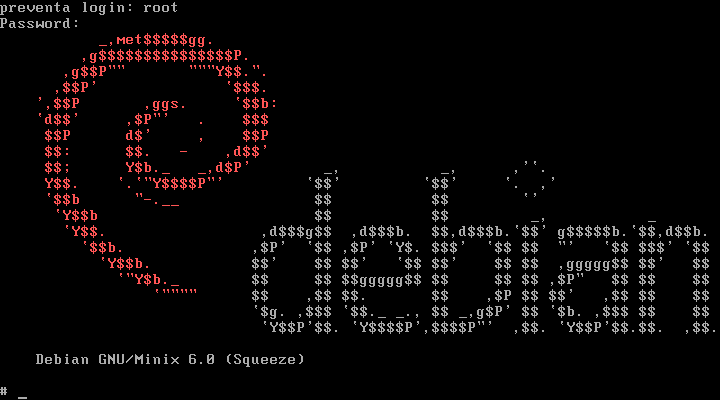
Debian Minix MOTD banner Actually I was at the venue on Tuesday for a little while but my name wasn't in the system either because I has given my name in Unicode or, more likely, I had forgotten to check the "reconfirm" box on the registration form. For some reason Columbia U's DHCP server makes Minix lock up on boot. Also I left my laptops AC adapter at home. Some kind souls lent me their European adapters but they didn't work. (I have a set of international converters. Also unfortunately at home.) So after about three hours, my battery ran out and I had to leave. So we will pretend that never happened and instead call today day 1. (Wednesday I had some unexpected family stuff to attend to so that doesn't count either.) Today I first concentrated on tracking down why the boot process was hanging. The culprit seems to be nonamed a daemon Minix runs to do DNS resolution/caching etc. I'm consulting with the Minix devs to see what can be done about this. I added the cool MOTD banner you see above (made by Osmo). And I ported some more GNU software to match the versions in Squeeze. Tomorrow, the biggies gcc and perl, and seeing if I can get a dpkg binary that doesn't segfault.

27 July 2010

Petter Reinholdtsen: Circular package dependencies harms apt recovery

I discovered this while doing automated testing of upgrades from Debian Lenny to Squeeze. A few packages in Debian still got circular dependencies, and it is often claimed that apt and aptitude should be able to handle this just fine, but some times these dependency loops causes apt to fail. An example is from todays upgrade of KDE using aptitude. In it, a bug in kdebase-workspace-data causes perl-modules to fail to upgrade. The cause is simple. If a package fail to unpack, then only part of packages with the circular dependency might end up being unpacked when unpacking aborts, and the ones already unpacked will fail to configure in the recovery phase because its dependencies are unavailable. In this log, the problem manifest itself with this error:
dpkg: dependency problems prevent configuration of perl-modules:
 perl-modules depends on perl (>= 5.10.1-1); however:
  Version of perl on system is 5.10.0-19lenny2.
dpkg: error processing perl-modules (--configure):
 dependency problems - leaving unconfigured
The perl/perl-modules circular dependency is already reported as a bug, and will hopefully be solved as soon as possible, but it is not the only one, and each one of these loops in the dependency tree can cause similar failures. Of course, they only occur when there are bugs in other packages causing the unpacking to fail, but it is rather nasty when the failure of one package causes the problem to become worse because of dependency loops. Thanks to the tireless effort by Bill Allombert, the number of circular dependencies left in Debian is dropping, and perhaps it will reach zero one day. :) Todays testing also exposed a bug in update-notifier and different behaviour between apt-get and aptitude, the latter possibly caused by some circular dependency. Reported both to BTS to try to get someone to look at it.

25 July 2010

Joey Hess: git source packages: take 2

My patches to convert the 3.0 (git) source format to use git bundles have landed in dpkg's git repository and will be in dpkg 1.15.8. I think this second attempt at 3.0 (git) has worked out much better than the first. (Though the first was a pretty good success overall, since it also led all the other 3.0 formats eventually. ;) Perhaps the intervening years of git experience helped. The code is much simpler, with none of the ad-hoc hacks from the first version. The resulting git bundles can be manually cloned using git-bundle(1) where dpkg-source is not available. There are two handy new features that can be controlled by debian/source/options. git-ref can be used to limit the branches/tags/etc that are included in the source package. And git-depth can cause a shallow clone of specified depth to be created and bundled.
dpkg-source: info: using options from debhelper/debian/source/options: --git-ref=gitsrc --git-ref=master --git-depth=10
dpkg-source: info: using source format  3.0 (git)'
dpkg-source: info: creating shallow clone with depth 10
dpkg-source: info: bundling: gitsrc master
A demo source package is here.
joey@gnu:~/tmp/t>dget http://kitenet.net/~joey/tmp/debhelper_7.9.4.dsc
...
dpkg-source: info: extracting debhelper in debhelper-7.9.4
dpkg-source: info: cloning debhelper_7.9.4.git
dpkg-source: info: setting up shallow clone
joey@gnu:~/tmp/t>ls -l
total 392
drwxr-xr-x 10 joey joey   4096 Jul 25 13:58 debhelper-7.9.4/
-rw-r--r--  1 joey joey   1779 Jul 25 13:58 debhelper_7.9.4.dsc
-rw-r--r--  1 joey joey 388859 Jul 25 13:58 debhelper_7.9.4.git
-rw-r--r--  1 joey joey    738 Jul 25 13:58 debhelper_7.9.4.gitshallow
joey@gnu:~/tmp/t>cd debhelper-7.9.4 
joey@gnu:~/tmp/t/debhelper-7.9.4>git branch -a
* gitsrc
  remotes/origin/HEAD -> origin/gitsrc
  remotes/origin/gitsrc
  remotes/origin/master
Notice that the branch I was in when I built the package is preserved, and the 19 revisions included in the shallow clone (10 per branch) take up very little space of course. This particular git source package turned out 30k larger than the tar.gz. I am considering adding two other features: I hope the next step will be for git source packages to be accepted in the Debian archive.

Russell Coker: SE Linux status in Debian/Squeeze

ffmpeg I ve updated my SE Linux repository for Squeeze to include a modified version of the ffmpeg packages without MMX support for the i386 architecture. When MMX support is enabled it uses assembler code which requires text relocations (see Ulrich Drepper s documentation for the explanation of this [1]). This makes it possible to run programs such as mplayer under SE Linux without granting excessive access something which we really desire because mplayer will usually be dealing with untrusted data. In my past tests with such changes to ffmpeg on my EeePC701 have resulted in no difference to my ability to watch movies from my collection, the ones that could be played without quality loss on a system with such a slow CPU could still be viewed correctly with the patched ffmpeg. $ mplayer
mplayer: error while loading shared libraries: /usr/lib/i686/cmov/libswscale.so.0: cannot restore segment prot after reloc: Permission denied The AMD64 architecture has no need for such patches, presumably due to having plenty of registers. I don t know whether other architectures need such patches, they might the symptom is having mplayer abort with an error such as the above when running in Enforcing Mode. The below apt sources.list line can be used to add my SE Linux repository: deb http://www.coker.com.au squeeze selinux dpkg In my repository for i386 and AMD64 architectures I have included a build of dpkg that fixes bug #587949. This bug causes some sym-links and directories to be given the wrong label by dpkg when a package is installed. Usually this doesn t impact the operation of the system and I was unable to think of a situation where it could be a security hole, but it can deny access in situations where it should be granted. I would appreciate some help in getting the patch in a form that can be accepted by the main dpkg developers, the patch I sent in the bug report probably isn t ideal even though it works quite well someone who knows absolutely nothing about SE Linux but is a good C coder with some knowledge of dpkg could beat it into shape. In my repository I don t currently provide any support for architectures other than i386 and AMD64. I could be persuaded to do so if there is a demand. How many people are using Debian SE Linux on other architectures? Of course there s nothing stopping someone from downloading the source from my AMD64 repository and building it for another architecture, I would be happy to refer people to an APT repository that someone established for the purpose of porting my SE Linux packages to another architecture. Policy selinux-policy-default version 20100524-2 is now in Testing. It s got a lot of little fixes and among other things allows sepolgen-ifgen to work without error which allows using the -R option of audit2allow see my post about audit2allow and creating the policy for milters for defails [2]. I have uploaded selinux-policy-default version 20100524-3 to Unstable. It has a bunch of little fixes that are mostly related to desktop use. You can now run KDE4 on Unstable in enforcing mode, login via kdm and expect that everything will work probably some things won t work, but some of my desktop systems work well with it. I have to admit that not all of my desktop systems run my latest SE Linux code, I simply can t have all my systems run unstable and risk outages. Let me know if you find any problems with desktop use of the latest SE Linux code, it s the focus of my current work. But if you find problems with chrome (from Google) or the Debian package chromium-browser then don t report them to me. They each use their own version of ffmpeg in the shared object /usr/lib/chromium-browser/libffmpegsumo.so which has text relocations and I don t have time to rebuild chromium-browser without text relocations I ll make sure it does the right thing when they get it working with the standard ffmpeg libraries. That said the text relocation problem doesn t seem to impact the use of Chromium, Youtube doesn t work even when the browser is run in permissive mode. GNOME is a lower priority than KDE for me at this time. But the only area where problems are likely to occur is with gdm and everything associated with logging in. Once your X session starts up GNOME and KDE look pretty similar in terms of access control. I would appreciate it if someone could test gdm and let me know how it goes. I ll do it eventually if no-one else does, but I ve got some other things to fix first.

22 July 2010

Raphaël Hertzog: Quick news: dpkg, collab-maint, alioth and the future

Dpkg got rid of Perl Let s start with the interesting part and the great news: dpkg 1.15.8 (to be uploaded soon) will no longer need perl! After my changes to rewrite update-alternatives in C, Guillem recently pushed the rewrite of dpkg-divert/mksplit in C. Please test it out (binary package for i386 or .dsc). This is rather exciting news for those who would like to use dpkg in embedded contexts. And it s great to see this completed in time for Squeeze. In Squeeze+1, we might go one step further and merge cdebconf, the C replacement for debconf. I got rid of some recurring administrative tasks I have been administrating the Alioth server since its inception (see the announce I sent in 2003) but I m no longer enjoying the day-to-day administrative work that it represents. That s why I just retired from the team. We recently recruited Tollef Fog Heen so the number of admins is still the same (that said, Alioth could benefit from some more help, if you re a DD and interested, drop a mail to admin@alioth.debian.org or come to #alioth). Same goes for the collab-maint project. I have dealt with hundreds of requests to add new contributors to the project since it s the central repository where all Debian developers have write access and where they put the VCS for their packages that do not belong to a more specialized team. The new administrator that will approve the requests is Xavier Oswald and he s doing the work under the umbrella of the New Maintainer s Front Desk. The future I will continue to spend the same amount of time on Debian, the time freed will quickly be reallocated to other Debian and free software related projects. In fact, I even anticipated a bit by launching Flattr FOSS last week but that s a relatively simple project. :-) The other projects that will never all fit in the freed time: I want to spend more time working on dpkg. I do plan to blog more often too, but I m sure you ll notice that yourself soon. I would like to see my Debian book translated into English (another post coming on the topic sometimes soon). In my dreams, I could even start yet another software project, I have some ideas that I really would like to see implemented but I don t see how that could fit in this year s planning unless I can convince someone else to implement them! Maybe I should blog about them. Flattr this Share/Bookmark 5 comments Support my work

14 July 2010

Felipe Sateler: Getting pulseaudio to work on 32-bit apps on a 64-bit system

To get pulseaudio working on 32bit apps you need to do a little bit of work, because of bugs 543448. First, install lib32asound2-plugins, and then get the needed libs from the 32bit debian. Using zsh, this can be done:
ldd /usr/lib32/alsa-lib/libasound_module_pcm_pulse.so   grep 'not found' \
	  awk ' print $1 '   xargs dlocate   cut -f1 -d:   sort -u   \
	while read name; do \
		apt-cache show $name   grep Filename: \
			  cut -f2 -d:   sed -e 's/_amd64/_i386/' \
			  xargs -l -I' ' \
			     wget http://ftp.cl.debian.org/debian/' '
		dpkg -x $ name _* $ name 
		sudo cp -i $ name /**/lib/* /usr/lib32
	done
Iterate a few times, since missing deps are found incrementally. After there are no missing libs (check with the ldd command above), you are done.

9 July 2010

Mike Hommey: Iceweasel 4.0 beta 1 preliminary packages for Debian, and a nice trick

Since this blog is now syndicated on Planet Mozilla, a little background for its readers: Iceweasel is the name under which Firefox is distributed in Debian. This is an unfortunate detail due to copyright issues with the Firefox logos that have been solved recently. Work is under progress to get Firefox back in Debian (I do have good hope this will be possible). Anyways, I ve started to work on getting Iceweasel in shape for the 4.0 release in a few months. The packaging being in a good enough shape, I am hereby making available some preliminary packages (meaning there is still some more work needed for proper packaging) for the first beta release. The packages are available in a separate repository, which you need to add to your sources.list:
deb http://mozilla.debian.net/packages/ ./
Only x86 and x86-64 (amd64) packages are available for now. As far as I tested it, it works as well as the official Firefox 4.0beta1 binaries, though some xpcshell tests failed, and I haven t got reftests working yet. If you still wish to use a current version of iceweasel (i.e. non-beta), but want to try this beta, here is the nice trick: Instead of installing iceweasel from the above mentioned repository, Now you can start the Iceweasel beta with /some/directory/usr/bin/iceweasel. This trick should work with older versions of iceweasel, too.

8 July 2010

Neil Williams: check-deps.sh and xapt

check-deps.sh
Phil Hands and I devised a little script which is currently packaged as part of multistrap to check the dependencies of a .deb package before installing it - called check-deps.sh and can be found at /usr/share/multistrap/check-deps.sh. I just thought I'd publicise it a bit because it can help with one of my common test cases - when a binary package changes dependencies but you haven't uploaded it yet.

check-deps.sh takes a .deb to the command line -f --file option and outputs the dependencies of that .deb and whether those dependencies (at the requested versions) exist in your apt-cache policy. Optionally, you can use check-deps.sh to also then install those dependencies (not the dependencies that would come from the current version in the repository) and the package itself.

I've found this to be a much more friendly way of satisfying runtime dependencies of a package. Where things like pbuilder would just force install the .deb and then get apt-get -f install to try and fix things, check-deps.sh will fail if the required dependencies are not available in the first place.

The benefits are two-fold. First you get to see the full list and you can easily see if your work to drop a dependency has just resulted in another package bringing that dependency back in etc. Secondly, you can test whether your .deb is installable without breaking your system and then having to remove it - e.g. against backports or a Debian derivative test chroot. It should be possible to extend the script to read Build-Depends but that means reading the input from the source package, not the built binary. Might be just as easy to have a second script for Build-Depends.

(Comments are still disabled due to spammers and time-wasters, but if you would like to see check-deps.sh more widely used or extended it isn't that hard to find my email address at debian.org.)

xapt
Another new perl script, this time using the multistrap and apt-grip core to replace the apt-cross breakage to install cross-dependencies of a Debian source package. xapt has very few dependencies (dpkg-dev, dpkg-cross, apt, perl) and very simple logic. It doesn't try to second-guess which packages to use as dependencies of cross packages, it just gets them all. As such, it still isn't the tool we need for optimal cross-dependency resolution, but then neither is apt-cross - come to that, Multiarch or sysroot aren't going to provide the right tool any time soon either. So xapt at least gets over the worst of the design problems in apt-cross (by not using the apt perl bindings mainly) and seems to just work within clean chroots which is where apt-cross has the most problems.

xapt will be a new binary package, so it will need to go through NEW but I'm looking at using it as part of pdebuild-cross because it is faster than apt-cross and seems to work much more efficiently than apt-cross inside a clean chroot. xapt does not care about multiarch or sysroot, it just gets the packages and passes them to dpkg-cross. Normally, xapt cleans up after itself but you can choose to leave the built packages in /var/lib/xapt/output if that is useful.

6 July 2010

Jose Luis Rivas Contreras: Dropbox for Debian

Tired of the versioning issue between libnautilus from Debian and Ubuntu I decided to create myself the packages for nautilus-dropbox and here they are. I ll maintain them on my repo, so if you want to keep dropbox updated I recommend you to add my repo to your sources.list:
deb http://dl.rivco.net/debian sid main
And if you are on testing/squeeze there s a repo for you too:
deb http://dl.rivco.net/debian squeeze main It s only available for i386 but you can grab the sources adding the deb-src for your distro and build it with dpkg-buildpackage or whatever you want. Soon I ll be building the experimental client as well.

3 July 2010

Petter Reinholdtsen: Lenny->Squeeze upgrades, apt vs aptitude with the Gnome desktop

Here is a short update on my my Debian Lenny->Squeeze upgrade testing. Here is a summary of the difference for Gnome when it is upgraded by apt-get and aptitude. I'm not reporting the status for KDE, because the upgrade crashes when aptitude try because of missing conflicts (#584861 and #585716). At the end of the upgrade test script, dpkg -l is executed to get a complete list of the installed packages. Based on this I see these differences when I did a test run today. As usual, I do not really know what the correct set of packages would be, but thought it best to publish the difference. Installed using apt-get, missing with aptitude
at-spi cpp-4.3 finger gnome-spell gstreamer0.10-gnomevfs libatspi1.0-0 libcupsys2 libeel2-data libgail-common libgdl-1-common libgnomeprint2.2-data libgnomeprintui2.2-common libgnomevfs2-bin libgtksourceview-common libpt-1.10.10-plugins-alsa libpt-1.10.10-plugins-v4l libservlet2.4-java libxalan2-java libxerces2-java openoffice.org-writer2latex openssl-blacklist p7zip python-4suite-xml python-eggtrayicon python-gtkhtml2 python-gtkmozembed svgalibg1 xserver-xephyr zip
Installed using apt-get, removed with aptitude
bluez-utils dhcdbd djvulibre-desktop epiphany-gecko gnome-app-install gnome-mount gnome-vfs-obexftp gnome-volume-manager libao2 libavahi-compat-libdnssd1 libavahi-core5 libbind9-50 libbluetooth2 libcamel1.2-11 libcdio7 libcucul0 libcurl3 libdirectfb-1.0-0 libdvdread3 libedata-cal1.2-6 libedataserver1.2-9 libeel2-2.20 libepc-1.0-1 libepc-ui-1.0-1 libexchange-storage1.2-3 libfaad0 libgd2-noxpm libgda3-3 libgda3-common libggz2 libggzcore9 libggzmod4 libgksu1.2-0 libgksuui1.0-1 libgmyth0 libgnome-desktop-2 libgnome-pilot2 libgnomecups1.0-1 libgnomeprint2.2-0 libgnomeprintui2.2-0 libgpod3 libgraphviz4 libgtkhtml2-0 libgtksourceview1.0-0 libgucharmap6 libhesiod0 libicu38 libisccc50 libisccfg50 libiw29 libkpathsea4 libltdl3 liblwres50 libmagick++10 libmagick10 libmalaga7 libmtp7 libmysqlclient15off libnautilus-burn4 libneon27 libnm-glib0 libnm-util0 libopal-2.2 libosp5 libparted1.8-10 libpisock9 libpisync1 libpoppler-glib3 libpoppler3 libpt-1.10.10 libraw1394-8 libsensors3 libsmbios2 libsoup2.2-8 libssh2-1 libsuitesparse-3.1.0 libswfdec-0.6-90 libtalloc1 libtotem-plparser10 libtrackerclient0 libvoikko1 libxalan2-java-gcj libxerces2-java-gcj libxklavier12 libxtrap6 libxxf86misc1 libzephyr3 mysql-common swfdec-gnome totem-gstreamer wodim
Installed using aptitude, missing with apt-get
gnome gnome-desktop-environment hamster-applet python-gnomeapplet python-gnomekeyring python-wnck rhythmbox-plugins xorg xserver-xorg-input-all xserver-xorg-input-evdev xserver-xorg-input-kbd xserver-xorg-input-mouse xserver-xorg-input-synaptics xserver-xorg-video-all xserver-xorg-video-apm xserver-xorg-video-ark xserver-xorg-video-ati xserver-xorg-video-chips xserver-xorg-video-cirrus xserver-xorg-video-dummy xserver-xorg-video-fbdev xserver-xorg-video-glint xserver-xorg-video-i128 xserver-xorg-video-i740 xserver-xorg-video-mach64 xserver-xorg-video-mga xserver-xorg-video-neomagic xserver-xorg-video-nouveau xserver-xorg-video-nv xserver-xorg-video-r128 xserver-xorg-video-radeon xserver-xorg-video-radeonhd xserver-xorg-video-rendition xserver-xorg-video-s3 xserver-xorg-video-s3virge xserver-xorg-video-savage xserver-xorg-video-siliconmotion xserver-xorg-video-sis xserver-xorg-video-sisusb xserver-xorg-video-tdfx xserver-xorg-video-tga xserver-xorg-video-trident xserver-xorg-video-tseng xserver-xorg-video-vesa xserver-xorg-video-vmware xserver-xorg-video-voodoo
Installed using aptitude, removed with apt-get
deskbar-applet xserver-xorg xserver-xorg-core xserver-xorg-input-wacom xserver-xorg-video-intel xserver-xorg-video-openchrome
I was told on IRC that the xorg-xserver package was changed in git today to try to get apt-get to not remove xorg completely. No idea when it hits Squeeze, but when it does I hope it will reduce the difference somewhat.

16 June 2010

Petter Reinholdtsen: Calling tasksel like the installer, while still getting useful output

A few times I have had the need to simulate the way tasksel installs packages during the normal debian-installer run. Until now, I have ended up letting tasksel do the work, with the annoying problem of not getting any feedback at all when something fails (like a conffile question from dpkg or a download that fails), using code like this:
export DEBIAN_FRONTEND=noninteractive
tasksel --new-install
This would invoke tasksel, let its automatic task selection pick the tasks to install, and continue to install the requested tasks without any output what so ever. Recently I revisited this problem while working on the automatic package upgrade testing, because tasksel would some times hang without any useful feedback, and I want to see what is going on when it happen. Then it occured to me, I can parse the output from tasksel when asked to run in test mode, and use that aptitude command line printed by tasksel then to simulate the tasksel run. I ended up using code like this:
export DEBIAN_FRONTEND=noninteractive
cmd="$(in_target tasksel -t --new-install   sed 's/debconf-apt-progress -- //')"
$cmd
The content of $cmd is typically something like "aptitude -q --without-recommends -o APT::Install-Recommends=no -y install ~t^desktop$ ~t^gnome-desktop$ ~t^laptop$ ~pstandard ~prequired ~pimportant", which will install the gnome desktop task, the laptop task and all packages with priority standard , required and important, just like tasksel would have done it during installation. A better approach is probably to extend tasksel to be able to install packages without using debconf-apt-progress, for use cases like this.

13 June 2010

Petter Reinholdtsen: Lenny->Squeeze upgrades, removals by apt and aptitude

My testing of Debian upgrades from Lenny to Squeeze continues, and I've finally made the upgrade logs available from http://people.skolelinux.org/pere/debian-upgrade-testing/. I am now testing dist-upgrade of Gnome and KDE in a chroot using both apt and aptitude, and found their differences interesting. This time I will only focus on their removal plans. After installing a Gnome desktop and the laptop task, apt-get wants to remove 72 packages when dist-upgrading from Lenny to Squeeze. The surprising part is that it want to remove xorg and all xserver-xorg-video* drivers. Clearly not a good choice, but I am not sure why. When asking aptitude to do the same, it want to remove 129 packages, but most of them are library packages I suspect are no longer needed. Both of them want to remove bluetooth packages, which I do not know. Perhaps these bluetooth packages are obsolete? For KDE, apt-get want to remove 82 packages, among them kdebase which seem like a bad idea and xorg the same way as with Gnome. Asking aptitude for the same, it wants to remove 192 packages, none which are too surprising. I guess the removal of xorg during upgrades should be investigated and avoided, and perhaps others as well. Here are the complete list of planned removals. The complete logs is available from the URL above. Note if you want to repeat these tests, that the upgrade test for kde+apt-get hung in the tasksel setup because of dpkg asking conffile questions. No idea why. I worked around it by using 'echo >> /proc/pidofdpkg/fd/0' to tell dpkg to continue. apt-get gnome 72
bluez-gnome cupsddk-drivers deskbar-applet gnome gnome-desktop-environment gnome-network-admin gtkhtml3.14 iceweasel-gnome-support libavcodec51 libdatrie0 libgdl-1-0 libgnomekbd2 libgnomekbdui2 libmetacity0 libslab0 libxcb-xlib0 nautilus-cd-burner python-gnome2-desktop python-gnome2-extras serpentine swfdec-mozilla update-manager xorg xserver-xorg xserver-xorg-core xserver-xorg-input-all xserver-xorg-input-evdev xserver-xorg-input-kbd xserver-xorg-input-mouse xserver-xorg-input-synaptics xserver-xorg-input-wacom xserver-xorg-video-all xserver-xorg-video-apm xserver-xorg-video-ark xserver-xorg-video-ati xserver-xorg-video-chips xserver-xorg-video-cirrus xserver-xorg-video-cyrix xserver-xorg-video-dummy xserver-xorg-video-fbdev xserver-xorg-video-glint xserver-xorg-video-i128 xserver-xorg-video-i740 xserver-xorg-video-imstt xserver-xorg-video-intel xserver-xorg-video-mach64 xserver-xorg-video-mga xserver-xorg-video-neomagic xserver-xorg-video-nsc xserver-xorg-video-nv xserver-xorg-video-openchrome xserver-xorg-video-r128 xserver-xorg-video-radeon xserver-xorg-video-radeonhd xserver-xorg-video-rendition xserver-xorg-video-s3 xserver-xorg-video-s3virge xserver-xorg-video-savage xserver-xorg-video-siliconmotion xserver-xorg-video-sis xserver-xorg-video-sisusb xserver-xorg-video-tdfx xserver-xorg-video-tga xserver-xorg-video-trident xserver-xorg-video-tseng xserver-xorg-video-v4l xserver-xorg-video-vesa xserver-xorg-video-vga xserver-xorg-video-vmware xserver-xorg-video-voodoo xulrunner-1.9 xulrunner-1.9-gnome-support aptitude gnome 129
bluez-gnome bluez-utils cpp-4.3 cupsddk-drivers dhcdbd djvulibre-desktop finger gnome-app-install gnome-mount gnome-network-admin gnome-spell gnome-vfs-obexftp gnome-volume-manager gstreamer0.10-gnomevfs gtkhtml3.14 libao2 libavahi-compat-libdnssd1 libavahi-core5 libavcodec51 libbluetooth2 libcamel1.2-11 libcdio7 libcucul0 libcupsys2 libcurl3 libdatrie0 libdirectfb-1.0-0 libdvdread3 libedataserver1.2-9 libeel2-2.20 libeel2-data libepc-1.0-1 libepc-ui-1.0-1 libfaad0 libgail-common libgd2-noxpm libgda3-3 libgda3-common libgdl-1-0 libgdl-1-common libggz2 libggzcore9 libggzmod4 libgksu1.2-0 libgksuui1.0-1 libgmyth0 libgnomecups1.0-1 libgnomekbd2 libgnomekbdui2 libgnomeprint2.2-0 libgnomeprint2.2-data libgnomeprintui2.2-0 libgnomeprintui2.2-common libgnomevfs2-bin libgpod3 libgraphviz4 libgtkhtml2-0 libgtksourceview-common libgtksourceview1.0-0 libgucharmap6 libhesiod0 libicu38 libiw29 libkpathsea4 libltdl3 libmagick++10 libmagick10 libmalaga7 libmetacity0 libmtp7 libmysqlclient15off libnautilus-burn4 libneon27 libnm-glib0 libnm-util0 libopal-2.2 libosp5 libparted1.8-10 libpoppler-glib3 libpoppler3 libpt-1.10.10 libpt-1.10.10-plugins-alsa libpt-1.10.10-plugins-v4l libraw1394-8 libsensors3 libslab0 libsmbios2 libsoup2.2-8 libssh2-1 libsuitesparse-3.1.0 libswfdec-0.6-90 libtalloc1 libtotem-plparser10 libtrackerclient0 libxalan2-java libxalan2-java-gcj libxcb-xlib0 libxerces2-java libxerces2-java-gcj libxklavier12 libxtrap6 libxxf86misc1 libzephyr3 mysql-common nautilus-cd-burner openoffice.org-writer2latex openssl-blacklist p7zip python-4suite-xml python-eggtrayicon python-gnome2-desktop python-gnome2-extras python-gtkhtml2 python-gtkmozembed python-numeric python-sexy serpentine svgalibg1 swfdec-gnome swfdec-mozilla totem-gstreamer update-manager wodim xserver-xorg-video-cyrix xserver-xorg-video-imstt xserver-xorg-video-nsc xserver-xorg-video-v4l xserver-xorg-video-vga zip apt-get kde 82
cupsddk-drivers karm kaudiocreator kcoloredit kcontrol kde kde-core kdeaddons kdeartwork kdebase kdebase-bin kdebase-bin-kde3 kdebase-kio-plugins kdesktop kdeutils khelpcenter kicker kicker-applets knewsticker kolourpaint konq-plugins konqueror korn kpersonalizer kscreensaver ksplash libavcodec51 libdatrie0 libkiten1 libxcb-xlib0 quanta superkaramba texlive-base-bin xorg xserver-xorg xserver-xorg-core xserver-xorg-input-all xserver-xorg-input-evdev xserver-xorg-input-kbd xserver-xorg-input-mouse xserver-xorg-input-synaptics xserver-xorg-input-wacom xserver-xorg-video-all xserver-xorg-video-apm xserver-xorg-video-ark xserver-xorg-video-ati xserver-xorg-video-chips xserver-xorg-video-cirrus xserver-xorg-video-cyrix xserver-xorg-video-dummy xserver-xorg-video-fbdev xserver-xorg-video-glint xserver-xorg-video-i128 xserver-xorg-video-i740 xserver-xorg-video-imstt xserver-xorg-video-intel xserver-xorg-video-mach64 xserver-xorg-video-mga xserver-xorg-video-neomagic xserver-xorg-video-nsc xserver-xorg-video-nv xserver-xorg-video-openchrome xserver-xorg-video-r128 xserver-xorg-video-radeon xserver-xorg-video-radeonhd xserver-xorg-video-rendition xserver-xorg-video-s3 xserver-xorg-video-s3virge xserver-xorg-video-savage xserver-xorg-video-siliconmotion xserver-xorg-video-sis xserver-xorg-video-sisusb xserver-xorg-video-tdfx xserver-xorg-video-tga xserver-xorg-video-trident xserver-xorg-video-tseng xserver-xorg-video-v4l xserver-xorg-video-vesa xserver-xorg-video-vga xserver-xorg-video-vmware xserver-xorg-video-voodoo xulrunner-1.9 aptitude kde 192
bluez-utils cpp-4.3 cupsddk-drivers cvs dcoprss dhcdbd djvulibre-desktop dosfstools eyesapplet fifteenapplet finger gettext ghostscript-x imlib-base imlib11 indi kandy karm kasteroids kaudiocreator kbackgammon kbstate kcoloredit kcontrol kcron kdat kdeadmin-kfile-plugins kdeartwork-misc kdeartwork-theme-window kdebase-bin-kde3 kdebase-kio-plugins kdeedu-data kdegraphics-kfile-plugins kdelirc kdemultimedia-kappfinder-data kdemultimedia-kfile-plugins kdenetwork-kfile-plugins kdepim-kfile-plugins kdepim-kio-plugins kdeprint kdesktop kdessh kdict kdnssd kdvi kedit keduca kenolaba kfax kfaxview kfouleggs kghostview khelpcenter khexedit kiconedit kitchensync klatin klickety kmailcvt kmenuedit kmid kmilo kmoon kmrml kodo kolourpaint kooka korn kpager kpdf kpercentage kpf kpilot kpoker kpovmodeler krec kregexpeditor ksayit ksim ksirc ksirtet ksmiletris ksmserver ksnake ksokoban ksplash ksvg ksysv ktip ktnef kuickshow kverbos kview kviewshell kvoctrain kwifimanager kwin kwin4 kworldclock kxsldbg libakode2 libao2 libarts1-akode libarts1-audiofile libarts1-mpeglib libarts1-xine libavahi-compat-libdnssd1 libavahi-core5 libavc1394-0 libavcodec51 libbluetooth2 libboost-python1.34.1 libcucul0 libcurl3 libcvsservice0 libdatrie0 libdirectfb-1.0-0 libdjvulibre21 libdvdread3 libfaad0 libfreebob0 libgail-common libgd2-noxpm libgraphviz4 libgsmme1c2a libgtkhtml2-0 libicu38 libiec61883-0 libindex0 libiw29 libk3b3 libkcal2b libkcddb1 libkdeedu3 libkdepim1a libkgantt0 libkiten1 libkleopatra1 libkmime2 libkpathsea4 libkpimexchange1 libkpimidentities1 libkscan1 libksieve0 libktnef1 liblockdev1 libltdl3 libmagick10 libmimelib1c2a libmozjs1d libmpcdec3 libneon27 libnm-util0 libopensync0 libpisock9 libpoppler-glib3 libpoppler-qt2 libpoppler3 libraw1394-8 libsmbios2 libssh2-1 libsuitesparse-3.1.0 libtalloc1 libtiff-tools libxalan2-java libxalan2-java-gcj libxcb-xlib0 libxerces2-java libxerces2-java-gcj libxtrap6 mpeglib networkstatus openoffice.org-writer2latex pmount poster psutils quanta quanta-data superkaramba svgalibg1 tex-common texlive-base texlive-base-bin texlive-common texlive-doc-base texlive-fonts-recommended xserver-xorg-video-cyrix xserver-xorg-video-imstt xserver-xorg-video-nsc xserver-xorg-video-v4l xserver-xorg-video-vga xulrunner-1.9

9 June 2010

Gerfried Fuchs: Battle for Wesnoth 1.8

Some people still ask me from time to time when I'll upload Battle for Wesnoth 1.8. My usual answer is that it's there already since before the official announce went out in the wesnoth-1.8 package. The longer answer which also answers Why the name change? goes like this: People asked for a way to be able to install different branches side-by-side so that they can keep the old stable branch around for finishing started campaigns there while still being able to play with their friends multiplayer games using the new stable branch. Also people using the development version wanted to not having to get rid of the stable version just to use the development branch. So there it is! Enjoy! There though is still something missing though, and that's why the question where the 1.8 version of Wesnoth is still pops up: There is no transitional/meta package yet. This requires a bit more work including adding alternative handling (so one can still run wesnoth and not have to use the versioned wesnoth-1.8 binary name) and for that some dpkg-divert magic about the historical unversioned wesnoth packages. Given that my release is requesting quite some support overhead I can't tell yet when these things will be done, but a similarly related support contract will run out by the end of the month so potential I'll be able to find some time next month to finish this for good. If you want to have it done earlier or feel like helping out, feel free to send in patches after talking with me about the fineprints and potential approaches. Thanks in advance!

27 May 2010

Raphaël Hertzog: Rewriting update-alternatives in C

Among the goals listed in dpkg s roadmap, there s the C rewrite of the remaining perl scripts provided by the dpkg binary package (dpkg-dev is not concerned, it will remain a collection of perl scripts). Of the remaining scripts, update-alternatives was the largest piece of code (~1100 lines of perl) and I started converting it to C a few weeks ago (based on preliminary work of Guillem). It s now 2200 lines of C Thanks to the relatively extensive test-suite that I wrote last year, I m relatively confident that this new update-alternatives won t break your system. That said, it still needs some real-life usage to ensure everything is really ok (and users actively trying to break it are even better). Thus I would be glad if you could try it out ( binary package for i386 or .dsc) and report back to debian-dpkg@lists.debian.org. The rewrite of the 2 other remaining scripts is almost completed in a branch of Guillem. Hopefully this can be our last project completed in time for Squeeze as far as dpkg goes. It would be a great achievement for people that would like to use dpkg in embedded environments and avoid perl due to its size. Note: nobody sponsored that work. But it s not too late :-) Partagez cet article / Share This

6 May 2010

Russ Allbery: git-pbuilder 1.10

This is a minor update of the glue script that I use between git-buildpackage and pbuilder (with cowbuilder). The primary feature it has over other versions of a similar script is that one can set an environment variable to specify the chroot in which to build. This update changes the -i regex to include all of the Git-relevant parts of the standard dpkg-source exclusion regex. Before, the regex tried to exclude only .git directories, but also used insufficient quoting and ended up excluding any file containing git. That should be fixed, and now it should exclude .gitattributes files as well. Thanks to Allard Hoeve for the bug report. You can get the latest version from my miscellaneous scripts page.

1 May 2010

Sean Finney: Nouveau, Gallium3D, and Compiz on Debian

update: 20100503: It's been brought to my attention that there might have been a regression in one of the libraries, mesa, maybe, so that master might not be as reliable a reference point for this guide. so, just in case, here are the commit hashes that were used from the different projects: for the non-git-savvy: git checkout -b mybranch <hash> we now return to your regular broadcasting... A week or two ago I figured it was about time that I took the plung and tried out the latest nouveau drivers from experimental on my laptop. Unfortunately, it meant bidding adieu to compiz (apart from the bling it does actually provide some pretty damned useful features). I thought I'd give it a shot at least for a while on principal, since I've always had to think of the nvidia drivers as a necessary evil, and their lack of proper xrandr support is really, really annoying. Since then I haven't noticed any problems, apart from the following message after every suspend/resume:
[  931.213239] Uhhuh. NMI received for unknown reason 80 on CPU 0.
[  931.213240] You have some hardware problem, likely on the PCI bus.
[  931.213242] Dazed and confused, but trying to continue

No idea what's causing it, but otherwise the system is stable and functional. If anyone knows what can be done about this, I'd appreciate hearing from you. My graphics card, by the way:
01:00.0 VGA compatible controller: nVidia Corporation G72M [Quadro NVS 110M/GeForce Go 7300] (rev a1)

In the time since then, the nouveau driver has made its way into unstable, and a lot of distros (ubuntu, fedora, ...) are even using it as the default driver. So before going any further with the 3d/compiz stuff, I highly recommend that you get the packaged version working first. This will not only make sure that the basic driver works, but it will also make recovery/rollback a lot easier. Since it's all packaged in the standard repositories, it's not much harder than installing a few packages and editing a few files... so come on give it a try :) Getting the 2d driver working in Debian sid Really, this is so easy it's hardly worth writing up, but i'm running with the -v flag this morning... Make sure you don't have any reference to nvidia in /etc/modules or other places that might cause it to be automatically loaded. Then remove the proprietary glx bindings, which would otherwise interfere with the nouveau driver.
sudo apt-get remove nvidia-glx

Next, you'll need to install a kernel that includes updated drm support. Normally this would require a kernel >= 2.6.33.1, but the debian kernel maintainers have graciously backported this code to the 2.6.32-4 kernel package. note this isn't the default kernel version in testing/unstable at the time of writing so you have to explicitly install it along with the nouveau driver.
sudo apt-get install linux-image-2.6.32-4-amd64 xserver-xorg-video-nouveau

If you are already running this kernel and using the proprietary nvidia drivers, via module-assistant or otherwise, you /might/ need to uninstall them first. On my system I left them installed in the old kernel version but did not install them on the new kernel version. Required xorg configuration I don't believe that nouveau is picked by default if available at the time of writing, so you have to have the following in your xorg.conf:
sudo sh -c "cat > /etc/X11/xorg.conf" << EOF
Section "Device"
    Identifier     "nVidia Corporation G72M [Quadro NVS 110M/GeForce Go 7300]"
    Driver         "nouveau"
EndSection
EOF

This was all I needed to do, apart from rebooting into the new kernel. For those who don't want to venture outside the packaging system, this is about as far as you can go for the time being. Though really, if you're bothering to read this far along, you're probably more interested in what comes next :) Getting 3d working (without voiding your distro warranty) So I thought I'd give the 3d-accelerated gallium a go. Their wiki page certainly makes one think twice, but at this point I was seriously fiending to get my bling back (well, the compiz scale plugin, anyway) and figured it wouldn't hurt too much to try. Via google and trawling around in various forums I found a number of how-to documents for getting Gallium3d on debian/ubuntu systems, but most of them recommended doing things in a way that wasn't easily reversible and that could totally hose your system in a not-so-hypothetical worst-case scenario. It's pretty hard to roll back a make install done into /usr, for example, and subsequent package upgrades can leave your system even worse off as they will probably clobber half of what you just did, leaving the other half totally broken. And if you have a laptop which requires the gui for networking (i.e. network-manager), then fixing/rolling-back the changes is not entirely trivial, since you'd likely have to re-download the various drm/mesa/xorg packages. So enter the tried and true unix utility stow (apt-get install stow, of course). stow is a utility that lets you install software into arbitrary folders, and then manage the system-wide installation of the software via a farm of symlinks pointing at the installed location. It's probably more well known among the sysadmin crowd than the desktop user crowd, but it's incredibly useful for the task at hand as it will let us easily install multiple copies of different software in a way that's very easy to update and/or roll-back. RTFM stow(1) for more information. So, on to the juicy stuff... Install needed software, remove problematic packages, setup, etc At least on my system, I had to remove libdrm-dev to keep things from accidentally linking against it instead of the updated version that we install later on below. There's probably a way to override this with CFLAGS but I figure this is simpler.
sudo apt-get remove libdrm-dev
sudo apt-get install stow build-essential xorg-dev git-core libtool mesa-common-dev automake autoconf 
mkdir ~/nouveau

Compile a linux-2.6.34 RC kernel
cd ~/nouveau
git clone git://git.kernel.org/pub/scm/linux/kernel/git/torvalds/linux-2.6.git
cd linux-2.6
git remote add -f nouveau git://anongit.freedesktop.org/nouveau/linux-2.6
git checkout -b nouveau-master nouveau/master
make menuconfig

Enable device drivers -> staging drivers -> nouveau. Make any other changes you might want to make (I just took defaults for everything else).
make deb-pkg

The linux-firmware-free debian package ships some of the same stuff from the generated linux-firmware-image package. I decided to opt for the upstream firmware, though I'm not sure that this is necessary:
sudo apt-get remove linux-firmware-free
sudo dpkg -i ~/nouveau/linux-image*.deb ~/nouveau/linux-firmware-image*.deb
sudo update-grub

Install a copy of dri2proto
cd ~/nouveau
git clone git://anongit.freedesktop.org/xorg/proto/dri2proto
cd dri2proto
./autogen.sh --prefix=/usr/local/stow/dri2proto-20100428
sudo mkdir -p /usr/local/stow/dri2proto-20100428
sudo make install
sudo stow -d /usr/local/stow dri2proto-20100428

Install a cutting-edge version of libdrm
cd ~/nouveau
git clone git://anongit.freedesktop.org/git/mesa/drm/
cd drm
./autogen.sh --prefix=/usr/local/stow/drm-20100428 --disable-intel --disable-radeon --enable-nouveau-experimental-api
make
sudo mkdir -p /usr/local/stow/drm-20100428
sudo make install
sudo stow  -d /usr/local/stow  drm-20100428

Likewise for mesa
cd ~/nouveau
git clone git://anongit.freedesktop.org/git/mesa/mesa
cd mesa
./autogen.sh --prefix=/usr/local/stow/mesa-20100428  --enable-debug --enable-glx-tls --disable-asm --with-dri-drivers= --enable-gallium-nouveau --disable-gallium-intel --disable-gallium-radeon --disable-gallium-svga --with-state-trackers=glx,dri --with-demos=xdemos,demos,trivial,tests
make
sudo mkdir -p /usr/local/stow/mesa-20100428 
sudo make install
sudo stow -d /usr/local/stow mesa-20100428

And now the xorg driver...
cd ~/nouveau
git clone git://anongit.freedesktop.org/git/nouveau/xf86-video-nouveau/
cd xf86-video-nouveau
./autogen.sh --prefix=/usr/local/stow/xf86-video-nouveau-20100428
make
sudo mkdir -p /usr/local/stow/xf86-video-nouveau-20100428
sudo make install
sudo stow -d /usr/local/stow xf86-video-nouveau-20100428

Configuration Configure xorg to look in alternate location for xorg modules and set up DRI
sudo sh -c "cat > /etc/X11/xorg.conf" << EOF
Section "Files"
    ModulePath "/usr/local/lib/xorg/modules,/usr/lib/xorg/modules"
EndSection
Section "ServerFlags"
    Option "GlxVisuals" "all"
Endsection
Section "Device"
    Identifier     "nVidia Corporation G72M [Quadro NVS 110M/GeForce Go 7300]"
    Driver         "nouveau"
EndSection
EOF

I've /heard/ that disabling TV out is a necessity on some cards, though I haven't seen this myself:
sudo sh -c "cat > /etc/modprobe.d/nouveau.conf" << EOF
# not entirely sure this is necessary, but heard it helped with vsync
options nouveau tv_disable=1
EOF

Finally, the one thing that can not be done in /usr/local is making the nouveau DRI driver available. From what I could tell the path that mesa uses to find the DRI libraries is hard-coded (corrections welcome). Since you won't already have this file (otherwise, why would you be following along here?), just drop in a symlink to the file in /usr/local:
sudo ln -s /usr/local/lib/dri/nouveau_dri.so /usr/lib/dri/

Finally, reboot, and hope for the best :) Riding the bleeding edge: how to upgrade later on Again, stow really shows its usefullness here. Using drm as an example case, upgrading an individual component would look something like:
cd ~/nouveau/drm
git clean -dfx
git pull
today= date +%Y%m%d 
./autogen.sh --prefix=/usr/local/stow/drm-$today --disable-intel --disable-radeon --enable-nouveau-experimental-api
make
sudo mkdir -p /usr/local/stow/drm-$today
sudo make install
sudo stow -d /usr/local/stow -D drm-20100428
sudo stow -d /usr/local/stow  drm-$today

Note how the old version is still installed, so you can switch components around pretty freely. Abort! Abort!: How to roll back changes In case your system becomes totally unusable, or you've decided that you just want to go back to the safe and cozy world of what's provided by the debian packages, simply do the following: Assuming that you're using the nouveau driver from unstable, this should be all that is necessary. Conclusion Overall impression I am very, very happy with the resulting setup. I was led to believe that this whole thing was much more unstable and unusable than it actually is! While there are certainly some glitches and missing features, I feel comfortable enough using it that I don't have plans to switch back. But if I find myself in a situation where I can't use the new setup, rolling back shouldn't be a problem either. I figure I'm happy with what I have now and it will only get better. What works, at least to a "kinda works" level. What still doesn't work Further reading, references Thanks A couple shoutouts to those who helped me with this on the way: Feedback / Corrections Unforunately, I've had to disable comments for the time being due to overwhelming quantities of spam. So please drop me a line via email or on IRC (seanius on oftc/freenode).

26 April 2010

Obey Arthur Liu: Welcome to our 2010 Debian Google Summer of Code students!

I d like to extend a warm welcome to our selected students for the 2010 Debian Google Summer of Code! They should pop up on Debian Planet soon and you re welcome to come talk to them on #debian-soc on irc.debian.org Aptitude Qt by Piotr Galiszewski, mentored by Sune Vuorela Qt GUI for aptitude. Currently, KDE users need to use Aptitude via the console interface, or install the newly developed GTK frontend, which does not fit well into KDE desktop. Making Qt frontend to Aptitude would solve this problem and bring an advanced and fully Debian-compliant graphical package manager to KDE. Content-aware Config Files Upgrading by Krzysztof Tyszecki, mentored by Dominique Dumont When a package deliver configuration files, the problem of merging user data with new configuration instructions will arise during package upgrades on users systems. Sometimes merging can be done with 3 way merge, but this process does not insure that the resulting file is correct or even legal. This project intends to create standards, tools an heuristics to make the scary config file conflict resolution debconf prompt a thing of the past. Debbugs Bug Reporting and Manipulation API by David Wendt Jr., mentored by Bastian Venthur Currently debbugs supports a SOAP interface for querying Debian s Bug Tracking System. Unfortunately this operation is read-only. This project would create an API for debbugs which supports sending and manipulating bug reports, without having to resort to email. This project does not intend to replace email as mean to manipulate the BTS but rather to enhance the BTS to allow other means of bug creation and manipulation. Debian High Performance Computing on Clouds by Dominique Belhachemi, mentored by Steffen Moeller The project paves a way to combine the demands in high performance computing with the dynamics of compute clouds with Debian. Combining the Eucalyptus cloud computing infrastructure with the TORQUE resource manager and preparing the components for dynamically added and removed instances provides the user with a attractive high performance computing environment. Such a system allows users to share resources with large compute centers with minimal changes in their workflow and scripts. Debian-Installer on Neo FreeRunner and Handheld Devices by Thibaut Girka, mentored by Gaudenz Steinlin This project aims to improve the installation experience of Debian on handheld devices by replacing ad-hoc install scripts by a full-blown and adapted Debian-Installer. The Neo FreeRunner is used as it is the most convenient and open device from a development standpoint, but other devices will also be explored. Hurd port and de-Linux-ization of Debian-Installer by J r mie Koenig, mentored by Samuel Thibault The primary means of distributing the Hurd is through Debian GNU/Hurd. However, the installation CDs presently use an ancient, non-native installer. The goal of this project is to port the missing parts of Debian-Installer to Hurd. To achieve this, all problematic Linux-specific code in Debian-Installer will be replaced by less or non-kernel dependent code, paving the way for better support of other non-Linux ports of Debian. Multi-Arch support in APT by David Kalnischkies, mentored by Michael Vogt Hardware like 64bit processors are perfectly able to execute 32bit opcode but until now this potentiality is disregard as the infrastructure tools like dpkg and APT are not able to install and/or solve dependencies across multiple architectures. The project therefore focuses on enabling APT to work out good solutions in a MultiArch aware environments without the need of hacky and partly working biarch packages currently in use. Package Repository Analysis and Migration Automation by Ricardo O Donell, mentored by Neil Williams Emdebian uses a filter to select packages from the main Debian repositories that are considered useful to embedded devices, excluding the majority of packages. The results of processing the filter are automated but maintaining the filter list is manual. This project seeks to automate certain elements of the filtering process to cope with specific conditions. This project will also generalize to more elaborate and intelligent algorithms to improve the transitions of the main Debian archives. Smart Upload Server for FTP Master by Petr Jasek, mentored by Joerg Jaspert Making packages upload smarter, more interactive and painless for uploaders by switching from anonymous FTP and Cron jobs to a robust protocol and modern package checking and processing daemon. This daemon would test early and report early, saving developers time. More details coming soon on http://wiki.debian.org/gsoc Congratulations everyone and have a fruitful summer!

28 March 2010

Clint Adams: DPL Campaign Questions 009

Serafeim Zanikolas:
With respect to attracting new contributors, please ponder the idea of a formal one-on-one mentoring scheme (as opposed to one-off interactions via d-mentors).
I see nothing particularly objectionable about this. A long time ago people were talking about replacing NM with a saner mentoring process, and I am certain that mentoring occurs unofficially. I see no reason that you could not set up a formal one-on-one mentoring infrastructure with or without the Project's blessing. Charles Plessy:
So my question to other candidates is simple: what is your opinion and program about membership?
I think that we have enough inequality in the project as it is. That is why I consider DM to be a bad thing, even though it has practical benefits. I think that NM is probably fundamentally broken, and I get a bit nervous when people are talking about increasing the amount of NM indoctrination or bureaucracy. I would be in favor of exploring the replacement of NM with some kind of mentorship-type process, though I would worry it would not scale. I would be in favor of exploring the replacement of NM with something like Lars's proposal a while back, though I would worry that it would encourage popularity contests and cliques and cabals. Raphael Hertzog:
1/ Do you believe that it's a good move to standardize our packaging tools? (example: debhelper is almost standard, quilt is gaining status of the standard patch system thanks to the new source format) 3/ Do you have any preference on the tools that we should try to standardize on (which source format/patch system, dh7/CDBS/yada/etc., VCS helper, etc.)? 4/ Organizing changes that have an impact on (a large part of all) the archive is very difficult: How can we change our processes so that doing/organizing such changes is less of a burden? 5/ I have the feeling that Debian is innovating less than it used to do. We are more often followers rather than leaders. Do you share that feeling? What shall we do to make that change?
1/ I think that we should standardize on dpkg-dev. If there are features which absolutely every package needs, it would seem the logical place to add them. 3/ Right now I wish everyone were using git, but I do not believe in forcing them. Of the available source formats, I like 3.0 (quilt) with no additional patch system, and no package helpers at all. I am not quite sure what a VCS helper is so I have no known preference to express. 4/ I am not sure whether or not what you are talking about should, in fact, be less of a burden, and why it should or should not, so I do not have a valid opinion on how to change the process. 5/ I do share that feeling. I think that sometimes we get bullied by Ubuntu when there are things we would do for our own benefit which would make their lives difficult. I think that people are generally resistant to change, even when it would be of little cost to them and great benefit to someone else. These problems are social and might be correctable with a better spirit of teamwork and cooperation. However, I do not think we should be innovating just for innovation's sake or to be known as the most innovative kid on the block. We should be making my favorite operating system.

27 March 2010

Clint Adams: DPL Campaign Questions 005

Marc Haber:
Do you see the diminishing care for our Core infrastructure as a problem? Do you have any idea how do sensibilize our new blood for the fact that "new packages" doesn't help Debian if our Core stuff is diminishing? I know that this is not exactly within the power of the DPL, but do you think that you, as DPL, can help speeding up Core development again?
Note: "core infrastructure" here refers to dpkg and apt. I am seeing numerous projects across the free software world struggle with a lack of contributors, and wonder why they cannot get anyone to help them. In most cases, I think there are hints about why people might feel disenfranchised by a particular development process, and in most cases, I think the people in charge are mostly unwilling to change the way that they have been doing things for years and years just to accommodate potential contributors. I think this is particularly true of projects where there is a dictatorship or a single gatekeeper for all VCS repository commits. Frequently these things seem to work themselves out after a long time. Old people leave, new people come in. Sometimes it is peaceful, sometimes it is violent. Rarely does it result in structural improvements. I do not know why there is lack of manpower on dpkg and apt right now. I know I tried to make a change to dpkg a few months ago and was unable to do so, partly due to the codebase and partly due to important information existing only in Guillem's mind. In the end, I had to just wait for Guillem to do it, which he helpfully did, and now we have libdpkg-dev in experimental, with one reverse build-dep. Had I been able to make the change myself, it is unclear whether I would have made any other contributions; that was the only itch I needed scratched, and I have plenty of other things to work on. So even though I found it near-impossible to contribute to dpkg in this way, I don't think that I'm excluded. So as DPL I would first try to determine why there might not be enough contributors to dpkg and apt, or why the existing contributors are not performing up to your standards. This could be an instance where I would solicit private communication from people who might have potentially-valuable information that they do not wish to communicate in public for fear of hurting someone's feelings. This does not mean that I would try to resolve these issues behind the scenes, because I consider that to be a dangerous and potentially-harmful tactic. Given a reasonable theory about why the problem exists, I would then proceed to encourage the resolution of that problem. I also think that some package maintenance teams may share some issues with some core teams and even the project at large, and addressing the more general problems could lead to relief in many areas. Specifically I would name problems related to ego and teamwork, which is a theme on which I plan to elaborate later.

Clint Adams: DPL Campaign Questions 003

Dmitrijs Ledkovs:
Sometimes technical Debian discussions (mailing lists, bug reports, blog posts, etc.) become personal flame-wars. Do you think current frequency/amount of heated discussions is acceptable for the Debian project? What would you do to reduce those?
I do think that the current frequency/amount of heated discussion, as I perceive it, is acceptable for the project. I think that it is acceptable because it demonstrates that we have problems, and we should not be trying to hide problems. A code of conduct, or CoC, is something that treats symptoms but not causes. As DPL I would encourage the identification and resolution of the root causes. Why are people so angry? Why is there lack of respect? Why are people not asking these questions? In any healthy, functional organization, there are shared goals. Shared goals, obviously, contribute to a feeling of unity of purpose, and perhaps a vague and general direction to follow. Another thing is the spirit of cooperation and teamwork, and perhaps this is most important. Such spirit does not flourish when there are power inequalities or hierarchical structures. Such spirit does not flourish when you say that it is reasonable to make someone ask for permission to do things that anyone should be able to do. Such spirit does not flourish when things like ego and greed get in the way. Anyone can claim to be a team player, but it is rare that I actually encounter one. Paul Wise:
Which project and external Debian-related communications media do you follow? and contribute to? As well as a general list I'm interested in specific lists (for eg #debian, #debian-devel, debian-devel@l.d.o, debian-project@l.d.o, the Hardware forum on forums.d.n etc). How do you see those two lists changing if you become DPL? Which of these communications media do you feel is important for the DPL to read?
I am subscribed to over 50 Debian mailing lists. I do not follow them all. I am currently on #debian-glibc, #debian-devel, #debian-women, #spi, #alioth, #debian.de, #debian-devel.de, #debian-devel-fr, #debian-release, #debian-kernel, #debian-private, #debian-dak, #debian-devel-changes, #debian-ftp, #debian-buildd, #debian-games, #debian-dpkg, and #debian-bugs. I do not follow them all. I joined #debian-admin after a misunderstanding which led me to believe that it had become open and transparent, and was kicked out after about a week. I do not read any web forums, as I find them to be unbearable. As for external media, I occasionally read LWN. The only specific change I would anticipate after becoming DPL is the addition of leader@debian.org. I feel that it is important for the DPL to have a grasp of what is going on in the project, but I would not cite anything other than debian-devel-announce@lists.debian.org to be required reading. As for tones and perceptions on these various communications channels, I cannot say that external perception is entirely unimportant. However, if Debian is made the best it can be, I think external perception will become positive or not matter very much. So unless there are specific public relations needs arising out of a particular incident, I imagine that I would prefer to focus on improving Debian rather than improving Debian's external image.

Next.

Previous.