My Debian contributions this month were all
sponsored by Freexian.
I m trying to get back into bugs.debian.org administration, so I spent
some time catching up on my owner@bugs.debian.org mailbox and answering
a number of support requests there.
I fixed a regression I d introduced last year where groff s PDF output
had invalid date headers, both
upstream
and in Debian.
I fixed a
mistake
in a Debian patch to python-ecdsa, noticed while updating jsonpickle.
I updated cachelib, dnsdiag, feedparser, jsonpickle, pywavelets
(fixing a distutils dependency),
python-aiohttp-session, python-avro, python-rstr, vine (including an
upstream packaging tweak,
and wtforms to new upstream versions.
I did some inconclusive investigation of flaky tests in
gcr4. More work is needed there.
I proposed a patch for a build failure in gyoto, both
upstream and in
Debian.
To Each This World is a standalone science fiction novel.
Henry m'Yama t'Nowak is the Arbiter of New Earth. This is somewhat akin
to a president, but only in very specific ways. Henry's job is to deal
with the Kmet.
New Earth was settled by a slower-than-light colony ship from old Earth,
our Earth. It is, so far as they know, the last of humanity in the
universe. Origin Earth fell silent hundreds of years previous, before the
colonists even landed. New Earth is now a carefully and thoughtfully
managed world where humans survived, thrived, and at one point sent out
six slower-than-light colony ships of its own. All were feared lost after
a rushed launch due to a solar storm.
As this story opens, a probe from one of those ships arrives.
This is cause for rejoicing, but there are two small problems. The first
is that the culture of New Earth has changed drastically since the days
when they launched the Halcyon colony ships. New Earth is now part of the
Duality, a new alliance with aliens painstakingly negotiated after their
portal appeared in orbit. The Kmet were peaceful, eager to form an
alliance and offer new technology, although they struggled with concepts
such as individuality and insisted on interacting only with the Arbiter.
Their technological gifts and the apparent loss of the Halcyon colony
ships refocused New Earth on safety and caution. This unexpected message
is a somewhat tricky political problem, a reminder of the path not taken.
The other small problem is that the reaction of the Kmet to this message
is... dramatic.
This book has several problems, but the most serious is that it is simply
too long. If you have read any other Czerneda novels, you know that she
tends towards sprawling world-building, but usually there are enough
twists and turns in the plot to keep the story moving while the
protagonists slowly puzzle out the scientific mysteries. To Each
This World is not sufficiently twisty for 676 pages. I think you could
have cut half the novel without losing any major plot points.
The interesting parts of this book, to me, were figuring out what's going
on with the Kmet, some of the political tensions within the New Earth
government, and understanding what Henry and Pilot Killian's story had to
do with the apparently-unrelated but intriguing interludes following Beth
Seeker in a strange place called Doublet. All that stuff is in here, but
it's alongside a whole lot of Henry wrestling with lifeboat ethics in
situations where he thinks he needs to lie to and manipulate people for
their own good. We also get several extended tours of societies that,
while vaguely interesting in a science fiction world-building way, have
essentially nothing to do with the plot.
We also get a whole lot of Henry's eagerly helpful AI polymorph Flip. I
wanted to like this character, and I occasionally managed, but I felt like
there was a constant mismatch between, in hindsight, how Czerneda meant
for me to see Flip and what I thought she was signaling while I was
reading. I wanted Flip to either be a fascinatingly weird companion or to
be directly relevant to the plot, but instead there were hundreds of pages
of unnerving creepiness mixed with obsequiousness and emotional neediness,
all of which I think I read more into than Czerneda had intended. The
overall experience was more exhausting than fun.
The core of the plot is solid, and if you like SF novels built around
world-building and scientific mysteries, there's a lot here to enjoy. I
think Czerneda's Species Imperative series (starting with
Survival) is a better execution of some
of the same ideas, but I liked that series a lot and was willing to read
another take on it. Czerneda is one of the SF writers who takes biology
seriously and is willing to write very alien aliens, and that leads to a
few satisfying twists. Also, Beth Seeker is a great character (I wish
we'd seen more of her), and Killian, while a bit generic, is a serviceable
protagonist when Czerneda needs someone to go poke things with a stick.
Henry... I'm not sure what I think of Henry, and your enjoyment of this
book may depend on how much you click with him.
Henry is a diplomat and an extrovert. His greatest joy and talent is
talking to people, navigating political situations, and negotiating.
Science fiction is full of protagonists who should be this
character, but they rarely are this character, probably because a
lot of writers are introverts. I think Czerneda deserves real credit for
making her charismatic politician sufficiently accurate that his thought
processes occasionally felt alien. For me, Henry was easiest to
appreciate when Killian was the viewpoint protagonist and I could look at
him through someone else's eyes, but Henry's viewpoint mostly worked as
well. There's a lot of competence porn enjoyment in watching him do his
thing.
The problem for me is that I thought several of his actions were
unforgivably unethical, but no one in the book who matters seems to agree.
I can see why he reached those unethical decisions, but they were profound
violations of consent. He directly lies to people because he thinks
telling the truth would be too risky and not get them to do what he wants
them to do, and Czerneda sets up the story to imply that he might be
right.
This is not necessarily a bad choice in a novel, but the author has to do
some work to bring me along, and Czerneda didn't do enough of that work.
I kept wanting there to be some twist or sting or complication that forced
Henry to come to terms with what he was doing, but it never happens. He
has to pick between two moral principles that I consider rather finely
balanced, if not tilted in the opposite direction that he does, and he
treats one principle as inviolable and the other as mostly unimportant.
The plans he makes on that basis work fine, and those on the other side of
that decision are never heard from again. It left a bad taste in my
mouth, particularly given how much of the book is built around Henry
making tough, tricky decisions under pressure.
I don't know about this book. I have a lot of mixed feelings. Parts of
it I quite enjoyed. Parts of it I mostly enjoyed but wish were much less
dragged out. Parts of it frustrated or bored me. It's one of those books
where the more I thought about it after reading it, the more the parts I
disliked annoyed me.
If you like Czerneda's style of world-building and biology, and if you
have more tolerance for Henry's decisions than I did, you may well like
this, but read Species Imperative first. I should probably also warn that
there is a lot of magical technology in this book that blatantly violates
some core principles of physics. I have a high tolerance for that sort of
thing, but if you don't, you're going to be grumbling.
Rating: 6 out of 10
Me: Hi everyone, my name s Matt, and I m a mediocre programmer. Everyone: Hi, Matt. Facilitator: Are you an alcoholic, Matt? Me: No, not since I stopped reading Twitter. Facilitator: Then I think you re in the wrong room.
Yep, that s my little secret I m a mediocre programmer.
The definition of the word hacker I most closely align with is someone who makes furniture with an axe .
I write simple, straightforward code because trying to understand complexity makes my head hurt.
Which is why I ve always avoided the more academic languages, like OCaml, Haskell, Clojure, and so on.
I know they re good languages people far smarter than me are building amazing things with them but the time I hear the word endofunctor , I ve lost all focus (and most of my will to live).
My preferred languages are the ones that come with less intellectual overhead, like C, PHP, Python, and Ruby.
So it s interesting that I ve embraced Rust with significant vigour.
It s by far the most complicated language that I feel at least vaguely comfortable with using in anger .
Part of that is that I ve managed to assemble a set of principles that allow me to almost completely avoid arguing with Rust s dreaded borrow checker, lifetimes, and all the rest of the dark, scary corners of the language.
It s also, I think, that Rust helps me to write better software, and I can feel it helping me (almost) all of the time.
In the spirit of helping my fellow mediocre programmers to embrace Rust, I present the principles I ve assembled so far.
Neither a Borrower Nor a Lender Be
If you know anything about Rust, you probably know about the dreaded borrow checker .
It s the thing that makes sure you don t have two pieces of code trying to modify the same data at the same time, or using a value when it s no longer valid.
While Rust s borrowing semantics allow excellent performance without compromising safety, for us mediocre programmers it gets very complicated, very quickly.
So, the moment the compiler wants to start talking about explicit lifetimes , I shut it up by just using owned values instead.
It s not that I never borrow anything; I have some situations that I know are borrow-safe for the mediocre programmer (I ll cover those later).
But any time I m not sure how things will pan out, I ll go straight for an owned value.
For example, if I need to store some text in a struct or enum, it s going straight into a String.
I m not going to start thinking about lifetimes and &'a str; I ll leave that for smarter people.
Similarly, if I need a list of things, it s a Vec<T> every time no &'b [T] in my structs, thank you very much.
Attack of the Clones
Following on from the above, I ve come to not be afraid of .clone().
I scatter them around my code like seeds in a field.
Life s too short to spend time trying to figure out who s borrowing what from whom, if I can just give everyone their own thing.
There are warnings in the Rust book (and everywhere else) about how a clone can be expensive .
While it s true that, yes, making clones of data structures consumes CPU cycles and memory, it very rarely matters.
CPU cycles are (usually) plentiful and RAM (usually) relatively cheap.
Mediocre programmer mental effort is expensive, and not to be spent on premature optimisation.
Also, if you re coming from most any other modern language, Rust is already giving you so much more performance that you re probably ending up ahead of the game, even if you .clone() everything in sight.
If, by some miracle, something I write gets so popular that the expense of all those spurious clones becomes a problem, it might make sense to pay someone much smarter than I to figure out how to make the program a zero-copy masterpiece of efficient code.
Until then clone early and clone often, I say!
Derive Macros are Powerful Magicks
If you start .clone()ing everywhere, pretty quickly you ll be hit with this error:
error[E0599]: no method named clone found for struct Foo in the current scope
This is because not everything can be cloned, and so if you want your thing to be cloned, you need to implement the method yourself.
Well sort of.
One of the things that I find absolutely outstanding about Rust is the derive macro .
These allow you to put a little marker on a struct or enum, and the compiler will write a bunch of code for you!
Clone is one of the available so-called derivable traits , so you add #[derive(Clone)] to your structs, and poof! you can .clone() to your heart s content.
But there are other things that are commonly useful, and so I ve got a set of traits that basically all of my data structures derive:
Every time I write a struct or enum definition, that line #[derive(Clone, Debug, Default)] goes at the top.
The Debug trait allows you to print a debug representation of the data structure, either with the dbg!() macro, or via the :? format in the format!() macro (and anywhere else that takes a format string).
Being able to say what exactly is that? comes in handy so often, not having a Debug implementation is like programming with one arm tied behind your Aeron.
Meanwhile, the Default trait lets you create an empty instance of your data structure, with all of the fields set to their own default values.
This only works if all the fields themselves implement Default, but a lot of standard types do, so it s rare that you ll define a structure that can t have an auto-derived Default.
Enums are easily handled too, you just mark one variant as the default:
Borrowing is OK, Sometimes
While I previously said that I like and usually use owned values, there are a few situations where I know I can borrow without angering the borrow checker gods, and so I m comfortable doing it.
The first is when I need to pass a value into a function that only needs to take a little look at the value to decide what to do.
For example, if I want to know whether any values in a Vec<u32> are even, I could pass in a Vec, like this:
fn main()
    let numbers = vec![0u32, 1, 2, 3, 4, 5];
    if has_evens(numbers)
        println!("EVENS!");


fn has_evens(numbers: Vec<u32>) -> bool
    numbers.iter().any( n  n % 2 == 0)
Howver, this gets ugly if I m going to use numbers later, like this:
fn main()
    let numbers = vec![0u32, 1, 2, 3, 4, 5];
    if has_evens(numbers)
        println!("EVENS!");

    // Compiler complains about "value borrowed here after move"
    println!("Sum:  ", numbers.iter().sum::<u32>());

fn has_evens(numbers: Vec<u32>) -> bool
    numbers.iter().any( n  n % 2 == 0)
Helpfully, the compiler will suggest I use my old standby, .clone(), to fix this problem.
But I know that the borrow checker won t have a problem with lending that Vec<u32> into has_evens() as a borrowed slice, &[u32], like this:
fn main()
    let numbers = vec![0u32, 1, 2, 3, 4, 5];
    if has_evens(&numbers)
        println!("EVENS!");


fn has_evens(numbers: &[u32]) -> bool
    numbers.iter().any( n  n % 2 == 0)
The general rule I ve got is that if I can take advantage of lifetime elision (a fancy term meaning the compiler can figure it out ), I m probably OK.
In less fancy terms, as long as the compiler doesn t tell me to put 'a anywhere, I m in the green.
On the other hand, the moment the compiler starts using the words explicit lifetime , I nope the heck out of there and start cloning everything in sight.
Another example of using lifetime elision is when I m returning the value of a field from a struct or enum.
In that case, I can usually get away with returning a borrowed value, knowing that the caller will probably just be taking a peek at that value, and throwing it away before the struct itself goes out of scope.
For example:
Returning a reference from a function is practically always a mortal sin for mediocre programmers, but returning one from a struct method is often OK.
In the rare case that the caller does want the reference I return to live for longer, they can always turn it into an owned value themselves, by calling .to_owned().
Avoid the String Tangle
Rust has a couple of different types for representing strings String and &str being the ones you see most often.
There are good reasons for this, however it complicates method signatures when you just want to take some sort of bunch of text , and don t care so much about the messy details.
For example, let s say we have a function that wants to see if the length of the string is even.
Using the logic that since we re just taking a peek at the value passed in, our function might take a string reference, &str, like this:
That seems to work fine, until someone wants to check a formatted string:
fn main()
    // The compiler complains about "expected  &str , found  String "
    if is_even_length(format!("my string is  ", std::env::args().next().unwrap()))
        println!("Even length string");
Since format! returns an owned string, String, rather than a string reference, &str, we ve got a problem.
Of course, it s straightforward to turn the String from format!() into a &str (just prefix it with an &).
But as mediocre programmers, we can t be expected to remember which sort of string all our functions take and add & wherever it s needed, and having to fix everything when the compiler complains is tedious.
The converse can also happen: a method that wants an owned String, and we ve got a &str (say, because we re passing in a string literal, like "Hello, world!").
In this case, we need to use one of the plethora of available turn this into a String mechanisms (.to_string(), .to_owned(), String::from(), and probably a few others I ve forgotten), on the value before we pass it in, which gets ugly real fast.
For these reasons, I never take a Stringor an &str as an argument.
Instead, I use the Power of Traits to let callers pass in anything that is, or can be turned into, a string.
Let us have some examples.
First off, if I would normally use &str as the type, I instead use impl AsRef<str>:
Note that I had to throw in an extra as_ref() call in there, but now I can call this with either a String or a &str and get an answer.
Now, if I want to be given a String (presumably because I plan on taking ownership of the value, say because I m creating a new instance of a struct with it), I use impl Into<String> as my type:
We have to call .into() on our desc argument, which makes the struct building a bit uglier, but I d argue that s a small price to pay for being able to call both Foo::new(1, "this is a thing") and Foo::new(2, format!("This is a thing named name ")) without caring what sort of string is involved.
Always Have an Error Enum
Rust s error handing mechanism (Results everywhere), along with the quality-of-life sugar surrounding it (like the short-circuit operator, ?), is a delightfully ergonomic approach to error handling.
To make life easy for mediocre programmers, I recommend starting every project with an Error enum, that derives thiserror::Error, and using that in every method and function that returns a Result.
How you structure your Error type from there is less cut-and-dried, but typically I ll create a separate enum variant for each type of error I want to have a different description.
With thiserror, it s easy to then attach those descriptions:
I also implement functions to create each error variant, because that allows me to do the Into<String> trick, and can sometimes come in handy when creating errors from other places with .map_err() (more on that later).
For example, the impl for the above Error would probably be:
Banish map_err (well, mostly)
The newer mediocre programmer, who is just dipping their toe in the water of Rust, might write file handling code that looks like this:
fn read_u32_from_file(name: impl AsRef<str>) -> Result<u32, Error>
    let mut f = File::open(name.as_ref())
        .map_err( e  Error::FileOpenError(name.as_ref().to_string(), e))?;
    let mut buf = vec![0u8; 30];
    f.read(&mut buf)
        .map_err( e  Error::ReadError(e))?;
    String::from_utf8(buf)
        .map_err( e  Error::EncodingError(e))?
        .parse::<u32>()
        .map_err( e  Error::ParseError(e))
This works great (or it probably does, I haven t actually tested it), but there are a lot of .map_err() calls in there.
They take up over half the function, in fact.
With the power of the From trait and the magic of the ? operator, we can make this a lot tidier.
First off, assume we ve written boilerplate error creation functions (or used thiserror_ext::Construct to do it for us)).
That allows us to simplify the file handling portion of the function a bit:
fn read_u32_from_file(name: impl AsRef<str>) -> Result<u32, Error>
    let mut f = File::open(name.as_ref())
        // We've dropped the  .to_string()  out of here...
        .map_err( e  Error::file_open_error(name.as_ref(), e))?;
    let mut buf = vec![0u8; 30];
    f.read(&mut buf)
        // ... and the explicit parameter passing out of here
        .map_err(Error::read_error)?;
    // ...
If that latter .map_err() call looks weird, without the e and such, it s passing a function-as-closure, which just saves on a few characters typing.
Just because we re mediocre, doesn t mean we re not also lazy.
Next, if we implement the From trait for the other two errors, we can make the string-handling lines significantly cleaner.
First, the trait impl:
impl From<std::string::FromUtf8Error> for Error
    fn from(e: std::string::FromUtf8Error) -> Self
        Self::EncodingError(e)


impl From<std::num::ParseIntError> for Error
    fn from(e: std::num::ParseIntError) -> Self
        Self::ParseError(e)
(Again, this is boilerplate that can be autogenerated, this time by adding a #[from] tag to the variants you want a From impl on, and thiserror will take care of it for you)
In any event, no matter how you get the From impls, once you have them, the string-handling code becomes practically error-handling-free:
    Ok(
        String::from_utf8(buf)?
            .parse::<u32>()?
    )
The ? operator will automatically convert the error from the types returned from each method into the return error type, using From.
The only tiny downside to this is that the ? at the end strips the Result, and so we ve got to wrap the returned value in Ok() to turn it back into a Result for returning.
But I think that s a small price to pay for the removal of those .map_err() calls.
In many cases, my coding process involves just putting a ? after every call that returns a Result, and adding a new Error variant whenever the compiler complains about not being able to convert some new error type.
It s practically zero effort outstanding outcome for the mediocre programmer.
Just Because You re Mediocre, Doesn t Mean You Can t Get Better
To finish off, I d like to point out that mediocrity doesn t imply shoddy work, nor does it mean that you shouldn t keep learning and improving your craft.
One book that I ve recently found extremely helpful is Effective Rust, by David Drysdale.
The author has very kindly put it up to read online, but buying a (paper or ebook) copy would no doubt be appreciated.
The thing about this book, for me, is that it is very readable, even by us mediocre programmers.
The sections are written in a way that really clicked with me.
Some aspects of Rust that I d had trouble understanding for a long time such as lifetimes and the borrow checker, and particularly lifetime elision actually made sense after I d read the appropriate sections.
Finally, a Quick Beg
I m currently subsisting on the kindness of strangers, so if you found something useful (or entertaining) in this post, why not buy me a refreshing beverage?
It helps to know that people like what I m doing, and helps keep me from having to sell my soul to a private equity firm.
Droidian Support for Note 9
Droidian only supported the version of this phone with the Exynos chipset. The GSM Arena specs page for the Note 9 shows that it s the SM-N960F part number [1]. In Australia all Note 9 phones should have the Exynos but it doesn t hurt to ask for the part number before buying.
The status of the Note9 in Droidian went from fully supported to totally unsupported in the time I was working on this blog post. Such a rapid change is disappointing, it would be good if they at least kept the old data online. It would also be good if they didn t require a hash character in the URL for each phone which breaks the archive.org mirroring.
Installing Droidian
Firstly Power+VolumeDown will reboot in some situations where Power button on its own won t. The Note 9 hardware keys are:
Power Right side
Volume up/down long button top of the left side
Bixby key for Samsung assistant that s below the volume on the left
The Droidian install document for the Galaxy Note 9 9 now deleted is a bit confusing and unclear. Here is the install process that worked for me.
The doc says to start by installing Android 10 (Q) stock firmware , but apparently a version of Android 10 that s already on the phone will do for that.
Download the rescue.img file and the Droidian s image files from the Droidian page and extract the Droidian s image zip.
Connect your phone to your workstation by USB, preferably USB 3 because it will take a few minutes to transfer the image at USB 2 speed. Install the Debian package adb on the workstation.
To Unlock the bootloader you can apparently use a PC and the Samsung software but the unlock option in the Android settings gives the same result without proprietary software, here s how to do it:
Connect the phone to Wifi. Then in settings go to Software update , then click on Download and install . Refuse to install if it offers you a new version (the unlock menu item will never appear unless you do this, so you can t unlock without Internet access).
In settings go to About phone , then Software information , then tap on Build number repeatedly until Developer mode is enabled.
In settings go to the new menu Developer options then turn on the OEM unlocking option, this does a factory reset of the phone.
To flash the recovery.img you apparently use Odin on Windows. I used the heimdall-flash package on Debian. On your Linux workstation run the commands:
Then press VOLUME-UP+BIXBY+POWER as soon as it reboots to get into the recovery image. If you don t do it soon enough it will do a default Android boot which will wipe the recovery.img you installed and also do a factory reset which will disable Developer mode and you will need to go back to step 4.
If the above step works correctly you will have a RECOVERY menu where the main menu has options Reboot system now , Apply update , Factory reset , and Advanced in a large font. If you failed to install recovery.img then you would get a similar menu but with a tiny font which is the Samsung recovery image which won t work so reboot and try again.
When at the main recovery menu select Advanced and then Enter fastboot . Note that this doesn t run a different program or do anything obviously different, just gives a menu that s OK we want it at this menu.
Run ./flash_all.sh on your workstation.
Then it should boot Droidian! This may take a bit of time.
First Tests
Battery
The battery and its charge and discharge rates are very important to me, it s what made the PinePhonePro and Librem5 unusable as daily driver phones.
After running for about 100 minutes of which about 40 minutes were playing with various settings the phone was at 89% battery. The output of upower -d isn t very accurate as it reported power use ranging from 0W to 25W! But this does suggest that the phone might last for 400 minutes of real use that s not CPU intensive, such as reading email, document editing, and web browsing. I don t think that 6.5 hours of doing such things non-stop without access to a power supply or portable battery is something I m ever going to do. Samsung when advertising the phone claimed 17 hours of video playback which I don t think I m ever going to get or want.
After running for 11 hours it was at 58% battery. Then after just over 21 hours of running it had 13% battery. Generally I don t trust the upower output much but the fact that it ran for over 21 hours shows that its battery life is much better than the PinePhonePro and the Librem5. During that 21 hours I ve had a ssh session open with the client set to send ssh keep-alive messages every minute. So it had to remain active. There is an option to suspend on Droidian but they recommend you don t use it. There is no need for the caffeine mode that you have on Mobian. For comparison my previous tests suggested that when doing nothing a PinePhonePro might last for 30 hours on battery while the Liberem5 might only list 10 hours [2]. This test with Droidian was done with the phone within my reach for much of that time and subject to my desire to fiddle with new technology so it wasn t just sleeping all the time.
When charging from the USB port on my PC it went from 13% to 27% charge in half an hour and then after just over an hour it claimed to be at 33%. It ended up taking just over 7 hours to fully charge from empty that s not great but not too bad for a PC USB port. This is the same USB port that my Librem5 couldn t charge from. Also the discharge:charge ratio of 21:7 is better than I could get from the PinePhonePro with Caffeine mode enabled.
rndis0
The rndis0 interface used for IP over USB doesn t work. Droidian bug #36 [3].
Other Hardware
The phone I bought for testing is the model with 6G of RAM and 128G of storage, has a minor screen crack and significant screen burn-in. It s a good test system for $109. The screen burn-in is very obvious when running the default Android setup but when running the default Droidian GNOME setup set to the Dark theme (which is a significant power saving with an AMOLED screen) I can t see it at all. Buying a cheap phone with screen burn-in is something I recommend.
The stylus doesn t work, this isn t listed on the Droidian web page. I m not sure if I tested the stylus when the phone was running Android, I think I did.
D State Processes
I get a kernel panic early in the startup for unknown reasons and some D state kernel threads which may or may not be related to that. Droidian bug #37 [4].
Second Phone
The Phone
I ordered a second Note9 on ebay, it had been advertised at $240 for a month and the seller accepted my offer of $200. With postage that s $215 for a Note9 in decent condition with 8G of RAM and 512G of storage. But Droidian dropped support for the Note9 before I got to install it. At the moment I m not sure what I ll do with this, maybe I ll keep it on Android.
I also bought four phone cases for $16. I got spares because of the high price of postage relative to the case cost and the fact that they may be difficult to get in a few years.
The Tests
For the next phone my plan was to do more tests on Android before upgrading it to Debian. Here are the ones I can think of now, please suggest any others I should do.
Log output of ps auxf equivalent.
Make notes on what they are doing with SE Linux.
Test the stylus.
Test USB networking to my workstation and my laptop.
Make a copy of the dmesg output. Also look for D state processes and other signs of problems.
Droidian and Security
When I tell technical people about Droidian a common reaction is great you can get a cheap powerful phone and have better security than Android . This is wrong in several ways. Firstly Android has quite decent security. Android runs most things in containers and uses SE Linux. Droidian has the Debian approach for most software (IE it all runs under the same UID without any special protections) and the developers have no plans to use SE Linux. I ve previously blogged about options for Sandboxing for Debian phone use, my blog post is NOT a solution to the problem but an analysis of the different potential ways of going about solving it [5].
The next issue is that Droidian has no way to update the kernel and the installation instructions often advise downgrading Android (running a less secure kernel) before the installation. The Android Generic Kernel Image project [6] addresses this by allowing a separation between drivers supplied by the hardware vendor and the kernel image supplied by Google. This also permits running the hardware vendor s drivers with a GKI kernel released by Google after the hardware vendor dropped security support. But this only applies to Android 11 and later, so Android 10 devices (like the Note 9 image for Droidian) miss out on this.
I wrote a blog post The Shape of Computers [1] exploring ideas of how computers might evolve and how we can use them. One of the devices I mentioned was the Humane AI Pin, which has just been the recipient of one of the biggest roast reviews I ve ever seen [2], good work Marques Brownlee! As an aside I was once given a product to review which didn t work nearly as well as I think it should have worked so I sent an email to the developers saying sorry this product failed to work well so I can t say anything good about it and didn t publish a review.
One of the first things that caught my attention in the review is the note that the AI Pin doesn t connect to your phone. I think that everything should connect to everything else as a usability feature. For security we don t want so much connecting and it s quite reasonable to turn off various connections at appropriate times for security, the Librem5 is an example of how this can be done with hardware switches to disable Wifi etc. But to just not have connectivity is bad.
The next noteworthy thing is the external battery which also acts as a magnetic attachment from inside your shirt. So I guess it s using wireless charging through your shirt. A magnetically attached external battery would be a great feature for a phone, you could quickly swap a discharged battery for a fresh one and keep using it. When I tried to make the PinePhonePro my daily driver [3] I gave up and charging was one of the main reasons. One thing I learned from my experiment with the PinePhonePro is that the ratio of charge time to discharge time is sometimes more important than battery life and being able to quickly swap batteries without rebooting is a way of solving that. The reviewer of the AI Pin complains later in the video about battery life which seems to be partly due to wireless charging from the detachable battery and partly due to being physically small. It seems the phablet form factor is the smallest viable personal computer at this time.
The review glosses over what could be the regarded as the 2 worst issues of the device. It does everything via the cloud (where the cloud means a computer owned by someone I probably shouldn t trust ) and it records everything. Strange that it s not getting the hate the Google Glass got.
The user interface based on laser projection of menus on the palm of your hand is an interesting concept. I d rather have a Bluetooth attached tablet or something for operations that can t be conveniently done with voice. The reviewer harshly criticises the laser projection interface later in the video, maybe technology isn t yet adequate to implement this properly.
The first criticism of the device in the review part of the video is of the time taken to answer questions, especially when Internet connectivity is poor. His question who designed the Washington Monument took 8 seconds to start answering it in his demonstration. I asked the Alpaca LLM the same question running on 4 cores of a E5-2696 and it took 10 seconds to start answering and then printed the words at about speaking speed. So if we had a free software based AI device for this purpose it shouldn t be difficult to get local LLM computation with less delay than the Humane device by simply providing more compute power than 4 cores of a E5-2696v3. How does a 32 core 1.05GHz Mali G72 from 2017 (as used in the Galaxy Note 9) compare to 4 cores of a 2.3GHz Intel CPU from 2015? Passmark says that Intel CPU can do 48GFlop with all 18 cores so 4 cores can presumably do about 10GFlop which seems less than the claimed 20-32GFlop of the Mali G72. It seems that with the right software even older Android phones could give adequate performance for a local LLM. The Alpaca model I m testing with takes 4.2G of RAM to run which is usable in a Note 9 with 8G of RAM or a Pixel 8 Pro with 12G. A Pixel 8 Pro could have 4.2G of RAM reserved for a LLM and still have as much RAM for other purposes as my main laptop as of a few months ago. I consider the speed of Alpaca on my workstation to be acceptable but not great. If we can get FOSS phones running a LLM at that speed then I think it would be great for a first version we can always rely on newer and faster hardware becoming available.
Marques notes that the cause of some of the problems is likely due to a desire to make it a separate powerful product in the future and that if they gave it phone connectivity in the start they would have to remove that later on. I think that the real problem is that the profit motive is incompatible with good design. They want to have a product that s stand-alone and justifies the purchase price plus subscription and that means not making it a phone accessory . While I think that the best thing for the user is to allow it to talk to a phone, a PC, a car, and anything else the user wants. He compares it to the Apple Vision Pro which has the same issue of trying to be a stand-alone computer but not being properly capable of it.
One of the benefits that Marques cites for the AI Pin is the ability to capture voice notes. Dictaphones have been around for over 100 years and very few people have bought them, not even in the 80s when they became cheap. While almost everyone can occasionally benefit from being able to make a note of an idea when it s not convenient to write it down there are few people who need it enough to carry a separate device, not even if that device is tiny. But a phone as a general purpose computing device with microphone can easily be adapted to such things. One possibility would be to program a phone to start a voice note when the volume up and down buttons are pressed at the same time or when some other condition is met. Another possibility is to have a phone have a hotkey function that varies by what you are doing, EG if bushwalking have the hotkey be to take a photo or if on a flight have it be taking a voice note. On the Mobile Apps page on the Debian wiki I created a section for categories of apps that I think we need [4]. In that section I added the following list:
Voice input for dictation
Voice assistant like Google/Apple
Voice output
Full operation for visually impaired people
One thing I really like about the AI Pin is that it has the potential to become a really good computing and personal assistant device for visually impaired people funded by people with full vision who want to legally control a computer while driving etc. I have some concerns about the potential uses of the AI Pin while driving (as Marques stated an aim to do), but if it replaces the use of regular phones while driving it will make things less bad.
Marques concludes his video by warning against buying a product based on the promise of what it can be in future. I bought the Librem5 on exactly that promise, the difference is that I have the source and the ability to help make the promise come true. My aim is to spend thousands of dollars on test hardware and thousands of hours of development time to help make FOSS phones a product that most people can use at low price with little effort.
Another interesting review of the pin is by Mrwhostheboss [5], one of his examples is of asking the pin for advice about a chair but without him knowing the pin selected a different chair in the room. He compares this to using Google s apps on a phone and seeing which item the app has selected. He also said that he doesn t want to make an order based on speech he wants to review a page of information about it. I suspect that the design of the pin had too much input from people accustomed to asking a corporate travel office to find them a flight and not enough from people who look through the details of the results of flight booking services trying to save an extra $20. Some people might say if you need to save $20 on a flight then a $24/month subscription computing service isn t for you , I reject that argument. I can afford lots of computing services because I try to get the best deal on every moderately expensive thing I pay for. Another point that Mrwhostheboss makes is regarding secret SMS, you probably wouldn t want to speak a SMS you are sending to your SO while waiting for a train. He makes it clear that changing between phone and pin while sharing resources (IE not having a separate phone number and separate data store) is a desired feature.
The most insightful point Mrwhostheboss made was when he suggested that if the pin had come out before the smartphone then things might have all gone differently, but now anything that s developed has to be based around the expectations of phone use. This is something we need to keep in mind when developing FOSS software, there s lots of different ways that things could be done but we need to meet the expectations of users if we want our software to be used by many people.
I previously wrote a blog post titled Considering Convergence [6] about the possible ways of using a phone as a laptop. While I still believe what I wrote there I m now considering the possibility of ease of movement of work in progress as a way of addressing some of the same issues. I ve written a blog post about Convergence vs Transferrence [7].
I previously wrote a blog post titled Considering Convergence [1] about the possible ways of using a phone as a laptop. While I still believe what I wrote there I m now considering the possibility of ease of movement of work in progress as a way of addressing some of the same issues.
Currently the expected use is that if you have web pages open on Chrome on Android it s possible to instruct Chrome on the desktop to open the same page if both instances of Chrome are signed in to the same GMail account. It s also possible to view the Chrome history with CTRL-H, select tabs from other devices and load things that were loaded on other devices some time ago. This is very minimal support for moving work between devices and I think we can do better.
Firstly for web browsing the Chrome functionality is barely adequate. It requires having a heavyweight login process on all browsers that includes sharing stored passwords etc which isn t desirable. There are many cases where moving work is desired without sharing such things, one example is using a personal device to research something for work. Also the Chrome method of sending web pages is slow and unreliable and the viewing history method gets all closed tabs when the common case is get the currently open tabs from one browser window without wanting the dozens of web pages that turned out not to be interesting and were closed. This could be done with browser plugins to allow functionality similar to KDE Connect for sending tabs and also the option of emailing a list of URLs or a JSON file that could be processed by a browser plugin on the receiving end. I can send email between my home and work addresses faster than the Chrome share to another device function can send a URL.
For documents we need a way of transferring files. One possibility is to go the Chromebook route and have it all stored on the web. This means that you rely on a web based document editing system and the FOSS versions are difficult to manage. Using Google Docs or Sharepoint for everything is not something I consider an acceptable option. Also for laptop use being able to run without Internet access is a good thing.
There are a range of distributed filesystems that have been used for various purposes. I don t think any of them cater to the use case of having a phone/laptop and a desktop PC (or maybe multiple PCs) using the same files.
For a technical user it would be an option to have a script that connects to a peer system (IE another computer with the same accounts and access control decisions) and rsync a directory of working files and the shell history, and then opens a shell with the HISTFILE variable, current directory, and optionally some user environment variables set to match. But this wouldn t be the most convenient thing even for technical users.
For programs that are integrated into the desktop environment it s possible for them to be restarted on login if they were active when the user logged out. The session tracking for that has about 1/4 the functionality needed for requesting a list of open files from the application, closing the application, transferring the files, and opening it somewhere else. I think that this would be a good feature to add to the XDG setup.
The model of having programs and data attached to one computer or one network server that terminals of some sort connect to worked well when computers were big and expensive. But computers continue to get smaller and cheaper so we need to think of a document based use of computers to allow things to be easily transferred as convenient. With convenience being important so the hacks of rsync scripts that can work for technical users won t work for most people.
Nine days ago, I started migrating orphaned Debian packages with no
version control system listed in debian/control of the source to git.
At the time there were 438 such packages. Now there are 391,
according to the UDD. In reality it is slightly less, as there is a
delay between uploads and UDD updates. In the nine days since, I have
thus been able to work my way through ten percent of the packages. I
am starting to run out of steam, and hope someone else will also help
brushing some dust of these packages. Here is a recipe how to do it.
I start by picking a random package by querying the UDD for a list of
10 random packages from the set of remaining packages:
PGPASSWORD="udd-mirror" psql --port=5432 --host=udd-mirror.debian.net \
  --username=udd-mirror udd -c "select source from sources \
   where release = 'sid' and (vcs_url ilike '%anonscm.debian.org%' \
   OR vcs_browser ilike '%anonscm.debian.org%' or vcs_url IS NULL \
   OR vcs_browser IS NULL) AND maintainer ilike '%packages@qa.debian.org%' \
   order by random() limit 10;"
Next, I visit http://salsa.debian.org/debian and search for the
package name, to ensure no git repository already exist. If it does,
I clone it and try to get it to an uploadable state, and add the Vcs-*
entries in d/control to make the repository more widely known. These
packages are a minority, so I will not cover that use case here.
For packages without an existing git repository, I run the
following script debian-snap-to-salsa to prepare a git
repository with the existing packaging.
#!/bin/sh
#
# See also https://bugs.debian.org/804722#31
set -e
# Move to this Standards-Version.
SV_LATEST=4.7.0
PKG="$1"
if [ -z "$PKG" ]; then
    echo "usage: $0 "
    exit 1
fi
if [ -e "$ PKG -salsa" ]; then
    echo "error: $ PKG -salsa already exist, aborting."
    exit 1
fi
if [ -z "ALLOWFAILURE" ] ; then
    ALLOWFAILURE=false
fi
# Fetch every snapshotted source package.  Manually loop until all
# transfers succeed, as 'gbp import-dscs --debsnap' do not fail on
# download failures.
until debsnap --force -v $PKG   $ALLOWFAILURE ; do sleep 1; done
mkdir $ PKG -salsa; cd $ PKG -salsa
git init
# Specify branches to override any debian/gbp.conf file present in the
# source package.
gbp import-dscs  --debian-branch=master --upstream-branch=upstream \
    --pristine-tar ../source-$PKG/*.dsc
# Add Vcs pointing to Salsa Debian project (must be manually created
# and pushed to).
if ! grep -q ^Vcs- debian/control ; then
    awk "BEGIN   s=1   /^\$/   if (s==1)   print \"Vcs-Browser: https://salsa.debian.org/debian/$PKG\"; print \"Vcs-Git: https://salsa.debian.org/debian/$PKG.git\"  ; s=0     print  " < debian/control > debian/control.new && mv debian/control.new debian/control
    git commit -m "Updated vcs in d/control to Salsa." debian/control
fi
# Tell gbp to enforce the use of pristine-tar.
inifile +inifile debian/gbp.conf +create +section DEFAULT +key pristine-tar +value True
git add debian/gbp.conf
git commit -m "Added d/gbp.conf to enforce the use of pristine-tar." debian/gbp.conf
# Update to latest Standards-Version.
SV="$(grep ^Standards-Version: debian/control awk ' print $2 ')"
if [ $SV_LATEST != $SV ]; then
    sed -i "s/\(Standards-Version: \)\(.*\)/\1$SV_LATEST/" debian/control
    git commit -m "Updated Standards-Version from $SV to $SV_LATEST." debian/control
fi
if grep -q pkg-config debian/control; then
    sed -i s/pkg-config/pkgconf/ debian/control
    git commit -m "Replaced obsolete pkg-config build dependency with pkgconf." debian/control
fi
if grep -q libncurses5-dev debian/control; then
    sed -i s/libncurses5-dev/libncurses-dev/ debian/control
    git commit -m "Replaced obsolete libncurses5-dev build dependency with libncurses-dev." debian/control
fi
Some times the debsnap script fail to download some of the versions.
In those cases I investigate, and if I decide the failing versions
will not be missed, I call it using ALLOWFAILURE=true to ignore the
problem and create the git repository anyway.
With the git repository in place, I do a test build (gbp
buildpackage) to ensure the build is actually working. If it does not
I pick a different package, or if the build failure is trivial to fix,
I fix it before continuing. At this stage I revisit
http://salsa.debian.org/debian and create the project under this group
for the package. I then follow the instructions to publish the local
git repository. Here is from a recent example:
With a working build, I have a look at the build rules if I want to
remove some more dust. I normally try to move to debhelper compat
level 13, which involves removing debian/compat and modifying
debian/control to build depend on debhelper-compat (=13). I also test
with 'Rules-Requires-Root: no' in debian/control and verify in
debian/rules that hardening is enabled, and include all of these if
the package still build. If it fail to build with level 13, I try
with 12, 11, 10 and so on until I find a level where it build, as I do
not want to spend a lot of time fixing build issues.
Some times, when I feel inspired, I make sure debian/copyright is
converted to the machine readable format, often by starting with
'debhelper -cc' and then cleaning up the autogenerated content until
it matches realities. If I feel like it, I might also clean up
non-dh-based debian/rules files to use the short style dh build
rules.
Once I have removed all the dust I care to process for the package,
I run 'gbp dch' to generate a debian/changelog entry based on the
commits done so far, run 'dch -r' to switch from 'UNRELEASED' to
'unstable' and get an editor to make sure the 'QA upload' marker is in
place and that all long commit descriptions are wrapped into sensible
lengths, run 'debcommit --release -a' to commit and tag the new
debian/changelog entry, run 'debuild -S' to build a source only
package, and 'dput ../perl-byacc_2.0-10_source.changes' to do the
upload. During the entire process, and many times per step, I run
'debuild' to verify the changes done still work. I also some times
verify the set of built files using 'find debian' to see if I can spot
any problems (like no file in usr/bin any more or empty package). I
also try to fix all lintian issues reported at the end of each
'debuild' run.
If I find Debian specific patches, I try to ensure their metadata
is fairly up to date and some times I even try to reach out to
upstream, to make the upstream project aware of the patches. Most of
my emails bounce, so the success rate is low. For projects with no
Homepage entry in debian/control I try to track down one, and for
packages with no debian/watch file I try to create one. But at least
for some of the packages I have been unable to find a functioning
upstream, and must skip both of these.
If I could handle ten percent in nine days, twenty people could
complete the rest in less then five days. I use approximately twenty
minutes per package, when I have twenty minutes spare time to spend.
Perhaps you got twenty minutes to spare too?
As usual, if you use Bitcoin and want to show your support of my
activities, please send Bitcoin donations to my address
15oWEoG9dUPovwmUL9KWAnYRtNJEkP1u1b.
Update 2024-05-04: There is
an
updated edition of my migration script, last updated
2024-05-04.
With local recursive DNS and a 5G modem in place the next thing was to work on some sort of automatic failover when the primary FTTP connection failed. My wife works from home too and I sometimes travel so I wanted to make sure things didn t require me to be around to kick them into switch the link in use.
First, let s talk about what I didn t do. One choice to try and ensure as seamless a failover as possible would be to get a VM somewhere out there. I d then run Wireguard tunnels over both the FTTP + 5G links to the VM, and run some sort of routing protocol (RIP, OSPF?) over the links. Set preferences such that the FTTP is preferred, NAT v4 to the VM IP, and choose somewhere that gave me a v6 range I could just use directly.
This has the advantage that I m actively checking link quality to the outside work, rather than just to the next hop. It also means, if the failover detection is fast enough, that existing sessions stay up rather than needing re-established.
The downsides are increased complexity, adding another point of potential failure (the VM + provider), the impact on connection quality (even with a decent endpoint it s an extra hop and latency), and finally the increased cost involved.
I can cope with having to reconnect my SSH sessions in the event of a failure, and I d rather be sure I can make full use of the FTTP connection, so I didn t go this route. I chose to rely on local link failure detection to provide the signal for failover, and a set of policy routing on top of that to make things a bit more seamless.
Local link failure turns out to be fairly easy. My FTTP is a PPPoE configuration, so in /etc/ppp/peers/aquiss I have:
Which gives me a failover of ~ 5s if the link goes down.
I m operating the 5G modem in bridge rather than router mode, which means I get the actual IP from the 5G network via DHCP. The DHCP lease the modem hands out is under a minute, and in the event of a network failure it only hands out a 192.168.254.x IP to talk to its web interface. As the 5G modem is the last resort path I choose not to do anything special with this, but the information is at least there if I need it.
To allow both interfaces to be up and the FTTP to be preferred I m simply using route metrics. For the PPP configuration that s:
There s a wrinkle in that pppd will not replace an existing default route, so I ve created /etc/ppp/ip-up.d/default-route to ensure it s added:
#!/bin/bash
[ "$PPP_IFACE" = "pppoe-wan" ]   exit 0
# Ensure we add a default route; pppd will not do so if we have
# a lower pref route out the 5G modem
ip route add default dev pppoe-wan metric 100   true
Additionally, in /etc/dhcp/dhclient.conf I ve disabled asking for any server details (DNS, NTP, etc) - I have internal setups for the servers I want, and don t want to be trying to select things over the 5G link by default.
However, what I do want is to be able to access the 5G modem web interface and explicitly route some traffic out that link (e.g. so I can add it to my smokeping tests). For that I need some source based routing.
First step, add a 5g table to /etc/iproute2/rt_tables:
16 5g
Then I ended up with the following in /etc/dhcp/dhclient-exit-hooks.d/modem-interface-route, which is more complex than I d like but seems to do what I want:
#!/bin/sh
case "$reason" in
    BOUND RENEW REBIND REBOOT)
        # Check if we've actually changed IP address
        if [ -z "$old_ip_address" ]
           [ "$old_ip_address" != "$new_ip_address" ]
           [ "$reason" = "BOUND" ]   [ "$reason" = "REBOOT" ]; then
            if [ ! -z "$old_ip_address" ]; then
                ip rule del from $old_ip_address lookup 5g
            fi
            ip rule add from $new_ip_address lookup 5g
            ip route add default dev sfp.31 table 5g   true
            ip route add 192.168.254.1 dev sfp.31 2>/dev/null   true
        fi
    ;;
    EXPIRE)
        if [ ! -z "$old_ip_address" ]; then
            ip rule del from $old_ip_address lookup 5g
        fi
    ;;
    *)
    ;;
esac
What does all that aim to do? We want to ensure traffic directed to the 5G WAN address goes out the 5G modem, so I can SSH into it even when the main link is up. So we add a rule directing traffic from that IP to hit the 5g routing table, and a default route in that table which uses the 5G link. There s no configuration for the FTTP connection in that table, so if the 5G link is down the traffic gets dropped, which is what we want. We also configure 192.168.254.1 to go out the link to the modem, as that s where the web interface lives.
I also have a curl callout (curl --interface sfp.31 to ensure it goes out the 5G link) after the routes are configured to set dynamic DNS with Mythic Beasts, which helps with knowing where to connect back to. I seem to see IP address changes on the 5G link every couple of days at least.
Additionally, I have an entry in the interfaces configuration carving out the top set of the netblock my smokeping server is in:
up ip rule add from 192.0.2.224/27 lookup 5g
My smokeping /etc/smokeping/config.d/Probes file then looks like:
which allows me to use probe = FPing5G for targets to test them over the 5G link.
That mostly covers the functionality I want for a backup link. There s one piece that isn t quite solved, however, IPv6, which can wait for another post.
With the work that has been done in the debian-installer/netcfg merge-proposal !9 it is possible to install a standard Debian system, using the normal Debian-Installer (d-i) mini.iso images, that will come pre-installed with Netplan and all network configuration structured in /etc/netplan/.
In this write-up, I d like to run you through a list of commands for experiencing the Netplan enabled installation process first-hand. For now, we ll be using a custom ISO image, while waiting for the above-mentioned merge-proposal to be landed. Furthermore, as the Debian archive is going through major transitions builds of the unstable branch of d-i don t currently work. So I implemented a small backport, producing updated netcfg and netcfg-static for Bookworm, which can be used as localudebs/ during the d-i build.
Let s start with preparing a working directory and installing the software dependencies for our virtualized Debian system:
Next we ll prepare a VM, by copying the EFI firmware files, preparing some persistent EFIVARs file, to boot from FS0:\EFI\debian\grubx64.efi, and create a virtual disk for our machine:
Finally, let s launch the installer using a custom preseed.cfg file, that will automatically install Netplan for us in the target system. A minimal preseed file could look like this:
For this demo, we re installing the full netplan.io package (incl. Python CLI), as the netplan-generator package was not yet split out as an independent binary in the Bookworm cycle. You can choose the preseed file from a set of different variants to test the different configurations:
We re using the custom linux kernel and initrd.gz here to be able to pass the preseed URL as a parameter to the kernel s cmdline directly. Launching this VM should bring up the normal debian-installer in its netboot/gtk form:
Now you can click through the normal Debian-Installer process, using mostly default settings. Optionally, you could play around with the networking settings, to see how those get translated to /etc/netplan/ in the target system.
After you confirmed your partitioning changes, the base system gets installed. I suggest not to select any additional components, like desktop environments, to speed up the process.
During the final step of the installation (finish-install.d/55netcfg-copy-config) d-i will detect that Netplan was installed in the target system (due to the preseed file provided) and opt to write its network configuration to /etc/netplan/ instead of /etc/network/interfaces or /etc/NetworkManager/system-connections/.
Done! After the installation finished, you can reboot into your virgin Debian Bookworm system.
To do that, quit the current Qemu process, by pressing Ctrl+C and make sure to copy over the EFIVARS.fd file that was written by grub during the installation, so Qemu can find the new system. Then reboot into the new system, not using the mini.iso image any more:
Finally, you can play around with your Netplan enabled Debian system! As you will find, /etc/network/interfaces exists but is empty, it could still be used (optionally/additionally). Netplan was configured in /etc/netplan/ according to the settings given during the d-i installation process.
In our case, we also installed the Netplan CLI, so we can play around with some of its features, like netplan status:
Thank you for following along the Netplan enabled Debian installation process and happy hacking! If you want to learn more, join the discussion at Salsa:installer-team/netcfg and find us at GitHub:netplan.
Nation is a stand-alone young adult fantasy novel. It was
published in the gap between Discworld novels Making Money and Unseen
Academicals.
Nation starts with a plague. The Russian influenza has ravaged
Britain, including the royal family. The next in line to the throne is
off on a remote island and must be retrieved and crowned as soon as
possible, or an obscure provision in Magna Carta will cause no end of
trouble. The Cutty Wren is sent on this mission, carrying the
Gentlemen of Last Resort.
Then comes the tsunami.
In the midst of fire raining from the sky and a wave like no one has ever
seen, Captain Roberts tied himself to the wheel of the Sweet Judy
and steered it as best he could, straight into an island. The sole
survivor of the shipwreck: one Ermintrude Fanshaw, daughter of the
governor of some British island possessions. Oh, and a parrot.
Mau was on the Boys' Island when the tsunami came, going through his rite
of passage into manhood. He was to return to the Nation the next morning
and receive his tattoos and his adult soul. He survived in a canoe. No
one else in the Nation did.
Terry Pratchett considered Nation to be his best book. It is not
his best book, at least in my opinion; it's firmly below the top tier of
Discworld novels, let alone Night Watch.
It is, however, an interesting and enjoyable book that tackles gods and
religion with a sledgehammer rather than a knife.
It's also very, very dark and utterly depressing at the start, despite a
few glimmers of Pratchett's humor. Mau is the main protagonist at first,
and the book opens with everyone he cares about dying. This is the place
where I thought Pratchett diverged the most from his Discworld style: in
Discworld, I think most of that would have been off-screen, but here we
follow Mau through the realization, the devastation, the disassociation,
the burials at sea, the thoughts of suicide, and the complete upheaval of
everything he thought he was or was about to become. I found the start of
this book difficult to get through. The immediate transition into
potentially tragic misunderstandings between Mau and Daphne (as Ermintrude
names herself once there is no one to tell her not to) didn't help.
As I got farther into the book, though, I warmed to it. The best parts
early on are Daphne's baffled but scientific attempts to understand Mau's
culture and her place in it. More survivors arrive, and they start to
assemble a community, anchored in large part by Mau's stubborn
determination to do what's right even though he's lost all of his
moorings. That community eventually re-establishes contact with the rest
of the world and the opening plot about the British monarchy, but not
before Daphne has been changed profoundly by being part of it.
I think Pratchett worked hard at keeping Mau's culture at the center of
the story. It's notable that the community that reforms over the course
of the book essentially follows the patterns of Mau's lost Nation and
incorporates Daphne into it, rather than (as is so often the case) the
other way around. The plot itself is fiercely anti-colonial in a way that
mostly worked. Still, though, it's a quasi-Pacific-island culture written
by a white British man, and I had some qualms.
Pratchett quite rightfully makes it clear in the afterward that this is an
alternate world and Mau's culture is not a real Pacific island culture.
However, that also means that its starkly gender-essentialist nature was a
free choice, rather than one based on some specific culture, and I found
that choice somewhat off-putting. The religious rituals are all gendered,
the dwelling places are gendered, and one's entire life course in Mau's
world seems based on binary classification as a man or a woman. Based on
Pratchett's other books, I assume this was more an unfortunate default
than a deliberate choice, but it's still a choice he could have avoided.
The end of this book wrestles directly with the relative worth of Mau's
culture versus that of the British. I liked most of this, but the twists
that Pratchett adds to avoid the colonialist results we saw in our world
stumble partly into the trap of making Mau's culture valuable by British
standards. (I'm being a bit vague here to avoid spoilers.) I think it is
very hard to base this book on a different set of priorities and still
bring the largely UK, US, and western European audience along, so I don't
blame Pratchett for failing to do it, but I'm a bit sad that the world
still revolved around a British axis.
This felt quite similar to Discworld to me in its overall sensibilities,
but with the roles of moral philosophy and humor reversed. Discworld
novels usually start with some larger-than-life characters and an absurd
plot, and then the moral philosophy sneaks up behind you when you're not
looking and hits you over the head. Nation starts with the moral
philosophy: Mau wrestles with his gods and the problem of evil in a way
that reminded me of Job, except with a far different pantheon and rather
less tolerance for divine excuses on the part of the protagonist. It's
the humor, instead, that sneaks up on you and makes you laugh when the
plot is a bit too much. But the mix arrives at much the same place: the
absurd hand-in-hand with the profound, and all seen from an angle that
makes it a bit easier to understand.
I'm not sure I would recommend Nation as a good place to start with
Pratchett. I felt like I benefited from having read a lot of Discworld
to build up my willingness to trust where Pratchett was going. But it has
the quality of writing of late Discworld without the (arguable) need to
read 25 books to understand all of the backstory. Regardless,
recommended, and you'll never hear Twinkle Twinkle Little Star in
quite the same way again.
Rating: 8 out of 10
I am upstream and Debian package maintainer of
python-debianbts, which is a Python library that allows for
querying Debian s Bug Tracking System (BTS). python-debianbts is used by
reportbug, the standard tool to report bugs in Debian, and therefore the glue
between the reportbug and the BTS.
debbugs, the software that powers Debian s BTS, provides a SOAP
interface for querying the BTS. Unfortunately, SOAP is not a very popular
protocol anymore, and I m facing the second migration to another underlying
SOAP library as they continue to become unmaintained over time. Zeep, the
library I m currently considering, requires a WSDL file in order to work
with a SOAP service, however, debbugs does not provide one. Since I m not
familiar with WSDL, I need help from someone who can create a WSDL file for
debbugs, so I can migrate python-debianbts away from pysimplesoap to zeep.
How did we get here?
Back in the olden days, reportbug was querying the BTS by parsing its HTML
output. While this worked, it tightly coupled the user-facing
presentation of the BTS with critical functionality of the bug reporting tool.
The setup was fragile, prone to breakage, and did not allow changing anything
in the BTS frontend for fear of breaking reportbug itself.
In 2007, I started to work on reportbug-ng, a user-friendly alternative
to reportbug, targeted at users not comfortable using the command line. Early
on, I decided to use the BTS SOAP interface instead of parsing HTML like
reportbug did. 2008, I extracted the code that dealt with the BTS into a
separate Python library, and after some collaboration with the reportbug
maintainers, reportbug adopted python-debianbts in 2011 and has used it ever
since.
2015, I was working on porting python-debianbts to Python 3.
During that process, it turned out that its major dependency, SoapPy was pretty
much unmaintained for years and blocking the Python3 transition. Thanks to the
help of Gaetano Guerriero, who ported python-debianbts to
pysimplesoap, the migration was unblocked and could proceed.
In 2024, almost ten years later, pysimplesoap seems to be unmaintained as well,
and I have to look again for alternatives. The most promising one right now
seems to be zeep. Unfortunately, zeep requires a WSDL file for working with
a SOAP service, which debbugs does not provide.
How can you help?
reportbug (and thus python-debianbts) is used by thousands of users and I have
a certain responsibility to keep things working properly. Since I simply don t
know enough about WSDL to create such a file for debbugs myself, I m looking
for someone who can help me with this task.
If you re familiar with SOAP, WSDL and optionally debbugs, please get in
touch with me. I don t speak Pearl, so I m not
really able to read debbugs code, but I do know some things about the SOAP
requests and replies due to my work on python-debianbts, so I m sure we can
work something out.
There is a WSDL file for a debbugs version used by GNU, but I
don t think it s official and it currently does not work with zeep. It may be a
good starting point, though.
The future of debbugs API
While we can probably continue to support debbugs SOAP interface for a while,
I don t think it s very sustainable in the long run. A simpler, well documented
REST API that returns JSON seems more appropriate nowadays. The queries and
replies that debbugs currently supports are simple enough to design a REST API
with JSON around it. The benefit would be less complex libraries on the client
side and probably easier maintainability on the server side as well. debbugs
maintainer seemed to be in agreement with this idea back in
2018. I created an attempt to define a new API
(HTML render), but somehow we got stuck and no progress has been
made since then. I m still happy to help shaping such an API for debbugs, but I
can t really implement anything in debbugs itself, as it is written in Perl,
which I m not familiar with.
Unseen Academicals is the 37th Discworld novel and includes many of
the long-standing Ankh-Morpork cast, but mostly as supporting characters.
The main characters are a new (and delightful) bunch with their own
concerns. You arguably could start reading here if you really wanted to,
although you would risk spoiling several previous books (most notably
Thud!) and will miss some references
that depend on familiarity with the cast.
The Unseen University is, like most institutions of its sort, funded by an
endowment that allows the wizards to focus on the pure life of the mind
(or the stomach). Much to their dismay, they have just discovered that an
endowment that amounts to most of their food budget requires that they
field a football team.
Glenda runs the night kitchen at the Unseen University. Given the deep
and abiding love that wizards have for food, there is both a main kitchen
and a night kitchen. The main kitchen is more prestigious, but the night
kitchen is responsible for making pies, something that Glenda is quietly
but exceptionally good at.
Juliet is Glenda's new employee. She is exceptionally beautiful, not very
bright, and a working class girl of the Ankh-Morpork streets down to her
bones. Trevor Likely is a candle dribbler, responsible for assisting the
Candle Knave in refreshing the endless university candles and ensuring
that their wax is properly dribbled, although he pushes most of that work
off onto the infallibly polite and oddly intelligent Mr. Nutt.
Glenda, Trev, and Juliet are the sort of people who populate the great
city of Ankh-Morpork. While the people everyone has heard of have
political crises, adventures, and book plots, they keep institutions like
the Unseen University running. They read romance novels, go to the
football games, and nurse long-standing rivalries. They do not expect the
high mucky-mucks to enter their world, let alone mess with their game.
I approached Unseen Academicals with trepidation because I normally
don't get along as well with the Discworld wizard books. I need not have
worried; Pratchett realized that the wizards would work better as
supporting characters and instead turns the main plot (or at least most of
it; more on that later) over to the servants. This was a brilliant
decision. The setup of this book is some of the best of Discworld up to
this point.
Trev is a streetwise rogue with an uncanny knack for kicking around a can
that he developed after being forbidden to play football by his dear old
mum. He falls for Juliet even though their families support different
football teams, so you may think that a Romeo and Juliet spoof is
coming. There are a few gestures of one, but Pratchett deftly avoids the
pitfalls and predictability and instead makes Juliet one of the best
characters in the book by playing directly against type. She is one of
the characters that Pratchett is so astonishingly good at, the ones that
are so thoroughly themselves that they transcend the stories they're put
into.
The heart of this book, though, is Glenda.
Glenda enjoyed her job. She didn't have a career; they were for people
who could not hold down jobs.
She is the kind of person who knows where she fits in the world and likes
what she does and is happy to stay there until she decides something isn't
right, and then she changes the world through the power of common sense
morality, righteous indignation, and sheer stubborn persistence.
Discworld is full of complex and subtle characters fencing with each
other, but there are few things I have enjoyed more than Glenda being a
determinedly good person. Vetinari of course recognizes and respects (and
uses) that inner core immediately.
Unfortunately, as great as the setup and characters are, Unseen
Academicals falls apart a bit at the end. I was eagerly reading the
story, wondering what Pratchett was going to weave out of the stories of
these individuals, and then it partly turned into yet another wizard book.
Pratchett pulled another of his deus ex machina tricks for the
climax in a way that I found unsatisfying and contrary to the tone of the
rest of the story, and while the characters do get reasonable endings, it
lacked the oomph I was hoping for. Rincewind is as determinedly one-note
as ever, the wizards do all the standard wizard things, and the plot just
isn't that interesting.
I liked Mr. Nutt a great deal in the first part of the book, and I wish he
could have kept that edge of enigmatic competence and unflappableness.
Pratchett wanted to tell a different story that involved more angst and
self-doubt, and while I appreciate that story, I found it less engaging
and a bit more melodramatic than I was hoping for. Mr. Nutt's reactions
in the last half of the book were believable and fit his background, but
that was part of the problem: he slotted back into an archetype that I
thought Pratchett was going to twist and upend.
Mr. Nutt does, at least, get a fantastic closing line, and as usual there
are a lot of great asides and quotes along the way, including possibly the
sharpest and most biting Vetinari speech of the entire series.
The Patrician took a sip of his beer. "I have told this to few
people, gentlemen, and I suspect never will again, but one day when I
was a young boy on holiday in Uberwald I was walking along the bank of
a stream when I saw a mother otter with her cubs. A very endearing
sight, I'm sure you will agree, and even as I watched, the mother
otter dived into the water and came up with a plump salmon, which she
subdued and dragged on to a half-submerged log. As she ate it, while
of course it was still alive, the body split and I remember to this
day the sweet pinkness of its roes as they spilled out, much to the
delight of the baby otters who scrambled over themselves to feed on
the delicacy. One of nature's wonders, gentlemen: mother and children
dining on mother and children. And that's when I first learned about
evil. It is built into the very nature of the universe. Every world
spins in pain. If there is any kind of supreme being, I told myself,
it is up to all of us to become his moral superior."
My dissatisfaction with the ending prevents Unseen Academicals
from rising to the level of Night Watch,
and it's a bit more uneven than the best books of the series. Still,
though, this is great stuff; recommended to anyone who is reading the
series.
Followed in publication order by I Shall Wear Midnight.
Rating: 8 out of 10
There are several packages in Debian without a associated git
repository with the packaging history. This is unfortunate and it
would be nice if more of these would do so. Quote a lot of these are
without a maintainer, ie listed as maintained by the
'Debian
QA Group' place holder. In fact, 438 packages have this property
according to UDD (SELECT source FROM sources WHERE release = 'sid'
AND (vcs_url ilike '%anonscm.debian.org%' OR vcs_browser ilike
'%anonscm.debian.org%' or vcs_url IS NULL OR vcs_browser IS NULL) AND
maintainer ilike '%packages@qa.debian.org%';). Such packages can
be updated without much coordination by any Debian developer, as they
are considered orphaned.
To try to improve the situation and reduce the number of packages
without associated git repository, I started a few days ago to search
out candiates and provide them with a git repository under the
'debian' collaborative Salsa project. I started with the packages
pointing to obsolete Alioth git repositories, and am now working my
way across the ones completely without git references. In addition to
updating the Vcs-* debian/control fields, I try to update
Standards-Version, debhelper compat level, simplify d/rules, switch to
Rules-Requires-Root: no and fix lintian issues reported. I only
implement those that are trivial to fix, to avoid spending too much
time on each orphaned package. So far my experience is that it take
aproximately 20 minutes to convert a package without any git
references, and a lot more for packages with existing git repositories
incompatible with git-buildpackages.
So far I have converted 10 packages, and I will keep going until I
run out of steam. As should be clear from the numbers, there is
enough packages remaining for more people to do the same without
stepping on each others toes. I find it useful to start by searching
for a git repo already on salsa, as I find that some times a git repo
has already been created, but no new version is uploaded to Debian
yet. In those cases I start with the existing git repository. I
convert to the git-buildpackage+pristine-tar workflow, and ensure a
debian/gbp.conf file with "pristine-tar=True" is added early, to avoid
uploading a orig.tar.gz with the wrong checksum by mistake. Did that
three times in the begin before I remembered my mistake.
So, if you are a Debian Developer and got some spare time, perhaps
considering migrating some orphaned packages to git?
As usual, if you use Bitcoin and want to show your support of my
activities, please send Bitcoin donations to my address
15oWEoG9dUPovwmUL9KWAnYRtNJEkP1u1b.
Years ago, at what I think I remember was DebConf 15, I hacked for a while
on debhelper to
write build-ids to debian binary control files,
so that the build-id (more specifically, the ELF note
.note.gnu.build-id) wound up in the Debian apt archive metadata.
I ve always thought this was super cool, and seeing as how Michael Stapelberg
blogged
some great pointers around the ecosystem, including the fancy new debuginfod
service, and the
find-dbgsym-packages
helper, which uses these same headers, I don t think I m the only one.
At work I ve been using a lot of rust,
specifically, async rust using tokio. To try and work on
my style, and to dig deeper into the how and why of the decisions made in these
frameworks, I ve decided to hack up a project that I ve wanted to do ever
since 2015 write a debug filesystem. Let s get to it.
Back to the Future
Time to admit something. I really love Plan 9. It s
just so good. So many ideas from Plan 9 are just so prescient, and everything
just feels right. Not just right like, feels good like, correct. The
bit that I ve always liked the most is 9p, the network protocol for serving
a filesystem over a network. This leads to all sorts of fun programs, like the
Plan 9 ftp client being a 9p server you mount the ftp server and access
files like any other files. It s kinda like if fuse were more fully a part
of how the operating system worked, but fuse is all running client-side. With
9p there s a single client, and different servers that you can connect to,
which may be backed by a hard drive, remote resources over something like SFTP, FTP, HTTP or even purely synthetic.
The interesting (maybe sad?) part here is that 9p wound up outliving Plan 9
in terms of adoption 9p is in all sorts of places folks don t usually expect.
For instance, the Windows Subsystem for Linux uses the 9p protocol to share
files between Windows and Linux. ChromeOS uses it to share files with Crostini,
and qemu uses 9p (virtio-p9) to share files between guest and host. If you re
noticing a pattern here, you d be right; for some reason 9p is the go-to protocol
to exchange files between hypervisor and guest. Why? I have no idea, except maybe
due to being designed well, simple to implement, and it s a lot easier to validate the data being shared
and validate security boundaries. Simplicity has its value.
As a result, there s a lot of lingering 9p support kicking around. Turns out
Linux can even handle mounting 9p filesystems out of the box. This means that I
can deploy a filesystem to my LAN or my localhost by running a process on top
of a computer that needs nothing special, and mount it over the network on an
unmodified machine unlike fuse, where you d need client-specific software
to run in order to mount the directory. For instance, let s mount a 9p
filesystem running on my localhost machine, serving requests on 127.0.0.1:564
(tcp) that goes by the name mountpointname to /mnt.
Linux will mount away, and attach to the filesystem as the root user, and by default,
attach to that mountpoint again for each local user that attempts to use
it. Nifty, right? I think so. The server is able
to keep track of per-user access and authorization
along with the host OS.
WHEREIN I STYX WITH IT
Since I wanted to push myself a bit more with rust and tokio specifically,
I opted to implement the whole stack myself, without third party libraries on
the critical path where I could avoid it. The 9p protocol (sometimes called
Styx, the original name for it) is incredibly simple. It s a series of client
to server requests, which receive a server to client response. These are,
respectively, T messages, which transmit a request to the server, which
trigger an R message in response (Reply messages). These messages are
TLV payload
with a very straight forward structure so straight forward, in fact, that I
was able to implement a working server off nothing more than a handful of man
pages.
Later on after the basics worked, I found a more complete
spec page
that contains more information about the
unix specific variant
that I opted to use (9P2000.u rather than 9P2000) due to the level
of Linux specific support for the 9P2000.u variant over the 9P2000
protocol.
MR ROBOTO
The backend stack over at zoo is rust and tokio
running i/o for an HTTP and WebRTC server. I figured I d pick something
fairly similar to write my filesystem with, since 9P can be implemented
on basically anything with I/O. That means tokio tcp server bits, which
construct and use a 9p server, which has an idiomatic Rusty API that
partially abstracts the raw R and T messages, but not so much as to
cause issues with hiding implementation possibilities. At each abstraction
level, there s an escape hatch allowing someone to implement any of
the layers if required. I called this framework
arigato which can be found over on
docs.rs and
crates.io.
/// Simplified version of the arigato File trait; this isn't actually
/// the same trait; there's some small cosmetic differences. The
/// actual trait can be found at:
///
/// https://docs.rs/arigato/latest/arigato/server/trait.File.html
trait File
/// OpenFile is the type returned by this File via an Open call.
typeOpenFile: OpenFile;
/// Return the 9p Qid for this file. A file is the same if the Qid is
/// the same. A Qid contains information about the mode of the file,
/// version of the file, and a unique 64 bit identifier.
fnqid(&self) -> Qid;
/// Construct the 9p Stat struct with metadata about a file.
async fnstat(&self) -> FileResult<Stat>;
/// Attempt to update the file metadata.
async fnwstat(&mut self, s: &Stat) -> FileResult<()>;
/// Traverse the filesystem tree.
async fnwalk(&self, path: &[&str]) -> FileResult<(Option<Self>, Vec<Self>)>;
/// Request that a file's reference be removed from the file tree.
async fnunlink(&mut self) -> FileResult<()>;
/// Create a file at a specific location in the file tree.
async fncreate(
&mut self,
name: &str,
perm: u16,
ty: FileType,
mode: OpenMode,
extension: &str,
) -> FileResult<Self>;
/// Open the File, returning a handle to the open file, which handles
/// file i/o. This is split into a second type since it is genuinely
/// unrelated -- and the fact that a file is Open or Closed can be
/// handled by the arigato server for us.
async fnopen(&mut self, mode: OpenMode) -> FileResult<Self::OpenFile>;
/// Simplified version of the arigato OpenFile trait; this isn't actually
/// the same trait; there's some small cosmetic differences. The
/// actual trait can be found at:
///
/// https://docs.rs/arigato/latest/arigato/server/trait.OpenFile.html
trait OpenFile
/// iounit to report for this file. The iounit reported is used for Read
/// or Write operations to signal, if non-zero, the maximum size that is
/// guaranteed to be transferred atomically.
fniounit(&self) -> u32;
/// Read some number of bytes up to buf.len() from the provided
/// offset of the underlying file. The number of bytes read is
/// returned.
async fnread_at(
&mut self,
buf: &mut [u8],
offset: u64,
) -> FileResult<u32>;
/// Write some number of bytes up to buf.len() from the provided
/// offset of the underlying file. The number of bytes written
/// is returned.
fnwrite_at(
&mut self,
buf: &mut [u8],
offset: u64,
) -> FileResult<u32>;
Thanks, decade ago paultag!
Let s do it! Let s use arigato to implement a 9p filesystem we ll call
debugfs that will serve all the debug
files shipped according to the Packages metadata from the apt archive. We ll
fetch the Packages file and construct a filesystem based on the reported
Build-Id entries. For those who don t know much about how an apt repo
works, here s the 2-second crash course on what we re doing. The first is to
fetch the Packages file, which is specific to a binary architecture (such as
amd64, arm64 or riscv64). That architecture is specific to a
component (such as main, contrib or non-free). That component is
specific to a suite, such as stable, unstable or any of its aliases
(bullseye, bookworm, etc). Let s take a look at the Packages.xz file for
the unstable-debugsuite, maincomponent, for all amd64 binaries.
This will return the Debian-style
rfc2822-like headers,
which is an export of the metadata contained inside each .deb file which
apt (or other tools that can use the apt repo format) use to fetch
information about debs. Let s take a look at the debug headers for the
netlabel-tools package in unstable which is a package named
netlabel-tools-dbgsym in unstable-debug.
So here, we can parse the package headers in the Packages.xz file, and store,
for each Build-Id, the Filename where we can fetch the .deb at. Each
.deb contains a number of files but we re only really interested in the
files inside the .deb located at or under /usr/lib/debug/.build-id/,
which you can find in debugfs under
rfc822.rs. It s
crude, and very single-purpose, but I m feeling a bit lazy.
Who needs dpkg?!
For folks who haven t seen it yet, a .deb file is a special type of
.ar file, that contains (usually)
three files inside debian-binary, control.tar.xz and data.tar.xz.
The core of an .ar file is a fixed size (60 byte) entry header,
followed by the specified size number of bytes.
[8 byte .ar file magic]
[60 byte entry header]
[N bytes of data]
[60 byte entry header]
[N bytes of data]
[60 byte entry header]
[N bytes of data]
...
First up was to implement a basic ar parser in
ar.rs. Before we get
into using it to parse a deb, as a quick diversion, let s break apart a .deb
file by hand something that is a bit of a rite of passage (or at least it
used to be? I m getting old) during the Debian nm (new member) process, to take
a look at where exactly the .debug file lives inside the .deb file.
$ ar x netlabel-tools-dbgsym_0.30.0-1+b1_amd64.deb
$ ls
control.tar.xz debian-binary
data.tar.xz netlabel-tools-dbgsym_0.30.0-1+b1_amd64.deb
$ tar --list -f data.tar.xz   grep '.debug$'
./usr/lib/debug/.build-id/e5/9f81f6573dadd5d95a6e4474d9388ab2777e2a.debug
Since we know quite a bit about the structure of a .deb file, and I had to
implement support from scratch anyway, I opted to implement a (very!) basic
debfile parser using HTTP Range requests. HTTP Range requests, if supported by
the server (denoted by a accept-ranges: bytes HTTP header in response to an
HTTP HEAD request to that file) means that we can add a header such as
range: bytes=8-68 to specifically request that the returned GET body be the
byte range provided (in the above case, the bytes starting from byte offset 8
until byte offset 68). This means we can fetch just the ar file entry from
the .deb file until we get to the file inside the .deb we are interested in
(in our case, the data.tar.xz file) at which point we can request the body
of that file with a final range request. I wound up writing a struct to
handle a read_at-style API surface in
hrange.rs, which
we can pair with ar.rs above and start to find our data in the .deb remotely
without downloading and unpacking the .deb at all.
After we have the body of the data.tar.xz coming back through the HTTP
response, we get to pipe it through an xz decompressor (this kinda sucked in
Rust, since a tokioAsyncRead is not the same as an http Body response is
not the same as std::io::Read, is not the same as an async (or sync)
Iterator is not the same as what the xz2 crate expects; leading me to read
blocks of data to a buffer and stuff them through the decoder by looping over
the buffer for each lzma2 packet in a loop), and tarfile parser (similarly
troublesome). From there we get to iterate over all entries in the tarfile,
stopping when we reach our file of interest. Since we can t seek, but gdb
needs to, we ll pull it out of the stream into a Cursor<Vec<u8>> in-memory
and pass a handle to it back to the user.
From here on out its a matter of
gluing together a File traited struct
in debugfs, and serving the filesystem over TCP using arigato. Done
deal!
A quick diversion about compression
I was originally hoping to avoid transferring the whole tar file over the
network (and therefore also reading the whole debug file into ram, which
objectively sucks), but quickly hit issues with figuring out a way around
seeking around an xz file. What s interesting is xz has a great primitive
to solve this specific problem (specifically, use a block size that allows you
to seek to the block as close to your desired seek position just before it,
only discarding at most block size - 1 bytes), but data.tar.xz files
generated by dpkg appear to have a single mega-huge block for the whole file.
I don t know why I would have expected any different, in retrospect. That means
that this now devolves into the base case of How do I seek around an lzma2
compressed data stream ; which is a lot more complex of a question.
Thankfully, notoriously brilliant tianon was
nice enough to introduce me to Jon Johnson
who did something super similar adapted a technique to seek inside a
compressed gzip file, which lets his service
oci.dag.dev
seek through Docker container images super fast based on some prior work
such as soci-snapshotter, gztool, and
zran.c.
He also pulled this party trick off for apk based distros
over at apk.dag.dev, which seems apropos.
Jon was nice enough to publish a lot of his work on this specifically in a
central place under the name targz
on his GitHub, which has been a ton of fun to read through.
The gist is that, by dumping the decompressor s state (window of previous
bytes, in-memory data derived from the last N-1 bytes) at specific
checkpoints along with the compressed data stream offset in bytes and
decompressed offset in bytes, one can seek to that checkpoint in the compressed
stream and pick up where you left off creating a similar block mechanism
against the wishes of gzip. It means you d need to do an O(n) run over the
file, but every request after that will be sped up according to the number
of checkpoints you ve taken.
Given the complexity of xz and lzma2, I don t think this is possible
for me at the moment especially given most of the files I ll be requesting
will not be loaded from again especially when I can just cache the debug
header by Build-Id. I want to implement this (because I m generally curious
and Jon has a way of getting someone excited about compression schemes, which
is not a sentence I thought I d ever say out loud), but for now I m going to
move on without this optimization. Such a shame, since it kills a lot of the
work that went into seeking around the .deb file in the first place, given
the debian-binary and control.tar.gz members are so small.
The Good
First, the good news right? It works! That s pretty cool. I m positive
my younger self would be amused and happy to see this working; as is
current day paultag. Let s take debugfs out for a spin! First, we need
to mount the filesystem. It even works on an entirely unmodified, stock
Debian box on my LAN, which is huge. Let s take it for a spin:
And, let s prove to ourselves that this actually mounted before we go
trying to use it:
$ mount   grep build-id
192.168.0.2 on /usr/lib/debug/.build-id type 9p (rw,relatime,aname=unstable-debug,access=user,trans=tcp,version=9p2000.u,port=564)
Slick. We ve got an open connection to the server, where our host
will keep a connection alive as root, attached to the filesystem provided
in aname. Let s take a look at it.
$ ls /usr/lib/debug/.build-id/
00 0d 1a 27 34 41 4e 5b 68 75 82 8E 9b a8 b5 c2 CE db e7 f3
01 0e 1b 28 35 42 4f 5c 69 76 83 8f 9c a9 b6 c3 cf dc E7 f4
02 0f 1c 29 36 43 50 5d 6a 77 84 90 9d aa b7 c4 d0 dd e8 f5
03 10 1d 2a 37 44 51 5e 6b 78 85 91 9e ab b8 c5 d1 de e9 f6
04 11 1e 2b 38 45 52 5f 6c 79 86 92 9f ac b9 c6 d2 df ea f7
05 12 1f 2c 39 46 53 60 6d 7a 87 93 a0 ad ba c7 d3 e0 eb f8
06 13 20 2d 3a 47 54 61 6e 7b 88 94 a1 ae bb c8 d4 e1 ec f9
07 14 21 2e 3b 48 55 62 6f 7c 89 95 a2 af bc c9 d5 e2 ed fa
08 15 22 2f 3c 49 56 63 70 7d 8a 96 a3 b0 bd ca d6 e3 ee fb
09 16 23 30 3d 4a 57 64 71 7e 8b 97 a4 b1 be cb d7 e4 ef fc
0a 17 24 31 3e 4b 58 65 72 7f 8c 98 a5 b2 bf cc d8 E4 f0 fd
0b 18 25 32 3f 4c 59 66 73 80 8d 99 a6 b3 c0 cd d9 e5 f1 fe
0c 19 26 33 40 4d 5a 67 74 81 8e 9a a7 b4 c1 ce da e6 f2 ff
Outstanding. Let s try using gdb to debug a binary that was provided by
the Debian archive, and see if it ll load the ELF by build-id from the
right .deb in the unstable-debug suite:
$ gdb -q /usr/sbin/netlabelctl
Reading symbols from /usr/sbin/netlabelctl...
Reading symbols from /usr/lib/debug/.build-id/e5/9f81f6573dadd5d95a6e4474d9388ab2777e2a.debug...
(gdb)
Yes! Yes it will!
$ file /usr/lib/debug/.build-id/e5/9f81f6573dadd5d95a6e4474d9388ab2777e2a.debug
/usr/lib/debug/.build-id/e5/9f81f6573dadd5d95a6e4474d9388ab2777e2a.debug: ELF 64-bit LSB shared object, x86-64, version 1 (SYSV), dynamically linked, interpreter *empty*, BuildID[sha1]=e59f81f6573dadd5d95a6e4474d9388ab2777e2a, for GNU/Linux 3.2.0, with debug_info, not stripped
The Bad
Linux s support for 9p is mainline, which is great, but it s not robust.
Network issues or server restarts will wedge the mountpoint (Linux can t
reconnect when the tcp connection breaks), and things that work fine on local
filesystems get translated in a way that causes a lot of network chatter for
instance, just due to the way the syscalls are translated, doing an ls, will
result in a stat call for each file in the directory, even though linux had
just got a stat entry for every file while it was resolving directory names.
On top of that, Linux will serialize all I/O with the server, so there s no
concurrent requests for file information, writes, or reads pending at the same
time to the server; and read and write throughput will degrade as latency
increases due to increasing round-trip time, even though there are offsets
included in the read and write calls. It works well enough, but is
frustrating to run up against, since there s not a lot you can do server-side
to help with this beyond implementing the 9P2000.L variant (which, maybe is
worth it).
The Ugly
Unfortunately, we don t know the file size(s) until we ve actually opened the
underlying tar file and found the correct member, so for most files, we don t
know the real size to report when getting a stat. We can t parse the tarfiles
for every stat call, since that d make ls even slower (bummer). Only
hiccup is that when I report a filesize of zero, gdb throws a bit of a
fit; let s try with a size of 0 to start:
$ ls -lah /usr/lib/debug/.build-id/e5/9f81f6573dadd5d95a6e4474d9388ab2777e2a.debug
-r--r--r-- 1 root root 0 Dec 31 1969 /usr/lib/debug/.build-id/e5/9f81f6573dadd5d95a6e4474d9388ab2777e2a.debug
$ gdb -q /usr/sbin/netlabelctl
Reading symbols from /usr/sbin/netlabelctl...
Reading symbols from /usr/lib/debug/.build-id/e5/9f81f6573dadd5d95a6e4474d9388ab2777e2a.debug...
warning: Discarding section .note.gnu.build-id which has a section size (24) larger than the file size [in module /usr/lib/debug/.build-id/e5/9f81f6573dadd5d95a6e4474d9388ab2777e2a.debug]
[...]
This obviously won t work since gdb will throw away all our hard work because
of stat s output, and neither will loading the real size of the underlying
file. That only leaves us with hardcoding a file size and hope nothing else
breaks significantly as a result. Let s try it again:
$ ls -lah /usr/lib/debug/.build-id/e5/9f81f6573dadd5d95a6e4474d9388ab2777e2a.debug
-r--r--r-- 1 root root 954M Dec 31 1969 /usr/lib/debug/.build-id/e5/9f81f6573dadd5d95a6e4474d9388ab2777e2a.debug
$ gdb -q /usr/sbin/netlabelctl
Reading symbols from /usr/sbin/netlabelctl...
Reading symbols from /usr/lib/debug/.build-id/e5/9f81f6573dadd5d95a6e4474d9388ab2777e2a.debug...
(gdb)
Much better. I mean, terrible but better. Better for now, anyway.
Kilroy was here
Do I think this is a particularly good idea? I mean; kinda. I m probably going
to make some fun 9parigato-based filesystems for use around my LAN, but I
don t think I ll be moving to use debugfs until I can figure out how to
ensure the connection is more resilient to changing networks, server restarts
and fixes on i/o performance. I think it was a useful exercise and is a pretty
great hack, but I don t think this ll be shipping anywhere anytime soon.
Along with me publishing this post, I ve pushed up all my repos; so you
should be able to play along at home! There s a lot more work to be done
on arigato; but it does handshake and successfully export a working
9P2000.u filesystem. Check it out on on my github at
arigato,
debugfs
and also on crates.io
and docs.rs.
At least I can say I was here and I got it working after all these years.
The diffoscope maintainers are pleased to announce the release of diffoscope
version 264. This version includes the following changes:
[ Chris Lamb ]
* Don't crash on invalid zipfiles, even if we encounter 'badness'
  halfway through the file. (Re: #1068705)
[ FC (Fay) Stegerman ]
* Fix a crash when there are (invalid) duplicate entries in .zip files.
  (Closes: #1068705)
* Add note when there are duplicate entries in ZIP files.
  (Closes: reproducible-builds/diffoscope!140)
[ Vagrant Cascadian ]
* Add an external tool reference for GNU Guix for zipdetails.
I work from home these days, and my nearest office is over 100 miles away, 3 hours door to door if I travel by train (and, to be honest, probably not a lot faster given rush hour traffic if I drive). So I m reliant on a functional internet connection in order to be able to work. I m lucky to have access to Openreach FTTP, provided by Aquiss, but I worry about what happens if there s a cable cut somewhere or some other long lasting problem. Worst case I could tether to my work phone, or try to find some local coworking space to use while things get sorted, but I felt like arranging a backup option was a wise move.
Step 1 turned out to be sorting out recursive DNS. It s been many moons since I had to deal with running DNS in a production setting, and I ve mostly done my best to avoid doing it at home too. dnsmasq has done a decent job at providing for my needs over the years, covering DHCP, DNS (+ tftp for my test device network). However I just let it forward to my ISP s nameservers, which means if that link goes down it ll no longer be able to resolve anything outside the house.
One option would have been to either point to a different recursive DNS server (Cloudfare s 1.1.1.1 or Google s Public DNS being the common choices), but I ve no desire to share my lookup information with them. As another approach I could have done some sort of failover of resolv.conf when the primary network went down, but then I would have to get into moving files around based on networking status and that felt a bit clunky.
So I decided to finally setup a proper local recursive DNS server, which is something I ve kinda meant to do for a while but never had sufficient reason to look into. Last time I did this I did it with BIND 9 but there are more options these days, and I decided to go with unbound, which is primarily focused on recursive DNS.
One extra wrinkle, pointed out by Lars, is that having dynamic name information from DHCP hosts is exceptionally convenient. I ve kept dnsmasq as the local DHCP server, so I wanted to be able to forward local queries there.
I m doing all of this on my RB5009, running Debian. Installing unbound was a simple matter of apt install unbound. I needed 2 pieces of configuration over the default, one to enable recursive serving for the house networks, and one to enable forwarding of queries for the local domain to dnsmasq. I originally had specified the wildcard address for listening, but this caused problems with the fact my router has many interfaces and would sometimes respond from a different address than the request had come in on.
/etc/unbound/unbound.conf.d/network-resolver.conf
server:
  domain-insecure: "example.org"
  do-not-query-localhost: no
forward-zone:
  name: "example.org"
  forward-addr: 127.0.0.1@5353
I then had to configure dnsmasq to not listen on port 53 (so unbound could), respond to requests on the loopback interface (I have dnsmasq restricted to only explicitly listed interfaces), and to hand out unbound as the appropriate nameserver in DHCP requests - once dnsmasq is not listening on port 53 it no longer does this by default.
/etc/dnsmasq.d/behind-unbound
With these minor changes in place I now have local recursive DNS being handled by unbound, without losing dynamic local DNS for DHCP hosts. As an added bonus I now get 10/10 on Test IPv6 - previously I was getting dinged on the ability for my DNS server to resolve purely IPv6 reachable addresses.
Next step, actually sorting out a backup link.
Welcome to the March 2024 report from the Reproducible Builds project! In our reports, we attempt to outline what we have been up to over the past month, as well as mentioning some of the important things happening more generally in software supply-chain security. As ever, if you are interested in contributing to the project, please visit our Contribute page on our website.
Table of contents:
Arch Linux minimal container userland now 100% reproducible
In remarkable news, Reproducible builds developer kpcyrd reported that that the Arch Linux minimal container userland is now 100% reproducible after work by developers dvzv and Foxboron on the one remaining package. This represents a real world , widely-used Linux distribution being reproducible.
Their post, which kpcyrd suffixed with the question now what? , continues on to outline some potential next steps, including validating whether the container image itself could be reproduced bit-for-bit. The post, which was itself a followup for an Arch Linux update earlier in the month, generated a significant number of replies.
Validating Debian s build infrastructure after the XZ backdoor
From our mailing list this month, Vagrant Cascadian wrote about being asked about trying to perform concrete reproducibility checks for recent Debian security updates, in an attempt to gain some confidence about Debian s build infrastructure given that they performed builds in environments running the high-profile XZ vulnerability.
Vagrant reports (with some caveats):
So far, I have not found any reproducibility issues; everything I tested I was able to get to build bit-for-bit identical with what is in the
Debian archive.
That is to say, reproducibility testing permitted Vagrant and Debian to claim with some confidence that builds performed when this vulnerable version of XZ was installed were not interfered with.
Functional package managers (FPMs) and reproducible builds (R-B) are technologies and methodologies that are conceptually very different from the traditional software deployment model, and that have promising properties for software supply chain security. This thesis aims to evaluate the impact of FPMs and R-B on the security of the software supply chain and propose improvements to the FPM model to further improve trust in the open source supply chain. PDF
Julien s paper poses a number of research questions on how the model of distributions such as GNU Guix and NixOS can be leveraged to further improve the safety of the software supply chain , etc.
Software and source code identification with GNU Guix and reproducible builds
In a long line of commendably detailed blog posts, Ludovic Court s, Maxim Cournoyer, Jan Nieuwenhuizen and Simon Tournier have together published two interesting posts on the GNU Guix blog this month. In early March, Ludovic Court s, Maxim Cournoyer, Jan Nieuwenhuizen and Simon Tournier wrote about software and source code identification and how that might be performed using Guix, rhetorically posing the questions: What does it take to identify software ? How can we tell what software is running on a machine to determine, for example, what security vulnerabilities might affect it?
Later in the month, Ludovic Court s wrote a solo post describing adventures on the quest for long-term reproducible deployment. Ludovic s post touches on GNU Guix s aim to support time travel , the ability to reliably (and reproducibly) revert to an earlier point in time, employing the iconic image of Harold Lloyd hanging off the clock in Safety Last! (1925) to poetically illustrate both the slapstick nature of current modern technology and the gymnastics required to navigate hazards of our own making.
Two new Rust-based tools for post-processing determinism
Zbigniew J drzejewski-Szmek announced add-determinism, a work-in-progress reimplementation of the Reproducible Builds project s own strip-nondeterminism tool in the Rust programming language, intended to be used as a post-processor in RPM-based distributions such as Fedora
In addition, Yossi Kreinin published a blog post titled refix: fast, debuggable, reproducible builds that describes a tool that post-processes binaries in such a way that they are still debuggable with gdb, etc.. Yossi post details the motivation and techniques behind the (fast) performance of the tool.
Distribution work
In Debian this month, since the testing framework no longer varies the build path, James Addison performed a bulk downgrade of the bug severity for issues filed with a level of normal to a new level of wishlist. In addition, 28 reviews of Debian packages were added, 38 were updated and 23 were removed this month adding to ever-growing knowledge about identified issues. As part of this effort, a number of issue types were updated, including Chris Lamb adding a new ocaml_include_directories toolchain issue [] and James Addison adding a new filesystem_order_in_java_jar_manifest_mf_include_resource issue [] and updating the random_uuid_in_notebooks_generated_by_nbsphinx to reference a relevant discussion thread [].
In addition, Roland Clobus posted his 24th status update of reproducible Debian ISO images. Roland highlights that the images for Debian unstable often cannot be generated due to changes in that distribution related to the 64-bit time_t transition.
Lastly, Bernhard M. Wiedemann posted another monthly update for his reproducibility work in openSUSE.
Mailing list highlights
Elsewhere on our mailing list this month:
Website updates
There were made a number of improvements to our website this month, including:
Pol Dellaiera noticed the frequent need to correctly cite the website itself in academic work. To facilitate easier citation across multiple formats, Pol contributed a Citation File Format (CIF) file. As a result, an export in BibTeX format is now available in the Academic Publications section. Pol encourages community contributions to further refine the CITATION.cff file. Pol also added an substantial new section to the buy in page documenting the role of Software Bill of Materials (SBOMs) and ephemeral development environments. [][]
Bernhard M. Wiedemann added a new commandments page to the documentation [][] and fixed some incorrect YAML elsewhere on the site [].
Chris Lamb add three recent academic papers to the publications page of the website. []
Mattia Rizzolo and Holger Levsen collaborated to add Infomaniak as a sponsor of amd64 virtual machines. [][][]
Roland Clobus updated the stable outputs page, dropping version numbers from Python documentation pages [] and noting that Python s set data structure is also affected by the PYTHONHASHSEED functionality. []
Delta chat clients now reproducible
Delta Chat, an open source messaging application that can work over email, announced this month that the Rust-based core library underlying Delta chat application is now reproducible.
diffoscopediffoscope is our in-depth and content-aware diff utility that can locate and diagnose reproducibility issues. This month, Chris Lamb made a number of changes such as uploading versions 259, 260 and 261 to Debian and made the following additional changes:
New features:
Add support for the zipdetails tool from the Perl distribution. Thanks to Fay Stegerman and Larry Doolittle et al. for the pointer and thread about this tool. []
Bug fixes:
Don t identify Redis database dumps as GNU R database files based simply on their filename. []
Add a missing call to File.recognizes so we actually perform the filename check for GNU R data files. []
Don t crash if we encounter an .rdb file without an equivalent .rdx file. (#1066991)
Correctly check for 7z being available and not lz4 when testing 7z. []
Prevent a traceback when comparing a contentful .pyc file with an empty one. []
Testsuite improvements:
Fix .epub tests after supporting the new zipdetails tool. []
Don t use parenthesis within test skipping messages, as PyTest adds its own parenthesis. []
Factor out Python version checking in test_zip.py. []
Skip some Zip-related tests under Python 3.10.14, as a potential regression may have been backported to the 3.10.x series. []
Actually test 7z support in the test_7z set of tests, not the lz4 functionality. (Closes: reproducible-builds/diffoscope#359). []
In addition, Fay Stegerman updated diffoscope s monkey patch for supporting the unusual Mozilla ZIP file format after Python s zipfile module changed to detect potentially insecure overlapping entries within .zip files. (#362)
Chris Lamb also updated the trydiffoscope command line client, dropping a build-dependency on the deprecated python3-distutils package to fix Debian bug #1065988 [], taking a moment to also refresh the packaging to the latest Debian standards []. Finally, Vagrant Cascadian submitted an update for diffoscope version 260 in GNU Guix. []
Upstream patches
This month, we wrote a large number of patches, including:
I don t have the hardware to test this firmware, but the build produces the same hashes for the firmware so it s safe to say that the firmware should keep working.
Reproducibility testing framework
The Reproducible Builds project operates a comprehensive testing framework running primarily at tests.reproducible-builds.org in order to check packages and other artifacts for reproducibility.
In March, an enormous number of changes were made by Holger Levsen:
Initial work to clean up a messy NetBSD-related script. [][]
Roland Clobus:
Show the installer log if the installer fails to build. []
Avoid the minus character (i.e. -) in a variable in order to allow for tags in openQA. []
Update the schedule of Debian live image builds. []
Vagrant Cascadian:
Maintenance on the virt* nodes is completed so bring them back online. []
Use the fully qualified domain name in configuration. []
Node maintenance was also performed by Holger Levsen, Mattia Rizzolo [][] and Vagrant Cascadian [][][][]
If you are interested in contributing to the Reproducible Builds project, please visit our Contribute page on our website. However, you can get in touch with us via:
Those of you who haven t been in IT for far, far too long might not know that next month will be the 16th(!) anniversary of the disclosure of what was, at the time, a fairly earth-shattering revelation: that for about 18 months, the Debian OpenSSL package was generating entirely predictable private keys.
The recent xz-stential threat (thanks to @nixCraft for making me aware of that one), has got me thinking about my own serendipitous interaction with a major vulnerability.
Given that the statute of limitations has (probably) run out, I thought I d share it as a tale of how huh, that s weird can be a powerful threat-hunting tool but only if you ve got the time to keep pulling at the thread.
Prelude to an Adventure
Our story begins back in March 2008.
I was working at Engine Yard (EY), a now largely-forgotten Rails-focused hosting company, which pioneered several advances in Rails application deployment.
Probably EY s greatest claim to lasting fame is that they helped launch a little code hosting platform you might have heard of, by providing them free infrastructure when they were little more than a glimmer in the Internet s eye.
I am, of course, talking about everyone s favourite Microsoft product: GitHub.
Since GitHub was in the right place, at the right time, with a compelling product offering, they quickly started to gain traction, and grow their userbase.
With growth comes challenges, amongst them the one we re focusing on today: SSH login times.
Then, as now, GitHub provided SSH access to the git repos they hosted, by SSHing to git@github.com with publickey authentication.
They were using the standard way that everyone manages SSH keys: the ~/.ssh/authorized_keys file, and that became a problem as the number of keys started to grow.
The way that SSH uses this file is that, when a user connects and asks for publickey authentication, SSH opens the ~/.ssh/authorized_keys file and scans all of the keys listed in it, looking for a key which matches the key that the user presented.
This linear search is normally not a huge problem, because nobody in their right mind puts more than a few keys in their ~/.ssh/authorized_keys, right?
Of course, as a popular, rapidly-growing service, GitHub was gaining users at a fair clip, to the point that the one big file that stored all the SSH keys was starting to visibly impact SSH login times.
This problem was also not going to get any better by itself.
Something Had To Be Done.
EY management was keen on making sure GitHub ran well, and so despite it not really being a hosting problem, they were willing to help fix this problem.
For some reason, the late, great, Ezra Zygmuntowitz pointed GitHub in my direction, and let me take the time to really get into the problem with the GitHub team.
After examining a variety of different possible solutions, we came to the conclusion that the least-worst option was to patch OpenSSH to lookup keys in a MySQL database, indexed on the key fingerprint.
We didn t take this decision on a whim it wasn t a case of yeah, sure, let s just hack around with OpenSSH, what could possibly go wrong? .
We knew it was potentially catastrophic if things went sideways, so you can imagine how much worse the other options available were.
Ensuring that this wouldn t compromise security was a lot of the effort that went into the change.
In the end, though, we rolled it out in early April, and lo! SSH logins were fast, and we were pretty sure we wouldn t have to worry about this problem for a long time to come.
Normally, you d think patching OpenSSH to make mass SSH logins super fast would be a good story on its own.
But no, this is just the opening scene.
Chekov s Gun Makes its Appearance
Fast forward a little under a month, to the first few days of May 2008.
I get a message from one of the GitHub team, saying that somehow users were able to access other users repos over SSH.
Naturally, as we d recently rolled out the OpenSSH patch, which touched this very thing, the code I d written was suspect number one, so I was called in to help.
They're called The Usual Suspects for a reason, but sometimes, it really is Keyser S ze
Eventually, after more than a little debugging, we discovered that, somehow, there were two users with keys that had the same key fingerprint.
This absolutely shouldn t happen it s a bit like winning the lottery twice in a row1 unless the users had somehow shared their keys with each other, of course.
Still, it was worth investigating, just in case it was a web application bug, so the GitHub team reached out to the users impacted, to try and figure out what was going on.
The users professed no knowledge of each other, neither admitted to publicising their key, and couldn t offer any explanation as to how the other person could possibly have gotten their key.
Then things went from weird to what the ? .
Because another pair of users showed up, sharing a key fingerprint but it was a different shared key fingerprint.
The odds now have gone from winning the lottery multiple times in a row to as close to this literally cannot happen as makes no difference.
Once we were really, really confident that the OpenSSH patch wasn t the cause of the problem, my involvement in the problem basically ended.
I wasn t a GitHub employee, and EY had plenty of other customers who needed my help, so I wasn t able to stay deeply involved in the on-going investigation of The Mystery of the Duplicate Keys.
However, the GitHub team did keep talking to the users involved, and managed to determine the only apparent common factor was that all the users claimed to be using Debian or Ubuntu systems, which was where their SSH keys would have been generated.
That was as far as the investigation had really gotten, when along came May 13, 2008.
Chekov s Gun Goes Off
With the publication of DSA-1571-1, everything suddenly became clear.
Through a well-meaning but ultimately disasterous cleanup of OpenSSL s randomness generation code, the Debian maintainer had inadvertently reduced the number of possible keys that could be generated by a given user from bazillions to a little over 32,000.
With so many people signing up to GitHub some of them no doubt following best practice and freshly generating a separate key it s unsurprising that some collisions occurred.
You can imagine the sense of oooooooh, so that s what s going on! that rippled out once the issue was understood.
I was mostly glad that we had conclusive evidence that my OpenSSH patch wasn t at fault, little knowing how much more contact I was to have with Debian weak keys in the future, running a huge store of known-compromised keys and using them to find misbehaving Certificate Authorities, amongst other things.
Lessons Learned
While I ve not found a description of exactly when and how Luciano Bello discovered the vulnerability that became CVE-2008-0166, I presume he first came across it some time before it was disclosed likely before GitHub tripped over it.
The stable Debian release that included the vulnerable code had been released a year earlier, so there was plenty of time for Luciano to have discovered key collisions and go hmm, I wonder what s going on here? , then keep digging until the solution presented itself.
The thought hmm, that s odd , followed by intense investigation, leading to the discovery of a major flaw is also what ultimately brought down the recent XZ backdoor.
The critical part of that sequence is the ability to do that intense investigation, though.
When I reflect on my brush with the Debian weak keys vulnerability, what sticks out to me is the fact that I didn t do the deep investigation.
I wonder if Luciano hadn t found it, how long it might have been before it was found.
The GitHub team would have continued investigating, presumably, and perhaps they (or I) would have eventually dug deep enough to find it.
But we were all super busy myself, working support tickets at EY, and GitHub feverishly building features and fighting the fires in their rapidly-growing service.
As it was, Luciano was able to take the time to dig in and find out what was happening, but just like the XZ backdoor, I feel like we, as an industry, got a bit lucky that someone with the skills, time, and energy was on hand at the right time to make a huge difference.
It s a luxury to be able to take the time to really dig into a problem, and it s a luxury that most of us rarely have.
Perhaps an understated takeaway is that somehow we all need to wrestle back some time to follow our hunches and really dig into the things that make us go hmm .
Support My Hunches
If you d like to help me be able to do intense investigations of mysterious software phenomena, you can shout me a refreshing beverage on ko-fi.
the odds are actually probably more like winning the lottery about twenty times in a row.
The numbers involved are staggeringly huge, so it s easiest to just approximate it as really, really unlikely .
Python includes some helping support for classes that are designed to just hold some data and not much more: Data Classes.
It uses plain Python type definitions to specify what you can have and some further information for every field.
This will then generate you some useful methods, like __init__ and __repr__, but on request also more.
But given that those type definitions are available to other code, a lot more can be done.
There exists several separate packages to work on data classes.
For example you can have data validation from JSON with dacite.
But Debian likes a pretty strange format usually called Deb822, which is in fact derived from the RFC 822 format of e-mail messages.
Those files includes single messages with a well known format.
So I'd like to introduce some Deb822 format support for Python Data Classes.
For now the code resides in the Debian Cloud tool.
Usage
Setup
It uses the standard data classes support and several helper functions.
Also you need to enable support for postponed evaluation of annotations.
 My Debian contributions this month were all
sponsored by Freexian.

 With
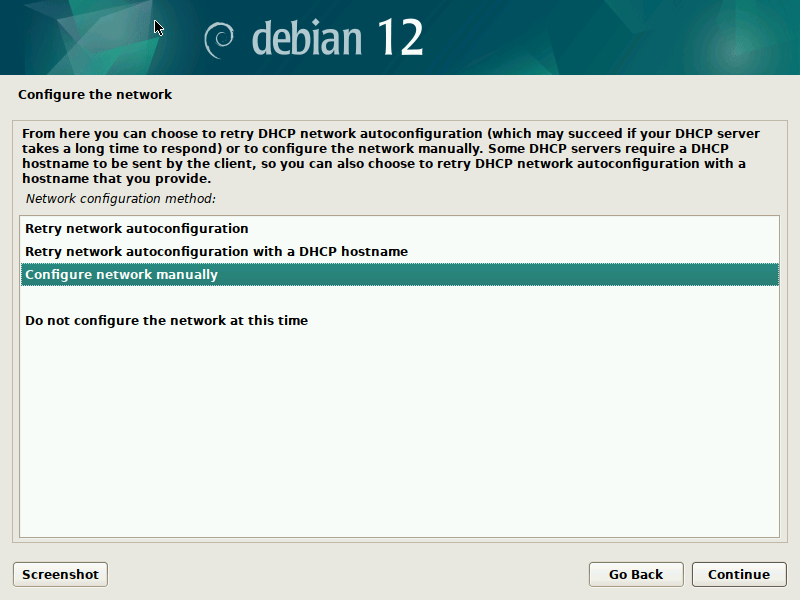
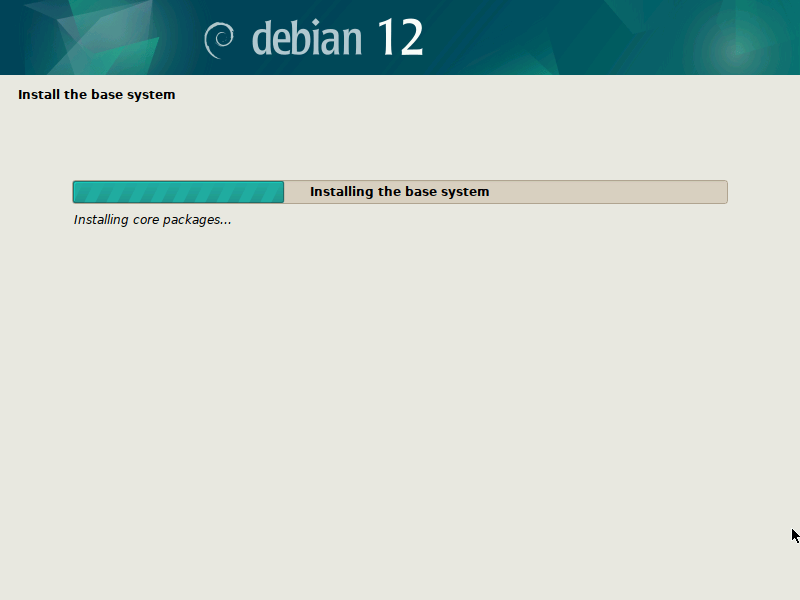
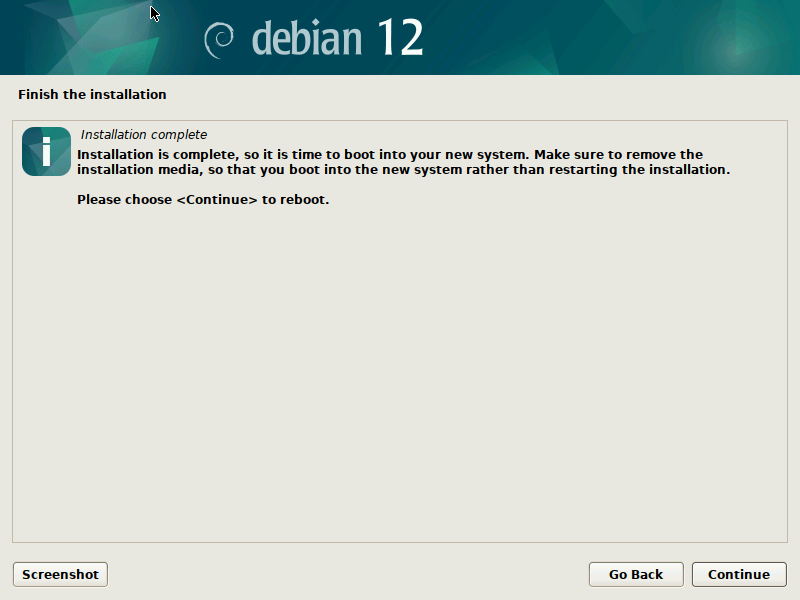
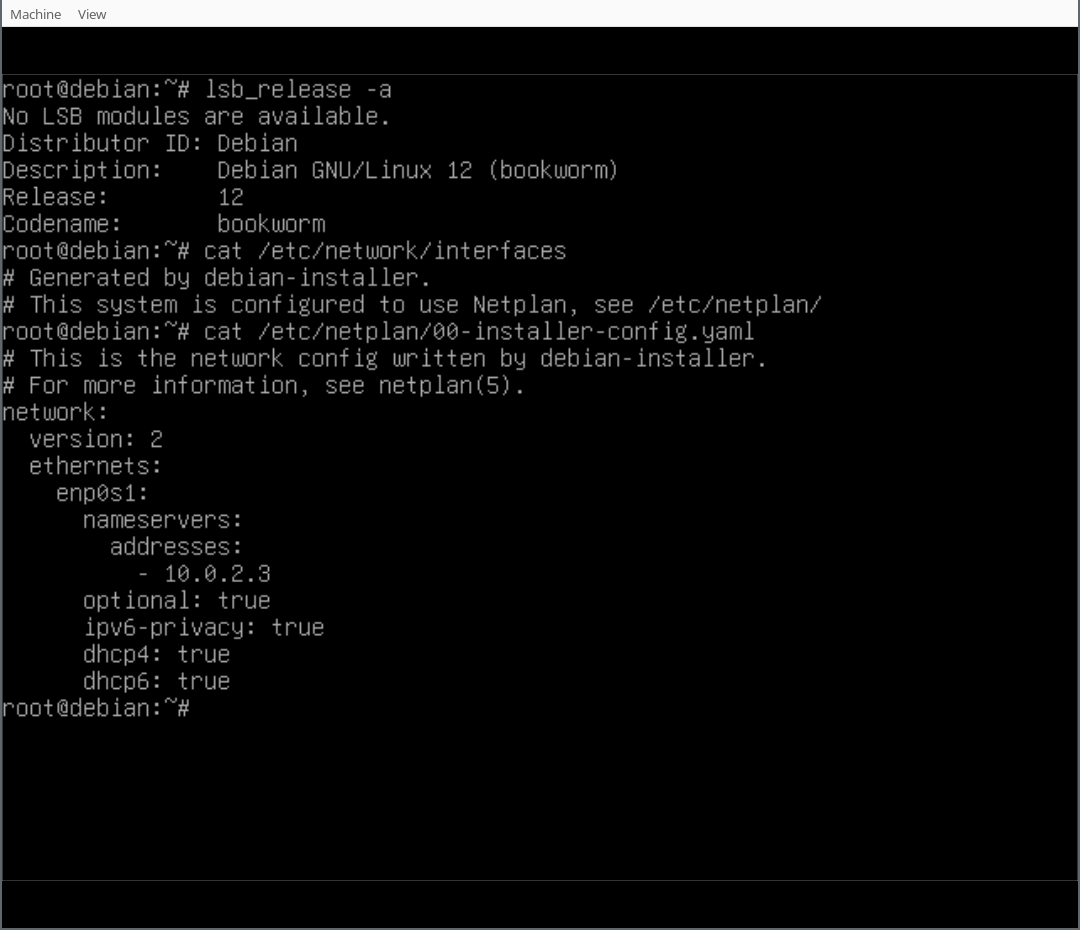
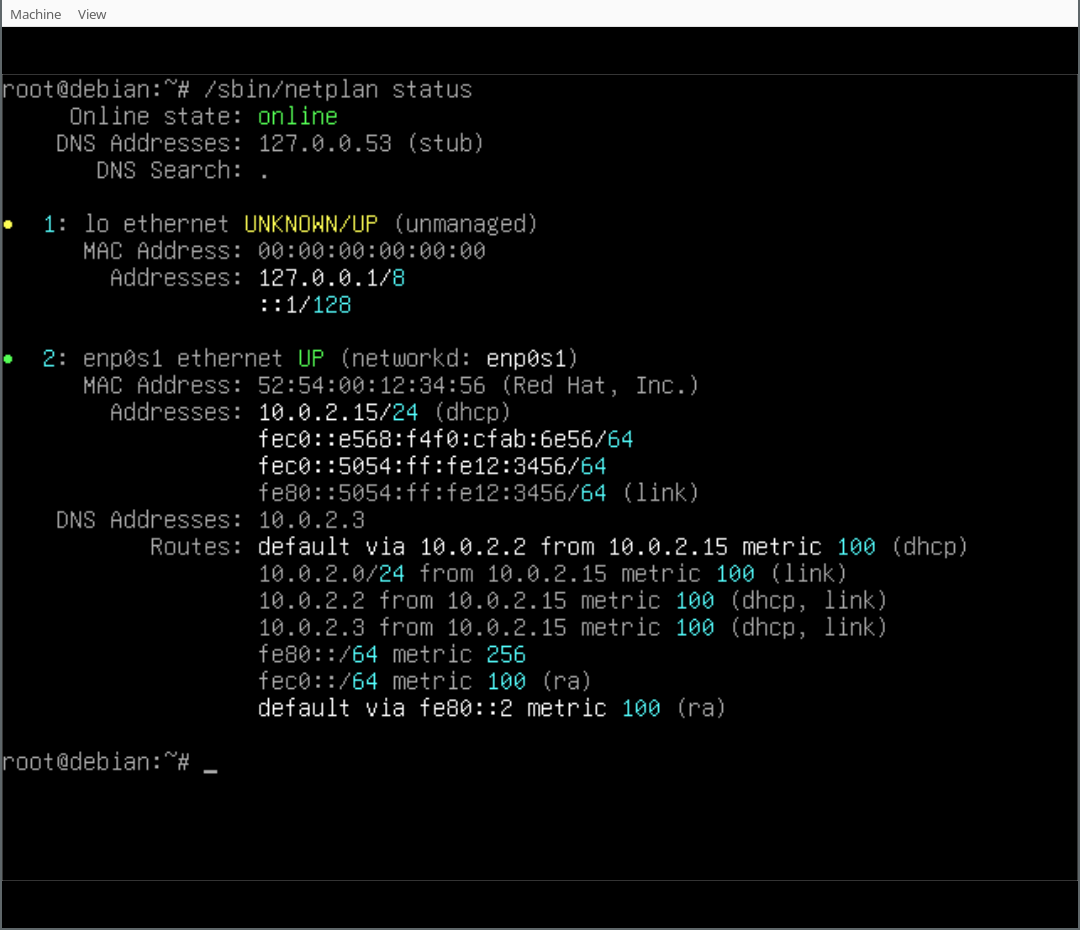
 I am upstream and
 Years ago, at what I think I remember was DebConf 15, I hacked for a while
on debhelper to









 They're called The Usual Suspects for a reason, but sometimes, it really is Keyser S ze