Off-and-on over the last several weeks, I've been spending time trying to learn/understand YubiKeys better, especially from the perspective of ECDSA and signing.
I had a good mental model for how "slots" work (canonically referenced by their hexadecimal names such as 9C), but found that it had a gap related to "objects"; while closing that, I was annoyed that the main reference table for this gap lives primarily in either a PDF or insideseveralimplementations, so I figured I should create the reference I want to see in the world, but that it would also be useful to write down some of my understanding for my own (and maybe others') future reference.
So, to that end, I'm going to start with a bit ( ) of background information, with the heavy caveat that this only applies to "PIV" ("FIPS 201") usage of YubiKeys, and that I only actually care about ECDSA, although I've been reassured that it's the same for at least RSA (anything outside this is firmly Here Be Not Tianon; "gl hf dd").
(Incidentally, learning all this helped me actually appreciate the simplicity of cloud-based KMS solutions, which was an unexpected side effect. )
At a really high level, ECDSA is like many other (asymmetric) cryptographic solutions you've got a public key and a private key, the private key can be used to "sign" data (tiny amounts of data, in fact, like P-256 can only reasonably sign 256 bits of data, which is where cryptographic hashes like SHA256 come in as secure analogues for larger data in small bit sizes), and the public key can then be used to verify that the data was indeed signed by the private key, and only someone with the private key could've done so. There's some complex math and RNGs involved, but none of that's actually relevant to this post, so find that information elsewhere.
Unfortunately, this is where things go off the rails: PIV is X.509 ("x509") heavy, and there's no X.509 in the na ve view of my use case.
In a YubiKey (or any other PIV-signing-supporting smart card? do they actually have competitors in this specific niche? ), a given "slot" can hold one single private key. There are ~24 slots which can hold a private key and be used for signing, although "Slot 9c" is officially designated as the "Digital Signature" slot and is encouraged for signing purposes.
One of the biggest gotchas is that with pure-PIV (and older YubiKey firmware ) the public key for a given slot is only available at the time the key is generated, and the whole point of the device in the first place is that the private key is never, ever available from it (all cryptographic operations happen inside the device), so if you don't save that public key when you first ask the device to generate a private key in a particular slot, the public key is lost forever (asterisk).
$# generate a new ECDSA P-256 key in "slot 9c" ("Digital Signature")$# WARNING: THIS WILL GLEEFULLY WIPE SLOT 9C WITHOUT PROMPTING$yubico-piv-tool --slot 9c --algorithm ECCP256 --action generate
-----BEGIN PUBLIC KEY-----
MFkwEwYHKoZIzj0CAQYIKoZIzj0DAQcDQgAEtGoWRGyjjUlJFXpu8BL6Rnx8jjKR
5+Mzl2Vepgor+k7N9q7ppOtSMWefjFVR0SEPmXqXINNsCi6LpLtNEigIRg==
-----END PUBLIC KEY-----
Successfully generated a new private key.
$# this is the only time/place we (officially) get this public key
With that background, now let's get to the second aspect of "slots" and how X.509 fits. For every aforementioned slot, there is a corresponding "object" (read: place to store arbitrary data) which is corresponding only by convention. For all these "key" slots the (again, by convention) corresponding "object" is explicitly supposed to be an X.509 certificate (see also the PDF reference linked above).
It turns out this is a useful and topical place to store that public key we need to keep handy! It's also an interesting place to shove additional details about what the key in a given slot is being used for, if that's your thing. Converting the raw public key into a (likely self-signed) X.509 certificate is an exercise for the reader, but if you want to follow the conventions, you need some way to convert a given "slot" to the corresponding "object", and that is the lookup table I wish existed in more forms.
So, without further ado, here is the anti-climax:
Slot
Object
Description
0x9A
0x5FC105
X.509 Certificate for PIV Authentication
0x9E
0x5FC101
X.509 Certificate for Card Authentication
0x9C
0x5FC10A
X.509 Certificate for Digital Signature
0x9D
0x5FC10B
X.509 Certificate for Key Management
0x82
0x5FC10D
Retired X.509 Certificate for Key Management 1
0x83
0x5FC10E
Retired X.509 Certificate for Key Management 2
0x84
0x5FC10F
Retired X.509 Certificate for Key Management 3
0x85
0x5FC110
Retired X.509 Certificate for Key Management 4
0x86
0x5FC111
Retired X.509 Certificate for Key Management 5
0x87
0x5FC112
Retired X.509 Certificate for Key Management 6
0x88
0x5FC113
Retired X.509 Certificate for Key Management 7
0x89
0x5FC114
Retired X.509 Certificate for Key Management 8
0x8A
0x5FC115
Retired X.509 Certificate for Key Management 9
0x8B
0x5FC116
Retired X.509 Certificate for Key Management 10
0x8C
0x5FC117
Retired X.509 Certificate for Key Management 11
0x8D
0x5FC118
Retired X.509 Certificate for Key Management 12
0x8E
0x5FC119
Retired X.509 Certificate for Key Management 13
0x8F
0x5FC11A
Retired X.509 Certificate for Key Management 14
0x90
0x5FC11B
Retired X.509 Certificate for Key Management 15
0x91
0x5FC11C
Retired X.509 Certificate for Key Management 16
0x92
0x5FC11D
Retired X.509 Certificate for Key Management 17
0x93
0x5FC11E
Retired X.509 Certificate for Key Management 18
0x94
0x5FC11F
Retired X.509 Certificate for Key Management 19
0x95
0x5FC120
Retired X.509 Certificate for Key Management 20
See also "piv-objects.json" for a machine-readable copy of this data.
(Major thanks to paultag and jongzipjohnson for helping me learn and generally putting up with me, but especially dealing with my live-stream-of-thoughts while I stumble through the dark. )
I have released 25.04.3 I have upgraded the QT6 content snap to 6.9! Fixed a bug in kde-neon* extensions with cmake prefix path.
New snaps!
Audex: A CD ripping application.
GCompris An excellent childrens education application
Labplot Scientific plotting
Digikam 8.7.0 with exiftool bug fixed https://bugs.kde.org/show_bug.cgi?id=501424
Krita 5.2.11 Excellent Graphic art platform ( compares to Photoshop )
kgraphviewer Graphiz .dot file viewer
I am happy to report my arm is mostly functional! Unfortunately, maintaining all these snaps is an enormous amount of work, with time I don t have! Please consider a donation for the time I should be spending job hunting / getting a website business off the ground. Thank you for your consideration!
There are many negative articles about AI (which is not about actual Artificial Intelligence also known as AGI ). Which I think are mostly overblown and often ridiculous.
Resource Usage
Complaints about resource usage are common, training Llama 3.1 could apparently produce as much pollution as 10,000 round trips by car between Los Angeles and New York City . That s not great but when you compare to the actual number of people doing such drives in the US and the number of people taking commercial flights on that route it doesn t seem like such a big deal. Apparently commercial passenger jets cause CO2 emissions per passenger about equal to a car with 2 people. Why is it relevant whether pollution comes from running servers, driving cars, or steel mills? Why not just tax polluters for the damage they do and let the market sort it out? People in the US make a big deal about not being communist, so why not have a capitalist solution, make it more expensive to do undesirable things and let the market sort it out?
ML systems are a less bad use of compute resources than Bitcoin, at least ML systems give some useful results while Bitcoin has nothing good going for it.
The Dot-Com Comparison
People often complain about the apparent impossibility of AI companies doing what investors think they will do. But this isn t anything new, that all happened before with the dot com boom . I m not the first person to make this comparison, The Daily WTF (a high quality site about IT mistakes) has an interesting article making this comparison [1]. But my conclusions are quite different.
The result of that was a lot of Internet companies going bankrupt, the investors in those companies losing money, and other companies then bought up their assets and made profitable companies. The cheap Internet we now have was built on the hardware from bankrupt companies which was sold for far less than the manufacture price. That allowed it to scale up from modem speeds to ADSL without the users paying enough to cover the purchase of the infrastructure. In the early 2000s I worked for two major Dutch ISPs that went bankrupt (not my fault) and one of them continued operations in the identical manner after having the stock price go to zero (I didn t get to witness what happened with the other one). As far as I m aware random Dutch citizens and residents didn t suffer from this and employees just got jobs elsewhere.
There are good things being done with ML systems and when companies like OpenAI go bankrupt other companies will buy the hardware and do good things.
NVidia isn t ever going to have the future sales that would justify a market capitalisation of almost 4 Trillion US dollars. This market cap can support paying for new research and purchasing rights to patented technology in a similar way to the high stock price of Google supported buying YouTube, DoubleClick, and Motorola Mobility which are the keys to Google s profits now.
The Real Upsides of ML
Until recently I worked for a company that used ML systems to analyse drivers for signs of fatigue, distraction, or other inappropriate things (smoking which is illegal in China, using a mobile phone, etc). That work was directly aimed at saving human lives with a significant secondary aim of saving wear on vehicles (in the mining industry drowsy drivers damage truck tires and that s a huge business expense).
There are many applications of ML in medical research such as recognising cancer cells in tissue samples.
There are many less important uses for ML systems, such as recognising different types of pastries to correctly bill bakery customers technology that was apparently repurposed for recognising cancer cells.
The ability to recognise objects in photos is useful. It can be used for people who want to learn about random objects they see and could be used for helping young children learn about their environment. It also has some potential for assistance for visually impaired people, it wouldn t be good for safety critical systems (don t cross a road because a ML system says there are no cars coming) but could be useful for identifying objects (is this a lemon or a lime). The Humane AI pin had some real potential to do good things but there wasn t a suitable business model [2], I think that someone will develop similar technology in a useful way eventually.
Even without trying to do what the Humane AI Pin attempted, there are many ways for ML based systems to assist phone and PC use.
ML systems allow analysing large quantities of data and giving information that may be correct. When used by a human who knows how to recognise good answers this can be an efficient way of solving problems. I personally have solved many computer problems with the help of LLM systems while skipping over many results that were obviously wrong to me. I believe that any expert in any field that is covered in the LLM input data could find some benefits from getting suggestions from an LLM. It won t necessarily allow them to solve problems that they couldn t solve without it but it can provide them with a set of obviously wrong answers mixed in with some useful tips about where to look for the right answers.
Jobs and Politics
Noema Magazine has an insightful article about how AI can allow different models of work which can enlarge the middle class [3].
I don t think it s reasonable to expect ML systems to make as much impact on society as the industrial revolution, and the agricultural revolutions which took society from more than 90% farm workers to less than 5%. That doesn t mean everything will be fine but it is something that can seem OK after the changes have happened. I m not saying apart from the death and destruction everything will be good , the death and destruction are optional. Improvements in manufacturing and farming didn t have to involve poverty and death for many people, improvements to agriculture didn t have to involve overcrowding and death from disease. This was an issue of political decisions that were made.
The Real Problems of ML
Political decisions that are being made now have the aim of making the rich even richer and leaving more people in poverty and in many cases dying due to being unable to afford healthcare. The ML systems that aim to facilitate such things haven t been as successful as evil people have hoped but it will happen and we need appropriate legislation if we aren t going to have revolutions.
There are documented cases of suicide being inspired by Chat GPT systems [4]. There have been people inspired towards murder by ChatGPT systems but AFAIK no-one has actually succeeded in such a crime yet. There are serious issues that need to be addressed with the technology and with legal constraints about how people may use it. It s interesting to consider the possible uses of ChatGPT systems for providing suggestions to a psychologist, maybe ChatGPT systems could be used to alleviate mental health problems.
The cases of LLM systems being used for cheating on assignments etc isn t a real issue. People have been cheating on assignments since organised education was invented.
There is a real problem of ML systems based on biased input data that issue decisions that are the average of the bigotry of the people who provided input. That isn t going to be worse than the current situation of bigoted humans making decisions based on hate and preconceptions but it will be more insidious. It is possible to search for that so for example a bank could test it s mortgage approval ML system by changing one factor at a time (name, gender, age, address, etc) and see if it changes the answer. If it turns out that the ML system is biased on names then the input data could have names removed. If it turns out to be biased about address then there could be weights put in to oppose that.
For a long time there has been excessive trust in computers. Computers aren t magic they just do maths really fast and implement choices based on the work of programmers who have all the failings of other humans. Excessive trust in a rule based system is less risky than excessive trust in a ML system where no-one really knows why it makes the decisions it makes.
Self driving cars kill people, this is the truth that Tesla stock holders don t want people to know.
Companies that try to automate everything with AI are going to be in for some nasty surprises. Getting computers to do everything that humans do in any job is going to be a large portion of an actual intelligent computer which if it is achieved will raise an entirely different set of problems.
I ve previously blogged about ML Security [5]. I don t think this will be any worse than all the other computer security problems in the long term, although it will be more insidious.
How Will It Go?
Companies spending billions of dollars without firm plans for how to make money are going to go bankrupt no matter what business they are in. Companies like Google and Microsoft can waste some billions of dollars on AI Chat systems and still keep going as successful businesses. Companies like OpenAI that do nothing other than such chat systems won t go well. But their assets can be used by new companies when sold at less than 10% the purchase price.
Companies like NVidia that have high stock prices based on the supposed ongoing growth in use of their hardware will have their stock prices crash. But the new technology they develop will be used by other people for other purposes. If hospitals can get cheap diagnostic ML systems because of unreasonable investment into AI then that could be a win for humanity.
Companies that bet their entire business on AI even when it s not necessarily their core business (as Tesla has done with self driving) will have their stock price crash dramatically at a minimum and have the possibility of bankruptcy. Having Tesla go bankrupt is definitely better than having people try to use them as self driving cars.
This post is based on presentation given at the Validos annual members meeting on June 25th, 2025.
When I started getting into Linux and open source over 25 years ago, the majority of the software development in this area was done by academics and hobbyists. The number of companies participating in open source has since exploded in parallel with the growth of mobile and cloud software, the majority of which is built on top of open source. For example, Android powers most mobile phones today and is based on Linux. Almost all software used to operate large cloud provider data centers, such as AWS or Google, is either open source or made in-house by the cloud provider.
Pretty much all companies, regardless of the industry, have been using open source software at least to some extent for years. However, the degree to which they collaborate with the upstream origins of the software varies. I encourage all companies in a technical industry to start contributing upstream. There are many benefits to having a good relationship with your upstream open source software vendors, both for the short term and especially for the long term. Moreover, with the rollout of CRA in EU in 2025-2027, the law will require software companies to contribute security fixes upstream to the open source projects their products use.
To ensure the process is well managed, business-aligned and legally compliant, there are a few do s and don t do s that are important to be aware of.
Maintain your SBOMs
For every piece of software, regardless of whether the code was done in-house, from an open source project, or a combination of these, every company needs to produce a Software Bill of Materials (SBOM). The SBOMs provide a standardized and interoperable way to track what software and which versions are used where, what software licenses apply, who holds the copyright of which component, which security fixes have been applied and so forth.
A catalog of SBOMs, or equivalent, forms the backbone of software supply-chain management in corporations.
Identify your strategic upstream vendors
The SBOMs are likely to reveal that for any piece of non-trivial software, there are hundreds or thousands of upstream open source projects in use. Few organizations have resources to contribute to all of their upstreams.
If your organization is just starting to organize upstream contribution activities, identify the key projects that have the largest impact on your business and prioritize forming a relationship with them first. Organizations with a mature contribution process will be collaborating with tens or hundreds of upstreams.
Create a written policy with input from business owners, legal and marketing
An upstream contribution policy typically covers things such as who decides what can be contributed upstream from a business point of view, what licenses are allowed or to avoid, how to document copyright, how to deal with projects that require signing copyright assignments (e.g. contributor license agreements), other potential legal guidelines to follow. Additionally, the technical steps on how to prepare a contribution should be outlined, including how to internally review and re-review them, who the technical approvers are to ensure high quality and good reputation and so on.
The policy does not have to be static or difficult to produce. Start with a small policy and a few trusted senior developers following it, and update its contents as you run into new situations that need internal company alignment. For example, don t require staff to create new GitHub accounts merely for the purpose of doing one open source contribution. Initially, do things with minimal overhead and add requirements to the policy only if they have clear and strong benefits. The purpose of a policy should be to make it obvious and easy for employees to do the right thing, not to add obstacles and stop progress or encourage people to break the policy.
Appoint an internal coordinator and champions
Having a written policy on how to contribute upstream will help ensure a consistent process and avoid common pitfalls. However, a written policy alone does not automatically translate into a well-running process. It is highly recommended to appoint at least one internal coordinator who is knowledgeable about how open source communities work, how software licensing and patents work, and is senior enough to have a good sense of what business priorities to optimize for. In small organizations it can be a single person, while larger organizations typically have a full Open Source Programs Office.
This coordinator should oversee the contribution process, track all contributions made across the organization, and further optimize the process by working with stakeholders across the business, including legal experts, business owners and CTOs. The marketing and recruiting folks should also be involved, as upstream contributions will have a reputation-building aspect as well, which can be enhanced with systematic tracking and publishing of activities.
Additionally, at least in the beginning, the organization should also appoint key staff members as open source champions. Implementing a new process always includes some obstacles and occasional setbacks, which may discourage employees from putting in the extra effort to reap the full long-term benefits for the company. Having named champions will empower them to make the first few contributions themselves, setting a good example and encouraging and mentoring others to contribute upstream as well.
Avoid excessive approvals
To maintain a high quality bar, it is always good to have all outgoing submissions reviewed by at least one or two people. Two or three pairs of eyeballs are significantly more likely to catch issues that might slip by someone working alone. The review also slows down the process by a day or two, which gives the author time to sleep on it , which usually helps to ensure the final submission is well-thought-out by the author.
Do not require more than one or two reviewers. The marginal utility goes quickly to zero beyond a few reviewers, and at around four or five people the effect becomes negative, as the weight of each approval decreases and the reviewers begin to take less personal responsibility. Having too many people in the loop also makes each feedback round slow and expensive, to the extent that the author will hesitate to make updates and ask for re-reviews due to the costs involved.
If the organization experiences setbacks due to mistakes slipping through the review process, do not respond by adding more reviewers, as it will just grind the contribution process to a halt. If there are quality concerns, invest in training for engineers, CI systems and perhaps an internal certification program for those making public upstream code submissions. A typical software engineer is more likely to seriously try to become proficient at their job and put effort into a one-off certification exam and then make multiple high-quality contributions, than it is for a low-skilled engineer to improve and even want to continue doing more upstream contributions if they are burdened by heavy review processes every time they try to submit an upstream contribution.
Don t expect upstream to accept all code contributions
Sure, identifying the root cause of and fixing a tricky bug or writing a new feature requires significant effort. While an open source project will certainly appreciate the effort invested, it doesn t mean it will always welcome all contributions with open arms. Occasionally, the project won t agree that the code is correct or the feature is useful, and some contributions are bound to be rejected.
You can minimize the chance of experiencing rejections by having a solid internal review process that includes assessing how the upstream community is likely to understand the proposal. Sometimes how things are communicated is more important than how they are coded. Polishing inline comments and git commit messages help ensure high-quality communication, along with a commitment to respond quickly to review feedback and conducting regular follow-ups until a contribution is finalized and accepted.
Start small to grow expertise and reputation
In addition to keeping the open source contribution policy lean and nimble, it is also good to start practical contributions with small issues. Don t aim to contribute massive features until you have a track record of being able to make multiple small contributions.
Keep in mind that not all open source projects are equal. Each has its own culture, written and unwritten rules, development process, documented requirements (which may be outdated) and more. Starting with a tiny contribution, even just a typo fix, is a good way to validate how code submissions, reviews and approvals work in a particular project. Once you have staff who have successfully landed smaller contributions, you can start planning larger proposals. The exact same proposal might be unsuccessful when proposed by a new person, and successful when proposed by a person who already has a reputation for prior high-quality work.
Embrace all and any publicity you get
Some companies have concerns about their employees working in the open. Indeed, every email and code patch an employee submits, and all related discussions become public. This may initially sound scary, but is actually a potential source of good publicity. Employees need to be trained on how to conduct themselves publicly, and the discussions about code should contain only information strictly related to the code, without any references to actual production environments or other sensitive information. In the long run most employees contributing have a positive impact and the company should reap the benefits of positive publicity. If there are quality issues or employee judgment issues, hiding the activity or forcing employees to contribute with pseudonyms is not a proper solution. Instead, the problems should be addressed at the root, and bad behavior addressed rather than tolerated.
When people are working publicly, there tends to also be some degree of additional pride involved, which motivates people to try their best. Contributions need to be public for the sponsoring corporation to later be able to claim copyright or licenses. Considering that thousands of companies participate in open source every day, the prevalence of bad publicity is quite low, and the benefits far exceed the risks.
Scratch your own itch
When choosing what to contribute, select things that benefit your own company. This is not purely about being selfish - often people working on resolving a problem they suffer from are the same people with the best expertise of what the problem is and what kind of solution is optimal. Also, the issues that are most pressing to your company are more likely to be universally useful to solve than any random bug or feature request in the upstream project s issue tracker.
Remember there are many ways to help upstream
While submitting code is often considered the primary way to contribute, please keep in mind there are also other highly impactful ways to contribute. Submitting high-quality bug reports will help developers quickly identify and prioritize issues to fix. Providing good research, benchmarks, statistics or feedback helps guide development and the project make better design decisions. Documentation, translations, organizing events and providing marketing support can help increase adoption and strengthen long-term viability for the project.
In some of the largest open source projects there are already far more pending contributions than the core maintainers can process. Therefore, developers who contribute code should also get into the habit of contributing reviews. As Linus law states, given enough eyeballs, all bugs are shallow. Reviewing other contributors submissions will help improve quality, and also alleviate the pressure on core maintainers who are the only ones providing feedback. Reviewing code submitted by others is also a great learning opportunity for the reviewer. The reviewer does not need to be better than the submitter - any feedback is useful; merely posting review feedback is not the same thing as making an approval decision.
Many projects are also happy to accept monetary support and sponsorships. Some offer specific perks in return. By human nature, the largest sponsors always get their voice heard in important decisions, as no open source project wants to take actions that scare away major financial contributors.
Starting is the hardest part
Long-term success in open source comes from a positive feedback loop of an ever-increasing number of users and collaborators. As seen in the examples of countless corporations contributing open source, the benefits are concrete, and the process usually runs well after the initial ramp-up and organizational learning phase has passed.
In open source ecosystems, contributing upstream should be as natural as paying vendors in any business. If you are using open source and not contributing at all, you likely have latent business risks without realizing it. You don t want to wake up one morning to learn that your top talent left because they were forbidden from participating in open source for the company s benefit, or that you were fined due to CRA violations and mismanagement in sharing security fixes with the correct parties. The faster you start with the process, the less likely those risks will materialize.
Back when I was terribly na ve
When I was younger, and definitely na ve, I was so looking forward to AI, which
will help us write lots of good, reliable code faster. Well, principally me, not
thinking what impact it will have industry-wide. Other more general concerns,
like societal issues, role of humans in the future and so on were totally not on
my radar.
At the same time, I didn t expect this will actually happen. Even years later,
things didn t change dramatically. Even the first release of ChatGPT a few years
back didn t click for me, as the limitations were still significant.
Hints of serious change
The first hint of the change, for me, was when a few months ago (yes, behind the
curve), I asked ChatGPT to re-explain a concept to me, and it just wrote a lot
of words, but without a clear explanation. On a whim, I asked Grok then recently
launched, I think to do the same. And for the first time, the explanation
clicked and I felt I could have a conversation with it. Of course, now I forgot
again that theoretical CS concept, but the first step was done: I can ask an LLM
to explain something, and it will, and I can have a back and forth logical
discussion, even if on some theoretical concept. Additionally, I learned that
not all LLMs are the same, and that means there s real competition and that leap
frogging is possible.
Another topic on which I tried to adopt early and failed to get mileage out of
it, was GitHub Copilot (in VSC). I tried, it helped, but didn t feel any
speed-up at all. Then more recently, in May, I asked Grok what s the state of
the art in AI-assisted coding. It said either Claude in a browser tab, or in VSC
via continue.dev extension.
The continue.dev extension/tooling is a bit of a strange/interesting thing. It
seems to want to be a middle-man between the user and actual LLM services, i.e.
you pay a subscription to continue.dev, not to Anthropic itself, and they manage
the keys/APIs, for whatever backend LLMs you want to use. The integration with
Visual Studio Code is very nice, but I don t know if long-term their business
model will make sense. Well, not my problem.
Claude: reverse engineering my old code and teaching new concepts
So I installed the latter and subscribed, thinking 20 CHF for a month is good
for testing. I skipped the tutorial model/assistant, created a new one from
scratch, just enabled Claude 3.7 Sonnet, and started using it. And then, my mind
was blown-not just by the LLM, but by the ecosystem. As said, I ve used GitHub
copilot before, but it didn t seem effective. I don t know if a threshold has
been reached, or Claude (3.7 at that time) is just better than ChatGPT.
I didn t use the AI to write (non-trivial) code for me, at most boilerplate
snippets. But I used it both as partner for discussion - I want to do x, what
do you think, A or B? , and as a teacher, especially for fronted topics, which
I m not familiar with.
Since May, in mostly fragmented sessions, I ve achieved more than in the last
two years. Migration from old school JS to ECMA modules, a webpacker (reducing
bundle size by 50%), replacing an old Javascript library with hand written code
using modern APIs, implementing the zoom feature together with all of keyboard,
mouse, touchpad and touchscreen support, simplifying layout from manually
computed to automatic layout, and finding a bug in webkit for which it also
wrote a cool minimal test (cool, as in, way better than I d have ever, ever
written, because for me it didn t matter that much). And more. Could I have done
all this? Yes, definitely, nothing was especially tricky here. But hours and
hours of reading MDN, scouring Stack Overflow and Reddit, and lots of trial and
error. So doable, but much more toily.
This, to me, feels like cheating. 20 CHF per month to make me 3x more productive
is free money well, except that I don t make money on my code which is written
basically for myself. However, I don t get stuck anymore searching hours in the
web for guidance, I ask my question, and I get at least direction if not answer,
and I m finished way earlier. I can now actually juggle more hobbies, in the
same amount of time, if my personal code takes less time or differently said, if
I m more efficient at it.
Not all is roses, of course. Once, it did write code with such an endearing
error that it made me laugh. It was so blatantly obvious that you shouldn t keep
other state in the array that holds pointer status because that confuses the
calculation of how many pointers are down , probably to itself too if I d have
asked. But I didn t, since it felt a bit embarassing to point out such a dumb
mistake. Yes, I m anthropomorphising again, because this is the easiest way to
deal with things.
In general, it does an OK-to-good-to-sometimes-awesome job, and the best thing
is that it summarises documentation and all of Reddit and Stack Overflow. And
gives links to those.
Now, I have no idea yet what this means for the job of a software engineer. If
on open source code, my own code, it makes me 3x faster reverse engineering my
code from 10 years ago is no small feat for working on large codebases, it
should do at least the same, if not more.
As an example of how open-ended the assistance can be, at one point, I started
implementing a new feature threading a new attribute to a large number of call
points. This is not complex at all, just add a new field to a Haskell record,
and modifying everything to take it into account, populate it, merge it when
merging the data structures, etc. The code is not complex, tending toward
boilerplate a bit, and I was wondering on a few possible choices for
implementation, so, with just a few lines of code written that were not even
compiling, I asked I want to add a new feature, should I do A or B if I want it
to behave like this , and the answer was something along the lines of I see
you want to add the specific feature I was working on, but the implementation
is incomplete, you still need to to X, Y and Z . My mind was blown at this
point, as I thought, if the code doesn t compile, surely the computer won t be
able to parse it, but this is not a program, this is an LLM, so of course it
could read it kind of as a human would. Again, the code complexity is not
great, but the fact that it was able to read a half-written patch, understand
what I was working towards, and reason about, was mind-blowing, and scary. Like
always.
Non-code writing
Now, after all this, while writing a recent blog post, I thought this is going
to be public anyway, so let me ask Claude what it thinks about it. And I was
very surprised, again: gone was all the pain of rereading three times my post to
catch typos (easy) or phrasing structure issues. It gave me very clearly points,
and helped me cut 30-40% of the total time. So not only coding, but word
smithing too is changed. If I were an author, I d be delighted (and scared).
Here is the overall reply it gave me:
Spelling and grammar fixes, all of them on point except one mistake (I claimed
I didn t capitalize one word, but I did). To the level of a good grammar
checker.
Flow Suggestions, which was way beyond normal spelling and grammar. It felt
like a teacher telling me to do better in my writing, i.e. nitpicking on
things that actually were true even if they d still work. I.e. lousy phrase
structure, still understandable, but lousy nevertheless.
Other notes: an overall summary. This was mostly just praising my post . I
wish LLMs were not so focused on praise the user .
So yeah, this speeds me up to about 2x on writing blog posts, too. It definitely
feels not fair.
Wither the future?
After all this, I m a bit flabbergasted. Gone are the 2000 s with code without
unittests, gone are the 2010 s without CI/CD, and now, mid-2020 s, gone is the
lone programmer that scours the internet to learn new things, alone?
What this all means for our skills in software development, I have no idea,
except I know things have irreversibly changed (a butlerian jihad aside). Do I
learn better with a dedicated tutor even if I don t fight with the problem for
so long? Or is struggling in finding good docs the main method of learning? I
don t know yet. I feel like I understand the topics I m discussing with the AI,
but who knows in reality what it will mean long term in terms of stickiness of
learning. For the better, or for worse, things have changed. After all the
advances over the last five centuries in mechanical sciences, it has now come to
some aspects of the intellectual work.
Maybe this is the answer to the ever-growing complexity of tech stacks? I.e. a
return of the lone programmer that builds things end-to-end, but with AI taming
the complexity added in the last 25 years? I can dream, of course, but this also
means that the industry overall will increase in complexity even more, because
large companies tend to do that, so maybe a net effect of not much
One thing I did learn so far is that my expectation that AI (at this level) will
only help junior/beginner people, i.e. it would flatten the skills band, is not
true. I think AI can speed up at least the middle band, likely the middle top
band, I don t know about the 10x programmers (I m not one of them). So, my
question about AI now is how to best use it, not to lament how all my learning
(90% self learning, to be clear) is obsolete. No, it isn t. AI helps me start
and finish one migration (that I delayed for ages), then start the second, in
the same day.
At the end of this a bit rambling reflection on the past month and a half, I
still have many questions about AI and humanity. But one has been answered: yes,
AI , quotes or no quotes, already has changed this field (producing software),
and we ve not seen the end of it, for sure.
Maharashtra is a state here in India, which has Mumbai, the financial capital of India, as its capital. maharashtra.gov.in is the official website of the State Government of Maharashtra. We re going to talk about authoritative name servers serving it (and bunch of child zones under maharashtra.gov.in).
Here s a simple trace for the main domain:
$ dig +trace maharashtra.gov.in
; <<>> DiG 9.18.33-1~deb12u2-Debian <<>> +trace maharashtra.gov.in
;; global options: +cmd
.            33128    IN    NS    j.root-servers.net.
.            33128    IN    NS    h.root-servers.net.
.            33128    IN    NS    l.root-servers.net.
.            33128    IN    NS    k.root-servers.net.
.            33128    IN    NS    i.root-servers.net.
.            33128    IN    NS    g.root-servers.net.
.            33128    IN    NS    f.root-servers.net.
.            33128    IN    NS    e.root-servers.net.
.            33128    IN    NS    b.root-servers.net.
.            33128    IN    NS    d.root-servers.net.
.            33128    IN    NS    c.root-servers.net.
.            33128    IN    NS    m.root-servers.net.
.            33128    IN    NS    a.root-servers.net.
.            33128    IN    RRSIG    NS 8 0 518400 20250704050000 20250621040000 53148 . pGxGZftwj+6VNTSQtstTKVN95Z7/b5Q8GSjRCXI68GoVYbVai9HNelxs OGIRKL4YmSrsiSsndXuEsBuvL9QvQ+qbybNLkekJUAiicKYNgr3KM3+X 69rsS9KxHgT2T8/oqG8KN8EJLJ8VkuM2PJ2HfSKijtF7ULtgBbERNQ4i u2I/wQ7elOyeF2M76iEOa7UGhgiBHSBqPulsbpnB//WbKL71yyFhWSk0 tiFEPuZM+iLrN2qBsElriF4kkw37uRHq8sSGcCjfBVdkpbb3/Sb3sIgN /zKU17f+hOvuBQTDr5qFIymqGAENA5UZ2RQjikk6+zK5EfBUXNpq1+oo 2y64DQ==
;; Received 525 bytes from 9.9.9.9#53(9.9.9.9) in 3 ms
in.            172800    IN    NS    ns01.trs-dns.com.
in.            172800    IN    NS    ns01.trs-dns.net.
in.            172800    IN    NS    ns10.trs-dns.org.
in.            172800    IN    NS    ns10.trs-dns.info.
in.            86400    IN    DS    48140 8 2 5EE4748C2069B99C98BC39A56881A64AF17CC78711E6297D43AC5A4F 4B5BB6E5
in.            86400    IN    RRSIG    DS 8 1 86400 20250704050000 20250621040000 53148 . jkCotYosapreoKKPvr9zPOEDECYVe9OtJLjkQbFfTin8uYbm/kdWzieW CkN5sabif5IHTFU4FEVOShfu4DFeUolhNav56TPKjGqEGjQ7qCghpqTj dNN4iY2s8BcJ2ujHwhm6HRfdbQRVoKYQ73UUZ+oWSute6lXWHE9+Snk2 1ZCAYPdZ2s1s7NZhrZW2YXVw/nHIcRl/rHqWIQ9sgUlsd6MwmahcAAG+ v15HG9Q48rCG1A2gJlJPbxWpVe0EUEu8LzDsp+ORqy1pHhzgJynrJHJz qMiYU0egv2j7xVPSoQHXjx3PG2rsOLNnqDBYCA+piEXOLsY3d+7c1SZl w9u66g==
;; Received 679 bytes from 199.7.83.42#53(l.root-servers.net) in 3 ms
maharashtra.gov.in.    900    IN    NS    ns8.maharashtra.gov.in.
maharashtra.gov.in.    900    IN    NS    ns9.maharashtra.gov.in.
maharashtra.gov.in.    900    IN    NS    ns10.maharashtra.gov.in.
maharashtra.gov.in.    900    IN    NS    ns18.maharashtra.gov.in.
maharashtra.gov.in.    900    IN    NS    ns20.maharashtra.gov.in.
npk19skvsdmju264d4ono0khqf7eafqv.gov.in. 300 IN    NSEC3 1 1 0 - P0KKR4BMBGLJDOKBGBI0KDM39DSM0EA4 NS SOA MX TXT RRSIG DNSKEY NSEC3PARAM
npk19skvsdmju264d4ono0khqf7eafqv.gov.in. 300 IN    RRSIG NSEC3 8 3 300 20250626140337 20250528184339 48544 gov.in. Khcq3n1Jn34HvuBEZExusVqoduEMH6DzqkWHk9dFkM+q0RVBYBHBbW+u LsSnc2/Rqc3HAYutk3EZeS+kXVF07GA/A486dr17Hqf3lHszvG/MNT/s CJfcdrqO0Q8NZ9NQxvAwWo44bCPaECQV+fhznmIaVSgbw7de9xC6RxWG ZFcsPYwYt07yB5neKa99RlVvJXk4GHX3ISxiSfusCNOuEKGy5cMxZg04 4PbYsP0AQNiJWALAduq2aNs80FQdWweLhd2swYuZyfsbk1nSXJQcYbTX aONc0VkYFeEJzTscX8/wNbkJeoLP0r/W2ebahvFExl3NYpb7b2rMwGBY omC/QA==
npk19skvsdmju264d4ono0khqf7eafqv.gov.in. 300 IN    RRSIG NSEC3 13 3 300 20250718144138 20250619135610 22437 gov.in. mbj7td3E6YE7kIhYoSlDTZR047TXY3Z60NY0aBwU7obyg5enBQU9j5nl GUxn9zUiwVUzei7v5GIPxXS7XDpk7g==
6bflkoouitlvj011i2mau7ql5pk61sks.gov.in. 300 IN    NSEC3 1 1 0 - 78S0UO5LI1KV1SVMH1889FHUCNC40U6T TXT RRSIG
6bflkoouitlvj011i2mau7ql5pk61sks.gov.in. 300 IN    RRSIG NSEC3 8 3 300 20250626133905 20250528184339 48544 gov.in. M2yPThQpX0sEf4klooQ06h+rLR3e3Q/BqDTSFogyTIuGwjgm6nwate19 jGmgCeWCYL3w/oxsg1z7SfCvDBCXOObH8ftEBOfLe8/AGHAEkWFSu3e0 s09Ccoz8FJiCfBJbbZK5Vf4HWXtBLfBq+ncGCEE24tCQLXaS5cT85BxZ Zne6Y6u8s/WPgo8jybsvlGnL4QhIPlW5UkHDs7cLLQSwlkZs3dwxyHTn EgjNWClhghGXP9nlvOlnDjUkmacEYeq5ItnCQjYPl4uwh9fBJ9CD/8LV K+Tn3+dgqDBek6+2HRzjGs59NzuHX8J9wVFxP7/nd+fUgaSgz+sST80O vrXlHA==
6bflkoouitlvj011i2mau7ql5pk61sks.gov.in. 300 IN    RRSIG NSEC3 13 3 300 20250718141148 20250619135610 22437 gov.in. raWzWsQnPkXYtr2v1SRH/fk2dEAv/K85NH+06pNUwkxPxQk01nS8eYlq BPQ41b26kikg8mNOgr2ULlBpJHb1OQ==
couldn't get address for 'ns18.maharashtra.gov.in': not found
couldn't get address for 'ns20.maharashtra.gov.in': not found
;; Received 1171 bytes from 2620:171:813:1534:8::1#53(ns10.trs-dns.org) in 0 ms
;; communications error to 10.187.202.24#53: timed out
;; communications error to 10.187.202.24#53: timed out
;; communications error to 10.187.202.24#53: timed out
;; communications error to 10.187.202.28#53: timed out
;; communications error to 10.187.203.201#53: timed out
;; no servers could be reached
Quick takeaways:
5 authoritative NS are listed ie:
ns8.maharashtra.gov.in.
ns9.maharashtra.gov.in.
ns10.maharashtra.gov.in.
ns18.maharashtra.gov.in.
ns20.maharashtra.gov.in.
No address (no A/AAAA records) could be found for ns18.maharashtra.gov.in and ns20.maharashtra.gov.in. Internet Archive snapshots for bgp.tools at time of writing NS18 and NS20.
communications error to 10.187.202.24#53: timed out , communications error to 10.187.202.28#53: timed out and communications error to 10.187.203.201#53: timed out is likely due to RFC 1918 records for NS. Ofcourse, they will never respond on public internet.
Not in trace, but NS10 has private or empty A/AAAA record against it (detailed further down).
The query resolution failed with no servers could be reached ie we didn t recieved any A/AAAA record for that query.
It s a hit or miss for this DNS query resolution.
Looking at in zone data
Let s look at NS added in zone itself (with 9.9.9.9):
$ dig ns maharashtra.gov.in
; <<>> DiG 9.18.33-1~deb12u2-Debian <<>> ns maharashtra.gov.in
;; global options: +cmd
;; Got answer:
;; ->>HEADER<<- opcode: QUERY, status: NOERROR, id: 172
;; flags: qr rd ra; QUERY: 1, ANSWER: 2, AUTHORITY: 0, ADDITIONAL: 3
;; OPT PSEUDOSECTION:
; EDNS: version: 0, flags:; udp: 1232
;; QUESTION SECTION:
;maharashtra.gov.in.        IN    NS
;; ANSWER SECTION:
maharashtra.gov.in.    300    IN    NS    ns8.maharashtra.gov.in.
maharashtra.gov.in.    300    IN    NS    ns9.maharashtra.gov.in.
;; ADDITIONAL SECTION:
ns9.maharashtra.gov.in.    300    IN    A    10.187.202.24
ns8.maharashtra.gov.in.    300    IN    A    10.187.202.28
;; Query time: 180 msec
;; SERVER: 9.9.9.9#53(9.9.9.9) (UDP)
;; WHEN: Sat Jun 21 23:00:49 IST 2025
;; MSG SIZE  rcvd: 115
Pay special attention to ADDITIONAL SECTION . Running dig ns9.maharashtra.gov.in and dig ns8.maharashtra.gov.in, return RFC 1918 ie these private addresses. This is coming from zone itself, so in zone A records of NS8 and NS9 point to 10.187.202.28 and 10.187.202.24 respectively.
Cloudflare s 1.1.1.1 has a slightly different version:
$ dig ns maharashtra.gov.in @ns01.trs-dns.net.
; <<>> DiG 9.18.36 <<>> ns maharashtra.gov.in @ns01.trs-dns.net.
;; global options: +cmd
;; Got answer:
;; ->>HEADER<<- opcode: QUERY, status: NOERROR, id: 56535
;; flags: qr rd; QUERY: 1, ANSWER: 0, AUTHORITY: 5, ADDITIONAL: 6
;; WARNING: recursion requested but not available
;; OPT PSEUDOSECTION:
; EDNS: version: 0, flags:; udp: 1232
; COOKIE: f13027aa39632404010000006856fa2a9c97d6bbc973ba4f (good)
;; QUESTION SECTION:
;maharashtra.gov.in.        IN    NS
;; AUTHORITY SECTION:
maharashtra.gov.in.    900    IN    NS    ns8.maharashtra.gov.in.
maharashtra.gov.in.    900    IN    NS    ns18.maharashtra.gov.in.
maharashtra.gov.in.    900    IN    NS    ns10.maharashtra.gov.in.
maharashtra.gov.in.    900    IN    NS    ns9.maharashtra.gov.in.
maharashtra.gov.in.    900    IN    NS    ns20.maharashtra.gov.in.
;; ADDITIONAL SECTION:
ns20.maharashtra.gov.in. 900    IN    A    52.183.143.210
ns18.maharashtra.gov.in. 900    IN    A    35.154.30.166
ns10.maharashtra.gov.in. 900    IN    A    164.100.128.234
ns9.maharashtra.gov.in.    900    IN    A    103.23.150.89
ns8.maharashtra.gov.in.    900    IN    A    103.23.150.88
;; Query time: 28 msec
;; SERVER: 64.96.2.1#53(ns01.trs-dns.net.) (UDP)
;; WHEN: Sun Jun 22 00:00:02 IST 2025
;; MSG SIZE  rcvd: 248
The ADDITIONAL SECTION gives a completely different picture (different from in zone NSes).
Maybe this was how it was supposed to be, but none of the IPs listed for NS10, NS18 and NS20 are responding to any DNS query.
Assuming NS8 as 103.23.150.88 and NS9 as 103.23.150.89, checking SOA on each gives following:
NS8 (which is marked as primary in SOA) has serial 2013116777 and NS9 is on serial 2013116757, so looks like the sync (IXFR/AXFR) between primary and secondary is broken. That s why NS8 and NS9 are serving different responses, evident from the following:
This is the reason for difference in 1.1.1.1 and 9.9.9.9 responses in previous section.
To summarize:
Primary and secondary NS aren t in sync. Serials aren t matching, while NS8 and NS9 are responding differently for same queries.
NSes have A records with private address, not reachable on the internet, so lame servers.
Incomplete NS address, not even FQDN in some cases.
Difference between NS delegated in parent zone and NS added in actual zone.
Name resolution works in very particular order (in my initial trace it failed).
Initially, I thought of citing RFCs, but I don t really think it s even required.
1.1.1.1, 8.8.8.8 and 9.9.9.9 are handling (lame servers, this probelm) well, handing out the A record for the main website, so dig maharashtra.gov.in would mostly pass and that was the reason I started this post with +trace to recurse the complete zone to show the problem.
For later reference:
Email to SOA address
I have sent the following email to address listed in SOA:
Subject - maharashtra.gov.in authoritative DNS servers not reachable
Hello,
I wanted to highlight the confusing state of maharashtra.gov.in authoritative DNS servers.
Parent zone list following as name servers for your DNS zone:
ns8.maharashtra.gov.in.
ns18.maharashtra.gov.in.
ns10.maharashtra.gov.in.
ns9.maharashtra.gov.in.
ns20.maharashtra.gov.in.
Out of these, ns18 and ns20 don t have public A/AAAA records and are thus not reachable.
ns10 keeps on shuffling between NO A record and 10.187.203.201 (private, not reachable address).
ns8 keeps on shuffling between 103.23.150.88 and 10.187.202.28 (private, not reachable address).
ns9 keeps on shuffling between 103.23.150.89 and 10.187.202.24 (private, not reachable address).
These are leading to long, broken, or no DNS resolution for the website(s).
Can you take a look at the problem?
Regards,
Sahil
I ll update here if I get a response. Hopefully, they ll listen and fix their problem.
Large language models (LLMs) have awed the world, emerging as the fastest-growing application of all time ChatGPT reached 100 million active users in January 2023, just two months after its launch. After an initial cycle, they have gradually been mostly accepted and incorporated into various workflows, and their basic mechanics are no longer beyond the understanding of people with moderate computer literacy. Now, given that the technology is better understood, we face the question of how convenient LLM chatbots are for different occupations. This paper embarks on the question of whether LLMs can be useful for networking applications.
This paper systematizes querying three popular LLMs (GPT-3.5, GPT-4, and Claude 3) with questions taken from several network management online courses and certifications, and presents a taxonomy of six axes along which the incorrect responses were classified:
Accuracy: the correctness of the answers provided by LLMs;
Detectability: how easily errors in the LLM output can be identified;
Cause: for each incorrect answer, the underlying causes behind the error;
Explainability: the quality of the explanations with which the LLMs support their answers;
Effects: the impact of wrong answers on users; and
Stability: whether a minor change, such as a change in the order of the prompts, yields vastly different answers for a single query.
The authors also measure four strategies toward improving answers:
Self-correction: giving the original question and received answer back to the LLM, as well as the expected correct answer, as part of the prompt;
One-shot prompting: adding to the prompt when answering user questions, follow this example followed by a similar correct answer;
Majority voting: using the answer that most models agree upon; and
Fine-tuning: further training on a specific dataset to adapt the LLM to a particular task or domain.
The authors observe that, while some of those strategies were marginally useful, they sometimes resulted in degraded performance.
The authors queried the commercially available instances of Gemini and GPT, which achieved scores over 90 percent for basic subjects but fared notably worse in topics that require understanding and converting between different numeric notations, such as working with Internet protocol (IP) addresses, even if they are trivial (that is, presenting the subnet mask for a given network address expressed as the typical IPv4 dotted-quad representation).
As a last item in the paper, the authors compare performance with three popular open-source models: Llama3.1, Gemma2, and Mistral with their default settings. Although those models are almost 20 times smaller than the GPT-3.5 commercial model used, they reached comparable performance levels. Sadly, the paper does not delve deeper into these models, which can be deployed locally and adapted to specific scenarios.
The paper is easy to read and does not require deep mathematical or AI-related knowledge. It presents a clear comparison along the described axes for the 503 multiple-choice questions presented. This paper can be used as a guide for structuring similar studies over different fields.
KDE Mascot
Release notes: https://kde.org/announcements/gear/25.04.2/
Now available in the snap store!
Along with that, I have fixed some outstanding bugs:
Ark: now can open/save files in removable media
Kasts: Once again has sound
WIP: Updating Qt6 to 6.9 and frameworks to 6.14
Enjoy everyone!
Unlike our software, life is not free. Please consider a donation, thanks!
Updated Austin, by Colin Watson and Helmut Grohne
Austin is a frame stack sampling profiler
for Python. It allows profiling Python applications without instrumenting them
while losing some accuracy in the process, and is the only one of its kind
presently packaged for Debian. Unfortunately, it hadn t been uploaded in a while
and hence the last Python version it worked with was
3.8. We updated it to a current version and
also dealt with a number of architecture-specific problems (such as unintended
sign promotion, 64bit time_t fallout and strictness due to -Wformat-security
) in cooperation with upstream. With luck, it will migrate in time for trixie.
Preparing for DebConf 25, by Stefano Rivera and Santiago Ruano Rinc n
DebConf 25 is quickly approaching, and the
organization work doesn t stop. In May, Stefano continued supporting the
different teams. Just to give a couple of examples, Stefano made changes in
DebConf 25 website to make BoF
and sprints
submissions public, so interested people can already know if a BoF or sprint for
a given subject is planned, allowing coordination with the proposer; or to
enhance how statistics are made public
to help the work of the local team.
Santiago has participated in different tasks, including the logistics of the
conference, like preparing more information
about the public transportation that will be available. Santiago has also taken
part in activities related to fundraising and reviewing more event proposals.
Miscellaneous contributions
Lucas fixed security issues in Valkey in unstable.
Lucas tried to help with the update of Redis to version 8 in unstable. The
package hadn t been updated for a while due to licensing issues, but now
upstream maintainers fixed them.
Lucas uploaded around 20 ruby-* packages to unstable that weren t updated for
some years to make them build reproducible. Thanks to reproducible builds folks
to point out those issues. Also some unblock requests (and follow-ups) were
needed to make them reach trixie in time for the release.
Lucas is organizing a Debian Outreach session for DebConf 25, reaching out to
all interns of Google Summer of Code and Outreachy programs from the last year.
The session will be presented by in-person interns and also video recordings
from the interns interested in participating but did not manage to attend the
conference.
Lucas continuously works on DebConf Content team tasks. Replying to speakers,
sponsors, and communicating internally with the team.
Carles improved po-debconf-manager: fixed bugs reported by Catalan translator,
added possibility to import packages out of salsa, added using non-default
project branches on salsa, polish to get ready for DebCamp.
Carles tested new apt in trixie and reported bugs to apt ,
installation-report , libqt6widget6 .
Carles used po-debconf-manager and imported remaining 80 packages, reviewed 20
translations, submitted (MR or bugs) 54 translations.
Carles prepared some topics for translation BoF in DebConf (gathered feedback,
first pass on topics).
Helmut sent 25 patches for cross compilation failures.
Helmut reviewed, refined and applied a patch from Jochen Sprickerhof to make
the Multi-Arch hinter emit more hints for pure Python modules.
Helmut sat down with Christoph Berg (not affiliated with Freexian) and
extended unschroot
to support directory-based chroots with overlayfs. This is a feature that was
lost in transitioning from sbuild s schroot backend to its unshare backend.
unschroot implements the schroot API just enough to be usable with sbuild
and otherwise works a lot like the unshare backend. As a result,
apt.postgresql.org now performs its
builds contained in a user namespace.
Helmut looked into a fair number of rebootstrap failures most of which
related to musl or gcc-15 and imported patches or workarounds to make those
builds proceed.
Helmut updated dumat
to use sqop fixing earlier PGP verification problems thanks to Justus Winter
and Neal Walfield explaining a lot of sequoia at MiniDebConf Hamburg.
Helmut got the previous zutils update for /usr-move wrong again and had to
send another update.
Helmut looked into why debvm s autopkgtests were flaky and with lots of
help from Paul Gevers and Michael Tokarev tracked it down to a
race condition in qemu. He updated debvm to
trigger the problem less often and also fixed a wrong dependency using
Luca Boccassi s patch.
Santiago continued the switch to sbuild
for Salsa CI (that was stopped for some months), and has been mainly testing
linux,
since it s a complex project that heavily customizes the pipeline. Santiago is
preparing the changes for linux to submit a MR soon.
In openssh, Colin tracked down some intermittent sshd crashes to a
root cause, and issued
bookworm and bullseye updates for CVE-2025-32728.
Colin spent some time fixing up fail2ban,
mainly reverting a patch that caused its tests to fail and would have banned
legitimate users in some common cases.
Colin backported upstream fixes for CVE-2025-48383
(django-select2) and CVE-2025-47287
(python-tornado) to unstable.
Stefano supported video streaming and recording for 2 miniDebConfs in May:
Macei and Hamburg.
These had overlapping streams for one day, which is a first for us.
Stefano packaged the new version of python-virtualenv that includes our
patches for not including the wheel for wheel.
Stefano got all involved parties to agree (in principle) to meet at DebConf
for a mediated discussion on a dispute that was brought to the technical
committee.
Anupa coordinated the swag purchase for DebConf 25 with Juliana and Nattie.
Anupa joined the publicity team meeting for discussing the upcoming events and
BoF at DebConf 25.
Anupa worked with the publicity team to publish Bits post to welcome GSoc 2025
Interns.
Utkarsh Gupta
did 1.0h (out of 15.0h assigned), thus carrying over 14.0h to the next month.
Evolution of the situation
In May, we released 54 DLAs.
The LTS Team was particularly active in May, publishing a higher than normal number of advisories, as well as helping with a wide range of updates to packages in stable and unstable, plus some other interesting work. We are also pleased to welcome several updates from contributors outside the regular team.
Notable security updates:
containerd, prepared by Andreas Henriksson, fixes a vulnerability that could cause containers launched as non-root users to be run as root
libapache2-mod-auth-openidc, prepared by Moritz Schlarb, fixes a vulnerability which could allow an attacker to crash an Apache web server with libapache2-mod-auth-openidc installed
request-tracker4, prepared by Andrew Ruthven, fixes multiple vulnerabilities which could result in information disclosure, cross-site scripting and use of weak encryption for S/MIME emails
postgresql-13, prepared by Bastien Roucari s, fixes an application crash vulnerability that could affect the server or applications using libpq
dropbear, prepared by Guilhem Moulin, fixes a vulnerability which could potentially result in execution of arbitrary shell commands
openjdk-17, openjdk-11, prepared by Thorsten Glaser, fixes several vulnerabilities, which include denial of service, information disclosure or bypass of sandbox restrictions
glibc, prepared by Sean Whitton, fixes a privilege escalation vulnerability
Notable non-security updates:
wireless-regdb, prepared by Ben Hutchings, updates information reflecting changes to radio regulations in many countries
This month s contributions from outside the regular team include the libapache2-mod-auth-openidc update mentioned above, prepared by Moritz Schlarb (the maintainer of the package); the update of request-tracker4, prepared by Andrew Ruthven (the maintainer of the package); and the updates of openjdk-17 and openjdk-11, also noted above, prepared by Thorsten Glaser.
Additionally, LTS Team members contributed stable updates of the following packages:
rubygems and yelp/yelp-xsl, prepared by Lucas Kanashiro
simplesamlphp, prepared by Tobias Frost
libbson-xs-perl, prepared by Roberto C. S nchez
fossil, prepared by Sylvain Beucler
setuptools and mydumper, prepared by Lee Garrett
redis and webpy, prepared by Adrian Bunk
xrdp, prepared by Abhijith PA
tcpdf, prepared by Santiago Ruano Rinc n
kmail-account-wizard, prepared by Thorsten Alteholz
Other contributions were also made by LTS Team members to packages in unstable:
proftpd-dfsg DEP-8 tests (autopkgtests) were provided to the maintainer, prepared by Lucas Kanashiro
a regular upload of libsoup2.4, prepared by Sean Whitton
a regular upload of setuptools, prepared by Lee Garrett
Freexian, the entity behind the management of the Debian LTS project, has been working for some time now on the development of an advanced CI platform for Debian-based distributions, called Debusine. Recently, Debusine has reached a level of feature implementation that makes it very usable. Some members of the LTS Team have been using Debusine informally, and during May LTS coordinator Santiago Ruano Rinc n has made a call for the team to help with testing of Debusine, and to help evaluate its suitability for the LTS Team to eventually begin using as the primary mechanism for uploading packages into Debian. Team members who have started using Debusine are providing valuable feedback to the Debusine development team, thus helping to improve the platform for all users. Actually, a number of updates, for both bullseye and bookworm, made during the month of May were handled using Debusine, e.g. rubygems s DLA-4163-1.
By the way, if you are a Debian Developer, you can easily test Debusine following the instructions found at https://wiki.debian.org/DebusineDebianNet.
DebConf, the annual Debian Conference, is coming up in July and, as is customary each year, the week preceding the conference will feature an event called DebCamp. The DebCamp week provides an opportunity for teams and other interested groups/individuals to meet together in person in the same venue as the conference itself, with the purpose of doing focused work, often called sprints . LTS coordinator Roberto C. S nchez has announced that the LTS Team is planning to hold a sprint primarily focused on the Debian security tracker and the associated tooling used by the LTS Team and the Debian Security Team.
Thanks to our sponsors
Sponsors that joined recently are in bold.
Another short status update of what happened on my side last
month. Larger blocks besides the Phosh 0.47 release are on screen
keyboard and cell broadcast improvements, work on separate volume
streams, the switch of phoc to wlroots 0.19.0 and effort to make
Phosh work on Debian's upcoming stable release (Trixie) out of the
box. Trixie will ship with Phosh 0.46, if you want to try out 0.47
you can fetch it from Debian's experimental suite.
See below for details on the above and more:
phosh
Track volume control based on media role priority (MR)
Standardize audio stream roles (MR). Otherwise we'll have a hard time
with e.g. WirePlumbers role based policy linking as apps might use all kinds of types.
Reviews
This is not code by me but reviews on other peoples code. The list is
(as usual) slightly incomplete. Thanks for the contributions!
Marco wrote a blog post opposing hyperscale systems which included We want to use an hyperscaler cloud because our developers do not want to operate a scalable and redundant database just means that you need to hire competent developers and/or system administrators. [1].
I previously wrote a blog post Why Clusters Usually Don t Work [2] and I believe that all the points there are valid today and possibly exacerbated by clusters getting less direct use as clustering is increasingly being done by hyperscale providers.
Take a basic need, a MySQL or PostgreSQL database for example. You want it to run and basically do the job and to have good recovery options. You could set it up locally, run backups, test the backups, have a recovery plan for failures, maybe have a hot-spare server if it s really important, have tests for backups and hot-spare server, etc. Then you could have documentation for this so if the person who set it up isn t available when there s a problem they will be able to find out what to do. But the hyperscale option is to just select a database in your provider and have all this just work. If the person who set it up isn t available for recovery in the event of failure the company can just put out a job advert for person with experience on cloud company X and have them just immediately go to work on it.
I don t like hyperscale providers as they are all monopolistic companies that do anti-competitive actions. Google should be broken up, Android development and the Play Store should be separated from Gmail etc which should be separated from search and adverts, and all of them should be separated from the GCP cloud service. Amazon should be broken up, running the Amazon store should be separated from selling items on the store, which should be separated from running a video on demand platform, and all of them should be separated from the AWS cloud. Microsoft should be broken up, OS development should be separated from application development all of that should be separated from cloud services (Teams and Office 365), and everything else should be separate from the Azure cloud system.
But the cloud providers offer real benefits at small scale. Running a MySQL or PostgreSQL database for local services is easy, it s a simple apt command to install it and then it basically works. Doing backup and recovery isn t so easy. One could say just hire competent people but if you do hire competent people do you want them running MySQL databases etc or have them just click on the create mysql database option on a cloud control panel and then move on to more important things?
The FreedomBox project is a great project for installing and managing home/personal services [3]. But it s not about running things like database servers, it s for a high level running mail servers and other things for the user not for the developer.
The Debian packaging of Open Stack looks interesting [4], it s a complete setup for running your own hyper scale cloud service. For medium and large organisations running Open Stack could be a good approach. But for small organisations it s cheaper and easier to just use a cloud service to run things.
The issue of when to run things in-house and when to put them in the cloud is very complex. I think that if the organisation is going to spend less money on cloud services than on the salary of one sysadmin then it s probably best to have things in the cloud. When cloud costs start to exceed the salary of one person who manages systems then having them spend the extra time and effort to run things locally starts making more sense. There is also an opportunity cost in having a good sysadmin work on the backups for all the different systems instead of letting the cloud provider just do it. Another possibility of course is to run things in-house on low end hardware and just deal with the occasional downtime to save money. Knowingly choosing less reliability to save money can be quite reasonable as long as you have considered the options and all the responsible people are involved in the discussion.
The one situation that I strongly oppose is having hyper scale services setup by people who don t understand them. Running a database server on a cloud service because you don t want to spend the time managing it is a reasonable choice in many situations. Running a database server on a cloud service because you don t understand how to setup a database server is never a good choice. While the cloud services are quite resilient there are still ways of breaking the overall system if you don t understand it. Also while it is quite possible for someone to know how to develop for databases including avoiding SQL injection etc but be unable to setup a database server that s probably not going to be common, probably if someone can t set it up (a generally easy task) then they can t do the hard tasks of making it secure.
In this post, I demonstrate the optimal workflow for creating new Debian packages in 2025, preserving the upstream git history. The motivation for this is to lower the barrier for sharing improvements to and from upstream, and to improve software provenance and supply-chain security by making it easy to inspect every change at any level using standard git tooling.
Key elements of this workflow include:
Using a Git fork/clone of the upstream repository as the starting point for creating Debian packaging repositories.
Consistent use of the same git-buildpackage commands, with all package-specific options in gbp.conf.
Pristine-tar and upstream signatures for supply-chain security.
Use of Files-Excluded in the debian/copyright file to filter out unwanted files in Debian.
Patch queues to easily rebase and cherry-pick changes across Debian and upstream branches.
Efficient use of Salsa, Debian s GitLab instance, for both automated feedback from CI systems and human feedback from peer reviews.
To make the instructions so concrete that anyone can repeat all the steps themselves on a real package, I demonstrate the steps by packaging the command-line tool Entr. It is written in C, has very few dependencies, and its final Debian source package structure is simple, yet exemplifies all the important parts that go into a complete Debian package:
Creating a new packaging repository and publishing it under your personal namespace on salsa.debian.org.
Using dh_make to create the initial Debian packaging.
Posting the first draft of the Debian packaging as a Merge Request (MR) and using Salsa CI to verify Debian packaging quality.
Running local builds efficiently and iterating on the packaging process.
Create new Debian packaging repository from the existing upstream project git repository
First, create a new empty directory, then clone the upstream Git repository inside it:
Using a clean directory makes it easier to inspect the build artifacts of a Debian package, which will be output in the parent directory of the Debian source directory.
The extra parameters given to git clone lay the foundation for the Debian packaging git repository structure where the upstream git remote name is upstreamvcs. Only the upstream main branch is tracked to avoid cluttering git history with upstream development branches that are irrelevant for packaging in Debian.
Next, enter the git repository directory and list the git tags. Pick the latest upstream release tag as the commit to start the branch upstream/latest. This latest refers to the upstream release, not the upstream development branch. Immediately after, branch off the debian/latest branch, which will have the actual Debian packaging files in the debian/ subdirectory.
shellcd entr
git tag # shows the latest upstream release tag was '5.6'
git checkout -b upstream/latest 5.6
git checkout -b debian/latest
cd entr
git tag # shows the latest upstream release tag was '5.6'git checkout -b upstream/latest 5.6
git checkout -b debian/latest
At this point, the repository is structured according to DEP-14 conventions, ensuring a clear separation between upstream and Debian packaging changes, but there are no Debian changes yet. Next, add the Salsa repository as a new remote which called origin, the same as the default remote name in git.
This is an important preparation step to later be able to create a Merge Request on Salsa that targets the debian/latest branch, which does not yet have any debian/ directory.
Launch a Debian Sid (unstable) container to run builds in
To ensure that all packaging tools are of the latest versions, run everything inside a fresh Sid container. This has two benefits: you are guaranteed to have the most up-to-date toolchain, and your host system stays clean without getting polluted by various extra packages. Additionally, this approach works even if your host system is not Debian/Ubuntu.
cd ..
podman run --interactive --tty --rm --shm-size=1G --cap-add SYS_PTRACE \
--env='DEB*' --volume=$PWD:/tmp/test --workdir=/tmp/test debian:sid bash
Note that the container should be started from the parent directory of the git repository, not inside it. The --volume parameter will loop-mount the current directory inside the container. Thus all files created and modified are on the host system, and will persist after the container shuts down.
Once inside the container, install the basic dependencies:
Automate creating the debian/ files with dh-make
To create the files needed for the actual Debian packaging, use dh_make:
shell# dh_make --packagename entr_5.6 --single --createorig
Maintainer Name : Otto Kek l inen
Email-Address : otto@debian.org
Date : Sat, 15 Feb 2025 01:17:51 +0000
Package Name : entr
Version : 5.6
License : blank
Package Type : single
Are the details correct? [Y/n/q]
Done. Please edit the files in the debian/ subdirectory now.
# dh_make --packagename entr_5.6 --single --createorigMaintainer Name : Otto Kek l inen
Email-Address : otto@debian.org
Date : Sat, 15 Feb 2025 01:17:51 +0000
Package Name : entr
Version : 5.6
License : blank
Package Type : single
Are the details correct? [Y/n/q]Done. Please edit the files in the debian/ subdirectory now.
Due to how dh_make works, the package name and version need to be written as a single underscore separated string. In this case, you should choose --single to specify that the package type is a single binary package. Other options would be --library for library packages (see libgda5 sources as an example) or --indep (see dns-root-data sources as an example). The --createorig will create a mock upstream release tarball (entr_5.6.orig.tar.xz) from the current release directory, which is necessary due to historical reasons and how dh_make worked before git repositories became common and Debian source packages were based off upstream release tarballs (e.g. *.tar.gz).
At this stage, a debian/ directory has been created with template files, and you can start modifying the files and iterating towards actual working packaging.
shellgit add debian/
git commit -a -m "Initial Debian packaging"
git add debian/
git commit -a -m "Initial Debian packaging"
Review the files
The full list of files after the above steps with dh_make would be:
You can browse these files in the demo repository.
The mandatory files in the debian/ directory are:
changelog,
control,
copyright,
and rules.
All the other files have been created for convenience so the packager has template files to work from. The files with the suffix .ex are example files that won t have any effect until their content is adjusted and the suffix removed.
For detailed explanations of the purpose of each file in the debian/ subdirectory, see the following resources:
The Debian Policy Manual: Describes the structure of the operating system, the package archive and requirements for packages to be included in the Debian archive.
The Developer s Reference: A collection of best practices and process descriptions Debian packagers are expected to follow while interacting with one another.
Debhelper man pages: Detailed information of how the Debian package build system works, and how the contents of the various files in debian/ affect the end result.
As Entr, the package used in this example, is a real package that already exists in the Debian archive, you may want to browse the actual Debian packaging source at https://salsa.debian.org/debian/entr/-/tree/debian/latest/debian for reference.
Most of these files have standardized formatting conventions to make collaboration easier. To automatically format the files following the most popular conventions, simply run wrap-and-sort -vast or debputy reformat --style=black.
Identify build dependencies
The most common reason for builds to fail is missing dependencies. The easiest way to identify which Debian package ships the required dependency is using apt-file. If, for example, a build fails complaining that pcre2posix.h cannot be found or that libcre2-posix.so is missing, you can use these commands:
The output above implies that the debian/control should be extended to define a Build-Depends: libpcre2-dev relationship.
There is also dpkg-depcheck that uses strace to trace the files the build process tries to access, and lists what Debian packages those files belong to. Example usage:
shelldpkg-depcheck -b debian/rules build
dpkg-depcheck -b debian/rules build
Build the Debian sources to generate the .deb package
After the first pass of refining the contents of the files in debian/, test the build by running dpkg-buildpackage inside the container:
shelldpkg-buildpackage -uc -us -b
dpkg-buildpackage -uc -us -b
The options -uc -us will skip signing the resulting Debian source package and other build artifacts. The -b option will skip creating a source package and only build the (binary) *.deb packages.
The output is very verbose and gives a large amount of context about what is happening during the build to make debugging build failures easier. In the build log of entr you will see for example the line dh binary --buildsystem=makefile. This and other dh commands can also be run manually if there is a need to quickly repeat only a part of the build while debugging build failures.
To see what files were generated or modified by the build simply run git status --ignored:
shell$ git status --ignored
On branch debian/latest
Untracked files:
(use "git add <file>..." to include in what will be committed)
debian/debhelper-build-stamp
debian/entr.debhelper.log
debian/entr.substvars
debian/files
Ignored files:
(use "git add -f <file>..." to include in what will be committed)
Makefile
compat.c
compat.o
debian/.debhelper/
debian/entr/
entr
entr.o
status.o
$ git status --ignored
On branch debian/latest
Untracked files:
(use "git add <file>..." to include in what will be committed) debian/debhelper-build-stamp
debian/entr.debhelper.log
debian/entr.substvars
debian/files
Ignored files:
(use "git add -f <file>..." to include in what will be committed) Makefile
compat.c
compat.o
debian/.debhelper/
debian/entr/
entr
entr.o
status.o
Re-running dpkg-buildpackage will include running the command dh clean, which assuming it is configured correctly in the debian/rules file will reset the source directory to the original pristine state. The same can of course also be done with regular git commands git reset --hard; git clean -fdx. To avoid accidentally committing unnecessary build artifacts in git, a debian/.gitignore can be useful and it would typically include all four files listed as untracked above.
After a successful build you would have the following files:
The contents of debian/entr are essentially what goes into the resulting entr_5.6-1_amd64.deb package. Familiarizing yourself with the majority of the files in the original upstream source as well as all the resulting build artifacts is time consuming, but it is a necessary investment to get high-quality Debian packages.
There are also tools such as Debcraft that automate generating the build artifacts in separate output directories for each build, thus making it easy to compare the changes to correlate what change in the Debian packaging led to what change in the resulting build artifacts.
Re-run the initial import with git-buildpackage
When upstreams publish releases as tarballs, they should also be imported for optimal software supply-chain security, in particular if upstream also publishes cryptographic signatures that can be used to verify the authenticity of the tarballs.
To achieve this, the files debian/watch, debian/upstream/signing-key.asc, and debian/gbp.conf need to be present with the correct options. In the gbp.conf file, ensure you have the correct options based on:
Does upstream release tarballs? If so, enforce pristine-tar = True.
Does upstream sign the tarballs? If so, configure explicit signature checking with upstream-signatures = on.
Does upstream have a git repository, and does it have release git tags? If so, configure the release git tag format, e.g. upstream-vcs-tag = %(version%~%.)s.
To validate that the above files are working correctly, run gbp import-orig with the current version explicitly defined:
shell$ gbp import-orig --uscan --upstream-version 5.6
gbp:info: Launching uscan...
gpgv: Signature made 7. Aug 2024 07.43.27 PDT
gpgv: using RSA key 519151D83E83D40A232B4D615C418B8631BC7C26
gpgv: Good signature from "Eric Radman <ericshane@eradman.com>"
gbp:info: Using uscan downloaded tarball ../entr_5.6.orig.tar.gz
gbp:info: Importing '../entr_5.6.orig.tar.gz' to branch 'upstream/latest'...
gbp:info: Source package is entr
gbp:info: Upstream version is 5.6
gbp:info: Replacing upstream source on 'debian/latest'
gbp:info: Running Postimport hook
gbp:info: Successfully imported version 5.6 of ../entr_5.6.orig.tar.gz
$ gbp import-orig --uscan --upstream-version 5.6
gbp:info: Launching uscan...
gpgv: Signature made 7. Aug 2024 07.43.27 PDT
gpgv: using RSA key 519151D83E83D40A232B4D615C418B8631BC7C26
gpgv: Good signature from "Eric Radman <ericshane@eradman.com>"gbp:info: Using uscan downloaded tarball ../entr_5.6.orig.tar.gz
gbp:info: Importing '../entr_5.6.orig.tar.gz' to branch 'upstream/latest'...
gbp:info: Source package is entr
gbp:info: Upstream version is 5.6
gbp:info: Replacing upstream source on 'debian/latest'gbp:info: Running Postimport hook
gbp:info: Successfully imported version 5.6 of ../entr_5.6.orig.tar.gz
As the original packaging was done based on the upstream release git tag, the above command will fetch the tarball release, create the pristine-tar branch, and store the tarball delta on it. This command will also attempt to create the tag upstream/5.6 on the upstream/latest branch.
Import new upstream versions in the future
Forking the upstream git repository, creating the initial packaging, and creating the DEP-14 branch structure are all one-off work needed only when creating the initial packaging.
Going forward, to import new upstream releases, one would simply run git fetch upstreamvcs; gbp import-orig --uscan, which fetches the upstream git tags, checks for new upstream tarballs, and automatically downloads, verifies, and imports the new version. See the galera-4-demo example in the Debian source packages in git explained post as a demo you can try running yourself and examine in detail.
You can also try running gbp import-orig --uscan without specifying a version. It would fetch it, as it will notice there is now Entr version 5.7 available, and import it.
Build using git-buildpackage
From this stage onwards you should build the package using gbp buildpackage, which will do a more comprehensive build.
shellgbp buildpackage -uc -us
gbp buildpackage -uc -us
The git-buildpackage build also includes running Lintian to find potential Debian policy violations in the sources or in the resulting .deb binary packages. Many Debian Developers run lintian -EviIL +pedantic after every build to check that there are no new nags, and to validate that changes intended to previous Lintian nags were correct.
Open a Merge Request on Salsa for Debian packaging review
Getting everything perfectly right takes a lot of effort, and may require reaching out to an experienced Debian Developers for review and guidance. Thus, you should aim to publish your initial packaging work on Salsa, Debian s GitLab instance, for review and feedback as early as possible.
For somebody to be able to easily see what you have done, you should rename your debian/latest branch to another name, for example next/debian/latest, and open a Merge Request that targets the debian/latest branch on your Salsa fork, which still has only the unmodified upstream files.
If you have followed the workflow in this post so far, you can simply run:
git checkout -b next/debian/latest
git push --set-upstream origin next/debian/latest
Open in a browser the URL visible in the git remote response
Write the Merge Request description in case the default text from your commit is not enough
Mark the MR as Draft using the checkbox
Publish the MR and request feedback
Once a Merge Request exists, discussion regarding what additional changes are needed can be conducted as MR comments. With an MR, you can easily iterate on the contents of next/debian/latest, rebase, force push, and request re-review as many times as you want.
While at it, make sure the Settings > CI/CD page has under CI/CD configuration file the value debian/salsa-ci.yml so that the CI can run and give you immediate automated feedback.
For an example of an initial packaging Merge Request, see https://salsa.debian.org/otto/entr-demo/-/merge_requests/1.
Open a Merge Request / Pull Request to fix upstream code
Due to the high quality requirements in Debian, it is fairly common that while doing the initial Debian packaging of an open source project, issues are found that stem from the upstream source code. While it is possible to carry extra patches in Debian, it is not good practice to deviate too much from upstream code with custom Debian patches. Instead, the Debian packager should try to get the fixes applied directly upstream.
Using git-buildpackage patch queues is the most convenient way to make modifications to the upstream source code so that they automatically convert into Debian patches (stored at debian/patches), and can also easily be submitted upstream as any regular git commit (and rebased and resubmitted many times over).
First, decide if you want to work out of the upstream development branch and later cherry-pick to the Debian packaging branch, or work out of the Debian packaging branch and cherry-pick to an upstream branch.
The example below starts from the upstream development branch and then cherry-picks the commit into the git-buildpackage patch queue:
shellgit checkout -b bugfix-branch master
nano entr.c
make
./entr # verify change works as expected
git commit -a -m "Commit title" -m "Commit body"
git push # submit upstream
gbp pq import --force --time-machine=10
git cherry-pick <commit id>
git commit --amend # extend commit message with DEP-3 metadata
gbp buildpackage -uc -us -b
./entr # verify change works as expected
gbp pq export --drop --commit
git commit --amend # Write commit message along lines "Add patch to .."
git checkout -b bugfix-branch master
nano entr.c
make
./entr # verify change works as expectedgit commit -a -m "Commit title" -m "Commit body"git push # submit upstreamgbp pq import --force --time-machine=10git cherry-pick <commit id>
git commit --amend # extend commit message with DEP-3 metadatagbp buildpackage -uc -us -b
./entr # verify change works as expectedgbp pq export --drop --commit
git commit --amend # Write commit message along lines "Add patch to .."
The example below starts by making the fix on a git-buildpackage patch queue branch, and then cherry-picking it onto the upstream development branch:
These can be run at any time, regardless if any debian/patches existed prior, or if existing patches applied cleanly or not, or if there were old patch queue branches around. Note that the extra -b in gbp buildpackage -uc -us -b instructs to build only binary packages, avoiding any nags from dpkg-source that there are modifications in the upstream sources while building in the patches-applied mode.
Programming-language specific dh-make alternatives
As each programming language has its specific way of building the source code, and many other conventions regarding the file layout and more, Debian has multiple custom tools to create new Debian source packages for specific programming languages.
Notably, Python does not have its own tool, but there is an dh_make --python option for Python support directly in dh_make itself. The list is not complete and many more tools exist. For some languages, there are even competing options, such as for Go there is in addition to dh-make-golang also Gophian.
When learning Debian packaging, there is no need to learn these tools upfront. Being aware that they exist is enough, and one can learn them only if and when one starts to package a project in a new programming language.
The difference between source git repository vs source packages vs binary packages
As seen in earlier example, running gbp buildpackage on the Entr packaging repository above will result in several files:
The entr_5.6-1_amd64.deb is the binary package, which can be installed on a Debian/Ubuntu system. The rest of the files constitute the source package. To do a source-only build, run gbp buildpackage -S and note the files produced:
The source package files can be used to build the binary .deb for amd64, or any architecture that the package supports. It is important to grasp that the Debian source package is the preferred form to be able to build the binary packages on various Debian build systems, and the Debian source package is not the same thing as the Debian packaging git repository contents.
If the package is large and complex, the build could result in multiple binary packages. One set of package definition files in debian/ will however only ever result in a single source package.
Option to repackage source packages with Files-Excluded lists in the debian/copyright file
Some upstream projects may include binary files in their release, or other undesirable content that needs to be omitted from the source package in Debian. The easiest way to filter them out is by adding to the debian/copyright file a Files-Excluded field listing the undesired files. The debian/copyright file is read by uscan, which will repackage the upstream sources on-the-fly when importing new upstream releases.
For a real-life example, see the debian/copyright files in the Godot package that lists:
The resulting repackaged upstream source tarball, as well as the upstream version component, will have an extra +ds to signify that it is not the true original upstream source but has been modified by Debian:
godot_4.3+ds.orig.tar.xz
godot_4.3+ds-1_amd64.deb
godot_4.3+ds.orig.tar.xz
godot_4.3+ds-1_amd64.deb
Creating one Debian source package from multiple upstream source packages also possible
In some rare cases the upstream project may be split across multiple git repositories or the upstream release may consist of multiple components each in their own separate tarball. Usually these are very large projects that get some benefits from releasing components separately. If in Debian these are deemed to go into a single source package, it is technically possible using the component system in git-buildpackage and uscan. For an example see the gbp.conf and watch files in the node-cacache package.
Using this type of structure should be a last resort, as it creates complexity and inter-dependencies that are bound to cause issues later on. It is usually better to work with upstream and champion universal best practices with clear releases and version schemes.
When not to start the Debian packaging repository as a fork of the upstream one
Not all upstreams use Git for version control. It is by far the most popular, but there are still some that use e.g. Subversion or Mercurial. Who knows maybe in the future some new version control systems will start to compete with Git. There are also projects that use Git in massive monorepos and with complex submodule setups that invalidate the basic assumptions required to map an upstream Git repository into a Debian packaging repository.
In those cases one can t use a debian/latest branch on a clone of the upstream git repository as the starting point for the Debian packaging, but one must revert the traditional way of starting from an upstream release tarball with gbp import-orig package-1.0.tar.gz.
Conclusion
Created in August 1993, Debian is one of the oldest Linux distributions. In the 32 years since inception, the .deb packaging format and the tooling to work with it have evolved several generations. In the past 10 years, more and more Debian Developers have converged on certain core practices evidenced by https://trends.debian.net/, but there is still a lot of variance in workflows even for identical tasks. Hopefully, you find this post useful in giving practical guidance on how exactly to do the most common things when packaging software for Debian.
Happy packaging!
In this post, I demonstrate the optimal workflow for creating new Debian packages in 2025, preserving the upstream git history. The motivation for this is to lower the barrier for sharing improvements to and from upstream, and to improve software provenance and supply-chain security by making it easy to inspect every change at any level using standard git tooling.
Key elements of this workflow include:
Using a Git fork/clone of the upstream repository as the starting point for creating Debian packaging repositories.
Consistent use of the same git-buildpackage commands, with all package-specific options in gbp.conf.
Pristine-tar and upstream signatures for supply-chain security.
Use of Files-Excluded in the debian/copyright file to filter out unwanted files in Debian.
Patch queues to easily rebase and cherry-pick changes across Debian and upstream branches.
Efficient use of Salsa, Debian s GitLab instance, for both automated feedback from CI systems and human feedback from peer reviews.
To make the instructions so concrete that anyone can repeat all the steps themselves on a real package, I demonstrate the steps by packaging the command-line tool Entr. It is written in C, has very few dependencies, and its final Debian source package structure is simple, yet exemplifies all the important parts that go into a complete Debian package:
Creating a new packaging repository and publishing it under your personal namespace on salsa.debian.org.
Using dh_make to create the initial Debian packaging.
Posting the first draft of the Debian packaging as a Merge Request (MR) and using Salsa CI to verify Debian packaging quality.
Running local builds efficiently and iterating on the packaging process.
Create new Debian packaging repository from the existing upstream project git repository
First, create a new empty directory, then clone the upstream Git repository inside it:
Using a clean directory makes it easier to inspect the build artifacts of a Debian package, which will be output in the parent directory of the Debian source directory.
The extra parameters given to git clone lay the foundation for the Debian packaging git repository structure where the upstream git remote name is upstreamvcs. Only the upstream main branch is tracked to avoid cluttering git history with upstream development branches that are irrelevant for packaging in Debian.
Next, enter the git repository directory and list the git tags. Pick the latest upstream release tag as the commit to start the branch upstream/latest. This latest refers to the upstream release, not the upstream development branch. Immediately after, branch off the debian/latest branch, which will have the actual Debian packaging files in the debian/ subdirectory.
shellcd entr
git tag # shows the latest upstream release tag was '5.6'
git checkout -b upstream/latest 5.6
git checkout -b debian/latest
cd entr
git tag # shows the latest upstream release tag was '5.6'git checkout -b upstream/latest 5.6
git checkout -b debian/latest
At this point, the repository is structured according to DEP-14 conventions, ensuring a clear separation between upstream and Debian packaging changes, but there are no Debian changes yet. Next, add the Salsa repository as a new remote which called origin, the same as the default remote name in git.
This is an important preparation step to later be able to create a Merge Request on Salsa that targets the debian/latest branch, which does not yet have any debian/ directory.
Launch a Debian Sid (unstable) container to run builds in
To ensure that all packaging tools are of the latest versions, run everything inside a fresh Sid container. This has two benefits: you are guaranteed to have the most up-to-date toolchain, and your host system stays clean without getting polluted by various extra packages. Additionally, this approach works even if your host system is not Debian/Ubuntu.
cd ..
podman run --interactive --tty --rm --shm-size=1G --cap-add SYS_PTRACE \
 --env='DEB*' --volume=$PWD:/tmp/test --workdir=/tmp/test debian:sid bash
Note that the container should be started from the parent directory of the git repository, not inside it. The --volume parameter will loop-mount the current directory inside the container. Thus all files created and modified are on the host system, and will persist after the container shuts down.
Once inside the container, install the basic dependencies:
Automate creating the debian/ files with dh-make
To create the files needed for the actual Debian packaging, use dh_make:
shell# dh_make --packagename entr_5.6 --single --createorig
Maintainer Name : Otto Kek l inen
Email-Address : otto@debian.org
Date : Sat, 15 Feb 2025 01:17:51 +0000
Package Name : entr
Version : 5.6
License : blank
Package Type : single
Are the details correct? [Y/n/q]
Done. Please edit the files in the debian/ subdirectory now.
# dh_make --packagename entr_5.6 --single --createorigMaintainer Name : Otto Kek l inen
Email-Address : otto@debian.org
Date : Sat, 15 Feb 2025 01:17:51 +0000
Package Name : entr
Version : 5.6
License : blank
Package Type : single
Are the details correct? [Y/n/q]Done. Please edit the files in the debian/ subdirectory now.
Due to how dh_make works, the package name and version need to be written as a single underscore separated string. In this case, you should choose --single to specify that the package type is a single binary package. Other options would be --library for library packages (see libgda5 sources as an example) or --indep (see dns-root-data sources as an example). The --createorig will create a mock upstream release tarball (entr_5.6.orig.tar.xz) from the current release directory, which is necessary due to historical reasons and how dh_make worked before git repositories became common and Debian source packages were based off upstream release tarballs (e.g. *.tar.gz).
At this stage, a debian/ directory has been created with template files, and you can start modifying the files and iterating towards actual working packaging.
shellgit add debian/
git commit -a -m "Initial Debian packaging"
git add debian/
git commit -a -m "Initial Debian packaging"
Review the files
The full list of files after the above steps with dh_make would be:
You can browse these files in the demo repository.
The mandatory files in the debian/ directory are:
changelog,
control,
copyright,
and rules.
All the other files have been created for convenience so the packager has template files to work from. The files with the suffix .ex are example files that won t have any effect until their content is adjusted and the suffix removed.
For detailed explanations of the purpose of each file in the debian/ subdirectory, see the following resources:
The Debian Policy Manual: Describes the structure of the operating system, the package archive and requirements for packages to be included in the Debian archive.
The Developer s Reference: A collection of best practices and process descriptions Debian packagers are expected to follow while interacting with one another.
Debhelper man pages: Detailed information of how the Debian package build system works, and how the contents of the various files in debian/ affect the end result.
As Entr, the package used in this example, is a real package that already exists in the Debian archive, you may want to browse the actual Debian packaging source at https://salsa.debian.org/debian/entr/-/tree/debian/latest/debian for reference.
Most of these files have standardized formatting conventions to make collaboration easier. To automatically format the files following the most popular conventions, simply run wrap-and-sort -vast or debputy reformat --style=black.
Identify build dependencies
The most common reason for builds to fail is missing dependencies. The easiest way to identify which Debian package ships the required dependency is using apt-file. If, for example, a build fails complaining that pcre2posix.h cannot be found or that libcre2-posix.so is missing, you can use these commands:
The output above implies that the debian/control should be extended to define a Build-Depends: libpcre2-dev relationship.
There is also dpkg-depcheck that uses strace to trace the files the build process tries to access, and lists what Debian packages those files belong to. Example usage:
shelldpkg-depcheck -b debian/rules build
dpkg-depcheck -b debian/rules build
Build the Debian sources to generate the .deb package
After the first pass of refining the contents of the files in debian/, test the build by running dpkg-buildpackage inside the container:
shelldpkg-buildpackage -uc -us -b
dpkg-buildpackage -uc -us -b
The options -uc -us will skip signing the resulting Debian source package and other build artifacts. The -b option will skip creating a source package and only build the (binary) *.deb packages.
The output is very verbose and gives a large amount of context about what is happening during the build to make debugging build failures easier. In the build log of entr you will see for example the line dh binary --buildsystem=makefile. This and other dh commands can also be run manually if there is a need to quickly repeat only a part of the build while debugging build failures.
To see what files were generated or modified by the build simply run git status --ignored:
shell$ git status --ignored
On branch debian/latest
Untracked files:
(use "git add <file>..." to include in what will be committed)
debian/debhelper-build-stamp
debian/entr.debhelper.log
debian/entr.substvars
debian/files
Ignored files:
(use "git add -f <file>..." to include in what will be committed)
Makefile
compat.c
compat.o
debian/.debhelper/
debian/entr/
entr
entr.o
status.o
$ git status --ignored
On branch debian/latest
Untracked files:
(use "git add <file>..." to include in what will be committed)
debian/debhelper-build-stamp
debian/entr.debhelper.log
debian/entr.substvars
debian/files
Ignored files:
(use "git add -f <file>..." to include in what will be committed)
Makefile
compat.c
compat.o
debian/.debhelper/
debian/entr/
entr
entr.o
status.o
Re-running dpkg-buildpackage will include running the command dh clean, which assuming it is configured correctly in the debian/rules file will reset the source directory to the original pristine state. The same can of course also be done with regular git commands git reset --hard; git clean -fdx. To avoid accidentally committing unnecessary build artifacts in git, a debian/.gitignore can be useful and it would typically include all four files listed as untracked above.
After a successful build you would have the following files:
The contents of debian/entr are essentially what goes into the resulting entr_5.6-1_amd64.deb package. Familiarizing yourself with the majority of the files in the original upstream source as well as all the resulting build artifacts is time consuming, but it is a necessary investment to get high-quality Debian packages.
There are also tools such as Debcraft that automate generating the build artifacts in separate output directories for each build, thus making it easy to compare the changes to correlate what change in the Debian packaging led to what change in the resulting build artifacts.
Re-run the initial import with git-buildpackage
When upstreams publish releases as tarballs, they should also be imported for optimal software supply-chain security, in particular if upstream also publishes cryptographic signatures that can be used to verify the authenticity of the tarballs.
To achieve this, the files debian/watch, debian/upstream/signing-key.asc, and debian/gbp.conf need to be present with the correct options. In the gbp.conf file, ensure you have the correct options based on:
Does upstream release tarballs? If so, enforce pristine-tar = True.
Does upstream sign the tarballs? If so, configure explicit signature checking with upstream-signatures = on.
Does upstream have a git repository, and does it have release git tags? If so, configure the release git tag format, e.g. upstream-vcs-tag = %(version%~%.)s.
To validate that the above files are working correctly, run gbp import-orig with the current version explicitly defined:
shell$ gbp import-orig --uscan --upstream-version 5.6
gbp:info: Launching uscan...
gpgv: Signature made 7. Aug 2024 07.43.27 PDT
gpgv: using RSA key 519151D83E83D40A232B4D615C418B8631BC7C26
gpgv: Good signature from "Eric Radman <ericshane@eradman.com>"
gbp:info: Using uscan downloaded tarball ../entr_5.6.orig.tar.gz
gbp:info: Importing '../entr_5.6.orig.tar.gz' to branch 'upstream/latest'...
gbp:info: Source package is entr
gbp:info: Upstream version is 5.6
gbp:info: Replacing upstream source on 'debian/latest'
gbp:info: Running Postimport hook
gbp:info: Successfully imported version 5.6 of ../entr_5.6.orig.tar.gz
$ gbp import-orig --uscan --upstream-version 5.6
gbp:info: Launching uscan...
gpgv: Signature made 7. Aug 2024 07.43.27 PDT
gpgv: using RSA key 519151D83E83D40A232B4D615C418B8631BC7C26
gpgv: Good signature from "Eric Radman <ericshane@eradman.com>"gbp:info: Using uscan downloaded tarball ../entr_5.6.orig.tar.gz
gbp:info: Importing '../entr_5.6.orig.tar.gz' to branch 'upstream/latest'...
gbp:info: Source package is entr
gbp:info: Upstream version is 5.6
gbp:info: Replacing upstream source on 'debian/latest'gbp:info: Running Postimport hook
gbp:info: Successfully imported version 5.6 of ../entr_5.6.orig.tar.gz
As the original packaging was done based on the upstream release git tag, the above command will fetch the tarball release, create the pristine-tar branch, and store the tarball delta on it. This command will also attempt to create the tag upstream/5.6 on the upstream/latest branch.
Import new upstream versions in the future
Forking the upstream git repository, creating the initial packaging, and creating the DEP-14 branch structure are all one-off work needed only when creating the initial packaging.
Going forward, to import new upstream releases, one would simply run git fetch upstreamvcs; gbp import-orig --uscan, which fetches the upstream git tags, checks for new upstream tarballs, and automatically downloads, verifies, and imports the new version. See the galera-4-demo example in the Debian source packages in git explained post as a demo you can try running yourself and examine in detail.
You can also try running gbp import-orig --uscan without specifying a version. It would fetch it, as it will notice there is now Entr version 5.7 available, and import it.
Build using git-buildpackage
From this stage onwards you should build the package using gbp buildpackage, which will do a more comprehensive build.
shellgbp buildpackage -uc -us
gbp buildpackage -uc -us
The git-buildpackage build also includes running Lintian to find potential Debian policy violations in the sources or in the resulting .deb binary packages. Many Debian Developers run lintian -EviIL +pedantic after every build to check that there are no new nags, and to validate that changes intended to previous Lintian nags were correct.
Open a Merge Request on Salsa for Debian packaging review
Getting everything perfectly right takes a lot of effort, and may require reaching out to an experienced Debian Developers for review and guidance. Thus, you should aim to publish your initial packaging work on Salsa, Debian s GitLab instance, for review and feedback as early as possible.
For somebody to be able to easily see what you have done, you should rename your debian/latest branch to another name, for example next/debian/latest, and open a Merge Request that targets the debian/latest branch on your Salsa fork, which still has only the unmodified upstream files.
If you have followed the workflow in this post so far, you can simply run:
git checkout -b next/debian/latest
git push --set-upstream origin next/debian/latest
Open in a browser the URL visible in the git remote response
Write the Merge Request description in case the default text from your commit is not enough
Mark the MR as Draft using the checkbox
Publish the MR and request feedback
Once a Merge Request exists, discussion regarding what additional changes are needed can be conducted as MR comments. With an MR, you can easily iterate on the contents of next/debian/latest, rebase, force push, and request re-review as many times as you want.
While at it, make sure the Settings > CI/CD page has under CI/CD configuration file the value debian/salsa-ci.yml so that the CI can run and give you immediate automated feedback.
For an example of an initial packaging Merge Request, see https://salsa.debian.org/otto/entr-demo/-/merge_requests/1.
Open a Merge Request / Pull Request to fix upstream code
Due to the high quality requirements in Debian, it is fairly common that while doing the initial Debian packaging of an open source project, issues are found that stem from the upstream source code. While it is possible to carry extra patches in Debian, it is not good practice to deviate too much from upstream code with custom Debian patches. Instead, the Debian packager should try to get the fixes applied directly upstream.
Using git-buildpackage patch queues is the most convenient way to make modifications to the upstream source code so that they automatically convert into Debian patches (stored at debian/patches), and can also easily be submitted upstream as any regular git commit (and rebased and resubmitted many times over).
First, decide if you want to work out of the upstream development branch and later cherry-pick to the Debian packaging branch, or work out of the Debian packaging branch and cherry-pick to an upstream branch.
The example below starts from the upstream development branch and then cherry-picks the commit into the git-buildpackage patch queue:
shellgit checkout -b bugfix-branch master
nano entr.c
make
./entr # verify change works as expected
git commit -a -m "Commit title" -m "Commit body"
git push # submit upstream
gbp pq import --force --time-machine=10
git cherry-pick <commit id>
git commit --amend # extend commit message with DEP-3 metadata
gbp buildpackage -uc -us -b
./entr # verify change works as expected
gbp pq export --drop --commit
git commit --amend # Write commit message along lines "Add patch to .."
git checkout -b bugfix-branch master
nano entr.c
make
./entr # verify change works as expectedgit commit -a -m "Commit title" -m "Commit body"git push # submit upstreamgbp pq import --force --time-machine=10git cherry-pick <commit id>
git commit --amend # extend commit message with DEP-3 metadatagbp buildpackage -uc -us -b
./entr # verify change works as expectedgbp pq export --drop --commit
git commit --amend # Write commit message along lines "Add patch to .."
The example below starts by making the fix on a git-buildpackage patch queue branch, and then cherry-picking it onto the upstream development branch:
These can be run at any time, regardless if any debian/patches existed prior, or if existing patches applied cleanly or not, or if there were old patch queue branches around. Note that the extra -b in gbp buildpackage -uc -us -b instructs to build only binary packages, avoiding any nags from dpkg-source that there are modifications in the upstream sources while building in the patches-applied mode.
Programming-language specific dh-make alternatives
As each programming language has its specific way of building the source code, and many other conventions regarding the file layout and more, Debian has multiple custom tools to create new Debian source packages for specific programming languages.
Notably, Python does not have its own tool, but there is an dh_make --python option for Python support directly in dh_make itself. The list is not complete and many more tools exist. For some languages, there are even competing options, such as for Go there is in addition to dh-make-golang also Gophian.
When learning Debian packaging, there is no need to learn these tools upfront. Being aware that they exist is enough, and one can learn them only if and when one starts to package a project in a new programming language.
The difference between source git repository vs source packages vs binary packages
As seen in earlier example, running gbp buildpackage on the Entr packaging repository above will result in several files:
The entr_5.6-1_amd64.deb is the binary package, which can be installed on a Debian/Ubuntu system. The rest of the files constitute the source package. To do a source-only build, run gbp buildpackage -S and note the files produced:
The source package files can be used to build the binary .deb for amd64, or any architecture that the package supports. It is important to grasp that the Debian source package is the preferred form to be able to build the binary packages on various Debian build systems, and the Debian source package is not the same thing as the Debian packaging git repository contents.
If the package is large and complex, the build could result in multiple binary packages. One set of package definition files in debian/ will however only ever result in a single source package.
Option to repackage source packages with Files-Excluded lists in the debian/copyright file
Some upstream projects may include binary files in their release, or other undesirable content that needs to be omitted from the source package in Debian. The easiest way to filter them out is by adding to the debian/copyright file a Files-Excluded field listing the undesired files. The debian/copyright file is read by uscan, which will repackage the upstream sources on-the-fly when importing new upstream releases.
For a real-life example, see the debian/copyright files in the Godot package that lists:
The resulting repackaged upstream source tarball, as well as the upstream version component, will have an extra +ds to signify that it is not the true original upstream source but has been modified by Debian:
godot_4.3+ds.orig.tar.xz
godot_4.3+ds-1_amd64.deb
godot_4.3+ds.orig.tar.xz
godot_4.3+ds-1_amd64.deb
Creating one Debian source package from multiple upstream source packages also possible
In some rare cases the upstream project may be split across multiple git repositories or the upstream release may consist of multiple components each in their own separate tarball. Usually these are very large projects that get some benefits from releasing components separately. If in Debian these are deemed to go into a single source package, it is technically possible using the component system in git-buildpackage and uscan. For an example see the gbp.conf and watch files in the node-cacache package.
Using this type of structure should be a last resort, as it creates complexity and inter-dependencies that are bound to cause issues later on. It is usually better to work with upstream and champion universal best practices with clear releases and version schemes.
When not to start the Debian packaging repository as a fork of the upstream one
Not all upstreams use Git for version control. It is by far the most popular, but there are still some that use e.g. Subversion or Mercurial. Who knows maybe in the future some new version control systems will start to compete with Git. There are also projects that use Git in massive monorepos and with complex submodule setups that invalidate the basic assumptions required to map an upstream Git repository into a Debian packaging repository.
In those cases one can t use a debian/latest branch on a clone of the upstream git repository as the starting point for the Debian packaging, but one must revert the traditional way of starting from an upstream release tarball with gbp import-orig package-1.0.tar.gz.
Conclusion
Created in August 1993, Debian is one of the oldest Linux distributions. In the 32 years since inception, the .deb packaging format and the tooling to work with it have evolved several generations. In the past 10 years, more and more Debian Developers have converged on certain core practices evidenced by https://trends.debian.net/, but there is still a lot of variance in workflows even for identical tasks. Hopefully, you find this post useful in giving practical guidance on how exactly to do the most common things when packaging software for Debian.
Happy packaging!
I actually released last week I haven t had time to blog, but today is my birthday and taking some time to myself!This release came with a major bugfix. As it turns out our applications were very crashy on non-KDE platforms including Ubuntu proper. Unfortunately, for years, and I didn t know. Developers were closing the bug reports as invalid because users couldn t provide a stacktrace. I have now convinced most developers to assign snap bugs to the Snap platform so I at least get a chance to try and fix them. So with that said, if you tried our snaps in the past and gave up in frustration, please do try them again! I also spent some time cleaning up our snaps to only have current releases in the store, as rumor has it snapcrafters will be responsible for any security issues. With 200+ snaps I maintain, that is a lot of responsibility. We ll see if I can pull it off.
Life!
My last surgery was a success! I am finally healing and out of a sling for the first time in almost a year. I have also lined up a good amount of web work for next month and hopefully beyond. I have decided to drop the piece work for donations and will only accept per project proposals for open source work. I will continue to maintain KDE snaps for as long as time allows. A big thank you to everyone that has donated over the last year to fund my survival during this broken arm fiasco. I truly appreciate it!
With that said, if you want to drop me a donation for my work, birthday or well-being until I get paid for the aforementioned web work please do so here:
DebConf 25 Preparations, by Stefano Rivera and Santiago Ruano Rinc n
DebConf 25 preparations continue. In April,
the bursary team reviewed and ranked bursary applications. Santiago Ruano Rinc n
examined the current state of the conference s finances, to see if we could
allocate any more money to bursaries. Stefano Rivera supported the bursary
team s work with infrastructure and advice and added some metrics to assist
Santiago s budget review. Santiago was also involved in different parts of the
organization, including Content team matters, as reviewing the first of
proposals, preparing public
information
about the new Academic Track; or coordinating different
aspects of the Day trip activities and the Conference Dinner.
PyPA tools updates, by Stefano Rivera
Around the beginning of the freeze (in retrospect, definitely too late) Stefano
looked at updating setuptools in the archive to 78.1.0. This brings support
for more comprehensive license expressions
(PEP-639), that people are expected to
adopt soon upstream. While the reverse-autopkgtests all passed, it all came with
some unexpected complications, and turned into a mini-transition. The new
setuptools broke shebangs for scripts
(pypa/setuptools#4952).
It also required a bump of wheel to 0.46 and wheel 0.46 now has a dependency
outside the standard library (it de-vendored packaging). This meant it was no
longer suitable to distribute a standalone wheel.whl file to seed into new
virtualenvs, as virtualenv does by default. The good news here is that
setuptools doesn t need wheel any more, it included its own
implementation of the bdist_wheel command, in 70.1. But the world hadn t
adapted to take advantage of this, yet. Stefano scrambled to get all of these
issues resolved upstream and in Debian:
pip: Don t check for wheel when invoked with --no-use-pep517
(pypa/pip#13330), automatically do
--no-use-pep517 builds without wheel
(pypa/pip#13358, rejected).
virtualenv: Don t include wheel
(pypa/virtualenv#2868) except on
Python 3.8
(pypa/virtualenv#2876) as pip
dropped Python 3.8 support in the same release that included #13330.
We re now at the point where python3-wheel-whl is no longer needed in Debian
unstable, and it should migrate to trixie.
Removing libcrypt-dev from build-essential, by Helmut Grohne
The crypt function was originally part of glibc, but it got separated to
libxcrypt. As a result, libc6-dev now depends on libcrypt-dev. This poses
a cycle during architecture cross bootstrap. As the number of packages actually
using crypt is relatively small, Helmut
proposed removing
the dependency. He analyzed an archive rebuild kindly performed by Santiago Vila
(not affiliated with Freexian) and estimated the necessary changes. It looks
like we may complete this with modifications to less than 300 source packages in
the forky cycle. Half of the bugs have been filed at this time. They are
tracked with libcrypt-*usertags.
Miscellaneous contributions
Carles uploaded a new version of simplemonitor.
Carles improved the documentation of salsa-ci-team/pipeline regarding piuparts
arguments.
Carles closed an FTBFS on gcc-15 on qnetload.
Carles worked on Catalan translations using po-debconf-manager: reviewed 57
translations and created their merge requests in salsa, created 59 bug reports
for packages that didn t merge in more than 30 days. Followed-up merge requests
and comments in bug reports. Managed some translations manually for packages
that are not in Salsa.
Lucas did some work on the DebConf Content and Bursary teams.
Lucas fixed multiple CVEs and bugs involving the upgrade from bookworm to
trixie in ruby3.3.
Lucas fixed a CVE in valkey in unstable.
Stefano updated beautifulsoup4, python-authlib, python-html2text,
python-packaging, python-pip, python-soupsieve, and unidecode.
Stefano packaged python-dependency-groups, a new vendored library in python-pip.
During an afternoon Bug Squashing Party in Montevideo, Santiago uploaded a
couple of packages fixing RC bugs #1057226
and #1102487. The
latter was a sponsored upload.
Thorsten uploaded new upstream versions of brlaser, ptouch-driver and
sane-airscan to get the latest upstream bug fixes into Trixie.
Rapha l filed an upstream bug on
zim for a
graphical glitch that he has been experiencing.
Colin did his usual routine work on the Python team: 21 packages upgraded to
new upstream versions, 8 CVEs fixed, and about 25 release-critical bugs fixed.
Helmut filed patches for 21 cross build failures.
Helmut uploaded a new version of
debvm
featuring a new tool
debefivm-create
to generate EFI-bootable disk images compatible with other tools such as libvirt
or VirtualBox. Much of the work was prototyped in earlier months. This
generalizes mmdebstrap-autopkgtest-build-qemu.
Helmut continued reporting undeclared file conflicts and suggested package
removals from unstable.
Helmut proposed build profiles for libftdi1
and gnupg2. To deal with recently added
dependencies in the architecture cross bootstrap package set.
Helmut managed the /usr-move transition. He worked on ensuring that systemd
would comply with Debian s policy.
Dumat continues to locate problems
here and there yielding discussion occasionally. He sent a patch for an upgrade
problem in zutils.
Anupa worked with the Debian publicity team to publish Micronews and Bits
posts.
Anupa worked with the DebConf 25 content team to review talk and event
proposals for DebConf 25.
After attending the 2024 LibreOffice conference in Luxembourg, I visited Paris in October 2024.
If you are wondering whether I needed another visa to cross the border into France I didn t! Further, they are both also EU members, which means you don t need to go through customs either. Thus, crossing the Luxembourg-France border is no different from crossing Indian state borders - like going from Rajasthan to Uttar Pradesh.
I took a TGV train from Luxembourg Central Station, which was within walking distance from my hostel. The train took only 2 hours and 20 minutes to cover the 300 km distance to Paris. It departed from Luxembourg at 10:00 AM and reached Paris at 12:20 PM. The ride was smooth and comfortable, arriving on time. It gave me an opportunity to see the countryside of France. I booked the train ticket online a couple of days prior through the Omio website.
TGV train I rode from Luxembourg to Paris
I planned the first day with my friend Joenio, whom I met upon arriving in Paris Gare de l Est station, along with his wife Mari. We went to my hostel (which was within walking distance from the station) to store my luggage, but we were informed that we needed to wait for a couple of hours before I could check in. Consequently, we went to an Italian restaurant nearby for lunch, where I ordered pasta. My hostel was unbelievably cheap by French standards (25 euros per night) that Joenio was shocked when he learned about it.
Pasta I had in Paris
Walking in the city, I noticed it had separate cycling tracks and wide footpaths, just like Luxembourg. The traffic was also organized. For instance, there were traffic lights even for pedestrian crossings, unlike India, where crossing roads can be a nightmare. Car drivers stopping for pedestrians is a big improvement over what I am used to in India. The weather was also pleasant. It was a bit on the cooler side - around 15 degrees Celsius - and I had to wear a jacket.
A cycling track in Paris
After lunch, we returned to my hostel for my check-in at around 3 o clock. Then, we went to the Luxembourg Museum (Mus e du Luxembourg in French) as Joenio had booked tickets for an exhibition of paintings by the Brazilian painter Tarsila do Amaral. To reach there, we took a subway train from Gare du Nord station. The Paris subway charges 2.15 euros irrespective of the distance (or number of stations) traveled, as opposed to other metro systems I have used.
We reached the museum at around 4 o clock. I found the paintings beautiful, but I would have appreciated them much more if the descriptions were in English.
Luxembourg Museum
Afterward, we went to a beautiful garden just behind the museum. It served as a great spot to relax and take pictures. Following this, we walked to the Pantheon - a well-known attraction in the city. It is a church built a couple of centuries ago. It has a dome-shaped structure at the top, recognizable from far away.
A shot of the park near to the Luxembourg Museum
Pantheon, one of the attractions of Paris.
Then we went to Notre Dame after having evening snacks and coffee at a nearby bakery. The Notre Dame was just over a kilometer from the Pantheon, so we took a walk. We also crossed the beautiful Seine river. On the way, I sampled a cr pe, a signature dish of France. The shop was named Cr perie and had many varieties of Cr pe. I took the one with eggs and Emmental cheese. It was savory and delicious.
Photo with Joenio and Mari
Notre Dame, another tourist attraction of Paris.
By the time we reached Notre Dame, it was 07:30 PM. I learned from Joenio that Notre Dame was closed and being renovated due to a fire a couple of years ago, so we just sat around and clicked photos. It is a catholic cathedral built in French Gothic architecture (I read that on Wikipedia ;)). I read on Wikipedia that it is located on an island named le de la Cit and I didn t even realize we are on an island.
At night, we visited the most well-known attraction of Paris, The Eiffel Tower. We again took the subway, alighting at the Bir-Hakeim station, followed by a short walk. We reached the Eiffel Tower at 9 o clock. It was lit bright yellow. There was not much to do there, so we just clicked photos and hung out. After that, I came back to my hostel.
My photo with Eiffel Tower in the background
Next day, I roamed around the city by walking mostly. France is known for its bakeries, so I checked out a couple of local bakeries. I had espresso a couple of times and sampled croissant, pain au chocolat and lemon meringue tartlet.
Items at a bakery in Paris. Items from left to right are: Chocolate Twist, Sugar briochette, Pain au Chocolat, Croissant with almonds, Croissant, Croissant with chocolate hazlenut filling.
Here are some random shots:
The Paris subway
Inside a Paris subway
A random building and road in Paris
A shot near Seine river
A view of Seine river
On the third day, I had my flight for India. Thus, I checked out of the hostel early in the morning, took an RR train from Gare du Nord station to reach the airport. It costs 11.8 euros.
I heard some of my friends had bad experiences in France. Thus, I had the impression that I would not feel welcomed. Furthermore, I have encountered language problems in my previous Europe trip to Albania and Kosovo. Likewise, I learned a couple of French words, like how to say thank you and good morning, which went a long way.
However, I didn t have bad experiences in Paris, except for one instance in which I asked my hostel s reception about my misplaced watch and the person at the reception asked me to be polite by being rude. She said, Excuse me! You don t know how to say Good Morning?
Overall, I enjoyed my time in Paris and would like to thank Joenio and Mari for joining me. I would also like to thank Sophie, who gave me a map of Paris.
Let s end this post here. I ll meet you in the next one!
Credits: Thanks to contrapunctus for reviewing this post before publishing
Many years ago I was on a programming project porting code from OS/2 1.x to NT. When I was there they suddenly decided to make a database of all people and get job titles for everyone apparently the position description used when advertising the jobs wasn t sufficient. When I got given a clipboard with a form to write my details I looked at what everyone else had done, It was a heap of ridiculous propaganda with everyone trying to put in synonyms for senior or skillful and listing things that they were allegedly in charge of. There were even some people trying to create impressive titles for their managers to try and suck up.
I chose the job title coder as the shortest and most accurate description of what I was doing. I had to confirm that yes I really did want to put a one word title and not a paragraph of frippery. Part of my intent was to mock the ridiculously long job titles used by others but I don t think anyone realised that.
I was reminded of that company when watching a video of a Trump cabinet meeting where everyone had to tell Trump how great he is. I think that a programmer who wants to be known as a Principal Solutions Architect of Advanced Algorithmic Systems and Digital Innovation Strategy (suggested by ChatGPT because I can t write such ridiculous things) is showing a Trump level of lack of self esteem.
When job titles are discussed there s always someone who will say what if my title isn t impressive enough and I don t get a pay rise . If a company bases salaries on how impressive job titles are and not on whether people actually do good work then it s a very dysfunctional workplace. But dysfunctional companies aren t uncommon so it s something you might reasonably have to do. In the company in question I could have described my work as lead debugger as I ended up doing most of the debugging on that project (as on many programming projects). The title lead debugger accurately described a significant part of my work and it s work that is essential to project completion.
What do you think are the worst job titles?
Related posts:
The Silly BMW 745h BMW has released a new prototype hydrogen powered car. The...
I was just released from the hospital after a 3 day stay for my ( hopefully ) last surgery. There was concern with massive blood loss and low heart rate. I have stabilized and have come home. Unfortunately, they had to prescribe many medications this round and they are extremely expensive and used up all my funds. I need gas money to get to my post-op doctors appointments, and food would be cool. I would appreciate any help, even just a dollar!
I am already back to work, and continued work on the crashy KDE snaps in a non KDE env. ( Also affects anyone using kde-neon extensions such as FreeCAD) I hope to have a fix in the next day or so.
Fixed kate bug https://bugs.kde.org/show_bug.cgi?id=503285
Thanks for stopping by.

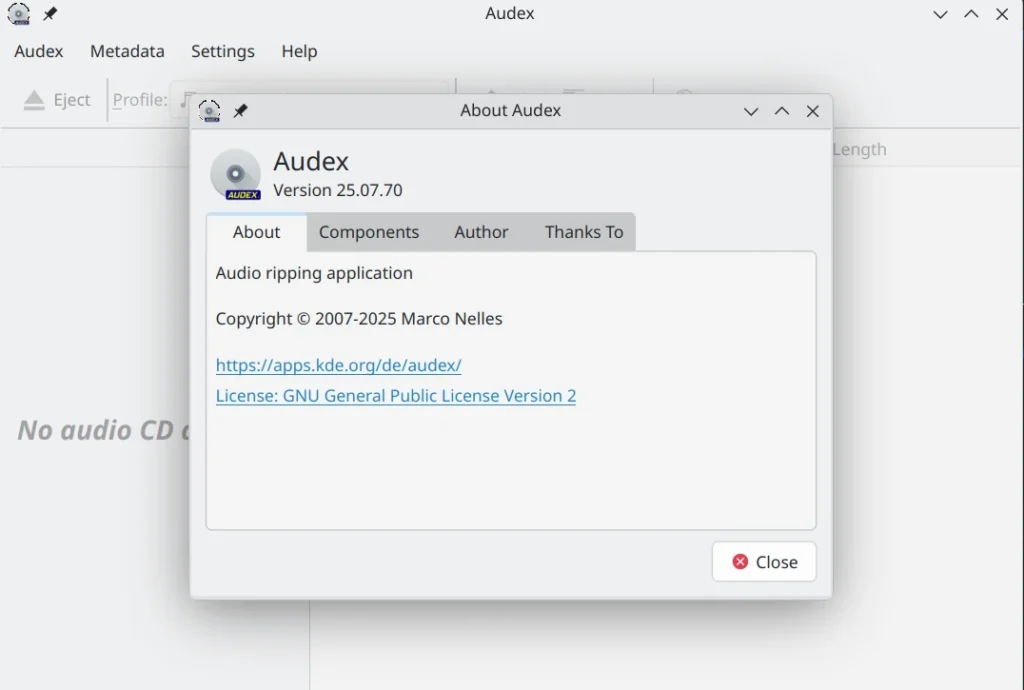

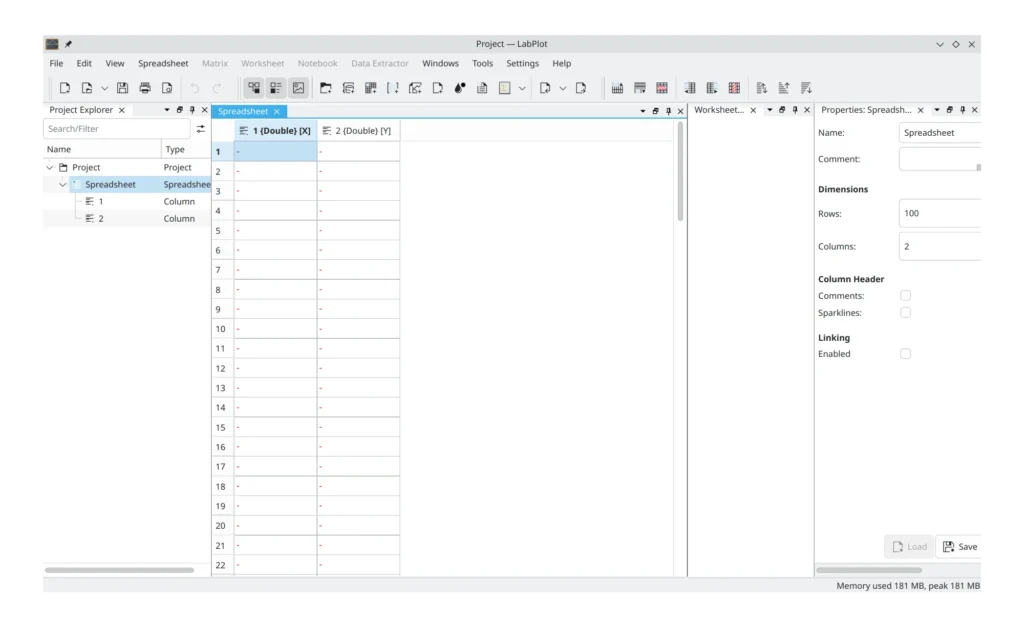
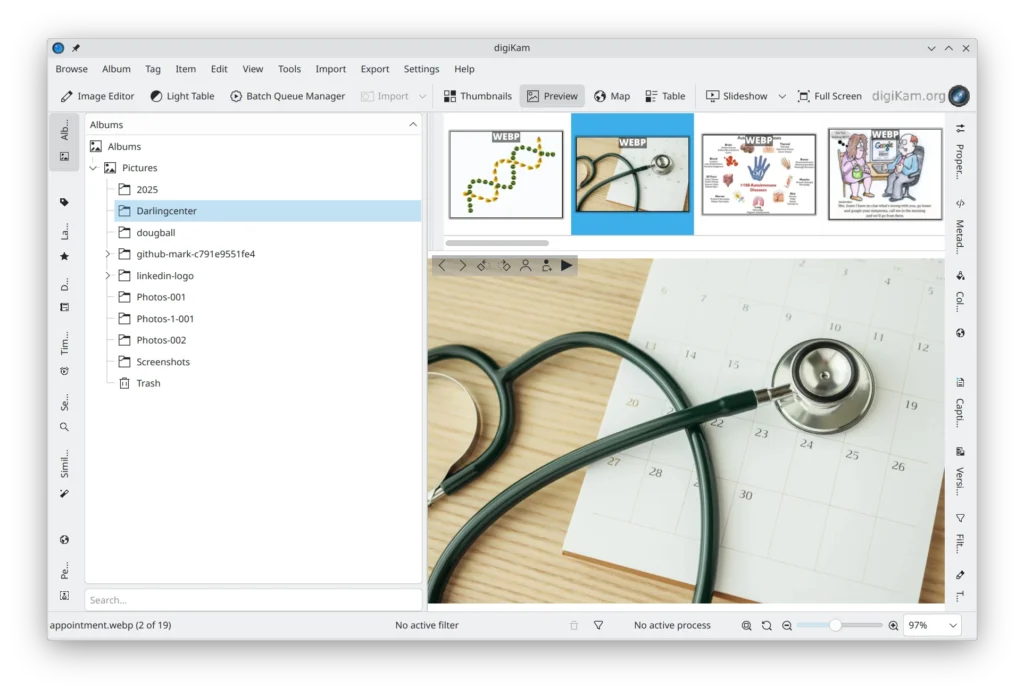
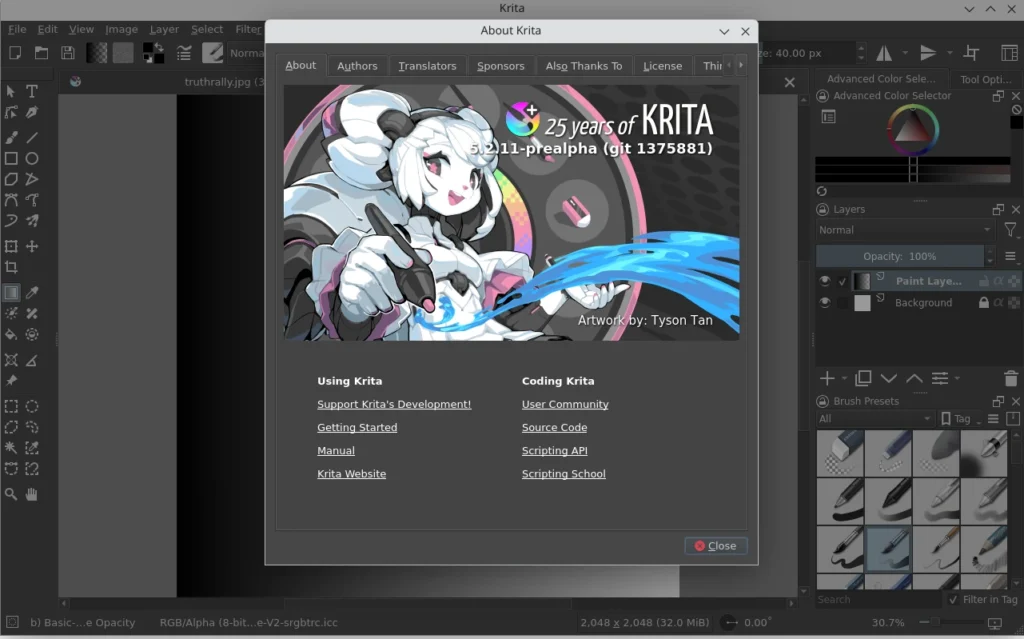



 KDE Mascot

 Like each month, have a look at the work funded by
 Another short status update of what happened on my side last
month. Larger blocks besides the Phosh 0.47 release are on screen
keyboard and cell broadcast improvements, work on separate volume
streams, the switch of phoc to wlroots 0.19.0 and effort to make
Phosh work on Debian's upcoming stable release (Trixie) out of the
box. Trixie will ship with Phosh 0.46, if you want to try out 0.47
you can fetch it from Debian's experimental suite.
See below for details on the above and more:
 In this post, I demonstrate the optimal workflow for creating new Debian packages in 2025, preserving the upstream git history. The motivation for this is to lower the barrier for sharing improvements to and from upstream, and to improve software provenance and supply-chain security by making it easy to inspect every change at any level using standard git tooling.
Key elements of this workflow include:
 In this post, I demonstrate the optimal workflow for creating new Debian packages in 2025, preserving the upstream git history. The motivation for this is to lower the barrier for sharing improvements to and from upstream, and to improve software provenance and supply-chain security by making it easy to inspect every change at any level using standard git tooling.
Key elements of this workflow include:
 I haven t had time to blog, but today is my birthday and taking some time to myself!This release came with a major bugfix. As it turns out our applications were very crashy on non-KDE platforms including Ubuntu proper. Unfortunately, for years, and I didn t know. Developers were closing the bug reports as invalid because users couldn t provide a stacktrace. I have now convinced most developers to assign snap bugs to the Snap platform so I at least get a chance to try and fix them. So with that said, if you tried our snaps in the past and gave up in frustration, please do try them again! I also spent some time cleaning up our snaps to only have current releases in the store, as rumor has it snapcrafters will be responsible for any security issues. With 200+ snaps I maintain, that is a lot of responsibility. We ll see if I can pull it off.


 TGV train I rode from Luxembourg to Paris
 Pasta I had in Paris
 A cycling track in Paris
 Luxembourg Museum
 A shot of the park near to the Luxembourg Museum
 Pantheon, one of the attractions of Paris.
 Photo with Joenio and Mari
 Notre Dame, another tourist attraction of Paris.
 My photo with Eiffel Tower in the background
 Items at a bakery in Paris. Items from left to right are: Chocolate Twist, Sugar briochette, Pain au Chocolat, Croissant with almonds, Croissant, Croissant with chocolate hazlenut filling.
 The Paris subway
 Inside a Paris subway
 A random building and road in Paris
 A shot near Seine river
 A view of Seine river