Search Results: "storm"

31 May 2023

Russ Allbery: Review: Night Watch

Review: Night Watch, by Terry Pratchett
Series: Discworld #29
Publisher: Harper
Copyright: November 2002
Printing: August 2014
ISBN: 0-06-230740-1
Format: Mass market
Pages: 451
Night Watch is the 29th Discworld novel and the sixth Watch novel. I would really like to tell people they could start here if they wanted to, for reasons that I will get into in a moment, but I think I would be doing you a disservice. The emotional heft added by having read the previous Watch novels and followed Vimes's character evolution is significant. It's the 25th of May. Vimes is about to become a father. He and several of the other members of the Watch are wearing sprigs of lilac for reasons that Sergeant Colon is quite vehemently uninterested in explaining. A serial killer named Carcer the Watch has been after for weeks has just murdered an off-duty sergeant. It's a tense and awkward sort of day and Vimes is feeling weird and wistful, remembering the days when he was a copper and not a manager who has to dress up in ceremonial armor and meet with committees. That may be part of why, when the message comes over the clacks that the Watch have Carcer cornered on the roof of the New Hall of the Unseen University, Vimes responds in person. He's grappling with Carcer on the roof of the University Library in the middle of a magical storm when lightning strikes. When he wakes up, he's in the past, shortly after he joined the Watch and shortly before the events of the 25th of May that the older Watch members so vividly remember and don't talk about. I have been saying recently in Discworld reviews that it felt like Pratchett was on the verge of a breakout book that's head and shoulders above Discworld prior to that point. This is it. This is that book. The setup here is masterful: the sprigs of lilac that slowly tell the reader something is going on, the refusal of any of the older Watch members to talk about it, the scene in the graveyard to establish the stakes, the disconcerting fact that Vetinari is wearing a sprig of lilac as well, and the feeling of building tension that matches the growing electrical storm. And Pratchett never gives into the temptation to explain everything and tip his hand prematurely. We know the 25th is coming and something is going to happen, and the reader can put together hints from Vimes's thoughts, but Pratchett lets us guess and sometimes be right and sometimes be wrong. Vimes is trying to change history, which adds another layer of uncertainty and enjoyment as the reader tries to piece together both the true history and the changes. This is a masterful job at a "what if?" story. And, beneath that, the commentary on policing and government and ethics is astonishingly good. In a review of an earlier Watch novel, I compared Pratchett to Dickens in the way that he focuses on a sort of common-sense morality rather than political theory. That is true here too, but oh that moral analysis is sharp enough to slide into you like a knife. This is not the Vimes that we first met in Guards! Guards!. He has has turned his cynical stubbornness into a working theory of policing, and it's subtle and complicated and full of nuance that he only barely knows how to explain. But he knows how to show it to people.
Keep the peace. That was the thing. People often failed to understand what that meant. You'd go to some life-threatening disturbance like a couple of neighbors scrapping in the street over who owned the hedge between their properties, and they'd both be bursting with aggrieved self-righteousness, both yelling, their wives would either be having a private scrap on the side or would have adjourned to a kitchen for a shared pot of tea and a chat, and they all expected you to sort it out. And they could never understand that it wasn't your job. Sorting it out was a job for a good surveyor and a couple of lawyers, maybe. Your job was to quell the impulse to bang their stupid fat heads together, to ignore the affronted speeches of dodgy self-justification, to get them to stop shouting and to get them off the street. Once that had been achieved, your job was over. You weren't some walking god, dispensing finely tuned natural justice. Your job was simply to bring back peace.
When Vimes is thrown back in time, he has to pick up the role of his own mentor, the person who taught him what policing should be like. His younger self is right there, watching everything he does, and he's desperately afraid he'll screw it up and set a worse example. Make history worse when he's trying to make it better. It's a beautifully well-done bit of tension that uses time travel as the hook to show both how difficult mentorship is and also how irritating one's earlier naive self would be.
He wondered if it was at all possible to give this idiot some lessons in basic politics. That was always the dream, wasn't it? "I wish I'd known then what I know now"? But when you got older you found out that you now wasn't you then. You then was a twerp. You then was what you had to be to start out on the rocky road of becoming you now, and one of the rocky patches on that road was being a twerp.
The backdrop of this story, as advertised by the map at the front of the book, is a revolution of sorts. And the revolution does matter, but not in the obvious way. It creates space and circumstance for some other things to happen that are all about the abuse of policing as a tool of politics rather than Vimes's principle of keeping the peace. I mentioned when reviewing Men at Arms that it was an awkward book to read in the United States in 2020. This book tackles the ethics of policing head-on, in exactly the way that book didn't. It's also a marvelous bit of competence porn. Somehow over the years, Vimes has become extremely good at what he does, and not just in the obvious cop-walking-a-beat sort of ways. He's become a leader. It's not something he thinks about, even when thrown back in time, but it's something Pratchett can show the reader directly, and have the other characters in the book comment on. There is so much more that I'd like to say, but so much would be spoilers, and I think Night Watch is more effective when you have the suspense of slowly puzzling out what's going to happen. Pratchett's pacing is exquisite. It's also one of the rare Discworld novels where Pratchett fully commits to a point of view and lets Vimes tell the story. There are a few interludes with other people, but the only other significant protagonist is, quite fittingly, Vetinari. I won't say anything more about that except to note that the relationship between Vimes and Vetinari is one of the best bits of fascinating subtlety in all of Discworld. I think it's also telling that nothing about Night Watch reads as parody. Sure, there is a nod to Back to the Future in the lightning storm, and it's impossible to write a book about police and street revolutions without making the reader think about Les Miserables, but nothing about this plot matches either of those stories. This is Pratchett telling his own story in his own world, unapologetically, and without trying to wedge it into parody shape, and it is so much the better book for it. The one quibble I have with the book is that the bits with the Time Monks don't really work. Lu-Tze is annoying and flippant given the emotional stakes of this story, the interludes with him are frustrating and out of step with the rest of the book, and the time travel hand-waving doesn't add much. I see structurally why Pratchett put this in: it gives Vimes (and the reader) a time frame and a deadline, it establishes some of the ground rules and stakes, and it provides a couple of important opportunities for exposition so that the reader doesn't get lost. But it's not good story. The rest of the book is so amazingly good, though, that it doesn't matter (and the framing stories for "what if?" explorations almost never make much sense). The other thing I have a bit of a quibble with is outside the book. Night Watch, as you may have guessed by now, is the origin of the May 25th Pratchett memes that you will be familiar with if you've spent much time around SFF fandom. But this book is dramatically different from what I was expecting based on the memes. You will, for example see a lot of people posting "Truth, Justice, Freedom, Reasonably Priced Love, And a Hard-Boiled Egg!", and before reading the book it sounds like a Pratchett-style humorous revolutionary slogan. And I guess it is, sort of, but, well... I have to quote the scene:
"You'd like Freedom, Truth, and Justice, wouldn't you, Comrade Sergeant?" said Reg encouragingly. "I'd like a hard-boiled egg," said Vimes, shaking the match out. There was some nervous laughter, but Reg looked offended. "In the circumstances, Sergeant, I think we should set our sights a little higher " "Well, yes, we could," said Vimes, coming down the steps. He glanced at the sheets of papers in front of Reg. The man cared. He really did. And he was serious. He really was. "But...well, Reg, tomorrow the sun will come up again, and I'm pretty sure that whatever happens we won't have found Freedom, and there won't be a whole lot of Justice, and I'm damn sure we won't have found Truth. But it's just possible that I might get a hard-boiled egg."
I think I'm feeling defensive of the heart of this book because it's such an emotional gut punch and says such complicated and nuanced things about politics and ethics (and such deeply cynical things about revolution). But I think if I were to try to represent this story in a meme, it would be the "angels rise up" song, with all the layers of meaning that it gains in this story. I'm still at the point where the lilac sprigs remind me of Sergeant Colon becoming quietly furious at the overstep of someone who wasn't there. There's one other thing I want to say about that scene: I'm not naturally on Vimes's side of this argument. I think it's important to note that Vimes's attitude throughout this book is profoundly, deeply conservative. The hard-boiled egg captures that perfectly: it's a bit of physical comfort, something you can buy or make, something that's part of the day-to-day wheels of the city that Vimes talks about elsewhere in Night Watch. It's a rejection of revolution, something that Vimes does elsewhere far more explicitly. Vimes is a cop. He is in some profound sense a defender of the status quo. He doesn't believe things are going to fundamentally change, and it's not clear he would want them to if they did. And yet. And yet, this is where Pratchett's Dickensian morality comes out. Vimes is a conservative at heart. He's grumpy and cynical and jaded and he doesn't like change. But if you put him in a situation where people are being hurt, he will break every rule and twist every principle to stop it.
He wanted to go home. He wanted it so much that he trembled at the thought. But if the price of that was selling good men to the night, if the price was filling those graves, if the price was not fighting with every trick he knew... then it was too high. It wasn't a decision that he was making, he knew. It was happening far below the areas of the brain that made decisions. It was something built in. There was no universe, anywhere, where a Sam Vimes would give in on this, because if he did then he wouldn't be Sam Vimes any more.
This is truly exceptional stuff. It is the best Discworld novel I have read, by far. I feel like this was the Watch novel that Pratchett was always trying to write, and he had to write five other novels first to figure out how to write it. And maybe to prepare Discworld readers to read it. There are a lot of Discworld novels that are great on their own merits, but also it is 100% worth reading all the Watch novels just so that you can read this book. Followed in publication order by The Wee Free Men and later, thematically, by Thud!. Rating: 10 out of 10

15 May 2023

Sven Hoexter: GCP: Private Service Connect Forwarding Rules can not be Updated

PSA for those foolish enough to use Google Cloud and try to use private service connect: If you want to change the serviceAttachment your private service connect forwarding rule points at, you must delete the forwarding rule and create a new one. Updates are not supported. I've done that in the past via terraform, but lately encountered strange errors like this:
Error updating ForwardingRule: googleapi: Error 400: Invalid value for field 'target.target':
'<https://www.googleapis.com/compute/v1/projects/mydumbproject/regions/europe-west1/serviceAttachments/
k8s1-sa-xyz-abc>'. Unexpected resource collection 'serviceAttachments'., invalid
Worked around that with the help of terrraform_data and lifecycle:
resource "terraform_data" "replacement"  
    input = var.gcp_psc_data["target"]
 
resource "google_compute_forwarding_rule" "this"  
    count   = length(var.gcp_psc_data["target"]) > 0 ? 1 : 0
    name    = "$ var.gcp_psc_name -psc"
    region  = var.gcp_region
    project = var.gcp_project
    target                = var.gcp_psc_data["target"]
    load_balancing_scheme = "" # need to override EXTERNAL default when target is a service attachment
    network               = var.gcp_network
    ip_address            = google_compute_address.this.id
    lifecycle  
        replace_triggered_by = [
            terraform_data.replacement
        ]
     
 
See also terraform data for replace_triggered_by.

29 April 2023

Abhijith PA: Attending FOSSASIA 2023

I attended FOSSASIA 2023 summit held at Lifelong Learning Institute, Singapore. A 3 day long parallel talk filled conference. Its my second time attending FOSSASIA. The first one was 2018 summit. Like last time, I didn t attend much talks but focussed on networking with people. A lot of familiar faces there. PV Anthony, Harish, etc. I vounteered to run Debian Booth at the exhibition hall distributing stickers, flyers. Rajudev also helped me at the booth. Most of the people there used debian or its derivates or know debian already, its easier for me that way, that I don t have do much explaining compared to other booths. Thanks to Parth for looking after booth in my breaks. debian_booth1 debian_booth2 Sometimes our booth also act as cloak room :). Ours was close to the entrance door and we may be similar faces to folks. So people come and drop their bags before they go to talks. One thing I love about the such conference is that people have very different hardwares that I never able to see otherwise. I remember KDE booth had a Steam Value portable gaming board running KDE plasma. Then a person have this eyeglass which act as a monitor. Then the usual DJI drones but custom programmed. It was very lovely to meet and play around with exotic hardwares. Kurian whom I met during a Debian packaging workshop in Kerala was a speaker at FOSSASIA. He presented a talk titled OpenAI Whisper and it s amazing power to do finetuning . I was his unofficial PR guy, taking pictures :).

Weather Clear sky, little hot and humid. The weather was quite nice for me except the surprise rain and small thunderstorms. Comparing to my place s temperature, its wonderful.

28 April 2023

Sven Hoexter: What's wrong in IT: commit messages

In my day job someone today took the time in the team daily to explain his research why some of our configuration is wrong. He spent quite some time on his own to look at the history in git and how everything was setup initially, and ended up in the current - wrong - way. That triggered me to validate that quickly, another 5min of work. So we agreed to change it. A one line change, nothing spectacular, but lifetime was invested to figure out why it should've a different value. When the pull request got opened a few minutes later there was nothing of that story in the commit message. Zero, nada, nothing. :( I'm really puzzled why someone invests lifetime to dig into company internal history to try get something right, do a lengthy explanation to the whole team, use the time of others, even mention that there was no explanation of why it's not the default value anymore it should be, and repeat the same mistake by not writing down anything in the commit message. For the current company I'm inclined to propose a commit message validator. For a potential future company I might join, I guess I ask for real world git logs from repositories I should contribute to. Seems that this is another valuable source of information to qualify the company culture. Next up to the existence of whiteboards in the office. I'm really happy that at least a majority of the people contributing to Debian writes somewhat decent commit messages and changelogs. Let that be a reminder to myself to improve in that area the next time I've to change something.

3 March 2023

Sven Hoexter: exfat-fuse 1.4 in experimental

I know a few people hold on to the exFAT fuse implementation due the support for timezone offsets, so here is a small update for you. Andrew released 1.4.0, which includes the timezone offset support, which was so far only part of the git master branch. It also fixes a, from my point of view very minor, security issue CVE-2022-29973. In addition to that it's the first build with fuse3 support. If you still use this driver, pick it up in experimental (we're in the bookworm freeze right now), and give it a try. I'm personally not using it anymore beyond a very basic "does it mount" test.

24 February 2023

Scarlett Gately Moore: Snowstorms, Kittens and Shattered dreams

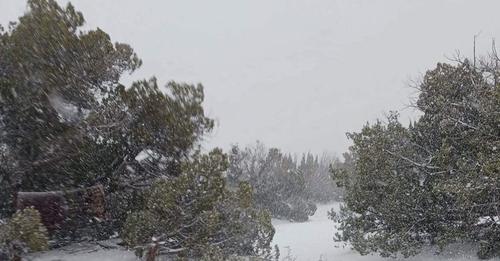
Icy morning Witch Wells AzIcy morning Witch Wells Az
Long ago I applied for my dream job at a company I have wanted to wok for since its beginning and I wasn t ready technically. Fast forward to now, I am ready! A big thank you goes out to Blue Systems for that. So I go out and find the perfect role and start the application process. The process was months long, but was going very well, the interviews and I passed the technical with flying colors. I got to the end where the hiring lead told me he was submitting my offer I was so excited, so much so, I told my husband and parents I got the job! I know, I jinxed myself there. Soon I receive the There was a problem .. One obscure assessment called GIA came back not so good. I remember that day, we were in the middle of a long series of winter storms and I when I took the test, my kitten decided right then it was me time. I couldn t very well throw her out into the snowstorm, so I continued on the best I could. It is my fault, it clearly states to be distraction free. So I speak again to the hiring lead and we both feel with my experience and technical knowledge and abilities we can still move forward. I still had hope. After some time passes, I asked for an update and got the dreaded rejection. I am told it wasn t just the GIA, but that I am not a good overall fit for the company. In one fell swoop my dreams are dashed and final, for this and all roles within that company. I wasn t given a reason either. I am devastated, heart broken, and shocked. I get along with everyone, I exceed the technical requirements, and I work well in the community. Dream door closed. I will not let this get me down. I am moving on. I will find my place where I fit in . With that said, I no longer have the will, passion, or drive to work on snaps anymore. I will leave instructions with Jonathon as to what needs to be done to move forward. The good news is my core22 kde-neon extension was merged into upstream snapcraft, so whomever takes over will have a much easier time knocking them out. @kubuntu-council I will do whatever it takes to pay back the money for the hardware you provided me to do snaps, I am truly sorry about this. What does my future hold? I will still continue with my Debian efforts. In fact, I have ventured out from the KDE umbrella and joined the go-team. I am finalizing my packaging for https://github.com/charmbracelet/gum and it s dependencies: roff, mango, mango-kong. I had my first golang patch for a failing test and have submitted it upstream. I will upload these to experimental while the freeze is on. I will be moving all the libraries in the mycroft team to the python umbrella as they are useful for other things and mycroft is no more. During the holidays I was tinkering around with selenium UI testing and stumbled on some accessibility issues within KDE, so I think this is a good place for me to dive into for my KDE contributions. I have been approached to collaborate with OpenOS on a few things, time permitting I will see what I can do there. I have a possible gig to do some websites, while I move forward in my job hunt. I will not give up! I will find my place where I fit in . Meanwhile, I must ask for donations to get us by. Anything helps, thank you for your consideration. https://gofund.me/a9c36b87

28 January 2023

Scarlett Gately Moore: KDE Snaps, Debian uploads and much more in the works!

Witch Wells, AZ SnowWitch Wells, AZ Snow
It has been a very busy few weeks as we endured snowstorm after snowstorm! I have made some progress on the Mycroft in debian adventure! This will slow down as we enter freeze for bookworm and there is no way we will make it into bookworm as there are some significant issues to solve. On the KDE side of things: In the Snap arena, I have made my first significant contribution to snapcraft upstream! It has been a great learning experience as I convert my Ruby knowledge to Python. Formatting is something I need to get used to! https://github.com/snapcore/snapcraft/pull/4023 Snaps have been on hold due to the kde-neon extension not having core22 support and the above pull request fixes that. Meanwhile, I have been working on getting core20 apps ( 22.08.3 final KDE apps version for this base. ) rebuilt for security updates. As many of you know, I am seeking employment. I am a hard worker, that thrives on learning new things. I am a self starter, knowledge sponge, and eager to be an asset to < insert your company here > ! Meanwhile, as interview processes are much longer than I remember and the industry exploding in layoffs, I am coming up short on living expenses as my unemployment lingers on. Please consider donating to my gofundme. Thank you for your consideration. GoFundMe

30 December 2022

Chris Lamb: Favourite books of 2022: Non-fiction

In my three most recent posts, I went over the memoirs and biographies, classics and fiction books that I enjoyed the most in 2022. But in the last of my book-related posts for 2022, I'll be going over my favourite works of non-fiction. Books that just missed the cut here include Adam Hochschild's King Leopold's Ghost (1998) on the role of Leopold II of Belgium in the Congo Free State, Johann Hari's Stolen Focus (2022) (a personal memoir on relating to how technology is increasingly fragmenting our attention), Amia Srinivasan's The Right to Sex (2021) (a misleadingly named set of philosophic essays on feminism), Dana Heller et al.'s The Selling of 9/11: How a National Tragedy Became a Commodity (2005), John Berger's mindbending Ways of Seeing (1972) and Louise Richardson's What Terrorists Want (2006).

The Great War and Modern Memory (1975)
Wartime: Understanding and Behavior in the Second World War (1989) Paul Fussell Rather than describe the battles, weapons, geopolitics or big personalities of the two World Wars, Paul Fussell's The Great War and Modern Memory & Wartime are focused instead on how the two wars have been remembered by their everyday participants. Drawing on the memoirs and memories of soldiers and civilians along with a brief comparison with the actual events that shaped them, Fussell's two books are a compassionate, insightful and moving piece of analysis. Fussell primarily sets himself against the admixture of nostalgia and trauma that obscures the origins and unimaginable experience of participating in these wars; two wars that were, in his view, a "perceptual and rhetorical scandal from which total recovery is unlikely." He takes particular aim at the dishonesty of hindsight:
For the past fifty years, the Allied war has been sanitised and romanticised almost beyond recognition by the sentimental, the loony patriotic, the ignorant and the bloodthirsty. I have tried to balance the scales. [And] in unbombed America especially, the meaning of the war [seems] inaccessible.
The author does not engage in any of the customary rose-tinted view of war, yet he remains understanding and compassionate towards those who try to locate a reason within what was quite often senseless barbarism. If anything, his despondency and pessimism about the Second World War (the war that Fussell himself fought in) shines through quite acutely, and this is especially the case in what he chooses to quote from others:
"It was common [ ] throughout the [Okinawa] campaign for replacements to get hit before we even knew their names. They came up confused, frightened, and hopeful, got wounded or killed, and went right back to the rear on the route by which they had come, shocked, bleeding, or stiff. They were forlorn figures coming up to the meat grinder and going right back out of it like homeless waifs, unknown and faceless to us, like unread books on a shelf."
It would take a rather heartless reader to fail to be sobered by this final simile, and an even colder one to view Fussell's citation of such an emotive anecdote to be manipulative. Still, stories and cruel ironies like this one infuse this often-angry book, but it is not without astute and shrewd analysis as well, especially on the many qualitative differences between the two conflicts that simply cannot be captured by facts and figures alone. For example:
A measure of the psychological distance of the Second [World] War from the First is the rarity, in 1914 1918, of drinking and drunkenness poems.
Indeed so. In fact, what makes Fussell's project so compelling and perhaps even unique is that he uses these non-quantitive measures to try and take stock of what happened. After all, this was a war conducted by humans, not the abstract school of statistics. And what is the value of a list of armaments destroyed by such-and-such a regiment when compared with truly consequential insights into both how the war affected, say, the psychology of postwar literature ("Prolonged trench warfare, whether enacted or remembered, fosters paranoid melodrama, which I take to be a primary mode in modern writing."), the specific words adopted by combatants ("It is a truism of military propaganda that monosyllabic enemies are easier to despise than others") as well as the very grammar of interaction:
The Field Service Post Card [in WW1] has the honour of being the first widespread exemplary of that kind of document which uniquely characterises the modern world: the "Form". [And] as the first widely known example of dehumanised, automated communication, the post card popularised a mode of rhetoric indispensable to the conduct of later wars fought by great faceless conscripted armies.
And this wouldn't be a book review without argument-ending observations that:
Indicative of the German wartime conception [of victory] would be Hitler and Speer's elaborate plans for the ultimate reconstruction of Berlin, which made no provision for a library.
Our myths about the two world wars possess an undisputed power, in part because they contain an essential truth the atrocities committed by Germany and its allies were not merely extreme or revolting, but their full dimensions (embodied in the Holocaust and the Holodomor) remain essentially inaccessible within our current ideological framework. Yet the two wars are better understood as an abyss in which we were all dragged into the depths of moral depravity, rather than a battle pitched by the forces of light against the forces of darkness. Fussell is one of the few observers that can truly accept and understand this truth and is still able to speak to us cogently on the topic from the vantage point of experience. The Second World War which looms so large in our contemporary understanding of the modern world (see below) may have been necessary and unavoidable, but Fussell convinces his reader that it was morally complicated "beyond the power of any literary or philosophic analysis to suggest," and that the only way to maintain a na ve belief in the myth that these wars were a Manichaean fight between good and evil is to overlook reality. There are many texts on the two World Wars that can either stir the intellect or move the emotions, but Fussell's two books do both. A uniquely perceptive and intelligent commentary; outstanding.

Longitude (1995) Dava Sobel Since Man first decided to sail the oceans, knowing one's location has always been critical. Yet doing so reliably used to be a serious problem if you didn't know where you were, you are far more likely to die and/or lose your valuable cargo. But whilst finding one's latitude (ie. your north south position) had effectively been solved by the beginning of the 17th century, finding one's (east west) longitude was far from trustworthy in comparison. This book first published in 1995 is therefore something of an anachronism. As in, we readily use the GPS facilities of our phones today without hesitation, so we find it difficult to imagine a reality in which knowing something fundamental like your own location is essentially unthinkable. It became clear in the 18th century, though, that in order to accurately determine one's longitude, what you actually needed was an accurate clock. In Longitude, therefore, we read of the remarkable story of John Harrison and his quest to create a timepiece that would not only keep time during a long sea voyage but would survive the rough ocean conditions as well. Self-educated and a carpenter by trade, Harrison made a number of important breakthroughs in keeping accurate time at sea, and Longitude describes his novel breakthroughs in a way that is both engaging and without talking down to the reader. Still, this book covers much more than that, including the development of accurate longitude going hand-in-hand with advancements in cartography as well as in scientific experiments to determine the speed of light: experiments that led to the formulation of quantum mechanics. It also outlines the work being done by Harrison's competitors. 'Competitors' is indeed the correct word here, as Parliament offered a huge prize to whoever could create such a device, and the ramifications of this tremendous financial incentive are an essential part of this story. For the most part, though, Longitude sticks to the story of Harrison and his evolving obsession with his creating the perfect timepiece. Indeed, one reason that Longitude is so resonant with readers is that many of the tropes of the archetypical 'English inventor' are embedded within Harrison himself. That is to say, here is a self-made man pushing against the establishment of the time, with his groundbreaking ideas being underappreciated in his life, or dishonestly purloined by his intellectual inferiors. At the level of allegory, then, I am minded to interpret this portrait of Harrison as a symbolic distillation of postwar Britain a nation acutely embarrassed by the loss of the Empire that is now repositioning itself as a resourceful but plucky underdog; a country that, with a combination of the brains of boffins and a healthy dose of charisma and PR, can still keep up with the big boys. (It is this same search for postimperial meaning I find in the fiction of John le Carr , and, far more famously, in the James Bond franchise.) All of this is left to the reader, of course, as what makes Longitute singularly compelling is its gentle manner and tone. Indeed, at times it was as if the doyenne of sci-fi Ursula K. LeGuin had a sideline in popular non-fiction. I realise it's a mark of critical distinction to downgrade the importance of popular science in favour of erudite academic texts, but Latitude is ample evidence that so-called 'pop' science need not be patronising or reductive at all.

Closed Chambers: The Rise, Fall, and Future of the Modern Supreme Court (1998) Edward Lazarus After the landmark decision by the U.S. Supreme Court in *Dobbs v. Jackson Women's Health Organization that ended the Constitutional right to abortion conferred by Roe v Wade, I prioritised a few books in the queue about the judicial branch of the United States. One of these books was Closed Chambers, which attempts to assay, according to its subtitle, "The Rise, Fall and Future of the Modern Supreme Court". This book is not merely simply a learned guide to the history and functioning of the Court (although it is completely creditable in this respect); it's actually an 'insider' view of the workings of the institution as Lazurus was a clerk for Justice Harry Blackmun during the October term of 1988. Lazarus has therefore combined his experience as a clerk and his personal reflections (along with a substantial body of subsequent research) in order to communicate the collapse in comity between the Justices. Part of this book is therefore a pure history of the Court, detailing its important nineteenth-century judgements (such as Dred Scott which ruled that the Constitution did not consider Blacks to be citizens; and Plessy v. Ferguson which failed to find protection in the Constitution against racial segregation laws), as well as many twentieth-century cases that touch on the rather technical principle of substantive due process. Other layers of Lazurus' book are explicitly opinionated, however, and they capture the author's assessment of the Court's actions in the past and present [1998] day. Given the role in which he served at the Court, particular attention is given by Lazarus to the function of its clerks. These are revealed as being far more than the mere amanuenses they were hitherto believed to be. Indeed, the book is potentially unique in its the claim that the clerks have played a pivotal role in the deliberations, machinations and eventual rulings of the Court. By implication, then, the clerks have plaedy a crucial role in the internal controversies that surround many of the high-profile Supreme Court decisions decisions that, to the outsider at least, are presented as disinterested interpretations of Constitution of the United States. This is of especial importance given that, to Lazarus, "for all the attention we now pay to it, the Court remains shrouded in confusion and misunderstanding." Throughout his book, Lazarus complicates the commonplace view that the Court is divided into two simple right vs. left political factions, and instead documents an ever-evolving series of loosely held but strongly felt series of cabals, quid pro quo exchanges, outright equivocation and pure personal prejudices. (The age and concomitant illnesses of the Justices also appears to have a not insignificant effect on the Court's rulings as well.) In other words, Closed Chambers is not a book that will be read in a typical civics class in America, and the only time the book resorts to the customary breathless rhetoric about the US federal government is in its opening chapter:
The Court itself, a Greek-style temple commanding the crest of Capitol Hill, loomed above them in the dim light of the storm. Set atop a broad marble plaza and thirty-six steps, the Court stands in splendid isolation appropriate to its place at the pinnacle of the national judiciary, one of the three independent and "coequal" branches of American government. Once dubbed the Ivory Tower by architecture critics, the Court has a Corinthian colonnade and massive twenty-foot-high bronze doors that guard the single most powerful judicial institution in the Western world. Lights still shone in several offices to the right of the Court's entrance, and [ ]
Et cetera, et cetera. But, of course, this encomium to the inherent 'nobility' of the Supreme Court is quickly revealed to be a narrative foil, as Lazarus soon razes this dangerously na ve conception to the ground:
[The] institution is [now] broken into unyielding factions that have largely given up on a meaningful exchange of their respective views or, for that matter, a meaningful explication or defense of their own views. It is of Justices who in many important cases resort to transparently deceitful and hypocritical arguments and factual distortions as they discard judicial philosophy and consistent interpretation in favor of bottom-line results. This is a Court so badly splintered, yet so intent on lawmaking, that shifting 5-4 majorities, or even mere pluralities, rewrite whole swaths of constitutional law on the authority of a single, often idiosyncratic vote. It is also a Court where Justices yield great and excessive power to immature, ideologically driven clerks, who in turn use that power to manipulate their bosses and the institution they ostensibly serve.
Lazurus does not put forward a single, overarching thesis, but in the final chapters, he does suggest a potential future for the Court:
In the short run, the cure for what ails the Court lies solely with the Justices. It is their duty, under the shield of life tenure, to recognize the pathologies affecting their work and to restore the vitality of American constitutionalism. Ultimately, though, the long-term health of the Court depends on our own resolve on whom [we] select to join that institution.
Back in 1998, Lazurus might have had room for this qualified optimism. But from the vantage point of 2022, it appears that the "resolve" of the United States citizenry was not muscular enough to meet his challenge. After all, Lazurus was writing before Bush v. Gore in 2000, which arrogated to the judicial branch the ability to decide a presidential election; the disillusionment of Barack Obama's failure to nominate a replacement for Scalia; and many other missteps in the Court as well. All of which have now been compounded by the Trump administration's appointment of three Republican-friendly justices to the Court, including hypocritically appointing Justice Barrett a mere 38 days before the 2020 election. And, of course, the leaking and ruling in Dobbs v. Jackson, the true extent of which has not been yet. Not of a bit of this is Lazarus' fault, of course, but the Court's recent decisions (as well as the liberal hagiographies of 'RBG') most perforce affect one's reading of the concluding chapters. The other slight defect of Closed Chambers is that, whilst it often implies the importance of the federal and state courts within the judiciary, it only briefly positions the Supreme Court's decisions in relation to what was happening in the House, Senate and White House at the time. This seems to be increasingly relevant as time goes on: after all, it seems fairly clear even to this Brit that relying on an activist Supreme Court to enact progressive laws must be interpreted as a failure of the legislative branch to overcome the perennial problems of the filibuster, culture wars and partisan bickering. Nevertheless, Lazarus' book is in equal parts ambitious, opinionated, scholarly and dare I admit it? wonderfully gossipy. By juxtaposing history, memoir, and analysis, Closed Chambers combines an exacting evaluation of the Court's decisions with a lively portrait of the intellectual and emotional intensity that has grown within the Supreme Court's pseudo-monastic environment all while it struggles with the most impactful legal issues of the day. This book is an excellent and well-written achievement that will likely never be repeated, and a must-read for anyone interested in this ever-increasingly important branch of the US government.

Crashed: How a Decade of Financial Crises Changed the World (2018)
Shutdown: How Covid Shook the World's Economy (2021) Adam Tooze The economic historian Adam Tooze has often been labelled as an unlikely celebrity, but in the fourteen years since the global financial crisis of 2008, a growing audience has been looking for answers about the various failures of the modern economy. Tooze, a professor of history at New York's Columbia University, has written much that is penetrative and thought-provoking on this topic, and as a result, he has generated something of a cult following amongst economists, historians and the online left. I actually read two Tooze books this year. The first, Crashed (2018), catalogues the scale of government intervention required to prop up global finance after the 2008 financial crisis, and it characterises the different ways that countries around the world failed to live up to the situation, such as doing far too little, or taking action far too late. The connections between the high-risk subprime loans, credit default swaps and the resulting liquidity crisis in the US in late 2008 is fairly well known today in part thanks to films such as Adam McKay's 2015 The Big Short and much improved economic literacy in media reportage. But Crashed makes the implicit claim that, whilst the specific and structural origins of the 2008 crisis are worth scrutinising in exacting detail, it is the reaction of states in the months and years after the crash that has been overlooked as a result. After all, this is a reaction that has not only shaped a new economic order, it has created one that does not fit any conventional idea about the way the world 'ought' to be run. Tooze connects the original American banking crisis to the (multiple) European debt crises with a larger crisis of liberalism. Indeed, Tooze somehow manages to cover all these topics and more, weaving in Trump, Brexit and Russia's 2014 annexation of Crimea, as well as the evolving role of China in the post-2008 economic order. Where Crashed focused on the constellation of consequences that followed the events of 2008, Shutdown is a clear and comprehensive account of the way the world responded to the economic impact of Covid-19. The figures are often jaw-dropping: soon after the disease spread around the world, 95% of the world's economies contracted simultaneously, and at one point, the global economy shrunk by approximately 20%. Tooze's keen and sobering analysis of what happened is made all the more remarkable by the fact that it came out whilst the pandemic was still unfolding. In fact, this leads quickly to one of the book's few flaws: by being published so quickly, Shutdown prematurely over-praises China's 'zero Covid' policy, and these remarks will make a reader today squirm in their chair. Still, despite the regularity of these references (after all, mentioning China is very useful when one is directly comparing economic figures in early 2021, for examples), these are actually minor blemishes on the book's overall thesis. That is to say, Crashed is not merely a retelling of what happened in such-and-such a country during the pandemic; it offers in effect a prediction about what might be coming next. Whilst the economic responses to Covid averted what could easily have been another Great Depression (and thus showed it had learned some lessons from 2008), it had only done so by truly discarding the economic rule book. The by-product of inverting this set of written and unwritten conventions that have governed the world for the past 50 years, this 'Washington consensus' if you well, has yet to be fully felt. Of course, there are many parallels between these two books by Tooze. Both the liquidity crisis outlined in Crashed and the economic response to Covid in Shutdown exposed the fact that one of the central tenets of the modern economy ie. that financial markets can be trusted to regulate themselves was entirely untrue, and likely was false from the very beginning. And whilst Adam Tooze does not offer a singular piercing insight (conveying a sense of rigorous mastery instead), he may as well be asking whether we're simply going to lurch along from one crisis to the next, relying on the technocrats in power to fix problems when everything blows up again. The answer may very well be yes.

Looking for the Good War: American Amnesia and the Violent Pursuit of Happiness (2021) Elizabeth D. Samet Elizabeth D. Samet's Looking for the Good War answers the following question what would be the result if you asked a professor of English to disentangle the complex mythology we have about WW2 in the context of the recent US exit of Afghanistan? Samet's book acts as a twenty-first-century update of a kind to Paul Fussell's two books (reviewed above), as well as a deeper meditation on the idea that each new war is seen through the lens of the previous one. Indeed, like The Great War and Modern Memory (1975) and Wartime (1989), Samet's book is a perceptive work of demystification, but whilst Fussell seems to have been inspired by his own traumatic war experience, Samet is not only informed by her teaching West Point military cadets but by the physical and ontological wars that have occurred during her own life as well. A more scholarly and dispassionate text is the result of Samet's relative distance from armed combat, but it doesn't mean Looking for the Good War lacks energy or inspiration. Samet shares John Adams' belief that no political project can entirely shed the innate corruptions of power and ambition and so it is crucial to analyse and re-analyse the role of WW2 in contemporary American life. She is surely correct that the Second World War has been universally elevated as a special, 'good' war. Even those with exceptionally giddy minds seem to treat WW2 as hallowed:
It is nevertheless telling that one of the few occasions to which Trump responded with any kind of restraint while he was in office was the 75th anniversary of D-Day in 2019.
What is the source of this restraint, and what has nurtured its growth in the eight decades since WW2 began? Samet posits several reasons for this, including the fact that almost all of the media about the Second World War is not only suffused with symbolism and nostalgia but, less obviously, it has been made by people who have no experience of the events that they depict. Take Stephen Ambrose, author of Steven Spielberg's Band of Brothers miniseries: "I was 10 years old when the war ended," Samet quotes of Ambrose. "I thought the returning veterans were giants who had saved the world from barbarism. I still think so. I remain a hero worshiper." If Looking for the Good War has a primary thesis, then, it is that childhood hero worship is no basis for a system of government, let alone a crusading foreign policy. There is a straight line (to quote this book's subtitle) from the "American Amnesia" that obscures the reality of war to the "Violent Pursuit of Happiness." Samet's book doesn't merely just provide a modern appendix to Fussell's two works, however, as it adds further layers and dimensions he overlooked. For example, Samet provides some excellent insight on the role of Western, gangster and superhero movies, and she is especially good when looking at noir films as a kind of kaleidoscopic response to the Second World War:
Noir is a world ruled by bad decisions but also by bad timing. Chance, which plays such a pivotal role in war, bleeds into this world, too.
Samet rightfully weaves the role of women into the narrative as well. Women in film noir are often celebrated as 'independent' and sassy, correctly reflecting their newly-found independence gained during WW2. But these 'liberated' roles are not exactly a ringing endorsement of this independence: the 'femme fatale' and the 'tart', etc., reflect a kind of conditional freedom permitted to women by a post-War culture which is still wedded to an outmoded honour culture. In effect, far from being novel and subversive, these roles for women actually underwrote the ambient cultural disapproval of women's presence in the workforce. Samet later connects this highly-conditional independence with the liberation of Afghan women, which:
is inarguably one of the more palatable outcomes of our invasion, and the protection of women's rights has been invoked on the right and the left as an argument for staying the course in Afghanistan. How easily consequence is becoming justification. How flattering it will be one day to reimagine it as original objective.
Samet has ensured her book has a predominantly US angle as well, for she ends her book with a chapter on the pseudohistorical Lost Cause of the Civil War. The legacy of the Civil War is still visible in the physical phenomena of Confederate statues, but it also exists in deep-rooted racial injustice that has been shrouded in euphemism and other psychological devices for over 150 years. Samet believes that a key part of what drives the American mythology about the Second World War is the way in which it subconsciously cleanses the horrors of brother-on-brother murder that were seen in the Civil War. This is a book that is not only of interest to historians of the Second World War; it is a work for anyone who wishes to understand almost any American historical event, social issue, politician or movie that has appeared since the end of WW2. That is for better or worse everyone on earth.

23 December 2022

Louis-Philippe V ronneau: 2022 A Musical Retrospective

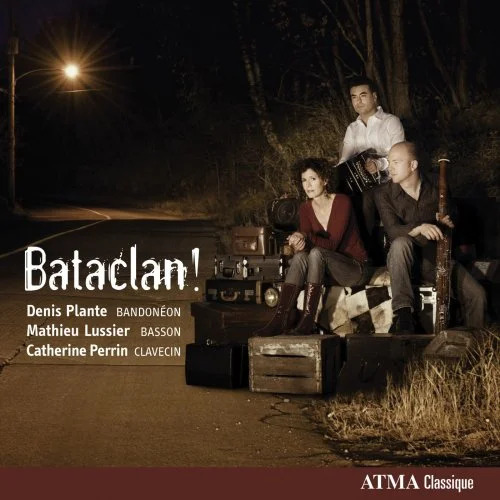
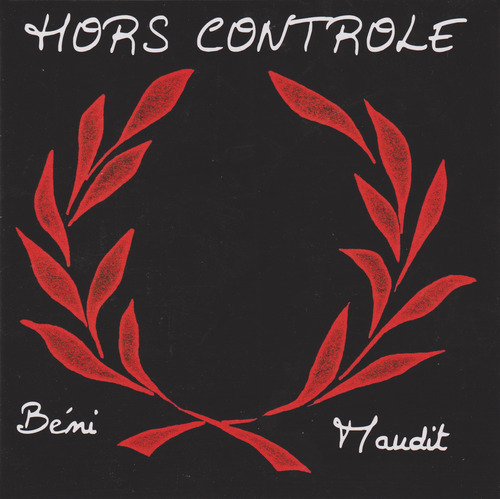
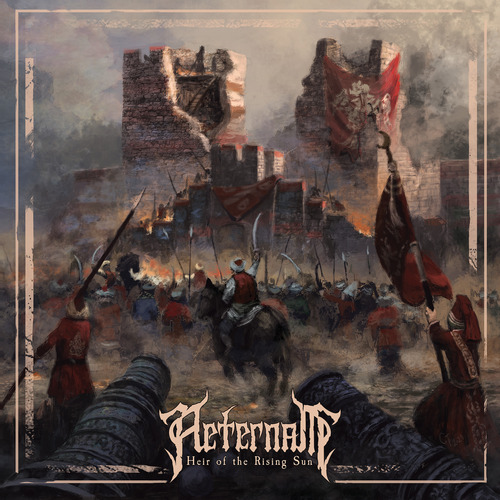
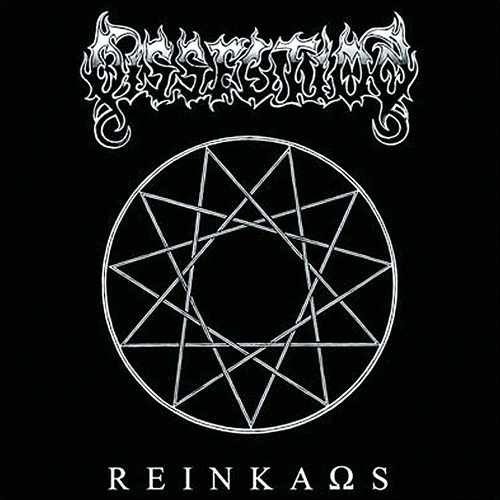
With the end of the year approaching fast, I thought putting my year in retrospective via music would be a fun thing to do. Albums In 2022, I added 51 new albums to my collection nearly one a week! I listed them below in the order in which I acquired them. I purchased most of these albums when I could and borrowed the rest at libraries. If you want to browse though, I added links to the album covers pointing either to websites where you can buy them or to Discogs when digital copies weren't available1. Browsing through the albums, I can see my tastes really shifted a lot in the last few years. I used to listen to a lot of Hip-Hop, but the recent trends in this genre2 really turn me off. In fact, it seems I didn't add a single Hip-Hop album to my collection this year... Metal also continues to dominate the list. Many thanks to Angry Metal Guy for being the best metal reviewing website out there. Concerts 2022 was also a big change for me, as I started going to much more concerts than I previously did. metalfinder has been working great and I'm really happy with it. Here are the concerts I went to in 2022: I'm looking forward continuing to go to a lot of concerts in 2023!

  1. Some of the albums especially the O ! ones are pretty underground. For most of those, I actually have physical copies I bought and ripped.
  2. Mostly mumble rap, beats than are less and less sample-based, extreme commercialisation and lyrics that are less and less political and engaged.

28 October 2022

Shirish Agarwal: Shantaram, The Pyramid, Japan s Hikikomori & Backpack

Shantaram I know I have been quite behind in review of books but then that s life. First up is actually not as much as a shocker but somewhat of a pleasant surprise. So, a bit of background before I share the news. If you have been living under a rock, then about 10-12 years ago a book called Shantaram was released. While the book is said to have been released in 2003/4 I got it in my hand around 2008/09 or somewhere around that. The book is like a good meal, a buffet. To share the synopsis, Lin a 20 something Australian guy gets involved with a girl, she encourages him to get into heroin, he becomes a heroin user. And drugs, especially hard drugs need constant replenishment, it is a chemical thing. So, to fund those cravings, he starts to steal, rising to rob a bank and while getting away shoots a cop who becomes dead. Now either he surrenders or is caught is unclear, but he is tortured in the jail. So one day, he escapes from prison, lands up at home of somebody who owes him a favor, gets some money, gets a fake passport and lands up in Mumbai/Bombay as it was then known. This is from where the actual story starts. And how a 6 foot something Australian guy relying on his street smartness and know how the transformation happens from Lin to Shantaram. Now what I have shared is perhaps just 5% of the synopsis, as shared the real story starts here. Now the good news, last week 4 episodes of Shantaram were screened by Apple TV. Interestingly, I have seen quite a number people turning up to buy or get this book and also sharing it on Goodreads. Now there seems to have been some differences from the book to TV. Now I m relying on 10-12 year back memory but IIRC Khaderbhai, one of the main characters who sort of takes Lin/Shantaram under his wing is an Indian. In the series, he is a western or at least looks western/Middle Eastern to me. Also, they have tried to reproduce 1980s in Mumbai/Bombay but dunno how accurate they were  My impression of that city from couple of visits at that point in time where they were still more tongas (horse-ridden carriages), an occasional two wheelers and not many three wheelers. Although, it was one of the more turbulent times as lot of agitation for worker rights were happening around that time and a lot of industrial action. Later that led to lot of closure of manufacturing in Bombay and it became more commercial. It would be interesting to know whether they shot it in actual India or just made a set somewhere in Australia, where it possibly might have been shot. The chawl of the book needs a bit of arid land and Australia has lots of it. It is also interesting as this was a project that had who s who interested in it for a long time but somehow none of them was able to bring the project to fruition, the project seems to largely have an Australian cast as well as second generations of Indians growing in Australia. To take names, Amitabh Bacchan, Johnny Depp, Russel Crowe each of them wanted to make it into a feature film. In retrospect, it is good it was not into a movie, otherwise they would have to cut a lot of material and that perhaps wouldn t have been sufficient. Making it into a web series made sure they could have it in multiple seasons if people like it. There is a lot between now and 12 episodes to even guess till where it would leave you then. So, if you have not read the book and have some holidays coming up, can recommend it. The writing IIRC is easy and just flows. There is a bit of action but much more nuance in the book while in the web series they are naturally more about action. There is also quite a bit of philosophy between him and Kaderbhai and while the series touches upon it, it doesn t do justice but then again it is being commercially made. Read the book, see the series and share your thoughts on what you think. It is possible that the series might go up or down but am sharing from where I see it, may do another at the end of the season, depending on where they leave it and my impressions. Update A slight update from the last blog post. Seems Rishi Sunak seems would be made PM of UK. With Hunt as chancellor and Rishi Sunak, Austerity 2.0 seems complete. There have been numerous articles which share how austerity gives rises to fascism and vice-versa. History gives lot of lessons about the same. In Germany, when the economy was not good, it was all blamed on the Jews for number of years. This was the reason for rise of Hitler, and while it did go up by a bit, propaganda by him and his loyalists did the rest. And we know and have read about the Holocaust. Today quite a few Germans deny it or deny parts of it but that s how misinformation spreads. Also Hitler is looked now more as an aberration rather than something to do with the German soul. I am not gonna talk more as there is still lots to share and that actually perhaps requires its own blog post to do justice for the same.

The Pyramid by Henning Mankell I had actually wanted to review this book but then the bomb called Shantaram appeared and I had to post it above. I had read two-three books before it, but most of them were about multiple beheadings and serial killers. Enough to put anybody into depression. I do not know if modern crime needs to show crime and desperation of and to such a level. Why I and most loved and continue to love Sherlock Holmes as most stories were not about gross violence but rather a homage to the art of deduction, which pretty much seems to be missing in modern crime thrillers rather than grotesque stuff. In that, like a sort of fresh air I read/am reading the Pyramid by Henning Mankell. The book is about a character made by Monsieur Henning Mankell named Kurt Wallender. I am aware of the series called Wallender but haven t yet seen it. The book starts with Wallender as a beat cop around age 20 and on his first case. He is ambitious, wants to become a detective and has a narrow escape with death. I wouldn t go much into it as it basically gives you an idea of the character and how he thinks and what he does. He is more intuitive by nature and somewhat of a loner. Probably most detectives IRL are, dunno, have no clue. At least in the literary world it makes sense, in real world think there would be much irony for sure. This is speculation on my part, who knows. Back to the book though. The book has 5 stories a sort of prequel one could say but also not entirely true. The first case starts when he is a beat cop in 1969 and he is just a beat cop. It is a kind of a prequel and a kind of an anthology as he covers from the first case to the 1990s where he is ending his career sort of. Before I start sharing about the stories in the book, I found the foreword also quite interesting. It asks questions about the interplay of the role of welfare state and the Swedish democracy. Incidentally did watch couple of videos about a sort of mixed sort of political representation that happens in Sweden. It uses what is known as proportional representation. Ironically, Sweden made a turn to the far right this election season. The book was originally in Swedish and were translated to English by Ebba Segerberg and Laurie Thompson. While all the stories are interesting, would share the last three or at least ask the questions of intrigue. Of course, to answer them you would need to read the book  So the last three stories I found the most intriguing. The first one is titled Man on the Beach. Apparently, a gentleman goes to one of the beaches, a sort of lonely beach, hails a taxi and while returning suddenly dies. The Taxi driver showing good presence of mind takes it to hospital where the gentleman is declared dead on arrival. Unlike in India, he doesn t run away but goes to the cafeteria and waits there for the cops to arrive and take his statement. Now the man is in his early 40s and looks to be fit. Upon searching his pockets he is found to relatively well-off and later it turns out he owns a couple of shops. So then here are the questions ? What was the man doing on a beach, in summer that beach is somewhat popular but other times not so much, so what was he doing there? How did he die, was it a simple heart attack or something more? If he had been drugged or something then when and how? These and more questions can be answered by reading the story Man on the Beach . 2. The death of a photographer Apparently, Kurt lives in a small town where almost all the residents have been served one way or the other by the town photographer. The man was polite and had worked for something like 40 odd years before he is killed/murdered. Apparently, he is murdered late at night. So here come the questions a. The shop doesn t even stock any cameras and his cash box has cash. Further investigation reveals it is approximate to his average takeout for the day. So if it s not for cash, then what is the motive ? b. The body was discovered by his cleaning staff who has worked for almost 20 years, 3 days a week. She has her own set of keys to come and clean the office? Did she give the keys to someone, if yes why? c. Even after investigation, there is no scandal about the man, no other woman or any vices like gambling etc. that could rack up loans. Also, nobody seems to know him and yet take him for granted till he dies. The whole thing appears to be quite strange. Again, the answers lie in the book. 3. The Pyramid Kurt is sleeping one night when the telephone rings. The scene starts with a Piper Cherokee, a single piston aircraft flying low and dropping something somewhere or getting somebody from/on the coast of Sweden. It turns and after a while crashes. Kurt is called to investigate it. Turns out, the plane was supposed to be destroyed. On crash, both the pilot and the passenger are into pieces so only dental records can prove who they are. Same day or a day or two later, two seemingly ordinary somewhat elderly women, spinsters, by all accounts, live above the shop where they sell buttons and all kinds of sewing needs of the town. They seem middle-class. Later the charred bodies of the two sisters are found :(. So here come the questions a.Did the plane drop something or pick something somebody up ? The Cherokee is a small plane so any plane field or something it could have landed up or if a place was somehow marked then could be dropped or picked up without actually landing. b. The firefighter suspects arson started at multiple places with the use of petrol? The question is why would somebody wanna do that? The sisters don t seem to be wealthy and practically everybody has bought stuff from them. They weren t popular but weren t also unpopular. c. Are the two crimes connected or unconnected? If connected, then how? d. Most important question, why the title Pyramid is given to the story. Why does the author share the name Pyramid. Does he mean the same or the original thing? He could have named it triangle. Again, answers to all the above can be found in the book. One thing I also became very aware of during reading the book that it is difficult to understand people s behavior and what they do. And this is without even any criminality involved in. Let s say for e.g. I die in some mysterious circumstances, the possibility of the police finding my actions in last days would be limited and this is when I have hearing loss. And this probably is more to do with how our minds are wired. And most people I know are much more privacy conscious/aware than I am.

Japan s Hikikomori Japan has been a curious country. It was more or less a colonizer and somewhat of a feared power till it dragged the U.S. unnecessarily in World War 2. The result of the two atom bombs and the restitution meant that Japan had to build again from the ground up. It is also in a seismically unstable place as they have frequent earthquakes although the buildings are hardened/balanced to make sure that vibrations don t tear buildings apart. Had seen years ago on Natgeo a documentary that explains all that. Apart from that, Japan was helped by the Americans and there was good kinship between them till the 1980s till it signed the Plaza Accord which enhanced asset price bubbles that eventually burst. Something from which they are smarting even today. Japan has a constitutional monarchy. A somewhat history lesson or why it exists even today can be found here. Asset price bubbles of the 1980s, more than 50 percent of the population on zero hour contracts and the rest tend to suffer from overwork. There is a term called Karoshi that explains all. An Indian pig-pen would be two, two and a half times larger than a typical Japanese home. Most Japanese live in micro-apartments called konbachiku . All of the above stresses meant that lately many young Japanese people have become Hikikomori. Bloomberg featured about the same a couple of years back. I came to know about it as many Indians are given the idea of Japan being a successful country without knowing the ills and issues it faces. Even in that most women get the wrong end of the short stick i.e. even it they manage to find jobs, it would be most back-breaking menial work. The employment statistics of Japan s internal ministry tells its own story.

If you look at the data above, it seems that the between 2002 and 2019, the share of zero hour contracts has increased while regular work has decreased. This also means that those on the bottom of the ladder can no longer afford a home. There is and was a viral video called Lost in Manboo that went viral few years ago. It is a perfect set of storms. Add to that the Fukushima nuclear incident about which I had shared a few years ago. While the workers are blamed but all design decisions are taken by the management. And as was shown in numerous movies, documentaries etc. Interestingly, and somewhat ironically, the line workers knew the correct things to do and correct decisions to take unlike the management. The shut-ins story is almost a decade or two decades old. It is similar story in South Korea but not as depressive as the in Japan. It is somewhat depressive story but needed to be shared. The stories shared in the bloomberg article makes your heart ache

Backpacks In and around 2015, I had bought a Targus backpack, very much similar to the Targus TSB194US-70 Motor 16-inch Backpack. That bag has given me a lot of comfort over the years but now has become frayed the zip sometimes work and sometimes doesn t. Unlike those days there are a bunch of companies now operating in India. There are eight different companies that I came to know about, Aircase, Harrisons Sirius, HP Oddyssey, Mokobara, Artic Hunter, Dell Pro Hybrid, Dell Roller Backpack and lastly the Decathlon Quechua Hiking backpack 32L NH Escape 500 . Now of all the above, two backpacks seem the best, the first one is Harrisons Sirius, with 45L capacity, I don t think I would need another bag at all. The runner-up is the Decathlon Quecha Hiking Backpack 32L. One of the better things in all the bags is that all have hidden pockets for easy taking in and out of passport while having being ant-theft. I do not have to stress how stressful it is to take out the passport and put it back in. Almost all the vendors have made sure that it is not a stress point anymore. The good thing about the Quecha is that they are giving 10 years warranty, the point to be asked is if that is does the warranty cover the zip. Zips are the first thing that goes out in bags.That actually has what happened to my current bag. Decathlon has a store in Wakad, Pune while I have reached out to the gentleman in charge of Harrisons India to see if they have a reseller in Pune. So hopefully, in next one week I should have a backpack that isn t spilling with things all over the place, whichever I m able to figure out.

16 October 2022

Sven Hoexter: CentOS 9, stunnel, an openssl memory leak and a VirtualBox crash

tl;dr; OpenSSL 3.0.1 leaks memory in ssl3_setup_write_buffer(), seems to be fixed in 3.0.5 3.0.2. The issue manifests at least in stunnel and keepalived on CentOS 9. In addition I learned the hard way that running a not so recent VirtualBox version on Debian bullseye let to dh parameter generation crashing in libcrypto in bn_sqr8x_internal(). A recent rabbit hole I went down. The actual bug in openssl was nailed down and documented by Quentin Armitage on GitHub in keepalived My bugreport with all back and forth in the RedHat Bugzilla is #2128412. Act I - Hello stunnel, this is the OOMkiller Calling We started to use stunnel on Google Cloud compute engine instances running CentOS 9. The loadbalancer in front of those instances used a TCP health check to validate the backend availability. A day or so later the stunnel instances got killed by the OOMkiller. Restarting stunnel and looking into /proc/<pid>/smaps showed a heap segment growing quite quickly. Act II - Reproducing the Issue While I'm not the biggest fan of VirtualBox and Vagrant I've to admit it's quite nice to just fire up a VM image, and give other people a chance to recreate that setup as well. Since VirtualBox is no longer released with Debian/stable I just recompiled what was available in unstable at the time of the bullseye release, and used that. That enabled me now to just start a CentOS 9 VM, setup stunnel with a minimal config, grab netcat and a for loop and watch the memory grow. E.g. while true; do nc -z localhost 2600; sleep 1; done To my surprise, in addition to the memory leak, I also observed some crashes but did not yet care too much about those. Act III - Wrong Suspect, a Workaround and Bugreporting Of course the first idea was that something must be wrong in stunnel itself. But I could not find any recent bugreports. My assumption is that there are still a few people around using CentOS and stunnel, so someone else should probably have seen it before. Just to be sure I recompiled the latest stunnel package from Fedora. Didn't change anything. Next I recompiled it without almost all the patches Fedora/RedHat carries. Nope, no progress. Next idea: Maybe this is related to the fact that we do not initiate a TLS context after connecting? So we changed the test case from nc to openssl s_client, and the loadbalancer healthcheck from TCP to a TLS based one. Tada, a workaround, no more memory leaking. In addition I gave Fedora a try (they have Vagrant Virtualbox images in the "Cloud" Spin, e.g. here for Fedora 36) and my local Debian installation a try. No leaks experienced on both. Next I reported #2128412. Act IV - Crash in libcrypto and a VirtualBox Bug When I moved with the test case from the Google Cloud compute instance to my local VM I encountered some crashes. That morphed into a real problem when I started to run stunnel with gdb and valgrind. All crashes happened in libcrypto bn_sqr8x_internal() when generating new dh parameter (stunnel does that for you if you do not use static dh parameter). I quickly worked around that by generating static dh parameter for stunnel. After some back and forth I suspected VirtualBox as the culprit. Recompiling the current VirtualBox version (6.1.38-dfsg-3) from unstable on bullseye works without any changes. Upgrading actually fixed that issue. Epilog I highly appreciate that RedHat, with all the bashing around the future of CentOS, still works on community contributed bugreports. My kudos go to Clemens Lang. :) Now that the root cause is clear, I guess RedHat will push out a fix for the openssl 3.0.1 based release they have in RHEL/CentOS 9. Until that is available at least stunnel and keepalived are known to be affected. If you run stunnel on something public it's not that pretty, because already a low rate of TCP connections will result in a DoS condition.

22 August 2022

Jonathan Wiltshire: Team Roles and Tuckman s Model, for Debian teams

When I first moved from being a technical consultant to a manager of other consultants, I took a 5-day course Managing Technical Teams a bootstrap for managing people within organisations, but with a particular focus on technical people. We do have some particular quirks, after all Two elements of that course keep coming to mind when doing Debian work, and they both relate to how teams fit together and get stuff done. Tuckman s four stages model In the mid-1960s Bruce W. Tuckman developed a four-stage descriptive model of the stages a project team goes through in its lifetime. They are:
Resolved disagreements and personality clashes result in greater intimacy, and a spirit of co-operation emerges.
Teams need to understand these stages because a team can regress to earlier stages when its composition or goals change. A new member, the departure of an existing member, changes in supervisor or leadership style can all lead a team to regress to the storming stage and fail to perform for a time. When you see a team member say this, as I observed in an IRC channel recently, you know the team is performing:
nice teamwork these busy days Seen on IRC in the channel of a performing team
Tuckman s model describes a team s performance overall, but how can team members establish what they can contribute and how can they go doing so confidently and effectively? Belbin s Team Roles
The types of behaviour in which people engage are infinite. But the range of useful behaviours, which make an effective contribution to team performance, is finite. These behaviours are grouped into a set number of related clusters, to which the term Team Role is applied. Belbin, R M. Team Roles at Work. Oxford: Butterworth-Heinemann, 2010
Dr Meredith Belbin s thesis, based on nearly ten years research during the 1970s and 1980s, is that each team has a number of roles which need to be filled at various times, but they re not innate characteristics of the people filling them. People may have attributes which make them more or less suited to each role, and they can consciously take up a role if they recognise its need in the team at a particular time. Belbin s nine team roles are: (adapted from https://www.belbin.com/media/3471/belbin-team-role-descriptions-2022.pdf) A well-balanced team, Belbin asserts, isn t comprised of multiples of nine individuals who fit into one of these roles permanently. Rather, it has a number of people who are comfortable to wear some of these hats as the need arises. It s even useful to use the team roles as language: for example, someone playing a shaper might say the way we ve always done this is holding us back , to which a co-ordinator s could respond Steve, Joanna put on your Plant hats and find some new ideas. Talk to Susan and see if she knows someone who s tackled this before. Present the options to Nigel and he ll help evaluate which ones might work for us. Teams in Debian There are all sort of teams in Debian those which are formally brought into operation by the DPL or the constitution; package maintenance teams; public relations teams; non-technical content teams; special interest teams; and a whole heap of others. Teams can be formal and informal, fleeting or long-lived, two people working together or dozens. But they all have in common the Tuckman stages of their development and the Belbin team roles they need to fill to flourish. At some stage in their existence, they will all experience new or departing team members and a period of re-forming, norming and storming perhaps fleetingly, perhaps not. And at some stage they will all need someone to step into a team role, play the part and get the team one step further towards their goals. Footnote Belbin Associates, the company Meredith Belbin established to promote and continue his work, offers a personalised report with guidance about which roles team members show the strongest preferences for, and how to make best use of them in various settings. They re quick to complete and can also take into account observers , i.e. how others see a team member. All my technical staff go through this process blind shortly after they start, so as not to bias their input, and then we discuss the roles and their report in detail as a one-to-one. There are some teams in Debian for which this process and discussion as a group activity could be invaluable. I have no particular affiliation with Belbin Associates other than having used the reports and the language of team roles for a number of years. If there s sufficient interest for a BoF session at the next DebConf, I could probably be persuaded to lead it.
Photo by Josh Calabrese on Unsplash

6 June 2022

Reproducible Builds: Reproducible Builds in May 2022

Welcome to the May 2022 report from the Reproducible Builds project. In our reports we outline the most important things that we have been up to over the past month. As ever, if you are interested in contributing to the project, please visit our Contribute page on our website.

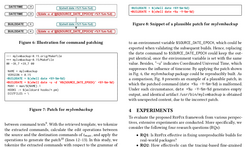
Repfix paper Zhilei Ren, Shiwei Sun, Jifeng Xuan, Xiaochen Li, Zhide Zhou and He Jiang have published an academic paper titled Automated Patching for Unreproducible Builds:
[..] fixing unreproducible build issues poses a set of challenges [..], among which we consider the localization granularity and the historical knowledge utilization as the most significant ones. To tackle these challenges, we propose a novel approach [called] RepFix that combines tracing-based fine-grained localization with history-based patch generation mechanisms.
The paper (PDF, 3.5MB) uses the Debian mylvmbackup package as an example to show how RepFix can automatically generate patches to make software build reproducibly. As it happens, Reiner Herrmann submitted a patch for the mylvmbackup package which has remained unapplied by the Debian package maintainer for over seven years, thus this paper inadvertently underscores that achieving reproducible builds will require both technical and social solutions.

Python variables Johannes Schauer discovered a fascinating bug where simply naming your Python variable _m led to unreproducible .pyc files. In particular, the types module in Python 3.10 requires the following patch to make it reproducible:
--- a/Lib/types.py
+++ b/Lib/types.py
@@ -37,8 +37,8 @@ _ag = _ag()
 AsyncGeneratorType = type(_ag)
 
 class _C:
-    def _m(self): pass
-MethodType = type(_C()._m)
+    def _b(self): pass
+MethodType = type(_C()._b)
Simply renaming the dummy method from _m to _b was enough to workaround the problem. Johannes bug report first led to a number of improvements in diffoscope to aid in dissecting .pyc files, but upstream identified this as caused by an issue surrounding interned strings and is being tracked in CPython bug #78274.

New SPDX team to incorporate build metadata in Software Bill of Materials SPDX, the open standard for Software Bill of Materials (SBOM), is continuously developed by a number of teams and committees. However, SPDX has welcomed a new addition; a team dedicated to enhancing metadata about software builds, complementing reproducible builds in creating a more secure software supply chain. The SPDX Builds Team has been working throughout May to define the universal primitives shared by all build systems, including the who, what, where and how of builds:
  • Who: the identity of the person or organisation that controls the build infrastructure.
  • What: the inputs and outputs of a given build, combining metadata about the build s configuration with an SBOM describing source code and dependencies.
  • Where: the software packages making up the build system, from build orchestration tools such as Woodpecker CI and Tekton to language-specific tools.
  • How: the invocation of a build, linking metadata of a build to the identity of the person or automation tool that initiated it.
The SPDX Builds Team expects to have a usable data model by September, ready for inclusion in the SPDX 3.0 standard. The team welcomes new contributors, inviting those interested in joining to introduce themselves on the SPDX-Tech mailing list.

Talks at Debian Reunion Hamburg Some of the Reproducible Builds team (Holger Levsen, Mattia Rizzolo, Roland Clobus, Philip Rinn, etc.) met in real life at the Debian Reunion Hamburg (official homepage). There were several informal discussions amongst them, as well as two talks related to reproducible builds. First, Holger Levsen gave a talk on the status of Reproducible Builds for bullseye and bookworm and beyond (WebM, 210MB): Secondly, Roland Clobus gave a talk called Reproducible builds as applied to non-compiler output (WebM, 115MB):

Supply-chain security attacks This was another bumper month for supply-chain attacks in package repositories. Early in the month, Lance R. Vick noticed that the maintainer of the NPM foreach package let their personal email domain expire, so they bought it and now controls foreach on NPM and the 36,826 projects that depend on it . Shortly afterwards, Drew DeVault published a related blog post titled When will we learn? that offers a brief timeline of major incidents in this area and, not uncontroversially, suggests that the correct way to ship packages is with your distribution s package manager .

Bootstrapping Bootstrapping is a process for building software tools progressively from a primitive compiler tool and source language up to a full Linux development environment with GCC, etc. This is important given the amount of trust we put in existing compiler binaries. This month, a bootstrappable mini-kernel was announced. Called boot2now, it comprises a series of compilers in the form of bootable machine images.

Google s new Assured Open Source Software service Google Cloud (the division responsible for the Google Compute Engine) announced a new Assured Open Source Software service. Noting the considerable 650% year-over-year increase in cyberattacks aimed at open source suppliers, the new service claims to enable enterprise and public sector users of open source software to easily incorporate the same OSS packages that Google uses into their own developer workflows . The announcement goes on to enumerate that packages curated by the new service would be:
  • Regularly scanned, analyzed, and fuzz-tested for vulnerabilities.
  • Have corresponding enriched metadata incorporating Container/Artifact Analysis data.
  • Are built with Cloud Build including evidence of verifiable SLSA-compliance
  • Are verifiably signed by Google.
  • Are distributed from an Artifact Registry secured and protected by Google.
(Full announcement)

A retrospective on the Rust programming language Andrew bunnie Huang published a long blog post this month promising a critical retrospective on the Rust programming language. Amongst many acute observations about the evolution of the language s syntax (etc.), the post beings to critique the languages approach to supply chain security ( Rust Has A Limited View of Supply Chain Security ) and reproducibility ( You Can t Reproduce Someone Else s Rust Build ):
There s some bugs open with the Rust maintainers to address reproducible builds, but with the number of issues they have to deal with in the language, I am not optimistic that this problem will be resolved anytime soon. Assuming the only driver of the unreproducibility is the inclusion of OS paths in the binary, one fix to this would be to re-configure our build system to run in some sort of a chroot environment or a virtual machine that fixes the paths in a way that almost anyone else could reproduce. I say almost anyone else because this fix would be OS-dependent, so we d be able to get reproducible builds under, for example, Linux, but it would not help Windows users where chroot environments are not a thing.
(Full post)

Reproducible Builds IRC meeting The minutes and logs from our May 2022 IRC meeting have been published. In case you missed this one, our next IRC meeting will take place on Tuesday 28th June at 15:00 UTC on #reproducible-builds on the OFTC network.

A new tool to improve supply-chain security in Arch Linux kpcyrd published yet another interesting tool related to reproducibility. Writing about the tool in a recent blog post, kpcyrd mentions that although many PKGBUILDs provide authentication in the context of signed Git tags (i.e. the ability to verify the Git tag was signed by one of the two trusted keys ), they do not support pinning, ie. that upstream could create a new signed Git tag with an identical name, and arbitrarily change the source code without the [maintainer] noticing . Conversely, other PKGBUILDs support pinning but not authentication. The new tool, auth-tarball-from-git, fixes both problems, as nearly outlined in kpcyrd s original blog post.

diffoscope diffoscope is our in-depth and content-aware diff utility. Not only can it locate and diagnose reproducibility issues, it can provide human-readable diffs from many kinds of binary formats. This month, Chris Lamb prepared and uploaded versions 212, 213 and 214 to Debian unstable. Chris also made the following changes:
  • New features:
    • Add support for extracting vmlinuz Linux kernel images. [ ]
    • Support both python-argcomplete 1.x and 2.x. [ ]
    • Strip sticky etc. from x.deb: sticky Debian binary package [ ]. [ ]
    • Integrate test coverage with GitLab s concept of artifacts. [ ][ ][ ]
  • Bug fixes:
    • Don t mask differences in .zip or .jar central directory extra fields. [ ]
    • Don t show a binary comparison of .zip or .jar files if we have observed at least one nested difference. [ ]
  • Codebase improvements:
    • Substantially update comment for our calls to zipinfo and zipinfo -v. [ ]
    • Use assert_diff in test_zip over calling get_data with a separate assert. [ ]
    • Don t call re.compile and then call .sub on the result; just call re.sub directly. [ ]
    • Clarify the comment around the difference between --usage and --help. [ ]
  • Testsuite improvements:
    • Test --help and --usage. [ ]
    • Test that --help includes the file formats. [ ]
Vagrant Cascadian added an external tool reference xb-tool for GNU Guix [ ] as well as updated the diffoscope package in GNU Guix itself [ ][ ][ ].

Distribution work In Debian, 41 reviews of Debian packages were added, 85 were updated and 13 were removed this month adding to our knowledge about identified issues. A number of issue types have been updated, including adding a new nondeterministic_ordering_in_deprecated_items_collected_by_doxygen toolchain issue [ ] as well as ones for mono_mastersummary_xml_files_inherit_filesystem_ordering [ ], extended_attributes_in_jar_file_created_without_manifest [ ] and apxs_captures_build_path [ ]. Vagrant Cascadian performed a rough check of the reproducibility of core package sets in GNU Guix, and in openSUSE, Bernhard M. Wiedemann posted his usual monthly reproducible builds status report.

Upstream patches The Reproducible Builds project detects, dissects and attempts to fix as many currently-unreproducible packages as possible. We endeavour to send all of our patches upstream where appropriate. This month, we wrote a large number of such patches, including:

Reproducible builds website Chris Lamb updated the main Reproducible Builds website and documentation in a number of small ways, but also prepared and published an interview with Jan Nieuwenhuizen about Bootstrappable Builds, GNU Mes and GNU Guix. [ ][ ][ ][ ] In addition, Tim Jones added a link to the Talos Linux project [ ] and billchenchina fixed a dead link [ ].

Testing framework The Reproducible Builds project runs a significant testing framework at tests.reproducible-builds.org, to check packages and other artifacts for reproducibility. This month, the following changes were made:
  • Holger Levsen:
    • Add support for detecting running kernels that require attention. [ ]
    • Temporarily configure a host to support performing Debian builds for packages that lack .buildinfo files. [ ]
    • Update generated webpages to clarify wishes for feedback. [ ]
    • Update copyright years on various scripts. [ ]
  • Mattia Rizzolo:
    • Provide a facility so that Debian Live image generation can copy a file remotely. [ ][ ][ ][ ]
  • Roland Clobus:
    • Add initial support for testing generated images with OpenQA. [ ]
And finally, as usual, node maintenance was also performed by Holger Levsen [ ][ ].

Misc news On our mailing list this month:

Contact If you are interested in contributing to the Reproducible Builds project, please visit our Contribute page on our website. However, you can get in touch with us via:

12 April 2022

Sven Hoexter: Emulating Raspi2 like hardware with RaspiOS in 2022

Update of my notes from 2020.
# Download a binary device tree file and matching kernel a good soul uploaded to github
wget https://github.com/vfdev-5/qemu-rpi2-vexpress/raw/master/kernel-qemu-4.4.1-vexpress
wget https://github.com/vfdev-5/qemu-rpi2-vexpress/raw/master/vexpress-v2p-ca15-tc1.dtb
# Download the official Rasbian image without X
wget https://downloads.raspberrypi.org/raspios_lite_armhf/images/raspios_lite_armhf-2022-04-07/2022-04-04-raspios-bullseye-armhf-lite.img.xz
unxz 2022-04-04-raspios-bullseye-armhf-lite.img.xz
# Convert it from the raw image to a qcow2 image and add some space
qemu-img convert -f raw -O qcow2 2022-04-04-raspios-bullseye-armhf-lite.img rasbian.qcow2
qemu-img resize rasbian.qcow2 4G
# make sure we get a user account setup
echo "me:$(echo 'test123' openssl passwd -6 -stdin)" > userconf
sudo guestmount -a rasbian.qcow2 -m /dev/sda1 /mnt
sudo mv userconf /mnt
sudo guestunmount /mnt
# start qemu
qemu-system-arm -m 2048M -M vexpress-a15 -cpu cortex-a15 \
 -kernel kernel-qemu-4.4.1-vexpress -no-reboot \
 -smp 2 -serial stdio \
 -dtb vexpress-v2p-ca15-tc1.dtb -sd rasbian.qcow2 \
 -append "root=/dev/mmcblk0p2 rw rootfstype=ext4 console=ttyAMA0,15200 loglevel=8" \
 -nic user,hostfwd=tcp::5555-:22
# login at the serial console as user me with password test123
sudo -i
# enable ssh
systemctl enable ssh
systemctl start ssh
# resize partition and filesystem
parted /dev/mmcblk0 resizepart 2 100%
resize2fs /dev/mmcblk0p2
Now I can login via ssh and start to play:
ssh me@localhost -p 5555

1 April 2022

Russ Allbery: Review: Princess Floralinda and the Forty-Flight Tower

Review: Princess Floralinda and the Forty-Flight Tower, by Tamsyn Muir
Publisher: Subterranean Press
Copyright: 2020
ISBN: 1-59606-992-9
Format: Kindle
Pages: 111
A witch put Princess Floralinda at the top of a forty-flight tower, but it wasn't personal. This is just what witches do, particularly with princesses with butter-coloured curls and sapphire-blue eyes. Princes would come from miles around to battle up the floors of the tower and rescue the princess. The witch even helpfully provided a golden sword, in case a prince didn't care that much about princesses. Floralinda was provided with water and milk, two loaves of bread, and an orange, all of them magically renewing, to sustain her while she waited. In retrospect, the dragon with diamond-encrusted scales on the first floor may have been a mistake. None of the princely endeavors ever saw the second floor. The diary that Floralinda found in her room indicated that she may not be the first princess to have failed to be rescued from this tower. Floralinda finally reaches the rather astonishing conclusion that she might have to venture down the tower herself, despite the goblins she was warned were on the 39th floor (not to mention all the other monsters). The result of that short adventure, after some fast thinking, a great deal of luck, and an unforeseen assist from her magical food, is a surprising number of dead goblins. Also seriously infected hand wounds, because it wouldn't be a Tamsyn Muir story without wasting illness and body horror. That probably would have been the end of Floralinda, except a storm blew a bottom-of-the-garden fairy in through the window, sufficiently injured that she and Floralinda were stuck with each other, at least temporarily. Cobweb, the fairy, is neither kind nor inclined to help Floralinda (particularly given that Floralinda is not a child whose mother is currently in hospital), but it is an amateur chemist and finds both Floralinda's tears and magical food intriguing. Cobweb's magic is also based on wishes, and after a few failed attempts, Floralinda manages to make a wish that takes hold. Whether she'll regret the results is another question. This is a fairly short novella by the same author as Gideon the Ninth, but it's in a different universe and quite different in tone. This summary doesn't capture the writing style, which is a hard-to-describe mix of fairy tale, children's story, and slightly archaic and long-winded sentence construction. This is probably easier to show with a quote:
"You are displaying a very small-minded attitude," said the fairy, who seemed genuinely grieved by this. "Consider the orange-peel, which by itself has many very nice properties. Now, if you had a more educated brain (I cannot consider myself educated; I have only attempted to better my situation) you would have immediately said, 'Why, if I had some liquor, or even very hot water, I could extract some oil from this orange-peel, which as everyone knows is antibacterial; that may well do my hands some good,' and you wouldn't be in such a stupid predicament."
On balance, I think this style worked. It occasionally annoyed me, but it has some charm. About halfway through, I was finding the story lightly entertaining, although I would have preferred a bit less grime, illness, and physical injury. Unfortunately, the rest of the story didn't work for me. The dynamic between Floralinda and Cobweb turns into a sort of D&D progression through monster fights, and while there are some creative twists to those fights, they become all of a sameness. And while I won't spoil the ending, it didn't work for me. I think I see what Muir was trying to do, and I have some intellectual appreciation for the idea, but it wasn't emotionally satisfying. I think my root problem with this story is that Muir sets up a rather interesting world, one in which witches artistically imprison princesses, and particularly bright princesses (with the help of amateur chemist fairies) can use the trappings of a magical tower in ways the witch never intended. I liked that; it has a lot of potential. But I didn't feel like that potential went anywhere satisfying. There is some relationship and characterization work, and it reached some resolution, but it didn't go as far as I wanted. And, most significantly, I found the end point the characters reached in relation to the world to be deeply unsatisfying and vaguely irritating. I wanted to like this more than I did. I think there's a story idea in here that I would have enjoyed more. Unfortunately, it's not the one that Muir wrote, and since so much of my problem is with the ending, I can't provide much guidance on whether someone else would like this story better (and why). But if the idea of taking apart a fairy-tale tower and repurposing the pieces sounds appealing, and if you get along better with Muir's illness motif than I do, you may enjoy this more than I did. Rating: 5 out of 10

3 February 2022

Sven Hoexter: Suntime Calculation with Lua and the Great Gift of Open Source

tl;dr I ported a part of the python-suntime library to Lua to use it on OpenWRT and RutOS powered devices. suntime.lua There are those unremarkable things which let you pause for a moment, and realize what a great gift of our time open source software and open knowledge is. At some point in time someone figured out how to calculate the sunrise and sunset time on the current date for your location. Someone else wrote that up and probably again a different person published it on the internet. The Internet Archive preserved a copy of it so I can still link to it. Someone took this algorithm and published a code sample on StackOverflow, which was later on used by the SatAgro guys to create the python-suntime library. Now I could come along, copy the core function of this library, convert it within a few hours - mostly spent learning a bit of Lua, to a working script fulfilling my needs.

26 January 2022

Gunnar Wolf: Progvis Now in Debian proper! (unstable)

Progvis finally made it into Debian! What is it, you ask? It is a great tool to teach about memory management and concurrency. I first saw progvis in the poster presentation his author, Filip Str mb ck, did last year at the 52nd ACM Technical Sympossium on Computer Science Education (SIGCSE), immediately recognizing it as a tool I wanted to use at my classes, and being it free software, make it available for all interested Debian users. Quoting from Progvis Web page:

This is a program visualization tool aimed at concurrent programs and related issues. The tool itself is mostly language agnostic, and relies on Storm to compile the provided code and provide basic debug information. The generated code is then inspected and instrumented to provide an experience similar to a basic debugger. The tool emphasizes a visual representation of the object hierarchy that is manipulated by the executed program to make it easy to understand how it looks. In particular, a visual representation is beneficial over a text representation since it makes it easier to find shared data that might need to be synchronized in a concurrent program. As mentioned, the tool is aimed at concurrent programs. Therefore, it allows spawning multiple threads running the same program to see if that affects the program s execution (this is mostly interesting if global variables are used). Furthermore, any spawned threads also appear in the tool, and the user may control them independently to explore possible race conditions or other synchronization errors. If enabled from the menu bar, the tool keeps track of reads and writes to the data structure in order to highlight basic race conditions in addition to deadlocks.
So, what is this Storm thing? Filip promptly informed me that Progvis is not just a pedagogical tool Or rather, that it is part of something bigger. Progvis is a program built using the Storm programming language platform is more than a compiler; it presents as a framework for creating languages, designed to make easy to implement languages that can be extended with new syntax and semantics. Storm is much more than what I have explored, and can be used as an interactive compiler, a language server used as a service for highlighting and completing in IDEs. But I won t dig much more into Storm (which is, of course, now also available in Debian as well as the libraries built from the same source). Back to progvis: It implements a very-close-to-C++ language, with some details to better suit its purpose (i.e. instead of using the usual pthread implementation, an own thread model is used; i.e. thread creation is handled via int thread_id = thread_name(funcname, &params) instead of the more complex pthread_create() function (including details such as the thread object being passed as by reference as a parameter) All in all, while I have not yet taken full advantage of this tool in my teaching, it has helped me show somewhat hard to grasp concepts such as: All in all, a great tool. I hope you find it useful and enjoyable as well! PS- I suggest you to install the progvis-examples package to get started. You will find some dozens of sample programs in /usr/share/doc/progvis-examples/examples; playing with them will help you better understand the tool and be able to better write your own programs.

20 January 2022

Sven Hoexter: Running OpenWRT x86 in qemu

Sometimes it's nice for testing purpose to have the OpenWRT userland available locally. Since there is an x86 build available one can just run it within qemu.


wget https://downloads.openwrt.org/releases/21.02.1/targets/x86/64/openwrt-21.02.1-x86-64-generic-squashfs-combined.img.gz
gunzip openwrt-21.02.1-x86-64-generic-squashfs-combined.img.gz
qemu-img convert -f raw -O qcow2 openwrt-21.02.1-x86-64-generic-squashfs-combined.img openwrt-21.02.1.qcow2
qemu-img resize openwrt-21.02.1.qcow2 200M
qemu-system-x86_64 -M q35 \
  -drive file=openwrt-21.02.1.qcow2,id=d0,if=none,bus=0,unit=0 \
  -device ide-hd,drive=d0,bus=ide.0 -nic user,hostfwd=tcp::5556-:22
# you've to change the network configuration to retrieve an IP via
# dhcp for the lan bridge br-lan
vi /etc/config/network
  - change option proto 'static' to 'dhcp'
  - remove IP address and netmask setting
/etc/init.d/network restart
# now you should've an ip out of 10.0.2.0/24
ssh root@localhost -p 5556
# remember ICMP does not work but otherwise you should have
# IP networking available

opkg update
opkg install curl

24 October 2021

Petter Reinholdtsen: Debian still an excellent choice for Lego builders

The Debian Lego team saw a lot of activity the last few weeks. All the packages under the team umbrella has been updated to fix packaging, lintian issues and BTS reports. In addition, a new and inspiring team member appeared on both the debian-lego-team Team mailing list and IRC channel #debian-lego. If you are interested in Lego CAD design and LEGO Minestorms programming, check out the team wiki page to see what Debian can offer the Lego enthusiast. Patches has been sent upstream, causing new upstream releases, one even the first one in more than ten years, and old upstreams was released with new ones. There are still a lot of work left, and the team welcome more members to help us make sure Debian is the Linux distribution of choice for Lego builders. If you want to contribute, join us in the IRC channel and become part of the team on Salsa. As usual, if you use Bitcoin and want to show your support of my activities, please send Bitcoin donations to my address 15oWEoG9dUPovwmUL9KWAnYRtNJEkP1u1b.

20 October 2021

Arturo Borrero Gonz lez: Iterating on how we do NFS at Wikimedia Cloud Services

Logos This post was originally published in the Wikimedia Tech blog, authored by Arturo Borrero Gonzalez. NFS is a central piece of infrastructure that is essential to services like Toolforge. Recently, the Cloud Services team at Wikimedia had been reviewing how we do NFS. The current situation NFS is a central piece of technology for some of the services that the Wikimedia Cloud Services team offers to the community. We have several shares that power different use cases: Toolforge user home directories live on NFS, and Cloud VPS users can also access dumps using this protocol. The current setup involves several physical hardware servers, with about 20TB of storage, offering shares over 10G links to the cloud. For the system to be more fault-tolerant, we duplicate each share for redundancy using DRBD. Running NFS on dedicated hardware servers has traditionally offered us advantages: mostly on the performance and the capacity fields. As time has passed, we have been enumerating more and more reasons to review how we do NFS. For one, the current setup is in violation of some of our internal rules regarding realm separation. Additionally, we had been longing for additional flexibility managing our servers: we wanted to use virtual machines managed by Openstack Nova. The DRBD-based high-availability system required mostly a hand-crafted procedure for failover/failback. There s also some scalability concerns as NFS is easy to grow up, but not to grow horizontally, and of course, we have to be able to keep the tenancy setup while doing so, something that NFS does by using LDAP/Unix users and may get complicated too when growing. In general, the servers have become too big to fail , clearly technical debt, and it has taken us years to decide on taking on the task to rethink the architecture. It s worth mentioning that in an ideal world, we wouldn t depend on NFS, but the truth is that it will still be a central piece of infrastructure for years to come in services like Toolforge. Over a series of brainstorming meetings, the WMCS team evaluated the situation and sorted out the many moving parts. The team managed to boil down the potential service future to two competing options: Then we decided to research both options in parallel. For a number of reasons, the evaluation was timeboxed to three weeks. Both ideas had a couple of points in common: the NFS data would be stored on our Ceph farm via Cinder volumes, and we would rely on Ceph reliability to avoid using DRBD. Another open topic was how to back up data from Ceph, to store our important bits in more than one basket. We will get to the back up topic later. The manila experiment The Wikimedia Foundation was an early adopter of some Openstack components (Nova, Glance, Designate, Horizon), but Manila was never evaluated for usage until now. Our approach for this experiment was to closely follow the upstream guidelines. We read the documentation and tried to understand the different setups you can build with Manila. As we often feel with other Openstack components, the documentation doesn t perfectly describe how to introduce a given component in your particular local setup. Here we use an admin-controller flat-topology Neutron network. This network is shared by all tenants (or projects) in our Openstack deployment. Also, Manila can use many different driver backends, for things like NetApps or CephFS that we don t use , yet. After some research, the generic driver was the one that seemed to better fit our use case. The generic driver leverages Nova virtual machines instances plus Cinder volume to create and manage the shares. In general, Manila supports two operational modes, whether it should create/destroy the share servers (i.e, the virtual machine instances) or not. This option is called driver_handles_share_server (or DHSS) and takes a boolean value. We were interested in trying with DHSS=true, to really benefit from the potential of the setup. Manila diagram NFS idea 6, original image in Wikitech So, after sorting all these variables, we moved on with our initial testing. We built a PoC setup as depicted in the diagram above, with the manila-share component running in a virtual machine inside the cloud. The PoC led to us reporting several bugs upstream: In some cases we tried to address these bugs ourselves: It s worth mentioning that the upstream community was extra-welcoming to us, and we re thankful for that. However, at the end of our three-week period, our Manila setup still wasn t working as expected. Your experience may change with other drivers perhaps the ZFSonLinux or the CephFS ones. In general, we were having trouble making the setup work as expected, so we decided to abandon this approach in favor of the other option we were considering at the beginning. Simple virtual machine serving NFS The alternative was to create a Nova virtual machine instance by hand and to configure it using puppet. We have been investing in an automation framework lately, so the idea is to not actually create the server by hand. Anyway, the data would be decoupled from the instance into Cinder volumes, which led us to the question we left for later: How should we back up those terabytes of important information? Just to be clear, the backup problem was independent of the above options; with Manila we would still have had to solve the same challenge. We would like to see our data be backed up somewhere else other than in Ceph. And that s exactly where we are at right now. We ve been exploring different backup strategies and will finally use the Cinder backup API. Conclusion The iteration will end with the dedicated NFS hardware servers being stopped, and the shares being served from within the cloud. The migration will take some time to happen because we will check and double-check that everything works as expected (including from the performance point of view) before making definitive changes. We already have some plans to make sure our users experience as little service impact as possible. The most troublesome shares will be those related to Toolforge. At some point we will need to disallow writes to the NFS share, rsync the data out of the hardware servers into the Cinder volumes, point the NFS clients to the new virtual machines, and then enable writes again. The main Toolforge share has about 8TB of data, so this will take a while. We will have more updates in the future. Who knows, perhaps our next-next iteration, in a couple of years, will see us adopting Openstack Manila for good. Featured image credit: File:(from break water) Manila Skyline panoramio.jpg, ewol, CC BY-SA 3.0 This post was originally published in the Wikimedia Tech blog, authored by Arturo Borrero Gonzalez.




Next.

Previous.