Search Results: "sten"

9 May 2026

Russell Coker: Bad Criticism of LLMs (not AI)

Discussion of AI systems seems to be dominated by fears of uncommon and unlikely threats. I think that we should be focusing more on real issues with LLMs and with society in general and put the most effort towards the biggest problems. It s Not AI True Artificial Intelligence [1] (IE a computer that has the mental capacity of a household pet) is something that I think can be developed, but it hasn t been developed and we don t have good plans for developing it. We seem to be a lot further away from achieving that goal than we were from landing on the moon in 1962 when JFK gave his historic speech. What we have is a variety of pattern recognition systems that can predict what fits into a pattern. The most well known type of Machine Learning (ML) is the Large Language Model (LLM) which means ChatGPT and similar systems which predict which text would be likely to come next and can make an essay from it. They can give interesting and useful output, but there is no thought behind it, it s just a better form of Eliza (the famous program from 1964 that simulates conversation by pattern matching) [2]. By analysing billions of documents, storing the data in a condensed mathematical way, and then using computation to extract from that record LLMs can produce output that is unfortunately considered by some people to be good enough to include in legal documents submitted to courts, university assignments, and many other documents. But they do so without even having the thinking ability of a mouse. To call current systems AIs without any significant qualifiers when criticising them is to concede the debate about the worth of such things. If we develop AIs that can actually think we will have to deal with the issues in the SciFi horror short story Lena by qntm [3]. The Bad Arguments Here is a list of some of the most unreasonable arguments I ve seen against AI which distract attention from real problems both related to AI and other problems in society. Suicide and Homicide Wikipedia has a page listing Deaths Linked to Chatbots [4] which right now has 16 entries from 2023 to Feb 2026. They are all tragedies and as a society we should try to prevent such things. But what I would like to see from the media is some analysis of overall trends, yes it gets people s attention when someone dies in an unusual way but we need to have attention paid to the more numerous deaths which are preventable. It has become a standard practice to give information on Lifeline in media referencing suicide, it would be good if they also developed a practice of mentioning the relative incidence of a problem when publishing an article about it. One of the many factors that cause more suicides than chatbots is school, Scientific American has an informative article from 2022 about the correlation between child suicide and school [5]. It is based on US statistics and shows that the lowest suicide rate is in July (a no-school month in the US) which has a rate of 2.3 per 100,000 person years. So if kids had a quality of life equivalent to July all year around then there would be 2.3 suicides per 100,000 kids every year while if they had a quality of life equivalent to a Monday in January or November it would be 3.9 suicides per 100,000 kids every year. The article states Any time I present these data to teachers, parents, principals or school administrators, they are shocked. This should be common knowledge. It is common knowledge to anyone who takes any notice of what happens in schools, but paying attention to serious problems is unpleasant, it s more fun to pretend that school is good for everyone. No parent wants to think that they sent their child to a place that was horrible, no teacher wants to think that they are part of a system that harms kids. The US CDC has an informative article about youth suicide [6] which documents it as the 3rd largest cause of death in the 14-18 age range fro 2021. This article was published in 2024 and based on statistics from 2023 and earlier. It notes significant differences in suicides, attempts, and persistent feelings of sadness or hopelessness which had girls at more than twice the rate of boys and LGBQ+ kids at more than twice the rate of heterosexual students. It seems obvious that misogyny and homophobia is correlated with suicide and that s something that could and should be addressed in schools. My state has a Safer Schools program [7] to try and alleviate the problems related to homophobia, but I expect that things are getting worse in the US in that regard. 39.7% of kids in US high schools had persistent feelings of sadness or hopelessness before LLMs became popular, school could and should be a happy time for the vast majority of kids but instead almost half of the kids don t enjoy it and a majority of girls and LGBQ+ kids don t. Having no mention of trans kids is a significant omission from that article, based on everything I ve heard from trans people I expect that their statistics would be even worse. One could argue that the small number of deaths inspired by use or misuse of LLMs is an indication of a larger number of people suffering in ways that don t result in death and don t get noticed. But I don t think that can compare to the fact that the majority of girls and LGBQ+ kids have persistent feelings of sadness or hopelessness in the current school system. Regarding homicide, the Australian Institute of Criminology has an article showing that in the 2003-2004 time period 49% of women who were killed were listed as a domestic argument [8], that s something that could and should be addressed. That article claimed 308 homicide victims in that time period which is larger than the world-wide death toll from LLMs but also less than 1/3 the death toll from car accidents in Australia. Australia has less than 0.4% of the world population, a fairly low homicide rate, and a number of homicides that vastly outnumbers all world homicides related to LLMs. I think it s great to address any cause of suicide or homicide, but devoting government resources and legislation towards very uncommon causes instead of things that happen every day is not a good strategy. It would be fine to address all factors leading to suicide, but problems with the school system have been a major factor for decades with little effort applied to fix it. Fraud and Other Crime There is evidence of criminals using LLMs to help prepare for crimes, the ability to generate large amounts of text quickly can be used for fraud and extortion. This is going to be a serious problem and we need structural changes to society to deal with it. There is an ongoing issue of scammers convincing older people that their child or other young relative is in trouble and a large amount of cash is required to address it. This sort of scam as well as the more well known Nigerian scams will probably become more common as the cost of running them decreases. This may be more of a problem for people in developing countries as currently a common scam business model is to have people in regions where wages are low (such as Pakistan for one who I spoke to) scamming people in relatively wealthy countries like Australia so an attack with a low probability of success is financially viable. Cheaper attacks will make less affluent victims financially viable to the scammers. While writing this post I received a financial scam phone call trying to get me to invest in SpaceX that was run by an AI chat system, I expect to receive more of them and this is something that needs to be dealt with via both technical measures and legislation. Do we have to accept less freedom and less anonymity in finances as a cost of reducing financial crime? Greater restrictions on the use of cash would make some crimes more difficult or less profitable for criminals. As a society I think we need to have a discussion about a balance between financial freedom and freedom from criminal exploitation, failing to have such a discussion is likely to lead to policies which don t work well. Also one thing that ML systems are good at is recognising patterns in data. Banks could scan all their transactions and look for patterns that correlate with fraud. They currently do this badly and do things like locking credit cards when someone goes to another country and spends money. They could do a better job of that and involve the police in cases of obvious fraud even when the customer doesn t realise that they are a victim. This isn t a reason to criticise AIs , it s a reason to plan defensive technology that matches the capabilities of attackers. As an aside I used to work for a company that was developing AI software to scan bank phone calls and allow banks to recognise employees who acted illegally. Unfortunately the Royal Commission into banking misconduct [9] didn t impose any penalties that gave the banks a financial reason to avoid criminal activity. Unemployment and Inequality There are many claims about AI systems making large numbers of jobs obsolete, some of them are outlandish such as the claims that all white-collar jobs will be obsolete in the near future. There are some reasonable claims like the ability to replace some mundane jobs. Replacing jobs that suck with computers, robots, and other machinery is a good thing! Very few people wish that they were working on a farm without a tractor. In 1900 it s estimated that between 60% and 70% of the world labour force worked in agriculture and 40% of the US labour force did so. Now it s something like 27% globally and between 1% and 3% in developed countries. Automated factories are also a good thing, it s best to avoid boring and dangerous work. The most plausible claims about job replacement from AI is jobs that involve analysing and summarising documents. One example that comes to mind is the worst kind of journalism where press releases from companies are massaged into the format of a feature article. I don t think anyone wants that sort of job and doing it with AI hopefully means no human has to sign their name to it. For work like programming few people will be directly replaced by AI but if people can do their work more efficiently while using it then less people are required. I don t think that any programmer likes the part of their job where they have to skim read long documents looking for a clue about how to solve a problem with a library or protocol. A LLM processing the document and finding the potentially useful things will take away the drudgery from the work and allow greater productivity. The trend in replacing people has been making people work longer. If you force all employees to work 60 hour weeks then that can theoretically allow hiring fewer people than having 40 hour weeks. For some work that applies but for skilled work it mostly doesn t as productivity and work quality on average drops when people work more than 40 hours in a week. Another trend for exploiting people is having a low minimum wage and making accommodation expensive so that many people need to work two jobs. What we need is legislation to restore the situation in the 70s where a single full time job was sufficient to provide for a family. The low minimum wage and high expenses for many things is a problem that s been slowly developing over the course of decades while being mostly ignored by journalists. If they could concentrate on the real issues that are hurting workers today they could incite political action to fix these problems. Academic Cheating There is no shortage of ways of cheating in school and university. There are people who are paid to write essays, mobile phones are used for cheating in exams, etc. Getting an AI to write essays makes it easier to cheat for the essay writing part but does so with lower quality and in a less stealthy way. What s the worst case scenario? That we have to change to oral exams for all university subjects? In the US the average annual price for tuition at a university is apparently $25,000, if each student had individually supervised assessment for their exams at a cost of $100 per hour it would make the degree cost 4% more. The cost of university in the US is unreasonably high and that s a problem that needs to be fixed, but a hypothetical case of increasing the price by 4% isn t going to be a major part of it. Weak Arguments Against AI Computer Security Attacks There have been many claims made that AI will break the security of all systems and cause the type of disruption that was previously predicted for year 2000. Bruce Schneier has written a good analysis of the issues including how AI can be used by both attackers and defenders [10], he doesn t have a strong conclusion on whether the net result will be good or bad but his article does make it clear that the result is not going to be a total disaster. While I was working on this post I read another post by Bruce Schneier that was significantly more negative about this issue [11]. While I still don t think this will destroy civilisation I found his other post convincing enough to move computer security from the bad argument section to the weak argument section. Spidering the Web to Death There are issues of bots from AI companies doing a bad job of trying to download all the Internet s content and using a lot of resources. When it was just the major search engines and the Wayback Machine doing it the load was small due to having a small number of organisations that were very good at the way they did it having evolved practices over many years. Now we have a lot of idiots doing it badly and repeatedly hitting generated content. This is really annoying but is something that we can deal with. Currently my blog and many other sites are hosted on a Hetzner server with a E3-1271 v3 CPU with 32G of RAM and there are occasions where more than half the CPU power is being used to service web requests from such systems. Even on the server bidding (renting servers previously used by other customers) Hetzner isn t offering systems so slow nowadays, the slowest they offer is about 20% faster than that. This is something that can be dealt with by spending a little more on hosting until the companies doing that go bankrupt. I m sure this is a serious problem for some people, but for most people it s not a big deal. Also hostile traffic on the Internet is something we have all had to deal with as a part of life since the mid to late 90s. RAM Prices The unreasonably high prices for RAM are annoying and hurt the development of useful computer projects. Big companies can afford it, even with current high prices and large quantities of RAM used for some servers it s still not significant. But it is a major issue for hobbyists and small projects. Things like setting up a dozen test VMs for FOSS development are now too expensive for many people who develop software in their spare time. But this is a temporary thing, if AI companies were to keep buying RAM at high rates for a few years companies would just manufacture more of it to meet demand. In some situations capitalism can work. Environmental Damage There are many people claiming that power used by data centers for AI will lead to environmental damage, using power and water when there isn t enough. The trend of computer hardware is to get smaller and faster. It hasn t been going as fast as it used to in many areas but it hasn t stopped either and it s an exponential trend. There has been an increase in data centers (DCs) for AI use as the use has been increasing faster than the hardware gets smaller. Eventually they will stop increasing faster than advances in hardware and software can match and the size of DCs will decrease. As the production of renewable energy is increases the environmental cost of energy hungry industries decreases. In a few years this won t be an issue anyone is bothered about. False Claims About Danger as PR Jamie McClelland makes an interesting claim that the AI companies are pushing dangers of AI as a method of PR [12]. That seems plausible and combined with the tendency of many journalists to just massage press releases from companies into articles could be the reason for a lot of the bad arguments against AI. Good Arguments Against AI Spam Everywhere I ve previously written about Communication and Hostile AIs [13]. I think that filling all communication channels with rubbish is a denial of service attack against society. In the past communication took some effort, even the simplest email that was directly targeted at the recipient took some human effort and that reduced it s frequency. I get a lot of spam saying something like I see your web site doesn t rank in the top for Google searches while my web site in fact rates well and the actor named Russell Coker is ranking below me, so I know that such spam hasn t had the minimum of human involvement. Now a spammer who wanted to do a better job could get an LLM written spam for every target so the message was specifically aimed at them and would take much longer to be recognised by a human as spam and would also avoid most anti-spam software. Searching for businesses used to be easy, the phone book had listings for them and there was a real cost to being in the book as well as humans actively trying to stop fraud. Creating fake web sites to get business isn t too difficult but it s also not trivial at the moment and such fake sites won t look complete. Now with LLMs it s possible to create hundreds of sites that have content and look reasonable without human involvement. Instead of the small number of suicides and homicides inspired by AI chat systems we should probably be concerned about people who need psychological or medical advice being misled by bogus web sites created as part of fraud campaigns. Imagine people searching for mental health assistance finding web sites run by cults who oppose psychology as a profession. Imagine people searching for basic medical advice such as how to cook a healthy meal getting sucked in to web sites that start sane and then lead people to Ivermectin as a universal medicine. LLMs have the potential to take spam from quick and simple attacks to large scale targeted fraud aimed at people and organisations that don t have the resources to defend against it. There have been many reports of CEO impersonation fraud against major corporations aiming to steal hundreds of thousands of dollars and fraud against individuals who are persuaded to get amounts like $50,000 to help a relative who is allegedly in a difficult situation. But if every corner store experienced the same type of attack that CEOs experience and if every child had someone trying to steal the pocket money in the same way that relatively wealthy people are being targeted now it would really change things. David Brin wrote an insightful and informative blog post about this focusing on how AI generated content is being allowed to destroy YouTube [14]. Deep Fakes There is some overlap between filling all communications channels with rubbish (fake news etc) and deep fake. Making a fake photo of a politician or celebrity to lobby for legislative changes is a real issue but it s not what most people think of when the term deep fake is used. Using photo and video faking targeting non-consenting people is a serious issue. It s not just fake porn (which is a major issue and will cause some suicides) as there are many other possibilities. Fake videos showing behaviour that justifies sacking people from their jobs is going to become an issue, for people in public facing positions even proof that the videos are fake won t necessarily help them. Will we find ourselves in a situation where every politician gets deep-fake porn made of them and the only people who run for public office are ones who are cool with that? Will positions of leadership in the technology industry be restricted to people who aren t bothered by having the most depraved fake porn made of them? The Justice System We have seen a lot of evidence of law enforcement and the court system based on bias leading to bad results. The Innocence Project attempts to correct that and it s web site documents some of the things that have gone wrong [15]. Using AI systems to do some of the work of law enforcement by training computers on the flawed results of current systems can entrench bias and also make it harder to spot. When determining whether someone should be considered a suspect or whether a prisoner should be eligible for parole the number of factors that a human can use is limited. But a computer can take many more factors into account so the issues of whether inappropriate factors are being used can be masked. Computers are also unable to explain decisions that they made and are also able to come up with better fake reasons. In the past there have been racist policies in the US about banks not lending to people living in suburbs where most houses were owned by non-white people, these policies were documented and the documents have become part of the historical record showing racist policies. If a LLM decides not to lend money to people based on mathematical correlations it determined based on historical banking practices it could assign negative weights to factors such as non-English names and implement the racism in a large array of numbers with no proof. The current cases of lawyers getting LLM systems to do some of their work and having their incompetence revealed when the computer generated work is shown to be ridiculously bad are amusing. But that is not the real problem. The real problems will start when the computers in police cars start flagging every car owned by a non-write person as having a probable cause for a drug stop. Technically Not Financial Fraud The majority of the ecosystem around AI is a financial scam [16]. There are companies and individuals doing good things with machine learning some of which is based on hardware and software developed as part of this ecosystem. But the majority of it has no plausible path to profits and a the future of it inevitably ends with some bankruptcies. There are circular flows of money that have the major cloud providers and NVidia looped in, when the values of these companies correct it will become apparent that they have all burned a lot of money keeping this running and all the senior people have got a share of it (the entire purpose of stock options is to allow senior people to suck money out of the company). Then every cloud provider will increase costs while under chapter 11 and all the companies that depend on them will pay whatever it takes. That includes all major companies and most governments. Unlike the dot-com boom and crash and the housing crash the coming financial crash will impact every company that we deal with and most governments. So the people in first-world countries will effectively be taxed to pay for this scam while the executives go party in Monaco. This may seem like an extreme claim but it all happened before with the dot com crash and the housing market crash. The CEO class has an ongoing practice of doing things that aren t crimes because they lobby (bribe) politicians to make them legal. So the current stock market shenanigans around AI don t seem to involve things that governments consider to be crimes. But any normal person might be surprised to learn that such things are legal and most people would vote for such things to be crimes if they had the opportunity. A global financial crisis is the least of the problems that seem likely to afflict society from AI systems. But it will be more immediately obvious when it happens which could be this year! Propaganda Creating art requires skills that the type of people who want to create propaganda tend to lack. AI technologies allow creating art that is based on mathematical models of actual art to the requirements of the person running the program. I have seen the term AI Fascism used to describe the use of AI to help authoritarian governments. I am dubious about whether it deserves that term and while every article I ve read about the topic has had some good points I thought that they were all weak points. But there are lots of ways that governments can abuse their populations without going full fascist. In the last century there were lots of truly terrible governments that didn t even make the top 10 of fascism. AI Sycophants Bruce Schneier wrote an informative blog post about AI Chatbots and Trust which focused on sycophantic chatbots [17]. We have seen a lot of evidence of terrible behaviour and stupid decisions from rich people due to having no negative consequences for bad choices. The vast majority of the history of kings concerns bad decisions made by such people. A future where middle class and poor people can make the same bad decisions as rich people wouldn t be good. Good Things About ML Machine Learning (abbreviated as ML) can do useful things. It s not just Large Language Models (LLMs) such as ChatGPT etc. There are also ML systems that can analyse images and other data sets. I have found ChatGPT to be very useful for making suggestions for improving blog posts. I don t get it to write anything just ask for suggestions. It has pointed out things that I missed such as when I didn t include the price when reviewing a car because the car in question was much more expensive than I will ever pay, the price wasn t relevant to me but would be to some readers. It has also made useful suggestions about structure of blog posts, repeating points, and having a good conclusion. It has some downsides which include trying to erase my voice from my writing, suggesting that the rhetorical question does email suck? is unprofessional. I have worked for a company that used ML systems to analyse driver performance and alert people if a driver is falling asleep, using a phone, or otherwise seems unable to drive safely. Their business model involved a human reviewing the images from the drivers the computer flagged and then determining who is actually doing the wrong thing. This seems a good use of the technology. I have also worked for a company that used ML systems to analyse the performance of bank employees and detect potentially fraudulent behaviour. Preventing crime seems to be clearly a good thing and in this case the manager of the employee in question would review the evidence to make sure that they weren t being falsely accused. Conclusion I don t think that the problems with managing the changes that so called AI is introducing are particularly new. An example of how society handles change that s worth considering is car safety. The seat belt first became mandatory for aeroplanes in some jurisdictions in 1928. The Model T Ford is widely regarded as the first vehicle to start a mass market for cars and it was released in 1925. So if society acted in a reasonable way then for the majority of mass market cars seat belts would have been a standard feature. However seat belts were first made compulsory in 1970 in Victoria Australia and there are still people who think that they are safer without seat belts! The delay in adoption of car seat belts is only one example of needless deaths caused by not taking reasonable measures for car safety but it s one that s easy to demonstrate and measure. The difference between past problems like car safety and the current problems of AI is that the AI problems will be more pervasive. Most of my history as a car driver and car passenger was in cars that are much less safe than cars made in the last 10 years. But partly through luck I ve never been in a serious crash so being in cars that wouldn t have given me a low probability of surviving a freeway speed crash didn t affect me. There is no possibility that through any combination of luck and skill someone could avoid the downsides of AI . If nothing else the results of elections will be affected and no-one can avoid that. As a society we really need to address the real issues related to AI which in some cases requires legislation.

7 May 2026

Reproducible Builds: Reproducible Builds in April 2026

Welcome to our April 2026 report from the Reproducible Builds project! Our reports outline what we ve been up to over the past month, highlighting items of news from elsewhere in the increasingly-important area of software supply-chain security. As ever, if you are interested in contributing to the Reproducible Builds project, please see the Contribute page on our website. In this month s report, we cover:

  1. Tor stateless relays and Reproducible Builds
  2. Civil Infrastructure Platform celebrates 10 years of supporting industrial grade Linux
  3. Reproducible Builds at LinuxFest NorthWest
  4. Reproducibility issues in Rust binaries that embed random bytes
  5. Distribution work
  6. Patches
  7. diffoscope development
  8. Documentation updates
  9. Misc news


Tor stateless relays and Reproducible Builds An interesting post was published on Tor Project blog by Osservatorio Nessuno OdV this month on stateless relays . These are stateless, diskless operating systems that are designed to be used as Tor exit relays. According to the post, which is titled A Server That Forgets: Exploring Stateless Relays:
For relay operators, this approach raises the security bar by enforcing better behaviors by design: [ ]
  1. Reproducibility. A system that doesn t change between reboots is easier to verify and, eventually, to reproduce and audit.
Furthermore, using a Trusted Platform Module (TPM), could allow for greater integrity in the future:
Transparency logs. Once you have a measured boot chain, you can publish it. A relay operator provides a recipe for a reproducible build; anyone can recompute the expected hash and verify it matches what the TPM reports. An append-only transparency log can make these attestations publicly auditable. The Tor community could run an independent monitor to track this across the relay fleet.

Civil Infrastructure Platform celebrates 10 years of supporting industrial grade Linux Congratulations to the Civil Infrastructure Platform (CIP) for reaching their 10-year anniversary last month. CIP has been a supporter of Reproducible Builds for many years, and we have collaborated on a number of technical issues that overlap. As Chris Lamb mentions in CIP s press release:
The collaboration between the Reproducible Builds project and CIP highlights a critical shift in how we approach industrial software. Through verifiability, CIP ensures that the open source foundation of our critical infrastructure is not only sustainable but also demonstrably secure. This commitment to transparency is vital for the trust and resilience required by critical systems over decades of operation.

Reproducible Builds at LinuxFest NorthWest Vagrant Cascadian and Chris Lamb hosted a table in the exposition hall at LinuxFest NorthWest 2026 this month in Bellingham, WA, USA, introducing many people to Reproducible Builds and answering questions both days of the conference. In addition, Vagrant presented Beyond Trusting Open Source Software on Sunday afternoon, exploring the intersection of Free/Open Source Software, Reproducible Builds and Bootstrappable builds, and how they all reinforce each other. Vagrant s slides are available online, including source code to build them reproducibly.

Reproducibility issues in Rust binaries that embed random bytes Reproducible Builds developer kpcyrd opened a ticket on the Rustsec issue tracker regarding binaries that deliberately inject random bytes into their binaries as a secret seed for a Hash Collision DoS mitigation. As kpcyrd notes in his message, this causes issues for reproducibility, and because the relevant end-user binaries are mostly distributed pre-compiled through package managers, those binaries (and by extension the secret seed) are public knowledge . kpcyrd goes on to note:
This is somewhat unique to Rust because Python/JavaScript doesn t compile binaries, and Go (to my knowledge) is too restrictive during build for any library to pull something like this.

Distribution work In Arch Linux this month, Robin Candau and Mark Hegreberg worked at adding a new repro tag/version to the Arch Linux Docker images providing a bit-for-bit reproducible image. Robin also shared a related announcement and implementation details on our mailing list. Arch Linux developer Robin Candau posted a blog post announcing that Arch Linux Now Has a Bit-for-Bit Reproducible Docker Image . Robin mentions one interesting caveat:
to ensure reproducibility, the pacman [package manager] keys have to be stripped from the image, meaning that pacman is not usable out of the box in this image. While waiting to find a suitable solution to this technical constraint, we are therefore providing this reproducible image under a dedicated tag as a first milestone. [ ]
The blog post was also discussed on Hacker News.
In Debian this month, 24 reviews of Debian packages were added, 7 were updated and 16 were removed this month adding to our knowledge about identified issues. Vagrant Cascadian performed Non-Maintainer Uploads (NMUs) in Debian for several packages with outstanding patches over a year old jakarta-jmeter, wxmplot, critcl, vcsh and magic-wormhole-transit-relay. In addition, Reproducible Builds developer Jochen Sprickerhof filed a bug against the APT package manager to request that APT should ignore [a] 0 epoch when downloading or installing with a version specifier . This is related to the special-case handling of the optional epoch prefix in Debian package version numbers.
In NixOS, Julien Malka presented Lila: Decentralized Build Reproducibility Monitoring for the Functional Package Management Model, a paper written together with Arnout Engelen at the Mining Software Repositories (MSR) ACM conference, where it was awarded the MSR 2026 FOSS Impact Award. Congratulations!
Lastly, in openSUSE, Michael Schroeder added reproducibility verification support in the Open Build Service [ ] and Bernhard M. Wiedemann posted another openSUSE monthly update for their reproducibility work there.

Patches The Reproducible Builds project detects, dissects and attempts to fix as many currently-unreproducible packages as possible. We endeavour to send all of our patches upstream where applicable or possible. This month, we wrote a large number of such patches, including:

diffoscope development diffoscope is our in-depth and content-aware diff utility that can locate and diagnose reproducibility issues. This month, Chris Lamb made a number of changes, including preparing and uploading versions, 316, 317 and 318 to Debian.
  • Chris Lamb:
    • Bump Standards-Version to 4.7.4. [ ]
    • Correct ordering of python3-guestfs architecture restrictions. [ ]
    • Limit python3-guestfs Build-Dependency to architectures that are not i386. [ ]
    • Try to fix PYPI_ID_TOKEN debugging. [ ]
  • Holger Levsen:
    • Add ppc64el to the list of python3-guestfs architecture whitelist. (Closes: #1132974). [ ]
In addition, Vagrant Cascadian updated diffoscope in GNU Guix to version 317.

Documentation updates Yet again, there were a number of improvements made to our website this month including:
  • Manuel Jacob:
    • Fix some minor wording issues on the Stable inputs page, and update information about the sorting behavior of GNU Make [ ].
    • On the Archives page, remove information about deterministic archives in historical Fedora versions [ ], add a note about .tar file portability [ ] and correct a section about .tar PAX headers [ ].
  • Mattia Rizzolo:
  • kpcyrd:
  • ktecho:

Misc news On our mailing list this month:
  • Timo Pohl posted our list inviting people to online group discussions with 4-6 participants each to talk about your perception of terms and requirements for reproducibility. As Timo notes:
    During our research of the existing literature, as well as my experience at the Reproducible Builds Summit 2025 in Vienna, we noticed that some of the terminology in the field is not used consistently across different groups of people, and that the precise meaning of some core terms like reproducibility of an artifact in itself is not uniform.
    As Timo mentions, the sessions will last roughly 90 minutes and will be rewarded with 50 per participant.
  • kpcyrd posted to the list asking for assistance with fixing an issue after updating the flake.lock file for their repro-env project.
  • Aman Sharma of the KTH Royal Institute of Technology, Sweden, posted to our list in order to share that Eric Cornelissen, a PhD student in KTH s CHAINS group, is maintaining an open-source project to monitor the reproducibility of GitHub Actions:
    The goal of the project is to assess whether GitHub Actions can be reproduced. Currently, it focuses on two types of Actions: JavaScript-based actions and Docker-based actions (composite actions are not considered). For JavaScript actions, the project rebuilds the distributed files and compares them bit-by-bit with the repository contents. For Docker actions, it rebuilds images from the Dockerfile and checks for semantic equivalence, using diffoci, across builds.


Finally, if you are interested in contributing to the Reproducible Builds project, please visit our Contribute page on our website. However, you can get in touch with us via:

5 May 2026

Thorsten Alteholz: My Debian Activities in April 2026

Debian LTS/ELTS This was my hundred-forty-second month that I did some work for the Debian LTS initiative, started by Raphael Hertzog at Freexian. During my allocated time I uploaded or worked on: I also did a week of front desk duties and started to work on backports of the cups CVEs. Debian Printing This month I uploaded a new upstream versions: Unfortunately the first upload of cups introduces a regression and another upload was needed to take care of a crash. The patch for one CVE also broke a test script, which is used by lots of printing packages in Debian. As a result some autopkgtest runs failed. This could be fixed as well and the only remaining issue that needs some more investigation is related to cups-pdf. This work is generously funded by Freexian! Debian Lomiri This month I continued to work on unifying packaging on Debian and Ubuntu. This makes it easier to work on those packages independent of the used platform. I also started working on two new packages: lomiri-radio-app and lomiri-fretboardtrainer-app This work is generously funded by Fre(i)e Software GmbH! Debian Astro This month I uploaded a new upstream version or a bugfix version of: Debian IoT This month I uploaded a new upstream version or a bugfix version of: Marcos Talau joined the Debian IoT group, welcome aboard. Debian Mobcom This month I uploaded a new upstream version or a bugfix version of: misc This month I uploaded a new upstream version or a bugfix version of:

4 May 2026

Russell Coker: Copy Fail on Debian and SE Linux

I have just learned of the Copy Fail kernel vulnerability [1] thanks to alexanderkjall@mastodon.social (who I have just followed on Mastodon and I recommend that you follow too). The question for me (after installing the patched kernel the systems of mine that are most exposed) is whether SE Linux would have stopped that. Basic Policy Analysis For the SE Linux policy analysis the alg_socket class is the one that is related to the exploit. So the following policy analysis command (run as non-root with policy copied to /tmp from a running system) shows what domains are allowed access on my current Debian development system:
$ sesearch -A -c alg_socket /tmp/policy.35 
allow NetworkManager_t NetworkManager_t:alg_socket   accept bind create read setopt write  ;
allow bluetooth_t bluetooth_t:alg_socket   accept append bind connect create getattr getopt ioctl listen read setattr setopt shutdown write  ;
allow daemon init_t:alg_socket   getattr getopt ioctl read setopt write  ;
allow devicekit_disk_t domain:alg_socket getattr;
allow lvm_t lvm_t:alg_socket   append bind connect create getattr getopt ioctl read setattr setopt shutdown write  ;
allow sosreport_t domain:alg_socket getattr;
allow sysadm_t domain:alg_socket getattr;
allow unconfined_domain_type domain:alg_socket   accept append bind connect create getattr getopt ioctl listen lock map name_bind read recvfrom relabelfrom relabelto sendto setattr setopt shutdown write  ;
The above is the same as on the Trixie release policy as these things aren t changed often. Below is from Debian/Bookworm which is the same apart from Bookworm not allowing lvm_t:
$ sesearch -A -c alg_socket /tmp/policy.33
allow NetworkManager_t NetworkManager_t:alg_socket   accept bind create read setopt write  ;
allow bluetooth_t bluetooth_t:alg_socket   accept append bind connect create getattr getopt ioctl listen read setattr setopt shutdown write  ;
allow daemon init_t:alg_socket   getattr getopt ioctl read setopt write  ;
allow devicekit_disk_t domain:alg_socket getattr;
allow sosreport_t domain:alg_socket getattr;
allow sysadm_t domain:alg_socket getattr;
allow unconfined_domain_type domain:alg_socket   accept append bind connect create getattr getopt ioctl listen lock map name_bind read recvfrom relabelfrom relabelto sendto setattr setopt shutdown write  ;
I checked every Debian policy back to when the alg_socket class was first added and found that the older versions had fewer domains granted access. The most recently added was bluetooth_t and the one before that was NetworkManager_t. The Risky Lines Of those allow statements the following are the risks: Unconfined Domains and the unconfined_domain_type Attribute When writing policy lines like the following line aren t generally considered a problem as unconfined domains are allowed full access to the system. However it can be an issue if you have a process in an unconfined domain without root access, which means a regular user login. Unfortunately this happens to be where this exploit and the default Debian SE Linux configuration intersect.
allow unconfined_domain_type domain:alg_socket   accept append bind connect create getattr getopt ioctl listen lock map name_bind read recvfrom relabelfrom relabelto sendto setattr setopt shutdown write  ;
The following shell code gets a list of unconfined domains which can be entered from user domains.
A=""
for n in $(seinfo -x -a unconfined_domain_type grep _t$) ; do
  A="$A ($n)"
done
A=$(echo $A sed -e s/^.//)
sesearch -T -s user_application_exec_domain -c process egrep "$A;"
Below is the output on a Debian/Trixie (Stable) system. So a confined user in the user_t domain could run an X server and try and get it to run the exploit code (which seems difficult) or running a Wine or Mono program from the Window manager in a Wayland environment.
type_transition user_t xserver_exec_t:process xserver_t;
type_transition user_wm_t mono_exec_t:process mono_t;
type_transition user_wm_t wine_exec_t:process wine_t;
type_transition user_wm_t xserver_exec_t:process xserver_t;
The issue of unconfined domains in SE Linux policy needs much more work. I ll write some blog posts about it later and the next release of Debian will be significantly better in this regard. Daemons that Have Access
allow NetworkManager_t NetworkManager_t:alg_socket   accept bind create read setopt write  ;
allow bluetooth_t bluetooth_t:alg_socket   accept append bind connect create getattr getopt ioctl listen read setattr setopt shutdown write  ;
Network Manager is something that can potentially be exploited by a desktop user as it has a large attack surface for the desktop interface. But as the vast majority of desktop user accounts are unconfined that s not an issue. This might be an issue for some restricted desktop PCs, maybe kiosk systems and those PCs that were being installed in prisons. The bluetooth_t domain is used by the bluetooth daemon that runs as root. While we generally are less concerned about a root process being exploited the daemon will handle some data from hostile sources and it could be used as an escalation attack by someone with a hostile Bluetooth device. These can t be exploited without another bug. The Lines that Aren t Problems The getattr Lines
allow devicekit_disk_t domain:alg_socket getattr;
allow sosreport_t domain:alg_socket getattr;
allow sysadm_t domain:alg_socket getattr;
The above getattr access isn t an issue as it just allows seeing process information, and it s also by privileged domains. The init_t Sockets
allow daemon init_t:alg_socket   getattr getopt ioctl read setopt write  ;
The daemon access to sockets inherited from init_t probably isn t a great idea, it s from the following section in init.te which is to allow socket activation for daemons, the comment is concerning in this context. Also socket_class_set is overly broad as without even inspecting the systemd source code I m pretty sure that far fewer than 1/3 of the 55 classes allowed by that rule are actually supported in systemd.
ifdef( init_systemd', 
        # Until systemd is fixed
        allow daemon init_t:socket_class_set   getattr getopt ioctl read setopt write  ;
But that s not really a problem as systemd has to just not create a socket of that type, if a hostile party can make systemd create such sockets then you have probably already lost. SE Linux Protection Overall SE Linux systems running confined users (kiosks and other confined GUI environments) will be protected barring a bug in Network Manager or the Bluetooth daemon as long as there is no Xserver installed (or the X server won t run scripts on startup), no Wine system installed, and no Mono. SE Linux servers and VMs will be protected against daemon issues as long as the daemon isn t unconfined. To convert the default login to user_t run the following commands:
semanage login -m -s user_u -r s0 __default__
restorecon -R -v -F /home
But it is still possible to access an unconfined domain from user_t (a topic I will address in detail in a future blog post). To remove unconfined entirely (not a task for novices or something to be done on in production without testing and planning) run the following commands:
semanage login -m -s root -r s0 root
# logout and login again
semodule -X 100 -r unconfined
Then a Debian/Trixie system running SE Linux will be safe against this attack even when running a vulnerable kernel. If you still want to use root as unconfined_t but still have untrusted shell users then run the following command to remove the easiest ways for users to run a program in an unconfined domain:
semodule -X 100 -r mono wine
Success and Failure Blocked by SE Linux Below is what happens on stdout/stderr when SE Linux blocks the exploit (tested with vulnerable Debian kernel 6.12.74+deb13+1-amd64):
test@testing1:~$ python3 ./copy_fail_exp.py 
Traceback (most recent call last):
  File "/home/test/./copy_fail_exp.py", line 9, in <module>
    while i<len(e):c(f,i,e[i:i+4]);i+=4
                   ~^^^^^^^^^^^^^^
  File "/home/test/./copy_fail_exp.py", line 5, in c
    a=s.socket(38,5,0);a.bind(("aead","authencesn(hmac(sha256),cbc(aes))"));h=279;v=a.setsockopt;v(h,1,d('0800010000000010'+'0'*64));v(h,5,None,4);u,_=a.accept();o=t+4;i=d('00');u.sendmsg([b"A"*4+c],[(h,3,i*4),(h,2,b'\x10'+i*19),(h,4,b'\x08'+i*3),],32768);r,w=g.pipe();n=g.splice;n(f,w,o,offset_src=0);n(r,u.fileno(),o)
  File "/usr/lib/python3.13/socket.py", line 233, in __init__
    _socket.socket.__init__(self, family, type, proto, fileno)
    ~~~~~~~~~~~~~~~~~~~~~~~^^^^^^^^^^^^^^^^^^^^^^^^^^^^^^^^^^^PermissionError: [Errno 13] Permission denied
test@testing1:~$ su
Password:
When the attack is blocked by SE Linux there will be no messages in the kernel message log but the SE Linux audit log (typically stored in /var/log/audit/audit.log) will have lines like the following:
type=AVC msg=audit(1777803068.070:76): avc:  denied    create   for  pid=811 comm="python3" scontext=user_u:user_r:user_t:s0 tcontext=user_u:user_r:user_t:s0 tclass=alg_socket permissive=0
type=SYSCALL msg=audit(1777803068.070:76): arch=c000003e syscall=41 success=no exit=-13 a0=26 a1=80005 a2=0 a3=0 items=0 ppid=791 pid=811 auid=1000 uid=1000 gid=1000 euid=1000 suid=1000 fsuid=1000 egid=1000 sgid=1000 fsgid=1000 tty=pts0 ses=1 comm="python3" exe="/usr/bin/python3.13" subj=user_u:user_r:user_t:s0 key=(null)ARCH=x86_64 SYSCALL=socket AUID="test" UID="test" GID="test" EUID="test" SUID="test" FSUID="test" EGID="test" SGID="test" FSGID="test"
type=PROCTITLE msg=audit(1777803068.070:76): proctitle=707974686F6E33002E2F636F70795F6661696C5F6578702E7079
For that the :76 is the audit log entry number, the command ausearch -i -a 76 will interpret that message with the following output:
type=PROCTITLE msg=audit(05/03/26 10:11:08.070:76) : proctitle=python3 ./copy_fail_exp.py 
type=SYSCALL msg=audit(05/03/26 10:11:08.070:76) : arch=x86_64 syscall=socket success=no exit=EACCES(Permission denied) a0=alg a1=SOCK_SEQPACKET a2=ip a3=0x0 items=0 ppid=791 pid=811 auid=test uid=test gid=test euid=test suid=test fsuid=test egid=test sgid=test fsgid=test tty=pts0 ses=1 comm=python3 exe=/usr/bin/python3.13 subj=user_u:user_r:user_t:s0 key=(null) 
type=AVC msg=audit(05/03/26 10:11:08.070:76) : avc:  denied    create   for  pid=811 comm=python3 scontext=user_u:user_r:user_t:s0 tcontext=user_u:user_r:user_t:s0 tclass=alg_socket permissive=0 
When it Works Below is what happens when it works (again tested with Debian kernel 6.12.74+deb13+1-amd64):
test@testing1:~$ python3 ./copy_fail_exp.py 
# 
Here is the kernel log when the attack works:
[   30.441830] alg: No test for authencesn(hmac(sha256),cbc(aes)) (authencesn(hmac(sha256-avx2),cbc-aes-aesni))
[   30.447466] process 'su' launched '/bin/sh' with NULL argv: empty string added
When the Kernel Isn t Vulnerable If the kernel isn t vulnerable and SE Linux permits the attack (EG run from an unconfined domain) the following is seen on stdout/stderr:
$ python3 ./copy_fail_exp.py 
Password: 
su: Authentication failure
In that situation the kernel will log something like the following:
[   36.647023] alg: No test for authencesn(hmac(sha256),cbc(aes)) (authencesn(hmac-sha256-lib,cbc-aes-aesni))
This was tested on the Debian/Unstable kernel 6.19.13+deb14-amd64. Conclusion Run the following commands and then force all users to logout to make a Debian SE Linux system offering shell access reasonably safe against this bug. But also upgrade your kernel as soon as convenient because having multiple layers of protection is always good.
semanage login -m -s user_u -r s0 __default__
restorecon -R -v -F /home
semodule -X 100 -r mono wine
The GrapheneOS people are doing really good work on securing phones, I am most interested in Mobian (Debian on phones) but for people who have made different choices GrapheneOS is a good option. Here is the GrapheneOS statement on Copy Fail (they are not vulnerable to it) [3]. For people interested in running a secure Android build GrapheneOS is the best option. Their supported devices list shows Pixel 6 to Pixel 10 supported and Pixel 8 to Pixel 10a recommended [4]. In Australia Kogan sells refurbished Pixel 6 phones starting at $251 including delivery and refurbished Pixel 8 phones starting at $499 with First membership, they seem to have the cheapest Pixel phones. I want to make Debian more like Android in terms of security, but that s a topic for other blog posts. Here is the Debian page listing kernels that have been fixed against this exploit [5].

27 April 2026

Sahil Dhiman: Weekly Notes

Weekly notes is a genre where people chronicle their week on their blogs. Weekly notes are like a window. I love going through these, as they re a steady stream of week on week happenings and progress in people s lives. It shows people making efforts to improve: from basic things like learning to swim or drive, to planning long-term goals such as vacations, moving house, states, or even countries. In some cases, they carry internal monologues, thoughts, and anxieties. These are like a constant nudge for me to work on myself, like them. These are the weekly notes I read nowadays: Most are there on Thejesh s weekly notes planet which autoupdates when new posts arrive, usually starting on Friday evenings, and by Monday, almost everyone has posted. It reminds of a word from The Dictionary of Obscure Sorrows - Kenaway :
the longing to see how other people live their lives when they re not in public; wishing you could tune in to the raw feed of another human existence, in all its messiness and solitude shimmying in place while brushing their teeth, squabbling over where to put the shoes, talking out their problems on solitary commutes if only to give you something to compare your own life against, and figure out whether you re bizarrely normal or normally bizarre.
Close enough.

24 April 2026

Freexian Collaborators: Monthly report about Debian Long Term Support, March 2026 (by Santiago Ruano Rinc n)

The Debian LTS Team, funded by [Freexian s Debian LTS offering] (https://www.freexian.com/lts/debian/), is pleased to report its activities for March.

Activity summary During the month of March, 20 contributors have been paid to work on Debian LTS (links to individual contributor reports are located below). The team released 24 DLAs fixing 250 CVEs. We also welcomed two new members: Lukas M rdian and Emmanuel Arias to the team, who actually started to contribute to the LTS project several months ago. The team continued preparing security updates in its usual rhythm. Beyond the updates targeting Debian 11 ( bullseye ), which is the current release under LTS, the team also proposed updates for more recent releases (Debian 12 ( bookworm ) and Debian 13 ( trixie )), including Debian unstable. We highlight several notable security updates here below.
  • ansible (DLA 4502-1), prepared by Lee Garret in collaboration with Jochen, fixing a vulnerability that allows attackers to bypass unsafe content protections
  • asterisk (DLA 4515-1), prepared by Lukas M rdian, fixing four CVEs that include possible privilege escalations.
  • gimp (DLA 4500-1), prepared by Thorsten, fixing four CVEs related to denial of service or execution of arbitrary code.
  • gst-plugins-base1.0 and gst-plugins-ugly1.0 (DLA-4514-1, DLA-4516-1, respectively), both prepared by Utkarsh, addressing vulnerabilities that may yield to arbitrary code execution.
  • imagemagick, released by Bastien Roucari s (DLA 4497-1) fixing multiple vulnerabilities that could lead to information leaks, bypass of security policies, denial of service or arbitrary code execution.
  • libpng1.6 (DLA 4521-1), prepared by Tobias Frost, fixing an arbitrary code execution vulnerability
  • linux: Ben Hutchings released DLA 4498-1 and DLA 4499-1 for linux 5.10 and linux 6.1, respectively. Those updates especially address the CrackArmor flaw.
  • ruby-rack (DLA 4505-1), prepared by Utkarsh Gupta, addressing two vulnerabilities
  • strongswan (DLA 4512-1), prepared by Thorsten Alteholz, fixing a Denial of Service vulnerability
  • roundcube (DLA 4517-1) prepared by Guilhem Moulin, who discovered that one of the fixes provided by upstream was incomplete.
Contributions from outside the LTS Team: As usual, the thunderbird update, released as DLA 4511-1, was prepared by its maintainer Christoph Goehre. Thanks a lot for his continuous contributions. The LTS Team has also contributed with updates to the latest Debian releases:
  • Andreas Henriksson completed the uploads of glib2.0 for both trixie and bookworm
  • Arnaud Rebillout: python-cryptography for trixie
  • Arnaud and Bastien worked together to prepare a ca-certificates-java release for unstable
  • Bastien completed the upload of gpsd for trixie that was proposed in January.
  • Bastien uploaded a regression update of apache2 for trixie
  • Bastien prepared a zabbix point update for trixie
  • Bastien in collaboration with Markus released netty updates for trixie and bookworm DSA 6160-1
  • Daniel Leidert proposed python-tornado releases for both trixie and bookworm.
  • Daniel also prepared a python-authlib update for trixie
  • Guilhem prepared a mapserver update for bookworm.
  • Lucas Kanashiro proposed merge requests to fix three CVEs in erlang for both trixie and bookworm
  • Sylvain Beucler continued the work to replace p7zip with 7zip in the different supported releases, and proposed a point update for bookworm
  • Tobias prepared trixie and bookworm security updates, released as DSA-6189-1
  • Utkarsh prepared trixie and bookworm security update for ruby-rack, released as DSA-6180-1

Individual Debian LTS contributor reports

Thanks to our sponsors Sponsors that joined recently are in bold.

23 April 2026

Sergio Talens-Oliag: Developing a Git Worktree Helper with Copilot

Over the past few weeks I ve been developing and using a personal command-line tool called gwt (Git Worktree) to manage Git repositories using worktrees. This article explains what the tool does, how it evolved, and how I used GitHub Copilot CLI to develop it (in fact the idea of building the script was also to test the tool).

The Problem: Managing Multiple BranchesI was working on a project with multiple active branches, including orphans; the regular branches are for fixes or features, while the orphans are used to keep copies of remote documents or store processed versions of those documents. The project also uses a special orphan branch that contains the scripts and the CI/CD configuration to store and process the external documents (it is on a separate branch to avoid mixing its operation with the main project code). The plan is trigger a pipeline against the special branch from remote projects to create or update the doc branch for it in our git repository, retrieving artifacts from the remote projects to get the files and put them on an orphan branch (initially I added new commits after each update, but I changed the system to use force pushes and keep only one commit, as the history is not really needed). The original documents have to be changed, so, after ingesting them, we run a script that modifies them and adds or updates another branch with the processed version; the contents of that branch are used by the main branch build process (there we use git fetch and git archive to retrieve its contents). When working on the scripts to manage the orphan branches I discovered the worktree feature of git, a functionality that allows me to keep multiple branches checked out in parallel using a single .git folder, removing the need to use git switch and git stash when changing between branches (until now I ve been a heavy user of those commands). Reading about it I found that a lot of people use worktrees with the help of a wrapper script to simplify the management. After looking at one or two posts and the related scripts I decided to create my own using a specific directory structure to simplify things. That s how I started to work on the gwt script; as I also wanted to test copilot I decided to build it using its help (I have a pro license at work and wanted to play with the cli version instead of integrated into an editor, as I didn t want to learn a lot of new keyboard shortcuts).

The gwt Philosophy: Opinionated and Transparentgwt enforces a simple, filesystem-visible model:
  • Exactly one bare repository named bare.git (treated as an implementation detail)
  • One worktree directory per branch where the directory name matches the branch name
  • Single responsibility: gwt doesn t try to be a general git wrapper; it only handles operations that map cleanly to this layout
The repository structure looks like this:
my-repo/
+-- bare.git/           # the Git repository (internal)
+-- main/               # worktree for branch "main"
+-- feature/api/        # worktree for branch "feature/api"
+-- fix/docs/           # worktree for branch "fix/docs"
+-- orphan-history/     # worktree for the "orphan-history" branch
The tool follows five core design principles:
  1. Explicit over clever: Git commands are not hidden or reinterpreted
  2. Transparent execution: Every operation is printed before it happens
  3. Safe, preview-first operations: Destructive commands default to preview, confirmation, then apply
  4. Shell-agnostic core: The script never changes the caller s working directory (shell wrappers handle that)
  5. Opinionated but minimal: Only commands that fit the layout model are included

Core CommandsThe script provides these essential commands:
  • gwt init <url> Clone a repository and set up the gwt layout
  • gwt convert <dir> Convert an existing Git checkout to the gwt layout
  • gwt add [--orphan] <branch> [<base>] Create a new worktree (optionally orphaned)
  • gwt remove <branch> Remove a worktree and unregister it (asks the user to remove the local branch too, useful when removing already merged branches)
  • gwt rename <old> <new> Rename a branch AND its worktree directory
  • gwt list List all worktrees
  • gwt default [<branch>] Get or set the default branch
  • gwt current Print the current worktree or branch name
Except init and convert all of the commands work inside a directory structure that follows the gwt layout, which looks for the bare.git folder to find the root folder of the structure. As I don t want to hide which commands are really used by the wrapper, all git and filesystem operations pass through a single run shell function that prints each command before executing it. This gives complete visibility into what the tool is doing. Also, destructive operations (remove, rename) default to preview mode:
$ gwt remove feature-old --dry-run
+ git -C bare.git branch -d feature-old
+ git -C bare.git worktree remove feature-old/
Apply these changes? [y/N]:
The user sees exactly what will happen, can verify it s correct, and only then confirm execution.

Incremental Development with CopilotThe gwt script has grown from 597 lines in its original version (git-wt) to 1,111 lines when writing the first draft of this post. This growth happened through incremental, test-driven development, with each feature being refined based on real usage patterns. What follows is a little history of the script evolution written with the help of git log.

Initial versionFirst I wrote a design document and asked copilot to create the initial version of the git-wt script with the original core commands. I started to use the tool with a remote repostory (I made copies of the branches in some cases to avoid missing work) and fixed bugs (trivial ones with neovim, larger ones asking copilot to fix the issues for me, so I had less typing to do).

First command updateOne of the first commands I had to enhance was rename:
  • as I normally use branches with / on their name and my tool checks out the worktrees using the branch name as the path inside the gwt root folder (i.e. a fix/rename branch creates the fix directory and checks the branch inside the fix/rename folder) the rename command had to clean up the empty parent directories
  • when renaming a worktree we move the folders and fix the references using the worktree repair command to make things work locally, but the rename also affects the remote branch reference, to avoid surprises the command unsets the remote branch reference so it can be pushed again using the new name (of course, the user is responsible of managing the old remote branch, as the gwt can t guess what it should do with it).

Integration with the shellAs I use zsh with the Powerlevel10k theme I asked copilot to help me add visual elements to the prompt when working with gwt folders, something that I would have never tried without help, as it would have required a lot of digging on my part on how to do it, as I never looked into it. The initial version of the code was on an independent file that I sourced from my .zshrc file and it prints on the right part of the prompt when we are inside a gwt folder (note that if the folder is a worktree we see the existing git integration text right before it, so we have the previous behavior and we see that it is a gwt friendly repo) and if we are on the root folder or the bare.git folder we see gwt or bare (I added the text because there are no git promts on those folders). I also asked copilot to create zsh autocompletion functions (I only use zsh, so I didn t add autocompletion for other shells). The good thing here is that I wouldn t have done that manually, as it would have required some reading to get it right, but the output of copilot worked and I can update things using it or manually if I need to. One thing I was missing from the script was the possibility of changing the working directory easily, so I wrote a gwt wrapper function for zsh that intercepts commands that require shell cooperation (changing the working directory) and delegates everything else to the core script. Currently the function supports the following enhanced commands:
  • cd [<branch>]: change into a worktree or the default one if missing
  • convert <dir>: convert a checkout, then cd into the initial worktree
  • add [--orphan] <branch> [<base>]: create a worktree, then cd into it on success
  • rename <old> <new>: rename a worktree, then cd into it if we were inside it
Note that the cd command will not work on other shells or if the user does not load my wrapper, but the rest will still work without the working directory changes.

Renaming the commandAs I felt that git-wt was a long name I renamed the tool to gwt, I could have done it by hand, but using copilot I didn t have to review all files by myself and it did it right (note that I have it configured to always ask me before doing changes, as it sometimes tries to do something I don t want and I like to check its changes as I have the files in git repos, I manually add the files when I like the status and if the cli output is not clear I allow it to apply it and check the effects with git diff so I can validate or revert what was done).

The convert commandAfter playing with one repo I added the convert subcommand for migrating existing checkouts, it seemed a simple task at first, but it took multiple iterations to get it right, as I found multiple issues while testing (in fact I did copies of the existing checkouts to be able to re-test each update, as some of the iterations broke them). The version of the function when this post was first edited had the following comment explaining what it does:
# ---------------------------------------------------------------------------
# convert - convert an existing checkout into the gwt layout
# ---------------------------------------------------------------------------
#
# Must be run from the parent directory of <dir>.
#
# Steps:
#   1. Read branch from the checkout's HEAD
#   2. Rename <dir> to <dir>.wt.tmp (sibling, same filesystem)
#   3. Create <dir>/ as the new gwt root
#   4. Move <dir>.wt.tmp/.git to <dir>/bare.git; set core.bare = true
#   5. Fix fetch refspec (bare clone default maps refs directly, no remotes/)
#   6. Add a --no-checkout worktree so git wires up the metadata and
#      creates <dir>/<branch>/.git (the only file in that dir)
#   7. Move that .git file into the real working tree (<dir>.wt.tmp)
#   8. Remove the now-empty placeholder directory
#   9. Move the real working tree into place as <dir>/<branch>
#  10. Reset the index to HEAD so git status is clean
#      (--no-checkout leaves the index empty)
#  11. Create <dir>/.git -> bare.git symlink so plain git commands work
#      from the root without --git-dir
#
# The .git file ends up at the same absolute path git recorded in step 5,
# so no worktree repair is needed. Working tree files are never modified.
The .git link was added when I noticed that I could run commands that don t need the checked out files on the root of the gwt structure, which is handy sometimes (i.e. a git fetch or a git log, that shows the log of the branch marked as default). After playing with commands that used the bare.git folder I updated the init and convert commands to keep the origin refs, ensuring that the remote tracking works correctly.

Improving the add commandWhile playing with the tool on more repos I noticed that I also had to enhance the add command to better handle worktree creation, depending on my needs. Right now the tool supports the following use cases:
  • if the branch exists locally or on origin, it just checks it out.
  • if the branch does not exist, we create it using the given base branch or, if no base is given, the current worktree (if we are in the root folder or bare.git the command fails).
  • as I needed it for my project, I added a --orphan option to be able to create orphan branches directly.

Moving to a single fileEventually I decided to make the tool self contained; I removed the design document (I moved the content to comments on the top of the script and details to comments on each function definition) and added a pair of commands to print the code to source for the p10k and zsh integration (autocompletion & functions), leaving everything in a single file. Now my .zshrc file adds the following to source both things:
# After loading the p10k configuration
if type gwt >/dev/null 2>&1; then
  source <(gwt p10k)
fi
[...]
# After loading autocompletion
if type gwt >/dev/null 2>&1; then
  source <(gwt zsh)
fi

VersioningAs I modified the script I found interesting to use CalVer-based versioning (the version variable has the format YYYY.mm.dd-r#) so I added a subcommand to show its value or bump it using the current date and computing the right revision number.

About the use of copilotAlthough I ve never been a fan of AI tools I have to admit that the copilot CLI has been very useful for building the tool:
  • Rapid prototyping: Each commit represented a small feature or fix that I could implement, test immediately in my actual workflow, and iterate on based on the result
  • Edge case handling: Rather than trying to anticipate every scenario upfront, I could ask Copilot how to handle edge cases as they appeared in real usage
  • Script refinement: Questions like "how do I clean up empty directories after a rename" or "how do I detect if I m inside a specific worktree" were quickly answered with working code
  • Shell integration: The Zsh wrapper and completion system grew from simple prototypes to sophisticated features, with each iteration informed by how I actually used the tool
For example, the convert command started as a simple rename operation, but evolved to also create a .git symlink and intelligently handle various migration scenarios all because I used it repeatedly and refined the implementation each time.

Self-Contained and Opinionatedgwt is deliberately opinionated:
  • Zsh & Powerlevel10k Integration: The tool includes built-in Zsh shell integration, accessed via source <(gwt zsh) and supports adding a prompt segment when using p10k, as described earlier.
  • Directory Structure: The bare.git directory name is non-negotiable. This is how gwt discovers the repository root from any subdirectory, and how the tool knows whether a directory is a gwt repository. The simplicity of this marker means the discovery mechanism is foolproof and requires no configuration.
  • No Configuration Files: gwt deliberately has no configuration. There are no .gwtrc files or config directories. This makes it portable; the tool works the same way everywhere, and repositories can be shared across systems without synchronizing configuration.

From Script to SystemWhat started as a small helper script for managing worktrees has become a complete system:
  1. Core script (gwt): 1,111 lines of pure shell, no external dependencies
  2. Shell integration: Zsh functions and completions
  3. Prompt integration: Powerlevel10k segment
  4. Documentation: Built-in help and design philosophy documentation
The script is self-contained, everything needed for the tool to work is in a single file. This makes it trivial to update (just replace the script) or audit (no hidden dependencies).

Development with AI supportDeveloping gwt with copilot taught me some things:
  • Incremental refinement works well for small tools: Each iteration informed the next, resulting in a tool that handles real use cases elegantly
  • Transparency is a feature: Making operations visible builds confidence and is easier to debug
  • Opinionated tools can be powerful: By constraining the problem space (one bare repo, one worktree per branch), the solution becomes simpler and more robust
  • Shell integration matters: The same core commands are easier to use when they can automatically change directories and provide completions
  • Real-world testing is essential: I wouldn t have discovered the need for automatic directory cleanup or context-aware cd behavior without actually using the tool daily

What was next?The tool is stable and handles my daily workflow well, so my guess is that I would keep using it and fixing issues if or when I found them, but I do not plan to include additional features unless I find a use case that justifies it (i.e. I never added support for some of the worktree subcommands, as it is easier to use the git versions if I ever needed them).

What really happenedWhile editing this post I discovered that I needed to add another command to it and fixed a bug (see below). With those changes and the inclusion of a license and copyright notice (just in case I distribute it at some point) now the script is 1,217 lines long instead of the 1,111 it had when I started to write this entry.

Submodule SupportWhen I converted this blog repository to the gwt format and tried to preview the post using docker compose, it failed because the worktree I was on didn t have the Git submodule initialized. My blog theme is included on the repository as a submodule, and when I used gwt to check out different branches in worktrees, the submodule was not initialized in the new worktrees. This led me to add new internal function and a gwt submodule command to handle submodule initialization; the internal function is called from convert and add (when converting a repo or adding a worktree) and the public command is useful to update the submodules on existing branches.

Path Handling with Branch Names Containing SlashesThe second discovery was a bug in how the tool handled branch names containing slashes (e.g., feature/new-api, docs/user-guide), the worktree directories are created with the branch name as the path, so a branch like feature/new-api would create two nested folders (feature and new-api inside it). However, there was a mismatch in how the zsh wrapper function resolved worktree paths (initially it used shell parameter expansion, i.e. rel="$ cwd#"$REPO_ROOT"/ "), versus how the core script calculated them, causing the cd command to fail or navigate to the wrong location when branch names contained slashes. The fix involved ensuring consistent path resolution throughout the script and wrapper (now it uses a function that processes the git worktree list output), so that gwt cd feature/new-api correctly navigates to the worktree directory regardless of path depth.

Conclusiongwt is a tool that solves a real problem: managing multiple Git branches simultaneously without context-switching overhead. I m sure I m going to keep using it for my projects, as it simplifies some workflows, although I ll also use switch and stash in some cases, but I like the use of multiple worktrees in parallel. In fact I converted this blog repository checkout to the gwt format to work on a separate branch as it felt the right approach even if I m the only one using the repo now, and it helped me improve the tool, as explained before. Also, it was a good example of how to use AI tools like copilot to develop a simple tool and keep it evolving while using it. In any case, although I find the copilot useful and has saved me time, I don t trust it to work without supervision, it worked well, but got stuck some times and didn t do the things as I wanted in multiple occasions. I also have an additional problem now I ve been reading about it, but I don t really know which models to use or how the premium requests are computed (I ve only been playing with it since last month and I ran out of requests the last day of the month on purpose, just to see what happened it stops working ;). On my work machine I ve been using a specific user account with a GitHub Copilot Business subscription and I only used the Anthropic Claude Sonnet 4.6 model and with my personal account I configured the Anthropic Claude Haiku 4.5 model, but I ve only used that to create the initial draft of this post (I ended up rewriting most of it manually anyway) and to review the final version (I m not a native speaker and it was useful for finding typos and improving the style in some parts). I guess I ll try other models with copilot in the future and check other command line tools like aider or claude-code, but probably only using free accounts unless I get a payed account at work, as I have with GitHub Copilot. To be fair, what I will love to be able to do is to use local models (aider can do it), but the machines I have are not powerful enough. I tried to run a simple test and it felt really slow, but when I have the time or the need I ll try again, just in case.

22 April 2026

Vincent Bernat: CSS & vertical rhythm for text, images, and tables

Vertical rhythm aligns lines to a consistent spacing cadence down the page. It creates a predictable flow for the eye to follow. Thanks to the rlh CSS unit, vertical rhythm is now easier to implement for text.1 But illustrations and tables can disrupt the layout. The amateur typographer in me wants to follow Bringhurst s wisdom:
Headings, subheads, block quotations, footnotes, illustrations, captions and other intrusions into the text create syncopations and variations against the base rhythm of regularly leaded lines. These variations can and should add life to the page, but the main text should also return after each variation precisely on beat and in phase. Robert Bringhurst, The Elements of Typographic Style

Text Three factors govern vertical rhythm: font size, line height and margin or padding. Let s set our baseline with an 18-pixel font and a 1.5 line height:
html  
  font-size: 112.5%;
  line-height: 1.5;
 
h1, h2, h3, h4  
  font-size: 100%;
 
html, body,
h1, h2, h3, h4,
p, blockquote,
dl, dt, dd, ol, ul, li  
  margin: 0;
  padding: 0;
 
CSS Values and Units Module Level 4 defines the rlh unit, equal to the computed line height of the root element. All browsers support it since 2023.2 Use it to insert vertical spaces or to fix the line height when altering font size:3
h1, h2, h3, h4  
  margin-top: 2rlh;
  margin-bottom: 1rlh;
 
h1  
  font-size: 2.5rem;
  line-height: 2rlh;
 
h2  
  font-size: 1.5rem;
  line-height: 1rlh;
 
h3  
  font-size: 1.25rem;
  line-height: 1rlh;
 
p, blockquote, pre  
  margin-top: 1rlh;
 
aside  
  font-size: 0.875rem;
  line-height: 1rlh;
 
We can check the result by overlaying a grid4 on the content:
Screenshot of my website with a grid as an overlay and each line of text fitting on the grid
Using CSS rlh unit to set vertical space works well for text. You can display the grid using Ctrl+Shift+G.
If a child element uses a font with taller intrinsic metrics, it may stretch the line s box beyond the configured line height.5 A workaround is to reduce the line height to 1. The glyphs overflow but don t push the line taller.
code, kbd  
  line-height: 1;
 

Responsive images Responsive images are difficult to align on the grid because we don t know their height. CSS Rhythmic Sizing Module Level 1 introduces the block-step property to adjust the height of an element to a multiple of a step unit. But most browsers don t support it yet. With JavaScript, we can add padding around the image so it does not disturb the vertical rhythm:
const targets = document.querySelectorAll(".lf-media-outer");
const adjust = (el, height) =>  
  const rlh = parseFloat(getComputedStyle(document.documentElement).lineHeight);
  const padding = Math.ceil(height / rlh) * rlh - height;
  el.style.padding =  $ padding / 2 px 0 ;
 ;
targets.forEach((el) => adjust(el, el.clientHeight));
Screenshot of my website with a grid as an overlay and an image not breaking the vertical rhythm. Additional padding is visible before and after the image. The height of the image with padding is 216.
The image is snapped to the grid thanks to the additional padding computed with JavaScript. 216 is divisible by 27, our line height in this example.
As the image is responsive, its height can change. We need to wrap a resize observer around the adjust() function:
const ro = new ResizeObserver((entries) =>  
  for (const entry of entries)  
    const height = entry.contentBoxSize[0].blockSize;
    adjust(entry.target, height);
   
 );
for (const target of targets)  
  ro.observe(target);
 

Tables Table cells could set 1rlh as their height but they would feel constricted. Using 2rlh wastes too much space. Instead, we use incremental leading: we align one in every five lines.
table  
  border-spacing: 2px 0;
  border-collapse: separate;
  th  
    padding: 0.4rlh 1em;
   
  td  
    padding: 0.2rlh 0.5em;
   
 
To align the elements after the table, we need to add some padding. We can either reuse the JavaScript code from images or use a few lines of CSS that count the regular rows and compute the missing vertical padding:
table:has(tbody tr:nth-child(5n):last-child)     padding-bottom: 0.2rlh;  
table:has(tbody tr:nth-child(5n+1):last-child)   padding-bottom: 0.8rlh;  
table:has(tbody tr:nth-child(5n+2):last-child)   padding-bottom: 0.4rlh;  
table:has(tbody tr:nth-child(5n+3):last-child)   padding-bottom: 0  
table:has(tbody tr:nth-child(5n+4):last-child)   padding-bottom: 0.6rlh;  
A header cell has twice the padding of a regular cell. With two regular rows, the total padding is 2 2 0.2+2 0.4=1.6. We need to add 0.4rlh to reach 2rlh of extra vertical padding across the table.
Screenshot of my website with a grid as an overlay and a table following the vertical rhythm. Additional padding is visible after the table. The height of the table with padding is 405.
One line out of five is aligned to the grid. Additional padding is added after the table to not break the vertical rhythm. 405 is divisible by 27, our line height in this example.

None of this is necessary. But once you start looking, you can t unsee it. Until browsers implement CSS Rhythmic Sizing, a bit of CSS wizardry and a touch of JavaScript is enough to pull it off. The main text now returns after each intrusion precisely on beat and in phase.

  1. See Vertical rhythm using CSS lh and rlh units by Pawe Grzybek.
  2. For broader compatibility, you can replace 2rlh with calc(var(--line-height) * 2rem) and set the --line-height custom property in the :root pseudo-class. I wrote a simple PostCSS plugin for this purpose.
  3. It would have been nicer to compute the line height with calc(round(up, calc(2.4rem / 1rlh), 0) * 1rlh). Unfortunately, typed arithmetic is not supported by Firefox yet. Moreover, browsers support round() only since 2024. Instead, I coded a PostCSS plugin for this as well.
  4. The following CSS code defines a grid tracking the line height:
    body  
      position: relative;
     
    body::after  
      content: "";
      position: absolute;
      inset: 0;
      z-index: 9999;
      background: linear-gradient(180deg, #c8e1ff99 1px, transparent 1px);
      background-size: 20px 1rlh;
      pointer-events: none;
     
    
  5. See Deep dive CSS: font metrics, line-height and vertical-align by Vincent De Oliveira.

20 April 2026

Russ Allbery: Review: Surface Detail

Review: Surface Detail, by Iain M. Banks
Publisher: Orbit
Copyright: October 2010
Printing: May 2011
ISBN: 0-316-12341-2
Format: Trade paperback
Pages: 627
Surface Detail is the ninth novel in Banks's Culture science fiction (literary space opera?) series. As with most of the Culture novels, it can be read in any order, although this isn't the best starting point. There is an Easter egg reference to Use of Weapons that would be easier to notice if you have read that book recently, but which is not that important to the story. Lededje Y'breq is an Indented Intagliate from the Sichultian Enablement. Her body is patterned from her skin down to her bones, covered with elaborate markings similar to tattoos that extend to her internal organs. As an intagliate, she is someone's property. In her case, she is the property of Joller Veppers, the richest man in the Enablement and her father's former business partner. Intagliates are a tradition of great cultural pride in the Enablement. They are a living representation of the seriousness with which debts and honor are taken, up to and including one's not-yet-born children becoming the property of one's debtor. Such children are decorated as living works of art of the highest skill and technical sophistication; after all, the Enablement are not barbarians. As the story opens, Lededje is attempting, not for the first time, to escape. This attempt is successful in an unexpected way. Prin and Chay are Pavulean researchers and academics who, as this story opens, are in Hell. They are not dead; they have infiltrated the Hell that Pavuleans are shown to scare them into proper behavior in order to prove that it is not an illusion and their society does indeed torture people in an afterlife, in more awful ways than people dare imagine. They have reached the portal through which temporary visitors exit, hoping to escape with firm evidence of the existence and horrors of the Pavulean afterlife. They will not be entirely successful. Yime Nsokyi is a Culture agent for Quietus, the part of Contact that concerns itself with the dead. Many advanced societies throughout the galaxy have invented and reinvented the ability to digitize a mind and then run it in a virtual environment. Once a society can capture the minds of every person in that society from that point forward, it faces the question of whether to do so and, if it does, what to do with those minds. More specifically, it faces the moral question of whether to punish the minds of people who were horrible in life. It faces the question of whether to create Hell. Vatueil is a soldier in a contestation, a limited and carefully monitored virtual war. The purpose of that war game is to, once and for all, resolve the question of whether civilizations should be allowed to create Hells. Some civilizations consider them integral to their religion or self-conception. Others consider them morally abhorrent, and that conflict was in danger of spilling over into war in the Real. Hence the War in Heaven: Both sides committed to fight in a virtual space under specific and structured rules, and the winner decides the fate of the galaxy's Hells. Vatueil is fighting for the anti-Hell side. The anti-Hell side is losing. There are very few authors who were better at big-idea science fiction than Iain M. Banks. I've been reading a few books about AI ships and remembered that I had two unread Culture novels that I was saving. It felt like a good time to lose myself in something sprawling. Surface Detail does sprawl. Even by Banks's standards, there was an impressive amount of infodumping in this book. Banks always has huge and lovingly described set pieces, and this book is no exception, but there are also paragraphs and pages of background and cultural musings and galactic politics. We are introduced to not one but three new Contact divisions; as well as the already-mentioned Quietus, there is Numina, which concerns itself with the races that have sublimed (transcended), and Restoria, which deals with hegemonizing swarms (grey goo nanotech, paperclip maximizers, and their equivalents). Infodumping is both a feature and a bane of big-idea science fiction, and it helps to be in the right mood. It also helps if the info being dumped is interesting, and this is where Banks shines. This is a huge, sprawling book, but it deals with some huge, sprawling questions and it has interesting and non-reductive thoughts about them. The problems posed by the plot come with history, failed solutions, multi-sided political disputes, strategies and tactics of varying morality and efficacy, and an effort to wrestle with the irreducible complexity of trying to resolve political and ethical disagreements in a universe full of profound disagreements and moral systems that one cannot simply steamroll. It also helps that the characters are interesting, even when they're not likable. Surface Detail has one fully hissable villain (Veppers) as a viewpoint character, but even Veppers is interesting in a "let me check the publication date to see if Banks was aware of Peter Thiel" sort of way. The Culture ships, of which there are several in this story, tend towards a gently sarcastic kindness that I find utterly charming. Lededje provides the compelling motive force of someone who has no involvement in the broader philosophical questions and instead intends to resolve one specific problem through lethal violence. Vatueil and Yime were a bit bland in personality, more exposition generators than characters I warmed to, but their roles and therefore the surrounding exposition were fascinating enough that I still enjoyed their sections. I'm sure this is not an original observation, but I was struck reading this book in the first half of 2026 that the Culture functions as an implementation of what the United States likes to think it is but has never been. It has a strong sense of shared ethics and moral principles, it tries to export them to the rest of the galaxy through example, persuasion, and careful meddling, but it tries to follow some combination of pragmatic and moral rules while doing so, partly to avoid a backlash and partly to avoid becoming its own sort of hegemonizing swarm. That is a powerfully attractive vision of how to be an advanced civilization, and the fact that every hegemon that has claimed that mantle has behaved appallingly just makes it more intriguing as a fictional concept. In this book, like in many Culture books, the Culture is painfully aware of the failure modes of meddling, and the story slowly reveals the effort the Culture put into staying just on a defensible side of their own moral lines. This is, in a sense, a Prime Directive story, but with a level of hard-nosed pragmatism and political sophistication that the endless Star Trek Prime Directive episodes never reach. Surface Detail does tend to sprawl, and I'm not sure Banks pulled together all the pieces of the plot. For example, if there was a point to the subplot involving the Unfallen Bulbitian, it was lost on me. (There is always a possibility with Banks that I wasn't paying close enough attention.) But the descriptions are so elaborate and the sense of politics and history are so deep that I was never bored, even when following a plot thread that meandered off into apparent irrelevance. The main plot line comes to a satisfying conclusion that may be even more biting social commentary today than it was in 2010. A large part of the plot does involve Hell, so a warning for those who haven't read much Banks: He adores elaborate descriptions of body horror and physical torture. The sections involving Prin and Chay are rather grim and horrific, probably a bit worse than Dante's Inferno. I have a low tolerance for horror and I was able to read past and around the worst bits, but be warned that Banks indulges his love for the painfully grotesque quite a bit. This was great, and exactly what I was hoping for when I picked it up. It's not the strongest Culture novel (for me, that's either The Player of Games or Excession), but it's one of the better ones. Highly recommended, although if you're new to the Culture, I would start with one of the earlier books that provide a more gradual introduction to the Culture and Special Circumstances. Followed, in the somewhat disconnected Culture series sense, by The Hydrogen Sonata. Content warnings: Rape (largely off-screen), graphic violence, lots of Bosch-style grotesque torture, and a lot of Veppers being a thoroughly awful human being as a viewpoint character. Rating: 8 out of 10

16 April 2026

Sahil Dhiman: What is Life (to you)?

It started with a thought: to understand people s perspectives on life and its meaning. So I texted folks, What is life (to you)? . Each of the following list items (-) is a response from a different individual, mostly verbatim.
- A lot
- Everyone has a few universal basic qualities, and some special qualities. To me life is pursuit of exploring world based on those qualities and maturing those qualities as one goes on about exploring world/life with those qualities.
Discovering and enhancing experiences as one goes through them.
- life is endless suffering
- my answer might change daily, but this is what I ve noticed and feel recently. Life is a spectrum with two distinct ends: what we control and what we don t. At birth, the spectrum is largely tilted toward control, but throughout our lives, it gradually shifts toward the other side. Ultimately, as we approach death, we lose all control over any aspect of our existence, reaching the other end of the spectrum.
tho this isn t universal, privilege plays a huge part in what you control tho i believe it holds true for the majority
but yeah man, meaning and purpose are dynamic, it s in their nature to change i can give you a different answer this evening itself xD
- Funeral Monologue from Synecdoche, New York. https://www.youtube.com/watch?v=Z9PzSNy3xj0
- Zindagi ek nadiya hai, Aur mujhe tairna nahi aata
(translation - Life is a river, and I don t know how to swim)
On a more serious note, Life is what you make it out for yourself. The only established truth is that it will end. We can never know if there is something after or if there was something before. So try to live a life that you feel aspired by? But this question was beautifully answered by that book which you had about that dying professor
(Me - He was talking about Tuesday s with Morrie)
- My answer is 42
- One, it s living on your own terms, you define everything for yourself, success, normal, whatever. You get to curate your version of it no matter the societal norms.
It s an accumulation of experiences - friends, parents, work, activities, doing shit loads. Sab try karo- travel, zumba, art, music, workout, sports, dil kara ye karna hai karlo. (translation - If your heart wants to do it, just do it.)
Then I think relationships - all that you ve nurtured, people forget maintaining people because of work. It takes efforts to keep people in your life, everyone that comes has a place in yours, how well thats stays is upto you. You also get to curate your people, who stays who don t. Family toh hai hi (translation - family is there) but everyone else that comes along can make it pretty good.
So I don t want to be 50 and be like chalo ab kuch apne liye karte hai (translation - Come on, now let s do something for ourselves) Do whatever shit you want today. Not everything costs money, and if it does get thrifty
But do keep healthy while doing all of that
- Being alive so that my daughter can grow up and i can help raising her kids as well. Raising kids without mother is tough :P
- Definitively, I feel like Life is a by product of proteins and energy working together. But in a more personal sense, Life is a dumb joke played onto us. It s a rat race. But rats exists because of life and then it becomes a chicken-egg problem
Honestly, I don t give good answers to life questions. I m generally the one asking
Life can be like a box of chocolates, you don t know what you re gonna get untill you experience the chocolate(assuming the chocolates are heterogenous and contains a mix of everything)
Camus once said, Life is a revolt , and one of his students added more spice to it like Life is a revolt against the meaninglessness of existence"
I kinda feel like Life is the pursuit of every person s search for meaning
- Imprisonment waiting for execution
I have one more thought while we are on the topic , game with pre defined starting position and predefined destination , path to reach is a maze
- A phase where you can have a really good time or really bad one, usually the mix of both. A phase where you are prisoner to responsibility and materialistic wants.
It s a hell for you, where you try to create heaven for others. Being born was never your choice, but ending is always in your hands but you are a prisoner. You fear that leaving this world behind will destroy the heavens you created for others and they will be back to hell. But eventually everyone moves on watching the hourglass of their life.
Once you are left with no desires or no one to create heavens for, you look arround yourself. You see everyone chasing something, everyone scared of their limitted life time sliping away yet you want it to end sooner.
Doesn t matter if it was all good till now, or all bad. The other half is waiting for redemption. If it was all good, it s best time to die don t wait for the bad to start. If was all bad, it s still the best time to die what if it was the good one and more worst is waiting for you. We desire to be remembered, yet we want to free from this loop of suffering.
Someone once said, life is a suffering, chose your sufferings.
- Life to me is to live without regrets and live with freedom.
Life is always unpredictable and this unpredictability makes it more interesting and worth it.
- As of now, for the state of mind that I am in , I think for me life is about subtle struggle, subtle inconveniences and yet moving forward cause that s all I know.
I am not sure if any of this has any meaning, but sometimes I feel I was born of a purpose and that the universe has my back.
For me it s about raising my consciousness, understanding people to their depths, gaining moderate material success and helping people to some extend.
I have tried to seek a grander meaning but I have failed.
Life for me is what I make out it.
In my times of great success i rarely think about life for I am busy enjoying it, whatever you may call that state of mind.
- For me its the little things that you enjoy with YOUR people
- Life to me is about living and loving, and doing it in a way that sustains. It s the people who shape you, the work you get absorbed in, the quiet moments in between. There s also the wanting, the drive to figure out what s worth going after and how to get there, but that s just one part of it, not the point of it. And none of it happens in a vacuum. I m aware of the privileges that let me live this way, and I try to hold on to that gratitude. In the end, life has both a material and a non-material side, and a lot of what we do is chasing material things in an attempt to satisfy something non-material within us
- Mere liye (translation - for me) life is staying at my home and studying random economics papers. That s when I enjoy myself the most.
- Very complicated
Some days I wish this life never ended and some time I feel it would be better if it stopped at that moment.
It all depends on the events that happen in the so called life .
So life to me is a string of events that happen anyway and you get to make some decisions which can turn it in any direction and then you wonder how did that happen.
- not forgetting to breathe, learn, eat, game, take a good shit, love, sleep.
- To be honest it changed with time! At 19 it was about freedom, wasn t sure what freedom meant but i wanted that! To be free from everything, maybe because parents still controlled a part of my life. Then came 22-24 where i was working, trying to figure out what i want, the meaning changed from freedom to living for myself. To earn more, to be greedy about myself and pursue whatever would help me gain more steps in my career.
Came my mba life, switched my life from doing for myself to trying everything out to have no regrets. Life meaning was just about living with no regrets, invested, gambled, did everything to earn that tag of yeah, have tried that . Now it has all switched to, it was all just a fake facade. Life turned to having a meaningful life rather than finding meaning in what i am doing. Living for people around me, chhoti chhoti cheezo m khushi (translation - happiness in small things(?)) isn t really a topic of conversation but more of happy thing for me. So it changed, and m quite happy to be honest. Life did show me a lot of failures, but was privileged enough to face those failures. Gained a lot of learnings if not money
Hopeful for more learnings and change meaning of life with time
- A task.
- You have different answers at different times You learn different meanings at different times When you are studying, basically it is about job, finding a partner then it becomes, house, car other things based on your income in between, there can be passion too
Free Software was a passion, electoral politics too, but both kind of faded and I want cooperative and user driven development now (prav - something that motivates me every day) and these days learning Chinese and watching Cdrama takes a huge part of my leisure time it is heavily subjective and also influences by previous experiences people around you, how much influence they have on you
it also depends on if they had to struggle in their life or not, for some life did not give much troubles and trouble itself can be relative people who never had to struggle may find even smallest challenges as troubles like if you own a car, your worry is finding a parking slot
- I am too young to think about lyfe
- A ticket to see the show on earth, I guess
I guess life is different depending on the mood. It is a very broad question.
(Me - What is it in this present mood?)
Learning stuff (like I am learning a new language) and being happy but also to regulate emotions in a world where being optimistic is getting harder each day.
Life is also having a unique set of glasses you wear. Both in terms of looking from your eyeballs and your psychological perspective. Both are unique and cannot be replicated.
It is interesting what people on their deathbed think of life. If I know I am dying, my perspective would change a whole lot.
Life is finishing reading books while we are alive
Life is sleeping after a good XMPP chat
- Dukh dard peeda (translation - surrow pain suffering)
- uhh to word it? life is just like a journey from A to somewhere and its all about what paths you take and what line you get on to me, just a series of short adventures that all connect to a larger sequence until you can t have any more adventures-
(Me - eee, THE END. drop dead, like a coin)
yeaaaah- I am not really for spirituality of an afterlife, to me life just ends at some point, after which point there fails to remain a discernable you, and some X time after which, you will be last remembered, try to make that last time a good one I guess?
(Me - no soul?)
uhhh not in the way most people think of it i guess?
theres just a lot of yous, theres the physical you, there is the idea of you, there is the expectation of you, and one of the undefinable you I would label as the soul maybe? like the part thats not physically you, but also certainly you
(Me - can t say I understood part, but I get you in this sense)
mhm- well its about just questioning who you are more so questioning what life is-, I have sadly spent way too much time trying to figure that out
- Making the best of the time you have
- living a full range of experiences and embracing the good ones, seeing all that the world has to offer. In the end we were always just stardust. Might as well enjoy it when we are stardust with a consciousness of our own.
- For some reason or the Universe s /dev/random I was born here as a biological being, and from my experience I understood living is hard and the best way to live is by embracing it. Loving everyone and everything around you. Be happy and joyful until you naturally say good bye to this world.
- Life is being fucked by everything and you just have to figure out and try to stick to the things worth being fucked for
Note: Following was transcribed from a audio message.
- There are five conditions to become a life to survive in the environment. I think there s five conditions by the biological definitions and reproduction is one of the factor virus is not considered a life form because it cannot reproduce on its own but technically it s kind of a life because it reproduces using the DNA ability this is the biological definition. Do you want a philosophical definition?
My definition is kind of the same except that you get life experiences along with it as a human. Extra benefits is that you are not an NPC. All other organisms are NPCs. But humans can interpret the world and change it to their liking. That is life in the case of a human. But then many humans are mostly NPCs. But they still can change the life. Okay, fuck this. Where is this even going?
A human is an exception in the case of life, because human is not an NPC. Human can interrupt the world, human can change it to its liking, which is why we are such a successful organism on this planet. That is life to me. That s a human. But all of this is kind of meaningless, because the biological impurity of a human being still exists, so you still have the urges to reproduce, which kind of makes it like just another organism. But then, humans are yet to evolve to overcome that biological imperative.
I m grateful for all the replies, outlooks, and subsequent conversations I got to have after this question with everyone. After all, it was a deeply personal question. It does fit in nicely with my definition of life:
Life is all about experiences and all the transient relationships one gets to have with folks we meet on the way.

15 April 2026

Freexian Collaborators: Debian Contributions: Debusine projects in GSoC, Debian CI updates, Salsa CI maintenance and more! (by Anupa Ann Joseph)

Debian Contributions: 2026-03 Contributing to Debian is part of Freexian s mission. This article covers the latest achievements of Freexian and their collaborators. All of this is made possible by organizations subscribing to our Long Term Support contracts and consulting services.

Debusine projects in Google s Summer of Code While Freexian initiated Debusine, and is investing a lot of resources in the project, we manage it as a true free software project that can and should have a broader community. We always had documentation for new contributors and we aim to be reactive with them when they interact via the issue tracker or via merge requests. We decided to put those intentions under stress tests by proposing five projects for Google s Summer of Code as part of Debian s participation in that program. Given that at least 11 candidates managed to get their merge request accepted in the last 30 days (interacting with the development team is part of the pre-requisites to apply to Google Summer of Code projects these days), the contributing experience must not be too bad. If you want to try it out, we maintain a list of quick fixes that are accessible to newcomers. And as always, we welcome your feedback!

Debian CI: incus backend and upgrade to Bootstrap 5, by Antonio Terceiro debci 3.14 was released on March 4th, with a followup 3.14.1 release with regression fixes a few days afterwards. Those releases were followed by new development and maintenance work that will provide extra capabilities and stability to the platform. This month saw the initial version of an incus backend land in Debian CI. The transition into the new backend will be done carefully so as to not disrupt testing migration. Each package will be running jobs with both the current lxc backend and with incus. Packages that have the same result on both backends will be migrated over, and packages that exhibit different results will be investigated further, resulting in bug reports and/or other communication with the maintainers. On the frontend side, the code has been ported to Bootstrap 5 over from the now ancient Bootstrap 3. This need has been originally reported back in 2024 based on the lack of security support for Bootstrap 3. Beyond improving maintainability, this upgrade also enables support for dark mode in debci, which is still work in progress. Both updates mentioned in this section will be available in a following debci release.

Salsa CI maintenance by Santiago Ruano Rinc n et al. Santiago reviewed some Salsa CI issues and reviewed associated merge requests. For example, he investigated a regression (#545), introduced by the move to sbuild, on the use of extra repositories configured as .source files; and reviewed the MR (!712) that fixes it. Also, there were conflicts with changes made in debci 3.14 and debci 3.14.1 (those updates are mentioned above), and different people have contributed to fix the subsequent issues, in a long-term way. This includes Rapha l who proposed MR !707 and who also suggested Antonio to merge the Salsa CI patches to avoid similar errors in the future. This happened shortly after. Those fixes finally required the unrelated MR !709, which will prevent similar problems when building images. To identify bugs related to the autopkgtest support in the backport suites as early as possible, Santiago proposed MR !708. Finally, Santiago, in collaboration with Emmanuel Arias also had exchanges with GSoC candidates for the Salsa CI project, including the contributions they have made as merge requests. It is important to note that there are several very good candidates interested in participating. Thanks a lot to them for their work so far!

Miscellaneous contributions
  • Rapha l reported a zim bug affecting Debian Unstable users, which was already fixed in git apparently. He could thus cherry-pick the fix and update the package in Debian Unstable.
  • Carles created a new page on the InstallingDebianOn in Debian Wiki.
  • Carles submitted translation errors in the debian-installer Weblate.
  • Carles, using po-debconf-manager, improved Catalan translations: reviewed and submitted 3 packages. Also improved error handling when forking or submitting an MR if the fork already existed.
  • Carles kept improving check-relations: code base related general improvements (added strict typing, enabled pre-commit). Also added DebPorts support, virtual packages support and added commands for reporting missing relations and importing bugs from bugs.debian.org.
  • Antonio handled miscellaneous Salsa support requests.
  • Antonio improved the management of MiniDebConf websites by keeping all non-secret settings in git and fixed exporting these sites as static HTML.
  • Stefano uploaded routine updates to hatchling, python-mitogen, python-virtualenv, python-discovery, dh-python, pypy3, python-pipx, and git-filter-repo.
  • Faidon uploaded routine updates to crun, libmaxminddb, librdkafka, lowdown, platformdirs, python-discovery, sphinx-argparse-cli, tox, tox-uv.
  • Stefano and Santiago continued to help with DebConf 26 preparations.
  • Stefano reviewed some contributions to debian-reimbursements and handled admin for reimbursements.debian.net.
  • Stefano attended the Debian Technical Committee meeting.
  • Helmut sent 8 patches for cross build failures.
  • Building on the work of postmarketOS, Helmut managed to cross build systemd for musl in rebootstrap and sent several patches in the process.
  • Helmut reviewed several MRs of Johannes Schauer Marin Rodrigues expanding support for DPKG_ROOT to support installing hurd.
  • Helmut incorporated a final round of feedback for the Multi-Arch documentation in Debian policy, which finally made it into unstable together with documentation of Build-Profiles.
  • In order to fix python-memray, Helmut NMUed libunwind generally disabling C++ exception support as being an incompatible duplication of the gcc implementation. Unfortunately, that ended up breaking suricata on riscv64. After another NMU, python-memray finally migrated.
  • Thorsten uploaded new upstream versions of epson-inkjet-printer-escpr and sane-airscan. He also fixed a packaging bug in printer-driver-oki. As of systemd 260.1-1 the configuration of lpadmin has been added to the sysusers.d configuration. All printing packages can now simply depend on the systemd-sysusers package and don t have to take care of its creation in maintainer scripts anymore.
  • In collaboration with Emmanuel Arias, Santiago had exchanges with GSoC candidates and reviewed the proposals of the Linux livepatching GSoC 2026 project.
  • Colin helped to fix CVE-2026-3497 in openssh and CVE-2026-28356 in multipart.
  • Colin upgraded tango and pytango to new upstream releases and packaged pybind11-stubgen (needed for pytango), thanks to a Freexian customer. Tests of reproducible builds revealed that pybind11-stubgen didn t generate imports in a stable order; this is now fixed upstream.
  • Lucas fixed CVE-2025-67733 and CVE-2026-21863 affecting src:valkey in unstable and testing. Also reviewed the same fixes targeting stable proposed by Peter Wienemann.
  • Faidon worked with upstream and build-dep Debian maintainers on resolving blockers in order to bring pyHanko into Debian, starting with the adoption of python-pyhanko-certvalidator. pyHanko is a suite for signing and stamping PDF files, and one of the few libraries that can be leveraged to sign PDFs with eIDAS Qualified Electronic Signatures.
  • Anupa co-organized MiniDebConf Kanpur and attended the event with many others from all across India. She handled the accommodation arrangements along with the registration team members, worked on the budget and expenses. She was also a speaker at the event.
  • Lucas helped with content review/schedule for the MiniDebConf Campinas. Thanks Freexian for being a Gold sponsor!
  • Lucas organized and took part in a one-day in-person sprint to work on Ruby 3.4 transition. It was held in a coworking space in Brasilia - Brazil on April 6th. There were 5 DDs and they fixed multiple packages FTBFSing against Ruby 3.4 (coming to unstable soon hopefully). Lucas has been postponing a blog post about this sprint since then :-)

12 April 2026

Dirk Eddelbuettel: littler 0.3.23 on CRAN: Mostly Internal Fixes

max-heap image The twentyfourth release of littler as a CRAN package landed on CRAN just now, following in the now twenty-one year history (!!) as a (initially non-CRAN) package started by Jeff in 2006, and joined by me a few weeks later. littler is the first command-line interface for R as it predates Rscript. It allows for piping as well for shebang scripting via #!, uses command-line arguments more consistently and still starts faster. It also always loaded the methods package which Rscript only began to do in later years. littler lives on Linux and Unix, has its difficulties on macOS due to some-braindeadedness there (who ever thought case-insensitive filesystems as a default were a good idea?) and simply does not exist on Windows (yet the build system could be extended see RInside for an existence proof, and volunteers are welcome!). See the FAQ vignette on how to add it to your PATH. A few examples are highlighted at the Github repo:, as well as in the examples vignette. This release, which comes just two months after the previous 0.3.22 release that brought a few new features, is mostly internal. (The previous release erroneously had 0.3.23 in its blog and social media posts, it really was 0.3.22 and this one now is is 0.3.23.) Mattias Ellert address a nag (when building for a distribution) about one example file with a shebang not have excutable modes. I accommodated the ever-changing interface the C API of R (within about twelve hours of being notified). A few other smaller changes were made as well polishing a script or two or usual, see below for more. The full change description follows.

Changes in littler version 0.3.23 (2026-04-12)
  • Changes in examples scripts
    • Correct spelling in installGithub.r to lower-case h
    • The r2u.r now recognises resolute aka 26.06
    • installRub.r can install (more easily) from r-multiverse
    • A file permission was corrected (Mattias Ellert in #131)
  • Changes in package
    • Update script count and examples in README.md
    • Continuous intgegration scripts received minor updates
    • The C level access to the R API was updated to reflect most recent standards (Dirk in #132)

My CRANberries service provides a comparison to the previous release. Full details for the littler release are provided as usual at the ChangeLog page, and also on the package docs website. The code is available via the GitHub repo, from tarballs and now of course also from its CRAN page and via install.packages("littler"). Binary packages are available directly in Debian as well as (in a day or two) Ubuntu binaries at CRAN thanks to the tireless Michael Rutter. Comments and suggestions are welcome at the GitHub repo.

This post by Dirk Eddelbuettel originated on his Thinking inside the box blog. If you like this or other open-source work I do, you can sponsor me at GitHub. You can also sponsor my Tour de Shore 2026 ride in support of the Maywood Fine Arts Center.

6 April 2026

Thorsten Alteholz: My Debian Activities in March 2026

Debian LTS/ELTS This was my hundred-forty-first month that I did some work for the Debian LTS initiative, started by Raphael Hertzog at Freexian. During my allocated time I uploaded or worked on:
  • [DLA 4500-1] gimp security update to fix four CVEs related to denial of service or execution of arbitrary code.
  • [DLA 4503-1] evolution-data-server to fix one CVE related to a missing canonicalization of a file path.
  • [DLA 4512-1] strongswan security update to fix one CVE related to a denial of service.
  • [ELA-1656-1] gimp security update to fix four CVEs in Buster and Stretch related to denial of service or execution of arbitrary code.
  • [ELA-1660-1] evolution-data-server security update to fix one CVE in Buster and Stretch related to a missing canonicalization of a file path.
  • [ELA-1665-1] strongswan security update to fix one CVE in Buster related to a denial of service.
  • [ELA-1666-1] libvpx security update to fix one CVE in Buster and Stretch related to a denial of service or potentially execution of arbitrary code.
I also worked on the check-advisories script and proposed a fix for cases where issues would be assigned to the coordinator instead of the person who forgot doing something. I also did some work for a kernel update and packages snapd and ldx on security-master and attended the monthly LTS/ELTS meeting. Last but not least I started to work on gst-plugins-bad1.0 Debian Printing This month I uploaded a new upstream versions: Several packages take care of group lpadmin in their maintainer scripts. With the upload of version 260.1-1 of systemd there is now a central package (systemd systemd-standalone-sysusers systemd-sysusers) that takes care of this. Other dependencies like adduser can now be dropped. This work is generously funded by Freexian! Debian Lomiri This month I continued to work on unifying packaging on Debian and Ubuntu. This makes it easier to work on those packages independent of the used platform. I am also able to upload Debian packages to the corresponding Ubuntu PPA now. A small bug had to be fixed in the python script to allow the initial configuration in Launchpad. This work is generously funded by Fre(i)e Software GmbH! Debian Astro This month I uploaded a new upstream version or a bugfix version of:
  • libplayerone to experimental. For a list of other packages please see below.
I also uploaded lots of indi-drivers (libplayerone, libsbig, libricohcamerasdk, indi-asi, indi-eqmod, indi-fishcamp, indi-inovaplx, indi-pentax, indi-playerone, indi-sbig, indi-mi, libahp-xc, indi-aagcloudwatcher, indi-aok, indi-apogee, libapogee3, indi-nightscape, libasi, libinovasdk, libmicam, indi-avalon, indi-beefocus, indi-bresserexos2, indi-dsi, indi-ffmv, indi-fli, indi-gige, info-gphoto, indi-gpsd, indi-gpsnmea, indi-limesdr, indi-maxdomeii, indi-mgen, indi-rtklib, indi-shelyak, indi-starbook, indi-starbookten, indi-talon6, indi-weewx-json, indi-webcam, indi-orion-ssg3, indi-armadillo-playtypus ) to experimental to make progress with the indi-transition. No problems with those drivers appeared and the next step would be the upload of indi version 2.x to unstable. I hope this will happen soon, as new drivers are already waiting in the pipeline. There have been also four packages, that migrated to the official indi package and are no longer needed as 3rdparty drivers (indi-astrolink4, indi-astromechfoc, indi-dreamfocuser, indi-spectracyber). While working on these packages, I thought about testing them. Unfortunately I don t have enough hardware to really check out every package, so I can upload most of them only as is. In case anybody is interested in a better testing coverage and me being able to provide upstream patches, I would be very glad about hardware donations. Debian IoT This month I uploaded a new upstream version or a bugfix version of: Debian Mobcom This month I uploaded a new upstream version or a bugfix version of: misc This month I uploaded a new upstream version or a bugfix version of: I also sponsored the upload of Matomo. Thanks a lot to William for preparing the package.

30 March 2026

Russ Allbery: Review: The Cloak and Its Wizard

Review: The Cloak and Its Wizard, by R.Z. Nicolet
Publisher: UpLit Press
Copyright: February 2026
ISBN: 1-917849-15-X
Format: Kindle
Pages: 423
The Cloak and Its Wizard is a standalone (at least so far) urban fantasy superhero (sort of) novel. R.Z. Nicolet is the marketing pseudonym for Rachel Reddick. This is her first novel.
I'm picky about wizards. The wizards themselves will complain about that, but of course I'm picky. When I choose a wizard, barring utter abandonment of moral scruples, it's a till-death-do-us-part situation. (Their death, not mine. I'm the next best thing to indestructible.)
The Cloak of Sunset and Starlight is a major artifact, meaning that it has its own preferences and is capable of independent action. It has been sitting in a glass case in the wizards' library for about a hundred years, waiting for someone interesting. (Well, mostly sitting. Occasionally it sneaks out to eavesdrop or move the books around.) Veronica Noble is interesting. She's older than most initiates, thoughtful, observant, and clearly had some mundane career before joining the Order. Her aura is appealing, and her mental shields and resistance to influence are intriguing. Normally, the Cloak would take its time investigating a new potential wizard, but the Sword was making thoughtful rattling sounds, and no way is the Cloak going to let the Sword claim her first. Time to choose a new wizard!
It was nice, being draped over warm shoulders, and feeling a heartbeat again. I could tell she closed her eyes without even looking. She sighed. "I just got picked by the intransigent one, didn't I?"
The last time I picked a book from the Big Idea feature in Scalzi's Whatever blog, it didn't go that well, but if you're going to write a book specifically for me, I'm going to read it. There are very few tropes of SFF that I love more than intelligent companion objects, and Nicolet's introduction to the story was compelling. So I gave this book discovery method another chance. I'm glad I did, because this was exactly what I was in the mood for and a delight from cover to cover. Veronica Noble is not a typical wizard. She's a surgeon and was quite happy to be a surgeon until an unexpected encounter with a magical creature killed her brother. The forgetting spell cast by the wizards who came to handle the Cassandra wyrm didn't work on her, so she was dragged reluctantly into the secret magical world of the Order. This long-lived society of wizards quietly defends the world against magical intrusions from other planes of existence. Now she's a wizard with a magical cloak, which she is not at all sure she wants. Veronica is not the protagonist, though. The Cloak of Sunset and Starlight is. As far as it is concerned, its job is to assist its wizard, enjoy watching interesting feats of magic, and look fabulous doing so. It's protective, dramatic, rather vain, endlessly curious, easily bored, and intensely loyal. When it becomes clear that the Order has some serious problems, the Cloak knows what side it's on. This sounds a bit like urban fantasy, so I was surprised when the first superheroes showed up, although given the explicit Doctor Strange inspiration I probably should have expected them. The Order and the superheroes do not mix, at least at the start of the novel. The wizards view the superheroes as a loud and irritating intrusion and hide magical activities from them the same as they do the rest of the world. Veronica's opening opinion on superheroes is based on being a trauma surgeon in a hospital dealing with the aftermath of their fights (which makes me wonder if the author has read Hench, although the idea is older than that book). As with the Order, the role of superheroes in this world gets more complicated as the plot develops. There is a surprising amount of plot and some very nice world-building here, including multiple twists that I was not expecting. Veronica is the sort of stubborn and deeply ethical person who will not leave a problem alone if she has the ability to fix it, which is a good recipe for getting deeper and deeper into a complex plot. She's believable as a surgeon: somewhat taciturn, calm in emergencies, detail-oriented, methodical, and not at all dramatic. This makes the Cloak a perfect foil and complement. Watching their partnership develop was very satisfying. This is a sidekick novel, and like the best sidekick novels it makes the not-protagonist more interesting and more relatable by showing them from an outside and skewed perspective. Piecing together what Veronica must be thinking is part of the fun, as is sharing the Cloak's protectiveness towards her as it becomes clear how much she's been through and how good of a person she is. The Cloak's personality was a little too much like a cat for me I would have preferred a more unique viewpoint, fewer cat-coded shenanigans, and a bit less of the running laundry machine joke. But that's a quibble. Its endless curiosity drives the plot forward and uncovers more of the world-building, and I just love reading stories from the perspective of this sort of loyal and protective magical creature. I had so much fun with this book. It's a popcorn sort of book, and I thought the ending sputtered a little, but overall it was great. Parts of it could have been designed in a lab to appeal to me specifically, so I'm not sure if other people will enjoy it as much, but its hit rate with my friends so far has been good. Highly recommended, and I will be watching for any further novels from Nicolet. The Cloak and Its Wizard reaches a satisfying conclusion and doesn't advertise itself as part of a series, but there is room for a sequel. If Nicolet ever writes one, I'd read it. Rating: 8 out of 10

23 March 2026

Marco d'Itri: systemd has not implemented age verification

This needs to be clear: systemd is under attack by a trolling campaign orchestrated by fascist elements. Nobody is forced to like or use systemd, but anybody who wants to pick a side should know the facts. Recently, the free software Nazi bar crowd styling themselves as "concerned citizens" has tried to start a moral panic by saying that systemd is implementing age verification checks or that somehow it will require providing personally identifiable information. This is a lie: the facts are simply that the systemd users database has gained an optional "date of birth" field, which the desktop environments may use or not as they deem appropriate. Of course there is no "identity verification" or requirements to provide any data, which in any case would not be shared beyond authorized local applications. While the multiple recent bills proposing that general purpose operating systems implement age verification mechanisms are often concerning, both from a social and technical point of view, this is not the topic being discussed here. They are often suboptimal, but for a long time I have been opposing attempts to implement parental control at the network level and argued that it should be managed locally, by parents on their own machines: I cannot see why I should outright reject an attempt to implement the infrastructure to do that. If we want to keep age-appropriate controls out of the hands of centralized authorities, the alternative is giving families the means to manage it themselves: this is what this field enables. Whether desktop environments use it for parental controls, for birthday reminders, or for nothing at all, is their users' decision. By the way, the original UNIX users database has allowed storing PII in the GECOS field since it was invented in the '70s. Similar fields are also specified by many popular LDAP schemes: adding such an optional field is consistent with the UNIX tradition. And while we are at it, let's also refute the other smear campaign started by the same people: the systemd project is not accepting "AI slop". What happened is that a documentation file for the benefit of coding agents was added to the repository. To be clear: agents still cannot submit merge requests. The file itself remarks that all contributions must be reviewed in detail by humans, and this is basically the same policy used by the Linux kernel.

Benjamin Mako Hill: How taboo shapes knowledge production on Wikipedia

Note: I have not published blog posts about my academic papers over the past few years. To ensure that my blog contains a more comprehensive record of my published papers and to surface them for folks who missed them, I will periodically (re) publish blog posts about some older published projects. This post draws material from a previously published post by Kaylea Champion on the Community Data Science Blog.

Taboo subjects such as sexuality and mental health are as important to discuss as they are difficult to raise in conversation. Although many people turn to online resources for information on taboo subjects, censorship and low-quality information are common in search results. In two papers I recently published at CSCW both led by Kaylea Champion we presented a series of analyses showing how taboo shapes the process of collaborative knowledge building on English Wikipedia.

The first study is a quantitative analysis showing that articles on taboo subjects are much more popular and are the subject of more vandalism than articles on non-taboo topics. In surprising news, we also found that they were edited more often and were of higher quality!

Short video of Kaylea s presentation of the work given at Wikimania in August 2023.

The first challenge we faced in conducting this work was identifying taboo articles. Kaylea had a brilliant idea for a new computational approach to doing so without relying on our individual intuitions about what qualifies as taboo (something we understood would be highly specific to our own culture, class, etc). Her approach was to make use of an insight from linguistics: people develop euphemisms as ways to talk about taboos (i.e., think about all the euphemisms we ve devised for death, or sex, or menstruation, or mental health).

We used this insight to build a new machine-learning classifier based on English Wiktionary definitions. If a sense of a word was tagged as euphemistic, we treated the words in the definition as indicators of taboo. The end result was a series of words and phrases that most powerfully differentiate taboo from non-taboo. We then did a simple match between those words and phrases and the titles of Wikipedia articles. The topics were taboo enough that we were a little uncomfortable discussing them in our meetings! We built a comparison sample of articles whose titles are words that, like our taboo articles, appear in Wiktionary definitions. In the first paper, we used this new dataset to test a series of hypotheses about how taboo shapes collaborative production in Wikipedia. Our initial hypotheses were based on the idea that taboo information is often in high demand but that Wikipedians might be reluctant to associate their names (or usernames) with taboo topics. The result, we argued, would be articles that were in high demand but of low quality. We found that taboo articles are thriving on Wikipedia! In summary, we found that in comparison to non-taboo articles:

  • Taboo articles are more popular (as expected).
  • Taboo articles receive more contributions (contrary to expectations).
  • Taboo articles receive more low-quality contributions (as expected).
  • Taboo articles are higher quality (contrary to expectations).
  • Taboo article contributors are more likely to contribute without an account (as expected), and have less experience (as expected), but that accountholders are more likely to make themselves more identifiable by having a user page, disclosing their gender, and making themselves emailable (all three of these are contrary to expectation!).
Image of the estimated qualiy of articles of the four articles in the second mixed-methods paper. Extreme dips reflect periods of frequent vandalism.
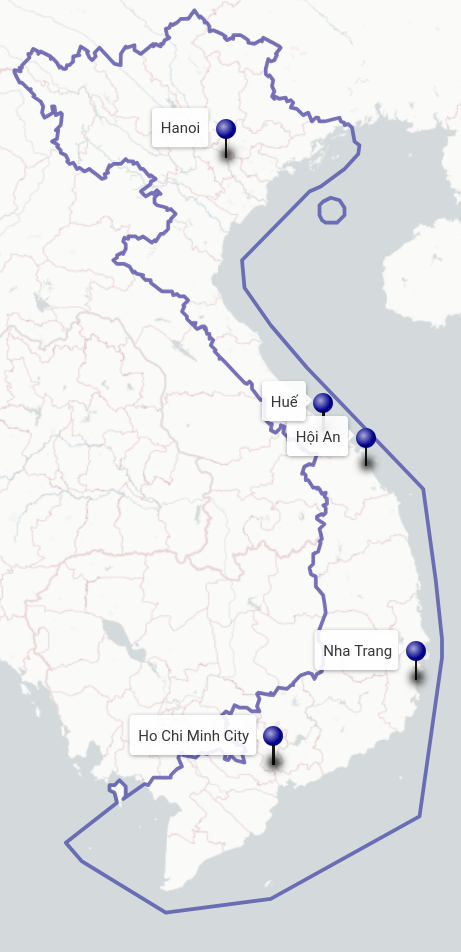
Kaylea attempted to understand these somewhat confusing results by designing a fantastic mixed-methods analysis that sought to unpack some of the nuance missing in the quantitative analysis by delving deep into the life histories of four articles on English Wikipedia: two on taboo topics related to women s anatomy (Clitoris and Menstration) and two nontaboo articles chosen for comparison (Cell membrance and Philip Pullman). Although the findings from the analysis can be difficult to summarize succinctly (as with many qualitative studies), we showed how the taboo example articles success was hard-won amid real challenges and attacks. The paper describes how challenges were overcome through resilient leadership, often provided by a single dedicated individual. The paper provides a template for how taboo can be and frequently is overcome by dedicated Wikipedians in ways that provide useful knowledge resources in real demand. For more details, visualizations, statistics, and more, we hope you ll take a look at our papers, both linked below.

The full citation for the papers are: (1) Champion, Kaylea, and Benjamin Mako Hill. 2023. Taboo and Collaborative Knowledge Production: Evidence from Wikipedia. Proceedings of the ACM on Human-Computer Interaction 7 (CSCW2): 299:1-299:25. https://doi.org/10.1145/3610090. (2) Champion, Kaylea, and Benjamin Mako Hill. 2024. Life Histories of Taboo Knowledge Artifacts. Proceedings of the ACM: Human-Computer Interaction 8 (CSCW2): 505:1-505:32. https://doi.org/10.1145/3687044.

We have also released replication materials for the paper, including all the data and code used to conduct the analyses.

This blog post and the paper it describes are collaborative work by Kaylea Champion and Benjamin Mako Hill.

21 March 2026

Ravi Dwivedi: Vietnam Trip

Before reaching Vietnam Continuing from the last post, Badri and I took a flight from the Brunei International Airport to Kuala Lumpur on the 12th of December 2024. We reached Kuala Lumpur in the evening. After arriving at the airport, we went through immigration. In a previous post, I mentioned that we had put our stuff in lockers at the TBS bus terminal in Kuala Lumpur. Therefore, we had to go there. The locker was automated and required us to enter the PIN we had set. Upon entering the PIN, the locker wasn t getting unlocked. After trying this for 10-15 minutes without any luck, we tried getting some help as there the lockers weren t under supervision. So, I roamed around and found a staff member, reporting that our lockers weren t getting unlocked. They called the person who was in-charge of the lockers. He came to us in a few minutes and used their admin access to open the locker. We were supposed to pay for using the lockers by putting the banknotes inside through a slot. However, as the machine wasn t working, we gave the amount for the use of our locker service to that person instead. We soon went back to the KL airport to catch our morning flight to Ho Chi Minh City in Vietnam. At the flight counter, we were afraid we would have to pay extra as our luggage surpassed the allowed weight limit. This one was also a budget airline AirAsia and our tickets didn t include a check-in bag. Generally, passengers from countries requiring a visa to visit Vietnam (such as India) require going to the airline and showing their visa to get the boarding pass. However, when we went to the AirAsia counter at the Kuala Lumpur airport, they didn t weigh our bags and asked us to get our boarding passes from an automated kiosk. So, we got our boarding passes printed and proceeded to the airport security. While clearing the airport security, a lotion I bought from Singapore was confiscated because it was 200 mL, exceeding the limit of 100 mL per bottle. Had that 200 mL liquid been in two different bottles of 100 mL each, I would have been allowed to take it in my carry-on bag, but a single 200 mL bottle wasn t! I was allowed to keep it in the check-in bag, but I didn t have it included in my ticket. Huh, airports and their weird rules :( The lotion was an expensive one, so having it thrown away did ruin my mood.

Overview We started our Vietnam trip from Ho Chi Minh City in the south on the 13th of December 2024 and finished it in Hanoi in the north on the 20th of December. We traveled from Ho Chi Minh City to Hanoi mostly by train, except for a hundred or so kilometers by bus, in chunks. On the way, we visited Nha Trang, Hoi An, and Hue. The distance between Ho Chi Minh City and Hanoi is 1700 km. For your reference, here are those places labeled on Vietnam s map.
Vietnam map with Ho Chi Minh City, Nha Trang, Hoi An, Hue and Hanoi labeled. A map of Vietnam with points of places we went to labeled. CARTO MAPTILER OPENSTREETMAP
Ho Chi Minh City We landed in Ho Chi Minh City early morning on the 13th of December 2024. I was tired and sleepy as I hadn t gotten a good night s sleep. After going through immigration, we went to a currency exchange counter to get Vietnamese Dong. Unlike other countries on this trip, money exchange counters in Vietnam didn t accept Indian rupees. Therefore, we exchanged euros to get Vietnamese dong at the airport. After getting out of the airport, we took a bus to the city center. It was 15,000 dongs approximately 50 Indian rupees. Our plan was to meet Badri s friend and stay the night at his apartment. So we went to a caf nearby and bought a coffee for each of us for 75,000 dongs. We went upstairs and sat for a while. The Wi-Fi password was mentioned on our bill. During the trip, I found out about the caf culture of Vietnam. They have their own coffee brands (such as Highlands Coffee), and you can sit down at any of the caf s for work or wait for the rain to stop. It rained a lot while we were there, so we did use these caf s for that purpose. Badri s friend met us there, and we roamed around the area a bit, which included roaming inside a beautiful park. Then Badri s friend took us to a restaurant. Because I do not eat meat, he took us to a vegan restaurant. Having been to four Southeast Asian countries at this point (excluding Vietnam), I was under the impression that there wouldn t be a lot of things for my diet in Vietnam.
A picture of the park we roamed around in Ho Chi Minh City. A picture of the park we roamed around in Ho Chi Minh City. Photo by Ravi Dwivedi, released under CC-BY-SA 4.0.

However, I was pleasantly surprised at the restaurant. I found all the dishes to be tasty, especially their signature noodles called Pho. I liked another dish so much that I tracked down the restaurant again with Badri using the geotagged image of the bill I had taken earler to have it again. As a tip for vegans coming to Vietnam, the places having the letters Chay (without any accented letters) in their name are vegan only.
A building This is the restaurant Badri s friend took us to. Photo by Ravi Dwivedi, released under CC-BY-SA 4.0.

An item in the restaurant One of the dishes we had in the restaurant. This one was especially tasty. Photo by Ravi Dwivedi, released under CC-BY-SA 4.0.
One of the dishes we had in the restaurant. Photo by Ravi Dwivedi, released under CC-BY-SA 4.0. One of the dishes we had in the restaurant. Photo by Ravi Dwivedi, released under CC-BY-SA 4.0.
Noodles in a bowl dipped in soup These noodles are called Pho and are very popular in Vietnam. Photo by Ravi Dwivedi, released under CC-BY-SA 4.0.

In the night, we went to a supermarket where I got myself some oranges and guavas. Then, we went to a Japanese restaurant where I didn t have anything, as there was no vegetarian option available for me. Then we took a free bus to the place to Badri s friend s apartment. The construction company that built the apartment also runs this free bus service from their residential area to different parts of the city as a way of promoting their apartments. Anyone can take the bus, not just residents. The next day, we took the free bus back to the city center and checked in to a hostel for a night. We took two beds in dormitories, which were 88,000 dongs (270 rupees) for each bed for a night. In Vietnam, if you can spend around 300 rupees per night, you can get a bed in a decent hostel.

Train from Ho Chi Minh City to Nha Trang On the night of the 15th of December 2024, we boarded a train from Ho Chi Minh City to Nha Trang. The ticket for each of us was 519,000 dongs (1600 Indian rupees). The train name was SNT2. When we reached the Ho Chi Minh City train station, we noticed that the station was rather small by Indian standards. After entering the train station, we went inside to the first platform, where the tickets were checked by a staff member. Ho Chi Minh City was the originating station for our train, so our train was already standing at the station. We had to cross the railway tracks on foot to reach the platform our train was on. Then we located our coach, where a ticket inspector was standing at the gate. He let us in after checking our tickets. In all these instances, we just had to show our digital boarding pass which we had received by email. Unlike Indian trains, the train didn t have side berths. Additionally, I liked the fact that it had a dedicated space to put our bags in, which was very convenient. The train departed from Ho Chi Minh City at 21:05 and arrived in Nha Trang at 05:30 in the morning.
Interior of our train coach. Trains in Vietnam don&rsquo;t have side berths, unlike India. Photo by Ravi Dwivedi, released under CC-BY-SA 4.0. Interior of our train coach. Trains in Vietnam don t have side berths, unlike India. Photo by Ravi Dwivedi, released under CC-BY-SA 4.0.

A picture of the berths from our coach. It had three tiers, similar to a 3 AC coach in Indian trains. Photo by Ravi Dwivedi, released under CC-BY-SA 4.0. A picture of the berths from our coach. It had three tiers, similar to a 3 AC coach in Indian trains. Photo by Ravi Dwivedi, released under CC-BY-SA 4.0.
The train had a cabin to put the bags in. Photo by Ravi Dwivedi, released under CC-BY-SA 4.0. The train had a cabin to put the bags in. Photo by Ravi Dwivedi, released under CC-BY-SA 4.0.

Nha Trang train station. Photo by Ravi Dwivedi, released under CC-BY-SA 4.0. Nha Trang train station. Photo by Ravi Dwivedi, released under CC-BY-SA 4.0.

Nha Trang Nha Trang is a coastal place, and we planned to go to a beach. We figured out that the bus to the airport goes can drop us near the beach. Therefore, we went to the bus station to get to the airport bus. The bus station was walking distance from the railway station. So, we decided to walk. On the way, we stopped at a small shop for a coffee. The shop also gave a complimentary cup of green tea along with the coffee. I found out later that it is common for local shops to give a cup of complimentary green tea in Vietnam.
A cup of coffee and a cup of green tea. I got a complimentary cup of green tea along with coffee in Nha Trang. In this trip, Badri and I found out that this is customary at local places in Vietnam. Photo by Ravi Dwivedi, released under CC-BY-SA 4.0.
Soon we reached the bus station and took a bus to the beach. It was 65,000 dongs ( 200). After getting down from the bus, I had coconut water and some eggs at a small local place.
Eggs on a pan. Eggs being cooked on a pan for my order. Photo by Ravi Dwivedi, released under CC-BY-SA 4.0.

Then we went to the beach, but nobody else was there. We spent some time there and went back to the place where the bus dropped us as it started raining. We couldn t find a bus for some time. A taxi driver approached us and agreed to take us to the city center for 200,000 dongs ( 650). For reference, the place where he dropped us was 35 km from the place we took the taxi. Taxi fares in Vietnam were also cheap!
The beach we went to in Nha Trang. Photo by Ravi Dwivedi, released under CC-BY-SA 4.0. The beach we went to in Nha Trang. Photo by Ravi Dwivedi, released under CC-BY-SA 4.0.

Nha Trang was a beautiful place, and so we roamed around for a while. Then we stopped at a Highlands Coffee branch for a while. Since Christmas was coming up, the caf had a Christmas tree, and I liked the Christmas vibes. They were playing Mariah Carey s All I Want for Christmas Is You.
This one was shot in the city center. In this trip, Badri and I found out that this is customary at local places in Vietnam. Photo by Ravi Dwivedi, released under CC-BY-SA 4.0. This one was shot in the city center. In this trip, Badri and I found out that this is customary at local places in Vietnam. Photo by Ravi Dwivedi, released under CC-BY-SA 4.0.
Inside a Highlands Coffee cafe in Nha Trang. Photo by Ravi Dwivedi, released under CC-BY-SA 4.0. Inside a Highlands Coffee cafe in Nha Trang. Photo by Ravi Dwivedi, released under CC-BY-SA 4.0.

A coffee I got from Highlands Coffee in Nha Trang. Photo by Ravi Dwivedi, released under CC-BY-SA 4.0. A coffee I got from Highlands Coffee in Nha Trang. Photo by Ravi Dwivedi, released under CC-BY-SA 4.0.
During the evening, we went to a local place to eat. The place mentioned Chay in its name, and you know what it means it was a vegan place. There was a man there and no other customers. I don t remember the names of the dishes we ordered, but it was a bowl of soupy noodles and a bowl of dry noodles. They were very tasty. To top that off, the meal was a total of 55,000 dongs ( 180) for both of us. The host was welcoming and friendly. We had a nice conversation with the host. In Vietnam, restaurants give chopsticks to eat noodles. While Badri was good at using them, I wasn t. So, the host of this restaurant helped me in using chopsticks. Although my technique was not perfect and I take a bit of time, I could now eat solely with chopsticks.
The restaurant we went to in Nha Trang. The word Chay in the name means it was a vegan restaurant. Photo by Ravi Dwivedi, released under CC-BY-SA 4.0. The restaurant we went to in Nha Trang. The word Chay in the name means it was a vegan restaurant. Photo by Ravi Dwivedi, released under CC-BY-SA 4.0.

Soupy noodles we got at that restaurant. Photo by Ravi Dwivedi, released under CC-BY-SA 4.0. Soupy noodles we got at that restaurant. Photo by Ravi Dwivedi, released under CC-BY-SA 4.0.

Dry noodles we got at that restaurant. Photo by Ravi Dwivedi, released under CC-BY-SA 4.0. Dry noodles we got at that restaurant. Photo by Ravi Dwivedi, released under CC-BY-SA 4.0.
Our plan was to take a night bus to Hoi An, and we were hoping to find a bus stand. However, we couldn t find one. Asking around about the pickup location of the Hoi An bus led us to many different locations. Finally, we ended up at a bus booking agency s office where we found out that there were no tickets available for Hoi An. At this point, we gave up on booking the bus and searched for trains instead. As we didn t have a local SIM, we asked the agency to let us connect to their Wi-Fi so that we could look for trains. They were kind enough to let us do that. It also seemed like they were going to close the office in like 10 minutes. Unfortunately, all the sleeper berths were booked from Nha Trang till Hoi An on the next train with only seating berths being available. It takes around 10 hours, so I wasn t comfortable traveling on seating berths. Here I came up with the idea to look for sleeper berths from an intermediate stop. Fortunately, there were sleeper berths available from the next stop, Ninh H a. Therefore, we booked a seating berth from Nha Trang to Ninh H a and a sleeper berth from Ninh H a to Tr Ki u (the nearest railway station from Hoi An). The train name was SE6, and it was a total of 500,000 dongs per person ( 1600 per person). So, we went to the Nha Trang railway station and boarded the train. We had to spend 40 minutes seated for the train to reach the next stop before we could go to our sleeper berths. Badri had some friendly co-passengers on that trip who gave him Saigon beer and some crispy papad-like thing. They offered me as well, but I thought it was non-veg, so I declined it.

Hoi An On the morning of 17th December 2024, we got down at the Tr Ki u station at around 09:30. Our hostel was in Hoi An, which was around 22 km from the station. There was no public transport to get there. Instead, there was a taxi driver at the train platform. We told him the name of our hostel, and he quoted 270,000 dongs (around 850). We said it was too expensive for us, so he agreed to bargain at 250,000 dongs. At this point, we told him that we could give him no more than 200,000 dongs, but he didn t agree. Badri tried a trick. He asked the driver to show us prices in the Grab app (a popular taxi booking app in Southeast Asia). Unfortunately, the Grab app showed 258,000 dongs, which was more than the fare the driver agreed to. So we walked away as if we had so many options (we didn t!) to reach the hostel. We got out of the station and stopped at a small shop outside to have some coffee. As is customary in Vietnam, we got a complimentary green tea here as well.
This was the place we had our coffee in Tra Kieu. Photo by Ravi Dwivedi, released under CC-BY-SA 4.0. This was the place we had our coffee in Tra Kieu. Photo by Ravi Dwivedi, released under CC-BY-SA 4.0.

That taxi driver also joined us and sat in that shop. He started talking with the locals in the shop in the local language. The taxi driver was insistent on taking us to Hoi An for 250,000 dongs. At this point, Badri told the taxi driver (by the use of translation software) that we usually use public transport during our trips, and we aren t used to paying high prices to get around. So, he can drop us somewhere in Hoi An for 200,000 dongs as we don t mind walking a bit to reach our hotel. After reading this, the taxi driver agreed to take us to our hostel for 200,000 dongs ( 660). He also had me take a picture with Badri after this. I think such a bargain tactic would not work in India.
Photo of Badri with taxi driver. Photo by Ravi Dwivedi, released under CC-BY-SA 4.0. Photo of Badri with taxi driver. Photo by Ravi Dwivedi, released under CC-BY-SA 4.0.

The nice thing we noticed in Vietnam is, once bargaining is done and the deal is settled, people don t try to bargain more or keep on talking about the subject. Before the deal, the driver was being somewhat insistent and argumentative, but after the deal was done, it was as if no argument had happened at all.
A picture of Tra Kieu area near the train station we got down at. Photo by Ravi Dwivedi, released under CC-BY-SA 4.0. A picture of Tra Kieu area near the train station we got down at. Photo by Ravi Dwivedi, released under CC-BY-SA 4.0.
We were treated to some beautiful scenery on the way to our hostel. Soon we reached our place and completed all the formalities for checking-in. During the time our room was being prepared for check-in, we had an egg sandwich with coffee in the hotel. I found the egg sandwich very tasty. The bread looked like the French baguette. The hostel was 240 per night for each of us. The name of the hostel was Bana Spa. We liked staying here and we can recommend it if you find yourself there. It is operated by a family.
Our breakfast in Hoi An. Photo by Ravi Dwivedi, released under CC-BY-SA 4.0. Our breakfast in Hoi An. Photo by Ravi Dwivedi, released under CC-BY-SA 4.0.
A photo of the hostel we stayed in Hoi An. Photo by Ravi Dwivedi, released under CC-BY-SA 4.0. A photo of the hostel we stayed in Hoi An. Photo by Ravi Dwivedi, released under CC-BY-SA 4.0.
We also rented a bicycle for each of us 25,000 dongs per day ( 80) and explored the old town during the evening. Hoi An is popular for Vietnamese silk. Tourists come here to buy fabric and get it done by the tailor. The buildings here looked old, and they were painted in yellow with a gabled roof.
Typical yellow house with gabled roof in Hoi An old town. Photo by Ravi Dwivedi, released under CC-BY-SA 4.0. Typical yellow house with gabled roof in Hoi An old town. Photo by Ravi Dwivedi, released under CC-BY-SA 4.0.

Here, I also had egg coffee for the first time, and I liked it. Egg coffee is a delicacy of Hanoi, but you can get it in other parts of Vietnam. If you find yourself in Vietnam, then I recommend you try egg coffee. We also bought some cool T-shirts and other souvenirs, such as a Vietnamese hat, from here.
Egg coffee I had in Hoi An. Photo by Ravi Dwivedi, released under CC-BY-SA 4.0. Egg coffee I had in Hoi An. Photo by Ravi Dwivedi, released under CC-BY-SA 4.0.

Hue The next day the 18th of December 2024 we went to Hue by bus. As we could not take a bus on our own in Nha Trang, we asked the hostel to book it for us this time. We booked it a day before, and they told us to be ready by 07:00 in the morning. At 07:00, a minibus arrived, which took us to a bus agency s office. There we waited for a few minutes and got into the bus to Hue. The bus had sleeper seats, so I took the opportunity to catch some sleep. The ride was comfortable, so I am assuming the roads were good. In a couple of hours, we reached Hue. Again, we went to Highlands Coffee to have some coffee, charge our phones, and use the internet, not to mention using the bathrooms. During the afternoon, we went to a local restaurant named Qu n Chay Thanh Li u. It was a vegan restaurant (remember the thing I mentioned earlier about Chay being in the name?). On the way, we had a steamed dumpling shaped like a momo called banh bao from a street vendor. It wasn t very good, but I found it worthwhile.
Bahn Bao in Hue. Photo by Ravi Dwivedi, released under CC-BY-SA 4.0. Bahn Bao in Hue. Photo by Ravi Dwivedi, released under CC-BY-SA 4.0.
At the restaurant, we ordered a hot pot. First, they brought noodles and a gas stove. Then came the stock and our gas stove was turned on. The stock was kept simmering on the stove. Then, we had it bit by bit with the noodles. A big hot pot at this place costs 50,000 dongs ( 170). Then we had b nh cu n. These were steamed rolls made of rice flour for 10,000 dongs ( 33).
Hot Pot. Photo by Ravi Dwivedi, released under CC-BY-SA 4.0. Hot Pot. Photo by Ravi Dwivedi, released under CC-BY-SA 4.0.

Added soup to the noodles. Photo by Ravi Dwivedi, released under CC-BY-SA 4.0. Added soup to the noodles. Photo by Ravi Dwivedi, released under CC-BY-SA 4.0.

Steamed rolls made of rice flour. Photo by Ravi Dwivedi, released under CC-BY-SA 4.0. Steamed rolls made of rice flour. Photo by Ravi Dwivedi, released under CC-BY-SA 4.0.
Restaurants in Vietnam usually add photos of the meals in their menu or write a description in English. So, even though the dish names were Vietnamese, we had no problems in ordering food there. In addition, all the places we went to provided free Wi-Fi. They either mention the Wi-Fi password on the bill, on the menu or paste it on the wall. This made our trip smoother without getting a local SIM.
Menu from a restaurant in Ho Chi Minh City with detailed description of the food. Photo by Ravi Dwivedi, released under CC-BY-SA 4.0. Menu from a restaurant in Ho Chi Minh City with detailed description of the food. Photo by Ravi Dwivedi, released under CC-BY-SA 4.0.
Then we slowly walked towards the railway station, as we had a night train to Hanoi. We had egg coffee in a cafe. Near the railway station, we had a b nh m (egg sandwich). As for sightseeing, we had plans to visit a couple of places in Hue, but we ended up spending all our time inside sheltered spaces due to heavy rain. We had booked the train SE20 for Hanoi, which had a departure time of 20:41 from Hue. This one was 948,000 dongs ( 3100) for myself and 870,000 dongs ( 2900) for Badri. My ticket was pricier than Badri s because I got a lower berth. Our train was late by half an hour, so we waited in the common area of the station. After the train arrived, we got inside and took our seats. The cabin had four berths two upper and two lower, similar to India s First AC class. The ticket inspector came to us and offered us the whole cabin (two additional berths) for 300,000 dongs ( 1,000), which we declined. However, this hinted at the other two seats not being reserved. Eventually, we had the whole cabin to ourselves, as nobody else showed up for the other two berths. It was a 14-hour journey, and I got a good sleep.
Our berths in the train. Photo by Ravi Dwivedi, released under CC-BY-SA 4.0. Our berths in the train. Photo by Ravi Dwivedi, released under CC-BY-SA 4.0.

Hanoi On the morning of the 19th of December 2024, we reached Vietnam s capital, Hanoi. We had booked a private hotel room for 800. It was 1 km from the Hanoi Airport. However, it was pretty far from the railway station. So, we roamed around in the city and went to the hotel in the evening. First, we walked to a place and had egg coffee with egg sandwiches. Then we went to Hanoi Train Street, which was walking distance from the train station. After clicking some pictures at the train street, we went to a museum nearby. Upon reaching there, we found out that it was closed.
Egg coffee in Hanoi. Photo by Ravi Dwivedi, released under CC-BY-SA 4.0. Egg coffee in Hanoi. Photo by Ravi Dwivedi, released under CC-BY-SA 4.0.
Hanoi train street is a tourist attraction in Hanoi. Photo by Ravi Dwivedi, released under CC-BY-SA 4.0. Hanoi train street is a tourist attraction in Hanoi. Photo by Ravi Dwivedi, released under CC-BY-SA 4.0.
Then we went shopping for jackets, as Hanoi was cold compared to other parts of Vietnam we had been to, and since many of them are manufactured in Vietnam, we thought they would be cheaper. I liked some jackets, but they were not my size. Eventually, we didn t buy anything at the clothes shop. In the evening, I bought a Vietnamese-styled phin coffee filter and coffee powder from Highlands Coffee. We spent a lot of time in their cafes, so it made sense to buy some souvenirs from there. Badri bought a few coffee filters for his family at Trung Nguyen, where I also bought another filter. We had dinner at a local place where we had pho and banh it. Bahn it was served packed in banana leaves and it was made of sticky rice.
A picture of pho we had in Hanoi. Photo by Ravi Dwivedi, released under CC-BY-SA 4.0. A picture of pho we had in Hanoi. Photo by Ravi Dwivedi, released under CC-BY-SA 4.0.

Bahn it is served packed in banana leaves. Photo by Ravi Dwivedi, released under CC-BY-SA 4.0. Bahn it is served packed in banana leaves. Photo by Ravi Dwivedi, released under CC-BY-SA 4.0.

Bahn it. Photo by Ravi Dwivedi, released under CC-BY-SA 4.0. Bahn it. Photo by Ravi Dwivedi, released under CC-BY-SA 4.0.
Next, we went to Hanoi railway station to catch a bus to the airport since our hotel was 1 km from the airport. The locals there helped us take the bus. It took like an hour to get to the airport. We saw on OpenStreetMap that we can take a bus from there to the hotel, but we could not find it. So we walked to our hotel instead. It was a decent hotel room for 800 for a night. We went outside to explore the area and had egg sandwiches and egg coffee at a local place. Again, we were given a complimentary green tea. We went to this place like three times. We had practically become regulars by the time we left. The next day 20th of December 2024 we took a bus to the airport and boarded our flight to Delhi. Credits: Thanks Badri, Kishy and Richard for proofreading.

C.J. Collier: The WWW::Mechanize::Chrome Saga: A Comprehensive Narrative of PR #104

The
WWW::Mechanize::Chrome Saga: A Comprehensive Narrative of PR #104 This document synthesizes the extensive work performed from March
13th to March 20th, 2026, to harden, stabilize, and refactor the
WWW::Mechanize::Chrome library and its test suite. This
effort involved deep dives into asynchronous programming,
platform-specific bug hunting, and strategic architectural
decisions.

Part I:
The Quest for Cross-Platform Stability (March 13 16) The initial phase of work focused on achieving a green test suite
across a variety of Linux distributions and preparing for a new release.
This involved significant hardening of the library to account for
different browser versions, OS-level security restrictions, and
filesystem differences.

Key Milestones &
Engineering Decisions:
  • Fedora & RHEL-family Success: A major effort
    was undertaken to achieve a 100% pass rate on modern Fedora 43 and
    CentOS Stream 10. This required several key engineering decisions to
    handle modern browser behavior:
    • Decision: Implement Asynchronous DOM Serialization
      Fallback. Synchronous fallbacks in an async context are
      dangerous. To prevent Resource was not cached errors during
      saveResources, we implemented a fully asynchronous fallback
      in _saveResourceTree. By chaining
      _cached_document with DOM.getOuterHTML
      messages, we can reconstruct document content without blocking the event
      loop, even if Chromium has evicted the resource from its cache. This
      also proved resilient against Fedora s security policies, which often
      block file:// access.
    • Decision: Truncate Filenames for Cross-Platform
      Safety. To avoid File name too long errors,
      especially on Windows where the MAX_PATH limit is 260
      characters, filenameFromUrl was hardened. The filename
      truncation was reduced to a more conservative 150
      characters, leaving ample headroom for deeply nested CI
      temporary directories. Logic was also added to preserve file extensions
      during truncation and to sanitize backslashes from URI paths.
    • Decision: Expand Browser Discovery Paths. To
      support RHEL-based systems out-of-the-box, the
      default_executable_names was expanded to include
      headless_shell and search paths were updated to include
      /usr/lib64/chromium-browser/.
    • Decision: Mitigate Race Conditions with Stabilization Waits
      and Resilient Fetching. On fast systems,
      DOM.documentUpdated events could invalidate
      nodeIds immediately after navigation, causing XPath queries
      to fail with Could not find node with given id . A small stabilization
      sleep(0.25s) was added after page loads to ensure the DOM
      is settled. Furthermore, the asynchronous DOM fetching loop was hardened
      to gracefully handle these errors by catching protocol errors and
      returning an empty string for any node that was invalidated during
      serialization, ensuring the overall process could complete.
  • Windows Hardening:
    • Decision: Adopt Platform-Aware Watchdogs. The test
      suite s reliance on ualarm was a blocker for Windows, where
      it is not implemented. The t::helper::set_watchdog function
      was refactored to use standard alarm() (seconds) on Windows
      and ualarm (microseconds) on Unix-like systems, enabling
      consistent test-level timeout enforcement.
  • Version 0.77 Release:
    • Decision: Adopt SOP for Version Synchronization.
      The project maintains duplicate version strings across 24+ files. A
      Standard Operating Procedure was adopted to use a batch-replacement tool
      to update all sub-modules in lib/ and to always run
      make clean and perl Makefile.PL to ensure
      META.json and META.yml reflect the new
      version. After achieving stability on Linux, the project version was
      bumped to 0.77.
  • Infrastructure & Strategic Work:
    • The ad2 Windows Server 2025 instance was restored and
      optimized, with Active Directory demoted and disk I/O performance
      improved.
    • A strategic proposal for the Heterogeneous Directory
      Replication Protocol (HDRP) was drafted and published.

Part II: The
Great Async Refactor (March 17 18) Despite success on Linux, tests on the slow ad2 Windows
host were still plagued by intermittent, indefinite hangs. This
triggered a fundamental architectural shift to move the library s core
from a mix of synchronous and asynchronous code to a fully non-blocking
internal API.

Key Milestones &
Engineering Decisions:
  • Decision: Expose a _future API.
    Instead of hardcoding timeouts in the library, the core strategy was to
    refactor all blocking methods (xpath, field,
    get, etc.) into thin wrappers around new non-blocking
    ..._future counterparts. This moved timeout management to
    the test harness, allowing for flexible and explicit handling of
    stalls.
    # Example library implementation
    sub xpath($self, $query, %options)  
        return $self->xpath_future($query, %options)->get;
     
    
    sub xpath_future($self, $query, %options)  
        # Async implementation using $self->target->send_message(...)
     
  • Decision: Centralize Test Hardening in a Helper.
    A dedicated test library, t/lib/t/helper.pm, was created to
    contain all stabilization logic. Safe wrappers (safe_get,
    safe_xpath) were implemented there, using
    Future->wait_any to race asynchronous operations against
    a timeout, preventing tests from hanging.
    # Example test helper implementation
    sub safe_xpath  
        my ($mech, $query, %options) = @_;
        my $timeout = delete $options timeout    5;
        my $call_f = $mech->xpath_future($query, %options);
        my $timeout_f = $mech->sleep_future($timeout)->then(sub   Future->fail("Timeout")  );
        return Future->wait_any($call_f, $timeout_f)->get;
     
  • Decision: Refactor Node Attribute Cache.
    Investigations into flaky checkbox tests (t/50-tick.t)
    revealed that WWW::Mechanize::Chrome::Node was storing
    attributes as a flat list ([key, val, key, val]), which was
    inefficient for lookups and individual updates. The cache was refactored
    to definitively use a HashRef, providing O(1) lookups
    and enabling atomic dual-updates where both the browser property (via
    JS) and the internal library attribute are synchronized
    simultaneously.
  • Decision: Implement Self-Cancelling Socket
    Watchdog. On Windows, traditional watchdog processes often
    failed to detect parent termination, leading to 60-second hangs after
    successful tests. We implemented a new socket-based watchdog in
    t::helper that listens on an ephemeral port; the background
    process terminates immediately when the parent socket closes,
    eliminating these cumulative delays.
  • Decision: Deep Recursive Refactoring & Form
    Selection. To make the API truly non-blocking, the entire
    internal call stack had to be refactored. For example, making
    get_set_value_future non-blocking required first making its
    dependency, _field_by_name, asynchronous. This culminated
    in refactoring the entire form selection API (form_name,
    form_id, etc.) to use the new asynchronous
    _future lookups, which was a key step in mitigating the
    Windows deadlocks.
  • Decision: Fix Critical Regressions & Memory
    Cycles.
    • Evaluation Normalization: Implemented a
      _process_eval_result helper to centralize the parsing of
      results from Runtime.evaluate. This ensures consistent
      handling of return values and exceptions between synchronous
      (eval_in_page) and asynchronous (eval_future)
      calls.
    • Memory Cycle Mitigation: A significant memory
      leak was discovered where closures attached to CDP event futures (like
      for asynchronous body retrieval) would capture strong references to
      $self and the $response object, creating a
      circular reference. The established rule is to now always use
      Scalar::Util::weaken on both $self and any
      other relevant objects before they are used inside a
      ->then block that is stored on an object.
    • Context Propagation (wantarray): A
      major regression was discovered where Perl s wantarray
      context, which distinguishes between scalar and list context, was lost
      inside asynchronous Future->then blocks. This caused
      methods like xpath to return incorrect results (e.g., a
      count instead of a list of nodes). The solution was to adopt the Async
      Context Pattern : capture wantarray in the synchronous
      wrapper, pass it as an option to the _future method, and
      then use that captured value inside the future s final resolution
      block.
      # Synchronous Wrapper
      sub xpath($self, $query, %options)  
          $options  wantarray   = wantarray; # 1. Capture
          return $self->xpath_future($query, %options)->get; # 2. Pass
       
      
      # Asynchronous Implementation
      sub xpath_future($self, $query, %options)  
          my $wantarray = delete $options  wantarray  ; # 3. Retrieve
          # ... async logic ...
          return $doc->then(sub  
              if ($wantarray)   # 4. Respect
                  return Future->done(@results);
                else  
                  return Future->done($results[0]);
               
           );
       
    • Asynchronous Body Retrieval & Robust Content
      Fallbacks: Fixed a bug where decoded_content()
      would return empty strings by ensuring it awaited a
      __body_future. This was implemented by storing the
      retrieval future directly on the response object
      ($response-> __body_future ). To make this more robust,
      a tiered strategy was implemented: first try to get the content from the
      network response, but if that fails (e.g., for about:blank
      or due to cache eviction), fall back to a JavaScript
      XMLSerializer to get the live DOM content.
    • Signature Hardening: Fixed Too few arguments
      errors when using modern Perl signatures with
      Future->then. Callbacks were updated to use optional
      parameters (sub($result = undef) ... ) to gracefully
      handle futures that resolve with no value.
    • XHTML Split-Brain Bug: Resolved a
      long-standing Chromium bug (40130141) where content provided via
      setDocumentContent is parsed differently than content
      loaded from a URL. A workaround was implemented: for XHTML documents,
      WMC now uses a JavaScript-based XPath evaluation
      (document.evaluate) against the live DOM, bypassing the
      broken CDP search mechanism.

Derived Architectural Rules
& SOPs:
  • Rule: Always provide _future variants.
    Every library method that interacts with the browser via CDP must have a
    non-blocking asynchronous counterpart.
  • Rule: Centralize stabilization in the test layer.
    All timeout and retry logic should reside in the test harness
    (t/lib/t/helper.pm), not in the core library.
  • Rule: Explicitly propagate wantarray
    context. Synchronous wrappers must capture the caller s context
    and pass it down the Future chain to ensure correct
    scalar/list behavior.
  • Rule: The entire call chain must be asynchronous.
    To enable non-blocking timeouts, even a single hidden blocking call in
    an otherwise asynchronous method will cause a stall.
  • SOP: Reduce Library Noise. Diagnostic messages
    (warn, note, diag) should be
    removed from library code before commits. All such messages should be
    converted to use the internal $self->log('debug', ...)
    mechanism, ensuring a clean TAP output for CI systems.

Part III: The
MutationObserver Saga (March 19) With most of the library refactored to be asynchronous, one stubborn
test, t/65-is_visible.t, continued to fail with timeouts.
This led to an ambitious, but ultimately unsuccessful, attempt to
replace the wait_until_visible polling logic with a more
modern MutationObserver.

Key Milestones & Challenges:
  • The Theory: The goal was to replace an inefficient
    repeat sleep loop with an event-driven
    MutationObserver in JavaScript that would notify Perl
    immediately when an element s visibility changed.
  • Implementation & Cascade Failure: The
    implementation proved incredibly difficult and introduced a series of
    new, hard-to-diagnose bugs:
    1. An incorrect function signature for
      callFunctionOn_future.
    2. A critical unit mismatch, passing seconds from Perl to JavaScript s
      setTimeout, which expected milliseconds.
    3. A fundamental hang where the MutationObserver s
      JavaScript Promise would never resolve, even after the
      underlying DOM element changed.
  • Debugging Maze: Multiple attempts to fix the
    checkVisibility JavaScript logic inside the observer
    callback, including making it more robust by adding DOM tree traversal
    and extensive console.log tracing, failed to resolve the
    hang. This highlighted the opacity and difficulty of debugging complex,
    cross-language asynchronous interactions, especially when dealing with
    low-level browser APIs.

Procedural Learning:
Granular Edits The effort was plagued by procedural missteps in using automated
file-editing tools. Initial attempts to replace large code blocks in a
single operation led to accidental code loss and match failures.
  • Decision: Adopt Delete, then Add Workflow.
    Following forceful user correction, a new SOP was established for all
    future modifications:
    1. Isolate: Break the file into small, manageable
      chunks (e.g., 250 lines).
    2. Delete: Perform a delete operation by replacing
      the old code block with an empty string.
    3. Add: Perform an add operation by inserting the
      new code into the empty space.
    4. Verify: Verifying each atomic step before
      proceeding. This granular process, while slower, ensured surgical
      precision and regained technical control over the large
      Chrome.pm module.
The consistent failure of the MutationObserver approach
eventually led to the decision to abandon it in favor of stabilizing the
original, more transparent implementation.

Part IV:
Reversion and Final Stabilization (March 20) After exhausting all reasonable attempts to fix the
MutationObserver, a strategic decision was made to revert
to the simpler, more transparent polling implementation and fix it
correctly. This proved to be the correct path to a stable solution.

Key Milestones &
Engineering Decisions:
  • Decision: Perform Strategic Reversion. The
    MutationObserver implementation, when integrated via
    callFunctionOn_future with awaitPromise,
    proved fundamentally unstable. Its JavaScript promise would consistently
    fail to resolve, causing indefinite hangs. A decision was made to
    revert all MutationObserver code from
    WWW::Mechanize::Chrome.pm and restore the original
    repeat sleep polling mechanism. A stable,
    understandable solution was prioritized over an elegant but broken
    one.
  • Decision: Correct Timeout Delegation in the
    Harness. The root cause of the original timeout failure was
    identified as a race condition in the t/lib/t/helper.pm
    test harness. The safe_wait_until_* wrappers were
    implementing their own timeout (via wait_any and
    sleep_future) that raced against the underlying polling
    function s internal timeout. This led to intermittent failures on slow
    machines. The helpers were refactored to delegate all timeout
    management to the library s polling functions, ensuring a
    single, authoritative timer controlled the operation.
  • Decision: Optimize Polling Performance. At the
    user s request, the polling interval was reduced from 300ms to
    150ms. This modest performance improvement reduced the
    test suite s wallclock execution time by over a second while maintaining
    stability.
  • Decision: Tune Test Watchdogs. The global watchdog
    timeout was adjusted to 12 seconds, specifically calculated as 1.5x the
    observed real execution time of the optimized test. This provides a
    data-driven safety margin for CI.

Part
V: The Last Bug A Platform-Specific Memory Leak (March 20) With all other tests passing, a single memory leak failure in
t/78-memleak.t persisted, but only on the Windows
ad2 environment. This required a different approach than
the timeout fixes.

Key Milestones:
  • The Bug: A strong reference cycle involving the
    on_dialog event listener was not being broken on Windows,
    despite multiple attempts to fix it. Fixes that worked on Linux (such as
    calling on_dialog(undef) in DESTROY) were not
    sufficient on the Windows host.
  • The Diagnosis: The issue was determined to be a
    deep, platform-specific interaction between Perl s garbage collector,
    the IO::Async event loop implementation on Windows, and the
    Test::Memory::Cycle module. The cycle report was identical
    on both platforms, but the cleanup behavior was different.
  • Failed Attempts: A series of increasingly
    aggressive fixes were attempted to break the cycle, including:
    1. Moving the on_dialog(undef) call from
      close() to DESTROY().
    2. Explicitly deleteing the listener and callback
      properties from the object hash in DESTROY.
    3. Swapping between $self->remove_listener and
      $self->target->unlisten in a mistaken attempt to find
      the correct un-registration method.
  • Pragmatic Solution: After exhausting all reasonable
    code-level fixes without a resolution on Windows, the user opted to mark
    the failing test as a known issue for that specific platform.
  • Final Fix: The single failing test in
    t/78-memleak.t was wrapped in a conditional
    TODO block that only executes on Windows
    (if ($^O =~ /MSWin32/i)), formally acknowledging the bug
    without blocking the build. This allows the test suite to pass in CI
    environments while flagging the issue for future, deeper
    investigation.

Part VI: CI Hardening (March
20) A final failure in the GitHub Actions CI environment revealed one
last configuration flaw.

Key Milestones:
  • The Bug: The CI was running
    prove --nocount --jobs 3 -I local/ -bl xt t directly. This
    command was missing the crucial -It/lib include path, which
    is necessary for test files to locate the t::helper module.
    This resulted in nearly all tests failing with
    Can't locate t/helper.pm in @INC.
  • The Investigation: An analysis of
    Makefile.PL revealed a custom MY::test block
    specifically designed to inject the -It/lib flag into the
    make test command. This confirmed that
    make test is the correct, canonical way to run the test
    suite for this project.
  • The Fix: The
    .github/workflows/linux.yml file was modified to replace
    the direct prove call with make test in the
    Run Tests step. This ensures the CI environment runs the
    tests in the exact same way as a local developer, with all necessary
    include paths correctly configured by the project s build system.

Final Outcome After this long and arduous journey, the
WWW::Mechanize::Chrome test suite is now stable and
passing on all targeted platforms, with known
platform-specific issues clearly documented in the code. The project is
in a vastly more robust and reliable state.

18 March 2026

Dirk Eddelbuettel: tidyCpp 0.0.11 on CRAN: Microfix

And yet another maintenance release of the tidyCpp package arrived on CRAN this morning, just days after previous release which itself came a mere week and a half after its predecessor. It has been built for r2u as well. The package offers a clean C++ layer (as well as one small C++ helper class) on top of the C API for R which aims to make use of this robust (if awkward) C API a little easier and more consistent. See the vignette for motivating examples. This release restores the small CSS file used by the vignette which we, in a last-second decision, omitted from the previous release. Oddly, it only failed under the oldrel i.e. the R from now nearly two years ago. But it was still an unenforced error, and this upload corrects it. Changes are summarized in the NEWS entry that follows.

Changes in tidyCpp version 0.0.11 (2026-03-17)
  • Keep a CSS file in the package to allow vignette build on r-oldrel too

Thanks to my CRANberries, there is also a diffstat report for this release. For questions, suggestions, or issues please use the issue tracker at the GitHub repo.

This post by Dirk Eddelbuettel originated on his Thinking inside the box blog. If you like this or other open-source work I do, you can now sponsor me at GitHub.

16 March 2026

Freexian Collaborators: Monthly report about Debian Long Term Support, February 2026 (by Thorsten Alteholz)

The Debian LTS Team, funded by [Freexian s Debian LTS offering] (https://www.freexian.com/lts/debian/), is pleased to report its activities for February.

Activity summary During the month of February, 20 contributors have been paid to work on Debian LTS (links to individual contributor reports are located below). The team released 35 DLAs fixing 527 CVEs. We also welcomed Arnaud Rebillout to the team and had to say farewell to Roberto, who left the team after more than nine years as part of it. The team continued preparing security updates in its usual rhythm. Beyond the updates targeting Debian 11 ( bullseye ), which is the current release under LTS, the team also proposed updates for more recent releases (Debian 12 ( bookworm ) and Debian 13 ( trixie )), including Debian unstable. Notable security updates:
  • Guilhem Moulin prepared DLA 4492-1 for gnutls28 to fix vulnerabilities which may lead to Denial of Service.
  • Utkarsh Gupta prepared DLA 4464-1 for xrdp, to fix a a vulnerability that could allow remote attackers to execute arbitrary code on the target system.
  • Emilio Pozuelo Monfort prepared DLA-4465-1 to replace ClamAV 1.0 with ClamAV 1.4. This latter is the current LTS version supported by upstream.
  • Markus Koschany prepared DLA 4468-1 for tomcat9, to fix a vulnerability that can be used to bypass security constraints.
  • Santiago Ruano Rinc n prepared DLA 4471-1 to update package debian-security-support, the Debian security coverage checker.
  • Bastien Roucari s prepared DLA 4473-1 for zabbix, to fix a potential remote code execution vulnerability.
  • Paride Legovini prepared DLA 4478-1 for tcpflow, to fix a vulnerability that might result in DoS and potentially code execution.
  • Thorsten Alteholz prepared DLA 4477-1 for munge, to fix a vulnerability which may allow local users to leak the MUNGE cryptographic key and forge arbitrary credentials.
  • Ben Hutchings prepared DLA 4475-1 and DLA 4476-1 for Linux kernel updates.
  • Chris Lamb prepared DLA 4482-1 for ceph, to fix SSL certificate checking in the Python bindings.
  • Andreas Henriksson prepared DLA 4491-1 to fix vulnerabilities in glib2.0, which could result in denial of service, memory corruption or potentially arbitrary code execution.
Contributions from outside the LTS Team:
  • The update of nova was prepared by the maintainer, Thomas Goirand. The corresponding DLA 4486-1 was published by Carlos Henrique Lima Melara.
  • The updates of thunderbird were prepared by the maintainer Christoph Goehre. The corresponding DLA 4466-1 and DLA 4495-1 was published by Emilio Pozuelo Monfort.
The LTS Team has also contributed with updates to the latest Debian releases:
  • Jochen prepared a point update of wireshark for bookworm (#1127945).
  • Jochen prepared point updates of erlang for trixie (#1127606) and bookworm (#1127607).
  • Bastien helped preparing DSA 6160-1 for netty and uploaded a fixed package to unstable.
  • Bastien prepared a point update of zabbix for trixie (#1127437).
  • Tobias prepared a point update of modsecurity-crs for bookworm (#1128655).
  • Tobias prepared a point update of busybox for bookworm (#1129503).
  • Tobias helped preparing DSA 6138-1 for libpng1.6.
  • Daniel prepared point updates of python-authlib for trixie (#1129477) and bookworm (#1129246).
  • Ben uploaded several Linux kernel packages to trixie-backports and bookworm-backports.
  • Ben prepared point updates of wireless-regdb for trixie and bookworm.
Other than the work related to updates, Sylvain made several improvements to the documentation and tooling used by the team. Some milestones in the lifecycle of two Debian releases are just around the corner. The support of Debian 12 will be handed over to the LTS team on June 11th 2026. After August 31st, support for Debian 11 will move from Debian LTS to ELTS managed by Freexian.

Individual Debian LTS contributor reports

Thanks to our sponsors Sponsors that joined recently are in bold.

Next.

Previous.