Search Results: "oku"

31 July 2023

Paul Wise: FLOSS Activities July 2023

Focus This month I didn't have any particular focus. I just worked on issues in my info bubble.

Changes

Issues

Debugging

Review

Administration
  • Debian IRC: rescue empty Debian IRC channel
  • Debian wiki: unblock IP addresses, approve accounts

Communication
  • Respond to queries from Debian users and contributors on the mailing lists and IRC

Sponsors The libpst, nmap, sptag, pytest-rerunfailures work was sponsored. All other work was done on a volunteer basis.

26 July 2023

Enrico Zini: Mysterious DNS issues

Uhm, salsa is not resolving:
$ git fetch
ssh: Could not resolve hostname salsa.debian.org: Name or service not known
fatal: Could not read from remote repository.
$ ping salsa.debian.org
ping: salsa.debian.org: Name or service not known
But... it is?
$ host salsa.debian.org
salsa.debian.org has address 209.87.16.44
salsa.debian.org has IPv6 address 2607:f8f0:614:1::1274:44
salsa.debian.org mail is handled by 10 mailly.debian.org.
salsa.debian.org mail is handled by 10 mitropoulos.debian.org.
salsa.debian.org mail is handled by 10 muffat.debian.org.
It really is resolving correctly at each step:
$ cat /etc/resolv.conf
# This is /run/systemd/resolve/stub-resolv.conf managed by man:systemd-resolved(8).
# Do not edit.
# [...]
# Run "resolvectl status" to see details about the uplink DNS servers
# currently in use.
# [...]
nameserver 127.0.0.53
options edns0 trust-ad
search fritz.box
$ host salsa.debian.org 127.0.0.53
Using domain server:
Name: 127.0.0.53
Address: 127.0.0.53#53
Aliases:
salsa.debian.org has address 209.87.16.44
salsa.debian.org has IPv6 address 2607:f8f0:614:1::1274:44
salsa.debian.org mail is handled by 10 mailly.debian.org.
salsa.debian.org mail is handled by 10 muffat.debian.org.
salsa.debian.org mail is handled by 10 mitropoulos.debian.org.
# resolvectl status
Global
       Protocols: +LLMNR +mDNS -DNSOverTLS DNSSEC=no/unsupported
resolv.conf mode: stub
Link 3 (wlp108s0)
    Current Scopes: DNS LLMNR/IPv4 LLMNR/IPv6
         Protocols: +DefaultRoute +LLMNR -mDNS -DNSOverTLS DNSSEC=no/unsupported
Current DNS Server: 192.168.178.1
       DNS Servers: 192.168.178.1 fd00::3e37:12ff:fe99:2301 2a01:b600:6fed:1:3e37:12ff:fe99:2301
        DNS Domain: fritz.box
Link 4 (virbr0)
Current Scopes: none
     Protocols: -DefaultRoute +LLMNR -mDNS -DNSOverTLS DNSSEC=no/unsupported
Link 9 (enxace2d39ce693)
    Current Scopes: DNS LLMNR/IPv4 LLMNR/IPv6
         Protocols: +DefaultRoute +LLMNR -mDNS -DNSOverTLS DNSSEC=no/unsupported
Current DNS Server: 192.168.178.1
       DNS Servers: 192.168.178.1 fd00::3e37:12ff:fe99:2301 2a01:b600:6fed:1:3e37:12ff:fe99:2301
        DNS Domain: fritz.box
$ host salsa.debian.org 192.168.178.1
Using domain server:
Name: 192.168.178.1
Address: 192.168.178.1#53
Aliases:
salsa.debian.org has address 209.87.16.44
salsa.debian.org has IPv6 address 2607:f8f0:614:1::1274:44
salsa.debian.org mail is handled by 10 muffat.debian.org.
salsa.debian.org mail is handled by 10 mitropoulos.debian.org.
salsa.debian.org mail is handled by 10 mailly.debian.org.
$ host salsa.debian.org fd00::3e37:12ff:fe99:2301 2a01:b600:6fed:1:3e37:12ff:fe99:2301
Using domain server:
Name: fd00::3e37:12ff:fe99:2301
Address: fd00::3e37:12ff:fe99:2301#53
Aliases:
salsa.debian.org has address 209.87.16.44
salsa.debian.org has IPv6 address 2607:f8f0:614:1::1274:44
salsa.debian.org mail is handled by 10 muffat.debian.org.
salsa.debian.org mail is handled by 10 mitropoulos.debian.org.
salsa.debian.org mail is handled by 10 mailly.debian.org.
Could it be caching?
# systemctl restart systemd-resolved
$ dpkg -s nscd
dpkg-query: package 'nscd' is not installed and no information is available
$ git fetch
ssh: Could not resolve hostname salsa.debian.org: Name or service not known
fatal: Could not read from remote repository.
Could it be something in ssh's config?
$ grep salsa ~/.ssh/config
$ ssh git@salsa.debian.org
ssh: Could not resolve hostname salsa.debian.org: Name or service not known
Something weird with ssh's control sockets?
$ strace -fo /tmp/zz ssh git@salsa.debian.org
ssh: Could not resolve hostname salsa.debian.org: Name or service not known
enrico@ploma:~/lavori/legal/legal$ grep salsa /tmp/zz
393990 execve("/usr/bin/ssh", ["ssh", "git@salsa.debian.org"], 0x7ffffcfe42d8 /* 54 vars */) = 0
393990 connect(3,  sa_family=AF_UNIX, sun_path="/home/enrico/.ssh/sock/git@salsa.debian.org:22" , 110) = -1 ENOENT (No such file or directory)
$ strace -fo /tmp/zz1 ssh -S none git@salsa.debian.org
ssh: Could not resolve hostname salsa.debian.org: Name or service not known
$ grep salsa /tmp/zz1
394069 execve("/usr/bin/ssh", ["ssh", "-S", "none", "git@salsa.debian.org"], 0x7ffd36cbfde8 /* 54 vars */) = 0
How is ssh trying to resolve salsa.debian.org?
393990 socket(AF_UNIX, SOCK_STREAM SOCK_CLOEXEC SOCK_NONBLOCK, 0) = 3
393990 connect(3,  sa_family=AF_UNIX, sun_path="/run/systemd/resolve/io.systemd.Resolve" , 42) = 0
393990 sendto(3, " \"method\":\"io.systemd.Resolve.Re"..., 99, MSG_DONTWAIT MSG_NOSIGNAL, NULL, 0) = 99
393990 mmap(NULL, 135168, PROT_READ PROT_WRITE, MAP_PRIVATE MAP_ANONYMOUS, -1, 0) = 0x7f4fc71ca000
393990 recvfrom(3, 0x7f4fc71ca010, 135152, MSG_DONTWAIT, NULL, NULL) = -1 EAGAIN (Resource temporarily unavailable)
393990 ppoll([ fd=3, events=POLLIN ], 1,  tv_sec=119, tv_nsec=999917000 , NULL, 8) = 1 ([ fd=3, revents=POLLIN ], left  tv_sec=119, tv_nsec=998915689 )
393990 recvfrom(3, " \"error\":\"io.systemd.System\",\"pa"..., 135152, MSG_DONTWAIT, NULL, NULL) = 56
393990 rt_sigprocmask(SIG_SETMASK, [], NULL, 8) = 0
393990 close(3)                         = 0
393990 munmap(0x7f4fc71ca000, 135168)   = 0
393990 getpid()                         = 393990
393990 write(2, "ssh: Could not resolve hostname "..., 77) = 77
Something weird with resolved?
$ resolvectl query salsa.debian.org
salsa.debian.org: resolve call failed: Lookup failed due to system error: Invalid argument
Let's try disrupting what ssh is trying and failing:
# mv /run/systemd/resolve/io.systemd.Resolve /run/systemd/resolve/io.systemd.Resolve.backup
$ strace -o /tmp/zz2 ssh -S none -vv git@salsa.debian.org
OpenSSH_9.2p1 Debian-2, OpenSSL 3.0.9 30 May 2023
debug1: Reading configuration data /home/enrico/.ssh/config
debug1: /home/enrico/.ssh/config line 1: Applying options for *
debug1: /home/enrico/.ssh/config line 228: Applying options for *.debian.org
debug1: Reading configuration data /etc/ssh/ssh_config
debug1: /etc/ssh/ssh_config line 19: include /etc/ssh/ssh_config.d/*.conf matched no files
debug1: /etc/ssh/ssh_config line 21: Applying options for *
debug2: resolving "salsa.debian.org" port 22
ssh: Could not resolve hostname salsa.debian.org: Name or service not known
$ tail /tmp/zz2
394748 prctl(PR_CAPBSET_READ, 0x29 /* CAP_??? */) = -1 EINVAL (Invalid argument)
394748 munmap(0x7f27af5ef000, 164622)   = 0
394748 rt_sigprocmask(SIG_BLOCK, [HUP USR1 USR2 PIPE ALRM CHLD TSTP URG VTALRM PROF WINCH IO], [], 8) = 0
394748 futex(0x7f27ae5feaec, FUTEX_WAKE_PRIVATE, 2147483647) = 0
394748 openat(AT_FDCWD, "/run/systemd/machines/salsa.debian.org", O_RDONLY O_CLOEXEC) = -1 ENOENT (No such file or directory)
394748 rt_sigprocmask(SIG_SETMASK, [], NULL, 8) = 0
394748 getpid()                         = 394748
394748 write(2, "ssh: Could not resolve hostname "..., 77) = 77
394748 exit_group(255)                  = ?
394748 +++ exited with 255 +++
$ machinectl list
No machines.
# resolvectl flush-caches
$ resolvectl query salsa.debian.org
salsa.debian.org: resolve call failed: Lookup failed due to system error: Invalid argument
# resolvectl reset-statistics
$ resolvectl query salsa.debian.org
salsa.debian.org: resolve call failed: Lookup failed due to system error: Invalid argument
# resolvectl reset-server-features
$ resolvectl query salsa.debian.org
salsa.debian.org: resolve call failed: Lookup failed due to system error: Invalid argument
# resolvectl monitor
  Q: salsa.debian.org IN A
  Q: salsa.debian.org IN AAAA
  S: EINVAL
  A: debian.org IN NS sec2.rcode0.net
  A: debian.org IN NS sec1.rcode0.net
  A: debian.org IN NS nsp.dnsnode.net
  A: salsa.debian.org IN A 209.87.16.44
  A: debian.org IN NS dns4.easydns.info
I guess I won't be using salsa today, and I wish I understood why. Update: as soon as I pushed this post to my blog (via ssh) salsa started resolving again.

11 June 2023

Petter Reinholdtsen: What did I learn from OpenSnitch this summer?

With yesterdays release of Debian 12 Bookworm, I am happy to know the the interactive application firewall OpenSnitch is available for a wider audience. I have been running it for a few weeks now, and have been surprised about some of the programs connecting to the Internet. Some programs are obviously calling out from my machine, like the NTP network based clock adjusting system and Tor to reach other Tor clients, but others were more dubious. For example, the KDE Window manager try to look up the host name in DNS, for no apparent reason, but if this lookup is blocked the KDE desktop get periodically stuck when I use it. Another surprise was how much Firefox call home directly to mozilla.com, mozilla.net and googleapis.com, to mention a few, when I visit other web pages. This direct connection happen even if I told Firefox to always use a proxy, and the proxy setting is ignored for this traffic. Other surprising connections come from audacity and dirmngr (I do not use Gnome). It took some trial and error to get a good default set of permissions. Without it, I would get popups asking for permissions at any time, also the most inconvenient ones where I am in the middle of a time sensitive gaming session. I suspect some application developers should rethink when then need to use network connections or DNS lookups, and recommend testing OpenSnitch (only apt install opensnitch away in Debian Bookworm) to locate and report any surprising Internet connections on your desktop machine. At the moment the upstream developer and Debian package maintainer is working on making the system more reliable in Debian, by enabling the eBPF kernel module to track processes and connections instead of depending in content in /proc/. This should enter unstable fairly soon. As usual, if you use Bitcoin and want to show your support of my activities, please send Bitcoin donations to my address 15oWEoG9dUPovwmUL9KWAnYRtNJEkP1u1b.

1 June 2023

Paul Wise: FLOSS Activities May 2023

Focus This month I didn't have any particular focus. I just worked on issues in my info bubble.

Changes

Issues

Review

Administration
  • Debian IRC: set topic on new #debian-sa channel
  • Debian wiki: unblock IP addresses, approve accounts

Communication
  • Respond to queries from Debian users and contributors on the mailing lists and IRC

Sponsors The SIMDe, gensim, sptag work was sponsored. All other work was done on a volunteer basis.

1 April 2023

Paul Wise: FLOSS Activities March 2023

Focus This month I didn't have any particular focus. I just worked on issues in my info bubble.

Changes

Issues

Review

Administration
  • Debian QA services: disabled updating jessie as it was removed
  • Debian IRC: rescued #debian-s390x from inactive person
  • Debian servers: repair a /etc git repo
  • Debian wiki: unblock IP addresses, approve accounts

Communication
  • Respond to queries from Debian users and contributors on the mailing lists and IRC

Sponsors The gensim, sptag, purple-discord, harmony work was sponsored. All other work was done on a volunteer basis.

31 March 2023

Scarlett Gately Moore: KDE Snaps! Many new releases, more to come.

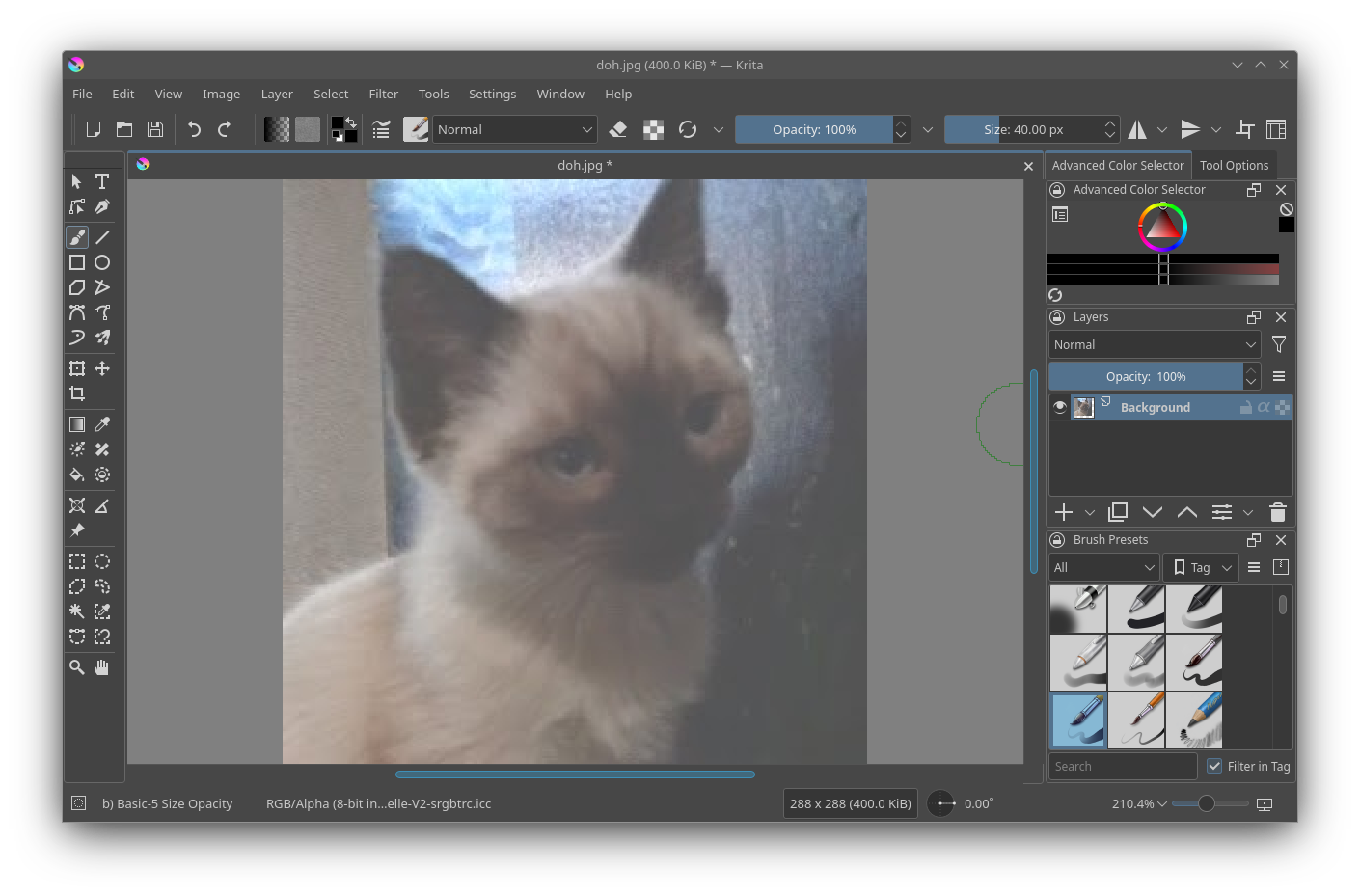
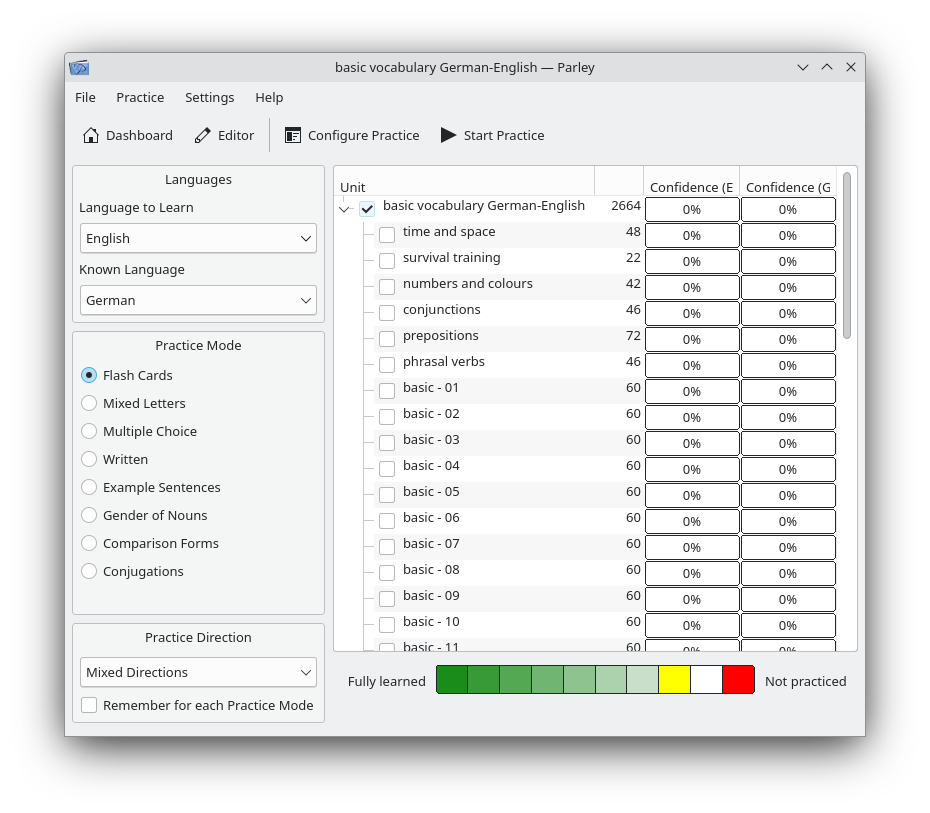
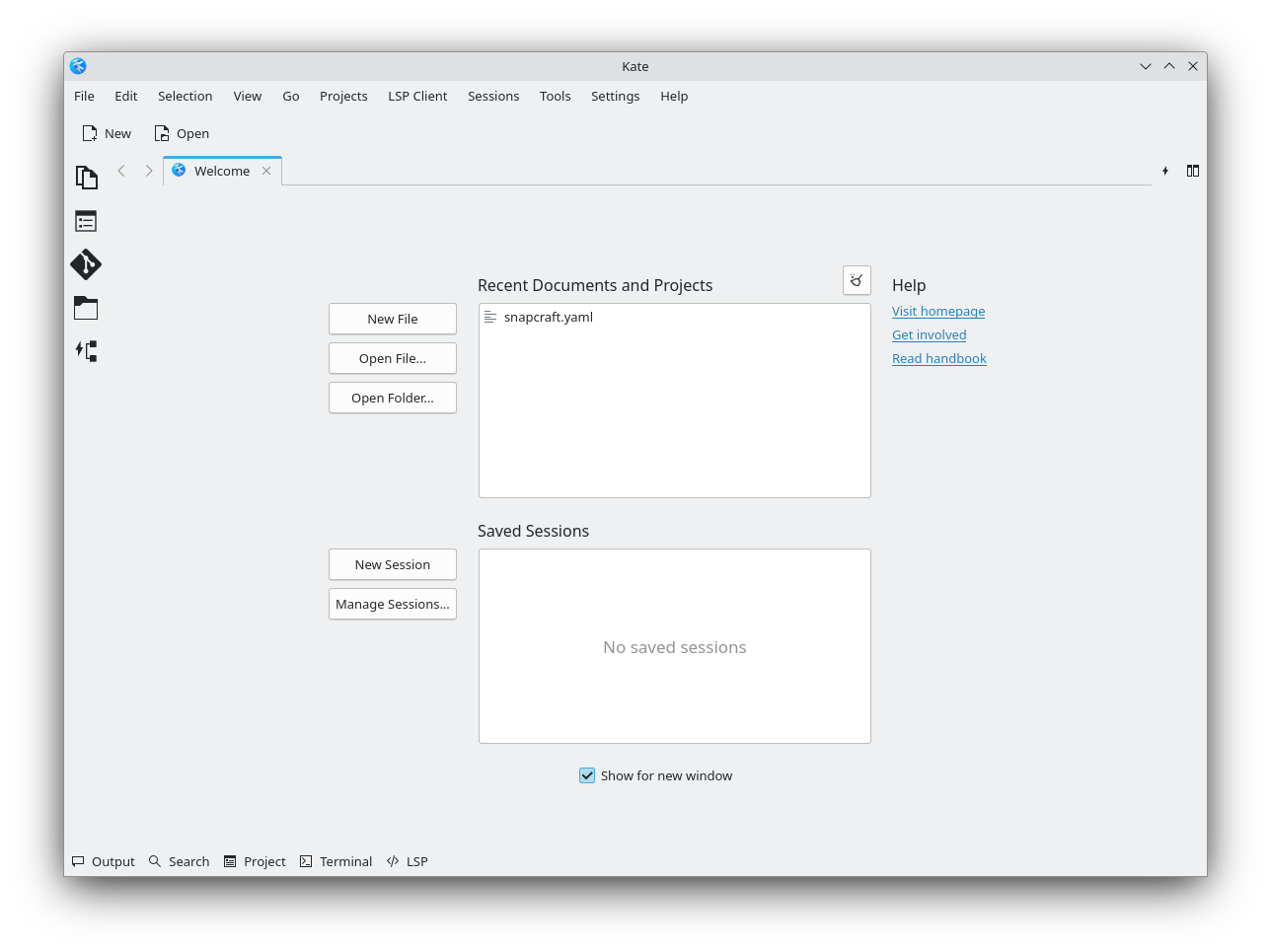
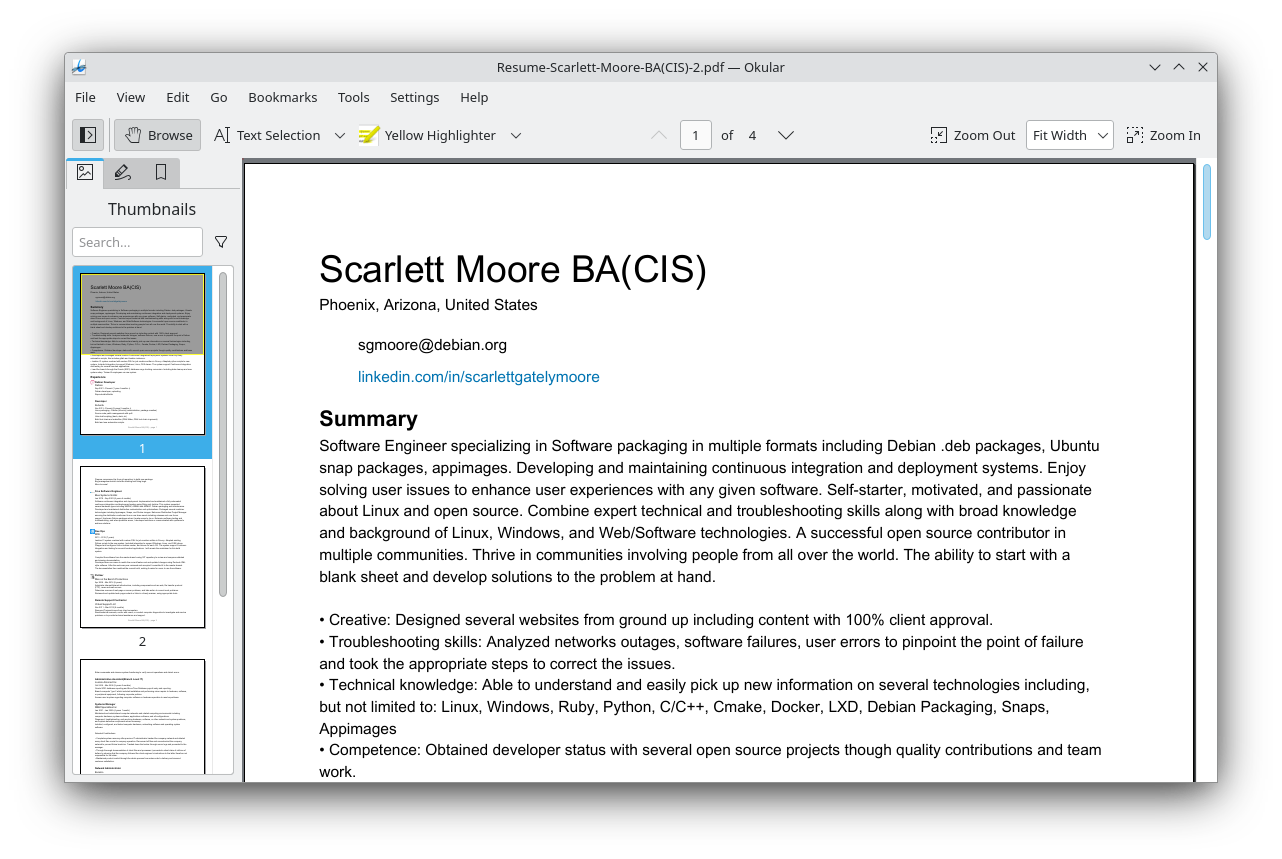
I have been extremely busy the last 2 weeks churning out KDE snaps! All of the have been tested and released on AMD64 and Arm64 architectures. If you run into any problems please file bugs @ http://bugs.kde.org and feel free to assign me. Thanks!
KDE Krita snapKDE Krita snap
Krita Version 5.1.5 https://apps.kde.org/krita/
KDE Parley snapKDE Parley snap
Parley Version 22.12.3 https://apps.kde.org/parley/
KDE Kate snapKDE Kate snap
Kate Version 22.12.3 https://apps.kde.org/kate/
KDE Okular snapKDE Okular snap
Okular Version 22.12.3 https://apps.kde.org/okular/
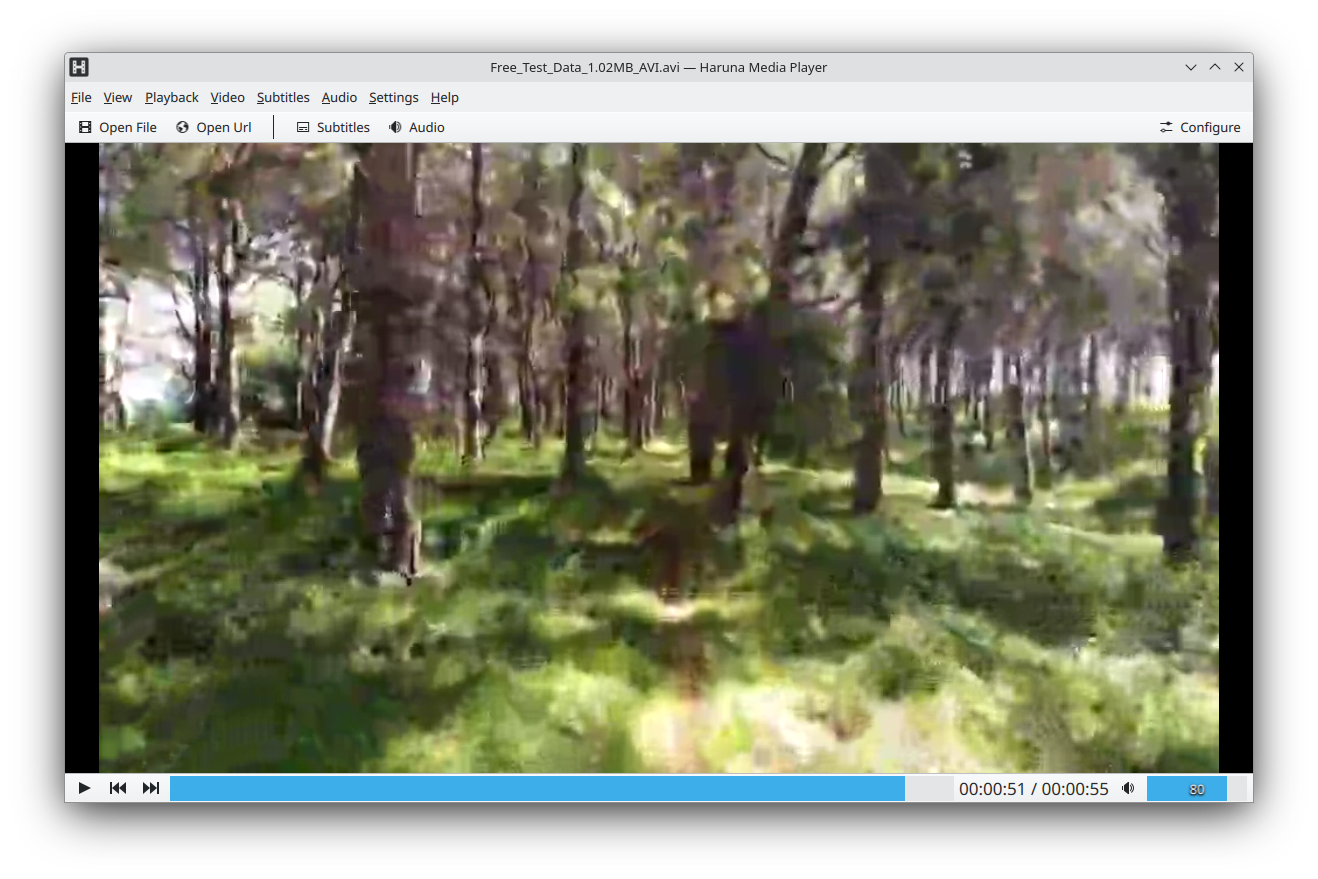
KDE Haruna snapKDE Haruna snap
Haruna Version 0.10.3 https://apps.kde.org/haruna/
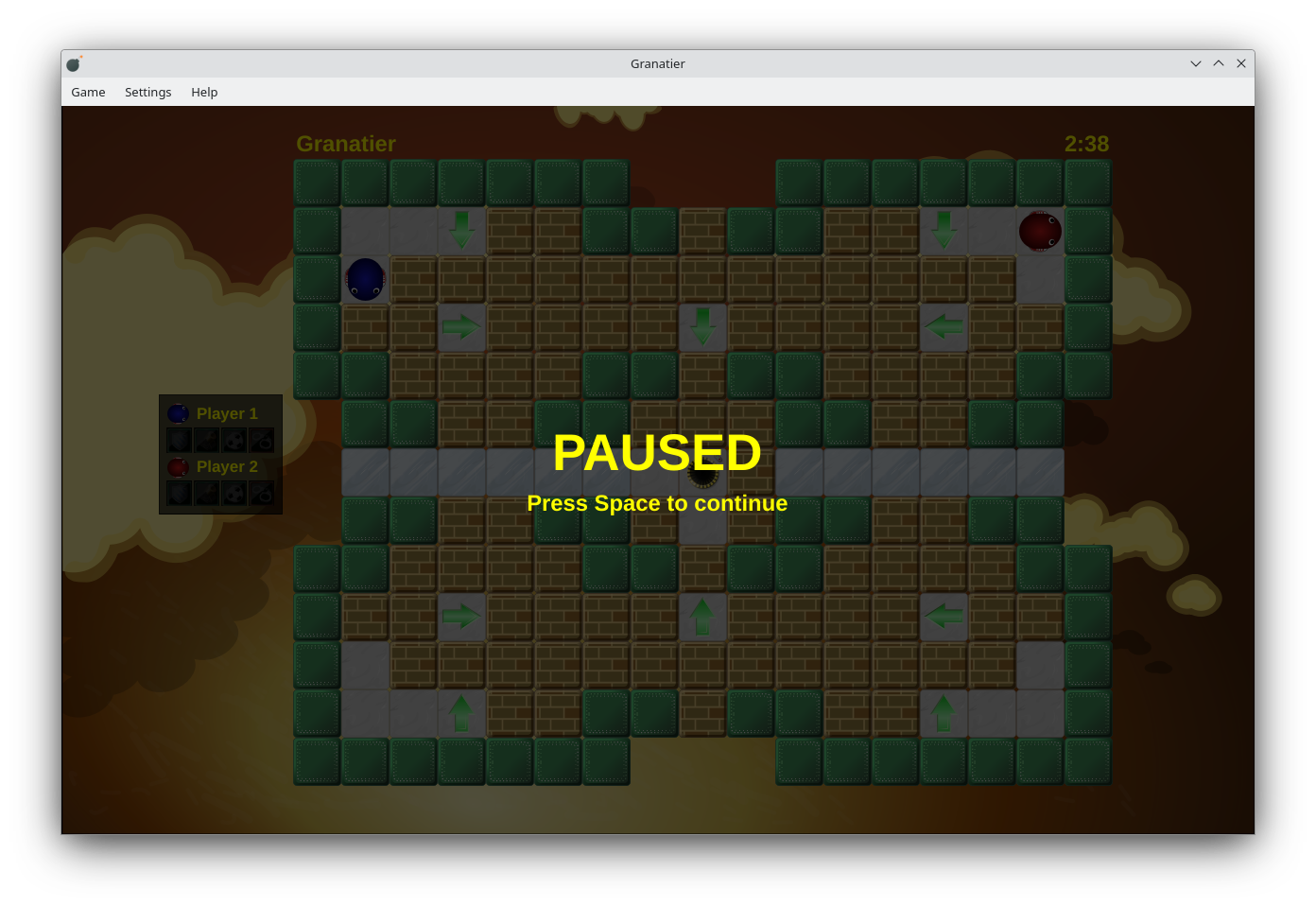
KDE Granatier snapKDE Granatier snap
Granatier Version 22.12.3 https://apps.kde.org/granatier/
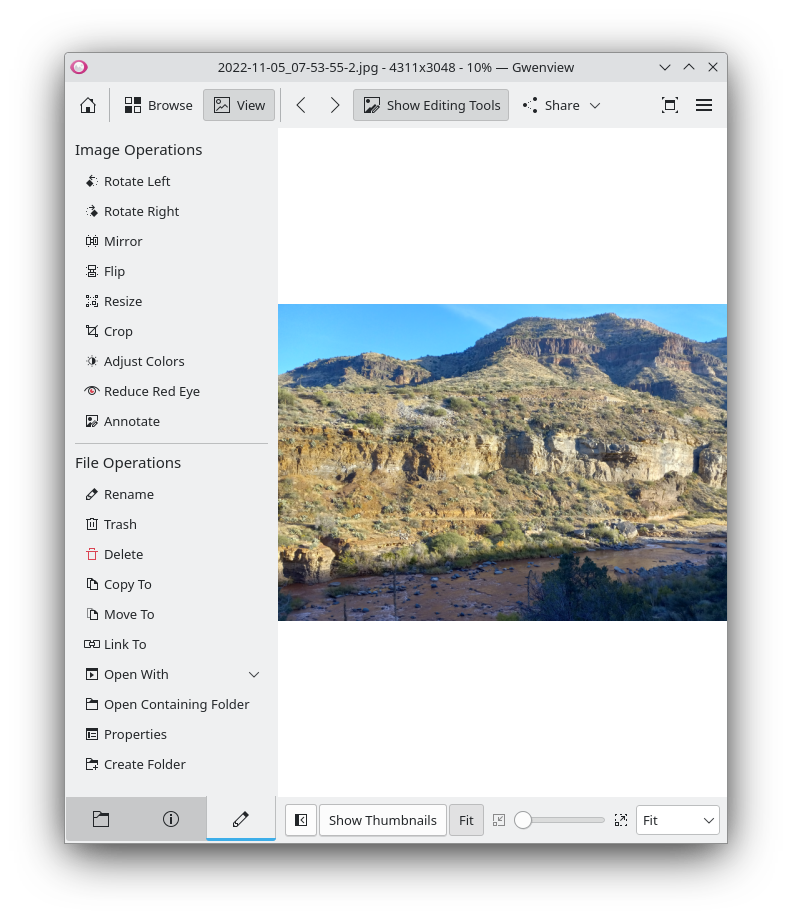
KDE Gwenview snapKDE Gwenview snap
Gwenview Version 22.12.3 https://apps.kde.org/gwenview/
KDE Gcompris snapKDE Gcompris snap
GCompris-qt Version 3.2 https://apps.kde.org/gcompris/
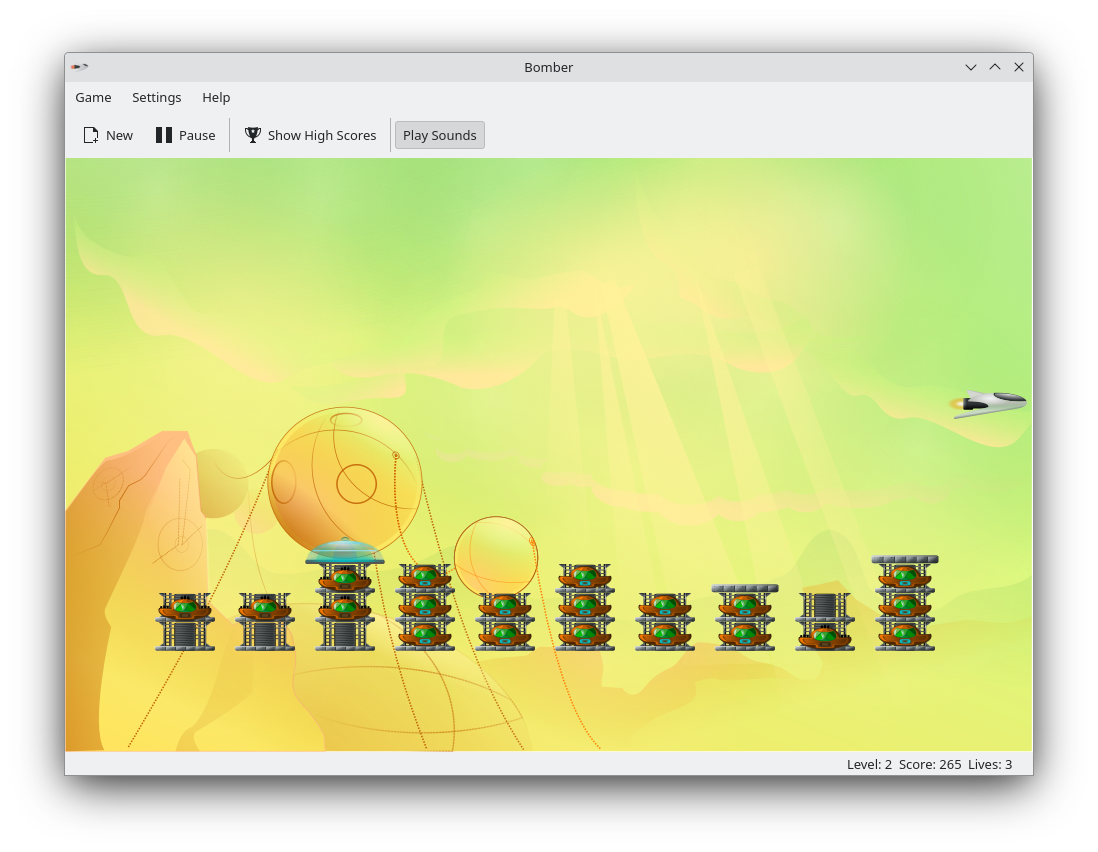
KDE Bomber snapKDE Bomber snap
Bomber Version 22.12.3 https://apps.kde.org/bomber/
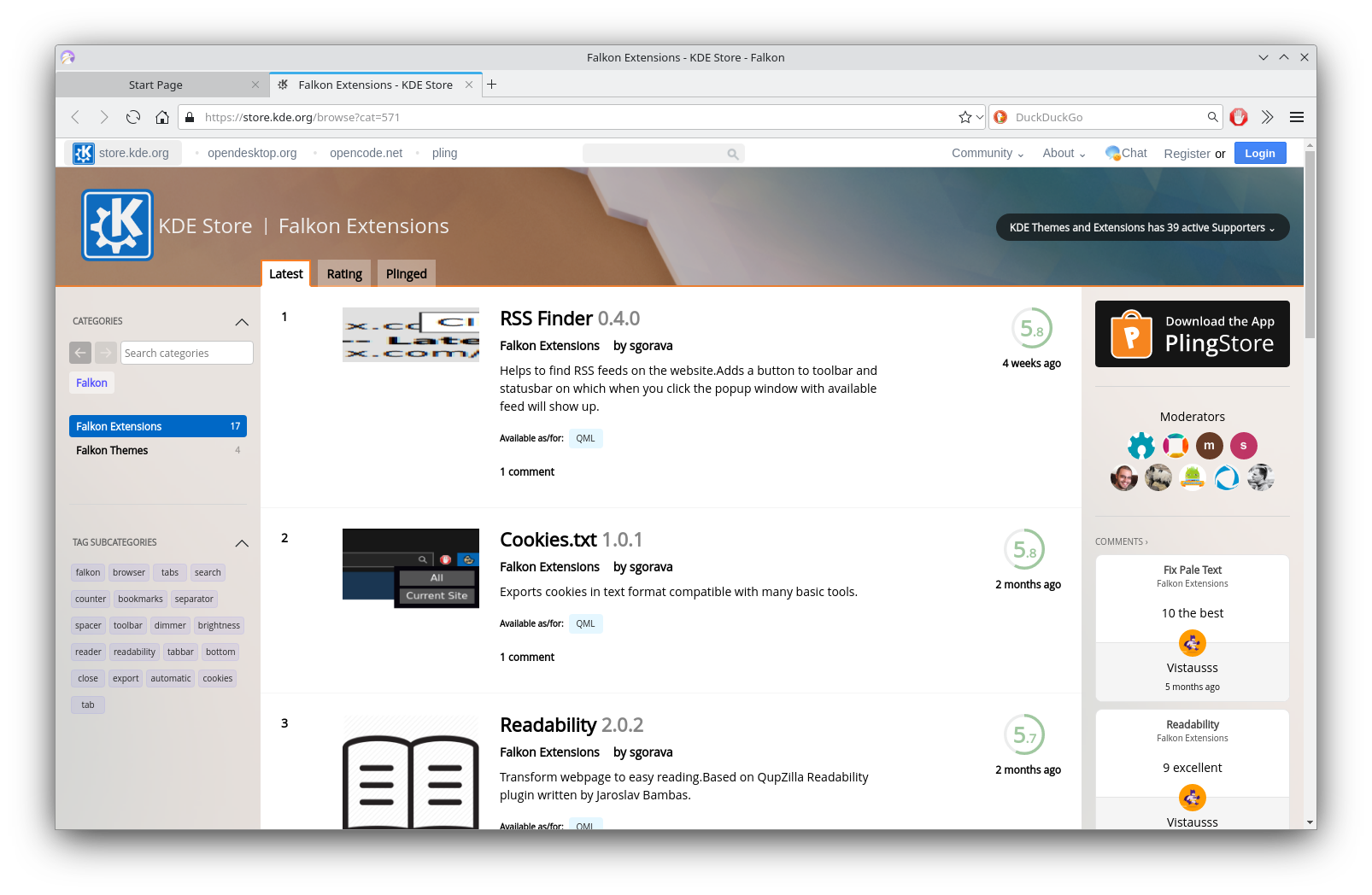
KDE Falkon snapKDE Falkon snap
Falkon Version 22.12.3 https://apps.kde.org/falkon/
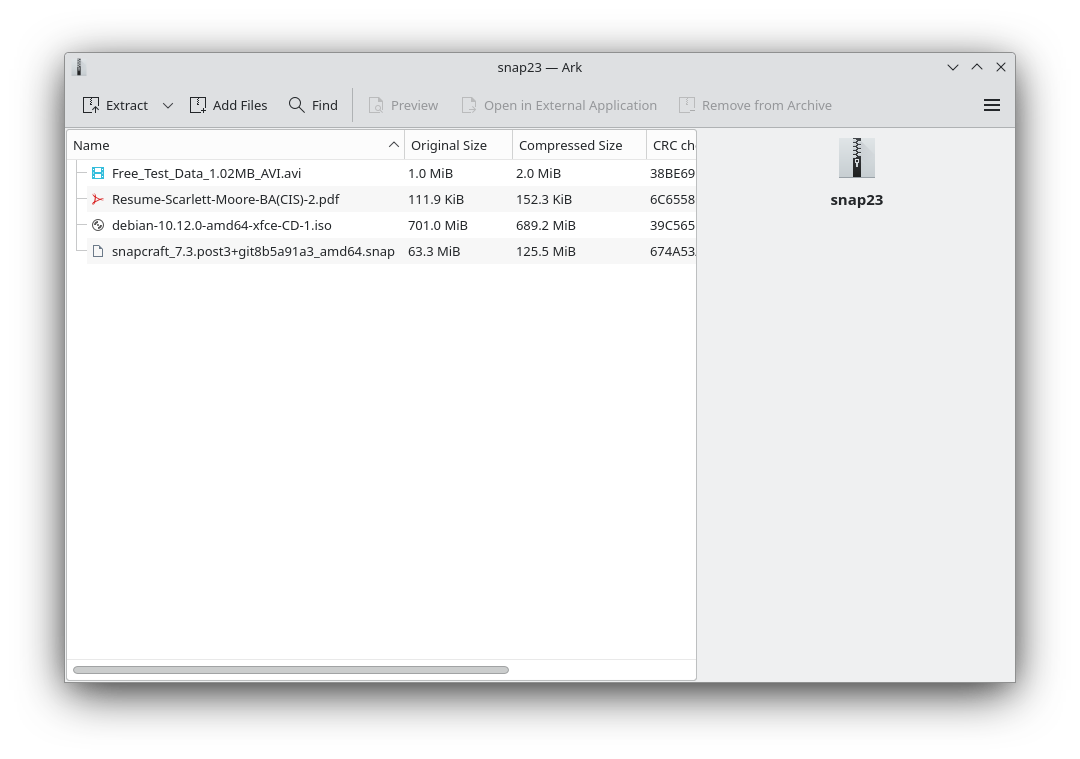
KDE Ark snapKDE Ark snap
Ark Version 22.12.3 https://apps.kde.org/ark/
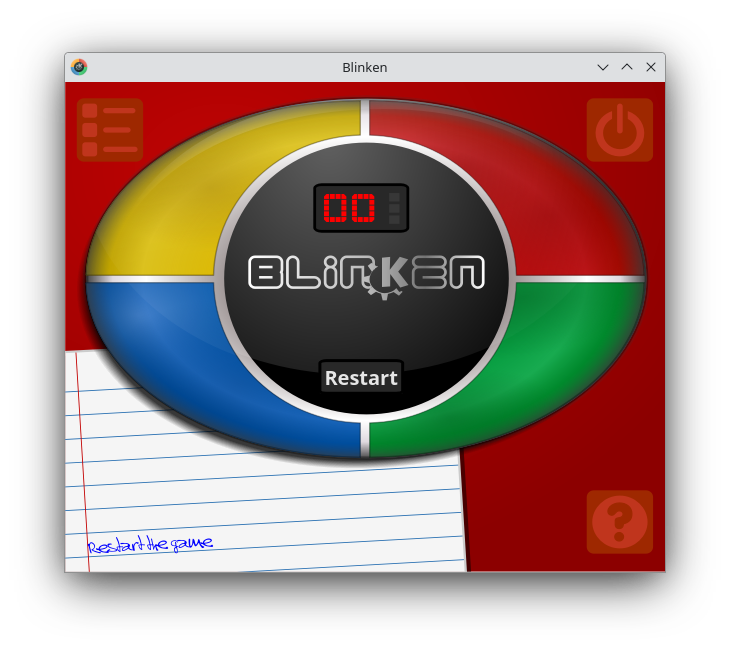
KDE Blinken snapKDE Blinken snap
Blinken Version 22.12.3 https://apps.kde.org/blinken/
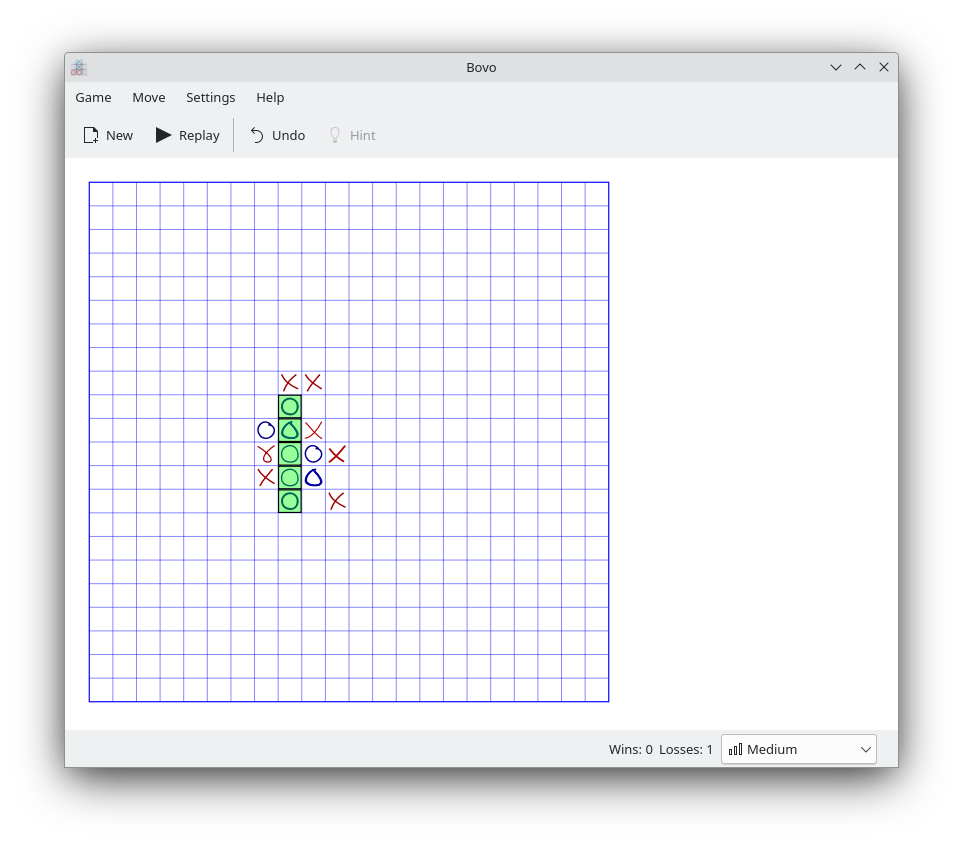
KDE Bovo snapKDE Bovo Snap
Bovo Version 22.12.3 https://apps.kde.org/bovo/
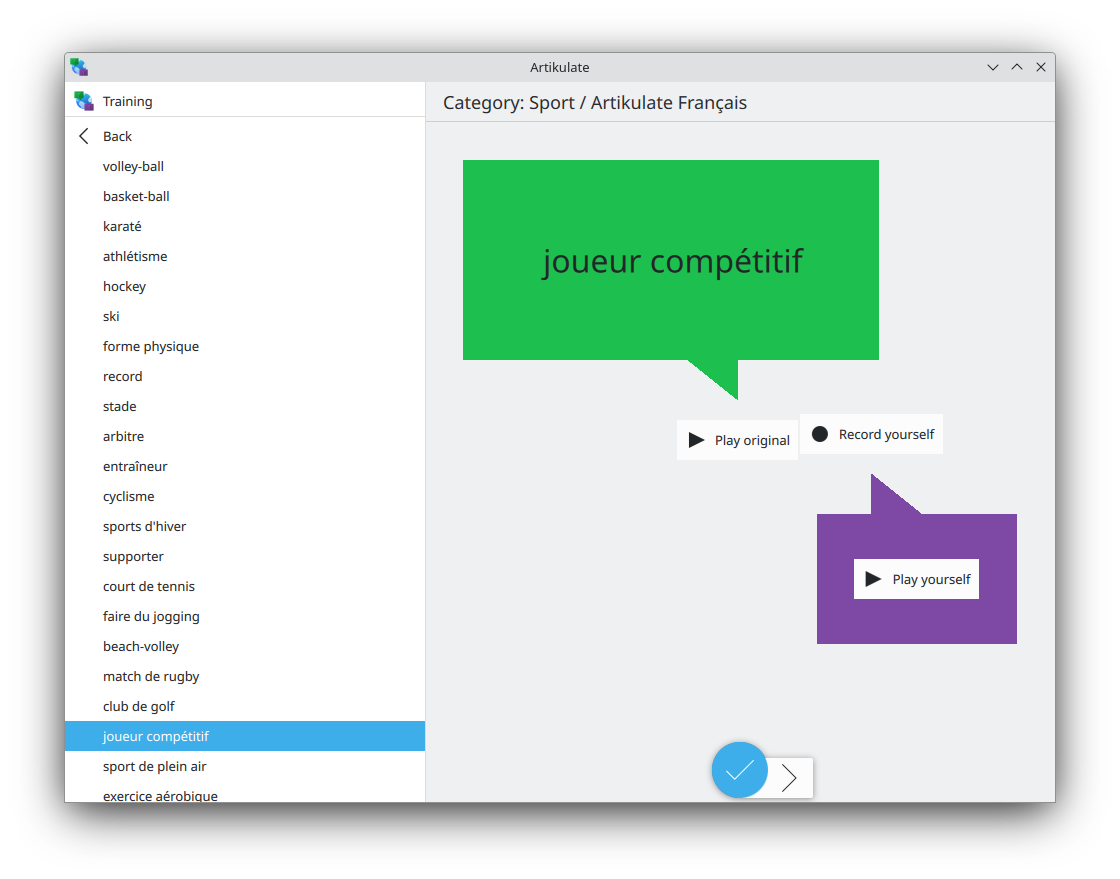
KDE Atikulate snapKDE Atikulate snap
Artikulate Version 22.12.3 https://apps.kde.org/artikulate/ There are many more snaps coming your way! As usual, I hate to ask, but if you can spare anything we appreciate it, even if they are just kind words, thank you! https://gofund.me/d73342c3

28 March 2023

kpcyrd: Writing a Linux executable from scratch with x86_64-unknown-none and Rust

I recently mentioned on the internet I did work in this direction and a friend of mine asked me to write a blogpost on this. I didn t blog for a long time (keeping all the goodness for myself hehe), so here we go. To set the scene, let s assume we want to make an exectuable binary for x86_64 Linux that s supposed to be extremely portable. It should work on both Debian and Arch Linux. It should work on systems without glibc like Alpine Linux. It should even work in a FROM scratch Docker container. In a more serious setting you would statically link musl-libc with your Rust program, but today we re in a silly-goofy mood so we re going to try to make this work without a libc. And we re also going to use Rust for this, more specifically the stable release channel of Rust, so this blog post won t use any nightly-only features that might still change/break. If you re using a Rust 1.0 version that was recent at the time of writing or later (>= 1.68.0 according to my computer), you should be able to try this at home just fine . This tutorial assumes you have no prior programming experience in any programming language, but it s going to involve some x86_64 assembly. If you already know what a syscall is, you ll be just fine. If this is your first exposure to programming you might still be able to follow along, but it might be a wild ride. If you haven t already, install rustup (possibly also available in your package manager, who knows?)
# when asked, press enter to confirm default settings
curl --proto '=https' --tlsv1.2 -sSf https://sh.rustup.rs   sh
This is going to install everything you need to use Rust on Linux (this tutorial assumes you re following along on Linux btw). Usually it s still using a system linker (by calling the cc binary, and errors out if none is present), but instead we re going to use rustup to install an additional target:
rustup target add x86_64-unknown-none
I don t know if/how this is made available by Linux distributions, so I recommend following along with rust installed from rustup. Anyway, we re creating a new project with cargo, this creates a new directory that we can then change into (you might ve done this before):
cargo new hack-the-planet
cd hack-the-planet
There s going to be a file named Cargo.toml, we don t need to make any changes there, but the one that was auto-generated for me at the time of writing looks like this:
[package]
name = "hack-the-planet"
version = "0.1.0"
edition = "2021"
# See more keys and their definitions at https://doc.rust-lang.org/cargo/reference/manifest.html
[dependencies]
There s a second file named src/main.rs, it s going to contain some pre-generated hello world, but we re going to delete it and create a new, empty file:
rm src/main.rs
touch src/main.rs
Alrighty, leaving this file empty is not valid but we re going to walk through the individual steps so we re going to try to build with an empty file first. At this point I would like to credit this chapter of a fasterthanli.me series and a blogpost by Philipp Oppermann, this tutorial is merely an 2023 update and makes it work with stable Rust. Let s run the build:
$ cargo build --release --target x86_64-unknown-none
   Compiling hack-the-planet v0.1.0 (/hack-the-planet)
error[E0463]: can't find crate for  std 
   
  = note: the  x86_64-unknown-none  target may not support the standard library
  = note:  std  is required by  hack_the_planet  because it does not declare  #![no_std] 
error[E0601]:  main  function not found in crate  hack_the_planet 
   
  = note: consider adding a  main  function to  src/main.rs 
Some errors have detailed explanations: E0463, E0601.
For more information about an error, try  rustc --explain E0463 .
error: could not compile  hack-the-planet  due to 2 previous errors
Since this doesn t use a libc (oh right, I forgot to mention this up to this point actually), this also means there s no std standard library. Usually the standard library of Rust still uses the system libc to do syscalls, but since we specify our libc as none this means std won t be available (use std::fs::rename won t work). There are still other functions we can use and import, for example there s core that s effectively a second standard library, but much smaller. To opt-out of the std standard library, we can put #![no_std] into src/main.rs:
#![no_std]
Running the build again:
$ cargo build --release --target x86_64-unknown-none
   Compiling hack-the-planet v0.1.0 (/hack-the-planet)
error[E0601]:  main  function not found in crate  hack_the_planet 
 --> src/main.rs:1:11
   
1   #![no_std]
              ^ consider adding a  main  function to  src/main.rs 
For more information about this error, try  rustc --explain E0601 .
error: could not compile  hack-the-planet  due to previous error
Rust noticed we didn t define a main function and suggest we add one. This isn t what we want though so we ll politely decline and inform Rust we don t have a main and it shouldn t attempt to call it. We re adding #![no_main] to our file and src/main.rs now looks like this:
#![no_std]
#![no_main]
Running the build again:
$ cargo build
   Compiling hack-the-planet v0.1.0 (/hack-the-planet)
error:  #[panic_handler]  function required, but not found
error: language item required, but not found:  eh_personality 
   
  = note: this can occur when a binary crate with  #![no_std]  is compiled for a target where  eh_personality  is defined in the standard library
  = help: you may be able to compile for a target that doesn't need  eh_personality , specify a target with  --target  or in  .cargo/config 
error: could not compile  hack-the-planet  due to 2 previous errors
Rust is asking us for a panic handler, basically I m going to jump to this address if something goes terribly wrong and execute whatever you put there . Eventually we would put some code there to just exit the program, but for now an infinitely loop will do. This is likely going to get stripped away anyway by the compiler if it notices our program has no code-branches leading to a panic and the code is unused. Our src/main.rs now looks like this:
#![no_std]
#![no_main]
use core::panic::PanicInfo;
#[panic_handler]
fn panic(_info: &PanicInfo) -> !  
    loop  
 
Running the build again:
$ cargo build --release --target x86_64-unknown-none
   Compiling hack-the-planet v0.1.0 (/hack-the-planet)
    Finished release [optimized] target(s) in 0.16s
Neat, it worked! What happens if we run it?
$ target/x86_64-unknown-none/release/hack-the-planet
Segmentation fault (core dumped)
Oops. Let s try to disassemble it:
$ objdump -d target/x86_64-unknown-none/release/hack-the-planet
target/x86_64-unknown-none/release/hack-the-planet:     file format elf64-x86-64
Ok that looks pretty from scratch to me . The file contains no cpu instructions. Also note how our infinity loop is not present (as predicted).

Making a basic program and executing it Ok let s try to make a valid program that basically just cleanly exits. First let s try to add some cpu instructions and verify they re indeed getting executed. Lemme introduce, the INT 3 instruction in x86_64 assembly. In binary it s also known as the 0xCC opcode. It crashes our program in a slightly different way, so if the error message changes, we know it worked. The other tutorials use a #[naked] function for the entry point, but since this feature isn t stabilized at the time of writing we re going to use the global_asm! macro. Also don t worry, I m not going to introduce every assembly instruction individually. Our program now looks like this:
#![no_std]
#![no_main]
use core::arch::global_asm;
use core::panic::PanicInfo;
#[panic_handler]
fn panic(_info: &PanicInfo) -> !  
    loop  
 
global_asm!  
    ".global _start",
    "_start:",
    "int 3"
 
Running the build again (ok basically from now on the build is always going to be expected to work unless I say otherwise):
$ cargo build --release --target x86_64-unknown-none
   Compiling hack-the-planet v0.1.0 (/hack-the-planet)
    Finished release [optimized] target(s) in 0.11s
Let s try to disassemble the binary again:
$ objdump -d target/x86_64-unknown-none/release/hack-the-planet
target/x86_64-unknown-none/release/hack-the-planet:     file format elf64-x86-64
Disassembly of section .text:
0000000000001210 <_start>:
    1210:	cc                   	int3
And sure enough, there s a cc instruction that was identified as int3. Let s try to run this:
$ target/x86_64-unknown-none/release/hack-the-planet
Trace/breakpoint trap (core dumped)
The error message of the crash is now slightly different because it s hitting our breakpoint cpu instruction. Funfact btw, if you run this in strace you can see this isn t making any system calls (aka not talking to the kernel at all, it just crashes):
$ strace -f ./hack-the-planet
execve("./hack-the-planet", ["./hack-the-planet"], 0x74f12430d1d8 /* 39 vars */) = 0
--- SIGTRAP  si_signo=SIGTRAP, si_code=SI_KERNEL, si_addr=NULL  ---
+++ killed by SIGTRAP (core dumped) +++
[1]    2796457 trace trap (core dumped)  strace -f ./hack-the-planet
Let s try to make a program that does a clean shutdown. To do this we inform the kernel with a system call that we may like to exit. We can get more info on this with man 2 exit and it defines exit like this:
[[noreturn]] void _exit(int status);
On Linux this syscall is actually called _exit and exit is implemented as a libc function, but we don t care about any of that today, it s going to do the job just fine. Also note how it takes a single argument of type int. In C-speak this means signed 32 bit , i32 in Rust. Next we need to figure out the syscall number of this syscall. These numbers are cpu architecture specific for some reason (idk, idc). We re looking these numbers up with ripgrep in /usr/include/asm/:
$ rg __NR_exit /usr/include/asm
/usr/include/asm/unistd_64.h
64:#define __NR_exit 60
235:#define __NR_exit_group 231
/usr/include/asm/unistd_x32.h
53:#define __NR_exit (__X32_SYSCALL_BIT + 60)
206:#define __NR_exit_group (__X32_SYSCALL_BIT + 231)
/usr/include/asm/unistd_32.h
5:#define __NR_exit 1
253:#define __NR_exit_group 252
Since we re on x86_64 the correct value is the one in unistd_64.h, 60. Also, on x86_64 the syscall number goes into the rax cpu register, the status argument goes in the rdi register. The return value of the syscall is going to be placed in the rax register after the syscall is done, but for exit the execution is never given back to us. Let s try to write 60 into the rax register and 69 into the rdi register. To copy into registers we re going to use the mov destination, source instruction to copy from source to destination. With these registers setup we can use the syscall cpu instruction to hand execution over to the kernel. Don t worry, there s only one more assembly instruction coming and for everything else we re going to use Rust. Our code now looks like this:
#![no_std]
#![no_main]
use core::arch::global_asm;
use core::panic::PanicInfo;
#[panic_handler]
fn panic(_info: &PanicInfo) -> !  
    loop  
 
global_asm!  
    ".global _start",
    "_start:",
    "mov rax, 60",
    "mov rdi, 69",
    "syscall"
 
Build the binary, run it and print the exit code:
$ cargo build --release --target x86_64-unknown-none
$ target/x86_64-unknown-none/release/hack-the-planet; echo $?
69
Nice. Rust is quite literally putting these cpu instructions into the binary for us, nothing else.
$ objdump -d target/x86_64-unknown-none/release/hack-the-planet
target/x86_64-unknown-none/release/hack-the-planet:     file format elf64-x86-64
Disassembly of section .text:
0000000000001210 <_start>:
    1210:	48 c7 c0 3c 00 00 00 	mov    $0x3c,%rax
    1217:	48 c7 c7 45 00 00 00 	mov    $0x45,%rdi
    121e:	0f 05                	syscall
Running this with strace shows the program does exactly one thing.
$ strace -f ./hack-the-planet
execve("./hack-the-planet", ["./hack-the-planet"], 0x70699fe8c908 /* 39 vars */) = 0
exit(69)                                = ?
+++ exited with 69 +++

Writing Rust Ok but even though cpu instructions can be fun at times, I d rather not deal with them most of the time (this might strike you as odd, considering this blog post). Instead let s try to define a function in Rust and call into that instead. We re going to define this function as unsafe (btw none of this is taking advantage of the safety guarantees by Rust in case it wasn t obvious. This tutorial is mostly going to stick to unsafe Rust, but for bigger projects you can attempt to reduce your usage of unsafe to opt back into normal safe Rust), it also declares the function with #[no_mangle] so the function name is preserved as main and we can call it from our global_asm entry point. Lastely, when our program is started it s going to get the stack address passed in one of the cpu registers, this value is expected to be passed to our function as an argument. Our function declares ! as return type, which means it never returns:
#[no_mangle]
unsafe fn main(_stack_top: *const u8) -> !  
    // TODO: this is missing
 
This won t compile yet, we need to add our assembly for the exit syscall back in.
#[no_mangle]
unsafe fn main(_stack_top: *const u8) -> !  
    asm!(
        "syscall",
        in("rax") 60,
        in("rdi") 0,
        options(noreturn)
    );
 
This time we re using the asm! macro, this is a slightly more declarative approach. We want to run the syscall cpu instruction with 60 in the rax register, and this time we want the rdi register to be zero, to indicate a successful exit. We also use options(noreturn) so Rust knows it should assume execution does not resume after this assembly is executed (the Linux kernel guarantees this). We modify our global_asm! entrypoint to call our new main function, and to copy the stack address from rsp into the register for the first argument rdi because it would otherwise get lost forever:
global_asm!  
    ".global _start",
    "_start:",
    "mov rdi, rsp",
    "call main"
 
Our full program now looks like this:
#![no_std]
#![no_main]
use core::arch::asm;
use core::arch::global_asm;
use core::panic::PanicInfo;
#[panic_handler]
fn panic(_info: &PanicInfo) -> !  
    loop  
 
global_asm!  
    ".global _start",
    "_start:",
    "mov rdi, rsp",
    "call main"
 
#[no_mangle]
unsafe fn main(_stack_top: *const u8) -> !  
    asm!(
        "syscall",
        in("rax") 60,
        in("rdi") 0,
        options(noreturn)
    );
 
After building and disassembling this the Rust compiler is slowly starting to do work for us:
$ cargo build --release --target x86_64-unknown-none
$ objdump -d target/x86_64-unknown-none/release/hack-the-planet
target/x86_64-unknown-none/release/hack-the-planet:     file format elf64-x86-64
Disassembly of section .text:
0000000000001210 <_start>:
    1210:	48 89 e7             	mov    %rsp,%rdi
    1213:	e8 08 00 00 00       	call   1220 <main>
    1218:	cc                   	int3
    1219:	cc                   	int3
    121a:	cc                   	int3
    121b:	cc                   	int3
    121c:	cc                   	int3
    121d:	cc                   	int3
    121e:	cc                   	int3
    121f:	cc                   	int3
0000000000001220 <main>:
    1220:	50                   	push   %rax
    1221:	b8 3c 00 00 00       	mov    $0x3c,%eax
    1226:	31 ff                	xor    %edi,%edi
    1228:	0f 05                	syscall
    122a:	0f 0b                	ud2
The mov and syscall instructions are still the same, but it noticed it can XOR the rdi register with itself to set it to zero. It s using x86 assembly language (the 32 bit variant of x86_64, that also happens to work on x86_64) to do so, that s why the register is refered to as edi in the disassembly. You can also see it s inserting a bunch of 0xCC instructions (for alignment) and Rust puts the opcodes 0x0F 0x0B at the end of the function to force an invalid opcode exception so the program is guaranteed to crash in case the exit syscall doesn t do it. This code still executes as expected:
$ strace -f ./hack-the-planet
execve("./hack-the-planet", ["./hack-the-planet"], 0x72dae7e5dc08 /* 39 vars */) = 0
exit(0)                                 = ?
+++ exited with 0 +++

Adding functions Ok we re getting closer but we aren t quite there yet. Let s try to write an exit function for our assembly that we can then call like a normal function. Remember that it takes a signed 32 bit integer that s supposed to go into rdi.
unsafe fn exit(status: i32) -> !  
    asm!(
        "syscall",
        in("rax") 60,
        in("rdi") status,
        options(noreturn)
    );
 
Actually, since this function doesn t take any raw pointers and any i32 is valid for this syscall we re going to remove the unsafe marker of this function. When doing this we still need to use unsafe within the function for our inline assembly.
fn exit(status: i32) -> !  
    unsafe  
        asm!(
            "syscall",
            in("rax") 60,
            in("rdi") status,
            options(noreturn)
        );
     
 
Let s call this function from our main, and also remove the infinity loop of the panic handler with a call to exit(1):
#![no_std]
#![no_main]
use core::arch::asm;
use core::arch::global_asm;
use core::panic::PanicInfo;
#[panic_handler]
fn panic(_info: &PanicInfo) -> !  
    exit(1);
 
global_asm!  
    ".global _start",
    "_start:",
    "mov rdi, rsp",
    "call main"
 
fn exit(status: i32) -> !  
    unsafe  
        asm!(
            "syscall",
            in("rax") 60,
            in("rdi") status,
            options(noreturn)
        );
     
 
#[no_mangle]
unsafe fn main(_stack_top: *const u8) -> !  
    exit(0);
 
Running this still works, but interestingly the generated assembly didn t change at all:
$ cargo build --release --target x86_64-unknown-none
$ objdump -d target/x86_64-unknown-none/release/hack-the-planet
target/x86_64-unknown-none/release/hack-the-planet:     file format elf64-x86-64
Disassembly of section .text:
0000000000001210 <_start>:
    1210:	48 89 e7             	mov    %rsp,%rdi
    1213:	e8 08 00 00 00       	call   1220 <main>
    1218:	cc                   	int3
    1219:	cc                   	int3
    121a:	cc                   	int3
    121b:	cc                   	int3
    121c:	cc                   	int3
    121d:	cc                   	int3
    121e:	cc                   	int3
    121f:	cc                   	int3
0000000000001220 <main>:
    1220:	50                   	push   %rax
    1221:	b8 3c 00 00 00       	mov    $0x3c,%eax
    1226:	31 ff                	xor    %edi,%edi
    1228:	0f 05                	syscall
    122a:	0f 0b                	ud2
Rust noticed there s no need to make it a separate function at runtime and instead merged the instructions of the exit function directly into our main. It also noticed the 0 argument in exit(0) means rdi is supposed to be zero and uses the XOR optimization mentioned before. Since main is not calling any unsafe functions anymore we could mark it as safe too, but in the next few functions we re going to deal with file descriptors and raw pointers, so this is likely the only safe function we re going to write in this tutorial so let s just keep the unsafe marker.

Printing text Ok let s try to do a quick hello world, to do this we re going to call the write syscall. Looking it up with man 2 write:
ssize_t write(int fd, const void buf[.count], size_t count);
The write syscall takes 3 arguments and returns a signed size_t. In Rust this is called isize. In C size_t is an unsigned integer type that can hold any value of sizeof(...) for the given platform, ssize_t can only store half of that because it uses one of the bits to indicate an error has occured (the first s means signed, write returns -1 in case of an error). The arguments for write are:
  • the file descriptor to write to. stdout is located on file descriptor 1.
  • a pointer/address to some memory.
  • the number of bytes that should be written, starting at the given address.
Let s also lookup the syscall number of write:
% rg __NR_write /usr/include/asm
/usr/include/asm/unistd_64.h
5:#define __NR_write 1
24:#define __NR_writev 20
/usr/include/asm/unistd_32.h
8:#define __NR_write 4
150:#define __NR_writev 146
/usr/include/asm/unistd_x32.h
5:#define __NR_write (__X32_SYSCALL_BIT + 1)
323:#define __NR_writev (__X32_SYSCALL_BIT + 516)
The value we re looking for is 1. Let s write our write function (heh).
unsafe fn write(fd: i32, buf: *const u8, count: usize) -> isize  
    let r0;
    asm!(
        "syscall",
        inlateout("rax") 1 => r0,
        in("rdi") fd,
        in("rsi") buf,
        in("rdx") count,
        lateout("rcx") _,
        lateout("r11") _,
        options(nostack, preserves_flags)
    );
    r0
 
Now that s a lot of stuff at once. Since this syscall is actually going to hand execution back to our program we need to let Rust know which cpu registers the syscall is writing to, so Rust doesn t attempt to use them to store data (that would be silently overwritten by the syscall). inlateout("raw") 1 => r0 means we re writing a value to the register and want the result back in variable r0. in("rdi") fd means we want to write the value of fd into the rdi register. lateout("rcx") _ means the Linux kernel may write to that register (so the previous value may get lost), but we don t want to store the value anywhere (the underscore acts as a dummy variable name). This doesn t compile just yet though
$ cargo build --release --target x86_64-unknown-none
   Compiling hack-the-planet v0.1.0 (/hack-the-planet)
error: incompatible types for asm inout argument
  --> src/main.rs:35:26
    
35           inlateout("rax") 1 => r0,
                              ^    ^^ type  isize 
                               
                              type  i32 
    
   = note: asm inout arguments must have the same type, unless they are both pointers or integers of the same size
error: could not compile  hack-the-planet  due to previous error
Rust has inferred the type of r0 is isize since that s what our function returns, but the type of the input value for the register was inferred to be i32. We re going to select a specific number type to fix this.
unsafe fn write(fd: i32, buf: *const u8, count: usize) -> isize  
    let r0;
    asm!(
        "syscall",
        inlateout("rax") 1isize => r0,
        in("rdi") fd,
        in("rsi") buf,
        in("rdx") count,
        lateout("rcx") _,
        lateout("r11") _,
        options(nostack, preserves_flags)
    );
    r0
 
We can now call our new write function like this:
write(1, b"Hello world\n".as_ptr(), 12);
We need to set the number of bytes we want to write explicitly because there s no concept of null-byte termination in the write system call, it s quite literally write the next X bytes, starting from this address . Our program now looks like this:
#![no_std]
#![no_main]
use core::arch::asm;
use core::arch::global_asm;
use core::panic::PanicInfo;
#[panic_handler]
fn panic(_info: &PanicInfo) -> !  
    exit(1);
 
global_asm!  
    ".global _start",
    "_start:",
    "mov rdi, rsp",
    "call main"
 
fn exit(status: i32) -> !  
    unsafe  
        asm!(
            "syscall",
            in("rax") 60,
            in("rdi") status,
            options(noreturn)
        );
     
 
unsafe fn write(fd: i32, buf: *const u8, count: usize) -> isize  
    let r0;
    asm!(
        "syscall",
        inlateout("rax") 1isize => r0,
        in("rdi") fd,
        in("rsi") buf,
        in("rdx") count,
        lateout("rcx") _,
        lateout("r11") _,
        options(nostack, preserves_flags)
    );
    r0
 
#[no_mangle]
unsafe fn main(_stack_top: *const u8) -> !  
    write(1, b"Hello world\n".as_ptr(), 12);
    exit(0);
 
Let s try to build and disassemble it:
$ cargo build --release --target x86_64-unknown-none
$ objdump -d target/x86_64-unknown-none/release/hack-the-planet
target/x86_64-unknown-none/release/hack-the-planet:     file format elf64-x86-64
Disassembly of section .text:
0000000000001220 <_start>:
    1220:	48 89 e7             	mov    %rsp,%rdi
    1223:	e8 08 00 00 00       	call   1230 <main>
    1228:	cc                   	int3
    1229:	cc                   	int3
    122a:	cc                   	int3
    122b:	cc                   	int3
    122c:	cc                   	int3
    122d:	cc                   	int3
    122e:	cc                   	int3
    122f:	cc                   	int3
0000000000001230 <main>:
    1230:	50                   	push   %rax
    1231:	48 8d 35 d5 ef ff ff 	lea    -0x102b(%rip),%rsi        # 20d <_start-0x1013>
    1238:	b8 01 00 00 00       	mov    $0x1,%eax
    123d:	ba 0c 00 00 00       	mov    $0xc,%edx
    1242:	bf 01 00 00 00       	mov    $0x1,%edi
    1247:	0f 05                	syscall
    1249:	b8 3c 00 00 00       	mov    $0x3c,%eax
    124e:	31 ff                	xor    %edi,%edi
    1250:	0f 05                	syscall
    1252:	0f 0b                	ud2
This time there are 2 syscalls, first write, then exit. For write it s setting up the 3 arguments in our cpu registers (rdi, rsi, rdx). The lea instruction subtracts 0x102b from the rip register (the instruction pointer) and places the result in the rsi register. This is effectively saying an address relative to wherever this code was loaded into memory . The instruction pointer is going to point directly behind the opcodes of the lea instruction, so 0x1238 - 0x102b = 0x20d. This address is also pointed out in the disassembly as a comment. We don t see the string in our disassembly but we can convert our 0x20d hex to 525 in decimal and use dd to read 12 bytes from that offset, and sure enough:
$ dd bs=1 skip=525 count=12 if=target/x86_64-unknown-none/release/hack-the-planet
Hello world
12+0 records in
12+0 records out
Execute our binary with strace also shows the new write syscall (and the bytes that are being written mixed up in the output).
$ strace -f ./hack-the-planet
execve("./hack-the-planet", ["./hack-the-planet"], 0x74493abe64a8 /* 39 vars */) = 0
write(1, "Hello world\n", 12Hello world
)           = 12
exit(0)                                 = ?
+++ exited with 0 +++
After running strip on it to remove some symbols the binary is so small, if you open it in a text editor it fits on a screenshot:

25 March 2023

Gunnar Wolf: Now that we are talking about kernel building... What about firebuild?

After my last post, B lint (who prompted it with his last post) suggested I should do a hybrid test of his tests and my extremes. He suggested I should build the Linux kernel using my Raspberry Pi 4 (8GB model), but using the Firebuild build accelerator. Before going any further: I must make clear that while Firebuild is freely redistributable, it is not made available under a free license. It is free for personal use or commercial trial, but otherwise requires licensing. B lint managed to build a Linux kernel in just over 8 seconds. So, how did my test go? My previous experiment, using -j 4, built Linux in ~100 minutes; this was about a year ago, and I m now building linux 6.1, so I timed this again. To get a baseline, I built my kernel from a just-unpacked tree, just as usual:
# cd /usr/src/linux-source-6.1
# make clean
# make defconfig
# time make -j4
(...)
real    117m30.588s
user    392m41.434s
sys     52m2.556s
Of course, having all of the object files built makes the rebuild process quite faster (this is still done without firebuild). I understand calling make defconfig without cleaning does not change much, but I saw it often referenced in firebuild s docs, so I m leaving it:
# time make -j 4
(...)
real    0m43.822s
user    1m36.577s
sys     0m40.805s
Then, I did a first run using firebuild. Firebuild is a caching build optimizer, so the first run will naturally be somewhat slower (but if you often rebuild your kernel, it should be seen as an investment). Now, in the Raspberry Pi, that uses a slow SD card interface for its storage It is a heavy investment. The first time I built with firebuild, it meant almost a 100% build time hit:
# cd /usr/src/linux-source-6.1
# make clean
# make defconfig
# time firebuild make -j 4
(...)
real    212m58.647s
user    391m49.080s
sys     81m10.758s
Not only that; I am using a fairly decent and big 32GB card, but this is quite a big price to pay in such a limited system!
# du -sh .cache/firebuild/
4.2G    .cache/firebuild/
I did a build without cleaning the build directory, using firebuild, and it does help although not by so much as in higher performance systems:
# cd /usr/src/linux-source-6.1
# make clean
# make defconfig
# time firebuild make -j 4
(...)
real    68m6.621s
user    98m32.514s
sys     31m41.643s
So, it built in roughly 65% of the time it would take to build regularly. And what about rebuilding without cleaning?
# make defconfig
# time firebuild make -j 4
(...)
real    1m11.872s
user    2m5.807s
sys     1m46.178s
In this case, using firebuild worked roughly 30% slower than not using it. I guess the high number of file ops inside .cache/firebuild are to blame, as in the case of the media I m using, those are quite expensive; make went its way basically checking date stamps between *.c and *.o (yes, very roughly), and while running under firebuild, I suppose each of these meant an extra lookup inside the cache. So Experiment requested, experiment performed!

15 March 2023

Thomas Koch: shared infrastructure coop

Posted on February 5, 2014
I m working in a very small web agency with 4 employees, one of them part time and our boss who doesn t do programming. It shouldn t come as a surprise, that our development infrastructure is not perfect. We have many ideas and dreams how we could improve it, but not the time. Now we have two obvious choices: Either we just do nothing or we buy services from specialized vendors like github, atlassian, travis-ci, heroku, google and others. Doing nothing does not work for me. But just buying all this stuff doesn t please me either. We d depend on proprietary software, lock-in effects or one-size-fits-all offerings. Another option would be to find other small web shops like us, form a cooperative and share essential services. There are thousands of web shops in the same situation like us and we all need the same things: As I said, all of the above is available as commercial offerings. But I d prefer the following to be satisfied: Does something like that already exists? There already is the German cooperative hostsharing which is kind of similar but does provide mainly hosting, not services. But I ll ask them next after writing this blog post. Is your company interested in joining such an effort? Does it sound silly? Comments: Sounds promising. I already answered by mail. Dirk Deimeke (Homepage) am 16.02.2014 08:16 Homepage: http://d5e.org I m sorry for accidentily removing a comment that linked to https://mayfirst.org while moderating comments. I m really looking forward to another blogging engine Thomas Koch am 16.02.2014 12:20 Why? What are you missing? I am using s9y for 9 years now. Dirk Deimeke (Homepage) am 16.02.2014 12:57

15 February 2023

Marco d'Itri: I replaced grub with systemd-boot

To be able to investigate and work on the the measured boot features I have switched from grub to systemd-boot (sd-boot). This initial step is optional, but it is useful because this way /etc/kernel/cmdline will become the new place where the kernel command line can be configured:
. /etc/default/grub
echo "root=/dev/mapper/root $GRUB_CMDLINE_LINUX $GRUB_CMDLINE_LINUX_DEFAULT" > /etc/kernel/cmdline
Do not forget to set the correct root file system there, because initramfs-tools does not support discovering it at boot time using the Discoverable Partitions Specification. The installation has been automated since systemd version 252.6-1, so installing the package has the effect of installing sd-boot in the ESP, enabling it in the UEFI boot sequence and then creating boot loader entries for the kernels already installed on the system:
apt install systemd-boot
If needed, it could be manually installed again just by running bootctl install. I like to show the boot menu by default, at least until I will be more familiar with sd-boot:
bootctl set-timeout 4
Since other UEFI binaries can be easily chainloaded, I am also going to keep around grub for a while, just to be sure:
cat <<END > /boot/efi/loader/entries/grub.conf
title Grub
linux /EFI/debian/grubx64.efi
END
At this point sd-boot works, but I still had to enable secure boot. So far sd-boot has not been signed with a Debian key known to the shim bootloader, so I needed to create a Machine Owner Key (MOK), enroll it in UEFI and then use it to sign everything. I dislike the complexity of mokutil and the other related programs, so after removing it and the boot shim I have decided to use sbctl instead. With it I easily created new keys, enrolled them in the EFI key store and then signed everything:
sbctl create-keys
sbctl enroll-keys
for file in /boot/efi/*/*/linux /boot/efi/EFI/*/*.efi; do
  sbctl sign -s $file
done
Since there is no sbctl package yet I need to make sure that also the kernels installed in the future will be automatically signed, so I have created a trivial script in /etc/kernel/install.d/ which automatically runs sbctl sign -s or sbctl remove-file. The Debian wiki SecureBoot page documents how do do this with mokutil and sbsigntool, but I think that sbctl is much friendlier. Since I am not using the boot shim, I also had to set DisableShimForSecureBoot=true in /etc/fwupd/uefi_capsule.conf to make firmware updates work automatically. As a bonus, I have also added to the boot menu the excellent Debian-based GRML live distribution. Since sd-boot is not capable of loopback-mounting CD-ROM images like grub, I first had to extract the kernel and initramfs and copy them to the ESP:
mount -o loop /boot/grml/grml64-full_2022.11.iso /mnt/
mkdir /boot/efi/grml/
cp /mnt/boot/grml64full/* /boot/efi/grml/
umount /mnt/
cat <<END > /boot/efi/loader/entries/grml.conf
title GRML
linux /grml/vmlinuz
initrd /grml/initrd.img
options boot=live bootid=grml64full202211 findiso=/grml/grml64-full_2022.11.iso live-media-path=/live/grml64-full net.ifnames=0 
END
As expected, after a reboot bootctl reports the new security features:
System:
      Firmware: UEFI 2.70 (Lenovo 0.4496)
 Firmware Arch: x64
   Secure Boot: enabled (user)
  TPM2 Support: yes
  Boot into FW: supported
Current Boot Loader:
      Product: systemd-boot 252.5-2
     Features:   Boot counting
                 Menu timeout control
                 One-shot menu timeout control
                 Default entry control
                 One-shot entry control
                 Support for XBOOTLDR partition
                 Support for passing random seed to OS
                 Load drop-in drivers
                 Support Type #1 sort-key field
                 Support @saved pseudo-entry
                 Support Type #1 devicetree field
                 Boot loader sets ESP information
          ESP: /dev/disk/by-partuuid/1b767f8e-70fa-5a48-b444-cfe5c272d66e
         File:  /EFI/systemd/systemd-bootx64.efi
...
Relevant documentation:

27 December 2022

Steve Kemp: A summary of the year.

This year had a lot of things happen in it, world-wide, as is always the case. Being more selfish here are the things I remember, in brief unless there are comments/questions:
  • I learned more Finnish.
  • Lots of things with our child.
    • I helped teach him to swim.
    • He learned to tell the time with an analog clock/watch.
    • I took him to a circus for the first (only) time ever.
    • He cut his hair for the first time in six years.
    • He spent his a birthday with my parents, in the UK - His languages skills were on top-form, understanding the various UK accents.
    • And another with family here in Finland - Where he watched me roll, naked, in the snow after sauna, and then he asked "Daddy why you did that?"
On the topic of Finnish I'm getting pretty damn good at understanding, albeit less good in speaking. Finnish is all about the suffixes, so:
  • A car
    • auto
  • My car
    • autoni
  • In a car
    • autossa
  • In my car
    • autossani
  • With my car
    • autoll ni
  • From a car
    • autosta
  • Car-less
    • autoton
Most of this is regular, so you can be childless via the "ton" suffix - lapsiton is "lapsi" (child) "ton" (less). The hard part in communication is thus twofold:
  • Knowing the word you want to use, be it car, cake, spoon, or smile.
  • Getting the appropriate suffix for the use you want.
Our child turned six recently, and most of the year was spent doing things with him, for him, and to him. He's on the verge of learning to read (English and Finnish), he's interested in maths and completes little puzzles freely and happily. He likes to help with Sodoku, for example and not just the child-versions. In the past couple of weeks I let him play Super Mario & Super Mario Bros 3, on a NES Classic, and he dies constantly, with a smile on his face. But he does love to tell me what to do when he watches me play! He's learned to ice-skate, and ski, and almost learned to swim. (I'll say he can swim 3m inside a pool, without aid, but then he starts to sink.) We've got a couple of regular rituals with each other - including going to sauna every week or two, and other similar things. He's gotten more interested in helping me cook, and his mother too. (My wife and I live in separate houses..) I guess the next big milestone will be him walking to school by himself, which will start next year. As things stand I wake up early, go over to his house, and do all the morning-things, before I take him there. I expect I'll still want to go there, give him his breakfast, his medicine, and help him get dressed. After that I guess I kick him out, and he makes his own way there. Happily the walk to school is a few hundred meters, and doesn't involve crossing any roads. But of course it does bring other complications: if he's not collected, and walks home himself, then he needs a key to one/other house, and there's the potential need for a phone to say "I'm late", "I'm lost", or us to say "Where are you?". Anyway .. interesting year .. good year. Despite everything else.

3 November 2022

Arturo Borrero Gonz lez: New OpenPGP key and new email

Post logo I m trying to replace my old OpenPGP key with a new one. The old key wasn t compromised or lost or anything bad. Is still valid, but I plan to get rid of it soon. It was created in 2013. The new key id fingerprint is: AA66280D4EF0BFCC6BFC2104DA5ECB231C8F04C4 I plan to use the new key for things like encrypted emails, uploads to the Debian archive, and more. Also, the new key includes an identity with a newer personal email address I plan to use soon: arturo.bg@arturo.bg The new key has been uploaded to some public keyservers. If you would like to sign the new key, please follow the steps in the Debian wiki.
-----BEGIN PGP PUBLIC KEY BLOCK-----
mQINBGNjvX4BEADE4w5x0SQmxWLAI1R17RCC98ngTkD/FMyos0GF5xmv0VJeLYhw
x6oJRmiNGHY8+gjq7SyVCWmlwbLKBEPFNI1k5WcrTB+ClgGkWB5KBnbLKm6CSP4N
ccSbrUQrZW+zxk3Q5h3CJljZpmflB2dvRfnDMSSaw8zOc37EtszW3AVVKNYAu3wj
mXpfwI72/OSELhSvhkr51L+ZlEYUMCITeO+jpiWsnU+sA8oKKPjW4+X8cjrN4eFa
1PAPILDf+Omst5SKM2aV5LGZ8rBzb5wNJF6yDexDw2XmfbFWLOfYzFRY6GTXJz/p
8Fh6O1wkHM9RnwmesCXTtkaGQsVFiVsoqGFyzrkIdWPUruB3RG5EzOkapWi/cnbD
1sy7yrUgy99Ew5yzmLaZ40hmRyq/gBBw4yRkdQaddbkErx+9hT+2tJELa5wrmWkb
FtaVZ38xC6gacOZqRjp0Xqtr0jobI0vED8vzIyY0zJwWM0Hu6qqq4hkLWZHjCy8a
T5Oe/Cb78Kqwa2mzJfncDahPxcgxpnbkYdvKokRtNBDftLVEz+Do8Dczw7Me4BoK
HmU8wLyeGeDTmeoBXpxKH90T+rQokgsiiD13bWZ+nBxILun1tjOTVVONG6SHdP3f
unolq8SU3K+m67lLa+pWjyYcNRS2OTWGOz/1zsH2R39ZOyfGD09/10aAKwARAQAB
tC1BcnR1cm8gQm9ycmVybyBHb256YWxleiA8YXJ0dXJvLmJnQGFydHVyby5iZz6J
AlQEEwEKAD4WIQSqZigNTvC/zGv8IQTaXssjHI8ExAUCY2O9fgIbAwUJA8JnAAUL
CQgHAwUVCgkICwUWAgMBAAIeAQIXgAAKCRDaXssjHI8ExCZdD/9Z3vR4sV7vBED4
+mCjdNWWf/mw5YlkZo+XQiMVVss4HfQLdt7VxXgGdcOz5Hond9ax3+qeCEo4DdXq
TC0ACpSCu/TPil6vzbE/kO6i6a4oZjFyteAbbcMXP35stbtDM0U5EZH0adIKknfF
msIPTIdJ/dpkcshtBJIoPqjuuTEBa7bF3OYCajHVqwP4Wsgjy4TvDOwl3hy7bhrQ
ZZHqbh7kW40+alQYaJ8jDvbDh/jhN1/pEiZS9ETu0JfBAF3PYPRLW6XedvwZiPWd
jTXwJd0E+vN5LE1Go8OaYvZb9iitZ21UaYOUnFuhw7SEOSQGfEUBs39+41gBj6vW
05HKCEA6kda9NpfptMbUoSSU+hwRfNA5TdnlxtcRv4NqUigzqa1LoXLdxTsyus+K
BL7dRpKXc72JCrEA3vClisD2FgsxLLRCCSDVM8UM/it/YW7tv42XuhQkTW+okQX4
c5laMzTL+ZV8UOoshseTDOsQsdXhskdnWbnuSwAez2/Dd1gHczuN/+lPiiEnyaTF
XgH17K/F25+92MmwPQcFRVPQcYcbyx1VylA6aCgK6gOEqHCejlZv5XLouzbQh1j1
k6MjUR1ncz8vPV5xSuOMAISqozJ9GxUZT2O3o9Vc9pNg5UEzqTvyURgLOdie8yM4
T93S3nKuHVZ++ZVxEOlPnfEfbFP+xbQrQXJ0dXJvIEJvcnJlcm8gR29uemFsZXog
PGFydHVyb0BkZWJpYW4ub3JnPokCVAQTAQoAPhYhBKpmKA1O8L/Ma/whBNpeyyMc
jwTEBQJjY73LAhsDBQkDwmcABQsJCAcDBRUKCQgLBRYCAwEAAh4BAheAAAoJENpe
yyMcjwTEMKQQAIe18Np+jdhwxHEFZNppBQ69BtyrnPQg4K5VngZ0NUZdVi+/FU7q
Tc9Z1qNydnXgmav3dafL2/l5zDX9wz7mQD2F0a6luOxZwl1PE6iP5f3cUD7uC9zb
148i1bZGEJbO4iNZKTlJKlbNR9m1PG47pv964CHZnNGp6lsnEspxe2G8DJD48Pje
gbhYukgOtIhQ1CaB1fc8aVwZvXZVSbNBLAqp7pAGhTFJqzHE8/U0sn1/V/wPzFAd
TZtWzKfYAkIIFJI5Rr6LVApIwIe7nWymTdgH4crCd2GZkGR+d6ihPKVSxUAUfoAx
EJQUSJY8rYi39gSDhPuEoK8BYXS1nWFGJiNV1o8xaljQo8rNT9myCaeZuQBLX41/
LRzK4XrxYPvjZpKNucc7fSK+UFriQGzdcAaWtW45Kp/8GmAoLVyCD0DPZNWNJdxp
IORhB33aWakhvDKgaLQa16MJ8fSc3ytn/1lxWzDXA1j05i81y/AOKPtCwBKzQWPF
biuZs3kJgZagLq6L6VOQDHlKqf+jqfl1fWeo04iDg98e0TYKABUfiTz8/MdQcV/X
8VkCgtuZ8BcPPyYzBjvuXWZTvdu0n2pikqAPL4u2cbWfD8JIP2AVCJp9HMGKvENo
XcJgY4h6T3rrC/9EidxECfXlsDbUJxLq0WfJLik84+LRtde3kZiReaIRtC5BcnR1
cm8gQm9ycmVybyBHb256YWxleiA8YXJ0dXJvQG5ldGZpbHRlci5vcmc+iQJUBBMB
CgA+FiEEqmYoDU7wv8xr/CEE2l7LIxyPBMQFAmNjvd8CGwMFCQPCZwAFCwkIBwMF
FQoJCAsFFgIDAQACHgECF4AACgkQ2l7LIxyPBMSP/g/+MHmxCAi/X+NMHodg9Qou
wEG4Vf1uluAE6c+c1QECCdtSsRjBs1dZoJzGsA23t4LWqluyaptuLDWJQEz+EVKR
mG0bvvropNaoOEShnY069pg7lUHuO/GLeDRhfEH3KT45sIVbLly8QkoGaINSCDLe
RBNaHC6feIC8NfQzQEt72nbi4SgdSQUg0F3lj4WxxECVhXsw/YCqh1d3QYqwRVEE
lCGQ4EbavjtRhO8U7dcL1VwHemKHNq3XvM3PJf1OoPgxWqFW5rHbAdlXdN3WAI6u
DAy7kY+qihz3w6rIDTFq6I3YBTrZ44J+5mN21ZC2iDXAsa/C3Uam0vFsjs/pizuq
WgGI9Vmsyap+bOOjuRSX4hemZoOT4a2GC723fS1dFresYWo3MmwfA3sjgV5tK3ZN
XIpxYIvi6HAHLOAarDaE8Sha1GHvrmPwfZ+cEgTL0mqW3efSF3AFmGHduMB+agzK
rM9sksrRQhbY2fHnBLo1t06SQx3rmhlz5mD1ljQEIzna9D6QKleRu4hgImRLHnCB
CN3o+mZa1MHhaIFzViaD2i3Fv2+bYgT7vnS4QAneLW8O/ZgpAc2MUxMoci5JNyfJ
mWdae7Kbs4Z8rrt/mH2gYyioSB0po4VtVwKWEUW9cLtZusA6mFnMviFpfjakb9TX
MimBAv9hAYpxd+HdfHinmqS0MEFydHVybyBCb3JyZXJvIEdvbnphbGV6IDxhYm9y
cmVyb0B3aWtpbWVkaWEub3JnPokCVAQTAQoAPhYhBKpmKA1O8L/Ma/whBNpeyyMc
jwTEBQJjY735AhsDBQkDwmcABQsJCAcDBRUKCQgLBRYCAwEAAh4BAheAAAoJENpe
yyMcjwTEGooP/20PR5N34m7CNtyaO96H5W0ULuAuSNuoXaKWDo5LGU6zzDriXbIu
ryYtR66vWF5suf7fHZYX8Ufq4PEsG1UNYEGA9hnjPg3oVwGzBJI7f6Rl2P5Pc8wJ
Eq2kN/xKmfUKIrvgh1f5xgFqC4hzcLDkVlLsPowZWfep8dLY4mtVrsrCD1URhelw
zRDGZ3rTVHWXmfXbSHWR2bgZIIrCtVF8BHStg5b6HuAWpj4Oa0eMfBde0N2RZkLE
ye/r2y/lraHfpT7MXnRMcEmltrv8fic7yvj/Nh4ESWr7UmfbV+GiSw9dc/AlVMXM
ihaW0eXv4F5uMtLJOiqI7bv3UfWSvoqwf2a8EPnzOeBBHhQOOJN7O4UzKBK5GAO8
C3k0I1AV3cTmrXrqT/5yoYAHSekDFCIPES//6Y/pO0ITtCbXkA5e8vaulJbtyXpE
g0Z7I7M1kikL6reZ2PuzsR0psEb/x81bWXODIegyOJolPXMRAY7n9J0xpCnSW9yr
CN4j6YT3Oame04JslwX5Xg1cyheuiusotETYNSKRaGaYBCxYffOWoTLNIBa+RCGc
SVOzJq5pd8fVRM1h2ZZFnfpPJBUb62qPsbk6VwmesGoGevB70zcNQYEI+c35kRfM
IOuJWRIN3Wxx0rpxb5E3i/3TASHM86Dix1VW9vsC/atGU/cgaoTOiNVztDdBcnR1
cm8gQm9ycmVybyBHb256YWxleiA8YXJ0dXJvLmJvcnJlcm8uZ2xlekBnbWFpbC5j
b20+iQJUBBMBCgA+FiEEqmYoDU7wv8xr/CEE2l7LIxyPBMQFAmNjvg8CGwMFCQPC
ZwAFCwkIBwMFFQoJCAsFFgIDAQACHgECF4AACgkQ2l7LIxyPBMS7NA/9F7OL/j7a
xnTDjxAHEiyrCzrBQc/DEAM/yim8E+0UBeTJSZR/bShtbvLbSukeL43tKksPhN/X
skjRF8sJ8KWUnpmSWjv1DQTh7AtkJqACnq7+VtQZq3yuKUCNRNpM8lSFxtmYDUqE
XXD4eMXKoJfdphQ+qpViba+RGXg6sd69Dq739zT/OFMuKZ33z8h7hVNXmoWGcBz6
txvN3cWVJhTLdiBvtn38/0dX7IupQLypLOtP0oZdjoUjkRxTo5biOxt3hUGnxS4x
97PPeRGc4j7lv5ADwFV8bo+g54ZMGRjOcyZmA7dlWFN51JrTx3udW2jgXkYqm7UM
xP4lNwDs9TmT3jan6wR08uwlDakOXfDm3gCQEviN+350sJs2tY+JKBN4QR7NpqeU
2aDFOo0G/0ggf0QbFsMkaTSozerVHRGXMdAi+pbYA6pPWPu8lHIkvvdoj4xUu+Ko
cHX0DCRxmL9mylTbZEanrp5gSpne79McrkbQX2/Yc8lWykCtL5/jHVTD4iNiO5Rf
IJYPAVmC2nlj2URfzwGjjoL5apTStZfng4H2Ccq+3cmhwOXI7pb+PsGeI5PND00A
qHFxe590HFhPxLHoftMIlspstoCvHYGcWQxHNbXW6ccmhHdNYT8Pn4ecKgfr6pCt
0ysilOD2ppPJ88hffKA4nTdtX2Tz2ZwOYwG5Ag0EY2O9fgEQALrapVuv1IcLDit8
9gejdA/Dtlufb2/baImVaQD+dTx2QdMxxEiNKl00a5OhMzXDj9tFrB1Lv4z0t8cY
iDJ+NuydDGgz3MlJgWW0GlpAz8yiul2iqTnkWl3cWeiI+VaX8wzL+acmmkPvlrN8
hM7I55BPr8uBWVIQ7VDmI+ts8gi73xE+Etzzrh13GSSnnYnezfGUQrNfYFcip7D0
hB3bpUIGiPdQ45vSZqXUQx/B6FlabiIGRau8Rt4vaEBGXGFZ9rIR+rMJWx6GqYX4
uY1KM2JZ3SKHk++MWGYdzHdM2oaP6xckZq+u/WiwutkYLLO2hnr03lcAu1IDT1C1
YNPrbTKfqUt+3r0oUK5BrG1Cjdc1mZqcXzYcexOLp79FJLb0t5wPdfgU8dT10kjE
uQxeSYiS4oSpikVQkKoFk++/U95d/z/y/81A6v+cfRus6mW+wRSFSwks7Q5ct7zW
UyKELLC4i4EDgnJXmavVcBD0TWzhH/rZpz9FsO4Mb18IYwbV1/144019/RjiPk5Z
MMNdsjorjV2MtrCIoeAGRgZhbFP2P7CcZOp6ZWzjj40ENlElbLp3VCfkYcTiPHJv
2iaiDz2Mhfmhb1Q/5d/a9tYTYINPmv2QVo+m5Zf+1/U29d2HZMRhD4aqDsivvgtd
GpAnKeus6ePSMqpwjO6v2bmQhjpbABEBAAGJAjwEGAEKACYWIQSqZigNTvC/zGv8
IQTaXssjHI8ExAUCY2O9fgIbDAUJA8JnAAAKCRDaXssjHI8ExA5AD/9VWS1/jHM9
aE3HKCDL4CpiXQPc4ds+3/ft6LXwuCMA/tkt8I4svKZGCCi/X5NfiQetVD+cSzVO
nmloctMt/24yjnGNNSFsDozkn/RqzZIhLJBI69gX4JWR4wpeh4kXMItNM5ZlYw3H
DmuLrf/ey8E2NzbFdzj1VQNoENuwtL2pIJrvK92AcS7acvP0FpiS8riLc5a933SW
oPgelQ1j/04WAH8cyKXB/pruq3OhtK0/b8ylIeI0f7a57dxQj5wysyBVKl+EJd/n
UhypVqMDRWL7N0FttGb9gZ6OVvQnt7iwbtS3tYqAK479+GZwi/Wh/RB2dCDyz8jk
zE0j6y7huP4XzpbBbPVntLDdVAYmpW6iIaTWYxlu79FEUw4JmZdY7hJoEDpHuDIz
ylo0YQgjnRfRfWSdnGCosFrY5UgThPVTaQAILCPtdVyWY4/6s1UaeNs3H0PRA5mz
UT4vDKxGq9gXHnE+qg3dfwMcLR3cDPPWUFVeTfNitZ3Y9eV7SdbQXt5NeOXzFadz
DBc9ZzNx3rBEyUUooU0MEmbltyUFM7R/hVcdpFxs12SgHrvgh13tuxVVVNBXTwwo
pSxmap42vHJERQ8ZJQ4lrvnxNZcuwLHSZK7xVzb0b/1wMooNnhw18vlStMWQJwKl
DiXs/L/ifab2amg9jshULAPgVSw7QeP2OQ==
=UABf
-----END PGP PUBLIC KEY BLOCK-----
If you are curious about what that long code block contains, check this https://cirw.in/gpg-decoder/ For the record, the old key fingerprint is: DD9861AB23DC3333892E07A968E713981D1515F8 Cheers!

1 November 2022

Paul Tagliamonte: Decoding LDPC: k-Bit Brute Forcing

Before you go on: I've been warned off implementing this in practice on a few counts; namely, the space tradeoff isn't worth it, and it's unlikely to correct meaningful errors. I'm going to leave this post up, but please do take the content with a very large grain of salt!
My initial efforts to build a PHY and Data Link layer from scratch using my own code have been progressing nicely since the initial BPSK based protocol I ve documented under the PACKRAT series. As part of that, I ve been diving deep into FEC, and in particular, LDPC. I won t be able to do an overview of LDPC justice in this post with any luck that ll come in a later post to come as part of the RATPACK series, so some knowledge is assumed. As such this post is less useful for those looking to learn about LDPC, and a bit more targeted to those who enjoy talking and thinking about FEC.
Hey, heads up! - This post contains extremely unvalidated and back of the napkin quality work without any effort to prove this out generally. Hopefully this work can be of help to others, but please double check anything below if you need it for your own work!
While implementing LDPC, I ve gotten an encoder and checker working, enough to use LDPC like a checksum. The next big step is to write a Decoder, which can do error correction. The two popular approaches for the actual correction that I ve seen while reading about LDPC are Belief Propagation, and some class of linear programming that I haven t dug into yet. I m not thrilled at how expensive this all is in software, so while implementing the stack I ve been exploring every shady side ally to try and learn more about how encoders and decoders work, both in theory - and in practice.

Processing an LDPC Message Checking if a message is correct is fairly straightforward with LDPC (as with encoding, I ll note). As a quick refresher given the LDPC H (check) matrix of width N, you can check your message vector (msg) of length N by multipling H and msg, and checking if the output vector is all zero.
 // scheme contains our G (generator) and
 // H (check) matrices.
 scheme :=  G: Matrix ... , H: Matrix ... 
// msg contains our LDPC message (data and
 // check bits).
 msg := Vector ... 
// N is also the length of the encoded
 // msg vector after check bits have been
 // added.
 N := scheme.G.Width
// Now, let's generate our 'check' vector.
 ch := Multiply(scheme.H, msg)
We can now see if the message is correct or not:
 // if the ch vector is all zeros, we know
 // that the message is valid, and we don't
 // need to do anything.
 if ch.IsZero()  
// handle the case where the message
 // is fine as-is.
 return ...
 
// Expensive decode here
This is great for getting a thumbs up / thumbs down on the message being correct, but correcting errors still requires pulling the LDPC matrix values from the g (generator) matrix out, building a bipartite graph, and iteratively reprocessing the bit values, until constraints are satisfied and the message has been corrected. This got me thinking - what is the output vector when it s not all zeros? Since 1 values in the output vector indicates consistency problems in the message bits as they relate to the check bits, I wondered if this could be used to speed up my LDPC decoder. It appears to work, so this post is half an attempt to document this technique before I put it in my hot path, and half a plea for those who do like to talk about FEC to tell me what name this technique actually is.

k-Bit Brute Forcing Given that the output Vector s non-zero bit pattern is set due to the position of errors in the message vector, let s use that fact to build up a table of k-Bit errors that we can index into.
 // for clarity's sake, the Vector
 // type is being used as the lookup
 // key here, even though it may
 // need to be a hash or string in
 // some cases.
 idx := map[Vector]int 
for i := 0; i < N; i++  
// Create a vector of length N
 v := Vector 
v.FlipBit(i)
// Now, let's use the generator matrix to encode
 // the data with checksums, and then use the
 // check matrix on the message to figure out what
 // bit pattern results
 ev := Multiply(scheme.H, Multiply(v, scheme.G))
idx[ev] = i
 
This can be extended to multiple bits (hence: k-Bits), but I ve only done one here for illustration. Now that we have our idx mapping, we can now go back to the hot path on Checking the incoming message data:
 // if the ch vector is all zeros, we know
 // that the message is valid, and we don't
 // need to do anything.
 if ch.IsZero()  
// handle the case where the message
 // is fine as-is.
 return ...
 
errIdx, ok := idx[ch]
if ok  
msg.FlipBit(errIdx)
// Verify the LDPC message using
 // H again here.
 return ...
 
// Expensive decode here
Since map lookups wind up a heck of a lot faster than message-passing bit state, the hope here is this will short-circuit easy to solve errors for k-Bits, for some value of k that the system memory can tolerate.

Does this work? Frankly I have no idea. I ve written a small program and brute forced single-bit errors in all bit positions using random data to start with, and I ve not been able to find any collisions in the 1-bit error set, using the LDPC matrix from 802.3an-2006. Even if I was to find a collision for a higher-order k-Bit value, I m tempted to continue with this approach, and treat each set of bits in the Vector s bin (like a hash-table), checking the LDPC validity after each bit set in the bin. As long as the collision rate is small enough, it should be possible to correct k-Bits of error faster than the more expensive Belief Propagation approach. That being said, I m not entirely convinced collisions will be very common, but it ll take a bit more time working through the math to say that with any confidence. Have you seen this approach called something official in publications? See an obvious flaw in the system? Send me a tip, please!

31 October 2022

Scarlett Gately Moore: KDE Gear Snaps fixes and new releases

Another continuation of https://www.scarlettgatelymoore.dev/kde-gear-snaps-round-3 ! This week I solved a few more problems.
  • Lokalize: Dictionaries are now available via the hunspell content snap! To enable:
sudo snap install hunspell-dictionaries sudo snap connect lokalize:hunspell-dictionaries-plug hunspell-dictionaries:hunspell-dictionaries
  • Ktorrent: First time release on both amd64 and arm64! Closes bug 412734
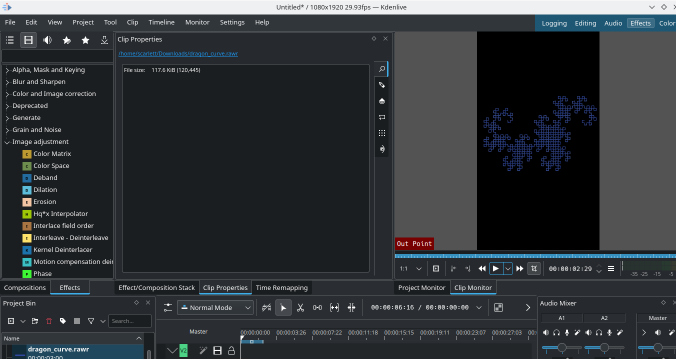
  • Kdenlive: Glaximate animations are now available! Closes bug 459338
Kdenlive with Glaximate animations!
  • Okular
  • Kgeography
  • Kpatience
  • Palapeli: Now launches! Closes bug 426177
  • Krdc: Now on arm64!
  • Kdiamond: Now with sound!
More coming tomorrow! Please consider donating! Helps keep the lights on so I can get more Kool software out to you. https://www.patreon.com/sgmoore Cash App $ScarlettMoore0903 Stripe: https://buy.stripe.com/28o16y3PHcISfaE8ww

25 October 2022

Arturo Borrero Gonz lez: Netfilter Workshop 2022 summary

Netfilter logo This is my report from the Netfilter Workshop 2022. The event was held on 2022-10-20/2022-10-21 in Seville, and the venue was the offices of Zevenet. We started on Thursday with Pablo Neira (head of the project) giving a short welcome / opening speech. The previous iteration of this event was in virtual fashion in 2020, two years ago. In the year 2021 we were unable to meet either in person or online. This year, the number of participants was just eight people, and this allowed the setup to be a bit more informal. We had kind of an un-conference style meeting, in which whoever had something prepared just went ahead and opened a topic for debate. In the opening speech, Pablo did a quick recap on the legal problems the Netfilter project had a few years ago, a topic that was settled for good some months ago, in January 2022. There were no news in this front, which was definitely a good thing. Moving into the technical topics, the workshop proper, Pablo started to comment on the recent developments to instrument a way to perform inner matching for tunnel protocols. The current implementation supports VXLAN, IPIP, GRE and GENEVE. Using nftables you can match packet headers that are encapsulated inside these protocols. He mentioned the design and the goals, that was to have a kernel space setup that allows adding more protocols by just patching userspace. In that sense, more tunnel protocols will be supported soon, such as IP6IP, UDP, and ESP. Pablo requested our opinion on whether if nftables should generate the matching dependencies. For example, if a given tunnel is UDP-based, a dependency match should be there otherwise the rule won t work as expected. The agreement was to assist the user in the setup when possible and if not, print clear error messages. By the way, this inner thing is pure stateless packet filtering. Doing inner-conntracking is an open topic that will be worked on in the future. Pablo continued with the next topic: nftables automatic ruleset optimizations. The times of linear ruleset evaluation are over, but some people have a hard time understanding / creating rulesets that leverage maps, sets, and concatenations. This is where the ruleset optimizations kick in: it can transform a given ruleset to be more optimal by using such advanced data structures. This is purely about optimizing the ruleset, not about validating the usefulness of it, which could be another interesting project. There were a couple of problems mentioned, however. The ruleset optimizer can be slow, O(n!) in worst case. And the user needs to use nested syntax. More improvements to come in the future. Next was Stefano Brivio s turn (Red Hat engineer). He had been involved lately in a couple of migrations to nftables, in particular libvirt and KubeVirt. We were pointed to https://libvirt.org/firewall.html, and Stefano walked us through the 3 or 4 different virtual networks that libvirt can create. He evaluated some options to generate efficient rulesets in nftables to instrument such networks, and commented on a couple of ideas: having a null matcher in nftables set expression. Or perhaps having kind of subsets, something similar to a view in a SQL database. The room spent quite a bit of time debating how the nft_lookup API could be extended to support such new search operations. We also discussed if having intermediate facilities such as firewalld could provide the abstraction levels that could make developers more comfortable. Using firewalld also may have the advantage that coordination between different system components writing ruleset to nftables is handled by firewalld itself and developers are freed of the responsibility of doing it right. Next was Fernando F. Mancera (Red Hat engineer). He wanted to improve error reporting when deleting table/chain/rules with nftables. In general, there are some inconsistencies on how tables can be deleted (or flushed). And there seems to be no correct way to make a single table go away with all its content in a single command. The room agreed in that the commands destroy table and delete table should be defined consistently, with the following meanings:
  • destroy: nuke the table, don t fail if it doesn t exist
  • delete: delete the table, but the command will fail if it doesn t exist
This topic diverted into another: how to reload/replace a ruleset but keep stateful information (such as counters). Next was Phil Sutter (Netfilter coreteam member and Red Hat engineer). He was interested in discussing options to make iptables-nft backward compatible. The use case he brought was simple: What happens if a container running iptables 1.8.7 creates a ruleset with features not supported by 1.8.6. A later container running 1.8.6 may fail to operate. Phil s first approach was to attach additional metadata into rules to assist older iptables-nft in decoding and printing the ruleset. But in general, there are no obvious or easy solutions to this problem. Some people are mixing different tooling version, and there is no way all cases can be predicted/covered. iptables-nft already refuses to work in some of the most basic failure scenarios. An other way to approach the issue could be to introduce some kind of support to print raw expressions in iptables-nft, like -m nft xyz. Which feels ugly, but may work. We also explored playing with the semantics of release version numbers. And another idea: store strings in the nft rule userdata area with the equivalent matching information for older iptables-nft. In fact, what Phil may have been looking for is not backwards but forward compatibility. Phil was undecided which path to follow, but perhaps the most common-sense approach is to fall back to a major release version bump (2.x.y) and declaring compatibility breakage with older iptables 1.x.y. That was pretty much it for the first day. We had dinner together and went to sleep for the next day. The room The second day was opened by Florian Westphal (Netfilter coreteam member and Red Hat engineer). Florian has been trying to improve nftables performance in kernels with RETPOLINE mitigations enabled. He commented that several workarounds have been collected over the years to avoid the performance penalty of such mitigations. The basic strategy is to avoid function indirect calls in the kernel. Florian also described how BPF programs work around this more effectively. And actually, Florian tried translating nf_hook_slow() to BPF. Some preliminary benchmarks results were showed, with about 2% performance improvement in MB/s and PPS. The flowtable infrastructure is specially benefited from this approach. The software flowtable infrastructure already offers a 5x performance improvement with regards the classic forwarding path, and the change being researched by Florian would be an addition on top of that. We then moved into discussing the meeting Florian had with Alexei in Zurich. My personal opinion was that Netfilter offers interesting user-facing interfaces and semantics that BPF does not. Whereas BPF may be more performant in certain scenarios. The idea of both things going hand in hand may feel natural for some people. Others also shared my view, but no particular agreement was reached in this topic. Florian will probably continue exploring options on that front. The next topic was opened by Fernando. He wanted to discuss Netfilter involvement in Google Summer of Code and Outreachy. Pablo had some personal stuff going on last year that prevented him from engaging in such projects. After all, GSoC is not fundamental or a priority for Netfilter. Also, Pablo mentioned the lack of support from others in the project for mentoring activities. There was no particular decision made here. Netfilter may be present again in such initiatives in the future, perhaps under the umbrella of other organizations. Again, Fernando proposed the next topic: nftables JSON support. Fernando shared his plan of going over all features and introduce programmatic tests from them. He also mentioned that the nftables wiki was incomplete and couldn t be used as a reference for missing tests. Phil suggested running the nftables python test-suite in JSON mode, which should complain about missing features. The py test suite should cover pretty much all statements and variations on how the nftables expression are invoked. Next, Phil commented on nftables xtables support. This is, supporting legacy xtables extensions in nftables. The most prominent problem was that some translations had some corner cases that resulted in a listed ruleset that couldn t be fed back into the kernel. Also, iptables-to-nftables translations can be sloppy, and the resulting rule won t work in some cases. In general, nft list ruleset nft -f may fail in rulesets created by iptables-nft and there is no trivial way to solve it. Phil also commented on potential iptables-tests.py speed-ups. Running the test suite may take very long time depending on the hardware. Phil will try to re-architect it, so it runs faster. Some alternatives had been explored, including collecting all rules into a single iptables-restore run, instead of hundreds of individual iptables calls. Next topic was about documentation on the nftables wiki. Phil is interested in having all nftables code-flows documented, and presented some improvements in that front. We are trying to organize all developer-oriented docs on a mediawiki portal, but the extension was not active yet. Since I worked at the Wikimedia Foundation, all the room stared at me, so at the end I kind of committed to exploring and enabling the mediawiki portal extension. Note to self: is this perhaps https://www.mediawiki.org/wiki/Portals ? Next presentation was by Pablo. He had a list of assorted topics for quick review and comment.
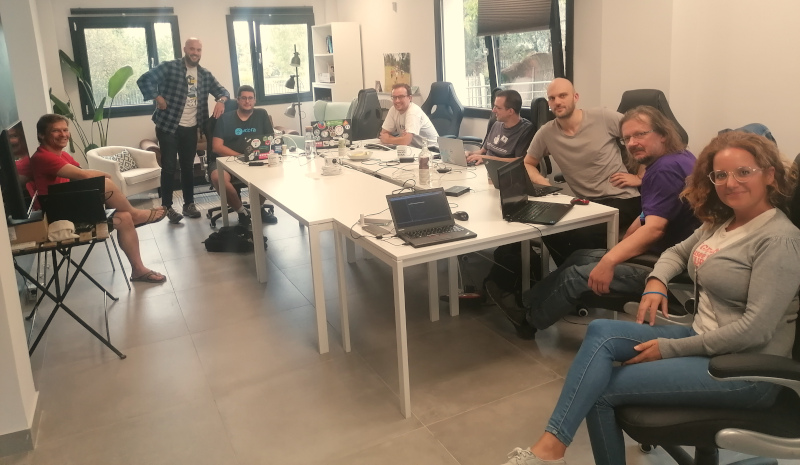
  • We discussed nftables accept/drop semantics. People that gets two or more rulesets from different software are requesting additional semantics here. A typical case is fail2ban integration. One option is quick accept (no further evaluation if accepted) and the other is lazy drop (don t actually drop the packet, but delay decision until the whole ruleset has been evaluated). There was no clear way to move forward with this.
  • A debate on nft userspace memory usage followed. Some people are running nftables on low end devices with very little memory (such as 128 MB). Pablo was exploring a potential solution: introducing struct constant_expr, which can reduce 12.5% mem usage.
  • Next we talked about repository licensing (or better, relicensing to GPLv2+). Pablo went over a list of files in the nftables tree which had diverging licenses. All people in the room agreed on this relicensing effort. A mention to the libreadline situation was made.
  • Another quick topic: a bogus EEXIST in nft_rbtree. Pablo & Stefano to work in a patch.
  • Next one was conntrack early drop in flowtable. Pablo is studying use cases for some legitimate UDP unidirectional flows (like RTP traffic).
  • Pablo and Stefano discussed pipapo not being atomic on updates. Stefano already looked into it, and one of the ideas was to introduce a new commit API for sets.
  • The last of the quick topics was an idea to have a global table in nftables. Or some global items, like sets. Folk in the community keep asking for this. Some ideas were discussed, like perhaps adding a family agnostic family. But then there would be a challenge: nftables would need to generate byte code that works in any of the hooks. There was no immediate way of addressing this. The idea of having templated tables/sets circulated again as a way of reusing data across namespaces/families.
Following this, a new topic was introduced by Stefano. He wanted to talk about nft_set_pipapo, documentation, what to do next, etc. He did a nice explanation of how the pipapo algorithm works for element inserts, lookups, and deletion. The source code is pretty well documented, by the way. He showed performance measurements of different data types being stored in the structure. After some lengthly debate on how to introduce changes without breaking usage for users, he declared some action items: writing more docs, addressing problems with non-atomic set reloads and a potential rework of nft_rbtree. After that, the next topic was kubernetes & netfilter , also by Stefano. Actually, this topic was very similar to what we already discussed regarding libvirt. Developers want to reduce packet matching effort, but also often don t leverage nftables most performant features, like sets, maps or concatenations. Some Red Hat developers are already working on replacing everything with native nftables & firewalld integrations. But some rules generators are very bad. Kubernetes (kube-proxy) is a known case. Developers simply won t learn how to code better ruleset generators. There was a good question floating around: What are people missing on first encounter with nftables? The Netfilter project doesn t have a training or marketing department or something like that. We cannot force-educate developers on how to use nftables in the right way. Perhaps we need to create a set of dedicated guidelines, or best practices, in the wiki for app developers that rely on nftables. Jozsef Kadlecsik (Netfilter coreteam) supported this idea, and suggested going beyond: such documents should be written exclusively from the nftables point of view: stop approaching the docs as a comparison to the old iptables semantics. Related to that last topic, next was Laura Garc a (Zevenet engineer, and venue host). She shared the same information as she presented in the Kubernetes network SIG in August 2020. She walked us through nftlb and kube-nftlb, a proof-of-concept replacement for kube-proxy based on nftlb that can outperform it. For whatever reason, kube-nftlb wasn t adopted by the upstream kubernetes community. She also covered latest changes to nftlb and some missing features, such as integration with nftables egress. nftlb is being extended to be a full proxy service and a more robust overall solution for service abstractions. In a nutshell, nftlb uses a templated ruleset and only adds elements to sets, which is exactly the right usage of the nftables framework. Some other projects should follow its example. The performance numbers are impressive, and from the early days it was clear that it was outperforming classical LVS-DSR by 10x. I used this opportunity to bring a topic that I wanted to discuss. I ve seen some SRE coworkers talking about katran as a replacement for traditional LVS setups. This software is a XDP/BPF based solution for load balancing. I was puzzled about what this software had to offer versus, for example, nftlb or any other nftables-based solutions. I commented on the highlighs of katran, and we discussed the nftables equivalents. nftlb is a simple daemon which does everything using a JSON-enabled REST API. It is already packaged into Debian, ready to use, whereas katran feels more like a collection of steps that you need to run in a certain order to get it working. All the hashing, caching, HA without state sharing, and backend weight selection features of katran are already present in nftlb. To work on a pure L3/ToR datacenter network setting, katran uses IPIP encapsulation. They can t just mangle the MAC address as in traditional DSR because the backend server is on a different L3 domain. It turns out nftables has a nft_tunnel expression that can do this encapsulation for complete feature parity. It is only available in the kernel, but it can be made available easily on the userspace utility too. Also, we discussed some limitations of katran, for example, inability to handle IP fragmentation, IP options, and potentially others not documented anywhere. This seems to be common with XDP/BPF programs, because handling all possible network scenarios would over-complicate the BPF programs, and at that point you are probably better off by using the normal Linux network stack and nftables. In summary, we agreed that nftlb can pretty much offer the same as katran, in a more flexible way. Group photo Finally, after many interesting debates over two days, the workshop ended. We all agreed on the need for extending it to 3 days next time, since 2 days feel too intense and too short for all the topics worth discussing. That s all on my side! I really enjoyed this Netfilter workshop round.
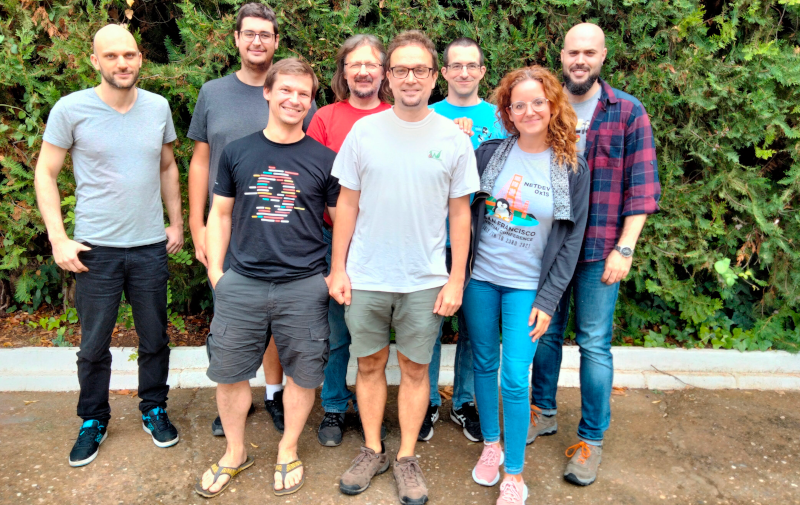

17 October 2022

Scarlett Gately Moore: New KDE Gear snaps in the works

KDE Extras 22.08.2 was released! https://kde.org/announcements/gear/22.08.2/ So I am working on new snaps! This release also includes a new content snap I made with frameworks 5.98 and Qt 5.15.6. With all the new goodness, I am (Re) testing all snaps to make sure they are working as expected. You can find a link to all of my snap releases from the KDE Snap Store Releases on the menu above. Some notable releases that have new fixes and improvements are:
  • Kalzium: Molecular editor now works!
  • Artikulate: Now works on arm64 ( eg. Rasberry Pi )
  • Dragon: Now works on arm64
  • Minuet: Now works on arm64
New 22.08.2 releases re-tested on arm64 and amd64:
  • Picmi
  • Kturtle
  • Ksudoku
  • Konquest
More coming soon! Please consider donating! I am seeking employment, but until then, I need assistance with gas to power my generator to power my laptop. Solar doesn t work great in these coming winter months  Thank you for your consideration! https://www.patreon.com/sgmoore

9 October 2022

Emmanuel Kasper: Markdown CMS or Wiki for smallish website

Following my markdown craze, I am slowly starting to move my Dokuwiki based homesite to Grav, a flat file Markdown CMS. PHP will be always be PHP, but the documentation and usage seem sound (all config is either via an admin panel or editing YAML files) and it has professional support. I intend to use this Debian based Dockerfile and Podman to deploy Grav. Pandoc the talented document converter, hat support for Dokuwiki syntax, Markdown and PHP Markdown extra, so I expected limited hurdles when converting the data.

7 October 2022

Reproducible Builds: Reproducible Builds in September 2022

Welcome to the September 2022 report from the Reproducible Builds project! In our reports we try to outline the most important things that we have been up to over the past month. As a quick recap, whilst anyone may inspect the source code of free software for malicious flaws, almost all software is distributed to end users as pre-compiled binaries. If you are interested in contributing to the project, please visit our Contribute page on our website.
David A. Wheeler reported to us that the US National Security Agency (NSA), Cybersecurity and Infrastructure Security Agency (CISA) and the Office of the Director of National Intelligence (ODNI) have released a document called Securing the Software Supply Chain: Recommended Practices Guide for Developers (PDF). As David remarked in his post to our mailing list, it expressly recommends having reproducible builds as part of advanced recommended mitigations . The publication of this document has been accompanied by a press release.
Holger Levsen was made aware of a small Microsoft project called oss-reproducible. Part of, OSSGadget, a larger collection of tools for analyzing open source packages , the purpose of oss-reproducible is to:
analyze open source packages for reproducibility. We start with an existing package (for example, the NPM left-pad package, version 1.3.0), and we try to answer the question, Do the package contents authentically reflect the purported source code?
More details can be found in the README.md file within the code repository.
David A. Wheeler also pointed out that there are some potential upcoming changes to the OpenSSF Best Practices badge for open source software in relation to reproducibility. Whilst the badge programme has three certification levels ( passing , silver and gold ), the gold level includes the criterion that The project MUST have a reproducible build . David reported that some projects have argued that this reproducibility criterion should be slightly relaxed as outlined in an issue on the best-practices-badge GitHub project. Essentially, though, the claim is that the reproducibility requirement doesn t make sense for projects that do not release built software, and that timestamp differences by themselves don t necessarily indicate malicious changes. Numerous pragmatic problems around excluding timestamps were raised in the discussion of the issue.
Sonatype, a pioneer of software supply chain management , issued a press release month to report that they had found:
[ ] a massive year-over-year increase in cyberattacks aimed at open source project ecosystems. According to early data from Sonatype s 8th annual State of the Software Supply Chain Report, which will be released in full this October, Sonatype has recorded an average 700% jump in repository attacks over the last three years.
More information is available in the press release.
A number of changes were made to the Reproducible Builds website and documentation this month, including Chris Lamb adding a redirect from /projects/ to /who/ in order to keep old or archived links working [ ], Jelle van der Waa added a Rust programming language example for SOURCE_DATE_EPOCH [ ][ ] and Mattia Rizzolo included Protocol Labs amongst our project-level sponsors [ ].

Debian There was a large amount of reproducibility work taking place within Debian this month:
  • The nfft source package was removed from the archive, and now all packages in Debian bookworm now have a corresponding .buildinfo file. This can be confirmed and tracked on the associated page on the tests.reproducible-builds.org site.
  • Vagrant Cascadian announced on our mailing list an informal online sprint to help clear the huge backlog of reproducible builds patches submitted by performing NMU (Non-Maintainer Uploads). The first such sprint took place on September 22nd with the following results:
    • Holger Levsen:
      • Mailed #1010957 in man-db asking for an update and whether to remove the patch tag for now. This was subsequently removed and the maintainer started to address the issue.
      • Uploaded gmp to DELAYED/15, fixing #1009931.
      • Emailed #1017372 in plymouth and asked for the maintainer s opinion on the patch. This resulted in the maintainer improving Vagrant s original patch (and uploading it) as well as filing an issue upstream.
      • Uploaded time to DELAYED/15, fixing #983202.
    • Vagrant Cascadian:
      • Verify and updated patch for mylvmbackup (#782318)
      • Verified/updated patches for libranlip. (#788000, #846975 & #1007137)
      • Uploaded libranlip to DELAYED/10.
      • Verified patch for cclive. (#824501)
      • Uploaded cclive to DELAYED/10.
      • Vagrant was unable to reproduce the underlying issue within #791423 (linuxtv-dvb-apps) and so the bug was marked as done .
      • Researched #794398 (in clhep).
    The plan is to repeat these sprints every two weeks, with the next taking place on Thursday October 6th at 16:00 UTC on the #debian-reproducible IRC channel.
  • Roland Clobus posted his 13th update of the status of reproducible Debian ISO images on our mailing list. During the last month, Roland ensured that the live images are now automatically fed to openQA for automated testing after they have been shown to be reproducible. Additionally Roland asked on the debian-devel mailing list about a way to determine the canonical timestamp of the Debian archive. [ ]
  • Following up on last month s work on reproducible bootstrapping, Holger Levsen filed two bugs against the debootstrap and cdebootstrap utilities. (#1019697 & #1019698)
Lastly, 44 reviews of Debian packages were added, 91 were updated and 17 were removed this month adding to our knowledge about identified issues. A number of issue types have been updated too, including the descriptions of cmake_rpath_contains_build_path [ ], nondeterministic_version_generated_by_python_param [ ] and timestamps_in_documentation_generated_by_org_mode [ ]. Furthermore, two new issue types were created: build_path_used_to_determine_version_or_package_name [ ] and captures_build_path_via_cmake_variables [ ].

Other distributions In openSUSE, Bernhard M. Wiedemann published his usual openSUSE monthly report.

diffoscope diffoscope is our in-depth and content-aware diff utility. Not only can it locate and diagnose reproducibility issues, it can provide human-readable diffs from many kinds of binary formats. This month, Chris Lamb prepared and uploaded versions 222 and 223 to Debian, as well as made the following changes:
  • The cbfstools utility is now provided in Debian via the coreboot-utils package so we can enable that functionality within Debian. [ ]
  • Looked into Mach-O support.
  • Fixed the try.diffoscope.org service by addressing a compatibility issue between glibc/seccomp that was preventing the Docker-contained diffoscope instance from spawning any external processes whatsoever [ ]. I also updated the requirements.txt file, as some of the specified packages were no longer available [ ][ ].
In addition Jelle van der Waa added support for file version 5.43 [ ] and Mattia Rizzolo updated the packaging:
  • Also include coreboot-utils in the Build-Depends and Test-Depends fields so that it is available for tests. [ ]
  • Use pep517 and pip to load the requirements. [ ]
  • Remove packages in Breaks/Replaces that have been obsoleted since the release of Debian bullseye. [ ]

Reprotest reprotest is our end-user tool to build the same source code twice in widely and deliberate different environments, and checking whether the binaries produced by the builds have any differences. This month, reprotest version 0.7.22 was uploaded to Debian unstable by Holger Levsen, which included the following changes by Philip Hands:
  • Actually ensure that the setarch(8) utility can actually execute before including an architecture to test. [ ]
  • Include all files matching *.*deb in the default artifact_pattern in order to archive all results of the build. [ ]
  • Emit an error when building the Debian package if the Debian packaging version does not patch the Python version of reprotest. [ ]
  • Remove an unneeded invocation of the head(1) utility. [ ]

Upstream patches The Reproducible Builds project detects, dissects and attempts to fix as many currently-unreproducible packages as possible. We endeavour to send all of our patches upstream where appropriate. This month, we wrote a large number of such patches, including:

Testing framework The Reproducible Builds project runs a significant testing framework at tests.reproducible-builds.org in order to check packages and other artifacts for reproducibility. This month, however, the following changes were made:
  • Holger Levsen:
    • Add a job to build reprotest from Git [ ] and use the correct Git branch when building it [ ].
  • Mattia Rizzolo:
    • Enable syncing of results from building live Debian ISO images. [ ]
    • Use scp -p in order to preserve modification times when syncing live ISO images. [ ]
    • Apply the shellcheck shell script analysis tool. [ ]
    • In a build node wrapper script, remove some debugging code which was messing up calling scp(1) correctly [ ] and consquently add support to use both scp -p and regular scp [ ].
  • Roland Clobus:
    • Track and handle the case where the Debian archive gets updated between two live image builds. [ ]
    • Remove a call to sudo(1) as it is not (or no longer) required to delete old live-build results. [ ]

Contact As ever, if you are interested in contributing to the Reproducible Builds project, please visit our Contribute page on our website. However, you can get in touch with us via:

3 October 2022

Shirish Agarwal: Death Certificate, Legal Heir, Succession Certificate, and Indian Bureaucracy.

Death Certificate After waiting for almost two, two, and a half months, I finally got mum s death certificate last week. A part of me was saddened as it felt like I was nailing her or putting nails to the coffin or whatever it is, (even though I m an Agarwal) I just felt sad and awful. I was told just get a death certificate and your problems will be over. Some people wanted me to give some amount under the table or something which I didn t want to party of and because of that perhaps it took a month, month and a half more as I came to know later that it had been issued almost a month and a half back. The inflation over the last 8 years of the present Govt. has made the corrupt even more corrupt, all the while projecting and telling others that the others are corrupt. There had been also a few politicians who were caught red-handed but then pieces of evidence & witnesses vanish overnight. I don t really wanna go in that direction as it would make for an unpleasant reading with no solutions at all unless the present Central Govt. goes out.

Intestate and Will I came to know the word Intestate. This was a new word/term for me. A lookup told me that intestate means a person dying without putting a will. That legal term comes from U.K. law. I had read a long long time back that almost all our laws have and were made or taken from U.K. law. IIRC, massive sections of the CRPC Act even today have that colonial legacy. While in its (BJP) manifesto that had been shared with the public at the time of the election, they had shared that they will remove a whole swathe of laws that don t make sense in today s environment. But when hard and good questions were asked, they trimmed a few, modified a few, and left most of them as it is. Sadly, most of the laws that they did modify increased Government control over people instead of decreasing, It s been 8 years and yet we still don t have a Privacy law. They had made something but it was too vague and would have invited suits from day 1 so pretty much on backburner :(. A good insight into what I mean is an article in the Hindu I read a few days back. Once you read that article, I am sure you will have as many questions as I have but sadly no answers. Law is not supposed to be partisan but today it is. I could cite examples from both the U.S. and UK courts about progressive judgments or the way they go about it, but then again when our people think they know better  But this again does not help me apart from setting some kind of background of where we are.) I have on this blog also shared how Africans have been setting new records in transparency and they did it almost 5 years back. For those new to the blog, African countries have been now broadcasting proceedings of their SC for almost 5 years now. I noticed it when privacy law was being debated and a few handles that I follow on Twitter and elsewhere had gone and given their submission in their SC. It was fascinating to not only hear but also read about the case from multiple viewpoints. And just to remind people, I am sharing all of this from Pune, Maharashtra which is the second-biggest city in Maharashtra that has something like six million people and probably a million or more transitory students, and casual laborers but then again that doesn t help me other than providing a kind of context to what I m sharing.. Now a couple of years back or more I had asked mum to make a will. If she wanted to bequeath something to somebody else she could do that, had shared about that. There was some article in Indian Express or elsewhere that told people what they should be doing, especially if they had cost the barrier of age 60. Now for reasons best known to her, she refused and now I have to figure out what is the right way to go about doing things.

Twitter Experiences Now before Twitter, a few people had been asking me about having a legal heir certificate, while others are asking about a succession certificate and some claim a Death Certificate is enough. Now I asked the same question on Twitter hoping at the max of 5-10 responses but was overwhelmed by the response. I got something like 50-60 odd replies. Probably, one of the better responses was given by Dr. Paras Jain who shared the following

Answer is qualified Movable assets nothing required Bank LIC flat with society nomination done nothing required except death certificate. However, each will insist on a notarized indemnity bond If the nomination is not done. Depends on whims & fancy of each mind legal heir certificate,+ all Dr. Paras Jain. (cleared up the grammar a little, otherwise, views are of Dr. Paras.) What was interesting for me is that most people just didn t give me advice, many of them also shared their own experiences or what they did or went through. I was surprised to learn e.g. that a succession certificate can take up to 6 months or more. Part of me isn t surprised to learn that as do know we have a huge pendency of cases in High Courts, District Courts leading all the way to the Supreme Court. India Today shared a brief article sharing the same and similar issues. Such delays have become far too common now

Supertech Demolition and Others Over the last couple of months, a number of high-profile demolitions have taken place and in most cases, the loss has been of homebuyers. See for e.g. the case of Supertech. A much more detailed article was penned by Moneylife. There were a few Muslims whose homes were demolished just a couple of months back that were being celebrated, but now just 2-3 days back a politician by the name of Shrikant Tyagi, a BJP leader, his flat was partly demolished and there was a lot of hue and cry. Although we shouldn t be discussing on the basis of religion but legality, somehow the idea has been put that there are two kinds of laws, one for the majority, the other for the minority. And this has been going on for the last 8 odd years, hence you see different reactions to the same incidents instead of similar reactions. In all the cases, no strictures are passed either against the Municipality or against lenders. The most obvious question, let s say for argument s sake, I was a homeowner in Supertech. I bought a flat for say 10 lakhs in 2012. According to the courts, today I am supposed to get 22 lakhs at 12% simple interest for 10 years. Let s say even if the builder was in a position and does honor the order, the homeowner will not get a house in the same area as the circle rate would probably have quadrupled by then at the very least. The circle rate alone might be the above amount. The reason is very simple, a builder buys land on the cheap when there is no development around. His/her/their whole idea is once development happens due to other builders also building flats, the whole area gets developed and they are able to sell the flats at a premium. Even Circle rates get affected as the builder pays below the table and asks the officers of the municipal authority to hike the circle rate every few months. Again, wouldn t go into much depth as the whole thing is rotten to the core. There are many such projects. I have shared Krishnaraj Rao s videos on this blog a few times. I am sure there are a few good men like him. At the end, sadly this is where we are  P.S. I haven t shared any book reviews this week as this post itself has become too long. I probably may blog about a couple of books in the next couple of days, till later.

Paul Wise: FLOSS Activities September 2022

Focus This month I didn't have any particular focus. I just worked on issues in my info bubble.

Changes

Issues

Review

Administration
  • Debian QA services: deploy changes
  • Debian wiki: approve accounts

Communication
  • Respond to queries from Debian users and contributors on the mailing lists and IRC

Sponsors All work was done on a volunteer basis.

Next.

Previous.