Search Results: "jam"

12 November 2024

James Bromberger: My own little server

In 2004, I was living in London, and decided it was time I had my own little virtual private server somewhere online. As a Debian developer since the start of 2000, it had to be Debian, and it still is This was before cloud as we know it today. Virtual Private Servers (VPS) was a Continue reading "My own little server"

10 November 2024

Reproducible Builds: Reproducible Builds in October 2024

Welcome to the October 2024 report from the Reproducible Builds project. Our reports attempt to outline what we ve been up to over the past month, highlighting news items from elsewhere in tech where they are related. As ever, if you are interested in contributing to the project, please visit our Contribute page on our website. Table of contents:
  1. Beyond bitwise equality for Reproducible Builds?
  2. Two Ways to Trustworthy at SeaGL 2024
  3. Number of cores affected Android compiler output
  4. On our mailing list
  5. diffoscope
  6. IzzyOnDroid passed 25% reproducible apps
  7. Distribution work
  8. Website updates
  9. Reproducibility testing framework
  10. Supply-chain security at Open Source Summit EU
  11. Upstream patches

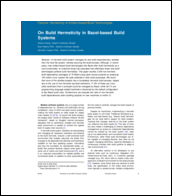
Beyond bitwise equality for Reproducible Builds? Jens Dietrich, Tim White, of Victoria University of Wellington, New Zealand along with Behnaz Hassanshahi and Paddy Krishnan of Oracle Labs Australia published a paper entitled Levels of Binary Equivalence for the Comparison of Binaries from Alternative Builds :
The availability of multiple binaries built from the same sources creates new challenges and opportunities, and raises questions such as: Does build A confirm the integrity of build B? or Can build A reveal a compromised build B? . To answer such questions requires a notion of equivalence between binaries. We demonstrate that the obvious approach based on bitwise equality has significant shortcomings in practice, and that there is value in opting for alternative notions. We conceptualise this by introducing levels of equivalence, inspired by clone detection types.
A PDF of the paper is freely available.

Two Ways to Trustworthy at SeaGL 2024 On Friday 8th November, Vagrant Cascadian will present a talk entitled Two Ways to Trustworthy at SeaGL in Seattle, WA. Founded in 2013, SeaGL is a free, grassroots technical summit dedicated to spreading awareness and knowledge about free source software, hardware and culture. Vagrant s talk:
[ ] delves into how two project[s] approaches fundamental security features through Reproducible Builds, Bootstrappable Builds, code auditability, etc. to improve trustworthiness, allowing independent verification; trustworthy projects require little to no trust. Exploring the challenges that each project faces due to very different technical architectures, but also contextually relevant social structure, adoption patterns, and organizational history should provide a good backdrop to understand how different approaches to security might evolve, with real-world merits and downsides.

Number of cores affected Android compiler output Fay Stegerman wrote that the cause of the Android toolchain bug from September s report that she reported to the Android issue tracker has been found and the bug has been fixed.
the D8 Java to DEX compiler (part of the Android toolchain) eliminated a redundant field load if running the class s static initialiser was known to be free of side effects, which ended up accidentally depending on the sharding of the input, which is dependent on the number of CPU cores used during the build.
To make it easier to understand the bug and the patch, Fay also made a small example to illustrate when and why the optimisation involved is valid.

On our mailing list On our mailing list this month:

diffoscope diffoscope is our in-depth and content-aware diff utility that can locate and diagnose reproducibility issues. This month, Chris Lamb made the following changes, including preparing and uploading versions 279, 280, 281 and 282 to Debian:
  • Ignore errors when listing .ar archives (#1085257). [ ]
  • Don t try and test with systemd-ukify in the Debian stable distribution. [ ]
  • Drop Depends on the deprecated python3-pkg-resources (#1083362). [ ]
In addition, Jelle van der Waa added support for Unified Kernel Image (UKI) files. [ ][ ][ ] Furthermore, Vagrant Cascadian updated diffoscope in GNU Guix to version 282. [ ][ ]

IzzyOnDroid passed 25% reproducible apps The IzzyOnDroid project has reached a good milestone by reaching over 25% of the ~1,200 Android apps provided by their repository (of official APKs built by the original application developers) having been confirmed to be reproducible by a rebuilder.

Distribution work In Debian this month:
  • Holger Levsen uploaded devscripts version 2.24.2, including many changes to the debootsnap, debrebuild and reproducible-check scripts. This is the first time that debrebuild actually works (using sbuild s unshare backend). As part of this, Holger also fixed an issue in the reproducible-check script where a typo in the code led to incorrect results [ ]
  • Recently, a news entry was added to snapshot.debian.org s homepage, describing the recent changes that made the system stable again:
    The new server has no problems keeping up with importing the full archives on every update, as each run finishes comfortably in time before it s time to run again. [While] the new server is the one doing all the importing of updated archives, the HTTP interface is being served by both the new server and one of the VM s at LeaseWeb.
    The entry list a number of specific updates surrounding the API endpoints and rate limiting.
  • Lastly, 12 reviews of Debian packages were added, 3 were updated and 18 were removed this month adding to our knowledge about identified issues.
Elsewhere in distribution news, Zbigniew J drzejewski-Szmek performed another rebuild of Fedora 42 packages, with the headline result being that 91% of the packages are reproducible. Zbigniew also reported a reproducibility problem with QImage. Finally, in openSUSE, Bernhard M. Wiedemann published another report for that distribution.

Website updates There were an enormous number of improvements made to our website this month, including:
  • Alba Herrerias:
    • Improve consistency across distribution-specific guides. [ ]
    • Fix a number of links on the Contribute page. [ ]
  • Chris Lamb:
  • hulkoba
  • James Addison:
    • Huge and significant work on a (as-yet-merged) quickstart guide to be linked from the homepage [ ][ ][ ][ ][ ]
    • On the homepage, link directly to the Projects subpage. [ ]
    • Relocate dependency-drift notes to the Volatile inputs page. [ ]
  • Ninette Adhikari:
    • Add a brand new Success stories page that highlights the success stories of Reproducible Builds, showcasing real-world examples of projects shipping with verifiable, reproducible builds . [ ][ ][ ][ ][ ][ ]
  • Pol Dellaiera:
    • Update the website s README page for building the website under NixOS. [ ][ ][ ][ ][ ]
    • Add a new academic paper citation. [ ]
Lastly, Holger Levsen filed an extensive issue detailing a request to create an overview of recommendations and standards in relation to reproducible builds.

Reproducibility testing framework The Reproducible Builds project operates a comprehensive testing framework running primarily at tests.reproducible-builds.org in order to check packages and other artifacts for reproducibility. In October, a number of changes were made by Holger Levsen, including:
  • Add a basic index.html for rebuilderd. [ ]
  • Update the nginx.conf configuration file for rebuilderd. [ ]
  • Document how to use a rescue system for Infomaniak s OpenStack cloud. [ ]
  • Update usage info for two particular nodes. [ ]
  • Fix up a version skew check to fix the name of the riscv64 architecture. [ ]
  • Update the rebuilderd-related TODO. [ ]
In addition, Mattia Rizzolo added a new IP address for the inos5 node [ ] and Vagrant Cascadian brought 4 virt nodes back online [ ].

Supply-chain security at Open Source Summit EU The Open Source Summit EU took place recently, and covered plenty of topics related to supply-chain security, including:

Upstream patches The Reproducible Builds project detects, dissects and attempts to fix as many currently-unreproducible packages as possible. We endeavour to send all of our patches upstream where appropriate. This month, we wrote a large number of such patches, including:

Finally, If you are interested in contributing to the Reproducible Builds project, please visit our Contribute page on our website. However, you can get in touch with us via:

8 November 2024

Freexian Collaborators: Debian Contributions: October s report (by Anupa Ann Joseph)

Debian Contributions: 2024-10 Contributing to Debian is part of Freexian s mission. This article covers the latest achievements of Freexian and their collaborators. All of this is made possible by organizations subscribing to our Long Term Support contracts and consulting services.

rebootstrap, by Helmut Grohne After significant changes earlier this year, the state of architecture cross bootstrap is normalizing again. More and more architectures manage to complete rebootstrap testing successfully again. Here are two examples of what kind of issues the bootstrap testing identifies. At some point, libpng1.6 would fail to cross build on musl architectures whereas it would succeed on other ones failing to locate zlib. Adding --debug-find to the cmake invocation eventually revealed that it would fail to search in /usr/lib/<triplet>, which is the default library path. This turned out to be a bug in cmake assuming that all linux systems use glibc. libpng1.6 also gained a baseline violation for powerpc and ppc64 by enabling the use of AltiVec there. The newt package would fail to cross build for many 32-bit architectures whereas it would succeed for armel and armhf due to -Wincompatible-pointer-types. It turns out that this flag was turned into -Werror and it was compiling with a warning earlier. The actual problem is a difference in signedness between wchar_t and FriBidChar (aka uint32_t) and actually affects native building on i386.

Miscellaneous contributions
  • Helmut sent 35 patches for cross build failures.
  • Stefano Rivera uploaded the Python 3.13.0 final release.
  • Stefano continued to rebuild Python packages with C extensions using Python 3.13, to catch compatibility issues before the 3.13-add transition starts.
  • Stefano uploaded new versions of a handful of Python packages, including: dh-python, objgraph, python-mitogen, python-truststore, and python-virtualenv.
  • Stefano packaged a new release of mkdocs-macros-plugin, which required packaging a new Python package for Debian, python-super-collections (now in NEW review).
  • Stefano helped the mini-DebConf Online Brazil get video infrastructure up and running for the event. Unfortunately, Debian s online-DebConf setup has bitrotted over the last couple of years, and it eventually required new temporary Jitsi and Jibri instances.
  • Colin Watson fixed a number of autopkgtest failures to get ansible back into testing.
  • Colin fixed an ssh client failure in certain cases when using GSS-API key exchange, and added an integration test to ensure this doesn t regress in future.
  • Colin worked on the Python 3.13 transition, fixing problems related to it in 15 packages. This included upstream work in a number of packages (postgresfixture, python-asyncssh, python-wadllib).
  • Colin upgraded 41 Python packages to new upstream versions.
  • Carles improved po-debconf-manager: now it can create merge requests to Salsa automatically (created 17, new batch coming this month), imported almost all the packages with debconf translation templates whose VCS is Salsa (currently 449 imported), added statistics per package and language, improved command line interface options. Performed user support fixing different issues. Also prepared an abstract for the talk at MiniDebConf Toulouse.
  • Santiago Ruano Rinc n continued the organization work for the DebConf 25 conference, to be held in Brest, France. Part of the work relates to the initial edits of the sponsoring brochure. Thanks to Benjamin Somers who finalized the French and English versions.
  • Rapha l forwarded a couple of zim and hamster bugs to the upstream developers, and tried to diagnose a delayed startup of gdm on his laptop (cf #1085633).
  • On behalf of the Debian Publicity Team, Anupa interviewed 7 women from the Debian community, old and new contributors. The interview was published in Bits from Debian.

4 November 2024

Ravi Dwivedi: Asante Kenya for a Good Time

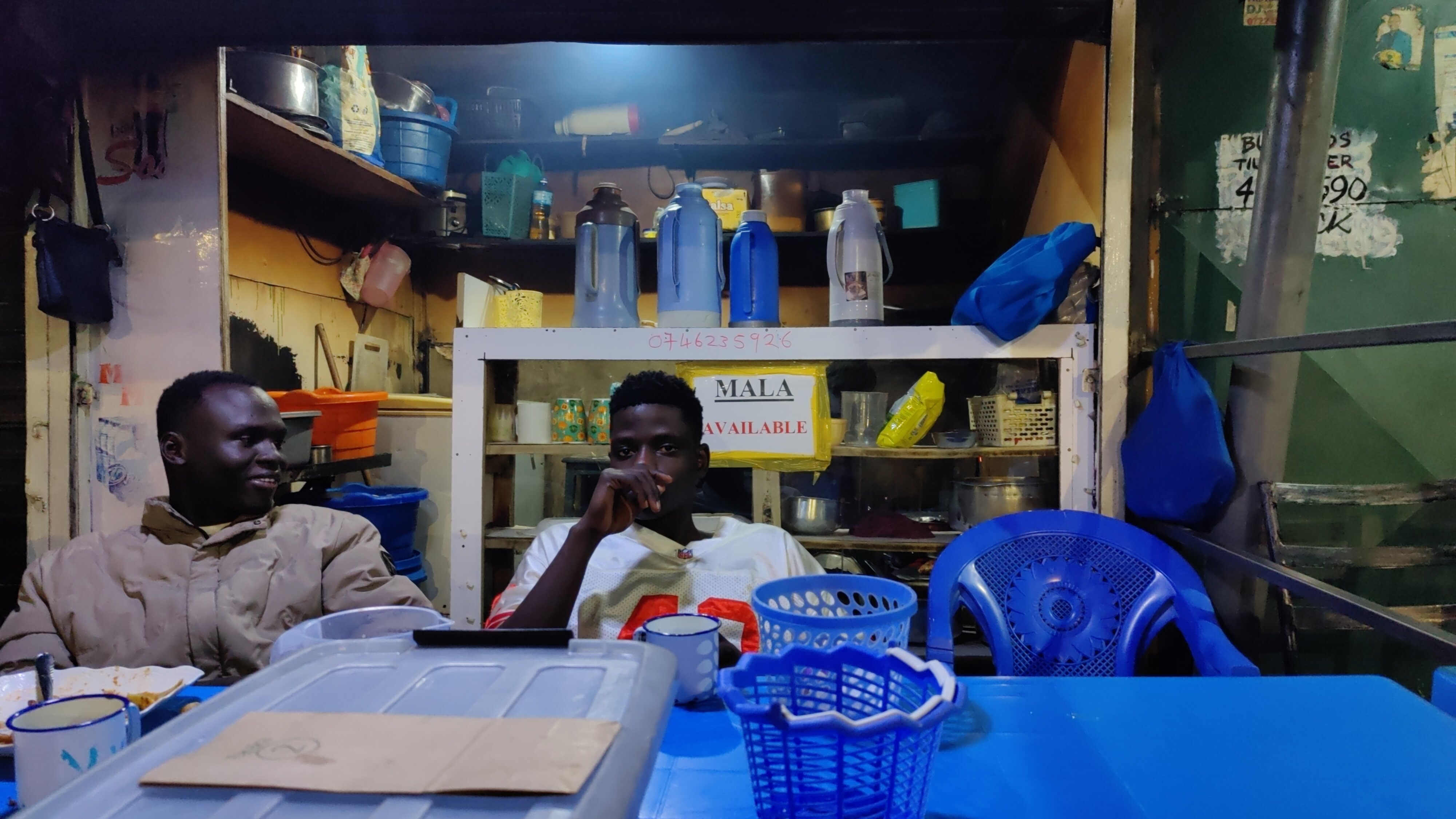
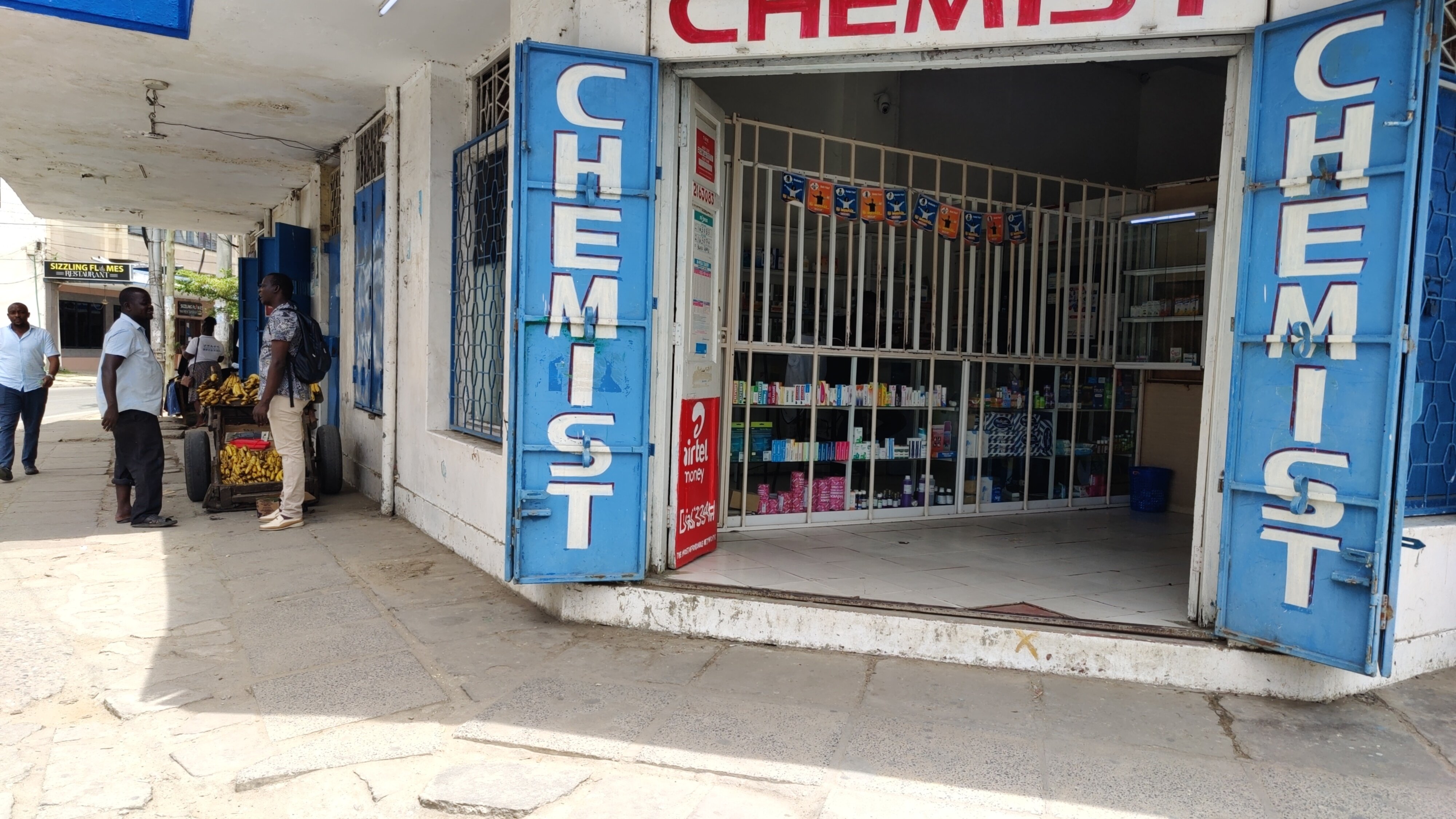
In September of this year, I visited Kenya to attend the State of the Map conference. I spent six nights in the capital Nairobi, two nights in Mombasa, and one night on a train. I was very happy with the visa process being smooth and quick. Furthermore, I stayed at the Nairobi Transit Hotel with other attendees, with Ibtehal from Bangladesh as my roommate. One of the memorable moments was the time I spent at a local coffee shop nearby. We used to go there at midnight, despite the grating in the shops suggesting such adventures were unsafe. Fortunately, nothing bad happened, and we were rewarded with a fun time with the locals.
The coffee shop Ibtehal and me used to visit during the midnight
Grating at a chemist shop in Mombasa, Kenya
The country lies on the equator, which might give the impression of extremely hot temperatures. However, Nairobi was on the cooler side (10 25 degrees Celsius), and I found myself needing a hoodie, which I bought the next day. It also served as a nice souvenir, as it had an outline of the African map printed on it. I also bought a Safaricom SIM card for 100 shillings and recharged it with 1000 shillings for 8 GB internet with 5G speeds and 400 minutes talk time.

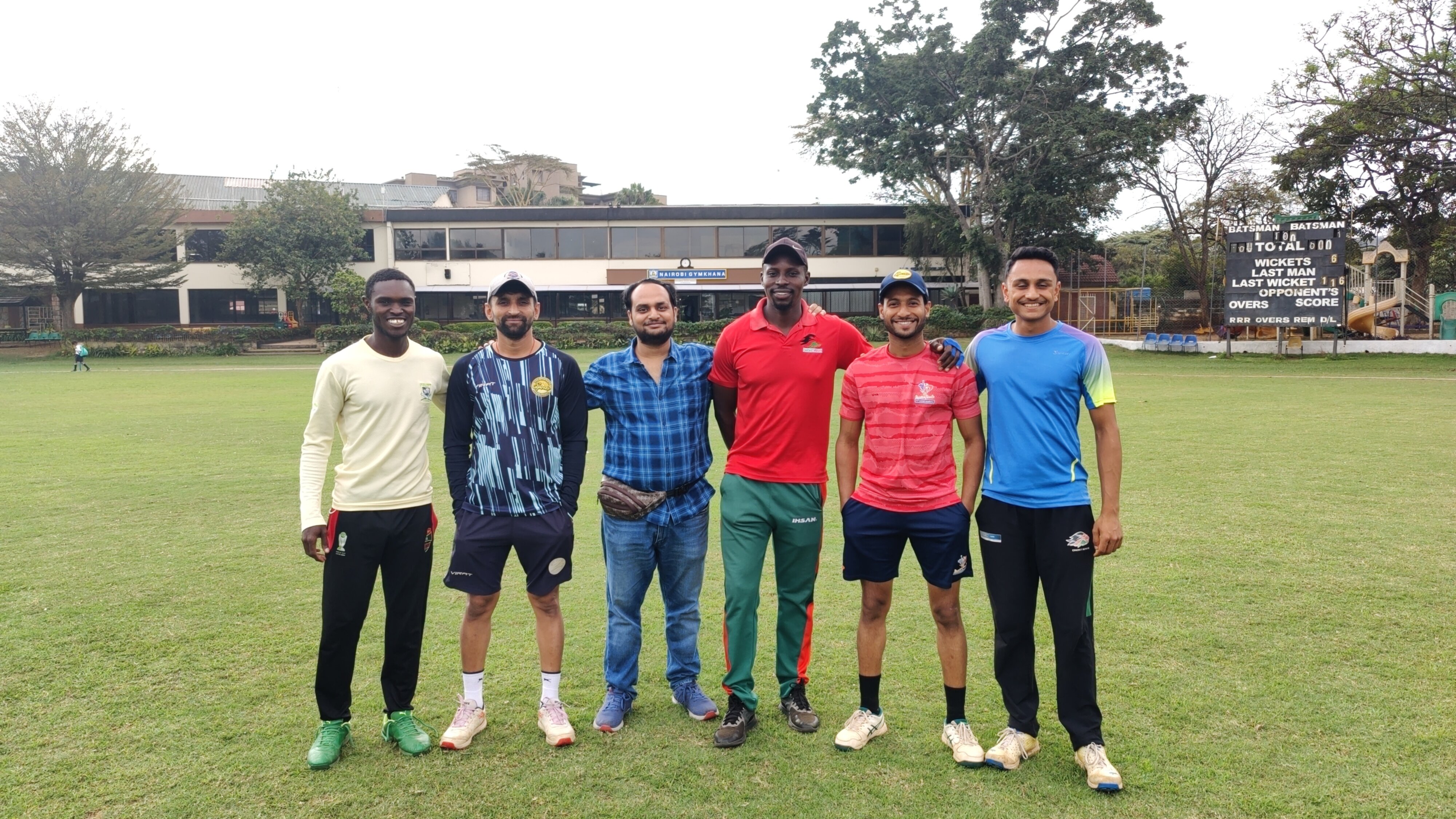
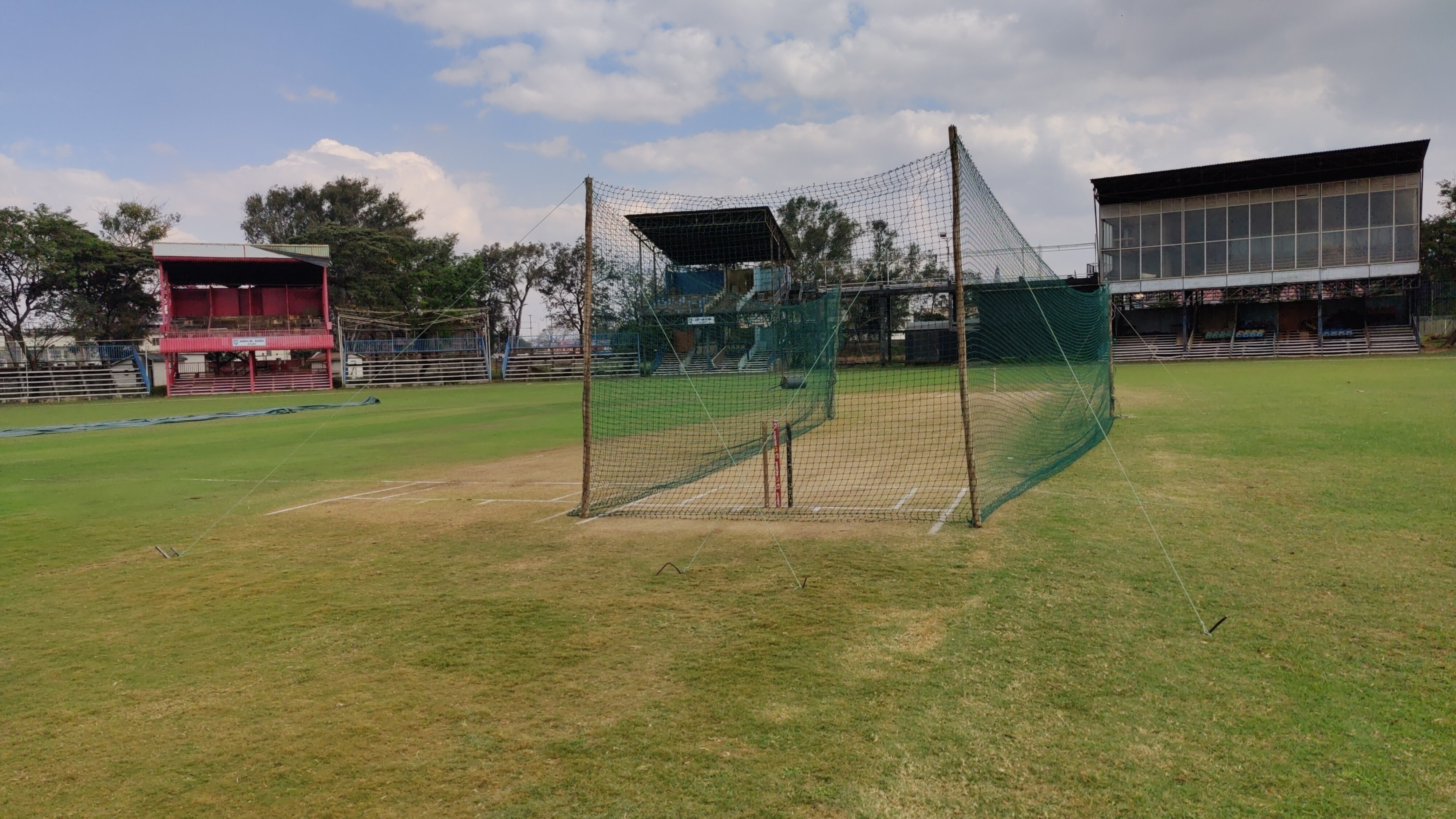
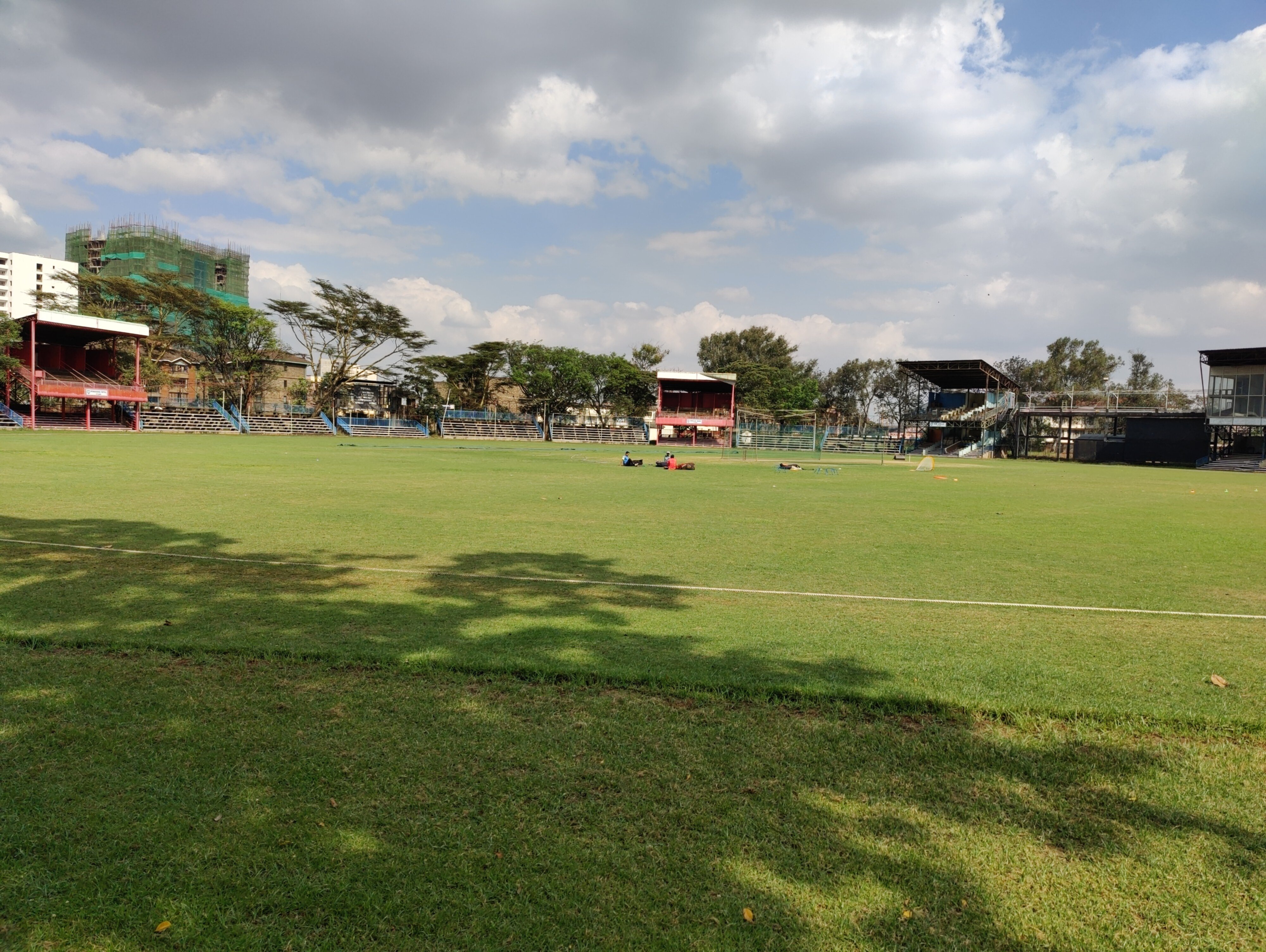
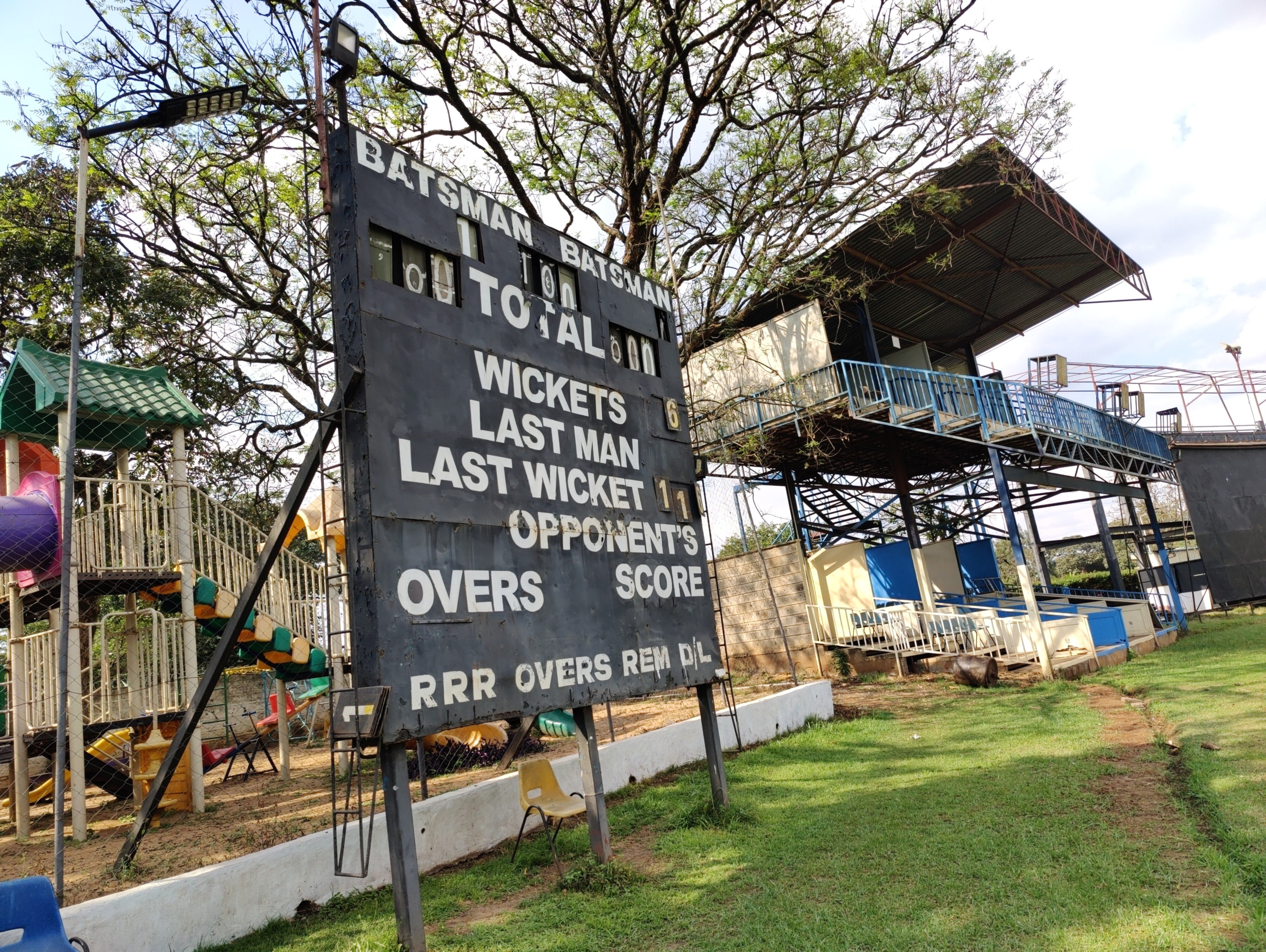
A visit to Nairobi s Historic Cricket Ground On this trip, I got a unique souvenir that can t be purchased from the market a cricket jersey worn in an ODI match by a player. The story goes as follows: I was roaming around the market with my friend Benson from Nairobi to buy a Kenyan cricket jersey for myself, but we couldn t find any. So, Benson had the idea of visiting the Nairobi Gymkhana Club, which used to be Kenya s main cricket ground. It has hosted some historic matches, including the 2003 World Cup match in which Kenya beat the mighty Sri Lankans and the record for the fastest ODI century by Shahid Afridi in just 37 balls in 1996. Although entry to the club was exclusively for members, I was warmly welcomed by the staff. Upon reaching the cricket ground, I met some Indian players who played in Kenyan leagues, as well as Lucas Oluoch and Dominic Wesonga, who have represented Kenya in ODIs. When I expressed interest in getting a jersey, Dominic agreed to send me pictures of his jersey. I liked his jersey and collected it from him. I gave him 2000 shillings, an amount suggested by those Indian players.
Me with players at the Nairobi Gymkhana Club
Cricket pitch at the Nairobi Gymkhana Club
A view of the cricket ground inside the Nairobi Gymkhana Club
Scoreboard at the Nairobi Gymkhana cricket ground

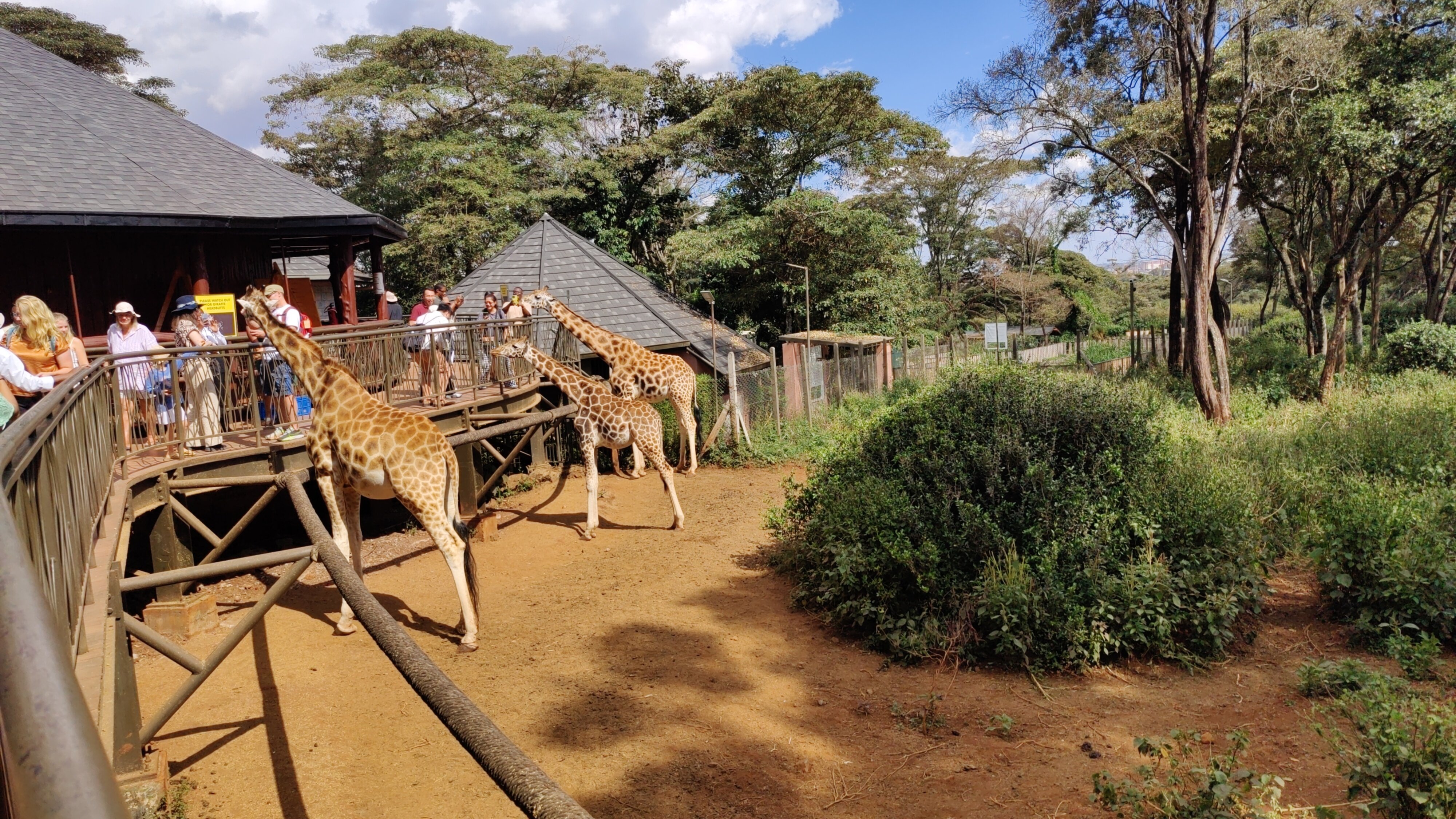
Giraffe Center in Nairobi Kenya is known for its safaris and has no shortage of national parks. In fact, Nairobi is the only capital in the world with a national park. I decided not to visit one, as most of them were expensive and offered multi-day tours, and I didn t want to spend that much time in the wildlife. Instead, I went to the Giraffe Center in Nairobi with Pragya and Rabina. The ticket cost 1500 Kenyan shillings (1000 Indian rupees). In Kenya, matatus - shared vans, usually decorated with portraits of famous people and play rap songs - are the most popular means of public transport. Reaching the Giraffe Center from our hotel required taking five matatus, which cost a total of 150 shillings, and a 2 km walk. The journey back was 90 shillings, suggesting that we didn t find the most efficient route to get there. At the Giraffe Center, we fed giraffes and took photos.
A matatu with a Notorious BIG portrait.
Inside the Giraffe Center

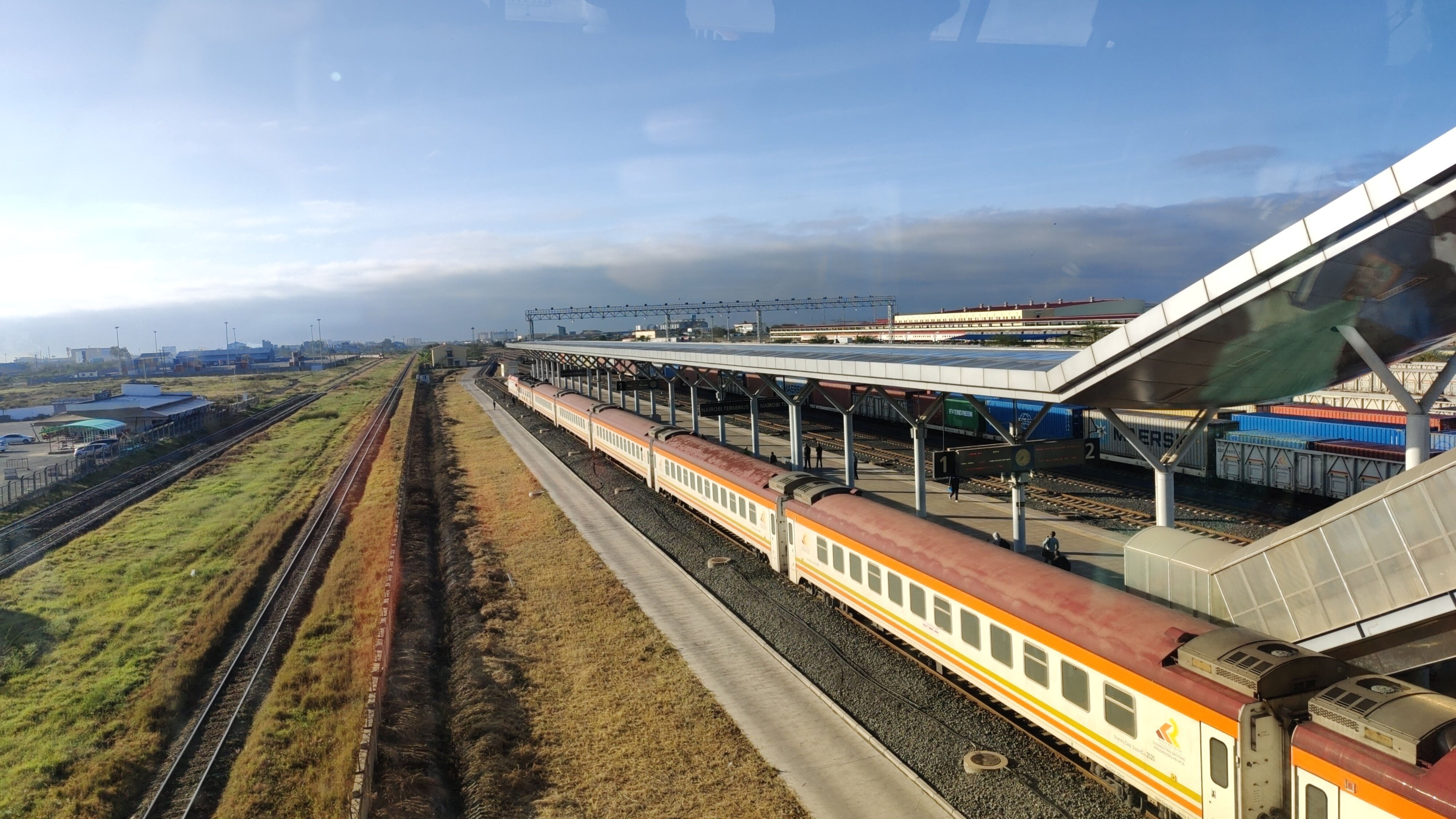
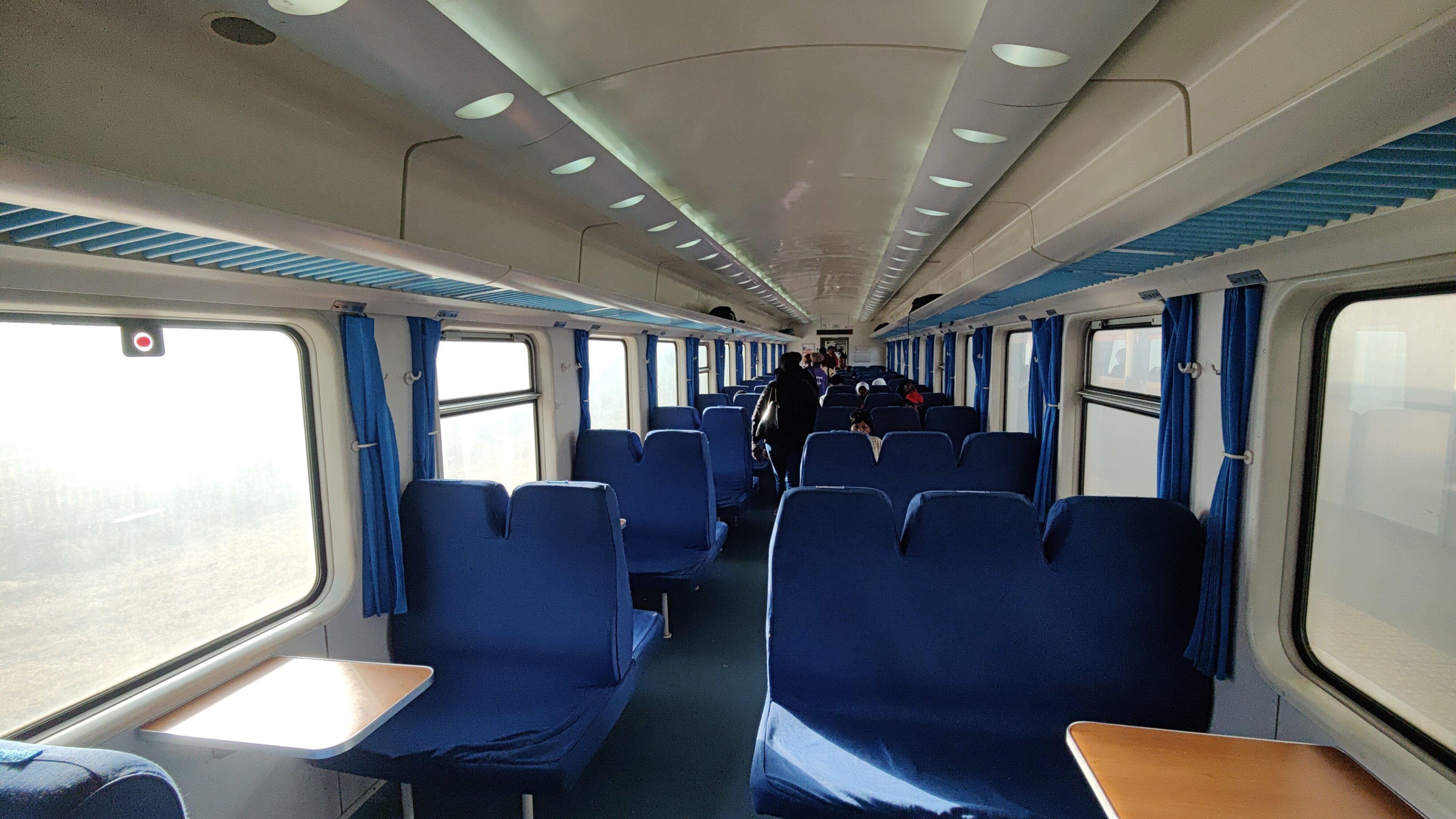
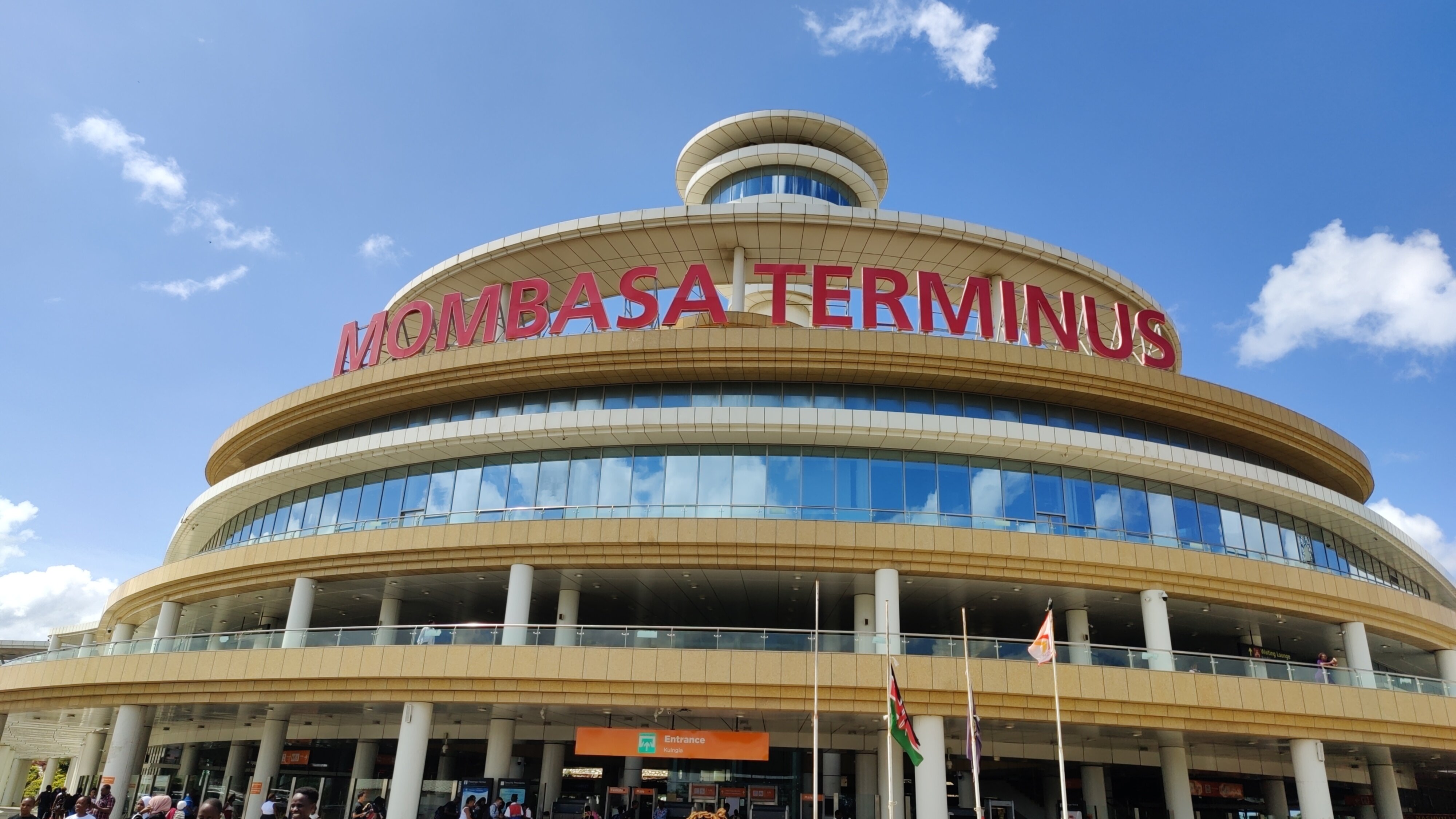
Train ride from Nairobi to Mombasa I took a train from Nairobi to Mombasa. The train is known as the SGR Train, where SGR refers to Standard Gauge Railway. The journey was around 500 km. M-Pesa was the only way to make payment for pre-booking the train ticket, and I didn t have an M-Pesa account. Pragya s friend Mary helped facilitate the payment. I booked a second-class ticket, which cost 1500 shillings (1000 Indian rupees). The train was scheduled to depart from Nairobi at 08:00 hours in the morning and arrive in Mombasa at 14:00 hours. The security check at the station required scanning our bags and having them sniffed by sniffer dogs. I also fell victim to a scam by a security official who offered to help me get my ticket printed, only to later ask me to get him some coffee, which I politely declined. Before boarding the train, I was treated to some stunning views at the Nairobi Terminus station. It was a seating train, but I wished it were a sleeper train, as I was sleep-deprived. The train was neat and clean, with good toilets. The train reached Mombasa on time at around 14:00 hours.
SGR train at Nairobi Terminus.
Interior of the SGR train

Arrival in Mombasa
Mombasa Terminus station.
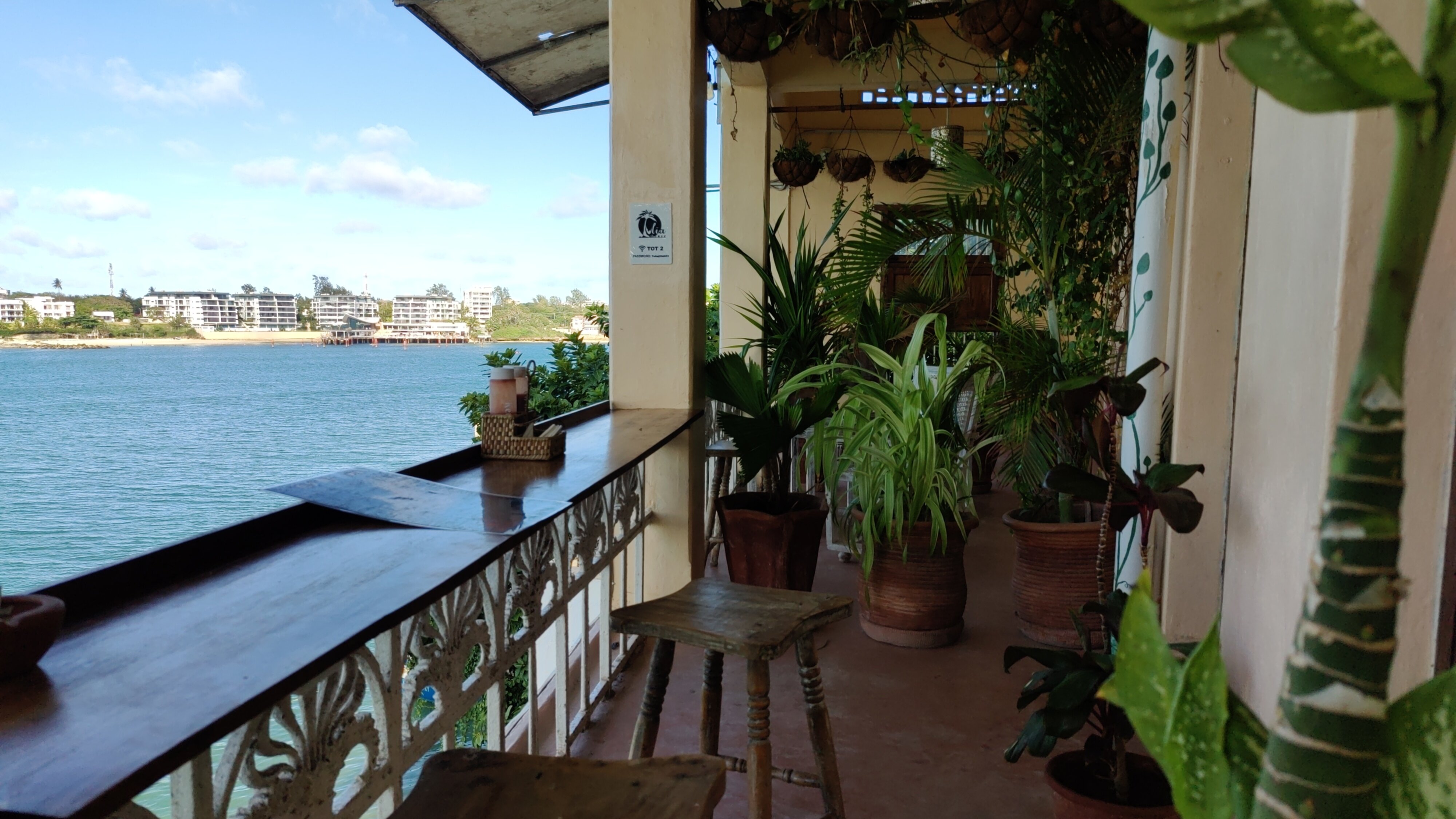
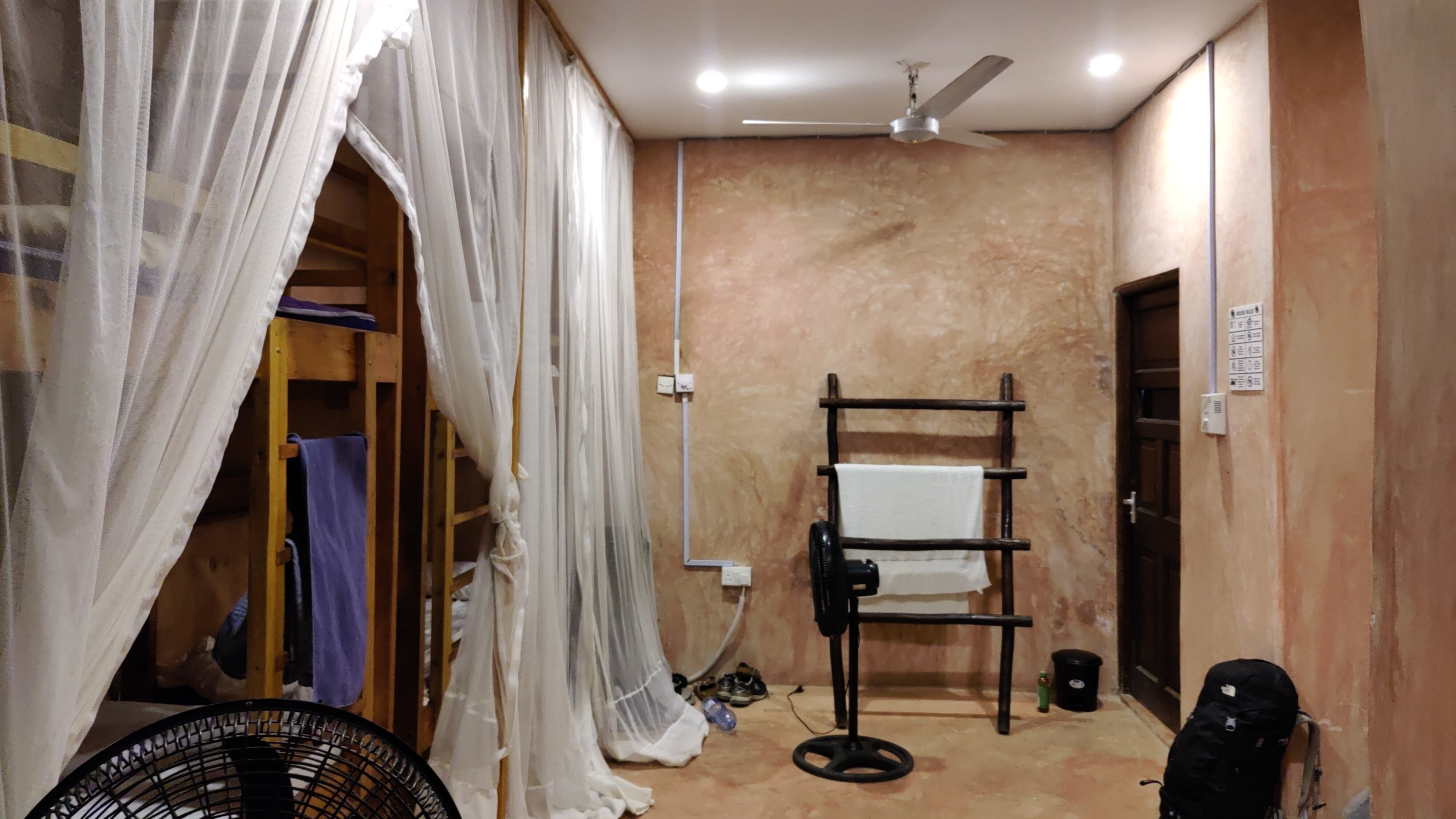
Mombasa was a bit hotter than Nairobi, with temperatures reaching around 30 degrees Celsius. However, that s not too hot for me, as I am used to higher temperatures in India. I had booked a hostel in the Old Town and was searching for a hitchhike from the Mombasa Terminus station. After trying for more than half an hour, I took a matatu that dropped me 3 km from my hostel for 200 shillings (140 Indian rupees). I tried to hitchhike again but couldn t find a ride. I think I know why I couldn t get a ride in both the cases. In the first case, the Mombasa Terminus was in an isolated place, so most of the vehicles were taxis or matatus while any noncommercial cars were there to pick up friends and family. If the station were in the middle of the city, there would be many more car/truck drivers passing by, thus increasing my possibilities of getting a ride. In the second case, my hostel was at the end of the city, and nobody was going towards that side. In fact, many drivers told me they would love to give me a ride, but they were going in some other direction. Finally, I took a tuktuk for 70 shillings to reach my hostel, Tulia Backpackers. It was 11 USD (1400 shillings) for one night. The balcony gave a nice view of the Indian Ocean. The rooms had fans, but there was no air conditioning. Each bed also had mosquito nets. The place was walking distance of the famous Fort Jesus. Mombasa has had more Islamic influence compared to Nairobi and also has many Hindu temples.
The balcony at Tulia Backpackers Hostel had a nice view of the ocean.
A room inside the hostel with fans and mosquito nets on the beds

Visiting White Sandy Beaches and Getting a Hitchhike Visiting Nyali beach marked my first time ever at a white sand beach. It was like 10 km from the hostel. The next day, I visited Diani Beach, which was 30 km from the hostel. Going to Diani Beach required crossing a river, for which there s a free ferry service every few minutes, followed by taking a matatu to Ukunda and then a tuk-tuk. The journey gave me a glimpse of the beautiful countryside of Kenya.
Nyali beach is a white sand beach
This is the ferry service for crossing the river.
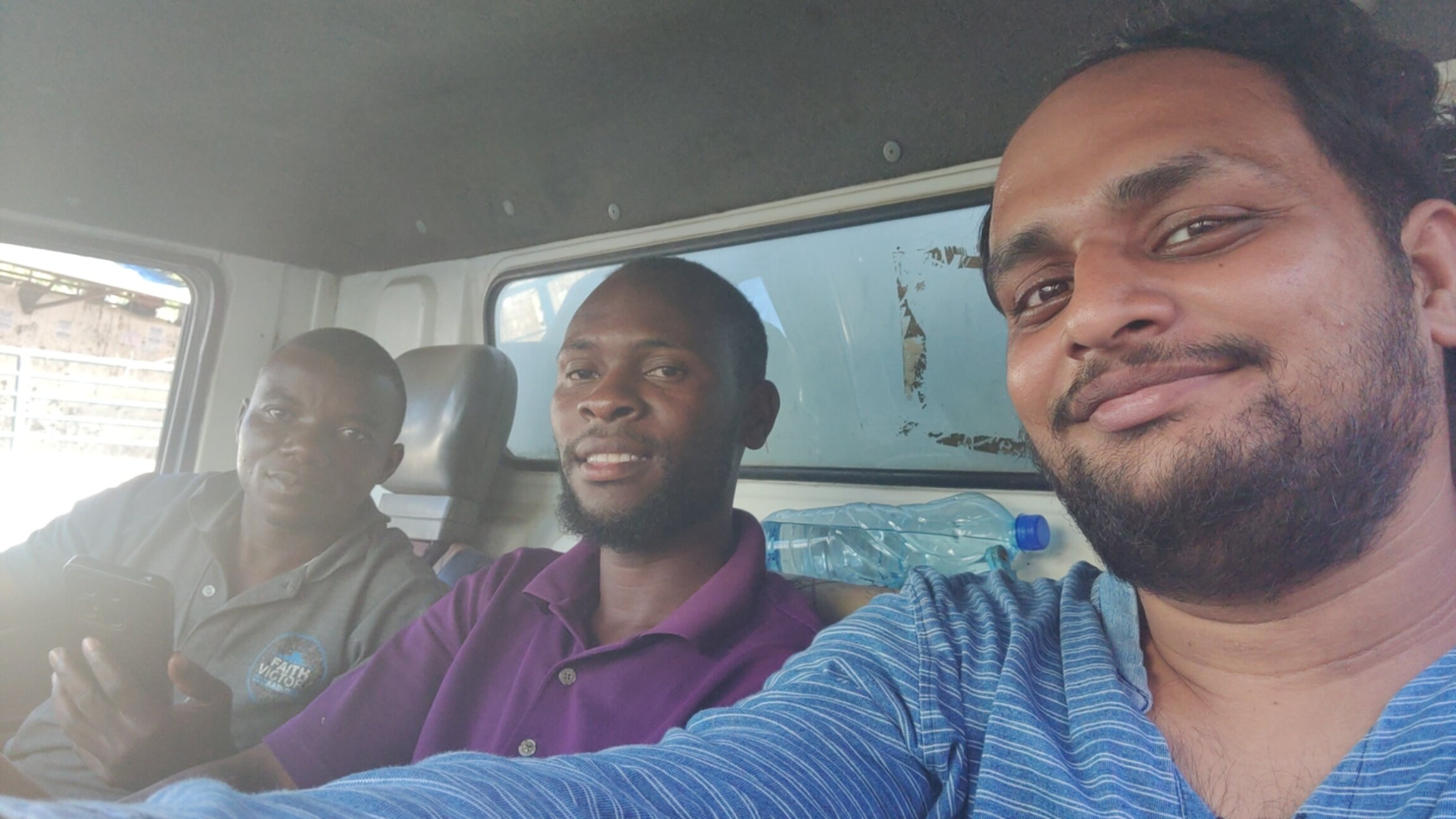
During my return from Diani Beach to the hostel, I was successful in hitchhiking. However, it was only a 4 km ride and not sufficient to reach Ukunda, so I tried to get another ride. When a truck stopped for me, I asked for a ride to Ukunda. Later, I learned that they were going in the same direction as me, so I got off within walking distance from my hostel. The ride was around 30 km. I also learned the difference between a truck ride and a matatu or car ride. For instance, matatus and cars are much faster and cooler due to air conditioning, while trucks tend to be warmer because they lack it. Further, the truck was stopped at many checkpoints by the police for inspections as it carried goods, which is not the case with matatus. Anyways, it was a nice experience, and I am grateful for the ride. I had a nice conversation with the truck drivers about Indian movies and my experiences in Kenya.
Diani beach is a popular beach in Kenya. It is a white sand beach.
Selfie with truck drivers who gave me the free ride

Back to Nairobi I took the SGR train from Mombasa back to Nairobi. This time I took the night train, which departs at 22:00 hours, reaching Nairobi at around 04:00 in the morning. I could not sleep comfortably since the train only had seater seats. I had booked the Zarita Hotel in Nairobi and had already confirmed if they allowed early morning check-in. Usually, hotels have a fixed checkout time, say 11:00 in the morning, and you are not allowed to stay beyond that regardless of the time you checked in. But this hotel checked me in for 24 hours. Here, I paid in US dollars, and the cost was 12 USD.

Almost Got Stuck in Kenya Two days before my scheduled flight from Nairobi back to India, I heard the news that the airports in Kenya were closed due to the strikes. Rabina and Pragya had their flight back to Nepal canceled that day, which left them stuck in Nairobi for two additional days. I called Sahil in India and found out during the conversation that the strike was called off in the evening. It was a big relief for me, and I was fortunate to be able to fly back to India without any changes to my plans.
Newspapers at a stand in Kenya covering news on the airport closure

Experience with locals I had no problems communicating with Kenyans, as everyone I met knew English to an extent that could easily surpass that of big cities in India. Additionally, I learned a few words from Kenya s most popular local language, Swahili, such as Asante, meaning thank you, Jambo for hello, and Karibu for welcome. Knowing a few words in the local language went a long way. I am not sure what s up with haggling in Kenya. It wasn t easy to bring the price of souvenirs down. I bought a fridge magnet for 200 shillings, which was the quoted price. On the other hand, it was much easier to bargain with taxis/tuktuks/motorbikes. I stayed at three hotels/hostels in Kenya. None of them had air conditioners. Two of the places were in Nairobi, and they didn t even have fans in the rooms, while the one in Mombasa had only fans. All of them had good Wi-Fi, except Tulia where the internet overall was a bit shaky. My experience with the hotel staff was great. For instance, we requested that the Nairobi Transit Hotel cancel the included breakfast in order to reduce the room costs, but later realized that it was not a good idea. The hotel allowed us to revert and even offered one of our missing breakfasts during dinner. The staff at Tulia Backpackers in Mombasa facilitated the ticket payment for my train from Mombasa to Nairobi. One of the staff members also gave me a lift to the place where I could catch a matatu to Nyali Beach. They even added an extra tea bag to my tea when I requested it to be stronger.

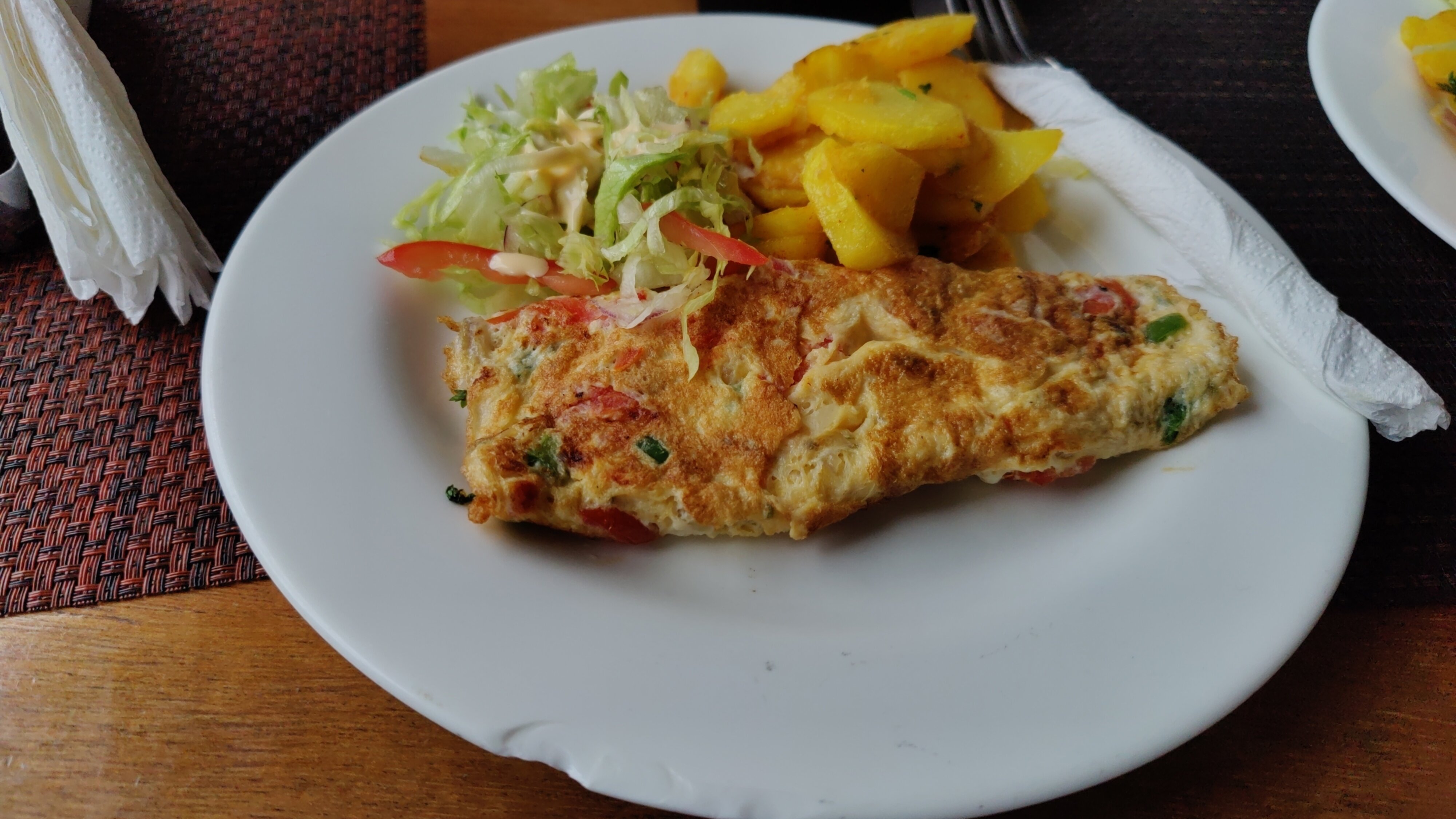
Food At the Nairobi Transit Hotel, a Spanish omelet with tea was served for breakfast. I noticed that Spanish omelette appeared on the menus of many restaurants, suggesting that it is popular in Kenya. This was my first time having this dish. The milk tea in Kenya, referred to by locals as white tea, is lighter than Indian tea (they don t put a lot of tea leaves).
Spanish Omelette served in breakfast at Nairobi Transit Hotel
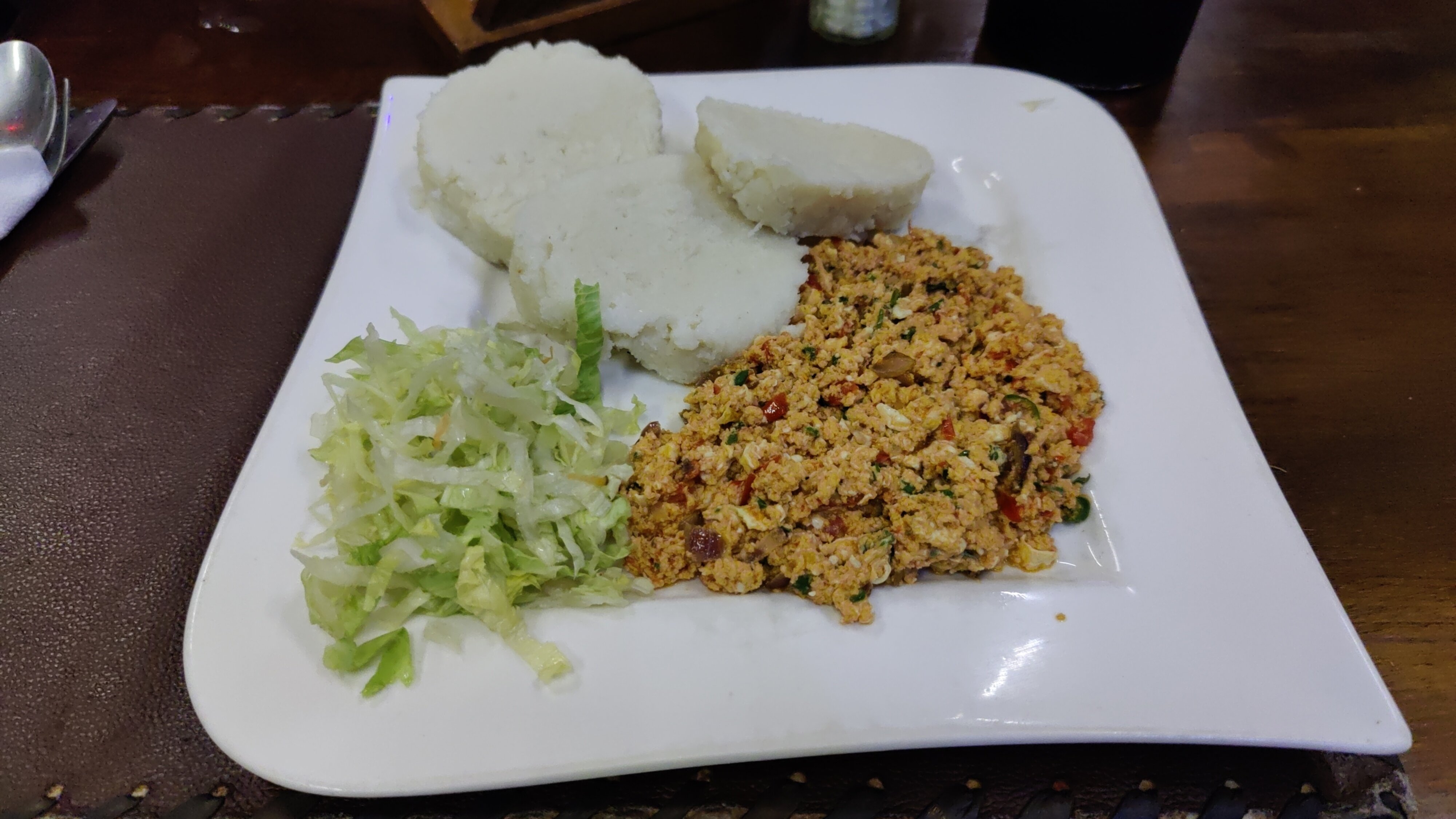
I also sampled ugali with eggs. In Mombasa, I visited an Indian restaurant called New Chetna and had a buffet thali there twice.
Ugali with eggs.

Tips for Exchanging Money In Kenya, I exchanged my money at forex shops a couple of times. I received good exchange rates for bills larger than 50 USD. For instance, 1 USD on xe.com was 129 shillings, and I got 128.3 shillings per USD (a total of 12,830 shillings) for two 50 USD notes at an exchange in Nairobi, while 127 shillings, which was the highest rate at the banks. On the other hand, for smaller bills such as a one US dollar note, I would have got 125 shillings. A passport was the only document required for the exchange, and they also provided a receipt. A good piece of advice for travelers is to keep 50 USD or larger bills for exchanging into the local currency while saving the smaller US dollar bills for accommodation, as many hotels and hostels accept payment in US dollars (in addition to Kenyan shillings).

Missed Malindi and Lamu There were more places on my to-visit list in Kenya. But I simply didn t have time to cover them, as I don t like rushing through places, especially in a foreign country where there is a chance of me underestimating the amount of time it takes during transit. I would have liked to visit at least one of Kilifi, Watamu or Malindi beaches. Further, Lamu seemed like a unique place to visit as it has no cars or motorized transport; the only options for transport are boats and donkeys. That s it for now. Meet you in the next one :)

24 October 2024

Valhalla's Things: Asemic Writing, a Zine

Posted on October 24, 2024
Tags: madeof:atoms, madeof:bits, craft:zine
An open booklet with lines that look like some kind of cursive non-alphabetic script, framed by a border in the same script and four symbols in the corners. I have no idea either. The front of that booklet, with three lines of fake text in different sizes and a circle of the same. Happy Maladay1 to those who celebrate it, I guess.
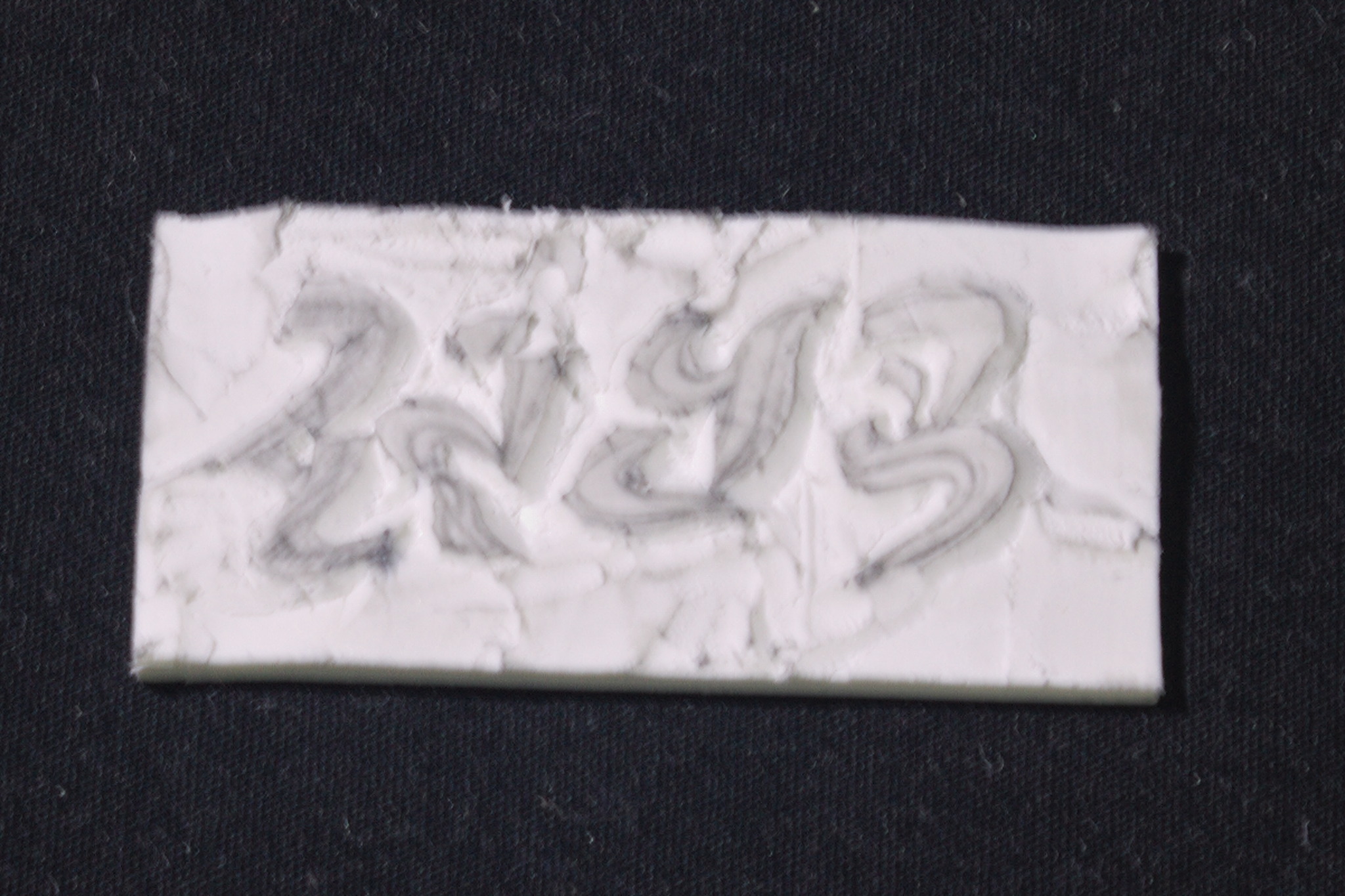
A template on white paper with pencil lines where text is supposed to go. Multiple A4 sheet of tracing paper with fake text, plus an A6 sheet and a white A6 sheet with a stamp impression. If you care about the how, it started as china ink on tracing paper, with the help of a template (and a correction sheet for one page where I used the wrong line on the template). alt A rubber stamp was carved with the author s signature and stamped on white paper because the ink from the pad wasn t working well on tracing paper. Then everything was scanned (with the correction on top of the wrong page) asemic_zine_scans.tar. Imported in Inkscape and traced asemic_zine_svg.tar. Printed, cut in half, folded and stapled. The magenta lines weren t by design, but are there because my printer is currently2 cursed. And finally, asemic_zine.pdf was created, joining the pages together with pdfjam, for convenience in case somebody wants to download the full thing. All the .tar and .pdf downloads from this page are released under the WTFPL, or All Rites Reversed..

  1. it s still technically Maladay when I write this, even if by the time you ll get this it s probably the 6th of The Aftermath.
  2. I mean, all printers are always cursed, but at different times they can be cursed in different and novel ways.

7 October 2024

Reproducible Builds: Reproducible Builds in September 2024

Welcome to the September 2024 report from the Reproducible Builds project! Our reports attempt to outline what we ve been up to over the past month, highlighting news items from elsewhere in tech where they are related. As ever, if you are interested in contributing to the project, please visit our Contribute page on our website. Table of contents:
  1. New binsider tool to analyse ELF binaries
  2. Unreproducibility of GHC Haskell compiler 95% fixed
  3. Mailing list summary
  4. Towards a 100% bit-for-bit reproducible OS
  5. Two new reproducibility-related academic papers
  6. Distribution work
  7. diffoscope
  8. Other software development
  9. Android toolchain core count issue reported
  10. New Gradle plugin for reproducibility
  11. Website updates
  12. Upstream patches
  13. Reproducibility testing framework

New binsider tool to analyse ELF binaries Reproducible Builds developer Orhun Parmaks z has announced a fantastic new tool to analyse the contents of ELF binaries. According to the project s README page:
Binsider can perform static and dynamic analysis, inspect strings, examine linked libraries, and perform hexdumps, all within a user-friendly terminal user interface!
More information about Binsider s features and how it works can be found within Binsider s documentation pages.

Unreproducibility of GHC Haskell compiler 95% fixed A seven-year-old bug about the nondeterminism of object code generated by the Glasgow Haskell Compiler (GHC) received a recent update, consisting of Rodrigo Mesquita noting that the issue is:
95% fixed by [merge request] !12680 when -fobject-determinism is enabled. [ ]
The linked merge request has since been merged, and Rodrigo goes on to say that:
After that patch is merged, there are some rarer bugs in both interface file determinism (eg. #25170) and in object determinism (eg. #25269) that need to be taken care of, but the great majority of the work needed to get there should have been merged already. When merged, I think we should close this one in favour of the more specific determinism issues like the two linked above.

Mailing list summary On our mailing list this month:
  • Fay Stegerman let everyone know that she started a thread on the Fediverse about the problems caused by unreproducible zlib/deflate compression in .zip and .apk files and later followed up with the results of her subsequent investigation.
  • Long-time developer kpcyrd wrote that there has been a recent public discussion on the Arch Linux GitLab [instance] about the challenges and possible opportunities for making the Linux kernel package reproducible , all relating to the CONFIG_MODULE_SIG flag. [ ]
  • Bernhard M. Wiedemann followed-up to an in-person conversation at our recent Hamburg 2024 summit on the potential presence for Reproducible Builds in recognised standards. [ ]
  • Fay Stegerman also wrote about her worry about the possible repercussions for RB tooling of Debian migrating from zlib to zlib-ng as reproducibility requires identical compressed data streams. [ ]
  • Martin Monperrus wrote the list announcing the latest release of maven-lockfile that is designed aid building Maven projects with integrity . [ ]
  • Lastly, Bernhard M. Wiedemann wrote about potential role of reproducible builds in combatting silent data corruption, as detailed in a recent Tweet and scholarly paper on faulty CPU cores. [ ]

Towards a 100% bit-for-bit reproducible OS Bernhard M. Wiedemann began writing on journey towards a 100% bit-for-bit reproducible operating system on the openSUSE wiki:
This is a report of Part 1 of my journey: building 100% bit-reproducible packages for every package that makes up [openSUSE s] minimalVM image. This target was chosen as the smallest useful result/artifact. The larger package-sets get, the more disk-space and build-power is required to build/verify all of them.
This work was sponsored by NLnet s NGI Zero fund.

Distribution work In Debian this month, 14 reviews of Debian packages were added, 12 were updated and 20 were removed, all adding to our knowledge about identified issues. A number of issue types were updated as well. [ ][ ] In addition, Holger opened 4 bugs against the debrebuild component of the devscripts suite of tools. In particular:
  • #1081047: Fails to download .dsc file.
  • #1081048: Does not work with a proxy.
  • #1081050: Fails to create a debrebuild.tar.
  • #1081839: Fails with E: mmdebstrap failed to run error.
Last month, an issue was filed to update the Salsa CI pipeline (used by 1,000s of Debian packages) to no longer test for reproducibility with reprotest s build_path variation. Holger Levsen provided a rationale for this change in the issue, which has already been made to the tests being performed by tests.reproducible-builds.org. This month, this issue was closed by Santiago R. R., nicely explaining that build path variation is no longer the default, and, if desired, how developers may enable it again. In openSUSE news, Bernhard M. Wiedemann published another report for that distribution.

diffoscope diffoscope is our in-depth and content-aware diff utility that can locate and diagnose reproducibility issues. This month, Chris Lamb made the following changes, including preparing and uploading version 278 to Debian:
  • New features:
    • Add a helpful contextual message to the output if comparing Debian .orig tarballs within .dsc files without the ability to fuzzy-match away the leading directory. [ ]
  • Bug fixes:
    • Drop removal of calculated os.path.basename from GNU readelf output. [ ]
    • Correctly invert X% similar value and do not emit 100% similar . [ ]
  • Misc:
    • Temporarily remove procyon-decompiler from Build-Depends as it was removed from testing (via #1057532). (#1082636)
    • Update copyright years. [ ]
For trydiffoscope, the command-line client for the web-based version of diffoscope, Chris Lamb also:
  • Added an explicit python3-setuptools dependency. (#1080825)
  • Bumped the Standards-Version to 4.7.0. [ ]

Other software development disorderfs is our FUSE-based filesystem that deliberately introduces non-determinism into system calls to reliably flush out reproducibility issues. This month, version 0.5.11-4 was uploaded to Debian unstable by Holger Levsen making the following changes:
  • Replace build-dependency on the obsolete pkg-config package with one on pkgconf, following a Lintian check. [ ]
  • Bump Standards-Version field to 4.7.0, with no related changes needed. [ ]

In addition, reprotest is our tool for building the same source code twice in different environments and then checking the binaries produced by each build for any differences. This month, version 0.7.28 was uploaded to Debian unstable by Holger Levsen including a change by Jelle van der Waa to move away from the pipes Python module to shlex, as the former will be removed in Python version 3.13 [ ].

Android toolchain core count issue reported Fay Stegerman reported an issue with the Android toolchain where a part of the build system generates a different classes.dex file (and thus a different .apk) depending on the number of cores available during the build, thereby breaking Reproducible Builds:
We ve rebuilt [tag v3.6.1] multiple times (each time in a fresh container): with 2, 4, 6, 8, and 16 cores available, respectively:
  • With 2 and 4 cores we always get an unsigned APK with SHA-256 14763d682c9286ef .
  • With 6, 8, and 16 cores we get an unsigned APK with SHA-256 35324ba4c492760 instead.

New Gradle plugin for reproducibility A new plugin for the Gradle build tool for Java has been released. This easily-enabled plugin results in:
reproducibility settings [being] applied to some of Gradle s built-in tasks that should really be the default. Compatible with Java 8 and Gradle 8.3 or later.

Website updates There were a rather substantial number of improvements made to our website this month, including:

Upstream patches The Reproducible Builds project detects, dissects and attempts to fix as many currently-unreproducible packages as possible. We endeavour to send all of our patches upstream where appropriate. This month, we wrote a large number of such patches, including:

Reproducibility testing framework The Reproducible Builds project operates a comprehensive testing framework running primarily at tests.reproducible-builds.org in order to check packages and other artifacts for reproducibility. In September, a number of changes were made by Holger Levsen, including:
  • Debian-related changes:
    • Upgrade the osuosl4 node to Debian trixie in anticipation of running debrebuild and rebuilderd there. [ ][ ][ ]
    • Temporarily mark the osuosl4 node as offline due to ongoing xfs_repair filesystem maintenance. [ ][ ]
    • Do not warn about (very old) broken nodes. [ ]
    • Add the risc64 architecture to the multiarch version skew tests for Debian trixie and sid. [ ][ ][ ]
    • Mark the virt 32,64 b nodes as down. [ ]
  • Misc changes:
    • Add support for powercycling OpenStack instances. [ ]
    • Update the fail2ban to ban hosts for 4 weeks in total [ ][ ] and take care to never ban our own Jenkins instance. [ ]
In addition, Vagrant Cascadian recorded a disk failure for the virt32b and virt64b nodes [ ], performed some maintenance of the cbxi4a node [ ][ ] and marked most armhf architecture systems as being back online.

Finally, If you are interested in contributing to the Reproducible Builds project, please visit our Contribute page on our website. However, you can get in touch with us via:

24 September 2024

Dirk Eddelbuettel: RcppFastAD 0.0.4 on CRAN: Updated Again

A new release 0.0.4 of the RcppFastAD package by James Yang and myself is now on CRAN. RcppFastAD wraps the FastAD header-only C++ library by James which provides a C++ implementation of both forward and reverse mode of automatic differentiation. It offers an easy-to-use header library (which we wrapped here) that is both lightweight and performant. With a little of bit of Rcpp glue, it is also easy to use from R in simple C++ applications. This release updates the quick fix in release 0.0.3 from a good week ago. James took a good look and properly disambiguated the statement that lead clang to complain, so we are back to compiling as C++17 under all compilers which makes for a slightly wider reach. The NEWS file for this release follows.

Changes in version 0.0.4 (2024-09-24)
  • The package now properly addresses a clang warning on empty variadic macros arguments and is back to C++17 (James in #10)

Courtesy of my CRANberries, there is also a diffstat report for the most recent release. More information is available at the repository or the package page. If you like this or other open-source work I do, you can sponsor me at GitHub.

This post by Dirk Eddelbuettel originated on his Thinking inside the box blog. Please report excessive re-aggregation in third-party for-profit settings.

21 September 2024

Jamie McClelland: How do I warm up an IP Address?

After years on the waiting list, May First was just given a /24 block of IP addresses. Excellent. Now we want to start using them for, among other things, sending email. I haven t added a new IP address to our mail relays in a while and things seems to change regularly in the world of email so I m curious: what s the best 2024 way to warm up IP addresses, particularly using postfix? Sendergrid has a nice page on the topic. It establishes the number of messages to send per day. But I m not entirely sure how to fit messages per day into our setup. We use round robin DNS to direct email to one of several dozen email relay servers using postfix. And unfortunately our DNS software (knot) doesn t have a way to add weights to ensure some IPs show up more often than others (much less limit the specific number of messages a given relay should get). Postfix has some nice knobs for rate limiting, particularly: default_destination_recipient_limit and default_destination_rate_delay If default_destination_recipient_limit is over 1, then default_destination_rate_delay is equal to the minimum delay between sending email to the same domain. So, I m staring our IP addresses out at 30m - which prevents any single domain from receiving more than 2 messages per hour. Sadly, there are a lot of different domain names that deliver to the same set of popular corporate MX servers, so I am not sure I can accurately control how many messages a given provider sees coming from a given IP address. But it s a start. A bigger problem is that messages that exceed the limit hang out in the active queue until they can be sent without violating the rate limit. Since I can t fully control the number of messages a given queue receives (due to my inability to control the DNS round robin weights), a lot of messages are going to be severely delayed, especially ones with an @gmail.com domain name. I know I can temporarily set relayhost to a different queue and flush deferred messages, however, as far as I can tell, it doesn t work with active messages. To help mitigate the problem I m only using our bulk mail queue to warm up IPs, but really, this is not ideal. Suggestions welcome!

Update #1 If you are running postfix in a multi-instance setup and you have instances that are already warmed up, you can move active messages between queues with these steps:
# Put the message on hold in the warming up instance
postsuper -c /etc/postfix-warmingup -h $queueid
# Copy to a warmed up instance
cp --preserve=mode,ownership,timestamp /var/spool/postfix-warmingup/hold/$queueid /var/spool/postfix-warmedup/incoming/
# Queue the message
postqueue -c /etc/postfix-warmedup -i $queueid
# Delete from the original queue.
postsuper -c /etc/postfix-warmingup -d $queueid
After just 12 hours we had thousands of messages piling up. This warm up method was never going to work without the ability to move them to a faster queue. [Additional update: be sure to reload the postfix instance after flushing the queue so messages are drained from the active queue on the correct schedule. See update #4.]

Update #2 After 24 hours, most email is being accepted as far as I can tell. I am still getting a small percentage of email deferred by Yahoo with:
421 4.7.0 [TSS04] Messages from 204.19.241.9 temporarily deferred due to unexpected volume or user complaints - 4.16.55.1; see https://postmaster.yahooinc.com/error-codes (in reply
So I will keep it as 30m for another 24 hours or so and then move to 15m. Now that I can flush the backlog of active messages I am in less of a hurry.

Update #3 Well, this doesn t seem to be working the way I want it to. When a message arrives faster than the designated rate limit, it remains in the active queue. I m entirely sure how the timing is supposed to work, but at this point I m down to a 5m rate delay, and the active messages are just hanging out for a lot longer than 5m. I tried flushing the queue, but that only seems to affect the deferred messages. I finally got them re-tried with systemctl reload. I wonder if there is a setting to control this retry? Or better yet, why can t these messages that exceed the rate delayed be deferred instead?

Update #4 I think I see why I was confused in Update #3 about the timing. I suspect that when I move messages out of the active queue it screws up the timer. Reloading the instance resets the timer. Every time you muck with active messages, you should reload.

18 September 2024

Jamie McClelland: Gmail vs Tor vs Privacy

A legit email went to spam. Here are the redacted, relevant headers:
[redacted]
X-Spam-Flag: YES
X-Spam-Level: ******
X-Spam-Status: Yes, score=6.3 required=5.0 tests=DKIM_SIGNED,DKIM_VALID,
[redacted]
	*  1.0 RCVD_IN_XBL RBL: Received via a relay in Spamhaus XBL
	*      [185.220.101.64 listed in xxxxxxxxxxxxx.zen.dq.spamhaus.net]
	*  3.0 RCVD_IN_SBL_CSS Received via a relay in Spamhaus SBL-CSS
	*  2.5 RCVD_IN_AUTHBL Received via a relay in Spamhaus AuthBL
	*  0.0 RCVD_IN_PBL Received via a relay in Spamhaus PBL
[redacted]
[very first received line follows...]
Received: from [10.137.0.13] ([185.220.101.64])
        by smtp.gmail.com with ESMTPSA id ffacd0b85a97d-378956d2ee6sm12487760f8f.83.2024.09.11.15.05.52
        for <xxxxx@mayfirst.org>
        (version=TLS1_3 cipher=TLS_AES_128_GCM_SHA256 bits=128/128);
        Wed, 11 Sep 2024 15:05:53 -0700 (PDT)
At first I though a Gmail IP address was listed in spamhaus - I even opened a ticket. But then I realized it wasn t the last hop that Spamaus is complaining about, it s the first hop, specifically the ip 185.220.101.64 which appears to be a Tor exit node. The sender is using their own client to relay email directly to Gmail. Like any sane person, they don t trust Gmail to protect their privacy, so they are sending via Tor. But WTF, Gmail is not stripping the sending IP address from the header. I m a big fan of harm reduction and have always considered using your own client to relay email with Gmail as a nice way to avoid some of the surveillance tax Google imposes. However, it seems that if you pursue this option you have two unpleasant choices: I supposed you could also use a VPN, but I doubt the IP reputation of most VPN exit nodes are going to be more reliable than Tor.

17 September 2024

Benjamin Mako Hill: My Chair

I realize that because I have several chairs, the phrase my chair is ambiguous. To reduce confusion, I will refer to the head of my academic department as my office chair going forward.

15 September 2024

Dirk Eddelbuettel: RcppFastAD 0.0.3 on CRAN: Updated

A new release 0.0.3 of the RcppFastAD package by James Yang and myself is now on CRAN. RcppFastAD wraps the FastAD header-only C++ library by James which provides a C++ implementation of both forward and reverse mode of automatic differentiation. It offers an easy-to-use header library (which we wrapped here) that is both lightweight and performant. With a little of bit of Rcpp glue, it is also easy to use from R in simple C++ applications. This release turns compilation to the C++20 standard as newer clang++ versions complained about a particular statement (it took to be C++20) when compiled under C++17. So we obliged. The NEWS file for these two initial releases follows.

Changes in version 0.0.3 (2024-09-15)
  • The package now compiles under the C++20 standard to avoid a warning under clang++-18 (Dirk addressing #9)
  • Minor updates to continuous integration and badges have been made as well

Courtesy of my CRANberries, there is also a diffstat report for the most recent release. More information is available at the repository or the package page. If you like this or other open-source work I do, you can sponsor me at GitHub.

This post by Dirk Eddelbuettel originated on his Thinking inside the box blog. Please report excessive re-aggregation in third-party for-profit settings.

11 September 2024

Jamie McClelland: MariaDB mystery

I keep getting an error in our backup logs:
Sep 11 05:08:03 Warning: mysqldump: Error 2013: Lost connection to server during query when dumping table  1C4Uonkwhe_options  at row: 1402
Sep 11 05:08:03 Warning: Failed to dump mysql databases ic_wp
It s a WordPress database having trouble dumping the options table. The error log has a corresponding message:
Sep 11 13:50:11 mysql007 mariadbd[580]: 2024-09-11 13:50:11 69577 [Warning] Aborted connection 69577 to db: 'ic_wp' user: 'root' host: 'localhost' (Got an error writing communication packets)
The Internet is full of suggestions, almost all of which either focus on the network connection between the client and the server or the FEDERATED plugin. We aren t using the federated plugin and this error happens when conneting via the socket. Check it out - what is better than a consistently reproducible problem! It happens if I try to select all the values in the table:
root@mysql007:~# mysql --protocol=socket -e 'select * from 1C4Uonkwhe_options' ic_wp > /dev/null
ERROR 2013 (HY000) at line 1: Lost connection to server during query
root@mysql007:~#
It happens when I specifiy one specific offset:
root@mysql007:~# mysql --protocol=socket -e 'select * from 1C4Uonkwhe_options limit 1 offset 1402' ic_wp
ERROR 2013 (HY000) at line 1: Lost connection to server during query
root@mysql007:~#
It happens if I specify the field name explicitly:
root@mysql007:~# mysql --protocol=socket -e 'select option_id,option_name,option_value,autoload from 1C4Uonkwhe_options limit 1 offset 1402' ic_wp
ERROR 2013 (HY000) at line 1: Lost connection to server during query
root@mysql007:~#
It doesn t happen if I specify the key field:
root@mysql007:~# mysql --protocol=socket -e 'select option_id from 1C4Uonkwhe_options limit 1 offset 1402' ic_wp
+-----------+
  option_id  
+-----------+
   16296351  
+-----------+
root@mysql007:~#
It does happen if I specify the value field:
root@mysql007:~# mysql --protocol=socket -e 'select option_value from 1C4Uonkwhe_options limit 1 offset 1402' ic_wp
ERROR 2013 (HY000) at line 1: Lost connection to server during query
root@mysql007:~#
It doesn t happen if I query the specific row by key field:
root@mysql007:~# mysql --protocol=socket -e 'select * from 1C4Uonkwhe_options where option_id = 16296351' ic_wp
+-----------+----------------------+--------------+----------+
  option_id   option_name            option_value   autoload  
+-----------+----------------------+--------------+----------+
   16296351   z_taxonomy_image8905                  yes       
+-----------+----------------------+--------------+----------+
root@mysql007:~#
Hm. Surely there is some funky non-printing character in that option_value right?
root@mysql007:~# mysql --protocol=socket -e 'select CHAR_LENGTH(option_value) from 1C4Uonkwhe_options where option_id = 16296351' ic_wp
+---------------------------+
  CHAR_LENGTH(option_value)  
+---------------------------+
                          0  
+---------------------------+
root@mysql007:~# mysql --protocol=socket -e 'select HEX(option_value) from 1C4Uonkwhe_options where option_id = 16296351' ic_wp
+-------------------+
  HEX(option_value)  
+-------------------+
                     
+-------------------+
root@mysql007:~#
Resetting the value to an empty value doesn t make a difference:
root@mysql007:~# mysql --protocol=socket -e 'update 1C4Uonkwhe_options set option_value = "" where option_id = 16296351' ic_wp
root@mysql007:~# mysql --protocol=socket -e 'select * from 1C4Uonkwhe_options' ic_wp > /dev/null
ERROR 2013 (HY000) at line 1: Lost connection to server during query
root@mysql007:~#
Deleting the row in question causes the error to specify a new offset:
root@mysql007:~# mysql --protocol=socket -e 'delete from 1C4Uonkwhe_options where option_id = 16296351' ic_wp
root@mysql007:~# mysql --protocol=socket -e 'select * from 1C4Uonkwhe_options' ic_wp > /dev/null
ERROR 2013 (HY000) at line 1: Lost connection to server during query
root@mysql007:~# mysqldump ic_wp > /dev/null
mysqldump: Error 2013: Lost connection to server during query when dumping table  1C4Uonkwhe_options  at row: 1401
root@mysql007:~#
If I put the record I deleted back in, we return to the old offset:
root@mysql007:~# mysql --protocol=socket -e 'insert into 1C4Uonkwhe_options VALUES(16296351,"z_taxonomy_image8905","","yes");' ic_wp 
root@mysql007:~# mysqldump ic_wp > /dev/null
mysqldump: Error 2013: Lost connection to server during query when dumping table  1C4Uonkwhe_options  at row: 1402
root@mysql007:~#
I m losing my little mind. Let s get drastic and create a whole new table, copy over the data delicately working around the deadly offset:
oot@mysql007:~# mysql --protocol=socket -e 'create table 1C4Uonkwhe_new_options like 1C4Uonkwhe_options;' ic_wp 
root@mysql007:~# mysql --protocol=socket -e 'insert into 1C4Uonkwhe_new_options select * from 1C4Uonkwhe_options limit 1402 offset 0;' ic_wp 
--- There is only 33 more records, not sure how to specify unlimited limit but 100 does the trick.
root@mysql007:~# mysql --protocol=socket -e 'insert into 1C4Uonkwhe_new_options select * from 1C4Uonkwhe_options limit 100 offset 1403;' ic_wp 
Now let s make sure all is working properly:
root@mysql007:~# mysql --protocol=socket -e 'select * from 1C4Uonkwhe_new_options' ic_wp >/dev/null;
Now let s examine which row we are missing:
root@mysql007:~# mysql --protocol=socket -e 'select option_id from 1C4Uonkwhe_options where option_id not in (select option_id from 1C4Uonkwhe_new_options) ;' ic_wp 
+-----------+
  option_id  
+-----------+
   18405297  
+-----------+
root@mysql007:~#
Wait, what? I was expecting option_id 16296351. Oh, now we are getting somewhere. And I see my mistake: when using offsets, you need to use ORDER BY or you won t get consistent results.
root@mysql007:~# mysql --protocol=socket -e 'select option_id from 1C4Uonkwhe_options order by option_id limit 1 offset 1402' ic_wp ;
+-----------+
  option_id  
+-----------+
   18405297  
+-----------+
root@mysql007:~#
Now that I have the correct row what is in it:
root@mysql007:~# mysql --protocol=socket -e 'select * from 1C4Uonkwhe_options where option_id = 18405297' ic_wp ;
ERROR 2013 (HY000) at line 1: Lost connection to server during query
root@mysql007:~#
Well, that makes a lot more sense. Let s start over with examining the value:
root@mysql007:~# mysql --protocol=socket -e 'select CHAR_LENGTH(option_value) from 1C4Uonkwhe_options where option_id = 18405297' ic_wp ;
+---------------------------+
  CHAR_LENGTH(option_value)  
+---------------------------+
                   50814767  
+---------------------------+
root@mysql007:~#
Wow, that s a lot of characters. If it were a book, it would be 35,000 pages long (I just discovered this site). It s a LONGTEXT field so it should be able to handle it. But now I have a better idea of what could be going wrong. The name of the option is rewrite_rules so it seems like something is going wrong with the generation of that option. I imagine there is some tweak I can make to allow MariaDB to cough up the value (read_buffer_size? tmp_table_size?). But I ll start with checking in with the database owner because I don t think 35,000 pages of rewrite rules is appropriate for any site.

4 September 2024

Reproducible Builds: Reproducible Builds in August 2024

Welcome to the August 2024 report from the Reproducible Builds project! Our reports attempt to outline what we ve been up to over the past month, highlighting news items from elsewhere in tech where they are related. As ever, if you are interested in contributing to the project, please visit our Contribute page on our website. Table of contents:
  1. LWN: The history, status, and plans for reproducible builds
  2. Intermediate Autotools build artifacts removed from PostgreSQL distribution tarballs
  3. Distribution news
  4. Mailing list news
  5. diffoscope
  6. Website updates
  7. Upstream patches
  8. Reproducibility testing framework

LWN: The history, status, and plans for reproducible builds The free software newspaper of record, Linux Weekly News, published an in-depth article based on Holger Levsen s talk, Reproducible Builds: The First Eleven Years which was presented at the recent DebConf24 conference in Busan, South Korea. Titled The history, status, and plans for reproducible builds and written by Jake Edge, LWN s article not only summarises Holger s talk and clarifies its message but it links to external information as well. Holger s original talk can also be watched on the DebConf24 webpage (direct .webm link and his HTML slides are available also). There are also a significant number of comments on LWN s page as well. Holger Levsen also headed a scheduled discussion session at DebConf24 on Preserving *other* build artifacts addressing a topic where a number of Debian packages are (or would like to) produce results that are neither the .deb files, the build logs nor the logs of CI tests. This is an issue for reproducible builds as this 4th type of build artifact are typically shipped within the binary .deb packages, and are invariably non-deterministic; thus making the .deb files unreproducible. (A direct .webm link and HTML slides are available).

Intermediate Autotools build artifacts removed from PostgreSQL distribution tarballs Peter Eisentraut wrote a detailed blog post on the subject of The new PostgreSQL 17 make dist . Like many projects, the PostgreSQL database has previously pre-built parts of its GNU Autotools build system: the reason for this is a mix of convenience and traditional practice . Peter astutely notes that this arrangement in the build system is quite tricky as:
You need to carefully maintain the different states of clean source code , partially built source code , and fully built source code , and the commands to transition between them.
However, Peter goes on to mention that:
a lot more attention is nowadays paid to the software supply chain. There are security and legal reasons for this. When users install software, they want to know where it came from, and they want to be sure that they got the right thing, not some fake version or some version of dubious legal provenance.
And cites the XZ Utils backdoor as a reason to care about transparent and reproducible ways of distributing and communicating a source tarball and provenance. Because of this, intermediate build artifacts are now henceforth essentially disallowed from PostgreSQL distribution tarballs.

Distribution news In Debian this month, 30 reviews of Debian packages were added, 17 were updated and 10 were removed this month adding to our knowledge about identified issues. One issue type was added by Chris Lamb, too. [ ] In addition, an issue was filed to update the Salsa CI pipeline (used by 1,000s of Debian packages) to no longer test for reproducibility with reprotest s build_path variation. Holger Levsen provided a rationale for this change in the issue, which has already been made to the tests being performed by tests.reproducible-builds.org.
In Arch Linux this month, Jelle van der Waa published a short blog post on the topic of Investigating creating reproducible images with mkosi, motivated by the desire to make it possible for anyone to re-recreate the official Arch cloud image bit-by-bit identical on their own machine as per [the] reproducible builds definition. In addition, Jelle filed a patch for pacman, the Arch Linux package manager, to respect the SOURCE_DATE_EPOCH environment variable when installing a package.
In openSUSE news, Bernhard M. Wiedemann published another report for that distribution.
In Android news, the IzzyOnDroid project added 49 new rebuilder recipes and now features 256 total reproducible applications representing 21% of the total offerings in the repository. IzzyOnDroid is an F-Droid style repository for Android apps[:] applications in this repository are official binaries built by the original application developers, taken from their resp. repositories (mostly GitHub).

Mailing list news From our mailing list this month:
  • Bernhard M. Wiedemann posted a brief message to the list with some helpful information regarding nondeterminism within Rust binaries, positing the use of the codegen-units = 16 default and resulting in a bug being filed in the Rust issue tracker. [ ]
  • Bernhard also wrote to the list, following up to a thread in November 2023, on attempts to make the LibreOffice suite of office applications build reproducibly. In the thread from this month, Bernhard could announce that the four patches previously mentioned have landed in LibreOffice upstream.
  • Fay Stegerman linked the mailing list to a thread she made on the Signal issue tracker regarding whether device-specific binaries [can] ever be considered meaningfully reproducible . In particular: the whole part about allow[ing] multiple third parties to come to a consensus on a correct result breaks down completely when correct is device-specific and not something everyone can agree on. [ ]
  • Developer kpcyrd posted an update for source code indexing project, whatsrc.org. Announcing that it now importing packages from live-bootstrap ( a usable Linux system [that is] created with only human-auditable, and wherever possible, human-written, source code ) into its database of provenance data.
  • Lastly, Mechtilde Stehmann posted an update to an earlier thread about how Java builds are not reproducible on the armhf architecture, enquiring how they might gain temporary access to such a machine in order to perform some deeper testing. [ ]

diffoscope diffoscope is our in-depth and content-aware diff utility that can locate and diagnose reproducibility issues. This month, Chris Lamb released versions 274, 275, 276 and 277, uploaded these to Debian, and made the following changes as well:
  • New features:
    • Strip ANSI escapes usually colour codes from the output of the Procyon Java decompiler. [ ]
    • Factor out a method for stripping ANSI escapes. [ ]
    • Append output from dumppdf(1) in more cases, avoiding situations where we fallback to a binary diff. [ ]
    • Add support for versions of Perl s IO::Compress::Zip version 2.212. [ ]
  • Bug fixes:
    • Also catch RuntimeError exceptions when importing the PyPDF library so that it, or, crucially, its transitive dependencies, cannot not cause diffoscope to traceback at runtime and build time. [ ]
    • Do not call marshal.load( ) of precompiled Python bytecode as it, alas, inherently unsafe. Replace for now with a brief summary of the code section of .pyc. [ ][ ]
    • Don t include excessive debug output when calling dumppdf(1). [ ]
  • Testsuite-related changes:
    • Don t bother to check version number in test_python.py: the fixture for this test is fixed. [ ][ ]
    • Update test_zip text fixtures and definitions to support new changes to the Perl IO::Compress library. [ ]
In addition, Mattia Rizzolo updated the available architectures for a number of test dependencies [ ] and Sergei Trofimovich fixed an issue to avoid diffoscope crashing when hashing directory symlinks [ ] and Vagrant Cascadian proposed GNU Guix updates for diffoscope versions 275 and 276 and 277.

Website updates There were a rather substantial number of improvements made to our website this month, including:
  • Alba Herrerias:
    • Substantially extend the guidance on the Contribute page. [ ]
  • Chris Lamb:
    • Set the future: true configuration value so we render all files and documents in the website, regardless of whether they have a date property in the future. After all, we don t re-generate the website on a timer, and have other ways of making unpublished, draft posts. [ ][ ]
  • Fay Stegerman:
  • hulkoba:
  • kpcyrd:
  • Mattia Rizzolo:
  • Pol Dellaiera:

Upstream patches The Reproducible Builds project detects, dissects and attempts to fix as many currently-unreproducible packages as possible. We endeavour to send all of our patches upstream where appropriate. This month, we wrote a large number of such patches, including:

Reproducibility testing framework The Reproducible Builds project operates a comprehensive testing framework running primarily at tests.reproducible-builds.org in order to check packages and other artifacts for reproducibility. In August, a number of changes were made by Holger Levsen, including:
  • Temporarily install the openssl-provider-legacy package for the Debian unstable environments for running diffoscope due to Debian bug #1078944. [ ][ ][ ][ ]
  • Mark Debian armhf architecture nodes as being down due to proxy down. [ ][ ]
  • Detect proxy failures. [ ][ ][ ]
  • Run the index-buildinfo for the builtin-pho script with the -q switch. [ ]
  • Disable all Arch Linux reproducible jobs. [ ]
In addition, Mattia Rizzolo updated the website configuration to install the ruby-jekyll-sitemap package as it is now used in the website [ ], Roland Clobus updated the script to build Debian live images to treat openQA issues as warnings [ ], and Vagrant Cascadian marked the cbxi4b node as down [ ].

If you are interested in contributing to the Reproducible Builds project, please visit our Contribute page on our website. However, you can get in touch with us via:

10 August 2024

Benjamin Mako Hill: For Additional Confusion

The Wikipedia article on antipopes can be pretty confusing! If you d like to be even more confused, it can help with that!

8 August 2024

Reproducible Builds: Reproducible Builds in July 2024

Welcome to the July 2024 report from the Reproducible Builds project! In our reports, we outline what we ve been up to over the past month and highlight news items in software supply-chain security more broadly. As always, if you are interested in contributing to the project, please visit our Contribute page on our website. Table of contents:
  1. Reproducible Builds Summit 2024
  2. Pulling Linux up by its bootstraps
  3. Towards Idempotent Rebuilds?
  4. AROMA: Automatic Reproduction of Maven Artifacts
  5. Community updates
  6. Android Reproducible Builds at IzzyOnDroid with rbtlog
  7. Extending the Scalability, Flexibility and Responsiveness of Secure Software Update Systems
  8. Development news
  9. Website updates
  10. Upstream patches
  11. Reproducibility testing framework


Reproducible Builds Summit 2024 Last month, we were very pleased to announce the upcoming Reproducible Builds Summit, set to take place from September 17th 19th 2024 in Hamburg, Germany. We are thrilled to host the seventh edition of this exciting event, following the success of previous summits in various iconic locations around the world, including Venice, Marrakesh, Paris, Berlin and Athens. Our summits are a unique gathering that brings together attendees from diverse projects, united by a shared vision of advancing the Reproducible Builds effort. During this enriching event, participants will have the opportunity to engage in discussions, establish connections and exchange ideas to drive progress in this vital field. Our aim is to create an inclusive space that fosters collaboration, innovation and problem-solving. If you re interesting in joining us this year, please make sure to read the event page, which has more details about the event and location. We are very much looking forward to seeing many readers of these reports there.

Pulling Linux up by its bootstraps (LWN) In a recent edition of Linux Weekly News, Daroc Alden has written an article on bootstrappable builds. Starting with a brief introduction that
a bootstrappable build is one that builds existing software from scratch for example, building GCC without relying on an existing copy of GCC. In 2023, the Guix project announced that the project had reduced the size of the binary bootstrap seed needed to build its operating system to just 357-bytes not counting the Linux kernel required to run the build process.
The article goes onto to describe that now, the live-bootstrap project has gone a step further and removed the need for an existing kernel at all. and concludes:
The real benefit of bootstrappable builds comes from a few things. Like reproducible builds, they can make users more confident that the binary packages downloaded from a package mirror really do correspond to the open-source project whose source code they can inspect. Bootstrappable builds have also had positive effects on the complexity of building a Linux distribution from scratch [ ]. But most of all, bootstrappable builds are a boon to the longevity of our software ecosystem. It s easy for old software to become unbuildable. By having a well-known, self-contained chain of software that can build itself from a small seed, in a variety of environments, bootstrappable builds can help ensure that today s software is not lost, no matter where the open-source community goes from here

Towards Idempotent Rebuilds? Trisquel developer Simon Josefsson wrote an interesting blog post comparing the output of the .deb files from our tests.reproducible-builds.org testing framework and the ones in the official Debian archive. Following up from a previous post on the reproducibility of Trisquel, Simon notes that typically [the] rebuilds do not match the official packages, even when they say the package is reproducible , Simon correctly identifies that the purpose of [these] rebuilds are not to say anything about the official binary build, instead the purpose is to offer a QA service to maintainers by performing two builds of a package and declaring success if both builds match. However, Simon s post swiftly moves on to announce a new tool called debdistrebuild that performs rebuilds of the difference between two distributions in a GitLab pipeline and displays diffoscope output for further analysis.

AROMA: Automatic Reproduction of Maven Artifacts Mehdi Keshani, Tudor-Gabriel Velican, Gideon Bot and Sebastian Proksch of the Delft University of Technology, Netherlands, have published a new paper in the ACM Software Engineering on a new tool to automatically reproduce Apache Maven artifacts:
Reproducible Central is an initiative that curates a list of reproducible Maven libraries, but the list is limited and challenging to maintain due to manual efforts. [We] investigate the feasibility of automatically finding the source code of a library from its Maven release and recovering information about the original release environment. Our tool, AROMA, can obtain this critical information from the artifact and the source repository through several heuristics and we use the results for reproduction attempts of Maven packages. Overall, our approach achieves an accuracy of up to 99.5% when compared field-by-field to the existing manual approach [and] we reveal that automatic reproducibility is feasible for 23.4% of the Maven packages using AROMA, and 8% of these packages are fully reproducible.

Community updates On our mailing list this month:
  • Nichita Morcotilo reached out to the community, first to share their efforts to build reproducible packages cross-platform with a new build tool called rattler-build, noting that as you can imagine, building packages reproducibly on Windows is the hardest challenge (so far!) . Nichita goes onto mention that the Apple ecosystem appears to be using ZERO_AR_DATE over SOURCE_DATE_EPOCH. [ ]
  • Roland Clobus announced that the Debian bookworm 12.6 live images are nearly reproducible , with more detail in the post itself and input in the thread from other contributors.
  • As reported in last month s report, Pol Dellaiera completed his master thesis on Reproducibility in Software Engineering at the University of Mons, Belgium. This month, Pol announced this on the list with more background info. Since the master thesis sources have been available, it has received some feedback and contributions. As a result, an updated version of the thesis has been published containing those community fixes.
  • Daniel Gr ber asked for help in getting the Yosys documentation to build reproducibly, citing issues in inter alia the PDF generation causing differing CreationDate metadata values.
  • James Addison continued his long journey towards getting the Sphinx documentation generator to build reproducible documentation. In this thread, James concerns himself with the problem that even when SOURCE_DATE_EPOCH is configured, Sphinx projects that have configured their copyright notices using dynamic elements can produce nonsensical output under some circumstances. James query ended up generating a number of replies.
  • Allen gunner Gunner posted a brief update on the progress the core team is making towards introducing a Code of Conduct (CoC) such that it is in place in time for the RB Summit in Hamburg in September . In particular, gunner asks if you are interested in helping with CoC design and development in the weeks ahead, simply email rb-core@lists.reproducible-builds.org and let us know . [ ]

Android Reproducible Builds at IzzyOnDroid with rbtlog On our mailing list, Fay Stegerman announced a new Reproducible Builds collaboration in the Android ecosystem:
We are pleased to announce Reproducible Builds, special client support and more in our repo : a collaboration between various independent interoperable projects: the IzzyOnDroid team, 3rd-party clients Droid-ify & Neo Store, and rbtlog (part of my collection of tools for Android Reproducible Builds) to bring Reproducible Builds to IzzyOnDroid and the wider Android ecosystem.

Extending the Scalability, Flexibility and Responsiveness of Secure Software Update Systems Congratulations to Marina Moore of the New York Tandon School of Engineering who has submitted her PhD thesis on Extending the Scalability, Flexibility and Responsiveness of Secure Software Update Systems. The introduction outlines its contributions to the field:
[S]oftware repositories are a vital component of software development and release, with packages downloaded both for direct use and to use as dependencies for other software. Further, when software is updated due to patched vulnerabilities or new features, it is vital that users are able to see and install this patched version of the software. However, this process of updating software can also be the source of attack. To address these attacks, secure software update systems have been proposed. However, these secure software update systems have seen barriers to widespread adoption. The Update Framework (TUF) was introduced in 2010 to address several attacks on software update systems including repository compromise, rollback attacks, and arbitrary software installation. Despite this, compromises continue to occur, with millions of users impacted by such compromises. My work has addressed substantial challenges to adoption of secure software update systems grounded in an understanding of practical concerns. Work with industry and academic communities provided opportunities to discover challenges, expand adoption, and raise awareness about secure software updates. [ ]

Development news In Debian this month, 12 reviews of Debian packages were added, 13 were updated and 6 were removed this month adding to our knowledge about identified issues. A new toolchain issue type was identified as well, specifically ordering_differences_in_pkg_info.
Colin Percival filed a bug against the LLVM compiler noting that building i386 binaries on the i386 architecture is different when building i386 binaries under amd64. The fix was narrowed down to x87 excess precision, which can result in slightly different register choices when the compiler is hosted on x86_64 or i386 and a fix committed. [ ]
Fay Stegerman performed some in-depth research surrounding her apksigcopier tool, after some Android .apk files signed with the latest apksigner could no longer be verified as reproducible. Fay identified the issue as follows:
Since build-tools >= 35.0.0-rc1, backwards-incompatible changes to apksigner break apksigcopier as it now by default forcibly replaces existing alignment padding and changed the default page alignment from 4k to 16k (same as Android Gradle Plugin >= 8.3, so the latter is only an issue when using older AGP). [ ]
She documented multiple available workarounds and filed a bug in Google s issue tracker.
Lastly, diffoscope is our in-depth and content-aware diff utility that can locate and diagnose reproducibility issues. This month, Chris Lamb uploaded version 272 and Mattia Rizzolo uploaded version 273 to Debian, and the following changes were made as well:
  • Chris Lamb:
    • Ensure that the convert utility is from ImageMagick version 6.x. The command-line interface has seemingly changed with the 7.x series of ImageMagick. [ ]
    • Factor out version detection in test_jpeg_image. [ ]
    • Correct the import of the identify_version method after a refactoring change in a previous commit. [ ]
    • Move away from using DSA OpenSSH keys in tests as support has been deprecated and removed in OpenSSH version 9.8p1. [ ]
    • Move to assert_diff in the test_openssh_pub_key package. [ ]
    • Update copyright years. [ ]
  • Mattia Rizzolo:
    • Add support for ffmpeg version 7.x which adds some extra context to the diff. [ ]
    • Rework the handling of OpenSSH testing of DSA keys if OpenSSH is strictly 9.7, and add an OpenSSH key test with a ed25519-format key [ ][ ][ ]
    • Temporarily disable a few packages that are not available in Debian testing. [ ][ ]
    • Stop ignoring the results of Debian testing in the continuous integration system. [ ]
    • Adjust options in debian/source to make sure not to pack the Python sdist directory into the binary Debian package. [ ]
    • Adjust Lintian overrides. [ ]

Website updates There were a number of improvements made to our website this month, including:

Upstream patches The Reproducible Builds project detects, dissects and attempts to fix as many currently-unreproducible packages as possible. We endeavour to send all of our patches upstream where appropriate. This month, we wrote a large number of such patches, including:

Reproducibility testing framework The Reproducible Builds project operates a comprehensive testing framework running primarily at tests.reproducible-builds.org in order to check packages and other artifacts for reproducibility. In July, a number of changes were made by Holger Levsen, including:
  • Grant bremner access to the ionos7 node. [ ][ ]
  • Perform a dummy change to force update of all jobs. [ ][ ]
In addition, Vagrant Cascadian performed some necessary node maintenance of the underlying build hosts. [ ]

If you are interested in contributing to the Reproducible Builds project, please visit our Contribute page on our website. However, you can get in touch with us via:

7 August 2024

Jamie McClelland: Who ate my RAM?

One of our newest servers, with a hefty 256GB of RAM, recently began killing processes via the oomkiller. According to free, only half of the RAM was in use (125GB). About 4GB was free, with the remainer used by the file cache. I m used to seeing unexpected free RAM numbers like this and have been assured that the kernel is simply not wasting RAM. If it s not needed, use it to cache files to save on disk I/O. That make sense. However why is the oomkiller being called instead of flushing the file cache? I came up with all kinds of amazing and wrong theories: maybe the RAM is fragmented (is that even a thing?!?), maybe there is a spike in RAM and the kernel can t flush the cache quickly enough (I really don t think that s a thing). Maybe our kvm-manager has a weird bug (nope, but that didn t stop me from opening a spurious bug report). I learned lots of cool things, like the oomkiller report includes a table of the memory in use by each process (via the rss column) - and you have to muliply that number by 4096 because it s in 4K pages. That s how I discovered that the oomkiller was killing off processes with only half the memory in use. I also learned that lsof sometimes lists the same open file multiple times, which made me think a bunch of files were being opened repeatedly causing a memory problem, but really it amounted to nothing. That last thing I learned, courtesy of an askubuntu post is that the /dev filesystem is allocated by default exactly half the RAM on the system. What a coincidence! That is exactly how much RAM is useable on the server. And, on the server in question, that filesystem is full. What?!? Normally, that filesystem should be using 0 bytes because it s not a real filesystem. But in our case a process created a 127GB file there - it was only stopped because the file system filled up.

Sahil Dhiman: Banks With Own ASN in India

Most banks are behind CDNs and DDoS mitigation providers nowadays, though they still hold their own IP space. Was interested in this, so compiled a list from BGP.Tools and Hurricane Electric BGP Toolkit. Other noteable mentions: Let me know if I m missing someone. Many thanks to Saswata Sarkar for helping with the list.

14 July 2024

Russ Allbery: podlators v6.0.2

podlators contains the Perl modules and scripts used to convert Perl's documentation language, POD, to text and manual pages. This is another small bug fix release that is part of iterating on getting the new podlators incorproated into Perl core. The bug fixed in this release was another build system bug I introduced in recent refactorings, this time breaking the realclean target so that some generated scripts were not removed. Thanks to James E Keenan for the report. You can get the latest version from CPAN or from the podlators distribution page.

13 July 2024

Russ Allbery: podlators v6.0.1

This is a small bug-fix release to remove use of autodie from the build system for the module. podlators is included in Perl core, and at the point when it is built during the core build, the prerequisites of the autodie module are not yet met, so the module is not available. This release reverts to explicit error checking in all the files used by the build system. Thanks to James E Keenan for the report and the analysis. You can get the latest version from CPAN or the podlators distribution page.

12 July 2024

Reproducible Builds: Reproducible Builds in June 2024

Welcome to the June 2024 report from the Reproducible Builds project! In our reports, we outline what we ve been up to over the past month and highlight news items in software supply-chain security more broadly. As always, if you are interested in contributing to the project, please visit our Contribute page on our website. Table of contents:
  1. Next Reproducible Builds Summit dates announced
  2. GNU Guix patch review session for reproducibility
  3. New reproducibility-related academic papers
  4. Misc development news
  5. Website updates
  6. Reproducibility testing framework


Next Reproducible Builds Summit dates announced We are very pleased to announce the upcoming Reproducible Builds Summit, set to take place from September 17th 19th 2024 in Hamburg, Germany. We are thrilled to host the seventh edition of this exciting event, following the success of previous summits in various iconic locations around the world, including Venice, Marrakesh, Paris, Berlin and Athens. Our summits are a unique gathering that brings together attendees from diverse projects, united by a shared vision of advancing the Reproducible Builds effort. During this enriching event, participants will have the opportunity to engage in discussions, establish connections and exchange ideas to drive progress in this vital field. Our aim is to create an inclusive space that fosters collaboration, innovation and problem-solving. If you re interesting in joining us this year, please make sure to read the event page which has more details about the event and location. We are very much looking forward to seeing many readers of these reports there.

GNU Guix patch review session for reproducibility Vagrant Cascadian will be holding a Reproducible Builds session as part of the monthly Guix patch review series on July 11th at 17:00 UTC. These online events are intended to encourage everyone everyone becoming a patch reviewer and the goal of reviewing patches is to help Guix project accept contributions while maintaining our quality standards and learning how to do patch reviews together in a friendly hacking session.

Development news In Debian this month, 4 reviews of Debian packages were added, 11 were updated and 14 were removed this month adding to our knowledge about identified issues. Only one issue types was updated, though, explaining that we don t vary the build path anymore.
On our mailing list this month, Bernhard M. Wiedemann wrote that whilst he had previously collected issues that introduce non-determinism he has now moved on to discuss about mitigations , in the sense of how can we avoid whole categories of problem without patching an infinite number of individual packages . In addition, Janneke Nieuwenhuizen announced the release of two versions of GNU Mes. [ ][ ]
In openSUSE news, Bernhard M. Wiedemann published another report for that distribution.
In NixOS, with the 24.05 release out, it was again validated that our minimal ISO is reproducible by building it on a virtual machine with no access to the binary cache.
What s more, we continued to write patches in order to fix specific reproducibility issues, including Bernhard M. Wiedemann writing three patches (for qutebrowser, samba and systemd), Chris Lamb filing Debian bug #1074214 against the fastfetch package and Arnout Engelen proposing fixes to refind and for the Scala compiler [ .
Lastly, diffoscope is our in-depth and content-aware diff utility that can locate and diagnose reproducibility issues. This month, Chris Lamb uploaded two versions (270 and 271) to Debian, and made the following changes as well:
  • Drop Build-Depends on liblz4-tool in order to fix Debian bug #1072575. [ ]
  • Update tests to support zipdetails version 4.004 that is shipped with Perl 5.40. [ ]

Website updates There were a number of improvements made to our website this month, including Akihiro Suda very helpfully making the <h4> elements more distinguishable from the <h3> level [ ][ ] as well as adding a guide for Dockerfile reproducibility [ ]. In addition Fay Stegerman added two tools, apksigcopier and reproducible-apk-tools, to our Tools page.

Reproducibility testing framework The Reproducible Builds project operates a comprehensive testing framework running primarily at tests.reproducible-builds.org in order to check packages and other artifacts for reproducibility. In June, a number of changes were made by Holger Levsen, including:
  • Marking the virt(32 64)c-armhf nodes as down. [ ]
  • Granting a developer access to the osuosl4 node in order to debug a regression on the ppc64el architecture. [ ]
  • Granting a developer access to the osuosl4 node. [ ][ ]
In addition, Mattia Rizzolo re-aligned the /etc/default/jenkins file with changes performed upstream [ ] and changed how configuration files are handled on the rb-mail1 host. [ ], whilst Vagrant Cascadian documented the failure of the virt32c and virt64c nodes after initial investigation [ ].

If you are interested in contributing to the Reproducible Builds project, please visit our Contribute page on our website. However, you can get in touch with us via:

Next.

Previous.