Search Results: "dkg"

15 October 2011

Joachim Breitner: Help wanted maintaining link-monitor-applet

Jean-Yves Lefort s link-monitor-applet, an applet for the GNOME panel, is a great tool for those with often-changing and possibly unreliable network connection. It allows me to see, at one glance, whether I can reach the router, the internet and/or my VPN. Furthermore, the latency display tells me whether there is a point in working over SSH right now. I often observe other people, e.g. on conferences, to stare for a while at a non-loading web page, then fire up a terminal window and run random ping commands, while I immediately see that the network is down and can relax.
Unfortunately, Jean-Yves seems to have stopped working on link-monitor-applet and does not reply to bug reports. This was not a big deal as long as I could use the last released version with minor patches of mine, but now gnome-panel 3 is coming up and all applets need porting to GTK3. Yesterday and today I worked on that, and got it so far that the applet is fully functional, although the visual styling is not perfect yet, because I m not sure how to do what Jean-Yves did with GtkStyle and GdkGC now with GtkStyleContext and Cairo. The code is in the gnome3 branch of my git repository.
For this issue, and any further maintenance work, I m looking for someone who is willing to take upstream responsibility for link-monitor-applet, e.g. making sure it works with the latest GNOME (well, GNOME in fallback mode) and that bug reports are handled. The code base is not too big, and both the non-standard build system and the gob-enhanced C code are fine to work with. I ll still be happy to serve as the maintainer of the Debian package of link-monitor-applet.

Flattr this post

9 August 2011

Philipp Kern: DebConf11: Gobby documents

If you still want to grab documents that used to be on gobby.debian.net:

21 July 2011

Stefano Zacchiroli: Test Driven Development in Debian

... or TDDD and DEP8 context As a nice byproduct of the huge "rolling" discussion we had back in April/May, various people have brainstormed about applying Test-Driven Development (TDD) techniques to Debian development. Here is a brief summary of some opinions on the matter: ... and hey, they've also coined the cool TDDD acronym, which I hereby took the freedom to re-target to Test-Driven Development in Debian. Having a cool acronym, we are already half-way to actually having the process up and running *g*. more testing I believe Debian needs more testing and I've been advocating for that since quite a while e.g. at DebConf10, as one of the main goals we should pursue in the near future. Of course advocating alone is not enough in Debian to make things happen and that is probably why this goal has been (thus far) less successful that others we have put forward, such as welcoming non-packaging contributors as Debian Project members. There are important reasons for increasing testing in Debian. quality assurance Quality Assurance has always been, and still is, one of the distinctive traits of Debian. I often say that Debian has a widespread culture of technical excellence and that is visible in several places: the Debian Policy process, lintian, piuparts, periodic full archive rebuilds, the EDOS/Mancoosi QA tools, the cultural fact that maintainers tend to know a lot about the software they're packaging rather than only about packaging, the we release when it's ready mantra, etc. But caring about quality is not a boolean, it's rather something that should be continuously cherished, refining quality requirements over time. By simply maintaining the status quo in its QA tools and processes, Debian won't remain for long a distribution who could claim to care about package quality. Others will catch up and are in fact already doing that. In particular, we surely have room for improvements in our quality tools and processes for: reducing inertia Inertia is a recurring topic among Debian lovers (and haters). It is often argued how difficult it is to make changes in Debian, both small and large, due to several (alleged) hindrances such as the size of the archive, the number of ports, the number of maintainers that should agree before proceeding with a cross-package change, etc. It's undeniable that the more code/ports/diversity you have, the more difficult is to apply "global" changes. But at least for what concerns the archive size, I believe that for the most part it's just FUD: simply debunking the self-inflicted culture about how "dangerous" doing NMUs is might go and has already gone, imho a long way to fight inertia. Adding per-package and integration tests will make us go another long way in reducing inertia when it comes to performing archive-wide changes. Indeed if a package you are not entirely familiar with has extensive test suites, and if they still pass after your changes, you can be more confident in your changes. The barrier to contribution, possibly via NMU, gets reduced as a result. And if your change will turn out to be bad but still not spot by the test suites, then you can NMU (or otherwise contribute) again to extend the test suite and make the life easier for future contributors to that package. It smells a lot like an useful virtuous cycle to me. autopkgtest / DEP8 how you can help Of all the above, the topic that intrigues me the most is as-installed package testing. Work on that front has been started a few years ago by Ian Jackson when he was working for Canonical. The status quo is embodied by the autopkgtest package. At present, the package contains of various tools and the following two specs:
  1. README.package-tests provides a standard format to declare per-package tests using the new debian/tests/control file. Tests come as executable files which will be run by the adt-run tool in a testbed where the package(s) to be tested is already installed. This part of the specs has been reified as DEP8 which I'm (supposedly) co-driving with Iustin Pop and Ian (for well-deserved credits).
  2. README.virtualisation-sever describes the interface among the test runner and the testbed. A nice separation is provided among the runner and the testbed, enabling different testbed environments with a varying degree of isolation: you can have a "null" testbed which runs tests on your real machines (needless to say, this is highly discouraged, but is provided by the adt-virt-null tool), a chroot testbed (adt-chroot), or a XEN/LVM based testbed (adt-virt-xenlvm).
The specs allow for several runtime testing scenarios and look quite flexible. The tools on the other hand suffer a bit of bitrot, which is unsurprisingly given they haven't been used much for several years. At the very minimum the following Python development tasks are in need of some love: If you are both interested in TDDD and grok Python, the above and many others tasks might whet your appetite. If this is the case don't hesitate to contact me, I'll be happy to provide some guidance.
Note: this post is the basis for the TDDD BoF that I will co-host with Tom Marble at DebConf11. If you plan to come, we will appreciate your thoughts on this matter as well as your help in getting the autopkgtest toolchain up and running again.

20 July 2011

Aigars Mahinovs: Debconf11 the arrival and Debcamp

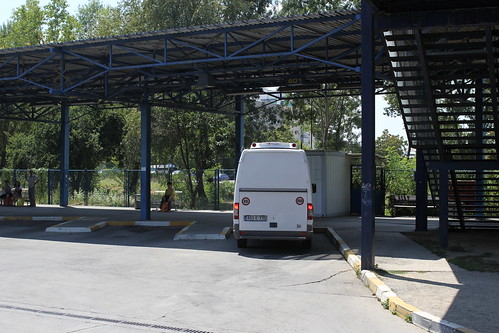
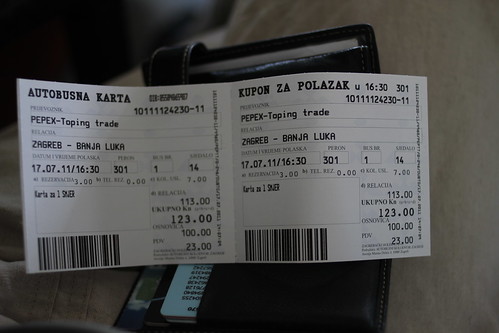
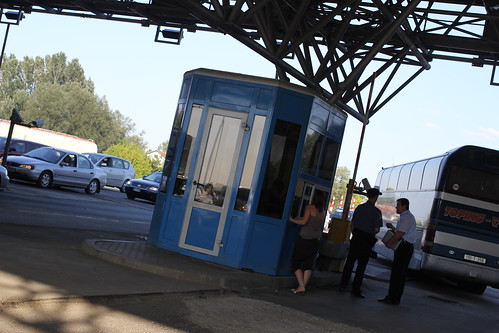
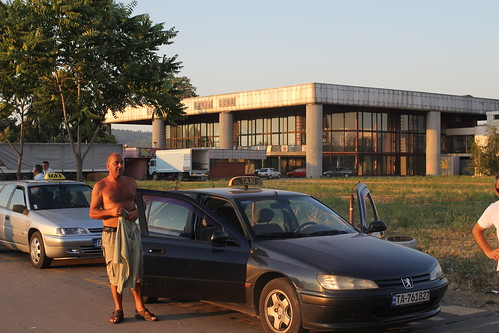
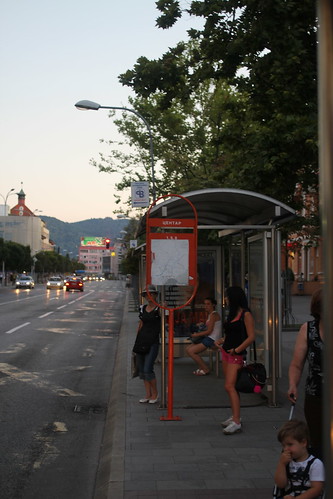
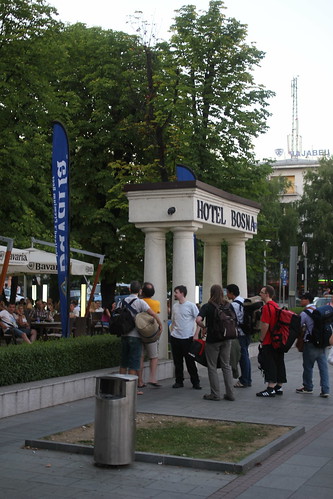
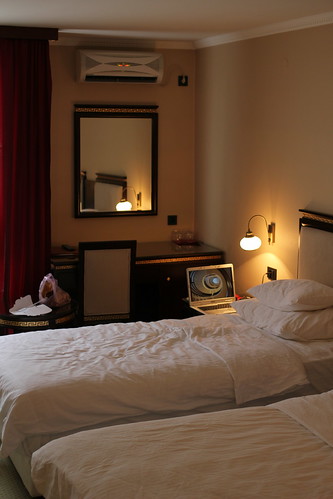
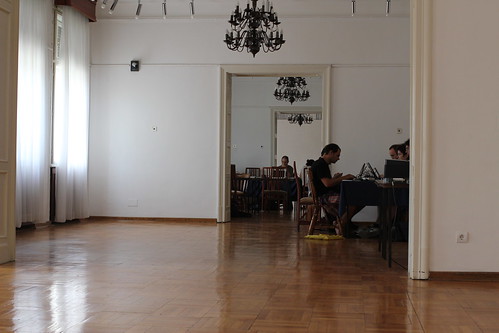
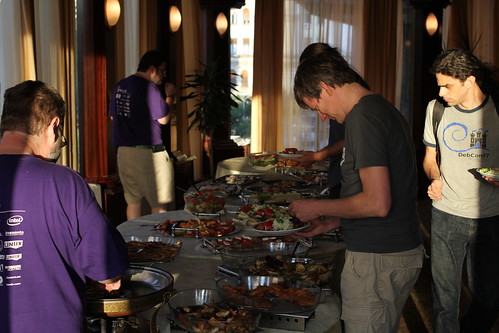
Short version arrival was quite easy, the arrival wiki page is now up-to-date and my photos are uploaded every day to this Flickr set. I had a small problem departing from CDG to Zagreb after scanning my suit twice and complaining that it had too many electronic devices, they had me remove my Nexus S, Nokia N950 and Kindle 3 from the suit pockets and then scanned that all lot again. After that another security guy asked me to open my suitcase and started squishing my Ligo cheese and declaring in a grave voice that it was too soft to be legal . As I kept calm and explained the DebConf cheese party to him, he looked around, put the cheese back in the bag and said ok, ok, off you go . So I still have that softness for the party. I heard an even better anecdote from our next years hosts when they were travelling trough Germany, a border official asked a typical so, what are you here for? question. They answered that they were in transit for an IT conference and gave him the invitation letter. He read the letter, nodded and then said: DebConf, huh? So, who was the author of the Linux kernel? and when after the initial shock they gave the right answer, they were immediately waved trough. Now that s what I call good border security. :) Meeting point - cafe at the Zagreb airport I met up with the guys in the Zagreb airport caf , which was immediately after exiting the secure zone. We waited for dkg to arrive and get his baggage. The passport check too a couple of minutes, but the baggage claim looked to be taking almost a half an hour. The airport bus After that was sorted out, we took out some local money in one of the 5 ATMs around and went to the bus. We were waived to just put our bags into the bus luggage space and get on, the driver went around to sell us tickets just before we drove off. It was one of the most comfortable and well air-conditioned buses I have been on in a long time. We were in the Zagreb bus station in less than half an hour. Non-official bus that tried to lure us Then a funny part started an old man came up to dkg and immediately asked Are you going to Banja Luka? , and when he said yes, the man started dragging us along to the bus station saying that there is a bus to there that will leave in a couple minutes, but we were in luck, so we should follow him right to the bus. Driven by curiosity, we went on. The man dragged us to the far side of the bus terminal bus stops where there was a minibus with Bosnian number plates, but no official designation as a passenger transit bus and no other passengers. They asked a reasonable 120 kuna for the trip, but they looked very shady to me, so we refused. I think that if we agreed and we were lucky enough that they actually did get us to Banja Luka, the price would have risen along the way, for example using the highway tolls as an excuse. Bus ticket to Banja Luka After getting cursed at by the old man and being demanded to buy him a beer for his efforts, we went upstairs to the real bus station where we were told that there were two buses to Banja Luka: one at 15:00 and another at 16:30, but that those two buses arrive in Banja Luka almost at the same time, so we got us tickets for the latter bus and went to a local bar to get some food and drinks. I somehow managed to get sausages in deepfried bread that for some reason cost almost triple of a hamburger and fries that others got, but it sure helped to pass the time and after all those 9 was not a bad price for a good meal. Bus to Banja Luka at Zagreb bus station We were a bit surprised by the bus drivers asking us to pay 1 (or 8 kuna) for bags to be put into bus bag storage, especially as we for several minutes could not quite understand what they want of us as neither of them spoke either English, Russian or German. Border crossing I don t remember when was the last time I crossed a real (i.e. non-Shengen) border in a bus, so getting out of the bus and walking one-by-one to the border official was a new experience. On the other border of two bus drivers collected the passports an then brought them back later, so that was less painful. And by then we were in Bosnia! And of the things that greeted us was a billboard for the casino in Banja Luka Hotel Bosna. :) By the time we got to Banja Luka, dkg had already made friends with an official from Croatian ministry of regional development that sat behind us on the bus and knew English very well (after living in Canada for some time). The bus station in Banja Luka looked almost abandoned like the bus stopped in the field with only a few taxi drivers and a bunch of buildings some distance away showing that this was indeed part of civilization. Banja Luka taxis The taxi drivers would take you to the venue for 8-10 KM 5 or 50-100 kuna (if their meter is broken and you look to be really ignorant of the exchange rates). If you walk on a bit, there is a bus station with an ATM taking Visa cards and a bit further on a bus stop that will take you to the centre of the city for 1.5 KM. The train station looked fully abandoned when we went there, only a news kiosk was working there. The bus driver reacted well to the name Hotel Bosna and wave toward it when we passed by it. Central bus stop - get off here Meeting first Debian peoples at the hotel It is hard to miss, especially the blinking Casino sign or the white pillars with black letters Hotel Bosna on top. You just get off at the bus station Central and walk back a couple hundred meters. Then see all you Debian friends drinking in the cool bar and walk around the corner to the main entrance of the hotel to check in. Church at sunset Main event location Hotel room The rooms are looking really great this is the best DebConf location that I have been to (I was not in Argentina). Soft beds with linens changed daily, nice air conditioning, towels (changed daily, if used), good shower, It is lacking in the speed and power of its free WiFi and in some place there is a clear impression that the hotel was built as a top of the line hotel a couple decades ago, but somehow has fallen into a disrepair since. Or it is simply used much more than expected. IMG_4973 So far I would say that the DebCamp is running full steam two hacklabs have desks, chairs, power and network connection, one of them even has sufficient air conditioning. The network works great for me so far, at least in the venue. The hotel wireless is barely usable to read a blog post, preferably without photos. Dinner buffet The food is being served well and on time. So far for lunch and dinner you walk up to the reception and get a food ticket based on your room number and go to the M level for the food (the M level is between the ground floor, labelled as PR , and first floor) where for breakfast and dinner there is a buffet, but for lunch you sit at a table and they bring you food. Vegetarians should clearly say vegetarian while pointing at themselves to get the special vegetarian option. So far food has been very good, except that that they often run out of popular items, such as fries, in the buffet. You can also ask for beer and other extra drinks with your food, but know that they cost extra up to 2.5KM for a beer, for example.

29 June 2011

Stefano Zacchiroli: debian society track at debconf

Debian/Society at DebConf11 For DebConf11 which, needless to say, I'll be attending I've accepted to coordinate the Debian/Society track, together with dkg. As it's Daniel who has done most of the work up to now, let me pretend I'm catching up with a brief but very important call for papers. The idea of the Debian/Society track is to collect talks and other events that explore two society-related aspects of Debian:
  1. Debian is a society in itself. It is a society formed by a group of people that are connected by relationships, share a (virtual) territory, and are subject to various kinds of self-imposed rules (technical, political, etc.)
  2. Debian relates with larger human societies and has an impact on them, mainly but not only through the Free Software artifacts that Debian produces and distributes.
Several talks and events that have already been submitted to DebConf11 do a very good job at presenting one or both of the above aspects. But we are looking for a few more. In particular, we would like to receive submissions of events about: If you think you can host the event we are looking for, just head to penta and submit your event providing all associated information (event kind, title, abstract, etc.). Please e-mail me or dkg when you've done so. We're way past the general event submission deadline, but if your proposal is just what we need to fill out the track, we can lobby the Talks Team for its acceptance (we can't guarantee acceptance, though). Daniel Kahn Gillmor
Stefano Zacchiroli

21 June 2011

Daniel Kahn Gillmor: unreproducible buildd test suite failures

I've been getting strange failures on some architectures for xdotool. xdotool is a library and a command-line tool to allow you to inject events into an existing X11 session. I'm trying to understand (or even to reproduce) these errors so i can fix them. The upstream project ships an extensive test suite; this test suite is failing on three architectures: ia64, armel, and mipsel; it passes fine on the other architectures (the hurd-i386 failure is unrelated, and i know how to fix it). The suite is failing on some "typing" tests -- some symbols "typed" are getting dropped on the failing architectures -- but it is not failing in a repeatable fashion. You can see two attempted armel builds failing with different outputs: The first failure shows [ and occasionally < failing under a us,se keymap (that is, after the test-suite's invocation of setxkbmap -option grp:switch,grp:shifts_toggle us,se):
Running test_typing.rb
Setting up keymap on new server as us
Loaded suite test_typing
Started
...........F..
Finished in 19.554214 seconds.
  1) Failure:
test_us_se_symbol_typing(XdotoolTypingTests)
    [test_typing.rb:58:in  _test_typing'
     test_typing.rb:78:in  test_us_se_symbol_typing']:
<" 12345678990-=~ !@\#$%^&*()_+[] ;:\",./<>?:\",./<>?"> expected but was
<" 12345678990-=~ !@\#$%^&*()_+] ;:\",./>?:\",./<>?">.
14 tests, 14 assertions, 1 failures, 0 errors
The second failure, on the same buildd, a day later, shows no failures under us,se, but several failures under other keymaps:
Running test_typing.rb
Setting up keymap on new server as us
Loaded suite test_typing
Started
..F.F.F.......
Finished in 16.784192 seconds.
  1) Failure:
test_de_symbol_typing(XdotoolTypingTests)
    [test_typing.rb:58:in  _test_typing'
     test_typing.rb:118:in  test_de_symbol_typing']:
<" 12345678990-=~ !@\#$%^&*()_+[] ;:\",./<>?:\",./<>?"> expected but was
<" 12345678990-=~ !@\#$%^&*()_+] ;:\",./<>?:\",./<>?">.
  2) Failure:
test_se_symbol_typing(XdotoolTypingTests)
    [test_typing.rb:58:in  _test_typing'
     test_typing.rb:108:in  test_se_symbol_typing']:
<" 12345678990-=~ !@\#$%^&*()_+[] ;:\",./<>?:\",./<>?"> expected but was
<" 12345678990-=~ !@\#$%^&*()_+[] ;:\",./<>?:\",./<>?">.
  3) Failure:
test_se_us_symbol_typing(XdotoolTypingTests)
    [test_typing.rb:58:in  _test_typing'
     test_typing.rb:88:in  test_se_us_symbol_typing']:
<" 12345678990-=~ !@\#$%^&*()_+[] ;:\",./<>?:\",./<>?"> expected but was
<" 12345678990-=~ !@\#$%^&*()_+ ;:\",./>?:\",./<>?">.
14 tests, 14 assertions, 3 failures, 0 errors
I've tried to reproduce on a cowbuilder instance on my own armel machine; I could not reproduce the problem -- the test suites pass for me. I've asked for help on the various buildd lists, and from upstream; no one resolutions have been proposed yet. I'd be grateful for any suggestions or hints of things i might want to look for. It would be a win if i could just reproduce the errors. Of course, one approach would be to disable the test suite as part of the build process, but it has already helped catch a number of other issues with the upstream source. It would be a shame to lose those benefits. Any thoughts?

10 May 2011

Daniel Kahn Gillmor: the bleeding edge: btrfs (poor performance, alas)

I'm playing with btrfs to get a feel for what's coming up in linux filesystems. To be daring, i've configured a test machine using only btrfs for its on-disk filesystems. I really like some of the ideas put forward in the btrfs design. (i'm aware that btrfs is considered experimental-only at this point). I'm happy to report that despite several weeks of regular upgrade/churn from unstable and experimental, i have yet to see any data loss or other serious forms of failure. Unfortunately, i'm not impressed with the performance. The machine feels sluggish in this configuratiyon, compared to how i remember it running with previous non-btrfs installations. So i ran some benchmarks. The results don't look good for btrfs in its present incarnation. UPDATE: see the comments section for revised statistics from a quieter system, with the filesystems over the same partition (btrfs is still much slower). The simplified test system i'm running has Linux kernel 2.6.39-rc6-686-pae (from experimental), 1GiB of RAM (no swap), and a single 2GHz P4 CPU. It has one parallel ATA hard disk (WDC WD400EB-00CPF0), with two primary partitions (one btrfs and one ext3). The root filesystem is btrfs. The ext3 filesystem is mounted at /mnt I used bonnie++ to benchmark the ext3 filesystem against the btrfs filesystem as a non-privileged user. Here are the results on the test ext3 filesystem:
consoleuser@loki:~$ cat bonnie-stats.ext3 
Reading a byte at a time...done
Reading intelligently...done
start 'em...done...done...done...done...done...
Create files in sequential order...done.
Stat files in sequential order...done.
Delete files in sequential order...done.
Create files in random order...done.
Stat files in random order...done.
Delete files in random order...done.
Version  1.96       ------Sequential Output------ --Sequential Input- --Random-
Concurrency   1     -Per Chr- --Block-- -Rewrite- -Per Chr- --Block-- --Seeks--
Machine        Size K/sec %CP K/sec %CP K/sec %CP K/sec %CP K/sec %CP  /sec %CP
loki          2264M   331  98 23464  11 10988   4  1174  85 39629   6 130.4   5
Latency             92041us    1128ms    1835ms     166ms     308ms    6549ms
Version  1.96       ------Sequential Create------ --------Random Create--------
loki                -Create-- --Read--- -Delete-- -Create-- --Read--- -Delete--
              files  /sec %CP  /sec %CP  /sec %CP  /sec %CP  /sec %CP  /sec %CP
                 16  9964  26 +++++ +++ 13035  26 11089  27 +++++ +++ 11888  24
Latency             17882us    1418us    1929us     489us      51us     650us
1.96,1.96,loki,1,1305039600,2264M,,331,98,23464,11,10988,4,1174,85,39629,6,130.4,5,16,,,,,9964,26,+++++,+++,13035,26,11089,27,+++++,+++,11888,24,92041us,1128ms,1835ms,166ms,308ms,6549ms,17882us,1418us,1929us,489us,51us,650us
consoleuser@loki:~$ 
And here are the results for btrfs (on the main filesystem):
consoleuser@loki:~$ cat bonnie-stats.btrfs 
Reading a byte at a time...done
Reading intelligently...done
start 'em...done...done...done...done...done...
Create files in sequential order...done.
Stat files in sequential order...done.
Delete files in sequential order...done.
Create files in random order...done.
Stat files in random order...done.
Delete files in random order...done.
Version  1.96       ------Sequential Output------ --Sequential Input- --Random-
Concurrency   1     -Per Chr- --Block-- -Rewrite- -Per Chr- --Block-- --Seeks--
Machine        Size K/sec %CP K/sec %CP K/sec %CP K/sec %CP K/sec %CP  /sec %CP
loki          2264M    43  99 22682  17 10356   6  1038  79 28796   6  86.8  99
Latency               293ms     727ms    1222ms   46541us     504ms   13094ms
Version  1.96       ------Sequential Create------ --------Random Create--------
loki                -Create-- --Read--- -Delete-- -Create-- --Read--- -Delete--
              files  /sec %CP  /sec %CP  /sec %CP  /sec %CP  /sec %CP  /sec %CP
                 16  1623  33 +++++ +++  2182  57  1974  27 +++++ +++  1907  44
Latency             78474us    6839us    8791us    1746us      66us   64034us
1.96,1.96,loki,1,1305040411,2264M,,43,99,22682,17,10356,6,1038,79,28796,6,86.8,99,16,,,,,1623,33,+++++,+++,2182,57,1974,27,+++++,+++,1907,44,293ms,727ms,1222ms,46541us,504ms,13094ms,78474us,6839us,8791us,1746us,66us,64034us
consoleuser@loki:~$ 
As you can see, btrfs is significantly slower in several categories: I'm hoping that i just configured the test wrong somehow, or that i've done something grossly unfair in the system setup and configuration. (or maybe i'm mis-reading the bonnie++ output?) Maybe someone can point out my mistake, or give me pointers for what to do to try to speed up btrfs. I like the sound of the features we will eventually get from btrfs, but these performance figures seem like a pretty rough tradeoff.Tags: benchmarks, bonnie, btrfs, ext3

6 May 2011

Daniel Kahn Gillmor: Please use unambiguous tag names in your DVCS

One of the nice features of a distributed version control system (DVCS) like git is the ability to tag specific states of your project, and to cryptographically sign your tags. Many projects use simple tag names with the version string like "0.35". This is a plea to ensure that the tags you make explicitly reference the project you're working on. For example, if you are releasing version 0.35 of project Foo, please make your tag "foo_0.35" for security and for future disambiguation. There is more than one reason to care about unambiguous tags. I'll give two reasons below, but they come from the same fundamental observation: All git repositories are, in some sense, the same git repository; some just store different commits than others. it's entirely possible to merge two disjoint git repositories, and to have two unassociated threads of development in the same repo. you can also merge threads of developement later if the projects converge.
Avoid tag replay attacks
Let's assume Alice works on two projects, Foo and Bar. She wraps up work on a new version of Foo, and creates and signs a simple tag "0.32". She publishes this tag to the Foo project's public git repo. Bob is trying to attack the Bar project, which is currently at version 0.31. Bob can actually merge Alice's work on Foo into the Bar repository, including Alice's new tag. Now looks like there is a tag for version 0.32 of project Bar, and it has been cryptographically-signed by Alice, a known active developer! If she had named her tag "foo_0.32" (and if all Bar tags were of the form "bar_X.XX"), it would be clear that this tag did not belong to the Bar project.
Be able to merge projects and keep full history
Consider two related projects with separate development histories that later decide to merge (e.g. a library and its most important downstream application). If they merge their git repos, but both projects have a tag "0.1", then one tag must be removed to make room for the other. If all tags were unambiguously named, the two repos could be merged cleanly without discarding or rewriting history.
I noticed this because of a general principle i try to keep in mind: when making a cryptographic signature, ensure that the thing you are signing is context-independent -- that is, that it cannot be easily misinterpreted when placed in a different context. For example, do not sign e-mails that just say "I approve" -- say specifically what you are approving of in the body of the signed mail. Otherwise, someone could re-send your "I approve" e-mail In-Reply-To a topic that you do not really approve of. By extension, signing a simple tag is like saying "the source tree in this specific state (and with this specific history) is version 0.3". A close inspection of the state and the history by a sensitive/intelligent human skilled in the art of looking at source code can probably figure out what the project is from its contents. But it's much less ambiguous to say "the source tree in this specific state (and with this specific history) is version 0.3 of project Foo". Once you start using unambiguous tag names, you make it safe for people to set up simple tools that do automated scans of your repository and can take action when a new signed tag appears. And you respect (and help preserve) the history of any future project that gets merged with yours.Tags: git, security

4 May 2011

Daniel Kahn Gillmor: test-driven development: refactoring, difficulties

liw recently wrote about test-driven development:
This all sounds like a lot of bureaucratic nonsense, but what I get out of this is this: once all tests pass, I have a strong confidence that the software works. As soon as I've added all the features I want to have for a release, I can push a button to push it out
To my mind, this is only one of the benefits. He doesn't describe another major benefit, which is the confidence with which you can take on re-factoring in projects with well-developed test infrastructure. If your project has no test infrastructure at all, and you make a deep and/or potentially invasive change, you might well produce something that is heinously broken for users who have a different pattern of using the tool than you do. But if you have a well-developed, reasonable test suite with fairly wide coverage, you can make a deep or invasive change, and be confident that -- if the tests all pass -- the stuff you release isn't going to be too horrific. And if you do break something with a change which the test suite didn't cover, that's an indication that the test suite is lacking. Hopefully, you can factor out a problem report into its own test, so that future changes will ensure that the behavior doesn't regress too. The upshot of more-confident re-factoring is that your development can be much bolder, you can roll out new features more quickly, and you can spend less time agonizing about whether you've got the various abstraction layers exactly right the first time through. These are all good things (though i do think the agony of abstraction perfectionism is well-warranted in some contexts, like API definitions, and wouldn't want test-driven development to make people give up on that necessary task). when testing can't cover everything Some things are just hard to test well. for example, if you have 20 different boolean options to a command-line tool, you can't realistically test them in all combinations and permutations; that would be over a million tests. User experience is also notoriously difficult to test, as are tools that rely heavily on network interaction, which can be flakey and unpredictable. other downsides Test suites themselves require maintenance, as the components they rely on can change over time. More than once, i've had a test suite failure that was really a failure of the test infrastructure, not the code itself. But in those same projects, that's usually followed or preceded by a test suite failure that picks out a particularly nasty or subtle bug in the tested code that might have persisted for quite a while unnoticed. So the test suite does in some sense create more work all around. more and better testing is good for Debian Even when we know that coverage isn't perfect, and even with its additional overhead, well-integrated tests (at the unit level and more generally) are worth the tradeoffs. It's worth doing because of the robustness and guarantees that we can give each other with regularly-tested code. It's a more stable foundation which surprisingly also gives us more flexibility going forward. This is good for free software in general. It also helps us find our bugs before our users do, so it's better for our users. So more and better testing directly supports the two main priorities outlined in the Debian Social Contract.

28 April 2011

Daniel Kahn Gillmor: USAA Deposit@Home: bad engineering and terrible UX

I use USAA for some of my finances. They specialize in remote banking (i've never been in a physical branch). Sadly, they can still be pretty clueless about how to use the web properly. My latest frustration with them was trying to use their Deposit@Home service, where you scan your checks and upload them. No problem, right? I've got a scanner and a web browser and i know how to use them both. Ha ha. Upon first connecting, i'm rejected, and i find the absurd System Requirements -- only Windows and Mac, and only certain versions of certain browsers. You also need Sun's Java plugin, apparently. Deliberately na ve, i call their helpdesk and ask them if they could just give me a link to let me upload my scanned checks. They tell me that they want 200dpi images, and then give an absurd runaround that includes references to the Gramm-Leach-Bliley Act as the reason they need to limit the system to Windows or Mac, and that security is the reason they need to control the scanner directly (apparently your browser can control your local scanner on Windows? yikes). But they let slip that Mac users don't have the scanner controlled directly, and can just upload images (apparently the federal law doesn't cover them or something). Preposterous silliness. The Workaround Of course, it turns out you can get it working on Debian GNU/Linux, mainly by telling them what they want to hear ("yes sir, i'm running Mac OS"), but you'll also have to run Sun's Java (non-free software) to do it, since their Java uploader fails with nasty errors when using icedtea6-plugin. I set up a dedicated system user for this goofiness, since i'm going to be running apparently untrustworthy applets on top of non-free software. I run a separate instance of iceweasel as that user; all configuration described is for that user's homedir. If you do this yourself, You'll need to decide if you want the same level of isolation for yourself. So i have the choice of installing sun-java6-plugin from non-free and having the plugin installed for all web browsers, or just doing a per-user install of java for my dedicated user (and avoiding the plugin for my normal user). I opted for the latter. As the dedicated user, I fetched the self-extracting variant from java.com, unpacked it, and added it to the iceweasel plugins:
chmod a+x ~/Download/jre-6u25-linux-i586.bin
mkdir -p ~/lib ~/.mozilla/plugins
cd ~/lib
~/Download/jre-6u25-linux-i586.bin
ln -s ~/lib/jre*/lib/*/libnpjp2.so ~/.mozilla/plugins/
Then i closed iceweasel and restarted it. In the relaunched iceweasel sesson, I told Iceweasel 4 to pretend that it was actually Firefox 3.6 on a Mac. I did this by going to about:config (checking the box that says i know what i'm doing), right-clicking, and choosing "new >> string". The new variable name is general.useragent.override and i found that setting it to the following (insane, false) value worked for me:
Mozilla/5.0 (Macintosh; U; PPC Mac OS X Mach-O; en-US; rv:1.9.2.3) Gecko/20060426 Firefox/3.5.18
Note that this configuration might make hotmail think that you are a mobile device. :P If you try to use this browser profile for anything other than visiting USAA, you might want to remove this setting, or install xul-ext-useragentswitcher to be able to set it more easily than using about:config. Once these changes were made, I was able to log into USAA, use the Deposit@Home service to upload my 200dpi grayscale scans. I guess they think i'm a Mac user now. The Followup After completing the upload, I wrote them this review (i doubt they'll post it):
The Deposit@Home service has great potential. Unfortunately, it currently appears to be overengineered and unnecessarily restrictive. The service requires two scans (front and back) of the deposited check, at 200dpi, in grayscale or black-and-white, in jpeg format, reasonably-cropped. The simplest way to do this would be to show some examples of good scans and bad scans, and provide two file upload forms. Once the user uploaded their images, the web site could run its own verification, and display them back for the user to confirm, optionally using a simple javascript-based image-cropper if any image seems wrong-sized. This would work fine with any reasonable browser on any OS. Instead, Deposit@Home requires the user to present a User-Agent header claiming to be from specific versions of Mac or Windows, running certain (older) versions of certain browsers, and requires the use of Sun's Java plugin. Entirely unnecessary system requirements to do a simple task. Disappointing. :(
Acknowledgements I found good background for this approach on the ubuntu forums. The Takeaway I continue to be frustrated and annoyed by organizations that haven't yet embraced the benefits of the open web. Clearly, USAA has spent a lot of money engineering what they think is a certain experience for their users. However, they didn't design with standard web browsers in mind, so they appear to have boxed themselves into a corner where they think they have to test and approve of the entire software stack running on the end-user's machine. This is not only foolish -- it's impossible. When you're designing a web-based application, just design it for the web. Keep it simple. If you want to offer some snazzy java-hooked-into-your-scanner insanity, i will only have a mild objection: it seems like a waste of time and engineering effort. My objection is much stronger if your snazzy/incompatible absurdity is the only way to use your service. A simple, web-based, browser-agnostic interface should be available to all your clients. Even more aggravating is the claim that they don't think they should engineer for everyone. I was told during the runaround that they would only support Linux if 4% of their users were using Linux (which they don't think is the case at the moment -- if you are a USAA customer, and you use something other than Mac and Windows, please tell them so). I tried to tell them that I wasn't asking for Linux support; i was asking for everyone support. If you just use generic engineering in the first place, there's no extra expense for special-casing other users. But they couldn't understand. And now, since i'll need to lie to them in my User Agent string every time i want to deposit a check online, those visits won't even show up in their logs to be counted. "Our web site deliberately disables itself for $foo users; we haven't written it for them; but that's OK, we don't have any $foo users anyway" is a nasty self-fulfilling prophecy. Why would you do that?

27 April 2011

Daniel Kahn Gillmor: The bleeding edge: systemd

Curious about these shiny new things i keep hearing about, i set up a test desktop system using using systemd as the init system (yes, that means using systemd-sysv in place of sysvinit -- so i had to remove an essential package for this to work). A system-crippling bug was naturally the result of living on the bleeding edge, but fortunately it was resolved with a trivial patch. In all, i'm pretty happy with some of the things that systemd seems to get right. For example, native supervision of daemon processes, clean process states, elimination of initscript copy-paste-isms, and socket-based service initiation are all obvious, marked improvements over the existing sysvinit legacy cruft. But i'm a bit concerned about other parts. For example, all the above-mentioned features fit really well within a tightly-tuned, well-managed server. But systemd also appears to rely heavily on complex userland systems like dbus and policykit that would be much more at home on a typical desktop machine. I've never seen a well-managed server installation that warranted either policykit or dbus. Also, given the bug i ran into -- when PID 1 aborts due to a silly assertion, your system is well-and-truly horked. Shouldn't a lot more attention to detail be happening? I'd think that a "recover gracefully from failed assertions" approach would be the first thing to target for a would-be PID 1. I'm also concerned about the Linux-centricism of systemd. I understand that features like cgroups and reliance on the spiffiness of inotify are part of the appeal, but i also really don't want to see us stuck with only One Single Kernel as an option. The kFreeBSD folks (and the HURD folks) have done a lot of work to get us close to having some level of choice at this critical layer of infrastructure. It'd be good to see that possibility realized, to help us avoid the creeping monoculture. I worry that systemd's over-reliance on Linux-specific features is heading in the wrong direction. So my question is: why is this all being presented as a package deal? I'd be pretty happy if i could get just the "server-side" features without incurring the dbus/policykit/etc bloat. I already run servers with runit as pid 1 -- they're lean and quite nice, but runit doesn't have systemd's socket-based initiation (or the level of heavyweight backing that systemd seems to have picked up, for that matter). I understand that Lennart is resistant to UNIX's traditional "do one thing; do it well" philosophy. I can understand some of his reasoning, but i think he might be doing his work and his tools a disservice by taking it this far. Wouldn't systemd be better if it was clearer how to take advantage of parts of it without having to subscribe to the entire thing? Of course, i might be missing some nice ways that systemd can be effectively tuned and pared down. But i've read his blog posts about systemd and i haven't seen how to get some of the nice features without the parts i don't want. I'd love to be pointed to some explanations that show me how i'm wrong :)Tags: systemd

24 April 2011

Jonathan McDowell: onak 0.4.0 released

I don't normally mention the PGP keyserver I've been working on for the past 9 years, but there are a few keyserver related comments I've been meaning to make that prompt me to do so this time. onak is the keyserver powering the.earth.li (AKA wwwkeys.uk.pgp.net). Back in February I finally enabled hkps (HKP over SSL) access to it as I promised dkg I would do back at DebConf10. I also turned on IPv6. Most of the active keyservers out there are running SKS. I think there might be a few OpenPKSD instances as well. If you're running SKS please ensure that you have at least one address in your mailsync file, so that you send key updates to the non SKS keyservers out there - it seems that SKS requires the receiving keyserver to send out updates via email, rather than each server sending out any updates it processes to its mailsync peers. Feel free to add pgp-public-keys at earth.li - no need to contact me to do so (but you can drop me a line if you want me to send you mail updates back). Also in the past there was a pgp-keyserver-folk mailing list, originally on flame.org, then on alt.org. Both of these have been dead for a while. I created a local pgp-keyserver-folk some time ago, but never publicised it. I believe the SKS lists are fairly active, but limited to that community, so it would be nice to have somewhere that was keyserver agnostic that admins could talk to each other. Anyway. onak 0.4.0. Largely fixes to keyd, which is a backend daemon that handles talking to the key database. This is particularly useful for large/busy keyservers. Also a couple of fixes that make the db4 backend a lot more reliable (especially with queries that return lots of results). And various other minor cleanups. If you're one of the 3 people running it you probably want to upgrade; updated packages have already been uploaded to Debian unstable.

9 April 2011

Daniel Kahn Gillmor: EDAC i5000 non-fatal errors

I've got a Debian GNU/Linux lenny installation (2.6.26-2-vserver-amd64 kernel) running on a Dell Poweredge 2950 with BIOS 2.0.1 (2007-10-27). It has two Intel(R) Xeon(R) CPU 5160 @ 3.00GHz processors (according to /proc/cpuinfo, 8 1GiB 667MHz DDR2 ECC modules (part number HYMP512F72CP8N3-Y5), according to dmidecode, and an Intel Corporation 5000X Chipset Memory Controller Hub (rev 12) according to lspci. The machine has been running stably for many months. On the morning of March 31st, i started getting the following messages from the kernel, on the order of one pair of lines every 3 seconds:
Mar 31 07:04:38 zamboni kernel: [16883514.141275] EDAC i5000 MC0: NON-FATAL ERRORS Found!!! 1st NON-FATAL Err Reg= 0x800
Mar 31 07:04:38 zamboni kernel: [16883514.141278] EDAC i5000: 	NON-Retry  Errors, bits= 0x800
A bit of digging turned up a redhat bug report that seems to suggest that these warnings are just noise, and should be ignorable. Another link thinks it's a conflict with IPMI, though i don't think this model actually has an IPMI subsystem correction: this machine does have IPMI, though i am not making use of it. However, i also notice from munin logs that at the same time the error messages started, the machine exhibited a marked change in CPU activity (including in-kernel activity) and local timer interrupts: [Individual interrupts - by month][CPU Usage - by month] I also note that more rescheduling interrupts started happening, and fewer megasas interrupts at about the same time. I'm not sure what this means. A review of other logs and graphs on the system turns up no other evidence of interaction that might cause this kind of elevated activity. One thought was that the elevated activity was just due to writing out a bunch more logs. So i tried removing the i5000_edac module just to keep dmesg and /var/log/kern.log cleaner. Leaving that turned off doesn't lower the CPU utilization or change the interrupts, though. Any suggestions on what might be going on, or further diagnostics i should run? The machine is in production, and I'd really rather not take down the machine for an extended period of time to do a lengthy memory test. But i also don't want to see this kind of extra CPU usage (more than double the machine's baseline).Tags: i5000_edac, troubleshooting

5 April 2011

Daniel Kahn Gillmor: Debian on Thecus N8800Pro

I recently set up debian on a Thecus N8800Pro. It seems to be a decent rackmount 2U chassis with 8 3.5" hot-swap SATA drives, dual gigabit NICs, a standard DB9 RS-232 serial port, one eSATA port, a bunch of USB 2.0 connectors, and dual power supplies. I'm happy to be able to report that Thecus appears to be attempting to fulfill their obligations under the GPL with this model (i'm fetching their latest source tarball now to have a look). Internally, it's an Intel Core 2 Duo processor, two DIMMS of DDR RAM, and a PCIe slot for extensions if you like. It has two internally-attached 128MiB SSDs that it wants to boot off of. The downsides as i see them:
BIOS
The BIOS only runs over VGA, which is not easy to access. I wish it ran over the serial port. It's also not clear how one would find an upgrade to the BIOS. dmidecode reports the BIOS as:
        Vendor: Phoenix Technologies, LTD
        Version: 6.00 PG
        Release Date: 02/24/2009
RAM
The mainboard has only two DIMM sockets. It came pre-populated with two 2GiB DDR DIMMs. memtest86+ reports those DIMMs clearly, but sees only 3070MiB in aggregate. The linux kernel also sees ~3GiB of RAM, despite dmidecode and lshw reporting that the two DIMM modules each are only 1GiB in size. I'm assuming this is a bios problem. Anyone know how to get access to the full 4GiB? Should i be reporting bugs on any of these packages?
SSDs
The internal SSDs are absurdly small and very slow for both reading and writing. This isn't a big deal because i'm basically only using them for the bootloader, kernel, and initramfs. But i'm surprised that they could even find 128MiB devices in these days of $10 1GiB flash units.
processor
/proc/cpuinfo reports two cores of a Intel(R) Core(TM)2 Duo CPU T5500 @ 1.66GHz, each with ~3333 bogomips, and apparently without hardware virtualization support. It's not clear to me whether the lack of virtualization support is something that could be fixed with a BIOS upgrade.
I used Andy Millar's nice description of how to get access to the BIOS -- I found i didn't need a hacksaw to modify the VGA cable i had. just pliers to remove the outer metal shield on the side of the connector i plugged into the open socket. lshw sees four SiI 3132 Serial ATA Raid II Controller PCI devices, each of which appears to support two SATA ports. I'm currently using only four of the 8 SATA bays, so i've tried to distribute the disks so that each of them is attached to an independent PCI device (instead of having two disks on one PCI device, and another PCI device idle). I don't know if this makes a difference, though, in the RAID10 configuration i'm using. There's also a neat 2-line character-based LCD display on the front panel which apparently can be driven by talking to a serial port, though i haven't tried. Apparently there are also LEDs that might be controllable directly from the kernel via ICH7 and GPIO, but i haven't tried that yet either. Any suggestions on how to think about or proceed with a BIOS upgrade to get access to the full 4GiB of RAM, BIOS-over-serial, and/or enable hardware virtualization?Tags: n8800pro, thecus

29 March 2011

Daniel Kahn Gillmor: auto-built debirf images

jrollins and i recently did a bunch of cleanup work on debirf, with the result that debirf 0.30 can now build all the shipped example profiles without error (well, as long as debootstrap --variant=fakechroot is working properly -- apprently that's not the case for fakechroot 2.9 in squeeze right now, which is why i've uploaded a backport of 2.14). To try to avoid getting into a broken state again, we set up an autobuilder to create the images from the three example profiles (minimal, rescue, and xkiosk) for amd64 systems. The logs for these builds are published (with changes) nightly at:
git://debirf.cmrg.net/debirf-autobuilder-logs
But even better, we are also publishing the auto-generated debirf images themselves. So, for example, if you've got an amd64-capable machine with a decent amount of RAM (512MiB is easily enough), you can download a rescue kernel and image into /boot/debirf/, add a stanza to your bootloader, and be able to reboot to it cleanly, without having to sort out the debirf image creation process yourself. We're also providing ISOs so people who still use optical media don't have to format their own. Please be sure to verify the checksums of the files you download. The checksums themselves are signed by the OpenPGP key for Debirf Autobuilder <debirf@cmrg.net>, which i've certified and published to the keyserver network. What's next? It would be nice to have auto-built images for i386 and other architectures. And if someone has a good idea for a new example profile that we should also be auto-building, please submit a bug to the BTS so we can try to sort it out.Tags: debirf

16 March 2011

Daniel Kahn Gillmor: CryptLib and the OpenSSL License

I spent part of today looking at packaging Peter Gutmann's CryptLib for debian. My conclusion: it may not be worth my time. One of the main reasons i wanted to package it for debian is because i would like to see more OpenPGP-compliant free software available to debian users and developers, particularly if the code is GPL-compatible. Cryptlib makes it quite clear that it intends to be GPL-compatible:
cryptlib is distributed under a dual license that allows free, open-source use under a GPL-compatible license and closed-source use under a standard commercial license.
However, a significant portion of the cryptlib codebase (particularly within the bn/ and crypt/ directories) appears to derive directly from OpenSSL, and it retains Eric Young's copyright and licensing. This licensing retains the so-called "advertising clause" that is generally acknowledged to be deliberately incompatible with the GPL. (A common counterargument for this incompatibility is that OpenSSL should be considered a "System Library" for GPL'ed tools that link against it; whether or not you believe this for tools linked against OpenSSL, this counterargument clearly does not hold for a project that embeds and ships OpenSSL code directly, as CryptLib does) This does not mean that CryptLib is not free software (it is!), nor does it mean that you cannot link it against GPL'ed code (you can!). However, you probably can't distribute the results of linking CryptLib against any GPL'ed code, because the GPL is incompatible with the OpenSSL license. The un-distributability of derived GPL-covered works makes the CryptLib package much less appealing to me, since i want to be able to write distributable code that links against useful libraries, and many of the libaries i care about happen to be under the GPL. I also note that Peter Gutmann and CryptLib Security Software (apparently some sort of company set up to distribute CryptLib) may be in violation of Eric Young's License, which states:
 * 3. All advertising materials mentioning features or use of this software
 *    must display the following acknowledgement:
 *    "This product includes cryptographic software written by
 *     Eric Young (eay@cryptsoft.com)"
 *    The word 'cryptographic' can be left out if the rouines from the library
 *    being used are not cryptographic related :-).
A Google search for Eric Young's name on cryptlib.com yields no hits. I do find his name on page 340 of the Cryptlib manual, but that hardly seems like it covers "All advertising materials mentioning features or use of this software". I suppose it's also possible that CryptLib has negotiated an alternate license with Eric Young that I simply don't know about. In summary: i think CryptLib could go into debian, but its incorporation of OpenSSL-licensed code makes it less useful than i was hoping it would be. I have a few other concerns about the package after looking it over in more detail. I suspect these are fixable one way or another, but i haven't sorted them out yet. I'm not sure i'll spend the time to do so based on the licensing issues i sorted out above. But in case anyone feels inspired, the other concerns i see are:
embedded code copies
In addition to embedded (and slightly-modified) copies of bn/ and crypt/ from OpenSSL, CryptLib contains an embedded copy of zlib. Debian has good reasons for wanting to avoid embedded code copies. I've got it CryptLib building against the system copy of zlib, but the bits copied from OpenSSL seem to be more heavily patched, which might complicate relying on the system version.
executable stack
lintian reports shlib-with-executable-stack for the library after it is built. I don't fully understand what this means or how to fix it, but i suspect it derives from the following set of object files that also have an executable stack:
0 dkg@pip:~/src/cryptlib/cryptlib$ for foo in $(find . -iname '*.o'); do
>  if ! readelf -S "$foo"   grep -q .note.GNU-stack ; then
>   echo "$foo"
>  fi
> done
./shared-obj/desenc.o
./shared-obj/rc5enc.o
./shared-obj/md5asm.o
./shared-obj/castenc.o
./shared-obj/bfenc.o
./shared-obj/rmdasm.o
./shared-obj/sha1asm.o
./shared-obj/bn_asm.o
./shared-obj/rc4enc.o
0 dkg@pip:~/src/cryptlib/cryptlib$ 
They probably all need to be fixed, unless there's a good reason for them to be that way (in which case they need to be documented).
non-PIC code
lintian reports shlib-with-non-pic-code on the library after it is built. I don't fully understand what this means, or how to resolve it cleanly, but i imagine this is just a question of sorting out the details.
Anyone interested in using my packaging attempts as a jumping off point can start with:
git clone git://lair.fifthhorseman.net/~dkg/cryptlib
Oh, and please correct me about anything in this post; I'd be especially happy to hear that my analysis of the licensing issues above is wrong :) Tags: cryptlib, gpl, licensing, openssl

7 March 2011

Daniel Kahn Gillmor: PHP, MySQL, and SSL?

Is there a way to access a MySQL database over the network from PHP and be confident that As far as i can tell, when using the stock MySQL bindings, setting MYSQL_CLIENT_SSL is purely advisory (i.e. it won't fail if the server doesn't advertise SSL support). This means it won't defend against an active network attacker performing the equivalent of sslstrip. Even if MYSQL_CLIENT_SSL was stronger than an advisory flag, i can't seem to come up with a way to tell PHP's basic MySQL bindings the equivalent of the --ssl-ca flag to the mysql client binary. Without being able to configure this, a "man-in-the-middle" should be able to intercept the connection by offering their own certificate on their endpoint, and otherwise relaying the traffic. A client that does not verify the server's identity would be none the wiser. One option to avoid a MITM attack would be for the server to require client-side certs via the REQUIRE option for a GRANT statement, but the basic MySQL bindings for php don't seem to support that either. PHP's mysqli bindings (MySQL Improved, i think) feature a command called ssl_set() which appears to allow client-side certificate support. But its documentation isn't clear on how it handles an invalid/expired/revoked server certificate (let alone a server that announces that it doesn't support SSL), and it also mentions:
This function does nothing unless OpenSSL support is enabled.
Given that debian MySQL packages don't use OpenSSL because of licensing incompatibilities with the GPL, i'm left wondering if packages built against yaSSL support this feature. And i'm more than a little bit leery that i have no way of telling whether my configuration request succeeded, or whether this function just happily did nothing because the interpreter got re-built with the wrong flags. Shouldn't the function fail explicitly if it cannot meet the user's request? Meanwhile, the PDO bindings for MySQL apparently don't support SSL connections at all. What's going on here? Does no one use MySQL over the network via PHP? Given the number of LAMP-driven data centers, this seems pretty unlikely. Do PHP+MySQL users just not care about privacy or integrity of their data? Or (please let this be the case) have i just somehow missed the obvious documentation? Tags: mysql, php, question, security, ssl, tls

1 March 2011

Daniel Kahn Gillmor: Turning my back on the IEEE

I used to maintain a membership with IEEE. I no longer do. The latest nonsense to come from them is a change for the worse in their copyright assignment policy, which i thought was already problematic. Other engineering societies (IETF, USENIX, etc) continue to do socially relevant, useful work without attempting to control copyright of work contributed to them. This just makes IEEE look like a power- and money-hungry organization, rather than a force for positive advancement of technology. For shame, IEEE. I will not consider reinstating my membership unless the organization changes their copyright assignment and publication policy to better reflect the spirit of scientific inquiry and technological advancement they should stand for.Tags: freedom, ieee, policy

16 January 2011

Daniel Kahn Gillmor: resetting passphrases for mapped LUKS volumes

Let's say you set up a machine using an encrypted disk with LUKS (debian-installer's partman makes this wonderfully easy!). You choose an initial passphrase, get the machine working, and it's working great. Then, you need to restart it, and realize that (for whatever reason) you've forgotten or lost the passphrase for the volume. oops! (i'm sure this has never happened to you -- let's just pretend it's your less-fortunate friend). If your system is still running, and you have superuser access to it, you can actually set a new passphrase for the LUKS volume using information that the dm-crypt kernel module has about the in-use mapping. In my examples, i'll imagine that the source volume is /dev/XXX2 and the exported cleartext volume is known by the device-mapper as XXX2_crypt In the bigger picture, this should serve as a reminder that even though your disk is encrypted, if someone gets live access to the superuser account on a system with the encryption keys loaded, your data is no longer secret. Before you do any tweaking, you might want to back up your LUKS header, just in case:
0 root@example:~# umask 077
0 root@example:~# cryptsetup luksHeaderBackup /dev/XXX2 --header-backup-file XXX2.luksheader.backup
0 root@example:~# 
Maybe also copy that off the machine, since a copy of the LUKS header stored within its own volume isn't terribly useful for a backup-recovery situation. You might also be interested in looking at the contents of the LUKS header:
0 root@example:~# cryptsetup luksDump /dev/XXX2
LUKS header information for /dev/XXX2
Version:       	1
Cipher name:   	aes
Cipher mode:   	cbc-essiv:sha256
Hash spec:     	sha1
Payload offset:	2056
MK bits:       	256
MK digest:      93 51 6c 66 ec ce 32 54 6f 6b 52 d1 27 9b 5a 62 6f 6b 52 d1
MK salt:       	b2 ca 20 49 9f 78 49 c2 fe 15 b4 0f 74 11 23 49
               	64 9e 61 bb f2 82 60 47 a5 76 fa a4 24 0e 5a 7e
MK iterations: 	10
UUID:          	052f1da0-21a1-11e0-ac64-0800200c9a66
Key Slot 0: ENABLED
	Iterations:         	218733
	Salt:               	f2 ae 8c 53 48 a5 f0 bf e1 2c 06 5f 5a bd ff d9
	                      	9a 2e d1 49 3a 63 f8 49 82 ed ae 86 7b 7b 7e 76 
	Key material offset:	8
	AF stripes:            	4000
Key Slot 1: DISABLED
Key Slot 2: DISABLED
Key Slot 3: DISABLED
Key Slot 4: DISABLED
Key Slot 5: DISABLED
Key Slot 6: DISABLED
Key Slot 7: DISABLED
0 root@example:~# 
Now, the fix: We pull the live "master key" from the running device map, and fill a new luksKeySlot from it (this example uses bash's <() syntax for process substitution -- if you use a different shell, i'm sure you can find a different way to do it):
0 root@example:~# cryptsetup --master-key-file <( 
> dmsetup --showkeys table   awk '/^XXX2_crypt: /  print $6  '   tr -d '\n'   perl -e 'print pack("H*", <STDIN>);' 
> ) luksAddKey /dev/XXX2
Enter new passphrase for key slot: abc123
Verify passphrase: abc123
2 root@example:~# 
(note that the luksAddKey invocation above returned an error code of 2 even though it succeeded. I think this is a bug in cryptsetup's return code, not a bug in the password resetting -- it should have returned 0 instead of 2). You can check to see that a new key slot was enabled by re-running cryptsetup luksDump And if you really want to double-check before you reboot, you can try enabling a third keyslot using the passphrase you just added, since this would not succeed if your new passphrase failed to unlock any of the existing keyslots:
0 root@example:~# cryptsetup luksAddKey /dev/XXX2
Enter any passphrase: abc123
Enter new passphrase for key slot: anotherpassphrase
Verify passphrase: anotherpassphrase
0 root@example:~# 
You can also get rid of the original keyslot (which you don't know the passphrase to) like this:
0 root@example:~# cryptsetup luksKillSlot /dev/XXX2 0
Enter any remaining LUKS passphrase: abc123
0 root@example:~# 
(the above commands were all demonstrated using debian testing, with cryptsetup 2:1.1.3-4 and dmsetup 2:1.02.48-4) Tags: cryptsetup, dmsetup, luks, tip

6 January 2011

Daniel Kahn Gillmor: Liberating Knowledge: A Librarian's Manifesto

A friend just pointed me to Liberating Knowledge: A Librarian's Manifesto for Change by Barbara Fister, an academic librarian who also happens to write mystery novels. She has an excellent perspective on the meaning of libraries, and the tradeoffs involved with the current societal trend toward privatizing knowledge through so-called "intellectual property" regulations. In a great critique of the passivity of academia and libraries in the face of attempts at intellectual enclosure by private corporations, she writes:
This uninformed indifference is laying the groundwork for a new tragedy of the commons: a world in which knowledge is turned into intellectual property, monetizied, and made artificially scarce.
She closes with a six-point manifesto that begins:
Liberation bibliography arises out of outrage at the injustice of the current system. It s not about saving money, it s about the empowering nature of knowledge and the belief that it shouldn t be a luxury good for the few.
The article abounds in examples of heinous arrangements in the current system that seem to be accepted as standard procedure, and clear thinking about what the actual tradeoffs are (and how we, as a society, are making them poorly). If i had one objection, it would be that she neglects to mention increased surveillance as one of the problems that come with privatization of knowledge. Our abilities to read privately and anonymously, and to correspond confidentially are at risk because of these systems of control. Anyway, I'd love to see more open allegiances between librarians and free software folks; the ideals and struggles are very much in parallel. Go talk to your librarian friends about this stuff today!Tags: academia, freedom, intellectual property, libraries

Next.

Previous.