Search Results: "cklin"

27 May 2010

Matt Zimmerman: Rethinking the Ubuntu Developer Summit

This is a repost from the ubuntu-devel mailing list, where there is probably some discussion happening by now. After each UDS, the organizers evaluate the event and consider how it could be further improved in the future. As a result of this process, the format of UDS has evolved considerably, as it has grown from a smallish informal gathering to a highly structured matrix of hundreds of 45-to-60-minute sessions with sophisticated audiovisual facilities. If you participated in UDS 10.10 (locally or online), you have hopefully already completed the online survey, which is an important part of this evaluation process. A survey can t tell the whole story, though, so I would also like to start a more free-form discussion here among Ubuntu developers as well. I have some thoughts I d like to share, and I m interested in your perspectives as well. Purpose The core purpose of UDS has always been to help Ubuntu developers to explore, refine and share their plans for the subsequent release. It has expanded over the years to include all kinds of contributors, not only developers, but the principle remains the same. We arrive at UDS with goals, desires and ideas, and leave with a plan of action which guides our work for the rest of the cycle. The status quo UDS looks like this: This screenshot is only 1600 1200, so there are another 5 columns off the right edge of the screen for a total of 18 rooms. With 7 time slots per day over 5 days, there are over 500 blocks in the schedule grid. 9 tracks are scattered over the grid. We produce hundreds of blueprints representing projects we would like to work on. It is an impressive achievement to pull this event together every six months, and the organizers work very hard at it. We accomplish a great deal at every UDS, and should feel good about that. We must also constantly evaluate how well it is working, and make adjustments to accommodate growth and change in the project. How did we get here? (this is all from memory, but it should be sufficiently accurate to have this discussion) In the beginning, before it was even called UDS, we worked from a rough agenda, adding items as they came up, and ticking them off as we finished talking about them. Ad hoc methods worked pretty well at this scale. As the event grew, and we held more and more discussions in parallel, it was hard to keep track of who was where, and we started to run into contention. Ubuntu and Launchpad were planning their upcoming work together at the same time. One group would be discussing topic A, and find that they needed the participation of person X, who was already involved in another discussion on topic B. The A group would either block, or go ahead without the benefit of person X, neither of which was seen to be very effective. By the end of the week, everyone was mentally and physically exhausted, and many were ill. As a result, we decided to adopt a schedule grid, and ensure that nobody was expected to be in two places at once. Our productivity depended on getting precisely the right people face to face to tackle the technical challenges we faced. This meant deciding in advance who should be present in each session, and laying out the schedule to satisfy these constraints. New sessions were being added all the time, so the UDS organizers would stay up late at night during the event, creating the schedule grid for the next day. In the morning, over breakfast, everyone would tell them about errors, and request revisions to the schedule. Revisions to the schedule were painful, because we had to re-check all of the constraints by hand. So, in the geek spirit, we developed a program which would read in the constraints and generate an error-free schedule. The UDS organizers ran this at the end of each day during the event, checked it over, and posted it. In the morning, over breakfast, everyone would tell them about constraints they hadn t been aware of, and request revisions to the schedule. Revisions to the schedule were painful, because a single changed constraint would completely rearrange the schedule. People found themselves running all over the place to different rooms throughout the day, as they were scheduled into many different meetings back-to-back. At around this point, UDS had become too big, and had too many constraints, to plan on the fly (unconference style). We resolved to plan more in advance, and agree on the scheduling constraints ahead of time. We divided the event into tracks, and placed each track in its own room. Most participants could stay in one place throughout the day, taking part in a series of related meetings except where they were specifically needed in an adjacent track. We created the schedule through a combination of manual and automatic methods, so that scheduling constraints could be checked quickly, but a human could decide how to resolve conflicts. There was time to review the schedule before the start of the event, to identify and fix problems. Revisions to the schedule during the event were fewer and less painful. We added keynote presentations, to provide opportunities to communicate important information to everyone, and ease back into meetings after lunch. Everyone was still exhausted and/or ill, and tiredness took its toll on the quality of discussion, particularly toward the end of the week. Concerns were raised that people weren t participating enough, and might stay on in the same room passively when they might be better able to contribute to a different session happening elsewhere. As a result, the schedule was randomly rearranged so that related sessions would not be held in the same room, and everyone would get up and move at the end of each hour. This brings us roughly to where things stand today. Problems with the status quo
  1. UDS is big and complex. Creating and maintaining the schedule is a lot of work in itself, and this large format requires a large venue, which in turn requires more planning and logistical work (not to mention cost). This is only worthwhile if we get proportionally more benefit out of the event itself.
  2. UDS produces many more blueprints than we need for a cycle. While some of these represent an explicit decision not to pursue a project, most of them are set aside simply because we can t fit them in. We have the capacity to implement over 100 blueprints per cycle, but we have *thousands* of blueprints registered today. We finished less than half of the blueprints we registered for 10.04. This means that we re spending a lot of time at UDS talking about things which can t get done that cycle (and may never get done).
  3. UDS is (still) exhausting. While we should work hard, and a level of intensity helps to energize us, I think it s a bit too much. Sessions later in the week are substantially more sluggish than early on, and don t get the full benefit of the minds we ve brought together. I believe that such an intense format does not suit the type of work being done at the event, which should be more creative and energetic.
  4. The format of UDS is optimized for short discussions (as many as we can fit into the grid). This is good for many technical decisions, but does not lend itself as well to generating new ideas, deeply exploring a topic, building broad consensus or tackling big picture issues facing the project. These deeper problems sometimes require more time. They also benefit tremendously from face-to-face interaction, so UDS is our best opportunity to work on them, and we should take advantage of it.
  5. UDS sessions aim for the minimum level of participation necessary, so that we can carry on many sessions in parallel: we ask, who do we need in order to discuss this topic? This is appropriate for many meetings. However, some would benefit greatly from broader participation, especially from multiple teams. We don t always know in advance where a transformative idea will come from, and having more points of view represented would be valuable for many UDS topics.
  6. UDS only happens once per cycle, but design and planning need to continue throughout the cycle. We can t design everything up front, and there is a lot of information we don t have at the beginning. We should aim to use our time at UDS to greatest effect, but also make time to continue this work during the development cycle. design a little, build a little, test a little, fly a little
Proposals
  1. Concentrate on the projects we can complete in the upcoming cycle. If we aren t going to have time to implement something until the next cycle, the blueprint can usually be deferred to the next cycle as well. By producing only moderately more blueprints than we need, we can reduce the complexity of the event, avoid waste, prepare better, and put most of our energy into the blueprints we intend to use in the near future.
  2. Group related sessions into clusters, and work on them together, with a similar group of people. By switching context less often, we can more easily stay engaged, get less fatigued, and make meaningful connections between related topics.
  3. Organize for cross-team participation, rather than dividing teams into tracks. A given session may relate to a Desktop Edition feature, but depends on contributions from more than just the Desktop Team. There is a lot of design going on at UDS outside of the Design track. By working together to achieve common goals, we can more easily anticipate problems, benefit from diverse points of view, and help each other more throughout the cycle.
  4. Build in opportunities to work on deeper problems, during longer blocks of time. As a platform, Ubuntu exists within a complex ecosystem, and we need to spend time together understanding where we are and where we are going. As a project, we have grown rapidly, and need to regularly evaluate how we are working and how we can improve. This means considering more than just blueprints, and sometimes taking more than an hour to cover a topic.

9 May 2010

Gregor Herrmann: RC bugs 2010/17, 2010/18

the usual short overview about my RC bug activities: luckily the count of RC bugs is going down; but some more people tackling the remaining ones would be great!

28 March 2010

John Goerzen: Trip part 5: Leipzig

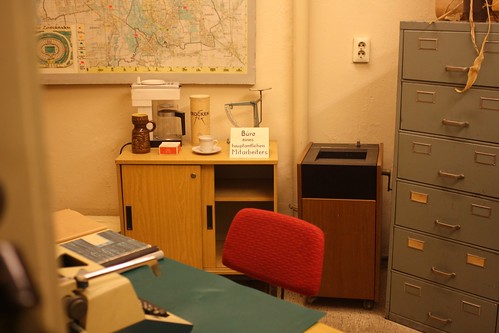
Note: this post written on March 19 for posting after we return. We arrived at Leipzig surprisingly about 5 minutes late on Wednesday morning. My friend Brad was at the Leipzig Hauptbahnhof (central stration) to meet us. As we walked through the city with him, he commented that I hadn t yet tried Currywurst, and there was a stand selling them with different levels of spiciness. I tried one and liked it; Terah was afraid to touch them. After a light lunch with Brad and Anna, we went back into town and saw the V lkerschlachtdenkmal (Monument to the Battle of the Nations). We were warned that it was weird and ugly. And when we arrived, I noticed that it was enormous. And, well, somewhat ugly. And, yes, weird. IMG_2681 After that, we walked through the old trade fair grounds. Leipzig has a long history as a trade center, and after they built the new trade fair grounds, the old ones were reused for other things except for the old Soviet building, which is now both gaudy and abandoned. We picked up Fritzi, who is a very cute 4 years old, from preschool and returned to their house for supper. After that, Brad and I went back into town, intending to hear a reading at the old city pool. When we realized it was a different day, we walked around the city center for awhile and then had a beer at a yes combination cafe/laundromat. Thursday was our day to explore the city. Brad showed us a couple of buildings in the university, including the library, then dropped us off at St. Thomaskirche. That s the church where J. S. Bach was music director for many years, and was buried. Like so many, it was impressive in its height and history. IMG_2703 Next we went to the Stasi museum. The Stasi were the feared and powerful East German secret police during the Communist times. The museum itself was housed in the former Stasi headquarters for Leipzig and was involved with the history of the overthrow of the Communists. The museum covered a lot of the history of the Stasi, including its frantic last days during the 1989 revolution. The level of spying on people was incredible and sophisticated, and they tried to destroy records as the overthrow of the government was imminent. One of the offices in the inner part of the building was left untouched from the Communist years, right down to the typewriter and coffee machine. IMG_2717 After that, we went to the Altes Rathaus (old city hall or townhouse, built in 1556) to do a bit of shopping. Terah was wanting some souvenirs, and I had spotted a shop I thought she might like when walking through the city with Brad the night before. We had already bought some souvenirs at the Schloss Charlottenburg museum store in Berlin (some East German-style crosswalk fridge magnets, and a decorative egg), but wanted something a bit nicer for us and were on the lookout for gifts for others too. We wound up buying a wood carved church scene with a woven wheat tree for us, and another item for others. The shopkeeper spoke no English, and my German vocabulary is small, but we managed to communicate the question of whether or not she could wrap it up in a box for our trip home and she could, and did. Excellent. (I didn t know how to ask about box, but knew how to say that we were Americans, and with a fair bit of gesturing all around, managed to get the idea across.) Then we went in the Altes Rathaus itself, which was both a museum and an interesting cultural experience. We bought our tickets at the booth downstairs, then went upstairs to the entrance. We asked for the English audio guide, which is very common at museums in Germany. (They are small digital audio players that contain recorded information; each room or display has a number you can key in to hear about it in your own language.) We got it, and were told in incredible detail how to use it, even though they are quite easy to figure out and we had used them before. The museum employee told us where the audio tour starts, and in what order it usually goes, which was an effort for her given her limited English. But we all understood and went on our way. It wasn t even 5 minutes later when she had left her desk and came over to us. She was slightly alarmed at two things: one that we didn t have the volume at full blast (which was loud enough for the entire room to hear), and secondly that we weren t looking at the exhibits in the proper order. Never mind that it s easy enough to pull up the audio information about any room just by keying in the number posted in it, I guess. Anyhow, we sort of inwardly shrugged, let her turn the volume up to potentially disturbing the other visitors level, and went through the museum in the order she wanted us to. (Note that this wasn t a museum where there is a one-way flow of traffic or something; you walk into one exhibit, back to the main hall, and then pick your next one.) So we went through the rest of the museum with our English audioguide blaring throughout the large, echoing, wood rooms, feeling a bit rude to the other visitors (maybe 5 of them while we were there) due to its volume. Anyhow, the Altes Rathaus was beautiful and interesting, covering mainly the pre-industrial history of Leipzig. We learned about some of the guilds, the city treasury (vault), and where the town council/parliament met along with rich merchants. There were about as many museum guards as visitors there, and one or two of them sort of followed us around, pointing out the large and completely obvious signs with audio guide numbers in the rooms for us. They are serious about their audio guides in Leipzig. I m glad we went, and I m glad we had the experience we did, too. Terah told me later that she felt reprimanded about the audio guide and visiting order. My take on it was a bit different: the museum is impressive and interesting, but obviously not visited by tourists as much as museums in other cities, or even touristy sites like Thomaskirche in Leipzig. I think they they noticed two people, obviously very foreign (speaking only a little German, and with an American accent) with an interest in their city s history, and took pride in making sure we got the most of our visit and learned as much as possible about something they care about. Here is the main hall of the Altes Rathaus. IMG_2727 We met up with Brad in a cafe near St. Thomaskirche for coffee and cake, then it was on to St. Nikolaikirche (the Church of St. Nicholas), the other large church in town. We stepped out of a passageway to face the large building, and walked in. The interior was decorated in pastels, and was also beautiful and historic. I can t get enough of that sort of building, I think. This building was especially important because it was the site of organizing for the Monday evening protests against the Communist government in 1989. People met at the church, sang a few hymns (to qualify it as a religious service, perhaps), then organized their protest for the evening. Sometimes they would wind through city streets and put flowers at the Stasi headquarters steps, and once the citizens actually overtook the Stasi headquarters. IMG_2745 After awhile we grabbed a bit more for lunch: a pretzel for Terah and a Currywurst for me. (This one wasn t spicy and wasn t all that good.) Then we went to the GDR museum, which was large and interesting, but unfortunately for us, completely in German with no English guide available. That evening, we went to a Bach concert at the Leipzig Gewandhaus, celebrating Bach s 325th birthday. That was fun, and a neat experience with such good music in a very nice venue. The program included Bach s Suite for Orchestra no. 1 in C Major (BWV 1066), Concerto for Violin no. 2 in E major (BWV 1042), Ich habe genug (BWV 82), and Suite for Orchestra no. 4 in D major (BWV 1069). Sir Roger Norrington was conducting, and was rather fun and atypical to watch. He had the audience chuckling a few times with his minimalist conducting or perhaps his flamboyant gestures. Anyhow, the music was excellent and the tickets included free passage on the public transit system 3 hours before and after the concert a nice touch. Due to our schedule, we didn t spend much time with Fritzi, but we did get to play with her a bit. She likes to pretend to be a shopkeeper, and had her store all ready to lay out. We would ask her for some items, which she d put in a basket for us, and then of course there would be a child s twist: we d get our items, and she d pay us for them too. Terah and I brought some books for Fritzi. The particularly enjoyed Goodnight Moon because inside it is an picture of The Runaway Bunny, which she already had. Fritzi chose one of her books to give to Jacob it was a German book (Maulwurf) based on a Czech cartoon mole. That was nice of her, and Jacob really liked it (I ll write about that later). We had a good time in Leipzig, and I was getting fairly good at navigating downtown and with the trams and then, of course, it was time to move on. So Friday morning we caught our 7:50 train from the Leipzig Hauptbahnhof. We took the ICE train to Dresden, then walked a few feet to get onto the EC to Prague. That was a bit of a funny experience. The ICE trains are all sleek, modern, meticulously maintained, and the passengers tend to be very quiet. Talking is barely above a whisper, and people seem alarmed if their cell phone rings, even outside the quiet car. The EC passenger car appears to have been built, or last renovated, in the 1970s, and may have been Hungarian. The seats and curtains are old and faded; some of the seat backs have rips in the vinyl headrests. People were talking or eating loudly, in a very different setting than on the ICE train. As we rode along, we were on the right side the river Elbe for many miles. The scenery was beautiful, with small houses in the river valley, and the occasional house up in the hillside. At one point (a bit before we passed through K nigstein on the way to the Bad Schandau stop), we spotted what looked like an old walled city up on the hill. I figured out later that it was Festung K nigstein (K nigstein Fortress). Update: I forgot to mention a couple of things about Leipzig. One was our walk through a forest yes, a forest in the city. That was a nifty, quiet, and pleasant surprise. Secondly was seeing all the DDR apartment blocks, where the apartments evidently were quite literally blocks. It is interesting to see the Communist architecture.
24 March 2010

Theppitak Karoonboonyanan: The Mini-DebCamp in Khon Kaen

So, Thailand Mini-DebCamp 2010 in Khon Kaen has already ended. It's another memorable event I've joined, and especially for this one, been in the organizing team. We owed many people for its success. I'd like to thank our guest DDs for their talks, many of which are improvised. Special thanks to Paul Wise and Yakiharu Yabuki for preparing the talks on Debian Social Contract and Debian packaging in one night, so our audiences can prepare themselves for the Bug Squashing Party in the next 3 consecutive days. Thanks Paul Wise, Andrew Lee, Yakiharu Yabuki, Daiki Ueno, Christian Perrier and our local participants for their efforts in tackling more than 50 bugs during the BSP, 30 of which have been closed and 14 with proposed patches. Thanks Christian Perrier for several talks in the last two days. We also had Andrew Lee's talk on Debian EzGo project, along with talks from our local distro developers (Linux SIS, Linux TLE) on what are being worked on and what can be pushed into Debian. And Neutron Soutmun had presented some future plan on the RahuNAS, a captive portal software based on Debian. A special agenda had been arranged to improve Debian mirroring in Thailand. Chatchai Jantaraprim, the ftp.th.debian.org maintainer, had shared us the backgrounds and motivations behind the official mirror setup for Thailand. Andrew Lee, the ftp.tw.debian.org maintainer, had introduced us to the Debian mirroring infrastructure, and encouraged the local mirror Debian mirror maintainers to do it Debian way. We had exchanged experiences and problems found among the current mirror sites, which can be much useful for their improvements, as well as cooperation in the future. Christian Perrier had also introduced us to the Debian translation workflow and how to coordinate translation via mailing list. This can be useful in the future for Thai if we can form a team, rather than a single-handed translation as present. Christian's talk on Debian contribution paths, along with their fresh hands-on experience in the BSP, had indeed motivated many local people to join Debian. I've been told by some people that they wanted to actually join Debian after this event, after just having a wish to do so for a long time. And Christian's yet another talk on key signing, with live demonstration, was really helpful for Thai audiences, as few of us were familiar with the concept and practice. Yes, taking care of PGP key does require special cares! Night chats and parties were also cool. We enjoyed the drinks (especially, Debian wine!), snacks, and chats together, and exchanged many stories. For me personally, it made me feel Debian as a live community, with people living in it. For the record, we even had a real bug squashing party, as fried bugs are among well-known Esaan dishes. And we had immediately got new voluntary vegetarians because of it! Hee hee.. Hello Christian, I witnessed it. ;-) And thumbs up to Yabuki for his bravery! Yes, it's a wonderful event for me indeed. Thanks Khon Kaen University (Kitt Tientanopajai et. al.) for hosting it. Thanks NECTEC Information and Mobile Applications Program and Science Park KKU for the financial support. Thanks NECTEC people for taking care of foreign participants in traveling between Bangkok and Khon Kaen. And thanks all participants for their contributions to make this event a great one! Picture credits: Supphachoke Suntiwichaya, DebConf Gallery

16 March 2010

Wouter Verhelst: Stuff

I'm running again. No, not running in a bubulle style; I'm running for DPL. It started as a fairly last-minute decision because I would hate to see an election with only one candidate, but then two other people submitted their candidacy right after me. As I stated in my candidacy email, I had "a concert" this weekend. Actually, there were three two-hour performances; two on saturday, one on sunday. Early on, I also suggested videotaping the performance (using the excellent dvswitch, for which I added a patch to support crossfading transitions) to the organising group within the choir, and they liked that. Apart from dvswitch, we used the theatre's own audio mixing setup (so I wouldn't have to worry about that too much) and the theatre's intercom system. I'd made some tally lights, but in the end we were not entirely able to use them, because there were some issues to be dealt with that meant I couldn't quite get them working properly. So on saturday, I was in the theatre pretty early to get everything set up, did some explanations to the volunteers who would do the actual recording, drove my dad (who'd done the direction for the video parts) home, went home, and found my bed at around midnight. On sunday, I got up fairly early, booted my laptop to update the live images with some fixes for some issues we'd encountered on saturday, left for the theatre fairly early again, set up the extra camera position, found out that one of the laptops was actually running at 100Mbit rather than a gigabit and that therefore the extra camera wasn't going to work, learned that one of the volunteers for sunday had done some other camera work for another performance right before that, for which he'd rented some high-end DV-capable cameras. So we broke down the two low-end set-ups, set up the high-end cameras, connected them to the laptops, recalibrated the whitebalance and the diaphragm setting, and restarted the streams. Then one laptop started failing. Since we had had to remove one camera anyway, I just replaced it. By that time, I had about 15 minutes left before sunday's performance would start, so I went to prepare for that. After the performance had finished, I found out that something had gone wrong with the sound of sunday's performance; rather than music, we only heard crackling all the time. Luckily, the sound had also been separately recorded to a different medium, and that recording is fine, so we only need to resync the audio to the video, which should not be a problem. All in all, I had an extremely busy weekend. The alert reader will note that I didn't mention 'food' anywhere in the above paragraphs, mostly because I hardly ever found the time to eat. But it was also extremely satisfying. We still have some postprocessing to do, but I expect I'll put some videos online once we've done that. They're truly stunning, at times. And then yesterday I still had to spend some time writing my DPL platform, and doing some campaigning work. All in all, I didn't find my bed until approximately 4 AM... oh well. I look forward to the election time, and hope that I will do well. I don't need to win, but I'd hope my result will be at least as good as the last time... Update: we used the theatre's audio setup, not video setup -- oops :-)

10 January 2010

Decklin Foster: man ascii

I find myself opening a shell and typing "man ascii" more than I would like. More recently, I've found myself looking (with no success) for a equivalent web page that isn't ugly -- sometimes a browser tab is just more convenient. Yesterday, I decided to stop searching and just write one myself: man ascii. (I was a bit surprised that this domain, and all the variants of it Joker came up with, were available!) I think it gives me everything I got out of ascii(7), but I would love any bug reports.

6 January 2010

John Goerzen: It s Time (or, how the ancient Greeks interfered with American sanitation)

Had you been on our yard tonight, you would have seen a strange sight. Me, dressed warmly (but not quite warmly enough), jumping on the icy and snowy hood of my pickup. Some maniacal fit? An obscure part of my 3-day-long taking out the trash routine? Not exactly. Before I tell you why I was doing such a strange thing and almost in the dark I feel compelled to take a detour through ancient Greek poetry. You heard right. I ve been reading ancient Greek poetry lately. Those Greeks were forever running around receiving signs and portents from the gods. If ever a bird flew by carrying a live snake, and you saw the snake bite the bird while looking over your left shoulder, you knew Zeus was telling you not to attack the enemy that day. Or something. And if you, fool that you are, attacked the enemy that day anyway, you should be not in the least surprised to find a spear through your shoulder in just a few pages time. If ever someone received a sign from Zeus in modern times, surely it was I, tonight. I say that because, as I was trying to close the hood on my pickup after charging its battery, the hood nearly snapped in two. The hood is supported by some spring-loaded brackets in the back, so to close it, you have to push down on the front. I did so, and was surprised that it was going down so easily. Then I realized, apparently in the nick of time, that only the front was going down. The back was staying put, aiming up in the air as ever. So I tried to straighten the hood back out. I then tried to get it down by pulling at it halfway back, but just couldn t get enough leverage to make it budge. So what next? Why, jump on it of course. I got it most of the way closed that way, then jumped/slid down, latched it in front, then crawled back up there to push down the sort of rusty mountaintop that had formed halfway down the hood where it was buckling. OK, sorted. So to recap By this point, I ve had the battery charging for 24 hours, inflated the tire, removed the bungee cord around the brake pedal, removed the battery charger, coerced the hood shut. Time to start it. I hop in, pump the accelerator a few times, and turned the key to start. I heard the sickening aaaaaaaaRRRRRRRRRRRRuuuuumphhh . of a weak battery. So it wasn t charged enough to crank fast enough to have any hope of starting in winter. So I go get the car, pull it up close, being careful to leave myself enough room to maneuver between it and the electric fence. I get out the jumper cables. Then it occurs to me: I have to open the hood again. DOH! I open it just a bit, and hook up the jumper cables. It turns over a bit faster. For just a bit. I get a small sputtering of life from it, but it fades faster than an enemy of Hector at the battle for Troy. So I have Terah come out and put her foot on the accelerator of the car while I try to start the pickup. This too proves futile. So I disconnect the jumper cables, close the pickup s hood with significantly less care than a 31-year-old rusty and nearly-broken hood deserves, roll the window back up, and go for plan B: 4 trips to the road with stuff in my car trunk, and leave the giant cardboard boxes that are covered with snow in the pickup bed for next month. Obviously I have displeased the gods. Forgotten to offer up a sacrifice to Penzoil, feared goddess of internal combustion, perhaps? Or perhaps it was just a sign that I need a new pickup? I m so convinced of the latter that I didn t even bother to replace the bungee cord. Postscript Terah walked in, and said, Ah, I thought I heard you writing a blog post. Yep. It s about pickups and the Greek gods. <very slight pause> Oh, of course it is.

29 December 2009

John Goerzen: Tunnels and Slippers

Dad! Shall we play tunnels and slippers? If you spend much time in our house, chances are you ll hear Jacob, our 3-year-old, ask me that question. It might sound a bit mysterious, but in 3-year-old logic, it totally works. One day, Jacob and I accidentally invented tunnels . I would sit on the couch, the footstool a foot or two away, with my legs on it. Jacob started crawling underneath the resulting tunnel , then got excited about crawling on top of it, crashing down off of it, or slowly sliding down. Sometimes I would take one leg off, and he would fix the tunnel. Afterwards, he d excitedly tell me, Dad! I fixed the tunnel all by myself! This being winter, I usually wear slippers around the house to keep my feet warm. Jacob steadfastly refuses to wear anything but bare feet, maintaining his feet are warm when asked. One day while we were playing tunnels, Jacob started trying to steal my slipper. I defended it by using my other foot to tickle him. He eventually got it, much to his delight. Then he d try to get the other slipper. If you were to listen to a CD of this, you d hear a frenzy of cackling, laughter from both of us, and eventual shrieks of delight as he steals the second slipper. At this point, what s a 3-year-old to do with two ill-gotten slippers? Why, put them on and try to run off with them, of course! So Jacob puts them on, and if I am too slow trying to recover them, will helpfully prompt me with Shall you get the slippers back? When I stand up, he ll shriek, and waddle off at top speed which isn t that fast, considering he s wearing slippers that won t fit his feet for another 15 years. Eventually I will make a big show of having very cold feet and wanting my slippers back. He will laugh in delight, and continue trying to escape. Eventually I ll catch him, lift him up high, and shake his legs until the slippers fall off. Then it s a mad dash to see which one of us will get them back on first. If I do, then it s back to the couch for more tunnels and slippers. So there you have it: tunnels and slippers. Interestingly, I asked Jacob the other day if he wanted to wear HIS slippers. He predictably said no. I pointed out that if he wears his, he d be just like me. He said, Here they are. Shall you help me put them on? I did. He walked around proudly. I asked him if his feet were warm. Yes, they were, he said. So you won t need to steal my slippers anymore? A brief look of panic crept across his face! I felt bad, until he replied with, No, my feet still VERY VERY cold, dad! Shall we play tunnels and slippers right now?

23 December 2009

Peter Eisentraut: Patience

Occasionally, there are concerns expressed about the adoption rate of Python 3. Now that PostgreSQL 8.5alpha3 is released with Python 3 support in PL/Python, let's see what the schedule might be until this hits real use.

Python 3.0 was released in December 2008 and was admitted to be somewhat experimental. At that point, PostgreSQL 8.4 was already in some kind of freeze, so adding a feature as signicant as Python 3 support was not feasible at that point.

In fact, we opted to do two significant rounds of fixing/enhancing/refactoring of PL/Python before tackling Python 3 support: fixed byte string (bytea) support and Unicode support. Both of those benefit Python 2 users, and they made the eventual port to Python 3 quite simple.

PostgreSQL 8.5 might release around May 2010. Debian squeeze is currently in testing and doesn't even contain Python 2.6 or Python 3.1 yet, due to some technical problems and a bit of infighting. Debian freezes in March 2010, which means without PostgreSQL 8.5 but hopefully with Python 2.6 and 3.1. The final release of squeeze should then be later in 2010, which means the earliest that a significant number of Debian users are going to look into moving any of their code at all nearer to Python 3 (via 2.6) is going to be late 2010. (Other operating system distributions will have other schedules, of course.)

The next Debian release (squeeze+1), which will presumably include PostgreSQL 8.5 or later and a solid Python 3.x environment, will then not be released before January 2012, if we believe the current 18-months-plus-slip cycle of Debian. So it will be mid-2012 until significant numbers have upgraded Debian and PostgreSQL to the then-current versions. If you are sticking to a stable and supported operating system environment, this is the earliest time you actually have the option to migrate to the Python 3 variant of PL/Python across the board for your applications. Of course in practice this is not going to be the first thing you are going to do, so by the time you actually port everything, it might be late 2012 or even 2013. Also, if you are heavily invested in PL/Python, you are probably not going to upgrade much your other Python code before PL/Python is ready.

This will then be 3 years after the PL/Python 3 code is written and 4 years after the release of Python 3.0. And 2 years before Python 2.x is expected to go out of maintenance in 2015.

So, to all users and developers: patience.

Incidentally, I fully expect to still be using IPv4 by then. ;-)

22 December 2009

Vincent Sanders: Time off

I have the time over Christmas off, partly because I needed some distance from work but mostly because the children need looking after while their schools are on break.

Usually switching off from the work mindset is hard for me and I end up "helping" anyway. Not this time...come last Friday at quitting time I was gone. I was apparently in desperate need of this break and spending time with the kids has been great.

It has also been snowing! I used to love the snow when I was a kid and watching the boys build a snowman and have a snowball fight brought back good memories. It somehow has less amusement value when you are older and have to go to work in it and deal with all the problems with transport induces in the UK. Did I mention I was off work? ;-) I had a great time with them...and got a very cold neck.

I have also managed to solve the cat box problem. Turns out it was not the boxes, their placement or type. It seems they wanted three to choose from! They now have three boxes in which to sprawl and they use the original two in the original locations...just as long as they have the option of a third they are happy.

Now I have unwound sufficiently I am looking at tackling some Open source projects of my own which I have been neglecting. I am planning on finishing my whether station recording software and feeding my observations to the weather underground. Possibly doing some more work on Netsurf and maybe even fixing some RC bugs for Debian.

18 December 2009

Asheesh Laroia: Diversity in Free Software: South Asians as an example

As someone born in India, I sometimes look around and wonder, Where are the Indians (and other South Asians) in Free Software? (I don't mean to exclude South Asians from other countries, so I will lump us together. I believe that we are more similar than we are different, although I know more about India than about the rest of South Asia.) There is no shortage of Indians performing information technology jobs in the United States. The same is true in academia; the Computing Research Association uses National Science Foundation data to show about 15% of computer science bacholor's degrees are awarded to "Asians or Pacific Islanders." These are not precise numbers targeted at South Asians in particular, but they confirm a general feeling that plenty of technologists in the United States are from that part of the world. South Asia is quite a populous region, coming in at over one billion people. It, too, has plenty of technology workers. So much FLOSS conversation happens in English, and India is well-suited to handle this; English is an "official language". Indian academia reports that there are 350 million English users and about 90 million English speakers. So let's visually compare the Debian developers map for South Asia (over one billion people) and that of New Zealand, a country of four million. India: New Zealand: These two countries have about the same number of Debian developers (at least, who have marked their location in the Debian LDAP database). About four. South Asians comprise about one sixth of the world's population. There are about one thousand Debian developers; we represent at best 1% of that. These numbers are comparable to the under-representation of women in Free Software, especially when you compare the figure to South Asians' over-representation in the rest of information technology. That makes me sad. Take a look at the Debian developer map again. You'll see that Debian is certainly not an Americans-only project, or even an English-speakers-only project. South America has a respectable dotting of developers, and Western- to Central-Europe are packed. I have strong feelings about Free Software. It emerges from an ethos of personal empowerment, and with open source it has become a dominant force in computing. Yet there are plenty of sharp people -- at least women and South Asians -- who, somehow, become culturally excluded from participating.

Why care about diversity? Consider the diversity of contributors we already have. Some contribute to Free Software because of particular business needs, such as what caused Avi Kivity to write KVM, the new leader in Linux-based virtualization. Everaldo's art background gave us the "Crystal" icon set that set the standard for sharp-looking icons on the Free Desktop for years. Josh Coalson knew about compressing sound, and his Free Lossless Audio Codec is now the standard in high quality audio. We already have a great deal of diversity. We should be celebrating! Back in 2001, FLAC's users were celebrating. In that year, I decided to ditch proprietary operating systems because I felt I could achieve all my computing needs in the Free world. A happy user of FLAC myself, I lurked on the mailing list as I watched grateful people thank Josh for the great software he wrote. Different contributions will excite different sorts of users. The more different people we have improving FLOSS, the more happy users we can make. Happy users of FLOSS are Free users. Happy users can become contributors, putting forth code, documentation, translations, and word-of-mouth marketing. The first reason to improve diversity in FLOSS is to better suit our users' needs. The more diversity we have in our contributors, the more chance we have of tickling our users in the ways that please them the most. I wish to see an end to software that restricts users' freedom, so I want to see us build the tools that users want. One thing that pleases me is when I see other people contributing who seem similar to me. When I went to Debconf, I was thrilled to be surrounded by people who cared about software freedom and technical excellence. I had even more fun being social, chatting about rainforests, mutual friends, websites, and music. I might have had the most fun playing the card game Mao. A second reason, then, to improve diversity in FLOSS is to increase contributor retention by increasing joy. Mao was an example of a cultural bond I happened to share with a handful of Debianites. The more diversity we have, the more frequent these sorts of coincidences will be. The final, most obvious, reason to reach out to groups of people who do not typically contribute is that we can increase our numbers. That by itself is so valuable. Ubuntu sees 100 new bugs per week, even after the bug squad's efforts. If we can do a better job of recruiting new contributors, the raw numbers give us more strength in creating and maintaining world-class software as well as letting the world know about it.

Changing the balance I believe that there are plenty of South Asians quite capable of contributing to FLOSS. I believe the same of women. I believe the same of men. Back to the topic at hand. Why do the South Asians vanish when we look at Free Software, not tech in general? There are plenty of reasons I can dream up, based on my experience with Indians.
  • Plenty of South Asian parents urge their children to make low-risk career choices.
  • My mother reports that schools in India focus on memorization instead of creativity. This can leave little room for extracurricular pursuits.
It's tough for FLOSS advocates to work directly on these distant issues. But I think we can focus some problems we can help solve. Crucially, awareness of Free Software spreads best by social circles. I learned about Linux from a friend at a summer camp. I'll repeat that:
  • Awareness of Free Software spreads best by social networks.
So if you want to spread that awareness, try to be a bridge. If you meet someone from an unusual background for open source who needs support or mentorship, try to help. That is an investment in the diversity and growth of Free Software. Those people can now unlock more "open source minorities."

What success looks like Google Summer of Code helps some new contributors get started and provides that mentorship. Rachel McCreary was invited to the SciPy conference after a successful summer. Her father left a comment explaining how her sisters participated in FLOSS via Google's Highly Open Participation (GHOP) Contest:
Rachel was inspired and motivated by BOTH of her little sisters, each completing six GHOP tasks (if memory serves).
GHOP and GSOC has been a game-changer for these girls. Rachel's younger sister is applying to schools such as MIT with an interest in a science major. The youngest daughter now has a Caltech poster on her wall with the intent to eventually attend.
Their proud Dad
Soon, these stories will be commonplace. Until then, we have work to do. (I'm still researching these topics. If you can help me find any sort of data to help me learn more about diversity in FLOSS, even if it seems like I wouldn't like it, leave a comment.)

4 December 2009

Erich Schubert: Tracking outgoing links with Google Analytics

Here's a code fragment to track outgoing links with Google Analytics. As usual, use it at your own risk. I can not give you support for Google products, for obvious reasons.To use it, you <me>need at least understand where to put it (call it in a try-catch in onLoad) and how to adjust the variable name of your page tracker (I'm not using the default).
function trackLinks() 
  var as=document.getElementsByTagName("a");
  var ig=["mydomain.tld","google-analytics.com"];
  for(var i=0; i<as.length; i++)  
    var ignore=false;
    var oc=as[i].getAttribute("onclick");
    if(oc!=null) 
      oc=String(oc);
      if(oc.indexOf('urchinTracker')>=0
        oc.indexOf('_trackPageview')>=0
        oc.indexOf('javascript:')>=0)
        continue;
     
    if(as[i].href.indexOf("mailto:")<0) 
      for(var j=0;j<ig.length;j++) 
        if (as[i].href.indexOf(ig[j])>=0)
          ignore=true;
       
     
    if(!ignore) 
      as[i].onclick = function() 
        var o=this.href.replace(/:\/*/,"/");
        pt._trackPageview('/out/'+o)+";"
        + ((oc!=null)?oc+";":"");
       ;


This code tries to attach an onload handler to any outgoing link, ignoring internal links or links that use JavaScript. If such a link is clicked, it generates a virtual page access with an "/out/" URL that can be analyzed in Google Analytics.A side benefit (apart from knowing which links are interesting to your visitors) is that you should get more accurate "time on page" statistics for your pages.

23 October 2009

Decklin Foster: Score: 5, Privileged

(No apologies to the original.) I get the impression that the Windows 7 launch is a lot like seeing an old boyfriend suddenly show up on your doorstep wanting to get back together. He's had some work done, apparently: stomach stapling to take off some of the weight, teeth whitening, and a radical nosejob to make him look as much like your current boyfriend as medical science will allow. He's handsome, of course, almost too handsome. He still uses far too much product in his hair and carries that desperate look in his eyes. The fragrant haze around him is the cologne he overuses to mask the scent of failure. But standing there in that form-fitting t-shirt, you'd almost forget for a moment what a psycho he was- how he used to shut down in the middle of a date and forget everything you were talking about and how he was only happy when you were paying attention to him. You'd almost forget about carrying around his legacy baggage or those nights when, for seemingly no reason at all, he would simply stop speaking to you and when you asked what was wrong he'd just spit a string of hex code at you and expect you to figure it out. You complained about him for years before finally deciding to get rid of him, and here he is again. Though, somehow, he seems like a completely different person now. "I'm up here," he says when he catches you staring at his package. Tempted though you may be, you know that over time he'll get bored and slow down on you just like he always does. And then you'll be right back where you started: trapped. He keeps you by convincing you that you don't have a choice. You're just not smart enough for one option or rich enough to afford the other. "But I'm different now," he says, batting his eyes innocently. "I've changed." Indeed he has. Apparently, he's really into Kabbalah now or something like that. It's helped him discover loads of untapped potential in himself. But it also means that you'll have to buy all new furniture to fit with his understanding of feng shui. That's not the only change he has in store for you. The minute you let him move in, he'll have a new alarm system put in that succeeds only in preventing your friends from coming over on poker night. He doesn't love you, but he doesn't hate you, either. The truth is that he couldn't care less one way or the other. He's here because he doesn't want to be alone. Like all human beings, especially those well past their prime, he wants to feel wanted and, after a string of lost jobs and bad investments, he needs a place to stay. But all in all, he's OK. He's a seven. He'll do, I guess. UPDATE: There was a Hacker News thread about the Slashdot link that got killed before I could reply to someone who left a negative comment. I'll reproduce it here for the sake of anyone still scratching their head.
Thank you for replying instead of simply downvoting. There are assumptions in the structure of the original text that I don't think most of the people discussing it (here, or over there) appreciate. To wit: the narrative of technology belongs to men. Women are objects. The dumbest, easiest way to make that stick out (I did it over breakfast, ffs) is to swap the genders. It sounds "wrong". The emotional-abuse stuff is more creepy. The physical descriptions are more awkward because men aren't leered at in the same way. It's not about evening things out, it's about subverting what the text doesn't say outright by making it obvious. I am, I'm sure, as aware as you that "deconstruction" is not (anymore) a word you say to sound smart, rather a word you avoid saying to avoid sounding like you're trying to be pseudo-smart, but sometimes you just gotta call a spade a spade. You're free to disagree with that (I assume you still will), but I think "not even wrong" is a little over the top.

8 October 2009

Joey Hess: ikiwiki dependency types

Like make(1), ikiwiki knows about dependencies between the files that it is building, and will rebuild a file if its dependencies change. I've always known that it was possible to greatly reduce the amount of work ikiwiki does, if it gets smarter handling of different types of dependencies. It would be as if make knew that changes to comments inside header files did not change the resulting binary, and avoided rebuilding it for such a change -- but did rebuild the doxygen documentation. Except that, in ikiwiki, this can be done sanely, since it figures out the dependencies by examing the wiki's files, not by using a Makefile. Also, there were some nasty bugs with certian complex dependencies not being handled right. Fixing one of them, the transitive dependency problem, would require ikiwiki doing significantly more work. So fixing all this has been on my todo list for a while. Though when I mentioned "transitive dependencies" at the ikiwiki BOF @ DebConf, eyes glazed over. :) And I expect I've lost most of my readers already here too.. Which is a pity, because I've just gotten to the fun stuff. So, a few (how many?!) days ago I started my current insane hackfest, and began adding dependency types into ikiwiki. The first special type was a presence dependency -- a dependency that only cares if a page is created, or deleted, but does not care about changes to the page. Next type was a links dependency -- a dependency that only cares if the page changes what pages it links to. That was great, except it often didn't work. For features like gathering "posts/*" together into a blog, or displaying a tag cloud of "tags/*", ikiwiki uses a PageSpec. This is a small, domain specific language, that can specify a set of pages with lots of control. For example, "(index or backlink(index)) and created_after(oldpage)". The problem is that when using a PageSpec like the one above in a presence dependency, it doesn't only matter if pages are added/removed. Certian changes to "oldpage" or "index" can also change what it matches. So now, I had this PageSpec DSL, that I needed to somehow analyise to find these influences. While thankfully not turing-complete, parsing it to extract the influences would still be annoying. Except: Operator overloading to the rescue! The solution was this perl:
package IkiWiki::FailReason;
use overload (
        '""'    => sub   $_[0][0]  ,
        '0+'    => sub   0  ,
        '!'     => sub   bless $_[0], 'IkiWiki::SuccessReason' ,
        '&'     => sub   $_[0]->merge_influences($_[1]); $_[0]  ,
        ' '     => sub   $_[1]->merge_influences($_[0]); $_[1]  ,
        fallback => 1,
);
package IkiWiki::SuccessReason;
use overload (
        '""'    => sub   $_[0][0]  ,
        '0+'    => sub   1  ,
        '!'     => sub   bless $_[0], 'IkiWiki::FailReason' ,
        '&'     => sub   $_[1]->merge_influences($_[0]); $_[1]  ,
        ' '     => sub   $_[0]->merge_influences($_[1]); $_[0]  ,
        fallback => 1,
);
Ikiwiki already dealt with pagespecs by translating them to perl (which is then compiled (yes, perl can), and happily memoized). A pagespec is translated to something like this:
(match_glob("index")   match_backlink("index")) & match_created_after("oldpage")
The match_* functions return IkiWiki::SuccessReason or IkiWiki::FailReason objects. These objects are special in a lot of ways; they act like boolean values most of the time, but if viewed as a string, you get a user-understandable message saying why the pagespec didn't match. And when ANDed or ORed together, they build up a list of influences, that can be accessed at the end to get all the influences for the whole pagespec. (Why am I using what's supposed to be bitwise operations & and , rather than "and" and "or"? Because perl doesn't seem to consider the latter to be operators. Odd.) Anyway, this stuff should be available in an ikiwiki release just as soon as I've finished making it smoking fast.

1 October 2009

John Goerzen: MoinMoin as a Personal Wiki, Zen To Done, And A Bit of Ikiwiki

Since I last evaluated and complained about wikis last year, I ve been using moinmoin for two sites: a public one and a personal one. The personal site has notes on various projects, and my task lists. I ve been starting out with the Zen To Done (ebook, PDF, paper) idea. It sounds great, by the way; a nice improvement on the better-known GTD. My To Do Page Anyhow, in MoinMoin, I have a ToDos page. At the top are links to pages with different tasks: personal, work, yard, etc. Below that, are the three big rocks (as ZTD calls them) for the day: three main goals for the day. I edit that section every day. The Calendar And below that, I use MoinMoin s excellent MonthCalendar macro. I have three calendars in a row: this month, next month, and last month. Each day on the calendar is a link to a wiki page; for instance, ToDos/Calendar/2009-10-01. The day has a red background if the wiki page exists, and white otherwise. So when I need to do something on or by a specific day, I click on the link, click my TaskTemplate, and create a simple wiki page. When I complete all the tasks for that day, I delete that day s wiki page (and can note what I did as the log message if I like). Very slick. The Task Lists My task pages are similar. They look like this:
= Personal =
<<NewPage(TaskTemplate,Create new task,@SELF)>> <<Navigation(children,1)>>
<<BR>>
So, my personal task page has a heading, then it has an input form with a text box and a button that says Create new task. Type something in and that becomes the name for a wiki page, and takes you do the editor to describe it. Below the button is a list of all the sub-pages under the Personal page, which represent the tasks. When a task is done, I delete the page and off the list it goes. I can move items from one list to another by renaming the page. It works very, very nicely. Collecting Part of both ZTD and GTD is that it must be very easy to get your thoughts down. The idea is that if you have to think, I ve got to remember this, then you ll be stressed and worried about the things you might be forgetting. I have a Collecting page, like the Personal or Work pages, that new items appear on when I m not editing my wiki. They get there by email. MoinMoin has a nice email system. I ve set up a secret email address. Mail sent there goes directly into MoinMoin. It does some checks on it, then looks at a combination of the From and Subject lines to decide what to do with it. If I name an existing page, it will append my message the the end. If it s a new page, it ll create it. I have it set up so that it takes the subject line as a page name to create/append to under ToDos/Collecting/$subject (by putting that as the name on the To line). So, on my computers, I have a newtodo script that invokes mail(1), asks for a subject, and optionally lets me supply a body. Quick and painless. Also, I ve added the address to my mobile phone s address book. That way I don t have to carry around pen and paper. Need to get down some thought ? No problem. Hit send email, pull the last address sent to, give it a subject and maybe a body. Very slick. Wiki Software As a way of updating my posts from last year: I ve been very happy with MoinMoin overall. It has some oddities, and the biggest one that concerns me is its attachment support. It doesn t let you specify a maximum upload size, and doesn t very well let you restrict attachment work to only certain people. But the biggest problem is that it doesn t track history on attachments. If a vandal deletes the attachment on a page, it s GONE. They expect to have that fixed in 2.0, coming out in approximately November, 2010. I also looked at Ikiwiki carefully over the past few days. Several things impressed me. First, everything can be in git. This makes for a very nice offline mode, better than Moin s offline sync. The comment module is nicer than anything in Moin, and the tagging system is as well. Ikiwiki truly could make a nice blog, and Moin just couldn t. It also puts backlinks at the bottom of each page automatically, a nice feature. And it s by Joey Hess, who writes very solid software. There are also some drawbacks. Chief on that list is that ikiwiki has no built-in history of a page feature. Click History and it expects to take you to gitweb or ViewVC or some such tool. That means that reverting a page requires either git access or cut and pasting. That s fine for me, but throwing newbies to gitweb suddenly might not be the most easy. Since ikiwiki is a (very smart) wiki compiler, its permission system is a lot less powerful than Moin s, and notably can t control read access to pages at all. If you need to do that, you d have to do it at the webserver level. It does have a calendar, but not one that works like Moin s does, though I could probably write one easily enough based on what s there. A few other minor nits: the email receiving feature is not as versatile as Moin s, you can t subscribe to get email notifications on certain pages (RSS feeds only, which would have to be manually tweaked later), and you can t easily modify the links at the top of each page or create personal bookmarks. Ikiwiki looks like an excellent tool, but just not quite the right fit for my needs right at the moment. I ve also started to look at DokuWiki a bit. I was initially scared off by all the plugins I d have to use, but it does look like a nice software. I also re-visited MediaWiki, and once again concluded that it is way too complicated for its own good. There are something like a dozen calendar plugins for it, some of which even are thought to work. The one that looked like the one I d use had a 7-step (2-page) installation process that involved manually running SQL commands and cutting and pasting some obscure HTML code with macros in it. No thanks.

19 September 2009

Sean Finney: dpkg triggers, the lost how-to document

this weekend while giving a bit of TLC to the php packages, i thought i'd finally get around to tackling #490023 and similar bugs, which meant learning about how to use the triggers feature provided by dpkg. unfortunately documentation for this feature was in fairly short supply, and after extensive searching (and by extensive searching i mean typing "dpkg triggers howto" into a google search) i had a couple short manpages (dpkg-trigger(1) and deb-triggers(5)) and an overly verbose and possibly out of date /usr/share/doc/dpkg/triggers.txt.gz. none of these documents really gave a clear "big-picture" for how to get going either. so, as is often the case, i got distracted from my intended task and ended up on a little side-project putting together a nice howto/tutorial for how to integrate dpkg triggers into a package. note that there may be misunderstandings or inaccuracies in the document, as it's based on an afternoon's worth of hacking and q&a directed at #debian-dpkg (thanks to Guillem and Rapha l for fielding those questions). so if i'm off on anything, please feel free to let me know! to get started:

git clone http://git.debian.org/git/users/seanius/dpkg-triggers-example.git

and for those who are too lazy even for that, the README follows: The debian package triggertest This package is a dead-simple "triggers in a nutshell". It shows a few different ways that triggers can be used in practice, to hopefully cover most of the general use cases for triggers. The purpose of triggers Triggers are used to ensure that during the standard package-management process certain operations always run, but not more than necessary. For example: How triggers work in a nutshell Trigger-using packages can be classified in two behavioral categories: When a consumer is triggered, its postinst script is run with the arguments:
postinst triggered "<trigger1> ... <triggerN>"

i.e. $2 contains an iterable list of activated triggers. Note that if a consumer is going to be normally configured (i.e. it is also being updated), then no triggering may occur and thus the standard control flow of the maintainer scripts should still take care to handle this. A "trigger" is declared for the consumer by shipping a file in DEBIAN/triggers (in the case of debhelper based packages, ./debian/consumer-package.triggers will JDTRT). Useful RTFM: deb-triggers(5). Example:
interest /path/to/a/directory
interest my-second-trigger

This declares that the package in question is interested in two triggers. The first trigger has a leading path separator in its name, which instructs dpkg that any filesystem modifications underneath this directory by other packages should cause the respective consumer(s) to be triggered. The second name is completely arbitrary (and also global, so you should probably pick something reasonably specific and identifiable), and will only cause a trigger to be activated when a producer
  1. ships its own triggers file with a corresponding "activate my-second-trigger", or
  2. invokes the trigger explicitly in a maintainer script by calling "dpkg-trigger my-second-trigger".
Another perhaps useful RTFM: dpkg-trigger(1). Examples contained in this source package This source package produces a single "consumer" package and a number of different "producer" packages. The consumer is triggered in various ways, such as: In this case the triggers correspond to an "update-foo" and "update-bar" command, which do nothing other than echo to the console that they are being run. In practice they'd correspond to updating some kind of database or restarting a daemon. More information For more information about triggers, see /usr/share/doc/dpkg/triggers.txt.gz, which will make a lot more sense having a working example like this package as reference. Especially useful is "Transition hints for existing packages", which can be used if you need to gracefully handle migrating in support for triggers across other packages not directly under your control. Corrections, suggestions, etc Are appreciated and should be sent to the author, below. -- Sean Finney seanius@debian.org Sat, 19 Sep 2009 15:57:48 +0200

12 April 2009

Jonathan McDowell: Adventures with an Intel G41 and KMS

I bought a new machine recently; for the flat at present with the aim of it becoming an upgrade for the media box once my lease is up. Nothing spectacular; E5200 Dual Core Pentium at 2.5Ghz, MSI G41M-FIDP mobo and 4G of OCZ DDR2 800. I don't need that much, but for 30 how could I resist? Total price, including the extra postage tax to NI and a small case, 200 from eBuyer. I had an existing HD I could use and also managed to find a spare DVD writer too.

I did a 64 bit lenny install from the multiarch netinst CD. There was a slight issue with partman getting confused at one point but I couldn't reproduce it so it might well have been user error. Network, graphics, sound all detected fine out of the box.

Anyway. Part of the reason for a G41 based board is that it's a fairly recent Intel chipset but slightly cheaper than the cutting edge G45. And Intel have been pretty good about getting decent support for their chipsets, both in X for 2D and Mesa for 3D. Unfortunately the X support in lenny isn't great; the driver (2.3.2) works, but I found I needed to disable acceleration for it to be reliable. And I wanted to take advantage of what the chipset could offer.

Helpfully there was a push of various shiny new bits of X into unstable last week, including libdrm 2.4.5 and xserver-xorg-video-intel 2.6.3. So I thought I'd give that a try. I don't want to track unstable on this box as it'll have pretty dire connectivity (Orange 3G at best). Testing may be a possibility but I'd need to sort out a way of pulling the updates via a USB stick on a better connected box - pretty sure I've seen things about doing this in the past so will have to investigate. For the moment I added an entry for unstable, set pinning to prefer lenny and told aptitude to install xserver-xorg-video-intel and mesa from unstable. While I can't possibly recommend this unless you're confident about being able to repair any resulting mess yourself I found it went quite smoothly and didn't pull in nearly as much new stuff as I feared.

The newer X/Mesa packages alone weren't enough. The PCI IDs for the G41 aren't yet in mainline kernels, let alone the 2.6.26 variant in stable. So I compiled up 2.6.29.1 with this patch and figured I'd enable Kernel Mode Setting at the same time. 2 reboots later (when setting KMS you don't want to enable the intelfb driver, but you do still need to enable the "Console on Framebuffer" option. Ooops.) and I had a shiny X install proclaiming OpenGL 2 hardware acceleration support and Xv. Plus switching between X and a text console was pretty damn smooth. Rockin'

On the whole I'm quite impressed, though I am seeing occasional freezes with Xine and Xv output - not sure what it's tickling as mplayer seems to be ok and I can't actually get any error output when it happens. Will try and hook it up to the network and see if I can still login that way at some point. For the moment it's still perfectly usable aside from that.

10 April 2009

Kapil Paranjape: Controvertialism

Rahul Basu pointed out an article by the eminent scientist Freeman Dyson. In the past Dyson has raised a number of interesting questions and has been thought-provoking, but it is difficult to read him when he writes like this. I have re-phrased what he has said (debunking climatologists) and turned it into an argument against the Large Hadron Collider so that we can see how obnoxious it sounds.1
My first heresy says that all the fuss about the Higgs particle is grossly exaggerated. Here I am opposing the holy brotherhood of high energy physicists and the crowd of deluded citizens who believe that the world is predicted by the standard model. Of course, they say, I have no degree in physics and I am therefore not qualified to speak. But I have studied the standard model and I know what it can do. The model solves the equations of gauge theory in the simplest cases, and it does a very good job of describing the interactions of the known particles. It does a very poor job of describing how mass arises and the chemistry and the biology of phenomena we see everyday. It does not begin to describe the real world that we live in. The real world is muddy and messy and full of things that we do not yet understand. It is much easier for a scientist to sit in an air-conditioned building and run computer models, than to put on a lab coat and measure what is really happening in the complex phenomena of compounds and materials. That is why the high enery physicists end up believing their own models.
The rest of the article can then be similarly re-phrased but I will just summarise it as:
There is no reason for the rest of the world to believe the high energy physicists and squander billions of dollars into following their proposed unique solution to the questions of physics.
Of course, there is a good chance that Dyson will agree with the above point of view as well! The problem with controversialists'' like Dyson is that they believe that taking extreme positions helps clarify issues. Unfortunately, extremists are a-dime-a-dozen in today's world. I suppose I should clarify that I accept neither the extreme position on climatology nor the one on the LHC!

  1. My friend is a high energy physics theorist!

24 March 2009

Adeodato Sim : Microblogging

I ll take chance now that microblogging seems to be fashionable in Debian to comment this. Luk did create a while ago an Identi.ca account to send updates about his work on Debian, eg. updated chroots for goetz (official alpha buildd) . I ve created an account for myself, and intend to send there the same kind of Debian-related updates let s see how it goes. We ve also talked about setting up one for the release team as a whole, but we ll see about that. Relatedly, now that I m a tircd user and Twitter lives now on my Irssi (thanks, Decklin!), I can say it ll be easier to update my account there, which I ve had for a while. It ll be personal stuff, mainly, i.e. not intersect with the Identi.ca one. P.S.: Apologies for today s post in Spanish in Planet Debian. I realized right after Planet software had fetched it, and albeit I removed it from the feed I send to planet immediately, Planet seemed not to pick up the removal.

23 March 2009

Decklin Foster: Artificial Intelligence

After a recent apt-get:
Fetched 1B in 0s (42B/s)
Well. That settles that question! :-)

Next.

Previous.