Search Results: "bap"

26 April 2016

Rhonda D'Vine: Prince

Last week we lost another great musician, song writer, artist. It's painful to realise that more and more of the people you grew up with aren't there anymore. We lost Prince, TAFKAP, Symbol, Prince. He wrote a lot of great music, even some you wouldn't attribute to him, like Sinead O'Connor's Nothing Compares To You, Bangles' Manic Monday or Chaka Khan's I Feel For You. But I actually would like to share some songs that are also performed by himself, so without further ado here are the songs: Rest in peace, Prince. And you, enjoy.

/music permanent link Comments: 0 Flattr this

20 April 2016

Reproducible builds folks: Reproducible builds: week 51 in Stretch cycle

What happened in the reproducible builds effort between April 10th and April 16th 2016: Toolchain fixes Antoine Beaupr suggested that gitpkg stops recording timestamps when creating upstream archives. Antoine Beaupr also pointed out that git-buildpackage diverges from the default gzip settings which is a problem for reproducibly recreating released tarballs which were made using the defaults. Alexis Bienven e submitted a patch extending sphinx SOURCE_DATE_EPOCH support to copyright year. Packages fixed The following packages have become reproducible due to changes in their build dependencies: atinject-jsr330, avis, brailleutils, charactermanaj, classycle, commons-io, commons-javaflow, commons-jci, gap-radiroot, jebl2, jetty, libcommons-el-java, libcommons-jxpath-java, libjackson-json-java, libjogl2-java, libmicroba-java, libproxool-java, libregexp-java, mobile-atlas-creator, octave-econometrics, octave-linear-algebra, octave-odepkg, octave-optiminterp, rapidsvn, remotetea, ruby-rinku, tachyon, xhtmlrenderer. The following packages became reproducible after getting fixed: Some uploads fixed some reproducibility issues, but not all of them: Patches submitted which have not made their way to the archive yet: diffoscope development Zbigniew J drzejewski-Szmek noted in #820631 that diffoscope doesn't work properly when a file contains several cpio archives. Package reviews 21 reviews have been added, 14 updated and 22 removed in this week. New issue found: timestamps_in_htm_by_gap. Chris Lamb reported 10 new FTBFS issues. Misc. The video and the slides from the talk "Reproducible builds ecosystem" at LibrePlanet 2016 have been published now. This week's edition was written by Lunar and Holger Levsen. h01ger automated the maintenance and publishing of this weekly newsletter via git.

16 April 2016

Matthias Klumpp: Introducing AppStream-Generator

AppStream GeneratorSince mid-2015 we were using the dep11-generator in Debian to build AppStream metadata about available software components in the distribution. Getting rid of dep11-generator Unfortunately, the old Python-based dep11-generator was hitting some hard limits pretty soon. For example, using multiprocessing with Python was a pain, since it resulted in some very hard-to-track bugs. Also, the multiprocessing approach (as opposed to multithreading) made it impossible to use the underlying LMDB database properly (it was basically closed and reopened in each forked off process, since pickling the Python LMDB object caused some really funny bugs, which usually manifested themselves in the application hanging forever without any information on what was going on). Additionally to that, the Python-based generator forced me to maintain two implementations of the AppStream YAML spec, one in C and one in Python, which consumes quite some time. There were also some other issues (e.g. no unit-tests) in the implementation, which made me think about rewriting the generator. Adventures in Go / Rust / D Since I didn t want to write this new piece of software in C (or basically, writing it in C was my last option  ), I explored Go and Rust for this purpose and also did a small prototype in the D programming language, when I was starting to feel really adventurous. And while I never intended to write the new generator in D (I was pretty fixated on Go ), this is what happened. The strong points for D for this particular project were its close relation to C (and ease of using existing C code), its super-flat learning curve for someone who knows and likes C and C++ and its pretty powerful implementations of the concurrent and parallel programming paradigms. That being said, not all is great in D and there are some pretty dark spots too, mainly when it comes to the standard library and compilers. I will dive into my experiences with D in a separate blogpost. What good to expect from appstream-generator? So, what can the new appstream-generator do for you? Basically, the same as the old dep11-generator: It will extract metadata from a distribution s package archive, download and resize screenshots, search for icons and size them properly and generate reports in JSON and HTML of found metadata and issues. LibAppStream-based parsing, generation of YAML or XML, multi-distro support, As opposed to the old generator, the new generator utilizes the metadata parsers and writers of libappstream. This allows it to return the extracted metadata as AppStream YAML (for Debian) or XML (everyone else) It is also written in a distribution-agnostic way, so if someone wants to use it in a different distribution than Debian, this is possible now. It just requires a very small distribution-specific backend to be written, all of the details of the metadata extraction are abstracted away (just two interfaces need to be implemented). While I do not expect anyone except Debian to use this in the near future (most distros have found a solution to generate metadata already), the frontend-backend split is a much cleaner design than what was available in the previous code. It also allows to unit-test the code properly, without providing a Debian archive in the testsuite. Feature Flags, Optipng, The new generator also allows to enable and disable certain sets of features in a standardized way. E.g. Ubuntu uses a language-pack system for translations, which Debian doesn t use. Features like this can be implemented as disableable separate modules in the generator. We use this at time to e.g. allow descriptions from packages to be used as AppStream descriptions, or for running optipng on the generated PNG images and icons. No more Contents file dependency Another issue the old generator had was that it used the Contents file from the Debian archive to find matching icons for an application. We could never be sure whether the contents in the Contents file actually matched the contents of the package we were currently dealing with. What made things worse is that at Ubuntu, the archive software is only updating the Contents file weekly daily (while the generator might run multiple times a day), which has lead to software being ignored in the metadata, because icons could not yet be found. Even on Debian, with its quickly-updated Contents file, we could immediately see the effects of an out-of-date Contents file when updating it failed once. In the new generator, we read the contents of each package ourselves now and store them in a LMDB database, bypassing the Contents file and removing the whole class of problems resulting from missing or wrong contents-data. It can t all be good, right? That is true, there are also some known issues the new generator has: Large amounts of RAM required The better speed of the new generator comes at the cost of holding more stuff in RAM. Much more. When processing data from 5 architectures initially on Debian, the amount of required RAM might lie above 4GB, with the OOM killer sometimes being quicker than the garbage collector That being said, on subsequent runs the amount of required memory is much lower. Still, this is something I am working on to improve. What are symbolic links? To be faster, the appstream-generator will read the md5sum file in .deb packages instead of extracting the payload archive and reading its contents. Since the md5sums file does not list symbolic links, symlinks basically don t exist for the new generator. This is a problem for software symlinking icons or even .desktop files around, like e.g. LibreOffice does. I am still investigating how widespread the use of symlinks for icons and .desktop files is, but it looks like fixing packages (making them not-symlink stuff and rather move the files) might be the better approach than investing additional computing power to find symlinks or even switch back to parsing the Contents file. Input on this is welcome! Deploying asgen I finished the last pieces of the appstream-generator (together with doing lots of other cool things and talking to great people) at the GNOME Software Hackfest in London last week (detailed blogposts about things that happened there will follow many thanks once again for the Ubuntu community for sponsoring my attendance!). Since today, the new generator is running on the Debian infrastructure. If bigger issues are found, we can still roll back to the old code. I decided to deploy this faster, so we can get some good testing done before the Stretch release. Please report any issues you may find!

16 February 2016

Norbert Preining: Debian/TeX Live 2015.20160215-1

About one month has passed and here is the usual updated of TeX Live packages for Debian. While I am not really calling for testers at the moment, building of preliminary packages for TeX Live 2016 has begone. The binaries are already uploaded to experimental, and arch=all packages for experimental will follow soon. Debian - TeX Live 2015 As with the last time, here is the list of new and updated pacakges with (auto-generated) links to the package pages on CTAN. New packages adtrees, babel-occitan, crimson, emisa, glossaries-extra, gloss-occitan, libertinus, luatex-def, mynsfc, nihbiosketch, signchart, smartunits, tikz-feynman, uhrzeit, xduthesis. Updated packages achemso, acro, animate, apnum, archaeologie, babel, babel-french, babel-greek, babel-macedonian, bangorcsthesis, biblatex-bookinarticle, biblatex-gost, biblatex-manuscripts-philology, br-lex, caption, chemgreek, chemmacros, chemnum, cmtiup, csplain, csquotes, ctanify, ctex, cweb, datatool, datetime2, datetime2-english, delimseasy, droit-fr, dvips, erewhon, exsheets, fibeamer, fira, fontspec, forest, geschichtsfrkl, glossaries, graphics, greek-fontenc, greektonoi, hyph-utf8, inconsolata, isodoc, l2tabu, l3build, l3experimental, l3kernel, l3packages, latex, latex-bin, latex-make, leadsheets, leaflet, luaotfload, luatexja, mathastext, mcf2graph, mcmthesis, media9, metrix, mhchem, ndsu-thesis, newpx, newtx, ocgx2, pas-tableur, pdftex, pdfx, pict2e, pst-perspective, pstricks, pstricks-add, ptex, quran, ran_toks, realscripts, schemata, showhyphens, siunitx, sr-vorl, sttools, tempora, tetex, tex4ht, texfot, texlive-scripts, thinsp, thuthesis, tkz-orm, tools, uantwerpendocs, ulthese, unicode-data, uptex, xassoccnt, xcjk2uni, xebaposter, xecjk, xetex, xetexko, xltxtra, xpinyin, zhnumber, zhspacing. Enjoy.

14 February 2016

Lunar: Reproducible builds: week 42 in Stretch cycle

What happened in the reproducible builds effort between February 7th and February 13th 2016:

Toolchain fixes
  • James McCoy uploaded devscripts/2.16.1 which makes dcmd supports .buildinfo files. Original patch by josch.
  • Lisandro Dami n Nicanor P rez Meyer uploaded qt4-x11/4:4.8.7+dfsg-6 which make files created by qch reproducible by using a fixed date instead of the current time. Original patch by Dhole.
Norbert Preining rejected the patch submitted by Reiner Herrmann to make the CreationDate not appear in comments of DVI / PS files produced by TeX. He also mentioned that some timestamps can be replaced by using the -output-comment option and that the next version of pdftex will have patches inspired by reproducible build to mitigate the effects (see SOURCE_DATE_EPOCH patches) .

Packages fixed The following packages have become reproducible due to changes in their build dependencies: abntex, apt-dpkg-ref, arduino, c++-annotations, cfi, chaksem, clif, cppreference-doc, dejagnu, derivations, ecasound, fdutils, gnash, gnu-standards, gnuift, gsequencer, gss, gstreamer0.10, gstreamer1.0, harden-doc, haskell98-report, iproute2, java-policy, libbluray, libmodbus, lizardfs, mclibs, moon-buggy, nurpawiki, php-sasl, shishi, stealth, xmltex, xsom. The following packages became reproducible after getting fixed: Some uploads fixed some reproducibility issues, but not all of them: Patches submitted which have not made their way to the archive yet:
  • #813944 on cvm by Reiner Herrmann: remove gzip headers, fix permissions of some directories and the order of the md5sums.
  • #814019 on latexdiff by Reiner Herrmann: remove the current build date from documentation.
  • #814214 on rocksdb by Chris Lamb: add support for SOURCE_DATE_EPOCH.

reproducible.debian.net A new armhf build node has been added (thanks to Vagrant Cascadian) and integrated into the Jenkins setup for 4 new armhf builder jobs. (h01ger) All packages for Debian testing (Stretch) have been tested on armhf in just 42 days. It took 114 days to get the same point for unstable back when the armhf test infrastructure was much smaller. Package sets have been enabled for testing on armhf. (h01ger) Packages producing architecture-independent ( Arch:all ) binary packages together with architecture dependent packages targeted for specific architectures will now only be tested on matching architectures. (Steven Chamberlain, h01ger) As the Jenkins setup is now made of 252 different jobs, the overview has been split into 11 different smalller views. (h01ger)

Package reviews 222 reviews have been removed, 110 added and 50 updated in the previous week. 35 FTBFS reports were made by Chris Lamb, Danny Edel, and Niko Tyni.

Misc. The recordings of Ludovic Court s' talk at FOSDEM 16 about reproducible builds and GNU Guix is now available. One can also have a look at slides from Fabian Keil's talk about ElecrtroBSD and Baptiste Daroussin's talk about FreeBSD packages.

28 January 2016

Holger Levsen: 20160128-reproducible-ecosystem-at-fosdem

Reproducible builds ecosystem at FOSDEM Last years FOSDEM featured one talk about Reproducible Builds, while this year there will be four at least: On Saturday, there will Reproducible and Customizable Deployments with GNU Guix by Ludovic Court s which which I definitly will be attending! And on Sunday there will three talks and I plan to attend them all: a rather general one about the Reproducible ecosystem by myself, followed by ElectroBSD - Getting a reproducible BSD out of the door by Fabian Keil and finally Reproducible builds in FreeBSD packages by Baptiste Daroussin. The FOSDEM organizers also reached out to me for an interview with me about all this reproducible stuff. I hope you'll like my answers as I enjoyed the questions ;-) But there are many more interesting talks (hundreds they say) and so I'd appreciate if you could share your pointers and explainations, whether here on planet, or on IRC or IRL!

24 January 2016

Lunar: Reproducible builds: week 39 in Stretch cycle

What happened in the reproducible builds effort between January 17th and January 23rd:

Toolchain fixes James McCoy uploaded subversion/1.9.3-2 which removes -Wdate-time from CPPFLAGS passed to swig enabling several packages to build again. The switch made in binutils/2.25-6 to use deterministic archives by default had the unfortunate effect of breaking a seldom used feature of make. Manoj Srivastava asked on debian-devel the best way to communicate the changes to Debian users. Lunar quickly came up with a patch that displays a warning when Make encounters deterministic archives. Manoj made it available in make/4.1-2 together with a NEWS file advertising the change. Following Guillem Jover's comment on the latest patch to make mtimes of packaged files deterministic, Daniel Kahn Gillmor updated and extended the patch adding the --clamp-mtime option to GNU Tar. Mattia Rizzolo updated texlive-bin in the reproducible experimental repository.

Packages fixed The following packages became reproducible after getting fixed: Some uploads fixed some reproducibility issues, but not all of them: Patches submitted which have not made their way to the archive yet:

reproducible.debian.net Transition from reproducible.debian.net to the more general tests.reproducible-builds.org has started. More visual changes are coming. (h01ger) A plan on how to run tests for F-Droid has been worked out. (hc, mvdan, h01ger) A first step has been made by adding a Jenkins job to setup an F-Droid build environment. (h01ger)

diffoscope development diffoscope 46 has been released on January 19th, followed-up by version 47 made available on January 23rd. Try it online at try.diffoscope.org! The biggest visible change is the improvement to ELF file handling. Comparisons are now done section by section, using the most appropriate tool and options to get meaningful results, thanks to Dhole's work and Mike Hommey's suggestions. Also suggested by Mike, symbols for IP-relative ops are now filtered out to remove clutter. Understanding differences in ELF files belonging to Debian packages should also be much easier as diffoscope will now try to extract debug information from the matching dbgsym package. This means objdump disassembler should output line numbers for packages built with recent debhelper as long as the associated debug package is in the same directory. As diff tends to consume huge amount of memory on large inputs, diffoscope has a limit in place to prevent crashes. diffoscope used to display a difference every time the limit was hit. Because this was confusing in case there were actually no differences, a hash is now internally computed to only report a difference when one exists. Files in archives and other container members are now compared in the original order. This should not matter in most case but overall give more predictable results. Debian .buildinfo files are now supported. Amongst other minor fixes and improvements, diffoscope will now properly compare symlinks in directories. Thanks Tuomas Tynkkynen for reporting the problem.

Package reviews 70 reviews have been removed, 125 added and 33 updated in the previous week, gcc-5 amongst others. 25 FTBFS issues have been filled by Chris Lamb, Daniel Stender, Martin Michlmayr.

Misc. The 16th FOSDEM will happen in Brussels, Belgium on January 30-31st. Several talks will be about reproducible builds: h01ger about the general ecosystem, Fabian Keil about the security oriented ElectroBSD, Baptiste Daroussin about FreeBSD packages, Ludovic Court s about Guix.

20 December 2015

Lunar: Reproducible builds: week 34 in Stretch cycle

What happened in the reproducible builds effort between December 13th to December 19th: Infrastructure Niels Thykier started implementing support for .buildinfo files in dak. A very preliminary commit was made by Ansgar Burchardt to prevent .buildinfo files from being removed from the upload queue. Toolchain fixes Mattia Rizzolo rebased our experimental debhelper with the changes from the latest upload. New fixes have been merged by OCaml upstream. Packages fixed The following 39 packages have become reproducible due to changes in their build dependencies: apache-mime4j, avahi-sharp, blam, bless, cecil-flowanalysis, cecil, coco-cs, cowbell, cppformat, dbus-sharp-glib, dbus-sharp, gdcm, gnome-keyring-sharp, gudev-sharp-1.0, jackson-annotations, jackson-core, jboss-classfilewriter, jboss-jdeparser2, jetty8, json-spirit, lat, leveldb-sharp, libdecentxml-java, libjavaewah-java, libkarma, mono.reflection, monobristol, nuget, pinta, snakeyaml, taglib-sharp, tangerine, themonospot, tomboy-latex, widemargin, wordpress, xsddiagram, xsp, zeitgeist-sharp. The following packages became reproducible after getting fixed: Some uploads fixed some reproducibility issues, but not all of them: Patches submitted which have not made their way to the archive yet: reproducible.debian.net Packages in experimental are now tested on armhf. (h01ger) Arch Linux packages in the multilib and community repositories (4,000 more source packages) are also being tested. All of these test results are better analyzed and nicely displayed together with each package. (h01ger) For Fedora, build jobs can now run in parallel. Two are currently running, now testing reproducibility of 785 source packages from Fedora 23. mock/1.2.3-1.1 has been uploaded to experimental to better build RPMs. (h01ger) Work has started on having automatic build node pools to maximize use of armhf build nodes. (Vagrant Cascadian) diffoscope development Version 43 has been released on December 15th. It has been dubbed as epic! as it contains many contributions that were written around the summit in Athens. Baptiste Daroussin found that running diffoscope on some Tar archives could overwrite arbitrary files. This has been fixed by using libarchive instead of Python internal Tar library and adding a sanity check for destination paths. In any cases, until proper sandboxing is implemented, don't run diffosope on unstrusted inputs outside an isolated, throw-away system. Mike Hommey identified that the CBFS comparator would needlessly waste time scanning big files. It will now not consider any files bigger than 24 MiB 8 MiB more than the largest ROM created by coreboot at this time. An encoding issue related to Zip files has also been fixed. (Lunar) New comparators have been added: Android dex files (Reiner Herrmann), filesystem images using libguestfs (Reiner Herrmann), icons and JPEG images using libcaca (Chris Lamb), and OS X binaries (Clemens Lang). The comparator for Free Pascal Compilation Unit will now only be used when the unit version matches the compiler one. (Levente Polyak) A new multi-file HTML output with on-demand loading of long diffs is available through the --html-dir option. On-demand loading requires jQuery which path can be specified through the --jquery option. The diffs can also be simply browsed for non-JavaScript users or when jQuery is not available. (Joachim Breitner) Example of on-demand loading in diffosope Portability toward other systems has been improved: old versions of GNU diff are now supported (Mike McQuaid), suggestion of the appropriate locale is now the more generic en_US.UTF-8 (Ed Maste), the --list-tools option can now support multiple systems (Mattia Rizzolo, Levente Polyak, Lunar). Many internal changes and code clean-ups have been made, paving the way for parallel processing. (Lunar) Version 44 was released on December 18th fixing an issue affecting .deb lacking a md5sums file introduced in a previous refactoring (Lunar). Support has been added for Mozilla optimized Zip files. (Mike Hommey). The HTML output has been optimized in size (Mike Hommey, Esa Peuha, Lunar), speed (Lunar), and will now properly number lines (Mike Hommey). A message will always be displayed when lines are ignored at the end of a diff (Lunar). For portability and consistency, Python os.walk() function is now used instead of find to perform directory listing. (Lunar) Documentation update Package reviews 143 reviews have been removed, 69 added and 22 updated in the previous week. Chris Lamb reported 12 new FTBFS issues. News issues identified this week: random_order_in_init_py_generated_by_python-genpy, timestamps_in_copyright_added_by_perl_dist_zilla, random_contents_in_dat_files_generated_by_chasen-dictutils_makemat, timestamps_in_documentation_generated_by_pandoc. Chris West did some improvements on the scripts used to manage notes in the misc repository. Misc. Accounts of the reproducible builds summit in Athens were written by Thomas Klausner from NetBSD and Hans-Christoph Steiner from The Guardian Project. Some openSUSE developers are working on a hackweek on reproducible builds which was discussed on the opensuse-packaging mailing-list.

11 December 2015

Lunar: Reproducible builds: week 32 in Stretch cycle

The first reproducible world summit was held in Athens, Greece, from December 1st-3rd with the support of the Linux Foundation, the Open Tech Fund, and Google. Faidon Liambotis has been an amazing help to sort out all local details. People at ImpactHub Athens have been perfect hosts. North of Athens from the Acropolis with ImpactHub in the center Nearly 40 participants from 14 different free software project had very busy days sharing knowledge, building understanding, and producing actual patches. Anyone interested in cross project discussions should join the rb-general mailing-list. What follows focuses mostly on what happened for Debian this previous week. A more detailed report about the summit will follow soon. You can also read the ones from Joachim Breitner from Debian, Clemens Lang from MacPorts, Georg Koppen from Tor, Dhiru Kholia from Fedora, and Ludovic Court s wrote one for Guix and for the GNU project. The Acropolis from  Infrastructure Several discussions at the meeting helped refine a shared understanding of what kind of information should be recorded on a build, and how they could be used. Daniel Kahn Gillmor sent a detailed update on how .buildinfo files should become part of the Debian archive. Some key changes compared to what we had in mind at DebConf15: Hopefully, ftpmasters will be able to comment on the updated proposal soon. Packages fixed The following packages have become reproducible due to changes in their build dependencies: fades, triplane, caml-crush, globus-authz. The following packages became reproducible after getting fixed: Some uploads fixed some reproducibility issues, but not all of them: Patches submitted which have not made their way to the archive yet: akira sent proposals on how to make bash reproducible. Alexander Couzens submitted a patch upstream to add support for SOURCE_DATE_EPOCH in grub image generator (#787795). reproducible.debian.net An issue with some armhf build nodes was tracked down to a bad interaction between uname26 personality and new glibc (Vagrant Cascadian). A Debian package was created for koji, the RPM building and tracking system used by Fedora amongst others. It is currently waiting for review in the NEW queue. (Ximin Luo, Marek Marczykowski-G recki) diffoscope development diffoscope now has a dedicated mailing list to better accommodate its growing user and developer base. Going through diffoscope's guts together enabled several new contributors. Baptiste Daroussin, Ed Maste, Clemens Lang, Mike McQuaid, Joachim Breitner all contributed their first patches to improve portability or add new features. Regular contributors Chris Lamb, Reiner Herrmann, and Levente Polyak also submitted improvements. diffoscope hacking session in Athens The next release should support more operating systems, filesystem image comparison via libguestfs, HTML reports with on-demand loading, and parallel processing for the most noticeable improvements. Package reviews 27 reviews have been removed, 17 added and 14 updated in the previous week. Chris Lamb and Val Lorentz filed 4 new FTBFS reports. Misc. Baptiste Daroussin has started to implement support for SOURCE_DATE_EPOCH in FreeBSD in libpkg and the ports tree. Thanks Joachim Breitner and h01ger for the pictures.

9 November 2015

Mike Gabriel: Making appindicators available for non-Ubuntu platforms

As many (Debianic) people possibly know, the appindicator support (libindicator, libappindicator, etc.) in Debian is very weak and outdated. Various native indicators (e.g. indicator-* packages , where * is "datetime", "sound", "session", etc.) are missing or unmaintained in Debian and neither is the indicator-application service available (a service that allows other applications e.g., like the nm-applet tool to dock to the indicator area of the desktop's panel bar). Furthermore, no recent appindicator related uploads have been seen in Debian (last seen uploads are from 2013). I recently e-mailed with Andrew Starr-Bochicchio, one of the Ayatana Packaging team members, about the current Debian status of indicator packages specifically and Ayatana packages [1] in general. The below information summarizes (I hope) what I got from the mail exchange: read more

27 October 2015

Lunar: Reproducible builds: week 26 in Stretch cycle

What happened in the reproducible builds effort this week: Toolchain fixes Mattia Rizzolo created a bug report to continue the discussion on storing cryptographic checksums of the installed .deb in dpkg database. This follows the discussion that happened in June and is a pre-requisite to add checksums to .buildinfo files. Niko Tyni identified why the Vala compiler would generate code in varying order. A better patch than his initial attempt still needs to be written. Packages fixed The following 15 packages became reproducible due to changes in their build dependencies: alt-ergo, approx, bin-prot, caml2html, coinst, dokujclient, libapreq2, mwparserfromhell, ocsigenserver, python-cryptography, python-watchdog, slurm-llnl, tyxml, unison2.40.102, yojson. The following packages became reproducible after getting fixed: Some uploads fixed some reproducibility issues but not all of them: reproducible.debian.net pbuilder has been updated to version 0.219~bpo8+1 on all eight build nodes. (Mattia Rizzolo, h01ger) Packages that FTBFS but for which no open bugs have been recorded are now tested again after 3 days. Likewise for depwait packages. (h01ger) Out of disk situations will not cause IRC notifications anymore. (h01ger) Documentation update Lunar continued to work on writing documentation for the future reproducible-builds.org website. Package reviews 44 reviews have been removed, 81 added and 48 updated this week. Chris West and Chris Lamb identified 70 fail to build from source issues. Misc. h01ger presented the project in Mexico City at the 3er Congreso de Seguridad de la Informaci n where it became clear that we lack academic papers related to reproducible builds. Bryan has been doing hard work to improve reproducibility for OpenWrt. He wrote a report linking to the patches and test results he published.

18 October 2015

Lunar: Reproducible builds: week 25 in Stretch cycle

What happened in the reproducible builds effort this week: Toolchain fixes Niko Tyni wrote a new patch adding support for SOURCE_DATE_EPOCH in Pod::Man. This would complement or replace the previously implemented POD_MAN_DATE environment variable in a more generic way. Niko Tyni proposed a fix to prevent mtime variation in directories due to debhelper usage of cp --parents -p. Packages fixed The following 119 packages became reproducible due to changes in their build dependencies: aac-tactics, aafigure, apgdiff, bin-prot, boxbackup, calendar, camlmix, cconv, cdist, cl-asdf, cli-common, cluster-glue, cppo, cvs, esdl, ess, faucc, fauhdlc, fbcat, flex-old, freetennis, ftgl, gap, ghc, git-cola, globus-authz-callout-error, globus-authz, globus-callout, globus-common, globus-ftp-client, globus-ftp-control, globus-gass-cache, globus-gass-copy, globus-gass-transfer, globus-gram-client, globus-gram-job-manager-callout-error, globus-gram-protocol, globus-gridmap-callout-error, globus-gsi-callback, globus-gsi-cert-utils, globus-gsi-credential, globus-gsi-openssl-error, globus-gsi-proxy-core, globus-gsi-proxy-ssl, globus-gsi-sysconfig, globus-gss-assist, globus-gssapi-error, globus-gssapi-gsi, globus-net-manager, globus-openssl-module, globus-rsl, globus-scheduler-event-generator, globus-xio-gridftp-driver, globus-xio-gsi-driver, globus-xio, gnome-control-center, grml2usb, grub, guilt, hgview, htmlcxx, hwloc, imms, kde-l10n, keystone, kimwitu++, kimwitu-doc, kmod, krb5, laby, ledger, libcrypto++, libopendbx, libsyncml, libwps, lprng-doc, madwimax, maria, mediawiki-math, menhir, misery, monotone-viz, morse, mpfr4, obus, ocaml-csv, ocaml-reins, ocamldsort, ocp-indent, openscenegraph, opensp, optcomp, opus, otags, pa-bench, pa-ounit, pa-test, parmap, pcaputils, perl-cross-debian, prooftree, pyfits, pywavelets, pywbem, rpy, signify, siscone, swtchart, tipa, typerep, tyxml, unison2.32.52, unison2.40.102, unison, uuidm, variantslib, zipios++, zlibc, zope-maildrophost. The following packages became reproducible after getting fixed: Packages which could not be tested: Some uploads fixed some reproducibility issues but not all of them: Patches submitted which have not made their way to the archive yet: Lunar reported that test strings depend on default character encoding of the build system in ongl. reproducible.debian.net The 189 packages composing the Arch Linux core repository are now being tested. No packages are currently reproducible, but most of the time the difference is limited to metadata. This has already gained some interest in the Arch Linux community. An explicit log message is now visible when a build has been killed due to the 12 hours timeout. (h01ger) Remote build setup has been made more robust and self maintenance has been further improved. (h01ger) The minimum age for rescheduling of already tested amd64 packages has been lowered from 14 to 7 days, thanks to the increase of hardware resources sponsored by ProfitBricks last week. (h01ger) diffoscope development diffoscope version 37 has been released on October 15th. It adds support for two new file formats (CBFS images and Debian .dsc files). After proposing the required changes to TLSH, fuzzy hashes are now computed incrementally. This will avoid reading entire files in memory which caused problems for large packages. New tests have been added for the command-line interface. More character encoding issues have been fixed. Malformed md5sums will now be compared as binary files instead of making diffoscope crash amongst several other minor fixes. Version 38 was released two days later to fix the versioned dependency on python3-tlsh. strip-nondeterminism development strip-nondeterminism version 0.013-1 has been uploaded to the archive. It fixes an issue with nonconformant PNG files with trailing garbage reported by Roland Rosenfeld. disorderfs development disorderfs version 0.4.1-1 is a stop-gap release that will disable lock propagation, unless --share-locks=yes is specified, as it still is affected by unidentified issues. Documentation update Lunar has been busy creating a proper website for reproducible-builds.org that would be a common location for news, documentation, and tools for all free software projects working on reproducible builds. It's not yet ready to be published, but it's surely getting there. Homepage of the future reproducible-builds.org website  Who's involved?  page of the future reproducible-builds.org website Package reviews 103 reviews have been removed, 394 added and 29 updated this week. 72 FTBFS issues were reported by Chris West and Niko Tyni. New issues: random_order_in_static_libraries, random_order_in_md5sums.

2 October 2015

Daniel Pocock: Want to be selected for Google Summer of Code 2016?

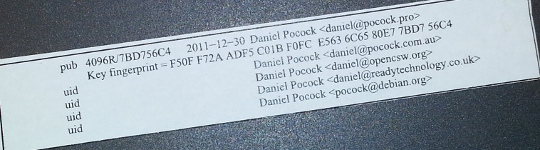
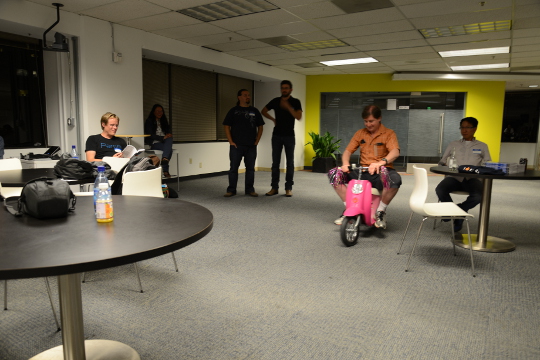
I've mentored a number of students in 2013, 2014 and 2015 for Debian and Ganglia and most of the companies I've worked with have run internships and graduate programs from time to time. GSoC 2015 has just finished and with all the excitement, many students are already asking what they can do to prepare and be selected for Outreachy or GSoC in 2016. My own observation is that the more time the organization has to get to know the student, the more confident they can be selecting that student. Furthermore, the more time that the student has spent getting to know the free software community, the more easily they can complete GSoC. Here I present a list of things that students can do to maximize their chance of selection and career opportunities at the same time. These tips are useful for people applying for GSoC itself and related programs such as GNOME's Outreachy or graduate placements in companies. Disclaimers There is no guarantee that Google will run the program again in 2016 or any future year until the Google announcement. There is no guarantee that any organization or mentor (including myself) will be involved until the official list of organizations is published by Google. Do not follow the advice of web sites that invite you to send pizza or anything else of value to prospective mentors. Following the steps in this page doesn't guarantee selection. That said, people who do follow these steps are much more likely to be considered and interviewed than somebody who hasn't done any of the things in this list. Understand what free software really is You may hear terms like free software and open source software used interchangeably. They don't mean exactly the same thing and many people use the term free software for the wrong things. Not all projects declaring themselves to be "free" or "open source" meet the definition of free software. Those that don't, usually as a result of deficiencies in their licenses, are fundamentally incompatible with the majority of software that does use genuinely free licenses. Google Summer of Code is about both writing and publishing your code and it is also about community. It is fundamental that you know the basics of licensing and how to choose a free license that empowers the community to collaborate on your code well after GSoC has finished. Please review the definition of free software early on and come back and review it from time to time. The The GNU Project / Free Software Foundation have excellent resources to help you understand what a free software license is and how it works to maximize community collaboration. Don't look for shortcuts There is no shortcut to GSoC selection and there is no shortcut to GSoC completion. The student stipend (USD $5,500 in 2014) is not paid to students unless they complete a minimum amount of valid code. This means that even if a student did find some shortcut to selection, it is unlikely they would be paid without completing meaningful work. If you are the right candidate for GSoC, you will not need a shortcut anyway. Are you the sort of person who can't leave a coding problem until you really feel it is fixed, even if you keep going all night? Have you ever woken up in the night with a dream about writing code still in your head? Do you become irritated by tedious or repetitive tasks and often think of ways to write code to eliminate such tasks? Does your family get cross with you because you take your laptop to Christmas dinner or some other significant occasion and start coding? If some of these statements summarize the way you think or feel you are probably a natural fit for GSoC. An opportunity money can't buy The GSoC stipend will not make you rich. It is intended to make sure you have enough money to survive through the summer and focus on your project. Professional developers make this much money in a week in leading business centers like New York, London and Singapore. When you get to that stage in 3-5 years, you will not even be thinking about exactly how much you made during internships. GSoC gives you an edge over other internships because it involves publicly promoting your work. Many companies still try to hide the potential of their best recruits for fear they will be poached or that they will be able to demand higher salaries. Everything you complete in GSoC is intended to be published and you get full credit for it. Imagine a young musician getting the opportunity to perform on the main stage at a rock festival. This is how the free software community works. It is a meritocracy and there is nobody to hold you back. Having a portfolio of free software that you have created or collaborated on and a wide network of professional contacts that you develop before, during and after GSoC will continue to pay you back for years to come. While other graduates are being screened through group interviews and testing days run by employers, people with a track record in a free software project often find they go straight to the final interview round. Register your domain name and make a permanent email address Free software is all about community and collaboration. Register your own domain name as this will become a focal point for your work and for people to get to know you as you become part of the community. This is sound advice for anybody working in IT, not just programmers. It gives the impression that you are confident and have a long term interest in a technology career. Choosing the provider: as a minimum, you want a provider that offers DNS management, static web site hosting, email forwarding and XMPP services all linked to your domain. You do not need to choose the provider that is linked to your internet connection at home and that is often not the best choice anyway. The XMPP foundation maintains a list of providers known to support XMPP. Create an email address within your domain name. The most basic domain hosting providers will let you forward the email address to a webmail or university email account of your choice. Configure your webmail to send replies using your personalized email address in the From header. Update your ~/.gitconfig file to use your personalized email address in your Git commits. Create a web site and blog Start writing a blog. Host it using your domain name. Some people blog every day, other people just blog once every two or three months. Create links from your web site to your other profiles, such as a Github profile page. This helps reinforce the pages/profiles that are genuinely related to you and avoid confusion with the pages of other developers. Many mentors are keen to see their students writing a weekly report on a blog during GSoC so starting a blog now gives you a head start. Mentors look at blogs during the selection process to try and gain insight into which topics a student is most suitable for. Create a profile on Github Github is one of the most widely used software development web sites. Github makes it quick and easy for you to publish your work and collaborate on the work of other people. Create an account today and get in the habbit of forking other projects, improving them, committing your changes and pushing the work back into your Github account. Github will quickly build a profile of your commits and this allows mentors to see and understand your interests and your strengths. In your Github profile, add a link to your web site/blog and make sure the email address you are using for Git commits (in the ~/.gitconfig file) is based on your personal domain. Start using PGP Pretty Good Privacy (PGP) is the industry standard in protecting your identity online. All serious free software projects use PGP to sign tags in Git, to sign official emails and to sign official release files. The most common way to start using PGP is with the GnuPG (GNU Privacy Guard) utility. It is installed by the package manager on most Linux systems. When you create your own PGP key, use the email address involving your domain name. This is the most permanent and stable solution. Print your key fingerprint using the gpg-key2ps command, it is in the signing-party package on most Linux systems. Keep copies of the fingerprint slips with you. This is what my own PGP fingerprint slip looks like. You can also print the key fingerprint on a business card for a more professional look. Using PGP, it is recommend that you sign any important messages you send but you do not have to encrypt the messages you send, especially if some of the people you send messages to (like family and friends) do not yet have the PGP software to decrypt them. If using the Thunderbird (Icedove) email client from Mozilla, you can easily send signed messages and validate the messages you receive using the Enigmail plugin. Get your PGP key signed Once you have a PGP key, you will need to find other developers to sign it. For people I mentor personally in GSoC, I'm keen to see that you try and find another Debian Developer in your area to sign your key as early as possible. Free software events Try and find all the free software events in your area in the months between now and the end of the next Google Summer of Code season. Aim to attend at least two of them before GSoC. Look closely at the schedules and find out about the individual speakers, the companies and the free software projects that are participating. For events that span more than one day, find out about the dinners, pub nights and other social parts of the event. Try and identify people who will attend the event who have been GSoC mentors or who intend to be. Contact them before the event, if you are keen to work on something in their domain they may be able to make time to discuss it with you in person. Take your PGP fingerprint slips. Even if you don't participate in a formal key-signing party at the event, you will still find some developers to sign your PGP key individually. You must take a photo ID document (such as your passport) for the other developer to check the name on your fingerprint but you do not give them a copy of the ID document. Events come in all shapes and sizes. FOSDEM is an example of one of the bigger events in Europe, linux.conf.au is a similarly large event in Australia. There are many, many more local events such as the Debian UK mini-DebConf in Cambridge, November 2015. Many events are either free or free for students but please check carefully if there is a requirement to register before attending. On your blog, discuss which events you are attending and which sessions interest you. Write a blog during or after the event too, including photos. Quantcast generously hosted the Ganglia community meeting in San Francisco, October 2013. We had a wild time in their offices with mini-scooters, burgers, beers and the Ganglia book. That's me on the pink mini-scooter and Bernard Li, one of the other Ganglia GSoC 2014 admins is on the right. Install Linux GSoC is fundamentally about free software. Linux is to free software what a tree is to the forest. Using Linux every day on your personal computer dramatically increases your ability to interact with the free software community and increases the number of potential GSoC projects that you can participate in. This is not to say that people using Mac OS or Windows are unwelcome. I have worked with some great developers who were not Linux users. Linux gives you an edge though and the best time to gain that edge is now, while you are a student and well before you apply for GSoC. If you must run Windows for some applications used in your course, it will run just fine in a virtual machine using Virtual Box, a free software solution for desktop virtualization. Use Linux as the primary operating system. Here are links to download ISO DVD (and CD) images for some of the main Linux distributions: If you are nervous about getting started with Linux, install it on a spare PC or in a virtual machine before you install it on your main PC or laptop. Linux is much less demanding on the hardware than Windows so you can easily run it on a machine that is 5-10 years old. Having just 4GB of RAM and 20GB of hard disk is usually more than enough for a basic graphical desktop environment although having better hardware makes it faster. Your experiences installing and running Linux, especially if it requires some special effort to make it work with some of your hardware, make interesting topics for your blog. Decide which technologies you know best Personally, I have mentored students working with C, C++, Java, Python and JavaScript/HTML5. In a GSoC program, you will typically do most of your work in just one of these languages. From the outset, decide which language you will focus on and do everything you can to improve your competence with that language. For example, if you have already used Java in most of your course, plan on using Java in GSoC and make sure you read Effective Java (2nd Edition) by Joshua Bloch. Decide which themes appeal to you Find a topic that has long-term appeal for you. Maybe the topic relates to your course or maybe you already know what type of company you would like to work in. Here is a list of some topics and some of the relevant software projects:


  • System administration, servers and networking: consider projects involving monitoring, automation, packaging. Ganglia is a great community to get involved with and you will encounter the Ganglia software in many large companies and academic/research networks. Contributing to a Linux distribution like Debian or Fedora packaging is another great way to get into system administration.
  • Desktop and user interface: consider projects involving window managers and desktop tools or adding to the user interface of just about any other software.
  • Big data and data science: this can apply to just about any other theme. For example, data science techniques are frequently used now to improve system administration.
  • Business and accounting: consider accounting, CRM and ERP software.
  • Finance and trading: consider projects like R, market data software like OpenMAMA and connectivity software (Apache Camel)
  • Real-time communication (RTC), VoIP, webcam and chat: look at the JSCommunicator or the Jitsi project
  • Web (JavaScript, HTML5): look at the JSCommunicator
Before the GSoC application process begins, you should aim to learn as much as possible about the theme you prefer and also gain practical experience using the software relating to that theme. For example, if you are attracted to the business and accounting theme, install the PostBooks suite and get to know it. Maybe you know somebody who runs a small business: help them to upgrade to PostBooks and use it to prepare some reports. Make something Make some small project, less than two week's work, to demonstrate your skills. It is important to make something that somebody will use for a practical purpose, this will help you gain experience communicating with other users through Github. For an example, see the servlet Juliana Louback created for fixing phone numbers in December 2013. It has since been used as part of the Lumicall web site and Juliana was selected for a GSoC 2014 project with Debian. There is no better way to demonstrate to a prospective mentor that you are ready for GSoC than by completing and publishing some small project like this yourself. If you don't have any immediate project ideas, many developers will also be able to give you tips on small projects like this that you can attempt, just come and ask us on one of the mailing lists. Ideally, the project will be something that you would use anyway even if you do not end up participating in GSoC. Such projects are the most motivating and rewarding and usually end up becoming an example of your best work. To continue the example of somebody with a preference for business and accounting software, a small project you might create is a plugin or extension for PostBooks. Getting to know prospective mentors Many web sites provide useful information about the developers who contribute to free software projects. Some of these developers may be willing to be a GSoC mentor. For example, look through some of the following: Getting on the mentor's shortlist Once you have identified projects that are interesting to you and developers who work on those projects, it is important to get yourself on the developer's shortlist. Basically, the shortlist is a list of all students who the developer believes can complete the project. If I feel that a student is unlikely to complete a project or if I don't have enough information to judge a student's probability of success, that student will not be on my shortlist. If I don't have any student on my shortlist, then a project will not go ahead at all. If there are multiple students on the shortlist, then I will be looking more closely at each of them to try and work out who is the best match. One way to get a developer's attention is to look at bug reports they have created. Github makes it easy to see complaints or bug reports they have made about their own projects or other projects they depend on. Another way to do this is to search through their code for strings like FIXME and TODO. Projects with standalone bug trackers like the Debian bug tracker also provide an easy way to search for bug reports that a specific person has created or commented on. Once you find some relevant bug reports, email the developer. Ask if anybody else is working on those issues. Try and start with an issue that is particularly easy and where the solution is interesting for you. This will help you learn to compile and test the program before you try to fix any more complicated bugs. It may even be something you can work on as part of your academic program. Find successful projects from the previous year Contact organizations and ask them which GSoC projects were most successful. In many organizations, you can find the past students' project plans and their final reports published on the web. Read through the plans submitted by the students who were chosen. Then read through the final reports by the same students and see how they compare to the original plans. Start building your project proposal now Don't wait for the application period to begin. Start writing a project proposal now. When writing a proposal, it is important to include several things:
  • Think big: what is the goal at the end of the project? Does your work help the greater good in some way, such as increasing the market share of Linux on the desktop?
  • Details: what are specific challenges? What tools will you use?
  • Time management: what will you do each week? Are there weeks where you will not work on GSoC due to vacation or other events? These things are permitted but they must be in your plan if you know them in advance. If an accident or death in the family cut a week out of your GSoC project, which work would you skip and would your project still be useful without that? Having two weeks of flexible time in your plan makes it more resilient against interruptions.
  • Communication: are you on mailing lists, IRC and XMPP chat? Will you make a weekly report on your blog?
  • Users: who will benefit from your work?
  • Testing: who will test and validate your work throughout the project? Ideally, this should involve more than just the mentor.
If your project plan is good enough, could you put it on Kickstarter or another crowdfunding site? This is a good test of whether or not a project is going to be supported by a GSoC mentor. Learn about packaging and distributing software Packaging is a vital part of the free software lifecycle. It is very easy to upload a project to Github but it takes more effort to have it become an official package in systems like Debian, Fedora and Ubuntu. Packaging and the communities around Linux distributions help you reach out to users of your software and get valuable feedback and new contributors. This boosts the impact of your work. To start with, you may want to help the maintainer of an existing package. Debian packaging teams are existing communities that work in a team and welcome new contributors. The Debian Mentors initiative is another great starting place. In the Fedora world, the place to start may be in one of the Special Interest Groups (SIGs). Think from the mentor's perspective After the application deadline, mentors have just 2 or 3 weeks to choose the students. This is actually not a lot of time to be certain if a particular student is capable of completing a project. If the student has a published history of free software activity, the mentor feels a lot more confident about choosing the student. Some mentors have more than one good student while other mentors receive no applications from capable students. In this situation, it is very common for mentors to send each other details of students who may be suitable. Once again, if a student has a good Github profile and a blog, it is much easier for mentors to try and match that student with another project. GSoC logo generic Conclusion Getting into the world of software engineering is much like joining any other profession or even joining a new hobby or sporting activity. If you run, you probably have various types of shoe and a running watch and you may even spend a couple of nights at the track each week. If you enjoy playing a musical instrument, you probably have a collection of sheet music, accessories for your instrument and you may even aspire to build a recording studio in your garage (or you probably know somebody else who already did that). The things listed on this page will not just help you walk the walk and talk the talk of a software developer, they will put you on a track to being one of the leaders. If you look over the profiles of other software developers on the Internet, you will find they are doing most of the things on this page already. Even if you are not selected for GSoC at all or decide not to apply, working through the steps on this page will help you clarify your own ideas about your career and help you make new friends in the software engineering community.

17 September 2015

Norbert Preining: Debian/TeX Live 2015.20150917-1

Usual regular update of the TeX Live packages. Now that Debian/unstable is back to full development speed thanks to the end of the bit gcc transition, probably this TeX Live update will be lost between the hundreds of others. Anyway a few interesting changes are still in there. Debian - TeX Live 2015 Most importantly the fix for unicode-math that was broken for a short time, and for the Japanese users it seems that the LaTeX3 packages have gained support for upTeX. Good to hear. Of course, these are not the only updates and newcomers, see the list below. Updated packages abc, acro, alegreya, animate, arabxetex, babel-bosnian, babel-french, babel-greek, babel-latin, babel-welsh, beamer-FUBerlin, bidi, bigfoot, blochsphere, bxjscls, chemformula, chemmacros, chet, classicthesis, crossrefware, csplain, ctable, ctanify, datetime2, datetime2-basque, detlev-cm, disser, doclicense, drm, dtxgen, dtxtut, dvips, ecclesiastic, eledmac, embrac, etex-pkg, etoc, factura, fbb, fithesis, font-change, fontname, glossaries, gothic, greek-fontenc, IEEEtran, l3build, l3experimental, l3kernel, l3packages, latexconfig, lettrine, luatexja, mathastext, mcf2graph, media9, metrix, mhequ, minted, moderntimeline, newtx, ocgx2, pagecolor, pdftex, pgf, pstricks, reledmac, resphilosophica, roboto, shdoc, siunitx, suftesi, tetex, tex4ht, texlive-scripts, tikz-bayesnet, translations, ucharcat, udesoftec, ulthese, unicode-math, ut-thesis, withargs, xint. New packages checklistings, cleanthesis, easyreview, fei, medstarbeamer, mfirstuc, nevelok, old-arrows, proofread, uassign, xebaposter. Enjoy.

14 September 2015

Lunar: Reproducible builds: week 20 in Stretch cycle

What happened in the reproducible builds effort this week: Media coverage Motherboard published an article on the project inspired by the talk at the Chaos Communication 15. Journalists sadly rarely pick their headlines. The sensationalist How Debian Is Trying to Shut Down the CIA got started a few rants here and there. One from OpenBSD developper Ted Unangst lead to a good email contact and some thorough comments. Toolchain fixes The modified version of gettext has been removed from the experimental toolchain. Fixing individual package seems a better approach for now. Chris Lamb sent two patches for abi-compliance-checker: one to drop the timestamp from generated HTML reports and another to make umask and timestamps deterministic in the abi tarball. Bugs submitted by Dhole lead to a discussion on the best way to adapt pod2man now that we have SOURCE_DATE_EPOCH specified. There is really a whole class of issues that are currently undiscovered waiting for tests running on a different date. This is likely to should happen soon. Chris Lamb uploaded a new version of debhelper in the reproducible repository, cherry-picking a fix for interactions between ddebs and udebs. Packages fixed The following packages became reproducible due to changes in their build dependencies: aspic, django-guardian, erlang-sqlite3, etcd, libnative-platform-java, mingw-ocaml, nose2, oar, obexftp, py3cairo, python-dugong, python-secretstorage, python-setuptools, qct, qdox, recutils, s3ql, wine. The following packages became reproducible after getting fixed: Some uploads fixed some reproducibility issues but not all of them: Patches submitted which have not made their way to the archive yet: reproducible.debian.net The configuration of all remote armhf and amd64 nodes in now finished. The remaining reproducibility tests running on the Jenkins host has been removed. armhf results and graphs are now visible in dashboard. We can now test the whole archive in 2-3 weeks using the current 12 amd64 jobs and 3 months using the current 6 armhf builders. We will be looking at improving the armhf sitation, maybe using more native systems or via arm64. (h01ger) The Jenkins UI is now more responsive since all jobs building packages have been moved to remote hosts. (h01ger) A new job has been added to collect information about build nodes to be included in the variation table. (h01ger) The currently scheduled page has been split for amd64 and armhf. They now give an overview (refreshed every minute, thanks to Chris Lamb) of the packages currently being tested. (h01ger) Several cleanup and bugfixes have been made, especially in the remote building and maintenance scripts. They should now be more robust against network problems. The automatic scheduler is now also run closer to when schroots and pbuilders are updated. (h01ger, mapreri) Package reviews 16 reviews have been removed, 54 added and 55 updated this week. Santiago Vila renamed lc_messages_randomness with the more descriptive different_pot_creation_date_in_gettext_mo_files. New issues added this week: timestamps_in_reports_generated_by_abi_compliance_checker, umask_and_timestamp_variation_in_tgz_generated_by_abi_compliance_checker, and timestamps_added_by_blast2. 23 new FTBFS bugs have been filled by Chris Lamb, and Niko Tyni. Misc. Red Hat developper Mike McLean had a talk at Flock 2015 about reproducible builds in Koji. Slides and video recording are available. Koji is the build infrastructure used by Fedora, Red Hat and other distributions. It already keeps track of the environment used for a given build, so the required changes for handling the environment are smaller than the ones in Debian. Fedora is still missing a team effort to fix non-determinism in the package builds, but it is great to see Fedora moving forward.

13 September 2015

Gregor Herrmann: RC bugs 2015/31-37

during the last weeks, I spent time mostly with RC bug prevention but I at least managed to also fix a couple of actual RC bugs:

1 September 2015

Lunar: Reproducible builds: week 18 in Stretch cycle

What happened in the reproducible builds effort this week: Toolchain fixes Aur lien Jarno uploaded glibc/2.21-0experimental1 which will fix the issue were locales-all did not behave exactly like locales despite having it in the Provides field. Lunar rebased the pu/reproducible_builds branch for dpkg on top of the released 1.18.2. This made visible an issue with udebs and automatically generated debug packages. The summary from the meeting at DebConf15 between ftpmasters, dpkg mainatainers and reproducible builds folks has been posted to the revelant mailing lists. Packages fixed The following 70 packages became reproducible due to changes in their build dependencies: activemq-activeio, async-http-client, classworlds, clirr, compress-lzf, dbus-c++, felix-bundlerepository, felix-framework, felix-gogo-command, felix-gogo-runtime, felix-gogo-shell, felix-main, felix-shell-tui, felix-shell, findbugs-bcel, gco, gdebi, gecode, geronimo-ejb-3.2-spec, git-repair, gmetric4j, gs-collections, hawtbuf, hawtdispatch, jack-tools, jackson-dataformat-cbor, jackson-dataformat-yaml, jackson-module-jaxb-annotations, jmxetric, json-simple, kryo-serializers, lhapdf, libccrtp, libclaw, libcommoncpp2, libftdi1, libjboss-marshalling-java, libmimic, libphysfs, libxstream-java, limereg, maven-debian-helper, maven-filtering, maven-invoker, mochiweb, mongo-java-driver, mqtt-client, netty-3.9, openhft-chronicle-queue, openhft-compiler, openhft-lang, pavucontrol, plexus-ant-factory, plexus-archiver, plexus-bsh-factory, plexus-cdc, plexus-classworlds2, plexus-component-metadata, plexus-container-default, plexus-io, pytone, scolasync, sisu-ioc, snappy-java, spatial4j-0.4, tika, treeline, wss4j, xtalk, zshdb. The following packages became reproducible after getting fixed: Some uploads fixed some reproducibility issues but not all of them: Patches submitted which have not made their way to the archive yet: Chris Lamb also noticed that binaries shipped with libsilo-bin did not work. Documentation update Chris Lamb and Ximin Luo assembled a proper specification for SOURCE_DATE_EPOCH in the hope to convince more upstreams to adopt it. Thanks to Holger it is published under a non-Debian domain name. Lunar documented easiest way to solve issues with file ordering and timestamps in tarballs that came with tar/1.28-1. Some examples on how to use SOURCE_DATE_EPOCH have been improved to support systems without GNU date. reproducible.debian.net armhf is finally being tested, which also means the remote building of Debian packages finally works! This paves the way to perform the tests on even more architectures and doing variations on CPU and date. Some packages even produce the same binary Arch:all packages on different architectures (1, 2). (h01ger) Tests for FreeBSD are finally running. (h01ger) As it seems the gcc5 transition has cooled off, we schedule sid more often than testing again on amd64. (h01ger) disorderfs has been built and installed on all build nodes (amd64 and armhf). One issue related to permissions for root and unpriviliged users needs to be solved before disorderfs can be used on reproducible.debian.net. (h01ger) strip-nondeterminism Version 0.011-1 has been released on August 29th. The new version updates dh_strip_nondeterminism to match recent changes in debhelper. (Andrew Ayer) disorderfs disorderfs, the new FUSE filesystem to ease testing of filesystem-related variations, is now almost ready to be used. Version 0.2.0 adds support for extended attributes. Since then Andrew Ayer also added support to reverse directory entries instead of shuffling them, and arbitrary padding to the number of blocks used by files. Package reviews 142 reviews have been removed, 48 added and 259 updated this week. Santiago Vila renamed the not_using_dh_builddeb issue into varying_mtimes_in_data_tar_gz_or_control_tar_gz to align better with other tag names. New issue identified this week: random_order_in_python_doit_completion. 37 FTBFS issues have been reported by Chris West (Faux) and Chris Lamb. Misc. h01ger gave a talk at FrOSCon on August 23rd. Recordings are already online. These reports are being reviewed and enhanced every week by many people hanging out on #debian-reproducible. Huge thanks!

8 August 2015

Christoph Egger: What's wrong with the web? -- authentication

The problem One problem to solve when doing web authentication has always been one identity provider, so you don't have to remember which username (or email address) you used for that bugtracker you used three years ago or that website. And tie it to one login ideally. Five years ago this problem seemed to be basically solved. There was OpenID and while it may not have been great it worked. You could have your own provider, your institution (university, company, foss project, ..) could have one and you could use your university-provided ID for all university stuff. Today's state Looking at the problem again today and the situation seems to have changed. To the worse. A lot. People are actively removing OpenID support. There seemed to be a replacement with, at least, proper design goals: Mozilla's persona. However this seems to be a dead end, no-one (almost) actually supports it. Then there is what people call OAuth2. However there does not seem to be such a thing as OAuth2 at all, at least not for logging into websites. So for example phabricator supports 12 different OAuth2 systems. That includes Google, Facebook, Twitter, Amazon Github and a whole bunch of other services. Each with a different implementation in the webapp of course. And of course you can not just have your university/company/.. provide an OAuth2 service for you to use -- you would need to write yet another adapter on the (foreign) website to talk to your implementation and your provider. And the strange thing, people seem to still consider OAuth2 a replacement for OpenID while it does not even provide the core functionality of the older system. Plus there does not seem to be any awareness of that all together. Other features Now of course, OpenID is not (and never was) the ultimate answer to the web authentication problem. The most obvious problem being user tracking. Your identity provider will see every website you log into, will see when you log into it and even be able to log into that website with your credentials. Of course, this problem is fully inherited by OAuth2. And in contrast to OpenID you can no longer run your own provider whom you can fully trust and who already knows about your surfing habits (because it's actually you already). Mozilla's persona might have solved that, they at least intended to. But, again, persona seems quite dead.

6 August 2015

Christoph Egger

TinyTiny-RSS has some nice failure modes. And upstream support forums aren't really helpfull so when you search for your current problem, chances are that there is one mention of it on the web, in the forum, and the only thing happening there is people making fun of the reporter. Anyway. This installation has seen lots of error messages from the updater in the last several months:
Warning: Fatal error, unknown preferences key: ALLOW_DUPLICATE_POSTS (owner: 3) in /srv/www/tt-rss.faui2k9.de/root/classes/db/prefs.php on line 108
  
And, more recently, the android app stopped working with ERROR:JSON Parse failed.. Turns out both things are related. First thing I noticed was changing preferences in the web panel stopped working until you use the reset to Defaults option and then changed settings. Plugging wireshark in between showed what was going on (Note: API was displayed as enabled in Preferences/Preferences):
HTTP/1.1 200 OK
Server: nginx/1.8.0
Date: Thu, 06 Aug 2015 11:00:31 GMT
Content-Type: text/json
Transfer-Encoding: chunked
Connection: keep-alive
X-Powered-By: PHP/5.4.43
Content-Language: auto
Set-Cookie: [...]
Expires: Thu, 19 Nov 1981 08:52:00 GMT
Cache-Control: no-store, no-cache, must-revalidate, post-check=0, pre-check=0
Pragma: no-cache
Api-Content-Length: 234
ea

Warning: Fatal error, unknown preferences key: ENABLE_API_ACCESS (owner: 2) in /srv/www/tt-rss.faui2k9.de/root/classes/db/prefs.php on line 108
"seq":0,"status":1,"content": "error":"API_DISABLED" 0
Solution for fixing the Android app (and the logspam on the way as well) seems to be to reset the preferences and then configure tt-rss again (In the webapp, not in the android thing!). Also silences tt-rss update_daemon as well, yay! One last thing: someone out there who wants to explain to me how to fix
Fatal error: Query INSERT INTO ttrss_enclosures
                                                        (content_url, content_type, title, duration, post_id, width, height) VALUES
                                                        ('https://2.gravatar.com/avatar/e6d6ceb7764252af8da058e30cd8cb5f?s=96&d=identicon&r=G', '', '', '', '0', 0, 0) failed: ERROR:  insert or update on table "ttrss_enclosures" violates foreign key constraint "ttrss_enclosures_post_id_fkey"
DETAIL:  Key (post_id)=(0) is not present in table "ttrss_entries". in /srv/www/tt-rss.faui2k9.de/root/classes/db/pgsql.php on line 46
  

Christoph Egger: unbreaking tt-rss

TinyTiny-RSS has some nice failure modes. And upstream support forums aren't really helpfull so when you search for your current problem, chances are that there is one mention of it on the web, in the forum, and the only thing happening there is people making fun of the reporter. Anyway. This installation has seen lots of error messages from the updater in the last several months:
Warning: Fatal error, unknown preferences key: ALLOW_DUPLICATE_POSTS (owner: 3) in /srv/www/tt-rss.faui2k9.de/root/classes/db/prefs.php on line 108
  
And, more recently, the android app stopped working with ERROR:JSON Parse failed.. Turns out both things are related. First thing I noticed was changing preferences in the web panel stopped working until you use the reset to Defaults option and then changed settings. Plugging wireshark in between showed what was going on (Note: API was displayed as enabled in Preferences/Preferences):
HTTP/1.1 200 OK
Server: nginx/1.8.0
Date: Thu, 06 Aug 2015 11:00:31 GMT
Content-Type: text/json
Transfer-Encoding: chunked
Connection: keep-alive
X-Powered-By: PHP/5.4.43
Content-Language: auto
Set-Cookie: [...]
Expires: Thu, 19 Nov 1981 08:52:00 GMT
Cache-Control: no-store, no-cache, must-revalidate, post-check=0, pre-check=0
Pragma: no-cache
Api-Content-Length: 234
ea

Warning: Fatal error, unknown preferences key: ENABLE_API_ACCESS (owner: 2) in /srv/www/tt-rss.faui2k9.de/root/classes/db/prefs.php on line 108
"seq":0,"status":1,"content": "error":"API_DISABLED" 0
Solution for fixing the Android app (and the logspam on the way as well) seems to be to reset the preferences and then configure tt-rss again (In the webapp, not in the android thing!). Also silences tt-rss update_daemon as well, yay! One last thing: someone out there who wants to explain to me how to fix
Fatal error: Query INSERT INTO ttrss_enclosures
                                                        (content_url, content_type, title, duration, post_id, width, height) VALUES
                                                        ('https://2.gravatar.com/avatar/e6d6ceb7764252af8da058e30cd8cb5f?s=96&d=identicon&r=G', '', '', '', '0', 0, 0) failed: ERROR:  insert or update on table "ttrss_enclosures" violates foreign key constraint "ttrss_enclosures_post_id_fkey"
DETAIL:  Key (post_id)=(0) is not present in table "ttrss_entries". in /srv/www/tt-rss.faui2k9.de/root/classes/db/pgsql.php on line 46
  

Next.

Previous.